US8595286B2 - Management apparatus for managing communication between plural information processing apparatuses, information processing system including the management apparatus, method for controlling the management apparatus, non-transitory computer-readable recoding medium storing program for controlling the management apparatus - Google Patents
Management apparatus for managing communication between plural information processing apparatuses, information processing system including the management apparatus, method for controlling the management apparatus, non-transitory computer-readable recoding medium storing program for controlling the management apparatusDownload PDFInfo
- Publication number
- US8595286B2 US8595286B2US12/558,225US55822509AUS8595286B2US 8595286 B2US8595286 B2US 8595286B2US 55822509 AUS55822509 AUS 55822509AUS 8595286 B2US8595286 B2US 8595286B2
- Authority
- US
- United States
- Prior art keywords
- information
- protocol
- server
- information processing
- data request
- Prior art date
- Legal status (The legal status is an assumption and is not a legal conclusion. Google has not performed a legal analysis and makes no representation as to the accuracy of the status listed.)
- Expired - Fee Related, expires
Links
Images

Classifications
- G—PHYSICS
- G06—COMPUTING OR CALCULATING; COUNTING
- G06F—ELECTRIC DIGITAL DATA PROCESSING
- G06F15/00—Digital computers in general; Data processing equipment in general
- G06F15/16—Combinations of two or more digital computers each having at least an arithmetic unit, a program unit and a register, e.g. for a simultaneous processing of several programs
- H—ELECTRICITY
- H04—ELECTRIC COMMUNICATION TECHNIQUE
- H04L—TRANSMISSION OF DIGITAL INFORMATION, e.g. TELEGRAPHIC COMMUNICATION
- H04L41/00—Arrangements for maintenance, administration or management of data switching networks, e.g. of packet switching networks
- H04L41/02—Standardisation; Integration
- H04L41/0226—Mapping or translating multiple network management protocols
- G—PHYSICS
- G06—COMPUTING OR CALCULATING; COUNTING
- G06F—ELECTRIC DIGITAL DATA PROCESSING
- G06F9/00—Arrangements for program control, e.g. control units
- H—ELECTRICITY
- H04—ELECTRIC COMMUNICATION TECHNIQUE
- H04L—TRANSMISSION OF DIGITAL INFORMATION, e.g. TELEGRAPHIC COMMUNICATION
- H04L41/00—Arrangements for maintenance, administration or management of data switching networks, e.g. of packet switching networks
- H04L41/02—Standardisation; Integration
- H04L41/0213—Standardised network management protocols, e.g. simple network management protocol [SNMP]
- H—ELECTRICITY
- H04—ELECTRIC COMMUNICATION TECHNIQUE
- H04L—TRANSMISSION OF DIGITAL INFORMATION, e.g. TELEGRAPHIC COMMUNICATION
- H04L41/00—Arrangements for maintenance, administration or management of data switching networks, e.g. of packet switching networks
- H04L41/04—Network management architectures or arrangements
- H04L41/046—Network management architectures or arrangements comprising network management agents or mobile agents therefor
Definitions
- This inventionrelates to a management apparatus, an information processing apparatus, a management apparatus control method and a program.
- One of the methods of managing the information processing apparatus as a serveris to use a protocol called SNMP (Simple Network Management Protocol).
- SNMPSimple Network Management Protocol
- the management information for each server managedis called an object which is identified by an object ID (OID: Object IDentification).
- the server managedhas a data base (DB) called a management information base (MIB) for managing the OID in a tree structure.
- a control managertransmits a management information acquisition request to an agent of each server.
- the agent operating on each serverreceives the management information acquisition request, the agent accesses the MIB based on the OID in the management information acquisition request and acquires the management information on the server with the agent operated and transmits the management information to the control manager.
- the control managercan acquire the management information on the server.
- control managerIn the case where server is managed directly by the control manager as described above, the control manager needs to communicate with each agent operating on each server that is target of management to manage the particular server, however, this is liable to complicate the server management by the control manager.
- Patent Document 1Japanese Laid-open Patent Publication No. 7-334445
- Patent Document 2Japanese Laid-open Patent Publication No. 2002-215479
- Patent Document 3Japanese Laid-open Patent Publication No. 2002-14883
- Patent Document 4Japanese Laid-open Patent Publication No. 11-65951
- Patent Document 5Japanese Laid-open Patent Publication No. 2006-23922.
- a techniquehas been proposed in which a server management unit is arranged between the control manager and the server to unify the management of the agents of the servers while the control manager only accesses the server management unit to acquire the management information on each server.
- a management apparatus connected to a information processing apparatusincludes a first processing unit that receives a data request containing the identification information identifying the first information processing apparatus according to a first protocol from a second information processing apparatus connected to the first information processing apparatus through the management apparatus, an information storage unit that stores the address information indicating the address of the first information processing apparatus and a second processing unit that receives the data request from the first processing unit acquiring the address information from the information storage unit based on the identification information and transmitting the data request according to a second protocol to the first information processing apparatus corresponding to the acquired address information.
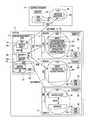
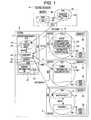
- FIG. 1is a diagram depicting an example of the configuration of a server system according to an embodiment
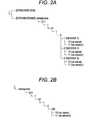
- FIGS. 2A-2Bare diagrams depicting examples of the OID structure
- FIG. 3is a schematic diagram depicting an example of a specific configuration of a subagent
- FIG. 4is a diagram depicting an example of the server information stored in the table of a server information data base
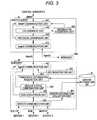
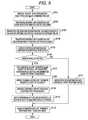
- FIG. 5is a flowchart depicting the subagent control process for acquisition of the management information
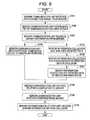
- FIG. 6is a flowchart depicting the subagent control process for activating the server.
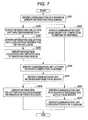
- FIG. 7is a flowchart depicting the subagent control process for deactivating the server.
- FIG. 1is a diagram depicting an example of the configuration of the server system according this embodiment.
- the server system having an information processing system depicted in FIG. 1includes a system 5 and a control manager 6 .
- the system 5has a server management unit 4 and a plurality of servers 1 to 3 therein.
- the server management unit 4 and the plurality of servers 1 to 3can each be an independent computer.
- the server management unit 4functions as a server management apparatus for centrally managing the servers 1 to 3 associated with the system 5 .
- the control manager 6includes a CPU (Central Processing Unit) 61 , a disk 62 and a memory 63 , and the control manager 6 is connected to the server management unit 4 through a NIC (Network Interface Card). In the control manager 6 , the operation is performed according to the manager software 64 .
- the manager software 64is a program executed by the CPU 61 .
- the control manager 6communicates with the server management unit 4 of the system 5 using the manager software 64 according to the UDP/SNMP (User Datagram Protocol/Simple Network Management Protocol) (hereinafter, simply referred to as “SNMP”).
- UDP/SNMPUser Datagram Protocol/Simple Network Management Protocol
- SNMPUser Datagram Protocol/Simple Network Management Protocol
- the server management unit 4has a CPU 41 , a disk 42 as an auxiliary storage unit and a memory 43 as a main storage unit.
- the server management unit 4is connected with other servers through a NIC.
- a master agent 44 and a subagent 45operate.
- the master agent 44 and the subagent 45are an extended SNMP agent standardized under RFC2741 (Request For Comments 2741).
- the “agent”is defined as a kind of a process operated by a CPU executing the program.
- the master agent 44 and the subagent 45are a process operated by the CPU 41 executing the program.
- the communication between the master agent 44 and the control manager 6is conducted with the SNMP protocol.
- the communication between the master agent 44 and the subagent 45is conducted with the Agent Extensibility (AgentX) protocol.
- AgentX protocolis the one of the extended SNMP agent standardized under RFC2741.
- the disk 42stores a server information data base 47 and a MIB 46 .
- the table of the server information data base 47stores the communication setting information needed for communication with the servers 1 to 3 and including the protocol for communication with the servers 1 to 3 .
- the subagent 45communicates with the servers 1 to 3 by protocol conversion from the AgentX protocol to various protocols such as the TCP/IP (Transmission Control Protocol/Internet Protocol) based on the communication setting information stored in the table of the server information data base 47 .
- the TCPis a protocol for transmission by confirming the arrival of each packet.
- the IPis a protocol for transmission using an IP (Internet Protocol) address for specifying an address.
- the server 1includes a CPU 11 , a disk 12 storing a MIB 16 , and a memory 13 and is connected to the server management unit 4 through the NIC.
- An agent 14operates in the server 1 .
- the agent 14is a process operated by the CPU 11 executing a program.
- the agent 14includes a communication processing unit 141 , an OID analyzing unit 142 and an information acquisition unit 143 .
- the agent 14communicates with the subagent 45 of the server management unit 4 according to the TCP/IP protocol.
- the UDPwhich is a protocol of the transport layer of SNMP
- the packetis transmitted to the destination without confirmation of the arriving of the packet.
- the communication between the server management unit 4 and the server 1is conducted according to SNMP, therefore, the communication between the server management unit 4 and the server 1 is higher in reliability than the communication conducted according to the UDP of the SNMP.
- the server 2includes a CPU 21 , a disk 22 storing a MIB 26 , and a memory 23 , and is connected to the server management unit 4 through the NIC.
- An agent 24operates in the server 2 .
- the agent 24is a process operated by the CPU 21 executing a program.
- the agent 24includes an information acquisition unit 241 .
- the agent 24communicates with the subagent 45 of the server management unit 4 according to the IPMI (Intelligent Platform Management Interface) protocol.
- the IPMIis a protocol for exchanging information to remotely control and monitor the physical state of the server such as the temperature, voltage, the fan operation and the power supply for example.
- IPMIIntelligent Platform Management Interface
- the server 3includes a CPU 31 , a disk 32 storing a MIB 36 , and a memory 33 and is connected to the server management unit 4 through the NIC.
- the master agent 34 and the subagent 35are operated in the server 3 .
- the master agent 34 and the subagent 35are a process activated by the CPU 31 executing a program.
- the communicationis conducted between the master agent 34 and the subagent 35 according to the AgentX protocol.
- the master agent 34communicates with the subagent 45 of the server management unit 4 according to the UDP/SNMPv3 (User Datagram Protocol/Simple Network Management Protocol version 3) protocol.
- the SNMPv3is a protocol having the function of authenticating and encrypting the SNMP packets.
- the communication between the server management unit 4 and the server 3is established according to SNMPv3, therefore, the communication between the server management unit 4 and the server 3 has a higher security than the communication conducted according to other SNMP (SNMPv1 (Simple Network Management Protocol version 1), SNMPv2 (Simple Network Management Protocol version 2)) than SNMPv3.
- SNMPv1Simple Network Management Protocol version 1
- SNMPv2Simple Network Management Protocol version 2
- the management information request data requesting the acquisition of the management information of the servers 1 to 3is transmitted by the control manager 6 to the master agent 44 of the server management unit 4 according to SNMP.
- the management information request datahas an OID designating the destination server and the management information desired by the control manager 6 .
- FIGS. 2A and 2Bdepict examples of the tree structure of the OID defined in each of the MIB 66 of the control manager 6 and the MIB 46 of the server management unit 4 , respectively.
- the control manager 6designates the OID of the management information request data by accessing the MIB 66 having the OID tree structure depicted in FIG. 2A .
- the OID designated by the control manager 6is classified into the standard MIB and the extension MIB.
- the standard MIBis the OID predefined to acquire the standard interface and the internal information of the server management unit 4 depicted in FIG. 1 of the server to which the management information request data is transmitted.
- the extension MIBis the OID extended in such a manner as to be uniquely definable by the vendor or the like.
- the OID indicated in the tree at and below the “enterprises” in FIG. 2Ais an extension MIB.
- the control manager 6designates the OID of the management information request data with the extension MIB.
- the OID of the management information request datais designated as “enterprises.211.1.31.1.2.1.10” by defining the numeral in each layer with a period along the path in the tree of FIG.
- control manager 6similarly designates “enterprises.211.1.31.1.2.1.11” as the OID of the management information request data with reference to the MIB 66 .
- FIG. 2Bdepicts an example of the tree structure of the OID defined in the same way for the MIB 16 , 26 , 27 of the servers 1 to 3 .
- the values “1”, “2” and “3” indicating the serversare replaced by a common value “100” as depicted in FIG. 2B unlike the OID depicted in FIG. 2A .
- the master agent 44transmits the management information request data to the subagent 45 upon judgment that the OID of the management information request data is matching (for example, identical) with any one of OIDs of the servers 1 to 3 . While transmitting the management information request data to the subagent 45 , the master agent 44 converts the protocol of the management information request data from SNMP to AgentX.
- the management information request data received from the master agent 44is transmitted to the servers 1 to 3 by the subagent 45 .
- the subagent 45acquires the communication setting information of the destination server from the server information data base 47 based on the OID of the management information request data, and converts the protocol of the management information request data based on the communication setting information thus acquired.
- the subagent 45transmits the management information request data by converting the protocol thereof from AgentX to TCP/IP.
- the subagent 45converts the protocol of the management information request data from AgentX to IPMI.
- the subagent 45converts the protocol of the management information request data from AgentX to SNMPv3.
- the subagent 45converts the protocol while at the same time converting the OID of the management information request data depicted in FIG. 2A into the OID shared by the MIB 12 , 26 , 36 of the servers 1 to 3 depicts in FIG. 2B as a proxy server OID.
- the subagent 45replaces “1” indicating the destination server 1 with “100”.
- the subagent 45converts the OID of the management information request data into “enterprises.211.1.31.1.2.100.10” and transmits it to the server 1 .
- the agent of each of the destination servers 1 to 3can acquire the management information by reference to the MIB 16 , 26 , 36 , of the servers 1 to 3 , respectively, because of the proxy server OID.
- the agent 14that has received the management information request data from the subagent 45 of the server management unit 14 acquires the management information of the server 1 with reference to the MIB 16 based on the OID of the management information request data received. Then, the agent 14 transmits the acquired management information of the server 1 to the subagent 45 as a response data.
- These control operationsare performed by the communication processing unit 141 , the OID analyzing unit 142 and the information acquisition unit 143 of the agent 14 .
- the communication processing unit 141executes the communication process with the TCP/IP packet transmitted or received.
- the OID analyzing unit 142analyzes the OID of the management information request data by accessing the MIB 16 .
- the information acquisition unit 143acquires the management information of the server 1 based on the result of the analysis by the OID analyzing unit 142 .
- the agent 24that has received the management information request data from the subagent 45 of the server management unit 4 acquires the management information of the server 2 with reference to the MIB 26 based on the OID of the management information request data thus received. Then, the agent 24 transmits the acquired management information as a response data to the subagent 45 .
- These control operationsare performed by the information acquisition unit 241 of the agent 24 which acquires the management information of the server 2 with reference to the MID 26 based on the OID of the management information request data received.
- the master agent 34that has received the management information request data from the subagent 45 of the server management unit 4 converts the protocol of the management information request data to AgentX and transmits the converted protocol to the subagent 35 .
- the subagent 35acquires the management information of the server 3 with reference to the MIB 36 based on the OID of the management information request data thus received. Then, the subagent 35 transmits the acquired management information to the master agent 34 as a response data.
- the protocol of the management information response data received from the subagent 35is converted from AgentX to SNMPv3 and transmitted to the subagent 45 of the server management unit 4 .
- the protocol of the management information response data transmitted from the servers 1 to 3is converted by the subagent 45 to AgentX from the various communication protocols (TCP/IP, IPMI, SNMPv3) with the servers 1 to 3 and transmitted to the master agent 44 .
- the protocol of the management information response data received from the subagent 45is converted from AgentX to SNMP and transmitted to the control manager 6 .
- the control manager 6can acquire the management information of each of the servers 1 to 3 based on the received management information response data.
- the management information of the servers 1 to 3 connected to the server management unit 4can be acquired by the control manager 6 communicating with the server management unit 4 according to SNMP.
- the master agent 44includes a SNMP communication unit 441 , an OID judgment unit 442 , a protocol conversion unit 443 and an AgentX communication unit 444 .
- the SNMP communication unit 441communicates with the control manager 6 according to the SNMP protocol. Specifically, the SNMP communication unit 441 receives the management information request data from the control manager 6 , and transmits the management information response data to the control manager 6 which is requested to be processed.
- the OID judgment unit 442judges to which the management information request data is to be transmitted based on the OID of the management information request data received from the control manager 6 .
- the OID judgment unit 442judges that the management information of the server management unit 4 is requested and requests the information acquisition unit 445 to execute the requested process.
- the information acquisition unit 445acquires the management information of the server management unit 4 with reference to the MIB 46 based on the OID of the management information request data, and requests the SNMP communication unit 441 to execute the requested process with the acquired management information as a response data.
- the memory 43has registered therein the OID defined in such a manner that the servers 1 to 3 can be identified.
- the OID judgment unit 442judges that the management information for each of the servers 1 to 3 is requested.
- the OID judgment unit 442determines the subagent 45 as the destination of the particular management information request data and requests the protocol conversion unit 443 to process the management information request data.
- the OID judgment unit 442judges that the management information of the server management unit 4 not defined in the standard MIB is to be acquired. In this case, the OID judgment unit 442 determines the destination of the management information request data as another subagent 45 a than the subagent 45 , and requests the protocol conversion unit 443 to process the particular management information request data.
- the subagent 45 ais the one which acquires the management information of the server management unit 4 not defined in the standard MIB and has a different function than the subagent 45 for transferring the management information request data to the servers 1 to 3 .
- the protocol conversion unit 443generates the packets by converting the protocol of the management information request data from SNMP to AgentX, and requests the AgentX communication unit 444 to process the packets thus generated. Also, the protocol conversion unit 443 generates the packets by converting the protocol of the management information response data received by the AgentX communication unit 444 from AgentX to SNMP, and requests the SNMP communication unit 441 to process the packets thus generated.
- the AgentX communication unit 444communicates with the subagents 45 , 45 a according to the AgentX protocol.
- the AgentX communication unit 444transmits the management information request data involved to any one of the subagents 45 , 45 a based on the destination determined by the OID judgment unit 442 . Also, the AgentX communication unit 444 receives the management information response data from the subagents 45 , 45 a.
- the subagent 45 aaccesses the MIB 46 based on the management information request data thus received and acquires the management information of the server management unit 4 not defined in the standard MIB, and transmits the acquired management information to the master agent 44 as a response data.
- the subagent 45includes an AgentX communication unit 451 , an OID registration unit 452 , a transferee information acquisition unit 453 , a server status confirmation unit 454 , a data conversion unit 455 , a server communication unit 456 and a server information collection unit 457 .
- the AgentX communication unit 451communicates with the master agent 44 according to the AgentX protocol.
- the AgentX communication unit 451receives the management information request data from the master agent 44 on the one hand, and transmits the management information response data involved to the master agent 44 on the other hand.
- the OID registration unit 452registers the OID defined in the memory 43 in such a manner that the servers 1 to 3 can be identified.
- the OID judgment unit 442 of the master agent 44can identify each of the servers 1 to 3 and, the OID judgment unit 442 can transmit the request data to the subagent 45 upon reception of the management information request data of each of the servers 1 to 3 from the control manager 6 .
- the transferee information acquisition unit 453acquires the server information for the server indicated by the OID of the management information request data, i.e. the transferee information from the table of the server information data base 47 .
- server information stored in the table of the server information data base 47will be explained below with reference to FIG. 4 .
- FIG. 4is a diagram depicting an example of the server information stored in the table of the server information data base 47 .
- the table of the server information data base 47has stored therein the server information of such items as the “identifier”, the “OID”, the “status information”, the “IP address”, the “communication method”, the “authentication method”, the “encryption method”, the “account” and the “password”.
- the “identifier”is the name specifying each of the servers 1 to 3 connected to the server management unit 4
- the “OID”indicates the OID of each of the servers 1 to 3 .
- the information stored in the “identifier” and the “OID”, which are recorded beforehand in the files corresponding to each other,are acquired from the same files at the time of activation of the subagent 45 and stored in the table of the server information data base 47 .
- the information on each item of the “status information”, the “IP address”, the “communication method”, the “authentication method”, the “encryption method”, the “account” and the “password”are stored in the table of the server information data base 47 in correspondence with the “OID” of each of the servers 1 to 3 .
- the “status information”indicates whether each of the servers 1 to 3 is activated or deactivated.
- “RUNNING” informationis stored as the “status information” in the case where each of the servers 1 to 3 is activated, and “OFF” information is stored in the case where each of the servers 1 to 3 is deactivated. Therefore, it is understood that the servers 1 and 3 are activated and the server 2 is deactivated the case of FIG. 4 .
- the server status confirmation unit 454confirms the status of the server indicated by the OID of the management information request data based on the “status information” in the server information acquired by the transferee information acquisition unit 453 .
- the server status confirmation unit 454generates the error response data indicating the deactivation of the server upon judgment that the particular server is deactivated, and requests the AgentX communication unit 451 to process the error response data thus generated.
- the server status confirmation unit 454requests the data conversion unit 455 to process the management information request data.
- the data conversion unit 455generates the packets by converting the management information request data from the AgentX protocol to the protocol of the desired communication method based on the “communication method” in the acquired server information. In the process, the data conversion unit 455 generates the packets by adding the communication setting information other than the “communication method” in the server information, i.e. each information of the “IP address”, the “authentication method”, the “encryption method”, the “account” and the “password”. At the same time, the data conversion unit 455 converts the OID of the management information request data depicted in FIG. 2A to the OID defined equally as a proxy for each of the servers 1 to 3 depicted in FIG. 2B . The data conversion unit 455 requests the server communication unit 456 to process the management information request data thus converted.
- the management information response data received from the servers 1 to 3 by the server communication unit 456are converted from the various protocols (e.g. TCP/IP, IPMI and SNMPv3) to AgentX based on the communication setting information of the servers 1 to 3 thereby to generate the packets. Then, the data conversion unit 455 requests the AgentX communication unit 451 to process the packets of the management information response data generated.
- the various protocolse.g. TCP/IP, IPMI and SNMPv3
- the packets of the management information request data requested by the data conversion unit 455 to processare transmitted to the servers 1 to 3 , while at the same time receiving the management information response data from each of the servers 1 to 3 .
- the server communication unit 456also executes the process of receiving the server information notified from each of the servers 1 to 3 at the time of activation and deactivation thereof.
- the agent of each of the servers 1 to 3transmits the status information indicating the activation of the servers and the communication setting information as the data of the server information to the server communication unit 456 in the boot sequence thereof.
- the agent of each of the servers 1 to 3transmits the status information indicating the deactivation of the servers as the data of the server information to the server communication unit 456 before complete deactivation of the server in the shutdown sequence thereof.
- the server communication unit 456receives the data of these server information.
- the table of the server information data base 47is locked for exclusion by the transferee information acquisition unit 453 (S 102 ).
- the exclusion by the transferee information acquisition unit 453is in order to prevent the data conflict which otherwise might be caused by the server information collection unit 457 updating the server information data base 47 during the acquisition of the server information by the transferee information acquisition unit 453 .
- the transferee information acquisition unit 453acquires the transferee information of the transferee server corresponding to the OID of the management information request data by searching the table of the server information data base 47 after locking the table of the server information data base 47 for exclusion (S 103 ).
- the transferee information acquisition unit 453compares the OID “enterprises.211.1.31.1.2.1.10” of the management information request data with the “OID” of each of the servers 1 to 3 in the table of the server information data base 47 . Then, the transferee information acquisition unit 453 detects the server information of the server 1 which coincides with the portion (“enterprises.211.1.31.1.2.1”) of the OID indicating the server in the management information request data and acquires it from the server information data base 47 . In this case, the transferee information acquisition unit 453 acquires the information including the “status information”, the “IP address”, the “encryption method” and the “password” in the identifier “server 1 ” (see FIG. 4 ). The transferee information acquisition unit 453 unlocks the table of the server information data base 47 from the exclusion after detecting the server information corresponding to the OID of the management information request data (S 104 ).
- the server status confirmation unit 454confirms the status of the transferee server based on the “status information” in the server information acquired by the transferee information acquisition unit 453 (S 105 ).
- the server status confirmation unit 454proceeds to S 107 upon judgment that the transferee server is in the activated state (YES in S 106 ).
- the server status confirmation unit 454proceeds to S 111 upon judgment that the transferee server is deactivated (NO in S 106 ).
- the “status information” of the server 1is “RUNNING”, and therefore, the server status confirmation unit 454 judges that the server 1 is being activated and proceeds to S 107 .
- the data conversion unit 455confirms the communication method of the transferee based on the server information acquired by the transferee information acquisition unit 453 , and generates the packets by converting the protocol of the management information request data from AgentX to that of the communication method of the transferee.
- the data conversion unit 455confirms from the “communication method” of the server information that the communication method of the transferee is TCP/IP, and generates the packets by converting the protocol of the management information request data from AgentX to TCP/IP.
- the data conversion unit 455adds the information of the “IP address”, the “encryption method” and the “password” to the packets generated.
- the data conversion unit 455converts the OID of the management information request data to the one shared by the servers 1 to 3 as a proxy. Specifically, in the data conversion unit 455 , the seventh element “1” defined by “.” and indicating the server 1 in the OID “enterprises.211.1.31.1.2.1.10” of the management information request data is replaced with “100” shared by the servers with the result that “enterprises.211.1.31.1.2.1.10” is converted to “enterprises.211.1.31.1.2.100.10”.
- the packets generated by the data conversion unit 455are transmitted by the server communication unit 456 to the transferee server (S 108 ).
- the server communication unit 456transmits the packets of the management information request data to the server 1 .
- the OID of the management information request datais analyzed by the OID analyzing unit 142 upon reception of the packet of the management information request data from the server management unit 4 through the communication processing unit 141 .
- the OID analyzing unit 142accesses the MIB 16 based on the OID “enterprises.211.1.31.1.2.100.10” of the management information request data, and detects that the OS name information “os name” is desired by the server management unit 4 .
- the information acquisition unit 143acquires the OS name information of the server 1 from the OS and requests the communication processing unit 141 to transmit the acquired OS name information as the response data of the management information.
- the communication processing unit 141transmits the management information response data to the server management unit 4 according to TCP/IP.
- the server communication unit 456receives the management information response data transmitted from the server 1 (S 109 ). After that, the data conversion unit 455 confirms the communication method of the transferee server based on the server information acquired by the transferee information acquisition unit 453 and generates the packets by converting the protocol of the management information response data from the communication method of the transferee servertoAgentX (S 110 ). In the case under consideration, the data conversion unit 455 converts the protocol of the management information response data from TCP/IP to AgentX thereby to generate the packets. After generation of the packets of the management information response data, the data conversion unit 455 requests the AgentX communication unit 451 to process the packets of the management information response data thus generated.
- the AgentX communication unit 451transmits the management information response data to the master agent 44 (S 112 ) and ends the control process of the subagent 45 . After that, the management information response data received from the subagent 45 is transmitted by the master agent 44 to the control manager 6 . As a result, the control manager 6 can acquire the intended management information, i.e. the OS name information of the server 1 .
- the control manager 6accesses the MIB 66 having the OID tree structure depicted in FIG. 2A , and the management information request data with the OID is transmitted to the master agent 44 of the server management unit 4 , wherein the OID designated as “enterprises.211.1.31.1.2.2.10”.
- the protocol of the management information request data receivedis converted from SNMP to AgentX and transmitted to the subagent 45 .
- the subagent 45receives the management information request data through the AgentX communication unit 451 (S 101 ).
- the transferee information acquisition unit 453locks the table of the server information data base 47 for exclusion (S 102 ).
- the transferee information acquisition unit 453compares the OID “enterprises.211.1.31.1.2.2.10” of the management information request data with the “OID” of each of the servers 1 to 3 in the table of server information data base 47 thereby to detect and acquire the server information of the server 2 (“enterprises.211.1.31.1.2.2”).
- the transferee information acquisition unit 453unlocks the table of the server information data base 47 from the exclusion after detecting the server information corresponding to the OID of the management information request data (S 104 ).
- the server status confirmation unit 454confirms the state of the transferee server based on the server information acquired by the transferee information acquisition unit 453 (S 105 ). And, the server status confirmation unit 454 judges whether the transferee server is activated or not (S 106 ). In the case under consideration, the “status information” of the server 2 is “OFF” (see FIG. 4 ), and therefore, the server status confirmation unit 454 judges that the server 2 is being deactivated and proceeds to S 111 .
- the server status confirmation unit 454generates an error response data indicating that the server 2 is deactivated (S 111 ). And, the server status confirmation unit 454 requests the AgentX communication unit 451 to make responses to the requests.
- the AgentX communication unit 451transmits the error response data to the master agent 44 (S 112 ) thereby to end the control process of the subagent 45 . After that, the error response data received from the subagent 45 is transmitted by the master agent 44 to the control manager 6 . As a result, the control manager 6 can recognize the deactivation of the server 2 .
- the control manager 6accesses the MIB 66 having the OID tree structure depicted in FIG. 2A , so that the management information request data with the OID designated as “enterprises.211.1.31.1.2.3.10” is transmitted to the master agent 44 of the server management unit 4 .
- the protocol of the management information request data receivedis converted from SNMP to AgentX for transmission to the subagent 45 .
- the AgentX communication unit 451 of the subagent 45receives the management information request data (S 101 ).
- the transferee information acquisition unit 453locks the table of the server information data base 47 for exclusion (S 102 ). Then, the transferee information acquisition unit 453 compares the OID “enterprises.211.1.31.1.2.3.10” of the management information request data with the “OID” of each of the servers 1 to 3 in the table of the server information data base 47 thereby to detect and acquire the server information of the server 3 (“enterprises.211.1.31.1.2.3”) (S 103 ).
- the transferee information acquisition unit 453acquires each information including the “status information”, the “IP address”, the “authentication method”, the “encryption method”, the “account” and the “password” in the server 3 .
- the transferee information acquisition unit 453unlocks the table of the server information data base 47 from the exclusion after detecting the server information corresponding to the OID of the management information request data (S 104 ).
- the server status confirmation unit 454confirms the status of the transferee server after detecting the server information corresponding to the OID of the management information request data (S 105 ). Then, the server status confirmation unit 454 judges whether the transferee server is activated or not (S 106 ). Since the “status information” of the server 3 is “RUNNING” (see FIG. 4 ), the server status confirmation unit 454 judges that the server 3 is being activated and proceeds to S 107 .
- the data conversion unit 455generates the packets by converting the protocol of the management information request data from AgentX to SNMPv3 by confirming from the “communication method” of the server information that the communication method of the server 3 , i.e. the transferee server, is SNMPv3. In the process, the data conversion unit 455 adds each information of the “IP address”, the “authentication method”, the “encryption method”, the “account” and the “password” to the generated packets.
- the OID “enterprises.211.1.31.1.2.3.10” of the management information request data received from the master agent 44is converted to the OID “enterprises.211.1.31.1.2.100.10” shared by the servers as a proxy.
- the packets of the management information request data generated by the data conversion unit 455are transmitted by the server communication unit 456 to the server 3 (S 108 ).
- the master agent 34 of the server 3transmits the received request data to the subagent 35 of the server 3 upon reception of the packets of the management information request data from the server management unit 4 .
- the subagent 35by accessing the MIB 36 based on the OID “enterprises.211.1.31.1.2.100.10” of the management information request data, detects that the management information is “os name”. Then, the subagent 35 acquires the OS name information of the server 3 from the OS and transmits the acquired OS name information to the master agent 34 as a management information response data.
- the management information response data transmitted from the subagent 35is transmitted by the master agent 34 to the server management unit 4 according to SNMPv3.
- the server communication unit 456receives the management information response data transmitted from the server 3 (S 109 ). After that, the data conversion unit 455 generates the packets by converting the protocol of the management information response data from SNMPv3 to AgentX (S 110 ). After generating the packets, the data conversion unit 455 requests the AgentX communication unit 451 to process the generated packets of the management information response data.
- the AgentX communication unit 451transmits the packets of the management information response data to the master agent 44 (S 112 ) thereby to end the control process of the subagent 45 . After that, the master agent 44 transmits the management information response data to the control manager 6 . As a result, the control manager 6 can acquire the intended management information, i.e. the OS name information of the server 3 in the case under consideration.
- the server system according to this embodimentconverts the protocol at the time of transmitting or receiving the information between the server management unit 4 and each of the servers 1 to 3 . Therefore, the protocol other than SNMP can be used as a communication protocol between the server management unit 4 and each of the servers 1 to 3 in the server system of this embodiment.
- the server system according to this embodimentcan use a protocol for example such as the reliable TCP/IP, the IPMI high in extensibility or the SNMPv3 having a strengthened security function as compared with SNMP. Also, since the subagent 45 converts the protocol, the master agent 44 is not required to have the protocol conversion function and system inventive can be improved.
- the proxy conversion by the subagent 45eliminates the need of the SNMP proxy function of the master agent 44 . Therefore, the server management information can be acquired free of the effect of activation/deactivation of other servers than the one from which the management information is to be acquired.
- the communication setting information stored in the server information data base 47includes not only the communication protocol but also such information as the IP address and the account information.
- the subagent 45not only converts the protocol of the management information request data but also adds such information as the IP address and the account information and transmits the resulting management information request data to each of the servers 1 to 3 based on the communication setting information acquired from the server information data base 47 .
- the protocolis converted between the server management unit and each server
- the information such as the IP address and the account information for communication between the server management unit and each serverare managed by the control manager.
- the information such as the IP address and the account informationare managed by the subagent 45 in the server system according to this embodiment. Therefore the server management by the control manager 6 can be simplified as compared with the general server system in the server system according to this embodiment.
- the communication protocol used between the server management unit 4 and each of the servers 1 to 3is not limited to TCP/IP, IPMI and SNMPv3.
- each of the protocols TCP/IP, IPMI and SNMPv3is only an example advantageously higher in reliability, extensibility and security than SNMP. Therefore, various other communication protocols (e.g. HyperText Transfer Protocol (HTTP)) can of course be used between the server management unit 4 and each of the servers 1 to 3 .
- HTTPHyperText Transfer Protocol
- FIG. 6is a flowchart depicting an example of the control process of the subagent 45 at the time of activating the server 1 .
- the activation of the server 1activates the agent 14 on the server 1 at the boot sequence.
- the agent 14thus activated transmits a path connection signal to the server management unit 4 .
- the subagent 45 of the server management unit 4receives the connection signal from the server 1 through the server communication unit 456 (S 151 ).
- the server communication unit 456establishes the connection for communication with the server 1 according to TCP/IP (S 152 ).
- the server communication unit 456receives from the agent 14 of the server 1 the data having the server information containing the status information and the communication setting information indicating the activation of the server 1 after establishing the connection for communication with the server 1 according to TCP/IP (S 153 ).
- the server communication unit 456gives a response indicating the completion of the data reception to the agent 14 of the server 1 upon complete reception of the data (S 154 ).
- the server information collection unit 457 of the subagent 45acquires the server information of the server 1 by analyzing the data received from the server 1 (S 155 ).
- the server information collection unit 457locks the table of the server information data base 47 for exclusion (S 156 ).
- the exclusion by the server information collection unit 457is in order to prevent the data conflict which otherwise might be caused by the transferee information acquisition unit 453 acquiring the server information from the table being updated during the table updating process by the server information collection unit 457 .
- the server information collection unit 457stores the server information obtained in S 155 in the table of the server information data base 47 thereby to update the same table after locking the table of the server information data base 47 for exclusion (S 157 ).
- the server information collection unit 457stores “RUNNING” information in the “status information” in the table of the server information data base 47 .
- the server information collection unit 457stores each communication setting information contained in the server information in the “IP address”, the “authentication method”, the “encryption method”, the “account” and the “password” respectively.
- the server communication unit 456Upon complete updating of the table of the server information data base 47 by the server information collection unit 457 , the server communication unit 456 gives a data base update completion notice to the server 1 (S 158 ). Once the server communication unit 456 receives the response of the server 1 to the data base update completion notice (S 159 ), the server information collection unit 457 unlocks the table of the server information data base 47 from exclusion (S 160 ). After that, the subagent 45 ends this control process.
- the completion of updating the table of the server information data base 47 by the server information collection unit 457makes it possible for the server status confirmation unit 454 to judge that the server 1 is being activated based on the status information of the server information of the server 1 acquired by the transferee information acquisition unit 453 .
- FIG. 7is a flowchart depicting an example of the control process of the subagent 45 at the time of deactivation of the server 2 .
- the agent 24 on the server 2is deactivated by the shutdown sequence.
- the subagent 24transmits the data of the server information containing the status information indicating the deactivation of the server 2 to the subagent 45 of the server management unit 4 .
- the server communication unit 456 of the subagent 45receives the particular data from the server 2 (S 201 ).
- the server communication unit 456 of the subagent 45gives a response as a data reception completion to the agent 24 of the server 2 (S 202 ).
- the server information collection unit 457 of the subagent 45analyzes the data received from the server 2 and acquires the server information of the server 2 (S 203 ).
- the server information collection unit 457locks the table of the server information data base 47 for exclusion (S 204 ). After the locking the table of the server information data base 47 , the server information acquired in S 203 is stored in the table of the server information data base 47 by the server information collection unit 457 thereby to update the table of the server information data base 47 (S 205 ). In this case, as depicted in FIG. 4 , the server information collection unit 457 stores “OFF” information in the “status information” on the table of the server information data base 47 while at the same time erasing the information of the “IP address”, the “authentication method”, the “encryption method”, the “account” and the “password” respectively.
- the server communication unit 456Upon complete updating of the table of the server information data base 47 by the server information collection unit 457 , the server communication unit 456 gives a data base update completion notice to the server 2 (S 206 ). Once the server communication unit 456 receives the response from the server 2 to the data base update completion notice (S 207 ), the server information collection unit 457 unlocks the table of the server information data base 47 from the exclusion (S 208 ). Next, the server communication unit 456 receives the signal with a connection path cutoff command from the server 2 (S 209 ). Then, the server communication unit 456 cuts off the connection path to the server 2 (S 210 ). After that, the subagent 45 ends this control process.
- the server status confirmation unit 454can judge that the server 2 is being deactivated based on the status information contained in the server information of the server 2 acquired by the transferee information acquisition unit 453 .
- the server information collection unit 457stores the status information in the table of the server information data base 47 based on the server information received through the server communication unit 456 in the server system according to this embodiment.
- the server status confirmation unit 454can acquire the server status information indicated by the OID in the management information request data from the table of the server information data base 47 , thereby making it possible to confirm the activation or deactivation of the particular server.
- the subagent 45 of the server management unit 4receives the server information from each of the servers 1 to 3 at the time of activation or deactivation of each of the servers 1 to 3 . And, the subagent 45 of the server management unit 4 stores the received server information in the table of the server information data base 47 . As a result, the server information in the table of the server information data base 47 , i.e. the status information and the communication setting information are dynamically updated.
- any combinations of one or more of the described features, functions, operations, and/or benefitscan be provided.
- the embodimentscan be implemented as an apparatus (a machine) that includes computing hardware (i.e., computing apparatus), such as (in a non-limiting example) any computer that can store, retrieve, process and/or output data and/or communicate (network) with other computers.
- computing hardwarei.e., computing apparatus
- the described features, functions, operations, and/or benefitscan be implemented by and/or use computing hardware and/or software.
- the apparatuse.g., the control manager 6 , the system 5 including the server management unit 4 and the server(s) 1 - 3 , . . .
- a controller(CPU) (e.g., a hardware logic circuitry based computer processor that processes or executes instructions, namely software/program), computer readable recording media, transmission communication media interface (network interface), and/or a display device, all in communication through a data communication bus.
- CPUcentral processing unit
- an apparatuscan include one or more apparatuses in computer network communication with each other or other apparatuses.
- a computer processorcan include one or more computer processors in one or more apparatuses in any combinations of one or more.
- the operationscan be caused to be executed on one or more computer processors.
- the results producedcan be displayed on the display.
- a program/software implementing the embodimentsmay be recorded on computer-readable recording media.
- Examples of the computer-readable recording mediainclude a magnetic recording apparatus, an optical disk, a magneto-optical disk, and/or volatile and/or non-volatile semiconductor memory (for example, RAM, ROM, etc.).
- Examples of the magnetic recording apparatusinclude a hard disk device (HDD), a flexible disk (FD), and a magnetic tape (MT).
- Examples of the optical diskinclude a DVD (Digital Versatile Disc), DVD-ROM, DVD-RAM (DVD-Random Access Memory), BD (Blue-ray Disk), a CD-ROM (Compact Disc-Read Only Memory), and a CD-R (Recordable)/RW.
- the program/software implementing the embodimentsmay also be included/encoded as a data signal and transmitted over transmission communication media.
- a data signalmoves on transmission communication media, such as wired network or wireless network, for example, by being incorporated in a carrier wave.
- the data signalmay also be transferred by a so-called baseband signal.
- a carrier wavecan be transmitted in an electrical, magnetic or electromagnetic form, or an optical, acoustic or any other form.
Landscapes
- Engineering & Computer Science (AREA)
- Theoretical Computer Science (AREA)
- Computer Networks & Wireless Communication (AREA)
- Signal Processing (AREA)
- Software Systems (AREA)
- Physics & Mathematics (AREA)
- General Engineering & Computer Science (AREA)
- General Physics & Mathematics (AREA)
- Computer Hardware Design (AREA)
- Computer And Data Communications (AREA)
Abstract
Description
Claims (7)
Applications Claiming Priority (2)
| Application Number | Priority Date | Filing Date | Title |
|---|---|---|---|
| JP2008-252937 | 2008-09-30 | ||
| JP2008252937AJP5481819B2 (en) | 2008-09-30 | 2008-09-30 | Server management apparatus, information processing system, server management apparatus control method, and program |
Publications (2)
| Publication Number | Publication Date |
|---|---|
| US20100082730A1 US20100082730A1 (en) | 2010-04-01 |
| US8595286B2true US8595286B2 (en) | 2013-11-26 |
Family
ID=41528566
Family Applications (1)
| Application Number | Title | Priority Date | Filing Date |
|---|---|---|---|
| US12/558,225Expired - Fee RelatedUS8595286B2 (en) | 2008-09-30 | 2009-09-11 | Management apparatus for managing communication between plural information processing apparatuses, information processing system including the management apparatus, method for controlling the management apparatus, non-transitory computer-readable recoding medium storing program for controlling the management apparatus |
Country Status (5)
| Country | Link |
|---|---|
| US (1) | US8595286B2 (en) |
| EP (1) | EP2169912A3 (en) |
| JP (1) | JP5481819B2 (en) |
| KR (1) | KR101080825B1 (en) |
| CN (1) | CN101714979B (en) |
Families Citing this family (18)
| Publication number | Priority date | Publication date | Assignee | Title |
|---|---|---|---|---|
| JP5308399B2 (en)* | 2010-05-28 | 2013-10-09 | 富士通テレコムネットワークス株式会社 | Monitoring server system, communication device, and monitoring control network connection device |
| JP2012027869A (en)* | 2010-07-28 | 2012-02-09 | Pfu Ltd | Management server, information processing device, method and program |
| TW201241642A (en)* | 2011-04-01 | 2012-10-16 | Acer Inc | Method and system for managing controllers |
| JP5842126B2 (en)* | 2011-05-24 | 2016-01-13 | パナソニックIpマネジメント株式会社 | Device management system and program |
| US8984145B2 (en)* | 2011-10-28 | 2015-03-17 | Yokogawa Electric Corporation | Network management interface for heterogeneous data network and system using the same |
| JP6048089B2 (en)* | 2011-12-26 | 2016-12-21 | 株式会社リコー | Information processing apparatus and program |
| US9485133B2 (en) | 2012-03-26 | 2016-11-01 | Dell Products L.P. | Platform independent management controller |
| KR101875621B1 (en) | 2012-04-09 | 2018-07-06 | 현대자동차 주식회사 | Glow plug and electric thermostat with the same |
| EP2857964B1 (en)* | 2012-05-31 | 2020-09-16 | Sony Corporation | Information processing device, information processing method, and program |
| JP6102323B2 (en)* | 2012-07-10 | 2017-03-29 | 株式会社リコー | Print processing system |
| US10055704B2 (en)* | 2014-09-10 | 2018-08-21 | International Business Machines Corporation | Workflow provision with workflow discovery, creation and reconstruction by analysis of communications |
| CN107733669B (en)* | 2016-08-11 | 2023-03-14 | 中兴通讯股份有限公司 | SNMP server management method and system based on request ID |
| WO2018125765A1 (en)* | 2016-12-28 | 2018-07-05 | Dialight Corporation | Lighting automation network |
| CN109005073A (en)* | 2018-09-12 | 2018-12-14 | 北京威泰视信科技有限公司 | Equipment management system |
| US11354073B2 (en)* | 2019-04-26 | 2022-06-07 | Canon Kabushiki Kaisha | Information processing apparatus, storage medium, and control method |
| CN110808847B (en)* | 2019-09-23 | 2021-10-15 | 三维通信股份有限公司 | Method and device for managing DAS system, electronic device, storage medium |
| CN114268656B (en)* | 2021-12-20 | 2024-08-23 | 深圳市英维克信息技术有限公司 | Communication protocol conversion method, device, equipment and system and storage medium |
| JP2024018410A (en)* | 2022-07-29 | 2024-02-08 | ブラザー工業株式会社 | Computer programs for communication devices and terminal devices |
Citations (12)
| Publication number | Priority date | Publication date | Assignee | Title |
|---|---|---|---|---|
| JPH07334445A (en) | 1994-06-14 | 1995-12-22 | Hitachi Ltd | Hierarchical network management system |
| JPH1165951A (en) | 1997-08-26 | 1999-03-09 | Nec Commun Syst Ltd | SNMP protocol conversion method |
| US6003077A (en)* | 1996-09-16 | 1999-12-14 | Integrated Systems, Inc. | Computer network system and method using domain name system to locate MIB module specification and web browser for managing SNMP agents |
| JP2002014883A (en) | 2000-05-25 | 2002-01-18 | Alcatel Usa Sourcing Lp | Network node control system and method using proxy by extendible agent |
| JP2002215479A (en) | 2001-01-18 | 2002-08-02 | Hitachi Cable Ltd | Network management method |
| US20030084200A1 (en)* | 2001-10-31 | 2003-05-01 | Vtel Corporation | System and method for generating programmable traps for a communications network |
| US20040010323A1 (en)* | 2000-08-24 | 2004-01-15 | Martin Andrew Louis | Means for interfacing devices under snmp |
| JP2005038296A (en) | 2003-07-17 | 2005-02-10 | Matsushita Electric Ind Co Ltd | Network management system |
| US20060010488A1 (en)* | 2004-07-07 | 2006-01-12 | Fujitsu Limited | Server system and server |
| US20060026301A1 (en)* | 2003-02-06 | 2006-02-02 | Fujitsu Limited | SNMP proxy agent |
| US20060092931A1 (en)* | 2004-11-02 | 2006-05-04 | Sbc Knowledge Ventures, L.P. | System and method for managing devices within a private network via a public network |
| JP2007102541A (en) | 2005-10-05 | 2007-04-19 | Mitsubishi Electric Corp | Device operation setting method and device operation setting method |
Family Cites Families (2)
| Publication number | Priority date | Publication date | Assignee | Title |
|---|---|---|---|---|
| JP4464029B2 (en) | 2001-04-19 | 2010-05-19 | キヤノン株式会社 | Information processing method, control program, information processing device, peripheral device, response method, proxy response device, and network system |
| JP5255333B2 (en) | 2008-06-16 | 2013-08-07 | ドーサ アドバンスズ エルエルシー | Broadcast program information transmitter |
- 2008
- 2008-09-30JPJP2008252937Apatent/JP5481819B2/ennot_activeExpired - Fee Related
- 2009
- 2009-09-07KRKR1020090083771Apatent/KR101080825B1/ennot_activeExpired - Fee Related
- 2009-09-11USUS12/558,225patent/US8595286B2/ennot_activeExpired - Fee Related
- 2009-09-15EPEP09170340.5Apatent/EP2169912A3/ennot_activeWithdrawn
- 2009-09-28CNCN2009101745400Apatent/CN101714979B/ennot_activeExpired - Fee Related
Patent Citations (16)
| Publication number | Priority date | Publication date | Assignee | Title |
|---|---|---|---|---|
| JPH07334445A (en) | 1994-06-14 | 1995-12-22 | Hitachi Ltd | Hierarchical network management system |
| US5651006A (en) | 1994-06-14 | 1997-07-22 | Hitachi, Ltd. | Hierarchical network management system |
| US6003077A (en)* | 1996-09-16 | 1999-12-14 | Integrated Systems, Inc. | Computer network system and method using domain name system to locate MIB module specification and web browser for managing SNMP agents |
| JPH1165951A (en) | 1997-08-26 | 1999-03-09 | Nec Commun Syst Ltd | SNMP protocol conversion method |
| US6697845B1 (en) | 2000-05-25 | 2004-02-24 | Alcatel | Network node management system and method using proxy by extensible agents |
| JP2002014883A (en) | 2000-05-25 | 2002-01-18 | Alcatel Usa Sourcing Lp | Network node control system and method using proxy by extendible agent |
| US20040010323A1 (en)* | 2000-08-24 | 2004-01-15 | Martin Andrew Louis | Means for interfacing devices under snmp |
| JP2002215479A (en) | 2001-01-18 | 2002-08-02 | Hitachi Cable Ltd | Network management method |
| US20030084200A1 (en)* | 2001-10-31 | 2003-05-01 | Vtel Corporation | System and method for generating programmable traps for a communications network |
| US20060026301A1 (en)* | 2003-02-06 | 2006-02-02 | Fujitsu Limited | SNMP proxy agent |
| JP2005038296A (en) | 2003-07-17 | 2005-02-10 | Matsushita Electric Ind Co Ltd | Network management system |
| US20060010488A1 (en)* | 2004-07-07 | 2006-01-12 | Fujitsu Limited | Server system and server |
| JP2006023922A (en) | 2004-07-07 | 2006-01-26 | Fujitsu Ltd | Server system and server |
| US7761520B2 (en)* | 2004-07-07 | 2010-07-20 | Fujitsu Limited | Information management system, information management apparatus and computer-readable storage medium |
| US20060092931A1 (en)* | 2004-11-02 | 2006-05-04 | Sbc Knowledge Ventures, L.P. | System and method for managing devices within a private network via a public network |
| JP2007102541A (en) | 2005-10-05 | 2007-04-19 | Mitsubishi Electric Corp | Device operation setting method and device operation setting method |
Non-Patent Citations (2)
| Title |
|---|
| Japanese Office Action mailed Aug. 6, 2013 in corresponding Japanese Patent Application No. 2008-252937 (3 pages) (2 pages English Translation). |
| Office Action issued Sep. 25, 2012 in corresponding Japanese Patent Application No. 2008-252937 (4 pages) (4 pages English translation). |
Also Published As
| Publication number | Publication date |
|---|---|
| KR20100036933A (en) | 2010-04-08 |
| KR101080825B1 (en) | 2011-11-08 |
| US20100082730A1 (en) | 2010-04-01 |
| JP2010086183A (en) | 2010-04-15 |
| CN101714979B (en) | 2013-07-31 |
| CN101714979A (en) | 2010-05-26 |
| EP2169912A3 (en) | 2013-12-11 |
| JP5481819B2 (en) | 2014-04-23 |
| EP2169912A2 (en) | 2010-03-31 |
Similar Documents
| Publication | Publication Date | Title |
|---|---|---|
| US8595286B2 (en) | Management apparatus for managing communication between plural information processing apparatuses, information processing system including the management apparatus, method for controlling the management apparatus, non-transitory computer-readable recoding medium storing program for controlling the management apparatus | |
| US10798222B2 (en) | Apparatus for managing SDN-based in-vehicle network and control method thereof | |
| JP5743239B2 (en) | Technology to control gateway functions to support device management in communication systems | |
| US10693727B2 (en) | Non-intrusive device discovery and configuration cloning | |
| US10798061B2 (en) | Automated learning of externally defined network assets by a network security device | |
| US8719392B2 (en) | Searching a managed network for setting and configuration data | |
| US9251211B2 (en) | Generation of a query plan for accessing a database | |
| US9124621B2 (en) | Security alert prioritization | |
| US10735422B2 (en) | Automated individualized network security controls for internet of things (IoT) devices | |
| US20030041095A1 (en) | Method and system for data transformation in a heterogeneous computer system | |
| US20100223274A1 (en) | Systems and methods for generating a change log for files in a managed network | |
| US20130124570A1 (en) | Registration of cim agent to management agent and system | |
| WO2019001562A1 (en) | Model loading method and apparatus, storage medium, and computer device | |
| US10091205B2 (en) | Zeroconf profile transferring to enable fast roaming | |
| US10516628B2 (en) | Transfer device, transfer system, and transfer method | |
| US9866439B2 (en) | Communications system, management apparatus, and communication setting method | |
| US8214473B1 (en) | Apparatus, system, and method for communicating with a device within a computer system | |
| US9697017B2 (en) | Configuring and processing management information base (MIB) in a distributed environment | |
| KR20230034078A (en) | Cloud edge platform for controlling function of self-healing and linkage | |
| US10819614B2 (en) | Network monitoring apparatus and network monitoring method | |
| US7302476B1 (en) | Method and apparatus for configuring a device that is non-conforming with a management system using configurations provided by the management system over a network | |
| JP2010198125A (en) | Device, system, method and program for management of equipment, and recording medium with the program recorded thereon | |
| US11516079B1 (en) | Network initialization communication storage system | |
| JP2007188298A (en) | Snmp agent apparatus | |
| CN118646781A (en) | A UPnP device management method, device, equipment and storage medium |
Legal Events
| Date | Code | Title | Description |
|---|---|---|---|
| AS | Assignment | Owner name:FUJITSU LIMITED,JAPAN Free format text:ASSIGNMENT OF ASSIGNORS INTEREST;ASSIGNOR:FUJIMORI, TAKAFUMI;REEL/FRAME:023221/0726 Effective date:20090902 Owner name:FUJITSU LIMITED, JAPAN Free format text:ASSIGNMENT OF ASSIGNORS INTEREST;ASSIGNOR:FUJIMORI, TAKAFUMI;REEL/FRAME:023221/0726 Effective date:20090902 | |
| STCF | Information on status: patent grant | Free format text:PATENTED CASE | |
| FEPP | Fee payment procedure | Free format text:PAYOR NUMBER ASSIGNED (ORIGINAL EVENT CODE: ASPN); ENTITY STATUS OF PATENT OWNER: LARGE ENTITY | |
| FPAY | Fee payment | Year of fee payment:4 | |
| FEPP | Fee payment procedure | Free format text:MAINTENANCE FEE REMINDER MAILED (ORIGINAL EVENT CODE: REM.); ENTITY STATUS OF PATENT OWNER: LARGE ENTITY | |
| LAPS | Lapse for failure to pay maintenance fees | Free format text:PATENT EXPIRED FOR FAILURE TO PAY MAINTENANCE FEES (ORIGINAL EVENT CODE: EXP.); ENTITY STATUS OF PATENT OWNER: LARGE ENTITY | |
| STCH | Information on status: patent discontinuation | Free format text:PATENT EXPIRED DUE TO NONPAYMENT OF MAINTENANCE FEES UNDER 37 CFR 1.362 | |
| FP | Lapsed due to failure to pay maintenance fee | Effective date:20211126 |