US8554997B1 - Method and system for mirrored multi-dimensional raid - Google Patents
Method and system for mirrored multi-dimensional raidDownload PDFInfo
- Publication number
- US8554997B1 US8554997B1US13/745,246US201313745246AUS8554997B1US 8554997 B1US8554997 B1US 8554997B1US 201313745246 AUS201313745246 AUS 201313745246AUS 8554997 B1US8554997 B1US 8554997B1
- Authority
- US
- United States
- Prior art keywords
- data
- physical
- raid
- location
- grid
- Prior art date
- Legal status (The legal status is an assumption and is not a legal conclusion. Google has not performed a legal analysis and makes no representation as to the accuracy of the status listed.)
- Active
Links
Images



Classifications
- G—PHYSICS
- G06—COMPUTING OR CALCULATING; COUNTING
- G06F—ELECTRIC DIGITAL DATA PROCESSING
- G06F3/00—Input arrangements for transferring data to be processed into a form capable of being handled by the computer; Output arrangements for transferring data from processing unit to output unit, e.g. interface arrangements
- G06F3/06—Digital input from, or digital output to, record carriers, e.g. RAID, emulated record carriers or networked record carriers
- G06F3/0601—Interfaces specially adapted for storage systems
- G06F3/0668—Interfaces specially adapted for storage systems adopting a particular infrastructure
- G06F3/0671—In-line storage system
- G06F3/0683—Plurality of storage devices
- G06F3/0689—Disk arrays, e.g. RAID, JBOD
- G—PHYSICS
- G06—COMPUTING OR CALCULATING; COUNTING
- G06F—ELECTRIC DIGITAL DATA PROCESSING
- G06F11/00—Error detection; Error correction; Monitoring
- G06F11/07—Responding to the occurrence of a fault, e.g. fault tolerance
- G06F11/08—Error detection or correction by redundancy in data representation, e.g. by using checking codes
- G06F11/10—Adding special bits or symbols to the coded information, e.g. parity check, casting out 9's or 11's
- G06F11/1076—Parity data used in redundant arrays of independent storages, e.g. in RAID systems
- G06F11/108—Parity data distribution in semiconductor storages, e.g. in SSD
- G—PHYSICS
- G06—COMPUTING OR CALCULATING; COUNTING
- G06F—ELECTRIC DIGITAL DATA PROCESSING
- G06F11/00—Error detection; Error correction; Monitoring
- G06F11/07—Responding to the occurrence of a fault, e.g. fault tolerance
- G06F11/16—Error detection or correction of the data by redundancy in hardware
- G06F11/20—Error detection or correction of the data by redundancy in hardware using active fault-masking, e.g. by switching out faulty elements or by switching in spare elements
- G06F11/2053—Error detection or correction of the data by redundancy in hardware using active fault-masking, e.g. by switching out faulty elements or by switching in spare elements where persistent mass storage functionality or persistent mass storage control functionality is redundant
- G06F11/2056—Error detection or correction of the data by redundancy in hardware using active fault-masking, e.g. by switching out faulty elements or by switching in spare elements where persistent mass storage functionality or persistent mass storage control functionality is redundant by mirroring
- G—PHYSICS
- G06—COMPUTING OR CALCULATING; COUNTING
- G06F—ELECTRIC DIGITAL DATA PROCESSING
- G06F3/00—Input arrangements for transferring data to be processed into a form capable of being handled by the computer; Output arrangements for transferring data from processing unit to output unit, e.g. interface arrangements
- G06F3/06—Digital input from, or digital output to, record carriers, e.g. RAID, emulated record carriers or networked record carriers
- G06F3/0601—Interfaces specially adapted for storage systems
- G06F3/0602—Interfaces specially adapted for storage systems specifically adapted to achieve a particular effect
- G06F3/061—Improving I/O performance
- G06F3/0611—Improving I/O performance in relation to response time
- G—PHYSICS
- G06—COMPUTING OR CALCULATING; COUNTING
- G06F—ELECTRIC DIGITAL DATA PROCESSING
- G06F3/00—Input arrangements for transferring data to be processed into a form capable of being handled by the computer; Output arrangements for transferring data from processing unit to output unit, e.g. interface arrangements
- G06F3/06—Digital input from, or digital output to, record carriers, e.g. RAID, emulated record carriers or networked record carriers
- G06F3/0601—Interfaces specially adapted for storage systems
- G06F3/0602—Interfaces specially adapted for storage systems specifically adapted to achieve a particular effect
- G06F3/0614—Improving the reliability of storage systems
- G06F3/0619—Improving the reliability of storage systems in relation to data integrity, e.g. data losses, bit errors
- G—PHYSICS
- G06—COMPUTING OR CALCULATING; COUNTING
- G06F—ELECTRIC DIGITAL DATA PROCESSING
- G06F3/00—Input arrangements for transferring data to be processed into a form capable of being handled by the computer; Output arrangements for transferring data from processing unit to output unit, e.g. interface arrangements
- G06F3/06—Digital input from, or digital output to, record carriers, e.g. RAID, emulated record carriers or networked record carriers
- G06F3/0601—Interfaces specially adapted for storage systems
- G06F3/0628—Interfaces specially adapted for storage systems making use of a particular technique
- G06F3/0638—Organizing or formatting or addressing of data
- G06F3/064—Management of blocks
- G—PHYSICS
- G06—COMPUTING OR CALCULATING; COUNTING
- G06F—ELECTRIC DIGITAL DATA PROCESSING
- G06F3/00—Input arrangements for transferring data to be processed into a form capable of being handled by the computer; Output arrangements for transferring data from processing unit to output unit, e.g. interface arrangements
- G06F3/06—Digital input from, or digital output to, record carriers, e.g. RAID, emulated record carriers or networked record carriers
- G06F3/0601—Interfaces specially adapted for storage systems
- G06F3/0628—Interfaces specially adapted for storage systems making use of a particular technique
- G06F3/0655—Vertical data movement, i.e. input-output transfer; data movement between one or more hosts and one or more storage devices
- G06F3/0659—Command handling arrangements, e.g. command buffers, queues, command scheduling
- G—PHYSICS
- G06—COMPUTING OR CALCULATING; COUNTING
- G06F—ELECTRIC DIGITAL DATA PROCESSING
- G06F3/00—Input arrangements for transferring data to be processed into a form capable of being handled by the computer; Output arrangements for transferring data from processing unit to output unit, e.g. interface arrangements
- G06F3/06—Digital input from, or digital output to, record carriers, e.g. RAID, emulated record carriers or networked record carriers
- G06F3/0601—Interfaces specially adapted for storage systems
- G06F3/0668—Interfaces specially adapted for storage systems adopting a particular infrastructure
- G06F3/0671—In-line storage system
- G06F3/0683—Plurality of storage devices
- G06F3/0688—Non-volatile semiconductor memory arrays
- G—PHYSICS
- G06—COMPUTING OR CALCULATING; COUNTING
- G06F—ELECTRIC DIGITAL DATA PROCESSING
- G06F2211/00—Indexing scheme relating to details of data-processing equipment not covered by groups G06F3/00 - G06F13/00
- G06F2211/10—Indexing scheme relating to G06F11/10
- G06F2211/1002—Indexing scheme relating to G06F11/1076
- G06F2211/1057—Parity-multiple bits-RAID6, i.e. RAID 6 implementations
Definitions
- the inventionrelates to, a non-transitory computer readable medium comprising instructions, which when executed by a processor perform a method, the method for storing data comprising receiving a request to write data, determining a storage mode for the data, wherein the storage mode for the data is mirrored mode, selecting, a Redundant Array of Independent Devices (RAID) grid location in a RAID grid to write the data based on the storage mode, writing the data to memory, wherein the data is temporarily stored in the memory, updating a data structure to indicate that the RAID grid location is filled, determining, using the data structure, whether a data grid in the RAID grid is filled, wherein the RAID grid location is in the data grid, based on a determination that the data grid is filled: calculating parity values for the RAID grid using the data, determining a first physical address in persistent storage corresponding to the RAID grid location, determining a second physical address in the persistent storage corresponding to the RAID grid location, writing the data to a first
- the inventionrelates to a non-transitory computer readable medium comprising instructions, which when executed by a processor perform a method, the method for obtaining reconstructing data, comprising: receiving a first request for data, identifying a grid location in a Redundant Array of Independent Devices (RAID) grid associated with the data, wherein the grid location is associated with a first physical location and a second physical location, making a first determination that a storage mode for the grid location is mirrored mode, based on the first determination, making a second determination that the first physical location is busy, based on the second determination, issuing a second request for the data to the second physical location, and in response to the second request, receiving the data from the second physical location, wherein the grid location is associated with a virtual stripe, wherein the virtual stripe is associated with a first physical stripe and a second physical stripe, wherein the first physical location is part of the first physical stripe and the second physical location is part of the second physical stripe.
- RAIDRedundant Array of Independent
- FIG. 1shows a system in accordance with one embodiment of the invention.
- FIG. 2Ashows a RAID grid in accordance with one embodiment of the invention.
- FIG. 2Bshows virtual and physical stripes in accordance with one embodiment of the invention.
- FIG. 2Cshows a storage module in accordance with one embodiment of the invention.
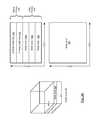
- FIG. 3Ashows a RAID cube and various view of the RAID cube in accordance with one embodiment of the invention.
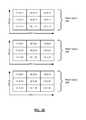
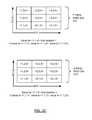
- FIGS. 3B-3Cshow RAID grids in accordance with one embodiment of the invention.
- FIGS. 4A-4Bshow data structures in accordance with one embodiment of the invention.
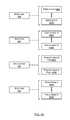
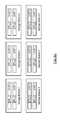
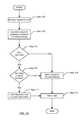
- FIGS. 5A-5Cshow flow charts in accordance with one embodiment of the invention.
- FIGS. 6A-6Cshow an example in accordance with one or more embodiments of the invention.
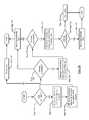
- FIGS. 7A-7Bshow flow charts in accordance with one or more embodiments of the invention.
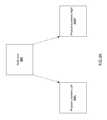
- FIGS. 8A-8Eshow an example in accordance with one or more embodiments of the invention.
- any component described with regard to a figurein various embodiments of the invention, may be equivalent to one or more like-named components described with regard to any other figure.
- descriptions of these componentswill not be repeated with regard to each figure.
- each and every embodiment of the components of each figureis incorporated by reference and assumed to be optionally present within every other figure having one or more like-named components.
- any description of the components of a figureis to be interpreted as an optional embodiment which may be implemented in addition to, in conjunction with, or in place of the embodiments described with regard to a corresponding like-named component in any other figure.
- embodiments of the inventionrelate to a method and system for replicating data using a multi-dimensional RAID scheme that implements mirroring at the grid location level. More specifically, embodiments of the invention provide a method and system for implementing a 2D RAID scheme and a 3D RAID scheme each of which implements mirroring at the grid location level.
- the data stored within a RAID grid implementing such a RAID schememay be recovered when there are more than two errors in a given RAID stripe.
- the data stored within a RAID cube implementing such a RAID schememay be recovered when there are more than two errors in a given RAID stripe.
- all datais able to be recovered when there is a failure in more than one independent fault domain (IFD).
- IFDindependent fault domain
- an IFDcorresponds to a failure mode which results in the data at a given location being inaccessible.
- Each IFDcorresponds to an independent mode of failure in the storage array.
- the IFDsmay be (i) storage module, (ii) channel (i.e., the channel used by the storage module controller (not shown) in the storage module to write data to the NAND flash), and (iii) NAND flash dies.
- RAIDrefers to “Redundant Array of Independent Devices.” Accordingly, embodiments of the invention may be implemented using any type of persistent storage device where the RAID grid locations (see e.g., FIG. 2A ) may be distributed across one or more persistent storage devices based on the implementation of the invention (see e.g., FIGS. 2B-4B ).
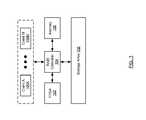
- FIG. 1shows a system in accordance with one embodiment of the invention.
- the systemincludes one or more clients ( 100 A, 100 M), a RAID controller ( 104 ), memory ( 106 ), optionally an FPGA ( 102 ), and a storage array ( 108 ).
- a client ( 100 A, 100 M)is any system or process executing on a system that includes functionality to issue a read request or a write request to the RAID controller ( 104 ).
- the clients ( 100 A, 100 M)may each include a processor (not shown), memory (not shown), and persistent storage (not shown).
- the RAID controller ( 104 )is configured to implement the multi-dimensional RAID scheme, which includes writing data to the storage array in a manner consistent with the multi-dimensional RAID scheme (see FIGS. 5A-5C ) and reading data (including reconstructing data) from the storage array in a manner consistent with the multi-dimensional RAID scheme (see FIGS. 7A-7B ).
- the RAID controller ( 104 )includes a processor configured to execute instructions to implement one or more embodiments of the invention, where the instructions are stored on a non-transitory computer readable medium (not shown) that is located within or that is operatively connected to the RAID controller ( 104 ).
- the RAID controller ( 104 )may be implemented using hardware.
- the RAID controller ( 104 )may be implemented using any combination of software and/or hardware.
- the RAID controller ( 104 )is operatively connected to memory ( 106 ).
- the memory ( 106 )may be any volatile memory including, but not limited to, Dynamic Random-Access Memory (DRAM), Synchronous DRAM, SDR SDRAM, and DDR SDRAM.
- the memory ( 106 )is configured to temporarily store various data (including parity data) prior to such data being stored in the storage array.
- the FPGA ( 102 )(if present) includes functionality to calculate P and/or Q parity information for purposes of storing data in the storage array ( 108 ) and/or functionality to perform various calculations necessary to recover corrupted data stored using the multi-dimensional RAID scheme(s).
- the RAID controller ( 104 )may use the FPGA ( 102 ) to offload the processing of various data in accordance with one or more embodiments of the invention.
- the storage array ( 108 )includes a number of individual persistent storage devices including, but not limited to, magnetic memory devices, optical memory devices, solid state memory devices, phase change memory devices, any other suitable type of persistent memory device, or any combination thereof. Each of aforementioned devices may be generically referred to throughout this description as a storage module unless otherwise specified.
- FIG. 1shows an FPGA
- the inventionmay be implemented without an FPGA.
- other componentsmay be used in place of the FPGA without departing from the invention.
- the inventionmay be implemented using an ASIC(s), a graphics processing unit(s) (GPU), a general purpose processor(s), any other hardware device capable of calculating P and/or Q parity information for purposes of storing data in the storage array and/or performing various calculations necessary to recover corrupted data stored using the multi-dimensional RAID scheme, any devices that includes a combination of hardware, firmware, and/or software configured to calculate P and/or Q parity information for purposes of storing data in the storage array ( 108 ) and/or to perform various calculations necessary to recover corrupted data stored using the multi-dimensional RAID scheme, or any combination thereof.
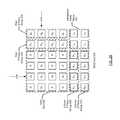
- FIG. 2Ashows a RAID grid in accordance with one embodiment of the invention.
- the RAID controllerif the RAID controller implements a 2D RAID scheme or a 3D RAID scheme (see FIG. 3A ), the RAID controller stores data in a RAID Grid ( 200 ).
- FIG. 2Ashows the conceptual portions of a RAID grid in accordance with one or more embodiments of the invention.
- the RAID grid ( 200 )includes a number of RAID grid locations, where data associated with each RAID grid location is ultimately written to two (or more) unique physical locations in the storage array (see FIG. 2B ).
- the RAID grid ( 200 )includes (i) a data grid ( 202 ), which includes RAID grid locations that store data received from the client (i.e., data that the client has instructed the RAID controller to write to the storage array); (ii) a row P parity group ( 204 ), which includes the RAID grid locations that store the P parity values calculated using data in RAID grid locations in a virtual stripe along a row dimension (see FIG. 2A , 214 and FIG. 6A , 602 ); (iii) a row Q parity group ( 206 ), which includes the RAID grid locations that store the Q parity values calculated using data in RAID grid locations in a virtual stripe along a row dimension (see FIG. 2A , 214 and FIG.
- a column P parity group( 208 ), which includes the RAID grid locations that store the P parity values calculated using data in RAID grid locations in a virtual stripe along a column dimension (see FIG. 2A , 216 and FIG. 6A , 604 );
- a column Q parity group( 210 ), which includes the RAID grid locations that store the Q parity values calculated using data in RAID grid locations in a virtual stripe along a column dimension (see FIG. 2A , 216 and FIG.
- intersection parity group( 212 ), which includes parity values calculated using (a) data from RAID grid locations in row P parity group ( 204 ), (b) data from RAID grid locations in row Q parity group ( 206 ), (c) data from RAID grid locations in column P parity group ( 208 ), and (d) data from RAID grid locations in column Q parity group ( 210 ) (described below).
- the data stored in the RAID grid location denoted as I r1may be calculated by applying a P parity function to all RAID grid locations in the row P Parity Group ( 204 ) or by applying a P parity function to all RAID grid locations in the column P Parity Group ( 208 ).
- the data stored in the RAID grid location denoted as I r2may be calculated by applying a P parity function to all RAID grid locations in the row Q Parity Group ( 206 ) or by applying a Q parity function to all RAID grid locations in the column P Parity Group ( 208 ).
- the data stored in the RAID grid location denoted as I r3may be calculated by applying a P parity function to all RAID grid locations in the column Q Parity Group ( 210 ) or by applying a Q parity function to all RAID grid locations in the row P Parity Group ( 204 ).
- the data stored in the RAID grid location denoted as I r4may be calculated by applying a Q parity function to all RAID grid locations in the column Q Parity Group ( 210 ) or by applying a Q parity function to all RAID grid locations in the row Q Parity Group ( 206 ).
- the P and Q parity functions used to calculate the values for all of parity groupsmay correspond to any P and Q parity functions used to implement RAID 6.
- the RAID grid ( 200 ) shown in FIG. 2Arepresents the conceptual layout of a RAID grid.
- the relative location of the various RAID grid locationsmay vary across a row and or a column.
- the relative location of RAID grid locations that include data (denoted by “D”) and the RAID grid locations that include parity datamay be as follows: ⁇ D 1 , D 2 , P r2 , D 3 , Q r2 , D 4 >, ⁇ P r2 , Q r2 , D 1 , D 2 , D 3 , D 4 >, or any other arrangement within row ( 214 ).
- the relative location of RAID grid locations that include data (denoted by “D”) and the RAID grid locations that include parity datamay be as follows: ⁇ D 5 , D 2 , D 6 , P c6 , D 6 , Q c6 >, ⁇ P c6 , D 5 , D 2 , Q c6 , D 6 , D 7 >, or any other arrangement within column ( 216 ).
- the RAID controllermay determine to which physical addresses in the storage array each of the RAID grid locations is written. This determination may be made prior to receiving any of the data (denoted as “D”) for a particular RAID grid from the client. Alternatively, the determination may be made prior to writing the data in the RAID grid locations to the storage array.
- FIG. 2Ashows a RAID grid that is 6 ⁇ 6, the RAID grid may be implemented using any other dimensions without departing from the invention.
- the P parity valueis a Reed-Solomon syndrome and, as such, the P Parity function may correspond to any function that can generate a Reed-Solomon syndrome. In one embodiment of the invention, the P parity function is an XOR function.
- the Q parity valueis a Reed-Solomon syndrome and, as such, the Q Parity function may correspond to any function that can generate a Reed-Solomon syndrome.
- a Q parity valueis a Reed-Solomon code.
- Qg 0 ⁇ D 0 +g 1 ⁇ D 1 +g 2 ⁇ D 2 + . . . +g n-1 ⁇ D n-1 , where Q corresponds any one of the Q parity values defined with respect to FIG. 2A , g is a generator of the field, and the value of D corresponds to the data (which may include both values from the data grid and/or values from one or more rows or columns that include P or Q parity values).
- each row and columnmay only include a P parity value.
- each row and columnmay include three parity values.
- the aforementioned examplesare not intended to limit the invention.
- each of the parity valuesis a Reed-Solomon syndrome.
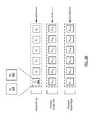
- FIG. 2Bshows virtual and physical stripes in accordance with one embodiment of the invention.
- each RAID grid locatione.g., 222
- the two physical locationsmay be referred to as physical location left (PL L ) and physical location right (PL R ).
- the aforementioned labelsare included solely for the purpose of describing the invention but are not intended to limit the invention.
- Each of the aforementioned physical locationscorresponds to a distinct physical location in the persistent storage.
- the physical locationsmay be on the same storage module but on different NAND chips (on the same NAND die) in the storage module. Alternatively, each of the physical locations may be located on separate storage modules.
- each row and column in the RAID grid shown in FIG. 2Amay be referred to as a virtual stripe.
- one virtual stripeis row ( 214 ), where row ( 214 ) is made up of RAID grid locations (denoted as D 1 , D 2 , D 3 , P r2 , Q r2 , D 4 ).
- RAID grid locationsdenoted as D 1 , D 2 , D 3 , P r2 , Q r2 , D 4 .
- each of the RAID grid locationis associated with two physical locations in persistent storage. From this it follows that each virtual stripe is associated with two physical stripes ( 214 L, 214 R) denoted as physical stripe left (PSL) and physical stripe right (PSR).
- PSL ( 214 L)includes all PL L s associated with the RAID grid locations for row ( 214 ) and PSR ( 214 R) includes all PL R s associated with the RAID grid locations for row ( 214 ).
- the parity values in each of PSL and PSRare calculated using the data values in the PSL and PSR. If the virtual stripe is operating in mirrored mode then the parity values in a PSL and a PSR for a given virtual stripe are identical. Alternatively, if the virtual stripe is operating in non-mirrored mode then the parity values in a PSL and a PSR for a given virtual stripe may be different.
- the location of data values and parity values in a given PSL and PSRcorrespond to the location of data values and parity values in the corresponding virtual stripe.
- the virtual stripe ( 214 ) P parity valuesare associated with RAID grid location P 2 R.
- PL 5L and PL 5Rinclude P parity values.
- FIG. 2Cshows a storage module in accordance with one embodiment of the invention.
- values (data or parity) associated with a given RAID grid locationmay be written to the same storage module ( 224 ) but to different chips ( 226 , 228 ) in the storage module.
- the physical address corresponding to the physical location in the storage modulemay be represented using the following n-tuple: ⁇ storage module, channel, chip, plane, block, page, byte>.
- the physical locations for PL L and PL Rmay be associated with the following physical addresses: PL L : ⁇ storage module, channel, chip 0 , plane, block, page, byte> and PL R : ⁇ storage module, channel, chip 1 , plane, block, page, byte>.
- PL L⁇ storage module
- PL R⁇ storage module
- FIG. 3Ashows a RAID cube and various views of the RAID cube in accordance with one embodiment of the invention.
- a RAID cube ( 300 )corresponds to a conceptual stack of RAID grids (for clarity only RAID grid ( 304 ) is shown within the RAID cube ( 300 )).
- the RAID controllerselects the physical addresses within the storage array in which to store the data for each of the RAID grid locations. In one embodiment of the invention, the selection of the physical addresses may be determined in accordance with the IFDs for which the RAID grid (or RAID cube) is designed to protect against.
- the physical addressesmay be selected in a manner to protect against failures in one or more IFDs. For example, as shown in FIG. 3A , each RAID grid location (not shown) for a given RAID grid ( 304 ) is written to a physical address (or will be written to a physical address) in the storage array (not shown) that is selected using a unique pair of values from IFD 1 and IFD 2 , but has the same value for IFD 3 .
- IFD 1storage module
- IFD 2channel
- IFD 3NAND die.
- the RAID cube ( 300 )is a conceptual stack of RAID grids. More specifically, in one embodiment of the invention, the RAID cube ( 300 ) may include (i) a data portion ( 314 ), which includes two or more RAID grids ( 304 , 306 , 308 ) and a parity portion ( 316 ) that includes a P parity RAID grid ( 310 ) and a Q parity RAID grid ( 312 ).
- the RAID grids ( 304 , 306 , 308 ) in the data portion ( 314 )include parity data (see FIG. 2A ), which allows data within the RAID grid to be recovered using only data (including parity data) within the RAID grid.
- the RAID cubeis arranged such that data for a given RAID grid location in a given RAID grid ( 304 , 306 , 308 ) may be recovered using data (including parity data) from other RAID grids (in both the data portion ( 314 ) and the parity portion ( 316 )).
- the parity portion ( 316 ) of the RAID cubeenables such a recovery mechanism.
- the P parity RAID grid ( 310 )is the same dimension as the underlying RAID grids ( 304 , 306 , 308 ), where the data in every RAID grid location within the P Parity RAID grid is calculated by applying a P parity function (e.g., an XOR function) to data (including parity data) from the RAID grids in the data portion 314 (see FIGS. 3B-3C ).
- a P parity functione.g., an XOR function
- the Q parity RAID grid 312is the same dimension as the underlying RAID grids ( 304 , 306 , 308 ), where the data in every RAID grid location within the Q Parity RAID grid is calculated by applying a Q parity function to data (including parity data) from the RAID grids in the data portion ( 314 ) (see FIGS. 3B-3C ).
- FIGS. 3B-3Cshow an example of populating a RAID cube in accordance with one or more embodiments of the invention. The example is not intended to limit the scope of the invention.
- each RAID grid ( 304 , 306 , 308 ) in the RAID cubeincludes RAID grid locations that are written across IFD 1 and IFD 2 but have a constant value of IFD 3 .
- the value of a RAID grid location (the “target RAID grid location”) in a RAID gridmay be recovered using (i) only values of RAID grid locations in the row or column in which the target RAID grid location is located; (ii) values of any RAID grid location within the RAID grid in which the target RAID grid location is located; or (iii) values of any RAID grid location within the RAID cube in which the target RAID grid location is located.
- the arrangement of the data and parity values within the RAID grid and/or RAID cubeallows the value in a target RAID grid location to be recovered when there are more than two errors in each of the rows and columns in which the target RAID grid location is located.
- FIG. 3Bincludes three RAID grids ( 304 , 306 , 308 ), which make up the data portion ( 314 ) of the RAID cube ( 300 ).
- Each of the RAID grid locations in each of the RAID grids ( 304 , 306 , 308 )includes a 3-tuple defining the physical location in the storage array in which the data in the RAID grid location is written.
- the elements in the 3-tuplecorrespond to IFDs as follow: ⁇ IFD 1 , IFD 2 , IFD 3 >.
- the 3-tuplesillustrate how the physical locations in the storage array are selected across the various IFDs.
- each of the RAID grid locations in RAID grid 1includes a unique combination of IFD 1 and IFD 2 , but the same value for IFD 3 .
- IFD 1is a storage module
- IFD 2is a channel
- IFD 3is a NAND die
- 3-tuple ⁇ 4,2,1>indicates that the data in the particular RAID grid location will be written to a physical address(es) corresponding to a physical location(s) in NAND die 1 in Storage module 4 using Channel 2 .
- the 3-tuple ⁇ 2,3,1>indicates that the data in the particular RAID grid location will be written to a physical address(es) corresponding to a physical location(s) in NAND 1 in Storage module 2 using Channel 3 .
- RAID grid 2 ( 306 ) and RAID grid 3 ( 308 )are arranged in a similar manner to RAID grid 1 ( 304 ).
- the value for IFD 3 in the 3-tuples for RAID grid locations in RAID grid 2 ( 306 )is different than the value of IFD 3 in the 3-tuples for RAID grid locations for RAID grid 1 ( 304 ).
- the value for IFD 3 in the 3-tuples for RAID grid locations for RAID grid 3 ( 308 )is different than the value of IFD 3 in the 3-tuples for RAID grid locations for RAID grid 1 ( 304 ) and for RAID grid 2 ( 306 ).
- data in each of the RAID grid locations in P Parity RAID grid ( 310 )are arranged in a similar manner to RAID grid 1 ( 304 ), RAID grid 2 ( 306 ), and RAID grid 3 ( 308 ). Further, as described above, the value of the data in each of the RAID grid locations in P Parity RAID grid ( 310 ) is calculated using data from one RAID grid location in each of the data grids in the RAID cube (i.e., RAID grid 1 ( 304 ), RAID grid 2 ( 306 ), and RAID grid 3 ( 308 )).
- the value of the data at RAID grid location ⁇ 1, 1, 4> in the P Parity RAID grid ( 310 )is determined by applying a P parity function (e.g., an XOR function) to data from the following RAID grid locations: (i) data from RAID grid 1 ( 304 ) ⁇ 1,1,1>, (ii) data from RAID grid 2 ( 306 ) ⁇ 1,1,2>, and (iii) data from RAID grid 3 ( 308 ) ⁇ 1,1,3>.
- P parity functione.g., an XOR function
- data in each of the RAID grid locations in Q Parity RAID grid ( 312 )are arranged in a similar manner to RAID grid 1 ( 304 ), RAID grid 2 ( 306 ), and RAID grid 3 ( 308 ). Further, as described above, the value of the data in each of the RAID grid locations in Q Parity RAID grid ( 312 ) is calculated using data from one RAID grid location in each of the data grids in the RAID cube (i.e., RAID grid 1 ( 304 ), RAID grid 2 ( 306 ), and RAID grid 3 ( 308 )).
- the value of the data at RAID grid location ⁇ 1, 1, 5> in the Q Parity RAID grid ( 312 )is determined by applying a Q parity function (as described above) to data from the following RAID grid locations: (i) data from RAID grid 1 ( 304 ) ⁇ 1,1,1>, (ii) data from RAID grid 2 ( 306 ) ⁇ 1,1,2>, and (iii) data from RAID grid 3 ( 308 ) ⁇ 1,1,3>.
- the values for data in the other RAID grid locations in Q Parity RAID grid ( 312 )are calculated in a similar manner.
- FIGS. 4A-4Bshow relationships between the various components in the system in accordance with one or more embodiments of the invention.
- the RAID controllerincludes one or more data structures to track the relationships shown in FIGS. 4A-4B .
- the RAID controllermay track one or more of the following relationships without departing from the invention. Said another way, the RAID controller may implement the invention without tracking all of the relationships shown in FIGS. 4A-4B .
- each RAID cube ( 400 )is associated with two or more RAID grids ( 402 A, 402 N). If the RAID controller does not implement RAID grids then the relationship between RAID cubes and RAID grids is not tracked.
- Each RAID grid ( 402 )is associated with two or more grid locations (also referred to as RAID grid locations) ( 404 A, 404 N).
- the number of grid locations associated with each RAID gridmay vary based on the implementation of the RAID grid.
- each grid location ( 404 )is associated with at least two physical locations ( 406 A, 406 B). If there are two physical locations associated with the grid location, then the physical locations may be referred to as physical location left ( 406 A) and physical location right ( 406 B). In one embodiment of the invention, all grid locations associated with a particular RAID grid are associated with the same number of physical locations. However, grid locations associated with other RAID grids implemented by the RAID controller may be associated with a different number of physical locations.
- each RAID grid ( 402 )is associated with one or more virtual stripes ( 408 A, 408 N) (see FIG. 4A ), where each of the virtual stripes ( 408 ) is made up of sets of grid locations ( 404 A, 404 N) associated with the RAID grid ( 402 ).
- a given grid location ( 404 A, 404 N)may be associated with multiple virtual stripes ( 408 ).
- each virtual stripe ( 408 )is associated with at least two physical stripes ( 410 A, 410 N). If there are two physical stripes associated with the virtual stripe, then the physical stripes may be referred to as physical stripe left ( 410 A) and physical stripe right 410 N. In one embodiment of the invention, all virtual stripes associated with a particular RAID grid are associated with the same number of physical stripes. However, virtual stripes associated with other RAID grids implemented by the RAID controller may be associated with a different number of physical stripes.
- Each virtual stripe ( 408 )is associated with a storage mode ( 412 ).
- the storage modemay be mirrored mode or non-mirrored mode.
- the physical stripes associated with the virtual stripeinclude the same data (including parity data).
- non-mirrored modethe physical stripes associated with the virtual stripe may include different data (including parity data).
- a given RAID gridmay include virtual stripes that are in mirrored mode and virtual stripes that are in non-mirrored mode.
- the storage modemay be specified on a per grid location basis as opposed to a per virtual stripe basis.
- a given virtual stripemay include grid locations implementing both mirroring and non-mirroring mode.
- Each physical locationis associated with a state ( 414 ).
- the state ( 414 )may be set as filled (denoting that data (or parity data) has been written to the physical location) or empty (denoting that no data (or parity data) has been written to the location).
- the state of the physical locationmay also be set to filled if the RAID controller has identified data in the RAID controller to write to the physical location (see e.g., FIG. 5A , Step 516 ).
- the RAID controllermay initialize the state of each physical location to empty.
- Each physical location ( 406 )is associated with a physical address ( 416 ), which defines the physical location within the persistent storage.
- the physical addressmay be specified using the following n-tuple: ⁇ storage module, channel, chip, plane, block, page, byte>. Other n-tuples may be used to represent the physical address without departing from the invention. Further, other forms of physical addresses may be used without departing from the invention.
- Each physical address 416is also associated with a logical address ( 418 ), (e.g., ⁇ object, offset>), which identifies the data from the perspective of the client. Any form of logical address may be used without departing the invention.
- the RAID controllermay provide a mechanism for translating or otherwise associating a particular logical address with a particular physical address.
- the RAID controllermay also maintain information about the RAID grid geometry.
- the RAID grid geometrymay include, but is not limited to, the size of RAID grid, the IFD associated with each dimension of the RAID grid, the size of the RAID cube, the IFD associated with each dimension of the RAID cube, and the location of each P and Q parity value (including parity values within the intersection parity group (see FIG. 2A )) within each row and/or column within each RAID grid.
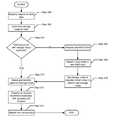
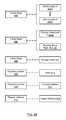
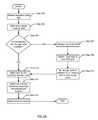
- FIGS. 5A-5Cshow flowcharts in accordance with one or more embodiments of the invention. More specifically, FIGS. 5A-5C show a method for storing data in a storage array in accordance with one or more embodiments of the invention. While the various steps in the flowchart are presented and described sequentially, one of ordinary skill will appreciate that some or all of the steps may be executed in different orders, may be combined or omitted, and some or all of the steps may be executed in parallel. In one embodiment of the invention, the methods shown in FIGS. 5A , 5 B, and 5 C may be performed in parallel.
- a request to write datais received from the client.
- the requestincludes the logical address of the data that the client is requesting to be written to the storage array.
- the storage modee.g., mirrored or non-mirrored
- the storage modeis determined based on information in the request from the client or based on information communicated to the client in a separate request or by another communication mechanism. In other embodiments of the invention, the storage mode is determined by the RAID controller (or another process or component in the system).
- the RAID controllerdetermines the storage mode based on, for example, policy settings, information about the client that issued the write request, QoS guarantees, and/or information about the data (e.g., size, type, etc.).
- Step 504a determination is made about whether there is an available grid location(s) that implements the storage mode determined in Step 502 .
- the determination in step 504involves searching for available grid locations in the currently active RAID grids (i.e., RAID grids in which the data grid portion, 202 in FIG. 2A , is not filled) using, for example, the data structures that store information as described in FIGS. 4A-4B . If there is an available grid location(s), the grid location(s) is identified and the process proceeds to Step 512 ; otherwise, the process proceeds to step 506 .
- Step 506a new RAID grid is allocated.
- Step 508a virtual stripe is selected from the new RAID grid.
- Step 510the storage mode for the selected virtual stripe has a storage mode corresponding to the storage mode determined in Step 502 .
- a grid locationis selected.
- the grid locationis either selected from the grid locations identified in step 504 or from the grid locations in the new virtual stripe selected in step 508 .
- steps 508 and 510may be performed on a particular grid location as opposed to a virtual stripe.
- the physical location(s) associated with the grid locationis determined.
- the number of physical locations identifieddepends on the storage mode determined in Step 502 . For example, if the storage mode is non-mirrored then only one physical location associated with the grid location is identified. Alternatively, if the storage mode is mirrored, then at least two physical locations associated with the grid location are identified.
- Step 516the RAID controller updates one or more of the data structures to reflect that data is to be written to the physical location(s) (see FIGS. 4A-4B ).
- the steps shown in FIG. 5Amay be preformed each time data is to be written to the storage array.
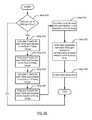
- FIG. 5Bshows a method for writing a RAID grid to the storage array in accordance with one or more embodiments of the invention.
- step 520a determination is made about whether a data grid within a given RAID grid (e.g., 202 in FIG. 2A ) is filled.
- the data gridis “filled” when all the state of all physical locations associated with the grid locations in the data grid are set to filled. In one embodiment of the invention, this determination is made using one or more of the data structures described with respect to FIGS. 4A and 4B . If the data grid within a given RAID grid is filled, the process proceeds to step 522 ; otherwise, the process ends.
- step 522the P parity is calculated for each physical location corresponding to a RAID grid location in the Row P parity group (e.g., 204 in FIG. 2A ) using the appropriate values from the corresponding physical locations (see e.g., FIG. 2A discussed above).
- step 524the Q parity is calculated for each physical location corresponding to a RAID grid location in the Row Q parity group (e.g., 206 in FIG. 2A ) using the appropriate values from the corresponding physical locations (see e.g., FIG. 2A discussed above).
- step 526the P parity is calculated for each physical location corresponding to a RAID grid location in the Column P parity group (e.g., 208 in FIG.
- step 528the Q parity is calculated for each physical location corresponding to a RAID grid location in the Column Q parity group (e.g., 210 in FIG. 2A ) using the appropriate values from the corresponding physical locations (see e.g., FIG. 2A discussed above).
- the parity values for each physical location corresponding to a RAID grid locations in the intersection parity groupare calculated using the appropriate values from the physical locations corresponding to RAID grid locations in one or more of the Row P parity group (e.g., 204 in FIG. 2A ), Row Q parity group (e.g., 206 in FIG. 2A ), Column P parity group (e.g., 208 in FIG. 2A ), and Column Q parity group (e.g., 210 in FIG. 2A ).
- step 532the data associated with each physical location corresponding to a RAID grid location for the RAID grid is written to the appropriate physical address in the storage array.
- the data(including parity data) is written to the storage array in two phases. In the first phase, data or parity data associated with each physical location associated with the left portions of grid locations in the RAID grid is written, in parallel, to an appropriate storage module. In the second phase, data or parity data associated with each physical location associated with the right portions of grid locations in the RAID grid is written, in parallel, to an appropriate storage module. An example of the two phase write is described below in FIGS. 6A-6C .
- the physical address in which to write data for each of the RAID grid locationsis obtained from one or more of the data structures described with respect to FIGS. 4A-4B .
- one or more data structures described with respect to FIGS. 4A-4Bare updated to reflect that the RAID grid has been written to the storage array.
- the writing of the datamay be staged without departing from the invention.
- the data(excluding the parity data) may be written to the storage array in parallel while the parity data may be written to the storage array at a later time.
- the writesmay be staged in other ways without departing from the invention.
- the RAID controllermay perform the method shown in FIG. 5C .
- step 536a determination is made about whether a data portion of the RAID cube is filled.
- the data portion of RAID cubeis filled when the state of all physical locations corresponding to grid locations in the data portion of the RAID cube are set to filled. If the data portion of the RAID cube is filled, the process proceeds to Step 538 ; otherwise the process ends. In one embodiment of the invention, this determination is made using one or more of the data structures described with respect to FIGS. 4A-4B .
- step 538the P parity values for each physical location corresponding to a RAID grid location in the P parity RAID grid (e.g., 310 in FIG. 3A ) is calculated.
- the values for each of the RAID grid locationsis calculated using one value obtained from each of the RAID grids in the data portion (e.g., 314 in FIG. 3A ) of the RAID cube.
- step 540the Q parity values for each physical location corresponding to a RAID grid location in the Q parity RAID grid (e.g., 312 in FIG. 3A ) is calculated.
- the values for each of the RAID grid locationsis calculated using one value obtained from each of the RAID grids in the data portion (e.g., 314 in FIG. 3A ) of the RAID cube.
- step 542the data associated with each physical location corresponding to a RAID grid location in the Parity RAID grids (e.g., P Parity RAID Grid and Q Parity RAID Grid) is written to the appropriate physical address in the storage array.
- the physical address in which to write data for each of the RAID grid locationsis obtained from the one or more of the data structures described with respect to FIGS. 4A-4B .
- step 544one or more data structures described with respect to FIGS. 4A-4B are updated to reflect that the RAID cube has been written to the storage array.
- FIGS. 6A-6Cshow an example in accordance with one or more embodiments of the invention. The example is not intended to limit the scope of the invention.
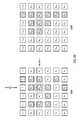
- FIG. 6Ashows a RAID grid ( 600 ) that includes 36 grid locations (GL). Further, the physical locations corresponding to the aforementioned GL are distributed across storage modules and channels as shown in FIG. 6A .
- the virtual stripeis implementing mirrored mode and that GL 5 includes the P parity values and GL 6 includes the Q parity values for the virtual stripe ( 602 ).
- the following tablesummarizes the data stored in each of the corresponding physical locations with the virtual stripe ( 602 ) when the virtual stripe is implementing mirrored mode.
- virtual stripe ( 604 )may be populated in the same manner as described above with respect to virtual stripe ( 602 ).
- the RAID gridis ready to be written to the storage modules.
- the writing processis divided into two phases. In the first phase, data or parity data associated with each physical location associated with the left portions of grid location is written, in parallel, to an appropriate location in the storage array. In the second phase, data or parity data associated with each physical location associated with the right portions of grid location is written, in parallel, to an appropriate location in the storage array.
- the followingis an example of writing data (denoted as D) to the storage array in accordance with the mirrored mode.
- data(D 1A -D 4A ) (as described above) is to be written to the storage array.
- the RAID controller(not shown) issues, in parallel, thirty-six write commands in phase 1 of the write process. Specifically, six write commands are issued to each storage module, where each write command for a given storage module targets a different chip on the storage module.
- Table 3shows a subset of write commands corresponding to the “Left Portion” of the virtual stripe ( 602 ) issued during phase 1 of the write process.
- the RAID controllerissues, in parallel, thirty-six write commands in phase 2 of the write process. Specifically, six write commands are issued to each storage module, where each write command for a given storage module targets a different chip on the storage module.
- Table 4shows a subset of write commands corresponding to the “Right Portion” of the virtual stripe ( 602 ) issued during phase 2 of the write process.
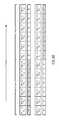
- FIG. 6Bshows which chips in each of the flash modules are actively writing (W) or available to service a read request (R) during each of the aforementioned write phases.
- FIG. 6Cshows the state of the 12 chips in the storage modules after the commands in Tables 3 and 4 have been issued.
- FIGS. 7A-7Bshow flowcharts in accordance with one or more embodiments of the invention. More specifically, FIGS. 7A-7B show a method for obtain data from the storage array in accordance with one or more embodiments of the invention. While the various steps in the flowchart are presented and described sequentially, one of ordinary skill will appreciate that some or all of the steps may be executed in different orders, may be combined or omitted, and some or all of the steps may be executed in parallel. In one embodiment of the invention, the methods shown in FIGS. 7A and 7B may be performed in parallel.
- Step 700a request to obtain data from the persistent storage is received.
- the requestmay be a read request issued by a client.
- the requestmay specify a logical address associated with the data.
- Step 702the physical address(es) associated with the requested data are obtained.
- the aforementioned physical addressesmay be determined using the data structures described above with respect to FIGS. 4A-4B .
- Step 704a determination is made about whether the data is mirrored.
- this determinationmay include (i) determining the grid location with which the physical address is associated, (ii) determining the virtual stripe with which the grid location is associated, and (iii) determining the storage mode associated with the virtual stripe identified in (ii). If the storage mode is set on a per grid level basis, then the determination in Step 704 may be performed by (i) determining the grid location with which the physical address is associated and (ii) determining the storage mode associated with the grid location identified in (i). If the virtual storage is implementing mirrored mode, then the data is mirrored and the process proceeds to Step 706 ; otherwise the process proceeds to Step 708 .
- the dataWhen the data is mirrored, the data may be obtained from at least two different physical locations. In such cases, in Step 706 , a determination is made about whether any of the physical locations in which the data is located is non-busy (i.e., the chip on which the data is located is not currently servicing a write or erase request). If any of the physical locations in which the data is located is non-busy, the process proceeds to step 710 ; otherwise the process proceeds to step 708 .
- non-busyi.e., the chip on which the data is located is not currently servicing a write or erase request
- Step 708a read request is issued to the persistent storage using a physical address obtained in step 702 .
- Step 710a read request is issued to the persistent storage using a physical address (obtained in step 702 ) corresponding to the non-busy physical location.
- Step 712data is obtained (via Steps 708 or 710 ) from the physical location corresponding to the physical address in the request.
- step 714a determination is made about whether the data obtained in step 712 is corrupted.
- the RAID controllermay implement any known method (e.g., checksums) for determining whether the data is corrupted. If the data is not corrupted the process proceeds to step 716 ; otherwise the process proceeds to step 718 .
- step 716the data is returned to the client and the process ends.
- the processmay proceed to Step 718 if the data is unable to be obtained—for example, because the persistent storage is damaged or unplugged, or the read command fails, then the process may proceed to Step 718 .
- step 718the RAID controller determines from which RAID grid the data was obtained.
- step 720the RAID controller attempts to reconstruct the data using, if available, a mirrored copy of the data (see FIG. 2A ), and/or using physical locations corresponding to the other RAID grid locations within the row and/or column in which the physical location that included the data is located.
- step 722a determination is made about whether the reconstruction attempt in step 720 was successful.
- the RAID controllermay implement any known method (e.g., checksums) for determining whether the reconstruction attempt was successful. If the reconstruction attempt in step 722 was successful, the process proceeds to step 724 ; otherwise the process proceeds to step 726 . In step 724 , the reconstructed data is returned to the client and the process ends.
- step 726the RAID controller attempts to reconstruct the data using physical locations corresponding to the other RAID grid locations in other rows and/or columns the RAID grid.
- step 727a determination is made about whether the reconstruction attempt in step 726 was successful.
- the RAID controllermay implement any known method (e.g., checksums) for determining whether the reconstruction attempt was successful. If the reconstruction attempt in step 726 was successful, the process proceeds to step 724 ; otherwise the process proceeds to step 730 .
- step 730the RAID controller attempts to reconstruct the data using physical locations corresponding to the other RAID grids in the RAID cube.
- step 732a determination is made about whether the reconstruction attempt in step 730 was successful.
- the RAID controllermay implement any known method (e.g., checksums) for determining whether the reconstruction attempt was successful. If the reconstruction attempt in step 730 was successful, the process proceeds to step 734 ; otherwise the process proceeds to step 736 .
- step 734the reconstructed data is returned to the client and the process ends.
- step 736the RAID controller returns an error to the client, which indicates that the requested data cannot be retrieved from the storage array by the RAID controller.
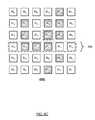
- FIGS. 8A-8Eshow an example in accordance with one or more embodiments of the invention.
- the systemincludes a RAID grid ( 800 ) that includes a set of grid locations (see e.g., FIG. 2A ).
- the grid locations (not shown)are associated with a set of virtual stripes (not shown) all implementing mirrored mode.
- each of the grid locations (not shown)is associated with a two physical locations (see e.g., FIG. 2B ).
- the RAID grid ( 800 )is associated with two sets of physical locations—physical locations left ( 800 L) and physical locations right ( 800 R).
- FIG. 8Bconsider a scenario in which a client requested data that is located at PL L1 in physical locations left ( 800 L) and in PL R1 in physical locations right ( 800 R). However, the data in PL L1 and PL R1 is corrupted (as denoted by the shading).
- the RAID controllerfirst attempts (per step 720 in FIG. 7B ) to reconstruct the data in PL L1 using data from physical locations in row ( 804 ) and/or column ( 802 ). However, because row ( 804 ) and column ( 802 ) each include three physical locations that include corrupted data, the data in PL L1 cannot be recovered using only data from row ( 804 ) and/or column ( 802 ).
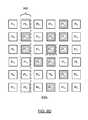
- the RAID controllerattempts (per step 726 in FIG. 7B ) to reconstruct the data in PL L1 using data from other physical locations in physical locations left ( 800 L).
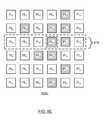
- the RAID controllercan use data from PL R2 (see FIG. 8B ) in physical locations right ( 800 R) in combination with data in the remaining physical locations in row ( 806 ) in physical locations left ( 800 L) to reconstruct all corrupted data in row ( 806 ).
- the RAID controllerbased on the reconstruction of the corrupted data in row ( 806 ), the RAID controller is able to reconstruct all corrupted data in column ( 808 ). Finally, referring to FIG. 8E , based on the reconstruction of the corrupted data in column ( 808 ), the RAID controller is able to reconstruct the data in PL L1 using the other non-corrupted data in row ( 810 ). In one embodiment of the invention, the reconstruction of the various corrupted data as shown in FIGS. 8B-8E are performed as part of steps 720 and 726 in FIG. 7B .
- the RAID controllerwould attempt to reconstruct the data in PL L1 (per Step 730 ) in FIG. 7B ) using data in other RAID grids within a RAID cube (not shown) if the RAID controller was implementing a 3D RAID scheme.
- embodiments of the inventionmay be implemented on any multi-dimensional storage device array without departing from the invention.
- one or more embodiments of the inventionmay be implemented using a two dimensional array of storage devices (magnetic, optical, solid state, or any other type of storage device), where data for each RAID grid location in a RAID grid is stored on a separate storage device.
- the RAID controllermay store data for each of the RAID grid locations using the following n-tuple: ⁇ storage device x, storage devices y, logical block address (LBA) z>, where x and y are the dimensions of the storage device array.
- LBAlogical block address
- the LBAis constant for each RAID grid location for a single RAID grid; however, the LBA is different across the RAID grids in the RAID cube.
- One or more embodiments of the inventionmay be implemented using instructions executed by one or more processors in the system. Further, such instructions may correspond to computer readable instructions that are stored on one or more non-transitory computer readable mediums.
Landscapes
- Engineering & Computer Science (AREA)
- Theoretical Computer Science (AREA)
- Physics & Mathematics (AREA)
- General Engineering & Computer Science (AREA)
- General Physics & Mathematics (AREA)
- Human Computer Interaction (AREA)
- Quality & Reliability (AREA)
- Computer Security & Cryptography (AREA)
- Techniques For Improving Reliability Of Storages (AREA)
Abstract
Description
| TABLE 1 |
| Mirrored Mode |
| Grid Location | Physical Location | Data Stored in Physical Location |
| GL1 | PLL1 | D1A |
| GL1 | PLR1 | D1A |
| GL2 | PLL2 | D2A |
| GL2 | PLR2 | D2A |
| GL3 | PLL3 | D3A |
| GL3 | PLR3 | D3A |
| GL4 | PLL4 | D4A |
| GL4 | PLR4 | D4A |
| GL5 | PLL5 | P-parity = ƒP(D1A, D2A, D3A, D4A) |
| GL5 | PLR5 | P-parity = ƒP(D1A, D2A, D3A, D4A) |
| GL6 | PLL6 | Q-parity = ƒQ(D1A, D2A, D3A, D4A) |
| GL6 | PLR6 | Q-parity = ƒQ(D1A, D2A, D3A, D4A) |
| TABLE 2 |
| Non-Mirrored Mode Example |
| Grid Location | Physical Location | Data Stored in Physical Location |
| GL1 | PLL1 | D1A |
| GL1 | PLR1 | D1B |
| GL2 | PLL2 | D2A |
| GL2 | PLR2 | D2B |
| GL3 | PLL3 | D3A |
| GL3 | PLR3 | D3B |
| GL4 | PLL4 | D4A |
| GL4 | PLR4 | D4B |
| GL5 | PLL5 | P-parity = ƒP(D1A, D2A, D3A, D4A) |
| GL5 | PLR5 | P-parity = ƒP(DB1, DB2, DB3, DB4) |
| GL6 | PLL6 | Q-parity = ƒQ(D1A, D2A, D3A, D4A) |
| GL6 | PLR6 | Q-parity = ƒQ(D1B, D2B, D3B, D4B) |
| TABLE 3 |
| Write | Physical | |
| Commands | Location | |
| Command | ||
| 1 | PLL1 | < |
| PLL2 | < | |
| PLL3 | < | |
| PLL4 | < | |
| PLL5 | < | |
| PLL6 | < | |
| TABLE 4 |
| Write | Physical |
| Commands | Location | Target Location | |
| Command 7 | PLR1 | < |
| Command 8 | PLR2 | < |
| Command 9 | PLR3 | < |
| Command 10 | PLR4 | < |
| Command 11 | PLR5 | < |
| Command 12 | PLR6 | < |
Claims (19)
Priority Applications (5)
| Application Number | Priority Date | Filing Date | Title |
|---|---|---|---|
| US13/745,246US8554997B1 (en) | 2013-01-18 | 2013-01-18 | Method and system for mirrored multi-dimensional raid |
| JP2015553737AJP5968562B2 (en) | 2013-01-18 | 2013-12-18 | Method and system for mirrored multidimensional RAID |
| PCT/US2013/076073WO2014113175A1 (en) | 2013-01-18 | 2013-12-18 | Method and system for mirrored multi-dimensional raid |
| CN201380070512.9ACN105009066B (en) | 2013-01-18 | 2013-12-18 | Method and system for mirroring multi-dimensional RAID |
| EP13821276.6AEP2946281A1 (en) | 2013-01-18 | 2013-12-18 | Method and system for mirrored multi-dimensional raid |
Applications Claiming Priority (1)
| Application Number | Priority Date | Filing Date | Title |
|---|---|---|---|
| US13/745,246US8554997B1 (en) | 2013-01-18 | 2013-01-18 | Method and system for mirrored multi-dimensional raid |
Publications (1)
| Publication Number | Publication Date |
|---|---|
| US8554997B1true US8554997B1 (en) | 2013-10-08 |
Family
ID=49262615
Family Applications (1)
| Application Number | Title | Priority Date | Filing Date |
|---|---|---|---|
| US13/745,246ActiveUS8554997B1 (en) | 2013-01-18 | 2013-01-18 | Method and system for mirrored multi-dimensional raid |
Country Status (5)
| Country | Link |
|---|---|
| US (1) | US8554997B1 (en) |
| EP (1) | EP2946281A1 (en) |
| JP (1) | JP5968562B2 (en) |
| CN (1) | CN105009066B (en) |
| WO (1) | WO2014113175A1 (en) |
Cited By (15)
| Publication number | Priority date | Publication date | Assignee | Title |
|---|---|---|---|---|
| US20120166711A1 (en)* | 2010-12-24 | 2012-06-28 | Kabushiki Kaisha Toshiba | Data storage apparatus and apparatus and method for controlling nonvolatile memories |
| US20150095697A1 (en)* | 2012-03-23 | 2015-04-02 | DSSD, Inc. | Method and system for multi-dimensional raid |
| US20150100729A1 (en)* | 2013-08-09 | 2015-04-09 | Huawei Technologies Co., Ltd. | File processing method and apparatus, and storage device |
| US20170038984A1 (en)* | 2015-08-04 | 2017-02-09 | Kabushiki Kaisha Toshiba | Storage system that has a plurality of managers among which a master manager is switchable |
| US20180052624A1 (en)* | 2016-08-19 | 2018-02-22 | Samsung Electronics Co., Ltd. | Data protection offloads using ssd peering |
| US20180241820A1 (en)* | 2017-02-22 | 2018-08-23 | Ambedded Technology Co., Ltd. | Software-defined storage apparatus, and system and storage method thereof |
| US10289491B1 (en) | 2017-04-28 | 2019-05-14 | EMC IP Holding Company LLC | Method and system for implementing multi-dimensional raid in an extensible storage array to optimize performance |
| US10339062B2 (en) | 2017-04-28 | 2019-07-02 | EMC IP Holding Company LLC | Method and system for writing data to and read data from persistent storage |
| CN110308861A (en)* | 2018-03-20 | 2019-10-08 | 浙江宇视科技有限公司 | Storing data store method, device, electronic equipment and readable storage medium storing program for executing |
| US10466930B2 (en) | 2017-04-28 | 2019-11-05 | EMC IP Holding Company LLC | Method and system for fast ordered writes with atomic multicast |
| US10466913B2 (en) | 2015-04-29 | 2019-11-05 | EMC IP Holding Company LLC | Method and system for replicating and using grid level metadata in a storage system |
| US10614019B2 (en) | 2017-04-28 | 2020-04-07 | EMC IP Holding Company LLC | Method and system for fast ordered writes with target collaboration |
| CN113703684A (en)* | 2021-08-31 | 2021-11-26 | 长江存储科技有限责任公司 | Data storage method, data reading method and storage system based on RAID |
| US11294598B2 (en)* | 2020-04-24 | 2022-04-05 | Western Digital Technologies, Inc. | Storage devices having minimum write sizes of data |
| US11537510B2 (en)* | 2020-04-24 | 2022-12-27 | Western Digital Technologies, Inc. | Storage devices having minimum write sizes of data |
Families Citing this family (4)
| Publication number | Priority date | Publication date | Assignee | Title |
|---|---|---|---|---|
| US10599342B2 (en)* | 2016-12-30 | 2020-03-24 | EMC IP Holding Company LLC | Method and system for offset mirroring in a storage system |
| CN108574708A (en)* | 2017-03-10 | 2018-09-25 | 晨宇创新股份有限公司 | Software-defined storage device, system and storage method thereof |
| US10725859B2 (en) | 2017-05-25 | 2020-07-28 | Western Digital Technologies, Inc. | Parity generation offload using peer-to-peer data transfers in data storage system |
| WO2023028820A1 (en)* | 2021-08-31 | 2023-03-09 | Yangtze Memory Technologies Co., Ltd. | System and apparatus for redundant array of independent disks striping against programming failures |
Citations (23)
| Publication number | Priority date | Publication date | Assignee | Title |
|---|---|---|---|---|
| US6351838B1 (en) | 1999-03-12 | 2002-02-26 | Aurora Communications, Inc | Multidimensional parity protection system |
| US20020161972A1 (en) | 2001-04-30 | 2002-10-31 | Talagala Nisha D. | Data storage array employing block checksums and dynamic striping |
| US20040153961A1 (en) | 2003-01-20 | 2004-08-05 | Samsung Electronics Co., Ltd. | Parity storing method and error block recovering method in external storage subsystem |
| US20050166083A1 (en) | 2003-06-26 | 2005-07-28 | Frey Alexander H.Jr. | RAID 6 disk array architectures |
| EP1577774A2 (en) | 2004-02-19 | 2005-09-21 | Nec Corporation | Semiconductor storage data striping |
| US20050223156A1 (en) | 2004-04-02 | 2005-10-06 | Lubbers Clark E | Storage media data structure system and method |
| US20060085594A1 (en) | 2004-10-20 | 2006-04-20 | Seagate Technology Llc | Metadata for a grid based data storage system |
| US20080109602A1 (en) | 2006-11-03 | 2008-05-08 | Hewlett-Packard Development Company, L.P. | Method and apparatus for writing data to a disk array |
| US7398418B2 (en) | 2003-08-14 | 2008-07-08 | Compellent Technologies | Virtual disk drive system and method |
| US20080168225A1 (en) | 2007-01-10 | 2008-07-10 | International Business Machines Corporation | Providing enhanced tolerance of data loss in a disk array system |
| US7406621B2 (en) | 2004-04-02 | 2008-07-29 | Seagate Technology Llc | Dual redundant data storage format and method |
| US7543100B2 (en) | 2001-06-18 | 2009-06-02 | 3Par, Inc. | Node controller for a data storage system |
| US20090187786A1 (en) | 2008-01-17 | 2009-07-23 | Michael John Jones | Parity data management system apparatus and method |
| US7752389B1 (en) | 2007-06-20 | 2010-07-06 | Emc Corporation | Techniques for determining physical data layout of RAID devices |
| US20100199125A1 (en) | 2009-02-04 | 2010-08-05 | Micron Technology, Inc. | Systems and Methods for Storing and Recovering Controller Data in Non-Volatile Memory Devices |
| US7934120B2 (en) | 2006-09-11 | 2011-04-26 | International Business Machines Corporation | Storing data redundantly |
| US8078906B2 (en) | 2008-08-21 | 2011-12-13 | Infinidat, Ltd. | Grid storage system and method of operating thereof |
| US8145840B2 (en) | 2009-06-05 | 2012-03-27 | Lsi Corporation | Method and system for storing excess data in a redundant array of independent disk level 6 |
| US20120079318A1 (en) | 2010-09-28 | 2012-03-29 | John Colgrove | Adaptive raid for an ssd environment |
| US20120089778A1 (en) | 2010-10-11 | 2012-04-12 | Intransa, Inc. | Storage system having cross node data redundancy and method and computer readable medium for same |
| US8200887B2 (en) | 2007-03-29 | 2012-06-12 | Violin Memory, Inc. | Memory management system and method |
| US20120166712A1 (en) | 2010-12-06 | 2012-06-28 | Xiotech Corporation | Hot sheet upgrade facility |
| US8327185B1 (en) | 2012-03-23 | 2012-12-04 | DSSD, Inc. | Method and system for multi-dimensional raid |
Family Cites Families (8)
| Publication number | Priority date | Publication date | Assignee | Title |
|---|---|---|---|---|
| US8341332B2 (en)* | 2003-12-02 | 2012-12-25 | Super Talent Electronics, Inc. | Multi-level controller with smart storage transfer manager for interleaving multiple single-chip flash memory devices |
| WO2010071655A1 (en)* | 2008-12-19 | 2010-06-24 | Hewlett-Packard Development Company, L.P. | Redundant data storage for uniform read latency |
| CN101944386B (en)* | 2009-07-03 | 2013-11-13 | 群联电子股份有限公司 | Control circuit and storage system and method for identifying erroneous data in flash memory |
| KR101411566B1 (en)* | 2009-10-09 | 2014-06-25 | 바이올린 메모리 인코포레이티드 | Memory system with multiple striping of raid groups and method for performing the same |
| US9311018B2 (en)* | 2010-05-11 | 2016-04-12 | Taejin Info Tech Co., Ltd. | Hybrid storage system for a multi-level RAID architecture |
| US20120260037A1 (en)* | 2011-04-11 | 2012-10-11 | Jibbe Mahmoud K | Smart hybrid storage based on intelligent data access classification |
| CN102810332A (en)* | 2011-06-03 | 2012-12-05 | 三星电子株式会社 | Nonvolatile memory and method of controlling dummy word line voltage according to selected word line |
| WO2013125972A1 (en)* | 2012-02-21 | 2013-08-29 | General Electric Company | A combustor nozzle and method of supplying fuel to a combustor |
- 2013
- 2013-01-18USUS13/745,246patent/US8554997B1/enactiveActive
- 2013-12-18EPEP13821276.6Apatent/EP2946281A1/ennot_activeCeased
- 2013-12-18CNCN201380070512.9Apatent/CN105009066B/enactiveActive
- 2013-12-18JPJP2015553737Apatent/JP5968562B2/enactiveActive
- 2013-12-18WOPCT/US2013/076073patent/WO2014113175A1/enactiveApplication Filing
Patent Citations (23)
| Publication number | Priority date | Publication date | Assignee | Title |
|---|---|---|---|---|
| US6351838B1 (en) | 1999-03-12 | 2002-02-26 | Aurora Communications, Inc | Multidimensional parity protection system |
| US20020161972A1 (en) | 2001-04-30 | 2002-10-31 | Talagala Nisha D. | Data storage array employing block checksums and dynamic striping |
| US7543100B2 (en) | 2001-06-18 | 2009-06-02 | 3Par, Inc. | Node controller for a data storage system |
| US20040153961A1 (en) | 2003-01-20 | 2004-08-05 | Samsung Electronics Co., Ltd. | Parity storing method and error block recovering method in external storage subsystem |
| US20050166083A1 (en) | 2003-06-26 | 2005-07-28 | Frey Alexander H.Jr. | RAID 6 disk array architectures |
| US7398418B2 (en) | 2003-08-14 | 2008-07-08 | Compellent Technologies | Virtual disk drive system and method |
| EP1577774A2 (en) | 2004-02-19 | 2005-09-21 | Nec Corporation | Semiconductor storage data striping |
| US7406621B2 (en) | 2004-04-02 | 2008-07-29 | Seagate Technology Llc | Dual redundant data storage format and method |
| US20050223156A1 (en) | 2004-04-02 | 2005-10-06 | Lubbers Clark E | Storage media data structure system and method |
| US20060085594A1 (en) | 2004-10-20 | 2006-04-20 | Seagate Technology Llc | Metadata for a grid based data storage system |
| US7934120B2 (en) | 2006-09-11 | 2011-04-26 | International Business Machines Corporation | Storing data redundantly |
| US20080109602A1 (en) | 2006-11-03 | 2008-05-08 | Hewlett-Packard Development Company, L.P. | Method and apparatus for writing data to a disk array |
| US20080168225A1 (en) | 2007-01-10 | 2008-07-10 | International Business Machines Corporation | Providing enhanced tolerance of data loss in a disk array system |
| US8200887B2 (en) | 2007-03-29 | 2012-06-12 | Violin Memory, Inc. | Memory management system and method |
| US7752389B1 (en) | 2007-06-20 | 2010-07-06 | Emc Corporation | Techniques for determining physical data layout of RAID devices |
| US20090187786A1 (en) | 2008-01-17 | 2009-07-23 | Michael John Jones | Parity data management system apparatus and method |
| US8078906B2 (en) | 2008-08-21 | 2011-12-13 | Infinidat, Ltd. | Grid storage system and method of operating thereof |
| US20100199125A1 (en) | 2009-02-04 | 2010-08-05 | Micron Technology, Inc. | Systems and Methods for Storing and Recovering Controller Data in Non-Volatile Memory Devices |
| US8145840B2 (en) | 2009-06-05 | 2012-03-27 | Lsi Corporation | Method and system for storing excess data in a redundant array of independent disk level 6 |
| US20120079318A1 (en) | 2010-09-28 | 2012-03-29 | John Colgrove | Adaptive raid for an ssd environment |
| US20120089778A1 (en) | 2010-10-11 | 2012-04-12 | Intransa, Inc. | Storage system having cross node data redundancy and method and computer readable medium for same |
| US20120166712A1 (en) | 2010-12-06 | 2012-06-28 | Xiotech Corporation | Hot sheet upgrade facility |
| US8327185B1 (en) | 2012-03-23 | 2012-12-04 | DSSD, Inc. | Method and system for multi-dimensional raid |
Non-Patent Citations (8)
| Title |
|---|
| Anvin, H., "The mathematics of RAID-6", retrieved from the Internet at http://www.cs.utk.edu/plank/plank/papers/CS-96-332.html, Jan. 20, 2004 (9 pages). |
| Huffman, A., NVM Express Revision 1.0b, Jul. 12, 2011 (126 pages). |
| International Search Report issued in PCT/US2013/033224 mailed Jul. 31, 2013 (5 pages). |
| Kazmi, A., "PCI Express(TM) Basics & Applications in Communication Systems," PCI-SIG Developers Conference, 2004 (50 pages). |
| Kazmi, A., "PCI Express™ Basics & Applications in Communication Systems," PCI-SIG Developers Conference, 2004 (50 pages). |
| Percival, D., "Multicast Over PCT Express®," PCI-SIG Developer's Conference Europe, 2009 (33 pages). |
| Regula, J., Using Non-transparent Bridging in PCI Express Systems, Jun. 1, 2004 (1 pages). |
| Written Opinion issued in PCT/US2013/033224 mailed Jul. 31, 2013 (10 pages). |
Cited By (25)
| Publication number | Priority date | Publication date | Assignee | Title |
|---|---|---|---|---|
| US20120166711A1 (en)* | 2010-12-24 | 2012-06-28 | Kabushiki Kaisha Toshiba | Data storage apparatus and apparatus and method for controlling nonvolatile memories |
| US9021183B2 (en)* | 2010-12-24 | 2015-04-28 | Kabushiki Kaisha Toshiba | Data storage apparatus and apparatus and method for controlling nonvolatile memories |
| US20150095697A1 (en)* | 2012-03-23 | 2015-04-02 | DSSD, Inc. | Method and system for multi-dimensional raid |
| US9513994B2 (en)* | 2012-03-23 | 2016-12-06 | EMC IP Holding Company LLC | Method and system for multi-dimensional raid |
| US11119856B2 (en) | 2012-03-23 | 2021-09-14 | EMC IP Holding Company LLC | Method and system for multi-dimensional RAID |
| US20150100729A1 (en)* | 2013-08-09 | 2015-04-09 | Huawei Technologies Co., Ltd. | File processing method and apparatus, and storage device |
| US9417806B2 (en)* | 2013-08-09 | 2016-08-16 | Huawei Technologies Co., Ltd. | File processing method and apparatus, and storage device |
| US9483194B2 (en)* | 2013-08-09 | 2016-11-01 | Huawei Technologies Co., Ltd. | File processing method and apparatus, and storage device |
| US10466913B2 (en) | 2015-04-29 | 2019-11-05 | EMC IP Holding Company LLC | Method and system for replicating and using grid level metadata in a storage system |
| US10353599B2 (en)* | 2015-08-04 | 2019-07-16 | Toshiba Memory Corporation | Storage system that has a plurality of managers among which a master manager is switchable |
| US20170038984A1 (en)* | 2015-08-04 | 2017-02-09 | Kabushiki Kaisha Toshiba | Storage system that has a plurality of managers among which a master manager is switchable |
| US10423487B2 (en)* | 2016-08-19 | 2019-09-24 | Samsung Electronics Co., Ltd. | Data protection offloads using SSD peering |
| US20180052624A1 (en)* | 2016-08-19 | 2018-02-22 | Samsung Electronics Co., Ltd. | Data protection offloads using ssd peering |
| US20180241820A1 (en)* | 2017-02-22 | 2018-08-23 | Ambedded Technology Co., Ltd. | Software-defined storage apparatus, and system and storage method thereof |
| US10936497B2 (en) | 2017-04-28 | 2021-03-02 | EMC IP Holding Company LLC | Method and system for writing data to and read data from persistent storage |
| US10466930B2 (en) | 2017-04-28 | 2019-11-05 | EMC IP Holding Company LLC | Method and system for fast ordered writes with atomic multicast |
| US10614019B2 (en) | 2017-04-28 | 2020-04-07 | EMC IP Holding Company LLC | Method and system for fast ordered writes with target collaboration |
| US10289491B1 (en) | 2017-04-28 | 2019-05-14 | EMC IP Holding Company LLC | Method and system for implementing multi-dimensional raid in an extensible storage array to optimize performance |
| US10339062B2 (en) | 2017-04-28 | 2019-07-02 | EMC IP Holding Company LLC | Method and system for writing data to and read data from persistent storage |
| CN110308861A (en)* | 2018-03-20 | 2019-10-08 | 浙江宇视科技有限公司 | Storing data store method, device, electronic equipment and readable storage medium storing program for executing |
| CN110308861B (en)* | 2018-03-20 | 2023-07-21 | 浙江宇视科技有限公司 | Storage data preservation method, device, electronic device and readable storage medium |
| US11294598B2 (en)* | 2020-04-24 | 2022-04-05 | Western Digital Technologies, Inc. | Storage devices having minimum write sizes of data |
| US11537510B2 (en)* | 2020-04-24 | 2022-12-27 | Western Digital Technologies, Inc. | Storage devices having minimum write sizes of data |
| CN113703684A (en)* | 2021-08-31 | 2021-11-26 | 长江存储科技有限责任公司 | Data storage method, data reading method and storage system based on RAID |
| CN113703684B (en)* | 2021-08-31 | 2024-06-11 | 长江存储科技有限责任公司 | RAID-based data storage method, data reading method and memory system |
Also Published As
| Publication number | Publication date |
|---|---|
| CN105009066B (en) | 2018-06-19 |
| CN105009066A (en) | 2015-10-28 |
| EP2946281A1 (en) | 2015-11-25 |
| WO2014113175A1 (en) | 2014-07-24 |
| JP2016505179A (en) | 2016-02-18 |
| JP5968562B2 (en) | 2016-08-10 |
Similar Documents
| Publication | Publication Date | Title |
|---|---|---|
| US8554997B1 (en) | Method and system for mirrored multi-dimensional raid | |
| US11119856B2 (en) | Method and system for multi-dimensional RAID | |
| EP2920695B1 (en) | Method and system for multi-dimensional raid reconstruction and defect avoidance | |
| US9152499B1 (en) | Method and system for calculating parity values for multi-dimensional RAID | |
| US10466913B2 (en) | Method and system for replicating and using grid level metadata in a storage system | |
| TW202018505A (en) | A data storage device, a data storage method and computer-readable medium | |
| US8341342B1 (en) | Storage system with incremental multi-dimensional RAID | |
| US9063869B2 (en) | Method and system for storing and rebuilding data | |
| US9898365B2 (en) | Global error correction | |
| JP2018508073A (en) | Data removal, allocation and reconstruction | |
| US10409682B1 (en) | Distributed RAID system | |
| CN107402890B (en) | Data processing method and system based on solid-state disk array and cache | |
| US9106260B2 (en) | Parity data management for a memory architecture | |
| CN114625563B (en) | Data protection method and device of SSD, readable storage medium and electronic equipment | |
| US10289491B1 (en) | Method and system for implementing multi-dimensional raid in an extensible storage array to optimize performance | |
| KR101555194B1 (en) | Parity re-synchronization apparatus for disk array using merged intent logs and parity re-synchronization method thereof |
Legal Events
| Date | Code | Title | Description |
|---|---|---|---|
| AS | Assignment | Owner name:DSSD, INC., CALIFORNIA Free format text:ASSIGNMENT OF ASSIGNORS INTEREST;ASSIGNORS:BONWICK, JEFFREY S.;SHAPIRO, MICHAEL W.;REEL/FRAME:029693/0521 Effective date:20130115 | |
| STCF | Information on status: patent grant | Free format text:PATENTED CASE | |
| FEPP | Fee payment procedure | Free format text:PAT HOLDER NO LONGER CLAIMS SMALL ENTITY STATUS, ENTITY STATUS SET TO UNDISCOUNTED (ORIGINAL EVENT CODE: STOL); ENTITY STATUS OF PATENT OWNER: LARGE ENTITY | |
| AS | Assignment | Owner name:EMC CORPORATION, MASSACHUSETTS Free format text:MERGER;ASSIGNOR:DSSD, INC.;REEL/FRAME:039694/0912 Effective date:20160901 | |
| AS | Assignment | Owner name:CREDIT SUISSE AG, CAYMAN ISLANDS BRANCH, AS COLLATERAL AGENT, NORTH CAROLINA Free format text:SECURITY AGREEMENT;ASSIGNORS:ASAP SOFTWARE EXPRESS, INC.;AVENTAIL LLC;CREDANT TECHNOLOGIES, INC.;AND OTHERS;REEL/FRAME:040134/0001 Effective date:20160907 Owner name:THE BANK OF NEW YORK MELLON TRUST COMPANY, N.A., AS NOTES COLLATERAL AGENT, TEXAS Free format text:SECURITY AGREEMENT;ASSIGNORS:ASAP SOFTWARE EXPRESS, INC.;AVENTAIL LLC;CREDANT TECHNOLOGIES, INC.;AND OTHERS;REEL/FRAME:040136/0001 Effective date:20160907 Owner name:CREDIT SUISSE AG, CAYMAN ISLANDS BRANCH, AS COLLAT Free format text:SECURITY AGREEMENT;ASSIGNORS:ASAP SOFTWARE EXPRESS, INC.;AVENTAIL LLC;CREDANT TECHNOLOGIES, INC.;AND OTHERS;REEL/FRAME:040134/0001 Effective date:20160907 Owner name:THE BANK OF NEW YORK MELLON TRUST COMPANY, N.A., A Free format text:SECURITY AGREEMENT;ASSIGNORS:ASAP SOFTWARE EXPRESS, INC.;AVENTAIL LLC;CREDANT TECHNOLOGIES, INC.;AND OTHERS;REEL/FRAME:040136/0001 Effective date:20160907 | |
| AS | Assignment | Owner name:EMC IP HOLDING COMPANY LLC, MASSACHUSETTS Free format text:ASSIGNMENT OF ASSIGNORS INTEREST;ASSIGNOR:EMC CORPORATION;REEL/FRAME:040203/0001 Effective date:20160906 | |
| FPAY | Fee payment | Year of fee payment:4 | |
| AS | Assignment | Owner name:THE BANK OF NEW YORK MELLON TRUST COMPANY, N.A., T Free format text:SECURITY AGREEMENT;ASSIGNORS:CREDANT TECHNOLOGIES, INC.;DELL INTERNATIONAL L.L.C.;DELL MARKETING L.P.;AND OTHERS;REEL/FRAME:049452/0223 Effective date:20190320 Owner name:THE BANK OF NEW YORK MELLON TRUST COMPANY, N.A., TEXAS Free format text:SECURITY AGREEMENT;ASSIGNORS:CREDANT TECHNOLOGIES, INC.;DELL INTERNATIONAL L.L.C.;DELL MARKETING L.P.;AND OTHERS;REEL/FRAME:049452/0223 Effective date:20190320 | |
| AS | Assignment | Owner name:THE BANK OF NEW YORK MELLON TRUST COMPANY, N.A., TEXAS Free format text:SECURITY AGREEMENT;ASSIGNORS:CREDANT TECHNOLOGIES INC.;DELL INTERNATIONAL L.L.C.;DELL MARKETING L.P.;AND OTHERS;REEL/FRAME:053546/0001 Effective date:20200409 | |
| MAFP | Maintenance fee payment | Free format text:PAYMENT OF MAINTENANCE FEE, 8TH YEAR, LARGE ENTITY (ORIGINAL EVENT CODE: M1552); ENTITY STATUS OF PATENT OWNER: LARGE ENTITY Year of fee payment:8 | |
| AS | Assignment | Owner name:WYSE TECHNOLOGY L.L.C., CALIFORNIA Free format text:RELEASE BY SECURED PARTY;ASSIGNOR:CREDIT SUISSE AG, CAYMAN ISLANDS BRANCH;REEL/FRAME:058216/0001 Effective date:20211101 Owner name:SCALEIO LLC, MASSACHUSETTS Free format text:RELEASE BY SECURED PARTY;ASSIGNOR:CREDIT SUISSE AG, CAYMAN ISLANDS BRANCH;REEL/FRAME:058216/0001 Effective date:20211101 Owner name:MOZY, INC., WASHINGTON Free format text:RELEASE BY SECURED PARTY;ASSIGNOR:CREDIT SUISSE AG, CAYMAN ISLANDS BRANCH;REEL/FRAME:058216/0001 Effective date:20211101 Owner name:MAGINATICS LLC, CALIFORNIA Free format text:RELEASE BY SECURED PARTY;ASSIGNOR:CREDIT SUISSE AG, CAYMAN ISLANDS BRANCH;REEL/FRAME:058216/0001 Effective date:20211101 Owner name:FORCE10 NETWORKS, INC., CALIFORNIA Free format text:RELEASE BY SECURED PARTY;ASSIGNOR:CREDIT SUISSE AG, CAYMAN ISLANDS BRANCH;REEL/FRAME:058216/0001 Effective date:20211101 Owner name:EMC IP HOLDING COMPANY LLC, TEXAS Free format text:RELEASE BY SECURED PARTY;ASSIGNOR:CREDIT SUISSE AG, CAYMAN ISLANDS BRANCH;REEL/FRAME:058216/0001 Effective date:20211101 Owner name:EMC CORPORATION, MASSACHUSETTS Free format text:RELEASE BY SECURED PARTY;ASSIGNOR:CREDIT SUISSE AG, CAYMAN ISLANDS BRANCH;REEL/FRAME:058216/0001 Effective date:20211101 Owner name:DELL SYSTEMS CORPORATION, TEXAS Free format text:RELEASE BY SECURED PARTY;ASSIGNOR:CREDIT SUISSE AG, CAYMAN ISLANDS BRANCH;REEL/FRAME:058216/0001 Effective date:20211101 Owner name:DELL SOFTWARE INC., CALIFORNIA Free format text:RELEASE BY SECURED PARTY;ASSIGNOR:CREDIT SUISSE AG, CAYMAN ISLANDS BRANCH;REEL/FRAME:058216/0001 Effective date:20211101 Owner name:DELL PRODUCTS L.P., TEXAS Free format text:RELEASE BY SECURED PARTY;ASSIGNOR:CREDIT SUISSE AG, CAYMAN ISLANDS BRANCH;REEL/FRAME:058216/0001 Effective date:20211101 Owner name:DELL MARKETING L.P., TEXAS Free format text:RELEASE BY SECURED PARTY;ASSIGNOR:CREDIT SUISSE AG, CAYMAN ISLANDS BRANCH;REEL/FRAME:058216/0001 Effective date:20211101 Owner name:DELL INTERNATIONAL, L.L.C., TEXAS Free format text:RELEASE BY SECURED PARTY;ASSIGNOR:CREDIT SUISSE AG, CAYMAN ISLANDS BRANCH;REEL/FRAME:058216/0001 Effective date:20211101 Owner name:DELL USA L.P., TEXAS Free format text:RELEASE BY SECURED PARTY;ASSIGNOR:CREDIT SUISSE AG, CAYMAN ISLANDS BRANCH;REEL/FRAME:058216/0001 Effective date:20211101 Owner name:CREDANT TECHNOLOGIES, INC., TEXAS Free format text:RELEASE BY SECURED PARTY;ASSIGNOR:CREDIT SUISSE AG, CAYMAN ISLANDS BRANCH;REEL/FRAME:058216/0001 Effective date:20211101 Owner name:AVENTAIL LLC, CALIFORNIA Free format text:RELEASE BY SECURED PARTY;ASSIGNOR:CREDIT SUISSE AG, CAYMAN ISLANDS BRANCH;REEL/FRAME:058216/0001 Effective date:20211101 Owner name:ASAP SOFTWARE EXPRESS, INC., ILLINOIS Free format text:RELEASE BY SECURED PARTY;ASSIGNOR:CREDIT SUISSE AG, CAYMAN ISLANDS BRANCH;REEL/FRAME:058216/0001 Effective date:20211101 | |
| AS | Assignment | Owner name:SCALEIO LLC, MASSACHUSETTS Free format text:RELEASE OF SECURITY INTEREST IN PATENTS PREVIOUSLY RECORDED AT REEL/FRAME (040136/0001);ASSIGNOR:THE BANK OF NEW YORK MELLON TRUST COMPANY, N.A., AS NOTES COLLATERAL AGENT;REEL/FRAME:061324/0001 Effective date:20220329 Owner name:EMC IP HOLDING COMPANY LLC (ON BEHALF OF ITSELF AND AS SUCCESSOR-IN-INTEREST TO MOZY, INC.), TEXAS Free format text:RELEASE OF SECURITY INTEREST IN PATENTS PREVIOUSLY RECORDED AT REEL/FRAME (040136/0001);ASSIGNOR:THE BANK OF NEW YORK MELLON TRUST COMPANY, N.A., AS NOTES COLLATERAL AGENT;REEL/FRAME:061324/0001 Effective date:20220329 Owner name:EMC CORPORATION (ON BEHALF OF ITSELF AND AS SUCCESSOR-IN-INTEREST TO MAGINATICS LLC), MASSACHUSETTS Free format text:RELEASE OF SECURITY INTEREST IN PATENTS PREVIOUSLY RECORDED AT REEL/FRAME (040136/0001);ASSIGNOR:THE BANK OF NEW YORK MELLON TRUST COMPANY, N.A., AS NOTES COLLATERAL AGENT;REEL/FRAME:061324/0001 Effective date:20220329 Owner name:DELL MARKETING CORPORATION (SUCCESSOR-IN-INTEREST TO FORCE10 NETWORKS, INC. AND WYSE TECHNOLOGY L.L.C.), TEXAS Free format text:RELEASE OF SECURITY INTEREST IN PATENTS PREVIOUSLY RECORDED AT REEL/FRAME (040136/0001);ASSIGNOR:THE BANK OF NEW YORK MELLON TRUST COMPANY, N.A., AS NOTES COLLATERAL AGENT;REEL/FRAME:061324/0001 Effective date:20220329 Owner name:DELL PRODUCTS L.P., TEXAS Free format text:RELEASE OF SECURITY INTEREST IN PATENTS PREVIOUSLY RECORDED AT REEL/FRAME (040136/0001);ASSIGNOR:THE BANK OF NEW YORK MELLON TRUST COMPANY, N.A., AS NOTES COLLATERAL AGENT;REEL/FRAME:061324/0001 Effective date:20220329 Owner name:DELL INTERNATIONAL L.L.C., TEXAS Free format text:RELEASE OF SECURITY INTEREST IN PATENTS PREVIOUSLY RECORDED AT REEL/FRAME (040136/0001);ASSIGNOR:THE BANK OF NEW YORK MELLON TRUST COMPANY, N.A., AS NOTES COLLATERAL AGENT;REEL/FRAME:061324/0001 Effective date:20220329 Owner name:DELL USA L.P., TEXAS Free format text:RELEASE OF SECURITY INTEREST IN PATENTS PREVIOUSLY RECORDED AT REEL/FRAME (040136/0001);ASSIGNOR:THE BANK OF NEW YORK MELLON TRUST COMPANY, N.A., AS NOTES COLLATERAL AGENT;REEL/FRAME:061324/0001 Effective date:20220329 Owner name:DELL MARKETING L.P. (ON BEHALF OF ITSELF AND AS SUCCESSOR-IN-INTEREST TO CREDANT TECHNOLOGIES, INC.), TEXAS Free format text:RELEASE OF SECURITY INTEREST IN PATENTS PREVIOUSLY RECORDED AT REEL/FRAME (040136/0001);ASSIGNOR:THE BANK OF NEW YORK MELLON TRUST COMPANY, N.A., AS NOTES COLLATERAL AGENT;REEL/FRAME:061324/0001 Effective date:20220329 Owner name:DELL MARKETING CORPORATION (SUCCESSOR-IN-INTEREST TO ASAP SOFTWARE EXPRESS, INC.), TEXAS Free format text:RELEASE OF SECURITY INTEREST IN PATENTS PREVIOUSLY RECORDED AT REEL/FRAME (040136/0001);ASSIGNOR:THE BANK OF NEW YORK MELLON TRUST COMPANY, N.A., AS NOTES COLLATERAL AGENT;REEL/FRAME:061324/0001 Effective date:20220329 | |
| AS | Assignment | Owner name:SCALEIO LLC, MASSACHUSETTS Free format text:RELEASE OF SECURITY INTEREST IN PATENTS PREVIOUSLY RECORDED AT REEL/FRAME (045455/0001);ASSIGNOR:THE BANK OF NEW YORK MELLON TRUST COMPANY, N.A., AS NOTES COLLATERAL AGENT;REEL/FRAME:061753/0001 Effective date:20220329 Owner name:EMC IP HOLDING COMPANY LLC (ON BEHALF OF ITSELF AND AS SUCCESSOR-IN-INTEREST TO MOZY, INC.), TEXAS Free format text:RELEASE OF SECURITY INTEREST IN PATENTS PREVIOUSLY RECORDED AT REEL/FRAME (045455/0001);ASSIGNOR:THE BANK OF NEW YORK MELLON TRUST COMPANY, N.A., AS NOTES COLLATERAL AGENT;REEL/FRAME:061753/0001 Effective date:20220329 Owner name:EMC CORPORATION (ON BEHALF OF ITSELF AND AS SUCCESSOR-IN-INTEREST TO MAGINATICS LLC), MASSACHUSETTS Free format text:RELEASE OF SECURITY INTEREST IN PATENTS PREVIOUSLY RECORDED AT REEL/FRAME (045455/0001);ASSIGNOR:THE BANK OF NEW YORK MELLON TRUST COMPANY, N.A., AS NOTES COLLATERAL AGENT;REEL/FRAME:061753/0001 Effective date:20220329 Owner name:DELL MARKETING CORPORATION (SUCCESSOR-IN-INTEREST TO FORCE10 NETWORKS, INC. AND WYSE TECHNOLOGY L.L.C.), TEXAS Free format text:RELEASE OF SECURITY INTEREST IN PATENTS PREVIOUSLY RECORDED AT REEL/FRAME (045455/0001);ASSIGNOR:THE BANK OF NEW YORK MELLON TRUST COMPANY, N.A., AS NOTES COLLATERAL AGENT;REEL/FRAME:061753/0001 Effective date:20220329 Owner name:DELL PRODUCTS L.P., TEXAS Free format text:RELEASE OF SECURITY INTEREST IN PATENTS PREVIOUSLY RECORDED AT REEL/FRAME (045455/0001);ASSIGNOR:THE BANK OF NEW YORK MELLON TRUST COMPANY, N.A., AS NOTES COLLATERAL AGENT;REEL/FRAME:061753/0001 Effective date:20220329 Owner name:DELL INTERNATIONAL L.L.C., TEXAS Free format text:RELEASE OF SECURITY INTEREST IN PATENTS PREVIOUSLY RECORDED AT REEL/FRAME (045455/0001);ASSIGNOR:THE BANK OF NEW YORK MELLON TRUST COMPANY, N.A., AS NOTES COLLATERAL AGENT;REEL/FRAME:061753/0001 Effective date:20220329 Owner name:DELL USA L.P., TEXAS Free format text:RELEASE OF SECURITY INTEREST IN PATENTS PREVIOUSLY RECORDED AT REEL/FRAME (045455/0001);ASSIGNOR:THE BANK OF NEW YORK MELLON TRUST COMPANY, N.A., AS NOTES COLLATERAL AGENT;REEL/FRAME:061753/0001 Effective date:20220329 Owner name:DELL MARKETING L.P. (ON BEHALF OF ITSELF AND AS SUCCESSOR-IN-INTEREST TO CREDANT TECHNOLOGIES, INC.), TEXAS Free format text:RELEASE OF SECURITY INTEREST IN PATENTS PREVIOUSLY RECORDED AT REEL/FRAME (045455/0001);ASSIGNOR:THE BANK OF NEW YORK MELLON TRUST COMPANY, N.A., AS NOTES COLLATERAL AGENT;REEL/FRAME:061753/0001 Effective date:20220329 Owner name:DELL MARKETING CORPORATION (SUCCESSOR-IN-INTEREST TO ASAP SOFTWARE EXPRESS, INC.), TEXAS Free format text:RELEASE OF SECURITY INTEREST IN PATENTS PREVIOUSLY RECORDED AT REEL/FRAME (045455/0001);ASSIGNOR:THE BANK OF NEW YORK MELLON TRUST COMPANY, N.A., AS NOTES COLLATERAL AGENT;REEL/FRAME:061753/0001 Effective date:20220329 | |
| AS | Assignment | Owner name:DELL MARKETING L.P. (ON BEHALF OF ITSELF AND AS SUCCESSOR-IN-INTEREST TO CREDANT TECHNOLOGIES, INC.), TEXAS Free format text:RELEASE OF SECURITY INTEREST IN PATENTS PREVIOUSLY RECORDED AT REEL/FRAME (053546/0001);ASSIGNOR:THE BANK OF NEW YORK MELLON TRUST COMPANY, N.A., AS NOTES COLLATERAL AGENT;REEL/FRAME:071642/0001 Effective date:20220329 Owner name:DELL INTERNATIONAL L.L.C., TEXAS Free format text:RELEASE OF SECURITY INTEREST IN PATENTS PREVIOUSLY RECORDED AT REEL/FRAME (053546/0001);ASSIGNOR:THE BANK OF NEW YORK MELLON TRUST COMPANY, N.A., AS NOTES COLLATERAL AGENT;REEL/FRAME:071642/0001 Effective date:20220329 Owner name:DELL PRODUCTS L.P., TEXAS Free format text:RELEASE OF SECURITY INTEREST IN PATENTS PREVIOUSLY RECORDED AT REEL/FRAME (053546/0001);ASSIGNOR:THE BANK OF NEW YORK MELLON TRUST COMPANY, N.A., AS NOTES COLLATERAL AGENT;REEL/FRAME:071642/0001 Effective date:20220329 Owner name:DELL USA L.P., TEXAS Free format text:RELEASE OF SECURITY INTEREST IN PATENTS PREVIOUSLY RECORDED AT REEL/FRAME (053546/0001);ASSIGNOR:THE BANK OF NEW YORK MELLON TRUST COMPANY, N.A., AS NOTES COLLATERAL AGENT;REEL/FRAME:071642/0001 Effective date:20220329 Owner name:EMC CORPORATION, MASSACHUSETTS Free format text:RELEASE OF SECURITY INTEREST IN PATENTS PREVIOUSLY RECORDED AT REEL/FRAME (053546/0001);ASSIGNOR:THE BANK OF NEW YORK MELLON TRUST COMPANY, N.A., AS NOTES COLLATERAL AGENT;REEL/FRAME:071642/0001 Effective date:20220329 Owner name:DELL MARKETING CORPORATION (SUCCESSOR-IN-INTEREST TO FORCE10 NETWORKS, INC. AND WYSE TECHNOLOGY L.L.C.), TEXAS Free format text:RELEASE OF SECURITY INTEREST IN PATENTS PREVIOUSLY RECORDED AT REEL/FRAME (053546/0001);ASSIGNOR:THE BANK OF NEW YORK MELLON TRUST COMPANY, N.A., AS NOTES COLLATERAL AGENT;REEL/FRAME:071642/0001 Effective date:20220329 Owner name:EMC IP HOLDING COMPANY LLC, TEXAS Free format text:RELEASE OF SECURITY INTEREST IN PATENTS PREVIOUSLY RECORDED AT REEL/FRAME (053546/0001);ASSIGNOR:THE BANK OF NEW YORK MELLON TRUST COMPANY, N.A., AS NOTES COLLATERAL AGENT;REEL/FRAME:071642/0001 Effective date:20220329 | |
| MAFP | Maintenance fee payment | Free format text:PAYMENT OF MAINTENANCE FEE, 12TH YEAR, LARGE ENTITY (ORIGINAL EVENT CODE: M1553); ENTITY STATUS OF PATENT OWNER: LARGE ENTITY Year of fee payment:12 |