US8498903B2 - System and method for performing a security check at a checkout terminal - Google Patents
System and method for performing a security check at a checkout terminalDownload PDFInfo
- Publication number
- US8498903B2 US8498903B2US13/248,697US201113248697AUS8498903B2US 8498903 B2US8498903 B2US 8498903B2US 201113248697 AUS201113248697 AUS 201113248697AUS 8498903 B2US8498903 B2US 8498903B2
- Authority
- US
- United States
- Prior art keywords
- transaction
- checkout terminal
- processing unit
- expected
- weight
- Prior art date
- Legal status (The legal status is an assumption and is not a legal conclusion. Google has not performed a legal analysis and makes no representation as to the accuracy of the status listed.)
- Active
Links
- 238000000034methodMethods0.000titleclaimsabstractdescription42
- 238000012545processingMethods0.000claimsdescription84
- 230000000007visual effectEffects0.000claimsdescription13
- 238000004891communicationMethods0.000claimsdescription6
- 238000011835investigationMethods0.000abstractdescription2
- 241000234295MusaSpecies0.000description25
- 235000021015bananasNutrition0.000description21
- 230000002452interceptive effectEffects0.000description12
- 238000007726management methodMethods0.000description9
- 235000004348Perilla frutescensNutrition0.000description6
- 244000124853Perilla frutescensSpecies0.000description6
- 239000000370acceptorSubstances0.000description5
- 235000018290Musa x paradisiacaNutrition0.000description4
- 238000011144upstream manufacturingMethods0.000description4
- 230000003044adaptive effectEffects0.000description3
- 230000007246mechanismEffects0.000description3
- 230000009471actionEffects0.000description2
- 238000010586diagramMethods0.000description2
- 230000006870functionEffects0.000description2
- 238000012552reviewMethods0.000description2
- 230000001960triggered effectEffects0.000description2
- 238000002604ultrasonographyMethods0.000description2
- 238000012795verificationMethods0.000description2
- 238000005303weighingMethods0.000description2
- 235000000832AyoteNutrition0.000description1
- 241000219122CucurbitaSpecies0.000description1
- 235000009854Cucurbita moschataNutrition0.000description1
- 235000009804Cucurbita pepo subsp pepoNutrition0.000description1
- 230000001154acute effectEffects0.000description1
- 238000004458analytical methodMethods0.000description1
- 230000002547anomalous effectEffects0.000description1
- 238000013459approachMethods0.000description1
- 238000013473artificial intelligenceMethods0.000description1
- 238000004364calculation methodMethods0.000description1
- 239000003086colorantSubstances0.000description1
- 230000008878couplingEffects0.000description1
- 238000010168coupling processMethods0.000description1
- 238000005859coupling reactionMethods0.000description1
- 238000013500data storageMethods0.000description1
- 235000013399edible fruitsNutrition0.000description1
- 230000000977initiatory effectEffects0.000description1
- 238000007689inspectionMethods0.000description1
- 235000013372meatNutrition0.000description1
- 238000012011method of paymentMethods0.000description1
- 238000012986modificationMethods0.000description1
- 230000004048modificationEffects0.000description1
- 238000003032molecular dockingMethods0.000description1
- 230000002093peripheral effectEffects0.000description1
- 230000008569processEffects0.000description1
- 235000015136pumpkinNutrition0.000description1
- 230000007723transport mechanismEffects0.000description1
Images


Classifications
- G—PHYSICS
- G07—CHECKING-DEVICES
- G07G—REGISTERING THE RECEIPT OF CASH, VALUABLES, OR TOKENS
- G07G1/00—Cash registers
- G07G1/0036—Checkout procedures
- G07G1/0045—Checkout procedures with a code reader for reading of an identifying code of the article to be registered, e.g. barcode reader or radio-frequency identity [RFID] reader
- G07G1/0054—Checkout procedures with a code reader for reading of an identifying code of the article to be registered, e.g. barcode reader or radio-frequency identity [RFID] reader with control of supplementary check-parameters, e.g. weight or number of articles
Definitions
- checkout terminals and assisted checkout terminalsare used to tabulate the prices for the items chosen by a customer for purchase and to present the customer with a grand total price at the end of the transaction.
- Many of such checkout terminalscomprise a product scale that is used to weigh an item that is sold by weight (e.g., for a fixed price per pound.)
- the customeror a clerk
- the customer or clerkmust often enter a product lookup code (PLU) into the checkout terminal or otherwise identify the weighed item to the checkout terminal. It is known that unscrupulous persons sometimes seek to fraudulently enter an incorrect PLU into the checkout terminal in order to minimize the cost registered by the checkout terminal for a given item.
- PLUproduct lookup code
- a customer at a self-service checkout terminalmay place a beef steak on the product scale but enter the PLU code for bananas. If the beef steak were selling for $8.99 per pound but the bananas were selling for $0.99 per pound, then the customer would fraudulently save $8 per pound on the beef steak.
- the customercould place an expensive (yet lightweight) item on the product scale such as a digital versatile disc (DVD) containing a copyrighted movie and enter in a PLU code for a produce item (such as bananas) selling for a very low price per pound.
- DVDdigital versatile disc
- the system and method described hereinprovides a manner of conducting a security check for items (such as produce) that are sold by weight.
- itemssuch as produce
- different heuristicsare utilized to verify that the item being weighed has been properly identified by the customer or clerk.
- the weight of the itemis cross-checked with an expected range of normal weights for that item based on past shopping history. If the weight of the item falls outside the expected range, the transaction can be flagged for further investigation or verification.
- the frequency that a given PLU is entered into the checkout terminal(during the same transaction or across multiple transactions) is cross-checked with normal buying patterns. If an anomaly is detected, the transaction can likewise be flagged as suspicious.
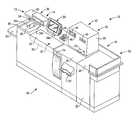
- FIG. 1is a perspective view of a self-service checkout terminal suitable for use with the present invention.
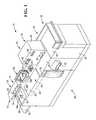
- FIG. 2is a top plan view of the self-service checkout terminal of FIG. 1 .
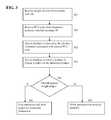
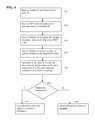
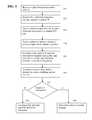
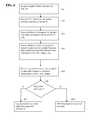
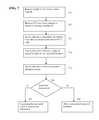
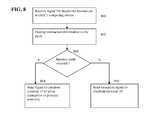
- FIGS. 3-8show flow diagrams for alternate embodiments for performing a security check.
- FIG. 9shows a flow diagram for an alternate embodiment for processing a suspicious transaction signal generated by a checkout terminal.
- a self-service checkout terminalis a checkout terminal in which the customer is primarily responsible for checking out his or her items, with limited or no assistance from a clerk.
- an assisted checkout terminalis a checkout terminal in which a clerk is primarily responsible for checking out the customer's items and otherwise operating the checkout terminal.
- the self-service checkout terminal 10includes a pre-scan area 12 , an itemization area 14 , a payment area 16 , and a post-scan area 18 .
- the self-service checkout terminal 10also includes an item transport mechanism such as belt assembly 20 which includes a security belt mechanism 22 and a takeaway belt mechanism 24 .
- the belt assembly 20is utilized to convey items for purchase toward a item collection surface or area 26 of the post-scan area 18 subsequent to scanning of the items by a user of the self-service checkout terminal 10 (e.g. a customer).
- the self-service checkout terminal 10also includes a terminal base 28 for supporting the components associated therewith.
- the terminal base 28may be embodied as a single cabinet-type structure or, alternatively, may be embodied as a number of separate structures secured to one another.
- the terminal base 28has an upstream end portion 30 and a downstream end portion 32 .
- upstream and downstreamare used herein to be consistent with the flow of items through the self-service checkout terminal 10 during a typical checkout procedure.
- an itementers at the area proximate the pre-scan area 12 then flows in a downstream direction to be scanned or otherwise entered at the itemization area 14 . Once the item is scanned or otherwise entered at the itemization area 14 , the item flows from the itemization area 14 in a downstream direction to the post-scan area 18 via the belt assembly 20 .
- the itemization area 14 of the self-service checkout terminal 10is also located on the upstream end portion 30 of the terminal base 28 and includes a scanner 34 and a product scale 36 . If an item such as produce is placed upon the product scale 36 , the product scale 36 may be used to determine the weight of the item.
- the itemization area 14also preferably includes a video camera or still camera (not shown) to continuously or selectively photograph items placed on product scale 36 and/or scanned by scanner 34 . In some embodiments, alternate sensing devices can be used in addition to, or in lieu of, a camera.
- some embodimentscan utilize x-ray detectors, infrared detectors, capacitive sensors, olfactory (smell) detectors, ultrasound detectors, or other sensors to detect various physical characteristics of the item being placed on the product scale 36 and/or scanned by scanner 34 .
- x-ray detectorsinfrared detectors
- capacitive sensorscapacitive sensors
- olfactory (smell) detectorsolfactory (smell) detectors
- ultrasound detectorsor other sensors to detect various physical characteristics of the item being placed on the product scale 36 and/or scanned by scanner 34 .
- the scanner 34conventionally scans or reads a product identification code such as a Universal Product Code (UPC) or other bar code, industrial symbol(s), alphanumeric character(s), or other indicia associated with an item to be purchased.
- a product identification codesuch as a Universal Product Code (UPC) or other bar code, industrial symbol(s), alphanumeric character(s), or other indicia associated with an item to be purchased.
- UPCUniversal Product Code
- One scanner which may be usedis a model number 5875 bi-optic scanner which is commercially available from NCR Corporation of Duluth, Ga.
- the scanner 34preferably includes a first scanning window 34 a and a second scanning window 34 b .
- the first scanning window 34 ais disposed in a substantially horizontal manner
- the second scanning window 34 bis disposed in a substantially vertical manner, as shown in FIG. 1
- the scanner 34also includes a light source (not shown) such as a laser, a rotating mirror (not shown) driven by a motor (not shown), and a mirror array (not shown).
- a laser beamreflects off the rotating mirror and mirror array to produce a pattern of scanning light beams.
- the scanning light beamsscatter off the code and are returned to the scanner 34 where they are collected and detected.
- the reflected lightis then analyzed electronically in order to determine whether the reflected light contains a valid code pattern. If a valid code pattern is present, the product identification code may then be utilized to retrieve product information associated with the item (e.g. the price of the item and the weight of the item).
- the payment area 16 of the self-service checkout terminal 10includes the system components necessary to allow a customer to perform finalization functions such as tendering payment for his or her items for purchase and printing of transaction receipts.
- the payment area 16 of the self-service checkout terminal 10includes an electronic payment terminal 44 having a card reader and keypad, a pair of currency acceptors such as a coin acceptor 46 and a bill acceptor 50 , a corresponding pair of currency dispensers such as a coin dispenser 48 and a bill dispenser 52 , and a receipt printer 54 .
- the payment area 16 of the self-service checkout terminal 10may also be configured to include a coupon acceptor 56 .
- the coupon acceptor 56allows a customer to tender coupons, vouchers, or the like during operation of the self-service checkout terminal 10 .
- the self-service checkout terminal 10may also include a security scale 68 .
- the security scale 68is a weight scale which monitors the weight of items positioned on the belt associated with the security belt mechanism 68 .
- the self-service checkout terminal 10may also include a light pole and a status light device as described in U.S. Pat. No. 6,394,345, the contents of which are incorporated herein by reference.
- the self-service checkout terminal 10also includes an interactive customer interface terminal 58 .
- the interactive customer interface terminal 58includes a display monitor 58 a which is provided to display retail information to the customer during operation of the self-service checkout terminal 10 .
- transaction informationsuch as item price, item description, total amount of the transaction, instructions, etc. is displayed to the customer on the display monitor 58 a during operation of the self-service checkout terminal 10 .
- the display monitor 58 apreferably comprises an input device such as a touch screen monitor which can generate data signals when certain areas of the screen are touched by a customer.
- customer interface terminal 58can comprise other input devices such as a keyboard, keypad, mouse, stylus, or other suitable input device or devices.
- Such input devicescan be an integral part of display monitor 58 a or connected to display monitor 58 a by cables or wireless communication.
- the display monitor 58 a and/or input devices connected to display monitor 58 amay be utilized by the customer to input information into the self-service checkout terminal 10 .
- the customermay manually enter retail information such as PLU codes and quantities into the self-service checkout terminal 10 by use of the touch screen associated with the display monitor 58 a .
- the customermay indicate his or her preferred method of payment (e.g. cash, credit, or debit card) by touching the appropriate area of the touch screen associated with the display monitor 58 a .
- a portion of the touch screen associated with the display monitor 58 amay also be utilized as a “help button” such that assistance is provided to the customer when it is touched by the customer.
- the interactive customer interface terminal 58is preferably embodied as a stand-alone, kiosk-type device which is, in essence, a modified flat panel personal computer (PC) which includes a number of components commonly associated therewith.
- the interactive customer interface terminal 58preferably includes a processing unit (not shown), one or more speakers (not shown) for playing audio, and a video camera or still camera (not shown) to continuously or selectively photograph items placed on product scale 36 and/or scanned by scanner 34 .
- the processing unit of the interactive customer interface terminal 58may comprise a central processing unit of a PC, an application specific integrated circuit (ASIC), a field programmable gate array, or other processing units known to those skilled in the art.
- ASICapplication specific integrated circuit
- Customer interface terminal 58also preferably comprises other commonly utilized PC components such as an Ethernet controller, a number of video and audio control devices, one or more storage or memory devices such as a hard drive device or main memory device (RAM or DRAM device, e.g.), and a number of connector ports for coupling the interface terminal 58 to a number of retail peripheral devices such as the scanner 34 , the product scale 36 , the components associated with the payment area 16 , and the security scale 68 .
- the interactive customer interface terminal 58functions as the main processing device or controller for controlling operation of the self-service checkout terminal 10 .
- the interactive customer interface terminal 58may be embodied as any stand-alone, kiosk-type device which includes the aforedescribed components (e.g. a display monitor, PC etc.).
- One such stand-alone, kiosk-type device which is particularly useful as the interactive customer interface terminalis an Informa model information terminal which is commercially available from NCR Corporation.
- Interactive customer interface terminal 58is also preferably connected to a database (or other data storage unit) for accessing and storing information.
- customer interface terminal 58may also be connected to one or more remote computing devices, such as computing devices monitored by clerks or management personnel.
- the self-service checkout terminal 10may be utilized by a customer to perform a self-service checkout transaction.
- the customerapproaches the self-service checkout terminal 10 .
- the customerthen optionally utilizes one of the components 60 in the pre-scan area 12 to dock or otherwise support his or her shopping basket (not shown) or shopping cart (not shown).
- the customermay then perform a number of initialization steps such as identifying himself or herself so that the details of the customer's transaction can be tracked for purposes of recording and storing the shopper's transaction history and/or for the retailer's customer loyalty program.
- the customermay scan an identification card comprising a bar code by using scanner 34 , thus identifying himself or herself to the self-service checkout terminal 10 .
- the customermay enter a unique identification number into interactive customer interface terminal 58 of self-service checkout terminal 10 .
- the details of the customer's transactioncan be stored in a database (or other storage unit) for future use and association with the particular customer.
- the customerthen removes the individual items for purchase from his or her shopping basket or cart and thereafter individually enters the items into the self-service checkout terminal 10 by use of the scanner 34 , the product scale 36 , and/or the touch screen associated with the display monitor 58 a .
- the customermay enter an item by scanning the item with the scanner 34 in order to read the machine readable code thereon. Items which are sold by weight such as produce items may be entered by placing the item on the product scale 36 and thereafter entering a code such as a product lookup code (PLU) associated with the item via the touch screen associated with the display monitor 58 a .
- PLUproduct lookup code
- the main processing unit of the self-service checkout terminal 10can perform a variety of security checks to verify the accuracy of the PLU code entered by the customer and flag suspicious transactions for recording and/or further action by a clerk or management personnel.
- the processing unit of the self-service checkout terminal 10receives a signal from the product scale 36 containing the weight of the item placed on the product scale 36 .
- the processing unitreceives a signal containing the PLU code that was entered by the customer into the interactive customer interface terminal 58 .
- customer interface terminal 58comprises an input device such as a touch screen or a keyboard.
- the processing unitaccesses a database, memory, cache, or other storage device to determine the identity of the product corresponding to the PLU code that was entered by the customer.
- a database or storage devicemay be local to the self-service checkout terminal 10 or may be housed in a central server and accessed remotely.
- the processing unitaccesses a database or other storage device to retrieve a range of weights that have previously been determined to represent a typical weight for the type of product identified in step 303 .
- Such typical weightsmay be calculated by observing historical weight values for a given product. For example, a given retailer may have determined over time that customers generally purchase bananas in a weight range of 1 ⁇ 2 pound-3 pounds and that a banana purchase of 10 pounds is extremely rare. Some retailers may factor in additional considerations for determining typical weights, such as the time of day or day of the week. For example, the retailer may determine that bananas are more likely to be purchased in large quantities on the weekend from 12 pm-5 pm and that bananas are unlikely to be purchased at all on a weekday from 1 am-4 am.
- the retailermay determine that pumpkins are often sold in the weeks leading up to Halloween (October 31 st ) but rarely purchased at other times of the year.
- a retailermay simply specify a range of typical weights rather than rely on historical averages.
- the “range” of weights for a given productmay comprise a single weight (5 pounds, e.g.) with a tolerance level (+/ ⁇ 10%, e.g.).
- the tolerance levelmay be customized for each product and stored in the database.
- the tolerance levelmay simply be a fixed percentage for all items.
- the processing unitwill maintain a total (or aggregate) weight for all items in a given transaction that have been identified using the same PLU code. For example, if a first item weighing 3 pounds is identified using the PLU code for bananas and a second item weighing 5 pounds is later identified using the PLU code for bananas, the processing unit will calculate the aggregate weight of 8 pounds. In such embodiments, the aggregate weight for a given product (bananas, e.g.) may be used in step 305 in lieu of, or in addition to, the individual weights for the items placed on the product scale 36 .
- banase.g.
- the suspicious transactionwill not be logged in step 306 or will only be logged if the weight is very far outside the typical range for the product.
- the suspicious transaction signalwill not be sent to a clerk's device but rather will trigger an audible or visual signal (such as an audible beep or a light on a light pole) indicating that a clerk or other employee should verify the transaction.
- this audible or visual signalwill be triggered in addition to transmittal of a suspicious transaction signal to a clerk's device or other device or database.
- the processing unitwill, at step 306 , prohibit the transaction from proceeding until an override or verification is received from a clerk.
- the processing unitwill, at step 306 , display a visual message to the customer on display monitor 58 a (and/or play an audible message over a speaker) requesting that the customer verify the product, reposition the product on the product scale 36 in order to ensure that the product was accurately weighed and/or enter a new PLU code for the product or scan the product using scanner 34 .
- the suspicious transaction signalmay not be forwarded to the remote clerk's computing device if the customer corrects the problem by entering in the correct PLU code and/or scanning the item correctly using scanner 34 .
- the processing unitwill determine whether the same PLU code has been entered multiple times on the same checkout terminal 10 in different transactions over a short period of time. For example, if five transactions in a row each comprise only the PLU code for bananas, then it may be that a single customer is attempting multiple fraudulent transactions at the same checkout terminal 10 .
- the processing unitwill determine whether the same PLU code is being entered abnormally often on adjacent or nearby checkout terminals, whether simultaneously or within a short period of time.
- the individual checkout terminalswould need to be connected to a central server (or to one another) in order to exchange information about the frequency of PLU code use at the various checkout terminals in the store.
- Simultaneous transactions with an abnormally high use of a given PLU codemight indicate that one person (or a group of persons acting in concert) were attempting to initiate fraudulent transactions at the same time.
- Transactions over a short period of time with an abnormally frequent use of the same PLU codemight indicate that a person was performing multiple fraudulent purchases at different checkout terminals.
- the processing unitcould factor in the distance between the various checkout terminals in the store. If anomalies appear on checkout terminals located close to one another, such transactions could receive more scrutiny than if the terminals were relatively far apart because it would be more likely for a single person to enter simultaneous fraudulent transactions on checkout terminals located close to one another.
- FIG. 5shows another embodiment of a method for performing a security check.
- the method shown in FIG. 5is similar to the method of FIG. 4 for steps 501 - 505 .
- the processing unitdetermines if the store is busy and/or if the clerk or other attendant is absent or busy helping another customer.
- a busy store or an absent or preoccupied clerkmay entice unscrupulous persons to attempt to conduct fraudulent transactions in the belief that there is little or no supervision of their actions.
- the processing unitmay determine if the store is busy based on the number of transactions simultaneously being processed on various checkout terminals within the store and/or the ratio of working employees to active simultaneous transactions.
- the various checkout terminalsare preferably connected to a central server and/or to one another in order to share status information about their state (processing a transaction, not processing a transaction, in standby mode, turned off, etc.).
- the time of daymay be used as a factor to determine if the store is busy. For example, the store may be presumed to be busy from 4 pm-6 pm Monday-Friday.
- the processorwill determine if the attendant is helping another customer and/or away from the attendant's assigned post. For example, if the attendant has not logged in to the attendant's station or other device (such as a portable clerk's computing device), then it may be an indication that the attendant is absent. Alternatively, if a help signal or suspicious transaction signal has been sent to the attendant by a different checkout terminal, then the processing units of the other checkout terminals in the store may register that the attendant is busy.
- the processormay utilize the time of day to heighten security requirements. For example, it may be known that thefts or fraudulent transactions are more likely to occur in the early morning hours (e.g., from 1 am-4 am) than during other times of the day. In such embodiments, the processor may be programmed with more stringent criteria for detecting suspicious transactions.
- the processorwill utilize the various factors identified above to determine if the transaction is suspicious. If the attendant is absent or busy, then the criteria for determining whether the transaction is suspicious may be tightened. (i.e., the acceptable weight ranges for various products may be reduced.) Similarly, if the store is busy or the time of day is calculated to be a high-theft time, then the criteria for determining suspicious transactions may be tightened.
- FIG. 6discloses another alternative embodiment of a method for performing a security check.
- Steps 601 - 603are similar to steps 501 - 503 .
- the processing unitaccesses a database (or other storage unit) to retrieve a range of typical weights for the product corresponding to the entered PLU (similar to step 504 ).
- the processing unitretrieves some physical characteristics (such as color, size, shape, and/or texture) for the product. For example, if the customer entered the PLU for bananas in step 602 , then the processing unit would access the database and determine that bananas are typically yellow and have a curved shape.
- the data supplied by the databasewill contain detailed dimensional details that can be used for analysis purposes as described below.
- the processing unitreceives a signal from a video camera (or still camera) representing an image of the product placed on product scale 36 .
- the processing unitcompares the image in the received video signal with the data regarding physical characteristics received in step 604 . If the image contained in the video signal matches poorly with the expected physical characteristics of the product, then the mismatch may reflect a fraudulent transaction. For example, if a customer places a reddish-brown beef steak on product scale 36 and enters the PLU code for bananas, the processing unit may note the mismatch between the expected yellow color for bananas and the perceived reddish-brown color of the steak.
- the processing unitcan utilize dimensional data (such as expected contours and proportions) to further identify anomalous transactions.
- a bananais expected to have a long, slightly curved shape, a rounded cross-section, and a tip that is darker and of a different texture than the main body of the fruit.
- a beef steakis generally flat and somewhat rectangular in shape.
- shape recognition softwarecan utilize adaptive learning or artificial intelligence to learn to recognize the physical characteristics of certain items over time. For example, such adaptive learning software may gradually recognize the typical colors and shapes associated with bananas by repeatedly observing items that are identified by various customers using the PLU code for bananas.
- alternate sensing devicescan be used in addition to, or in lieu of, a camera.
- some embodimentscan utilize x-ray detectors, infrared detectors, capacitive sensors, olfactory detectors, ultrasound detectors, or other sensing devices to detect various physical characteristics of the item being placed on the product scale 36 .
- Such embodimentsmay also use adaptive learning software to recognize and tabulate the typical physical characteristics of items over time.
- the processing unitwill utilize the various factors identified in steps 601 - 605 in order to determine if the transaction is suspicious or not.
- the processing unitcan be programmed to take into account the amount by which the observed product differs from expected parameters. For example, if the observed product greatly deviates in color, shape, and smell from the expected color, shape, and smell, then the transaction may still be flagged as suspicious even if the measured weight falls within the expected range. By contrast, if the observed product only slightly deviates in color, shape, or smell from the norm, then the transaction may be classified as non-suspicious if the measured weight falls within the expected range (or very slightly outside the expected range).
- FIG. 7shows an alternate method for performing a security check utilizing the customer's previously identified shopping habits (i.e., the customer's transaction history from previous transactions).
- the customerPrior to initiating the security check of FIG. 7 , the customer will have identified himself or herself to the checkout terminal 10 . Specifically, as described above, the customer will have scanned an identification card using scanner 34 or entered a unique identification number into interactive customer interface terminal 58 or otherwise identified himself or herself to the checkout terminal 10 .
- Steps 701 - 704are similar to steps 501 - 504 .
- the processing unitwill access a database (or other storage device) to retrieve the customer's shopping history and/or a customer profile containing average shopping history data.
- datacan include the average weights for certain items typically purchased by the customer in the past. For example, if a given customer often buys a large quantity of bananas in a single transaction (5-10 pounds, e.g.), then this information can be used to override the weight range for a typical customer (1 ⁇ 2-3 pounds, e.g.) identified in step 704 . Consequently, the security check method of FIG. 7 will avoid flagging the transaction as suspicious.
- the historical data retrieved in step 705may also include data related to the frequency or time of day of the customer's visits. For example, if the customer regularly shops at the retailer every week on Saturday afternoon between 1 pm and 5 pm, this pattern can be stored in the retailer's database and used to detect shopping anomalies. Similarly, the historical data can record the various non-weighed items such as boxed or packaged items that are scanned by UPC code or other indicia. If the processing unit detects that the identified customer is purchasing a basket of items that are atypical for the customer, then the transaction may be flagged as suspicious. (i.e., the customer's identification card may have stolen and used by an unauthorized individual.)
- the processorat step 706 will assess whether the transaction is suspicious or not. As with the alternate embodiments described above with respect to FIGS. 3-6 , the processor will then either let the transaction proceed normally as shown in step 708 or will flag the transaction as suspicious in step 707 .
- one alternate embodimentcould include the steps shown in FIG. 5 combined with steps 604 and 605 ( FIG. 6 ) and step 705 ( FIG. 7 ). In other embodiments, certain steps could be omitted.
- FIGS. 8-9two alternate methods for processing a suspicious transaction signal are disclosed.
- a suspicious transaction signalis generated by the processing unit of the checkout terminal 10 at steps 306 , 407 , 508 , 607 , and 707 , respectively, if a suspicious transaction is detected.
- FIG. 8shows a method for processing a suspicious transaction signal by immediately sending the signal to a clerk's computing device.
- a clerk's computing devicemay comprise a handheld computer or other portable device.
- a clerk's computing devicecould comprise a fixed computing device at a clerk's attendant station, for example.
- the clerk's computing devicewill be in wireless or wired communication with one or more checkout terminals 10 within the store.
- Such communications between the one or more checkout terminals 10 and the clerk's computing devicemay pass through a central server, router, or other communications device.
- the clerk's computing devicepreferably comprises output means such as a video display for displaying visual information.
- the clerk's computing devicemay comprise a speaker or other audio output device for conveying audible information to the clerk.
- the clerk's computing devicemay also comprise input means such as a keyboard, touch screen, stylus, buttons, or other input means.
- the clerk's computing devicereceives the suspicious transaction signal from the checkout terminal 10 .
- the suspicious transaction signalis processed and displayed to the clerk (and/or an audible notification may be presented to the clerk.)
- the information displayed or otherwise presented to the clerkpreferably includes an identification of the checkout terminal 10 that generated the suspicious transaction signal.
- the displayed informationmay include a complete or partial summary of the transaction.
- the displayed informationmay include the weight and identity of the item that triggered the suspicious transaction signal. (e.g., bananas—10 pounds).
- the informationwill include the normal or expected weight range for the item. (e.g., bananas, normal range: 1 ⁇ 2 pound-3 pounds).
- the informationwill include a photograph or video image of the suspicious item and/or the customer as captured by the checkout terminal 10 .
- the informationwill include the number of times the same PLU code was entered by the customer. (e.g., bananas—PLU code entered 7 times).
- the clerkmay investigate the suspicious transaction by walking over to the checkout terminal 10 that generated the suspicious transaction signal.
- the clerkcan then visually inspect the suspicious item and/or the other items that the customer has already scanned. If the clerk believes that an incorrect PLU code has been entered for a given item, the clerk can prompt the customer to enter the correct PLU code or alternatively contact security if the customer is uncooperative or attempts to abscond with the merchandise without making proper payment.
- the checkout terminal 10will not permit the customer to continue the transaction until the clerk overrides or resets the checkout terminal 10 . In other embodiments, the checkout terminal 10 will permit the transaction to continue up to the payment phase even if a potentially suspicious transaction has been detected. In yet other embodiments, the checkout terminal 10 will permit the transaction to continue to completion so long as a limited number (e.g., 2 or fewer) suspicious transaction signals have been raised and/or so long as the transaction anomalies are not severe. (e.g., an item falling less than 5% outside the normal weight range).
- a limited numbere.g., 2 or fewer
- the clerkwill decide whether to override the suspicious transaction signal to allow the transaction to continue.
- the clerkcan override or reset the checkout terminal 10 by entering a code or other input into the input device of the customer interface terminal 58 of the checkout terminal 10 .
- the clerkcan override or reset the checkout terminal by entering a code or other input into the clerk's computing device.
- a signalwill be sent to (or entered into) checkout terminal 10 to allow the transaction to continue normally as shown in step 804 .
- the clerkcan send an exception signal to the checkout terminal 10 indicating that the transaction should be stopped until further review is undertaken as shown in step 805 .
- the clerkcan notify security or management personnel by sending an exception signal to computing devices respectively associated with security or management personnel.
- the clerkcan telephone security or management and/or use portable radio or other communication means.
- the clerkmay decide whether to override or reset the checkout terminal 10 based solely on the information presented to the clerk in step 802 . That is, the clerk may view the information on his or her computing device (such as a video image of the item along with the item's weight) and decide whether to override the checkout terminal 10 without walking over to the checkout terminal 10 for an in-person inspection.
- his or her computing devicesuch as a video image of the item along with the item's weight
- the checkout terminal 10may emit an audible or visual signal (such as an audible beep or a light on a light pole) instead of, or in addition to, a suspicious transaction signal.
- the clerkcan respond to the audible or visual signal by walking over to the checkout terminal 10 to investigate the transaction.
- suspicious transaction signalscan automatically be sent to management or security personnel in addition to, or in lieu of, a clerk or attendant.
- only suspicious transactions that meet a higher thresholdare automatically sent to management or security personnel. For example, a transaction involving an item that is at least 5 times over the expected maximum weight limit may be sent to management or security personnel for their immediate review.
- FIG. 9shows an alternate method for processing a suspicious transaction signal wherein the suspicious transaction signal is only forwarded to the clerk's computing device in certain situations.
- the processing unit of the checkout terminal 10begins processing of the suspicious transaction signal.
- the processing unitdetermines whether the suspicious transaction is a major exception or a minor exception. For example, if the item being weighed on the product scale 36 is greatly outside the expected weight range (e.g., greater than 20% above the maximum expected weight), then the processing unit may immediately forward the suspicious transaction signal to the clerk's computing device as shown in step 905 . In another example, if the processing unit determines that there is a complete mismatch between the expected color of the weighed item and the actual color of the item, then the processing unit may proceed to step 905 and immediately forward the suspicious transaction signal to the clerk's computing device.
- the processing unit of the checkout terminal 10begins processing of the suspicious transaction signal.
- the processing unitdetermines whether the suspicious transaction is a major exception or a minor exception. For example, if the item being weighed on the product scale 36
- the methodproceeds to step 903 where the processing unit will analyze the number of suspicious transaction signals received in the same transaction. If the transaction has generated repeated (e.g., 3 or more) suspicious transaction signals, then the processing unit may proceed to step 905 and forward the suspicious transaction signal(s) to the clerk's computing device. In some embodiments, the processing unit may also analyze whether an abnormally high number of suspicious transaction signals have been generated in separate transactions at the same checkout terminal (or at other checkout terminals in the store). Such embodiments may optionally factor in the distance between checkout terminals that generate suspicious transaction signals and/or the timing between the generation of suspicious transaction signals. As discussed above in relation to FIGS.
- steps 902 and 903can be combined into a single step in which the processing unit calculates a combined score based on the combination of the severity and frequency of the suspicious transaction signals.
- the processing unitdetermines that the suspicious transaction signal is not severe enough and has not been repeated abnormally often, then the processing unit will proceed to step 904 and allow the transaction to proceed normally. As noted above with respect to FIGS. 3-7 , the processing unit will already have logged the suspicious transaction signal in a database (and/or in another storage device or main memory) so the processing unit will have a record of the suspicious transaction signal if another suspicious transaction signal is raised.
- the processing unitdetermines that the suspicious transaction signal should be forwarded to the clerk's computing device (and/or security or management personnel), then the method will proceed to step 905 . Thereafter, the method may continue as shown in FIG. 8 and as discussed above in relation thereto.
- system and method disclosed hereinmay be utilized in conjunction with many different types of self-service checkout terminals in addition to the self-service checkout terminal shown in FIGS. 1-2 .
- system and method disclosed hereinmay be utilized in conjunction with many different types of assisted checkout terminals.
- an unscrupulous clerk operating an assisted checkout terminalcan collude with the customer to fraudulently purchase an item for a low price by purposely entering an improper PLU code into the assisted checkout terminal or otherwise improperly scanning the item.
- the system and method described hereincan therefore be used to monitor a clerk that is operating an assisted checkout terminal to detect any such fraudulent transactions.
Landscapes
- Physics & Mathematics (AREA)
- General Physics & Mathematics (AREA)
- Management, Administration, Business Operations System, And Electronic Commerce (AREA)
- Cash Registers Or Receiving Machines (AREA)
Abstract
Description
Claims (20)
Priority Applications (3)
| Application Number | Priority Date | Filing Date | Title |
|---|---|---|---|
| US13/248,697US8498903B2 (en) | 2011-09-29 | 2011-09-29 | System and method for performing a security check at a checkout terminal |
| EP12180758AEP2575111A1 (en) | 2011-09-29 | 2012-08-16 | Security check at a checkout terminal |
| CN201210389186.5ACN103106752B (en) | 2011-09-29 | 2012-09-29 | The safe examination system of cashier terminal and method |
Applications Claiming Priority (1)
| Application Number | Priority Date | Filing Date | Title |
|---|---|---|---|
| US13/248,697US8498903B2 (en) | 2011-09-29 | 2011-09-29 | System and method for performing a security check at a checkout terminal |
Publications (2)
| Publication Number | Publication Date |
|---|---|
| US20130085878A1 US20130085878A1 (en) | 2013-04-04 |
| US8498903B2true US8498903B2 (en) | 2013-07-30 |
Family
ID=47088644
Family Applications (1)
| Application Number | Title | Priority Date | Filing Date |
|---|---|---|---|
| US13/248,697ActiveUS8498903B2 (en) | 2011-09-29 | 2011-09-29 | System and method for performing a security check at a checkout terminal |
Country Status (3)
| Country | Link |
|---|---|
| US (1) | US8498903B2 (en) |
| EP (1) | EP2575111A1 (en) |
| CN (1) | CN103106752B (en) |
Cited By (5)
| Publication number | Priority date | Publication date | Assignee | Title |
|---|---|---|---|---|
| US9173508B2 (en) | 2010-07-08 | 2015-11-03 | Itab Scanflow Ab | Checkout counter |
| US20160110701A1 (en)* | 2014-10-15 | 2016-04-21 | Toshiba Global Commerce Solutions Holdings Corporation | Method, product, and system for unmanned vehicles in retail environments |
| US10129507B2 (en) | 2014-07-15 | 2018-11-13 | Toshiba Global Commerce Solutions Holdings Corporation | System and method for self-checkout using product images |
| US10157379B2 (en) | 2014-11-12 | 2018-12-18 | Toshiba Global Commerce Solutions Holdings Corporation | Self checkout with security checks based on categorized items |
| US20230304985A1 (en)* | 2022-03-22 | 2023-09-28 | Toshiba Global Commerce Solutions Holdings Corporation | Odor-Based Produce Identification System |
Families Citing this family (23)
| Publication number | Priority date | Publication date | Assignee | Title |
|---|---|---|---|---|
| US10192208B1 (en)* | 2013-07-08 | 2019-01-29 | Ecr Software Corporation | Systems and methods for an improved self-checkout with loss prevention options |
| CN103646325A (en)* | 2013-11-08 | 2014-03-19 | 青岛中科英泰商用系统有限公司 | Loss prevention method capable of identifying important commodities precisely for supermarket self-service settlement |
| CN103632256A (en)* | 2013-11-08 | 2014-03-12 | 青岛中科英泰商用系统有限公司 | Self-settlement method with various loss prevention measures in supermarket and equipment |
| CN103632255A (en)* | 2013-11-08 | 2014-03-12 | 青岛中科英泰商用系统有限公司 | Supermarket self-service clearing loss prevention method capable of reminding abnormal transaction tips for customer |
| CN103632459A (en)* | 2013-11-08 | 2014-03-12 | 青岛中科英泰商用系统有限公司 | Self-settlement method with precision identification function and various loss prevention measures in supermarket and equipment |
| CN103632273A (en)* | 2013-11-08 | 2014-03-12 | 青岛中科英泰商用系统有限公司 | Self-service supermarket settlement loss prevention method for monitoring whole transaction process |
| CN103632458A (en)* | 2013-11-08 | 2014-03-12 | 青岛中科英泰商用系统有限公司 | Self-settlement method with precision identification, customer reminding and video monitoring functions in supermarket |
| CN103632457A (en)* | 2013-11-08 | 2014-03-12 | 青岛中科英泰商用系统有限公司 | Supermarket self-service clearing loss prevention method capable of reminding and printing alarm mark for customer |
| CN103632274A (en)* | 2013-11-08 | 2014-03-12 | 青岛中科英泰商用系统有限公司 | Loss prevention method with customer transaction prompt and video monitoring for supermarket self-service clearing |
| CN103632462A (en)* | 2013-11-11 | 2014-03-12 | 青岛中科英泰商用系统有限公司 | Self-settlement method with reminding and video monitoring functions and various loss prevention measures in supermarket |
| CN103617681A (en)* | 2013-11-11 | 2014-03-05 | 青岛中科英泰商用系统有限公司 | Supermarket self-service settlement method and device with reminding function and multiple loss prevention measures |
| FR3017279B1 (en)* | 2014-02-13 | 2016-09-30 | Hmy Group | ARTICLE COLLECTION DEVICE COMPRISING A WIRELESS COMMUNICATION MODULE |
| JP6585475B2 (en)* | 2015-11-16 | 2019-10-02 | 東芝テック株式会社 | Checkout device and program |
| CN106169135A (en)* | 2016-02-01 | 2016-11-30 | 唐超(北京)科技有限公司 | Self-checkout loss prevention method of calibration and system |
| CN106204964A (en)* | 2016-02-01 | 2016-12-07 | 唐超(北京)科技有限公司 | Self-checkout loss prevention method of calibration and self-checkout loss prevention check system |
| CN109118200A (en)* | 2018-07-26 | 2019-01-01 | 上海凯景信息技术有限公司 | A kind of commodity identification and cash register system based on image recognition |
| USD976626S1 (en)* | 2020-02-06 | 2023-01-31 | Hanwha Techwin Co., Ltd. | Checkout stand |
| US11188726B1 (en)* | 2020-05-29 | 2021-11-30 | Zebra Technologies Corporation | Method of detecting a scan avoidance event when an item is passed through the field of view of the scanner |
| CN111753496B (en)* | 2020-06-22 | 2023-06-23 | 平安付科技服务有限公司 | Industry category identification method and device, computer equipment and readable storage medium |
| US11334863B2 (en)* | 2020-06-29 | 2022-05-17 | Ncr Corporation | Methods and device for touchless payment processing |
| JP7534229B2 (en)* | 2021-01-14 | 2024-08-14 | 東芝テック株式会社 | FRAUDULENT ACTIVITY RECOGNITION DEVICE, ITS CONTROL PROGRAM, AND FRAUDULENT ACTIVITY RECOGNITION METHOD |
| JP7587998B2 (en) | 2021-02-18 | 2024-11-21 | 東芝テック株式会社 | Product data registration device and program |
| EP4414801A1 (en)* | 2023-02-13 | 2024-08-14 | Ishida Co., Ltd. | Weighing and packaging apparatus and weighing and packaging system |
Citations (9)
| Publication number | Priority date | Publication date | Assignee | Title |
|---|---|---|---|---|
| US5115888A (en)* | 1991-02-04 | 1992-05-26 | Howard Schneider | Self-serve checkout system |
| US5493613A (en)* | 1992-09-11 | 1996-02-20 | International Verifact Inc. | Combination pin pad and terminal |
| US5877485A (en)* | 1996-01-25 | 1999-03-02 | Symbol Technologies, Inc. | Statistical sampling security methodology for self-scanning checkout system |
| US6047262A (en)* | 1998-03-02 | 2000-04-04 | Ncr Corporation | Method for providing security and enhancing efficiency during operation of a self-service checkout terminal |
| US6758393B1 (en)* | 1999-09-10 | 2004-07-06 | Sierra Design Group | Mobile cashier terminal |
| US20090307097A1 (en)* | 2005-09-15 | 2009-12-10 | Marco Antonio Scarmeloto De Faria | Self-Service Checkout System and Method |
| US7672871B2 (en)* | 2001-02-28 | 2010-03-02 | Fujitsu Frontech North America Inc. | Self-checkout system with anti-theft deactivation device |
| US7853477B2 (en)* | 2003-12-30 | 2010-12-14 | O'shea Michael D | RF-based electronic system and method for automatic cross-marketing promotional offers and check-outs |
| US7912765B2 (en)* | 2005-09-01 | 2011-03-22 | United Parcel Service Of America, Inc. | Method and system for gathering data |
Family Cites Families (13)
| Publication number | Priority date | Publication date | Assignee | Title |
|---|---|---|---|---|
| US4779706A (en) | 1986-12-17 | 1988-10-25 | Ncr Corporation | Self-service system |
| US4964053A (en)* | 1988-04-22 | 1990-10-16 | Checkrobot, Inc. | Self-checkout of produce items |
| US5952642A (en) | 1997-12-15 | 1999-09-14 | Ncr Corporation | Method and apparatus for detecting item substitutions during entry of an item into a self-service checkout terminal |
| US6032128A (en) | 1997-12-15 | 2000-02-29 | Ncr Corporation | Method and apparatus for detecting item placement and item removal during operation of a self-service checkout terminal |
| US5967264A (en) | 1998-05-01 | 1999-10-19 | Ncr Corporation | Method of monitoring item shuffling in a post-scan area of a self-service checkout terminal |
| US6215078B1 (en) | 1998-12-22 | 2001-04-10 | Ncr Corporation | Method and apparatus for determining a stable weight measurement for use in a security software application of a self-service checkout terminal |
| US6213395B1 (en) | 1999-11-02 | 2001-04-10 | Ncr Corporation | Apparatus and method for operating a checkout system having a scanner which is rotatable between an assisted scanner position and a self-service scanner position |
| US6502749B1 (en) | 1999-11-02 | 2003-01-07 | Ncr Corporation | Apparatus and method for operating a checkout system having an RF transmitter for communicating to a number of wireless personal pagers |
| US6644547B1 (en) | 2000-03-28 | 2003-11-11 | Ncr Corporation | Customer workstation intelligently connectable to a legacy retail system and providing supplemental functionality thereto |
| US6471125B1 (en)* | 2000-05-24 | 2002-10-29 | Ncr Corporation | Method of tracking produce selection data |
| US6550582B2 (en) | 2000-12-26 | 2003-04-22 | Ncr Corporation | Method and apparatus for processing a large number of items with a self-service checkout terminal |
| US20080061139A1 (en)* | 2006-09-07 | 2008-03-13 | Ncr Corporation | Self-checkout terminal including scale with remote reset |
| US7533799B2 (en)* | 2006-12-14 | 2009-05-19 | Ncr Corporation | Weight scale fault detection |
- 2011
- 2011-09-29USUS13/248,697patent/US8498903B2/enactiveActive
- 2012
- 2012-08-16EPEP12180758Apatent/EP2575111A1/ennot_activeWithdrawn
- 2012-09-29CNCN201210389186.5Apatent/CN103106752B/enactiveActive
Patent Citations (9)
| Publication number | Priority date | Publication date | Assignee | Title |
|---|---|---|---|---|
| US5115888A (en)* | 1991-02-04 | 1992-05-26 | Howard Schneider | Self-serve checkout system |
| US5493613A (en)* | 1992-09-11 | 1996-02-20 | International Verifact Inc. | Combination pin pad and terminal |
| US5877485A (en)* | 1996-01-25 | 1999-03-02 | Symbol Technologies, Inc. | Statistical sampling security methodology for self-scanning checkout system |
| US6047262A (en)* | 1998-03-02 | 2000-04-04 | Ncr Corporation | Method for providing security and enhancing efficiency during operation of a self-service checkout terminal |
| US6758393B1 (en)* | 1999-09-10 | 2004-07-06 | Sierra Design Group | Mobile cashier terminal |
| US7672871B2 (en)* | 2001-02-28 | 2010-03-02 | Fujitsu Frontech North America Inc. | Self-checkout system with anti-theft deactivation device |
| US7853477B2 (en)* | 2003-12-30 | 2010-12-14 | O'shea Michael D | RF-based electronic system and method for automatic cross-marketing promotional offers and check-outs |
| US7912765B2 (en)* | 2005-09-01 | 2011-03-22 | United Parcel Service Of America, Inc. | Method and system for gathering data |
| US20090307097A1 (en)* | 2005-09-15 | 2009-12-10 | Marco Antonio Scarmeloto De Faria | Self-Service Checkout System and Method |
Cited By (7)
| Publication number | Priority date | Publication date | Assignee | Title |
|---|---|---|---|---|
| US9173508B2 (en) | 2010-07-08 | 2015-11-03 | Itab Scanflow Ab | Checkout counter |
| US9301626B2 (en) | 2010-07-08 | 2016-04-05 | Itab Scanflow Ab | Checkout counter |
| US10129507B2 (en) | 2014-07-15 | 2018-11-13 | Toshiba Global Commerce Solutions Holdings Corporation | System and method for self-checkout using product images |
| US20160110701A1 (en)* | 2014-10-15 | 2016-04-21 | Toshiba Global Commerce Solutions Holdings Corporation | Method, product, and system for unmanned vehicles in retail environments |
| US10810648B2 (en)* | 2014-10-15 | 2020-10-20 | Toshiba Global Commerce Solutions | Method, product, and system for unmanned vehicles in retail environments |
| US10157379B2 (en) | 2014-11-12 | 2018-12-18 | Toshiba Global Commerce Solutions Holdings Corporation | Self checkout with security checks based on categorized items |
| US20230304985A1 (en)* | 2022-03-22 | 2023-09-28 | Toshiba Global Commerce Solutions Holdings Corporation | Odor-Based Produce Identification System |
Also Published As
| Publication number | Publication date |
|---|---|
| EP2575111A1 (en) | 2013-04-03 |
| CN103106752A (en) | 2013-05-15 |
| US20130085878A1 (en) | 2013-04-04 |
| CN103106752B (en) | 2015-09-02 |
Similar Documents
| Publication | Publication Date | Title |
|---|---|---|
| US8498903B2 (en) | System and method for performing a security check at a checkout terminal | |
| US7620568B1 (en) | Self-checkout system | |
| US6779722B1 (en) | System and method for updating a database of weights at a self-checkout terminal | |
| US7416117B1 (en) | Method and apparatus for determining if a user walks away from a self-service checkout terminal during operation thereof | |
| USRE41093E1 (en) | Method of monitoring item shuffling in a post-scan area of a self-service checkout terminal | |
| US6056087A (en) | Method and apparatus for providing security to a self-service checkout terminal | |
| US6032128A (en) | Method and apparatus for detecting item placement and item removal during operation of a self-service checkout terminal | |
| US8825531B1 (en) | Automated self-checkout system | |
| US5952642A (en) | Method and apparatus for detecting item substitutions during entry of an item into a self-service checkout terminal | |
| US7389918B2 (en) | Automatic electronic article surveillance for self-checkout | |
| US6382357B1 (en) | Retail system for allowing a customer to perform a retail transaction and associated method | |
| US6990463B2 (en) | Self-checkout system | |
| US6354498B1 (en) | Method for displaying the status of a self-service checkout terminal | |
| US7070097B2 (en) | Settled weight scale for a checkout system | |
| US20030078849A1 (en) | Self-checkout system having component video camera for produce purchase monitoring | |
| US7044370B2 (en) | Checkout system with a flexible security verification system | |
| JP4201294B2 (en) | Self-service checkout terminal and its operation method | |
| US7255200B1 (en) | Apparatus and method for operating a self-service checkout terminal having a voice generating device associated therewith | |
| US6794586B1 (en) | System and method for controlling weighing operations at a scale of a self-checkout terminal | |
| US20140129362A1 (en) | Systems and methods for resolving exceptions during a retail checkout | |
| EP0940786A2 (en) | Method for providing security and enhancing efficiency during operation of a self-service checkout terminal | |
| US6155486A (en) | Method and apparatus for operating a security system of a self-service checkout terminal | |
| JPH0664645B2 (en) | Article processing apparatus and processing method thereof | |
| JP2000187777A (en) | Self-service check out device provided with organism detection device for authenticating identity of user and its method | |
| US10769713B1 (en) | Electronic shopping cart |
Legal Events
| Date | Code | Title | Description |
|---|---|---|---|
| AS | Assignment | Owner name:NCR CORPORATION, GEORGIA Free format text:ASSIGNMENT OF ASSIGNORS INTEREST;ASSIGNOR:EDWARDS, THOMAS V.;REEL/FRAME:026992/0122 Effective date:20110928 | |
| STCF | Information on status: patent grant | Free format text:PATENTED CASE | |
| AS | Assignment | Owner name:JPMORGAN CHASE BANK, N.A., AS ADMINISTRATIVE AGENT, ILLINOIS Free format text:SECURITY AGREEMENT;ASSIGNORS:NCR CORPORATION;NCR INTERNATIONAL, INC.;REEL/FRAME:032034/0010 Effective date:20140106 Owner name:JPMORGAN CHASE BANK, N.A., AS ADMINISTRATIVE AGENT Free format text:SECURITY AGREEMENT;ASSIGNORS:NCR CORPORATION;NCR INTERNATIONAL, INC.;REEL/FRAME:032034/0010 Effective date:20140106 | |
| AS | Assignment | Owner name:JPMORGAN CHASE BANK, N.A., ILLINOIS Free format text:SECURITY AGREEMENT;ASSIGNORS:NCR CORPORATION;NCR INTERNATIONAL, INC.;REEL/FRAME:038646/0001 Effective date:20160331 | |
| FPAY | Fee payment | Year of fee payment:4 | |
| MAFP | Maintenance fee payment | Free format text:PAYMENT OF MAINTENANCE FEE, 8TH YEAR, LARGE ENTITY (ORIGINAL EVENT CODE: M1552); ENTITY STATUS OF PATENT OWNER: LARGE ENTITY Year of fee payment:8 | |
| AS | Assignment | Owner name:NCR VOYIX CORPORATION, GEORGIA Free format text:RELEASE OF PATENT SECURITY INTEREST;ASSIGNOR:JPMORGAN CHASE BANK, N.A., AS ADMINISTRATIVE AGENT;REEL/FRAME:065346/0531 Effective date:20231016 Owner name:BANK OF AMERICA, N.A., AS ADMINISTRATIVE AGENT, NORTH CAROLINA Free format text:SECURITY INTEREST;ASSIGNOR:NCR VOYIX CORPORATION;REEL/FRAME:065346/0168 Effective date:20231016 | |
| AS | Assignment | Owner name:NCR VOYIX CORPORATION, GEORGIA Free format text:CHANGE OF NAME;ASSIGNOR:NCR CORPORATION;REEL/FRAME:065820/0704 Effective date:20231013 | |
| MAFP | Maintenance fee payment | Free format text:PAYMENT OF MAINTENANCE FEE, 12TH YEAR, LARGE ENTITY (ORIGINAL EVENT CODE: M1553); ENTITY STATUS OF PATENT OWNER: LARGE ENTITY Year of fee payment:12 |