BACKGROUND OF THE INVENTION1. Field of the Invention
The present invention relates to a magnetic head for perpendicular magnetic recording that is used for writing data on a recording medium by means of a perpendicular magnetic recording system, and more specifically, to a magnetic head for perpendicular magnetic recording that has a shield provided around a main pole.
2. Description of Related Art
The recording systems of magnetic read/write apparatuses include a longitudinal magnetic recording system wherein signals are magnetized in a direction along the plane of the recording medium (the longitudinal direction) and a perpendicular magnetic recording system wherein signals are magnetized in a direction perpendicular to the plane of the recording medium. It is known that the perpendicular magnetic recording system is harder to be affected by thermal fluctuation of the recording medium and capable of providing higher linear recording density, compared with the longitudinal magnetic recording system.
Magnetic heads for perpendicular magnetic recording typically have, like those for longitudinal magnetic recording, a structure where a read head having a magnetoresistive element (hereinafter, also referred to as MR element) for reading and a write head having an induction-type electromagnetic transducer for writing are stacked on a substrate. The write head includes a main pole that produces a magnetic field in a direction perpendicular to the plane of the recording medium. The main pole includes, for example, a track width defining portion having an end located in a medium facing surface that faces the recording medium, and a wide portion that is connected to the other end of the track width defining portion and is greater in width than the track width defining portion. The track width defining portion has a generally constant width. To achieve higher recording density, it is required that the write heads of the perpendicular magnetic recording system be smaller in track width and improved in write characteristics such as an overwrite property which is a parameter indicating an overwriting capability.
A magnetic head for use in a magnetic disk drive such as a hard disk drive is typically provided in a slider. The slider has the medium facing surface mentioned above. The medium facing surface has an air inflow end (a leading end) and an air outflow end (a trailing end). The slider is designed to slightly fly over the surface of the recording medium by means of an airflow that comes from the air inflow end into the space between the medium facing surface and the recording medium. The magnetic head is typically disposed near the air outflow end of the medium facing surface of the slider. In a magnetic disk drive, positioning of the magnetic head is performed by a rotary actuator, for example. In this case, the magnetic head moves over the recording medium along a circular orbit about the center of rotation of the rotary actuator. In such a magnetic disk drive, a tilt of the magnetic head with respect to the tangent of the circular track, which is called a skew, occurs according to the position of the magnetic head across the tracks.
In particular, in a magnetic disk drive of the perpendicular magnetic recording system which is higher in capability of writing on a recording medium than the longitudinal magnetic recording system, the skew mentioned above can cause the phenomenon that signals already written on one or more tracks that are adjacent to a track targeted for writing are erased or attenuated during writing of a signal on the track targeted for writing (such a phenomenon will hereinafter be referred to as adjacent track erase). To increase the recording density, it is required to prevent the occurrence of adjacent track erase.
A known technique for preventing adjacent track erase resulting from the skew is to configure the main pole so that its end face located in the medium facing surface decreases in width with increasing proximity to the top surface of the substrate, as disclosed in U.S. Patent Application Publication No. 2007/0177301 A1 and U.S. Pat. No. 6,954,340 B2, for example.
Another effective technique for preventing adjacent track erase resulting from the skew is to provide two side shields on opposite sides of the main pole in the track width direction, as disclosed in U.S. Patent Application Publication No. 2007/0177301 A1. It is also effective to provide a shield having an end face that is located in the medium facing surface and wraps around the end face of the main pole (such a shield will hereinafter be referred to as a wrap-around shield), as disclosed in U.S. Pat. No. 6,954,340 B2 and U.S. Patent Application Publication No. 2005/0128637 A1. The wrap-around shield includes a bottom shield that is located on the air-inflow-end side relative to the main pole, a top shield that is located on the air-outflow-end side relative to the main pole, and two side shields that are located on opposite sides of the main pole in the track width direction. These techniques allow capturing a magnetic flux that is produced from the end face of the main pole and expands in the track width direction. This makes it possible to prevent the occurrence of adjacent track erase.
FIG. 14 and FIG. 15 of U.S. Pat. No. 6,954,340 B2 show a magnetic head with a write gap disposed on a first return pole which also serves as the aforementioned bottom shield, and the main pole disposed on the write gap. A part of the coil is arranged to pass through the space defined by the first return pole and the main pole. Such a structure is disadvantageous in that it is difficult to bring the first return pole and the main pole into sufficiently close proximity to each other, and it is thus difficult for the first return pole to satisfactorily function as a shield.
In the magnetic head shown in FIG. 15 of U.S. Pat. No. 6,954,340 B2, the distance between two side parts of the main pole in the medium facing surface decreases with increasing proximity to the top surface of the substrate, whereas the distance between two sidewalls of the two side shields that are opposed to each other with the main pole therebetween is constant regardless of the distance from the top surface of the substrate. Consequently, in the medium facing surface of this magnetic head, the distance between a side part of the main pole and the opposing sidewall of the side shield increases with increasing proximity to the top surface of the substrate. In this structure, in the medium facing surface, the side part of the main pole and the sidewall of the side shield cannot be close to each other across the entire area where they are opposed to each other. Thus, this structure is disadvantageous in that it is difficult for the two side shields to satisfactorily capture a magnetic flux that is produced from the end face of the main pole and expands in the track width direction.
U.S. Patent Application Publication No. 2005/0128637 A1 shows in FIG. 8 a magnetic head including a bottom shorting shield connected to a first return pole and a top shorting shield connected to a second return pole. The lengths of the two shorting shields in the direction perpendicular to the medium facing surface are much smaller than the lengths of the two return poles in the direction perpendicular to the medium facing surface, and are constant regardless of the distance from the main pole. Accordingly, this magnetic head is disadvantageous in that it is difficult for the two shorting shields to direct much magnetic flux to the two return poles.
OBJECT AND SUMMARY OF THE INVENTIONIt is an object of the present invention to provide a magnetic head for perpendicular magnetic recording that has a shield provided around a main pole and is configured to enhance the function of the shield.
A magnetic head for perpendicular magnetic recording of the present invention includes: a medium facing surface that faces a recording medium; a coil that produces a magnetic field corresponding to data to be written on the recording medium; and a main pole that has an end face located in the medium facing surface, allows a magnetic flux corresponding to the magnetic field produced by the coil to pass, and produces a write magnetic field for writing the data on the recording medium by means of a perpendicular magnetic recording system. The magnetic head further includes: a shield made of a magnetic material and having an end face that is located in the medium facing surface to wrap around the end face of the main pole; a gap part made of a nonmagnetic material and provided between the main pole and the shield; a first return path section and a second return path section each made of a magnetic material; and a substrate on which the coil, the main pole, the shield, the gap part, the first return path section, and the second return path section are stacked, the substrate having a top surface.
The shield includes a bottom shield, first and second side shields, and a top shield. The bottom shield has an end face that is located in the medium facing surface at a position backward of the end face of the main pole along a direction of travel of the recording medium. The first and second side shields have two end faces that are located in the medium facing surface at positions on opposite sides of the end face of the main pole in a track width direction. The top shield has an end face that is located in the medium facing surface at a position forward of the end face of the main pole along the direction of travel of the recording medium.
The first return path section includes a yoke layer, and further includes a first coupling layer and a second coupling layer that magnetically couple the bottom shield and the yoke layer to each other. The first coupling layer is magnetically connected to the bottom shield, while the second coupling layer magnetically couples the first coupling layer to the yoke layer. In a cross section that intersects the end face of the main pole located in the medium facing surface and that is perpendicular to the medium facing surface and the top surface of the substrate, the yoke layer is greater than the bottom shield in length in a direction perpendicular to the medium facing surface, and each of the first and second coupling layers is greater than the bottom shield and smaller than the yoke layer in length in the direction perpendicular to the medium facing surface. The first coupling layer has an end face that is located in the medium facing surface at a position backward of the end face of the bottom shield along the direction of travel of the recording medium. An end face of the second coupling layer closer to the medium facing surface is located at a distance from the medium facing surface. The second return path section magnetically couples the top shield and the main pole to each other. The coil includes a first portion that passes through a space defined by the main pole and the first return path section, and a second portion that passes through a space defined by the main pole and the second return path section.
In the magnetic head of the present invention, the first return path section may magnetically couple the bottom shield and the main pole to each other.
In the magnetic head of the present invention, the main pole may have a first side part and a second side part that are opposite to each other in the track width direction. The first side shield may have a first sidewall that is opposed to the first side part of the main pole. The second side shield may have a second sidewall that is opposed to the second side part of the main pole. In the medium facing surface, the distance between the first and second side parts in the track width direction and the distance between the first and second sidewalls in the track width direction may both decrease with increasing proximity to the top surface of the substrate.
In the medium facing surface, G1 may fall within the range of 20 to 80 nm while G2 may be greater than G1 and equal to or smaller than three times G1, where G1 represents both the distance between the first side part and the first sidewall and the distance between the second side part and the second sidewall, while G2 represents the distance between a bottom end of the main pole and the bottom shield.
In the magnetic head of the present invention, the main pole may have a bottom end which is an end closer to the top surface of the substrate, and a top surface opposite to the bottom end. The bottom end of the main pole may include an inclined portion that has an end located in the medium facing surface. The distance from the top surface of the substrate to any given point on the inclined portion decreases with increasing distance from the given point to the medium facing surface. The top surface of the main pole may include an inclined surface that has an end located in the medium facing surface. The distance from the top surface of the substrate to any given point on the inclined surface increases with increasing distance from the given point to the medium facing surface.
The bottom shield may have a top surface that is opposed to the inclined portion with the gap part interposed therebetween. The distance from the top surface of the substrate to any given point on the top surface of the bottom shield may decrease with increasing distance from the given point to the medium facing surface. The top shield may have a bottom surface that is opposed to the inclined surface with the gap part interposed therebetween. The distance from the top surface of the substrate to any given point on the bottom surface of the top shield may increase with increasing distance from the given point to the medium facing surface.
The magnetic head for perpendicular magnetic recording of the present invention includes the shield having an end face that is located in the medium facing surface to wrap around the end face of the main pole. The shield includes the bottom shield, the first and second side shields, and the top shield. The magnetic head of the present invention further includes the first return path section magnetically connected to the bottom shield, and the second return path section that magnetically couples the top shield and the main pole to each other. The first return path section includes the yoke layer, and further includes the first coupling layer and the second coupling layer that magnetically couple the bottom shield and the yoke layer to each other. In a cross section that intersects the end face of the main pole located in the medium facing surface and that is perpendicular to the medium facing surface and the top surface of the substrate, the yoke layer is greater than the bottom shield in length in the direction perpendicular to the medium facing surface, and each of the first and second coupling layers is greater than the bottom shield and smaller than the yoke layer in length in the direction perpendicular to the medium facing surface. Consequently, according to the present invention, it is possible for the shield to capture much magnetic flux, and it is also possible to bring the bottom shield and the main pole into sufficiently close proximity to each other. As a result, it becomes possible to enhance the function of the shield.
According to the present invention, in the medium facing surface, the distance between the first and second side parts of the main pole and the distance between the first and second sidewalls of the two side shields may both decrease with increasing proximity to the top surface of the substrate. With such a configuration, according to the present invention, it becomes possible to enhance the function of the two side shields.
Other objects, features and advantages of the present invention will become fully apparent from the following description.
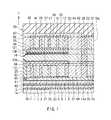
BRIEF DESCRIPTION OF THE DRAWINGSFIG. 1 is a cross-sectional view of a magnetic head according to a first embodiment of the invention.
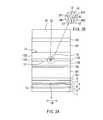
FIG. 2A is a front view showing the medium facing surface of the magnetic head according to the first embodiment of the invention.
FIG. 2B is an enlarged explanatory diagram showing part ofFIG. 2A.
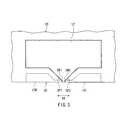
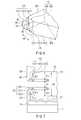
FIG. 3 is a plan view showing a main pole and two side shields of the magnetic head according to the first embodiment of the invention.
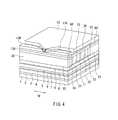
FIG. 4 is a perspective view of a part of the magnetic head according to the first embodiment of the invention.
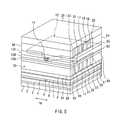
FIG. 5 is a perspective view of the magnetic head according to the first embodiment of the invention.
FIG. 6 is a perspective view of a part of the main pole in the vicinity of the medium facing surface of the magnetic head according to the first embodiment of the invention.
FIG. 7 is a cross-sectional view of a part of the main pole in the vicinity of the medium facing surface of the magnetic head according to the first embodiment of the invention.
FIG. 8A andFIG. 8B are explanatory diagrams showing a step of a method of manufacturing the magnetic head according to the first embodiment of the invention.
FIG. 9A andFIG. 9B are explanatory diagrams showing a step that follows the step shown inFIG. 8A andFIG. 8B.
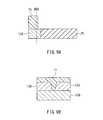
FIG. 10A andFIG. 10B are explanatory diagrams showing a step that follows the step shown inFIG. 9A andFIG. 9B.
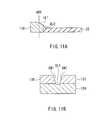
FIG. 11A andFIG. 11B are explanatory diagrams showing a step that follows the step shown inFIG. 10A andFIG. 10B.
FIG. 12A andFIG. 12B are explanatory diagrams showing a step that follows the step shown inFIG. 11A andFIG. 11B.
FIG. 13A andFIG. 13B are explanatory diagrams showing a step that follows the step shown inFIG. 12A andFIG. 12B.
FIG. 14A andFIG. 14B are explanatory diagrams showing a step that follows the step shown inFIG. 13A andFIG. 13B.
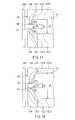
FIG. 15 is an explanatory diagram showing a model of a first comparative example for simulations.
FIG. 16 is an explanatory diagram showing a model of a second comparative example for simulations.
FIG. 17 is an explanatory diagram showing a model of a first practical example for simulations.
FIG. 18 is an explanatory diagram showing a model of a second practical example for simulations.
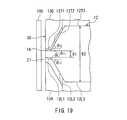
FIG. 19 is an explanatory diagram showing a model of a third practical example for simulations.
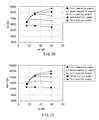
FIG. 20 is a characteristic chart showing the simulation results.
FIG. 21 is a characteristic chart showing the simulation results.
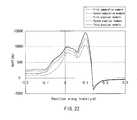
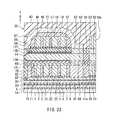
FIG. 22 is a characteristic chart showing the simulation results.
FIG. 23 is a cross-sectional view of a magnetic head according to a second embodiment of the invention.
FIG. 24 is a cross-sectional view of a magnetic head according to a third embodiment of the invention.
FIG. 25 is a cross-sectional view of a magnetic head according to a fourth embodiment of the invention.
FIG. 26 is a cross-sectional view of a magnetic head according to a fifth embodiment of the invention.
DETAILED DESCRIPTION OF THE PREFERRED EMBODIMENTSFirst EmbodimentEmbodiments of the present invention will now be described in detail with reference to the drawings. First, reference is made toFIG. 1 toFIG. 5 to describe the configuration of a magnetic head according to a first embodiment of the invention.FIG. 1 is a cross-sectional view of the magnetic head according to the present embodiment. Note thatFIG. 1 shows a cross section perpendicular to the medium facing surface and the top surface of the substrate. The arrow with the symbol T inFIG. 1 indicates the direction of travel of the recording medium.FIG. 2A is a front view showing the medium facing surface of the magnetic head according to the present embodiment.FIG. 2B is an enlarged explanatory diagram showing part ofFIG. 2A.FIG. 3 is a plan view showing a main pole and two side shields of the magnetic head according to the present embodiment.FIG. 4 is a perspective view of a part of the magnetic head according to the present embodiment.FIG. 5 is a perspective view of the magnetic head according to the present embodiment. The arrows with the symbol TW inFIG. 2A andFIG. 3 toFIG. 5 indicate the track width direction.
As shown inFIG. 1 andFIG. 2A, the magnetic head for perpendicular magnetic recording (hereinafter simply referred to as magnetic head) according to the present embodiment includes: asubstrate1 made of a ceramic material such as aluminum oxide-titanium carbide (Al2O3-TiC) and having atop surface1a; an insulatinglayer2 made of an insulating material such as alumina (Al2O3) and disposed on thetop surface1aof thesubstrate1; a bottomread shield layer3 made of a magnetic material and disposed on the insulatinglayer2; a bottom readshield gap film4 which is an insulating film disposed on the bottomread shield layer3; a magnetoresistive (MR)element5 as a read element disposed on the bottom readshield gap film4; a top readshield gap film6 which is an insulating film disposed on theMR element5; and a topread shield layer7 made of a magnetic material and disposed on the top readshield gap film6.
An end of theMR element5 is located in amedium facing surface30 that faces the recording medium. TheMR element5 may be an element formed of a magneto-sensitive film that exhibits a magnetoresistive effect, such as an anisotropic magnetoresistive (AMR) element, a giant magnetoresistive (GMR) element, or a tunneling magnetoresistive (TMR) element. The GMR element may be of a current-in-plane (CIP) type wherein a current to be used for detecting magnetic signals is fed in a direction generally parallel to the planes of layers constituting the GMR element, or may be of a current-perpendicular-to-plane (CPP) type wherein a current to be used for detecting magnetic signals is fed in a direction generally perpendicular to the planes of the layers constituting the GMR element.
The parts from the bottomread shield layer3 to the topread shield layer7 constitute a read head. The magnetic head further includes anonmagnetic layer8 made of a nonmagnetic material and disposed on the topread shield layer7, and a write head disposed on thenonmagnetic layer8. Thenonmagnetic layer8 is made of alumina, for example. The write head includes a coil, amain pole12, ashield13, and a gap part.
The coil includes afirst portion11 and asecond portion18. Each of thefirst portion11 and thesecond portion18 is planar spiral-shaped. Thefirst portion11 and thesecond portion18 are connected in series or in parallel. InFIG. 1, thereference symbol11aindicates a connection part of thefirst portion11 connected to thesecond portion18, and thereference symbol18aindicates a connection part of thesecond portion18 connected to thefirst portion11. The magnetic head further includes connection layers55,51,52, and53 that are each made of a conductive material and are stacked in this order on theconnection part11a. Theconnection part18ais disposed on theconnection layer53.
The coil including the first andsecond portions11 and18 produces a magnetic field corresponding to data to be written on the recording medium. Themain pole12 has an end face located in themedium facing surface30. Themain pole12 allows a magnetic flux corresponding to the magnetic field produced by the coil to pass, and produces a write magnetic field for writing data on the recording medium by means of the perpendicular magnetic recording system.FIG. 1 shows a cross section that intersects the end face of themain pole12 located in themedium facing surface30 and that is perpendicular to themedium facing surface30 and thetop surface1aof the substrate1 (the cross section will hereinafter be referred to as main cross section).
Theshield13 has an end face that is located in themedium facing surface30 to wrap around the end face of themain pole12. Theshield13 is made of a magnetic material. Examples of materials that can be used for theshield13 include CoFeN, CoNiFe, NiFe, and CoFe.
The magnetic head further includes: a firstreturn yoke layer21 disposed backward of themain pole12 and theshield13 along the direction T of travel of the recording medium; and a secondreturn yoke layer29 disposed forward of themain pole12 and theshield13 along the direction T of travel of the recording medium. The first and second return yoke layers21 and29 are each made of a magnetic material. Examples of materials that can be used for these layers include CoFeN, CoNiFe, NiFe, and CoFe. The firstreturn yoke layer21 corresponds to the yoke layer of the present invention.
The magnetic head further includes: coupling layers61,69 and62 that magnetically couple themain pole12 and the firstreturn yoke layer21 to each other; coupling layers63 and64 that magnetically couple themain pole12 and the secondreturn yoke layer29 to each other; coupling layers68 and65 that magnetically couple theshield13 and the firstreturn yoke layer21 to each other; and acoupling layer66 that magnetically couples theshield13 and the secondreturn yoke layer29 to each other. The coupling layers61 to66,68 and69 are each made of a magnetic material. Examples of materials that can be used for these coupling layers include CoFeN, CoNiFe, NiFe, and CoFe.
The firstreturn yoke layer21 is disposed on thenonmagnetic layer8. Thecoupling layer65 is disposed on the firstreturn yoke layer21. The respective end faces of the firstreturn yoke layer21 and thecoupling layer65 that are closer to themedium facing surface30 are located at a distance from themedium facing surface30. The magnetic head further includes an insulatinglayer81 made of an insulating material and disposed around the firstreturn yoke layer21 on thenonmagnetic layer8, and an insulatinglayer22 made of an insulating material and disposed on a part of the top surface of the firstreturn yoke layer21. The insulating layers81 and22 are made of alumina, for example. Thefirst portion11 is disposed on the insulatinglayer22.
Thecoupling layer61 is disposed on a part of the firstreturn yoke layer21 away from themedium facing surface30. Thefirst portion11 is wound around thecoupling layer61.
The magnetic head further includes: an insulatinglayer23 made of an insulating material and disposed around thefirst portion11 and thecoupling layer61 and in the space between every adjacent turns of thefirst portion11; and an insulatinglayer82 disposed around the insulatinglayer23 and thecoupling layer65. The top surfaces of thefirst portion11, the coupling layers61 and65 and the insulatinglayers23 and82 are even with each other. The insulatinglayer23 is made of a photoresist, for example. In the present embodiment, in particular, the insulatinglayer82 is made of an inorganic insulating material harder than the magnetic material that is used for thecoupling layer65. Alumina is an example of such inorganic insulating materials. Thefirst portion11 is made of a conductive material such as copper. Thecoupling layer68 is disposed on thecoupling layer65 and the insulatinglayer82. Thecoupling layer69 is disposed on thecoupling layer61. Theconnection layer55 is disposed on theconnection part11aof thefirst portion11.
The magnetic head further includes an insulatinglayer70 made of an insulating material and disposed around the coupling layers68 and69 and theconnection layer55 on the top surfaces of thefirst portion11 and the insulatinglayer23. The insulatinglayer70 is made of alumina, for example. The top surfaces of the coupling layers68 and69, theconnection layer55 and the insulatinglayer70 are even with each other.
Thecoupling layer62 is disposed on thecoupling layer69. Theconnection layer51 is disposed on theconnection layer55. The magnetic head further includes an insulatinglayer25 made of an insulating material and disposed around thecoupling layer62 and theconnection layer51 on a part of the top surface of thecoupling layer68 and the top surface of the insulatinglayer70. The insulatinglayer25 is made of alumina, for example.
Theshield13 includes abottom shield13A, afirst side shield13B, asecond side shield13C, and atop shield13D that are magnetically coupled to each other. The first and second side shields13B and13C are disposed on opposite sides of themain pole12 in the track width direction TW. Thebottom shield13A is located backward of the first and second side shields13B and13C along the direction T of travel of the recording medium. Thetop shield13D is located forward of the first and second side shields13B and13C along the direction T of travel of the recording medium.
Thebottom shield13A has an end face that is located in themedium facing surface30 at a position backward of the end face of themain pole12 along the direction T of travel of the recording medium. The first and second side shields13B and13C have two end faces that are located in themedium facing surface30 at positions on opposite sides of the end face of themain pole12 in the track width direction TW. Thetop shield13D has an end face that is located in themedium facing surface30 at a position forward of the end face of themain pole12 along the direction T of travel of the recording medium. The end faces of thebottom shield13A, thefirst side shield13B, thesecond side shield13C and thetop shield13D are arranged to wrap around the end face of themain pole12.
As shown inFIG. 1 andFIG. 2B, themain pole12 has: abottom end12L which is an end closer to thetop surface1aof thesubstrate1; atop surface12T opposite to thebottom end12L; and first and second side parts SP1 and SP2 that are opposite to each other in the track width direction TW. Thefirst side shield13B has a first sidewall SW1 that is opposed to the first side part SP1 of themain pole12. Thesecond side shield13C has a second sidewall SW2 that is opposed to the second side part SP2 of themain pole12.
The gap part is made of a nonmagnetic material and disposed between themain pole12 and theshield13. The gap part includes afirst gap layer27 disposed between themain pole12 and thebottom shield13A and between themain pole12 and the side shields13B and13C, and asecond gap layer14 disposed between themain pole12 and thetop shield13D.
Thebottom shield13A is disposed on a part of the top surface of thecoupling layer68 not covered by the insulatinglayer25. The first and second side shields13B and13C are disposed on thebottom shield13A and are in contact with the top surface of thebottom shield13A. Thefirst gap layer27 is arranged to extend along the sidewalls of the first and second side shields13B and13C, the top surface of thebottom shield13A, and the top surface of the insulatinglayer25. Thefirst gap layer27 is made of a nonmagnetic material. The nonmagnetic material used to form thefirst gap layer27 may be an insulating material or a nonmagnetic metal material. Alumina is an example of insulating materials that can be used to form thefirst gap layer27. Ru is an example of nonmagnetic metal materials that can be used to form thefirst gap layer27.
Although not shown, the magnetic head further includes a seed layer arranged to extend along the surface of thefirst gap layer27. The seed layer is made of a metal material. The metal material used to form the seed layer may be a nonmagnetic metal material or a magnetic metal material. Ru is an example of nonmagnetic metal materials that can be used to form the seed layer. NiFe, CoNiFe, and CoFe are examples of magnetic metal materials that can be used to form the seed layer. The seed layer is used as an electrode and a seed when forming themain pole12 by plating. The seed layer has a thickness in the range of 40 to 60 nm, for example. Thefirst gap layer27 and the seed layer have openings for exposing the top surface of theconnection layer51 and openings for exposing the top surface of thecoupling layer62. Theconnection layer52 is disposed on theconnection layer51.
Themain pole12 is disposed over thebottom shield13A and the insulatinglayer25 such that thefirst gap layer27 is interposed between themain pole12 and the top surfaces of thebottom shield13A and the insulatinglayer25. As shown inFIG. 2A, thefirst gap layer27 is interposed also between themain pole12 and each of the first and second side shields13B and13C.
Thebottom end12L of themain pole12 is in contact with the top surface of thecoupling layer62 at a position away from themedium facing surface30. Themain pole12 is made of a magnetic metal material. Examples of materials that can be used for themain pole12 include NiFe, CoNiFe, and CoFe. The shape of themain pole12 will be described in detail later.
The magnetic head further includes anonmagnetic layer26 made of a nonmagnetic material and disposed around themain pole12, thebottom shield13A, the side shields13B and13C, and theconnection layer52. In the present embodiment, thenonmagnetic layer26 is made of a nonmagnetic insulating material such as alumina, in particular.
The magnetic head further includes: anonmagnetic metal layer58 made of a nonmagnetic metal material and disposed on a part of thetop surface12T of themain pole12 at a position away from the medium facing surface; and an insulatinglayer59 made of an insulating material and disposed on the top surface of thenonmagnetic metal layer58. Thenonmagnetic metal layer58 is made of Ru, NiCr, or NiCu, for example. The insulatinglayer59 is made of alumina, for example.
Thesecond gap layer14 is disposed to cover themain pole12, thenonmagnetic metal layer58, and the insulatinglayer59. Thesecond gap layer14 is made of a nonmagnetic material. Examples of materials that can be used for thesecond gap layer14 include nonmagnetic insulating materials such as alumina, and nonmagnetic conductive materials such as Ru, NiCu, Ta, W, NiB, and NiP.
Thetop shield13D is disposed over the side shields13B and13C and thesecond gap layer14, and is in contact with the top surfaces of the side shields13B and13C and thesecond gap layer14. In themedium facing surface30, a part of the end face of thetop shield13D is located at a predetermined distance from the end face of themain pole12, the distance being created by the thickness of thesecond gap layer14. The thickness of thesecond gap layer14 preferably falls within the range of 5 to 60 nm, and may be 30 to 60 nm, for example. The end face of themain pole12 has a side that is adjacent to thesecond gap layer14, and the side defines the track width.
Thecoupling layer63 is disposed on a part of themain pole12 away from themedium facing surface30. Theconnection layer53 is disposed on theconnection layer52. The magnetic head further includes anonmagnetic layer46 disposed around thetop shield13D, thecoupling layer63 and theconnection layer53. Thenonmagnetic layer46 is made of an inorganic insulating material, for example. The inorganic insulating material may be alumina or silicon oxide, for example. The top surfaces of thetop shield13D, thecoupling layer63, theconnection layer53 and thenonmagnetic layer46 are even with each other.
Thecoupling layer66 is disposed on thetop shield13D. Thecoupling layer66 has an end face located in themedium facing surface30. Thecoupling layer64 is disposed on thecoupling layer63. Theconnection part18aof thesecond portion18 is disposed on theconnection layer53.
The magnetic head further includes an insulatinglayer17 made of an insulating material and disposed on a part of the top surface of thenonmagnetic layer46. The insulatinglayer17 is made of alumina, for example. Thesecond portion18 is disposed on the insulatinglayer17. Thesecond portion18 is wound around thecoupling layer64.
The magnetic head further includes: an insulatinglayer19 made of an insulating material and disposed around thesecond portion18 and thecoupling layer64 and in the space between every adjacent turns of thesecond portion18; and a not-shown insulating layer disposed around the insulatinglayer19 and thecoupling layer66. The top surfaces of thesecond portion18, the coupling layers64 and66, the insulatinglayer19 and the not-shown insulating layer are even with each other. The magnetic head further includes an insulatinglayer20 disposed to cover thesecond portion18 and the insulatinglayer19. The insulatinglayer19 is made of a photoresist, for example. The not-shown insulating layer and the insulatinglayer20 are made of alumina, for example. Thesecond portion18 is made of a conductive material such as copper.
The secondreturn yoke layer29 is disposed to couple thecoupling layer66 to thecoupling layer64. The secondreturn yoke layer29 has an end face located in themedium facing surface30.
The magnetic head further includes aprotection layer42 made of a nonmagnetic material and disposed to cover the secondreturn yoke layer29. Theprotection layer42 is made of, for example, an inorganic insulating material such as alumina.
As has been described, the magnetic head according to the present embodiment includes themedium facing surface30, the read head, and the write head. Themedium facing surface30 faces the recording medium. The read head and the write head are stacked on thesubstrate1. The read head is disposed backward along the direction T of travel of the recording medium (in other words, disposed closer to the air inflow end of the slider), while the write head is disposed forward along the direction T of travel of the recording medium (in other words, disposed closer to the air outflow end of the slider).
The read head includes: theMR element5 as the read element; the bottom readshield layer3 and the topread shield layer7 for shielding theMR element5, with their respective portions near themedium facing surface30 opposed to each other with theMR element5 therebetween; the bottom readshield gap film4 disposed between theMR element5 and the bottomread shield layer3; and the top readshield gap film6 disposed between theMR element5 and the topread shield layer7.
The write head includes: the coil including the first andsecond portions11 and18; themain pole12; theshield13; the gap part; the first and second return yoke layers21 and29; and the coupling layers61 to66,68 and69.
The coupling layers68 and65, the firstreturn yoke layer21, and the coupling layers61,69 and62 constitute a firstreturn path section60. Thecoupling layer66, the secondreturn yoke layer29, and the coupling layers63 and64 constitute a secondreturn path section67 that magnetically couples thetop shield13D and themain pole12 to each other. Each of the first and secondreturn path sections60 and67 is made of a magnetic material. Thefirst portion11 of the coil passes through the space defined by themain pole12 and the firstreturn path section60. Thesecond portion18 of the coil passes through the space defined by themain pole12 and the secondreturn path section67.
Theshield13 includes: the first and second side shields13B and13C disposed on opposite sides of themain pole12 in the track width direction TW; thebottom shield13A disposed backward of the first and second side shields13B and13C along the direction T of travel of the recording medium; and thetop shield13D disposed forward of the first and second side shields13B and13C along the direction T of travel of the recording medium. The first and second side shields13B and13C are located at positions that are near themedium facing surface30 and symmetric with respect to the center of themain pole12 in the track width direction TW.
Thebottom shield13A has an end face that is located in themedium facing surface30 at a position backward of the end face of themain pole12 along the direction T of travel of the recording medium. The first and second side shields13B and13C have two end faces that are located in themedium facing surface30 at positions on opposite sides of the end face of themain pole12 in the track width direction TW. Thetop shield13D has an end face that is located in themedium facing surface30 at a position forward of the end face of themain pole12 along the direction T of travel of the recording medium.
In the firstreturn path section60, the coupling layers68 and65 magnetically couple thebottom shield13A and the firstreturn yoke layer21 to each other. Thecoupling layer68 is magnetically connected to thebottom shield13A, while thecoupling layer65 magnetically couples thecoupling layer68 to the firstreturn yoke layer21. Thecoupling layer68 corresponds to the first coupling layer in the present invention, while thecoupling layer65 corresponds to the second coupling layer in the present invention. In the main cross section, the firstreturn yoke layer21 is greater than thebottom shield13A in length in the direction perpendicular to themedium facing surface30. In the main cross section, each of the coupling layers68 and65 is greater than thebottom shield13A and smaller than the firstreturn yoke layer21 in length in the direction perpendicular to themedium facing surface30. Thecoupling layer68 has an end face that is located in themedium facing surface30 at a position backward of the end face of thebottom shield13A along the direction T of travel of the recording medium. In the main cross section, the length of thebottom shield13A in the direction perpendicular to themedium facing surface30 falls within the range of 0.1 to 0.25 μm, for example. In the main cross section, the length of thecoupling layer68 in the direction perpendicular to themedium facing surface30 falls within the range of 0.6 to 1.5 μm, for example. In the main cross section, the length of thecoupling layer65 in the direction perpendicular to themedium facing surface30 falls within the range of 0.3μ to 0.8 μm, for example.
In the present embodiment, neither the firstreturn yoke layer21 nor thecoupling layer65 is exposed in themedium facing surface30. The respective end faces of the firstreturn yoke layer21 and thecoupling layer65 that are closer to themedium facing surface30 are located at a distance from themedium facing surface30. A part of the insulatinglayer81 is interposed between the medium facingsurface30 and the foregoing end face of the firstreturn yoke layer21. A part of the insulatinglayer82 is interposed between the medium facingsurface30 and the foregoing end face of thecoupling layer65.
Thebottom shield13A has a middle portion and two side portions. The middle portion includes a part that is opposed to themain pole12 with thefirst gap layer27 interposed therebetween. The two side portions are located on opposite sides of the middle portion in the track width direction. The middle portion is constant in length in the direction perpendicular to themedium facing surface30 regardless of position along the track width direction. Consequently, in the main cross section, thebottom shield13A is equal to the middle portion in length in the direction perpendicular to themedium facing surface30. The maximum length of the side portions in the direction perpendicular to themedium facing surface30 is greater than the length of the middle portion in the direction perpendicular to themedium facing surface30. Like thebottom shield13A, thetop shield13D also has a middle portion and two side portions.
The gap part includes thefirst gap layer27 disposed between themain pole12 and thebottom shield13A and between themain pole12 and the side shields13B and13C, and thesecond gap layer14 disposed between themain pole12 and thetop shield13D.
The shape of themain pole12 will now be described in detail with reference toFIG. 6 andFIG. 7.FIG. 6 is a perspective view of a part of themain pole12 in the vicinity of themedium facing surface30.FIG. 7 is a cross-sectional view of a part of themain pole12 in the vicinity of themedium facing surface30. As shown inFIG. 6, themain pole12 includes a trackwidth defining portion12A and awide portion12B. The trackwidth defining portion12A has an end face located in themedium facing surface30, and an end opposite to the end face. Thewide portion12B is connected to the end of the trackwidth defining portion12A. As shown inFIG. 6 andFIG. 7, themain pole12 has: thebottom end12L which is the end closer to thetop surface1aof thesubstrate1; thetop surface12T opposite to thebottom end12L; the first side part SP1; and the second side part SP2. The width of thetop surface12T in the track width direction TW is greater in thewide portion12B than in the trackwidth defining portion12A.
In the trackwidth defining portion12A, the width of thetop surface12T in the track width direction TW is generally constant regardless of the distance from themedium facing surface30. In thewide portion12B, the width of thetop surface12T in the track width direction TW is, for example, equal to that in the trackwidth defining portion12A when seen at the boundary between the trackwidth defining portion12A and thewide portion12B, and gradually increases with increasing distance from themedium facing surface30, then becoming constant. Here, the length of the trackwidth defining portion12A in the direction perpendicular to themedium facing surface30 will be referred to as neck height. The neck height falls within the range of 0 to 0.3 μm, for example. A zero neck height means that no trackwidth defining portion12A exists and an end face of thewide portion12B is thus located in themedium facing surface30.
Thebottom end12L includes a first portion12L1, a second portion12L2, and a third portion12L3 that are contiguously arranged in order of increasing distance from themedium facing surface30. The first portion12L1 has an end located in themedium facing surface30. Each of the first and second portions12L1 and12L2 may be an edge formed by two intersecting planes, or may be a plane connecting two planes to each other. The third portion12L3 is a plane extending in a direction substantially perpendicular to themedium facing surface30. Thetop surface12T includes a fourth portion12T1, a fifth portion12T2, and a sixth portion12T3 that are contiguously arranged in order of increasing distance from themedium facing surface30. The fourth portion12T1 has an end located in themedium facing surface30.
As shown inFIG. 7, the distance from thetop surface1aof thesubstrate1 to any given point on each of the first and second portions12L1 and12L2 decreases with increasing distance from the given point to themedium facing surface30. The first portion12L1 has an angle of inclination θL1with respect to the direction perpendicular to themedium facing surface30, and the second portion12L2 has an angle of inclination θL2with respect to the direction perpendicular to themedium facing surface30, θL2being greater than θL1. The third portion12L3 extends in a direction substantially perpendicular to themedium facing surface30. The first portion12L1 corresponds to the inclined portion in the present invention. Thebottom shield13A has a top surface that is opposed to the first portion12L1 with the gap part (the first gap layer27) interposed therebetween. The distance from thetop surface1aof thesubstrate1 to any given point on the top surface of thebottom shield13A decreases with increasing distance from the given point to themedium facing surface30.
The distance from thetop surface1aof thesubstrate1 to any given point on each of the fourth and fifth portions12T1 and12T2 increases with increasing distance from the given point to themedium facing surface30. The fourth portion12T1 has an angle of inclination θT1with respect to the direction perpendicular to themedium facing surface30, and the fifth portion12T2 has an angle of inclination θT2with respect to the direction perpendicular to themedium facing surface30, θT2being greater than θT1. The sixth portion12T3 extends in the direction substantially perpendicular to themedium facing surface30. The fourth and fifth portions12T1 and12T2 correspond to the inclined surface in the present invention. Thetop shield13D has a bottom surface that is opposed to the fourth and fifth portions12T1 and12T2 with the gap part (the second gap layer14) interposed therebetween. The distance from thetop surface1aof thesubstrate1 to any given point on the bottom surface of thetop shield13D increases with increasing distance from the given point to themedium facing surface30.
Both the angle of inclination θL1of the first portion12L1 and the angle of inclination θT1of the fourth portion12T1 preferably fall within the range of 15° to 45°. Both the angle of inclination θL2of the second portion12L2 and the angle of inclination θT2of the fifth portion12T2 preferably fall within the range of 45° to 85°.
As shown inFIG. 6, the end face of themain pole12 located in themedium facing surface30 has a first side A1 adjacent to thesecond gap layer14, a second side A2 connected to a first end of the first side A1, and a third side A3 connected to a second end of the first side A1. The first side A1 defines the track width. The position of an end of the recording bits to be recorded on the recording medium depends on the position of the first side A1. The end face of themain pole12 located in themedium facing surface30 decreases in width in the track width direction TW with increasing proximity to thebottom end12L of themain pole12, that is, with increasing proximity to thetop surface1aof thesubstrate1. Each of the second side A2 and the third side A3 forms an angle in the range of, for example, 7° to 17°, or preferably in the range of 10° to 15°, with respect to the direction perpendicular to the top surface of thesubstrate1. The first side A1 has a length in the range of 0.05 to 0.20 μm, for example.
Here, as shown inFIG. 7, let D1 be the thickness (length in the direction perpendicular to thetop surface1aof the substrate1) of themain pole12 at themedium facing surface30, and D2 be the distance between the third portion12L3 and the sixth portion12T3. Let also DL1be the length in the direction perpendicular to thetop surface1aof thesubstrate1 between two ends of the first portion12L1 that are opposite to each other in that direction. Let also DL2be the length in the direction perpendicular to thetop surface1aof thesubstrate1 between two ends of the second portion12L2 that are opposite to each other in that direction. Let DT1be the length in the direction perpendicular to thetop surface1aof thesubstrate1 between two ends of the fourth portion12T1 that are opposite to each other in that direction. Let also DT2be the length in the direction perpendicular to thetop surface1aof thesubstrate1 between two ends of the fifth portion12T2 that are opposite to each other in that direction. For example, D1 falls within the range of 0.05 to 0.2 μm, while D2 falls within the range of 0.4 to 0.8 μm. For instance, Du is greater than 0 and equal to or smaller than 0.3 μm, while DL2falls within the range of 0.15 to 0.3 μm. Furthermore, by way of example, DT1is greater than 0 and equal to or smaller than 0.3 μm, while DT2falls within the range of 0.15 to 0.3 μm.
FIG. 6 shows an example where the distance from themedium facing surface30 to the boundary between the second portion12L2 and the third portion12L3, and the distance from themedium facing surface30 to the boundary between the fifth portion12T2 and the sixth portion12T3, are both equal to the neck height, i.e., the distance from themedium facing surface30 to the boundary between the trackwidth defining portion12A and thewide portion12B. Nevertheless, the distance from themedium facing surface30 to the boundary between the second portion12L2 and the third portion12L3, and the distance from themedium facing surface30 to the boundary between the fifth portion12T2 and the sixth portion12T3, may each be smaller or greater than the neck height.
As shown inFIG. 2B, in themedium facing surface30, the distance between the first and second side parts SP1 and SP2 of themain pole12 in the track width direction TW decreases with increasing proximity to thetop surface1aof thesubstrate1. Likewise, in themedium facing surface30, the distance between the first and second sidewalls SW1 and SW2 of the side shields13B and13C in the track width direction TW decreases with increasing proximity to thetop surface1aof thesubstrate1. In themedium facing surface30, the first side part SP1 and the first sidewall SW1 are substantially parallel to each other, and the second side part SP2 and the second sidewall SW2 are also substantially parallel to each other. In themedium facing surface30, the distance between the first side part SP1 and the first sidewall SW1 and the distance between the second side part SP2 and the second sidewall SW2 are equal. Here, the distances will be denoted as G1. G1 falls within the range of 20 to 80 nm, for example. Here, let G2 be the distance between thebottom end12L of themain pole12 and thebottom shield13A in themedium facing surface30. G2 is greater than G1 and equal to or smaller than three times G1. This relationship is achieved by forming thefirst gap layer27 and themain pole12 after the formation of the side shields13B and13C having the sidewalls SW1 and SW2.
A description will now be given of a method of manufacturing the magnetic head according to the present embodiment. In the method of manufacturing the magnetic head according to the embodiment, first, as shown inFIG. 1 andFIG. 2A, the insulatinglayer2, the bottom readshield layer3, and the bottom readshield gap film4 are formed in this order on thesubstrate1. Next, theMR element5 and not-shown leads connected to theMR element5 are formed on the bottom readshield gap film4. TheMR element5 and the leads are then covered with the top readshield gap film6. Next, the topread shield layer7 and thenonmagnetic layer8 are formed in this order on the top readshield gap film6.
Next, the firstreturn yoke layer21 is formed on thenonmagnetic layer8 by frame plating, for example. Next, the insulatinglayer81 is formed over the entire top surface of the stack. The insulatinglayer81 is then polished by, for example, chemical mechanical polishing (hereinafter referred to as CMP), until the firstreturn yoke layer21 is exposed. The top surfaces of the firstreturn yoke layer21 and the insulatinglayer81 are thereby made even with each other.
Next, the insulatinglayer22 is formed on the top surfaces of the firstreturn yoke layer21 and the insulatinglayer81 in an area where thefirst portion11 of the coil is to be disposed later. Thefirst portion11 is then formed on the insulatinglayer22 by frame plating, for example. Next, the coupling layers61 and65 are formed on the firstreturn yoke layer21 by frame plating, for example. Note that thefirst portion11 may be formed after the formation of the coupling layers61 and65.
Next, the insulatinglayer23 is formed around thefirst portion11 and thecoupling layer61 and in the space between every adjacent turns of thefirst portion11. Next, the insulatinglayer82 is formed over the entire top surface of the stack. The insulatinglayer82 is then polished by, for example, CMP, until thefirst portion11 and the coupling layers61 and65 are exposed. The top surfaces of thefirst portion11, the coupling layers61 and65 and the insulatinglayers23 and82 are thereby made even with each other.
Next, thecoupling layer68 is formed on thecoupling layer65 and the insulatinglayer82, thecoupling layer69 is formed on thecoupling layer61, and theconnection layer55 is formed on theconnection part11aof thefirst portion11, by performing frame plating, for example. Next, the insulatinglayer70 is formed over the entire top surface of the stack. The insulatinglayer70 is then polished by, for example, CMP, until the coupling layers68 and69 and theconnection layer55 are exposed. The top surfaces the coupling layers68 and69, theconnection layer55 and the insulatinglayer70 are thereby made even with each other.
Reference is now made toFIG. 8A throughFIG. 14B to describe a series of steps, subsequent to the aforementioned step, down to the step of determining the shape of thetop surface12T of themain pole12.FIG. 8A throughFIG. 14B each show a stack of layers in the process of manufacturing the magnetic head.FIG. 8A toFIG. 14A each show a cross section perpendicular to themedium facing surface30 and thetop surface1aof thesubstrate1.FIG. 8B toFIG. 14B each show a cross section of the stack taken at the position where themedium facing surface30 is to be formed. The parts that are closer to thesubstrate1 than is the insulatinglayer25 are not shown inFIG. 8A throughFIG. 14B. The symbol “ABS” inFIG. 8A toFIG. 14A indicates the position where themedium facing surface30 is to be formed.
FIG. 8A andFIG. 8B show a step that follows the step of evening the top surfaces of the coupling layers68 and69, theconnection layer55 and the insulatinglayer70. In this step, first, thebottom shield13A is formed on thecoupling layer68, thecoupling layer62 is formed on thecoupling layer69, and theconnection layer51 is formed on theconnection layer55, by performing frame plating, for example. Next, the insulatinglayer25 is formed over the entire top surface of the stack. The insulatinglayer25 is then polished by, for example, CMP, until thebottom shield13A, thecoupling layer62 and theconnection layer51 are exposed. The top surfaces of thebottom shield13A, thecoupling layer62, theconnection layer51 and the insulatinglayer25 are thereby made even with each other.
Next, the side shields13B and13C are formed on thebottom shield13A. Here, a method of forming the side shields13B and13C will be described by way of example. In the method, first, a photoresist layer made of a positive photoresist is patterned by photolithography to form a first resist layer on regions of the top surface of thebottom shield13A where the side shields13B and13C are to be formed later. The first resist layer has two portions that have shapes corresponding to the shapes of the side shields13B and13C to be formed later. Next, a separating film made of a nonmagnetic material is formed to cover the first resist layer. The separating film is provided to prevent the first resist layer of a positive photoresist from being mixed with a photoresist layer of a negative photoresist to be formed later. Examples of materials suitable for the separating film include alumina and a synthetic resin.
Next, a second resist layer is formed on the separating film by patterning a photoresist layer of a negative photoresist by photolithography. The second resist layer is to later become a mold. The second resist layer has two openings that have shapes corresponding to the shapes of the side shields13B and13C to be formed later. Next, by performing wet etching, for example, the separating film is removed in the part thereof not covered by the second resist layer. The first and second resist layers are then exposed to light. Thereafter, the first resist layer is removed from the two openings of the second resist layer by using an alkaline developer, for example. When the first resist layer is removed or after the first resist layer has been removed, the separating film is removed in the part thereof extending along the wall faces of the two openings of the second resist layer. As a result of this step, the second resist layer becomes the mold which is formed in a region excluding the regions where the side shields13B and13C are to be formed later. Next, the side shields13B and13C are formed on the top surface of thebottom shield13A by performing plating without forming any seed layer. The side shields13B and13C are respectively formed in the two openings of the mold. The mold and the separating film are then removed.
FIG. 8B shows the side shields13B and13C thus formed. The side shields13B and13C have mutually opposing sidewalls in the vicinity of the position ABS where themedium facing surface30 is to be formed. The top surface of thebottom shield13A is exposed between the sidewalls of the side shields13B and13C.
FIG. 9A andFIG. 9B show the next step. In this step, amask71 is formed over thebottom shield13A and the side shields13B and13C. Themask71 is formed by patterning a photoresist layer. As shown inFIG. 9A, themask71 does not cover a part of thebottom shield13A located near the boundary between thebottom shield13A and the insulatinglayer25.
FIG. 10A andFIG. 10B show the next step. In this step, the insulatinglayer25 is etched by using themask71 and thebottom shield13A as an etching mask. The etching proceeds until the etched bottom reaches a level between the top and bottom surfaces of the insulatinglayer25 unetched. The etching is performed by, for example, reactive ion etching under such a condition that a slope UL2 is formed by the etched insulatinglayer25 at a position near the boundary between thebottom shield13A and the insulatinglayer25 unetched, as shown inFIG. 10A. The angle of inclination of the slope UL2 is equal to that of the second portion12L2 of thebottom end12L of themain pole12 to be formed later. Next, themask71 is removed.
FIG. 11A andFIG. 11B show the next step. In this step, the mutually opposing sidewalls of the side shields13B and13C and the top surface of thebottom shield13A are each partially etched in the vicinity of the position ABS where themedium facing surface30 is to be formed. For example, ion beam etching is employed for this etching. The etching is performed such that a slope UL1 contiguous with the slope UL2 is formed in the top surface of thebottom shield13A at a position between the mutually opposing sidewalls of the side shields13B and13C, as shown inFIG. 11A. The angle of inclination of the slope UL1 is equal to that of the first portion12L1 of thebottom end12L of themain pole12 to be formed later. As shown inFIG. 11B, this etching determines the shape of the sidewalls SW1 and SW2 of the side shields13B and13C.
FIG. 12A andFIG. 12B show the next step. In this step, thefirst gap layer27 is formed to cover thebottom shield13A and the side shields13B and13C. Where alumina is selected as the material of thefirst gap layer27, thefirst gap layer27 is formed by atomic layer deposition, for example. Where Ru is selected as the material of thefirst gap layer27, thefirst gap layer27 is formed by chemical vapor deposition, for example.
FIG. 13A andFIG. 13B show the next step. In this step, first, although not shown, a seed layer is formed over the entire top surface of the stack by sputtering or ion beam deposition, for example. Next, thefirst gap layer27 and the seed layer are selectively etched to form therein openings for exposing the top surface of thecoupling layer62 and openings for exposing the top surface of theconnection layer51. Next, amagnetic layer12P and theconnection layer52 are formed by frame plating, for example. Themagnetic layer12P is to later become themain pole12. Themagnetic layer12P and theconnection layer52 are formed such that their top surfaces are higher in level than the top surfaces of portions of the seed layer lying on the side shields13B and13C.
FIG. 14A andFIG. 14B show the next step. In this step, first, although not shown, thenonmagnetic layer26 is formed to cover thefirst gap layer27 and themagnetic layer12P. Thenonmagnetic layer26 and thefirst gap layer27 are then polished by, for example, CMP, until the side shields13B and13C are exposed. Next, a first mask layer and a second mask layer, which are to later become thenonmagnetic metal layer58 and the insulatinglayer59, respectively, are formed over themagnetic layer12P and the side shields13B and13C. Using the first and second mask layers as an etching mask, themagnetic layer12P, the side shields13B and13C and thefirst gap layer27 are then partially etched by ion beam etching, for example. As a result, the first mask layer, the second mask layer, and themagnetic layer12P become thenonmagnetic metal layer58, the insulatinglayer59, and themain pole12, respectively.
Where ion beam etching is employed to partially etch themagnetic layer12P, the side shields13B and13C and thefirst gap layer27, the etching is performed such that ion beams travel in a direction at an angle of 40° to 75° with respect to the direction perpendicular to thetop surface1aof thesubstrate1 and that the direction of travel of the ion beams is caused to rotate as viewed in the direction perpendicular to thetop surface1aof thesubstrate1. As a result of such ion beam etching, the fourth portion12T1, the fifth portion12T2 and the sixth portion12T3 are formed in the top surface of themagnetic layer12P. The shape of thetop surface12T of themain pole12 is thus determined.
Steps subsequent to the step ofFIG. 14A andFIG. 14B will now be described with reference toFIG. 1 andFIG. 2A. First, thesecond gap layer14 is formed over the entire top surface of the stack by sputtering or chemical vapor deposition, for example. Next, thesecond gap layer14, thenonmagnetic metal layer58 and the insulatinglayer59 are selectively etched by, for example, ion beam etching, so that a part of thetop surface12T of themain pole12, a part of each of the top surfaces of the side shields13B and13C, and the top surface of theconnection layer52 are exposed. Next, thetop shield13D is formed over the side shields13B and13C and thesecond gap layer14, thecoupling layer63 is formed on themain pole12, and theconnection layer53 is formed on theconnection layer52, by performing frame plating, for example.
Next, thenonmagnetic layer46 is formed over the entire top surface of the stack. Thenonmagnetic layer46 is then polished by, for example, CMP, until thetop shield13D, thecoupling layer63 and theconnection layer53 are exposed. The top surfaces of thetop shield13D, thecoupling layer63, theconnection layer53 and thenonmagnetic layer46 are thereby made even with each other.
Next, the insulatinglayer17 is formed on the top surface of thenonmagnetic layer46 in an area where thesecond portion18 of the coil is to be disposed later. Thesecond portion18 is then formed on the insulatinglayer17 by frame plating, for example. Next, thecoupling layer66 is formed over thetop shield13D and thenonmagnetic layer46, and thecoupling layer64 is formed on thecoupling layer63, by performing frame plating, for example. Note that thesecond portion18 may be formed after the formation of the coupling layers64 and66.
Next, the insulatinglayer19 is formed around thesecond portion18 and thecoupling layer64 and in the space between every adjacent turns of thesecond portion18. Next, a not-shown insulating layer is formed over the entire top surface of the stack. The not-shown insulating layer is then polished by, for example, CMP, until thesecond portion18 and the coupling layers64 and66 are exposed. The top surfaces of thesecond portion18, the coupling layers64 and66, the insulatinglayer19 and the not-shown insulating layer are thereby made even with each other.
Next, the insulatinglayer20 is formed over the entire top surface of the stack by sputtering, for example. The insulatinglayer20 is then selectively etched to form therein an opening for exposing the top surface of thecoupling layer64 and an opening for exposing the top surface of thecoupling layer66. Next, the secondreturn yoke layer29 is formed by frame plating, for example.
Next, theprotection layer42 is formed to cover the entire top surface of the stack. Wiring, terminals and other components are then formed on theprotection layer42, and thesubstrate1 is cut near the position ABS. The cut surface is polished to form themedium facing surface30, and then fabrication of flying rails and other processes are performed to complete the magnetic head.
The function and effects of the magnetic head according to the present embodiment will now be described. The magnetic head writes data on a recording medium with the write head and reads data written on the recording medium with the read head. In the write head, the coil including the first andsecond portions11 and18 produces magnetic fields corresponding to data to be written on the recording medium. A magnetic flux corresponding to the magnetic field produced by thefirst portion11 passes through the coupling layers61,69 and62 and themain pole12. A magnetic flux corresponding to the magnetic field produced by thesecond portion18 passes through the coupling layers64 and63 and themain pole12. Consequently, themain pole12 allows the magnetic flux corresponding to the magnetic field produced by thefirst portion11 and the magnetic flux corresponding to the magnetic field produced by thesecond portion18 to pass.
The first andsecond portions11 and18 may be connected in series or in parallel. In either case, the first andsecond portions11 and18 are connected such that the magnetic flux corresponding to the magnetic field produced by thefirst portion11 and the magnetic flux corresponding to the magnetic field produced by thesecond portion18 flow in the same direction through themain pole12.
Themain pole12 allows the magnetic fluxes corresponding to the magnetic fields produced by the coil to pass as mentioned above, and produces a write magnetic field for writing data on the recording medium by means of the perpendicular magnetic recording system.
Theshield13 captures a disturbance magnetic field applied to the magnetic head from the outside thereof. This allows preventing erroneous writing on the recording medium induced by the disturbance magnetic field intensively captured into themain pole12. Theshield13 also functions to capture a magnetic flux that is produced from the end face of themain pole12 and that expands in directions other than the direction perpendicular to the plane of the recording medium, and to thereby prevent the magnetic flux from reaching the recording medium.
Theshield13, the firstreturn yoke layer21, the secondreturn yoke layer29 and the coupling layers61 to66,68 and69 have the function of returning a magnetic flux that has been produced from the end face of themain pole12 and has magnetized the recording medium. More specifically, a part of the magnetic flux that has been produced from the end face of themain pole12 and has magnetized the recording medium returns to themain pole12 through theshield13, the coupling layers68 and65, the firstreturn yoke layer21 and the coupling layers61,69 and62. Another part of the magnetic flux that has been produced from the end face of themain pole12 and has magnetized the recording medium returns to themain pole12 through theshield13, thecoupling layer66, the secondreturn yoke layer29 and the coupling layers64 and63.
Theshield13 includes thebottom shield13A, thefirst side shield13B, thesecond side shield13C, and thetop shield13D. Thebottom shield13A has an end face that is located in themedium facing surface30 at a position backward of the end face of themain pole12 along the direction T of travel of the recording medium. The first and second side shields13B and13C have two end faces that are located in themedium facing surface30 at positions on opposite sides of the end face of themain pole12 in the track width direction TW. Thetop shield13D has an end face that is located in themedium facing surface30 at a position forward of the end face of themain pole12 along the direction T of travel of the recording medium. The present embodiment thus makes it possible that, in regions both backward and forward of the end face of themain pole12 along the direction T of travel of the recording medium and regions on opposite sides of the end face of themain pole12 in the track width direction TW, a magnetic flux that is produced from the end face of themain pole12 and expands in directions other than the direction perpendicular to the plane of the recording medium can be captured and thereby prevented from reaching the recording medium. Consequently, the present embodiment allows preventing the occurrence of adjacent track erase resulting from a skew. Thebottom shield13A and thetop shield13D contribute to an increase in the gradient of the write magnetic field, as well as the prevention of adjacent track erase resulting from a skew. The side shields13B and13C greatly contribute to the prevention of adjacent track erase, in particular. By virtue of such a function of theshield13, the present embodiment allows increasing the recording density.
Furthermore, as shown inFIG. 2B, the present embodiment is configured so that in themedium facing surface30, the distance between the first and second side parts SP1 and SP2 of themain pole12 in the track width direction TW, i.e., the width of the end face of themain pole12, decreases with increasing proximity to thetop surface1aof thesubstrate1. According to the present embodiment, this feature also serves to prevent the occurrence of adjacent track erase resulting from a skew.
The present embodiment is also configured so that in themedium facing surface30, the distance between the first and second sidewalls SW1 and SW2 of the side shields13B and13C in the track width direction TW decreases with increasing proximity to thetop surface1aof thesubstrate1, as does the distance between the first and second side parts SP1 and SP2 of themain pole12. The present embodiment thus makes it possible that the distance between the first side part SP1 and the first sidewall SW1 and the distance between the second side part SP2 and the second sidewall SW2 are both small and constant in themedium facing surface30. This configuration allows the side shields13B and13C to effectively capture the magnetic flux that is produced from the end face of themain pole12 and expands to opposite sides in the track width direction TW. As a result, the present embodiment can enhance the function of the side shields13B and13C in particular, and thereby prevent the skew-induced adjacent track erase more effectively.
Theshield13 cannot capture much magnetic flux if there is no magnetic connection between theshield13 and any magnetic layer having a sufficiently large volume enough to accommodate the magnetic flux that has been captured by theshield13. In the present embodiment, there are provided the first return path section60 (the coupling layers68 and65, the firstreturn yoke layer21 and the coupling layers61,69 and62) which magnetically couples thebottom shield13A and themain pole12 to each other, and the second return path section67 (thecoupling layer66, the secondreturn yoke layer29, and the coupling layers63 and64) which magnetically couples thetop shield13D and themain pole12 to each other. Such a configuration allows the magnetic flux having been captured by theshield13 to flow into themain pole12 by way of the first and secondreturn path sections60 and67. In the present embodiment, the first and secondreturn path sections60 and67 and themain pole12, which are magnetic layers large in volume, are magnetically connected to theshield13. The present embodiment thus allows theshield13 to capture much magnetic flux, so that the above-described effect of theshield13 can be exerted effectively.
Furthermore, the present embodiment is provided with thebottom shield13A, in addition to the firstreturn path section60. In the main cross section, the firstreturn yoke layer21 of the firstreturn path section60 is greater than thebottom shield13A in length in the direction perpendicular to themedium facing surface30. Thefirst portion11 of the coil passes through the space defined by themain pole12 and the firstreturn path section60. According to the present embodiment, such a structure is more advantageous than a structure where the firstreturn yoke layer21 also functions as the bottom shield. That is, in the present embodiment, thebottom shield13A and themain pole12 can be brought into sufficiently close proximity to each other. This enhances the function of theshield13, and in particular, the function of thebottom shield13A.
Now, a description will be made as to the role of the coupling layers68 and65. First, suppose that there are provided no coupling layers68 and65, so that thebottom shield13A and the firstreturn yoke layer21 are not magnetically coupled to each other. In this case, the magnetic flux that has been captured by thebottom shield13A or the side shields13B and13C and directed downward cannot flow toward the firstreturn yoke layer21, and thus returns so as to proceed upward. This causes thebottom shield13A or the side shields13B and13C to produce upwardly and downwardly directed magnetic fluxes. As a result, part of the magnetic flux captured by thebottom shield13A or the side shields13B and13C leaks out of themedium facing surface30. This may cause adjacent track erase. In contrast to this, if thebottom shield13A and the firstreturn yoke layer21 are magnetically coupled to each other by the coupling layers68 and65, the magnetic flux captured by the side shields13B and13C is divided to flow upward and downward, and the magnetic flux captured by thebottom shield13A is mainly directed downward. This can prevent the occurrence of adjacent track erase that is caused by part of the magnetic flux captured by thebottom shield13A or the side shields13B and13C being leaked out of themedium facing surface30.
If the end face of thecoupling layer65 is exposed in themedium facing surface30, the insulatinglayer23 would expand due to heat generated by thefirst portion11 of the coil. As a result, the end face of thecoupling layer65, i.e., a part of themedium facing surface30, would protrude. In contrast to this, in the present embodiment, the insulatinglayer82 harder than thecoupling layer65 is provided between thecoupling layer65 and themedium facing surface30. The insulatinglayer82 exists across a wider area than does thecoupling layer65. The insulatinglayer82 therefore functions to prevent changes in the position of thecoupling layer65 due to the heat generated by thefirst portion11. Thus, the present embodiment makes it possible to prevent part of themedium facing surface30 from protruding due to the heat generated by thefirst portion11.
If thebottom shield13A is excessively long in the direction perpendicular to themedium facing surface30 in the main cross section, flux leakage from themain pole12 to thebottom shield13A increases and themain pole12 thus becomes unable to direct much magnetic flux to themedium facing surface30. It is therefore necessary that thebottom shield13A is not excessively long in the direction perpendicular to themedium facing surface30 in the main cross section. In the main cross section, if the length of each of the coupling layers68 and65 in the direction perpendicular to themedium facing surface30 is equal to or smaller than that of thebottom shield13A, the coupling layers68 and65 cannot direct much magnetic flux from thebottom shield13A to the firstreturn yoke layer21. In contrast to this, the present embodiment is configured so that in the main cross section, each of the coupling layers68 and65 is greater than thebottom shield13A and smaller than the firstreturn yoke layer21 in length in the direction perpendicular to themedium facing surface30. Consequently, the present embodiment allows the coupling layers68 and65 to direct much magnetic flux from thebottom shield13A to the firstreturn yoke layer21.
Furthermore, in the present embodiment, thebottom end12L of themain pole12 includes the first portion12L1, the second portion12L2, and the third portion12L3 that are contiguously arranged in order of increasing distance from themedium facing surface30. Thetop surface12T of themain pole12 includes the fourth portion12T1, the fifth portion12T2, and the sixth portion12T3 that are contiguously arranged in order of increasing distance from themedium facing surface30. The distance from thetop surface1aof thesubstrate1 to any given point on each of the first and second portions12L1 and12L2 decreases with increasing distance from the given point to themedium facing surface30. The distance from thetop surface1aof thesubstrate1 to any given point on each of the fourth and fifth portions12T1 and12T2 increases with increasing distance from the given point to themedium facing surface30. Consequently, the present embodiment allows themain pole12 to have a small thickness in themedium facing surface30. It is thus possible to prevent the skew-induced adjacent track erase. The present embodiment further allows themain pole12 to have a great thickness in the part away from themedium facing surface30. This allows themain pole12 to direct much magnetic flux to themedium facing surface30, and consequently allows improving write characteristics such as overwrite property.
In the present embodiment, the angle of inclination θL2of the second portion12L2 with respect to the direction perpendicular to themedium facing surface30 is greater than the angle of inclination θL1of the first portion12L1 with respect to the direction perpendicular to themedium facing surface30. Also, the angle of inclination θT2of the fifth portion12T2 with respect to the direction perpendicular to themedium facing surface30 is greater than the angle of inclination θT1of the fourth portion12T1 with respect to the direction perpendicular to themedium facing surface30. According to the present embodiment, this configuration allows preventing the skew-induced problems and improving write characteristics as mentioned above, while suppressing variations in write characteristics associated with changes in level of themedium facing surface30. This effect will be described in more detail below.
First, consider a main pole of a comparative example whose shape is as described below. The main pole of the comparative example has a bottom end that has a first slope instead of the first and second portions12L1 and12L2 of the present embodiment. The first slope has a constant angle of inclination with respect to the direction perpendicular to themedium facing surface30. The distance from thetop surface1aof thesubstrate1 to any given point on the first slope decreases with increasing distance from the given point to themedium facing surface30. The main pole of the comparative example has a top surface that has a second slope instead of the fourth and fifth portions12T1 and12T2 of the present embodiment. The second slope has a constant angle of inclination with respect to the direction perpendicular to themedium facing surface30. The distance from thetop surface1aof thesubstrate1 to any given point on the second slope increases with increasing distance from the given point to themedium facing surface30.
Suppose that the first and second slopes of the main pole of the comparative example have angles of inclination as small as θL1and θT1, for example. In this case, to make the maximum thickness of the main pole as great as that of themain pole12 of the present embodiment, the first and second slopes need to be made longer. It is not easy to form such a main pole, however. Accordingly, in this case, it is difficult to increase the thickness of the main pole in the part away from themedium facing surface30. This leads to degradation of write characteristics.
On the other hand, if the first and second slopes of the main pole of the comparative example have angles of inclination as great as θL2and θT2, a change in level of themedium facing surface30 to be formed by polishing causes a great change in thickness of the main pole at themedium facing surface30. This results in significant variations in write characteristics.
As such, with the main pole of the comparative example, it is difficult to prevent the skew-induced problems and to improve write characteristics while suppressing variations in write characteristics associated with changes in level of themedium facing surface30.
In contrast to this, for themain pole12 of the present embodiment, the first and fourth portions12L1 and12T1 are made to have small angles of inclination θL1and θT1to thereby suppress variations in write characteristics associated with changes in level of themedium facing surface30. Furthermore, for themain pole12, the second and fifth portions12L2 and12T2 are made to have great angles of inclination θL2and θT2to thereby provide a great distance D2 between the third portion12L3 and the sixth portion12T3 while achieving a small thickness D1 of themain pole12 in themedium facing surface30 shown inFIG. 7. This allows preventing the skew-induced problems and improving write characteristics. Consequently, according to the present embodiment, it is possible to prevent the skew-induced problems and to improve write characteristics while suppressing variations in write characteristics associated with changes in level of themedium facing surface30.
A description will now be given of simulation results that demonstrate the effects of the aforementioned shape of themain pole12 of the present embodiment.FIG. 15 toFIG. 19 show main pole models that were used in the simulations.FIG. 15 shows amain pole112 of a first comparative example.FIG. 16 shows amain pole112 of a second comparative example.FIG. 17 shows amain pole12 of a first practical example.FIG. 18 shows amain pole12 of a second practical example.FIG. 19 shows amain pole12 of a third practical example. Each of themain poles12 of the first to third practical examples corresponds to themain pole12 of the present embodiment.Reference numeral100 inFIG. 15 toFIG. 19 indicates a recording medium.
Themain pole112 of the first comparative example shown inFIG. 15 has abottom end112L instead of thebottom end12L of themain pole12 of the present embodiment. Thebottom end112L extends in the direction perpendicular to themedium facing surface30. Themain pole112 of the first comparative example further has atop surface112T instead of thetop surface12T of themain pole12 of the present embodiment. Thetop surface112T includes a first portion112T1 and a second portion112T2 that are contiguously arranged in order of increasing distance from themedium facing surface30. The distance from thetop surface1aof thesubstrate1 to any given point on the first portion112T1 increases with increasing distance from the given point to themedium facing surface30. However, the first portion112T1 has a constant angle of inclination θTwith respect to the direction perpendicular to themedium facing surface30. The second portion112T2 extends in a direction substantially perpendicular to themedium facing surface30.
Themain pole112 of the second comparative example shown inFIG. 16 has abottom end112L instead of thebottom end12L of themain pole12 of the present embodiment. Thebottom end112L includes a first portion112L1 and a second portion112L2 that are contiguously arranged in order of increasing distance from themedium facing surface30. The distance from thetop surface1aof thesubstrate1 to any given point on the first portion112L1 decreases with increasing distance from the given point to themedium facing surface30. However, the first portion112L1 has a constant angle of inclination θLwith respect to the direction perpendicular to themedium facing surface30. The second portion112L2 extends in a direction substantially perpendicular to themedium facing surface30. Themain pole112 of the second comparative example further has atop surface112T instead of thetop surface12T of themain pole12 of the present embodiment. Thetop surface112T is of identical shape with that in the first comparative example.
As shown inFIG. 15 andFIG. 16, for each of themain poles112 of the first and second comparative examples, let D3 be the thickness (length in the direction perpendicular to thetop surface1aof the substrate1) of themain pole112 at themedium facing surface30, and D4 be the maximum thickness of themain pole112. For themain pole112 of the first comparative example shown inFIG. 15, D3 is 100 nm, D4 is 220 nm, and θTis 24°. For themain pole112 of the second comparative example shown inFIG. 16, D3 is 100 nm, D4 is 320 nm, and θLand θTare both 24°.
For each of themain poles12 of the first to third practical examples shown inFIG. 17 toFIG. 19, D1 is 100 nm, θL1and θT1are both 20°, and θL2and θT2are both 60°. D2 is 390 nm for themain pole12 of the first practical example, 670 nm for themain pole12 of the second practical example, and 850 nm for themain pole12 of the third practical example.
The simulations were performed to determine the write magnetic field with write currents Iw (mA) of different magnitude for the five models shown inFIG. 15 toFIG. 19.FIG. 20 toFIG. 22 show the results of the simulations.FIG. 20 shows the relationship between the write current Iw (mA) and the write magnetic field component Hy (Oe) in a direction perpendicular to themedium facing surface30. Note that 1 Oe is 79.6 A/m.FIG. 21 shows the relationship between the write current Iw (mA) and the effective write magnetic field Heff (Oe). The write magnetic fields shown inFIG. 20 andFIG. 21 were determined at the position along the track at which themedium facing surface30 and the top surface of the main pole intersect. The effective write magnetic field Heff refers to the write magnetic field that effectively acts on the magnetic recording layer of therecording medium100 in order to form recording bits by reversing the magnetization of the magnetic recording layer. Heff can be expressed by the equation below:
Heff=(Hy2/3+Hp2/3)3/2
where Hp is the write magnetic field component in a direction parallel to themedium facing surface30.
FIG. 22 shows the relationship between the position (μm) along the track at which the write magnetic field was determined and the effective write magnetic field Heff (Oe) when the write current Iw was 30 mA. The position along the track inFIG. 22 is expressed as follows. That is, the position at which themedium facing surface30 and the bottom end of the main pole intersect is defined as 0 (zero) position. Any point forward of the zero position along the direction T of travel of the recording medium (on the trailing side) is expressed as a positive value. Any point backward of the zero position along the direction T of travel of the recording medium (on the leading side) is expressed as a negative value.
As shown inFIG. 20 toFIG. 22, at least when the write current Iw falls within the range of 30 to 60 mA, the write magnetic field from themain pole12 of each of the first to third practical examples is greater than the write magnetic field from themain pole112 of each of the first and second comparative examples. This result shows that the use of themain pole12 of the present embodiment can improve write characteristics.
For each of themain poles112 of the first and second comparative examples, θLand θTmay be increased to thereby increase the maximum thickness D4 of themain pole112 in order to increase the write magnetic field. In this case, however, a change in level of themedium facing surface30 to be formed by polishing causes a great change in thickness of themain pole112 at themedium facing surface30, and this results in significant variations in write characteristics, as has been already described. Additionally, to increase the maximum thickness D4 of themain pole112 while making θLand θTsmall for themain pole112 of the first and second comparative examples, the first portions112T1 and112L1 need to be made longer. However, such a main pole cannot be formed easily, as has been already mentioned.
Second EmbodimentA magnetic head according to a second embodiment of the invention will now be described with reference toFIG. 23.FIG. 23 is a cross-sectional view of the magnetic head according to the present embodiment.FIG. 23 shows a cross section perpendicular to the medium facing surface and the top surface of the substrate, or the main cross section, in particular.
The magnetic head according to the present embodiment is different from the magnetic head according to the first embodiment in the following respects. In the magnetic head according to the present embodiment, the insulatinglayer19 is configured to cover thesecond portion18 of the coil. In the present embodiment, the insulatinglayer20 of the first embodiment is not provided. The magnetic head according to the present embodiment has a secondreturn yoke layer80 made of a magnetic material, instead of thecoupling layer66, the secondreturn yoke layer29 and thecoupling layer64 of the first embodiment. The secondreturn yoke layer80 is provided to magnetically couple thetop shield13D and thecoupling layer63 to each other. The secondreturn yoke layer80 has an end face located in themedium facing surface30. Examples of materials that can be used for the secondreturn yoke layer80 include CoFeN, CoNiFe, NiFe, and CoFe.
In the present embodiment, the secondreturn yoke layer80 and thecoupling layer63 constitute the secondreturn path section67 which connects thetop shield13D and themain pole12 to each other. Thesecond portion18 of the coil passes through the space defined by themain pole12 and the secondreturn path section67.
The remainder of configuration, function and effects of the present embodiment are similar to those of the first embodiment.
Third EmbodimentA magnetic head according to a third embodiment of the invention will now be described with reference toFIG. 24.FIG. 24 is a cross-sectional view of the magnetic head according to the present embodiment.FIG. 24 shows a cross section perpendicular to the medium facing surface and the top surface of the substrate, or the main cross section, in particular.
The magnetic head according to the present embodiment is different from the magnetic head according to the first embodiment in the following respects. In the magnetic head according to the present embodiment, neither thecoupling layer66 nor the secondreturn yoke layer29 is exposed in themedium facing surface30. The respective end faces of thecoupling layer66 and the secondreturn yoke layer29 closer to themedium facing surface30 are located at a distance from themedium facing surface30. The magnetic head according to the present embodiment has an insulatinglayer41 disposed around the insulatinglayer19 and thecoupling layer66. A part of the insulatinglayer41 is interposed between the medium facingsurface30 and the foregoing end face of thecoupling layer66. Apart of theprotection layer42 is interposed between the medium facingsurface30 and the foregoing end face of the secondreturn yoke layer29.
The remainder of configuration, function and effects of the present embodiment are similar to those of the first embodiment.
Fourth EmbodimentA magnetic head according to a fourth embodiment of the invention will now be described with reference toFIG. 25.FIG. 25 is a cross-sectional view of the magnetic head according to the present embodiment.FIG. 25 shows a cross section perpendicular to the medium facing surface and the top surface of the substrate, or the main cross section, in particular.
The magnetic head according to the present embodiment is different from the magnetic head according to the first embodiment in the following respects. In the magnetic head according to the present embodiment, thebottom end12L of themain pole12 includes an inclined portion12La instead of the first and second portions12L1 and12L2. Accordingly, the inclined portion12La is disposed between the third portion12L3 of the first embodiment and themedium facing surface30. The inclined portion12La has an end located in themedium facing surface30. The inclined portion12La may be an edge formed by two intersecting planes, or may be a plane connecting two planes to each other. The distance from thetop surface1aof thesubstrate1 to any given point on the inclined portion12La decreases with increasing distance from the given point to themedium facing surface30. However, the inclined portion12La has a constant angle of inclination with respect to the direction perpendicular to themedium facing surface30.
Thebottom shield13A has a top surface that is opposed to the inclined portion12La with the gap part (the first gap layer27) interposed therebetween. The distance from thetop surface1aof thesubstrate1 to any given point on the top surface of thebottom shield13A decreases with increasing distance from the given point to themedium facing surface30.
Furthermore, in the magnetic head according to the present embodiment, thetop surface12T of themain pole12 includes an inclined surface12Ta instead of the fourth and fifth portions12T1 and12T2. Accordingly, the inclined surface12Ta is disposed between the sixth portion12T3 of the first embodiment and themedium facing surface30. The inclined surface12Ta has an end located in themedium facing surface30. The distance from thetop surface1aof thesubstrate1 to any given point on the inclined surface12Ta increases with increasing distance from the given point to themedium facing surface30. However, the inclined surface12Ta has a constant angle of inclination with respect to the direction perpendicular to themedium facing surface30.
Thetop shield13D has a bottom surface that is opposed to the inclined surface12Ta with the gap part (the second gap layer14) interposed therebetween. The distance from thetop surface1aof thesubstrate1 to any given point on the bottom surface of thetop shield13D increases with increasing distance from the given point to themedium facing surface30.
The present embodiment cannot provide the effects of the first embodiment that are produced by thebottom end12L of themain pole12 including the first and second portions12L1 and12L2 and thetop surface12T of themain pole12 including the fourth and fifth portions12T1 and12T2. The remainder of configuration, function and effects of the present embodiment are similar to those of the first embodiment.
Fifth EmbodimentA magnetic head according to a fifth embodiment of the invention will now be described with reference toFIG. 26.FIG. 26 is a cross-sectional view of the magnetic head according to the present embodiment.FIG. 26 shows a cross section perpendicular to the medium facing surface and the top surface of the substrate, or the main cross section, in particular.
The magnetic head according to the present embodiment is different from the magnetic head according to the first embodiment in the following respects. The magnetic head according to the present embodiment does not have the coupling layers61,69 and62. In the present embodiment, the insulatinglayer82 exists in the area where thecoupling layer61 is found in the first embodiment, the insulatinglayer70 exists in the area where thecoupling layer69 is found in the first embodiment, and the insulatinglayer25 exists in the area where thecoupling layer62 is found in the first embodiment. Consequently, the firstreturn yoke layer21 is not magnetically connected to themain pole12. In the present embodiment, the firstreturn path section60 is composed of the coupling layers68 and65 and the firstreturn yoke layer21. The firstreturn path section60 of the present embodiment is magnetically connected to thebottom shield13A but not to themain pole12. Therefore, the firstreturn path section60 does not magnetically couple thebottom shield13A and themain pole12 to each other.
In the present embodiment, thebottom shield13A is magnetically connected to the firstreturn path section60 which is composed of the coupling layers68 and65 and the firstreturn yoke layer21 and is large in volume. Like the first embodiment, the present embodiment thus allows theshield13 to capture much magnetic flux, so that the effect of theshield13 can be exerted effectively. The remainder of configuration, function and effects of the present embodiment are similar to those of the first embodiment.
The present invention is not limited to the foregoing embodiments, and various modifications may be made thereto. For example, thefirst portion11 and thesecond portion18 of the coil need not necessarily be formed into a planar spiral shape, and may each be configured to include a plurality of coil elements extending in a direction generally parallel to themedium facing surface30. The plurality of coil elements of thefirst portion11 and the plurality of coil elements of thesecond portion18 may be connected to each other to form a coil that is helically wound around themain pole12.
Themain pole12, thebottom shield13A and thetop shield13D of each of the second, third and fifth embodiments may be shaped like those of the fourth embodiment.
In each of the second to fourth embodiments, the firstreturn yoke layer21 may be configured not to be magnetically connected to themain pole12, as in the fifth embodiment.
While the foregoing embodiments has been described with reference to a magnetic head having a structure where the read head is formed on the base body and the write head is stacked on the read head, the read head and the write head may be stacked in the reverse order.
It is apparent that the present invention can be carried out in various forms and modifications in the light of the foregoing descriptions. Accordingly, within the scope of the following claims and equivalents thereof, the present invention can be carried out in forms other than the foregoing most preferred embodiment.