US8473915B2 - Coverage analysis tool for testing database-aware software applications - Google Patents
Coverage analysis tool for testing database-aware software applicationsDownload PDFInfo
- Publication number
- US8473915B2 US8473915B2US11/833,809US83380907AUS8473915B2US 8473915 B2US8473915 B2US 8473915B2US 83380907 AUS83380907 AUS 83380907AUS 8473915 B2US8473915 B2US 8473915B2
- Authority
- US
- United States
- Prior art keywords
- database
- software application
- computer
- program
- elements
- Prior art date
- Legal status (The legal status is an assumption and is not a legal conclusion. Google has not performed a legal analysis and makes no representation as to the accuracy of the status listed.)
- Expired - Fee Related, expires
Links
Images




Classifications
- G—PHYSICS
- G06—COMPUTING OR CALCULATING; COUNTING
- G06F—ELECTRIC DIGITAL DATA PROCESSING
- G06F11/00—Error detection; Error correction; Monitoring
- G06F11/36—Prevention of errors by analysis, debugging or testing of software
- G06F11/3668—Testing of software
- G06F11/3672—Test management
- G06F11/3676—Test management for coverage analysis
- G—PHYSICS
- G06—COMPUTING OR CALCULATING; COUNTING
- G06F—ELECTRIC DIGITAL DATA PROCESSING
- G06F16/00—Information retrieval; Database structures therefor; File system structures therefor
- G06F16/20—Information retrieval; Database structures therefor; File system structures therefor of structured data, e.g. relational data
- G06F16/21—Design, administration or maintenance of databases
- G06F16/217—Database tuning
Definitions
- Embodiments of the inventionare related to tools used for testing application software. More specifically, embodiments of the invention provide a coverage tool for analyzing database-aware applications.
- Typical coverage toolsanalyze the coverage of the program source code of the application during a testing process. That is, they determine which parts of the program source code (e.g., classes, methods, routines, functions, etc.) are used, and are therefore tested, during a given test.
- Embodiments of the inventionprovide a coverage analysis tool for testing database-aware applications.
- One embodiment of the inventionincludes a method for evaluating a software application configured to access a data source.
- the methodmay generally include receiving a test case specifying a sequence of actions for the software application to perform, where the software application includes a plurality of program statements.
- the methodmay also include executing the software application according to the test case, and, as each program statement of the software application is executed, determining whether any elements of the data source are accessed by a given program statement. For each program statement of the software application that accesses an element of the data source, an indication of the element of the data source accessed by the program statement may be recorded.
- Another embodiment of the inventionincludes a computer-useable storage medium containing a program, which, when executed performs an operation for evaluating a software application configured to access a data source.
- the operationmay generally include receiving a test case specifying a sequence of actions for the software application to perform, where the software application includes a plurality of program statements.
- the operationmay also include executing the software application according to the test case, and as each program statement of the software application is executed, determining whether any elements of the data source are accessed by a given program statement. For each program statement of the software application that accesses an element of the data source, an indication of the element of the data source accessed by the program statement is recorded.
- Still another embodiment of the inventionincludes a system having a data source, a processor, and a memory containing a program, which when executed by the processor, is configured to perform an operation for evaluating a software application configured to access the data source.
- the programmay be generally configured to receive a test case specifying a sequence of actions for the software application to perform, where the software application includes a plurality of program statements.
- the programmay also be configured to execute the software application according to the test case, and as each program statement of the software application is executed, determine whether any elements of the data source are accessed by a given program statement. For each program statement of the software application that accesses an element of the data source, an indication of the element of the data source accessed by the program statement is recorded.
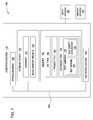
- FIG. 1illustrates an exemplary computing system, according to one embodiment of the invention.
- FIG. 2illustrates an exemplary IDE displaying source code, according to one embodiment of the invention.
- FIG. 3illustrates a method for determining coverage of elements of a database using static analysis, according to one embodiment of the invention.
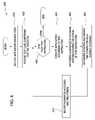
- FIG. 4illustrates a method for determining coverage of elements of a database using run-time analysis, according to one embodiment of the invention.
- FIG. 5illustrates a screenshot from an exemplary coverage tool displaying coverage metrics, according to one embodiment of the invention.
- Embodiments of the inventionprovide coverage analysis of elements of a database accessed by a software application.
- elements of databasesare routinely ignored by coverage analysis tools.
- coverage analysis toolsmay fail to uncover issues related to data access.
- database statements in program source codemay retrieve data from, or update/insert data into, the database.
- database statementsare usually specified as text strings in a database query language, such as SQL.
- the following source code fragmentillustrates an embedded SQL query using the Java® programming language:
- a coverage analysis toolmay be configured to monitor elements of a database that are accessed during a run-time test of a software application.
- the toolmay record that the “column_A” and “column_B” elements from “database.table” are accessed by the embedded text query.
- the coverage analysis toolmay be configured to also capture time data for the access to the elements of the database, which may be used to determine performance metrics.
- the coverage analysis toolmay be configured to also determine coverage of the source code of the software application as well as perform a static analysis of a software application, and thus determine elements of a database that can potentially be accessed by the software application.
- One embodiment of the inventionis implemented as a program product for use with a computer system.
- the program(s) of the program productdefines functions of the embodiments (including the methods described herein) and can be contained on a variety of computer-readable storage media.
- Illustrative computer-readable storage mediainclude, but are not limited to: (i) non-writable storage media (e.g., read-only memory devices within a computer such as CD-ROM disks readable by a CD-ROM drive) on which information is permanently stored; (ii) writable storage media (e.g., writable DVDs, RW-CDs, and hard-disk drive) on which alterable information is stored.
- non-writable storage mediae.g., read-only memory devices within a computer such as CD-ROM disks readable by a CD-ROM drive
- writable storage mediae.g., writable DVDs, RW-CDs, and hard-disk drive
- Such computer-readable storage mediawhen carrying storing computer-readable instructions that direct the functions of the present invention, are embodiments of the present invention.
- Other mediainclude communications media through which information is conveyed to a computer, such as through a computer or telephone network, including wireless communications networks. The latter embodiment specifically includes transmitting information to/from the Internet and other networks.
- Such communications mediawhen carrying computer-readable instructions that direct the functions of the present invention, are embodiments of the present invention.
- computer-readable storage media and communications mediamay be referred to herein as computer-readable media.
- routines executed to implement the embodiments of the inventionmay be part of an operating system or a specific application, component, program, module, object, or sequence of instructions.
- the computer program of the present inventiontypically is comprised of a multitude of instructions that will be translated by the native computer into a machine-readable format and hence executable instructions.
- programsare comprised of variables and data structures that either reside locally to the program or are found in memory or on storage devices.
- various programs described hereinaftermay be identified based upon the application for which they are implemented in a specific embodiment of the invention. However, it should be appreciated that any particular program nomenclature that follows is used merely for convenience, and thus the invention should not be limited to use solely in any specific application identified and/or implied by such nomenclature.
- an embodiment of the inventionis described herein relative to a coverage analysis tool for a database-aware software application using the Java® programming language that includes embedded SQL statements.
- an application program interfacemay provide a set of functions used to connect to and access a database.
- the well known JDBC specificationJava Database Connectivity
- JDBC APIallows a developer to encode an access request statement in SQL that is then passed to the program that manages the database. Statement results may be returned through a similar interface.
- embodiments of the inventionmay be adapted for use with a wide variety of programming languages that allow database statements to be embedded within program source code. Similarly, embodiments of the invention may be adapted for use with other database query languages.
- FIG. 1is a block diagram that illustrates an example view of a computing environment 100 , according to one embodiment of the invention.
- computing environment 100includes computer system 110 .
- Computer system 110is included to be representative of existing computer systems, e.g., desktop computers, server computers, laptop computers, tablet computers and the like.
- embodiments of the inventionare not limited to any particular computing system, application, device, or network architecture and instead, may be adapted to take advantage of new computing systems and platforms as they become available.
- FIG. 1illustrates a single computer system, those skilled in the art will recognize that embodiments of the invention may be adapted for use on multiple systems configured to communicate over a network.
- the illustration of computer system 110is simplified to highlight aspects of the present invention and that computing systems and data communication networks typically include a variety of additional elements not shown in FIG. 1 .
- computer system 110includes a processor (or processors) 130 , a storage device 120 , a network device 150 , and a memory 140 , all connected by a bus 160 .
- Processor 130is a programmable logic device that executes user applications (e.g., an IDE tool 142 ).
- Computer system 110may be connected to a display device 190 and one or more input devices 180 .
- user input devices 180include a mouse pointing device and a keyboard
- display device 190is a CRT monitor or LCD display.
- the processing activity and hardware resources on computer system 110may be managed by an operating system (not shown).
- Network device 150may connect computer system 110 to any kind of data communications network, including both wired and wireless networks.
- Storage device 120stores application programs and data for use by computer system 110 .
- Typical storage devicesinclude hard-disk drives, flash memory devices, optical media, network and virtual storage devices, and the like.
- storage device 120contains a database 122 and a development project 124 .
- Database 122may store a collection of data records organized according to a relational schema (e.g., a database having a structure of tables, columns, and keys for organizing data), and may be accessed using SQL database statements.
- the components of the database schemaare hereafter referred to as database elements.
- Development project 124represents a collection of information used to build a software application.
- development project 124may include source code files, scripts, etc., along with resources such as fonts, images, build-instructions, and project documentation, etc.
- memory 140includes an IDE tool 142 , a project file 144 , and a coverage tool 146 .
- IDE tool 142provides a programming environment that assists a computer programmer in developing software.
- IDE tool 142may include of a source code editor, a compiler and/or interpreter, build-automation tools, and a debugger (not shown).
- Other components provided by IDE tool 142may include a version control system, a class browser, an object inspector and, a class hierarchy diagram generator, etc.
- Project file 144represents a file included in development project 124 that is being edited by a developer using IDE tool 142 , e.g., a source code file of a database-aware software application.
- IDE tool 142may display the text of the source code to the developer on display device 190 and provide an interface that allows the user to edit project file 144 .
- FIG. 2One embodiment of IDE 142 is illustrated in FIG. 2 .
- FIG. 2illustrates an exemplary IDE 142 displaying source code 200 , according to one embodiment of the invention.
- source code 200is displayed with a set of line numbers 210 and a set of program statements 220 for a Java program named “SampleProgram,” which may represent project file 144 .
- Lines 0030 and 0040are program statements that open a database connection “con” to the database “myDB.” The connection “con” is closed by the program statement in line 0170.
- line 0060includes an “IF” condition
- line 0100includes an “ELSE” condition.
- IFIF
- ELSEELSE
- These conditionsact to create two logical branches in the source code 200 , meaning that there are two paths which the execution of the program may follow.
- the database statement included in line 0070reads data from column STATE of table TBL1.
- the database statement included in line 0110reads data from columns COUNTRY, LANGUAGE, and REGION of table TBL2.
- conventional coverage toolsmay indicate a coverage of 50%, meaning that half of source code 200 was covered (i.e., one of two logical paths was executed).
- coverage tool 146may provide analysis of the coverage of elements of a database that are accessed by a software application.
- coverage tool 146may be used to determine which database elements of database 122 are accessed during a coverage test.
- coverage tool 146may be configured to evaluate database statements according to a set of rules for a given query language (e.g., SQL), and to determine any database elements referenced in the database statement.
- a database-aware applicationmay include database statements to create records, retrieve records, update records, and delete records from a given database.
- Such database statementsinclude references to database elements (e.g., tables, columns, rows, and the like) that are added, modified, deleted, etc.
- coverage tool 146may be configured to determine which database elements are accessed by a software application by using other suitable methods, for example monitoring query requests received by database 122 .
- coverage tool 146may be configured to perform a static analysis to determine all database elements that could potentially be accessed by the software application. That is, coverage tool 146 may determine the logical paths defined by the source code of the application (e.g., the logical path defined by lines 0070 to 0090 in FIG. 2 ), and determine any database elements that are accessed within the logical paths. In such a case, coverage tool 146 may be configured to parse source code statements, to identify branching points (e.g., conditional statements, subroutine calls, etc.) in the control flow of the program, to follow the resulting logical paths, and to determine any database elements accessed therein. This embodiment is discussed further below with reference to FIG. 3 .
- branching pointse.g., conditional statements, subroutine calls, etc.
- coverage tool 146may be configured to perform a run-time analysis to determine any database elements actually accessed during a test of the software application. For example, coverage tool 146 may monitor access to elements of database 122 during an execution of the project file 144 . In such a case, coverage tool 146 may be configured to execute the software application according to a predefined set of test instructions (i.e., a test case), and to determine the database elements accessed during execution of each test instruction.
- a predefined set of test instructionsi.e., a test case
- coverage tool 146may include a test harness 147 configured to test a program unit (i.e., project file 144 ) by executing the program unit under varying conditions and monitor its behavior and outputs.
- Test harness 147allows the testing process to be automated. As the program being tested interacts with a database, e.g., by creating a connection, submitting a query, and processing query results, test harness 147 may be configured to record various running totals of content accessed and manipulated, which it processes after the tests have run and calculates various useful statistics.
- test harness 147includes a test engine 148 and a test script repository 149 .
- the test engine 148may be configured to call functions of the program being tested with supplied parameters, according to a given test script in test script repository 149 .
- the coverage tool 146may be configured to interact with the database 122 to gather other information necessary to form inductions about a given database statement passed from a software application being tested by coverage tool 146 .
- coverage tool 146may record semantic information about the database statements to expose metadata about tables, views, columns, or triggers affected by each statement, and also to expose metadata about code used to execute these statements, such as packages, classes, methods, and line numbers.
- embodiments of the inventionmay be used to execute test cases to determine whether the operation of the program is correct and/or complete in terms of program output, but also in terms of database operations, state changes, logs and trace results.
- the coverage toolmay be configured to identify the specific classes, files, methods, and lines of code executed not only in terms of the programming language (e.g., Java), but in terms of the database query language (e.g. SQL) as well.
- the coverage toolmay determine a coverage percentage not only in comparison to total code, but to the known database query language statements embedded within the program source code.
- coverage tool 146may also be configured to determine starting and ending time stamps for each access of database elements. The starting and ending time stamps may be used to generate metrics measuring the performance of the software application. Additionally, coverage tool 146 may be configured to provide coverage analysis of elements of source code of the application being tested. Coverage tool 146 may perform the above functions by any suitable techniques, for example code instrumentation. This embodiment is discussed further below with reference to FIG. 4 .
- the coverage data collected by coverage tool 146may be stored for later use, for instance in metadata included in development project 124 , or in database 122 .
- the coverage datamay also be summarized as coverage metrics, which generally indicate a proportion of all database elements that are accessed during a test (or series of tests). Coverage metrics may be presented to a user of coverage tool 146 after testing project file 144 . An example of a user display including coverage metrics is discussed further below with reference to FIG. 5 .
- coverage metricsmay be used for other functions, for instance to identify portions of the source code and/or the database that may be changed to improve performance. Further, coverage metrics may be used to evaluate security aspects of the software application. For example, the coverage of database elements may be used to determine if security-restricted portions of a database are being improperly accessed.
- coverage tool 146is provided for illustrative purposes, and is not intended to be limiting of the scope of the invention. Other embodiments are also contemplated. In one example, functionality described above as part of coverage tool 146 may be implemented as separate components working as a system.
- FIG. 3illustrates a method 300 for determining coverage of elements of a database using static analysis, according to one embodiment of the invention.
- Persons skilled in the artwill understand that, even though the method is described in conjunction with the system of FIG. 1 , any system configured to perform the steps of method 300 , in any order, is within the scope of the present invention.
- method 300begins at step 310 , where source code of a software application is received. For example, a user of coverage tool 146 may select project file 144 for coverage analysis.
- the logical paths defined by the source codeare determined. For example, coverage tool 146 may determine the logical path defined by lines 0070 to 0090 illustrated in FIG. 2 .
- the method 300enters a loop (defined by steps 330 , 340 , and 350 ) for processing each logical path determined at step 320 .
- any elements of the database that are accessed within the logical branchare determined. For example, assuming the logical path defined by lines 0070 to 0090 (illustrated in FIG. 2 ), the column STATE and the table TBL1 may be determined at step 340 .
- the elements of the database determined at step 340may be recorded. Once all logical paths are completed at step 330 , the method 300 terminates.
- FIG. 4illustrates a method 400 for determining coverage of elements of a database using run-time analysis, according to one embodiment of the invention.
- the steps of method 400may be performed, for example, by coverage tool 146 illustrated in FIG. 1 .
- coverage tool 146illustrated in FIG. 1 .
- persons skilled in the artwill understand that, even though the method is described in conjunction with the system of FIG. 1 , any system configured to perform the steps of method 400 , in any order, is within the scope of the present invention.
- method 400begins at step 410 , where source code of a software application is received.
- a test case for testing the software applicationmay be received.
- the test casemay include a set of test instructions for performing the software application, and may be configured to test certain elements of the source code of the software application.
- the method 400enters a loop (defined by steps 430 , 440 , 450 , 460 and 470 ) for processing each test instruction included in the received test case.
- the software applicationis executed according to the test instruction.
- any elements of the database that are accessed during execution of the test instructionare determined. For example, assuming a test instruction to read values of a database column, that column may be determined at step 450 .
- a starting time and an ending time for accessing the elements of the database the elementsmay be determined. These times may be used, for example, to calculate performance metrics for the software application.
- the elements of the database determined at step 450 and the starting and ending times determined at step 460may be recorded.
- FIG. 5illustrates a screenshot 500 from an exemplary coverage tool displaying coverage metrics, according to one embodiment of the invention.
- the coverage metrics displayed in screenshot 500may be used to evaluate the completeness of testing of a database-aware software application (e.g., project file 144 ).
- screenshot 500includes a header section 510 , a code coverage section 520 , and a database coverage section 530 .
- Header section 510includes a program name “SAMPLEPROGRAM.JAVA,” indicating the name of project file 144 being evaluated by coverage tool 146 .
- Header section 510also includes a test case name “SCENARIO1,” indicating a particular set of test instructions that may be applied to project file 144 by coverage tool 146 .
- Header section 510also includes a database name “DB1,” indicating the name of database 122 which may be accessed by project file 144 .
- DB1database name
- code coverage section 520includes code coverage metrics 525 corresponding to various elements of the source code of project file 144 . That is, code coverage metrics 525 describe the proportions of classes, modules, functions, and statements included in project file 144 that were accessed during the test case “SCENARIO1.”
- Database coverage section 530includes database coverage metrics 535 corresponding to various elements of database 120 . That is, database coverage metrics 535 describe the proportions of tables, columns, rows, and indexes of database 122 that were accessed by project file 144 during the test case “SCENARIO1.”
- embodiments of the inventionprovide coverage analysis of database elements accessed by a software application.
- database elementsare routinely ignored by coverage tools, resulting in incomplete pictures of the overall performance and reliability of the software application.
- embodiments of the inventionenable improved and more complete testing of database-aware applications
Landscapes
- Engineering & Computer Science (AREA)
- Theoretical Computer Science (AREA)
- Databases & Information Systems (AREA)
- Physics & Mathematics (AREA)
- General Engineering & Computer Science (AREA)
- General Physics & Mathematics (AREA)
- Data Mining & Analysis (AREA)
- Computer Hardware Design (AREA)
- Quality & Reliability (AREA)
- Debugging And Monitoring (AREA)
Abstract
Description
1. Field of the Invention
Embodiments of the invention are related to tools used for testing application software. More specifically, embodiments of the invention provide a coverage tool for analyzing database-aware applications.
2. Description of the Related Art
Currently, coverage tools exist for testing software applications. Typical coverage tools analyze the coverage of the program source code of the application during a testing process. That is, they determine which parts of the program source code (e.g., classes, methods, routines, functions, etc.) are used, and are therefore tested, during a given test.
However, current coverage analysis tools do not evaluate the coverage of parts of a database (e.g., tables, columns, rows) that may be accessed while testing the application. For example, if a high percentage of a project's code is being tested, but a high percentage of the database query strings are in the untested source code, the coverage analysis may be misleading. Similarly, coverage analysis does not include analysis of what tables, rows, elements, or attributes are accessed by the database query strings, because the coverage remains unaware of the semantic content of the strings.
Accordingly, as the foregoing discussion illustrates, there remains a need for a coverage analysis tool for testing database-aware applications.
Embodiments of the invention provide a coverage analysis tool for testing database-aware applications. One embodiment of the invention includes a method for evaluating a software application configured to access a data source. The method may generally include receiving a test case specifying a sequence of actions for the software application to perform, where the software application includes a plurality of program statements. The method may also include executing the software application according to the test case, and, as each program statement of the software application is executed, determining whether any elements of the data source are accessed by a given program statement. For each program statement of the software application that accesses an element of the data source, an indication of the element of the data source accessed by the program statement may be recorded.
Another embodiment of the invention includes a computer-useable storage medium containing a program, which, when executed performs an operation for evaluating a software application configured to access a data source. The operation may generally include receiving a test case specifying a sequence of actions for the software application to perform, where the software application includes a plurality of program statements. The operation may also include executing the software application according to the test case, and as each program statement of the software application is executed, determining whether any elements of the data source are accessed by a given program statement. For each program statement of the software application that accesses an element of the data source, an indication of the element of the data source accessed by the program statement is recorded.
Still another embodiment of the invention includes a system having a data source, a processor, and a memory containing a program, which when executed by the processor, is configured to perform an operation for evaluating a software application configured to access the data source. The program may be generally configured to receive a test case specifying a sequence of actions for the software application to perform, where the software application includes a plurality of program statements. The program may also be configured to execute the software application according to the test case, and as each program statement of the software application is executed, determine whether any elements of the data source are accessed by a given program statement. For each program statement of the software application that accesses an element of the data source, an indication of the element of the data source accessed by the program statement is recorded.
So that the manner in which the above recited features, advantages and objects of the present invention are attained and can be understood in detail, a more particular description of the invention, briefly summarized above, may be had by reference to the embodiments thereof which are illustrated in the appended drawings.
It is to be noted, however, that the appended drawings illustrate only typical embodiments of this invention and are therefore not to be considered limiting of its scope, for the invention may admit to other equally effective embodiments.
Embodiments of the invention provide coverage analysis of elements of a database accessed by a software application. Currently, elements of databases are routinely ignored by coverage analysis tools. Thus, such tools may fail to uncover issues related to data access. For example, database statements in program source code may retrieve data from, or update/insert data into, the database. In the program source code, database statements are usually specified as text strings in a database query language, such as SQL. The following source code fragment illustrates an embedded SQL query using the Java® programming language:
| public interface get_data { |
| // create connection to database | |
| @select sql= (”select column_A, column_B from database.table”); | |
| // execute sql statement | |
| // process query results |
| } |
Because the query is enclosed within double-quotes, conventional coverage analysis tools treat the database statement as a text string, and ignore whether they are used in a given coverage test. Thus, in determining a proportion of a program source code that is covered, existing tools may present an incorrect and/or misleading picture. Accordingly, in one embodiment, a coverage analysis tool may be configured to monitor elements of a database that are accessed during a run-time test of a software application. For example, the tool may record that the “column_A” and “column_B” elements from “database.table” are accessed by the embedded text query. Further, the coverage analysis tool may be configured to also capture time data for the access to the elements of the database, which may be used to determine performance metrics. Furthermore, the coverage analysis tool may be configured to also determine coverage of the source code of the software application as well as perform a static analysis of a software application, and thus determine elements of a database that can potentially be accessed by the software application. By providing coverage analysis of elements for the database, embodiments of the invention enable more complete testing of database-aware applications.
In the following, reference is made to embodiments of the invention. However, it should be understood that the invention is not limited to specific described embodiments. Instead, any combination of the following features and elements, whether related to different embodiments or not, is contemplated to implement and practice the invention. Furthermore, in various embodiments the invention provides numerous advantages over the prior art. However, although embodiments of the invention may achieve advantages over other possible solutions and/or over the prior art, whether or not a particular advantage is achieved by a given embodiment is not limiting of the invention. Thus, the following aspects, features, embodiments and advantages are merely illustrative and are not considered elements or limitations of the appended claims except where explicitly recited in a claim(s). Likewise, reference to “the invention” shall not be construed as a generalization of any inventive subject matter disclosed herein and shall not be considered to be an element or limitation of the appended claims except where explicitly recited in a claim(s).
One embodiment of the invention is implemented as a program product for use with a computer system. The program(s) of the program product defines functions of the embodiments (including the methods described herein) and can be contained on a variety of computer-readable storage media. Illustrative computer-readable storage media include, but are not limited to: (i) non-writable storage media (e.g., read-only memory devices within a computer such as CD-ROM disks readable by a CD-ROM drive) on which information is permanently stored; (ii) writable storage media (e.g., writable DVDs, RW-CDs, and hard-disk drive) on which alterable information is stored. Such computer-readable storage media, when carrying storing computer-readable instructions that direct the functions of the present invention, are embodiments of the present invention. Other media include communications media through which information is conveyed to a computer, such as through a computer or telephone network, including wireless communications networks. The latter embodiment specifically includes transmitting information to/from the Internet and other networks. Such communications media, when carrying computer-readable instructions that direct the functions of the present invention, are embodiments of the present invention. Broadly, computer-readable storage media and communications media may be referred to herein as computer-readable media.
In general, the routines executed to implement the embodiments of the invention, may be part of an operating system or a specific application, component, program, module, object, or sequence of instructions. The computer program of the present invention typically is comprised of a multitude of instructions that will be translated by the native computer into a machine-readable format and hence executable instructions. Also, programs are comprised of variables and data structures that either reside locally to the program or are found in memory or on storage devices. In addition, various programs described hereinafter may be identified based upon the application for which they are implemented in a specific embodiment of the invention. However, it should be appreciated that any particular program nomenclature that follows is used merely for convenience, and thus the invention should not be limited to use solely in any specific application identified and/or implied by such nomenclature.
Additionally, an embodiment of the invention is described herein relative to a coverage analysis tool for a database-aware software application using the Java® programming language that includes embedded SQL statements. Frequently, an application program interface (API) may provide a set of functions used to connect to and access a database. For example, the well known JDBC specification (Java Database Connectivity) provides an API specification for connecting programs written in Java® to data in popular databases. The JDBC API allows a developer to encode an access request statement in SQL that is then passed to the program that manages the database. Statement results may be returned through a similar interface.
One of ordinary skill in the art will readily recognize, however, that embodiments of the invention may be adapted for use with a wide variety of programming languages that allow database statements to be embedded within program source code. Similarly, embodiments of the invention may be adapted for use with other database query languages.
As shown,computer system 110 includes a processor (or processors)130, astorage device 120, anetwork device 150, and amemory 140, all connected by abus 160.Processor 130 is a programmable logic device that executes user applications (e.g., an IDE tool142).Computer system 110 may be connected to adisplay device 190 and one ormore input devices 180. Typically,user input devices 180 include a mouse pointing device and a keyboard, anddisplay device 190 is a CRT monitor or LCD display. The processing activity and hardware resources oncomputer system 110 may be managed by an operating system (not shown). Well known examples of operating systems include the Windows® operating system, distributions of the Linux® operating system, and IBM's AIX and OS/2® operating systems, among others. (Linux is a trademark of Linus Torvalds in the US, other countries, or both).Network device 150 may connectcomputer system 110 to any kind of data communications network, including both wired and wireless networks.
In one embodiment,memory 140 includes anIDE tool 142, aproject file 144, and acoverage tool 146.IDE tool 142 provides a programming environment that assists a computer programmer in developing software.IDE tool 142 may include of a source code editor, a compiler and/or interpreter, build-automation tools, and a debugger (not shown). Other components provided byIDE tool 142 may include a version control system, a class browser, an object inspector and, a class hierarchy diagram generator, etc.
As shown,line 0060 includes an “IF” condition, andline 0100 includes an “ELSE” condition. These conditions act to create two logical branches in thesource code 200, meaning that there are two paths which the execution of the program may follow. One logical path is made up of the statements included inlines 0070 to 0090 (shown in bold font), and is followed only if the condition “Country==‘USA’” is true. In this logical path, the database statement included inline 0070 reads data from column STATE of table TBL1. On the other hand, if the condition “Country==‘USA’” is not true, the program execution follows a second logicalpath comprising lines 0110 to 0150. In this second logical path, the database statement included inline 0110 reads data from columns COUNTRY, LANGUAGE, and REGION of table TBL2. Note that, in the situation where only the first logical path is executed during a test, conventional coverage tools may indicate a coverage of 50%, meaning that half ofsource code 200 was covered (i.e., one of two logical paths was executed). However, this outcome may present a misleading picture regarding coverage of database columns, since the first logical path only accessed data from one database column (i.e., STATE) out of the four database columns that are potentially accessed bysource code 200. That is, while 50% of the code statements may be tested by following the “Country==USA” branch, only one column of one table of the database is accessed in this branch.
Referring again toFIG. 1 ,coverage tool 146 may provide analysis of the coverage of elements of a database that are accessed by a software application. For example,coverage tool 146 may be used to determine which database elements ofdatabase 122 are accessed during a coverage test. Accordingly,coverage tool 146 may be configured to evaluate database statements according to a set of rules for a given query language (e.g., SQL), and to determine any database elements referenced in the database statement. For example, a database-aware application may include database statements to create records, retrieve records, update records, and delete records from a given database. Such database statements include references to database elements (e.g., tables, columns, rows, and the like) that are added, modified, deleted, etc. Alternatively,coverage tool 146 may be configured to determine which database elements are accessed by a software application by using other suitable methods, for example monitoring query requests received bydatabase 122.
In one embodiment,coverage tool 146 may be configured to perform a static analysis to determine all database elements that could potentially be accessed by the software application. That is,coverage tool 146 may determine the logical paths defined by the source code of the application (e.g., the logical path defined bylines 0070 to 0090 inFIG. 2 ), and determine any database elements that are accessed within the logical paths. In such a case,coverage tool 146 may be configured to parse source code statements, to identify branching points (e.g., conditional statements, subroutine calls, etc.) in the control flow of the program, to follow the resulting logical paths, and to determine any database elements accessed therein. This embodiment is discussed further below with reference toFIG. 3 .
In another embodiment,coverage tool 146 may be configured to perform a run-time analysis to determine any database elements actually accessed during a test of the software application. For example,coverage tool 146 may monitor access to elements ofdatabase 122 during an execution of theproject file 144. In such a case,coverage tool 146 may be configured to execute the software application according to a predefined set of test instructions (i.e., a test case), and to determine the database elements accessed during execution of each test instruction.
In one embodiment,coverage tool 146 may include atest harness 147 configured to test a program unit (i.e., project file144) by executing the program unit under varying conditions and monitor its behavior and outputs.Test harness 147 allows the testing process to be automated. As the program being tested interacts with a database, e.g., by creating a connection, submitting a query, and processing query results,test harness 147 may be configured to record various running totals of content accessed and manipulated, which it processes after the tests have run and calculates various useful statistics.
Illustratively,test harness 147 includes atest engine 148 and atest script repository 149. Thetest engine 148 may be configured to call functions of the program being tested with supplied parameters, according to a given test script intest script repository 149. Thetest engine 148 may also store and report results of program execution, as well as indicate which portions of a program were executed as part of a given test. Further,test engine 148 may identify which portions of a database were accessed by a program during a given test. For example, using the program source code illustrated inFIG. 2 , a test script that only tested the “Country==USA” branch ofsource code 200, could report that the COUNTY, LANGUAGE, and REGION columns of TBL2 were not covered by such a test script.
Thecoverage tool 146 may be configured to interact with thedatabase 122 to gather other information necessary to form inductions about a given database statement passed from a software application being tested bycoverage tool 146. For example,coverage tool 146 may record semantic information about the database statements to expose metadata about tables, views, columns, or triggers affected by each statement, and also to expose metadata about code used to execute these statements, such as packages, classes, methods, and line numbers. Thus, unlike existing code coverage solutions, embodiments of the invention may be used to execute test cases to determine whether the operation of the program is correct and/or complete in terms of program output, but also in terms of database operations, state changes, logs and trace results. The coverage tool may be configured to identify the specific classes, files, methods, and lines of code executed not only in terms of the programming language (e.g., Java), but in terms of the database query language (e.g. SQL) as well. In one embodiment, the coverage tool may determine a coverage percentage not only in comparison to total code, but to the known database query language statements embedded within the program source code.
Optionally,coverage tool 146 may also be configured to determine starting and ending time stamps for each access of database elements. The starting and ending time stamps may be used to generate metrics measuring the performance of the software application. Additionally,coverage tool 146 may be configured to provide coverage analysis of elements of source code of the application being tested.Coverage tool 146 may perform the above functions by any suitable techniques, for example code instrumentation. This embodiment is discussed further below with reference toFIG. 4 .
The coverage data collected bycoverage tool 146 may be stored for later use, for instance in metadata included indevelopment project 124, or indatabase 122. The coverage data may also be summarized as coverage metrics, which generally indicate a proportion of all database elements that are accessed during a test (or series of tests). Coverage metrics may be presented to a user ofcoverage tool 146 after testingproject file 144. An example of a user display including coverage metrics is discussed further below with reference toFIG. 5 .
Additionally, coverage metrics may be used for other functions, for instance to identify portions of the source code and/or the database that may be changed to improve performance. Further, coverage metrics may be used to evaluate security aspects of the software application. For example, the coverage of database elements may be used to determine if security-restricted portions of a database are being improperly accessed.
Of course, the above description ofcoverage tool 146 is provided for illustrative purposes, and is not intended to be limiting of the scope of the invention. Other embodiments are also contemplated. In one example, functionality described above as part ofcoverage tool 146 may be implemented as separate components working as a system.
As shown,method 300 begins atstep 310, where source code of a software application is received. For example, a user ofcoverage tool 146 may selectproject file 144 for coverage analysis. Atstep 320, the logical paths defined by the source code are determined. For example,coverage tool 146 may determine the logical path defined bylines 0070 to 0090 illustrated inFIG. 2 . Atstep 330, themethod 300 enters a loop (defined bysteps step 320. Atstep 340, any elements of the database that are accessed within the logical branch are determined. For example, assuming the logical path defined bylines 0070 to 0090 (illustrated inFIG. 2 ), the column STATE and the table TBL1 may be determined atstep 340. Atstep 350, the elements of the database determined atstep 340 may be recorded. Once all logical paths are completed atstep 330, themethod 300 terminates.
As shown,method 400 begins atstep 410, where source code of a software application is received. Atstep 420, a test case for testing the software application may be received. The test case may include a set of test instructions for performing the software application, and may be configured to test certain elements of the source code of the software application. Atstep 430, themethod 400 enters a loop (defined bysteps step 440, the software application is executed according to the test instruction.
Atstep 450, any elements of the database that are accessed during execution of the test instruction are determined. For example, assuming a test instruction to read values of a database column, that column may be determined atstep 450. Atstep 460, a starting time and an ending time for accessing the elements of the database the elements may be determined. These times may be used, for example, to calculate performance metrics for the software application. Atstep 470, the elements of the database determined atstep 450 and the starting and ending times determined atstep 460 may be recorded. Once all test instructions are completed atstep 430, themethod 400 terminates. The steps ofmethod 400 may be performed, for example, bycoverage tool 146 illustrated inFIG. 1 .
As shown,code coverage section 520 includescode coverage metrics 525 corresponding to various elements of the source code ofproject file 144. That is,code coverage metrics 525 describe the proportions of classes, modules, functions, and statements included inproject file 144 that were accessed during the test case “SCENARIO1.”Database coverage section 530 includesdatabase coverage metrics 535 corresponding to various elements ofdatabase 120. That is,database coverage metrics 535 describe the proportions of tables, columns, rows, and indexes ofdatabase 122 that were accessed byproject file 144 during the test case “SCENARIO1.”
Advantageously, embodiments of the invention provide coverage analysis of database elements accessed by a software application. Currently, database elements are routinely ignored by coverage tools, resulting in incomplete pictures of the overall performance and reliability of the software application. By providing coverage analysis of database elements as well as source code elements, embodiments of the invention enable improved and more complete testing of database-aware applications
While the foregoing is directed to embodiments of the present invention, other and further embodiments of the invention may be devised without departing from the basic scope thereof, and the scope thereof is determined by the claims that follow.
Claims (22)
1. A computer-implemented method for evaluating a software application configured to access a database, the method comprising:
receiving a test case specifying a sequence of actions for the software application to perform, wherein the software application includes a plurality of program statements;
executing, by operation of one or more computer processors, the software application according to the test case; and
for each program statement of the software application determined to access one or more elements of the database, recording an indication of the elements of the database accessed by the program statement, wherein determining whether any elements of the database are accessed by a given program statement comprises identifying a relational database query embedded as a text-string in the given program statement.
2. The computer-implemented method ofclaim 1 , further comprising:
determining a starting time and an ending time for each program statement that accesses an element of the database; and
recording the starting time and the ending time.
3. The computer-implemented method ofclaim 1 , further comprising:
recording an indication of each program statement of the software application executed as part of the sequence of actions specified by the test case.
4. The computer-implemented method ofclaim 1 , further comprising:
determining that one of the program statements of the software application is configured to access a security-restricted element of the database; and
recording an indication of the security-restricted element of the database accessed by the program statement.
5. The computer-implemented method ofclaim 1 , wherein the database is a relational database.
6. The computer-implemented method ofclaim 5 , further comprising determining a coverage percentage of elements of the database accessed by the application software.
7. The computer-implemented method ofclaim 5 , wherein an element of the database comprises at least one of a database table, a column, an index, and a trigger.
8. The computer-implemented method ofclaim 1 , wherein the test case includes a set of test parameters supplied to the software application.
9. A computer-useable storage medium containing a program, which, when executed, performs an operation for evaluating a software application configured to access a database, the operation comprising:
receiving a test case specifying a sequence of actions for the software application to perform, wherein the software application includes a plurality of program statements;
executing the software application according to the test case; and
for each program statement of the software application determined to access one or more elements of the database, recording an indication of the elements of the database accessed by the program statement, wherein determining whether any elements of the database are accessed by a given program statement comprises identifying a relational database query embedded as a text-string in the given program statement.
10. The computer-useable storage medium ofclaim 9 , wherein the operation further comprises:
determining a starting time and an ending time for each program statement that accesses an element of the database; and
recording the starting time and the ending time.
11. The computer-useable storage medium ofclaim 9 , wherein the operation further comprises:
recording an indication of each program statement of the software application executed as part of the sequence of actions specified by the test case.
12. The computer-useable storage medium ofclaim 9 , wherein the operation further comprises:
determining that one of the program statements of the software application is configured to access a security-restricted element of the database; and
recording an indication of the security-restricted element of the database accessed by the program statement.
13. The computer-useable storage medium ofclaim 9 , wherein the database is a relational database.
14. The computer-useable storage medium ofclaim 13 , wherein the operation further comprises determining a coverage percentage of elements of the database accessed by the application software.
15. The computer-useable storage medium ofclaim 13 , wherein an element of the database comprises at least one of a database table, a column, an index, and a trigger.
16. The computer-useable storage medium ofclaim 9 , wherein the test case includes a set of test parameters supplied to the software application.
17. A system comprising:
a database;
a processor; and
a memory containing a program, which, when executed by the processor, is configured to perform an operation for evaluating a software application configured to access the database, by performing the steps of:
receiving a test case specifying a sequence of actions for the software application to perform wherein the software application includes a plurality of program statements;
executing the software application according to the test case; and for each program statement of the software application determined to access one or more elements of the database, recording an indication of the elements of the database accessed by the program statement, wherein determining whether any elements of the database are accessed by a given program statement comprises identifying a relational database query embedded as a text-string in the given program statement.
18. The system ofclaim 17 , wherein the steps further comprise:
determining a starting time and an ending time for each program statement that accesses an element of the database; and
recording the starting time and the ending time.
19. The system ofclaim 17 , wherein the steps further comprise:
determining that one of the program statements of the software application is configured to access a security-restricted element of the database; and
recording an indication of the security-restricted element of the database accessed by the program statement.
20. The system ofclaim 17 , wherein the database is a relational database.
21. The system ofclaim 20 , wherein the steps further comprise determining a coverage percentage of elements of the database accessed by the application software.
22. The system ofclaim 20 , wherein an element of the database comprises at least one of a database table, a column, an index, and a trigger.
Priority Applications (1)
| Application Number | Priority Date | Filing Date | Title |
|---|---|---|---|
| US11/833,809US8473915B2 (en) | 2007-08-03 | 2007-08-03 | Coverage analysis tool for testing database-aware software applications |
Applications Claiming Priority (1)
| Application Number | Priority Date | Filing Date | Title |
|---|---|---|---|
| US11/833,809US8473915B2 (en) | 2007-08-03 | 2007-08-03 | Coverage analysis tool for testing database-aware software applications |
Publications (2)
| Publication Number | Publication Date |
|---|---|
| US20090037893A1 US20090037893A1 (en) | 2009-02-05 |
| US8473915B2true US8473915B2 (en) | 2013-06-25 |
Family
ID=40339352
Family Applications (1)
| Application Number | Title | Priority Date | Filing Date |
|---|---|---|---|
| US11/833,809Expired - Fee RelatedUS8473915B2 (en) | 2007-08-03 | 2007-08-03 | Coverage analysis tool for testing database-aware software applications |
Country Status (1)
| Country | Link |
|---|---|
| US (1) | US8473915B2 (en) |
Cited By (6)
| Publication number | Priority date | Publication date | Assignee | Title |
|---|---|---|---|---|
| US20130305095A1 (en)* | 2011-02-02 | 2013-11-14 | Hitachi, Ltd. | Method for generating test data for evaluating program execution performance |
| US20150169435A1 (en)* | 2013-12-12 | 2015-06-18 | Tencent Technology (Shenzhen) Company Limited | Method and apparatus for mining test coverage data |
| WO2016167760A1 (en)* | 2015-04-15 | 2016-10-20 | Hewlett Packard Enterprise Development Lp | Code coverage information |
| US9558219B2 (en) | 2015-04-27 | 2017-01-31 | International Business Machines Corporation | Database storage reclaiming program |
| US11030083B2 (en)* | 2018-03-30 | 2021-06-08 | Atlassian Pty Ltd. | Systems and methods for reducing storage required for code coverage results |
| US11586531B2 (en)* | 2020-09-30 | 2023-02-21 | Red Hat, Inc. | Generating test input values for functional components based on test coverage analysis |
Families Citing this family (14)
| Publication number | Priority date | Publication date | Assignee | Title |
|---|---|---|---|---|
| US20090300587A1 (en)* | 2008-05-27 | 2009-12-03 | Microsoft Corporation | Determining domain data coverage in testing database applications |
| US8949792B2 (en)* | 2009-08-18 | 2015-02-03 | Adobe Systems Incorporated | Methods and systems for data service development |
| US20130024846A1 (en)* | 2011-07-22 | 2013-01-24 | Microsoft Corporation | Real-Time Code Coverage Results in AD-HOC Testing |
| GB2503893A (en)* | 2012-07-10 | 2014-01-15 | Ibm | Selecting data from a database using data representing a sequence of operations |
| US9158663B2 (en)* | 2013-01-11 | 2015-10-13 | Tata Consultancy Services Limited | Evaluating performance maturity level of an application |
| US9355016B2 (en) | 2014-03-05 | 2016-05-31 | Microsoft Technology Licensing, Llc | Automated regression testing for software applications |
| US9880915B2 (en)* | 2014-03-05 | 2018-01-30 | Microsoft Technology Licensing, Llc | N-gram analysis of inputs to a software application |
| US9329980B2 (en) | 2014-03-05 | 2016-05-03 | Microsoft Technology Licensing, Llc | Security alerting using n-gram analysis of program execution data |
| WO2015132637A1 (en)* | 2014-03-05 | 2015-09-11 | Concurix Corporation | N-gram analysis of software behavior in production and testing environments |
| US9594665B2 (en) | 2014-03-05 | 2017-03-14 | Microsoft Technology Licensing, Llc | Regression evaluation using behavior models of software applications |
| US9785777B2 (en)* | 2014-12-19 | 2017-10-10 | International Business Machines Corporation | Static analysis based on abstract program representations |
| IN2015DE01249A (en)* | 2015-05-06 | 2015-06-05 | Hcl Technologies Ltd | |
| US10417112B2 (en)* | 2016-09-19 | 2019-09-17 | International Business Machines Corporation | Code coverage through overlay hooks |
| CN117131045A (en)* | 2023-08-07 | 2023-11-28 | 深圳开源互联网安全技术有限公司 | Method and system for detecting validity of application database tables |
Citations (59)
| Publication number | Priority date | Publication date | Assignee | Title |
|---|---|---|---|---|
| US5230049A (en) | 1988-11-29 | 1993-07-20 | International Business Machines Corporation | Program source code translator |
| US5640550A (en) | 1994-04-15 | 1997-06-17 | Coker; Drake | Computer system for generating SQL statements from COBOL code |
| US5701471A (en)* | 1995-07-05 | 1997-12-23 | Sun Microsystems, Inc. | System and method for testing multiple database management systems |
| US5717911A (en) | 1995-01-23 | 1998-02-10 | Tandem Computers, Inc. | Relational database system and method with high availability compliation of SQL programs |
| US5737609A (en)* | 1994-10-18 | 1998-04-07 | Marcam Corporation | Method and apparatus for testing object-oriented programming constructs |
| US5898838A (en) | 1995-06-22 | 1999-04-27 | Datascape, Inc. | Editor for developing statements to support i/o operation on open network using segregator for segregating protocol statements from application statements upon verification of correspondence |
| US6071317A (en)* | 1997-12-11 | 2000-06-06 | Digits Corp. | Object code logic analysis and automated modification system and method |
| US6108660A (en) | 1997-02-28 | 2000-08-22 | Oracle Corporation | Method for processing host language source code containing embedded database language statements |
| US6138112A (en)* | 1998-05-14 | 2000-10-24 | Microsoft Corporation | Test generator for database management systems |
| US6286131B1 (en)* | 1997-12-03 | 2001-09-04 | Microsoft Corporation | Debugging tool for linguistic applications |
| US6311327B1 (en) | 1998-03-02 | 2001-10-30 | Applied Microsystems Corp. | Method and apparatus for analyzing software in a language-independent manner |
| US6341288B1 (en) | 1998-07-29 | 2002-01-22 | Sybase, Inc. | Database system with methodology for accessing a database from portable devices |
| US6378126B2 (en) | 1998-09-29 | 2002-04-23 | International Business Machines Corporation | Compilation of embedded language statements in a source code program |
| US20030041052A1 (en) | 2001-08-22 | 2003-02-27 | International Business Machines Corporation | Tool for converting SQL queries into portable ODBC |
| US20030084425A1 (en) | 2001-10-30 | 2003-05-01 | International Business Machines Corporation | Method, system, and program for utilizing impact analysis metadata of program statements in a development environment |
| US6560592B1 (en) | 1998-03-19 | 2003-05-06 | Micro Data Base Systems, Inc. | Multi-model computer database storage system with integrated rule engine |
| US6581052B1 (en)* | 1998-05-14 | 2003-06-17 | Microsoft Corporation | Test generator for database management systems |
| US6658429B2 (en)* | 2001-01-05 | 2003-12-02 | Symyx Technologies, Inc. | Laboratory database system and methods for combinatorial materials research |
| US20040107415A1 (en) | 2002-12-03 | 2004-06-03 | Konstantin Melamed | Web-interactive software testing management method and computer system including an integrated test case authoring tool |
| US20040193567A1 (en) | 2003-03-27 | 2004-09-30 | International Business Machines Corporation | Apparatus and method for using a predefined database operation as a data source for a different database operation |
| US20040205691A1 (en) | 2001-08-27 | 2004-10-14 | International Business Machines Corporation | Interactive agent for a topological multi-tier business application composer |
| US20050027701A1 (en) | 2003-07-07 | 2005-02-03 | Netezza Corporation | Optimized SQL code generation |
| US6907546B1 (en)* | 2000-03-27 | 2005-06-14 | Accenture Llp | Language-driven interface for an automated testing framework |
| US20050160322A1 (en) | 2004-01-13 | 2005-07-21 | West John R. | Method and system for conversion of automation test scripts into abstract test case representation with persistence |
| US6978261B2 (en) | 1999-07-29 | 2005-12-20 | International Business Machines Corporation | Using database management system's infrastructure to invoke a stored procedure for creating and preparing a database application |
| US7062757B2 (en)* | 1998-03-05 | 2006-06-13 | American Management Systems, Inc. | Decision management system which is cross-function, cross-industry and cross-platform |
| US7110991B2 (en) | 2002-03-07 | 2006-09-19 | International Business Machines Corporation | IDE integration with JDBC |
| US20060222160A1 (en) | 2005-03-31 | 2006-10-05 | Marcel Bank | Computer network system for building, synchronising and/or operating a second database from/with a first database, and procedures for it |
| US20070022480A1 (en) | 2005-07-11 | 2007-01-25 | Newman Aaron C | System for tracking and analyzing the integrity of an application |
| US7185000B1 (en)* | 2000-06-30 | 2007-02-27 | Ncr Corp. | Method and apparatus for presenting query plans |
| US20070067350A1 (en) | 2005-09-22 | 2007-03-22 | Dinh Hung T | AUTO COMMIT n option in a relational database |
| US7200595B2 (en) | 2004-03-29 | 2007-04-03 | Microsoft Corporation | Systems and methods for fine grained access control of data stored in relational databases |
| US7203928B2 (en)* | 2002-12-31 | 2007-04-10 | Sun Microsystems, Inc. | Method and system for generating and maintaining uniform test results |
| US7299452B1 (en)* | 2002-05-10 | 2007-11-20 | Oracle International Corporation | System and method for testing the compatibility of a computer application with a foreign character set |
| US7305659B2 (en)* | 2002-09-03 | 2007-12-04 | Sap Ag | Handling parameters in test scripts for computer program applications |
| US7343586B1 (en)* | 1999-09-29 | 2008-03-11 | Lucent Technologies Inc. | Technology to create/edit/run an executable file on a host via a web browser connected thereto |
| US20080140696A1 (en) | 2006-12-07 | 2008-06-12 | Pantheon Systems, Inc. | System and method for analyzing data sources to generate metadata |
| US7451455B1 (en)* | 2003-05-02 | 2008-11-11 | Microsoft Corporation | Apparatus and method for automatically manipulating software products |
| US7490319B2 (en)* | 2003-11-04 | 2009-02-10 | Kimberly-Clark Worldwide, Inc. | Testing tool comprising an automated multidimensional traceability matrix for implementing and validating complex software systems |
| US7506315B1 (en)* | 2003-12-30 | 2009-03-17 | Sap Ag | System and method combining application tracing and distributed statistical records |
| US7577681B1 (en) | 2005-06-29 | 2009-08-18 | Emc Corporation | Methods and apparatus for managing contents of a database |
| US7603658B2 (en)* | 2004-02-19 | 2009-10-13 | Oracle International Corporation | Application functionality for a test tool for application programming interfaces |
| US7650594B2 (en)* | 2004-05-27 | 2010-01-19 | National Instruments Corporation | Graphical program analyzer with framework for adding user-defined tests |
| US7664989B2 (en)* | 2005-10-24 | 2010-02-16 | Infosys Technologies Ltd. | Automated software testing architecture using a multi-level framework |
| US7676794B2 (en)* | 2006-03-09 | 2010-03-09 | International Business Machines Corporation | Testing scenarios that sequentially execute a plurality of application program interfaces |
| US7711746B2 (en) | 2005-12-17 | 2010-05-04 | International Business Machines Corporation | System and method for deploying an SQL procedure |
| US7757175B2 (en)* | 2000-10-31 | 2010-07-13 | Software Research, Inc. | Method and system for testing websites |
| US7774757B1 (en)* | 2005-07-13 | 2010-08-10 | Oracle America, Inc. | Dynamic verification of application portability |
| US7814042B2 (en)* | 2004-08-17 | 2010-10-12 | Oracle International Corporation | Selecting candidate queries |
| US7823135B2 (en)* | 1999-07-29 | 2010-10-26 | Intertrust Technologies Corporation | Software self-defense systems and methods |
| US7836346B1 (en)* | 2007-06-11 | 2010-11-16 | Oracle America, Inc. | Method and system for analyzing software test results |
| US7865502B2 (en)* | 2008-04-10 | 2011-01-04 | International Business Machines Corporation | Optimization of extensible markup language path language (XPATH) expressions in a database management system configured to accept extensible markup language (XML) queries |
| US7979410B2 (en)* | 2008-07-30 | 2011-07-12 | Oracle International Corp. | Maintaining referential integrity while masking |
| US7984031B2 (en)* | 2008-08-01 | 2011-07-19 | Microsoft Corporation | Query builder for testing query languages |
| US8006233B2 (en)* | 2007-02-21 | 2011-08-23 | International Business Machines Corporation | System and method for the automatic verification of privilege-asserting and subject-executed code |
| US8024320B1 (en)* | 2007-10-02 | 2011-09-20 | Emc Corporation | Query language |
| US8032863B2 (en)* | 2004-11-18 | 2011-10-04 | Parasoft Corporation | System and method for global group reporting |
| US8078609B2 (en)* | 2003-03-15 | 2011-12-13 | SQLStream, Inc. | Method for distributed RDSMS |
| US8196105B2 (en)* | 2007-06-29 | 2012-06-05 | Microsoft Corporation | Test framework for automating multi-step and multi-machine electronic calendaring application test cases |
- 2007
- 2007-08-03USUS11/833,809patent/US8473915B2/ennot_activeExpired - Fee Related
Patent Citations (60)
| Publication number | Priority date | Publication date | Assignee | Title |
|---|---|---|---|---|
| US5230049A (en) | 1988-11-29 | 1993-07-20 | International Business Machines Corporation | Program source code translator |
| US5640550A (en) | 1994-04-15 | 1997-06-17 | Coker; Drake | Computer system for generating SQL statements from COBOL code |
| US5737609A (en)* | 1994-10-18 | 1998-04-07 | Marcam Corporation | Method and apparatus for testing object-oriented programming constructs |
| US5717911A (en) | 1995-01-23 | 1998-02-10 | Tandem Computers, Inc. | Relational database system and method with high availability compliation of SQL programs |
| US5898838A (en) | 1995-06-22 | 1999-04-27 | Datascape, Inc. | Editor for developing statements to support i/o operation on open network using segregator for segregating protocol statements from application statements upon verification of correspondence |
| US5701471A (en)* | 1995-07-05 | 1997-12-23 | Sun Microsystems, Inc. | System and method for testing multiple database management systems |
| US6108660A (en) | 1997-02-28 | 2000-08-22 | Oracle Corporation | Method for processing host language source code containing embedded database language statements |
| US6286131B1 (en)* | 1997-12-03 | 2001-09-04 | Microsoft Corporation | Debugging tool for linguistic applications |
| US6071317A (en)* | 1997-12-11 | 2000-06-06 | Digits Corp. | Object code logic analysis and automated modification system and method |
| US6311327B1 (en) | 1998-03-02 | 2001-10-30 | Applied Microsystems Corp. | Method and apparatus for analyzing software in a language-independent manner |
| US7062757B2 (en)* | 1998-03-05 | 2006-06-13 | American Management Systems, Inc. | Decision management system which is cross-function, cross-industry and cross-platform |
| US6560592B1 (en) | 1998-03-19 | 2003-05-06 | Micro Data Base Systems, Inc. | Multi-model computer database storage system with integrated rule engine |
| US6138112A (en)* | 1998-05-14 | 2000-10-24 | Microsoft Corporation | Test generator for database management systems |
| US6581052B1 (en)* | 1998-05-14 | 2003-06-17 | Microsoft Corporation | Test generator for database management systems |
| US6341288B1 (en) | 1998-07-29 | 2002-01-22 | Sybase, Inc. | Database system with methodology for accessing a database from portable devices |
| US6378126B2 (en) | 1998-09-29 | 2002-04-23 | International Business Machines Corporation | Compilation of embedded language statements in a source code program |
| US7823135B2 (en)* | 1999-07-29 | 2010-10-26 | Intertrust Technologies Corporation | Software self-defense systems and methods |
| US6978261B2 (en) | 1999-07-29 | 2005-12-20 | International Business Machines Corporation | Using database management system's infrastructure to invoke a stored procedure for creating and preparing a database application |
| US7343586B1 (en)* | 1999-09-29 | 2008-03-11 | Lucent Technologies Inc. | Technology to create/edit/run an executable file on a host via a web browser connected thereto |
| US6907546B1 (en)* | 2000-03-27 | 2005-06-14 | Accenture Llp | Language-driven interface for an automated testing framework |
| US7185000B1 (en)* | 2000-06-30 | 2007-02-27 | Ncr Corp. | Method and apparatus for presenting query plans |
| US7757175B2 (en)* | 2000-10-31 | 2010-07-13 | Software Research, Inc. | Method and system for testing websites |
| US6658429B2 (en)* | 2001-01-05 | 2003-12-02 | Symyx Technologies, Inc. | Laboratory database system and methods for combinatorial materials research |
| US6877000B2 (en) | 2001-08-22 | 2005-04-05 | International Business Machines Corporation | Tool for converting SQL queries into portable ODBC |
| US20030041052A1 (en) | 2001-08-22 | 2003-02-27 | International Business Machines Corporation | Tool for converting SQL queries into portable ODBC |
| US20040205691A1 (en) | 2001-08-27 | 2004-10-14 | International Business Machines Corporation | Interactive agent for a topological multi-tier business application composer |
| US20030084425A1 (en) | 2001-10-30 | 2003-05-01 | International Business Machines Corporation | Method, system, and program for utilizing impact analysis metadata of program statements in a development environment |
| US7110991B2 (en) | 2002-03-07 | 2006-09-19 | International Business Machines Corporation | IDE integration with JDBC |
| US7299452B1 (en)* | 2002-05-10 | 2007-11-20 | Oracle International Corporation | System and method for testing the compatibility of a computer application with a foreign character set |
| US7305659B2 (en)* | 2002-09-03 | 2007-12-04 | Sap Ag | Handling parameters in test scripts for computer program applications |
| US20040107415A1 (en) | 2002-12-03 | 2004-06-03 | Konstantin Melamed | Web-interactive software testing management method and computer system including an integrated test case authoring tool |
| US7203928B2 (en)* | 2002-12-31 | 2007-04-10 | Sun Microsystems, Inc. | Method and system for generating and maintaining uniform test results |
| US8078609B2 (en)* | 2003-03-15 | 2011-12-13 | SQLStream, Inc. | Method for distributed RDSMS |
| US20040193567A1 (en) | 2003-03-27 | 2004-09-30 | International Business Machines Corporation | Apparatus and method for using a predefined database operation as a data source for a different database operation |
| US7451455B1 (en)* | 2003-05-02 | 2008-11-11 | Microsoft Corporation | Apparatus and method for automatically manipulating software products |
| US20050027701A1 (en) | 2003-07-07 | 2005-02-03 | Netezza Corporation | Optimized SQL code generation |
| US7490319B2 (en)* | 2003-11-04 | 2009-02-10 | Kimberly-Clark Worldwide, Inc. | Testing tool comprising an automated multidimensional traceability matrix for implementing and validating complex software systems |
| US7506315B1 (en)* | 2003-12-30 | 2009-03-17 | Sap Ag | System and method combining application tracing and distributed statistical records |
| US20050160322A1 (en) | 2004-01-13 | 2005-07-21 | West John R. | Method and system for conversion of automation test scripts into abstract test case representation with persistence |
| US7603658B2 (en)* | 2004-02-19 | 2009-10-13 | Oracle International Corporation | Application functionality for a test tool for application programming interfaces |
| US7200595B2 (en) | 2004-03-29 | 2007-04-03 | Microsoft Corporation | Systems and methods for fine grained access control of data stored in relational databases |
| US7650594B2 (en)* | 2004-05-27 | 2010-01-19 | National Instruments Corporation | Graphical program analyzer with framework for adding user-defined tests |
| US7814042B2 (en)* | 2004-08-17 | 2010-10-12 | Oracle International Corporation | Selecting candidate queries |
| US8032863B2 (en)* | 2004-11-18 | 2011-10-04 | Parasoft Corporation | System and method for global group reporting |
| US20060222160A1 (en) | 2005-03-31 | 2006-10-05 | Marcel Bank | Computer network system for building, synchronising and/or operating a second database from/with a first database, and procedures for it |
| US7577681B1 (en) | 2005-06-29 | 2009-08-18 | Emc Corporation | Methods and apparatus for managing contents of a database |
| US20070022480A1 (en) | 2005-07-11 | 2007-01-25 | Newman Aaron C | System for tracking and analyzing the integrity of an application |
| US7774757B1 (en)* | 2005-07-13 | 2010-08-10 | Oracle America, Inc. | Dynamic verification of application portability |
| US20070067350A1 (en) | 2005-09-22 | 2007-03-22 | Dinh Hung T | AUTO COMMIT n option in a relational database |
| US7664989B2 (en)* | 2005-10-24 | 2010-02-16 | Infosys Technologies Ltd. | Automated software testing architecture using a multi-level framework |
| US7711746B2 (en) | 2005-12-17 | 2010-05-04 | International Business Machines Corporation | System and method for deploying an SQL procedure |
| US7676794B2 (en)* | 2006-03-09 | 2010-03-09 | International Business Machines Corporation | Testing scenarios that sequentially execute a plurality of application program interfaces |
| US20080140696A1 (en) | 2006-12-07 | 2008-06-12 | Pantheon Systems, Inc. | System and method for analyzing data sources to generate metadata |
| US8006233B2 (en)* | 2007-02-21 | 2011-08-23 | International Business Machines Corporation | System and method for the automatic verification of privilege-asserting and subject-executed code |
| US7836346B1 (en)* | 2007-06-11 | 2010-11-16 | Oracle America, Inc. | Method and system for analyzing software test results |
| US8196105B2 (en)* | 2007-06-29 | 2012-06-05 | Microsoft Corporation | Test framework for automating multi-step and multi-machine electronic calendaring application test cases |
| US8024320B1 (en)* | 2007-10-02 | 2011-09-20 | Emc Corporation | Query language |
| US7865502B2 (en)* | 2008-04-10 | 2011-01-04 | International Business Machines Corporation | Optimization of extensible markup language path language (XPATH) expressions in a database management system configured to accept extensible markup language (XML) queries |
| US7979410B2 (en)* | 2008-07-30 | 2011-07-12 | Oracle International Corp. | Maintaining referential integrity while masking |
| US7984031B2 (en)* | 2008-08-01 | 2011-07-19 | Microsoft Corporation | Query builder for testing query languages |
Non-Patent Citations (11)
Cited By (14)
| Publication number | Priority date | Publication date | Assignee | Title |
|---|---|---|---|---|
| US20130305095A1 (en)* | 2011-02-02 | 2013-11-14 | Hitachi, Ltd. | Method for generating test data for evaluating program execution performance |
| US9092577B2 (en)* | 2011-02-02 | 2015-07-28 | Hitachi, Ltd. | Method for generating test data for evaluating program execution performance |
| US20150169435A1 (en)* | 2013-12-12 | 2015-06-18 | Tencent Technology (Shenzhen) Company Limited | Method and apparatus for mining test coverage data |
| US9454467B2 (en)* | 2013-12-12 | 2016-09-27 | Tencent Technology (Shenzhen) Company Limited | Method and apparatus for mining test coverage data |
| WO2016167760A1 (en)* | 2015-04-15 | 2016-10-20 | Hewlett Packard Enterprise Development Lp | Code coverage information |
| US10248548B2 (en) | 2015-04-15 | 2019-04-02 | Entit Software Llc | Code coverage information |
| US20170031941A1 (en)* | 2015-04-27 | 2017-02-02 | International Business Machines Corporation | Database storage reclaiming program |
| US20170031942A1 (en)* | 2015-04-27 | 2017-02-02 | International Business Machines Corporation | Database storage reclaiming program |
| US9588999B2 (en)* | 2015-04-27 | 2017-03-07 | International Business Machines Corporation | Database storage reclaiming program |
| US9672215B2 (en)* | 2015-04-27 | 2017-06-06 | International Business Machines Corporation | Database storage reclaiming program |
| US9678970B2 (en)* | 2015-04-27 | 2017-06-13 | International Business Machines Corporation | Database storage reclaiming program |
| US9558219B2 (en) | 2015-04-27 | 2017-01-31 | International Business Machines Corporation | Database storage reclaiming program |
| US11030083B2 (en)* | 2018-03-30 | 2021-06-08 | Atlassian Pty Ltd. | Systems and methods for reducing storage required for code coverage results |
| US11586531B2 (en)* | 2020-09-30 | 2023-02-21 | Red Hat, Inc. | Generating test input values for functional components based on test coverage analysis |
Also Published As
| Publication number | Publication date |
|---|---|
| US20090037893A1 (en) | 2009-02-05 |
Similar Documents
| Publication | Publication Date | Title |
|---|---|---|
| US8473915B2 (en) | Coverage analysis tool for testing database-aware software applications | |
| Wang et al. | Assessing and restoring reproducibility of Jupyter notebooks | |
| US10789151B2 (en) | Time travel source code debugger incorporating pivoting ability | |
| US8276117B2 (en) | Displaying and refactoring programs that include database statements | |
| Coppola et al. | Mobile GUI testing fragility: a study on open-source android applications | |
| Li et al. | Semantic slicing of software version histories | |
| US8245194B2 (en) | Automatically generating unit test cases which can reproduce runtime problems | |
| US8539282B1 (en) | Managing quality testing | |
| US20090293043A1 (en) | Development environment integration with version history tools | |
| US20030093716A1 (en) | Method and apparatus for collecting persistent coverage data across software versions | |
| US20090287729A1 (en) | Source code coverage testing | |
| Meurice et al. | Detecting and preventing program inconsistencies under database schema evolution | |
| Chen et al. | Extracting and studying the Logging-Code-Issue-Introducing changes in Java-based large-scale open source software systems | |
| Ganea et al. | Continuous quality assessment with inCode | |
| CN106529304B (en) | An Android application concurrency vulnerability detection system | |
| Mirshokraie et al. | Atrina: Inferring unit oracles from GUI test cases | |
| Brito et al. | Characterizing refactoring graphs in Java and JavaScript projects | |
| Liu et al. | SLocator: Localizing the Origin of SQL Queries in Database-Backed Web Applications | |
| US11556531B2 (en) | Crux detection in search definitions | |
| Stojkovski | Thresholds for software quality metrics in open source android projects | |
| Yu et al. | An Empirical Study on Bugs in Rust Programming Language | |
| Azadmanesh et al. | Blast: Bytecode-level analysis on sliced traces | |
| US9098624B1 (en) | Deep type parsing | |
| Li et al. | Automatically detecting integrity violations in database-centric applications | |
| Modares Gorji | Detecting performance issues in application-database interactions |
Legal Events
| Date | Code | Title | Description |
|---|---|---|---|
| AS | Assignment | Owner name:INTERNATIONAL BUSINESS MACHINES CORPORATION, NEW Y Free format text:ASSIGNMENT OF ASSIGNORS INTEREST;ASSIGNORS:BRODSKY, STEPHEN ANDREW;DAWRA, ANSHUL;GOUNDER, SWAMINATHAN;AND OTHERS;REEL/FRAME:019963/0607;SIGNING DATES FROM 20070807 TO 20070827 Owner name:INTERNATIONAL BUSINESS MACHINES CORPORATION, NEW Y Free format text:ASSIGNMENT OF ASSIGNORS INTEREST;ASSIGNORS:BRODSKY, STEPHEN ANDREW;DAWRA, ANSHUL;GOUNDER, SWAMINATHAN;AND OTHERS;SIGNING DATES FROM 20070807 TO 20070827;REEL/FRAME:019963/0607 | |
| REMI | Maintenance fee reminder mailed | ||
| LAPS | Lapse for failure to pay maintenance fees | ||
| STCH | Information on status: patent discontinuation | Free format text:PATENT EXPIRED DUE TO NONPAYMENT OF MAINTENANCE FEES UNDER 37 CFR 1.362 | |
| FP | Lapsed due to failure to pay maintenance fee | Effective date:20170625 |