US8463717B2 - Method and apparatus for predicting preference rating for content, and method and apparatus for selecting sample content - Google Patents
Method and apparatus for predicting preference rating for content, and method and apparatus for selecting sample contentDownload PDFInfo
- Publication number
- US8463717B2 US8463717B2US12/618,386US61838609AUS8463717B2US 8463717 B2US8463717 B2US 8463717B2US 61838609 AUS61838609 AUS 61838609AUS 8463717 B2US8463717 B2US 8463717B2
- Authority
- US
- United States
- Prior art keywords
- content
- user
- preference
- pieces
- rating
- Prior art date
- Legal status (The legal status is an assumption and is not a legal conclusion. Google has not performed a legal analysis and makes no representation as to the accuracy of the status listed.)
- Expired - Fee Related, expires
Links
Images



Classifications
- H—ELECTRICITY
- H04—ELECTRIC COMMUNICATION TECHNIQUE
- H04H—BROADCAST COMMUNICATION
- H04H60/00—Arrangements for broadcast applications with a direct linking to broadcast information or broadcast space-time; Broadcast-related systems
- H04H60/61—Arrangements for services using the result of monitoring, identification or recognition covered by groups H04H60/29-H04H60/54
- H04H60/65—Arrangements for services using the result of monitoring, identification or recognition covered by groups H04H60/29-H04H60/54 for using the result on users' side
- G—PHYSICS
- G06—COMPUTING OR CALCULATING; COUNTING
- G06Q—INFORMATION AND COMMUNICATION TECHNOLOGY [ICT] SPECIALLY ADAPTED FOR ADMINISTRATIVE, COMMERCIAL, FINANCIAL, MANAGERIAL OR SUPERVISORY PURPOSES; SYSTEMS OR METHODS SPECIALLY ADAPTED FOR ADMINISTRATIVE, COMMERCIAL, FINANCIAL, MANAGERIAL OR SUPERVISORY PURPOSES, NOT OTHERWISE PROVIDED FOR
- G06Q30/00—Commerce
- G06Q30/02—Marketing; Price estimation or determination; Fundraising
- G—PHYSICS
- G06—COMPUTING OR CALCULATING; COUNTING
- G06F—ELECTRIC DIGITAL DATA PROCESSING
- G06F16/00—Information retrieval; Database structures therefor; File system structures therefor
- G06F16/90—Details of database functions independent of the retrieved data types
- G06F16/95—Retrieval from the web
- G06F16/953—Querying, e.g. by the use of web search engines
- G06F16/9535—Search customisation based on user profiles and personalisation
- H—ELECTRICITY
- H04—ELECTRIC COMMUNICATION TECHNIQUE
- H04H—BROADCAST COMMUNICATION
- H04H60/00—Arrangements for broadcast applications with a direct linking to broadcast information or broadcast space-time; Broadcast-related systems
- H04H60/35—Arrangements for identifying or recognising characteristics with a direct linkage to broadcast information or to broadcast space-time, e.g. for identifying broadcast stations or for identifying users
- H04H60/46—Arrangements for identifying or recognising characteristics with a direct linkage to broadcast information or to broadcast space-time, e.g. for identifying broadcast stations or for identifying users for recognising users' preferences
Definitions
- Methods and apparatuses consistent with the present inventionrelate to a content recommending system, and more particularly, to a method and an apparatus for predicting a preference rating for content in order to recommend the content to a user, and a method and apparatus for selecting sample content necessary to predict a preference rating for the content.
- the content recommending systemis designed to recommend content that the user would pay to watch, in consideration of his or her taste.
- this systemanalyzes the user's preference ratings for the content, selects content which the user would prefer to watch from a large number of pieces of content, and then recommends the selected content to the user.
- preference rating information regarding fifteen pieces of sample contentis needed from the new user in order to analyze his or her preference rating for the content.
- contentis randomly recommended to the new user in order to obtain the preference rating information therefor.
- the contentis recommended randomly without considering the new user's taste, it takes a long time for the new user to use and evaluate the recommended content and to provide data necessary for machine learning. If a plurality of pieces of content are selected and recommended to the new user according to popularity of the content and the preference rating information is obtained based on content that the new user selects from these recommended pieces of content, then the new user's own preference rating is difficult to determine.
- the present inventionprovides a method and an apparatus for predicting a preference rating for content, so that the content can be efficiently recommended even when a user or content is new, and a method and an apparatus for selecting sample content necessary to predict a preference rating for content.
- a method of predicting a preference rating for contentincludes extracting a list of users whose content preferences are similar to a user from content usage information collected with respect to a plurality of pieces of content which are the same type as the content; and predicting the user's preference rating for the content by inputting preference rating information of the similar users indicated in the list to a machine learning process.
- the methodmay further include obtaining preference ratings for a predetermined number of pieces of sample content from the user by providing the pieces of sample content.
- the extracting of the list of similar usersmay include obtaining the list of similar users based on the preference ratings for the pieces of sample content.
- the obtaining of the preference ratings for the pieces of sample contentmay include dynamically selecting sample content, which is to be provided to the user, by using a preference rating for at least one piece of sample content that has been provided to the user.
- the extracting of the list of similar usersmay include calculating a degree of similarity between the user and users indicated in the content usage information by using a Pearson correlation coefficient and based on the preference ratings for the pieces of sample content; and selecting a predetermined number of users similar to the user by using the degree of similarity.
- the predicting the user's preference rating for the contentmay include obtaining a feature vector in which different weights are respectively assigned to elements of the feature vector according to the types of the elements.
- the machine learning processmay be a support vector machine (SVM).
- SVMsupport vector machine
- a method of selecting sample content in order to analyze user's preference rating for contentincludes receiving a preference rating for at least one piece of sample content from the user; detecting at least one user whose content preferences are similar to a user, by using the preference rating for the at least one piece of sample content; selecting additional sample content to be provided to the user, where the additional sample content is content to which the detected at least one similar user has a preference; and receiving a preference rating for the additional sample content from the user.
- the methodmay further include repeatedly performing the detecting at least one user similar to the user, the selecting the additional sample content, and the receiving the preference rating for the additional sample content, until a predetermined number of pieces of sample content are assigned preference ratings.
- the receiving of the preference rating for the at least one piece of sample contentmay include determining ranks of a plurality of pieces of content based on existing users' preference ratings; and providing the user with the at least one piece of sample content based on the determined ranks.
- the determining of the ranks of the pieces of contentmay include determining the ranks of the pieces of content in consideration of a value obtained by subtracting the sum of negative preference ratings for the pieces of content from the sum of positive preference ratings for the pieces of content and durations during which the pieces of the content are respectively provided, where the negative and positive preference ratings are received from the existing users.
- the selecting of the additional sample contentmay include selecting content that most of the similar users watch as the additional sample content.
- the selecting of the additional sample contentmay include determining ranks of a plurality of pieces of content based on the similar users' preference ratings; and selecting content having a highest rank as the additional sample content from the pieces of content.
- an apparatus for predicting a preference rating for contentincludes a similar user information receiving unit which receives a list of users whose content preferences are similar to a user from a server which stores content usage information collected with respect to a plurality of pieces of content which are the same type as the content; and a preference rating prediction unit which predicts the user's preference rating for the content by inputting preference rating information of the similar users indicated in the list to a machine learning process.
- an apparatus for selecting sample content in order to analyze a user's preference rating for contentincludes a database which stores content and information regarding the user; a basic sample content selection unit which selects at least one piece of sample content from the database, and receives a preference rating for the at least one piece of basic sample content from the user; a similar user detection unit which detects users whose content preferences are similar to a user from the database by using the preference rating for the at least one piece of sample content; and an additional sample content selection unit which selects content to which the detected similar users have a preference as additional sample content, which is to be provided to the user, and receives a preference rating for the additional sample content from the user.
- a computer readable recording mediumhaving recorded thereon a computer program for executing the method of predicting a preference rating for content.
- a computer readable recording mediumhaving recorded thereon a computer program for executing the method of selecting sample content.
- FIG. 1is a diagram illustrating a method of predicting a preference rating for content according to an exemplary embodiment of the present invention
- FIG. 2is a diagram illustrating a method of predicting a preference rating for content according to another exemplary embodiment of the present invention
- FIG. 3is a flowchart illustrating a method of predicting a preference rating for content according to another exemplary embodiment of the present invention
- FIG. 4illustrates an interface via which sample content is provided to a user according to an exemplary embodiment of the present invention
- FIG. 5is a block diagram of an apparatus for predicting a preference rating for content according to an exemplary embodiment of the present invention
- FIG. 6is a flowchart illustrating a method of predicting a preference rating for content according to another exemplary embodiment of the present invention, in which a server provides information regarding users having similar preferences;
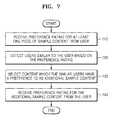
- FIG. 7is a flowchart illustrating a method of selecting sample content according to an exemplary embodiment of the present invention.
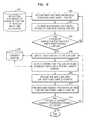
- FIG. 8is a flowchart illustrating a method of selecting sample content according to another exemplary embodiment of the present invention.
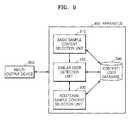
- FIG. 9is a block diagram of an apparatus for selecting sample content according to an exemplary embodiment of the present invention.
- FIG. 1is a diagram illustrating a method of predicting a preference rating for content according to an exemplary embodiment of the present invention.
- active users' preference rating information 110 regarding contenta training algorithm 120 , and a support vector machine (SVM) model 140 , which are machine learning algorithms, are used in order to predict a preference rating for new content 130 .
- SVMsupport vector machine
- the term “active users”means users who have used content that is provided by a content providing system (not shown).
- the preference rating information 110is an evaluation of content, which is received from the active users who watch the content. For example, the active users may assign a grade or a rating to the content in order to evaluate the content. The following process is performed for this purpose.
- the preference rating information 110 collected from the active usersis used to predict a preference rating regarding another content at a later time.
- the preference rating information 110is trained via the training algorithm 120 .
- the SVM model 140which is a classification algorithm predicts a preference rating for the new content 130 (element 150 ), based on a result of implementing the training algorithm 120 .
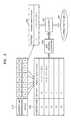
- FIG. 2is a diagram illustrating a method of predicting a preference rating for content according to another exemplary embodiment of the present invention.
- a preference rating matrix 210denotes an active user's preference rating information regarding a plurality of pieces of content, in which ratings from 1 to 5 are assigned to the pieces of content. Specifically, the active user respectively assigns ratings of 4, 5, 3, 1, and 3 to pieces of content C 1 , C 2 , C 3 , C 5 and C 6 .
- Other pieces of content C 4 , C 7 and C 8are new pieces of content, the preference ratings of which need to be predicted in order to determine whether to recommend them.
- each of the pieces of contentis described using a pair of numbers which are a feature index and a value.
- Featuresare selected important elements, such as a genre, actors, a director, and keywords, which constitute metadata.
- a feature set 230 for new contentis determined based on the metadata, and a preference rating for the new content is unknown.
- the feature sets 220are learned according to an SVM training algorithm 240 , and a classifier 250 predicts the preference rating for the new content based on a result of implementing the SVM training algorithm 240 .
- the predicted preference ratinghas a value between 1 and 5 ( 260 ).
- a preference rating for new contentcan be predicted but preference rating information appropriate for performing the SVM training algorithm is needed in order to increase the precision of the preference rating.
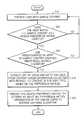
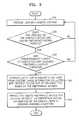
- FIG. 3is a flowchart illustrating a method of predicting a preference rating for content according to another exemplary embodiment of the present invention.
- the new user's preference rating information regarding sample content and other users' preference rating information regarding contentare used.
- a predetermined number of pieces of sample contentare selected from stored content and one of the pieces of sample content is provided to the new user in order to obtain the new user's preference rating therefore (operation 310 ).
- it is determined whether the new user watches the sample content and assigns a preference rating thereto(operation 320 ). If the new user neither watches the sample content nor assigns a preference ratings thereto, another piece of sample content is further provided (operation 310 ). On the other hand, if the user assigns a preference rating to the content, the process performs the next check (operation 330 ), described in greater detail below.
- FIG. 4illustrates an interface 400 via which sample content is provided to a user according to an exemplary embodiment of the present invention.
- fifteen pieces of sample contentare provided to a user in order to evaluate the user's video preference.
- the usermay watch the movie “Shrek 2” 405 that is currently displayed, assign a preference rating to the movie “Shrek 2” 405 by using ratings 410 ranging from 0 to 5, browse previous content 404 or subsequent content 406 , and assign a preference rating to the previous or subsequent content 404 or 406 .
- a numberis provided indicating which piece of content is currently being viewed and evaluated.
- the piece of content 405is 5/15 i.e., fifth piece of content out of fifteen pieces of content.
- the userselects end of evaluation 415 .
- Sample contentmay be selected randomly or by considering other users' preference ratings therefor but the present invention is not limited thereto. For example, if sample content is dynamically selected and provided to the user based on a preference rating for at least one piece of content that was previously provided to the user, then content which the user is likely to prefer is provided as sample content to the user, and thus, the user is likely to watch the sample content and assign a preference rating for the sample content. A method of dynamically selecting sample content will be described in greater detail further below with reference to FIG. 6 . Referring back to FIG. 3 , when the user assigns the preference rating for the sample content, it is determined whether a predetermined number of pieces of the sample content are assigned preference ratings therefor (operation 330 ). If the predetermined number of pieces of the sample content have not yet been assigned preference ratings, other pieces of sample content are provided (operation 310 ).
- Equation 1When the predetermined number of pieces of sample content are assigned preference ratings, a list of users having similar preferences is extracted using the assigned preference ratings. Information regarding the similar users is obtained from content usage information collected with respect to content of the same type (operation 340 ). A degree of similarity between the new user and users indicated in the content usage information is calculated based on the assigned preference ratings, and a predetermined number of similar users are selected using the degree of similarity.
- the Pearson correlation equation given in Equation 1may be used in order to detect the predetermined number of similar users, as follows:
- r IABdenotes a degree of similarity between a user A and a user B
- CCdenotes a content count, i.e., the total number of pieces of content
- CR Aidenotes the user A's preference rating for i th content
- CR Bidenotes the user B's preference rating for i th content
- CR Adenotes the user A's average preference rating for the pieces of the content
- CR Bdenotes the user B's average preference rating for the pieces of content.
- the new user's preference rating for contentis predicted by inputting preference rating information of users indicated in the list of similar users to a machine learning algorithm (operation 350 ).
- An SVM modelmay be used as the machine learning algorithm.
- a new user who uses a content servicemay be recommended content, and a preference rating for new content may be predicted according to the SVM model constructed based on information regarding the existing users.
- FIG. 5is a block diagram of an apparatus 500 for predicting a preference rating for content according to an exemplary embodiment of the present invention.
- the apparatus 500may be embodied as a part of a content recommending system (not shown) or a content providing system (not shown).
- the apparatus 500includes a content/user database 510 , a sample content obtaining unit 520 , a similar user information receiving unit 530 , and a preference rating prediction unit 540 .
- the sample content obtaining unit 520selects a predetermined number of pieces of sample content from the content/user database 510 , provides the selected pieces of sample content to a user, and obtains preference ratings from the user.
- the similar user information receiving unit 530transmits the preference ratings to a server 560 that stores the content usage information collected with respect to the content of the same type, and receives a list of users having similar preferences from the server 560 .
- the preference rating prediction unit 540predicts the user's preference ratings for the content by inputting preference rating information of users indicated in the list of similar users to a machine learning algorithm.
- the userwatches the pieces of sample content and assigns preference ratings, i.e., grades, to the pieces of sample content via an input/output device 550 .
- the server 560calculates a degree of similarity between the user and the users indicated in the content usage information based on the preference ratings for the pieces of sample content, and creates a list of similar users by selecting a predetermined number of similar users based on the degree of similarity.
- a Pearson correlation coefficientmay be used in order to calculate the degree of similarity.
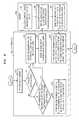
- FIG. 6is a flowchart illustrating a method of predicting a preference rating for the content according to another exemplary embodiment of the present invention, in which a server 560 provides information regarding users having similar preferences.
- new contentis received for which the preference rating needs to be predicted (operation 610 ).
- operation 618is performed since the preference rating for the new content is difficult to predict using only the existing information.
- a user who is not a new user but whose preference rating information is not enough to perform SVM trainingwill be referred to as a new user.
- sample contentis provided to the target user in order to receive a preference rating for the sample content from the target user (operation 618 ).
- Information regarding the preference rating for the sample content, which is received from the new user,is transmitted to a server 560 in order to request information regarding top-k users which are a predetermined number k of users having the most similar preferences to the target user (operation 620 ).
- the information regarding the preference rating for the sample contentmay be described in the form of a preference rating matrix.
- the server 560collects content usage information of other users from an audience rating survey company and/or a content providing system (operation 624 ).
- the content usage information regarding the other usersincludes content usage histories and preferences of the other users with respect to content of the same type as the new content.
- the server 560builds the preference rating matrix based on the collected content usage information (operation 626 ). In response to a query received from the apparatus 500 of FIG.
- the server 560generates the information regarding the top-k users by detecting k users from among users having similar preferences to the target user, based on the preference rating matrix of the content usage information and the information regarding the preference rating for the sample content which is received from the apparatus 500 (operation 628 ).
- the information regarding the top-k usersis transmitted in the form of a preference rating matrix of the k users to the apparatus 500 .
- the preference rating matrix of the k usersis used as data appropriate for performing SVM training.
- the apparatus 500performs SVM training based on the preference rating matrix of the k users, and derives the target user's preference rating for the new content based on a result of performing the SVM training (operation 622 ).
- a feature vectordefines each feature included in information as one element.
- the features defined by the feature vectorare used as basic materials for performing machine learning.
- a keyword-based binary feature vectoris obtained by expressing keywords included in metadata consisting of, for example, the title, category, tag, and description of content, in the form of binary digits. That is, a feature value is ‘1’ when one feature element (keyword) is included in the metadata, and is ‘0’ when one feature element (keyword) is not included in the metadata.
- a weightmay be determined according to the importance of an element included in the feature vector.
- a weight of 1is assigned to a feature element detected from the title
- a weight of 0.75is assigned to a feature element detected from the category
- a weight of 0.5is assigned to a feature element detected from the tag
- a weight of 0.25is assigned to a feature element detected from the description
- a weight of 0is assigned to a keyword that is not included in the meta data. If keywords are detected from metadata regarding content A as shown in Table 1, a feature set may be defined as shown in Table 2.
- FIG. 7is a flowchart illustrating a method of selecting sample content according to an exemplary embodiment of the present invention.
- FIG. 7relates to a method of recommending content in order to obtain a predetermined number of preference ratings necessary to analyze a new user's content preferences.
- at least one piece of sample contentis provided to the new user, and a preference rating for the sample content is received from the new user (operation 710 ).
- the sample content provided in operation 710will be referred to as basic sample content in order to distinguish it from sample content selected in operations 720 to 740 . In this case, it is sufficient to obtain some of preference ratings necessary to analyze the new user's content preferences by using a machine learning algorithm.
- ranks of a plurality of pieces of contentmay be determined based on the existing users' preference ratings for content and at least one piece of sample content may be selected from the pieces of content based on the determined ranks. Until x preference ratings are received, the pieces of content are sequentially provided to the new user according to the ranks.
- At least one user having similar preferences to the new useris detected using the preference ratings for x pieces of sample content (operation 720 ).
- the similar usermay be defined as a user who assigns the same preference rating or a similar preference rating to the same content.
- a plurality of pieces of content to which the at least one detected similar user has a preferenceare selected as a plurality of pieces of additional sample content to be provided to the new user (operation 730 ).
- ranks of the pieces of sample content that the at least one detected similar user watchesare determined, the pieces of sample content are sequentially provided to the new user according to the determined ranks, and then, preference ratings for the pieces of sample content are received from the new user (operation 740 ).
- the ranks of the pieces of sample contentmay be determined based on the at least one similar user's preference ratings therefor. Then, until preference ratings for y pieces of additional sample content are obtained, operations 720 to 740 are repeatedly performed.
- FIG. 8is a flowchart illustrating a method of selecting sample content according to another exemplary embodiment of the present invention.
- x pieces of basic sample content and y pieces of additional sample contentare selected.
- (x+y)denotes the total number of pieces of preference rating information necessary to analyze a new user's content preferences.
- a database 810stores a plurality of pieces of content.
- the ranks of the pieces of the contenthave been determined by calculating popularity thereof, based on the existing users' preference ratings for the pieces of the content.
- the new useris provided information regarding basic sample content from the database 810 , starting from basic content having a highest rank (operation 830 ).
- a rank of specific contentmay be determined based on a value obtained by subtracting the sum of negative ratings from the sum of positive ratings, which are received from users who watch the specific content, and a duration during which the specific content is provided.
- Durationdenotes a duration during which the content is provided.
- Durationdenotes a period of time between when the content was first broadcast and the present time. The longer a duration during which the content is provided, the more preference rating information for the content there may be.
- the parameter Durationis used in order to fairly evaluate content that is provided for a short period of time.
- x pieces of sample contentare assigned preference ratings (operation 834 ).
- xdenotes the total number of pieces of sample content necessary to detect users similar to the new user, and is less than the total number of pieces of sample content necessary to analyze a preference rating for content. If it is determined in operation 834 that the x pieces of the content are not assigned preference ratings, then pieces of sample content having a second rank are provided to the new user from the database 810 (operation 830 ). If all the x pieces of the basic sample content are assigned preference ratings, users similar to the new user are detected using the x pieces of basic sample content and the content/user database 820 (operation 836 ).
- content that the detected similar users have commonly watchedis selected as additional sample content (operation 838 ) from the content/user database 820 , and is provided to the new user (operation 840 ).
- the content that the detected similar users commonly watchedmay be content that most of the similar users have commonly watched.
- ranks of a plurality of pieces of content in the content/user database 820may be determined based on the similar users' preference ratings therefor, and content having a highest rank may be selected as an additional sample content from the pieces of content. Equations 2 and 3 may be used to determine ranks of a plurality of pieces of content. If the new user watches the additional sample content and assigns preference rating therefor (operation 842 ), then it is determined whether y pieces of content are assigned preference ratings (operation 844 ).
- operation 842If it is determined in operation 842 that the y pieces of the content are not assigned preference ratings, other users similar to the new user are detected using the preference rating information obtained through operations 830 through 842 (operation 836 ). In this way, it is possible to quickly obtain content information necessary to perform machine learning for analyzing the new user's content preferences.
- FIG. 9is a block diagram of an apparatus 900 for selecting sample content according to an exemplary embodiment of the present invention.
- the apparatus 900includes a basic sample content selection unit 910 , a similar user detection unit 920 , an additional sample content selection unit 930 , and a content/user database 940 .
- the basic sample content selection unit 910selects at least one piece of basic sample content from the content/user database 940 , provides a user with the selected basic sample content via an input/output device 950 , and receives a preference rating for the selected basic sample content from the user.
- the similar user detection unit 920searches the content/user database 940 for users having similar preferences to the new user, based on the preference rating for the selected basic sample content.
- the additional sample content selection unit 930selects content which most of the similar users commonly prefer as additional sample content that is to be provided to the users, and receives a preference rating for the additional sample content from the new user via the input/output device 950 .
- the content/user database 940stores content and information regarding the new user.
- the system according to exemplary embodiments of the present inventioncan be embodied as computer readable code in a computer readable medium.
- the computer readable mediummay be any recording apparatus capable of storing data that is read by a computer system, e.g., a read-only memory (ROM), a random access memory (RAM), a compact disc (CD)-ROM, a magnetic tape, a floppy disk, an optical data storage device, and so on.
- the computer readable mediumcan be distributed among computer systems that are interconnected through a network, and the present invention may be stored and implemented as computer readable code in the distributed system.
Landscapes
- Engineering & Computer Science (AREA)
- Databases & Information Systems (AREA)
- Theoretical Computer Science (AREA)
- Signal Processing (AREA)
- Business, Economics & Management (AREA)
- Physics & Mathematics (AREA)
- General Physics & Mathematics (AREA)
- Finance (AREA)
- Strategic Management (AREA)
- Data Mining & Analysis (AREA)
- General Engineering & Computer Science (AREA)
- Development Economics (AREA)
- Accounting & Taxation (AREA)
- Entrepreneurship & Innovation (AREA)
- General Business, Economics & Management (AREA)
- Marketing (AREA)
- Economics (AREA)
- Game Theory and Decision Science (AREA)
- Information Retrieval, Db Structures And Fs Structures Therefor (AREA)
- Two-Way Televisions, Distribution Of Moving Picture Or The Like (AREA)
Abstract
Description
wherein rIABdenotes a degree of similarity between a user A and a user B, CC denotes a content count, i.e., the total number of pieces of content, CRAidenotes the user A's preference rating for ithcontent, CRBidenotes the user B's preference rating for ithcontent,
| TABLE 1 | |||
| Type | Keyword | ||
| Title | T1, T2, T3, T4 | ||
| Category | C1 | ||
| Tag | t1, t2, t3, t4, t5 | ||
| Description | D1, D2, D3, D4, D5, D6, D7, D8, D9, D10 | ||
| TABLE 2 | ||
| Element Name | ||
| T2 | C1 | t2 | T5 | D10 | T4 | C3 | T7 | . . . | ||
| 1 | 0.75 | 0.5 | 0 | 0.25 | 1 | 0 | 0 | ||
Preference rating=R+−R−
Rank=Preference rating/Log(Duration).
Claims (31)
Applications Claiming Priority (2)
| Application Number | Priority Date | Filing Date | Title |
|---|---|---|---|
| KR10-2009-0006019 | 2009-01-23 | ||
| KR1020090006019AKR101792587B1 (en) | 2009-01-23 | 2009-01-23 | Method and apparatus of predicting preference rating for contents, and method and apparatus for selecting sample contents |
Publications (2)
| Publication Number | Publication Date |
|---|---|
| US20100191680A1 US20100191680A1 (en) | 2010-07-29 |
| US8463717B2true US8463717B2 (en) | 2013-06-11 |
Family
ID=42354949
Family Applications (1)
| Application Number | Title | Priority Date | Filing Date |
|---|---|---|---|
| US12/618,386Expired - Fee RelatedUS8463717B2 (en) | 2009-01-23 | 2009-11-13 | Method and apparatus for predicting preference rating for content, and method and apparatus for selecting sample content |
Country Status (2)
| Country | Link |
|---|---|
| US (1) | US8463717B2 (en) |
| KR (1) | KR101792587B1 (en) |
Families Citing this family (25)
| Publication number | Priority date | Publication date | Assignee | Title |
|---|---|---|---|---|
| WO2007056344A2 (en) | 2005-11-07 | 2007-05-18 | Scanscout, Inc. | Techiques for model optimization for statistical pattern recognition |
| US20080228581A1 (en)* | 2007-03-13 | 2008-09-18 | Tadashi Yonezaki | Method and System for a Natural Transition Between Advertisements Associated with Rich Media Content |
| US8577996B2 (en)* | 2007-09-18 | 2013-11-05 | Tremor Video, Inc. | Method and apparatus for tracing users of online video web sites |
| US8549550B2 (en) | 2008-09-17 | 2013-10-01 | Tubemogul, Inc. | Method and apparatus for passively monitoring online video viewing and viewer behavior |
| US9612995B2 (en) | 2008-09-17 | 2017-04-04 | Adobe Systems Incorporated | Video viewer targeting based on preference similarity |
| US10475047B2 (en) | 2009-08-28 | 2019-11-12 | Resonate Networks, Inc. | Method and apparatus for delivering targeted content to website visitors |
| US20120191815A1 (en)* | 2009-12-22 | 2012-07-26 | Resonate Networks | Method and apparatus for delivering targeted content |
| JP5609056B2 (en)* | 2009-10-14 | 2014-10-22 | ソニー株式会社 | Content relationship visualization device, display control device, content relationship visualization method and program |
| WO2012057809A2 (en)* | 2009-11-20 | 2012-05-03 | Tadashi Yonezaki | Methods and apparatus for optimizing advertisement allocation |
| KR101228816B1 (en)* | 2011-05-20 | 2013-01-31 | 한국과학기술원 | Method for evaluating learning contents using learning style, system for evaluating learning contents using learning style |
| US9201968B2 (en) | 2011-08-29 | 2015-12-01 | Massachusetts Institute Of Technology | System and method for finding mood-dependent top selling/rated lists |
| US9251527B2 (en) | 2011-08-29 | 2016-02-02 | Massachusetts Institute Of Technology | System and method for providing personalized recommendations |
| US8983998B1 (en) | 2012-04-25 | 2015-03-17 | Google Inc. | Prioritizing points of interest in unfamiliar regions |
| US9053493B2 (en)* | 2012-08-13 | 2015-06-09 | Google Inc. | Affecting display of content based on negative reactions |
| US20140067473A1 (en)* | 2012-08-31 | 2014-03-06 | John Nienstedt, SR. | Systems and methods for measuring and scoring the effectiveness of a message |
| EP2744219A1 (en)* | 2012-12-14 | 2014-06-18 | Thomson Licensing | Prediction of user appreciation of items and corresponding recommendation method |
| US11030535B1 (en)* | 2015-06-24 | 2021-06-08 | Amazon Technologies, Inc. | Machine learned merchant ratings |
| US10432689B2 (en)* | 2016-02-15 | 2019-10-01 | Netflix, Inc. | Feature generation for online/offline machine learning |
| KR101975750B1 (en)* | 2017-09-27 | 2019-05-07 | 주식회사 종달랩 | Customized apparel materials recommendation and ordering system |
| KR102078627B1 (en)* | 2017-11-14 | 2020-02-19 | 네이버 주식회사 | Method and system for providing real-time feedback information associated with user-input contents |
| CN108810573B (en)* | 2018-06-14 | 2022-01-04 | 广东互通宽带网络服务有限公司 | Method and system for intelligent flow cache prediction by support vector machine |
| CN112948704B (en)* | 2019-11-26 | 2024-06-04 | 北京达佳互联信息技术有限公司 | Model training method, device, electronic device and medium for information recommendation |
| KR20210095429A (en)* | 2020-01-23 | 2021-08-02 | 삼성전자주식회사 | Electronic device and operating method for training an individual model of an user |
| KR102330059B1 (en)* | 2020-02-14 | 2021-11-22 | 주식회사 엘지유플러스 | Method and device for recommending a poster |
| KR102831562B1 (en)* | 2020-03-09 | 2025-07-09 | 주식회사 케이티 | Server, method and computer program for recommending video content based on meta data |
Citations (4)
| Publication number | Priority date | Publication date | Assignee | Title |
|---|---|---|---|---|
| US6606624B1 (en)* | 1999-08-13 | 2003-08-12 | The Regents Of The University Of California | Apparatus and method for recommending to an individual selective information contained within a computer network |
| US20050076093A1 (en)* | 2003-06-04 | 2005-04-07 | Stefan Michelitsch | Content recommendation device with user feedback |
| US20080294655A1 (en)* | 2007-05-25 | 2008-11-27 | Motorola, Inc. | Method and apparatus for generation of a user profile |
| US20100131527A1 (en)* | 2008-11-25 | 2010-05-27 | At&T Intellectual Property I, L.P. | Systems and methods to select media content |
Family Cites Families (2)
| Publication number | Priority date | Publication date | Assignee | Title |
|---|---|---|---|---|
| JP2962264B2 (en)* | 1997-02-17 | 1999-10-12 | 日本電気株式会社 | Automatic user preference learning method |
| JP2005128673A (en)* | 2003-10-22 | 2005-05-19 | Nippon Telegr & Teleph Corp <Ntt> | Information recommendation method, server device, program, and recording medium |
- 2009
- 2009-01-23KRKR1020090006019Apatent/KR101792587B1/enactiveActive
- 2009-11-13USUS12/618,386patent/US8463717B2/ennot_activeExpired - Fee Related
Patent Citations (4)
| Publication number | Priority date | Publication date | Assignee | Title |
|---|---|---|---|---|
| US6606624B1 (en)* | 1999-08-13 | 2003-08-12 | The Regents Of The University Of California | Apparatus and method for recommending to an individual selective information contained within a computer network |
| US20050076093A1 (en)* | 2003-06-04 | 2005-04-07 | Stefan Michelitsch | Content recommendation device with user feedback |
| US20080294655A1 (en)* | 2007-05-25 | 2008-11-27 | Motorola, Inc. | Method and apparatus for generation of a user profile |
| US20100131527A1 (en)* | 2008-11-25 | 2010-05-27 | At&T Intellectual Property I, L.P. | Systems and methods to select media content |
Also Published As
| Publication number | Publication date |
|---|---|
| US20100191680A1 (en) | 2010-07-29 |
| KR101792587B1 (en) | 2017-11-02 |
| KR20100086676A (en) | 2010-08-02 |
Similar Documents
| Publication | Publication Date | Title |
|---|---|---|
| US8463717B2 (en) | Method and apparatus for predicting preference rating for content, and method and apparatus for selecting sample content | |
| JP4636147B2 (en) | Information processing apparatus and method, program, and recording medium | |
| US10129596B2 (en) | Adaptive row selection | |
| Salter et al. | CinemaScreen recommender agent: combining collaborative and content-based filtering | |
| US8407230B2 (en) | System and method for identifying similar media objects | |
| US8611676B2 (en) | Information processing apparatus, feature extraction method, recording media, and program | |
| US8688615B2 (en) | Content selection based on consumer interactions | |
| US7849092B2 (en) | System and method for identifying similar media objects | |
| EP1909194A1 (en) | Information processing device, feature extraction method, recording medium, and program | |
| US20090043811A1 (en) | Information processing apparatus, method and program | |
| US20150248618A1 (en) | System and method for logistic matrix factorization of implicit feedback data, and application to media environments | |
| US20120246681A1 (en) | Method for Content Presentation | |
| US8943012B2 (en) | Information processing device, information processing method, and program | |
| US20090055376A1 (en) | System and method for identifying similar media objects | |
| KR101206160B1 (en) | Method for recommending content based on user preference and profile of content | |
| CN108040294A (en) | Automatic recommendation | |
| De Pessemier et al. | Context aware recommendations for user-generated content on a social network site | |
| JP2009140042A (en) | Information processing apparatus, information processing method, and program | |
| KR102386817B1 (en) | Apparatus for music sorting based on User preference and device applied to the same | |
| CN115834959B (en) | Video recommendation information determining method and device, electronic equipment and medium | |
| JP4253532B2 (en) | Information recommendation device, information recommendation program, and recording medium | |
| CN106354867A (en) | Multimedia resource recommendation method and device | |
| CN115455280A (en) | Recommendation list determining method and server | |
| US9843829B2 (en) | Method and system for efficiently compiling media content items for a media-on-demand platform | |
| JP5013161B2 (en) | Information processing apparatus, information processing method, providing apparatus, providing method, and program |
Legal Events
| Date | Code | Title | Description |
|---|---|---|---|
| AS | Assignment | Owner name:SAMSUNG ELECTRONICS CO., LTD., KOREA, REPUBLIC OF Free format text:ASSIGNMENT OF ASSIGNORS INTEREST;ASSIGNORS:LEE, JAE-HWANG;HWANG, CHEOL-JU;PARK, SOO-HONG;AND OTHERS;REEL/FRAME:023516/0675 Effective date:20090916 | |
| FEPP | Fee payment procedure | Free format text:PAYOR NUMBER ASSIGNED (ORIGINAL EVENT CODE: ASPN); ENTITY STATUS OF PATENT OWNER: LARGE ENTITY | |
| STCF | Information on status: patent grant | Free format text:PATENTED CASE | |
| FPAY | Fee payment | Year of fee payment:4 | |
| MAFP | Maintenance fee payment | Free format text:PAYMENT OF MAINTENANCE FEE, 8TH YEAR, LARGE ENTITY (ORIGINAL EVENT CODE: M1552); ENTITY STATUS OF PATENT OWNER: LARGE ENTITY Year of fee payment:8 | |
| FEPP | Fee payment procedure | Free format text:MAINTENANCE FEE REMINDER MAILED (ORIGINAL EVENT CODE: REM.); ENTITY STATUS OF PATENT OWNER: LARGE ENTITY | |
| LAPS | Lapse for failure to pay maintenance fees | Free format text:PATENT EXPIRED FOR FAILURE TO PAY MAINTENANCE FEES (ORIGINAL EVENT CODE: EXP.); ENTITY STATUS OF PATENT OWNER: LARGE ENTITY | |
| STCH | Information on status: patent discontinuation | Free format text:PATENT EXPIRED DUE TO NONPAYMENT OF MAINTENANCE FEES UNDER 37 CFR 1.362 | |
| FP | Lapsed due to failure to pay maintenance fee | Effective date:20250611 |