US8412102B2 - Method, apparatus and storage medium for provisioning WLAN parameters via a cordless phone protocol - Google Patents
Method, apparatus and storage medium for provisioning WLAN parameters via a cordless phone protocolDownload PDFInfo
- Publication number
- US8412102B2 US8412102B2US11/686,209US68620907AUS8412102B2US 8412102 B2US8412102 B2US 8412102B2US 68620907 AUS68620907 AUS 68620907AUS 8412102 B2US8412102 B2US 8412102B2
- Authority
- US
- United States
- Prior art keywords
- wireless
- wireless communication
- communication device
- communication connection
- access point
- Prior art date
- Legal status (The legal status is an assumption and is not a legal conclusion. Google has not performed a legal analysis and makes no representation as to the accuracy of the status listed.)
- Expired - Fee Related, expires
Links
Images
Classifications
- H—ELECTRICITY
- H04—ELECTRIC COMMUNICATION TECHNIQUE
- H04M—TELEPHONIC COMMUNICATION
- H04M1/00—Substation equipment, e.g. for use by subscribers
- H04M1/72—Mobile telephones; Cordless telephones, i.e. devices for establishing wireless links to base stations without route selection
- H04M1/725—Cordless telephones
- H—ELECTRICITY
- H04—ELECTRIC COMMUNICATION TECHNIQUE
- H04W—WIRELESS COMMUNICATION NETWORKS
- H04W72/00—Local resource management
- H04W72/50—Allocation or scheduling criteria for wireless resources
- H04W72/54—Allocation or scheduling criteria for wireless resources based on quality criteria
- H04W72/541—Allocation or scheduling criteria for wireless resources based on quality criteria using the level of interference
- H—ELECTRICITY
- H04—ELECTRIC COMMUNICATION TECHNIQUE
- H04L—TRANSMISSION OF DIGITAL INFORMATION, e.g. TELEGRAPHIC COMMUNICATION
- H04L61/00—Network arrangements, protocols or services for addressing or naming
- H04L61/50—Address allocation
- H04L61/5007—Internet protocol [IP] addresses
- H04L61/5014—Internet protocol [IP] addresses using dynamic host configuration protocol [DHCP] or bootstrap protocol [BOOTP]
- H—ELECTRICITY
- H04—ELECTRIC COMMUNICATION TECHNIQUE
- H04M—TELEPHONIC COMMUNICATION
- H04M1/00—Substation equipment, e.g. for use by subscribers
- H04M1/72—Mobile telephones; Cordless telephones, i.e. devices for establishing wireless links to base stations without route selection
- H04M1/725—Cordless telephones
- H04M1/72502—Cordless telephones with one base station connected to a single line
- H04M1/72505—Radio link set-up procedures
- H—ELECTRICITY
- H04—ELECTRIC COMMUNICATION TECHNIQUE
- H04W—WIRELESS COMMUNICATION NETWORKS
- H04W12/00—Security arrangements; Authentication; Protecting privacy or anonymity
- H04W12/50—Secure pairing of devices
- H—ELECTRICITY
- H04—ELECTRIC COMMUNICATION TECHNIQUE
- H04W—WIRELESS COMMUNICATION NETWORKS
- H04W24/00—Supervisory, monitoring or testing arrangements
- H04W24/02—Arrangements for optimising operational condition
- H—ELECTRICITY
- H04—ELECTRIC COMMUNICATION TECHNIQUE
- H04W—WIRELESS COMMUNICATION NETWORKS
- H04W4/00—Services specially adapted for wireless communication networks; Facilities therefor
- H04W4/50—Service provisioning or reconfiguring
- H—ELECTRICITY
- H04—ELECTRIC COMMUNICATION TECHNIQUE
- H04W—WIRELESS COMMUNICATION NETWORKS
- H04W4/00—Services specially adapted for wireless communication networks; Facilities therefor
- H04W4/80—Services using short range communication, e.g. near-field communication [NFC], radio-frequency identification [RFID] or low energy communication
- H—ELECTRICITY
- H04—ELECTRIC COMMUNICATION TECHNIQUE
- H04W—WIRELESS COMMUNICATION NETWORKS
- H04W76/00—Connection management
- H04W76/10—Connection setup
- H—ELECTRICITY
- H04—ELECTRIC COMMUNICATION TECHNIQUE
- H04M—TELEPHONIC COMMUNICATION
- H04M2250/00—Details of telephonic subscriber devices
- H04M2250/06—Details of telephonic subscriber devices including a wireless LAN interface
- H—ELECTRICITY
- H04—ELECTRIC COMMUNICATION TECHNIQUE
- H04M—TELEPHONIC COMMUNICATION
- H04M2250/00—Details of telephonic subscriber devices
- H04M2250/08—Details of telephonic subscriber devices home cordless telephone systems using the DECT standard
- H—ELECTRICITY
- H04—ELECTRIC COMMUNICATION TECHNIQUE
- H04W—WIRELESS COMMUNICATION NETWORKS
- H04W12/00—Security arrangements; Authentication; Protecting privacy or anonymity
- H04W12/02—Protecting privacy or anonymity, e.g. protecting personally identifiable information [PII]
- H—ELECTRICITY
- H04—ELECTRIC COMMUNICATION TECHNIQUE
- H04W—WIRELESS COMMUNICATION NETWORKS
- H04W12/00—Security arrangements; Authentication; Protecting privacy or anonymity
- H04W12/04—Key management, e.g. using generic bootstrapping architecture [GBA]
- H—ELECTRICITY
- H04—ELECTRIC COMMUNICATION TECHNIQUE
- H04W—WIRELESS COMMUNICATION NETWORKS
- H04W16/00—Network planning, e.g. coverage or traffic planning tools; Network deployment, e.g. resource partitioning or cells structures
- H04W16/14—Spectrum sharing arrangements between different networks
- H04W16/16—Spectrum sharing arrangements between different networks for PBS [Private Base Station] arrangements
- H—ELECTRICITY
- H04—ELECTRIC COMMUNICATION TECHNIQUE
- H04W—WIRELESS COMMUNICATION NETWORKS
- H04W84/00—Network topologies
- H04W84/02—Hierarchically pre-organised networks, e.g. paging networks, cellular networks, WLAN [Wireless Local Area Network] or WLL [Wireless Local Loop]
- H04W84/10—Small scale networks; Flat hierarchical networks
- H04W84/12—WLAN [Wireless Local Area Networks]
Definitions
- the present disclosurerelates generally to provisioning techniques, and more specifically to a method and apparatus for provisioning a communication device.
- Wireless networkingeliminates the use of cables thereby offering users greater mobility.
- a common form of wireless networkingis wireless fidelity—also known as WiFi.
- a communication devicecan be in the vicinity of more than one WiFi access point. In such situations the communication device generally needs to be directed to select one of the access points, and for access points configured for secure communications, an encryption key (e.g., WiFi Protected Access or Wired Equivalency Privacy) has to be supplied. For users without technical expertise this process can be undesirable.
- an encryption keye.g., WiFi Protected Access or Wired Equivalency Privacy
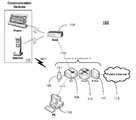
- FIG. 1depicts an exemplary embodiment of a communication system
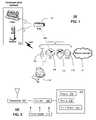
- FIG. 2depicts an exemplary embodiment of a communication device operating in the communication system
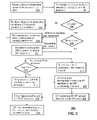
- FIG. 3depicts an exemplary method operating in portions of the communication system
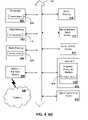
- FIG. 4depicts an exemplary diagrammatic representation of a machine in the form of a computer system within which a set of instructions, when executed, may cause the machine to perform any one or more of the methodologies disclosed herein.
- Embodiments in accordance with the present disclosureprovide a method and an apparatus for provisioning a communication device.
- a communication devicecan have a controller element that establishes wireless communication with a base unit operating according to a short-range cordless phone communication protocol, and receives from the base unit provisioning information that enables a communication device to establish wireless communications with an access point operating according to a wireless fidelity (WiFi) communications protocol.
- WiFiwireless fidelity
- a computer-readable storage medium in a base unitcan have instructions for establishing wireless communications with a communication device according to a short-range cordless phone communication protocol, and transmitting to a communication device provisioning information that enables the communication device to establish wireless communications with an access point operating according to a WiFi communications protocol.
- a methodcan involve transporting WiFi provisioning information over a short-range cordless phone communication medium.
- FIG. 1depicts an exemplary embodiment of a communication system 100 .
- the communication system 100can comprise one or more communication devices 102 , a base unit 104 , an access point (AP) 106 , an Ethernet hub 108 , a router 110 , and a modem 112 coupled to the Internet by way of common interfaces (e.g., xDSL, cable, satellite, etc.).
- the AP 106forms a wireless network between the communication devices 102 and the Internet 114 by way of the combined operations of the hub 108 , router 110 , and modem 112 .
- the AP 106conforms to IEEE's family of 802.11 standards (e.g., 802.11a, b, g or n) and can typically communicate with the communication devices 102 within a radius of 100 meters or so.
- the Ethernet hub 108also known as concentrator can be used for connecting multiple twisted pair or fiber optic Ethernet devices together as a single segment.
- the Ethernet hub 108is thus a form of multiport repeater.
- the router 110can forward data packets across a network to a desired destination through a process known as routing. Routing occurs at Layer 3 (the network layer) of the Open Systems Interconnect (OSI) model.
- the modem 112modulates on a forward channel an analog carrier signal to encode digital information, and demodulates on a reverse channel a carrier signal to decode the transmitted information.
- the task of the modem 112is to produce a signal that can be transmitted over a communication network and decoded to reproduce the original digital data over long distances.
- the modem 112can provide broadband digital services over an xDSL, cable or other suitable interface.
- the base unit 104can include short-range cordless phone technology conforming to, for example, a Digital Enhanced Cordless Telecommunications (DECT) protocol, or a Personal Handy-phone System (PHS) protocol.
- the cordless phone technologyallows the base unit 104 to communicate with the communication devices 102 over short distances, e.g., 50-100 meters.
- the base unit 104transmits and receives signals at, for example, a 5.8 GHz carrier frequency to prevent interference with the WiFi AP 106 which operates generally at a carrier frequency of 2.4 GHz.
- the base unit 104can monitor signals at 2.4 GHz for purposes which will be described shortly.
- the base unit 104can be integrated in whole or in part with one or more of the above components (e.g., the AP 106 , the hub 108 , the router 110 , and/or the modem 112 ).
- FIG. 2depicts an exemplary embodiment of the communication device 102 .
- the communication device 102can comprise a wireless transceiver 202 , a user interface (UI) 204 , a power supply 216 , and a controller 203 for managing operations of the foregoing components.
- the transceiver 202is a device that has both a transmitter and receiver.
- the transceiver 102can have a dual-mode function that supports a cordless phone technology as described above for the base unit 102 , and WiFi communications.
- the transceiver 202transmits and receives signals at the same carrier frequency, 5.8 GHz. As noted earlier, this carrier frequency can help to prevent interference with the WiFi AP 106 .
- the transceiver 102can also support a common plain old telephone service (POTS) wired interface.
- POTSplain old telephone service
- the UI element 204can include a keypad 206 with depressible or touch sensitive keys and a navigation element such as a navigation disk, button, roller ball, or flywheel for manipulating operations of the communication device 102 .
- the UI element 204can further include a display 208 such as monochrome or color LCD (Liquid Crystal Display) which can be touch sensitive for manipulating operations of the communication device 102 and for conveying images to the end user of said device, and an audio system 210 that utilizes common audio technology for conveying and intercepting audible signals of the end user.
- a display 208such as monochrome or color LCD (Liquid Crystal Display) which can be touch sensitive for manipulating operations of the communication device 102 and for conveying images to the end user of said device
- an audio system 210that utilizes common audio technology for conveying and intercepting audible signals of the end user.
- the power supply 216can utilize common power management technologies such as replaceable batteries, supply regulation technologies, and charging system technologies for supplying energy to the components of the communication device 102 and to facilitate portable applications.
- the communication device 102can represent an immobile or portable communication device.
- the controller 203can utilize computing technologies such as a microprocessor and/or digital signal processor (DSP) with associated storage memory such a Flash, ROM, RAM, SRAM, DRAM or other like technologies for controlling operations of the communication device 102 .
- DSPdigital signal processor
- the communication device 102can represent a single operational device or a family of devices configured in a master-slave arrangement. In the latter embodiment, the components of the communication device 102 can be reused in different form factors for the master and slave terminal devices 100 —see FIG. 1 (e.g., a touch-screen tablet referred to as a Frame, and a Handset).
- a touch-screen tabletreferred to as a Frame, and a Handset.
- FIG. 3depicts an exemplary method 300 operating in portions of the communication system 100 .
- Method 300begins with step 302 where the communication device 102 and base unit 104 are powered up.
- This stepcan represent an end user that purchases the aforementioned devices from a service provider of communication system 100 , or retail store having an association with said provider.
- the base unit 104can be provisioned by a salesperson with WiFi provisioning information consistent with services which the end user has subscribed to.
- step 304the communication device 102 establishes communications with the base unit 104 utilizing a cordless phone wireless protocol such as DECT or PHS.
- a cordless phone wireless protocolsuch as DECT or PHS.
- DECTwill be assumed to be the protocol used between the communication device 102 and the base unit 104 .
- the base unit 104determines in step 306 if the communication device 106 belongs to its network. This step can be accomplished by the communication device 102 sharing with the base unit 104 its model and serial numbers over DECT followed by the base unit 104 verifying from data stored in its memory that one or both of said numbers is recognized. If the identification supplied by the communication device 102 is not recognized, the base unit 104 proceeds to step 308 where it discontinues communications with the communication device 102 and denies attempts by the communication device 102 to access its network.
- the base unit 104proceeds to step 309 where it checks for sources of interference for the AP 106 .
- a first source of interferencecan be other cordless phones in the vicinity utilizing a 2.4 GHz carrier frequency. If one or more 2.4 GHz phones are detected, the base unit 104 proceeds to step 310 where it instructs the end user of the communication device 102 to remove or disable 2.4 GHz communication devices to avoid interference with the AP 106 .
- the base unit 104can also detect in step 309 other WiFi APs in its vicinity. To perform this step, it is assumed that the WiFi AP 106 of the base unit 104 is integrated therewith. When other WiFi APs are detected, the base unit 104 checks the channel for each of these detected devices. It is well known that WiFi channels 1, 6 and 11 do not overlap in frequency spectrum, and therefore can operate at full power with no apparent interference. The base unit 104 can utilize this known fact to select in step 312 a non-overlapping channel for the communication device 102 . In the very remote possibility that channels 1, 6 and 11 have multiple interferers, the base unit 104 can measure the power levels of each interferer and select from one of channels 1, 6 or 11 having the least amount of interference.
- the base unit 104proceeds to step 314 where it transmits WiFi provisioning information to the communication device 102 .
- the provisioning informationincludes said communication channel selection (unless no interference was detected in which case the communication channel which the base unit 104 was pre-provisioned is used), a Service Set Identifier (SSID), a static Internet Protocol Address (IP), a security ID, and/or a Dynamic Host Configuration Protocol (DHCP) setting.
- SSIDService Set Identifier
- IPInternet Protocol Address
- DHCPDynamic Host Configuration Protocol
- the SSIDis a code attached to all packets on a WiFi network to identify each packet as part of that network.
- the codeis a case sensitive text string which consists of a maximum of 32 alphanumeric characters.
- All communication devices 102 attempting to communicate with the WiFi AP 106must share the same SSID.
- An IP addressis a unique address assigned to each of the communication devices 102 in order to identify and communicate with each other on an IP network.
- Each participating network device, including a router 110 , computers, and communication devices 102can have their own unique IP address.
- the security IDcan represent a WiFi Protected Access (WPA) encryption key, or a Wired Equivalency Privacy (WEP) encryption key.
- WPAis a class of encryption keys to secure wireless communications between devices communicating by way of the WiFi AP 106 .
- WPAis a 256 bit encryption key which is a security improvement over 128 bit WEP encryption keys.
- WPAimplements the majority of the IEEE 802.11i standard, and was intended as an intermediate measure to take the place of WEP encryption keys.
- DHCPdefines a set of rules used by the communications device 102 to allow said device to request and obtain an IP address from a DHCP server which has a list of IP addresses available for assignment.
- the base unit 102can transmit the WiFi provisioning information in step 314 with error detection and/or correction data (e.g., a cyclic redundancy check or error correction code). If the communication device 102 detects in step 316 that the WiFi provisioning information is corrupt and cannot be reconstructed, it sends the base unit 104 a request to retransmit. Otherwise, the communication device 102 proceeds to step 318 where it provisions itself with the WiFi provisioning information, and in step 320 establishes communications with the AP 106 identified by said provisioning information once it detects a strong enough WiFi beacon signal from the AP.
- error detection and/or correction datae.g., a cyclic redundancy check or error correction code
- the communication device 102transmits a DHCP request directed to a DHCP server by way of the AP 106 .
- the DHCP servercan be an integral part of the base unit 104 or a server operating as a network element of an Internet Service Provider's (ISP) communication network.
- the DHCP serverresponds with a DHCP response which the communication device 102 in step 324 utilizes to configure itself.
- the DHCP responsecan include, for example, a dynamic IP address, a subnet mask, a router address, and a Domain Name Server (DNS) address.
- DNSDomain Name Server
- the DHCP serverautomates the assignment of IP addresses, subnet masks, default gateway, and other IP parameters.
- the communication device 102can access in step 326 the Internet 114 and other devices (e.g., printer or other computers) in the WiFi network established by the functional combination of the AP 106 , the Ethernet hub 108 , and the router 110 , which as noted earlier can be an integral part of the base unit 104 .
- devicese.g., printer or other computers
- method 300provide a means for configuring a communication device 102 with WiFi provisioning information with no manual intervention other than the possibility of requesting removal of cordless phones (step 310 ) that might cause interference to the AP 106 .
- Method 300is therefore a substantial improvement over prior art systems which generally require manual intervention to configure WiFi capable communication devices.
- the communication devices 102can be pre-configured with static IP address thereby obviating steps 322 - 324 .
- the interference mitigation steps ( 309 - 312 )can be removed, while maintaining the steps for provisioning the communication device 102 with WiFi parameters.
- FIG. 4depicts an exemplary diagrammatic representation of a machine in the form of a computer system 400 within which a set of instructions, when executed, may cause the machine to perform any one or more of the methodologies discussed above.
- the machineoperates as a standalone device.
- the machinemay be connected (e.g., using a network) to other machines.
- the machinemay operate in the capacity of a server or a client user machine in server-client user network environment, or as a peer machine in a peer-to-peer (or distributed) network environment.
- the machinemay comprise a server computer, a client user computer, a personal computer (PC), a tablet PC, a laptop computer, a desktop computer, a control system, a network router, switch or bridge, or any machine capable of executing a set of instructions (sequential or otherwise) that specify actions to be taken by that machine.
- a device of the present disclosureincludes broadly any electronic device that provides voice, video or data communication.
- the term “machine”shall also be taken to include any collection of machines that individually or jointly execute a set (or multiple sets) of instructions to perform any one or more of the methodologies discussed herein.
- the computer system 400may include a processor 402 (e.g., a central processing unit (CPU), a graphics processing unit (GPU, or both), a main memory 404 and a static memory 406 , which communicate with each other via a bus 408 .
- the computer system 400may further include a video display unit 410 (e.g., a liquid crystal display (LCD), a flat panel, a solid state display, or a cathode ray tube (CRT)).
- the computer system 400may include an input device 412 (e.g., a keyboard), a cursor control device 414 (e.g., a mouse), a disk drive unit 416 , a signal generation device 418 (e.g., a speaker or remote control) and a network interface device 420 .
- an input device 412e.g., a keyboard
- a cursor control device 414e.g., a mouse
- a disk drive unit 416e.g., a disk drive unit 416
- a signal generation device 418e.g., a speaker or remote control
- the disk drive unit 416may include a machine-readable medium 422 on which is stored one or more sets of instructions (e.g., software 424 ) embodying any one or more of the methodologies or functions described herein, including those methods illustrated above.
- the instructions 424may also reside, completely or at least partially, within the main memory 404 , the static memory 406 , and/or within the processor 402 during execution thereof by the computer system 400 .
- the main memory 404 and the processor 402also may constitute machine-readable media.
- Dedicated hardware implementationsincluding, but not limited to, application specific integrated circuits, programmable logic arrays and other hardware devices can likewise be constructed to implement the methods described herein.
- Applicationsthat may include the apparatus and systems of various embodiments broadly include a variety of electronic and computer systems. Some embodiments implement functions in two or more specific interconnected hardware modules or devices with related control and data signals communicated between and through the modules, or as portions of an application-specific integrated circuit.
- the example systemis applicable to software, firmware, and hardware implementations.
- the methods described hereinare intended for operation as software programs running on a computer processor.
- software implementationscan include, but not limited to, distributed processing or component/object distributed processing, parallel processing, or virtual machine processing can also be constructed to implement the methods described herein.
- the present disclosurecontemplates a machine readable medium containing instructions 424 , or that which receives and executes instructions 424 from a propagated signal so that a device connected to a network environment 426 can send or receive voice, video or data, and to communicate over the network 426 using the instructions 424 .
- the instructions 424may further be transmitted or received over a network 426 via the network interface device 420 .
- machine-readable medium 422is shown in an example embodiment to be a single medium, the term “machine-readable medium” should be taken to include a single medium or multiple media (e.g., a centralized or distributed database, and/or associated caches and servers) that store the one or more sets of instructions.
- machine-readable mediumshall accordingly be taken to include, but not be limited to: solid-state memories such as a memory card or other package that houses one or more read-only (non-volatile) memories, random access memories, or other re-writable (volatile) memories; magneto-optical or optical medium such as a disk or tape; and carrier wave signals such as a signal embodying computer instructions in a transmission medium; and/or a digital file attachment to e-mail or other self-contained information archive or set of archives is considered a distribution medium equivalent to a tangible storage medium. Accordingly, the disclosure is considered to include any one or more of a machine-readable medium or a distribution medium, as listed herein and including art-recognized equivalents and successor media, in which the software implementations herein are stored.
- inventive subject mattermay be referred to herein, individually and/or collectively, by the term “invention” merely for convenience and without intending to voluntarily limit the scope of this application to any single invention or inventive concept if more than one is in fact disclosed.
- inventive conceptmerely for convenience and without intending to voluntarily limit the scope of this application to any single invention or inventive concept if more than one is in fact disclosed.
- inventive subject matteris intended to cover any and all adaptations or variations of various embodiments. Combinations of the above embodiments, and other embodiments not specifically described herein, will be apparent to those of skill in the art upon reviewing the above description.
- the Abstract of the Disclosureis provided to comply with 47 C.F.R.
Landscapes
- Engineering & Computer Science (AREA)
- Computer Networks & Wireless Communication (AREA)
- Signal Processing (AREA)
- Quality & Reliability (AREA)
- Computer Security & Cryptography (AREA)
- Mobile Radio Communication Systems (AREA)
Abstract
Description
Claims (22)
Priority Applications (3)
| Application Number | Priority Date | Filing Date | Title |
|---|---|---|---|
| US11/686,209US8412102B2 (en) | 2007-03-14 | 2007-03-14 | Method, apparatus and storage medium for provisioning WLAN parameters via a cordless phone protocol |
| US13/782,800US9137808B2 (en) | 2007-03-14 | 2013-03-01 | Method and apparatus for provisioning a communication device |
| US14/820,044US10321467B2 (en) | 2007-03-14 | 2015-08-06 | Method and apparatus for provisioning a communication device |
Applications Claiming Priority (1)
| Application Number | Priority Date | Filing Date | Title |
|---|---|---|---|
| US11/686,209US8412102B2 (en) | 2007-03-14 | 2007-03-14 | Method, apparatus and storage medium for provisioning WLAN parameters via a cordless phone protocol |
Related Child Applications (1)
| Application Number | Title | Priority Date | Filing Date |
|---|---|---|---|
| US13/782,800ContinuationUS9137808B2 (en) | 2007-03-14 | 2013-03-01 | Method and apparatus for provisioning a communication device |
Publications (2)
| Publication Number | Publication Date |
|---|---|
| US20080225805A1 US20080225805A1 (en) | 2008-09-18 |
| US8412102B2true US8412102B2 (en) | 2013-04-02 |
Family
ID=39762578
Family Applications (3)
| Application Number | Title | Priority Date | Filing Date |
|---|---|---|---|
| US11/686,209Expired - Fee RelatedUS8412102B2 (en) | 2007-03-14 | 2007-03-14 | Method, apparatus and storage medium for provisioning WLAN parameters via a cordless phone protocol |
| US13/782,800Expired - Fee RelatedUS9137808B2 (en) | 2007-03-14 | 2013-03-01 | Method and apparatus for provisioning a communication device |
| US14/820,044Active2027-11-07US10321467B2 (en) | 2007-03-14 | 2015-08-06 | Method and apparatus for provisioning a communication device |
Family Applications After (2)
| Application Number | Title | Priority Date | Filing Date |
|---|---|---|---|
| US13/782,800Expired - Fee RelatedUS9137808B2 (en) | 2007-03-14 | 2013-03-01 | Method and apparatus for provisioning a communication device |
| US14/820,044Active2027-11-07US10321467B2 (en) | 2007-03-14 | 2015-08-06 | Method and apparatus for provisioning a communication device |
Country Status (1)
| Country | Link |
|---|---|
| US (3) | US8412102B2 (en) |
Cited By (1)
| Publication number | Priority date | Publication date | Assignee | Title |
|---|---|---|---|---|
| US10321467B2 (en) | 2007-03-14 | 2019-06-11 | At&T Intellectual Property I, L.P. | Method and apparatus for provisioning a communication device |
Families Citing this family (22)
| Publication number | Priority date | Publication date | Assignee | Title |
|---|---|---|---|---|
| JP4941753B2 (en)* | 2007-08-31 | 2012-05-30 | 横河電機株式会社 | Field control system |
| US8752165B2 (en)* | 2008-05-29 | 2014-06-10 | Apple Inc. | Provisioning secrets in an unsecured environment |
| CN201550134U (en)* | 2009-11-26 | 2010-08-11 | 华为终端有限公司 | Household gateway |
| EP2719171A4 (en)* | 2011-06-10 | 2014-12-10 | Thomson Licensing | VIDEO SYSTEM |
| US8590023B2 (en) | 2011-06-30 | 2013-11-19 | Intel Corporation | Mobile device and method for automatic connectivity, data offloading and roaming between networks |
| US8699212B2 (en)* | 2011-07-12 | 2014-04-15 | Lionel Galerne | Electronic reading apparatus, method and system for use in hyperbaric and hypobaric conditions |
| US9571482B2 (en) | 2011-07-21 | 2017-02-14 | Intel Corporation | Secure on-line sign-up and provisioning for Wi-Fi hotspots using a device management protocol |
| US8665744B2 (en) | 2012-05-18 | 2014-03-04 | Gainspan Corporation | Convenient provisioning of embedded devices with WiFi capability |
| EP2871879A1 (en)* | 2012-07-04 | 2015-05-13 | Mitsubishi Electric Corporation | Wireless communication apparatus and method for selecting communication channels |
| US9307408B2 (en)* | 2012-12-27 | 2016-04-05 | Intel Corporation | Secure on-line signup and provisioning of wireless devices |
| JP5391326B2 (en)* | 2012-12-28 | 2014-01-15 | パナソニック株式会社 | Wireless communication system |
| WO2014123576A1 (en) | 2013-02-05 | 2014-08-14 | Necati Canpolat | Online signup provisioning techniques for hotspot connections |
| US9219721B2 (en)* | 2013-03-15 | 2015-12-22 | The Chamberlain Group, Inc. | Automated credentialing of device newly added to a network |
| JP6167583B2 (en)* | 2013-03-19 | 2017-07-26 | 株式会社バッファロー | Wireless communication apparatus and wireless communication channel selection method |
| WO2015057097A1 (en) | 2013-10-18 | 2015-04-23 | Motorola Solutions, Inc. | Method of and system for provisioning public safety communication devices via a wireless local area network protocol to communicate with one another in a common talk group configuration |
| WO2014183404A1 (en)* | 2013-10-21 | 2014-11-20 | 中兴通讯股份有限公司 | Data transmission method, apparatus, system and terminal |
| CN106470458B (en)* | 2015-08-17 | 2020-02-21 | 上海澜至半导体有限公司 | Method and device for controlling in WiFi network |
| CN105611530A (en)* | 2015-10-30 | 2016-05-25 | 深圳国人通信股份有限公司 | Indoor distribution device debugging method, mobile device and system |
| US10873842B2 (en)* | 2016-04-08 | 2020-12-22 | Blackberry Limited | Managed object to provision a device according to one of plural provisioning techniques |
| US10172076B2 (en)* | 2016-10-13 | 2019-01-01 | GM Global Technology Operations LLC | Unified in-vehicle Wi-Fi service |
| CN112423376B (en)* | 2019-08-21 | 2022-04-29 | Oppo广东移动通信有限公司 | Wireless high-fidelity Wi-Fi access point selection method and related device |
| US11457343B2 (en)* | 2020-12-11 | 2022-09-27 | Motorola Solutions, Inc. | Device, method and system for controlling provisioning of a mobile device |
Citations (6)
| Publication number | Priority date | Publication date | Assignee | Title |
|---|---|---|---|---|
| US20040028003A1 (en)* | 2002-04-22 | 2004-02-12 | Diener Neil R. | System and method for management of a shared frequency band |
| US20040203593A1 (en)* | 2002-08-09 | 2004-10-14 | Robert Whelan | Mobile unit configuration management for WLANs |
| US7039017B2 (en)* | 2001-12-28 | 2006-05-02 | Texas Instruments Incorporated | System and method for detecting and locating interferers in a wireless communication system |
| US20060291439A1 (en)* | 2005-06-28 | 2006-12-28 | Microsoft Corporation | Wireless network interference mitigation |
| US20080026745A1 (en)* | 2006-07-26 | 2008-01-31 | David Grubb | Dual Mode Apparatus and Method for Wireless Networking Configuration |
| US7408907B2 (en)* | 2002-09-11 | 2008-08-05 | Cisco Technology, Inc. | System and method for management of a shared frequency band using client-specific management techniques |
Family Cites Families (5)
| Publication number | Priority date | Publication date | Assignee | Title |
|---|---|---|---|---|
| US7774774B1 (en)* | 2003-10-22 | 2010-08-10 | Apple Inc. | Software setup system |
| US20050174976A1 (en)* | 2004-02-11 | 2005-08-11 | Yung-Hui Wang | Auto-switching channel method of unidirectional wireless receiver |
| US7606339B2 (en)* | 2004-04-07 | 2009-10-20 | Dell Products L.P. | Information handling system including adaptive interference suppression feature and method of operation |
| US7574176B2 (en)* | 2005-03-24 | 2009-08-11 | Intel Corporation | Channel selection in a wireless network |
| US8412102B2 (en) | 2007-03-14 | 2013-04-02 | At&T Intellectual Property I, L.P. | Method, apparatus and storage medium for provisioning WLAN parameters via a cordless phone protocol |
- 2007
- 2007-03-14USUS11/686,209patent/US8412102B2/ennot_activeExpired - Fee Related
- 2013
- 2013-03-01USUS13/782,800patent/US9137808B2/ennot_activeExpired - Fee Related
- 2015
- 2015-08-06USUS14/820,044patent/US10321467B2/enactiveActive
Patent Citations (6)
| Publication number | Priority date | Publication date | Assignee | Title |
|---|---|---|---|---|
| US7039017B2 (en)* | 2001-12-28 | 2006-05-02 | Texas Instruments Incorporated | System and method for detecting and locating interferers in a wireless communication system |
| US20040028003A1 (en)* | 2002-04-22 | 2004-02-12 | Diener Neil R. | System and method for management of a shared frequency band |
| US20040203593A1 (en)* | 2002-08-09 | 2004-10-14 | Robert Whelan | Mobile unit configuration management for WLANs |
| US7408907B2 (en)* | 2002-09-11 | 2008-08-05 | Cisco Technology, Inc. | System and method for management of a shared frequency band using client-specific management techniques |
| US20060291439A1 (en)* | 2005-06-28 | 2006-12-28 | Microsoft Corporation | Wireless network interference mitigation |
| US20080026745A1 (en)* | 2006-07-26 | 2008-01-31 | David Grubb | Dual Mode Apparatus and Method for Wireless Networking Configuration |
Cited By (1)
| Publication number | Priority date | Publication date | Assignee | Title |
|---|---|---|---|---|
| US10321467B2 (en) | 2007-03-14 | 2019-06-11 | At&T Intellectual Property I, L.P. | Method and apparatus for provisioning a communication device |
Also Published As
| Publication number | Publication date |
|---|---|
| US9137808B2 (en) | 2015-09-15 |
| US20080225805A1 (en) | 2008-09-18 |
| US20150341944A1 (en) | 2015-11-26 |
| US20130176971A1 (en) | 2013-07-11 |
| US10321467B2 (en) | 2019-06-11 |
Similar Documents
| Publication | Publication Date | Title |
|---|---|---|
| US8412102B2 (en) | Method, apparatus and storage medium for provisioning WLAN parameters via a cordless phone protocol | |
| US8484466B2 (en) | System and method for establishing bearer-independent and secure connections | |
| US10505908B2 (en) | System and method for automatic wireless connection between a portable terminal and a digital device | |
| US8484457B2 (en) | Method of securely pairing devices with an access point for an IP-based wireless network | |
| CN101416542B (en) | Method and apparatus for providing an access configuration system associated with a broadband wireless access network | |
| JP5204811B2 (en) | COMMUNICATION DEVICE FOR RADIO COMMUNICATION, RADIO COMMUNICATION SYSTEM, AND METHOD FOR RADIO COMMUNICATION | |
| EP1555789B1 (en) | Xml schema for network device configuration | |
| US20090274065A1 (en) | Method and apparatus for setting wireless local area network by using button | |
| US11818575B2 (en) | Systems and methods for virtual personal Wi-Fi network | |
| US20160278158A1 (en) | Methods for a link recovery of a wireless network and respective devices | |
| US8848579B1 (en) | Methods and systems for using transport-layer source ports to identify sources of packet payloads in mixed tethering and non-tethering environments | |
| CN105451368B (en) | A communication method and device | |
| US20070047477A1 (en) | Extensible authentication protocol over local area network (EAPOL) proxy in a wireless network for node to node authentication | |
| Iera et al. | Making a mesh router/gateway from a smartphone: Is that a practical solution? | |
| KR100785719B1 (en) | Method of guaranteeing quality of service between heterogeneous wireless communication networks using switching function of communication protocol stack and recording medium therefor | |
| Singal | Issues of interoperability among heterogeneous wireless communication networks | |
| CN107682881A (en) | Method for parameter configuration, device, repeater and the storage medium of wireless repeater | |
| KR20070110822A (en) | Terminal device for end-to-end secure communication for heterogeneous wireless communication networks using switching function of communication protocol stack | |
| KR100785720B1 (en) | Broadband handoff method between heterogeneous wireless communication networks using switching function of communication protocol stack and recording medium therefor | |
| KR100818372B1 (en) | Terminal head providing quality of service guarantee between wired network and wireless network using switching function of communication protocol stack and recording medium therefor | |
| KR20070104301A (en) | Method of Guaranteeing Quality of Service Between Wired Network and Wireless Network Using Switching Function of Communication Protocol Stack | |
| KR100787128B1 (en) | End-to-end secure communication method for heterogeneous wireless communication networks using switching function of communication protocol stack | |
| KR100780593B1 (en) | Terminal device with switching function of communication protocol stack and recording medium therefor | |
| KR20070104226A (en) | Terminal device that provides broadband handoff between heterogeneous wireless communication networks using switching function of communication protocol stack | |
| KR20070103977A (en) | Broadband handoff method and terminal device between wired and wireless communication networks using switching function of communication protocol stack and recording medium therefor |
Legal Events
| Date | Code | Title | Description |
|---|---|---|---|
| AS | Assignment | Owner name:AT&T KNOWLEDGE VENTURES, L.P., NEVADA Free format text:ASSIGNMENT OF ASSIGNORS INTEREST;ASSIGNORS:PEARSON, LARRY B.;KARNALKAR, ANUP;KIM, KEVIN S.;AND OTHERS;REEL/FRAME:019336/0939;SIGNING DATES FROM 20070306 TO 20070315 Owner name:AT&T KNOWLEDGE VENTURES, L.P., NEVADA Free format text:ASSIGNMENT OF ASSIGNORS INTEREST;ASSIGNORS:PEARSON, LARRY B.;KARNALKAR, ANUP;KIM, KEVIN S.;AND OTHERS;SIGNING DATES FROM 20070306 TO 20070315;REEL/FRAME:019336/0939 | |
| AS | Assignment | Owner name:AT&T INTELLECTUAL PROPERTY I, L.P.,NEVADA Free format text:CHANGE OF NAME;ASSIGNOR:AT&T KNOWLEDGE VENTURES, L.P.;REEL/FRAME:024365/0842 Effective date:20071001 Owner name:AT&T INTELLECTUAL PROPERTY I, L.P., NEVADA Free format text:CHANGE OF NAME;ASSIGNOR:AT&T KNOWLEDGE VENTURES, L.P.;REEL/FRAME:024365/0842 Effective date:20071001 | |
| FEPP | Fee payment procedure | Free format text:PAYOR NUMBER ASSIGNED (ORIGINAL EVENT CODE: ASPN); ENTITY STATUS OF PATENT OWNER: LARGE ENTITY Free format text:PAYER NUMBER DE-ASSIGNED (ORIGINAL EVENT CODE: RMPN); ENTITY STATUS OF PATENT OWNER: LARGE ENTITY | |
| STCF | Information on status: patent grant | Free format text:PATENTED CASE | |
| CC | Certificate of correction | ||
| FPAY | Fee payment | Year of fee payment:4 | |
| MAFP | Maintenance fee payment | Free format text:PAYMENT OF MAINTENANCE FEE, 8TH YEAR, LARGE ENTITY (ORIGINAL EVENT CODE: M1552); ENTITY STATUS OF PATENT OWNER: LARGE ENTITY Year of fee payment:8 | |
| FEPP | Fee payment procedure | Free format text:MAINTENANCE FEE REMINDER MAILED (ORIGINAL EVENT CODE: REM.); ENTITY STATUS OF PATENT OWNER: LARGE ENTITY | |
| LAPS | Lapse for failure to pay maintenance fees | Free format text:PATENT EXPIRED FOR FAILURE TO PAY MAINTENANCE FEES (ORIGINAL EVENT CODE: EXP.); ENTITY STATUS OF PATENT OWNER: LARGE ENTITY | |
| STCH | Information on status: patent discontinuation | Free format text:PATENT EXPIRED DUE TO NONPAYMENT OF MAINTENANCE FEES UNDER 37 CFR 1.362 | |
| FP | Lapsed due to failure to pay maintenance fee | Effective date:20250402 |