FIELD OF THE INVENTIONThis invention relates to touch sensors and solar cells, and more particularly, to integrated touch sensor array and solar cell stack-ups in which the same electrodes are used for collecting solar energy and for touch sensing.
BACKGROUND OF THE INVENTIONMany types of input devices are presently available for performing operations in a computing system, such as buttons or keys, mice, trackballs, touch panels, joysticks, touch screens and the like. Touch screens, in particular, are becoming increasingly popular because of their ease and versatility of operation as well as their declining price. Touch screens can include a touch panel, which can be a clear panel with a touch-sensitive surface. The touch panel can be positioned in front of a display screen so that the touch-sensitive surface covers the viewable area of the display screen. Touch screens can allow a user to make selections and move a cursor by simply touching the display screen via a finger or stylus. In general, the touch screen can recognize the touch and position of the touch on the display screen, and the computing system can interpret the touch and thereafter perform an action based on the touch event (the touching of fingers or other objects upon a touch-sensitive surface).
Touch panels can include an array of touch sensors capable of detecting touch events. Some touch panels may be able to detect multiple touches (the touching of fingers or other objects upon a touch-sensitive surface at distinct locations at about the same time) and near touches (fingers or other objects within the near-field detection capabilities of their touch sensors), and identify and track their locations. Examples of multi-touch panels are described in Applicant's co-pending U.S. application Ser. No. 10/842,862 entitled “Multipoint Touchscreen,” filed on May 6, 2004 and published as U.S. Published Application No. 2006/0097991 on May 11, 2006, the contents of which are incorporated by reference herein.
Virtually all portable devices rely on electrical power in one form or another. Some of them rely on various types of batteries which store energy in chemical forms. Some batteries are disposable and they produce only a certain fixed amount of electrical power from the stored energy. Some batteries, such as nickel-cadmium NiMH (Nickel Metal Hydride) or lithium-ion batteries, may be recharged, but they also generate only a finite amount of electrical energy between recharges. For devices such as portable music players, when they are in continual use, they can be used for about 10 or 20 hours, or often much less, before their batteries need to be replaced or recharged.
Using solar cells on portable devices, particularly handheld portable devices with small form factors, however, poses certain technical and/or design problems. For example, the small size of the portable device means there is a small surface area which can be used for placing solar cells. This surface area is typically further reduced by other components that appear on the surfaces of the devices such as input devices and display devices. Since the maximum solar energy that can be produced from a solar panel is roughly proportional to the surface area of the solar cells, this reduces the amount of solar energy that may be gained from the solar panel.
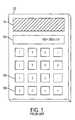
FIG. 1 shows ahandheld calculator102 with a built-insolar cell104. The solar cell orsolar panel104 is embedded on the front of the device. The calculator includes adisplay106 and an area for user input, which comprisesmultiple keys108. It should be noted that the upper area of the device used for the solar panel could have been used for other purposes, for example, for a bigger display or input area. Alternatively, the overall size of the device could have been reduced were it not for the solar panel.
SUMMARY OF THE INVENTIONThis relates to integrated touch sensor and solar panel configurations that may be used on portable devices, particularly handheld portable devices such as a media player or phone. The integrated touch sensor array and solar cell stack-ups may include electrodes that are used both for collecting solar energy and for sensing on a touch sensor array. By integrating both the touch sensors and the solar cell layers into the same stack-up, surface area on the portable device may be conserved.
The integrated touch sensor and solar panel may include electrodes that provide the same coverage as a typical solar panel electrode, but provides far more quadrants or pixels that may be used as touch sensors. The electrode terminals may be connected in parallel in order to draw power from the cell during a solar power cycle. The terminals may then be connected as separate quadrants during a touch sensor cycle. A multiplexer (MUX) may be used to selectively switch between power conversion circuitry and touch sensing circuitry during power and touch sensing cycles respectively.
In addition to being used for capacitive sensing, the integrated touch sensor and solar panel configurations may also be used for optical sensing. Unlike the capacitive sensing, the optical sensing may be accomplished simultaneously with power production. Accordingly, optical sensing may be used to increase the amount of time that the solar panel is used to produce energy.
For example, the solar panel may operate in a solar power and optical sensing mode. When an approaching object, such as a finger, is detected the solar panel may switch to a capacitive sensing mode to more precisely locate the object. Alternatively, the solar panel may cycle between solar power/optical sensing mode and capacitive sensing mode. When no object is detected by optical sensing or capacitive sensing the number of capacitive cycles in a given time interval may be decreased to maximize the amount of time the solar panel is used to produce energy. When an approaching object is detected using either optical sensing or capacitive sensing, the number of capacitive sensing cycles in a given time period may be increased to provide better accuracy and response for the capacitive sensing.
BRIEF DESCRIPTION OF THE DRAWINGSFIG. 1 shows a prior art handheld calculator with a built-in solar cell on the front.
FIG. 2 illustrates an exemplary computing system operable with a capacitive multi-touch sensor panel according to some embodiments of this invention.
FIG. 3aillustrates an exemplary capacitive multi-touch panel according to some embodiments of this invention.
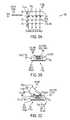
FIG. 3bis a side view of exemplary pixel in a steady-state (no-touch) condition according to some embodiments of this invention.
FIG. 3cis a side view of exemplary pixel in a dynamic (touch) condition according to some embodiments of this invention.
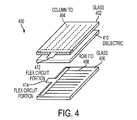
FIG. 4 is an exploded perspective view of an exemplary capacitive touch sensor panel formed from a top layer of glass upon which transparent column traces of ITO have been etched, and a bottom layer of glass upon which row traces of ITO have been etched.
FIG. 5 illustrates an exemplary capacitive touch sensor panel fabricated using a double-sided ITO (DITO) substrate having column and row ITO traces formed on either side of the substrate, and bonded between a cover and a LCD using transparent adhesive according to some embodiments of this invention.
FIG. 6 is an exploded perspective view of an exemplary DITO substrate (with its thickness greatly exaggerated for purposes of illustration only) with columns and rows formed on either side according to some embodiments of this invention.
FIG. 7 illustrates an exemplary flex circuit according to some embodiments of this invention, including flex circuit portions for connecting to the row and column traces, respectively, on either side of a DITO substrate, and a flex circuit portion for connecting to a host processor.
FIG. 8 is an exemplary block diagram illustrating various functional modules according to some embodiments this invention.
FIG. 9 is a flow chart illustrating an exemplary process for power management according to some embodiments of the invention.
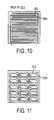
FIG. 10 illustrates an exemplary electrode pattern for a solar panel according to some embodiments of this invention.
FIG. 11 illustrates an exemplary electrode pattern for both solar energy collection and touch sensing and connected to various components of an electronic device.
FIG. 12 illustrates an exemplary integrated solar panel and touch sensor stack-up according to embodiments of this invention.
FIG. 13 illustrates an exemplary integrated solar panel and touch sensor array that includes electrodes in a self capacitance arrangement used for both solar energy collection and touch sensing according to embodiments of this invention.
FIG. 14 illustrates an exemplary block diagram illustrating a MUX switching circuitry connected to touch sensing circuitry and power circuitry.
FIG. 15 illustrates an exemplary electrode connected for self capacitance touch sensing according to embodiments of this invention.
FIG. 16 illustrates an exemplary integrated solar panel and touch sensor array that includes electrodes in a mutual capacitance arrangement used for both solar energy collection and touch sensing according to embodiments of this invention.
FIG. 17aillustrate an exemplary electrode side of an integrated solar panel and touch sensor array that includes electrodes used for both solar energy collection and touch sensing according to embodiments of this invention.
FIG. 17billustrates an exemplary collection side of an integrated solar panel and touch sensor array that includes electrodes used for both solar energy collection and touch sensing according to embodiments of this invention.
FIG. 18aillustrates an exemplary solar panel that is completely exposed to a light source according to embodiments of this invention.
FIG. 18billustrates an exemplary solar panel that is partially shaded by a user's finger according to embodiments of this invention.
FIG. 18cillustrates an exemplary solar panel that is completely shaded according to embodiments of this invention.
FIG. 19 illustrates an exemplary series mode arrangement for electrodes used for optical sensing according to embodiments of this invention.
FIG. 20aillustrates an exemplary handheld media player including an integrated touch sensor solar cell panel surface.
FIG. 20billustrates an exemplary handheld media player including an integrated touch sensor solar cell panel surface and LED indicators on a front surface of the handheld media player.
FIG. 20cillustrates an exemplary handheld media player including an integrated touch sensor solar cell panel surface and embossed icons on a front surface of the handheld media player.
FIG. 21 illustrates an exemplary handheld media player including an integrated touch sensor solar cell panel surface and an integrated touch sensor LCD display surface on a front surface of the handheld media player.
FIG. 22 illustrates an exemplary handheld media player including an integrated touch sensor solar cell panel surface and a LCD display surface on a front surface of the handheld media player.
DETAILED DESCRIPTION OF THE PREFERRED EMBODIMENTIn the following description of preferred embodiments, reference is made to the accompanying drawings which form a part hereof, and in which it is shown by way of illustration specific embodiments in which the invention may be practiced. It is to be understood that other embodiments may be utilized and structural changes may be made without departing from the scope of the preferred embodiments of the present invention.
Described are integrated touch sensor and solar panel configurations that may be used on portable devices, particularly handheld portable devices such as a media player or phone. The integrated touch sensor array and solar cell stack-ups may include electrodes that are used both for collecting solar energy and for sensing on a touch sensor array. By integrating both the touch sensors and the solar cell layers into the same stack-up, surface area on the portable device may be conserved.
Multi-touch sensor panels and their associated touch sensor panel circuitry may be able to detect multiple touches (touch events or contact points) that occur at about the same time, and identify and track their locations.FIG. 2 illustratesexemplary computing system200 operable with capacitivemulti-touch sensor panel224 according to embodiments of this invention.Multi-touch sensor panel224 can be created using a substrate with column and row traces formed on either side of the substrate using a novel fabrication process. Flex circuits can be used to connect the column and row traces on either side of the touch sensor panel to its associated touch sensor panel circuitry. Traces made of copper or other highly conductive metals running along the edge of the substrate can be used to bring the row traces to the same edge of the substrate as the column traces so that the flex circuits can be bonded to the same edge of the substrate on directly opposing sides of the substrate, minimizing the area needed for connectivity and reducing the overall size of the touch sensor panel. A single flex circuit can be fabricated to connect to the rows and columns on directly opposing sides at the same edge of the substrate. Furthermore, the row traces can be widened to shield the column traces from a modulated Vcom layer.
Computing system200 can include one ormore panel processors202 andperipherals204, andpanel subsystem206. The one ormore processors202 can include, for example, an ARM968 processor or other processors with similar functionality and capabilities. However, in other embodiments, the panel processor functionality can be implemented instead by dedicated logic such as a state machine.Peripherals204 can include, but are not limited to, random access memory (RAM) or other types of memory or storage, watchdog timers and the like.
Panel subsystem206 can include, but is not limited to, one or moreanalog channels208,channel scan logic210 anddriver logic214.Channel scan logic210 can access RAM112, autonomously read data from the analog channels and provide control for the analog channels. This control can include multiplexing columns ofmulti-touch panel224 toanalog channels208. In addition,channel scan logic210 can control thedriver logic214 and stimulation signals being selectively applied to rows ofmulti-touch panel224. In some embodiments,panel subsystem206,panel processor202 andperipherals204 can be integrated into a single application specific integrated circuit (ASIC).
Driver logic214 can provide multiple panel subsystem outputs216 and can present a proprietary interface that drives the high voltage driver, which is comprised ofdecoder220 and subsequent level shifter anddriver stage218, although level-shifting functions could be performed before decoder functions. Level shifter anddriver218 can provide level shifting from a low voltage level (e.g. CMOS levels) to a higher voltage level, providing a better signal-to-noise (S/N) ratio for noise reduction purposes.Decoder220 can decode the drive interface signals to one out of N outputs, whereas N is the maximum number of rows in the panel.Decoder220 can be used to reduce the number of drive lines needed between the high voltage driver andpanel224. Eachpanel row input222 can drive one or more rows inpanel224. In some embodiments,driver218 anddecoder220 can be integrated into a single ASIC. However, in other embodiments,driver218 anddecoder220 can be integrated intodriver logic214, and in still other embodiments,driver218 anddecoder220 can be eliminated entirely.
Computing system200 can also includehost processor228 for receiving outputs frompanel processor202 and performing actions based on the outputs that can include, but are not limited to, moving an object such as a cursor or pointer, scrolling or panning, adjusting control settings, opening a file or document, viewing a menu, making a selection, executing instructions, operating a peripheral device connected to the host device, answering a telephone call, placing a telephone call, terminating a telephone call, changing the volume or audio settings, storing information related to telephone communications such as addresses, frequently dialed numbers, received calls, missed calls, logging onto a computer or a computer network, permitting authorized individuals access to restricted areas of the computer or computer network, loading a user profile associated with a user's preferred arrangement of the computer desktop, permitting access to web content, launching a particular program, encrypting or decoding a message, and/or the like.Host processor228 can also perform additional functions that may not be related to panel processing, and can be coupled toprogram storage232 anddisplay device230 such as a liquid crystal display (LCD) for providing a UI to a user of the device.
As mentioned above,multi-touch panel224 can in some embodiments include a capacitive sensing medium having a plurality of row traces or driving lines and a plurality of column traces or sensing lines (although other sensing media may also be used) separated by a dielectric. Alternatively, the drive lines and sense lines can be formed adjacent to or near each other on the same layer on a single side of a substrate.
In some embodiments, the dielectric material that separates the column traces and sense traces can be transparent, such as glass, or can be formed from other materials such as Mylar, Polyimide, and other PCB materials. The row and column traces can be formed from a transparent conductive medium such as indium tin oxide (ITO) or antimony tin oxide (ATO), although other transparent or non-transparent materials such as copper or conductive ink can also be used. In some embodiments, the row and column traces can be perpendicular to each other, although in other embodiments other non-orthogonal and non-Cartesian orientations are possible. For example, in a polar coordinate system, the sensing lines can be concentric circles and the driving lines can be radially extending lines (or vice versa). It should be understood, therefore, that the terms “row” and “column,” “first dimension” and “second dimension,” or “first axis” and “second axis,” as may be used herein are intended to encompass not only orthogonal grids, but the intersecting traces of other geometric configurations having first and second dimensions (e.g. the concentric and radial lines of a polar-coordinate arrangement).
At the “intersections” of the traces, where the traces pass above and below each other (but do not make direct electrical contact with each other), the traces essentially form two electrodes (although more than two traces could intersect as well). Each intersection of row and column traces can represent a capacitive sensing node and can be viewed as picture element (pixel)226, which can be particularly useful whenmulti-touch panel224 is viewed as capturing an “image” of touch. (In other words, aftermulti-touch subsystem206 has determined whether a touch event has been detected at each touch sensor in the multi-touch panel, the pattern of touch sensors in the multi-touch panel at which a touch event occurred can be viewed as an “image” of touch (e.g. a pattern of fingers touching the panel).) The capacitance between row and column electrodes appears as a stray capacitance on all columns when the given row is held at DC and as a mutual capacitance Csig when the given row is stimulated with an AC signal. The presence of a finger or other object near or on the multi-touch panel can be detected by measuring changes to Csig. The columns ofmulti-touch panel224 can drive one or more analog channels208 (also referred to herein as event detection and demodulation circuits) inmulti-touch subsystem206. In some embodiments, each column is coupled to onededicated analog channel208. However, in other embodiments, the columns may be couplable via an analog switch to a fewer number ofanalog channels208.
FIG. 3aillustrates exemplary capacitivemulti-touch panel300.FIG. 3aindicates the presence of a stray capacitance Cstray at eachpixel302 located at the intersection of arow304 and acolumn306 trace (although Cstray for only one column is illustrated inFIG. 2 for purposes of simplifying the figure). Note that althoughFIG. 3aillustratesrows304 andcolumns306 as being substantially perpendicular, they need not be so aligned, as described above. In the example ofFIG. 3a,AC stimulus Vstim314 is being applied to one row, with all other rows connected to DC. The stimulus causes a charge to be injected into the column electrodes through mutual capacitance at the intersecting points. This charge is Qsig=Csig×Vstm. Each ofcolumns306 may be selectively connectable to one or more analog channels (seeanalog channels208 inFIG. 2).
FIG. 3bis a side view ofexemplary pixel302 in a steady-state (no-touch) condition. InFIG. 3b, an electric field ofelectric field lines308 of the mutual capacitance betweencolumn306 androw304 traces, or electrodes separated bydielectric310, is shown.
FIG. 3cis a side view ofexemplary pixel302 in a dynamic (touch) condition. InFIG. 3c,finger312 has been placed nearpixel302.Finger312 is a low-impedance object at signal frequencies, and has an AC capacitance Cfinger from thecolumn trace304 to the body. The body has a self-capacitance to ground Cbody of about 200 pF, where Cbody is much larger than Cfinger. Iffinger312 blocks someelectric field lines308 between the row and column electrodes (those fringing fields that exit the dielectric and pass through the air above the row electrode), those electric field lines are shunted to ground through the capacitance path inherent in the finger and the body, and as a result, the steady state signal capacitance Csig is reduced by ΔCsig. In other words, the combined body and finger capacitance act to reduce Csig by an amount ΔCsig (which can also be referred to herein as Csig_sense), and can act as a shunt or dynamic return path to ground, blocking some of the electric fields as resulting in a reduced net signal capacitance. The signal capacitance at the pixel becomes Csig−ΔCsig, where Csig represents the static (no touch) component and ΔCsig represents the dynamic (touch) component. Note that Csig−ΔCsig may always be nonzero due to the inability of a finger, palm or other object to block all electric fields, especially those electric fields that remain entirely within the dielectric material. In addition, it should be understood that as a finger is pushed harder or more completely onto the multi-touch panel, the finger can tend to flatten, blocking more and more of the electric fields, and thus ΔCsig can be variable and representative of how completely the finger is pushing down on the panel (i.e. a range from “no-touch” to “full-touch”).
Referring again toFIG. 3a, as mentioned above, Vstim signal314 can be applied to a row inmulti-touch panel300 so that a change in signal capacitance can be detected when a finger, palm or other object is present.Vstim signal314 can be generated as one or more pulse trains316 at a particular frequency, with each pulse train including a number of pulses. Although pulse trains316 are shown as square waves, other waveshapes such as sine waves can also be employed. A plurality of pulse trains316 at different frequencies can be transmitted for noise reduction purposes to detect and avoid noisy frequencies.Vstim signal314 essentially injects a charge into the row, and can be applied to one row ofmulti-touch panel300 at a time while all other rows are held at a DC level. However, in other embodiments, the multi-touch panel can be divided into two or more sections, withVstim signal314 being simultaneously applied to one row in each section and all other rows in that region section held at a DC voltage.
Each analog channel coupled to a column measures the mutual capacitance formed between that column and the row. This mutual capacitance is comprised of the signal capacitance Csig and any change Csig_sense in that signal capacitance due to the presence of a finger, palm or other body part or object. These column values provided by the analog channels may be provided in parallel while a single row is being stimulated, or may be provided in series. If all of the values representing the signal capacitances for the columns have been obtained, another row inmulti-touch panel300 can be stimulated with all others held at a DC voltage, and the column signal capacitance measurements can be repeated. Eventually, if Vstim has been applied to all rows, and the signal capacitance values for all columns in all rows have been captured (i.e. the entiremulti-touch panel300 has been “scanned”), a “snapshot” of all pixel values can be obtained for the entiremulti-touch panel300. This snapshot data can be initially saved in the multi-touch subsystem, and later transferred out for interpretation by other devices in the computing system such as the host processor. As multiple snapshots are obtained, saved and interpreted by the computing system, it is possible for multiple touches to be detected, tracked, and used to perform other functions.
As described above, because the rows may be either stimulated with an AC signal or held at a DC voltage level, and because the columns need to be connected to analog channels so that modulated output signals can be detected, demodulated and converted to output values, electrical connections must be formed with the rows and columns on either side of the dielectric of the touch sensor panel.
FIG. 4 is an exploded perspective view of an exemplary capacitivetouch sensor panel400 formed from a top layer ofglass402 upon which transparent column traces ofITO404 have been etched, and a bottom layer ofglass406 upon which row traces ofITO408 have been etched. The top and bottom glass layers402 and406 are separated by aclear polymer spacer410 that acts as a dielectric between the row and column traces. Because the rows and columns are perpendicular to each other, the most straightforward way to connect these rows and columns is tobond flex circuit412 at one edge of the touch sensor panel, and bond anotherflex circuit414 on an adjacent edge of the touch sensor panel. However, because the connection areas for theseflex circuits412 and414 are not on the same edge oftouch sensor panel400 and are not on directly opposing sides ofdielectric410, the touch sensor panel must be made larger to accommodate these two non-overlapping connection areas.
Capacitive touch sensor panels typically form the row and column traces on two pieces of glass as shown inFIG. 4 because it has not been practical to form column and row traces on either side of a single substrate. Conventional methods for forming ITO traces on one side of a substrate require that the substrate be placed on rollers during the fabrication process. However, if the substrate is then flipped over to form ITO traces on the second side, the rollers will damage any traces previously formed on the first side of the substrate. Furthermore, when etching is used to etch away part of the ITO to form traces on one side of the substrate, the entire substrate is conventionally placed in an etching bath, which will etch away any traces previously formed on the other side of the substrate.
FIG. 5 illustrates an exemplary capacitivetouch sensor panel500 fabricated using a double-sided ITO (DITO)substrate502 having column and row ITO traces504 and506, respectively, formed on either side of the substrate, and bonded betweencover508 andLCD510 usingtransparent adhesive512 according to embodiments of this invention.Substrate502 can be formed from glass, plastic, hybrid glass/plastic materials, and the like. Cover508 can be formed from glass, acrylic, sapphire, and the like. To connect to column and row traces504 and506, respectively, twoflex circuit portions514 can be bonded to directly opposing sides at the same edge ofDITO502, although other bonding locations may also be employed.
FIG. 6 is an exploded perspective view of an exemplary DITO substrate600 (with its thickness greatly exaggerated for purposes of illustration only) withcolumns602 androws608 formed on either side according to embodiments of this invention. Some of column ITO traces602 on the top side are routed to a necked-down connector area604, where they are brought off the panel by aflex circuit portion606 that can be conductively bonded to the top ofDITO substrate600. In some embodiments, row ITO traces608 on the bottom side can be connected to thin metal traces610 that run alongside the edges of the bottom side. Metal traces610 can be routed toconnector area612, which can be directly opposingconnector area604, or at least on the same edge ofDITO substrate600 asconnector area604. Providingconnector areas604 and612 at the same edge ofDITO substrate600 can allow the substrate and therefore the product to be smaller. Anotherflex circuit portion614 can be used to bring row ITO traces608 off the panel.
Column and row ITO traces602 and608 can be formed on both sides ofDITO substrate600 using several fabrication methods. In one embodiment, a substrate can be placed on the rollers of the fabrication machinery and a layer of ITO can be sputtered onto a first side ofDITO substrate600 and etched (e.g. using photolithography techniques) to form column traces602. A protective coating of photoresist (e.g. two layers of photoresist) can then be applied over the column traces602, andDITO substrate600 can be flipped over so that the rollers make contact only with the applied photoresist on the first side and not the formed column traces. Another layer of ITO can then be sputtered onto the now-exposed back side ofDITO substrate600 and etched to form row traces608.
If no metal traces610 are required, the photoresist on the first side can be stripped off to complete the process. However, if metal traces610 are required at the edges to connect to rowtraces608 and bring them to a particular edge of the substrate, a protective coating of photoresist (e.g. two layers of photoresist) can be applied over row traces608, leaving the edges exposed. A metal layer can then be sputtered over the photoresist and exposed edges, and the metal layer can then be etched to form metal traces610 at the edges. Finally, all remaining layers of photoresist can be stripped off.
Minor variations to the process described above can also be made. For example, the second side of the DITO substrate patterning may be formed by first patterning a photoresist using very simple geometry to cover only the interior region of the second side of the DITO substrate while leaving the edge regions exposed. For this variation, metal is sputtered first and then the photoresist with simple geometry is then stripped off to leave metal in the edge regions only. Then the ITO is sputtered over the entire second side of the DITO substrate. A second photoresist is applied and patterned to form the mask for the electrode patterns. A series of etching steps is then used to form the electrode pattern in the topmost ITO layer and metal layer underneath. The first etching steps etches the ITO only, and the second etch steps etches the metal layer only which produces the desired electrode geometry.
FIG. 7 illustrates anexemplary flex circuit700 according to embodiments of this invention, includingflex circuit portions706 and714 for connecting to the row and column traces, respectively, on either side of a DITO substrate, andflex circuit portion708 for connecting to a host processor.Flex circuit700 includes acircuit area702 upon which the multi-touch subsystem, multi-touch panel processor, the high voltage driver and decoder circuitry (seeFIG. 2), an EEPROM and some essential small components such as bypass capacitors can be mounted and connected to save space.Circuit area702 may be shielded by an EMI can (not shown) which enclosescircuit area702 using top and bottom shield portions. The bottom can may be adhered to a structure of the device to secure the circuit area. From thiscircuit area702,flex circuit700 may connect to the top of the DITO substrate viaflex circuit portion706, to the bottom of the DITO substrate viaflex circuit portion714, and to a host processor viaflex circuit portion708.
The present invention generally relates to various methods and systems for producing an integrated solar cells and touch sensor stack-up. The integrated solar cell and touch sensor stack-up may be utilized in portable devices such as PDAs, phones and media players. According to embodiments of the invention, the devices have rechargeable batteries. The integrated solar cell and touch sensor stack-up embedded into the device may then provide electrical power to charge the batteries. The power generated from the solar cell can also directly power the operations of the device. This is illustrated inFIG. 8.
FIG. 8 depicts a block diagram illustrating various functional modules according to an embodiment of the present invention. It includes one or moresolar cells802, one or morerechargeable batteries804 and a mainoperational module806 of the device. In this example, the device's main function is assumed to be that of playing digital media such as music or video. The switch orgateway808 is a schematic representation of a (virtual) unit responsible for the “traffic control” of the electricity flow in the device. This unit may or may not be a concrete unit including circuit elements. In some embodiments, thiscircuitry808 may contain a boost converter to change the voltage coming from thesolar cells802 to a value suitable for thebatteries804 or themain unit806. The arrows in the figure represent the possible flow of electricity. The electric power generated from thesolar cells802 can be used either to charge therechargeable batteries804 or to directly power themain module806, or both. The main module can also be powered directly by thebatteries804 as indicated by the arrows. The rechargeable batteries can be charged by thesolar cells802 as well as external power sources (not shown in the figure).
FIG. 9 illustrates the flow of electricity in a device powered by solar cells according to an embodiment of the present invention. As with the “traffic control”unit808 ofFIG. 8, this flow chart may not represent any concrete process that needs to be implemented with extra circuitry. This chart may be viewed as an illustration of the internal process of the power flow in an exemplary device such as those depicted inFIG. 8. In some embodiments, however, this process may be implemented with explicit functional units, possibly with configurable options and/or with associated user interfaces. The exemplary process ofFIG. 9 starts when the solar cells are exposed to bright light and the solar cells generate electricity as indicated in ablock902. When the device is being used, the instantaneous electric power generated from the solar cells may be used to directly power the device, atblocks904 and906. If not, following the No branch fromblock904, the generated energy may be used to charge the batteries, at910. Any leftover electricity after powering the device,906, may also be used to charge the batteries. If the batteries are currently fully charged, the electric power generated from the solar cell will not be used, and the process returns to the beginning following the Yes branch atblock908. Otherwise, the generated solar energy is used to charge the batteries at910. In cases where this process is implemented with additional functional units, the decision blocks such as904 and908 may be overridden by system settings and/or by user-provided options.
FIG. 10 illustrates a typical electrode configuration for a solar panel. Theelectrodes1002 and1004 are in a rectilinear pattern. Theelectrodes1002 and1004 are typically arranged on one side (which will be referred to as the electrode side) of the solar panel. The side opposite the electrode side is typically the solar energy collection medium, which is typically doped silicon or a solar polymer (this will be referred to as the collection side of the solar panel). Although this electrode pattern may be useful for collecting solar energy, it may not be ideal as a touch sensor pattern since there are one two separate connected metal areas that may form a single quadrant or touch pixel.
FIG. 11 illustrates an electrodepattern including electrodes1102 and1104 that may be used for an integrated solar panel and touch array according to embodiments of this invention. This configuration provides the same electrode coverage as the electrode pattern shown inFIG. 10, but provides far more quadrants or pixels that may be used as touch sensors. In this configuration the electrode terminals may be connected in parallel in order to draw power from the cell during a solar power cycle. The terminals may then be connected as separate quadrants during a touch sensor cycle. This configuration may provide far more touch sensing resolution than the electrode configuration inFIG. 10.
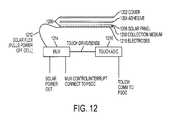
FIG. 12 illustrates an integrated solar panel and touch sensor stack-up according to embodiments of this invention. InFIG. 12, the stack-up1200 includes a solar1206 that includes acollection side1208 and anelectrode side1210. The collection side may include any typical solar collection medium including, for example, silicon and polymer mediums. Theelectrodes1210 may be on the rear side of thesolar panel1206. Thesolar panel1206 may be adhered to acover glass1202 using a transparent adhesive1204. Power from the solar panel and touch sensing signals may be drawn fromelectrodes1210 using asingle flex1212.
Theflex1212 connects theelectrodes1210 to multiplexer (MUX)1214. TheMUX1214 may include circuitry that selectively switches between power conversion circuitry and touch sensing circuitry during power and touch sensing cycles respectively. TheMUX1214 may take touch sensing signals provided byelectrodes1210 during touch sensing cycles and provides these signals to touchsensor circuitry1216. Similarly, theMUX1214 may take power fromsolar panel1206 and supplies it to a power management unit during solar power cycles.
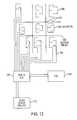
FIG. 13 illustrates an integrated solar panel andtouch sensor array1300 that includeselectrodes1302 in a self capacitance arrangement used for both solar energy collection and touch sensing according to embodiments of this invention.Isolation trench1306 divides the electrodes into separate solar cells and touch pixels.
Theelectrodes1302 may be routed toMUX1308 usingtraces1306. The traces may be1306 may be routed around the electrode array. In addition, or alternatively, vias may be used to route the traces down to another routing layer to for routing the electrodes to the multiplexer/switch1310. TheMUX1308 takes touch sensing signals provided byelectrodes1302 during touch sensing cycles and provides these signals to touchsensor circuitry1312. Similarly, theMUX1308 takes power fromsolar panel1300 and supplies it to power management unit (PMU)1310 during solar power cycles. ThePMU1310 may utilize the power to power the device and/or recharge the devices power supply.
FIG. 14 illustrates a block diagram illustrating theMUX switching circuitry1406 connected to touchsensing circuitry1408 andpower circuitry1410. InFIG. 14 theMUX1406 is connected toelectrode1404 ofsolar panel1402. The MUX sends touch sensing signals to touchsensing circuitry1408 during touch sensing cycles and sends power toPMU1410 during power cycles. The MUX circuitry may share components with thetouch sensing circuitry1408 and/or thePMU1410. For example, Some of the power fets of the PMU circuitry may be used as part of theMUX switching circuitry1406.
FIG. 15 illustrates a detailed view of oneelectrode1502, connected for self capacitance touch sensing according to embodiments of this invention. Some of the selftouch sensing transistors1504 used for self capacitance testing may also be part of the switching (MUX) circuitry.
FIG. 16 illustrates an integrated solar panel andtouch sensor array1600 that includeselectrodes1602 and1604 in a mutual capacitance arrangement used for both solar energy collection and touch sensing according to embodiments of this invention. The electrode pattern may be formed on a single layer withelectrodes1602 operating as drive lines andelectrodes1604 operating as sense lines or vice versa.Traces1606 may be routed around the electrode array on the same layer and/or thetraces1606 may be routed on a separate layer.
FIGS. 17aand17billustrate an integrated solar panel andtouch sensor array1700 that includeselectrodes1702 used for both solar energy collection and touch sensing according to embodiments of this invention.FIG. 17aillustrates the electrode side of the solar panel andFIG. 17billustrates the collection side of the solar panel. The electrodes in this embodiment are circumferentially arranged around a circular surface in a scroll wheel configuration.Isolation trench1704 divides the electrodes into separate solar cells and touch pixels. Traces for theelectrodes1702 may be routed around the electrode array and/or routed on a layer separate from the electrodes.FIG. 17billustrates that the collection side of the solar panel that includes both aP type region1706 and anN type region1708.
In addition to being used for capacitive sensing, the integrated touch sensor and solar panel configurations may also be used for optical sensing. Unlike the capacitive sensing, the optical sensing may be accomplished simultaneously with power production. Accordingly, optical sensing may be used to increase the amount of time that the solar panel is used to produce energy.
For example, the solar panel may operate in a solar power and optical sensing mode. When an approaching object, such as a finger, is detected the solar panel may switch to a capacitive sensing mode to more precisely locate the object. Alternatively, the solar panel may cycle between solar power/optical sensing mode and capacitive sensing mode. When no object is detected by optical sensing or capacitive sensing the number of capacitive cycles in a given time interval may be decreased to maximize the amount of time the solar panel is used to produce energy. When an approaching object is detected using either optical sensing or capacitive sensing, the number of capacitive sensing cycles in a given time period may be increased to provide better accuracy and response for the capacitive sensing.
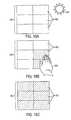
FIGS. 18a-18cillustrate optical sensing and power production using a solar panel according to embodiments of this invention.Touch panel1800 includes sixelectrode quadrants1802. InFIG. 18athe solar panel is completely exposed to alight source1804 and all sixelectrode quadrants1802 are producing electricity more or less equally. In this configuration that MUX can be in a power mode that maximizes the amount of time spent in solar power/optical sensing cycles in a given time period.
InFIG. 18banincoming object1806, such as a user finger, blocks one ormore electrodes1802 ofsolar panel1806. An algorithm may then be used to switch the device to a touch sensing mode that increases the number of touch sensing cycles in a given period.
InFIG. 18call of theelectrode quadrants1802 are shaded. This could occur when the user changes lighting conditions. The algorithm can be programmed to determine whether the change in conditions is an incoming object or just a change in lighting conditions. This determination can, for example, be based on the number of electrodes that are affected and the duration of the change in conditions.
Optical sensing may be performed in a “parallel mode” or a “series mode.” In parallel mode, the electrodes may function collectively to determine optical events. Thus, if any one of the electrodes does not provide voltage or current, the collective output of the solar cell drops, thus potentially indicating an optical sense event such as an incoming object. In series mode, it is possible to determine which electrode is not receiving as much light as the other electrodes.FIG. 19 illustrates a series mode arrangement for electrodes used for optical sensing according to embodiments of this invention.
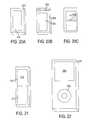
FIG. 20aillustrates an exemplary handheld media player including an integrated touch sensor solarcell panel surface2004 that substantially fills thefront surface2002 of the housing ofmedia player2000. The handheld media player inFIG. 20bincludes asmall LED panel2006, which indicates the mode of the media player. The handheld media player inFIG. 20cincludesicons2008 on the cover glass of integrated touch sensor solarcell panel surface2004.Icons2008 indicate where on the surface a user may press to control the media player.Icons2008, may for example be embossed, etched, or glued onto the surface of thesolar cell2004.
FIG. 21 illustrates an exemplary handheld media player that includes an integrated touch sensor solarcell panel surface2102 and an integrated touch sensorLCD display surface2104 on afront surface2100 of the media player.FIG. 22 illustrates an exemplary handheld media player that includes an integrated touch sensor solarcell panel surface2202 and aLCD display surface2204 on afront surface2200 of the media player.
Although the present invention has been fully described in connection with embodiments thereof with reference to the accompanying drawings, it is to be noted that various changes and modifications will become apparent to those skilled in the art. Such changes and modifications are to be understood as being included within the scope of the present invention as defined by the appended claims.