US8342169B2 - Reciprocating solar engine with solar reflectors - Google Patents
Reciprocating solar engine with solar reflectorsDownload PDFInfo
- Publication number
- US8342169B2 US8342169B2US12/383,353US38335309AUS8342169B2US 8342169 B2US8342169 B2US 8342169B2US 38335309 AUS38335309 AUS 38335309AUS 8342169 B2US8342169 B2US 8342169B2
- Authority
- US
- United States
- Prior art keywords
- solar
- solar heat
- closed container
- platform
- receiving closed
- Prior art date
- Legal status (The legal status is an assumption and is not a legal conclusion. Google has not performed a legal analysis and makes no representation as to the accuracy of the status listed.)
- Expired - Fee Related, expires
Links
- 239000012530fluidSubstances0.000claimsabstractdescription54
- 239000011521glassSubstances0.000claimsdescription7
- 239000002184metalSubstances0.000claimsdescription5
- 229920003023plasticPolymers0.000claimsdescription5
- 239000004033plasticSubstances0.000claimsdescription5
- 230000033001locomotionEffects0.000abstractdescription7
- 239000007788liquidSubstances0.000description13
- XLYOFNOQVPJJNP-UHFFFAOYSA-NwaterSubstancesOXLYOFNOQVPJJNP-UHFFFAOYSA-N0.000description12
- 230000005611electricityEffects0.000description7
- 239000007789gasSubstances0.000description7
- 239000000463materialSubstances0.000description7
- 238000009835boilingMethods0.000description6
- 238000010586diagramMethods0.000description6
- 238000000034methodMethods0.000description6
- 230000008569processEffects0.000description6
- 230000007246mechanismEffects0.000description5
- 239000012141concentrateSubstances0.000description3
- 238000009416shutteringMethods0.000description3
- 238000004519manufacturing processMethods0.000description2
- 230000005855radiationEffects0.000description2
- 238000009834vaporizationMethods0.000description2
- 230000008016vaporizationEffects0.000description2
- OKTJSMMVPCPJKN-UHFFFAOYSA-NCarbonChemical group[C]OKTJSMMVPCPJKN-UHFFFAOYSA-N0.000description1
- 238000010521absorption reactionMethods0.000description1
- 230000004308accommodationEffects0.000description1
- 230000004913activationEffects0.000description1
- 150000001298alcoholsChemical class0.000description1
- 230000000903blocking effectEffects0.000description1
- 230000008859changeEffects0.000description1
- 230000006835compressionEffects0.000description1
- 238000007906compressionMethods0.000description1
- 238000001816coolingMethods0.000description1
- 239000003651drinking waterSubstances0.000description1
- 235000020188drinking waterNutrition0.000description1
- 238000009313farmingMethods0.000description1
- ZZUFCTLCJUWOSV-UHFFFAOYSA-NfurosemideChemical compoundC1=C(Cl)C(S(=O)(=O)N)=CC(C(O)=O)=C1NCC1=CC=CO1ZZUFCTLCJUWOSV-UHFFFAOYSA-N0.000description1
- 238000010438heat treatmentMethods0.000description1
- 239000003621irrigation waterSubstances0.000description1
- 238000012986modificationMethods0.000description1
- 230000004048modificationEffects0.000description1
- 230000001105regulatory effectEffects0.000description1
- 230000000630rising effectEffects0.000description1
- 239000000725suspensionSubstances0.000description1
Images



Classifications
- F—MECHANICAL ENGINEERING; LIGHTING; HEATING; WEAPONS; BLASTING
- F24—HEATING; RANGES; VENTILATING
- F24S—SOLAR HEAT COLLECTORS; SOLAR HEAT SYSTEMS
- F24S23/00—Arrangements for concentrating solar-rays for solar heat collectors
- F24S23/70—Arrangements for concentrating solar-rays for solar heat collectors with reflectors
- F—MECHANICAL ENGINEERING; LIGHTING; HEATING; WEAPONS; BLASTING
- F24—HEATING; RANGES; VENTILATING
- F24S—SOLAR HEAT COLLECTORS; SOLAR HEAT SYSTEMS
- F24S10/00—Solar heat collectors using working fluids
- F24S10/90—Solar heat collectors using working fluids using internal thermosiphonic circulation
- F24S10/95—Solar heat collectors using working fluids using internal thermosiphonic circulation having evaporator sections and condenser sections, e.g. heat pipes
- F—MECHANICAL ENGINEERING; LIGHTING; HEATING; WEAPONS; BLASTING
- F24—HEATING; RANGES; VENTILATING
- F24S—SOLAR HEAT COLLECTORS; SOLAR HEAT SYSTEMS
- F24S90/00—Solar heat systems not otherwise provided for
- Y—GENERAL TAGGING OF NEW TECHNOLOGICAL DEVELOPMENTS; GENERAL TAGGING OF CROSS-SECTIONAL TECHNOLOGIES SPANNING OVER SEVERAL SECTIONS OF THE IPC; TECHNICAL SUBJECTS COVERED BY FORMER USPC CROSS-REFERENCE ART COLLECTIONS [XRACs] AND DIGESTS
- Y02—TECHNOLOGIES OR APPLICATIONS FOR MITIGATION OR ADAPTATION AGAINST CLIMATE CHANGE
- Y02B—CLIMATE CHANGE MITIGATION TECHNOLOGIES RELATED TO BUILDINGS, e.g. HOUSING, HOUSE APPLIANCES OR RELATED END-USER APPLICATIONS
- Y02B10/00—Integration of renewable energy sources in buildings
- Y02B10/20—Solar thermal
- Y—GENERAL TAGGING OF NEW TECHNOLOGICAL DEVELOPMENTS; GENERAL TAGGING OF CROSS-SECTIONAL TECHNOLOGIES SPANNING OVER SEVERAL SECTIONS OF THE IPC; TECHNICAL SUBJECTS COVERED BY FORMER USPC CROSS-REFERENCE ART COLLECTIONS [XRACs] AND DIGESTS
- Y02—TECHNOLOGIES OR APPLICATIONS FOR MITIGATION OR ADAPTATION AGAINST CLIMATE CHANGE
- Y02B—CLIMATE CHANGE MITIGATION TECHNOLOGIES RELATED TO BUILDINGS, e.g. HOUSING, HOUSE APPLIANCES OR RELATED END-USER APPLICATIONS
- Y02B10/00—Integration of renewable energy sources in buildings
- Y02B10/30—Wind power
- Y—GENERAL TAGGING OF NEW TECHNOLOGICAL DEVELOPMENTS; GENERAL TAGGING OF CROSS-SECTIONAL TECHNOLOGIES SPANNING OVER SEVERAL SECTIONS OF THE IPC; TECHNICAL SUBJECTS COVERED BY FORMER USPC CROSS-REFERENCE ART COLLECTIONS [XRACs] AND DIGESTS
- Y02—TECHNOLOGIES OR APPLICATIONS FOR MITIGATION OR ADAPTATION AGAINST CLIMATE CHANGE
- Y02E—REDUCTION OF GREENHOUSE GAS [GHG] EMISSIONS, RELATED TO ENERGY GENERATION, TRANSMISSION OR DISTRIBUTION
- Y02E10/00—Energy generation through renewable energy sources
- Y02E10/40—Solar thermal energy, e.g. solar towers
- Y—GENERAL TAGGING OF NEW TECHNOLOGICAL DEVELOPMENTS; GENERAL TAGGING OF CROSS-SECTIONAL TECHNOLOGIES SPANNING OVER SEVERAL SECTIONS OF THE IPC; TECHNICAL SUBJECTS COVERED BY FORMER USPC CROSS-REFERENCE ART COLLECTIONS [XRACs] AND DIGESTS
- Y02—TECHNOLOGIES OR APPLICATIONS FOR MITIGATION OR ADAPTATION AGAINST CLIMATE CHANGE
- Y02E—REDUCTION OF GREENHOUSE GAS [GHG] EMISSIONS, RELATED TO ENERGY GENERATION, TRANSMISSION OR DISTRIBUTION
- Y02E10/00—Energy generation through renewable energy sources
- Y02E10/40—Solar thermal energy, e.g. solar towers
- Y02E10/44—Heat exchange systems
Definitions
- the inventionrelates generally to a reciprocating solar engine that is based on material transfer back and forth across a fulcrum utilizing solar energy to cause the material transfer.
- the present invention reciprocating solar enginemay be used as a driving force for any purpose, e.g. turning a turbine to generate electricity, operating a pump to move liquid such as water, operating reciprocating pistons, or turning a production wheel.
- U.S. Pat. No. 4,476,854 to Stephen C. Baerdescribes an apparatus for tracking the sun which reorients itself immediately in the absence of sunlight.
- Large and small cannistersare provided at the respective ends of a pivotable frame. When the sun is not normal to the plane containing the cannister, the near cannister is shaded from direct sunlight and the far cannister is exposed.
- a conduitis provided between the cannisters, and a quantity of volatile fluid is located in the cannisters and conduit. The liquid volume of the volatile fluid is greater than that of the small cannister plus the conduit, but less than the volume of the large cannister.
- a gas spring fluidis located in the large cannister, which has a vapor pressure sufficient to force the volatile fluid into the small cannister in the absence of sunlight on the east cannister.
- U.S. Pat. No. 4,275,712 to Stephen C. Baerdescribes a device for rotating a collector of solar energy in such a way as to keep it constantly oriented during the day in the best direction for interception of radiation and for returning it to a position from which it will begin collecting radiation again in the morning.
- a previously disclosed device for automatic return to morning positionrelies upon changing the rate of heat loss from the surfaces of the interconnected canisters which power it
- the present inventionremoves the heat-collecting surfaces whose differential heating by the west-moving sun controls the tilting of the collector from the canisters themselves to plates located below and on sides opposite the canisters served so as to give these surfaces a larger view of the sky and enable them to find the sun from almost any position.
- U.S. Pat. No. 4,194,492 to Gerald J. Tremblaydescribes a solar fluid heater that has a frame and a solar collector for collecting and concentrating solar energy movably mounted on the frame.
- An inclination adjustment systemis attached for rotating the solar collector for different inclinations of the earth relative to the sun, and a solar tracking system moves the solar collector in a different direction on the frame during daylight hours responsive to the flow of liquid from a reservoir mounted thereon to track the sun during daylight hours.
- U.S. Pat. No. 4,175,391 to Stephen Baerdescribes an apparatus for causing a solar energy collector to constantly follow the sun by using solar radiant energy to differentially heat fluid-containing reservoirs to cause differential vaporization and shifting of fluid to rotate the apparatus.
- Automatic morning orientationis included by providing the easterly reservoir with a faster rate of cooling than the westerly one thereby causing shift of fluid from westerly to easterly after sunset resulting in inclination toward the east by sunrise.
- U.S. Pat. No. 4,132,223 to E. Garland Reddelldescribes a pivotally mounted solar energy collector is maintained oriented towards the sun by creating a continuing imbalance of the collector about its pivotal axis resulting in pivotal movement of the collector to track the sun.
- the imbalanceis achieved by regulating the flow of a pumped fluid from a container located at one side of the collector to a container located at another side of the collector. Pump, timing and energizing means are included to control the flow rate of the fluid.
- U.S. Pat. No. 4,079,249 to Kenneth P. Glynndescribes a motor apparatus described for orientating solar responsive devices.
- the motor apparatusis solar energy operated and comprises a plurality of containers connected in closed systems having fluid therein, support means for the containers including rotatable parts, and a solar window-containing component which permits solar energy to strike surfaces of the containers so as to change the distribution of fluid in the systems to cause the rotatable parts, and thus an attached solar responsive device, to rotate, e.g., in an arc so as to follow the sun.
- the present inventionis a reciprocating solar engine, which includes a) a seesawing platform having a central fulcrum support upon which the platform is movably positioned to reciprocally rotate through a predetermined arc, the predetermined arc having a bottom, the bottom being the arc base; b) a first solar heat-receiving closed container located on the platform on a first side of the central fulcrum support and a second solar heat-receiving closed container located on the platform on a second side of the central fulcrum support and opposite the first side; c) at least one solar reflector located adjacent said first solar heat-receiving closed container and positioned so as to reflect solar energy from said reflector to said first solar heat-receiving closed container and at least one solar reflector located adjacent said second solar heat-receiving closed container and positioned so as to reflect solar energy from said reflection to said second solar heat-receiving closed container; d) a connecting tube connected to the first solar heat-receiving closed container and to the
- the central fulcrum supportis positioned centrally between the containers and does not have to be on center. Further, the fulcrum support could be below, next to or above the platform or combinations thereof, such as an underside hinged or cradled arrangement, an axle with side supports running below, through or above the platform, a suspension system above the platform, etc.
- the term “shutter means”should be taken broadly as any device that can open and close an area to significant sunlight. The term should not be limited literally to shutters, as it is intended to include any device that will shutter sunlight In some preferred embodiments of the present invention reciprocal solar engine, the shutter means in selected from the group consisting of a single sliding door, doors, shutters, screens and shades.
- a critical featureis that they be functionally connected so that at least part of the time, one is open when the other is closed and vice versa, to present alternating sun and shade to the containers.
- a housinghaving side walls and a roof, the attached to the platform so as to move therewith, the roof being located at least above the platform, the roof having at least two windows, at least one window of which is located above the first solar heat-receiving closed container and at least one window of which is located above the second solar heat-receiving closed container.
- the roofis a rectangular shaped roof from a top view. Any other shape could be employed, but for most practical applications, the shape of an open wall or housing similar to a home, shed, or building may be aesthetically and functionally easier to design and to view.
- One of the advantages of the present invention over roof mounted solar panels or very tall wind turbines,is that they can be placed in a yard or field or lot and externally appear as a normal structure or be surrounded by trees or other attractive cover. Unlike wind turbines, the objectional height and noise issues are eliminated and unlike roof-mounted solar panels, roof support and appearance issues are eliminated.
- the shutter controls meansin selected from the group consisting of motor drive control means, mechanical control means, hydraulic control means and pneumatic control means.
- the first solar heat-receiving closed container and the second solar heat-receiving closed containerare at least partially transparent containers.
- the at least partially transparent containershave transparent tops and solar heat-absorbing bottoms.
- the first solar heat-receiving closed container and the second solar heat-receiving closed containerare selected from the group consisting of glass, metal, plastic, and combinations thereof.
- the reciprocal solar engineincludes a connecting member for transfer of motive power, connected to at least one of the platform and a container.
- the connecting memberis a shaft connected to the platform proximate its center and on its axis of rotation to function as an arcuate reciprocating drive shaft.
- the at least two windowscontain solar energy concentrating magnifying lenses.
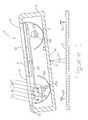
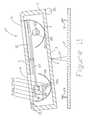
- FIG. 1is a side cut view of a preferred embodiment of a present invention reciprocating solar engine
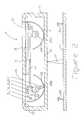
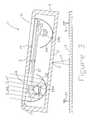
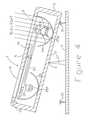
- FIGS. 2 through 6show side cut views of the preferred embodiment of a present invention reciprocating solar engine shown in FIG. 1 , in different positions of a reciprocal cycle;
- FIG. 7is a side cut view of another preferred embodiment of a present invention reciprocating solar engine with a roof with open supports instead of closed walls;
- FIG. 8is a side cut view of another preferred embodiment of a present invention reciprocating solar engine with a magnifying lens in each window to function as a solar energy concentrator;
- FIG. 9is a side cut view of another preferred embodiment of a present invention reciprocating solar engine with sets of shutters or blinds to function as the window shutter means;
- FIG. 10is a side cut view of another preferred embodiment of a present invention reciprocating solar engine with the device as shown in FIG. 1 but with a gear driving shaft take-off connected to the reciprocating platform at its axis of rotation;
- FIG. 11is a side cut view of another preferred embodiment of a present invention reciprocating solar engine with the device as shown in FIG. 1 but with a reciprocating connector rod to the reciprocating platform away from its axis of rotation;
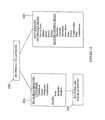
- FIG. 12is a block diagram illustrating various alternatives and options for some preferred embodiments of a present invention reciprocating solar engine
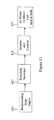
- FIG. 13is a block diagram illustrating one use for some preferred embodiments of a present invention reciprocating solar engine.
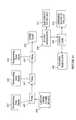
- FIG. 14is a block diagram illustrating another use for some preferred embodiments of a present invention reciprocating solar engine.
- the present invention reciprocating solar engineis based on material transfer back and forth across a fulcrum utilizing solar energy to cause the material transfer.
- the material transferoccurs when solar energy heats a liquid in a container to cause some vaporization of the liquid, the vaporized liquid (gas) then condenses to liquid in a container on the opposite side of the fulcrum, and the weight shift causes mass to rotate about the fulcrum.
- the present invention reciprocating solar enginemay be used as a driving force for any purpose, e.g. turning a turbine to generate electricity, operating a pump to move liquid such as water, operating reciprocating pistons, or turning a production wheel.
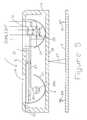
- FIG. 1is a side cut view of a preferred embodiment of a present invention reciprocating solar engine 1 .
- Solar engine 1includes a base 7 , with a central fulcrum support 17 thereon.
- the support 17is represented as a triangular support, but could be any form of fulcrum support means.
- a platform 19is located atop central fulcrum support 17 so that platform 19 is rotatable on the central fulcrum support 17 about its axis of rotation shown as x in FIG. 1 .
- the size and position of the windowsare considered in conjunction with the solar heat-receiving closed containers and the reflectors.
- Door 15is on sliders or tracks (not shown) and has a first rest position where window 9 is open and window 11 is closed, and a second rest position where window 9 is closed and window 11 is open.
- Housing 3is directly or indirectly attached to platform 19 so as to move with it.
- solar heat-receiving closed containersPositioned evenly on platform 19 are two solar heat-receiving closed containers. To the left of the central fulcrum support 17 , on platform 19 , is solar heat-receiving closed container 21 and to the right of the central fulcrum support 17 , on platform 19 , is solar heat-receiving closed container 23 . These containers 21 and 23 may be spherical, cylindrical, rectilinear or otherwise shaped. Reflectors 22 and 24 are positioned adjacent containers 21 and 23 , respectively so as to concentrate sunlight from the reflectors onto the containers.
- These reflectorsmay be angled flats, curved, combinations of curved or flat, parabolic (linear parabolas), parabolaloids (rotated parabolas, especially for spherical containers), or any combinations of these.
- the reflectorsare designed, shaped and positioned to be provided additional solar heat to the containers. This may enable the system to function with more liquids, to operate faster or more efficiently, to utilize lower boiling point liquids, to generate more energy out of the device for a given time period, or any combinations of these.
- Preferredwould be linear parabolas with horizontal linear cylinders positioned at the focal line of the linear parabolas.
- the reflectorfurther may be polished or other reflective metal, plastic or glass mirrors or combinations thereof
- the predetermined arcis defined by any one or more of a number of variables that my be included or are inherent in any given device.
- the predetermined arcis limited sometimes by the space considerations or, more specifically, by a shed or house, such as a glass roof house or greenhouse (not shown) within which the solar engine 1 may be maintained, by the height of the central fulcrum support 17 and by the length of the platform 19 .
- brakes, stops, gears, shutter controls or other featuresmay represent a bottom or top of the predetermined arc.
- a fluidthat is capable of being at least partially vaporized to gas by solar heat and will otherwise rest in equilibrium in the container(s), possibly with some of the fluid in the gaseous state before solar heat is applied.
- the connecting tubeis open from the left to the right containers and vice versa for transport of the vaporized fluid from the warmer container (solar heated) to the cooler container, due to gases expanding and rising. Once in the cooler container (solar shaded), the gases will at least partially condense, shifting the fluid and hence the weight of the fluid from the warmer to the cooler container.
- the shutter meanscloses a first window and opens a second window, it shuts off most of the solar heat at the first window and allows solar heat to enter through the second window.
- window 9is open and window 11 is closed by virtue of the positioning of door 15 , as shown in the Figure.
- Sunlightenters window 9 and not window 11 .
- As sunlight enters window 9it is concentrated toward container 21 by reflector 22 , as shown, and heats up container 21 .
- Fluid 25 astarts to boil over through tube 27 to container 23 where it at least partially condenses.
- the weight shiftwill cause the right side of platform 19 to go down and the left side to go up. This is rotation of the platform about its axis of rotation x.
- FIGS. 2 through 6where identical elements are identically numbered.
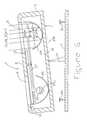
- FIGS. 2 through 6show side cut views of the preferred embodiment present invention reciprocating solar engine 1 shown in FIG. 1 , but in different positions of a reciprocal cycle.
- sunlight through window 9continues to evaporate the fluid of container 21 over to the cooler container 23 , with immediate or eventual the rotation as shown, so that when container 21 and container 23 have equal weights of fluid 25 b and 25 c therein, they are approximately in balance.
- the platform 19 and the containerscontinue to rotate as more liquid is boiled over, and this is shown in FIG. 3 , where now there is little fluid 25 d in container 21 and most of the liquid has boiled over to container 23 (fluid 25 e ), as shown.
- the processcontinues until the right side of platform 19 hits shutter control means lever 31 .
- the shutter control meansis activated and door 15 is moved to the right to its second rest position as shown in FIG. 4 .
- the processimmediately reverses itself and the sunlight is closed from window 25 and now enters window 11 where it heats up container 23 .
- the fluid 25 gheats and partially boils over through tube 27 back into container 21 , as condensed fluid 25 f .
- the processcontinues as more solar energy (sunlight) heats container 23 and its contents, fluid 25 i , wherein fluids 25 h and 25 i are about equal.
- most of the fluid 25 jhas boiled over to shuttered (shaded) container 21 , with little fluid 25 k remaining in container 23 .
- the fluids utilizedmay be any organic or inorganic fluids, including water. However, organic fluids, and especially low boiling point fluids, such as low carbon chain organic fluids and low boiling point alcohols, are preferred. Any fluids discussed in the present inventor's issued U.S. Pat. No. 4,079,249, incorporated herein by reference, may be used, as well as any within the skill of the artisan, such as are used in published liquid-based solar tracking devices. U.S. Pat. No. 4,079,249, issued to Kenneth P. Glynn on Mar. 14, 1978 and entitled “Solar Energy Operated Motor Apparatus” is incorporated herein in its entirety.
- the solar heat-receiving closed containers used hereinare open to the connecting means to the opposite containers, but are otherwise closed to the atmosphere to prevent evaporative losses of the fluids therein.
- the containersmay be made of one or a combination of materials and may be transparent, translucent or opaque.
- metal containersmay absorb solar heat well and transfer the heat to the fluids without any transparency whatsoever. Clear or translucent materials such as plastics or glass, may alternatively be used and these will allow sunlight to directly heat the fluids.
- Mirrors or other reflectorsmay be used inside or outside the roof or housing to increase the light hitting the containers.
- transparent or translucent containersmay have black bases to enhance heat absorption.
- Magnifying glassesmay be strategically positioned to increase the amount of solar heat contacting the containers.
- FIG. 7is a side cut view of another preferred embodiment of a present invention reciprocating solar engine 100 with a roof 105 with open supports, such as support posts 103 and 113 , attached to platform 119 , in place of closed walls.
- Thisenables air to freely flow about the containers. In some environments this is preferred to air cool the shaded containers, while in other environments, such as in extreme wind, the closed housing is preferred to reduce heat losses at the heated container.
- Yet another alternativeis a housing with ventilating openings, or vents that can be opened or closed, as needed.
- windows 109 and 111 in roof 105with a central large window shuttering door 115 .
- Platform 107has a central fulcrum support 117 and the aforementioned platform 119 rotatably mounted on or connected to central fulcrum support 117 .
- Platform 119has two opposing solar heat-receiving closed containers 121 and 123 , solar heat concentrator reflectors 122 and 124 positioned strategically as shown for each of the two containers 121 and 123 , respectively.
- Containers 121 and 123are connected by connecting tube 127 . As shown, there is significant fluid 125 in container 121 .
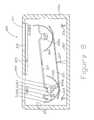
- FIG. 8is a side cut view of another preferred embodiment of a present invention reciprocating solar engine 200 with a magnifying lenses 209 and 211 in each of the respective windows of roof 205 , to function as solar energy concentrators.
- Housing 203has a roof 205 , side walls, such as side wall 213 and is positioned on platform 219 .
- Roof 205has a central large window shuttering door 215 , that keeps one window open and the other closed and versa.
- present invention reciprocating solar engine 200also includes a base 207 , a central fulcrum support 217 to rotatably support platform 219 .
- Platform 219has two opposing solar heat-receiving closed containers 221 and 223 , connected by connecting tube 227 .
- Reflector 222surrounds containers 221 and reflector 224 surrounds container 223 to concentrate heat, as shown.
- the lenseswill provide more concentrated solar energy, as shown in the Figure, and, in some embodiments, allow for higher boiling point fluids in the container than might be uses without the concentrator lenses. Except for the concentration of solar heat caused by the lenses 209 and 211 , to either provide higher temperatures, faster boiling or both, this engine 200 operates the same as the one shown in FIGS. 1 through 6 above.
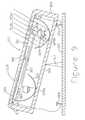
- FIG. 9is a side cut view of another preferred embodiment of a present invention reciprocating solar engine 300 with sets of shutters or blinds 315 and 335 , respectively, for windows 309 and 311 of roof 305 , to function as the window shutter means.
- One setis open when the other is closed and vice versa. They respond to the contact of the reciprocating platform 319 to shutter control means levers 329 and 331 via wires and responsive electric drive motors M 1 and M 2 .
- the details of motor driven blinds or shuttersare not shown, as such are commercially available and well known, although not in the context of the present invention reciprocating solar engine windows.
- present invention reciprocating solar engine 300includes housing 303 , with roof 305 side walls such as side wall 313 . There is also a base 307 , a central fulcrum support 317 and a platform 319 .
- Platform 319has two opposing solar heat-receiving closed containers 321 and 323 , connected by connecting tube 327 .
- Reflectors 322 and 324are adjacent containers 321 and 323 , respectively to concentrate solar heat on the containers. As shown, there is significant fluid 225 b in container 323 and a small amount of fluid 225 a in container 321 .
- FIG. 10is a side cut view of another preferred embodiment of a present invention reciprocating solar engine 400 with the device as shown in FIG. 1 but with a gear driving shaft take-off connected to the reciprocating platform 419 at its axis of rotation.
- Housing 411has a roof 401 , side walls, such as side wall 413 , and is attached to the platform 419 .
- Roof 401has windows 403 and 405 , and a central large window shuttering door 215 , that keeps one window open and the other closed and versa.
- present invention reciprocating solar engine 400also includes a base 409 that holds central fulcrum support 417 in place, and platform 419 is rotatably connected to or nested on or in support 417 .
- Platform 419has two opposing solar heat-receiving closed containers 421 and 423 , with reflectors 422 and 424 , connected by connecting tube 427 . As shown, there is significant fluid in container 421 and a small amount of fluid in container 423 . There are also two shutter control levers 429 and 431 .
- This present invention engine 400operates the same as the one shown in FIGS. 1 through 6 above. As the platform moves through its reciprocal motion as described in conjunction with FIGS. 1 through 6 above, main gear 445 rotates back and forth. When platform 419 is moving down on its right as shown by the arrow under container 423 , main gear 445 rotates clockwise and it rotates gear 447 counterclockwise.
- Gear 447has a take off drive to any desired operation, such as an electric generator.
- Gear 447is a slip gear that will engage its takes off when gear 447 is moving counterclockwise and not when rotating clockwise. In essence, it only runs the generator in one direction (counterclockwise take off).
- Gear 449works in the opposite fashion. When platform 419 is moving down on its left side, main gear 445 rotates counterclockwise and it rotates gear 449 clockwise.
- Gear 449has a connecting gear 451 that rotates counterclockwise and is likewise connected to a take off drive to any desired operation, such as an electric generator.
- Gear 449is a slip gear that will engage its connecting gear 451 when gear 449 is moving clockwise and not when rotating counterclockwise.
- FIG. 11is a side cut view of another preferred embodiment of a present invention reciprocating solar engine with the device 500 . It is the same device shown in FIGS. 1 through 6 above as shown in FIG. 1 , but with a reciprocating connector rod 35 connected to and moving with the reciprocating platform at a location away from its axis of rotation. Identical elements to the aforesaid Figures are identically numbered here and need not be repeated. Rod 35 may extend outwardly from solar engine 500 so as to allow for connection to any reciprocating drive mechanism for any purpose. Thus, it can externally be used for compression, such as with a piston, or to drive a back and forth work function (such as some well pumps) or to be converted to circular motion (such as on steam locomotion train drives), as an end user may desire.
- Rod 35may extend outwardly from solar engine 500 so as to allow for connection to any reciprocating drive mechanism for any purpose.
- itcan externally be used for compression, such as with a piston, or to drive a back and forth work function (such as
- FIG. 12is a block diagram illustrating various alternatives and options for some preferred embodiments of a present invention reciprocating solar engine 600 .
- Block 601shows some preferred choices for containers in terms of light passage-transparent, opaque, translucent and combinations thereof. The fluids are described in more details above, but are both organics and inorganics, including water.
- Block 603merely calls out the platform and fulcrum support. Any rotating mechanism may be used to rotatably nest or connect the platform to the fulcrum support, including hinges, axles, arcuated cradle and rod, shaft and receiver, and ball bearings and rod(s).
- Block 605has both the roof shutter means and the some related controls listed.
- FIG. 13is a block diagram illustrating one use for some preferred embodiments of a present invention reciprocating solar engine 611 . It is used to turn an electricity generator 613 that sends direct current to inverter/controls 615 . This produces alternating current that may be fed back to an electricity grid for credits or may be used directly for AC needs, or both, block 617 .
- FIG. 14is a block diagram illustrating another use for some preferred embodiments of a present invention using a series of reciprocating solar engines.
- a lake or other water sourcehere, lake 621
- a series of present invention reciprocating solar enginesmay be used to pump water to the desired location.
- a series of present invention reciprocating solar engines 625 , 629 and 633are respectively connected to run pumps 623 , 627 and 631 to pump water to a remotely located tower, upper tank 635 .
- the pumpsmay be reciprocating or rotary or otherwise, and the RSEs may be connected for direct drive or to generators with or without inverters to electrically operate the pumps.
- the water pumped to upper tank 635is filled during sunlight and withdrawn to lower tank 637 over time, e.g., 24 hours a day, or periodically or intermittently, or on demand.
- As water flows downwardly from upper tank 635it flows through a hydro power turbine generator 639 and then into lower tank 637 , generating electricity to the needy village 641 .
- the water from lower tank 637is available as drinking water to the village 643 and as farming irrigation water 645 , or may be used for any other purpose as well.
- the present inventionthus provides a device for generating engine power to create work or electricity without the need for expensive and inefficient solar panels or noisy towering wind turbines.
Landscapes
- Engineering & Computer Science (AREA)
- Physics & Mathematics (AREA)
- Life Sciences & Earth Sciences (AREA)
- Sustainable Development (AREA)
- Sustainable Energy (AREA)
- Thermal Sciences (AREA)
- Chemical & Material Sciences (AREA)
- Combustion & Propulsion (AREA)
- Mechanical Engineering (AREA)
- General Engineering & Computer Science (AREA)
- Photovoltaic Devices (AREA)
Abstract
Description
This application is a continuation-in-part of copending U.S. patent application Ser. No. 12/319,248, filed on Jan. 5, 2009 by the inventor herein, entitled “Reciprocating Solar Engine” and is a continuation-in-part of copending U.S. patent application Ser. No. 12/321,402, filed on Jan. 20, 2009 by the inventor herein, entitled “Reciprocating Solar Engine with Attached Solar Windows.”
a. Field of Invention
The invention relates generally to a reciprocating solar engine that is based on material transfer back and forth across a fulcrum utilizing solar energy to cause the material transfer. The present invention reciprocating solar engine may be used as a driving force for any purpose, e.g. turning a turbine to generate electricity, operating a pump to move liquid such as water, operating reciprocating pistons, or turning a production wheel.
b. Description of Related Art
The following patents are representative of the field pertaining to the present invention:
U.S. Pat. No. 4,476,854 to Stephen C. Baer describes an apparatus for tracking the sun which reorients itself immediately in the absence of sunlight. Large and small cannisters are provided at the respective ends of a pivotable frame. When the sun is not normal to the plane containing the cannister, the near cannister is shaded from direct sunlight and the far cannister is exposed. A conduit is provided between the cannisters, and a quantity of volatile fluid is located in the cannisters and conduit. The liquid volume of the volatile fluid is greater than that of the small cannister plus the conduit, but less than the volume of the large cannister. A gas spring fluid is located in the large cannister, which has a vapor pressure sufficient to force the volatile fluid into the small cannister in the absence of sunlight on the east cannister.
U.S. Pat. No. 4,275,712 to Stephen C. Baer describes a device for rotating a collector of solar energy in such a way as to keep it constantly oriented during the day in the best direction for interception of radiation and for returning it to a position from which it will begin collecting radiation again in the morning. Whereas a previously disclosed device for automatic return to morning position relies upon changing the rate of heat loss from the surfaces of the interconnected canisters which power it, the present invention removes the heat-collecting surfaces whose differential heating by the west-moving sun controls the tilting of the collector from the canisters themselves to plates located below and on sides opposite the canisters served so as to give these surfaces a larger view of the sky and enable them to find the sun from almost any position.
U.S. Pat. No. 4,194,492 to Gerald J. Tremblay describes a solar fluid heater that has a frame and a solar collector for collecting and concentrating solar energy movably mounted on the frame. An inclination adjustment system is attached for rotating the solar collector for different inclinations of the earth relative to the sun, and a solar tracking system moves the solar collector in a different direction on the frame during daylight hours responsive to the flow of liquid from a reservoir mounted thereon to track the sun during daylight hours.
U.S. Pat. No. 4,175,391 to Stephen Baer describes an apparatus for causing a solar energy collector to constantly follow the sun by using solar radiant energy to differentially heat fluid-containing reservoirs to cause differential vaporization and shifting of fluid to rotate the apparatus. Automatic morning orientation is included by providing the easterly reservoir with a faster rate of cooling than the westerly one thereby causing shift of fluid from westerly to easterly after sunset resulting in inclination toward the east by sunrise.
U.S. Pat. No. 4,132,223 to E. Garland Reddell describes a pivotally mounted solar energy collector is maintained oriented towards the sun by creating a continuing imbalance of the collector about its pivotal axis resulting in pivotal movement of the collector to track the sun. The imbalance is achieved by regulating the flow of a pumped fluid from a container located at one side of the collector to a container located at another side of the collector. Pump, timing and energizing means are included to control the flow rate of the fluid.
U.S. Pat. No. 4,079,249 to Kenneth P. Glynn describes a motor apparatus described for orientating solar responsive devices. The motor apparatus is solar energy operated and comprises a plurality of containers connected in closed systems having fluid therein, support means for the containers including rotatable parts, and a solar window-containing component which permits solar energy to strike surfaces of the containers so as to change the distribution of fluid in the systems to cause the rotatable parts, and thus an attached solar responsive device, to rotate, e.g., in an arc so as to follow the sun.
Notwithstanding the prior art, the present invention is neither taught nor rendered obvious thereby.
The present invention is a reciprocating solar engine, which includes a) a seesawing platform having a central fulcrum support upon which the platform is movably positioned to reciprocally rotate through a predetermined arc, the predetermined arc having a bottom, the bottom being the arc base; b) a first solar heat-receiving closed container located on the platform on a first side of the central fulcrum support and a second solar heat-receiving closed container located on the platform on a second side of the central fulcrum support and opposite the first side; c) at least one solar reflector located adjacent said first solar heat-receiving closed container and positioned so as to reflect solar energy from said reflector to said first solar heat-receiving closed container and at least one solar reflector located adjacent said second solar heat-receiving closed container and positioned so as to reflect solar energy from said reflection to said second solar heat-receiving closed container; d) a connecting tube connected to the first solar heat-receiving closed container and to the second solar heat-receiving closed container; e) a fluid contained within at least one of the first solar heat-receiving closed container and the second solar heat-receiving closed container, the fluid being evaporable from solar heat and condensable from shading from solar heat; f) a roof located above the platform and attached to the platform so as to move therewith, the roof having at least two windows, at least one window of which is located above the first solar heat-receiving closed container and at least one window of which is located above the second solar heat-receiving closed container; g) shutter means connected to the roof and movably related to the at least two windows and functionally connected thereto, the shutter means having a first rest position and a second rest position, wherein in the first rest position, the at least one window above the first solar heat-receiving closed container is open and the at least one window above second solar heat-receiving closed container is closed, and wherein in the second rest position, the at least one window above the first solar heat-receiving closed container is closed and the at least one window above second solar heat-receiving closed container is open; and, h) shutter control means functionally connected to the shutter means and functionally connected to the platform such that the shutter control means activates the shutter to the first rest position when the second solar heat-receiving closed container is at its arc base, and to the second rest position when the first solar heat-receiving closed container is at its arc base.
The central fulcrum support is positioned centrally between the containers and does not have to be on center. Further, the fulcrum support could be below, next to or above the platform or combinations thereof, such as an underside hinged or cradled arrangement, an axle with side supports running below, through or above the platform, a suspension system above the platform, etc. The term “shutter means” should be taken broadly as any device that can open and close an area to significant sunlight. The term should not be limited literally to shutters, as it is intended to include any device that will shutter sunlight In some preferred embodiments of the present invention reciprocal solar engine, the shutter means in selected from the group consisting of a single sliding door, doors, shutters, screens and shades. Single sets of shutters, screens or shades or a plurality of these may be employed. If more than one window closure means, i.e., the shutter means, is utilized, then a critical feature is that they be functionally connected so that at least part of the time, one is open when the other is closed and vice versa, to present alternating sun and shade to the containers.
In some preferred embodiments of the present invention, instead of a roof with perhaps only supports, there is a housing having side walls and a roof, the attached to the platform so as to move therewith, the roof being located at least above the platform, the roof having at least two windows, at least one window of which is located above the first solar heat-receiving closed container and at least one window of which is located above the second solar heat-receiving closed container.
In some preferred embodiments of the present invention reciprocal solar engine, the roof is a rectangular shaped roof from a top view. Any other shape could be employed, but for most practical applications, the shape of an open wall or housing similar to a home, shed, or building may be aesthetically and functionally easier to design and to view. (One of the advantages of the present invention over roof mounted solar panels or very tall wind turbines, is that they can be placed in a yard or field or lot and externally appear as a normal structure or be surrounded by trees or other attractive cover. Unlike wind turbines, the objectional height and noise issues are eliminated and unlike roof-mounted solar panels, roof support and appearance issues are eliminated.)
In some preferred embodiments of the present invention reciprocal solar engine, the shutter controls means in selected from the group consisting of motor drive control means, mechanical control means, hydraulic control means and pneumatic control means.
In some preferred embodiments of the present invention reciprocal solar engine, the first solar heat-receiving closed container and the second solar heat-receiving closed container are at least partially transparent containers.
In some preferred embodiments of the present invention reciprocal solar engine, the at least partially transparent containers have transparent tops and solar heat-absorbing bottoms.
In some preferred embodiments of the present invention reciprocal solar engine, the first solar heat-receiving closed container and the second solar heat-receiving closed container are selected from the group consisting of glass, metal, plastic, and combinations thereof.
In some preferred embodiments of the present invention reciprocal solar engine, the reciprocal solar engine includes a connecting member for transfer of motive power, connected to at least one of the platform and a container.
In some preferred embodiments of the present invention reciprocal solar engine, the connecting member is a shaft connected to the platform proximate its center and on its axis of rotation to function as an arcuate reciprocating drive shaft.
In some preferred embodiments of the present invention reciprocal solar engine, the at least two windows contain solar energy concentrating magnifying lenses.
Additional features, advantages, and embodiments of the invention may be set forth or apparent from consideration of the following detailed description, drawings, and claims. Moreover, it is to be understood that both the foregoing summary of the invention and the following detailed description are exemplary and intended to provide further explanation without limiting the scope of the invention as claimed.
The accompanying drawings, which are included to provide a further understanding of the invention and are incorporated in and constitute a part of this specification, illustrate preferred embodiments of the invention and together with the detail description serve to explain the principles of the invention. In the drawings:
The present invention reciprocating solar engine is based on material transfer back and forth across a fulcrum utilizing solar energy to cause the material transfer. The material transfer occurs when solar energy heats a liquid in a container to cause some vaporization of the liquid, the vaporized liquid (gas) then condenses to liquid in a container on the opposite side of the fulcrum, and the weight shift causes mass to rotate about the fulcrum. The present invention reciprocating solar engine may be used as a driving force for any purpose, e.g. turning a turbine to generate electricity, operating a pump to move liquid such as water, operating reciprocating pistons, or turning a production wheel.
Positioned evenly onplatform 19 are two solar heat-receiving closed containers. To the left of thecentral fulcrum support 17, onplatform 19, is solar heat-receivingclosed container 21 and to the right of thecentral fulcrum support 17, onplatform 19, is solar heat-receivingclosed container 23. Thesecontainers Reflectors adjacent containers
There is a connecting means, in thiscase tube 27, that connects the two solar heat-receivingclosed containers platform 19, move up and down through a predetermined arc. The predetermined arc is defined by any one or more of a number of variables that my be included or are inherent in any given device. Thus, the predetermined arc is limited sometimes by the space considerations or, more specifically, by a shed or house, such as a glass roof house or greenhouse (not shown) within which thesolar engine 1 may be maintained, by the height of thecentral fulcrum support 17 and by the length of theplatform 19. Beyond that, brakes, stops, gears, shutter controls or other features may represent a bottom or top of the predetermined arc.
Contained within at least one of the two solar heat-receiving closed containers is a fluid that is capable of being at least partially vaporized to gas by solar heat and will otherwise rest in equilibrium in the container(s), possibly with some of the fluid in the gaseous state before solar heat is applied. The connecting tube is open from the left to the right containers and vice versa for transport of the vaporized fluid from the warmer container (solar heated) to the cooler container, due to gases expanding and rising. Once in the cooler container (solar shaded), the gases will at least partially condense, shifting the fluid and hence the weight of the fluid from the warmer to the cooler container. When the shutter means closes a first window and opens a second window, it shuts off most of the solar heat at the first window and allows solar heat to enter through the second window.
Referring again more specifically toFIG. 1 ,window 9 is open andwindow 11 is closed by virtue of the positioning ofdoor 15, as shown in the Figure. Sunlight enterswindow 9 and notwindow 11. As sunlight enterswindow 9, it is concentrated towardcontainer 21 byreflector 22, as shown, and heats upcontainer 21.Fluid 25astarts to boil over throughtube 27 tocontainer 23 where it at least partially condenses. Eventually, the weight shift will cause the right side ofplatform 19 to go down and the left side to go up. This is rotation of the platform about its axis of rotation x. The process is followed in more detail inFIGS. 2 through 6 , where identical elements are identically numbered.
Thus,FIGS. 2 through 6 show side cut views of the preferred embodiment present invention reciprocatingsolar engine 1 shown inFIG. 1 , but in different positions of a reciprocal cycle. InFIG. 2 , sunlight throughwindow 9 continues to evaporate the fluid ofcontainer 21 over to thecooler container 23, with immediate or eventual the rotation as shown, so that whencontainer 21 andcontainer 23 have equal weights offluid platform 19 and the containers continue to rotate as more liquid is boiled over, and this is shown inFIG. 3 , where now there is little fluid25dincontainer 21 and most of the liquid has boiled over to container23 (fluid 25e), as shown. The process continues until the right side ofplatform 19 hits shutter control meanslever 31. When this occurs, the shutter control means is activated anddoor 15 is moved to the right to its second rest position as shown inFIG. 4 . Here the process immediately reverses itself and the sunlight is closed fromwindow 25 and now enterswindow 11 where it heats upcontainer 23. The fluid25gheats and partially boils over throughtube 27 back intocontainer 21, as condensedfluid 25f. InFIG. 5 , the process continues as more solar energy (sunlight) heatscontainer 23 and its contents, fluid25i, whereinfluids FIG. 6 , most of the fluid25jhas boiled over to shuttered (shaded)container 21, with little fluid25kremaining incontainer 23. Next, the excess weight of the left side would causeplatform 19 to contact shutter control meanslever 29, which causesdoor 15 to move right, openingwindow 9 and closingwindow 11 again as inFIG. 1 . Then this reciprocating process described merely repeats itself. The actual mechanism of thelevers
The fluids utilized may be any organic or inorganic fluids, including water. However, organic fluids, and especially low boiling point fluids, such as low carbon chain organic fluids and low boiling point alcohols, are preferred. Any fluids discussed in the present inventor's issued U.S. Pat. No. 4,079,249, incorporated herein by reference, may be used, as well as any within the skill of the artisan, such as are used in published liquid-based solar tracking devices. U.S. Pat. No. 4,079,249, issued to Kenneth P. Glynn on Mar. 14, 1978 and entitled “Solar Energy Operated Motor Apparatus” is incorporated herein in its entirety.
The solar heat-receiving closed containers used herein are open to the connecting means to the opposite containers, but are otherwise closed to the atmosphere to prevent evaporative losses of the fluids therein. In some instances, depending upon the volatility of the fluid and the environment, it may be useful to provide and expansion chamber for the boiling gases, such as in the connecting tube. However, usually this will not be necessary, as actual reciprocating devices were built and functioned without the need for gas expansion accommodation. The containers may be made of one or a combination of materials and may be transparent, translucent or opaque. For example, metal containers may absorb solar heat well and transfer the heat to the fluids without any transparency whatsoever. Clear or translucent materials such as plastics or glass, may alternatively be used and these will allow sunlight to directly heat the fluids. Mirrors or other reflectors may be used inside or outside the roof or housing to increase the light hitting the containers. In some embodiments, transparent or translucent containers may have black bases to enhance heat absorption. Magnifying glasses may be strategically positioned to increase the amount of solar heat contacting the containers.
To summarize, the present invention thus provides a device for generating engine power to create work or electricity without the need for expensive and inefficient solar panels or noisy towering wind turbines.
Although particular embodiments of the invention have been described in detail herein with reference to the accompanying drawings, it is to be understood that the invention is not limited to those particular embodiments, and that various changes and modifications may be effected therein by one skilled in the art without departing from the scope or spirit of the invention as defined in the appended claims. As examples, the drawings are shown with two windows, one left and one right. The present invention reciprocating solar engine roof could more than two or many windows without exceeding the present invention scope. The containers are, for simplicity of explanation, shown as one on each side of the fulcrum support on the platform. The present invention devices may employ a few or many connected containers and they may be connected in series, in parallel or as shown in U.S. Pat. No. 4,079,249, incorporated herein by reference.
Claims (19)
1. A reciprocating solar engine, which comprises:
a.) a seesawing platform having a central fulcrum support upon which said platform is moveably positioned to reciprocally rotate through a predetermined arc, said predetermined arc having a bottom, said bottom being the arc base;
b.) a first solar heat-receiving closed container located on said platform on a first side of said central fulcrum support and a second solar heat-receiving closed container located on said platform on a second side of said central fulcrum support and opposite said first side, each of said containers being positioned on said platform to reciprocally rotate through said predetermined arc with said platform;
c.) at least one solar reflector located adjacent said first solar heat-receiving closed container and positioned so as to reflect solar energy from said reflector to said first solar heat-receiving closed container and at least one solar reflector adjacent said second solar heat-receiving closed container and positioned so as to reflect solar energy from said reflector to said second solar heat-receiving closed container;
d.) a connecting tube, connected to said first solar heat-receiving closed container and to said second solar heat-receiving container;
e.) a fluid contained within at least one of said first solar heat-receiving closed container and said second solar heat-receiving closed container, said fluid being evaporable from solar heat and condensable from shading from solar heat;
f.) a roof located above said platform and attached to said platform so as to move therewith, said roof having at least two windows, at least one window of which is located above said first solar heat-receiving closed container and at least one window of which is located above said second solar heat-receiving closed container;
g.) shutter means connected to said roof and movably related to said at least two windows and functionally connected thereto, said shutter means having a first rest position and a second rest position, wherein is said first rest position, said at least one window above said first solar heat-receiving closed container is open and said at least one window above said second solar heat-receiving closed container is closed, and wherein in said second rest position, said at least one window above said first solar heat-receiving closed container is closed and said at least one window above said second solar heat-receiving closed container is open, said shutter means being selected from the group consisting of a single sliding door, doors, shutters, screens, and shades; and
h.) shutter control means functionally connected to said shutter means and functionally connected to said platform such that said shutter control means activates said shutter to said first rest position when said second solar heat-receiving container is at its arc base, and to said second rest position when said first solar heat-receiving closed container is at its arc base.
2. The reciprocal solar engine ofclaim 1 , wherein said reciprocal solar engine includes a housing with walls and said roof is a roof of said housing.
3. The reciprocal solar engine ofclaim 1 wherein said roof is a rectangular shaped roof from a top view.
4. The reciprocal solar engine ofclaim 1 , wherein said shutter controls means is selected from the group consisting of motor drive control means, mechanical control means, hydraulic control means, and pneumatic control means.
5. The reciprocal solar engine ofclaim 1 , wherein said first solar heat-receiving closed container and said second solar heat-receiving closed container are at least partially transparent containers.
6. The reciprocal solar engine ofclaim 5 , wherein said at least partially transparent containers have transparent tops and solar heat-absorbing bottoms.
7. The reciprocal solar engine ofclaim 1 , wherein said first solar heat-receiving closed container and said second solar heat-receiving closed container are selected from the group consisting of glass, metal, plastic, and combinations thereof.
8. The reciprocal solar engine ofclaim 1 , wherein said reciprocal solar engine includes a connecting member for transfer of motive power, connected to at least one of said platform and a container.
9. The reciprocal solar engine ofclaim 8 , wherein said connecting member is a shaft connected to said platform proximate its center and on its axis of rotation to function as an arcuate reciprocating drive shaft.
10. The reciprocal solar engine ofclaim 1 , wherein said at least two windows contain solar energy concentrating magnifying lenses.
11. A reciprocating solar engine, which comprises:
a.) a seesawing platform having a central fulcrum support upon which said platform is moveably positioned to reciprocally rotate through a predetermined arc, said predetermined arc having a bottom, said bottom being the arc base;
b.) a first solar heat-receiving closed container located on said platform on a first side of said central fulcrum support and a second solar heat-receiving closed container located on said platform on a second side of said central fulcrum support and opposite said first side, each of said containers being positioned on said platform to reciprocally rotate through said predetermined arc with said platform;
c.) at least one solar reflector located adjacent said first solar heat-receiving closed container and positioned so as to reflect solar energy from said reflector to said first solar heat-receiving closed container and at least one solar reflector adjacent said second solar heat-receiving closed container and positioned so as to reflect solar energy from said reflector to said second solar heat-receiving closed container;
d.) a connecting tube, connected to said first solar heat-receiving closed container and to said second solar heat-receiving container;
e.) a fluid contained within at least one of said first solar heat-receiving closed container and said second solar heat-receiving closed container, said fluid being evaporable from solar heat and condensable from shading from solar heat;
f.) a housing having side walls and a roof, said housing attached to said platform so as to move therewith, said roof of said housing being located at least above said platform, said roof having at least two windows, at least one window of which is located above said first solar heat-receiving closed container and at least one window of which is located above said second solar heat-receiving closed container;
g.) shutter means connected to said roof and movably related to said at least two windows and functionally connected thereto, said shutter means having a first rest position and a second rest position, wherein is said first rest position, said at least one window above said first solar heat-receiving closed container is open and said at least one window above said second solar heat-receiving closed container is closed, and wherein in said second rest position, said at least one window above said first solar heat-receiving closed container is closed and said at least one window above said second solar heat-receiving closed container is open, said shutter means being selected from the group consisting of a single sliding door, doors, shutters, screens, and shades; and
h.) shutter control means functionally connected to said shutter means and functionally connected to said platform such that said shutter control means activates said shutter to said first rest position when said second solar heat-receiving container is at its arc base, and to said second rest position when said first solar heat-receiving closed container is at its arc base.
12. The reciprocal solar engine ofclaim 11 , wherein said roof is a rectangular shaped roof from a top view.
13. The reciprocal solar engine ofclaim 11 , wherein said shutter controls means is selected from the group consisting of motor drive control means, mechanical control means, hydraulic control means, and pneumatic control means.
14. The reciprocal solar engine ofclaim 11 , wherein said first solar heat-receiving closed container and said second solar heat-receiving closed container are at least partially transparent containers.
15. The reciprocal solar engine ofclaim 14 , wherein said at least partially transparent containers have transparent tops and solar heat-absorbing bottoms.
16. The reciprocal solar engine ofclaim 11 , wherein said first solar heat-receiving closed container and said second solar heat-receiving closed container are selected from the group consisting of glass, metal, plastic, and combinations thereof.
17. The reciprocal solar engine ofclaim 11 , wherein said reciprocal solar engine includes a connecting member for transfer of motive power, connected to at least one of said platform and a container.
18. The reciprocal solar engine ofclaim 17 , wherein said connecting member is a shaft connected to said platform proximate its center and on its axis of rotation to function as an arcuate reciprocating drive shaft.
19. The reciprocal solar engine ofclaim 11 , wherein said at least two windows contain solar energy concentrating magnifying lenses.
Priority Applications (2)
| Application Number | Priority Date | Filing Date | Title |
|---|---|---|---|
| US12/383,353US8342169B2 (en) | 2009-01-05 | 2009-03-23 | Reciprocating solar engine with solar reflectors |
| US13/374,150US20120112473A1 (en) | 2009-01-05 | 2011-12-14 | Solar desalination system with reciprocating solar engine pumps |
Applications Claiming Priority (3)
| Application Number | Priority Date | Filing Date | Title |
|---|---|---|---|
| US12/319,248US8171928B2 (en) | 2009-01-05 | 2009-01-05 | Reciprocating solar engine |
| US12/321,402US8113193B2 (en) | 2009-01-05 | 2009-01-20 | Reciprocating solar engine with attached solar windows |
| US12/383,353US8342169B2 (en) | 2009-01-05 | 2009-03-23 | Reciprocating solar engine with solar reflectors |
Related Parent Applications (1)
| Application Number | Title | Priority Date | Filing Date |
|---|---|---|---|
| US12/319,248Continuation-In-PartUS8171928B2 (en) | 2009-01-05 | 2009-01-05 | Reciprocating solar engine |
Related Child Applications (1)
| Application Number | Title | Priority Date | Filing Date |
|---|---|---|---|
| US12/321,402Continuation-In-PartUS8113193B2 (en) | 2009-01-05 | 2009-01-20 | Reciprocating solar engine with attached solar windows |
Publications (2)
| Publication Number | Publication Date |
|---|---|
| US20100170502A1 US20100170502A1 (en) | 2010-07-08 |
| US8342169B2true US8342169B2 (en) | 2013-01-01 |
Family
ID=42310900
Family Applications (1)
| Application Number | Title | Priority Date | Filing Date |
|---|---|---|---|
| US12/383,353Expired - Fee RelatedUS8342169B2 (en) | 2009-01-05 | 2009-03-23 | Reciprocating solar engine with solar reflectors |
Country Status (1)
| Country | Link |
|---|---|
| US (1) | US8342169B2 (en) |
Cited By (10)
| Publication number | Priority date | Publication date | Assignee | Title |
|---|---|---|---|---|
| US20130192585A1 (en)* | 2010-07-05 | 2013-08-01 | Glasspoint Solar, Inc. | Concentrating solar power with glasshouses |
| US9200799B2 (en) | 2013-01-07 | 2015-12-01 | Glasspoint Solar, Inc. | Systems and methods for selectively producing steam from solar collectors and heaters for processes including enhanced oil recovery |
| US9291367B2 (en) | 2010-07-05 | 2016-03-22 | Glasspoint Solar, Inc. | Subsurface thermal energy storage of heat generated by concentrating solar power |
| US9322574B2 (en) | 2010-07-05 | 2016-04-26 | Glasspoint Solar, Inc. | Concentrating solar power with glasshouses |
| US9810451B2 (en) | 2010-07-05 | 2017-11-07 | Glasspoint Solar, Inc. | Oilfield application of solar energy collection |
| US9874359B2 (en) | 2013-01-07 | 2018-01-23 | Glasspoint Solar, Inc. | Systems and methods for selectively producing steam from solar collectors and heaters |
| US10065147B2 (en) | 2014-10-23 | 2018-09-04 | Glasspoint Solar, Inc. | Gas purification using solar energy, and associated systems and methods |
| US10082316B2 (en) | 2010-07-05 | 2018-09-25 | Glasspoint Solar, Inc. | Direct solar steam generation |
| US10197766B2 (en) | 2009-02-02 | 2019-02-05 | Glasspoint Solar, Inc. | Concentrating solar power with glasshouses |
| US10288322B2 (en) | 2014-10-23 | 2019-05-14 | Glasspoint Solar, Inc. | Heat storage devices for solar steam generation, and associated systems and methods |
Families Citing this family (6)
| Publication number | Priority date | Publication date | Assignee | Title |
|---|---|---|---|---|
| EP2715248B8 (en)* | 2011-05-26 | 2019-03-06 | machtWissen.de AG | Arrangement of a solar collector module consisting of reflecting or absorbing modules and a device for protecting the solar collector module |
| US20120317971A1 (en)* | 2011-06-15 | 2012-12-20 | John Warner Jarman | Thermal pendular engine |
| US20160160844A1 (en) | 2012-11-16 | 2016-06-09 | John A. Saavedra | Apparatus and method for generating electricity |
| FI127533B (en)* | 2015-03-23 | 2018-08-31 | Vilho Hinkkanen | Solar powered fluid pump and associated arrangement |
| JP7146298B2 (en)* | 2018-04-13 | 2022-10-04 | ソラル アヴァンシス イ システマス デ エネルジア エス. エル. | tracking device |
| CN110469377B (en)* | 2019-08-19 | 2024-06-28 | 深圳市泓强科技有限公司 | Automatic power generation device and automatic power generation street lamp |
Citations (11)
| Publication number | Priority date | Publication date | Assignee | Title |
|---|---|---|---|---|
| US4079249A (en) | 1977-02-08 | 1978-03-14 | Glynn Kenneth P | Solar energy operated motor apparatus |
| US4132223A (en) | 1977-09-06 | 1979-01-02 | Reddell E Garland | Tracking system for solar energy collector |
| US4175391A (en) | 1977-12-12 | 1979-11-27 | Dow Corning Corporation | Self reorienting solar tracker |
| US4194492A (en) | 1977-10-03 | 1980-03-25 | Tremblay Gerald J | Solar heating apparatus |
| US4203295A (en)* | 1977-09-23 | 1980-05-20 | Israel Siegel | Space reversible differential temperature engine |
| US4275712A (en) | 1979-10-25 | 1981-06-30 | Baer Stephen C | Sun tracking device employing displaced heating surfaces for automatic morning reorientation |
| US4476854A (en) | 1983-11-14 | 1984-10-16 | Zomeworks Corporation | Gas spring solar tracker |
| US4628142A (en)* | 1984-03-19 | 1986-12-09 | Kabushiki Kaisha Toshiba | Solar tracking mechanisms |
| US5431149A (en)* | 1992-07-31 | 1995-07-11 | Fossum; Michaele J. | Solar energy collector |
| US20030160454A1 (en)* | 2002-02-25 | 2003-08-28 | John Manolis | Renewabel gravity, wind and solar energy engine |
| US6786045B2 (en)* | 2002-06-10 | 2004-09-07 | Howard Letovsky | Thermal reciprocating engine |
- 2009
- 2009-03-23USUS12/383,353patent/US8342169B2/ennot_activeExpired - Fee Related
Patent Citations (11)
| Publication number | Priority date | Publication date | Assignee | Title |
|---|---|---|---|---|
| US4079249A (en) | 1977-02-08 | 1978-03-14 | Glynn Kenneth P | Solar energy operated motor apparatus |
| US4132223A (en) | 1977-09-06 | 1979-01-02 | Reddell E Garland | Tracking system for solar energy collector |
| US4203295A (en)* | 1977-09-23 | 1980-05-20 | Israel Siegel | Space reversible differential temperature engine |
| US4194492A (en) | 1977-10-03 | 1980-03-25 | Tremblay Gerald J | Solar heating apparatus |
| US4175391A (en) | 1977-12-12 | 1979-11-27 | Dow Corning Corporation | Self reorienting solar tracker |
| US4275712A (en) | 1979-10-25 | 1981-06-30 | Baer Stephen C | Sun tracking device employing displaced heating surfaces for automatic morning reorientation |
| US4476854A (en) | 1983-11-14 | 1984-10-16 | Zomeworks Corporation | Gas spring solar tracker |
| US4628142A (en)* | 1984-03-19 | 1986-12-09 | Kabushiki Kaisha Toshiba | Solar tracking mechanisms |
| US5431149A (en)* | 1992-07-31 | 1995-07-11 | Fossum; Michaele J. | Solar energy collector |
| US20030160454A1 (en)* | 2002-02-25 | 2003-08-28 | John Manolis | Renewabel gravity, wind and solar energy engine |
| US6786045B2 (en)* | 2002-06-10 | 2004-09-07 | Howard Letovsky | Thermal reciprocating engine |
Cited By (16)
| Publication number | Priority date | Publication date | Assignee | Title |
|---|---|---|---|---|
| US10197766B2 (en) | 2009-02-02 | 2019-02-05 | Glasspoint Solar, Inc. | Concentrating solar power with glasshouses |
| US9322574B2 (en) | 2010-07-05 | 2016-04-26 | Glasspoint Solar, Inc. | Concentrating solar power with glasshouses |
| US9291367B2 (en) | 2010-07-05 | 2016-03-22 | Glasspoint Solar, Inc. | Subsurface thermal energy storage of heat generated by concentrating solar power |
| US20130192585A1 (en)* | 2010-07-05 | 2013-08-01 | Glasspoint Solar, Inc. | Concentrating solar power with glasshouses |
| US10584900B2 (en) | 2010-07-05 | 2020-03-10 | Glasspoint Solar, Inc. | Concentrating solar power with glasshouses |
| US9810451B2 (en) | 2010-07-05 | 2017-11-07 | Glasspoint Solar, Inc. | Oilfield application of solar energy collection |
| US8915244B2 (en)* | 2010-07-05 | 2014-12-23 | Glasspoint Solar, Inc. | Concentrating solar power with glasshouses |
| US10082316B2 (en) | 2010-07-05 | 2018-09-25 | Glasspoint Solar, Inc. | Direct solar steam generation |
| US9851544B2 (en) | 2011-02-22 | 2017-12-26 | Glasspoint Solar, Inc. | Concentrating solar power with glasshouses |
| US9461229B2 (en) | 2013-01-07 | 2016-10-04 | Glasspoint Solar, Inc. | Systems and methods for selectively producing steam from solar collectors and heaters for processes including enhanced oil recovery |
| US9874359B2 (en) | 2013-01-07 | 2018-01-23 | Glasspoint Solar, Inc. | Systems and methods for selectively producing steam from solar collectors and heaters |
| US9200799B2 (en) | 2013-01-07 | 2015-12-01 | Glasspoint Solar, Inc. | Systems and methods for selectively producing steam from solar collectors and heaters for processes including enhanced oil recovery |
| US10411180B2 (en) | 2013-01-07 | 2019-09-10 | Glasspoint Solar, Inc. | Systems and methods for selectively producing steam from solar collectors and heaters for processes including enhanced oil recovery |
| US9978925B2 (en) | 2013-01-07 | 2018-05-22 | Glasspoint Solar, Inc. | Systems and methods for selectively producing steam from solar collectors and heaters for processes including enhanced oil recovery |
| US10065147B2 (en) | 2014-10-23 | 2018-09-04 | Glasspoint Solar, Inc. | Gas purification using solar energy, and associated systems and methods |
| US10288322B2 (en) | 2014-10-23 | 2019-05-14 | Glasspoint Solar, Inc. | Heat storage devices for solar steam generation, and associated systems and methods |
Also Published As
| Publication number | Publication date |
|---|---|
| US20100170502A1 (en) | 2010-07-08 |
Similar Documents
| Publication | Publication Date | Title |
|---|---|---|
| US8342169B2 (en) | Reciprocating solar engine with solar reflectors | |
| US8171928B2 (en) | Reciprocating solar engine | |
| US20120112473A1 (en) | Solar desalination system with reciprocating solar engine pumps | |
| ES2587066T3 (en) | Solar tracker for solar energy devices | |
| US20100326424A1 (en) | Residential solar thermal power plant | |
| EP2195583B1 (en) | Residential solar thermal power plant | |
| WO2009030037A1 (en) | Concentrated solar system | |
| CN101297166A (en) | Sun position tracking method and solar thermal or photovoltaic collector device | |
| US8113193B2 (en) | Reciprocating solar engine with attached solar windows | |
| CN102207340A (en) | Light-condensing type solar water heater | |
| AU3324399A (en) | Greenhouse | |
| CN2451975Y (en) | Automatic tracking solar water heater | |
| El-Khozondar et al. | Linear Fresnel collector (LFC) for enhancing solar water desalination process | |
| WO2012107605A1 (en) | Direct solar-radiation collection and concentration element and panel | |
| CA2664827C (en) | Residential solar thermal power plant | |
| Singh et al. | A review on solar energy collection for thermal applications | |
| Holambe et al. | Motorless solar tracking system | |
| JP2001201187A (en) | Solar heat boiler | |
| Farber | Solar energy, its conversion and utilization | |
| RU2730188C1 (en) | Solar power plant | |
| CN2557884Y (en) | Multi-function solar energy utilizing device | |
| Sukhatme | Solar thermal power generation | |
| KR101685683B1 (en) | Hot water production and electricity generation system using solar energy | |
| Kaushik et al. | Solar Cooling | |
| US4036019A (en) | Solar differential temperature motor |
Legal Events
| Date | Code | Title | Description |
|---|---|---|---|
| AS | Assignment | Owner name:KENERGY DEVELOPMENT CORP., NEW JERSEY Free format text:ASSIGNMENT OF ASSIGNORS INTEREST;ASSIGNOR:GLYNN, KENNETH P.;REEL/FRAME:022490/0214 Effective date:20090321 | |
| AS | Assignment | Owner name:KENERGY SCIENTIFIC, INC., NEW JERSEY Free format text:ASSIGNMENT OF ASSIGNORS INTEREST;ASSIGNOR:KENERGRY DEVELOPMENT CORP.;REEL/FRAME:029379/0713 Effective date:20121107 | |
| REMI | Maintenance fee reminder mailed | ||
| LAPS | Lapse for failure to pay maintenance fees | ||
| STCH | Information on status: patent discontinuation | Free format text:PATENT EXPIRED DUE TO NONPAYMENT OF MAINTENANCE FEES UNDER 37 CFR 1.362 | |
| FP | Lapsed due to failure to pay maintenance fee | Effective date:20170101 |