BACKGROUND1. Field of the Invention
The invention relates to the scheduling of order documents in a supply chain management system. Specifically, the embodiments of the invention relate to method and system for determining a delivery schedule that prefers complying with a requested deliver date and a shipping facility able to process the request on the same day over the use of a facing location.
2. Background
An order for a product by a customer is scheduled by the shipping company. The shipping company utilizes supply chain management software to guide this process. The supply chain management software schedules the shipping of the good and determines a shipping location and route based on minimizing a cost to the shipper. Minimizing the cost is achieved by determining a facing location from which to ship the product. A facing location is a preferred shipping location for a given destination. The facing location is typically selected based on geographical proximity or available shipping routes between the shipping location and the end destination.
A customer may be presented with shipping options such as one day or two day delivery. However, these services are based on processing the order within the operating hours of the facing location or the day after receiving the order. If the facing location has closed for the day then the shipping option is measured from the next time that the facing location has operating hours. For example, if a facing location has operating hours between 8 A.M. and 6 P.M. on Monday through Friday, but an order is received at 7 P.M. on Friday for two-day delivery, then the two-day delivery will be measured from the next operating day. In this example, the next operating data is Monday. So the two-day shipping is determined from Monday, when the order is processed. As a result, the ordered product is likely to arrive on Wednesday, which is two days after the order was received on Monday, but five days from when it was placed on Friday.
SUMMARYEmbodiments of the invention include a system and process that manages scheduling and processing of orders to provide improved delivery schedules. The system attempts to schedule package deliveries on the day they were received and in time to meet a requested delivery target time and date. This scheduling attempts to schedule a shipping time for the current day to meet next day or nearer term deadlines. The scheduling system examines schedules and shipping locations that are not optimal for minimizing costs, but provide more timely delivery including examining locations other than a facing location for fulfillment of an order.
BRIEF DESCRIPTION OF THE DRAWINGSEmbodiments of the invention are illustrated by way of example and not by way of limitation in the figures of the accompanying drawings in which like references indicate similar elements. It should be noted that different references to “an” or “one” embodiment in this disclosure are not necessarily to the same embodiment, and such references mean at least one.
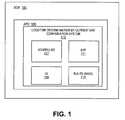
FIG. 1 is a diagram of a system for location determination by current day confirmation.
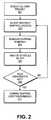
FIG. 2 is a flowchart of one embodiment of a process for determining a shipping location.
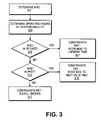
FIG. 3 is a flowchart of one embodiment of a process for meeting a shipping delivery date constraint.
FIG. 4 is a diagram of one embodiment of a shipping schedule.
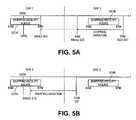
FIGS. 5A-C are diagrams of example embodiments of shipping rules for a facing location.
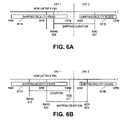
FIGS. 6A and B are diagrams of one embodiment of shipping rules for a secondary location.
DETAILED DESCRIPTIONFIG. 1 is a diagram of a system for location determination by current day confirmation. In one example embodiment, the location determination by current day confirmation system is implemented as a set of components in a supply chain management (SCM)system101. A ‘set,’ as used herein, refers to any whole number of items including one item. The supply chain management system can be any SCM system including SAP SCM by SAP AG of Walldorf, Germany or similar SCM systems. TheSCM system101 is an platform, application or suite of applications that facilitate the management of products and resources in a supply chain.
TheSCM system101 can include any number of applications or modules that relate to the management of a supply chain. The programs can include an advance planning and organization (APO)module105 and/or a set of modules that provide the functionality of a location determination by currentday confirmation system115. The placement of the location determination by currentday confirmation system115 in anAPO module105 of aSCM system101 is one example environment for the implementation and use of thelocation determination system115. One skilled in the art would understand that thelocation determination system115 can be implemented or utilized in other SCM or enterprise resource planning (ERP) systems and modules and in similar systems or as a separate tool for scheduling orders.
In one embodiment, thelocation determination system115 includes ascheduler107, available to promise (ATP)module111,user interface109,business rules113 and similar components. Thescheduler107,ATP module111,user interface109 andbusiness rules113 work in combination to provide thelocation determination system115. Thescheduler107 generates a schedule based on product related information that determines a material availability date (MAD) and delivery date (DD) amongst other relevant dates. TheATP module111 determines the availability of a product at a warehouse, manufacturing plant or similar shipping location or facility. TheATP module111 draws from scheduling and production information in theSCM101 and APO105 to determine when a product will be produced and ready for shipping. Therules113 may be a business add-in (BAdI) rules or a similar set of additional rules that define the criteria for selecting a shipping location and are accessed and applied by thescheduler107 andATP modules111. Theuser interface module109 is a basic user interface that provides a graphical or text based interface that allows a user or system administrator to interact with or monitor thelocation determination system115.
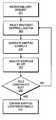
FIG. 2 is a flowchart of one embodiment of a process for determining a shipping location. This process is initiated by the APO or similar component in response to receiving an order for a product. The incoming order includes a request for delivery on a specific date and may also include a specific time (block201). The specific time and date are designated by the customer or entity that is placing the order. In this case, the customer is typically not concerned with minimizing the cost of shipping the ordered products or set of products. Thus, the customer has a rush or emergency context in which it desires to have its requested delivery time and date honored as a priority over the cost of the shipping. Besides meeting the requested delivery date the process attempt to confirm the handling of the order on the same day as it is received, thereby giving the customer the best possible delivery schedule absent meeting the specified delivery date.
The shipping location determination process starts with a first shipping location for analysis (block203). In one embodiment, the first shipping location is the facing or preferred location that may be selected based on geographical proximity to the shipping destination or similar criteria that minimize the shipping costs. The first location may be selected based on any criteria selected by the administrator of the system including proximity, cost, operating hours and similar criteria or any combination thereof. In one embodiment, the process iterates through shipping locations until a shipping location is found that meets the requirements of a customer. In another embodiment, multiple locations are evaluated in parallel and the results are compared to select an optimal solution. For example, if multiple locations are able to fulfill the customer's criteria then the shipper's criteria are evaluated, such as the lowest shipping cost, to find an optimal location. In a further embodiment, an order of shipping locations to analyze is specified based on any criteria or preferences.
For each shipping location selected for analysis a schedule is calculated (block205). The schedule is a timetable of actions that occur in the process of delivering an order. An example schedule is described below in regard toFIG. 4. The schedule is calculated to meet the requested delivery date specified by a customer. The calculation of the schedule is based on meeting the constraints of the order, specifically the requested delivery date. The schedule may be determined using any scheduling algorithm.
The schedule is then analyzed in conjunction with the ATP module (block207). Availability of products, transportation, operating hours of shipping facilities and similar information is determined and compared to the schedule. A schedule may be shifted or altered to fit the characteristics of the location under consideration. A set of defined rules are employed to determine whether the schedule or an alteration of the schedule can be determined that meets the requirements of the ordering customer. Example applications of these rules are presented below in the description related toFIG. 3,FIGS. 5A-C andFIGS. 6A and B. Each of the stages of the schedule is examined in light of the collected information to determine if it is possible to meet the requirements for each stage (block209). For example, a schedule includes a material availability date (MAD). The material availability date is the date that the ordered product is available at a shipping location. The MAD becomes a requirement for analysis purposes. If the MAD cannot be met then the location cannot meet the requirements of the order and the next location is selected for analysis (block203). If the requirements of an order are met, then the shipping location is confirmed as the location for fulfilling the customer order (block211).
In one embodiment, the applicable rules for determining whether a shipping location meets the requirements of an order are implemented as set of BAdI rules. The requirements of each order are mapped onto the appropriate BAdI rules and these rules set forth a set of constraints that a location must fall within to satisfy the BAdI rule.
FIG. 3 is a flowchart of one embodiment of a process for meeting a shipping delivery date constraint. This process is part of the analysis of a shipping location to determine whether a customer order can be fulfilled from the location based on the requirements of the order. This process receives a schedule generated based on the order's requested delivery date. The process is called to evaluate the schedule and accesses the schedule to determine each of the required schedule dates (block301). For sake of clarity, the determination and check of the material availability date (MAD) is discussed. Specifically, the MAD that is necessary to meet a requested delivery date (RDD). The MAD must precede the RDD by a length of time determined by the schedule. This MAD is referred to herein as the requested MAD (RMAD). The actual MAD may vary if the product is available before or after the RMAD. One skilled in the art would understand that each or any one of the schedule dates can be checked according to the same principles and procedures.
After receiving the schedule and determining the RMAD, the process then determines the operating hours and calendar of the shipping location facilities (block303). This data may be accessed from any component or data storage in communication with the system. The operating hours and calendar of the shipping location facilities determine their ability to ship or start the processing of an order. If the facilities are closed, then they cannot start processing the order until the next work day. The current time and date is compared with the operating hours of the facility. If the facility is closed, then a current time value is set to the next operating time of the facility, this being the effective current time in regard to processing the order. If the facility is open, then the current time value is set to the real world current time. In another embodiment, instead of adjusting the current time at this stage of the analysis, an adjusted MAD (AMAD) is set to the next operating time or the current time respectively. The AMAD can then be compared to the RMAD to determine if it is possible to meet the RMAD constraint.
The process then compares the RMAD with the current time value to determine if the RMAD is at a point of time after the current time value (block305). If the RMAD is at a point in time in the future, in comparison to the current time value, then the RMAD requirement is met (block307). If all other constraints for a location are met then it can be confirmed as a shipping location that is capable of fulfilling the customer order. The schedule can be adjusted such that RMAD is the current time value or near to the current time value thereby moving the actual deliver date to a time before the RDD to ensure that the requested delivery is fulfilled by the RDD. This scenario is further described in relation toFIG. 5A and is a successful application of the rules to fulfill the rush customer order.
If the RMAD is not in the future, then the RMAD is compared with the current time value to determine if the RMAD precedes the current time value (block313). If the RMAD does precede the current time value, i.e., the RMAD has already passed and cannot be met, then the RMAD is moved to the current real time by setting the current time value to the current real time or a real time after that point in time that is within the operating hours and calendar of the shipping location facilities (block315). In this scenario, the application of the rules has failed to find an acceptable schedule to meet the requested delivery date. However, the AMAD can be used in further evaluation if, for example, no location is able to meet the RMAD constraint then the AMAD from this shipping location can be evaluated for use.
If the RMAD is not in the past or future (e.g., the RMAD specifies the current date, but not a specific time), then the constraints of the RMAD are met and the order can be processed if other constraints are met (block317). In this scenario, the schedule can be used ‘as is’ and the RMAD is utilized as the actual MAD, and the constraints of the rules are successfully met to meet the RMAD.
FIG. 4 is a diagram of one example embodiment of a shipping schedule. The example schedule sets forth the key events or stages in the processing of a customer order. The degree of precision in the schedule can vary dependent on the available data, administrator configuration and similar considerations. The events can be fixed at months, days, hours, minutes, seconds or similar levels of granularity in time. The number of stages that can be compressed or expanded depends on the degree of detail desired in formulating the schedule. For example, a schedule can be reduced to a material availability date and requested delivery date, in some situations, while in others the schedule may be expanded to include more information about intermediate shipping points, warehouse management and similar events.
The first event in the example schedule is the material availability date (MAD)401. The material availability date is the time at which the product in an order becomes available for shipping. This may be the time that the product is manufactured, delivered to a warehouse, stocked at a facility or similarly becomes available to be shipped to a customer. The MAD indicates the start of the shipping process. After the product becomes available, then it becomes possible to determine and confirm scheduling of the other events leading up to the delivery date.
The next event in the example schedule is the loading date (LD)403. TheLD403 is the time at which the product is loaded onto the first transport at the shipping facility. For example, the product may be loaded onto a truck at the warehouse. TheLD403 can be calculated based on information about the availability of the transport for the shipment of products to the end destination or an intermediate destination, availability of loaders at the warehouse or based on similar information.
The next event after the LD is the goods issuance (GI)date405. TheGI date405 is the time at which the transport carrying the product leaves the shipping facility. TheGI date405 can be calculated based on transportation schedules, capacity of the transports, other orders to be placed on the transports and similar information. For example, a transport may have a schedule to leave the shipping facility on a specific day or upon being filled to capacity.
The next event after the GI date is the delivery date (DD)407. TheDD407 is the time at which a transport carrying the requested product arrives at the destination location. The product may be transported on any number of transports between leaving the shipping facility and arriving at the destination location. The DD can be calculated based on the transportation schedule for the product including travel time and transfer times for each segment of the transportation schedule.
The next event after the delivery date is the unload date (UD)409. TheUD409 is the time at which a transport carrying the requested product is unloaded at the destination location. The product may arrive on a transport at a time when the destination facility is not operating. The product can not be unloaded until the facility opens. For example, the product can be on a truck that arrives after the destination location facility has closed for the day. The truck will not be unloaded until the next work day.
FIGS. 5A-C are diagrams of embodiments of the example application of shipping rules for a first location. The first location may be the first location analyzed by the algorithm such as a facing location. The first location can be selected based on any criteria.
FIG. 5A is a diagram of one example scenario of the analysis of a first shipping location. In the example, the shipping facility, e.g., a warehouse, production plant or similar location, has operating hours from 8 A.M. to 6 P.M.501A, B each day. AnRDD507 has been received for an order that is at 7 P.M. on day 2 (e.g., the next day). A schedule has been generated that requires that the requested material availability date (RMAD)505 is 4 A.M. onday 2. The current real time is 12 P.M. onday 1. Thus, theRMAD505 is well into the future at this level of precision, i.e., days and hours. TheRMAD505 can be adjusted to any time after the current real time onday 1 that is within theoperating hours501A of the shipping facility. TheRMAD505 can be adjusted, for example, to 6 P.M. onday 1. The duration of time between the MAD and DD is fixed so that the adjustment in the RMAD results in a adjusted DD that is well in advance of theRDD507. Accordingly, the process has successfully met the shipping constraints set by the customer order and the location determination process does not need to further analyze other locations.
FIG. 5B is a diagram of one example scenario of the analysis of the first shipping location. In the example, the shipping facility again has operating hours from 8 A.M. to 6 P.M. eachday501 A,B. An RDD517 has been received for an order that is at 4 A.M. onday 2. A schedule has been generated that requires that theRMAD515 is 2 P.M. onday 1. The current real time is 12 P.M. onday 1. Thus, theRMAD515 is at or near the current real time, is within the operating hours of the shipping facility and can be accepted or confirmed for processing. TheRMAD515 does not need to be adjusted as it is near the current real time. Accordingly, the process has successfully met the shipping constraints set by the customer order and the location determination process does not need to further analyze other locations.
FIG. 5C is a diagram of one example scenario of the analysis of the first shipping location. In the example, the shipping facility again has operating hours from 8 A.M. to 6 P.M. eachday501 A,B. An RDD527 has been received from an order that is at 2 A.M. onday 2. A schedule has been generated that requires that theRMAD525 is at 4 P.M. onday 1. However, the current real time is after 6 P.M. onday 1 and the facility is not operating. Thus, it is not possible to fulfill theRMAD525, because theRMAD525 is in the past. Consequently, it is not possible to fulfill theRDD527 and the rule has failed. Another location will subsequently be evaluated to attempt to fulfill theRDD527.
In another embodiment, the MAD is adjusted to the next possible MAD orAMAD523. TheAMAD523 is at the start of the next day during operating hours of the shipping facility onday 2. TheAMAD523 is then used to calculate an adjusted delivery date (ADD)529. TheADD529 can be used for comparison with other locations to determine a best location if no location can be found to fulfill theRDD527.
FIGS. 6A and B are diagrams of example embodiments of shipping rules for a secondary location. Secondary locations (or any subsequently analyzed location) can be selected based on any criteria including proximity, shipping costs, product availability and similar criteria. For example, the secondary location may have longer operating hours than a first or facing location or may be in a different time zone.
FIG. 6A is a diagram of one example scenario of the analysis of the secondary shipping location. In the example, the secondary shipping facility has expandedoperating hours601A, B from 6 A.M. to 10 P.M. each day. AnRDD607 has been received from an order that is at 10 A.M. onday 2. A schedule has been generated that requires that theRMAD605 to be at 8 P.M. onday 1. The current real time is after 6 P.M. onday 1, but the facility is still operating (while a facing facility may have closed at 6 pm). Thus, it is possible to fulfill theRMAD605, because theRMAD605 is not in the past and falls within the working hours of the facility. Consequently, it is possible to fulfill theRDD607 and the rule is successful.
FIG. 6B is a diagram of one embodiment of the analysis of a secondary shipping location. In the example, the secondary shipping facility again has expandedoperating hours601 A,B from 6 A.M. to 10 P.M. each day. ARDD617 has been received from an order that is at 11 P.M. onday 1. A schedule has been generated that requires that theRMAD615 is at 12 P.M. onday 1. The current real time is after 6 P.M. onday 1. Even though the facility is still operating it is not possible to meet theRDD617, because theRMAD615 is in the past.
In some embodiments, the constraints of the order may be flexible, such that so long as it is processed on the same day it is acceptable to the customer. In such an embodiment and for purposes of comparison with other locations for best effort type delivery, then the MAD is moved to the current time to generate anAMAD623. TheADD629 is then generated by shifting the schedule. TheAMAD623 andADD629 can be used if the constraints require only same day processing or if the adjusted schedule is the best available schedule from an analysis of the available shipping locations.
In one embodiment, the location determination management system may be implemented as hardware devices. In another embodiment, these components may be implemented in software (e.g., microcode, assembly language or higher level languages). These software implementations may be stored on a machine-readable medium. A “machine readable” medium may include any medium that can store or transfer information. Examples of a machine readable medium include a ROM, a floppy diskette, a CD-ROM, a DVD, flash memory, hard drive, an optical disk or similar medium.
In the foregoing specification, the invention has been described with reference to specific embodiments thereof. It will, however, be evident that various modifications and changes can be made thereto without departing from the broader spirit and scope of the invention as set forth in the appended claims. The specification and drawings are, accordingly, to be regarded in an illustrative rather than a restrictive sense.