US8199906B2 - Implementation of a communication link in powered device for layer 2 support - Google Patents
Implementation of a communication link in powered device for layer 2 supportDownload PDFInfo
- Publication number
- US8199906B2 US8199906B2US11/581,355US58135506AUS8199906B2US 8199906 B2US8199906 B2US 8199906B2US 58135506 AUS58135506 AUS 58135506AUS 8199906 B2US8199906 B2US 8199906B2
- Authority
- US
- United States
- Prior art keywords
- powered device
- chip
- communication
- power
- host module
- Prior art date
- Legal status (The legal status is an assumption and is not a legal conclusion. Google has not performed a legal analysis and makes no representation as to the accuracy of the status listed.)
- Expired - Fee Related, expires
Links
- 230000006854communicationEffects0.000titleclaimsabstractdescription80
- 238000004891communicationMethods0.000titleclaimsabstractdescription80
- 238000000034methodMethods0.000claimsabstractdescription24
- 238000001514detection methodMethods0.000claimsdescription23
- 230000004044responseEffects0.000claimsdescription7
- 230000005669field effectEffects0.000claimsdescription6
- 238000012423maintenanceMethods0.000claimsdescription4
- 230000008569processEffects0.000description13
- 230000007246mechanismEffects0.000description4
- 238000012544monitoring processMethods0.000description4
- 230000005540biological transmissionEffects0.000description3
- 238000007726management methodMethods0.000description2
- 230000004913activationEffects0.000description1
- 230000002547anomalous effectEffects0.000description1
- 230000003190augmentative effectEffects0.000description1
- 230000007175bidirectional communicationEffects0.000description1
- 230000001419dependent effectEffects0.000description1
- 238000005516engineering processMethods0.000description1
- 238000012552reviewMethods0.000description1
- 239000000523sampleSubstances0.000description1
- 239000013589supplementSubstances0.000description1
- 239000002699waste materialSubstances0.000description1
Images
Classifications
- H—ELECTRICITY
- H04—ELECTRIC COMMUNICATION TECHNIQUE
- H04M—TELEPHONIC COMMUNICATION
- H04M9/00—Arrangements for interconnection not involving centralised switching
- H04M9/08—Two-way loud-speaking telephone systems with means for conditioning the signal, e.g. for suppressing echoes for one or both directions of traffic
Definitions
- the present inventionrelates generally to Power over Ethernet (PoE) and, more particularly, to the implementation of a communication link in a powered device to further enhance Layer 2 support concepts such as those set forth by the IEEE802.3af Task Force.
- PoEPower over Ethernet
- the IEEE 802.3af PoE standardprovides a framework for delivery of power from power source equipment (PSE) to a powered device (PD) over Ethernet cabling.
- PSEpower source equipment
- PDpowered device
- a valid device detectionis first performed. This detection process identifies whether or not it is connected to a valid device to ensure that power is not applied to non-PoE capable devices.
- the PSEcan optionally perform a power classification.
- IEEE 802.3afdefines five power classes for a PD device. The completion of this power classification process enables the PSE to manage the power that is delivered to the various PDs connected to the PSE. If a particular power class is identified for a particular PD, then the PSE can allocate the appropriate power for that PD.
- the PSEuses either AC or DC Disconnect method to find out whether or not the device is still connected.
- the DC disconnect methodthe PSE detects that the PD load current has dropped down to a certain value to conclude that the device has been disconnected.
- the AC disconnect methodthe PD disconnect is examined by the AC impedance of the PD by the PSE, which is accomplished by sending an AC probing signal. Monitoring the occurrence of a disconnect condition is crucial to ensuring that power delivery is also discontinued over that Ethernet line.
- the detection of a condition of a PDis crucial. In general, this reflects the importance of the PSE being aware of an operating condition of PDs. What is needed in this context is a mechanism that enhances the PSE's visibility into the state or condition of operation of a connected PD.
- a system and/or method for implementation of a communication link in powered device for layer 2 supportsubstantially as shown in and/or described in connection with at least one of the figures, as set forth more completely in the claims.
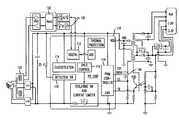
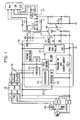
- FIG. 1illustrates an embodiment of a powered device having a communication interface to a powered device chip.
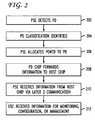
- FIG. 2illustrates a flowchart of a process of receiving information from a powered device.
- PoEPower over Ethernet
- FIG. 1illustrates an embodiment of a PD chip 110 that can be incorporated in a media endpoint device (e.g., Internet Protocol phone, wireless access point, etc.) or network connectivity device (e.g., switch).
- the PDis designed to source power through the data lines. Specifically, the PD sources power through the center tap of data transformers 102 .
- PD chip 110includes a detection switch 118 that controls when the signature 25 k ⁇ resistance is applied as a load across the line.
- the PSEtypically outputs a current limited detection voltage in the range of 2.5V to 10V. If the PSE detects the proper signature resistance, then it is determined that a proper PD is at the end of the link.
- the PSEthen proceeds to the classification step. While the classification step is optional, customers may well expect classification because unclassified devices would unnecessarily waste power and capacity of the PSE.
- the PSEapplies more voltage (up to 20.5V) to the link, and measures the current drawn by classification element 116 between the 15.5V-20.5V range to determine the classification of the PD.
- Table 1shows the five PD classes identified in the 802.3af standard. Future standards such as 802.3 at will feature a greater number of defined PD classes.
- UVLO element 114is included in PD chip 110 in part due to the length of cabling (e.g., 100 meters) over which power may be supplied. UVLO element 114 ensures that the voltage at the PD is high enough such that the voltage will not drop below the minimum working voltage when load current is drawn from the cable. This prevents the pulse width modulation (PWM) DC:DC controller 119 from starting up and shutting down repeatedly as power is initially applied to the link. UVLO element 114 also ensures that the PWM controller 119 does not operate during the detection and classification stages.
- PWMpulse width modulation
- PWM controller 119controls the operation of power field effect transistor (FET) 140 , which provides usable power to the PD once the full operating voltage, for the detected or default PD class, is applied to the line by the PSE.
- FET 140is illustrated as being separate from PWM controller 119 . In an alternative embodiment, FET 140 is integrated with PWM controller 119 .
- the PSEis designed to sense when a PD is disconnected. This disconnect detection enables the PSE to power down the link immediately.
- the PSEcan also be designed to protect the cable and the PD from overcurrent and short-circuit conditions.
- PD chip 110can be designed to monitor the operating condition or state of the power delivery to the PD.
- PD chip 110can be designed to monitor power delivery parameters such as the actual power consumption of the PD, the current passed through to the PD, the chip or die temperature, and the power classification.
- PD chip 110can also be designed to monitor the operation of PD chip 110 during detection, classification, and powering stages.
- anomalous operating conditions, error conditions (e.g., comparison of actual power versus allocated power), or other violationscan be detected by PD chip 110 .
- PD chip 110These various types of information that are generated by PD chip 110 are useful in monitoring and controlling the overall operation of power delivery from the PSE to the PD. This information can be useful to the PSE itself in controlling the delivery of power to a particular PSE, or to an administrator that is overseeing the operation of the various deployed PDs.
- PD chip 110Access to the information that can be provided by PD chip 110 is therefore a crucial aspect of general PoE network administration. Identifying an efficient mechanism for such communication is therefore a key.
- One communication optionwould require the inclusion of elements within PD chip 110 that could support direct communication between PD chip 110 and the PHY or host chip (e.g., enterprise IP phone chip). With this communication link between PD and PHY or host chip, the IP phones, Wireless Access Points, etc. using such a PD chip can send this additional information over Layer 2 which then can be used by the PSE.
- Layer 1 communication using PD chip 110would be expensive, have a slower response time, and suffer from relative inaccuracies.
- some information that is generated by PD chip 110could not be communicated over a Layer 1 protocol.
- operation and status information generated by PD chip 110can be communicated to the PSE using an inexpensive communication mechanism.
- This inexpensive communication mechanismis based on Layer 2 communication between the PD and the PSE.
- this Layer 2 communicationis enabled via existing functionality that resides outside of PD chip 110 .
- PD chip 110also includes a digital communication component 112 that interfaces with communication link 130 .
- Communication link 130is also connected to host chip 120 .
- communication link 130is a serial communication link that can be enabled by such technologies as I2C, SBI, UART, or the like.
- Communication link 130enables PD chip 110 to transmit operation and status information to host chip 120 .
- host chip 120can be embodied as a microcontroller, a PHY, a switching chip, an enterprise Internet Protocol phone chip, a wireless access point chip, or the like. The operation and status information would then be transmitted by host chip 120 to the PSE via a PHY transceiver or the like.
- PD chip 110could also be designed to communicate information directly to the PHY transceiver or the host chip for delivery to the PSE.
- the Layer 2 communication between host chip 120 and the PSEis a Layer 2 communication that can be enabled by the Link Layer Discovery Protocol-Media Endpoint Discover (LLDP-MED), IEEE 802.1 ab Operation, Administration and Maintenance (OAM), or the like.
- LLDP-MEDLink Layer Discovery Protocol-Media Endpoint Discover
- OAMOperation, Administration and Maintenance
- communication link 130can also enable host chip 120 to send information to PD chip 110 for various configuration purposes.
- host chip 120can send information to PD chip 110 that can be used by PD chip 110 for power limiting, power scaling, etc.
- communication link 130enables the addition of intelligence into PD chip 110 .
- PD chip 110would only respond to PSE signal probes. The extent of that form of PD chip communication would be in the line signal characteristics that are measured by the PSE.
- PD chip 110can now communicate with the PSE as part of a general query/response protocol. While details of this query/response protocol would be implementation specific, the protocol would enable PD chip 110 to intelligently respond to requests that are sent by the PSE.
- This form of intelligence in PD chip 110enables the PD to operate in new capacities in monitoring, configuration, and management of the PoE network.
- the flowchart of FIG. 2begins at step 202 where the PSE detects the PD. As noted above, this detection process is enabled using a 25 k ⁇ resistor, which is applied as a load across the line based upon the activation of detection switch 118 of PD chip 118 . The PD is detected by the PSE once the PSE detects the proper signature impedance.
- the PSEAfter the PSE detects the PD, the PSE, at step 204 , then identifies the classification of the PD. In the classification step, the PSE measures the current drawn by classification element 116 of PD chip 110 when the voltage output by the PSE is between the 15.5V-20.5V range. The response measured by the PSE is used to classify the PD, for example, in accordance with the five PD classes specified by the 802.3af standard. Based on this determined classification, the PSE, at step 206 , then allocates power to the PD.
- digital communications component 112can be designed to transmit operation and/or status information that is generated by or otherwise resident within PD chip 110 . This transmission to host chip 120 occurs at step 208 and is enabled through communication link 130 .
- host chip 120forwards the received operation and/or status information to the PSE. This transmission is enabled via the existing Layer 2 communication that is supported by host chip 120 . In this manner, PD chip 110 leverages existing communication functionality within the PD.
- the information received by the PSE from host chip 120can be used for any monitoring, configuration, or management purpose by the PSE or any other element that gains access to the information. As would be appreciated, the particular use of the received information would be implementation dependent.
- the information that is received by the PSEcould be the actual classification for which the PD was designed.
- this actual classification informationcould be received by the PSE and used as a check to ensure that the initial classification identified by the PSE is accurate.
- This augmented classification processwould ensure that inaccurate classifications, or default classifications, would be corrected based upon a PD's own accurate classification.
- this classification informationcan have greater levels of granularity.
- the use of Layer 2 communication as part of the configuration processcould obviate the need for the use of the optional classification step by the PSE.
- a default classificationcould be used initially and changed upon receipt of the accurate classification information via the Layer 2 communication.
- the received informationcould be used simply to monitor the operation of PD chip 110 .
- PD chip 110can be designed to forward information related to any operating aspect of its components (e.g., current drawn, temperature, etc.). This information can be used, for example, to monitor whether dangerous operating conditions are present on the PD location.
- communication link 130is a bi-directional communication channel.
- communication link 130can also be used to forward information from PD chip 110 to host chip 120 as well as from host chip 120 to PD chip 110 .
- the information forwarded from host chip 120 to PD chip 110can be used for configuration purposes or as part of a more general query/response protocol.
- the forwarding of information by PD chip 110 to host chip 120 in step 208can be in response to a previous request sent by the PSE (e.g., request for accurate classification information).
- the information sent by the PSE to PD chip 110 via host chip 120can be used to configure or otherwise modify an aspect of operation of PD chip 110 (e.g., power limiting, power scaling, etc.)
Landscapes
- Engineering & Computer Science (AREA)
- Signal Processing (AREA)
- Communication Control (AREA)
Abstract
Description
| TABLE 1 | |||
| Class | Usage | Min Power Output by PSE | Max Power Input at PD |
| 0 | Default | 15.4 W | 0.44 to 12.95 |
| 1 | Optional | 4.0 W | 0.44 to 3.84 |
| 2 | Optional | 7.0 W | 3.84 to 6.49 W |
| 3 | Optional | 15.4 W | 6.49 to 12.95 W |
| 4 | Reserved | Act as Class 0 | Reserved |
Claims (26)
Priority Applications (1)
| Application Number | Priority Date | Filing Date | Title |
|---|---|---|---|
| US11/581,355US8199906B2 (en) | 2006-10-17 | 2006-10-17 | Implementation of a communication link in powered device for layer 2 support |
Applications Claiming Priority (1)
| Application Number | Priority Date | Filing Date | Title |
|---|---|---|---|
| US11/581,355US8199906B2 (en) | 2006-10-17 | 2006-10-17 | Implementation of a communication link in powered device for layer 2 support |
Publications (2)
| Publication Number | Publication Date |
|---|---|
| US20080089512A1 US20080089512A1 (en) | 2008-04-17 |
| US8199906B2true US8199906B2 (en) | 2012-06-12 |
Family
ID=39303129
Family Applications (1)
| Application Number | Title | Priority Date | Filing Date |
|---|---|---|---|
| US11/581,355Expired - Fee RelatedUS8199906B2 (en) | 2006-10-17 | 2006-10-17 | Implementation of a communication link in powered device for layer 2 support |
Country Status (1)
| Country | Link |
|---|---|
| US (1) | US8199906B2 (en) |
Cited By (2)
| Publication number | Priority date | Publication date | Assignee | Title |
|---|---|---|---|---|
| US20180129171A1 (en)* | 2013-10-01 | 2018-05-10 | Linear Technology Corporation | Detection and classification scheme for power over ethernet system |
| US9990020B2 (en) | 2015-07-07 | 2018-06-05 | Aruba Networks, Inc. | Use of link layer discovery protocol-media endpoint discovery to avoid false legacy powered device detection in power over ethernet systems and networks |
Families Citing this family (4)
| Publication number | Priority date | Publication date | Assignee | Title |
|---|---|---|---|---|
| US8767952B2 (en)* | 2007-12-17 | 2014-07-01 | Broadcom Corporation | Method and system for utilizing a single connection for efficient delivery of power and multimedia information |
| US20090152943A1 (en)* | 2007-12-17 | 2009-06-18 | Wael William Diab | Method and system for vehicular power distribution utilizing power over ethernet |
| US8930726B2 (en)* | 2012-06-13 | 2015-01-06 | Broadcom Corporation | Physical layer device auto-adjustment based on power over Ethernet magnetic heating |
| CN103051190B (en)* | 2012-12-10 | 2016-04-20 | 天津天地伟业数码科技有限公司 | Be applied to the Power over Ethernet circuit of network monitoring device |
Citations (3)
| Publication number | Priority date | Publication date | Assignee | Title |
|---|---|---|---|---|
| US5289359A (en)* | 1991-02-13 | 1994-02-22 | Charles Industries, Limited | DC-DC power converter including sensing means for providing an output when the reserve power of the converter falls below a predetermined amount for a given input voltage |
| US20060214253A1 (en)* | 2005-03-28 | 2006-09-28 | Akros Silicon, Inc. | Integrated DC/DC converter substrate connections |
| US20070025452A1 (en)* | 2005-07-27 | 2007-02-01 | Cisco Technology, Inc. | Inline power controller |
- 2006
- 2006-10-17USUS11/581,355patent/US8199906B2/ennot_activeExpired - Fee Related
Patent Citations (3)
| Publication number | Priority date | Publication date | Assignee | Title |
|---|---|---|---|---|
| US5289359A (en)* | 1991-02-13 | 1994-02-22 | Charles Industries, Limited | DC-DC power converter including sensing means for providing an output when the reserve power of the converter falls below a predetermined amount for a given input voltage |
| US20060214253A1 (en)* | 2005-03-28 | 2006-09-28 | Akros Silicon, Inc. | Integrated DC/DC converter substrate connections |
| US20070025452A1 (en)* | 2005-07-27 | 2007-02-01 | Cisco Technology, Inc. | Inline power controller |
Non-Patent Citations (1)
| Title |
|---|
| IEEE 802.1AB-2005 (May 6, 2005), pp. 12-15.* |
Cited By (3)
| Publication number | Priority date | Publication date | Assignee | Title |
|---|---|---|---|---|
| US20180129171A1 (en)* | 2013-10-01 | 2018-05-10 | Linear Technology Corporation | Detection and classification scheme for power over ethernet system |
| US10261477B2 (en)* | 2013-10-01 | 2019-04-16 | Linear Technology Corporation | Detection and classification scheme for power over Ethernet system |
| US9990020B2 (en) | 2015-07-07 | 2018-06-05 | Aruba Networks, Inc. | Use of link layer discovery protocol-media endpoint discovery to avoid false legacy powered device detection in power over ethernet systems and networks |
Also Published As
| Publication number | Publication date |
|---|---|
| US20080089512A1 (en) | 2008-04-17 |
Similar Documents
| Publication | Publication Date | Title |
|---|---|---|
| CN104135375B (en) | Combination of high-side and low-side current sensing in a system powered over a communication link | |
| US7849333B2 (en) | Inline power allocation for power over Ethernet applications | |
| EP2008191B1 (en) | Method and apparatus for current sharing ethernet power across four conductor pairs using a midspan device | |
| US20110026525A1 (en) | Ethernet Switch and System | |
| US7940787B2 (en) | Low-power ethernet device | |
| EP1859647B1 (en) | Method and apparatus for current sharing ethernet power across four conductor pairs | |
| EP1842326B1 (en) | Adjusting current limit thresholds based on power requirement of powered device in system for providing power over communication link | |
| KR100864768B1 (en) | Common-mode data transmission for power over ethernet system | |
| KR101244975B1 (en) | Providing data communication between power supply device and powered device in system for supplying power over communication link | |
| US7908494B2 (en) | System and method for multiple PoE power supply management | |
| US20050086546A1 (en) | Powered device interface circuit | |
| CN101129019A (en) | Combination of high-side and low-side current sensing in systems powered over a communication link | |
| US7898406B2 (en) | Powered device with priority indicator | |
| US9264239B2 (en) | Method and apparatus for increasing the number of the powered devices supported by the PoE system | |
| US20070135086A1 (en) | Providing detailed information on powered device in system for supplying power over communication link | |
| US20080235523A1 (en) | Power Over Ethernet Connector With Integrated Power Source Equipment (PSE) Controller Supporting High Power Applications | |
| US8028175B2 (en) | System and method for power sourcing equipment detection of a powered device power failure for power backup | |
| US9092208B2 (en) | Device and method for powering Ethernet midspan device and endspan device | |
| US20050268120A1 (en) | Power delivery over ethernet cables | |
| US8199906B2 (en) | Implementation of a communication link in powered device for layer 2 support | |
| US7814342B2 (en) | System and method for communication using an AC signal from a powered device | |
| EP3266150A1 (en) | Powered device in power-over-ethernet network system, and methods therefore | |
| Mendelson | All you need to know about Power over Ethernet (PoE) and the IEEE 802.3 af Standard | |
| JP2006526978A (en) | Input voltage detection circuit in line power supply network element | |
| US8037323B2 (en) | System and method for using an ethernet physical layer device to identify cabling topologies |
Legal Events
| Date | Code | Title | Description |
|---|---|---|---|
| AS | Assignment | Owner name:BROADCOM CORPORATION, CALIFORNIA Free format text:ASSIGNMENT OF ASSIGNORS INTEREST;ASSIGNORS:HUSSAIN, ASIF;PANDYA, MANISHA;REEL/FRAME:018694/0180 Effective date:20060929 | |
| STCF | Information on status: patent grant | Free format text:PATENTED CASE | |
| FPAY | Fee payment | Year of fee payment:4 | |
| AS | Assignment | Owner name:BANK OF AMERICA, N.A., AS COLLATERAL AGENT, NORTH CAROLINA Free format text:PATENT SECURITY AGREEMENT;ASSIGNOR:BROADCOM CORPORATION;REEL/FRAME:037806/0001 Effective date:20160201 Owner name:BANK OF AMERICA, N.A., AS COLLATERAL AGENT, NORTH Free format text:PATENT SECURITY AGREEMENT;ASSIGNOR:BROADCOM CORPORATION;REEL/FRAME:037806/0001 Effective date:20160201 | |
| AS | Assignment | Owner name:AVAGO TECHNOLOGIES GENERAL IP (SINGAPORE) PTE. LTD., SINGAPORE Free format text:ASSIGNMENT OF ASSIGNORS INTEREST;ASSIGNOR:BROADCOM CORPORATION;REEL/FRAME:041706/0001 Effective date:20170120 Owner name:AVAGO TECHNOLOGIES GENERAL IP (SINGAPORE) PTE. LTD Free format text:ASSIGNMENT OF ASSIGNORS INTEREST;ASSIGNOR:BROADCOM CORPORATION;REEL/FRAME:041706/0001 Effective date:20170120 | |
| AS | Assignment | Owner name:BROADCOM CORPORATION, CALIFORNIA Free format text:TERMINATION AND RELEASE OF SECURITY INTEREST IN PATENTS;ASSIGNOR:BANK OF AMERICA, N.A., AS COLLATERAL AGENT;REEL/FRAME:041712/0001 Effective date:20170119 | |
| AS | Assignment | Owner name:AVAGO TECHNOLOGIES INTERNATIONAL SALES PTE. LIMITE Free format text:MERGER;ASSIGNOR:AVAGO TECHNOLOGIES GENERAL IP (SINGAPORE) PTE. LTD.;REEL/FRAME:047230/0133 Effective date:20180509 | |
| AS | Assignment | Owner name:AVAGO TECHNOLOGIES INTERNATIONAL SALES PTE. LIMITE Free format text:CORRECTIVE ASSIGNMENT TO CORRECT THE EFFECTIVE DATE OF MERGER TO 09/05/2018 PREVIOUSLY RECORDED AT REEL: 047230 FRAME: 0133. ASSIGNOR(S) HEREBY CONFIRMS THE MERGER;ASSIGNOR:AVAGO TECHNOLOGIES GENERAL IP (SINGAPORE) PTE. LTD.;REEL/FRAME:047630/0456 Effective date:20180905 | |
| FEPP | Fee payment procedure | Free format text:MAINTENANCE FEE REMINDER MAILED (ORIGINAL EVENT CODE: REM.); ENTITY STATUS OF PATENT OWNER: LARGE ENTITY | |
| LAPS | Lapse for failure to pay maintenance fees | Free format text:PATENT EXPIRED FOR FAILURE TO PAY MAINTENANCE FEES (ORIGINAL EVENT CODE: EXP.); ENTITY STATUS OF PATENT OWNER: LARGE ENTITY | |
| STCH | Information on status: patent discontinuation | Free format text:PATENT EXPIRED DUE TO NONPAYMENT OF MAINTENANCE FEES UNDER 37 CFR 1.362 | |
| FP | Lapsed due to failure to pay maintenance fee | Effective date:20200612 |