US8199358B2 - Digital slide image analysis - Google Patents
Digital slide image analysisDownload PDFInfo
- Publication number
- US8199358B2 US8199358B2US12/428,394US42839409AUS8199358B2US 8199358 B2US8199358 B2US 8199358B2US 42839409 AUS42839409 AUS 42839409AUS 8199358 B2US8199358 B2US 8199358B2
- Authority
- US
- United States
- Prior art keywords
- sub
- image processing
- image
- instructions
- regions
- Prior art date
- Legal status (The legal status is an assumption and is not a legal conclusion. Google has not performed a legal analysis and makes no representation as to the accuracy of the status listed.)
- Expired - Fee Related, expires
Links
Images

Classifications
- G—PHYSICS
- G06—COMPUTING OR CALCULATING; COUNTING
- G06T—IMAGE DATA PROCESSING OR GENERATION, IN GENERAL
- G06T1/00—General purpose image data processing
Definitions
- the present inventiongenerally relates to digital microscopy and more specifically relates to the processing and analysis of digital slides.
- a system and method for processing and analyzing virtual microscopy digital images(“digital slides”) is provided.
- the systemcomprises an algorithm server that maintains or has access to a plurality of image processing and analysis routines.
- the algorithm serveradditionally has access to a plurality of digital slides.
- the algorithm serverexecutes a selected routine on an identified digital slide and provides the resulting data.
- the digital slidecan be accessed locally or remotely across a network.
- the image processing routinescan be obtained from local storage or across a network, or both.
- certain common sub-routinesmay be stored locally for inclusion in other local or remotely obtained routines.
- FIG. 1is a network diagram illustrating an example system for image processing and analysis according to an embodiment of the present invention
- FIG. 2is a block diagram illustrating an example algorithm server according to an embodiment of the present invention
- FIG. 4is a flow diagram illustrating an example process for creating an image processing macro according to an embodiment of the present invention
- FIG. 5is a flow diagram illustrating an example process for importing a remote image processing algorithm according to an embodiment of the present invention
- FIG. 6is a flow diagram illustrating an example process for remotely executing an image processing algorithm according to an embodiment of the present invention.
- inventions as disclosed hereinprovide a framework for processing and analysis of digital slide images.
- the systemcomprises an algorithm server that executes image processing instructions (referred to herein as “algorithms,” “routines,” and “sub-routines”) on digital slide images or sub-regions of a digital slide image.
- algorithmsimage processing instructions
- routinesroutines
- sub-routinesimage processing instructions
- one method disclosed hereinallows a user to identify a digital slide image (or a sub-region thereof) and an algorithm to be used in the processing and analysis of the image.
- the serverthen executes the algorithm to process and analyze the image.
- the resultsmay be provide to the screen, to a file, to a database, or otherwise presented, captured and/or recorded.
- Certain parametersmay also be provided by the user or obtained from a data file corresponding to the particular algorithm to constrain the processing and analysis called for in the algorithm.
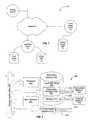
- FIG. 1is a network diagram illustrating an example system 10 for image processing and analysis according to an embodiment of the present invention.
- the system 10comprises an algorithm server 20 that is communicatively linked with one or more remote users 50 and one or more remote image servers 60 via a network 80 .
- the algorithm serveris configured with a data storage area 40 and a plurality of local image files 30 .
- the data storage areapreferably comprises information related to the processing of digital image files, for example it may store certain analysis routines, parameters, and procedural lists of analysis routines and associated parameters (“macros”), among other types of data.
- the local image files 30 and remote image files 70are preferably digital slides of the type created by the ScanScope® Microscope Slide Scanner developed by Aperio Technologies, Inc.
- the remote image server 60is preferably configured with a data storage area having a plurality of image files 70 that are considered remote from the algorithm server.
- the algorithm server 20may access the remote digital slide images 70 via the network 80 .
- the remote user 50may comprise a web browser, an imagescope viewer, a scanscope console, an algorithm framework, or some other client application or front end that facilitates a user's interaction with the algorithm server 20 .
- the network 80can be a local area network (“LAN”), a wide area network (“WAN”), a private network, public network, or a combination of networks such as the Internet.
- FIG. 2is a block diagram illustrating an example algorithm server 20 according to an embodiment of the present invention.
- the algorithm server 20comprises an execution manager 100 , an image handler 110 , a user interface 120 , a remote user manager 130 , a reporting manager 140 , and a security daemon 150 .
- the algorithm serveris also configured with a data storage area 40 and a plurality of local image files 30 and a plurality of remote image files 70 .
- the local and remote image filesare digital slides.
- the execution manager 100handles the process of executing an algorithm to conduct image analysis or other types of analysis on a digital slide.
- the execution manager 100can be in communication with the other components of the algorithm server in order to process the image analysis requests from one or more local or remote users.
- the execution manager 100is configured to receive an instruction from a user to run a particular algorithm on a certain digital slide.
- the execution manager 100is also configured to collect parameter data from the user that will be used by the algorithm during execution.
- the parametersmay define a sub-region of the digital slide to be processed by the algorithm and/or may define certain threshold values or provide other data elements to constrain the algorithm during execution.
- the execution manager 100is communicatively coupled with the image handler 110 in order to obtain the digital slide (or portion thereof) for analysis and processing pursuant to the particular algorithm. Because digital slides are such large files (10-15 GB uncompressed), a specialized image handler 110 is employed to efficiently and quickly obtain image data for processing.
- the image handler 110can obtain image data from digital slides that are stored either locally (image files 30 ) or remotely (image files 70 ). Additionally, the image handler 110 provides the digital slide image in a standard format by decompressing the stored digital slide image from various compression formats including JPEG, JPEG2000, and LZW formats.
- Another function of the image handler 110is to provide the image data from a digital slide at the proper level of magnification.
- an imagemay be stored in at a native resolution of 40 ⁇ but a resolution of 20 ⁇ is called for by the algorithm.
- the image handler 110can downsample the native resolution and deliver the image data at a resolution of 20 ⁇ to the execution manager 100 .
- Such abilityprovides a significant advantage in speed for algorithms that initially process an image at a low resolution where objects of interest are detected and subsequently process the image at a high resolution where the analysis of those sub-regions containing the identified objects of interest is carried out.
- the amount of image data to be processed in a 40 ⁇ imageis four times the amount of image data to be processed in a 20 ⁇ image, so an algorithm which processes a 40 ⁇ image at a resolution of 20 ⁇ can run four times faster.
- the user interface 120preferably provides the user with a simple and easy to use format for interacting with the execution manager 100 in order to identify the algorithm to execute and the digital slide to be analyzed. Additionally the user interface 120 can efficiently collect parameter data from a user prior to execution of an algorithm. The user interface 120 also allows a user to create a macro comprising a plurality of algorithms and associated parameters.
- the reporting manager 140is preferably configured to receive output and processing results from the execution manager 100 as an algorithm executes and generates data or other output.
- the reporting managermay also access output files after an algorithm is finished processing and then restructure the data in the output file into a standard report format. Additional reporting capabilities may also be provided by the reporting manager 140 , as will be understood by those having skill in the art.
- the security daemon 150advantageously handles image processing requests that originate from a network based user or program.
- the security daemon 150receives all incoming network requests and examines those requests to determine if they are seeking to process an image with an algorithm. If so, the security daemon 150 is configured to validate the request and if the request is valid, then the security daemon 150 passes the request off to the execution manager 150 for processing.
- the data storage area 40may contain a plurality of algorithms that can be executed in order to analyze digital slide images. Additionally, the data storage area 40 may also contain a plurality of sub-routines that are commonly performed or often included in image processing algorithms. Advantageously, these common sub-routines can be dynamically linked into an algorithm at runtime so that the algorithm development effort is simplified. Additionally, the data storage area 40 may also comprise a plurality of macros, where a macro comprises a linear or parallel sequence of processing images with algorithms to achieve a desired analysis. A macro may also comprise parameter data to define subregions of images where appropriate and provide variables to constrain the image processing.
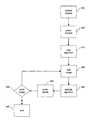
- FIG. 3is a flow diagram illustrating an example process for executing an image processing algorithm according to an embodiment of the present invention.
- the execution managerreceives an image selection.
- the image selectioncan be for a particular digital slide, or an identified sub-region thereof.
- the execution managerreceives a selection for the algorithm to be run. There may in fact be more than one algorithm, or the execution manager may receive the selection of a macro that comprises several algorithms.
- the execution managerreceives parameter data necessary to run the algorithm(s).
- the execution managermay query the algorithm or check a corresponding data file to determine what parameter data will be required to run the algorithm(s).
- the execution managerruns the algorithm and preferably provides any output to an output file, the screen, a database, or other display or storage facility.
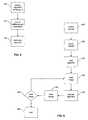
- FIG. 4is a flow diagram illustrating an example process for creating an image processing macro according to an embodiment of the present invention.
- the execution managerreceives a selection for the first algorithm to be run as part of the macro.
- the execution managerreceives the parameter data that corresponds to the selected algorithm. In some cases, all of the parameter may not be provided when the macro is created.
- the execution managercan collect a partial set of parameter data and then when the macro is run, the execution manager can prompt the user for the needed additional parameter data. For example, the user or program requesting the macro be run will also have to identify the digital slide to be processed, and optionally the subregion of the image on which the algorithm will operate.
- step 320the process loops back to collect the algorithm selection and parameter data as described immediately above. If the macro definition is complete, then in step 330 the macro is stored in persistent data storage for later retrieval and execution.
- FIG. 5is a flow diagram illustrating an example process for importing a remote image processing algorithm according to an embodiment of the present invention.
- the execution managerreceives the identification of an algorithm that is located on another server or computer that is remotely located and accessible via the network.
- the execution managerreceives any algorithm attributes and an identification of the parameters required by the algorithm during execution. These attributes and parameter requirements are preferably stored in a fashion that they correspond to the algorithm so that at a later time the execution manager may retrieve this information prior to execution of the algorithm, which will facilitate the collection of the parameter data prior to execution.
- the new algorithmis stored along with its associated parameters and attributes.
- FIG. 6is a flow diagram illustrating an example process for remotely executing an image processing algorithm according to an embodiment of the present invention.
- the execution managerreceives a request from a remote user or program.
- the remote usermay be an automated program that is developed to automate certain types of image processing on digital slides.
- the execution managerparses the request to obtain information such as the particular algorithm to run, the identification of the digital slide (and optionally the sub-region thereof), as well as the parameter data.
- step 470the execution manager loads the algorithm and then also loads the image in step 480 .
- the execution managerruns the algorithm to process the identified digital slide image, using the parameter data received in the request as necessary and in accordance with the particular algorithm. Any output generated by the running of the algorithm can advantageously be sent to a local output file or database, or it can be collected and the distributed remotely or locally or stored, as shown in step 492 .
- step 494the execution manager determines if there is more image data or additional image sub-regions to process. If so, the process loops back to step 480 where the next sub-region of the image is loaded. If there are no more sub-regions to process, then the execution manager can end the image processing, as illustrated in step 496 .
- a first passexecution of the image processing instructions
- a second passexecution of the image processing instructions
- high resolution40 ⁇
- the algorithm resultswould reflect both passes (the sub-region identification and the output of the processing of the sub-regions).
- FIG. 7is a block diagram illustrating an exemplary computer system 550 that may be used in connection with the various embodiments described herein.
- the computer system 550may be used in conjunction with an algorithm server, a remote image server or a remote user station.
- an algorithm servera remote image server or a remote user station.
- other computer systems and/or architecturesmay be used, as will be clear to those skilled in the art.
- the computer system 550preferably includes one or more processors, such as processor 552 .
- Additional processorsmay be provided, such as an auxiliary processor to manage input/output, an auxiliary processor to perform floating point mathematical operations, a special-purpose microprocessor having an architecture suitable for fast execution of signal processing algorithms (e.g., digital signal processor), a slave processor subordinate to the main processing system (e.g., back-end processor), an additional microprocessor or controller for dual or multiple processor systems, or a coprocessor.
- auxiliary processorsmay be discrete processors or may be integrated with the processor 552 .
- the processor 552is preferably connected to a communication bus 554 .
- the communication bus 554may include a data channel for facilitating information transfer between storage and other peripheral components of the computer system 550 .
- the communication bus 554further may provide a set of signals used for communication with the processor 552 , including a data bus, address bus, and control bus (not shown).
- the communication bus 554may comprise any standard or non-standard bus architecture such as, for example, bus architectures compliant with industry standard architecture (“ISA”), extended industry standard architecture (“EISA”), Micro Channel Architecture (“MCA”), peripheral component interconnect (“PCI”) local bus, or standards promulgated by the Institute of Electrical and Electronics Engineers (“IEEE”) including IEEE 488 general-purpose interface bus (“GPIB”), IEEE 696/S-100, and the like.
- ISAindustry standard architecture
- EISAextended industry standard architecture
- MCAMicro Channel Architecture
- PCIperipheral component interconnect
- IEEEInstitute of Electrical and Electronics Engineers
- IEEEInstitute of Electrical and Electronics Engineers
- GPIBgeneral-purpose interface bus
- IEEE 696/S-100IEEE 696/S-100
- Computer system 550preferably includes a main memory 556 and may also include a secondary memory 558 .
- the main memory 556provides storage of instructions and data for programs executing on the processor 552 .
- the main memory 556is typically semiconductor-based memory such as dynamic random access memory (“DRAM”) and/or static random access memory (“SRAM”).
- DRAMdynamic random access memory
- SRAMstatic random access memory
- Other semiconductor-based memory typesinclude, for example, synchronous dynamic random access memory (“SDRAM”), Rambus dynamic random access memory (“RDRAM”), ferroelectric random access memory (“FRAM”), and the like, including read only memory (“ROM”).
- SDRAMsynchronous dynamic random access memory
- RDRAMRambus dynamic random access memory
- FRAMferroelectric random access memory
- ROMread only memory
- the secondary memory 558may optionally include a hard disk drive 560 and/or a removable storage drive 562 , for example a floppy disk drive, a magnetic tape drive, a compact disc (“CD”) drive, a digital versatile disc (“DVD”) drive, etc.
- the removable storage drive 562reads from and/or writes to a removable storage medium 564 in a well-known manner.
- Removable storage medium 564may be, for example, a floppy disk, magnetic tape, CD, DVD, etc.
- the removable storage medium 564is preferably a computer readable medium having stored thereon computer executable code (i.e., software) and/or data.
- the computer software or data stored on the removable storage medium 564is read into the computer system 550 as electrical communication signals 578 .
- secondary memory 558may include other similar means for allowing computer programs or other data or instructions to be loaded into the computer system 550 .
- Such meansmay include, for example, an external storage medium 572 and an interface 570 .
- external storage medium 572may include an external hard disk drive or an external optical drive, or and external magneto-optical drive.
- secondary memory 558may include semiconductor-based memory such as programmable read-only memory (“PROM”), erasable programmable read-only memory (“EPROM”), electrically erasable read-only memory (“EEPROM”), or flash memory (block oriented memory similar to EEPROM). Also included are any other removable storage units 572 and interfaces 570 , which allow software and data to be transferred from the removable storage unit 572 to the computer system 550 .
- PROMprogrammable read-only memory
- EPROMerasable programmable read-only memory
- EEPROMelectrically erasable read-only memory
- flash memoryblock oriented memory similar to EEPROM
- Computer system 550may also include a communication interface 574 .
- the communication interface 574allows software and data to be transferred between computer system 550 and external devices (e.g. printers), networks, or information sources.
- external devicese.g. printers
- computer software or executable codemay be transferred to computer system 550 from a network server via communication interface 574 .
- Examples of communication interface 574include a modem, a network interface card (“NIC”), a communications port, a PCMCIA slot and card, an infrared interface, and an IEEE 1394 fire-wire, just to name a few.
- Communication interface 574preferably implements industry promulgated protocol standards, such as Ethernet IEEE 802 standards, Fiber Channel, digital subscriber line (“DSL”), asynchronous digital subscriber line (“ADSL”), frame relay, asynchronous transfer mode (“ATM”), integrated digital services network (“ISDN”), personal communications services (“PCS”), transmission control protocol/Internet protocol (“TCP/IP”), serial line Internet protocol/point to point protocol (“SLIP/PPP”), and so on, but may also implement customized or non-standard interface protocols as well.
- industry promulgated protocol standardssuch as Ethernet IEEE 802 standards, Fiber Channel, digital subscriber line (“DSL”), asynchronous digital subscriber line (“ADSL”), frame relay, asynchronous transfer mode (“ATM”), integrated digital services network (“ISDN”), personal communications services (“PCS”), transmission control protocol/Internet protocol (“TCP/IP”), serial line Internet protocol/point to point protocol (“SLIP/PPP”), and so on, but may also implement customized or non-standard interface protocols as well.
- Communication interface 574Software and data transferred via communication interface 574 are generally in the form of electrical communication signals 578 . These signals 578 are preferably provided to communication interface 574 via a communication channel 576 .
- Communication channel 576carries signals 578 and can be implemented using a variety of communication means including wire or cable, fiber optics, conventional phone line, cellular phone link, radio frequency (RF) link, or infrared link, just to name a few.
- RFradio frequency
- Computer executable codei.e., computer programs or software
- main memory 556 and/or the secondary memory 558Computer programs can also be received via communication interface 574 and stored in the main memory 556 and/or the secondary memory 558 .
- Such computer programswhen executed, enable the computer system 550 to perform the various functions of the present invention as previously described.
- computer readable mediumis used to refer to any media used to provide computer executable code (e.g., software and computer programs) to the computer system 550 .
- Examples of these mediainclude main memory 556 , secondary memory 558 (including hard disk drive 560 , removable storage medium 564 , and external storage medium 572 ), and any peripheral device communicatively coupled with communication interface 574 (including a network information server or other network device).
- These computer readable mediumsare means for providing executable code, programming instructions, and software to the computer system 550 .
- the softwaremay be stored on a computer readable medium and loaded into computer system 550 by way of removable storage drive 562 , interface 570 , or communication interface 574 .
- the softwareis loaded into the computer system 550 in the form of electrical communication signals 578 .
- the softwarewhen executed by the processor 552 , preferably causes the processor 552 to perform the inventive features and functions previously described herein.
- ASICsapplication specific integrated circuits
- FPGAsfield programmable gate arrays
- ASICsapplication specific integrated circuits
- FPGAsfield programmable gate arrays
Landscapes
- Physics & Mathematics (AREA)
- General Physics & Mathematics (AREA)
- Engineering & Computer Science (AREA)
- Theoretical Computer Science (AREA)
- Image Processing (AREA)
- Processing Or Creating Images (AREA)
Abstract
Description
Claims (20)
Priority Applications (4)
| Application Number | Priority Date | Filing Date | Title |
|---|---|---|---|
| US12/428,394US8199358B2 (en) | 2003-02-28 | 2009-04-22 | Digital slide image analysis |
| US13/494,715US8467083B2 (en) | 2003-02-28 | 2012-06-12 | Framework for processing the content of a digital image of a microscope sample |
| US13/921,105US8780401B2 (en) | 2003-02-28 | 2013-06-18 | Systems and methods for analyzing digital slide images using algorithms constrained by parameter data |
| US14/310,117US9019546B2 (en) | 2003-02-28 | 2014-06-20 | Image processing of digital slide images based on a macro |
Applications Claiming Priority (5)
| Application Number | Priority Date | Filing Date | Title |
|---|---|---|---|
| US45108103P | 2003-02-28 | 2003-02-28 | |
| US46131803P | 2003-04-07 | 2003-04-07 | |
| US10/787,330US7116440B2 (en) | 2003-02-28 | 2004-02-26 | Image processing and analysis framework |
| US11/536,985US7602524B2 (en) | 2003-02-28 | 2006-09-29 | Image processing and analysis framework |
| US12/428,394US8199358B2 (en) | 2003-02-28 | 2009-04-22 | Digital slide image analysis |
Related Parent Applications (1)
| Application Number | Title | Priority Date | Filing Date |
|---|---|---|---|
| US11/536,985ContinuationUS7602524B2 (en) | 2003-02-28 | 2006-09-29 | Image processing and analysis framework |
Related Child Applications (1)
| Application Number | Title | Priority Date | Filing Date |
|---|---|---|---|
| US13/494,715ContinuationUS8467083B2 (en) | 2003-02-28 | 2012-06-12 | Framework for processing the content of a digital image of a microscope sample |
Publications (2)
| Publication Number | Publication Date |
|---|---|
| US20090208134A1 US20090208134A1 (en) | 2009-08-20 |
| US8199358B2true US8199358B2 (en) | 2012-06-12 |
Family
ID=32913038
Family Applications (6)
| Application Number | Title | Priority Date | Filing Date |
|---|---|---|---|
| US10/787,330Expired - LifetimeUS7116440B2 (en) | 2003-02-28 | 2004-02-26 | Image processing and analysis framework |
| US11/536,985Expired - LifetimeUS7602524B2 (en) | 2003-02-28 | 2006-09-29 | Image processing and analysis framework |
| US12/428,394Expired - Fee RelatedUS8199358B2 (en) | 2003-02-28 | 2009-04-22 | Digital slide image analysis |
| US13/494,715Expired - Fee RelatedUS8467083B2 (en) | 2003-02-28 | 2012-06-12 | Framework for processing the content of a digital image of a microscope sample |
| US13/921,105Expired - LifetimeUS8780401B2 (en) | 2003-02-28 | 2013-06-18 | Systems and methods for analyzing digital slide images using algorithms constrained by parameter data |
| US14/310,117Expired - Fee RelatedUS9019546B2 (en) | 2003-02-28 | 2014-06-20 | Image processing of digital slide images based on a macro |
Family Applications Before (2)
| Application Number | Title | Priority Date | Filing Date |
|---|---|---|---|
| US10/787,330Expired - LifetimeUS7116440B2 (en) | 2003-02-28 | 2004-02-26 | Image processing and analysis framework |
| US11/536,985Expired - LifetimeUS7602524B2 (en) | 2003-02-28 | 2006-09-29 | Image processing and analysis framework |
Family Applications After (3)
| Application Number | Title | Priority Date | Filing Date |
|---|---|---|---|
| US13/494,715Expired - Fee RelatedUS8467083B2 (en) | 2003-02-28 | 2012-06-12 | Framework for processing the content of a digital image of a microscope sample |
| US13/921,105Expired - LifetimeUS8780401B2 (en) | 2003-02-28 | 2013-06-18 | Systems and methods for analyzing digital slide images using algorithms constrained by parameter data |
| US14/310,117Expired - Fee RelatedUS9019546B2 (en) | 2003-02-28 | 2014-06-20 | Image processing of digital slide images based on a macro |
Country Status (1)
| Country | Link |
|---|---|
| US (6) | US7116440B2 (en) |
Cited By (9)
| Publication number | Priority date | Publication date | Assignee | Title |
|---|---|---|---|---|
| US9019546B2 (en) | 2003-02-28 | 2015-04-28 | Leica Biosystems Imaging, Inc. | Image processing of digital slide images based on a macro |
| US9310598B2 (en) | 2009-03-11 | 2016-04-12 | Sakura Finetek U.S.A., Inc. | Autofocus method and autofocus device |
| US9439565B1 (en) | 2013-07-08 | 2016-09-13 | Dermatopathology Laboratory of Central States, Inc. | Wireless viewing of digital pathology specimens |
| US10007102B2 (en) | 2013-12-23 | 2018-06-26 | Sakura Finetek U.S.A., Inc. | Microscope with slide clamping assembly |
| US10025902B2 (en) | 2016-08-12 | 2018-07-17 | Verily Life Sciences Llc | Enhanced pathology diagnosis |
| US10139613B2 (en) | 2010-08-20 | 2018-11-27 | Sakura Finetek U.S.A., Inc. | Digital microscope and method of sensing an image of a tissue sample |
| US10203491B2 (en) | 2016-08-01 | 2019-02-12 | Verily Life Sciences Llc | Pathology data capture |
| US10269094B2 (en) | 2013-04-19 | 2019-04-23 | Sakura Finetek U.S.A., Inc. | Method for generating a composite image of an object composed of multiple sub-images |
| US11280803B2 (en) | 2016-11-22 | 2022-03-22 | Sakura Finetek U.S.A., Inc. | Slide management system |
Families Citing this family (42)
| Publication number | Priority date | Publication date | Assignee | Title |
|---|---|---|---|---|
| US20050136509A1 (en)* | 2003-09-10 | 2005-06-23 | Bioimagene, Inc. | Method and system for quantitatively analyzing biological samples |
| US8068988B2 (en) | 2003-09-08 | 2011-11-29 | Ventana Medical Systems, Inc. | Method for automated processing of digital images of tissue micro-arrays (TMA) |
| US7792338B2 (en)* | 2004-08-16 | 2010-09-07 | Olympus America Inc. | Method and apparatus of mechanical stage positioning in virtual microscopy image capture |
| JP4577776B2 (en)* | 2005-05-25 | 2010-11-10 | フェリカネットワークス株式会社 | Non-contact IC chip and portable terminal |
| US20070031043A1 (en)* | 2005-08-02 | 2007-02-08 | Perz Cynthia B | System for and method of intelligently directed segmentation analysis for automated microscope systems |
| US8249315B2 (en)* | 2006-05-22 | 2012-08-21 | Upmc | System and method for improved viewing and navigation of digital images |
| WO2008118886A1 (en) | 2007-03-23 | 2008-10-02 | Bioimagene, Inc. | Digital microscope slide scanning system and methods |
| US8407757B2 (en)* | 2008-01-04 | 2013-03-26 | International Business Machines Corporation | Specifying and enforcing run-time policies for application processes being executed on a computer |
| US8537181B2 (en)* | 2009-03-09 | 2013-09-17 | Ventana Medical Systems, Inc. | Modes and interfaces for observation, and manipulation of digital images on computer screen in support of pathologist's workflow |
| US20100226926A1 (en)* | 2009-03-09 | 2010-09-09 | Bioimagene, Inc | Method of Detection of Fluorescence-Labeled Probes Attached to Diseased Solid Tissue |
| US8891851B2 (en)* | 2009-07-15 | 2014-11-18 | Glenn F. Spaulding | Home healthcare management system and hardware |
| WO2011017041A2 (en) | 2009-07-27 | 2011-02-10 | Corista LLC | System for networked digital pathology exchange |
| US8504726B2 (en) | 2009-07-27 | 2013-08-06 | Corista LLC | User targeted medical imaging and information packaging, compression and distribution system |
| SG10201403755RA (en) | 2009-10-19 | 2014-10-30 | Ventana Med Syst Inc | Imaging System And Techniques |
| JP5786110B2 (en)* | 2009-12-11 | 2015-09-30 | ライカ バイオシステムズ イメージング インコーポレイテッドAperio Technologies, Inc. | Improvement of signal-to-noise ratio in digital pathological image analysis |
| US8396269B2 (en) | 2010-04-08 | 2013-03-12 | Digital Pathco LLC | Image quality assessment including comparison of overlapped margins |
| WO2012125807A2 (en) | 2011-03-17 | 2012-09-20 | Cernostics, Inc. | Systems and compositions for diagnosing barrett's esophagus and methods of using the same |
| AU2012283869B2 (en) | 2011-07-20 | 2017-06-15 | Mikroscan Technologies, Inc. | Network-based pathology system with desktop slide scanner |
| US9760678B2 (en)* | 2011-07-27 | 2017-09-12 | Michael Meissner | Systems and methods in digital pathology |
| US8934718B2 (en) | 2011-08-02 | 2015-01-13 | Nec Laboratories America, Inc. | Interactive analytics of digital histology slides |
| US9082004B2 (en) | 2011-12-15 | 2015-07-14 | The Nielsen Company (Us), Llc. | Methods and apparatus to capture images |
| US8769557B1 (en) | 2012-12-27 | 2014-07-01 | The Nielsen Company (Us), Llc | Methods and apparatus to determine engagement levels of audience members |
| US9282244B2 (en) | 2013-03-14 | 2016-03-08 | Microsoft Technology Licensing, Llc | Camera non-touch switch |
| CN103558404A (en)* | 2013-11-08 | 2014-02-05 | 麦克奥迪(厦门)医疗诊断系统有限公司 | Automatic cell DNA (deoxyribonucleic acid) detecting and rechecking method based on digital slides |
| WO2015073935A1 (en)* | 2013-11-15 | 2015-05-21 | Corista LLC | Continuous image analytics |
| AU2014348371B2 (en) | 2013-11-15 | 2019-11-07 | Mikroscan Technologies, Inc. | Geological scanner |
| US11184580B2 (en) | 2014-05-22 | 2021-11-23 | Microsoft Technology Licensing, Llc | Automatically curating video to fit display time |
| US9503644B2 (en)* | 2014-05-22 | 2016-11-22 | Microsoft Technology Licensing, Llc | Using image properties for processing and editing of multiple resolution images |
| US9451178B2 (en) | 2014-05-22 | 2016-09-20 | Microsoft Technology Licensing, Llc | Automatic insertion of video into a photo story |
| US10162166B2 (en) | 2014-10-28 | 2018-12-25 | Mikroscan Technologies, Inc. | Microdissection viewing system |
| CN105656543A (en)* | 2014-12-05 | 2016-06-08 | 中国飞行试验研究院 | Apparatus for real-time monitoring and complete recording for FC-AE bus for aviation |
| US20170200059A1 (en)* | 2016-01-11 | 2017-07-13 | Digital Check Corporation | Check image correction macros |
| US10712548B2 (en) | 2017-06-08 | 2020-07-14 | Microscope International, LLC | Systems and methods for rapid scanning of images in digital microscopes |
| US10444486B2 (en) | 2017-09-04 | 2019-10-15 | Microscopes International, Llc | Systems and methods for detection of blank fields in digital microscopes |
| US11112952B2 (en) | 2018-03-26 | 2021-09-07 | Microscopes International, Llc | Interface for display of multi-layer images in digital microscopy |
| JP7566733B2 (en) | 2018-11-02 | 2024-10-15 | ホロジック, インコーポレイテッド | Digital imaging system and method |
| US11711638B2 (en) | 2020-06-29 | 2023-07-25 | The Nielsen Company (Us), Llc | Audience monitoring systems and related methods |
| CN117015801A (en)* | 2021-03-15 | 2023-11-07 | 上海联影医疗科技股份有限公司 | System and method for image segmentation |
| US12356286B2 (en) | 2021-07-22 | 2025-07-08 | The Nielsen Company (Us), Llc | Methods, apparatus, and articles of manufacture to locate persons based on adjustable signal strength thresholds |
| US11860704B2 (en) | 2021-08-16 | 2024-01-02 | The Nielsen Company (Us), Llc | Methods and apparatus to determine user presence |
| US11758223B2 (en) | 2021-12-23 | 2023-09-12 | The Nielsen Company (Us), Llc | Apparatus, systems, and methods for user presence detection for audience monitoring |
| US12088882B2 (en) | 2022-08-26 | 2024-09-10 | The Nielsen Company (Us), Llc | Systems, apparatus, and related methods to estimate audience exposure based on engagement level |
Citations (75)
| Publication number | Priority date | Publication date | Assignee | Title |
|---|---|---|---|---|
| US3643015A (en) | 1970-06-19 | 1972-02-15 | Paul Davidovits | Scanning optical microscope |
| US4673988A (en) | 1985-04-22 | 1987-06-16 | E.I. Du Pont De Nemours And Company | Electronic mosaic imaging process |
| US4700298A (en) | 1984-09-14 | 1987-10-13 | Branko Palcic | Dynamic microscope image processing scanner |
| US4742558A (en) | 1984-02-14 | 1988-05-03 | Nippon Telegraph & Telephone Public Corporation | Image information retrieval/display apparatus |
| US4744642A (en) | 1984-06-25 | 1988-05-17 | Olympus Optical Co., Ltd. | Microscope |
| US4760385A (en) | 1985-04-22 | 1988-07-26 | E. I. Du Pont De Nemours And Company | Electronic mosaic imaging process |
| US4777525A (en) | 1985-12-23 | 1988-10-11 | Preston Jr Kendall | Apparatus and method for a multi-resolution electro-optical imaging, display and storage/retrieval system |
| US4806015A (en) | 1987-12-08 | 1989-02-21 | Cottingham Hugh V | Agglutination detection apparatus |
| US4845552A (en) | 1987-08-20 | 1989-07-04 | Bruno Jaggi | Quantitative light microscope using a solid state detector in the primary image plane |
| EP0339582A2 (en) | 1988-04-26 | 1989-11-02 | Olympus Optical Co., Ltd. | Fluorescence microscope system |
| US4960999A (en) | 1989-02-13 | 1990-10-02 | Kms Fusion, Inc. | Scanning and storage of electrophoretic records |
| US4987480A (en) | 1989-07-11 | 1991-01-22 | Massachusetts Institute Of Technology | Multiscale coding of images |
| WO1991014342A1 (en) | 1990-03-16 | 1991-09-19 | Information Technologies Research, Inc. | Method and apparatus for vector quantization |
| US5086477A (en) | 1990-08-07 | 1992-02-04 | Northwest Technology Corp. | Automated system for extracting design and layout information from an integrated circuit |
| US5172228A (en) | 1991-11-19 | 1992-12-15 | Utah State University Foundation | Image compression method and apparatus employing distortion adaptive tree search vector quantization |
| US5187754A (en) | 1991-04-30 | 1993-02-16 | General Electric Company | Forming, with the aid of an overview image, a composite image from a mosaic of images |
| US5231663A (en) | 1991-03-18 | 1993-07-27 | Earl Joseph G | Image processing system |
| US5400145A (en) | 1992-03-17 | 1995-03-21 | Fujitsu Limited | Mark position detecting method and device for aligner and aligner having the device |
| JPH07105376A (en) | 1993-09-30 | 1995-04-21 | Ibiden Co Ltd | Method and device for picture processing |
| US5412214A (en) | 1992-07-09 | 1995-05-02 | Nikon Corporation | Projection exposure method and apparatus with focus detection |
| JPH0844678A (en) | 1994-07-29 | 1996-02-16 | Canon Inc | Image processing apparatus and system |
| US5495535A (en) | 1992-01-31 | 1996-02-27 | Orbotech Ltd | Method of inspecting articles |
| US5578832A (en) | 1994-09-02 | 1996-11-26 | Affymetrix, Inc. | Method and apparatus for imaging a sample on a device |
| US5633948A (en) | 1992-11-30 | 1997-05-27 | Kegelmeyer, Jr.; W. Philip | Method and apparatus for detecting a desired behavior in digital image data |
| US5644356A (en) | 1994-02-01 | 1997-07-01 | Rank Cintel Limited | High resolution film scanner |
| US5672861A (en) | 1994-01-18 | 1997-09-30 | Ultrapointe Corporation | Method and apparatus for automatic focusing of a confocal laser microscope |
| US5710835A (en) | 1995-11-14 | 1998-01-20 | The Regents Of The University Of California, Office Of Technology Transfer | Storage and retrieval of large digital images |
| US5714756A (en) | 1992-03-13 | 1998-02-03 | Park Scientific Instruments | Scanning probe microscope having a single viewing device for on-axis and oblique angle views |
| US5790710A (en) | 1991-07-12 | 1998-08-04 | Jeffrey H. Price | Autofocus system for scanning microscopy |
| US5793969A (en) | 1993-07-09 | 1998-08-11 | Neopath, Inc. | Network review and analysis of computer encoded slides |
| US5796861A (en) | 1996-07-12 | 1998-08-18 | Frim International, Inc. | Mosaic construction, processing, and review of very large electronic micrograph composites |
| JPH10222466A (en) | 1996-08-13 | 1998-08-21 | General Electric Co <Ge> | Method for executing command with client/server type medical imaging system |
| WO1998039728A1 (en) | 1997-03-03 | 1998-09-11 | Bacus Research Laboratories, Inc. | Method and apparatus for creating a virtual microscope slide |
| EP0871052A1 (en) | 1997-04-07 | 1998-10-14 | Carl Zeiss | Confocal microscope with movable scanning table |
| US5845013A (en) | 1995-10-18 | 1998-12-01 | U.S. Philips Corporation | Region-based texture coding method and decoding method, and corresponding systems |
| US5872591A (en) | 1996-02-21 | 1999-02-16 | Pakon, Inc. | Film scanner |
| US5912699A (en) | 1992-02-18 | 1999-06-15 | Neopath, Inc. | Method and apparatus for rapid capture of focused microscopic images |
| US5922282A (en) | 1995-06-07 | 1999-07-13 | Ledley; Robert S. | Super fast tuberculosis diagnosis and sensitivity testing method |
| US5932872A (en) | 1994-07-01 | 1999-08-03 | Jeffrey H. Price | Autofocus system for scanning microscopy having a volume image formation |
| CA2229175A1 (en) | 1998-02-06 | 1999-08-06 | Morphometrix Technologies Inc. | Automatic focus system |
| US5943122A (en) | 1998-07-10 | 1999-08-24 | Nanometrics Incorporated | Integrated optical measurement instruments |
| JPH11239165A (en) | 1998-02-20 | 1999-08-31 | Fuji Photo Film Co Ltd | Medical network system |
| US5963314A (en) | 1993-06-17 | 1999-10-05 | Ultrapointe Corporation | Laser imaging system for inspection and analysis of sub-micron particles |
| US5968731A (en) | 1996-12-10 | 1999-10-19 | The Regents Of The University Of California | Apparatus for automated testing of biological specimens |
| US5991444A (en) | 1994-11-14 | 1999-11-23 | Sarnoff Corporation | Method and apparatus for performing mosaic based image compression |
| US6002789A (en) | 1997-06-24 | 1999-12-14 | Pilot Industries, Inc. | Bacteria colony counter and classifier |
| US6005964A (en) | 1996-01-24 | 1999-12-21 | The Board Of Trustees Of The University Of Illinois | Automatic machine vision microscope slide inspection system and method |
| US6049421A (en) | 1995-07-19 | 2000-04-11 | Morphometrix Technologies Inc. | Automated scanning of microscope slides |
| US6078681A (en) | 1996-03-18 | 2000-06-20 | Marine Biological Laboratory | Analytical imaging system and process |
| US6091846A (en) | 1996-05-31 | 2000-07-18 | Texas Instruments Incorporated | Method and system for anomaly detection |
| US6101265A (en) | 1996-08-23 | 2000-08-08 | Bacus Research Laboratories, Inc. | Method and apparatus for acquiring and reconstructing magnified specimen images from a computer-controlled microscope |
| US6215892B1 (en) | 1995-11-30 | 2001-04-10 | Chromavision Medical Systems, Inc. | Method and apparatus for automated image analysis of biological specimens |
| JP2001166911A (en) | 1999-12-13 | 2001-06-22 | Ge Yokogawa Medical Systems Ltd | Method and device for treating picture |
| US6262838B1 (en) | 1998-03-20 | 2001-07-17 | Genetic Microsystems Inc | Focusing in microscope systems |
| JP2001210263A (en) | 2000-01-27 | 2001-08-03 | Hitachi Ltd | Scanning electron microscope, dynamic focus control method thereof, and method of grasping surface and cross-sectional shape of semiconductor device |
| US20010017941A1 (en) | 1997-03-14 | 2001-08-30 | Navin Chaddha | Method and apparatus for table-based compression with embedded coding |
| US6288782B1 (en) | 1993-06-17 | 2001-09-11 | Ultrapointe Corporation | Method for characterizing defects on semiconductor wafers |
| WO2001084209A2 (en) | 2000-05-03 | 2001-11-08 | Dirk Soenksen | Fully automatic rapid microscope slide scanner |
| US6327377B1 (en) | 1988-04-08 | 2001-12-04 | Autocyte North Carolina, L.L.C. | Automated cytological specimen classification system and method |
| US6330348B1 (en) | 1999-01-21 | 2001-12-11 | Resolution Sciences Corporation | Method and apparatus for measurement of microtome performance |
| JP2002042706A (en) | 2000-07-25 | 2002-02-08 | Hitachi Ltd | Automatic focus function of scanning electron microscope |
| US6438268B1 (en) | 1996-10-23 | 2002-08-20 | University Of Strathclyde | Vector quantization codebook generation method |
| JP2002251603A (en) | 2001-02-23 | 2002-09-06 | Matsushita Electric Works Ltd | Image processing program formation method and system for it |
| JP2002544602A (en) | 1999-05-05 | 2002-12-24 | ケーエルエー−テンカー コーポレイション | Method and apparatus for reticle inspection in parallel processing |
| US6519357B2 (en) | 1998-12-01 | 2003-02-11 | Tokyo Seimitsu Co., Ltd. | Appearance inspection machine and method for concurrently performing defect detection and classification |
| US6594401B1 (en) | 1999-10-20 | 2003-07-15 | Xerox Corporation | Detection and elimination of scanning artifacts |
| DE10232242A1 (en) | 2002-07-17 | 2004-02-05 | Leica Microsystems Semiconductor Gmbh | Probe scanning process and device using an optical imaging system, calibrates the scanning table and uses these stored values in the scan |
| US6714281B1 (en) | 1999-03-12 | 2004-03-30 | Canon Kabushiki Kaisha | Exposure apparatus and device manufacturing method |
| US6763140B1 (en) | 2000-09-07 | 2004-07-13 | Chipworks | Method and apparatus for focusing a micro-imaging system onto a tilted or uneven sample to acquire images of the sample |
| US7116480B1 (en)* | 2002-02-12 | 2006-10-03 | Oplink Communications, Inc. | Method and apparatus for optical switching |
| US7155049B2 (en) | 2001-01-11 | 2006-12-26 | Trestle Acquisition Corp. | System for creating microscopic digital montage images |
| US7212667B1 (en) | 1999-05-17 | 2007-05-01 | Samsung Electronics Co., Ltd. | Color image processing method for indexing an image using a lattice structure |
| US7312919B2 (en) | 1998-03-20 | 2007-12-25 | Affymetrix, Inc. | Wide field of view and high speed scanning microscopy |
| US7338168B2 (en) | 2001-07-06 | 2008-03-04 | Palantyr Research, Llc | Particle analyzing system and methodology |
| US7602524B2 (en)* | 2003-02-28 | 2009-10-13 | Aperio Technologies, Inc. | Image processing and analysis framework |
Family Cites Families (4)
| Publication number | Priority date | Publication date | Assignee | Title |
|---|---|---|---|---|
| JPS6158749A (en)* | 1984-08-31 | 1986-03-26 | Toshiba Corp | Printing processing apparatus |
| JP3710261B2 (en) | 1997-07-02 | 2005-10-26 | キヤノン株式会社 | Rear focus zoom lens and imaging apparatus using the same |
| JP2001053552A (en)* | 1999-08-10 | 2001-02-23 | Nec Corp | Feed-forward amplifier circuit and method for compensating nonlinear distortion in the same |
| JP4818100B2 (en) | 2003-02-28 | 2011-11-16 | アペリオ・テクノロジーズ・インコーポレイテッド | Image processing and image analysis framework |
- 2004
- 2004-02-26USUS10/787,330patent/US7116440B2/ennot_activeExpired - Lifetime
- 2006
- 2006-09-29USUS11/536,985patent/US7602524B2/ennot_activeExpired - Lifetime
- 2009
- 2009-04-22USUS12/428,394patent/US8199358B2/ennot_activeExpired - Fee Related
- 2012
- 2012-06-12USUS13/494,715patent/US8467083B2/ennot_activeExpired - Fee Related
- 2013
- 2013-06-18USUS13/921,105patent/US8780401B2/ennot_activeExpired - Lifetime
- 2014
- 2014-06-20USUS14/310,117patent/US9019546B2/ennot_activeExpired - Fee Related
Patent Citations (88)
| Publication number | Priority date | Publication date | Assignee | Title |
|---|---|---|---|---|
| US3643015A (en) | 1970-06-19 | 1972-02-15 | Paul Davidovits | Scanning optical microscope |
| US4742558A (en) | 1984-02-14 | 1988-05-03 | Nippon Telegraph & Telephone Public Corporation | Image information retrieval/display apparatus |
| US4744642A (en) | 1984-06-25 | 1988-05-17 | Olympus Optical Co., Ltd. | Microscope |
| US4700298A (en) | 1984-09-14 | 1987-10-13 | Branko Palcic | Dynamic microscope image processing scanner |
| US4673988A (en) | 1985-04-22 | 1987-06-16 | E.I. Du Pont De Nemours And Company | Electronic mosaic imaging process |
| US4760385A (en) | 1985-04-22 | 1988-07-26 | E. I. Du Pont De Nemours And Company | Electronic mosaic imaging process |
| US4777525A (en) | 1985-12-23 | 1988-10-11 | Preston Jr Kendall | Apparatus and method for a multi-resolution electro-optical imaging, display and storage/retrieval system |
| US4845552A (en) | 1987-08-20 | 1989-07-04 | Bruno Jaggi | Quantitative light microscope using a solid state detector in the primary image plane |
| US4806015A (en) | 1987-12-08 | 1989-02-21 | Cottingham Hugh V | Agglutination detection apparatus |
| US6327377B1 (en) | 1988-04-08 | 2001-12-04 | Autocyte North Carolina, L.L.C. | Automated cytological specimen classification system and method |
| EP0339582A2 (en) | 1988-04-26 | 1989-11-02 | Olympus Optical Co., Ltd. | Fluorescence microscope system |
| US4960999A (en) | 1989-02-13 | 1990-10-02 | Kms Fusion, Inc. | Scanning and storage of electrophoretic records |
| US4987480A (en) | 1989-07-11 | 1991-01-22 | Massachusetts Institute Of Technology | Multiscale coding of images |
| WO1991014342A1 (en) | 1990-03-16 | 1991-09-19 | Information Technologies Research, Inc. | Method and apparatus for vector quantization |
| US5086477A (en) | 1990-08-07 | 1992-02-04 | Northwest Technology Corp. | Automated system for extracting design and layout information from an integrated circuit |
| US5231663A (en) | 1991-03-18 | 1993-07-27 | Earl Joseph G | Image processing system |
| US5187754A (en) | 1991-04-30 | 1993-02-16 | General Electric Company | Forming, with the aid of an overview image, a composite image from a mosaic of images |
| US5790710A (en) | 1991-07-12 | 1998-08-04 | Jeffrey H. Price | Autofocus system for scanning microscopy |
| US5172228A (en) | 1991-11-19 | 1992-12-15 | Utah State University Foundation | Image compression method and apparatus employing distortion adaptive tree search vector quantization |
| US5495535A (en) | 1992-01-31 | 1996-02-27 | Orbotech Ltd | Method of inspecting articles |
| US5912699A (en) | 1992-02-18 | 1999-06-15 | Neopath, Inc. | Method and apparatus for rapid capture of focused microscopic images |
| US5714756A (en) | 1992-03-13 | 1998-02-03 | Park Scientific Instruments | Scanning probe microscope having a single viewing device for on-axis and oblique angle views |
| US5400145A (en) | 1992-03-17 | 1995-03-21 | Fujitsu Limited | Mark position detecting method and device for aligner and aligner having the device |
| US5412214A (en) | 1992-07-09 | 1995-05-02 | Nikon Corporation | Projection exposure method and apparatus with focus detection |
| US5633948A (en) | 1992-11-30 | 1997-05-27 | Kegelmeyer, Jr.; W. Philip | Method and apparatus for detecting a desired behavior in digital image data |
| US5963314A (en) | 1993-06-17 | 1999-10-05 | Ultrapointe Corporation | Laser imaging system for inspection and analysis of sub-micron particles |
| US6288782B1 (en) | 1993-06-17 | 2001-09-11 | Ultrapointe Corporation | Method for characterizing defects on semiconductor wafers |
| US5793969A (en) | 1993-07-09 | 1998-08-11 | Neopath, Inc. | Network review and analysis of computer encoded slides |
| JPH07105376A (en) | 1993-09-30 | 1995-04-21 | Ibiden Co Ltd | Method and device for picture processing |
| US5672861A (en) | 1994-01-18 | 1997-09-30 | Ultrapointe Corporation | Method and apparatus for automatic focusing of a confocal laser microscope |
| US5644356A (en) | 1994-02-01 | 1997-07-01 | Rank Cintel Limited | High resolution film scanner |
| US5932872A (en) | 1994-07-01 | 1999-08-03 | Jeffrey H. Price | Autofocus system for scanning microscopy having a volume image formation |
| JPH0844678A (en) | 1994-07-29 | 1996-02-16 | Canon Inc | Image processing apparatus and system |
| US5834758A (en) | 1994-09-02 | 1998-11-10 | Affymetrix, Inc. | Method and apparatus for imaging a sample on a device |
| US5578832A (en) | 1994-09-02 | 1996-11-26 | Affymetrix, Inc. | Method and apparatus for imaging a sample on a device |
| US5999662A (en) | 1994-11-14 | 1999-12-07 | Sarnoff Corporation | System for automatically aligning images to form a mosaic image |
| US5991444A (en) | 1994-11-14 | 1999-11-23 | Sarnoff Corporation | Method and apparatus for performing mosaic based image compression |
| US5922282A (en) | 1995-06-07 | 1999-07-13 | Ledley; Robert S. | Super fast tuberculosis diagnosis and sensitivity testing method |
| US6049421A (en) | 1995-07-19 | 2000-04-11 | Morphometrix Technologies Inc. | Automated scanning of microscope slides |
| US5845013A (en) | 1995-10-18 | 1998-12-01 | U.S. Philips Corporation | Region-based texture coding method and decoding method, and corresponding systems |
| US5710835A (en) | 1995-11-14 | 1998-01-20 | The Regents Of The University Of California, Office Of Technology Transfer | Storage and retrieval of large digital images |
| US6215892B1 (en) | 1995-11-30 | 2001-04-10 | Chromavision Medical Systems, Inc. | Method and apparatus for automated image analysis of biological specimens |
| US6005964A (en) | 1996-01-24 | 1999-12-21 | The Board Of Trustees Of The University Of Illinois | Automatic machine vision microscope slide inspection system and method |
| US5872591A (en) | 1996-02-21 | 1999-02-16 | Pakon, Inc. | Film scanner |
| US6078681A (en) | 1996-03-18 | 2000-06-20 | Marine Biological Laboratory | Analytical imaging system and process |
| US6091846A (en) | 1996-05-31 | 2000-07-18 | Texas Instruments Incorporated | Method and system for anomaly detection |
| US5796861A (en) | 1996-07-12 | 1998-08-18 | Frim International, Inc. | Mosaic construction, processing, and review of very large electronic micrograph composites |
| JPH10222466A (en) | 1996-08-13 | 1998-08-21 | General Electric Co <Ge> | Method for executing command with client/server type medical imaging system |
| US6707469B1 (en) | 1996-08-13 | 2004-03-16 | General Electric Company | Synchronous execution in a medical imaging system |
| US6101265A (en) | 1996-08-23 | 2000-08-08 | Bacus Research Laboratories, Inc. | Method and apparatus for acquiring and reconstructing magnified specimen images from a computer-controlled microscope |
| US6438268B1 (en) | 1996-10-23 | 2002-08-20 | University Of Strathclyde | Vector quantization codebook generation method |
| US5968731A (en) | 1996-12-10 | 1999-10-19 | The Regents Of The University Of California | Apparatus for automated testing of biological specimens |
| WO1998039728A1 (en) | 1997-03-03 | 1998-09-11 | Bacus Research Laboratories, Inc. | Method and apparatus for creating a virtual microscope slide |
| WO1998044446A1 (en) | 1997-03-03 | 1998-10-08 | Bacus Research Laboratories, Inc. | Method and apparatus for acquiring and reconstructing magnified specimen images from a computer-controlled microscope |
| US6272235B1 (en) | 1997-03-03 | 2001-08-07 | Bacus Research Laboratories, Inc. | Method and apparatus for creating a virtual microscope slide |
| US20010017941A1 (en) | 1997-03-14 | 2001-08-30 | Navin Chaddha | Method and apparatus for table-based compression with embedded coding |
| EP0871052A1 (en) | 1997-04-07 | 1998-10-14 | Carl Zeiss | Confocal microscope with movable scanning table |
| US6002789A (en) | 1997-06-24 | 1999-12-14 | Pilot Industries, Inc. | Bacteria colony counter and classifier |
| CA2229175A1 (en) | 1998-02-06 | 1999-08-06 | Morphometrix Technologies Inc. | Automatic focus system |
| US6289115B1 (en) | 1998-02-20 | 2001-09-11 | Fuji Photo Film Co., Ltd. | Medical network system |
| JPH11239165A (en) | 1998-02-20 | 1999-08-31 | Fuji Photo Film Co Ltd | Medical network system |
| US6262838B1 (en) | 1998-03-20 | 2001-07-17 | Genetic Microsystems Inc | Focusing in microscope systems |
| US7312919B2 (en) | 1998-03-20 | 2007-12-25 | Affymetrix, Inc. | Wide field of view and high speed scanning microscopy |
| US5943122A (en) | 1998-07-10 | 1999-08-24 | Nanometrics Incorporated | Integrated optical measurement instruments |
| US6519357B2 (en) | 1998-12-01 | 2003-02-11 | Tokyo Seimitsu Co., Ltd. | Appearance inspection machine and method for concurrently performing defect detection and classification |
| US6330348B1 (en) | 1999-01-21 | 2001-12-11 | Resolution Sciences Corporation | Method and apparatus for measurement of microtome performance |
| US6714281B1 (en) | 1999-03-12 | 2004-03-30 | Canon Kabushiki Kaisha | Exposure apparatus and device manufacturing method |
| US7106895B1 (en) | 1999-05-05 | 2006-09-12 | Kla-Tencor | Method and apparatus for inspecting reticles implementing parallel processing |
| JP2002544602A (en) | 1999-05-05 | 2002-12-24 | ケーエルエー−テンカー コーポレイション | Method and apparatus for reticle inspection in parallel processing |
| US7212667B1 (en) | 1999-05-17 | 2007-05-01 | Samsung Electronics Co., Ltd. | Color image processing method for indexing an image using a lattice structure |
| US6594401B1 (en) | 1999-10-20 | 2003-07-15 | Xerox Corporation | Detection and elimination of scanning artifacts |
| JP2001166911A (en) | 1999-12-13 | 2001-06-22 | Ge Yokogawa Medical Systems Ltd | Method and device for treating picture |
| JP2001210263A (en) | 2000-01-27 | 2001-08-03 | Hitachi Ltd | Scanning electron microscope, dynamic focus control method thereof, and method of grasping surface and cross-sectional shape of semiconductor device |
| US20090028414A1 (en) | 2000-05-03 | 2009-01-29 | Aperio Technologies, Inc. | Data Management in a Linear-Array-Based Microscope Slide Scanner |
| US6711283B1 (en) | 2000-05-03 | 2004-03-23 | Aperio Technologies, Inc. | Fully automatic rapid microscope slide scanner |
| US7428324B2 (en) | 2000-05-03 | 2008-09-23 | Aperio Technologies, Inc. | System and method for data management in a linear-array-based microscope slide scanner |
| US6917696B2 (en) | 2000-05-03 | 2005-07-12 | Aperio Technologies, Inc. | Fully automatic rapid microscope slide scanner |
| US7035478B2 (en) | 2000-05-03 | 2006-04-25 | Aperio Technologies, Inc. | System and method for data management in a linear-array-based microscope slide scanner |
| WO2001084209A2 (en) | 2000-05-03 | 2001-11-08 | Dirk Soenksen | Fully automatic rapid microscope slide scanner |
| JP2002042706A (en) | 2000-07-25 | 2002-02-08 | Hitachi Ltd | Automatic focus function of scanning electron microscope |
| US6763140B1 (en) | 2000-09-07 | 2004-07-13 | Chipworks | Method and apparatus for focusing a micro-imaging system onto a tilted or uneven sample to acquire images of the sample |
| US7155049B2 (en) | 2001-01-11 | 2006-12-26 | Trestle Acquisition Corp. | System for creating microscopic digital montage images |
| JP2002251603A (en) | 2001-02-23 | 2002-09-06 | Matsushita Electric Works Ltd | Image processing program formation method and system for it |
| US7338168B2 (en) | 2001-07-06 | 2008-03-04 | Palantyr Research, Llc | Particle analyzing system and methodology |
| US7116480B1 (en)* | 2002-02-12 | 2006-10-03 | Oplink Communications, Inc. | Method and apparatus for optical switching |
| US7247825B2 (en) | 2002-07-17 | 2007-07-24 | Vistec Semiconductor Systems Gmbh | Method and apparatus for scanning a specimen using an optical imaging system |
| DE10232242A1 (en) | 2002-07-17 | 2004-02-05 | Leica Microsystems Semiconductor Gmbh | Probe scanning process and device using an optical imaging system, calibrates the scanning table and uses these stored values in the scan |
| US7602524B2 (en)* | 2003-02-28 | 2009-10-13 | Aperio Technologies, Inc. | Image processing and analysis framework |
Non-Patent Citations (7)
| Title |
|---|
| "The Virtual Microscope", IEEE Transactions on Information Technology in Biomedicine, vol. 7, 2002, pp. 230-248. |
| Adobe Developers Association, "TIFF" revision 6.0, Jun. 3, 1992; Adobe Systems Incorporated, Mountain View, CA. |
| EPO Communication dated Oct. 20, 2011and Supplementary European Search Report dated Oct. 11, 2011. |
| European Patent Office supplementary search report, European Patent Application No. 04750306.5-2217, issued Sep. 11, 2008. |
| Hamilton, Eric, JPEG File Interchange Format:, Version 1.02, Sep. 1, 1992; C-Cube Microsystem, Milpitas, CA. |
| International Search Report and Written Opinion from PCT/US04/06013 mailed Aug. 4, 2008. |
| Notification and International Preliminary Examination Report dated Apr. 4, 2011 for PCT/US04/06013. |
Cited By (13)
| Publication number | Priority date | Publication date | Assignee | Title |
|---|---|---|---|---|
| US9019546B2 (en) | 2003-02-28 | 2015-04-28 | Leica Biosystems Imaging, Inc. | Image processing of digital slide images based on a macro |
| US9310598B2 (en) | 2009-03-11 | 2016-04-12 | Sakura Finetek U.S.A., Inc. | Autofocus method and autofocus device |
| US10495867B2 (en) | 2009-03-11 | 2019-12-03 | Sakura Finetek U.S.A., Inc. | Autofocus method and autofocus device |
| US10139613B2 (en) | 2010-08-20 | 2018-11-27 | Sakura Finetek U.S.A., Inc. | Digital microscope and method of sensing an image of a tissue sample |
| US10269094B2 (en) | 2013-04-19 | 2019-04-23 | Sakura Finetek U.S.A., Inc. | Method for generating a composite image of an object composed of multiple sub-images |
| US9439565B1 (en) | 2013-07-08 | 2016-09-13 | Dermatopathology Laboratory of Central States, Inc. | Wireless viewing of digital pathology specimens |
| US10007102B2 (en) | 2013-12-23 | 2018-06-26 | Sakura Finetek U.S.A., Inc. | Microscope with slide clamping assembly |
| US10203491B2 (en) | 2016-08-01 | 2019-02-12 | Verily Life Sciences Llc | Pathology data capture |
| US10545327B2 (en) | 2016-08-01 | 2020-01-28 | Verily Life Sciences Llc | Pathology data capture |
| US10262757B2 (en) | 2016-08-12 | 2019-04-16 | Verily Life Sciences Llc | Enhanced pathology diagnosis |
| US10025902B2 (en) | 2016-08-12 | 2018-07-17 | Verily Life Sciences Llc | Enhanced pathology diagnosis |
| US11501871B2 (en) | 2016-08-12 | 2022-11-15 | Verily Life Sciences Llc | Enhanced pathology diagnosis |
| US11280803B2 (en) | 2016-11-22 | 2022-03-22 | Sakura Finetek U.S.A., Inc. | Slide management system |
Also Published As
| Publication number | Publication date |
|---|---|
| US9019546B2 (en) | 2015-04-28 |
| US20070030529A1 (en) | 2007-02-08 |
| US20090208134A1 (en) | 2009-08-20 |
| US7116440B2 (en) | 2006-10-03 |
| US8780401B2 (en) | 2014-07-15 |
| US20120281931A1 (en) | 2012-11-08 |
| US20130279807A1 (en) | 2013-10-24 |
| US20140301664A1 (en) | 2014-10-09 |
| US7602524B2 (en) | 2009-10-13 |
| US20040169883A1 (en) | 2004-09-02 |
| US8467083B2 (en) | 2013-06-18 |
Similar Documents
| Publication | Publication Date | Title |
|---|---|---|
| US8199358B2 (en) | Digital slide image analysis | |
| US8705825B2 (en) | Signal to noise ratio in digital pathology image analysis | |
| US9633043B2 (en) | Storing and retrieving large images via DICOM | |
| US6633685B1 (en) | Method, apparatus, and storage media for image processing | |
| US20070036462A1 (en) | System and Method for Data Management in a Linear-Array-Based Microscope Slide Scanner | |
| WO2004079636A1 (en) | Systems and methods for image pattern recognition | |
| EP1597695A2 (en) | System and method for viewing virtual slides | |
| JP5269058B2 (en) | Image processing and image analysis framework | |
| JP5055120B2 (en) | Data management system and method for microscope slide scanner using linear array | |
| JP2001256498A (en) | Method and device for judging picture and computer readable recording medium | |
| JP5466142B2 (en) | Data management system and method for microscope slide scanner using linear array | |
| CN120614124A (en) | Method for authenticating image data | |
| CN116033220A (en) | View total target offline analysis method |
Legal Events
| Date | Code | Title | Description |
|---|---|---|---|
| AS | Assignment | Owner name:APERIO TECHNOLOGIES, INC., CALIFORNIA Free format text:ASSIGNMENT OF ASSIGNORS INTEREST;ASSIGNORS:EICHHORN, OLE;OLSON, ALLEN;REEL/FRAME:022583/0502 Effective date:20040226 | |
| FEPP | Fee payment procedure | Free format text:PAYOR NUMBER ASSIGNED (ORIGINAL EVENT CODE: ASPN); ENTITY STATUS OF PATENT OWNER: LARGE ENTITY | |
| ZAAA | Notice of allowance and fees due | Free format text:ORIGINAL CODE: NOA | |
| ZAAB | Notice of allowance mailed | Free format text:ORIGINAL CODE: MN/=. | |
| STCF | Information on status: patent grant | Free format text:PATENTED CASE | |
| FEPP | Fee payment procedure | Free format text:PAT HOLDER NO LONGER CLAIMS SMALL ENTITY STATUS, ENTITY STATUS SET TO UNDISCOUNTED (ORIGINAL EVENT CODE: STOL); ENTITY STATUS OF PATENT OWNER: LARGE ENTITY | |
| AS | Assignment | Owner name:LEICA BIOSYSTEMS IMAGING, INC., CALIFORNIA Free format text:CHANGE OF NAME;ASSIGNOR:APERIO TECHNOLOGIES, INC.;REEL/FRAME:032763/0113 Effective date:20130513 | |
| FPAY | Fee payment | Year of fee payment:4 | |
| MAFP | Maintenance fee payment | Free format text:PAYMENT OF MAINTENANCE FEE, 8TH YEAR, LARGE ENTITY (ORIGINAL EVENT CODE: M1552); ENTITY STATUS OF PATENT OWNER: LARGE ENTITY Year of fee payment:8 | |
| FEPP | Fee payment procedure | Free format text:MAINTENANCE FEE REMINDER MAILED (ORIGINAL EVENT CODE: REM.); ENTITY STATUS OF PATENT OWNER: LARGE ENTITY | |
| LAPS | Lapse for failure to pay maintenance fees | Free format text:PATENT EXPIRED FOR FAILURE TO PAY MAINTENANCE FEES (ORIGINAL EVENT CODE: EXP.); ENTITY STATUS OF PATENT OWNER: LARGE ENTITY | |
| STCH | Information on status: patent discontinuation | Free format text:PATENT EXPIRED DUE TO NONPAYMENT OF MAINTENANCE FEES UNDER 37 CFR 1.362 | |
| FP | Lapsed due to failure to pay maintenance fee | Effective date:20240612 |