US8195534B2 - Method and system for preparing a set of paired identification labels - Google Patents
Method and system for preparing a set of paired identification labelsDownload PDFInfo
- Publication number
- US8195534B2 US8195534B2US13/070,716US201113070716AUS8195534B2US 8195534 B2US8195534 B2US 8195534B2US 201113070716 AUS201113070716 AUS 201113070716AUS 8195534 B2US8195534 B2US 8195534B2
- Authority
- US
- United States
- Prior art keywords
- label
- color
- characters
- printed
- labels
- Prior art date
- Legal status (The legal status is an assumption and is not a legal conclusion. Google has not performed a legal analysis and makes no representation as to the accuracy of the status listed.)
- Active
Links
Images




Classifications
- G—PHYSICS
- G07—CHECKING-DEVICES
- G07F—COIN-FREED OR LIKE APPARATUS
- G07F7/00—Mechanisms actuated by objects other than coins to free or to actuate vending, hiring, coin or paper currency dispensing or refunding apparatus
- G—PHYSICS
- G06—COMPUTING OR CALCULATING; COUNTING
- G06Q—INFORMATION AND COMMUNICATION TECHNOLOGY [ICT] SPECIALLY ADAPTED FOR ADMINISTRATIVE, COMMERCIAL, FINANCIAL, MANAGERIAL OR SUPERVISORY PURPOSES; SYSTEMS OR METHODS SPECIALLY ADAPTED FOR ADMINISTRATIVE, COMMERCIAL, FINANCIAL, MANAGERIAL OR SUPERVISORY PURPOSES, NOT OTHERWISE PROVIDED FOR
- G06Q10/00—Administration; Management
- G06Q10/08—Logistics, e.g. warehousing, loading or distribution; Inventory or stock management
- G06Q10/087—Inventory or stock management, e.g. order filling, procurement or balancing against orders
- G—PHYSICS
- G07—CHECKING-DEVICES
- G07F—COIN-FREED OR LIKE APPARATUS
- G07F17/00—Coin-freed apparatus for hiring articles; Coin-freed facilities or services
- G07F17/0092—Coin-freed apparatus for hiring articles; Coin-freed facilities or services for assembling and dispensing of pharmaceutical articles
- G—PHYSICS
- G07—CHECKING-DEVICES
- G07F—COIN-FREED OR LIKE APPARATUS
- G07F9/00—Details other than those peculiar to special kinds or types of apparatus
- G07F9/02—Devices for alarm or indication, e.g. when empty; Advertising arrangements in coin-freed apparatus
- G07F9/026—Devices for alarm or indication, e.g. when empty; Advertising arrangements in coin-freed apparatus for alarm, monitoring and auditing in vending machines or means for indication, e.g. when empty
- G—PHYSICS
- G16—INFORMATION AND COMMUNICATION TECHNOLOGY [ICT] SPECIALLY ADAPTED FOR SPECIFIC APPLICATION FIELDS
- G16H—HEALTHCARE INFORMATICS, i.e. INFORMATION AND COMMUNICATION TECHNOLOGY [ICT] SPECIALLY ADAPTED FOR THE HANDLING OR PROCESSING OF MEDICAL OR HEALTHCARE DATA
- G16H20/00—ICT specially adapted for therapies or health-improving plans, e.g. for handling prescriptions, for steering therapy or for monitoring patient compliance
- G16H20/10—ICT specially adapted for therapies or health-improving plans, e.g. for handling prescriptions, for steering therapy or for monitoring patient compliance relating to drugs or medications, e.g. for ensuring correct administration to patients
- G16H20/13—ICT specially adapted for therapies or health-improving plans, e.g. for handling prescriptions, for steering therapy or for monitoring patient compliance relating to drugs or medications, e.g. for ensuring correct administration to patients delivered from dispensers
- G—PHYSICS
- G16—INFORMATION AND COMMUNICATION TECHNOLOGY [ICT] SPECIALLY ADAPTED FOR SPECIFIC APPLICATION FIELDS
- G16H—HEALTHCARE INFORMATICS, i.e. INFORMATION AND COMMUNICATION TECHNOLOGY [ICT] SPECIALLY ADAPTED FOR THE HANDLING OR PROCESSING OF MEDICAL OR HEALTHCARE DATA
- G16H40/00—ICT specially adapted for the management or administration of healthcare resources or facilities; ICT specially adapted for the management or operation of medical equipment or devices
- G16H40/20—ICT specially adapted for the management or administration of healthcare resources or facilities; ICT specially adapted for the management or operation of medical equipment or devices for the management or administration of healthcare resources or facilities, e.g. managing hospital staff or surgery rooms
Definitions
- the present inventionrelates generally to a method and a system for preparing a set of paired identification labels.
- Some inventory items that are delivered to a locationneed to be associated with paper records and/or forms. Bar code scanning, RFID labeling and other such technological solutions require equipment to be present at the location of delivery. The costs of providing this equipment in the field may be prohibitive due to the harsh environment such as shop floors, the economics of the area (e.g., third-world countries) or the skill sets of the individuals who are responsible for delivering such items.
- pre-packaged units of medicationsmay be kept in a bulk inventory setting and then selected by a technician for delivery to patients or related individuals.
- the patient information sheets and prescriptionsneed to be associated with a particular pre-packaged unit of medication. Errors in this association may have grave results to the health of the individual, as evidenced by the large numbers of deaths in this country per year due to a wrong drug reaching a patient.
- An embodiment of the inventionincludes a method for generating an identification label based on a plurality of characters that identify an inventory item.
- the methodincludes a step of assigning a predetermined numerical value to each of the plurality of characters, wherein each unique character is assigned a corresponding unique numerical value or number.
- the methodincludes a further step of performing mathematical operations on the assigned numerical values to obtain a mapping of the plurality of characters to a corresponding non-textual visual indicator.
- the methodfurther includes a step of generating the label which includes the plurality of characters and the visual indicator.
- Another embodiment of the inventionincludes a method for matching a deliverable unit with an information sheet using a set of paired identification labels.
- the methodincludes a step of affixing a set of identification labels based on a plurality of characters which are indicative of the content of the deliverable unit, wherein the set is generated based on the plurality of characters.
- the set of identification labelsincludes a first label in a first color and having the plurality of characters printed thereon.
- the first labelhas a first visual indicator printed adjacent to at least one edge of the first label.
- the setalso includes a second label which is identical to the first label and is removably superimposed on the first label.
- the methodfurther includes a step of generating an information sheet.
- the information sheetfurther includes a label image and a blank space adjacent to the label image.
- the label imageis printed in the first color and has a third visual indicator printed adjacent to at least one edge of the label image.
- the methodalso includes the steps of removing the second label from the deliverable unit and affixing the second label in the blank space adjacent to the label image.
- the second label and the label imageare printed in the first color, and have the same plurality of characters printed thereon.
- the second and third visual indicatorsalign or match with each other at the adjacent edges of the second label and the label image only when the plurality of the characters on the information sheet and the deliverable unit match, wherein the plurality of characters are indicative of a content to be delivered to a bearer of the information sheet.
- a further embodiment of the inventionis a set of paired identification labels including a first label having a plurality of characters printed thereon and a second label having the plurality of characters printed thereon.
- a first alignment designation baris printed across the first label and a second alignment designation bar is printed across the second label.
- the first and the second alignment designation barsalign with each other at the edges of the first and the second labels.
- the first and second labelsmay be printed in a first color.
- the first alignment designation bardivides the first label into first and second parts and the second alignment designation bar divides the second label into third and fourth parts.
- the first and third parts of the setmay be printed in a first color and the second and the fourth parts of the set may be printed in a second color.
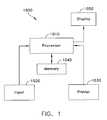
- FIG. 1illustrates a schematic diagram of an exemplary system for generating a set of paired identification labels
- FIG. 2illustrates an exemplary text for a label 100
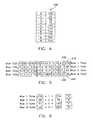
- FIG. 3illustrates an exemplary character look up table 200
- FIG. 4shows an exemplary color look up table 300
- FIG. 5illustrates an assignment of a numerical value to each character in an exemplary label and calculation of row total for each row of characters in the exemplary label 100 ;
- FIG. 6illustrates an exemplary calculation of values of variables “A,” “B,” “C,” and “D” based on the row totals for label 100 ;
- FIG. 7illustrates an exemplary set of paired identification labels with an alignment designation bar
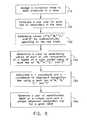
- FIG. 8illustrates a flow chart for generating a paired identification label for a given label of FIG. 1 using a character look up table of FIG. 2 and a color look up table of FIG. 3 ;
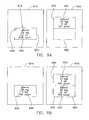
- FIGS. 9A-9Billustrate an exemplary matching of a deliverable unit with an information sheet using an embodiment of the set of paired identification label
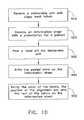
- FIG. 10illustrates a flow chart for an exemplary method for matching a deliverable unit with an information sheet
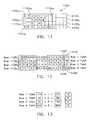
- FIG. 11illustrates text for a label 1100 with a slight difference in the characters printed thereupon as compared to label 100 ;
- FIG. 12illustrates an assignment of a numerical value to each character in exemplary label 1100 and calculation of row total for each row of characters in exemplary label 1100 ;
- FIG. 13illustrates an exemplary calculation of values of variables “A,” “B,” “C,” and “D” based on the row totals for label 1100 ;
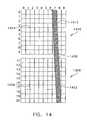
- FIG. 14illustrates the exemplary set of paired identification labels with an alignment designation bar corresponding to label 1100 ;
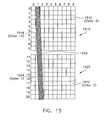
- FIG. 15illustrates another exemplary set of paired identification labels corresponding to label 100 with an alignment designation bar
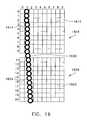
- FIG. 16illustrates another exemplary set of paired identification labels corresponding to label 100 with an different type of alignment designation bar
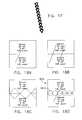
- FIG. 17illustrates yet another embodiment of an alignment designation bar
- FIGS. 18A-18Dillustrate other embodiments of an alignment designation bars
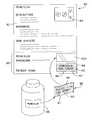
- FIG. 19illustrates an exemplary information sheet and shown with a deliverable unit with a piggy-back label
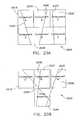
- FIGS. 20A-20Billustrate two exemplary sets of labels wherein a plurality of labels are combinedly paired with at least one other label or label image
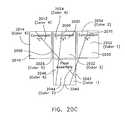
- FIG. 20Cillustrates the method of determining different colors for the set of labels illustrated in FIG. 20B ;
- FIG. 21illustrates an exemplary conversion table for RGB and Pantone Matching System (PMS) Colors
- FIG. 22illustrates another embodiment of paired identification labels using two PMS colors
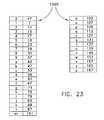
- FIG. 23illustrates another exemplary character lookup table.
- a challenge identified by the inventoris a need for a method and system which creates a quick and readily apparent check to insure that the correct prescription is given to the correct patient. Such checks are particularly important when considering scheduled pharmaceuticals as any item that is taken out of inventory control loses its attachment to the responsible individual.
- the present inventionis based on a general idea of mapping a unique visual indicator from a given set of characters, such that a difference in a single character in the set would result in a different visual indicator.
- the attributes of the visual indicatorare, thus, based on and uniquely mapped to a given set of characters.
- System 1000includes a processor 1010 , a memory 1040 accessible to processor 1010 , a display 1050 , an input 1020 , and a printer 1030 .
- “Processor” as used herein,generally refers to a circuit arrangement that may be contained on one or more silicon chips, and/or integrated circuit (IC) boards, and that contains a Central Processing Unit (CPU).
- the CPUmay generally include an arithmetic logic unit (ALU), which performs arithmetic and logical operations, and a control unit, which extracts instructions from memory and decodes and executes them, calling on the ALU when necessary.
- ALUarithmetic logic unit
- control unitwhich extracts instructions from memory and decodes and executes them, calling on the ALU when necessary.
- Processor 1010may take form of a microprocessor, by way of non-limiting example only.
- the present inventionis operable with computer storage products or computer readable media that contain computer program code for performing the various computer-implemented operations.
- the computer readable mediumis any data storage device that can store data which can thereafter be read by a computer system such as a microprocessor.
- the media and program codemay be those specially designed and constructed for the purposes of the present invention, or they may be of the kind well known to those of ordinary skill in the computer software arts.
- Examples of computer readable mediainclude, but are not limited to magnetic media such as hard disks, floppy disks, and magnetic tape; optical media such as CD-ROM disks; magneto-optical media; and specially configured hardware devices such as application-specific integrated circuits (ASICs), programmable logic devices (PLDs), and ROM and RAM devices.
- Examples of program codeinclude both machine code, as produced, for example, by a compiler, or files containing higher-level code that may be executed using an interpreter.
- Memory 1040may include data storage and retrieval devices including internal and external devices including volatile and non-volatile memory, Read-only Memory (ROM), Random Access Memory (RAM), cache, hard disks, floppy diskettes, magnetic tapes, optical discs such as compact discs (CD), digital versatile discs (DVD), memory sticks and thumb drives.
- input 1020may include keyboards, touch screen input devices, optical disc readers, and optical scanners.
- Printer 1030may include inkjet printers, and laser printers, for example.
- Display 1050may include, by way of example, a monitor. As such components as processor, display, memory, input and printers are known in the art, they are not described in further detail.
- Label 100is a generally flexible, planar substrate with information printed thereupon and may have a layer of adhesive applied to a surface to be affixed to a deliverable unit or other surface. Label 100 is representative of the information to be printed on the set of paired identification labels ( 610 of FIG. 7 ) to be generated by system 1000 (of FIG. 1 ). The information on label 100 may be fed to system 1000 via input means 1020 . Label 100 has a plurality of characters 110 11 , 110 12 . . .
- label 100has four rows 120 1 , 120 2 , 120 3 , and 120 4 , each having a plurality of characters ( 110 11 , 110 12 . . . 110 1n ); ( 110 21 , 110 22 . . . 110 2n ) . . . ( 110 41 , 110 42 . . . 110 4n ) respectively.
- the label information areais divided into cells, each cell containing one character. It is understood that labels may be of different sizes (e.g. different lengths and widths) according to different applications, however, each cell in the matrix of rows and columns may be configured so that the characters can be read in or out in uniform fashion by a corresponding read/write engine.
- an exemplary character look up table 200is illustrated.
- a unique numerical valueis associated with each character in look up table 200 .
- each digit 0-9is assigned a numerical value ranging from 1-10 and each character a-z is assigned a numerical value ranging from 11-35.
- other special charactersmay also be assigned a unique numerical value.
- another exemplary character look up table 2300is illustrated in FIG. 23 . Again, a unique numerical value is associated with each character.
- each digit 0-9is assigned a unique prime number ranging from 7-37 for digits 1-9 and 41 for digit 0.
- Each character a-zis assigned a prime number ranging from 43-167. Digit zero (0) is assigned a sizable prime number (41) because zero (0) is a common character likely to frequently appear on a label associated with a dispensed pharmaceutical, for example, in dosage and count fields.
- each of lower case and upper case letters of the alphabetmay be assigned a unique numerical value.
- Look up table 200may be stored in memory 1040 (of FIG. 1 ) or may otherwise be accessible to processor 1010 (of FIG. 1 ) via computer storage products or computer readable media.
- each digit 0-9is assigned a numerical value ranging from 25-250. In another embodiment, digits 0-9 may be assigned different numerical values also. Look up table 300 may also be stored in memory 1040 (of FIG. 1 ) or be otherwise accessible to processor 1010 (of FIG. 1 ) via computer storage products or computer readable media.
- each character 110 n in each row 120 nis assigned a numerical value based on character look up table 200 .
- a row totalis calculated for each row 120 n , as shown in FIG. 5 by adding the numerical values for each character in a row 120 n . This may be accomplished using a processor in conjunction with a read/write engine.
- the row totals 410 , 420 , 430 , and 440are 174, 49, 51, and 126 for the first, second, third and fourth rows 120 1 , 120 2 , 120 3 , and 120 4 respectively.
- Row totalsmay be calculated using a computer program, for example, a spreadsheet program available from Microsoft Corporation as MS Excel®, and stored in memory 1040 , for example, for later retrieval.
- different algorithmsmay be used to calculate row totals, for example, calculating a subtotal by summing up numerical values for each alternate character in a row and calculating another subtotal by summing up numerical values for the other characters in the same row and multiplying one subtotal by two and adding it to the first subtotal.
- variables A, B, C, and Dare defined using the row totals calculated in FIG. 5 and stored in memory 1040 , for example.
- variablesmay be less than or more than four.
- ARow 1 Total ⁇ 1
- BRow 2 Total ⁇ 2
- CRow 3 Total ⁇ 3
- DRow 4 Total ⁇ 4.
- Other methodsmay also be utilized, for example, assigning the values of the row totals to variables A, B, C, and D or using different multiple values, as shown below:
- CRow 3 Total ⁇ 2
- DRow 4 Total.
- DRow 4 Total ⁇ 1.
- Variables A, B, C and Dmay be calculated using a computer program, for example, a spreadsheet program available from Microsoft Corporation as MS Excel®.
- the values of A, B, C, and Dare 174, 98, 153, and 504 respectively using the first exemplary method.
- variables A, B, C, and Dmay be calculated by selectively performing mathematical operations on the numerical values for each character on label 100 .
- variable Amay be calculated by summing the numerical values assigned to first, fifth, ninth, . . . character
- variable Bmay be calculated by summing the numerical values assigned to second, sixth, tenth, . . . character
- variable Cmay be calculated by summing the numerical values assigned to third, seventh, eleventh, . . . characters
- variable Dmay be calculated by summing the numerical values assigned to fourth, eighth, twelfth, . . . characters on label 100 .
- Other algorithms and other mathematical operationsmay also be applied to calculate the values of four variables A, B, C, and D.
- a color modelis an abstract mathematical model describing the way colors can be represented as a tuple or a set of numbers, typically as three or four values or color components.
- the RGB color modelis utilized, wherein various values of three primary colors Red (R), Green (G) and Blue (B) are used to define a particular color.
- Other color modelssuch as HSV (Hue, Saturation, and Value), HSL (Hue, Saturation, and Lightness), or CMYK (Cyan, Magenta, Yellow and Key (black)) may also be used.
- the color modelis represented as a tuple of three numbers, one each for Red, Green and Blue.
- a tuplemay have more or less than three components, for example, a tuple of four numbers, one each for Cyan, Magenta, Yellow and Key (Black).
- the values for each of the components, R, G, and Bare derived from different combinations of at least two of the variables A, B, C and D. Similar approach may be used to derive the values for each the C, M, Y, and K component.
- R, G, and Bare derived from different combinations of at least two of the variables A, B, C and D. Similar approach may be used to derive the values for each the C, M, Y, and K component.
- the x-coordinates and the y coordinates of alignment designation bar 630are also derived from the variables A, B, C, and D.
- the y-coordinate of the beginning point of bar 630is 0 and the y-coordinate of the end point of bar 630 (of FIG. 7 ) is 20.
- the x-coordinates and the y-coordinates of bar 630may be calculated using a computer program, for example, a spreadsheet program available from Microsoft Corporation as MS Excel®.
- a computer programfor example, a spreadsheet program available from Microsoft Corporation as MS Excel®.
- the beginning point of bar 630 (of FIG. 7 )is (1, 0) and the end point of bar 630 (of FIG. 7 ) is (2, 20).
- the x-coordinate and the y-coordinatemay be calculated as follows.
- ARow 1 Total
- a visual indicatormay include a visual pattern such as two alignment bars, or a hatch pattern or a non-linear bar may also be used.
- the terms “alignment designation bar” and “visual indicators”are used interchangeably and they include other such visual patterns as well.
- Such an alignment designation barmay be aligned by location and may also be aligned by orientation at adjacent edges of the pair of identical labels.
- an alignment designation barmay be a series of symbols such as circles or triangles having a starting point and an end point as determined by the method described above.
- an alignment designation baris not limited to a straight line but also includes other shapes and forms, for example, as shown in FIGS. 16 and 17 , that assist in verifying a match between two labels and have a starting point and an end point calculated from variables A, B, C and D.
- alignment designation bars or visual indicatorsare illustrated in FIGS. 18A-18D .
- Such alignment designation barsmay be generated based on the plurality of characters printed on label 100 .
- the diameter of circles 1810may be generated by performing mathematical operations on the plurality of characters printed on label set 1820 . Since one skilled in the art may recognize that various algorithms or mathematical operations may be performed on a given set of characters to calculate the diameter of circles or the slope of the lines, such algorithms or mathematical operations are not described in detail for the sake of brevity.
- FIG. 7illustrates an exemplary set of paired identification labels 610 and 620 .
- two labels 610 , 620are paired with each other.
- a plurality of labelsmay be combinedly paired with at least one other label or label image.
- the term “paired”is not intended to limit the number of labels to two; rather, it is intended to include any number of labels matched and/or aligned combinedly with at least one other label or label image.
- Alignment designation bar 630is printed across labels 610 , 620 .
- Label 610has two distinct areas 612 and 614 separated by bar 630 .
- label 620has two distinct areas 622 and 624 separated by bar 630 .
- the exemplary set of paired identification labels 610 and 620are based on exemplary label 100 and have a color defined by RGB ( 50 , 250 , 200 ).
- a numerical valueis assigned to each character on a label.
- a row totalis calculated for each row of characters in the label, at block 720 .
- Mathematical operationsare performed on the calculated row totals to derive the values of the variables A, B, C, and D, at block 730 .
- the value of each color component of a tupleis calculated.
- the x-coordinates and the y-coordinates of the beginning point and the end point of an alignment designation barare calculated using at least two of the four variables, A, B, C, and D.
- a set of paired identification labelsis generated, where the labels are of the same color as each other and an alignment designation bar is printed across the labels.
- a set of labels 815is affixed to a deliverable unit 810 .
- deliverable unit 810may be a vial of medication.
- set 815includes two labels 825 , 830 .
- Labels 825 , 830have the same text, and the same color depending on the text.
- the textmay include the name of the drug, the dose and the count of the pills or capsules in unit 810 . In other embodiment, the text may be indicative of a tool in a workshop.
- Label 830is removably superimposed on label 825 such that label 830 may be peeled off leaving label 825 on deliverable unit 810 .
- Label 830has a layer of adhesive applied on the surface which is superimposed on label 825 .
- the upper surface of label 825may have a suitable coating to prevent permanent adhesion of the adhesive of label 830 thereon.
- An information sheet 845is generated along with a prescription for a patient.
- a label image 850 with an alignment designation bar 855is generated based on the text of the prescription for the patient. As set forth above, a given prescription text will have a unique color and a unique position for alignment designation bar 855 .
- Label image 850would be complementary to label 825 .
- a blank space 860is provided below label image 850 .
- An individual responsible for delivering deliverable unit 810 to a patientpeels label 825 off unit 810 and affixes label 825 on information sheet 845 . For a correct combination of deliverable unit 810 and information sheet 845 , label 825 will have the same color as that of label image 850 on information sheet 845 .
- Alignment designation bar 840 of label 825will match alignment designation bar 855 on label image 850 previously present on information sheet 845 at the adjacent edges of label 825 and label image 850 .
- Such a methodprovides three checks for ensuring dispensing of correct deliverable unit 810 to a patient with information sheet 845 : (1) Label image 850 and label 825 should have the same text; (2) label image 850 and label 825 should be of the same color; and (3) alignment designation bar 855 of label image 850 should align as to position and orientation of alignment designation bar 840 of label 825 at the adjacent edges of label image 850 and label 825 .
- FIG. 10illustrates a flow chart for the method for using a set of paired identification labels described in FIG. 9 .
- a deliverable unit with a set of paired identification labelsis received.
- the setincludes two identical labels, one removably superimposed over the other.
- the identical labelsalso include a plurality of characters indicative of the contents of the deliverable unit and at least one visual indicator.
- the visual indicatormay include a color field, an alignment designation bar or both.
- An information sheet, for example, with a prescription presumably corresponding to that deliverable unit for the patientis received, at 920 .
- the information sheethas, for example, details like the patient's name, the medication prescribed to the patient, a complementary label image including the prescription information and a blank space adjacent to the label image for receiving a complementary label.
- the information sheetmay have information pertaining to a special tool to be delivered only to authorized personnel.
- a label from the set of labels on the deliverable unitis peeled off the unit, at 930 .
- the peeled labelis affixed on the blank space provided on the information sheet.
- Three parametersare then verified: (1) the text of the label and the label image on the information sheet; (2) the color of the label and the label image on the information sheet; and (3) the position of the alignment designation bars on the label and the label image on the information sheet, at 950 . If all three parameters match, then the correct deliverable unit has been paired with the correct information sheet.
- the set of paired identification labels or label imagesmay have identical plurality of characters printed thereon and an alignment designation bar.
- the set of paired identification labelsmay have identical plurality of characters printed thereon and be printed in same color.
- the set of paired identification labels or label imagesmay have identical plurality of characters included thereon, an alignment designation bar on each label or label image and be printed in same color.
- Label 1100has the same information as that on label 100 , except for the dosage, i.e. 50 mg instead of 25 mg.
- the row totals 1210 , 1220 , 1230 , and 1240are 174, 47, 51, and 126 for the first, second, third and fourth rows 120 1 , 120 2 , 120 3 , and 120 4 respectively.
- the values of A, B, C, and Dare 174, 94, 153, and 504 respectively using the first exemplary method.
- the values of R, G, and Bare respectively 200 (based on the value corresponding to the last digit 8 of the sum (A+B) in the color look up table of FIG. 3 ), 175 (based on the value corresponding to the last digit 7 of the sum (A+C) in the color look up table of FIG. 3 ), and 200 (based on the value corresponding to the last digit 8 of the sum (A+D) in the color look up table of FIG. 3 ).
- the color of the generated labelwill be defined by the tuple (200, 175, 200).
- the x and y co-ordinates of the starting point and the end point of the alignment designation bar for label 1100will also be different than those for label 100 .
- the y-coordinate of the beginning point of bar 1430 (of FIG. 14 )is 0 and the y-coordinate of the end point of bar 1430 (of FIG. 14 ) is 20.
- the beginning point of bar 1430 (of FIG. 14 )is (7, 0) and the end point of bar 1430 (of FIG. 14 ) is (8, 20).
- FIG. 15is illustrated another embodiment of a set of paired identification labels 1510 , 1520 , which are similar to labels 610 , 620 except for one difference.
- Both labels 610 , 620are printed in color defined by a tuple (50, 175, 200), whereas labels 1510 , 1520 use two different colors.
- color for parts 1514 , 1524 of labels 1510 , 1520respectively may be printed in a first color defined by tuple (50, 175, 200), whereas parts 1512 , 1522 of labels 1510 , 1520 may be printed in a second color.
- the second colormay be determined, for example, by adding 50 to each of the components, i.e. (100, 225, 250).
- the second colormay be determined in many different ways, such as subtracting instead of adding a predetermined value, or multiplying each component by a value, for example, 1.1 or 1.5.
- Use of two different colors on the two sides of alignment designation bar 1530provides an additional easily verifiable parameter for ensuring that labels 1510 and 1520 belong to a single pair of identical labels.
- the sheet 80has an information section 82 that preferably contains some of the warnings and technical information about the pharmaceutical being conveyed.
- the sheet 80also has a picture section 84 that shows color pictures of the pharmaceutical being conveyed. More than one picture may be provided if the pharmaceutical is manufactured by more than one company and comes in different sizes, shapes and/or colors.
- a prepackaged pharmaceutical container or a deliverable unit 86is also shown in FIG. 19 .
- a prepackaged pharmaceutical container 86vends from a vending machine, it contains a removable label 88 .
- the removable label 88identifies the pharmaceutical being in the prepackaged container 86 and also provides a code pattern or visual indicator 90 that is unique to that type of prepackaged unit-of-use.
- the code pattern or visual indicator 90may be a color code, a numerical code, a graphic code or any other visual code.
- the code patternincludes a color field 91 and an alignment designation bar 93 .
- the printout 80contains a tear-away section 95 .
- a label image 92is printed onto the tear-away section 95 .
- the label image 92contains a code pattern 97 that corresponds to the code pattern 90 on the removable label 88 from the prepackaged container 86 .
- the label image 92also contains a color field 99 and an alignment strip 101 .
- a label target or blank space 103is printed adjacent to, for example, either immediately above or below the label image 92 .
- the label target 103shows a person where to place the removable label 88 from the prepackaged container 86 .
- the removable label 88is peeled off of the prepackaged container 86 and is applied over the label target 103 . Once in this position, the color field 91 of the removable label 88 should be the same color as the color field 99 of the label image 92 . Furthermore, the alignment strip 93 of the removable label 88 should align with the alignment strip 101 on the label image 92 .
- the removable label 88By comparing the removable label 88 to the label image 88 , two goals are achieved. First, by checking if the code pattern 90 , 97 match, it can be seen that the proper prepackaged pharmaceutical container 86 was vended from the vending machine. This safeguards against any human error that may have occurred during the filling of the vending machine. Second, the tear-away section 95 of the printout 80 is removed and kept by the office staff, thereby providing a permanent record of what was vended from the vending machine.
- a set of paired identification labelsmay be created using a different color system such as Pantone Color Matching System (PMS) published by Pantone, Inc., 590 Commerce Boulevard, Carlstadt, N.J. 07072.
- PMSPantone Color Matching System
- Other color systemssuch as Natural Color System published by Scandinavian Colour Institute, Sweden and Munsell Color system may also be used.
- FIG. 22illustrates a partial table listing corresponding PMS colors for a few colors defined in RGB system.
- One of ordinary skill in the artcan modify the color look up process to either derive a PMS color from the RGB color or may directly establish a color look up table to determine a PMS color based on the plurality of characters contained in a label. Hence, such a process is not described in detail for the sake of brevity.
- a setincludes a limited number of predetermined colors. The colors for the labels are selected only this limited set.
- Set 2300includes two labels 2305 , 2307 and set 2310 includes two labels 2315 , 2317 .
- An alignment designation bar 2303divides label 2305 into two parts 2305 a , 2305 b and label 2307 into two parts 2307 a , 2307 b .
- an alignment designation bar 2313divides label 2315 in two parts 2315 a , 2315 b and label 2317 into two parts 2317 a , 2317 b .
- Parts 2305 a and 2307 aare adjacent to each other and parts 2305 b and 2307 b are adjacent to each other.
- label set 2300 for ten (10) milligrams (mg) dosageuses colors PMS 345C and PMS 245C. Parts 2305 a and 2307 b are generated in color PMS 345C whereas parts 2305 b and 2307 b are generated in color PMS 245C.
- Label set 2310 for fifty (50) mg dosageuses colors PMS 100C and 284C. Particularly, parts 2315 a and 2317 b are generated in color PMS 100C, whereas parts 2315 b and 2317 a are generated in color PMS 284C. Thus, adjacent parts 2305 a and 2307 a are printed in different colors and similarly, 2305 b and 2307 b are printed in different colors. By using two colors for each set of paired identification labels, thirty (30) different combinations are available from the list of six (6) PMS colors in the table of FIG. 22 .
- FIG. 20Aanother embodiment 2000 of paired identification labels and/or label image is illustrated.
- a plurality of labels 2010 , 2020 , 2030is matched with a label image 2040 .
- Labels 2010 , 2020 , 2030are matched with one another.
- the visual indications to match labels 2010 , 2020 , 2030 , with label image 2040included alignment designation bars 2050 , 2060 , 2070 .
- the embodiment of FIG. 20may be used to match a plurality of deliverable units with a single information sheet.
- label 2010may be affixed on a vial of a vaccine protein and label 2020 may be affixed on a vial of diluent which needs to be combined with the vaccine protein before the vaccine is delivered to a patient.
- Each instance of a visual indicator on label image 2040is associated with a distinct label on a deliverable unit.
- Such a plurality of visual indicatorsthus reminds an individual responsible that more than one deliverable unit are to be associated with such an information sheet and ensures that the correct number and type of deliverable units are ultimately delivered.
- FIG. 20Billustrates another embodiment of the paired set of identification labels.
- labels 2010 , 2020 , and 2030are matched and/or aligned with one another and combinedly with a label image 2040 .
- the starting and end points of alignment designation bars 2050 , 2060 . 2070may be calculated by summing up the digital values associated with text contained in all three (3) labels 2010 , 2020 , 2030 .
- One of ordinary skill in the artcan derive algorithms for determining positions of bars 2050 , 2060 , 2070 , based on the—methods previously discussed in the present application, e.g., taking values based on text and numerals on labels to determine bar endpoints. Referring to FIG.
- label 2030is divided into two portions 2032 , 2034 by alignment designation bar 2070 .
- Portion 2032is on right side of bar 2070 and is printed in Color 1 while portion 2034 is on left side of bar 2070 and is printed in Color 2.
- Label 2020is divided into three (3) portions 2022 , 2024 , 2026 by alignment designation bars 2050 , 2050 .
- Two (2) colors (Color 3, Color 4) for label 2020are also determined in fashion similar to those for label 2010 .
- portion 2022which is adjacent to portion 2034 , is printed in Color 2, disregarding the color (Color 3) determined based on the text of label 2020 .
- Portion 2024is printed in Color 4.
- two (2) colors (Color 5, Color 6) for label 2010are determined based on the text of label 2010 .
- portion 2012which is adjacent to portion 2024
- is printed in Color 3disregarding the color (Color 5).
- Portion 2014is printed in Color 6 as determined above.
- Portion 2026which is adjacent to portion 2014 , of label 2020 is also printed in Color 6.
- Label image 2040is divided into three (3) portions 2042 , 2044 , 2046 by alignment designation bars 2060 , 2070 .
- Portion 2042 which is on right side of bar 2070is printed in Color 1.
- Portion 2044 between bars 2060 , 2070is printed in Color 2 and portion 2046 on the left side of bar 2060 is printed in Color 6.
- adjacent portionswhich are printed in the same color, match with each other, and provide a visual check that the intended components have been correctly assembled and dispensed together. Even a slight change in the text of any of labels 2010 , 2020 , 2030 will result in a different color and create a discrepancy with the colors on label image 2040 .
Landscapes
- Business, Economics & Management (AREA)
- Engineering & Computer Science (AREA)
- General Physics & Mathematics (AREA)
- Physics & Mathematics (AREA)
- Accounting & Taxation (AREA)
- Health & Medical Sciences (AREA)
- Economics (AREA)
- Quality & Reliability (AREA)
- Theoretical Computer Science (AREA)
- Human Resources & Organizations (AREA)
- Marketing (AREA)
- Operations Research (AREA)
- Development Economics (AREA)
- Strategic Management (AREA)
- Tourism & Hospitality (AREA)
- General Business, Economics & Management (AREA)
- Entrepreneurship & Innovation (AREA)
- Finance (AREA)
- Chemical & Material Sciences (AREA)
- Bioinformatics & Cheminformatics (AREA)
- Medicinal Chemistry (AREA)
- Epidemiology (AREA)
- General Health & Medical Sciences (AREA)
- Medical Informatics (AREA)
- Primary Health Care (AREA)
- Public Health (AREA)
- Record Information Processing For Printing (AREA)
Abstract
Description
A=
B=
C=
D=
Other methods may also be utilized, for example, assigning the values of the row totals to variables A, B, C, and D or using different multiple values, as shown below:
| A = | A = | ||
| B = | B = | ||
| C = | C = | ||
| D = | D = | ||
Thus, a variety of other mathematical operations, for example, addition or subtraction, may also be performed on the row totals for generating values for these four variables. Variables A, B, C and D may be calculated using a computer program, for example, a spreadsheet program available from Microsoft Corporation as MS Excel®. For
- R is assigned a numerical value from the color look up table of
FIG. 3 , wherein the numerical value corresponds to the last digit of the sum of A and B; - G is assigned a numerical value from the color look up table of
FIG. 3 , wherein the numerical value corresponds to the last digit of the sum of A and C; - B is assigned a numerical value from the color look up table of
FIG. 3 , wherein the numerical value corresponds to the last digit of the sum of A and D.
In another embodiment, another mathematical operation, for example, subtraction or multiplication may be performed on at least two variables for deriving the values of R, G and B. Values of color components R, G, and B may be calculated using a computer program, for example, a spreadsheet program available from Microsoft Corporation as MS Excel®. For theexemplary label 100,
A+B=174+98=272
A+C=174+153=327
A+D=174+504=678
Forexemplary label 100, the values of R, G, and B are respectively 50 (based on the value corresponding to thelast digit 2 of the sum (A+B) in the color look up table ofFIG. 3 ), 175 (based on the value corresponding to thelast digit 7 of the sum (A+C) in the color look up table ofFIG. 3 ), and 200 (based on the value corresponding to thelast digit 8 of the sum (A+D) in the color look up table ofFIG. 3 ). Thus, the color of each of the pair of identical labels generated will be defined by the tuple (50, 175, 200).
- R is assigned a numerical value from the color look up table of
A=
B=
C=
D=
x=A+(B*107)+(C*15)+(D*101), wherein all the digits of the calculated total are summed up; and
y=A+(B*7)+(C*431)+(D*11), wherein all the digits of the calculated total are summed up.
If the sum of the total is less than or equal to 19, the sum may be used as the coordinate. If the sum of the total is in the range 20-25, 0 is used as the coordinate. If sum of the total is greater than 25, all the digits are again added to get the coordinate. Thus, in this exemplary embodiment, operators are applied on all four variables to derive the x-coordinate and the y-coordinate, which values will change if there is a change in the characters in any row of
A+B=174+94=268
A+C=174+153=327
A+D=174+504=678
For
A=
B=
C=
D=
The digits of each calculated values are added until a single digit remains. Then the color may be determined using, for example, the color look up table300 of
Claims (11)
Priority Applications (1)
| Application Number | Priority Date | Filing Date | Title |
|---|---|---|---|
| US13/070,716US8195534B2 (en) | 2006-06-27 | 2011-03-24 | Method and system for preparing a set of paired identification labels |
Applications Claiming Priority (5)
| Application Number | Priority Date | Filing Date | Title |
|---|---|---|---|
| US11/476,220US7483766B1 (en) | 2006-06-27 | 2006-06-27 | System and method for prescribing and conveying pharmaceuticals within the premises of a healthcare provider |
| US11/820,564US7912578B1 (en) | 2006-06-27 | 2007-06-21 | System and method for conveying pharmaceuticals from an automated machine |
| US11/894,768US7860605B2 (en) | 2006-06-27 | 2007-08-21 | System for controlling access to and segregating dispensed items |
| US12/197,398US7930222B2 (en) | 2006-06-27 | 2008-08-25 | Method and system for preparing a set of paired identification labels |
| US13/070,716US8195534B2 (en) | 2006-06-27 | 2011-03-24 | Method and system for preparing a set of paired identification labels |
Related Parent Applications (1)
| Application Number | Title | Priority Date | Filing Date |
|---|---|---|---|
| US12/197,398DivisionUS7930222B2 (en) | 2006-06-27 | 2008-08-25 | Method and system for preparing a set of paired identification labels |
Publications (2)
| Publication Number | Publication Date |
|---|---|
| US20110226412A1 US20110226412A1 (en) | 2011-09-22 |
| US8195534B2true US8195534B2 (en) | 2012-06-05 |
Family
ID=46331978
Family Applications (2)
| Application Number | Title | Priority Date | Filing Date |
|---|---|---|---|
| US12/197,398Expired - Fee RelatedUS7930222B2 (en) | 2006-06-27 | 2008-08-25 | Method and system for preparing a set of paired identification labels |
| US13/070,716ActiveUS8195534B2 (en) | 2006-06-27 | 2011-03-24 | Method and system for preparing a set of paired identification labels |
Family Applications Before (1)
| Application Number | Title | Priority Date | Filing Date |
|---|---|---|---|
| US12/197,398Expired - Fee RelatedUS7930222B2 (en) | 2006-06-27 | 2008-08-25 | Method and system for preparing a set of paired identification labels |
Country Status (1)
| Country | Link |
|---|---|
| US (2) | US7930222B2 (en) |
Families Citing this family (11)
| Publication number | Priority date | Publication date | Assignee | Title |
|---|---|---|---|---|
| US8222184B2 (en) | 2006-03-07 | 2012-07-17 | Ncr Corporation | UV and thermal guard |
| US8067335B2 (en) | 2006-03-07 | 2011-11-29 | Ncr Corporation | Multisided thermal media combinations |
| US8367580B2 (en) | 2006-03-07 | 2013-02-05 | Ncr Corporation | Dual-sided thermal security features |
| US8721202B2 (en) | 2005-12-08 | 2014-05-13 | Ncr Corporation | Two-sided thermal print switch |
| US7777770B2 (en)* | 2005-12-08 | 2010-08-17 | Ncr Corporation | Dual-sided two-ply direct thermal image element |
| US8043993B2 (en) | 2006-03-07 | 2011-10-25 | Ncr Corporation | Two-sided thermal wrap around label |
| US8670009B2 (en) | 2006-03-07 | 2014-03-11 | Ncr Corporation | Two-sided thermal print sensing |
| US9024986B2 (en) | 2006-03-07 | 2015-05-05 | Ncr Corporation | Dual-sided thermal pharmacy script printing |
| US8848010B2 (en)* | 2007-07-12 | 2014-09-30 | Ncr Corporation | Selective direct thermal and thermal transfer printing |
| US9056488B2 (en) | 2007-07-12 | 2015-06-16 | Ncr Corporation | Two-side thermal printer |
| US8182161B2 (en)* | 2007-08-31 | 2012-05-22 | Ncr Corporation | Controlled fold document delivery |
Citations (27)
| Publication number | Priority date | Publication date | Assignee | Title |
|---|---|---|---|---|
| US4767917A (en) | 1985-03-22 | 1988-08-30 | Sanden Corporation | Automatic vending machine |
| US4812629A (en) | 1985-03-06 | 1989-03-14 | Term-Tronics, Incorporated | Method and apparatus for vending |
| US4847764A (en) | 1987-05-21 | 1989-07-11 | Meditrol, Inc. | System for dispensing drugs in health care institutions |
| US5014875A (en) | 1989-03-01 | 1991-05-14 | Pyxis Corporation | Medication dispenser station |
| US5431299A (en) | 1994-01-26 | 1995-07-11 | Andrew E. Brewer | Medication dispensing and storing system with dispensing modules |
| US5797515A (en) | 1995-10-18 | 1998-08-25 | Adds, Inc. | Method for controlling a drug dispensing system |
| US5883370A (en) | 1995-06-08 | 1999-03-16 | Psc Inc. | Automated method for filling drug prescriptions |
| US6032155A (en) | 1997-04-14 | 2000-02-29 | De La Huerga; Carlos | System and apparatus for administering prescribed medication to a patient |
| US6067524A (en) | 1999-01-07 | 2000-05-23 | Catalina Marketing International, Inc. | Method and system for automatically generating advisory information for pharmacy patients along with normally transmitted data |
| US6109774A (en) | 1995-08-01 | 2000-08-29 | Pyxis Corporation | Drawer operating system |
| US6219587B1 (en) | 1998-05-27 | 2001-04-17 | Nextrx Corporation | Automated pharmaceutical management and dispensing system |
| US6330491B1 (en) | 1999-07-21 | 2001-12-11 | Nicholas Lion | Integrated system and method of vending prescription medications using a network of remotely distributed, automated dispensing units |
| US6352200B1 (en) | 1994-06-09 | 2002-03-05 | Consumer Health Entrepreneurs B.V. | Medicament distribution system and automatic dispenser for such system |
| US6529801B1 (en) | 2000-06-08 | 2003-03-04 | Mendota Healthcare, Inc. | Automatic prescription drug dispenser |
| US20030050731A1 (en) | 2000-06-08 | 2003-03-13 | Ken Rosenblum | Automatic prescription drug dispenser |
| US6564121B1 (en) | 1999-09-22 | 2003-05-13 | Telepharmacy Solutions, Inc. | Systems and methods for drug dispensing |
| US6636780B1 (en) | 2000-11-07 | 2003-10-21 | Mdg Medical Inc. | Medication dispensing system including medicine cabinet and tray therefor |
| US6769228B1 (en) | 2002-07-26 | 2004-08-03 | Express Scripts, Inc. | Prescription order packaging system and method |
| US6860513B2 (en)* | 2000-06-08 | 2005-03-01 | Scriptchek Visual Verification Systems, Inc. | Verification of prescription information and warning label |
| US20050049746A1 (en) | 2003-08-26 | 2005-03-03 | Ken Rosenblum | Automatic prescription drug dispenser |
| US20050075908A1 (en) | 1998-11-06 | 2005-04-07 | Dian Stevens | Personal business service system and method |
| US20050166144A1 (en)* | 2004-01-22 | 2005-07-28 | Mathcom Inventions Ltd. | Method and system for assigning a background to a document and document having a background made according to the method and system |
| US20050281601A1 (en) | 2004-06-17 | 2005-12-22 | Stephen Papetti | Prescription drug printer with drug verification indicia and method for use thereof |
| US6985870B2 (en) | 2002-01-11 | 2006-01-10 | Baxter International Inc. | Medication delivery system |
| US7123989B2 (en) | 2003-07-01 | 2006-10-17 | Asteres, Inc. | System and method for providing a random access and random load dispensing unit |
| US7194333B2 (en) | 2004-11-24 | 2007-03-20 | S & S X-Ray Products, Inc. | Pharmacy envelope dispensing arrangement |
| US7483766B1 (en) | 2006-06-27 | 2009-01-27 | Frankel Mark E | System and method for prescribing and conveying pharmaceuticals within the premises of a healthcare provider |
Family Cites Families (1)
| Publication number | Priority date | Publication date | Assignee | Title |
|---|---|---|---|---|
| DK0573568T3 (en)* | 1991-03-01 | 2001-04-23 | Univ Florida | Use of nicotinic analogues to treat degenerative disorders of the nervous system |
- 2008
- 2008-08-25USUS12/197,398patent/US7930222B2/ennot_activeExpired - Fee Related
- 2011
- 2011-03-24USUS13/070,716patent/US8195534B2/enactiveActive
Patent Citations (33)
| Publication number | Priority date | Publication date | Assignee | Title |
|---|---|---|---|---|
| US4812629A (en) | 1985-03-06 | 1989-03-14 | Term-Tronics, Incorporated | Method and apparatus for vending |
| US4767917A (en) | 1985-03-22 | 1988-08-30 | Sanden Corporation | Automatic vending machine |
| US4847764C1 (en) | 1987-05-21 | 2001-09-11 | Meditrol Inc | System for dispensing drugs in health care instituions |
| US4847764A (en) | 1987-05-21 | 1989-07-11 | Meditrol, Inc. | System for dispensing drugs in health care institutions |
| US5014875A (en) | 1989-03-01 | 1991-05-14 | Pyxis Corporation | Medication dispenser station |
| US5431299A (en) | 1994-01-26 | 1995-07-11 | Andrew E. Brewer | Medication dispensing and storing system with dispensing modules |
| US6352200B1 (en) | 1994-06-09 | 2002-03-05 | Consumer Health Entrepreneurs B.V. | Medicament distribution system and automatic dispenser for such system |
| US5883370A (en) | 1995-06-08 | 1999-03-16 | Psc Inc. | Automated method for filling drug prescriptions |
| US6109774A (en) | 1995-08-01 | 2000-08-29 | Pyxis Corporation | Drawer operating system |
| US20030074218A1 (en) | 1995-10-18 | 2003-04-17 | Liff Harold J. | Method for controlling a drug dispensing system |
| US5797515A (en) | 1995-10-18 | 1998-08-25 | Adds, Inc. | Method for controlling a drug dispensing system |
| US6032155A (en) | 1997-04-14 | 2000-02-29 | De La Huerga; Carlos | System and apparatus for administering prescribed medication to a patient |
| US6219587B1 (en) | 1998-05-27 | 2001-04-17 | Nextrx Corporation | Automated pharmaceutical management and dispensing system |
| US20050075908A1 (en) | 1998-11-06 | 2005-04-07 | Dian Stevens | Personal business service system and method |
| US6067524A (en) | 1999-01-07 | 2000-05-23 | Catalina Marketing International, Inc. | Method and system for automatically generating advisory information for pharmacy patients along with normally transmitted data |
| US20020062175A1 (en) | 1999-07-21 | 2002-05-23 | Nicholas Lion | Integrated system and method of vending prescription medications using a network of remotely distributed, automated dispensing units |
| US6330491B1 (en) | 1999-07-21 | 2001-12-11 | Nicholas Lion | Integrated system and method of vending prescription medications using a network of remotely distributed, automated dispensing units |
| US6564121B1 (en) | 1999-09-22 | 2003-05-13 | Telepharmacy Solutions, Inc. | Systems and methods for drug dispensing |
| US20030050731A1 (en) | 2000-06-08 | 2003-03-13 | Ken Rosenblum | Automatic prescription drug dispenser |
| US6892941B2 (en) | 2000-06-08 | 2005-05-17 | Mendota Healthcare, Inc. | Automatic prescription drug dispenser |
| US6766218B2 (en) | 2000-06-08 | 2004-07-20 | Mendota Healthcare, Inc. | Automatic prescription drug dispenser |
| US6860513B2 (en)* | 2000-06-08 | 2005-03-01 | Scriptchek Visual Verification Systems, Inc. | Verification of prescription information and warning label |
| US6529801B1 (en) | 2000-06-08 | 2003-03-04 | Mendota Healthcare, Inc. | Automatic prescription drug dispenser |
| US6636780B1 (en) | 2000-11-07 | 2003-10-21 | Mdg Medical Inc. | Medication dispensing system including medicine cabinet and tray therefor |
| US6985870B2 (en) | 2002-01-11 | 2006-01-10 | Baxter International Inc. | Medication delivery system |
| US6769228B1 (en) | 2002-07-26 | 2004-08-03 | Express Scripts, Inc. | Prescription order packaging system and method |
| US20040215369A1 (en) | 2002-08-27 | 2004-10-28 | Mendota Healthcare, Inc. | Automatic prescription drug dispenser |
| US7123989B2 (en) | 2003-07-01 | 2006-10-17 | Asteres, Inc. | System and method for providing a random access and random load dispensing unit |
| US20050049746A1 (en) | 2003-08-26 | 2005-03-03 | Ken Rosenblum | Automatic prescription drug dispenser |
| US20050166144A1 (en)* | 2004-01-22 | 2005-07-28 | Mathcom Inventions Ltd. | Method and system for assigning a background to a document and document having a background made according to the method and system |
| US20050281601A1 (en) | 2004-06-17 | 2005-12-22 | Stephen Papetti | Prescription drug printer with drug verification indicia and method for use thereof |
| US7194333B2 (en) | 2004-11-24 | 2007-03-20 | S & S X-Ray Products, Inc. | Pharmacy envelope dispensing arrangement |
| US7483766B1 (en) | 2006-06-27 | 2009-01-27 | Frankel Mark E | System and method for prescribing and conveying pharmaceuticals within the premises of a healthcare provider |
Also Published As
| Publication number | Publication date |
|---|---|
| US20110226412A1 (en) | 2011-09-22 |
| US7930222B2 (en) | 2011-04-19 |
| US20090184510A1 (en) | 2009-07-23 |
Similar Documents
| Publication | Publication Date | Title |
|---|---|---|
| US8195534B2 (en) | Method and system for preparing a set of paired identification labels | |
| US7454880B1 (en) | Personalized medication packaging | |
| US8209943B2 (en) | Distributed medicine supplying device and medicine packaging device | |
| US8055512B1 (en) | Manifest, methods and systems for multi-dose medication order fill | |
| US20030221108A1 (en) | Method for tamperproof marking of products | |
| Neuenschwander et al. | Practical guide to bar coding for patient medication safety | |
| US20040215486A1 (en) | Prescription labeling system and method of use | |
| CN101149778A (en) | Method and apparatus for applying bar code information to products during production | |
| US20040064215A1 (en) | Pharmaceutical dispenser system | |
| US5905652A (en) | System for preparing materials for guiding a patient in taking medicine | |
| US8405875B2 (en) | Visibly-coded medication label and associated method, apparatus and computer program product for providing same | |
| EP3447719B1 (en) | Packaged single-dose-medicament audit system, packaged single-dose-medicament information output method, and computer-readable medium | |
| US20050131733A1 (en) | Sealable individual bar coded packets | |
| US9524376B2 (en) | Apparatus, system, and method for personalized medication labels | |
| JP2006248216A (en) | Color ID card, card creation system, card creation method, program, and storage medium | |
| US20050240480A1 (en) | Display method for pos system | |
| CA2482708A1 (en) | Sealable individual bar coded packets | |
| CA2486683A1 (en) | Method for tamper-proof identification of products | |
| US6542256B1 (en) | Medicine envelope preparation system | |
| US20130278948A1 (en) | System and method for printing a pharmaceutical label | |
| JPH09190477A (en) | Bill preparing device of bar code input type | |
| JPS63246622A (en) | drug weighing system | |
| JPH11161704A (en) | Input method and input device for prescription division | |
| JP4987192B2 (en) | Packaging system according to the time of taking medicine | |
| TWM635396U (en) | Drug Inventory Management System |
Legal Events
| Date | Code | Title | Description |
|---|---|---|---|
| STCF | Information on status: patent grant | Free format text:PATENTED CASE | |
| AS | Assignment | Owner name:GONELLA, JACQUES, MONACO Free format text:SECURITY AGREEMENT;ASSIGNOR:QUIQ, INC.;REEL/FRAME:029087/0482 Effective date:20120821 Owner name:KESSEL, LAWRENCE, PENNSYLVANIA Free format text:SECURITY AGREEMENT;ASSIGNOR:QUIQ, INC.;REEL/FRAME:029087/0482 Effective date:20120821 Owner name:JACOB, LEONARD, FLORIDA Free format text:SECURITY AGREEMENT;ASSIGNOR:QUIQ, INC.;REEL/FRAME:029087/0482 Effective date:20120821 Owner name:BLYSKAL, ROBERT, FLORIDA Free format text:SECURITY AGREEMENT;ASSIGNOR:QUIQ, INC.;REEL/FRAME:029087/0482 Effective date:20120821 | |
| AS | Assignment | Owner name:QMEDS, INC., PENNSYLVANIA Free format text:ASSIGNMENT OF ASSIGNORS INTEREST;ASSIGNOR:QUIQ, INC.;REEL/FRAME:029721/0298 Effective date:20130121 | |
| FPAY | Fee payment | Year of fee payment:4 | |
| SULP | Surcharge for late payment | ||
| MAFP | Maintenance fee payment | Free format text:PAYMENT OF MAINTENANCE FEE, 8TH YR, SMALL ENTITY (ORIGINAL EVENT CODE: M2552); ENTITY STATUS OF PATENT OWNER: SMALL ENTITY Year of fee payment:8 | |
| AS | Assignment | Owner name:QUIQ, INC., PENNSYLVANIA Free format text:ASSIGNMENT OF ASSIGNORS INTEREST;ASSIGNOR:FRANKEL, MARK E.;REEL/FRAME:055512/0790 Effective date:20080818 | |
| FEPP | Fee payment procedure | Free format text:11.5 YR SURCHARGE- LATE PMT W/IN 6 MO, SMALL ENTITY (ORIGINAL EVENT CODE: M2556); ENTITY STATUS OF PATENT OWNER: SMALL ENTITY | |
| MAFP | Maintenance fee payment | Free format text:PAYMENT OF MAINTENANCE FEE, 12TH YR, SMALL ENTITY (ORIGINAL EVENT CODE: M2553); ENTITY STATUS OF PATENT OWNER: SMALL ENTITY Year of fee payment:12 |