US8050960B2 - Recommendations based on an adoption curve - Google Patents
Recommendations based on an adoption curveDownload PDFInfo
- Publication number
- US8050960B2 US8050960B2US11/869,486US86948607AUS8050960B2US 8050960 B2US8050960 B2US 8050960B2US 86948607 AUS86948607 AUS 86948607AUS 8050960 B2US8050960 B2US 8050960B2
- Authority
- US
- United States
- Prior art keywords
- time
- user
- media content
- users
- period
- Prior art date
- Legal status (The legal status is an assumption and is not a legal conclusion. Google has not performed a legal analysis and makes no representation as to the accuracy of the status listed.)
- Active, expires
Links
Images
Classifications
- G—PHYSICS
- G06—COMPUTING OR CALCULATING; COUNTING
- G06Q—INFORMATION AND COMMUNICATION TECHNOLOGY [ICT] SPECIALLY ADAPTED FOR ADMINISTRATIVE, COMMERCIAL, FINANCIAL, MANAGERIAL OR SUPERVISORY PURPOSES; SYSTEMS OR METHODS SPECIALLY ADAPTED FOR ADMINISTRATIVE, COMMERCIAL, FINANCIAL, MANAGERIAL OR SUPERVISORY PURPOSES, NOT OTHERWISE PROVIDED FOR
- G06Q30/00—Commerce
- G06Q30/02—Marketing; Price estimation or determination; Fundraising
- G—PHYSICS
- G06—COMPUTING OR CALCULATING; COUNTING
- G06Q—INFORMATION AND COMMUNICATION TECHNOLOGY [ICT] SPECIALLY ADAPTED FOR ADMINISTRATIVE, COMMERCIAL, FINANCIAL, MANAGERIAL OR SUPERVISORY PURPOSES; SYSTEMS OR METHODS SPECIALLY ADAPTED FOR ADMINISTRATIVE, COMMERCIAL, FINANCIAL, MANAGERIAL OR SUPERVISORY PURPOSES, NOT OTHERWISE PROVIDED FOR
- G06Q10/00—Administration; Management
- G06Q10/10—Office automation; Time management
- G—PHYSICS
- G06—COMPUTING OR CALCULATING; COUNTING
- G06Q—INFORMATION AND COMMUNICATION TECHNOLOGY [ICT] SPECIALLY ADAPTED FOR ADMINISTRATIVE, COMMERCIAL, FINANCIAL, MANAGERIAL OR SUPERVISORY PURPOSES; SYSTEMS OR METHODS SPECIALLY ADAPTED FOR ADMINISTRATIVE, COMMERCIAL, FINANCIAL, MANAGERIAL OR SUPERVISORY PURPOSES, NOT OTHERWISE PROVIDED FOR
- G06Q30/00—Commerce
- G06Q30/02—Marketing; Price estimation or determination; Fundraising
- G06Q30/0201—Market modelling; Market analysis; Collecting market data
- G—PHYSICS
- G06—COMPUTING OR CALCULATING; COUNTING
- G06Q—INFORMATION AND COMMUNICATION TECHNOLOGY [ICT] SPECIALLY ADAPTED FOR ADMINISTRATIVE, COMMERCIAL, FINANCIAL, MANAGERIAL OR SUPERVISORY PURPOSES; SYSTEMS OR METHODS SPECIALLY ADAPTED FOR ADMINISTRATIVE, COMMERCIAL, FINANCIAL, MANAGERIAL OR SUPERVISORY PURPOSES, NOT OTHERWISE PROVIDED FOR
- G06Q30/00—Commerce
- G06Q30/02—Marketing; Price estimation or determination; Fundraising
- G06Q30/0201—Market modelling; Market analysis; Collecting market data
- G06Q30/0202—Market predictions or forecasting for commercial activities
- G—PHYSICS
- G06—COMPUTING OR CALCULATING; COUNTING
- G06Q—INFORMATION AND COMMUNICATION TECHNOLOGY [ICT] SPECIALLY ADAPTED FOR ADMINISTRATIVE, COMMERCIAL, FINANCIAL, MANAGERIAL OR SUPERVISORY PURPOSES; SYSTEMS OR METHODS SPECIALLY ADAPTED FOR ADMINISTRATIVE, COMMERCIAL, FINANCIAL, MANAGERIAL OR SUPERVISORY PURPOSES, NOT OTHERWISE PROVIDED FOR
- G06Q30/00—Commerce
- G06Q30/02—Marketing; Price estimation or determination; Fundraising
- G06Q30/0201—Market modelling; Market analysis; Collecting market data
- G06Q30/0203—Market surveys; Market polls
- G—PHYSICS
- G06—COMPUTING OR CALCULATING; COUNTING
- G06Q—INFORMATION AND COMMUNICATION TECHNOLOGY [ICT] SPECIALLY ADAPTED FOR ADMINISTRATIVE, COMMERCIAL, FINANCIAL, MANAGERIAL OR SUPERVISORY PURPOSES; SYSTEMS OR METHODS SPECIALLY ADAPTED FOR ADMINISTRATIVE, COMMERCIAL, FINANCIAL, MANAGERIAL OR SUPERVISORY PURPOSES, NOT OTHERWISE PROVIDED FOR
- G06Q30/00—Commerce
- G06Q30/02—Marketing; Price estimation or determination; Fundraising
- G06Q30/0201—Market modelling; Market analysis; Collecting market data
- G06Q30/0204—Market segmentation
- G—PHYSICS
- G06—COMPUTING OR CALCULATING; COUNTING
- G06Q—INFORMATION AND COMMUNICATION TECHNOLOGY [ICT] SPECIALLY ADAPTED FOR ADMINISTRATIVE, COMMERCIAL, FINANCIAL, MANAGERIAL OR SUPERVISORY PURPOSES; SYSTEMS OR METHODS SPECIALLY ADAPTED FOR ADMINISTRATIVE, COMMERCIAL, FINANCIAL, MANAGERIAL OR SUPERVISORY PURPOSES, NOT OTHERWISE PROVIDED FOR
- G06Q30/00—Commerce
- G06Q30/06—Buying, selling or leasing transactions
- G06Q30/0601—Electronic shopping [e-shopping]
- G06Q30/0631—Recommending goods or services
Definitions
- the present disclosurerelates to data processing by digital computer, and more particularly to recommendations based on an adoption curve.
- the task of a conventional content-recommendation serviceis to recommend content or services to a user.
- a recommendation engine provided by a web-based music vendormay recommend certain songs to customers.
- Two classes of static recommendation systems that have been used for such purposesare attribute-based recommendation systems and collaborative-filtering based recommendation systems.
- the present inventionprovides methods and apparatus, including computer program products, for recommendations based on an adoption curve.
- the inventionfeatures a method including tracking over a period of time user popularity of a media content using a web service residing in a server, the popularity and period of time representing a life cycle of each of the media content and tracking over the period of time users enrolled in the web service and when in the period of time each of the users adopted the tracked media content.
- the methodassociates adopted media content with user profiles representing the users, and recommends media content associated with a first user who adopted the tracked media content earlier in the period of time to a second user who might want to adopt the tracked media content subsequently in the period of time.
- tracking over the period of time user popularity of the media contentcan include tracking a number of downloads by users at any given time within the period of time, tracking a number of page views by users at any given time within the period of time, and/or tracking a length of time listened to or viewed by users at any given time within the period of time.
- associating adopted media content with user profiles representing the userscan include identifying genres of the user's adopted media content, and storing the adopted media content and the identified media content in the user's web service profile.
- Each of the user profilescan include a user-selectable preference indicator.
- the indicatorcan represent or indicate how adventurous the user is feeling with respect to being exposed to new content.
- recommending media contentcan include matching media content of a genre associated with the first user with media content of the genre associated with the second user, and recommending matched media content of the genre associated with the first user to the second user.
- Trackingcan include measuring a mean and a variance of a histogram of song plays, fitting the histogram to a Gaussian curve, and re-labeling a time axis of the histogram to normalize.
- the mean of the Gaussian curvecan become time 0 , plus one and minus one standard deviations labeled as plus one and minus one.
- a user who is a very early adopterwill have a mean play time that is significantly less than zero and a user that is a very late adopter will have a mean play time that is much higher than one.
- the inventionfeatures a method including tracking over a period of time user popularity of a media content using a web service residing in a server, the popularity and period of time representing a life cycle of each of the media content.
- the methodtracks the media content that users engage over time and catalogs the engaged content into user portfolios of content, along with other information.
- the methodmeasures differences in value of the media content in the portfolios of users at a first point in time and at a subsequent point in time and positions users relative to each on a curve depending on value changes in their portfolios between the first point in time and the subsequent point in time.
- the methodrecommends media content of a first user to a second user, the first person positioned ahead of the second user on the curve.
- tracking over the period of time user popularity of the media contentcan include tracking a number of downloads by users at any given time within the period of time, tracking a number of page views by users at any given time within the period of time, and/or tracking a length of time listened to or viewed by users at any given time within the period of time.
- the value of media contentcan be determined by how the media content is engaged as a fraction of all media engagement events in a particular period of time. Each engagement can be equated to a point.
- Recommending media contentcan include matching media content of a genre associated with the first user with media content of the genre associated with the second user, and recommending matched media content of the genre associated with the first user to the second user.
- the inventionfeatures a method including, in a server system, tracking popularity of songs over a period of time and tracking songs that a user plays over time.
- the methodcatalogs the tracked songs into a user portfolio of played songs along with other information, values the tracked songs, and measures a difference in value of played songs in the portfolio of the user at a first point in time and at a subsequent point in time.
- valuingcan include monitoring how often the tracked songs are played by the user and a popularity of the tracked songs as a fraction of a total number of plays by a number of users. Each song play can be assigned a point. Measuring can include assigning points to each play at the first point in time, and assigning points to each play at the subsequent point in time proportional to a song's change in popularity.
- the inventioncan be implemented to realize one or more of the following advantages.
- a methodmeasures a user's position on an adoption life cycle curve, suggests media content to the user based on the user's position on the curve relative to other users.
- the methodcan use adoption time as a filter or adjunct to conventional recommendation systems.
- the value of a songcan be based on how often it is played, as a fraction of all the play events.
- a methodenables identifying new content (e.g., music or movie) associated with consumers that are early adopters and uses these early adopters to make recommendations for other less adventuresome listeners, or to provide content-consumer intelligence.
- new contente.g., music or movie
- a methodcaptures the dynamics of media consumption.
- a methodrecommends content, such as music, to users based on where they are on the adoption life cycle.
- a methodplaces users at the proper position on the adoption life cycle curve and identifies the content (e.g., songs) that is popular with one group of adoptees so the content can be recommended to those that are less adventuresome.
- contente.g., songs
- a methodhelps users find new content (e.g., music to listen to) in a very dynamic content environment.
- a methodmakes recommendations based on early adoption (and other temporal periods).
- a methodcan predict hits based on who is listening to a song early in its adoption life cycle.
- a methodcan provide intelligence to media producers based on a portfolio model and other predictions of early adopters of what songs are going to be most popular.
- FIG. 1is a block diagram of an exemplary network.
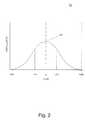
- FIG. 2is an exemplary adoption life cycle curve.
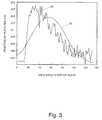
- FIG. 3is an exemplary histogram and adoption life cycle curve.
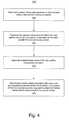
- FIG. 4is a flow diagram.
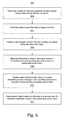
- FIG. 5is a flow diagram.
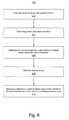
- FIG. 6is a flow diagram.
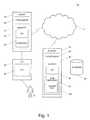
- an exemplary network 10shown here as a client-server network, includes a client 12 connected to a global network of interconnected computers 14 .
- the network 14is the Internet.
- the network 14can be any network capable of transmitting data, such as, for example, an intranet, Local Area Network (LAN), Wide Area Network (WAN), or other network using point-to-point protocols (PPP), Wireless Application Protocols (WAP), and so forth.
- a server 16is linked to the client 12 through the network 14 .
- the client 12can include a processor 20 and memory 22 .
- Memory 22includes an operating system (OS) 24 , such as Linux or Windows®, and a web browser process 26 .
- OSoperating system
- web browser 26such as Firefox®, Opera®, or Netscape Navigator®, a user can view web pages that may contain text, images, and/or other multimedia, and navigate between web pages using hyperlinks.
- the client 12includes an input/output device 28 for display of a graphical user interface (GUI) 30 , generated by web browser process 26 , for display to a user 32 .
- GUIgraphical user interface
- the server 16can include a processor 34 , memory 36 and storage device 38 .
- Memory 36includes an OS 40 , such as Linux or Windows®, and web services 42 .
- Web services 42include a helper application 100 , described below.
- Example web services 42include web-based music services, such as Yahoo!® MusicTM Unlimited, web-based email services, such as Yahoo!® email, web-based toolbar services, such as Yahoo!® toolbar, and web-based instant messaging services, such as Yahoo!® Messenger,
- the user 32can subscribe to one or more of web services 42 through web browser 26 .
- the user 32can play and save full-length songs, select from thousands of play lists, access new music releases, enjoy commercial-free radio stations twenty-four hours a day, generate and share music with friends, access music and play lists from other users, pay per song to keep the music, and so forth.
- the web service 42maintains a database of users, along with their profiles, a store of music, tracking information (e.g., music downloads, plays, and so forth), and a preference indication of how adventurous the user is feeling with respect to being exposed to new content.
- a preference indicator of “1”may reflect a desire to be conservative while a preference indicator of “10” may reflect a desire to be extremely adventurous.
- Other indicators, numeric or non-numeric,can also be used.
- a user's preference indicatorcan be user-selectable so that the user can alter the preference indicator when desired.
- Subscription to one of the web services 42provides content recommendations to the user 32 via the helper application 100 .
- the helper application 100recommends content, e.g., music, for users based on where users are positioned on a bell curve or Gaussian curve referred to herein as an adoption life cycle curve.
- helper application 100 within the web service 42such as Yahoo!® MusicTM Unlimited, tracks its popularity over time. Determining popularity is an on-going process and can be measured by the helper application 100 using one or more functions, such as the number of downloads by users at any given time, tracked over a period of time, or the number of page views, or the length of time listened to or viewed by users. This data is maintained and routinely tracked and updated by the web service 42 . The information can be stored on the server 16 and used to position users of the web service 42 with respect to each other and when in time they adopt particular content. Analyzing content in this manner captures the dynamics of media consumption.
- a bell curvei.e., adoption life cycle curve
- a bell curvedepicted as a mathematical or graphical representation of the popularity of music (e.g., a single song, a genre, a band, an album, and so forth), in one instance, can be plotted against time on one axis, and used to understand who the early adopters are.
- An early adopter interestscan be used to generate recommendations to users who are later adopters, i.e., less adventuresome.
- Placing users on the adoption life cycle curverepresents and identifies how some users adopt content earlier than others, while other users adopt content at a time in which the content has grown to a peak of popularity, or subsequent to its peak of popularity.
- an exemplary adoption life cycle curve 50uses music as an example.
- the adoption life cycle curve 50is depicted as Gaussian curve of the popularity of music (e.g., a single song, a genre, a band, an album, and so forth) plotted on one axis, against time on another axis.
- a Gaussian distributionalso called a normal distribution, is an important family of continuous probability distributions, applicable in many fields. Each member of the family may be defined by two parameters, location and scale: the mean (“average”) and standard deviation (“variability”), respectively.
- the standard normal distributionis the normal distribution with a mean of zero and a variance of one.
- the adoption life cycle curve 50can be applied to other web content, such as movies, restaurants, videos, images, media item portions for use in mash-ups or mixes, blogs, printed media, vacation destinations, and any other type of content that may be experienced by a user in some form, and in connection therewith a user's positive preference for the content or item can be derived or ascertained.
- the mean 52 of the adoption life cycle curve 50represents a peak of the music's usage or popularity.
- Userscan be categorized and placed on the adoption life cycle curve 50 , based upon how early (or late) in time the user is determined to express that they like the thing represented by the curve 50 (a positive preference).
- the degree to which a user expresses a preferencecan also serve as a variable or threshold in plotting the adoption life cycle curve 50 , for example the curve only represents users that rated an item of content with three out of five stars, or a rating of seventy out of one hundred, on a preference scale that may be presented in a user interface (UI) of the web service 42 .
- the preferencemay be derived from user behavior, for example, when a user plays a song five times in a week, even if that user did not affirmatively rate the song through the UI.
- the helper application 100identifies other users that are close to and/or just ahead of the current user on the adoption life cycle curve 50 .
- points along the adoption life cycle curve 50can be assigned a numeric representing where a user is positioned with respect to the adoption of content.
- a peak of popularity in timeis assigned a numeric value of 1.0
- a start before any popularityis assigned a numeric value of 0.0
- an end of popularityis assigned a numeric value of 2.0.
- Values less than 1represent users who adopted particular content prior to its peak of popularity, while values greater than 1 represent users who adopted the particular content after the peak.
- a user assigned a numeric of 0.3 on the adoption life cycle curve 50is considered to be an individual who adopts to particular content earlier than a user assigned a numeric value of 0.5, i.e., 0.3 ⁇ 0.5.
- a user assigned a numeric value of 0.9is considered to be an individual who adopts particular content earlier than a user assigned a numeric value of 1.5, i.e., 0.9 ⁇ 1.5.
- This numeric assignment schemecan be used in conjunction with a particular user's preference indication to recommend content identified as being liked by users positioned before the user on the adoption life cycle curve 50 . If the current user's preference indicator is high, helper application 100 identifies users that are farther away and ahead of the current user on the adoption life cycle curve 50 .
- identification engine 104identifies content associated with users placed at 0.7 on the adoption life cycle curve 50 . If the current user is placed at 0.7 on the adoption life cycle curve 50 and the current user's preference indicator is 5, identification engine 104 identifies content associated with users placed at 0.4 on the adoption life cycle curve 50 .
- contentsuch as the songs that a user listens to over time
- helper application 100measures a difference in a user's content portfolio at a first point in time and again at a subsequent point in time.
- songscan be valued.
- the helper application 100uses the user portfolio to capture a change in popularity of the songs the user listens to today, based on how often they are played today, and at a point in the future. If the songs the user is listening to are growing in popularity, then the user's portfolio value will go up.
- the value of a songcan be based on how often it is played, as a fraction of all the play events. If each play is equated to a point and if there are one million play events for all songs over a selected period of time, then each point is numerically equal to one millionth and the sum of all points is equal to one.
- the helper application 100counts the number of times each web service user plays a song and gives each user a point for each play. For some selected time in the future, each song gets points proportional to its change in popularity. For example, if the song is played 0.1% of the time today, and 0.2% of the time after one month, then this song is worth two points after a month. To calculate a future value, the helper application 100 uses the frequency of plays today and sums the value of today's plays with next month's values.
- This measure generated by the helper application 100provides an estimate of where users are in their adoption time, i.e., positive portfolio changes mean the users are earlier adopters while negative portfolio changes means the users are later adopters.
- This helper application 100does not place users on the adoption life cycle curve 50 very precisely in time, rather, it merely places users on the adoption life cycle curve 50 relative to each other. More specifically, users whose portfolio values increase over time are placed on the adoption life cycle curve 50 ahead of users whose portfolio values do not increase as much or decrease in value.
- the helper application 100can track content, such as song plays, to generate a more detailed song histogram 60 .
- the helper application 100measures a mean and variance of the song histogram 60 and then fits a Gaussian curve 62 (i.e., an adoption life cycle curve) to the data.
- the helper application 100re-labels the time axis (i.e., x-axis) to normalize everything. For example, the mean of the Gaussian curve 60 becomes time 0 . Plus one and minus one standard deviations out are labeled as plus one and minus one.
- the helper application 100can re-label the time of each user's play events in terms of their standardized times.
- a user who is a very early adopterwill have a mean play time that is significantly less than zero.
- a user that is a very late adopterwill be much higher than one.
- userscan be placed on the curve 60 as they adopt content in time relative to popularity and to each other more precisely.
- This measure of adoption time for one songcan be average over all songs a user plays during a given period, for example a day, to get a measure of that user's position on the music-adoption scale.
- Both methods described aboveprovide a way to characterize an adoption time of a user.
- a user's position on the adoption life cycle curve 50is stored by the web service 42 and may change over time. Accordingly, positions of users on the adoption life cycle curve 50 can be updated periodically, such as, for example, daily, weekly or monthly.
- the helper application 100identifies the content, e.g., songs, often categorized by genre, which are popular with a group of adoptees. For a particular user, the helper application 100 identifies other users in the database of users stored in the server storage device 38 who are positioned on the adoption life cycle curve 50 just ahead of the particular user, and in some examples, using the current user's preference indicator of how adventurous the user is feeling with respect to being exposed to new content, which the user may have included in their profile, or which may be derived by the web service 42 on observed user behavior (e.g., a user is consistently identified as an early adopter, so the web service 42 assumes they are a adventurous and more open to new content).
- the contente.g., songs, often categorized by genre, which are popular with a group of adoptees.
- the helper application 100identifies other users in the database of users stored in the server storage device 38 who are positioned on the adoption life cycle curve 50 just ahead of the particular user, and in some examples, using
- helper application 100matches the tastes of the current user with the tastes of the earlier users. For example, if the current user likes country music, then helper application 100 can be designed so that it loads only identified users with country music tastes. Helper application 100 then recommends music associated with the identified users of similar musical tastes that are more adventurous than the current user and likewise, if the user is wanting safe musical choices.
- helper application 100finds other users with approximately similar tastes. For somebody at any position Ton the adoption life cycle curve 50 , helper application 100 recommends songs of users at T ⁇ , where ⁇ is a variable that reflects how adventuresome (e.g. open to new or unexperienced media) the user has been determined to be based on observed behavior, derived behavior, and/or by self-identification via preference input by the user.
- ⁇is a variable that reflects how adventuresome (e.g. open to new or unexperienced media) the user has been determined to be based on observed behavior, derived behavior, and/or by self-identification via preference input by the user.
- the helper application 100can be used to enable recommendations based on early adoption (and other temporal periods), predict hits based on who is listening to a song early in its life cycle, (for example where a user or group of users has shown over time that many of the songs they adopt early become “hits” or very popular) and provide intelligence to media producers, based on the portfolio model described above and other predictions of early adopters, of what songs are going to be most popular.
- Such informationcan be sold, for example, as one of myriad ways to monetize the features described herein. For other items of content intelligence gathered could be sold to advertisers or marketing companies or consultants, or be used for competitive analysis, as just a few examples.
- any media typecan be contemplated as coming within the scope of the disclosure, including, by way of non-limiting example, video, images, ring tones, movies, podcasts, blog posts, media item portions for use in mash-ups, or any type of consumable media that may be experienced by a user by some electronic means.
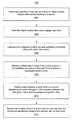
- helper application 100includes tracking ( 102 ) over a period of time user popularity of media content using a web service residing in a server.
- the popularity and period of timerepresents a life cycle of each of the media content.
- Tracking ( 102 ) over the period of time user popularity of the media contentcan include tracking a number of downloads by users at any given time within the period of time, tracking a number of page views by users at any given time within the period of time, and/or tracking a length of time listened to or viewed by users at any given time within the period of time.
- Helper application 100tracks ( 104 ) over the period of time users enrolled in the web service and when in the period of time each of the users adopted the tracked media content.
- Tracking ( 104 )can include measuring a mean and a variance of a histogram of song plays, fitting the histogram to a Gaussian curve, and re-labeling a time axis of the histogram to normalize.
- the mean of the Gaussian curvebecomes time 0 , plus one and minus one standard deviations out labeled as plus one and minus one.
- Helper application 100associates ( 106 ) adopted media content with user profiles representing the users.
- Associating ( 106 ) adopted media content with user profiles representing the userscan include identifying genres of the user's adopted media content, and storing the adopted media content and the identified media content in the user's web service profile.
- Each of the user profilescan include a user-selectable preference indicator that indicates how adventurous the user is feeling with respect to being exposed to new content.
- Helper application 100recommends ( 108 ) media content associated with a first user who adopted the tracked media content earlier in the period of time to a second user who may want to adopt the tracked media content subsequently in the period of time.
- Recommending ( 108 ) media contentcan include matching media content of a genre associated with the first user with media content of the genre associated with the second user, and recommending matched media content of the genre associated with the first user to the second user.
- helper application 100includes tracking ( 202 ) over a period of time user popularity of media content using a web service residing in a server.
- the popularity and period of timerepresents a life cycle of each of the media content.
- Tracking ( 202 ) over the period of time user popularity of the media contentcan include tracking a number of downloads by users at any given time within the period of time, tracking a number of page views by users at any given time within the period of time, and/or tracking a length of time listened to or viewed by users at any given time within the period of time.
- Helper application 100tracks ( 204 ) the media content that users engage over time.
- Helper application 100catalogues ( 206 ) the engaged content into user portfolios of content, along with other information.
- Helper application 100measures ( 208 ) differences in value of the media content in the portfolios of users at a first point in time and at a subsequent point in time.
- the value of media contentcan be determined by how the media content is engaged as a fraction of all media engagement events. Each engagement can be equated to a point.
- Helper application 100positions ( 210 ) users relative to each other on a curve depending on value changes in their portfolios between the first point in time and the subsequent point in time.
- Helper application 100recommends ( 212 ) media content of a first user to a second user, the first person positioned ahead of the second user on the curve.
- Recommending ( 212 ) media contentcan include matching media content of a genre associated with the first user with media content of the genre associated with the second user, and recommending matched media content of the genre associated with the first user to the second user.
- helper application 100includes tracking ( 302 ) popularity of songs over a period of time.
- Helper application 100tracks ( 304 ) songs that a user plays over time.
- Helper application 100catalogues ( 306 ) the tracked songs into a user portfolio of played songs along with other information.
- Helper application 100values ( 308 ) the tracked songs.
- Valuing ( 308 )can include monitoring how often the tracked songs are played by the user and a popularity of the tracked songs as a fraction of a total number of plays by users. Each song play can be assigned a point.
- Helper application 100measures ( 310 ) a difference in value of played songs in the portfolio of the user at a first point in time and at a subsequent point in time. Measuring ( 310 ) can include assigning points to each play at the first point in time, and assigning points to each play at the subsequent point in time proportional to a song's change in popularity.
- Embodiments of the disclosurecan be implemented in digital electronic circuitry, or in computer hardware, firmware, software, or in combinations of them.
- Embodiments of the disclosurecan be implemented as a computer program product, i.e., a computer program tangibly embodied in an information carrier, e.g., in a machine readable storage device or in a propagated signal, for execution by, or to control the operation of, data processing apparatus, e.g., a programmable processor, a computer, or multiple computers.
- a computer programcan be written in any form of programming language, including compiled or interpreted languages, and it can be deployed in any form, including as a stand alone program or as a module, component, subroutine, or other unit suitable for use in a computing environment.
- a computer programcan be deployed to be executed on one computer or on multiple computers at one site or distributed across multiple sites and interconnected by a communication network.
- Method steps of embodiments of the disclosurecan be performed by one or more programmable processors executing a computer program to perform functions of the disclosure by operating on input data and generating output. Method steps can also be performed by, and apparatus of the disclosure can be implemented as, special purpose logic circuitry, e.g., an FPGA (field programmable gate array) or an ASIC (application specific integrated circuit).
- FPGAfield programmable gate array
- ASICapplication specific integrated circuit
- processors suitable for the execution of a computer programinclude, by way of example, both general and special purpose microprocessors, and any one or more processors of any kind of digital computer.
- a processorwill receive instructions and data from a read only memory or a random access memory or both.
- the essential elements of a computerare a processor for executing instructions and one or more memory devices for storing instructions and data.
- a computerwill also include, or be operatively coupled to receive data from or transfer data to, or both, one or more mass storage devices for storing data, e.g., magnetic, magneto optical disks, or optical disks.
- Information carriers suitable for embodying computer program instructions and datainclude all forms of non volatile memory, including by way of example semiconductor memory devices, e.g., EPROM, EEPROM, and flash memory devices; magnetic disks, e.g., internal hard disks or removable disks; magneto optical disks; and CD ROM and DVD-ROM disks.
- semiconductor memory devicese.g., EPROM, EEPROM, and flash memory devices
- magnetic diskse.g., internal hard disks or removable disks
- magneto optical diskse.g., CD ROM and DVD-ROM disks.
- the processor and the memorycan be supplemented by, or incorporated in special purpose logic circuitry.
Landscapes
- Business, Economics & Management (AREA)
- Engineering & Computer Science (AREA)
- Strategic Management (AREA)
- Accounting & Taxation (AREA)
- Finance (AREA)
- Development Economics (AREA)
- Entrepreneurship & Innovation (AREA)
- Marketing (AREA)
- General Business, Economics & Management (AREA)
- General Physics & Mathematics (AREA)
- Physics & Mathematics (AREA)
- Theoretical Computer Science (AREA)
- Economics (AREA)
- Data Mining & Analysis (AREA)
- Game Theory and Decision Science (AREA)
- Human Resources & Organizations (AREA)
- Operations Research (AREA)
- Quality & Reliability (AREA)
- Tourism & Hospitality (AREA)
- Information Transfer Between Computers (AREA)
Abstract
Description
Claims (14)
Priority Applications (2)
| Application Number | Priority Date | Filing Date | Title |
|---|---|---|---|
| US11/869,486US8050960B2 (en) | 2007-10-09 | 2007-10-09 | Recommendations based on an adoption curve |
| US13/278,609US8762228B2 (en) | 2007-10-09 | 2011-10-21 | Recommendations based on an adoption curve |
Applications Claiming Priority (1)
| Application Number | Priority Date | Filing Date | Title |
|---|---|---|---|
| US11/869,486US8050960B2 (en) | 2007-10-09 | 2007-10-09 | Recommendations based on an adoption curve |
Related Child Applications (1)
| Application Number | Title | Priority Date | Filing Date |
|---|---|---|---|
| US13/278,609ContinuationUS8762228B2 (en) | 2007-10-09 | 2011-10-21 | Recommendations based on an adoption curve |
Publications (2)
| Publication Number | Publication Date |
|---|---|
| US20090094095A1 US20090094095A1 (en) | 2009-04-09 |
| US8050960B2true US8050960B2 (en) | 2011-11-01 |
Family
ID=40524071
Family Applications (1)
| Application Number | Title | Priority Date | Filing Date |
|---|---|---|---|
| US11/869,486Active2030-08-31US8050960B2 (en) | 2007-10-09 | 2007-10-09 | Recommendations based on an adoption curve |
Country Status (1)
| Country | Link |
|---|---|
| US (1) | US8050960B2 (en) |
Cited By (4)
| Publication number | Priority date | Publication date | Assignee | Title |
|---|---|---|---|---|
| US20040267604A1 (en)* | 2003-06-05 | 2004-12-30 | Gross John N. | System & method for influencing recommender system |
| US20090326970A1 (en)* | 2008-06-30 | 2009-12-31 | Microsoft Corporation | Awarding users for discoveries of content based on future popularity in a social network |
| US8484203B1 (en)* | 2012-01-04 | 2013-07-09 | Google Inc. | Cross media type recommendations for media items based on identified entities |
| US8751307B2 (en) | 2003-06-05 | 2014-06-10 | Hayley Logistics Llc | Method for implementing online advertising |
Families Citing this family (12)
| Publication number | Priority date | Publication date | Assignee | Title |
|---|---|---|---|---|
| US8855334B1 (en)* | 2009-05-21 | 2014-10-07 | Funmobility, Inc. | Mixed content for a communications device |
| US9014546B2 (en)* | 2009-09-23 | 2015-04-21 | Rovi Guides, Inc. | Systems and methods for automatically detecting users within detection regions of media devices |
| US10580022B2 (en) | 2011-05-27 | 2020-03-03 | Groupon, Inc. | Computing early adopters and potential influencers using transactional data and network analysis |
| US8788659B1 (en) | 2012-03-29 | 2014-07-22 | Google Inc. | Playlist analytics |
| CN108616509B (en)* | 2012-06-20 | 2021-08-20 | 华为技术有限公司 | Content processing method and network side device |
| US9495686B1 (en) | 2012-10-30 | 2016-11-15 | Google Inc. | Serving a content item based on acceptance of a new feature |
| US9383965B1 (en)* | 2013-08-16 | 2016-07-05 | Amazon Technologies, Inc. | Media library analyzer |
| US20160080810A1 (en)* | 2014-09-16 | 2016-03-17 | Samsung Electronics Co., Ltd. | System and method for content recommendation in home network |
| US10185982B1 (en)* | 2015-03-24 | 2019-01-22 | Amazon Technologies, Inc. | Service for notifying users of item review status changes |
| WO2017019458A1 (en) | 2015-07-24 | 2017-02-02 | Spotify Ab | Automatic artist and content breakout prediction |
| US11435873B1 (en) | 2018-12-12 | 2022-09-06 | Amazon Technologies, Inc. | User interface for identifying substitute items |
| US11170432B2 (en)* | 2020-03-31 | 2021-11-09 | Adobe Inc. | Recommender system based on trendsetter inference |
Citations (21)
| Publication number | Priority date | Publication date | Assignee | Title |
|---|---|---|---|---|
| US6092049A (en)* | 1995-06-30 | 2000-07-18 | Microsoft Corporation | Method and apparatus for efficiently recommending items using automated collaborative filtering and feature-guided automated collaborative filtering |
| US6526411B1 (en)* | 1999-11-15 | 2003-02-25 | Sean Ward | System and method for creating dynamic playlists |
| US20030135513A1 (en)* | 2001-08-27 | 2003-07-17 | Gracenote, Inc. | Playlist generation, delivery and navigation |
| US20030236695A1 (en)* | 2002-06-21 | 2003-12-25 | Litwin Louis Robert | Method for media popularity determination by a media playback device |
| US20040019497A1 (en)* | 2001-12-04 | 2004-01-29 | Volk Andrew R. | Method and system for providing listener-requested music over a network |
| US20040054572A1 (en)* | 2000-07-27 | 2004-03-18 | Alison Oldale | Collaborative filtering |
| US20040249700A1 (en)* | 2003-06-05 | 2004-12-09 | Gross John N. | System & method of identifying trendsetters |
| US20040249713A1 (en)* | 2003-06-05 | 2004-12-09 | Gross John N. | Method for implementing online advertising |
| US20040260688A1 (en)* | 2003-06-05 | 2004-12-23 | Gross John N. | Method for implementing search engine |
| US20040267604A1 (en)* | 2003-06-05 | 2004-12-30 | Gross John N. | System & method for influencing recommender system |
| US20050203807A1 (en)* | 1999-04-09 | 2005-09-15 | Bezos Jeffrey P. | Computer services for identifying and exposing associations between user communities and items in a catalog |
| US20050251566A1 (en)* | 2004-05-05 | 2005-11-10 | Martin Weel | Playlist downloading for digital entertainment network |
| US20050251807A1 (en)* | 2004-05-05 | 2005-11-10 | Martin Weel | System and method for sharing playlists |
| US20050251576A1 (en)* | 2004-05-05 | 2005-11-10 | Martin Weel | Device discovery for digital entertainment network |
| US20050261987A1 (en)* | 1999-04-09 | 2005-11-24 | Bezos Jeffrey P | Notification service for assisting users in selecting items from an electronic catalog |
| US20060010029A1 (en)* | 2004-04-29 | 2006-01-12 | Gross John N | System & method for online advertising |
| US20060026048A1 (en)* | 1997-08-08 | 2006-02-02 | Kolawa Adam K | Method and apparatus for automated selection, organization, and recommendation of items based on user preference topography |
| US20060195480A1 (en)* | 2005-02-28 | 2006-08-31 | Michael Spiegelman | User interface for sharing and searching playlists |
| US20070243509A1 (en)* | 2006-03-31 | 2007-10-18 | Jonathan Stiebel | System and method for electronic media content delivery |
| US20080133441A1 (en)* | 2006-12-01 | 2008-06-05 | Sun Microsystems, Inc. | Method and system for recommending music |
| US20080256032A1 (en)* | 2004-01-20 | 2008-10-16 | Koninklike Philips Electronics, N.V. | Hierarchical Playlist Generator |
- 2007
- 2007-10-09USUS11/869,486patent/US8050960B2/enactiveActive
Patent Citations (24)
| Publication number | Priority date | Publication date | Assignee | Title |
|---|---|---|---|---|
| US6092049A (en)* | 1995-06-30 | 2000-07-18 | Microsoft Corporation | Method and apparatus for efficiently recommending items using automated collaborative filtering and feature-guided automated collaborative filtering |
| US20060026048A1 (en)* | 1997-08-08 | 2006-02-02 | Kolawa Adam K | Method and apparatus for automated selection, organization, and recommendation of items based on user preference topography |
| US6963850B1 (en)* | 1999-04-09 | 2005-11-08 | Amazon.Com, Inc. | Computer services for assisting users in locating and evaluating items in an electronic catalog based on actions performed by members of specific user communities |
| US7082407B1 (en)* | 1999-04-09 | 2006-07-25 | Amazon.Com, Inc. | Purchase notification service for assisting users in selecting items from an electronic catalog |
| US20050261987A1 (en)* | 1999-04-09 | 2005-11-24 | Bezos Jeffrey P | Notification service for assisting users in selecting items from an electronic catalog |
| US20050203807A1 (en)* | 1999-04-09 | 2005-09-15 | Bezos Jeffrey P. | Computer services for identifying and exposing associations between user communities and items in a catalog |
| US6526411B1 (en)* | 1999-11-15 | 2003-02-25 | Sean Ward | System and method for creating dynamic playlists |
| US20040054572A1 (en)* | 2000-07-27 | 2004-03-18 | Alison Oldale | Collaborative filtering |
| US20030135513A1 (en)* | 2001-08-27 | 2003-07-17 | Gracenote, Inc. | Playlist generation, delivery and navigation |
| US20040019497A1 (en)* | 2001-12-04 | 2004-01-29 | Volk Andrew R. | Method and system for providing listener-requested music over a network |
| US20030236695A1 (en)* | 2002-06-21 | 2003-12-25 | Litwin Louis Robert | Method for media popularity determination by a media playback device |
| US20040249700A1 (en)* | 2003-06-05 | 2004-12-09 | Gross John N. | System & method of identifying trendsetters |
| US20040267604A1 (en)* | 2003-06-05 | 2004-12-30 | Gross John N. | System & method for influencing recommender system |
| US20060004704A1 (en)* | 2003-06-05 | 2006-01-05 | Gross John N | Method for monitoring link & content changes in web pages |
| US20040260688A1 (en)* | 2003-06-05 | 2004-12-23 | Gross John N. | Method for implementing search engine |
| US20040249713A1 (en)* | 2003-06-05 | 2004-12-09 | Gross John N. | Method for implementing online advertising |
| US20080256032A1 (en)* | 2004-01-20 | 2008-10-16 | Koninklike Philips Electronics, N.V. | Hierarchical Playlist Generator |
| US20060010029A1 (en)* | 2004-04-29 | 2006-01-12 | Gross John N | System & method for online advertising |
| US20050251566A1 (en)* | 2004-05-05 | 2005-11-10 | Martin Weel | Playlist downloading for digital entertainment network |
| US20050251807A1 (en)* | 2004-05-05 | 2005-11-10 | Martin Weel | System and method for sharing playlists |
| US20050251576A1 (en)* | 2004-05-05 | 2005-11-10 | Martin Weel | Device discovery for digital entertainment network |
| US20060195480A1 (en)* | 2005-02-28 | 2006-08-31 | Michael Spiegelman | User interface for sharing and searching playlists |
| US20070243509A1 (en)* | 2006-03-31 | 2007-10-18 | Jonathan Stiebel | System and method for electronic media content delivery |
| US20080133441A1 (en)* | 2006-12-01 | 2008-06-05 | Sun Microsystems, Inc. | Method and system for recommending music |
Non-Patent Citations (1)
| Title |
|---|
| Dou et al., "An Approach to Analyzing Correlation between Songs/Artists Using iTMS Playlists," Proceedings of the 2005 International Conference on Computational Intelligence for Modeling, Control and Automation, 2005, pp. 951-956.* |
Cited By (6)
| Publication number | Priority date | Publication date | Assignee | Title |
|---|---|---|---|---|
| US20040267604A1 (en)* | 2003-06-05 | 2004-12-30 | Gross John N. | System & method for influencing recommender system |
| US8103540B2 (en)* | 2003-06-05 | 2012-01-24 | Hayley Logistics Llc | System and method for influencing recommender system |
| US8751307B2 (en) | 2003-06-05 | 2014-06-10 | Hayley Logistics Llc | Method for implementing online advertising |
| US20090326970A1 (en)* | 2008-06-30 | 2009-12-31 | Microsoft Corporation | Awarding users for discoveries of content based on future popularity in a social network |
| US8484203B1 (en)* | 2012-01-04 | 2013-07-09 | Google Inc. | Cross media type recommendations for media items based on identified entities |
| US8856111B1 (en)* | 2012-01-04 | 2014-10-07 | Google Inc. | Cross media type recommendations for media items based on identified entities |
Also Published As
| Publication number | Publication date |
|---|---|
| US20090094095A1 (en) | 2009-04-09 |
Similar Documents
| Publication | Publication Date | Title |
|---|---|---|
| US8050960B2 (en) | Recommendations based on an adoption curve | |
| Hu et al. | Your neighbors affect your ratings: on geographical neighborhood influence to rating prediction | |
| US8666525B2 (en) | Digital media player and method for facilitating music recommendation | |
| US7937380B2 (en) | System and method for recommended events | |
| KR101240122B1 (en) | Method and apparatus for social network marketing with advocate referral | |
| Böhmer et al. | Appfunnel: A framework for usage-centric evaluation of recommender systems that suggest mobile applications | |
| CN109582857A (en) | Based on big data information-pushing method, device, computer equipment and storage medium | |
| US8260657B1 (en) | Dynamic pricing of electronic content | |
| US20080077568A1 (en) | Talent identification system and method | |
| US20120030018A1 (en) | Systems And Methods For Managing Electronic Content | |
| JP5830545B2 (en) | Content providing method and system | |
| US20130166385A1 (en) | Event Location with Social Network Integration | |
| US20080243633A1 (en) | Systems and methods for receiving and sponsoring media content | |
| CN110880127A (en) | Consumption level prediction method and device, electronic equipment and storage medium | |
| US20160012454A1 (en) | Database systems for measuring impact on the internet | |
| JP6899805B2 (en) | Characteristic estimation device, characteristic estimation method, characteristic estimation program, etc. | |
| US8762228B2 (en) | Recommendations based on an adoption curve | |
| EP3494494A1 (en) | Means for broadcasting a personalized content in a communication network | |
| US20170315676A1 (en) | Dynamic content insertion | |
| Asai | Sales patterns of hit music in Japan | |
| Quadrana | Algorithms for sequence-aware recommender systems | |
| WO2003060784A2 (en) | Method of enabling e-commerce | |
| CN110020118A (en) | A kind of method and device calculating similarity between user | |
| Walean et al. | Analyzing music streaming application adoption in Indonesia using a unified theory of acceptance and use of technology 2: A case study of premium JOOX and Spotify in Indonesia | |
| Liu | Context-aware recommender systems for implicit data |
Legal Events
| Date | Code | Title | Description |
|---|---|---|---|
| AS | Assignment | Owner name:YAHOO! INC., CALIFORNIA Free format text:ASSIGNMENT OF ASSIGNORS INTEREST;ASSIGNORS:SLANEY, MALCOLM;GOTTSCHALK, ERIC;BEAUPRE, TODD M.;SIGNING DATES FROM 20070928 TO 20071009;REEL/FRAME:019958/0922 Owner name:YAHOO! INC., CALIFORNIA Free format text:ASSIGNMENT OF ASSIGNORS INTEREST;ASSIGNORS:SLANEY, MALCOLM;GOTTSCHALK, ERIC;BEAUPRE, TODD M.;REEL/FRAME:019958/0922;SIGNING DATES FROM 20070928 TO 20071009 | |
| STCF | Information on status: patent grant | Free format text:PATENTED CASE | |
| FPAY | Fee payment | Year of fee payment:4 | |
| AS | Assignment | Owner name:EXCALIBUR IP, LLC, CALIFORNIA Free format text:ASSIGNMENT OF ASSIGNORS INTEREST;ASSIGNOR:YAHOO! INC.;REEL/FRAME:038383/0466 Effective date:20160418 | |
| AS | Assignment | Owner name:YAHOO! INC., CALIFORNIA Free format text:ASSIGNMENT OF ASSIGNORS INTEREST;ASSIGNOR:EXCALIBUR IP, LLC;REEL/FRAME:038951/0295 Effective date:20160531 | |
| AS | Assignment | Owner name:EXCALIBUR IP, LLC, CALIFORNIA Free format text:ASSIGNMENT OF ASSIGNORS INTEREST;ASSIGNOR:YAHOO! INC.;REEL/FRAME:038950/0592 Effective date:20160531 | |
| MAFP | Maintenance fee payment | Free format text:PAYMENT OF MAINTENANCE FEE, 8TH YEAR, LARGE ENTITY (ORIGINAL EVENT CODE: M1552); ENTITY STATUS OF PATENT OWNER: LARGE ENTITY Year of fee payment:8 | |
| AS | Assignment | Owner name:STARBOARD VALUE INTERMEDIATE FUND LP, AS COLLATERAL AGENT, NEW YORK Free format text:PATENT SECURITY AGREEMENT;ASSIGNORS:ACACIA RESEARCH GROUP LLC;AMERICAN VEHICULAR SCIENCES LLC;BONUTTI SKELETAL INNOVATIONS LLC;AND OTHERS;REEL/FRAME:052853/0153 Effective date:20200604 | |
| AS | Assignment | Owner name:R2 SOLUTIONS LLC, TEXAS Free format text:ASSIGNMENT OF ASSIGNORS INTEREST;ASSIGNOR:EXCALIBUR IP, LLC;REEL/FRAME:053459/0059 Effective date:20200428 | |
| AS | Assignment | Owner name:NEXUS DISPLAY TECHNOLOGIES LLC, TEXAS Free format text:RELEASE OF SECURITY INTEREST IN PATENTS;ASSIGNOR:STARBOARD VALUE INTERMEDIATE FUND LP;REEL/FRAME:053654/0254 Effective date:20200630 Owner name:MONARCH NETWORKING SOLUTIONS LLC, CALIFORNIA Free format text:RELEASE OF SECURITY INTEREST IN PATENTS;ASSIGNOR:STARBOARD VALUE INTERMEDIATE FUND LP;REEL/FRAME:053654/0254 Effective date:20200630 Owner name:PARTHENON UNIFIED MEMORY ARCHITECTURE LLC, TEXAS Free format text:RELEASE OF SECURITY INTEREST IN PATENTS;ASSIGNOR:STARBOARD VALUE INTERMEDIATE FUND LP;REEL/FRAME:053654/0254 Effective date:20200630 Owner name:INNOVATIVE DISPLAY TECHNOLOGIES LLC, TEXAS Free format text:RELEASE OF SECURITY INTEREST IN PATENTS;ASSIGNOR:STARBOARD VALUE INTERMEDIATE FUND LP;REEL/FRAME:053654/0254 Effective date:20200630 Owner name:LIFEPORT SCIENCES LLC, TEXAS Free format text:RELEASE OF SECURITY INTEREST IN PATENTS;ASSIGNOR:STARBOARD VALUE INTERMEDIATE FUND LP;REEL/FRAME:053654/0254 Effective date:20200630 Owner name:ACACIA RESEARCH GROUP LLC, NEW YORK Free format text:RELEASE OF SECURITY INTEREST IN PATENTS;ASSIGNOR:STARBOARD VALUE INTERMEDIATE FUND LP;REEL/FRAME:053654/0254 Effective date:20200630 Owner name:SUPER INTERCONNECT TECHNOLOGIES LLC, TEXAS Free format text:RELEASE OF SECURITY INTEREST IN PATENTS;ASSIGNOR:STARBOARD VALUE INTERMEDIATE FUND LP;REEL/FRAME:053654/0254 Effective date:20200630 Owner name:UNIFICATION TECHNOLOGIES LLC, TEXAS Free format text:RELEASE OF SECURITY INTEREST IN PATENTS;ASSIGNOR:STARBOARD VALUE INTERMEDIATE FUND LP;REEL/FRAME:053654/0254 Effective date:20200630 Owner name:SAINT LAWRENCE COMMUNICATIONS LLC, TEXAS Free format text:RELEASE OF SECURITY INTEREST IN PATENTS;ASSIGNOR:STARBOARD VALUE INTERMEDIATE FUND LP;REEL/FRAME:053654/0254 Effective date:20200630 Owner name:BONUTTI SKELETAL INNOVATIONS LLC, TEXAS Free format text:RELEASE OF SECURITY INTEREST IN PATENTS;ASSIGNOR:STARBOARD VALUE INTERMEDIATE FUND LP;REEL/FRAME:053654/0254 Effective date:20200630 Owner name:R2 SOLUTIONS LLC, TEXAS Free format text:RELEASE OF SECURITY INTEREST IN PATENTS;ASSIGNOR:STARBOARD VALUE INTERMEDIATE FUND LP;REEL/FRAME:053654/0254 Effective date:20200630 Owner name:LIMESTONE MEMORY SYSTEMS LLC, CALIFORNIA Free format text:RELEASE OF SECURITY INTEREST IN PATENTS;ASSIGNOR:STARBOARD VALUE INTERMEDIATE FUND LP;REEL/FRAME:053654/0254 Effective date:20200630 Owner name:STINGRAY IP SOLUTIONS LLC, TEXAS Free format text:RELEASE OF SECURITY INTEREST IN PATENTS;ASSIGNOR:STARBOARD VALUE INTERMEDIATE FUND LP;REEL/FRAME:053654/0254 Effective date:20200630 Owner name:TELECONFERENCE SYSTEMS LLC, TEXAS Free format text:RELEASE OF SECURITY INTEREST IN PATENTS;ASSIGNOR:STARBOARD VALUE INTERMEDIATE FUND LP;REEL/FRAME:053654/0254 Effective date:20200630 Owner name:MOBILE ENHANCEMENT SOLUTIONS LLC, TEXAS Free format text:RELEASE OF SECURITY INTEREST IN PATENTS;ASSIGNOR:STARBOARD VALUE INTERMEDIATE FUND LP;REEL/FRAME:053654/0254 Effective date:20200630 Owner name:AMERICAN VEHICULAR SCIENCES LLC, TEXAS Free format text:RELEASE OF SECURITY INTEREST IN PATENTS;ASSIGNOR:STARBOARD VALUE INTERMEDIATE FUND LP;REEL/FRAME:053654/0254 Effective date:20200630 Owner name:CELLULAR COMMUNICATIONS EQUIPMENT LLC, TEXAS Free format text:RELEASE OF SECURITY INTEREST IN PATENTS;ASSIGNOR:STARBOARD VALUE INTERMEDIATE FUND LP;REEL/FRAME:053654/0254 Effective date:20200630 | |
| AS | Assignment | Owner name:R2 SOLUTIONS LLC, TEXAS Free format text:CORRECTIVE ASSIGNMENT TO CORRECT THE ASSIGNEE NAME PREVIOUSLY RECORDED ON REEL 053654 FRAME 0254. ASSIGNOR(S) HEREBY CONFIRMS THE RELEASE OF SECURITY INTEREST GRANTED PURSUANT TO THE PATENT SECURITY AGREEMENT PREVIOUSLY RECORDED;ASSIGNOR:STARBOARD VALUE INTERMEDIATE FUND LP;REEL/FRAME:054981/0377 Effective date:20200630 | |
| AS | Assignment | Owner name:STARBOARD VALUE INTERMEDIATE FUND LP, AS COLLATERAL AGENT, NEW YORK Free format text:CORRECTIVE ASSIGNMENT TO CORRECT THE THE ASSIGNOR NAME PREVIOUSLY RECORDED AT REEL: 052853 FRAME: 0153. ASSIGNOR(S) HEREBY CONFIRMS THE ASSIGNMENT;ASSIGNOR:R2 SOLUTIONS LLC;REEL/FRAME:056832/0001 Effective date:20200604 | |
| MAFP | Maintenance fee payment | Free format text:PAYMENT OF MAINTENANCE FEE, 12TH YEAR, LARGE ENTITY (ORIGINAL EVENT CODE: M1553); ENTITY STATUS OF PATENT OWNER: LARGE ENTITY Year of fee payment:12 |