Movatterモバイル変換


[0]ホーム

URL:


US8031670B2 - Systems and methods for selecting the size of a control region of a downlink subframe - Google Patents

Systems and methods for selecting the size of a control region of a downlink subframe
Download PDF

Info

Publication number
US8031670B2
US8031670B2US12/270,290US27029008AUS8031670B2US 8031670 B2US8031670 B2US 8031670B2US 27029008 AUS27029008 AUS 27029008AUS 8031670 B2US8031670 B2US 8031670B2
Authority
US
United States
Prior art keywords
control region
pdcchs
size
region size
subset
Prior art date
Legal status (The legal status is an assumption and is not a legal conclusion. Google has not performed a legal analysis and makes no representation as to the accuracy of the status listed.)
Active, expires
Application number
US12/270,290
Other versions
US20100120424A1 (en
Inventor
Anders Johansson
Leo Hedlund
Current Assignee (The listed assignees may be inaccurate. Google has not performed a legal analysis and makes no representation or warranty as to the accuracy of the list.)
Telefonaktiebolaget LM Ericsson AB
Original Assignee
Telefonaktiebolaget LM Ericsson AB
Priority date (The priority date is an assumption and is not a legal conclusion. Google has not performed a legal analysis and makes no representation as to the accuracy of the date listed.)
Filing date
Publication date
Application filed by Telefonaktiebolaget LM Ericsson ABfiledCriticalTelefonaktiebolaget LM Ericsson AB
Priority to US12/270,290priorityCriticalpatent/US8031670B2/en
Priority to PCT/SE2008/051310prioritypatent/WO2010056167A1/en
Assigned to TELEFONAKTIEBOLAGET L M ERICSSON (PUBL)reassignmentTELEFONAKTIEBOLAGET L M ERICSSON (PUBL)ASSIGNMENT OF ASSIGNORS INTEREST (SEE DOCUMENT FOR DETAILS).Assignors: HEDLUND, LEO, JOHANSSON, ANDERS
Publication of US20100120424A1publicationCriticalpatent/US20100120424A1/en
Application grantedgrantedCritical
Publication of US8031670B2publicationCriticalpatent/US8031670B2/en
Activelegal-statusCriticalCurrent
Adjusted expirationlegal-statusCritical

Links

Images

Classifications

Definitions

Landscapes

Abstract

Disclosed herein are systems and methods for choosing the size of the control region of a downlink subframe. For example, an apparatus for selecting the size of the control region based on a set of one or more physical downlink control channels (PDCCHs) is disclosed. The apparatus, in some embodiments, includes: a module configured to determine, for each of at least two or more control region sizes included in a set of two or more control region sizes, a subset of PDCCHs from said set of PDCCHs that can be assigned to a control region having a size equal to the control region size; and control region size selector for selecting a control region size for the subframe, wherein the control region size selector is configured to make the selection based, at least in part, on information pertaining to the subset of PDCCHs that can be assigned to a control region having a size equal to the selected control region size.

Description

TECHNICAL FIELD
The present invention relates to radio communication systems and methods for selecting the size of a control region of a downlink subframe.
BACKGROUND
A radio access technology standardized by the 3rdGeneration Partnership Project (3GPP) is referred to as long term evolution (LTE). Only the packet-switched (PS) domain is supported by LTE. LTE is based on orthogonal frequency division multiplexing (OFDM) in the downlink and single-carrier frequency domain multiple access (SC-FDMA) in the uplink.
In the time domain, one subframe of 1 ms duration is divided into 12 or 14 OFDM (or SC-FDMA) symbols, depending on the configuration. One OFDM (or SC-FDMA) symbol consists of a number of sub-carriers in the frequency domain, depending on the channel bandwidth and configuration. One OFDM (or SC-FDMA) symbol on one sub-carrier is referred to as a resource element (“RE”).
In LTE, no dedicated data channels are used. Instead, shared channel resources are used in both downlink and uplink. These shared resources, which are referred to as DL-SCH and UL-SCH, are each controlled by a scheduler that assigns different parts of the downlink and uplink shared channels to different communication devices (a.k.a., user equipments (UEs)) for reception and transmission respectively.
The assignment information for the DL-SCH and the UL-SCH are transmitted in a control region covering n OFDM symbols (n<=4) in the beginning of each downlink subframe. The DL-SCH is transmitted in a data region covering the rest of the OFDM symbols in each downlink subframe. The size of the control region (i.e., n) is set per subframe. The size is signalled to the UE for each subframe on a physical control format indicator channel (PCFICH). The PCFICH occupies a certain minor, pre-determined part of the control region, thereby making it independent of the number of OFDM symbols currently used for the control region.
Each assignment for DL-SCH or UL-SCH is transmitted on a physical downlink control channel (PDCCH) located in the control region. There are typically multiple PDCCHs in each subframe, and each UE is required to monitor the PDCCHs to detect the assignments directed to it. A PDCCH is mapped to a number of control channel elements (CCEs). A PDCCH consists of an aggregation of 1, 2, 4 or 8 CCEs. These four different alternatives are herein referred to aggregation level 1, 2, 4, and 8 respectively. Each CCE may only be utilized on one aggregation level at the time. The variable size achieved by the different aggregation levels is used to adapt the coding rate to the required block error rate (BLER) level for each PDCCH. The total number of available CCEs in a subframe will vary depending on several parameters, some of which are static (bandwidth and number of antennas), some are semi-static (physical HARQ indicator channel (PHICH) size and PHICH duration) and one is dynamic (number of OFDM symbols used for the control region). Each CCE consist of 36 REs. However, in order to achieve time and frequency diversity for the PDCCHs, each CCE and its' corresponding REs are spread out, both in time over the OFDM symbols used for PDCCH, and in frequency over the configured bandwidth. This is achieved through a number of operations including interleaving, and cyclic shifts etc.
The CCE mapping in the control region is also restricted in order to simplify the UE implementation. Depending on a radio network temporary identifier (RNTI), subframe number and CCE aggregation level, only a limited set of CCEs need to be searched for PDCCHs by a UE. These CCE sets are referred to as common search spaces and UE-specific search spaces depending on if the PDCCH is aimed at a group of UEs or to a specific UE. The UEs recognizes PDCCHs aimed at them by the RNTI tag that is attached to each PDCCH.
The PDCCHs are mapped on the control region of the subframe, which can consist of from one up to four OFDM symbols. If more than one OFDM symbol is used for the control region (e.g., two, three or four), then the available capacity for DL-SCH will be reduced correspondingly because there are only a fixed number OFDM symbols available per subframe (i.e., 12 or 14 OFDM symbols for normal and extended cyclic prefix respectively). Hence, the control region is an overhead that steals resources from the DL-SCH (i.e., the downlink peak throughput is affected if the control region is larger than what is absolutely required to carry the control channels). On the other hand, should the number of OFDM symbols for control not be set large enough to carry all PDCCHs required for both DL and UL assignments, then it may not be possible to send all DL and UL assignments to the UEs. This may result in the DL and/or UL throughput being degraded due to the limited capability to assign DL-SCH and UL-SCH resources to the UEs. Accordingly, it is not optimal to use a fixed control region size for each downlink subframe.
What is desired, therefore, are systems and methods for selecting, for each downlink subframe, the size of a control region for the downlink subframe.
SUMMARY
In one aspect, the present invention provides a method to configure the size of the control region of a downlink subframe so that both a low number and a large number of assignments can be optimally handled. This may be done on a subframe basis in order to adapt quickly to new traffic scenarios. Additionally, it may be desirable that the method take into account constraints like the restricted UE-specific search spaces and load control (i.e. an operation where the utilization of CCE is controlled).
For example, in one aspect, the invention provides a method performed by a network node (e.g., a base station) for setting the size of a control region of a subframe based on a set of one or more physical downlink control channels (PDCCHs). In some embodiments, the method includes the following steps: (a) selecting a first control region size from a set of control region sizes and determining a subset of the PDCCHs from said set of PDCCHs that can be assigned to a control region having a size equal to the first control region size; (b) selecting a second control region size from the set of control region sizes and determining a subset of the PDCCHs from said set of PDCCHs that can be assigned to a control region having a size equal to the second control region size; (c) after performing step (b), choosing a control region size for the subframe (e.g., choosing the most optimal control region size for the subframe), wherein the control region size is chosen based, at least in part, on information pertaining to the subset of PDCCHs that can be assigned to a control region having a size equal to the chosen control region size; and (d) setting the size of the control region of the subframe to the control region size chosen in step (c).
In some embodiments, the method also includes: (e) selecting another control region size from the set of control region sizes and determining a subset of the PDCCHs from said set of PDCCHs that can be assigned to a control region having a size equal to the another control region size; and (f) repeating step (e) until all of the control region sizes from the set of control region sizes has been selected, wherein steps (e) and (f) occur prior to step (c).
In some embodiments, the most optimal control region size is one of: (i) a control region size (e.g., the smallest control region size) corresponding to a subset of PDCCHs that includes the highest number of PDCCHs; (ii) a control region size (e.g., the smallest control region size) corresponding to a subset of PDCCHs that has the highest total priority weight; (iii) a control region size (e.g., the smallest control region size) that has the highest number of allocated control channel elements (CCEs); and (iv) a control region size (e.g., the smallest control region size) that has a ratio that is closest to a targeted ratio (e.g., a ratio of PDCCH uplink grants to PDCCH downlink assignments).
In some embodiments, the method also includes: (e) receiving, from one or more schedulers, information identifying the set of PDCCHs, wherein step (e) occurs prior to step (a); (f) after step (d), transmitting a first subframe, wherein the size of the control region of the first subframe is equal to the control region size selected in step (c); (g) receiving, from the one or more schedulers, information identifying a second set of PDCCHs, wherein step (g) occurs after step (e); (h) for each of at least two control region sizes included in the set of control region sizes, determining a subset of PDCCHs from said second set of PDCCHs that can be assigned to a control region having a size equal to the control region size; (i) choosing a control region size for a second subframe, wherein the selection is based, at least in part, on information pertaining to the subset of PDCCHs from the second set of PDCCHs that can be assigned to a control region having a size equal to the chosen control region size; (j) setting the size of the control region of the second subframe to the control region size chosen in step (i); and (k) after step (j), transmitting the second subframe.
In some embodiments, the step of determining the subset of PDCCHs from the set of PDCCHs that can be assigned to a control region comprises: (l) selecting a PDCCH from the set of PDCCHs; (m) determining whether the selected PDCCH can be assigned to the control region without violating a restriction; (n) assigning the selected PDCCH to the control region if it is determined that the selected PDCCH can be assigned without violating a restriction; and (o) performing steps (l)-(n) for each other PDCCH included in the set.
In some embodiments, the step of determining the subset of PDCCHs from said set of PDCCHs that can be assigned to a control region having a size equal to the selected control region size comprises determining the total number of PDCCHs included in each subset; and the step of choosing a control region size comprises selecting the smallest control region size to which the highest number of PDCCHs can be assigned.
In another aspect, the present invention provides an improved base station. In some embodiments, the base station includes: a scheduling module configured to schedule uplink and downlink resources and configured to produce information identifying a set of physical downlink control channels (PDCCHs) for transmission on a subframe; and a control region size selector configured to obtain the information identifying the set of PDCCHs, wherein the control region size selector is further configured to: (a) for each of at least two control region sizes included in a set of two or more control region sizes, determine a subset of PDCCHs from said set of PDCCHs that can be assigned to a control region having a size equal to the control region size, (b) choose a control region size for the subframe, wherein the control region size is chosen based, at least in part, on information pertaining to the subset of PDCCHs from the set of PDCCHs that can be assigned to a control region having a size equal to the chosen control region size, and (c) set the size of the control region of the subframe to the chosen control region size.
In another aspect, the present invention provides an apparatus for selecting the size of a control region for a downlink subframe based on a set of one or more physical downlink control channels (PDCCHs). In some embodiments, the apparatus includes: a module configured to determine, for each of at least two or more control region sizes included in a set of two or more control region sizes, a subset of PDCCHs from said set of PDCCHs that can be assigned to a control region having a size equal to the control region size; and control region size selector configured to select a control region size for the subframe, wherein the control region size selector is configured to make the selection based, at least in part, on information pertaining to the subset of PDCCHs that can be assigned to a control region having a size equal to the selected control region size.
The above and other aspects and embodiments are described below with reference to the accompanying drawings.
BRIEF DESCRIPTION OF THE DRAWINGS
The accompanying drawings, which are incorporated herein and form part of the specification, illustrate various embodiments of the present invention and, together with the description, further serve to explain the principles of the invention and to enable a person skilled in the pertinent art to make and use the invention. In the drawings, like reference numbers indicate identical or functionally similar elements.
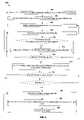
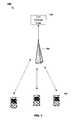
FIG. 1 illustrates a portion of a communications network.
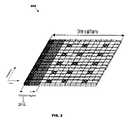
FIG. 2 illustrates a downlink subframe.
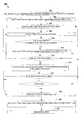
FIG. 3 is a flow chart illustrating a process according to some embodiments of the invention.
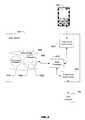
FIG. 4 is a functional block diagram of a base station according to an embodiment of the invention.
DETAILED DESCRIPTION
Referring now toFIG. 1,FIG. 1 illustrates a portion of acommunications network100 according to embodiments of the invention. As illustrated,network100 includes abase station102 that may be in communication with a number of UEs104 and that is interfaced with acore network110. As discussed above, ifbase station102 is an LTE base station, thenbase station102 periodically transmits downlink subframes toUEs104.
Referring now toFIG. 2,FIG. 2 illustrates anexemplary downlink subframe200. As illustrated inFIG. 2,subframe200 includes a control region202. As discussed above, the size of the control region is not fixed. For example, the size of the control region may vary between one and four OFDM symbols. According to embodiments of the present invention,base station102 is configured such thatbase station102 selects the size of the control region for a subframe prior to transmitting the subframe toUEs104. In some embodiments,base station102 is configured such that, for each subframe that it transmits,base station102 selects the size of the control region.
Referring now toFIG. 3,FIG. 3 is a flow chart illustrating aprocess300 performed bybase station102 for selecting the size of the control region of a downlink subframe.Process300 may begin instep302, wherebase station102 receives from a scheduling system information identifying a set of candidate PDCCHs for a particular downlink subframe. Instep304,base station102 selects a set of valid control region sizes. For example, instep304base station102 selects a first control region having a first valid size (e.g., 3 symbols) and selects a second control region have a second valid size (e.g., 4 symbols). The set of valid control region sizes may vary depending on bandwidth. For example, for some bandwidths (e.g., large bandwidths), at most the set of valid control regions sizes is (1, 2 and 3), while for other bandwidths (e.g., narrow bandwidths) at most the set of valid control regions sizes is (2, 3 and 4).
Instep306,base station102 selects a control region size from the set of valid control region sizes. Additionally,base station102 may “remove” the selected control region size from the set (e.g.,base station102 may store information indicating that the selected control region size has been selected so that it will not be selected again when determining what control region size to use for the particular subframe).
Instep308,base station102 selects a candidate PDCCH from the set of candidate PDCCHs. The candidate PDCCH may be selected at random, based on size (e.g., largest selected first), or based on priority (e.g., PDCCHs with higher priority selected over PDCCHs with lower priority). Additionally,base station102 may “remove” the selected PDCCH from the set (e.g.,base station102 may store information indicating that the selected PDCCH has been selected so that it will not be selected again when determining what control region size to use for the particular subframe).
Instep310,base station102 determines whether the selected PDCCH can be assigned to a control region having a size equal to the selected control region size. For example,base station102 determines whether the selected PDCCH can be assigned to the control region without violating some restriction. If the PDCCH can be assigned to the control region, then process300 proceeds to step312, otherwise process300 proceeds to step314.
Instep312,base station104 maps a set of CEE within the selected control region to the selected PDCCH. Next (step314),base station104 determines whether the set of candidate PDCCHs is “empty” (i.e.,base station104 determines whether it has selected all of the candidate PDCCHs.). If the set is “empty,” the process proceeds to step315, otherwise it returns to step308, wherebase station104 selects another candidate PDCCH that has not yet been selected.
Instep315,base station102 records information pertaining to the selected control region size. For instance,base station102 records information pertaining to the subset of PDCCHs that can be assigned to the control region having a size equal to the selected control region size (the subset may include all of the candidate PDCCHs). For example,base station102 may record the number of PDCCHs included in the subset. As another example,base station102 may record information pertaining the priority weight of the PDCCHs included in the subset (e.g., each candidate PDCCH included in the subset may have a priority weight andbase station102 may record the average priority weight or maximum priority weight or a value representing some other function of the priority weights). As yet another example,base station102 may record the ratio of PDCCH uplink grants to PDCCH downlink assignments for the subset. As still another example,base station102 may record the total number of CCEs that are allocated to the candidate PDCCHs included in the subset.
Next (step316),base station102 determines whether the set of valid control region sizes is “empty” (i.e.,base station102 determines whether it has selected all of the valid control region sizes). If the set is “empty,” the process proceeds to step318, otherwise it proceeds to step317. In step317,base station102 determines whether a criteria is met (e.g.,base station102 determines whether a PDCCH load level is fulfilled by, for example, determining whether the ratio of the number of used CCEs to the number of available CCEs is greater than a threshold). If the criteria is met, the process proceeds to step318, otherwise it returns to step306, wherebase station102 selects another valid control region size that has not yet been selected.
Instep318,base station102 determines the optimal control region. This determination may be based on the information recorded instep315. For example, the optimal control region may be the control region that has the smallest control region size and has: (i) the highest number of PDCCHs included in the subset of PDCCHs that can be assigned to the control region; (ii) the highest PDCCH priority weight; (iii) the highest number of allocated control channel elements (CCEs); or (iv) that has a ratio that is closest to a targeted ratio (e.g., that has a ratio of PDCCH uplink grants to PDCCH downlink assignments that is closest to the targeted ratio).
Instep320,base station102 sets the size of the control region for the particular subframe equal to the size of the control region determined instep318. Instep322,base station102 transmits the subframe. Afterstep322,process300 may go back to step302 so thatbase station102 can perform the same steps for the next subframe that is to be transmitted.
In the above manner, the size of the control region can adapt to traffic conditions. Thus, a base station that implements the method described above can increase the chance of it achieving the maximum theoretical peak throughput when only a few users are active, while also, at the same time, support a large number of users.
Referring now toFIG. 4,FIG. 4 is a functional block diagram ofbase station102 according to some embodiments of the invention. As shown,base station102 may comprise a data processor402 (e.g., one or more microprocessors), a data storage system406 (e.g., one or more non-volatile storage devices) andcomputer software408 stored on thestorage system406. Configuration parameters410 (e.g., the above mentioned targets) may also be stored instorage system406.Base station102 also may comprise transmit/receive (Tx/Rx)circuitry404 for transmitting data to and receiving data fromUEs104 and transmit/receive (Tx/Rx)circuitry405 for transmitting data to and receiving data fromcore network110.
Software408 is configured such that whenprocessor402 executessoftware408,base station102 performs steps described above with reference to the flow chart shown inFIG. 3. For example,software408 may include: (1) ascheduling module452 configured to schedule uplink and downlink resources and configured to produce information identifying a set of physical downlink control channels (PDCCHs) for transmission on a subframe; (2) a control regionsize selector module454 configured to obtain the information identifying the set of PDCCHs and further configured to: (a) for each control region size included in a set of control region sizes, determine a subset of PDCCHs from said set of PDCCHs that can be assigned to a control region having a size equal to the control region size; and (b) select a control region size from the set of two or more control region sizes, wherein the selection is based, at least in part, on information pertaining to the subset of PDCCHs from the set of PDCCHs that can be assigned to a control region having a size equal to the selected control region size.
While various embodiments of the present invention have been described above, it should be understood that they have been presented by way of example only, and not limitation. Thus, the breadth and scope of the present invention should not be limited by any of the above-described exemplary embodiments.
Additionally, while the processes described above and illustrated in the drawings are shown as a sequence of steps, this was done solely for the sake of illustration. Accordingly, it is contemplated that some steps may be added, some steps may be omitted, and the order of the steps may be re-arranged.
Claims (24)

1. A method performed by a network node for setting the size of a control region of a subframe based on a set of one or more physical downlink control channels (PDCCHs), comprising:
(a) selecting a first control region size from a set of control region sizes and determining a subset of the PDCCHs from said set of PDCCHs that can be assigned to a control region having a size equal to the first control region size;
(b) selecting a second control region size from the set of control region sizes and determining a subset of the PDCCHs from said set of PDCCHs that can be assigned to a control region having a size equal to the second control region size;
(c) after performing step (b), choosing a control region size for the subframe, wherein the control region size is chosen based, at least in part, on information pertaining to the subset of PDCCHs that can be assigned to a control region having a size equal to the chosen control region size; and
(d) setting the size of the control region of the subframe to the control region size chosen in step (c).
6. The method ofclaim 1, further comprising:
(e) receiving, from one or more schedulers, information identifying the set of PDCCHs, wherein step (e) occurs prior to step (a);
(f) after step (d), transmitting a first subframe, wherein the size of the control region of the first subframe is equal to the control region size selected in step (c);
(g) receiving, from the one or more schedulers, information identifying a second set of PDCCHs, wherein step (g) occurs after step (e);
(h) for each of at least two control region sizes included in the set of control region sizes, determining a subset of PDCCHs from said second set of PDCCHs that can be assigned to a control region having a size equal to the control region size;
(i) choosing a control region size for a second subframe, wherein the selection is based, at least in part, on information pertaining to the subset of PDCCHs from the second set of PDCCHs that can be assigned to a control region having a size equal to the chosen control region size;
(j) setting the size of the control region of the second subframe to the control region size chosen in step (i); and
(k) after step (j), transmitting the second subframe.
11. A base station, comprising:
a scheduling module configured to schedule uplink and downlink resources and configured to produce information identifying a set of physical downlink control channels (PDCCHs) for transmission on a subframe; and
a control region size selector configured to obtain the information identifying the set of PDCCHs, wherein the control region size selector is further configured to:
(a) for each of at least two control region sizes included in a set of two or more control region sizes, determine a subset of PDCCHs from said set of PDCCHs that can be assigned to a control region having a size equal to the control region size,
(b) choose a control region size for the subframe, wherein the control region size is chosen based, at least in part, on information pertaining to the subset of PDCCHs from the set of PDCCHs that can be assigned to a control region having a size equal to the chosen control region size, and
(c) set the size of the control region of the subframe to the chosen control region size.
16. The base station ofclaim 11, wherein the control region size selector is further operable to:
(d) receive, from one or more schedulers, information identifying the set of PDCCHs;
(e) receive, from the one or more schedulers, information identifying a second set of PDCCHs for a second subframe;
(f) for each of at least two control region sizes included in the set of control region sizes, determine a subset of PDCCHs from said second set of PDCCHs that can be assigned to a control region having a size equal to the control region size;
(g) choose a control region size for the second subframe, wherein the control region size is chosen based, at least in part, on information pertaining to the subset of PDCCHs from the second set of PDCCHs that can be assigned to a control region having a size equal to the selected control region size; and
(h) set the size of the control region of the second subframe to the control region size chosen for the second subframe.
US12/270,2902008-11-132008-11-13Systems and methods for selecting the size of a control region of a downlink subframeActive2030-01-30US8031670B2 (en)

Priority Applications (2)

Application NumberPriority DateFiling DateTitle
US12/270,290US8031670B2 (en)2008-11-132008-11-13Systems and methods for selecting the size of a control region of a downlink subframe
PCT/SE2008/051310WO2010056167A1 (en)2008-11-132008-11-14Systems and methods for selecting the size of a control region of a downlink subframe

Applications Claiming Priority (1)

Application NumberPriority DateFiling DateTitle
US12/270,290US8031670B2 (en)2008-11-132008-11-13Systems and methods for selecting the size of a control region of a downlink subframe

Publications (2)

Publication NumberPublication Date
US20100120424A1 US20100120424A1 (en)2010-05-13
US8031670B2true US8031670B2 (en)2011-10-04

Family

ID=41112831

Family Applications (1)

Application NumberTitlePriority DateFiling Date
US12/270,290Active2030-01-30US8031670B2 (en)2008-11-132008-11-13Systems and methods for selecting the size of a control region of a downlink subframe

Country Status (2)

CountryLink
US (1)US8031670B2 (en)
WO (1)WO2010056167A1 (en)

Cited By (3)

* Cited by examiner, † Cited by third party
Publication numberPriority datePublication dateAssigneeTitle
US20100254268A1 (en)*2009-04-022010-10-07So Yeon KimMethod and apparatus for monitoring control channel in multiple carrier system
US20120120868A1 (en)*2009-07-262012-05-17Lg Electronics Inc.Apparatus for transmitting and receiving control information and system information for repeaters and method thereof
WO2017123125A1 (en)2016-01-142017-07-20Telefonaktiebolaget Lm Ericsson (Publ)System, method, and apparatus for selecting the size of a control region of a subframe based on data region load

Families Citing this family (21)

* Cited by examiner, † Cited by third party
Publication numberPriority datePublication dateAssigneeTitle
US9622190B2 (en)2006-07-252017-04-11Google Technology Holdings LLCSpectrum emission level variation in schedulable wireless communication terminal
US20080025254A1 (en)*2006-07-252008-01-31Motorola IncSpectrum emission level variation in schedulable wireless communication terminal
EP2355605B1 (en)2008-12-012018-11-14Sun Patent TrustRadio terminal, radio base station, channel signal forming method and channel signal receiving method
US9673952B2 (en)2009-04-102017-06-06Qualcomm Inc.Method and apparatus for supporting user equipments on different system bandwidths
KR101769368B1 (en)*2009-08-142017-08-30엘지전자 주식회사A method for transmitting downlink reference signal and in multi-carrier supporting wireless communication system an apparatus for the same
US9276710B2 (en)*2009-12-212016-03-01Qualcomm IncorporatedMethod and apparatus for resource allocation with carrier extension
WO2011140138A1 (en)*2010-05-032011-11-10Qualcomm IncorporatedSystem, apparatus and method for downlink and uplink grant design in wireless communication systems
CN102263604B (en)*2010-05-252014-07-16中兴通讯股份有限公司LTE (long term evolution) PDCCH (physical downlink control channel) demapping method and device
US9565655B2 (en)2011-04-132017-02-07Google Technology Holdings LLCMethod and apparatus to detect the transmission bandwidth configuration of a channel in connection with reducing interference between channels in wireless communication systems
US8934500B2 (en)2011-04-132015-01-13Motorola Mobility LlcMethod and apparatus using two radio access technologies for scheduling resources in wireless communication systems
US20120263117A1 (en)*2011-04-132012-10-18Motorola Mobility, Inc.Method and Apparatus to Adjust the Control Region of a Subframe for Reducing Interference Between Channels in Wireless Communication Systems
WO2012145922A1 (en)2011-04-292012-11-01Renesas Mobile CorporationMethod and apparatus for rebalancing the sizes of the downlink (dl) association sets for component carriers having different time division duplex subframe configurations
US9614654B2 (en)*2011-10-032017-04-04Qualcomm IncorporatedAdaptive control channel design for balancing data payload size and decoding time
US10079658B2 (en)*2011-11-042018-09-18Qualcomm IncorporatedSearch space design for e-PDCCH in wireless communication networks
KR20130054180A (en)*2011-11-142013-05-24삼성전자주식회사Method of reference signaling resource allocation for control channel transmission in wireless communication system
CN102665230B (en)*2012-04-232014-07-09电信科学技术研究院Method and device for carrying out E-PDCCH transmission and blind test
CN108901072B (en)2012-06-272023-05-12索尼公司Communication control device, communication control method, and communication device
EP3125599B1 (en)2012-06-272018-03-07Sony CorporationCommunication control device, communication control method and communication device
US10075255B2 (en)*2014-03-112018-09-11Telefonaktiebolaget Lm Ericsson (Publ)Physical downlink control channel (PDCCH) inter-cell-interference coordination
KR102519923B1 (en)2017-02-062023-04-11모토로라 모빌리티 엘엘씨 Sending and receiving synchronization signal blocks
US10694480B2 (en)2017-08-112020-06-23Lenovo (Singapore) Pte. Ltd.Determining synchronization signal block positions

Citations (20)

* Cited by examiner, † Cited by third party
Publication numberPriority datePublication dateAssigneeTitle
US5442660A (en)*1994-01-101995-08-15Industrial Technology Research InstituteFrequency hopping sequence using galois field
US5867478A (en)*1997-06-201999-02-02Motorola, Inc.Synchronous coherent orthogonal frequency division multiplexing system, method, software and device
US6088347A (en)*1999-03-102000-07-11Massachusetts Institute Of TechnologyVariable chip rate code-division multiple access
US6169898B1 (en)*1998-07-162001-01-02Nokia Mobile Phones LtdApparatus, and associated method, for maintaining a selected quality of service level in a radio communication system
US6188717B1 (en)*1996-11-192001-02-13Deutsche Forschungsanstalt Fur Luft-Und Raumfahrt E.V.Method of simultaneous radio transmission of digital data between a plurality of subscriber stations and a base station
US6192068B1 (en)*1996-10-032001-02-20Wi-Lan Inc.Multicode spread spectrum communications system
US6263029B1 (en)*1996-04-192001-07-17WavecomDigital signal with multiple reference blocks for channel estimation, channel estimation methods and corresponding receivers
US20030086366A1 (en)*2001-03-062003-05-08Branlund Dale A.Adaptive communications methods for multiple user packet radio wireless networks
US20040062193A1 (en)*2002-10-012004-04-01Nortel Networks LimitedChannel mapping for OFDM
US20040190640A1 (en)*2003-02-282004-09-30Nortel Networks LimitedSub-carrier allocation for OFDM
US20050025039A1 (en)*2003-07-302005-02-03Samsung Electronics Co., Ltd.Apparatus and method for assigning subchannel in a mobile communication system using orthogonal frequency division multiple access scheme
US6904283B2 (en)*2000-12-152005-06-07Adaptix, Inc.Multi-carrier communications with group-based subcarrier allocation
US20050135324A1 (en)*2003-12-172005-06-23Yun-Hee KimApparatus for OFDMA transmission and reception for coherent detection in uplink of wireless communication system and method thereof
US7039001B2 (en)*2002-10-292006-05-02Qualcomm, IncorporatedChannel estimation for OFDM communication systems
US7391750B2 (en)*2003-09-202008-06-24Samsung Electronics Co., LtdSystem and method for dynamically allocating resources in a mobile communication system employing orthogonal frequency division multiple access
EP1988667A2 (en)2007-05-022008-11-05Samsung Electronics Co., LtdMethod and apparatus for transmitting and receiving control channels by restricting a set of the control channels in a wireless communication system
US20080298224A1 (en)*2007-06-012008-12-04Zhouyue PiMethods and apparatus for mapping modulation symbols to resources in OFDM systems
US20090097447A1 (en)*2007-10-022009-04-16Samsung Electronics Co., Ltd.Method and apparatus for allocating resources of a control channel in a mobile communication system using orthogonal frequency division multiplexing
US20100034303A1 (en)*2008-08-112010-02-11Qualcomm IncorporatedDownlink grants in a multicarrier wireless communication system
US20100329220A1 (en)*2008-03-172010-12-30Hak Seong KimMethod of transmitting uplink data in wireless communication system

Patent Citations (22)

* Cited by examiner, † Cited by third party
Publication numberPriority datePublication dateAssigneeTitle
US5442660A (en)*1994-01-101995-08-15Industrial Technology Research InstituteFrequency hopping sequence using galois field
US6263029B1 (en)*1996-04-192001-07-17WavecomDigital signal with multiple reference blocks for channel estimation, channel estimation methods and corresponding receivers
US6192068B1 (en)*1996-10-032001-02-20Wi-Lan Inc.Multicode spread spectrum communications system
US6188717B1 (en)*1996-11-192001-02-13Deutsche Forschungsanstalt Fur Luft-Und Raumfahrt E.V.Method of simultaneous radio transmission of digital data between a plurality of subscriber stations and a base station
US5867478A (en)*1997-06-201999-02-02Motorola, Inc.Synchronous coherent orthogonal frequency division multiplexing system, method, software and device
US6169898B1 (en)*1998-07-162001-01-02Nokia Mobile Phones LtdApparatus, and associated method, for maintaining a selected quality of service level in a radio communication system
US6088347A (en)*1999-03-102000-07-11Massachusetts Institute Of TechnologyVariable chip rate code-division multiple access
US6904283B2 (en)*2000-12-152005-06-07Adaptix, Inc.Multi-carrier communications with group-based subcarrier allocation
US20030086366A1 (en)*2001-03-062003-05-08Branlund Dale A.Adaptive communications methods for multiple user packet radio wireless networks
US20040062193A1 (en)*2002-10-012004-04-01Nortel Networks LimitedChannel mapping for OFDM
US7039001B2 (en)*2002-10-292006-05-02Qualcomm, IncorporatedChannel estimation for OFDM communication systems
US20040190640A1 (en)*2003-02-282004-09-30Nortel Networks LimitedSub-carrier allocation for OFDM
US20050025039A1 (en)*2003-07-302005-02-03Samsung Electronics Co., Ltd.Apparatus and method for assigning subchannel in a mobile communication system using orthogonal frequency division multiple access scheme
US7502310B2 (en)*2003-07-302009-03-10Samsung Electronics Co., LtdApparatus and method for assigning subchannel in a mobile communication system using orthogonal frequency division multiple access scheme
US7391750B2 (en)*2003-09-202008-06-24Samsung Electronics Co., LtdSystem and method for dynamically allocating resources in a mobile communication system employing orthogonal frequency division multiple access
US20050135324A1 (en)*2003-12-172005-06-23Yun-Hee KimApparatus for OFDMA transmission and reception for coherent detection in uplink of wireless communication system and method thereof
US7639660B2 (en)*2003-12-172009-12-29Electronics And Telecommunications Research InstituteApparatus for OFDMA transmission and reception for coherent detection in uplink of wireless communication system and method thereof
EP1988667A2 (en)2007-05-022008-11-05Samsung Electronics Co., LtdMethod and apparatus for transmitting and receiving control channels by restricting a set of the control channels in a wireless communication system
US20080298224A1 (en)*2007-06-012008-12-04Zhouyue PiMethods and apparatus for mapping modulation symbols to resources in OFDM systems
US20090097447A1 (en)*2007-10-022009-04-16Samsung Electronics Co., Ltd.Method and apparatus for allocating resources of a control channel in a mobile communication system using orthogonal frequency division multiplexing
US20100329220A1 (en)*2008-03-172010-12-30Hak Seong KimMethod of transmitting uplink data in wireless communication system
US20100034303A1 (en)*2008-08-112010-02-11Qualcomm IncorporatedDownlink grants in a multicarrier wireless communication system

Non-Patent Citations (3)

* Cited by examiner, † Cited by third party
Title
International Search Report and Written Opinion issued on Oct. 15, 2009 in PCT/SE2008/051310, filed Nov. 14, 2008, 10 pages.
Love, Robert, et al., "Downlink Control Channel Design for 3GPP LTE", Wireless Communications and Networking Conference, 2008, WCNC 2008, Piscataway, NJ, USA, Mar. 31, 2008, pp. 813-818, XP031243734.
Motorola, Online, vol. R1-073373, No. 50, Aug. 20, 2007, pp. 1-11, XP002512720, Retrieved from the Internet: URL: http://www.3gpp.org/ftp/tsg-ran/WG1RL1/TSGR1-50/Docs/r1-073373.zip>.

Cited By (7)

* Cited by examiner, † Cited by third party
Publication numberPriority datePublication dateAssigneeTitle
US20100254268A1 (en)*2009-04-022010-10-07So Yeon KimMethod and apparatus for monitoring control channel in multiple carrier system
US8441996B2 (en)*2009-04-022013-05-14Lg Electronics Inc.Method and apparatus for monitoring control channel in multiple carrier system
US20120120868A1 (en)*2009-07-262012-05-17Lg Electronics Inc.Apparatus for transmitting and receiving control information and system information for repeaters and method thereof
US8824356B2 (en)*2009-07-262014-09-02Lg Electronics Inc.Apparatus for transmitting and receiving control information and system information for repeaters and method thereof
US9237568B2 (en)2009-07-262016-01-12Lg Electronics Inc.Apparatus for transmitting and receiving control information and system information for repeaters and method thereof
WO2017123125A1 (en)2016-01-142017-07-20Telefonaktiebolaget Lm Ericsson (Publ)System, method, and apparatus for selecting the size of a control region of a subframe based on data region load
US10587384B2 (en)2016-01-142020-03-10Telefonaktiebolaget Lm Ericsson (Publ)System, method, and apparatus for selecting the size of a control region of a subframe based on data region load

Also Published As

Publication numberPublication date
US20100120424A1 (en)2010-05-13
WO2010056167A1 (en)2010-05-20

Similar Documents

PublicationPublication DateTitle
US8031670B2 (en)Systems and methods for selecting the size of a control region of a downlink subframe
US11716743B2 (en)Method for receiving downlink signal in wireless communication system and terminal using the same
US10368341B2 (en)Method and device for uplink resource allocation
US8693433B2 (en)Method and apparatus for mapping and detecting control channel
US8897240B2 (en)Methods and apparatus for physical uplink control channel (PUCCH) load control by physical downlink control channel (PDCCH) restrictions
US8804646B2 (en)Method and device for allocating control channel element
US8565254B2 (en)Radio base station
KR101767021B1 (en)Mapping method and apparatus for a search space of a physical downlink control channel
JP5574872B2 (en) Base station apparatus, mobile station apparatus, and communication method
CN101883401A (en)Resource scheduling method and device of feedback information
WO2014124679A1 (en)Allocation of uplink control channel resources from mapped resource region
WO2011083741A1 (en)Wireless communication system, base station apparatus, mobile station apparatus, wireless communication method, and integrated circuit
WO2012139251A1 (en)Method and base station for power allocation in wireless system
EP3403353B1 (en)Method and network node for selecting the size of a control region of a subframe based on data region load

Legal Events

DateCodeTitleDescription
ASAssignment

Owner name:TELEFONAKTIEBOLAGET L M ERICSSON (PUBL),SWEDEN

Free format text:ASSIGNMENT OF ASSIGNORS INTEREST;ASSIGNORS:JOHANSSON, ANDERS;HEDLUND, LEO;REEL/FRAME:022091/0393

Effective date:20081203

Owner name:TELEFONAKTIEBOLAGET L M ERICSSON (PUBL), SWEDEN

Free format text:ASSIGNMENT OF ASSIGNORS INTEREST;ASSIGNORS:JOHANSSON, ANDERS;HEDLUND, LEO;REEL/FRAME:022091/0393

Effective date:20081203

STCFInformation on status: patent grant

Free format text:PATENTED CASE

FPAYFee payment

Year of fee payment:4

MAFPMaintenance fee payment

Free format text:PAYMENT OF MAINTENANCE FEE, 8TH YEAR, LARGE ENTITY (ORIGINAL EVENT CODE: M1552); ENTITY STATUS OF PATENT OWNER: LARGE ENTITY

Year of fee payment:8

MAFPMaintenance fee payment

Free format text:PAYMENT OF MAINTENANCE FEE, 12TH YEAR, LARGE ENTITY (ORIGINAL EVENT CODE: M1553); ENTITY STATUS OF PATENT OWNER: LARGE ENTITY

Year of fee payment:12


[8]ページ先頭

©2009-2025 Movatter.jp