US7984473B1 - System and method for the coordination of short-term cyclic data and ephemeral content in a broadcast stream - Google Patents
System and method for the coordination of short-term cyclic data and ephemeral content in a broadcast streamDownload PDFInfo
- Publication number
- US7984473B1 US7984473B1US09/593,573US59357300AUS7984473B1US 7984473 B1US7984473 B1US 7984473B1US 59357300 AUS59357300 AUS 59357300AUS 7984473 B1US7984473 B1US 7984473B1
- Authority
- US
- United States
- Prior art keywords
- content
- secondary content
- broadcast
- viewer
- retransmission
- Prior art date
- Legal status (The legal status is an assumption and is not a legal conclusion. Google has not performed a legal analysis and makes no representation as to the accuracy of the status listed.)
- Active, expires
Links
Images
Classifications
- H—ELECTRICITY
- H04—ELECTRIC COMMUNICATION TECHNIQUE
- H04N—PICTORIAL COMMUNICATION, e.g. TELEVISION
- H04N7/00—Television systems
- H04N7/16—Analogue secrecy systems; Analogue subscription systems
- H04N7/173—Analogue secrecy systems; Analogue subscription systems with two-way working, e.g. subscriber sending a programme selection signal
- H04N7/17309—Transmission or handling of upstream communications
- H04N7/17318—Direct or substantially direct transmission and handling of requests
- H—ELECTRICITY
- H04—ELECTRIC COMMUNICATION TECHNIQUE
- H04N—PICTORIAL COMMUNICATION, e.g. TELEVISION
- H04N21/00—Selective content distribution, e.g. interactive television or video on demand [VOD]
- H04N21/20—Servers specifically adapted for the distribution of content, e.g. VOD servers; Operations thereof
- H04N21/25—Management operations performed by the server for facilitating the content distribution or administrating data related to end-users or client devices, e.g. end-user or client device authentication, learning user preferences for recommending movies
- H04N21/262—Content or additional data distribution scheduling, e.g. sending additional data at off-peak times, updating software modules, calculating the carousel transmission frequency, delaying a video stream transmission, generating play-lists
- H04N21/26266—Content or additional data distribution scheduling, e.g. sending additional data at off-peak times, updating software modules, calculating the carousel transmission frequency, delaying a video stream transmission, generating play-lists for determining content or additional data repetition rate, e.g. of a file in a DVB carousel according to its importance
- H—ELECTRICITY
- H04—ELECTRIC COMMUNICATION TECHNIQUE
- H04N—PICTORIAL COMMUNICATION, e.g. TELEVISION
- H04N21/00—Selective content distribution, e.g. interactive television or video on demand [VOD]
- H04N21/60—Network structure or processes for video distribution between server and client or between remote clients; Control signalling between clients, server and network components; Transmission of management data between server and client, e.g. sending from server to client commands for recording incoming content stream; Communication details between server and client
- H04N21/61—Network physical structure; Signal processing
- H04N21/6156—Network physical structure; Signal processing specially adapted to the upstream path of the transmission network
- H04N21/6187—Network physical structure; Signal processing specially adapted to the upstream path of the transmission network involving transmission via a telephone network, e.g. POTS
- H—ELECTRICITY
- H04—ELECTRIC COMMUNICATION TECHNIQUE
- H04N—PICTORIAL COMMUNICATION, e.g. TELEVISION
- H04N21/00—Selective content distribution, e.g. interactive television or video on demand [VOD]
- H04N21/60—Network structure or processes for video distribution between server and client or between remote clients; Control signalling between clients, server and network components; Transmission of management data between server and client, e.g. sending from server to client commands for recording incoming content stream; Communication details between server and client
- H04N21/63—Control signaling related to video distribution between client, server and network components; Network processes for video distribution between server and clients or between remote clients, e.g. transmitting basic layer and enhancement layers over different transmission paths, setting up a peer-to-peer communication via Internet between remote STB's; Communication protocols; Addressing
- H04N21/637—Control signals issued by the client directed to the server or network components
- H04N21/6375—Control signals issued by the client directed to the server or network components for requesting retransmission, e.g. of data packets lost or corrupted during transmission from server
- H—ELECTRICITY
- H04—ELECTRIC COMMUNICATION TECHNIQUE
- H04N—PICTORIAL COMMUNICATION, e.g. TELEVISION
- H04N21/00—Selective content distribution, e.g. interactive television or video on demand [VOD]
- H04N21/80—Generation or processing of content or additional data by content creator independently of the distribution process; Content per se
- H04N21/81—Monomedia components thereof
- H04N21/8126—Monomedia components thereof involving additional data, e.g. news, sports, stocks, weather forecasts
Definitions
- the inventionrelates generally to broadcasting of signals and more particularly to the delivery of short-term cyclic data with the regular content of a broadcast stream.
- U.S. Pat. No. 5,613,065describes a system for information broadcasting utilizing error check codes to determine if a remote client has received a broadcast without error.
- U.S. Pat. No. 4,908,828describes the use of cyclic retransmission and CRC testing of a packetized broadcast.
- U.S. Pat. No. 5,631,907utilizes cyclic transmission, block numbering and forward error correction for broadcast file distribution along with point-to-point communications to a particular station if blocks are not received after the last cycle. All of these methods require periodic retransmission of the data objects to ensure reliable reception, at a cost of increased bandwidth.
- U.S. Pat. Nos. 5,222,061 and 5,535,229describe systems that utilize retransmission of incorrectly received packets based upon individual requests by the client. These systems operate in point-to-point mode and do not take advantage of the broadcast nature existing for a digital television broadcast system.
- U.S. Pat. No. 5,619,689adds the capability of aggregating retransmission requests through hub servers, but operates in a point-to-point message-acknowledgement system.
- U.S. Pat. No. 4,868,866describes a method for broadcasting database updates where the updates are modified by comparing the updated material to a record of what had been previously transmitted. This method requires that the central distribution site be aware of the state of data objects at each receiving client.
- U.S. Pat. No. 5,666,293describes a method of downloading software through a broadcast channel, where cyclic transmission of packetized data is used for reliable reception. In this method, the same content is broadcast to all clients and the client is responsible for deciding which data to download.
- Another object of the inventionis to provide a system that, in addition to providing a basic access window for viewers to receive content associated with a TV program, provides a mechanism for viewers to obtain the associated content after the basic access window has expired, using re-broadcasts.
- Yet another object of the inventionis to provide a system which allows for the retransmission of content to late requesters, which retransmission is performed in a bandwidth-conserving manner.
- Still another object of the inventionis to provide a system which allows for an on-request narrowcast if one or more users requests content after it is no longer efficient to rebroadcast the content.
- Digital or analog signalsare broadcast from a central component at a broadcasting location, and are received by the user's, or viewer's, receiving component at the user location.
- This receiving componenttypically a set-top box (STB) which is connected to the user's television set, receives the additional data content which is broadcast and executes an application which utilizes the additional data content.
- STBset-top box
- the additional data contentis usually broadcast once, shortly prior to its relevance to the main content being viewed.
- the additional data contentis buffered and displayed to the viewer at the appropriate time.
- one proposed solutionis to repeatedly broadcast the additional data content throughout the main content (i.e., commercial message). Since the additional data content is potentially quite large (e.g. interactive program applets, high-resolution images, etc.), periodic rebroadcast throughout the period of display of the main content program or commercial message may not be feasible or cost-effective. Therefore, a method is provided by which additional data content can be broadcast along with the main content of a program or commercial message, in a manner which accommodates late tuners, while efficiently utilizing network bandwidth. The additional data content is broadcast shortly prior to its relevance (e.g., at the beginning of a commercial message) and briefly thereafter.
- the additional data contentis broadcast shortly prior to its relevance (e.g., at the beginning of a commercial message) and briefly thereafter.
- the inventionprovides for staggering of the retransmission requests, either at the STB or at intermediate nodes, to spread out the requests over time, reducing the number which are received at the server at any one time interval.
- the inventionprovides for a counting mechanism, whereby additional data content is rebroadcast on demand only if a significant number of viewers request it. If an insufficient number of viewers request the material, it may be narrowcast to the requesters over alternative transport (such as the phone line).
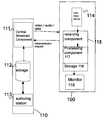
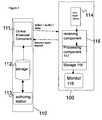
- FIG. 1shows a typical architecture for the broadcast distribution of main content with additional data content, in one embodiment of the present invention
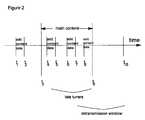
- FIG. 2shows a timing diagram for additional data content distribution, including distribution for tuned-in viewers, late tuners, and viewers requesting retransmission of the additional data content;
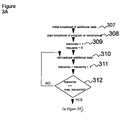
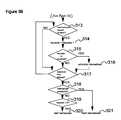
- FIGS. 3A and 3Bprovide a flowchart of the operation of a central broadcast component, or head end, performing the initial broadcast, brief cyclic retransmission, and on-request rebroadcasting or narrowcasting of additional data content.
- Additional data contentSecondary data content (such as text, graphics, or an interactive TV application) which is added by the broadcaster to the primary or main broadcast content (q.v.) and is extracted and presented to the viewer by the receiving component at a user location.
- Secondary data contentsuch as text, graphics, or an interactive TV application
- Additional data content broadcastA broadcast which contains additional data content (q.v.).
- Cyclic dataIn the context of this invention, additional data content (q.v.) which is broadcast multiple times in the course of a program or commercial message.
- Interactive TV applicationAn application which is executed on the receiving component at the user's or viewer's location, which allows the viewer to interact with that equipment, usually by means of a remote control, in order to perform a function or service.
- a remote controlfor example, a purchasing application in which the viewer makes selections from on-screen choices, using a remote control interface.
- Main contentThe primary content of an audio or an audio-video broadcast stream to which the additional data content pertains (also known as “primary content” or “ephemeral” content).
- NarrowcastA broadcast which is addressed to a subset of the usual broadcast audience, and which may be delivered by alternative media other than the original broadcast media.
- RebroadcastA repeat broadcast of content which has been broadcast previously.
- a rebroadcastis a repeat broadcast of the additional data content.
- RetransmissionA repeat transmission (broadcast or narrowcast) of content which has been previously transmitted.
- Retransmission requestA request (by the viewer or the viewer's equipment) for the retransmission of content.
- Retransmission windowThe range of time during which retransmission requests (q.v.) may be accommodated.
- Scheduling informationInformation which describes when in the future a particular item or items of secondary content is to be added to the broadcast.
- Secondary contentData (text, graphics, programs, etc.) Which are supplemental to the primary content of a broadcast and are added to that broadcast.
- SynchronizationIn the context of the present invention, the time coordination between regular broadcast content (q.v.) and additional data content (q.v.).
- Timing InformationInformation which describes when a particular item of secondary content is relevant to the primary content. For example, an image of a particular actor may be relevant to the entire program in which the actor appears, or only to those scenes in which the actor appears.
- the broadcasting location 110 of the illustrated system(at the left of FIG. 1 ) includes at least one authoring station 113 at which streams of the so-called secondary content are created and/or added to the primary content, a storage location 112 for storing created main content streams and for providing same to a central broadcast component in response to scheduled or random requests, and a central broadcast component 111 , which includes means for establishing and conducting communications (whether broadcast transmissions, telephone communications, etc.) with at least one user location.
- a typical scenario for the creation of a service which adds and distributes data in a broadcast stream for the purpose of disseminating additional information and/or for the purpose of enabling other interactions, such as purchasing,is as follows: (a) main content, such as a video/audio commercial, is developed or obtained, for the purpose of a broadcast advertisement and is stored at a storage location 112 which can be accessed by the central broadcast component 111 ; (b) advertisers, wishing to enhance their advertisements, arrange for creation of additional data content to be added to the main content, which is synchronized with the main content using authoring tool 113 and may be stored therewith at storage location 112 , which additional data content may be provided for enabling interactive applications which may already be stored locally at the user's location or for delivering the interactive capabilities in the additional data content; (c) the enhanced advertisement (i.e., comprising one or more streams which include the main content and the additional data content) is broadcast from the central component 111 to a user location 100 , wherein the viewer may interact with the additional data content for
- the user or viewer location 100has a receiving component 115 , such as a set-top box or an I/O component of a personal computer, for receiving the input signal and for outputting that signal to a monitor 116 (which may be a computer monitor, a television set, etc.)
- the receiving component 115includes a processing component 117 for processing user input and for executing such applications as may be stored at a user storage location associated with the receiving component or which may be downloaded as additional data content.
- the user location 100additionally includes at least one user input device 114 , which may be a television remote control, a computer keyboard, a touchscreen at the monitor, a keypad, a microphone, a custom purchasing interface, a touchtone telephone, etc.
- the user locationmay additionally include, either at the receiving component or as separate components (not shown), a user storage location 118 for storing the aforementioned interaction applications.
- the secondary or additional data contentis added to the digital video (and audio) primary content or main content prior to broadcast, by adding the additional data content to an MPEG-2 Transport Stream containing audio and video elementary streams.
- the additional data content which is addedis carried in a “private data stream” as defined in the Systems syntax for MPEG-2 Transport streams (see ISO 13818-1).
- the additional data contentis carried in an MPEG-2 Private Section table form.
- the additional data contentis added to the Vertical Blanking Interval (hereinafter, “VBI”) portion of the main content analog video (and audio) waveform prior to broadcast.
- VBIVertical Blanking Interval
- an authoring station or tool 113 of FIG. 1is used to traverse the main content video frames and to provide the scheduling information indicating when the additional data content is to be provided with the main content.
- the combined streamcontaining video, audio, and data content, may be stored at storage location 112 or may be dynamically streamed for delivery over the broadcast medium.
- broadcast mediainclude terrestrial broadcasting, satellite, and cable (coaxial cable or hybrid fiber-coaxial).
- the format of the inserted additional data contentcan be specified by the system designers and need not be the same format as the main content.
- the additional data contentis in the format of HTML or XML (extended mark-up language) tags, which identify additional data and may also encapsulate the additional data.
- the combined stream comprising the main content and the additional data contentmay be “assembled” and streamed dynamically or it may be stored in a storage device 112 at the broadcasting location.
- the combined streamis broadcast over the transmission medium (cable, satellite, etc.) and received by the viewers' receiving component 115 , which may be a set-top box (STB) connected to prepare (e.g., decode) the stream for display on monitor 116 .
- STBset-top box
- the processing component 117 associated with the receiving component 115detects the presence of additional data content, buffers this additional data content, notifies the user of the existence of the additional data content, parses the content as needed (as in the example of HTML or XML format content) and, when relevant, launches the appropriate application (for example, a browser) to manage this additional data content.
- the additional data contentitself will contain an executable application or some part thereof, which the receiving component will execute.
- a key aspect of the present inventionis the scheduling of delivery of the additional data content in relation to the delivery of the main content of the stream to which that additional data content pertains.
- the additional data contentmay be broadcast at the beginning of a short commercial message (the short commercial message comprising the main content to which it pertains), with an optional interactive service being offered to the viewer at the end of the message.
- channel-surfingis a common and inevitable aspect of viewing behavior, it cannot be expected that all viewers of any program segment have been tuned in since the beginning of that segment.
- all late tunersi.e., those tuning in to the commercial after its first few seconds
- one solution to the above problemis to repeatedly broadcast the additional content throughout the commercial message. In that way, viewers can access the additional content data at virtually any time during the display of the main content.
- the additional data contentis potentially quite large (e.g. interactive program applets, high-resolution images, etc.), periodic rebroadcast throughout the program or commercial message may not be feasible or cost-effective.
- additional data contentcan be broadcast along with the main content of a program or commercial message, in a manner which accommodates late tuners, while still efficiently utilizing network bandwidth.
- the datais broadcast cyclically, at least two times during the broadcasting of the main content.
- the cyclic broadcasting of additional datafor example, once or more shortly prior to its relevance (e.g., at the beginning of a commercial message) and then at least once briefly thereafter as well, can be done according to a pre-set schedule or can be scheduled dynamically based upon such factors as the viewer's response to the secondary content or retransmission requests from the user's location.
- a useris notified of the existence of the additional data content, preferably by the display of a notification icon during display of the main content.
- That notification iconis generally pre-stored at the processing component of the receiving component at the user location. Display of the notification icon is triggered by the inclusion of additional data content in the received broadcast stream. Therefore, when the processing component of the receiving component detects that additional data content is included in the broadcast stream, it automatically invokes display of the notification icon to alert the viewer to the fact that additional data content is available and is being or has been buffered.
- the STBstores and displays the icon in response to a control message in the additional data, which control message will include duration information, etc.
- the iconcan be pre-stored at the STB, with display thereof being triggered by the control message which accompanies the additional data (e.g., as part of a header thereto, interleaved therewith, or other logical alternative).
- control informationwhich may accompany the additional data content.
- Other examples of control information to be included with the additional data contentinclude identification information which identifies the main content (e.g., program or commercial) to which the additional data content pertains. If a receiving component has the identification information, it can more effectively manage its data buffer. For example, if the viewer at the user location changes television channels, the receiving component will recognize that the newly-displayed main content is not the main content which is identified by the identification information. Based on such a determination, the receiving component may decide to delete all previously-stored additional data content from its buffer.
- control informationis a unique identifier for the additional data content, so that the receiving component will recognize that cyclically rebroadcast additional data content is the same as the additional data content which the receiving component has already received and buffered. By the use of such a unique identifier, the receiving component will avoid duplication of buffering the identical data.
- Other control information which may be usefulincludes scheduling information that provides the receiving component with a timetable of when the additional data content is to be related to the main content. As with the program identification information, the scheduling information can assist the receiving component in the effective management of its buffer space.
- Control informationmay additionally include error detection information for enabling the processing component of the receiving component to determine if the additional data content has been received error-free.
- the processing component 117 at the receiving component 115is adapted to conduct error detection on the additional data content which it is receiving and buffering.
- the processing componentcan determine whether an error-free broadcast of the data has been received. If a broadcast error has been detected, the processing component will either notify the user of that fact and await user input of a retransmission request, or will automatically generate a retransmission request to be sent to the central component at the broadcasting location.
- the central component at the broadcasting locationwill either rebroadcast or narrowcast the additional data content, as further discussed hereinafter.
- a request staggering systemcan be implemented whereby the processing components at the different user locations are programmed to wait for varying amounts of time before transmitting their viewer requests for retransmission to the broadcasting location. In that way, requests for retransmission will be received in a staggered time pattern, thereby avoiding the consequences associated with the multitude of virtually simultaneous retransmission requests.
- the utilization and display of the additional data content at the user locationis optional. It may be left up to the viewer (by responding to on-screen text prompts) to indicate whether or not he or she wishes to interact with the additional data content. This decision may be made for each unit of data which is inserted in the broadcast stream, may be made once per program, or may be predetermined and stored at the receiving component in a viewer's profile, and activated each time the viewer is watching. In the latter case, the receiving equipment must be made aware of the identity of the viewer, as determined by entry of a password, key code, fingerprint scan, or other alternative identifying input. Absent entry of identifying input, the receiving component will “assume” that the viewer is a pre-set default viewer and will invoke the default viewer's profile for the handling of any additional data content.
- the receiving componentcan be adapted to dynamically “decide” for the viewer (if desired) which additional data content to store, which to ignore, and which to offer to the viewer for further filtering. Additionally, if desired, the receiving component can be adapted to automatically make retransmission requests for the viewer (without his or her intervention), if content which fits the viewer's preference profile is available for rebroadcast or narrowcast. Furthermore, it may be desirable to stagger retransmission requests over time, so that a great number of requests do not all arrive at the broadcast location at once.
- the additional data contentmay be an application which involves an optional on-screen printout of some detailed product information related to the main content of a commercial message.
- the receiving components of viewers who were tuned in at the beginning of the commercial message and of late tuners who tuned in before the end of the brief cyclic rebroadcast periodwill have obtained and buffered this additional data content.
- the vieweris notified that additional data content is available by the notification data comprising an on-screen graphic or text.
- Notification datai.e. data which indicates that additional data content is available
- a viewerresponds to the notification (by interaction with his input device) indicating that he wishes to view the additional data content
- one of two scenariosapply: (a) if the viewer's equipment has obtained the data, it is displayed (in this case printed) from the buffer; or (b) if the viewer's equipment has not obtained the data (because the viewer tuned in too late), a retransmission request is sent on the return channel, and the additional data content is displayed when it is received.
- the additional data content(for example, some text) is originally broadcast during the time interval t 1 to t 2 , prior to the time of its relevance to the main content and prior to commencement of transmission of the main content at time t 3 .
- the main contentis a commercial message which broadcasts in the interval from t 3 to t 9 .
- the additional data contentis rebroadcast, for late tuners (those tuning in after time t 3 ), in the intervals t 4 to t 5 and t 6 to t 7 .
- a standard notification iconwhich has been pre-stored at the receiving component, is displayed to indicate to the user that additional data content (in this case, the text) is present.
- the usercan ignore the prompt or can respond to this prompt by providing input to the input device to either access the buffered additional data content from the buffer or to store the additional data content for future viewing/interaction.
- the buffered contentmay comprise information which can be output via another peripheral device (e.g., speaker, printer, etc.) at the user location.
- viewers whose equipment did not previously receive the data (or received it with errors)may send retransmission requests to the central broadcast component at the broadcasting location to request that the additional data content be retransmitted. If a sufficient number of retransmission requests are received at the central component during that retransmission window, then a rebroadcast will be conducted. If the number of retransmission requests received is not sufficiently large to justify “monopolizing” bandwidth with a rebroadcast, however, the central component will instead perform a more limited narrowcast of the additional data content (e.g., by transmitting the information via phone lines or other alternative transmission media) directly to the requesting user location(s).
- a retransmission requestmay be generated when the user, or the user's system, detects that additional information was erroneous as received.
- a retransmission requestmay also be generated based on the fact that the viewer became aware of the existence of the additional data content (i.e., tuned in) after the last scheduled rebroadcast of that additional data content and, therefore, does not have the additional data content buffered at its receiving component.
- retransmission requestsmay be generated include when the buffer size is inadequate to hold multiple necessary portions of the additional data (e.g., multiple pages of an order form which must be completed by the user); when previously-input user profile information dictates automatic generation of retransmission requests; or, when previous viewer interactions indicate the need for generation of retransmission requests.
- FIGS. 3A and 3Bdepict a flowchart of a representative process flow for implementing the invention at the broadcasting location.
- the additional data contentis initially broadcast at 307 , followed by the start at 308 of display of the main content, such as the program or commercial.
- a count of transmissionsis set to one, while a count of retransmission requests is set to zero at 309 .
- the additional data contentis rebroadcast at 310 during the delivery of the main content, and the count of transmissions is incremented at 311 upon each instance of transmitting the additional data content.
- the maximum numberis a control variable which is pre-set. One logical basis for establishing the maximum number would be length of the main content.
- retransmission requestsare considered at 313 .
- a count of rebroadcast requestsis incremented at 314 ; and, if it reaches a pre-set threshold value as determined at step 315 , a rebroadcast is scheduled at 316 .
- the rebroadcastis started at 321 .
- the central componentstarts a narrowcast at 320 .
Landscapes
- Engineering & Computer Science (AREA)
- Multimedia (AREA)
- Signal Processing (AREA)
- Databases & Information Systems (AREA)
- Two-Way Televisions, Distribution Of Moving Picture Or The Like (AREA)
Abstract
Description
Claims (24)
Priority Applications (1)
| Application Number | Priority Date | Filing Date | Title |
|---|---|---|---|
| US09/593,573US7984473B1 (en) | 2000-06-14 | 2000-06-14 | System and method for the coordination of short-term cyclic data and ephemeral content in a broadcast stream |
Applications Claiming Priority (1)
| Application Number | Priority Date | Filing Date | Title |
|---|---|---|---|
| US09/593,573US7984473B1 (en) | 2000-06-14 | 2000-06-14 | System and method for the coordination of short-term cyclic data and ephemeral content in a broadcast stream |
Publications (1)
| Publication Number | Publication Date |
|---|---|
| US7984473B1true US7984473B1 (en) | 2011-07-19 |
Family
ID=44262052
Family Applications (1)
| Application Number | Title | Priority Date | Filing Date |
|---|---|---|---|
| US09/593,573Active2027-09-10US7984473B1 (en) | 2000-06-14 | 2000-06-14 | System and method for the coordination of short-term cyclic data and ephemeral content in a broadcast stream |
Country Status (1)
| Country | Link |
|---|---|
| US (1) | US7984473B1 (en) |
Cited By (21)
| Publication number | Priority date | Publication date | Assignee | Title |
|---|---|---|---|---|
| US20060130107A1 (en)* | 2004-12-15 | 2006-06-15 | Tom Gonder | Method and apparatus for high bandwidth data transmission in content-based networks |
| US20100107190A1 (en)* | 2007-03-19 | 2010-04-29 | Samsung Electronics Co., Ltd. | Content provision apparatus and method |
| US20100131979A1 (en)* | 2008-11-21 | 2010-05-27 | Lenovo (Singapore) Pte. Ltd. | Systems and methods for shared multimedia experiences |
| US20100161384A1 (en)* | 2008-12-18 | 2010-06-24 | Wells Matthew D | System and Method for Presenting Content |
| US20110064385A1 (en)* | 2009-09-14 | 2011-03-17 | Gharaat Amir H | Multifunction Multimedia Device |
| US20110135283A1 (en)* | 2009-12-04 | 2011-06-09 | Bob Poniatowki | Multifunction Multimedia Device |
| US20110137976A1 (en)* | 2009-12-04 | 2011-06-09 | Bob Poniatowski | Multifunction Multimedia Device |
| US20120331509A1 (en)* | 2001-05-24 | 2012-12-27 | Vixs Systems, Inc. | Channel selection in a multimedia system |
| US8752099B2 (en) | 2005-03-14 | 2014-06-10 | Time Warner Cable Enterprises, LLC | Method and apparatus for network content download and recording |
| US20140358930A1 (en)* | 2013-05-29 | 2014-12-04 | University Of Southern California | Classifying message content based on rebroadcast diversity |
| US9021535B2 (en) | 2006-06-13 | 2015-04-28 | Time Warner Cable Enterprises Llc | Methods and apparatus for providing virtual content over a network |
| US9094713B2 (en) | 2009-07-02 | 2015-07-28 | Time Warner Cable Enterprises Llc | Method and apparatus for network association of content |
| US20160094896A1 (en)* | 2014-09-30 | 2016-03-31 | Panasonic Intellectual Property Management Co., Ltd. | Information providing system and information providing method |
| US9325710B2 (en) | 2006-05-24 | 2016-04-26 | Time Warner Cable Enterprises Llc | Personal content server apparatus and methods |
| US9386327B2 (en) | 2006-05-24 | 2016-07-05 | Time Warner Cable Enterprises Llc | Secondary content insertion apparatus and methods |
| US9420341B2 (en) | 2001-05-24 | 2016-08-16 | Vixs Systems, Inc. | Method and streaming video server for use in a multimedia system |
| US9503691B2 (en) | 2008-02-19 | 2016-11-22 | Time Warner Cable Enterprises Llc | Methods and apparatus for enhanced advertising and promotional delivery in a network |
| US9769513B2 (en) | 2007-02-28 | 2017-09-19 | Time Warner Cable Enterprises Llc | Personal content server apparatus and methods |
| US11076203B2 (en) | 2013-03-12 | 2021-07-27 | Time Warner Cable Enterprises Llc | Methods and apparatus for providing and uploading content to personalized network storage |
| US11128920B2 (en)* | 2009-04-08 | 2021-09-21 | Tivo Solutions Inc. | Automatic contact information transmission system |
| US12443427B1 (en)* | 2022-03-30 | 2025-10-14 | Amazon Technologies, Inc. | Optimized container image retrieval for devices at edge locations |
Citations (25)
| Publication number | Priority date | Publication date | Assignee | Title |
|---|---|---|---|---|
| US5301028A (en) | 1991-11-29 | 1994-04-05 | Scientific-Atlanta, Inc. | Method and apparatus for displaying channel identification information |
| US5428417A (en) | 1993-08-02 | 1995-06-27 | Lichtenstein; Bernard | Visual lecture aid |
| US5633678A (en) | 1995-12-20 | 1997-05-27 | Eastman Kodak Company | Electronic still camera for capturing and categorizing images |
| US5712994A (en) | 1992-08-10 | 1998-01-27 | International Business Machines Corporation | Method and system for apparent direct editing of transient graphic elements within a data processing system |
| US5822123A (en) | 1993-09-09 | 1998-10-13 | Davis; Bruce | Electronic television program guide schedule system and method with pop-up hints |
| US5929849A (en)* | 1996-05-02 | 1999-07-27 | Phoenix Technologies, Ltd. | Integration of dynamic universal resource locators with television presentations |
| US5986650A (en) | 1996-07-03 | 1999-11-16 | News America Publications, Inc. | Electronic television program guide schedule system and method with scan feature |
| US6002394A (en)* | 1995-10-02 | 1999-12-14 | Starsight Telecast, Inc. | Systems and methods for linking television viewers with advertisers and broadcasters |
| US6029045A (en)* | 1997-12-09 | 2000-02-22 | Cogent Technology, Inc. | System and method for inserting local content into programming content |
| US6047317A (en)* | 1997-03-28 | 2000-04-04 | International Business Machines Corporation | System and method for enabling a user to rapidly access images in cyclically transmitted image streams |
| US6052715A (en)* | 1996-05-16 | 2000-04-18 | Casio Computer Co., Ltd. | Interactive communication system for downloading large amount data |
| US6078348A (en)* | 1996-06-17 | 2000-06-20 | Starsight Telecast Inc. | Television schedule system with enhanced features |
| US6288738B1 (en)* | 1996-06-05 | 2001-09-11 | Sun Microsystems, Inc. | Method and apparatus for seamless connectivity of wide-band networks and narrow-band networks |
| US6298373B1 (en)* | 1996-08-26 | 2001-10-02 | Microsoft Corporation | Local service provider for pull based intelligent caching system |
| US6317885B1 (en)* | 1997-06-26 | 2001-11-13 | Microsoft Corporation | Interactive entertainment and information system using television set-top box |
| US6357042B2 (en)* | 1998-09-16 | 2002-03-12 | Anand Srinivasan | Method and apparatus for multiplexing separately-authored metadata for insertion into a video data stream |
| US6459427B1 (en)* | 1998-04-01 | 2002-10-01 | Liberate Technologies | Apparatus and method for web-casting over digital broadcast TV network |
| US6496896B1 (en)* | 1998-11-10 | 2002-12-17 | Sony Corporation | Transmission apparatus, recording apparatus, transmission and reception apparatus, transmission method, recording method and transmission and reception method |
| US6571392B1 (en)* | 1999-04-20 | 2003-05-27 | Webtv Networks, Inc. | Receiving an information resource from the internet if it is not received from a broadcast channel |
| US6658661B1 (en)* | 1999-03-29 | 2003-12-02 | Hughes Electronics Corporation | Carousel bit mask system and method |
| US6668158B1 (en)* | 1998-07-16 | 2003-12-23 | Sony Corporation | Control method, control apparatus, data receiving and recording method, data receiver and receiving method |
| US6745391B1 (en)* | 1997-12-10 | 2004-06-01 | E Guide, Inc. | Premium channel promotion system and method |
| US6870573B2 (en)* | 1999-01-22 | 2005-03-22 | Intel Corporation | Method and apparatus for dynamically generating a visual program summary from a multi-source video feed |
| US7269838B1 (en)* | 1998-06-30 | 2007-09-11 | United Video Properties, Inc. | Internet television program guide system with embedded real-time data |
| US7386871B1 (en)* | 1998-06-16 | 2008-06-10 | United Video Properties, Inc. | Program guide system with real-time data sources |
- 2000
- 2000-06-14USUS09/593,573patent/US7984473B1/enactiveActive
Patent Citations (26)
| Publication number | Priority date | Publication date | Assignee | Title |
|---|---|---|---|---|
| US5301028A (en) | 1991-11-29 | 1994-04-05 | Scientific-Atlanta, Inc. | Method and apparatus for displaying channel identification information |
| US5712994A (en) | 1992-08-10 | 1998-01-27 | International Business Machines Corporation | Method and system for apparent direct editing of transient graphic elements within a data processing system |
| US5428417A (en) | 1993-08-02 | 1995-06-27 | Lichtenstein; Bernard | Visual lecture aid |
| US5822123A (en) | 1993-09-09 | 1998-10-13 | Davis; Bruce | Electronic television program guide schedule system and method with pop-up hints |
| US6002394A (en)* | 1995-10-02 | 1999-12-14 | Starsight Telecast, Inc. | Systems and methods for linking television viewers with advertisers and broadcasters |
| US5633678A (en) | 1995-12-20 | 1997-05-27 | Eastman Kodak Company | Electronic still camera for capturing and categorizing images |
| US5929849A (en)* | 1996-05-02 | 1999-07-27 | Phoenix Technologies, Ltd. | Integration of dynamic universal resource locators with television presentations |
| US6052715A (en)* | 1996-05-16 | 2000-04-18 | Casio Computer Co., Ltd. | Interactive communication system for downloading large amount data |
| US6288738B1 (en)* | 1996-06-05 | 2001-09-11 | Sun Microsystems, Inc. | Method and apparatus for seamless connectivity of wide-band networks and narrow-band networks |
| US6078348A (en)* | 1996-06-17 | 2000-06-20 | Starsight Telecast Inc. | Television schedule system with enhanced features |
| US5986650A (en) | 1996-07-03 | 1999-11-16 | News America Publications, Inc. | Electronic television program guide schedule system and method with scan feature |
| US6298373B1 (en)* | 1996-08-26 | 2001-10-02 | Microsoft Corporation | Local service provider for pull based intelligent caching system |
| US6047317A (en)* | 1997-03-28 | 2000-04-04 | International Business Machines Corporation | System and method for enabling a user to rapidly access images in cyclically transmitted image streams |
| US6317885B1 (en)* | 1997-06-26 | 2001-11-13 | Microsoft Corporation | Interactive entertainment and information system using television set-top box |
| US6029045A (en)* | 1997-12-09 | 2000-02-22 | Cogent Technology, Inc. | System and method for inserting local content into programming content |
| US6745391B1 (en)* | 1997-12-10 | 2004-06-01 | E Guide, Inc. | Premium channel promotion system and method |
| US6459427B1 (en)* | 1998-04-01 | 2002-10-01 | Liberate Technologies | Apparatus and method for web-casting over digital broadcast TV network |
| US6886178B1 (en)* | 1998-04-01 | 2005-04-26 | Liberate Technologies | Digital TV system with synchronized world wide web content |
| US7386871B1 (en)* | 1998-06-16 | 2008-06-10 | United Video Properties, Inc. | Program guide system with real-time data sources |
| US7269838B1 (en)* | 1998-06-30 | 2007-09-11 | United Video Properties, Inc. | Internet television program guide system with embedded real-time data |
| US6668158B1 (en)* | 1998-07-16 | 2003-12-23 | Sony Corporation | Control method, control apparatus, data receiving and recording method, data receiver and receiving method |
| US6357042B2 (en)* | 1998-09-16 | 2002-03-12 | Anand Srinivasan | Method and apparatus for multiplexing separately-authored metadata for insertion into a video data stream |
| US6496896B1 (en)* | 1998-11-10 | 2002-12-17 | Sony Corporation | Transmission apparatus, recording apparatus, transmission and reception apparatus, transmission method, recording method and transmission and reception method |
| US6870573B2 (en)* | 1999-01-22 | 2005-03-22 | Intel Corporation | Method and apparatus for dynamically generating a visual program summary from a multi-source video feed |
| US6658661B1 (en)* | 1999-03-29 | 2003-12-02 | Hughes Electronics Corporation | Carousel bit mask system and method |
| US6571392B1 (en)* | 1999-04-20 | 2003-05-27 | Webtv Networks, Inc. | Receiving an information resource from the internet if it is not received from a broadcast channel |
Non-Patent Citations (1)
| Title |
|---|
| Mankovitz, Method and apparatus for time-shifting video and text in a text-enhanced television program, Oct. 29, 1998, WO 98/48566.* |
Cited By (70)
| Publication number | Priority date | Publication date | Assignee | Title |
|---|---|---|---|---|
| US9609388B2 (en) | 2001-05-24 | 2017-03-28 | Vixs Systems, Inc. | Method and set top box for use in a multimedia system |
| US9197435B2 (en)* | 2001-05-24 | 2015-11-24 | Vixs Systems, Inc | Channel selection in a multimedia system |
| US20120331509A1 (en)* | 2001-05-24 | 2012-12-27 | Vixs Systems, Inc. | Channel selection in a multimedia system |
| US9420341B2 (en) | 2001-05-24 | 2016-08-16 | Vixs Systems, Inc. | Method and streaming video server for use in a multimedia system |
| US10440444B2 (en) | 2001-05-24 | 2019-10-08 | Vixs Systems, Inc. | Method and set top box for use in a multimedia system |
| US9456248B2 (en) | 2001-05-24 | 2016-09-27 | Vixs Systems, Inc. | Method and television for use in a multimedia system |
| US9467741B2 (en) | 2001-05-24 | 2016-10-11 | Vixs Systems, Inc. | Method and computer for use in a multimedia system |
| US9832536B2 (en) | 2001-05-24 | 2017-11-28 | Vixs Systems, Inc. | Method and set top box for use in a multimedia system |
| US9485539B2 (en) | 2001-05-24 | 2016-11-01 | Vixs Systems, Inc. | Method and client module for use in a multimedia system |
| US9578375B2 (en) | 2001-05-24 | 2017-02-21 | Vixs Systems, Inc. | Method and modem for use in a multimedia system |
| US20060130107A1 (en)* | 2004-12-15 | 2006-06-15 | Tom Gonder | Method and apparatus for high bandwidth data transmission in content-based networks |
| US9681161B2 (en) | 2004-12-15 | 2017-06-13 | Time Warner Cable Enterprises Llc | Method and apparatus for high bandwidth data transmission in content delivery networks |
| US8522293B2 (en)* | 2004-12-15 | 2013-08-27 | Time Warner Cable Enterprises Llc | Method and apparatus for high bandwidth data transmission in content-based networks |
| US9003458B2 (en) | 2004-12-15 | 2015-04-07 | Time Warner Cable Enterprises Llc | Method and apparatus for high bandwidth data transmission in content-based networks |
| US8752099B2 (en) | 2005-03-14 | 2014-06-10 | Time Warner Cable Enterprises, LLC | Method and apparatus for network content download and recording |
| US11082723B2 (en) | 2006-05-24 | 2021-08-03 | Time Warner Cable Enterprises Llc | Secondary content insertion apparatus and methods |
| US9386327B2 (en) | 2006-05-24 | 2016-07-05 | Time Warner Cable Enterprises Llc | Secondary content insertion apparatus and methods |
| US10623462B2 (en) | 2006-05-24 | 2020-04-14 | Time Warner Cable Enterprises Llc | Personal content server apparatus and methods |
| US9325710B2 (en) | 2006-05-24 | 2016-04-26 | Time Warner Cable Enterprises Llc | Personal content server apparatus and methods |
| US9832246B2 (en) | 2006-05-24 | 2017-11-28 | Time Warner Cable Enterprises Llc | Personal content server apparatus and methods |
| US10129576B2 (en) | 2006-06-13 | 2018-11-13 | Time Warner Cable Enterprises Llc | Methods and apparatus for providing virtual content over a network |
| US11388461B2 (en) | 2006-06-13 | 2022-07-12 | Time Warner Cable Enterprises Llc | Methods and apparatus for providing virtual content over a network |
| US9021535B2 (en) | 2006-06-13 | 2015-04-28 | Time Warner Cable Enterprises Llc | Methods and apparatus for providing virtual content over a network |
| US9769513B2 (en) | 2007-02-28 | 2017-09-19 | Time Warner Cable Enterprises Llc | Personal content server apparatus and methods |
| US9332228B2 (en)* | 2007-03-19 | 2016-05-03 | Samsung Electronics Co., Ltd. | Content provision apparatus and method |
| US20100107190A1 (en)* | 2007-03-19 | 2010-04-29 | Samsung Electronics Co., Ltd. | Content provision apparatus and method |
| US9503691B2 (en) | 2008-02-19 | 2016-11-22 | Time Warner Cable Enterprises Llc | Methods and apparatus for enhanced advertising and promotional delivery in a network |
| US20100131979A1 (en)* | 2008-11-21 | 2010-05-27 | Lenovo (Singapore) Pte. Ltd. | Systems and methods for shared multimedia experiences |
| US9355554B2 (en) | 2008-11-21 | 2016-05-31 | Lenovo (Singapore) Pte. Ltd. | System and method for identifying media and providing additional media content |
| US20100161384A1 (en)* | 2008-12-18 | 2010-06-24 | Wells Matthew D | System and Method for Presenting Content |
| US12284423B2 (en) | 2009-04-08 | 2025-04-22 | Adeia Media Solutions Inc. | Automatic contact information transmission system |
| US11910065B2 (en) | 2009-04-08 | 2024-02-20 | Tivo Solutions Inc. | Automatic contact information transmission system |
| US11128920B2 (en)* | 2009-04-08 | 2021-09-21 | Tivo Solutions Inc. | Automatic contact information transmission system |
| US9094713B2 (en) | 2009-07-02 | 2015-07-28 | Time Warner Cable Enterprises Llc | Method and apparatus for network association of content |
| US10397657B2 (en) | 2009-07-02 | 2019-08-27 | Time Warner Cable Enterprises Llc | Method and apparatus for network association of content |
| US9948985B2 (en) | 2009-07-02 | 2018-04-17 | Time Warner Cable Enterprises Llc | Method and apparatus for network association of content |
| US9369758B2 (en) | 2009-09-14 | 2016-06-14 | Tivo Inc. | Multifunction multimedia device |
| US8417096B2 (en) | 2009-09-14 | 2013-04-09 | Tivo Inc. | Method and an apparatus for determining a playing position based on media content fingerprints |
| US12155891B2 (en) | 2009-09-14 | 2024-11-26 | Adeia Media Solutions Inc. | Multifunction multimedia device |
| US20110067066A1 (en)* | 2009-09-14 | 2011-03-17 | Barton James M | Multifunction Multimedia Device |
| US20110063317A1 (en)* | 2009-09-14 | 2011-03-17 | Gharaat Amir H | Multifunction Multimedia Device |
| US20110064378A1 (en)* | 2009-09-14 | 2011-03-17 | Gharaat Amir H | Multifunction Multimedia Device |
| US8984626B2 (en) | 2009-09-14 | 2015-03-17 | Tivo Inc. | Multifunction multimedia device |
| US9521453B2 (en) | 2009-09-14 | 2016-12-13 | Tivo Inc. | Multifunction multimedia device |
| US9554176B2 (en) | 2009-09-14 | 2017-01-24 | Tivo Inc. | Media content fingerprinting system |
| US20110066489A1 (en)* | 2009-09-14 | 2011-03-17 | Gharaat Amir H | Multifunction Multimedia Device |
| US20110066663A1 (en)* | 2009-09-14 | 2011-03-17 | Gharaat Amir H | Multifunction Multimedia Device |
| US9648380B2 (en) | 2009-09-14 | 2017-05-09 | Tivo Solutions Inc. | Multimedia device recording notification system |
| US20110064386A1 (en)* | 2009-09-14 | 2011-03-17 | Gharaat Amir H | Multifunction Multimedia Device |
| US20110066942A1 (en)* | 2009-09-14 | 2011-03-17 | Barton James M | Multifunction Multimedia Device |
| US8704854B2 (en) | 2009-09-14 | 2014-04-22 | Tivo Inc. | Multifunction multimedia device |
| US20110067099A1 (en)* | 2009-09-14 | 2011-03-17 | Barton James M | Multifunction Multimedia Device |
| US20110064377A1 (en)* | 2009-09-14 | 2011-03-17 | Gharaat Amir H | Multifunction Multimedia Device |
| US11653053B2 (en) | 2009-09-14 | 2023-05-16 | Tivo Solutions Inc. | Multifunction multimedia device |
| US10097880B2 (en) | 2009-09-14 | 2018-10-09 | Tivo Solutions Inc. | Multifunction multimedia device |
| US20110066944A1 (en)* | 2009-09-14 | 2011-03-17 | Barton James M | Multifunction Multimedia Device |
| US8510769B2 (en) | 2009-09-14 | 2013-08-13 | Tivo Inc. | Media content finger print system |
| US20110064385A1 (en)* | 2009-09-14 | 2011-03-17 | Gharaat Amir H | Multifunction Multimedia Device |
| US9036979B2 (en) | 2009-09-14 | 2015-05-19 | Splunk Inc. | Determining a position in media content based on a name information |
| US10805670B2 (en) | 2009-09-14 | 2020-10-13 | Tivo Solutions, Inc. | Multifunction multimedia device |
| US9264758B2 (en) | 2009-09-14 | 2016-02-16 | Tivo Inc. | Method and an apparatus for detecting media content recordings |
| US8682145B2 (en) | 2009-12-04 | 2014-03-25 | Tivo Inc. | Recording system based on multimedia content fingerprints |
| US20110137976A1 (en)* | 2009-12-04 | 2011-06-09 | Bob Poniatowski | Multifunction Multimedia Device |
| US9781377B2 (en) | 2009-12-04 | 2017-10-03 | Tivo Solutions Inc. | Recording and playback system based on multimedia content fingerprints |
| US20110135283A1 (en)* | 2009-12-04 | 2011-06-09 | Bob Poniatowki | Multifunction Multimedia Device |
| US11076203B2 (en) | 2013-03-12 | 2021-07-27 | Time Warner Cable Enterprises Llc | Methods and apparatus for providing and uploading content to personalized network storage |
| US12363383B2 (en) | 2013-03-12 | 2025-07-15 | Time Warner Cable Enterprises Llc | Methods and apparatus for providing and uploading content to personalized network storage |
| US20140358930A1 (en)* | 2013-05-29 | 2014-12-04 | University Of Southern California | Classifying message content based on rebroadcast diversity |
| US20160094896A1 (en)* | 2014-09-30 | 2016-03-31 | Panasonic Intellectual Property Management Co., Ltd. | Information providing system and information providing method |
| US12443427B1 (en)* | 2022-03-30 | 2025-10-14 | Amazon Technologies, Inc. | Optimized container image retrieval for devices at edge locations |
Similar Documents
| Publication | Publication Date | Title |
|---|---|---|
| US7984473B1 (en) | System and method for the coordination of short-term cyclic data and ephemeral content in a broadcast stream | |
| CN101217642B (en) | Method of transmitting preview content and method and apparatus for receiving preview content | |
| KR101695514B1 (en) | Method for transmitting a broadcast service, apparatus for receiving same, and method for processing an adjunct service using the apparatus for receiving same | |
| CN1270538C (en) | Combined digital video broadcasting and cellular mobile terminal, transmission device and method thereof | |
| US8650603B2 (en) | Playing out interludes based on predicted duration of channel-switching delay or of invoked pause | |
| EP1359710B1 (en) | Addressed broadcast messaging | |
| JP5341988B2 (en) | Method and system for providing a program guide for a near video on demand system | |
| US9059810B2 (en) | Method and device for controlling the point of time of the operation of an application in digital data broadcasting | |
| KR101703866B1 (en) | Method for transmitting a broadcast service, method for receiving a broadcast service, and apparatus for receiving a broadcast service | |
| US20100162289A1 (en) | Method and apparatus for providing subscriber incentives to view advertising that accompanies programming content delivered over a content delivery system | |
| CN1422496A (en) | System and method for transmitting and displaying targeted information | |
| KR20140053978A (en) | Method for transmitting broadcast service, method for receiving broadcast | |
| CA2688701C (en) | System and method for interactive advertising via network generated overlays | |
| KR20080041728A (en) | Improved signaling of preset interaction messages through service guides | |
| CN103081507A (en) | Integrating and processing embedded links to related video content in a video stream to provide advertising information | |
| JP6257611B2 (en) | Provision of media and content for individuals | |
| CN102771117A (en) | Transmission method of broadcast video content, recording method, and equipment using same | |
| JP2002280982A (en) | Broadcasting system and its broadcasting station and receiving device | |
| CN1751317A (en) | Signal Transmission Management System | |
| KR20100023473A (en) | Individual broadcasting system and method for providing chatting service on individual broadcasting using iptv | |
| EP2237549A1 (en) | Playing out interludes when switching IPTV channels | |
| US10244282B2 (en) | Methods for synchronizing and generating a stream, and corresponding computer programs, storage media, and playback, execution and generation devices | |
| KR100686689B1 (en) | Schedule management system of on-demand program providing service and method | |
| KR102408267B1 (en) | Receiving device, sending device and data processing method | |
| US20070250875A1 (en) | Methods, apparatuses, and computer program products for delivering one or more television programs for viewing during a specified viewing interval |
Legal Events
| Date | Code | Title | Description |
|---|---|---|---|
| AS | Assignment | Owner name:INTERNATIONAL BUSINESS MACHINES CORPORATION, NEW Y Free format text:ASSIGNMENT OF ASSIGNORS INTEREST;ASSIGNORS:CASILE, OLIVER;CHERNOCK, RICHARD S.;DETTORI, PAOLO;AND OTHERS;SIGNING DATES FROM 20000619 TO 20000706;REEL/FRAME:011172/0109 | |
| STCF | Information on status: patent grant | Free format text:PATENTED CASE | |
| FPAY | Fee payment | Year of fee payment:4 | |
| AS | Assignment | Owner name:INTERNATIONAL BUSINESS MACHINES CORPORATION, NEW Y Free format text:CORRECTIVE ASSIGNMENT TO CORRECT THE FIRST ASSIGNOR'S NAME PREVIOUSLY RECORDED AT REEL: 011172 FRAME: 0109. ASSIGNOR(S) HEREBY CONFIRMS THE ASSIGNMENT;ASSIGNORS:CASILE, OLIVIER;CHERNOCK, RICHARD S.;DETTORI, PAOLO;AND OTHERS;SIGNING DATES FROM 20000619 TO 20000706;REEL/FRAME:046556/0179 | |
| MAFP | Maintenance fee payment | Free format text:PAYMENT OF MAINTENANCE FEE, 8TH YEAR, LARGE ENTITY (ORIGINAL EVENT CODE: M1552); ENTITY STATUS OF PATENT OWNER: LARGE ENTITY Year of fee payment:8 | |
| AS | Assignment | Owner name:DAEDALUS GROUP LLC, NEW YORK Free format text:ASSIGNMENT OF ASSIGNORS INTEREST;ASSIGNOR:INTERNATIONAL BUSINESS MACHINES CORPORATION;REEL/FRAME:051032/0784 Effective date:20190930 | |
| AS | Assignment | Owner name:DAEDALUS GROUP, LLC, NEW YORK Free format text:ASSIGNMENT OF ASSIGNORS INTEREST;ASSIGNOR:INTERNATIONAL BUSINESS MACHINES CORPORATION;REEL/FRAME:051710/0445 Effective date:20191230 | |
| AS | Assignment | Owner name:DAEDALUS BLUE LLC, NEW YORK Free format text:ASSIGNMENT OF ASSIGNORS INTEREST;ASSIGNOR:DAEDALUS GROUP, LLC;REEL/FRAME:051737/0191 Effective date:20200128 | |
| MAFP | Maintenance fee payment | Free format text:PAYMENT OF MAINTENANCE FEE, 12TH YEAR, LARGE ENTITY (ORIGINAL EVENT CODE: M1553); ENTITY STATUS OF PATENT OWNER: LARGE ENTITY Year of fee payment:12 | |
| AS | Assignment | Owner name:TAIWAN SEMICONDUCTOR MANUFACTURING COMPANY, LIMITED, TAIWAN Free format text:ASSIGNMENT OF ASSIGNORS INTEREST;ASSIGNOR:DAEDALUS BLUE LLC;REEL/FRAME:069237/0643 Effective date:20240621 |