US7966324B2 - Personalizing a search results page based on search history - Google Patents
Personalizing a search results page based on search historyDownload PDFInfo
- Publication number
- US7966324B2 US7966324B2US11/442,551US44255106AUS7966324B2US 7966324 B2US7966324 B2US 7966324B2US 44255106 AUS44255106 AUS 44255106AUS 7966324 B2US7966324 B2US 7966324B2
- Authority
- US
- United States
- Prior art keywords
- algorithmic
- search result
- user
- search
- search results
- Prior art date
- Legal status (The legal status is an assumption and is not a legal conclusion. Google has not performed a legal analysis and makes no representation as to the accuracy of the status listed.)
- Expired - Fee Related, expires
Links
Images


Classifications
- G—PHYSICS
- G06—COMPUTING OR CALCULATING; COUNTING
- G06F—ELECTRIC DIGITAL DATA PROCESSING
- G06F16/00—Information retrieval; Database structures therefor; File system structures therefor
- G06F16/30—Information retrieval; Database structures therefor; File system structures therefor of unstructured textual data
- G06F16/33—Querying
- G06F16/335—Filtering based on additional data, e.g. user or group profiles
- G06F16/337—Profile generation, learning or modification
- G—PHYSICS
- G06—COMPUTING OR CALCULATING; COUNTING
- G06F—ELECTRIC DIGITAL DATA PROCESSING
- G06F16/00—Information retrieval; Database structures therefor; File system structures therefor
- G06F16/90—Details of database functions independent of the retrieved data types
- G06F16/95—Retrieval from the web
- G06F16/953—Querying, e.g. by the use of web search engines
- G06F16/9535—Search customisation based on user profiles and personalisation
- G—PHYSICS
- G06—COMPUTING OR CALCULATING; COUNTING
- G06F—ELECTRIC DIGITAL DATA PROCESSING
- G06F16/00—Information retrieval; Database structures therefor; File system structures therefor
- G06F16/90—Details of database functions independent of the retrieved data types
- G06F16/95—Retrieval from the web
- G06F16/955—Retrieval from the web using information identifiers, e.g. uniform resource locators [URL]
Definitions
- Real estate on a search results pagecan be valuable and can be filled with a variety of information including algorithmic web results, advertisements, and other useful information. Advertisements, in particular, are sometimes presented on a search results page when the advertisement relates to the corresponding search query submitted by a user. Conventionally, displaying advertisements to users is done on a global scale. Therefore, the same search query submitted by two different users would produce the same related advertisements. However, every user does not have the same interests. One user may find the advertisements useful while another user may find the same advertisements to be annoying or useless.
- Some usersmay enjoy having advertisements placed on a search results page as the advertisements are helpful for their needs. In such a case, it may be beneficial to be able to present more advertisements to those users. However, the same advertisements may be bothersome to other users. In such a case, it may be beneficial to present less advertisements to those users. Therefore, it may be beneficial to have a method that will personalize search results pages according to an individual user's needs or interests.
- a system and method for personalizing a search results mix based on a user's search historyare disclosed.
- the methodcan be configured to monitor a user's activity for accessing various types of search results.
- the methodcan determine a user access frequency for a non-algorithmic search result on a search results page.
- the user access frequencycan be monitored until it reaches a threshold frequency value. Once the threshold value has been reached, a default search results page layout can be modified according to the user's use of the type of non-algorithmic search result. Once modified, the search results page can be presented to the user.
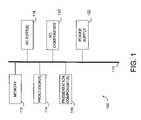
- FIG. 1illustrates an exemplary operating environment for implementing the invention.
- FIG. 2illustrates an embodiment of a system for implementing the invention.
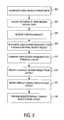
- FIG. 3illustrates an embodiment of a method for personalizing a search results mix based on a user's search history.
- the inventionintroduces a system and method for personalizing a search results mix based on a user's search history.
- the inventioncan be configured to present personalized search result pages that reflect an individual user's needs or interests.
- the search history of a usercan be examined to determine if a user frequently accesses certain types of search results within a search results page.
- the search results pagecan be personalized for a specific user by displaying more types of search results that the user frequently accesses and less of the types of search results that the users does not access as often.
- Accessing a search resultcan comprise utilizing any type of input device to obtain information from a search result.
- accessing a search resultcomprises a user moving his/her mouse cursor over the search result or hyperlink of the search result and clicking the result or hyperlink.
- accessing a search resultcan also include hovering the mouse cursor over the search result or over a hyperlink of the search result.
- accessing a search resultcan include depressing any number of buttons on a keyboard, keypad, mouse, or any other input device to obtain information from the search result.
- An algorithmic search resultis a web result that is based on a search engine's index algorithm.
- algorithmic search resultswill usually have hyperlinks that will link a user to the web page of the corresponding algorithmic search result.
- a non-algorithmic search resultis any other information presented to the user other than the algorithmic search results that is related to the search query submitted by the user.
- the non-algorithmic search resultsare not directly derived from the search engine's index.
- Such non-algorithmic search resultscan include, but are not limited to, advertisements, sponsored links, query refinement modules, and instant answers.
- An instant answeris any type of search result that comes directly from a third-party source instead from a search engine's index.
- Such third-party sourcescan be, for example, Encarta, MSN Shopping, or any other source besides a search engine that is configured to provide information related to a user's search query.
- the instant answer“Nation's Capital: Washington, D.C.” may be presented to the user.
- the instant answermay have come directly from the Encarta database.
- the instant answersmay be convenient as a user can instantly receive an answer without having to go through any of the algorithmic search results.
- An instant answermay or may not have a corresponding hyperlink presented along with it.
- computing device 100an exemplary operating environment for implementing the invention is shown and designated generally as computing device 100 .
- Computing device 100is but one example of a suitable computing environment and is not intended to suggest any limitation as to the scope of use or functionality of the invention. Neither should the computing device 100 be interpreted as having any dependency or requirement relating to any one or combination of components illustrated.
- the inventionmay be described in the general context of computer code or machine-useable instructions, including computer-executable instructions such as program modules, being executed by a computer or other machine, such as a personal data assistant or other handheld device.
- program modulesincluding routines, programs, objects, components, data structures, etc., refer to code that perform particular tasks or implement particular abstract data types.
- the inventionmay be practiced in a variety of system configurations, including hand-held devices, consumer electronics, general-purpose computers, more specialty computing devices, etc.
- the inventionmay also be practiced in distributed computing environments where tasks are performed by remote-processing devices that are linked through a communications network.
- computing device 100includes a bus 110 that directly or indirectly couples the following devices: memory 112 , one or more processors 114 , one or more presentation components 116 , input/output ports 118 , input/output components 120 , and an illustrative power supply 122 .
- Bus 110represents what may be one or more busses (such as an address bus, data bus, or combination thereof).
- FIG. 1is merely illustrative of an exemplary computing device that can be used in connection with one or more embodiments of the invention. Distinction is not made between such categories as “workstation,” “server,” “laptop,” “hand-held device,” etc., as all are contemplated within the scope of FIG. 1 and reference to “computing device.”
- Computing device 100typically includes a variety of computer-readable media.
- computer-readable mediamay comprises Random Access Memory (RAM); Read Only Memory (ROM); Electronically Erasable Programmable Read Only Memory (EEPROM); flash memory or other memory technologies; CDROM, digital versatile disks (DVD) or other optical or holographic media; magnetic cassettes, magnetic tape, magnetic disk storage or other magnetic storage devices, carrier wave or any other medium that can be used to encode desired information and be accessed by computing device 100 .
- Memory 112includes computer-storage media in the form of volatile and/or nonvolatile memory.
- the memorymay be removable, nonremovable, or a combination thereof.
- Exemplary hardware devicesinclude solid-state memory, hard drives, optical-disc drives, etc.
- Computing device 100includes one or more processors that read data from various entities such as memory 112 or I/O components 120 .
- Presentation component(s) 116present data indications to a user or other device.
- Exemplary presentation componentsinclude a display device, speaker, printing component, vibrating component, etc.
- I/O ports 118allow computing device 100 to be logically coupled to other devices including I/O components 120 , some of which may be built in.
- I/O components 120include a microphone, joystick, game pad, satellite dish, scanner, printer, wireless device, etc.
- FIG. 2illustrates an embodiment of a system for implementing the invention.
- Client 202 , content manager 204 and personalizing device 210are computing devices 100 that can include one or more devices illustrated in FIG. 1 .
- Client 202may be or include a desktop or laptop computer, a network-enabled cellular telephone (with or without media capturing/playback capabilities), wireless email client, or other client, machine or device to perform various tasks including Web browsing, search, electronic mail (email) and other tasks, applications and functions.
- Client 202may additionally be any portable media device such as digital still camera devices, digital video cameras (with or without still image capture functionality), media players such as personal music players and personal video players, and any other portable media device.
- Client 202may also be a server including, for instance, a workstation running the Microsoft Windows®, MacOSTM, Unix, Linux, Xenix, IBM AIXTM, Hewlett-Packard UXTM, Novell NetwareTM, Sun Microsystems SolarisTM, OS/2TM, BeOSTM, Mach, Apache, OpenStepTM or other operating system or platform.
- Client 202can be controlled by any user.
- Client 202can include a communication interface.
- the communication interfacemay be an interface that can allow the client to be directly connected to any other client or device or allows the client 202 to be connected to a client or device over network 218 .
- Network 218can include, for example, a local area network (LAN), a wide area network (WAN), or the Internet.
- the client 202can be connected to another client or device via a wireless interface.
- Content manager 204 and personalizing device 210may each be a server including, for instance, a workstation running the Microsoft Windows®, MacOSTM, Unix, Linux, Xenix, IBM AIXTM, Hewlett-Packard UXTM, Novell NetwareTM, Sun Microsystems SolarisTM, OS/2TM, BeOSTM, Mach, Apache, OpenStepTM or other operating system or platform.
- Content managercan include aggregator component 206 and user information database 208 .
- Aggregator component 206is used to aggregate each individual user's search history information.
- the aggregator componentcan be configured to monitor and collect a user's search history information that can include any information related to the way in which a user has searched for data on the Internet.
- Such informationcan include, but not limited to, search terms/keywords, times when searches queries have been submitted, web results from a search results page that were accessed, time spent on a search results page, advertisements accessed on a search results page, instant answers accessed on a search results page, and any other information derived from a user's searching experience.
- the aggregator componentretrieves the user search information, the information is associated with its corresponding user and is stored in database 208 .
- the user's search informationcan be stored on a user's client device using a cookie.
- the aggregator componentcan aggregate the user search information from each user's client device.
- content manager 204is a search engine.
- Personalizing device 210is used to personalize a search results page for an individual user.
- personalizing device 210 and content manager 204can be integrated into one device.
- personalizing device 210is a search engine.
- Personalizing device 210can include retrieval component 212 , layout component 214 , and access frequency monitor component 216 .
- Retrieval component 212is used to retrieve user search information from database 208 .
- the retrieval component 212can retrieve the user search information from a user's client device.
- Access frequency monitor component 216is used to monitor how often a user accesses algorithmic and non-algorithmic search results from a search results page.
- the access frequency monitor component 216can be configured to determine a user access frequency for each type of algorithmic and non-algorithmic search result presented to a user.
- the user access frequencycorresponds to the frequency in which a user accesses an algorithmic or non-algorithmic search result in a given time period.
- an user access frequency for an algorithmic or non-algorithmic search resultcan be the percentage of an algorithmic or non-algorithmic search result that a user accessed from the total number of the specific type of algorithmic or non-algorithmic search result presented to the user within a period of time.
- search results from a search engine, advertisements, and instants answerscan each have a separate user access frequency.
- the user access frequencyis the total number of a specific type of algorithmic or non-algorithmic search result accessed by a user within a given time period.
- the access frequency monitor component 216can compare the determined user access frequency to a threshold frequency value.
- the access frequency monitor component 216can be configured to create an alert when the determined user access frequency reaches the threshold frequency value.
- the access frequency monitor component 216can monitor how often a user accesses algorithmic and non-algorithmic search results based on a query category.
- a query categoryrefers to the type of search query submitted.
- two query categoriescan be commercial and non-commercial search queries.
- the access frequency monitor component 216can be configured to determine a user access frequency for a corresponding query category for each type of algorithmic and non-algorithmic search result presented to a user.
- the access frequency monitor component 216can compare the determined user access frequency to a threshold frequency value. For example, a user may tend to access advertisements frequently when submitting commercial search queries, however, the same user may tend to access advertisements less frequently when submitting non-commercial search queries.
- the access frequency monitor componentcan determine a user access frequency for each of the two types of query categories so that a search results page can be personalized that correlates with the user's access history. The access frequency monitor component can then, for example, display more advertisements for commercial search queries and less advertisements for non-commercial search queries when the respective threshold frequencies have been reached.
- commercial and non-commercial search queriesare only two examples of query categories, as such, the invention should not be limited to only these two examples.
- the access frequency monitor component 216can be configured to create an alert when the determined user access frequency reaches the threshold frequency value.
- the user access frequencyis based on a satisfaction score.
- the satisfaction scorecan be used to show a degree of satisfaction that the user had with a particular type of search result.
- the access frequency monitor component 216can be configured to monitor how the user interacts with the different types of results on a search page.
- the monitor componentcan be configured to track the time a user spends on a search results page, monitor the results accessed by the user, track the time the user spent on the web pages of the accessed search result, and evaluate a multitude of other factors that can be used to determine if a user was satisfied or dissatisfied with the search results.
- the access frequency componentcan use an algorithm to evaluate the multitude of factors to generate a corresponding satisfaction score.
- the satisfaction scorewill be used to show how confident the access frequency monitor component is that the user was satisfied with the particular type of search result. For example, a satisfaction score of 70 may be generated that means that the access frequency monitor component is 70% confident that the user was satisfied with the particular search result.
- the satisfaction scorecan be useful for determining whether a user was satisfied with an instant answer as some instant answers may not have a corresponding hyperlink for a user to click. Once determined, the satisfaction score can then be compared to a threshold satisfaction value.
- the access frequency monitor componentcan also be configured to create an alert when the determined satisfaction score reaches the threshold satisfaction value.
- Layout component 214is configured to determine the layout of a search results page.
- the layout component 214is configured to specify a default layout for a search results page that includes any number of algorithmic and non-algorithmic search results.
- layout component 214can modify the default search results page by displaying more or less of a type of non-algorithmic search result based on any determinations made by the access frequency monitor component 216 . For example, if the access frequency monitor component 216 determines that a user accesses advertisements at a high frequency that reaches a certain threshold, the monitor component can create an alert to inform the layout component 214 to display more advertisements on the search results page.
- the monitor component 216determines that a user accesses advertisements at a low frequency that reaches a certain threshold, the monitor component can create an alert to inform the layout component to display less advertisements on the search results page.
- the layout component 214can modify the default search results page by rearranging the location of the algorithmic search results and any non-algorithmic search results. The rearrangement of the types of search results, in an embodiment, is based on any determinations made by the access frequency monitor component 216 . For example, if the access frequency monitor component 216 determines that a user accesses advertisements at a high frequency that reaches a certain threshold, the monitor component can create an alert to inform the layout component 214 to display instant answers above the algorithmic search results. Again, such determinations and layouts are made for each individual user, therefore, each user will have their own personalized search results page depending on the type of search result he/she frequently accesses.
- FIG. 3illustrates an embodiment of a block diagram representing a method for personalizing a search results mix based on a user's search history.
- user search history datais aggregated from a plurality of users' client devices. The user search history data is then associated with its corresponding user and is stored. Alternatively, at operation 304 , the user information is retrieved from a database that contains the user search data.
- a search requestincluding a search query, is received.
- a user access frequencyis determined for a non-algorithmic search result. In determining the user access frequency, the user's search history data that describes how often the user has accessed the particular non-algorithmic search result is evaluated. In an embodiment, data older than a set time period can be disregarded from the evaluation. For example, search history data that is older than one month will be ignored in order to accurately reflect the user's current interest.
- the determined user access frequencyis compared to a threshold frequency value.
- a threshold frequency valueThere can be more than one threshold frequency that could each represent a different level of activity by the user for accessing the particular non-algorithmic search result.
- a default search result page layoutis specified.
- the default search result page layoutcan be specified, for example, by an administrator, developer, or any other user.
- the default search results pageis modified when the determined user access frequency reaches the threshold frequency value.
- the default search results pageis modified by increasing or decreasing the quantity of the type of non-algorithmic search result.
- the default search results pageis modified by rearranging the placement of the type of non-algorithmic search result on the search results page.
- the modified search results pageis provided.
- the threshold frequency valuescan vary for different geographical locations.
- the threshold frequency values for instant answers or advertisementscan vary depending on the city, state, time zone, American region, country, or continent that a user is located. This may be due because a particular geographical location may not have the same click rate as another. For example, the same click rate in the U.S. may not apply for France, Germany, or Japan. Therefore, it may be advantageous to adjust the threshold frequency values based on geographical location.
Landscapes
- Engineering & Computer Science (AREA)
- Databases & Information Systems (AREA)
- Theoretical Computer Science (AREA)
- Data Mining & Analysis (AREA)
- Physics & Mathematics (AREA)
- General Engineering & Computer Science (AREA)
- General Physics & Mathematics (AREA)
- Computational Linguistics (AREA)
- Management, Administration, Business Operations System, And Electronic Commerce (AREA)
- Information Retrieval, Db Structures And Fs Structures Therefor (AREA)
Abstract
Description
Claims (14)
Priority Applications (1)
| Application Number | Priority Date | Filing Date | Title |
|---|---|---|---|
| US11/442,551US7966324B2 (en) | 2006-05-30 | 2006-05-30 | Personalizing a search results page based on search history |
Applications Claiming Priority (1)
| Application Number | Priority Date | Filing Date | Title |
|---|---|---|---|
| US11/442,551US7966324B2 (en) | 2006-05-30 | 2006-05-30 | Personalizing a search results page based on search history |
Publications (2)
| Publication Number | Publication Date |
|---|---|
| US20070294615A1 US20070294615A1 (en) | 2007-12-20 |
| US7966324B2true US7966324B2 (en) | 2011-06-21 |
Family
ID=38862938
Family Applications (1)
| Application Number | Title | Priority Date | Filing Date |
|---|---|---|---|
| US11/442,551Expired - Fee RelatedUS7966324B2 (en) | 2006-05-30 | 2006-05-30 | Personalizing a search results page based on search history |
Country Status (1)
| Country | Link |
|---|---|
| US (1) | US7966324B2 (en) |
Cited By (9)
| Publication number | Priority date | Publication date | Assignee | Title |
|---|---|---|---|---|
| US20120290568A1 (en)* | 2009-12-29 | 2012-11-15 | Nhn Corporation | System and method for providing search results |
| US20120317123A1 (en)* | 2011-06-13 | 2012-12-13 | United Video Properties, Inc. | Systems and methods for providing media recommendations |
| US20130204868A1 (en)* | 2010-02-16 | 2013-08-08 | Yahoo! Inc. | System and Method for Presenting Geolocated Relevance-Based Content |
| US20150331948A1 (en)* | 2014-05-19 | 2015-11-19 | International Business Machines Corporation | Search infrastructure and method for performing web search |
| US10007730B2 (en) | 2015-01-30 | 2018-06-26 | Microsoft Technology Licensing, Llc | Compensating for bias in search results |
| US10007719B2 (en) | 2015-01-30 | 2018-06-26 | Microsoft Technology Licensing, Llc | Compensating for individualized bias of search users |
| US20210165830A1 (en)* | 2018-08-16 | 2021-06-03 | Rovi Guides, Inc. | Reaction compensated result selection |
| US11520789B2 (en)* | 2019-10-21 | 2022-12-06 | Teradata Us, Inc. | Caching objects from a data store |
| US20250021550A1 (en)* | 2023-07-11 | 2025-01-16 | Beijing Volcano Engine Technology Co., Ltd. | Database-based data query method, apparatus, electronic device and storage medium |
Families Citing this family (41)
| Publication number | Priority date | Publication date | Assignee | Title |
|---|---|---|---|---|
| US7716236B2 (en)* | 2006-07-06 | 2010-05-11 | Aol Inc. | Temporal search query personalization |
| US8731980B2 (en)* | 2006-07-06 | 2014-05-20 | Google Inc. | Low fare search for ticket changes |
| US8688485B2 (en)* | 2006-07-06 | 2014-04-01 | Google Inc. | Low fare search for ticket changes using married segment indicators |
| US20080010102A1 (en)* | 2006-07-06 | 2008-01-10 | Todd Williamson | Database for storing historical travel information |
| US20080041945A1 (en)* | 2006-07-06 | 2008-02-21 | Todd Williamson | Ticket reconstruction |
| US20080010101A1 (en)* | 2006-07-06 | 2008-01-10 | Todd Williamson | Determining reissue methods for ticket changes |
| US20080065600A1 (en)* | 2006-09-12 | 2008-03-13 | Harold Batteram | Method and apparatus for providing search results from content on a computer network |
| US9037581B1 (en)* | 2006-09-29 | 2015-05-19 | Google Inc. | Personalized search result ranking |
| US8073681B2 (en) | 2006-10-16 | 2011-12-06 | Voicebox Technologies, Inc. | System and method for a cooperative conversational voice user interface |
| US9519715B2 (en)* | 2006-11-02 | 2016-12-13 | Excalibur Ip, Llc | Personalized search |
| US7818176B2 (en) | 2007-02-06 | 2010-10-19 | Voicebox Technologies, Inc. | System and method for selecting and presenting advertisements based on natural language processing of voice-based input |
| CN101324887B (en)* | 2007-06-11 | 2011-08-24 | 国际商业机器公司 | Method and apparatus for searching information resource |
| US20090119254A1 (en)* | 2007-11-07 | 2009-05-07 | Cross Tiffany B | Storing Accessible Histories of Search Results Reordered to Reflect User Interest in the Search Results |
| US20090119278A1 (en)* | 2007-11-07 | 2009-05-07 | Cross Tiffany B | Continual Reorganization of Ordered Search Results Based on Current User Interaction |
| US9477809B2 (en)* | 2007-12-27 | 2016-10-25 | James G. Marx | Systems and methods for workflow processing |
| US8024285B2 (en)* | 2007-12-27 | 2011-09-20 | Microsoft Corporation | Determining quality of tier assignments |
| US8762364B2 (en)* | 2008-03-18 | 2014-06-24 | Yahoo! Inc. | Personalizing sponsored search advertising layout using user behavior history |
| US20090287677A1 (en)* | 2008-05-16 | 2009-11-19 | Microsoft Corporation | Streaming media instant answer on internet search result page |
| US9305548B2 (en) | 2008-05-27 | 2016-04-05 | Voicebox Technologies Corporation | System and method for an integrated, multi-modal, multi-device natural language voice services environment |
| US8055638B2 (en)* | 2008-12-11 | 2011-11-08 | Microsoft Corporation | Providing recent history with search results |
| US8060524B2 (en)* | 2008-12-11 | 2011-11-15 | Microsoft Corporation | History answer for re-finding search results |
| US8316037B1 (en) | 2009-01-30 | 2012-11-20 | Google Inc. | Providing remedial search operation based on analysis of user interaction with search results |
| US8326637B2 (en) | 2009-02-20 | 2012-12-04 | Voicebox Technologies, Inc. | System and method for processing multi-modal device interactions in a natural language voice services environment |
| US8886650B2 (en)* | 2009-11-25 | 2014-11-11 | Yahoo! Inc. | Algorithmically choosing when to use branded content versus aggregated content |
| US8402032B1 (en)* | 2010-03-25 | 2013-03-19 | Google Inc. | Generating context-based spell corrections of entity names |
| US10496714B2 (en) | 2010-08-06 | 2019-12-03 | Google Llc | State-dependent query response |
| US9208230B2 (en)* | 2010-10-29 | 2015-12-08 | Google Inc. | Enriching search results |
| US9098569B1 (en)* | 2010-12-10 | 2015-08-04 | Amazon Technologies, Inc. | Generating suggested search queries |
| US9336314B2 (en)* | 2010-12-29 | 2016-05-10 | Microsoft Technology Licensing, Llc | Dynamic facet ordering for faceted search |
| US9588632B1 (en)* | 2011-05-24 | 2017-03-07 | A9.Com, Inc. | Techniques for providing personalized behavior-based content |
| US20130332267A1 (en)* | 2012-06-06 | 2013-12-12 | Google Inc. | Selecting content based on data analysis |
| CN103246713B (en)* | 2013-04-24 | 2016-05-11 | 优视科技有限公司 | A kind of Web browser method and device |
| US9972056B2 (en)* | 2013-08-07 | 2018-05-15 | 20/20 Profiles, LLC | Pet matching system and method |
| WO2016044321A1 (en) | 2014-09-16 | 2016-03-24 | Min Tang | Integration of domain information into state transitions of a finite state transducer for natural language processing |
| WO2016044290A1 (en) | 2014-09-16 | 2016-03-24 | Kennewick Michael R | Voice commerce |
| CN107003999B (en) | 2014-10-15 | 2020-08-21 | 声钰科技 | System and method for subsequent response to a user's prior natural language input |
| US10431214B2 (en) | 2014-11-26 | 2019-10-01 | Voicebox Technologies Corporation | System and method of determining a domain and/or an action related to a natural language input |
| US10061842B2 (en)* | 2014-12-09 | 2018-08-28 | International Business Machines Corporation | Displaying answers in accordance with answer classifications |
| US10331784B2 (en) | 2016-07-29 | 2019-06-25 | Voicebox Technologies Corporation | System and method of disambiguating natural language processing requests |
| US20180365318A1 (en)* | 2017-06-19 | 2018-12-20 | Microsoft Technology Licensing, Llc | Semantic analysis of search results to generate snippets responsive to receipt of a query |
| US11281733B2 (en)* | 2019-03-14 | 2022-03-22 | Microsoft Technology Licensing, Llc | Selective presentation of rich experiences in search |
Citations (24)
| Publication number | Priority date | Publication date | Assignee | Title |
|---|---|---|---|---|
| US6006225A (en)* | 1998-06-15 | 1999-12-21 | Amazon.Com | Refining search queries by the suggestion of correlated terms from prior searches |
| US6195679B1 (en) | 1998-01-06 | 2001-02-27 | Netscape Communications Corporation | Browsing session recording playback and editing system for generating user defined paths and allowing users to mark the priority of items in the paths |
| US6260192B1 (en) | 1997-06-02 | 2001-07-10 | Sony Corporation | Filtering system based on pattern of usage |
| US6272507B1 (en) | 1997-04-09 | 2001-08-07 | Xerox Corporation | System for ranking search results from a collection of documents using spreading activation techniques |
| US6397212B1 (en) | 1999-03-04 | 2002-05-28 | Peter Biffar | Self-learning and self-personalizing knowledge search engine that delivers holistic results |
| US20020143759A1 (en) | 2001-03-27 | 2002-10-03 | Yu Allen Kai-Lang | Computer searches with results prioritized using histories restricted by query context and user community |
| US20020174230A1 (en) | 2001-05-15 | 2002-11-21 | Sony Corporation And Sony Electronics Inc. | Personalized interface with adaptive content presentation |
| US20030051157A1 (en) | 2001-09-07 | 2003-03-13 | Nguyen Bing Quang | Method and apparatus for selective disabling of tracking of click stream data |
| US6718324B2 (en)* | 2000-01-14 | 2004-04-06 | International Business Machines Corporation | Metadata search results ranking system |
| US20040153428A1 (en)* | 2002-11-27 | 2004-08-05 | Reid Gregory S. | Communicating solution information in a knowledge management system |
| US6782370B1 (en)* | 1997-09-04 | 2004-08-24 | Cendant Publishing, Inc. | System and method for providing recommendation of goods or services based on recorded purchasing history |
| US20050022240A1 (en) | 2003-06-24 | 2005-01-27 | Sharp Kabushiki Kaisha | Information navigation apparatus |
| US20050033657A1 (en)* | 2003-07-25 | 2005-02-10 | Keepmedia, Inc., A Delaware Corporation | Personalized content management and presentation systems |
| US20050044139A1 (en) | 2003-08-21 | 2005-02-24 | Christian Brian S. | Declarative page view and click tracking systems and methods |
| US20050071328A1 (en) | 2003-09-30 | 2005-03-31 | Lawrence Stephen R. | Personalization of web search |
| US20050076003A1 (en)* | 2003-10-06 | 2005-04-07 | Dubose Paul A. | Method and apparatus for delivering personalized search results |
| US20050102202A1 (en) | 1998-09-18 | 2005-05-12 | Linden Gregory D. | Content personalization based on actions performed during browsing sessions |
| US20050120003A1 (en) | 2003-10-08 | 2005-06-02 | Drury William J. | Method for maintaining a record of searches and results |
| US20050177538A1 (en) | 2004-01-30 | 2005-08-11 | Yusuke Shimizu | Preference information managing apparatus which stores users' usage history of packaged contents, calculates scores of the usage history and outputs the result of the calculation as a preference information, and preference information managing apparatus which stores users' usage history of packaged contents and the other contents, and calculates scores of the usage history in such a manner that a usage history of packaged contents is considered to be more valuable than a usuage history of other contents, and outputs the result of the calculation as a preference information |
| US20050240580A1 (en) | 2003-09-30 | 2005-10-27 | Zamir Oren E | Personalization of placed content ordering in search results |
| US20050278317A1 (en)* | 2004-05-14 | 2005-12-15 | William Gross | Personalized search engine |
| US20060059147A1 (en)* | 2004-09-15 | 2006-03-16 | Yahoo! Inc. | System and method of adaptive personalization of search results for online dating services |
| US7418403B2 (en)* | 2002-11-27 | 2008-08-26 | Bt Group Plc | Content feedback in a multiple-owner content management system |
| US7472119B2 (en)* | 2005-06-30 | 2008-12-30 | Microsoft Corporation | Prioritizing search results by client search satisfaction |
- 2006
- 2006-05-30USUS11/442,551patent/US7966324B2/ennot_activeExpired - Fee Related
Patent Citations (24)
| Publication number | Priority date | Publication date | Assignee | Title |
|---|---|---|---|---|
| US6272507B1 (en) | 1997-04-09 | 2001-08-07 | Xerox Corporation | System for ranking search results from a collection of documents using spreading activation techniques |
| US6260192B1 (en) | 1997-06-02 | 2001-07-10 | Sony Corporation | Filtering system based on pattern of usage |
| US6782370B1 (en)* | 1997-09-04 | 2004-08-24 | Cendant Publishing, Inc. | System and method for providing recommendation of goods or services based on recorded purchasing history |
| US6195679B1 (en) | 1998-01-06 | 2001-02-27 | Netscape Communications Corporation | Browsing session recording playback and editing system for generating user defined paths and allowing users to mark the priority of items in the paths |
| US6006225A (en)* | 1998-06-15 | 1999-12-21 | Amazon.Com | Refining search queries by the suggestion of correlated terms from prior searches |
| US20050102202A1 (en) | 1998-09-18 | 2005-05-12 | Linden Gregory D. | Content personalization based on actions performed during browsing sessions |
| US6397212B1 (en) | 1999-03-04 | 2002-05-28 | Peter Biffar | Self-learning and self-personalizing knowledge search engine that delivers holistic results |
| US6718324B2 (en)* | 2000-01-14 | 2004-04-06 | International Business Machines Corporation | Metadata search results ranking system |
| US20020143759A1 (en) | 2001-03-27 | 2002-10-03 | Yu Allen Kai-Lang | Computer searches with results prioritized using histories restricted by query context and user community |
| US20020174230A1 (en) | 2001-05-15 | 2002-11-21 | Sony Corporation And Sony Electronics Inc. | Personalized interface with adaptive content presentation |
| US20030051157A1 (en) | 2001-09-07 | 2003-03-13 | Nguyen Bing Quang | Method and apparatus for selective disabling of tracking of click stream data |
| US20040153428A1 (en)* | 2002-11-27 | 2004-08-05 | Reid Gregory S. | Communicating solution information in a knowledge management system |
| US7418403B2 (en)* | 2002-11-27 | 2008-08-26 | Bt Group Plc | Content feedback in a multiple-owner content management system |
| US20050022240A1 (en) | 2003-06-24 | 2005-01-27 | Sharp Kabushiki Kaisha | Information navigation apparatus |
| US20050033657A1 (en)* | 2003-07-25 | 2005-02-10 | Keepmedia, Inc., A Delaware Corporation | Personalized content management and presentation systems |
| US20050044139A1 (en) | 2003-08-21 | 2005-02-24 | Christian Brian S. | Declarative page view and click tracking systems and methods |
| US20050071328A1 (en) | 2003-09-30 | 2005-03-31 | Lawrence Stephen R. | Personalization of web search |
| US20050240580A1 (en) | 2003-09-30 | 2005-10-27 | Zamir Oren E | Personalization of placed content ordering in search results |
| US20050076003A1 (en)* | 2003-10-06 | 2005-04-07 | Dubose Paul A. | Method and apparatus for delivering personalized search results |
| US20050120003A1 (en) | 2003-10-08 | 2005-06-02 | Drury William J. | Method for maintaining a record of searches and results |
| US20050177538A1 (en) | 2004-01-30 | 2005-08-11 | Yusuke Shimizu | Preference information managing apparatus which stores users' usage history of packaged contents, calculates scores of the usage history and outputs the result of the calculation as a preference information, and preference information managing apparatus which stores users' usage history of packaged contents and the other contents, and calculates scores of the usage history in such a manner that a usage history of packaged contents is considered to be more valuable than a usuage history of other contents, and outputs the result of the calculation as a preference information |
| US20050278317A1 (en)* | 2004-05-14 | 2005-12-15 | William Gross | Personalized search engine |
| US20060059147A1 (en)* | 2004-09-15 | 2006-03-16 | Yahoo! Inc. | System and method of adaptive personalization of search results for online dating services |
| US7472119B2 (en)* | 2005-06-30 | 2008-12-30 | Microsoft Corporation | Prioritizing search results by client search satisfaction |
Non-Patent Citations (7)
| Title |
|---|
| Learning a Model of a Web User's Interests http://users.cs.dal.ca/~eem/malnis/Readings/hongyu/GreinerUM2003LearningUserModel.pdf. |
| Learning a Model of a Web User's Interests http://users.cs.dal.ca/˜eem/malnis/Readings/hongyu/GreinerUM2003LearningUserModel.pdf. |
| Optimizing Search Engines using Click through Data http://delivery.acm.org/10.1145/780000/775067/p133-joachims.pdf?key1=775067&key2=4621401411&coll=GUIDE&dl=GUIDE&CFID=69897288&CFTOKEN=41474179. |
| Personalized Spiders for Web Search and Analysis http://delivery.acm.org/10.1145/380000/379454/p79-chau.pdf?key1=379454&key2=8011401411&coll=GUIDE&dl=GUIDE&CFID=69897021&CFTOKEN=2942572. |
| Query-Log Based Authority Analysis for Web Information Search http://scholar.google.com/scholar?hl=en&lr=&q=cache:AO2LO-UUim0J:delis.upb.de/paper/DELIS-TR-137.pdf+. |
| Query-Log Based Authority Analysis for Web Information Search http://scholar.google.com/scholar?hl=en&lr=&q=cache:AO2LO—UUim0J:delis.upb.de/paper/DELIS-TR-137.pdf+. |
| SearchPad: Explicit Capture of Search Context to Support Web Search http://www9.org/w9cdrom/173/173.html. |
Cited By (14)
| Publication number | Priority date | Publication date | Assignee | Title |
|---|---|---|---|---|
| US20120290568A1 (en)* | 2009-12-29 | 2012-11-15 | Nhn Corporation | System and method for providing search results |
| US9201951B2 (en)* | 2009-12-29 | 2015-12-01 | Nhn Corporation | System and method for providing search results |
| US20130204868A1 (en)* | 2010-02-16 | 2013-08-08 | Yahoo! Inc. | System and Method for Presenting Geolocated Relevance-Based Content |
| US20120317123A1 (en)* | 2011-06-13 | 2012-12-13 | United Video Properties, Inc. | Systems and methods for providing media recommendations |
| US9235574B2 (en)* | 2011-06-13 | 2016-01-12 | Rovi Guides, Inc. | Systems and methods for providing media recommendations |
| US20150331948A1 (en)* | 2014-05-19 | 2015-11-19 | International Business Machines Corporation | Search infrastructure and method for performing web search |
| US10007730B2 (en) | 2015-01-30 | 2018-06-26 | Microsoft Technology Licensing, Llc | Compensating for bias in search results |
| US10007719B2 (en) | 2015-01-30 | 2018-06-26 | Microsoft Technology Licensing, Llc | Compensating for individualized bias of search users |
| US20210165830A1 (en)* | 2018-08-16 | 2021-06-03 | Rovi Guides, Inc. | Reaction compensated result selection |
| US11907304B2 (en)* | 2018-08-16 | 2024-02-20 | Rovi Guides, Inc. | Reaction compensated result selection |
| US20240143664A1 (en)* | 2018-08-16 | 2024-05-02 | Rovi Guides, Inc. | Reaction compensated result selection |
| US12259929B2 (en)* | 2018-08-16 | 2025-03-25 | Adeia Guides Inc. | Reaction compensated result selection |
| US11520789B2 (en)* | 2019-10-21 | 2022-12-06 | Teradata Us, Inc. | Caching objects from a data store |
| US20250021550A1 (en)* | 2023-07-11 | 2025-01-16 | Beijing Volcano Engine Technology Co., Ltd. | Database-based data query method, apparatus, electronic device and storage medium |
Also Published As
| Publication number | Publication date |
|---|---|
| US20070294615A1 (en) | 2007-12-20 |
Similar Documents
| Publication | Publication Date | Title |
|---|---|---|
| US7966324B2 (en) | Personalizing a search results page based on search history | |
| US9396485B2 (en) | Systems and methods for presenting content | |
| JP5572596B2 (en) | Personalize the ordering of place content in search results | |
| US9449078B2 (en) | Evaluating the ranking quality of a ranked list | |
| US7949672B2 (en) | Identifying regional sensitive queries in web search | |
| US10713666B2 (en) | Systems and methods for curating content | |
| US20110202827A1 (en) | Systems and Methods for Curating Content | |
| KR102281186B1 (en) | Animated snippets for search results | |
| US8321278B2 (en) | Targeted advertisements based on user profiles and page profile | |
| JP5185498B2 (en) | Entity specific coordinated search | |
| US20080109401A1 (en) | Presenting predetermined search results with query suggestions | |
| US8312009B1 (en) | Obtaining user preferences for query results | |
| US20080319976A1 (en) | Identification and use of web searcher expertise | |
| US9922122B2 (en) | Providing remedial search operation based on analysis of user interaction with search results | |
| US20130166494A1 (en) | Hierarchical behavioral profile | |
| US20070156647A1 (en) | Dynamic Search with Implicit User Intention Mining | |
| US20130212120A1 (en) | Multi-domain recommendations | |
| US20120078715A1 (en) | Advertising service based on content and user log mining | |
| US20130024448A1 (en) | Ranking search results using feature score distributions | |
| US20180365709A1 (en) | Personalized creator recommendations | |
| US20170345053A1 (en) | Slideshows in Search | |
| US9065827B1 (en) | Browser-based provisioning of quality metadata | |
| US20130166609A1 (en) | Hierarchical behavioral profile | |
| MX2007015440A (en) | Relative search results based off of user interaction. | |
| EP2628097A1 (en) | Systems and methods for using a behavior history of a user to augment content of a webpage |
Legal Events
| Date | Code | Title | Description |
|---|---|---|---|
| AS | Assignment | Owner name:MICROSOFT CORPORATION, WASHINGTON Free format text:ASSIGNMENT OF ASSIGNORS INTEREST;ASSIGNOR:SATHE, SALEEL;REEL/FRAME:017780/0373 Effective date:20060526 | |
| STCF | Information on status: patent grant | Free format text:PATENTED CASE | |
| FPAY | Fee payment | Year of fee payment:4 | |
| AS | Assignment | Owner name:MICROSOFT TECHNOLOGY LICENSING, LLC, WASHINGTON Free format text:ASSIGNMENT OF ASSIGNORS INTEREST;ASSIGNOR:MICROSOFT CORPORATION;REEL/FRAME:034542/0001 Effective date:20141014 | |
| MAFP | Maintenance fee payment | Free format text:PAYMENT OF MAINTENANCE FEE, 8TH YEAR, LARGE ENTITY (ORIGINAL EVENT CODE: M1552); ENTITY STATUS OF PATENT OWNER: LARGE ENTITY Year of fee payment:8 | |
| FEPP | Fee payment procedure | Free format text:MAINTENANCE FEE REMINDER MAILED (ORIGINAL EVENT CODE: REM.); ENTITY STATUS OF PATENT OWNER: LARGE ENTITY | |
| LAPS | Lapse for failure to pay maintenance fees | Free format text:PATENT EXPIRED FOR FAILURE TO PAY MAINTENANCE FEES (ORIGINAL EVENT CODE: EXP.); ENTITY STATUS OF PATENT OWNER: LARGE ENTITY | |
| STCH | Information on status: patent discontinuation | Free format text:PATENT EXPIRED DUE TO NONPAYMENT OF MAINTENANCE FEES UNDER 37 CFR 1.362 | |
| FP | Lapsed due to failure to pay maintenance fee | Effective date:20230621 |