Movatterモバイル変換


[0]ホーム

URL:


US7966174B1 - Automatic clustering of tokens from a corpus for grammar acquisition - Google Patents

Automatic clustering of tokens from a corpus for grammar acquisition
Download PDF

Info

Publication number
US7966174B1
US7966174B1US12/030,935US3093508AUS7966174B1US 7966174 B1US7966174 B1US 7966174B1US 3093508 AUS3093508 AUS 3093508AUS 7966174 B1US7966174 B1US 7966174B1
Authority
US
United States
Prior art keywords
cluster
context
processor
module configured
control
Prior art date
Legal status (The legal status is an assumption and is not a legal conclusion. Google has not performed a legal analysis and makes no representation as to the accuracy of the status listed.)
Expired - Fee Related, expires
Application number
US12/030,935
Inventor
Srinivas Bangalore
Giuseppe Riccardi
Current Assignee (The listed assignees may be inaccurate. Google has not performed a legal analysis and makes no representation or warranty as to the accuracy of the list.)
Nuance Communications Inc
AT&T Properties LLC
Original Assignee
AT&T Intellectual Property II LP
Priority date (The priority date is an assumption and is not a legal conclusion. Google has not performed a legal analysis and makes no representation as to the accuracy of the date listed.)
Filing date
Publication date
Priority claimed from US09/207,326external-prioritypatent/US6317707B1/en
Application filed by AT&T Intellectual Property II LPfiledCriticalAT&T Intellectual Property II LP
Priority to US12/030,935priorityCriticalpatent/US7966174B1/en
Application grantedgrantedCritical
Publication of US7966174B1publicationCriticalpatent/US7966174B1/en
Assigned to AT&T CORP.reassignmentAT&T CORP.ASSIGNMENT OF ASSIGNORS INTEREST (SEE DOCUMENT FOR DETAILS).Assignors: BANGALORE, SRINIVAS, RICCARDI, GIUSEPPE
Assigned to AT&T PROPERTIES, LLCreassignmentAT&T PROPERTIES, LLCASSIGNMENT OF ASSIGNORS INTEREST (SEE DOCUMENT FOR DETAILS).Assignors: AT&T CORP.
Assigned to AT&T INTELLECTUAL PROPERTY II, L.P.reassignmentAT&T INTELLECTUAL PROPERTY II, L.P.ASSIGNMENT OF ASSIGNORS INTEREST (SEE DOCUMENT FOR DETAILS).Assignors: AT&T PROPERTIES, LLC
Assigned to NUANCE COMMUNICATIONS, INC.reassignmentNUANCE COMMUNICATIONS, INC.ASSIGNMENT OF ASSIGNORS INTEREST (SEE DOCUMENT FOR DETAILS).Assignors: AT&T INTELLECTUAL PROPERTY II, L.P.
Adjusted expirationlegal-statusCritical
Expired - Fee Relatedlegal-statusCriticalCurrent

Links

Images

Classifications

Definitions

Landscapes

Abstract

A system for recognizing patterns is disclosed. Grammar learning from a corpus includes, for the other non-context words, generating frequency vectors for each non-context token in a corpus based upon counted occurrences of a predetermined relationship of the non-context tokens to identified context tokens. Clusters are grown from the frequency vectors according to a lexical correlation or a cluster tree among the non-context tokens. The cluster tree is used for pattern recognition.

Description

PRIORITY APPLICATION
The present application is a continuation of U.S. patent application Ser. No. 10/662,730, filed Sep. 15, 2003, which is a continuation of U.S. patent application Ser. No. 09/912,461, filed Jul. 26, 2001, now U.S. Pat. No. 6,751,584, which is a continuation of Ser. No. 09/207,326, filed Dec. 7, 1998, now U.S. Pat. No. 6,317,707. This application is related to U.S. Patent Applicant Ser. No. 10/260,294, filed Oct. 1, 2002. The contents of each of these applications is incorporated herein by reference in their entirety.
BACKGROUND
The present invention relates to an application that builds linguistic models from a corpus of speech.
For a machine to comprehend speech, not only must the machine identify spoken (or typed) words, but it also must understand language grammar to comprehend the meaning of commands. Accordingly, much research has been devoted to the construction of language models that a machine may use to ascribe meaning to spoken commands. Often, language models are preprogrammed. However, such predefined models increase the costs of a speech recognition system. Also, the language models obtained therefrom have narrow applications. Unless a programmer predefines the language model to recognize a certain command, the speech recognition system that uses the model may not recognize the command. What is needed is a training system that automatically extracts grammatical relationships from a predefined corpus of speech.
SUMMARY
An embodiment of the present invention provides a system of learning grammar from a corpus, in which context words are identified from a corpus. For the other non-context words, the system counts the occurrence of predetermined relationships with the context words, and maps the counted occurrences to a multidimensional frequency space. Clusters are grown from the frequency vectors. The clusters represent classes of words; words in the same cluster possess the same lexical significance and provide an indicator of grammatical structure.
Another embodiment of the invention provides a system that recognizes patterns, the system includes a module configured to generate frequency vectors for each non-context token in a corpus based upon counted occurrences of a pre-determined relationship of the non-context tokens to the context token, a module configured to cluster the non-context tokens into a cluster tree based upon the frequency vectors according to a lexical correlation among the non-context tokens, and a module configured to use the cluster tree for pattern recognition.
BRIEF DESCRIPTION OF THE DRAWINGS
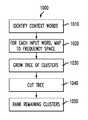
FIG. 1 is a flow diagram of a method of an embodiment of the present invention.
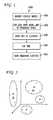
FIG. 2 illustrates mapping frequency vectors that may be obtained during operation of the present invention.
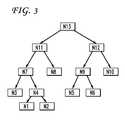
FIG. 3 illustrates an exemplary cluster tree.
DETAILED DESCRIPTION
Embodiments of the present invention provide a system that automatically builds a grammatical model from a corpus of speech. As would be known in the art, such “systems” generally include basic components of computers or computing devices. These components include, memory, input/output capabilities, a display capability, a bus for communicating between various components of the system, and so forth. As is inherent throughout this disclosure, a “system” that performs the method disclosed herein would include such basic, known hardware components that are controlled by a computer program stored in a machine-readable medium. The present invention uses clustering to group words and/or phrases according to their lexical significance. Relationships between high frequency words called Acontext words@ and other input words are identified. The words to be clustered are each represented as a feature vector constructed from the identified relationships. Similarities between two input words are measured in terms of the distance between their feature vectors. Using these distances, input words are clustered according to a hierarchy. The hierarchy is then cut at a certain depth to produce clusters which are then ranked by a “goodness” metric. Those clusters that remain identify words or tokens from the corpus that possess similar grammatical significance.
Clustering per se is known. In the context of language modeling, clustering has typically been used on words to induce classes that are then used to predict smoothed probabilities of occurrence for rare or unseen events in the training corpus. Most clustering schemes use the average entropy reduction to decide when two words fall into the same cluster. Prior use of clustering, however, does not provide insight into language model of grammar.
FIG. 1 illustrates a method of the present invention according to a first embodiment. The method operates upon input text, a set of words from which the grammar model shall be constructed. Typically, the input text comprises a set of single words or phonemes. From the input text, the method identifies context words (Step1010). Context words are those words or phonemes in the input text that occur with the highest frequency. Themethod1000 may cause a predetermined number of words (say, 50) that occur with the highest frequency to be identified as context words.
Themethod1000 determines relationships that may exist between the context words and the remaining words, called “input words” herein, in the input text. For example, themethod1000 may determine how many times and in which positions an input word appears adjacent to a context word. Table 1 below illustrates relationships that may exist between certain exemplary input words and exemplary context words.
TABLE 1
Context Word
tofromin
Input Word−2−112−2−112−2−112
Chicagof111f112f113f114f121f122f123f124f131f132f133f134
New Yorkf211f212f213f214f221f222f223f224f231f232f233f234
Baltimoref311f312f313f314f321f322f323f324f331f332f333f334
redf411f412f413f414f421f422f423f424f431f432f433f434
whitef511f512f513f514f521f522f523f524f531f532f533f534
bluef611f612f613f614f621f622f623f624f631f632f633f634

Each entry of the table, fijkrepresents, for a given input word i; how many times a context word C; and non-context word i; appears within a predetermined relationship. Thus, f111-F114each represent the number of times the input word “Chicago” and the context word “to” appear within adjacencies of −2 words, −1 word, +1 word and +2 words respectively.
Based upon the frequencies, an N dimensional vector may be built for each input word (step1020). The number of dimensions N of the frequency vector is a multiple of the total number of context words, the total number of input words and the total number of relations identified by themethod1000. The vector represents grammatical links that exist between the input words and the context words. Thus, each input word maps to an N dimensional frequency space. A representative frequency space is shown inFIG. 2 (N=3).
Themethod1000 builds clusters of input words (Step1030). According to the principles of the present invention, input words having the same lexical significance should possess similar vectors in the frequency space. Thus, it is expected that city names will exhibit frequency characteristics that are similar to each other but different from other input words having a different lexical significance. They will be included in a cluster (say,cluster10,FIG. 2). So, too, with colors. They will be included in another cluster (say, cluster20). Where words exhibit similar frequency significance, they are included within a single cluster.
As is known, a cluster may be represented in an N-dimensional frequency space by a centroid coordinate and a radius indicating the volume of the cluster. The radius indicates the “compactness” of the elements within a cluster. Where a cluster has a small radius, it indicates that the elements therein exhibit a very close relationship to each other in the frequency space. A larger radius indicates fewer similarities between elements in the frequency space.
The similarity between two words may be measured using the Manhattan distance metric between their feature vectors. Manhattan distance is based on the sum of the absolute value of the differences among the vector=s coordinates. Alternatively, Euclidean and maximum metrics may be used to measure distances. Experimentally, the Manhattan distance metric was shown to provide better results than the Euclidean or maximum distance metrics.
Step1030 may be applied recursively to grow clusters from clusters. That is, when two clusters are located close to one another in the N dimensional space, themethod1000 may enclose them in a single cluster having its own centroid and radius. Themethod1000 determines a distance between two clusters by determining the distance between their centroids using one of the metrics discussed above with respect to the vectors of input words. Thus, the Manhattan, Euclidean and maximum distance metrics may be used.
A hierarchical “cluster tree” is grown representing a hierarchy of the clusters. At one node in the tree, the centroid and radius of a first cluster is stored. Two branches extend from the node to other nodes where the centroids and radii of subsumed clusters are stored. Thus, the tree structure maintains the centroid and radius of every cluster built according toStep1030.Step1030 recurs until a single, all encompassing cluster encloses all clusters and input words. This cluster is termed the “root cluster” because it is stored as the root node of the cluster tree. An exemplary cluster tree is shown inFIG. 3.
As will be appreciated, the root cluster N13 has a radius large enough to enclose all clusters and input words. The root cluster, therefore, possesses very little lexical significance. By contrast, “leaf clusters,” those provided at the ends of branches in the cluster tree, possess very strong lexical significance.
AtStep1040, themethod1000 cuts the cluster tree along a predetermined line in the tree structure. The cutting line separates large clusters from smaller clusters. The large clusters are discarded. What remains are smaller clusters, those with greater lexical significance.
The cutting line determines the number of clusters that will remain. One may use the median of the distances between clusters merged at the successive stages as a basis for the cutting line and prune the cluster tree at the point where cluster distances exceed this median value. Clusters are defined by the structure of the tree above the cutoff point.
Finally, themethod1000 ranks the remaining clusters (Step1050). The lexical significance of a particular cluster is measured by its compactness value. The compactness value of a cluster simply may be its radius or an average distance of the members of the cluster from the centroid of the cluster. Thus, the tighter clusters exhibiting greater lexical significance will occur first in the ranked list of clusters and those exhibiting lesser lexical significance will occur later in the list. The list of clusters obtained fromStep1050 is a grammatical model of the input text.
Themethod1000 is general in that it can be used to cluster “tokens” at any lexical level. For example, it may be applied to words and/or phrases. Table 2 illustrates the result of clustering words and Table 3 illustrates the result of clustering phrases as performed on an experimental set of training data taken from the How May I Help You? Training corpus disclosed in Gorin, et al., “How May I Help You?,” vol. 23, Speech Communication, pp. 113-127 (1997). Other lexical granularities (syllables, phonemes) also may be used.
TABLE 2
Results of Clustering Words from AT&T's How May I Help You? Corpus
ClassCompactness
IndexValueClass Members
C3630.131make place
C1180.18eight eighty five four nine oh one seven
six three two zero
C3570.19bill charge
C2600.216an and because but so when
C3000.233K O ok
C3010.236From please
C2770.241again here
C2020.252as it's
C2040.263different third
C770.268number numbers
C2750.272Need needed want wanted
C2560.274assistance directory information
C1970.278all before happened
C680.278ninety sixty
C410.29his our the their
C1990.291called dialed got have
as by in no not now of or something that that's
there whatever
C270.296working
C3270.296I I'm I've
canada england france germany israel
italy japan london
C480.299mexico paris
C690.308back direct out through
C1430.312connected going it
arizona california carolina florida georgia
illinois island jersey maryland michigan missouri
ohio pennsylvania
C890.314virginia west york
C230.323be either go see somebody them
C900.332about me off some up you
TABLE 3
Results from a First Iteration of Combining Phrase Acquisition and Clustering from the
How May I Help You? Corpus (Words in a Phrase are Separated by a Colon).
Class
IndexCompactness ValueClass Members
D3650.226wrong:C77 second
D3250.232C256:C256 C256
D3800.239area:code:C118:C118:C118:C118:C118 C68
D3860.243A:C77 this:C77
D3820.276C260:C357:C143:to:another
C260:C357:C143:to:my:home
D2880.281C327:C275:to:C363 I'd:like:toC363 to:363
yes:I'd:like:to:C363
D1860.288good:morning yes:ma'am yes:operator hello hi ma'am
may well
D1480.315problems trouble
D870.315A:T:C260:T C260:C327 C27:C27 C41:C77 C118
C143 C260 C197 C199 C202 C23 C260 C27 C277
C301 C69 C77 C90 operator to
D1830.321C118:C118:hundred C204 telephone
D1430.326new:C89 C48 C89 colorado massachusetts tennessee
texas
D3870.327my:home my:home:phone
D40.336my:calling my:calling:card my:card
D700.338C199:a:wrong:C77 misdialed
D3830.341like:to:C363 trying:to:C363 would:like:to:C363
D3810.347like:to:C363:a:collect:call:to like:to:C363:collect:call
would:like:to:C363:a:collect:call
would:like:to:C363:a:collect:call:to
D1590.347C118:C118 C118:C118:C118
C118:C118:C118:C118:C118:C118
C118:C118:C118:C118:C118:C118:C118
C118:C118:C118:C118:C118:C118:C118:C118:C118:C118
C:118:C118:C118:C118:C118:C118:C118:C118:C118:C118:C118
area:code:C118:C118:C118 C300
Adjacency of words is but one relationship that themethod1000 may be applied to recognize from a corpus. More generally, however, themethod1000 may be used to recognize predetermined relationships among tokens of the corpus. For example, themethod1000 can be configured to recognize words that appear together in the same sentences or words that appear within predetermined positional relationships with punctuation. Taken even further, themethod1000 may be configured to recognize predetermined grammatical constructs of language, such as subjects and/or objects of verbs. Each of these latter examples of relationships may require that the method be pre-configured to recognize the grammatical constructs.
Several embodiments of the present invention are specifically illustrated and described herein. However, it will be appreciated that modifications and variations of the present invention are covered by the above teachings and within the purview of the appended claims without departing from the spirit and intended scope of the invention.
Claims (12)

US12/030,9351998-12-072008-02-14Automatic clustering of tokens from a corpus for grammar acquisitionExpired - Fee RelatedUS7966174B1 (en)

Priority Applications (1)

Application NumberPriority DateFiling DateTitle
US12/030,935US7966174B1 (en)1998-12-072008-02-14Automatic clustering of tokens from a corpus for grammar acquisition

Applications Claiming Priority (4)

Application NumberPriority DateFiling DateTitle
US09/207,326US6317707B1 (en)1998-12-071998-12-07Automatic clustering of tokens from a corpus for grammar acquisition
US09/912,461US6751584B2 (en)1998-12-072001-07-26Automatic clustering of tokens from a corpus for grammar acquisition
US10/662,730US7356462B2 (en)2001-07-262003-09-15Automatic clustering of tokens from a corpus for grammar acquisition
US12/030,935US7966174B1 (en)1998-12-072008-02-14Automatic clustering of tokens from a corpus for grammar acquisition

Related Parent Applications (1)

Application NumberTitlePriority DateFiling Date
US10/662,730ContinuationUS7356462B2 (en)1998-12-072003-09-15Automatic clustering of tokens from a corpus for grammar acquisition

Publications (1)

Publication NumberPublication Date
US7966174B1true US7966174B1 (en)2011-06-21

Family

ID=25431962

Family Applications (2)

Application NumberTitlePriority DateFiling Date
US10/662,730Expired - Fee RelatedUS7356462B2 (en)1998-12-072003-09-15Automatic clustering of tokens from a corpus for grammar acquisition
US12/030,935Expired - Fee RelatedUS7966174B1 (en)1998-12-072008-02-14Automatic clustering of tokens from a corpus for grammar acquisition

Family Applications Before (1)

Application NumberTitlePriority DateFiling Date
US10/662,730Expired - Fee RelatedUS7356462B2 (en)1998-12-072003-09-15Automatic clustering of tokens from a corpus for grammar acquisition

Country Status (1)

CountryLink
US (2)US7356462B2 (en)

Cited By (1)

* Cited by examiner, † Cited by third party
Publication numberPriority datePublication dateAssigneeTitle
US20230097150A1 (en)*2021-09-242023-03-30International Business Machines CorporationGenerating Unique Word Embeddings for Jargon-Specific Tabular Data for Neural Network Training and Usage

Families Citing this family (10)

* Cited by examiner, † Cited by third party
Publication numberPriority datePublication dateAssigneeTitle
US8468445B2 (en)*2005-03-302013-06-18The Trustees Of Columbia University In The City Of New YorkSystems and methods for content extraction
US8775441B2 (en)2008-01-162014-07-08Ab Initio Technology LlcManaging an archive for approximate string matching
CA3014839C (en)2008-10-232019-01-08Arlen AndersonFuzzy data operations
US20100332217A1 (en)*2009-06-292010-12-30Shalom WintnerMethod for text improvement via linguistic abstractions
US9361355B2 (en)*2011-11-152016-06-07Ab Initio Technology LlcData clustering based on candidate queries
US9704136B2 (en)*2013-01-312017-07-11Hewlett Packard Enterprise Development LpIdentifying subsets of signifiers to analyze
US9600465B2 (en)2014-01-102017-03-21Qualcomm IncorporatedMethods and apparatuses for quantifying the holistic value of an existing network of devices by measuring the complexity of a generated grammar
US10037374B2 (en)2015-01-302018-07-31Qualcomm IncorporatedMeasuring semantic and syntactic similarity between grammars according to distance metrics for clustered data
US9536072B2 (en)2015-04-092017-01-03Qualcomm IncorporatedMachine-learning behavioral analysis to detect device theft and unauthorized device usage
US10839802B2 (en)*2018-12-142020-11-17Motorola Mobility LlcPersonalized phrase spotting during automatic speech recognition

Citations (15)

* Cited by examiner, † Cited by third party
Publication numberPriority datePublication dateAssigneeTitle
US5128865A (en)1989-03-101992-07-07Bso/Buro Voor Systeemontwikkeling B.V.Method for determining the semantic relatedness of lexical items in a text
US5195167A (en)1990-01-231993-03-16International Business Machines CorporationApparatus and method of grouping utterances of a phoneme into context-dependent categories based on sound-similarity for automatic speech recognition
US5325298A (en)1990-11-071994-06-28Hnc, Inc.Methods for generating or revising context vectors for a plurality of word stems
US5619709A (en)1993-09-201997-04-08Hnc, Inc.System and method of context vector generation and retrieval
US5835893A (en)1996-02-151998-11-10Atr Interpreting Telecommunications Research LabsClass-based word clustering for speech recognition using a three-level balanced hierarchical similarity
US5839106A (en)1996-12-171998-11-17Apple Computer, Inc.Large-vocabulary speech recognition using an integrated syntactic and semantic statistical language model
US5860063A (en)1997-07-111999-01-12At&T CorpAutomated meaningful phrase clustering
US6014647A (en)1997-07-082000-01-11Nizzari; Marcia M.Customer interaction tracking
US6052657A (en)1997-09-092000-04-18Dragon Systems, Inc.Text segmentation and identification of topic using language models
US6073091A (en)1997-08-062000-06-06International Business Machines CorporationApparatus and method for forming a filtered inflected language model for automatic speech recognition
US6094653A (en)1996-12-252000-07-25Nec CorporationDocument classification method and apparatus therefor
US6178396B1 (en)1996-08-022001-01-23Fujitsu LimitedWord/phrase classification processing method and apparatus
US6182091B1 (en)1998-03-182001-01-30Xerox CorporationMethod and apparatus for finding related documents in a collection of linked documents using a bibliographic coupling link analysis
US6470383B1 (en)1996-10-152002-10-22Mercury Interactive CorporationSystem and methods for generating and displaying web site usage data
US6816830B1 (en)1997-07-042004-11-09Xerox CorporationFinite state data structures with paths representing paired strings of tags and tag combinations

Patent Citations (15)

* Cited by examiner, † Cited by third party
Publication numberPriority datePublication dateAssigneeTitle
US5128865A (en)1989-03-101992-07-07Bso/Buro Voor Systeemontwikkeling B.V.Method for determining the semantic relatedness of lexical items in a text
US5195167A (en)1990-01-231993-03-16International Business Machines CorporationApparatus and method of grouping utterances of a phoneme into context-dependent categories based on sound-similarity for automatic speech recognition
US5325298A (en)1990-11-071994-06-28Hnc, Inc.Methods for generating or revising context vectors for a plurality of word stems
US5619709A (en)1993-09-201997-04-08Hnc, Inc.System and method of context vector generation and retrieval
US5835893A (en)1996-02-151998-11-10Atr Interpreting Telecommunications Research LabsClass-based word clustering for speech recognition using a three-level balanced hierarchical similarity
US6178396B1 (en)1996-08-022001-01-23Fujitsu LimitedWord/phrase classification processing method and apparatus
US6470383B1 (en)1996-10-152002-10-22Mercury Interactive CorporationSystem and methods for generating and displaying web site usage data
US5839106A (en)1996-12-171998-11-17Apple Computer, Inc.Large-vocabulary speech recognition using an integrated syntactic and semantic statistical language model
US6094653A (en)1996-12-252000-07-25Nec CorporationDocument classification method and apparatus therefor
US6816830B1 (en)1997-07-042004-11-09Xerox CorporationFinite state data structures with paths representing paired strings of tags and tag combinations
US6014647A (en)1997-07-082000-01-11Nizzari; Marcia M.Customer interaction tracking
US5860063A (en)1997-07-111999-01-12At&T CorpAutomated meaningful phrase clustering
US6073091A (en)1997-08-062000-06-06International Business Machines CorporationApparatus and method for forming a filtered inflected language model for automatic speech recognition
US6052657A (en)1997-09-092000-04-18Dragon Systems, Inc.Text segmentation and identification of topic using language models
US6182091B1 (en)1998-03-182001-01-30Xerox CorporationMethod and apparatus for finding related documents in a collection of linked documents using a bibliographic coupling link analysis

Non-Patent Citations (7)

* Cited by examiner, † Cited by third party
Title
"Aggregate and Mixed Order Markov Models for Statistical Language Processing," Lawrence Saul and Fernando Pereira. AT&T Labs Research, 180 Park Ave, D-130, Florham Park, NJ 07932. 1997.
"Automatic Acquisition of Phrase Grammars for Stochastic Language Modeling," Giuseppe Riccardi and Srinivas Bangalore. AT&T Labs-Research, 180 Park Avenue, Florham Park, NJ 09732. 1998.
"Dimensions of Meaning," Hinrich Schutze, Center for the Study of Language and Information, Ventura Hall. Proceedings of the 1992 ACM/IEEE conference on Supercomputing, Minneapolis, Minnesota. 1992.
"Distributional Clustering of English Words," Fernando Pereira, AT&T Bell Laboratories; Naftali Tishby, Hebrew University; and Lillian Lee, Cornell University. Apr. 25, 1993.
"Empirical Acquisition of Word and Phrase Classes in the Atis Domain," Michael K. McCandless and James R. Glass, EUROSPEECH '93 Third European Conference on Speech Communication and Technology, Berlin, Germany, Sep. 22-25, 1993.
"Grammar Fragment Acquisition using Syntactic and Semantic Clustering," Jeremy H. Wright, Giuseppe Riccardi, Allen L. Gorin AT&T Laboratories-Research, 180 Park Ave., Florham Park, NJ 07932, USA, & Kazuhiro Arai NTT Human Interface Laboratories, 1-1 Hikari-no-oka, Yokosuka, Kanagawa 239-0847, Japan. Received Oct. 14, 1997, revised Jul. 16, 1998, accepted Sep. 2, 1998, available online Feb. 17, 1999.
"Improved Clustering Techniques for Class-Based Statistical Language Modeling," Reinhard Kneser and Hermann Ney. Philips GmbH Forschungslboratorien, Aachen, Germany. Eurospeech '93 Third European Conference on Speech Communication and Technology, Berlin, Germany. Sep. 22-25, 1993.

Cited By (2)

* Cited by examiner, † Cited by third party
Publication numberPriority datePublication dateAssigneeTitle
US20230097150A1 (en)*2021-09-242023-03-30International Business Machines CorporationGenerating Unique Word Embeddings for Jargon-Specific Tabular Data for Neural Network Training and Usage
US12254265B2 (en)*2021-09-242025-03-18International Business Machines CorporationGenerating unique word embeddings for jargon-specific tabular data for neural network training and usage

Also Published As

Publication numberPublication date
US20040064303A1 (en)2004-04-01
US7356462B2 (en)2008-04-08

Similar Documents

PublicationPublication DateTitle
US6317707B1 (en)Automatic clustering of tokens from a corpus for grammar acquisition
US7966174B1 (en)Automatic clustering of tokens from a corpus for grammar acquisition
US6415248B1 (en)Method for building linguistic models from a corpus
Marti et al.Text line segmentation and word recognition in a system for general writer independent handwriting recognition
US7697760B2 (en)Handwritten word recognition using nearest neighbor techniques that allow adaptive learning
US7336827B2 (en)System, process and software arrangement for recognizing handwritten characters
US5805731A (en)Adaptive statistical classifier which provides reliable estimates or output classes having low probabilities
US6556712B1 (en)Methods and apparatus for handwriting recognition
JP3950535B2 (en) Data processing method and apparatus
US4989258A (en)Character recognition apparatus
US5768451A (en)Character recognition method and apparatus
US5903884A (en)Method for training a statistical classifier with reduced tendency for overfitting
EP0790574A2 (en)Character recognition apparatus and method
JPS62221793A (en)Means of eliminating vagueness in document based on character context
WO1995027954A1 (en)Pattern recognition method and system
US20030172352A1 (en)Classification method of labeled ordered trees using support vector machines
Hull et al.An integrated algorithm for text recognition: comparison with a cascaded algorithm
CN104298365A (en)Character input device, character input method, and computer program product
Veeramachaneni et al.Style context with second-order statistics
US7130487B1 (en)Searching method, searching device, and recorded medium
JP2001184509A (en) Pattern recognition apparatus and method, and recording medium
BunkeString matching for structural pattern recognition
Anigbogu et al.Hidden Markov models in text recognition
Scheffer et al.Mining the web with active hidden Markov models
Tung et al.Increasing character recognition accuracy by detection and correction of erroneously identified characters

Legal Events

DateCodeTitleDescription
STCFInformation on status: patent grant

Free format text:PATENTED CASE

FPAYFee payment

Year of fee payment:4

ASAssignment

Owner name:AT&T CORP., NEW YORK

Free format text:ASSIGNMENT OF ASSIGNORS INTEREST;ASSIGNORS:BANGALORE, SRINIVAS;RICCARDI, GIUSEPPE;REEL/FRAME:038279/0176

Effective date:20000322

ASAssignment

Owner name:AT&T INTELLECTUAL PROPERTY II, L.P., GEORGIA

Free format text:ASSIGNMENT OF ASSIGNORS INTEREST;ASSIGNOR:AT&T PROPERTIES, LLC;REEL/FRAME:038529/0240

Effective date:20160204

Owner name:AT&T PROPERTIES, LLC, NEVADA

Free format text:ASSIGNMENT OF ASSIGNORS INTEREST;ASSIGNOR:AT&T CORP.;REEL/FRAME:038529/0164

Effective date:20160204

ASAssignment

Owner name:NUANCE COMMUNICATIONS, INC., MASSACHUSETTS

Free format text:ASSIGNMENT OF ASSIGNORS INTEREST;ASSIGNOR:AT&T INTELLECTUAL PROPERTY II, L.P.;REEL/FRAME:041498/0316

Effective date:20161214

FEPPFee payment procedure

Free format text:MAINTENANCE FEE REMINDER MAILED (ORIGINAL EVENT CODE: REM.); ENTITY STATUS OF PATENT OWNER: LARGE ENTITY

LAPSLapse for failure to pay maintenance fees

Free format text:PATENT EXPIRED FOR FAILURE TO PAY MAINTENANCE FEES (ORIGINAL EVENT CODE: EXP.); ENTITY STATUS OF PATENT OWNER: LARGE ENTITY

STCHInformation on status: patent discontinuation

Free format text:PATENT EXPIRED DUE TO NONPAYMENT OF MAINTENANCE FEES UNDER 37 CFR 1.362

FPLapsed due to failure to pay maintenance fee

Effective date:20190621


[8]ページ先頭

©2009-2025 Movatter.jp