US7957934B2 - Method and system for processing application performance data ouside of monitored applications to limit overhead caused by monitoring - Google Patents
Method and system for processing application performance data ouside of monitored applications to limit overhead caused by monitoringDownload PDFInfo
- Publication number
- US7957934B2 US7957934B2US12/120,645US12064508AUS7957934B2US 7957934 B2US7957934 B2US 7957934B2US 12064508 AUS12064508 AUS 12064508AUS 7957934 B2US7957934 B2US 7957934B2
- Authority
- US
- United States
- Prior art keywords
- bytecode
- sensor
- application
- event record
- buffer
- Prior art date
- Legal status (The legal status is an assumption and is not a legal conclusion. Google has not performed a legal analysis and makes no representation as to the accuracy of the status listed.)
- Active, expires
Links
Images


Classifications
- G—PHYSICS
- G06—COMPUTING OR CALCULATING; COUNTING
- G06F—ELECTRIC DIGITAL DATA PROCESSING
- G06F11/00—Error detection; Error correction; Monitoring
- G06F11/30—Monitoring
- G06F11/34—Recording or statistical evaluation of computer activity, e.g. of down time, of input/output operation ; Recording or statistical evaluation of user activity, e.g. usability assessment
- G06F11/3466—Performance evaluation by tracing or monitoring
- G—PHYSICS
- G06—COMPUTING OR CALCULATING; COUNTING
- G06F—ELECTRIC DIGITAL DATA PROCESSING
- G06F2201/00—Indexing scheme relating to error detection, to error correction, and to monitoring
- G06F2201/86—Event-based monitoring
- G—PHYSICS
- G06—COMPUTING OR CALCULATING; COUNTING
- G06F—ELECTRIC DIGITAL DATA PROCESSING
- G06F2201/00—Indexing scheme relating to error detection, to error correction, and to monitoring
- G06F2201/865—Monitoring of software
- G—PHYSICS
- G06—COMPUTING OR CALCULATING; COUNTING
- G06F—ELECTRIC DIGITAL DATA PROCESSING
- G06F2201/00—Indexing scheme relating to error detection, to error correction, and to monitoring
- G06F2201/88—Monitoring involving counting
Definitions
- Present inventionis directed to systems for software application performance monitoring, which acquire performance measurement data inside the monitored application and provides a method for aggregation, correlation and evaluation of said performance measurement data outside the monitored application to keep the overhead caused by monitoring related tasks low.
- An alternative approachshould also reduce the network overhead generated by transferring the measurement data, by storing context information required to interpret captured measurement data, and reuse this stored context information whenever this is possible instead of retransferring it every time measurement data is sent.
- a method for dynamically injecting an agent into an applicationmay include the steps of connecting a bootstrap agent to the management server from a virtual machine, the management server being external to the virtual machine, initiating connections with the management server, requesting a handshake between the management server and the virtual machine by the bootstrap agent in response to the connections, determining matching in process agent binaries in response to the handshake and installing the in process agent binaries to the application of the management server.
- the step of verifying that the version of the connected bootstrap agentmay be supported by the management server, and the step of initiating connections includes the step of verifying that the version of the virtual machine may be supported by the management server.
- the version of the bootstrap agent and the version of the virtual machinemay be used to determine the matching in process agent binaries, and the format of the game process agent binaries may be determined.
- the format of the in process agent binariesmay be byte code, and the format of the in process agent binaries may be native code.
- the byte codemay be a single byte code in process agent binary and the native code may be a single native code in process agent binary.
- FIG. 1illustrates conceptually a monitoring system using in-application instrumentation of sensors, storage and aggregation of measurement data inside the monitored application.
- a monitoring servercyclically polls measurement data aggregated within the monitored application for analysis.
- FIG. 2depicts a preferable embodiment of the present invention, using out of application instrumentation and out of application storage and aggregation of measurement data.
- An agentis deployed to the application which manages instrumentation of sensors outside the application and cyclically sends measurement data to a monitoring server.
- Intermediate buffering of measurement data inside the applicationuses a ring buffer of fixed maximum size which limits the maximum memory required to store measurement data within the application.
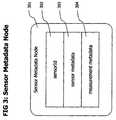
- FIG. 3shows the preferred embodiment of a sensor metadata node which contains metadata describing placed sensors and the measurement data provided by said sensors.
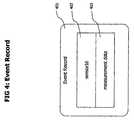
- FIG. 4depicts the preferred embodiment of an event record. Event records are used to send measurement data from the application to the monitoring server for correlation and analysis.
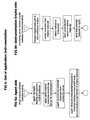
- FIG. 5shows the process of instrumenting application code with sensors outside the application.
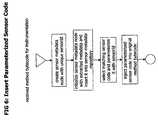
- FIG. 6depicts the process of creating sensor metadata and creating and injecting sensor code which is parameterized with a sensorId.
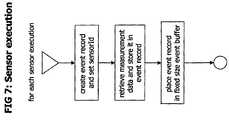
- FIG. 7displays conceptually the process of executing an instrumented sensor, including creation, initialization and storage of an event record representing the current measurement.
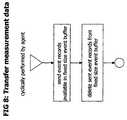
- FIG. 8displays the process of cyclically sending event records from the application to the monitoring server, as performed by the agent.
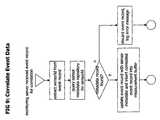
- FIG. 9depicts the process of correlating incoming event record data with matching sensor metadata and inserting correlated measurement data into the measurement buffer of the monitoring server.
- the present inventionprovides a system and method to dynamically inject monitoring bytecode (said monitoring bytecode is further referred to as sensor) into the bytecode of an application.
- monitoring bytecodeis further referred to as sensor
- the injection of the sensorsis performed outside of the application to keep the overhead caused by monitoring low.
- a method to process application performance datamay include the steps of injecting an agent into a monitored application, the agent is capturing byte code the monitored application is going to load; the agent is sending the captured byte code of the monitored application to a monitoring server external to the monitored application.
- the monitoring servermay generate instrumented byte code from the captured byte code by augmenting the captured byte code with sensor byte code and send the instrumented byte code back to the agent.
- the agentmay provide the instrumented byte code to the monitored application, which loads the instrumented byte code instead of the captured byte code.
- Metadata describing the instrumented byte code portionlike class name or method name, together with information about the injected sensor byte code may be created, assigned with an unique sensorId, and stored in a sensor metadata repository located at the external monitoring server.
- the injected sensor byte codemay be parameterized in a way that it tags each measurement data item with the unique sensorId that identifies the portion of byte code to which it is deployed.
- one or more sensorsmay be executed and generate measurement data.
- the measurement data generated by the sensorsmay be inserted into event records, together with the unique sensorIds of the executed sensors.
- the sensorsmay write the event record into an event buffer of fixed size. After the event records are stored, execution of byte code of the monitored application is continued, no blocking of the execution occurs.
- the event buffermay be implemented as a ring buffer of fixed size.
- While sensormay write sensors write event records to the ring buffer, the agent may concurrently and asynchronously read event records from the ring buffer and may remove read out event records from the ring buffer.
- the ring buffermay discard the received event record to guarantee predictable maximum memory overhead.
- the monitoring servermay receive the sensor events sent by the agent, and forward them to the event collector which buffers received event records.
- the event correlation modulemay cyclically poll the event collector, correlate the received sensor events with the sensor metadata identified by the sensorIds of the received sensor events and put the correlated sensor event/sensor metadata pairs into the measurement buffer.
- An analysis modulemay process the sensor event/sensor metadata pairs and perform various anaylsis tasks based on the data stored in the measurement buffer.
- the measurement datamay include sensor data, and the measurement data may include a unique ID.
- the measurement datamay include sensor data and a unique ID, and the sensor data and the unique ID is combine to obtain a performance measurement, and the data set of fixed size may include a ring buffer.
- the data setmay be adapted to be asynchronous read out, and the sensor data may include counting sensor data.
- the sensor datamay include timing sensor data, and the agent may capture the byte code by interrupting the loading of the byte code.
- the methodmay include the step of extracting metadata from the byte code, and the metadata may be used to select a method.
- the methodmay include a comparing method, and the method may include a rule-based method.
- An event recordmay be placed within the database of fixed size, and the monitoring server may collect the event record.
- the monitoring servermay compare the sensor ID of the event record with stored sensor ID in order to determine if the event is to be measured, and the event record may be discarded if the sensor ID of the event record does not match the stored sensor ID.
- the methodmay include the step of bypassing placing the measurement data into the data set if the capacity of the data set has been exceeded.
- the measurement data generated by those sensorsis stored in a buffer of fixed size which makes the monitoring caused memory consumption predictable and limits the size of the memory overhead to the size of the buffer.
- Said bufferis cyclically and asynchronously read out, and the contained measurement data is transferred to a monitoring server outside the application to perform all monitoring related calculation, correlation and analysis tasks.
- Asynchronous reading of the bufferdecouples acquisition of measurement data from its further processing. Decoupling of measurement data acquisition and processing in turn allows processing of the measurement data outside of the monitored application, and prevents that the monitored applications gets blocked by transportation or processing of the measurement data.
- the monitoring related network trafficis reduced by a redundancy less design of the protocol that conveys measurement data from the application to the monitoring server.
- Data describing the context of placed sensorsis extracted during the placement of the sensor and stored at the monitoring server.
- a unique IDis assigned to each stored context data entity. Measurement data is tagged with this unique ID, which identifies the context data of the sensor that generated the measurement data and thus allows the reconstruction of the context of the measurement data, without repetitively sending sensor context data additionally to measurement data.
- An agentis injected into the monitored application which intercepts loading of bytecode, captures the bytecode and sends the captured bytecode to a monitoring server for instrumentation.
- the monitoring serverinserts sensor byte code into the received bytecode and extracts and stores context information related to the inserted sensors.
- the instrumented bytecodeis sent back to the agent, which forwards it to the application runtime.
- the applicationin turn loads the instrumented bytecode instead of the original bytecode.
- the injected sensorsperform measurements and store the acquired measurement data, together with an unique ID that identifies the context of the sensor in a buffer which is provided by the injected agent.
- the capacity of said bufferis limited to a predefined size to guarantee that memory overhead remains below a certain limit.
- the agentasynchronously and cyclically sends measurement data accumulated in said buffer to the monitoring server.
- the monitoring serverreceives the sent measurement data and uses the ID received with the measurement data to find the context information related to the sensor that generated the measurement. Measurement data, together with the sensor context information is used to perform various performance analyses.
- Bytecode based software platforms like Sun Microsystems' Java or Microsoft's .NET frameworkprovide interfaces to intercept class loading events and to alter the bytecode of the loaded class before it is loaded into memory. Additionally those frameworks enable restricted altering of bytecode that is already loaded into the runtime environment. Open and documented bytecode formats enable analysis of bytecode and selective altering said bytecode. These features enable the creation of monitoring systems that instrument application code with performance monitoring data on the fly, without the need to alter application source code.
- Such systemsease the task of application performance monitoring because relatively little preparation of the monitored application is required.
- monitoring systemscreate significant monitoring related overhead in terms of processing time required to perform bytecode instrumentation. Additionally, storage of acquired measurement data consumes memory inside the monitored application.
- the described exemplary embodimentprovides a system that performs instrumentation of application bytecode and aggregation of performance measurement data outside of the monitored application and performs aggregation and all computation of measurement data outside of the monitored application to keep the overhead caused by monitoring low.
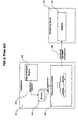
- FIG. 1therein an approach is shown using prior art solutions to place sensor code and to aggregate measurement data, as it is used by most current monitoring systems.
- An instrumentation engine 102is loaded by the application which injects sensor bytecode 103 into application code.
- the injected sensors 104generate measurement data, which is aggregated in a measurement buffer 105 which resides in the process of the monitored application 101 .
- An external monitoring server 106 with an analysis module 107cyclically polls the measurement buffer 105 to obtain data for performance analyses.
- the instrumentation engine which is deployed to the applicationmust provide functionality to parse and analyze bytecode of the application and to inject sensor bytecode into bytecode of the application 101 .
- Code representing this functionalitymust be deployed to and executed in the monitored application.
- the bytecode representing all sensorsmust be known by the instrumentation engine and thus must also be deployed to the application.
- the measurement buffer 105which resides in the memory of the monitored application 101 is another source of overhead caused by this approach because said measurement buffer requires a considerable amount of memory. Additionally, the measurement buffer 105 may cause erroneous behavior of the monitored application 101 , up to an application crash, because peak memory consumption of the measurement buffer 105 is not predictable. If the load handled by the application increases, the amount of memory required by the measurement buffer also rises, as the increased load causes more activity of the monitored application which in turn causes more acquired measurement data. The increased memory consumption caused by the measurement buffer may in the worst case lead to a crash of the application, due to an out of memory error.
- the monitoring server 106cyclically reads out and clears the measurement buffer 105 , the probability of an application crash caused by a growing measurement buffer 105 can not be excluded. Increasing the polling frequency of the monitoring server 106 may reduce the probability of an application crash, but it can not eliminate the possibility of an application crash caused by monitoring overhead. An alternative solution that limits the memory consumption caused by monitoring processes to a predictable maximum is required.
- An agent 202which is deployed to the application monitors and intercepts loading of bytecode, captures the original bytecode 203 and sends said original bytecode 203 to a monitoring server 215 for instrumentation.
- the monitoring server 215forwards the original bytecode 203 to an instrumentation engine 214 which parses the original bytecode 203 to extract metadata from said original bytecode 203 and to inject sensors 205 into the original bytecode 203 .
- Each injected sensoris assigned a unique sensorId 302
- the metadata extracted from the original bytecodeis stored within a sensor metadata node 301 , which is assigned the same sensorId 302 .
- Said sensor metadata node 301which allows identifying injected sensors and measurement data generated by those sensors, is inserted into a sensor metadata repository 216 .
- the instrumented bytecode 204is sent back to the agent 202 , which forwards it to the virtual machine to finalize loading of bytecode.
- the instrumented bytecode 204is loaded instead of the original bytecode 203 , and the injected sensors 205 start monitoring application performance.
- the agent 202additionally provides a fixed size event buffer 207 which may be implemented as a ring buffer, to temporarily buffer measurement data generated by sensors in the application 201 .
- Sensors 205acquire measurement data 403 and encapsulate it in sensor events 401 , together with a sensorId 402 , which is later used to reconstruct the context of the sensor 205 that generated the sensor event.
- the generated sensor eventis written 206 into the ring buffer 207 of the agent 202 . If the capacity of a fixed size event buffer 207 is reached, new sensor events are discarded; the memory consumption of the fixed size event buffer 207 is not increased.
- Said ring buffer 207is cyclically and asynchronous read out 208 by the agent 202 and the buffered sensor events are sent 209 to the monitoring server 215 .
- the monitoring server 215forwards received sensor events to the event collector 210 which forwards the sensor events 401 to the event correlation module 211 .
- the event correlation moduleuses the sensorIds 403 contained in the received sensor events 401 to correlate measurement data enclosed in said sensor events with sensor metadata stored in the sensor metadata repository 216 to reconstruct the semantic of received measurement data.
- the correlated measurement datais placed in a measurement buffer 212 , which is used by the analysis module 213 to analyze received measurement data.
- FIG. 3shows a sensor metadata node 301 , which stores data describing instrumented sensors.
- Sensor metadata nodesare stored in the sensor metadata repository and are used to correlate incoming sensor events with the sensors 205 that generated the events.
- a sensor metadata node 301contains a sensorId 302 , which uniquely identifies an instrumented sensor 205 .
- a sensor metadata nodeprovides sensor metadata 303 which contains but is not limited to a sensor type, identifying the type of the sensor which may e.g. be a timing sensor type, measuring execution times or a counting sensor type, counting the executions of a method or suchlike; the name of the class which contains the sensor; the name of the method the sensor is injected to; the signature of said method; and the line number of the source code where the sensor 205 is placed.
- a sensor metadata nodecontains but is not limited to a sensor type, identifying the type of the sensor which may e.g. be a timing sensor type, measuring execution times or a counting sensor type, counting the executions of a method or suchlike; the name of the class which contains the sensor; the name of the method the sensor is injected to; the signature of said method; and the line number of the source code where the sensor 205 is placed.
- a sensor metadata node 301also contains metadata describing the measurements generated by the referred sensor 304 , which contains but is not limited to the type of the measurements, and the unit of the measurement.
- An event record 401which is used to convey measurement data acquired by instrumented sensors 205 from the application 201 to the monitoring server 215 , is displayed in FIG. 4 .
- An event record 401contains the field sensorId 402 which uniquely identifies the sensor 205 that generated the event record and which is used to correlate the measurement data included in the event record 401 with metadata describing the sensor that generated the event record 401 .
- the measurement data 403 of an event record 401contains the measurement value acquired by an instrumented sensor 205 at a specific measurement.
- the measurement datacontains but is not limited to execution counters, reflecting the number of times a method or function has been executed, captured argument values of a specific method or function invocation, CPU time required for a specific invocation, or execution duration of a specific method or function invocation.
- FIG. 5depicts the process of instrumenting original bytecode 203 received from the application 201 , with sensors 205 and loading the instrumented bytecode 204 instead of the original bytecode 203 .
- Agent 202 and instrumentation engine 214collaborate to perform the instrumentation of the bytecode.
- FIG. 5 ashows the process of capturing original bytecode 203 , and requesting instrumentation of the bytecode by the instrumentation engine 214 , from the monitoring server 215 .
- the agent 202intercepts the loading process and captures the original bytecode 203 before it is loaded.
- the captured original bytecode 203is sent to the monitoring server 215 for instrumentation.
- the agent 202waits until it receives the instrumented bytecode 204 from the monitoring server 215 and forwards the received instrumented bytecode 204 to the bytecode loading process of the virtual machine of the application 201 , which loads the instrumented bytecode 204 instead of the original bytecode 203 .
- FIG. 5 bshows the tasks performed by the monitoring server 215 to instrument sensors 205 into received original bytecode 203 .
- the monitoring server 215receives original bytecode 203 , it forwards the bytecode to the instrumentation engine 214 for instrumentation.
- the instrumentation engine 214first extracts metadata from the received bytecode which is required to identify the class and methods represented by the received original bytecode 203 .
- the extracted metadatais used for selection of sections of the original bytecode which should be instrumented. Selection might be performed by comparing extracted class name and method names with user defined class and method names, or it may use a rule based system which selects methods matching a set of user defined rules.
- Parameterized sensor codeis inserted into the bytecode of the selected methods in a subsequent step, which is described in detail in FIG. 6 .
- the instrumented bytecode 204is sent back to the agent 202 .
- the preferred embodimentperforms instrumentation of original bytecode 203 during loading of the bytecode, but instrumentation of original bytecode may also be performed on user request by redefining bytecode during application runtime if the underlying virtual machine supports bytecode redefinition.
- the process depicted in FIG. 6inserts sensor bytecode into received original bytecode and generates information required to correlate received measurement data with the sensor that created the measurement data. Correlation allows to reconstruct the semantic of the received measurement data, like e.g. class or method of the monitored application into which the sensor that was injected.
- a sensor metadata node 301 with a unique sensorId 302is created.
- the sensor metadata 303 of the sensor metadata node 301is initialized with the metadata previously extracted from the received original bytecode 203 , as depicted in FIG. 5 b .
- the stored sensor metadata 303allows to identify the type of the placed sensor, as well as its location within the application 201 bytecode, which is required for later correlation of measurement data created by the sensor.
- Metadata describing the measurement data generated by the sensor 304is stored in the sensor metadata node 301 .
- the initialized sensor metadata nodeis inserted into the sensor metadata repository.
- the bytecode representing the sensor to instrumentis selected and parameterized with the previously created unique sensorId 302 .
- the sensorId 302is stored within the bytecode of the sensor and used to initialize event records 401 created by the instrumented sensor 205 .
- the sensorId 302which identifies the sensor metadata node 301 describing the sensor 205 that created the event record 401 , allows to correlate received event records 401 with the sensor metadata node 301 which describes the sensor 205 that generated and sent the event records 401 .
- the parameterized sensor bytecodeis injected into the received original bytecode 204 .
- FIG. 7schematically shows the execution of a sensor 205 .
- instrumented bytecodeis executed by the application 201 .
- bytecode of one or more instrumented sensors 205is executed.
- a sensor 205first creates an event record 401 and sets the sensorId 402 of the event record to the value assigned to the sensor during instrumentation, as depicted in FIG. 6 .
- the sensorretrieves measurement data and stores it in the previously created event record 401 .
- the initialized event recordis placed in the fixed size event buffer 207 provided by the agent 202 and execution of the monitored bytecode continues.
- the process depicted in FIG. 8shows the sending of event records 401 stored in the fixed size event buffer 207 of the agent 202 to the monitoring server 215 .
- the agent 202cyclically starts a process that sends event records 401 stored in the fixed size event buffer 207 to the monitoring server 215 .
- Event records 401 which have been sent to the monitoring server 215are deleted from the event buffer 207 in a subsequent step.
- FIG. 9depicts the process of correlating received event records 401 with the metadata describing the sensors 205 that created the event records.
- an event record 401is received by the instrumentation server 215 , it is inserted into the event collector 210 which forwards the event record to the event correlation module 211 .
- the event correlation module 211first reads the sensorId 402 of the received event record 401 and queries the sensor metadata repository 216 for a sensor metadata node 301 with a matching sensorId 302 . If a matching sensor metadata node 301 is found in the sensor metadata repository 216 , a reference to the matching sensor metadata node 301 is added to the received event record 401 and the event record 401 is inserted into the measurement buffer 212 . If no matching sensor metadata node 301 is found for a received event record 401 , the event record is discarded.
- the analysis module 213reads the event records 401 stored in the measurement buffer 212 and uses the reference to the matching sensor metadata node 301 added during event correlation to reconstruct the semantic of the analyzed event records.
Landscapes
- Engineering & Computer Science (AREA)
- General Engineering & Computer Science (AREA)
- Theoretical Computer Science (AREA)
- Computer Hardware Design (AREA)
- Quality & Reliability (AREA)
- Physics & Mathematics (AREA)
- General Physics & Mathematics (AREA)
- Debugging And Monitoring (AREA)
Abstract
Description
Claims (42)
Priority Applications (2)
| Application Number | Priority Date | Filing Date | Title |
|---|---|---|---|
| US12/120,645US7957934B2 (en) | 2007-05-15 | 2008-05-15 | Method and system for processing application performance data ouside of monitored applications to limit overhead caused by monitoring |
| US12/971,408US9231858B1 (en) | 2006-08-11 | 2010-12-17 | Completeness detection of monitored globally distributed synchronous and asynchronous transactions |
Applications Claiming Priority (2)
| Application Number | Priority Date | Filing Date | Title |
|---|---|---|---|
| US91794707P | 2007-05-15 | 2007-05-15 | |
| US12/120,645US7957934B2 (en) | 2007-05-15 | 2008-05-15 | Method and system for processing application performance data ouside of monitored applications to limit overhead caused by monitoring |
Publications (2)
| Publication Number | Publication Date |
|---|---|
| US20080288212A1 US20080288212A1 (en) | 2008-11-20 |
| US7957934B2true US7957934B2 (en) | 2011-06-07 |
Family
ID=40028411
Family Applications (1)
| Application Number | Title | Priority Date | Filing Date |
|---|---|---|---|
| US12/120,645Active2029-07-31US7957934B2 (en) | 2006-08-11 | 2008-05-15 | Method and system for processing application performance data ouside of monitored applications to limit overhead caused by monitoring |
Country Status (1)
| Country | Link |
|---|---|
| US (1) | US7957934B2 (en) |
Cited By (45)
| Publication number | Priority date | Publication date | Assignee | Title |
|---|---|---|---|---|
| US20080288962A1 (en)* | 2007-05-15 | 2008-11-20 | Bernd Greifeneder | Method and System for Dynamic Remote injection of In-process Agents into Virtual Machine based Applications |
| US20120226477A1 (en)* | 2011-03-04 | 2012-09-06 | International Business Machines Corporation | Reducing Overhead and Increasing Precision with Code Instrumentation |
| US8464225B2 (en) | 2007-05-06 | 2013-06-11 | Dynatrace Software Gmbh | Method and system for adaptive, generic code instrumentation using run-time or load-time generated inheritance information for diagnosis and monitoring application performance and failure |
| US8533687B1 (en) | 2009-11-30 | 2013-09-10 | dynaTrade Software GmbH | Methods and system for global real-time transaction tracing |
| US9047412B2 (en) | 2007-05-06 | 2015-06-02 | Dynatrace Corporation | System and method for extracting instrumentation relevant inheritance relationships for a distributed, inheritance rule based instrumentation system |
| US9231858B1 (en) | 2006-08-11 | 2016-01-05 | Dynatrace Software Gmbh | Completeness detection of monitored globally distributed synchronous and asynchronous transactions |
| US9274919B2 (en) | 2011-04-29 | 2016-03-01 | Dynatrace Software Gmbh | Transaction tracing mechanism of distributed heterogenous transactions having instrumented byte code with constant memory consumption and independent of instrumented method call depth |
| US9529691B2 (en) | 2014-10-31 | 2016-12-27 | AppDynamics, Inc. | Monitoring and correlating a binary process in a distributed business transaction |
| US9535811B2 (en) | 2014-10-31 | 2017-01-03 | AppDynamics, Inc. | Agent dynamic service |
| US9535666B2 (en)* | 2015-01-29 | 2017-01-03 | AppDynamics, Inc. | Dynamic agent delivery |
| US9811356B2 (en) | 2015-01-30 | 2017-11-07 | Appdynamics Llc | Automated software configuration management |
| US9935851B2 (en) | 2015-06-05 | 2018-04-03 | Cisco Technology, Inc. | Technologies for determining sensor placement and topology |
| US9967158B2 (en) | 2015-06-05 | 2018-05-08 | Cisco Technology, Inc. | Interactive hierarchical network chord diagram for application dependency mapping |
| US10033766B2 (en) | 2015-06-05 | 2018-07-24 | Cisco Technology, Inc. | Policy-driven compliance |
| US10089099B2 (en) | 2015-06-05 | 2018-10-02 | Cisco Technology, Inc. | Automatic software upgrade |
| US10116559B2 (en) | 2015-05-27 | 2018-10-30 | Cisco Technology, Inc. | Operations, administration and management (OAM) in overlay data center environments |
| US10142353B2 (en) | 2015-06-05 | 2018-11-27 | Cisco Technology, Inc. | System for monitoring and managing datacenters |
| US10171357B2 (en) | 2016-05-27 | 2019-01-01 | Cisco Technology, Inc. | Techniques for managing software defined networking controller in-band communications in a data center network |
| US10177977B1 (en) | 2013-02-13 | 2019-01-08 | Cisco Technology, Inc. | Deployment and upgrade of network devices in a network environment |
| US10250446B2 (en) | 2017-03-27 | 2019-04-02 | Cisco Technology, Inc. | Distributed policy store |
| US10289438B2 (en) | 2016-06-16 | 2019-05-14 | Cisco Technology, Inc. | Techniques for coordination of application components deployed on distributed virtual machines |
| US10289513B2 (en) | 2015-09-14 | 2019-05-14 | Dynatrace Llc | Method and system for automated injection of process type specific in-process agents on process startup |
| US10374904B2 (en) | 2015-05-15 | 2019-08-06 | Cisco Technology, Inc. | Diagnostic network visualization |
| US10523512B2 (en) | 2017-03-24 | 2019-12-31 | Cisco Technology, Inc. | Network agent for generating platform specific network policies |
| US10523541B2 (en) | 2017-10-25 | 2019-12-31 | Cisco Technology, Inc. | Federated network and application data analytics platform |
| US10554501B2 (en) | 2017-10-23 | 2020-02-04 | Cisco Technology, Inc. | Network migration assistant |
| US10574575B2 (en) | 2018-01-25 | 2020-02-25 | Cisco Technology, Inc. | Network flow stitching using middle box flow stitching |
| US10594560B2 (en) | 2017-03-27 | 2020-03-17 | Cisco Technology, Inc. | Intent driven network policy platform |
| US10594542B2 (en) | 2017-10-27 | 2020-03-17 | Cisco Technology, Inc. | System and method for network root cause analysis |
| US10680887B2 (en) | 2017-07-21 | 2020-06-09 | Cisco Technology, Inc. | Remote device status audit and recovery |
| US10708183B2 (en) | 2016-07-21 | 2020-07-07 | Cisco Technology, Inc. | System and method of providing segment routing as a service |
| US10708152B2 (en) | 2017-03-23 | 2020-07-07 | Cisco Technology, Inc. | Predicting application and network performance |
| US20200242251A1 (en)* | 2019-01-24 | 2020-07-30 | Citrix Systems, Inc. | Providing application security, validation and profiling to an application |
| US10764141B2 (en) | 2017-03-27 | 2020-09-01 | Cisco Technology, Inc. | Network agent for reporting to a network policy system |
| US10798015B2 (en) | 2018-01-25 | 2020-10-06 | Cisco Technology, Inc. | Discovery of middleboxes using traffic flow stitching |
| US10826803B2 (en) | 2018-01-25 | 2020-11-03 | Cisco Technology, Inc. | Mechanism for facilitating efficient policy updates |
| US10873794B2 (en) | 2017-03-28 | 2020-12-22 | Cisco Technology, Inc. | Flowlet resolution for application performance monitoring and management |
| US10873593B2 (en) | 2018-01-25 | 2020-12-22 | Cisco Technology, Inc. | Mechanism for identifying differences between network snapshots |
| US10917438B2 (en) | 2018-01-25 | 2021-02-09 | Cisco Technology, Inc. | Secure publishing for policy updates |
| US10931629B2 (en) | 2016-05-27 | 2021-02-23 | Cisco Technology, Inc. | Techniques for managing software defined networking controller in-band communications in a data center network |
| US10972388B2 (en) | 2016-11-22 | 2021-04-06 | Cisco Technology, Inc. | Federated microburst detection |
| US10999149B2 (en) | 2018-01-25 | 2021-05-04 | Cisco Technology, Inc. | Automatic configuration discovery based on traffic flow data |
| US11128700B2 (en) | 2018-01-26 | 2021-09-21 | Cisco Technology, Inc. | Load balancing configuration based on traffic flow telemetry |
| US11233821B2 (en) | 2018-01-04 | 2022-01-25 | Cisco Technology, Inc. | Network intrusion counter-intelligence |
| US11765046B1 (en) | 2018-01-11 | 2023-09-19 | Cisco Technology, Inc. | Endpoint cluster assignment and query generation |
Families Citing this family (25)
| Publication number | Priority date | Publication date | Assignee | Title |
|---|---|---|---|---|
| US8782612B2 (en) | 2010-05-11 | 2014-07-15 | Ca, Inc. | Failsafe mechanism for dynamic instrumentation of software using callbacks |
| US8473925B2 (en) | 2010-05-11 | 2013-06-25 | Ca, Inc. | Conditional dynamic instrumentation of software in a specified transaction context |
| US8566800B2 (en)* | 2010-05-11 | 2013-10-22 | Ca, Inc. | Detection of method calls to streamline diagnosis of custom code through dynamic instrumentation |
| US8938721B2 (en) | 2010-07-21 | 2015-01-20 | Microsoft Corporation | Measuring actual end user performance and availability of web applications |
| US8938729B2 (en) | 2010-10-12 | 2015-01-20 | Ca, Inc. | Two pass automated application instrumentation |
| US10203974B2 (en)* | 2010-12-20 | 2019-02-12 | Microsoft Technology Licensing, Llc | Probe insertion via background virtual machine |
| CN102650964B (en) | 2011-02-28 | 2016-03-09 | 国际商业机器公司 | For monitoring the method for OO application, system and self-monitoring system |
| US8752015B2 (en)* | 2011-12-05 | 2014-06-10 | Ca, Inc. | Metadata merging in agent configuration files |
| US9411616B2 (en) | 2011-12-09 | 2016-08-09 | Ca, Inc. | Classloader/instrumentation approach for invoking non-bound libraries |
| US9509553B2 (en)* | 2012-08-13 | 2016-11-29 | Intigua, Inc. | System and methods for management virtualization |
| CN104813612A (en)* | 2012-11-28 | 2015-07-29 | 惠普发展公司,有限责任合伙企业 | Determining at least one cost factor associated with using cloud to provide application component |
| US8954546B2 (en)* | 2013-01-25 | 2015-02-10 | Concurix Corporation | Tracing with a workload distributor |
| US8924941B2 (en) | 2013-02-12 | 2014-12-30 | Concurix Corporation | Optimization analysis using similar frequencies |
| US20130283281A1 (en) | 2013-02-12 | 2013-10-24 | Concurix Corporation | Deploying Trace Objectives using Cost Analyses |
| US8997063B2 (en) | 2013-02-12 | 2015-03-31 | Concurix Corporation | Periodicity optimization in an automated tracing system |
| US20130227529A1 (en) | 2013-03-15 | 2013-08-29 | Concurix Corporation | Runtime Memory Settings Derived from Trace Data |
| US9575874B2 (en) | 2013-04-20 | 2017-02-21 | Microsoft Technology Licensing, Llc | Error list and bug report analysis for configuring an application tracer |
| US9292415B2 (en) | 2013-09-04 | 2016-03-22 | Microsoft Technology Licensing, Llc | Module specific tracing in a shared module environment |
| KR20150047940A (en)* | 2013-10-25 | 2015-05-06 | 삼성전자주식회사 | Method and device for analyzing an application |
| CN105765528B (en) | 2013-11-13 | 2019-09-24 | 微软技术许可有限责任公司 | Method, system and medium for application performing path tracing with configurable origin definition |
| US10643665B2 (en)* | 2015-04-29 | 2020-05-05 | Tomtom International B.V. | Data processing systems |
| US20170104733A1 (en)* | 2015-10-09 | 2017-04-13 | Intel Corporation | Device, system and method for low speed communication of sensor information |
| US10397325B2 (en)* | 2015-10-22 | 2019-08-27 | Oracle International Corporation | System and method for data payload collection monitoring and analysis in a transaction processing environment |
| US11263033B2 (en)* | 2018-12-28 | 2022-03-01 | Salesforce.Com, Inc. | Usage checks for code running within a secure sub-environment of a virtual machine |
| US10574657B1 (en) | 2019-07-18 | 2020-02-25 | Capital One Services, Llc | Automatic transaction processing failover |
Citations (1)
| Publication number | Priority date | Publication date | Assignee | Title |
|---|---|---|---|---|
| US20050283522A1 (en)* | 2004-06-16 | 2005-12-22 | Jarmo Parkkinen | Arrangement and method for optimizing performance and data safety in a highly available database system |
- 2008
- 2008-05-15USUS12/120,645patent/US7957934B2/enactiveActive
Patent Citations (1)
| Publication number | Priority date | Publication date | Assignee | Title |
|---|---|---|---|---|
| US20050283522A1 (en)* | 2004-06-16 | 2005-12-22 | Jarmo Parkkinen | Arrangement and method for optimizing performance and data safety in a highly available database system |
Non-Patent Citations (1)
| Title |
|---|
| Andrew Z. Tabona, Windows 2003 performance monitor, p. 1-8, Publish Mar. 29, 2004.* |
Cited By (137)
| Publication number | Priority date | Publication date | Assignee | Title |
|---|---|---|---|---|
| US9231858B1 (en) | 2006-08-11 | 2016-01-05 | Dynatrace Software Gmbh | Completeness detection of monitored globally distributed synchronous and asynchronous transactions |
| US8464225B2 (en) | 2007-05-06 | 2013-06-11 | Dynatrace Software Gmbh | Method and system for adaptive, generic code instrumentation using run-time or load-time generated inheritance information for diagnosis and monitoring application performance and failure |
| US9047412B2 (en) | 2007-05-06 | 2015-06-02 | Dynatrace Corporation | System and method for extracting instrumentation relevant inheritance relationships for a distributed, inheritance rule based instrumentation system |
| US20080288962A1 (en)* | 2007-05-15 | 2008-11-20 | Bernd Greifeneder | Method and System for Dynamic Remote injection of In-process Agents into Virtual Machine based Applications |
| US8151277B2 (en)* | 2007-05-15 | 2012-04-03 | Dynatrace Software Gmbh | Method and system for dynamic remote injection of in-process agents into virtual machine based applications |
| US8533687B1 (en) | 2009-11-30 | 2013-09-10 | dynaTrade Software GmbH | Methods and system for global real-time transaction tracing |
| US20120226477A1 (en)* | 2011-03-04 | 2012-09-06 | International Business Machines Corporation | Reducing Overhead and Increasing Precision with Code Instrumentation |
| US9811362B2 (en) | 2011-04-29 | 2017-11-07 | Dynatrace Software Gmbh | Method and system for transaction controlled sampling of distributed heterogeneous transactions without source code modifications |
| US9274919B2 (en) | 2011-04-29 | 2016-03-01 | Dynatrace Software Gmbh | Transaction tracing mechanism of distributed heterogenous transactions having instrumented byte code with constant memory consumption and independent of instrumented method call depth |
| US10177977B1 (en) | 2013-02-13 | 2019-01-08 | Cisco Technology, Inc. | Deployment and upgrade of network devices in a network environment |
| US9529691B2 (en) | 2014-10-31 | 2016-12-27 | AppDynamics, Inc. | Monitoring and correlating a binary process in a distributed business transaction |
| US9535811B2 (en) | 2014-10-31 | 2017-01-03 | AppDynamics, Inc. | Agent dynamic service |
| US9535666B2 (en)* | 2015-01-29 | 2017-01-03 | AppDynamics, Inc. | Dynamic agent delivery |
| US9811356B2 (en) | 2015-01-30 | 2017-11-07 | Appdynamics Llc | Automated software configuration management |
| US10374904B2 (en) | 2015-05-15 | 2019-08-06 | Cisco Technology, Inc. | Diagnostic network visualization |
| US10116559B2 (en) | 2015-05-27 | 2018-10-30 | Cisco Technology, Inc. | Operations, administration and management (OAM) in overlay data center environments |
| US10797973B2 (en) | 2015-06-05 | 2020-10-06 | Cisco Technology, Inc. | Server-client determination |
| US11601349B2 (en) | 2015-06-05 | 2023-03-07 | Cisco Technology, Inc. | System and method of detecting hidden processes by analyzing packet flows |
| US10089099B2 (en) | 2015-06-05 | 2018-10-02 | Cisco Technology, Inc. | Automatic software upgrade |
| US10009240B2 (en) | 2015-06-05 | 2018-06-26 | Cisco Technology, Inc. | System and method of recommending policies that result in particular reputation scores for hosts |
| US10116530B2 (en) | 2015-06-05 | 2018-10-30 | Cisco Technology, Inc. | Technologies for determining sensor deployment characteristics |
| US10116531B2 (en) | 2015-06-05 | 2018-10-30 | Cisco Technology, Inc | Round trip time (RTT) measurement based upon sequence number |
| US10129117B2 (en) | 2015-06-05 | 2018-11-13 | Cisco Technology, Inc. | Conditional policies |
| US10142353B2 (en) | 2015-06-05 | 2018-11-27 | Cisco Technology, Inc. | System for monitoring and managing datacenters |
| US12335275B2 (en) | 2015-06-05 | 2025-06-17 | Cisco Technology, Inc. | System for monitoring and managing datacenters |
| US10171319B2 (en) | 2015-06-05 | 2019-01-01 | Cisco Technology, Inc. | Technologies for annotating process and user information for network flows |
| US9979615B2 (en) | 2015-06-05 | 2018-05-22 | Cisco Technology, Inc. | Techniques for determining network topologies |
| US10177998B2 (en) | 2015-06-05 | 2019-01-08 | Cisco Technology, Inc. | Augmenting flow data for improved network monitoring and management |
| US10181987B2 (en) | 2015-06-05 | 2019-01-15 | Cisco Technology, Inc. | High availability of collectors of traffic reported by network sensors |
| US10230597B2 (en) | 2015-06-05 | 2019-03-12 | Cisco Technology, Inc. | Optimizations for application dependency mapping |
| US10243817B2 (en) | 2015-06-05 | 2019-03-26 | Cisco Technology, Inc. | System and method of assigning reputation scores to hosts |
| US12278746B2 (en) | 2015-06-05 | 2025-04-15 | Cisco Technology, Inc. | Auto update of sensor configuration |
| US12231307B2 (en) | 2015-06-05 | 2025-02-18 | Cisco Technology, Inc. | System and method for user optimized application dependency mapping |
| US12231308B2 (en) | 2015-06-05 | 2025-02-18 | Cisco Technology, Inc. | Unique ID generation for sensors |
| US10305757B2 (en) | 2015-06-05 | 2019-05-28 | Cisco Technology, Inc. | Determining a reputation of a network entity |
| US10320630B2 (en) | 2015-06-05 | 2019-06-11 | Cisco Technology, Inc. | Hierarchichal sharding of flows from sensors to collectors |
| US10326672B2 (en) | 2015-06-05 | 2019-06-18 | Cisco Technology, Inc. | MDL-based clustering for application dependency mapping |
| US10326673B2 (en) | 2015-06-05 | 2019-06-18 | Cisco Technology, Inc. | Techniques for determining network topologies |
| US9967158B2 (en) | 2015-06-05 | 2018-05-08 | Cisco Technology, Inc. | Interactive hierarchical network chord diagram for application dependency mapping |
| US10439904B2 (en) | 2015-06-05 | 2019-10-08 | Cisco Technology, Inc. | System and method of determining malicious processes |
| US10454793B2 (en) | 2015-06-05 | 2019-10-22 | Cisco Technology, Inc. | System and method of detecting whether a source of a packet flow transmits packets which bypass an operating system stack |
| US10505828B2 (en) | 2015-06-05 | 2019-12-10 | Cisco Technology, Inc. | Technologies for managing compromised sensors in virtualized environments |
| US10505827B2 (en) | 2015-06-05 | 2019-12-10 | Cisco Technology, Inc. | Creating classifiers for servers and clients in a network |
| US10516585B2 (en) | 2015-06-05 | 2019-12-24 | Cisco Technology, Inc. | System and method for network information mapping and displaying |
| US10516586B2 (en) | 2015-06-05 | 2019-12-24 | Cisco Technology, Inc. | Identifying bogon address spaces |
| US12224921B2 (en) | 2015-06-05 | 2025-02-11 | Cisco Technology, Inc. | Technologies for managing compromised sensors in virtualized environments |
| US12212476B2 (en) | 2015-06-05 | 2025-01-28 | Cisco Technology, Inc. | System and method for network policy simulation |
| US10536357B2 (en) | 2015-06-05 | 2020-01-14 | Cisco Technology, Inc. | Late data detection in data center |
| US12192078B2 (en) | 2015-06-05 | 2025-01-07 | Cisco Technology, Inc. | System and method of assigning reputation scores to hosts |
| US10567247B2 (en) | 2015-06-05 | 2020-02-18 | Cisco Technology, Inc. | Intra-datacenter attack detection |
| US12177097B2 (en) | 2015-06-05 | 2024-12-24 | Cisco Technology, Inc. | Policy utilization analysis |
| US12113684B2 (en) | 2015-06-05 | 2024-10-08 | Cisco Technology, Inc. | Identifying bogon address spaces |
| US11968102B2 (en) | 2015-06-05 | 2024-04-23 | Cisco Technology, Inc. | System and method of detecting packet loss in a distributed sensor-collector architecture |
| US11968103B2 (en) | 2015-06-05 | 2024-04-23 | Cisco Technology, Inc. | Policy utilization analysis |
| US10623284B2 (en) | 2015-06-05 | 2020-04-14 | Cisco Technology, Inc. | Determining a reputation of a network entity |
| US10623283B2 (en) | 2015-06-05 | 2020-04-14 | Cisco Technology, Inc. | Anomaly detection through header field entropy |
| US10623282B2 (en) | 2015-06-05 | 2020-04-14 | Cisco Technology, Inc. | System and method of detecting hidden processes by analyzing packet flows |
| US10659324B2 (en) | 2015-06-05 | 2020-05-19 | Cisco Technology, Inc. | Application monitoring prioritization |
| US11936663B2 (en) | 2015-06-05 | 2024-03-19 | Cisco Technology, Inc. | System for monitoring and managing datacenters |
| US10686804B2 (en) | 2015-06-05 | 2020-06-16 | Cisco Technology, Inc. | System for monitoring and managing datacenters |
| US10693749B2 (en) | 2015-06-05 | 2020-06-23 | Cisco Technology, Inc. | Synthetic data for determining health of a network security system |
| US11924072B2 (en) | 2015-06-05 | 2024-03-05 | Cisco Technology, Inc. | Technologies for annotating process and user information for network flows |
| US11924073B2 (en) | 2015-06-05 | 2024-03-05 | Cisco Technology, Inc. | System and method of assigning reputation scores to hosts |
| US10728119B2 (en) | 2015-06-05 | 2020-07-28 | Cisco Technology, Inc. | Cluster discovery via multi-domain fusion for application dependency mapping |
| US11902122B2 (en) | 2015-06-05 | 2024-02-13 | Cisco Technology, Inc. | Application monitoring prioritization |
| US10735283B2 (en) | 2015-06-05 | 2020-08-04 | Cisco Technology, Inc. | Unique ID generation for sensors |
| US10742529B2 (en) | 2015-06-05 | 2020-08-11 | Cisco Technology, Inc. | Hierarchichal sharding of flows from sensors to collectors |
| US11902120B2 (en) | 2015-06-05 | 2024-02-13 | Cisco Technology, Inc. | Synthetic data for determining health of a network security system |
| US10797970B2 (en) | 2015-06-05 | 2020-10-06 | Cisco Technology, Inc. | Interactive hierarchical network chord diagram for application dependency mapping |
| US9935851B2 (en) | 2015-06-05 | 2018-04-03 | Cisco Technology, Inc. | Technologies for determining sensor placement and topology |
| US11902121B2 (en) | 2015-06-05 | 2024-02-13 | Cisco Technology, Inc. | System and method of detecting whether a source of a packet flow transmits packets which bypass an operating system stack |
| US11894996B2 (en) | 2015-06-05 | 2024-02-06 | Cisco Technology, Inc. | Technologies for annotating process and user information for network flows |
| US10862776B2 (en) | 2015-06-05 | 2020-12-08 | Cisco Technology, Inc. | System and method of spoof detection |
| US11700190B2 (en) | 2015-06-05 | 2023-07-11 | Cisco Technology, Inc. | Technologies for annotating process and user information for network flows |
| US11695659B2 (en) | 2015-06-05 | 2023-07-04 | Cisco Technology, Inc. | Unique ID generation for sensors |
| US10904116B2 (en) | 2015-06-05 | 2021-01-26 | Cisco Technology, Inc. | Policy utilization analysis |
| US10033766B2 (en) | 2015-06-05 | 2018-07-24 | Cisco Technology, Inc. | Policy-driven compliance |
| US11102093B2 (en) | 2015-06-05 | 2021-08-24 | Cisco Technology, Inc. | System and method of assigning reputation scores to hosts |
| US11637762B2 (en) | 2015-06-05 | 2023-04-25 | Cisco Technology, Inc. | MDL-based clustering for dependency mapping |
| US11528283B2 (en) | 2015-06-05 | 2022-12-13 | Cisco Technology, Inc. | System for monitoring and managing datacenters |
| US11522775B2 (en) | 2015-06-05 | 2022-12-06 | Cisco Technology, Inc. | Application monitoring prioritization |
| US10979322B2 (en) | 2015-06-05 | 2021-04-13 | Cisco Technology, Inc. | Techniques for determining network anomalies in data center networks |
| US11516098B2 (en) | 2015-06-05 | 2022-11-29 | Cisco Technology, Inc. | Round trip time (RTT) measurement based upon sequence number |
| US11502922B2 (en) | 2015-06-05 | 2022-11-15 | Cisco Technology, Inc. | Technologies for managing compromised sensors in virtualized environments |
| US11496377B2 (en) | 2015-06-05 | 2022-11-08 | Cisco Technology, Inc. | Anomaly detection through header field entropy |
| US10917319B2 (en) | 2015-06-05 | 2021-02-09 | Cisco Technology, Inc. | MDL-based clustering for dependency mapping |
| US11121948B2 (en) | 2015-06-05 | 2021-09-14 | Cisco Technology, Inc. | Auto update of sensor configuration |
| US11128552B2 (en) | 2015-06-05 | 2021-09-21 | Cisco Technology, Inc. | Round trip time (RTT) measurement based upon sequence number |
| US11477097B2 (en) | 2015-06-05 | 2022-10-18 | Cisco Technology, Inc. | Hierarchichal sharding of flows from sensors to collectors |
| US11431592B2 (en) | 2015-06-05 | 2022-08-30 | Cisco Technology, Inc. | System and method of detecting whether a source of a packet flow transmits packets which bypass an operating system stack |
| US11153184B2 (en) | 2015-06-05 | 2021-10-19 | Cisco Technology, Inc. | Technologies for annotating process and user information for network flows |
| US11405291B2 (en) | 2015-06-05 | 2022-08-02 | Cisco Technology, Inc. | Generate a communication graph using an application dependency mapping (ADM) pipeline |
| US11368378B2 (en) | 2015-06-05 | 2022-06-21 | Cisco Technology, Inc. | Identifying bogon address spaces |
| US11252060B2 (en) | 2015-06-05 | 2022-02-15 | Cisco Technology, Inc. | Data center traffic analytics synchronization |
| US11252058B2 (en) | 2015-06-05 | 2022-02-15 | Cisco Technology, Inc. | System and method for user optimized application dependency mapping |
| US10579491B2 (en) | 2015-09-14 | 2020-03-03 | Dynatrace Llc | Method and system for automated injection of process type specific in process agents on process startup |
| US10289513B2 (en) | 2015-09-14 | 2019-05-14 | Dynatrace Llc | Method and system for automated injection of process type specific in-process agents on process startup |
| US11546288B2 (en) | 2016-05-27 | 2023-01-03 | Cisco Technology, Inc. | Techniques for managing software defined networking controller in-band communications in a data center network |
| US10171357B2 (en) | 2016-05-27 | 2019-01-01 | Cisco Technology, Inc. | Techniques for managing software defined networking controller in-band communications in a data center network |
| US10931629B2 (en) | 2016-05-27 | 2021-02-23 | Cisco Technology, Inc. | Techniques for managing software defined networking controller in-band communications in a data center network |
| US12021826B2 (en) | 2016-05-27 | 2024-06-25 | Cisco Technology, Inc. | Techniques for managing software defined networking controller in-band communications in a data center network |
| US10289438B2 (en) | 2016-06-16 | 2019-05-14 | Cisco Technology, Inc. | Techniques for coordination of application components deployed on distributed virtual machines |
| US10708183B2 (en) | 2016-07-21 | 2020-07-07 | Cisco Technology, Inc. | System and method of providing segment routing as a service |
| US11283712B2 (en) | 2016-07-21 | 2022-03-22 | Cisco Technology, Inc. | System and method of providing segment routing as a service |
| US10972388B2 (en) | 2016-11-22 | 2021-04-06 | Cisco Technology, Inc. | Federated microburst detection |
| US11088929B2 (en) | 2017-03-23 | 2021-08-10 | Cisco Technology, Inc. | Predicting application and network performance |
| US10708152B2 (en) | 2017-03-23 | 2020-07-07 | Cisco Technology, Inc. | Predicting application and network performance |
| US11252038B2 (en) | 2017-03-24 | 2022-02-15 | Cisco Technology, Inc. | Network agent for generating platform specific network policies |
| US10523512B2 (en) | 2017-03-24 | 2019-12-31 | Cisco Technology, Inc. | Network agent for generating platform specific network policies |
| US10594560B2 (en) | 2017-03-27 | 2020-03-17 | Cisco Technology, Inc. | Intent driven network policy platform |
| US10250446B2 (en) | 2017-03-27 | 2019-04-02 | Cisco Technology, Inc. | Distributed policy store |
| US11509535B2 (en) | 2017-03-27 | 2022-11-22 | Cisco Technology, Inc. | Network agent for reporting to a network policy system |
| US12368629B2 (en) | 2017-03-27 | 2025-07-22 | Cisco Technology, Inc. | Network agent for reporting to a network policy system |
| US11146454B2 (en) | 2017-03-27 | 2021-10-12 | Cisco Technology, Inc. | Intent driven network policy platform |
| US10764141B2 (en) | 2017-03-27 | 2020-09-01 | Cisco Technology, Inc. | Network agent for reporting to a network policy system |
| US10873794B2 (en) | 2017-03-28 | 2020-12-22 | Cisco Technology, Inc. | Flowlet resolution for application performance monitoring and management |
| US11202132B2 (en) | 2017-03-28 | 2021-12-14 | Cisco Technology, Inc. | Application performance monitoring and management platform with anomalous flowlet resolution |
| US11683618B2 (en) | 2017-03-28 | 2023-06-20 | Cisco Technology, Inc. | Application performance monitoring and management platform with anomalous flowlet resolution |
| US11863921B2 (en) | 2017-03-28 | 2024-01-02 | Cisco Technology, Inc. | Application performance monitoring and management platform with anomalous flowlet resolution |
| US10680887B2 (en) | 2017-07-21 | 2020-06-09 | Cisco Technology, Inc. | Remote device status audit and recovery |
| US10554501B2 (en) | 2017-10-23 | 2020-02-04 | Cisco Technology, Inc. | Network migration assistant |
| US11044170B2 (en) | 2017-10-23 | 2021-06-22 | Cisco Technology, Inc. | Network migration assistant |
| US10523541B2 (en) | 2017-10-25 | 2019-12-31 | Cisco Technology, Inc. | Federated network and application data analytics platform |
| US10904071B2 (en) | 2017-10-27 | 2021-01-26 | Cisco Technology, Inc. | System and method for network root cause analysis |
| US10594542B2 (en) | 2017-10-27 | 2020-03-17 | Cisco Technology, Inc. | System and method for network root cause analysis |
| US11233821B2 (en) | 2018-01-04 | 2022-01-25 | Cisco Technology, Inc. | Network intrusion counter-intelligence |
| US11750653B2 (en) | 2018-01-04 | 2023-09-05 | Cisco Technology, Inc. | Network intrusion counter-intelligence |
| US11765046B1 (en) | 2018-01-11 | 2023-09-19 | Cisco Technology, Inc. | Endpoint cluster assignment and query generation |
| US10999149B2 (en) | 2018-01-25 | 2021-05-04 | Cisco Technology, Inc. | Automatic configuration discovery based on traffic flow data |
| US10574575B2 (en) | 2018-01-25 | 2020-02-25 | Cisco Technology, Inc. | Network flow stitching using middle box flow stitching |
| US11924240B2 (en) | 2018-01-25 | 2024-03-05 | Cisco Technology, Inc. | Mechanism for identifying differences between network snapshots |
| US10798015B2 (en) | 2018-01-25 | 2020-10-06 | Cisco Technology, Inc. | Discovery of middleboxes using traffic flow stitching |
| US10873593B2 (en) | 2018-01-25 | 2020-12-22 | Cisco Technology, Inc. | Mechanism for identifying differences between network snapshots |
| US10826803B2 (en) | 2018-01-25 | 2020-11-03 | Cisco Technology, Inc. | Mechanism for facilitating efficient policy updates |
| US10917438B2 (en) | 2018-01-25 | 2021-02-09 | Cisco Technology, Inc. | Secure publishing for policy updates |
| US11128700B2 (en) | 2018-01-26 | 2021-09-21 | Cisco Technology, Inc. | Load balancing configuration based on traffic flow telemetry |
| US20200242251A1 (en)* | 2019-01-24 | 2020-07-30 | Citrix Systems, Inc. | Providing application security, validation and profiling to an application |
Also Published As
| Publication number | Publication date |
|---|---|
| US20080288212A1 (en) | 2008-11-20 |
Similar Documents
| Publication | Publication Date | Title |
|---|---|---|
| US7957934B2 (en) | Method and system for processing application performance data ouside of monitored applications to limit overhead caused by monitoring | |
| US8533687B1 (en) | Methods and system for global real-time transaction tracing | |
| US8832665B2 (en) | Method and system for tracing individual transactions at the granularity level of method calls throughout distributed heterogeneous applications without source code modifications including the detection of outgoing requests | |
| US9274919B2 (en) | Transaction tracing mechanism of distributed heterogenous transactions having instrumented byte code with constant memory consumption and independent of instrumented method call depth | |
| US8150985B2 (en) | Application execution managing method, application execution server computer, and repeater | |
| US7941789B2 (en) | Common performance trace mechanism | |
| US7007269B2 (en) | Method of providing open access to application profiling data | |
| US7266810B2 (en) | Runtime profiling of platform-independent software applications | |
| US7849188B2 (en) | End-to-end tracking of asynchronous long-running business process execution language processes | |
| US8028200B2 (en) | Tracing operations in multiple computer systems | |
| US9129056B2 (en) | Tracing values of method parameters | |
| US20080127110A1 (en) | Method and system for generating a common trace data format | |
| US6754612B1 (en) | Performance markers to measure benchmark timing of a plurality of standard features in an application program | |
| US9311214B2 (en) | System and methods for tracing individual transactions across a mainframe computing environment | |
| CN110347954B (en) | Complex Web application-oriented servitization method | |
| CN110764980A (en) | Log processing method and device | |
| CN102567185B (en) | Monitoring method of application server | |
| CN114595201A (en) | Method, equipment and storage medium for inquiring acquisition record of interface access log | |
| US8819496B2 (en) | Apparatus for collecting trace information and processing trace information, and method for collecting and processing trace information | |
| CN110334302B (en) | Complex Web application front-end runtime analysis method | |
| US8516448B2 (en) | Identifying interpreted programs through class loading sequences | |
| US7032214B1 (en) | Performance markers to measure performance of features in a program | |
| CN115865645A (en) | Link determination method, device, equipment, medium and product | |
| US7653742B1 (en) | Defining and detecting network application business activities | |
| US6530041B1 (en) | Troubleshooting apparatus troubleshooting method and recording medium recorded with troubleshooting program in network computing environment |
Legal Events
| Date | Code | Title | Description |
|---|---|---|---|
| AS | Assignment | Owner name:DYNATRACE SOFTWARE GMBH, AUSTRIA Free format text:ASSIGNMENT OF ASSIGNORS INTEREST;ASSIGNOR:GREIFENEDER, BERND;REEL/FRAME:024696/0556 Effective date:20100715 | |
| STCF | Information on status: patent grant | Free format text:PATENTED CASE | |
| CC | Certificate of correction | ||
| FEPP | Fee payment procedure | Free format text:PAT HOLDER NO LONGER CLAIMS SMALL ENTITY STATUS, ENTITY STATUS SET TO UNDISCOUNTED (ORIGINAL EVENT CODE: STOL); ENTITY STATUS OF PATENT OWNER: LARGE ENTITY | |
| FPAY | Fee payment | Year of fee payment:4 | |
| MAFP | Maintenance fee payment | Free format text:PAYMENT OF MAINTENANCE FEE, 8TH YEAR, LARGE ENTITY (ORIGINAL EVENT CODE: M1552); ENTITY STATUS OF PATENT OWNER: LARGE ENTITY Year of fee payment:8 | |
| MAFP | Maintenance fee payment | Free format text:PAYMENT OF MAINTENANCE FEE, 12TH YEAR, LARGE ENTITY (ORIGINAL EVENT CODE: M1553); ENTITY STATUS OF PATENT OWNER: LARGE ENTITY Year of fee payment:12 | |
| AS | Assignment | Owner name:DYNATRACE LLC, MASSACHUSETTS Free format text:ASSIGNMENT OF ASSIGNORS INTEREST;ASSIGNOR:DYNATRACE SOFTWARE GMBH;REEL/FRAME:062119/0843 Effective date:20221215 |