US7853593B2 - Content markup transformation - Google Patents
Content markup transformationDownload PDFInfo
- Publication number
- US7853593B2 US7853593B2US11/689,335US68933507AUS7853593B2US 7853593 B2US7853593 B2US 7853593B2US 68933507 AUS68933507 AUS 68933507AUS 7853593 B2US7853593 B2US 7853593B2
- Authority
- US
- United States
- Prior art keywords
- content
- mobile device
- markup language
- url
- browser
- Prior art date
- Legal status (The legal status is an assumption and is not a legal conclusion. Google has not performed a legal analysis and makes no representation as to the accuracy of the status listed.)
- Expired - Fee Related, expires
Links
Images
Classifications
- G—PHYSICS
- G06—COMPUTING OR CALCULATING; COUNTING
- G06F—ELECTRIC DIGITAL DATA PROCESSING
- G06F16/00—Information retrieval; Database structures therefor; File system structures therefor
- G06F16/90—Details of database functions independent of the retrieved data types
- G06F16/95—Retrieval from the web
- G06F16/957—Browsing optimisation, e.g. caching or content distillation
- G06F16/9577—Optimising the visualization of content, e.g. distillation of HTML documents
Definitions
- Markup languagesare utilized to control data presentation to electronic device users.
- usersare typically provided content that may include images, textual data and the like information for presentation.
- a markup languagemay be implemented to control the way in which this content is presented, such as providing data hierarchies.
- An example of a hierarchyis to separate a textual portion into a title portion which is distinct from the bulk of the text, given a particular alignment, or provided with a special characteristic.
- a markup languagemay be utilized for determining the display of an image, such as an image file for presentation on a display.
- Drawbacksmay include, but are not limited to, improperly formatted markups, images exceeding the display capability of the device, ill-formed content data, ill-formed tables, harmful markups being forwarded to the device, incomplete markup (e.g. a missing closing markup), missing links and similar issues that may diminish the user's experience. These issues may be particularly troublesome for “thin” client devices. Thin client devices may include those devices having limited capabilities in comparison to the data to be handled, such as mobile devices including smart phones, cellular phones, and so on.
- HTMLhypertext markup language
- HTMLis utilized to author information on the Internet (the World Wide Web or “the web”).
- HTMLis utilized to provide the “feel” to the content being provided, e.g., HTML may be implemented to control the way in which the content data is presented to the user in order to provide the desired experience.
- a smart phone userbrowsing the Internet, may be confronted with an image with dimensions larger than the phone's display.
- dataoften is ill-formed for thin device access or data is ill-communicated for the device's capabilities.
- a websiteis unavailable to a mobile device. From the web-side perspective, including alternate markup which is thin device friendly may be time consuming and increase the overall expense of providing content.
- Mobile devicesmay also suffer from “browsing” issues associated with accessing different content sources as the user “surfs” the web.
- Links or uniform resource locators (URL)are utilized to direct the browser to the address for the desired content. Therefore, a link may be included in content that may be rendered by a thick client that may not be rendered by a thin client.
- URLuniform resource locators
- Methods of correcting and transcoding markup language content for mobile devicesare described.
- mobile device capabilitiesare determined.
- Contentis processed to correct malformed tags in the content based on the mobile device's determined capabilities.
- the corrected contentis transcoded from a first mark-up language, which is not supported by a mobile device, into a second markup language which is supported by the mobile device.
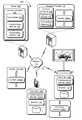
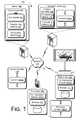
- FIG. 1illustrates an environment in an exemplary implementation that may use technologies to transform and transcode content.
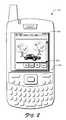
- FIG. 2is an illustration of a thin mobile device in an exemplary implementation.
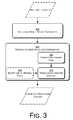
- FIG. 3is a flow diagram depicting a procedure in an exemplary implementation in which malformed content is processed into mobile browser compliant and supportable content based on determined capabilities of a mobile device.
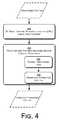
- FIG. 4is a flow diagram depicting a procedure in an exemplary implementation in which URL identified content is proxied for presentation on a mobile device.
- a systemwhich utilizes transforming and transcoding modules to process incomplete first-markup language into content which is supported by a mobile device.
- HTML web contentmay be corrected to “fill-in” malformed markup tags. Included content may be reformed in accordance with the capabilities of the mobile target browser for facilitating a rich mobile browsing experience.
- the corrected contentmay be transcoded into a language which is understood by the mobile device.
- a procedureis implemented to proxy URL identified first-markup language content into supported content for presentation on a mobile browser 113 . Further discussion of content processing may be generally found in the discussion with respect to FIG. 3 .
- an exemplary environmentis first described that is operable to convert ill-formed content into mobile browser supported content. Additionally, a link rewriting functionality is also described which may be included to promote mobile browser navigation.
- FIG. 1illustrates an environment 100 in an exemplary implementation that is operable to employ a markup content controller 102 for communication with a thin client, such as a mobile device 104 .
- a thin clientsuch as a mobile device 104
- a “thick” client 106typically includes robust capabilities, such as relatively high processing power, extensive memory, and significant data storage capability in comparison to the content being accessed. Examples of thick devices typically include hardwired desktop computers, laptops, fixed multimedia device, and so on.
- the markup content controller 102is resident on a server 108 .
- the server 108is functioning as a portal for content derived from an external content provider 110 .
- contentmay flow from the content provider 110 to the server 108 , via the network 114 .
- a direct linkmay be used to transfer content from the content provider 110 to the server 108 and eventually to the client 104 .
- Other suitable markup content controller 103 configurationsinclude, but are not limited to, on a content provider server 112 or resident on a server interposed between a mobile device and the network 114 .
- the requested contentmay flow from the content provider server through the network 114 (partially via a wireless) to the mobile device 104 .
- the markup content controller 103 included on content provider server 112the markup content controller and the controller components are substantially similar to markup content controller 102 , discussed herein.
- the markup content controller 102determines the thin device's capability in order to match a known agent with the mobile device. For example, the markup content controller 102 may determine device capabilities, such as mobile browser 113 , by interrogating a user-agent header, included in a hypertext transfer protocol (HTTP) request from the mobile device. For instance, ASP.NET (Microsoft Corporation, Redmond, Wash.) web application technology may be utilized. If an agent is matched using ASP.NET technology, the markup content controller 102 captures mobile browser information for use in structuring a reply. For situations in which an agent is not matched, a sufficiently similar agent is implemented. A sufficiently similar agent may be an agent having sufficiently similar browser capabilities. Browser information may include information about the device, supported markup information, screen size, specific transforming idiosyncrasies (e.g., does the browser support tables), maximum content amount, and so on.
- HTTPhypertext transfer protocol
- Browser informationmay include information about the device, supported markup information, screen size, specific transforming idio
- the markup content controller 102may include a transforming module 116 which is representative of the functionality to reform malformed content authored in a first-markup language, such as HTML, into corrected content. To accomplish this, the transforming module 116 may correct HTML tags to identify content presentation characteristics. In numerous instances, closing tags (markups which end a particular markup characteristic) are missing or unbalanced. In these instances, the transforming module 116 may be executed to fix this malformed content for presentation.
- the original contentis corrected sufficiently to permit display on a thin device.
- the transforming module 116may determine if the image exceeds a particular browser's capabilities. For instance, an image may exceed the browser capabilities by being of a size greater than can be displayed or having a file size which makes display impractical, such as, a high resolution image that takes an inordinate amount of time to download. In such an instance, images exceeding the browser's capacity may be resealed or the image “degraded.” If for instance, an original image is greater than the device's display capabilities, the original image tag may be replaced with an image tag to the resized image designed to fit the mobile device's display capacity. Resizing may be performed by an adaptive transforming proxy such as WINDOWS (Microsoft Corp., Redmond, Wash.) Live Mobile Adaptive Transforming Proxy.
- WINDOWSMicrosoft Corp., Redmond, Wash.
- the transforming module 116may be implemented to remove the offending markups prior to fixing improperly constructed tags, such as markups which do not meet a safety criteria.
- a JavaScriptJava Microsystems, Santa Clara, Calif.
- RSSrich site summary
- This functionalitymay be performed by a separate module included in the markup content controller 102 to compartmentalized processing. In this manner, markups that do not meet a safety criteria may be reformed to eliminate or diminish the risk to the mobile browser 113 .
- a transcoding module 118is configured to receive the corrected content from the transforming module 116 . Inclusion of the transcoding module 118 , in the markup content controller 102 , permits translation of the first-markup language content into a second-markup language that is supported by the browser. For instance, the transcoding module 118 is configured to convert HTML content into WML content for presentation on the mobile device browser The transcoding module 118 is implemented to transcode the first-language markup into a markup language that is supported by the mobile browser 113 . In situations in which the second-markup language does not support an attribute (e.g., from the first-markup language content), the transcoding module 118 may strip-out the unsupported attribute, while permitting presentation of the underlying content. For instance, the transcoding module 118 may strip out a STYLE attribute from a DIV element when converting HTML content, because the browser implements compact hypertext markup language (cHTML) which does not support STYLE attributes.
- cHTMLcompact hypertext markup language
- the transcoding module 118may be configured to paginate the content (e.g., FIG. 2 , 204 ). Using this paginated content, a user may efficiently access content on the mobile device. For example, large amounts of text may be broken-up into pages based on a screen size 202 available to a browser 113 .
- the malformed contentmay then be processed 304 based on the determined capabilities.
- the contentmay be corrected 306 to fix-up malformed tags within the content.
- Correcting 306may include fixing-up malformed content (such as, inserting closing tags) to provide substantially complete content. For instance, a close paragraph tag may be included to ensure the relevant text is displayed as a paragraph.
- Correcting 306may also be based on the determined characteristics 302 . For instance, the content may be corrected to account for resolution of a mobile device, inputs supported by the mobile, the memory capabilities of the mobile device, and so on. Correcting 306 may ensure that the content is sufficiently well formed for rendering in accordance with the target mobile browser. In this way, the target mobile device does not have to handle these content issues.
- FIG. 4in further examples are discussed in which computer-readable media comprising computer-executable instructions that, when executed, direct a processor, included in a computing system, to rewrite a link to ensure URL referenced second content is provided in a mobile browser friendly manner.
- the software and acts of the present examplemay be integrated into the procedure discussed with respect to FIG. 3 or incorporated into software capable being capable of correcting transcoding and/or rewriting.
- the instructionmay permit handling of first content including a link to externally provided second content. For instance, a URL link, referring to external content, is included in a first web page.
- the computer-executable instructionsrewrite 402 a URL link to point to proxied 404 second content.
- the referenced contentis authored for mobile browsers
- link rewritingis altered to accommodate the content.
- the attributeis passed through link rewriting, but is recognized so the attribute is present in the mobile browser content.
- an element in the target contenthas a Multipurpose Internet Media Extension (MIME) TYPE attribute
- MIMEMultipurpose Internet Media Extension
- Examples of “A” element having a TYPE attributeinclude;
Landscapes
- Engineering & Computer Science (AREA)
- Databases & Information Systems (AREA)
- Theoretical Computer Science (AREA)
- Data Mining & Analysis (AREA)
- Physics & Mathematics (AREA)
- General Engineering & Computer Science (AREA)
- General Physics & Mathematics (AREA)
- Information Transfer Between Computers (AREA)
Abstract
Description
- If the TYPE attribute is “application/x-gadget, and if the transformer's GadgetFormatString property is set to some non-empty string value, the URL of the A element will be re-written to match the value of the GadgetFormatString property, with {0} replaced by the URL-encoded value of the original URL. (This may be used for links to other pages within the same application.)
- If the TYPE attribute is “application/x-direct”, and if the transformer's IsDirectLink Supported property is set to true, the URL of the A element will be preserved. (This may be used for links to external content sites that are known to be capable of mobile transforming.)
- If the TYPE attribute is “application/x-render”, the URL will be rewritten to point to the Adaptive Transforming proxy. (This may be used for links to sites which are known to require more robust computing (e.g., desktop computers).
Explicitly setting the above attributes for the hosted transformer permits content developers to generate mobile browser orientated web applications without having to directly develop support for mobile markup languages.
Claims (18)
Priority Applications (1)
| Application Number | Priority Date | Filing Date | Title |
|---|---|---|---|
| US11/689,335US7853593B2 (en) | 2007-03-21 | 2007-03-21 | Content markup transformation |
Applications Claiming Priority (1)
| Application Number | Priority Date | Filing Date | Title |
|---|---|---|---|
| US11/689,335US7853593B2 (en) | 2007-03-21 | 2007-03-21 | Content markup transformation |
Publications (2)
| Publication Number | Publication Date |
|---|---|
| US20080235573A1 US20080235573A1 (en) | 2008-09-25 |
| US7853593B2true US7853593B2 (en) | 2010-12-14 |
Family
ID=39775948
Family Applications (1)
| Application Number | Title | Priority Date | Filing Date |
|---|---|---|---|
| US11/689,335Expired - Fee RelatedUS7853593B2 (en) | 2007-03-21 | 2007-03-21 | Content markup transformation |
Country Status (1)
| Country | Link |
|---|---|
| US (1) | US7853593B2 (en) |
Cited By (8)
| Publication number | Priority date | Publication date | Assignee | Title |
|---|---|---|---|---|
| US20070174488A1 (en)* | 2006-01-25 | 2007-07-26 | Valentyn Kamyshenko | Methods and apparatus for web content transformation and delivery |
| US20090307571A1 (en)* | 2008-06-05 | 2009-12-10 | Microsoft Corporation | Image acquisition from dynamic content for delivery to network-enabled static display devices |
| US20090307603A1 (en)* | 2008-06-05 | 2009-12-10 | Microsoft Corporation | Dynamic content delivery to network-enabled static |
| US20100083363A1 (en)* | 2008-09-26 | 2010-04-01 | Microsoft Corporation | Binding activation of network-enabled devices to web-based services |
| US20130185318A1 (en)* | 2012-01-18 | 2013-07-18 | Ricoh Company, Ltd. | Data providing apparatus, electronic apparatus, data processing system, and method of data processing |
| WO2014114361A1 (en) | 2013-01-28 | 2014-07-31 | Telefonaktiebolaget L M Ericsson (Publ) | Method, apparatus and computer program for providing a data object from a content server to a client device over a radio access network (ran) |
| US9131013B2 (en) | 2011-07-29 | 2015-09-08 | International Business Machines Corporation | Tailoring content to be delivered to mobile device based upon features of mobile device |
| US10185702B1 (en)* | 2010-12-28 | 2019-01-22 | Amazon Technologies, Inc. | Publisher formatting controls |
Families Citing this family (20)
| Publication number | Priority date | Publication date | Assignee | Title |
|---|---|---|---|---|
| US20080270913A1 (en)* | 2007-04-26 | 2008-10-30 | Howard Singer | Methods, Media, and Devices for Providing a Package of Assets |
| CA2710037C (en)* | 2007-12-20 | 2016-04-12 | Chalk Media Service Corp. | A method and system for authoring mobile content in a slideshow or presentation application for direct delivery to a mobile device |
| JP2009176144A (en)* | 2008-01-25 | 2009-08-06 | Access Co Ltd | Markup language document conversion system, markup language document conversion device, markup language document conversion method, and markup language document conversion program |
| EP2129079A1 (en)* | 2008-05-29 | 2009-12-02 | Vodtec BVBA | An on-board module and associated method for delivery of content |
| JP4913777B2 (en)* | 2008-06-03 | 2012-04-11 | 株式会社シンメトリック | Web page distribution system |
| US8234626B2 (en)* | 2008-06-04 | 2012-07-31 | Dell Products L.P. | Modular ASL component |
| US20100162133A1 (en)* | 2008-12-23 | 2010-06-24 | At&T Mobility Ii Llc | User interface paradigm for next-generation mobile messaging |
| US8700072B2 (en) | 2008-12-23 | 2014-04-15 | At&T Mobility Ii Llc | Scalable message fidelity |
| US9405845B2 (en)* | 2010-05-17 | 2016-08-02 | Microsoft Technology Licensing, Llc | Adaptable layouts for social feeds |
| US9009599B2 (en)* | 2010-10-15 | 2015-04-14 | Cellco Partnership | Technique for handling URLs for different mobile devices that use different user interface platforms |
| US9143378B2 (en)* | 2011-07-01 | 2015-09-22 | International Business Machines Corporation | Rendering components within different browser environments |
| US9208253B2 (en)* | 2011-11-09 | 2015-12-08 | Cellco Partnership | Efficient transfer of web content to different user platforms |
| CN103365841B (en)* | 2012-03-26 | 2018-11-23 | 腾讯科技(北京)有限公司 | A kind of method and system of orientation release information |
| US20140201625A1 (en)* | 2012-04-24 | 2014-07-17 | Concepts in Data Management, SRL | System and method for generating a browser compatible document |
| US9183012B2 (en) | 2012-06-22 | 2015-11-10 | Microsoft Technology Licensing, Llc | Adaptive rendering based on runtime capability check |
| US9503509B1 (en)* | 2012-11-14 | 2016-11-22 | Facebook, Inc. | Systems and methods for substituting references to content |
| JP2015164017A (en)* | 2014-02-28 | 2015-09-10 | 株式会社東芝 | Content providing apparatus, content providing method, and program |
| EP3241363B1 (en)* | 2014-12-29 | 2024-02-14 | Convida Wireless, LLC | Resource link management at service layer |
| US10142366B2 (en)* | 2016-03-15 | 2018-11-27 | Vade Secure, Inc. | Methods, systems and devices to mitigate the effects of side effect URLs in legitimate and phishing electronic messages |
| US11599325B2 (en) | 2019-01-03 | 2023-03-07 | Bluebeam, Inc. | Systems and methods for synchronizing graphical displays across devices |
Citations (22)
| Publication number | Priority date | Publication date | Assignee | Title |
|---|---|---|---|---|
| US6247048B1 (en) | 1998-04-30 | 2001-06-12 | Openwave Systems Inc | Method and apparatus for transcoding character sets between internet hosts and thin client devices over data networks |
| US20010037405A1 (en)* | 2000-04-07 | 2001-11-01 | Sideek Sinnathambi Mohamed | Wireless web generation from conventional web sites by pattern identification and dynamic content extraction |
| WO2001086462A1 (en) | 2000-05-08 | 2001-11-15 | Leap Wireless International, Inc. | Method of converting html/xml to hdml/wml in real-time for display on mobile devices |
| US20020102998A1 (en) | 2000-11-21 | 2002-08-01 | Ming-Hung Lin | Mobile device, auxiliary rendering device and arrangement |
| US20030004984A1 (en)* | 2001-07-02 | 2003-01-02 | Iscreen Corporation | Methods for transcoding webpage and creating personal profile |
| US20030018796A1 (en)* | 2001-05-11 | 2003-01-23 | Jim Chou | Transcoding multimedia information within a network communication system |
| US20030053448A1 (en)* | 2001-05-16 | 2003-03-20 | David Craig | Systems and methods for providing differentiated services within a network communication system |
| US20030115365A1 (en)* | 2001-12-19 | 2003-06-19 | Teddy Lindsey | Transcoding information in a first markup language into a second markup language |
| US6611358B1 (en) | 1997-06-17 | 2003-08-26 | Lucent Technologies Inc. | Document transcoding system and method for mobile stations and wireless infrastructure employing the same |
| US20040002325A1 (en)* | 1997-07-22 | 2004-01-01 | Evans Michael Paul | Mobile handset with browser application to be used to recognize textual presentation |
| US20040034853A1 (en)* | 2002-03-22 | 2004-02-19 | Bill Gibbons | Mobile download system |
| US20040148571A1 (en)* | 2003-01-27 | 2004-07-29 | Lue Vincent Wen-Jeng | Method and apparatus for adapting web contents to different display area |
| US6880014B2 (en) | 2001-09-24 | 2005-04-12 | International Business Machines Corporation | Method and system of use of transcode directives for distributed control of transcoding servers |
| US6925595B1 (en)* | 1998-08-05 | 2005-08-02 | Spyglass, Inc. | Method and system for content conversion of hypertext data using data mining |
| US6971060B1 (en)* | 2001-02-09 | 2005-11-29 | Openwave Systems Inc. | Signal-processing based approach to translation of web pages into wireless pages |
| US7020685B1 (en)* | 1999-10-08 | 2006-03-28 | Openwave Systems Inc. | Method and apparatus for providing internet content to SMS-based wireless devices |
| US7024460B2 (en)* | 2001-07-31 | 2006-04-04 | Bytemobile, Inc. | Service-based compression of content within a network communication system |
| US7054952B1 (en) | 1999-12-09 | 2006-05-30 | International Business Machines Corp. | Electronic document delivery system employing distributed document object model (DOM) based transcoding and providing interactive javascript support |
| US20060168129A1 (en) | 2004-12-22 | 2006-07-27 | Research In Motion Limited | System and method for enhancing network browsing speed by setting a proxy server on a handheld device |
| US7120702B2 (en) | 2001-03-03 | 2006-10-10 | International Business Machines Corporation | System and method for transcoding web content for display by alternative client devices |
| US20060271642A1 (en)* | 2005-05-26 | 2006-11-30 | Nicholas Stavrakos | Method for multipart encoding |
| US20070266113A1 (en)* | 2006-05-12 | 2007-11-15 | Chris Koopmans | Method for cache object aggregation |
- 2007
- 2007-03-21USUS11/689,335patent/US7853593B2/ennot_activeExpired - Fee Related
Patent Citations (24)
| Publication number | Priority date | Publication date | Assignee | Title |
|---|---|---|---|---|
| US6611358B1 (en) | 1997-06-17 | 2003-08-26 | Lucent Technologies Inc. | Document transcoding system and method for mobile stations and wireless infrastructure employing the same |
| US20040002325A1 (en)* | 1997-07-22 | 2004-01-01 | Evans Michael Paul | Mobile handset with browser application to be used to recognize textual presentation |
| US6247048B1 (en) | 1998-04-30 | 2001-06-12 | Openwave Systems Inc | Method and apparatus for transcoding character sets between internet hosts and thin client devices over data networks |
| US6925595B1 (en)* | 1998-08-05 | 2005-08-02 | Spyglass, Inc. | Method and system for content conversion of hypertext data using data mining |
| US7020685B1 (en)* | 1999-10-08 | 2006-03-28 | Openwave Systems Inc. | Method and apparatus for providing internet content to SMS-based wireless devices |
| US7054952B1 (en) | 1999-12-09 | 2006-05-30 | International Business Machines Corp. | Electronic document delivery system employing distributed document object model (DOM) based transcoding and providing interactive javascript support |
| US20010037405A1 (en)* | 2000-04-07 | 2001-11-01 | Sideek Sinnathambi Mohamed | Wireless web generation from conventional web sites by pattern identification and dynamic content extraction |
| WO2001086462A1 (en) | 2000-05-08 | 2001-11-15 | Leap Wireless International, Inc. | Method of converting html/xml to hdml/wml in real-time for display on mobile devices |
| US20020102998A1 (en) | 2000-11-21 | 2002-08-01 | Ming-Hung Lin | Mobile device, auxiliary rendering device and arrangement |
| US6971060B1 (en)* | 2001-02-09 | 2005-11-29 | Openwave Systems Inc. | Signal-processing based approach to translation of web pages into wireless pages |
| US7120702B2 (en) | 2001-03-03 | 2006-10-10 | International Business Machines Corporation | System and method for transcoding web content for display by alternative client devices |
| US7444418B2 (en)* | 2001-05-11 | 2008-10-28 | Bytemobile, Inc. | Transcoding multimedia information within a network communication system |
| US20030018796A1 (en)* | 2001-05-11 | 2003-01-23 | Jim Chou | Transcoding multimedia information within a network communication system |
| US20030053448A1 (en)* | 2001-05-16 | 2003-03-20 | David Craig | Systems and methods for providing differentiated services within a network communication system |
| US7031314B2 (en)* | 2001-05-16 | 2006-04-18 | Bytemobile, Inc. | Systems and methods for providing differentiated services within a network communication system |
| US20030004984A1 (en)* | 2001-07-02 | 2003-01-02 | Iscreen Corporation | Methods for transcoding webpage and creating personal profile |
| US7024460B2 (en)* | 2001-07-31 | 2006-04-04 | Bytemobile, Inc. | Service-based compression of content within a network communication system |
| US6880014B2 (en) | 2001-09-24 | 2005-04-12 | International Business Machines Corporation | Method and system of use of transcode directives for distributed control of transcoding servers |
| US20030115365A1 (en)* | 2001-12-19 | 2003-06-19 | Teddy Lindsey | Transcoding information in a first markup language into a second markup language |
| US20040034853A1 (en)* | 2002-03-22 | 2004-02-19 | Bill Gibbons | Mobile download system |
| US20040148571A1 (en)* | 2003-01-27 | 2004-07-29 | Lue Vincent Wen-Jeng | Method and apparatus for adapting web contents to different display area |
| US20060168129A1 (en) | 2004-12-22 | 2006-07-27 | Research In Motion Limited | System and method for enhancing network browsing speed by setting a proxy server on a handheld device |
| US20060271642A1 (en)* | 2005-05-26 | 2006-11-30 | Nicholas Stavrakos | Method for multipart encoding |
| US20070266113A1 (en)* | 2006-05-12 | 2007-11-15 | Chris Koopmans | Method for cache object aggregation |
Non-Patent Citations (10)
| Title |
|---|
| "ByteMobile Issued U.S. Patent Covering Core Technology for Wireless Adaptation and Optimization", Jan. 15, 2009; ByteMobile; 2009 News Archive; www.bytemobile.com/news-events.* |
| "ByteMobile Issued U.S. Patents Covering Core Technology for Wireless Data Network Optimization", May 30, 2006; ByteMobile; 2006 News Archive; www.bytemobile.com/news-events.* |
| "ByteMobile Launches New Optimization Solutions for High Speed Wireless Data Netorks", Aug. 23, 2006; ByteMobile; 2006 News Archive; www.bytemobile.com/news-events.* |
| "ByteMobile Unison Solution Delivers Multiple Optimization Services on Single System Platform for Wireless Data Networks", May 31, 2006; ByteMobile; News Archives; www.bytemobile.com/news-events.* |
| Braun, Peter; "The Migration Process of Mobile Agents-Implementation, Classification, and Optimization", PHD Thesis; Apr. 30, 2003; Friedrich-Schiller-Universitat Jena.* |
| Britton, et al., "Transcoding: Extending e-business to new environments", available as early as Dec. 21, 2006 at <<http://www.research.ibm.com/journal/sj/401/britton.pdf>>, IBM Systems Journal, vol. 40, No. 1, 2001, pp. 153-178. |
| Britton, et al., "Transcoding: Extending e-business to new environments", available as early as Dec. 21, 2006 at >, IBM Systems Journal, vol. 40, No. 1, 2001, pp. 153-178. |
| Butler, et al., "Device Independence and the Web1", at <<http://www.hpl.hp.com/research/papers/2003/device—independence.pdf>>, Oct. 2, 2002, IEEE, Internet Computing, Sep./Oct. 2002, pp. 11. |
| Butler, et al., "Device Independence and the Web1", at >, Oct. 2, 2002, IEEE, Internet Computing, Sep./Oct. 2002, pp. 11. |
| Smith, et al.,"Transcoding Internet content for heterogeneous client devices", available as early as Dec. 21, 2006 at <<http://www.research.ibm.com/networked-data-systems/transcoding/Publications/iscas98.pdf>>,IEEE Conference on Circuits and System.(ISCAS), May 1998, pp. 4. |
Cited By (17)
| Publication number | Priority date | Publication date | Assignee | Title |
|---|---|---|---|---|
| US8086756B2 (en)* | 2006-01-25 | 2011-12-27 | Cisco Technology, Inc. | Methods and apparatus for web content transformation and delivery |
| US20070174488A1 (en)* | 2006-01-25 | 2007-07-26 | Valentyn Kamyshenko | Methods and apparatus for web content transformation and delivery |
| US9071651B2 (en)* | 2008-06-05 | 2015-06-30 | Microsoft Technology Licensing, Llc | Dynamic content delivery to network-enabled static display device |
| US20090307571A1 (en)* | 2008-06-05 | 2009-12-10 | Microsoft Corporation | Image acquisition from dynamic content for delivery to network-enabled static display devices |
| US20090307603A1 (en)* | 2008-06-05 | 2009-12-10 | Microsoft Corporation | Dynamic content delivery to network-enabled static |
| US8156418B2 (en) | 2008-06-05 | 2012-04-10 | Microsoft Corporation | Image acquisition from dynamic content for delivery to network-enabled static display devices |
| US20100083363A1 (en)* | 2008-09-26 | 2010-04-01 | Microsoft Corporation | Binding activation of network-enabled devices to web-based services |
| US8468587B2 (en) | 2008-09-26 | 2013-06-18 | Microsoft Corporation | Binding activation of network-enabled devices to web-based services |
| US10185702B1 (en)* | 2010-12-28 | 2019-01-22 | Amazon Technologies, Inc. | Publisher formatting controls |
| US9432479B2 (en) | 2011-07-29 | 2016-08-30 | International Business Machines Corporation | Tailoring content to be delivered to mobile device based upon features of mobile device |
| US9131013B2 (en) | 2011-07-29 | 2015-09-08 | International Business Machines Corporation | Tailoring content to be delivered to mobile device based upon features of mobile device |
| US9860341B2 (en) | 2011-07-29 | 2018-01-02 | International Business Machines Corporation | Tailoring content to be delivered to mobile device based upon features of mobile device |
| US9948750B2 (en) | 2011-07-29 | 2018-04-17 | International Business Machines Corporation | Tailoring content to be delivered to mobile device based upon features of mobile device |
| US9110962B2 (en)* | 2012-01-18 | 2015-08-18 | Ricoh Company, Ltd. | Data providing apparatus for implementing script, electronic apparatus for implementing script, data processing system for implementing script, and method of data processing for implementing script |
| US20130185318A1 (en)* | 2012-01-18 | 2013-07-18 | Ricoh Company, Ltd. | Data providing apparatus, electronic apparatus, data processing system, and method of data processing |
| WO2014114361A1 (en) | 2013-01-28 | 2014-07-31 | Telefonaktiebolaget L M Ericsson (Publ) | Method, apparatus and computer program for providing a data object from a content server to a client device over a radio access network (ran) |
| US9866652B2 (en) | 2013-01-28 | 2018-01-09 | Telefonaktiebolaget L M Ericsson (Publ) | Method, apparatus and computer program for providing a data object from a content server to a client device over a radio access network (RAN) |
Also Published As
| Publication number | Publication date |
|---|---|
| US20080235573A1 (en) | 2008-09-25 |
Similar Documents
| Publication | Publication Date | Title |
|---|---|---|
| US7853593B2 (en) | Content markup transformation | |
| CA2292336C (en) | Systems, methods and computer program products for tailoring web page content in hypertext markup language format for display within pervasive computing devices using extensible markup language tools | |
| US8001257B2 (en) | Supplying electronic content to networked appliances | |
| US8626930B2 (en) | Multimedia content filtering | |
| US9866612B2 (en) | Server-based browser system | |
| US10015226B2 (en) | Methods for making AJAX web applications bookmarkable and crawlable and devices thereof | |
| US6344851B1 (en) | Method and system for website overview | |
| US20100218077A1 (en) | Modifying a markup language document which includes a clickable image | |
| KR20070117703A (en) | Method and system for transferring web browser data between web browsers | |
| US9984052B2 (en) | Verifying content of resources in markup language documents | |
| US20040268249A1 (en) | Document transformation | |
| KR100456022B1 (en) | An XML-based method of supplying Web-pages and its system for non-PC information terminals | |
| CN106980698A (en) | Browser static resource loading method, browser program and readable storage medium storing program for executing | |
| CN102298599A (en) | Offline Webpage Browsing Method and System | |
| CN102033926B (en) | Page content processing method and device | |
| WO2006042905A1 (en) | Transfer of information between at least two software | |
| WO2008132706A1 (en) | A web browsing method and system | |
| US20010056497A1 (en) | Apparatus and method of providing instant information service for various devices | |
| US8806326B1 (en) | User preference based content linking | |
| CN118210999A (en) | Page file construction method, page display device, page file construction equipment and storage medium | |
| US20130110912A1 (en) | System and method for providing anonymous internet browsing | |
| CN110727891A (en) | Browser cache management method and device and computer readable storage medium | |
| CN101651939A (en) | Method for replacing Web pages oriented to B/S system proxy server | |
| Yang et al. | A content provider-specified Web Clipping approach for mobile content adaptation | |
| JP2004021988A (en) | System, method, and computer readable medium for transferring and rendering web page |
Legal Events
| Date | Code | Title | Description |
|---|---|---|---|
| AS | Assignment | Owner name:MICROSOFT CORPORATION, WASHINGTON Free format text:ASSIGNMENT OF ASSIGNORS INTEREST;ASSIGNORS:SERDY, JR., FRANK S;ROMATKA, PH.D., RAINER J.;AGNEY, MICHAEL S.;AND OTHERS;REEL/FRAME:019067/0318;SIGNING DATES FROM 20070315 TO 20070320 Owner name:MICROSOFT CORPORATION, WASHINGTON Free format text:ASSIGNMENT OF ASSIGNORS INTEREST;ASSIGNORS:SERDY, JR., FRANK S;ROMATKA, PH.D., RAINER J.;AGNEY, MICHAEL S.;AND OTHERS;SIGNING DATES FROM 20070315 TO 20070320;REEL/FRAME:019067/0318 | |
| STCF | Information on status: patent grant | Free format text:PATENTED CASE | |
| FEPP | Fee payment procedure | Free format text:PAYOR NUMBER ASSIGNED (ORIGINAL EVENT CODE: ASPN); ENTITY STATUS OF PATENT OWNER: LARGE ENTITY | |
| CC | Certificate of correction | ||
| FPAY | Fee payment | Year of fee payment:4 | |
| AS | Assignment | Owner name:MICROSOFT TECHNOLOGY LICENSING, LLC, WASHINGTON Free format text:ASSIGNMENT OF ASSIGNORS INTEREST;ASSIGNOR:MICROSOFT CORPORATION;REEL/FRAME:034542/0001 Effective date:20141014 | |
| MAFP | Maintenance fee payment | Free format text:PAYMENT OF MAINTENANCE FEE, 8TH YEAR, LARGE ENTITY (ORIGINAL EVENT CODE: M1552) Year of fee payment:8 | |
| FEPP | Fee payment procedure | Free format text:MAINTENANCE FEE REMINDER MAILED (ORIGINAL EVENT CODE: REM.); ENTITY STATUS OF PATENT OWNER: LARGE ENTITY | |
| LAPS | Lapse for failure to pay maintenance fees | Free format text:PATENT EXPIRED FOR FAILURE TO PAY MAINTENANCE FEES (ORIGINAL EVENT CODE: EXP.); ENTITY STATUS OF PATENT OWNER: LARGE ENTITY | |
| STCH | Information on status: patent discontinuation | Free format text:PATENT EXPIRED DUE TO NONPAYMENT OF MAINTENANCE FEES UNDER 37 CFR 1.362 | |
| FP | Lapsed due to failure to pay maintenance fee | Effective date:20221214 |