US7831474B2 - System and method for associating an unvalued search term with a valued search term - Google Patents
System and method for associating an unvalued search term with a valued search termDownload PDFInfo
- Publication number
- US7831474B2 US7831474B2US11/262,012US26201205AUS7831474B2US 7831474 B2US7831474 B2US 7831474B2US 26201205 AUS26201205 AUS 26201205AUS 7831474 B2US7831474 B2US 7831474B2
- Authority
- US
- United States
- Prior art keywords
- keyword
- unbidded
- search
- bidded
- term
- Prior art date
- Legal status (The legal status is an assumption and is not a legal conclusion. Google has not performed a legal analysis and makes no representation as to the accuracy of the status listed.)
- Active, expires
Links
Images






Classifications
- G—PHYSICS
- G06—COMPUTING OR CALCULATING; COUNTING
- G06Q—INFORMATION AND COMMUNICATION TECHNOLOGY [ICT] SPECIALLY ADAPTED FOR ADMINISTRATIVE, COMMERCIAL, FINANCIAL, MANAGERIAL OR SUPERVISORY PURPOSES; SYSTEMS OR METHODS SPECIALLY ADAPTED FOR ADMINISTRATIVE, COMMERCIAL, FINANCIAL, MANAGERIAL OR SUPERVISORY PURPOSES, NOT OTHERWISE PROVIDED FOR
- G06Q30/00—Commerce
- G06Q30/02—Marketing; Price estimation or determination; Fundraising
- G06Q30/0241—Advertisements
- G06Q30/0273—Determination of fees for advertising
- G—PHYSICS
- G06—COMPUTING OR CALCULATING; COUNTING
- G06F—ELECTRIC DIGITAL DATA PROCESSING
- G06F16/00—Information retrieval; Database structures therefor; File system structures therefor
- G06F16/90—Details of database functions independent of the retrieved data types
- G06F16/95—Retrieval from the web
- G06F16/951—Indexing; Web crawling techniques
- G—PHYSICS
- G06—COMPUTING OR CALCULATING; COUNTING
- G06Q—INFORMATION AND COMMUNICATION TECHNOLOGY [ICT] SPECIALLY ADAPTED FOR ADMINISTRATIVE, COMMERCIAL, FINANCIAL, MANAGERIAL OR SUPERVISORY PURPOSES; SYSTEMS OR METHODS SPECIALLY ADAPTED FOR ADMINISTRATIVE, COMMERCIAL, FINANCIAL, MANAGERIAL OR SUPERVISORY PURPOSES, NOT OTHERWISE PROVIDED FOR
- G06Q30/00—Commerce
- G—PHYSICS
- G06—COMPUTING OR CALCULATING; COUNTING
- G06Q—INFORMATION AND COMMUNICATION TECHNOLOGY [ICT] SPECIALLY ADAPTED FOR ADMINISTRATIVE, COMMERCIAL, FINANCIAL, MANAGERIAL OR SUPERVISORY PURPOSES; SYSTEMS OR METHODS SPECIALLY ADAPTED FOR ADMINISTRATIVE, COMMERCIAL, FINANCIAL, MANAGERIAL OR SUPERVISORY PURPOSES, NOT OTHERWISE PROVIDED FOR
- G06Q30/00—Commerce
- G06Q30/02—Marketing; Price estimation or determination; Fundraising
- G06Q30/0241—Advertisements
- G06Q30/0273—Determination of fees for advertising
- G06Q30/0275—Auctions
Definitions
- the inventionrelates generally to data processing systems and methods. More specifically, an embodiment of the invention relates to systems and methods for associating unvalued search terms with valued search terms and for assigning monetary values to search terms.
- the World Wide Webis a distributed database comprising billions of data records accessible through the Internet. Search engines are commonly used to search the information available on computer networks, such as the World Wide Web, to enable users to locate data records of interest.
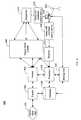
- a typical prior art search engine 100is shown in FIG. 1 .
- Web pages, hypertext documents, and other data records from a source 101 , accessible via the Internet or other network,are collected by a crawler 102 .
- Crawler 102collects data records from source 101 , using various methods and algorithms. For example, crawler 102 may follow hyperlinks in a collected hypertext document to collect other data records.
- the data records retrieved by crawler 102are stored in a database 108 . Thereafter, these data records are indexed by an indexer 104 .
- Indexer 104builds a searchable index of the documents in database 108 .
- Common prior art methods for indexingmay include inverted files, vector spaces, suffix structures, and hybrids thereof.
- each web pagemay be broken down into words and respective locations of each word on the page.
- the pagesare then indexed by the words and their respective locations.
- a primary index of the whole database 108is then broken down into a plurality of sub-indices and each sub-index is sent to a search node in a search node cluster 106 .
- a usertypically enters one or more search terms or keywords at a terminal 112 , which are sent to a dispatcher 110 .
- Dispatcher 110compiles a list of search nodes in cluster 106 to execute the query and forwards the query to those selected search nodes.
- the search nodes in search node cluster 106search respective parts of the primary index produced by indexer 104 and return sorted search results along with a document identifier and a score to dispatcher 110 .
- Dispatcher 110merges the received results to produce a final result set displayed to user 430 sorted by relevance scores.
- the relevance scoreis a function of the query itself and the type of document produced.
- Factors that affect the relevance scoremay include: a static relevance score for the document such as link cardinality and page quality, placement of the search terms in the document, such as titles, metadata, and document web address, document rank, such as a number of external data records referring to the document, on how deeply a certain data record is embedded in the document, and document statistics such as query term frequency in the document, global term frequency, and term distances within the document.
- a static relevance score for the documentsuch as link cardinality and page quality
- placement of the search terms in the documentsuch as titles, metadata, and document web address
- document ranksuch as a number of external data records referring to the document, on how deeply a certain data record is embedded in the document
- document statisticssuch as query term frequency in the document, global term frequency, and term distances within the document.
- Term Frequency Inverse Document Frequencyis a statistical method that is suitable for evaluating how important a word is to a document. The importance increases proportionally to the number of times a word appears in the document but
- result set 120there is shown an example of a result set 120 .
- the search engine YAHOO!searched its web index and produced a plurality of results in the form of result set 120 displayed to a user. For brevity, only a first page of result set 120 is shown.
- Result set 120includes two results 124 e - f , each with a respective clickable hyperlink 126 e - f , description 127 e - f , and Internet addresses or uniform resource locator (URL) 128 e - f for index data records that satisfy query 122 .
- URLuniform resource locator
- a search enginemay display sponsored results 124 a - c and 124 g - j , which are listings paid for by web page operators such as advertisers.
- the advertiserincludes any physical or legal entity that arranges, either directly or indirectly, with the search engine operator or its representatives, for monetary value or otherwise, to have a commercial, a poster, a personal add, a classified add or any other kind of advertisement, to be delivered to the search engine user.
- the deliverymay be effected through any type of communication channel and may include, for example, telephone, mobile phone, SMS, radio, television, the Internet, LAN and WAN, or e-mail.
- Such sponsored listingsmay be stored in database 108 or a separate database (not shown) and may be associated with a particular search term, as further discussed below.
- An advertiseragrees to pay an amount of money to the search engine operator, commonly referred to as the bid amount, in exchange for a prominent position of the advertiser's listings distinctly displayed at the top, bottom, or on the side in a set of search results that is generated in response to a user's input of a particular search term. A higher bid amount will result in a more prominent placement of the advertiser's listings in a set of sponsored search results. Advertisers adjust their bids or bid amounts to have some control over the position at which their search listings are presented in the sponsored search results.
- the sponsored systemdisplays search listings having higher-value bids in a more prominent manner, including but not limited to a screen position, larger font, different color, various video effects, or combination thereof.
- higher-value bidsmay also be placed on a side bar, as results 124 g - j in FIG. 2 . More prominent listings are seen by more users and are more likely to be clicked through, producing traffic of potential customers to the advertiser's web site.
- each sponsor listingmay include a clickable hyperlink title 126 a , including anchor text “MP3 CD Walkman®,” descriptive text 127 a , and a uniform resource locator (URL) 128 a .
- Search engine 100may store such sponsor listings, each associated with an advertiser or a web page operator, in database 108 .
- an exemplary bidding tool 300which may include keywords 302 , categories 304 , monthly (or any other time period) search volumes 306 for each search term, maximum bids 308 , positions 310 , top 5 max bids 312 , estimated monthly clicks 314 , estimated monthly cost-per-click (CPC) 316 , and estimated monthly cost 318 .
- Keyword 302is a term, such as a word, a phrase, or a description, that relates to advertiser's business and describes its products or services.
- the words “keyword,” “term,” “phrase,” and “description”are used interchangeably herein.
- Category 304defines a grouping of keywords that are similar in a particular way (e.g., product type).
- Monthly search volume 306is a statistic indicating a number of monthly searches the advertiser can expect on a particular keyword based on historical data.
- Maximum bids 308determine the maximum price the advertiser is willing to pay per click for a particular keyword.
- Positions 310indicate the current position of the advertiser's listing in the search results based on the advertiser's max bid amount.
- Top 5 max bids 312indicate the bid amounts for the top five bids on a particular keyword.
- Estimated monthly clicks 314indicate the estimated number of total clicks the advertiser will receive from a keyword based on the advertiser's max bid.
- Estimated monthly CPC 316indicates the advertiser's estimated average cost-per-click on a particular keyword based on the advertiser's max bid.
- Estimated monthly cost 318indicates the advertiser's estimated total monthly cost on a particular keyword based on the estimated monthly clicks and estimated CPC.
- an advertiser using a bidding tool 300may observe that search term 302 a has been searched for by YAHOO! users approximately 540,000 times in the preceding month, as indicated by the corresponding monthly search volume 306 a .
- top five max bids 312 atop five maximum bid for search term 302 a range from $0.53 to $2.00 per click.
- maximum bid 308the advertiser must bid at least $2.01 for search term 302 a to secure the most prominent placement of the advertiser's web site, among the sponsored search results.
- estimated clicks 314 athe most prominent placement position for search term 302 a , may lead to approximately 18,000 clicks-through per month, with an associated monthly cost 318 a for the advertiser of approximately $35,000.
- the sponsored resultsare conventionally sorted and displayed based, at least in part, on how much each advertiser has bid on the user's search term. Because different users will use different keywords to find the same information, it is important for an advertiser to bid on a wide variety of search terms in order to maximize the traffic to the advertiser's website.
- the methods and systems for identifying one or more alternative search terms for a particular search termsare disclosed in commonly assigned U.S. patent application Ser. No. 11/200,851, filed Aug. 10, 2005 and entitled SYSTEM AND METHOD FOR DETERMINING ALTERNATIVE SEARCH QUERIES, and in commonly assigned U.S. patent application Ser. No. 11/202,388, filed Aug. 10, 2005 and entitled ALTERNATIVE SEARCH QUERY PROCESSING IN A TERM BIDDING SYSTEM, both of which are hereby incorporated by reference in their entirety.
- advertisersmay attempt to place high bids on more than one search term to increase the likelihood that their websites will be seen as a result of a search for those alternative terms. For example, the advertiser may decide to place bids on all search terms 302 a - e shown in FIG. 3 . The better and more extensive an advertiser's list of search terms, the more traffic the advertiser will see. However, there are many similar search terms, and it may be too expensive for an advertiser to bid on every potentially relevant search term. Conversely, an advertiser may not appreciate that an uncommon phrase may generate a similar result set as a common keyword and therefore it may be cheaper for the advertiser to bid on the uncommon phrase instead of competing for a limited number of popular keywords. As a result, a search engine operator may not receive any revenue from searches performed using certain search terms for which there have been no bids.
- This inventionrelates generally to data processing systems and methods, particularly, to systems and methods for associating data records, for example, search terms, and for assigning monetary values to search terms based on the associating.
- the systems and methods of the present inventionare suitable for associating data records embodied in or transmitted over any existing or future medium, such as wireline, wireless, narrowband, or broadband networks, for example, the Internet, or any interactive media, for example, video-on-demand, podcasting, streaming video and audio, instant messaging, and/or voice messaging.
- the systems and methods of the present inventionmay be implemented on any suitable centralized or distributed computer hardware and/or software in various combinations.
- the systems and methods of the present inventionare also suitable for various kinds of search engines, including search engines used by Internet users to find records of interest on the World Wide Web.
- the methods of the present inventionmay be embodied in a computer readable medium including computer executable instructions stored thereon.
- a method for associating a first term with a second termis provided.
- Such termsmay be any data records, such as keywords used to identify records of interest, including various kinds of electronic data records, such as text documents of various formats, e-mails, webpages, video and audio files, and any other data records.
- the methodselects a first set of search engine results for the first term, selects a second set of search engine results for the second term, compares the first and second sets, and associates the first and the second terms based on the comparison. Based on the comparison, a monetary value may be assigned to the first term based on the monetary value assigned to the second term.
- the first termmay be received from the user and the second term may be associated with an advertisement, which is then communicated to the user based on the associating of the first and second terms.
- advertisementmay be communicated via various kinds of media, such as wireline and wireless telephone, radio, and TV systems, the Internet and e-mail, podcasting, instant messaging, and/or chat.
- a method for associating a first term with a second term and a third termselects a first set of search engine results for the first term, selects a second set of search engine results for the second term, selects a third set of search engine results for the third term, compares the first set with the second set, compares the first set with the third set, associates the first term and the second term based on the comparison of the first set with the second set, and associates the first term and third term based on the comparison of the first set with the third set.
- a system for associating a first term with a second termincludes a crawler effective to collect data records from an information source, a data store connected to the crawler and effective to store the data records, an indexer connected to the data store and effective to index the data records stored in the data store to produce indexed data records, a search node effective to search the indexed data records, a receiver effective to receive a query with an unbidded search term, and a processor connected to the receiver and the search node and effective to process the query and to associate the unbidded search term with a bidded search term.
- a method for assigning a monetary value to a search termprovides at least one first search term to at least one advertiser, receives at least one bid from the advertiser on the first search term, derives a similarity function between the first term and at least one second term, and assigns a monetary value to the second term based at least in part on the bid and the similarity function.
- the similarity functionmay be derived by selecting a first set of search engine results for the first term, selecting a second set of search engine results for the second term, comparing said first and second sets, and associating the first and second terms based on the comparing.
- the search engine results for either the first set or the second set or bothmay be ranked based on various factors, such as click-through rates, bidding rates, bid amounts, user-assigned weights.
- the similarity functionmay be determined as an intersection of the result sets divided by a union of the result sets.
- the similarity functionmay be determined by using a suitable statistical method, for example, Term Frequency Inverse Document Frequency (TFIDF) or cosine TFIDF functions.
- the methodmay further adjust the similarity function based on the feedback received from either the advertiser or user or both. As the similarity function is adjusted, the monetary value assigned to the second term may also be adjusted.
- the feedbackmay include bidding rates, bid amounts, and any other suitable input providing additional information regarding the similarity between the terms.
- the methodmay also include statistically analyzing the feedback, using, for example, a regression analysis. This method may be suitable for monetizing search terms and any other suitable data records used to identify records of interest.
- the first term and/or second termmay be associated with an advertisement, which is then communicated to the user. Such advertising may be communicated via various kinds of media, such as wireline and wireless telephone, radio, and TV systems, the Internet and e-mail, podcasting, instant messaging, and/or chat.
- a system for assigning a monetary value to a search termincludes a computer interface effective to provide at least one first search term to at least one advertiser; a receiver effective to receive at least one bid from the advertiser on the first search term, and a processor connected to the receiver and effective to derive a similarity function between the first term and at least one second term and to assign a monetary value to the second term based at least in part on the bid and the derived similarity function.
- FIG. 1is a block diagram illustrating a search engine architecture of the prior art.
- FIG. 2is a diagram illustrating a result set in response to a search query in accordance with the prior art.
- FIG. 3is a diagram illustrating the process of bidding on search terms in accordance with the prior art.
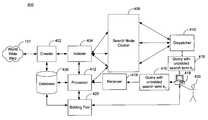
- FIG. 4is a system diagram illustrating a system for associating unbidded search terms with search terms already bid upon by advertisers in accordance with an embodiment of the invention.
- FIG. 5is a table illustrating a result set for bidded search terms in accordance with an embodiment of the invention.
- FIG. 6is a table illustrating a result set in accordance with an embodiment of the invention.
- FIG. 7is a table illustrating a comparison process in accordance with an embodiment of the invention.
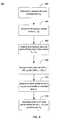
- FIG. 8is a flow chart illustrating a process for associating unbidded search terms with search terms already bid upon by advertisers in accordance with an embodiment of the invention.
- FIG. 9is a process for assigning a monetary value to a search term in accordance with an embodiment of the invention.
- FIG. 10is a process for re-pricing a search term in accordance with an embodiment of the invention.
- FIG. 11is a system implementing a bidding tool in accordance with an embodiment of the invention.
- System 400includes a receiver 414 for receiving a search query 416 , which may include an unbidded search term k U , from a user 430 using a user terminal 418 .
- Receiver 414is connected to a processor 412 , which, in turn, is connected to an indexer 404 , a search node cluster 406 , and a database 408 .
- Processor 412may also receive search query 416 with unbidded search term k U from user terminal 418 via a dispatcher 410 and search node cluster 406 .
- a crawler 402collects data records from source 101 and stores the collected data records in database 408 . Thereafter, these data records are indexed by indexer 404 . Indexer 404 builds a searchable index of the data records in database 408 .
- user 430typically enters one or more search terms or keywords, which are sent to dispatcher 410 .
- Dispatcher 410compiles a list of search nodes in cluster 406 to execute the query and forwards the query to those selected search nodes.
- the search nodes in search node cluster 406search respective parts of the primary index produced by indexer 404 and return sorted search results along with a document identifier and a score to dispatcher 410 .
- Dispatcher 410merges the received results to produce a final result set displayed to user 430 via user terminal 418 sorted by relevance scores.
- System 400may include a bidding tool 420 , which will be discussed in detail below, connected to database 108 and processor 412 .
- processor 412in order to associate unbidded search term k U 416 with at least one search term already bid upon by advertisers, processor 412 first determine the N topmost search bidded terms k 1 -k N 502 a - e . Such N topmost terms may be selected based upon various statistics, such as a frequency with which advertisers bid upon a particular term, the bid amount, or a frequency with which the term is searched. Variable N may range, for example, from 100,000 to 1,000,000 search terms. Processor 412 then searches database 408 and determines M topmost URLs 502 for each of terms k 1 -k N 502 a - e . Variable M may range, for example, from 100 to 1,000 URLs. FIG.
- FIG. 5illustrates how processor 412 determines a result set ⁇ URL 1 -URL M ⁇ 504 a for bidded term k 1 , a result set ⁇ URL 1 -URL M ⁇ 504 b for bidded term k 2 , and so on until a result set ⁇ URL 1 -URL M ⁇ 504 e is determined for k N 502 e .
- Each result set ⁇ URL 1 -URL M ⁇ 504may be determined using various methods and systems, for example, the YAHOO! Search Technology (YST).
- Additional real-time data collection, indexing and searchesmay be conducted to determine result sets ⁇ URL 1 -URL M ⁇ 504 a - e for each search term in set ⁇ k 1 -k N ⁇ 502 a - e .
- Processor 412then retrieves L topmost URLs 604 for unbidded search term k U 416 , as shown in FIG. 6 .
- Variable Lmay range, for example, from 100 to 1,000 URLs.
- additional real-time data collection, indexing and searchesmay be conducted to determine result set ⁇ URL 1 -URL L ⁇ 604 .
- Result set ⁇ URL 1 -URL L ⁇ 604may be determined using various methods and systems, such as for example, the YAHOO! Search Technology (YST).
- result sets ⁇ URL 1 -URL M ⁇ 504 a - e and result set ⁇ URL 1 -URL L ⁇ 604may be reduced by using various processing techniques, such as Latent Semantic Indexing or Probabilistic Latent Semantic Analysis.
- Result sets ⁇ URL 1 -URL M ⁇ 504 a - e and result set ⁇ URL 1 -URL L ⁇ 604may be determined or retrieved using various techniques based on various ranking factors or various combination thereof.
- Such ranking factorsmay include a relevance score that is a function of the query itself and the type of document produced.
- Factors that affect the relevance scoremay include a static relevance score for the document such as link cardinality and page quality, placement of the search terms in the document, such as titles, metadata, and document web address, document rank, such as a number of external data records referring to the document and on how deeply a certain data record is embedded in the document, and document statistics such as query term frequency in the document, global term frequency, and term distances within the document.
- Term Frequency Inverse Document Frequencyis a statistical technique that is suitable for ranking.
- the rankingincreases proportionally to the number of times a word appears in the document but is offset by how common the word is in all of the documents in the collection.
- processor 412compares each result set 504 a - e with result set 604 to determine which bidded terms 502 a - e are similar to unbidded term 416 . Such comparison may be based on, for example, determining a respective similarity of each search result set ⁇ URL 1 -URL M ⁇ 504 a - e to result set ⁇ URL 1 -URL L ⁇ 604 . Determining a similarity between the URLs may be performed by matching the URL text strings, using ASCII character codes. Pairs 702 a - c represent such matched up URLs.
- system 400may assign a unique binary or other numeric identifier to each URL stored in database 408 .
- the use of such identifiersmay help to reduce search space and correspondingly, the size of database 408 .
- Processor 412may then match such numeric identifiers.
- a hash functionfor example, Message Digest Algorithm 5, may be used for mapping each URL in result sets ⁇ URL 1 -URL L ⁇ 604 and in result sets ⁇ URL 1 -URL M ⁇ 504 a - e to a unique 128-bit number.
- each URL hash codemay be indexed by, for example, indexer 404 in the same way as words in documents are indexed.
- Processor 412may then use any suitable technique, for example, TFIDF, to determine a similarity between the URLs in result sets ⁇ URL 1 -URL L ⁇ 604 and the URLs in result sets ⁇ URL 1 -URL M ⁇ 504 a - e .
- the term frequency ratesmay be assigned by a function or based on historical click-through rates as described in detail below.
- the TFIDF scoringmay also include such additional variables as a total search volume, value, or character length of query.
- Processor 412may also determine the similarity between the two sets of URLs by comparing the content of the documents that are identified by the URLs in result sets ⁇ URL 1 -URL L ⁇ 604 and ⁇ URL 1 -URL M ⁇ 504 a - e . To effect such comparison, processor 412 may employ various information retrieval and processing techniques, for example, Latent Semantic Indexing or Probabilistic Latent Semantic Analysis, described elsewhere in this application.
- the similarity between the two sets of URLsmay also be determined as an intersection of the result sets over a union of the result sets. For example,
- Term Frequency Inverse Document Frequencyis a statistical method that is suitable for ranking URLs. The ranking increases proportionally to the number of times an URL appears in the result set but is offset by how common the URL is in all of the result sets. For example, in result set ⁇ URL 1 -URL M ⁇ 504 a - e , URL 1 with a highest rank may get a value of 10, URL 2 a value of 9, and URL M may get a value of 1. Similar value assignments may be performed for URLs in result set ⁇ URL 1 -URL L ⁇ 604 .
- TFIDFTerm Frequency Inverse Document Frequency
- the URLs from result set ⁇ URL 1 -URL M ⁇ 504 a - e , corresponding to the top n valuesmay then be used to determine which bidded terms 502 a - e are similar to unbidded term 416 .
- the distance d between two result setsmay be determined, for example, using the following formula:
- system 400may associate unbidded search term k U 416 with one or more of bidded search term in set ⁇ k 1 -k N ⁇ 502 a - e in any number of ways.
- processor 412associates unbidded search term k U 416 with bidded search terms k 3 502 c and k 125 502 d .
- Unbidded search term k U 416may be associated with either bidded search term k 3 502 c or k 125 502 d or both.
- System 400may additionally rank bidded search terms k 3 and k 125 based on any number of factors.
- System 400may, for example, rank bidded search term k 3 502 c higher than k 125 502 d because result set ⁇ URL 1 -URL M ⁇ 504 c for k 3 502 c includes two matching pairs of URLs 702 b and 702 c , while result set ⁇ URL 1 -URL M ⁇ 502 d for k 125 502 d includes only one matching pair of URLs 702 a.
- System 400may rank bidded search term k 125 502 d higher than bidded search term k 3 502 based on URLs ranking.
- System 400may associate unbidded search term k U 416 with bidded search term k 125 502 d because the matching URLs in matching pair 702 a are ranked higher than the URLs in matching pairs 702 b - c .
- system 400may assign a weight to each URL in result sets ⁇ URL 1 -URL L ⁇ 604 and in result sets ⁇ URL 1 -URL M ⁇ 504 a - e .
- Such weightsmay be assigned, for example, based on actual click-through rates for each URL in result sets ⁇ URL 1 -URL L ⁇ 604 and in result sets ⁇ URL 1 -URL M ⁇ 504 a - e . If, for example, the users who entered search term k 3 502 c consistently clicked on URL M more often than on URL 6 in result set ⁇ URL 1 -URL M ⁇ 504 c , URL M may be assigned a higher weight than URL 6 .
- System 400may collect various statistics, including, click-through rates for each URL associated with a term entered by the user. Such collected statistics may then be analyzed using any suitable statistical techniques, for example, regression analysis, to adjust ranking of URLs.
- linear or logarithmic weightsmay be assigned to each URL in result sets ⁇ URL 1 -URL L ⁇ 604 and in result sets ⁇ URL 1 -URL M ⁇ 504 a - e .
- various weightsmay be assigned to bidded search terms based on their respective ranking, which may depend on the frequency with which advertisers bid upon a particular term, the bid amount, or on the frequency with which the users request a particular term or a combination thereof.
- system 400may rank bidded search term k 3 higher than k 125
- processor 412may employ any combination of weights assigned to each URL in result sets ⁇ URL 1 -URL L ⁇ 604 and in result sets ⁇ URL 1 -URL M ⁇ 504 a - e.
- system 400may comprise bidding tool 420 used to price an unbidded search term based upon the determined similarity between the unbidded term and bidded terms.
- bidding tool 420may use the determined similarity between unpriced search term k U 416 and already priced search terms k 3 502 c and k 125 502 d to price search term k U 416 .
- Bidding tool 420may use both bidded terms k 3 and k 125 and their maximum bids 506 c ($1.00) and 506 d ($0.25), respectively, to compute a starting price 606 for unbidded search term k U 416 . Additionally, various weighting coefficients may be used.
- Bidding tool 420may also provide suggestions to advertisers of similar search terms, such as an unbidded term k U 416 to an advertiser that desires to bid on terms k 3 and k 125 .
- system 400when a user performs a search on system 400 , using a query including unbidded search term k U 416 , system 400 will display sponsored results including either bidded search term k 3 502 c or bidded search term k 125 502 d or both, thereby increasing traffic to the advertisers websites and increasing revenues the operator of search engine 400 receives from the advertisers.
- L topmost URLs for an unbidded search term k Uare determined. Such L topmost URLs may be determined, for example, by using YAHOO! Search Technology (YST). Variable L may range, for example, from 100 to 1,000 URLs.
- N topmost search terms k 1 -k N already bid upon by advertisersare determined. Such N topmost terms may be selected based upon various statistics, such as frequency with which advertisers bid upon a particular term, the bid amount, or the most searched for bidded terms.
- Variable Nmay range, for example, from 100,000 to 1,000,000 search terms.
- M topmost URLs for each of topmost N search terms k 1 -k Nare determined. Such M topmost URLs may be determined, for example, by using YAHOO! Search Technology (YST). Variable M may range, for example, from 100 to 1,000 URLs.
- M topmost URLs for each of topmost N search terms k 1 -k Nare compared with L topmost URLs for an unbidded search term k U . The comparison could be performed by, for example, matching similar URLs or other techniques described herein.
- bidded terms k 1 -k N that are most similar to unbidded term k Uare determined.
- some or all bidded terms determined at 810are associated with the unbidded term. Such association may be based on various weighting and ranking coefficients.
- At 902at least one first search term is provided to at least one advertiser or an advertiser account management server (not shown).
- the advertisermay include any physical or legal entity that arranges, either directly or indirectly, with the search engine operator or its representatives, for monetary value or otherwise, to have a commercial, a poster, a personal add, a classified add or any other kind of advertisement, to be delivered to the search engine user.
- the deliverymay be effected through any type of communication channel, for example, telephone, mobile phone, SMS, radio, television, the Internet, LAN and WAN, or e-mail.
- bids from the users on the first termare received.
- a similarity function between the first search term and at least one second termis derived.
- Such similarity functionmay be, for example, represent a statistical relationship between the first term and the second term.
- a regression analysis, or any suitable statistical analysiscan be used to determine how similar the first and the second terms are.
- the similarity functioncan be derived, for example, by using system 400 and process 800 described herein.
- a monetary valueis assigned to the second term based at least in part on said bid and said similarity function.
- Process 1000could be used, for example with bidding tool 420 implemented as part of system 400 or as a stand-alone system 1100 described herein.
- at least one second search termwhich was priced by using, for example, process 900 described herein, is provided to at least one user, such as an advertiser or an advertiser account management server (not shown).
- the user of process 1000may be the same user from whom bids were received in process 900 or may be a different user.
- at least one input associated with the second termis received.
- such inputmay include various statistics, such as a frequency with which advertisers bid upon the second term, a bid amount, a statistical relationship between the original monetary value assigned to the second term and an actual average or median bid amount, a click-through rate for the second term, the amount of revenue generated by the second term, a statistical relationship between expected and actual revenue associated with the second term.
- Such inputmay be received from the user to whom the second search term is provided or from a system employed by the search engine operator, for example system 400 or system 1100 described herein.
- such inputmay include user-defined criteria, for example, various thresholds and weights. For example, linear weights and logarithmic weights.
- such inputis analyzed using any suitable statistical functions, for example, regression analysis.
- a similarity functionwhich was derived by using, for example, process 900 described herein, is adjusted based on input received at 1004 and optionally analyzed. Such adjustment includes, for example, changing regression coefficients used to determine an adjusted monetary value for the second term. In some embodiments, various foregoing weights are used to adjust the similarity function.
- an adjusted monetary valueis assigned to the second term. Process 1000 can be used recursively until either user-defined criteria are met. Such criteria may include various statistics, for example, standard deviation, denoting the accuracy of the originally assigned monetary value and the adjusted monetary value.
- system 400may comprise bidding tool 420 used to price an unbidded search term based upon the determined similarity between the unbidded term and bidded terms.
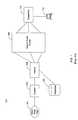
- bidding tool 420may be implemented as a stand-alone system 1100 in FIG. 11 . Referring now to FIG. 11 .
- system 1100comprises a computer interface 1104 effective to provide at least one first search term to a user 1102 , a receiver effective to receive at least one bid from user 1102 on said first search term, which may be implemented as part of computer interface 1104 , a processor 1106 connected to computer interface 1104 and effective to derive a similarity function between said first term and at least one second term and to assign a monetary value to said second term based at least in part on said bid and said similarity function.
- system 1100comprises a database 1108 for storing search terms, bids received from user 1102 , assigned monetary values, adjusted monetary values, feedback input, as well as processing instructions, for example, instructions implementing methods 900 and 1000 . If implemented as a stand-alone system, system 1100 may be located on the advertiser's server and download/upload data from a search engine operator via a network 1110 .
- computer softwaree.g., programs or other instructions
- datais stored on a machine readable medium as part of a computer program product, and is loaded into a computer system or other device or machine via a removable storage drive, hard drive, or communications interface.
- Computer programsalso called computer control logic or computer readable program code
- processorscontrollers, or the like
- machine readable medium“computer program medium” and “computer usable medium” are used to generally refer to media such as a random access memory (RAM); a read only memory (ROM); a removable storage unit (e.g., a magnetic or optical disc, flash memory device, or the like); a hard disk; or the like.
- RAMrandom access memory
- ROMread only memory
- removable storage unite.g., a magnetic or optical disc, flash memory device, or the like
- hard diskor the like.
Landscapes
- Engineering & Computer Science (AREA)
- Business, Economics & Management (AREA)
- Accounting & Taxation (AREA)
- Development Economics (AREA)
- Theoretical Computer Science (AREA)
- Finance (AREA)
- Strategic Management (AREA)
- General Physics & Mathematics (AREA)
- Physics & Mathematics (AREA)
- General Business, Economics & Management (AREA)
- Marketing (AREA)
- Economics (AREA)
- Databases & Information Systems (AREA)
- Entrepreneurship & Innovation (AREA)
- Game Theory and Decision Science (AREA)
- Data Mining & Analysis (AREA)
- General Engineering & Computer Science (AREA)
- Management, Administration, Business Operations System, And Electronic Commerce (AREA)
Abstract
Description
where x and y are the result sets being compared, ti is the set of URLs in result sets {URL1-URLM}504a-eand {URL1-URLL}604, tf is the term frequency and idf is the inverse document frequency for a particular URL.
Claims (23)
Priority Applications (1)
| Application Number | Priority Date | Filing Date | Title |
|---|---|---|---|
| US11/262,012US7831474B2 (en) | 2005-10-28 | 2005-10-28 | System and method for associating an unvalued search term with a valued search term |
Applications Claiming Priority (1)
| Application Number | Priority Date | Filing Date | Title |
|---|---|---|---|
| US11/262,012US7831474B2 (en) | 2005-10-28 | 2005-10-28 | System and method for associating an unvalued search term with a valued search term |
Publications (2)
| Publication Number | Publication Date |
|---|---|
| US20070100795A1 US20070100795A1 (en) | 2007-05-03 |
| US7831474B2true US7831474B2 (en) | 2010-11-09 |
Family
ID=37997765
Family Applications (1)
| Application Number | Title | Priority Date | Filing Date |
|---|---|---|---|
| US11/262,012Active2026-08-14US7831474B2 (en) | 2005-10-28 | 2005-10-28 | System and method for associating an unvalued search term with a valued search term |
Country Status (1)
| Country | Link |
|---|---|
| US (1) | US7831474B2 (en) |
Cited By (1)
| Publication number | Priority date | Publication date | Assignee | Title |
|---|---|---|---|---|
| US10282751B1 (en)* | 2011-07-13 | 2019-05-07 | Google Llc | Lead generation system and methods |
Families Citing this family (22)
| Publication number | Priority date | Publication date | Assignee | Title |
|---|---|---|---|---|
| US8429177B2 (en)* | 2006-02-08 | 2013-04-23 | Yahoo! Inc. | Using exceptional changes in webgraph snapshots over time for internet entity marking |
| KR100785352B1 (en)* | 2006-04-21 | 2007-12-18 | 엔에이치엔(주) | Search result list generation method and search result list generation system |
| US7849502B1 (en) | 2006-04-29 | 2010-12-07 | Ironport Systems, Inc. | Apparatus for monitoring network traffic |
| US20080082662A1 (en)* | 2006-05-19 | 2008-04-03 | Richard Dandliker | Method and apparatus for controlling access to network resources based on reputation |
| US7624104B2 (en)* | 2006-06-22 | 2009-11-24 | Yahoo! Inc. | User-sensitive pagerank |
| US8332269B2 (en)* | 2006-06-27 | 2012-12-11 | Adchemy, Inc. | System and method for generating target bids for advertisement group keywords |
| US7689548B2 (en)* | 2006-09-22 | 2010-03-30 | Microsoft Corporation | Recommending keywords based on bidding patterns |
| US8527352B2 (en)* | 2006-10-30 | 2013-09-03 | Adchemy, Inc. | System and method for generating optimized bids for advertisement keywords |
| US20090013033A1 (en)* | 2007-07-06 | 2009-01-08 | Yahoo! Inc. | Identifying excessively reciprocal links among web entities |
| US20090193210A1 (en)* | 2008-01-29 | 2009-07-30 | Hewett Jeffrey R | System for Automatic Legal Discovery Management and Data Collection |
| US20090248534A1 (en)* | 2008-03-31 | 2009-10-01 | Yahoo! Inc. | System and method for offering an auction bundle in an online advertising auction |
| US8832135B2 (en)* | 2008-05-02 | 2014-09-09 | Verint Systems, Ltd. | Method and system for database query term suggestion |
| US9646100B2 (en) | 2011-03-14 | 2017-05-09 | Verisign, Inc. | Methods and systems for providing content provider-specified URL keyword navigation |
| US9781091B2 (en) | 2011-03-14 | 2017-10-03 | Verisign, Inc. | Provisioning for smart navigation services |
| US10185741B2 (en)* | 2011-03-14 | 2019-01-22 | Verisign, Inc. | Smart navigation services |
| US9811599B2 (en) | 2011-03-14 | 2017-11-07 | Verisign, Inc. | Methods and systems for providing content provider-specified URL keyword navigation |
| CN103902535B (en)* | 2012-12-24 | 2019-02-22 | 腾讯科技(深圳)有限公司 | Obtain the method, apparatus and system of associational word |
| US10057207B2 (en) | 2013-04-07 | 2018-08-21 | Verisign, Inc. | Smart navigation for shortened URLs |
| US9286410B2 (en) | 2013-11-07 | 2016-03-15 | Ricoh Company, Ltd. | Electronic document retrieval and reporting using pre-specified word/operator combinations |
| US9600479B2 (en)* | 2014-01-31 | 2017-03-21 | Ricoh Company, Ltd. | Electronic document retrieval and reporting with review cost and/or time estimation |
| US9348917B2 (en) | 2014-01-31 | 2016-05-24 | Ricoh Company, Ltd. | Electronic document retrieval and reporting using intelligent advanced searching |
| US9449000B2 (en) | 2014-01-31 | 2016-09-20 | Ricoh Company, Ltd. | Electronic document retrieval and reporting using tagging analysis and/or logical custodians |
Citations (13)
| Publication number | Priority date | Publication date | Assignee | Title |
|---|---|---|---|---|
| US6269361B1 (en)* | 1999-05-28 | 2001-07-31 | Goto.Com | System and method for influencing a position on a search result list generated by a computer network search engine |
| US20020099605A1 (en)* | 2000-10-06 | 2002-07-25 | Searchcactus, Llc | Search engine with demographic-based advertising |
| US20020138528A1 (en)* | 2000-12-12 | 2002-09-26 | Yihong Gong | Text summarization using relevance measures and latent semantic analysis |
| US20030126250A1 (en)* | 1999-12-14 | 2003-07-03 | Neeraj Jhanji | Systems for communicating current and future activity information among mobile internet users and methods therefor |
| US6704727B1 (en)* | 2000-01-31 | 2004-03-09 | Overture Services, Inc. | Method and system for generating a set of search terms |
| US20050086206A1 (en)* | 2003-10-15 | 2005-04-21 | International Business Machines Corporation | System, Method, and service for collaborative focused crawling of documents on a network |
| US20050102270A1 (en)* | 2003-11-10 | 2005-05-12 | Risvik Knut M. | Search engine with hierarchically stored indices |
| US20050144065A1 (en)* | 2003-12-19 | 2005-06-30 | Palo Alto Research Center Incorporated | Keyword advertisement management with coordinated bidding among advertisers |
| US20050171932A1 (en)* | 2000-02-24 | 2005-08-04 | Nandhra Ian R. | Method and system for extracting, analyzing, storing, comparing and reporting on data stored in web and/or other network repositories and apparatus to detect, prevent and obfuscate information removal from information servers |
| US20060020607A1 (en)* | 2004-07-26 | 2006-01-26 | Patterson Anna L | Phrase-based indexing in an information retrieval system |
| US20070088683A1 (en)* | 2004-08-03 | 2007-04-19 | Gene Feroglia | Method and system for search engine enhancement |
| US7225182B2 (en)* | 1999-05-28 | 2007-05-29 | Overture Services, Inc. | Recommending search terms using collaborative filtering and web spidering |
| US7272594B1 (en)* | 2001-05-31 | 2007-09-18 | Autonomy Corporation Ltd. | Method and apparatus to link to a related document |
- 2005
- 2005-10-28USUS11/262,012patent/US7831474B2/enactiveActive
Patent Citations (13)
| Publication number | Priority date | Publication date | Assignee | Title |
|---|---|---|---|---|
| US7225182B2 (en)* | 1999-05-28 | 2007-05-29 | Overture Services, Inc. | Recommending search terms using collaborative filtering and web spidering |
| US6269361B1 (en)* | 1999-05-28 | 2001-07-31 | Goto.Com | System and method for influencing a position on a search result list generated by a computer network search engine |
| US20030126250A1 (en)* | 1999-12-14 | 2003-07-03 | Neeraj Jhanji | Systems for communicating current and future activity information among mobile internet users and methods therefor |
| US6704727B1 (en)* | 2000-01-31 | 2004-03-09 | Overture Services, Inc. | Method and system for generating a set of search terms |
| US20050171932A1 (en)* | 2000-02-24 | 2005-08-04 | Nandhra Ian R. | Method and system for extracting, analyzing, storing, comparing and reporting on data stored in web and/or other network repositories and apparatus to detect, prevent and obfuscate information removal from information servers |
| US20020099605A1 (en)* | 2000-10-06 | 2002-07-25 | Searchcactus, Llc | Search engine with demographic-based advertising |
| US20020138528A1 (en)* | 2000-12-12 | 2002-09-26 | Yihong Gong | Text summarization using relevance measures and latent semantic analysis |
| US7272594B1 (en)* | 2001-05-31 | 2007-09-18 | Autonomy Corporation Ltd. | Method and apparatus to link to a related document |
| US20050086206A1 (en)* | 2003-10-15 | 2005-04-21 | International Business Machines Corporation | System, Method, and service for collaborative focused crawling of documents on a network |
| US20050102270A1 (en)* | 2003-11-10 | 2005-05-12 | Risvik Knut M. | Search engine with hierarchically stored indices |
| US20050144065A1 (en)* | 2003-12-19 | 2005-06-30 | Palo Alto Research Center Incorporated | Keyword advertisement management with coordinated bidding among advertisers |
| US20060020607A1 (en)* | 2004-07-26 | 2006-01-26 | Patterson Anna L | Phrase-based indexing in an information retrieval system |
| US20070088683A1 (en)* | 2004-08-03 | 2007-04-19 | Gene Feroglia | Method and system for search engine enhancement |
Non-Patent Citations (1)
| Title |
|---|
| Author: Michael Wong, Title: How to Maximize Your Traffic with Goto.com, Published: Feb. 1999, pp. 1-5; link: http://www.thewritemarket.com/mcnn/index.php?mcnn=wong&title=How%20to%20Maximize%20Your%20Traffic%20with%20Goto.com.* |
Cited By (1)
| Publication number | Priority date | Publication date | Assignee | Title |
|---|---|---|---|---|
| US10282751B1 (en)* | 2011-07-13 | 2019-05-07 | Google Llc | Lead generation system and methods |
Also Published As
| Publication number | Publication date |
|---|---|
| US20070100795A1 (en) | 2007-05-03 |
Similar Documents
| Publication | Publication Date | Title |
|---|---|---|
| US8015065B2 (en) | Systems and methods for assigning monetary values to search terms | |
| US7831474B2 (en) | System and method for associating an unvalued search term with a valued search term | |
| US10402858B2 (en) | Computer-implemented method and system for enabling the automated selection of keywords for rapid keyword portfolio expansion | |
| CA2530400C (en) | Serving advertisements using a search of advertiser web information | |
| US7801899B1 (en) | Mixing items, such as ad targeting keyword suggestions, from heterogeneous sources | |
| US7631008B2 (en) | System and method for generating functions to predict the clickability of advertisements | |
| US8380563B2 (en) | Using previous user search query to target advertisements | |
| US7856433B2 (en) | Dynamic bid pricing for sponsored search | |
| KR100932318B1 (en) | Match and rank sponsored search listings combined with web search technology and web content | |
| AU2004260464B2 (en) | Improving content-targeted advertising using collected user behavior data | |
| US20030055816A1 (en) | Recommending search terms using collaborative filtering and web spidering | |
| US20080103893A1 (en) | System and method for generating forecasted bids for advertisement keywords | |
| US20150154636A1 (en) | Determining online ad targeting information, such as keyword-targeting suggestions | |
| US8788336B1 (en) | Estimating cost and/or performance information for an advertisement in an advertising system | |
| HK1140279A (en) | Dynamic bid pricing for sponsored search |
Legal Events
| Date | Code | Title | Description |
|---|---|---|---|
| AS | Assignment | Owner name:YAHOO!, INC., CALIFORNIA Free format text:ASSIGNMENT OF ASSIGNORS INTEREST;ASSIGNOR:DAVIES, WINTON;REEL/FRAME:017148/0688 Effective date:20051027 | |
| STCF | Information on status: patent grant | Free format text:PATENTED CASE | |
| FPAY | Fee payment | Year of fee payment:4 | |
| AS | Assignment | Owner name:GOOGLE INC., CALIFORNIA Free format text:ASSIGNMENT OF ASSIGNORS INTEREST;ASSIGNOR:YAHOO! INC.;REEL/FRAME:033851/0570 Effective date:20140630 | |
| AS | Assignment | Owner name:GOOGLE LLC, CALIFORNIA Free format text:CHANGE OF NAME;ASSIGNOR:GOOGLE INC.;REEL/FRAME:044101/0405 Effective date:20170929 | |
| MAFP | Maintenance fee payment | Free format text:PAYMENT OF MAINTENANCE FEE, 8TH YEAR, LARGE ENTITY (ORIGINAL EVENT CODE: M1552) Year of fee payment:8 | |
| MAFP | Maintenance fee payment | Free format text:PAYMENT OF MAINTENANCE FEE, 12TH YEAR, LARGE ENTITY (ORIGINAL EVENT CODE: M1553); ENTITY STATUS OF PATENT OWNER: LARGE ENTITY Year of fee payment:12 |