US7788672B2 - System for controlling assignment of a plurality of modules of a program to available execution units based on speculative executing and granularity adjusting - Google Patents
System for controlling assignment of a plurality of modules of a program to available execution units based on speculative executing and granularity adjustingDownload PDFInfo
- Publication number
- US7788672B2 US7788672B2US12/419,114US41911409AUS7788672B2US 7788672 B2US7788672 B2US 7788672B2US 41911409 AUS41911409 AUS 41911409AUS 7788672 B2US7788672 B2US 7788672B2
- Authority
- US
- United States
- Prior art keywords
- execution
- module
- basic
- modules
- program
- Prior art date
- Legal status (The legal status is an assumption and is not a legal conclusion. Google has not performed a legal analysis and makes no representation as to the accuracy of the status listed.)
- Expired - Fee Related
Links
Images


Classifications
- G—PHYSICS
- G06—COMPUTING OR CALCULATING; COUNTING
- G06F—ELECTRIC DIGITAL DATA PROCESSING
- G06F9/00—Arrangements for program control, e.g. control units
- G06F9/06—Arrangements for program control, e.g. control units using stored programs, i.e. using an internal store of processing equipment to receive or retain programs
- G06F9/46—Multiprogramming arrangements
- G06F9/50—Allocation of resources, e.g. of the central processing unit [CPU]
- G06F9/5005—Allocation of resources, e.g. of the central processing unit [CPU] to service a request
- G06F9/5027—Allocation of resources, e.g. of the central processing unit [CPU] to service a request the resource being a machine, e.g. CPUs, Servers, Terminals
- G—PHYSICS
- G06—COMPUTING OR CALCULATING; COUNTING
- G06F—ELECTRIC DIGITAL DATA PROCESSING
- G06F11/00—Error detection; Error correction; Monitoring
- G06F11/30—Monitoring
- G06F11/34—Recording or statistical evaluation of computer activity, e.g. of down time, of input/output operation ; Recording or statistical evaluation of user activity, e.g. usability assessment
- G06F11/3404—Recording or statistical evaluation of computer activity, e.g. of down time, of input/output operation ; Recording or statistical evaluation of user activity, e.g. usability assessment for parallel or distributed programming
- G—PHYSICS
- G06—COMPUTING OR CALCULATING; COUNTING
- G06F—ELECTRIC DIGITAL DATA PROCESSING
- G06F2201/00—Indexing scheme relating to error detection, to error correction, and to monitoring
- G06F2201/865—Monitoring of software
- G—PHYSICS
- G06—COMPUTING OR CALCULATING; COUNTING
- G06F—ELECTRIC DIGITAL DATA PROCESSING
- G06F2209/00—Indexing scheme relating to G06F9/00
- G06F2209/50—Indexing scheme relating to G06F9/50
- G06F2209/5017—Task decomposition
Definitions
- One embodiment of the present inventionrelates to a program granularity adjustment technique suitable for, e.g., a computer that mounts a CPU including a plurality of CPU cores or a computer that mounts a plurality of CPUs.
- One parallel program processing techniquecomprises two components, i.e., runtime processing including a scheduler which assigns processing units in the program to execution units (when a computer mounts a plurality of CPUs, the scheduler assigns the processing units to the CPUs, and when a computer mounts a CPU including a plurality of CPU cores, the scheduler assigns the processing units to the CPU cores), and a processing unit processed on each execution unit.
- runtime processingincluding a scheduler which assigns processing units in the program to execution units (when a computer mounts a plurality of CPUs, the scheduler assigns the processing units to the CPUs, and when a computer mounts a CPU including a plurality of CPU cores, the scheduler assigns the processing units to the CPU cores), and a processing unit processed on each execution unit.
- the size of the processing unitis referred to as the granularity of parallel processing. It is possible to increase the opportunity of parallelization by decreasing the granularity, thereby improving the parallel performance.
- FIG. 1is an exemplary view showing a system configuration of an information processing apparatus according to an embodiment of the invention
- FIG. 2is an exemplary view for explaining the schematic configuration of a program based on parallel processing specifications, which is executed by the information processing apparatus according to the embodiment;
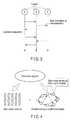
- FIG. 3is an exemplary view showing general multi thread processing
- FIG. 4is an exemplary view showing the relationship between basic serial modules and a parallel execution control description which are included in the program executed by the information processing apparatus according to the embodiment;
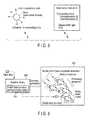
- FIG. 5is an exemplary view for explaining the parallel execution control description of the program executed by the information processing apparatus according to the embodiment
- FIG. 6is an exemplary view for explaining the parallel processing control of the program, which is executed by a runtime library operating on the information processing apparatus according to the embodiment;
- FIG. 7is an exemplary view showing the operation state of the runtime libraries on the information processing apparatus according to the embodiment.
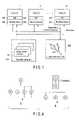
- FIG. 8is an exemplary view for explaining node linking processing executed by the runtime library operating on the information processing apparatus according to the embodiment.
- FIG. 9is an exemplary functional block diagram of the runtime library operating on the information processing apparatus according to the embodiment.
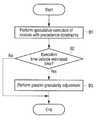
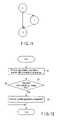
- FIG. 10is an exemplary first flowchart showing the operation sequence of parallel processing optimization executed by the runtime library operating on the information processing apparatus according to the embodiment
- FIG. 11is an exemplary view showing a speculative execution of basic serial modules, which is performed by the runtime library operating on the information processing apparatus according to the embodiment.
- FIG. 12is an exemplary second flowchart showing the operation sequence of parallel processing optimization executed by the runtime library operating on the information processing apparatus according to the embodiment.
- an information processing apparatusincludes a plurality of execution modules and a scheduler which controls assignment of a plurality of basic modules to the plurality of execution modules.
- the schedulerincludes assigning, when an available execution module which is not assigned any basic modules exists, a basic module which stands by for completion of execution of other basic module to the available execution module; measuring an execution time of processing of the basic module itself; measuring execution time of processing for assigning the basic module to the execution module; and performing granularity adjustment by linking two or more basic modules to be successively executed according to the restriction of a execution sequence so as to be assigned as one set to the execution module and redividing the linked two or more basic modules, based on the two execution measured execution times.
- FIG. 1is an exemplary view showing a system configuration of an information processing apparatus according to the embodiment.
- the information processing apparatusis implemented as a so called personal computer such as a notebook type computer or desktop type computer.
- this computerincludes a processor 1 , main memory 2 , and hard disk drive (HDD) 3 , which are interconnected via an internal bus.
- processor 1main memory 2
- HDDhard disk drive
- the processor 1serves as a central processing unit (CPU) which controls the execution of a program loaded in the main memory from the HDD 3 , and includes a plurality of cores 11 serving as main arithmetic circuits (CPU cores).
- CPUcentral processing unit
- the main memory 2is e.g., a semiconductor storage device, and can be accessed by the processor 1 .
- the HDD 3is a low speed mass storage device (in comparison with the main memory 2 ) serving as an auxiliary storage in the computer.
- input/output devicessuch as a display for displaying the processing result of the program executed by the processor 1 and the like, and a keyboard for inputting process data and the like are provided for, e.g., a notebook type computer, or are externally connected via cables for, e.g., a desktop type computer.
- the computer which mounts the processor 1 including the plurality of cores 11can execute a plurality of programs in parallel, and also execute a plurality of processes in one program in parallel.
- the schematic configuration of a program which is based on parallel processing specifications and executed by the computerwill be described with reference to FIG. 2 .
- an execution program 100which is based on parallel processing specifications and executed by the computer includes a plurality of basic serial modules 101 , and a parallel execution control description 102 which defines an order of executing the plurality of basic serial modules 101 .
- each threadprogresses while synchronizing with other threads (including communication), i.e., maintaining the consistency of the program as a whole. If the frequency of waiting for synchronization is high, it may be impossible to obtain the parallel performance expected.
- a plurality of basic serial modules 101are created while a parallel execution control description 102 which defines a temporal execution rule for the plurality of basic serial modules 101 is created.
- each of the basic serial modules 101is represented as a node.
- a basic serial moduleindicates a module as a processing unit which can be executed asynchronously with other modules.
- the parallel execution control description 102will be described next with reference to FIG. 5 .
- Reference symbol “A” in FIG. 5denotes a schematic node representing one of the basic serial modules 101 .
- each of the basic serial modules 101can be considered as a node having links to preceding nodes and connectors to succeeding nodes.
- the parallel execution control description 102defines an order of executing the plurality of basic serial modules 101 by describing link information on preceding nodes with respect to each of the basic serial modules 101 .
- Reference symbol “B” in FIG. 5denotes a parallel execution control description associated with one of the basic serial modules 101 .
- the descriptiondescribes a basic serial module ID serving as an identifier for the basic serial module 101 , and link information on the preceding nodes of the basic serial module 101 . Also, the description describes information on an output buffer type, cost, and the like.
- a runtime library 200 shown in FIG. 6is prepared in the computer.
- the runtime library 200includes a scheduler function, and is provided with the parallel execution control description 102 as graph data structure generation information 201 .
- the parallel execution control description 102is created by, e.g., using a functional programming language, and translated into the graph data structure generation information 201 by a translator.
- the runtime library 200dynamically generates/updates a graph data structure 202 on the basis of the graph data structure generation information 201 .
- the graph data structure 202is graph data representing the relationship between preceding and succeeding nodes to be executed, as needed.
- the runtime library 200adds the nodes to the graph data structure 202 in consideration of the relationship between preceding and succeeding nodes in an execution standby state as well as the relationship between the preceding and succeeding nodes to be added.
- the runtime library 200Upon completion of the execution of a node, the runtime library 200 deletes the node from the graph data structure 202 , checks the presence/absence of a succeeding node which has the node as a preceding node and which does not have other preceding nodes or of which all other preceding nodes have been completed. If there exists a succeeding node which satisfies this condition, the runtime library 200 assigns the node to one of the cores 11 .
- the runtime library 200executes the processing by using more threads than the number of cores 11 built in the processor 1 (multi thread). As a result, as shown in FIG. 7 , it is possible to operate the computer as if each core 11 (the runtime library 200 as a thread under the control of an OS 300 of the corresponding core 11 ) had autonomously found one basic serial module 101 to be executed next. Exclusive control between the threads is executed only for the runtime library 200 to select a node from the graph data structure 202 and update the graph data structure 202 . Therefore, in comparison with the general multi thread processing shown in FIG. 3 , the processing according to the embodiment achieves a higher parallel performance.
- the runtime library 200 of this embodimentfurther comprises a function of efficiently adjusting the granularity of parallel processing upon execution.
- the runtime library 200comprises a function of linking node “A” and node “B”, and changing the preceding node of node “C” to node “E” from node “A” to node “B”, as denoted by reference symbol “B” in FIG. 8 .
- the runtime library 200also includes a function of redividing, as denoted by reference symbol “A” in FIG. 8 , nodes “A” and “B” which have been linked as denoted by reference symbol “B” in FIG. 8 .
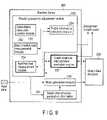
- FIG. 9is an exemplary functional block diagram showing the runtime library 200 .
- the runtime library 200includes a node generation module 210 , graph structure interpretation execution engine 220 , and parallel granularity adjustment module 230 .
- the node generation module 210 and graph structure interpretation execution engine 220implement the above described dynamic generation/update of the graph data structure 202 on the basis of the graph data structure generation information 201 and the above described control of assigning nodes to the cores 11 using the graph data structure 202 , both of which are executed by the runtime library 200 .
- the parallel granularity adjustment module 230implements efficient granularity adjustment (to be described in detail below) in executing the programs processed in parallel.
- the parallel granularity adjustment module 230includes a profile information collection module 231 , speculative execution control module 232 , basic module load measurement module 233 , and runtime load measurement module 234 .
- the basic module load measurement module 233measures the processing execution time (basic module execution time) of each of the basic serial modules 101 .
- the runtime load measurement module 234measures the execution time (runtime execution time) of processing which is performed by the runtime library 200 to assign each of the basic serial modules 101 to one of the cores 11 .
- the profile information collection module 231systematically manages the measurement information acquired in the basic module load measurement module 233 and runtime load measurement module 234 .
- the parallel granularity adjustment module 230performs the granularity adjustment of the execution program 100 on the basis of the measurement information managed by the profile information collection module 231 . More particularly, the following granularity adjustment is performed:
- a computermounts the processor 1 including the plurality of cores 11 like the computer according to this embodiment, it is possible to execute the plurality of basic serial modules 101 in parallel, thereby enhancing the speed.
- not all the cores 11are always executing the basic serial modules 101 . This is because some of the basic serial modules 101 may be standing by for completion of executing other basic serial modules 101 to allow the parallel execution of the basic serial modules 101 to progress based on the parallel execution control description 102 without contradiction.
- the parallel granularity adjustment module 230 of the runtime library 200 operating on the computerutilizes, for adjusting the granularity of the execution program 100 , the cores 11 which are available due to such situation. To do this, the parallel granularity adjustment module 230 includes the speculative execution control module 232 .
- the basic serial module 101 for which preceding nodes have all been completed and which is thus in an executable stateis referred to as a basic serial module 101 without any precedence constraints.
- the basic serial module 101 for which preceding nodes have not been completed and which is thus in a standby stateis referred to as a basic serial module 101 with precedence constraints.
- the speculative execution control module 232assigns the basic serial module 101 with precedence constraints to the available core 11 independently of the cores 11 originally assigned to the execution program 100 . For example, data created for a test are prepared in advance, and are temporarily given as input parameters. Execution by the basic serial module 101 which does not consider the result is referred to as speculative execution in this specification.
- the basic serial module 101 without any precedence constraintsis immediately assigned to the core 11 to be executed.
- the basic module load measurement module 233measures a basic module execution time
- the runtime load measurement module 234measures a runtime execution time.
- the parallel granularity adjustment module 230then adjusts the granularity as needed.
- the basic serial module 101 with precedence constraintsis assigned to the available core 11 to be subjected to speculative execution.
- the basic module load measurement module 233therefore, measures a basic module execution time
- the runtime load measurement module 234measures a runtime execution time.
- the parallel granularity adjustment module 230then adjusts the granularity as needed.
- the available cores 11are utilized for adjusting the granularity of the execution program 100 .
- the execution program 100is preferentially executed over the speculative execution for the granularity adjustment. Assume that during the speculative execution of the basic serial module 101 with precedence constraints, one of the basic serial modules 101 becomes that without any precedence constraints. In this case, to preferentially execute such basic serial module 101 , the speculative execution control module 232 stops the speculative execution of the basic serial module 101 with precedence constraints, and releases the corresponding core 11 .
- the speculative execution control module 232continues the speculative execution of the basic serial module 101 with precedence constraints until the basic serial modules 101 are executed by a specified number of sets (with which it is expected to attain adequate granularity adjustment).
- the runtime library 200can accept the setting of the valid/invalid state of the speculative execution control module 232 of the parallel granularity adjustment module 230 .
- the runtime library 200can set the speculative execution control module 232 to the valid state when, e.g., exchanging the processor 1 (for a processor 1 including a different number of cores 11 ).
- the graph structure interpretation execution engine 220 of the runtime library 200assigns the basic serial module 101 without any precedence constraints in the graph data structure 202 to the core 11 (block A 1 of FIG. 10 ).
- the runtime library 200monitors whether or not an available core 11 is present (block A 2 of FIG. 10 ). If there is no available core 11 (NO in block A 2 of FIG. 10 ), the runtime library 200 stands by until a core 11 becomes available (block A 3 of FIG. 10 ).
- the speculative execution control module 232 of the parallel granularity adjustment module 230executes the granularity adjustment by speculative execution (block AS of FIG. 10 ), for which a sequence is shown in detain in FIG. 12 .
- a basic serial module 101 ( 2 )has precedence constraints that the execution of a basic serial module 101 ( 1 ) is complete, and a basic serial module 101 ( 3 ) has precedence constraints that the execution of the basic serial module 101 ( 1 ) and basic serial module 101 ( 2 ) is complete.
- a basic serial module 101 ( 1 )therefore, even if an available core 11 exists, execution of both the basic serial module 101 ( 2 ) and the basic serial module 101 ( 3 ) cannot start.
- the speculative execution control module 232assigns the corresponding basic serial module 101 to the available core 11 for speculative execution (block B 1 of FIG. 12 ).
- the basic module load measurement module 233measures a basic module execution time
- the runtime load measurement module 234measures a runtime execution time. If the basic module execution time does not match an estimated time with respect to the runtime execution time (YES in block B 2 of FIG. 12 ), the parallel granularity adjustment module 230 executes the parallel granularity adjustment of the basic serial module 101 for which the speculative execution has been performed (block B 3 of FIG. 12 ).
- the runtime library 200monitors whether there is a basic serial module 101 which has transited to that without any precedence constraints (block A 6 of FIG. 10 ). If there is such a basic serial module 101 (YES in block A 6 of FIG. 10 ), the runtime library 200 stops the speculative execution, and starts executing the basic serial module 101 without any precedence constraints (block Al of FIG. 10 ); otherwise (NO in block A 6 of FIG. 10 ), the parallel granularity adjustment module 230 checks whether all the basic serial modules 101 are executed in this set (block A 7 of FIG. 10 ). If all the modules are executed (YES in block A 7 of FIG. 10 ), the number of remaining sets is decremented by one (block A 8 of FIG. 10 ).
- the parallel granularity adjustment module 230rechecks whether the basic serial modules 101 are executed by the specified number of sets (block A 4 of FIG. 10 ). If the basic serial modules 101 are not executed by the specified number of sets (YES in block A 4 of FIG. 10 ), the parallel granularity adjustment module 230 continues the speculative execution of the basic serial module 101 with precedence constraints.
- the parallel granularity adjustment module 230When linking nodes, the parallel granularity adjustment module 230 generates new graph data structure generation information 201 having as attribute information the nodes to be linked.
- the information to be newly generatedis information pertaining to a node for successively executing two basic serial modules 101 on the same core 11 , and its link information is obtained by merging the link information of the two nodes.
- the node to be newly createdcorresponds to a logical basic serial module 101 which regards the two basic serial modules 101 as one module.
- the parallel granularity adjustment module 230rewrites the link information of other nodes which refers to these two nodes with the newly generated node.
- the node generation module 210adds nodes to the graph data structure 202 using the newly generated graph data structure generation information 201 from then on.
- the parallel granularity adjustment module 230optimizes compilers including scheduling instructions, reassigning parameters to registers, etc. within the range of this core in order to transform those processes for efficiently processing.
- the runtime library 200implements efficient self adjustment of the granularity of the execution program 100 upon execution.
- the basic serial modules 101are divided into small enough processing units without considering the granularity in creating the execution program 100 . It is therefore possible to omit the operation of adjusting or recreating the execution program 100 for each of the cores 11 .
- Modificationcan be made so that the speculative execution control module 232 performs speculative execution only for, e.g., the basic serial modules 101 in which input parameters are changed.
- the various modules of the systems described hereincan be implemented as software applications, hardware and/or software modules, or components on one or more computers, such as servers. While the various modules are illustrated separately, they may share some or all of the same underlying logic or code.
Landscapes
- Engineering & Computer Science (AREA)
- Theoretical Computer Science (AREA)
- General Engineering & Computer Science (AREA)
- Software Systems (AREA)
- Physics & Mathematics (AREA)
- General Physics & Mathematics (AREA)
- Computer Hardware Design (AREA)
- Quality & Reliability (AREA)
- Devices For Executing Special Programs (AREA)
Abstract
Description
This application is based upon and claims the benefit of priority from Japanese Patent Application No. 2008-169084, filed Jun. 27, 2008, the entire contents of which are incorporated herein by reference.
1. Field
One embodiment of the present invention relates to a program granularity adjustment technique suitable for, e.g., a computer that mounts a CPU including a plurality of CPU cores or a computer that mounts a plurality of CPUs.
2. Description of the Related Art
In recent years, various types of computers (personal computers) for private use, such as notebook type computers and desktop type computers have prevailed. For such computers, a demand for the information processing capability has been increasing close to the limit of the CPU performance improvement. For example, there is a demand for playing back high resolution moving image data by software.
To meet such demand, for example, computers which mount a plurality of CPUs or, in these days, a CPU including a plurality of CPU cores have become available. These computers shorten the turnaround time and improve the performance by processing programs in parallel. Various mechanisms for efficiently processing programs in parallel have been proposed (see, e.g., Jpn. Pat. Appln. KOKAI Publication No. 2005-258920).
One parallel program processing technique comprises two components, i.e., runtime processing including a scheduler which assigns processing units in the program to execution units (when a computer mounts a plurality of CPUs, the scheduler assigns the processing units to the CPUs, and when a computer mounts a CPU including a plurality of CPU cores, the scheduler assigns the processing units to the CPU cores), and a processing unit processed on each execution unit. Note that the size of the processing unit is referred to as the granularity of parallel processing. It is possible to increase the opportunity of parallelization by decreasing the granularity, thereby improving the parallel performance.
On the other hand, if the granularity of parallel processing is too small, the number of operations of the scheduler becomes large and it therefore becomes impossible to obtain adequate performance due to too high an overhead.
A general architecture that implements the various feature of the invention will now be described with reference to the drawings. The drawings and the associated descriptions are provided to illustrate embodiments of the invention and not to limit the scope of the invention.
Various embodiments according to the invention will be described hereinafter with reference to the accompanying drawings. In general, according to one embodiment of the invention, an information processing apparatus includes a plurality of execution modules and a scheduler which controls assignment of a plurality of basic modules to the plurality of execution modules. The scheduler includes assigning, when an available execution module which is not assigned any basic modules exists, a basic module which stands by for completion of execution of other basic module to the available execution module; measuring an execution time of processing of the basic module itself; measuring execution time of processing for assigning the basic module to the execution module; and performing granularity adjustment by linking two or more basic modules to be successively executed according to the restriction of a execution sequence so as to be assigned as one set to the execution module and redividing the linked two or more basic modules, based on the two execution measured execution times.
Theprocessor 1 serves as a central processing unit (CPU) which controls the execution of a program loaded in the main memory from theHDD 3, and includes a plurality ofcores 11 serving as main arithmetic circuits (CPU cores).
Themain memory 2 is e.g., a semiconductor storage device, and can be accessed by theprocessor 1. TheHDD 3 is a low speed mass storage device (in comparison with the main memory2) serving as an auxiliary storage in the computer.
Although not shown inFIG. 1 , input/output devices such as a display for displaying the processing result of the program executed by theprocessor 1 and the like, and a keyboard for inputting process data and the like are provided for, e.g., a notebook type computer, or are externally connected via cables for, e.g., a desktop type computer.
The computer which mounts theprocessor 1 including the plurality ofcores 11 can execute a plurality of programs in parallel, and also execute a plurality of processes in one program in parallel. The schematic configuration of a program which is based on parallel processing specifications and executed by the computer will be described with reference toFIG. 2 .
As shown inFIG. 2 , anexecution program 100 which is based on parallel processing specifications and executed by the computer includes a plurality of basicserial modules 101, and a parallelexecution control description 102 which defines an order of executing the plurality of basicserial modules 101.
In so-called multi-thread processing, as shown inFIG. 3 , each thread progresses while synchronizing with other threads (including communication), i.e., maintaining the consistency of the program as a whole. If the frequency of waiting for synchronization is high, it may be impossible to obtain the parallel performance expected.
In this embodiment, as shown inFIG. 4 , by dividing a program into processing units which need not synchronize with other modules and thus can be asynchronously executed, a plurality of basicserial modules 101 are created while a parallelexecution control description 102 which defines a temporal execution rule for the plurality of basicserial modules 101 is created. Under the parallel execution control, each of the basicserial modules 101 is represented as a node. As explained above, a basic serial module indicates a module as a processing unit which can be executed asynchronously with other modules. The parallelexecution control description 102 will be described next with reference toFIG. 5 .
Reference symbol “A” inFIG. 5 denotes a schematic node representing one of the basicserial modules 101. As shown inFIG. 5 , each of the basicserial modules 101 can be considered as a node having links to preceding nodes and connectors to succeeding nodes. The parallelexecution control description 102 defines an order of executing the plurality of basicserial modules 101 by describing link information on preceding nodes with respect to each of the basicserial modules 101. Reference symbol “B” inFIG. 5 denotes a parallel execution control description associated with one of the basicserial modules 101. As shown inFIG. 5 , the description describes a basic serial module ID serving as an identifier for the basicserial module 101, and link information on the preceding nodes of the basicserial module 101. Also, the description describes information on an output buffer type, cost, and the like.
A method by which the computer executes theexecution program 100 having a unique configuration in that the plurality of basicserial modules 101 and the parallelexecution control description 102 are included will now be described.
To execute, in parallel, theexecution program 100 having such unique configuration, aruntime library 200 shown inFIG. 6 is prepared in the computer. Theruntime library 200 includes a scheduler function, and is provided with the parallelexecution control description 102 as graph datastructure generation information 201. The parallelexecution control description 102 is created by, e.g., using a functional programming language, and translated into the graph datastructure generation information 201 by a translator.
When data is input, there is a need for executing some of the basicserial modules 101 for processing the data. Each time the need arises, theruntime library 200 dynamically generates/updates agraph data structure 202 on the basis of the graph datastructure generation information 201. Thegraph data structure 202 is graph data representing the relationship between preceding and succeeding nodes to be executed, as needed. Theruntime library 200 adds the nodes to thegraph data structure 202 in consideration of the relationship between preceding and succeeding nodes in an execution standby state as well as the relationship between the preceding and succeeding nodes to be added.
Upon completion of the execution of a node, theruntime library 200 deletes the node from thegraph data structure 202, checks the presence/absence of a succeeding node which has the node as a preceding node and which does not have other preceding nodes or of which all other preceding nodes have been completed. If there exists a succeeding node which satisfies this condition, theruntime library 200 assigns the node to one of thecores 11.
With this operation of theruntime library 200, the parallel execution of the plurality of basicserial modules 101 progresses on the basis of the parallelexecution control description 102 without contradiction. Theruntime library 200 executes the processing by using more threads than the number ofcores 11 built in the processor1 (multi thread). As a result, as shown inFIG. 7 , it is possible to operate the computer as if each core11 (theruntime library 200 as a thread under the control of anOS 300 of the corresponding core11) had autonomously found one basicserial module 101 to be executed next. Exclusive control between the threads is executed only for theruntime library 200 to select a node from thegraph data structure 202 and update thegraph data structure 202. Therefore, in comparison with the general multi thread processing shown inFIG. 3 , the processing according to the embodiment achieves a higher parallel performance.
If the processing unit of the basicserial modules 101, i.e., the granularity of parallel processing is too small with respect to the number of thecores 11 built in theprocessor 1 of the computer, the operation opportunity of theruntime library 200, i.e., a so-called overhead increases, and therefore the execution efficiency may decrease. In consideration of this, theruntime library 200 of this embodiment further comprises a function of efficiently adjusting the granularity of parallel processing upon execution.
More specifically, assume that five nodes exist, i.e., node “A” to node “E” having the relationship denoted by reference symbol “A” inFIG. 8 . Theruntime library 200 comprises a function of linking node “A” and node “B”, and changing the preceding node of node “C” to node “E” from node “A” to node “B”, as denoted by reference symbol “B” inFIG. 8 .
However, linking nodes may decrease the parallel processing performance, contrary to expectation. This applies to a case in which the characteristics of input data to be processed change and the load balance of modules changes. In consideration of this, theruntime library 200 also includes a function of redividing, as denoted by reference symbol “A” inFIG. 8 , nodes “A” and “B” which have been linked as denoted by reference symbol “B” inFIG. 8 .
As shown inFIG. 9 , theruntime library 200 includes anode generation module 210, graph structureinterpretation execution engine 220, and parallelgranularity adjustment module 230.
Thenode generation module 210 and graph structureinterpretation execution engine 220 implement the above described dynamic generation/update of thegraph data structure 202 on the basis of the graph datastructure generation information 201 and the above described control of assigning nodes to thecores 11 using thegraph data structure 202, both of which are executed by theruntime library 200. The parallelgranularity adjustment module 230 implements efficient granularity adjustment (to be described in detail below) in executing the programs processed in parallel. The parallelgranularity adjustment module 230 includes a profileinformation collection module 231, speculativeexecution control module 232, basic moduleload measurement module 233, and runtimeload measurement module 234.
The basic moduleload measurement module 233 measures the processing execution time (basic module execution time) of each of the basicserial modules 101. The runtimeload measurement module 234 measures the execution time (runtime execution time) of processing which is performed by theruntime library 200 to assign each of the basicserial modules 101 to one of thecores 11. The profileinformation collection module 231 systematically manages the measurement information acquired in the basic moduleload measurement module 233 and runtimeload measurement module 234.
The parallelgranularity adjustment module 230 performs the granularity adjustment of theexecution program 100 on the basis of the measurement information managed by the profileinformation collection module 231. More particularly, the following granularity adjustment is performed:
(1) If the average of the basic module execution times<the runtime execution time, the granularity is increased.
(2) If the average of the basic module execution times>>the runtime execution time, the granularity is decreased.
If a computer mounts theprocessor 1 including the plurality ofcores 11 like the computer according to this embodiment, it is possible to execute the plurality of basicserial modules 101 in parallel, thereby enhancing the speed. However, not all thecores 11 are always executing the basicserial modules 101. This is because some of the basicserial modules 101 may be standing by for completion of executing other basicserial modules 101 to allow the parallel execution of the basicserial modules 101 to progress based on the parallelexecution control description 102 without contradiction.
The parallelgranularity adjustment module 230 of theruntime library 200 operating on the computer utilizes, for adjusting the granularity of theexecution program 100, thecores 11 which are available due to such situation. To do this, the parallelgranularity adjustment module 230 includes the speculativeexecution control module 232.
The basicserial module 101 for which preceding nodes have all been completed and which is thus in an executable state is referred to as a basicserial module 101 without any precedence constraints. The basicserial module 101 for which preceding nodes have not been completed and which is thus in a standby state is referred to as a basicserial module 101 with precedence constraints.
If there exists anavailable core 11, the speculativeexecution control module 232 assigns the basicserial module 101 with precedence constraints to theavailable core 11 independently of thecores 11 originally assigned to theexecution program 100. For example, data created for a test are prepared in advance, and are temporarily given as input parameters. Execution by the basicserial module 101 which does not consider the result is referred to as speculative execution in this specification.
The basicserial module 101 without any precedence constraints is immediately assigned to the core11 to be executed. The basic moduleload measurement module 233, therefore, measures a basic module execution time, and the runtimeload measurement module 234 measures a runtime execution time. The parallelgranularity adjustment module 230 then adjusts the granularity as needed. In addition to this, if there exists anavailable core 11 in the computer, the basicserial module 101 with precedence constraints is assigned to theavailable core 11 to be subjected to speculative execution. The basic moduleload measurement module 233, therefore, measures a basic module execution time, and the runtimeload measurement module 234 measures a runtime execution time. The parallelgranularity adjustment module 230 then adjusts the granularity as needed.
That is, in executing theexecution program 100 in parallel, theavailable cores 11 are utilized for adjusting the granularity of theexecution program 100.
Theexecution program 100 is preferentially executed over the speculative execution for the granularity adjustment. Assume that during the speculative execution of the basicserial module 101 with precedence constraints, one of the basicserial modules 101 becomes that without any precedence constraints. In this case, to preferentially execute such basicserial module 101, the speculativeexecution control module 232 stops the speculative execution of the basicserial module 101 with precedence constraints, and releases the correspondingcore 11.
Assume that after the execution of theexecution program 100 starts, all the basicserial modules 101 are executed as one set. The speculativeexecution control module 232 continues the speculative execution of the basicserial module 101 with precedence constraints until the basicserial modules 101 are executed by a specified number of sets (with which it is expected to attain adequate granularity adjustment). Theruntime library 200 can accept the setting of the valid/invalid state of the speculativeexecution control module 232 of the parallelgranularity adjustment module 230. Theruntime library 200 can set the speculativeexecution control module 232 to the valid state when, e.g., exchanging the processor1 (for aprocessor 1 including a different number of cores11).
Operation procedures associated with the granularity adjustment in executing theexecution program 100 by the computer will be explained next with reference toFIG. 10 ,FIG. 11 andFIG. 12 .
First, the graph structureinterpretation execution engine 220 of theruntime library 200 assigns the basicserial module 101 without any precedence constraints in thegraph data structure 202 to the core11 (block A1 ofFIG. 10 ). Theruntime library 200 monitors whether or not anavailable core 11 is present (block A2 ofFIG. 10 ). If there is no available core11 (NO in block A2 ofFIG. 10 ), theruntime library 200 stands by until acore 11 becomes available (block A3 ofFIG. 10 ).
Assume that there is an available core11 (YES in block A2 ofFIG. 10 ). In this case, if the basicserial modules 101 are not executed by the specified number of sets (NO in block A4 ofFIG. 10 ), the speculativeexecution control module 232 of the parallelgranularity adjustment module 230 executes the granularity adjustment by speculative execution (block AS ofFIG. 10 ), for which a sequence is shown in detain inFIG. 12 .
For example, if there exists thegraph data structure 202 as shown inFIG. 11 , a basic serial module101 (2) has precedence constraints that the execution of a basic serial module101 (1) is complete, and a basic serial module101 (3) has precedence constraints that the execution of the basic serial module101 (1) and basic serial module101 (2) is complete. During the execution of the basic serial module101 (1), therefore, even if anavailable core 11 exists, execution of both the basic serial module101 (2) and the basic serial module101 (3) cannot start.
In this case, if, in this set, either of the basic serial module101 (2) and the basic serial module101 (3) is not executed, the speculativeexecution control module 232 assigns the corresponding basicserial module 101 to theavailable core 11 for speculative execution (block B1 ofFIG. 12 ). With this speculative execution, the basic moduleload measurement module 233 measures a basic module execution time, and the runtimeload measurement module 234 measures a runtime execution time. If the basic module execution time does not match an estimated time with respect to the runtime execution time (YES in block B2 ofFIG. 12 ), the parallelgranularity adjustment module 230 executes the parallel granularity adjustment of the basicserial module 101 for which the speculative execution has been performed (block B3 ofFIG. 12 ).
Theruntime library 200 monitors whether there is a basicserial module 101 which has transited to that without any precedence constraints (block A6 ofFIG. 10 ). If there is such a basic serial module101 (YES in block A6 ofFIG. 10 ), theruntime library 200 stops the speculative execution, and starts executing the basicserial module 101 without any precedence constraints (block Al ofFIG. 10 ); otherwise (NO in block A6 ofFIG. 10 ), the parallelgranularity adjustment module 230 checks whether all the basicserial modules 101 are executed in this set (block A7 ofFIG. 10 ). If all the modules are executed (YES in block A7 ofFIG. 10 ), the number of remaining sets is decremented by one (block A8 ofFIG. 10 ). The parallelgranularity adjustment module 230 rechecks whether the basicserial modules 101 are executed by the specified number of sets (block A4 ofFIG. 10 ). If the basicserial modules 101 are not executed by the specified number of sets (YES in block A4 ofFIG. 10 ), the parallelgranularity adjustment module 230 continues the speculative execution of the basicserial module 101 with precedence constraints.
When linking nodes, the parallelgranularity adjustment module 230 generates new graph datastructure generation information 201 having as attribute information the nodes to be linked. The information to be newly generated is information pertaining to a node for successively executing two basicserial modules 101 on thesame core 11, and its link information is obtained by merging the link information of the two nodes. The node to be newly created corresponds to a logical basicserial module 101 which regards the two basicserial modules 101 as one module.
At this time, the parallelgranularity adjustment module 230 rewrites the link information of other nodes which refers to these two nodes with the newly generated node. With this operation, thenode generation module 210 adds nodes to thegraph data structure 202 using the newly generated graph datastructure generation information 201 from then on.
Since the basicserial modules 101 corresponding to the linked node are successively executed on thesame core 11, the parallelgranularity adjustment module 230 optimizes compilers including scheduling instructions, reassigning parameters to registers, etc. within the range of this core in order to transform those processes for efficiently processing.
With this operation of the parallelgranularity adjustment module 230, theruntime library 200 implements efficient self adjustment of the granularity of theexecution program 100 upon execution. According to this method (in which the granularity of parallel processing is self adjusted upon execution), the basicserial modules 101 are divided into small enough processing units without considering the granularity in creating theexecution program 100. It is therefore possible to omit the operation of adjusting or recreating theexecution program 100 for each of thecores 11.
Although the method in which the computer mounts theprocessor 1 including the plurality ofcores 11 has been described by way of example in this embodiment, the method is also applicable to a so called multiprocessor computer mounting a plurality ofprocessors 1, as a matter of course.
Modification can be made so that the speculativeexecution control module 232 performs speculative execution only for, e.g., the basicserial modules 101 in which input parameters are changed. The various modules of the systems described herein can be implemented as software applications, hardware and/or software modules, or components on one or more computers, such as servers. While the various modules are illustrated separately, they may share some or all of the same underlying logic or code.
While certain embodiments of the inventions have been described, these embodiments have been presented by way of example only, and are not intended to limit the scope of the inventions. Indeed, the novel methods and systems described herein may be embodied in a variety of other forms; furthermore, various omissions, substitutions and changes in the form of the methods and systems described herein may be made without departing from the spirit of the inventions. The accompanying claims and their equivalents are intended to cover such forms or modifications as would fall within the scope and spirit of the inventions.
Claims (6)
1. An information processing apparatus comprising:
a plurality of execution modules being either central processing unit (CPU) cores built in a CPU or a plurality of CPUs formed individually of each other; and
a scheduler configured to control assignment of a plurality of basic modules to the execution modules based on a restriction of an execution sequence in order to execute a program in parallel using the execution modules, the program being divided into the basic modules executable asynchronously with each other, the program defining the restriction of the execution sequence for sequentially executing the basic modules;
the scheduler including:
a speculative execution control module configured to assign, when the execution modules contain an execution module to which no basic modules are assigned, one of the basic modules to the execution module independently of the parallel execution of the program to experimentally execute the one basic module, the one basic module standing by for completion of execution of one of the other basic modules in accordance with the restriction of the execution sequence;
a basic module load measurement module configured to measure an execution time of each of the basic modules;
a runtime load measurement module configured to measure an execution time required for assigning each of the basic modules to the execution modules; and
a granularity adjustment module configured to perform granularity adjustment by linking at least two of the basic modules to be successively executed according to the restriction of the execution sequence so as to be assigned as one set to the execution module and by redividing the at least two linked basic modules, based on the execution time measured by the basic module load measurement module and the execution time measured by the runtime load measurement module.
2. The information processing apparatus ofclaim 1 , wherein the speculative execution control module stops experimental execution of the one basic module to release the execution module, when another of the basic modules transits from a standby state to an executable state during experimental execution of the one basic module.
3. The information processing apparatus ofclaim 1 , wherein the speculative execution control module continues the experimental execution of the one basic module until each basic module is executed a specified number of times and the basic module load measurement module measures the execution time the specified number of times for each basic module.
4. The information processing apparatus ofclaim 1 , wherein the speculative execution control module regards the one basic module as a target of the experimental execution of the basic module when the one basic module has an input parameter thereof changed.
5. The information processing apparatus ofclaim 1 , further comprising a recording medium which stores the program, wherein the execution modules execute the basic modules of the program read from the recording medium.
6. A granularity adjustment method for an information processing apparatus which includes a scheduler configured to control assignment of a plurality of basic modules to a plurality of execution modules based on a restriction of an execution sequence, and which executes a program in parallel using the execution modules, the program being divided into the basic modules executable asynchronously with each other, the program defining the restriction of the execution sequence for sequentially executing the basic modules, the method comprising:
assigning, when the execution modules contain an execution module to which no basic modules are assigned, one of the basic modules to the execution module independently of the parallel execution of the program to experimentally execute the one basic module, the one basic module standing by for completion of execution of one of the other basic modules in accordance with the restriction of the execution sequence, by a speculative control module included in the scheduler;
measuring an execution time of each of the basic modules by the scheduler;
measuring an execution time required for assigning each of the basic modules to the execution modules by the scheduler; and
performing granularity adjustment by linking at least two of the basic modules to be successively executed according to the restriction of a execution sequence so as to be assigned as one set to the execution module and by redividing the at least two linked basic modules, based on two of the measured execution times by the scheduler.
Applications Claiming Priority (2)
| Application Number | Priority Date | Filing Date | Title |
|---|---|---|---|
| JP2008-169084 | 2008-06-27 | ||
| JP2008169084AJP4381459B1 (en) | 2008-06-27 | 2008-06-27 | Information processing apparatus, granularity adjustment method, and program |
Publications (2)
| Publication Number | Publication Date |
|---|---|
| US20090328049A1 US20090328049A1 (en) | 2009-12-31 |
| US7788672B2true US7788672B2 (en) | 2010-08-31 |
Family
ID=41449237
Family Applications (1)
| Application Number | Title | Priority Date | Filing Date |
|---|---|---|---|
| US12/419,114Expired - Fee RelatedUS7788672B2 (en) | 2008-06-27 | 2009-04-06 | System for controlling assignment of a plurality of modules of a program to available execution units based on speculative executing and granularity adjusting |
Country Status (2)
| Country | Link |
|---|---|
| US (1) | US7788672B2 (en) |
| JP (1) | JP4381459B1 (en) |
Cited By (5)
| Publication number | Priority date | Publication date | Assignee | Title |
|---|---|---|---|---|
| US20090259996A1 (en)* | 2008-04-09 | 2009-10-15 | Vinod Grover | Partitioning cuda code for execution by a general purpose processor |
| US20090259832A1 (en)* | 2008-04-09 | 2009-10-15 | Vinod Grover | Retargetting an application program for execution by a general purpose processor |
| US20100153963A1 (en)* | 2008-12-12 | 2010-06-17 | Subbarao Kakarlamudi | Workload management in a parallel database system |
| US20130254754A1 (en)* | 2012-03-20 | 2013-09-26 | Infosys Limited | Methods and systems for optimizing the performance of software applications at runtime |
| US20140053129A1 (en)* | 2012-08-15 | 2014-02-20 | Carl Von Platen | Parallelization of Dataflow Actors with Local State |
Families Citing this family (4)
| Publication number | Priority date | Publication date | Assignee | Title |
|---|---|---|---|---|
| KR101662769B1 (en)* | 2010-03-09 | 2016-10-05 | 삼성전자주식회사 | Apparatus for quick sorting and the method thereof |
| US9183109B2 (en)* | 2010-05-25 | 2015-11-10 | Intel Corporation | Method and system for analyzing the performance of multi-threaded applications |
| US9740529B1 (en)* | 2013-12-05 | 2017-08-22 | The Mathworks, Inc. | High throughput synchronous resource-constrained scheduling for model-based design |
| US10802929B2 (en)* | 2018-01-03 | 2020-10-13 | Tesla, Inc. | Parallel processing system runtime state reload |
Citations (17)
| Publication number | Priority date | Publication date | Assignee | Title |
|---|---|---|---|---|
| US5526499A (en)* | 1991-05-23 | 1996-06-11 | International Business Machines Corporation | Speculative load instruction rescheduler for a compiler which moves load instructions across basic block boundaries while avoiding program exceptions |
| JP2002049603A (en) | 2000-08-03 | 2002-02-15 | Toshiba Corp | Dynamic load distribution method and dynamic load distribution device |
| US6487577B1 (en)* | 1998-06-29 | 2002-11-26 | Intel Corporation | Distributed compiling |
| JP2003323304A (en) | 2002-04-30 | 2003-11-14 | Fujitsu Ltd | Speculative task generation method and apparatus |
| US20040010782A1 (en)* | 2002-07-09 | 2004-01-15 | Moritz Csaba Andras | Statically speculative compilation and execution |
| JP2004062686A (en) | 2002-07-30 | 2004-02-26 | Dainippon Printing Co Ltd | Parallel processing system, server, parallel processing method, program, and recording medium |
| JP2004078617A (en) | 2002-08-19 | 2004-03-11 | Nec Corp | Parallel processing method for application |
| US20040268095A1 (en)* | 2003-06-30 | 2004-12-30 | Tatiana Shpeisman | Efficient implementation of null reference check |
| US6854048B1 (en)* | 2001-08-08 | 2005-02-08 | Sun Microsystems | Speculative execution control with programmable indicator and deactivation of multiaccess recovery mechanism |
| US20050144602A1 (en)* | 2003-12-12 | 2005-06-30 | Tin-Fook Ngai | Methods and apparatus to compile programs to use speculative parallel threads |
| JP2005258920A (en) | 2004-03-12 | 2005-09-22 | Fujitsu Ltd | Multithread execution method, multithread execution program, and multithread execution apparatus |
| US20060101416A1 (en)* | 1998-12-23 | 2006-05-11 | Callahan Charles D Ii | Parallelism performance analysis based on execution trace information |
| US7058945B2 (en) | 2000-11-28 | 2006-06-06 | Fujitsu Limited | Information processing method and recording medium therefor capable of enhancing the executing speed of a parallel processing computing device |
| US20070130568A1 (en)* | 2005-12-06 | 2007-06-07 | Jung Chang H | Adaptive execution method for multithreaded processor-based parallel system |
| US20070204260A1 (en)* | 2006-02-24 | 2007-08-30 | Oki Electric Industry Co., Ltd. | Program transformation system |
| US20070288912A1 (en)* | 2006-06-07 | 2007-12-13 | Zimmer Vincent J | Methods and apparatus to provide a managed runtime environment in a sequestered partition |
| US7559062B2 (en)* | 2003-10-30 | 2009-07-07 | Alcatel Lucent | Intelligent scheduler for multi-level exhaustive scheduling |
- 2008
- 2008-06-27JPJP2008169084Apatent/JP4381459B1/ennot_activeExpired - Fee Related
- 2009
- 2009-04-06USUS12/419,114patent/US7788672B2/ennot_activeExpired - Fee Related
Patent Citations (19)
| Publication number | Priority date | Publication date | Assignee | Title |
|---|---|---|---|---|
| US5526499A (en)* | 1991-05-23 | 1996-06-11 | International Business Machines Corporation | Speculative load instruction rescheduler for a compiler which moves load instructions across basic block boundaries while avoiding program exceptions |
| US6487577B1 (en)* | 1998-06-29 | 2002-11-26 | Intel Corporation | Distributed compiling |
| US20060101416A1 (en)* | 1998-12-23 | 2006-05-11 | Callahan Charles D Ii | Parallelism performance analysis based on execution trace information |
| JP2002049603A (en) | 2000-08-03 | 2002-02-15 | Toshiba Corp | Dynamic load distribution method and dynamic load distribution device |
| US7058945B2 (en) | 2000-11-28 | 2006-06-06 | Fujitsu Limited | Information processing method and recording medium therefor capable of enhancing the executing speed of a parallel processing computing device |
| US6854048B1 (en)* | 2001-08-08 | 2005-02-08 | Sun Microsystems | Speculative execution control with programmable indicator and deactivation of multiaccess recovery mechanism |
| JP2003323304A (en) | 2002-04-30 | 2003-11-14 | Fujitsu Ltd | Speculative task generation method and apparatus |
| US7493607B2 (en)* | 2002-07-09 | 2009-02-17 | Bluerisc Inc. | Statically speculative compilation and execution |
| US20040010782A1 (en)* | 2002-07-09 | 2004-01-15 | Moritz Csaba Andras | Statically speculative compilation and execution |
| JP2004062686A (en) | 2002-07-30 | 2004-02-26 | Dainippon Printing Co Ltd | Parallel processing system, server, parallel processing method, program, and recording medium |
| JP2004078617A (en) | 2002-08-19 | 2004-03-11 | Nec Corp | Parallel processing method for application |
| US20040268095A1 (en)* | 2003-06-30 | 2004-12-30 | Tatiana Shpeisman | Efficient implementation of null reference check |
| US7559062B2 (en)* | 2003-10-30 | 2009-07-07 | Alcatel Lucent | Intelligent scheduler for multi-level exhaustive scheduling |
| US20050144602A1 (en)* | 2003-12-12 | 2005-06-30 | Tin-Fook Ngai | Methods and apparatus to compile programs to use speculative parallel threads |
| JP2005258920A (en) | 2004-03-12 | 2005-09-22 | Fujitsu Ltd | Multithread execution method, multithread execution program, and multithread execution apparatus |
| US20070130568A1 (en)* | 2005-12-06 | 2007-06-07 | Jung Chang H | Adaptive execution method for multithreaded processor-based parallel system |
| US7526637B2 (en)* | 2005-12-06 | 2009-04-28 | Electronics And Telecommunications Research Institute | Adaptive execution method for multithreaded processor-based parallel system |
| US20070204260A1 (en)* | 2006-02-24 | 2007-08-30 | Oki Electric Industry Co., Ltd. | Program transformation system |
| US20070288912A1 (en)* | 2006-06-07 | 2007-12-13 | Zimmer Vincent J | Methods and apparatus to provide a managed runtime environment in a sequestered partition |
Non-Patent Citations (2)
| Title |
|---|
| Burke et al., "Interprocedure Optimization: Elimiating Unnecessary Recompilation", ACM, 1993, pp. 367-399.* |
| Lin et al., "A Compiler Framework for Speculative Analysis and Optimizations", ACM, 2003, pp. 289-299.* |
Cited By (17)
| Publication number | Priority date | Publication date | Assignee | Title |
|---|---|---|---|---|
| US8612732B2 (en) | 2008-04-09 | 2013-12-17 | Nvidia Corporation | Retargetting an application program for execution by a general purpose processor |
| US8776030B2 (en)* | 2008-04-09 | 2014-07-08 | Nvidia Corporation | Partitioning CUDA code for execution by a general purpose processor |
| US20090259997A1 (en)* | 2008-04-09 | 2009-10-15 | Vinod Grover | Variance analysis for translating cuda code for execution by a general purpose processor |
| US20090259829A1 (en)* | 2008-04-09 | 2009-10-15 | Vinod Grover | Thread-local memory reference promotion for translating cuda code for execution by a general purpose processor |
| US20090259828A1 (en)* | 2008-04-09 | 2009-10-15 | Vinod Grover | Execution of retargetted graphics processor accelerated code by a general purpose processor |
| US9678775B1 (en) | 2008-04-09 | 2017-06-13 | Nvidia Corporation | Allocating memory for local variables of a multi-threaded program for execution in a single-threaded environment |
| US8572588B2 (en) | 2008-04-09 | 2013-10-29 | Nvidia Corporation | Thread-local memory reference promotion for translating CUDA code for execution by a general purpose processor |
| US20090259832A1 (en)* | 2008-04-09 | 2009-10-15 | Vinod Grover | Retargetting an application program for execution by a general purpose processor |
| US9448779B2 (en) | 2008-04-09 | 2016-09-20 | Nvidia Corporation | Execution of retargetted graphics processor accelerated code by a general purpose processor |
| US20090259996A1 (en)* | 2008-04-09 | 2009-10-15 | Vinod Grover | Partitioning cuda code for execution by a general purpose processor |
| US8984498B2 (en)* | 2008-04-09 | 2015-03-17 | Nvidia Corporation | Variance analysis for translating CUDA code for execution by a general purpose processor |
| US20100153963A1 (en)* | 2008-12-12 | 2010-06-17 | Subbarao Kakarlamudi | Workload management in a parallel database system |
| US9390130B2 (en)* | 2008-12-12 | 2016-07-12 | Hewlett Packard Enterprise Development Lp | Workload management in a parallel database system |
| US9128747B2 (en)* | 2012-03-20 | 2015-09-08 | Infosys Limited | Methods and systems for optimizing the performance of software applications at runtime |
| US20130254754A1 (en)* | 2012-03-20 | 2013-09-26 | Infosys Limited | Methods and systems for optimizing the performance of software applications at runtime |
| US8893080B2 (en)* | 2012-08-15 | 2014-11-18 | Telefonaktiebolaget L M Ericsson (Publ) | Parallelization of dataflow actors with local state |
| US20140053129A1 (en)* | 2012-08-15 | 2014-02-20 | Carl Von Platen | Parallelization of Dataflow Actors with Local State |
Also Published As
| Publication number | Publication date |
|---|---|
| JP2010009395A (en) | 2010-01-14 |
| JP4381459B1 (en) | 2009-12-09 |
| US20090328049A1 (en) | 2009-12-31 |
Similar Documents
| Publication | Publication Date | Title |
|---|---|---|
| US7788672B2 (en) | System for controlling assignment of a plurality of modules of a program to available execution units based on speculative executing and granularity adjusting | |
| US8255911B2 (en) | System and method for selecting and assigning a basic module with a minimum transfer cost to thread | |
| US12106154B2 (en) | Serverless computing architecture for artificial intelligence workloads on edge for dynamic reconfiguration of workloads and enhanced resource utilization | |
| US10095657B2 (en) | Processor, accelerator, and direct memory access controller within a core reading/writing local synchronization flag area for parallel | |
| US20110283093A1 (en) | Minimizing program execution time for parallel processing | |
| JP2005071109A (en) | Multiprocessor system synchronization method | |
| US8423343B2 (en) | High-parallelism synchronization approach for multi-core instruction-set simulation | |
| US20210319298A1 (en) | Compute-based subgraph partitioning of deep learning models for framework integration | |
| Zhang et al. | Toward qos-awareness and improved utilization of spatial multitasking gpus | |
| JPWO2011148920A1 (en) | Multiprocessor system, execution control method, execution control program | |
| US12288141B2 (en) | Multi-level caching for dynamic deep learning models | |
| US8180998B1 (en) | System of lanes of processing units receiving instructions via shared memory units for data-parallel or task-parallel operations | |
| US8196146B2 (en) | Information processing apparatus, parallel processing optimization method, and program | |
| US20210365804A1 (en) | Dynamic ai model transfer reconfiguration to minimize performance, accuracy and latency disruptions | |
| Zhao et al. | Ispa: Exploiting intra-sm parallelism in gpus via fine-grained resource management | |
| US20080271041A1 (en) | Program processing method and information processing apparatus | |
| US11640326B2 (en) | Ensemble based cluster tuning and framework fallback for AI accelerators using telemetry, compute, and temperature metrics | |
| US20120137300A1 (en) | Information Processor and Information Processing Method | |
| Chen et al. | Reducing memory access conflicts with loop transformation and data reuse on coarse-grained reconfigurable architecture | |
| Anastasiadis et al. | Paralia: A performance aware runtime for auto-tuning linear algebra on heterogeneous systems | |
| US20090249132A1 (en) | Data Processing Apparatus and Method of Verifying Programs | |
| US11941437B2 (en) | Graph partitioning to exploit batch-level parallelism | |
| Saidi et al. | Optimizing two-dimensional DMA transfers for scratchpad Based MPSoCs platforms | |
| Ashraf et al. | Improving Performance In Hpc System Under Power Consumptions Limitations | |
| Liu et al. | ResCCL: Resource-Efficient Scheduling for Collective Communication |
Legal Events
| Date | Code | Title | Description |
|---|---|---|---|
| AS | Assignment | Owner name:KABUSHIKI KAISHA TOSHIBA, JAPAN Free format text:ASSIGNMENT OF ASSIGNORS INTEREST;ASSIGNOR:TANAKA, YASUYUKI;REEL/FRAME:022511/0571 Effective date:20090330 | |
| FEPP | Fee payment procedure | Free format text:PAYOR NUMBER ASSIGNED (ORIGINAL EVENT CODE: ASPN); ENTITY STATUS OF PATENT OWNER: LARGE ENTITY | |
| FPAY | Fee payment | Year of fee payment:4 | |
| FEPP | Fee payment procedure | Free format text:MAINTENANCE FEE REMINDER MAILED (ORIGINAL EVENT CODE: REM.) | |
| LAPS | Lapse for failure to pay maintenance fees | Free format text:PATENT EXPIRED FOR FAILURE TO PAY MAINTENANCE FEES (ORIGINAL EVENT CODE: EXP.); ENTITY STATUS OF PATENT OWNER: LARGE ENTITY | |
| STCH | Information on status: patent discontinuation | Free format text:PATENT EXPIRED DUE TO NONPAYMENT OF MAINTENANCE FEES UNDER 37 CFR 1.362 | |
| FP | Lapsed due to failure to pay maintenance fee | Effective date:20180831 |