US7783497B2 - Method of adaptive browsing for digital content - Google Patents
Method of adaptive browsing for digital contentDownload PDFInfo
- Publication number
- US7783497B2 US7783497B2US11/392,276US39227606AUS7783497B2US 7783497 B2US7783497 B2US 7783497B2US 39227606 AUS39227606 AUS 39227606AUS 7783497 B2US7783497 B2US 7783497B2
- Authority
- US
- United States
- Prior art keywords
- user
- content
- ticker
- digital content
- items
- Prior art date
- Legal status (The legal status is an assumption and is not a legal conclusion. Google has not performed a legal analysis and makes no representation as to the accuracy of the status listed.)
- Active, expires
Links
Images



Classifications
- H—ELECTRICITY
- H04—ELECTRIC COMMUNICATION TECHNIQUE
- H04N—PICTORIAL COMMUNICATION, e.g. TELEVISION
- H04N21/00—Selective content distribution, e.g. interactive television or video on demand [VOD]
- H04N21/40—Client devices specifically adapted for the reception of or interaction with content, e.g. set-top-box [STB]; Operations thereof
- H04N21/47—End-user applications
- H04N21/482—End-user interface for program selection
- H04N21/4828—End-user interface for program selection for searching program descriptors
- G—PHYSICS
- G06—COMPUTING OR CALCULATING; COUNTING
- G06F—ELECTRIC DIGITAL DATA PROCESSING
- G06F16/00—Information retrieval; Database structures therefor; File system structures therefor
- G06F16/90—Details of database functions independent of the retrieved data types
- G06F16/95—Retrieval from the web
- G06F16/953—Querying, e.g. by the use of web search engines
- G06F16/9535—Search customisation based on user profiles and personalisation
- G—PHYSICS
- G06—COMPUTING OR CALCULATING; COUNTING
- G06F—ELECTRIC DIGITAL DATA PROCESSING
- G06F3/00—Input arrangements for transferring data to be processed into a form capable of being handled by the computer; Output arrangements for transferring data from processing unit to output unit, e.g. interface arrangements
- G06F3/01—Input arrangements or combined input and output arrangements for interaction between user and computer
- G06F3/048—Interaction techniques based on graphical user interfaces [GUI]
- G06F3/0481—Interaction techniques based on graphical user interfaces [GUI] based on specific properties of the displayed interaction object or a metaphor-based environment, e.g. interaction with desktop elements like windows or icons, or assisted by a cursor's changing behaviour or appearance
- G06F3/0482—Interaction with lists of selectable items, e.g. menus
- G—PHYSICS
- G06—COMPUTING OR CALCULATING; COUNTING
- G06F—ELECTRIC DIGITAL DATA PROCESSING
- G06F3/00—Input arrangements for transferring data to be processed into a form capable of being handled by the computer; Output arrangements for transferring data from processing unit to output unit, e.g. interface arrangements
- G06F3/01—Input arrangements or combined input and output arrangements for interaction between user and computer
- G06F3/048—Interaction techniques based on graphical user interfaces [GUI]
- G06F3/0484—Interaction techniques based on graphical user interfaces [GUI] for the control of specific functions or operations, e.g. selecting or manipulating an object, an image or a displayed text element, setting a parameter value or selecting a range
- G06F3/0485—Scrolling or panning
- G—PHYSICS
- G06—COMPUTING OR CALCULATING; COUNTING
- G06Q—INFORMATION AND COMMUNICATION TECHNOLOGY [ICT] SPECIALLY ADAPTED FOR ADMINISTRATIVE, COMMERCIAL, FINANCIAL, MANAGERIAL OR SUPERVISORY PURPOSES; SYSTEMS OR METHODS SPECIALLY ADAPTED FOR ADMINISTRATIVE, COMMERCIAL, FINANCIAL, MANAGERIAL OR SUPERVISORY PURPOSES, NOT OTHERWISE PROVIDED FOR
- G06Q30/00—Commerce
- G06Q30/02—Marketing; Price estimation or determination; Fundraising
- G06Q30/0207—Discounts or incentives, e.g. coupons or rebates
- G06Q30/0239—Online discounts or incentives
- G—PHYSICS
- G06—COMPUTING OR CALCULATING; COUNTING
- G06Q—INFORMATION AND COMMUNICATION TECHNOLOGY [ICT] SPECIALLY ADAPTED FOR ADMINISTRATIVE, COMMERCIAL, FINANCIAL, MANAGERIAL OR SUPERVISORY PURPOSES; SYSTEMS OR METHODS SPECIALLY ADAPTED FOR ADMINISTRATIVE, COMMERCIAL, FINANCIAL, MANAGERIAL OR SUPERVISORY PURPOSES, NOT OTHERWISE PROVIDED FOR
- G06Q30/00—Commerce
- G06Q30/06—Buying, selling or leasing transactions
- G06Q30/0601—Electronic shopping [e-shopping]
- G—PHYSICS
- G06—COMPUTING OR CALCULATING; COUNTING
- G06Q—INFORMATION AND COMMUNICATION TECHNOLOGY [ICT] SPECIALLY ADAPTED FOR ADMINISTRATIVE, COMMERCIAL, FINANCIAL, MANAGERIAL OR SUPERVISORY PURPOSES; SYSTEMS OR METHODS SPECIALLY ADAPTED FOR ADMINISTRATIVE, COMMERCIAL, FINANCIAL, MANAGERIAL OR SUPERVISORY PURPOSES, NOT OTHERWISE PROVIDED FOR
- G06Q40/00—Finance; Insurance; Tax strategies; Processing of corporate or income taxes
- H—ELECTRICITY
- H04—ELECTRIC COMMUNICATION TECHNIQUE
- H04N—PICTORIAL COMMUNICATION, e.g. TELEVISION
- H04N21/00—Selective content distribution, e.g. interactive television or video on demand [VOD]
- H04N21/40—Client devices specifically adapted for the reception of or interaction with content, e.g. set-top-box [STB]; Operations thereof
- H04N21/41—Structure of client; Structure of client peripherals
- H04N21/422—Input-only peripherals, i.e. input devices connected to specially adapted client devices, e.g. global positioning system [GPS]
- H04N21/42204—User interfaces specially adapted for controlling a client device through a remote control device; Remote control devices therefor
- H—ELECTRICITY
- H04—ELECTRIC COMMUNICATION TECHNIQUE
- H04N—PICTORIAL COMMUNICATION, e.g. TELEVISION
- H04N21/00—Selective content distribution, e.g. interactive television or video on demand [VOD]
- H04N21/40—Client devices specifically adapted for the reception of or interaction with content, e.g. set-top-box [STB]; Operations thereof
- H04N21/43—Processing of content or additional data, e.g. demultiplexing additional data from a digital video stream; Elementary client operations, e.g. monitoring of home network or synchronising decoder's clock; Client middleware
- H04N21/431—Generation of visual interfaces for content selection or interaction; Content or additional data rendering
- H04N21/4312—Generation of visual interfaces for content selection or interaction; Content or additional data rendering involving specific graphical features, e.g. screen layout, special fonts or colors, blinking icons, highlights or animations
- H—ELECTRICITY
- H04—ELECTRIC COMMUNICATION TECHNIQUE
- H04N—PICTORIAL COMMUNICATION, e.g. TELEVISION
- H04N21/00—Selective content distribution, e.g. interactive television or video on demand [VOD]
- H04N21/40—Client devices specifically adapted for the reception of or interaction with content, e.g. set-top-box [STB]; Operations thereof
- H04N21/45—Management operations performed by the client for facilitating the reception of or the interaction with the content or administrating data related to the end-user or to the client device itself, e.g. learning user preferences for recommending movies, resolving scheduling conflicts
- H04N21/4508—Management of client data or end-user data
- H04N21/4532—Management of client data or end-user data involving end-user characteristics, e.g. viewer profile, preferences
- H—ELECTRICITY
- H04—ELECTRIC COMMUNICATION TECHNIQUE
- H04N—PICTORIAL COMMUNICATION, e.g. TELEVISION
- H04N21/00—Selective content distribution, e.g. interactive television or video on demand [VOD]
- H04N21/80—Generation or processing of content or additional data by content creator independently of the distribution process; Content per se
- H04N21/83—Generation or processing of protective or descriptive data associated with content; Content structuring
- H04N21/84—Generation or processing of descriptive data, e.g. content descriptors
Definitions
- the present inventionrelates generally to browsing for content and, more specifically, to adaptively changing images representing available digital content for browsing by a user based on the user's interests and actions.
- TVtelevision
- PCpersonal computer
- PC usersusually have the benefit of an input device such as a mouse for inputting navigation and control commands, for example, to the PC.
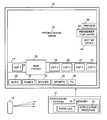
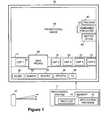
- FIG. 1is a diagram of a user interface, a display, and processing system according to an embodiment of the present invention
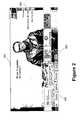
- FIG. 2is an example display illustrating a ticker in a user interface according to an embodiment of the present invention
- FIG. 3is an example display illustrating a first level ticker in a user interface according to an embodiment of the present invention
- FIG. 4is an example display illustrating a second level ticker in a user interface according to an embodiment of the present invention
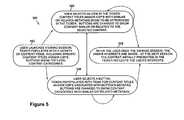
- FIG. 5is a state diagram of user interactions with the ticker and/or buttons of the user interface according to an embodiment of the present invention.
- FIGS. 6-8are flow diagrams illustrating user interface processing according to an embodiment of the present invention.
- An embodiment of the present inventionis a method of presenting information about available content on a display to a user in a manner that adapts over time to the user's interests based on user selections.
- information about available contentmay be shown on a display as a scrolling set of images called a “ticker.”
- Each discrete component of the tickeris called an item.
- An itemrepresents available content for consumption by the user.
- a set of buttonsmay be shown on the display to represent availability of content by specific categories of content. The display behavior of the ticker and the buttons in response to user actions may be based on attributes of the available content.
- Each content titlemay correspond to a content profile having a plurality of metatags, wherein each metatag specifies a content attribute.
- the profilesmay be used by an application program executing on a processing system to identify content having similar or related attributes.
- the application program controlling the user interfaceadapts the displayed information over time to show information about other content available to the user that the user may be more likely to have an interest (i.e., content and content service providers that are more relevant to the user's interests). More specifically, the ticker and buttons may be modified over time to show the availability of content that is directed to the user's interests. This allows for effective visual browsing of large quantities of available content by the user for the TV experience.
- FIG. 1is a diagram of a user interface, a display 10 , and a processing system 11 according to an embodiment of the present invention.
- the displaycomprises a conventional TV or computer screen in any display technology now known or hereafter developed (e.g., cathode ray tube (CRT), rear projection, plasma, liquid crystal diode (LCD)), and so on, in either standard or high definition format.
- the displaymay be coupled by wire or wirelessly to processing system 11 having at least one memory 15 .
- the processing systemcontrols the presentation of images on the display for perception by the user according to conventional well known techniques.
- Application program 13may execute on the processing system to provide the user interface by controlling the operation of the display, receiving and processing user commands, accessing content, and presenting content to the user.
- Remote control device 12may be coupled to processing system 11 and operated by the user to select commands and data to be sent wirelessly to the processing system in conventional fashion.
- the processing system and displaymay be in a living room, den, kitchen, bedroom, or other room where the user is typically not within one or two feet of the display.
- the processing systemis in a different room than the display and the user, and may function as a media server.
- Embodiments of the present inventionuse application program 13 to control an animated ticker 14 shown on display 10 to present a series of items.
- Each itemmay comprise visual “thumbnail” images representing available digital content titles or content service providers (CSPs) to the user.
- the ticker 14comprises a set of multiple items, each item having an image representing a content title and/or a CSP, or both.
- a content titlecomprises a specific program of available content such as a TV program, a sports event broadcast, a movie, a music video, a computer game, etc.
- a CSPcomprises any content production and/or distribution entity, such as a cable TV provider (e.g., Comcast), satellite TV provider (e.g., DirectTV, Dish Network), a broadcast network (e.g., American Broadcasting Company (ABC), Music Television (MTV), or a content brand (e.g., The Walt Disney Company)) providing multiple content titles.
- the ticker itemsmay represent content already local to the user's processing system, or subscription or on-demand content available for download or streaming operations to the user's processing system from a CSP.
- CSP 1shows five content service providers (CSPs) (CSP 1 16 , CSP 2 18 , CSP 3 20 , CSP 4 22 , and CSP 5 24 ) currently on the display at a certain point in time.
- CSPscontent service providers
- the tickerscrolls to the left or to the right, continuously or periodically moving so as to show new images to the user over time.
- the speed or direction of the tickermay be manually controlled by user selection.
- the tickermay have a border or no border, or may use a border that indicates a genre of available content (e.g., sports), a content source (e.g., movies from the Walt Disney Company), or a merchandising brand.
- an item having an associated thumbnail image representing a content title and/or a CSPmay pass under a “virtual lens” at a predetermined position on the ticker portion of the display. This position is called a “mini-promo” image 26 herein.
- the content title image or CSP image from the tickermay be temporarily replaced by a different image while the scrolling content title image or CSP image is under the “virtual lens.”
- This different imagemay indicate a promotional advertisement for a specific content title.
- This imagemay be represented in any manner that is different than the normal ticker images. For example, this image may be shown larger, clearer, or brighter than a normal ticker image, and/or may include a different border.
- the static images of the normal tickermay be replaced with an animated sequence of images for the mini-promo image while under the “virtual lens.”
- a promotional video clip for an itemmay be shown to the user while the item is under the virtual lens.
- buttons 28may be displayed to the user to indicate content categories and/or programming genres. In one embodiment, a plurality of buttons for music 30 , games 32 , movies 34 , sports 36 , and TV programs 38 , for example, may be shown. These buttons may be statically shown on the display to allow the user to select (using the remote control device) specific types of content to further browse in more detail.
- the ticker items and the buttonsare changed dynamically and adaptively in real-time based on which ticker item or button is selected by the user with the remote control device, as well as by past user input selections.
- Thisallows the application program executing on the processing system to identify the user's interests implicitly based on relevance, according to the ticker items and/or buttons selected.
- the application programmay then start showing ticker items and buttons for content that is similar to or related to the user's interests in order to improve the user's browsing experience. Thus, items of more relevance to the user will be shown to the user over time.
- buttonsmay also be shown on the display to assist the visual browsing method of embodiments of the present invention to correlate the user's interests with available content.
- the userselects a ticker item, in addition to changing the thumbnail images for items in the ticker and the buttons, the user may be presented with a still image or video that provides more information about the selected content. This allows the user to request to obtain the content, or to explicitly communicate to the application program that once they saw more information about the content, the user has no interest in that particular content.
- a button 40may be provided for causing the previewing of the content title currently being shown in the promotional image.
- promotional image 28may be replaced with a portion of the content title associated with the promotional image and/or the content title currently under the “virtual lens.” If the user chooses to preview this content title, this information may be recorded by the application program as something that the user is interested in (for example, in a profile 17 including characteristics of the user's interests). Additionally, a content profile for the content title may be accessed, and the content title's metatags included in the content profile may be noted for use in determining other content that the user might be interested in.
- the content title's profilemay also be accessed, and the content title's metatags from the profile may be noted for use in determining other content that the user might be interested in.
- the button 44 marked “not my style”a negative association between the content title being promoted in the mini-promo and/or promotional image and the user may be recorded by the application program.
- Each content title and/or CSPmay have at least one associated content profile.
- the profiles 17may be stored in a memory 15 in the processing system accessible by the application program.
- the user interests collected by the application program based on the user's selectionsmay be stored in a user interests profile in a memory of the processing system.
- Metatagsmay denote many different attributes of the content. For example, metatags may denote one or more attributes such as name, full title, media type, format, release date, thumbnail image, full screen promotional image, preview video clip, running time, preview vs. abridged vs.
- menu buttonse.g., rent, watch now, preview, subscribe
- license restrictions/expirationse.g., content categories, branding elements, genres, sub-genres, advertisements, parental control categories, artists, performers, actors and actresses, directors, sports teams, sports divisions, conferences, and leagues, musical styles, dates, game types, game characters, movie characters, authors, band names, emotional characteristics and/or content keywords (e.g., funny, moody, serious, romantic, action, spy thriller, fast cars, for women, for men, for children, for teens, historical, sad, farce, etc.), or other distinguishing features.
- content categoriesbranding elements, genres, sub-genres, advertisements, parental control categories, artists, performers, actors and actresses, directors, sports teams, sports divisions, conferences, and leagues, musical styles, dates, game types, game characters, movie characters, authors, band names, emotional characteristics and/or content keywords (e.g., funny, moody, serious, romantic, action, spy thriller, fast cars, for women, for men
- An extensible metatag schememay be used to support wide and flexible content profiles and user interest profiles.
- a broad set of metatagsallows for “surfing” the content, where the user can discover new content while browsing instead of following a regimented, category-based browsing experience as known in the prior art (e.g., as in electronic program guides (EPGs)).
- EPGselectronic program guides
- FIG. 2is an example display illustrating a ticker according to an embodiment of the present invention.
- display 200shows a promotional image of recording artist Elvis Costello.
- the ticker 202scrolls by showing the user many items having images corresponding to CSPs.
- a plurality of buttons 204are shown to allow the user to select whether the user is interested in viewing the Elvis Costello concert preview, saving the content preview for later, or is not interested in the concert.
- Buttons 206are shown to allow the user to select content categories.
- the ESPN itempasses under the “virtual lens”
- a mini-promo image or video for baseball World Series highlightsis shown in the mini-promo portion of the ticker instead of the normal thumbnail image.
- FIGS. 3 and 4How user actions influence the ticker and button behavior is shown in FIGS. 3 and 4 .
- the application programassumes that user is interested in some or all of the following: baseball, the World Series, sports, or ESPN. Since the application program may not know which of these is most important to the user, the content title and or content service provider images shown in the ticker may be modified over a period of time to include all of these content topics, and the user is allowed to pursue the desired interest path while visual browsing using the remote control. The user then has the opportunity to see items likely to be of interest, but is also exposed to tangentially related items that the user can “discover” even though the user hasn't directly pursued looking for them.
- FIG. 3is an example display illustrating a first level ticker according to an embodiment of the present invention.
- FIG. 3shows the ticker snapshot from the example display of FIG. 2 .
- the tickerincludes items representing Arthur für, ESPN (providing the mini-promo in the “virtual lens”), MTV, Movielink, and Gametap. This illustrates that the application program may first show a high level ticker having diverse content titles and CSPs.
- FIG. 4is an example display illustrating a second level ticker according to an embodiment of the present invention.
- the change in ticker itemsis not made all at once. Instead, the ticker items are gradually changed as the ticker scrolls by to include more user-relevant (e.g., sports) items.
- the rate of change of the ticker itemsmay be changed depending on the design considerations of the processing system. In embodiments of the present invention, there may be many levels of tickers, from the more general to the more specific, or geared towards user ages or other demographics. The number of items shown in the scrolling ticker may also be different on different levels.
- FIG. 5is a state diagram 500 of user interactions with the ticker and/or buttons according to an embodiment of the present invention.
- the tickermay be populated with a variety of items representing content, including specific content titles and/or CSPs.
- the buttonsinitially show top level content categories. If this is not an initial viewing session for this user, the application program obtains the user's interests profile in order to customize the ticker's items for this user.
- the user interests profileincludes information about this user's past viewing and browsing interests.
- content titles and/or CSPs with similar or related metatagsbegin to be introduced into the ticker as the ticker scrolls across the display.
- buttonsmay also be changed to show content similar to or related to the content selected by the user.
- the tickermay be repopulated with items for content titles and/or CSPs associated with the button's metatags.
- the buttonsmay also be changed to show content categories with similar or related metatags.
- the user ends the viewing session at block 508the user's interests are saved in a user interest profile.
- the content items presented in the tickerreflect the user's interests based on the stored user interest profile. The user may need to identify himself or herself to the application program in order for the user-specific ticker to be presented. There may also be a default ticker for the processing system that is not specific to an individual user.
- the usermay be allowed to reset the ticker and/or buttons to a wider variety of content titles, CSPs, or content categories.
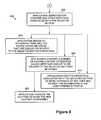
- FIGS. 6-8are flow diagrams illustrating user interface processing according to an embodiment of the present invention.
- the usermay launch a viewing session at block 602 by sending one or more commands to the application program of the processing system.
- the application programexecutes and performs at least two actions initially.
- the application programselects items to display in the ticker and activates the ticker. If this is the initial viewing session for this user, a general set of diverse items may be put into the ticker. If this is not an initial viewing session for this user, the application program obtains the user interest profile for this user, and uses information in the profile to populate the ticker with items of interest to the user based on the user's past browsing activity.
- the application programdisplays buttons for first level content categories.
- the first level content categoriesmay be general and diverse. In another embodiment, the first level content categories may be more specific based on the user interest profile.
- the application programtemporarily displays a larger thumbnail image or a video clip for the item, depending on the specific implementation or specific item.
- the usermay select an item in the ticker using the remote control device at block 608 , or the user may select a button using the remote control device at block 612 .
- processingcontinues at point A on FIG. 7 .
- a buttonis selected, processing continues at point B on FIG. 8 .
- flow processing 700may be performed starting at point A.
- the application programobtains and displays a promotional image related to the ticker item.
- the promotional imagemay be shown in the promotional image 28 section of the display 10 .
- the application programsearches for content profiles having metatags that are similar to or related to the selected ticker item's metatags. Content profiles may be for specific content titles, or may be for CSPs known to provide content related to the ticker item.
- the application programbegins to introduce items into the ticker having metatags that are similar to or related to the selected item's metatags.
- the application programchanges at least some of the buttons to show buttons having metatags similar to or related to the selected item's metatags.
- the application programidentifies metatags associated with the selected item as being interests of the user and stores this information in the user interests profile for this user so that later presentations of ticker items will include items of more relevance to the user.
- flow processing 800may be performed starting at point B.
- the application programsearches for content and other metatags associated with the selected button.
- the application programbegins to introduce items into the ticker having metatags similar to or related to the selected button's metatags.
- the application programchooses a number of diverse content categories having metatags similar to or related to the selected button's metatags. The number may be any integer.
- the application programthen changes the buttons to show the new content categories identified as a result of processing at block 806 .
- the application programidentifies metatags associated with the selected button as being interests of the user and stores this information in the user interest profile for this user so that later presentations of ticker items will include items of more relevance to the user.
- Embodiments of the present inventionhelp users to see content of interest during browsing, without requiring the user to explicitly choose content preferences or complete a user profile.
- Content service providersmay use embodiments of the invention to make users aware of new content and brands, and may target content more effectively and profitably to users.
- Embodiments of the present inventionalso make it easier for users to browse for more relevant content that interests them, to explore new interests in a fun way, and to enjoy that content in a way that is simple and matches the “lean back” paradigm already pervasive among users consuming content in their living rooms.
- the techniques described hereinare not limited to any particular hardware or software configuration in processing system 11 ; they may be implemented in any computing or processing environment.
- the techniquesmay be implemented in hardware, software, or a combination of the two.
- the techniquesmay be implemented in programs executing on programmable machines such as mobile or stationary computers, personal digital assistants, Internet tablets, set top boxes, consumer electronics devices (such as televisions, digital video disk players, cable receivers, satellite receivers, and so on), and other electronic devices, that each include a processor, a storage medium readable by the processor (including volatile and non-volatile memory and/or storage elements), at least one input device, and one or more output devices.
- Program codeis applied to the data entered using the input device to perform the functions described and to generate output information.
- the output informationmay be applied to one or more output devices.
- One of ordinary skill in the artmay appreciate that the invention can be practiced with various computer system configurations, including multi-core processing systems, multiprocessor systems, minicomputers, mainframe computers, and the like.
- the inventioncan also be practiced in distributed computing environments where tasks may be performed by remote processing devices that are linked through a communications network.
- Each programmay be implemented in a high level procedural or object oriented programming language to communicate with a processing system.
- programsmay be implemented in assembly or machine language, if desired. In any case, the language may be compiled or interpreted.
- Program instructionsmay be used to cause a general-purpose or special-purpose processing system that is programmed with the instructions to perform the operations described herein. Alternatively, the operations may be performed by specific hardware components that contain hardwired logic for performing the operations, or by any combination of programmed computer components and custom hardware components.
- the methods described hereinmay be provided as a computer program product that may include a machine accessible medium having stored thereon instructions that may be used to program a processing system or other electronic device to perform the methods.
- the term “machine accessible medium” used hereinshall include any medium that is capable of storing or encoding a sequence of instructions for execution by a machine and that cause the machine to perform any one of the methods described herein.
- machine accessible mediumshall accordingly include, but not be limited to, solid-state memories, optical and magnetic disks, and a carrier wave that encodes a data signal.
- machine accessible mediumshall accordingly include, but not be limited to, solid-state memories, optical and magnetic disks, and a carrier wave that encodes a data signal.
Landscapes
- Engineering & Computer Science (AREA)
- Business, Economics & Management (AREA)
- Theoretical Computer Science (AREA)
- General Physics & Mathematics (AREA)
- Physics & Mathematics (AREA)
- Accounting & Taxation (AREA)
- Finance (AREA)
- Databases & Information Systems (AREA)
- Strategic Management (AREA)
- Development Economics (AREA)
- General Engineering & Computer Science (AREA)
- Signal Processing (AREA)
- Multimedia (AREA)
- Economics (AREA)
- Marketing (AREA)
- General Business, Economics & Management (AREA)
- Human Computer Interaction (AREA)
- Technology Law (AREA)
- Entrepreneurship & Innovation (AREA)
- Game Theory and Decision Science (AREA)
- Data Mining & Analysis (AREA)
- User Interface Of Digital Computer (AREA)
Abstract
Description
1. Field
The present invention relates generally to browsing for content and, more specifically, to adaptively changing images representing available digital content for browsing by a user based on the user's interests and actions.
2. Description
The introduction of Internet-based digital content (such as television (TV) programs, movies, sports, special events, music, games, and so on) into the living room usage model creates new challenges and opportunities for content providers and content consumers. In many cases, vast amounts of content will be made available to a user via a TV experience. In the TV experience (as opposed to the personal computer (PC) experience), the user is typically in “lean back” mode, where the user does not want (or cannot, due to input device limitations) interact with the display at the same intensity and mode as is possible when using a PC, or other electronic entertainment and/or computing device. PC users usually have the benefit of an input device such as a mouse for inputting navigation and control commands, for example, to the PC. This is not the case in the TV experience, since the user often must rely only on a TV remote control device for inputting commands and data to the entertainment system. In addition, the user typically views the display from a larger distance (e.g., 5-10 feet) in the TV experience, rather than the approximately one to two feet as when using a PC. As a result, in existing systems presenting the TV experience, there are difficulties in presenting large amounts of available content to the user in a functional, yet aesthetically pleasing way.
For the user to find content of interest requires new methods beyond conventional browsing or search tools. This is because the TV experience is inherently visual and, unlike standard broadcast TV content, much of the newly available content is not readily identifiable by a textual name and is not presented via familiar mechanisms such as time-based broadcast schedules.
The features and advantages of the present invention will become apparent from the following detailed description of the present invention in which:
An embodiment of the present invention is a method of presenting information about available content on a display to a user in a manner that adapts over time to the user's interests based on user selections. In at least one embodiment of the present invention, information about available content may be shown on a display as a scrolling set of images called a “ticker.” Each discrete component of the ticker is called an item. An item represents available content for consumption by the user. Additionally, a set of buttons may be shown on the display to represent availability of content by specific categories of content. The display behavior of the ticker and the buttons in response to user actions may be based on attributes of the available content. Each content title may correspond to a content profile having a plurality of metatags, wherein each metatag specifies a content attribute. The profiles may be used by an application program executing on a processing system to identify content having similar or related attributes. As the user selects content of interest, the application program controlling the user interface adapts the displayed information over time to show information about other content available to the user that the user may be more likely to have an interest (i.e., content and content service providers that are more relevant to the user's interests). More specifically, the ticker and buttons may be modified over time to show the availability of content that is directed to the user's interests. This allows for effective visual browsing of large quantities of available content by the user for the TV experience.
Reference in the specification to “one embodiment” or “an embodiment” of the present invention means that a particular feature, structure or characteristic described in connection with the embodiment is included in at least one embodiment of the present invention. Thus, the appearances of the phrase “in one embodiment” appearing in various places throughout the specification are not necessarily all referring to the same embodiment.
Embodiments of the present invention useapplication program 13 to control ananimated ticker 14 shown ondisplay 10 to present a series of items. Each item may comprise visual “thumbnail” images representing available digital content titles or content service providers (CSPs) to the user. Theticker 14 comprises a set of multiple items, each item having an image representing a content title and/or a CSP, or both. A content title comprises a specific program of available content such as a TV program, a sports event broadcast, a movie, a music video, a computer game, etc. A CSP comprises any content production and/or distribution entity, such as a cable TV provider (e.g., Comcast), satellite TV provider (e.g., DirectTV, Dish Network), a broadcast network (e.g., American Broadcasting Company (ABC), Music Television (MTV), or a content brand (e.g., The Walt Disney Company)) providing multiple content titles. The ticker items may represent content already local to the user's processing system, or subscription or on-demand content available for download or streaming operations to the user's processing system from a CSP. The example ticker shown inFIG. 1 shows five content service providers (CSPs) (CSP116, CSP218, CSP320, CSP422, and CSP524) currently on the display at a certain point in time. As the ticker scrolls, other thumb nail images will be displayed and one or more of these CSP images may (temporarily) scroll off the display. At a later point in time, the images may “scroll around” and be displayed again in sequence on the display.
Many variations in the display of the ticker and other visual elements of the user interface shown on the display are contemplated. In one embodiment, the ticker scrolls to the left or to the right, continuously or periodically moving so as to show new images to the user over time. The speed or direction of the ticker may be manually controlled by user selection. In other embodiments, the ticker may have a border or no border, or may use a border that indicates a genre of available content (e.g., sports), a content source (e.g., movies from the Walt Disney Company), or a merchandising brand.
In one embodiment, an item having an associated thumbnail image representing a content title and/or a CSP may pass under a “virtual lens” at a predetermined position on the ticker portion of the display. This position is called a “mini-promo”image 26 herein. At this predetermined position, in one embodiment the content title image or CSP image from the ticker may be temporarily replaced by a different image while the scrolling content title image or CSP image is under the “virtual lens.” This different image may indicate a promotional advertisement for a specific content title. This image may be represented in any manner that is different than the normal ticker images. For example, this image may be shown larger, clearer, or brighter than a normal ticker image, and/or may include a different border. In one embodiment, the static images of the normal ticker may be replaced with an animated sequence of images for the mini-promo image while under the “virtual lens.” Thus, a promotional video clip for an item may be shown to the user while the item is under the virtual lens.
Other visual elements may be included on the display according to embodiments of the present invention. Apromotional image 28 may be shown on a larger portion of the display to advertise specific available content. In another embodiment, the promotional image may be replaced by the display of the currently selected content title for viewing by the user. A plurality of buttons may be displayed to the user to indicate content categories and/or programming genres. In one embodiment, a plurality of buttons formusic 30,games 32,movies 34,sports 36, andTV programs 38, for example, may be shown. These buttons may be statically shown on the display to allow the user to select (using the remote control device) specific types of content to further browse in more detail.
In embodiments of the present invention, the ticker items and the buttons are changed dynamically and adaptively in real-time based on which ticker item or button is selected by the user with the remote control device, as well as by past user input selections. This allows the application program executing on the processing system to identify the user's interests implicitly based on relevance, according to the ticker items and/or buttons selected. The application program may then start showing ticker items and buttons for content that is similar to or related to the user's interests in order to improve the user's browsing experience. Thus, items of more relevance to the user will be shown to the user over time.
Additional buttons may also be shown on the display to assist the visual browsing method of embodiments of the present invention to correlate the user's interests with available content. When the user selects a ticker item, in addition to changing the thumbnail images for items in the ticker and the buttons, the user may be presented with a still image or video that provides more information about the selected content. This allows the user to request to obtain the content, or to explicitly communicate to the application program that once they saw more information about the content, the user has no interest in that particular content.
In one example, abutton 40 may be provided for causing the previewing of the content title currently being shown in the promotional image. When the user selects thepreview button 40,promotional image 28 may be replaced with a portion of the content title associated with the promotional image and/or the content title currently under the “virtual lens.” If the user chooses to preview this content title, this information may be recorded by the application program as something that the user is interested in (for example, in aprofile 17 including characteristics of the user's interests). Additionally, a content profile for the content title may be accessed, and the content title's metatags included in the content profile may be noted for use in determining other content that the user might be interested in. When the user selects thebutton 42 marked “remember for later,” the content title's profile may also be accessed, and the content title's metatags from the profile may be noted for use in determining other content that the user might be interested in. In contrast, when the user selects thebutton 44 marked “not my style,” a negative association between the content title being promoted in the mini-promo and/or promotional image and the user may be recorded by the application program. Each content title and/or CSP may have at least one associated content profile. Theprofiles 17 may be stored in amemory 15 in the processing system accessible by the application program. The user interests collected by the application program based on the user's selections may be stored in a user interests profile in a memory of the processing system.
Metatags may denote many different attributes of the content. For example, metatags may denote one or more attributes such as name, full title, media type, format, release date, thumbnail image, full screen promotional image, preview video clip, running time, preview vs. abridged vs. full length versions, menu buttons (e.g., rent, watch now, preview, subscribe), license restrictions/expirations, content categories, branding elements, genres, sub-genres, advertisements, parental control categories, artists, performers, actors and actresses, directors, sports teams, sports divisions, conferences, and leagues, musical styles, dates, game types, game characters, movie characters, authors, band names, emotional characteristics and/or content keywords (e.g., funny, moody, serious, romantic, action, spy thriller, fast cars, for women, for men, for children, for teens, historical, sad, farce, etc.), or other distinguishing features.
An extensible metatag scheme may be used to support wide and flexible content profiles and user interest profiles. A broad set of metatags allows for “surfing” the content, where the user can discover new content while browsing instead of following a regimented, category-based browsing experience as known in the prior art (e.g., as in electronic program guides (EPGs)).
How user actions influence the ticker and button behavior is shown inFIGS. 3 and 4 . In this example, when the user selects a sports-related item in the ticker or a sports-related button, the application program assumes that user is interested in some or all of the following: baseball, the World Series, sports, or ESPN. Since the application program may not know which of these is most important to the user, the content title and or content service provider images shown in the ticker may be modified over a period of time to include all of these content topics, and the user is allowed to pursue the desired interest path while visual browsing using the remote control. The user then has the opportunity to see items likely to be of interest, but is also exposed to tangentially related items that the user can “discover” even though the user hasn't directly pursued looking for them.
In one embodiment, the change in ticker items is not made all at once. Instead, the ticker items are gradually changed as the ticker scrolls by to include more user-relevant (e.g., sports) items. The rate of change of the ticker items may be changed depending on the design considerations of the processing system. In embodiments of the present invention, there may be many levels of tickers, from the more general to the more specific, or geared towards user ages or other demographics. The number of items shown in the scrolling ticker may also be different on different levels.
In one embodiment, the user may be allowed to reset the ticker and/or buttons to a wider variety of content titles, CSPs, or content categories.
When a ticker item is selected, flow processing700 may be performed starting at point A. Atblock 702, the application program obtains and displays a promotional image related to the ticker item. In one embodiment, the promotional image may be shown in thepromotional image 28 section of thedisplay 10. Atblock 704, the application program searches for content profiles having metatags that are similar to or related to the selected ticker item's metatags. Content profiles may be for specific content titles, or may be for CSPs known to provide content related to the ticker item. Atblock 706, the application program begins to introduce items into the ticker having metatags that are similar to or related to the selected item's metatags. Atblock 708, the application program changes at least some of the buttons to show buttons having metatags similar to or related to the selected item's metatags. Atblock 710, the application program identifies metatags associated with the selected item as being interests of the user and stores this information in the user interests profile for this user so that later presentations of ticker items will include items of more relevance to the user.
When a button is selected, flow processing800 may be performed starting at point B. Atblock 802, the application program searches for content and other metatags associated with the selected button. Atblock 804, the application program begins to introduce items into the ticker having metatags similar to or related to the selected button's metatags. Atblock 806, the application program chooses a number of diverse content categories having metatags similar to or related to the selected button's metatags. The number may be any integer. Atblock 808, the application program then changes the buttons to show the new content categories identified as a result of processing atblock 806. Atblock 810, the application program identifies metatags associated with the selected button as being interests of the user and stores this information in the user interest profile for this user so that later presentations of ticker items will include items of more relevance to the user.
Embodiments of the present invention help users to see content of interest during browsing, without requiring the user to explicitly choose content preferences or complete a user profile. Content service providers may use embodiments of the invention to make users aware of new content and brands, and may target content more effectively and profitably to users. Embodiments of the present invention also make it easier for users to browse for more relevant content that interests them, to explore new interests in a fun way, and to enjoy that content in a way that is simple and matches the “lean back” paradigm already pervasive among users consuming content in their living rooms.
Although operations described herein may be described as a sequential process, some of the operations may in fact be performed in parallel or concurrently. In addition, in some embodiments the order of the operations may be rearranged.
The techniques described herein are not limited to any particular hardware or software configuration inprocessing system 11; they may be implemented in any computing or processing environment. The techniques may be implemented in hardware, software, or a combination of the two. The techniques may be implemented in programs executing on programmable machines such as mobile or stationary computers, personal digital assistants, Internet tablets, set top boxes, consumer electronics devices (such as televisions, digital video disk players, cable receivers, satellite receivers, and so on), and other electronic devices, that each include a processor, a storage medium readable by the processor (including volatile and non-volatile memory and/or storage elements), at least one input device, and one or more output devices. Program code is applied to the data entered using the input device to perform the functions described and to generate output information. The output information may be applied to one or more output devices. One of ordinary skill in the art may appreciate that the invention can be practiced with various computer system configurations, including multi-core processing systems, multiprocessor systems, minicomputers, mainframe computers, and the like. The invention can also be practiced in distributed computing environments where tasks may be performed by remote processing devices that are linked through a communications network.
Each program may be implemented in a high level procedural or object oriented programming language to communicate with a processing system. However, programs may be implemented in assembly or machine language, if desired. In any case, the language may be compiled or interpreted.
Program instructions may be used to cause a general-purpose or special-purpose processing system that is programmed with the instructions to perform the operations described herein. Alternatively, the operations may be performed by specific hardware components that contain hardwired logic for performing the operations, or by any combination of programmed computer components and custom hardware components. The methods described herein may be provided as a computer program product that may include a machine accessible medium having stored thereon instructions that may be used to program a processing system or other electronic device to perform the methods. The term “machine accessible medium” used herein shall include any medium that is capable of storing or encoding a sequence of instructions for execution by a machine and that cause the machine to perform any one of the methods described herein. The term “machine accessible medium” shall accordingly include, but not be limited to, solid-state memories, optical and magnetic disks, and a carrier wave that encodes a data signal. Furthermore, it is common in the art to speak of software, in one form or another (e.g., program, procedure, process, application, module, logic, and so on) as taking an action or causing a result. Such expressions are merely a shorthand way of stating the execution of the software by a processing system cause the processor to perform an action of produce a result.
Claims (9)
1. A method for providing real-time adaptive visual browsing of digital content comprising:
presenting a ticker on a display for browsing of a plurality of digital content, wherein the plurality of digital content are for viewing by a user of a processing system, the ticker having a plurality of items, each item including an image representing at least one of the plurality of digital content;
receiving a user input selection from a remote control device operated by the user, the user input selection initiating display of a selected one of the plurality of digital content to the user;
identifying at least one metatag for the selected one of the plurality of digital content, the metatag including a content attribute;
using the content attribute to identify a similar or related content attribute in a second metatag associated with a different digital content of the plurality of digital content for viewing; and
in response to identifying the similar or related content attribute, changing at least one of the items in the ticker to a new item corresponding to the different digital content.
2. The method ofclaim 1 , wherein each of the plurality of available digital content has at least one associated metatag.
3. The method ofclaim 2 , further comprising building a user interests profile for the user based on the user input selections and metatags of the selected available digital content, and using the user interests profile to select other available digital content of potential interest to the user to present in the ticker over time.
4. The method ofclaim 3 , further comprising using the user interests profile to adaptively populate the ticker with more relevant items of potential interest to the user in subsequent viewing sessions.
5. The method ofclaim 1 , further comprising displaying each one of the ticker items in a manner different than the other ticker items when each ticker item scrolls over a position on the display.
6. The method ofclaim 5 , wherein when one of the ticker items scrolls over the position on the display, displaying at least one of a video clip and a promotional image relating to the ticker item on a portion of the display.
7. The method ofclaim 1 , wherein each digital content of the plurality of available digital content is at least one of stored in the processing system and available from a content service provider coupled to the processing system.
8. The method ofclaim 3 , further comprising presenting a plurality of buttons on the display, the buttons representing content categories, and adaptively changing the content categories over time to content categories of more relevance to interests of the user based on the user interests profile.
9. The method ofclaim 8 , further comprising using the user interests profile to populate the buttons with content categories of more relevance to interests of the user in subsequent viewing sessions.
Priority Applications (5)
| Application Number | Priority Date | Filing Date | Title |
|---|---|---|---|
| US11/392,276US7783497B2 (en) | 2006-03-28 | 2006-03-28 | Method of adaptive browsing for digital content |
| US12/384,842US9600580B2 (en) | 2006-03-28 | 2009-04-08 | Method of adaptive browsing for digital content |
| US15/411,707US10631059B2 (en) | 2006-03-28 | 2017-01-20 | Method of adaptive browsing for digital content |
| US16/853,176US11223879B2 (en) | 2006-03-28 | 2020-04-20 | Method of adaptive browsing for digital content |
| US17/561,931US12035012B2 (en) | 2006-03-28 | 2021-12-25 | Method of adaptive browsing for digital content |
Applications Claiming Priority (1)
| Application Number | Priority Date | Filing Date | Title |
|---|---|---|---|
| US11/392,276US7783497B2 (en) | 2006-03-28 | 2006-03-28 | Method of adaptive browsing for digital content |
Related Child Applications (1)
| Application Number | Title | Priority Date | Filing Date |
|---|---|---|---|
| US12/384,842ContinuationUS9600580B2 (en) | 2006-03-28 | 2009-04-08 | Method of adaptive browsing for digital content |
Publications (2)
| Publication Number | Publication Date |
|---|---|
| US20070239566A1 US20070239566A1 (en) | 2007-10-11 |
| US7783497B2true US7783497B2 (en) | 2010-08-24 |
Family
ID=38576631
Family Applications (5)
| Application Number | Title | Priority Date | Filing Date |
|---|---|---|---|
| US11/392,276Active2028-09-21US7783497B2 (en) | 2006-03-28 | 2006-03-28 | Method of adaptive browsing for digital content |
| US12/384,842Active2027-10-19US9600580B2 (en) | 2006-03-28 | 2009-04-08 | Method of adaptive browsing for digital content |
| US15/411,707Active2027-07-27US10631059B2 (en) | 2006-03-28 | 2017-01-20 | Method of adaptive browsing for digital content |
| US16/853,176ActiveUS11223879B2 (en) | 2006-03-28 | 2020-04-20 | Method of adaptive browsing for digital content |
| US17/561,931Active2026-05-30US12035012B2 (en) | 2006-03-28 | 2021-12-25 | Method of adaptive browsing for digital content |
Family Applications After (4)
| Application Number | Title | Priority Date | Filing Date |
|---|---|---|---|
| US12/384,842Active2027-10-19US9600580B2 (en) | 2006-03-28 | 2009-04-08 | Method of adaptive browsing for digital content |
| US15/411,707Active2027-07-27US10631059B2 (en) | 2006-03-28 | 2017-01-20 | Method of adaptive browsing for digital content |
| US16/853,176ActiveUS11223879B2 (en) | 2006-03-28 | 2020-04-20 | Method of adaptive browsing for digital content |
| US17/561,931Active2026-05-30US12035012B2 (en) | 2006-03-28 | 2021-12-25 | Method of adaptive browsing for digital content |
Country Status (1)
| Country | Link |
|---|---|
| US (5) | US7783497B2 (en) |
Cited By (7)
| Publication number | Priority date | Publication date | Assignee | Title |
|---|---|---|---|---|
| US20080033992A1 (en)* | 2006-08-03 | 2008-02-07 | Microsoft Corporation | Related Media Content Assets |
| US20100064318A1 (en)* | 2008-09-05 | 2010-03-11 | Hon Hai Precision Industry Co., Ltd. | Electronic device and display method thereof |
| US8438473B2 (en) | 2011-01-05 | 2013-05-07 | Research In Motion Limited | Handling of touch events in a browser environment |
| US20140082497A1 (en)* | 2012-09-17 | 2014-03-20 | Fanhattan Llc | System and method for browsing and accessing live media content |
| US9185332B2 (en) | 2005-05-06 | 2015-11-10 | Rovi Guides, Inc. | Systems and methods for providing a scan |
| US9621956B2 (en) | 2003-03-18 | 2017-04-11 | Rovi Guides, Inc. | Systems and methods for providing a transport control interface |
| US10453083B2 (en) | 2013-05-16 | 2019-10-22 | International Business Machines Corporation | Data clustering and user modeling for next-best-action decisions |
Families Citing this family (26)
| Publication number | Priority date | Publication date | Assignee | Title |
|---|---|---|---|---|
| EP1471449A1 (en)* | 2003-04-23 | 2004-10-27 | Sap Ag | Credit authorisation system |
| TW200832154A (en)* | 2007-01-16 | 2008-08-01 | Era Digital Media Co | Method of mobile multimedia content distribution and access |
| US20080256454A1 (en)* | 2007-04-13 | 2008-10-16 | Sap Ag | Selection of list item using invariant focus location |
| US8539359B2 (en)* | 2009-02-11 | 2013-09-17 | Jeffrey A. Rapaport | Social network driven indexing system for instantly clustering people with concurrent focus on same topic into on-topic chat rooms and/or for generating on-topic search results tailored to user preferences regarding topic |
| KR101697775B1 (en)* | 2009-11-27 | 2017-01-18 | 엘지전자 주식회사 | Method for managing contents and display apparatus thereof |
| US9329746B2 (en)* | 2009-11-27 | 2016-05-03 | Lg Electronics Inc. | Method for managing contents and display apparatus thereof |
| US20120042263A1 (en) | 2010-08-10 | 2012-02-16 | Seymour Rapaport | Social-topical adaptive networking (stan) system allowing for cooperative inter-coupling with external social networking systems and other content sources |
| KR101442441B1 (en) | 2010-08-27 | 2014-09-17 | 인텔 코오퍼레이션 | Intelligent remote control system |
| US20120117601A1 (en)* | 2010-11-09 | 2012-05-10 | Sony Corporation | User interface for audio video display device such as tv |
| US8676937B2 (en) | 2011-05-12 | 2014-03-18 | Jeffrey Alan Rapaport | Social-topical adaptive networking (STAN) system allowing for group based contextual transaction offers and acceptances and hot topic watchdogging |
| JP5781394B2 (en) | 2011-08-12 | 2015-09-24 | 株式会社ソニー・コンピュータエンタテインメント | Electronics |
| US20130179786A1 (en)* | 2012-01-06 | 2013-07-11 | Film Fresh, Inc. | System for recommending movie films and other entertainment options |
| US9607313B2 (en)* | 2012-08-13 | 2017-03-28 | Blackberry Limited | Targeted content streaming banners |
| WO2014167863A1 (en)* | 2013-04-12 | 2014-10-16 | パナソニック インテレクチュアル プロパティ コーポレーション オブ アメリカ | Information provision method and information processing method |
| US9386119B2 (en) | 2013-07-30 | 2016-07-05 | International Business Machines Corporation | Mobile web adaptation techniques |
| US20150095985A1 (en)* | 2013-09-27 | 2015-04-02 | Alcatel-Lucent Usa Inc. | Parental Control System For Controlling Access To Online Store Contents |
| JP5942978B2 (en) | 2013-12-26 | 2016-06-29 | ソニー株式会社 | Information processing apparatus, information processing method, and program |
| KR102194011B1 (en)* | 2014-07-23 | 2020-12-22 | 엘지전자 주식회사 | Video display device and operating method thereof |
| US10769692B2 (en)* | 2014-08-05 | 2020-09-08 | Overview Technologies, Inc. | Security installation and maintenance system |
| US10380877B2 (en) | 2014-08-05 | 2019-08-13 | Overview Technologies, Inc. | Community security system using intelligent information sharing |
| US11809811B2 (en)* | 2014-10-25 | 2023-11-07 | Yieldmo, Inc. | Methods for serving interactive content to a user |
| US10739959B2 (en)* | 2014-12-30 | 2020-08-11 | Facebook, Inc. | Systems and methods for providing narratives associated with images |
| US20190340199A1 (en)* | 2018-05-07 | 2019-11-07 | Google Llc | Methods and Systems for Identifying, Selecting, and Presenting Media-Content Items Related to a Common Story |
| JP6777697B2 (en)* | 2018-09-10 | 2020-10-28 | ソニー株式会社 | Information processing equipment, information processing methods and programs |
| CN111343493A (en)* | 2020-02-20 | 2020-06-26 | 北京达佳互联信息技术有限公司 | Live broadcast interface processing method and device, electronic equipment and storage medium |
| US20220019631A1 (en)* | 2020-07-16 | 2022-01-20 | Fox Sports Productions, Llc | System and method for animated website |
Citations (4)
| Publication number | Priority date | Publication date | Assignee | Title |
|---|---|---|---|---|
| US20030018714A1 (en)* | 2001-07-20 | 2003-01-23 | Dmytro Mikhailov | Proactive browser system |
| US6693236B1 (en) | 1999-12-28 | 2004-02-17 | Monkeymedia, Inc. | User interface for simultaneous management of owned and unowned inventory |
| US20060174270A1 (en)* | 2005-02-02 | 2006-08-03 | United Video Properties, Inc. | Systems and methods for providing approximated information in an interactive television program guide |
| US20060259613A1 (en)* | 2005-05-13 | 2006-11-16 | Core Mobility, Inc. | Systems and methods for discovering features in a communication device |
Family Cites Families (27)
| Publication number | Priority date | Publication date | Assignee | Title |
|---|---|---|---|---|
| US6008803A (en)* | 1994-11-29 | 1999-12-28 | Microsoft Corporation | System for displaying programming information |
| US6604242B1 (en)* | 1998-05-18 | 2003-08-05 | Liberate Technologies | Combining television broadcast and personalized/interactive information |
| US5850218A (en)* | 1997-02-19 | 1998-12-15 | Time Warner Entertainment Company L.P. | Inter-active program guide with default selection control |
| US7185355B1 (en)* | 1998-03-04 | 2007-02-27 | United Video Properties, Inc. | Program guide system with preference profiles |
| US6536041B1 (en)* | 1998-06-16 | 2003-03-18 | United Video Properties, Inc. | Program guide system with real-time data sources |
| US6295646B1 (en)* | 1998-09-30 | 2001-09-25 | Intel Corporation | Method and apparatus for displaying video data and corresponding entertainment data for multiple entertainment selection sources |
| US7313805B1 (en)* | 1998-11-30 | 2007-12-25 | Sony Corporation | Content navigator graphical user interface system and method |
| US7992163B1 (en)* | 1999-06-11 | 2011-08-02 | Jerding Dean F | Video-on-demand navigational system |
| US7934232B1 (en)* | 2000-05-04 | 2011-04-26 | Jerding Dean F | Navigation paradigm for access to television services |
| US6690391B1 (en)* | 2000-07-13 | 2004-02-10 | Sony Corporation | Modal display, smooth scroll graphic user interface and remote command device suitable for efficient navigation and selection of dynamic data/options presented within an audio/visual system |
| US20020059594A1 (en)* | 2000-07-31 | 2002-05-16 | Gary Rasmussen | Configurable information ticker for interactive television and enhanced television |
| US20050060232A1 (en)* | 2000-10-12 | 2005-03-17 | Maggio Frank S. | Method and system for interacting with a writing |
| US6976228B2 (en)* | 2001-06-27 | 2005-12-13 | Nokia Corporation | Graphical user interface comprising intersecting scroll bar for selection of content |
| US7496945B2 (en)* | 2001-06-29 | 2009-02-24 | Cisco Technology, Inc. | Interactive program guide for bidirectional services |
| AU2002327677A1 (en)* | 2001-09-19 | 2003-04-01 | Meta Tv, Inc. | Interactive user interface for television applications |
| US20030167467A1 (en)* | 2002-03-04 | 2003-09-04 | Digeo, Inc. | User-customized interactive television ticker, including a feature for viewer exclusion of ticker topics |
| US7036092B2 (en)* | 2002-05-23 | 2006-04-25 | Microsoft Corporation | Categorical user interface for navigation within a grid |
| US20040003402A1 (en)* | 2002-06-27 | 2004-01-01 | Digeo, Inc. | Method and apparatus for automatic ticker generation based on implicit or explicit profiling |
| US7237252B2 (en)* | 2002-06-27 | 2007-06-26 | Digeo, Inc. | Method and apparatus to invoke a shopping ticker |
| US7661075B2 (en)* | 2003-05-21 | 2010-02-09 | Nokia Corporation | User interface display for set-top box device |
| GB2403558A (en)* | 2003-07-02 | 2005-01-05 | Sony Uk Ltd | Document searching and method for presenting the results |
| US7441203B2 (en)* | 2003-08-11 | 2008-10-21 | Core Mobility, Inc. | Interactive user interface presentation attributes for location-based content |
| US7430724B2 (en)* | 2003-08-11 | 2008-09-30 | Core Mobility, Inc. | Systems and methods for displaying content in a ticker |
| JP4254950B2 (en)* | 2003-09-01 | 2009-04-15 | ソニー株式会社 | Reproducing apparatus and operation menu display method in reproducing apparatus |
| US20080052742A1 (en)* | 2005-04-26 | 2008-02-28 | Slide, Inc. | Method and apparatus for presenting media content |
| US8151215B2 (en)* | 2008-02-07 | 2012-04-03 | Sony Corporation | Favorite GUI for TV |
| US8826318B2 (en)* | 2009-07-06 | 2014-09-02 | Sudharshan Srinivasan | Image based interactive ticker system in television signal |
- 2006
- 2006-03-28USUS11/392,276patent/US7783497B2/enactiveActive
- 2009
- 2009-04-08USUS12/384,842patent/US9600580B2/enactiveActive
- 2017
- 2017-01-20USUS15/411,707patent/US10631059B2/enactiveActive
- 2020
- 2020-04-20USUS16/853,176patent/US11223879B2/enactiveActive
- 2021
- 2021-12-25USUS17/561,931patent/US12035012B2/enactiveActive
Patent Citations (4)
| Publication number | Priority date | Publication date | Assignee | Title |
|---|---|---|---|---|
| US6693236B1 (en) | 1999-12-28 | 2004-02-17 | Monkeymedia, Inc. | User interface for simultaneous management of owned and unowned inventory |
| US20030018714A1 (en)* | 2001-07-20 | 2003-01-23 | Dmytro Mikhailov | Proactive browser system |
| US20060174270A1 (en)* | 2005-02-02 | 2006-08-03 | United Video Properties, Inc. | Systems and methods for providing approximated information in an interactive television program guide |
| US20060259613A1 (en)* | 2005-05-13 | 2006-11-16 | Core Mobility, Inc. | Systems and methods for discovering features in a communication device |
Non-Patent Citations (1)
| Title |
|---|
| Bill Rosenblatt and Gail Dykstra, Integrating content Management with Digital Rights Management, May 14, 2003, GiantSteps media technology strategies, web edition, pp. 1-20.* |
Cited By (9)
| Publication number | Priority date | Publication date | Assignee | Title |
|---|---|---|---|---|
| US9621956B2 (en) | 2003-03-18 | 2017-04-11 | Rovi Guides, Inc. | Systems and methods for providing a transport control interface |
| US9185332B2 (en) | 2005-05-06 | 2015-11-10 | Rovi Guides, Inc. | Systems and methods for providing a scan |
| US20080033992A1 (en)* | 2006-08-03 | 2008-02-07 | Microsoft Corporation | Related Media Content Assets |
| US20100064318A1 (en)* | 2008-09-05 | 2010-03-11 | Hon Hai Precision Industry Co., Ltd. | Electronic device and display method thereof |
| US8438473B2 (en) | 2011-01-05 | 2013-05-07 | Research In Motion Limited | Handling of touch events in a browser environment |
| US10289222B2 (en) | 2011-01-05 | 2019-05-14 | Blackberry Limited | Handling of touch events in a browser environment |
| US20140082497A1 (en)* | 2012-09-17 | 2014-03-20 | Fanhattan Llc | System and method for browsing and accessing live media content |
| US10453083B2 (en) | 2013-05-16 | 2019-10-22 | International Business Machines Corporation | Data clustering and user modeling for next-best-action decisions |
| US11301885B2 (en) | 2013-05-16 | 2022-04-12 | International Business Machines Corporation | Data clustering and user modeling for next-best-action decisions |
Also Published As
| Publication number | Publication date |
|---|---|
| US11223879B2 (en) | 2022-01-11 |
| US12035012B2 (en) | 2024-07-09 |
| US20220124413A1 (en) | 2022-04-21 |
| US20070239566A1 (en) | 2007-10-11 |
| US10631059B2 (en) | 2020-04-21 |
| US20200329280A1 (en) | 2020-10-15 |
| US20170134820A1 (en) | 2017-05-11 |
| US20090198567A1 (en) | 2009-08-06 |
| US9600580B2 (en) | 2017-03-21 |
Similar Documents
| Publication | Publication Date | Title |
|---|---|---|
| US12035012B2 (en) | Method of adaptive browsing for digital content | |
| US9400598B2 (en) | Fast and smooth scrolling of user interfaces operating on thin clients | |
| US8850478B2 (en) | Multimedia systems, methods and applications | |
| US7734680B1 (en) | Method and apparatus for realizing personalized information from multiple information sources | |
| US8521587B2 (en) | Systems and methods for placing advertisements | |
| JP4652485B2 (en) | Graphic tile-based enlarged cell guide | |
| JP5328658B2 (en) | Present media guidance search results based on relevance | |
| JP5619621B2 (en) | System and method for selecting media assets to be displayed on a screen of an interactive media guidance application | |
| US20120272185A1 (en) | Systems and methods for mixed-media content guidance | |
| JP2008539513A (en) | Variable speed scrolling of media items | |
| US7987484B2 (en) | Managing media content with a self-organizing map | |
| JP2006136015A (en) | Query-based electronic program guide | |
| JP5766220B2 (en) | Present media guidance search results based on relevance | |
| US20050278364A1 (en) | Methods and apparatuses for video on demand (VOD) metadata organization | |
| US20140095341A1 (en) | System and methods for generating a custom media bundle |
Legal Events
| Date | Code | Title | Description |
|---|---|---|---|
| AS | Assignment | Owner name:INTEL CORPORATION, CALIFORNIA Free format text:ASSIGNMENT OF ASSIGNORS INTEREST;ASSIGNORS:DUNNAHOO, SEAN;FLYNN, CHRISTIE;REEL/FRAME:020180/0615 Effective date:20060320 | |
| STCF | Information on status: patent grant | Free format text:PATENTED CASE | |
| FPAY | Fee payment | Year of fee payment:4 | |
| MAFP | Maintenance fee payment | Free format text:PAYMENT OF MAINTENANCE FEE, 8TH YEAR, LARGE ENTITY (ORIGINAL EVENT CODE: M1552) Year of fee payment:8 | |
| MAFP | Maintenance fee payment | Free format text:PAYMENT OF MAINTENANCE FEE, 12TH YEAR, LARGE ENTITY (ORIGINAL EVENT CODE: M1553); ENTITY STATUS OF PATENT OWNER: LARGE ENTITY Year of fee payment:12 |