US7711900B2 - Method, system and program product for equitable sharing of a CAM table in a network switch in an on-demand environment - Google Patents
Method, system and program product for equitable sharing of a CAM table in a network switch in an on-demand environmentDownload PDFInfo
- Publication number
- US7711900B2 US7711900B2US11/681,820US68182007AUS7711900B2US 7711900 B2US7711900 B2US 7711900B2US 68182007 AUS68182007 AUS 68182007AUS 7711900 B2US7711900 B2US 7711900B2
- Authority
- US
- United States
- Prior art keywords
- buffers
- dedicated
- shared buffer
- buffer pool
- shared
- Prior art date
- Legal status (The legal status is an assumption and is not a legal conclusion. Google has not performed a legal analysis and makes no representation as to the accuracy of the status listed.)
- Active, expires
Links
Images

Classifications
- H—ELECTRICITY
- H04—ELECTRIC COMMUNICATION TECHNIQUE
- H04L—TRANSMISSION OF DIGITAL INFORMATION, e.g. TELEGRAPHIC COMMUNICATION
- H04L49/00—Packet switching elements
- H04L49/30—Peripheral units, e.g. input or output ports
- H04L49/3009—Header conversion, routing tables or routing tags
- H—ELECTRICITY
- H04—ELECTRIC COMMUNICATION TECHNIQUE
- H04L—TRANSMISSION OF DIGITAL INFORMATION, e.g. TELEGRAPHIC COMMUNICATION
- H04L45/00—Routing or path finding of packets in data switching networks
- H04L45/74—Address processing for routing
- H04L45/745—Address table lookup; Address filtering
- H04L45/7453—Address table lookup; Address filtering using hashing
Definitions
- the present inventionrelates to a method, system and computer program product for equitable sharing of buffers in a network switch shared by one or more users. More particularly, the present invention relates to a method, system and computer program product for equitable sharing of a finite CAM (Content Addressable Memory) table having a finite buffer size between multiple users of the switch, using a buffer allocation tool or algorithm implemented within the network switch.
- the buffer allocation tool or algorithm in the network switchfurther, mitigates flooding of the CAM table by any one user and also prevents DHCP (Dynamic Host Configuration Protocol) starvation attacks.
- DHCPDynamic Host Configuration Protocol
- MAC AttackThis is known in the literature as a MAC Attack or CAM Table overflow. Once the CAM table is full, the switch is unable to learn any new MAC addresses. Similarly, if a large number of DHCP (Dynamic Host Configuration Protocol) requests are sent, an attacker can exhaust the address space available to the DHCP servers for a given period of time, thus, creating a simple resource starvation attack. As such, there is a need for a business and/or data center to provide a cost-effective way to develop ways to share switches between users and/or customers, while minimizing any external threats.
- DHCPDynamic Host Configuration Protocol
- a method for equitable sharing of buffers between a plurality of users of a network switchincludes reserving a subset number of buffers in an address table in a network switch, the subset number of buffers forming a shared buffer pool and a remaining number of buffers in the data table forming a dedicated buffer pool.
- the methodincludes establishing, upon arrival of a packet containing an address corresponding to a respective user of a plurality of users, whether or not the address is listed in a buffer in the data table, if the address is listed in the buffer in the data table, updating a preset time-to-live value for the buffer in the data table and forwarding the packet and if the address is not listed in the buffer in the data table, determining whether or not the respective user has exceeded a preset number of buffers allocated from the dedicated buffer pool and whether or not the subset number of buffers reserved in the shared buffer pool have been exhausted, wherein if the preset number of buffers allocated to the respective user from the dedicated buffer pool and the subset number of buffers reserved in the shared buffer pool have been exhausted, the respective user is precluded from using any additional buffers in the network switch.
- the methodfurther includes ascertaining the plurality of users to be supported by the network switch and allocating to each user of the plurality of users a preset number of buffers from the dedicated buffer pool in the network switch. Further, the method includes deleting, upon expiration of the preset time-to-live value for the buffer in the data table, the address entered in the buffer and returning the buffer to the shared buffer pool.
- the determining stepfurther includes maintaining for each user of the plurality of users a running tally of a total number of buffers in the data table being used by the each user, keeping a running tally of buffers remaining in the shared buffer pool in the data table being used by the plurality of users and comparing the running tally of the total number of buffers maintained for the respective user to the preset number of buffers allocated to the respective user from the dedicated buffer pool.
- the determining stepfurther includes incrementing by one, if the running tally of the total number of buffers used by the respective user does not exceed the preset number of buffers allocated to the respective user from the dedicated buffer pool, the running tally of the total number of buffers maintained for the respective user and adding the address to the data table in order to forward the packet.
- the running tally of the total number of buffers used by the respective userexceeds the preset number of buffers allocated to the respective user from the dedicated buffer pool, verifying whether or not the subset number of buffers reserved in the shared buffer pool have been exhausted and if it is verified that the subset number of buffers reserved in the shared buffer pool have not been exhausted, allowing the respective user to borrow a buffer from the shared buffer pool to add the address to the data table in order to forward the packet.
- the returning stepfurther includes adding one to the running tally of buffers remaining in the shared buffer pool, if the running tally of the total number of buffers for the respective user is greater than the preset number of buffers allocated to the respective user from the dedicated buffer pool and deleting one from the running tally of the total number of buffers for the respective user. In an embodiment, the returning step further includes deleting one from the running tally of the total number of buffers for the respective user, if the running tally of the total number of buffers for the respective user is not greater than the preset number of buffers allocated to the respective user from the dedicated buffer pool and deleting the address entered in the buffer.
- the preventing stepfurther includes determining whether or not a prior notification has been sent regarding the subset numbers of buffers reserved in the shared buffer pool being exhausted and, if it is determined that the prior notification has not been sent, sending notification regarding the subset numbers of buffers reserved in the shared buffer pool being exhausted.
- a userincludes at least one of a port, a plurality of ports, a virtual local area network (VLAN) and a plurality of virtual local area networks (VLANs) and the data table includes a CAM (Content Addressable Memory) table for storing one or more MAC (Media Access Control) addresses.
- VLANvirtual local area network
- VLANsvirtual local area networks
- a system for mitigating flooding of an address table in a network switchincludes a network switch configured to support a number of users connected on a network, the network switch having an address table with a finite number of buffers for storing therein a plurality of addresses corresponding to addresses available on respective ports in the network switch, each address of the plurality of addresses stored therein having a respective preset time-to-live value.
- the systemfurther includes a buffer allocation tool configured to reserve a subset number of buffers from the finite number of buffers for creating a shared buffer pool, a remaining number of the finite number of buffers forming a dedicated buffer pool, the buffer allocation tool being further configured to allocate to each user of the number of users a total number of buffers in the address table that includes a preset number of buffers from the dedicated buffer pool and a preset percentage of buffers from the shared buffer pool, the buffer allocation tool being further configured to establish upon arrival of a packet containing an address therein whether or not the address is listed in a buffer in the address table, if the address is listed in the buffer in the address table, the buffer allocation tool being configured to update a preset time-to-live value for the buffer and to forward the packet and if the address is not listed in the buffer in the address table, the buffer allocation tool being configured to determine whether or not the respective user has exceeded the total number of buffers allocated in the address table, wherein if the respective user has exceeded the total number of buffers allocated in the address
- the buffer allocation toolis further configured to maintain a running tally of the total number of buffers in the address table used by each user and to keep a running tally of buffers remaining in the shared buffer pool and is configured to send a notification when the respective user has used up the total number of buffers allocated in the address table.
- the buffer allocation toolis further configured to compare the running tally of the total number of buffers in the address table used by the respective user to the preset number of buffers from the dedicated buffer pool allocated to the respective user and, if the running tally of the total number of buffers is less than the preset number of buffers allocated from the dedicated buffer pool to the respective user, to increment by one the running tally of the total number of buffers for the respective user and to add the address to the address table in order to forward the packet.
- the buffer allocation toolis further configured to verify whether or not the subset number of buffers reserved in the shared buffer pool have been exhausted and, if the shared buffer pool have not been exhausted, to decrease by one the running tally for the shared buffer pool in order to allow the respective user to use a buffer from the shared buffer pool to add the address in the buffer in the address table and to increase by one the running tally of the total number of buffers for the respective user.
- the buffer allocation toolis configured to delete the address stored in the buffer in the address table upon expiration of the preset time-to-live value for the buffer and to return the buffer to the shared buffer pool.
- the buffer allocation toolis configured to determine whether or not a prior notification has been sent regarding the shared buffer pool being exhausted and, if it is determined that the prior notification has not been sent, sending notification regarding the shared buffer pool being exhausted.
- a userincludes at least one of a port, a plurality of ports, a virtual local area network (VLAN) and a plurality of virtual local area networks (VLANs) and the data table includes a CAM (Content Addressable Memory) table for storing one or more MAC (Media Access Control) addresses.
- VLANvirtual local area network
- VLANsvirtual local area networks
- a computer program productfor equitable sharing of an address table in a network switch shared by a plurality of users.
- the computer program productincludes a computer readable medium, first program instructions to reserve a subset number of buffers in an address table in a network switch, the subset number of buffers reserved forming a shared buffer pool and a remaining number of buffers in the address table forming a dedicated buffer pool, the address table storing therein a plurality of addresses corresponding to addresses available on respective ports in the network switch, each address of the plurality of addresses stored therein having a respective preset time-to-live value.
- the computer program productincludes second program instructions to allocate to each user of a plurality of users a total number of buffers in the address table that includes a preset number of buffers from the dedicated buffer pool and a preset percentage of buffers from the shared buffer pool. Furthermore, the computer program product includes third program instructions to determine for an address in a packet sent by a respective user among the plurality of users, whether the respective user has exceeded the total number of buffers in the address table allocated and, if yes, to prevent the respective user from using any additional buffers in the address table, the third program instructions comprising instructions to send a notification when the respective user has exceeded the total number of buffers in the address table.
- the second program instructionsfurther include instructions to maintain for each user of the plurality of users a running tally of the total number of buffers used by the each user in the address table and to keep a running tally of buffers remaining in the shared buffer pool in the address table.
- the third program instructionsfurther include instructions to compare the running tally of the total number of buffers maintained for the respective user to the preset number of buffers allocated to the respective user from the dedicated buffer pool and, if the running tally of the total number of buffers used by the respective user exceeds the preset number of buffers allocated to the respective user from the dedicated buffer pool, to verify that the subset number of buffers in the shared buffer pool has not been exhausted before allowing the respective user to borrow a buffer from the shared buffer pool for adding the address in the address table.
- the third program instructionsfurther include instructions to decrease by one the running tally of buffers remaining in the shared buffer pool and to increase by one the running tally of the total number of buffers for the respective user. In an embodiment, if the running tally of the total number of buffers for the respective user is less than the total number of buffers allocated to the respective user from the dedicated buffer pool, the third program instructions further include instructions to determine to increment by one the running tally of the total number of buffers for the respective user and to add the address to the address table.
- the third program instructionsfurther include instructions to delete a respective address entered in a respective buffer, upon expiration of a respective preset time-to-live value for the respective address entered in the respective buffer in the address table and to return the respective buffer to the shared buffer pool.
- a userincludes at least one of a port, a plurality of ports, a virtual local area network (VLAN) and a plurality of virtual local area networks (VLANs) and the data table includes a CAM (Content Addressable Memory) table for storing one or more MAC (Media Access Control) addresses.
- VLANvirtual local area network
- VLANsvirtual local area networks
- the data tableincludes a CAM (Content Addressable Memory) table for storing one or more MAC (Media Access Control) addresses.
- CAMContent Addressable Memory
- MACMedia Access Control
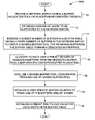
- FIG. 1Adepicts a flowchart outlining the steps for setting up a process for equitably sharing a CAM table in a network switch that is to be shared by multiple users, in accordance with an embodiment of the present invention.
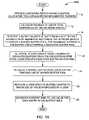
- FIG. 1Bdepicts a flowchart outlining the steps for setting up a process for equitably sharing a CAM table in a network switch that is to be shared by multiple users, in accordance with an embodiment of the present invention.
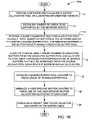
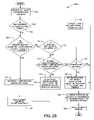
- FIG. 2Adepicts a flowchart outlining the steps involved in CAM (content addressable memory) allocation of CAM table buffers in a network switch shared by a plurality of users, in accordance with an embodiment of the present invention.
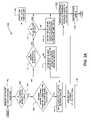
- FIG. 2Bdepicts a flowchart outlining the steps involved in CAM (content addressable memory) allocation of CAM table buffers in a network switch shared by a plurality of users, in accordance with an embodiment of the present invention.
- FIG. 3depicts a flowchart outlining the steps involved in CAM (content addressable memory) deallocation of CAM table buffers in a network switch shared by a plurality of users, in accordance with an embodiment of the present invention.
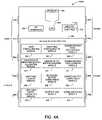
- FIG. 4Ais a schematic block system diagram illustrating an embodiment of a network switch having implemented thereon a buffer allocation tool for mitigating flooding of a CAM table in the network switch, in accordance with an embodiment of the present invention.
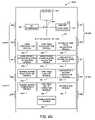
- FIG. 4Bis a schematic block system diagram illustrating an embodiment of a network switch having implemented thereon a buffer allocation tool for mitigating flooding of a CAM table in the network switch, in accordance with an embodiment of the present invention.
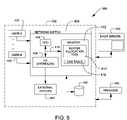
- FIG. 5is a schematic block system diagram illustrating an embodiment of a computer infrastructure comprising a network switch having a buffer allocation tool implemented therein for equitable sharing of CAM table buffers between a plurality of users of the network switch, in accordance with an embodiment of the present invention.
- modulesmay be implemented as a hardware circuit comprising custom VLSI circuits or gate arrays, off-the-shelf semiconductors such as logic chips, transistors, or other discrete components.
- a modulemay also be implemented in programmable hardware devices such as field programmable gate arrays, programmable array logic, programmable logic devices or the like.
- Modulesmay also be implemented in software for execution by various types of processors.
- An identified module or component of executable codemay, for instance, comprise one or more physical or logical blocks of computer instructions which may, for instance, be organized as an object, procedure, or function. Nevertheless, the executables of an identified module need not be physically located together, but may comprise disparate instructions stored in different locations which, when joined logically together, comprise the module and achieve the stated purpose for the module.
- a module of executable codecould be a single instruction, or many instructions, and may even be distributed over several different code segments, among different programs, and across several memory devices.
- operational datamay be identified and illustrated herein within modules, and may be embodied in any suitable form and organized within any suitable type of data structure. The operational data may be collected as a single data set, or may be distributed over different locations including over different storage devices, over disparate memory devices, and may exist, at least partially, merely as electronic signals on a system or network.
- modulesmay also be implemented as a combination of software and one or more hardware devices.
- a modulemay be embodied in the combination of a software executable code stored on a memory device.
- a modulemay be the combination of a processor that operates on a set of operational data.
- a modulemay be implemented in the combination of an electronic signal communicated via transmission circuitry.
- the inventionprovides a method for equitable sharing of buffers and/or for managing buffers in a network switch between a plurality of users of the network switch, particularly, in an on-demand environment.
- the inventionprovides a method for managing a data table or address table or CAM (Content Addressable Memory) table in a network switch that ensures that the finite number of buffers in the CAM table is shared fairly between the multiple users of the network switch, thus, preventing any single user from taking over all buffers in the CAM table or flooding the CAM table.
- the CAM table in a network switchcomprises a pool of buffers or memory that contains information, such as, the MAC (Media Access Control) addresses available on a given physical port of a switch.
- FIGS. 1A and 1Boutline different embodiments for setting up a method for equitable sharing of CAM table buffers in a network switch.
- reference numeral 100 Aoutlines the steps for setting up a method or embodiment for equitable sharing of buffers in a network switch.
- the methodstarts with providing in step 10 a network switch that has implemented thereon a buffer allocation tool or algorithm, which is discussed herein below with respect to FIGS. 4A , 4 B and 5 .
- the buffer allocation tool in the network switchis used to establish the total number of users to be supported by the network switch.
- a user or customeris defined as a VLAN (Virtual Local Area Network), where one or more physical ports are mapped to a user, as shown in FIGS. 4A and 4B .
- VLANVirtual Local Area Network
- each customergets a VLAN assigned and each VLAN gets mapped to one or more physical ports on the network switch.
- one or more VLANsmay belong to a single user or customer, however, a physical port may belong to only one VLAN.
- a useris defined as a single port on the network switch, in which case the user is mapped to a physical port. Further, as shown in FIG.
- the buffer allocation tool or algorithm in the network switchis applied to reserve, in step 14 , a subset number of buffers in a buffer table or CAM table in the network switch, which has a finite number of buffers to create a shared buffer pool, with the remaining buffers in the finite number of buffers forming a dedicated buffer pool.
- the buffer allocation tool or algorithmis applied to allocate to each user a preset number of dedicated buffers from the dedicated buffer pool (also referred to as “user specific dedicated buffer allocation”).
- the buffers reserved in the shared pool in step 14are available to any of the users when a user has used its share of allocated dedicated buffers.
- the number of dedicated buffers allocated to each useris equal, thus, for instance, if there are 10 users or customers to be supported by the network switch and if there are 100 buffers in the dedicated buffer pool, then each user is assigned 10 dedicated buffers.
- the buffer allocation tool or algorithmmay be applied, such that, a different number of dedicated buffers may be allocated to each of the users based on some relevant criteria.
- the buffer allocation toolis applied to initialize, in step 22 , a shared buffer pool counter that tracks use of the shared buffer pool reserved in step 14 .
- the buffer allocation toolis applied to initialize, in step 24 , for each user a counter to track use of the buffers used by a user (also referred to as “user specific buffer counter”).
- the user specific buffer countertracks both the buffers allocated from the dedicated buffer pool and the use of buffers from the shared buffer pool by a user.
- the buffer allocation tool in the network switchis applied to establish a preset time-to-live value for each entry in the buffer table or CAM table in the network switch, ending the setup process.
- the buffermay be returned for use by a user, as further discussed herein below with respect to FIG. 3 . It is understood that other configurable parameters may be setup in the initial setup for utilizing the buffer allocation scheme.
- reference numeral 100outlines the steps for setting up another method or embodiment for equitable sharing of buffers in a network switch, particularly, in an on-demand environment.
- the steps in FIG. 1B that are similar to FIG. 1Aare labeled with the same reference numerals, whereas, the steps that are different from FIG. 1A have different reference numerals.
- the methodstarts with providing in step 10 a network switch that has implemented thereon a buffer allocation tool or algorithm, again, which is discussed herein below with respect to FIGS. 4 and 5 .
- the buffer allocation tool in the network switchis used to establish the total number of users (that is, ports or VLANs) to be supported by the network switch, such that, the users are mapped to a port on the network switch.
- the buffer allocation tool or algorithm in the network switchis applied to reserve, a subset number of buffers from the finite number of buffers in the buffer table or CAM table in the network switch for creating a shared buffer pool, with the remaining buffers in the finite number of buffers forming a dedicated buffer pool.
- the buffer allocation toolis applied to allocate to each user a preset number of dedicated buffers from the dedicated buffer pool (also referred to as “user specific dedicated buffer allocation”) and, further, to allocate to each user a maximum portion or percentage of the shared buffers that a user may borrow from the shared buffer pool reserved in step 14 (“user specific shared buffer allocation”).
- user specific shared buffer allocationThe total allocation of both the dedicated buffers allocated to a user and the percentage or portion of the shared buffers allocated to a user is referred to as the “user specific maximum buffer allocation”).
- each usercan be assigned 10 dedicated buffers each from the dedicated buffer pool (100 dedicated buffers in total).
- the buffer allocation tool or algorithmmay be applied, such that, a different number of dedicated buffers are allocated to each of the users based on some relevant criteria.
- the buffer allocation toolis applied to initialize, in step 22 , a shared buffer pool counter that tracks use of the shared buffer pool reserved in step 14 .
- the buffer allocation toolis applied to initialize, in step 26 , a counter (also referred to as “user specific buffer counter”) for each user that tracks use of the buffers used by the user, in particular, both the dedicated buffers and the number of shared buffers used by a user based on the maximum percentage of buffers allocated to a user from the shared buffer pool, that is, the user specific maximum buffer allocation in step 18 .
- the buffer allocation tool in the network switchis applied to establish a preset time-to-live value for each entry in the buffer table or CAM table in the network switch, ending the setup process. In particular, when the time-to-live value for an entry expires, the buffer may be returned for use by a user, as further discussed herein below with respect to FIG. 3 .
- other configurable parametersmay be setup in the initial setup for utilizing the buffer allocation scheme.
- FIGS. 2A and 2Boutline different embodiments for allocating buffers in a CAM table.
- FIG. 2Arepresents an embodiment of a method of allocating buffers in a CAM table, corresponding to the embodiment of the initial setup outlined in FIG. 1A
- FIG. 2Bcorresponds to the embodiment of the initial setup outlined in FIG. 1B .
- the method 200 A of allocating CAM table buffers in a CAM tablebegins with step 102 , with the arrival of a packet or frame from a user that contains a MAC (Media Access Control) address, which is received by a physical port in the network switch.
- MACMedia Access Control
- Each packethas a source address and a destination address, where the source address is used to learn and populate the CAM table and where the destination address is used to forward the packet.
- the user or customeris the one that sent the packet.
- CAM table entriescorresponds to addresses that are behind each physical port. So, for example, the CAM table may have MAC addresses 1 and 2 that correspond to physical port 10 . So, when the switch gets a packet with a destination MAC address 1 or 2 , it will forward the packet to physical port 10 . In particular, the switch has already learned that MAC addresses 1 and 2 are behind physical port 10 by inspecting the source address of packets being received from physical port 10 . Referring to FIG.
- the buffer allocation tool or algorithmdetermines in step 104 , whether the destination MAC address is already listed in the CAM table in the network switch. If the buffer allocation tool determines that the destination MAC address is already listed in the CAM table, then the buffer allocation tool updates in step 106 the CAM table time-to-live value assigned to that MAC address entry. Further, in step 122 , the buffer allocation tool checks any forwarding policy or rule before forwarding the packet. Thus, if permissible per the forwarding policy or rule, the packet is forwarded in step 122 to the destination port. The buffer allocation tool then waits for the next packet to arrive in step 124 , ending the process.
- the buffer allocation tool or algorithmdetermines in step 108 , for the specific user or customer associated with the source MAC address, whether or not the user specific buffer counter (that is, the counter that keeps a running tally of the number of buffers being used by a user) is less than the user specific dedicated buffer allocation (that is, the preset number of dedicated buffers allocated to the user from the dedicated buffer pool). For example, if there are 100 dedicated buffers in the dedicated buffer pool and if there are 50 shared buffers in the shared buffer pool, each user may be allocated 10 dedicated buffers from the dedicated buffer pool.
- a useris not allocated any set numbers of buffers from the shared buffer pool, so that any user can borrow up to the maximum number of available shared buffers in the shared buffer pool, so in the example a user may borrow up to 50 shared buffers upon using up all the 10 dedicated buffers that are allocated.
- the buffer allocation toolfirst determines whether or not a user has used up all the 10 dedicated buffers that have been allocated to the user by comparing the number indicated by the user specific buffer counter (initialized in step 24 of FIG. 1A , which keeps a running tally of buffers used by a user) to the user specific dedicated buffer allocation, namely, 10.
- the buffer allocation toolincrements in step 118 the user specific buffer counter by one and adds the new MAC address to the CAM table in the network switch in step 120 . Further, in step 122 , the buffer allocation tool checks any forwarding policy or rule before forwarding the packet. Thus, if permissible per the forwarding policy or rule, the packet is forwarded in step 122 to the destination port. The buffer allocation tool then waits for the next packet to arrive in step 124 , ending the process.
- the buffer allocation tooldetermines in step 110 whether or not the shared buffer pool counter (that is, the running tally of the number of shared buffers remaining in the shared buffer pool) is equal to zero. If it is determined that the shared buffer pool counter is equal to zero, that is, there are no more shared buffers remaining in the shared buffer pool and that no shared buffers can be borrowed from the shared buffer pool, then in step 112 , the buffer allocation tool determines whether or not the notification bit has been set.
- the shared buffer pool counterthat is, the running tally of the number of shared buffers remaining in the shared buffer pool
- step 122the buffer allocation tool checks any forwarding policy or rule before forwarding the packet. Thus, if permissible per the forwarding policy or rule, the packet may still be forwarded in step 122 to the destination port and, if not, the packet is not forwarded to the destination port. The buffer allocation tool then waits for the next packet to arrive in step 124 , ending the process.
- the buffer allocation toolsets the notification bit, for instance, by setting a flag to yes, and the buffer allocation tool sends a notification to a network manager or an administrator regarding the buffers in the shared buffer pool being used up, so that a network manager or an administrator can take appropriate action, such as, delete the entries in some of the buffers, etc.
- the notification bitis reset after some preset time period, so that future notifications can be sent to the network manager or the administrator after the elapsed time period.
- the buffer allocation toolchecks any forwarding policy or rule before forwarding the packet.
- the packetmay still be forwarded in step 122 to the destination port and, if not, the packet is not forwarded to the destination port.
- the buffer allocation toolthen waits for the next packet to arrive in step 124 , ending the process.
- the buffer allocation tooldetermines in step 110 that the shared buffer pool counter is not equal to zero, that is, there are still some shared buffers remaining in the shared buffer pool, then in step 114 , the buffer allocation tool decrements in step 114 the shared buffer pool counter by one and increments in step 118 the user specific buffer counter by one (to track the user's usage of the buffers) and allows the user to borrow a shared buffer from the shared buffer pool.
- the buffer allocation tooladds the new MAC address to the CAM table in step 120 , checks any forwarding policy or rule in step 122 before forwarding the packet to a destination port. If the forwarding policy permits forwarding of the packet, then the buffer allocation tool forwards the packet, if not, the buffer allocation tool does not forward the packet to the destination port and waits in step 124 for the next packet to arrive, ending the process.
- the method 200 Brepresents another embodiment of a method of allocating buffers in a CAM table, corresponding to the embodiment of the initial setup outlined in FIG. 1B .
- the steps in FIG. 2B that are similar to FIG. 2Aare labeled with the same reference numerals, whereas, the steps that are different from FIG. 2A have different reference numerals.
- the method of allocating CAM table buffers in a CAM table in FIG. 2Bbegins with step 102 , with the arrival of a packet or frame from a user that contains a MAC (Media Access Control) address, which is received by a physical port in the network switch.
- MACMedia Access Control
- Each packethas a source address and a destination address, where the source address is used to learn and populate the CAM table and where the destination address is used to forward the packet.
- the buffer allocation tool or algorithmdetermines in step 104 , whether the destination MAC address is already listed in the CAM table in the network switch. If the buffer allocation tool determines that the destination MAC address is already listed in the CAM table, then the buffer allocation tool updates in step 106 the CAM table time-to-live value assigned to that MAC address entry. Further, in step 122 , the buffer allocation tool checks any forwarding policy or rule before forwarding the packet. Thus, if permissible per the forwarding policy or rule, the packet is forwarded in step 122 to the destination port.
- the buffer allocation toolthen waits for the next packet to arrive in step 124 , ending the process. However, going back to step 104 , if the buffer allocation tool determines that the destination MAC address is not listed in the CAM table, then the buffer allocation tool or algorithm determines in step 107 for the specific user or customer associated with the source MAC address whether or not the user specific buffer counter (that is, the counter that keeps a running tally of the total number of buffers being used by a user both from the dedicated buffer pool and the shared buffer pool) is less than the user specific dedicated buffer allocation (that is, the preset number of dedicated buffers allocated to the user from the dedicated buffer pool in step 18 of FIG. 1B ).
- the user specific buffer counterthat is, the counter that keeps a running tally of the total number of buffers being used by a user both from the dedicated buffer pool and the shared buffer pool
- the buffer allocation toolfirst determines whether or not a user has used up all the 35 buffers that have been allocated to the user by comparing the number indicated by the user specific buffer counter (initialized in step 26 of FIG. 1B , which keeps a running tally of total buffers used by a user) to the user specific maximum buffer allocation, namely, 35. If it is determined that the user specific buffer counter is less than the user specific dedicated buffer allocation in step 107 , that is, the user has not used up all of the buffers allocated, then the buffer allocation tool increments in step 119 the user specific buffer counter by one and adds the new MAC address to the CAM table in the network switch in step 120 .
- the buffer allocation toolchecks any forwarding policy or rule before forwarding the packet. Thus, if permissible per the forwarding policy or rule, the packet is forwarded in step 122 to the destination port. The buffer allocation tool then waits for the next packet to arrive in step 124 , ending the process. However, going back to step 107 , if the user specific buffer counter is not less than the user specific dedicated buffer allocation, that is, that the user has used up all the allocated buffers, then the buffer allocation tool determines in step 110 whether or not the shared buffer pool counter (that is, the running tally of the number of shared buffers remaining in the shared buffer pool) is equal to zero.
- the shared buffer pool counterthat is, the running tally of the number of shared buffers remaining in the shared buffer pool
- the buffer allocation tooldetermines whether or not the notification bit has been set. If it is determined that the notification bit has been set in step 112 , this indicates that a prior notification has already been sent to a network manager or an administrator regarding the shared buffer pool usage. Accordingly, in step 122 , the buffer allocation tool checks any forwarding policy or rule before forwarding the packet. Thus, if permissible per the forwarding policy or rule, the packet may still be forwarded in step 122 to the destination port and, if not, the packet is not forwarded to the destination port.
- the buffer allocation toolthen waits for the next packet to arrive in step 124 , ending the process. However, going back to step 112 , if it is determined that the notification bit has not been set, the buffer allocation tool sets the notification bit, for instance, by setting a flag to yes, and the buffer allocation tool sends a notification to a network manager or an administrator regarding the buffers in the shared buffer pool being used up, so that a network manager or an administrator can take appropriate action, such as, delete the entries in some of the buffers, etc.
- the notification bitis reset after some preset time period, so that future notifications can be sent to the network manager or the administrator after the elapsed time period.
- the buffer allocation toolchecks any forwarding policy or rule before forwarding the packet. Thus, if permissible per the forwarding policy or rule, the packet may still be forwarded in step 122 to the destination port and, if not, the packet is not forwarded to the destination port. The buffer allocation tool then waits for the next packet to arrive in step 124 , ending the process.
- the buffer allocation tooldetermines whether or not the user specific buffer counter (running tally of total buffers used by a user) is greater than the user specific maximum buffer allocation (preset buffers allocated to the user—in the above example, this number being 35).
- the buffer allocation tooldecrements in step 114 the shared buffer pool counter by one and allows the user to borrow a shared buffer from the shared buffer pool. Further, the buffer allocation tool increments in step 119 the user specific buffer counter by one to keep a running tally of the buffers being used by the user. Accordingly, the buffer allocation tool adds the new MAC address to the CAM table in step 120 , checks any forwarding policy or rule in step 122 before forwarding the packet to a destination port.
- the buffer allocation toolforwards the packet, if not, the buffer allocation tool does not forward the packet to the destination port and waits in step 124 for the next packet to arrive, ending the process. Going back to step 113 , if the user specific buffer counter is greater than the user specific maximum buffer allocation (that is, the user has used up all of its allocated buffers), then the buffer allocation tool determines whether or not the notification bit has been set. If it is determined that the notification bit has been set in step 112 , this indicates that a prior notification has already been sent to a network manager or an administrator regarding the shared buffer pool usage.
- the buffer allocation toolsets the notification bit, for instance, by setting a flag to yes, and the buffer allocation tool sends a notification to a network manager or an administrator regarding the user having reached its allocated buffer usage, so that a network manager or an administrator can take appropriate action, such as, notify the user, etc.
- the notification bitis reset after some preset time period, so that future notifications can be sent to the network manager or the administrator after the elapsed time period.
- the buffer allocation toolchecks any forwarding policy or rule before forwarding the packet.
- the packetmay still be forwarded in step 122 to the destination port and, if not, the packet is not forwarded to the destination port.
- the buffer allocation toolthen waits for the next packet to arrive in step 124 , ending the process.
- FIG. 3outlines an embodiment for deallocating or reallocating buffers in a CAM table.
- FIG. 3represents an embodiment of a method of deallocating buffers in a CAM table, corresponding to the embodiment of the initial setup outlined in both FIGS. 1A (where a user is allocated a preset number of dedicated buffers from the dedicated buffer pool and is not specifically allocated any shared buffers from the shared buffer pool) and 1 B (where a user is allocated a preset number of dedicated buffers from the dedicated buffer pool and is allocated a preset percentage or portion of buffers from the shared buffer pool).
- FIG. 1Awhere a user is allocated a preset number of dedicated buffers from the dedicated buffer pool and is not specifically allocated any shared buffers from the shared buffer pool
- 1 Bwhere a user is allocated a preset number of dedicated buffers from the dedicated buffer pool and is allocated a preset percentage or portion of buffers from the shared buffer pool.
- the method 300 of deallocating or reallocating CAM table buffers in a CAM tablebegins with step 202 , when the time-to-live value for a CAM table entry expires.
- the time-to-live valueis a configurable parameter and can be adjusted accordingly.
- the buffer allocation tooldetermines in step 204 whether or not the user specific buffer counter (that is, the running tally of the number of dedicated buffers being used by a user from the dedicated buffer pool) is greater than the user specific dedicated buffer allocation (that is, the preset number of dedicated buffers allocated to the user from the dedicated buffer pool).
- the buffer allocation toolreturns the buffer to the shared buffer pool.
- the buffer allocation toolincrements in step 208 the shared buffer pool counter by one and returns the empty buffer to the shared buffer pool, given that the user has exceeded its allocated number of dedicated buffers.
- the buffer allocation tooldecrements the user specific buffer counter by one in step 206 given that the user is returning a buffer and removes in step 210 , the CAM table entry from the CAM table and waits for the next CAM table entry to expire in step 212 , ending the process.
- the buffer allocation tooldecrements in step 206 the user specific buffer counter by one, that is, the buffer is returned to the user's total allocated share of buffers. Further, the buffer allocation tool removes in step 210 , the CAM table entry from the CAM table and waits for the next CAM table entry to expire in step 212 , ending the process.
- the method of equitably sharing of CAM table buffers in a network switch in an on-demand environmentcan also prevent CAM table flooding, where a system can generate a large number of packets, each having a MAC address, so that all the buffers in the CAM table are exhausted.
- a systemcan generate a large number of packets, each having a MAC address, so that all the buffers in the CAM table are exhausted.
- MAC addressescannot be inserted or added to the CAM table and the switch defaults to broadcasting the packet to all ports in order to deliver the packet to the right server or device.
- the attacking systemcan thereby eavesdrop on this traffic that is broadcasted to all ports.
- the buffer allocation tool or algorithmmay be modified to reserve one or more MAC addresses on a given port, such that, a server producing a large number of MAC addresses would not be able to flush these reserved entries from the CAM table.
- the methodcan also prevent a DHCP (Dynamic Host Configuration Protocol) starvation attack, where an attacker broadcasts a DHCP request having a spoofed or fake MAC address for obtaining an IP (Internet Protocol) address. If a large number of DHCP requests are sent, an attacker can exhaust the address spaces available to the DHCP servers for a given period of time, thus, creating a simple resource starvation attack.
- DHCPDynamic Host Configuration Protocol
- the attackercan then set up a rogue DHCP server on its system and respond to new DHCP requests from clients on the network.
- a rogue DHCP serverBy placing a rogue DHCP server on the network, the attacker can provide clients with addresses and other network information.
- DHCP responsestypically include default gateway and DNS (Domain Name Server) information
- the attackercan supply their own system as the default gateway and DNS server resulting in a “man-in-the-middle” attack.
- the CAM table allocation scheme described herein abovecan be used to filter a DHCP request whenever the MAC address is not in the CAM table.
- DHCP request floodingcan also be deterred.
- the inventionprovides a system for mitigating flooding of a data table or an address table or CAM (content addressable memory) table, in accordance with an embodiment of the invention.
- FIGS. 4A and 4Billustrate different embodiments of a network switch having implemented thereon a buffer allocation tool for mitigating flooding of a CAM table in the network switch that has a finite number of buffers.
- FIG. 4Ais a schematic block system diagram illustrating one embodiment of a network switch 400 A having a buffer allocation tool or algorithm 420 implemented thereon that is configured to allocate the total available buffers in the CAM table equitably among the multiple users of the network switch in order to mitigate flooding of the CAM table by any one user of the network switch.
- the network switch 400 Ahas an initial setup that corresponds to the flowchart shown in FIG.
- the network switch 400 Acomprises multiple physical ports 350 , 352 , 354 , 356 , 358 , 360 , 362 , 364 , 366 and 368 .
- each of these physical ports 350 , 352 , 354 , 356 , 358 , 360 , 362 , 364 , 366 and 368may be connected to a computer or server belonging to a user or customer of the network switch.
- one or more physical ports in a switchmay belong to or be mapped to a VLAN (Virtual Local Area Network), such as, VLAN 1 , VLAN 2 , VLAN 3 and VLAN 4 .
- VLANVirtual Local Area Network
- VLAN 2may represent the same user or customer as VLAN 1 or may represent a different user or customer.
- physical ports 360 and 362are mapped to VLAN 3 and physical ports 364 , 366 and 368 are mapped to VLAN 4 .
- VLAN 3may represent the same user or customer as one of the other VLANs (VLAN 1 and/or 2 ) or may represent a different user or customer.
- VLAN 4may represent the same user or customer as one of the other VLANs (VLAN 1 and/or 2 and/or 3 ) or may represent a different user or customer.
- each VLAN of the four VLANs 1 - 4may represent a separate user or customer or there may be overlap where one or more VLANs may belong to a single user or customer.
- the network switch 400 Aincludes a central processing unit (CPU) 304 , a local storage device 302 , input/output (I/O) interfaces 306 , and a memory 310 .
- the CPU 304is configured generally to execute operations within the network switch 400 A and to run or execute the buffer allocation tool 320 implemented thereon in order to mitigate flooding of the CAM table by any one user of the network switch.
- the I/O interfaces 306in one embodiment, is configured to connect a user or customer to the network switch 400 A.
- the local memory 310is configured to store a CAM (content addressable memory) table 312 that stores the MAC (media access control) addresses corresponding to packets received by the network switch.
- the buffer allocation tool 320which runs on the network switch 400 A comprises a logic unit that contains a plurality of modules configured to functionally execute the necessary steps of mitigating flooding of the CAM table that has a finite number of buffers in the network switch 400 A.
- the buffer allocation tool 320includes a user configuration module 322 , a CAM table configuration module 324 , a shared buffer pool reservation module 326 , a user specific dedicated buffer allocation module 328 , a user specific buffer counter module 330 , a shared buffer pool counter module 332 , a CAM table look-up module 334 a dedicated buffer comparison module 336 , a shared buffer comparison module 338 , a CAM table entry expiration module 340 , a notification module 342 and a communications module 344 .
- the user configuration module 322is configured to establish a maximum number of users to be supported by the network switch 400 A and is further configured to map the users to the one or more of the physical ports ( 350 , 352 , 354 , 356 , 358 , 360 , 362 , 364 , 366 and 368 ) or to one of the VLANs, namely, VLAN 1 through VLAN 4 on the network switch 400 A.
- the CAM table configuration module 324is configured to establish a preset time-to-live value for entries entered into the CAM table. It is understood that other configurable parameters pertaining to the CAM table may be established or set in the CAM table configuration module 324 .
- the shared buffer pool reservation module 326is configured to reserve a subset of the total available buffers in the CAM table to create a shared pool of buffers; the remaining buffers forming or being designated as a dedicated buffer pool.
- the user specific dedicated buffer allocation module 328is configured to allocate to each user a preset number of dedicated buffers from the dedicated buffer pool in the CAM table in the network switch 400 A.
- the user specific buffer counter module 330is configured to keep a running tally or count of the number of buffers used by a user, regardless if it is from the dedicated buffer pool or from the shared buffer pool.
- the shared buffer pool counter module 332is configured to keep a running tally or count of the number of shared buffers available in the shared buffer pool.
- the CAM table look-up module 334is configured to look up whether or not a MAC address for a packet received on a port is listed in the CAM table.
- the dedicated buffer comparison module 336is configured to compare the value of the user specific buffer counter to the user specific dedicated buffer allocation to determine whether or not a user has exceeded its allocation of dedicated buffers.
- the shared buffer comparison module 338is configured to compare the value of the shared buffer pool counter to the number of shared buffers remaining in the shared buffer pool in order to determine whether or not a user can borrow any shared buffers from the shared buffer pool.
- the CAM table entry expiration module 340is configured to return a buffer to the shared buffer pool upon the expiration of the time-to-live value for an entry in the CAM table.
- the notification module 342is configured to send notification to a network manager when a user has exceeded all the dedicated buffers allocated to the user and there are no more buffers left in the shared buffer pool. Further, the notification module 342 is configured to track whether or not a previous notification has already been sent to the network manager before sending another notification.
- the communications module 344is configured to permit communication between the various modules of the buffer allocation tool and the various other components of the network switch 400 A, such as, storage 302 .
- the buffer allocation toolcould in addition to allocating to each user a preset number of dedicated buffers, also allocate a preset number of shared buffers from the shared buffer pool.
- a dedicated buffer countercan be initialized for each user that tracks the dedicated buffers used by each user and a shared buffer counter can be initialized for each user that tracks the shared buffers used by each user, in addition to respective counters that track the dedicated buffer pool and the shared buffer pool.
- the deallocation of the bufferscan be fashioned to take account of the counter that tracks a user's specific shared buffer allocation in view of the counter that tracks a user's specific dedicated buffer allocation, such that, a buffer may be returned to a user's specific shared allocation instead of being returned to the shared buffer pool.
- FIG. 4Bis a schematic block system diagram illustrating one embodiment of a network switch 400 B having a buffer allocation tool or algorithm 420 implemented thereon that is configured to allocate the total available buffers in the CAM table equitably among the multiple users of the network switch in order to mitigate flooding of the CAM table by any one user of the network switch.
- the network switch 400 Bhas an initial setup that corresponds to the flowchart shown in FIG. 1B , where a user is allocated a preset number of dedicated buffers from the dedicated buffer pool and is allocated a portion or percentage of shared buffers from the shared buffer pool and where these two buffer allocations add up to or signify a user specific buffer allocation.
- the user specific buffer allocationis tracked by the buffer allocation tool for each user in addition to the shared buffers remaining in the shared buffer pool.
- the buffer allocation tool modules in FIG. 4B that are similar to FIG. 4Aare labeled with the same reference numerals, whereas, the modules that are different from FIG. 4A have different reference numerals.
- the network switch 400 Bcomprises multiple physical ports 350 , 352 , 354 , 356 , 358 , 360 , 362 , 364 , 366 and 368 .
- each of these physical ports 350 , 352 , 354 , 356 , 358 , 360 , 362 , 364 , 366 and 368may be connected to a computer or server belonging to a user or customer of the network switch.
- one or more physical ports in a switchmay belong to or be mapped to a VLAN (Virtual Local Area Network), such as, VLAN 1 , VLAN 2 , VLAN 3 and VLAN 4 .
- VLANVirtual Local Area Network
- VLAN 2may represent the same user or customer as VLAN 1 or may represent a different user or customer.
- physical ports 360 and 362are mapped to VLAN 3 and physical ports 364 , 366 and 368 are mapped to VLAN 4 .
- VLAN 3may represent the same user or customer as one of the other VLANs (VLAN 1 and/or 2 ) or may represent a different user or customer.
- VLAN 4may represent the same user or customer as one of the other VLANs (VLAN 1 and/or 2 and/or 3 ) or may represent a different user or customer.
- each VLAN of the four VLANs 1 - 4may represent a separate user or customer or there may be overlap where one or more VLANs may belong to a single user or customer.
- the network switch 400 Bincludes a central processing unit (CPU) 304 , a local storage device 302 , input/output (I/O) interfaces 306 , and a memory 310 .
- the CPU 304is configured generally to execute operations within the network switch 400 A and to run or execute the buffer allocation tool 320 implemented thereon in order to mitigate flooding of the CAM table by any one user of the network switch.
- the I/O interfaces 306in one embodiment, is configured to connect a user or customer to the network switch 400 B.
- the local memory 310is configured to store a CAM (content addressable memory) table 312 that stores the MAC (media access control) addresses corresponding to packets received by the network switch.
- the buffer allocation tool 320which runs on the network switch 400 B comprises a logic unit that contains a plurality of modules configured to functionally execute the necessary steps of mitigating flooding of the CAM table that has a finite number of buffers in the network switch 400 B.
- the buffer allocation tool 320includes a user configuration module 322 , a CAM table configuration module 324 , a shared buffer pool reservation module 326 , a user specific dedicated buffer allocation module 328 , a user specific shared buffer allocation module 329 , a user specific maximum buffer counter module 331 , a shared buffer pool counter module 332 , a CAM table look-up module 334 a user specific buffer comparison module 337 , a shared buffer comparison module 338 , a CAM table entry expiration module 340 , a notification module 342 and a communications module 344 .
- the user configuration module 322is configured to establish a maximum number of users to be supported by the network switch 400 B and is further configured to map the users to the one or more of the physical ports ( 350 , 352 , 354 , 356 , 358 , 360 , 362 , 364 , 366 and 368 ) or to one of the VLANs, namely, VLAN 1 through VLAN 4 on the network switch 400 B.
- the CAM table configuration module 324is configured to establish a preset time-to-live value for entries entered into the CAM table. It is understood that other configurable parameters pertaining to the CAM table may be established or set in the CAM table configuration module 324 .
- the shared buffer pool reservation module 326is configured to reserve a subset of the total available buffers in the CAM table to create a shared pool of buffers; the remaining buffers forming or being designated as a dedicated buffer pool.
- the user specific dedicated buffer allocation module 328is configured to allocate to each user a preset number of dedicated buffers from the dedicated buffer pool in the CAM table in the network switch 400 B.
- the user specific shared buffer allocation module 329is configured to allocate a percentage or portion of shared buffers that a user may borrow from the shared buffer pool.
- the user specific maximum buffer counter module 331is configured to keep a running tally or count of the number of buffers used by a user from both the dedicated buffers and the shared buffers allocated to the user.
- the shared buffer counter pool module 332is configured to keep a running tally or count of the number of shared buffers available in the shared buffer pool.
- the CAM table look-up module 334is configured to look up whether or not a MAC address for a packet received on a port is listed in the CAM table.
- the user specific buffer comparison module 337is configured to compare the value of the user specific maximum buffer counter to the user specific dedicated buffer allocation to determine whether or not a user has exceeded its allocation of the dedicated buffers allotted.
- the shared buffer comparison module 338is configured to compare the value of the shared buffer pool counter to the number of shared buffers remaining in the shared buffer pool in order to determine whether or not a user can borrow any shared buffers from the shared buffer pool, when the user specific dedicated buffer allocation for a user has been used up.
- the CAM table entry expiration module 340is configured to return a buffer to the shared buffer pool upon the expiration of the time-to-live value for an entry in the CAM table.
- the notification module 342is configured to send notification to a network manager when a user has exceeded all the dedicated buffers allocated to the user and there are no more buffers left in the shared buffer pool. Further, the notification module 342 is configured to track whether or not a previous notification has already been sent to the network manager before sending another notification.
- the communications module 344is configured to permit communication between the various modules of the buffer allocation tool and the various other components of the network switch 400 A, such as, storage 302 .
- the inventionprovides a computer program product for equitable sharing of a data table or address table or CAM (Content Addressable Memory) table having a finite number of buffers among a plurality of users sharing a network switch.
- the computer program productcomprises a form accessible from the computer-usable or computer-readable medium, which provides program codes or instructions for use by or in connection with a computer or any instruction execution system.
- a computer-usable or computer readable mediumcan be any apparatus that can contain, store, communicate, propagate, or transport the codes or instructions for use by or in connection with the instruction execution system, apparatus, or device.
- the mediumcan include an electronic, magnetic, optical, electromagnetic, infrared, or semiconductor system (or apparatus or device) or a propagation medium.
- the computer-readable mediumcan include a semiconductor or solid state memory, magnetic tape, a removable computer diskette, a random access memory (RAM), a read-only memory (ROM), a rigid magnetic disk and an optical disk.
- examples of optical disksinclude compact disc-read only memory (CD-ROM), compact disc-read/write (CD-R/W) and digital versatile/video disc (DVD).
- the inventioncan take the form of an entirely hardware embodiment, an entirely software embodiment or an embodiment containing both hardware and software elements. In a preferred embodiment, the invention is implemented in software, which includes but is not limited to firmware, resident software, microcode, etc.
- the computer program productfurther comprises first program instructions to reserve a subset number of buffers in an address table in a network switch, the subset number of buffers reserved forming a shared buffer pool and a remaining number of buffers in the address table forming a dedicated buffer pool, the address table storing therein a plurality of addresses corresponding to addresses available on respective ports in the network switch, each address of the plurality of addresses stored therein having a respective preset time-to-live value.
- the computer program productcomprises second program instructions to allocate to each user of a plurality of users a total number of buffers in the address table that comprises a preset number of buffers from the dedicated buffer pool and a preset percentage of buffers from the shared buffer pool.
- the computer program productcomprises third program instructions to determine for an address in a packet sent by a respective user among the plurality of users, whether the respective user has exceeded the total number of buffers in the address table allocated and, if yes, to prevent the respective user from using any additional buffers in the address table, the third program instructions comprising instructions to send a notification when the respective user has exceeded the total number of buffers in the address table.
- the second program instructionsfurther comprise instructions to maintain for each user of the plurality of users a running tally of the total number of buffers used by the each user in the address table and to keep a running tally of buffers remaining in the shared buffer pool in the address table.
- the third program instructionsfurther comprise instructions to compare the running tally of the total number of buffers maintained for the respective user to the preset number of buffers allocated to the respective user from the dedicated buffer pool and, if the running tally of the total number of buffers used by the respective user exceeds the preset number of buffers allocated to the respective user from the dedicated buffer pool, to verify that the subset number of buffers in the shared buffer pool has not been exhausted before allowing the respective user to borrow a buffer from the shared buffer pool for adding the address in the address table.
- the third program instructionsfurther comprise instructions to decrease by one the running tally of buffers remaining in the shared buffer pool and to increase by one the running tally of the total number of buffers for the respective user. In an embodiment, if the running tally of the total number of buffers for the respective user is less than the total number of buffers allocated to the respective user from the dedicated buffer pool, the third program instructions further comprise instructions to determine to increment by one the running tally of the total number of buffers for the respective user and to add the address to the address table.
- the third program instructionsfurther comprise instructions to delete a respective address entered in a respective buffer, upon expiration of a respective preset time-to-live value for the respective address entered in the respective buffer in the address table and to return the respective buffer to the shared buffer pool.
- a usercomprises at least one of a port, a plurality of ports, a virtual local area network (VLAN) and a plurality of virtual local area networks (VLANs) and the data table comprises a CAM (Content Addressable Memory) table for storing one or more MAC (Media Access Control) addresses.
- VLANvirtual local area network
- VLANsvirtual local area networks
- the data tablecomprises a CAM (Content Addressable Memory) table for storing one or more MAC (Media Access Control) addresses.
- CAMContent Addressable Memory
- MACMedia Access Control
- system 500includes a computer infrastructure 402 , which is intended to represent any type of computer architecture that is maintained in a secure environment (i.e., for which access control is enforced).
- infrastructure 402includes a network switch 404 that typically represents a device that filters and forwards packets between network segments. It should be understood, however, that although not shown, other hardware and software components (e.g., additional computer systems, such as, routers, firewalls, etc.) could be included in the system 500 .
- a usermay interface with the network switch 404 for utilizing one or more resources connected to the infrastructure 402 , such as the DHCP (Dynamic Host Configuration Protocol) server 440 that a system or server connects to in order to request an IP (Internet Protocol) address.
- DHCPDynamic Host Configuration Protocol
- an administrator for any of the users A through Ncan interface with the network switch 404 for supporting and/or configuring the network switch 404 , such as, changing the mapping between a user and a physical port of the network switch or for upgrading the buffer allocation tool 414 , etc.
- the userscould access infrastructure 402 directly, or over a network via interfaces (e.g., client web browsers) loaded on computerized devices (e.g., personal computers, laptops, handheld devices, etc.).
- the networkcan be any type of network such as the Internet or can be any other network, such as, a local area network (LAN), a wide area network (WAN), a virtual private network (VPN), etc.
- communication with infrastructure 402could occur via a direct hardwired connection (e.g., serial port), or via an addressable connection that may utilize any combination of wire line and/or wireless transmission methods.
- conventional network connectivitysuch as Token Ring, Ethernet, WiFi or other conventional communications standards could be used.
- connectivitycould be provided by conventional TCP/IP sockets-based protocol.
- the partiescould utilize an Internet service provider to establish connectivity to infrastructure 402 .
- infrastructure 402could be owned and/or operated by a party, such as, a provider 450 , or by an independent entity. Regardless, use of infrastructure 402 and the teachings described herein could be offered to the parties on a subscription or fee-basis.
- an administrator for the user A (reference numeral 430 ) through user N (reference numeral 432 )could support and configure infrastructure 402 , as mentioned herein above.
- the network switch 404is shown to include a CPU (hereinafter “processing unit 406 ”), a memory 412 , a bus 410 , and input/output (I/O) interfaces 408 . Further, network switch 404 is shown in communication with external I/O devices/resources 424 and storage system 422 .
- processing unit 406executes computer program codes, such as, the buffer allocation tool 414 , which is configured to facilitate equitable sharing of a CAM table 416 within the network switch 404 . While executing the buffer allocation tool 414 , the processing unit 406 can read and/or write data, to/from memory 412 , storage systems 422 , and/or I/O interfaces 408 .
- Bus 410provides a communication link between each of the components in network switch 404 .
- External devices 424can include any devices that enable the network switch 404 to communicate with one or more other computing devices, such as, the DHCP server 440 .
- Computer infrastructure 500is only illustrative of various types of computer infrastructures for implementing the invention.
- computer infrastructure 500includes two or more computing devices (e.g., a server cluster) that communicate over a network to perform the various process steps of the invention.
- computer system 500is only representative of various possible computer systems that can include numerous combinations of hardware.
- computer system 500can include any specific purpose computing article of manufacture comprising hardware and/or computer program code for performing specific functions, any computing article of manufacture that includes a combination of specific purpose and general purpose hardware/software, or the like.
- the program code and hardwarecan be created using standard programming and engineering techniques, respectively.
- processing unit 406may include a single processing unit, or may include one or more processing units.
- memory 412 and/or storage system 422can include any combination of various types of data storage and/or transmission media.
- I/O interfaces 408can include any system for exchanging information with one or more external devices 424 .
- one or more additional componentse.g., system software, math co-processing unit, etc., not shown in FIG. 5
- the one or more external devices 424e.g., a display
- storage system 422could be contained within the network switch 404 , and not externally as shown.
- Storage system 422can be any type of system (e.g., a database) capable of storing and/or updating information, for instance, information pertaining to users A through N sharing the network switch 404 .
- additional componentssuch as cache memory, communication systems, system software, etc., may be incorporated into computer infrastructure 500 .
Landscapes
- Engineering & Computer Science (AREA)
- Computer Networks & Wireless Communication (AREA)
- Signal Processing (AREA)
- Data Exchanges In Wide-Area Networks (AREA)
- Small-Scale Networks (AREA)
Abstract
Description
Claims (20)
Priority Applications (1)
| Application Number | Priority Date | Filing Date | Title |
|---|---|---|---|
| US11/681,820US7711900B2 (en) | 2007-03-05 | 2007-03-05 | Method, system and program product for equitable sharing of a CAM table in a network switch in an on-demand environment |
Applications Claiming Priority (1)
| Application Number | Priority Date | Filing Date | Title |
|---|---|---|---|
| US11/681,820US7711900B2 (en) | 2007-03-05 | 2007-03-05 | Method, system and program product for equitable sharing of a CAM table in a network switch in an on-demand environment |
Publications (2)
| Publication Number | Publication Date |
|---|---|
| US20080222352A1 US20080222352A1 (en) | 2008-09-11 |
| US7711900B2true US7711900B2 (en) | 2010-05-04 |
Family
ID=39742795
Family Applications (1)
| Application Number | Title | Priority Date | Filing Date |
|---|---|---|---|
| US11/681,820Active2028-06-28US7711900B2 (en) | 2007-03-05 | 2007-03-05 | Method, system and program product for equitable sharing of a CAM table in a network switch in an on-demand environment |
Country Status (1)
| Country | Link |
|---|---|
| US (1) | US7711900B2 (en) |
Cited By (5)
| Publication number | Priority date | Publication date | Assignee | Title |
|---|---|---|---|---|
| US20110274110A1 (en)* | 2010-05-07 | 2011-11-10 | Vishnu Mmmadi | Method for preventing mac spoofs in a distributed virtual switch |
| US8990799B1 (en)* | 2008-01-30 | 2015-03-24 | Emc Corporation | Direct memory access through virtual switch in device driver |
| US10271079B1 (en) | 2015-10-20 | 2019-04-23 | Halogen Networks, LLC | Live video streaming system and method |
| US10397116B1 (en)* | 2017-05-05 | 2019-08-27 | Amazon Technologies, Inc. | Access control based on range-matching |
| US10616666B1 (en) | 2018-02-27 | 2020-04-07 | Halogen Networks, LLC | Interactive sentiment-detecting video streaming system and method |
Families Citing this family (15)
| Publication number | Priority date | Publication date | Assignee | Title |
|---|---|---|---|---|
| US8706914B2 (en)* | 2007-04-23 | 2014-04-22 | David D. Duchesneau | Computing infrastructure |
| US8191143B1 (en)* | 2007-11-13 | 2012-05-29 | Trend Micro Incorporated | Anti-pharming in wireless computer networks at pre-IP state |
| US20090217030A1 (en)* | 2008-02-26 | 2009-08-27 | Premkumar J | Adaptive server performance adjustment |
| JPWO2010032533A1 (en)* | 2008-09-19 | 2012-02-09 | 日本電気株式会社 | Network protocol processing system and network protocol processing method |
| US8312188B1 (en)* | 2009-12-24 | 2012-11-13 | Marvell International Ltd. | Systems and methods for dynamic buffer allocation |
| US8499106B2 (en)* | 2010-06-24 | 2013-07-30 | Arm Limited | Buffering of a data stream |
| US10013662B2 (en) | 2010-09-30 | 2018-07-03 | Amazon Technologies, Inc. | Virtual resource cost tracking with dedicated implementation resources |
| US11106479B2 (en) | 2010-09-30 | 2021-08-31 | Amazon Technologies, Inc. | Virtual provisioning with implementation resource boundary awareness |
| US9722866B1 (en) | 2011-09-23 | 2017-08-01 | Amazon Technologies, Inc. | Resource allocation to reduce correlated failures |
| US9198118B2 (en)* | 2012-12-07 | 2015-11-24 | At&T Intellectual Property I, L.P. | Rogue wireless access point detection |
| AU2015361316B2 (en)* | 2014-12-11 | 2019-07-04 | Bitdefender Ipr Management Ltd | Systems and methods for securing network endpoints |
| US10142353B2 (en) | 2015-06-05 | 2018-11-27 | Cisco Technology, Inc. | System for monitoring and managing datacenters |
| US10536357B2 (en) | 2015-06-05 | 2020-01-14 | Cisco Technology, Inc. | Late data detection in data center |
| KR102025921B1 (en)* | 2018-08-09 | 2019-09-26 | 숭실대학교산학협력단 | Method of data caching in delay tolerant network based on information centric network, computer readable medium and device for performing the method |
| KR102815402B1 (en)* | 2019-08-05 | 2025-06-02 | 에스케이하이닉스 주식회사 | Controller, operating method thereof and storage device including the same |
Citations (8)
| Publication number | Priority date | Publication date | Assignee | Title |
|---|---|---|---|---|
| US5892912A (en) | 1995-11-02 | 1999-04-06 | The Furukawa Electric Co., Ltd. | Method of managing virtual networks using a virtual network identifier |
| US6188691B1 (en) | 1998-03-16 | 2001-02-13 | 3Com Corporation | Multicast domain virtual local area network |
| US6230231B1 (en) | 1998-03-19 | 2001-05-08 | 3Com Corporation | Hash equation for MAC addresses that supports cache entry tagging and virtual address tables |
| US6457058B1 (en) | 1998-09-29 | 2002-09-24 | Cisco Technology, Inc. | Network switch with hash table look up |
| US6651093B1 (en) | 1999-10-22 | 2003-11-18 | Dell Usa L.P. | Dynamic virtual local area network connection process |
| US20050220105A1 (en) | 2004-04-01 | 2005-10-06 | Broadcom Corporation | Individually programmable most significant bits of VLAN ID |
| US20060039378A1 (en) | 1998-07-08 | 2006-02-23 | Marvell Semiconductor Israel Ltd. | Vlan protocol |
| US7007071B1 (en)* | 2000-07-24 | 2006-02-28 | Mosaid Technologies, Inc. | Method and apparatus for reducing pool starvation in a shared memory switch |
- 2007
- 2007-03-05USUS11/681,820patent/US7711900B2/enactiveActive
Patent Citations (8)
| Publication number | Priority date | Publication date | Assignee | Title |
|---|---|---|---|---|
| US5892912A (en) | 1995-11-02 | 1999-04-06 | The Furukawa Electric Co., Ltd. | Method of managing virtual networks using a virtual network identifier |
| US6188691B1 (en) | 1998-03-16 | 2001-02-13 | 3Com Corporation | Multicast domain virtual local area network |
| US6230231B1 (en) | 1998-03-19 | 2001-05-08 | 3Com Corporation | Hash equation for MAC addresses that supports cache entry tagging and virtual address tables |
| US20060039378A1 (en) | 1998-07-08 | 2006-02-23 | Marvell Semiconductor Israel Ltd. | Vlan protocol |
| US6457058B1 (en) | 1998-09-29 | 2002-09-24 | Cisco Technology, Inc. | Network switch with hash table look up |
| US6651093B1 (en) | 1999-10-22 | 2003-11-18 | Dell Usa L.P. | Dynamic virtual local area network connection process |
| US7007071B1 (en)* | 2000-07-24 | 2006-02-28 | Mosaid Technologies, Inc. | Method and apparatus for reducing pool starvation in a shared memory switch |
| US20050220105A1 (en) | 2004-04-01 | 2005-10-06 | Broadcom Corporation | Individually programmable most significant bits of VLAN ID |
Cited By (8)
| Publication number | Priority date | Publication date | Assignee | Title |
|---|---|---|---|---|
| US8990799B1 (en)* | 2008-01-30 | 2015-03-24 | Emc Corporation | Direct memory access through virtual switch in device driver |
| US20110274110A1 (en)* | 2010-05-07 | 2011-11-10 | Vishnu Mmmadi | Method for preventing mac spoofs in a distributed virtual switch |
| US8879554B2 (en)* | 2010-05-07 | 2014-11-04 | Cisco Technology, Inc. | Preventing MAC spoofs in a distributed virtual switch |
| US10271079B1 (en) | 2015-10-20 | 2019-04-23 | Halogen Networks, LLC | Live video streaming system and method |
| US10499088B1 (en) | 2015-10-20 | 2019-12-03 | Halogen Networks, LLC | Live video streaming system and method |
| US10958954B2 (en) | 2015-10-20 | 2021-03-23 | Halogen Networks, LLC | Live video streaming system and method |
| US10397116B1 (en)* | 2017-05-05 | 2019-08-27 | Amazon Technologies, Inc. | Access control based on range-matching |
| US10616666B1 (en) | 2018-02-27 | 2020-04-07 | Halogen Networks, LLC | Interactive sentiment-detecting video streaming system and method |
Also Published As
| Publication number | Publication date |
|---|---|
| US20080222352A1 (en) | 2008-09-11 |
Similar Documents
| Publication | Publication Date | Title |
|---|---|---|
| US7711900B2 (en) | Method, system and program product for equitable sharing of a CAM table in a network switch in an on-demand environment | |
| US12278842B2 (en) | Method and system for virtual machine aware policy management | |
| US11088944B2 (en) | Serverless packet processing service with isolated virtual network integration | |
| US10356097B2 (en) | Domain name system and method of operating using restricted channels | |
| US10812384B2 (en) | Customer-specified routing policies | |
| US11089021B2 (en) | Private network layering in provider network environments | |
| US9032504B2 (en) | System and methods for an alternative to network controller sideband interface (NC-SI) used in out of band management | |
| CN111585887B (en) | Communication method and device based on multiple networks, electronic equipment and storage medium | |
| CN110313163A (en) | Load balance in distributed computing system | |
| US20180139272A1 (en) | Live migration of load balanced virtual machines via traffic bypass | |
| US20190097940A1 (en) | Network system and method for cross region virtual private network peering | |
| US20090109970A1 (en) | Network system, network management server, and access filter reconfiguration method | |
| JP2019528005A (en) | Method, apparatus, and system for a virtual machine to access a physical server in a cloud computing system | |
| US11444883B2 (en) | Signature based management of packets in a software defined networking environment | |
| US11296981B2 (en) | Serverless packet processing service with configurable exception paths | |
| WO2021057348A1 (en) | Server security defense method and system, communication device, and storage medium | |
| CN113014680B (en) | Broadband access method, device, equipment and storage medium | |
| CN109743357B (en) | Method and device for realizing service access continuity | |
| US11240200B1 (en) | Time-dependent network addressing | |
| CN120153359A (en) | Routing in GPU Superclusters | |
| CN110636149B (en) | Remote access method, device, router and storage medium | |
| US9712541B1 (en) | Host-to-host communication in a multilevel secure network | |
| US10848418B1 (en) | Packet processing service extensions at remote premises | |
| US12335230B1 (en) | Self-service management of network address allocations using hierarchical allocation pools | |
| US12375394B2 (en) | Method and system for facilitating multi-tenancy routing in virtual private cloud |
Legal Events
| Date | Code | Title | Description |
|---|---|---|---|
| AS | Assignment | Owner name:INTERNATIONAL BUSINESS MACHINES CORPORATION, NEW Y Free format text:ASSIGNMENT OF ASSIGNORS INTEREST;ASSIGNORS:BOOTH, BRUCE;GOODGION, MARK E.;ZAGHLOUL, ATEF O.;AND OTHERS;REEL/FRAME:018957/0448;SIGNING DATES FROM 20070221 TO 20070301 Owner name:INTERNATIONAL BUSINESS MACHINES CORPORATION,NEW YO Free format text:ASSIGNMENT OF ASSIGNORS INTEREST;ASSIGNORS:BOOTH, BRUCE;GOODGION, MARK E.;ZAGHLOUL, ATEF O.;AND OTHERS;SIGNING DATES FROM 20070221 TO 20070301;REEL/FRAME:018957/0448 | |
| FEPP | Fee payment procedure | Free format text:PAYOR NUMBER ASSIGNED (ORIGINAL EVENT CODE: ASPN); ENTITY STATUS OF PATENT OWNER: LARGE ENTITY | |
| STCF | Information on status: patent grant | Free format text:PATENTED CASE | |
| REMI | Maintenance fee reminder mailed | ||
| AS | Assignment | Owner name:TWITTER, INC., CALIFORNIA Free format text:ASSIGNMENT OF ASSIGNORS INTEREST;ASSIGNOR:INTERNATIONAL BUSINESS MACHINES CORPORATION;REEL/FRAME:032075/0404 Effective date:20131230 | |
| FPAY | Fee payment | Year of fee payment:4 | |
| SULP | Surcharge for late payment | ||
| FEPP | Fee payment procedure | Free format text:MAINTENANCE FEE REMINDER MAILED (ORIGINAL EVENT CODE: REM.) | |
| FEPP | Fee payment procedure | Free format text:7.5 YR SURCHARGE - LATE PMT W/IN 6 MO, LARGE ENTITY (ORIGINAL EVENT CODE: M1555) | |
| MAFP | Maintenance fee payment | Free format text:PAYMENT OF MAINTENANCE FEE, 8TH YEAR, LARGE ENTITY (ORIGINAL EVENT CODE: M1552) Year of fee payment:8 | |
| MAFP | Maintenance fee payment | Free format text:PAYMENT OF MAINTENANCE FEE, 12TH YEAR, LARGE ENTITY (ORIGINAL EVENT CODE: M1553); ENTITY STATUS OF PATENT OWNER: LARGE ENTITY Year of fee payment:12 | |
| AS | Assignment | Owner name:MORGAN STANLEY SENIOR FUNDING, INC., MARYLAND Free format text:SECURITY INTEREST;ASSIGNOR:TWITTER, INC.;REEL/FRAME:062079/0677 Effective date:20221027 Owner name:MORGAN STANLEY SENIOR FUNDING, INC., MARYLAND Free format text:SECURITY INTEREST;ASSIGNOR:TWITTER, INC.;REEL/FRAME:061804/0086 Effective date:20221027 Owner name:MORGAN STANLEY SENIOR FUNDING, INC., MARYLAND Free format text:SECURITY INTEREST;ASSIGNOR:TWITTER, INC.;REEL/FRAME:061804/0001 Effective date:20221027 | |
| AS | Assignment | Owner name:X CORP. (F/K/A TWITTER, INC.), TEXAS Free format text:RELEASE BY SECURED PARTY;ASSIGNOR:MORGAN STANLEY SENIOR FUNDING, INC.;REEL/FRAME:070670/0857 Effective date:20250220 | |
| AS | Assignment | Owner name:X CORP. (F/K/A TWITTER, INC.), TEXAS Free format text:RELEASE BY SECURED PARTY;ASSIGNOR:MORGAN STANLEY SENIOR FUNDING, INC., AS COLLATERAL AGENT;REEL/FRAME:071127/0240 Effective date:20250429 |