BACKGROUND OF INVENTION1. Field of Invention
This invention relates generally to information management systems and more particularly to data compression in information management systems.
2. Description of the Related Art
Systems that store large amounts of information are used in many applications. For easily finding and retrieving information stored in such a system, an index is often formed of data stored in the system.
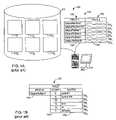
One application of an information management system is in a configuration management system.FIG. 1A shows aconfiguration management system100.Configuration management system100 includes adatabase110.Database110 is implemented in a computer storage system and stores multiple artifacts, here illustrated byartifacts1121,1122. . .1126. The artifacts may, for example, be files holding source code in a source code management system.
Configuration management system100 includes anindex120.Index120 is also implemented in the computer storage system. The index includes two portions, anidentifier portion130 and alocation portion150. For each of the entries1221,1222. . .1226, a value is provided to identify a particular artifact indatabase110 and describe where it is stored. For example, entry1225contains anidentifier value124 and alocation value126.Controller170 is a computer that controls storage and retrieval of information fromconfiguration management system170.
In order to reduce the total amount of storage space required byconfiguration management system100, it is known to compress data stored by the system.FIG. 1B illustrates anidentifier portion130′, which may store the same information as identifier portion130 (FIG. 1A).Identifier portion130′ stores information using a compression algorithm called “prefix compression.” Aprefix value132 is stored, a portion of which is used to form the beginning part for all entries,1360,1361. . .1365. In this example, theprefix value132 is the value of a selected one of the uncompressed entries. In this example, the value in entry1222is selected forprefix value132. Each entry inidentifier130′ also includes a count value and a suffix value. For example,entry1366has acount value134, here shown to be “9,” andsuffix value138, here shown to be “al/bastio.” The count value represents the number of characters in theprefix value132 that are used to form the beginning part of the entry. Thesuffix value138 represents the completion of the corresponding entry.
As can be seen in the examples ofFIGS. 1A and 1B, the total number of characters needed to represent all of the entries when expressed as a count value and a suffix value is less than the total number of characters needed to represent all of the entries when their full values are stored inidentifier portion130. However, for compression to occur, the appropriate value must be selected as theprefix value132. A simple way to determine an appropriate prefix value is to compute the compression that occurs when each entry1220,1221. . .1225is used as a prefix. Such an approach is, however, very computationally intensive. Because such an approach requires comparison of each entry in the data set to be compressed to every other entry in the data set, the computation required may be said to be on the order of N2, where N is the number of entries in the data set to be compressed. An approach of this complexity is not well suited for use in systems where speed of operation is a concern, particularly for large data sets.
It would be desirable to have an improved method of compressing data.
SUMMARY OF INVENTIONThe invention relates to a method of selecting a prefix value for compressing records in a database with reduced computational requirements. The method involves processing the entries in the data set on a character-by-character basis. An aggregated savings value is updated for each entry in the data set as each character is processed. The aggregated savings value for each entry is updated by adding a value representative of the number of other entries in the data set that have the same prefix portion, up to and including the character being processed, as that entry. The aggregated data values are used to select the entry that will yield the best compression of the data set if used as a prefix.
This algorithm may be efficiently implemented in a computer program that establishes data structures representing lists and processes them iteratively. These savings values are aggregated to compute an indication of the total compression achievable for each possible prefix value. The prefix value providing the most compression is selected as the prefix value for encoding the database.
In one aspect, the invention relates to a method of compressing a data set comprising a plurality of entries, each of the plurality of entries having a string, the string formed from characters, each character having a value and an ordered position in the string, with one character being the beginning of the string, such that each string has one or more prefix portions, each prefix portion containing a portion of the string having one or more characters at consecutively ordered positions in the string including the character at the beginning of the string. The method comprises determining a plurality of indicators, for each of the plurality of entries, representing the number of entries in the data set with a string having the same prefix portion as the sting of the entry, with each of the plurality of indicators for each of the plurality of entries determined for a prefix portion of the entry having a different number of characters; producing a plurality of aggregated indicators, each aggregated indicator representing a combination of the plurality of indicators determined for one of the plurality of entries; selecting an entry of the plurality of entries based on the aggregated indicators; and compressing the data set using the selected entry.
In another aspect, the invention relates to a method of compressing a data set comprising a plurality of entries, each of the plurality of entries having a string of characters associated therewith, with each character having a value and a position in the string. The method comprises forming a list of a plurality of list elements, with each list element having one of the plurality of entries associated therewith; forming a first plurality of sublists from the plurality of list elements with all the elements in each sublist of the first plurality of sublists having an entry associated therewith with a string having a character with the same value in a first position in the string; forming, for each sublist in at least a portion of the first plurality of sublists, a second plurality of sublists from the list elements in the sublist in the first plurality of sublists, with all the elements in each sublist of the second plurality of sublists having an entry associated therewith with a string having a character with the same value in a second position in the string; and for each of the plurality of entries, computing an indicator based at least in part on the number of elements in the sublist of the first plurality of sublists and the number of elements in the sublist of the second plurality of sublists in which the entry is associated.
In a further aspect, the invention relates to a configuration management system that has a database storing a plurality of artifacts; an index comprising a plurality of entries, each of the plurality of entries having a string of values associated therewith, with each value having a position in the string, and each entry identifying an artifact in the database; and a computer-readable medium storing computer executable instructions. The computer-executable instructions perform a method comprising: forming subgroups of entries from the plurality of entries in the index on the value at a first position of the string associated with each entry; forming further subgroups of entries from the entries in the subgroups based on the value at a second position in the string associated with each entry; for each of a plurality of entries, computing an indicator based on the number of entries in each subgroup to which the entry is a member; selecting an entry from the plurality of entries based on the indicators; and compressing the index using the selected entry.
BRIEF DESCRIPTION OF DRAWINGSFIG. 1A is a sketch of a prior art configuration management system;
FIG. 1B is a sketch of a field in the database of the prior art configuration management system ofFIG. 1A compressed according to prefix compression as known in the prior art;
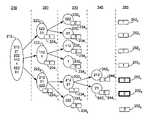
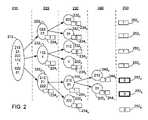
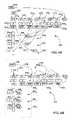
FIG. 2 is a sketch illustrating in conceptual form processing according to one embodiment of the invention;
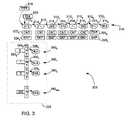
FIG. 3 is a sketch illustrating a data structure used in selecting a prefix to compress entries in a dataset according to one embodiment of the invention;
FIG. 4A is a sketch illustrating the data structure ofFIG. 3 at a subsequent stage of processing;
FIG. 4B is a sketch illustrating the data structure ofFIG. 4A at a subsequent stage of processing;
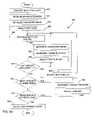
FIG. 5A is a flowchart illustrating processing according to one embodiment of the invention; and
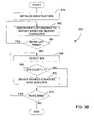
FIG. 5B is a flowchart illustrating processing performed in a subprocess of the processing illustrated inFIG. 5A.
DESCRIPTION OF THE PREFERRED EMBODIMENTThe invention may be used in connection with a configuration management system. The configuration management system includes an index of artifacts stored in a database. The index is compressed using prefix compression as known in the prior art. However, in contrast to prior art prefix compression approaches, the described embodiment selects a prefix with substantially less computation.
While described in connection with a configuration management system, the compression approach described herein is not so limited and may used in connection with any set of data entries that is to be compressed. Accordingly, compression of a set of entries in a data set is described. In the example embodiments used herein, each entry has a string of characters, with each character having a value. The values may be ASCII representations of letters, numbers and symbols such that the string of characters form file identifiers, such as is stored in the identifier portion130 (FIG. 1A) of an index or may represent a file location, such as is stored in the location portion150 (FIG. 1A) of an index. However there is no requirement that each “character” correspond to an ASCII representation or any other prescribed format.
FIG. 2 illustrates in conceptual form processing designed to select a prefix for use in compressing a set of data. According to the process depicted inFIG. 2, a group of entries from which a prefix value may be selected is processed in phases. In the example ofFIG. 2, five phases are shown:phase210,phase220,phase230,phase240 andphase250. As shown inFIG. 2, this processing results in agroup212 of entries being divided into successively smaller subgroups. Processing in this fashion will require a number of operations that is on the order of the number of entries in the group, which may be significantly less than processing using a number of operations on the order of N2as was used in the prior art.
In the example ofFIG. 2, theinitial group212 includes seven entries. This number of entries is selected for ease of representation. An actual database may include many more than seven entries. Further, for ease of illustration, each entry is shown to be made up of a string of numeric characters. This limited range of character values is also for simplicity of illustration. For example, each entry may be made up of a string of characters, with each character being represented by a byte of data. Where a byte of data is used to represent each character, there may be256 possible character values used to form entries in each group. Also, each entry is shown to have between one and three characters in the string. Entries represented by strings of any length may be processed.
Inphase210, the entries from which the prefix will be selected are represented asgroup212. Inphase210,group212 is divided into subgroups, with each entry in each subgroup having a first character with the same value. For example, all of the entries ingroup212 that have the value “0” as the first character are assigned tosubgroup2220.Sub-group2221includes all of the entries ingroup212 that have the value “1” for the first character.Subgroup2222contains all the entries ingroup212 that have the value “2” for the first character.
Each of the subgroups is also assigned a value proportionate to the savings that can be achieved by using the character that was used as a criteria for forming the subgroup as a character in the prefix used in compressing the group of entries by prefix compression. For example,group2220has asavings value2240associated with it, representing the savings possible if the first character in the prefix has a value of “0.” Savings value2240is assigned based on the number of members in the subgroup. In this example, the assigned savings value is computed by counting the number of entries in the subgroup and subtracting one. Such a value represents the number of records for which the selected character would not need to be stored in the suffix portion of the compressed file. One is subtracted from this count to represent the fact that the character would be stored once as part of the prefix.
Similarly,subgroup2221includes asavings value2241.Subgroup2222contains asavings value2242.
Inphase220, each of the subgroups is formed into one or more further subgroups. The subgroups are formed based on the value of the next character in each of the entries in the subgroup. For example, thesubgroup2220was formed based on the value in the first character in each entry.Subgroup2220is divided into subgroups based on the second character in each entry. In this example, none of the entries insubgroup2220have the same value for their second character. Accordingly,subgroups2320and2321are formed, each with one entry.
Savings values2340and2341are likewise computed. Because each of thesubgroups2320and2321contains one entry, the savings values2340and2341associated with these subgroups have a value of zero.
Likewise,subgroup2221is divided into twosubgroups2322and2323. The savings values2342and2343are likewise set to zero because each subgroup contains a single entry.
Subgroup2222is also divided into further subgroups based on the second character of each entry. Because two entries insubgroup2222have the value “1” as the second character, asubgroup2324is formed with those two entries.Subgroup2324has asavings value2344of one.
Subgroup2222also contains an entry with a value of “2” for the second character. This entry is assigned tosubgroup2325. Becausesubgroup2325has a single entry, thesavings value2345associated withsubgroup2325has a value of zero.
Inphase230, thesubgroups2320,2321,2322,2323and2325all have a single entry. Accordingly, they cannot be divided into further subgroups.Subgroup2324has multiple entries and can be divided into further subgroups.
In this example,subgroup2324is divided into further subgroups based on the value of the third character of each entry in the subgroup. In this case, none of the entries have a common character value in the third character position. Accordingly,subgroup2324is divided into subgroups2420and2421, each of which has a single entry. Savings values are also assigned to subgroups2420and2421. As in the prior phases, these savings values are assigned based on the number of entries in the subgroup. In this case, both subgroups receive savings values of zero.
Inphase240, once it is determined that no further subgroups may be formed, the savings value associated with each of the entries in theoriginal group212 may be aggregated to compute a total savings value for each entry. Thetotal savings values2520. . .2526associated with each entry may be computed by adding the savings values for every subgroup containing that entry. For example, savings value2520is the savings value associated with the entry “022” in theinitial group212. Savings value252 is the sum of the savings value associated withsubgroup2320andsubgroup2200. As a further example,total savings value2524is the savings value associated with the entry “212”.
Total savings value2524is computed as the sum of the savings values associated withsubgroup2420,2324and2222.
Inphase250, once a total savings value has been computed for each entry in theoriginal group212, the entry with the largest savings value is selected as the prefix for compressing the entries in theoriginal group212 using prefix compression. In this example,total savings values2524and2525each have a value of “3”, which is the maximum value. Where multiple entries are mapped to the maximum total savings value, any suitable method for selecting between them may be used. For example, the shorter of the two may be selected as the prefix value.
The process shown inFIG. 2 may be extended to process data sets having any number of entries. At each phase the subgroups formed in the prior phase are divided into further subgroups. Each successive phase forms subgroups based on the value of the character at the next position of the strings forming the entries in the subgroups formed in the prior phase. Phases are added until no subgroups can be divided into further subgroups.
Each subgroup formed in this way includes all the entries in theinitial group212 having the same prefix portion, up to and including the character at the position used in forming that subgroup. Each phase may be viewed as finding the number of entries that share a common prefix portion with successively longer prefix portions used at each phase.
Though the process illustrated inFIG. 2 may be implemented in any suitable fashion, the core of the process involves repetitively dividing groups into subgroups. Such a process may be readily implemented using a recursive algorithm.
FIG. 3 shows an example of adata structure300 that is well suited for use in such an algorithm.Data structure300 may be constructed in computer readable and writable storage in a computer, such as controller170 (FIG. 1). For processing according to the embodiment ofFIG. 3, the entries from which a prefix may be selected are represented as alist310. The list is made of a group ofelements3120,3121. . .3126. Eachelement3120,3121, . . .3126includes a value. Here each element has a string value associated with it. The string contains an ordered grouping of the characters that make up one entry in the data set for which a prefix is to be selected.
In addition, each element in the list includes a next element pointer, such asnext element pointer3140,3141. . .3146. In the example ofFIG. 3, each of thenext element pointers3140,3141. . .3146is indicated by an arrow. In implementation in a computer data processor, a next element pointer may be implemented as a memory storage location containing a value identifying a specific list element to which the pointer points.Next element pointer3146from the last list element points to a NULL value. As depicted, the NULL value may be considered as a member of every list. However, no special storage space needs to be allocated for that element. Rather, an identifier, such as “−1”, may be reserved for use with a NULL element. Any pointer having a value of “−1” would be treated as pointing to the NULL value.
As elements in the list are processed,pointer316 keeps track of the element in the list being processed. In the illustration ofFIG. 3,pointer316 is initialized to point to the first element in the list. The specific list element pointed to bypointer316, as well as any of the other pointers, may change as processing on the list is performed.
For keeping track of which character position of the elements in the list is being used to form subgroups, anindex value320 is provided.Index value320 may, for example, be implemented as a value stored in a memory location. In the illustration ofFIG. 3,index value320 is shown initialized as pointing to the first character position of each element in the list.
The process according to the embodiment ofFIG. 3 uses a series of savings countaccumulators3220. . .3226(of which only3220and3226are numbered for simplicity). In the described embodiment, a total savings value (such as2520. . .2526inFIG. 2) is computed by accumulating values at each phase of the processing. Rather than storing count values at each phase as suggested bysavings values2240,2241. . . ,2340,2341. . . ,2440,2441. . . , the embodiment ofFIG. 3 uses a single memory location for each entry. As savings values are computed in each phase, each computed value is added to the appropriate storage location. In the embodiment ofFIG. 3, savings countaccumulators3220. . .3226are used to hold the sum of those values.
The embodiment ofFIG. 3 also uses memory locations identified asskip list entries3240. . .3246(of which only3240and3246are labeled for simplicity). As illustrated in connection withFIG. 2, some entries become divided into subgroups for which no further processing is required. Theskip list entries3240. . .3246are used in identifying those entries inlist310 for which further processing is required and those for which further processing is not.
The processing according to the embodiment ofFIG. 3 also uses abin data structure350. As described in connection withFIG. 2, the entries from which a prefix value is selected are sorted into subgroups based on the value of a character at a specific location in the entry. At any phase of the processing, a number of subgroups may be formed, with the number being equal to the total number of possible values that could occupy each character position. In the embodiment illustrated inFIG. 3, each character is represented by a byte of data and therefore may have one of 256 values. Accordingly, there could be, at any phase of the processing, as many as 256 subgroups formed.Bin data structure350 therefore includes 256bin substructures3600,3601. . .360255. Each of thebin substructures3600,3601, . . .360255stores information from which a subgroup may be identified.
In the illustrated embodiment, each of thebin substructures3600,3601. . .360255has the same structure. Takingbin substructure3600as illustrative,bin substructure3600is shown to have associated with it a character value3520. Each of thebin substructures3600,3601. . .360255has a unique character value associated with it. It is not, however, necessary that memory storage be allocated to store the character value. The character value may be inferred by the position of a particular bin substructure within the overallbin data structure350.
Bin substructure3600also has associated with it amember count field3540.Member count field3540may contain a count of the number of entries added to the subgroup associated with the character value3520. The value inmember count field3540may be updated aslist310 of entries is processed and the elements oflist310 are added to subgroups.Member count field3540could be, but need not be, a physical storage location in computer memory. The value in member count field could, for example, alternatively be determined by counting the number of entries in the subgroup associated with the character value3520.
Members are assigned to the subgroup associated with character value3520by adjusting the pointers joining the elements inlist310.Pointer3560, which is part ofbin structure3600, points to this sublist to associate it with character value3520.
Pointers3561. . .356255may likewise be set to point to sublists formed from the elements inlist310. The sublist are built by processing the elements inlist310 one at a time.
Bin data structure350 is initialized before any subgroups have been formed. In the first pass of sorting elements oflist310 into bins, each element inlist310 is processed starting with the first element pointed to bypointer316. Based on the value of the character at the position in the string pointed to by theindex value320, the element is removed fromlist310 and added to the list in theappropriate bin substructure3600,3601. . .360255. For example, in the initialized configuration shown inFIG. 3,pointer316 points toelement3120.Index value320 indicates that the first character in the string associated with this element should be used for sorting the list elements into subgroups. Because the first character inelement3120has a value of “2”,element3120is added to the list inbin substructure3602.List element3120is added to that list by adjustingpointer3562to point toelement3120.Next element pointer3140associated withelement3120is adjusted to point to the NULL value to signify thatelement3120is now the tail of the list associated withbin substructure3602.
As part of this processing,pointer316 is adjusted to point to the next element of thelist310, which is determined from the value ofnext element pointer3140before it is changed. The value inmember count field3542is also incremented by one to indicate that an element has been added to the list inbin subgroup3602.
The next element pointed to bypointer316 may be processed in a similar manner. In this example,element3121is the next item inlist310. The value of the first character inelement3121is also “2”. Therefore,element3121is also added to the list inbin substructure3602. To addelement3121to the list,pointer3562is modified to point toelement3121. Thenext element pointer3141associated withelement3121is adjusted to point to the list element previously pointed to bypointer3562. Likewise, themember count field3542is again incremented.Pointer316 is again adjusted to point to the next element inlist310 by taking on the value ofnext element pointer3141before it is changed. Processing continues in this fashion until all of the elements inlist310 are added to a list associated with thebin substructures3600,3601. . .360255.
FIG. 4A shows the state of thedata structures300 after one pass throughlist310 is made. In the state illustrated byFIG. 4A,pointer316 points to the NULL value, indicating that it has processed theentire list310.Pointer3560inbin substructure3600points to asublist containing elements3126and3125.Pointer3561, associated withbin substructure3601, points to alist containing elements3124and3123.Pointer3562associated withbin substructure3602points to alist containing elements3122,3121and3120.
Each of the member count fields3540,3541,3542. . . contains a value representing the number of entries in the list associated with the data substructure containing that member counter field.
The savings countaccumulators3220,3221. . .3226are each shown loaded with a value that is one less than the value in the member counter field associated with the bin to which the correlated list element has been assigned. For example,element3120has been assigned to the subgroup represented bybin substructure3602. The member count field forbin substructure3602contains a value of three. Accordingly, the savings countaccumulator3220associated withelement3120contains a value of two (one less than the value contained in the member count field3542). The values in the other savings countaccumulators3221,3222. . .3226are set in a similar fashion.
Beforebin data structure350 is reset, sublists identified bypointers3560,3561. . .356225are saved for further processing.FIG. 4B illustrates the state ofdata structure300 as it is reset for the next pass.
Skiplist entries3240. . .3246andpointer316 are used to retain the lists associated with each of thebin substructures3600,3601. . .360255having more than one member. To set the values of the skip list entries, each bin substructure is processed. The bin substructures may be processed in any order. In this example, they are processed in reverse order of character value so that they are processed frombin substructure360255to3600.Pointer316 is adjusted to point to the beginning of the sublist associated with the first bin data structure processed with a member count field greater than one. One of theskip list entries3240,3241. . .3246is adjusted to point to the beginning of every other sublist having more than one entry.
In this example, the bin data substructure with the highest character value having a list with more than one entry is the list associated withbin substructure3602. As shown inFIG. 4A,pointer3562points toelement3122. InFIG.4B pointer316 has been adjusted to point to this element. Theskip list entry3242associated withelement3122is used to store a pointer to the first element in the next sublist having more than one element. In the processing state illustrated inFIG. 4A,pointer3561points to the next sublist, which begins withelement3124. Accordingly, skiplist element3242is adjusted to point toelement3124.
The next sublist to be retained is pointed to bypointer3560. The first element in that sublist iselement3126. Accordingly theskip list entry3244associated withelement3124is made to point toelement3126.
No further bin substructures have lists requiring further processing. Accordingly, theskip list element3246associated withelement3126is adjusted to point to the NULL value.
Once the sublists created in the first phase are retained in theskip list entries3240. . .3246, the sublists may each be processed, one after another, in the same way that list310 was processed.Index value320 is shown to point to the second character in the strings that form each of the list elements. Thebin data substructure350 is reset to the state as shown inFIG. 3.Pointer316 points to the beginning of the first sublist to be processed.
As processing of the first sublist begins, theskip list entry3242associated with the list element that is pointed to bypointer316 identifies the next sublist to be processed. Before this value is lost by changing the value inpointer316 or modifying the value inskip list entry3242as a result of processing the first sublist, the value inskip list entry3242is saved intemporary pointer316′.
Processing then begins first with the sublist pointed to bypointer316. That list may then be processed in the same way that list310 was processed.Bin data structure350, having been restored to its initialization state, may be used for processing the sublist pointed to bypointer316. At the end of processing that sublist, the member count fields3540,3541, . . .354255are added to the savings countaccumulators3220,3221, . . .3226, respectively. New skip list entry values may be stored so that further processing may be performed on each sublist. The new skip list entries do not alter skip list entries for any sublists not yet processed and may be stored in the same memory locations used forskip list entries3240. . .3246.
If processing of the first sublist results in the generation of more sublists with more than one element, those sublists may then be processed in the same way that the first sublist was processed.
Bin data structure350 may be reset and used to process each sublist in turn. The savings countaccumulators3220. . .3226are not reset, before each sublist is processed so that they will contain accumulated savings values.FIG. 2 illustrates that subgroups at successive phases are formed by sorting entries of a group based on the value of a character in a successive position in the entry. To implement this approach using list processing as depicted inFIGS. 4A and 4B, theindex value320 is incremented each time processing begins in a new phase.
Such a processing order lends itself to recursive processing as described below in connection withFIG. 5A andFIG. 5B. Such processing may be regarded as a depth first traversed of the “tree” of subgroups depicted inFIG. 2. However, an advantage of the described embodiment is that a total savings count associated with each element in the list is computed by accumulating savings counts as subgroups are formed. The order in which the subgroups are formed is therefore not a limitation in the invention.
Once the first sublist identified bypointer316 inFIG. 4B is fully processed, processing proceeds with the next sublist.Bin data structure350 may be reset and used in processing the next list.Temporary pointer316′ marks the first entry in the next sublist to be processed.List pointer316 is set to the first element of that list, in this case,element3124.Temporary pointer316′ is again set to “remember” the first entry in the next sublist to be processed. The value of temporary pointer306′ may be set based on theskiplist entry3244associated with that element. The selected sublist is processed element by element withpointer316 being adjusted as each element is processed. At the end of processing that list, member count fields3540,3541. . .354225are added to the appropriate savings countaccumulators3220,3221. . .3226. The sublists formed that require further processing are again saved by adjusting the values in the skip list entries.Bin data structure350 is again reset for use in processing for each of these sublists, but the savings countaccumulators3220,3221. . .3226are not reset.
Each sublist, and any sublists generated by processing that sublist, are processed in this fashion. After processing of the sublist starting withentry3126, an attempt to read the next sublist fromskip list entry3246returns a pointer to the NULL value. Accordingly, when a skip list entry is found to contain a pointer to the NULL value, it may be determined that processing of all sublists has been completed in a particular pass. Once all of the sublists have been processed, the values in savings countaccumulators3220,3221. . .3226represent the total saving if each entry in the data set is used as a prefix for compression. The entry associated with the largest value may be selected.
FIG. 5A illustrates aprocess500 by which an entry in a set of entries may be selected as a prefix value. As illustrated inFIG. 3, each entry has a string of characters associated with it.Process500 begins atprocess block510. Atprocess block510, the set of elements is converted to a list, such aslist310 illustrated inFIG. 3. At process block512 the savings counters3220,3221. . .3226are initialized. At process block514 thecharacter index520 is initialized. The character index value is initialized to point to the first character in the string that represents any element of the test.
At process block520 an input list is selected for processing. In the first iteration through the process, the original input list is selected for processing. In the example ofFIG. 3,list310 is selected atprocess block520. A list may be selected for processing in any convenient way, such as adjustingpointer316 to point to the first entry in the list.
The selected list is then processed according to thesubprocess550 shown inFIG. 5B. The processing by subprocess550 (FIG. 5B) divides the list into sublists and adjusts the savings countaccumulators3220,3221. . .3226based on the number of elements in the sublists to which each element is assigned.
Once the list has been processed according to subprocess550 (FIG. 5B), a check is made atdecision block530 to determine whether the processing generated sublists that require further processing. In the illustrated embodiment, if any sublist contains more than one entry, that sublist is further processed.
If there are further sublists to process, the first of the sublists is selected atprocess block526. The other sublists are “remembered” atprocess block525. In the embodiment ofFIG. 4B, each sublist is identified by one of theskip list entries3240. . .3246, with the result that the sublists are linked in a chain so that once one sublist is processed, the next sublist to be processed can be identified by following a link in that chain to the next sublist. The sublists that have not been processed therefore can be “remembered” by storing a pointer to the first sublist in the chain formed by the skip list entries. For example, a pointer such aspointer316′ can be used to identify the next sublist in the chain.
Once a sublist is selected for further processing, theindex value320 is incremented so that the appropriate character in that sublist will be used to form any further sublists. Each sublist is divided into further sublists using the next character in the string of values associated with the list element.Incrementing index value320 atprocess block524 ensures that the appropriate character in the list elements is used to form further sublists.
Once the appropriate sublist is identified for further processing, that sublist is processed atblock522. As with processing on the initial list, processing atblock522 may divide the sublist into further sublists.
Following the creation of additional sublists,decision block530 is again executed. If the sublists generated by processing atblock522 require further processing, the process blocks526,525 and524 are again repeated to prepare for processing one of those sublists. The loop formed by process blocks522,526,525 and524 anddecision block530 is repeated until a sublist is processed and does not generate any sublists that require further processing. This condition is detected atdecision block530 and processing then passes todecision block531.
Atdecision block531, a check is made for other sublists that were generated from the processing step that generated the sublist just processed. In the processing shown inFIG. 4B, three sublists, starting withelements3122,3124,3126, were formed in the same processing step. Once the first of these sublists is processed, the next of these sublists is processed. A similar pattern is followed at every level of processing.
Where further sublists at the same level as the sublist just processed remain for processing, the next sublist is selected atblock540. One simple way that the identification of sublists may be performed is through the use of a dynamically created data structure, such as a stack. When one sublists is selected from a group of sublists generated by processing a higher level list, a pointer to the next sublist in the group may be pushed on the stack. When processing of a sublist is completed, the pointer to the list element at the top of the stack may be popped from the stack and used to identify the next sublist to process.
Such a dynamically created data structure may be expressly structured as a stack. Alternatively, the processing shown inFIG. 5 may be implemented in a software program that includes a function that performs processing on each sublist. Such a function may be called recursively to process sublists created by processing another sublist. Each time the function is called, memory may be allocated for instantiation of the function. That memory may include storage space for a pointer to the next sublist to be processed, such aspointer316′. Whenever execution returns to an instantiation of the function, the next sublist pointer stored in the memory associated with that instantiation will point to the next sublist to be processed.
The sublist selected atblock540 may then be processed in the same way as the first sublist selected. The processing will continue through the loop formed by process blocks522,526,525 and524 anddecision block530 until that sublist is fully processed. Once that sublist is processed, the loop formed bydecision block531 and process block540 is repeated until all sublists formed at the same level are processed.
Once all of the sublists formed at the same level are processed,decision block532 determines whether sublists were formed at a higher level. As above, levels may be implemented using a function that is recursively called to process every sublist. A function may be called recursively to process a sublist and generate further sublists. When the processing is completed for all the sublists created from one sublist, the instantiation of the function at that level will complete and processing will return to an instantiation of that same function instantiated to process the sublists formed at the next higher level. As described above, the function instantiated at each level may allocate memory to store the next sublist to be processed at that level. Thus, by returning from one instantiation of a function processing sublists to the instantiation that called it, the next sublist to be processed can be identified from the value stored in the memory allocated for the instantiation of the function to which execution returns.
Process block542 selects a sublist at the next higher level. As indicated above, this sublist may be identified as a result of using a recursively called function. However, any suitable mechanism for identifying sublists for processing at different levels may be used.
Atblock544, theindex value320 is decremented to indicate that processing is being performed at the next highest level. A character in the string at a position that depends on the level of the processing is used to sort the list elements into sublists. The process loops back to block522 and the sublist selected atblock542 is processed in the same fashion as prior sublists.
Sublists are selected and processed in this fashion until all sublists at all levels have been fully processed. Once the processing of sublists is completed, the process continues atblock534. Atblock534, the total savings counts for each entry in the list is determined. In the embodiment ofFIG. 4A, these values are stored in the savings countaccumulators3220. . .3226. From this information, the entry that results in the greatest savings when used as a prefix may be identified.
FIG. 5B indicates a sub-process550 used to process lists in process500 (FIG. 5A).Sub-process550 may be used to processlist310 or any of the sublists created from it.
Processing begins atprocess block574. Atprocess block574,bin data structure350 is initialized. For a bin data structure as represented inFIG. 3, initializingbin data structure350 involves setting each of the member count fields3540,3541. . .354255to zero. Each of thepointer3560,3561. . .356255is also set to the NULL value.
Inprocess block562, the next item in the list being processed is assigned to a bin. In the described embodiment, there is one bin for each possible character value. Bins are implemented by creating sublists from the elements in the data set being processed. In the example ofFIG. 3, each element being processed is stored as a list element. Sublists may be created by rearranging the pointers that link the elements in a list. Such a processing approach provides the advantage of not consuming additional memory to represent sublists. While desirable, particularly for large data sets, this implementation is not required. Any suitable method for forming subgroups of the elements in the data set being processed may be used.
Atdecision block564, a determination is made whether there are further items in the list being processed. If further list elements remain to be processed, process block562 is executed for the next list element.Process block562 is repeatedly executed until all elements in the list are processed. Once all list elements are processed, processing proceeds to process block566.
Starting atprocess block566, the bins are processed to retain the information relating to the groupings formed. Atprocess block566, one of the bins is selected. The bins may be selected in any order for processing.
Atdecision block568, a check is made whether the bin count for the selected bin is greater than one. If the bin count is not greater than one, the group of elements in that bin does not need to be further processed. Accordingly, processing proceeds todecision block572. Alternatively, if the bin count is greater than one, the group of elements in that bin is further processed atprocess block570.
Atprocess block570, the groupings formed are saved for further processing. In addition, savings counts associated with each bin are updated. The elements forming a group may be recorded as a sublist and the skip list entries may be used to identify each sublist. However, any suitable method may be used to retain this information. In the embodiment ofFIG. 3, savings counts are updated by adding the number of elements assigned to the bin, minus one, to the savings count accumulator for each element in the list.
If more bins remain to be processed, processing loops back fromdecision block572 to process block566. Processing continues in this fashion until all of the bins have been processed.
Having thus described several aspects of at least one embodiment of this invention, it is to be appreciated various alterations, modifications, and improvements will readily occur to those skilled in the art. As one example, a prefix is selected to compress values in a field in an index for a configuration management system. If the index has multiple fields as shown inFIG. 1A, the same compression approach may be used on both fields or to compress any other values that may be treated as a data set.
As a further, example, the embodiments shown use a full entry from the original data set as a prefix for compression. The size of the prefix may be set to some predetermined number of character positions. In such an embodiment, processing could be stopped after subgroups have been formed based on values in that character position.
The above-described embodiments of the present invention can be implemented in any of numerous ways. For example, the embodiments may be implemented using hardware, software or a combination thereof. When implemented in software, the software code can be executed on any suitable processor or collection of processors, whether provided in a single computer or distributed among multiple computers. It should be appreciated that any component or collection of components that perform the functions described above can be generically considered as one or more controllers that control the above-discussed functions. The one or more controllers can be implemented in numerous ways, such as with dedicated hardware, or with general purpose hardware (e.g., one or more processors) that is programmed using microcode or software to perform the functions recited above. For example, the degenerative nature of the process in which one list is segregated into multiple sublists, each of which is separately processed makes the process amendable to implementation in a multiprocessing environment. Accordingly, any reference to the sequential nature of the process should be taken as a description of a logical flow of the algorithm and not a description of scheduling of tasks that may occur in a multiprocessor environment.
Also, the various methods or processes outlined herein may be coded as software that is executable on one or more processors that employ any one of a variety of operating systems or platforms. Additionally, such software may be written using any of a number of suitable programming languages and/or conventional programming or scripting tools, and also may be compiled as executable machine language code.
In this respect, one embodiment of the invention is directed to a computer readable medium (or multiple computer readable media) (e.g., a computer memory, one or more floppy discs, compact discs, optical discs, magnetic tapes, etc.) encoded with one or more programs that, when executed on one or more computers or other processors, perform methods that implement the various embodiments of the invention discussed above. The computer readable medium or media can be transportable, such that the program or programs stored thereon can be loaded onto one or more different computers or other processors to implement various aspects of the present invention as discussed above.
The term “program” is used herein in a generic sense to refer to any type of computer code or set of instructions that can be employed to program a computer or other processor to implement various aspects of the present invention as discussed above. Additionally, it should be appreciated that according to one aspect of this embodiment, one or more computer programs that when executed perform methods of the present invention need not reside on a single computer or processor, but may be distributed in a modular fashion amongst a number of different computers or processors to implement various aspects of the present invention.
Various aspects of the present invention may be used alone, in combination, or in a variety of arrangements not specifically discussed in the embodiments described in the foregoing and is therefore not limited in its application to the details and arrangement of components set forth in the foregoing description or illustrated in the drawings. For example, aspects described in one embodiment may be combined in any manner with aspects described in other embodiment.
Use of ordinal terms such as “first,” “second,” “third,” etc., in the claims to modify a claim element does not by itself connote any priority, precedence, or order of one claim element over another or the temporal order in which acts of a method are performed, but are used merely as labels to distinguish one claim element having a certain name from another element having a same name (but for use of the ordinal term) to distinguish the claim elements.
Also, the phraseology and terminology used herein is for the purpose of description and should not be regarded as limiting. The use of “including,” “comprising,” or “having,” “containing,” “involving,” and variations thereof herein, is meant to encompass the items listed thereafter and equivalents thereof as well as additional items.
Such alterations, modifications, and improvements are intended to be part of this disclosure, and are intended to be within the spirit and scope of the invention. Accordingly, the foregoing description and drawings are by way of example only.