US7565612B2 - Method and system for transmitting information over a communication network - Google Patents
Method and system for transmitting information over a communication networkDownload PDFInfo
- Publication number
- US7565612B2 US7565612B2US10/354,445US35444503AUS7565612B2US 7565612 B2US7565612 B2US 7565612B2US 35444503 AUS35444503 AUS 35444503AUS 7565612 B2US7565612 B2US 7565612B2
- Authority
- US
- United States
- Prior art keywords
- information
- user
- item
- user device
- server
- Prior art date
- Legal status (The legal status is an assumption and is not a legal conclusion. Google has not performed a legal analysis and makes no representation as to the accuracy of the status listed.)
- Expired - Lifetime, expires
Links
- 238000000034methodMethods0.000titleclaimsabstractdescription49
- 238000004891communicationMethods0.000titleclaimsabstractdescription24
- 230000002452interceptive effectEffects0.000claimsabstractdescription41
- 230000004044responseEffects0.000claimsdescription36
- 230000005540biological transmissionEffects0.000claimsdescription11
- 238000005259measurementMethods0.000claimsdescription8
- 238000012986modificationMethods0.000claimsdescription6
- 230000004048modificationEffects0.000claimsdescription6
- 230000001960triggered effectEffects0.000description12
- 238000011161developmentMethods0.000description5
- 230000018109developmental processEffects0.000description5
- 230000009471actionEffects0.000description2
- 230000008569processEffects0.000description2
- 210000004556brainAnatomy0.000description1
- 230000001413cellular effectEffects0.000description1
- 230000000694effectsEffects0.000description1
- 238000011156evaluationMethods0.000description1
- 230000003993interactionEffects0.000description1
Images
Classifications
- H—ELECTRICITY
- H04—ELECTRIC COMMUNICATION TECHNIQUE
- H04L—TRANSMISSION OF DIGITAL INFORMATION, e.g. TELEGRAPHIC COMMUNICATION
- H04L67/00—Network arrangements or protocols for supporting network services or applications
- H04L67/2866—Architectures; Arrangements
- H04L67/30—Profiles
- H04L67/303—Terminal profiles
- H—ELECTRICITY
- H04—ELECTRIC COMMUNICATION TECHNIQUE
- H04L—TRANSMISSION OF DIGITAL INFORMATION, e.g. TELEGRAPHIC COMMUNICATION
- H04L67/00—Network arrangements or protocols for supporting network services or applications
- H04L67/01—Protocols
- H04L67/04—Protocols specially adapted for terminals or networks with limited capabilities; specially adapted for terminal portability
- H—ELECTRICITY
- H04—ELECTRIC COMMUNICATION TECHNIQUE
- H04L—TRANSMISSION OF DIGITAL INFORMATION, e.g. TELEGRAPHIC COMMUNICATION
- H04L67/00—Network arrangements or protocols for supporting network services or applications
- H04L67/50—Network services
- H04L67/56—Provisioning of proxy services
- H04L67/563—Data redirection of data network streams
- H—ELECTRICITY
- H04—ELECTRIC COMMUNICATION TECHNIQUE
- H04L—TRANSMISSION OF DIGITAL INFORMATION, e.g. TELEGRAPHIC COMMUNICATION
- H04L67/00—Network arrangements or protocols for supporting network services or applications
- H04L67/50—Network services
- H04L67/56—Provisioning of proxy services
- H04L67/568—Storing data temporarily at an intermediate stage, e.g. caching
- H—ELECTRICITY
- H04—ELECTRIC COMMUNICATION TECHNIQUE
- H04L—TRANSMISSION OF DIGITAL INFORMATION, e.g. TELEGRAPHIC COMMUNICATION
- H04L9/00—Cryptographic mechanisms or cryptographic arrangements for secret or secure communications; Network security protocols
- H04L9/40—Network security protocols
Definitions
- the inventionrelates to a method and system for transmitting information over a communication network. More specifically, the invention relates to a method and system for transmitting information over a communication network comprising a user device and a server wherein the user device receives the information from or via this server.
- Technological developments and business developments in this areahave shown significant progress. Technological developments include the various kinds of developments relating to the internet and the recent efforts to realize state-of-the art services using wireless networks, like GSM, GPRS and UMTS. Parallel to these technological developments people cudgel their brains about how to apply the enormous technological possibilities in a commercially interesting way. Many business models have been discussed (see http://digitalenterprise.org/models/models.html), but only few of them have ‘proved’ to be relatively successful.
- GPRSGeneral Packet Radio Services
- the introduction of GPRShas resulted in a new business model for providing internet access.
- the userpays for the data volume (i.e., the number of bytes) transmitted over the network, instead of per unit of time of connection to the network or a flat fee rate.
- the concept of data volumeis hard to comprehend and moreover a user normally is not aware of the data volume of a particular information page.
- this informationis crucial, since the data volume determines the costs of the GPRS-usage.
- a communication networkis every wired and/or wireless network, comprising at least a user device and a server, which is capable of transmitting or carrying information.
- informationcomprises data as well.
- Informationis stimuli that has meaning in some context for its receiver; data is information that has been converted into a form that is more convenient to move or process.
- a method and systemfor transmitting information over a communication network comprising at least a first server and a user device.
- the methodcomprises the steps of receiving a request from the user device at the first server and setting up an interactive session between the first server and the user device wherein it is determined if the requested information should actually be transmitted to the user device.
- Application of this methodcan provide the user and/or the user device with the option to avoid actual transmission of information that he initially requested. It is noted that the request of the user might be directed to a second server on which the requested information is present, but this request can be redirected to the first server for applying the method without the user noticing this redirection.
- the serverIt is advantageous to evaluate the result of the interactive session using at least one property of the information as to whether the requested information should be transmitted or alternatively the requested information sent in a modified form. It is noted that the moment of the request of the information and set up of the interactive session do not necessarily nearly coincide; it can be that a profile with favorite information pages of the user is already present at or retrievable by the server, e.g., as a result of an earlier request and a preset time of transmitting this information is known by the server as well.
- an interactive session with the user and/or the user deviceis set up in order to provide the user and/or user device with the possibility to avoid transmission of this information to the user device or alternatively have the option to receive the information in a modified form.
- the requested informationis retrieved from a second server wherein the first server can evaluate the at least one property of the requested information. It can be that the information from this second server already has a property tag, identifying the at least one property of the information, in which case the evaluation of the information retrieved from the second server can be omitted at the first server.
- the information and/or the information propertycan be stored at the first server.
- a profile databaseis provided with data relating to user profile and/or user device profile data. By comparing the data of this profile database for a certain user and/or user device with at least one property of the requested information the set up of the interactive session can be triggered.
- a queryis provided to the user and/or the device wherein the information property or a related message or question is ‘made known’ (e.g., via a short message) to the user and/or his device providing the option to respond whether and in what form the information can be transmitted to him.
- the profilerelates to the byte size of the requested information and/or the display measurements of the information.
- the user and/or user deviceis provided in the interactive session with, e.g., the possibility to avoid the actual transmission of the information thereby reducing his costs.
- other data in the profile databasesuch as, e.g., the measurement of the display of the user device and the information property regarding the measurements of the display of the requested information.
- the profilecan relate to formats supported by the device such as specific HTML-versions, ActiveX, Java Applets, Flash, etc.
- the useris provided with the possibility to set the user profile and device profile data himself, either by the user device or by any other device having access to the profile database.
- This profile databaseis not necessarily accessed over the same network as the communication network. It can, e.g., be possible that the user receives his information on his handheld device connectable to a GPRS network, while the user sets his profile via his home personal computer using a fixed network. The user is provided with great flexibility through this option.
- the usercan determine when an interactive session is triggered. The user can, e.g., set a limited byte size, resulting in frequent triggering of the interactive session providing the user and/or his device with a query whether and in what form the information should be transmitted to his device.
- the usercan set a high limit on the byte size resulting in less frequent triggering of the interactive session and more often the information is just transmitted to the user without a query.
- the usercan modify the settings in the profile database at any time. It is noted that various other information property data and user and/or device profile data can be applied. Examples of other types of data include the time on which the information is requested (lower costs at off-peak hours) or the data volume the user has already used. It is also possible to obtain variation in the applicability of certain profile data on the basis of, e.g., identification of the information (content) provider.
- the method and systemcomprise the possibility to modify the requested information in a (more) suitable form before the information is sent to the user device.
- the user and/or his devicecan approve the modification of the requested information since a further query is sent to the user device in the interactive session providing the user and/or his device with the option to receive the modified information.
- the first servernotices that the information property does not satisfy the data of the user profile and immediately (i.e., in the first query) provides the user and/or device with a query offering the possibility to receive the requested information in a modified form.
- the query or queries presented to the user in the interactive sessiondo not necessarily involve queries on which a positive or negative answer can be given, but also queries involving questions with more options than “yes” or “no” are possible.
- Such an optioncan be that the user is offered the (additional) possibility to be redirected to an information page with the same content which is (more) suitable for his device. This possibility can be offered in the same query as well as in a subsequent query.
- the information requestedcan comprise more information parts.
- An information page which is requested by the usermight comprise text, images, movies, sounds and/or applets. It can be that for one or more of these information parts individual properties of the information are known at the first server and the triggering of the interactive session and/or the result of the interactive session relates to one or more properties of one or more of the information parts. These properties of the various information parts can involve the byte size, download costs, display size and/or technical ability requirements for the user device. It can, e.g., be that a upper byte size limit set by the user allows transmittal of information pages including text and images, but not movies. To enable this feature of the method according to a preferred embodiment of the invention, the information properties of different information parts are stored at or retrievable by the first server.
- the result of the interactive processcan be non-transmittal of the information.
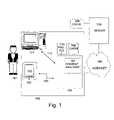
- FIG. 1shows a schematic illustration of a system for transmitting information over a communication network according to an embodiment of the invention
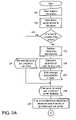
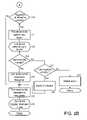
- FIGS. 2A and 2Bcollectively shows a flow-chart showing various steps of the method according to an embodiment of the invention wherein information can be transmitted over a communication network;
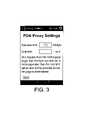
- FIG. 3shows an example of a page wherein the profile settings can be entered and adapted
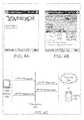
- FIGS. 4A-Cshow a first example of executing the method according to an embodiment of the invention
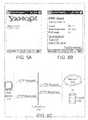
- FIGS. 5A-Cshow a second example of executing the method according to an embodiment of the invention.
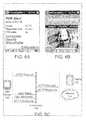
- FIGS. 6A-Cshow a third example of executing the method according to an embodiment of the invention.
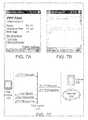
- FIGS. 7A-Cshow a fourth example of executing the method according to an embodiment of the invention.
- FIG. 1a system 100 employing an embodiment of the invention is schematically illustrated.
- a user 101requests information with his user device 102 via a wireless communication network 103 from a first server 104 .
- the user device 102can be any device capable of requesting and/or receiving information, such as a personal computer or a personal digital assistant (PDA) via a communication network 103 .
- the communication networkcan be any type of network capable of carrying or transmitting information or signals.
- the user device 102can have a display screen 105 capable of displaying the information received over the communication network 103 .
- the user device 102can be equipped with one or more means (not shown in detail) known to the man skilled in the art for employing the user device 102 to obtain a more or less optimal use of the device.
- the requested informationcan be available at the first server 104 in a cache 106 .
- the request for information of the user 101is directed to a second server, but the request is redirected to the first server 104 without the user 101 even noticing it.
- From at least part of the information available at the first server 104one or more properties of the information are known.
- the properties of the informationcan be stored in the cache 106 as well, e.g., by having or assigning tags to the information containing these properties.
- Examples of information propertiesinclude byte size (data volume) of an information page, display size of the information page in pixels and requirements for a browser format to display the information page.
- This informationcan be determined with a content analyzer 107 which, e.g., is also able to distinguish part of information pages and assigns one or more information properties to this part.
- the byte size propertythe various parts of an information page that are linked to this page via a separate URL can be analyzed and stored as a separate information property.
- the display sizethe size of the whole information page can be analyzed.
- different aspectssuch as HTML-version, JavaScript support, Java Applets, ActiveX etc. can be considered. This list of properties and derivatives thereof can be extended to other properties.
- the informationis stored in the cache 106 without being analyzed with regard to the information properties; only when the information is requested by the user 101 is the information analyzed and eventually stored.
- the server 104can retrieve the information via the internet 108 from a second server 109 , such as a webserver.
- a second server 109such as a webserver.
- the initial request of the user 101can be directed to the second server 109 , but be redirected to the first server 104 for applying the method.
- the information retrieved from the second server 109can be analyzed at the first server 104 by means of the content analyzer 107 and be stored at the cache 106 ready to be transmitted.
- the properties of the requested information from the second server 109are already known at the second server 109 in its cache 106 ′ and can be stored at the first server 104 without being analyzed again.
- the first server 104has access to a profile database 110 .
- data of a user 101 and/or a user device 102can be stored.
- a (set up of) an interactive session between the first server 104 and the user device 102can be triggered.
- a queryis provided to the user 101 and/or the user device 102 wherein the information property or a related message or question is ‘made known’ (e.g., via a short message to the user Device 102 ) to the user and/or his device providing the option to respond whether and in what form the information can be transmitted to him.
- this featurewill be provided below.
- the profile database 110is accessible to the user 101 .
- the user 101can set the profiles related to him and/or his device 102 as well as modify the profiles. Access to this profile database 110 can be obtained by using the user device 102 .
- the user 101can use another device suited to access the profile database 110 . In the embodiment shown, this situation can be achieved by using a home personal computer 111 that has access to the profile database 110 over a wired network 112 .
- the user 101can be in control of the instances in which the interactive session is triggered.
- step 201the user 101 requests information over the communication network 103 , which request is directed to the first server 104 in step 202 .
- the server 104searches in step 203 whether the information is directly available from the cache 106 . If this is the case, in step 204 the requested information and the information properties are retrieved from the cache 106 . If the requested information is not available in the cache 106 , in step 205 the first server 104 retrieves the requested information via the internet 108 from a second server 109 . In step 206 , the information properties from the information retrieved from the second server 109 are determined by the content analyzer 107 and eventually stored in step 207 .
- the first server 204retrieves a profile belonging to the user 101 and/or the user device 102 from the profile database 110 .
- the decision to trigger the interactive sessionis shown. If an interactive session is triggered based on the information properties and the user profile, the first server 104 sends a query to the user device 102 as indicated in step 211 .
- the user device 102can present the query to the user 101 , indicated with 212 . Examples of such queries are given below.
- step 215the first server 104 sends the information to the user device 102 and the user device 102 displays the requested information to the user 101 .
- a further querycan be send from the first server 104 to the user device 102 , indicated at step 217 .
- This querycan involve the option to modify the requested information in order to make it suitable for presentation on the user device 102 . If this option is chosen, the requested information is modified in step 218 and the modified requested information is send to the user device 102 (step 215 ) and subsequently presented to the user 101 in step 216 . Examples of modification of the requested information will be given below. If this option at 217 is refused, a default action is executed, indicated at 219 . Such a default action can be the restoration of the presentation of the page present on the user device 102 before the information was requested.
- the first server 104sends the requested information to the user device 102 over the communication network 103 , as is indicated with step 215 .
- the user device 102displays the requested information to the user 101 in step 216 .
- the first server 104can be a proxy server located between the user 101 and the internet 108 .
- HTTP requests from a user device 102are directed to this first server 104 .
- the information pages to be retrievedare analysed by the first server 104 by the content analyzer 107 and compared to the profile data from the profile database 110 reflecting the preferences of the user 101 and/or user device 102 . If the information page's properties obey the preferences of the user 101 and/or user device 102 , the information page is transmitted to the user device 102 without triggering an interactive session. If the information page's properties do not obey the data of the profile database, an interactive session is triggered.
- a short message or queryis send from the first server 104 to the user device 102 containing, e.g., the estimated download costs and a question whether or not the user 101 wants to continue. If the user 101 wishes to continue, the requested information is transmitted to the user device 102 . If the user 101 finds that the download costs are too high, he can abort the request and return to his original page.
- the user device 102can, e.g., be a PDA equipped with a Pocket Internet Explorer browser or a laptop PC of an arbitrary type.
- the user device 102can access the information via various kinds of communication networks 103 , such as GSM or GPRS (utilizing 1,2,3 or 4 slots).
- the user 101If the user 101 is connected to the communication network 103 via a cellular phone, the user 101 might specify the type of mobile phone he uses. This can be relevant for estimating the download time and eventually for a OTA-message with his preferred settings (e.g., the settings, such as a GPRS APN-setting or the proxy to be set, are transmitted via the radio network and automatically be set at the proxy server, e.g. via a special sms message, depending on the type of GPRS user device). Moreover, the type of subscription of a user 101 is preferably made known in order to calculate costs.
- the settingssuch as a GPRS APN-setting or the proxy to be set
- this profile database 110can be accessed via a fixed network 112 with, e.g., a home personal computer 111 as well.
- the page for setting and adapting the profilecan have different presentations, e.g., for mobile internet and for fixed internet devices and these pages can have different functionality.
- Whether the first server 104 is triggered to set up an interactive sessionis preferably determined by the preferences of the user 101 as reflected by the profile data of the profile database 110 .
- This profile datacan involve, e.g., the byte size of the information pages; pages that, as a whole (i.e., pictures, etc.
- a limitcan be set in the profile database 110 with regard to the costs as well. Information pages, the download of which exceeds the cost limit, trigger the interactive session between the first server 104 and the user device 102 wherein a query is presented to the user 101 (see step 213 in FIG. 2 ).
- An example of a profile setting page for a user device 102is shown in FIG. 3 .
- FIGS. 4-7four sessions will be described where the user 101 requests information with his user device 102 (a PDA) from a first server 104 or a second server 109 where redirection to the first server 104 takes place.
- a PDAhis user device 102
- FIGS. 4A-Cthe situation is presented where the requested information page present on the first server 104 or a second server 109 is suited to be displayed on the display 105 of the user device 102 and the byte size obeys the limit set in the profile database 110 , as shown in FIG. 3 .
- the URL chosen on the PDA 102 as shown in FIG. 4Ais, e.g., www.planet.nl/pda.
- the proxy server 104receives the http request and retrieves the information from the cache 106 or a second server 109 via the internet 108 .
- the proxy server 104analyzes the requested information page, as described previously, and finds that the information page can be transmitted directly to the user 101 , since the preferences of the user 101 are met.
- This situationrelates to the no-branch taken in step 210 as shown in FIG. 2 and no interactive session is set up or triggered between the user device 102 and the first server 104 .
- the client-server protocolis shown in FIG. 4C .
- FIGS. 5A-Cthe situation is presented where the requested information page does not fulfill the user profile as shown in FIG. 3 and downloading of the information to the user device 102 is not performed.
- the user 101e.g., requests an information page not suited for his device 102 or the byte size of the information page exceeds the byte size limit set in the user profile database 110 .
- this page chosen from the initial screen as shown in FIG. 5Ahas a URL www.planet.nl.
- the first proxy server 104(here being a proxy server) receives the http request and retrieves the information page (www.planet.nl) from the second server 109 , via Internet 108 , or the cache 106 .
- an interactive sessionis triggered.
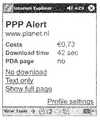
- the proxy server 104presents a query to the user device 102 alerting that actual downloading of the information page is 0.73.
- the user 101is offered a choice on his display 105 between “no download”, “text only” and “show full page”. This display is shown in FIG. 5B . If the user 101 chooses “no download”, the initial page of FIG. 5A is shown once again. In this situation, it can be that there is no interaction of the user device 102 with the first server 104 or the second server 109 anymore, since the browser might control this situation itself.
- FIG. 5Cthe client-server protocol of the situation is represented.
- FIGS. 6A-Cthe situation is presented wherein the requested information page does not fulfill the user profile as shown in FIG. 3 but downloading of the information to the user device 102 is still preferred by the user 101 and/or the user device 102 .
- the user 101e.g., requests an information page not suited for his device 102 or the byte size of the information page exceeds the byte size limit set in the user profile database 110 .
- this page chosen from the initial screen as shown in FIG. 5Ahas a URL www.planet.nl.
- the proxy server 104receives the http request and retrieves the information page (www.planet.nl) from the second server 109 , via Internet 108 , or the cache 106 .
- the first proxy server 104presents a query to the user device 102 alerting that actual downloading of the information page costs 0.73.
- the user 101is offered a choice on his display 105 between “no download”, “text only” and “show full page”. This display 105 is shown in FIG. 6A . If the user 101 chooses “show full page”, the first server 104 transmits the information page to the user device 102 , and this information page is displayed on the display 105 to the user 101 as shown in FIG. 6B . In this situation, the user takes the risk that the information page cannot be displayed or is displayed incorrectly.
- FIG. 6Cthe client-server protocol of the situation is represented.
- FIGS. 7A-Cthe situation is presented wherein the requested information page does not fulfill the user profile as shown in FIG. 3 but downloading of the information to the user device 102 is still preferred by the user 101 and/or the user device 102 in a modified form.
- the user 101e.g., requests an information page not suited for his device 102 or the byte size of the information page exceeds the byte size limit set in the user profile database 110 .
- this page chosen from the initial screen as shown in FIG. 5Ahas a URL www.planet.nl.
- the proxy server 104receives the http request and retrieves the information page (www.planet.nl) from the second server 109 or the cache 106 .
- the first server 104here a proxy server, presents a query to the user device 102 alerting that actual downloading of the information page costs 0.73.
- the user 101is offered a choice on his display 105 between “no download”, “text only” and “show full page”. This display is shown in FIG. 7A . If the user 101 chooses “text only”, the first server 104 transmits the information page to the user device 102 in a modified form and the modified requested information is displayed on the display 105 to the user 101 as shown in FIG. 7B .
- the first server 104strips all features other than text from the information page and transmits the modified page to the user device 102 .
- the user 101commands his browser to send an http request to the first server 104 which strips the non-text features from the information page, resulting in a modified page that is sent to the user device 102 via an http response.
- FIG. 7Cthe client-server protocol of the situation is represented.
- Another option presented to the user 101 in the queryis transmission of an information page in a form suitable for the user device 102 . If the user, e.g., requests information from www.planet.nl (not suitable for user device 102 ), the query might offer the possibility for the user 101 and/or user device 102 to retrieve the page from www.planet.nl/pda, which is suitable for the user device 102 .
- server 104can be stored, in the form of a software Program containing computer-executable instructions, on a computer-readable media (data carrier) from which the program can be loaded into and then executed by that server.
Landscapes
- Engineering & Computer Science (AREA)
- Computer Networks & Wireless Communication (AREA)
- Signal Processing (AREA)
- Computer Security & Cryptography (AREA)
- Information Transfer Between Computers (AREA)
- Computer And Data Communications (AREA)
- Radar Systems Or Details Thereof (AREA)
Abstract
Description

Claims (42)
Applications Claiming Priority (2)
| Application Number | Priority Date | Filing Date | Title |
|---|---|---|---|
| EP02075487AEP1333638B1 (en) | 2002-02-04 | 2002-02-04 | Method and system for transmitting information over a communication network |
| EP02075487.5 | 2002-02-04 |
Publications (2)
| Publication Number | Publication Date |
|---|---|
| US20030146930A1 US20030146930A1 (en) | 2003-08-07 |
| US7565612B2true US7565612B2 (en) | 2009-07-21 |
Family
ID=8185585
Family Applications (1)
| Application Number | Title | Priority Date | Filing Date |
|---|---|---|---|
| US10/354,445Expired - LifetimeUS7565612B2 (en) | 2002-02-04 | 2003-01-30 | Method and system for transmitting information over a communication network |
Country Status (4)
| Country | Link |
|---|---|
| US (1) | US7565612B2 (en) |
| EP (1) | EP1333638B1 (en) |
| AT (1) | ATE418223T1 (en) |
| DE (1) | DE60230382D1 (en) |
Cited By (4)
| Publication number | Priority date | Publication date | Assignee | Title |
|---|---|---|---|---|
| US20090037845A1 (en)* | 2007-08-03 | 2009-02-05 | Tzu-Han Kao | Method and System for Editing Web Data |
| US20130238981A1 (en)* | 2008-10-20 | 2013-09-12 | Seiko Epson Corporation | Information distribution system, service-providing method for an information distribution system, and a program for the same |
| US8990685B1 (en) | 2006-03-31 | 2015-03-24 | United Services Automobile Association (Usaa) | Systems and methods for creating and displaying web documents |
| US9262387B2 (en) | 2008-10-28 | 2016-02-16 | Seiko Epson Corporation | Information distribution system, service-providing method for an information distribution system, and a program for the same |
Families Citing this family (13)
| Publication number | Priority date | Publication date | Assignee | Title |
|---|---|---|---|---|
| GB2416642B (en)* | 2004-07-23 | 2007-10-10 | Samsung Electronics Co Ltd | A method and system for creating an electronic network |
| DE102004056336B4 (en)* | 2004-11-22 | 2010-12-02 | Arndt Seehawer | Method and device for transferring files over a network |
| FR2883685A1 (en)* | 2005-03-22 | 2006-09-29 | France Telecom | METHOD AND SYSTEM FOR SHARING PERSONAL ATTRIBUTES, SHARING / INSERTION / TERMINAL MODULE, INTERNET ACCESS PROVIDER, PROXY SERVER, SERVICE PROVIDER, AND COMPUTER PROGRAM FOR THIS METHOD |
| US20070186173A1 (en)* | 2006-02-03 | 2007-08-09 | Yahoo! Inc. | Instant messenger alerts and organization systems |
| US9880702B2 (en) | 2006-02-03 | 2018-01-30 | Yahoo Holdings, Inc. | Content structures and content navigation interfaces |
| USD624088S1 (en) | 2006-04-04 | 2010-09-21 | Yahoo! Inc. | Graphical user interface for a display screen |
| US8055444B2 (en)* | 2006-04-04 | 2011-11-08 | Yahoo! Inc. | Content display and navigation interface |
| USD595728S1 (en)* | 2007-10-15 | 2009-07-07 | Yahoo! Inc. | Display panel with graphical user interface for navigating content |
| EP2079218B1 (en) | 2008-01-08 | 2012-12-26 | Research In Motion Limited | Method and system for displaying remote cache information |
| US8499118B2 (en) | 2009-02-26 | 2013-07-30 | Research In Motion Limited | Method, apparatus and system for optimizing image rendering on an electronic device |
| US8141003B1 (en) | 2009-04-15 | 2012-03-20 | Sprint Communications Company L.P. | Multipage navigation on a small screen device |
| JP5614215B2 (en)* | 2010-10-01 | 2014-10-29 | ミツミ電機株式会社 | Display screen switching device, display screen switching method, and display screen switching program |
| JP6201728B2 (en)* | 2013-12-20 | 2017-09-27 | カシオ計算機株式会社 | COMMUNICATION SYSTEM, COMMUNICATION TERMINAL, PROGRAM, COMMUNICATION TERMINAL INFORMATION INQUIRY METHOD AND INFORMATION PROVIDING METHOD |
Citations (77)
| Publication number | Priority date | Publication date | Assignee | Title |
|---|---|---|---|---|
| US5727159A (en)* | 1996-04-10 | 1998-03-10 | Kikinis; Dan | System in which a Proxy-Server translates information received from the Internet into a form/format readily usable by low power portable computers |
| US5798759A (en)* | 1996-12-31 | 1998-08-25 | International Business Machines Corporation | Method and apparatus for mobile device screen reformatting |
| US6020883A (en)* | 1994-11-29 | 2000-02-01 | Fred Herz | System and method for scheduling broadcast of and access to video programs and other data using customer profiles |
| US6044376A (en)* | 1997-04-24 | 2000-03-28 | Imgis, Inc. | Content stream analysis |
| US6085229A (en)* | 1998-05-14 | 2000-07-04 | Belarc, Inc. | System and method for providing client side personalization of content of web pages and the like |
| US6112192A (en)* | 1997-05-09 | 2000-08-29 | International Business Machines Corp. | Method for providing individually customized content in a network |
| US6128655A (en) | 1998-07-10 | 2000-10-03 | International Business Machines Corporation | Distribution mechanism for filtering, formatting and reuse of web based content |
| US6138142A (en)* | 1996-12-20 | 2000-10-24 | Intel Corporation | Method for providing customized Web information based on attributes of the requester |
| US6167441A (en)* | 1997-11-21 | 2000-12-26 | International Business Machines Corporation | Customization of web pages based on requester type |
| US6173316B1 (en)* | 1998-04-08 | 2001-01-09 | Geoworks Corporation | Wireless communication device with markup language based man-machine interface |
| DE19941461A1 (en) | 1999-08-31 | 2001-03-08 | Deutsche Telekom Mobil | Process for the preventive and / or current display of transmission costs for the data transmission of Internet and online data |
| US6256633B1 (en)* | 1998-06-25 | 2001-07-03 | U.S. Philips Corporation | Context-based and user-profile driven information retrieval |
| US20010010061A1 (en)* | 2000-01-26 | 2001-07-26 | Hidehiro Matsumoto | Communication system, communication method, gateway apparatus, and client |
| US20010010685A1 (en)* | 2000-02-01 | 2001-08-02 | Nokia Mobile Phones Ltd. | Method and a device for transferring capability information |
| US20010013088A1 (en)* | 2000-02-09 | 2001-08-09 | Nec Corporation. | Information providing system, information providing method, and client apparatus |
| US6286043B1 (en)* | 1998-08-26 | 2001-09-04 | International Business Machines Corp. | User profile management in the presence of dynamic pages using content templates |
| US6300947B1 (en)* | 1998-07-06 | 2001-10-09 | International Business Machines Corporation | Display screen and window size related web page adaptation system |
| US6311194B1 (en)* | 2000-03-15 | 2001-10-30 | Taalee, Inc. | System and method for creating a semantic web and its applications in browsing, searching, profiling, personalization and advertising |
| US6327628B1 (en)* | 2000-05-19 | 2001-12-04 | Epicentric, Inc. | Portal server that provides a customizable user Interface for access to computer networks |
| US20010056497A1 (en)* | 2000-06-21 | 2001-12-27 | International Business Machines Corporation | Apparatus and method of providing instant information service for various devices |
| US20020002705A1 (en)* | 2000-06-12 | 2002-01-03 | U.S. Philips Corporation | Computer profile update system |
| US20020010740A1 (en)* | 2000-06-16 | 2002-01-24 | Takeshi Kikuchi | Content distribution system; Content distribution method; distribution server, client terminal, and portable terminal used in the system; and computer readable recording medium on which is recorded a program for operating a computer used in the system |
| US6345279B1 (en)* | 1999-04-23 | 2002-02-05 | International Business Machines Corporation | Methods and apparatus for adapting multimedia content for client devices |
| US20020046295A1 (en)* | 2000-10-18 | 2002-04-18 | Nec Corporation | Object filtering method and client device using the same |
| US20020059367A1 (en)* | 2000-09-27 | 2002-05-16 | Romero Richard D. | Segmenting electronic documents for use on a device of limited capability |
| US20020062325A1 (en)* | 2000-09-27 | 2002-05-23 | Berger Adam L. | Configurable transformation of electronic documents |
| US6401094B1 (en)* | 1999-05-27 | 2002-06-04 | Ma'at | System and method for presenting information in accordance with user preference |
| US20020069263A1 (en)* | 2000-10-13 | 2002-06-06 | Mark Sears | Wireless java technology |
| US20020073235A1 (en)* | 2000-12-11 | 2002-06-13 | Chen Steve X. | System and method for content distillation |
| US20020083157A1 (en)* | 2000-08-25 | 2002-06-27 | Shunichi Sekiguchi | Information delivery system and information delivery method |
| US6424981B1 (en)* | 1996-12-06 | 2002-07-23 | Microsoft Corporation | Customization of network documents using customization informations stored on the server computer |
| US20020099829A1 (en)* | 2000-11-27 | 2002-07-25 | Richards Kenneth W. | Filter proxy system and method |
| US20020133627A1 (en)* | 2001-03-19 | 2002-09-19 | International Business Machines Corporation | Intelligent document filtering |
| US20020138331A1 (en)* | 2001-02-05 | 2002-09-26 | Hosea Devin F. | Method and system for web page personalization |
| US20020138545A1 (en)* | 2001-03-26 | 2002-09-26 | Motorola, Inc. | Updating capability negotiation information in a communications system |
| US20020142815A1 (en)* | 2000-12-08 | 2002-10-03 | Brant Candelore | Method for creating a user profile through game play |
| US20020194388A1 (en)* | 2000-12-04 | 2002-12-19 | David Boloker | Systems and methods for implementing modular DOM (Document Object Model)-based multi-modal browsers |
| US20030009567A1 (en)* | 2001-06-14 | 2003-01-09 | Alamgir Farouk | Feature-based device description and conent annotation |
| US20030028643A1 (en)* | 2001-03-13 | 2003-02-06 | Dilithium Networks, Inc. | Method and apparatus for transcoding video and speech signals |
| US20030041100A1 (en)* | 2001-08-23 | 2003-02-27 | Mikael Nilsson | Method for limiting conveyance information of user profile within mobile internet transactions |
| US20030050062A1 (en)* | 2001-09-07 | 2003-03-13 | Chen Yih-Farn Robin | Personalized multimedia services using a mobile service platform |
| US6556217B1 (en)* | 2000-06-01 | 2003-04-29 | Nokia Corporation | System and method for content adaptation and pagination based on terminal capabilities |
| EP1307021A2 (en) | 2001-10-26 | 2003-05-02 | Roke Manor Research Limited | A method of controlling the amount of data transferred between a terminal and a server |
| US6564251B2 (en)* | 1998-12-03 | 2003-05-13 | Microsoft Corporation | Scalable computing system for presenting customized aggregation of information |
| US20030110234A1 (en)* | 2001-11-08 | 2003-06-12 | Lightsurf Technologies, Inc. | System and methodology for delivering media to multiple disparate client devices based on their capabilities |
| US6589291B1 (en)* | 1999-04-08 | 2003-07-08 | International Business Machines Corporation | Dynamically determining the most appropriate location for style sheet application |
| US6593944B1 (en)* | 2000-05-18 | 2003-07-15 | Palm, Inc. | Displaying a web page on an electronic display device having a limited display area |
| US6615247B1 (en)* | 1999-07-01 | 2003-09-02 | Micron Technology, Inc. | System and method for customizing requested web page based on information such as previous location visited by customer and search term used by customer |
| US6628300B2 (en)* | 2001-11-30 | 2003-09-30 | International Business Machines Corporation | Transcoding proxy and method for transcoding encoded streams |
| US20030186722A1 (en)* | 2002-03-28 | 2003-10-02 | Comverse, Ltd. | Method and device for real time GSM user device profile interrogation and registration |
| US20030200337A1 (en)* | 2002-03-12 | 2003-10-23 | Dilithium Networks, Inc. | Method and system for improved transcoding of information through a telecommunication network |
| US6654689B1 (en)* | 2000-11-06 | 2003-11-25 | Weather Central, Inc. | System and method for providing personalized storm warnings |
| US20040004641A1 (en)* | 2002-07-02 | 2004-01-08 | Ullas Gargi | Image segmentation and warping for specialized display viewing |
| US6684217B1 (en)* | 2000-11-21 | 2004-01-27 | Hewlett-Packard Development Company, L.P. | System and method for generating a profile from which a publication may be created |
| US6685171B2 (en)* | 2001-01-10 | 2004-02-03 | Harken, Inc. | Lifting device |
| US6690402B1 (en)* | 1999-09-20 | 2004-02-10 | Ncr Corporation | Method of interfacing with virtual objects on a map including items with machine-readable tags |
| US6704024B2 (en)* | 2000-08-07 | 2004-03-09 | Zframe, Inc. | Visual content browsing using rasterized representations |
| US6734886B1 (en)* | 1999-12-21 | 2004-05-11 | Personalpath Systems, Inc. | Method of customizing a browsing experience on a world-wide-web site |
| US20040098669A1 (en)* | 2001-03-30 | 2004-05-20 | Alexis Sauvage | Software customisation |
| US6748569B1 (en)* | 1999-09-20 | 2004-06-08 | David M. Brooke | XML server pages language |
| US20040122949A1 (en)* | 2002-12-23 | 2004-06-24 | Zmudzinski Krystof C. | System and method for browsing on behalf of others |
| US6760046B2 (en)* | 2000-03-29 | 2004-07-06 | Hewlett Packard Development Company, L.P. | Location-dependent user interface |
| US6766362B1 (en)* | 2000-07-28 | 2004-07-20 | Seiko Epson Corporation | Providing a network-based personalized newspaper with personalized content and layout |
| US6791581B2 (en)* | 2001-01-31 | 2004-09-14 | Microsoft Corporation | Methods and systems for synchronizing skin properties |
| US6801224B1 (en)* | 2000-09-14 | 2004-10-05 | International Business Machines Corporation | Method, system, and program for generating a graphical user interface window for an application program |
| US6822663B2 (en)* | 2000-09-12 | 2004-11-23 | Adaptview, Inc. | Transform rule generator for web-based markup languages |
| US20040267900A1 (en)* | 2003-06-26 | 2004-12-30 | Hoekstra Mathew E | Dynamic mobile device characterization |
| US6842777B1 (en)* | 2000-10-03 | 2005-01-11 | Raja Singh Tuli | Methods and apparatuses for simultaneous access by multiple remote devices |
| US6857102B1 (en)* | 1998-04-07 | 2005-02-15 | Fuji Xerox Co., Ltd. | Document re-authoring systems and methods for providing device-independent access to the world wide web |
| US6865171B1 (en)* | 1999-10-22 | 2005-03-08 | Telefonaktiebolaget Lm Ericsson (Publ) | Methods and apparatus for selectively providing user-specific information to origin servers in wireless application protocol applications |
| US6901437B1 (en)* | 2000-10-06 | 2005-05-31 | Verizon Laboratories Inc. | Mobile cache for dynamically composing user-specific information |
| US6961758B2 (en)* | 2001-06-29 | 2005-11-01 | Hewlett-Packard Development Company, L.P. | Personalized internet content server system |
| US6963908B1 (en)* | 2000-03-29 | 2005-11-08 | Symantec Corporation | System for transferring customized hardware and software settings from one computer to another computer to provide personalized operating environments |
| US6976226B1 (en)* | 2001-07-06 | 2005-12-13 | Palm, Inc. | Translating tabular data formatted for one display device to a format for display on other display devices |
| US6981062B2 (en)* | 2001-04-20 | 2005-12-27 | Sbc Technology Resources, Inc. | World wide web content synchronization between wireless devices |
| US6983331B1 (en)* | 2000-10-17 | 2006-01-03 | Microsoft Corporation | Selective display of content |
| US7010581B2 (en)* | 2001-09-24 | 2006-03-07 | International Business Machines Corporation | Method and system for providing browser functions on a web page for client-specific accessibility |
- 2002
- 2002-02-04DEDE60230382Tpatent/DE60230382D1/ennot_activeExpired - Lifetime
- 2002-02-04EPEP02075487Apatent/EP1333638B1/ennot_activeExpired - Lifetime
- 2002-02-04ATAT02075487Tpatent/ATE418223T1/ennot_activeIP Right Cessation
- 2003
- 2003-01-30USUS10/354,445patent/US7565612B2/ennot_activeExpired - Lifetime
Patent Citations (79)
| Publication number | Priority date | Publication date | Assignee | Title |
|---|---|---|---|---|
| US6020883A (en)* | 1994-11-29 | 2000-02-01 | Fred Herz | System and method for scheduling broadcast of and access to video programs and other data using customer profiles |
| US5727159A (en)* | 1996-04-10 | 1998-03-10 | Kikinis; Dan | System in which a Proxy-Server translates information received from the Internet into a form/format readily usable by low power portable computers |
| US6424981B1 (en)* | 1996-12-06 | 2002-07-23 | Microsoft Corporation | Customization of network documents using customization informations stored on the server computer |
| US6138142A (en)* | 1996-12-20 | 2000-10-24 | Intel Corporation | Method for providing customized Web information based on attributes of the requester |
| US5798759A (en)* | 1996-12-31 | 1998-08-25 | International Business Machines Corporation | Method and apparatus for mobile device screen reformatting |
| US6044376A (en)* | 1997-04-24 | 2000-03-28 | Imgis, Inc. | Content stream analysis |
| US6112192A (en)* | 1997-05-09 | 2000-08-29 | International Business Machines Corp. | Method for providing individually customized content in a network |
| US6167441A (en)* | 1997-11-21 | 2000-12-26 | International Business Machines Corporation | Customization of web pages based on requester type |
| US6857102B1 (en)* | 1998-04-07 | 2005-02-15 | Fuji Xerox Co., Ltd. | Document re-authoring systems and methods for providing device-independent access to the world wide web |
| US6173316B1 (en)* | 1998-04-08 | 2001-01-09 | Geoworks Corporation | Wireless communication device with markup language based man-machine interface |
| US6085229A (en)* | 1998-05-14 | 2000-07-04 | Belarc, Inc. | System and method for providing client side personalization of content of web pages and the like |
| US6256633B1 (en)* | 1998-06-25 | 2001-07-03 | U.S. Philips Corporation | Context-based and user-profile driven information retrieval |
| US6300947B1 (en)* | 1998-07-06 | 2001-10-09 | International Business Machines Corporation | Display screen and window size related web page adaptation system |
| US6128655A (en) | 1998-07-10 | 2000-10-03 | International Business Machines Corporation | Distribution mechanism for filtering, formatting and reuse of web based content |
| US6286043B1 (en)* | 1998-08-26 | 2001-09-04 | International Business Machines Corp. | User profile management in the presence of dynamic pages using content templates |
| US6564251B2 (en)* | 1998-12-03 | 2003-05-13 | Microsoft Corporation | Scalable computing system for presenting customized aggregation of information |
| US6589291B1 (en)* | 1999-04-08 | 2003-07-08 | International Business Machines Corporation | Dynamically determining the most appropriate location for style sheet application |
| US6345279B1 (en)* | 1999-04-23 | 2002-02-05 | International Business Machines Corporation | Methods and apparatus for adapting multimedia content for client devices |
| US6401094B1 (en)* | 1999-05-27 | 2002-06-04 | Ma'at | System and method for presenting information in accordance with user preference |
| US6615247B1 (en)* | 1999-07-01 | 2003-09-02 | Micron Technology, Inc. | System and method for customizing requested web page based on information such as previous location visited by customer and search term used by customer |
| DE19941461A1 (en) | 1999-08-31 | 2001-03-08 | Deutsche Telekom Mobil | Process for the preventive and / or current display of transmission costs for the data transmission of Internet and online data |
| US6690402B1 (en)* | 1999-09-20 | 2004-02-10 | Ncr Corporation | Method of interfacing with virtual objects on a map including items with machine-readable tags |
| US6748569B1 (en)* | 1999-09-20 | 2004-06-08 | David M. Brooke | XML server pages language |
| US6865171B1 (en)* | 1999-10-22 | 2005-03-08 | Telefonaktiebolaget Lm Ericsson (Publ) | Methods and apparatus for selectively providing user-specific information to origin servers in wireless application protocol applications |
| US6734886B1 (en)* | 1999-12-21 | 2004-05-11 | Personalpath Systems, Inc. | Method of customizing a browsing experience on a world-wide-web site |
| US20010010061A1 (en)* | 2000-01-26 | 2001-07-26 | Hidehiro Matsumoto | Communication system, communication method, gateway apparatus, and client |
| US20010010685A1 (en)* | 2000-02-01 | 2001-08-02 | Nokia Mobile Phones Ltd. | Method and a device for transferring capability information |
| US20010013088A1 (en)* | 2000-02-09 | 2001-08-09 | Nec Corporation. | Information providing system, information providing method, and client apparatus |
| US6311194B1 (en)* | 2000-03-15 | 2001-10-30 | Taalee, Inc. | System and method for creating a semantic web and its applications in browsing, searching, profiling, personalization and advertising |
| US6963908B1 (en)* | 2000-03-29 | 2005-11-08 | Symantec Corporation | System for transferring customized hardware and software settings from one computer to another computer to provide personalized operating environments |
| US6760046B2 (en)* | 2000-03-29 | 2004-07-06 | Hewlett Packard Development Company, L.P. | Location-dependent user interface |
| US6593944B1 (en)* | 2000-05-18 | 2003-07-15 | Palm, Inc. | Displaying a web page on an electronic display device having a limited display area |
| US6327628B1 (en)* | 2000-05-19 | 2001-12-04 | Epicentric, Inc. | Portal server that provides a customizable user Interface for access to computer networks |
| US6556217B1 (en)* | 2000-06-01 | 2003-04-29 | Nokia Corporation | System and method for content adaptation and pagination based on terminal capabilities |
| US20020002705A1 (en)* | 2000-06-12 | 2002-01-03 | U.S. Philips Corporation | Computer profile update system |
| US20020010740A1 (en)* | 2000-06-16 | 2002-01-24 | Takeshi Kikuchi | Content distribution system; Content distribution method; distribution server, client terminal, and portable terminal used in the system; and computer readable recording medium on which is recorded a program for operating a computer used in the system |
| US20010056497A1 (en)* | 2000-06-21 | 2001-12-27 | International Business Machines Corporation | Apparatus and method of providing instant information service for various devices |
| US6766362B1 (en)* | 2000-07-28 | 2004-07-20 | Seiko Epson Corporation | Providing a network-based personalized newspaper with personalized content and layout |
| US6704024B2 (en)* | 2000-08-07 | 2004-03-09 | Zframe, Inc. | Visual content browsing using rasterized representations |
| US20020083157A1 (en)* | 2000-08-25 | 2002-06-27 | Shunichi Sekiguchi | Information delivery system and information delivery method |
| US6822663B2 (en)* | 2000-09-12 | 2004-11-23 | Adaptview, Inc. | Transform rule generator for web-based markup languages |
| US6801224B1 (en)* | 2000-09-14 | 2004-10-05 | International Business Machines Corporation | Method, system, and program for generating a graphical user interface window for an application program |
| US20020062325A1 (en)* | 2000-09-27 | 2002-05-23 | Berger Adam L. | Configurable transformation of electronic documents |
| US20020059367A1 (en)* | 2000-09-27 | 2002-05-16 | Romero Richard D. | Segmenting electronic documents for use on a device of limited capability |
| US6842777B1 (en)* | 2000-10-03 | 2005-01-11 | Raja Singh Tuli | Methods and apparatuses for simultaneous access by multiple remote devices |
| US6901437B1 (en)* | 2000-10-06 | 2005-05-31 | Verizon Laboratories Inc. | Mobile cache for dynamically composing user-specific information |
| US20020069263A1 (en)* | 2000-10-13 | 2002-06-06 | Mark Sears | Wireless java technology |
| US6983331B1 (en)* | 2000-10-17 | 2006-01-03 | Microsoft Corporation | Selective display of content |
| US20020046295A1 (en)* | 2000-10-18 | 2002-04-18 | Nec Corporation | Object filtering method and client device using the same |
| US6654689B1 (en)* | 2000-11-06 | 2003-11-25 | Weather Central, Inc. | System and method for providing personalized storm warnings |
| US6684217B1 (en)* | 2000-11-21 | 2004-01-27 | Hewlett-Packard Development Company, L.P. | System and method for generating a profile from which a publication may be created |
| US20020099829A1 (en)* | 2000-11-27 | 2002-07-25 | Richards Kenneth W. | Filter proxy system and method |
| US20020194388A1 (en)* | 2000-12-04 | 2002-12-19 | David Boloker | Systems and methods for implementing modular DOM (Document Object Model)-based multi-modal browsers |
| US20020142815A1 (en)* | 2000-12-08 | 2002-10-03 | Brant Candelore | Method for creating a user profile through game play |
| US20020073235A1 (en)* | 2000-12-11 | 2002-06-13 | Chen Steve X. | System and method for content distillation |
| US6685171B2 (en)* | 2001-01-10 | 2004-02-03 | Harken, Inc. | Lifting device |
| US6791581B2 (en)* | 2001-01-31 | 2004-09-14 | Microsoft Corporation | Methods and systems for synchronizing skin properties |
| US20050204276A1 (en)* | 2001-02-05 | 2005-09-15 | Predictive Media Corporation | Method and system for web page personalization |
| US20020138331A1 (en)* | 2001-02-05 | 2002-09-26 | Hosea Devin F. | Method and system for web page personalization |
| US20030028643A1 (en)* | 2001-03-13 | 2003-02-06 | Dilithium Networks, Inc. | Method and apparatus for transcoding video and speech signals |
| US20020133627A1 (en)* | 2001-03-19 | 2002-09-19 | International Business Machines Corporation | Intelligent document filtering |
| US20020138545A1 (en)* | 2001-03-26 | 2002-09-26 | Motorola, Inc. | Updating capability negotiation information in a communications system |
| US6816895B2 (en)* | 2001-03-26 | 2004-11-09 | Motorola, Inc. | Updating the capability negotiation information of a mobile station with an editing application downloaded from a service provider |
| US20040098669A1 (en)* | 2001-03-30 | 2004-05-20 | Alexis Sauvage | Software customisation |
| US6981062B2 (en)* | 2001-04-20 | 2005-12-27 | Sbc Technology Resources, Inc. | World wide web content synchronization between wireless devices |
| US20030009567A1 (en)* | 2001-06-14 | 2003-01-09 | Alamgir Farouk | Feature-based device description and conent annotation |
| US6961758B2 (en)* | 2001-06-29 | 2005-11-01 | Hewlett-Packard Development Company, L.P. | Personalized internet content server system |
| US6976226B1 (en)* | 2001-07-06 | 2005-12-13 | Palm, Inc. | Translating tabular data formatted for one display device to a format for display on other display devices |
| US20030041100A1 (en)* | 2001-08-23 | 2003-02-27 | Mikael Nilsson | Method for limiting conveyance information of user profile within mobile internet transactions |
| US20030050062A1 (en)* | 2001-09-07 | 2003-03-13 | Chen Yih-Farn Robin | Personalized multimedia services using a mobile service platform |
| US7010581B2 (en)* | 2001-09-24 | 2006-03-07 | International Business Machines Corporation | Method and system for providing browser functions on a web page for client-specific accessibility |
| EP1307021A2 (en) | 2001-10-26 | 2003-05-02 | Roke Manor Research Limited | A method of controlling the amount of data transferred between a terminal and a server |
| US20030110234A1 (en)* | 2001-11-08 | 2003-06-12 | Lightsurf Technologies, Inc. | System and methodology for delivering media to multiple disparate client devices based on their capabilities |
| US6628300B2 (en)* | 2001-11-30 | 2003-09-30 | International Business Machines Corporation | Transcoding proxy and method for transcoding encoded streams |
| US20030200337A1 (en)* | 2002-03-12 | 2003-10-23 | Dilithium Networks, Inc. | Method and system for improved transcoding of information through a telecommunication network |
| US20030186722A1 (en)* | 2002-03-28 | 2003-10-02 | Comverse, Ltd. | Method and device for real time GSM user device profile interrogation and registration |
| US20040004641A1 (en)* | 2002-07-02 | 2004-01-08 | Ullas Gargi | Image segmentation and warping for specialized display viewing |
| US20040122949A1 (en)* | 2002-12-23 | 2004-06-24 | Zmudzinski Krystof C. | System and method for browsing on behalf of others |
| US20040267900A1 (en)* | 2003-06-26 | 2004-12-30 | Hoekstra Mathew E | Dynamic mobile device characterization |
Non-Patent Citations (2)
| Title |
|---|
| (Communication and European Search Report also submitted). |
| T. Shimada et al, "Interactive scaling control mechanism for World-Wide Web system", Computer Networks and ISDN Systems, North Holland Publishing, Amsterdam, NL, vol. 29, No. 8-13, Sep. 1, 1997, pp. 1467-1477. |
Cited By (6)
| Publication number | Priority date | Publication date | Assignee | Title |
|---|---|---|---|---|
| US8990685B1 (en) | 2006-03-31 | 2015-03-24 | United Services Automobile Association (Usaa) | Systems and methods for creating and displaying web documents |
| US20090037845A1 (en)* | 2007-08-03 | 2009-02-05 | Tzu-Han Kao | Method and System for Editing Web Data |
| US20130238981A1 (en)* | 2008-10-20 | 2013-09-12 | Seiko Epson Corporation | Information distribution system, service-providing method for an information distribution system, and a program for the same |
| US9253221B2 (en)* | 2008-10-20 | 2016-02-02 | Seiko Epson Corporation | Information distribution system, service-providing method for an information distribution system, and a program for the same |
| US9262387B2 (en) | 2008-10-28 | 2016-02-16 | Seiko Epson Corporation | Information distribution system, service-providing method for an information distribution system, and a program for the same |
| US9268751B2 (en) | 2008-10-28 | 2016-02-23 | Seiko Epson Corporation | Information distribution system, service-providing method for an information distribution system, and a program for the same |
Also Published As
| Publication number | Publication date |
|---|---|
| ATE418223T1 (en) | 2009-01-15 |
| EP1333638B1 (en) | 2008-12-17 |
| US20030146930A1 (en) | 2003-08-07 |
| DE60230382D1 (en) | 2009-01-29 |
| EP1333638A1 (en) | 2003-08-06 |
Similar Documents
| Publication | Publication Date | Title |
|---|---|---|
| US7565612B2 (en) | Method and system for transmitting information over a communication network | |
| US6654814B1 (en) | Systems, methods and computer program products for dynamic placement of web content tailoring | |
| US7020721B1 (en) | Extensible transcoder annotation for transcoding proxy servers | |
| US8682712B2 (en) | Monitoring landing page experiments | |
| US7356332B2 (en) | Mobile information system for presenting information to mobile devices | |
| JP4295726B2 (en) | Wireless communication apparatus and method for acquiring and managing content transmitted from a wireless communication system | |
| US7831658B2 (en) | Generating landing page variants | |
| TWI411951B (en) | Information display device, information display method, information display program, recording medium and information display system | |
| US20030093520A1 (en) | Method of controlling the amount of data transferred between a terminal and a server | |
| US20070043837A1 (en) | Method and system for producing web pages matched to client properties | |
| US20170244807A1 (en) | Method and apparatus for providing content to users | |
| EP2798535A1 (en) | Method and apparatus for providing web pages | |
| US20140359405A1 (en) | Method and device of displaying images in text information | |
| US20090024626A1 (en) | Information processing terminal, content providing system, content providing method, and content providing program | |
| CN106648301A (en) | Dynamic adjustment method for classifying display of applications | |
| WO2002031694A1 (en) | Information image providing system, information image management server, and client | |
| JP5128432B2 (en) | Site information conversion apparatus, site information conversion method, and site information conversion program | |
| CN109804349B (en) | System and method for reducing download requirements | |
| US11157587B2 (en) | Content loading to provide enhanced viewing experience | |
| EP1808771A1 (en) | Information processing terminal, content providing system, content providing method, and content providing program | |
| KR20100066093A (en) | System for advertizing through mobile terminal which provides function of full browsing internet access and method therefor | |
| WO2001046873A1 (en) | Method and apparatus employing a proxy server for modifying an html document supplied by a web server to a web client | |
| US7716372B2 (en) | Method, system and storage medium for providing services based on user preferences | |
| GB2334648A (en) | Internet access for a mobile communications device | |
| KR20100028414A (en) | Method for providing or using a font data, font provide apparatus and communication terminal using a font data |
Legal Events
| Date | Code | Title | Description |
|---|---|---|---|
| AS | Assignment | Owner name:KONINKLIJKE KPN N.V., NETHERLANDS Free format text:ASSIGNMENT OF ASSIGNORS INTEREST;ASSIGNORS:SCHELVIS, WILHELMUS A.M.;DE JONG, BASTIAAN;REEL/FRAME:013894/0722;SIGNING DATES FROM 20030202 TO 20030205 | |
| STCF | Information on status: patent grant | Free format text:PATENTED CASE | |
| FEPP | Fee payment procedure | Free format text:PAYOR NUMBER ASSIGNED (ORIGINAL EVENT CODE: ASPN); ENTITY STATUS OF PATENT OWNER: LARGE ENTITY | |
| FPAY | Fee payment | Year of fee payment:4 | |
| FPAY | Fee payment | Year of fee payment:8 | |
| MAFP | Maintenance fee payment | Free format text:PAYMENT OF MAINTENANCE FEE, 12TH YEAR, LARGE ENTITY (ORIGINAL EVENT CODE: M1553); ENTITY STATUS OF PATENT OWNER: LARGE ENTITY Year of fee payment:12 | |
| AS | Assignment | Owner name:WTI FUND X, INC., CALIFORNIA Free format text:SECURITY INTEREST;ASSIGNOR:HOLO, INC.;REEL/FRAME:060893/0058 Effective date:20220822 Owner name:VENTURE LENDING & LEASING IX, INC., CALIFORNIA Free format text:SECURITY INTEREST;ASSIGNOR:HOLO, INC.;REEL/FRAME:060893/0058 Effective date:20220822 |