US7561517B2 - Passive route control of data networks - Google Patents
Passive route control of data networksDownload PDFInfo
- Publication number
- US7561517B2 US7561517B2US10/283,798US28379802AUS7561517B2US 7561517 B2US7561517 B2US 7561517B2US 28379802 AUS28379802 AUS 28379802AUS 7561517 B2US7561517 B2US 7561517B2
- Authority
- US
- United States
- Prior art keywords
- data flow
- path
- data
- flow
- addresses
- Prior art date
- Legal status (The legal status is an assumption and is not a legal conclusion. Google has not performed a legal analysis and makes no representation as to the accuracy of the status listed.)
- Expired - Lifetime
Links
Images


Classifications
- H—ELECTRICITY
- H04—ELECTRIC COMMUNICATION TECHNIQUE
- H04L—TRANSMISSION OF DIGITAL INFORMATION, e.g. TELEGRAPHIC COMMUNICATION
- H04L65/00—Network arrangements, protocols or services for supporting real-time applications in data packet communication
- H04L65/80—Responding to QoS
- H—ELECTRICITY
- H04—ELECTRIC COMMUNICATION TECHNIQUE
- H04L—TRANSMISSION OF DIGITAL INFORMATION, e.g. TELEGRAPHIC COMMUNICATION
- H04L41/00—Arrangements for maintenance, administration or management of data switching networks, e.g. of packet switching networks
- H04L41/50—Network service management, e.g. ensuring proper service fulfilment according to agreements
- H04L41/5003—Managing SLA; Interaction between SLA and QoS
- H—ELECTRICITY
- H04—ELECTRIC COMMUNICATION TECHNIQUE
- H04L—TRANSMISSION OF DIGITAL INFORMATION, e.g. TELEGRAPHIC COMMUNICATION
- H04L41/00—Arrangements for maintenance, administration or management of data switching networks, e.g. of packet switching networks
- H04L41/50—Network service management, e.g. ensuring proper service fulfilment according to agreements
- H04L41/5003—Managing SLA; Interaction between SLA and QoS
- H04L41/5009—Determining service level performance parameters or violations of service level contracts, e.g. violations of agreed response time or mean time between failures [MTBF]
- H—ELECTRICITY
- H04—ELECTRIC COMMUNICATION TECHNIQUE
- H04L—TRANSMISSION OF DIGITAL INFORMATION, e.g. TELEGRAPHIC COMMUNICATION
- H04L43/00—Arrangements for monitoring or testing data switching networks
- H—ELECTRICITY
- H04—ELECTRIC COMMUNICATION TECHNIQUE
- H04L—TRANSMISSION OF DIGITAL INFORMATION, e.g. TELEGRAPHIC COMMUNICATION
- H04L45/00—Routing or path finding of packets in data switching networks
- H04L45/12—Shortest path evaluation
- H04L45/121—Shortest path evaluation by minimising delays
- H—ELECTRICITY
- H04—ELECTRIC COMMUNICATION TECHNIQUE
- H04L—TRANSMISSION OF DIGITAL INFORMATION, e.g. TELEGRAPHIC COMMUNICATION
- H04L45/00—Routing or path finding of packets in data switching networks
- H04L45/12—Shortest path evaluation
- H04L45/123—Evaluation of link metrics
- H—ELECTRICITY
- H04—ELECTRIC COMMUNICATION TECHNIQUE
- H04L—TRANSMISSION OF DIGITAL INFORMATION, e.g. TELEGRAPHIC COMMUNICATION
- H04L45/00—Routing or path finding of packets in data switching networks
- H04L45/12—Shortest path evaluation
- H04L45/124—Shortest path evaluation using a combination of metrics
- H—ELECTRICITY
- H04—ELECTRIC COMMUNICATION TECHNIQUE
- H04L—TRANSMISSION OF DIGITAL INFORMATION, e.g. TELEGRAPHIC COMMUNICATION
- H04L45/00—Routing or path finding of packets in data switching networks
- H04L45/12—Shortest path evaluation
- H04L45/125—Shortest path evaluation based on throughput or bandwidth
- H—ELECTRICITY
- H04—ELECTRIC COMMUNICATION TECHNIQUE
- H04L—TRANSMISSION OF DIGITAL INFORMATION, e.g. TELEGRAPHIC COMMUNICATION
- H04L45/00—Routing or path finding of packets in data switching networks
- H04L45/22—Alternate routing
- H—ELECTRICITY
- H04—ELECTRIC COMMUNICATION TECHNIQUE
- H04L—TRANSMISSION OF DIGITAL INFORMATION, e.g. TELEGRAPHIC COMMUNICATION
- H04L45/00—Routing or path finding of packets in data switching networks
- H04L45/302—Route determination based on requested QoS
- H—ELECTRICITY
- H04—ELECTRIC COMMUNICATION TECHNIQUE
- H04L—TRANSMISSION OF DIGITAL INFORMATION, e.g. TELEGRAPHIC COMMUNICATION
- H04L45/00—Routing or path finding of packets in data switching networks
- H04L45/302—Route determination based on requested QoS
- H04L45/306—Route determination based on the nature of the carried application
- H—ELECTRICITY
- H04—ELECTRIC COMMUNICATION TECHNIQUE
- H04L—TRANSMISSION OF DIGITAL INFORMATION, e.g. TELEGRAPHIC COMMUNICATION
- H04L45/00—Routing or path finding of packets in data switching networks
- H04L45/302—Route determination based on requested QoS
- H04L45/308—Route determination based on user's profile, e.g. premium users
- H—ELECTRICITY
- H04—ELECTRIC COMMUNICATION TECHNIQUE
- H04L—TRANSMISSION OF DIGITAL INFORMATION, e.g. TELEGRAPHIC COMMUNICATION
- H04L45/00—Routing or path finding of packets in data switching networks
- H04L45/38—Flow based routing
- H—ELECTRICITY
- H04—ELECTRIC COMMUNICATION TECHNIQUE
- H04L—TRANSMISSION OF DIGITAL INFORMATION, e.g. TELEGRAPHIC COMMUNICATION
- H04L47/00—Traffic control in data switching networks
- H04L47/10—Flow control; Congestion control
- H—ELECTRICITY
- H04—ELECTRIC COMMUNICATION TECHNIQUE
- H04L—TRANSMISSION OF DIGITAL INFORMATION, e.g. TELEGRAPHIC COMMUNICATION
- H04L47/00—Traffic control in data switching networks
- H04L47/10—Flow control; Congestion control
- H04L47/12—Avoiding congestion; Recovering from congestion
- H04L47/122—Avoiding congestion; Recovering from congestion by diverting traffic away from congested entities
- H—ELECTRICITY
- H04—ELECTRIC COMMUNICATION TECHNIQUE
- H04L—TRANSMISSION OF DIGITAL INFORMATION, e.g. TELEGRAPHIC COMMUNICATION
- H04L47/00—Traffic control in data switching networks
- H04L47/10—Flow control; Congestion control
- H04L47/20—Traffic policing
- H—ELECTRICITY
- H04—ELECTRIC COMMUNICATION TECHNIQUE
- H04L—TRANSMISSION OF DIGITAL INFORMATION, e.g. TELEGRAPHIC COMMUNICATION
- H04L47/00—Traffic control in data switching networks
- H04L47/10—Flow control; Congestion control
- H04L47/24—Traffic characterised by specific attributes, e.g. priority or QoS
- H04L47/2441—Traffic characterised by specific attributes, e.g. priority or QoS relying on flow classification, e.g. using integrated services [IntServ]
- H—ELECTRICITY
- H04—ELECTRIC COMMUNICATION TECHNIQUE
- H04L—TRANSMISSION OF DIGITAL INFORMATION, e.g. TELEGRAPHIC COMMUNICATION
- H04L47/00—Traffic control in data switching networks
- H04L47/10—Flow control; Congestion control
- H04L47/28—Flow control; Congestion control in relation to timing considerations
- H04L47/283—Flow control; Congestion control in relation to timing considerations in response to processing delays, e.g. caused by jitter or round trip time [RTT]
- H—ELECTRICITY
- H04—ELECTRIC COMMUNICATION TECHNIQUE
- H04L—TRANSMISSION OF DIGITAL INFORMATION, e.g. TELEGRAPHIC COMMUNICATION
- H04L41/00—Arrangements for maintenance, administration or management of data switching networks, e.g. of packet switching networks
- H04L41/02—Standardisation; Integration
- H04L41/0213—Standardised network management protocols, e.g. simple network management protocol [SNMP]
- H—ELECTRICITY
- H04—ELECTRIC COMMUNICATION TECHNIQUE
- H04L—TRANSMISSION OF DIGITAL INFORMATION, e.g. TELEGRAPHIC COMMUNICATION
- H04L41/00—Arrangements for maintenance, administration or management of data switching networks, e.g. of packet switching networks
- H04L41/06—Management of faults, events, alarms or notifications
- H04L41/0631—Management of faults, events, alarms or notifications using root cause analysis; using analysis of correlation between notifications, alarms or events based on decision criteria, e.g. hierarchy, tree or time analysis
- H—ELECTRICITY
- H04—ELECTRIC COMMUNICATION TECHNIQUE
- H04L—TRANSMISSION OF DIGITAL INFORMATION, e.g. TELEGRAPHIC COMMUNICATION
- H04L41/00—Arrangements for maintenance, administration or management of data switching networks, e.g. of packet switching networks
- H04L41/08—Configuration management of networks or network elements
- H04L41/0803—Configuration setting
- H04L41/0813—Configuration setting characterised by the conditions triggering a change of settings
- H04L41/0816—Configuration setting characterised by the conditions triggering a change of settings the condition being an adaptation, e.g. in response to network events
- H—ELECTRICITY
- H04—ELECTRIC COMMUNICATION TECHNIQUE
- H04L—TRANSMISSION OF DIGITAL INFORMATION, e.g. TELEGRAPHIC COMMUNICATION
- H04L41/00—Arrangements for maintenance, administration or management of data switching networks, e.g. of packet switching networks
- H04L41/50—Network service management, e.g. ensuring proper service fulfilment according to agreements
- H04L41/5003—Managing SLA; Interaction between SLA and QoS
- H04L41/5019—Ensuring fulfilment of SLA
- H—ELECTRICITY
- H04—ELECTRIC COMMUNICATION TECHNIQUE
- H04L—TRANSMISSION OF DIGITAL INFORMATION, e.g. TELEGRAPHIC COMMUNICATION
- H04L41/00—Arrangements for maintenance, administration or management of data switching networks, e.g. of packet switching networks
- H04L41/50—Network service management, e.g. ensuring proper service fulfilment according to agreements
- H04L41/5003—Managing SLA; Interaction between SLA and QoS
- H04L41/5019—Ensuring fulfilment of SLA
- H04L41/5025—Ensuring fulfilment of SLA by proactively reacting to service quality change, e.g. by reconfiguration after service quality degradation or upgrade
- H—ELECTRICITY
- H04—ELECTRIC COMMUNICATION TECHNIQUE
- H04L—TRANSMISSION OF DIGITAL INFORMATION, e.g. TELEGRAPHIC COMMUNICATION
- H04L41/00—Arrangements for maintenance, administration or management of data switching networks, e.g. of packet switching networks
- H04L41/50—Network service management, e.g. ensuring proper service fulfilment according to agreements
- H04L41/5029—Service quality level-based billing, e.g. dependent on measured service level customer is charged more or less
- H—ELECTRICITY
- H04—ELECTRIC COMMUNICATION TECHNIQUE
- H04L—TRANSMISSION OF DIGITAL INFORMATION, e.g. TELEGRAPHIC COMMUNICATION
- H04L41/00—Arrangements for maintenance, administration or management of data switching networks, e.g. of packet switching networks
- H04L41/50—Network service management, e.g. ensuring proper service fulfilment according to agreements
- H04L41/508—Network service management, e.g. ensuring proper service fulfilment according to agreements based on type of value added network service under agreement
- H04L41/5087—Network service management, e.g. ensuring proper service fulfilment according to agreements based on type of value added network service under agreement wherein the managed service relates to voice services
- H—ELECTRICITY
- H04—ELECTRIC COMMUNICATION TECHNIQUE
- H04L—TRANSMISSION OF DIGITAL INFORMATION, e.g. TELEGRAPHIC COMMUNICATION
- H04L41/00—Arrangements for maintenance, administration or management of data switching networks, e.g. of packet switching networks
- H04L41/50—Network service management, e.g. ensuring proper service fulfilment according to agreements
- H04L41/508—Network service management, e.g. ensuring proper service fulfilment according to agreements based on type of value added network service under agreement
- H04L41/509—Network service management, e.g. ensuring proper service fulfilment according to agreements based on type of value added network service under agreement wherein the managed service relates to media content delivery, e.g. audio, video or TV
- H—ELECTRICITY
- H04—ELECTRIC COMMUNICATION TECHNIQUE
- H04L—TRANSMISSION OF DIGITAL INFORMATION, e.g. TELEGRAPHIC COMMUNICATION
- H04L43/00—Arrangements for monitoring or testing data switching networks
- H04L43/02—Capturing of monitoring data
- H04L43/026—Capturing of monitoring data using flow identification
- H—ELECTRICITY
- H04—ELECTRIC COMMUNICATION TECHNIQUE
- H04L—TRANSMISSION OF DIGITAL INFORMATION, e.g. TELEGRAPHIC COMMUNICATION
- H04L43/00—Arrangements for monitoring or testing data switching networks
- H04L43/08—Monitoring or testing based on specific metrics, e.g. QoS, energy consumption or environmental parameters
- H04L43/0823—Errors, e.g. transmission errors
- H04L43/0829—Packet loss
- H—ELECTRICITY
- H04—ELECTRIC COMMUNICATION TECHNIQUE
- H04L—TRANSMISSION OF DIGITAL INFORMATION, e.g. TELEGRAPHIC COMMUNICATION
- H04L43/00—Arrangements for monitoring or testing data switching networks
- H04L43/08—Monitoring or testing based on specific metrics, e.g. QoS, energy consumption or environmental parameters
- H04L43/0852—Delays
- H—ELECTRICITY
- H04—ELECTRIC COMMUNICATION TECHNIQUE
- H04L—TRANSMISSION OF DIGITAL INFORMATION, e.g. TELEGRAPHIC COMMUNICATION
- H04L43/00—Arrangements for monitoring or testing data switching networks
- H04L43/08—Monitoring or testing based on specific metrics, e.g. QoS, energy consumption or environmental parameters
- H04L43/0852—Delays
- H04L43/0864—Round trip delays
- H—ELECTRICITY
- H04—ELECTRIC COMMUNICATION TECHNIQUE
- H04L—TRANSMISSION OF DIGITAL INFORMATION, e.g. TELEGRAPHIC COMMUNICATION
- H04L43/00—Arrangements for monitoring or testing data switching networks
- H04L43/08—Monitoring or testing based on specific metrics, e.g. QoS, energy consumption or environmental parameters
- H04L43/0852—Delays
- H04L43/087—Jitter
- H—ELECTRICITY
- H04—ELECTRIC COMMUNICATION TECHNIQUE
- H04L—TRANSMISSION OF DIGITAL INFORMATION, e.g. TELEGRAPHIC COMMUNICATION
- H04L43/00—Arrangements for monitoring or testing data switching networks
- H04L43/08—Monitoring or testing based on specific metrics, e.g. QoS, energy consumption or environmental parameters
- H04L43/0876—Network utilisation, e.g. volume of load or congestion level
- H04L43/0882—Utilisation of link capacity
- H—ELECTRICITY
- H04—ELECTRIC COMMUNICATION TECHNIQUE
- H04L—TRANSMISSION OF DIGITAL INFORMATION, e.g. TELEGRAPHIC COMMUNICATION
- H04L43/00—Arrangements for monitoring or testing data switching networks
- H04L43/08—Monitoring or testing based on specific metrics, e.g. QoS, energy consumption or environmental parameters
- H04L43/0876—Network utilisation, e.g. volume of load or congestion level
- H04L43/0894—Packet rate
- H—ELECTRICITY
- H04—ELECTRIC COMMUNICATION TECHNIQUE
- H04L—TRANSMISSION OF DIGITAL INFORMATION, e.g. TELEGRAPHIC COMMUNICATION
- H04L43/00—Arrangements for monitoring or testing data switching networks
- H04L43/10—Active monitoring, e.g. heartbeat, ping or trace-route
- H—ELECTRICITY
- H04—ELECTRIC COMMUNICATION TECHNIQUE
- H04L—TRANSMISSION OF DIGITAL INFORMATION, e.g. TELEGRAPHIC COMMUNICATION
- H04L43/00—Arrangements for monitoring or testing data switching networks
- H04L43/12—Network monitoring probes
- H—ELECTRICITY
- H04—ELECTRIC COMMUNICATION TECHNIQUE
- H04L—TRANSMISSION OF DIGITAL INFORMATION, e.g. TELEGRAPHIC COMMUNICATION
- H04L43/00—Arrangements for monitoring or testing data switching networks
- H04L43/16—Threshold monitoring
- H—ELECTRICITY
- H04—ELECTRIC COMMUNICATION TECHNIQUE
- H04L—TRANSMISSION OF DIGITAL INFORMATION, e.g. TELEGRAPHIC COMMUNICATION
- H04L69/00—Network arrangements, protocols or services independent of the application payload and not provided for in the other groups of this subclass
- H04L69/14—Multichannel or multilink protocols
- H—ELECTRICITY
- H04—ELECTRIC COMMUNICATION TECHNIQUE
- H04L—TRANSMISSION OF DIGITAL INFORMATION, e.g. TELEGRAPHIC COMMUNICATION
- H04L69/00—Network arrangements, protocols or services independent of the application payload and not provided for in the other groups of this subclass
- H04L69/22—Parsing or analysis of headers
Definitions
- the present inventionrelates generally to routing of data over networked communication systems, and more specifically to controlled routing of data over networks, such as Internet Protocol (“IP”) networks or the Internet, using passive flow techniques for analyzation.
- IPInternet Protocol
- Performance bottleneckshave emerged over time, limiting the usefulness of the Internet infrastructure for business-critical applications. These bottlenecks occur typically at distinct places along the many network paths to a destination from a source. Each distinct bottleneck requires a unique solution.
- the “last mile” bottleneckhas received the most attention over the past few years and can be defined as bandwidth that connects end-users to the Internet. Solutions such as xDSL and Cable Internet access have emerged to dramatically improve last mile performance.
- the “first mile” bottleneckis the network segment where content is hosted on Web servers. First mile access has improved, for example, through the use of more powerful Web servers, higher speed communications channels between servers and storage, and load balancing techniques.
- NSPsNetwork Service Providers
- ISPsInternet Service Providers
- the Internet and its peering pointsinclude a series of interconnected network service providers. These network service providers typically maintain a guaranteed performance or service level within their autonomous system (AS). Guaranteed performance is typically specified in a service level agreement (“SLA”) between a network service provider and a user.
- SLAservice level agreement
- the service level agreementobligates the provider to maintain a minimum level of network performance over its network.
- the providermakes no such guarantee with other network service providers outside their system. That is, there are no such agreements offered across peering points that link network service providers. Therefore, neither party is obligated to maintain access or a minimum level of service across its peering points with other network service providers. Invariably, data traffic becomes congested at these peering points. Thus, the Internet path from end-to-end is generally unmanaged.
- the conventional network technology or routing control technologyoperates on only egress traffic (i.e., outbound). Ingress traffic (i.e., inbound) of the network, however, is difficult to control. This makes most network technology and routing control systems ineffective for applications that are in general bi-directional in nature. This includes most voice, VPN, ASP and other business applications in use on the Internet today. Such business applications include time-sensitive financial services, streaming of on-line audio and video content, as well as many other types of applications. These shortcomings prevent any kind of assurance across multiple providers that performance will be either maintained or optimized or that costs will be minimized on end-to-end data traffic such as on the Internet.
- This technologyincludes at least two types.
- Firstis near real time active calibration of the data path, using tools such as ICMP, traceroute, Sting, and vendors or service providers such as CQOS, Inc., and Keynote, Inc.
- Another traditional approachis real time passive analysis of the traffic being sent and received, utilizing such tools as TCPdump, and vendors such as Network Associates, Inc., Narus, Inc., Brix, Inc., and P-cube, Inc.
- the first complication associated with active probesis to configure the existing network to allow the probes to override the default routing behavior.
- the network engineeris forced to configure all existing network infrastructure to support probe based route control. That configuration is not necessarily easy to accomplish.
- the configuration of the route control probesmay need to change along with it, thus creating a maintenance overhead.
- active probesAnother common problem with active probes is the impact they can have on the remote destination, especially with respect to security policy. Given the volume of active probes that often must be sent to collect sufficient performance information, these active probes can often be mistaken for denial of service attacks. Oftentimes the port numbers used by the active probes can be mistaken for a port scan. These common Internet “attacks” are often detected automatically by security devices such as firewalls and intrusion detection systems. Often these devices are not sophisticated enough to distinguish a harmless network probe from a legitimate attack. As such, route control can often trigger false security alarms at the destination being optimized. This results in administrative overhead in handling each and every security complaint.
- Active probeswhile useful for many applications, represent additional traffic to be sent over the network. This overhead can be significant if the number of destinations being probed is large or the size of the circuits is small. For example, common probe techniques for 10,000 destinations can fill an entire T1 circuit. This overhead is wasted bandwidth that is not communicating relevant application information.
- a method of routing data between a first point and a second pointcomprising passively monitoring at least one data flow characteristic associated with a data flow on a first path, comparing the at least one data flow characteristic, associated with the data flow on the first path, to an associated data flow requirement of a policy, switching the data flow to a second path if the at least one data flow requirement is not met, passively monitoring at least one data flow characteristic associated with the data flow on the second path, and comparing the at least one data flow characteristic associated with the data flow on the second path with the associated data flow requirement of the policy.
- a method of routing data between a first point and a second pointcomprises passively monitoring at least one data flow characteristic associated with a data flow on a plurality of paths, where each of the plurality of paths is monitored over non-overlapping periods of time, and switching the data flow to at least one of the plurality of paths.
- a method of routing data between a first point and a second pointcomprises splitting a path into at least two paths, passively monitoring at least one data flow characteristic associated with the at least two paths to determine respective values of a data flow characteristic for each of the at least two paths, and comparing the values to each other.
- a method of routing data between a first point and a second pointcomprises splitting a prefix data flow into a first sub-prefix data flow and a second sub-prefix data flow, passively monitoring at least one data flow characteristic associated with the first sub-prefix data flow to determine a first value of a usage characteristic, passively monitoring at least, one data flow characteristic associated with the second sub-prefix data flow to determine a second value of the data flow characteristic, comparing the first value with the second value, and selecting the second sub-prefix data flow if the second value represents improved performance over the first value.
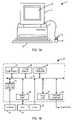
- FIG. 1Ais an exemplary computer system for presenting to a user a user interface suitable to practice an embodiment of the present invention
- FIG. 1Bshows basic subsystems in the computer system of FIG. 1A ;
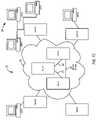
- FIG. 1Cis a generalized diagram of one exemplary computer network suitable for use with the present invention.
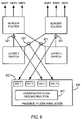
- FIG. 1Ddepicts a typical data network using multi-path
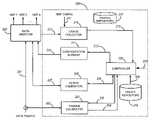
- FIG. 1Eillustrates a simplified data network and flow control system in accordance with a specific embodiment of the present invention
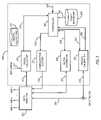
- FIG. 2is a simplified block diagram of one embodiment of a flow control system according to one embodiment the present invention.
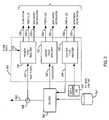
- FIG. 3is a functional block diagram of an exemplary passive calibrator of FIG. 2 ;
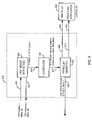
- FIG. 4is a functional block diagram of an exemplary content flow analyzer of FIG. 3 ;
- FIG. 5is a functional block diagram of an export flow analyzer of FIG. 3 in accordance to one embodiment of the present invention.
- FIG. 6is a functional block diagram of a passive flow analyzer of FIG. 3 according to a specific embodiment
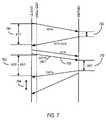
- FIG. 7is a simplified timing diagram of determining network performance metrics with an exemplary flow control system located near a client or a source;
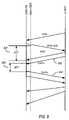
- FIG. 8is a simplified timing diagram of determining network performance metrics with an exemplary flow control system located near a server or a destination;
- FIG. 9is a network diagram of an exemplary passive calibrator with distributed packet capture according to another embodiment of the present invention.
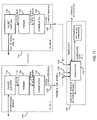
- FIG. 10is a network diagram of distributed passive flow elements according to yet another embodiment of the present invention.
- FIG. 11is a functional block diagram of the distributed passive flow elements of FIG. 10 according to still yet another embodiment of the present invention.
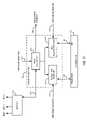
- FIG. 12is a detailed block diagram of an exemplary usage collector according to a specific embodiment of the present invention.
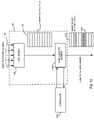
- FIG. 13is a block diagram of a route server using an associated configuration element receiving either multiple BGP4 feeds or at least one iBGP feed according to one embodiment of the present invention
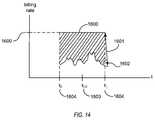
- FIG. 14is a graphical representation illustrating an exemplary method to determine the amount of bandwidth available that can be used without additional cost in accordance to the present invention
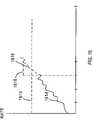
- FIG. 15is a graphical representation illustrating an exemplary method to calculate billable rates in accordance to the present invention.
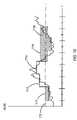
- FIG. 16is a graphical representation depicting an exemplary method to calculate billable rates using short range forecasting in accordance to the present invention.
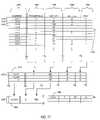
- FIG. 17is a representation of an exemplary address or prefix list according to an embodiment of the present invention.
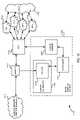
- FIG. 18illustrates a simplified data network and route control system for implementing passive route control in accordance with an embodiment of the present invention
- FIG. 19illustrates FIG. 18 in further detail
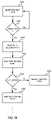
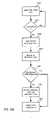
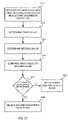
- FIG. 19Ais a flowchart representing an alternate embodiment
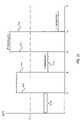
- FIG. 20is a graphical representation illustrating an exemplary method of time division multiplexing of candidate routes in accordance with a specific embodiment of the present invention.
- FIG. 21is a graphical representation illustrating an exemplary method of address space multiplexing of candidate routes in accordance with a specific embodiment of the present invention.
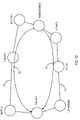
- FIG. 22is a graphical representation of four candidate paths assessed in parallel to passively perform route control in accordance with a specific embodiment of the present invention.
- FIGS. 1A , 1 B, and 1 Cillustrate basic hardware components suitable for practicing a specific embodiment of the present invention.
- FIG. 1Ais an illustration of an exemplary computer system 1 including display 3 having display screen 5 .
- Cabinet 7houses standard computer components such as a disk drive, CD-ROM drive, display adapter, network card, random access memory (RAM), central processing unit (CPU), and other components, subsystems and devices.
- User input devicessuch as mouse 11 having buttons 13 , and keyboard 9 are shown.
- Other user input devicessuch as a trackball, touch-screen, digitizing tablet, voice or visual recognition, etc. can be used.
- the computer systemis illustrative of but one type of computer system, such as a desktop computer, suitable for use with the present invention.
- Computerscan be configured with many different hardware components and can be made in many dimensions and styles (e.g., laptop, palmtop, pentop, server, workstation, mainframe). Any hardware platform suitable for performing the processing described herein is suitable for use with the present invention.
- FIG. 1Billustrates subsystems that might typically be found in a computer such as computer 1 .
- subsystems within box 20are directly interfaced to internal bus 22 .
- Such subsystemstypically are contained within the computer system such as within cabinet 7 of FIG. 1A .
- Subsystemsinclude input/output (I/O) controller 24 , System Memory (or random access memory “RAM”) 26 , central processing unit CPU 28 , Display Adapter 30 , Serial Port 40 , Fixed Disk 42 , Network Interface Adapter 44 (e.g., Network Interface Card, or NIC), which in turn is configured to communicate with a network, such as by electrical, radio, or optical means known in the art.
- I/Oinput/output
- RAMrandom access memory
- bus 22allows each of the subsystems to transfer data among subsystems and, most importantly, with the CPU, where the CPU might be a SparcTM, an Intel CPU, a PowerPCTM, or the equivalent.
- External devicescan communicate with the CPU or other subsystems via bus 22 by interfacing with a subsystem on the bus.
- Monitor 46connects with Display Adapter 30
- a relative pointing devicee.g. a mouse
- a portsuch as Serial Port 40
- Some devicessuch as Keyboard 50 can communicate with the CPU by direct means without using the main data bus as, for example, via an interrupt controller and associated registers.
- FIG. 1Bis illustrative of but one suitable configuration. Subsystems, components or devices other than those shown in FIG. 1B can be added. A suitable computer system also can be achieved using fewer than all of the sub-systems shown in FIG. 1B . For example, a standalone computer need not be coupled to a network so Network Interface 44 would not be required. Other subsystems such as a CD-ROM drive, graphics accelerator, etc. can be included in the configuration without affecting the performance of the system of the present invention.
- FIG. 1Cis a generalized diagram of a typical network that might be used to practice an embodiment of the present invention.
- network system 80includes several local networks coupled to computer data network 82 , such as the Internet, WAN (Wide Area Network), or similar networks.
- Computer data network 82such as the Internet, WAN (Wide Area Network), or similar networks.
- Network systems as described hereinrefer to one or more local networks and network service providers that make up one or more paths from a source to a destination and visa versa.
- Network systemsshould be understood to also denote data networks that include one or more computing devices in communication using any networking technology.
- the present inventionis suitable for use with any path-diverse network (e.g., a multi-homed network interconnected to other networks), especially those networks that employ Internet Protocol (IP) for routing data, such as flows having one or more packets of information according to the protocol.
- IPInternet Protocol
- FIG. 1Ca specific implementation is not shown in FIG. 1C , one having ordinary skill in the art should appreciate that a flow control system according to the present invention can be deployed within one or more data networks 82 or configured to operate with network system 80 .
- Computer USER 1is connected to Server 1 , wherein the connection can be by any network protocol, such as Ethernet, Asynchronous Transfer Mode, IEEE standard 1553 bus, modem connection, Universal Serial Bus, etc.
- the communication linkneed not be a wire but can be infrared, radio wave transmission, etc.
- Server 1is coupled to the data network 82 , such as the Internet or, for example, any other data network that uses Internet Protocol for data communication.
- the data networkis shown symbolically as a collection of server routers 82 .
- USER 1 Computercan be connected directly to the Internet.
- Server 1 's connection to the Internetis typically by a relatively high bandwidth transmission medium such as a T1 line, a T3 line, Metro Area Ethernet, or the like, although it might be connected in a similar fashion as with USER 1 .
- other computers 84are shown utilizing a local network (e.g., Local Area Network, or LAN) at a different location from USER 1 Computer.
- the computers at 84are coupled via Server 2 to the Internet.
- computers 84are shown to include only a single server (e.g., Server 2 ), two or more servers can be connected to the local network associated with computers 84 .
- the USER 3 and Server 3 configurationrepresent yet a third network of computing devices.
- FIG. 1Dshows the effects of typical multi-path (e.g., ECMP) techniques on a route control system using active calibration alone.
- ECMPmulti-path
- the implications for path calibrationare that the active probes sent across the network between Washington D.C. and San Jose may take the northern path through Chicago 172 while the customer's traffic may take the southern path through Dallas 173 , because while the destination IP address is the same, the source IP address is different. Thus, the path measured may not be the path that is actually taken by the customer's traffic.
- the present inventionintelligently controls routes containing data traffic using a system and a technique to assure service levels of customer data traffic in accordance with the present invention.
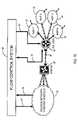
- FIG. 1Eillustrates an exemplary data network within a portion of a network system 80 of FIG. 1C including NSPs 92 , and a flow control system in accordance with a specific embodiment of the present invention.
- Exemplary flow control system 90is configured to communicate with one or more network elements of the data network.
- flow control system 90is shown external of and in communication with the elements of source network 94 , switch 96 , and router 99 , flow control system 90 can be wholly embodied in any of the elements shown, or alternatively, can be distributed, in portions, over each of the elements.
- flow control system 90resides on one or more servers or network elements within exemplary source network 94 .
- An exemplary data networkincludes one or more source networks 94 .
- a source network 94typically is a local network including one or more servers owned and operated by application service providers, managed service providers, content delivery networks, web hosting companies, individual enterprises, corporations, entities and the like. Such service providers typically communicate information to users that are further removed from the multi-homed network service providers 92 , such as NSP 1 , NSP 2 , NSP 3 , . . . and NSPn.
- network service providers 92are coupled to a source network or source point as to be considered a first set of data networks.
- NSPsor first set of data networks
- second setis connected to multiple other networks, thus establishing one or more paths from a source to a destination.
- a path as described hereincan be a route from a first point (e.g., source) to a second point (e.g., destination), and is divided into segments, where each segment resides wholly within a provider.
- router 98includes one or more routers running an exemplary protocol, such as Border Gateway Protocol (e.g., BGP4, such as CiscoTM or JuniperTM implementations), for example, and preferably has route visibility across multiple network service providers.
- Border Gateway Protocole.g., BGP4, such as CiscoTM or JuniperTM implementations
- system 90operates to measure end-to-end (i.e., source to destination and destination to source) data traffic 95 in terms of flow characteristics, such as performance, cost, bandwidth, and the like.
- Flow control system 90also generates statistics associated with data paths across multiple network service providers in real time, or near-real time. Such statistics are communicated to source network 94 for providing network engineering personnel, for example, with report information 91 such that on-the-fly reports are created to provide information related to route-change activity, traffic performance as delivered to selected destinations and transit provider usage (i.e., bandwidth), cost, and the like.
- a local computing deviceuses report information 91 from system 90 to generate visual and graphical representations on, for example, a user-friendly interface (“UI”) where the representations are indicative of data traffic along one or more paths (e.g., paths between a source and a destination).
- UIuser-friendly interface
- Network personnel, or any entity responsible with flow control, with access to source network 94then can provide control information 93 to flow control system 90 to modify system operation by, for example, changing data traffic flow from a under-performing current, or default, path to a better performing path. Intervention by network personnel, however, is not necessary for flow control system 90 to operate in accordance with the present invention.
- Flow control system 90further functions to compare specific data traffic flows (i.e., both uni- and bi-directional traffic flows outbound from and inbound into the data network) to determine whether a particular traffic flow meets one or more rules of an associated flow policy.
- a flow policyincludes a set of one or more rules that is associated with a particular data traffic flow related to particular system user (e.g., as denoted by IP address prefix).
- a rule, or criterionis a minimum level, a maximum level or a range of values that defines acceptable routing behavior of an associated with a traffic flow characteristic.
- a rulecan set: the maximum acceptable cost, with or without regard to network service provider cost; the maximum load or bandwidth usage associated with traffic flows through specific providers; a range of acceptable (or non-acceptable) service providers; the maximum acceptable latency or loss over one or more paths across multiple network service providers; acceptable ranges of performance for each network service provider, such as maximum burst limits, minimum performance commitments and range of costs (i.e., cost structures with regards to time of day, type of traffic, etc.); and any other data flow characteristic that can influence the measurement or the control of data traffic.
- Flow control system 90further operates to detect when one or more rules, or flow policies, are violated and then to take remedial action. That is, flow control system 90 enforces policies associated with data traffic flow by correcting detrimental deviations in performance (i.e., service level assurance), costs or bandwidth (i.e., load in terms of percent capacity available per path). Flow control system 90 makes such corrections based on real- or near-real time traffic analysis, local path diversity (i.e., modifying one or more egress paths from a data network), and visibility into downstream available paths. For example, for a destination related to a specific traffic flow, flow control system 90 directs, or re-directs, traffic to one or more alternative paths to resolve a particular flow's deviation in terms of flow characteristics, from its flow policy.
- detrimental deviations in performancei.e., service level assurance
- bandwidthi.e., load in terms of percent capacity available per path.
- Flow control system 90makes such corrections based on real- or near-real time traffic analysis, local path diversity (
- FIG. 2illustrates a specific embodiment of flow control system 90 of FIG. 1D .
- flow control system in FIG. 2is a reactive flow control system. That is, a reactive flow control system is designed to react to policy violations indicating sub-standard routing of data traffic over one or more data networks or service providers (i.e., addresses pass-fail criteria) rather than optimizing performance at some targeted level of acceptable operation.
- Flow control system 200includes controller 205 , passive calibrator 203 , active calibrator 208 , configuration element 211 , and usage collector 214 , each of which can be realized in hardware, software, or a combination thereof.
- controller 205 , passive calibrator 203 , active calibrator 208 , configuration element 211 , and usage collector 214are software modules designed to perform specific processes, as described herein, in accordance to the present invention. Such modules can reside in one or more computing devices, such as the computing devices shown in FIG. 1A , or alternatively, over one or more USER-type machines (i.e., servers) coupled over a data network or network system.
- Exemplary passive calibrator 203 , active calibrator 208 and usage collector 214are coupled to controller 205 to, in part, provide flow characteristics of data traffic.
- Controller 205receives monitored flow characteristics as well as flow policies to be enforced.
- Controller 205is configured to determine if a flow policy is violated, and upon detection of such a violation, then to select a remedial action to resolve the violation.
- Configuration element 211is coupled to controller 205 to receive information to initiate remedial actions and is configured to communicate such actions to data director 220 . Thereafter, data director 220 implements the corrective action to resolve the pending violation, for example, by changing the traffic flow from the current path to a better performing path.
- flow control system 200includes traffic repository 221 and flow policy repository 218 .
- Exemplary traffic repository 221 and flow policy repository 218are databases, such as a storage device, configured to store a large number of records in one or more data structures.
- Traffic repository 221is designed to store and to communicate information related to traffic and route characteristics
- flow policy repository 218is designed to store and to communicate policy information or rules to govern the performance and cost of each of the data traffic flows.
- One having ordinary skill in the art of database managementshould appreciate that many database techniques may be employed to effectuate the repositories of the present invention.
- flow control system 200 of FIG. 2monitors egress and ingress data flow 201 , such as IP data traffic, to determine whether data flow 201 to and from source network is within the performance tolerances set by the associated flow policy.
- Flow control system 200receives data flow 201 by replication, such as by a network switch, by using a splitter, such as an optical splitter, or any other tapping means know to those having ordinary skill in the art.
- Data flow 202which is exactly, or near exactly, the same as the information contained within data flow 201 , is provided to passive calibrator 203 .
- Passive calibrator 203monitors the data traffic of data flow 201 and communicates information 204 related to the traffic and traffic performance to controller 205 .
- Controller 205is configured to receive policy data 206 representing one or more policies that correspond to a particular traffic flow, such as a particular data flow. Moreover, the particular data flow can be associated with a certain user identified by a destination prefix, for example. From policy data 206 , controller 205 determines the levels of performance, cost, or utilization that the particular traffic is to meet. For example, controller 205 determines whether a particular traffic flow of data flow 201 is meeting defined performance levels (i.e., service levels) as defined by one or more requirements or criteria, such as inbound and outbound network latency, packet loss, and network jitter.
- defined performance levelsi.e., service levels
- Active calibrator 208functions to send and to receive one or more active probes 207 , of varying types, into and from the data networks. These probes are designed to measure network performance including, path taken across one or more available providers (i.e., to determine if a provider is a transit AS rather than peer AS), next hop-in-use, and other network parameters.
- controller 205sends an active probe request 209 to active calibrator 208 . Such a request is required if controller 205 determines that additional information regarding alternative paths or network system characteristics are necessary to better enforce policies in reactive flow control systems, or alternatively, to prevent such policy violations optimized flow control systems.
- Usage collector 214is configured to receive NSP data 217 representing one or more network provider configurations. Generally, such configurations include the number of paths (“pipes”) associated with each provider and the size thereof. Additionally, NSP data 217 can relate to a provider's cost or billing structure and can also include each provider's associated set or subset of addresses, each provider's billing methods (i.e., byte/min, etc.), etc. Moreover, usage collector 214 is configured to collect usage information 213 from the network elements, such as switches, border routers, provider gear, and other devices used to transport data over data networks. Usage collector 214 is configured to provide controller 205 with provider utilization and billing information 215 , which represents aggregated data based upon NSP data 217 and usage information 213 . Utilization and billing information 215 includes data that represents cost, billing, utilization, etc., for each network service provider of interest.
- provider utilization and billing information 215includes data that represents cost, billing, utilization, etc., for each network service provider of interest.
- NSP data 217can be provided to usage collector 214 in a variety of ways.
- the datacan be provided the data paths used by the data flows or can be provided by an entity having authority to do so, such a network engineer entering the data into a computing device in source network 94 of FIG. 1E .
- usage collector 214is configured to monitor usage characteristics defining a network service provider's data traffic capacity, costs, etc.
- Usage information 213 provided to usage collector 214includes usage characteristics from network elements, such as switches, border routers, routers, provider gear, and other devices used to transport data over data networks. Usage refers to the data (i.e., raw data such as X Mb samples at time( 0 )) that represents instantaneous or near instantaneous measurement of characteristics (i.e., usage characteristics) that define, for example, the load and available capacity of each network service provider. Utilization is the usage rate over time.
- bandwidthis the total capacity each path or segment of path available for traffic flow.
- the usagecan be measured in any segment in any path at any number of hops or networks from a first point.
- Loadis typically defined as the amount of capacity a particular path is used to carry data traffic and can be expressed as load/bandwidth.
- Usage collector 214is designed to generate utilization and billing information 215 based upon usage information 1213 and NSP data 217 . Since each of the providers has different cost and billing structures, as well as methods of determining usage costs, usage collector 214 operates to aggregate usage information 213 accordingly to provide controller 205 with utilization and billing information 215 .
- Usage collector 214then provides the utilization billing information 215 to controller 205 for each network service provider of interest.
- the usage collectorcan provide additional information based upon the provider usage information, to the controller, as needed to better effectuate route control.
- Controller 205collects information (i.e., aggregated performance and usage characteristics) from each of passive calibrator 203 , active calibrator 208 , usage collector 214 , and optionally traffic repository 221 . Based upon the information collected, controller 205 determines a course of action that best alleviates the policy violations in respect to the information represented by policy data 206 that is conveyed to controller 205 . Once the course of action is determined, controller 205 initiates and sends a network routing change request 212 to configuration element 211 . In a specific embodiment, controller 205 also provides data representing one or more alternate data paths that can be used to resolve the policy violation.
- informationi.e., aggregated performance and usage characteristics
- Configuration element 211is designed to communicate routing changes in the network to data director 220 . Once configuration element 211 sends one or more routing changes, data director 220 then moves data flow 201 from a current path to another path (e.g., from NSP 1 to NSPn or a first path of NSP 1 to a second path of NSP 1 ). Data director 220 thus operates to distribute traffic to these destinations across multiple network service provider links based on, for example, the cost and performance measured across each link.
- configuration element 211communicates one or more routing changes 210 with data director 220 , for example, by using a routing protocol such as BGP.
- Configuration element 211functions to dynamically control routing behavior by modifying the source address of the traffic passing through configuration element 211 .
- the source addressis modified in a way that improves application performance as well as cost requirements.
- active calibrator 208provides active mechanisms within system 200 for determining the nature of downstream or upstream paths. This information is typically not available in any conventional protocol used on data networks such as the Internet, and must be collected external to the normal processes of networking. As shown in FIG. 2 , active calibrator 208 is coupled to controller 205 to provide at least a destination prefix that is not meeting the policy requirements, such as minimum performance level. Once received, active calibrator 208 then initiates a calibration process that determines most or all of the available network paths to the destination address as well as performance levels. Controller 205 is designed to select the most suitable probes that active calibrator 208 is to use, based on the particular policy requiring enforcement or correction, and thereafter to initiate active probing of network paths using active calibrator 208 .
- active calibration probesare communicated to available network or Internet paths via probe path 207 .
- the returning active calibration probesenter via probe path 207 into active calibrator 208 .
- Active calibratorthen forwards probe information 209 to controller 205 , which contains performance information including alternate available paths. Controller 205 then determines how best to enforce the specifics of the policy associated with the subject traffic flow.
- Exemplary active calibrator 208employs active calibration mechanisms to provide, for example, long term statistics.
- active calibrator 208resides in data director 220 within, or alternatively, can be integrated into controller 205 .
- routerssuitable to practice the present invention.
- One example of suitable active probesis the RMON probe.
- Cisco systemsuse Service Assurance Agent (“SAA”) that is derived from the remote monitoring (“RMON”) probes to send out active probes.
- SAAallows routers to measure and report network-originated application round trip times. Although not every probe mentioned below is available in SAA for network calibration, one skilled in the art would appreciate how each of the following might be implemented to practice one or more embodiments of the present invention.
- An exemplary active calibrator 208can use ICMP (Internet Control Message Protocol) echo request or other ping-type probes, lightweight TCP-based probes, Sting probes, “pathchar” probes, lightweight probes using User Datagram Protocol (“UDP”) packets with a predefined TTL (time to live), traceroute probes, or other active probes that are suitable for use by active calibrator 208 in accordance with the present invention.
- ICMPInternet Control Message Protocol
- UDPUser Datagram Protocol
- probesare received back by active calibrator 208 of FIG. 2 and are sent out by their source addresses.
- Such probesare all sourced and received on an exemplary stats computer system resident, for example, in the local premises, or as a stats process on a router.
- active calibrator and its use of probesoperate in accordance to probes described in a U.S. Patent Application, entitled “System and Method to Assure Network Service Levels with Intelligent Routing,” having U.S. patent application Ser. No. 09/833,219 and filed on Apr. 10, 2001, and is incorporated by reference for all purposes.
- Exemplary passive calibrator 203 of FIG. 2is configured to receive, without interfering with, network communication data 20 i , such as customer network or Internet traffic.
- Network communication data path 201i.e., IP data traffic
- passive calibrator 203includes the default or currently routed path of the data traffic and is provided to passive calibration element 203 from data director 220 .
- the currently routed pathis, for example; the path (e.g., hop-by-hop) between routers that a packet would take, as determined by standard routing protocols.
- Passive calibrator 203is coupled (i.e., electrically, optically, by radio waves, etc.) to controller 205 to provide information which indicates whether the specific IP data traffic is within the range of acceptable performance metrics, such as determined by a flow policy.
- Passive calibrator 203operates to instantaneously monitor all traffic received via data flow 202 and is designed to overcome the complications of relying solely on active traffic analysis, such as EMCP, as shown with respect to FIG. 1D .
- active traffic analysissuch as EMCP
- passive calibrator 203operates to overcome the complications of performing only active traffic analysis in the presence of multi-path (e.g., ECMP).
- multi-pathe.g., ECMP
- passive calibrator 203examines the traffic stream in both directions (i.e., ingress and egress) and classifies each of the traffic streams into flows. Traffic flows, are monitored within passive calibrator 203 according to the underlying protocol state (e.g., such as regarding TCP sessions) over time. For example, passive calibrator 203 classifies the traffic flow according to round trip latency, percentage of packets lost, and jitter for each of the traffic routes or flows. Such traffic route information is used to characterize the “end-to-end” performance of the paths carrying the traffic flows, which includes flow rates, and is aggregated into a series of network prefixes.
- passive calibrator 203is coupled to store, fetch and update traffic and route information stored in traffic repository 221 (connection not shown).
- traffic repository 221is a database configured to store and to maintain data representing traffic and route information that is useful to the end user employing a flow control system, such as system 200 of FIG. 2 , as well as the operators of, for example, an network service provider.
- the data within traffic repository 221includes long term statistics about the traffic. These statistics will be used for reporting, analysis purposes, and providing general feedback to a user of a flow control system according to the present invention.
- Such feedbackwill consist, for example, of types of traffic being sent, source addresses, destination addresses, applications, traffic sent by ToS or DSCP (“DiffServ Code Point”) setting (which might be integrated into a differentiated billing system), and volume of traffic.
- DiffServ Code Pointtraffic sent by ToS or DSCP (“DiffServ Code Point”) setting (which might be integrated into a differentiated billing system), and volume of traffic.
- Traffic repository 221where, for example, a reporting engine or some other analysis process has access to them.
- the information stored in traffic repository 221is data representing such traffic route characteristics arranged in any suitable data structure as would be appreciated by one skilled in the art.
- FIG. 3is a detailed functional block diagram showing exemplary elements of a passive calibrator 303 according to an embodiment of the present invention.
- Passive calibrator 303includes, for example, passive flow analyzer 330 , export flow analyzer 331 , and content analyzer 332 .
- passive flow analyzer 330performs passive analysis on the traffic to monitor current traffic flow characteristics so the controller can determine whether the monitored current traffic flow meets associated policy requirements.
- Export flow analyzer 331performs passive analysis on exported flow records from a network device, such as from those devices (e.g., router) that advertise traffic type, source and destination addresses, and other information related to the traffic that it travels across service provider links.
- a network devicesuch as from those devices (e.g., router) that advertise traffic type, source and destination addresses, and other information related to the traffic that it travels across service provider links.
- An example of such a network deviceis Cisco's NetflowTM product.
- passive flow analyzer 330operates in accordance to the passive flow analyzer described in the above-mentioned U.S. patent application Ser. No. 09/833,219.
- Content Flow Analyzer 332performs passive analysis of specific elements of data content, such as web site content.
- Export flow analyzer 331 and content flow analyzer 332determine a set of relevant prefixes or a prefix list 334 that is associated with a specific user's policy.
- Prefix list 334is sent as data representing such prefixes to an active detection process in the controller.
- Prefix list 334can be one or more lists or data structures configured to store data representing performance and usage characteristics and is designed to receive a query, for example, by the controller.
- the passive flow analyzerprovides the one or more prefix lists, or portions thereof, to the controller for use in determining a policy violation, for determining which routes or path comply with the flow policy, which path is the optimum path for routing data, and the like.
- An exemplary prefix listthat can be generated by export flow analyzer 331 and content flow analyzer 332 , as well as passive flow analyzer 330 .
- FIG. 17shows an exemplary data structure 1900 suitable for providing for one or more of the prefix lists described herein.
- Data structure, or list, 1900includes many IP addresses 1920 with many records 1910 associated with each address (e.g., destination) or prefix of variable granularity.
- Each record 1910includes an address 1920 (or prefix), a number of occurrences during a time period 1930 , number of bytes sampled 1940 , time interval in which sampling occurred (delta t) 1950 , new prefix flag 1960 (1 represents new prefix, 0 represents old prefix), or the like.
- List 1970includes aggregate flow information for each address 1920 or prefix.
- record 1975includes the following data: for address 1.2.4.7, this address was monitored four times during the sampling time interval (delta)t with a total flow volume of 360 bytes.
- new prefix list 1980includes address 1.2.4.9 having one occurrence (first time) over (delta)t interval.
- data representing address, occurrence, number of bytes, time interval, etc.can be used to manipulate the data such in a way that the controller can easily obtain.
- the data stored within a list 1920can be aggregated or grouped according to address or prefix.
- aggregate list 1995includes the group of addresses corresponding to 1.2.4.X.
- the record 1997 of aggregate addressescontains data indicating that the aggregation of addresses had been monitored five times during the time interval and had a total volume of 540 bytes.
- addresses or prefixescan be grouped or aggregated in many ways.
- Export flow analyzer 331 and content flow analyzer 332also are configured to notify controller 305 when a previously unseen prefix has been added to the prefix list 334 .
- New prefix notification signal 335enables the control element 1005 to establish a new baseline performance for this prefix and to seed the routing table with a non-default route, or alternative route (i.e., non-BGP), if necessary.
- export flow analyzer 331 and content flow analyzer 332provide for monitoring of performance characteristics.
- Content flow analyzer 332is typically used when the main source of traffic flow 340 is web site or other content.
- Content source 341can be configured such that special or premium content 342 that must be optimized can be identified by the flow control system by using, for example, an embedded URL 343 .
- URL 343redirects the client to a small content server running on the content flow analyzer 332 .
- Content flow analyzer 332receives a request for the small content element, which is generally a small image file (e.g., 1 ⁇ 1 GIF) and is invisible or imperceptible in relation with the main original content, and responds to the client with the small content element 344 .
- Content flow analyzer 332then stores or logs this transaction, and by using these logs, content flow analyzer 332 is able to perform aggregation and assemble content prefix list 334 .
- the list 334is passed along to controller 205 , for example, for active service level monitoring and policy enforcement.
- FIG. 4illustrates a functional block diagram of an exemplary content flow analyzer 432 .
- Content flow analyzer 432handles requests 420 for a small element of content, which is, for example, a 1 ⁇ 1 pixel image file that is imperceptible (although it need not be) on the resulting page.
- the small elementis associated with the premium or generally specific pages of a larger set of content.
- the small elementis, for example, a small redirect URL embedded within the content.
- the small redirect URLacts to generate an HTTP request 420 in response to the small element of content.
- Content flow analyzer 432sees this request 420 and responds 422 to it with, for example, a lightweight HTTP server 453 .
- This serveris fast and lightweight, and does nothing other than respond with the image file.
- the lightweight web server 453logs the IP address of the client requesting the web page, and sends the one or more addresses to aggregator 454 .
- Aggregator 454aggregates, or collates, individual IP elements 424 into prefixes of varying granularity (e.g., /8 through /32) and also aggregates the frequency that each prefix is seen over an interval of time.
- aggregator 454classifies prefixes according to its frequency of occurrence and provides aggregated (i.e., grouped) prefixes 426 to prefix list generator 455 .
- Prefix list generator 455creates destination prefix list 428 according, for example, to a prefix's importance in relation to the overall operation of the system as defined by the aggregated or grouped prefixes 426 . For example, each monitored traffic flow is examined to determine the performance characteristics associated with a destination prefix or address.
- Aggregate prefixes 426are generally classified in terms of flow frequency, and average or total flow volume.
- Prefix list generator 455sends updates to current prefix list 428 to controller 205 of FIG. 2 , and also notifies other elements of the system with new prefix notification signal 432 when a new prefix is observed.
- Prefix list generator 455stores the prefix information 430 to persistent storage for reporting and analysis purposes.
- a new prefixprovides an additional alternate path or path segment that was unknown up until a certain point of time. The new alternate path or path segment associated with the new prefix can provide for flow policy compliance, and thus can be used to re-route or alter routing of data to obviate a policy violation.
- export flow analyzer 331operates in conjunction with network elements that can export (i.e., communicate) flow information in a format useable by analyzer 331 .
- One exemplary formatis the Cisco NetFlowTM export format. Any network element designed to export flow information, such as router 345 or a layer 2 switch, thus is also configured to passively monitor the traffic it is processing and forwards export records 346 to export flow analyzer 331 .
- Export flow analyzer 331functions to process export flow records 346 , aggregates the flows into prefix elements, and generates prefix list 334 .
- the prefix listis generally a subset of all prefixes observed by the flow control system. A prefix is selected from all prefixes based upon flow volume and flow frequency over an observation period. The selected prefix then is placed into prefix list 334 before the list passed along to controller 205 of FIG. 2 , for example.
- FIG. 5illustrates a functional block diagram of exemplary export flow analyzer 531 .
- Export flow analyzer 531includes format interpreter 549 , parser 550 and prefix list generator 552 .
- Format interpreter 549is configured to receive export flow datagrams 520 from the network elements designed to send them. Format interpreter 549 then communicates individual flow information 522 to parser 550 .
- Parser 550operates to interpret destination IP elements from the flows monitored by the passive calibrator. Parser 550 also aggregates traffic flow according to total flow volume or transportation rate (e.g., in bytes/time unit) as well as flow frequency of destination addresses, for example, into aggregate elements. Thereafter, parser 550 sends the aggregate elements 524 to aggregator 551 .
- total flow volume or transportation ratee.g., in bytes/time unit
- Aggregator 551then generates prefix-level destination information 526 (i.e., aggregate prefix volume and frequency) at a variety of prefix granularities (e.g., from /8 up through /32). In other words, aggregator 551 determines the frequency, session, or for a specific prefix and the aggregate volume of occurrences related to that prefix over an observed time interval.
- prefix-level destination information 526i.e., aggregate prefix volume and frequency
- prefix granularitiese.g., from /8 up through /32
- Destination prefix list 528is generated by prefix list generator 552 by, for example, ranking and organizing traffic flow characteristics related to prefixes in order of relative importance.
- List 528contains data representing an aggregation of prefixes prefix list 528 and is organized in determines the relevance, as determined by the system or an entity to ensure policy enforcement. For example, one or more prefixes can be ordered in terms of flow frequency and average or total flow volume in relation together prefixes available in the overall system.
- Prefix list generator 552sends updates to the current prefix list to controller 205 of FIG. 2 and also notifies other elements of the system when a new prefix is observed via a new prefix notification signal 532 .
- Prefix list generator 552stores all prefix information 530 to persistent storage for reporting and analysis purposes.
- FIG. 6illustrates a function block diagram of an exemplary passive flow analyzer 630 of FIG. 3 .
- passive flow analyzer 630is designed to generate prefix list 634 and new prefix notification signal 635 and generates aggregated flow data 680 , including network performance and usage statistics grouped into relevant characteristics. For example, prefixes of a certain size can be aggregated, or grouped, from highest traffic volume to lowest as observed over time.
- the aggregated flow data 680is communicated to controller 605 and are used by the controller to determine whether the current traffic flow violates or fails to conform to an associated flow policy for a given destination.
- the passive flow analyzer 630also functions to store aggregated flow data 680 in traffic repository 621 , where it can be used for characterizing historical route and traffic flow performance.
- a prefix list generatoris not included in the passive flow analyzer of FIG. 6 .
- Passive Flow Analyzer 630uses a copy of the traffic 602 via a passive network tap or spanned switch port, as shown in FIG. 2 , to monitor the network performance for traffic. Passive flow analyzer 630 also can monitor and characterize UDP traffic patterns for detection of anomalous behavior, such as non-periodic traffic flow, or the like. Passive flow analyzer 630 can use various neural network techniques to learn and understand normal UDP behavior for the application in question, and indicate when that behavior has changed, possibly indicating a service level violation which can be verified or explained with well known active probing techniques.
- passive flow analyzer 630is designed to be “application-aware” according how each of the particular traffic flows is classified. Traffic can be classified according to the classifier described in the above-mentioned U.S. patent application Ser. No. 09/833,219. That it, Passive flow analyzer 630 can inspect the payload of each packet of traffic 602 to interpret the performance and operation of specific network applications, such as capture and interpretation of the Realtime Transport Control Protocol (“RTCP”) for voice over IP (“VoiP”), for example.
- RTCPRealtime Transport Control Protocol
- VoIPvoice over IP
- passive flow analyzer 330includes packet capture engine 650 , packet parser 651 , correlation engine 652 , and aggregator 653 .
- Packet capture engine 650is a passive receiver configured to receive traffic (e.g., IP data traffic) coming into and out of the network. Capture of traffic is used to facilitate traffic analysis and for determining a whether a current traffic route meets minimum service levels or policy requirements.
- Packet capture engine 650is designed to remove one, several or all packets from a traffic stream, including packets leaving the network and entering the network.
- Packet capture engine 250operates to remove certain packets up, for example, from the network drivers in the kernel into user space by writing custom network drivers to capture part of a packet.
- the partial packetcan be copied directly into user space without using the computer CPU.
- Such packetsare typically removed according to one or more filters before they are captured.
- filters and the use thereofare well known in the art and can be designed to, for example, remove all types of TCP traffic, a specific address range or ranges, or any combination of source or destination address, protocol, packet size, or data match, etc.
- libpcapis a system-independent interface for packet capture written at the Lawrence Berkeley National Laboratory. Berkeley Packet Filter is another example of such capture program.
- Parser 651is coupled to receive captured raw packets and operates to deconstruct the packets and retrieve specific information about the packet from each in the traffic flow.
- Exemplary parser 651extracts information from the IP and TCP headers.
- Such extracted information from the IP headersinclude source and destination IP addresses, DSCP information encoded in the ToS (i.e., “type of service”) bits, and the like.
- DSCPcarries information about IP packet QoS requirements. Each DSCP defines the Per Hop Behavior of a traffic class. DiffServ has 64 code points so that it can define 64 different types of traffic classifications.
- TCP header informationincludes source and destination port numbers, sequence number, ACK number, the TCP flags (SYN, ACK, FIN etc.), the window size, and the like.
- TCP elements parsed from the TCP headersare especially useful in determining whether a policy is being enforced, in terms of performance.
- An increasing amount of trafficdoes not rely on TCP and instead uses UDP.
- UDPdoes not contain the necessary information to determine service levels according to conventional approaches.
- the present inventionmight employ a statistically relevant amount of collateral TCP traffic going to the same prefix or a series of active probes to the same destinations, or have the analyzer parse deeper into the packet and understand the traffic at the application layer (e.g., layer 7).
- application layere.g., layer 7
- Correlator 652operates to interpret and to group the packet elements (e.g., TCP and IP) from the packets to determine the current service level of the flow and then groups the packets into a specific traffic flow. Flows are reconstructed, or grouped, by matching source and destination IP addresses and port numbers, similar to the process of stateful monitoring of firewalls.
- Correlator 252determines the current service level by measuring several traffic characteristics during a TCP transaction. For example, correlator 252 determines the round trip time (“RTT”) incurred on a network, and hence, this serves as a measure of latency for the network traffic.
- RTTround trip time
- FIG. 7shows how correlator 652 of passive flow analyzer 630 of FIG. 6 , placed near a source (e.g., client having a source address), can determine the network latency (“NL”) and server response time (“SRT”) for a TCP traffic stream.
- FIG. 8shows how correlator 652 of passive flow analyzer 630 of FIG. 6 , placed near a destination (e.g., server having a destination address), can determine the network latency (“NL”) and server response time (“SRT”) for a TCP traffic stream
- Correlator 652 of FIG. 6determines NL, for example, by estimating the difference 791 of FIG. 7 in time between a TCP SYN packet and its corresponding TCP SYN ACK packet.
- the difference in time between SYN and SYN ACK 791is a rough estimation of the RTT excluding the small amount of time 790 that the server takes to respond to SYN.
- the SYN ACK packetis handled in the kernel of most operating systems and is generally assumed to be near zero. For each new TCP stream that is initiated from the source, correlator 652 can observe a time instantaneous value for network latency.
- Packet lossis calculated, as a percentage, by correlator 652 by maintaining the state of all of the retransmitted packets that occur. From this value, correlator 652 calculates percentage packet loss from a total count of segments sent.
- Correlator 652also determines SRT 792 of FIG. 7 , for example, by estimating the delta time (i.e., difference) 793 between, for example, the HTTP GET message 795 and the first data segment received and then by subtracting the previous value for the RTT. This assumes that the previous value for the RTT has not changed beyond an operable range since the TCP handshake occurred.
- the measurement shown by 794indicates that measured congestion increases in the path as SRT 792 correspondingly increases. For purposes of this example, it is assumed that the data segments in the initial HTTP GET are sent back to back.
- the passive flow analyzer 630is deployed close to (i.e., minimal or negligible latency due to geographically different locations) the clients requesting content from the IP data network, such as the Internet.
- Correlator 652also determines SRT 892 of FIG. 8 , for example, by estimating the delta time between the HTTP GET, message 893 and the first data segment 894 .
- the passive flow analyzer 630 of FIG. 6is deployed on the server end as will occur for most content delivery installations.
- SRT 892 determined by correlator 652depends on its location along the path that the traffic traverses. If passive flow analyzer 630 of FIG. 6 is on the client side, server response time 792 of FIG. 7 can be estimated as the delta in time between the HTTP GET Request message and the first data segment returned minus the RTT observed before the GET Request as shown in FIG. 7 . If passive flow analyzer 630 of FIG. 6 is closer to the server side, the estimation is essentially the delta in time between the GET Request and the response as shown in FIG. 8 .
- TCP Congestion Window(“cwnd”) and by identifying the delta in receive time between segments that were sent back to back by the server, where the TCP congestion window controls the number of packets a TCP flow may have in the network at any time.
- Correlator 652is coupled to provide the above determined exemplary flow characteristics to aggregator 653 .
- aggregator 653primarily operates to group all flows going to each set of specific destinations together into one grouping.
- Aggregator 653uses the service level statistics for each of the individual flows, received from Correlator 652 , to generate an aggregate of service level statistics for each grouping of flows that are to go to the same destinations in the data network, such as the Internet.
- Aggregator 653is also coupled to traffic storage 621 to store such aggregated (i.e., grouped by address prefix) traffic flow characteristics. Traffic flow characteristics (or traffic profiles) are then used for future statistical manipulation and flow prediction.
- traffic storage 621is the equivalent, or the same, as storage 221 of FIG. 2 .
- the granularity of the destinationsis the same as the granularity of changes that can be made in the routing table.
- flow control system of FIG. 2could install routes with prefixes of any length (i.e., 0/ to /32), though the general practice is not to do so.
- Aggregator 653will start aggregating flow statistics at the /32 level (i.e., class C networks) and continue all the way up to the /8 level (i.e., class A networks) into a data structure, such as a patricia or radix trie, or a parent-child data structure, or the like. In this way, it is possible to seek very quickly the necessary granularity of the routing change that needs to be made to ensure the service level is met.
- Aggregation techniques employed by aggregator 653are used to maintain the system 200 of FIG. 2 to acceptable performance service levels, such as determined by one or more flow policy requirements. Since network performance has been shown not to follow conventional statistical distribution, such as Gaussian or Poisson distribution, average calculations for service levels across all flows are not as reliable a measurement of a typical performance behavior during a pre-determined time interval. If the service level agreement (SLA) or policy, however, states that the average service level must be maintained, then the outlying occurrences of poor performance will cause the average to be skewed, thus requiring corrective action to restore the minimum service levels being offered. A meaningful way to describe typical service levels being offered across all flows is to use median values, rather than average values. A person having ordinary skill in the arts will appreciate that either technique is possible and will depend on the definition of the service level that must be maintained.
- SLAservice level agreement
- a meaningful way to describe typical service levels being offered across all flowsis to use median values, rather than average values.
- FIG. 9illustrates how passive flow analyzer 930 , according to another embodiment of the present invention, is capable of packet capture and flow reconstruction across more than one network interface, each interface represented by a network interface card (“NIC”).
- NICnetwork interface card
- many switch fabricsare constructed in a manner by tapping into a single point in the data stream or replicating a single port. The switch does not guarantee that passive flow analyzer 930 will see all of the traffic in both directions. Bi-directional traffic is required for optional flow reconstruction for passive analysis.
- the switch fabric shownmust be passively tapped at tap points 921 at four places (as shown) and connected to passive flow analyzer 931 at four different network interface cards (NIC) 922 .
- Passive taps at tap points 921can be mirrored switch ports or optical/electrical passive taps.
- Passive flow analyzer 930has a single or combined aggregated flow reconstruction element 953 that can collect captured data from multiple network interfaces in order to perform flow reconstruction.
- FIG. 10illustrates yet another embodiment of the present invention where passive flow analyzer 630 of FIG. 6 is distributed in nature.
- FIG. 10shows traffic flow 1020 bi-directionally traveling via several local traffic source points.
- Distributed local passive flow agents 1025are tapped passively at tap point 1024 into traffic flow 1020 .
- Passive flow agents 1025are distributed such that each agent monitors and conveys individual flow characteristics.
- the traffic sourcesare distributed across a layer 3 infrastructure, for example, and are separated by one or more routers 1026 . This arrangement prevents the passive flow analyzer 930 of FIG. 9 from collecting information across the same layer 2 switch fabric as in FIG. 9 .
- Each of the passive flow agents 1025performs local flow reconstruction and then exports flow data records 1027 over the network to a central passive flow analyzer 1028 , performs flow aggregation and service level analysis across all of the distributed passive flow agents 1025 .
- FIG. 11illustrates a more detailed functional block diagram depicting multiple passive flow agents 1125 separately distributed and a single central passive flow analyzer 1128 .
- Each passive flow agent 1125includes packet capture 1150 , parser 1151 and correlator 1152 functions on each of the local traffic flows.
- Correlator 1152exports flow records 1129 with substantial data reduction to central passive flow analyzer 1128 .
- Substantial data reductionis used to reduce the amount of information forwarded to the central passive flow analyzer and can be effectuated by using well-known encoding techniques.
- Central passive flow analyzer 1128accepts flow export records 1129 from each passive flow agent 1125 and central aggregator 1153 performs prefix aggregation on each of the exported flows.
- the centrally aggregated flow informationcan be used to determine if a particular policy violation is occurring.
- FIG. 12illustrates a detailed block diagram of usage collector 214 of FIG. 2 .
- Usage collector 1215operates to collect usage information 1273 from network providers, such as byte counters (i.e., the amount of traffic transmitted to and received from network service providers). Usage collector 1215 uses this information to calculate network service provider utilization, load, etc., of data paths associated with the provider.
- network providerssuch as byte counters (i.e., the amount of traffic transmitted to and received from network service providers).
- Usage collector 1215uses this information to calculate network service provider utilization, load, etc., of data paths associated with the provider.
- Usage collector 1215also operates to reconstruct provider billing records. Usage collector 1215 accepts provider configuration information 1271 related to each network service provider (NSP) connection. This NSP configuration information 1271 details provider interfaces on the various routers 1272 (e.g., egress routers), provider next-hop IP addresses traceroute probes (to verify the current provider in use with trace probes), billing period start and end dates, circuit bandwidth for calculating the utilization and price per megabit/sec, minimum bandwidth commitment, burstable rates, provider sampling interval, provider billing algorithm, a utilization alarm threshold and the like.
- NSPnetwork service provider
- exemplary raw collector 1274sends a query 1290 (e.g., SNMP) to collect interface raw byte counters from routers 1272 on each of the provider circuits at a specified sampling interval.
- Provider circuitsinclude paths, pipes (virtual or physical), T 1 , and the like.
- Raw Collector 1274places the raw byte counters 1280 into persistent storage for later reporting and analysis.
- Raw collector 1274sends the raw information to two other components: utilization monitor 1275 and bill reconstructor 1276 .
- Utilization monitor 1275calculates the ingress and egress circuit utilization for each provider using the raw byte counts and the NSP configuration information 1271 .
- NSP configuration information 1271includes the bandwidth of the provider's circuits.
- Utilization information 264includes data representing utilization trends for use with short range forecasting models (e.g., ARIMA, exponential smoothing, etc.) such that utilization monitor 1275 can determine whether bandwidth is trending up or down (i.e., increasing or decreasing in size) for a given service provider.
- short range forecasting modelse.g., ARIMA, exponential smoothing, etc.
- Bill reconstructor 1276uses the billing information from NSP configuration data 1271 to reconstruct the current provider billable rate for the current billing period.
- Billing informationincludes information explaining the methods that specific providers use to calculate costs, such as a billing rate. Such methods of calculating bills for using a network provider are well known in the art.
- Bill reconstructor 1276applies similar provider billing methods to the raw byte counters from raw collector 1274 to generate the bill and related billing rates, etc. The generated bills, which are mapped into dollar amounts, are typically estimates since the sample times between the provider and usage collector 1215 will not match exactly.
- Bill reconstructor 1276will send billing information 1261 to controller 1202 for use in peak avoidance and least cost routing. Peak avoidance is defined as a method of avoiding using a path or path segment at a higher a billing rate, such as shown in FIG. 15 .
- Least cost routingrefers to a method of using or defaulting traffic to the least expensive provider.
- controller 1202uses data from billing message 1261 , including billing rates, to determine an alternate route based in part on a route's free bandwidth (i.e., route does not incur additional cost to use), in accordance with the flow policy.
- configuration element 211is coupled to controller 205 and to data director 220 .
- Controller 205provides the best route to reach a destination prefix to configuration element 211 .
- Configuration element 211operates to change the default routing behavior (i.e., current path) for the destination requiring corrective action.
- Configuration element 211changes the routing behavior by, for example, sending a modified routing table of addresses to data director 220 .
- controller 205communicates signal 230 back to passive calibrator 202 to clear its state and to resume monitoring the destination.
- the destinationis monitored to ensure that the updated route of the routing table, or path, meets minimum service levels (e.g., no violations of SLA, or no unacceptable deviations from agreed upon performance metrics as defined by the associated flow policy).
- configuration element 211resides in a route server. In another aspect, configuration element 211 resides in a router and is configured to modify a route map or table. In yet another aspect, configuration element 211 is adapted to provide configuration information, or routing table. In still yet another aspect, the route information is stored within the configuration element 211 according to whether it is related to inbound or outbound traffic.
- FIG. 13shows an example of yet another embodiment of the present invention, where configuration element 211 of FIG. 2 resides in a network element, such as route server 1391 .
- Configuration element 1384 of FIG. 13operates similarly to other adaptations of configuration elements described herein. That is, configuration element 1384 modulates the current or default routes of data traffic and thus modifies the default routing behavior, for example, in a local deployment (e.g., Point of Presence, or “POP”).
- Route server 1391 (“RS”)receives a full set or subset of routing tables from the data networks of interest.
- the routing tablesare received into route server 1391 by way of one or more default BGP4 feeds 1392 into BGP4 Engine 1382 from a full set or subset of the local transit providers.
- BGP4 Engine 1382integrates, or merges, all of the routes into a single BGP4 routing table 1383 best available routes.
- route server 1391maintains an iBGP session with all of the internal BGP capable routers rather than maintaining the BGP4 sessions as shown in FIG. 13 . With a single iBGP session there is no need to configure all of the BGP sessions with the network service providers before making route changes.
- Configuration element 1384is designed to receive one or more BGP4 routing tables 1383 from BGP4 engine 1382 and is adapted to receive one or more control signals and data resulting from the control processes of controller 1305 . In operations, configuration element 1384 receives, from controller 1305 , the necessary routing changes to be implemented in default routing table 1388 . Then, configuration element 1384 incorporates one or more changes in modified routing table 1389 .
- configuration element 1384operates to modify BGP4 routing table 1383 and to generate one or more modified BGP4 routing tables 1388 .
- Modified BGP4 routing table 1388includes changed routing 1389 , advertisements of more specific routes, etc.
- New modified BGP4 routing table 1388is then fed to all BGP clients in the network, which then is used to guide traffic to the destination.
- the ingress point into a networkis determined typically by the advertisements of routes made to downstream providers and a provider policy (set of rules that is set up by such providers).
- a provider policyset of rules that is set up by such providers.
- the network service providere.g., “ISP”
- Controller 205 of FIG. 2is designed to receive performance characteristics, such as latency, loss, jitter, etc., as monitored by the calibrator elements as well as usage characteristics, such as bandwidth, costs, etc., as monitored by the usage collector. Controller 205 is coupled to policy repository 218 to receive flow policies, which typically include service level agreement (“SLA”) performance metrics. These metrics, or requirements, are compared against the monitored performance and usage characteristics. If a particular policy is violated (i.e., one or more performance metrics are outside one or more expected ranges or values), controller 205 determines a subset of one or more alternate data paths that conform to the associated flow policy. In another example, controller 205 selects a best or optimized path as an alternate data path that best meets the performance requirements and usage requirements, as defined by the policy.
- SLAservice level agreement
- controller 205initiates active calibration by request active probing.
- the active calibratorsends one or more calibration probes on probe path 207 out into the one or more data networks.
- the returning probes on probe path 207provide information back to controller 205 , which contains the identities of available paths and performance information related thereto.
- controller 205is designed to receive real- or near-real time network performance characteristics (i.e., loss, latency, jitter, etc.) from passive calibrator 230 as monitor in traffic flows in which it has access. After, controller 205 provides a routing change, or update, to configuration element 211 , it also communicates a signal 230 to passive calibrator 203 when an updated route change is made to a specific destination. Signal 230 initiates the clearing of the state of passive calibrator 203 so that the calibrator resumes monitoring the specific destination to ensure that the updated route of the routing table, or path, is flow policy compliant. Clear state signal 338 of FIG. 3 depicts the signal that comes from the controller to initiate the resetting of the passive flow analyzer's state.
- real- or near-real time network performance characteristicsi.e., loss, latency, jitter, etc.
- controller 205operates to interpret the aggregated flow data over an interval of time for each of the groupings of destination prefixes. And if a policy violation occurs, controller 205 determines which of the alternate routes, or paths, are best suited for the prefix or traffic type associated with the current traffic flow. Controller 205 then sends the necessary routing changes to configuration element 211 . That is, controller 205 resolve policy violations relating to non-compliant network performance characteristics, in accordance with the associated flow policy. This process is repeated until the policy violation is resolved.
- controller 1202 of FIG. 12is designed to receive real- or near-real time data representing network usage characteristics from usage collector 1215 , such as usage rate, billing rates, etc. Controller 1202 uses this information to resolve policy violations relating to non-compliant usages characteristics, in accordance with the associated flow policy. That is, prior to or during a route change, controller 1202 not only does the controller consider the performance of alternate paths, but also whether those alternate paths either avoid peak data traffic over a specific provider's path (i.e., adequate bandwidth related to turn-of-day) or are the least cost paths in view of the flow policies.
- controller 1202is configured to receive routing tables, for example, to determine which of the current traffic flows or routing of data on certain paths, or path segments thereof, are congested (i.e., loaded) with respect to a particular provider path or paths. Controller 1202 also is designed to receive data representing flow volumes for each of the alternate provider paths to determine which subset of flows of a set of traffic flows to or from a given destination prefix are in compliance with the associated flow policy in terms of traffic flow volume.
- An exemplary controller of the presentthus is designed to obtain information related to the performance and usage of data networks and the make corrective action to effectively and efficiently route data over paths or segment of paths that meet at least associated policy requirements.
- controller 205is coupled to policy repository 218 for receiving one or more policies.
- a policyis a set of rules or threshold values (i.e., maximums, minimums, and ranges of acceptable operations) that controller 205 uses these rules to compare against the actual flow characteristics of a specific traffic flow.
- a policyis the user-defined mechanism that is employed by controller 205 to detect specific traffic flows that are to be monitored and acted upon if necessary.
- a policycan also specify how the particular policy should be enforced (i.e., in includes a hierarchical structure to resolve violations from highest to lowest precedence).
- an exemplary policyincludes requirements, or rules, related to detection, performance, cost, and precedence, one having ordinary skill the art should appreciate that less, or additional parameters, can be measured and enforced according the present invention.
- Detectionis defined as the techniques or mechanisms by which flow control system 200 determines which traffic that should be acted upon in response to a policy violation.
- the traffic flowcan be identified, by name, by source or destination addresses, by source or destination ports, or any other known identification techniques.
- a policycan be identified by address prefix. That is, system 200 will monitor the traffic flow to and from a specific prefix, and if necessary, will enforce the associated flow policy in accordance to its requirements.
- a policy defined for more specific prefixescan take precedence over more general prefixes. For example, a policy defined for a /24 will take precedence over a /16 even if the /16 contains the specific /24.
- Performanceis a policy requirement that describes one or more target performance levels (i.e., network/QoS policy parameters) or thresholds applied to a given prefix or prefix list. Although more than one performance-based policy requirement may be defined, in this example only a single policy is applied to a given prefix or prefix list. Exemplary performance requirements include loss, latency, and jitter.
- such requirementscan be configured either as, for example, an absolute, fixed value or as an Exponentially Weighted Moving Average (“EWMA”).
- Absolute valueestablishes a numerical threshold, such as expressed as a percentage or in time units over a configurable time window.
- the EWMA methodestablishes a moving threshold based on historic sampling that places an exponential weighting on the most recent samples, thereby asserting a threshold that can take into account current network conditions as they relate to historic conditions.
- Costis expressed in the policy definition in terms of precedence and whether the policy is predictive or reactive. Costs are characterized by usage collector 214 of FIG. 2 through bill reconstruction and reconciliation of bandwidth utilization in both aggregate and very granular levels (e.g., by /24 destination network). Cost predictive requirements are used to proactively divert traffic from one provider to another in order to avoid establishing a peak (i.e., “peak avoidance”) that may trigger a new or higher billable rate. Cost reactive requirements are used to reactively divert traffic from one provider to another when a minimum commit rate or current billable rate is exceeded.
- both cost predictive and reactive requirementsresult in a binary decision (i.e., a circuit or path, for example, is either in compliance with or in violation of a flow policy).
- a binary decisioni.e., a circuit or path, for example, is either in compliance with or in violation of a flow policy.
- predictive costthe transit circuit is either in compliance, or soon to be violation of a flow policy. Regardless, an action must be taken to resolve the situation, unless cost is preceded by performance (i.e., performance requirements are to be addressed prior to making a cost-based change).
- Precedenceis a policy requirement that describes one or more target usage or utilization characteristics or levels.
- Precedenceincludes provider preference and maximum utilization (i.e., load) requirements.
- the provider preference requirementis, for example, an arbitrary ranking of providers that is used when an action must be taken, but when two or more transits may be selected in order to enforce the policy.
- the flow control systemcan automatically set the provider or path preference requirement if it is not configured explicitly by the system's operator. This requirement is then applied as a tiebreaker in deadlocked situations such that the provider with the highest preference wins the tie and thus receive the diverted traffic flow.
- the maximum usage requirementcan be used as either may also be used an actual operational threshold not to be exceeded or as a tiebreaker.
- Maximum usageis configured, for example, in the transit provider section of the configuration and takes either a percentage argument (i.e., in terms of available bandwidth), or alternatively, can be set as an absolute value in terms of Mb/s (i.e., not to exceed available bandwidth).
- the followingis an example of a policy used with a controller to determine whether the specific policy is in compliance, and if not, to determine the course of action.
- traffic flowis associated with prefix 24.0.34.0/24, is currently carrying traffic at 240 kbits/sec, and is reached via provider 1 of 3.
- Provider 1is currently carrying 2 Mbits/sec and has a minimum commit of 5 Mbits/sec.
- the controller of the flow control system using the policycan monitor the alternate traffic routes, or paths, and can determine the following flow characteristics as they relate to the providers:
- ISP 1is in a violation state since loss of 5% exceeds the maximum loss requirement of 2% and since loss has been designated with the precedence of 10, with 50 being the lowest. Corrective action must be taken.
- the policywill be enforced without latency or loss information (i.e., because there is, for example, no visibility into the performance of the other links).
- the controllermay initiate active probing using the active calibrator to determine whether the other ISPs (including ISP 2 and ISP 3 ) are in compliance. Alternatively, the controller might determine the course of action based on the next parameter in the policy where the requirement is known (e.g., cost in this case). Since ISP 2 is in compliance and ISP 3 is not, ISP 2 would be chosen by the controller. If the two were both in compliance, the controller would go to the next ranked requirement, which is MaxUtil. If this is the case, ISP 2 would is still selected.
- the policysuch as the above exemplary policy, is input into the controller 205 of FIG. 2 and is associated with, for example, a specific prefix.
- the general detection methodabsolute or baseline/historical
- the policyalso defines the resolution method (e.g. procedure) to be used in the combination with performance metrics that must be met before the violation is considered resolved.
- Other parameterssuch as cost and utilization thresholds can be set per prefix. This gives the controller an indication of which prefixes should never be moved for cost or utilization reasons and which prefixes should be moved under any circumstances.
- controller 205In order for controller 205 to handle peering connections, controller 205 communicates with the data director 220 to retrieve reachability information (i.e., routing tables) for the specific prefix that is about to be changed. In the case of transit circuits, controller 205 uses active calibrator 207 to determine reachability information (i.e., routing tables) for a given destination by, for example, sending active probes to the destination and then waiting for the response.
- reachability informationi.e., routing tables
- controller 205must look in the routing table for an advertisement of that destination before moving traffic to a peering connection.
- iBGP feed 1599includes advertised inactive routes as well as active routes.
- data director 220 of FIG. 2can be configured in accordance to route server 1591 of FIG. 13 , where eBGP is available from all providers.
- FIG. 14illustrates how the availability of “free” bandwidth is expressed for a given provider and as measured by usage collector 214 of FIG. 2 .
- current usage rate 1602 and the current billable rate 1600is determined.
- time point t 0 . 5 1603represents an over-sampled time point.
- Difference 1601 between these two valuesrepresents an amount of bandwidth available to be used without incurring any additional cost.
- the free bandwidth per providercan be used to select a subset of compliant providers when a performance-based policy is in violation by the current or default provider. Additionally, this information is used to apply cost- and load-based policies for each provider.
- FIG. 15depicts how usage collector 214 calculates the time-continuous billable rate as shown in FIG. 14 .
- Most providersstart out with a minimum commitment level 1710 . If the current usage starts out below that commitment, the free bandwidth 1711 is shown. Samples are collected at twice the provider sampling rate to ensure that an accurate rate is being calculated (i.e., this is a conservative estimate and if the rate deviates from the provider rate, it will be higher and represent an overestimation of the billable rate).
- the small tick marks on the time axisrepresent the samples collected by the system (i.e., over-sampling).
- the billable ratewhich generally is expressed as the 95 th percentile of all rate samples, may exceed the minimum commitment as shown by successively higher tiers 1713 of the billable rate in FIG. 15 .
- a new billable rate 1714is set and the system again has free bandwidth 1718 available for use.
- FIG. 16shows how an exemplary system 200 will detect a cost-based policy violation.
- the cost policy requirementis defined to be an absolute threshold, as shown by 1813 .
- This thresholdcan be an absolute rate or a set dollar amount to spend (which is converted by the system to an average billable rate).
- the actual traffic rate 1814should be such that a new billable rate above 1813 is never established.
- the traffic rate for the next few samples 1815can be forecasted, and if this forecast predicts that a new billable rate 1816 will be established, controller 205 of FIG. 2 can react by moving traffic off of this provider.
- active calibrationis not relied upon to control routing of data over data networks.
- active calibrator 208 of FIG. 2is absent from flow control system 200 .
- This embodiment, and variants thereof,are suitable for route control applications where it is preferable not use active probes (i.e., “probeless” applications) in determining optimum and/or policy-compliant paths between two points between which data flows.
- candidate paths on which a data flow travels between a first point and a second pointis monitored, characterized (i.e., in terms of data flow characteristics), and collected in a passive manner without affecting other network traffic.
- the injection of active probes into the one or more data networks in which information regarding possible candidate paths are sought, in contrast,can affect network traffic and other aspects of route control management.
- FIG. 18is a simplified functional block diagram illustrating an exemplary flow control system 2124 for providing probeless route control in accordance with a specific embodiment.
- System 2110includes source network/content sources 2112 , switch 2116 , router 2118 , NSPs 2119 , and Internet 2120 .
- the elements source network/content sources 2112 , switch 2116 , router 2118 , and NSPs 2119are similar in functionality and/or structure to network/content sources 94 , switch 96 , router 98 and NSPs 92 , respectively, each of which interacts with other specific elements in a similar fashion as those described in connection with FIG. 2 .
- System 2110also includes flow control system 2124 , which in turn comprises at least passive flow analyzer (“PFA”) 2210 of passive calibrator 2114 and controller 2212 , each of which can be realized in hardware, software, or a combination thereof.
- PFApassive flow analyzer
- controller 2212 , passive calibrator 2114 , and configuration element 2117are software modules designed to perform specific processes necessary to provide probeless route control. Such modules can reside in a single computing device or can be distributed across two or more computing devices.
- configuration element 2217can reside on router 2118 or any other element of system 2110 .
- configuration element 2117is similar in function as configuration element 211 of FIG. 2 .
- Passive flow analysis to determine, possible candidate pathscan be performed by exemplary PFA 2210 , which can function similarly to passive flow analyzer 630 of FIG. 6 .
- passive flow analysiscan be performed by passive flow agents 1025 of FIG. 10 , passive flow agents 1125 , or any other equivalent passive flow analyzation process or module within the scope and spirit of the present invention.
- router 2118can be similar in function and/or structure as to data director 220 of FIG. 2 .
- Exemplary controller 2212functions to determine whether a particular data flow is meeting defined performance levels, for example, as set forth in a policy. Alternatively, controller 2212 also operates to determine whether an optimal path is available on which traffic can be transported. That is, the optimal path can be the path that best meets the objectives of a specific flow requirement. For example, in the event that multiple candidate paths meet a certain performance requirement, such as packet loss, the candidate path that best improves performance of the data flow will be selected. If the requirement relates to packet loss, then the candidate path with the lowest amount of packet loss will be selected regardless of whether the policy requirement is met.
- a certain performance requirementsuch as packet loss
- PFA 2210monitors one or more data flows over a default (i.e., current) path to obtain one or more data flow characteristics with which to determine whether a destination, for example, is experiencing end to end network performance that is substandard or in non-compliance with at least one requirement of the policy.
- controller 2212Upon detecting a non-compliant characteristic, controller 2212 begins assessing alternate (i.e., candidate) paths that can better meet the requirements of the policy. Rather than employing active probes to assess potential candidate paths and the performance thereof, controller 2212 uses PFA 2210 to assess and select one or more candidate paths through which the default data flows. Accordingly, a candidate path is selected in order to improve the current performance in terms of measured data flow characteristics, such as round trip time (RTT), packet loss or other like performance or usage characteristics.
- RTTround trip time
- Controller 2212is configured to receive monitored flow characteristics as well as flow policies from a policy repository, such as policy repository 218 of FIG. 2 . Controller 2212 is further configured to determine if a flow policy is violated, and upon detection of such a violation, to then select a remedial action to resolve the violation.
- Configuration element 2217is coupled to controller 2212 to receive information to initiate possible remedial actions and is configured to communicate such actions to router 2118 . Thereafter, router 2118 implements the corrective action to change the data flow from the current path to, for example, a next path.
- controller 2212After a period of time has elapsed, controller 2212 reevaluates the performance of the next path. If the next path fails to meet the associated performance requirement, or alternatively, if controller 2212 continues to search for an optimum path in relation to the associated performance characteristic, controller 2212 will instruct configuration element 2217 to switch the data flow to yet another path. Controller 2212 then reevaluates the performance characteristics to determine whether the flow characteristics of the data flow on the latest path is improved over, or at least equal to the performance of the previous paths.
- the aforementioned process of using passive flow analyzation of a data flow over one or more candidate paths, over timeis described herein as “time-division multiplexing” of a data flow over a set of paths.
- FIG. 19is a flowchart illustrating an exemplary process of time division multiplexing in the implementation of route control, in accordance with a specific embodiment.
- flow control system 2210monitors the flow characteristics (e.g., in terms of performance and/or usage) of a data flow between a first point and a second point on a default path.
- the data flowcan be monitored by PFA 2210 to at least capture and parse packets of the data flow, as described in connection with FIG. 6 , as part of the passive monitoring process.
- PFA 2210 or controller 2212either individually or in combination detects that a flow characteristic is violating at least one policy requirement.
- the determination of whether a violation exists at 2252is absent from a time division multiplexed route control.
- an exemplary flow controllerperiodically performs time division multiplexed monitoring of a data flow to determine whether another candidate path is available to provide improved flow characteristics, regardless of whether the default path is in conformance with each of the associated policy requirements. Another candidate path is deemed “available” if it has at least one or more flow characteristics of interest that are improved over the data flow on the default path.
- an exemplary controllersuch as controller 2212 , initiates a path change in cooperation with configuration element 2217 of FIG. 18 .
- the configuration elementprovides the path change to router 2118 to switch the data flow from the default path to a second candidate path.
- the duration of time over which the second candidate path is evaluated at 2256can be any amount of time necessary to sufficiently describe the flow characteristics of the data path.
- exemplary flow control system 2124can operate to compare the second candidate path's monitored flow characteristics against a policy. A violation of the policy exists, therefore, as a result of determining that the second candidate path has at least one data flow characteristic that is not in conformance with a policy requirement. However, if the second candidate path meets all policy requirements of interest, the second candidate path remains as the new default path at 2260 .
- time-division multiplexed monitoringcontinues in a similar fashion as described above in at least two cases.
- a third candidate pathis monitored and evaluated if the policy is not yet met by the second candidate path.
- a third candidate pathcan also be assessed if the flow control system determines that it is beneficial to seek improved performance over both the default path, the second candidate path, or any other previously monitored path.
- more than three candidate pathscan be examined in other to determine an optimal and/or satisfactory sample of candidate paths in which to select a path for the data flow of interest.
- traffic repository 221 of FIG. 2is used to provide flow characteristics of each of the previously monitored paths as a benchmark in which a next candidate path's performance can be evaluated.
- an exemplary flow control system 2124can operate to select an improved path by monitoring a sample of candidate paths and selecting a path therefrom. For example, at 2263 a first path is monitored. If there is a policy violation at 2264 , system 2124 switches to a second candidate path and monitors the data flow associated with the second candidate path at 2266 . In this instance, the flow control system evaluates whether the second candidate's path is improved over the performance of the default path, at 2267 .
- the second paththus is said to be “available” and is selected as the new default path at 2268 .
- more than two candidate pathscan be assessed over time to generate a sample of suitable candidate paths over which to route data.
- another candidate path(such a third, fourth, fifth, etc. candidate path) is selected if at least one of its data flow characteristic is most optimal relative to the monitored candidate paths of the sample.
- a number of candidate pathsare assessed and the candidate path associated with the most desirable specific data flow characteristic will be selected from the number of assessed candidate paths constituting a sample. For example, consider a situation wherein a second assessed path has at least one specific data flow characteristic that is more desirable than the specific data flow characteristic of a first assessed candidate path. Thereafter, a third candidate path can be assessed, and if its specific characteristic is not more desirable than the second candidate path, either the second path will be selected or the process will continue to assess a fourth candidate path. Alternatively, if the third candidate path is associated with a more desirable data flow characteristic than the previous two candidates, as well as subsequently monitored data flows (e.g., the fourth path), then the third path will be selected.
- FIG. 20is a graphical illustration of time division multiplexing of a data flow in accordance with one embodiment.
- An exemplary passive flow analyzeris monitoring at least one data flow characteristic of a data flow on a default path.
- round trip time (“RTT”)is being monitored to determine whether the default path is providing optimal performance in relation to other candidate paths and/or at least satisfactory performance in relation to a policy requirement or threshold, demarcated as “T,” of FIG. 20 .
- RTTis shown in FIG. 20 , it should be understood that any data flow characteristic can be used with time-division multiplexing in route control in accordance with the present invention.
- the monitored specific data flow (i.e., performance) characteristic level RTTis represented as having a value equivalent to level 2310 .
- the monitored performance characteristic of interestis below threshold T, and thus in compliance with the policy requirement.
- the RTTrises to a level that exceeds threshold “T.”
- PFA 2210observes the non-compliant RTT level associated with the default path.
- controller 2212instructs router 2118 to assert a route change to a first candidate path having at time t 2 .
- the first candidate pathhas a value equivalent to level 2315 .
- controller 2212continues to passively assess network performance of the first candidate path to determine whether it provides the desired network performance.
- controller 2212sets the first candidate path to the new default path, so long as it meets the policy requirement. If the first candidate path does not meet the policy requirement, the controller asserts one or more additional route changes until the network performance is compliant with the policy, as described in connection with FIG. 19 .
- the flow control systemmonitors consecutively a sample of two or more candidate paths in which to select a candidate path. The candidate path can be selected if it has the most desired performance characteristic and/or if it best fits a number of policy requirements, as described above in connection with FIG. 19A .
- controller 2212asserts another route change to a second candidate path as it forms the sample of candidate paths. Again, controller 2212 uses the output of PFA 2210 , and optionally the data stored in the traffic repository, to assess network performance of the second candidate path.
- controller 2212asserts yet another route change to a third candidate path and monitors the data flow characteristics, such as RTT. After the appropriate sample has been formed, controller 2212 then chooses the candidate path with the most desired or best performance for the new path. In this case, the third candidate path exhibits the best performance as measured by RTT, and hence, is selected.
- the flow control systemsimultaneously monitors two or more candidate paths, in parallel, to form a sample of candidate paths in which to select a desired or best performing path to route the data flow. For example, a data flow between a first point and a second point is diverted such that portions (e.g., at least one TCP session or the like) of the data flow are routed over different paths. Each of the different paths is distinguished from each other, for example, by its associated IP address or subset of associated IP addresses (e.g., by prefix) thereof. Route control that samples candidate paths substantially in parallel, as defined by their addresses (or subsets thereof), is referred to as “address-space multiplexing.”
- FIG. 21is a flowchart illustrating an exemplary process of address-space multiplexing in the implementation of route control, in accordance with a specific embodiment.
- controller 2212instructs configuration element 2217 via router 2118 to split a data flow having an associated group of addresses into at least a first subset of data flows associated with a portion of an original data flow (e.g., a first prefix) and a second subset of data flows associated with another portion of the original data flow (e.g., a second prefix).
- the data flowcan be split into more than two subsets of data flows, each associated with a portion of an original data flow.
- PFA 2210passively monitors at least one data flow characteristic associated over multiple portions of the data flow that are routed over different paths. For example, a first data flow portion having a first sub-prefix (i.e., a subset of IP addresses) data flow is monitored, and a first value representing its flow characteristic magnitude, for example, can be assigned to the first data flow portion. In this instance, if the passive flow analyzer is specifically monitoring RTT, an actual monitored RTT, such as 30 milliseconds, can be assigned to represent that flow characteristic.
- a first sub-prefixi.e., a subset of IP addresses
- PFA 2210passively monitors the same data flow characteristic associated with a second data flow portion associated with another sub-prefix (i.e., another subset of IP addresses) to determine a second value of the flow characteristic.
- the duration of time over which the first and second subsets of associated data flows are monitored and evaluatedcan be any amount of time necessary to sufficiently describe the flow characteristics of each of the data paths.
- controller 2212compares the first value to the second value.
- controller 2212determines if the second value represents an improvement over the first value. For example, the second value might represent an improvement if the values represented RTT and the second value was smaller (e.g., 25 milliseconds) than the first value (e.g., 30 milliseconds).
- controller 2212selects the path associated with the second subset of addresses of the original data flow. However, if the second value does not represent an improvement, then, at 2282 , controller 2212 selects the path related to the first subset of addresses of the original data flow so long as the first subset of addresses of the original data flow is more desired in terms of performance than the default original data flow. It is noteworthy that any number (i.e., a third, a fourth, etc.,) of subset of addresses of the original data flows and their associated paths can be examined. Further, the data flows examined are not limited to being a subset of the addresses of the original data flow.
- FIG. 22is a graphical representation of four candidate paths assessed in parallel to passively perform route control. Parallel path assessment results in a much faster measurement and response time. It is again noteworthy that more or fewer candidate paths can be assessed, as mentioned herein.
- a passive monitoring componenti.e., passive calibrator
- an active probe componenti.e., active calibrator
- a destination prefix 2340(corresponding to an original path) is split into multiple smaller prefixes (corresponding to candidate paths) 2350 , 2352 , 2354 , 2356 , as discussed herein.
- controller 2212requests a passive assessment of a given destination prefix (e.g., a/24 destination prefix) at time t 1 when a problem is noticed.
- the problemis that the RTT of first candidate path 2310 increased beyond threshold T.
- first candidate path 2352e.g., 24.0.16.0/26
- second candidate path 2350e.g., 24.0.16.64/26
- third candidate path 2354e.g., 24.0.16.128/26
- fourth candidate path 2356e.g., 24.0.16.192/26
- controller 2212asserts four corresponding route changes.
- Each of the candidate pathsis represented by a /26 contained in the /24 in one embodiment.
- 24.0.16.64/26represents third candidate path 2354 .
- controller 2212selects the candidate path with the best performance (e.g., shortest RTT).
- fourth candidate path 2356happens to exhibit the best performance characteristics of the candidate paths and is therefore selected therefrom.
- new candidate pathsare selected until one meets the threshold requirements or until a certain amount of time has elapsed.
- prefixis used herein to describe the subdivision of IP addresses, it is noteworthy that the embodiments are not limited to the use of a prefix. Rather, any suitable “address set” can be substituted for “prefix,” “sub-prefix,” etc. to describe how an address of interest (i.e., destination) can be categorized.
- the addressesneed not be contiguous in a prefix boundary and can be as small as a single active address (i.e., “/24”).
Landscapes
- Engineering & Computer Science (AREA)
- Computer Networks & Wireless Communication (AREA)
- Signal Processing (AREA)
- Multimedia (AREA)
- Data Exchanges In Wide-Area Networks (AREA)
Abstract
Description
| Policy Requirement | Precedence | Value or | ||
| Loss | ||||
| 10 | 2 | |||
| Latency | ||||
| 20 | ||||
| Cost | ||||
| 30 | ||||
| Maximum usage | ||||
| 40 | ||||
| 50 | ||||
| Requirement | Value for ISP1 | Value for ISP2 | Value for |
| Loss | |||
| 5% (violation) | Not available | Not available | |
| Latency | 140 ms | Not available | Not available |
| Cost | In compliance | In violation | In violation |
| Max Usage/ | 5 Mb/s | 5 Mb/s | 5 Mb/s |
| as Measured | 2 Mb/s (compliance) | 4 Mb/s (compliance) | 5.5 Mb/s |
| (violation) | |||
| 100 | 100 | 100 ms | |
Claims (21)
Priority Applications (4)
| Application Number | Priority Date | Filing Date | Title |
|---|---|---|---|
| US10/283,798US7561517B2 (en) | 2001-11-02 | 2002-10-29 | Passive route control of data networks |
| AU2003287262AAU2003287262A1 (en) | 2002-10-29 | 2003-10-29 | Passive route control of data networks |
| PCT/US2003/034446WO2004040423A2 (en) | 2002-10-29 | 2003-10-29 | Passive route control of data networks |
| EP03781495AEP1579629A4 (en) | 2002-10-29 | 2003-10-29 | PASSIVE CONTROL OF ROUTING ON DATA NETWORKS |
Applications Claiming Priority (2)
| Application Number | Priority Date | Filing Date | Title |
|---|---|---|---|
| US35018601P | 2001-11-02 | 2001-11-02 | |
| US10/283,798US7561517B2 (en) | 2001-11-02 | 2002-10-29 | Passive route control of data networks |
Publications (2)
| Publication Number | Publication Date |
|---|---|
| US20030133443A1 US20030133443A1 (en) | 2003-07-17 |
| US7561517B2true US7561517B2 (en) | 2009-07-14 |
Family
ID=32228801
Family Applications (1)
| Application Number | Title | Priority Date | Filing Date |
|---|---|---|---|
| US10/283,798Expired - LifetimeUS7561517B2 (en) | 2001-11-02 | 2002-10-29 | Passive route control of data networks |
Country Status (4)
| Country | Link |
|---|---|
| US (1) | US7561517B2 (en) |
| EP (1) | EP1579629A4 (en) |
| AU (1) | AU2003287262A1 (en) |
| WO (1) | WO2004040423A2 (en) |
Cited By (66)
| Publication number | Priority date | Publication date | Assignee | Title |
|---|---|---|---|---|
| US20070081549A1 (en)* | 2005-10-12 | 2007-04-12 | Finisar Corporation | Network tap/aggregator configured for power over ethernet operation |
| US20070174492A1 (en)* | 2005-11-15 | 2007-07-26 | Light Greta L | Passive network tap for tapping network data |
| US20070171966A1 (en)* | 2005-11-15 | 2007-07-26 | Light Greta L | Passive tap and associated system for tapping network data |
| US20070297349A1 (en)* | 2003-11-28 | 2007-12-27 | Ofir Arkin | Method and System for Collecting Information Relating to a Communication Network |
| US20080215748A1 (en)* | 2003-04-24 | 2008-09-04 | Marty Kagan | Method and system for constraining server usage in a distributed network |
| US20080313266A1 (en)* | 2007-06-13 | 2008-12-18 | International Business Machines Corporation | Processing service requests in a distributed environment |
| US20100150155A1 (en)* | 2008-12-12 | 2010-06-17 | Maria Napierala | Methods and apparatus to dynamically store network routes for a communication network |
| US7809960B2 (en) | 2005-10-12 | 2010-10-05 | Cicchetti Christopher J | Network tap device powered by power over ethernet |
| US8072901B1 (en)* | 2005-05-09 | 2011-12-06 | Cisco Technology, Inc. | Technique for efficient probing to verify policy conformance |
| US20120057464A1 (en)* | 2009-03-27 | 2012-03-08 | Tsuneo Nakata | Routing device, communications system, and routing method |
| US20130088969A1 (en)* | 2011-10-06 | 2013-04-11 | International Business Machines Corporation | Network traffic distribution |
| US20130272299A1 (en)* | 1996-10-31 | 2013-10-17 | Patentmarks Communications, Llc | Multi-protocol telecommunications routing optimization |
| WO2013165802A1 (en)* | 2012-05-01 | 2013-11-07 | F5 Networks, Inc. | Data flow segment optimized for hot flows |
| US8717874B2 (en) | 2011-09-12 | 2014-05-06 | International Business Machines Corporation | Updating a switch software image in a distributed fabric protocol (DFP) switching network |
| US8750129B2 (en) | 2011-10-06 | 2014-06-10 | International Business Machines Corporation | Credit-based network congestion management |
| US8767722B2 (en) | 2011-05-14 | 2014-07-01 | International Business Machines Corporation | Data traffic handling in a distributed fabric protocol (DFP) switching network architecture |
| US8767529B2 (en) | 2011-09-12 | 2014-07-01 | International Business Machines Corporation | High availability distributed fabric protocol (DFP) switching network architecture |
| US8798080B2 (en) | 2011-05-14 | 2014-08-05 | International Business Machines Corporation | Distributed fabric protocol (DFP) switching network architecture |
| US8824485B2 (en) | 2011-05-13 | 2014-09-02 | International Business Machines Corporation | Efficient software-based private VLAN solution for distributed virtual switches |
| US8856801B2 (en) | 2011-05-14 | 2014-10-07 | International Business Machines Corporation | Techniques for executing normally interruptible threads in a non-preemptive manner |
| US8948004B2 (en) | 2011-06-17 | 2015-02-03 | International Business Machines Corporation | Fault tolerant communication in a trill network |
| US20150235540A1 (en)* | 2011-05-24 | 2015-08-20 | Verna IP Holdings, LLC. | Voice alert methods and systems |
| US9154423B1 (en) | 2012-05-01 | 2015-10-06 | F5 Networks, Inc. | Minimize SYN-flood issues with flow cache while maintaining performance |
| US20150333999A1 (en)* | 2014-05-16 | 2015-11-19 | Cisco Technology, Inc. | Performance monitoring in a multi-site environment |
| US20150334024A1 (en)* | 2012-04-20 | 2015-11-19 | Jeffrey Clifford Mogul | Controlling Data Rates of Data Flows Based on Information Indicating Congestion |
| US20150334030A1 (en)* | 2014-05-13 | 2015-11-19 | Cisco Technology, Inc. | Probing available bandwidth along a network path |
| US9203771B1 (en) | 2012-07-23 | 2015-12-01 | F5 Networks, Inc. | Hot service flow hardware offloads based on service priority and resource usage |
| US9264353B2 (en) | 2011-09-22 | 2016-02-16 | Qualcomm Incorporated | Dynamic subflow control for a multipath transport connection in a wireless communication network |
| US9276953B2 (en) | 2011-05-13 | 2016-03-01 | International Business Machines Corporation | Method and apparatus to detect and block unauthorized MAC address by virtual machine aware network switches |
| US9451415B2 (en) | 2011-06-17 | 2016-09-20 | Qualcomm Incorporated | Cooperative data transport |
| US9455897B2 (en) | 2010-04-06 | 2016-09-27 | Qualcomm Incorporated | Cooperative bandwidth aggregation using multipath transport |
| US9525638B2 (en) | 2013-10-15 | 2016-12-20 | Internap Corporation | Routing system for internet traffic |
| US9525632B1 (en) | 2012-05-01 | 2016-12-20 | F5 Networks, Inc. | Minimize recycle SYN issues for split TCP hot flows to improve system reliability and performance |
| US9693263B2 (en) | 2014-02-21 | 2017-06-27 | Yaana Technologies, LLC | Method and system for data flow management of user equipment in a tunneling packet data network |
| US9769070B2 (en) | 2015-01-28 | 2017-09-19 | Maxim Basunov | System and method of providing a platform for optimizing traffic through a computer network with distributed routing domains interconnected through data center interconnect links |
| US10003536B2 (en) | 2013-07-25 | 2018-06-19 | Grigore Raileanu | System and method for managing bandwidth usage rates in a packet-switched network |
| US10135930B2 (en) | 2015-11-13 | 2018-11-20 | Yaana Technologies Llc | System and method for discovering internet protocol (IP) network address and port translation bindings |
| US10171333B2 (en) | 2015-02-10 | 2019-01-01 | International Business Machines Corporation | Determining connection feasibility and selection between different connection types |
| US10257248B2 (en) | 2015-04-29 | 2019-04-09 | Yaana Technologies, Inc. | Scalable and iterative deep packet inspection for communications networks |
| US20190109799A1 (en)* | 2017-10-11 | 2019-04-11 | Nicira, Inc. | Adaptive network input-output control in virtual environments |
| US10285038B2 (en) | 2014-10-10 | 2019-05-07 | Yaana Technologies, Inc. | Method and system for discovering user equipment in a network |
| US10334037B2 (en) | 2014-03-31 | 2019-06-25 | Yaana Technologies, Inc. | Peer-to-peer rendezvous system for minimizing third party visibility and method thereof |
| US10397065B2 (en) | 2016-12-16 | 2019-08-27 | General Electric Company | Systems and methods for characterization of transient network conditions in wireless local area networks |
| US10439996B2 (en) | 2014-02-11 | 2019-10-08 | Yaana Technologies, LLC | Method and system for metadata analysis and collection with privacy |
| US10447503B2 (en) | 2014-02-21 | 2019-10-15 | Yaana Technologies, LLC | Method and system for data flow management of user equipment in a tunneling packet data network |
| US10542426B2 (en) | 2014-11-21 | 2020-01-21 | Yaana Technologies, LLC | System and method for transmitting a secure message over a signaling network |
| US10616074B2 (en) | 2012-12-13 | 2020-04-07 | Coriant Operations, Inc. | System, apparatus, procedure, and computer program product for planning and simulating an internet protocol network |
| US10769923B2 (en) | 2011-05-24 | 2020-09-08 | Verna Ip Holdings, Llc | Digitized voice alerts |
| US10924408B2 (en) | 2014-11-07 | 2021-02-16 | Noction, Inc. | System and method for optimizing traffic in packet-switched networks with internet exchanges |
| US11438247B2 (en)* | 2019-08-05 | 2022-09-06 | Extrahop Networks, Inc. | Correlating network traffic that crosses opaque endpoints |
| US11463465B2 (en) | 2019-09-04 | 2022-10-04 | Extrahop Networks, Inc. | Automatic determination of user roles and asset types based on network monitoring |
| US11463466B2 (en) | 2020-09-23 | 2022-10-04 | Extrahop Networks, Inc. | Monitoring encrypted network traffic |
| US11463299B2 (en) | 2018-02-07 | 2022-10-04 | Extrahop Networks, Inc. | Ranking alerts based on network monitoring |
| US11496378B2 (en) | 2018-08-09 | 2022-11-08 | Extrahop Networks, Inc. | Correlating causes and effects associated with network activity |
| US11546153B2 (en) | 2017-03-22 | 2023-01-03 | Extrahop Networks, Inc. | Managing session secrets for continuous packet capture systems |
| US11558413B2 (en) | 2020-09-23 | 2023-01-17 | Extrahop Networks, Inc. | Monitoring encrypted network traffic |
| US11652714B2 (en) | 2019-08-05 | 2023-05-16 | Extrahop Networks, Inc. | Correlating network traffic that crosses opaque endpoints |
| US11665207B2 (en) | 2017-10-25 | 2023-05-30 | Extrahop Networks, Inc. | Inline secret sharing |
| US11706233B2 (en) | 2019-05-28 | 2023-07-18 | Extrahop Networks, Inc. | Detecting injection attacks using passive network monitoring |
| US11843606B2 (en) | 2022-03-30 | 2023-12-12 | Extrahop Networks, Inc. | Detecting abnormal data access based on data similarity |
| US11916771B2 (en) | 2021-09-23 | 2024-02-27 | Extrahop Networks, Inc. | Combining passive network analysis and active probing |
| US12107888B2 (en) | 2019-12-17 | 2024-10-01 | Extrahop Networks, Inc. | Automated preemptive polymorphic deception |
| US12225030B2 (en) | 2021-06-18 | 2025-02-11 | Extrahop Networks, Inc. | Identifying network entities based on beaconing activity |
| US12289238B2 (en) | 2020-02-04 | 2025-04-29 | Viasat, Inc. | Passive measurement of communication flows |
| US20250141954A1 (en)* | 2023-10-31 | 2025-05-01 | Level 3 Communications, Llc | Enhanced management of egress traffic to a peer communications network |
| US12309192B2 (en) | 2019-07-29 | 2025-05-20 | Extrahop Networks, Inc. | Modifying triage information based on network monitoring |
Families Citing this family (133)
| Publication number | Priority date | Publication date | Assignee | Title |
|---|---|---|---|---|
| US7133365B2 (en)* | 2001-11-02 | 2006-11-07 | Internap Network Services Corporation | System and method to provide routing control of information over networks |
| US7561517B2 (en) | 2001-11-02 | 2009-07-14 | Internap Network Services Corporation | Passive route control of data networks |
| US7222190B2 (en)* | 2001-11-02 | 2007-05-22 | Internap Network Services Corporation | System and method to provide routing control of information over data networks |
| US7668966B2 (en)* | 2001-11-02 | 2010-02-23 | Internap Network Services Corporation | Data network controller |
| US20030107990A1 (en)* | 2001-12-12 | 2003-06-12 | Garrette Herschleb | System and method for determining a quality of service |
| US20040019457A1 (en)* | 2002-07-29 | 2004-01-29 | Arisha Khaled A. | Performance management using passive testing |
| US20040098505A1 (en)* | 2002-11-20 | 2004-05-20 | Clemmensen Daniel G. | Forwarding system with multiple logical sub-system functionality |
| US7359930B2 (en)* | 2002-11-21 | 2008-04-15 | Arbor Networks | System and method for managing computer networks |
| EP1570604A4 (en)* | 2002-12-13 | 2008-05-07 | Internap Network Services Corp | ROUTE CONTROL IN ACCORDANCE WITH TOPOLOGY |
| US7505416B2 (en)* | 2003-03-31 | 2009-03-17 | Finisar Corporation | Network tap with integrated circuitry |
| US7436778B1 (en)* | 2003-05-12 | 2008-10-14 | Sprint Communications Company, L.P. | Related-packet identification |
| FR2858499B1 (en)* | 2003-08-01 | 2007-02-23 | Cit Alcatel | TRAFFIC MANAGEMENT COMMUNICATIONS NETWORK BY CONFIGURABLE ACTIVE MEASUREMENTS |
| US7376154B2 (en)* | 2003-08-29 | 2008-05-20 | Agilent Technologies, Inc. | Non-intrusive method for routing policy discovery |
| EP2372954B1 (en)* | 2003-11-28 | 2014-01-08 | Insightix Ltd | Method and system for collecting information relating to a communication network |
| DE60336597D1 (en)* | 2003-12-19 | 2011-05-12 | Ericsson Telefon Ab L M | COMPANY RESERVATION IN A PACKAGED TELECOMMUNICATIONS NETWORK |
| US8055755B2 (en)* | 2004-02-05 | 2011-11-08 | At&T Intellectual Property Ii, L.P. | Method for determining VoIP gateway performance and SLAs based upon path measurements |
| US7633869B1 (en)* | 2004-10-18 | 2009-12-15 | Ubicom, Inc. | Automatic network traffic characterization |
| US7460476B1 (en)* | 2004-10-18 | 2008-12-02 | Ubicom, Inc. | Automatic adaptive network traffic prioritization and shaping |
| US7990888B2 (en) | 2005-03-04 | 2011-08-02 | Cisco Technology, Inc. | System and methods for network reachability detection |
| US20060206921A1 (en)* | 2005-03-12 | 2006-09-14 | Shuangbao Wang | Intrusion-free computer architecture for information and data security |
| US20060215577A1 (en)* | 2005-03-22 | 2006-09-28 | Guichard James N | System and methods for identifying network path performance |
| US7898949B2 (en)* | 2005-03-29 | 2011-03-01 | Cisco Technology, Inc. | Brownout detection |
| US7715312B2 (en) | 2005-04-25 | 2010-05-11 | Verizon Services Corp. | Methods and systems for maintaining quality of service (QOS) levels for data transmissions |
| US8199654B2 (en)* | 2005-06-21 | 2012-06-12 | Alcatel Lucent | Method and apparatus for providing end-to-end high quality services based on performance characterizations of network conditions |
| US8130768B1 (en)* | 2005-07-14 | 2012-03-06 | Avaya Inc. | Enhanced gateway for routing between networks |
| US7606159B2 (en)* | 2005-08-30 | 2009-10-20 | Cisco Technology, Inc. | Method and apparatus for updating best path based on real-time congestion feedback |
| US20070058557A1 (en)* | 2005-09-15 | 2007-03-15 | Interdigital Technology Corporation | Method and apparatus for scheduling data transmissions based on a traffic data pattern model |
| US7912934B1 (en) | 2006-01-09 | 2011-03-22 | Cisco Technology, Inc. | Methods and apparatus for scheduling network probes |
| EP1992111A2 (en) | 2006-02-28 | 2008-11-19 | France Telecom | Method of collecting descriptions of streams pertaining to streams relating to at least one client network attached to an interconnection network |
| US8590002B1 (en)* | 2006-11-29 | 2013-11-19 | Mcafee Inc. | System, method and computer program product for maintaining a confidentiality of data on a network |
| WO2008110723A2 (en)* | 2007-02-16 | 2008-09-18 | France Telecom | Method for optimising the routing of communications between a plurality of telephony domains |
| US8923141B2 (en)* | 2007-03-16 | 2014-12-30 | Cisco Technology, Inc. | Providing clock synchronization in a network |
| US20090100040A1 (en)* | 2007-04-03 | 2009-04-16 | Scott Sheppard | Lawful interception of broadband data traffic |
| US8621008B2 (en) | 2007-04-26 | 2013-12-31 | Mcafee, Inc. | System, method and computer program product for performing an action based on an aspect of an electronic mail message thread |
| US10469556B2 (en) | 2007-05-31 | 2019-11-05 | Ooma, Inc. | System and method for providing audio cues in operation of a VoIP service |
| US8199965B1 (en) | 2007-08-17 | 2012-06-12 | Mcafee, Inc. | System, method, and computer program product for preventing image-related data loss |
| US20130276061A1 (en) | 2007-09-05 | 2013-10-17 | Gopi Krishna Chebiyyam | System, method, and computer program product for preventing access to data with respect to a data access attempt associated with a remote data sharing session |
| US8446607B2 (en)* | 2007-10-01 | 2013-05-21 | Mcafee, Inc. | Method and system for policy based monitoring and blocking of printing activities on local and network printers |
| US8867377B2 (en)* | 2007-10-11 | 2014-10-21 | Cisco Technology, Inc. | Dynamic selection between active and passive probing in computer network |
| US8893285B2 (en)* | 2008-03-14 | 2014-11-18 | Mcafee, Inc. | Securing data using integrated host-based data loss agent with encryption detection |
| US7975046B2 (en)* | 2008-04-03 | 2011-07-05 | AT&T Intellectual Property I, LLP | Verifying a lawful interception system |
| US8200809B2 (en)* | 2008-04-03 | 2012-06-12 | At&T Intellectual Property I, L.P. | Traffic analysis for a lawful interception system |
| EP2134030B1 (en)* | 2008-06-10 | 2016-08-10 | Deutsche Telekom AG | System and method for dynamic management of QoS real-time multimedia traffic in packet based Mesh networks |
| US9077684B1 (en) | 2008-08-06 | 2015-07-07 | Mcafee, Inc. | System, method, and computer program product for determining whether an electronic mail message is compliant with an etiquette policy |
| EP2211502A1 (en)* | 2009-01-22 | 2010-07-28 | IBBT vzw | Management system and method for configuring a network for transferring media data |
| JP5521370B2 (en)* | 2009-03-24 | 2014-06-11 | 富士通株式会社 | Retransmission method and relay station |
| US20100256823A1 (en)* | 2009-04-04 | 2010-10-07 | Cisco Technology, Inc. | Mechanism for On-Demand Environmental Services Based on Network Activity |
| US8325601B2 (en)* | 2009-05-08 | 2012-12-04 | Canon Kabushiki Kaisha | Reliable network streaming of a single data stream over multiple physical interfaces |
| US8098584B2 (en)* | 2009-08-07 | 2012-01-17 | Microsoft Corporation | Optimization of traffic routing for data center services |
| GB0919655D0 (en)* | 2009-11-10 | 2009-12-23 | Ciqual Ltd | Methods and apparatus for monitoring network link quality |
| EP2323310A1 (en)* | 2009-11-13 | 2011-05-18 | Alcatel Lucent | A method of managing a network resource, corresponding computer program product, and data storage device therefor |
| US9001656B2 (en)* | 2009-11-18 | 2015-04-07 | Nec Corporation | Dynamic route branching system and dynamic route branching method |
| US20110134777A1 (en)* | 2009-12-04 | 2011-06-09 | Electronics And Telecommunications Research Institute | System and method for transporting packet in real time |
| US8640221B2 (en)* | 2009-12-11 | 2014-01-28 | Juniper Networks, Inc. | Media access control address translation in virtualized environments |
| US20120099717A1 (en)* | 2010-10-26 | 2012-04-26 | Geoffrey Langos | Systems and methods for integrating information from voice over internet protocol systems and social networking systems |
| JP5636995B2 (en)* | 2011-02-07 | 2014-12-10 | セイコーエプソン株式会社 | Network communication apparatus, method, and program |
| WO2012130500A1 (en)* | 2011-03-31 | 2012-10-04 | Nec Europe Ltd. | A method and system for mutual traffic management and accounting |
| JP2013098676A (en)* | 2011-10-31 | 2013-05-20 | Buffalo Inc | Communication system, communication method, and connection server |
| EP2621135B1 (en) | 2012-01-24 | 2018-06-13 | ADVA Optical Networking SE | A method and a system for providing a flexible secondary data path |
| US8914406B1 (en) | 2012-02-01 | 2014-12-16 | Vorstack, Inc. | Scalable network security with fast response protocol |
| US9710644B2 (en) | 2012-02-01 | 2017-07-18 | Servicenow, Inc. | Techniques for sharing network security event information |
| US9137258B2 (en)* | 2012-02-01 | 2015-09-15 | Brightpoint Security, Inc. | Techniques for sharing network security event information |
| KR102041067B1 (en)* | 2012-07-13 | 2019-11-05 | 어댑티브 스펙트럼 앤드 시그널 얼라인먼트, 인크. | Method and system for performance measurement of a communication link |
| US9013998B1 (en)* | 2012-08-20 | 2015-04-21 | Amazon Technologies, Inc. | Estimating round-trip times to improve network performance |
| US9986063B2 (en)* | 2012-11-28 | 2018-05-29 | Panasonic Intellectual Property Management Co., Ltd. | Receiving terminal and receiving method |
| US9979739B2 (en) | 2013-01-16 | 2018-05-22 | Palo Alto Networks (Israel Analytics) Ltd. | Automated forensics of computer systems using behavioral intelligence |
| US9692706B2 (en)* | 2013-04-15 | 2017-06-27 | International Business Machines Corporation | Virtual enhanced transmission selection (VETS) for lossless ethernet |
| JP6060051B2 (en)* | 2013-08-08 | 2017-01-11 | アラクサラネットワークス株式会社 | Packet relay apparatus and packet relay method |
| US9386148B2 (en) | 2013-09-23 | 2016-07-05 | Ooma, Inc. | Identifying and filtering incoming telephone calls to enhance privacy |
| US9755950B2 (en)* | 2013-10-18 | 2017-09-05 | Microsoft Technology Licensing, Llc | Path routing for communication sessions |
| US10171354B2 (en)* | 2014-03-28 | 2019-01-01 | Nec Corporation | Communication processing system, communication processing apparatus, communication processing method, and storage medium |
| US10038713B2 (en)* | 2014-05-06 | 2018-07-31 | Cisco Technology, Inc. | Predicted attack detection rates along a network path |
| US10553098B2 (en) | 2014-05-20 | 2020-02-04 | Ooma, Inc. | Appliance device integration with alarm systems |
| US10769931B2 (en) | 2014-05-20 | 2020-09-08 | Ooma, Inc. | Network jamming detection and remediation |
| US9633547B2 (en) | 2014-05-20 | 2017-04-25 | Ooma, Inc. | Security monitoring and control |
| EP2950488A1 (en)* | 2014-05-27 | 2015-12-02 | Xieon Networks S.à r.l. | Adaptive traffic routing in communication networks |
| WO2015187256A1 (en)* | 2014-06-04 | 2015-12-10 | Burgio Al | Method and apparatus for identifying different routing paths between networks |
| US11330100B2 (en) | 2014-07-09 | 2022-05-10 | Ooma, Inc. | Server based intelligent personal assistant services |
| US9853882B2 (en)* | 2014-07-23 | 2017-12-26 | Cisco Technology, Inc. | Dynamic path switchover decision override based on flow characteristics |
| US20170230252A1 (en)* | 2014-10-24 | 2017-08-10 | ZTE CORPORATION (CHINA) ZTE Plaza | Method and system for deep stats inspection (dsi) based smart analytics for network/service function chaining |
| US9509616B1 (en) | 2014-11-24 | 2016-11-29 | Amazon Technologies, Inc. | Congestion sensitive path-balancing |
| US10038741B1 (en) | 2014-11-24 | 2018-07-31 | Amazon Technologies, Inc. | Selective enabling of sequencing for encapsulated network traffic |
| US10032331B2 (en)* | 2015-01-20 | 2018-07-24 | Gamblit Gaming, Llc | Color alteration interleaved wagering system |
| US9572037B2 (en) | 2015-03-16 | 2017-02-14 | Yaana Technologies, LLC | Method and system for defending a mobile network from a fraud |
| US9705753B2 (en)* | 2015-04-02 | 2017-07-11 | Exinda | Extensible analytics and recommendation engine for network traffic data |
| US9521069B2 (en)* | 2015-05-08 | 2016-12-13 | Ooma, Inc. | Managing alternative networks for high quality of service communications |
| US11171875B2 (en) | 2015-05-08 | 2021-11-09 | Ooma, Inc. | Systems and methods of communications network failure detection and remediation utilizing link probes |
| US10771396B2 (en) | 2015-05-08 | 2020-09-08 | Ooma, Inc. | Communications network failure detection and remediation |
| US10009286B2 (en) | 2015-05-08 | 2018-06-26 | Ooma, Inc. | Communications hub |
| US10911368B2 (en) | 2015-05-08 | 2021-02-02 | Ooma, Inc. | Gateway address spoofing for alternate network utilization |
| US10536357B2 (en) | 2015-06-05 | 2020-01-14 | Cisco Technology, Inc. | Late data detection in data center |
| US10142353B2 (en) | 2015-06-05 | 2018-11-27 | Cisco Technology, Inc. | System for monitoring and managing datacenters |
| US9923779B2 (en) | 2015-07-20 | 2018-03-20 | Schweitzer Engineering Laboratories, Inc. | Configuration of a software defined network |
| US10341311B2 (en) | 2015-07-20 | 2019-07-02 | Schweitzer Engineering Laboratories, Inc. | Communication device for implementing selective encryption in a software defined network |
| US9769060B2 (en)* | 2015-07-20 | 2017-09-19 | Schweitzer Engineering Laboratories, Inc. | Simulating, visualizing, and searching traffic in a software defined network |
| US9866483B2 (en) | 2015-07-20 | 2018-01-09 | Schweitzer Engineering Laboratories, Inc. | Routing of traffic in network through automatically generated and physically distinct communication paths |
| US10659314B2 (en) | 2015-07-20 | 2020-05-19 | Schweitzer Engineering Laboratories, Inc. | Communication host profiles |
| US9900206B2 (en) | 2015-07-20 | 2018-02-20 | Schweitzer Engineering Laboratories, Inc. | Communication device with persistent configuration and verification |
| US10116796B2 (en) | 2015-10-09 | 2018-10-30 | Ooma, Inc. | Real-time communications-based internet advertising |
| WO2017100534A1 (en) | 2015-12-11 | 2017-06-15 | Servicenow, Inc. | Computer network threat assessment |
| US10225846B2 (en)* | 2015-12-15 | 2019-03-05 | Intel Corporation | Deterministic service chaining between NFV-PoP's |
| US10863558B2 (en) | 2016-03-30 | 2020-12-08 | Schweitzer Engineering Laboratories, Inc. | Communication device for implementing trusted relationships in a software defined network |
| WO2018067821A1 (en)* | 2016-10-05 | 2018-04-12 | Hughes Network Systems, Llc | Multi-modem user terminal and policy-based management for satellite transport resiliency |
| US20180205660A1 (en)* | 2017-01-19 | 2018-07-19 | Futurewei Technologies, Inc. | Apparatus and method for controlling usage of a non-optimal path |
| US10050884B1 (en)* | 2017-03-21 | 2018-08-14 | Citrix Systems, Inc. | Method to remap high priority connection with large congestion window to high latency link to achieve better performance |
| US10333960B2 (en) | 2017-05-03 | 2019-06-25 | Servicenow, Inc. | Aggregating network security data for export |
| US20180324207A1 (en) | 2017-05-05 | 2018-11-08 | Servicenow, Inc. | Network security threat intelligence sharing |
| US10511507B2 (en)* | 2017-05-09 | 2019-12-17 | Cisco Technology, Inc. | Routing network traffic based on whether an application associated with traffic is a rerouting application as defined by a policy and whether a second path ranking exceeds a first path ranking |
| US10462042B2 (en) | 2017-06-20 | 2019-10-29 | Cisco Technology, Inc. | Network path selection |
| US10785189B2 (en) | 2018-03-01 | 2020-09-22 | Schweitzer Engineering Laboratories, Inc. | Selective port mirroring and in-band transport of network communications for inspection |
| US10999304B2 (en)* | 2018-04-11 | 2021-05-04 | Palo Alto Networks (Israel Analytics) Ltd. | Bind shell attack detection |
| US11184377B2 (en) | 2019-01-30 | 2021-11-23 | Palo Alto Networks (Israel Analytics) Ltd. | Malicious port scan detection using source profiles |
| US11184378B2 (en) | 2019-01-30 | 2021-11-23 | Palo Alto Networks (Israel Analytics) Ltd. | Scanner probe detection |
| US11316872B2 (en) | 2019-01-30 | 2022-04-26 | Palo Alto Networks (Israel Analytics) Ltd. | Malicious port scan detection using port profiles |
| US11070569B2 (en) | 2019-01-30 | 2021-07-20 | Palo Alto Networks (Israel Analytics) Ltd. | Detecting outlier pairs of scanned ports |
| US11184376B2 (en) | 2019-01-30 | 2021-11-23 | Palo Alto Networks (Israel Analytics) Ltd. | Port scan detection using destination profiles |
| US11075908B2 (en) | 2019-05-17 | 2021-07-27 | Schweitzer Engineering Laboratories, Inc. | Authentication in a software defined network |
| US11159387B1 (en)* | 2019-07-23 | 2021-10-26 | Fannie Mae | Systems and methods for visualization based on historical network traffic and future projection of infrastructure assets |
| US10979309B2 (en) | 2019-08-07 | 2021-04-13 | Schweitzer Engineering Laboratories, Inc. | Automated convergence of physical design and configuration of software defined network |
| US11228521B2 (en) | 2019-11-04 | 2022-01-18 | Schweitzer Engineering Laboratories, Inc. | Systems and method for detecting failover capability of a network device |
| RU2737229C1 (en)* | 2019-11-25 | 2020-11-26 | Общество с ограниченной ответственностью "ПОСЕЙДОН" | Protection method of vehicle control systems against intrusions |
| US11165685B2 (en) | 2019-12-20 | 2021-11-02 | Schweitzer Engineering Laboratories, Inc. | Multipoint redundant network device path planning for programmable networks |
| US11509680B2 (en) | 2020-09-30 | 2022-11-22 | Palo Alto Networks (Israel Analytics) Ltd. | Classification of cyber-alerts into security incidents |
| US11418432B1 (en) | 2021-04-22 | 2022-08-16 | Schweitzer Engineering Laboratories, Inc. | Automated communication flow discovery and configuration in a software defined network |
| US11750502B2 (en) | 2021-09-01 | 2023-09-05 | Schweitzer Engineering Laboratories, Inc. | Detection of in-band software defined network controllers using parallel redundancy protocol |
| US11336564B1 (en) | 2021-09-01 | 2022-05-17 | Schweitzer Engineering Laboratories, Inc. | Detection of active hosts using parallel redundancy protocol in software defined networks |
| US11818101B2 (en)* | 2021-10-11 | 2023-11-14 | Cisco Technology, Inc. | Context-based path selection for VPN clients to facilitate remote access to network-based applications |
| US12039017B2 (en) | 2021-10-20 | 2024-07-16 | Palo Alto Networks (Israel Analytics) Ltd. | User entity normalization and association |
| US11799880B2 (en) | 2022-01-10 | 2023-10-24 | Palo Alto Networks (Israel Analytics) Ltd. | Network adaptive alert prioritization system |
| US11838174B2 (en) | 2022-02-24 | 2023-12-05 | Schweitzer Engineering Laboratories, Inc. | Multicast fast failover handling |
| US11848860B2 (en) | 2022-02-24 | 2023-12-19 | Schweitzer Engineering Laboratories, Inc. | Multicast fast failover turnaround overlap handling |
| US12395419B2 (en) | 2022-04-26 | 2025-08-19 | Schweitzer Engineering Laboratories, Inc. | Programmable network detection of network loops |
| US12401588B2 (en)* | 2023-08-18 | 2025-08-26 | Cisco Technology, Inc. | Automatic creation of adaptive application aware routing policies on a software-defined wide area network (SD-WAN) |
Citations (87)
| Publication number | Priority date | Publication date | Assignee | Title |
|---|---|---|---|---|
| US5598532A (en) | 1993-10-21 | 1997-01-28 | Optimal Networks | Method and apparatus for optimizing computer networks |
| US5724513A (en) | 1994-06-30 | 1998-03-03 | Digital Equipment Corporation | Traffic shaping system for asynchronous transfer mode networks |
| US5781534A (en) | 1995-10-31 | 1998-07-14 | Novell, Inc. | Method and apparatus for determining characteristics of a path |
| WO1998058474A1 (en) | 1997-06-16 | 1998-12-23 | Telefonaktiebolaget Lm Ericsson | Dynamic quality control network routing |
| JPH1127327A (en) | 1997-03-31 | 1999-01-29 | Lucent Technol Inc | Communication controller |
| US5870561A (en) | 1996-03-15 | 1999-02-09 | Novell, Inc. | Network traffic manager server for providing policy-based recommendations to clients |
| US5898668A (en) | 1996-12-13 | 1999-04-27 | Siemens Information And Communication Networks, Inc. | Method and system for increasing quality of service at or below a threshold cost |
| WO1999027684A1 (en) | 1997-11-25 | 1999-06-03 | Packeteer, Inc. | Method for automatically classifying traffic in a packet communications network |
| US5933425A (en)* | 1995-12-04 | 1999-08-03 | Nec Corporation | Source routing for connection-oriented network with repeated call attempts for satisfying user-specified QOS parameters |
| US5953312A (en) | 1996-09-13 | 1999-09-14 | Bay Networks | Method and apparatus for determining alternate routes in a network using a connection-oriented protocol |
| US5974237A (en) | 1996-12-18 | 1999-10-26 | Northern Telecom Limited | Communications network monitoring |
| US6047326A (en) | 1997-03-20 | 2000-04-04 | Nokia Telecommunications, Oy | Accounting system and method for a nominal bit rate network service |
| US6047331A (en) | 1997-02-19 | 2000-04-04 | Massachusetts Institute Of Technology | Method and apparatus for automatic protection switching |
| US6055571A (en) | 1997-11-20 | 2000-04-25 | Nec Usa, Inc. | Computer network with microeconomic flow control |
| US6064677A (en) | 1996-06-27 | 2000-05-16 | Xerox Corporation | Multiple rate sensitive priority queues for reducing relative data transport unit delay variations in time multiplexed outputs from output queued routing mechanisms |
| US6078957A (en) | 1998-11-20 | 2000-06-20 | Network Alchemy, Inc. | Method and apparatus for a TCP/IP load balancing and failover process in an internet protocol (IP) network clustering system |
| EP1017203A2 (en) | 1998-12-28 | 2000-07-05 | Nortel Networks Corporation | Monitoring of Internet differentiated services for transactional applications |
| US6097699A (en)* | 1998-06-05 | 2000-08-01 | Gte Laboratories Incorporated | Method and system for monitoring broadband quality of services |
| US6130890A (en) | 1998-09-11 | 2000-10-10 | Digital Island, Inc. | Method and system for optimizing routing of data packets |
| US6154778A (en) | 1998-05-19 | 2000-11-28 | Hewlett-Packard Company | Utility-based multi-category quality-of-service negotiation in distributed systems |
| EP1063818A2 (en) | 1999-06-25 | 2000-12-27 | Softcom Microsystems | System for multi-layer provisioning in computer networks |
| JP2001024699A (en) | 1999-07-02 | 2001-01-26 | Nec Corp | Network load distribution system |
| US6181679B1 (en) | 1993-03-19 | 2001-01-30 | International Business Machines Corporation | Management of packet transmission networks |
| US6185635B1 (en) | 1998-05-30 | 2001-02-06 | Alcatel Networks Corporation | Method and circuit for transporting data based on the content of ingress data words and egress data words |
| US6226751B1 (en) | 1998-04-17 | 2001-05-01 | Vpnet Technologies, Inc. | Method and apparatus for configuring a virtual private network |
| US6249801B1 (en) | 1998-07-15 | 2001-06-19 | Radware Ltd. | Load balancing |
| US6252848B1 (en) | 1999-03-22 | 2001-06-26 | Pluris, Inc. | System performance in a data network through queue management based on ingress rate monitoring |
| US6256314B1 (en) | 1998-08-11 | 2001-07-03 | Avaya Technology Corp. | Apparatus and methods for routerless layer 3 forwarding in a network |
| US6262976B1 (en) | 1998-09-17 | 2001-07-17 | Ordered Networks, Inc. | System and method for network flow optimization using traffic classes |
| US6275470B1 (en) | 1999-06-18 | 2001-08-14 | Digital Island, Inc. | On-demand overlay routing for computer-based communication networks |
| US20010021176A1 (en)* | 2000-03-13 | 2001-09-13 | Itaru Mimura | Method of monitoring quality of communication for each flow |
| US6292464B1 (en) | 1997-09-17 | 2001-09-18 | Nortel Networks Limited | Apparatus and method for self routing control mechanism for restoring fiber optic communications network connections |
| US20010037387A1 (en) | 2000-03-21 | 2001-11-01 | F5 Networks, Inc., | Method and system for optimizing a network by independently scaling control segments and data flow |
| US20020010765A1 (en) | 2000-07-21 | 2002-01-24 | John Border | Method and system for prioritizing traffic in a network |
| US6363053B1 (en) | 1999-02-08 | 2002-03-26 | 3Com Corporation | Method and apparatus for measurement-based conformance testing of service level agreements in networks |
| US6363056B1 (en) | 1998-07-15 | 2002-03-26 | International Business Machines Corporation | Low overhead continuous monitoring of network performance |
| US20020040400A1 (en) | 1999-07-15 | 2002-04-04 | F5 Networks, Inc. | Method and system for storing load balancing information with an HTTP cookie |
| US20020057699A1 (en)* | 2000-04-19 | 2002-05-16 | Roberts Lawrence G. | Micro-flow management |
| US6393486B1 (en) | 1995-06-23 | 2002-05-21 | Cisco Technology, Inc. | System and method using level three protocol information for network centric problem analysis and topology construction of actual or planned routed network |
| US6400681B1 (en) | 1996-06-20 | 2002-06-04 | Cisco Technology, Inc. | Method and system for minimizing the connection set up time in high speed packet switching networks |
| US6405219B2 (en) | 1999-06-22 | 2002-06-11 | F5 Networks, Inc. | Method and system for automatically updating the version of a set of files stored on content servers |
| US6404769B1 (en) | 1996-06-26 | 2002-06-11 | Motorola, Inc. | Directional routing of packets in a satellite network |
| US20020078223A1 (en) | 2000-10-17 | 2002-06-20 | Baldonado Omar C. | Method and apparatus for performance and cost optimization in an internetwork |
| US20020075813A1 (en) | 2000-10-17 | 2002-06-20 | Baldonado Omar C. | Method and apparatus for coordinating routing parameters via a back-channel communication medium |
| US20020105909A1 (en)* | 2001-02-07 | 2002-08-08 | Mark Flanagan | Quality-of-service monitor |
| US20020105911A1 (en) | 1998-11-24 | 2002-08-08 | Parag Pruthi | Apparatus and method for collecting and analyzing communications data |
| US20020110084A1 (en) | 2000-12-18 | 2002-08-15 | Butt Alan B. | Application based bandwidth limiting proxies |
| US20020141378A1 (en)* | 2001-03-28 | 2002-10-03 | Bays Robert James | Methods, apparatuses and systems facilitating deployment, support and configuration of network routing policies |
| US20020145981A1 (en)* | 2001-04-10 | 2002-10-10 | Eric Klinker | System and method to assure network service levels with intelligent routing |
| US6466984B1 (en)* | 1999-07-02 | 2002-10-15 | Cisco Technology, Inc. | Method and apparatus for policy-based management of quality of service treatments of network data traffic flows by integrating policies with application programs |
| US20020163884A1 (en)* | 2001-05-03 | 2002-11-07 | Amir Peles | Controlling traffic on links between autonomous systems |
| US20020184393A1 (en)* | 2000-10-17 | 2002-12-05 | Leddy John G. | Routing information exchange |
| US20020186661A1 (en) | 2001-05-04 | 2002-12-12 | Terago Communications, Inc. | System and method for hierarchical policing of flows and subflows of a data stream |
| US6496477B1 (en)* | 1999-07-09 | 2002-12-17 | Texas Instruments Incorporated | Processes, articles, and packets for network path diversity in media over packet applications |
| US20030002443A1 (en)* | 2001-05-24 | 2003-01-02 | International Business Machines Corporation | System and method for enhancing the availability of routing systems through equal cost multipath |
| US20030012145A1 (en)* | 2001-07-13 | 2003-01-16 | Nigel Bragg | Routing for a communications network |
| US20030016627A1 (en)* | 2001-07-23 | 2003-01-23 | Melampy Patrick J. | System and method for determining flow quality statistics for real-time transport protocol data flows |
| US6549781B1 (en) | 1999-12-15 | 2003-04-15 | Verizon Laboratories Inc. | System and methods for rapidly determining CDMA network performance |
| US20030074449A1 (en) | 2001-10-12 | 2003-04-17 | Rory Smith | Bandwidth allocation in a synchronous transmission network for packet oriented signals |
| US20030076840A1 (en) | 2001-10-18 | 2003-04-24 | Priya Rajagopal | Multi-path analysis for managing machine communications in a network |
| US20030079005A1 (en) | 2001-05-29 | 2003-04-24 | 61C Networks, Inc. | System and method for efficient wide area network routing |
| US20030088671A1 (en) | 2001-11-02 | 2003-05-08 | Netvmg, Inc. | System and method to provide routing control of information over data networks |
| US20030086422A1 (en) | 2001-11-02 | 2003-05-08 | Netvmg, Inc. | System and method to provide routing control of information over networks |
| US20030088529A1 (en) | 2001-11-02 | 2003-05-08 | Netvmg, Inc. | Data network controller |
| US20030118029A1 (en)* | 2000-08-31 | 2003-06-26 | Maher Robert Daniel | Method and apparatus for enforcing service level agreements |
| US20030133443A1 (en) | 2001-11-02 | 2003-07-17 | Netvmg, Inc. | Passive route control of data networks |
| US6625150B1 (en) | 1998-12-17 | 2003-09-23 | Watchguard Technologies, Inc. | Policy engine architecture |
| US20030214913A1 (en)* | 2002-05-17 | 2003-11-20 | Chao Kan | Passive network monitoring system |
| US6658457B2 (en) | 1999-03-19 | 2003-12-02 | Fujitsu Limited | Device and method for interconnecting distant networks through dynamically allocated bandwidth |
| US6665702B1 (en) | 1998-07-15 | 2003-12-16 | Radware Ltd. | Load balancing |
| US6678248B1 (en)* | 1997-08-29 | 2004-01-13 | Extreme Networks | Policy based quality of service |
| US6690649B1 (en)* | 1998-05-22 | 2004-02-10 | Nec Corporation | QoS management apparatus |
| US6724722B1 (en) | 1999-03-19 | 2004-04-20 | Lucent Technologies Inc. | Managing congestion and potential traffic growth in an information network |
| US6728265B1 (en) | 1999-07-30 | 2004-04-27 | Intel Corporation | Controlling frame transmission |
| US6738349B1 (en)* | 2000-03-01 | 2004-05-18 | Tektronix, Inc. | Non-intrusive measurement of end-to-end network properties |
| US6785237B1 (en)* | 2000-03-31 | 2004-08-31 | Networks Associates Technology, Inc. | Method and system for passive quality of service monitoring of a network |
| US6801502B1 (en)* | 1999-05-07 | 2004-10-05 | At&T Corp. | Method and apparatus for load-sensitive routing of long-lived packet flows |
| US6831890B1 (en)* | 2000-10-31 | 2004-12-14 | Agilent Technologies, Inc. | Measuring network performance parameters in data communication networks |
| US6831893B1 (en) | 2000-04-03 | 2004-12-14 | P-Cube, Ltd. | Apparatus and method for wire-speed classification and pre-processing of data packets in a full duplex network |
| US20040258226A1 (en) | 2000-10-03 | 2004-12-23 | Tierra Telecom, Inc. Aka Tierra Telecommunications | Monitoring and control module |
| US6842783B1 (en) | 2000-02-18 | 2005-01-11 | International Business Machines Corporation | System and method for enforcing communications bandwidth based service level agreements to plurality of customers hosted on a clustered web server |
| US6857025B1 (en) | 2000-04-05 | 2005-02-15 | International Business Machines Corporation | Highly scalable system and method of regulating internet traffic to server farm to support (min,max) bandwidth usage-based service level agreements |
| US6904020B1 (en)* | 2000-11-01 | 2005-06-07 | Agilent Technologies, Inc. | System and method for monitoring communication networks using data stream characterization |
| US6947379B1 (en)* | 2001-04-03 | 2005-09-20 | Cisco Technology, Inc. | Packet routing to reduce susceptibility to disturbances |
| US7065482B2 (en)* | 2001-05-17 | 2006-06-20 | International Business Machines Corporation | Internet traffic analysis tool |
| US7164657B2 (en) | 1999-11-12 | 2007-01-16 | Inmon Corporation | Intelligent collaboration across network systems |
| US7185079B1 (en) | 2001-08-08 | 2007-02-27 | Cisco Technology, Inc. | Automated management of network addresses in a broadband managed access environment |
Family Cites Families (1)
| Publication number | Priority date | Publication date | Assignee | Title |
|---|---|---|---|---|
| ATE459154T1 (en)* | 2000-10-17 | 2010-03-15 | Avaya Technology Corp | METHOD AND DEVICE FOR OPTIMIZING PERFORMANCE AND COSTS IN AN INTERNET NETWORK |
- 2002
- 2002-10-29USUS10/283,798patent/US7561517B2/ennot_activeExpired - Lifetime
- 2003
- 2003-10-29WOPCT/US2003/034446patent/WO2004040423A2/ennot_activeApplication Discontinuation
- 2003-10-29AUAU2003287262Apatent/AU2003287262A1/ennot_activeAbandoned
- 2003-10-29EPEP03781495Apatent/EP1579629A4/ennot_activeWithdrawn
Patent Citations (101)
| Publication number | Priority date | Publication date | Assignee | Title |
|---|---|---|---|---|
| US6181679B1 (en) | 1993-03-19 | 2001-01-30 | International Business Machines Corporation | Management of packet transmission networks |
| US5598532A (en) | 1993-10-21 | 1997-01-28 | Optimal Networks | Method and apparatus for optimizing computer networks |
| US5724513A (en) | 1994-06-30 | 1998-03-03 | Digital Equipment Corporation | Traffic shaping system for asynchronous transfer mode networks |
| US6393486B1 (en) | 1995-06-23 | 2002-05-21 | Cisco Technology, Inc. | System and method using level three protocol information for network centric problem analysis and topology construction of actual or planned routed network |
| US5781534A (en) | 1995-10-31 | 1998-07-14 | Novell, Inc. | Method and apparatus for determining characteristics of a path |
| US5933425A (en)* | 1995-12-04 | 1999-08-03 | Nec Corporation | Source routing for connection-oriented network with repeated call attempts for satisfying user-specified QOS parameters |
| US5870561A (en) | 1996-03-15 | 1999-02-09 | Novell, Inc. | Network traffic manager server for providing policy-based recommendations to clients |
| US6400681B1 (en) | 1996-06-20 | 2002-06-04 | Cisco Technology, Inc. | Method and system for minimizing the connection set up time in high speed packet switching networks |
| US6404769B1 (en) | 1996-06-26 | 2002-06-11 | Motorola, Inc. | Directional routing of packets in a satellite network |
| US6064677A (en) | 1996-06-27 | 2000-05-16 | Xerox Corporation | Multiple rate sensitive priority queues for reducing relative data transport unit delay variations in time multiplexed outputs from output queued routing mechanisms |
| US5953312A (en) | 1996-09-13 | 1999-09-14 | Bay Networks | Method and apparatus for determining alternate routes in a network using a connection-oriented protocol |
| US5898668A (en) | 1996-12-13 | 1999-04-27 | Siemens Information And Communication Networks, Inc. | Method and system for increasing quality of service at or below a threshold cost |
| US5974237A (en) | 1996-12-18 | 1999-10-26 | Northern Telecom Limited | Communications network monitoring |
| US6047331A (en) | 1997-02-19 | 2000-04-04 | Massachusetts Institute Of Technology | Method and apparatus for automatic protection switching |
| US6047326A (en) | 1997-03-20 | 2000-04-04 | Nokia Telecommunications, Oy | Accounting system and method for a nominal bit rate network service |
| JPH1127327A (en) | 1997-03-31 | 1999-01-29 | Lucent Technol Inc | Communication controller |
| WO1998058474A1 (en) | 1997-06-16 | 1998-12-23 | Telefonaktiebolaget Lm Ericsson | Dynamic quality control network routing |
| US6678248B1 (en)* | 1997-08-29 | 2004-01-13 | Extreme Networks | Policy based quality of service |
| US6292464B1 (en) | 1997-09-17 | 2001-09-18 | Nortel Networks Limited | Apparatus and method for self routing control mechanism for restoring fiber optic communications network connections |
| US6055571A (en) | 1997-11-20 | 2000-04-25 | Nec Usa, Inc. | Computer network with microeconomic flow control |
| WO1999027684A1 (en) | 1997-11-25 | 1999-06-03 | Packeteer, Inc. | Method for automatically classifying traffic in a packet communications network |
| US6226751B1 (en) | 1998-04-17 | 2001-05-01 | Vpnet Technologies, Inc. | Method and apparatus for configuring a virtual private network |
| US6154778A (en) | 1998-05-19 | 2000-11-28 | Hewlett-Packard Company | Utility-based multi-category quality-of-service negotiation in distributed systems |
| US6690649B1 (en)* | 1998-05-22 | 2004-02-10 | Nec Corporation | QoS management apparatus |
| US6185635B1 (en) | 1998-05-30 | 2001-02-06 | Alcatel Networks Corporation | Method and circuit for transporting data based on the content of ingress data words and egress data words |
| US6097699A (en)* | 1998-06-05 | 2000-08-01 | Gte Laboratories Incorporated | Method and system for monitoring broadband quality of services |
| US6363056B1 (en) | 1998-07-15 | 2002-03-26 | International Business Machines Corporation | Low overhead continuous monitoring of network performance |
| US6249801B1 (en) | 1998-07-15 | 2001-06-19 | Radware Ltd. | Load balancing |
| US6665702B1 (en) | 1998-07-15 | 2003-12-16 | Radware Ltd. | Load balancing |
| US20020103846A1 (en) | 1998-07-15 | 2002-08-01 | Radware Ltd. | Load balancing |
| US6256314B1 (en) | 1998-08-11 | 2001-07-03 | Avaya Technology Corp. | Apparatus and methods for routerless layer 3 forwarding in a network |
| US6130890A (en) | 1998-09-11 | 2000-10-10 | Digital Island, Inc. | Method and system for optimizing routing of data packets |
| US6262976B1 (en) | 1998-09-17 | 2001-07-17 | Ordered Networks, Inc. | System and method for network flow optimization using traffic classes |
| US6078957A (en) | 1998-11-20 | 2000-06-20 | Network Alchemy, Inc. | Method and apparatus for a TCP/IP load balancing and failover process in an internet protocol (IP) network clustering system |
| US20020105911A1 (en) | 1998-11-24 | 2002-08-08 | Parag Pruthi | Apparatus and method for collecting and analyzing communications data |
| US6625150B1 (en) | 1998-12-17 | 2003-09-23 | Watchguard Technologies, Inc. | Policy engine architecture |
| EP1017203A2 (en) | 1998-12-28 | 2000-07-05 | Nortel Networks Corporation | Monitoring of Internet differentiated services for transactional applications |
| US6363053B1 (en) | 1999-02-08 | 2002-03-26 | 3Com Corporation | Method and apparatus for measurement-based conformance testing of service level agreements in networks |
| US6658457B2 (en) | 1999-03-19 | 2003-12-02 | Fujitsu Limited | Device and method for interconnecting distant networks through dynamically allocated bandwidth |
| US6724722B1 (en) | 1999-03-19 | 2004-04-20 | Lucent Technologies Inc. | Managing congestion and potential traffic growth in an information network |
| US20040196787A1 (en)* | 1999-03-19 | 2004-10-07 | Yufei Wang | Managing congestion and traffic flow by considering the minimization of link utilization values |
| US6252848B1 (en) | 1999-03-22 | 2001-06-26 | Pluris, Inc. | System performance in a data network through queue management based on ingress rate monitoring |
| US6801502B1 (en)* | 1999-05-07 | 2004-10-05 | At&T Corp. | Method and apparatus for load-sensitive routing of long-lived packet flows |
| US6275470B1 (en) | 1999-06-18 | 2001-08-14 | Digital Island, Inc. | On-demand overlay routing for computer-based communication networks |
| US6405219B2 (en) | 1999-06-22 | 2002-06-11 | F5 Networks, Inc. | Method and system for automatically updating the version of a set of files stored on content servers |
| EP1063818A2 (en) | 1999-06-25 | 2000-12-27 | Softcom Microsystems | System for multi-layer provisioning in computer networks |
| US6466984B1 (en)* | 1999-07-02 | 2002-10-15 | Cisco Technology, Inc. | Method and apparatus for policy-based management of quality of service treatments of network data traffic flows by integrating policies with application programs |
| US6760314B1 (en) | 1999-07-02 | 2004-07-06 | Nec Corporation | Network load distribution system and network load distribution method |
| JP2001024699A (en) | 1999-07-02 | 2001-01-26 | Nec Corp | Network load distribution system |
| US6496477B1 (en)* | 1999-07-09 | 2002-12-17 | Texas Instruments Incorporated | Processes, articles, and packets for network path diversity in media over packet applications |
| US6374300B2 (en) | 1999-07-15 | 2002-04-16 | F5 Networks, Inc. | Method and system for storing load balancing information with an HTTP cookie |
| US20020040400A1 (en) | 1999-07-15 | 2002-04-04 | F5 Networks, Inc. | Method and system for storing load balancing information with an HTTP cookie |
| US6728265B1 (en) | 1999-07-30 | 2004-04-27 | Intel Corporation | Controlling frame transmission |
| US7164657B2 (en) | 1999-11-12 | 2007-01-16 | Inmon Corporation | Intelligent collaboration across network systems |
| US6549781B1 (en) | 1999-12-15 | 2003-04-15 | Verizon Laboratories Inc. | System and methods for rapidly determining CDMA network performance |
| US6842783B1 (en) | 2000-02-18 | 2005-01-11 | International Business Machines Corporation | System and method for enforcing communications bandwidth based service level agreements to plurality of customers hosted on a clustered web server |
| US6738349B1 (en)* | 2000-03-01 | 2004-05-18 | Tektronix, Inc. | Non-intrusive measurement of end-to-end network properties |
| US20010021176A1 (en)* | 2000-03-13 | 2001-09-13 | Itaru Mimura | Method of monitoring quality of communication for each flow |
| US20010037387A1 (en) | 2000-03-21 | 2001-11-01 | F5 Networks, Inc., | Method and system for optimizing a network by independently scaling control segments and data flow |
| US6785237B1 (en)* | 2000-03-31 | 2004-08-31 | Networks Associates Technology, Inc. | Method and system for passive quality of service monitoring of a network |
| US6831893B1 (en) | 2000-04-03 | 2004-12-14 | P-Cube, Ltd. | Apparatus and method for wire-speed classification and pre-processing of data packets in a full duplex network |
| US6857025B1 (en) | 2000-04-05 | 2005-02-15 | International Business Machines Corporation | Highly scalable system and method of regulating internet traffic to server farm to support (min,max) bandwidth usage-based service level agreements |
| US6574195B2 (en)* | 2000-04-19 | 2003-06-03 | Caspian Networks, Inc. | Micro-flow management |
| US6954431B2 (en)* | 2000-04-19 | 2005-10-11 | Caspian Networks, Inc. | Micro-flow management |
| US20020057699A1 (en)* | 2000-04-19 | 2002-05-16 | Roberts Lawrence G. | Micro-flow management |
| US20020010792A1 (en) | 2000-07-21 | 2002-01-24 | John Border | Method and system for improving network performance by utilizing path selection, path activation, and profiles |
| US20020010765A1 (en) | 2000-07-21 | 2002-01-24 | John Border | Method and system for prioritizing traffic in a network |
| US20030118029A1 (en)* | 2000-08-31 | 2003-06-26 | Maher Robert Daniel | Method and apparatus for enforcing service level agreements |
| US20040258226A1 (en) | 2000-10-03 | 2004-12-23 | Tierra Telecom, Inc. Aka Tierra Telecommunications | Monitoring and control module |
| US20020075813A1 (en) | 2000-10-17 | 2002-06-20 | Baldonado Omar C. | Method and apparatus for coordinating routing parameters via a back-channel communication medium |
| US20020184393A1 (en)* | 2000-10-17 | 2002-12-05 | Leddy John G. | Routing information exchange |
| US20020078223A1 (en) | 2000-10-17 | 2002-06-20 | Baldonado Omar C. | Method and apparatus for performance and cost optimization in an internetwork |
| US6831890B1 (en)* | 2000-10-31 | 2004-12-14 | Agilent Technologies, Inc. | Measuring network performance parameters in data communication networks |
| US6904020B1 (en)* | 2000-11-01 | 2005-06-07 | Agilent Technologies, Inc. | System and method for monitoring communication networks using data stream characterization |
| US20020110084A1 (en) | 2000-12-18 | 2002-08-15 | Butt Alan B. | Application based bandwidth limiting proxies |
| US20020105909A1 (en)* | 2001-02-07 | 2002-08-08 | Mark Flanagan | Quality-of-service monitor |
| US20020141378A1 (en)* | 2001-03-28 | 2002-10-03 | Bays Robert James | Methods, apparatuses and systems facilitating deployment, support and configuration of network routing policies |
| US6947379B1 (en)* | 2001-04-03 | 2005-09-20 | Cisco Technology, Inc. | Packet routing to reduce susceptibility to disturbances |
| WO2002084951A1 (en) | 2001-04-10 | 2002-10-24 | Netvmg, Inc. | System and method to assure network service levels with intelligent routing |
| US20020145981A1 (en)* | 2001-04-10 | 2002-10-10 | Eric Klinker | System and method to assure network service levels with intelligent routing |
| US20020163884A1 (en)* | 2001-05-03 | 2002-11-07 | Amir Peles | Controlling traffic on links between autonomous systems |
| US20020186661A1 (en) | 2001-05-04 | 2002-12-12 | Terago Communications, Inc. | System and method for hierarchical policing of flows and subflows of a data stream |
| US7065482B2 (en)* | 2001-05-17 | 2006-06-20 | International Business Machines Corporation | Internet traffic analysis tool |
| US20030002443A1 (en)* | 2001-05-24 | 2003-01-02 | International Business Machines Corporation | System and method for enhancing the availability of routing systems through equal cost multipath |
| US20030079005A1 (en) | 2001-05-29 | 2003-04-24 | 61C Networks, Inc. | System and method for efficient wide area network routing |
| US20030012145A1 (en)* | 2001-07-13 | 2003-01-16 | Nigel Bragg | Routing for a communications network |
| US20030016627A1 (en)* | 2001-07-23 | 2003-01-23 | Melampy Patrick J. | System and method for determining flow quality statistics for real-time transport protocol data flows |
| US7185079B1 (en) | 2001-08-08 | 2007-02-27 | Cisco Technology, Inc. | Automated management of network addresses in a broadband managed access environment |
| US20030074449A1 (en) | 2001-10-12 | 2003-04-17 | Rory Smith | Bandwidth allocation in a synchronous transmission network for packet oriented signals |
| US20030076840A1 (en) | 2001-10-18 | 2003-04-24 | Priya Rajagopal | Multi-path analysis for managing machine communications in a network |
| US20030088671A1 (en) | 2001-11-02 | 2003-05-08 | Netvmg, Inc. | System and method to provide routing control of information over data networks |
| US20030086422A1 (en) | 2001-11-02 | 2003-05-08 | Netvmg, Inc. | System and method to provide routing control of information over networks |
| US20030088529A1 (en) | 2001-11-02 | 2003-05-08 | Netvmg, Inc. | Data network controller |
| WO2003040874A2 (en) | 2001-11-02 | 2003-05-15 | Netvmg, Inc. | Providing routing control of information over networks |
| WO2003041342A1 (en) | 2001-11-02 | 2003-05-15 | Netvmg, Inc. | System and method to provide routing control of information over data networks |
| US7133365B2 (en) | 2001-11-02 | 2006-11-07 | Internap Network Services Corporation | System and method to provide routing control of information over networks |
| WO2003040947A1 (en) | 2001-11-02 | 2003-05-15 | Netvmg, Inc. | Data network controller |
| US20030133443A1 (en) | 2001-11-02 | 2003-07-17 | Netvmg, Inc. | Passive route control of data networks |
| US20070140128A1 (en) | 2001-11-02 | 2007-06-21 | Eric Klinker | System and method to provide routing control of information over networks |
| US20030214913A1 (en)* | 2002-05-17 | 2003-11-20 | Chao Kan | Passive network monitoring system |
| WO2004040423A2 (en) | 2002-10-29 | 2004-05-13 | Internap Network Services Corporation | Passive route control of data networks |
Non-Patent Citations (11)
| Title |
|---|
| International Preliminary Examination Report for PCT/US02/11357 mailed Oct. 1, 2003. |
| International Search Report for PCT/US02/11357 mailed Aug. 19, 2002. |
| International Search Report for PCT/US02/35156 mailed May 30, 2003. |
| International Search Report for PCT/US02/35158 mailed Dec. 23, 2002. |
| International Search Report for PCT/US02/35488 mailed Feb. 13, 2003. |
| International Search Report for PCT/US03/34446 mailed May 26, 2004. |
| Labovitz, et al., "Delayed Internet Routing Convergence," IEEE Jun. 2001, pp. 293-306, vol. 9, No. 3. |
| Official Action of Japanese Patent Office mailed Dec. 19, 2006. |
| Official Action of Japanese Patent Office mailed Sep. 11, 2007. |
| Supplementary European Search Report from the European Patent Office mailed Aug. 22, 2005. |
| Written Opinion for PCT/US02/11357 mailed Apr. 16, 2003. |
Cited By (104)
| Publication number | Priority date | Publication date | Assignee | Title |
|---|---|---|---|---|
| US9036499B2 (en)* | 1996-10-31 | 2015-05-19 | Patentmarks Communications, Llc | Multi-protocol telecommunications routing optimization |
| US20130272299A1 (en)* | 1996-10-31 | 2013-10-17 | Patentmarks Communications, Llc | Multi-protocol telecommunications routing optimization |
| US20080215748A1 (en)* | 2003-04-24 | 2008-09-04 | Marty Kagan | Method and system for constraining server usage in a distributed network |
| US7987252B2 (en)* | 2003-04-24 | 2011-07-26 | Akamai Technologies, Inc. | Method and system for constraining server usage in a distributed network |
| US20070297349A1 (en)* | 2003-11-28 | 2007-12-27 | Ofir Arkin | Method and System for Collecting Information Relating to a Communication Network |
| US9722928B2 (en) | 2005-05-09 | 2017-08-01 | Cisco Technology, Inc. | Link policy routing based on link utilization |
| US8072901B1 (en)* | 2005-05-09 | 2011-12-06 | Cisco Technology, Inc. | Technique for efficient probing to verify policy conformance |
| US7809960B2 (en) | 2005-10-12 | 2010-10-05 | Cicchetti Christopher J | Network tap device powered by power over ethernet |
| US20070081549A1 (en)* | 2005-10-12 | 2007-04-12 | Finisar Corporation | Network tap/aggregator configured for power over ethernet operation |
| US7809476B2 (en) | 2005-10-12 | 2010-10-05 | Cicchetti Christopher J | Network tap/aggregator configured for power over ethernet operation |
| US7778207B2 (en)* | 2005-11-15 | 2010-08-17 | Light Greta L | Passive tap and associated system for tapping network data |
| US20080014879A1 (en)* | 2005-11-15 | 2008-01-17 | Finisar Corporation | Receive Only Physical Interface Device IC Used In A Passive Network Tap |
| US20070174492A1 (en)* | 2005-11-15 | 2007-07-26 | Light Greta L | Passive network tap for tapping network data |
| US20070171966A1 (en)* | 2005-11-15 | 2007-07-26 | Light Greta L | Passive tap and associated system for tapping network data |
| US7860034B2 (en) | 2005-11-15 | 2010-12-28 | Light Greta L | Receive only physical interface device IC used in a passive network tap |
| US7860033B2 (en) | 2005-11-15 | 2010-12-28 | Light Greta L | Passive network tap with bidirectional coupler and associated splitting methods |
| US20070253349A1 (en)* | 2005-11-15 | 2007-11-01 | Finisar Corporation | Passive Network Tap With Bidirectional Coupler and Associated Splitting Methods |
| US20080013467A1 (en)* | 2005-11-15 | 2008-01-17 | Finisar Corporation | Passive Network Tap With Digital Signal Processing for Separating Signals |
| US7787400B2 (en) | 2005-11-15 | 2010-08-31 | Light Greta L | Passive network tap with digital signal processing for separating signals |
| US8027277B2 (en) | 2005-11-15 | 2011-09-27 | Jds Uniphase Corporation | Passive network tap for tapping network data |
| US20080313266A1 (en)* | 2007-06-13 | 2008-12-18 | International Business Machines Corporation | Processing service requests in a distributed environment |
| US7885995B2 (en)* | 2007-06-13 | 2011-02-08 | International Business Machines Corporation | Processing service requests in a distributed environment |
| US7936754B2 (en)* | 2008-12-12 | 2011-05-03 | At&T Intellectual Property I, L.P. | Methods and apparatus to dynamically store network routes for a communication network |
| US20100150155A1 (en)* | 2008-12-12 | 2010-06-17 | Maria Napierala | Methods and apparatus to dynamically store network routes for a communication network |
| US9288133B2 (en)* | 2009-03-27 | 2016-03-15 | Nec Corporation | Routing device, communications system, and routing method |
| US20120057464A1 (en)* | 2009-03-27 | 2012-03-08 | Tsuneo Nakata | Routing device, communications system, and routing method |
| US9455897B2 (en) | 2010-04-06 | 2016-09-27 | Qualcomm Incorporated | Cooperative bandwidth aggregation using multipath transport |
| US9276953B2 (en) | 2011-05-13 | 2016-03-01 | International Business Machines Corporation | Method and apparatus to detect and block unauthorized MAC address by virtual machine aware network switches |
| US8824485B2 (en) | 2011-05-13 | 2014-09-02 | International Business Machines Corporation | Efficient software-based private VLAN solution for distributed virtual switches |
| US8798080B2 (en) | 2011-05-14 | 2014-08-05 | International Business Machines Corporation | Distributed fabric protocol (DFP) switching network architecture |
| US8837499B2 (en) | 2011-05-14 | 2014-09-16 | International Business Machines Corporation | Distributed fabric protocol (DFP) switching network architecture |
| US8856801B2 (en) | 2011-05-14 | 2014-10-07 | International Business Machines Corporation | Techniques for executing normally interruptible threads in a non-preemptive manner |
| US8767722B2 (en) | 2011-05-14 | 2014-07-01 | International Business Machines Corporation | Data traffic handling in a distributed fabric protocol (DFP) switching network architecture |
| US9883001B2 (en)* | 2011-05-24 | 2018-01-30 | Verna Ip Holdings, Llc | Digitized voice alerts |
| US20170034295A1 (en)* | 2011-05-24 | 2017-02-02 | Verna Ip Holdings, Llc | Digitized voice alerts |
| US10769923B2 (en) | 2011-05-24 | 2020-09-08 | Verna Ip Holdings, Llc | Digitized voice alerts |
| US20150235540A1 (en)* | 2011-05-24 | 2015-08-20 | Verna IP Holdings, LLC. | Voice alert methods and systems |
| US11403932B2 (en) | 2011-05-24 | 2022-08-02 | Verna Ip Holdings, Llc | Digitized voice alerts |
| US10282960B2 (en) | 2011-05-24 | 2019-05-07 | Verna Ip Holdings, Llc | Digitized voice alerts |
| US9451415B2 (en) | 2011-06-17 | 2016-09-20 | Qualcomm Incorporated | Cooperative data transport |
| US8948003B2 (en) | 2011-06-17 | 2015-02-03 | International Business Machines Corporation | Fault tolerant communication in a TRILL network |
| US8948004B2 (en) | 2011-06-17 | 2015-02-03 | International Business Machines Corporation | Fault tolerant communication in a trill network |
| US8717874B2 (en) | 2011-09-12 | 2014-05-06 | International Business Machines Corporation | Updating a switch software image in a distributed fabric protocol (DFP) switching network |
| US8797843B2 (en) | 2011-09-12 | 2014-08-05 | International Business Machines Corporation | High availability distributed fabric protocol (DFP) switching network architecture |
| US8767529B2 (en) | 2011-09-12 | 2014-07-01 | International Business Machines Corporation | High availability distributed fabric protocol (DFP) switching network architecture |
| US9264353B2 (en) | 2011-09-22 | 2016-02-16 | Qualcomm Incorporated | Dynamic subflow control for a multipath transport connection in a wireless communication network |
| US9065745B2 (en)* | 2011-10-06 | 2015-06-23 | International Business Machines Corporation | Network traffic distribution |
| US9059922B2 (en) | 2011-10-06 | 2015-06-16 | International Business Machines Corporation | Network traffic distribution |
| US8942094B2 (en) | 2011-10-06 | 2015-01-27 | International Business Machines Corporation | Credit-based network congestion management |
| US8750129B2 (en) | 2011-10-06 | 2014-06-10 | International Business Machines Corporation | Credit-based network congestion management |
| US20130088969A1 (en)* | 2011-10-06 | 2013-04-11 | International Business Machines Corporation | Network traffic distribution |
| US20150334024A1 (en)* | 2012-04-20 | 2015-11-19 | Jeffrey Clifford Mogul | Controlling Data Rates of Data Flows Based on Information Indicating Congestion |
| US9525632B1 (en) | 2012-05-01 | 2016-12-20 | F5 Networks, Inc. | Minimize recycle SYN issues for split TCP hot flows to improve system reliability and performance |
| US9338095B2 (en) | 2012-05-01 | 2016-05-10 | F5 Networks, Inc. | Data flow segment optimized for hot flows |
| WO2013165802A1 (en)* | 2012-05-01 | 2013-11-07 | F5 Networks, Inc. | Data flow segment optimized for hot flows |
| US9762492B2 (en) | 2012-05-01 | 2017-09-12 | F5 Networks, Inc. | Data flow segment optimized for hot flows |
| US9154423B1 (en) | 2012-05-01 | 2015-10-06 | F5 Networks, Inc. | Minimize SYN-flood issues with flow cache while maintaining performance |
| US9596184B1 (en) | 2012-07-23 | 2017-03-14 | F5 Networks, Inc. | Hot service flow hardware offloads based on service priority and resource usage |
| US9203771B1 (en) | 2012-07-23 | 2015-12-01 | F5 Networks, Inc. | Hot service flow hardware offloads based on service priority and resource usage |
| US10616074B2 (en) | 2012-12-13 | 2020-04-07 | Coriant Operations, Inc. | System, apparatus, procedure, and computer program product for planning and simulating an internet protocol network |
| US11509582B2 (en) | 2013-07-25 | 2022-11-22 | Noction, Inc. | System and method for managing bandwidth usage rates in a packet-switched network |
| US10003536B2 (en) | 2013-07-25 | 2018-06-19 | Grigore Raileanu | System and method for managing bandwidth usage rates in a packet-switched network |
| US11102124B2 (en) | 2013-07-25 | 2021-08-24 | Noction, Inc. | System and method for managing bandwidth usage rates in a packet-switched network |
| US10785156B2 (en) | 2013-07-25 | 2020-09-22 | Noction, Inc. | System and method for managing bandwidth usage rates in a packet-switched network |
| US11316790B2 (en) | 2013-07-25 | 2022-04-26 | Noction, Inc. | System and method for managing bandwidth usage rates in a packet-switched network |
| US9525638B2 (en) | 2013-10-15 | 2016-12-20 | Internap Corporation | Routing system for internet traffic |
| US10439996B2 (en) | 2014-02-11 | 2019-10-08 | Yaana Technologies, LLC | Method and system for metadata analysis and collection with privacy |
| US10447503B2 (en) | 2014-02-21 | 2019-10-15 | Yaana Technologies, LLC | Method and system for data flow management of user equipment in a tunneling packet data network |
| US9693263B2 (en) | 2014-02-21 | 2017-06-27 | Yaana Technologies, LLC | Method and system for data flow management of user equipment in a tunneling packet data network |
| US10334037B2 (en) | 2014-03-31 | 2019-06-25 | Yaana Technologies, Inc. | Peer-to-peer rendezvous system for minimizing third party visibility and method thereof |
| US10003473B2 (en)* | 2014-05-13 | 2018-06-19 | Cisco Technology, Inc. | Probing available bandwidth along a network path |
| US20150334030A1 (en)* | 2014-05-13 | 2015-11-19 | Cisco Technology, Inc. | Probing available bandwidth along a network path |
| US20180013587A1 (en)* | 2014-05-13 | 2018-01-11 | Cisco Technology, Inc. | Probing available bandwidth along a network path |
| US9813259B2 (en)* | 2014-05-13 | 2017-11-07 | Cisco Technology, Inc. | Probing available bandwidth along a network path |
| US20150333999A1 (en)* | 2014-05-16 | 2015-11-19 | Cisco Technology, Inc. | Performance monitoring in a multi-site environment |
| US10439909B2 (en)* | 2014-05-16 | 2019-10-08 | Cisco Technology, Inc. | Performance monitoring in a multi-site environment |
| US10285038B2 (en) | 2014-10-10 | 2019-05-07 | Yaana Technologies, Inc. | Method and system for discovering user equipment in a network |
| US10924408B2 (en) | 2014-11-07 | 2021-02-16 | Noction, Inc. | System and method for optimizing traffic in packet-switched networks with internet exchanges |
| US10542426B2 (en) | 2014-11-21 | 2020-01-21 | Yaana Technologies, LLC | System and method for transmitting a secure message over a signaling network |
| US9769070B2 (en) | 2015-01-28 | 2017-09-19 | Maxim Basunov | System and method of providing a platform for optimizing traffic through a computer network with distributed routing domains interconnected through data center interconnect links |
| US10171333B2 (en) | 2015-02-10 | 2019-01-01 | International Business Machines Corporation | Determining connection feasibility and selection between different connection types |
| US10257248B2 (en) | 2015-04-29 | 2019-04-09 | Yaana Technologies, Inc. | Scalable and iterative deep packet inspection for communications networks |
| US10135930B2 (en) | 2015-11-13 | 2018-11-20 | Yaana Technologies Llc | System and method for discovering internet protocol (IP) network address and port translation bindings |
| US10397065B2 (en) | 2016-12-16 | 2019-08-27 | General Electric Company | Systems and methods for characterization of transient network conditions in wireless local area networks |
| US11546153B2 (en) | 2017-03-22 | 2023-01-03 | Extrahop Networks, Inc. | Managing session secrets for continuous packet capture systems |
| US20190109799A1 (en)* | 2017-10-11 | 2019-04-11 | Nicira, Inc. | Adaptive network input-output control in virtual environments |
| US10630600B2 (en)* | 2017-10-11 | 2020-04-21 | Nicira, Inc. | Adaptive network input-output control in virtual environments |
| US11665207B2 (en) | 2017-10-25 | 2023-05-30 | Extrahop Networks, Inc. | Inline secret sharing |
| US11463299B2 (en) | 2018-02-07 | 2022-10-04 | Extrahop Networks, Inc. | Ranking alerts based on network monitoring |
| US11496378B2 (en) | 2018-08-09 | 2022-11-08 | Extrahop Networks, Inc. | Correlating causes and effects associated with network activity |
| US11706233B2 (en) | 2019-05-28 | 2023-07-18 | Extrahop Networks, Inc. | Detecting injection attacks using passive network monitoring |
| US12309192B2 (en) | 2019-07-29 | 2025-05-20 | Extrahop Networks, Inc. | Modifying triage information based on network monitoring |
| US11438247B2 (en)* | 2019-08-05 | 2022-09-06 | Extrahop Networks, Inc. | Correlating network traffic that crosses opaque endpoints |
| US11652714B2 (en) | 2019-08-05 | 2023-05-16 | Extrahop Networks, Inc. | Correlating network traffic that crosses opaque endpoints |
| US11463465B2 (en) | 2019-09-04 | 2022-10-04 | Extrahop Networks, Inc. | Automatic determination of user roles and asset types based on network monitoring |
| US12107888B2 (en) | 2019-12-17 | 2024-10-01 | Extrahop Networks, Inc. | Automated preemptive polymorphic deception |
| US12355816B2 (en) | 2019-12-17 | 2025-07-08 | Extrahop Networks, Inc. | Automated preemptive polymorphic deception |
| US12289238B2 (en) | 2020-02-04 | 2025-04-29 | Viasat, Inc. | Passive measurement of communication flows |
| US11558413B2 (en) | 2020-09-23 | 2023-01-17 | Extrahop Networks, Inc. | Monitoring encrypted network traffic |
| US11463466B2 (en) | 2020-09-23 | 2022-10-04 | Extrahop Networks, Inc. | Monitoring encrypted network traffic |
| US12225030B2 (en) | 2021-06-18 | 2025-02-11 | Extrahop Networks, Inc. | Identifying network entities based on beaconing activity |
| US11916771B2 (en) | 2021-09-23 | 2024-02-27 | Extrahop Networks, Inc. | Combining passive network analysis and active probing |
| US11843606B2 (en) | 2022-03-30 | 2023-12-12 | Extrahop Networks, Inc. | Detecting abnormal data access based on data similarity |
| US20250141954A1 (en)* | 2023-10-31 | 2025-05-01 | Level 3 Communications, Llc | Enhanced management of egress traffic to a peer communications network |
Also Published As
| Publication number | Publication date |
|---|---|
| EP1579629A2 (en) | 2005-09-28 |
| AU2003287262A1 (en) | 2004-05-25 |
| AU2003287262A8 (en) | 2004-05-25 |
| EP1579629A4 (en) | 2009-11-18 |
| US20030133443A1 (en) | 2003-07-17 |
| WO2004040423A3 (en) | 2004-07-29 |
| WO2004040423A2 (en) | 2004-05-13 |
Similar Documents
| Publication | Publication Date | Title |
|---|---|---|
| US7561517B2 (en) | Passive route control of data networks | |
| US7222190B2 (en) | System and method to provide routing control of information over data networks | |
| US7606160B2 (en) | System and method to provide routing control of information over networks | |
| US7584298B2 (en) | Topology aware route control | |
| US7269157B2 (en) | System and method to assure network service levels with intelligent routing | |
| US7668966B2 (en) | Data network controller | |
| EP1350363B1 (en) | Method and apparatus for the assessment and optimization of network traffic | |
| EP3039817B1 (en) | Determination and use of link performance measures | |
| EP1861963B1 (en) | System and methods for identifying network path performance | |
| US7336613B2 (en) | Method and apparatus for the assessment and optimization of network traffic | |
| EP1511220B1 (en) | Non-intrusive method for routing policy discovery | |
| TW200300313A (en) | System and method to provide routing control of information over data networks | |
| EP1826947A2 (en) | Method and apparatus for the assessment and optimization of network traffic |
Legal Events
| Date | Code | Title | Description |
|---|---|---|---|
| AS | Assignment | Owner name:NETVMG, INC., CALIFORNIA Free format text:ASSIGNMENT OF ASSIGNORS INTEREST;ASSIGNORS:KLINKER, JAMES ERIC;MCCANNE, STEVEN R.;REEL/FRAME:013441/0550;SIGNING DATES FROM 20021005 TO 20021022 | |
| FEPP | Fee payment procedure | Free format text:PAYOR NUMBER ASSIGNED (ORIGINAL EVENT CODE: ASPN); ENTITY STATUS OF PATENT OWNER: SMALL ENTITY | |
| AS | Assignment | Owner name:INTERNAP NETWORK SERVICES CORPORATION, GEORGIA Free format text:ASSIGNMENT OF ASSIGNORS INTEREST;ASSIGNOR:NETVMG, INC.;REEL/FRAME:022797/0769 Effective date:20090605 | |
| STCF | Information on status: patent grant | Free format text:PATENTED CASE | |
| AS | Assignment | Owner name:WELLS FARGO CAPITAL FINANCE, LLC, AS AGENT, MASSAC Free format text:SECURITY AGREEMENT;ASSIGNOR:INTERNAP NETWORK SERVICES CORPORATION;REEL/FRAME:025337/0437 Effective date:20101102 | |
| REMI | Maintenance fee reminder mailed | ||
| FPAY | Fee payment | Year of fee payment:4 | |
| SULP | Surcharge for late payment | ||
| AS | Assignment | Owner name:INTERNAP NETWORK SERVICES CORPORATION, GEORGIA Free format text:RELEASE BY SECURED PARTY;ASSIGNOR:WELLS FARGO CAPITAL FINANCE, LLC (AS AGENT);REEL/FRAME:031710/0635 Effective date:20131126 | |
| AS | Assignment | Owner name:JEFFERIES FINANCE LLC (AS COLLATERAL AGENT), NEW Y Free format text:SECURITY AGREEMENT;ASSIGNOR:INTERNAP NETWORK SERVICES CORPORATION;REEL/FRAME:031765/0527 Effective date:20131126 | |
| FPAY | Fee payment | Year of fee payment:8 | |
| SULP | Surcharge for late payment | Year of fee payment:7 | |
| AS | Assignment | Owner name:INTERNAP CORPORATION, GEORGIA Free format text:RELEASE BY SECURED PARTY;ASSIGNOR:JEFFERIES FINANCE LLC;REEL/FRAME:041929/0328 Effective date:20170406 | |
| AS | Assignment | Owner name:JEFFERIES FINANCE LLC, NEW YORK Free format text:SECURITY INTEREST;ASSIGNOR:INTERNAP CORPORATION;REEL/FRAME:044547/0029 Effective date:20170406 | |
| AS | Assignment | Owner name:WILMINGTON TRUST, NATIONAL ASSOCIATION, MINNESOTA Free format text:SECURITY INTEREST;ASSIGNOR:INTERNAP HOLDING LLC;REEL/FRAME:052616/0515 Effective date:20200508 Owner name:INTERNAP CORPORATION, VIRGINIA Free format text:RELEASE OF PATENT SECURITY AGREEMENT RECORDED AT REEL 044547/FRAME 0029;ASSIGNOR:JEFFERIES FINANCE LLC;REEL/FRAME:052617/0103 Effective date:20200508 | |
| AS | Assignment | Owner name:INTERNAP CORPORATION, VIRGINIA Free format text:RELEASE BY SECURED PARTY;ASSIGNOR:JEFFERIES FINANCE LLC;REEL/FRAME:052628/0018 Effective date:20200508 | |
| AS | Assignment | Owner name:INTERNAP CORPORATION, VIRGINIA Free format text:CHANGE OF NAME;ASSIGNOR:INTERNAP NETWORK SERVICES CORPORATION;REEL/FRAME:054867/0558 Effective date:20141124 Owner name:INTERNAP HOLDING LLC, VIRGINIA Free format text:CHANGE OF NAME;ASSIGNOR:INTERNAP CORPORATION;REEL/FRAME:054868/0048 Effective date:20200508 | |
| MAFP | Maintenance fee payment | Free format text:PAYMENT OF MAINTENANCE FEE, 12TH YR, SMALL ENTITY (ORIGINAL EVENT CODE: M2553); ENTITY STATUS OF PATENT OWNER: SMALL ENTITY Year of fee payment:12 | |
| AS | Assignment | Owner name:INTERNAP HOLDING LLC, VIRGINIA Free format text:RELEASE BY SECURED PARTY;ASSIGNOR:WILMINGTON TRUST, NATIONAL ASSOCIATION;REEL/FRAME:059884/0443 Effective date:20220506 |