US7523197B2 - Method for IP address discovery in rapidly changing network environment - Google Patents
Method for IP address discovery in rapidly changing network environmentDownload PDFInfo
- Publication number
- US7523197B2 US7523197B2US11/371,783US37178306AUS7523197B2US 7523197 B2US7523197 B2US 7523197B2US 37178306 AUS37178306 AUS 37178306AUS 7523197 B2US7523197 B2US 7523197B2
- Authority
- US
- United States
- Prior art keywords
- client
- server
- discovery
- interval
- network
- Prior art date
- Legal status (The legal status is an assumption and is not a legal conclusion. Google has not performed a legal analysis and makes no representation as to the accuracy of the status listed.)
- Expired - Fee Related, expires
Links
- 238000000034methodMethods0.000titleclaimsabstractdescription68
- 230000008859changeEffects0.000claimsdescription25
- 230000008569processEffects0.000abstractdescription51
- 230000003044adaptive effectEffects0.000abstractdescription3
- 238000012545processingMethods0.000description18
- 238000012544monitoring processMethods0.000description15
- 238000010586diagramMethods0.000description5
- 238000004891communicationMethods0.000description4
- 239000000284extractSubstances0.000description4
- 230000008901benefitEffects0.000description3
- 230000006870functionEffects0.000description3
- 230000005540biological transmissionEffects0.000description2
- 238000012986modificationMethods0.000description2
- 230000004048modificationEffects0.000description2
- 230000003068static effectEffects0.000description2
- 238000013459approachMethods0.000description1
- 230000000903blocking effectEffects0.000description1
- 238000004590computer programMethods0.000description1
- 230000007423decreaseEffects0.000description1
- 230000003287optical effectEffects0.000description1
- 230000002093peripheral effectEffects0.000description1
- 230000000135prohibitive effectEffects0.000description1
- 238000012360testing methodMethods0.000description1
Images
Classifications
- H—ELECTRICITY
- H04—ELECTRIC COMMUNICATION TECHNIQUE
- H04L—TRANSMISSION OF DIGITAL INFORMATION, e.g. TELEGRAPHIC COMMUNICATION
- H04L67/00—Network arrangements or protocols for supporting network services or applications
- H04L67/01—Protocols
- H04L67/02—Protocols based on web technology, e.g. hypertext transfer protocol [HTTP]
- H04L67/025—Protocols based on web technology, e.g. hypertext transfer protocol [HTTP] for remote control or remote monitoring of applications
- H—ELECTRICITY
- H04—ELECTRIC COMMUNICATION TECHNIQUE
- H04L—TRANSMISSION OF DIGITAL INFORMATION, e.g. TELEGRAPHIC COMMUNICATION
- H04L67/00—Network arrangements or protocols for supporting network services or applications
- H04L67/01—Protocols
- H04L67/04—Protocols specially adapted for terminals or networks with limited capabilities; specially adapted for terminal portability
- H—ELECTRICITY
- H04—ELECTRIC COMMUNICATION TECHNIQUE
- H04L—TRANSMISSION OF DIGITAL INFORMATION, e.g. TELEGRAPHIC COMMUNICATION
- H04L67/00—Network arrangements or protocols for supporting network services or applications
- H04L67/14—Session management
Definitions
- the present inventionrelates to a system and method for Internet protocol (IP) address discovery in a rapidly changing network environment. More particularly, the present invention relates to a system and method for using an adaptive discovery polling process to determine an optimum heartbeat interval that minimizes network traffic and allows a server to monitor a client's source address.
- IPInternet protocol
- SMSShort Message Service
- a personmay use SMS to send a text message to a recipient device simply by entering the recipient device's phone number.
- the benefit of SMSis that the recipient's destination address (e.g., phone number) does not change.
- the sending persononly needs to know a recipient's phone number in order to send a message to the recipient.
- a challenge found, however,is that SMS can only send relatively small messages (160 7-bit characters).
- the SMS providercharges on a per message basis, the expense of using SMS may become cost prohibitive when a person wishes to send a large amount of messages.
- IP based data networkthat mobile network providers have implemented. These networks are capable of transporting application data over popular TCP and UDP network protocols. Unlike the SMS protocol, the IP networks are not restricted by a limited message size, and they also support extended conversations between client and server applications. Enterprise based applications have long used IP based communications as a standard, and may use TCP and UDP protocols to send a message to a mobile device as long as the device is listening on the IP network. A challenge found, however, is that this approach requires the enterprise application to know a mobile device's IP address in order to send a message to the correct recipient.
- a challenge foundis that in today's modern mobile IP networks, a mobile device is rarely assigned a permanent (static) IP address. The reason being is that a network provider typically has more registered devices than it has assignable IP addresses. The network provider understands, however, that all of the registered devices are not typically online at the same time. Therefore, the network provider dynamically allocates an IP address to a device when the device connects to network provider's network. As a result, the network provider does not run out of assignable IP addresses.
- a challenge found, however,is that when an IP address is inactive for a particular amount of time, the network provider de-allocates the IP address in order to re-allocate the IP address to another user.
- a devicemay not know its own dynamically assigned public IP address. Rather, the network provider assigns a “private IP” address to the mobile device, and then uses a network address translator (NAT) to convert the device's private address to a public address. Since a device's public IP address is not static, a challenge found is that an enterprise application is not able to send messages to the device when the enterprise application receives the message because the enterprise application may not know the device's current public IP address. Instead, the enterprise application relies upon the device to connect to the enterprise application and poll for messages, which are typically at fixed intervals.
- NATnetwork address translator
- the client and serverexchange discovery poll messages and heartbeat messages at varying time intervals in order to identify a computer network's timeout period or a network address translator's message block timeout period. Once the timeout period is identified, the client sends heartbeat messages to the server at an “optimum heartbeat interval” that is less than the identified network timeout period in order to maintain the network connection. As a result, the server is able to send messages to the client without delay.
- a clientwishes to register with a server over a computer network.
- the clientascertains its source address (e.g., through a socket request) and includes its source address, along with a device identifier, in a registration request.
- the clientthen sends the registration request to the server over the computer network, such as a wireless network.
- the serverreceives the registration request, and extracts the source address, the device identifier, and a protocol layer address.
- the protocol layer addressis an IP address that is embedded in the protocol layer meta data, and is the same as the client's source address if the computer network does not include a network address translator (NAT) or firewall.
- NATnetwork address translator
- the servercompares the source address with the protocol layer address, and determines whether the computer network includes a NAT or a firewall.
- the serveralso stores the client's device identifier, its source address, and NAT/firewall information in a lookup table.
- the server and the cliententer into an “IP change” discovery process, which identifies the rate at which the client's source address changes due to the computer network's timeout period for client IP addresses.
- the serversends discovery poll intervals to the client that, in turn, sends a heartbeat message to the server at the discovery poll interval.
- the serverchecks the client's source address included in the heartbeat message for changes.
- the serverdetects a change, the server determines that the last discovery poll interval that was sent to the client exceeded the computer network's timeout period. As such, the server and the client use the discovery poll interval prior to the failed discovery poll interval as an optimum heartbeat interval.
- the clientthen sends heartbeat messages to the server at the optimum heartbeat interval during a session monitoring stage.
- the NAT/firewallblocks messages from the server to the client after a particular time, which is typically less than the computer network's timeout period.
- the server and the cliententer into a “message block” discovery process instead of an IP change discovery process as discussed above.
- the serversends discovery poll messages at increasing intervals, and assumes that the client receives the discovery poll message.
- the clientsets a timer at the discovery poll intervals and expects to receive another discovery poll message when the timer expires.
- the clientdoes not receive a discovery poll message when expected, the client sends a heartbeat message to the server, which indicates that the NAT/firewall blocked that last discovery poll message.
- the client and the serverrevert back to the last valid discovery poll interval as the optimum heartbeat interval.
- the clientthen sends heartbeat messages to the server at the optimum heartbeat interval during the session monitoring stage.
- the servermay use information from multiple clients operating on the same computer network to shorten the discovery process.
- the serveruses past “history” from other devices to intelligently determine the initial discovery poll interval. Since each session between the server and the other clients use a separate port value, the sessions operate independently. Meaning, the server may vary the discovery poll interval of different sessions to more quickly identify the optimum heartbeat interval.
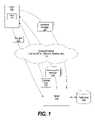
- FIG. 1is a diagram showing a server identifying an optimum heartbeat interval with a client over a computer network connection that does not include a NAT or firewall;
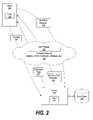
- FIG. 2is a diagram showing a server identifying an optimum heartbeat interval with a client over a computer network that includes a network address translator (NAT) or a firewall;
- NATnetwork address translator
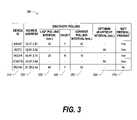
- FIG. 3is a table showing discovery poll interval and optimum heartbeat interval information for device network connections
- FIG. 4is a high-level flowchart showing steps taken in identifying an optimum heartbeat interval between a server and a client;
- FIG. 5is a flowchart showing steps taken in identifying an optimum heartbeat interval between a server and a client using a network connection that does not include a network address translator (NAT) or a firewall;
- NATnetwork address translator
- FIG. 6is a flowchart showing steps taken in identifying an optimum heartbeat interval between a server and a client over a computer network that includes a network address translator (NAT) or a firewall;
- NATnetwork address translator
- FIG. 7is a flowchart showing steps taken in monitoring a client's source address during a session monitoring stage.
- FIG. 8is a block diagram of a computing device capable of implementing the present invention.
- FIG. 1is a diagram showing a server identifying an optimum heartbeat interval with a client over a computer network connection.
- the optimum heartbeat intervalis based upon computer network 130 's “network timeout period,” which is the amount of time that computer network 130 allows client 100 to be inactive before changing client 100 's source address.
- the optimum heartbeat intervalminimizes the number of messages that are exchanged between client 100 and server 140 , while providing an accurate indication to server 140 of client 100 's source address. As a result, server 140 is able to send messages to client 100 without delay.
- Client 100wishes to register with server 140 over computer network 130 .
- client 100ascertains its source address (e.g., through a socket request) and includes its source address, along with a unique device identifier (e.g., serial number, subscriber number, etc.), in registration request 120 .
- Client 100then sends request 120 to server 140 over computer network 130 , such as a wireless network.
- Server 140receives request 120 , and extracts the source address, the device identifier, and a protocol layer address from request 120 .
- the protocol layer addressis an IP address that is embedded in the protocol layer meta data, and is the same as client 100 's source address if computer network 130 does not include a network address translator (NAT) or firewall. If computer network includes a NAT or firewall, the protocol layer address is different than client 100 's source address (see FIG. 2 and corresponding text for further details).
- NATnetwork address translator
- Server 140compares the source address with the protocol layer address, and determines that computer network 130 does not include a NAT or a firewall. Server 140 stores client 100 's device identifier, its source address, and information that network connection 130 does not include a NAT or firewall in a table located in table store 150 (see FIG. 3 and corresponding text for further details regarding table properties).
- server 140 and client 100enter into an “IP change” discovery process, which identifies the rate at which client 100 's source address changes due to computer network 130 's timeout period.
- server 140sends discovery type 160 to client 100 , which informs client 100 to begin the IP change discovery process.
- Server 140sends discovery poll message 170 , which includes a discovery poll interval, to client 100 .
- the discovery poll intervalis the amount of time that client 100 should wait before sending heartbeat message 180 .
- Client 100loads timer 110 with the discovery poll interval, and starts timer 110 . Once timer 100 expires, client 100 sends heartbeat message 180 to server 140 .
- Server 140extracts the source address included in heartbeat message 180 , and compares it with the client 100 's previous source address, which is stored in table store 150 .
- server 140logs that the discovery poll interval was successful in table store 150 , adjusts (e.g., increases) the discovery poll interval, and sends the increased discovery poll interval via another discovery poll message 170 to client 100 .
- client 100loads the adjusted discovery poll interval into timer 110 , and when timer 110 times out, client 100 sends another heartbeat message 180 to server 140 .
- This exchange between client 100 and server 140continues until server 140 detects that client 100 's source address changed, signifying that the recent discovery poll interval is greater than computer network 130 's timeout period.
- server 140stores the last, valid, discovery poll interval as the optimum heartbeat interval, which is an interval that allows client 100 to maintain its source address, but also minimizes network traffic.
- server 140sends the optimum heartbeat interval to client 100 via another discovery poll message 170 , and exits the IP change discovery process.
- server 140may set a bit in discovery poll message 170 that signifies the included discovery poll interval is the optimum heartbeat interval.
- Client 100receives the optimum heartbeat interval, stores it in timer 110 , and exits the IP change discovery process.
- client 100 and server 140are in a “session monitoring” stage.
- client 100sends heartbeat messages 180 to server 140 at the optimum heartbeat interval.
- server 140monitors client 100 's source address for changes. If server 140 detects a change, server 140 and client 100 return to the IP change discovery process.
- computer network 130may change its network timeout period based upon peak traffic hours.
- the optimum heartbeat intervalmay have been determined during non-peak hours and, when peak hours begin, computer network 130 decreases the network timeout period, which changes client 100 's source address (see FIG. 7 and corresponding text for further details).
- server 140may use information from multiple clients operating on the same computer network to shorten the IP change discovery process. In this embodiment, server 140 uses past “history” from other devices to intelligently determine the initial discovery poll interval. Since each session between server 140 and the other clients use a separate port value, the sessions operate independently. Meaning, server 140 may vary the discovery poll interval of different sessions to more quickly identify computer network 130 's timeout period.
- multiple discovery sessionsmay be initiated with the same client device at the same time, each using different discovery poll intervals.
- This embodimentallows server 140 to identify the optimum heartbeat interval for the client in a shorter amount of time compared to invoking a single discovery session.
- FIG. 2is a diagram showing a server identifying an optimum heartbeat interval with a client over a computer network that includes a network address translator (NAT) or a firewall.
- FIG. 2is similar to FIG. 1 with the exception that computer network 130 includes network address translator (NAT)/firewall 200 .
- NAT/firewall 200blocks messages from server 140 to client 100 after a particular time, which is typically less than computer network 130 's timeout period.
- server 140 and client 100perform a “message block” discovery process instead of an IP change discovery process as discussed in FIG. 1 .
- client 100obtains its source address, includes it in request 120 along with its device identifier, and sends request 120 to server 140 through computer network 130 .
- request 120proceeds through computer network 130
- NAT/firewallchanges request 120 's protocol layer IP address.
- server 140compares client 100 's source address with the protocol layer address, server 140 determines that NAT/firewall 200 exists in computer network 130 .
- server 140sends discovery type 220 to client 100 , which informs client 100 to begin a message block discovery process.
- Server 140starts the message block discovery process by identifying a discovery poll interval and loading the discovery poll interval into timer 210 .
- Server 140then includes the discovery poll interval in discovery poll message 230 , and sends it to client 100 , which client 100 loads into timer 110 .
- Client 100 and server 140start timer 110 and 210 , respectively.
- server 140If server 140 does not receive heartbeat message 240 before timer 210 expires, it assumes that client 100 received the previous discovery poll message. Therefore, server 140 adjusts (increases) the discovery poll interval and sends it to client 100 via another discovery poll message 230 . Client 100 waits for either timer 110 to expire or for another discovery poll message 230 from server 140 . When it receives another discovery poll message, client 100 resets timer 110 to the adjusted discovery poll interval. This process continues until timer 110 expires due to NAT/firewall 200 blocking the poll message 230 . At this point, client 100 stores the last discovery poll interval as the optimum heartbeat interval, sends heartbeat 240 to server 140 , and enters the session monitoring stage.
- Server 140receives heartbeat message 240 from client 100 , which indicates that NAT/firewall 200 blocked server 140 's previous discovery poll message. As a result, server 140 identifies the last successful discovery poll interval as the optimum heartbeat interval, and enters into the session monitoring stage. At this point, client 100 sends heartbeat messages 240 at the optimum heartbeat interval. As discussed in FIG. 1 , and is the same for FIG. 2 , server 140 monitors client 100 's source address for changes. If server 140 detects a source address change, server 140 and client 100 enter back into the message block discovery process to identify a new optimum heartbeat interval.
- FIG. 3is a table showing discovery poll interval and optimum heartbeat interval information for device network connections.
- a serverstores network connection information in table 300 in order to identify and track optimum heartbeat intervals for particular clients.
- Table 300includes seven columns, which are columns 310 through 370 .
- Column 310includes device identifiers that correspond to a particular client.
- Column 320includes source addresses that are assigned to the clients by their particular network.
- Columns 330 through 350include information that the server uses during a client's discovery poll process.
- Column 330includes a discovery poll interval that was last sent to the client.
- Column 340tracks whether the last discovery poll interval was valid (did not result in a changed source address or a blocked message).
- column 350includes discovery poll intervals that are currently under test and have not yet been identified as valid or invalid.
- the serverstores the interval in column 360 .
- Column 370includes information that identifies whether a network connection includes a network address translator or firewall, which may block messages from the server to the client (see FIGS. 2 , 4 , 6 , and corresponding text for further details).
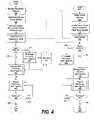
- FIG. 4is a high-level flowchart showing steps taken in identifying an optimum heartbeat interval between a server and a client.
- Client processingcommences at 400 , whereupon the client obtains a source address (e.g., through a socket request), from the network at step 405 .
- the clientincludes the source address and its device identifier (e.g., serial number) in a registration request (step 410 ), and sends the registration request to the server at step 415 .
- a source addresse.g., through a socket request
- the clientincludes the source address and its device identifier (e.g., serial number) in a registration request (step 410 ), and sends the registration request to the server at step 415 .
- device identifiere.g., serial number
- Server processingcommences at 450 , whereupon the server receives the registration request at step 455 .
- the serverstores the client's device identifier and source address in table store 150 .
- Table store 150is the same as that shown in FIG. 1 , and may be stored on a nonvolatile storage area, such as a computer hard drive.
- the serverextracts an address in the registration request's protocol layer, and compares the protocol layer address with the source address at step 465 . By comparing these addresses, the server is able to identify whether a network address translator (NAT) or firewall exists on the network connection (see FIGS. 1 , 2 , and corresponding text for further details).
- NATnetwork address translator
- the serverinforms the client of the comparison results, which signifies whether to enter either an IP change discovery process or a message block discovery process.
- client processingproceeds into a session monitoring stage (pre-defined process block 435 , see FIG. 7 and corresponding text for further details).
- a determinationis made at the client as to whether to maintain the network connection (decision 440 ). If the client should maintain the network connection, decision 440 branches to “Yes” branch 442 which loops back to continue session monitoring. This looping continues until the client should disconnect from the network connection, at which point decision 440 branches to “No” branch 444 whereupon client processing ends at 445 .
- server processingproceeds into a session monitoring stage (pre-defined process block 490 , see FIG. 7 and corresponding text for further details).
- a determinationis made as to whether to maintain the network connection (decision 495 ). If the server should maintain the network connection, decision 495 branches to “Yes” branch 497 which loops back to continue session monitoring. This looping continues until the server should disconnect from the network connection, at which decision 495 branches to “No” branch 498 whereupon server processing ends at 499 .
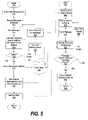
- FIG. 5is a flowchart showing steps taken in an IP change discovery process that identifies an optimum heartbeat interval between a server and a client using a network connection that does not include a network address translator (NAT) or a firewall.
- the serverreceives heartbeat messages from the client at discovery poll intervals, and the server responds by either adjusting the discovery poll interval or setting a discovery poll interval as an “optimum heartbeat interval.”
- Server processingcommences at 500 , whereupon the server sends an initial discovery poll interval to the client at step 505 .
- Client processingcommences at step 560 , whereupon the client receives the initial discovery poll interval at step 565 .
- the initial discovery poll intervalmay be 20 seconds.
- the clientwaits for the discovery poll interval to expire (e.g., 20 seconds). Once the interval expires, the client sends a heartbeat message to the server at step 575 .
- the serverreceives the heartbeat message at step 510 , which includes a device identifier corresponding to the client, as well as a source address corresponding to the client's network connection.
- the serveridentifies the client at step 515 using the device identifier, and compares the source address included in the heartbeat message with the source address that was included in the registration request and previously stored (step 520 ) (see FIG. 4 and corresponding text for further details).
- decision 525branches to “Yes” branch 527 which loops back to adjust (increment) the discovery poll interval (step 530 ) and send the adjusted discovery poll interval to the client at step 535 .
- the serveralso stores the adjusted discovery poll interval in table store 150 , which is the same as that shown in FIG. 1 .
- the clientreceives the adjusted discovery poll interval at step 580 .
- a determinationis made as to whether the message includes an optimum heartbeat interval or an incremented discovery poll interval (decision 585 ).
- the messagemay include a bit that signifies whether the interval value corresponds to an incremented discovery poll interval or an optimum heartbeat interval. If the message includes an adjusted discovery poll interval, decision 585 branches to “No” branch 587 which loops back to store the adjusted discovery poll interval (step 590 ), waits the amount of time specified as the adjusted discovery poll interval (step 570 ), and sends a heartbeat message to the server (step 575 ).
- decision 525branches to “No” branch 529 indicating that the discovery poll interval is greater than the computer network timeout period.
- the serverstores the heartbeat message's new source address in table store 150 (step 540 ).
- the serversets the optimum heartbeat interval in table store 150 to a previously validated discovery poll interval at step 545 .
- the serversends the optimum heartbeat interval to the client for subsequent heartbeat message transmissions (step 595 ), and server processing returns at 555 .
- decision 585branches to “Yes” branch 589 whereupon the client stores the optimum heartbeat interval for subsequent heartbeat message transmissions, and client processing returns at 599 .
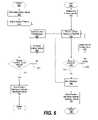
- FIG. 6is a flowchart showing steps taken in a message block discovery process, which identifies an optimum heartbeat interval between a server and a client over a computer network that includes a network address translator (NAT) or a firewall.
- the serversends discovery poll messages to the client in order to maintain a network connection through the NAT.
- the clientmonitors the discovery poll intervals and, when the client detects that one of the discovery poll intervals has been blocked by the NAT or firewall, the client sends a heartbeat message to the server that informs the server of the blocked discovery poll message.
- Server processingcommences at 600 , whereupon the server sends an initial discovery poll interval to the client at step 605 .
- Client processingcommences at step 650 , whereupon the client receives the initial discovery poll interval at step 660 .
- the clientwaits for the discovery poll interval to expire, at which point the client expects to receive another discovery poll message from the server (step 665 ).
- the serverwaits for the discovery poll interval to expire at step 610 , and a determination is made as to whether the server received a heartbeat message from the client during the discovery poll interval (decision 615 ), indicating that the client did not receive the previous discovery poll message. For example, if a NAT blocks messages for network connections that are inactive for more than fifty seconds, and the client expects to receive a new discovery poll message in sixty seconds, the client will not receive the discovery poll message, in which case the client sends a heartbeat message to the server (discussed below).
- decision 615branches to “No” branch 617 whereupon the server adjusts (increments) the discovery poll interval at step 620 , and sends the adjusted discovery poll interval in a discovery poll message to the client at step 625 .
- decision 670determines whether the client receives a discovery poll message at the expiration of the discovery poll interval timeout. If the client receives another discovery poll message, decision 670 branches to “Yes” branch 672 which loops back to reset the discovery poll interval to the adjusted discovery poll interval (step 675 ).
- decision 670branches to “No” branch 674 , indicating that the discovery poll message was blocked by the NAT or firewall.
- the clientsends a heartbeat message to the server, indicating that the client did not receive the last discovery poll message.
- the clientstores a previously validated discovery poll interval as an optimum heartbeat interval (step 685 ), and client processing returns at 690 .
- decision 615branches to “Yes” branch 619 whereupon the server stores the previously validated discovery poll interval as an optimum heartbeat interval (step 630 ), and server processing returns at 640 .
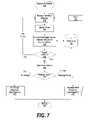
- FIG. 7is a flowchart showing steps taken in monitoring a client's source address during a session monitoring stage.
- the servercontinues to monitor the client's source address for changes.
- a changemay be due to the network adjusting network timeout periods during busy times of the day. For example, a network have a network timeout period set at 60 seconds during non-congested hours, such as 2 AM, and have it set to a shorter duration (e.g., 30 seconds) during congested hours, such as 9 AM.
- Session monitoringcommences at 700 , whereupon the server receives a heartbeat message from client 100 at the optimum heartbeat interval (step 710 ).
- Client 100is the same as that shown in FIG. 1 .
- the serveridentifies client 100 at step 720 using a device identifier included in the heartbeat message, and compares the source address included in the received heartbeat message with a source address that was previously stored in table store 150 during the discovery poll process (step 730 ).
- Table store 150is the same as that shown in FIG. 1 .
- decision 740branches to “Yes” branch 742 which loops back to receive and process heartbeat messages. This looping continues until the heartbeat message source address is different than the stored source address, at which point decision 740 branches to “No” branch 744 whereupon the server stores the new source address in table store 150 (step 745 ).
- the serverdetermines this by accessing a table included in table store 150 that identifies the network connection type (see FIG. 3 and corresponding text for further details).
- decision 750branches to “IP change” branch 752 whereupon processing proceeds to an IP change discovery process (pre-defined process block 760 , see FIG. 5 and corresponding text for further details).
- IP change discovery processpre-defined process block 760 , see FIG. 5 and corresponding text for further details.
- decision 750branches to “Message Block” branch 758 whereupon processing proceeds to a message block discovery process (pre-defined process block 770 , see FIG. 6 and corresponding text for further details). Processing returns at 780 .
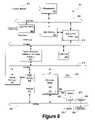
- FIG. 8illustrates information handling system 801 which is a simplified example of a computer system capable of performing the computing operations described herein.
- Computer system 801includes processor 800 which is coupled to host bus 802 .
- a level two (L2) cache memory 804is also coupled to host bus 802 .
- Host-to-PCI bridge 806is coupled to main memory 808 , includes cache memory and main memory control functions, and provides bus control to handle transfers among PCI bus 810 , processor 800 , L2 cache 804 , main memory 808 , and host bus 802 .
- Main memory 808is coupled to Host-to-PCI bridge 806 as well as host bus 802 .
- PCI bus 810Devices used solely by host processor(s) 800 , such as LAN card 830 , are coupled to PCI bus 810 .
- Service Processor Interface and ISA Access Pass-through 812provides an interface between PCI bus 810 and PCI bus 814 .
- PCI bus 814is insulated from PCI bus 810 .
- Devices, such as flash memory 818are coupled to PCI bus 814 .
- flash memory 818includes BIOS code that incorporates the necessary processor executable code for a variety of low-level system functions and system boot functions.
- PCI bus 814provides an interface for a variety of devices that are shared by host processor(s) 800 and Service Processor 816 including, for example, flash memory 818 .
- PCI-to-ISA bridge 835provides bus control to handle transfers between PCI bus 814 and ISA bus 840 , universal serial bus (USB) functionality 845 , power management functionality 855 , and can include other functional elements not shown, such as a real-time clock (RTC), DMA control, interrupt support, and system management bus support.
- RTCreal-time clock
- Nonvolatile RAM 820is attached to ISA Bus 840 .
- Service Processor 816includes JTAG and I2C busses 822 for communication with processor(s) 800 during initialization steps.
- JTAG/I2C busses 822are also coupled to L2 cache 804 , Host-to-PCI bridge 806 , and main memory 808 providing a communications path between the processor, the Service Processor, the L2 cache, the Host-to-PCI bridge, and the main memory.
- Service Processor 816also has access to system power resources for powering down information handling device 801 .
- Peripheral devices and input/output (I/O) devicescan be attached to various interfaces (e.g., parallel interface 862 , serial interface 864 , keyboard interface 868 , and mouse interface 870 coupled to ISA bus 840 .
- I/O devicescan be accommodated by a super I/O controller (not shown) attached to ISA bus 840 .
- LAN card 830is coupled to PCI bus 810 .
- modem 885is connected to serial port 864 and PCI-to-ISA Bridge 835 .
- FIG. 8shows one information handling system that employs processor(s) 800
- the information handling systemmay take many forms.
- information handling system 801may take the form of a desktop, server, portable, laptop, notebook, or other form factor computer or data processing system.
- Information handling system 801may also take other form factors such as a personal digital assistant (PDA), a gaming device, ATM machine, a portable telephone device, a communication device or other devices that include a processor and memory.
- PDApersonal digital assistant
- One of the preferred implementations of the inventionis a client application, namely, a set of instructions (program code) in a code module that may, for example, be resident in the random access memory of the computer.
- the set of instructionsmay be stored in another computer memory, for example, in a hard disk drive, or in a removable memory such as an optical disk (for eventual use in a CD ROM) or floppy disk (for eventual use in a floppy disk drive), or downloaded via the Internet or other computer network.
- the present inventionmay be implemented as a computer program product for use in a computer.
Landscapes
- Engineering & Computer Science (AREA)
- Computer Networks & Wireless Communication (AREA)
- Signal Processing (AREA)
- Data Exchanges In Wide-Area Networks (AREA)
Abstract
Description
1. Technical Field
The present invention relates to a system and method for Internet protocol (IP) address discovery in a rapidly changing network environment. More particularly, the present invention relates to a system and method for using an adaptive discovery polling process to determine an optimum heartbeat interval that minimizes network traffic and allows a server to monitor a client's source address.
2. Description of the Related Art
Short Message Service (SMS) is a popular method for sending messages between mobile devices. A person may use SMS to send a text message to a recipient device simply by entering the recipient device's phone number. The benefit of SMS is that the recipient's destination address (e.g., phone number) does not change. The sending person only needs to know a recipient's phone number in order to send a message to the recipient. A challenge found, however, is that SMS can only send relatively small messages (160 7-bit characters). In addition, if the SMS provider charges on a per message basis, the expense of using SMS may become cost prohibitive when a person wishes to send a large amount of messages.
Many enterprise class devices have access to an IP based data network that mobile network providers have implemented. These networks are capable of transporting application data over popular TCP and UDP network protocols. Unlike the SMS protocol, the IP networks are not restricted by a limited message size, and they also support extended conversations between client and server applications. Enterprise based applications have long used IP based communications as a standard, and may use TCP and UDP protocols to send a message to a mobile device as long as the device is listening on the IP network. A challenge found, however, is that this approach requires the enterprise application to know a mobile device's IP address in order to send a message to the correct recipient.
In addition, a challenge found is that in today's modern mobile IP networks, a mobile device is rarely assigned a permanent (static) IP address. The reason being is that a network provider typically has more registered devices than it has assignable IP addresses. The network provider understands, however, that all of the registered devices are not typically online at the same time. Therefore, the network provider dynamically allocates an IP address to a device when the device connects to network provider's network. As a result, the network provider does not run out of assignable IP addresses. A challenge found, however, is that when an IP address is inactive for a particular amount of time, the network provider de-allocates the IP address in order to re-allocate the IP address to another user.
Furthermore, in many cases, a device may not know its own dynamically assigned public IP address. Rather, the network provider assigns a “private IP” address to the mobile device, and then uses a network address translator (NAT) to convert the device's private address to a public address. Since a device's public IP address is not static, a challenge found is that an enterprise application is not able to send messages to the device when the enterprise application receives the message because the enterprise application may not know the device's current public IP address. Instead, the enterprise application relies upon the device to connect to the enterprise application and poll for messages, which are typically at fixed intervals.
What is needed, therefore, is a system and method for providing client source address information to an enterprise application utilizing minimal network traffic overhead.
It has been discovered that the aforementioned challenges are resolved by a system and method for using an adaptive discovery polling process to determine an optimum heartbeat interval that minimizes network traffic and allows a server to monitor a client's source address. The client and server exchange discovery poll messages and heartbeat messages at varying time intervals in order to identify a computer network's timeout period or a network address translator's message block timeout period. Once the timeout period is identified, the client sends heartbeat messages to the server at an “optimum heartbeat interval” that is less than the identified network timeout period in order to maintain the network connection. As a result, the server is able to send messages to the client without delay.
A client wishes to register with a server over a computer network. To begin the registration process, the client ascertains its source address (e.g., through a socket request) and includes its source address, along with a device identifier, in a registration request. The client then sends the registration request to the server over the computer network, such as a wireless network.
The server receives the registration request, and extracts the source address, the device identifier, and a protocol layer address. The protocol layer address is an IP address that is embedded in the protocol layer meta data, and is the same as the client's source address if the computer network does not include a network address translator (NAT) or firewall. When a computer network includes a NAT or firewall, the protocol layer address is different than the client's source address. The server compares the source address with the protocol layer address, and determines whether the computer network includes a NAT or a firewall. The server also stores the client's device identifier, its source address, and NAT/firewall information in a lookup table.
When the computer network does not include a NAT or firewall, the server and the client enter into an “IP change” discovery process, which identifies the rate at which the client's source address changes due to the computer network's timeout period for client IP addresses. During this process, the server sends discovery poll intervals to the client that, in turn, sends a heartbeat message to the server at the discovery poll interval. The server checks the client's source address included in the heartbeat message for changes. When the server detects a change, the server determines that the last discovery poll interval that was sent to the client exceeded the computer network's timeout period. As such, the server and the client use the discovery poll interval prior to the failed discovery poll interval as an optimum heartbeat interval. The client then sends heartbeat messages to the server at the optimum heartbeat interval during a session monitoring stage.
When the computer network includes a NAT or firewall, the NAT/firewall blocks messages from the server to the client after a particular time, which is typically less than the computer network's timeout period. As such, the server and the client enter into a “message block” discovery process instead of an IP change discovery process as discussed above. During the message block discovery process, the server sends discovery poll messages at increasing intervals, and assumes that the client receives the discovery poll message. On the client side, the client sets a timer at the discovery poll intervals and expects to receive another discovery poll message when the timer expires. When the client does not receive a discovery poll message when expected, the client sends a heartbeat message to the server, which indicates that the NAT/firewall blocked that last discovery poll message. In turn, the client and the server revert back to the last valid discovery poll interval as the optimum heartbeat interval. The client then sends heartbeat messages to the server at the optimum heartbeat interval during the session monitoring stage.
In one embodiment, the server may use information from multiple clients operating on the same computer network to shorten the discovery process. In this embodiment, the server uses past “history” from other devices to intelligently determine the initial discovery poll interval. Since each session between the server and the other clients use a separate port value, the sessions operate independently. Meaning, the server may vary the discovery poll interval of different sessions to more quickly identify the optimum heartbeat interval.
The foregoing is a summary and thus contains, by necessity, simplifications, generalizations, and omissions of detail; consequently, those skilled in the art will appreciate that the summary is illustrative only and is not intended to be in any way limiting. Other aspects, inventive features, and advantages of the present invention, as defined solely by the claims, will become apparent in the non-limiting detailed description set forth below.
The present invention may be better understood, and its numerous objects, features, and advantages made apparent to those skilled in the art by referencing the accompanying drawings.
The following is intended to provide a detailed description of an example of the invention and should not be taken to be limiting of the invention itself. Rather, any number of variations may fall within the scope of the invention, which is defined in the claims following the description.
Sincecomputer network 130 does not include a NAT or firewall,server 140 andclient 100 enter into an “IP change” discovery process, which identifies the rate at whichclient 100's source address changes due tocomputer network 130's timeout period. To begin,server 140 sendsdiscovery type 160 toclient 100, which informsclient 100 to begin the IP change discovery process.Server 140 sendsdiscovery poll message 170, which includes a discovery poll interval, toclient 100. The discovery poll interval is the amount of time thatclient 100 should wait before sendingheartbeat message 180.Client 100loads timer 110 with the discovery poll interval, and startstimer 110. Oncetimer 100 expires,client 100 sendsheartbeat message 180 toserver 140.Server 140 extracts the source address included inheartbeat message 180, and compares it with theclient 100's previous source address, which is stored intable store 150.
If the discovery poll interval is less thancomputer network 130's timeout period, the previous source address and the extracted source address will be the same. If the source addresses are the same,server 140 logs that the discovery poll interval was successful intable store 150, adjusts (e.g., increases) the discovery poll interval, and sends the increased discovery poll interval via anotherdiscovery poll message 170 toclient 100. Again,client 100 loads the adjusted discovery poll interval intotimer 110, and whentimer 110 times out,client 100 sends anotherheartbeat message 180 toserver 140. This exchange betweenclient 100 andserver 140 continues untilserver 140 detects thatclient 100's source address changed, signifying that the recent discovery poll interval is greater thancomputer network 130's timeout period.
At this point,server 140 stores the last, valid, discovery poll interval as the optimum heartbeat interval, which is an interval that allowsclient 100 to maintain its source address, but also minimizes network traffic.Server 140 sends the optimum heartbeat interval toclient 100 via anotherdiscovery poll message 170, and exits the IP change discovery process. In order to informclient 100 that the IP change discovery process is complete,server 140 may set a bit indiscovery poll message 170 that signifies the included discovery poll interval is the optimum heartbeat interval.
In one embodiment,server 140 may use information from multiple clients operating on the same computer network to shorten the IP change discovery process. In this embodiment,server 140 uses past “history” from other devices to intelligently determine the initial discovery poll interval. Since each session betweenserver 140 and the other clients use a separate port value, the sessions operate independently. Meaning,server 140 may vary the discovery poll interval of different sessions to more quickly identifycomputer network 130's timeout period.
In another embodiment, multiple discovery sessions may be initiated with the same client device at the same time, each using different discovery poll intervals. This embodiment allowsserver 140 to identify the optimum heartbeat interval for the client in a shorter amount of time compared to invoking a single discovery session.
To register withserver 140,client 100 obtains its source address, includes it inrequest 120 along with its device identifier, and sendsrequest 120 toserver 140 throughcomputer network 130. This time, whenrequest 120 proceeds throughcomputer network 130, NAT/firewall changes request120's protocol layer IP address. As a result, whenserver 140 comparesclient 100's source address with the protocol layer address,server 140 determines that NAT/firewall 200 exists incomputer network 130. As a result,server 140 sendsdiscovery type 220 toclient 100, which informsclient 100 to begin a message block discovery process.
Ifserver 140 does not receiveheartbeat message 240 beforetimer 210 expires, it assumes thatclient 100 received the previous discovery poll message. Therefore,server 140 adjusts (increases) the discovery poll interval and sends it toclient 100 via anotherdiscovery poll message 230.Client 100 waits for eithertimer 110 to expire or for anotherdiscovery poll message 230 fromserver 140. When it receives another discovery poll message,client 100 resetstimer 110 to the adjusted discovery poll interval. This process continues untiltimer 110 expires due to NAT/firewall 200 blocking thepoll message 230. At this point,client 100 stores the last discovery poll interval as the optimum heartbeat interval, sendsheartbeat 240 toserver 140, and enters the session monitoring stage.
Table300 includes seven columns, which arecolumns 310 through370.Column 310 includes device identifiers that correspond to a particular client.Column 320 includes source addresses that are assigned to the clients by their particular network.
Once the server identifies an optimum heartbeat interval for a client's network connection, the server stores the interval incolumn 360.Column 370 includes information that identifies whether a network connection includes a network address translator or firewall, which may block messages from the server to the client (seeFIGS. 2 ,4,6, and corresponding text for further details).
Server processing commences at450, whereupon the server receives the registration request atstep 455. At step460, the server stores the client's device identifier and source address intable store 150.Table store 150 is the same as that shown inFIG. 1 , and may be stored on a nonvolatile storage area, such as a computer hard drive.
The server extracts an address in the registration request's protocol layer, and compares the protocol layer address with the source address at step465. By comparing these addresses, the server is able to identify whether a network address translator (NAT) or firewall exists on the network connection (seeFIGS. 1 ,2, and corresponding text for further details). Atstep 470, the server informs the client of the comparison results, which signifies whether to enter either an IP change discovery process or a message block discovery process.
A determination is made at the server as to whether the addresses are the same (decision475). If the addresses are the same, the network connection does not include a NAT or firewall, anddecision 475 branches to “Yes”branch 477 whereupon the server identifies the optimum heartbeat interval through an IP change discovery process (pre-defined process block480, seeFIG. 5 and corresponding text for further details). On the other hand, if the addresses are different, the network connection includes a NAT or firewall, anddecision 475 branches to “No”branch 479 whereupon the server identifies the optimum heartbeat interval through a message block discovery process (pre-defined process block 485, seeFIG. 6 and corresponding text for further details). Both the IP change discovery process and the message block discovery process access information intable store 150 while identifying the optimum heartbeat interval.
When the client receives the comparison result from the server, a determination is made at the client as to whether to enter the IP change discovery process or the message block discovery process (decision420). If the addresses are the same,decision 420 branches to “Yes”branch 422 whereupon the client assists in identifying the optimum heartbeat interval through the IP change discovery process (pre-defined process block425, seeFIG. 5 and corresponding text for further details). On the other hand, if the addresses are different,decision 420 branches to “No”branch 424 whereupon the client assists in identifying the optimum heartbeat interval through the message block discovery process (pre-defined process block430, seeFIG. 6 and corresponding text for further details).
Once the discovery process is complete, client processing proceeds into a session monitoring stage (pre-defined process block435, seeFIG. 7 and corresponding text for further details). A determination is made at the client as to whether to maintain the network connection (decision440). If the client should maintain the network connection,decision 440 branches to “Yes”branch 442 which loops back to continue session monitoring. This looping continues until the client should disconnect from the network connection, at whichpoint decision 440 branches to “No”branch 444 whereupon client processing ends at445.
Likewise, once the discovery process is complete, server processing proceeds into a session monitoring stage (pre-defined process block490, seeFIG. 7 and corresponding text for further details). A determination is made as to whether to maintain the network connection (decision495). If the server should maintain the network connection,decision 495 branches to “Yes”branch 497 which loops back to continue session monitoring. This looping continues until the server should disconnect from the network connection, at whichdecision 495 branches to “No”branch 498 whereupon server processing ends at499.
Server processing commences at500, whereupon the server sends an initial discovery poll interval to the client atstep 505. Client processing commences atstep 560, whereupon the client receives the initial discovery poll interval atstep 565. For example, the initial discovery poll interval may be 20 seconds. Atstep 570, the client waits for the discovery poll interval to expire (e.g., 20 seconds). Once the interval expires, the client sends a heartbeat message to the server atstep 575.
The server receives the heartbeat message atstep 510, which includes a device identifier corresponding to the client, as well as a source address corresponding to the client's network connection. The server identifies the client atstep 515 using the device identifier, and compares the source address included in the heartbeat message with the source address that was included in the registration request and previously stored (step520) (seeFIG. 4 and corresponding text for further details).
A determination is made as to whether the source address in the heartbeat message is different than the stored source address (decision525). For example, if the network changes an inactive client's source address at intervals less than the discovery poll interval (network timeout period), the heartbeat message's source address will be different that the stored source address.
If the heartbeat message's source address is the same as the stored source address,decision 525 branches to “Yes”branch 527 which loops back to adjust (increment) the discovery poll interval (step530) and send the adjusted discovery poll interval to the client atstep 535. The server also stores the adjusted discovery poll interval intable store 150, which is the same as that shown inFIG. 1 .
The client receives the adjusted discovery poll interval atstep 580. A determination is made as to whether the message includes an optimum heartbeat interval or an incremented discovery poll interval (decision585). For example, the message may include a bit that signifies whether the interval value corresponds to an incremented discovery poll interval or an optimum heartbeat interval. If the message includes an adjusted discovery poll interval,decision 585 branches to “No”branch 587 which loops back to store the adjusted discovery poll interval (step590), waits the amount of time specified as the adjusted discovery poll interval (step570), and sends a heartbeat message to the server (step575).
Back at the server, when the server detects that a received heartbeat message is different than the stored source address,decision 525 branches to “No”branch 529 indicating that the discovery poll interval is greater than the computer network timeout period. At this point, the server stores the heartbeat message's new source address in table store150 (step540). In addition, the server sets the optimum heartbeat interval intable store 150 to a previously validated discovery poll interval at step545. Atstep 550, the server sends the optimum heartbeat interval to the client for subsequent heartbeat message transmissions (step595), and server processing returns at555.
When the client receives the optimum heartbeat message from the server atstep 580,decision 585 branches to “Yes”branch 589 whereupon the client stores the optimum heartbeat interval for subsequent heartbeat message transmissions, and client processing returns at599.
Server processing commences at600, whereupon the server sends an initial discovery poll interval to the client atstep 605. Client processing commences atstep 650, whereupon the client receives the initial discovery poll interval atstep 660. The client waits for the discovery poll interval to expire, at which point the client expects to receive another discovery poll message from the server (step665).
The server waits for the discovery poll interval to expire atstep 610, and a determination is made as to whether the server received a heartbeat message from the client during the discovery poll interval (decision615), indicating that the client did not receive the previous discovery poll message. For example, if a NAT blocks messages for network connections that are inactive for more than fifty seconds, and the client expects to receive a new discovery poll message in sixty seconds, the client will not receive the discovery poll message, in which case the client sends a heartbeat message to the server (discussed below). If the server did not receive a heartbeat message, (indicating that the client received the expected discovery poll message),decision 615 branches to “No”branch 617 whereupon the server adjusts (increments) the discovery poll interval atstep 620, and sends the adjusted discovery poll interval in a discovery poll message to the client atstep 625.
On the client side, a determination is made as to whether the client receives a discovery poll message at the expiration of the discovery poll interval timeout (decision670). If the client receives another discovery poll message,decision 670 branches to “Yes”branch 672 which loops back to reset the discovery poll interval to the adjusted discovery poll interval (step675).
On the other hand, if the client does not receive another discovery poll message at the discovery poll interval timeout,decision 670 branches to “No”branch 674, indicating that the discovery poll message was blocked by the NAT or firewall. Atstep 680, the client sends a heartbeat message to the server, indicating that the client did not receive the last discovery poll message. As a result, the client stores a previously validated discovery poll interval as an optimum heartbeat interval (step685), and client processing returns at690.
On the server side, when the server receives the heartbeat message atstep 610,decision 615 branches to “Yes”branch 619 whereupon the server stores the previously validated discovery poll interval as an optimum heartbeat interval (step630), and server processing returns at640.
Session monitoring commences at700, whereupon the server receives a heartbeat message fromclient 100 at the optimum heartbeat interval (step710).Client 100 is the same as that shown inFIG. 1 . The server identifiesclient 100 atstep 720 using a device identifier included in the heartbeat message, and compares the source address included in the received heartbeat message with a source address that was previously stored intable store 150 during the discovery poll process (step730).Table store 150 is the same as that shown inFIG. 1 .
A determination is made as to whether the heartbeat message's source address is the same as the stored source address (decision740). For example, if the network has not changed its parameters, the source address will be the same because the heartbeat messages are sent at an interval less than the network timeout period, thus keepingclient 100's source address the same.
If the heartbeat source address and the stored source address are the same,decision 740 branches to “Yes”branch 742 which loops back to receive and process heartbeat messages. This looping continues until the heartbeat message source address is different than the stored source address, at whichpoint decision 740 branches to “No”branch 744 whereupon the server stores the new source address in table store150 (step745).
A determination is made as to whether the network connection between the server and the client includes a network address translator or a firewall (decision750). The server determines this by accessing a table included intable store 150 that identifies the network connection type (seeFIG. 3 and corresponding text for further details).
If the network connection does not include a network address translator or a firewall,decision 750 branches to “IP change”branch 752 whereupon processing proceeds to an IP change discovery process (pre-defined process block 760, seeFIG. 5 and corresponding text for further details). On the other hand, if the network includes a network address translator or a firewall,decision 750 branches to “Message Block”branch 758 whereupon processing proceeds to a message block discovery process (pre-defined process block 770, seeFIG. 6 and corresponding text for further details). Processing returns at780.
Peripheral devices and input/output (I/O) devices can be attached to various interfaces (e.g.,parallel interface 862,serial interface 864,keyboard interface 868, andmouse interface 870 coupled toISA bus 840. Alternatively, many I/O devices can be accommodated by a super I/O controller (not shown) attached toISA bus 840.
In order to attachcomputer system 801 to another computer system to copy files over a network,LAN card 830 is coupled toPCI bus 810. Similarly, to connectcomputer system 801 to an ISP to connect to the Internet using a telephone line connection, modem885 is connected toserial port 864 and PCI-to-ISA Bridge 835.
WhileFIG. 8 shows one information handling system that employs processor(s)800, the information handling system may take many forms. For example,information handling system 801 may take the form of a desktop, server, portable, laptop, notebook, or other form factor computer or data processing system.Information handling system 801 may also take other form factors such as a personal digital assistant (PDA), a gaming device, ATM machine, a portable telephone device, a communication device or other devices that include a processor and memory.
One of the preferred implementations of the invention is a client application, namely, a set of instructions (program code) in a code module that may, for example, be resident in the random access memory of the computer. Until required by the computer, the set of instructions may be stored in another computer memory, for example, in a hard disk drive, or in a removable memory such as an optical disk (for eventual use in a CD ROM) or floppy disk (for eventual use in a floppy disk drive), or downloaded via the Internet or other computer network. Thus, the present invention may be implemented as a computer program product for use in a computer. In addition, although the various methods described are conveniently implemented in a general purpose computer selectively activated or reconfigured by software, one of ordinary skill in the art would also recognize that such methods may be carried out in hardware, in firmware, or in more specialized apparatus constructed to perform the required method steps.
While particular embodiments of the present invention have been shown and described, it will be obvious to those skilled in the art that, based upon the teachings herein, that changes and modifications may be made without departing from this invention and its broader aspects. Therefore, the appended claims are to encompass within their scope all such changes and modifications as are within the true spirit and scope of this invention. Furthermore, it is to be understood that the invention is solely defined by the appended claims. It will be understood by those with skill in the art that if a specific number of an introduced claim element is intended, such intent will be explicitly recited in the claim, and in the absence of such recitation no such limitation is present. For non-limiting example, as an aid to understanding, the following appended claims contain usage of the introductory phrases “at least one” and “one or more” to introduce claim elements. However, the use of such phrases should not be construed to imply that the introduction of a claim element by the indefinite articles “a” or “an” limits any particular claim containing such introduced claim element to inventions containing only one such element, even when the same claim includes the introductory phrases “one or more” or “at least one” and indefinite articles such as “a” or “an”; the same holds true for the use in the claims of definite articles.
Claims (6)
1. A computer-implemented method comprising:
receiving, at a server, a registration request from a client;
identifying a source address included in the registration request that corresponds to the client;
extracting a protocol layer address from the registration request that is included in the registration request's protocol layer information;
comparing the source address with the protocol layer address;
determining whether a network address translator is included in the network connection between the server and the client based upon comparing the source address with the protocol layer address;
providing a discovery poll interval to the client in response to receiving the registration request, the discovery poll interval associated with a time that messages are sent between the server and the client in order to maintain a network connection on a computer network between the server and the client;
detecting, after the providing, that the discovery poll interval should be adjusted;
adjusting the discovery poll interval in response to the detecting, the adjusting comprising steps of:
in response to determining that the network address translator is not included in the network connection between the server and the client, the method further comprises steps of:
receiving a heartbeat message from the client at the server;
determining, at the server, that a heartbeat source address included in the heartbeat message is different than the source address included in the registration request; and
decrementing the discovery poll interval in response to determining that the heartbeat source address is different than the source address included in the registration request;
providing the adjusted discovery poll interval to the client;
determining that the adjusted discovery poll interval minimizes the amount of the messages that are sent between the server and the client while maintaining the network connection, the determining resulting in an optimum heartbeat interval; and
in response to determining that the adjusted discovery poll interval minimizes the amount of the messages that are sent between the server and the client while maintaining the network connection, receiving the heartbeat message from the client at the server at the optimum heartbeat interval.
2. The method ofclaim 1 further comprising:
in response to determining that the network address translator or firewall is included in the network connection between the server and the client, the adjusting results in incrementing the discovery poll interval in response to determining that the client received the discovery poll interval.
3. The method ofclaim 1 wherein, in response to determining that the network address translator is included in the network connection between the server and the client, decrementing the discovery poll interval in response to determining that the client did not receive the discovery poll interval.
4. The method ofclaim 1 further comprising:
detecting a different client that is included on the network;
identifying a different discovery poll interval corresponding to the different client; and
using the different discovery poll interval during the adjusting of the discovery poll interval.
5. The method ofclaim 1 further comprising:
after determining the optimum heartbeat interval, modifying the optimum heartbeat interval in response to detecting a change in the source address.
6. The method ofclaim 5 wherein the modifying further comprises:
repeating the providing of the discovery poll interval to the client, the detecting, the adjusting, the providing of the adjusted poll interval, the determining, and the receiving.
Priority Applications (1)
| Application Number | Priority Date | Filing Date | Title |
|---|---|---|---|
| US11/371,783US7523197B2 (en) | 2006-03-09 | 2006-03-09 | Method for IP address discovery in rapidly changing network environment |
Applications Claiming Priority (1)
| Application Number | Priority Date | Filing Date | Title |
|---|---|---|---|
| US11/371,783US7523197B2 (en) | 2006-03-09 | 2006-03-09 | Method for IP address discovery in rapidly changing network environment |
Publications (2)
| Publication Number | Publication Date |
|---|---|
| US20070214256A1 US20070214256A1 (en) | 2007-09-13 |
| US7523197B2true US7523197B2 (en) | 2009-04-21 |
Family
ID=38480238
Family Applications (1)
| Application Number | Title | Priority Date | Filing Date |
|---|---|---|---|
| US11/371,783Expired - Fee RelatedUS7523197B2 (en) | 2006-03-09 | 2006-03-09 | Method for IP address discovery in rapidly changing network environment |
Country Status (1)
| Country | Link |
|---|---|
| US (1) | US7523197B2 (en) |
Cited By (18)
| Publication number | Priority date | Publication date | Assignee | Title |
|---|---|---|---|---|
| US20090037573A1 (en)* | 2007-08-03 | 2009-02-05 | At&T Knowledge Ventures, Lp | System and method of health monitoring and fault monitoring in a network system |
| US20100106842A1 (en)* | 2008-10-29 | 2010-04-29 | Oracle International Corporation | System and method for providing timer affinity through notifications within a session-based server deployment |
| US20100124191A1 (en)* | 2008-11-17 | 2010-05-20 | Sierra Wireless, Inc | Method and apparatus for facilitating push communication across a network boundary |
| US20100228863A1 (en)* | 2007-03-28 | 2010-09-09 | Pioneer Corporation | Content distribution system and its control method |
| US20110167119A1 (en)* | 2010-01-07 | 2011-07-07 | Fujitsu Network Communications, Inc. | Systems and Methods for Processing Heartbeat Messages |
| CN102638563A (en)* | 2011-02-09 | 2012-08-15 | 西门子公司 | Keep alive message monitoring |
| US20120311150A1 (en)* | 2011-06-01 | 2012-12-06 | Yannick Koehler | Indication of url prerequiste to network communication |
| US20130138843A1 (en)* | 2009-06-11 | 2013-05-30 | Michael J. Espig | Delegating a poll operation to another device |
| US8639834B2 (en) | 2010-11-09 | 2014-01-28 | International Business Machines Corporation | Self-adjusting application heartbeat management |
| CN103634322A (en)* | 2013-12-06 | 2014-03-12 | 中国联合网络通信集团有限公司 | Heartbeat management method, heartbeat management device and heartbeat management system for application programs |
| US8812730B2 (en) | 2008-11-17 | 2014-08-19 | Sierra Wireless, Inc. | Method and apparatus for network port and network address translation |
| US8867512B2 (en) | 2012-07-30 | 2014-10-21 | Qualcomm Incorporated | Autonomous discovery for enhanced wifi devices |
| US8924486B2 (en) | 2009-02-12 | 2014-12-30 | Sierra Wireless, Inc. | Method and system for aggregating communications |
| US9037724B2 (en) | 2011-02-08 | 2015-05-19 | Sierra Wireless, Inc. | Method and system for forwarding data between network devices |
| US20170302556A1 (en)* | 2016-04-19 | 2017-10-19 | International Business Machines Corporation | Managing connections for data communications using heartbeat messaging |
| US10742747B2 (en) | 2017-07-06 | 2020-08-11 | International Business Machines Corporation | Managing connections for data communications following socket failure |
| US10827001B2 (en) | 2016-07-27 | 2020-11-03 | International Business Machines Corporation | Managing connections for data communications |
| US11140126B2 (en)* | 2018-12-14 | 2021-10-05 | Fujifilm Business Innovation Corp. | Communication apparatus, communication system, mail server, and non-transitory computer readable medium |
Families Citing this family (22)
| Publication number | Priority date | Publication date | Assignee | Title |
|---|---|---|---|---|
| US7426569B2 (en)* | 2004-02-25 | 2008-09-16 | Research In Motion Limited | System and method for maintaining a network connection |
| US20080002710A1 (en)* | 2006-06-29 | 2008-01-03 | Motorola, Inc. | System and method for routing communications to mobile stations |
| US8788651B1 (en)* | 2007-09-28 | 2014-07-22 | Ciena Corporation | Multi-stage value retrieval and multi-rate value retrieval |
| US7720940B1 (en) | 2007-09-28 | 2010-05-18 | World Wide Packets, Inc. | Managing a network element using a template configuration |
| US8504680B1 (en)* | 2008-12-23 | 2013-08-06 | Symantec Corporation | Automatically adjusting polling intervals based on remote administrative activity |
| US8375134B2 (en) | 2009-06-08 | 2013-02-12 | Microsoft Corporation | Determining an efficient keep-alive interval for a network connection |
| WO2011029470A1 (en)* | 2009-09-09 | 2011-03-17 | Telefonaktiebolaget Lm Ericsson (Publ) | Adaptation of content transmission in mobile networks |
| US8838679B2 (en)* | 2010-12-22 | 2014-09-16 | Microsoft Corporation | Providing state service for online application users |
| KR20120138546A (en)* | 2011-06-15 | 2012-12-26 | 한국전자통신연구원 | Apparatus and method for discovery based on priority in distributed network and method for determining discovery backoff time |
| US8892710B2 (en) | 2011-09-09 | 2014-11-18 | Microsoft Corporation | Keep alive management |
| US9049660B2 (en) | 2011-09-09 | 2015-06-02 | Microsoft Technology Licensing, Llc | Wake pattern management |
| US8806250B2 (en) | 2011-09-09 | 2014-08-12 | Microsoft Corporation | Operating system management of network interface devices |
| JP5880688B2 (en)* | 2012-03-27 | 2016-03-09 | ソニー株式会社 | Information processing apparatus, information processing system, information processing method, and program |
| KR20140032542A (en)* | 2012-08-30 | 2014-03-17 | 삼성전자주식회사 | A method and apparatus for determining heartbeat period of push service in wireless network |
| WO2014086398A1 (en)* | 2012-12-04 | 2014-06-12 | Telefonaktiebolaget L M Ericsson (Publ) | Method and device for an adaptive handling of data traffic |
| JP6123394B2 (en)* | 2013-03-15 | 2017-05-10 | 株式会社リコー | Definition information creation system, information processing device |
| WO2014172893A1 (en)* | 2013-04-26 | 2014-10-30 | 华为技术有限公司 | Method and apparatus for controlling sending of heartbeat signal |
| US9661083B1 (en)* | 2013-06-18 | 2017-05-23 | Ayla Networks, Inc. | Efficient notification protocol through firewalls |
| WO2016065552A1 (en) | 2014-10-29 | 2016-05-06 | 华为技术有限公司 | Heartbeat cycle setting method and terminal |
| CN107124324B (en)* | 2016-02-25 | 2020-09-01 | 阿里巴巴集团控股有限公司 | Heartbeat protocol method and equipment based on lease |
| CN114070537A (en)* | 2017-08-31 | 2022-02-18 | 华为技术有限公司 | Information transmission method and network equipment |
| CN117294750B (en)* | 2023-11-27 | 2024-03-01 | 杭州涂鸦信息技术有限公司 | Method and device for adjusting MQTT heartbeat frequency |
Citations (17)
| Publication number | Priority date | Publication date | Assignee | Title |
|---|---|---|---|---|
| US20020012320A1 (en) | 2000-03-16 | 2002-01-31 | Ogier Richard G. | Mobile ad hoc extensions for the internet |
| US20020029275A1 (en)* | 1997-06-19 | 2002-03-07 | Thomas Drennan Selgas | Method and apparatus for providing fungible intercourse over a network |
| US20020112067A1 (en)* | 2000-12-15 | 2002-08-15 | International Business Machines Corporation | Method and system for network management with per-endpoint adaptive data communication based on application life cycle |
| US20020116515A1 (en) | 2001-02-20 | 2002-08-22 | International Business Machines Corporation | Network system, server, clients, communication method, and communication computer program product |
| US20020143855A1 (en)* | 2001-01-22 | 2002-10-03 | Traversat Bernard A. | Relay peers for extending peer availability in a peer-to-peer networking environment |
| US20030072315A1 (en) | 2001-10-15 | 2003-04-17 | Shuji Karino | Server, commnication device, communication system and internet protocol address notification method |
| US20040015547A1 (en)* | 2002-07-17 | 2004-01-22 | Griffin Chris Michael | Voice and text group chat techniques for wireless mobile terminals |
| US20040059963A1 (en)* | 2002-09-19 | 2004-03-25 | Guillaume Simonnet | Systems and methods for providing presence tracking in a distributed computing system |
| US20040202117A1 (en)* | 2002-07-17 | 2004-10-14 | Wilson Christopher Robert Dale | Method, system and apparatus for messaging between wireless mobile terminals and networked computers |
| US20050012559A1 (en) | 2003-06-16 | 2005-01-20 | Seiko Epson Corporation | Piezoelectric oscillator, manufacturing method therefor, mobile phone apparatus using piezoelectric oscillator, and electronic apparatus using piezoelectric oscillator |
| US20050054343A1 (en) | 2003-09-05 | 2005-03-10 | Nokia Corporation | Providing address information for reaching a wireless terminal |
| US6895534B2 (en)* | 2001-04-23 | 2005-05-17 | Hewlett-Packard Development Company, L.P. | Systems and methods for providing automated diagnostic services for a cluster computer system |
| US20050108390A1 (en)* | 2003-11-17 | 2005-05-19 | Oracle International Corporation | System and method for managing browser sessions in single and multi-server workflow environments |
| US20050208947A1 (en) | 2004-03-19 | 2005-09-22 | Microsoft Corporation | Virtual private network structure reuse for mobile computing devices |
| US6983317B1 (en)* | 2000-02-28 | 2006-01-03 | Microsoft Corporation | Enterprise management system |
| US20060123079A1 (en)* | 2001-09-12 | 2006-06-08 | Netmotion Wireless, Inc. | Mobile networking system and method |
| US20070027987A1 (en)* | 2005-07-27 | 2007-02-01 | Tripp Travis S | Computer system polling |
Family Cites Families (1)
| Publication number | Priority date | Publication date | Assignee | Title |
|---|---|---|---|---|
| US6675748B2 (en)* | 2000-02-11 | 2004-01-13 | Westport Research Inc. | Method and apparatus for fuel injection into an internal combustion engine |
- 2006
- 2006-03-09USUS11/371,783patent/US7523197B2/ennot_activeExpired - Fee Related
Patent Citations (17)
| Publication number | Priority date | Publication date | Assignee | Title |
|---|---|---|---|---|
| US20020029275A1 (en)* | 1997-06-19 | 2002-03-07 | Thomas Drennan Selgas | Method and apparatus for providing fungible intercourse over a network |
| US6983317B1 (en)* | 2000-02-28 | 2006-01-03 | Microsoft Corporation | Enterprise management system |
| US20020012320A1 (en) | 2000-03-16 | 2002-01-31 | Ogier Richard G. | Mobile ad hoc extensions for the internet |
| US20020112067A1 (en)* | 2000-12-15 | 2002-08-15 | International Business Machines Corporation | Method and system for network management with per-endpoint adaptive data communication based on application life cycle |
| US20020143855A1 (en)* | 2001-01-22 | 2002-10-03 | Traversat Bernard A. | Relay peers for extending peer availability in a peer-to-peer networking environment |
| US20020116515A1 (en) | 2001-02-20 | 2002-08-22 | International Business Machines Corporation | Network system, server, clients, communication method, and communication computer program product |
| US6895534B2 (en)* | 2001-04-23 | 2005-05-17 | Hewlett-Packard Development Company, L.P. | Systems and methods for providing automated diagnostic services for a cluster computer system |
| US20060123079A1 (en)* | 2001-09-12 | 2006-06-08 | Netmotion Wireless, Inc. | Mobile networking system and method |
| US20030072315A1 (en) | 2001-10-15 | 2003-04-17 | Shuji Karino | Server, commnication device, communication system and internet protocol address notification method |
| US20040202117A1 (en)* | 2002-07-17 | 2004-10-14 | Wilson Christopher Robert Dale | Method, system and apparatus for messaging between wireless mobile terminals and networked computers |
| US20040015547A1 (en)* | 2002-07-17 | 2004-01-22 | Griffin Chris Michael | Voice and text group chat techniques for wireless mobile terminals |
| US20040059963A1 (en)* | 2002-09-19 | 2004-03-25 | Guillaume Simonnet | Systems and methods for providing presence tracking in a distributed computing system |
| US20050012559A1 (en) | 2003-06-16 | 2005-01-20 | Seiko Epson Corporation | Piezoelectric oscillator, manufacturing method therefor, mobile phone apparatus using piezoelectric oscillator, and electronic apparatus using piezoelectric oscillator |
| US20050054343A1 (en) | 2003-09-05 | 2005-03-10 | Nokia Corporation | Providing address information for reaching a wireless terminal |
| US20050108390A1 (en)* | 2003-11-17 | 2005-05-19 | Oracle International Corporation | System and method for managing browser sessions in single and multi-server workflow environments |
| US20050208947A1 (en) | 2004-03-19 | 2005-09-22 | Microsoft Corporation | Virtual private network structure reuse for mobile computing devices |
| US20070027987A1 (en)* | 2005-07-27 | 2007-02-01 | Tripp Travis S | Computer system polling |
Cited By (31)
| Publication number | Priority date | Publication date | Assignee | Title |
|---|---|---|---|---|
| US20100228863A1 (en)* | 2007-03-28 | 2010-09-09 | Pioneer Corporation | Content distribution system and its control method |
| US8156219B2 (en)* | 2007-08-03 | 2012-04-10 | At&T Intellectual Property I, L.P. | System and method of health monitoring and fault monitoring in a network system |
| US20090037573A1 (en)* | 2007-08-03 | 2009-02-05 | At&T Knowledge Ventures, Lp | System and method of health monitoring and fault monitoring in a network system |
| US20100106842A1 (en)* | 2008-10-29 | 2010-04-29 | Oracle International Corporation | System and method for providing timer affinity through notifications within a session-based server deployment |
| US9723048B2 (en)* | 2008-10-29 | 2017-08-01 | Oracle International Corporation | System and method for providing timer affinity through notifications within a session-based server deployment |
| US8812730B2 (en) | 2008-11-17 | 2014-08-19 | Sierra Wireless, Inc. | Method and apparatus for network port and network address translation |
| US8228848B2 (en) | 2008-11-17 | 2012-07-24 | Sierra Wireless, Inc. | Method and apparatus for facilitating push communication across a network boundary |
| US20100124191A1 (en)* | 2008-11-17 | 2010-05-20 | Sierra Wireless, Inc | Method and apparatus for facilitating push communication across a network boundary |
| US8924486B2 (en) | 2009-02-12 | 2014-12-30 | Sierra Wireless, Inc. | Method and system for aggregating communications |
| US8762599B2 (en)* | 2009-06-11 | 2014-06-24 | Intel Corporation | Delegating a poll operation to another device |
| US20130138843A1 (en)* | 2009-06-11 | 2013-05-30 | Michael J. Espig | Delegating a poll operation to another device |
| US8341231B2 (en)* | 2010-01-07 | 2012-12-25 | Fujitsu Limited | Systems and methods for processing heartbeat messages |
| US20110167119A1 (en)* | 2010-01-07 | 2011-07-07 | Fujitsu Network Communications, Inc. | Systems and Methods for Processing Heartbeat Messages |
| US8639834B2 (en) | 2010-11-09 | 2014-01-28 | International Business Machines Corporation | Self-adjusting application heartbeat management |
| US9037724B2 (en) | 2011-02-08 | 2015-05-19 | Sierra Wireless, Inc. | Method and system for forwarding data between network devices |
| CN102638563B (en)* | 2011-02-09 | 2017-03-01 | 西门子公司 | Sign of life monitors |
| CN102638563A (en)* | 2011-02-09 | 2012-08-15 | 西门子公司 | Keep alive message monitoring |
| US20120311150A1 (en)* | 2011-06-01 | 2012-12-06 | Yannick Koehler | Indication of url prerequiste to network communication |
| US9544387B2 (en)* | 2011-06-01 | 2017-01-10 | Hewlett Packard Enterprise Development Lp | Indication of URL prerequisite to network communication |
| US8867512B2 (en) | 2012-07-30 | 2014-10-21 | Qualcomm Incorporated | Autonomous discovery for enhanced wifi devices |
| CN103634322A (en)* | 2013-12-06 | 2014-03-12 | 中国联合网络通信集团有限公司 | Heartbeat management method, heartbeat management device and heartbeat management system for application programs |
| CN103634322B (en)* | 2013-12-06 | 2017-01-11 | 中国联合网络通信集团有限公司 | Heartbeat management method, heartbeat management device and heartbeat management system for application programs |
| US20170302556A1 (en)* | 2016-04-19 | 2017-10-19 | International Business Machines Corporation | Managing connections for data communications using heartbeat messaging |
| US20170302557A1 (en)* | 2016-04-19 | 2017-10-19 | International Business Machines Corporation | Managing connections for data communications using heartbeat messaging |
| US10084678B2 (en)* | 2016-04-19 | 2018-09-25 | International Business Machines Corporation | Managing connections for data communications using heartbeat messaging |
| US10243828B2 (en)* | 2016-04-19 | 2019-03-26 | International Business Machines Corporation | Managing connections for data communications using heartbeat messaging |
| US10666537B2 (en) | 2016-04-19 | 2020-05-26 | International Business Machines Corporation | Managing connections for data communications using heartbeat messaging |
| US10827001B2 (en) | 2016-07-27 | 2020-11-03 | International Business Machines Corporation | Managing connections for data communications |
| US10887403B2 (en) | 2016-07-27 | 2021-01-05 | International Business Machines Corporation | Method for managing connections for data communications |
| US10742747B2 (en) | 2017-07-06 | 2020-08-11 | International Business Machines Corporation | Managing connections for data communications following socket failure |
| US11140126B2 (en)* | 2018-12-14 | 2021-10-05 | Fujifilm Business Innovation Corp. | Communication apparatus, communication system, mail server, and non-transitory computer readable medium |
Also Published As
| Publication number | Publication date |
|---|---|
| US20070214256A1 (en) | 2007-09-13 |
Similar Documents
| Publication | Publication Date | Title |
|---|---|---|
| US7523197B2 (en) | Method for IP address discovery in rapidly changing network environment | |
| US8290163B2 (en) | Automatic wireless network password update | |
| US11196767B2 (en) | Front-end protocol for server protection | |
| US20130111542A1 (en) | Security policy tokenization | |
| US20120240184A1 (en) | System and method for on the fly protocol conversion in obtaining policy enforcement information | |
| US7624193B2 (en) | Multi-vendor mediation for subscription services | |
| CN1747402A (en) | The communication system, method and the user terminal that are used for the user terminal software upgrading | |
| CN108419452A (en) | Techniques for managing remote web clients of applications on mobile devices | |
| EP3576369B1 (en) | Session transfer-based scheduling method and server | |
| US11323529B2 (en) | TCP fast open hardware support in proxy devices | |
| WO2021008034A1 (en) | Method and apparatus for network request security verification, and computing device and storage medium | |
| EP1419637B1 (en) | A method and system for providing a web service for a plurality of web domains sharig a single IP address | |
| US8416754B2 (en) | Network location based processing of data communication connection requests | |
| JP2003289312A (en) | System and method for limiting unauthorized access to network | |
| US8601094B2 (en) | Method and computer program product utilizing multiple UDP data packets to transfer a quantity of data otherwise in excess of a single UDP packet | |
| CN107294931B (en) | Method and apparatus for adjusting restricted access frequency | |
| US8091134B2 (en) | System and method for autonomic peer-to-peer virus inoculation | |
| US20100299416A1 (en) | System for locating computing devices | |
| CN116233215B (en) | Processing method and electronic equipment for secure access | |
| CN110719287A (en) | Data communication method, device, proxy server and readable storage medium | |
| CN113127122A (en) | Virtual application based screen projection method, device, equipment and storage medium | |
| CN114598689B (en) | Interactive method and device of IOT equipment, computer equipment and storage medium | |
| US11399009B2 (en) | Endpoint context agent traversal of network address table | |
| US20080127309A1 (en) | System and Method for Virtualized Hypervisor to Detect Insertion of Removable Media | |
| CN106060158B (en) | Method and device for judging state of target equipment |
Legal Events
| Date | Code | Title | Description |
|---|---|---|---|
| AS | Assignment | Owner name:INTERNATIONAL BUSINESS MACHINES CORPORATION, NEW Y Free format text:ASSIGNMENT OF ASSIGNORS INTEREST;ASSIGNORS:CASTANEDA, FRANK J.;CELI, JR., JOSEPH;GRIFFIN, DAVID L.;AND OTHERS;REEL/FRAME:017423/0442;SIGNING DATES FROM 20060306 TO 20060307 | |
| FEPP | Fee payment procedure | Free format text:PAYOR NUMBER ASSIGNED (ORIGINAL EVENT CODE: ASPN); ENTITY STATUS OF PATENT OWNER: LARGE ENTITY | |
| REMI | Maintenance fee reminder mailed | ||
| LAPS | Lapse for failure to pay maintenance fees | ||
| STCH | Information on status: patent discontinuation | Free format text:PATENT EXPIRED DUE TO NONPAYMENT OF MAINTENANCE FEES UNDER 37 CFR 1.362 | |
| FP | Lapsed due to failure to pay maintenance fee | Effective date:20130421 |