US7453879B1 - Method and apparatus for determining the landing zone of a TCP packet - Google Patents
Method and apparatus for determining the landing zone of a TCP packetDownload PDFInfo
- Publication number
- US7453879B1 US7453879B1US11/098,207US9820705AUS7453879B1US 7453879 B1US7453879 B1US 7453879B1US 9820705 AUS9820705 AUS 9820705AUS 7453879 B1US7453879 B1US 7453879B1
- Authority
- US
- United States
- Prior art keywords
- anchor
- tcp
- test value
- packet
- bits
- Prior art date
- Legal status (The legal status is an assumption and is not a legal conclusion. Google has not performed a legal analysis and makes no representation as to the accuracy of the status listed.)
- Active, expires
Links
- 238000000034methodMethods0.000titleclaimsabstractdescription34
- 238000012360testing methodMethods0.000claimsabstractdescription38
- 238000004891communicationMethods0.000claimsdescription9
- 230000005540biological transmissionEffects0.000claims3
- 238000012545processingMethods0.000description5
- 238000013500data storageMethods0.000description1
- 238000005516engineering processMethods0.000description1
- 238000012986modificationMethods0.000description1
- 230000004048modificationEffects0.000description1
Images
Classifications
- H—ELECTRICITY
- H04—ELECTRIC COMMUNICATION TECHNIQUE
- H04L—TRANSMISSION OF DIGITAL INFORMATION, e.g. TELEGRAPHIC COMMUNICATION
- H04L47/00—Traffic control in data switching networks
- H04L47/10—Flow control; Congestion control
- H04L47/19—Flow control; Congestion control at layers above the network layer
- H04L47/193—Flow control; Congestion control at layers above the network layer at the transport layer, e.g. TCP related
- H—ELECTRICITY
- H04—ELECTRIC COMMUNICATION TECHNIQUE
- H04L—TRANSMISSION OF DIGITAL INFORMATION, e.g. TELEGRAPHIC COMMUNICATION
- H04L47/00—Traffic control in data switching networks
- H04L47/10—Flow control; Congestion control
- H04L47/34—Flow control; Congestion control ensuring sequence integrity, e.g. using sequence numbers
- H—ELECTRICITY
- H04—ELECTRIC COMMUNICATION TECHNIQUE
- H04L—TRANSMISSION OF DIGITAL INFORMATION, e.g. TELEGRAPHIC COMMUNICATION
- H04L69/00—Network arrangements, protocols or services independent of the application payload and not provided for in the other groups of this subclass
- H04L69/16—Implementation or adaptation of Internet protocol [IP], of transmission control protocol [TCP] or of user datagram protocol [UDP]
- H—ELECTRICITY
- H04—ELECTRIC COMMUNICATION TECHNIQUE
- H04L—TRANSMISSION OF DIGITAL INFORMATION, e.g. TELEGRAPHIC COMMUNICATION
- H04L69/00—Network arrangements, protocols or services independent of the application payload and not provided for in the other groups of this subclass
- H04L69/16—Implementation or adaptation of Internet protocol [IP], of transmission control protocol [TCP] or of user datagram protocol [UDP]
- H04L69/163—In-band adaptation of TCP data exchange; In-band control procedures
Definitions
- This inventionrelates to the field of computer systems. More particularly, a method and apparatus are provided for determining which portion of a TCP (Transport Control Protocol) sequence space the contents of a TCP packet land in.
- TCPTransport Control Protocol
- Information(e.g., data, packets, cells) sent or received over an electronic communication connection is often numbered and tracked. Incoming data may then be compared to what was expected, to ensure sequential processing of the data, to verify that all information is received, to identify duplicate or corrupted data, or for some other purpose.
- each TCP packetidentifies the sequence numbers of the data bytes it conveys.
- a packet headermay identify the sequence number of the first or last byte of TCP data in the packet, along with the total amount of data.
- the recipientmay determine (by sequence number) what data should be received next. If the sequence numbers of the contents of the next packet fall within the range of expected sequence numbers (e.g., the sequence numbers immediately following those of the previous packet), the packet may be considered to fall “in-zone.” If the sequence numbers fall outside the expected range, the packet may be considered to fall “out-of-zone.” An out-of-zone packet or sequence number may indicate a packet that is out-of-order, corrupted, a duplicate, etc. Out-of-zone packets need to be identified because they may require special processing by the recipient.
- a TCP sequence numbering schemeis circular in nature, in that it starts at zero and wraps around from a maximum value back to zero.
- the TCP sequence spacemay be divided in half, with one half representing in-zone sequence numbers and the other half out-of-zone sequence numbers. Because the range of expected or in-zone sequence numbers changes with each TCP data packet received, the zones change for each data packet.
- the TCP sequence spacemay be divided by selecting some sequence number as an anchor or starting point, and adding half the maximum sequence number.
- the sumrepresents a relative midpoint in the sequence space, between the selected anchor and the point at which the sequence numbers would wrap around to the anchor.
- the in-zone rangecomprises sequence numbers greater than the anchor and less than the midpoint, while the out-of-zone range of sequence numbers comprises sequence numbers greater than the midpoint and less than the anchor.
- a method and apparatusare provided for determining whether a TCP packet lands in-zone or out-of-zone of a TCP sequence space.
- An anchorrepresenting the TCP sequence number of the last TCP data byte, plus one, is updated each time a TCP data packet is received.
- the anchoridentifies the TCP sequence number of the next TCP data byte that should be received.
- bit [ 31 ]When a new TCP packet is received, the most significant bit, bit [ 31 ], is extracted from the anchor. A two-bit value is formed by adding 1 to the extracted bit. This two-bit value is pre-pended to bits [30:0] of the anchor, as bits [32:31], to produce a 33-bit test value.
- the sequence number of the last TCP byte of the received packetis then compared to the anchor and the test value. If the sequence number is greater than or equal to the anchor, and less than the test value, the packet lands in-zone and may be processed normally. Otherwise, the packet is out-of-zone and may receive special processing or may be discarded.
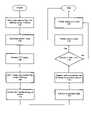
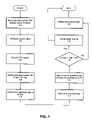
- FIG. 1is a flowchart illustrating one method of determining whether a received TCP packet lands on the left-hand or right-hand side of a TCP sequence space, in accordance with an embodiment of the invention.
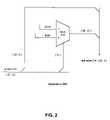
- FIG. 2depicts logic for determining whether a received TCP packet lands on the left-hand or right-hand side of a TCP sequence space, in accordance with an embodiment of the present invention.
- a method and apparatusare provided for determining which portion of a TCP (Transport Control Protocol) sequence space a TCP packet lands in. If the sequence numbers of the packet's data fall within an expected range, it is considered in-zone or on the right-hand side of the sequence space. If the data's sequence numbers fall outside the expected range the packet is considered to fall out-of-zone or on the left-hand size of the sequence space.
- TCPTransport Control Protocol
- the sequence spaceis wrap-around in nature, in that sequence numbers run from zero through a maximum number (e.g., 2 32 ⁇ 1) and back to zero.
- the wrap-around TCP sequence spaceis divided into in-zone and out-of-zone regions by placing an anchor at the sequence number of the last TCP data byte received plus one (i.e., the next TCP data byte to be received).
- the anchoris automatically adjusted as packets are received.
- a relative midpointwhich may be termed a “test value” herein, is determined such that half the TCP sequence numbers—the in-zone half—are greater than or equal to the anchor and less than the midpoint, and the other half—the out-of-zone half—are greater than or equal to the midpoint and less than the anchor.
- a much faster method of determining the midpoint or test valueis employed.
- the most significant bit of the anchore.g., bit 31 of a 32-bit sequence number having the form [31:0]
- the value 1is added to that bit.
- the sumis pre-pended (e.g., as a two-bit value) to the rest (e.g., bits [30:0]) of the anchor (e.g., as bits [32:31]).
- the resultis the midpoint or test value.
- FIG. 1demonstrates a method of determining the landing zone of a received TCP packet, according to one embodiment of the invention.
- the illustrated methodindicates whether the packet lands in-zone (e.g., in the right-hand side of the TCP sequence space) or out-of-zone (e.g., in the left-hand side of the sequence space).
- One implementation of this embodimentmay be coded in a hardware description language such as VHDL (Very high speed integrated circuit Hardware Description Language) or Verilog.
- VHDLVery high speed integrated circuit Hardware Description Language
- VerilogVerilog
- a value representing half the TCP sequence spaceis set, which may be termed half_TCP.
- half_TCPa value representing half the TCP sequence space.
- the address spacecontains 2 32 sequence numbers, the minimum sequence number is 0 and the maximum sequence number is 2 32 ⁇ 1.
- the sequence spacewraps around from 2 32 ⁇ 1 to 0.
- Each zone or half of the sequence spacetherefore contains 2 31 sequence numbers.
- the value 2 31is therefore coded (e.g., as a constant), or logic may be constructed for dynamically computing the value (e.g., during initialization of the communication interface or setup of a TCP connection).
- an anchoris set to mark the expected sequence number of the first byte of TCP data of the next packet or some other specific sequence number.
- the statuse.g., sequence numbers
- a TCP packetis received via the TCP connection.
- the sequence number (SN) of the last byte of TCP data of the packetis identified. In other implementations, the sequence number of the first byte or some other byte of the packet's data may be identified.
- bit [ 31 ]is the bit that is examined.
- the value 1is added to the examined bit.
- the summay be represented as a two-bit value, which will be either 2′b01 or 2′b10 (wherein “b” indicates a binary value).
- the value 1represents the most significant bit (bit [ 31 ]) of half TCP.
- the sumis one of the two bit binary values 01 and 10, which may be represented as 2′b01 and 2′b10.
- the value of the examined bitmay simply be used to decide which of the two two-bit values to produce. If the examined bit is 1, the value 2′b10 is output; if the bit is 0, the value 2′b01 is output.
- the sumis pre-pended to the remaining bits (e.g., bits
- the sequence number of the last TCP byte of the packetis compared to the anchor and the test value. If the sequence number is greater than (or equal to) the anchor and less than the test value, it is in-zone and the method continues with operation 118 . Otherwise, the sequence number or packet is considered out-of-zone and the illustrated method advances to operation 120 .
- the packetis in-zone and can be processed normally. The method then ends or returns to operation 104 .
- the packetis out-of-zone and so additional processing may be performed to handle the packet or the packet may be discarded.
- the methodthen ends or may return to operation 106 (or possibly operation 104 ).
- the operations of the method of FIG. 1may be performed in different orders.
- the test valuemay be computed before or after a packet to be tested is received
- embodimentsmay be developed for communication protocols other than TCP without exceeding the scope of the invention.
- embodimentsmay be readily implemented to compute relative midpoints of any sequence space based on sequence numbers 2 n in size, where n>1.
- FIG. 2demonstrates logic that may be employed to perform a method of the invention described herein.
- the logicmay be implemented within a network interface card, modem, router, switch, gateway or other communication apparatus.
- This embodimentis configured for a 32-bit TCP sequence space but may be modified as necessary for other communication protocols or environments.
- Apparatus 202receives a 32-bit anchor value via anchor line 212 . Bits [30:0] are extracted from the anchor to form bits [30:0] of test value 214 , a 33-bit value.
- Bit [ 31 ] of anchor 212is extracted and used to control mux 210 , which outputs two bits to form bits [32:31] of test value 214 .
- the muxoutputs 2′b10 if bit [ 31 ] of the anchor is 1 and outputs 2′b01 if bit [ 31 ] of the anchor is 0.
- a 2-bit addermay be employed in place of mux 210 .
- the program environment in which a present embodiment of the invention is executedillustratively incorporates a general-purpose computer or a special purpose device such as a hand-held computer. Details of such devices (e.g., processor, memory, data storage, display) may be omitted for the sake of clarity.
- the techniques of the present inventionmay be implemented using a variety of technologies.
- the methods described hereinmay be implemented in software executing on a computer system, or implemented in hardware utilizing either a combination of microprocessors or other specially designed application specific integrated circuits, programmable logic devices, or various combinations thereof.
- the methods described hereinmay be implemented by a series of computer-executable instructions residing on a suitable computer-readable medium.
- Suitable computer-readable mediamay include volatile (e.g., RAM) and/or non-volatile (e.g., ROM, disk) memory.
Landscapes
- Engineering & Computer Science (AREA)
- Computer Networks & Wireless Communication (AREA)
- Signal Processing (AREA)
- Computer Security & Cryptography (AREA)
- Data Exchanges In Wide-Area Networks (AREA)
Abstract
Description
This invention relates to the field of computer systems. More particularly, a method and apparatus are provided for determining which portion of a TCP (Transport Control Protocol) sequence space the contents of a TCP packet land in.
Information (e.g., data, packets, cells) sent or received over an electronic communication connection is often numbered and tracked. Incoming data may then be compared to what was expected, to ensure sequential processing of the data, to verify that all information is received, to identify duplicate or corrupted data, or for some other purpose.
For example, data transmitted via a TCP connection is sequentially numbered (by byte); each TCP packet identifies the sequence numbers of the data bytes it conveys. Illustratively, a packet header may identify the sequence number of the first or last byte of TCP data in the packet, along with the total amount of data.
Based on the sequence numbers of data previously received over a given TCP connection, the recipient may determine (by sequence number) what data should be received next. If the sequence numbers of the contents of the next packet fall within the range of expected sequence numbers (e.g., the sequence numbers immediately following those of the previous packet), the packet may be considered to fall “in-zone.” If the sequence numbers fall outside the expected range, the packet may be considered to fall “out-of-zone.” An out-of-zone packet or sequence number may indicate a packet that is out-of-order, corrupted, a duplicate, etc. Out-of-zone packets need to be identified because they may require special processing by the recipient.
A TCP sequence numbering scheme is circular in nature, in that it starts at zero and wraps around from a maximum value back to zero. The TCP sequence space may be divided in half, with one half representing in-zone sequence numbers and the other half out-of-zone sequence numbers. Because the range of expected or in-zone sequence numbers changes with each TCP data packet received, the zones change for each data packet.
The TCP sequence space may be divided by selecting some sequence number as an anchor or starting point, and adding half the maximum sequence number. The sum represents a relative midpoint in the sequence space, between the selected anchor and the point at which the sequence numbers would wrap around to the anchor. The in-zone range comprises sequence numbers greater than the anchor and less than the midpoint, while the out-of-zone range of sequence numbers comprises sequence numbers greater than the midpoint and less than the anchor.
Traditionally, an adder was employed to generate the relative midpoint. However, due to the size of TCP sequence numbers (32 bits) such an adder is large (i.e., 33 bits) and requires substantial logic. And, with the ever-increasing data rates, computation of the midpoint for each packet becomes a bottleneck in the processing of incoming TCP packets, thereby limiting the effective throughput.
In one embodiment of the invention, a method and apparatus are provided for determining whether a TCP packet lands in-zone or out-of-zone of a TCP sequence space. An anchor representing the TCP sequence number of the last TCP data byte, plus one, is updated each time a TCP data packet is received. Thus, the anchor identifies the TCP sequence number of the next TCP data byte that should be received.
When a new TCP packet is received, the most significant bit, bit [31], is extracted from the anchor. A two-bit value is formed by adding 1 to the extracted bit. This two-bit value is pre-pended to bits [30:0] of the anchor, as bits [32:31], to produce a 33-bit test value.
Then, the sequence number of the last TCP byte of the received packet is then compared to the anchor and the test value. If the sequence number is greater than or equal to the anchor, and less than the test value, the packet lands in-zone and may be processed normally. Otherwise, the packet is out-of-zone and may receive special processing or may be discarded.
The following description is presented to enable any person skilled in the art to make and use the invention, and is provided in the context of particular applications of the invention and their requirements. Various modifications to the disclosed embodiments will be readily apparent to those skilled in the art and the general principles defined herein may be applied to other embodiments and applications without departing from the scope of the present invention. Thus, the present invention is not intended to be limited to the embodiments shown, but is to be accorded the widest scope consistent with the principles and features disclosed herein.
In an embodiment of the invention, a method and apparatus are provided for determining which portion of a TCP (Transport Control Protocol) sequence space a TCP packet lands in. If the sequence numbers of the packet's data fall within an expected range, it is considered in-zone or on the right-hand side of the sequence space. If the data's sequence numbers fall outside the expected range the packet is considered to fall out-of-zone or on the left-hand size of the sequence space.
The sequence space is wrap-around in nature, in that sequence numbers run from zero through a maximum number (e.g., 232−1) and back to zero. The wrap-around TCP sequence space is divided into in-zone and out-of-zone regions by placing an anchor at the sequence number of the last TCP data byte received plus one (i.e., the next TCP data byte to be received). The anchor is automatically adjusted as packets are received.
A relative midpoint, which may be termed a “test value” herein, is determined such that half the TCP sequence numbers—the in-zone half—are greater than or equal to the anchor and less than the midpoint, and the other half—the out-of-zone half—are greater than or equal to the midpoint and less than the anchor.
Instead of adding half the size of the sequence space to the anchor, in one embodiment of the invention a much faster method of determining the midpoint or test value is employed. In this embodiment, the most significant bit of the anchor (e.g.,bit 31 of a 32-bit sequence number having the form [31:0]) is extracted and thevalue 1 is added to that bit. The sum is pre-pended (e.g., as a two-bit value) to the rest (e.g., bits [30:0]) of the anchor (e.g., as bits [32:31]). The result is the midpoint or test value.
One implementation of this embodiment may be coded in a hardware description language such as VHDL (Very high speed integrated circuit Hardware Description Language) or Verilog. A method described herein may thus be coded in hardware or firmware logic included in a communication interface configured to host TCP connections, such as a network interface card.
Inoperation 102, a value representing half the TCP sequence space is set, which may be termed half_TCP. For example, if sequence numbers are 32 bits in size, the address space contains 232sequence numbers, the minimum sequence number is 0 and the maximum sequence number is 232−1. The sequence space wraps around from 232−1 to 0.
Each zone or half of the sequence space therefore contains 231sequence numbers. The value 231is therefore coded (e.g., as a constant), or logic may be constructed for dynamically computing the value (e.g., during initialization of the communication interface or setup of a TCP connection).
Inoperation 104, an anchor is set to mark the expected sequence number of the first byte of TCP data of the next packet or some other specific sequence number. In this embodiment of the invention, the status (e.g., sequence numbers) of each TCP connection received at the communication interface is maintained separately.
Inoperation 106, a TCP packet is received via the TCP connection.
Inoperation 108, the sequence number (SN) of the last byte of TCP data of the packet is identified. In other implementations, the sequence number of the first byte or some other byte of the packet's data may be identified.
Inoperation 110, the most significant bit of the anchor is examined or extracted. If the sequence numbers are 32 bits wide, represented as [31:0], then bit [31] is the bit that is examined.
Inoperation 112, thevalue 1 is added to the examined bit. The sum may be represented as a two-bit value, which will be either 2′b01 or 2′b10 (wherein “b” indicates a binary value). Thevalue 1 represents the most significant bit (bit [31]) of half TCP. The sum is one of the two bit binary values 01 and 10, which may be represented as 2′b01 and 2′b10.
Instead of an addition, the value of the examined bit may simply be used to decide which of the two two-bit values to produce. If the examined bit is 1, the value 2′b10 is output; if the bit is 0, the value 2′b01 is output.
Inoperation 114, the sum is pre-pended to the remaining bits (e.g., bits
[30:0] of the anchor, as bits [32:31], to produce a 33-bit value representing the midpoint of the TCP sequence space starting from the anchor. The result is called a “test value” herein, because it will be used to help test whether the packet landed in-zone or out-of-zone.
Inoperation 116, the sequence number of the last TCP byte of the packet is compared to the anchor and the test value. If the sequence number is greater than (or equal to) the anchor and less than the test value, it is in-zone and the method continues withoperation 118. Otherwise, the sequence number or packet is considered out-of-zone and the illustrated method advances tooperation 120.
Inoperation 118, the packet is in-zone and can be processed normally. The method then ends or returns tooperation 104.
Inoperation 120, the packet is out-of-zone and so additional processing may be performed to handle the packet or the packet may be discarded. The method then ends or may return to operation106 (or possibly operation104).
In other embodiments of the invention, the operations of the method ofFIG. 1 may be performed in different orders. For example, the test value may be computed before or after a packet to be tested is received
Also, based on the disclosed embodiments of the invention, other embodiments may be developed for communication protocols other than TCP without exceeding the scope of the invention. In particular, embodiments may be readily implemented to compute relative midpoints of any sequence space based on sequence numbers 2nin size, where n>1.
Apparatus202 receives a 32-bit anchor value viaanchor line 212. Bits [30:0] are extracted from the anchor to form bits [30:0] oftest value 214, a 33-bit value.
Bit [31] ofanchor 212 is extracted and used to controlmux 210, which outputs two bits to form bits [32:31] oftest value 214. The mux outputs 2′b10 if bit [31] of the anchor is 1 and outputs 2′b01 if bit [31] of the anchor is 0.
In one alternative embodiment of the invention, a 2-bit adder may be employed in place ofmux 210.
The program environment in which a present embodiment of the invention is executed illustratively incorporates a general-purpose computer or a special purpose device such as a hand-held computer. Details of such devices (e.g., processor, memory, data storage, display) may be omitted for the sake of clarity.
It should also be understood that the techniques of the present invention may be implemented using a variety of technologies. For example, the methods described herein may be implemented in software executing on a computer system, or implemented in hardware utilizing either a combination of microprocessors or other specially designed application specific integrated circuits, programmable logic devices, or various combinations thereof. In particular, the methods described herein may be implemented by a series of computer-executable instructions residing on a suitable computer-readable medium. Suitable computer-readable media may include volatile (e.g., RAM) and/or non-volatile (e.g., ROM, disk) memory.
The foregoing embodiments of the invention have been presented for purposes of illustration and description only. They are not intended to be exhaustive or to limit the invention to the forms disclosed. Accordingly, the scope of the invention is defined by the appended claims, not the preceding disclosure.
Claims (13)
1. An automated method of determining whether a TCP (Transmission Control Protocol) packet lands in-zone within a wrap-around TCP sequence space, the method comprising:
setting an anchor configured to identify a TCP sequence number N bits in length and representable as [N−1:0], wherein N is an integer greater than zero;
calculating a test value N+1 bits in length and representable as [N:0] by:
selecting bit [N−1] of said anchor;
adding 1 to said selected bit to generate bits [N:N−1] of said test value;
copying bits [N−2:0] of said anchor to said test value; and
comparing a TCP sequence number of the TCP packet to said test value.
2. The method ofclaim 1 , wherein the TCP packet is in-zone if the TCP sequence number is:
greater than or equal to said anchor; and
less than said test value.
3. The method ofclaim 1 , wherein the TCP packet is out-of-zone if the TCP sequence number is:
less than said anchor; and
greater than said test value.
4. The method ofclaim 3 , wherein the TCP is out-of-zone if the TCP sequence number is equal to said test value.
5. The method ofclaim 1 , wherein N=32.
6. The method ofclaim 1 , wherein the TCP sequence number is the TCP sequence number of the last TCP byte in the TCP packet.
7. A computer readable medium storing instructions that, when executed by a computer, cause the computer to perform a method of determining whether a TCP (Transmission Control Protocol) packet lands in-zone within a wrap-around TCP sequence space, the method comprising:
setting an anchor configured to identify a TCP sequence number N bits in length and representable as [N−1:0], wherein N is an integer greater than zero;
calculating a test value N+1 bits in length and representable as [N:0] by:
selecting bit [N−1] of said anchor;
adding 1 to said selected bit to generate bits [N:N−1] of said test value;
copying bits [N−2:0] of said anchor to said test value; and
comparing a TCP sequence number of the TCP packet to said test value.
8. An automated method of determining the landing zone of a received packet formatted according to a communication protocol in which packet data are sequentially numbered in a wrap-around sequence space, the method comprising:
receiving a first packet over a communication connection;
configuring an anchor to identify a sequence number of data expected to be received with a subsequent packet received over the connection;
extracting a most significant bit of the anchor;
adding 1 to the extracted bit to produce a sum;
copying all bits of the anchor except the most significant bit into a test value;
pre-pending said sum as the most significant bits of said test value; and
receiving the subsequent packet;
identifying a sequence number of data contained in the subsequent packet; and
comparing the identified sequence number with the anchor and the test value.
9. The method ofclaim 8 , wherein the subsequent packet lands in-zone if the identified sequence number is:
greater than the anchor; and
less than the test value.
10. The method ofclaim 9 , wherein the subsequent packet lands in-zone if the identified sequence number is equal to the anchor.
11. The method ofclaim 8 , wherein the subsequent packet lands out-of-zone if the identified sequence number is:
less than the anchor; and
greater than the test value.
12. The method ofclaim 11 , wherein the subsequent packet lands out-of-zone if the identified sequence number is equal to the test value.
13. An apparatus for determining the landing zone of a TCP (Transmission Control Protocol) packet, comprising:
an anchor line configured to carry a binary anchor value N bits in length, wherein N>0;
a multiplexer configured to:
input bit [N−1] of said anchor; and
output bits [N:N−1] of a binary test value N+1 bits in length;
wherein said bits [N:N−1] of said test value comprise the sum of said bit [N−1] of said anchor plus one;
a test value line configured to carry said test value;
wherein bits [N−2:0] of said test value are equal to bits [N−2:0] of said anchor.
Priority Applications (1)
| Application Number | Priority Date | Filing Date | Title |
|---|---|---|---|
| US11/098,207US7453879B1 (en) | 2005-04-04 | 2005-04-04 | Method and apparatus for determining the landing zone of a TCP packet |
Applications Claiming Priority (1)
| Application Number | Priority Date | Filing Date | Title |
|---|---|---|---|
| US11/098,207US7453879B1 (en) | 2005-04-04 | 2005-04-04 | Method and apparatus for determining the landing zone of a TCP packet |
Publications (1)
| Publication Number | Publication Date |
|---|---|
| US7453879B1true US7453879B1 (en) | 2008-11-18 |
Family
ID=40000776
Family Applications (1)
| Application Number | Title | Priority Date | Filing Date |
|---|---|---|---|
| US11/098,207Active2027-01-18US7453879B1 (en) | 2005-04-04 | 2005-04-04 | Method and apparatus for determining the landing zone of a TCP packet |
Country Status (1)
| Country | Link |
|---|---|
| US (1) | US7453879B1 (en) |
Cited By (8)
| Publication number | Priority date | Publication date | Assignee | Title |
|---|---|---|---|---|
| US8316129B2 (en)* | 2005-05-25 | 2012-11-20 | Microsoft Corporation | Data communication coordination with sequence numbers |
| US8631277B2 (en) | 2010-12-10 | 2014-01-14 | Microsoft Corporation | Providing transparent failover in a file system |
| US8788579B2 (en) | 2011-09-09 | 2014-07-22 | Microsoft Corporation | Clustered client failover |
| US8856582B2 (en) | 2011-06-30 | 2014-10-07 | Microsoft Corporation | Transparent failover |
| US9331955B2 (en) | 2011-06-29 | 2016-05-03 | Microsoft Technology Licensing, Llc | Transporting operations of arbitrary size over remote direct memory access |
| US10630781B2 (en) | 2011-09-09 | 2020-04-21 | Microsoft Technology Licensing, Llc | SMB2 scaleout |
| US20230079606A1 (en)* | 2015-06-05 | 2023-03-16 | Cisco Technology, Inc. | Round trip time (rtt) measurement based upon sequence number |
| US11936663B2 (en) | 2015-06-05 | 2024-03-19 | Cisco Technology, Inc. | System for monitoring and managing datacenters |
Citations (5)
| Publication number | Priority date | Publication date | Assignee | Title |
|---|---|---|---|---|
| US5151899A (en)* | 1991-02-11 | 1992-09-29 | Digital Equipment Corporation | Tracking sequence numbers in packet data communication system |
| US6011796A (en)* | 1997-06-17 | 2000-01-04 | Qualcomm Incorporated | Extended range sequence numbering for selective repeat data transmission protocol |
| US6314101B1 (en)* | 1997-06-17 | 2001-11-06 | Qualcomm Incorporated | Method for detecting delayed data frames in a transport function |
| US20040133713A1 (en)* | 2002-08-30 | 2004-07-08 | Uri Elzur | Method and system for data placement of out-of-order (OOO) TCP segments |
| US20050286526A1 (en)* | 2004-06-25 | 2005-12-29 | Sood Sanjeev H | Optimized algorithm for stream re-assembly |
- 2005
- 2005-04-04USUS11/098,207patent/US7453879B1/enactiveActive
Patent Citations (5)
| Publication number | Priority date | Publication date | Assignee | Title |
|---|---|---|---|---|
| US5151899A (en)* | 1991-02-11 | 1992-09-29 | Digital Equipment Corporation | Tracking sequence numbers in packet data communication system |
| US6011796A (en)* | 1997-06-17 | 2000-01-04 | Qualcomm Incorporated | Extended range sequence numbering for selective repeat data transmission protocol |
| US6314101B1 (en)* | 1997-06-17 | 2001-11-06 | Qualcomm Incorporated | Method for detecting delayed data frames in a transport function |
| US20040133713A1 (en)* | 2002-08-30 | 2004-07-08 | Uri Elzur | Method and system for data placement of out-of-order (OOO) TCP segments |
| US20050286526A1 (en)* | 2004-06-25 | 2005-12-29 | Sood Sanjeev H | Optimized algorithm for stream re-assembly |
Cited By (32)
| Publication number | Priority date | Publication date | Assignee | Title |
|---|---|---|---|---|
| US9071661B2 (en)* | 2005-05-25 | 2015-06-30 | Microsoft Technology Licensing, Llc | Data communication coordination with sequence numbers |
| US20150281404A1 (en)* | 2005-05-25 | 2015-10-01 | Microsoft Technology Licensing, Llc | Data communication coordination with sequence numbers |
| US9438696B2 (en) | 2005-05-25 | 2016-09-06 | Microsoft Technology Licensing, Llc | Data communication protocol |
| US9332089B2 (en)* | 2005-05-25 | 2016-05-03 | Microsoft Technology Licensing, Llc | Data communication coordination with sequence numbers |
| US8825885B2 (en) | 2005-05-25 | 2014-09-02 | Microsoft Corporation | Data communication protocol |
| US8850025B2 (en)* | 2005-05-25 | 2014-09-30 | Microsoft Corporation | Data communication coordination with sequence numbers |
| US8332526B2 (en) | 2005-05-25 | 2012-12-11 | Microsoft Corporation | Data communication protocol including negotiation and command compounding |
| US20150026248A1 (en)* | 2005-05-25 | 2015-01-22 | Microsoft Corporation | Data communication coordination with sequence numbers |
| US8316129B2 (en)* | 2005-05-25 | 2012-11-20 | Microsoft Corporation | Data communication coordination with sequence numbers |
| US8631277B2 (en) | 2010-12-10 | 2014-01-14 | Microsoft Corporation | Providing transparent failover in a file system |
| US9331955B2 (en) | 2011-06-29 | 2016-05-03 | Microsoft Technology Licensing, Llc | Transporting operations of arbitrary size over remote direct memory access |
| US10284626B2 (en) | 2011-06-29 | 2019-05-07 | Microsoft Technology Licensing, Llc | Transporting operations of arbitrary size over remote direct memory access |
| US8856582B2 (en) | 2011-06-30 | 2014-10-07 | Microsoft Corporation | Transparent failover |
| US9462039B2 (en) | 2011-06-30 | 2016-10-04 | Microsoft Technology Licensing, Llc | Transparent failover |
| US8788579B2 (en) | 2011-09-09 | 2014-07-22 | Microsoft Corporation | Clustered client failover |
| US10630781B2 (en) | 2011-09-09 | 2020-04-21 | Microsoft Technology Licensing, Llc | SMB2 scaleout |
| US20230079606A1 (en)* | 2015-06-05 | 2023-03-16 | Cisco Technology, Inc. | Round trip time (rtt) measurement based upon sequence number |
| US11902122B2 (en) | 2015-06-05 | 2024-02-13 | Cisco Technology, Inc. | Application monitoring prioritization |
| US11902124B2 (en)* | 2015-06-05 | 2024-02-13 | Cisco Technology, Inc. | Round trip time (RTT) measurement based upon sequence number |
| US11902120B2 (en) | 2015-06-05 | 2024-02-13 | Cisco Technology, Inc. | Synthetic data for determining health of a network security system |
| US11924073B2 (en) | 2015-06-05 | 2024-03-05 | Cisco Technology, Inc. | System and method of assigning reputation scores to hosts |
| US11936663B2 (en) | 2015-06-05 | 2024-03-19 | Cisco Technology, Inc. | System for monitoring and managing datacenters |
| US11968102B2 (en) | 2015-06-05 | 2024-04-23 | Cisco Technology, Inc. | System and method of detecting packet loss in a distributed sensor-collector architecture |
| US12113684B2 (en) | 2015-06-05 | 2024-10-08 | Cisco Technology, Inc. | Identifying bogon address spaces |
| US12177097B2 (en) | 2015-06-05 | 2024-12-24 | Cisco Technology, Inc. | Policy utilization analysis |
| US12192078B2 (en) | 2015-06-05 | 2025-01-07 | Cisco Technology, Inc. | System and method of assigning reputation scores to hosts |
| US12212476B2 (en) | 2015-06-05 | 2025-01-28 | Cisco Technology, Inc. | System and method for network policy simulation |
| US12224921B2 (en) | 2015-06-05 | 2025-02-11 | Cisco Technology, Inc. | Technologies for managing compromised sensors in virtualized environments |
| US12231307B2 (en) | 2015-06-05 | 2025-02-18 | Cisco Technology, Inc. | System and method for user optimized application dependency mapping |
| US12231308B2 (en) | 2015-06-05 | 2025-02-18 | Cisco Technology, Inc. | Unique ID generation for sensors |
| US12278746B2 (en) | 2015-06-05 | 2025-04-15 | Cisco Technology, Inc. | Auto update of sensor configuration |
| US12335275B2 (en) | 2015-06-05 | 2025-06-17 | Cisco Technology, Inc. | System for monitoring and managing datacenters |
Similar Documents
| Publication | Publication Date | Title |
|---|---|---|
| US6728929B1 (en) | System and method to insert a TCP checksum in a protocol neutral manner | |
| US7356039B1 (en) | Method and apparatus for describing multiple packets to hardware | |
| US7185266B2 (en) | Network interface device for error detection using partial CRCS of variable length message portions | |
| JP5269610B2 (en) | Perform cyclic redundancy check operations according to user level instructions | |
| US9578141B2 (en) | Packet flow modification | |
| US20030066011A1 (en) | Out-of-order calculation of error detection codes | |
| EP2342872B1 (en) | Reliable reception of messages written via rdma using hashing | |
| CN105939284B (en) | The matching process and device of message control strategy | |
| KR20050057698A (en) | Apparatus and method for generating checksum | |
| US6591397B1 (en) | Checksum generator with minimum overflow | |
| US7453879B1 (en) | Method and apparatus for determining the landing zone of a TCP packet | |
| US20040025105A1 (en) | CRC calculation system for a packet arriving on an n-byte wide bus and a method of calculation thereof | |
| US8365045B2 (en) | Flow based data packet processing | |
| CN114499757B (en) | Method and device for generating checksum and electronic equipment | |
| CN113973074B (en) | Message processing method and device, electronic equipment and medium | |
| US7028244B2 (en) | Network processor having cyclic redundancy check implemented in hardware | |
| US9503552B2 (en) | System and method for adapting to network protocol updates | |
| US9490939B2 (en) | Apparatus and method for calculating transmission control protocol checksum | |
| US7134070B2 (en) | Checksum determination | |
| US7424653B2 (en) | System and method for error capture and logging in computer systems | |
| US20090028150A1 (en) | Protocol-Independent Packet Header Analysis | |
| US20040236982A1 (en) | System and method for in-order queue draining | |
| JP2004120675A (en) | Test packet generating apparatus | |
| US20220239408A1 (en) | Sd-wan communication network forward error correction systems and methods | |
| US7180851B1 (en) | Method for quick identification of special data packets |
Legal Events
| Date | Code | Title | Description |
|---|---|---|---|
| AS | Assignment | Owner name:SUN MICROSYSTEMS, INC., CALIFORNIA Free format text:ASSIGNMENT OF ASSIGNORS INTEREST;ASSIGNOR:LO, JOHN M.;REEL/FRAME:016453/0903 Effective date:20050329 | |
| FEPP | Fee payment procedure | Free format text:PAYOR NUMBER ASSIGNED (ORIGINAL EVENT CODE: ASPN); ENTITY STATUS OF PATENT OWNER: LARGE ENTITY | |
| STCF | Information on status: patent grant | Free format text:PATENTED CASE | |
| FPAY | Fee payment | Year of fee payment:4 | |
| AS | Assignment | Owner name:ORACLE AMERICA, INC., CALIFORNIA Free format text:MERGER AND CHANGE OF NAME;ASSIGNORS:ORACLE USA, INC.;SUN MICROSYSTEMS, INC.;ORACLE AMERICA, INC.;REEL/FRAME:037303/0926 Effective date:20100212 | |
| FPAY | Fee payment | Year of fee payment:8 | |
| MAFP | Maintenance fee payment | Free format text:PAYMENT OF MAINTENANCE FEE, 12TH YEAR, LARGE ENTITY (ORIGINAL EVENT CODE: M1553); ENTITY STATUS OF PATENT OWNER: LARGE ENTITY Year of fee payment:12 |