US7399917B2 - Music content playback apparatus, music content playback method and storage medium - Google Patents
Music content playback apparatus, music content playback method and storage mediumDownload PDFInfo
- Publication number
- US7399917B2 US7399917B2US11/654,812US65481207AUS7399917B2US 7399917 B2US7399917 B2US 7399917B2US 65481207 AUS65481207 AUS 65481207AUS 7399917 B2US7399917 B2US 7399917B2
- Authority
- US
- United States
- Prior art keywords
- piece
- content
- playback
- music content
- control section
- Prior art date
- Legal status (The legal status is an assumption and is not a legal conclusion. Google has not performed a legal analysis and makes no representation as to the accuracy of the status listed.)
- Active, expires
Links
Images




Classifications
- G—PHYSICS
- G11—INFORMATION STORAGE
- G11B—INFORMATION STORAGE BASED ON RELATIVE MOVEMENT BETWEEN RECORD CARRIER AND TRANSDUCER
- G11B20/00—Signal processing not specific to the method of recording or reproducing; Circuits therefor
- G11B20/10—Digital recording or reproducing
- G—PHYSICS
- G11—INFORMATION STORAGE
- G11B—INFORMATION STORAGE BASED ON RELATIVE MOVEMENT BETWEEN RECORD CARRIER AND TRANSDUCER
- G11B27/00—Editing; Indexing; Addressing; Timing or synchronising; Monitoring; Measuring tape travel
- G11B27/10—Indexing; Addressing; Timing or synchronising; Measuring tape travel
- G—PHYSICS
- G06—COMPUTING OR CALCULATING; COUNTING
- G06F—ELECTRIC DIGITAL DATA PROCESSING
- G06F3/00—Input arrangements for transferring data to be processed into a form capable of being handled by the computer; Output arrangements for transferring data from processing unit to output unit, e.g. interface arrangements
- G06F3/01—Input arrangements or combined input and output arrangements for interaction between user and computer
- G06F3/02—Input arrangements using manually operated switches, e.g. using keyboards or dials
- G—PHYSICS
- G06—COMPUTING OR CALCULATING; COUNTING
- G06F—ELECTRIC DIGITAL DATA PROCESSING
- G06F3/00—Input arrangements for transferring data to be processed into a form capable of being handled by the computer; Output arrangements for transferring data from processing unit to output unit, e.g. interface arrangements
- G06F3/01—Input arrangements or combined input and output arrangements for interaction between user and computer
- G06F3/048—Interaction techniques based on graphical user interfaces [GUI]
- G06F3/0481—Interaction techniques based on graphical user interfaces [GUI] based on specific properties of the displayed interaction object or a metaphor-based environment, e.g. interaction with desktop elements like windows or icons, or assisted by a cursor's changing behaviour or appearance
- H—ELECTRICITY
- H04—ELECTRIC COMMUNICATION TECHNIQUE
- H04N—PICTORIAL COMMUNICATION, e.g. TELEVISION
- H04N5/00—Details of television systems
- H04N5/44—Receiver circuitry for the reception of television signals according to analogue transmission standards
- H04N5/445—Receiver circuitry for the reception of television signals according to analogue transmission standards for displaying additional information
- G—PHYSICS
- G11—INFORMATION STORAGE
- G11B—INFORMATION STORAGE BASED ON RELATIVE MOVEMENT BETWEEN RECORD CARRIER AND TRANSDUCER
- G11B20/00—Signal processing not specific to the method of recording or reproducing; Circuits therefor
- G11B20/10—Digital recording or reproducing
- G11B20/10527—Audio or video recording; Data buffering arrangements
- G11B2020/10537—Audio or video recording
- G11B2020/10546—Audio or video recording specifically adapted for audio data
- G—PHYSICS
- G11—INFORMATION STORAGE
- G11B—INFORMATION STORAGE BASED ON RELATIVE MOVEMENT BETWEEN RECORD CARRIER AND TRANSDUCER
- G11B20/00—Signal processing not specific to the method of recording or reproducing; Circuits therefor
- G11B20/10—Digital recording or reproducing
- G11B2020/10935—Digital recording or reproducing wherein a time constraint must be met
- G11B2020/10944—Real-time recording or reproducing, e.g. for ensuring seamless playback of AV data
- Y—GENERAL TAGGING OF NEW TECHNOLOGICAL DEVELOPMENTS; GENERAL TAGGING OF CROSS-SECTIONAL TECHNOLOGIES SPANNING OVER SEVERAL SECTIONS OF THE IPC; TECHNICAL SUBJECTS COVERED BY FORMER USPC CROSS-REFERENCE ART COLLECTIONS [XRACs] AND DIGESTS
- Y10—TECHNICAL SUBJECTS COVERED BY FORMER USPC
- Y10S—TECHNICAL SUBJECTS COVERED BY FORMER USPC CROSS-REFERENCE ART COLLECTIONS [XRACs] AND DIGESTS
- Y10S707/00—Data processing: database and file management or data structures
- Y10S707/99931—Database or file accessing
- Y10S707/99937—Sorting
- Y—GENERAL TAGGING OF NEW TECHNOLOGICAL DEVELOPMENTS; GENERAL TAGGING OF CROSS-SECTIONAL TECHNOLOGIES SPANNING OVER SEVERAL SECTIONS OF THE IPC; TECHNICAL SUBJECTS COVERED BY FORMER USPC CROSS-REFERENCE ART COLLECTIONS [XRACs] AND DIGESTS
- Y10—TECHNICAL SUBJECTS COVERED BY FORMER USPC
- Y10S—TECHNICAL SUBJECTS COVERED BY FORMER USPC CROSS-REFERENCE ART COLLECTIONS [XRACs] AND DIGESTS
- Y10S707/00—Data processing: database and file management or data structures
- Y10S707/99941—Database schema or data structure
- Y10S707/99942—Manipulating data structure, e.g. compression, compaction, compilation
- Y—GENERAL TAGGING OF NEW TECHNOLOGICAL DEVELOPMENTS; GENERAL TAGGING OF CROSS-SECTIONAL TECHNOLOGIES SPANNING OVER SEVERAL SECTIONS OF THE IPC; TECHNICAL SUBJECTS COVERED BY FORMER USPC CROSS-REFERENCE ART COLLECTIONS [XRACs] AND DIGESTS
- Y10—TECHNICAL SUBJECTS COVERED BY FORMER USPC
- Y10S—TECHNICAL SUBJECTS COVERED BY FORMER USPC CROSS-REFERENCE ART COLLECTIONS [XRACs] AND DIGESTS
- Y10S707/00—Data processing: database and file management or data structures
- Y10S707/99941—Database schema or data structure
- Y10S707/99943—Generating database or data structure, e.g. via user interface
Definitions
- the present inventioncontains subject matter related to Japanese Patent Application JP2006-014215 filed in the Japanese Patent Office on Jan. 23, 2006, the entire contents of which being incorporated herein by reference.
- the present inventionrelates to a music content playback apparatus, music content playback method and storage medium for storing a music content playback program, and is preferably applied to a case in which a user interface is provided to retrieve the user's desired piece of music content out of many pieces of music content, for example.
- a content playback devicestores many pieces of digital content, such as music and video, in a large-capacity hard disk and the like; the content playback device is also capable of acquiring the digital content from external servers through a high-speed network and the like; the content playback device plays back the piece of digital content specified by a user.
- Jpn. Pat. Laid-open Publication No. 2004-356774discloses a content playback device which displays rows of thumbnails each of which is associated with each piece of content after classifying them by content (media) type. This allows a user to easily select pieces of content.
- a content playback devicewhich stores many pieces of music content, capable of immediately playing back the piece of music content selected through a cursor by a user for trial listening. This helps the user to realize what the pieces of music content are about when he/she selects one to play back.
- this content play back deviceplays back it from its top part. This can be monotonous and boring to the user who is listening to that piece of music content.
- the content playback devicecan play back the piece of music content from other parts, this can be fresh and enjoyable to the user who is listening to it, and therefore that can entertain the user.
- the present inventionhas been made in view of the above points and is intended to provide a music content playback apparatus, music content playback method and storage medium for storing a music content playback program that can entertain the user while changing the piece of music content.
- a music content playback apparatusperforms the process of: selecting a piece of music content out of a plurality of pieces of music content; recognizing playback elapse state about a previous piece of music content played immediately before the piece of music content is selected; and playing back the selected piece of music content from a playback point corresponding to the playback elapse state.
- the music content playback apparatusrecognizes, when the piece of music content is selected, the playback elapse state of the previous piece of music content so that the selected piece of music content takes over it. This allows the music content playback apparatus to play back the selected piece of music content from various playback points, not from the top part.
- the music content playback apparatusrecognizes, when the piece of music content is selected, the playback elapse state of the previous piece of music content so that the selected piece of music content takes over it. This allows the music content playback apparatus to play back the selected piece of music content from various playback points, not from the top part.
- the music content playback apparatus, the music content playback method and the storage medium for storing a music content playback programcan entertain the user while changing the piece of music content.
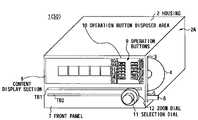
- FIG. 1is a schematic perspective view of an audio device
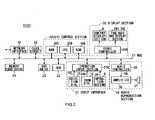
- FIG. 2is a schematic block diagram illustrating the circuit configuration of the audio device
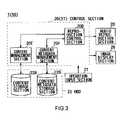
- FIG. 3is a schematic block diagram illustrating the functional configuration of the audio device
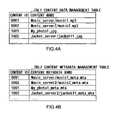
- FIGS. 4A and 4Bare schematic diagrams illustrating the configuration of a data management table
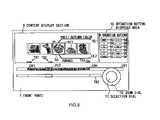
- FIG. 5is a schematic diagram illustrating the information displayed on a front panel in all music display mode
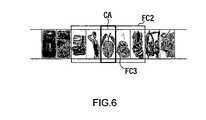
- FIG. 6is a schematic diagram illustrating the configuration of a focus frame
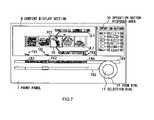
- FIG. 7is a schematic diagram illustrating methods of selecting and displaying the pieces of music content
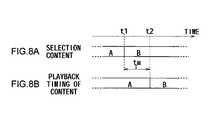
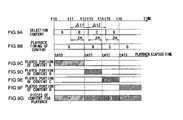
- FIGS. 8A and 8Bare schematic diagrams illustrating selection of content and timing of reproduction
- FIGS. 9A to 9Gare schematic diagrams illustrating playback of content in low speed switch mode
- FIGS. 10A to 10Eare schematic diagrams illustrating playback of content in high speed switch mode
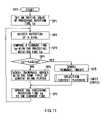
- FIG. 11is a flowchart illustrating a procedure of selection content switch process
- FIG. 12is a flowchart illustrating a procedure of selection content playback process according to a first embodiment of the present invention
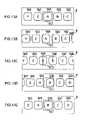
- FIGS. 13A to 13Eare schematic diagrams illustrating thumbnail images scrolled
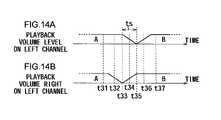
- FIGS. 14A and 14Bare schematic diagrams illustrating playback volume levels during a process of switching the pieces of content
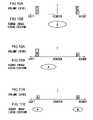
- FIGS. 15A and 15Bare schematic diagrams illustrating volume levels and sound localization at time instance t 31 ;
- FIGS. 16A and 16Bare schematic diagrams illustrating volume levels and sound localization at time instance t 32 ;
- FIGS. 17A and 17Bare schematic diagrams illustrating volume levels and sound localization at time instance t 34 ;
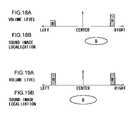
- FIGS. 18A and 18Bare schematic diagrams illustrating volume levels and sound localization at time instance t 36 ;
- FIGS. 19A and 19Bare schematic diagrams illustrating volume levels and sound localization at time instance t 37 ;
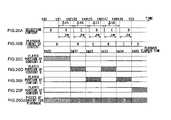
- FIGS. 20A to 20Gare schematic diagrams illustrating playback of content during low-speed selection
- FIGS. 21A to 21Eare schematic diagrams illustrating playback of content according to a second embodiment of the present invention.
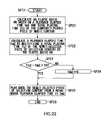
- FIG. 22is a flowchart illustrating a procedure of selection content playback process according to a second embodiment of the present invention.
- the reference numeral 1denotes an audio device according to an first embodiment of the present invention.
- An insertion slot 3is placed on a right side panel 2 A of a housing 2 .
- the insertion slot 3accepts an optical disc 4 such as Digital Versatile Disc (DVD) and Compact Disc (CD).
- An entry slot 5is placed below the insertion slot 3 .
- the entry slot 5accepts a small memory card 6 such as “MEMORY STICK (Registered Trademark of Sony Corporation)”.
- the audio device 1also includes the following components: a content display section 8 , such as liquid crystal display, on a front panel 7 ; an operation button disposed area 10 on the right of the content display section 8 ; and a zoom dial 12 with a selection dial 11 on the bottom right of the content display section 8 and the operation button disposed area 10 .
- the zoom dial 12which is larger than the selection dial 11 , is placed under the selection dial 11 that is to be used to select a piece of music content.
- the audio device 1includes time axis bar display sections TB 1 and TB 2 (described below) to present pieces of music content in chronologic order, or in order of time.
- the time axis bar display sections TB 1 and TB 2are for example equivalent to a liquid crystal display, being placed below the content display section 8 and the operation button disposed area 10 .
- the audio device 1is capable of playing back the piece of music content from the optical disc 4 in the insertion slot 3 and from the small memory card 6 in the entry slot 5 to output music through a speaker (not shown) connected to the audio device 1 .
- the audio device 1is capable of reading out the pieces of music content from the optical disc 4 and the small memory card 6 to store them in an internal Hard Disk Drive.
- the audio device 1is capable of connecting to the Internet through a network cable. This allows the audio device 1 to download the desired piece of music content from external servers on the Internet and then store it in the internal Hard Disk Drive.
- the operation button disposed area 10includes a group of operation buttons 9 : a playback button 9 A, which is to be used to play back or stop the piece of music data selected by the selection dial 11 ; a skip button 9 B, which is used to skip the piece of music content; a volume control button 9 C; a recording button 9 D; a timer setting button 9 E; a user rating button 9 F; a menu button 9 G, which is used to switch modes; optional buttons 9 H to 9 K, to which various functions may be assigned according to the modes; and a cancel button 9 L.
- the audio device 1performs various processes in accordance with the user's operation of the operation buttons 9 .
- a control section 20takes overall control of the audio device 1 .
- a Central Processing Unit (CPU) 20 Areads out programs, such as basic programs and content display programs, from a Read Only Memory (ROM) 20 B through a bus 21 , and then loads them onto a Random Access Memory (RAM) 20 C to perform processes such as a content display process.
- programssuch as basic programs and content display programs
- RAMRandom Access Memory
- the control section 20for example rips music data from the optical disc 4 ( FIG. 1 ) that has been inserted into a DVD drive 23 through the insertion slot 3 ( FIG. 1 ).
- the control section 20then encodes the music data in the format of MPEG-1 Audio Layer 3 (MP3), Adaptive Transform Acoustic Coding 3 (ATRAC3) or the like to generate the piece of music content MC.
- MP3MPEG-1 Audio Layer 3
- ATRAC3Adaptive Transform Acoustic Coding 3
- the control section 20directly reads out the piece of music content MC, which has been already encoded, from the small memory card 6 that has been inserted into a memory card drive 24 through the entry slot 5 ( FIG. 1 ).
- the control section 20stores the piece of music content MC in a Hard Disk Drive (HDD) 22 .
- HDDHard Disk Drive
- the control section 20also acquires the music content MC from an external content server (not shown) through a network interface 25 , and then stores it in the Hard Disk Drive 22 .
- control section 20acquires, from the external content server and other servers that are connected to the audio device 1 through the Internet, a thumbnail image SG including a jacket photograph of the piece of music content MC, and metadata MTD including music names, artist names, and release date of the piece of music content MC.
- the control section 20subsequently reduces the size of the thumbnail image SG in all directions, and then compresses the size of thumbnail image SG in horizontal direction to produce a content icon CA.
- the control section 20then stores the content icon CA in the Hard Disk Drive 22 such that it is associated with the piece of music content MC.
- the Hard Disk Drive 22has enough space to store, for example, thousands to tens of thousands of pieces of music content MC.
- a video controller 26 A of a display section 26obtains a display command from the control section 20 via the bus 21 .
- the video controller 26 Adisplays a plurality of thumbnail images SG of the pieces of music content MC on the content display section 8 of the front panel 7 .
- the video controller 26 Adisplays the content icon CA on the time axis bar display sections TB 1 and TB 2 , and also updates, in response to the display command, the displayed information.
- a rotary encoder(not shown) of an operation input section 27 in the selection dial 11 generates, in response to the rotated angle (the amount of rotation), a rotation signal SR 1 , and then supplies the rotation signal SR 1 to the control section 20 through an input interface 27 A and the bus 21 .
- control section 20switches what it focuses to a right- or left-hand thumbnail image SG on the content display section 8 . In this manner, the control section 20 changes what it selects from one piece of music content MC to another (described later in detail).
- a rotary encoder(not shown) of the operation input section 27 in the zoom dial 12 generates, in response to the rotated angle (the amount of rotation), a rotation signal SR 2 , and then supplies the rotation signal SR 2 to the control section 20 through the input interface 27 A and the bus 21 .
- control section 20changes an extraction condition that defines which thumbnail images SG the content display section 8 displays out of the thumbnail images SG of all pieces of the music content MC stored in the Hard Disk Drive 22 , and updates the thumbnail images SG on the content display section 8 .
- the control section 20also updates a display pattern of the content icons CA on the time axis bar display sections TB 1 and TB 2 (described later in detail).
- the operation input section 27When the operation buttons 9 are pushed, the operation input section 27 generates a push signal SU, and then supplies the push signal SU to the control section 20 through the input interface 27 A and the bus 21 .
- the control section 20performs various processes in response to the operation button pushed (i.e. the playback button 9 A to the cancel button 9 L), such as playback process.
- the control section 20reads out the piece of music content MC, which is associated with the focused (or selected) thumbnail image SG, from the Hard Disk Drive 22 , and then supplies the piece of music content MC to an audio controller 29 of an audio reproduction section 28 via the bus 21 .
- the audio controller 29receives the piece of music content MC, which was read from the Hard Disk Drive 22 , via the bus 21 , and then performs processes in accordance with the encoding format of the music content MC, such as decoding and Digital-to-Analog (D/A) conversion, to produce a reproduced signal SA.
- the audio controller 29subsequently amplifies the reproduced signal SA by an amplifier 30 , and then supplies it to a speaker 31 which then outputs, based on the reproduced signal, sound.
- the control section 20acquires time information from a clock circuit 32 through the bus 21 to obtain the current time.
- the control section 20repeatedly acquires the current times and calculates the differences between them. In this manner, the control section 20 calculates elapsed time between two points in time.
- the audio device 1displays the thumbnail image SG of the piece of music content MC stored in the Hard Disk Drive 22 on the content display section 8 and the like, and also updates the information displayed on the content display section 8 and the like in response to the selection operation or zoom change operation of the operation input section 27 about the pieces of music content MC, and then plays back the selected piece of music content MC.
- FIG. 3shows the functional configuration of the audio device 1 , detailing the functions of displaying the thumbnail images SG.
- the Hard Disk Drive 22stores the following data in a content storage section 22 A: the pieces of music content MC, and the thumbnail images SG and content icons CA corresponding to the pieces of music content MC.
- the Hard Disk Drive 22also stores various metadata MTD, such as music names, artist names, release data and annual ranking of the pieces of music content MC, in a content metadata storage section 22 B.
- the Hard Disk Drive 22uses a content data management table TBL 1 ( FIG. 4A ) to manage the pieces of music content MC, which are stored in the content storage section 22 A, their thumbnail images SG and content icons CA as a file with a predetermined content name indicated by a content ID.
- FIG. 4Bshows a content metadata management table TBL 2 that manages various metadata MTD, which are stored in the content metadata storage section 22 B, as a file with a content metadata name indicated by a content ID.
- a reproduction control section 20 D of the control section 20acquires the metadata MTD of the selected piece of music content MC from the content metadata storage section 22 B of the Hard Disk Drive 22 through a content metadata management section 20 F.
- the reproduction control section 20 D of the control section 20also reads out a file (the piece of music content MC) specified by the metadata MTD from the content storage section 22 A of the Hard Disk Drive 22 through a content management section 20 E, and then supplies the file to the audio reproduction section 28 .
- the audio reproduction section 28performs processes, such as decoding process and amplification process on the piece of music content MC, to reproduce sound of the piece of music content MC, and then allows the user to listen to it.
- the reproduction control section 20 D of the control section 20updates the thumbnail images SG displayed on the content display section 8 of the display section 26 .
- the reproduction control section 20 Dkeeps playing the currently played piece of music content MC, or switches what it plays back to the recently selected piece of music content MC (described below in detail).
- the audio device 1has enough space to store thousands to tens of thousands of pieces of music content MC in its internal Hard Disk Drive 22 .
- the front panel 7is designed to allow a user to easily retrieve his/her desired piece of music content MC from many pieces of music content MC without using music or artist names.
- the front panel 7 of the audio device 1includes the following components: the content display section 8 , which displays a plurality of pieces of thumbnail images SG (5 pieces, in this case) each of which includes a jacket photograph and the like of the music content; the time axis bar display section TB 1 , where the content icons CA 1 to CAn corresponding to all pieces of music content MC stored in the Hard Disk Drive 22 are displayed side by side in order of release date (year, month and day of release); and the time axis bar display section TB 2 , where the content icons CA of the pieces of music content MC that have been culled in a predetermined manner at the time of content retrieval as low-priority data are displayed side by side in order of release date (year, month and day of release).
- the content display section 8which displays a plurality of pieces of thumbnail images SG (5 pieces, in this case) each of which includes a jacket photograph and the like of the music content
- the time axis bar display section TB 1where the content icons CA 1 to CAn corresponding
- An all music display modedisplays all the content icons CA 1 to CAn on the time axis bar display section TB 1 in order of release date (year, month and day of release), and does not display any content icons CA on the time axis bar display section TB 2 .
- this piece of music content MCis focused by the content display section 8 .
- the content display section 8visually notifies the user of the fact that the piece of music content MC has been focused by for example putting a red focus frame FC 1 on the thumbnail image SG of this piece of music content MC.
- the content display section 8displays its release year and music name (“1981/Autumn color”, in this case) on an red underline UL 1 extending upward from the focus frame FC 1 , and its artist name (“YUNNZU”, in this case) under an red underline UL 2 extending downward from the focus frame FC 1 .
- the audio device 1allows the user to easily recognize the piece of music content MC, which is currently selected by the selection dial 11 through the focus frame FC 1 of the content display section 8 , by checking the thumbnail image SG, the characters on the underline UL 1 and the characters under the underline UL 2 .
- the piece of music content MC currently selected by the focus frame FC 1is also referred to as a “piece of selection content SC”.
- the audio device 1can present the piece of music content MC as an image of the thumbnail image SG. Therefore the user who does not remember anything like its music and artist names but its image can easily determine whether this piece of music content is what he/she wants to retrieve. In addition, that reminds him/her that this piece of music content MC is there. Accordingly, this piece of music content MC can be included in his/her retrieval target.
- the time axis bar display section TB 1 on all music display modedisplays the content icons CA 1 to CAn in order of release date (year, month and day), or in order of time.
- the content display section 8displays the character strings TX 1 to TX 3 indicative of the release date of the content icon CA 1 to CAn (1968, 1981, and 1990, in this case) on the bottom area of the content display section 8 .
- time axis bar display section TB 1surrounds the five content icons CA, which correspond to the five thumbnail images SG on the content display section 8 , with a red focus frame FC 2 for example. This allows the user to visually understand, through the focus frame FC 2 and the character strings TX 1 to TX 3 on the content display section 8 , where the piece of music content MC selected by the focus frame FC 1 is located on the time line.
- the time axis bar display section TB 1surrounds the five content icons CA, which correspond to the five thumbnail images SG currently displayed on the content display section 8 , with the focus frame FC 2 .
- the time axis bar display section TB 1furthermore surrounds the content icon CA, which corresponds to the thumbnail image SG that is currently selected by the focus frame FC 1 ( FIG. 5 ), with a red focus frame FC 3 and also puts yellow on the whole content icon CA to be displayed.
- the audio device 1associates the five thumbnail images SG on the content display section 8 with the five content icons CA inside the focus frame FC 2 of the time axis bar display section TB 1 . Accordingly, the user can easily and intuitively understand which generation the pieces of music content MC corresponding to the five thumbnail images SG belong to on the time axis bar display section TB 1 .
- the audio device 1plays back, after the thumbnail image SG is selected by the focus frame FC 1 , the piece of selection content SC. This allows the user to listen to the sound of the piece of selection content SC.
- the audio device 1allows the user to check the thumbnail image SG of the piece of music content MC, its release date, and its actual sound to retrieve the piece of music content MC. Accordingly, even if the user does not remember the music name and artist name, he/she can retrieve his/her desired piece of music content MC.
- control section 20 of the audio device 1moves the thumbnail images SG on the content display section 8 by one frame each time the selection dial 11 is rotated at its minimum angular increment by the user.
- the control section 20 of the audio device 1displays an animation where the thumbnail images SG on the content display section 8 are updated by moving to the right or left. In this manner, the thumbnail images SG are scrolled (described in detail below).
- control section 20 of the audio device 1changes what the focus frame FC 1 is selecting on the content display section 8 to a next thumbnail image SG. In response to that, the control section 20 moves the focus frame FC 2 surrounding the five content icons CA by one frame.
- the control section 20 of the audio device 1displays the release date and music name of the piece of music content MC (i.e. the piece of selection content SC) corresponding to the thumbnail image SG selected by the focus frame FC 1 (“1980/Hello Summer Time”, in this case) on the underline UL 1 , and its artist name (“YAMAGAMI TATSUHIRO”, in this case) under the underline UL2.
- the control section 20 of the audio device 1plays back this piece of selection content SC. This allows the user to listen to sound of this piece of selection content SC (described in detail below).
- control section 20 of the audio device 1can output sound of the selection content SC in response to the user's dial operation of the selection dial 11 .
- control section 20can provide the user with the sound of the piece of music content MC when he/she retrieves his/her desired piece of music content MC.
- control section 20 of the audio device 1plays back the piece of music content MC when the piece of selection content SC is switched by the user's dial operation of the selection dial 11 .
- control section 20 of the audio device 1has recognized all pieces of music content MC in order of release data: a piece of content A to a piece of content Z in that order (not shown).
- the thumbnail image SG of the piece of content Ais selected by the focus frame FC 1 , and the audio device 1 is playing back sound of the piece of content A.
- control section 20 of the audio device 1switches what the focus frame FC 1 selects from the thumbnail image SG of the piece of content A to that of the piece of content B in accordance with the user's dial operation of the selection dial 11 .
- the control section 20scrolls the thumbnail images SG on the content display section 8 to recognize the piece of content B, instead of the piece of content A, as a piece of selection content SC.
- the control section 20 of the audio device 1does not start playing the piece of content B immediately.
- the control section 20keeps playing the piece of content A during a waiting time tw from time instant t 1 (this reason will be described later).
- the control section 20 of the audio device 1stops the piece of content A and then starts playing back the piece of content B.
- control section 20 of the audio device 1accepts the user's dial operation of the selection dial 11 , the control section 20 switches the piece of selection content SC. And then, after the waiting time tw has passed, the control section 20 starts playing the recently selected (switched) piece of selection content SC.
- control section 20 of the audio device 1switches the piece of selection content SC from one to another at low speed in accordance with the user's slow dial operation of the selection dial 11 : from the piece of content A to the piece of content B, the piece of content C and the piece of content D in that order.
- the control section 20 of the audio device 1stops the piece of content A to start playing the piece of content B.
- control section 20 of the audio device 1When the control section 20 of the audio device 1 accepts the user's second dial operation of the selection dial 11 at time instance 13 when a time ⁇ t 1 (which is more than the waiting time tw) has passed since the time instance t 11 , the control section 20 of the audio device 1 switches the piece of selection content SC from the piece of content B to the piece of content C, as shown in FIG. 9A .
- the control section 20 of the audio device 1stops the piece of content B to start playing the piece of content C ( FIG. 9B ).
- the control section 20 of the audio device 1when the control section 20 of the audio device 1 accepts the user's third dial operation of the selection dial 11 at time instance t 15 when a time ⁇ t 2 (which is more than the waiting time tw) has passed since the time instance t 13 , the control section 20 of the audio device 1 switches the piece of selection content SC from the piece of content C to the piece of content D, as shown in FIG. 9A .
- the control section 20 of the audio device 1stops the piece of content C to start playing the piece of content D ( FIG. 9B ).
- the control section 20 of the audio device 1sequentially starts playing the pieces of selection content SC so that they follow the selection of the thumbnail images SG by the focus frame FC 1 (this will be also referred to as “low speed switch mode”).
- control section 20 of the audio device 1switches what the focus frame F 1 is selecting from one thumbnail images SG to another at high speed in accordance with the user's relatively high-speed dial operation of the selection dial 11 : from the piece of content A to the piece of content B, the piece of content C and the piece of content D in that order.
- control section 20 of the audio device 1accepts the user's first dial operation of the selection dial 11 at time instance t 21 , the control section 20 switches the piece of selection content SC from the piece of content A to the piece of content B.
- control section 20 of the audio device 1accepts the user's second dial operation of the selection dial 11 at time instance t 22 when only a time ⁇ t 3 (which is less than the waiting time tw) has passed since the time instance 21 ( FIG. 10A ).
- the control section 20 of the audio device 1switches the piece of selection content SC from the piece of content B to the piece of content C.
- the control section 20accepts the second dial operation at time instance t 22 which is before the waiting time tw has passed since the time instance t 21 , the control section 20 determines that the user has no intention to listen to the piece of content B because he/she is sequentially performing the dial operation.
- control section 20 of the audio device 1starts playing the piece of content B, it may be played for a very short period of time less than the waiting time tw. This may sound like noise to the user. Accordingly, the control section 2 keeps playing the piece of content A even after the waiting time tw has passed since the time instance t 21 ( FIG. 10B ).
- the control section 20 of the audio device 1subsequently accepts the user's third dial operation of the selection dial 11 at time instance t 23 when only a time ⁇ t 4 (which is less than the waiting time tw) has passed since the time instance t 22 ( FIG. 10A ).
- the control section 20 of the audio device 1switches the piece of selection content SC from the piece of content C to the piece of content D.
- the control section 20accepts the third dial operation at time instance t 23 which is before the waiting time tw has passed since the time instance t 22 , the control section 20 determines that the user is sequentially performing the dial operation and the piece of content C should not be played back just for a short period of time. Accordingly, the control section 20 keeps playing the piece of content A even after the waiting time tw has passed since the time instance t 22 ( FIG. 10B ).
- the control section 20 of the audio device 1determines that the user has stopped the dial operation at time instance t 24 when the waiting time tw has passed since the time instance t 23 .
- the control section 20then starts playing the piece of content D after stopping the piece of content A ( FIG. 10B ).
- the control section 20 of the audio device 1determines that the user has no intention to listen to the pieces of content B and C, and that he/she wants to skip the pieces of content B and C to play back the piece of content D. Accordingly, the control section 20 does not play the pieces of content B and C, and then plays back the piece of content D after the piece of content A.
- the control section 20keeps playing, while the dial operation is being performed, the same piece of selection content SC selected before the dial operation began, and, when the dial operation is completed, stops this piece of selection content SC to play back the finally selected piece of selection content SC (this mode will be also referred to as “high speed switch mode”).
- control section 20 of the audio device 1waits for the waiting time tw after accepting the user's dial operation of the selection dial 11 . This allows the control section 20 to determine whether the dial operation is relatively low-speed or high-speed. Based on the result, the control section 20 determines whether to proceed to the high speed switch mode or the low speed switch mode.
- the selection content switch processis executed when the control section 20 of the audio device 1 switches the piece of selection content in response to the user's dial operation of the selection dial 11 .
- the control section 20starts the procedure of selection content switch process RT 1 , and then proceeds to step SP 1 .
- the control section 20acquires time information from the clock circuit 32 .
- the control section 20sets the time information as an initial value of preceding rotation time ta which indicates a time instance just immediately after the dial operation is performed, and then proceeds to next step SP 2 .
- step SP 2when the user performs the dial operation of the selection dial 11 , the control section 20 receives a rotation signal SR 1 from the input interface 27 A of the operation input section 27 , and then proceeds to next step SP 3 .
- step SP 3the control section 20 acquires the time information from the clock circuit 32 , and sets the time information as current time tp.
- the control section 20compares the current time tp with the preceding rotation time ta, and then proceeds to step SP 4 .
- step SP 4the control section 20 checks whether a difference value of (tp ⁇ ta) is greater or equal to the waiting time tw.
- the affirmative result at step SP 4means that the user has performed the dial operation relatively slowly. This means that the control section 20 should proceed to the low speed switch mode. In this case, the control section 20 proceeds to next step SP 5 .
- step SP 5the control section 20 scrolls the thumbnail images SG on the display section 8 by one frame in a direction corresponding to the rotation direction of the selection dial.
- the control section 20then plays back the piece of selection content in accordance with a procedure of selection content playback process SRT 1 (described below), and proceeds to step SP 7 .
- the negative result at step SP 4means that the user performs the dial operation at relatively high speed. This means that the control section 20 should proceed to the high speed switch mode to keep playing the currently-played piece of music content SC. In this case, the control section 20 proceeds to next step SP 6 .
- step SP 6in a similar way to that of step SP 5 , the control section 20 scrolls the thumbnail images SG on the display section 8 by one frame in a direction corresponding to the rotation direction of the selection dial. However, the control section 20 keeps playing the same piece of music content SC, and then proceeds to nest step SP 7 .
- step SP 7the control section 20 updates the preceding rotation time ta such that the current time tp is set as the preceding rotation time ta for next dial operation.
- the control section 20subsequently returns to step SP 2 to perform the series of processes.
- the control section 20 of the audio device 1stops playing, when the dial operation is completed, the previously-selected piece of music content MC and starts playing the recently-selected piece of selection content SC.
- control section 20 of the audio device 1does not always start from its top part when playing back the recently-selected piece of selection content SC.
- the control section 20takes over the elapsed time of the previously-selected piece of selection content SC being played, or a point on a stream of the previously-selected piece of selection content SC to which the control section 20 has played (this point will be also referred to as a “playback point”).
- the control section 20 of the audio device 1starts playing the piece of content A from a point where its playback elapsed time is tm 10 as shown in FIG. 9C .
- the control section 20 of the audio device 1stops the piece of content A at time instance t 12 , or at the playback elapsed time tm 11 ( FIG. 9C ), and then starts playing the piece of content B from a point where the playback elapsed time is tm 11 ( FIG. 9D ).
- the control section 20 of the audio device 1stops the piece of content B at time instance t 14 , or at the playback elapsed time tm 12 ( FIG. 9D ), and then starts playing the piece of content C from a point where the playback elapsed time is tm 12 ( FIG. 9E ).
- the control section 20 of the audio device 1stops the piece of content C at time instance t 16 , or at the playback elapsed time tm 13 ( FIG. 9E ), and then starts playing the piece of content D from a point where the playback elapsed time is tm 13 ( FIG. 9E ).
- the control section 20 of the audio device 1sequentially plays the part of piece of content A which is between the playback elapsed time instances of t 10 and t 11 , the part of piece of content B which is between the playback elapsed time instances of t 11 and t 12 , the part of piece of content C which is between the playback elapsed time instances of t 12 and t 13 , and the part of piece of content D which is after the playback elapsed time instance t 13 .
- the control section 20takes over the playback elapsed time when switching what it plays back.
- the control section 20 of the audio device 1starts playing the piece of content A at time instance t 20 from a point where the playback elapsed time is tm 20 ( FIG. 10C ).
- the control section 20stops the piece of content A at time instance t 24 at a point where the playback elapsed time is tm 21 ( FIG. 10C ), and then starts playing the piece of content D from a point where the playback elapsed time is tm 21 ( FIG. 10D ).
- the control section 20 of the audio device 1sequentially plays back the part of piece of content A which is between the playback elapsed time instances of tm 20 and tm 21 , and the part of piece of content D which is after the playback elapsed time tm 21 .
- the control section 20takes over the playback elapsed time when switching what it plays back.
- the control section 20 of the audio device 1starts playing the piece of selection content SC from various points. This allows the user to listen to various points of the piece of selection content SC. This can be fresh and enjoyable, compared to a device that always plays back the piece of selection content SC from its top part.
- the control section 20 of the audio device 1utilizes the remainder on division of Ts (Total playing time) by tm (Playback elapsed time) as new playback elapsed time tm. In this manner, in spite of whether the total playing time Ts of the piece of selection content SC is long or short, the control section 20 can play back it from various parts.
- the control section 20 of the audio device 1takes over the playback elapsed time of the previously-selected-and-played piece of music content MS, and then starts playing back the recently-selected piece of selection content SC from the same point as that of the previously-selected piece of selection content SC.
- the selection content playback processis executed when the control section 20 of the audio device 1 plays back the newly-selected piece of selection content SC.
- control section 20starts the procedure of selection content playback process SRT 1 as subroutine, and then proceeds to step SP 11 .
- the control section 20memorizes the playback elapsed time tm of the currently-played piece of selection content SC (or the previously-selected piece of selection content SC), and then proceeds to next step SP 12 .
- step SP 12the control section 20 compares the total playing time Ts of the newly-selected piece of selection content SC with the playback elapsed time tm, and then proceeds to next step SP 13 .
- step SP 13the control section 20 checks whether the total playing time Ts is longer than the playback elapsed time tm.
- the affirmative result at step SP 13means that the recently-selected piece of selection content SC can be played from the playback elapsed time tm. In this case, the control section 20 proceeds to next step SP 15 .
- the negative result at step SP 13means that the total playback time Ts is shorter than the playback elapsed time tm. It means that the recently-selected piece of selection content SC can not be played from the playback elapsed time tm. In this case, the control section 20 proceeds to next step SP 14 .
- step SP 14the control section 20 sets the reminder on division of the playback elapsed time tm by the piece of selection content SC as new playback elapsed time tm, and then proceeds to next step SP 15 .
- step SP 15the control section 20 starts playing the recently-selected piece of selection content SC form the playback elapsed time tm, and then proceeds to next step SP 16 to end the procedure of content playback process SRT 1 .
- the control section 20subsequently returns to the procedure of selection content switch process RT 1 ( FIG. 11 ).
- the control section 20 of the audio device 1scrolls the thumbnail images SG on the content display section 8 to the right or left in accordance with the rotation direction of the selection dial 11 .
- the control section 20 of the audio device 1accepts the dial operation in which the user rotated the selection dial 11 at its minimum angular increment to the right to move the thumbnail images SG by one frame.
- the control section 20 of the audio device 1keeps displaying the focus frame FC 1 at the same position on the content display section 8 . And then, in accordance with the dial operation, the control section 20 gradually scrolls the thumbnail images SG (SGY, SGZ, SGA, SGB and SGC) to the left to move them by one frame as shown in FIG. 13E . The control section 20 then stops this movement when the thumbnail image SGB of the piece of content B is surrounded by the focus frame FC 1 .
- the control section 20 of the audio device 1starts playing back the recently-selected piece of selection content SC.
- the control section 20gradually turns down the volume of the previously-selected piece of selection content SC (fade-out), while the control section 20 gradually turns up the volume of the recently-selected piece of selection content SC (fade-in).
- control section 20 of the audio device 1performs fade-out process to gradually turn down the playback volume level of the piece of content A at both left and right channels from a usual level to zero.
- control section 20performs fade-in process to gradually turn up the playback volume level of the piece of content B from zero to a usual level.
- control section 20 of the audio device 1controls the volumes of the left and right channels separately.
- the control section 20performs fade-in and fade-out processes on the left and right channels at different timings.
- the playback volume level of the right channelchanges earlier than that of the left channel by ts (Timing difference).
- the control section 20 of the audio device 1controls the left and right channels so that their playback volume levels become almost the same as for the piece of content A ( FIG. 15A ). This gives the user a feeling that the sound image of the piece of content A exists on almost the center ( FIG. 15B ).
- the control section 20 of the audio device 1much more turns down the playback volume level of the right channel than that of the left channel ( FIG. 16A ). This gives the user a feeling that the sound image of the piece of content A exists on the left side as shown in FIG. 16B .
- the control section 20 of the audio device 1gradually turns down the playback volume level of the piece of content A on the left channel from a usual volume level, and also turns down the playback volume level of the piece of content A on the right channel to zero.
- the control section 20gradually turns up the playback volume level of the piece of content B from zero level.
- the control section 20 of the audio device 1outputs the sound of the piece of content A on the left channel at approximately middle playback volume level and the sound of the piece of content B on the right channel at approximately middle playback volume level. This gives the user a feeling that as shown in FIG. 16B , the sound image of the piece of content A exists on the left side and the sound image of the piece of content B exists on the right side.
- the control section 20 of the audio device 1turns down the playback volume level of the piece of content A on the left channel to zero and then gradually increases the playback volume level of the piece of content B on the left channel from zero level. In addition, the control section 20 gradually turns up the playback volume level of the piece of content B on the right channel to a usual volume level.
- the control section 20 of the audio device 1outputs the sound of the piece of content B on the left channel at approximately middle playback volume level, and also outputs the sound of the piece of content B on the right channel at the usual volume level. That gives the user a feeling that the sound image of the piece of content B exists on the right side as shown in FIG. 18B .
- the control section 20 of the audio device 1gives the user a feeling that the sound image of the piece of content B exists on almost the center as shown in FIG. 19B .
- the control section 20 of the audio device 1separately controls the volume levels of the left and right channels such that the volume level associated with the upstream-side (or right-side) thumbnail images SG being scrolled changes ts (ts: Timing difference) earlier than the other.
- tsTiming difference
- the control section 20 of the audio device 1can give the user the following feeling: the sound images of the previously-selected and recently-selected pieces of selection content SC flow from the right to left in association with the movement of the thumbnail image SG (the thumbnail image SGA which is associated with the previously-selected piece of selection content SC, in this case) going out of the focus frame FC 1 to the left and another thumbnail image SG (the thumbnail image SGB which is associated with the recently-selected piece of selection content SC, in this case) going into the focus frame FC 1 from the right.
- control section 20 of the audio device 1accepts the user's dial operation of the selection dial 11 which is rotated to the left, the control section 20 scrolls the thumbnail images SG from the left to the right.
- control section 20controls the left- and right-sides volume levels in left-right reverse manner from the above method illustrated by FIGS. 14 to 19 . This gives the user a feeling that the sound images of the previously- and recently-selected pieces of selection content SC flow from the left to the right.
- control section 20 of the audio device 1scrolls, in accordance with the user's dial operation of the selection dial 11 , the thumbnail images SG on the content display section 8 to the right or the left, and controls the left- and right-sides volume levels such that the one is faded in or out ts (ts: Timing difference) earlier than the other. That gives the user a feeling that the sound images of the previously- and recently-selected pieces of selection content SC flow to the left or the right in accordance with the movement of the thumbnail images SG.
- the control section 20 of the audio device 1switches the piece of selection content SC to another one, and then plays back the newly-selected piece of selection content SC.
- control section 20 of the audio device 1recognizes the playback elapsed time tm of the previously-selected piece of selection content SC such that the newly-selected piece of selection content SC takes over this playback elapsed time tm. This means that the control section 20 starts playing back the newly-selected piece of selection content SC from a part whose playback elapsed time is tm, not from its top part.
- control section 20 of the audio device 1can play back the piece of selection content SC from various points (i.e. various points of playback elapsed time tm). This allows the user to start listening to the pieces of selection content SC from various points. This can be fresh and enjoyable, compared to a device that always starts playing back the pieces of selection content SC from their top parts.
- FIG. 20illustrates a case where the user, for example, switches in the following manner by performing the dial operation; the piece of content A to the piece of content B, the piece of content C, the piece of content B, the piece of content C, and the piece of content D in that order.
- the control section 20 of the audio device 1plays back the piece of content B second time
- the control section 20plays back it from a point whose playback elapsed time is tm 33 that is after a time ⁇ t 6 has passed since the playback elapsed time t 32 :
- the playback elapsed time tm 32is a time instance when the first playback of the piece of content B is completed; and the time ⁇ t 6 is a period of time when the piece of content C is being played back.
- control section 20 of the audio device 1can give the user a feeling that he/she is selecting, while the audio device 1 is playing back the pieces of content B, C, and the like, one of them to listen to.
- control section 20 of the audio device 1can give the user a feeling that he/she is selecting, while the audio device 1 is simultaneously playing back a plurality of pieces of music content SC, one of them by listening and checking them.
- control section 20 of the audio device 1has recognized the pieces of music content SC in order of release date. Therefore, user's dial operation switches the piece of music content SC to another one that caught on during almost the same era. Especially, the audio device 1 plays back, when accepting the user's continuous dial operation, the pieces of music content SC that caught on during a certain era one after another from various parts. This gives the user a feeling like he/she is listening to radio stations in the past, and changing their channels.
- the control section 20 of the audio device 1sets the remainder on division of Ts (Total playing time) by tm (Playback elapsed time) as new playback elapsed time tm. This prevents the audio device 1 from being silent suddenly due to the shorter total playing time Ts of the newly-selected piece of selection content SC, for example. That allows the audio device 1 to play back the pieces of music content MS from various points, in spite of the total playing time Ts of the newly- and previously-selected pieces of selection content SC.
- control section 20 of the audio device 1controls, when the piece of music content MC to be played is switched, the playback volume level to perform fade-out and fade-in. This prevents radical changes in volume, and prevents the user from feeling discomfort.
- control section 20 of the audio device 1performs fade-in and fade-out on the left and right channels such that the one is ts (ts: Timing difference) earlier than the other. This gives the user a feeling that the sound images change according to the thumbnail images SG scrolled. This entertains the user.
- the control section 20 of the audio device 1recognizes, when switching the piece of selection content SC to play back it in response to the user's dial operation of the selection dial 11 , the playback elapsed time tm of the previously-selected piece of selection content SC such that the newly-selected piece of selection content SC takes over this playback elapsed time tm.
- the control section 20therefore starts playing back the newly- (or recently-)selected piece of selection content SC from a point whose playback elapsed time is tm, not from its top point. In this manner, the control section 20 starts playing back the pieces of selection content SC from various points, or various points of playback elapsed time tm. This allows the user to listen to the pieces of selection content SC from various points.
- an audio device 50The configuration of an audio device 50 according to a second embodiment is almost the same as the audio device 1 illustrated by FIGS. 1 to 4 . Accordingly, the description thereof is omitted.
- a control section 51which corresponds to the control section 20 in the first embodiment, takes overall control of the audio device 50 .
- the audio device 50includes the front panel 7 illustrated by FIGS. 5 to 7 .
- the audio device 50displays the thumbnail images SG of the pieces of music content MC on the content display section 8 .
- the audio device 50 according to the second embodiment of the present inventionplays back the pieces of music content MC in a different way from that of the audio device 1 of the first embodiment. This point will be described below.
- control section 51 of the audio device 50stops, when the user performs the dial operation of the selection dial 11 to switch the piece of selection content SC, the currently-played piece of music content MS (i.e. the previously-selected piece of selection content SC) after the dial operation is completed, and then starts playing back the newly-selected piece of selection content SC.
- the currently-played piece of music content MSi.e. the previously-selected piece of selection content SC
- control section 51 of the audio device 50does not start the newly-selected piece of selection content SC from its top part, like that of the first embodiment.
- control section 51 of the second embodimentrecognizes a ratio of the playback elapsed time tm of the previously-selected piece of selection content SC to its total playing time Ts as an elapse ratio pr such that the newly-selected piece of selection content SC will take over it.
- the followingdescribes a case in which the user's dial operation of the selection dial 11 switches the piece of selection content SC from the piece of content A to the piece of content B on the audio device 50 at time instance tm 41 during the playback of the piece of content A.
- control section 51 of the audio device 50calculates the elapse ratio pr of the playback elapsed time tm 41 of the piece of content A to its total playing time Ts 42 .
- the control section 51calculates a playback elapsed time tm 51 corresponding to the elapse ratio pr for the piece of content B.
- the control section 51subsequently, as shown in FIG. 21E , stops the currently-played piece of content A at a point whose playback elapsed time is tm 41 , and then starts playing back the piece of content B from a part whose playback elapsed time is tm 51 .
- the control section 51starts playing back the piece of content B from its top part (whose playback elapsed time is designated by “tm 50 ”), not from the part whose playback elapsed time is tm 51 . This prevents the control section 51 from starting the piece of content B from its later part that may not be interesting to the user.
- control section 51 of the audio device 50calculates the elapse ratio pr based on the playback elapsed time tm and total playing time Ts of the previously-selected piece of selection content SC.
- the control section 51then plays back the newly-selected piece of selection content from a point corresponding to the elapse ratio pr. In this manner, the newly-selected piece of selection content SC takes over the elapse ratio pr from the previously-selected piece of selection content SC.
- the selection content playback processis executed when the control section 51 of the audio device 50 plays back the newly-selected piece of selection content SC.
- the control section 51starts, while performing the procedure of the selection content switch process RT 1 ( FIG. 11 ), the procedure of selection content playback process SRT 2 as subroutine, and then proceeds to step SP 21 .
- the control section 51divides tm 1 (tm 1 : Playback elapsed time of the currently-played, or previously-selected, piece of selection content SC) by Ts (Ts: Total playing time) to obtain the elapse ratio pr.
- TsTotal playing time
- step SP 22the control section 51 multiplies Ts 2 (Ts 2 : Total playing time of the newly-selected piece of selection content SC) by pr (pr: Elapse ratio) to obtain the playback elapsed time tm 2 of the newly-selected piece of selection content SC which corresponds to the elapse ratio pr.
- Ts 2Total playing time of the newly-selected piece of selection content SC
- step SP 23the control section 51 checks whether the difference between the total playing time Ts of the newly-selected piece of selection content SC and its playback elapsed time tm 2 is greater than the threshold TH.
- the affirmative result at step SP 23means that the playing time of the newly-selected piece of selection content SC is sufficiently long. In this case, the control section 51 proceeds to next step SP 25 .
- the negative result at step SP 23means that the playing time of the newly-selected piece of selection content SC is very short. It means that there is possibility that the control section 51 will only play back the later part of the newly-selected piece of selection content SC. In this case, the control section 51 proceeds to next step SP 24 .
- step SP 24the control section 51 sets the playback elapsed time tm 2 up as zero to start playing back the newly-selected piece of selection content SC from its top part, and then proceeds to next step SP 25 .
- step SP 25the control section 51 starts playing back the newly-selected piece of selection content SC from a point whose playback elapsed time is tm 2 , and then proceeds to next step SP 26 to end the procedure of content playback process SRT 2 .
- the control section 51subsequently returns to the procedure of selection content switch process RT 1 ( FIG. 11 ).
- the control section 51 of the audio device 50switches the piece of selection content SC to another one, and then plays back the newly-selected piece of selection content SC, in the similar way to that of the audio device 1 of the first embodiment.
- control section 51 of the audio device 50obtains the elapse ratio pr of the previously-selected piece of selection content SC such that the newly-selected piece of selection content SC takes over this elapse ratio pr.
- the control section 20starts playing back the newly-selected piece of selection content SC from a part whose playback elapsed time is tm that corresponds to the elapse ratio pr, not from its top part.
- the control section 51 of the audio device 50can play back the piece of selection content SC from various points. This allows the user to start listening to the pieces of selection content SC from various points. This can be fresh and enjoyable, compared to a device that always starts playing back the pieces of selection content SC from their top parts.
- the control section 51starts playing back the newly-selected piece of selection content SC from its top part, not from a point whose playback elapsed time is tm that corresponds to the elapse ratio pr. This prevents the control section 51 from playing back only the later part of the newly-selected piece of selection content SC that may not be interesting to the user.
- the control section 51 of the audio device 50recognizes, when switching the piece of selection content SC to play back it in response to the user's dial operation of the selection dial 11 , the elapse ratio pr of the previously-selected piece of selection content SC such that the newly-selected piece of selection content SC takes over this elapse ratio pr.
- the control section 51therefore starts playing back the newly- (or recently-)selected piece of selection content SC from a point whose playback elapsed time is tm that corresponds to the elapse ratio pr, not from its top point. In this manner, the control section 51 starts playing back the pieces of selection content SC from various points, or various points of playback elapsed time tm. This allows the user to listen to the pieces of selection content SC from various points.
- the audio device 1 or 50recognizes playback elapse state of the previously-selected piece of selection content SC, such as the playback elapsed time tm or the elapse ratio pr, such that the newly-selected piece of selection content SC takes over it.
- the present inventionis not limited to this.
- the newly-selected piece of selection content SCmay take over various playback elapse state.
- each piece of music content MCmay have been previously divided into some parts, such as “Intro”, “A-Melody”, “B-Melody”, “Climax” and “Ending”, and the audio device 1 or 50 may recognize the part of the previously-selected piece of selection content SC, to which the audio device 1 or 50 has played back, such that the newly-selected piece of selection content SC takes over it. In this case, the newly-selected piece of selection content SC will be played back from a point corresponding to the recognized part.
- the audio device 1utilizes the remainder on division of Ts (Ts: Total playing time) by tm (tm: Playback elapsed time) as new playback elapsed time tm.
- TsTotal playing time
- tmPlayback elapsed time
- the present inventionis not limited to this.
- the audio device 1may set the new playback elapsed time tm up as zero (i.e. the top part).
- the audio device 1may set the new playback elapsed time tm randomly within a range of the total playing time Ts of the newly-selected piece of selection content SC.
- the audio device 50starts playing back the newly-selected piece of selection content SC from its top part, not from a point whose playback elapsed time is tm that corresponds to the elapse ratio pr.
- the audio device 50may always utilize the elapse ratio pr regardless of the length of the playing time of the newly-selected piece of selection content SC, for example.
- the usermay set the audio device 50 on whether to utilize the elapse ratio pr or not.
- the audio device 1 or 50gets the previously-selected piece of music content MC faded out, and gets the recently-selected piece of music content MC faded in.
- the audio device 1may perform cross-fade, or put the part of the previously-selected piece of music content MC to be faded out on the part of the recently-selected piece of music content MC to be faded in.
- the audio device 1 or 50may perform either fade-out or fade-in.
- the audio device 1 or 50controls the playback volume levels of the pieces of music content MC on both the left and right channels to give the user a feeling that the sound images of the pieces of music content MC changes according to the thumbnail images SG scrolled.
- the audio device 1 or 50may control the playback volume levels of the pieces of music content MC on both the left and right channels to give the user a feeling that the sound images of the pieces of music content MC changes separately from the thumbnail images SG scrolled.
- the audio device 1 or 50may make the playback volume levels of the pieces of music content MC on both the left and right channels almost the same so that the sound images exist on almost the center.
- the audio device 1 or 50may control the phase of the pieces of music content MC on both the left and right channels to change the sound images.
- rotating the selection dial 11switches the piece of selection content SC.
- the present inventionis not limited to this.
- pushing selection buttonssuch as the operation buttons 9
- putting and moving a finger on a touch panel on the audio device 1may switch the piece of selection content SC.
- the audio device 1where the piece of music content MC to be played is switched in accordance with the user's operation instruction, is applied.
- the present inventionis not limited to this.
- a video recorderwhere the pieces of video content are stored in a Hard Disk Drive and the piece of video content to be played is switched in accordance with the user's operation instructions, may be applied.
- the audio device 1 with hardware componentsis applied.
- Electronic devicessuch as personal computers and mobile phones capable of playing back music and displaying information, may perform a content playback program and other programs to switch what it plays back from one piece of music content MC to another in accordance with the user's operation instructions.
- the usermay operate keys or a mouse to switch the piece of music content MC to be played.
- the following mediamay be applied to: the ROM 20 B of the control section 20 , the Hard Disk Drive 22 , an external storage media such as the optical disc 4 and the small memory card 6 .
- the programs in the external storage mediamay be installed on the Hard Disk Drive 22 .
- the audio device 1may acquire the content playback program and other programs from outside through a communication cable (such as Universal Serial Bus (USB) cable and “Ethernet®”), or a wireless Local Area Network (LAN) (such as IEEE 802.11a/b/g (IEEE: Institute of Electrical and Electronics Engineers)).
- a communication cablesuch as Universal Serial Bus (USB) cable and “Ethernet®”
- LANwireless Local Area Network
- the audio device 1which is equivalent to the music content playback apparatus, includes: the operation input section 27 and the reproduction control section 20 D, which are equivalent to selection means; the reproduction control section 20 D, which is recognition means; and the audio reproduction section 28 , which is equivalent to playback means.
- the music content playback apparatusmay include other components which are equivalent to the selection means, the recognition means and the playback means.
- the music content playback apparatus, music content playback method and storage medium according to an embodiment of the present inventionmay be also applied to various content playback devices capable of selecting and playing a desired piece of music content out of a plurality of pieces of music content.
Landscapes
- Engineering & Computer Science (AREA)
- General Engineering & Computer Science (AREA)
- Theoretical Computer Science (AREA)
- Signal Processing (AREA)
- Human Computer Interaction (AREA)
- Physics & Mathematics (AREA)
- General Physics & Mathematics (AREA)
- Multimedia (AREA)
- Indexing, Searching, Synchronizing, And The Amount Of Synchronization Travel Of Record Carriers (AREA)
- Signal Processing For Digital Recording And Reproducing (AREA)
- Reverberation, Karaoke And Other Acoustics (AREA)
Abstract
Description
The present invention contains subject matter related to Japanese Patent Application JP2006-014215 filed in the Japanese Patent Office on Jan. 23, 2006, the entire contents of which being incorporated herein by reference.
1. Field of the Invention
The present invention relates to a music content playback apparatus, music content playback method and storage medium for storing a music content playback program, and is preferably applied to a case in which a user interface is provided to retrieve the user's desired piece of music content out of many pieces of music content, for example.
2. Description of Related Art
In recent years, a content playback device is here to stay: the content playback device stores many pieces of digital content, such as music and video, in a large-capacity hard disk and the like; the content playback device is also capable of acquiring the digital content from external servers through a high-speed network and the like; the content playback device plays back the piece of digital content specified by a user.
For example, Jpn. Pat. Laid-open Publication No. 2004-356774 discloses a content playback device which displays rows of thumbnails each of which is associated with each piece of content after classifying them by content (media) type. This allows a user to easily select pieces of content.
By the way, there is a content playback device, which stores many pieces of music content, capable of immediately playing back the piece of music content selected through a cursor by a user for trial listening. This helps the user to realize what the pieces of music content are about when he/she selects one to play back.
Generally, when the user switches what the content playback device plays to his/her desired piece of music content, this content play back device plays back it from its top part. This can be monotonous and boring to the user who is listening to that piece of music content.
If the content playback device can play back the piece of music content from other parts, this can be fresh and enjoyable to the user who is listening to it, and therefore that can entertain the user.
The present invention has been made in view of the above points and is intended to provide a music content playback apparatus, music content playback method and storage medium for storing a music content playback program that can entertain the user while changing the piece of music content.
In one aspect of the present invention, a music content playback apparatus performs the process of: selecting a piece of music content out of a plurality of pieces of music content; recognizing playback elapse state about a previous piece of music content played immediately before the piece of music content is selected; and playing back the selected piece of music content from a playback point corresponding to the playback elapse state.
In this manner, the music content playback apparatus recognizes, when the piece of music content is selected, the playback elapse state of the previous piece of music content so that the selected piece of music content takes over it. This allows the music content playback apparatus to play back the selected piece of music content from various playback points, not from the top part.
According to one aspect of the present invention, the music content playback apparatus recognizes, when the piece of music content is selected, the playback elapse state of the previous piece of music content so that the selected piece of music content takes over it. This allows the music content playback apparatus to play back the selected piece of music content from various playback points, not from the top part. Thus, the music content playback apparatus, the music content playback method and the storage medium for storing a music content playback program can entertain the user while changing the piece of music content.
The nature, principle and utility of the invention will become more apparent from the following detailed description when read in conjunction with the accompanying drawings in which like parts are designate by like reference numerals or characters.
In the accompanying drawings:
An embodiment of the present invention will be described in detail with reference to the accompanying drawings.
(1-1) Overall Configuration of Audio Device
InFIG. 1 , thereference numeral 1 denotes an audio device according to an first embodiment of the present invention. An insertion slot3 is placed on aright side panel 2A of a housing2. The insertion slot3 accepts an optical disc4 such as Digital Versatile Disc (DVD) and Compact Disc (CD). An entry slot5 is placed below the insertion slot3. The entry slot5 accepts asmall memory card 6 such as “MEMORY STICK (Registered Trademark of Sony Corporation)”.
Theaudio device 1 also includes the following components: acontent display section 8, such as liquid crystal display, on afront panel 7; an operation button disposedarea 10 on the right of thecontent display section 8; and azoom dial 12 with aselection dial 11 on the bottom right of thecontent display section 8 and the operation button disposedarea 10. Thezoom dial 12, which is larger than theselection dial 11, is placed under theselection dial 11 that is to be used to select a piece of music content.
In addition, theaudio device 1 includes time axis bar display sections TB1 and TB2 (described below) to present pieces of music content in chronologic order, or in order of time. The time axis bar display sections TB1 and TB2 are for example equivalent to a liquid crystal display, being placed below thecontent display section 8 and the operation button disposedarea 10.
Theaudio device 1 is capable of playing back the piece of music content from the optical disc4 in the insertion slot3 and from thesmall memory card 6 in the entry slot5 to output music through a speaker (not shown) connected to theaudio device 1. In addition, theaudio device 1 is capable of reading out the pieces of music content from the optical disc4 and thesmall memory card 6 to store them in an internal Hard Disk Drive.
Furthermore, theaudio device 1 is capable of connecting to the Internet through a network cable. This allows theaudio device 1 to download the desired piece of music content from external servers on the Internet and then store it in the internal Hard Disk Drive.
The operation button disposedarea 10 includes a group of operation buttons9: a playback button9A, which is to be used to play back or stop the piece of music data selected by theselection dial 11; askip button 9B, which is used to skip the piece of music content; avolume control button 9C; arecording button 9D; a timer setting button9E; a user rating button9F; amenu button 9G, which is used to switch modes; optional buttons9H to9K, to which various functions may be assigned according to the modes; and a cancel button9L. Theaudio device 1 performs various processes in accordance with the user's operation of theoperation buttons 9.
(1-2) Internal Configuration of Audio Device
(1-2-1) Circuit Configuration
As shown inFIG. 2 , acontrol section 20 takes overall control of theaudio device 1. In thecontrol section 20, a Central Processing Unit (CPU)20A reads out programs, such as basic programs and content display programs, from a Read Only Memory (ROM)20B through a bus21, and then loads them onto a Random Access Memory (RAM)20C to perform processes such as a content display process.
Thecontrol section 20 for example rips music data from the optical disc4 (FIG. 1 ) that has been inserted into aDVD drive 23 through the insertion slot3 (FIG. 1 ). Thecontrol section 20 then encodes the music data in the format of MPEG-1 Audio Layer 3 (MP3), Adaptive Transform Acoustic Coding 3 (ATRAC3) or the like to generate the piece of music content MC. Alternatively, thecontrol section 20 directly reads out the piece of music content MC, which has been already encoded, from thesmall memory card 6 that has been inserted into amemory card drive 24 through the entry slot5 (FIG. 1 ). Thecontrol section 20 stores the piece of music content MC in a Hard Disk Drive (HDD)22.
Thecontrol section 20 also acquires the music content MC from an external content server (not shown) through anetwork interface 25, and then stores it in theHard Disk Drive 22.
In addition to that, thecontrol section 20 acquires, from the external content server and other servers that are connected to theaudio device 1 through the Internet, a thumbnail image SG including a jacket photograph of the piece of music content MC, and metadata MTD including music names, artist names, and release date of the piece of music content MC. Thecontrol section 20 subsequently reduces the size of the thumbnail image SG in all directions, and then compresses the size of thumbnail image SG in horizontal direction to produce a content icon CA. Thecontrol section 20 then stores the content icon CA in theHard Disk Drive 22 such that it is associated with the piece of music content MC.
By the way, theHard Disk Drive 22 has enough space to store, for example, thousands to tens of thousands of pieces of music content MC.
Avideo controller 26A of adisplay section 26 obtains a display command from thecontrol section 20 via the bus21. In response to the display command, thevideo controller 26A displays a plurality of thumbnail images SG of the pieces of music content MC on thecontent display section 8 of thefront panel 7. In addition, thevideo controller 26A displays the content icon CA on the time axis bar display sections TB1 and TB2, and also updates, in response to the display command, the displayed information.
When a user rotates theselection dial 11 to the right or left (this operation will be also referred to as “selection operation”), a rotary encoder (not shown) of anoperation input section 27 in theselection dial 11 generates, in response to the rotated angle (the amount of rotation), a rotation signal SR1, and then supplies the rotation signal SR1 to thecontrol section 20 through aninput interface 27A and the bus21.
In response to that, thecontrol section 20 switches what it focuses to a right- or left-hand thumbnail image SG on thecontent display section 8. In this manner, thecontrol section 20 changes what it selects from one piece of music content MC to another (described later in detail).
When a user rotates thezoom dial 12 to the right or left (this operation will be also referred to as “zoom change operation”), a rotary encoder (not shown) of theoperation input section 27 in thezoom dial 12 generates, in response to the rotated angle (the amount of rotation), a rotation signal SR2, and then supplies the rotation signal SR2 to thecontrol section 20 through theinput interface 27A and the bus21.
In response to that, thecontrol section 20 changes an extraction condition that defines which thumbnail images SG thecontent display section 8 displays out of the thumbnail images SG of all pieces of the music content MC stored in theHard Disk Drive 22, and updates the thumbnail images SG on thecontent display section 8. Thecontrol section 20 also updates a display pattern of the content icons CA on the time axis bar display sections TB1 and TB2 (described later in detail).
When theoperation buttons 9 are pushed, theoperation input section 27 generates a push signal SU, and then supplies the push signal SU to thecontrol section 20 through theinput interface 27A and the bus21. In this case, thecontrol section 20 performs various processes in response to the operation button pushed (i.e. the playback button9A to the cancel button9L), such as playback process.
When the playback button9A of theoperation buttons 9 is pushed while any piece of music content MC is not being played back, thecontrol section 20 reads out the piece of music content MC, which is associated with the focused (or selected) thumbnail image SG, from theHard Disk Drive 22, and then supplies the piece of music content MC to anaudio controller 29 of anaudio reproduction section 28 via the bus21.
Theaudio controller 29 receives the piece of music content MC, which was read from theHard Disk Drive 22, via the bus21, and then performs processes in accordance with the encoding format of the music content MC, such as decoding and Digital-to-Analog (D/A) conversion, to produce a reproduced signal SA. Theaudio controller 29 subsequently amplifies the reproduced signal SA by anamplifier 30, and then supplies it to aspeaker 31 which then outputs, based on the reproduced signal, sound.
Thecontrol section 20 acquires time information from aclock circuit 32 through the bus21 to obtain the current time. Thecontrol section 20 repeatedly acquires the current times and calculates the differences between them. In this manner, thecontrol section 20 calculates elapsed time between two points in time.
In this manner, theaudio device 1 displays the thumbnail image SG of the piece of music content MC stored in theHard Disk Drive 22 on thecontent display section 8 and the like, and also updates the information displayed on thecontent display section 8 and the like in response to the selection operation or zoom change operation of theoperation input section 27 about the pieces of music content MC, and then plays back the selected piece of music content MC.
(1-2-2) Functional Configuration
TheHard Disk Drive 22 stores the following data in acontent storage section 22A: the pieces of music content MC, and the thumbnail images SG and content icons CA corresponding to the pieces of music content MC. TheHard Disk Drive 22 also stores various metadata MTD, such as music names, artist names, release data and annual ranking of the pieces of music content MC, in a contentmetadata storage section 22B.
TheHard Disk Drive 22 uses a content data management table TBL1 (FIG. 4A ) to manage the pieces of music content MC, which are stored in thecontent storage section 22A, their thumbnail images SG and content icons CA as a file with a predetermined content name indicated by a content ID.FIG. 4B shows a content metadata management table TBL2 that manages various metadata MTD, which are stored in the contentmetadata storage section 22B, as a file with a content metadata name indicated by a content ID.
When a user performs the selection operation through theselection dial 11 of theoperation input section 27 to select a piece of music content MC, areproduction control section 20D of thecontrol section 20 acquires the metadata MTD of the selected piece of music content MC from the contentmetadata storage section 22B of theHard Disk Drive 22 through a contentmetadata management section 20F. Thereproduction control section 20D of thecontrol section 20 also reads out a file (the piece of music content MC) specified by the metadata MTD from thecontent storage section 22A of theHard Disk Drive 22 through acontent management section 20E, and then supplies the file to theaudio reproduction section 28.
In response to that, theaudio reproduction section 28 performs processes, such as decoding process and amplification process on the piece of music content MC, to reproduce sound of the piece of music content MC, and then allows the user to listen to it.
In addition, when the user performs the selection operation through theselection dial 11 of theoperation input section 27 to switch the piece of music content MC, thereproduction control section 20D of thecontrol section 20 updates the thumbnail images SG displayed on thecontent display section 8 of thedisplay section 26. In addition, in accordance with the selection operation, thereproduction control section 20D keeps playing the currently played piece of music content MC, or switches what it plays back to the recently selected piece of music content MC (described below in detail).
(1-3) Configuration of Front Panel
Theaudio device 1 has enough space to store thousands to tens of thousands of pieces of music content MC in its internalHard Disk Drive 22. Thefront panel 7 is designed to allow a user to easily retrieve his/her desired piece of music content MC from many pieces of music content MC without using music or artist names.
(1-3-1) All Music Display Mode
As shown inFIG. 5 , thefront panel 7 of theaudio device 1 includes the following components: thecontent display section 8, which displays a plurality of pieces of thumbnail images SG (5 pieces, in this case) each of which includes a jacket photograph and the like of the music content; the time axis bar display section TB1, where the content icons CA1 to CAn corresponding to all pieces of music content MC stored in theHard Disk Drive 22 are displayed side by side in order of release date (year, month and day of release); and the time axis bar display section TB2, where the content icons CA of the pieces of music content MC that have been culled in a predetermined manner at the time of content retrieval as low-priority data are displayed side by side in order of release date (year, month and day of release).
An all music display mode displays all the content icons CA1 to CAn on the time axis bar display section TB1 in order of release date (year, month and day of release), and does not display any content icons CA on the time axis bar display section TB2.
If the user selects one piece of music content MC by theselection dial 11, then this piece of music content MC is focused by thecontent display section 8. Thecontent display section 8 visually notifies the user of the fact that the piece of music content MC has been focused by for example putting a red focus frame FC1 on the thumbnail image SG of this piece of music content MC. In addition, thecontent display section 8 displays its release year and music name (“1981/Autumn color”, in this case) on an red underline UL1 extending upward from the focus frame FC1, and its artist name (“YUNNZU”, in this case) under an red underline UL2 extending downward from the focus frame FC1.
In this manner, theaudio device 1 allows the user to easily recognize the piece of music content MC, which is currently selected by theselection dial 11 through the focus frame FC1 of thecontent display section 8, by checking the thumbnail image SG, the characters on the underline UL1 and the characters under the underline UL2. The piece of music content MC currently selected by the focus frame FC1 is also referred to as a “piece of selection content SC”.
Especially, theaudio device 1 can present the piece of music content MC as an image of the thumbnail image SG. Therefore the user who does not remember anything like its music and artist names but its image can easily determine whether this piece of music content is what he/she wants to retrieve. In addition, that reminds him/her that this piece of music content MC is there. Accordingly, this piece of music content MC can be included in his/her retrieval target.
The time axis bar display section TB1 on all music display mode displays the content icons CA1 to CAn in order of release date (year, month and day), or in order of time. In accordance with that, thecontent display section 8 displays the character strings TX1 to TX3 indicative of the release date of the content icon CA1 to CAn (1968, 1981, and 1990, in this case) on the bottom area of thecontent display section 8.
In addition, the time axis bar display section TB1 surrounds the five content icons CA, which correspond to the five thumbnail images SG on thecontent display section 8, with a red focus frame FC2 for example. This allows the user to visually understand, through the focus frame FC2 and the character strings TX1 to TX3 on thecontent display section 8, where the piece of music content MC selected by the focus frame FC1 is located on the time line.
Especially, as shown inFIG. 6 , the time axis bar display section TB1 surrounds the five content icons CA, which correspond to the five thumbnail images SG currently displayed on thecontent display section 8, with the focus frame FC2. Inside this, the time axis bar display section TB1 furthermore surrounds the content icon CA, which corresponds to the thumbnail image SG that is currently selected by the focus frame FC1 (FIG. 5 ), with a red focus frame FC3 and also puts yellow on the whole content icon CA to be displayed.
In this manner, theaudio device 1 associates the five thumbnail images SG on thecontent display section 8 with the five content icons CA inside the focus frame FC2 of the time axis bar display section TB1. Accordingly, the user can easily and intuitively understand which generation the pieces of music content MC corresponding to the five thumbnail images SG belong to on the time axis bar display section TB1.
In addition, theaudio device 1 plays back, after the thumbnail image SG is selected by the focus frame FC1, the piece of selection content SC. This allows the user to listen to the sound of the piece of selection content SC.
In this manner, theaudio device 1 allows the user to check the thumbnail image SG of the piece of music content MC, its release date, and its actual sound to retrieve the piece of music content MC. Accordingly, even if the user does not remember the music name and artist name, he/she can retrieve his/her desired piece of music content MC.
(1-3-2) Selection and Display of Music Content
As shown inFIG. 7 , thecontrol section 20 of theaudio device 1 moves the thumbnail images SG on thecontent display section 8 by one frame each time theselection dial 11 is rotated at its minimum angular increment by the user.
At this time, in response to the rotated direction of theselection dial 11, thecontrol section 20 of theaudio device 1 displays an animation where the thumbnail images SG on thecontent display section 8 are updated by moving to the right or left. In this manner, the thumbnail images SG are scrolled (described in detail below).
In this manner, thecontrol section 20 of theaudio device 1 changes what the focus frame FC1 is selecting on thecontent display section 8 to a next thumbnail image SG. In response to that, thecontrol section 20 moves the focus frame FC2 surrounding the five content icons CA by one frame.
At this time, thecontrol section 20 of theaudio device 1 displays the release date and music name of the piece of music content MC (i.e. the piece of selection content SC) corresponding to the thumbnail image SG selected by the focus frame FC1 (“1980/Hello Summer Time”, in this case) on the underline UL1, and its artist name (“YAMAGAMI TATSUHIRO”, in this case) under the underline UL2.
By the way, when the user operates theselection dial 11 to select a different piece of selection content SC, thecontrol section 20 of theaudio device 1 plays back this piece of selection content SC. This allows the user to listen to sound of this piece of selection content SC (described in detail below).
Accordingly, thecontrol section 20 of theaudio device 1 can output sound of the selection content SC in response to the user's dial operation of theselection dial 11. In this manner, thecontrol section 20 can provide the user with the sound of the piece of music content MC when he/she retrieves his/her desired piece of music content MC.
(1-4) Play a Different Piece of Music Content
The following describes how thecontrol section 20 of theaudio device 1 plays back the piece of music content MC when the piece of selection content SC is switched by the user's dial operation of theselection dial 11.
For ease of explanation, thecontrol section 20 of theaudio device 1 has recognized all pieces of music content MC in order of release data: a piece of content A to a piece of content Z in that order (not shown). At first, the thumbnail image SG of the piece of content A is selected by the focus frame FC1, and theaudio device 1 is playing back sound of the piece of content A.
(1-4-1) Switching a Piece of Content One Time
The following describes a case in which thecontrol section 20 of theaudio device 1 switches what the focus frame FC1 selects from the thumbnail image SG of the piece of content A to that of the piece of content B in accordance with the user's dial operation of theselection dial 11.
As shown inFIG. 8A , at time instant t1 when thecontrol section 20 of theaudio device 1 accepts the user's dial operation of theselection dial 11, thecontrol section 20 scrolls the thumbnail images SG on thecontent display section 8 to recognize the piece of content B, instead of the piece of content A, as a piece of selection content SC.
At this time, as shown inFIG. 8B , thecontrol section 20 of theaudio device 1 does not start playing the piece of content B immediately. Thecontrol section 20 keeps playing the piece of content A during a waiting time tw from time instant t1 (this reason will be described later).
At time instant t2 after the waiting time tw has passed since the time instance t1, thecontrol section 20 of theaudio device 1 stops the piece of content A and then starts playing back the piece of content B.
In this manner, when thecontrol section 20 of theaudio device 1 accepts the user's dial operation of theselection dial 11, thecontrol section 20 switches the piece of selection content SC. And then, after the waiting time tw has passed, thecontrol section 20 starts playing the recently selected (switched) piece of selection content SC.
(1-4-2) Sequentially Switching Pieces of Content at Low Speed
The following describes a case in which thecontrol section 20 of theaudio device 1 switches the piece of selection content SC from one to another at low speed in accordance with the user's slow dial operation of the selection dial11: from the piece of content A to the piece of content B, the piece of content C and the piece of content D in that order.
As shown inFIG. 9A corresponding toFIG. 8A , when thecontrol section 20 of theaudio device 1 accepts the user's first dial operation of theselection dial 11 at time instance till, thecontrol section 20 switches the piece of selection content SC from the piece of content A to the piece of content B.
As shown inFIG. 9B , at time instance t12 when a waiting time tw has passed since the time instance t11, thecontrol section 20 of theaudio device 1 stops the piece of content A to start playing the piece of content B.
When thecontrol section 20 of theaudio device 1 accepts the user's second dial operation of theselection dial 11 at time instance13 when a time Δt1 (which is more than the waiting time tw) has passed since the time instance t11, thecontrol section 20 of theaudio device 1 switches the piece of selection content SC from the piece of content B to the piece of content C, as shown inFIG. 9A .
At time instance t14 when the waiting time tw has passed since the time instance t13, thecontrol section 20 of theaudio device 1 stops the piece of content B to start playing the piece of content C (FIG. 9B ).
In a similar way, when thecontrol section 20 of theaudio device 1 accepts the user's third dial operation of theselection dial 11 at time instance t15 when a time Δt2 (which is more than the waiting time tw) has passed since the time instance t13, thecontrol section 20 of theaudio device 1 switches the piece of selection content SC from the piece of content C to the piece of content D, as shown inFIG. 9A .
At time instance t16 when the waiting time tw has passed since the time instance t15, thecontrol section 20 of theaudio device 1 stops the piece of content C to start playing the piece of content D (FIG. 9B ).
In this manner, when the user slowly operates theselection dial 11 several times at intervals of time each of which is more than the waiting time tw, thecontrol section 20 of theaudio device 1 sequentially starts playing the pieces of selection content SC so that they follow the selection of the thumbnail images SG by the focus frame FC1 (this will be also referred to as “low speed switch mode”).
(1-4-3) Sequentially Switching Pieces of Content at High Speed
The following describes a case in which thecontrol section 20 of theaudio device 1 switches what the focus frame F1 is selecting from one thumbnail images SG to another at high speed in accordance with the user's relatively high-speed dial operation of the selection dial11: from the piece of content A to the piece of content B, the piece of content C and the piece of content D in that order.
As shown inFIG. 10A corresponding toFIGS. 8A and 9A , when thecontrol section 20 of theaudio device 1 accepts the user's first dial operation of theselection dial 11 at time instance t21, thecontrol section 20 switches the piece of selection content SC from the piece of content A to the piece of content B.
Assume that thecontrol section 20 of theaudio device 1 accepts the user's second dial operation of theselection dial 11 at time instance t22 when only a time Δt3 (which is less than the waiting time tw) has passed since the time instance21 (FIG. 10A ).
At this time, thecontrol section 20 of theaudio device 1 switches the piece of selection content SC from the piece of content B to the piece of content C. However, because thecontrol section 20 accepts the second dial operation attime instance t 22 which is before the waiting time tw has passed since the time instance t21, thecontrol section 20 determines that the user has no intention to listen to the piece of content B because he/she is sequentially performing the dial operation.
If thecontrol section 20 of theaudio device 1 starts playing the piece of content B, it may be played for a very short period of time less than the waiting time tw. This may sound like noise to the user. Accordingly, the control section2 keeps playing the piece of content A even after the waiting time tw has passed since the time instance t21 (FIG. 10B ).
Thecontrol section 20 of theaudio device 1 subsequently accepts the user's third dial operation of theselection dial 11 at time instance t23 when only a time Δt4 (which is less than the waiting time tw) has passed since the time instance t22 (FIG. 10A ).
At this time, thecontrol section 20 of theaudio device 1 switches the piece of selection content SC from the piece of content C to the piece of content D. However, because thecontrol section 20 accepts the third dial operation attime instance t 23 which is before the waiting time tw has passed since the time instance t22, thecontrol section 20 determines that the user is sequentially performing the dial operation and the piece of content C should not be played back just for a short period of time. Accordingly, thecontrol section 20 keeps playing the piece of content A even after the waiting time tw has passed since the time instance t22 (FIG. 10B ).
In a case in which thecontrol section 20 of theaudio device 1 does not accept another dial operation during the waiting time tw from the time instance t23 (FIG. 10A ), thecontrol section 20 determines that the user has stopped the dial operation at time instance t24 when the waiting time tw has passed since the time instance t23. Thecontrol section 20 then starts playing the piece of content D after stopping the piece of content A (FIG. 10B ).
In this case where the user swiftly operates theselection dial 11 at short intervals, thecontrol section 20 of theaudio device 1 determines that the user has no intention to listen to the pieces of content B and C, and that he/she wants to skip the pieces of content B and C to play back the piece of content D. Accordingly, thecontrol section 20 does not play the pieces of content B and C, and then plays back the piece of content D after the piece of content A.
In this manner, the user swiftly performs the dial operation of theselection dial 11 several times at intervals of time each of which is less than the waiting time tw, thecontrol section 20 keeps playing, while the dial operation is being performed, the same piece of selection content SC selected before the dial operation began, and, when the dial operation is completed, stops this piece of selection content SC to play back the finally selected piece of selection content SC (this mode will be also referred to as “high speed switch mode”).
By the way, thecontrol section 20 of theaudio device 1 waits for the waiting time tw after accepting the user's dial operation of theselection dial 11. This allows thecontrol section 20 to determine whether the dial operation is relatively low-speed or high-speed. Based on the result, thecontrol section 20 determines whether to proceed to the high speed switch mode or the low speed switch mode.
(1-4-4) Procedure of Selection Content Switch Process
With reference toFIG. 11 , a procedure of selection content switch process RT1 will be described. The selection content switch process is executed when thecontrol section 20 of theaudio device 1 switches the piece of selection content in response to the user's dial operation of theselection dial 11.
Actually, when theaudio device 1 is powered on, thecontrol section 20 starts the procedure of selection content switch process RT1, and then proceeds to step SP1. At step SP1, thecontrol section 20 acquires time information from theclock circuit 32. Thecontrol section 20 sets the time information as an initial value of preceding rotation time ta which indicates a time instance just immediately after the dial operation is performed, and then proceeds to next step SP2.
At step SP2, when the user performs the dial operation of theselection dial 11, thecontrol section 20 receives a rotation signal SR1 from theinput interface 27A of theoperation input section 27, and then proceeds to next step SP3.
At step SP3, thecontrol section 20 acquires the time information from theclock circuit 32, and sets the time information as current time tp. Thecontrol section 20 compares the current time tp with the preceding rotation time ta, and then proceeds to step SP4.
At step SP4, thecontrol section 20 checks whether a difference value of (tp−ta) is greater or equal to the waiting time tw. The affirmative result at step SP4 means that the user has performed the dial operation relatively slowly. This means that thecontrol section 20 should proceed to the low speed switch mode. In this case, thecontrol section 20 proceeds to next step SP5.
At step SP5, thecontrol section 20 scrolls the thumbnail images SG on thedisplay section 8 by one frame in a direction corresponding to the rotation direction of the selection dial. Thecontrol section 20 then plays back the piece of selection content in accordance with a procedure of selection content playback process SRT1 (described below), and proceeds to step SP7.
The negative result at step SP4 means that the user performs the dial operation at relatively high speed. This means that thecontrol section 20 should proceed to the high speed switch mode to keep playing the currently-played piece of music content SC. In this case, thecontrol section 20 proceeds to next step SP6.
At step SP6, in a similar way to that of step SP5, thecontrol section 20 scrolls the thumbnail images SG on thedisplay section 8 by one frame in a direction corresponding to the rotation direction of the selection dial. However, thecontrol section 20 keeps playing the same piece of music content SC, and then proceeds to nest step SP7.
At step SP7, thecontrol section 20 updates the preceding rotation time ta such that the current time tp is set as the preceding rotation time ta for next dial operation. Thecontrol section 20 subsequently returns to step SP2 to perform the series of processes.
(1-5) Playing Pieces of Content
(1-5-1) Basic Principle of Playing Pieces of Content
By the way, in a case in which the piece of selection content SC is switched to another in response to the user's dial operation of theselection dial 11, thecontrol section 20 of theaudio device 1 stops playing, when the dial operation is completed, the previously-selected piece of music content MC and starts playing the recently-selected piece of selection content SC.
At this time, thecontrol section 20 of theaudio device 1 does not always start from its top part when playing back the recently-selected piece of selection content SC. Thecontrol section 20 takes over the elapsed time of the previously-selected piece of selection content SC being played, or a point on a stream of the previously-selected piece of selection content SC to which thecontrol section 20 has played (this point will be also referred to as a “playback point”).
For example, as shown inFIGS. 9A and 9B , at time instance t10 when the user performs the dial operation slowly, thecontrol section 20 of theaudio device 1 starts playing the piece of content A from a point where its playback elapsed time is tm10 as shown inFIG. 9C .
When the piece of selection content SC is switched, thecontrol section 20 of theaudio device 1 stops the piece of content A at time instance t12, or at the playback elapsed time tm11 (FIG. 9C ), and then starts playing the piece of content B from a point where the playback elapsed time is tm11 (FIG. 9D ).
In a similar way, when the piece of selection content SC is switched, thecontrol section 20 of theaudio device 1 stops the piece of content B at time instance t14, or at the playback elapsed time tm12 (FIG. 9D ), and then starts playing the piece of content C from a point where the playback elapsed time is tm12 (FIG. 9E ). When the piece of selection content SC is switched, thecontrol section 20 of theaudio device 1 stops the piece of content C at time instance t16, or at the playback elapsed time tm13 (FIG. 9E ), and then starts playing the piece of content D from a point where the playback elapsed time is tm13 (FIG. 9E ).
In this manner, as shown inFIG. 9G , thecontrol section 20 of theaudio device 1 sequentially plays the part of piece of content A which is between the playback elapsed time instances of t10 and t11, the part of piece of content B which is between the playback elapsed time instances of t11 and t12, the part of piece of content C which is between the playback elapsed time instances of t12 and t13, and the part of piece of content D which is after the playback elapsed time instance t13. In this way, thecontrol section 20 takes over the playback elapsed time when switching what it plays back.
In a case in which the user performs the dial operation at relatively high speed as shown inFIGS. 10A and 10B , thecontrol section 20 of theaudio device 1 starts playing the piece of content A at time instance t20 from a point where the playback elapsed time is tm20 (FIG. 10C ). When the piece of selection content SC is sequentially switched, thecontrol section 20 stops the piece of content A at time instance t24 at a point where the playback elapsed time is tm21 (FIG. 10C ), and then starts playing the piece of content D from a point where the playback elapsed time is tm21 (FIG. 10D ).
In this manner, even if the user swiftly performs the dial operation, thecontrol section 20 of theaudio device 1, as shown inFIG. 10E , sequentially plays back the part of piece of content A which is between the playback elapsed time instances of tm20 and tm21, and the part of piece of content D which is after the playback elapsed time tm21. In this way, thecontrol section 20 takes over the playback elapsed time when switching what it plays back.
In this manner, each time the piece of selection content SC is switched, thecontrol section 20 of theaudio device 1 starts playing the piece of selection content SC from various points. This allows the user to listen to various points of the piece of selection content SC. This can be fresh and enjoyable, compared to a device that always plays back the piece of selection content SC from its top part.
By the way, when the total playing time Ts of the recently-selected piece of selection content SC is shorter than the playback elapsed time tm, thecontrol section 20 of theaudio device 1 utilizes the remainder on division of Ts (Total playing time) by tm (Playback elapsed time) as new playback elapsed time tm. In this manner, in spite of whether the total playing time Ts of the piece of selection content SC is long or short, thecontrol section 20 can play back it from various parts.
In this manner, when the piece of selection content SC is switched by the user's dial operation of theselection dial 11, thecontrol section 20 of theaudio device 1 takes over the playback elapsed time of the previously-selected-and-played piece of music content MS, and then starts playing back the recently-selected piece of selection content SC from the same point as that of the previously-selected piece of selection content SC.
(1-5-2) Procedure of Content Playback Process
With reference toFIG. 12 , a procedure of selection content playback process SRT1 will be described. The selection content playback process is executed when thecontrol section 20 of theaudio device 1 plays back the newly-selected piece of selection content SC.
During the procedure of selection content switch process RT1 (FIG. 11 ), thecontrol section 20 starts the procedure of selection content playback process SRT1 as subroutine, and then proceeds to step SP11. At step SP11, thecontrol section 20 memorizes the playback elapsed time tm of the currently-played piece of selection content SC (or the previously-selected piece of selection content SC), and then proceeds to next step SP12.
At step SP12, thecontrol section 20 compares the total playing time Ts of the newly-selected piece of selection content SC with the playback elapsed time tm, and then proceeds to next step SP13.
At step SP13, thecontrol section 20 checks whether the total playing time Ts is longer than the playback elapsed time tm. The affirmative result at step SP13 means that the recently-selected piece of selection content SC can be played from the playback elapsed time tm. In this case, thecontrol section 20 proceeds to next step SP15.
On the other hand, the negative result at step SP13 means that the total playback time Ts is shorter than the playback elapsed time tm. It means that the recently-selected piece of selection content SC can not be played from the playback elapsed time tm. In this case, thecontrol section 20 proceeds to next step SP14.
At step SP14, thecontrol section 20 sets the reminder on division of the playback elapsed time tm by the piece of selection content SC as new playback elapsed time tm, and then proceeds to next step SP15.
At step SP15, thecontrol section 20 starts playing the recently-selected piece of selection content SC form the playback elapsed time tm, and then proceeds to next step SP16 to end the procedure of content playback process SRT1. Thecontrol section 20 subsequently returns to the procedure of selection content switch process RT1 (FIG. 11 ).
(1-6) Switch the Piece of Content to be Played
By the way, when the different thumbnail image SG is selected by the focus frame FC1 in response to the user's dial operation of theselection dial 11, as mentioned above, thecontrol section 20 of theaudio device 1 scrolls the thumbnail images SG on thecontent display section 8 to the right or left in accordance with the rotation direction of theselection dial 11.
For example, when the thumbnail image SGA of the piece of content A is surrounded by the focus frame FC1 on thecontent display section 8 as shown inFIG. 13A (i.e. when the piece of content A is the piece of selection content SC), thecontrol section 20 of theaudio device 1 accepts the dial operation in which the user rotated theselection dial 11 at its minimum angular increment to the right to move the thumbnail images SG by one frame.
In this case, as shown inFIGS. 13B to 13D , thecontrol section 20 of theaudio device 1 keeps displaying the focus frame FC1 at the same position on thecontent display section 8. And then, in accordance with the dial operation, thecontrol section 20 gradually scrolls the thumbnail images SG (SGY, SGZ, SGA, SGB and SGC) to the left to move them by one frame as shown inFIG. 13E . Thecontrol section 20 then stops this movement when the thumbnail image SGB of the piece of content B is surrounded by the focus frame FC1.
At this time, when the piece of selection content SC is switched in response to the dial operation, thecontrol section 20 of theaudio device 1 starts playing back the recently-selected piece of selection content SC. At this time, thecontrol section 20 gradually turns down the volume of the previously-selected piece of selection content SC (fade-out), while thecontrol section 20 gradually turns up the volume of the recently-selected piece of selection content SC (fade-in).
Actually, thecontrol section 20 of theaudio device 1, as shown inFIGS. 14A and 14B , performs fade-out process to gradually turn down the playback volume level of the piece of content A at both left and right channels from a usual level to zero. In addition, thecontrol section 20 performs fade-in process to gradually turn up the playback volume level of the piece of content B from zero to a usual level.
In addition to that, thecontrol section 20 of theaudio device 1 controls the volumes of the left and right channels separately. Thecontrol section 20 performs fade-in and fade-out processes on the left and right channels at different timings. The playback volume level of the right channel changes earlier than that of the left channel by ts (Timing difference).
As shown inFIGS. 14A and 14B , at time instance t31, thecontrol section 20 of theaudio device 1 controls the left and right channels so that their playback volume levels become almost the same as for the piece of content A (FIG. 15A ). This gives the user a feeling that the sound image of the piece of content A exists on almost the center (FIG. 15B ).
At time instance t32, thecontrol section 20 of theaudio device 1 much more turns down the playback volume level of the right channel than that of the left channel (FIG. 16A ). This gives the user a feeling that the sound image of the piece of content A exists on the left side as shown inFIG. 16B .
After that, at the time instance t33 or the around, thecontrol section 20 of theaudio device 1 gradually turns down the playback volume level of the piece of content A on the left channel from a usual volume level, and also turns down the playback volume level of the piece of content A on the right channel to zero. In addition, thecontrol section 20 gradually turns up the playback volume level of the piece of content B from zero level.
At time instance t34, as shown inFIG. 17A , thecontrol section 20 of theaudio device 1 outputs the sound of the piece of content A on the left channel at approximately middle playback volume level and the sound of the piece of content B on the right channel at approximately middle playback volume level. This gives the user a feeling that as shown inFIG. 16B , the sound image of the piece of content A exists on the left side and the sound image of the piece of content B exists on the right side.
At time instance t35, thecontrol section 20 of theaudio device 1 turns down the playback volume level of the piece of content A on the left channel to zero and then gradually increases the playback volume level of the piece of content B on the left channel from zero level. In addition, thecontrol section 20 gradually turns up the playback volume level of the piece of content B on the right channel to a usual volume level.
At time instance t36, thecontrol section 20 of theaudio device 1, as shown inFIG. 18A , outputs the sound of the piece of content B on the left channel at approximately middle playback volume level, and also outputs the sound of the piece of content B on the right channel at the usual volume level. That gives the user a feeling that the sound image of the piece of content B exists on the right side as shown inFIG. 18B .
At time instance t37, as shown inFIG. 19A , to make the volumes of the piece of content B on the left and right channels almost the same, thecontrol section 20 of theaudio device 1 gives the user a feeling that the sound image of the piece of content B exists on almost the center as shown inFIG. 19B .
In this manner, as shown inFIGS. 14A and 14B , thecontrol section 20 of theaudio device 1 separately controls the volume levels of the left and right channels such that the volume level associated with the upstream-side (or right-side) thumbnail images SG being scrolled changes ts (ts: Timing difference) earlier than the other. Accordingly, as shown inFIGS. 15B to 19B , that gives the user the following feeling: the sound of the piece of content A is faded out and its sound image gradually moves from the center from the left, while the sound of the piece of content B is faded in and its sound image gradually moves to the center from the right.
Accordingly, when what the focus frame FC1 selects is switched from one thumbnail image SG to another in accordance with the user's dial operation of theselection dial 11 to the right, thecontrol section 20 of theaudio device 1 can give the user the following feeling: the sound images of the previously-selected and recently-selected pieces of selection content SC flow from the right to left in association with the movement of the thumbnail image SG (the thumbnail image SGA which is associated with the previously-selected piece of selection content SC, in this case) going out of the focus frame FC1 to the left and another thumbnail image SG (the thumbnail image SGB which is associated with the recently-selected piece of selection content SC, in this case) going into the focus frame FC1 from the right.
By the way, when thecontrol section 20 of theaudio device 1 accepts the user's dial operation of theselection dial 11 which is rotated to the left, thecontrol section 20 scrolls the thumbnail images SG from the left to the right. In addition, thecontrol section 20 controls the left- and right-sides volume levels in left-right reverse manner from the above method illustrated byFIGS. 14 to 19 . This gives the user a feeling that the sound images of the previously- and recently-selected pieces of selection content SC flow from the left to the right.
In this manner, thecontrol section 20 of theaudio device 1 scrolls, in accordance with the user's dial operation of theselection dial 11, the thumbnail images SG on thecontent display section 8 to the right or the left, and controls the left- and right-sides volume levels such that the one is faded in or out ts (ts: Timing difference) earlier than the other. That gives the user a feeling that the sound images of the previously- and recently-selected pieces of selection content SC flow to the left or the right in accordance with the movement of the thumbnail images SG.
(1-7) Operation and Effect
With theaudio device 1 with the above configuration, when the user performs the dial operation of theselection dial 11, thecontrol section 20 of theaudio device 1 switches the piece of selection content SC to another one, and then plays back the newly-selected piece of selection content SC.
In this case, thecontrol section 20 of theaudio device 1 recognizes the playback elapsed time tm of the previously-selected piece of selection content SC such that the newly-selected piece of selection content SC takes over this playback elapsed time tm. This means that thecontrol section 20 starts playing back the newly-selected piece of selection content SC from a part whose playback elapsed time is tm, not from its top part.
Accordingly, thecontrol section 20 of theaudio device 1 can play back the piece of selection content SC from various points (i.e. various points of playback elapsed time tm). This allows the user to start listening to the pieces of selection content SC from various points. This can be fresh and enjoyable, compared to a device that always starts playing back the pieces of selection content SC from their top parts.
In this case, when thecontrol section 20 of theaudio device 1 plays back the piece of content B second time, thecontrol section 20 plays back it from a point whose playback elapsed time is tm33 that is after a time Δt6 has passed since the playback elapsed time t32: the playback elapsed time tm32 is a time instance when the first playback of the piece of content B is completed; and the time Δt6 is a period of time when the piece of content C is being played back.
Accordingly, thecontrol section 20 of theaudio device 1 can give the user a feeling that he/she is selecting, while theaudio device 1 is playing back the pieces of content B, C, and the like, one of them to listen to. In other words, thecontrol section 20 of theaudio device 1 can give the user a feeling that he/she is selecting, while theaudio device 1 is simultaneously playing back a plurality of pieces of music content SC, one of them by listening and checking them.
In addition, thecontrol section 20 of theaudio device 1 has recognized the pieces of music content SC in order of release date. Therefore, user's dial operation switches the piece of music content SC to another one that caught on during almost the same era. Especially, theaudio device 1 plays back, when accepting the user's continuous dial operation, the pieces of music content SC that caught on during a certain era one after another from various parts. This gives the user a feeling like he/she is listening to radio stations in the past, and changing their channels.
Moreover, if the total playing time Ts of the newly-selected piece of selection content SC is less than the playback elapsed time tm of the previously-selected piece of selection content SC, thecontrol section 20 of theaudio device 1 sets the remainder on division of Ts (Total playing time) by tm (Playback elapsed time) as new playback elapsed time tm. This prevents theaudio device 1 from being silent suddenly due to the shorter total playing time Ts of the newly-selected piece of selection content SC, for example. That allows theaudio device 1 to play back the pieces of music content MS from various points, in spite of the total playing time Ts of the newly- and previously-selected pieces of selection content SC.
Furthermore, thecontrol section 20 of theaudio device 1 controls, when the piece of music content MC to be played is switched, the playback volume level to perform fade-out and fade-in. This prevents radical changes in volume, and prevents the user from feeling discomfort.
Furthermore, thecontrol section 20 of theaudio device 1 performs fade-in and fade-out on the left and right channels such that the one is ts (ts: Timing difference) earlier than the other. This gives the user a feeling that the sound images change according to the thumbnail images SG scrolled. This entertains the user.
The above configuration makes this possible: thecontrol section 20 of theaudio device 1 according to the first embodiment of the present invention recognizes, when switching the piece of selection content SC to play back it in response to the user's dial operation of theselection dial 11, the playback elapsed time tm of the previously-selected piece of selection content SC such that the newly-selected piece of selection content SC takes over this playback elapsed time tm. Thecontrol section 20 therefore starts playing back the newly- (or recently-)selected piece of selection content SC from a point whose playback elapsed time is tm, not from its top point. In this manner, thecontrol section 20 starts playing back the pieces of selection content SC from various points, or various points of playback elapsed time tm. This allows the user to listen to the pieces of selection content SC from various points.
(2-1) Configuration of Audio Device
The configuration of anaudio device 50 according to a second embodiment is almost the same as theaudio device 1 illustrated byFIGS. 1 to 4 . Accordingly, the description thereof is omitted. By the way, acontrol section 51, which corresponds to thecontrol section 20 in the first embodiment, takes overall control of theaudio device 50.
In the same way as theaudio device 1, theaudio device 50 includes thefront panel 7 illustrated byFIGS. 5 to 7 . Theaudio device 50 displays the thumbnail images SG of the pieces of music content MC on thecontent display section 8.
Actually, theaudio device 50 according to the second embodiment of the present invention plays back the pieces of music content MC in a different way from that of theaudio device 1 of the first embodiment. This point will be described below.
(2-2) Playback of Content
(2-2-1) Basic Principle of Playing the Pieces of Content
In the similar way to that of thecontrol section 20 of theaudio device 1 of the first embodiment, thecontrol section 51 of theaudio device 50 according to the second embodiment stops, when the user performs the dial operation of theselection dial 11 to switch the piece of selection content SC, the currently-played piece of music content MS (i.e. the previously-selected piece of selection content SC) after the dial operation is completed, and then starts playing back the newly-selected piece of selection content SC.
In this case, thecontrol section 51 of theaudio device 50 does not start the newly-selected piece of selection content SC from its top part, like that of the first embodiment. However, thecontrol section 51 of the second embodiment recognizes a ratio of the playback elapsed time tm of the previously-selected piece of selection content SC to its total playing time Ts as an elapse ratio pr such that the newly-selected piece of selection content SC will take over it.
For example, as shown inFIG. 21A , the following describes a case in which the user's dial operation of theselection dial 11 switches the piece of selection content SC from the piece of content A to the piece of content B on theaudio device 50 at time instance tm41 during the playback of the piece of content A.
In this case, thecontrol section 51 of theaudio device 50, as shown inFIGS. 21A and 21B , calculates the elapse ratio pr of the playback elapsed time tm41 of the piece of content A to its total playing time Ts42.
Thecontrol section 51 then, as shown inFIGS. 21C and 21D , calculates a playback elapsed time tm51 corresponding to the elapse ratio pr for the piece of content B. Thecontrol section 51 subsequently, as shown inFIG. 21E , stops the currently-played piece of content A at a point whose playback elapsed time is tm41, and then starts playing back the piece of content B from a part whose playback elapsed time is tm51.
When the playing time of the piece of content B (which corresponds to the difference between the total playing time Ts of the piece of content B and its playback elapsed time tm51) is less than a predetermined threshold TH, thecontrol section 51 starts playing back the piece of content B from its top part (whose playback elapsed time is designated by “tm50”), not from the part whose playback elapsed time is tm51. This prevents thecontrol section 51 from starting the piece of content B from its later part that may not be interesting to the user.
In this manner, thecontrol section 51 of theaudio device 50 calculates the elapse ratio pr based on the playback elapsed time tm and total playing time Ts of the previously-selected piece of selection content SC. Thecontrol section 51 then plays back the newly-selected piece of selection content from a point corresponding to the elapse ratio pr. In this manner, the newly-selected piece of selection content SC takes over the elapse ratio pr from the previously-selected piece of selection content SC.
(2-2-2) Procedure of Content Playback Process
With reference toFIG. 22 , a procedure of selection content playback process SRT2 will be described. The selection content playback process is executed when thecontrol section 51 of theaudio device 50 plays back the newly-selected piece of selection content SC.
In the similar way to that of the procedure of the selection content switch process RT1 of the first embodiment (FIG. 11 ), thecontrol section 51 starts, while performing the procedure of the selection content switch process RT1 (FIG. 11 ), the procedure of selection content playback process SRT2 as subroutine, and then proceeds to step SP21. At step SP21, thecontrol section 51 divides tm1 (tm1: Playback elapsed time of the currently-played, or previously-selected, piece of selection content SC) by Ts (Ts: Total playing time) to obtain the elapse ratio pr. Thecontrol section 51 subsequently proceeds to next step SP22.
At step SP22, thecontrol section 51 multiplies Ts2 (Ts2: Total playing time of the newly-selected piece of selection content SC) by pr (pr: Elapse ratio) to obtain the playback elapsed time tm2 of the newly-selected piece of selection content SC which corresponds to the elapse ratio pr. Thecontrol section 51 subsequently proceeds to next step SP23.
At step SP23, thecontrol section 51 checks whether the difference between the total playing time Ts of the newly-selected piece of selection content SC and its playback elapsed time tm2 is greater than the threshold TH. The affirmative result at step SP23 means that the playing time of the newly-selected piece of selection content SC is sufficiently long. In this case, thecontrol section 51 proceeds to next step SP25.
On the other hand, the negative result at step SP23 means that the playing time of the newly-selected piece of selection content SC is very short. It means that there is possibility that thecontrol section 51 will only play back the later part of the newly-selected piece of selection content SC. In this case, thecontrol section 51 proceeds to next step SP24.
At step SP24, thecontrol section 51 sets the playback elapsed time tm2 up as zero to start playing back the newly-selected piece of selection content SC from its top part, and then proceeds to next step SP25.
At step SP25, thecontrol section 51 starts playing back the newly-selected piece of selection content SC from a point whose playback elapsed time is tm2, and then proceeds to next step SP26 to end the procedure of content playback process SRT2. Thecontrol section 51 subsequently returns to the procedure of selection content switch process RT1 (FIG. 11 ).
(2-3) Operation and Effect
With theaudio device 50 with the above configuration, when the user performs the dial operation of theselection dial 11, thecontrol section 51 of theaudio device 50 according to the second embodiment of the present invention switches the piece of selection content SC to another one, and then plays back the newly-selected piece of selection content SC, in the similar way to that of theaudio device 1 of the first embodiment.
In this case, thecontrol section 51 of theaudio device 50 obtains the elapse ratio pr of the previously-selected piece of selection content SC such that the newly-selected piece of selection content SC takes over this elapse ratio pr. This means that thecontrol section 20 starts playing back the newly-selected piece of selection content SC from a part whose playback elapsed time is tm that corresponds to the elapse ratio pr, not from its top part.
Accordingly, like theaudio device 1 of the first embodiment, thecontrol section 51 of theaudio device 50 can play back the piece of selection content SC from various points. This allows the user to start listening to the pieces of selection content SC from various points. This can be fresh and enjoyable, compared to a device that always starts playing back the pieces of selection content SC from their top parts.
If the playing time of the newly-selected piece of selection content SC is shorter than the predetermined threshold TH, thecontrol section 51 starts playing back the newly-selected piece of selection content SC from its top part, not from a point whose playback elapsed time is tm that corresponds to the elapse ratio pr. This prevents thecontrol section 51 from playing back only the later part of the newly-selected piece of selection content SC that may not be interesting to the user.
The above configuration makes this possible: thecontrol section 51 of theaudio device 50 according to the second embodiment of the present invention recognizes, when switching the piece of selection content SC to play back it in response to the user's dial operation of theselection dial 11, the elapse ratio pr of the previously-selected piece of selection content SC such that the newly-selected piece of selection content SC takes over this elapse ratio pr. Thecontrol section 51 therefore starts playing back the newly- (or recently-)selected piece of selection content SC from a point whose playback elapsed time is tm that corresponds to the elapse ratio pr, not from its top point. In this manner, thecontrol section 51 starts playing back the pieces of selection content SC from various points, or various points of playback elapsed time tm. This allows the user to listen to the pieces of selection content SC from various points.
In the above-noted embodiment, theaudio device audio device audio device
In addition, in the above-noted first embodiment, if the total playing time Ts of the newly-selected piece of selection content SC is shorter than the playback elapsed time tm of the previously-selected piece of selection content SC, theaudio device 1 utilizes the remainder on division of Ts (Ts: Total playing time) by tm (tm: Playback elapsed time) as new playback elapsed time tm. However the present invention is not limited to this. For example, if the total playing time Ts of the newly-selected piece of selection content SC is shorter than the playback elapsed time tm of the previously-selected piece of selection content SC, theaudio device 1 may set the new playback elapsed time tm up as zero (i.e. the top part). Alternatively, theaudio device 1 may set the new playback elapsed time tm randomly within a range of the total playing time Ts of the newly-selected piece of selection content SC.
Furthermore, in the above-noted second embodiment, if the playing time of the newly-selected piece of selection content SC is shorter than the predetermined threshold TH, theaudio device 50 starts playing back the newly-selected piece of selection content SC from its top part, not from a point whose playback elapsed time is tm that corresponds to the elapse ratio pr. However the present invention is not limited to this. Theaudio device 50 may always utilize the elapse ratio pr regardless of the length of the playing time of the newly-selected piece of selection content SC, for example. Alternatively, the user may set theaudio device 50 on whether to utilize the elapse ratio pr or not.
Furthermore, in the above-noted embodiment, when the piece of music content MC to be played is switched to another, theaudio device audio device 1 may perform cross-fade, or put the part of the previously-selected piece of music content MC to be faded out on the part of the recently-selected piece of music content MC to be faded in. Alternatively, theaudio device
Furthermore, in the above-noted embodiment, theaudio device audio device audio device audio device
Furthermore, in the above-noted embodiments, rotating theselection dial 11 switches the piece of selection content SC. However the present invention is not limited to this. For example, pushing selection buttons, such as theoperation buttons 9, may switch the piece of selection content SC. Alternatively, putting and moving a finger on a touch panel on theaudio device 1 may switch the piece of selection content SC.
Furthermore, in the above-noted embodiments, theaudio device 1, where the piece of music content MC to be played is switched in accordance with the user's operation instruction, is applied. However the present invention is not limited to this. For example, a video recorder, where the pieces of video content are stored in a Hard Disk Drive and the piece of video content to be played is switched in accordance with the user's operation instructions, may be applied.
Furthermore, in the above-noted embodiments, theaudio device 1 with hardware components is applied. However the present invention is not limited to this. Electronic devices, such as personal computers and mobile phones capable of playing back music and displaying information, may perform a content playback program and other programs to switch what it plays back from one piece of music content MC to another in accordance with the user's operation instructions. In this case, the user may operate keys or a mouse to switch the piece of music content MC to be played.
In addition, as a storage medium for storing the content playback program and other programs, the following media may be applied to: theROM 20B of thecontrol section 20, theHard Disk Drive 22, an external storage media such as the optical disc4 and thesmall memory card 6. The programs in the external storage media may be installed on theHard Disk Drive 22. Theaudio device 1 may acquire the content playback program and other programs from outside through a communication cable (such as Universal Serial Bus (USB) cable and “Ethernet®”), or a wireless Local Area Network (LAN) (such as IEEE 802.11a/b/g (IEEE: Institute of Electrical and Electronics Engineers)).
Furthermore, in the above-noted embodiment, theaudio device 1, which is equivalent to the music content playback apparatus, includes: theoperation input section 27 and thereproduction control section 20D, which are equivalent to selection means; thereproduction control section 20D, which is recognition means; and theaudio reproduction section 28, which is equivalent to playback means. However the present invention is not limited to this. The music content playback apparatus may include other components which are equivalent to the selection means, the recognition means and the playback means.
The music content playback apparatus, music content playback method and storage medium according to an embodiment of the present invention may be also applied to various content playback devices capable of selecting and playing a desired piece of music content out of a plurality of pieces of music content.
It should be understood by those skilled in the art that various modifications, combinations, sub-combinations and alterations may occur depending on design requirements and other factors insofar as they are within the scope of the appended claims or the equivalents thereof.
Claims (8)
1. A music content playback apparatus comprising:
selection means for selecting a piece of music content out of a plurality of pieces of music content;
recognition means for recognizing playback elapse state about a previous piece of music content played immediately before said piece of music content is selected; and
playback means for playing back said piece of music content from a playback point corresponding to said playback elapse state.
2. The music content playback apparatus according toclaim 1 , wherein:
said recognition means recognizes playback elapsed time of said previous piece of music content; and
said playback means plays back said piece of music content from a playback point corresponding to said playback elapsed time.
3. The music content playback apparatus according toclaim 2 , wherein
if total playing time of said selected piece of music content is shorter than said playback elapsed time of said previous piece of music content, said playback means recognizes a remainder on division of said playback elapsed time by the total playing time of said selected piece of music content as new playback elapsed time and then plays back said selected piece of music content from a playback point corresponding to said new playback elapsed time.
4. The music content playback apparatus according toclaim 1 , wherein:
said recognition means recognizes, as for said previous piece of music content, an elapse ratio of playback elapsed time to total playing time; and
said playback means plays back said selected piece of music content from a playback point corresponding to said elapse ratio.
5. The music content playback apparatus according toclaim 4 , wherein
if playing time of said piece of music content left after the point corresponding to said elapse ratio is less or equal to a predetermined threshold, said playback means plays back said piece of music content from a top part.
6. A music content playback method comprising:
selecting a piece of music content out of a plurality of pieces of music content;
recognizing playback elapse state about a previous piece of music content played immediately before said piece of music content is selected; and
playing back said piece of music content from a playback point corresponding to said playback elapse state.
7. A storage medium for storing a music content playback program for causing a music content playback apparatus to execute:
selecting a piece of music content out of a plurality of pieces of music content;
recognizing playback elapse state about a previous piece of music content played immediately before said piece of music content is selected; and
playing back said piece of music content from a playback point corresponding to said playback elapse state.
8. A music content playback apparatus comprising:
a selection section that selects a piece of music content out of a plurality of pieces of music content;
a recognition section that recognizes playback elapse state about a previous piece of music content played immediately before said piece of music content is selected; and
a playback section that plays back said piece of music content from a playback point corresponding to said playback elapse state.
Applications Claiming Priority (2)
| Application Number | Priority Date | Filing Date | Title |
|---|---|---|---|
| JP2006014215AJP4296514B2 (en) | 2006-01-23 | 2006-01-23 | Music content playback apparatus, music content playback method, and music content playback program |
| JPJP2006-014215 | 2006-01-23 |
Publications (2)
| Publication Number | Publication Date |
|---|---|
| US20070208770A1 US20070208770A1 (en) | 2007-09-06 |
| US7399917B2true US7399917B2 (en) | 2008-07-15 |
Family
ID=38042597
Family Applications (1)
| Application Number | Title | Priority Date | Filing Date |
|---|---|---|---|
| US11/654,812Active2027-03-08US7399917B2 (en) | 2006-01-23 | 2007-01-18 | Music content playback apparatus, music content playback method and storage medium |
Country Status (5)
| Country | Link |
|---|---|
| US (1) | US7399917B2 (en) |
| EP (1) | EP1821307A3 (en) |
| JP (1) | JP4296514B2 (en) |
| KR (1) | KR20070077443A (en) |
| CN (1) | CN101009125A (en) |
Cited By (2)
| Publication number | Priority date | Publication date | Assignee | Title |
|---|---|---|---|---|
| US20100054497A1 (en)* | 2008-08-26 | 2010-03-04 | Apple Inc. | Techniques for Customizing Control of Volume Level in Device Playback |
| US8861930B2 (en) | 2006-01-23 | 2014-10-14 | Thomson Licensing | Content playback apparatus, content playback method and storage medium |
Families Citing this family (12)
| Publication number | Priority date | Publication date | Assignee | Title |
|---|---|---|---|---|
| JP2008004134A (en)* | 2006-06-20 | 2008-01-10 | Sony Corp | Music reproducing method and music reproducing device |
| JP4945236B2 (en)* | 2006-12-27 | 2012-06-06 | 株式会社東芝 | Video content display device, video content display method and program thereof |
| CN101971132A (en)* | 2008-03-13 | 2011-02-09 | 皇家飞利浦电子股份有限公司 | Method and apparatus for enabling selection of an item from a plurality of items |
| JP5816085B2 (en)* | 2008-07-04 | 2015-11-17 | ブックトラック ホールディングス リミテッド | Method and system for creating and playing a soundtrack |
| JP4623390B2 (en)* | 2008-10-03 | 2011-02-02 | ソニー株式会社 | Playback apparatus, playback method, and playback program |
| US8209609B2 (en)* | 2008-12-23 | 2012-06-26 | Intel Corporation | Audio-visual search and browse interface (AVSBI) |
| KR101274961B1 (en)* | 2011-04-28 | 2013-06-13 | (주)티젠스 | music contents production system using client device. |
| US9294853B1 (en)* | 2012-12-28 | 2016-03-22 | Google Inc. | Audio control process |
| CN104423924B (en)* | 2013-08-20 | 2019-01-29 | 腾讯科技(深圳)有限公司 | Using sound play switching method and device |
| FR3020156B1 (en)* | 2014-04-17 | 2016-06-03 | Renault Sa | METHOD FOR ADAPTING A REPRESENTATION OF MUSICAL CONTENT |
| GB2557970B (en)* | 2016-12-20 | 2020-12-09 | Mashtraxx Ltd | Content tracking system and method |
| CN115050369B (en)* | 2022-05-11 | 2025-09-23 | 联想(北京)有限公司 | A voice processing method, device, equipment and storage medium |
Citations (11)
| Publication number | Priority date | Publication date | Assignee | Title |
|---|---|---|---|---|
| GB2266987A (en) | 1992-05-01 | 1993-11-17 | Delila Limited | Video preview machine |
| US5321674A (en) | 1992-02-19 | 1994-06-14 | Samsung Electronics Co., Ltd. | Program sample introduction method |
| US5880388A (en)* | 1995-03-06 | 1999-03-09 | Fujitsu Limited | Karaoke system for synchronizing and reproducing a performance data, and karaoke system configuration method |
| US20010015121A1 (en)* | 1999-12-06 | 2001-08-23 | Yasuhiko Okamura | Automatic play apparatus and function expansion device |
| US20020121181A1 (en)* | 2001-03-05 | 2002-09-05 | Fay Todor J. | Audio wave data playback in an audio generation system |
| US20030112467A1 (en) | 2001-12-17 | 2003-06-19 | Mccollum Tim | Apparatus and method for multimedia navigation |
| JP2004356774A (en) | 2003-05-27 | 2004-12-16 | Sony Computer Entertainment Inc | Multimedia reproducing apparatus and multimedia reproducing method |
| US20060107207A1 (en)* | 2004-01-19 | 2006-05-18 | Toshiaki Wada | Information displaying apparatus, information displaying program and storage medium |
| EP1742222A1 (en) | 2005-07-07 | 2007-01-10 | Sony Corporation | Reproducing apparatus, reproducing method, and reproducing program |
| US7179982B2 (en)* | 2002-10-24 | 2007-02-20 | National Institute Of Advanced Industrial Science And Technology | Musical composition reproduction method and device, and method for detecting a representative motif section in musical composition data |
| EP1780723A2 (en) | 2005-10-26 | 2007-05-02 | Sony Corporation | Reproducing apparatus, correlated information notifying method, and correlated information notifying program |
Family Cites Families (5)
| Publication number | Priority date | Publication date | Assignee | Title |
|---|---|---|---|---|
| DE727780T1 (en)* | 1995-02-16 | 1997-02-13 | Toshiba Kawasaki Kk | Output control system for switchable gate channels |
| US6283764B2 (en)* | 1996-09-30 | 2001-09-04 | Fujitsu Limited | Storage medium playback system and method |
| JP4963141B2 (en)* | 2000-04-27 | 2012-06-27 | ソニー株式会社 | Information providing apparatus and method, and program storage medium |
| TWI259719B (en)* | 2004-01-14 | 2006-08-01 | Mitsubishi Electric Corp | Apparatus and method for reproducing summary |
| JP4815927B2 (en)* | 2005-07-27 | 2011-11-16 | ソニー株式会社 | DISPLAY DEVICE, MENU DISPLAY METHOD, MENU DISPLAY METHOD PROGRAM, AND RECORDING MEDIUM CONTAINING MENU DISPLAY METHOD PROGRAM |
- 2006
- 2006-01-23JPJP2006014215Apatent/JP4296514B2/ennot_activeExpired - Fee Related
- 2007
- 2007-01-08EPEP07250051Apatent/EP1821307A3/ennot_activeWithdrawn
- 2007-01-15KRKR1020070004105Apatent/KR20070077443A/ennot_activeCeased
- 2007-01-18USUS11/654,812patent/US7399917B2/enactiveActive
- 2007-01-22CNCNA2007100073604Apatent/CN101009125A/enactivePending
Patent Citations (11)
| Publication number | Priority date | Publication date | Assignee | Title |
|---|---|---|---|---|
| US5321674A (en) | 1992-02-19 | 1994-06-14 | Samsung Electronics Co., Ltd. | Program sample introduction method |
| GB2266987A (en) | 1992-05-01 | 1993-11-17 | Delila Limited | Video preview machine |
| US5880388A (en)* | 1995-03-06 | 1999-03-09 | Fujitsu Limited | Karaoke system for synchronizing and reproducing a performance data, and karaoke system configuration method |
| US20010015121A1 (en)* | 1999-12-06 | 2001-08-23 | Yasuhiko Okamura | Automatic play apparatus and function expansion device |
| US20020121181A1 (en)* | 2001-03-05 | 2002-09-05 | Fay Todor J. | Audio wave data playback in an audio generation system |
| US20030112467A1 (en) | 2001-12-17 | 2003-06-19 | Mccollum Tim | Apparatus and method for multimedia navigation |
| US7179982B2 (en)* | 2002-10-24 | 2007-02-20 | National Institute Of Advanced Industrial Science And Technology | Musical composition reproduction method and device, and method for detecting a representative motif section in musical composition data |
| JP2004356774A (en) | 2003-05-27 | 2004-12-16 | Sony Computer Entertainment Inc | Multimedia reproducing apparatus and multimedia reproducing method |
| US20060107207A1 (en)* | 2004-01-19 | 2006-05-18 | Toshiaki Wada | Information displaying apparatus, information displaying program and storage medium |
| EP1742222A1 (en) | 2005-07-07 | 2007-01-10 | Sony Corporation | Reproducing apparatus, reproducing method, and reproducing program |
| EP1780723A2 (en) | 2005-10-26 | 2007-05-02 | Sony Corporation | Reproducing apparatus, correlated information notifying method, and correlated information notifying program |
Non-Patent Citations (1)
| Title |
|---|
| U.S. Appl. No. 11/654,730, filed Jan. 18, 2007, Takatoshi Nakamura et al. |
Cited By (3)
| Publication number | Priority date | Publication date | Assignee | Title |
|---|---|---|---|---|
| US8861930B2 (en) | 2006-01-23 | 2014-10-14 | Thomson Licensing | Content playback apparatus, content playback method and storage medium |
| US20100054497A1 (en)* | 2008-08-26 | 2010-03-04 | Apple Inc. | Techniques for Customizing Control of Volume Level in Device Playback |
| US8218790B2 (en)* | 2008-08-26 | 2012-07-10 | Apple Inc. | Techniques for customizing control of volume level in device playback |
Also Published As
| Publication number | Publication date |
|---|---|
| US20070208770A1 (en) | 2007-09-06 |
| JP2007200374A (en) | 2007-08-09 |
| JP4296514B2 (en) | 2009-07-15 |
| KR20070077443A (en) | 2007-07-26 |
| EP1821307A3 (en) | 2008-09-17 |
| EP1821307A2 (en) | 2007-08-22 |
| CN101009125A (en) | 2007-08-01 |
Similar Documents
| Publication | Publication Date | Title |
|---|---|---|
| US7399917B2 (en) | Music content playback apparatus, music content playback method and storage medium | |
| US8091027B2 (en) | Content playback apparatus, content playback method and storage medium | |
| US10423381B2 (en) | Playback apparatus, playback method, and playback program | |
| RU2413292C2 (en) | Graphic display | |
| US7999167B2 (en) | Music composition reproduction device and composite device including the same | |
| JP4596060B2 (en) | Electronic device, moving image data section changing method and program | |
| US20070053246A1 (en) | Recording/reproducing apparatus, and associated content display control method | |
| KR20070015013A (en) | Playback device and display control method | |
| US7820901B2 (en) | Information management method, information management program, and information management device | |
| KR20100055458A (en) | Contents reproducing device, and contents reproducing method | |
| US8694139B2 (en) | Information processing apparatus, information processing method, information processing system, and information processing program | |
| JP2006252598A (en) | Data processing method, electronic equipment and program | |
| JP2008065960A (en) | Portable music player and music information display method | |
| JP2009004019A (en) | Data recording device and data recording method | |
| JP2011118994A (en) | Audio playback device |
Legal Events
| Date | Code | Title | Description |
|---|---|---|---|
| AS | Assignment | Owner name:SONY CORPORATION, JAPAN Free format text:ASSIGNMENT OF ASSIGNORS INTEREST;ASSIGNORS:NAKAMURA, TAKATOSHI;ABE, YUICHI;SAKO, YOICHIRO;AND OTHERS;REEL/FRAME:019153/0445;SIGNING DATES FROM 20070320 TO 20070409 | |
| STCF | Information on status: patent grant | Free format text:PATENTED CASE | |
| FEPP | Fee payment procedure | Free format text:PAYOR NUMBER ASSIGNED (ORIGINAL EVENT CODE: ASPN); ENTITY STATUS OF PATENT OWNER: LARGE ENTITY | |
| FPAY | Fee payment | Year of fee payment:4 | |
| FPAY | Fee payment | Year of fee payment:8 | |
| MAFP | Maintenance fee payment | Free format text:PAYMENT OF MAINTENANCE FEE, 12TH YEAR, LARGE ENTITY (ORIGINAL EVENT CODE: M1553); ENTITY STATUS OF PATENT OWNER: LARGE ENTITY Year of fee payment:12 |