US7269842B1 - Time shifting enhanced television triggers - Google Patents
Time shifting enhanced television triggersDownload PDFInfo
- Publication number
- US7269842B1 US7269842B1US09/652,413US65241300AUS7269842B1US 7269842 B1US7269842 B1US 7269842B1US 65241300 AUS65241300 AUS 65241300AUS 7269842 B1US7269842 B1US 7269842B1
- Authority
- US
- United States
- Prior art keywords
- trigger
- time
- resource
- expiration time
- enable
- Prior art date
- Legal status (The legal status is an assumption and is not a legal conclusion. Google has not performed a legal analysis and makes no representation as to the accuracy of the status listed.)
- Expired - Lifetime, expires
Links
- 230000005540biological transmissionEffects0.000claimsdescription26
- 238000000034methodMethods0.000claimsdescription12
- 238000004590computer programMethods0.000claims1
- 230000002411adverseEffects0.000abstract1
- 229910003460diamondInorganic materials0.000description6
- 239000010432diamondSubstances0.000description6
- 238000010586diagramMethods0.000description5
- 230000000007visual effectEffects0.000description5
- 238000005516engineering processMethods0.000description2
- 230000002452interceptive effectEffects0.000description2
- 238000012986modificationMethods0.000description2
- 230000004048modificationEffects0.000description2
- 238000013459approachMethods0.000description1
- 230000009118appropriate responseEffects0.000description1
- 239000003795chemical substances by applicationSubstances0.000description1
- 238000012790confirmationMethods0.000description1
- 230000000694effectsEffects0.000description1
- 239000000284extractSubstances0.000description1
- 239000012634fragmentSubstances0.000description1
- 239000000463materialSubstances0.000description1
- 238000012545processingMethods0.000description1
- 230000004044responseEffects0.000description1
- 230000001360synchronised effectEffects0.000description1
- 230000007704transitionEffects0.000description1
Images



Classifications
- H—ELECTRICITY
- H04—ELECTRIC COMMUNICATION TECHNIQUE
- H04N—PICTORIAL COMMUNICATION, e.g. TELEVISION
- H04N21/00—Selective content distribution, e.g. interactive television or video on demand [VOD]
- H04N21/80—Generation or processing of content or additional data by content creator independently of the distribution process; Content per se
- H04N21/81—Monomedia components thereof
- H04N21/8166—Monomedia components thereof involving executable data, e.g. software
- H—ELECTRICITY
- H04—ELECTRIC COMMUNICATION TECHNIQUE
- H04N—PICTORIAL COMMUNICATION, e.g. TELEVISION
- H04N7/00—Television systems
- H04N7/16—Analogue secrecy systems; Analogue subscription systems
- H04N7/162—Authorising the user terminal, e.g. by paying; Registering the use of a subscription channel, e.g. billing
- H—ELECTRICITY
- H04—ELECTRIC COMMUNICATION TECHNIQUE
- H04N—PICTORIAL COMMUNICATION, e.g. TELEVISION
- H04N21/00—Selective content distribution, e.g. interactive television or video on demand [VOD]
- H04N21/40—Client devices specifically adapted for the reception of or interaction with content, e.g. set-top-box [STB]; Operations thereof
- H04N21/43—Processing of content or additional data, e.g. demultiplexing additional data from a digital video stream; Elementary client operations, e.g. monitoring of home network or synchronising decoder's clock; Client middleware
- H04N21/435—Processing of additional data, e.g. decrypting of additional data, reconstructing software from modules extracted from the transport stream
- H—ELECTRICITY
- H04—ELECTRIC COMMUNICATION TECHNIQUE
- H04N—PICTORIAL COMMUNICATION, e.g. TELEVISION
- H04N21/00—Selective content distribution, e.g. interactive television or video on demand [VOD]
- H04N21/80—Generation or processing of content or additional data by content creator independently of the distribution process; Content per se
- H04N21/85—Assembly of content; Generation of multimedia applications
- H04N21/858—Linking data to content, e.g. by linking an URL to a video object, by creating a hotspot
- H—ELECTRICITY
- H04—ELECTRIC COMMUNICATION TECHNIQUE
- H04N—PICTORIAL COMMUNICATION, e.g. TELEVISION
- H04N21/00—Selective content distribution, e.g. interactive television or video on demand [VOD]
- H04N21/80—Generation or processing of content or additional data by content creator independently of the distribution process; Content per se
- H04N21/85—Assembly of content; Generation of multimedia applications
- H04N21/858—Linking data to content, e.g. by linking an URL to a video object, by creating a hotspot
- H04N21/8586—Linking data to content, e.g. by linking an URL to a video object, by creating a hotspot by using a URL
- H—ELECTRICITY
- H04—ELECTRIC COMMUNICATION TECHNIQUE
- H04N—PICTORIAL COMMUNICATION, e.g. TELEVISION
- H04N7/00—Television systems
- H04N7/16—Analogue secrecy systems; Analogue subscription systems
- H04N7/173—Analogue secrecy systems; Analogue subscription systems with two-way working, e.g. subscriber sending a programme selection signal
- H04N7/17309—Transmission or handling of upstream communications
- H04N7/17327—Transmission or handling of upstream communications with deferred transmission or handling of upstream communications
Definitions
- This inventionrelates generally to enhanced television broadcasts including analog and digital broadcasts.
- Enhanced television programmingenables television programming, in analog or digital form, to be accompanied by additional content.
- the additional contentmay be in the form of Internet-based content.
- content creatorse.g., broadcasters
- HTTPhypertext markup language
- Viewersmay interact with the television broadcast via the Internet.
- enhanced featuresmay be displayed on a television screen that enable the viewer to access the network's web site for related programming information.
- the related programming informationmay be additional advertising or additional details that are not readily incorporated into the television program itself, as examples.
- the usermay selectively access additional information through an Internet connection.
- ATVEFAdvanced Television Enhancement Forum's
- the ATVEF specificationprovides standards for the transmission and processing of triggers, resources and announcements together with television content to produce a digital or analog enhanced television transmission.
- a triggermay be utilized. Announcements announce programming currently available to the receiver.
- a resourceis a television enhancement or web content displayable in conjunction with a television broadcast as an enhanced or interactive program.
- transport type Athe resource is accessed over the Internet and in transport type B, the resource is transmitted with the television content.
- Triggersmay include a Uniform Resource Locator and may optionally also include a human readable name, an expiration date and a script. Triggers that include a name attribute may be utilized to initiate enhancements either automatically or with user confirmation.
- the initial top-level page for an enhancementis indicated by a Uniform Resource Locator in the trigger.
- the script attributeprovides a script fragment to execute within the context of the page containing a trigger receiver object.
- the expires attributeprovides a expiration time, after which the link is no longer valid.
- the expires attributemay be in the form [expires: 19971223] according to one example provided in the ATVEF specification.
- the link to the resource provided by the triggermay be caused to expire after a period of time.
- the enhanced television contentmay be retransmitted by a local affiliate or so-called franchise network operating center (FNOC).
- FNOCfranchise network operating center
- the FNOCmay receive the broadcast and then retransmit it at an appropriate time, for example given the FNOC's local time zone.
- the expiration timemay come and go before the broadcast is ever even transmitted. In such case, a user may be unable to activate the link to obtain the resource.
- digital recording technologymay be available to enable the user to actually record an enhanced broadcast.
- the usermay subsequently attempt to replay the recorded broadcast and may be unable to activate the links to the resource because the links have expired.
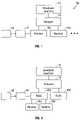
- FIG. 1is a schematic depiction of one embodiment of the present invention
- FIG. 2is a flow chart for software in accordance with the embodiment shown in FIG. 1 ;
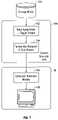
- FIG. 3is a schematic depiction of another embodiment of the present invention.
- FIG. 4is a flow chart for software utilized in accordance with the embodiment shown in FIG. 3 ;
- FIG. 5is a functional block diagram illustrating an embodiment of the invention.
- FIG. 6is a flow diagram showing operation of an illustrative type of trigger inserter unit that can be used with the embodiment shown in FIG. 5 ;
- FIG. 7is a flow diagram showing operation of an illustrative type of stream simulator unit that can be used with the embodiment shown in FIG. 5 ;
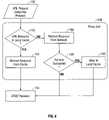
- FIG. 8is a flow diagram showing operation of an illustrative type of proxy that can be used with the embodiment shown in FIG. 5 ;
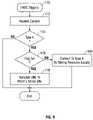
- FIG. 9is a flow chart for software in accordance with another embodiment of the present invention.
- an enhanced television delivery system 10may include a broadcast head end or server 12 .
- the head end or server 12may provide the television content such as a television program and the enhanced content or at least a reference to the enhanced content.
- the enhanced television broadcastis transmitted from the head end 12 to a plurality of receivers 16 (although only the receivers 16 a and 16 b are shown in FIG. 1 ).
- the enhanced contentmay be transported over a transport 14 which may be a cable, a satellite connection or a conventional television broadcast.
- the enhanced contentmay be in analog or digital format.
- Each receiver 16may include a storage 17 that stores software 18 .
- the receiver 16may be a processor-based system.
- the receiver 16may be a desktop computer, a laptop computer, a handheld computer, a set-top box or other processor-based appliance with a suitable connection to receive the enhanced content over a transport.
- the software 18enables the enhanced content to be time shifted despite the presence of triggers with expiration times.
- the software 18handles the situation where a receiver 16 is utilized to digitally record an enhanced television broadcast.
- the usermay record not only the programming, but also the accompanying triggers.
- a triggermay be in the form of a Uniform Resource Locator (URL) used to access enhanced content over the Internet or may be a reference to a local storage location of a referenced resource.
- URLUniform Resource Locator
- the usermay attempt to access the resource via the trigger long after the trigger has expired. In such case, the user may be unable to access the trigger even in the situation where the resource is actually still accessible.
- the software 18initially obtains the local time as indicated in block 20 .
- the local timemay be stored as indicated in block 22 .
- the local timemay then be converted into Universal Coordinated Time (UTC), as indicated in block 24 , and stored as indicated at 26 .
- UTCUniversal Coordinated Time
- the trigger expiration timemay be extracted from the video stream as indicated at 30 .
- the current local time (LocalT)is then subtracted from the trigger expiration time as indicated in block 28 .
- the resultis a delta time as indicated at 32 . If the delta time is negative, the trigger has already expired and it may simply be discarded as indicated in block 31 .
- the expires attributemay be discarded as indicated in block 38 .
- the triggermay then be recorded with the other enhanced television content without a expires attribute.
- a trigger with an expires attributeis converted into a format in which the expires attribute is removed.
- the absence of an expires attributeis permissible under the ATVEF specification.
- the resulting triggeris then capable of being exercised at any time. If the resource is stored locally (i.e. via a Type B transport), that resource can then be acquired anytime the trigger is selected. If the resource is accessed externally (i.e. via a Type A transport), the resource may not always be active. In such case, the trigger may not be capable of accessing the remote resource.
- the remotely accessible resourcemay be accessed upon acquisition of the trigger and the resource may thereafter be stored locally for subsequent local access.
- the trigger's Uniform Resource Locatormay be modified to a local storage address to access the locally stored resource.
- a system 110in accordance with one embodiment for recording analog enhanced television broadcasts includes a recording component or “recorder” 112 , and a playback component or “player” 114 .
- the recorder 112stores Transport Type B streams (and can also store Transport Type A streams), while the player 114 can transform and play the stored streams as Transport Type A streams.
- An enhanced television Transport Type B transmissionincludes a trigger stream 116 , an audio/video stream 118 , a resource stream 120 , and an announcement stream (not shown).
- the audio/video stream 118may be a National Television Standards Committee (NTSC) signal.
- announcementsare sent before or during a television program to a well-known Internet Protocol (IP) address and port number to announce the availability of enhancements.
- IPInternet Protocol
- a receivertunes in to this IP address/port and receives information about how to receive trigger and resource information, where the trigger typically includes a URL that points to a location of the resource.
- resources in the resource stream 120are extracted by a resource listener 122 , such resources are typically stored in a storage media 124 , which may be a cache, for example.
- the storage media 124may also be a hard disk, floppy disk, digital versatile disk, random access memory (RAM), compact disk, or other suitable machine-readable storage medium.
- the resource listener 122may be programmed to reject duplicate or outdated resources, such that only the appropriate resources are stored in the storage media 124 .
- the trigger(s) corresponding to those stored resourcestypically include a local identifier URL (e.g., a lid: URL), meaning that the resources were delivered using a one-way broadcast and are not available on-demand.
- a local identifier URLe.g., a lid: URL
- Transport Type Bis used for a true broadcast of both resource data and triggers and can run without an Internet connection.
- An optional Internet connectioncan provide a return path if the triggers point (e.g., by using http: or ftp: URLs) to resources that are available on the Internet (e.g., for e-commerce or web browsing).
- Transport Type Ainvolves the delivery of triggers along with the audio/visual stream 118 . That is, existing Transport Type A transmissions often transmit triggers on the vertical blanking interval (VBI) of the NTSC video signal. Transport Type A transmissions may not transmit a resource stream 120 or an announcement stream. Hence, Transport Type A systems usually use two-way Internet connections to fetch resources using http:.
- VBIvertical blanking interval
- the system 110includes a trigger inserter unit 126 for the recorder 112 , and a stream simulator unit 128 (which can be likened to a Transport Type A stream simulator) and a proxy unit 130 for the player 114 .
- the end resultis that one or more resources 132 may be provided to a receiver unit 16 , from the storage media 124 , without having to unnecessarily retrieve the resources 132 from the Internet.
- using the trigger inserter unit 126 to insert triggers into the video signals (e.g. into the VBI) of the audio/video stream 118provides synchronization between the trigger stream 116 and the audio/video stream 118 that is not present in conventional Transport Type B systems.
- the trigger inserter unit 126can be embodied in software, hardware, or a combination of both, and uses data from the trigger stream 116 and data from the audio/video stream 118 as inputs.
- the trigger inserter unit 126first determines if there is a trigger available in the received broadcast. If the received broadcast is a Transport Type A transmission, such triggers, if any, may be in the VBI of the audio/video stream 118 for examples. The triggers are extracted and evaluated for validity as part of the receiving process. If the triggers are valid, the trigger inserter unit 126 stores the data from the audio/video stream 118 (and its associated valid triggers) into the storage media 124 at block 140 .
- the trigger inserter unit 126detects the availability of valid triggers from the trigger stream 116 at block 136 .
- the trigger inserter unit 126combines the trigger data with the audio/visual data. More specifically, according to an embodiment of the invention, the trigger inserter unit 126 inserts triggers into the VBI of the audio/visual stream 118 . In this manner, the Transport Type B stream is “transformed” into Transport Type A stream prior to storage into the storage medium 124 at the block 140 . Accordingly, by inserting the triggers into the VBI, as the trigger stream 116 and the audio/visual stream 118 are received, the triggers are synchronized in time with the audio/visual data by presenting the triggers along with their corresponding video frames.
- the trigger inserter unit 126stores the data into the storage media 124 using a suitable type of audio/video streaming and storage format. Formats such as RealVideoTM/RealAudioTM, FlashTM, QuickTimeTM, Audio Video Interleaved (AVI), Motion Pictures Experts Group (MPEG), DVD, etc. may be used.
- the triggermay include URLs pointing to locations of resources. These URLs may be in the form of lid: URLs pointing to the storage media 124 if the corresponding resources were extracted from the resource listener 122 and subsequently stored in the storage media 124 .
- the URLs in the triggermay also be http: URLs if the corresponding resource is available both from the storage medium 124 and from the Internet.
- other URL schemessuch as ftp:, may be used by the triggers to denote the location of resources available from the storage media 124 or from the Internet.
- the resource listener 122extracts resources from the resource stream 120 , regardless of its specific URL, and then stores these resources in the storage media 124 .
- the manner of retrieving stored resources from the storage media 124is described in further detail below with respect to the proxy unit 130 .
- FIG. 7shows an embodiment of the stream simulator unit 128 that can be used by the player 114 .
- the stream simulator unit 128may be embodied in software, hardware, or a combination of both.
- the stream simulator unit 128reads, from the storage media 124 , the stored audio/video stream 118 and the trigger stream 116 at a block 142 .
- the stream simulator unit 128may format the resulting stream at a block 144 , in order to make the resulting stream compatible with the format used by the applicable presentation/display application software. For example, if Microsoft Window's DirectShowTM is used as the presentation software, then the stream simulator unit 128 , at the block 144 , can format the resulting stream into the DirectShowTM architecture using libraries in the Windows environment.
- the stream simulator unit 128provides the simulated Transport Type A stream to the receiver 16 .
- the receiver 16may comprise a conventional television set as the display unit 148 and having the enhanced television module 146 as a separate unit coupled to the television set.
- the enhanced television module 146may have the capability to receive enhanced television broadcast data, display/announce the enhanced television features to the user, and then provide the user with interfaces to allow the user to input information (e.g., to interact) with the enhanced broadcast.
- the proxy unit 130may be thought of as an “http: proxy” in that it intervenes in the retrieval of resources 132 having http: URLs.
- the proxy unit 130can also be made to intervene and retrieve resources 132 having lid: URLs or other protocol resources, such as a resource having an ftp: URL.
- the proxy unit 130may comprise a thin/simple agent that can reroute a resource request and retrieve the requested resource from a local cache (e.g., from the storage media 124 ) if available, but relinquishes or invokes a normal http: handler to perform the retrieval if the requested resource is not in the local cache (and assuming that an uplink or back channel to the Internet is available).
- a local cachee.g., from the storage media 124
- a normal http: handlerto perform the retrieval if the requested resource is not in the local cache (and assuming that an uplink or back channel to the Internet is available).
- the proxy unit 130may be embodied in software, hardware, or a combination of both.
- the proxy unit 130can comprise a set of software communication instructions or settings in a registry of an operating system of a PC, for example.
- the receiver 16when the receiver 16 receives an enhanced television broadcast, in a simulated Transport Type A stream format having triggers inserted in the VBI, the user can request the resources 132 or the receiver 16 can automatically request the resources 132 . If the receiver 16 is Transport Type A-enabled, the requested resources 132 are retrieved externally from the Internet. Therefore, at a block 150 in FIG. 8 , the receiver 16 sends a URL request for the resource 132 using http: protocols. If the trigger included a lid: URL, rather than an http: URL, then the receiver 16 and/or proxy unit 130 can retrieve the resource 132 directly from the storage media 124 , which may be a local cache.
- the proxy unit 130intercepts the http: request from the receiver unit 134 and determines if the resource 132 is in the storage media 124 . If it finds the resource 132 in the storage media 124 , then the resource 132 is retrieved from the storage media 124 , as indicated at block 154 , and is provided to the receiver 16 for display and/or other use by the receiver 16 . As indicated at diamond 152 , the proxy unit 130 may retrieve resources 132 having lid: URLs from the storage media 124 , as well as resources 132 having http: or ftp: URLs from the storage media 124 , if the resources 32 are stored there, or externally from the Internet.
- the proxy unit 134may attempt to retrieve the resource 132 from the network (e.g., from the Internet). If the retrieval is unsuccessful as determined at 158 , then a failure message is sent to the receiver 16 . In response, the receiver 16 may cause the proxy unit 130 to try again, or the receiver 16 may display a message to the user on the display unit 148 to notify the user of the unavailability of the resource 132 or other appropriate response.
- the networke.g., from the Internet
- the retrieved resource 132can be stored in the storage media 124 , as indicated at block 160 , and then subsequently provided to the receiver 16 , thereby providing the user with enhanced television content and features.
- Embodiments of the inventionmay transform Transport Type B streams into a simulated Transport Type A stream by inserting triggers into the video stream.
- the recorder 112stores resources and the transformed stream in the storage media 124 .
- the player 114may read the triggers in the stored simulated Transport Type A stream from the storage media 124 and use the proxy unit 130 to retrieve requested resources from the storage media 124 or externally from the Internet, if the resource is not already stored.
- Transport Type B transmissionsappear like and are treated like Transport Type A transmissions by the receiver unit 134 .
- an embodiment with a regional affiliate or FNOC 82includes a broadcast head end 12 and transport 14 as described previously.
- the FNOCs 82 a and 82 breceive the enhanced television programming over the transport 14 and then provide the programming to local receivers 16 .
- the local receivers 16 a and 16 bmay receive the broadcast over still another transport (not shown).
- Each FNOC 82may include a storage 84 that stores software 50 .
- the FNOCs 82may include a processor-based system that is capable of executing the software 50 stored on the storage 84 .
- the FNOCrebroadcasts the enhanced broadcast at a later time than was originally intended, an issue arises with respect to trigger expiration. For example programming originating in one time zone may be provided to a FNOC 82 in another time zone. The FNOC 82 may determine that it is most appropriate to time shift the programming to an appropriate local time zone, time slot for rebroadcast. However, in some cases, the triggers may be expired by the time the material is actually retransmitted.
- the software 50accounts for this potential transmission time shifting by the FNOC and adjusts the expires attribute accordingly.
- the software 50begins by obtaining the FNOC's enhancement start time or the scheduled time for the program to start (StartT) as indicated in block 52 .
- the enhancement start time indicated in block 54is converted to UTC at 56 and as indicated at 58 .
- TriggerTThe trigger expire time
- the enhancement start time (StartT)is then subtracted from the trigger expire time (TriggerT) as indicated in block 60 . This results in a delta time (DeltaT) as indicated at 64 .
- a check at diamond 66determines whether the delta time is greater than or equal to zero. If not, the trigger is discarded as indicated in block 68 .
- a retransmission time equal to the retransmission start time plus the delta timeis utilized (block 70 ) as the new expires attribute in the trigger.
- the retransmission start time or time that the FNOC will rebroadcast the enhanced programming in local timeis acquired as indicated at 72 , converted to UTC as indicated in block 74 and stored as a retransmission start time as indicated at 76 .
- the retransmission start time as determined by the FNOCis then added to the delta time at block 70 , to create a new trigger expires attribute as indicated at 78 . This attribute is saved as indicated at block 80 .
- the expiration timemay be executed as originally intended at the head end. That is, the expiration time may be extended in accordance with local time to a predetermined amount of time after the initial broadcast. This effectuates the original intent of the expires attribute in the original enhanced television broadcast.
- the resourcemay be locally accessible and the handling of the triggers may be in accordance with the above description.
- simply adjusting the expires attribute without moremay result in the situation where the resources may not be accessible because the web site addressed through the trigger may no longer be operable.
- the FNOCmay automatically access the web site through the trigger's URL and download the content therein. The FNOC may then transmit the resource with the other enhanced content via a Type B transport.
- the FNOCmay translate the trigger's URL to a mirror web site maintained by the FNOC. That is, the FNOC may acquire the content via the URL referenced by the trigger, and copy it over to the FNOC's own web site. The FNOC may then automatically translate the URL in the trigger to a new URL to enable access to the FNOC controlled web site. In this way, the FNOC can control the availability of the resource while maintaining a type A transport.
- software 170may be stored and utilized in conjunction with the software 50 . Initially, the content is received over the transport as indicated in block 172 . A check at diamond 174 determines whether the content is in the type A transport format. If not, the flow ends, and the triggers can be handled readily.
- a check at diamond 176determines whether a flag is set.
- the FNOCcan set or unset a flag to select whether to convert the type A transport to a type B transport with a locally stored resource or to simply transition the data from the broadcaster's web site to the FNOC's web site.
- the FNOCcan decide whether to use its own web site or to access the data from the broadcaster's web site and to transmit the data to the receiver 16 .
- the datamay be converted to a type B transport, storing the accessed resource locally as indicated in block 180 . That is, the FNOC accesses the resource from the broadcaster's web site, and then transmits the resource with the other content to the receiver 16 . Conversely, if the flag is set, the FNOC translates the broadcaster's URL to point to the FNOC's mirror site as indicated in block 178 .
- time shifted transmissions or playback of enhanced television contentmay be accommodated despite the use of expires attributes in associated triggers.
- the expires attributemay be utilized but the system may not become unduly burdened by the expires attribute.
Landscapes
- Engineering & Computer Science (AREA)
- Multimedia (AREA)
- Signal Processing (AREA)
- Computer Security & Cryptography (AREA)
- General Engineering & Computer Science (AREA)
- Software Systems (AREA)
- Two-Way Televisions, Distribution Of Moving Picture Or The Like (AREA)
- Television Systems (AREA)
- Television Signal Processing For Recording (AREA)
Abstract
Description
This invention relates generally to enhanced television broadcasts including analog and digital broadcasts.
Enhanced television programming enables television programming, in analog or digital form, to be accompanied by additional content. In some embodiments, the additional content may be in the form of Internet-based content. With enhanced television technology, content creators (e.g., broadcasters) may transmit hypertext markup language (HTML) data along with the traditional television signals. Viewers may interact with the television broadcast via the Internet.
For example, enhanced features may be displayed on a television screen that enable the viewer to access the network's web site for related programming information. The related programming information may be additional advertising or additional details that are not readily incorporated into the television program itself, as examples. Thus, the user may selectively access additional information through an Internet connection.
A variety of standards exist for enhanced television broadcasts including the Advanced Television Enhancement Forum's (ATVEF) Enhanced Content Specification, Version 1.1,Revision 26, 1998-1999 (hereinafter referred to as the ATVEF specification). The ATVEF specification provides standards for the transmission and processing of triggers, resources and announcements together with television content to produce a digital or analog enhanced television transmission.
In order to announce the availability of interactive television resources, a trigger may be utilized. Announcements announce programming currently available to the receiver. A resource is a television enhancement or web content displayable in conjunction with a television broadcast as an enhanced or interactive program.
According to the ATVEF specification, there are two basic transport types, called transport type A and transport type B. In transport type A, the resource is accessed over the Internet and in transport type B, the resource is transmitted with the television content.
Triggers may include a Uniform Resource Locator and may optionally also include a human readable name, an expiration date and a script. Triggers that include a name attribute may be utilized to initiate enhancements either automatically or with user confirmation. The initial top-level page for an enhancement is indicated by a Uniform Resource Locator in the trigger. The script attribute provides a script fragment to execute within the context of the page containing a trigger receiver object.
The expires attribute provides a expiration time, after which the link is no longer valid. The expires attribute may be in the form [expires: 19971223] according to one example provided in the ATVEF specification.
In some cases, the link to the resource provided by the trigger may be caused to expire after a period of time. This may create problems. For example, in some situations, the enhanced television content may be retransmitted by a local affiliate or so-called franchise network operating center (FNOC). The FNOC may receive the broadcast and then retransmit it at an appropriate time, for example given the FNOC's local time zone. As a result, the expiration time may come and go before the broadcast is ever even transmitted. In such case, a user may be unable to activate the link to obtain the resource.
Similarly, digital recording technology may be available to enable the user to actually record an enhanced broadcast. The user may subsequently attempt to replay the recorded broadcast and may be unable to activate the links to the resource because the links have expired.
Thus, there is a need to enable time shifted enhanced television content to be used effectively in a variety of circumstances.
Referring toFIG. 1 , an enhancedtelevision delivery system 10 may include a broadcast head end orserver 12. The head end orserver 12 may provide the television content such as a television program and the enhanced content or at least a reference to the enhanced content. The enhanced television broadcast is transmitted from thehead end 12 to a plurality of receivers16 (although only thereceivers FIG. 1 ). The enhanced content may be transported over atransport 14 which may be a cable, a satellite connection or a conventional television broadcast. The enhanced content may be in analog or digital format.
Eachreceiver 16 may include astorage 17 that storessoftware 18. Thereceiver 16 may be a processor-based system. As examples, thereceiver 16 may be a desktop computer, a laptop computer, a handheld computer, a set-top box or other processor-based appliance with a suitable connection to receive the enhanced content over a transport. Thesoftware 18 enables the enhanced content to be time shifted despite the presence of triggers with expiration times.
Referring toFIG. 2 , thesoftware 18 handles the situation where areceiver 16 is utilized to digitally record an enhanced television broadcast. The user may record not only the programming, but also the accompanying triggers. A trigger may be in the form of a Uniform Resource Locator (URL) used to access enhanced content over the Internet or may be a reference to a local storage location of a referenced resource.
Of course, if the trigger has an expiration time, the user may attempt to access the resource via the trigger long after the trigger has expired. In such case, the user may be unable to access the trigger even in the situation where the resource is actually still accessible.
Referring toFIG. 2 , thesoftware 18 initially obtains the local time as indicated inblock 20. The local time may be stored as indicated inblock 22. The local time may then be converted into Universal Coordinated Time (UTC), as indicated inblock 24, and stored as indicated at26.
The trigger expiration time may be extracted from the video stream as indicated at30. The current local time (LocalT) is then subtracted from the trigger expiration time as indicated inblock 28. The result is a delta time as indicated at32. If the delta time is negative, the trigger has already expired and it may simply be discarded as indicated inblock 31.
Otherwise, as determined indiamond 34, if the delta time is zero or positive, the expires attribute may be discarded as indicated inblock 38. The trigger may then be recorded with the other enhanced television content without a expires attribute. In effect then, a trigger with an expires attribute is converted into a format in which the expires attribute is removed. The absence of an expires attribute is permissible under the ATVEF specification.
The resulting trigger is then capable of being exercised at any time. If the resource is stored locally (i.e. via a Type B transport), that resource can then be acquired anytime the trigger is selected. If the resource is accessed externally (i.e. via a Type A transport), the resource may not always be active. In such case, the trigger may not be capable of accessing the remote resource.
However, if desired, the remotely accessible resource may be accessed upon acquisition of the trigger and the resource may thereafter be stored locally for subsequent local access. Alternatively, the trigger's Uniform Resource Locator may be modified to a local storage address to access the locally stored resource.
Referring toFIG. 5 , asystem 110, in accordance with one embodiment for recording analog enhanced television broadcasts includes a recording component or “recorder”112, and a playback component or “player”114. According to one embodiment of the invention, therecorder 112 stores Transport Type B streams (and can also store Transport Type A streams), while theplayer 114 can transform and play the stored streams as Transport Type A streams.
An enhanced television Transport Type B transmission includes atrigger stream 116, an audio/video stream 118, aresource stream 120, and an announcement stream (not shown). The audio/video stream 118 may be a National Television Standards Committee (NTSC) signal. In operation, announcements are sent before or during a television program to a well-known Internet Protocol (IP) address and port number to announce the availability of enhancements. A receiver tunes in to this IP address/port and receives information about how to receive trigger and resource information, where the trigger typically includes a URL that points to a location of the resource.
If resources in theresource stream 120 are extracted by aresource listener 122, such resources are typically stored in astorage media 124, which may be a cache, for example. Thestorage media 124 may also be a hard disk, floppy disk, digital versatile disk, random access memory (RAM), compact disk, or other suitable machine-readable storage medium. Theresource listener 122 may be programmed to reject duplicate or outdated resources, such that only the appropriate resources are stored in thestorage media 124.
When the resources are stored in thestorage media 124, the trigger(s) corresponding to those stored resources typically include a local identifier URL (e.g., a lid: URL), meaning that the resources were delivered using a one-way broadcast and are not available on-demand. As such, Transport Type B is used for a true broadcast of both resource data and triggers and can run without an Internet connection. An optional Internet connection can provide a return path if the triggers point (e.g., by using http: or ftp: URLs) to resources that are available on the Internet (e.g., for e-commerce or web browsing).
Transport Type A involves the delivery of triggers along with the audio/visual stream 118. That is, existing Transport Type A transmissions often transmit triggers on the vertical blanking interval (VBI) of the NTSC video signal. Transport Type A transmissions may not transmit aresource stream 120 or an announcement stream. Hence, Transport Type A systems usually use two-way Internet connections to fetch resources using http:.
Thesystem 110 includes atrigger inserter unit 126 for therecorder 112, and a stream simulator unit128 (which can be likened to a Transport Type A stream simulator) and aproxy unit 130 for theplayer 114. The end result is that one ormore resources 132 may be provided to areceiver unit 16, from thestorage media 124, without having to unnecessarily retrieve theresources 132 from the Internet. Furthermore, using thetrigger inserter unit 126 to insert triggers into the video signals (e.g. into the VBI) of the audio/video stream 118 provides synchronization between thetrigger stream 116 and the audio/video stream 118 that is not present in conventional Transport Type B systems.
Operation of an embodiment of thetrigger inserter unit 126 of therecorder 112 is illustrated in a flow diagram inFIG. 6 . Thetrigger inserter unit 126 can be embodied in software, hardware, or a combination of both, and uses data from thetrigger stream 116 and data from the audio/video stream 118 as inputs.
At ablock 136, thetrigger inserter unit 126 first determines if there is a trigger available in the received broadcast. If the received broadcast is a Transport Type A transmission, such triggers, if any, may be in the VBI of the audio/video stream 118 for examples. The triggers are extracted and evaluated for validity as part of the receiving process. If the triggers are valid, thetrigger inserter unit 126 stores the data from the audio/video stream118 (and its associated valid triggers) into thestorage media 124 atblock 140.
If a Transport Type B transmission is present, then thetrigger inserter unit 126 detects the availability of valid triggers from thetrigger stream 116 atblock 136. Atblock 138, thetrigger inserter unit 126 combines the trigger data with the audio/visual data. More specifically, according to an embodiment of the invention, thetrigger inserter unit 126 inserts triggers into the VBI of the audio/visual stream 118. In this manner, the Transport Type B stream is “transformed” into Transport Type A stream prior to storage into thestorage medium 124 at theblock 140. Accordingly, by inserting the triggers into the VBI, as thetrigger stream 116 and the audio/visual stream 118 are received, the triggers are synchronized in time with the audio/visual data by presenting the triggers along with their corresponding video frames.
Atblock 140, thetrigger inserter unit 126 stores the data into thestorage media 124 using a suitable type of audio/video streaming and storage format. Formats such as RealVideo™/RealAudio™, Flash™, QuickTime™, Audio Video Interleaved (AVI), Motion Pictures Experts Group (MPEG), DVD, etc. may be used.
The trigger may include URLs pointing to locations of resources. These URLs may be in the form of lid: URLs pointing to thestorage media 124 if the corresponding resources were extracted from theresource listener 122 and subsequently stored in thestorage media 124. The URLs in the trigger may also be http: URLs if the corresponding resource is available both from thestorage medium 124 and from the Internet. Similarly, other URL schemes, such as ftp:, may be used by the triggers to denote the location of resources available from thestorage media 124 or from the Internet.
In one embodiment, theresource listener 122 extracts resources from theresource stream 120, regardless of its specific URL, and then stores these resources in thestorage media 124. The manner of retrieving stored resources from thestorage media 124, rather than from an external Internet source, is described in further detail below with respect to theproxy unit 130.
Next, thestream simulator unit 128 provides the simulated Transport Type A stream to thereceiver 16. As an example, thereceiver 16 may comprise a conventional television set as thedisplay unit 148 and having the enhancedtelevision module 146 as a separate unit coupled to the television set. Theenhanced television module 146 may have the capability to receive enhanced television broadcast data, display/announce the enhanced television features to the user, and then provide the user with interfaces to allow the user to input information (e.g., to interact) with the enhanced broadcast.
Operation of theplayer 114 using thereceiver 16, thestream simulator unit 128, and theproxy unit 130 is shown inFIG. 8 in accordance with one embodiment of the invention. Theproxy unit 130 may be thought of as an “http: proxy” in that it intervenes in the retrieval ofresources 132 having http: URLs. Theproxy unit 130 can also be made to intervene and retrieveresources 132 having lid: URLs or other protocol resources, such as a resource having an ftp: URL. That is, theproxy unit 130, in one embodiment, may comprise a thin/simple agent that can reroute a resource request and retrieve the requested resource from a local cache (e.g., from the storage media124) if available, but relinquishes or invokes a normal http: handler to perform the retrieval if the requested resource is not in the local cache (and assuming that an uplink or back channel to the Internet is available).
Theproxy unit 130 may be embodied in software, hardware, or a combination of both. In one embodiment, theproxy unit 130 can comprise a set of software communication instructions or settings in a registry of an operating system of a PC, for example.
In one example, when thereceiver 16 receives an enhanced television broadcast, in a simulated Transport Type A stream format having triggers inserted in the VBI, the user can request theresources 132 or thereceiver 16 can automatically request theresources 132. If thereceiver 16 is Transport Type A-enabled, the requestedresources 132 are retrieved externally from the Internet. Therefore, at ablock 150 inFIG. 8 , thereceiver 16 sends a URL request for theresource 132 using http: protocols. If the trigger included a lid: URL, rather than an http: URL, then thereceiver 16 and/orproxy unit 130 can retrieve theresource 132 directly from thestorage media 124, which may be a local cache.
Atdiamond 152, theproxy unit 130 intercepts the http: request from thereceiver unit 134 and determines if theresource 132 is in thestorage media 124. If it finds theresource 132 in thestorage media 124, then theresource 132 is retrieved from thestorage media 124, as indicated atblock 154, and is provided to thereceiver 16 for display and/or other use by thereceiver 16. As indicated atdiamond 152, theproxy unit 130 may retrieveresources 132 having lid: URLs from thestorage media 124, as well asresources 132 having http: or ftp: URLs from thestorage media 124, if theresources 32 are stored there, or externally from the Internet.
If theproxy unit 130 does not find the requestedresource 132 in thestorage media 124, then at ablock 156, theproxy unit 134 may attempt to retrieve theresource 132 from the network (e.g., from the Internet). If the retrieval is unsuccessful as determined at158, then a failure message is sent to thereceiver 16. In response, thereceiver 16 may cause theproxy unit 130 to try again, or thereceiver 16 may display a message to the user on thedisplay unit 148 to notify the user of the unavailability of theresource 132 or other appropriate response.
If theresource 132 is successfully retrieved by theproxy unit 130, then the retrievedresource 132 can be stored in thestorage media 124, as indicated atblock 160, and then subsequently provided to thereceiver 16, thereby providing the user with enhanced television content and features.
Embodiments of the invention may transform Transport Type B streams into a simulated Transport Type A stream by inserting triggers into the video stream. Therecorder 112 stores resources and the transformed stream in thestorage media 124. During playback, theplayer 114 may read the triggers in the stored simulated Transport Type A stream from thestorage media 124 and use theproxy unit 130 to retrieve requested resources from thestorage media 124 or externally from the Internet, if the resource is not already stored. As such, Transport Type B transmissions appear like and are treated like Transport Type A transmissions by thereceiver unit 134.
Referring next toFIG. 3 , an embodiment with a regional affiliate or FNOC82 includes abroadcast head end 12 andtransport 14 as described previously. The FNOCs82aand82breceive the enhanced television programming over thetransport 14 and then provide the programming tolocal receivers 16. Thelocal receivers
Each FNOC82 may include astorage 84 that storessoftware 50. The FNOCs82 may include a processor-based system that is capable of executing thesoftware 50 stored on thestorage 84.
If the FNOC rebroadcasts the enhanced broadcast at a later time than was originally intended, an issue arises with respect to trigger expiration. For example programming originating in one time zone may be provided to a FNOC82 in another time zone. The FNOC82 may determine that it is most appropriate to time shift the programming to an appropriate local time zone, time slot for rebroadcast. However, in some cases, the triggers may be expired by the time the material is actually retransmitted.
Thesoftware 50 accounts for this potential transmission time shifting by the FNOC and adjusts the expires attribute accordingly. Referring toFIG. 4 , thesoftware 50 begins by obtaining the FNOC's enhancement start time or the scheduled time for the program to start (StartT) as indicated inblock 52. The enhancement start time indicated inblock 54, is converted to UTC at56 and as indicated at58.
The trigger expire time (TriggerT) is extracted from the enhanced television stream as indicated at62. The enhancement start time (StartT) is then subtracted from the trigger expire time (TriggerT) as indicated inblock 60. This results in a delta time (DeltaT) as indicated at64.
A check atdiamond 66 determines whether the delta time is greater than or equal to zero. If not, the trigger is discarded as indicated inblock 68.
Otherwise, a retransmission time equal to the retransmission start time plus the delta time is utilized (block70) as the new expires attribute in the trigger. The retransmission start time or time that the FNOC will rebroadcast the enhanced programming in local time is acquired as indicated at72, converted to UTC as indicated inblock 74 and stored as a retransmission start time as indicated at76. Thus, the retransmission start time as determined by the FNOC is then added to the delta time atblock 70, to create a new trigger expires attribute as indicated at78. This attribute is saved as indicated atblock 80.
As a result, the expiration time may be executed as originally intended at the head end. That is, the expiration time may be extended in accordance with local time to a predetermined amount of time after the initial broadcast. This effectuates the original intent of the expires attribute in the original enhanced television broadcast.
In the case of rebroadcasting data received via a Type B transport, the resource may be locally accessible and the handling of the triggers may be in accordance with the above description. However, in the case where the FNOC receives a Type A transport, simply adjusting the expires attribute without more may result in the situation where the resources may not be accessible because the web site addressed through the trigger may no longer be operable.
This problem may be handled in at least two different ways. Under one approach, the FNOC may automatically access the web site through the trigger's URL and download the content therein. The FNOC may then transmit the resource with the other enhanced content via a Type B transport. Alternatively, the FNOC may translate the trigger's URL to a mirror web site maintained by the FNOC. That is, the FNOC may acquire the content via the URL referenced by the trigger, and copy it over to the FNOC's own web site. The FNOC may then automatically translate the URL in the trigger to a new URL to enable access to the FNOC controlled web site. In this way, the FNOC can control the availability of the resource while maintaining a type A transport.
Referring toFIG. 9 ,software 170 may be stored and utilized in conjunction with thesoftware 50. Initially, the content is received over the transport as indicated inblock 172. A check atdiamond 174 determines whether the content is in the type A transport format. If not, the flow ends, and the triggers can be handled readily.
Conversely, if a type A transport is utilized, a check atdiamond 176 determines whether a flag is set. In one embodiment of the present invention, the FNOC can set or unset a flag to select whether to convert the type A transport to a type B transport with a locally stored resource or to simply transition the data from the broadcaster's web site to the FNOC's web site. Thus, the FNOC can decide whether to use its own web site or to access the data from the broadcaster's web site and to transmit the data to thereceiver 16.
If the flag is not set, the data may be converted to a type B transport, storing the accessed resource locally as indicated inblock 180. That is, the FNOC accesses the resource from the broadcaster's web site, and then transmits the resource with the other content to thereceiver 16. Conversely, if the flag is set, the FNOC translates the broadcaster's URL to point to the FNOC's mirror site as indicated inblock 178.
In some embodiments of the present invention, time shifted transmissions or playback of enhanced television content may be accommodated despite the use of expires attributes in associated triggers. In this way, the expires attribute may be utilized but the system may not become unduly burdened by the expires attribute.
While the present invention has been described with respect to a limited number of embodiments, those skilled in the art will appreciate numerous modifications and variations therefrom. It is intended that the appended claims cover all such modifications and variations as fall within the true spirit and scope of this present invention.
Claims (30)
1. A method comprising:
receiving an enhanced television transmission including a trigger that points to a resource and has an expires attribute indicating a trigger expiration time that prevents accessing said trigger after an expiration time; and
enabling the resource to be accessed after the trigger expiration time.
2. The method ofclaim 1 including rebroadcasting the enhanced television transmission.
3. The method ofclaim 1 including differencing the current time and the trigger expiration time.
4. The method ofclaim 3 including determining whether the trigger expiration time is greater than the current time and if not, discarding the trigger.
5. The method ofclaim 2 including determining whether the trigger expiration time is greater than the enhancement start time and if so, retransmitting the trigger with a trigger expiration time equal to the time when an enhanced television transmission will be rebroadcast plus the difference between the trigger time and the enhancement start time.
6. The method ofclaim 1 including recording said enhanced television, transmission for subsequent replay.
7. The method ofclaim 6 including differencing the current time and the trigger expiration time.
8. The method ofclaim 7 including determining whether the difference is greater than zero.
9. The method ofclaim 8 wherein, if the difference is not greater than zero, discarding the trigger before recording said enhanced television transmission.
10. The method ofclaim 8 including, if the difference is greater than zero, discarding the trigger expiration time and recording the trigger.
11. The method ofclaim 1 including receiving an enhanced television transmission having a trigger that refers to a remote resource, accessing said remote resource and storing said remote resource.
12. A computer readable medium encoded with a computer program to enable a processor-based system to:
receive an enhanced television transmission including a trigger that points to a resource and has an expires attribute indicating a trigger expiration time that prevents accessing said trigger after an expiration time; and
enable the resource to be accessed and displayed after the trigger expiration time.
13. The medium ofclaim 12 further storing instructions that enable the processor-based system to rebroadcast the enhanced television transmission.
14. The medium ofclaim 12 further storing instructions that enable the processor-based system to subtract the current time from the trigger expiration time.
15. The medium ofclaim 14 further storing instructions that enable the processor-based system to determine whether the trigger expiration time is greater than the current time and if not, discard the trigger.
16. The medium ofclaim 12 further storing instructions that enable the processor-based system to determine whether the trigger expiration time is greater than the enhancement start time and if so, retransmit the trigger with a trigger expiration time equal to the time when the enhanced television will be rebroadcast plus the difference between the trigger time and the enhancement start time.
17. The medium ofclaim 12 further storing instructions that enable the processor-based system to record said enhanced television transmission for subsequent replay including both the television content and an enhancement accompanying said television content.
18. The medium ofclaim 17 further storing instructions that enable the processor-based system to difference the current time and the trigger expiration time.
19. The medium ofclaim 18 further storing instructions that enable the processor-based system to determine whether the difference is greater than zero.
20. The medium ofclaim 19 further storing instructions that enable the processor-based system to discard the trigger before recording said enhanced television transmission if the difference is not greater than zero.
21. The medium ofclaim 19 further storing instructions that enable the processor-based system to discard the trigger expiration time and record the trigger if the difference is greater than zero.
22. The medium ofclaim 12 further storing instructions that enable the processor-based system to receive an enhanced television transmission having a trigger that refers to a remote resource, access said remote resource and store said remote resource.
23. A system comprising:
a processor-based device; and
a storage coupled to said processor-based device storing instructions that enable said processor-based device to receive an enhanced television transmission including a trigger that points to a resource and has an expires attribute indicating a trigger expiration time that prevents accessing said trigger after an expiration time and enable the resource to be accessed after the trigger expiration time.
24. The system ofclaim 23 wherein said system is an enhanced television receiver with a broadcast recording device.
25. The system ofclaim 23 wherein said system is an enhanced television rebroadcast system.
26. The system ofclaim 25 wherein said storage stores instructions that difference the trigger expiration time and the enhancement start time.
27. The system ofclaim 26 wherein the trigger is discarded if the trigger has expired.
28. The system ofclaim 23 wherein said storage stores instructions that enable said system to receive enhanced television transmission having a trigger that refers to a remote resource, access said remote resource and store said remote resource.
29. The system ofclaim 28 wherein said storage stores instructions that enable said system to convert a type A transmission to a type B transmission.
30. The system ofclaim 28 wherein said system makes said resource available at a new location and translates said trigger to point to said new location.
Priority Applications (10)
| Application Number | Priority Date | Filing Date | Title |
|---|---|---|---|
| US09/652,413US7269842B1 (en) | 2000-08-31 | 2000-08-31 | Time shifting enhanced television triggers |
| JP2002523873AJP3899312B2 (en) | 2000-08-31 | 2001-08-29 | Method and system for time-shifting the trigger of an enhanced television |
| PCT/US2001/026951WO2002019715A2 (en) | 2000-08-31 | 2001-08-29 | Time shifting enhanced television triggers |
| CNB01814702XACN1281059C (en) | 2000-08-31 | 2001-08-29 | Time shifting enhanced television triggers |
| EP01966384AEP1314317A2 (en) | 2000-08-31 | 2001-08-29 | Time shifting enhanced television triggers |
| AU2001286904AAU2001286904A1 (en) | 2000-08-31 | 2001-08-29 | Time shifting enhanced television triggers |
| TW090121481ATW548984B (en) | 2000-08-31 | 2001-08-30 | Time shifting enhanced television triggers |
| US11/880,285US7900226B2 (en) | 2000-08-31 | 2007-07-20 | Time shifting enhanced television triggers |
| US12/969,967US8424035B2 (en) | 2000-08-31 | 2010-12-16 | Time shifting enhanced television triggers |
| US13/798,249US8707350B2 (en) | 2000-08-31 | 2013-03-13 | Time shifting enhanced television triggers |
Applications Claiming Priority (1)
| Application Number | Priority Date | Filing Date | Title |
|---|---|---|---|
| US09/652,413US7269842B1 (en) | 2000-08-31 | 2000-08-31 | Time shifting enhanced television triggers |
Related Child Applications (1)
| Application Number | Title | Priority Date | Filing Date |
|---|---|---|---|
| US11/880,285ContinuationUS7900226B2 (en) | 2000-08-31 | 2007-07-20 | Time shifting enhanced television triggers |
Publications (1)
| Publication Number | Publication Date |
|---|---|
| US7269842B1true US7269842B1 (en) | 2007-09-11 |
Family
ID=24616743
Family Applications (4)
| Application Number | Title | Priority Date | Filing Date |
|---|---|---|---|
| US09/652,413Expired - LifetimeUS7269842B1 (en) | 2000-08-31 | 2000-08-31 | Time shifting enhanced television triggers |
| US11/880,285Expired - Fee RelatedUS7900226B2 (en) | 2000-08-31 | 2007-07-20 | Time shifting enhanced television triggers |
| US12/969,967Expired - Fee RelatedUS8424035B2 (en) | 2000-08-31 | 2010-12-16 | Time shifting enhanced television triggers |
| US13/798,249Expired - Fee RelatedUS8707350B2 (en) | 2000-08-31 | 2013-03-13 | Time shifting enhanced television triggers |
Family Applications After (3)
| Application Number | Title | Priority Date | Filing Date |
|---|---|---|---|
| US11/880,285Expired - Fee RelatedUS7900226B2 (en) | 2000-08-31 | 2007-07-20 | Time shifting enhanced television triggers |
| US12/969,967Expired - Fee RelatedUS8424035B2 (en) | 2000-08-31 | 2010-12-16 | Time shifting enhanced television triggers |
| US13/798,249Expired - Fee RelatedUS8707350B2 (en) | 2000-08-31 | 2013-03-13 | Time shifting enhanced television triggers |
Country Status (7)
| Country | Link |
|---|---|
| US (4) | US7269842B1 (en) |
| EP (1) | EP1314317A2 (en) |
| JP (1) | JP3899312B2 (en) |
| CN (1) | CN1281059C (en) |
| AU (1) | AU2001286904A1 (en) |
| TW (1) | TW548984B (en) |
| WO (1) | WO2002019715A2 (en) |
Cited By (8)
| Publication number | Priority date | Publication date | Assignee | Title |
|---|---|---|---|---|
| US20040133919A1 (en)* | 2001-05-10 | 2004-07-08 | Incentis Fernando Carro | System and method for enhancing recorded radio or television programs with information on the world wide web |
| US20050138674A1 (en)* | 2003-12-17 | 2005-06-23 | Quadrock Communications, Inc | System and method for integration and synchronization of interactive content with television content |
| US20060031918A1 (en)* | 2000-10-20 | 2006-02-09 | Karen Sarachik | System and method for describing presentation and behavior information in an ITV application |
| US20080301741A1 (en)* | 2007-06-01 | 2008-12-04 | Peter Stern | System and method for providing program-related content in a multi-services distribution system |
| US20090319470A1 (en)* | 2008-06-19 | 2009-12-24 | Microsoft Corporation | Triggers for Time-Shifted Content Playback |
| US20110016489A1 (en)* | 2000-08-31 | 2011-01-20 | Estipona Jim B | Announcing the Availability of an Electronic Programming Guide to Receivers of Enhanced Television Transmissions |
| US8276180B1 (en)* | 2006-08-29 | 2012-09-25 | Nvidia Corporation | System, method, and computer program product for transcoding or transrating video content for delivery over a wide area network |
| US10397634B2 (en) | 2014-03-25 | 2019-08-27 | Synamedia Limited | System and method for synchronized presentation of video timeline metadata |
Families Citing this family (18)
| Publication number | Priority date | Publication date | Assignee | Title |
|---|---|---|---|---|
| JP4597110B2 (en)* | 2000-04-14 | 2010-12-15 | 日本電信電話株式会社 | Method, system and apparatus for acquiring information related to broadcast information |
| GB2387984B (en)* | 2002-03-07 | 2005-11-09 | Chello Broadband N V | Display of enhanced content |
| GB2418506A (en)* | 2003-06-02 | 2006-03-29 | Disney Entpr Inc | System and method of video player commerce |
| WO2005104558A1 (en)* | 2004-04-21 | 2005-11-03 | Matsushita Electric Industrial Co., Ltd. | Digital broadcast playback device and method, computer program, and storage medium |
| US7599558B2 (en) | 2005-08-24 | 2009-10-06 | Mavs Lab. Inc. | Logo processing methods and circuits |
| US20080028074A1 (en)* | 2006-07-28 | 2008-01-31 | Microsoft Corporation | Supplemental Content Triggers having Temporal Conditions |
| US9066047B2 (en)* | 2007-12-19 | 2015-06-23 | Echostar Technologies L.L.C. | Apparatus, systems, and methods for accessing an interactive program |
| US8819725B2 (en)* | 2007-12-21 | 2014-08-26 | Echostar Technologies Corporation | Message presentation apparatus, systems, and methods |
| US20100211988A1 (en)* | 2009-02-18 | 2010-08-19 | Microsoft Corporation | Managing resources to display media content |
| US20100215340A1 (en)* | 2009-02-20 | 2010-08-26 | Microsoft Corporation | Triggers For Launching Applications |
| US9069585B2 (en)* | 2009-03-02 | 2015-06-30 | Microsoft Corporation | Application tune manifests and tune state recovery |
| US8144612B2 (en) | 2009-04-15 | 2012-03-27 | Ibiquity Digital Corporation | Systems and methods for transmitting media content via digital radio broadcast transmission for synchronized rendering by a receiver |
| US8660128B2 (en) | 2009-04-15 | 2014-02-25 | Ibiquity Digital Corporation | Systems and methods for a multiport synchronous-asynchronous client for scheduling and delivering content for digital radio broadcast transmission |
| US8451868B2 (en)* | 2009-04-15 | 2013-05-28 | Ibiquity Digital Corporation | Systems and methods for transmitting media content via digital radio broadcast transmission for synchronized rendering by a receiver |
| US9043829B2 (en)* | 2009-10-07 | 2015-05-26 | At&T Intellectual Property I, Lp | Synchronization of user interactive events with on-screen events during playback of multimedia stream |
| JP5765558B2 (en) | 2010-08-27 | 2015-08-19 | ソニー株式会社 | Reception device, reception method, transmission device, transmission method, program, and broadcasting system |
| US10511887B2 (en) | 2010-08-30 | 2019-12-17 | Saturn Licensing Llc | Reception apparatus, reception method, transmission apparatus, transmission method, program, and broadcasting system |
| US20180146223A1 (en)* | 2016-11-22 | 2018-05-24 | Facebook, Inc. | Enhancing a live video |
Citations (19)
| Publication number | Priority date | Publication date | Assignee | Title |
|---|---|---|---|---|
| US5390027A (en)* | 1990-08-23 | 1995-02-14 | Matsushita Electric Industrial Co., Ltd. | Television program recording and reproducing system using program data of text broadcast signal |
| US5818441A (en)* | 1995-06-15 | 1998-10-06 | Intel Corporation | System and method for simulating two-way connectivity for one way data streams |
| US5937331A (en)* | 1996-07-01 | 1999-08-10 | Kalluri; Rama | Protocol and system for transmitting triggers from a remote network and for controlling interactive program content at a broadcast station |
| US6061719A (en)* | 1997-11-06 | 2000-05-09 | Lucent Technologies Inc. | Synchronized presentation of television programming and web content |
| US6065050A (en)* | 1996-06-05 | 2000-05-16 | Sun Microsystems, Inc. | System and method for indexing between trick play and normal play video streams in a video delivery system |
| WO2001026369A1 (en) | 1999-10-05 | 2001-04-12 | Webtv Networks, Inc. | Trigger having a time attribute |
| US6338094B1 (en)* | 1998-09-08 | 2002-01-08 | Webtv Networks, Inc. | Method, device and system for playing a video file in response to selecting a web page link |
| US20020010926A1 (en)* | 1997-06-24 | 2002-01-24 | Hyoung-Joo Lee | Method of displaying tv program progress time and device thereof |
| US6351467B1 (en)* | 1997-10-27 | 2002-02-26 | Hughes Electronics Corporation | System and method for multicasting multimedia content |
| US6460180B1 (en)* | 1999-04-20 | 2002-10-01 | Webtv Networks, Inc. | Enabling and/or disabling selected types of broadcast triggers |
| US6473137B1 (en)* | 2000-06-28 | 2002-10-29 | Hughes Electronics Corporation | Method and apparatus for audio-visual cues improving perceived acquisition time |
| US6560777B2 (en)* | 1999-04-07 | 2003-05-06 | Webtv Networks, Inc. | Broadcast enhancement trigger addressed to multiple uniquely addressed information resources |
| US6571392B1 (en)* | 1999-04-20 | 2003-05-27 | Webtv Networks, Inc. | Receiving an information resource from the internet if it is not received from a broadcast channel |
| US6574795B1 (en)* | 1999-05-28 | 2003-06-03 | Intel Corporation | Reliable communication of data by supplementing a unidirectional communications protocol |
| US6591420B1 (en)* | 1999-08-25 | 2003-07-08 | Warner Music Group, Inc. | Remote control system for audio and video content |
| US6643692B1 (en)* | 1998-09-11 | 2003-11-04 | Lv Partners, L.P. | Method for controlling a computer using an embedded unique code in the content of video tape media |
| US6668378B2 (en)* | 1999-06-30 | 2003-12-23 | Webtv Networks, Inc. | Interactive television triggers having connected content/disconnected content attribute |
| US6725461B1 (en)* | 1998-04-30 | 2004-04-20 | Wink Communications, Inc. | Reminder system for broadcast and non-broadcast events based on broadcast interactive applications |
| US6766524B1 (en)* | 2000-05-08 | 2004-07-20 | Webtv Networks, Inc. | System and method for encouraging viewers to watch television programs |
Family Cites Families (3)
| Publication number | Priority date | Publication date | Assignee | Title |
|---|---|---|---|---|
| US5832223A (en) | 1996-09-13 | 1998-11-03 | Motorola, Inc. | System, method and device for automatic capture of internet access information in a broadcast signal for use by an internet access device |
| US7103908B2 (en)* | 2000-07-25 | 2006-09-05 | Diego, Inc. | Method and system to save context for deferred transaction via interactive television |
| US7284257B1 (en)* | 2000-08-31 | 2007-10-16 | Intel Corporation | Announcing the availability of an electronic programming guide to receivers of enhanced television transmissions |
- 2000
- 2000-08-31USUS09/652,413patent/US7269842B1/ennot_activeExpired - Lifetime
- 2001
- 2001-08-29CNCNB01814702XApatent/CN1281059C/ennot_activeExpired - Lifetime
- 2001-08-29AUAU2001286904Apatent/AU2001286904A1/ennot_activeAbandoned
- 2001-08-29EPEP01966384Apatent/EP1314317A2/ennot_activeCeased
- 2001-08-29WOPCT/US2001/026951patent/WO2002019715A2/enactiveApplication Filing
- 2001-08-29JPJP2002523873Apatent/JP3899312B2/ennot_activeExpired - Lifetime
- 2001-08-30TWTW090121481Apatent/TW548984B/ennot_activeIP Right Cessation
- 2007
- 2007-07-20USUS11/880,285patent/US7900226B2/ennot_activeExpired - Fee Related
- 2010
- 2010-12-16USUS12/969,967patent/US8424035B2/ennot_activeExpired - Fee Related
- 2013
- 2013-03-13USUS13/798,249patent/US8707350B2/ennot_activeExpired - Fee Related
Patent Citations (21)
| Publication number | Priority date | Publication date | Assignee | Title |
|---|---|---|---|---|
| US5390027A (en)* | 1990-08-23 | 1995-02-14 | Matsushita Electric Industrial Co., Ltd. | Television program recording and reproducing system using program data of text broadcast signal |
| US5818441A (en)* | 1995-06-15 | 1998-10-06 | Intel Corporation | System and method for simulating two-way connectivity for one way data streams |
| US6065050A (en)* | 1996-06-05 | 2000-05-16 | Sun Microsystems, Inc. | System and method for indexing between trick play and normal play video streams in a video delivery system |
| US5937331A (en)* | 1996-07-01 | 1999-08-10 | Kalluri; Rama | Protocol and system for transmitting triggers from a remote network and for controlling interactive program content at a broadcast station |
| US20020010926A1 (en)* | 1997-06-24 | 2002-01-24 | Hyoung-Joo Lee | Method of displaying tv program progress time and device thereof |
| US6351467B1 (en)* | 1997-10-27 | 2002-02-26 | Hughes Electronics Corporation | System and method for multicasting multimedia content |
| US6061719A (en)* | 1997-11-06 | 2000-05-09 | Lucent Technologies Inc. | Synchronized presentation of television programming and web content |
| US6725461B1 (en)* | 1998-04-30 | 2004-04-20 | Wink Communications, Inc. | Reminder system for broadcast and non-broadcast events based on broadcast interactive applications |
| US6338094B1 (en)* | 1998-09-08 | 2002-01-08 | Webtv Networks, Inc. | Method, device and system for playing a video file in response to selecting a web page link |
| US6643692B1 (en)* | 1998-09-11 | 2003-11-04 | Lv Partners, L.P. | Method for controlling a computer using an embedded unique code in the content of video tape media |
| US6560777B2 (en)* | 1999-04-07 | 2003-05-06 | Webtv Networks, Inc. | Broadcast enhancement trigger addressed to multiple uniquely addressed information resources |
| US6460180B1 (en)* | 1999-04-20 | 2002-10-01 | Webtv Networks, Inc. | Enabling and/or disabling selected types of broadcast triggers |
| US6571392B1 (en)* | 1999-04-20 | 2003-05-27 | Webtv Networks, Inc. | Receiving an information resource from the internet if it is not received from a broadcast channel |
| US6574795B1 (en)* | 1999-05-28 | 2003-06-03 | Intel Corporation | Reliable communication of data by supplementing a unidirectional communications protocol |
| US6668378B2 (en)* | 1999-06-30 | 2003-12-23 | Webtv Networks, Inc. | Interactive television triggers having connected content/disconnected content attribute |
| US6591420B1 (en)* | 1999-08-25 | 2003-07-08 | Warner Music Group, Inc. | Remote control system for audio and video content |
| WO2001026369A1 (en) | 1999-10-05 | 2001-04-12 | Webtv Networks, Inc. | Trigger having a time attribute |
| US6415438B1 (en)* | 1999-10-05 | 2002-07-02 | Webtv Networks, Inc. | Trigger having a time attribute |
| US20020056129A1 (en)* | 1999-10-05 | 2002-05-09 | Dean J. Blackketter | Trigger having a time attribute |
| US6766524B1 (en)* | 2000-05-08 | 2004-07-20 | Webtv Networks, Inc. | System and method for encouraging viewers to watch television programs |
| US6473137B1 (en)* | 2000-06-28 | 2002-10-29 | Hughes Electronics Corporation | Method and apparatus for audio-visual cues improving perceived acquisition time |
Non-Patent Citations (8)
| Title |
|---|
| Advanced Television Enhancement Forum (ATVEF), Enhanced Content Specification, Version 1.1, Revision 26, 1998-1999. |
| Advanced Television Enhancement Forum Specification (ATVF), Version 1.1 revision 26, (Feb. 2, 1999). |
| Estipona, Jim B., "Mapping Enhancements to Network Identifiers", U.S. Appl. No. 09/652,692, filed Aug. 31, 2000. |
| Estipona, Jim B., Announcing the Availability of an Electronic Programming Guide to Receivers of Enhanced Television Transmissions, U.S. Appl. No. 09/652,695, filed Aug. 31, 2000. |
| Steinhorn et al., How to Enhance TV with ATVEF, Miller Freeman, Inc., 1999, pp. 1-8.* |
| Vijay, Computer Hardware and Software, Jan. 19, 1998, p. 4.* |
| Web pages downloaded from http://tivo.com,"What is TiVo?", 2000. |
| Web pages downloaded from http://www.replaytv.com, "What is Replay TV?", 1998-2000. |
Cited By (15)
| Publication number | Priority date | Publication date | Assignee | Title |
|---|---|---|---|---|
| US9591352B2 (en) | 2000-08-31 | 2017-03-07 | Intel Corporation | Announcing the availability of an electronic programming guide to receivers of enhanced television transmissions |
| US20110016489A1 (en)* | 2000-08-31 | 2011-01-20 | Estipona Jim B | Announcing the Availability of an Electronic Programming Guide to Receivers of Enhanced Television Transmissions |
| US20060031918A1 (en)* | 2000-10-20 | 2006-02-09 | Karen Sarachik | System and method for describing presentation and behavior information in an ITV application |
| US7913286B2 (en)* | 2000-10-20 | 2011-03-22 | Ericsson Television, Inc. | System and method for describing presentation and behavior information in an ITV application |
| US7984472B2 (en)* | 2001-05-10 | 2011-07-19 | Yahoo! Inc. | System and method for enhancing recorded radio or television programs with information on the world wide web |
| US20040133919A1 (en)* | 2001-05-10 | 2004-07-08 | Incentis Fernando Carro | System and method for enhancing recorded radio or television programs with information on the world wide web |
| US20050138674A1 (en)* | 2003-12-17 | 2005-06-23 | Quadrock Communications, Inc | System and method for integration and synchronization of interactive content with television content |
| US8276180B1 (en)* | 2006-08-29 | 2012-09-25 | Nvidia Corporation | System, method, and computer program product for transcoding or transrating video content for delivery over a wide area network |
| US8769569B1 (en)* | 2006-08-29 | 2014-07-01 | Nvidia Corporation | System, method, and computer program product for transcoding or transrating video content for delivery over a wide area network |
| US20080301741A1 (en)* | 2007-06-01 | 2008-12-04 | Peter Stern | System and method for providing program-related content in a multi-services distribution system |
| US9699415B2 (en)* | 2007-06-01 | 2017-07-04 | Time Warner Cable Enterprises Llc | System and method for providing program-related content in a multi-services distribution system |
| US10080057B2 (en)* | 2007-06-01 | 2018-09-18 | Time Warner Cable Enterprises Llc | System and method for providing program-related content in a multi-services distribution system |
| US7937382B2 (en) | 2008-06-19 | 2011-05-03 | Microsoft Corporation | Triggers for time-shifted content playback |
| US20090319470A1 (en)* | 2008-06-19 | 2009-12-24 | Microsoft Corporation | Triggers for Time-Shifted Content Playback |
| US10397634B2 (en) | 2014-03-25 | 2019-08-27 | Synamedia Limited | System and method for synchronized presentation of video timeline metadata |
Also Published As
| Publication number | Publication date |
|---|---|
| US8707350B2 (en) | 2014-04-22 |
| WO2002019715A3 (en) | 2002-06-13 |
| TW548984B (en) | 2003-08-21 |
| WO2002019715A2 (en) | 2002-03-07 |
| US20070266404A1 (en) | 2007-11-15 |
| US8424035B2 (en) | 2013-04-16 |
| US7900226B2 (en) | 2011-03-01 |
| CN1449623A (en) | 2003-10-15 |
| JP2004507988A (en) | 2004-03-11 |
| JP3899312B2 (en) | 2007-03-28 |
| US20110088065A1 (en) | 2011-04-14 |
| CN1281059C (en) | 2006-10-18 |
| AU2001286904A1 (en) | 2002-03-13 |
| US20130191859A1 (en) | 2013-07-25 |
| EP1314317A2 (en) | 2003-05-28 |
Similar Documents
| Publication | Publication Date | Title |
|---|---|---|
| US7900226B2 (en) | Time shifting enhanced television triggers | |
| US6795973B1 (en) | Enhanced television recorder and player | |
| US6415438B1 (en) | Trigger having a time attribute | |
| US20050005303A1 (en) | System and method for transmitting and displaying interactive TV content | |
| CN1322754C (en) | Identify auxiliary information associated with an audio/video program | |
| US7757265B2 (en) | System and method for local meta data insertion | |
| US7577979B2 (en) | System and method for synchronizing streaming content with enhancing content using pre-announced triggers | |
| US20030056224A1 (en) | Method and apparatus for processing transport type B ATVEF data | |
| KR102075174B1 (en) | Trigger compaction | |
| CA2880504C (en) | A method and an apparatus for processing a broadcast signal including an interactive broadcast service | |
| CN108293148B (en) | Receiving device, transmitting device, and data processing method | |
| KR101939296B1 (en) | Apparatus and method for processing an interactive service | |
| US20030023970A1 (en) | Interactive television schema | |
| KR20150035527A (en) | Apparatus and method for processing an interactive service | |
| KR20150048669A (en) | Apparatus and method for processing an interactive service | |
| WO2002045406A2 (en) | Watermark communication and control systems | |
| KR101095296B1 (en) | Hybrid Broadcasting Service System Using Metadata | |
| KR101046867B1 (en) | Apparatus and methods, and related products, for performing conditional execution decisions in relation to received services and for generating information messages related to the services | |
| US20030037340A1 (en) | Method and apparatus for managing TV broadcast content that has synchronized web applications | |
| JP7253477B2 (en) | Methods for synchronizing and generating streams, and corresponding computer programs, storage media, and rendering, execution, and generation devices | |
| Thomas | Serving up data for enhanced DTV programs |
Legal Events
| Date | Code | Title | Description |
|---|---|---|---|
| AS | Assignment | Owner name:INTEL CORPORATION, CALIFORNIA Free format text:ASSIGNMENT OF ASSIGNORS INTEREST;ASSIGNOR:ESTIPONA, JIM B.;REEL/FRAME:011069/0637 Effective date:20000821 | |
| STCF | Information on status: patent grant | Free format text:PATENTED CASE | |
| FPAY | Fee payment | Year of fee payment:4 | |
| FEPP | Fee payment procedure | Free format text:PAYOR NUMBER ASSIGNED (ORIGINAL EVENT CODE: ASPN); ENTITY STATUS OF PATENT OWNER: LARGE ENTITY | |
| FPAY | Fee payment | Year of fee payment:8 | |
| MAFP | Maintenance fee payment | Free format text:PAYMENT OF MAINTENANCE FEE, 12TH YEAR, LARGE ENTITY (ORIGINAL EVENT CODE: M1553); ENTITY STATUS OF PATENT OWNER: LARGE ENTITY Year of fee payment:12 |