US7194760B2 - Method for protecting privacy when using a Bluetooth device - Google Patents
Method for protecting privacy when using a Bluetooth deviceDownload PDFInfo
- Publication number
- US7194760B2 US7194760B2US09/860,553US86055301AUS7194760B2US 7194760 B2US7194760 B2US 7194760B2US 86055301 AUS86055301 AUS 86055301AUS 7194760 B2US7194760 B2US 7194760B2
- Authority
- US
- United States
- Prior art keywords
- address
- pseudonym
- user
- real
- wireless
- Prior art date
- Legal status (The legal status is an assumption and is not a legal conclusion. Google has not performed a legal analysis and makes no representation as to the accuracy of the status listed.)
- Expired - Lifetime, expires
Links
Images
Classifications
- H—ELECTRICITY
- H04—ELECTRIC COMMUNICATION TECHNIQUE
- H04W—WIRELESS COMMUNICATION NETWORKS
- H04W12/00—Security arrangements; Authentication; Protecting privacy or anonymity
- H04W12/02—Protecting privacy or anonymity, e.g. protecting personally identifiable information [PII]
- H—ELECTRICITY
- H04—ELECTRIC COMMUNICATION TECHNIQUE
- H04L—TRANSMISSION OF DIGITAL INFORMATION, e.g. TELEGRAPHIC COMMUNICATION
- H04L61/00—Network arrangements, protocols or services for addressing or naming
- H—ELECTRICITY
- H04—ELECTRIC COMMUNICATION TECHNIQUE
- H04L—TRANSMISSION OF DIGITAL INFORMATION, e.g. TELEGRAPHIC COMMUNICATION
- H04L61/00—Network arrangements, protocols or services for addressing or naming
- H04L61/45—Network directories; Name-to-address mapping
- H—ELECTRICITY
- H04—ELECTRIC COMMUNICATION TECHNIQUE
- H04L—TRANSMISSION OF DIGITAL INFORMATION, e.g. TELEGRAPHIC COMMUNICATION
- H04L63/00—Network architectures or network communication protocols for network security
- H04L63/04—Network architectures or network communication protocols for network security for providing a confidential data exchange among entities communicating through data packet networks
- H04L63/0407—Network architectures or network communication protocols for network security for providing a confidential data exchange among entities communicating through data packet networks wherein the identity of one or more communicating identities is hidden
- H04L63/0421—Anonymous communication, i.e. the party's identifiers are hidden from the other party or parties, e.g. using an anonymizer
- H—ELECTRICITY
- H04—ELECTRIC COMMUNICATION TECHNIQUE
- H04L—TRANSMISSION OF DIGITAL INFORMATION, e.g. TELEGRAPHIC COMMUNICATION
- H04L2101/00—Indexing scheme associated with group H04L61/00
- H04L2101/60—Types of network addresses
- H04L2101/618—Details of network addresses
- H04L2101/622—Layer-2 addresses, e.g. medium access control [MAC] addresses
- H—ELECTRICITY
- H04—ELECTRIC COMMUNICATION TECHNIQUE
- H04W—WIRELESS COMMUNICATION NETWORKS
- H04W8/00—Network data management
- H04W8/26—Network addressing or numbering for mobility support
- H—ELECTRICITY
- H04—ELECTRIC COMMUNICATION TECHNIQUE
- H04W—WIRELESS COMMUNICATION NETWORKS
- H04W84/00—Network topologies
- H04W84/18—Self-organising networks, e.g. ad-hoc networks or sensor networks
Definitions
- the invention disclosedbroadly relates to ubiquitous computing and more particularly relates to improvements in short range RF technology.
- Bluetoothis a global de facto standard for wireless connectivity, which is based on a low-cost, short-range radio link. When two Bluetooth equipped devices come within ten meters range of each other, they can establish a connection together using a radio-based link. A Bluetooth-enabled laptop computer can send information to a printer in the next room, or a microwave oven can send a message to one's mobile phone announcing that that the meal is ready. Bluetooth will become the standard in mobile phones, PCs, laptops and other electronic devices, enabling users to share information, synchronize data, access the Internet, integrate with LANs or actuate electromechanical devices, such as unlocking a car.
- a passengercan write e-mails on his/her laptop on an airplane and then, after landing, the messages can be automatically forwarded to the Internet by Bluetooth devices that are ubiquitously located around the airport terminal.
- the passengercan receive interesting duty-free offers directly on his/her mobile phone or play multiplayer games with friends.
- Bluetooth devicesare designed to find other Bluetooth devices within their ten meter communications range and to discover what services they offer, using a service discovery protocol (SDP). To accomplish this, a Bluetooth device sends out an inquiry message searching for other devices in its vicinity. Any other Bluetooth device that is listening by means of conducting an inquiry scan, will recognize the inquiry message and respond. The inquiry response is a message packet containing the responding device's Bluetooth Device Address (BD_ADDR).
- BD_ADDRBluetooth Device Address
- the Bluetooth device addressis a unique, 48-bit IEEE address which is electronically engraved into each Bluetooth device. The address is virtually guaranteed to be completely unique, so much so that it can be reliably associated with the device's user, much as can the user's passport number or social security number.
- BD_ADDRBluetooth Device Address
- the user's routes and activitiescan be tracked by logging the times and locations of the observance of his/her device's Bluetooth Device Address.
- the useris identified with his/her device's Bluetooth Device Address, it is almost as if the user were giving out his/her personal identity number to each inquiring Bluetooth device. This realization will certainly be exploited in the future by market researchers, and possibly by more sinister observers, thereby seriously compromising the user's privacy and possibly the user's safety.
- the user's Bluetooth devicesubstitutes a pseudonym address for the Bluetooth Device Address (BD_ADDR).
- the pseudonym addressis a randomized version of the BD_ADDR.
- the pseudonym addressis used in all the functions of the Bluetooth device that normally use the BD_ADDR, including the frequency hopping sequence, the device access code, the initialization key in link encryption, the authentication code, and the various packet addresses.
- the useris provided with a menu of privacy options, to select the various features of the invention. Since the BD_ADDR includes a manufacturer's code part, the user is given the option of preserving that part and randomizing the rest of the BD_ADDR. The user can select other parts or all of the BD_ADDR to randomize.
- the usercan select introducing various parameters into the random number generator as initialization vectors to combine with the BD_ADDR, such as time-of-day clock values or biometric values such as keyboard latency, to change the random number sequence and thus thwart an eavesdropper's discovery of that sequence.
- the resulting randomized pseudonym addressis then stored in an address manager table, associating it with the paired Bluetooth devices with which the pseudonym address is exchanged.
- the user's devicewhen the user's device receives an inquiry message from another Bluetooth device, it sends back an inquiry response message that contains the user's pseudonym address instead of his/her device's BD_ADDR.
- the user's devicewhen the user's device has the role of a master device connected to a slave device in a piconet, then the user's pseudonym address is used as the piconet access code, instead of his/her device's BD_ADDR.
- the addresscan be retained for a predetermined time or count selected by the user. Alternately, the address can be retained for a duration that at least begins with an inquiry received from another device and ends if no connection is made after the inquiry. Similarly, if the user's device initiated sending an inquiry message, the address can be retained for a duration that at least begins with the inquiry and ends if no connection is made after the inquiry.
- Pseudonym addressescan be computed prior to when they are needed, and then stockpiled by storage in a table in the user's device.
- the pseudonym addresscan be retained for a duration that ends when a piconet context changes for the user's device.
- the pseudonym addresswill be used in the piconet access code.
- the user's devicewill retain the pseudonym address until the piconet is broken up or until the user's device relinquishes its role as the master device.
- the addresscan be retained for a duration that at least begins with the sensing of the current physical location of the user's device, and ends if that physical location changes beyond a predefined distance, such as the nominal radio broadcast range of a Bluetooth device.
- the addresscan be retained for a duration that at least begins with an inquiry that establishes a connection with another device, and ends when that connection is torn down or otherwise terminated. In this way it is not possible to track the usage of the user's device nor discover the real, unique BD_ADDR of the device.
- the user device's BD_ADDRhas been randomized in the form of the pseudonym address
- the resulting pseudonym addressis coincidentally the same as another device's BD_ADDR in the vicinity.
- the inventionminimizes this possibility by comparing the newly generated pseudonym address with known addresses of all other devices that have been encountered in the vicinity. If the rare chance happens that the pseudonym address is the same as another device's address, the newly generated pseudonym address is not used and another pseudonym address is generated instead.
- the inventionalso applies to other wireless standards.
- the invention's principle of substituting randomized pseudonym addresses for the device's real unique address, to confer anonymity upon the user,is equally useful in many other wireless standards.
- the inventionapplies, for example, to the IEEE 802.11 Wireless LAN standards, the Japanese 3rd Generation (3G) wireless standard, the various 2G, 2.5G, and 3G cellular telephone system standards, the Infrared Data Association (IrDA) standard, the Digital Enhanced Cordless Telecommunications (DECT) standard, the Shared Wireless Access Protocol (SWAP) standard, the IEEE 802.15 Wireless Personal Area Network (WPAN) standard, the High Performance Radio Local Area Network (HIPERLAN) standard, and the Multimedia Mobile Access Communication (MMAC) Systems standard of the Japanese Association of Radio Industries and Businesses.
- the inventionenables each of these wireless standards to protect the privacy of the user's identity, routes, and activities so that they cannot be correlated with his/her device's address.
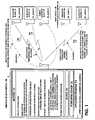
- FIG. 1is a network diagram showing several ad hoc network piconets and the user's Bluetooth device 100 which is displaying the privacy options menu.
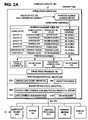
- FIG. 2Ais a functional block diagram of the user's Bluetooth device 100 of FIG. 1 , showing the various program modules stored in its memory for the transport protocol group, middleware protocol group, and application group.
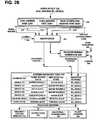
- FIG. 2Bshows an example of the random number generator operating on various selected parts of the BD_ADDR of the user's Bluetooth device 100 .
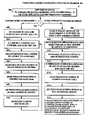
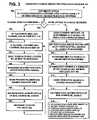
- FIG. 3is a flow diagram of the pseudonym address generation application program 106 .
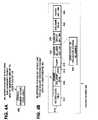
- FIG. 4Ashows the Bluetooth packet structure for an inquiry packet sent to the user's device 100 by an inquiring device.
- FIG. 4Bshows the Bluetooth packet structure for an inquiry response packet sent by the user's device 100 to the inquiring device.
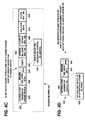
- FIG. 4Cshows the Bluetooth packet structure for a paging packet sent by the user's device 100 to a paged device.
- FIG. 4Dshows the Bluetooth packet structure for a page acknowledgment packet sent by the paged device to the user's device 100 .
- the Bluetooth Special Interest GroupSpecification Of The Bluetooth System , Version 1.0B, Volumes 1 and 2, December 1999, describes the principles of Bluetooth device operation and communication protocols.
- Up to eight Bluetooth devicescan join together in an ad hoc communications network called a piconet.
- a piconetis an arbitrary collection of Bluetooth-enabled devices which are physically close enough to be able to communicate and which are exchanging information on a regular basis.
- Each piconethas one master device and up to seven slave devices. All communication is directed between the master device and each respective slave device. The master initiates an exchange of data and the slave responds to the master. When two slave devices are to communicate with each other, they must do so through the master device.
- the master devicemaintains the piconet's network clock and controls when each slave device can communicate with the master device.
- Members of the ad hoc network piconetjoin and leave as they move into and out of the range of the master device.
- Piconetssupport distributed activities, such as collaborative work projects, collaborative games, multi-user gateways to the Internet, and the like.
- a user's device that joins a particular piconetdoes so to enable its user to participate in the currently running collaborative activity.
- FIG. 1is a network diagram showing several ad hoc network piconets and the user's Bluetooth device 100 which is displaying the privacy options menu in the browser 102 .
- the user's Bluetooth device 100includes the keypad 104 and the positioning sensor 132 .
- the positioning sensor 132can be, for example, a GPS receiver integrated in the device.
- the positioning sensor 132can also be, for example, a radio beacon triangulation sensor that determines the location of the wireless device by means of a network of radio beacons, base stations, or access points, as is described for example, in Nokia European patent EP 0 767 594 A2, entitled “Mobile Station Positioning System”.
- the sensor 132provides inputs which are sampled by the wireless device 100 to infer a current geographical position.
- the positioning sensor 132can also detect changes in position with respect to known, fixed station Bluetooth devices.
- Bluetooth devicesare within the operating range of the user's device 100 of FIG. 1 .
- the user's Bluetooth devicehas substituted a different pseudonym address for its real Bluetooth Device Address BD_ADDR( 0 ) in its relationship with each of the respective devices of FIG. 1 .
- the user's device 100forms an ad hoc network piconet( 1 ) with Bluetooth device 114 on link 115 .
- the user's Bluetooth deviceis using a pseudonym address BD_ADDR( 1 ) instead of its real BD_ADDR( 0 ) in its relationship with Bluetooth device 114 .
- Bluetooth device 114uses its real Bluetooth Device Address BD_ADDR(A).
- the master's real Bluetooth Device Address BD_ADDR(A)is used as the piconet access code.
- the address manager table 232 shown in FIG. 2stores the user's pseudonym address BD_ADDR(L 1 ) instead of its real BD_ADDR( 0 ) for its relationship with Bluetooth device 114 .
- the user's device 100forms ad hoc network piconet( 2 ) with Bluetooth device 116 on link 117 .
- the user's Bluetooth deviceis using a different pseudonym address BD_ADDR( 2 ) instead of its real BD_ADDR( 0 ) in its relationship with Bluetooth device 116 .
- Bluetooth device 116uses its real Bluetooth Device Address BD_ADDR( 13 ).
- the user's device 100Since in the piconet( 2 ), the user's device 100 has the role of the master device connected to a slave device 116 , then the user's pseudonym address BD_ADDR( 2 ) used as the piconet access code, instead of the user's real Bluetooth Device Address BD_ADDR( 0 ).
- the address manager table 232 shown in FIG. 2stores the user's pseudonym address BD_ADDR( 2 ) instead of its real BD_ADDR( 0 ) for its relationship with Bluetooth device 116 .
- Bluetooth device 118uses its real Bluetooth Device Address BD_ADDR(C). Since in the piconet( 2 ) of FIG. 1 , the user's device 100 is the master device connected to slave device 118 , then the user's pseudonym address BD_ADDR( 2 ) is used as the piconet access code for slave device 118 , as well as slave device 116 .
- the address manager table 232 shown in FIG. 2stores the user's pseudonym address BD_ADDR( 2 ) instead of its real BD_ADDR( 0 ) for its relationship with Bluetooth device 118 .
- Bluetooth device 120There is also a parked slave device in ad hoc network piconet( 2 ) of FIG. 1 , the Bluetooth device 120 .
- Bluetooth device 120does not have an active connection with the user's master device 100 , it does monitor the signals from the user's master device 100 to stay in synchronism with the master's clock.
- Bluetooth device 120uses its real Bluetooth Device Address BD_ADDR(D). If the parked slave Bluetooth device 120 were to rejoin piconet( 2 ) as an active slave device, it would employ the user master device's pseudonym address BD_ADDR( 2 ) as the piconet access code, the same as for slave device 118 and slave device 116 .
- the address manager table 232 shown in FIG. 2stores the user's pseudonym address BD_ADDR( 2 ) instead of its real BD_ADDR( 0 ) for its relationship with Bluetooth device 120 .
- the user's device 100 in FIG. 1is, itself, a parked slave device in a third ad hoc network piconet( 3 ), with the master Bluetooth device 122 .
- the user's device 100does not have an active connection with the master device 122 in piconet( 3 ), it does monitor the signals from the master device 122 to stay in synchronism with the master's clock.
- the master device 122uses its real Bluetooth Device Address BD_ADDR(E). If the user's parked slave device 120 were to rejoin piconet( 3 ) as an active slave device, it would employ the master device's real Bluetooth Device Address BD_ADDR(E) as the piconet access code.
- the address manager table 232 shown in FIG. 2stores the user's pseudonym address BD_ADDR( 3 ) instead of its real BD_ADDR( 0 ) for its relationship with Bluetooth device 122 .
- FIG. 1shows the user's Bluetooth device 100 displaying the privacy options menu in the browser 102 .
- the privacy options menuis rendered on the device's display by the application program 106 of FIG. 3 .
- the usercan select one of two primary options:
- the 48-bits of the user's real BD_ADDR( 0 )is partitioned into three parts: the 24-bit lower address part (LAP), the 8-bit upper address part (UAP), and the 16-bit nonsignificant address part (NAP).
- the 24 bits of the UAP and the NAPconstitute the organization unique identifier (OUI), which is the manufacturer's code.
- the remaining 24 bits of the LAPare assigned internally by the manufacturer. If the user selects from the privacy options menu in the browser 102 , the option [2] KEEP MANUFACTURER CODE AND RANDOMIZE REST OF DEVICE ADDRESS, then only the 24-bit LAP of the user's real BD_ADDR( 0 ) is randomized to produce the pseudonym address.
- the usercan select combinations of the LAP, UAP, and/or NAP of the user's real BD_ADDR( 0 ) to randomize to produce the pseudonym address.
- FIG. 2Bshows an example of the random number generator 230 operating on various selected parts of the user device's BD_ADDR( 0 ) stored in the buffer 250 .
- the multiplexer 252connects to the selected part of the user device's BD_ADDR( 0 ) stored in the buffer 250 and applies the selected part to the input of the random number generator 230 .
- ADDRESS RETENTION OPTIONSin the privacy options menu in the browser 102 of FIG. 1 , then the user can select one of four options in the sub-menu:
- the pseudonym addresscan be retained for a predetermined time or count selected by the user.
- the method for carrying out this optionis shown in steps 320 to 332 of the flow diagram of FIG. 3 .
- the pseudonym addresscan be retained for a duration that at least begins with an inquiry received from another device and ends if no connection is made after the inquiry.
- the addresscan be retained for a duration that at least begins with the inquiry and ends if no connection is made after the inquiry.
- Pseudonym addressescan be computed prior to when they are needed and then stockpiled by storage in the address management table 234 in the user's device 100 . The user can also select that the address be retained for a duration that ends when a piconet context changes for the user's device.
- the user's device 100When the user's device 100 is the master device in a piconet, such as piconet( 2 ) of FIG. 1 , its pseudonym address will be used in the piconet access code. Thus, the user's device 100 will retain the pseudonym address until the piconet is broken up or until the user's device 100 relinquishes its role as the master device of that piconet. The user can also select that the pseudonym address be retained for a duration that at least begins with an inquiry that establishes a connection with another device, and ends when that connection is torn down or otherwise terminated. The method for carrying out this option is shown in steps 306 to 318 of the flow diagram of FIG. 3 .
- the pseudonym addresscan be retained for a duration that at least begins with the sensing of the current physical location of the user's device by the sensor 132 , and ends if that physical location changes beyond a predefined distance, such as the nominal radio broadcast range of ten meters for a Bluetooth device.
- the method for carrying out this optionis shown in steps 306 to 318 of the flow diagram of FIG. 3 .
- the usercan also select the option [d] OTHER OPTIONS TO CHANGE ADDRESSES in the privacy options menu in the browser 102 of FIG. 1 .
- options [a], [b], [c], or [d]it is more difficult for an eavesdropper to track the usage of the user's device or discover the real, unique BD_ADDR of the device.
- FIG. 2Ais a functional block diagram of the user's Bluetooth device 100 of FIG. 1 , showing the various program modules stored in its memory 202 for the transport protocol group 214 , middleware protocol group 224 , and application group 234 .
- the memory 202is connected by the bus 204 to the Bluetooth radio 206 , the keypad 104 , the positioning sensor 132 , the central processor 210 , and the display 212 .
- Program modules stored in the memory 202are sequences of operational instructions which, when executed by the central processor 210 , carry out the methods of the invention.
- the application group 234includes the application program 106 , shown in greater detail in the flow diagram of FIG. 3 .
- the application group 234also includes the random number generator 230 which randomizes the user's real BD_ADDR( 0 ) to produce the pseudonym addresses which it outputs to the address manager table 232 , shown in greater detail in FIG. 2B .
- the application group 234also includes the frequency hopping sequence module 235 , the device access code module 236 , the encryption and authentication module 238 , and the packet buffer 240 .
- the pseudonym addresses in the address manager table 232are output to the modules 235 , 236 , 238 , and 240 to be used in all the functions of the Bluetooth device that normally use the BD_ADDR, including the frequency hopping sequence, the device access code, the initialization key in link encryption, the authentication code, and the various packet addresses.
- Frequency hoppingis the form of spread spectrum modulation used by the Bluetooth standard.
- the middleware protocol group 224 in FIG. 2includes the Service Discovery Protocol 226 and the Object Exchange 228 .
- the transport protocol group 214includes the Logical Link Control and Adaptation Protocol (L2CAP) 220 , the Link Controller and Baseband 216 , and the Link Manager 218 .
- L2CAPLogical Link Control and Adaptation Protocol
- the Link Controllercarries out link level operations over several packet durations in response to higher level commands from the Link Manager.
- the Basebandhandles channel coding and decoding and low level timing control and management of the link within a single data packet transfer.
- FIG. 2Bshows the user's BD_ADDR( 0 ) stored in the buffer 250 .
- Combinations of the lower address part (LAP), the upper address part (UAP), and the non-significant address part (NAP)are selected by the multiplexer 252 in response to the control input 254 from the privacy options menu in the browser 102 of FIG. 1 .
- the multiplexer 252connects to the selected part of the user device's BD_ADDR( 0 ) stored in the buffer 250 and applies the selected part to the input of the random number generator 230 .
- the remaining unchanged portion of the user device's BD_ADDR( 0 )is directly stored in the address manager table 252 , to be concatenated with the selected, randomized portion output from the random number generator 230 .
- the random number generator 230can be a pseudo-random sequence generator which is seeded with the user device's BD_ADDR( 0 ). Still further, in response to the user's control input 258 , the pseudo-random sequence generator can also be seeded with a true random sequence applied at the parameter input 256 of the random number generator 230 . The true random sequence is combined with the BD_ADDR( 0 ) in the random number generator 230 . Examples of sources of a true random sequence include tables of random digits, random noise sources, the least significant bits from a clock register, and measurements of keyboard latency. Other sources of true random numbers are described in the Internet Engineering Task Force (IETF) Request For Comment (RFC) 1750 .
- IETFInternet Engineering Task Force
- Suitable pseudo-random sequence generatorsinclude the ANSI A9.17 pseudo-random number generator, and one-way function generators such as the MD5 cryptographic hash algorithm described in the RFC 1321, the SHA-1 cryptographic hash algorithm which is a U.S. NIST standard, or the Data Encryption Standard (DES) block cipher function.
- MD5 cryptographic hash algorithmdescribed in the RFC 1321
- SHA-1 cryptographic hash algorithmwhich is a U.S. NIST standard
- DESData Encryption Standard
- FIG. 3is a flow diagram of the sequence of operational steps of the pseudonym address generation application program 106 .
- the programbegins with step 302 :
- options [b], [c], or [d] of the privacy options menu in the browser 102include options [b], [c], or [d] of the privacy options menu in the browser 102 .
- Step 324SELECT PORTION OF REAL ADDRESS BD_ADDR( 0 ) TO RANDOMIZE
- Step 326RANDOMIZE SELECTED PORTION TO OBTAIN PSEUDONYM ADDRESS
- step 326if the pseudonym address is a duplicate of any other known address, then the program can return to step 324 .
- Step 328STORE PSEUDONYM ADDRESS IN ADDRESS MANAGER TABLE
- Step 330USE PSEUDONYM ADDRESS INSTEAD OF REAL ADDRESS BD_ADDR( 0 )
- Step 332INCREMENT COUNTER AND GOTO 322
- step 304if the user has selected other options [b], [c], or [d] of the privacy options menu in the browser 102 , to change pseudonym addresses, then the program then flows to steps 306 to 318 , which flow as follows:
- Step 306BEGIN IF INQUIRY RECEIVED, OR WHEN INQUIRY IS TO BE SENT, OR WHEN A NEW ADDRESS IS NEEDED
- pseudonym addressescan be computed prior to when they are needed and then stockpiled by storage in the address management table 234 in the user's device 100 .
- Step 308GET POSITIONING SENSOR READING AND SELECT PORTION OF REAL ADDRESS BD_ADDR( 0 ) TO RANDOMIZE
- Step 310RANDOMIZE SELECTED PORTION TO OBTAIN PSEUDONYM ADDRESS
- Step 312IF PSEUDONYM ADDRESS IS A DUPLICATE OF ANY OTHER KNOWN ADDRESS, THEN GOTO STEP 308
- Step 314STORE PSEUDONYM ADDRESS IN ADDRESS MANAGER TABLE
- Step 316USE PSEUDONYM ADDRESS INSTEAD OF REAL ADDRESS BD_ADDR( 0 )
- Step 318IF NO CONNECTION IS MADE AFTER INQUIRY, OR
- FIG. 4Ashows the Bluetooth packet structure for an inquiry packet sent to the user's device 100 by an inquiring device.
- the inquiring deviceIn the inquiring device, its link controller is called to send inquiries to other Bluetooth devices in the area, such as the user's device 100 , and to build an inquiry response table.
- a Bluetooth deviceAt any particular time a Bluetooth device is in one of several different states. If the inquiring device is in the standby state, it is inactive, no data is being exchanged, and its Bluetooth radio is not on. Its link controller is invoked to enter the inquiry state and to begin the process of attempting to discover all Bluetooth devices in the ten meter communications range. The inquiring device begins to periodically transmit inquiry packets.
- FIG. 4Ashows the Bluetooth packet structure for an inquiry packet 500 sent by an inquiring device to the user's device 100 .
- the general inquiry access code (GLAC) of the packet 500is recognized by all Bluetooth devices as an inquiry message.
- GLACgeneral inquiry access code
- any other Bluetooth devices that are in the inquiry scan stateare scanning for the receipt of inquiry packets 500 . If the user's device 100 in the inquiry scan state receives the inquiry packet 500 , it will respond with an inquiry response packet 510 that has sufficient information to enable the inquiring device to build its inquiry response table of essential information required to make a connection. Any Bluetooth device recognizing inquiry packet 500 can respond.
- FIG. 4Bshows the Bluetooth frequency hop synchronization (FHS) packet structure for an inquiry response packet 510 sent by the user's device 100 .
- FIG. 4Balso shows the packet buffer 240 of FIG. 2A , in which the packet 510 has been constructed by the user's device 100 .
- FHSBluetooth frequency hop synchronization
- the FHS packet structure for an inquiry response packet 510 sent by the user's device 100includes the access code field 512 , the header which includes the slave member number field 514 in which AM_ADDR is no yet assigned and is set to zero, the type field 516 and the parity field 518 . Another the slave member number field 524 also has AM_ADDR set to zero.
- Field 522contains the user's class-of-device (CoD) information.
- the FHS packet structure for an inquiry response packet 510There are two important fields in the FHS packet structure for an inquiry response packet 510 , that provide essential information about the user's device 100 that enable the inquiring device to the make a connection to the user's device: Field 520 which normally contains the user's real BD_ADDR and field 526 which normally contains the user's current clock value.
- the user's device 100substitutes a pseudonym address BD_ADDR( 4 ) for the user's Bluetooth Device Address BD_ADDR( 0 ).
- the address manager table 232 shown in FIG. 2stores the user's pseudonym address BD_ADDR( 4 ) instead of its real BD_ADDR( 0 ) for its relationship with the inquiring device.
- the inquiring devicecannot track the usage of the user's device 100 or discover the real, unique BD_ADDR( 0 ) of the device 100 .
- Another option available to the user to confuse an eavesdropperis selectively changing the user's class-of-device (CoD) information in field 522 of the FHS inquiry response packet 510 of FIG. 4B .
- CoDclass-of-device
- the user's device 100initiates a connection with another device.
- the device 100uses the information provided in a prior inquiry response packet it has received from a remote device to be paged, to prepare and send a paging messages to the remote, paged device.
- the user's paging device 100must enter the page state.
- the user's device 100invokes the link controller 216 to enter the page state, where it will transmit paging messages to the remote paged device using the access code and timing information acquired from a prior inquiry response packet.
- the remote paged devicemust be in the page scan state to allow the user's paging device 100 to connect with it.
- the remote paged devicewill acknowledge the paging messages and the user's paging device 100 will send a paging packet 530 shown in FIG. 4C , which provides the clock timing and access code of the paging device 100 to the remote paged device.
- the remote paged deviceresponds with a page acknowledgment packet 550 shown in FIG. 4D . This enables the two devices to form an asynchronous connection-less (ACL) link and both devices transition into the connection state.
- ACLconnection-less
- the user's device 100When the user's device 100 sends a paging message to the other device, it sends the FHS paging packet 530 of FIG. 4C .
- the FHS paging packet 530must have sufficient information about the user's device 100 to enable the remote paged device to synchronize itself with the clock of the user's device 100 . Since the user's device 100 has initiated the page, it will be the master device in the new piconet being formed by the two devices. Importantly, the remote paged device, which will become the slave to the user's device 100 , must also know the user device's BD_ADDR, since it is the master device's address that is used in the piconet access code for the new piconet being formed by the two devices.
- FIG. 4Cshows the Bluetooth frequency hop synchronization (FHS) packet structure for the paging packet 530 sent by the user's device 100 .
- FIG. 4Calso shows the packet buffer 240 of FIG. 2A , in which the packet 530 has been constructed by the user's device 100 .
- the FHS packet structure for a paging packet 530 sent by the user's device 100includes the access code field 532 which contains the remote paged device's BD_ADDR, the header which includes the slave member number field 534 in which AM_ADDR is now assigned the value of one, the type field 536 and the parity field 538 .
- Another the slave member number field 544also has AM_ADDR set to one.
- Field 542contains the user device's class-of-device (CoD) information.
- CoDclass-of-device
- the user's device 100substitutes a pseudonym address BD_ADDR( 5 ) for the user's Bluetooth Device Address BD_ADDR( 0 ).
- the address manager table 232 shown in FIG. 2stores the user's pseudonym address BD_ADDR( 5 ) instead of its real BD_ADDR( 0 ) for its relationship with the remote paged device.
- the remote paged devicecannot track the usage of the user's device 100 or discover the real, unique BD_ADDR( 0 ) of the device 100 .
- FIG. 4Dshows the Bluetooth packet structure for a page acknowledgment packet 550 sent by the paged device back to the user's device 100 .
- Packet 550includes the access code field 552 for the user's device 100 and the header which contains field 554 with the slave member number AM_ADDR set to one for the remote paged device.
- Field 556is null.
- the remote paged deviceonly knows the user's device by its pseudonym address BD_ADDR( 5 ).
- the access code field 552 that it returns to the user's device 100contains a synchronization word that includes the lower address part (LAP) of the user's pseudonym address BD_ADDR( 5 ), instead of the LAP of the user device's real BD_ADDR( 0 ) address which would normally happen. Since the user's device 100 will change its pseudonym address to another value in later, separate connections with this remote device and with other devices, the usage of the user's device 100 cannot be tracked and the real, unique BD_ADDR( 0 ) of the device 100 cannot be discovered.
- LAPlower address part
- a table containing a plurality candidate pseudonym addressescan be computed by the wireless device 100 prior to when they are needed and then stockpiled by storage in the user's device 100 .
- the table of candidate addressescan be stored as a part of the address management table 232 .
- the wireless device 100can then quickly access one of the candidate pseudonym addresses by a random selection from the table of candidate addresses.
- the table of candidate pseudonym addressescan be computed by a server and then securely downloaded to the wireless device 100 prior to when they are needed and then stockpiled by storage in the user's device 100 .
- the table of candidate pseudonym addressescan be computed by the manufacturer of the wireless device 100 and then stored in the wireless device 100 .
- the resulting inventionprovides a randomized pseudonym address for a Bluetooth device so that the user's identity, routes, and activities cannot be correlated with his/her device's address.
- the inventionalso applies to other wireless standards.
- the invention's principle of substituting randomized pseudonym addresses for the device's real unique address, to confer anonymity upon the user,is equally useful in many other wireless standards.
- the inventionapplies, for example, to the IEEE 802.11 Wireless LAN standards, the Japanese 3rd Generation (3G) wireless standard, the various 2G, 2.5G, and 3G cellular telephone system standards, the Infrared Data Association (IrDA) standard, the Digital Enhanced Cordless Telecommunications (DECT) standard, the Shared Wireless Access Protocol (SWAP) standard, the IEEE 802.15 Wireless Personal Area Network (WPAN) standard, the High Performance Radio Local Area Network (HIPERLAN) standard, and the Multimedia Mobile Access Communication (MMAC) Systems standard of the Japanese Association of Radio Industries and Businesses.
- the inventionenables each of these wireless standards to protect the privacy of the user's identity, routes, and activities so that they cannot be correlated with his/her device's address.
Landscapes
- Engineering & Computer Science (AREA)
- Computer Networks & Wireless Communication (AREA)
- Signal Processing (AREA)
- Computer Security & Cryptography (AREA)
- Computer Hardware Design (AREA)
- Computing Systems (AREA)
- General Engineering & Computer Science (AREA)
- Mobile Radio Communication Systems (AREA)
- Small-Scale Networks (AREA)
- Measuring Pulse, Heart Rate, Blood Pressure Or Blood Flow (AREA)
Abstract
Description
The invention disclosed broadly relates to ubiquitous computing and more particularly relates to improvements in short range RF technology.
Bluetooth is a global de facto standard for wireless connectivity, which is based on a low-cost, short-range radio link. When two Bluetooth equipped devices come within ten meters range of each other, they can establish a connection together using a radio-based link. A Bluetooth-enabled laptop computer can send information to a printer in the next room, or a microwave oven can send a message to one's mobile phone announcing that that the meal is ready. Bluetooth will become the standard in mobile phones, PCs, laptops and other electronic devices, enabling users to share information, synchronize data, access the Internet, integrate with LANs or actuate electromechanical devices, such as unlocking a car. A passenger can write e-mails on his/her laptop on an airplane and then, after landing, the messages can be automatically forwarded to the Internet by Bluetooth devices that are ubiquitously located around the airport terminal. In another example, while waiting in an airport lounge, a the passenger can receive interesting duty-free offers directly on his/her mobile phone or play multiplayer games with friends.
Bluetooth devices are designed to find other Bluetooth devices within their ten meter communications range and to discover what services they offer, using a service discovery protocol (SDP). To accomplish this, a Bluetooth device sends out an inquiry message searching for other devices in its vicinity. Any other Bluetooth device that is listening by means of conducting an inquiry scan, will recognize the inquiry message and respond. The inquiry response is a message packet containing the responding device's Bluetooth Device Address (BD_ADDR). The Bluetooth device address is a unique, 48-bit IEEE address which is electronically engraved into each Bluetooth device. The address is virtually guaranteed to be completely unique, so much so that it can be reliably associated with the device's user, much as can the user's passport number or social security number.
As the user carries his/her Bluetooth device about, traveling among other Bluetooth devices, a trail is left in the form of the user's Bluetooth Device Address (BD_ADDR), which the device has given out at each transmission of an inquiry response packet. The user's routes and activities can be tracked by logging the times and locations of the observance of his/her device's Bluetooth Device Address. To the extent that the user is identified with his/her device's Bluetooth Device Address, it is almost as if the user were giving out his/her personal identity number to each inquiring Bluetooth device. This realization will certainly be exploited in the future by market researchers, and possibly by more sinister observers, thereby seriously compromising the user's privacy and possibly the user's safety.
What is needed is a way to provide a pseudonym for a Bluetooth device so that the user's identity, routes, and activities cannot be correlated with his/her device's address.
In accordance with the invention, the user's Bluetooth device substitutes a pseudonym address for the Bluetooth Device Address (BD_ADDR). The pseudonym address is a randomized version of the BD_ADDR. The pseudonym address is used in all the functions of the Bluetooth device that normally use the BD_ADDR, including the frequency hopping sequence, the device access code, the initialization key in link encryption, the authentication code, and the various packet addresses.
The user is provided with a menu of privacy options, to select the various features of the invention. Since the BD_ADDR includes a manufacturer's code part, the user is given the option of preserving that part and randomizing the rest of the BD_ADDR. The user can select other parts or all of the BD_ADDR to randomize.
The user can select introducing various parameters into the random number generator as initialization vectors to combine with the BD_ADDR, such as time-of-day clock values or biometric values such as keyboard latency, to change the random number sequence and thus thwart an eavesdropper's discovery of that sequence. The resulting randomized pseudonym address is then stored in an address manager table, associating it with the paired Bluetooth devices with which the pseudonym address is exchanged.
For example, when the user's device receives an inquiry message from another Bluetooth device, it sends back an inquiry response message that contains the user's pseudonym address instead of his/her device's BD_ADDR. As another example, when the user's device has the role of a master device connected to a slave device in a piconet, then the user's pseudonym address is used as the piconet access code, instead of his/her device's BD_ADDR.
The user is also given a number of options for the retention of the pseudonym address in the address manager table. The anonymity of the user would otherwise be undermined if the same pseudonym address were to be used indefinitely. In accordance with the invention, the address can be retained for a predetermined time or count selected by the user. Alternately, the address can be retained for a duration that at least begins with an inquiry received from another device and ends if no connection is made after the inquiry. Similarly, if the user's device initiated sending an inquiry message, the address can be retained for a duration that at least begins with the inquiry and ends if no connection is made after the inquiry. Pseudonym addresses can be computed prior to when they are needed, and then stockpiled by storage in a table in the user's device.
In an alternate option, the pseudonym address can be retained for a duration that ends when a piconet context changes for the user's device. When the user's device is the master device in a piconet, the pseudonym address will be used in the piconet access code. Thus, the user's device will retain the pseudonym address until the piconet is broken up or until the user's device relinquishes its role as the master device. Alternately, the address can be retained for a duration that at least begins with the sensing of the current physical location of the user's device, and ends if that physical location changes beyond a predefined distance, such as the nominal radio broadcast range of a Bluetooth device. Alternately, the address can be retained for a duration that at least begins with an inquiry that establishes a connection with another device, and ends when that connection is torn down or otherwise terminated. In this way it is not possible to track the usage of the user's device nor discover the real, unique BD_ADDR of the device.
Still further in accordance with the invention, even though the user device's BD_ADDR has been randomized in the form of the pseudonym address, there is still a small chance that the resulting pseudonym address is coincidentally the same as another device's BD_ADDR in the vicinity. The invention minimizes this possibility by comparing the newly generated pseudonym address with known addresses of all other devices that have been encountered in the vicinity. If the rare chance happens that the pseudonym address is the same as another device's address, the newly generated pseudonym address is not used and another pseudonym address is generated instead. If there are many repeated attempts to generate a pseudonym address that fail because of other duplicate addresses in the vicinity, then the user is notified and he/she can elect to use his/her device's BD_ADDR for the proposed connection. This unlikely occurrence may be a symptom revealing that an eavesdropper is trying to discover the sequence of random numbers being generated by the user's device. The user's device in this case notifies the user and gives him/her the option to introduce various parameters into the random number generator to change the random number sequence and thus thwart the eavesdropper's discovery of that sequence.
In addition to the Bluetooth standard, the invention also applies to other wireless standards. The invention's principle of substituting randomized pseudonym addresses for the device's real unique address, to confer anonymity upon the user, is equally useful in many other wireless standards. The invention applies, for example, to the IEEE 802.11 Wireless LAN standards, the Japanese 3rd Generation (3G) wireless standard, the various 2G, 2.5G, and 3G cellular telephone system standards, the Infrared Data Association (IrDA) standard, the Digital Enhanced Cordless Telecommunications (DECT) standard, the Shared Wireless Access Protocol (SWAP) standard, the IEEE 802.15 Wireless Personal Area Network (WPAN) standard, the High Performance Radio Local Area Network (HIPERLAN) standard, and the Multimedia Mobile Access Communication (MMAC) Systems standard of the Japanese Association of Radio Industries and Businesses. The invention enables each of these wireless standards to protect the privacy of the user's identity, routes, and activities so that they cannot be correlated with his/her device's address.
The Bluetooth Special Interest Group,Specification Of The Bluetooth System, Version 1.0B,Volumes
Several other Bluetooth devices are within the operating range of the user'sdevice 100 ofFIG. 1 . In accordance with the invention, the user's Bluetooth device has substituted a different pseudonym address for its real Bluetooth Device Address BD_ADDR(0) in its relationship with each of the respective devices ofFIG. 1 . The user'sdevice 100 forms an ad hoc network piconet(1) withBluetooth device 114 onlink 115. The user's Bluetooth device is using a pseudonym address BD_ADDR(1) instead of its real BD_ADDR(0) in its relationship withBluetooth device 114.Bluetooth device 114 uses its real Bluetooth Device Address BD_ADDR(A). Since in the piconet(1), the user'sdevice 100 has the role of the active slave device connected to amaster device 114 in the piconet(1), then the master's real Bluetooth Device Address BD_ADDR(A) is used as the piconet access code. The address manager table232 shown inFIG. 2 stores the user's pseudonym address BD_ADDR(L1) instead of its real BD_ADDR(0) for its relationship withBluetooth device 114.
Contrast this with ad hoc network piconet(2) inFIG. 1 . The user'sdevice 100 forms ad hoc network piconet(2) withBluetooth device 116 onlink 117. The user's Bluetooth device is using a different pseudonym address BD_ADDR(2) instead of its real BD_ADDR(0) in its relationship withBluetooth device 116.Bluetooth device 116 uses its real Bluetooth Device Address BD_ADDR(13). Since in the piconet(2), the user'sdevice 100 has the role of the master device connected to aslave device 116, then the user's pseudonym address BD_ADDR(2) used as the piconet access code, instead of the user's real Bluetooth Device Address BD_ADDR(0). The address manager table232 shown inFIG. 2 stores the user's pseudonym address BD_ADDR(2) instead of its real BD_ADDR(0) for its relationship withBluetooth device 116.
There is another active slave device in ad hoc network piconet(2) ofFIG. 1 , theBluetooth device 118 connected onlink 119.Bluetooth device 118 uses its real Bluetooth Device Address BD_ADDR(C). Since in the piconet(2) ofFIG. 1 , the user'sdevice 100 is the master device connected toslave device 118, then the user's pseudonym address BD_ADDR(2) is used as the piconet access code forslave device 118, as well asslave device 116. The address manager table232 shown inFIG. 2 stores the user's pseudonym address BD_ADDR(2) instead of its real BD_ADDR(0) for its relationship withBluetooth device 118.
There is also a parked slave device in ad hoc network piconet(2) ofFIG. 1 , theBluetooth device 120. AlthoughBluetooth device 120 does not have an active connection with the user'smaster device 100, it does monitor the signals from the user'smaster device 100 to stay in synchronism with the master's clock.Bluetooth device 120 uses its real Bluetooth Device Address BD_ADDR(D). If the parkedslave Bluetooth device 120 were to rejoin piconet(2) as an active slave device, it would employ the user master device's pseudonym address BD_ADDR(2) as the piconet access code, the same as forslave device 118 andslave device 116. The address manager table232 shown inFIG. 2 stores the user's pseudonym address BD_ADDR(2) instead of its real BD_ADDR(0) for its relationship withBluetooth device 120.
The user'sdevice 100 inFIG. 1 is, itself, a parked slave device in a third ad hoc network piconet(3), with themaster Bluetooth device 122. Although the user'sdevice 100 does not have an active connection with themaster device 122 in piconet(3), it does monitor the signals from themaster device 122 to stay in synchronism with the master's clock. Themaster device 122 uses its real Bluetooth Device Address BD_ADDR(E). If the user's parkedslave device 120 were to rejoin piconet(3) as an active slave device, it would employ the master device's real Bluetooth Device Address BD_ADDR(E) as the piconet access code. The address manager table232 shown inFIG. 2 stores the user's pseudonym address BD_ADDR(3) instead of its real BD_ADDR(0) for its relationship withBluetooth device 122.
PRIVACY OPTIONS MENU
SELECT OPTION:
- [A] NORMAL BLUETOOTH DEVICE ADDRESS
- [B] PSEUDONYM BLUETOOTH DEVICE ADDRESS
If the user selects the PSEUDONYM BLUETOOTH DEVICE ADDRESS option in the privacy options menu in thebrowser 102, then the user can select one of five options in the PSEUDONYM ADDRESS OPTIONS SUB-MENU:
- [1] RANDOMIZE ENTIRE DEVICE ADDRESS
- [2] KEEP MANUFACTURER CODE AND RANDOMIZE REST OF DEVICE ADDRESS
- [3] SELECT PARTS OF ADDRESS TO RANDOMIZE
- [4] ADDRESS RETENTION OPTIONS
- [5] RESET RANDOM NUMBER GENERATOR
The option [1] RANDOMIZE ENTIRE DEVICE ADDRESS from the privacy options menu in thebrowser 102, randomizes the entire 48-bits of the user's real BD_ADDR(0) to produce the pseudonym address.
The 48-bits of the user's real BD_ADDR(0) is partitioned into three parts: the 24-bit lower address part (LAP), the 8-bit upper address part (UAP), and the 16-bit nonsignificant address part (NAP). The 24 bits of the UAP and the NAP constitute the organization unique identifier (OUI), which is the manufacturer's code. The remaining 24 bits of the LAP are assigned internally by the manufacturer. If the user selects from the privacy options menu in thebrowser 102, the option [2] KEEP MANUFACTURER CODE AND RANDOMIZE REST OF DEVICE ADDRESS, then only the 24-bit LAP of the user's real BD_ADDR(0) is randomized to produce the pseudonym address. If the user selects from the privacy options menu in thebrowser 102, the option [3] SELECT PARTS OF ADDRESS TO RANDOMIZE, then the user can select combinations of the LAP, UAP, and/or NAP of the user's real BD_ADDR(0) to randomize to produce the pseudonym address.
Reference toFIG. 2B shows an example of therandom number generator 230 operating on various selected parts of the user device's BD_ADDR(0) stored in thebuffer 250. When the user makes a selection from the privacy options menu in thebrowser 102 inFIG. 1 , themultiplexer 252 connects to the selected part of the user device's BD_ADDR(0) stored in thebuffer 250 and applies the selected part to the input of therandom number generator 230.
If the user selects the option [4] ADDRESS RETENTION OPTIONS in the privacy options menu in thebrowser 102 ofFIG. 1 , then the user can select one of four options in the sub-menu:
- [a] CHANGE ADDRESSES AFTER A TIME “T”
- [b] CHANGE AFTER INQUIRIES/CONNECTIONS
- [c] CHANGE WHEN LOCATION CHANGES
- [d] OTHER OPTIONS TO CHANGE ADDRESSES
If the user selects the option [a] CHANGE ADDRESSES AFTER A TIME “T” in the privacy options menu in thebrowser 102 ofFIG. 1 , then the pseudonym address can be retained for a predetermined time or count selected by the user. The method for carrying out this option is shown insteps 320 to332 of the flow diagram ofFIG. 3 .
If the user selects the option [b] CHANGE AFTER INQUIRIES/CONNECTIONS in the privacy options menu in thebrowser 102 ofFIG. 1 , then the pseudonym address can be retained for a duration that at least begins with an inquiry received from another device and ends if no connection is made after the inquiry. Similarly, if the user's device initiated sending an inquiry message, the address can be retained for a duration that at least begins with the inquiry and ends if no connection is made after the inquiry. Pseudonym addresses can be computed prior to when they are needed and then stockpiled by storage in the address management table234 in the user'sdevice 100. The user can also select that the address be retained for a duration that ends when a piconet context changes for the user's device. When the user'sdevice 100 is the master device in a piconet, such as piconet(2) ofFIG. 1 , its pseudonym address will be used in the piconet access code. Thus, the user'sdevice 100 will retain the pseudonym address until the piconet is broken up or until the user'sdevice 100 relinquishes its role as the master device of that piconet. The user can also select that the pseudonym address be retained for a duration that at least begins with an inquiry that establishes a connection with another device, and ends when that connection is torn down or otherwise terminated. The method for carrying out this option is shown insteps 306 to318 of the flow diagram ofFIG. 3 .
If the user selects the option [c] CHANGE WHEN LOCATION CHANGES in the privacy options menu in thebrowser 102 ofFIG. 1 , then the pseudonym address can be retained for a duration that at least begins with the sensing of the current physical location of the user's device by thesensor 132, and ends if that physical location changes beyond a predefined distance, such as the nominal radio broadcast range of ten meters for a Bluetooth device. The method for carrying out this option is shown insteps 306 to318 of the flow diagram ofFIG. 3 .
The user can also select the option [d] OTHER OPTIONS TO CHANGE ADDRESSES in the privacy options menu in thebrowser 102 ofFIG. 1 . With any of these options [a], [b], [c], or [d], it is more difficult for an eavesdropper to track the usage of the user's device or discover the real, unique BD_ADDR of the device.
If the user selects the option [5] RESET RANDOM NUMBER GENERATOR in the privacy options menu in thebrowser 102 ofFIG. 1 , then the user can introduce various parameters into the random number generator to change the random number sequence and thus thwart the eavesdropper's discovery of that sequence.
Theapplication group 234 includes theapplication program 106, shown in greater detail in the flow diagram ofFIG. 3 . Theapplication group 234 also includes therandom number generator 230 which randomizes the user's real BD_ADDR(0) to produce the pseudonym addresses which it outputs to the address manager table232, shown in greater detail inFIG. 2B . Theapplication group 234 also includes the frequencyhopping sequence module 235, the deviceaccess code module 236, the encryption andauthentication module 238, and thepacket buffer 240. The pseudonym addresses in the address manager table232 are output to themodules
Themiddleware protocol group 224 inFIG. 2 includes theService Discovery Protocol 226 and theObject Exchange 228. Thetransport protocol group 214 includes the Logical Link Control and Adaptation Protocol (L2CAP)220, the Link Controller andBaseband 216, and theLink Manager 218. The Link Controller carries out link level operations over several packet durations in response to higher level commands from the Link Manager. The Baseband handles channel coding and decoding and low level timing control and management of the link within a single data packet transfer.
Therandom number generator 230 can be a pseudo-random sequence generator which is seeded with the user device's BD_ADDR(0). Still further, in response to the user'scontrol input 258, the pseudo-random sequence generator can also be seeded with a true random sequence applied at theparameter input 256 of therandom number generator 230. The true random sequence is combined with the BD_ADDR(0) in therandom number generator 230. Examples of sources of a true random sequence include tables of random digits, random noise sources, the least significant bits from a clock register, and measurements of keyboard latency. Other sources of true random numbers are described in the Internet Engineering Task Force (IETF) Request For Comment (RFC)1750. These true random number values can be used as seed values that are combined with the user device's BD_ADDR(0) by concatenation, exclusive-ORing, or other combination. Suitable pseudo-random sequence generators include the ANSI A9.17 pseudo-random number generator, and one-way function generators such as the MD5 cryptographic hash algorithm described in the RFC 1321, the SHA-1 cryptographic hash algorithm which is a U.S. NIST standard, or the Data Encryption Standard (DES) block cipher function. These various techniques for generating pseudo-random sequences that are seeded with true random numbers are described, for example in the book by A. J. Menezes, P. C. van Oorschot, and S. A. Vanstone,Handbook of Applied Cryptography, CRC Press, 1997.
Step302: USER SELECTS OPTION TO CHANGE PSEUDONYM ADDRESSES AFTER COUNTER/TIMER=“T” OR OTHER OPTIONS TO CHANGE PSEUDONYM ADDRESSES.
The program then flows to step304 to determine whether the user has selected option [a] of the privacy options menu in thebrowser 102, to change the pseudonym addresses after counter/timer=“T” or other options to change pseudonym addresses. These other options include options [b], [c], or [d] of the privacy options menu in thebrowser 102.
If the user has selected option [a], then the program then flows tosteps 320 to332, which flow as follows:
Step320: SET COUNTER TO ZERO AND COUNTER_MAX TO LIMIT (E.G. T=5)
Step322: IF COUNTER=COUNTER_MAX CONTINUE, ELSEGOTO STEP 328
Step324: SELECT PORTION OF REAL ADDRESS BD_ADDR(0) TO RANDOMIZE
Step326: RANDOMIZE SELECTED PORTION TO OBTAIN PSEUDONYM ADDRESS
Atstep 326 if the pseudonym address is a duplicate of any other known address, then the program can return to step324.
Step328: STORE PSEUDONYM ADDRESS IN ADDRESS MANAGER TABLE
Step330: USE PSEUDONYM ADDRESS INSTEAD OF REAL ADDRESS BD_ADDR(0)
Step332: INCREMENT COUNTER ANDGOTO 322
As a result of the user selecting option [a] of the privacy options menu in thebrowser 102, it is more difficult for an eavesdropper to track the usage of the user's device or discover the real, unique BD_ADDR of the device.
Returning to step304, if the user has selected other options [b], [c], or [d] of the privacy options menu in thebrowser 102, to change pseudonym addresses, then the program then flows tosteps 306 to318, which flow as follows:
Step306: BEGIN IF INQUIRY RECEIVED, OR WHEN INQUIRY IS TO BE SENT, OR WHEN A NEW ADDRESS IS NEEDED
Note that pseudonym addresses can be computed prior to when they are needed and then stockpiled by storage in the address management table234 in the user'sdevice 100.
Step308: GET POSITIONING SENSOR READING AND SELECT PORTION OF REAL ADDRESS BD_ADDR(0) TO RANDOMIZE
Step310: RANDOMIZE SELECTED PORTION TO OBTAIN PSEUDONYM ADDRESS
Step312: IF PSEUDONYM ADDRESS IS A DUPLICATE OF ANY OTHER KNOWN ADDRESS, THENGOTO STEP 308
Step314: STORE PSEUDONYM ADDRESS IN ADDRESS MANAGER TABLE
Step316: USE PSEUDONYM ADDRESS INSTEAD OF REAL ADDRESS BD_ADDR(0)
Step318: IF NO CONNECTION IS MADE AFTER INQUIRY, OR
IF PICONET CONTEXT CHANGES, OR
IF POSITION CHANGE EXCEEDS LIMITS, OR
IF COUNTER/TIMER EXCEEDS LIMITS, OR
IF CONNECTION IS TORN DOWN,
THEN STOP USING PSEUDONYM ADDRESS AND REMOVE IT FROM ADDRESS MANAGER TABLE
As a result of the user selecting other options [b], [c], or [d] of the privacy options menu in thebrowser 102, it is more difficult for an eavesdropper to track the usage of the user's device or discover the real, unique BD_ADDR of the device.
During the inquiry procedure, any other Bluetooth devices that are in the inquiry scan state, such as the user'sdevice 100, are scanning for the receipt ofinquiry packets 500. If the user'sdevice 100 in the inquiry scan state receives theinquiry packet 500, it will respond with aninquiry response packet 510 that has sufficient information to enable the inquiring device to build its inquiry response table of essential information required to make a connection. Any Bluetooth device recognizinginquiry packet 500 can respond.FIG. 4B shows the Bluetooth frequency hop synchronization (FHS) packet structure for aninquiry response packet 510 sent by the user'sdevice 100.FIG. 4B also shows thepacket buffer 240 ofFIG. 2A , in which thepacket 510 has been constructed by the user'sdevice 100. The FHS packet structure for aninquiry response packet 510 sent by the user'sdevice 100 includes theaccess code field 512, the header which includes the slavemember number field 514 in which AM_ADDR is no yet assigned and is set to zero, thetype field 516 and theparity field 518. Another the slavemember number field 524 also has AM_ADDR set to zero.Field 522 contains the user's class-of-device (CoD) information.
There are two important fields in the FHS packet structure for aninquiry response packet 510, that provide essential information about the user'sdevice 100 that enable the inquiring device to the make a connection to the user's device:Field 520 which normally contains the user's real BD_ADDR andfield 526 which normally contains the user's current clock value. In accordance with the invention, the user'sdevice 100 substitutes a pseudonym address BD_ADDR(4) for the user's Bluetooth Device Address BD_ADDR(0). The address manager table232 shown inFIG. 2 stores the user's pseudonym address BD_ADDR(4) instead of its real BD_ADDR(0) for its relationship with the inquiring device. As a result, the inquiring device cannot track the usage of the user'sdevice 100 or discover the real, unique BD_ADDR(0) of thedevice 100.
Another option available to the user to confuse an eavesdropper, is selectively changing the user's class-of-device (CoD) information infield 522 of the FHSinquiry response packet 510 ofFIG. 4B .
As another example of the invention, the user'sdevice 100 initiates a connection with another device. Thedevice 100 uses the information provided in a prior inquiry response packet it has received from a remote device to be paged, to prepare and send a paging messages to the remote, paged device. To establish a connection, the user'spaging device 100 must enter the page state. The user'sdevice 100 invokes thelink controller 216 to enter the page state, where it will transmit paging messages to the remote paged device using the access code and timing information acquired from a prior inquiry response packet. The remote paged device must be in the page scan state to allow the user'spaging device 100 to connect with it. Once in the page scan state, the remote paged device will acknowledge the paging messages and the user'spaging device 100 will send apaging packet 530 shown inFIG. 4C , which provides the clock timing and access code of thepaging device 100 to the remote paged device. The remote paged device responds with apage acknowledgment packet 550 shown inFIG. 4D . This enables the two devices to form an asynchronous connection-less (ACL) link and both devices transition into the connection state.
When the user'sdevice 100 sends a paging message to the other device, it sends theFHS paging packet 530 ofFIG. 4C . TheFHS paging packet 530 must have sufficient information about the user'sdevice 100 to enable the remote paged device to synchronize itself with the clock of the user'sdevice 100. Since the user'sdevice 100 has initiated the page, it will be the master device in the new piconet being formed by the two devices. Importantly, the remote paged device, which will become the slave to the user'sdevice 100, must also know the user device's BD_ADDR, since it is the master device's address that is used in the piconet access code for the new piconet being formed by the two devices.FIG. 4C shows the Bluetooth frequency hop synchronization (FHS) packet structure for thepaging packet 530 sent by the user'sdevice 100.FIG. 4C also shows thepacket buffer 240 ofFIG. 2A , in which thepacket 530 has been constructed by the user'sdevice 100. The FHS packet structure for apaging packet 530 sent by the user'sdevice 100 includes theaccess code field 532 which contains the remote paged device's BD_ADDR, the header which includes the slavemember number field 534 in which AM_ADDR is now assigned the value of one, thetype field 536 and theparity field 538. Another the slavemember number field 544 also has AM_ADDR set to one.Field 542 contains the user device's class-of-device (CoD) information.
There are two important fields in the FHS packet structure for thepaging packet 530, that provide the essential information about the user'sdevice 100 that enables the remote paged device to the make the connection to the user's device:Field 540 which normally contains the user's real BD_ADDR andfield 546 which normally contains the user's current clock value. In accordance with the invention, the user'sdevice 100 substitutes a pseudonym address BD_ADDR(5) for the user's Bluetooth Device Address BD_ADDR(0). The address manager table232 shown inFIG. 2 stores the user's pseudonym address BD_ADDR(5) instead of its real BD_ADDR(0) for its relationship with the remote paged device. As a result, the remote paged device cannot track the usage of the user'sdevice 100 or discover the real, unique BD_ADDR(0) of thedevice 100.
In an alternate embodiment of the invention, a table containing a plurality candidate pseudonym addresses can be computed by thewireless device 100 prior to when they are needed and then stockpiled by storage in the user'sdevice 100. The table of candidate addresses can be stored as a part of the address management table232. Thewireless device 100 can then quickly access one of the candidate pseudonym addresses by a random selection from the table of candidate addresses. In another alternate embodiment, the table of candidate pseudonym addresses can be computed by a server and then securely downloaded to thewireless device 100 prior to when they are needed and then stockpiled by storage in the user'sdevice 100. In still another alternate embodiment, the table of candidate pseudonym addresses can be computed by the manufacturer of thewireless device 100 and then stored in thewireless device 100.
The resulting invention provides a randomized pseudonym address for a Bluetooth device so that the user's identity, routes, and activities cannot be correlated with his/her device's address.
In addition to the Bluetooth standard, the invention also applies to other wireless standards. The invention's principle of substituting randomized pseudonym addresses for the device's real unique address, to confer anonymity upon the user, is equally useful in many other wireless standards. The invention applies, for example, to the IEEE 802.11 Wireless LAN standards, the Japanese 3rd Generation (3G) wireless standard, the various 2G, 2.5G, and 3G cellular telephone system standards, the Infrared Data Association (IrDA) standard, the Digital Enhanced Cordless Telecommunications (DECT) standard, the Shared Wireless Access Protocol (SWAP) standard, the IEEE 802.15 Wireless Personal Area Network (WPAN) standard, the High Performance Radio Local Area Network (HIPERLAN) standard, and the Multimedia Mobile Access Communication (MMAC) Systems standard of the Japanese Association of Radio Industries and Businesses. The invention enables each of these wireless standards to protect the privacy of the user's identity, routes, and activities so that they cannot be correlated with his/her device's address.
Although a specific embodiment of the invention has been disclosed, it will be understood by those having skill in the art that changes can be made to the specific embodiment without departing from the spirit and the scope of the invention.
Claims (78)
1. A method in a wireless device to prevent user's identity, routes, or activities from being correlated with the user's real device address in a wireless communication, comprising:
forming a pseudonym address by initiating in the wireless device a random number generator responsive to a random sequence or a pseudo random sequence and the wireless device real address for generating the pseudonym address as a substitute for the real device address; and
using the pseudonym address in protocol functions of the device that normally uses the real device address in wireless messaging.
2. The method ofclaim 1 , which further comprises:
initiating in the wireless device the pseudonym address as a randomized version of the real device address.
3. The method ofclaim 1 , which further comprises:
using the pseudonym address in packet address functions of the device that normally uses the real device address.
4. The method ofclaim 1 , which further comprises:
using the pseudonym address in modulation functions of the device that normally use the real device address.
5. The method ofclaim 4 , which further comprises:
using the pseudonym address in frequency hopping sequence modulation functions of the device that normally use the real device address.
6. The method ofclaim 1 , which further comprises:
using the pseudonym address in device access code functions of the device that normally use the real device address.
7. The method ofclaim 1 , which further comprises:
using the pseudonym address in link encryption functions of the device that normally use the real device address.
8. The method ofclaim 1 , which further comprises:
using the pseudonym address in authentication functions of the device that normally use the real device address.
9. The method ofclaim 1 , which further comprises:
enabling the user to select a parameter to combine with the real device address and randomize it to form the pseudonym address.
10. The method ofclaim 1 , which further comprises:
enabling the user to select a true random number to combine with the real device address and randomize it to form the pseudonym address.
11. The method ofclaim 1 , which further comprises:
storing the pseudonym address and associating it with a paired device with which the pseudonym address is exchanged.
12. The method ofclaim 1 , which further comprises:
using the pseudonym address for a predetermined time or count selected by the user.
13. The method ofclaim 1 , which further comprises:
using the pseudonym address for a duration that at least begins with an inquiry received from another device and ends if no connection is made after the inquiry.
14. The method ofclaim 1 , which further comprises:
using the pseudonym address for a duration that at least begins with an inquiry by the user's device and ends if no connection is made after the inquiry.
15. The method ofclaim 1 , which further comprises:
using the pseudonym address for a duration that ends when a piconet context changes for the user's device.
16. The method ofclaim 1 , which further comprises:
using the pseudonym address for a duration that at least begins with sensing of a current physical location of the user's device, and ends if that physical location changes beyond a predefined distance.
17. The method ofclaim 1 , which further comprises:
using the pseudonym address for a duration that at least begins with an inquiry that establishes a connection with another device, and ends when that connection is terminated.
18. The method ofclaim 1 , which further comprises:
comparing a newly generated pseudonym address with known addresses of other devices;
discarding the newly generated pseudonym address if it duplicates the known addresses of other devices; and
generating another pseudonym address.
19. The method ofclaim 18 , which further comprises:
notifying the user if there are many repeated attempts to generate a pseudonym address that fail because of other duplicate addresses; and
enabling the user to modify a randomization of the real device address to generate another pseudonym address.
20. The method ofclaim 1 , wherein the wireless device principle of operation is the Bluetooth standard.
21. The method ofclaim 1 , wherein the wireless device principle of operation is a IEEE 802.11 Wireless LAN standard.
22. The method ofclaim 1 , wherein the wireless device principle of operation is the Japanese 3rd Generation (3G) wireless standard.
23. The method ofclaim 1 , wherein the wireless device principle of operation is a cellular telephone system standard.
24. The method ofclaim 1 , wherein the wireless device principle of operation is the Infrared Data Association (IrDA) standard.
25. The method ofclaim 1 , wherein the wireless device principle of operation is the Digital Enhanced Cordless Telecommunications (DECT) standard.
26. The method ofclaim 1 , wherein the wireless device principle of operation is the Shared Wireless Access Protocol (SWAP) standard.
27. The method ofclaim 1 , wherein the wireless device principle of operation is the IEEE 802.15 Wireless Personal Area Network (WPAN) standard.
28. The method ofclaim 1 , wherein the wireless device principle of operation is the High Performance Radio Local Area Network (HIPERLAN) standard.
29. The method ofclaim 1 , wherein the wireless device principle of operation is the Multimedia Mobile Access Communication (MMAC) Systems standard.
30. A system for a wireless device to prevent a user's identity, routes, or activities from being correlated with the user's real device address in a wireless communication, comprising:
a random number generator in the wireless device, the generator responsive to a random sequence or pseudo random sequence and the wireless device real address for initiating a pseudonym address as a substitute for the real device address in a wireless communication; and
a processor coupled to the generator, for using the pseudonym address in protocol functions of the device that normally use the real device address.
31. The system ofclaim 30 , which further comprises:
said generator initiating the pseudonym address as a randomized version of the real device address.
32. The system ofclaim 30 , which further comprises:
said processor using the pseudonym address in packet address functions of the device that normally use the real device address.
33. The system ofclaim 30 , which further comprises:
said processor using the pseudonym address in modulation functions of the device that normally use the real device address.
34. The system ofclaim 33 , which further comprises:
said processor using the pseudonym address in frequency hopping sequence modulation functions of the device that normally use the real device address.
35. The system ofclaim 30 , which further comprises:
said processor using the pseudonym address in device access code functions of the device that normally use the real device address.
36. The system ofclaim 30 , which further comprises:
said processor using the pseudonym address in link encryption functions of the device that normally use the real device address.
37. The system ofclaim 30 , which further comprises:
said processor using the pseudonym address in authentication functions of the device that normally use the real device address.
38. The system ofclaim 30 , which further comprises:
an interface coupled to the processor, for enabling the user to select a part of the real device address and randomize it to form the pseudonym address.
39. The system ofclaim 30 , which further comprises:
an interface coupled to the processor, for enabling the user to select a parameter to combine with the real device address and randomize it to form the pseudonym address.
40. The system ofclaim 30 , which further comprises:
an interface coupled to the processor, for enabling the user to select a true random number to combine with the real device address and randomize it to form the pseudonym address.
41. The system ofclaim 30 , which further comprises:
a memory coupled to the processor, for storing the pseudonym address and associating it with a paired device with which the pseudonym address is exchanged.
42. The system ofclaim 30 , which further comprises:
a memory coupled to the processor, for retaining the pseudonym address for a predetermined time or count selected by the user.
43. The system ofclaim 30 , which further comprises:
a memory coupled to the processor, for retaining the pseudonym address for a duration that at least begins with an inquiry received from another device and ends if no connection is made after the inquiry.
44. The system ofclaim 30 , which further comprises:
a memory coupled to the processor, for retaining the pseudonym address for a duration that at least begins with an inquiry by the user's device and ends if no connection is made after the inquiry.
45. The system ofclaim 30 , which further comprises:
a memory coupled to the processor, for retaining the pseudonym address for a duration that ends when a piconet context changes for the user's device.
46. The system ofclaim 30 , which further comprises:
a memory coupled to the processor, for retaining the pseudonym address for a duration that at least begins with sensing of a current physical location of the user's device, and ends if that physical location changes beyond a predefined distance.
47. The system ofclaim 30 , which further comprises:
a memory coupled to the processor, for retaining the pseudonym address for a duration that at least begins with an inquiry that establishes a connection with another device, and ends when that connection is terminated.
48. The system ofclaim 30 , which further comprises:
said processor comparing a newly generated pseudonym address with known addresses of other devices;
said processor discarding the newly generated pseudonym address if it duplicates the known addresses of other devices; and
said generator generating another pseudonym address.
49. The system ofclaim 48 , which further comprises:
an interface coupled to the processor, for notifying the user if there are many repeated attempts to generate a pseudonym address that fail because of other duplicate addresses; and
said interface enabling the user to modify a randomization of the real device address to generate another pseudonym address.
50. The system ofclaim 30 , wherein the wireless device principle of operation is the Bluetooth standard.
51. The system ofclaim 30 , wherein the wireless device principle of operation is a IEEE 802.11 Wireless LAN standard.
52. The system ofclaim 30 , wherein the wireless device principle of operation is the Japanese 3rd Generation (3) wireless standard.
53. The system ofclaim 30 , wherein the wireless device principle of operation is a cellular telephone system standard.
54. The system ofclaim 30 , wherein the wireless device principle of operation is the Infrared Data Association (IrDA) standard.
55. The system ofclaim 30 , wherein the wireless device principle of operation is the Digital Enhanced Cordless Telecommunications (DECT) standard.
56. The system ofclaim 30 , wherein the wireless device principle of operation is the Shared Wireless Access Protocol (SWAP) standard.
57. The system ofclaim 30 , wherein the wireless device principle of operation is the IEEE 802.15 Wireless Personal Area Network (WPAN) standard.
58. The system ofclaim 30 , wherein the wireless device principle of operation is the High Performance Radio Local Area Network (HIPERLAN) standard.
59. The system ofclaim 30 , wherein the wireless device principle of operation is the Multimedia Mobile Access Communication (MMAC) Systems standard.
60. A method in a wireless device to prevent a user's identity, routes, or activities from being correlated with the user's real device address in a wireless communication, comprising:
initiating in a wireless device a random number generator response to a random sequence or a pseudo random sequence and the wireless device real address for generating a pseudonym address in the wireless device as a randomized version of the real device address;
substituting the pseudonym address for the real device address in wireless messaging; and
using the pseudonym address in protocol functions of the device that normally use the real device address in the wireless messaging.
61. A method in a wireless device to prevent a user's identity, routes, or activities from being correlated with the user's real device address in a wireless communication, comprising:
enabling the user to select in the wireless device a part of the real device address;
forming a pseudonym address by initiating a random number generator responsive to a random sequence or pseudo random sequence and the real device real address to randomize the first part of the real device address to form a first part of a pseudonym address;
combining in the wireless device a remaining part of the real device address with the first part of the pseudonym address to form a complete pseudonym address;
substituting in the wireless device the complete pseudonym address for the real device address; and
using the complete pseudonym address in protocol functions of the device that normally use the real device address.
62. A method in a wireless device to prevent a user's identity, routes, or activities from being correlated with the user's real device address in a wireless communication, comprising:
enabling the user in the wireless device to select a parameter to combine with the real device address;
forming a pseudonym address by combining in the wireless device the parameter with the real device address and forming a random number as a the pseudonym address;
substituting in the wireless device the pseudonym address for the real device address; and
using the pseudonym address in protocol functions of the device that normally use the real device address.
63. A method in a wireless device to prevent a user's identity, routes, or activities from being correlated with the user's real device address in a wireless communication, comprising:
forming a pseudonym address by initiating in the wireless device a random number generator responsive to random sequences or pseudo random sequences and a user's real device address for generating the pseudonym address as a randomized version of the real device address;
substituting in the wireless device the pseudonym address for the real device address;
using the pseudonym address in protocol functions of the device that normally use the real device address; and
using the pseudonym address for a predetermined time or count.
64. A method in a wireless device to prevent a user's identity, routes, or activities from being correlated with the user's real device address in a wireless communication, comprising:
forming a pseudonym address by initiating in the wireless device a random number generator responsive to random sequences or pseudo random sequences and a user's real device address for generating the pseudonym address as a randomized version of the real device address;
substituting in the wireless device the pseudonym address for the real device address;
using the pseudonym address in protocol functions of the device that normally use the real device address; and
using the pseudonym address for a duration that at least begins with an inquiry received from another device and ends if no connection is made after the inquiry.
65. A method in a wireless device to prevent a user's identity, routes, or activities from being correlated with the user's real device address in a wireless communication, comprising:
forming a pseudonym address by initiating in the wireless device a random number generator responsive to random sequences or pseudo random sequences and a user's real device address for generating the pseudonym address as a randomized version of the real device address;
substituting in the wireless device the pseudonym address for the real device address;
using the pseudonym address in functions of the device that normally use the real device address; and
using the pseudonym address for a duration that at least begins with an inquiry by the user's device and ends if no connection is made after the inquiry.
66. A method in a wireless device to prevent a user's identity, routes, or activities from being correlated with the user's real device address in a wireless communication, comprising:
forming a pseudonym address by initiating in the wireless device a random number generator responsive to random sequences or pseudo random sequences and a user's real device address for generating the pseudonym address as a randomized version of the real device address;
substituting in the wireless device the pseudonym address for the real device address;
using the pseudonym address in protocol functions of the device that normally use the real device address; and
using the pseudonym address for a duration that ends when a piconet context changes for the user's device.
67. A method in a wireless device to prevent a user's identity, routes, or activities from being correlated with the user's real device address in a wireless communication, comprising:
forming a pseudonym address by initiating in the wireless device a random number generator responsive to random sequences or pseudo random sequences and a user's real device address for generating the pseudonym address as a randomized version of the real device address;
substituting in the wireless device the pseudonym address for the real device address;
using the pseudonym address in protocol functions of the device that normally use the real device address; and
using the pseudonym address for a duration that at least begins with sensing of a current physical location of the user's device, and ends if that physical location changes beyond a predefined distance.
68. A method in a wireless device to prevent a user's identity, routes, or activities from being correlated with the user's real device address in a wireless communication, comprising:
forming a pseudonym address by initiating in the wireless device a random number generator responsive to random sequences or pseudo random sequences and a user's real device address for generating the pseudonym address as a randomized version of the real device address;
substituting in the wireless device the pseudonym address for the real device address;
using the pseudonym address in protocol functions of the device that normally use the real device address; and
using the pseudonym address for a duration that at least begins with an inquiry that establishes a connection with another device, and ends when that connection is terminated.
69. A method in a wireless device to prevent the user's identity, routes, or activities from being correlated with the user's real device address in a wireless communication, comprising:
forming a pseudonym address by initiating in the wireless device a random number generator responsive to random sequences or pseudo random sequences and a user's real device address for generating the pseudonym address as a randomized version of the real device address;
comparing in the wireless device the pseudonym address with known addresses of other devices;
notifying the user if there are repeated attempts to generate a pseudonym address that fails because of duplicate addresses of other devices;
enabling the user to specify a modified randomization of the real device address;
performing in the wireless device the modified randomization and generating a new pseudonym address from the real device address; and
using the new pseudonym address in protocol functions of the device that normally use the real device address.
70. A computer program product for a Bluetooth wireless device to prevent a user's identity, routes, or activities from being correlated with the user's real device address in a wireless communication, comprising:
a computer readable medium in the wireless device;
program code in said computer readable medium for forming a pseudonym address by initiating in the wireless device a random number generator responsive to random sequences or pseudo random sequences and a user's real device address for generating the pseudonym address as a randomized version of the real device address;
program code in said computer readable medium for substituting the pseudonym address for the real Bluetooth device address; and
program code in said computer readable medium for using the pseudonym address in protocol functions of the device that normally use the real Bluetooth device address.
71. A system for a wireless device to prevent the user's identity, routes, or activities from being correlated with the user's real device address in a wireless communication, comprising:
a memory in the wireless device storing a plurality of pseudonym addresses, each pseudonym address formed by initiating in the wireless device a random number generator responsive to random sequences or pseudo random sequences and a user's real device address for generating the pseudonym address as a randomized version of the real device address;
a processor in the wireless device coupled to the memory, for substituting one of the pseudonym addresses for the real device address; and
said processor using the one pseudonym address in protocol functions of the device that normally use the real device address.
72. A system for a wireless device to prevent a user's identity, routes, or activities from being correlated with the user's real device address in a wireless communication, comprising:
a memory in the wireless device storing a plurality of pseudonym addresses, each pseudonym address formed by initiating in the wireless device a random number generator responsive to random sequences or pseudo random sequences and a user's real device address for generating the pseudonym address as a randomized version of the real device address;
processor in the wireless device coupled to the memory, for substituting one of the pseudonym addresses for the real device address;
said processor using the one pseudonym address in protocol functions of the device that normally use the real device address; and
said processor using the one pseudonym address for a predetermined time or count.
73. A system for a wireless device to prevent a user's identity, routes, or activities from being correlated with the user's real device address in a wireless communication comprising:
a memory in the wireless device storing a plurality of pseudonym addresses, each pseudonym address formed by initiating in the wireless device a random number generator responsive to random sequences or pseudo random sequences and a user's real device address for generating the pseudonym address as a randomized version of the real device address;
a processor in the wireless device coupled to the memory, for substituting one of the pseudonym addresses for the real device address;
said processor using the one pseudonym address in functions of the device that normally use the real device address; and
said processor using the one pseudonym address for a duration that at least begins with an inquiry received from another device and ends if no connection is made after the inquiry.
74. A system for a wireless device to prevent a user's identity, routes, or activities from being correlated with the user's real device address in a wireless communication, comprising:
a memory in the wireless device storing a plurality of pseudonym addresses, each pseudonym address formed by initiating in the wireless device a random number generator responsive to random sequences or pseudo random sequences and a user's real device address for generating the pseudonym address as a randomized version of the real device address;
a processor in the wireless device coupled to the memory, for substituting one of the pseudonym addresses for the real device address;
said processor using the one pseudonym address in functions of the device that normally use the real device address; and
said processor using the one pseudonym address for a duration that at least begins with an inquiry by the user's device and ends if no connection is made after the inquiry.
75. A system for a wireless device to prevent a-user's identity, routes, or activities from being correlated with the user's real device address in a wireless communication, comprising:
a memory in the wireless device storing a plurality of pseudonym addresses, each pseudonym address formed by initiating in the wireless device a random number generator responsive to random sequences or pseudo random sequences and a user's real device address for generating the pseudonym address as a randomized version of the real device address;
a processor in the wireless device coupled to the memory, for substituting one of the pseudonym addresses for the real device address;
said processor using the one pseudonym address in functions of the device that normally use the real device address; and
said processor using the one pseudonym address for a duration that ends when a piconet context changes for the user's device.
76. A system for a wireless device to prevent a user's identity, routes, or activities from being correlated with the user's real device address in a wireless communication comprising:
a memory in the wireless device storing a plurality of pseudonym addresses, each pseudonym address formed by initiating in the wireless device a random number generator responsive to random sequences or pseudo random sequences and a user's real device address for generating the pseudonym address as a randomized version of the real device address;
a processor in the wireless device coupled to the memory, for substituting one of the pseudonym addresses for the real device address;
said processor using the one pseudonym address in functions of the device that normally use the real device address; and
said processor using the one pseudonym address for a duration that at least begins with sensing of a current physical location of the user's device, and ends if that physical location changes beyond a predefined distance.
77. A system for a wireless device to prevent a user's identity, routes, or activities from being correlated with the user's real device address in a wireless communication, comprising:
a memory in the wireless device storing a plurality of pseudonym addresses, each pseudonym address formed by initiating in the wireless device a random number generator responsive to random sequences or pseudo random sequences and a user's real device address for generating the pseudonym address as a randomized version of the real device address;
a processor in the wireless device coupled to the memory, for substituting one of the pseudonym addresses for the real device address;
said processor using the one pseudonym address in protocol functions of the device that normally use the real device address; and
said processor using the one pseudonym address for a duration that at least begins with an inquiry that establishes a connection with another device, and ends when that connection is terminated.
78. A method in a wireless device to prevent user's identity, routes, or activities from being correlated with the user's real device address in a wireless communication, comprising:
forming a pseudonym address by initiating in a wireless device a random number generator responsive to random sequences or pseudo random sequences and a user's real device address for generating the pseudonym address as a randomized version of the real device address;
enabling the user to select and randomize a part of the real device address in forming the pseudonym address, and
using the pseudonym address in protocol functions of the device that normally uses the real device address in wireless messaging.
Priority Applications (5)
| Application Number | Priority Date | Filing Date | Title |
|---|---|---|---|
| US09/860,553US7194760B2 (en) | 2001-05-21 | 2001-05-21 | Method for protecting privacy when using a Bluetooth device |
| EP02732998AEP1389388B1 (en) | 2001-05-21 | 2002-05-16 | Method for protecting privacy when using a bluetooth device |
| PCT/IB2002/001672WO2002096062A1 (en) | 2001-05-21 | 2002-05-16 | Method for protecting privacy when using a bluetooth device |
| AT02732998TATE482588T1 (en) | 2001-05-21 | 2002-05-16 | METHOD FOR PROTECTING PRIVACY WHEN USING A BLUETOOTH DEVICE |
| DE60237764TDE60237764D1 (en) | 2001-05-21 | 2002-05-16 | PROCEDURE FOR THE PROTECTION OF PRIVACY WHEN USING A BLUETOOTH DEVICE |
Applications Claiming Priority (1)
| Application Number | Priority Date | Filing Date | Title |
|---|---|---|---|
| US09/860,553US7194760B2 (en) | 2001-05-21 | 2001-05-21 | Method for protecting privacy when using a Bluetooth device |
Publications (2)
| Publication Number | Publication Date |
|---|---|
| US20020174364A1 US20020174364A1 (en) | 2002-11-21 |
| US7194760B2true US7194760B2 (en) | 2007-03-20 |
Family
ID=25333490
Family Applications (1)
| Application Number | Title | Priority Date | Filing Date |
|---|---|---|---|
| US09/860,553Expired - LifetimeUS7194760B2 (en) | 2001-05-21 | 2001-05-21 | Method for protecting privacy when using a Bluetooth device |
Country Status (5)
| Country | Link |
|---|---|
| US (1) | US7194760B2 (en) |
| EP (1) | EP1389388B1 (en) |
| AT (1) | ATE482588T1 (en) |
| DE (1) | DE60237764D1 (en) |
| WO (1) | WO2002096062A1 (en) |
Cited By (16)
| Publication number | Priority date | Publication date | Assignee | Title |
|---|---|---|---|---|
| US20030069003A1 (en)* | 2001-10-10 | 2003-04-10 | Anne Morgan | Sequence number calculation and authentication in a communications system |
| US20030210787A1 (en)* | 2002-05-10 | 2003-11-13 | Harris Corporation, Corporation Of The State Of Delaware | Secure mobile ad-hoc network and related methods |
| US20040014475A1 (en)* | 2002-07-09 | 2004-01-22 | Kabushiki Kaisha Toshiba | Communication scheme with arbitration mechanism for cases of address initialization and server setting |
| US20040215672A1 (en)* | 2003-04-25 | 2004-10-28 | Ingo Pfitzner | Accessing data based on user identity |
| US20040236818A1 (en)* | 2003-05-20 | 2004-11-25 | International Business Machines Corporation | Techniques for providing a virtual workspace comprised of a multiplicity of electronic devices |
| US20050058144A1 (en)* | 2000-02-18 | 2005-03-17 | Arun Ayyagari | Extending access to a device in a limited connectivity network to devices residing outside the limited connectivity network |
| US20050060575A1 (en)* | 2003-09-15 | 2005-03-17 | Trethewey James R. | Method and apparatus for managing the privacy and disclosure of location information |
| US20050076242A1 (en)* | 2003-10-01 | 2005-04-07 | Rolf Breuer | Wireless access management and control for personal computing devices |
| US20070111662A1 (en)* | 2003-07-11 | 2007-05-17 | Kameleon | Method and system for rapidly setting up a communication between a disk drive and a plurality of communicating objects |
| US20110115621A1 (en)* | 2009-11-17 | 2011-05-19 | Absolute Software Corporation | Multiple device loss status retrieval without id provision |
| US20110299678A1 (en)* | 2010-06-07 | 2011-12-08 | Alexander Roger Deas | Secure means for generating a specific key from unrelated parameters |
| US20120291127A1 (en)* | 2011-05-11 | 2012-11-15 | Cisco Technology, Inc. | Distinguishing between bluetooth voice and data links |
| US20150081815A1 (en)* | 2013-09-17 | 2015-03-19 | Samsung Electronics Co., Ltd | Method of transmitting anonymous message and message transmission system using the same |
| US9473941B1 (en) | 2015-06-16 | 2016-10-18 | Nokia Technologies Oy | Method, apparatus, and computer program product for creating an authenticated relationship between wireless devices |
| US9807604B2 (en) | 2013-07-19 | 2017-10-31 | Intel Corporation | Area-based location privacy management |
| US20170339100A1 (en)* | 2016-05-18 | 2017-11-23 | Empire Technology Development Llc | Device address update based on event occurrences |
Families Citing this family (53)
| Publication number | Priority date | Publication date | Assignee | Title |
|---|---|---|---|---|
| US7299490B2 (en)* | 2001-06-29 | 2007-11-20 | Hewlett-Packard Development Company, L.P. | Portable wireless device and software for printing by reference |
| US8784211B2 (en)* | 2001-08-03 | 2014-07-22 | Igt | Wireless input/output and peripheral devices on a gaming machine |
| US8210927B2 (en) | 2001-08-03 | 2012-07-03 | Igt | Player tracking communication mechanisms in a gaming machine |
| US7112138B2 (en) | 2001-08-03 | 2006-09-26 | Igt | Player tracking communication mechanisms in a gaming machine |
| US20030084163A1 (en)* | 2001-10-30 | 2003-05-01 | Steven Wang | Establishing wireless connections |
| US7277404B2 (en) | 2002-05-20 | 2007-10-02 | Airdefense, Inc. | System and method for sensing wireless LAN activity |
| US7383577B2 (en) | 2002-05-20 | 2008-06-03 | Airdefense, Inc. | Method and system for encrypted network management and intrusion detection |
| US7086089B2 (en) | 2002-05-20 | 2006-08-01 | Airdefense, Inc. | Systems and methods for network security |
| US7042852B2 (en) | 2002-05-20 | 2006-05-09 | Airdefense, Inc. | System and method for wireless LAN dynamic channel change with honeypot trap |
| US7058796B2 (en) | 2002-05-20 | 2006-06-06 | Airdefense, Inc. | Method and system for actively defending a wireless LAN against attacks |
| US7532895B2 (en) | 2002-05-20 | 2009-05-12 | Air Defense, Inc. | Systems and methods for adaptive location tracking |
| US7322044B2 (en) | 2002-06-03 | 2008-01-22 | Airdefense, Inc. | Systems and methods for automated network policy exception detection and correction |
| US7844717B2 (en)* | 2003-07-18 | 2010-11-30 | Herz Frederick S M | Use of proxy servers and pseudonymous transactions to maintain individual's privacy in the competitive business of maintaining personal history databases |
| US7359676B2 (en) | 2003-04-21 | 2008-04-15 | Airdefense, Inc. | Systems and methods for adaptively scanning for wireless communications |
| US7324804B2 (en) | 2003-04-21 | 2008-01-29 | Airdefense, Inc. | Systems and methods for dynamic sensor discovery and selection |
| US7522908B2 (en) | 2003-04-21 | 2009-04-21 | Airdefense, Inc. | Systems and methods for wireless network site survey |
| US7355996B2 (en) | 2004-02-06 | 2008-04-08 | Airdefense, Inc. | Systems and methods for adaptive monitoring with bandwidth constraints |
| US20050164717A1 (en)* | 2004-01-21 | 2005-07-28 | Nokia Corporation | Method for combating tracking of a mobile transceiver |
| US7235812B2 (en)* | 2004-09-13 | 2007-06-26 | International Business Machines Corporation | Method of creating defect free high Ge content (>25%) SiGe-on-insulator (SGOI) substrates using wafer bonding techniques |
| US8196199B2 (en) | 2004-10-19 | 2012-06-05 | Airdefense, Inc. | Personal wireless monitoring agent |
| US20060165100A1 (en)* | 2004-10-22 | 2006-07-27 | Leping Huang | Wireless location privacy |
| US7577424B2 (en) | 2005-12-19 | 2009-08-18 | Airdefense, Inc. | Systems and methods for wireless vulnerability analysis |
| US7715800B2 (en) | 2006-01-13 | 2010-05-11 | Airdefense, Inc. | Systems and methods for wireless intrusion detection using spectral analysis |
| US7971251B2 (en) | 2006-03-17 | 2011-06-28 | Airdefense, Inc. | Systems and methods for wireless security using distributed collaboration of wireless clients |
| US8818322B2 (en) | 2006-06-09 | 2014-08-26 | Trapeze Networks, Inc. | Untethered access point mesh system and method |
| US7970013B2 (en) | 2006-06-16 | 2011-06-28 | Airdefense, Inc. | Systems and methods for wireless network content filtering |
| US7809361B2 (en)* | 2006-06-19 | 2010-10-05 | Nokia Corporation | Address privacy in short-range wireless communication |
| US20070299920A1 (en)* | 2006-06-27 | 2007-12-27 | Crespo Arturo E | Anonymous Email Address Management |
| US8281392B2 (en) | 2006-08-11 | 2012-10-02 | Airdefense, Inc. | Methods and systems for wired equivalent privacy and Wi-Fi protected access protection |
| CA2700864C (en)* | 2007-10-26 | 2017-06-13 | Research In Motion Limited | Anonymous navigation method, apparatus and system |
| US8018885B2 (en)* | 2008-02-04 | 2011-09-13 | Sony Ericsson Mobile Communications Ab | Code keying in a power savings mode |
| US8332535B2 (en) | 2008-07-09 | 2012-12-11 | International Business Machines Corporation | System and method for providing privacy and limited exposure services for location based services |
| CN101340653B (en)* | 2008-08-07 | 2011-09-14 | 四川长城天讯数码技术有限公司 | Copyright protection method and system for downloading data by portable terminal |
| US8116749B2 (en) | 2008-09-08 | 2012-02-14 | Proctor Jr James Arthur | Protocol for anonymous wireless communication |
| US8290436B2 (en)* | 2008-10-22 | 2012-10-16 | Ncr Corporation | Wireless self-service terminal audio lead through |
| EP2514161B1 (en) | 2009-12-14 | 2016-04-20 | Continental Automotive GmbH | Method for communicating between a first motor vehicle and at least one second motor vehicle |
| WO2011124743A1 (en)* | 2010-04-08 | 2011-10-13 | Nokia Corporation | Device and / or user identification |
| US20120099575A1 (en)* | 2010-10-26 | 2012-04-26 | Electronics And Telecommunications Research Institute | Apparatus and method for complex communication |
| US8626060B2 (en)* | 2011-04-14 | 2014-01-07 | Qualcomm, Incorporated | Beacon signals for repeaters within a wireless communications system |
| US9288674B2 (en)* | 2012-04-24 | 2016-03-15 | Time Warner Cable Enterprises Llc | Convenient WiFi network access using unique identifier value |
| JP5743221B2 (en)* | 2012-06-29 | 2015-07-01 | カシオ計算機株式会社 | Wireless synchronization system, wireless device, sensor device, wireless synchronization method, and program |
| US8984650B2 (en) | 2012-10-19 | 2015-03-17 | Pearson Education, Inc. | Privacy server for protecting personally identifiable information |
| US20160042198A1 (en) | 2012-10-19 | 2016-02-11 | Pearson Education, Inc. | Deidentified access of content |
| US9436911B2 (en) | 2012-10-19 | 2016-09-06 | Pearson Education, Inc. | Neural networking system and methods |
| US9143517B2 (en)* | 2013-01-31 | 2015-09-22 | Hewlett-Packard Development Company, L.P. | Threat exchange information protection |
| CN103618995B (en)* | 2013-12-04 | 2017-01-18 | 西安电子科技大学 | Position privacy protection method based on dynamic pseudonyms |
| US9591684B2 (en) | 2014-06-06 | 2017-03-07 | BBPOS Limited | System and method of bluetooth pairing with a group of bluetooth devices |
| US9730046B2 (en) | 2015-06-30 | 2017-08-08 | International Business Machines Corporation | Automatically inferring user signature through contextual learning |
| CA3030906A1 (en)* | 2016-08-19 | 2018-02-22 | F. Hoffmann-La Roche Ag | Methods and systems for enhanced bluetooth® bonding |
| WO2018035223A1 (en) | 2016-08-19 | 2018-02-22 | Roche Diabetes Care, Inc. | Methods and systems for enhanced bluetooth® bonding |
| US10467551B2 (en) | 2017-06-12 | 2019-11-05 | Ford Motor Company | Portable privacy management |
| KR20210020648A (en)* | 2019-08-16 | 2021-02-24 | 삼성전자주식회사 | Electronic device for performing pre-action in bluetooth network environment and method thereof |
| US11540116B2 (en)* | 2021-05-25 | 2022-12-27 | Cisco Technology, Inc. | Proactive notification of wireless client address rotation |
Citations (8)
| Publication number | Priority date | Publication date | Assignee | Title |
|---|---|---|---|---|
| US5159592A (en) | 1990-10-29 | 1992-10-27 | International Business Machines Corporation | Network address management for a wired network supporting wireless communication to a plurality of mobile users |
| US5457737A (en) | 1993-12-28 | 1995-10-10 | At&T Corp. | Methods and apparatus to verify the identity of a cellular mobile phone |
| US5521980A (en) | 1993-08-02 | 1996-05-28 | Brands; Stefanus A. | Privacy-protected transfer of electronic information |
| US5585816A (en) | 1991-04-01 | 1996-12-17 | In Focus Systems, Inc. | Displaying gray shades on display panel implemented with active addressing technique |
| US5754938A (en) | 1994-11-29 | 1998-05-19 | Herz; Frederick S. M. | Pseudonymous server for system for customized electronic identification of desirable objects |
| US5931968A (en) | 1996-02-09 | 1999-08-03 | Overland Data, Inc. | Digital data recording channel |
| US6216014B1 (en) | 1996-05-17 | 2001-04-10 | Gemplus | Communication system for managing safely and independently a plurality of applications by each user card and corresponding user card and management method |
| EP1113641A2 (en) | 1999-12-30 | 2001-07-04 | Samsung Electronics Co., Ltd. | System and method for filtering mobile Internet access at BTS/BSC |
Family Cites Families (1)
| Publication number | Priority date | Publication date | Assignee | Title |
|---|---|---|---|---|
| FI107863B (en)* | 1999-10-11 | 2001-10-15 | Sonera Oyj | Procedures and systems for protecting a user identification |
- 2001
- 2001-05-21USUS09/860,553patent/US7194760B2/ennot_activeExpired - Lifetime
- 2002
- 2002-05-16DEDE60237764Tpatent/DE60237764D1/ennot_activeExpired - Lifetime
- 2002-05-16WOPCT/IB2002/001672patent/WO2002096062A1/ennot_activeApplication Discontinuation
- 2002-05-16ATAT02732998Tpatent/ATE482588T1/ennot_activeIP Right Cessation
- 2002-05-16EPEP02732998Apatent/EP1389388B1/ennot_activeExpired - Lifetime
Patent Citations (8)
| Publication number | Priority date | Publication date | Assignee | Title |
|---|---|---|---|---|
| US5159592A (en) | 1990-10-29 | 1992-10-27 | International Business Machines Corporation | Network address management for a wired network supporting wireless communication to a plurality of mobile users |
| US5585816A (en) | 1991-04-01 | 1996-12-17 | In Focus Systems, Inc. | Displaying gray shades on display panel implemented with active addressing technique |
| US5521980A (en) | 1993-08-02 | 1996-05-28 | Brands; Stefanus A. | Privacy-protected transfer of electronic information |
| US5457737A (en) | 1993-12-28 | 1995-10-10 | At&T Corp. | Methods and apparatus to verify the identity of a cellular mobile phone |
| US5754938A (en) | 1994-11-29 | 1998-05-19 | Herz; Frederick S. M. | Pseudonymous server for system for customized electronic identification of desirable objects |
| US5931968A (en) | 1996-02-09 | 1999-08-03 | Overland Data, Inc. | Digital data recording channel |
| US6216014B1 (en) | 1996-05-17 | 2001-04-10 | Gemplus | Communication system for managing safely and independently a plurality of applications by each user card and corresponding user card and management method |
| EP1113641A2 (en) | 1999-12-30 | 2001-07-04 | Samsung Electronics Co., Ltd. | System and method for filtering mobile Internet access at BTS/BSC |
Non-Patent Citations (3)
| Title |
|---|
| Experiments in wireless Internet security; Gupta, V.; Gupta, S.; Wireless Communications and Networking Conference, 2002. WCNC2002. 2002 IEEE vol. 2, Mar. 17-21 2002 pp.: 860-864 vol. 2.* |
| Securing wireless data: system architecture challenges; Ravi, S.; Raghunathan, A.; Potlapally, N.; System Synthesis, 2002. 15th International Symposium on 2002 pp.: 195-200.* |
| Wireless security policy development for sensitive organizations; Manley et al.; Systems, Man and Cybernetics (SMC) Information Assurance Workshop, 2005. Proceedings from the Sixth Annual IEEE pp.: 150-157.* |
Cited By (33)
| Publication number | Priority date | Publication date | Assignee | Title |
|---|---|---|---|---|
| US7733885B2 (en)* | 2000-02-18 | 2010-06-08 | Microsoft Corporation | Extending access to a device in a limited connectivity network to devices residing outside the limited connectivity network |
| US20050058144A1 (en)* | 2000-02-18 | 2005-03-17 | Arun Ayyagari | Extending access to a device in a limited connectivity network to devices residing outside the limited connectivity network |
| US7570764B2 (en)* | 2001-10-10 | 2009-08-04 | Nortel Networks Limited | Sequence number calculation and authentication in a communications system |
| US20030069003A1 (en)* | 2001-10-10 | 2003-04-10 | Anne Morgan | Sequence number calculation and authentication in a communications system |
| US20030210787A1 (en)* | 2002-05-10 | 2003-11-13 | Harris Corporation, Corporation Of The State Of Delaware | Secure mobile ad-hoc network and related methods |
| US7346167B2 (en)* | 2002-05-10 | 2008-03-18 | Harris Corporation | Secure mobile ad-hoc network and related methods |
| US7411952B2 (en)* | 2002-07-09 | 2008-08-12 | Kabushiki Kaisha Toshiba | Communication scheme with arbitration mechanism for cases of address initialization and server setting |
| US8094655B2 (en) | 2002-07-09 | 2012-01-10 | Kabushiki Kaisha Toshiba | Communication scheme with arbitration mechanism for cases of address initialization and server setting |
| US20080287135A1 (en)* | 2002-07-09 | 2008-11-20 | Kabushi Kaisha Toshiba | Communication scheme with arbitration mechanism for cases of address initialization and server setting |
| US20040014475A1 (en)* | 2002-07-09 | 2004-01-22 | Kabushiki Kaisha Toshiba | Communication scheme with arbitration mechanism for cases of address initialization and server setting |
| US20040215672A1 (en)* | 2003-04-25 | 2004-10-28 | Ingo Pfitzner | Accessing data based on user identity |
| US7349929B2 (en)* | 2003-04-25 | 2008-03-25 | Sap Ag | Accessing data based on user identity |
| US20040236818A1 (en)* | 2003-05-20 | 2004-11-25 | International Business Machines Corporation | Techniques for providing a virtual workspace comprised of a multiplicity of electronic devices |
| US7406500B2 (en)* | 2003-05-20 | 2008-07-29 | International Business Machines Corporation | Techniques for providing a virtual workspace comprised of a multiplicity of electronic devices |
| US7720909B2 (en)* | 2003-05-20 | 2010-05-18 | International Business Machines Corporation | Techniques for providing a virtual workspace comprised of a multiplicity of electronic devices |
| US20080256259A1 (en)* | 2003-05-20 | 2008-10-16 | International Business Machines Corporation | Techniques for providing a virtual workspace comprised of a multiplicity of electronic devices |
| US20070111662A1 (en)* | 2003-07-11 | 2007-05-17 | Kameleon | Method and system for rapidly setting up a communication between a disk drive and a plurality of communicating objects |
| US20050060575A1 (en)* | 2003-09-15 | 2005-03-17 | Trethewey James R. | Method and apparatus for managing the privacy and disclosure of location information |
| US9934386B2 (en) | 2003-09-15 | 2018-04-03 | Intel Corporation | Method and apparatus for managing the privacy and disclosure of location information |
| US8473729B2 (en)* | 2003-09-15 | 2013-06-25 | Intel Corporation | Method and apparatus for managing the privacy and disclosure of location information |
| US20050076242A1 (en)* | 2003-10-01 | 2005-04-07 | Rolf Breuer | Wireless access management and control for personal computing devices |
| AU2010321633B2 (en)* | 2009-11-17 | 2014-09-04 | Absolute Software Corporation | Multiple device loss status retrieval without id provision |
| US20110115621A1 (en)* | 2009-11-17 | 2011-05-19 | Absolute Software Corporation | Multiple device loss status retrieval without id provision |
| WO2011060543A1 (en)* | 2009-11-17 | 2011-05-26 | Absolute Software Corporation | Multiple device loss status retrieval without id provision |
| US8441348B2 (en) | 2009-11-17 | 2013-05-14 | Absolute Software Corporation | Multiple device loss status retrieval without ID provision |
| US20110299678A1 (en)* | 2010-06-07 | 2011-12-08 | Alexander Roger Deas | Secure means for generating a specific key from unrelated parameters |
| US8776221B2 (en)* | 2011-05-11 | 2014-07-08 | Cisco Technology, Inc. | Distinguishing between voice traffic and data links |
| US20120291127A1 (en)* | 2011-05-11 | 2012-11-15 | Cisco Technology, Inc. | Distinguishing between bluetooth voice and data links |
| US9807604B2 (en) | 2013-07-19 | 2017-10-31 | Intel Corporation | Area-based location privacy management |
| US20150081815A1 (en)* | 2013-09-17 | 2015-03-19 | Samsung Electronics Co., Ltd | Method of transmitting anonymous message and message transmission system using the same |
| US10579826B2 (en)* | 2013-09-17 | 2020-03-03 | Samsung Electronics Co., Ltd. | Method of transmitting anonymous message and message transmission system using the same |
| US9473941B1 (en) | 2015-06-16 | 2016-10-18 | Nokia Technologies Oy | Method, apparatus, and computer program product for creating an authenticated relationship between wireless devices |
| US20170339100A1 (en)* | 2016-05-18 | 2017-11-23 | Empire Technology Development Llc | Device address update based on event occurrences |
Also Published As
| Publication number | Publication date |
|---|---|
| DE60237764D1 (en) | 2010-11-04 |
| US20020174364A1 (en) | 2002-11-21 |
| EP1389388B1 (en) | 2010-09-22 |
| EP1389388A4 (en) | 2009-12-02 |
| WO2002096062A1 (en) | 2002-11-28 |
| EP1389388A1 (en) | 2004-02-18 |
| ATE482588T1 (en) | 2010-10-15 |
Similar Documents
| Publication | Publication Date | Title |
|---|---|---|
| US7194760B2 (en) | Method for protecting privacy when using a Bluetooth device | |
| US7242905B2 (en) | Method of information sharing between cellular and local wireless communication systems | |
| US9949204B2 (en) | Method, apparatus, and computer program product for low power data delivery | |
| Haartsen et al. | Bluetooth: Vision, goals, and architecture | |
| US6574455B2 (en) | Method and apparatus for ensuring security of users of bluetooth TM-enabled devices | |
| US6829288B2 (en) | Communication system having wireless devices supporting ad hoc connections independent of the protocol version | |
| EP1364494B1 (en) | Method for adding a new device to a wireless network | |
| KR100389820B1 (en) | Method for establishing link between bluetooth apparatuses using bluetooth wireless communication | |
| US6981157B2 (en) | Method and apparatus for ensuring security of users of short range wireless enable devices | |
| US7809361B2 (en) | Address privacy in short-range wireless communication | |
| US7366542B2 (en) | Wireless security | |
| US20020183068A1 (en) | Searching method for mobile terminal | |
| US20070287418A1 (en) | Establishing Data Communications | |
| Wong et al. | Location privacy in bluetooth | |
| WO2019129346A1 (en) | Wireless authentication apparatus, system and method | |
| KR100370605B1 (en) | Method of sharing information using bluetooth wireless communication | |
| JP5209086B2 (en) | Method and apparatus for ensuring the security of a user of a BLUETOOTH (registered trademark) compatible device | |
| EP1999926B1 (en) | Improved solution for connectivity | |
| Mobile | Wireless Networks | |
| Chlapoutakis | Bluetooth Security: Vulnerabilities, Attacks & Defense | |
| Sharmila et al. | Performance Evaluation of VHDL Implementation of Proposed SAFER+ Security Algorithm and Pipelined AES Security Algorithm for Bluetooth Security Systems | |
| Madhusoodanan | Analysis of a new protocol for Bluetooth network formation | |
| Islam et al. | Location Based Computation Sharing Framework for Mobile Devices |
Legal Events
| Date | Code | Title | Description |
|---|---|---|---|
| AS | Assignment | Owner name:NOKIA CORPORATION, FINLAND Free format text:ASSIGNMENT OF ASSIGNORS INTEREST;ASSIGNORS:NORDMAN, IAN;ALAMAKI, TERO;VANSKA, MARKO;AND OTHERS;REEL/FRAME:012058/0458 Effective date:20010615 | |
| STCF | Information on status: patent grant | Free format text:PATENTED CASE | |
| FPAY | Fee payment | Year of fee payment:4 | |
| FPAY | Fee payment | Year of fee payment:8 | |
| AS | Assignment | Owner name:NOKIA TECHNOLOGIES OY, FINLAND Free format text:ASSIGNMENT OF ASSIGNORS INTEREST;ASSIGNOR:NOKIA CORPORATION;REEL/FRAME:035579/0829 Effective date:20150116 | |
| MAFP | Maintenance fee payment | Free format text:PAYMENT OF MAINTENANCE FEE, 12TH YEAR, LARGE ENTITY (ORIGINAL EVENT CODE: M1553); ENTITY STATUS OF PATENT OWNER: LARGE ENTITY Year of fee payment:12 |