US6961323B1 - Guaranteed air connection - Google Patents
Guaranteed air connectionDownload PDFInfo
- Publication number
- US6961323B1 US6961323B1US09/504,325US50432500AUS6961323B1US 6961323 B1US6961323 B1US 6961323B1US 50432500 AUS50432500 AUS 50432500AUS 6961323 B1US6961323 B1US 6961323B1
- Authority
- US
- United States
- Prior art keywords
- reservation
- user
- time
- communication resource
- record
- Prior art date
- Legal status (The legal status is an assumption and is not a legal conclusion. Google has not performed a legal analysis and makes no representation as to the accuracy of the status listed.)
- Expired - Fee Related
Links
Images

Classifications
- H—ELECTRICITY
- H04—ELECTRIC COMMUNICATION TECHNIQUE
- H04W—WIRELESS COMMUNICATION NETWORKS
- H04W28/00—Network traffic management; Network resource management
- H04W28/16—Central resource management; Negotiation of resources or communication parameters, e.g. negotiating bandwidth or QoS [Quality of Service]
- H04W28/26—Resource reservation
- H—ELECTRICITY
- H04—ELECTRIC COMMUNICATION TECHNIQUE
- H04W—WIRELESS COMMUNICATION NETWORKS
- H04W8/00—Network data management
- H04W8/18—Processing of user or subscriber data, e.g. subscribed services, user preferences or user profiles; Transfer of user or subscriber data
Definitions
- the present inventionrelates generally to communication systems and in particular to a technique for controlling access to radio channel resources among a number of competing subscriber units.
- Such systemsare designed to allow access to limited communication channel resources among a number of different subscriber units.
- One example of such a systemis a cellular telephone system in which a large number of subscribers vie for access to radio channels provided by a limited number of base stations.
- FDMAFrequency Division Multiple Access
- communication resourcesare considered to be a radio channel of given fixed bandwidth and at a given center carrier frequency.
- AMPSAdvanced Mobile Phone Service
- access to the communication channelsis generally vied for on a demand basis. In other words, channels are provided to users as they switch on their handsets and attempt to make a telephone call. If another user then attempts to place a telephone call and all of the available radio channels are in use, the later user is generally denied access.
- TDMATime Division Multiple Access
- GSMGlobal System for Mobile
- slotted AlohaAnother contention-based protocol known as slotted Aloha allows the communication units to actively compete with each other to gain access to the time slots.
- a subscriber unit desiring to communicatewill attempt to transmit in a given time slot which appears to be available. The unit then monitors for a collision. If it detects no other communication subscriber unit attempting also to transmit in that time slot, the system will consider the transmission to be successful. However, if one or more of the subscriber units do collide, all the attempted transmissions are considered to be a failure. In this instance, attempts are made to transmit at a later time, at usually randomly selected time slots.
- CDMACode Division Multiple Access
- PNpseudo-random
- orthogonal codesThis permits individual users to transmit at the same time and on the same radio carrier frequency without generating interference with one another.
- PNpseudo-random
- the number of active users which may be transmitting at any given time on any given radio channeleventually reaches a noise saturation limit. Therefore, even in CDMA systems, the amount of channel resources must be considered to be limited.
- radio channelsare allocated such that they require use of one logical channel exclusively, whether it be defined by the FDMA, TDMA, or CDMA protocols previously described.
- allocation of the available channelsno matter how they are defined, is contention-based and no preemption is allowed.
- the networksdo not specifically cater to any particular mobile unit in philosophy when granting access to channels. Rather, requests for access are typically granted in the order in which they are received. While this allocation approach helps maximize the usage of all available resources, it does so at the expense of eliminating the ability to attend to a request from a specific user which may thus otherwise be blocked from network access.
- the present inventionis a technique for guaranteeing a subscriber unit access to a system by allowing the subscriber to create a reservation in advance.
- the reservationis, in effect, a request for the network to mark a shared communication resource, such as a cellular telephone traffic channel, for that subscriber's exclusive use during a requested period of time.
- a resource of the requested typeWhen a resource of the requested type is available for the requested period, as determined by the system, it will be held for that subscribers exclusive use. Meanwhile, if the subscriber attempts to originate a call or a call is received as destined for the subscriber, the network will always grant the on-hold resource to that subscriber. After the reserved period of time elapses, the network releases the reserved resource for use by other units and may otherwise be available for normal allocation.
- the inventionthus guarantees a successful resource allocation to a specific mobile subscriber unit from among channel requests received from a large number of other mobile units in a contention based system.
- the reservationmay be made in any number of ways, such as through a conference calling center, by entering the information on the mobile handset, through an operator-assisted manual service provided by the cellular carrier, an Internet or Web-based form, or e-mail submission service.
- a shared communication resourcemay typically include a traffic channel within a cellular telephone system.
- the resourcemay not only include a radio channel of a particular fixed bandwidth, but may also include reservation of, in a more general sense, bandwidth on a physical medium.
- the user of an analog cellular telephonecan only request reservation of a fixed 30 kHz wide radio channel, for that is the type of communication resource which that sort of system supports.
- W-CDMAWideband Code Division Multiple Access
- the usermay request the shared resource by requesting bandwidth of a particular amount, say, from a minimum acceptable bandwidth up to a maximum acceptable bandwidth which the user is willing to pay for. The system then reserves the requested bandwidth for the user.
- the inventionmay be implemented and provided as a service feature in public cellular telephone networks and/or enterprise wide voice data networks including other types of wireless networks or even wire line networks such as Private Branch Exchange (PBX) based networks or satellite networks.
- PBXPrivate Branch Exchange
- the featurecan be used in any system where a subscriber knows in advance that they will need access to a contention based system at a certain period of time, such as when expecting to join a conference call, or when expecting to receive a call at a known time.
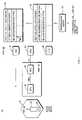
- FIG. 1is a block diagram of a cellular communication system in which the invention may be deployed.
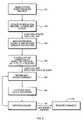
- FIG. 2is a flow diagram of the steps performed by the system in order to implement the invention.
- GSMGlobal System for Mobile Communications
- CDMACode Division Multiple Access
- the functional architecture of a GSM system 10can be broadly divided into subsystems including a mobile station (MS) 20 , a Base Station Subsystem (BSS) 30 , and a Network Sub-System (NSS) 40 .
- MSmobile station
- BSSBase Station Subsystem
- NSSNetwork Sub-System
- Each subsystemis comprised of functional entities which communicate through various interfaces using protocols specified by the GSM standard.
- the mobile station 20 in GSMis really two distinct entities.
- the actual hardwareis the mobile equipment, which is the equipment which the subscriber or user carries.
- Subscriber informationwhich includes a unique identifier called the International Mobile Subscriber Identity (IMSI)
- IMSIInternational Mobile Subscriber Identity
- SIMSubscriber Identity Module
- SIMSubscriber Identity Module
- the Base Station Subsystem (BSS) 30is composed of two parts, the Base Transceiver Station (BTS) 32 and the Base Station Controller (BSC) 34 .
- the BTS 32houses radio transceivers that define a cell and handles the radio (Um) interface protocols with the mobile station 30 . Due to the potentially large number of BTSs 32 in a system 10 , the requirements for a BTS 32 are ruggedness, reliability, portability, and minimum cost.
- the Base Station Controller (BSC) 34manages radio resources for one or more BTSs 32 , across the Abis interface. It manages the radio interface channels (setup, tear down, frequency hopping, etc.) as well as handovers.
- a central component of the Network Sub-System 40is the Mobile Switching Center (MSC) 42 . It acts like a normal switching node of a Public Switched Telephone Network (PSTN) or Integrated Services Digital Network (ISDN).
- PSTNPublic Switched Telephone Network
- ISDNIntegrated Services Digital Network
- the MSC 42provides all the functionality needed to handle a mobile subscriber, including registration, authentication, location updating, inter-MSC 42 handovers, and call routing to roaming subscribers. These services are provided in conjunction with four intelligent databases, which together with the MSC 42 form the Network Sub-System (NSS) 40 .
- the MSC 42also provides connections to the public wireline terrestrial networks.
- the Home Location Register (HLR) 44is a database which contains administrative information for each subscriber registered in the corresponding GSM network 10 , along with the current location of the subscriber. The location information assists in routing incoming calls to the mobile station 20 , and is typically the Signalling System 7 (SS 7 ) address of the visited MSC 42 . There is logically one HLR 44 per GSM network 10 , although it may be implemented as a distributed database.
- the Visitor Location Register (VLR) 46contains selected administrative information from the HLR, necessary for call control and provision of the subscribed services, for each mobile currently located in the geographical area controlled by the VLR 46 .
- VLR 46can be implemented as an independent unit, most manufacturers of switching equipment implement the VLR 46 together with the MSC 42 so that the geographical area controlled by the MSC 42 corresponds to that controlled by the VLR 46 .
- the proximity of the VLR 46 to the MSC 42speeds up access to information that the MSC 42 requires during a call.
- a reservation agent 50is responsible for receiving and managing requests for advanced reservation of access to the network 10 .
- the reservation agent 50receives information concerning the need for a particular subscriber mobile station 20 to access the system 10 at a particular date and time.
- the reservation agent 50may accept other information such as the expected location of the mobile station 20 , the desired amount of bandwidth (e.g., standard voice channel, a wire data channel and/or video type access). In addition, other information may be accepted by the reservation agent 50 such as other telephone numbers involved in a conference call, the billing rates to be applied for providing the special service and/or service type information.
- the desired amount of bandwidthe.g., standard voice channel, a wire data channel and/or video type access.
- other informationmay be accepted by the reservation agent 50 such as other telephone numbers involved in a conference call, the billing rates to be applied for providing the special service and/or service type information.
- the reservation agent 50may be physically implemented in a number of different ways.
- the reservation agent 50is associated with a conference call center.
- a reservation record 60is created at the time.
- the conference call center computerthus creates the record 60 passing it along to the reservation agent 50 , which in turn causes the record 60 to be created in a home location register (HLR) 44 .
- HLRhome location register
- a Web-based serviceprovides the information needed to create the reservation records 60 .
- the operator of the system 10may maintain a Web site at which a form may be filled out by authorized users of the mobile stations 22 to indicate that they wish to reserve access to the system 10 at a particular time, date and location.
- Other information needed to complete the reservation record 60can also be entered through the Web page service.
- the Web serversends the completed reservation record 60 to the reservation agent 50 which again in turn places it in the HLR 44 record associated with the particular mobile station 20 .
- e-mail messagescan also be used to create the reservation record 60 .
- the subscribermay make use of the mobile station 20 to create the reservation record 60 .
- the usermay dial special telephone numbers set up by the operator of the system 10 on the keypad of the mobile equipment 23 .
- Equipment connected to answer the special telephone numbersmay in turn allow the user of the mobile station 20 to create and send data through the BSS 30 to the MSC 42 to create the reservation record 60 .
- the MSC 42will indicate to the HLR 44 that the reservation record 60 is to be maintained with the user's HLR database entry.
- the usercould, for example, use an Unstructured Supplementary Services Data (USSD) method to set up the reservation.
- USBUnstructured Supplementary Services Data
- the usercould enter a command string on their mobile equipment 23 such as *1212991500201xx to request a reservation on Dec. 12, 1999 at 15:00 hours for 20 minutes on one (1) channel.
- FIG. 2Detailed steps showing a process which the system 10 may use to provide the reservation service to the mobile subscriber 20 are shown in FIG. 2 .
- the reservation agent 50receives the request for a reservation in the manner just described.
- a reservation record 60is caused to be stored in the HLR 44 . This would typically be associated with the IMSI record associated with a particular subscriber in that subscriber's HLR 44 .
- the MSC 42Upon the occurrence of an appropriate event, such as a location update event and/or the user of the mobile station 20 , attempting to initiate a call, the MSC 42 reads the reservation records 60 from the HLR 44 . (The reservation data could also be sent autonomously to the MSC/VLR serving the user via an insert subscriber data operation). The MSC 42 will then perform a validation on the user. To validate the user's access, the MSC 42 will check the contents of the reservation record 60 such as the location, billing rates and other information needed to validate that the user of the mobile station 20 is permitted to make a call. The validated reservation record 62 , having a validation bit now set, is stored in a visitor location register (VLR) 46 associated with the cell site 24 in which the mobile station 20 is located.
- VLRvisitor location register
- the MSC 42 and BSS 30thus cause the required amount of channel resources to be held for the exclusive use of the subscriber identified in the validated reservation record 62 at the expected time of day and date and location.
- the MSC 42may have a running process or thread which periodically scans the reservation records 62 located in the VLR 46 .
- the MSC 42Upon discovery of a reservation record that matches a time of day and date that is about to take place, the MSC 42 will instruct the BSS 30 and in particular the BTS 32 associated with the expected location of the mobile subscriber 20 , to maintain the indicated number of channels necessary to support the desired service type, as indicated in the validated reservation record 62 .
- a next step 140is entered in which the MSC 42 is informed of the user's request for radio channels. Upon noting that the user has a reserved channel available, the MSC 42 will then instruct the BSC 34 , and in particular the BTS 32 , to assign the reserved channel to the mobile station 20 .
- step 150call processing continues as normal with the user being permitted to receive and/or place calls during the reservation period.
- services billing informationmay be sent through the MSC to insure that the user is charged for any premium which might be imposed by the operator of the system 10 for this reservation service.
- the callthen progresses normally in step 170 until termination of the call. At this point, the channel(s) which were previously reserved for the exclusive use of the indicated mobile station 20 are now freed for use by other subscribers.
- the usermay reenter a state 140 upon wishing to place yet other calls, as long as the reserved time limit is not yet expired.
- the systemmay deallocate the reserved resources.
- the usermay be prompted to hear a warning as the time limit draws near, or be prompted to extend the call provided that resources are available.
- Still other types of eventsmay trigger the initiation of the reservation in step 100 .
- the present inventionis also applicable to a situation where the reserving party received a terminated call in the allocated time from one of the named entities in the originating call reservation.
- one partymay make a reservation for another party, and the party who makes the reservation may initiate the call by calling the second party.
- the first partymay have access to a wireline telephone and makes a reservation for the second party, who is expected to be available only by mobile phone.
- the steps of assigning the channels for the second mobile usere.g., steps 130 through 140
- the details of the implementation of the allocation step 130may not necessarily imply the reservation of a fixed “channel” in the sense of a radio channel.
- the nature of the communication resource reservedmay depend upon the specific nature of the physical layer communications resources to be reserved.
- the resource being reservedis a 200 kHz wide digitally modulated channel.
- the available resourcesmay be defined in other ways.
- the communication resource requestmay specify a particular bandwidth, or number of channels, being requested by the user. This may include a minimum acceptable bandwidth which the user is requested, up to a maximum allowable bandwidth. These minimum acceptable and maximum allowable bandwidth specifications can be negotiated during registration of the reservation request. There exact values could depend upon a number of factors, such as how much the user is willing to pay for the service, the limitations of the network, and the like.
- the systemcan take other steps to avoid having the users who request reservations monopolize the available resources.
- the allocation step 130can also attempt to allow a predetermined number of users access to the system at their minimum acceptable bandwidth until a point is reached where no more users are allowed to perform registration on the system for that particular location. This results in a system that can accommodate the reservation requests up to a maximum number of requesting users, after which further request are refused.
- the channel allocation step 130may involve other considerations with respect to the expected mobility of the mobile telephone equipment.
- the systemmay plan in advance for the likely event of a need for handover of a call, or simply camping on a new cell, through cell re-selection or via Location Update Procedures as a user moves from one cell to another cell during the reservation time. A number of different approaches can be taken towards this end.
- the call in progressmay be changed from a full rate call to a half-rate call during the handover process. While this might reduce the speech quality of the call in progress, it at least allows the call to continue.
- forced handovers of other candidate users in the new congested cellmay be implemented to allow the reservation handover to have access to communication resources in the new cell.
- a directed retry techniquemay be used when the user makes the call or receives the call.
- this approachallows the network to select an optimum cell within the user's area. This decision may be based upon received power and congestion level determinations at the time the call is initiated. Thus, for example, if the user is on an edge of a congested cell but can be serviced by an adjacent cell which is less congested, the call can be directed to the less congested cell.
- a data callis involved in the reservation, then it might be possible to drop the data rate down to other than what was originally established for the call. For example, if the calls started in an initial cell at a requested maximum speed, then the handover may take place to a more congested cell with the understanding that the call would continue at a lower data rate.
- Both the first and fourth scenariosmay require the introduction of a network policy for either accomplishing such results or permitting the user to a grade advance to an expected quality of service when the reservation is made.
- a fifth scenarioit would be possible to potentially reserve bandwidth on cells lying along an expected path or route that the user is expected to be traveling along at the reserved time and date.
- the location of the callis not specified as a particular fixed location in step 110 , but rather a route consisting of an expected starting and expected ending destination.
- the system 10attempts in step 130 to reserve bandwidth or other communication resources in each of a number of cells lying along the expected route such as in step 130 .
- Thisallows the soft handover processing to occur for users in adjacent cells as the user moves along. This may also be of benefit even when the user is not moving along in systems which implement Code Division Multiple Access (CDMA).
- CDMACode Division Multiple Access
Landscapes
- Engineering & Computer Science (AREA)
- Quality & Reliability (AREA)
- Computer Networks & Wireless Communication (AREA)
- Signal Processing (AREA)
- Mobile Radio Communication Systems (AREA)
Abstract
Description
Claims (30)
Priority Applications (1)
| Application Number | Priority Date | Filing Date | Title |
|---|---|---|---|
| US09/504,325US6961323B1 (en) | 2000-02-14 | 2000-02-14 | Guaranteed air connection |
Applications Claiming Priority (1)
| Application Number | Priority Date | Filing Date | Title |
|---|---|---|---|
| US09/504,325US6961323B1 (en) | 2000-02-14 | 2000-02-14 | Guaranteed air connection |
Publications (1)
| Publication Number | Publication Date |
|---|---|
| US6961323B1true US6961323B1 (en) | 2005-11-01 |
Family
ID=35150823
Family Applications (1)
| Application Number | Title | Priority Date | Filing Date |
|---|---|---|---|
| US09/504,325Expired - Fee RelatedUS6961323B1 (en) | 2000-02-14 | 2000-02-14 | Guaranteed air connection |
Country Status (1)
| Country | Link |
|---|---|
| US (1) | US6961323B1 (en) |
Cited By (13)
| Publication number | Priority date | Publication date | Assignee | Title |
|---|---|---|---|---|
| US20050105512A1 (en)* | 2003-11-15 | 2005-05-19 | At&T Wireless Services, Inc. | Method, system, and apparatus for providing wireless identification to standard telephone |
| US20050282550A1 (en)* | 2004-05-31 | 2005-12-22 | Samsung Electronics Co., Ltd | Resource allocation scheduling method for a cellular communication system |
| US20060155563A1 (en)* | 2005-01-12 | 2006-07-13 | Banerjee Dwip N | Method, system and article for advance lease negotiation in DHCP |
| US20070115896A1 (en)* | 2005-11-18 | 2007-05-24 | Philip To | Resource allocation in a radio access network |
| US20070281674A1 (en)* | 2006-05-30 | 2007-12-06 | Motorola, Inc. | Reservation of Mobile Station Communication Resources |
| US20100002661A1 (en)* | 2008-02-08 | 2010-01-07 | Adc Telecommunications, Inc. | Multiple-trx pico base station for providing improved wireless capacity and coverage in a building |
| US20100085910A1 (en)* | 2008-10-07 | 2010-04-08 | Humblet Pierre A | Allocating communication frequencies to clusters of access points |
| US20100093344A1 (en)* | 2008-10-14 | 2010-04-15 | Adc Telecommunications, Inc. | Multiplexing msc/vlr systems and methods |
| US20100330955A1 (en)* | 2009-06-26 | 2010-12-30 | Adc Telecommunications, Inc. | Private cellular system with auto-registration functionality |
| US9030939B2 (en) | 2012-03-23 | 2015-05-12 | Cisco Technology, Inc. | Building alternate routes in reactive routing networks |
| US9072100B2 (en) | 2011-07-20 | 2015-06-30 | Cisco Technology, Inc. | Sub-slotting to improve packet success rate in carrier sense multiple access networks |
| US9450642B2 (en) | 2011-07-12 | 2016-09-20 | Cisco Technology, Inc. | Power conservation and latency minimization in frequency hopping communication networks |
| EP3099104B1 (en)* | 2015-05-29 | 2019-07-03 | Alcatel Lucent | A method for reservation of a portion of a subscriber data allocation and a computer program product |
Citations (19)
| Publication number | Priority date | Publication date | Assignee | Title |
|---|---|---|---|---|
| US5278833A (en) | 1991-03-28 | 1994-01-11 | Motorola, Inc. | Method for providing reserved communication access using multiple random access resources |
| US5297144A (en) | 1991-01-22 | 1994-03-22 | Spectrix Corporation | Reservation-based polling protocol for a wireless data communications network |
| US5574977A (en)* | 1995-04-17 | 1996-11-12 | Telefonaktiebolaget Lm Ericsson | System and method for providing priority access and channel assignment in a cellular telecommunication system |
| US5619555A (en)* | 1995-07-28 | 1997-04-08 | Latitude Communications | Graphical computer interface for an audio conferencing system |
| US5737338A (en) | 1993-07-19 | 1998-04-07 | Fujitsu Limited | ATM exchange and method of testing same |
| US5774535A (en) | 1991-07-31 | 1998-06-30 | International Integrated Communication, Ltd. | Telecommunication-time metering device utilizable for prepayment of information transfers between information transferring devices within a telecommunication network |
| US5787080A (en) | 1996-06-03 | 1998-07-28 | Philips Electronics North America Corporation | Method and apparatus for reservation-based wireless-ATM local area network |
| US5805581A (en) | 1994-09-09 | 1998-09-08 | Mitsubishi Denki Kabushiki Kaisha | Mobile communication system using various multiple access methods |
| US5884174A (en) | 1996-06-07 | 1999-03-16 | Lucent Technologies Inc. | Call admission control for wireless networks |
| US5970056A (en)* | 1997-02-19 | 1999-10-19 | Motorola, Inc. | Method of communication resource assignment |
| US5978363A (en)* | 1996-10-18 | 1999-11-02 | Telogy Networks, Inc. | System and method for multi-dimensional resource scheduling |
| US6031832A (en)* | 1996-11-27 | 2000-02-29 | Telefonaktiebolaget L M Ericsson (Publ) | Method and apparatus for improving performance of a packet communications system |
| US6167261A (en)* | 1997-02-27 | 2000-12-26 | At&T Wireless Svcs. Inc. | Wireless communication service management |
| US6263201B1 (en)* | 1996-12-25 | 2001-07-17 | Uniden Corporation | Scheduled data Transmission system, scheduled data transmission method, and transmission server |
| US6411803B1 (en)* | 1995-06-07 | 2002-06-25 | Ewireless, Inc. | System and method of providing service information to a subscriber through a wireless device |
| US6510322B1 (en)* | 1998-06-23 | 2003-01-21 | Telefonaktiebolaget Lm Ericsson (Publ) | Temporary wireless local-loop in cellular mobile networks |
| US6522660B1 (en)* | 1998-03-20 | 2003-02-18 | Fujitsu Limited | Method and system for controlling reservation of data channels in automatic call distribution services |
| US6529497B1 (en)* | 1998-04-30 | 2003-03-04 | Telefonaktiebolaget Lm Ericsson (Publ) | Channel allocation and release for packet data services |
| US6539237B1 (en)* | 1998-11-09 | 2003-03-25 | Cisco Technology, Inc. | Method and apparatus for integrated wireless communications in private and public network environments |
- 2000
- 2000-02-14USUS09/504,325patent/US6961323B1/ennot_activeExpired - Fee Related
Patent Citations (19)
| Publication number | Priority date | Publication date | Assignee | Title |
|---|---|---|---|---|
| US5297144A (en) | 1991-01-22 | 1994-03-22 | Spectrix Corporation | Reservation-based polling protocol for a wireless data communications network |
| US5278833A (en) | 1991-03-28 | 1994-01-11 | Motorola, Inc. | Method for providing reserved communication access using multiple random access resources |
| US5774535A (en) | 1991-07-31 | 1998-06-30 | International Integrated Communication, Ltd. | Telecommunication-time metering device utilizable for prepayment of information transfers between information transferring devices within a telecommunication network |
| US5737338A (en) | 1993-07-19 | 1998-04-07 | Fujitsu Limited | ATM exchange and method of testing same |
| US5805581A (en) | 1994-09-09 | 1998-09-08 | Mitsubishi Denki Kabushiki Kaisha | Mobile communication system using various multiple access methods |
| US5574977A (en)* | 1995-04-17 | 1996-11-12 | Telefonaktiebolaget Lm Ericsson | System and method for providing priority access and channel assignment in a cellular telecommunication system |
| US6411803B1 (en)* | 1995-06-07 | 2002-06-25 | Ewireless, Inc. | System and method of providing service information to a subscriber through a wireless device |
| US5619555A (en)* | 1995-07-28 | 1997-04-08 | Latitude Communications | Graphical computer interface for an audio conferencing system |
| US5787080A (en) | 1996-06-03 | 1998-07-28 | Philips Electronics North America Corporation | Method and apparatus for reservation-based wireless-ATM local area network |
| US5884174A (en) | 1996-06-07 | 1999-03-16 | Lucent Technologies Inc. | Call admission control for wireless networks |
| US5978363A (en)* | 1996-10-18 | 1999-11-02 | Telogy Networks, Inc. | System and method for multi-dimensional resource scheduling |
| US6031832A (en)* | 1996-11-27 | 2000-02-29 | Telefonaktiebolaget L M Ericsson (Publ) | Method and apparatus for improving performance of a packet communications system |
| US6263201B1 (en)* | 1996-12-25 | 2001-07-17 | Uniden Corporation | Scheduled data Transmission system, scheduled data transmission method, and transmission server |
| US5970056A (en)* | 1997-02-19 | 1999-10-19 | Motorola, Inc. | Method of communication resource assignment |
| US6167261A (en)* | 1997-02-27 | 2000-12-26 | At&T Wireless Svcs. Inc. | Wireless communication service management |
| US6522660B1 (en)* | 1998-03-20 | 2003-02-18 | Fujitsu Limited | Method and system for controlling reservation of data channels in automatic call distribution services |
| US6529497B1 (en)* | 1998-04-30 | 2003-03-04 | Telefonaktiebolaget Lm Ericsson (Publ) | Channel allocation and release for packet data services |
| US6510322B1 (en)* | 1998-06-23 | 2003-01-21 | Telefonaktiebolaget Lm Ericsson (Publ) | Temporary wireless local-loop in cellular mobile networks |
| US6539237B1 (en)* | 1998-11-09 | 2003-03-25 | Cisco Technology, Inc. | Method and apparatus for integrated wireless communications in private and public network environments |
Cited By (32)
| Publication number | Priority date | Publication date | Assignee | Title |
|---|---|---|---|---|
| US7792093B2 (en)* | 2003-11-15 | 2010-09-07 | At&T Mobility Ii, Llc | Method, system, and apparatus for providing wireless identification to standard telephone |
| US20050105512A1 (en)* | 2003-11-15 | 2005-05-19 | At&T Wireless Services, Inc. | Method, system, and apparatus for providing wireless identification to standard telephone |
| US20050282550A1 (en)* | 2004-05-31 | 2005-12-22 | Samsung Electronics Co., Ltd | Resource allocation scheduling method for a cellular communication system |
| US7392054B2 (en)* | 2004-05-31 | 2008-06-24 | Samsung Electronics Co., Ltd. | Resource allocation scheduling method for a cellular communication system |
| US20060155563A1 (en)* | 2005-01-12 | 2006-07-13 | Banerjee Dwip N | Method, system and article for advance lease negotiation in DHCP |
| US20070115896A1 (en)* | 2005-11-18 | 2007-05-24 | Philip To | Resource allocation in a radio access network |
| US7558588B2 (en)* | 2005-11-18 | 2009-07-07 | Airvana, Inc. | Resource allocation in a radio access network |
| US20090262697A1 (en)* | 2005-11-18 | 2009-10-22 | Philip To | Resource allocation in a radio access network |
| US7920541B2 (en)* | 2005-11-18 | 2011-04-05 | Airvana Network Solutions, Inc. | Resource allocation in a radio access network |
| US20070281674A1 (en)* | 2006-05-30 | 2007-12-06 | Motorola, Inc. | Reservation of Mobile Station Communication Resources |
| US20100002661A1 (en)* | 2008-02-08 | 2010-01-07 | Adc Telecommunications, Inc. | Multiple-trx pico base station for providing improved wireless capacity and coverage in a building |
| US8548526B2 (en) | 2008-02-08 | 2013-10-01 | Adc Telecommunications, Inc. | Multiple-TRX PICO base station for providing improved wireless capacity and coverage in a building |
| USRE49346E1 (en) | 2008-02-08 | 2022-12-27 | Strong Force Iot Portfolio 2016, Llc | Multiple-TRX pico base station for providing improved wireless capacity and coverage in a building |
| US8644223B2 (en) | 2008-02-08 | 2014-02-04 | Adc Telecommunications, Inc. | Enterprise mobile network for providing cellular wireless service using licensed radio frequency spectrum and the session initiation protocol |
| US20100002626A1 (en)* | 2008-02-08 | 2010-01-07 | Adc Telecommunications, Inc. | Enterprise mobile network for providing cellular wireless service using licensed radio frequency spectrum and internet protocol backhaul |
| US20100014494A1 (en)* | 2008-02-08 | 2010-01-21 | Adc Telecommunications, Inc. | Enterprise mobile network for providing cellular wireless service using licensed radio frequency spectrum and the session initiation protocol |
| US20100002662A1 (en)* | 2008-02-08 | 2010-01-07 | Adc Telecommunications, Inc. | Enterprise mobile network for providing cellular wireless service using licensed radio frequency spectrum and supporting multiple-device ring for incoming calls |
| US8107464B2 (en) | 2008-02-08 | 2012-01-31 | Adc Telecommunications, Inc. | Enterprise mobile network for providing cellular wireless service using licensed radio frequency spectrum and supporting multiple-device ring for incoming calls |
| US8279800B2 (en) | 2008-02-08 | 2012-10-02 | Adc Telecommunications, Inc. | Enterprise mobile network for providing cellular wireless service using licensed radio frequency spectrum and internet protocol backhaul |
| US8274929B2 (en) | 2008-02-08 | 2012-09-25 | Adc Telecommunications, Inc. | Enterprise mobile network for providing cellular wireless service using licensed radio frequency spectrum and the session initiation protocol |
| US8942136B2 (en)* | 2008-10-07 | 2015-01-27 | Airvana Lp | Allocating communication frequencies to clusters of access points |
| US20100085910A1 (en)* | 2008-10-07 | 2010-04-08 | Humblet Pierre A | Allocating communication frequencies to clusters of access points |
| US20100093344A1 (en)* | 2008-10-14 | 2010-04-15 | Adc Telecommunications, Inc. | Multiplexing msc/vlr systems and methods |
| US8229393B2 (en) | 2009-06-26 | 2012-07-24 | Altobridge Limited | Private cellular system with auto-registration functionality |
| US20100330955A1 (en)* | 2009-06-26 | 2010-12-30 | Adc Telecommunications, Inc. | Private cellular system with auto-registration functionality |
| US9450642B2 (en) | 2011-07-12 | 2016-09-20 | Cisco Technology, Inc. | Power conservation and latency minimization in frequency hopping communication networks |
| US9072100B2 (en) | 2011-07-20 | 2015-06-30 | Cisco Technology, Inc. | Sub-slotting to improve packet success rate in carrier sense multiple access networks |
| US9030939B2 (en) | 2012-03-23 | 2015-05-12 | Cisco Technology, Inc. | Building alternate routes in reactive routing networks |
| US9119130B2 (en) | 2012-03-23 | 2015-08-25 | Cisco Technology, Inc. | Proactive link-estimation in reactive routing networks |
| US9232458B2 (en) | 2012-03-23 | 2016-01-05 | Cisco Technology, Inc. | Proactive timer-based local repair path communication in reactive routing networks |
| US9510264B2 (en) | 2012-03-23 | 2016-11-29 | Cisco Technology, Inc. | Region-based route discovery in reactive routing networks |
| EP3099104B1 (en)* | 2015-05-29 | 2019-07-03 | Alcatel Lucent | A method for reservation of a portion of a subscriber data allocation and a computer program product |
Similar Documents
| Publication | Publication Date | Title |
|---|---|---|
| US6377804B1 (en) | Mobile communication systems | |
| US6112101A (en) | Load based priority for the mobile subscriber | |
| US7206593B1 (en) | Method for providing differing service levels in a wireless telecommunications network | |
| CA2217243C (en) | System and method for providing priority access and channel assignment in a cellular telecommunication system | |
| US6125276A (en) | Inter-exchange signaling for in-call service change requests | |
| US6477366B1 (en) | System and method for virtual citizen's band radio in a cellular network | |
| US6961323B1 (en) | Guaranteed air connection | |
| US7031717B2 (en) | Method of providing a wireless service connection for a mobile vehicle | |
| EP1829413B1 (en) | A default subscription profile for a roaming terminal device in a packet data based mobile communication network | |
| CA2333694C (en) | Reserving communication capacity in cellular networks | |
| US7113787B2 (en) | Wireless priority service for intersystem call delivery | |
| US7065356B2 (en) | Systems and methods for preventing unauthorized use of roaming numbers in a wireless telecommunications system | |
| WO1997008912A1 (en) | Optimal routing of a mobile-terminating call | |
| US6044269A (en) | Method for enhanced control of mobile call delivery | |
| US20060258363A1 (en) | Method for controlling service priority in radio communication network,radio communication system, radio control apparatus, terminal unit, and core network | |
| US20030087643A1 (en) | Method of providing a cellular service connection for a mobile vehicle | |
| JP3917971B2 (en) | Method for supporting data communication service of mobile communication system | |
| US20010021651A1 (en) | Call detail record generation in a telecommunications system | |
| KR100463220B1 (en) | METHOD FOR CONTROLLING MS SESSION IN 1xEV-DO SUBNET BOUNDARY | |
| GB2308951A (en) | Radio telecommunication system for layered wide area roaming management | |
| US20020193120A1 (en) | Shared capacity for wireless networks | |
| MXPA02002502A (en) | Method and process for validating roaming, international cellular users. | |
| HK1087293B (en) | Cell reselection signalling method | |
| HK1087293A1 (en) | Cell reselection signalling method | |
| MXPA96006324A (en) | System and method for radio telecommunications deadministracion for deambulant unit in area amp |
Legal Events
| Date | Code | Title | Description |
|---|---|---|---|
| AS | Assignment | Owner name:JETCELL, INC., CALIFORNIA Free format text:ASSIGNMENT OF ASSIGNORS INTEREST;ASSIGNORS:XU, XIAODE;HUANG, WENFENG;SAYERS, IAN;REEL/FRAME:010797/0365 Effective date:20000314 | |
| AS | Assignment | Owner name:CISCO SYSTEMS, INC., CALIFORNIA Free format text:MERGER;ASSIGNOR:JETCELL, INC. A CORPORATION OF DELAWARE;REEL/FRAME:011584/0419 Effective date:20000501 | |
| AS | Assignment | Owner name:CISCO TECHNOLOGY, INC., CALIFORNIA Free format text:ASSIGNMENT OF ASSIGNORS INTEREST;ASSIGNOR:CISCO SYSTEMS, INC.;REEL/FRAME:013689/0053 Effective date:20000901 | |
| FPAY | Fee payment | Year of fee payment:4 | |
| FPAY | Fee payment | Year of fee payment:8 | |
| REMI | Maintenance fee reminder mailed | ||
| LAPS | Lapse for failure to pay maintenance fees | Free format text:PATENT EXPIRED FOR FAILURE TO PAY MAINTENANCE FEES (ORIGINAL EVENT CODE: EXP.) | |
| STCH | Information on status: patent discontinuation | Free format text:PATENT EXPIRED DUE TO NONPAYMENT OF MAINTENANCE FEES UNDER 37 CFR 1.362 | |
| FP | Lapsed due to failure to pay maintenance fee | Effective date:20171101 |