US6754697B1 - Method and apparatus for browsing and storing data in a distributed data processing system - Google Patents
Method and apparatus for browsing and storing data in a distributed data processing systemDownload PDFInfo
- Publication number
- US6754697B1 US6754697B1US09/108,148US10814898AUS6754697B1US 6754697 B1US6754697 B1US 6754697B1US 10814898 AUS10814898 AUS 10814898AUS 6754697 B1US6754697 B1US 6754697B1
- Authority
- US
- United States
- Prior art keywords
- file
- references
- user
- distributed database
- computer
- Prior art date
- Legal status (The legal status is an assumption and is not a legal conclusion. Google has not performed a legal analysis and makes no representation as to the accuracy of the status listed.)
- Expired - Lifetime, expires
Links
Images


Classifications
- G—PHYSICS
- G06—COMPUTING OR CALCULATING; COUNTING
- G06F—ELECTRIC DIGITAL DATA PROCESSING
- G06F16/00—Information retrieval; Database structures therefor; File system structures therefor
- G06F16/90—Details of database functions independent of the retrieved data types
- G06F16/95—Retrieval from the web
- G06F16/955—Retrieval from the web using information identifiers, e.g. uniform resource locators [URL]
- Y—GENERAL TAGGING OF NEW TECHNOLOGICAL DEVELOPMENTS; GENERAL TAGGING OF CROSS-SECTIONAL TECHNOLOGIES SPANNING OVER SEVERAL SECTIONS OF THE IPC; TECHNICAL SUBJECTS COVERED BY FORMER USPC CROSS-REFERENCE ART COLLECTIONS [XRACs] AND DIGESTS
- Y10—TECHNICAL SUBJECTS COVERED BY FORMER USPC
- Y10S—TECHNICAL SUBJECTS COVERED BY FORMER USPC CROSS-REFERENCE ART COLLECTIONS [XRACs] AND DIGESTS
- Y10S707/00—Data processing: database and file management or data structures
- Y10S707/99931—Database or file accessing
- Y10S707/99932—Access augmentation or optimizing
Definitions
- the present inventionrelates generally to an improved data processing system and in particular to an improved method and apparatus for accessing data on a distributed database within a distributed data processing system. Still more particularly, the present invention relates to a method and apparatus for storing references to selected web pages within a distributed data processing system.
- Internetalso referred to as an “internetwork”, in communications is a set of computer networks, possibly dissimilar, joined together by means of gateways that handle data transfer and the conversion of messages from the sending network to the protocols used by the receiving network (with packets if necessary).
- gatewaysthat handle data transfer and the conversion of messages from the sending network to the protocols used by the receiving network (with packets if necessary).
- Internetrefers to the collection of networks and gateways that use the TCP/IP suite of protocols.
- the Internethas become a cultural fixture as a source of both information and entertainment.
- Many businessesare creating Internet sites as an integral part of their marketing efforts, informing consumers of the products or services offered by the business or providing other information seeking to engender brand loyalty.
- Many federal, state, and local government agenciesare also employing Internet sites for informational purposes, particularly agencies which must interact with virtually all segments of society such as the Internal Revenue Service and secretaries of state. Operating costs may be reduced by providing informational guides and/or searchable databases of public records online.
- HTMLHypertext Transfer Protocol
- HTMLHypertext Markup Language
- a URLis a special syntax identifier defining a communications path to specific information.
- the URLprovides a universal, consistent method for finding and accessing this. information by the web “browser”.
- a browseris a program capable of submitting a request for information identified by a URL at the client machine. Retrieval of information on the web is generally accomplished with an HTML-compatible browser.
- a requestis submitted to a server connected to a client computer at which the user is located and may be handled by a series of servers to effect retrieval of the requested information.
- the informationis provided to the client formatted according to HTML.
- PCspersonal computers
- work stationsare typically used to access the Internet.
- a number of usersemploy the Internet to access information using links displayed on a page in the browser.
- the method of searching for information on the Internetis referred to as “surfing” or “browsing”.
- Internet browsingcan be distracting because a user may be searching for a particular piece of information and become distracted by other interesting links, such as advertisements or articles.
- the usermay forget the original information being searched or may spend too much time following interesting links other than those leading to the desired information.
- the usermay lose the interesting links. For example, the page may no longer be found in back/forward list, or the user may forget on what page the link occurred.
- the present inventionprovides a method and system for browsing a distributed database.
- Storageis allocated in a computer for a file, wherein the file is used for storing references to data in the distributed database for retrieval at a later time.
- a reference to data in the distributed databaseis added to the file in response to a user input from a user using the computer to browse the distributed database.
- the datais retrieved from the distributed database using references to the data stored within the file in response to a selected event.
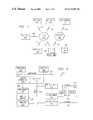
- FIG. 1is a pictorial representation of a distributed data processing system in which the present invention may be implemented
- FIG. 2is a block diagram of a data processing system which may be implemented as a web server in accordance to the present invention
- FIG. 3is a block diagram of a data processing system which may be implemented as a user unit in accordance with a preferred embodiment of the present invention
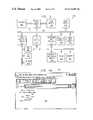
- FIGS. 4A-4Dare pictorial diagrams of processes used to save references to links in web pages in accordance with a preferred embodiment of the present invention.
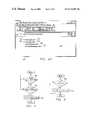
- FIG. 5is a flowchart of a process displaying a pop-up menu that is used storing references to a list in accordance with a preferred embodiment of the present invention
- FIG. 6is a flowchart of a process employing the “later” function to save a reference to a document on a distributed database in accordance with a preferred embodiment of the present invention
- FIG. 7is a flowchart of a process for retrieving information from a list of references in accordance with a preferred embodiment.
- FIG. 8is a flowchart of a process for displaying entries in a list of references in accordance with a preferred embodiment of the present invention.
- FIG. 1a pictorial representation of a distributed data processing system in which the present invention may be implemented is depicted.
- User units 102 , 104 , 106 and 108have communications links 110 , 112 , 114 and 116 , which provide these user units access to public switched telephone network (PSTN) 118 .
- PSTNpublic switched telephone network
- server 120Through these communications links, the user units communicate with server 120 , which is connected to PSTN 118 by communications link 122 .
- Server 120provides user units 102 - 108 access to a distributed database, such as, for example, Internet 124 via communications link 126 .
- a distributed databasesuch as, for example, Internet 124 via communications link 126 .
- server 120In addition to providing user units 102 - 108 access to Internet 124 , server 120 also stores various configuration information, passwords, E-mail messages, and backup data on storage device (SD) 128 .
- Server 120also may serve as a web server, also referred to as a “source data processing system” containing one or more web sites.
- User unites 102 - 108may be located in remote geographical locations, such as California or New York. Additionally, user units 102 - 108 may be located on other continents on the globe.
- Internet 124includes a number of web sites that may be accessed by user units 102 - 108 . These web sites are stored on source data processing systems located on Internet 124 , also referred to as “web servers”, such as web server 130 .
- Web server 130communicates with other data processing system (not shown) on Internet 124 via communications link 132 .
- User units 102 - 108access web sites stored on web server 130 by receiving web pages from web server 130 .
- Data processing system 200may be a symmetric multiprocessor (SMP) system including a plurality of processors 202 and 204 connected to system bus 206 . Alternatively, a single processor system may be employed. Also connected to system bus 206 is memory controller/cache 208 , which provides an interface to local memory 209 . I/O bus bridge 210 is connected to system bus 206 and provides an interface to I/O bus 212 . Memory controller/cache 208 and I/O bus bridge 210 may be integrated as depicted.
- SMPsymmetric multiprocessor
- Peripheral component interconnect (PCI) bus bridge 214connected to I/O bus 212 provides an interface to PCI bus 216 .
- a number of modems 218 - 220may be connected to PCI bus 216 .
- Typical PCI bus implementationswill support four PCI expansion slots or add-in connectors.
- Communications links to PSTN 118 depicted in FIG. 1may be provided through modems 218 - 220 connected to PCI local bus 216 through add-in boards.
- Modems 218 - 220 in the depicted examplealso provides a connection to Internet 124 shown in FIG. 1 .
- Additional PCI bus bridges 222 and 224provide interfaces for additional PCI buses 226 and 228 , from which additional modems may be supported. In this manner, server 200 allows dialups by multiple user units simultaneously.
- a memory mapped graphics adapter 230 and hard disk 232may also be connected to I/O bus 212 as depicted, either directly or indirectly.
- FIG. 2may vary.
- other peripheral devicessuch as optical disk drive and the like also may be used in addition or in place of the hardware depicted.
- the depicted exampleis not meant to imply architectural limitations with respect to the present invention.
- the data processing system depicted in FIG. 2may be, for example, an IBM RISC/System 6000 system, a product of International Business Machines Corporation in Armonk, N.Y., running the Advanced Interactive Executive (AIX) operating system.
- the data processing systemprovides a platform for a web server, and may be one of a group of interconnected servers employed by an Internet service provider to provide access to web clients or user units to the Internet.
- the server data processing system in accordance with a preferred embodiment of the present inventionincludes a web server program, such as Netscape Enterprise Server Version 2.0, a product of Communications Corporation in Mountain View, Calif., which supports interface extensions.
- the serverthus contains a known set of server application functions (SAFs) which accept a client's request together with configuration information and return a response.
- SAFsserver application functions
- the servermay also include an Application Programming Interface (API) providing extensions that enable application developers to extend or customize the SAFs through software programs commonly known as “plug-ins”.
- APIApplication Programming Interface
- FIG. 3a block diagram of a data processing system 300 which may be implemented as a user unit is illustrated in accordance with a preferred embodiment of the present invention.
- Data processing system 300employs a peripheral component interconnect (PCI) local bus architecture.
- PCIperipheral component interconnect
- Processor 302 and main memory 304are connected to PCI local bus 306 through PCI bridge 308 .
- PCI bridge 308also may include an integrated memory controller and cache memory for processor 302 . Additional connections to PCI local bus 306 may be made through direct component interconnection or through add-in boards.
- local area network (LAN) adapter 310SCSI host bus adapter 312 , and expansion bus interface 314 are connected to PCI local bus 306 by direct component connection.
- audio adapter 316graphics adapter 318 , and audio/video adapter (A/V) 319 are connected to PCI local bus 306 by add-in boards inserted into expansion slots.
- Expansion bus interface 314provides a connection for a keyboard and mouse adapter 320 , modem 322 , and additional memory 324 .
- SCSI host bus adapter 312provides a connection for hard disk drive 326 , tape drive 328 , and CD-ROM 330 in the depicted example.
- Typical PCI local bus implementationswill support three or four PCI expansion slots or add-in connectors.
- FIG. 3may vary.
- other peripheral devicessuch as optical disk drives and the like may be used in addition to or in place of the hardware depicted in FIG. 3 .
- the depicted exampleis not meant to imply architectural limitations with respect to the present invention.
- Web pages, or hypertext documents,are retrieved through references to the location of these pages or documents.
- Uniform Resource Locatorsare the references identifying the communications source for the page.
- the URLis typically of the form “www.domainname.ext/filepath/filename”.
- the domain name and extensionidentify a specific web site (web domain or server) containing the requested information.
- the requested informationwill comprise a file or a group of files organized within directories on the web site which is the subject of the request.
- the URLmust include a path to the files containing the information requested and may also require a filename. No extension need to be specified for the filename since only HTML files are displayed by the browser and a default extension of “.html” or “.htm” is assumed. If no filename is specified in the request, the browser searches for an HTML file named “default” or “index” at the specified web domain and path.
- URLsmay be selected from a displayed web page by selection of a hyperlink, also called a “link”. The selection of this link results in the URL being followed.
- the linkis often in the form of text that will serve as a “hot spot”, which allows a user to follow the link.
- the “hot spot”is indicated in various ways, such as, for example, by highlighting text on the web page or change the display of a pointer over the hot spot.
- FIGS. 4A-4Dpictorial diagrams of processes used to save references to links in web pages are depicted in accordance with a preferred embodiment of the present invention.
- a browser 400is illustrated in which a web page 402 is displayed within browser 400 .
- Browser 400in the depicted example may be Netscape Communicator, which is available from Netscape Communications Corporation.
- Web page 402includes links 404 , 406 , and 408 which may be selected via pointer 410 , which is controlled by a pointing device, such as a mouse or track ball.
- the usermay save this URL for later viewing.
- the saving of the URLis accomplished in the depicted example by the pointer being located over the link and a selected input being made to indicate that the URL for the link should be saved.
- the usermay move pointer 410 over link 406 and depress the right mouse button, which is referred to as a “right click”, to cause menu 412 to be displayed, as illustrated in FIG. 4 B.
- the depicted exampleemploys a right click of the mouse as input to initiate saving of the URL, other types of inputs may be used. For example, a function key may be depressed or in the case of a mouse with three buttons, the middle button may be depressed.
- menu 412includes a “forward” command 414 and a “back” command 416 , which are used to traverse web pages already retrieved by the user.
- menu 412includes a “later” command 418 , which when selected by the user, saves the URL of the link indicated by the user through pointing device 410 .
- menu 412includes “later” command 418 only when pointer 410 is located over a link.
- Other information that may be stored with the URL in an entry to identify the link to a userincludes, for example, text from the original link, image of the link, information about the page originally containing the link, and the date or time the link was placed on the later list.
- the title of the pagemay be stored in the later list for use as an indication to the user that the page has been retrieved.
- the processes of the present inventionalso may retrieve the information referenced to by the URLs stored in the later list.
- the retrieval of informationmay occur at various times.
- the informationis retrieved and stored in the browser cache and not displayed until the user selects it for display at a later time.
- informationmay be retrieved when an absence of activity is present on the user's data processing system.
- informationmay be retrieved during preselected times, such as at night or early in the morning.
- FIG. 4Cthe user has selected “options” 420 , which results in menu 422 being displayed in browser 400 .
- a “view later list” command 424is presented to the user so that the user may review or browse the links previously stored.
- view later list command 424is selected, the list of URLs is displayed as a page 430 in FIG. 4D to the user on browser 400 .
- the depicted exampleincludes four entries 432 , 434 , 436 , and 438 . Information for some of the entries have been retrieved while information has not been retrieved for other entries.
- FIG. 5a flowchart of a process displaying a pop-up menu that is used for storing references to a list is depicted in accordance with a preferred embodiment of the present invention.
- the processbegins in FIG. 5 with a determination as to whether the user has depressed the right click button on the mouse to display a pop-up menu (step 500 ).
- step 500a determination as to whether the user has depressed the right click button on the mouse to display a pop-up menu
- other inputmay be used other than a right click by depressing the right mouse button.
- the usermay use a function key, a control+key input. If the user has not depressed the right button on the mouse to display a pop-up menu, the process returns to step 500 .
- FIG. 6begins with the process by determining whether the “later” function has been selected (step 600 ). If the “later” function is not selected, the process terminates. If the “later” function is selected, the process continues by adding or storing the URL selected by the pointer to a later list to be retrieved by the user at a later time (step 602 ).
- step 602other information also may be added to the later list for this entry, such as, for example, identification of the page containing the link, an image of the page containing the link, the image of the link, text of the link, and the time the entry was added to the later list.
- FIG. 7a flowchart of a process for retrieving information using a list of references is depicted in accordance with a preferred embodiment.
- a determinationis made as to whether the data processing system is at an idle state (step 700 ).
- the data processing systemis idle when the user is not activating functions in the web browser. If the data processing system is not idle, the process returns to step 700 .
- the term “idle”may be defined in the depicted example to mean that no input activity or network data transfer has occurred for more than a selected period of time. Other types of idle also may be employed depending upon the design of the browser, server preferences, or user preferences.
- idlemay be the time when the server is idle, rather than when the user system is idle or simply that the user system has excess capacity.
- excess capacitymay occur is when the data processing system is able to retrieve pages without a user noticing that performance of foreground tasks has slowed down.
- the data processing systemwill request a document or web page from the distributed database (i.e., the Internet) referenced by the first URL stored on the list (step 702 ). Then a determination is made as to whether the requested page has been successfully retrieved (step 704 ).
- the pageis stored in a cache (step 706 ).
- the cacheis the same cache employed by the web browser to store retrieved pages through normal browsing of the distributed database.
- the entry in the later listis then marked as retrieved (step 708 ).
- the title of the target URLmay be added to the later list retrieved. This marking of entries is used to identify entries as having information retrieved when the list is present to the user.
- a determinationis made as to whether additional entries are present on the list (step 710 ). If more entries are present on the list, the page for the next entry on the list is requested from the distributed database (step 712 ). With reference again to step 704 , if the retrieval of the page is not successful, the process then proceeds to step 710 as previously described. In step 710 , if additional entries are not present on the list, the process will then terminate.
- FIG. 8a flowchart of a process for displaying entries in a list of URLs in accordance with a preferred embodiment of the present invention.
- the processdifferentiates between retrieved and non-retrieved web pages.
- the processbegins by retrieving the list (step 800 ).
- the entries in the listare displayed graphically or with graphical indications to differentiate between retrieved and non-retrieved pages (step 802 ).
- These graphical indicationsmay include, for example, highlighting text, changing color of the text, or associating a graphical indicator with entries for which pages have been retrieved.
- step 806if a page has not been retrieved for the entry, that page is then requested from the distributed database (step 812 ) with the process terminating thereafter.
- the graphical differentiation of entries on the displayed listallows a user to quickly determine if a URL is worthwhile. If the user determines that the URL is worthwhile, the user may select that entry without waiting for the actual download if the pages have already been retrieved using the processes of the present invention.
- the present inventionprovides an improved method and apparatus for browsing information on a distributed database, such as the Internet.
- This advantageis provided by a process, which allows a user to save references to pages in a list for later review. In this manner, the user may pursue the information initially searched for while saving references to information that is interesting, but not the topic of the search.
- the present inventionmay retrieve pages for the references during periods of time in which the browser or system is idle.
Landscapes
- Engineering & Computer Science (AREA)
- Databases & Information Systems (AREA)
- Theoretical Computer Science (AREA)
- Data Mining & Analysis (AREA)
- Physics & Mathematics (AREA)
- General Engineering & Computer Science (AREA)
- General Physics & Mathematics (AREA)
- Information Retrieval, Db Structures And Fs Structures Therefor (AREA)
- Information Transfer Between Computers (AREA)
Abstract
Description
1. Technical Field
The present invention relates generally to an improved data processing system and in particular to an improved method and apparatus for accessing data on a distributed database within a distributed data processing system. Still more particularly, the present invention relates to a method and apparatus for storing references to selected web pages within a distributed data processing system.
2. Description of Related Art
Internet, also referred to as an “internetwork”, in communications is a set of computer networks, possibly dissimilar, joined together by means of gateways that handle data transfer and the conversion of messages from the sending network to the protocols used by the receiving network (with packets if necessary). When capitalized, the term “Internet” refers to the collection of networks and gateways that use the TCP/IP suite of protocols.
The Internet has become a cultural fixture as a source of both information and entertainment. Many businesses are creating Internet sites as an integral part of their marketing efforts, informing consumers of the products or services offered by the business or providing other information seeking to engender brand loyalty. Many federal, state, and local government agencies are also employing Internet sites for informational purposes, particularly agencies which must interact with virtually all segments of society such as the Internal Revenue Service and secretaries of state. Operating costs may be reduced by providing informational guides and/or searchable databases of public records online.
Currently, the most commonly employed method of transferring data over the Internet is to employ the World Wide Web environment, also called simply “the web”. Other Internet resources exist for transferring information, such as File Transfer Protocol (FTP) and Gopher, but have not achieved the popularity of the web. In the web environment, servers and clients effect data transaction using the Hypertext Transfer Protocol (HTTP), a known protocol for handling the transfer of various data files (e.g., text, still graphic images, audio, motion video, etc.). Information is formatted for presentation to a user by a standard page description language, the Hypertext Markup Language (HTML). In addition to basic presentation formatting, HTML allows developers to specify “links” to other web resources identified by a Uniform Resource Locator (URL). A URL is a special syntax identifier defining a communications path to specific information. Each logical block of information accessible to a client, called a “page” or a “web page”, is identified by a URL. The URL provides a universal, consistent method for finding and accessing this. information by the web “browser”. A browser is a program capable of submitting a request for information identified by a URL at the client machine. Retrieval of information on the web is generally accomplished with an HTML-compatible browser.
When a user desires to retrieve a page, a request is submitted to a server connected to a client computer at which the user is located and may be handled by a series of servers to effect retrieval of the requested information. The information is provided to the client formatted according to HTML. Typically, personal computers (PCs) along with work stations are typically used to access the Internet.
A number of users employ the Internet to access information using links displayed on a page in the browser. The method of searching for information on the Internet is referred to as “surfing” or “browsing”. Internet browsing can be distracting because a user may be searching for a particular piece of information and become distracted by other interesting links, such as advertisements or articles. By the user becoming distracted by other articles while browsing, the user may forget the original information being searched or may spend too much time following interesting links other than those leading to the desired information. Alternatively, if the user remains concentrated on the user's tasks, the user may lose the interesting links. For example, the page may no longer be found in back/forward list, or the user may forget on what page the link occurred.
Therefore, it would be advantageous to have an improved method and apparatus for searching the Internet.
It is one object of the present invention to provide an improved data processing system.
It is another object of the present invention to provide an improved method and apparatus for accessing data on a distributed database within a distributed data processing system.
It is yet another object of the present invention to provide a method and apparatus for storing references to selected web pages within a distributed data processing system.
The present invention provides a method and system for browsing a distributed database. Storage is allocated in a computer for a file, wherein the file is used for storing references to data in the distributed database for retrieval at a later time. A reference to data in the distributed database is added to the file in response to a user input from a user using the computer to browse the distributed database. The data is retrieved from the distributed database using references to the data stored within the file in response to a selected event.
The novel features believed characteristic of the invention are set forth in the appended claims. The invention itself, however, as well as a preferred mode of use, further objectives and advantages thereof, will best be understood by reference to the following detailed description of an illustrative embodiment when read in conjunction with the accompanying drawings, wherein:
FIG. 1 is a pictorial representation of a distributed data processing system in which the present invention may be implemented;
FIG. 2 is a block diagram of a data processing system which may be implemented as a web server in accordance to the present invention;
FIG. 3 is a block diagram of a data processing system which may be implemented as a user unit in accordance with a preferred embodiment of the present invention;
FIGS. 4A-4D are pictorial diagrams of processes used to save references to links in web pages in accordance with a preferred embodiment of the present invention;
FIG. 5 is a flowchart of a process displaying a pop-up menu that is used storing references to a list in accordance with a preferred embodiment of the present invention;
FIG. 6 is a flowchart of a process employing the “later” function to save a reference to a document on a distributed database in accordance with a preferred embodiment of the present invention;
FIG. 7 is a flowchart of a process for retrieving information from a list of references in accordance with a preferred embodiment; and
FIG. 8 is a flowchart of a process for displaying entries in a list of references in accordance with a preferred embodiment of the present invention.
With reference now to the figures, and in particular with reference to FIG. 1, a pictorial representation of a distributed data processing system in which the present invention may be implemented is depicted.User units communications links server 120, which is connected toPSTN 118 bycommunications link 122.Server 120 provides user units102-108 access to a distributed database, such as, for example, Internet124 viacommunications link 126. In addition to providing user units102-108 access to Internet124,server 120 also stores various configuration information, passwords, E-mail messages, and backup data on storage device (SD)128.Server 120 also may serve as a web server, also referred to as a “source data processing system” containing one or more web sites. User unites102-108 may be located in remote geographical locations, such as California or New York. Additionally, user units102-108 may be located on other continents on the globe. Internet124 includes a number of web sites that may be accessed by user units102-108. These web sites are stored on source data processing systems located on Internet124, also referred to as “web servers”, such asweb server 130.Web server 130 communicates with other data processing system (not shown) onInternet 124 via communications link132. User units102-108 access web sites stored onweb server 130 by receiving web pages fromweb server 130.
Referring to FIG. 2, a block diagram of a data processing system which may be implemented as a web server, such asweb server 130 in FIG. 1, is depicted in accordance to the present invention.Data processing system 200 may be a symmetric multiprocessor (SMP) system including a plurality ofprocessors system bus 206. Alternatively, a single processor system may be employed. Also connected tosystem bus 206 is memory controller/cache 208, which provides an interface tolocal memory 209. I/O bus bridge 210 is connected tosystem bus 206 and provides an interface to I/O bus 212. Memory controller/cache 208 and I/O bus bridge 210 may be integrated as depicted.
Peripheral component interconnect (PCI) bus bridge214 connected to I/O bus 212 provides an interface toPCI bus 216. A number of modems218-220 may be connected toPCI bus 216. Typical PCI bus implementations will support four PCI expansion slots or add-in connectors. Communications links toPSTN 118 depicted in FIG. 1 may be provided through modems218-220 connected to PCIlocal bus 216 through add-in boards. Modems218-220 in the depicted example also provides a connection toInternet 124 shown in FIG.1.
AdditionalPCI bus bridges 222 and224 provide interfaces foradditional PCI buses 226 and228, from which additional modems may be supported. In this manner,server 200 allows dialups by multiple user units simultaneously. A memory mappedgraphics adapter 230 andhard disk 232 may also be connected to I/O bus 212 as depicted, either directly or indirectly.
Those of ordinary skill in the art will appreciate that the hardware depicted in FIG. 2 may vary. For example, other peripheral devices, such as optical disk drive and the like also may be used in addition or in place of the hardware depicted. The depicted example is not meant to imply architectural limitations with respect to the present invention.
The data processing system depicted in FIG. 2 may be, for example, an IBM RISC/System6000 system, a product of International Business Machines Corporation in Armonk, N.Y., running the Advanced Interactive Executive (AIX) operating system. The data processing system provides a platform for a web server, and may be one of a group of interconnected servers employed by an Internet service provider to provide access to web clients or user units to the Internet.
The server data processing system in accordance with a preferred embodiment of the present invention includes a web server program, such as Netscape Enterprise Server Version 2.0, a product of Communications Corporation in Mountain View, Calif., which supports interface extensions. The server thus contains a known set of server application functions (SAFs) which accept a client's request together with configuration information and return a response. The server may also include an Application Programming Interface (API) providing extensions that enable application developers to extend or customize the SAFs through software programs commonly known as “plug-ins”.
With reference now to FIG. 3, a block diagram of adata processing system 300 which may be implemented as a user unit is illustrated in accordance with a preferred embodiment of the present invention.Data processing system 300 employs a peripheral component interconnect (PCI) local bus architecture. Although the depicted example employs a PCI bus, other bus architectures such as Micro Channel and ISA may be used.Processor 302 andmain memory 304 are connected to PCIlocal bus 306 throughPCI bridge 308.PCI bridge 308 also may include an integrated memory controller and cache memory forprocessor 302. Additional connections to PCIlocal bus 306 may be made through direct component interconnection or through add-in boards. In the depicted example, local area network (LAN)adapter 310, SCSIhost bus adapter 312, andexpansion bus interface 314 are connected to PCIlocal bus 306 by direct component connection. In contrast,audio adapter 316,graphics adapter 318, and audio/video adapter (A/V)319 are connected to PCIlocal bus 306 by add-in boards inserted into expansion slots.
Web pages, or hypertext documents, are retrieved through references to the location of these pages or documents. Uniform Resource Locators (URLs) are the references identifying the communications source for the page. The URL is typically of the form “www.domainname.ext/filepath/filename”. The domain name and extension identify a specific web site (web domain or server) containing the requested information. The requested information will comprise a file or a group of files organized within directories on the web site which is the subject of the request. Thus, the URL must include a path to the files containing the information requested and may also require a filename. No extension need to be specified for the filename since only HTML files are displayed by the browser and a default extension of “.html” or “.htm” is assumed. If no filename is specified in the request, the browser searches for an HTML file named “default” or “index” at the specified web domain and path.
URLs may be selected from a displayed web page by selection of a hyperlink, also called a “link”. The selection of this link results in the URL being followed. The link is often in the form of text that will serve as a “hot spot”, which allows a user to follow the link. The “hot spot” is indicated in various ways, such as, for example, by highlighting text on the web page or change the display of a pointer over the hot spot.
Turning now to FIGS. 4A-4D, pictorial diagrams of processes used to save references to links in web pages are depicted in accordance with a preferred embodiment of the present invention. In FIG. 4A, abrowser 400 is illustrated in which aweb page 402 is displayed withinbrowser 400.Browser 400 in the depicted example may be Netscape Communicator, which is available from Netscape Communications Corporation.Web page 402 includeslinks pointer 410, which is controlled by a pointing device, such as a mouse or track ball.
According to the present invention, if the user is searching for a selected piece of information and finds an unrelated link of interest, the user may save this URL for later viewing. The saving of the URL is accomplished in the depicted example by the pointer being located over the link and a selected input being made to indicate that the URL for the link should be saved. For example, if the user is searching for information on vacation sites and sees link406, which relates to movies, the user may movepointer 410 overlink 406 and depress the right mouse button, which is referred to as a “right click”, to causemenu 412 to be displayed, as illustrated in FIG.4B. Although the depicted example employs a right click of the mouse as input to initiate saving of the URL, other types of inputs may be used. For example, a function key may be depressed or in the case of a mouse with three buttons, the middle button may be depressed.
In the depicted example,menu 412 includes a “forward”command 414 and a “back”command 416, which are used to traverse web pages already retrieved by the user. In addition,menu 412 includes a “later”command 418, which when selected by the user, saves the URL of the link indicated by the user throughpointing device 410. In this example,menu 412 includes “later”command 418 only whenpointer 410 is located over a link. When a URL is stored, it is placed in a file or list for later review by the user. This list is referred to as the “later” list. The URL along with other identifying information is stored as an entry in the later list. Other information that may be stored with the URL in an entry to identify the link to a user, includes, for example, text from the original link, image of the link, information about the page originally containing the link, and the date or time the link was placed on the later list. After the page has been retrieved, the title of the page may be stored in the later list for use as an indication to the user that the page has been retrieved.
In addition, the processes of the present invention also may retrieve the information referenced to by the URLs stored in the later list. The retrieval of information may occur at various times. The information is retrieved and stored in the browser cache and not displayed until the user selects it for display at a later time. For example, information may be retrieved when an absence of activity is present on the user's data processing system. Alternatively, information may be retrieved during preselected times, such as at night or early in the morning.
In FIG. 4C, the user has selected “options”420, which results inmenu 422 being displayed inbrowser 400. Withinmenu 422, a “view later list”command 424 is presented to the user so that the user may review or browse the links previously stored. When view laterlist command 424 is selected, the list of URLs is displayed as apage 430 in FIG. 4D to the user onbrowser 400. The depicted example includes fourentries circles links
Turning next to FIG. 5, a flowchart of a process displaying a pop-up menu that is used for storing references to a list is depicted in accordance with a preferred embodiment of the present invention. The process begins in FIG. 5 with a determination as to whether the user has depressed the right click button on the mouse to display a pop-up menu (step500). Of course other input may be used other than a right click by depressing the right mouse button. For example, the user may use a function key, a control+key input. If the user has not depressed the right button on the mouse to display a pop-up menu, the process returns to step500.
If the user has depressed the right mouse button, a determination is made as to whether the pointer is located over a link when the right mouse button was depressed (step502). If the pointer is not located over a link, the process returns to step500. At this point, no steps are taken to display a menu including a later list command. Instead, the normal menu or actions normally taken by the browser occur. If the pointer is located over the link, a menu is displayed (step504). In the depicted example, three functions are illustrated. These functions would include a “back” function, a “forward” function, and a “later” function. The “back” function and the “forward” function are presently available functions in most browsers for traversing pages already viewed by the user. The later function is the function that causes the URL for a link to be saved to a list for later viewing or retrieval.
With reference now to FIG. 6, a flowchart of a process employing the “later” function to save a reference to a document on a distributed database is depicted in accordance with a preferred embodiment of the present invention. FIG. 6 begins with the process by determining whether the “later” function has been selected (step600). If the “later” function is not selected, the process terminates. If the “later” function is selected, the process continues by adding or storing the URL selected by the pointer to a later list to be retrieved by the user at a later time (step602). Additionally, instep 602, other information also may be added to the later list for this entry, such as, for example, identification of the page containing the link, an image of the page containing the link, the image of the link, text of the link, and the time the entry was added to the later list.
Turning now to FIG. 7, a flowchart of a process for retrieving information using a list of references is depicted in accordance with a preferred embodiment. A determination is made as to whether the data processing system is at an idle state (step700). In the depicted example, the data processing system is idle when the user is not activating functions in the web browser. If the data processing system is not idle, the process returns to step700. The term “idle” may be defined in the depicted example to mean that no input activity or network data transfer has occurred for more than a selected period of time. Other types of idle also may be employed depending upon the design of the browser, server preferences, or user preferences. For example, idle may be the time when the server is idle, rather than when the user system is idle or simply that the user system has excess capacity. For example, on instance in which excess capacity may occur is when the data processing system is able to retrieve pages without a user noticing that performance of foreground tasks has slowed down. Otherwise, the data processing system will request a document or web page from the distributed database (i.e., the Internet) referenced by the first URL stored on the list (step702). Then a determination is made as to whether the requested page has been successfully retrieved (step704).
If the retrieval of the page is successful, the page is stored in a cache (step706). In the depicted example, the cache is the same cache employed by the web browser to store retrieved pages through normal browsing of the distributed database. The entry in the later list is then marked as retrieved (step708). Optionally, instep 708, the title of the target URL may be added to the later list retrieved. This marking of entries is used to identify entries as having information retrieved when the list is present to the user. Thereafter, a determination is made as to whether additional entries are present on the list (step710). If more entries are present on the list, the page for the next entry on the list is requested from the distributed database (step712). With reference again to step704, if the retrieval of the page is not successful, the process then proceeds to step710 as previously described. Instep 710, if additional entries are not present on the list, the process will then terminate.
With reference now to FIG. 8, a flowchart of a process for displaying entries in a list of URLs in accordance with a preferred embodiment of the present invention. In displaying the list, the process differentiates between retrieved and non-retrieved web pages. The process begins by retrieving the list (step800). The entries in the list are displayed graphically or with graphical indications to differentiate between retrieved and non-retrieved pages (step802). These graphical indications may include, for example, highlighting text, changing color of the text, or associating a graphical indicator with entries for which pages have been retrieved.
A determination is then made as to whether the user has selected an entry (step804). If the user has not selected an entry, the process returns to step804. Otherwise, a determination is made as to whether the selected entry has a page associated with it stored in the cache (step806). If a page has been previously retrieved for the entry, the page is retrieved from the cache (step808), and the page is then displayed to the user (step810) with the process terminating thereafter.
With reference again to step806, if a page has not been retrieved for the entry, that page is then requested from the distributed database (step812) with the process terminating thereafter.
The graphical differentiation of entries on the displayed list allows a user to quickly determine if a URL is worthwhile. If the user determines that the URL is worthwhile, the user may select that entry without waiting for the actual download if the pages have already been retrieved using the processes of the present invention.
Thus, the present invention provides an improved method and apparatus for browsing information on a distributed database, such as the Internet. This advantage is provided by a process, which allows a user to save references to pages in a list for later review. In this manner, the user may pursue the information initially searched for while saving references to information that is interesting, but not the topic of the search. The present invention may retrieve pages for the references during periods of time in which the browser or system is idle.
It is important to note that while the present invention has been described in the context of a fully functioning data processing system, those of ordinary skill in the art will appreciate that the processes of the present invention are capable of being distributed in a form of a computer readable medium of instructions and a variety of forms and that the present invention applies equally regardless of the particular type of signal bearing media actually used to carry out the distribution. Examples of computer readable media include recordable-type media such a floppy disc, a hard disk drive, a RAM, and CD-ROMs and transmission-type media such as digital and analog communications links.
The description of the present invention has been presented for purposes of illustration and description, but is not limited to be exhaustive or limited to the invention in the form disclosed. Many modifications and variations will be apparent to those of ordinary skill in the art. The embodiment was chosen and described in order to best explain the principles of the invention the practical application and to enable others of ordinary skill in the art to understand the invention for various embodiments with various modifications as are suited to the particular use contemplated.
Claims (32)
1. A method for browsing a distributed database comprising the computer implemented steps of:
allocating storage in a computer for a file, wherein the file is used for storing references to a set of files distributed database for retrieval at a later time;
adding a reference to a first file within the set of files in the distributed database to the file in which the reference is displayed on the computer within a second file in the distributed database in response to a user input, selecting the reference without retrieving the first file, from a user using the computer to browse the distributed database.
2. The method ofclaim 1 further comprising:
retrieving the set of files from the distributed database using reference to the set of files stored within the file in response to a selected event, wherein the set of files is retrieved for viewing by the user at a later time.
3. The method ofclaim 1 , wherein the distributed database is the Internet.
4. The method ofclaim 1 , wherein the file is a list of references.
5.The method of theclaim 2 further comprising:
storing the set of files locally within the computer, wherein the set of files is available when desired by the user.
6. The method ofclaim 2 , wherein the selected event is a period of time in which user input to the computer is absent.
7. The method ofclaim 2 , wherein the selected event is a time during which activity on the computer is lowest.
8. The method ofclaim 5 , wherein the selected event is excess capacity in the computer.
9. The method ofclaim 5 , wherein file reference by a first number of references within the file is present and files reference by a second number of references within the file is absent and further comprising displaying the file to the user by:
displaying the first number of references in a first format; and
displaying the second number of references in a second format, wherein references with files can be distinguished from references without files by the user.
10. The method ofclaim 9 further comprising:
retrieving the first file for the reference from the computer and displaying the first file in response to a selection of the reference from the first number of references.
11. The method ofclaim 9 further comprising:
retrieving the first file for the reference from the distributed database in response to a selection of the reference from the second number of references.
12. A method in a browser program used on a computer for browsing a distributed database, the method comprising:
displaying a document containing links, wherein each link represents a reference to a document on the distributed database;
storing a reference to a document in a file in response to a selection of a link associated with the document by the user; and
retrieving references in the file in response to a preselected event, wherein the data is retrieved for viewing by the user at a later time.
13. The method ofclaim 12 further comprising:
displaying the file to the user in response to the user requesting the file at the later time.
14. The method ofclaim 13 , wherein documents referenced by a first number of references with the file is present and documents referenced by a second number of references within the list is absent after the retrieving step and wherein the step of displaying the file comprises:
displaying the first number of references in a first format; and
displaying the second number of references in a second format, wherein references with data can be distinguished from references without data by the user.
15. The data processing system ofclaim 14 , wherein the selected event is a period of time in which user input to the computer is absent.
16. The data processing system ofclaim 14 , wherein the selected event is a time during which activity on the computer is lowest.
17. The data processing system ofclaim 14 , wherein the distributed database is the Internet.
18. The data processing system ofclaim 14 , wherein the file is a list of references.
19. A data processing system for browsing a distributed database comprising:
allocation means for allocating storage in a computer for a file, wherein the file is used for storing references to a set of files in the distributed database for retrieval at a later time;
adding means for adding a reference to a first file within the set of files in the distributed database to the file in which the reference is displayed on the computer within a second file in the distributed database in response to a user input, selecting the reference without the first file, from a user using the computer to browse the distributed database.
20. The data processing system ofclaim 19 further comprising:
retrieving means for retrieving the set of files from the distributed database using references to the set of files stored within the file in response to a selected event, wherein the set of files is retrieved for viewing by the user at a later time.
21. The data processing system ofclaim 20 further comprising:
storing means for storing the set of files locally within the computer, wherein the set of files is available when desired by the user.
22. The data processing system ofclaim 21 further comprising:
displaying means for displaying the first file to the user in response to the user requesting the first file at the later time.
23. The data processing system ofclaim 22 , wherein files referenced by a first number of references within the file is present and files referenced by a second number of references within the file is absent and wherein display means comprises:
first presentation means for displaying the first number of references in a first format; and
second presentation means for displaying the second number of references in a second format, wherein references with files can be distinguished from references without files by the user.
24. The data processing system ofclaim 22 further comprising:
retrieval means for retrieving the first file for the reference from the distributed database in response to a selection of the reference from the second number of references.
25. The data processing system ofclaim 23 further comprising:
retrieval means for retrieving the first file for the reference from the computer and displaying the first file in response to a selection of the reference from the first number of references.
26. A browser program in a computer readable medium used on a computer for browsing a distributed database, the browser program comprising:
first instructions for displaying a document containing links, wherein each link represents a reference to a document on the distributed database;
second instructions for storing a reference to a document in a file in response to a selection of a link associated with the document by the user; and
third instructions for retrieving references in the file in response to a pre-selected event, wherein the data is retrieved for viewing by the user at a later time.
27. The browser program ofclaim 26 further comprising:
fourth instructions for displaying references stored within the file to the user in response to the user requesting the file at the later time.
28. The browser program ofclaim 27 , wherein data for a first number of references with the list is present and data for a second number of references within the file is absent after the retrieving step and wherein the second display means comprises:
first presentation means for displaying the first number of references in a first format; and
second presentation means for displaying the second number of references in a second format, wherein references with data can be distinguished from references without data by the user.
29. A computer program product in a computer readable medium for browsing a distributed database, the computer program product comprising:
first instructions for allocating storage in a computer for a file, wherein the file is used for storing references to a set of files in the distributed database for retrieval at a later time;
second instructions for adding a reference to a first file within the set of files in the distributed database to the file in which the reference is displayed on the computer within a second file in the distributed database in response to a user input, selecting the reference without retrieving the first file, from a user using the computer to browse the distributed database.
30. The computer program product ofclaim 29 further comprising:
third instructions for retrieving the set of files from the distributed database using references to the set of files stored within the file in response to a selected event, wherein the set of files is retrieved for viewing by the user at a later time.
31. The computer program product ofclaim 30 further comprising:
fourth instructions for storing the retrieved data locally within the computer, wherein the retrieved data is available when desired by the user.
32. The computer program product ofclaim 31 further comprising:
fifth instructions for displaying references stored within the file to the user in response to the user requesting the file.
33. The computer program product ofclaim 32 , wherein data referenced by a first number of references within the file is present data referenced by a second number of references within the file is absent and wherein the fifth instructions comprises:
instructions for displaying the first number of references in a first format; and
instructions for displaying the second number of references in a second format, wherein references with data can be distinguished from references without data by the user.
Priority Applications (1)
| Application Number | Priority Date | Filing Date | Title |
|---|---|---|---|
| US09/108,148US6754697B1 (en) | 1998-06-30 | 1998-06-30 | Method and apparatus for browsing and storing data in a distributed data processing system |
Applications Claiming Priority (1)
| Application Number | Priority Date | Filing Date | Title |
|---|---|---|---|
| US09/108,148US6754697B1 (en) | 1998-06-30 | 1998-06-30 | Method and apparatus for browsing and storing data in a distributed data processing system |
Publications (1)
| Publication Number | Publication Date |
|---|---|
| US6754697B1true US6754697B1 (en) | 2004-06-22 |
Family
ID=32467311
Family Applications (1)
| Application Number | Title | Priority Date | Filing Date |
|---|---|---|---|
| US09/108,148Expired - LifetimeUS6754697B1 (en) | 1998-06-30 | 1998-06-30 | Method and apparatus for browsing and storing data in a distributed data processing system |
Country Status (1)
| Country | Link |
|---|---|
| US (1) | US6754697B1 (en) |
Cited By (7)
| Publication number | Priority date | Publication date | Assignee | Title |
|---|---|---|---|---|
| US20030005121A1 (en)* | 2001-06-29 | 2003-01-02 | Fujitsu Limited | Information-provision method and information-provision device |
| US20060069748A1 (en)* | 2000-01-20 | 2006-03-30 | Kabushiki Kaisha Square Enix (Also Trading As Square Enix Co., Ltd.) | Information servicing method, recording medium recording with programs for realizing the method, and information servicing system. |
| US20060123356A1 (en)* | 2000-05-05 | 2006-06-08 | Microsoft Corporation | Dynamic and updateable computing application panes |
| CN102937978A (en)* | 2012-10-17 | 2013-02-20 | 北京奇虎科技有限公司 | Search device and method |
| US8538920B2 (en) | 2011-08-08 | 2013-09-17 | Hewlett-Packard Development Company, L.P. | System and method for storage service |
| US8635234B2 (en) | 2000-05-22 | 2014-01-21 | Destaze Tok Group, Llc | Multi-level multiplexor system for networked browser |
| US10216372B1 (en)* | 2004-12-06 | 2019-02-26 | The Mathworks, Inc. | Automatic import to a graphical model |
Citations (26)
| Publication number | Priority date | Publication date | Assignee | Title |
|---|---|---|---|---|
| US5231578A (en)* | 1988-11-01 | 1993-07-27 | Wang Laboratories, Inc. | Apparatus for document annotation and manipulation using images from a window source |
| US5581682A (en)* | 1991-06-28 | 1996-12-03 | International Business Machines Corporation | Method for storing and retrieving annotations and redactions in final form documents |
| US5625833A (en)* | 1988-05-27 | 1997-04-29 | Wang Laboratories, Inc. | Document annotation & manipulation in a data processing system |
| US5663748A (en)* | 1995-12-14 | 1997-09-02 | Motorola, Inc. | Electronic book having highlighting feature |
| US5737619A (en)* | 1995-10-19 | 1998-04-07 | Judson; David Hugh | World wide web browsing with content delivery over an idle connection and interstitial content display |
| US5764902A (en)* | 1995-09-29 | 1998-06-09 | Intel Corporation | Conditional insert or merge in a data conference |
| US5826025A (en)* | 1995-09-08 | 1998-10-20 | Sun Microsystems, Inc. | System for annotation overlay proxy configured to retrieve associated overlays associated with a document request from annotation directory created from list of overlay groups |
| US5877759A (en)* | 1997-03-26 | 1999-03-02 | Netscape Communications Corporation | Interface for user/agent interaction |
| US5890164A (en)* | 1996-06-24 | 1999-03-30 | Sun Microsystems, Inc. | Estimating the degree of change of web pages |
| US5907322A (en)* | 1996-10-16 | 1999-05-25 | Catch Tv Acquisition Corp. | Television event marking system |
| US5907681A (en)* | 1997-10-20 | 1999-05-25 | International Business Machines Corporation | Intelligent method, apparatus and computer program product for automated refreshing of internet web pages |
| US5918237A (en)* | 1996-09-30 | 1999-06-29 | At&T Corp. | System and method for providing multimedia bookmarks for hypertext markup language files |
| US5917491A (en)* | 1997-08-29 | 1999-06-29 | Netscape Communications Corporation | Page proxy |
| US5926631A (en)* | 1997-08-15 | 1999-07-20 | International Business Machines Corporation | Network computer emulator systems, methods and computer program products for personal computers |
| US5931907A (en)* | 1996-01-23 | 1999-08-03 | British Telecommunications Public Limited Company | Software agent for comparing locally accessible keywords with meta-information and having pointers associated with distributed information |
| US5961602A (en)* | 1997-02-10 | 1999-10-05 | International Business Machines Corporation | Method for optimizing off-peak caching of web data |
| US6002402A (en)* | 1997-04-09 | 1999-12-14 | Symantec Corporation | System and method for producing a drag-and-drop object from a popup menu item |
| US6006227A (en)* | 1996-06-28 | 1999-12-21 | Yale University | Document stream operating system |
| US6009429A (en)* | 1997-11-13 | 1999-12-28 | International Business Machines Corporation | HTML guided web tour |
| US6012090A (en)* | 1997-03-14 | 2000-01-04 | At&T Corp. | Client-side parallel requests for network services using group name association |
| US6023701A (en)* | 1997-09-25 | 2000-02-08 | International Business Machines Corporation | Skeleton page retrieval mode for web navigation |
| US6037934A (en)* | 1997-11-21 | 2000-03-14 | International Business Machines Corporation | Named bookmark sets |
| US6041360A (en)* | 1997-11-21 | 2000-03-21 | International Business Machines Corporation | Web browser support for dynamic update of bookmarks |
| US6049812A (en)* | 1996-11-18 | 2000-04-11 | International Business Machines Corp. | Browser and plural active URL manager for network computers |
| US6081829A (en)* | 1996-01-31 | 2000-06-27 | Silicon Graphics, Inc. | General purpose web annotations without modifying browser |
| US6182113B1 (en)* | 1997-09-16 | 2001-01-30 | International Business Machines Corporation | Dynamic multiplexing of hyperlinks and bookmarks |
- 1998
- 1998-06-30USUS09/108,148patent/US6754697B1/ennot_activeExpired - Lifetime
Patent Citations (28)
| Publication number | Priority date | Publication date | Assignee | Title |
|---|---|---|---|---|
| US5625833A (en)* | 1988-05-27 | 1997-04-29 | Wang Laboratories, Inc. | Document annotation & manipulation in a data processing system |
| US5680636A (en)* | 1988-05-27 | 1997-10-21 | Eastman Kodak Company | Document annotation and manipulation in a data processing system |
| US5231578A (en)* | 1988-11-01 | 1993-07-27 | Wang Laboratories, Inc. | Apparatus for document annotation and manipulation using images from a window source |
| US5581682A (en)* | 1991-06-28 | 1996-12-03 | International Business Machines Corporation | Method for storing and retrieving annotations and redactions in final form documents |
| US5826025A (en)* | 1995-09-08 | 1998-10-20 | Sun Microsystems, Inc. | System for annotation overlay proxy configured to retrieve associated overlays associated with a document request from annotation directory created from list of overlay groups |
| US5764902A (en)* | 1995-09-29 | 1998-06-09 | Intel Corporation | Conditional insert or merge in a data conference |
| US5737619A (en)* | 1995-10-19 | 1998-04-07 | Judson; David Hugh | World wide web browsing with content delivery over an idle connection and interstitial content display |
| US5663748A (en)* | 1995-12-14 | 1997-09-02 | Motorola, Inc. | Electronic book having highlighting feature |
| US5931907A (en)* | 1996-01-23 | 1999-08-03 | British Telecommunications Public Limited Company | Software agent for comparing locally accessible keywords with meta-information and having pointers associated with distributed information |
| US6081829A (en)* | 1996-01-31 | 2000-06-27 | Silicon Graphics, Inc. | General purpose web annotations without modifying browser |
| US5890164A (en)* | 1996-06-24 | 1999-03-30 | Sun Microsystems, Inc. | Estimating the degree of change of web pages |
| US6006227A (en)* | 1996-06-28 | 1999-12-21 | Yale University | Document stream operating system |
| US5918237A (en)* | 1996-09-30 | 1999-06-29 | At&T Corp. | System and method for providing multimedia bookmarks for hypertext markup language files |
| US5907322A (en)* | 1996-10-16 | 1999-05-25 | Catch Tv Acquisition Corp. | Television event marking system |
| US6049812A (en)* | 1996-11-18 | 2000-04-11 | International Business Machines Corp. | Browser and plural active URL manager for network computers |
| US5961602A (en)* | 1997-02-10 | 1999-10-05 | International Business Machines Corporation | Method for optimizing off-peak caching of web data |
| US6012090A (en)* | 1997-03-14 | 2000-01-04 | At&T Corp. | Client-side parallel requests for network services using group name association |
| US5877759A (en)* | 1997-03-26 | 1999-03-02 | Netscape Communications Corporation | Interface for user/agent interaction |
| US6002402A (en)* | 1997-04-09 | 1999-12-14 | Symantec Corporation | System and method for producing a drag-and-drop object from a popup menu item |
| US5926631A (en)* | 1997-08-15 | 1999-07-20 | International Business Machines Corporation | Network computer emulator systems, methods and computer program products for personal computers |
| US5917491A (en)* | 1997-08-29 | 1999-06-29 | Netscape Communications Corporation | Page proxy |
| US6182113B1 (en)* | 1997-09-16 | 2001-01-30 | International Business Machines Corporation | Dynamic multiplexing of hyperlinks and bookmarks |
| US6023701A (en)* | 1997-09-25 | 2000-02-08 | International Business Machines Corporation | Skeleton page retrieval mode for web navigation |
| US5907681A (en)* | 1997-10-20 | 1999-05-25 | International Business Machines Corporation | Intelligent method, apparatus and computer program product for automated refreshing of internet web pages |
| US6009429A (en)* | 1997-11-13 | 1999-12-28 | International Business Machines Corporation | HTML guided web tour |
| US6037934A (en)* | 1997-11-21 | 2000-03-14 | International Business Machines Corporation | Named bookmark sets |
| US6041360A (en)* | 1997-11-21 | 2000-03-21 | International Business Machines Corporation | Web browser support for dynamic update of bookmarks |
| US6211871B1 (en)* | 1997-11-21 | 2001-04-03 | International Business Machines Corporation | Named bookmark sets |
Cited By (9)
| Publication number | Priority date | Publication date | Assignee | Title |
|---|---|---|---|---|
| US20060069748A1 (en)* | 2000-01-20 | 2006-03-30 | Kabushiki Kaisha Square Enix (Also Trading As Square Enix Co., Ltd.) | Information servicing method, recording medium recording with programs for realizing the method, and information servicing system. |
| US7930366B2 (en)* | 2000-01-20 | 2011-04-19 | Kabushiki Kaisha Square Enix | Information servicing method, recording medium recording with programs for realizing the method, and information servicing system |
| US20060123356A1 (en)* | 2000-05-05 | 2006-06-08 | Microsoft Corporation | Dynamic and updateable computing application panes |
| US8635234B2 (en) | 2000-05-22 | 2014-01-21 | Destaze Tok Group, Llc | Multi-level multiplexor system for networked browser |
| US20030005121A1 (en)* | 2001-06-29 | 2003-01-02 | Fujitsu Limited | Information-provision method and information-provision device |
| US7409446B2 (en)* | 2001-06-29 | 2008-08-05 | Fujitsu Limited | Information-provision method and information-provision device for structuralized documents stored in different devices connected to a network |
| US10216372B1 (en)* | 2004-12-06 | 2019-02-26 | The Mathworks, Inc. | Automatic import to a graphical model |
| US8538920B2 (en) | 2011-08-08 | 2013-09-17 | Hewlett-Packard Development Company, L.P. | System and method for storage service |
| CN102937978A (en)* | 2012-10-17 | 2013-02-20 | 北京奇虎科技有限公司 | Search device and method |
Similar Documents
| Publication | Publication Date | Title |
|---|---|---|
| US6405222B1 (en) | Requesting concurrent entries via bookmark set | |
| US6782430B1 (en) | Invalid link recovery | |
| US6751777B2 (en) | Multi-target links for navigating between hypertext documents and the like | |
| US6832350B1 (en) | Organizing and categorizing hypertext document bookmarks by mutual affinity based on predetermined affinity criteria | |
| US6453342B1 (en) | Method and apparatus for selective caching and cleaning of history pages for web browsers | |
| US6801906B1 (en) | Method and apparatus for finding information on the internet | |
| US6182065B1 (en) | Method and system for weighting the search results of a database search engine | |
| US6041326A (en) | Method and system in a computer network for an intelligent search engine | |
| US6177936B1 (en) | Browser hierarchical contextual information for web pages | |
| US6718365B1 (en) | Method, system, and program for ordering search results using an importance weighting | |
| US5860071A (en) | Querying and navigating changes in web repositories | |
| US6928440B2 (en) | Delayed storage of cookies with approval capability | |
| US20060218245A1 (en) | Method, system, and computer program product for distributing a stored URL and web document set | |
| US6608634B1 (en) | System and method for demonstration of dynamic web sites with integrated database without connecting to a network | |
| US20030131005A1 (en) | Method and apparatus for automatic pruning of search engine indices | |
| US20020191020A1 (en) | Method and apparatus for removing confindential information from a history | |
| CN101263493A (en) | System and method for providing search results | |
| US7137009B1 (en) | Method and apparatus for securing a cookie cache in a data processing system | |
| US20030226104A1 (en) | System and method for navigating search results | |
| US6883020B1 (en) | Apparatus and method for filtering downloaded network sites | |
| US6633874B1 (en) | Method for improving the performance of a web service by caching the most popular (real-time) information | |
| KR100303407B1 (en) | Apparatus and method in a hierarchy of internet web pages for fast return to a network page | |
| EP1148427A1 (en) | Method of and system for creating a button type bookmark in a web browser displaying a user-selected part of the corresponding data file | |
| US20020191015A1 (en) | Method and apparatus for managing history logs in a data processing system | |
| US6745227B1 (en) | Method, article of manufacture and apparatus for providing browsing information |
Legal Events
| Date | Code | Title | Description |
|---|---|---|---|
| AS | Assignment | Owner name:INTERNATIONAL BUSINESS MACHINES CORPORATION, NEW Y Free format text:ASSIGNMENT OF ASSIGNORS INTEREST;ASSIGNOR:BERSTIS, VIKTORS;REEL/FRAME:009303/0290 Effective date:19980629 | |
| STCF | Information on status: patent grant | Free format text:PATENTED CASE | |
| CC | Certificate of correction | ||
| FPAY | Fee payment | Year of fee payment:4 | |
| FPAY | Fee payment | Year of fee payment:8 | |
| FPAY | Fee payment | Year of fee payment:12 |