US6631101B1 - System, method, and software for recovering from interruption of DVD playback - Google Patents
System, method, and software for recovering from interruption of DVD playbackDownload PDFInfo
- Publication number
- US6631101B1 US6631101B1US09/270,420US27042099AUS6631101B1US 6631101 B1US6631101 B1US 6631101B1US 27042099 AUS27042099 AUS 27042099AUS 6631101 B1US6631101 B1US 6631101B1
- Authority
- US
- United States
- Prior art keywords
- power
- disk
- optical
- battery
- interruption
- Prior art date
- Legal status (The legal status is an assumption and is not a legal conclusion. Google has not performed a legal analysis and makes no representation as to the accuracy of the status listed.)
- Expired - Lifetime
Links
- 238000000034methodMethods0.000titleclaimsabstractdescription33
- 238000012544monitoring processMethods0.000claimsabstractdescription5
- 230000003287optical effectEffects0.000claimsdescription21
- 238000013500data storageMethods0.000claimsdescription10
- 230000008878couplingEffects0.000claims1
- 238000010168coupling processMethods0.000claims1
- 238000005859coupling reactionMethods0.000claims1
- 238000011084recoveryMethods0.000abstractdescription4
- 238000001514detection methodMethods0.000abstractdescription3
- 238000007726management methodMethods0.000description4
- 238000010586diagramMethods0.000description3
- 230000006870functionEffects0.000description3
- 230000007420reactivationEffects0.000description2
- 208000032953Device battery issueDiseases0.000description1
- HBBGRARXTFLTSG-UHFFFAOYSA-NLithium ionChemical compound[Li+]HBBGRARXTFLTSG-UHFFFAOYSA-N0.000description1
- 238000013523data managementMethods0.000description1
- 238000005516engineering processMethods0.000description1
- 230000008571general functionEffects0.000description1
- 229910001416lithium ionInorganic materials0.000description1
- 230000001360synchronised effectEffects0.000description1
Images
Classifications
- G—PHYSICS
- G11—INFORMATION STORAGE
- G11B—INFORMATION STORAGE BASED ON RELATIVE MOVEMENT BETWEEN RECORD CARRIER AND TRANSDUCER
- G11B27/00—Editing; Indexing; Addressing; Timing or synchronising; Monitoring; Measuring tape travel
- G11B27/36—Monitoring, i.e. supervising the progress of recording or reproducing
- G—PHYSICS
- G11—INFORMATION STORAGE
- G11B—INFORMATION STORAGE BASED ON RELATIVE MOVEMENT BETWEEN RECORD CARRIER AND TRANSDUCER
- G11B19/00—Driving, starting, stopping record carriers not specifically of filamentary or web form, or of supports therefor; Control thereof; Control of operating function ; Driving both disc and head
- G11B19/02—Control of operating function, e.g. switching from recording to reproducing
- G11B19/04—Arrangements for preventing, inhibiting, or warning against double recording on the same blank or against other recording or reproducing malfunctions
- G—PHYSICS
- G11—INFORMATION STORAGE
- G11B—INFORMATION STORAGE BASED ON RELATIVE MOVEMENT BETWEEN RECORD CARRIER AND TRANSDUCER
- G11B27/00—Editing; Indexing; Addressing; Timing or synchronising; Monitoring; Measuring tape travel
- G11B27/10—Indexing; Addressing; Timing or synchronising; Measuring tape travel
- G11B27/102—Programmed access in sequence to addressed parts of tracks of operating record carriers
- G11B27/105—Programmed access in sequence to addressed parts of tracks of operating record carriers of operating discs
- G—PHYSICS
- G11—INFORMATION STORAGE
- G11B—INFORMATION STORAGE BASED ON RELATIVE MOVEMENT BETWEEN RECORD CARRIER AND TRANSDUCER
- G11B27/00—Editing; Indexing; Addressing; Timing or synchronising; Monitoring; Measuring tape travel
- G11B27/10—Indexing; Addressing; Timing or synchronising; Measuring tape travel
- G11B27/11—Indexing; Addressing; Timing or synchronising; Measuring tape travel by using information not detectable on the record carrier
- G—PHYSICS
- G11—INFORMATION STORAGE
- G11B—INFORMATION STORAGE BASED ON RELATIVE MOVEMENT BETWEEN RECORD CARRIER AND TRANSDUCER
- G11B2220/00—Record carriers by type
- G11B2220/20—Disc-shaped record carriers
- G11B2220/25—Disc-shaped record carriers characterised in that the disc is based on a specific recording technology
- G11B2220/2537—Optical discs
- G11B2220/2562—DVDs [digital versatile discs]; Digital video discs; MMCDs; HDCDs
- G—PHYSICS
- G11—INFORMATION STORAGE
- G11B—INFORMATION STORAGE BASED ON RELATIVE MOVEMENT BETWEEN RECORD CARRIER AND TRANSDUCER
- G11B7/00—Recording or reproducing by optical means, e.g. recording using a thermal beam of optical radiation by modifying optical properties or the physical structure, reproducing using an optical beam at lower power by sensing optical properties; Record carriers therefor
- G11B7/08—Disposition or mounting of heads or light sources relatively to record carriers
- G11B7/085—Disposition or mounting of heads or light sources relatively to record carriers with provision for moving the light beam into, or out of, its operative position or across tracks, otherwise than during the transducing operation, e.g. for adjustment or preliminary positioning or track change or selection
- G11B7/08505—Methods for track change, selection or preliminary positioning by moving the head
Definitions
- the present inventionconcerns data-management systems, particularly battery-powered computer systems that include optical-disc drives.
- the present inventionprovides a method, software, and a system which records playback position data before a playback interruption and then allows resumption of playback at the recorded playback position.
- the present inventionsaves the time and power that conventional systems would require for the resumption of playback after an interruption.
- recorded playback positionrefers to a specific portion of an optical disk, and in other embodiments it refers more generally to an address or region of any data-storage medium.
- the inventionprovides fast and efficient recovery for interruptions of both DVD movie playback and general data-transfer operations.
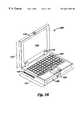
- FIG. 1Ais a perspective view of a portable computer system incorporating the invention
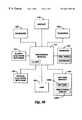
- FIG. 1Bis a block diagram further illustrating the computer system shown in FIG. 1A;
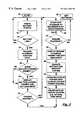
- FIG. 2is a flowchart of a method incorporating the invention
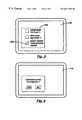
- FIG. 3is a facsimile of a dialog box associated with the flowchart of FIG. 2;
- FIG. 4is a facsimile of another dialog box associated with the flowchart of FIG. 2 .
- FIGS. 1-4describes and illustrates specific embodiments of the invention. These embodiments, offered not to limit but only to exemplify and teach the invention, are shown and described in sufficient detail to enable those skilled in the art to practice the invention. Thus, where appropriate to avoid obscuring the invention, the description may omit certain information known to those of skill in the art.
- FIG. 1Ashows perspective view of a portable multimedia computer system 100 , which incorporates the present invention.
- System 100includes an upper chassis 110 and a lower chassis 112 connected via hinge 114 .
- Upper chassis 110has an integral bezel 116 , which encompasses a display 118 .
- Hinge 114allows adjustment of the view angle of display 118 and closure of upper chassis 110 on lower chassis 112 .
- lower chassis 112includes a keyboard 120 , a touch-pad 122 , a floppy-disk drive 124 , and an optical-disk drive 126 .
- Lower chassis 112also includes other conventional features, such as speakers, printer ports, AC-adapter connection, pointing-device connection, external speaker jacks, head-phone jacks, telephone jacks, and so forth, which are not visible in FIG. 1 .
- FIG. 1Bis a functional block diagram of computer system 100 , showing functional modules most relevant to the invention. (For clarity, the diagram omits other conventional modules.)
- processor module 127At the heart of computer system 100 is a processor module 127 , which includes system clock 127 a .
- Processor module 127cooperates with display 118 , keyboard 120 , touch pad 122 , floppy-disk drive (with disk) 124 , random-access-memory (RAM) module 125 , optical-disk drive (with disk) 126 , battery module 128 , and hard drive 130 , using an operating system.
- the preferred operating systemis Microsoft Windows 95, which provides a multitude of functions, including a graphical user interface and a power management system.
- Battery module 128includes a removable and rechargeable battery pack 128 a and a battery-monitoring circuit 128 b .
- Battery pack 128 ais generally sufficient to operate system 100 for 3-4 hours under normal use.
- Battery-monitoring circuit 128 ba conventional circuit, provides battery status information to processor 128 via the power management system.
- Hard drive 130includes playback-indexing software 130 a and playback-index database 130 b.
- software 130 a and database 130 bWith the exception of software 130 a and database 130 b , the features mentioned thus far are available on many commercially available portable computer systems.
- the preferred embodimentplaces software 130 a and database 130 b on the SoloTM9100XL portable computer system from Gateway 2000, Inc. of North Sioux City, S.Dak.
- display 118is a 14.1-inch, XGA active-matrix-color display; processor 127 is a 266-MHZ Pentium processor with MMX Technology; battery pack 128 a includes a twelve-cell, lithium-ion, 60-watt-hour battery; hard drive 122 has a 2.1-gigabyte capacity; floppy-disk drive 124 is a conventional 3.5-inch drive, and optical-disk drive 126 reads DVD-ROMs, CDS, and CD-ROMs.
- the owners manual for the SoloTM9100 XL portable computer systemis incorporated herein by reference.
- system 100preferably executes playback-indexing software 130 a whenever optical-disk drive 126 is called upon to read, or play, a disk.
- the systemexecutes software 130 a only when it senses that the disk in drive 126 contains a DVD movie.
- the general function of playback-indexing software 130 ais to monitor the status of battery pack 128 a and to record, or write, the playback position of the disk in playback-index database 130 b upon detection of a low-battery level.
- Software 130 aembodies a preferred method shown in the flowchart of FIG. 2 .
- the preferred methodstarts at block 10 which indicates that system 100 has been activated and that optical disk drive 126 is playing a disk.
- playing the diskwhich contains a DVD movie, causes the system to display video and text information in at least a portion of display 118 and to output audio information from the DVD movie through built-in speakers, or through optional external speakers or headphones coupled to the system.
- block 10indicates that a data transfer operation from one data-storage device to another, for example, from optical-disk drive 126 or another external data source to hard drive 130 or to floppy-disk drive 124 , has been initiated.
- step 12entails checking the system battery status, or in other embodiments any power status having a bearing on playback of the disk. In the preferred embodiment, this entails use of Windows Advanced Power Management (APM) commands to determine the status of the system battery.
- APIWindows Advanced Power Management
- step 14decides whether the battery status indicates a low battery. If no low battery is indicated, the system returns to step 12 to again check battery status.
- optical drive 126continues to read and transfer data to appropriate display and audio drivers within computer system 100 .
- Step 16entails getting and recording information that either directly or indirectly identifies a position or data address on the data-storage medium, that is, the disk, in optical-disk drive 126 .
- the systemaccesses DVD real-time playback data indicating a DVD chapter and DVD elapsed play time, conventionally given in terms of hours, minutes, and seconds, using available Windows functions to interface with optical-disk drive 126 .
- the systemuses any suitable interface feature or function.
- step 18the system decides whether to prompt the user to replace the low battery. This entails checking whether a prompt flag, preferably stored in database 130 b , has been set or reset. (This flag is initially set when the playback-indexing software is installed.) If it has been set, step 20 causes the system to display a dialogue box 20 a on display 118 , as shown in FIG. 3, with a message asking the user to select between two options: continuing to play, or read, the disk or pausing playback to allow replacement or recharge of the low battery pack 128 a . Dialogue box 20 a also includes a check-off input 20 b which allows the user to set or reset the prompt flag.
- a prompt flagpreferably stored in database 130 b
- step 22the system skips ahead to step 22 , where it checks whether the user wants to replace battery pack 120 . If the user has opted not to replace the low battery pack, the system returns to step 12 to recheck the battery status, with optical-disk drive 126 continuing to playback the disk until the system ultimately shuts down from loss of sufficient battery power (or operations are otherwise terminated.)
- step 24the system pauses optical-disk drive 126 at its current playback position and then suspends system operation, according to conventional power management techniques, as indicated in step 26 . Subsequently, the user replaces or recharges battery pack 128 a or connects the system to another power supply, for example, an AC power outlet, before reactivating the system in step 28 .
- step 32Upon reactivation, the system executes step 32 , prompting the user to decide whether to continue playback of the optical disk via a dialogue box 32 a .
- An example of dialog box 32 ais shown in FIG. 4 .
- the systemexits playback-indexing software 130 a , as shown at step 34 .
- step 36which entails retrieving the playback position information (recorded at step 16 ) from playback-indexing database 130 b and advancing optical-disk drive 126 to the position indicated in or based on the playback-position information.
- the systemexecutes step 36 immediately upon reactivation, under the assumption that the user wishes to continue the playback.
- playback-indexing software 130 a and playback-indexing database 130 ballows fast and efficient recovery from playback interruption.
- Playback resumptionin other embodiments entails verifying that the disk in optical-disc drive 126 is the same as that associated with the position information. If it is not, the system prompts the user with the name or other identifying information that may be used to communicate the identity of the corresponding disk to the user.
- the playback position datais recorded at fixed intervals, for example, every second or every minute, regardless of the battery status, with each successive recording of playback-position data overwriting a preceding one.
- the systemrelying on clock 127 a , records a start time and a playback-interruption time. Taking the difference between these two times, the system calculates an elapsed time which corresponds approximately to playback position at the playback interruption.
- the systemcan simply start a playback timer at the beginning of playback and stop the timer upon interruption of playback. Preferably, this timer is synchronized with playback pauses and rewinds to track actual forward playback.
- one embodiment of the inventioninvokes the playback-indexing software during a data download from the Internet into floppy-disk drive 124 or hard drive 130 .
- this embodiment of the inventionwould facilitate resumption of the download by recording an index used to avoid restarting the download from the beginning of the data.
- the system, method, and software of the present inventionsolves the problem of quickly and efficiently resuming DVD playback in battery-powered computer systems.
- Resuming playback after battery failureconventionally requires recharging or replacing the battery, restarting DVD playback at the beginning, and then fast-forwarding to the approximate position where playback was interrupted.
- preferred embodiments of the present inventionmonitor battery status during DVD playback, and upon detection of low battery level, record the current playback position.
- playbackmay be automatically resumed at the recorded playback position, thereby saving both time and power in recovering from the interruption.
- other embodiments of the inventionomit battery monitoring. And still other embodiments facilitate recovery from interruptions of general data-transfer operations, not just DVD playback.
Landscapes
- Signal Processing For Digital Recording And Reproducing (AREA)
- Indexing, Searching, Synchronizing, And The Amount Of Synchronization Travel Of Record Carriers (AREA)
Abstract
Description
The present invention concerns data-management systems, particularly battery-powered computer systems that include optical-disc drives.
In recent years, computer systems have evolved into multi-media systems replete with fantastically fast microprocessors, color graphic displays, and stereo speakers. These systems also typically include an optical-disk drive for reading optical disks bearing digital data representative of text, audio, and video information. Although these drives typically read compact-disk-read-only-memories (CD-ROMs), the drives in more advanced systems additionally read digital-versatile-disk ROMs, otherwise known as DVD-ROMs or DVDs for short. A single DVD stores about 5 billion bytes of data, which is approximately seven times more data than a CD-ROM stores. (A byte is 8 bits, and a bit is a one or a zero.) This greater storage capacity enables a single DVD to store an entire two-hour movie.
Today, even portable computer systems, such as laptop and notebook computers, offer these multi-media capabilities. Some of these portable systems, which are battery-powered, even include drives that read DVDs, enabling users to watch DVD movies anywhere they can take their computers.
However, watching a complete two-hour movie on a battery-powered computer has at least one troublesome drawback: The battery packs in most of these portable systems run out of power before completion of the movie. When this happens, the typical procedure for resuming playback is to recharge or replace a battery pack, restart DVD playback at the beginning, and fast-forward to the approximate position where playback was interrupted. Unfortunately, fast-forwarding to this position is not only inconvenient but wastes time and battery power. Therefore, there is a need for a convenient DVD playback system and method that avoids wasting-time and power when resuming play after interruption.
To address these and other needs, the present invention provides a method, software, and a system which records playback position data before a playback interruption and then allows resumption of playback at the recorded playback position. Thus, the present invention saves the time and power that conventional systems would require for the resumption of playback after an interruption.
In one embodiment, recorded playback position refers to a specific portion of an optical disk, and in other embodiments it refers more generally to an address or region of any data-storage medium. Thus, the invention provides fast and efficient recovery for interruptions of both DVD movie playback and general data-transfer operations. Other embodiments, aspects, and advantages of the invention will become apparent after considering the accompanying drawings and the following detailed description.
FIG. 1A is a perspective view of a portable computer system incorporating the invention;
FIG. 1B is a block diagram further illustrating the computer system shown in FIG. 1A;
FIG. 2 is a flowchart of a method incorporating the invention;
FIG. 3 is a facsimile of a dialog box associated with the flowchart of FIG. 2; and
FIG. 4 is a facsimile of another dialog box associated with the flowchart of FIG.2.
The following detailed description, which references and incorporates FIGS. 1-4, describes and illustrates specific embodiments of the invention. These embodiments, offered not to limit but only to exemplify and teach the invention, are shown and described in sufficient detail to enable those skilled in the art to practice the invention. Thus, where appropriate to avoid obscuring the invention, the description may omit certain information known to those of skill in the art.
FIG. 1A shows perspective view of a portablemultimedia computer system 100, which incorporates the present invention.System 100 includes anupper chassis 110 and alower chassis 112 connected viahinge 114.Upper chassis 110 has anintegral bezel 116, which encompasses adisplay 118. Hinge114 allows adjustment of the view angle ofdisplay 118 and closure ofupper chassis 110 onlower chassis 112. Among its visible features,lower chassis 112 includes akeyboard 120, a touch-pad 122, a floppy-disk drive 124, and an optical-disk drive 126.Lower chassis 112 also includes other conventional features, such as speakers, printer ports, AC-adapter connection, pointing-device connection, external speaker jacks, head-phone jacks, telephone jacks, and so forth, which are not visible in FIG.1.
FIG. 1B is a functional block diagram ofcomputer system 100, showing functional modules most relevant to the invention. (For clarity, the diagram omits other conventional modules.) At the heart ofcomputer system 100 is aprocessor module 127, which includes system clock127a.Processor module 127 cooperates withdisplay 118,keyboard 120,touch pad 122, floppy-disk drive (with disk)124, random-access-memory (RAM)module 125, optical-disk drive (with disk)126,battery module 128, andhard drive 130, using an operating system. The preferred operating system is Microsoft Windows 95, which provides a multitude of functions, including a graphical user interface and a power management system.
With the exception of software130aand database130b, the features mentioned thus far are available on many commercially available portable computer systems. The preferred embodiment places software130aand database130bon the Solo™9100XL portable computer system from Gateway 2000, Inc. of North Sioux City, S.Dak. In this preferred embodiment,display 118 is a 14.1-inch, XGA active-matrix-color display;processor 127 is a 266-MHZ Pentium processor with MMX Technology; battery pack128aincludes a twelve-cell, lithium-ion, 60-watt-hour battery;hard drive 122 has a 2.1-gigabyte capacity; floppy-disk drive 124 is a conventional 3.5-inch drive, and optical-disk drive 126 reads DVD-ROMs, CDS, and CD-ROMs. The owners manual for the Solo™9100 XL portable computer system is incorporated herein by reference.
In operation,system 100 preferably executes playback-indexing software130awhenever optical-disk drive 126 is called upon to read, or play, a disk. However, in other embodiments, the system executes software130aonly when it senses that the disk indrive 126 contains a DVD movie. The general function of playback-indexing software130ais to monitor the status of battery pack128aand to record, or write, the playback position of the disk in playback-index database130bupon detection of a low-battery level. Software130aembodies a preferred method shown in the flowchart of FIG.2.
In particular, the preferred method starts atblock 10 which indicates thatsystem 100 has been activated and thatoptical disk drive 126 is playing a disk. In the preferred embodiment, playing the disk, which contains a DVD movie, causes the system to display video and text information in at least a portion ofdisplay 118 and to output audio information from the DVD movie through built-in speakers, or through optional external speakers or headphones coupled to the system. However, in more general embodiments,block 10 indicates that a data transfer operation from one data-storage device to another, for example, from optical-disk drive 126 or another external data source tohard drive 130 or to floppy-disk drive 124, has been initiated.
In parallel with starting playback of the optical disk, the system executesstep 12 which entails checking the system battery status, or in other embodiments any power status having a bearing on playback of the disk. In the preferred embodiment, this entails use of Windows Advanced Power Management (APM) commands to determine the status of the system battery. After getting the battery status, the system, atstep 14, decides whether the battery status indicates a low battery. If no low battery is indicated, the system returns tostep 12 to again check battery status. During this checking and rechecking,optical drive 126 continues to read and transfer data to appropriate display and audio drivers withincomputer system 100.
However, if a low-battery status is indicated, the system executesstep 16.Step 16 entails getting and recording information that either directly or indirectly identifies a position or data address on the data-storage medium, that is, the disk, in optical-disk drive 126. In the preferred embodiment, the system accesses DVD real-time playback data indicating a DVD chapter and DVD elapsed play time, conventionally given in terms of hours, minutes, and seconds, using available Windows functions to interface with optical-disk drive 126. However, in embodiments that are concerned with other types of data-storage devices or data transfers, the system uses any suitable interface feature or function. After getting the position-indicating information, the system writes, or records, this information in playback-indexing database130b.
Next, atstep 18, the system decides whether to prompt the user to replace the low battery. This entails checking whether a prompt flag, preferably stored in database130b, has been set or reset. (This flag is initially set when the playback-indexing software is installed.) If it has been set,step 20 causes the system to display a dialogue box20aondisplay 118, as shown in FIG. 3, with a message asking the user to select between two options: continuing to play, or read, the disk or pausing playback to allow replacement or recharge of the low battery pack128a. Dialogue box20aalso includes a check-off input20bwhich allows the user to set or reset the prompt flag.
If the prompt flag has been reset, the system skips ahead to step22 , where it checks whether the user wants to replacebattery pack 120. If the user has opted not to replace the low battery pack, the system returns to step12 to recheck the battery status, with optical-disk drive 126 continuing to playback the disk until the system ultimately shuts down from loss of sufficient battery power (or operations are otherwise terminated.)
If the user has opted to replace battery pack128a(or connect to another power supply), the system proceeds to step24. Instep 24, the system pauses optical-disk drive 126 at its current playback position and then suspends system operation, according to conventional power management techniques, as indicated instep 26. Subsequently, the user replaces or recharges battery pack128aor connects the system to another power supply, for example, an AC power outlet, before reactivating the system instep 28.
Upon reactivation, the system executesstep 32, prompting the user to decide whether to continue playback of the optical disk via a dialogue box32a. An example of dialog box32ais shown in FIG.4. If the user elects not to continue playback, the system exits playback-indexing software130a, as shown atstep 34. However, if the user elects to resume playback, the system executesstep 36 which entails retrieving the playback position information (recorded at step16) from playback-indexing database130band advancing optical-disk drive 126 to the position indicated in or based on the playback-position information. In other embodiments, the system executesstep 36 immediately upon reactivation, under the assumption that the user wishes to continue the playback.
In any event, after resumption of playback, the system begins repeatingsteps
Playback resumption in other embodiments entails verifying that the disk in optical-disc drive 126 is the same as that associated with the position information. If it is not, the system prompts the user with the name or other identifying information that may be used to communicate the identity of the corresponding disk to the user.
In another embodiment of the invention, the playback position data is recorded at fixed intervals, for example, every second or every minute, regardless of the battery status, with each successive recording of playback-position data overwriting a preceding one. Thus, if playback is interrupted for any reason, these other embodiments will allow resumption of playback from the last recorded playback position data. In a preferred version of this embodiment, there are at least two sets of playback-position data within database130b: a previous set and a current set. Prior to overwriting the current set of playback position data, the system copies it to the previous set. Thus, if the system is unable to complete recording of the current playback-position information, it can still recover from playback interruption using the previous playback-position data.
In still other embodiments, the system, relying on clock127a, records a start time and a playback-interruption time. Taking the difference between these two times, the system calculates an elapsed time which corresponds approximately to playback position at the playback interruption. Alternatively, the system can simply start a playback timer at the beginning of playback and stop the timer upon interruption of playback. Preferably, this timer is synchronized with playback pauses and rewinds to track actual forward playback.
Additionally, even though the preferred embodiment of the invention is presented in the context of a portable, battery-powered computer system, other embodiments of the invention include battery-powered and non-battery-powered set-top-type DVD players, which allow stand-alone operation with a conventional television. Furthermore, the invention can be readily applied to facilitate resumption of any data transfer operation subject to deliberate or inadvertent interruption.
For example, one embodiment of the invention invokes the playback-indexing software during a data download from the Internet into floppy-disk drive 124 orhard drive 130. Thus, if power were interrupted during the download, this embodiment of the invention would facilitate resumption of the download by recording an index used to avoid restarting the download from the beginning of the data.
The system, method, and software of the present invention solves the problem of quickly and efficiently resuming DVD playback in battery-powered computer systems. Resuming playback after battery failure conventionally requires recharging or replacing the battery, restarting DVD playback at the beginning, and then fast-forwarding to the approximate position where playback was interrupted. In contrast, preferred embodiments of the present invention monitor battery status during DVD playback, and upon detection of low battery level, record the current playback position. Thus, after battery replacement or recharge, playback may be automatically resumed at the recorded playback position, thereby saving both time and power in recovering from the interruption. Moreover, other embodiments of the invention omit battery monitoring. And still other embodiments facilitate recovery from interruptions of general data-transfer operations, not just DVD playback.
The embodiments described above are intended only to illustrate and teach one or more ways of practicing or implementing the present invention, not to restrict its breadth or scope. The actual scope of the invention, which encompasses all ways of practicing or implementing the invention, is defined only by the following claims and their equivalents.
Claims (30)
1. A method of operating a computer system that includes an optical-disk drive, the method comprising:
playing a disk in the optical-disk drive;
recording information indicating a disk playback position; and
resuming play of the disk at a disk position based on the disk playback position indicated in the recorded information, after an interruption of power to the optical-disc drive;
wherein the step of recording information is performed before an event leading to the interruption of power.
2. The method ofclaim 1 wherein recording information indicating a disk position includes recording information indicative of an elapsed playback time.
3. A method of operating a computer system that includes an optical-disk drive, the method comprising:
playing a disk in the optical-disk drive;
recording information indicating a disk playback position; and
resuming play of the disk at a disk position based on the disk playback position indicated in the recorded information, after an interruption of power to the optical-disc drive;
wherein the interruption of power to the optical-disk drive occurs in response to a loss of sufficient battery power.
4. The method ofclaim 3 wherein resuming play of the disk at the recorded playback position comprises directing the optical-disk drive to go to the disk playback position indicated by the recorded information.
5. The method ofclaim 1 :
wherein the optical-disk drive operates primarily on power from a battery pack;
wherein the interruption of power to the optical-disk drive occurs in response to loss of sufficient battery power; and
wherein resuming play of the disk at the playback position occurs after replacing at least a portion of the battery pack, recharging at least a portion of the battery pack, or coupling the optical-disk drive to an AC power outlet.
6. The method ofclaim 1 wherein playing a disk in the optical-disk drive comprises playing a DVD-ROM in a DVD-ROM-compatible drive.
7. A computer-readable, data-storage medium that stores playback-indexing software comprising instructions for:
recording information indicative of a playback position of a data-retrieval device; and
communicating a playback position based on the recorded information to the data-retrieval device;
wherein the step of communicating the playback position is performed after a power interruption to the data-retrieval device; and
wherein the step of recording the information indicative of the playback position is performed before an event resulting in said power interruption to the data-retrieval device.
8. The computer-readable, data-storage medium ofclaim 7 , wherein recording information indicative of a playback position occurs in response to a determination that a battery is low.
9. The computer-readable, data-storage medium ofclaim 7 , wherein the data-retrieval device comprises at least one of an optical-disk drive, a floppy-disk drive, and a hard drive.
10. A computer system comprising:
a processor;
a display coupled to the processor;
an optical-disk drive for playing an optical disk, the optical-disk drive coupled to the processor for processing data from the optical disk and coupled to the display for displaying data from the optical disk;
means for determining, prior to a power interruption, information indicative of a playback position of the optical-disk drive; and
a memory device which stores instructions for recording the information indicative of the playback position of the optical-disk drive and for directing the optical-disk drive to initiate, following the power interruption, a playback operation at a playback position based on the recorded information.
11. The system ofclaim 10 further including:
a battery for powering the processor, display, optical-disk drive, and memory device; and
wherein the instructions for recording information indicative of a playback position are executed in response to a determination that the battery is low.
12. The system ofclaim 10 wherein the memory device comprises a hard drive.
13. A method of playing back data from an optical disk in a disk drive, the method comprising:
playing back the optical disk;
recording information indicative of a playback position on the optical disk; and
communicating an optical disk position, based on the playback position indicated by the recorded information, to the disk drive, after a power-related interruption of the playing back of the optical disk;
wherein said step of recording the information indicative of the playback position on the optical disk occurs prior to an event resulting in the power-related interruption of the playing back of the optical disk.
14. The method ofclaim 13 wherein the power-related interruption concerns loss of battery power, and wherein recording information indicative of a playback position on the optical disk occurs in response to a determination that available battery power is low.
15. The method ofclaim 13 wherein communicating the optical disk position to the optical disk drive occurs after outputting a prompt for a user directive to resume playback.
16. A method of playing back a movie on a battery-powered computer system, the method comprising:
recording information indicating how much of the movie has been played; and
after a battery-power-related interruption of movie playback, enabling resumption of the movie playback from a point of the movie based on the recorded information;
wherein the battery-power-related interruption of the movie playback is based on insufficient battery power.
17. The method ofclaim 16 wherein recording information indicating how much of the movie has been played includes recording time information in a non-volatile memory.
18. The method ofclaim 16 wherein the movie is stored on an optical disk and the battery-powered computer system includes an optical-disk drive.
19. A computer system comprising:
a processor;
a first memory device for storing data transferred to the computer system;
a battery coupled to supply power to the processor and the first memory device;
a battery-monitoring circuit coupled to the battery for indicating a low-battery condition to the processor; and
a second memory device responsive to the processor receiving an indication of a low-battery condition to store data indicating where to resume an interrupted data transfer to the first memory device.
20. The method ofclaim 3 , further comprising:
detecting a low-battery-power condition in the battery;
wherein the step of recording the information indicating said disk playback position is performed in response to the step of detecting the low-battery-power condition.
21. The method ofclaim 1 wherein the interruption of power to the optical-disk drive occurs in response to a loss of sufficient AC power.
22. The method ofclaim 21 wherein the step of recording the information indicating said disk playback position is performed periodically, prior to said loss of sufficient AC power.
23. The method ofclaim 1 wherein said event leading to the interruption of power comprises a user connecting the computer system to another AC power outlet.
24. The computer-readable, data-storage medium ofclaim 7 , further comprising:
checking a status associated with a charge condition of a battery, wherein the step of recording the information indicative of the playback position occurs in response to a determination that the charge condition of the battery is low;
wherein the event resulting in said power interruption comprises playing said data-retrieval device following the determination that the charge condition of the battery is low.
25. The computer-readable, data-storage medium ofclaim 7 , wherein the step of recording the information indicative of the playback position is performed before an interruption to AC power.
26. The computer-readable, data-storage medium ofclaim 25 , wherein the step of recording the information indicative of the playback position is performed periodically, prior to the interruption to the AC power.
27. The system ofclaim 10 ,
wherein the power interruption is an interruption of AC power; and
wherein said means for determining is configured to periodically determine the information indicative of a playback position of the optical-disk drive prior to the interruption to the AC power.
28. The method ofclaim 13 wherein the power-related interruption concerns an interruption of AC power.
29. The method ofclaim 27 , wherein the step of recording the information indicative of the playback position on the optical disk is performed periodically, prior to the interruption to the AC power.
30. The method ofclaim 28 , wherein the event resulting in the power-related interruption comprises an indication associated with a power switch being turned to an off position.
Priority Applications (1)
| Application Number | Priority Date | Filing Date | Title |
|---|---|---|---|
| US09/270,420US6631101B1 (en) | 1999-03-16 | 1999-03-16 | System, method, and software for recovering from interruption of DVD playback |
Applications Claiming Priority (1)
| Application Number | Priority Date | Filing Date | Title |
|---|---|---|---|
| US09/270,420US6631101B1 (en) | 1999-03-16 | 1999-03-16 | System, method, and software for recovering from interruption of DVD playback |
Publications (1)
| Publication Number | Publication Date |
|---|---|
| US6631101B1true US6631101B1 (en) | 2003-10-07 |
Family
ID=28675150
Family Applications (1)
| Application Number | Title | Priority Date | Filing Date |
|---|---|---|---|
| US09/270,420Expired - LifetimeUS6631101B1 (en) | 1999-03-16 | 1999-03-16 | System, method, and software for recovering from interruption of DVD playback |
Country Status (1)
| Country | Link |
|---|---|
| US (1) | US6631101B1 (en) |
Cited By (35)
| Publication number | Priority date | Publication date | Assignee | Title |
|---|---|---|---|---|
| US20020004911A1 (en)* | 2000-04-28 | 2002-01-10 | Hidekazu Nakai | Information processing system and information processing apparatus |
| US20020101772A1 (en)* | 2001-01-30 | 2002-08-01 | Pioneer Corporation | Method and apparatus for reading and writing information, and program storage medium for storing read and write procedure program |
| US20030072229A1 (en)* | 2001-08-10 | 2003-04-17 | Matsushita Electric Industrial Co., Ltd. | Data recording device and controller for data recording device |
| US20040078610A1 (en)* | 2002-09-26 | 2004-04-22 | Tadahiro Naitoh | Image recording apparatus capable of addressing unexpected power supply interruption and method therefor |
| US20050024994A1 (en)* | 2003-08-01 | 2005-02-03 | Shah Sujal B. | Media player with extracted volume position memory |
| WO2005050637A1 (en)* | 2003-11-18 | 2005-06-02 | Koninklijke Philips Electronics N.V. | Calculating required energy |
| US20050117415A1 (en)* | 2002-03-15 | 2005-06-02 | Jorg Pietruszka | Method and apparatus for replaying a recording medium |
| US20070055462A1 (en)* | 2002-11-29 | 2007-03-08 | Daniel Mulligan | Circuit for use in a multifunction handheld device with wireless host interface |
| US20070052792A1 (en)* | 2002-11-29 | 2007-03-08 | Daniel Mulligan | Circuit for use in cellular telephone with video functionality |
| US20070052793A1 (en)* | 2002-11-29 | 2007-03-08 | Daniel Mulligan | Circuit for use with multifunction handheld device with video functionality |
| US20070078548A1 (en)* | 2002-11-29 | 2007-04-05 | May Daniel M | Circuit for use in multifunction handheld device having a radio receiver |
| US20070179725A1 (en)* | 2002-11-29 | 2007-08-02 | Austin Marcus W | Method and circuit for use by a handheld multiple function device |
| US20080123485A1 (en)* | 2006-11-24 | 2008-05-29 | Kabushiki Kaisha Toshiba | Reproducing position control circuit and reproducing system |
| US20080189538A1 (en)* | 2007-02-06 | 2008-08-07 | Microsoft Corporation | Supporting multiple operating systems in media devices |
| US20090088068A1 (en)* | 2005-04-07 | 2009-04-02 | Axel Ferrazzini | Security Method and Device for Managing Access to Multimedia Contents |
| US7536565B2 (en)* | 2005-01-07 | 2009-05-19 | Apple Inc. | Techniques for improved playlist processing on media devices |
| US20090217336A1 (en)* | 2008-02-22 | 2009-08-27 | Cyberlink Corp. | Playback Resume System and Method for a Media Center |
| US7589629B2 (en) | 2007-02-28 | 2009-09-15 | Apple Inc. | Event recorder for portable media device |
| US7673238B2 (en) | 2006-01-05 | 2010-03-02 | Apple Inc. | Portable media device with video acceleration capabilities |
| US7706637B2 (en) | 2004-10-25 | 2010-04-27 | Apple Inc. | Host configured for interoperation with coupled portable media player device |
| US20100110867A1 (en)* | 2007-06-11 | 2010-05-06 | Yoshitaka Nakamura | Disc playback apparatus |
| US7729791B2 (en) | 2006-09-11 | 2010-06-01 | Apple Inc. | Portable media playback device including user interface event passthrough to non-media-playback processing |
| US7831199B2 (en) | 2006-01-03 | 2010-11-09 | Apple Inc. | Media data exchange, transfer or delivery for portable electronic devices |
| US7848527B2 (en) | 2006-02-27 | 2010-12-07 | Apple Inc. | Dynamic power management in a portable media delivery system |
| US20110213723A1 (en)* | 2010-02-26 | 2011-09-01 | Intuit Inc. | Audio agreement |
| US8090130B2 (en) | 2006-09-11 | 2012-01-03 | Apple Inc. | Highly portable media devices |
| US20120167721A1 (en)* | 2010-12-29 | 2012-07-05 | Robert Bosch Gmbh | Portable Battery-Operated Tool with an Electrical Buffer Element and Method for Replacing the Rechargeable Battery |
| US8255640B2 (en) | 2006-01-03 | 2012-08-28 | Apple Inc. | Media device with intelligent cache utilization |
| US8300841B2 (en) | 2005-06-03 | 2012-10-30 | Apple Inc. | Techniques for presenting sound effects on a portable media player |
| US8341524B2 (en) | 2006-09-11 | 2012-12-25 | Apple Inc. | Portable electronic device with local search capabilities |
| US8358273B2 (en) | 2006-05-23 | 2013-01-22 | Apple Inc. | Portable media device with power-managed display |
| US8396948B2 (en) | 2005-10-19 | 2013-03-12 | Apple Inc. | Remotely configured media device |
| US8654993B2 (en) | 2005-12-07 | 2014-02-18 | Apple Inc. | Portable audio device providing automated control of audio volume parameters for hearing protection |
| US9747248B2 (en) | 2006-06-20 | 2017-08-29 | Apple Inc. | Wireless communication system |
| US20220019278A1 (en)* | 2019-06-07 | 2022-01-20 | Sonos, Inc. | Portable playback device power management |
Citations (21)
| Publication number | Priority date | Publication date | Assignee | Title |
|---|---|---|---|---|
| US4262301A (en) | 1978-03-30 | 1981-04-14 | Polaroid Corporation | Electronic imaging camera |
| US4779252A (en) | 1984-07-02 | 1988-10-18 | U.S. Philips Corp. | Apparatus for automatically reproducing preferred selection from a record carrier |
| US4852073A (en) | 1986-09-30 | 1989-07-25 | Pioneer Electronic Corporation | Remote control transmission apparatus |
| US4855842A (en) | 1987-08-06 | 1989-08-08 | Professional Training Systems, Inc. | Dedicated programmable controller for interactive video disc system |
| US4996679A (en) | 1989-01-30 | 1991-02-26 | Pioneer Electronic Corporation | Subcode information and block identification system for a disc player |
| US5093731A (en) | 1987-05-19 | 1992-03-03 | Fuji Photo Film Co., Ltd. | Image data recording apparatus for storing image data with a recording-finished code and a recording sequence code |
| USRE34475E (en) | 1984-07-02 | 1993-12-14 | U.S. Philips Corporation | Apparatus for automatically reproducing preferred selections from a record carrier |
| US5365502A (en)* | 1991-02-05 | 1994-11-15 | Sony Corporation | Optical disc player having a resume function |
| US5465240A (en) | 1993-01-05 | 1995-11-07 | Mankovitz; Roy J. | Apparatus and methods for displaying text in conjunction with recorded audio programs |
| US5506821A (en) | 1993-05-27 | 1996-04-09 | Applied Media Technologies Corporation | Optical disk program repeater |
| US5617384A (en) | 1994-03-19 | 1997-04-01 | Sony Corporation | Method and apparatus for recovering TOC and user information from an optical disk and using the TOC information to access user tracks |
| US5638346A (en)* | 1993-08-24 | 1997-06-10 | Sony Corporation | Magneto-optical reproducing apparatus having a jog dial track number selector |
| US5691972A (en) | 1995-10-09 | 1997-11-25 | Matsushita Electric Industrial Co., Ltd. | Multimedia optical disc which conforms to the motion picture rating systems in a variety of countries and a reproducing device for said disc |
| US5740143A (en)* | 1993-06-18 | 1998-04-14 | Sony Corporation | Disc reproducing apparatus |
| US5831946A (en)* | 1995-08-22 | 1998-11-03 | U.S. Philips Corporation | Player for reading audio signals and/or video signals from a medium |
| US5889745A (en)* | 1992-05-22 | 1999-03-30 | Sony Corporation | Method for calculating a play time of a disc reproducing apparatus |
| US6088304A (en)* | 1996-09-25 | 2000-07-11 | Sony Corporation | Editing method for deleting prescribed section of a program and editing apparatus thereof |
| US6104678A (en)* | 1997-07-02 | 2000-08-15 | Sanyo Electric Co., Ltd. | Disk playback device and method of terminating playback of disk |
| US6188650B1 (en)* | 1997-10-21 | 2001-02-13 | Sony Corporation | Recording and reproducing system having resume function |
| US6388961B1 (en)* | 1999-05-21 | 2002-05-14 | Sony Corporation | Recording apparatus, playback apparatus, recording method, and playback method |
| US6396777B1 (en)* | 2000-05-30 | 2002-05-28 | Delphi Technologies, Inc. | Compact disk player instant-on feature |
- 1999
- 1999-03-16USUS09/270,420patent/US6631101B1/ennot_activeExpired - Lifetime
Patent Citations (22)
| Publication number | Priority date | Publication date | Assignee | Title |
|---|---|---|---|---|
| US4262301A (en) | 1978-03-30 | 1981-04-14 | Polaroid Corporation | Electronic imaging camera |
| US4779252A (en) | 1984-07-02 | 1988-10-18 | U.S. Philips Corp. | Apparatus for automatically reproducing preferred selection from a record carrier |
| USRE34475E (en) | 1984-07-02 | 1993-12-14 | U.S. Philips Corporation | Apparatus for automatically reproducing preferred selections from a record carrier |
| US4852073A (en) | 1986-09-30 | 1989-07-25 | Pioneer Electronic Corporation | Remote control transmission apparatus |
| US5093731A (en) | 1987-05-19 | 1992-03-03 | Fuji Photo Film Co., Ltd. | Image data recording apparatus for storing image data with a recording-finished code and a recording sequence code |
| US4855842A (en) | 1987-08-06 | 1989-08-08 | Professional Training Systems, Inc. | Dedicated programmable controller for interactive video disc system |
| US4996679A (en) | 1989-01-30 | 1991-02-26 | Pioneer Electronic Corporation | Subcode information and block identification system for a disc player |
| US5365502A (en)* | 1991-02-05 | 1994-11-15 | Sony Corporation | Optical disc player having a resume function |
| US5889745A (en)* | 1992-05-22 | 1999-03-30 | Sony Corporation | Method for calculating a play time of a disc reproducing apparatus |
| US5465240A (en) | 1993-01-05 | 1995-11-07 | Mankovitz; Roy J. | Apparatus and methods for displaying text in conjunction with recorded audio programs |
| US5506821A (en) | 1993-05-27 | 1996-04-09 | Applied Media Technologies Corporation | Optical disk program repeater |
| US5740143A (en)* | 1993-06-18 | 1998-04-14 | Sony Corporation | Disc reproducing apparatus |
| US5638346A (en)* | 1993-08-24 | 1997-06-10 | Sony Corporation | Magneto-optical reproducing apparatus having a jog dial track number selector |
| US5617384A (en) | 1994-03-19 | 1997-04-01 | Sony Corporation | Method and apparatus for recovering TOC and user information from an optical disk and using the TOC information to access user tracks |
| US5831946A (en)* | 1995-08-22 | 1998-11-03 | U.S. Philips Corporation | Player for reading audio signals and/or video signals from a medium |
| US5691972A (en) | 1995-10-09 | 1997-11-25 | Matsushita Electric Industrial Co., Ltd. | Multimedia optical disc which conforms to the motion picture rating systems in a variety of countries and a reproducing device for said disc |
| US6088304A (en)* | 1996-09-25 | 2000-07-11 | Sony Corporation | Editing method for deleting prescribed section of a program and editing apparatus thereof |
| US6104678A (en)* | 1997-07-02 | 2000-08-15 | Sanyo Electric Co., Ltd. | Disk playback device and method of terminating playback of disk |
| US6188650B1 (en)* | 1997-10-21 | 2001-02-13 | Sony Corporation | Recording and reproducing system having resume function |
| US6430122B1 (en)* | 1997-10-21 | 2002-08-06 | Sony Corporation | Recording and reproducing system having resume function |
| US6388961B1 (en)* | 1999-05-21 | 2002-05-14 | Sony Corporation | Recording apparatus, playback apparatus, recording method, and playback method |
| US6396777B1 (en)* | 2000-05-30 | 2002-05-28 | Delphi Technologies, Inc. | Compact disk player instant-on feature |
Cited By (68)
| Publication number | Priority date | Publication date | Assignee | Title |
|---|---|---|---|---|
| US6928567B2 (en)* | 2000-04-28 | 2005-08-09 | Sony Corporation | Information processing system in which power supply information of a recording/reproducing unit controls operations of a host computer |
| US20060077845A1 (en)* | 2000-04-28 | 2006-04-13 | Sony Corporation | Information processing system and information processing apparatus |
| US7721132B2 (en) | 2000-04-28 | 2010-05-18 | Sony Corporation | Information processing apparatus with temperature-dependent battery charging |
| US7028203B2 (en)* | 2000-04-28 | 2006-04-11 | Sony Corporation | Information processing system and information processing apparatus |
| US20020004911A1 (en)* | 2000-04-28 | 2002-01-10 | Hidekazu Nakai | Information processing system and information processing apparatus |
| US20050097375A1 (en)* | 2000-04-28 | 2005-05-05 | Sony Corporation | Information processing system and information processing apparatus |
| US7266724B2 (en)* | 2001-01-30 | 2007-09-04 | Pioneer Corporation | Apparatus and method for interruption of read and write operation and program storage medium for storing read and write procedure program |
| US20020101772A1 (en)* | 2001-01-30 | 2002-08-01 | Pioneer Corporation | Method and apparatus for reading and writing information, and program storage medium for storing read and write procedure program |
| US7106667B2 (en)* | 2001-08-10 | 2006-09-12 | Matsushita Electric Industrial Co., Ltd. | Data recording device capable of restarting after an interruption |
| US20030072229A1 (en)* | 2001-08-10 | 2003-04-17 | Matsushita Electric Industrial Co., Ltd. | Data recording device and controller for data recording device |
| US20050117415A1 (en)* | 2002-03-15 | 2005-06-02 | Jorg Pietruszka | Method and apparatus for replaying a recording medium |
| US20040078610A1 (en)* | 2002-09-26 | 2004-04-22 | Tadahiro Naitoh | Image recording apparatus capable of addressing unexpected power supply interruption and method therefor |
| US7555410B2 (en) | 2002-11-29 | 2009-06-30 | Freescale Semiconductor, Inc. | Circuit for use with multifunction handheld device with video functionality |
| US20070052792A1 (en)* | 2002-11-29 | 2007-03-08 | Daniel Mulligan | Circuit for use in cellular telephone with video functionality |
| US20070052793A1 (en)* | 2002-11-29 | 2007-03-08 | Daniel Mulligan | Circuit for use with multifunction handheld device with video functionality |
| US20070078548A1 (en)* | 2002-11-29 | 2007-04-05 | May Daniel M | Circuit for use in multifunction handheld device having a radio receiver |
| US20070179725A1 (en)* | 2002-11-29 | 2007-08-02 | Austin Marcus W | Method and circuit for use by a handheld multiple function device |
| US20070055462A1 (en)* | 2002-11-29 | 2007-03-08 | Daniel Mulligan | Circuit for use in a multifunction handheld device with wireless host interface |
| US9084089B2 (en) | 2003-04-25 | 2015-07-14 | Apple Inc. | Media data exchange transfer or delivery for portable electronic devices |
| US7301857B2 (en)* | 2003-08-01 | 2007-11-27 | Chrysler Llc | Media player including a resume function |
| US20050024994A1 (en)* | 2003-08-01 | 2005-02-03 | Shah Sujal B. | Media player with extracted volume position memory |
| WO2005050637A1 (en)* | 2003-11-18 | 2005-06-02 | Koninklijke Philips Electronics N.V. | Calculating required energy |
| US7706637B2 (en) | 2004-10-25 | 2010-04-27 | Apple Inc. | Host configured for interoperation with coupled portable media player device |
| US10534452B2 (en) | 2005-01-07 | 2020-01-14 | Apple Inc. | Highly portable media device |
| US7856564B2 (en) | 2005-01-07 | 2010-12-21 | Apple Inc. | Techniques for preserving media play mode information on media devices during power cycling |
| US7889497B2 (en) | 2005-01-07 | 2011-02-15 | Apple Inc. | Highly portable media device |
| US7593782B2 (en) | 2005-01-07 | 2009-09-22 | Apple Inc. | Highly portable media device |
| US7865745B2 (en) | 2005-01-07 | 2011-01-04 | Apple Inc. | Techniques for improved playlist processing on media devices |
| US11442563B2 (en) | 2005-01-07 | 2022-09-13 | Apple Inc. | Status indicators for an electronic device |
| US8259444B2 (en) | 2005-01-07 | 2012-09-04 | Apple Inc. | Highly portable media device |
| US7536565B2 (en)* | 2005-01-07 | 2009-05-19 | Apple Inc. | Techniques for improved playlist processing on media devices |
| US20090088068A1 (en)* | 2005-04-07 | 2009-04-02 | Axel Ferrazzini | Security Method and Device for Managing Access to Multimedia Contents |
| US8488786B2 (en)* | 2005-04-07 | 2013-07-16 | France Telecom | Security method and device for managing access to multimedia contents |
| US9602929B2 (en) | 2005-06-03 | 2017-03-21 | Apple Inc. | Techniques for presenting sound effects on a portable media player |
| US8300841B2 (en) | 2005-06-03 | 2012-10-30 | Apple Inc. | Techniques for presenting sound effects on a portable media player |
| US10750284B2 (en) | 2005-06-03 | 2020-08-18 | Apple Inc. | Techniques for presenting sound effects on a portable media player |
| US8396948B2 (en) | 2005-10-19 | 2013-03-12 | Apple Inc. | Remotely configured media device |
| US10536336B2 (en) | 2005-10-19 | 2020-01-14 | Apple Inc. | Remotely configured media device |
| US8654993B2 (en) | 2005-12-07 | 2014-02-18 | Apple Inc. | Portable audio device providing automated control of audio volume parameters for hearing protection |
| US7831199B2 (en) | 2006-01-03 | 2010-11-09 | Apple Inc. | Media data exchange, transfer or delivery for portable electronic devices |
| US8694024B2 (en) | 2006-01-03 | 2014-04-08 | Apple Inc. | Media data exchange, transfer or delivery for portable electronic devices |
| US8255640B2 (en) | 2006-01-03 | 2012-08-28 | Apple Inc. | Media device with intelligent cache utilization |
| US8688928B2 (en) | 2006-01-03 | 2014-04-01 | Apple Inc. | Media device with intelligent cache utilization |
| US7673238B2 (en) | 2006-01-05 | 2010-03-02 | Apple Inc. | Portable media device with video acceleration capabilities |
| US7848527B2 (en) | 2006-02-27 | 2010-12-07 | Apple Inc. | Dynamic power management in a portable media delivery system |
| US8615089B2 (en) | 2006-02-27 | 2013-12-24 | Apple Inc. | Dynamic power management in a portable media delivery system |
| US8358273B2 (en) | 2006-05-23 | 2013-01-22 | Apple Inc. | Portable media device with power-managed display |
| US9747248B2 (en) | 2006-06-20 | 2017-08-29 | Apple Inc. | Wireless communication system |
| US8341524B2 (en) | 2006-09-11 | 2012-12-25 | Apple Inc. | Portable electronic device with local search capabilities |
| US7729791B2 (en) | 2006-09-11 | 2010-06-01 | Apple Inc. | Portable media playback device including user interface event passthrough to non-media-playback processing |
| US9063697B2 (en) | 2006-09-11 | 2015-06-23 | Apple Inc. | Highly portable media devices |
| US8090130B2 (en) | 2006-09-11 | 2012-01-03 | Apple Inc. | Highly portable media devices |
| US8473082B2 (en) | 2006-09-11 | 2013-06-25 | Apple Inc. | Portable media playback device including user interface event passthrough to non-media-playback processing |
| US7787339B2 (en)* | 2006-11-24 | 2010-08-31 | Kabushiki Kaisha Toshiba | Reproducing position control circuit and reproducing system |
| US20080123485A1 (en)* | 2006-11-24 | 2008-05-29 | Kabushiki Kaisha Toshiba | Reproducing position control circuit and reproducing system |
| US20080189538A1 (en)* | 2007-02-06 | 2008-08-07 | Microsoft Corporation | Supporting multiple operating systems in media devices |
| US8046570B2 (en)* | 2007-02-06 | 2011-10-25 | Microsoft Corporation | Supporting multiple operating systems in media devices |
| US7589629B2 (en) | 2007-02-28 | 2009-09-15 | Apple Inc. | Event recorder for portable media device |
| US8044795B2 (en) | 2007-02-28 | 2011-10-25 | Apple Inc. | Event recorder for portable media device |
| US20100110867A1 (en)* | 2007-06-11 | 2010-05-06 | Yoshitaka Nakamura | Disc playback apparatus |
| US20090217336A1 (en)* | 2008-02-22 | 2009-08-27 | Cyberlink Corp. | Playback Resume System and Method for a Media Center |
| US20110213723A1 (en)* | 2010-02-26 | 2011-09-01 | Intuit Inc. | Audio agreement |
| US9776309B2 (en)* | 2010-12-29 | 2017-10-03 | Robert Bosch Gmbh | Portable battery-operated tool with an electrical buffer element and method for replacing the rechargeable battery |
| US20120167721A1 (en)* | 2010-12-29 | 2012-07-05 | Robert Bosch Gmbh | Portable Battery-Operated Tool with an Electrical Buffer Element and Method for Replacing the Rechargeable Battery |
| US20220019278A1 (en)* | 2019-06-07 | 2022-01-20 | Sonos, Inc. | Portable playback device power management |
| US11513581B2 (en)* | 2019-06-07 | 2022-11-29 | Sonos, Inc. | Portable playback device power management |
| US12019496B2 (en) | 2019-06-07 | 2024-06-25 | Sonos, Inc. | Portable playback device power management |
| US12416963B2 (en) | 2019-06-07 | 2025-09-16 | Sonos, Inc. | Portable playback device power management |
Similar Documents
| Publication | Publication Date | Title |
|---|---|---|
| US6631101B1 (en) | System, method, and software for recovering from interruption of DVD playback | |
| US6629000B1 (en) | MPEG portable sound reproducing system and a reproducing method thereof | |
| JP2000293198A (en) | Portable audio player and method for reducing power consumption of the player | |
| US7330410B2 (en) | Information recording method and apparatus, information processing apparatus, information recording system and computer-readable storage medium using dummy data | |
| JP2000003233A (en) | Computer system and wake-up control method therefor | |
| US20090161507A1 (en) | Infromation Recording/Reproducing Apparatus | |
| EP1536640A1 (en) | Information processing device and program | |
| US8412020B2 (en) | Data processing apparatus and its control method, program, and storage medium | |
| US7672564B2 (en) | Information processing apparatus for automatically recording video data from a first recording medium in a first format to a second recording medium in a second format | |
| WO2001084551A1 (en) | Recording/reproducing disk control device and disc apparatus comprising the same | |
| JPS6018858A (en) | Disk data reproducer | |
| JPH11288547A (en) | Information recording / reproducing device | |
| JP4006274B2 (en) | Recording method, program and recording medium, information processing apparatus, information recording apparatus, and information recording system | |
| US20030210900A1 (en) | Disk drive interface | |
| JP4006261B2 (en) | Recording method, program and recording medium, information processing apparatus, information recording apparatus, and information recording system | |
| JPH06231527A (en) | Disk drive device | |
| KR101059848B1 (en) | Power status display device and method of external connection device | |
| JP3968469B2 (en) | Recording / reproducing apparatus and data recording method | |
| JP3348355B2 (en) | Information processing device | |
| JP3856143B2 (en) | Disk unit cleaning management device | |
| US20060195543A1 (en) | Hard disk-incorporated optical disk recording and reproducing apparatus | |
| JPH08263929A (en) | Optical disc player | |
| KR100904431B1 (en) | Data reproducing apparatus and reproducing method of recording medium | |
| JP2000166106A (en) | Battery powered electronic equipment | |
| KR20070018436A (en) | Optical disc playback control method |
Legal Events
| Date | Code | Title | Description |
|---|---|---|---|
| AS | Assignment | Owner name:GATEWAY 2000, INC., SOUTH DAKOTA Free format text:ASSIGNMENT OF ASSIGNORS INTEREST;ASSIGNORS:CHAN, RIX S.;WATCHORN, GEORGE;REEL/FRAME:009840/0113;SIGNING DATES FROM 19990225 TO 19990305 | |
| AS | Assignment | Owner name:GATEWAY, INC., SOUTH DAKOTA Free format text:CHANGE OF NAME;ASSIGNOR:GATEWAY 2000, INC.;REEL/FRAME:011600/0015 Effective date:19990601 | |
| STCF | Information on status: patent grant | Free format text:PATENTED CASE | |
| REMI | Maintenance fee reminder mailed | ||
| FPAY | Fee payment | Year of fee payment:4 | |
| SULP | Surcharge for late payment | ||
| FPAY | Fee payment | Year of fee payment:8 | |
| FPAY | Fee payment | Year of fee payment:12 |