US6577688B1 - Host rejection filtering in a digital audio broadcasting system - Google Patents
Host rejection filtering in a digital audio broadcasting systemDownload PDFInfo
- Publication number
- US6577688B1 US6577688B1US09/430,948US43094899AUS6577688B1US 6577688 B1US6577688 B1US 6577688B1US 43094899 AUS43094899 AUS 43094899AUS 6577688 B1US6577688 B1US 6577688B1
- Authority
- US
- United States
- Prior art keywords
- filter
- digital
- receiver
- intermediate frequency
- bandreject
- Prior art date
- Legal status (The legal status is an assumption and is not a legal conclusion. Google has not performed a legal analysis and makes no representation as to the accuracy of the status listed.)
- Expired - Lifetime
Links
Images
Classifications
- H—ELECTRICITY
- H04—ELECTRIC COMMUNICATION TECHNIQUE
- H04H—BROADCAST COMMUNICATION
- H04H40/00—Arrangements specially adapted for receiving broadcast information
- H04H40/18—Arrangements characterised by circuits or components specially adapted for receiving
- H—ELECTRICITY
- H03—ELECTRONIC CIRCUITRY
- H03G—CONTROL OF AMPLIFICATION
- H03G3/00—Gain control in amplifiers or frequency changers
- H03G3/20—Automatic control
- H03G3/30—Automatic control in amplifiers having semiconductor devices
- H03G3/3052—Automatic control in amplifiers having semiconductor devices in bandpass amplifiers (H.F. or I.F.) or in frequency-changers used in a (super)heterodyne receiver
- H03G3/3068—Circuits generating control signals for both R.F. and I.F. stages
- H—ELECTRICITY
- H04—ELECTRIC COMMUNICATION TECHNIQUE
- H04H—BROADCAST COMMUNICATION
- H04H2201/00—Aspects of broadcast communication
- H04H2201/10—Aspects of broadcast communication characterised by the type of broadcast system
- H04H2201/18—Aspects of broadcast communication characterised by the type of broadcast system in band on channel [IBOC]
- H04H2201/183—FM digital or hybrid
- H—ELECTRICITY
- H04—ELECTRIC COMMUNICATION TECHNIQUE
- H04H—BROADCAST COMMUNICATION
- H04H2201/00—Aspects of broadcast communication
- H04H2201/10—Aspects of broadcast communication characterised by the type of broadcast system
- H04H2201/20—Aspects of broadcast communication characterised by the type of broadcast system digital audio broadcasting [DAB]
Definitions
- the present inventionrelates generally to filtering techniques for use in communication system receivers, and more particularly to analog host signal filtering in a digital audio broadcasting (DAB) system receiver or other type of communication system receiver.
- DABdigital audio broadcasting
- Proposed systems for providing digital audio broadcasting (DAB) in the frequency modulated (FM) radio bandare expected to provide near CD-quality audio, data services, and more robust coverage than existing analog FM transmissions.
- DABdigital audio broadcasting
- FMfrequency modulated
- broadcastersrequire an intermediate solution in which the analog and digital signals can be transmitted simultaneously within the same licensed band.
- Such systemsare typically referred to as hybrid, in-band on-channel (HIBOC) DAB systems, and are being developed for both the FM and AM radio bands.
- the digital signal in a typical FM HIBOC DAB systemis, e.g., transmitted in two sidebands, one on either side of the analog FM host signal.
- Current Federal Communications Commission (FCC) regulationsrequire that the digital signal be transmitted at a power level 25 dB below the host signal.
- the analog and digital signalsthus coexist with very little frequency separation, and in fact may overlap occasionally, depending on the nature of the analog modulation components.
- FCCFederal Communications Commission
- the digital signalFor a receiver designed to receive only the digital signal information, it is a relatively straightforward matter to remove most of the host FM signal energy from the received signal through conventional digital filtering techniques.
- this digital filteringcan significantly increase the cost and complexity of the receiver.
- post-ADCpost-analog-to-digital converter
- the ADCmust be capable of handling the full dynamic range of the analog and digital signal components. This increases the required performance level of the ADC and thus its cost.
- a number of conventional analog filtering techniquesprovide selective rejection by filtering of an on-channel interferer in a radio communications system.
- CDMAwideband code division multiple access
- PCSpersonal communication services
- a bandreject filter at the receiverto selectively remove narrowband interference that spectrally overlaps the desired received signal.
- This filtermay be tunable or fixed in frequency. Although the filter also removes some of the desired signal information, this information is recoverable due to redundancy in the transmitted signal.
- these and other conventional analog filtering techniquesare not readily applicable to the above-described HIBOC systems. A need therefore exists for improved analog filtering techniques suitable for use in HIBOC systems, so as to avoid the increased cost and complexity commonly associated with digital filtering.
- first and second digital sidebandsare transmitted on either side of a frequency modulated (FM) analog host signal in a hybrid in-band on-channel (HIBOC) DAB system.
- a digital receiver which receives the analog host signal and digital sidebandsincludes a bandreject filter arranged at least in part in an intermediate frequency (IF) processing stage of the receiver.
- the received composite signalis filtered in the IF processing stage of the receiver by the bandreject filter in order to substantially attenuate the analog host signal while passing the digital sidebands.
- IFintermediate frequency
- the bandreject filtermay be, e.g., a unitary bandreject filter implemented at a single point in the IF processing stage of the receiver, or a distributed bandreject filter implemented with multiple sections at a plurality of points in a signal path of the receiver.
- the bandreject filtermay be arranged in the IF processing stage so as to filter the analog host signal from the composite signal at a point prior to an input of an automatic gain control (AGC) circuit, such that the AGC operating point for the receiver is determined primarily by the digital sidebands.
- AGCautomatic gain control
- the bandreject filtermay be arranged in the IF processing stage between an output of an IF buffer amplifier and an input of the AGC circuit, such that the AGC operating point is determined primarily by the digital sidebands.
- the bandreject filtermay be arranged in the IF processing stage between an output of an IF bandpass filter and an input of an IF buffer amplifier, such that the AGC point is again determined primarily by the digital sidebands.
- the bandreject filtermay alternatively be arranged in the IF processing stage between an output of the IF buffer amplifier and an input of an analog-to-digital conversion (ADC) circuit, with an input of the bandreject filter coupled to a point which is between the output of the IF buffer amplifier and the input of the ADC circuit but after a point which drives an input of the AGC circuit, such that the AGC operating point is determined primarily by the analog host signal.
- ADCanalog-to-digital conversion
- the bandreject filtermay have a group delay characteristic for a portion of a frequency spectrum associated with the digital sidebands that is selected to equalize a corresponding group delay characteristic for a signal path of the receiver.
- the bandreject filterserves not only to provide rejection of analog host signal energy, but also to assist in providing a desired overall group delay performance for the corresponding signal path of the receiver.
- One or more characteristics of the bandreject filtermay be adjusted based on feedback from a back end digital signal processing element in the receiver.
- the bandreject filtermay be selectively adjusted, e.g., tuned out of or otherwise electronically removed from the IF processing stage of the receiver, in order to permit reception of the analog host signal.
- the inventionallows AGC circuitry in the receiver to use the digital sideband signal, rather than the analog host signal, to set the dynamic range of the receiver. Allowing the digital signal to have a greater effect on the setting of the AGC operating point enhances the performance of the digital demodulation process in the receiver, particularly in the presence of multipath reception conditions.
- the inventionreduces the need for post-ADC host rejection filtering, thereby simplifying the signal processing performance requirements in the receiver back end.
- the inventioncan be applied to other types of digital information, including, for example, data, video and image information.
- the inventionmay be implemented in numerous applications other than FM HIBOC DAB systems, such as Internet and satellite broadcasting systems, systems for simultaneous delivery of audio and data, etc.
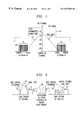
- FIG. 1shows a portion of a frequency spectrum of a frequency modulated (FM) hybrid, in-band on-channel (HIBOC) digital audio broadcasting (DAB) system.
- FMfrequency modulated
- HOBOCin-band on-channel
- DABdigital audio broadcasting
- FIG. 2illustrates the operation of an intermediate frequency (IF) analog host energy bandreject filter in accordance with the invention.
- IFintermediate frequency
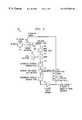
- FIG. 3shows a front end portion of an FM HIBOC receiver in which the invention may be implemented.
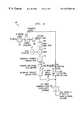
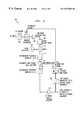
- FIGS. 4, 5 and 6show illustrative embodiments of an FM HIBOC receiver front end with IF host rejection filtering in accordance with the invention.
- FIG. 7shows an illustrative embodiment of an FM HIBOC receiver in which bandreject filter characteristics are controlled in accordance with feedback from a post-IF processing stage.
- the invention in the illustrative embodiment to be described belowprovides host rejection filtering for an exemplary frequency modulated (FM) hybrid in-band on-channel (HIBOC) digital audio broadcasting (DAB) system.
- FMfrequency modulated
- HOBOCin-band on-channel
- DABdigital audio broadcasting
- the filtering techniques of the inventionmay be utilized in a wide variety of different types of communication applications, including communications over the Internet and other computer networks, and over cellular multimedia, satellite, wireless cable, wireless local loop, high-speed wireless access and other types of communication systems.
- the inventionmay be utilized with signals transmitted over any desired type of communication channel or channels, such as, for example, frequency channels, time slots, etc.
- FIG. 1illustrates a portion of a frequency spectrum corresponding to a particular channel in an exemplary FM HIBOC DAB system.
- the portion of the spectrum shownincludes an analog host FM signal 10 with associated lower digital sideband 12 and upper digital sideband 14 .
- each of the sidebandsis approximately 75 kHz wide, and occupies a band between 125 kHz and 200 kHz from the center of the channel.
- the sidebands 12 and 14represent portions of the frequency spectrum used to transmit digital audio information in the HIBOC DAB system, and are also referred to herein as digital sidebands. As shown in FIG.
- each of the digital sidebands 12 , 14includes a plurality of digital subcarriers, which may be, e.g., orthogonal frequency division multiplexed (OFDM) carriers.
- An FCC mask 16specifies that the maximum power level of the digital sidebands 12 , 14 must be at least 25 dB below the maximum power of the analog host signal 10 .
- the invention in the illustrative embodiments to be described belowuses a bandreject filter arranged in an intermediate frequency (IF) processing stage of a digital receiver to remove a substantial portion of the analog FM host signal energy.
- IFintermediate frequency
- the average host energyis 20 to 30 dB higher than the energy in the digital sidebands.
- AGCautomatic gain control
- Another advantage of the insertion of a bandreject filter into an IF processing stage of an IBOC receiveris that the group delay characteristics of the filter may be designed to flatten or equalize the overall IF group delay performance for the digital sidebands. This can provide substantial performance improvements for digital sideband signals that carry information in their phase state(s).
- FIG. 2illustrates the manner in which a bandreject filter 20 in accordance with the invention can substantially remove the analog host energy located between the digital sidebands 12 and 14 without removing or distorting those digital signals.
- the bandreject filter 20is also referred to herein as a notch filter.
- the characteristics of filter 20may vary depending on factors such as modulation index, source modulation type, digital sideband configuration, etc., in the illustrative embodiment it should preferably remove at least approximately 10 to 25 dB of the analog host signal energy on a time-averaged basis while attenuating the digital sidebands by less than about 2 dB.
- the analog host energy 10 ′is much lower than the combined energies of the digital sidebands 12 and 14 .
- removal of the analog host energyfacilitates demodulation of the digital sidebands 12 and 14 .
- the bandreject filter 20may be implemented in one of a number of different locations in an intermediate frequency (IF) processing stage of an FM HIBOC receiver, as will be illustrated in conjunction with FIGS. 4 through 6 below.
- IFintermediate frequency
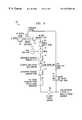
- FIG. 3shows an example of an RF/IF or “front end” portion of an FM HIBOC digital receiver 100 in which the above-described bandreject filter may be implemented, although the receiver 100 as shown in FIG. 3 does not include the bandreject filter.
- An RF processing stage of the receiver 100includes an RF roofing bandpass filter 102 , a variable attenuator 104 , a low noise amplifier (LNA) 106 , an image noise filter 108 , a mixer 110 and a local oscillator 112 .
- the variable attenuatorprovides an amount of input signal attenuation that varies in accordance with an AGC correction signal to be described below.
- the mixer 110downconverts the incoming RF signal to a corresponding IF signal which is input to an IF processing stage of the receiver 100 .
- the IF processing stage in this embodimentincludes a first IF bandpass filter 114 , an AGC amplifier 116 , a second IF bandpass filter 118 , an IF output buffer amplifier 120 , and an AGC detector and filter 122 .
- the AGC detector and filter 122generates the above-noted AGC correction signal for application to an attenuation control input of the variable attenuator 104 .
- the AGC correction signalis also applied to a gain control input of the AGC amplifier 116 .
- the output of the IF output buffer amplifierrepresents a level-controlled IF output that may be applied to an analog-to-digital converter (ADC) in a signal processing “back end” of the receiver 100 .
- ADCanalog-to-digital converter
- the AGC in the receiver front endthus operates on the sum total of the analog host and digital sideband signal energies.
- the host poweris usually dominant in this composite signal, i.e., usually containing more than 100 times the power present in the digital sideband signal, the analog host power tends to set the AGC operating point and, therefore, the output level of the composite signal supplied to the ADC.
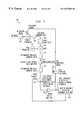
- FIG. 4shows a front end portion of an FM HIBOC digital receiver 140 in which a bandreject filter 142 is implemented in the IF processing stage at the output of the IF output buffer amplifier 120 , after a point which drives the AGC filter and detector 122 .
- the front end elements of the receiver 140are otherwise the same as those described above in conjunction with FIG. 3 .
- the AGC detector and filter 122 in receiver 140 of FIG. 4also samples both the analog host and digital sideband components of the composite FM HIBOC signal.
- the AGC operating pointis dominated by the typically much higher power in the analog host component.
- the bandreject filter 142 placed after the IF output buffer amplifierremoves a substantial portion of the analog host signal energy before the resulting filtered composite signal reaches the ADC in the receiver back end.
- this arrangementcan significantly improve the signal-to-interference ratio of the digital signal, and can also more efficiently utilize the dynamic range of the ADC.
- FIG. 5shows a front end portion of an FM HIBOC digital receiver 150 in which a bandreject filter 152 is implemented in the IF processing stage between the output of the IF output buffer amplifier 120 and an input of the AGC filter and detector 122 .
- the front end elements of the receiver 150are otherwise the same as those described above in conjunction with FIG. 3 .
- the bandreject filter 152does not remove the analog host signal energy from the level-controlled IF output that is applied to the AGC in the receiver back end. However, it removes the analog host signal energy from the AGC path such that the digital signal corresponding to the digital sidebands 12 , 14 , rather than the analog host signal, dominates the determination of an AGC operating point in the AGC circuitry.
- FIG. 6shows a front end portion of an FM HIBOC digital receiver 160 in which a bandreject filter 162 is implemented in the IF processing stage between an output of the second IF bandpass filter 118 and an input of the IF output buffer amplifier 120 .
- the AGC operating pointis determined primarily by the energy in the digital signal corresponding to the digital sidebands 12 , 14 of the FM HIBOC composite signal.
- the placement of the bandreject filter 162also results in suppression of the analog host signal component in the level-controlled IF output to the ADC, thereby improving signal-to-interference ratio of the digital signal and allowing the dynamic range of the ADC to be utilized more efficiently.
- a result similar to that obtained in the embodiment of FIG. 6could be obtained by placing a suitable bandreject filter in the RF processing stage of the receiver 160 , prior to the mixer 110 , as long as the filter is centered on the appropriate RF channel frequency.
- a suitable bandreject filterin the RF processing stage of the receiver 160 , prior to the mixer 110 , as long as the filter is centered on the appropriate RF channel frequency.
- such an RF implementation of the bandreject filtergenerally must be tunable to any RF channel of interest, whereas a bandreject filter placed in the IF processing stage can be a fixed filter centered at the IF center-of-channel frequency.
- the bandreject filters 20 , 142 , 152 and 162 in the above-described illustrative embodiments of the inventionmay be implemented using, e.g., lumped inductive-capacitive (LC) networks, or inductive-capacitive-resistive (LCR) networks. Such networks can be configured in a straightforward and well-known manner to provide the desired filtering characteristics described herein.
- the bandreject filtermay be a unitized bandreject filter in which the total rejection characteristic is realized at a single point in the IF or RF processing stage, or a distributed bandreject filter in which the total rejection characteristic is realized as a cascaded transfer function of multiple band reject elements arranged at different points in one or more processing stages.
- the bandreject filter phase and amplitude characteristicsmay be selected to optimize a tradeoff between analog host signal rejection and distortion of the digital sidebands, and can also be used to provide frequency domain equalization of the digital sidebands.
- the bandreject filter characteristicsmay be adjustable based on feedback from a digital signal processing element in the receiver back end.
- the width, attenuation and/or center frequency of the bandreject filtermay be varied based on the modulation and channel transmission characteristics of the analog host signal. This may be implemented, e.g., by switching in or out sections of a multi-section bandreject filter, by adjusting the Q of one or more resonant sections of the bandreject filter, and/or by tuning of various filter components through the use of varacters, transistors, positive-intrinsic-negative (PIN) diodes, voltage variable resistors, and other well-known conventional devices.
- PINpositive-intrinsic-negative
- FIG. 7shows a portion of an FM HIBOC receiver 170 in which characteristics of a bandreject fitter 172 are controlled in accordance with feedback from a post-IF processing stage 174 .
- the placement of the filter 172is the same as that of filter 162 in the FIG. 6 embodiment.
- the filter 172is an electronically-controllable filter that receives a feedback signal from the post-IF processing stage 174 .
- the feedback signalwhich may be analog or digital, controls the characteristics of the bandreject filter 172 for optimum receiver performance.
- controlled filter characteristicsinclude one or more of rejection bandwidth, rejection band attenuation and center frequency.
- the post-IF processing stage 174may be, e.g., a demodulation stage or other type of processing stage.
- a bandreject filter in accordance with the inventionmay be electronically removed from the signal path or suitably retuned or otherwise adjusted so as to permit reception of the analog host signal.
- the inventioncan improve the performance of digital signal reception, particularly in the presence of multipath reception conditions.
- the inventionreduces the need for post-ADC host rejection filtering, thereby simplifying the signal processing performance requirements in the receiver back end.
- FIGS. 3-7may be implemented using different RF and IF processing elements, in configurations other than those shown.
- a bandreject filter in accordance with the inventionmay be arranged in locations other than those shown, or in a combination of several locations, e.g., partially in an RF/IF signal path and partially in an AGC path before an AGC detector.
- the inventionis also applicable to other receiver architectures, such as those with multiple intermediate frequencies, in-phase/quadrature RF/IF processing or any other type of multi-phase RF/IF processing.
- Distributed or singular bandreject filteringmay be placed, in any one, some or all of the RF/IF paths of these architectures to realize improved performance and/or reduced cost.
- the bandreject filtercould be realized in the zero frequency IF stage as a highpass filter.
- the inventioncan be used with a wide variety of other types and arrangements of frequency spectra, e.g., spectra with more than two sidebands, etc., and can be applied to the reception of digital information other than audio, such as video or image information, data, or combinations of these and other types of information.
- the inventionmay be implemented in numerous applications other than FM HIBOC DAB systems, such as AM HIBOC DAB systems, Internet and satellite broadcasting systems, systems for simultaneous delivery of audio and data, etc.
Landscapes
- Engineering & Computer Science (AREA)
- Signal Processing (AREA)
- Circuits Of Receivers In General (AREA)
- Noise Elimination (AREA)
Abstract
Description
Claims (20)
Priority Applications (4)
| Application Number | Priority Date | Filing Date | Title |
|---|---|---|---|
| US09/430,948US6577688B1 (en) | 1999-11-01 | 1999-11-01 | Host rejection filtering in a digital audio broadcasting system |
| CA002323668ACA2323668C (en) | 1999-11-01 | 2000-10-17 | Host rejection filtering in a digital audio broadcasting system |
| EP00309328.3AEP1113604B1 (en) | 1999-11-01 | 2000-10-23 | Filtering method and apparatus for rejecting the host signal in a Digital Audio Broadcasting (DAB) system |
| JP2000334102AJP3919440B2 (en) | 1999-11-01 | 2000-11-01 | Method and apparatus for processing an analog-digital composite received signal |
Applications Claiming Priority (1)
| Application Number | Priority Date | Filing Date | Title |
|---|---|---|---|
| US09/430,948US6577688B1 (en) | 1999-11-01 | 1999-11-01 | Host rejection filtering in a digital audio broadcasting system |
Publications (1)
| Publication Number | Publication Date |
|---|---|
| US6577688B1true US6577688B1 (en) | 2003-06-10 |
Family
ID=23709775
Family Applications (1)
| Application Number | Title | Priority Date | Filing Date |
|---|---|---|---|
| US09/430,948Expired - LifetimeUS6577688B1 (en) | 1999-11-01 | 1999-11-01 | Host rejection filtering in a digital audio broadcasting system |
Country Status (4)
| Country | Link |
|---|---|
| US (1) | US6577688B1 (en) |
| EP (1) | EP1113604B1 (en) |
| JP (1) | JP3919440B2 (en) |
| CA (1) | CA2323668C (en) |
Cited By (9)
| Publication number | Priority date | Publication date | Assignee | Title |
|---|---|---|---|---|
| US20030153291A1 (en)* | 2002-02-08 | 2003-08-14 | Pioneer Corporation | AGC circuit of receiver using several local oscillation frequencies |
| US20030156666A1 (en)* | 2002-02-19 | 2003-08-21 | Nichols Gregory M. | Automatic gain control for digitized RF signal processing |
| US20030160904A1 (en)* | 2002-02-22 | 2003-08-28 | Syuuji Matsuura | Tuner that can convert television signal to signal suitable for QAM demodulation |
| US20030207669A1 (en)* | 2002-05-01 | 2003-11-06 | Kroeger Brian William | Adjacent channel interference mitigation for FM digital audio broadcasting receivers |
| US20040053593A1 (en)* | 2000-11-09 | 2004-03-18 | Siddall William Mark | Signal mixers |
| US20050162570A1 (en)* | 2002-04-26 | 2005-07-28 | Hall Edward A. | Tuner input filter with electronically adjustable center frequency for adapting to antenna characteristic |
| US20090215415A1 (en)* | 2004-09-08 | 2009-08-27 | Koninklijke Philips Electronics N.V. | Switch-able band-tracking input filter for combination tuner |
| US20100136966A1 (en)* | 2004-07-22 | 2010-06-03 | Frank Pergal | Wireless repeater with arbitary programmable selectivity |
| US20120225626A1 (en)* | 2009-11-17 | 2012-09-06 | Thomson Licensing | Reuse of a switch ic as a step attenuator |
Families Citing this family (2)
| Publication number | Priority date | Publication date | Assignee | Title |
|---|---|---|---|---|
| BR112012012103A2 (en)* | 2009-12-09 | 2016-04-05 | Thomson Licensing | method to protect satellite reception against intense ground signals |
| JP7215857B2 (en)* | 2018-09-11 | 2023-01-31 | 矢崎総業株式会社 | Amplifier unit and signal transmission system |
Citations (4)
| Publication number | Priority date | Publication date | Assignee | Title |
|---|---|---|---|---|
| US6125269A (en)* | 1996-01-10 | 2000-09-26 | U.S. Philips Corporation | TV FM receiver for multimedia applications |
| US6154505A (en)* | 1996-12-19 | 2000-11-28 | Matsushita Electric Industrial Co., Ltd. | Broadcast receiving apparatus |
| US6246698B1 (en)* | 1996-06-19 | 2001-06-12 | Digital Radio Express, Inc. | In-band on-channel digital broadcasting method and system |
| US6426780B1 (en)* | 1998-10-14 | 2002-07-30 | Samsung Electronics Co., Ltd. | DTV receiver with low-band final I-F signal filtered for suppressing co-channel interfering NTSC audio carrier |
Family Cites Families (3)
| Publication number | Priority date | Publication date | Assignee | Title |
|---|---|---|---|---|
| US5465396A (en) | 1993-01-12 | 1995-11-07 | Usa Digital Radio Partners, L.P. | In-band on-channel digital broadcasting |
| US5956624A (en) | 1994-07-12 | 1999-09-21 | Usa Digital Radio Partners Lp | Method and system for simultaneously broadcasting and receiving digital and analog signals |
| US5991334A (en)* | 1996-11-12 | 1999-11-23 | Lucent Technologies Inc. | Technique for simultaneous communications of analog frequency-modulated and digitally modulated signals using postcanceling scheme |
- 1999
- 1999-11-01USUS09/430,948patent/US6577688B1/ennot_activeExpired - Lifetime
- 2000
- 2000-10-17CACA002323668Apatent/CA2323668C/ennot_activeExpired - Fee Related
- 2000-10-23EPEP00309328.3Apatent/EP1113604B1/ennot_activeExpired - Lifetime
- 2000-11-01JPJP2000334102Apatent/JP3919440B2/ennot_activeExpired - Fee Related
Patent Citations (4)
| Publication number | Priority date | Publication date | Assignee | Title |
|---|---|---|---|---|
| US6125269A (en)* | 1996-01-10 | 2000-09-26 | U.S. Philips Corporation | TV FM receiver for multimedia applications |
| US6246698B1 (en)* | 1996-06-19 | 2001-06-12 | Digital Radio Express, Inc. | In-band on-channel digital broadcasting method and system |
| US6154505A (en)* | 1996-12-19 | 2000-11-28 | Matsushita Electric Industrial Co., Ltd. | Broadcast receiving apparatus |
| US6426780B1 (en)* | 1998-10-14 | 2002-07-30 | Samsung Electronics Co., Ltd. | DTV receiver with low-band final I-F signal filtered for suppressing co-channel interfering NTSC audio carrier |
Non-Patent Citations (3)
| Title |
|---|
| B. W. Kroeger and A.J. Vigil, "Improved IBOC DAB Technology for AM and FM Broadcasting," SBE Engineering Conference, pp. 1-10, 1996. |
| B. W. Kroeger and D. Cammarata, "Robust Modem and Coding Techniques for FM Hybrid IBOC DAB," IEEE Transactions on Broadcasting, vol. 43, No. 4, pp. 412-420, Dec. 1997. |
| B. W. Kroeger and P.J. Peyla, "Compatibility of FM Hybrid In-Band On-Channel (IBOC) System for Digital Audio Broadcast," IEEE Transactions on Broadcasting, vol. 43, No. 4, pp. 421-430, Dec. 1997. |
Cited By (20)
| Publication number | Priority date | Publication date | Assignee | Title |
|---|---|---|---|---|
| US20040053593A1 (en)* | 2000-11-09 | 2004-03-18 | Siddall William Mark | Signal mixers |
| US20030153291A1 (en)* | 2002-02-08 | 2003-08-14 | Pioneer Corporation | AGC circuit of receiver using several local oscillation frequencies |
| US7035610B2 (en)* | 2002-02-08 | 2006-04-25 | Pioneer Corporation | AGC circuit of receiver using several local oscillation frequencies |
| US20030156666A1 (en)* | 2002-02-19 | 2003-08-21 | Nichols Gregory M. | Automatic gain control for digitized RF signal processing |
| US7088794B2 (en)* | 2002-02-19 | 2006-08-08 | The United States Of America As Represented By The Secretary Of The Navy | Automatic gain control for digitized RF signal processing |
| US20030160904A1 (en)* | 2002-02-22 | 2003-08-28 | Syuuji Matsuura | Tuner that can convert television signal to signal suitable for QAM demodulation |
| US20050162570A1 (en)* | 2002-04-26 | 2005-07-28 | Hall Edward A. | Tuner input filter with electronically adjustable center frequency for adapting to antenna characteristic |
| US20030207669A1 (en)* | 2002-05-01 | 2003-11-06 | Kroeger Brian William | Adjacent channel interference mitigation for FM digital audio broadcasting receivers |
| WO2003094350A1 (en)* | 2002-05-01 | 2003-11-13 | Ibiquity Digital Corporation | Adjacent channel interference mitigation for fm digital audio broadcasting receivers |
| US7221917B2 (en) | 2002-05-01 | 2007-05-22 | Ibiquity Digital Corporation | Adjacent channel interference mitigation for FM digital audio broadcasting receivers |
| US8755740B2 (en)* | 2004-07-22 | 2014-06-17 | Frank Pergal | Wireless repeater with arbitary programmable selectivity |
| US20100136966A1 (en)* | 2004-07-22 | 2010-06-03 | Frank Pergal | Wireless repeater with arbitary programmable selectivity |
| US8290430B2 (en)* | 2004-07-22 | 2012-10-16 | Frank Pergal | Wireless repeater with arbitary programmable selectivity |
| US9407351B2 (en) | 2004-07-22 | 2016-08-02 | Frank Pergal | Wireless repeater with arbitrary programmable selectivity |
| US10785660B2 (en) | 2004-07-22 | 2020-09-22 | Strong Force Iot Portfolio 2016, Llc | Wireless repeater with arbitrary programmable selectivity |
| US11057781B2 (en) | 2004-07-22 | 2021-07-06 | Strong Force Iot Portfolio 2016, Llc | Wireless repeater with arbitrary programmable selectivity |
| US12096239B2 (en) | 2004-07-22 | 2024-09-17 | Strong Force Iot Portfolio 2016, Llc | Wireless repeater with arbitrary programmable selectivity |
| US8155609B2 (en)* | 2004-09-08 | 2012-04-10 | Nxp B.V. | Switch-able band-tracking input filter for combination tuner |
| US20090215415A1 (en)* | 2004-09-08 | 2009-08-27 | Koninklijke Philips Electronics N.V. | Switch-able band-tracking input filter for combination tuner |
| US20120225626A1 (en)* | 2009-11-17 | 2012-09-06 | Thomson Licensing | Reuse of a switch ic as a step attenuator |
Also Published As
| Publication number | Publication date |
|---|---|
| JP3919440B2 (en) | 2007-05-23 |
| CA2323668C (en) | 2004-12-28 |
| CA2323668A1 (en) | 2001-05-01 |
| JP2001189673A (en) | 2001-07-10 |
| EP1113604A3 (en) | 2003-10-29 |
| EP1113604B1 (en) | 2017-01-25 |
| EP1113604A2 (en) | 2001-07-04 |
Similar Documents
| Publication | Publication Date | Title |
|---|---|---|
| US5745846A (en) | Channelized apparatus for equalizing carrier powers of multicarrier signal | |
| US20020065060A1 (en) | Radio receiver | |
| US8457574B2 (en) | Front-end integrated circuit for television receivers | |
| EP1290469B1 (en) | Integrated gps/dab receiver | |
| US20040229561A1 (en) | Tuner | |
| EP2086116A2 (en) | Method and arrangement for signal processing in a receiver that can be tuned to different carriers | |
| EP1142139B1 (en) | A device and method for reducing the amplitude of signals | |
| JP2001127735A (en) | Inter-fa power level controller of rf receiver of cdma type mobile communication base station system | |
| US6577688B1 (en) | Host rejection filtering in a digital audio broadcasting system | |
| US20080214137A1 (en) | Receiver For Wireless Communications | |
| AU3196399A (en) | Method and apparatus for receiving a plurality of signals having different frequency bandwidths | |
| US7116958B1 (en) | Interference rejection in a radio receiver | |
| US5933770A (en) | Low distortion tuner-receiver with bridge-type diplexer | |
| KR100560192B1 (en) | Digital Broadcast Receiver | |
| EP1383248B1 (en) | Superheterodyne receiver | |
| JP4123320B2 (en) | Receiver and its IC | |
| US10644734B2 (en) | Low-IF receiver | |
| US8594559B2 (en) | Combined satellite radio receiver | |
| US6813310B1 (en) | Receiver and IC thereof capable of receiving analog broadcast and digital broadcast | |
| EP1318603B1 (en) | FM receiver with digital bandwidth control | |
| HK1040330A1 (en) | Filtering method of receiving frequency band and receiver | |
| US7343142B2 (en) | Tuner | |
| JP2002359569A (en) | Broadcasting receiver | |
| JP3804093B2 (en) | Receiver | |
| KR100276258B1 (en) | Digital satellite broadcasting tuner |
Legal Events
| Date | Code | Title | Description |
|---|---|---|---|
| AS | Assignment | Owner name:LUCENT TECHNOLOGIES, INC., NEW JERSEY Free format text:ASSIGNMENT OF ASSIGNORS INTEREST;ASSIGNOR:NEASE, GREG ALAN;REEL/FRAME:013454/0797 Effective date:19991029 | |
| STCF | Information on status: patent grant | Free format text:PATENTED CASE | |
| FEPP | Fee payment procedure | Free format text:PAYOR NUMBER ASSIGNED (ORIGINAL EVENT CODE: ASPN); ENTITY STATUS OF PATENT OWNER: LARGE ENTITY | |
| FPAY | Fee payment | Year of fee payment:4 | |
| FEPP | Fee payment procedure | Free format text:PAYER NUMBER DE-ASSIGNED (ORIGINAL EVENT CODE: RMPN); ENTITY STATUS OF PATENT OWNER: LARGE ENTITY Free format text:PAYOR NUMBER ASSIGNED (ORIGINAL EVENT CODE: ASPN); ENTITY STATUS OF PATENT OWNER: LARGE ENTITY | |
| FPAY | Fee payment | Year of fee payment:8 | |
| AS | Assignment | Owner name:CREDIT SUISSE AG, NEW YORK Free format text:SECURITY INTEREST;ASSIGNOR:ALCATEL-LUCENT USA INC.;REEL/FRAME:030510/0627 Effective date:20130130 | |
| AS | Assignment | Owner name:ALCATEL-LUCENT USA INC., NEW JERSEY Free format text:RELEASE BY SECURED PARTY;ASSIGNOR:CREDIT SUISSE AG;REEL/FRAME:033950/0261 Effective date:20140819 | |
| FPAY | Fee payment | Year of fee payment:12 |