US6560198B1 - Method and system for stabilized random early detection using packet sampling - Google Patents
Method and system for stabilized random early detection using packet samplingDownload PDFInfo
- Publication number
- US6560198B1 US6560198B1US09/186,241US18624198AUS6560198B1US 6560198 B1US6560198 B1US 6560198B1US 18624198 AUS18624198 AUS 18624198AUS 6560198 B1US6560198 B1US 6560198B1
- Authority
- US
- United States
- Prior art keywords
- packet
- packets
- buffer
- node
- connection
- Prior art date
- Legal status (The legal status is an assumption and is not a legal conclusion. Google has not performed a legal analysis and makes no representation as to the accuracy of the status listed.)
- Expired - Lifetime
Links
- 238000000034methodMethods0.000titleclaimsabstractdescription35
- 238000005070samplingMethods0.000titleclaimsabstractdescription13
- 238000001514detection methodMethods0.000titledescription4
- 239000000872bufferSubstances0.000claimsabstractdescription139
- 238000004891communicationMethods0.000claimsabstractdescription14
- 230000000087stabilizing effectEffects0.000claimsdescription7
- 230000005540biological transmissionEffects0.000description4
- 230000007423decreaseEffects0.000description4
- 238000010586diagramMethods0.000description4
- 230000008859changeEffects0.000description3
- 230000006870functionEffects0.000description3
- 230000008901benefitEffects0.000description2
- 238000009499grossingMethods0.000description2
- 238000012986modificationMethods0.000description2
- 230000004048modificationEffects0.000description2
- 230000002776aggregationEffects0.000description1
- 238000004220aggregationMethods0.000description1
- 230000006399behaviorEffects0.000description1
- 230000003139buffering effectEffects0.000description1
- 230000003247decreasing effectEffects0.000description1
- 230000001419dependent effectEffects0.000description1
- 238000012544monitoring processMethods0.000description1
- 230000006855networkingEffects0.000description1
- 230000008569processEffects0.000description1
- 238000011084recoveryMethods0.000description1
- 238000012546transferMethods0.000description1
Images



Classifications
- H—ELECTRICITY
- H04—ELECTRIC COMMUNICATION TECHNIQUE
- H04L—TRANSMISSION OF DIGITAL INFORMATION, e.g. TELEGRAPHIC COMMUNICATION
- H04L47/00—Traffic control in data switching networks
- H04L47/10—Flow control; Congestion control
- H04L47/32—Flow control; Congestion control by discarding or delaying data units, e.g. packets or frames
- H—ELECTRICITY
- H04—ELECTRIC COMMUNICATION TECHNIQUE
- H04L—TRANSMISSION OF DIGITAL INFORMATION, e.g. TELEGRAPHIC COMMUNICATION
- H04L47/00—Traffic control in data switching networks
- H04L47/10—Flow control; Congestion control
- H—ELECTRICITY
- H04—ELECTRIC COMMUNICATION TECHNIQUE
- H04L—TRANSMISSION OF DIGITAL INFORMATION, e.g. TELEGRAPHIC COMMUNICATION
- H04L47/00—Traffic control in data switching networks
- H04L47/10—Flow control; Congestion control
- H04L47/11—Identifying congestion
- H—ELECTRICITY
- H04—ELECTRIC COMMUNICATION TECHNIQUE
- H04L—TRANSMISSION OF DIGITAL INFORMATION, e.g. TELEGRAPHIC COMMUNICATION
- H04L47/00—Traffic control in data switching networks
- H04L47/10—Flow control; Congestion control
- H04L47/24—Traffic characterised by specific attributes, e.g. priority or QoS
- H04L47/2425—Traffic characterised by specific attributes, e.g. priority or QoS for supporting services specification, e.g. SLA
- H04L47/2433—Allocation of priorities to traffic types
- H—ELECTRICITY
- H04—ELECTRIC COMMUNICATION TECHNIQUE
- H04L—TRANSMISSION OF DIGITAL INFORMATION, e.g. TELEGRAPHIC COMMUNICATION
- H04L47/00—Traffic control in data switching networks
- H04L47/10—Flow control; Congestion control
- H04L47/24—Traffic characterised by specific attributes, e.g. priority or QoS
- H04L47/2441—Traffic characterised by specific attributes, e.g. priority or QoS relying on flow classification, e.g. using integrated services [IntServ]
- H—ELECTRICITY
- H04—ELECTRIC COMMUNICATION TECHNIQUE
- H04L—TRANSMISSION OF DIGITAL INFORMATION, e.g. TELEGRAPHIC COMMUNICATION
- H04L47/00—Traffic control in data switching networks
- H04L47/10—Flow control; Congestion control
- H04L47/30—Flow control; Congestion control in combination with information about buffer occupancy at either end or at transit nodes
- H—ELECTRICITY
- H04—ELECTRIC COMMUNICATION TECHNIQUE
- H04L—TRANSMISSION OF DIGITAL INFORMATION, e.g. TELEGRAPHIC COMMUNICATION
- H04L49/00—Packet switching elements
- H04L49/50—Overload detection or protection within a single switching element
- H04L49/505—Corrective measures
- H—ELECTRICITY
- H04—ELECTRIC COMMUNICATION TECHNIQUE
- H04L—TRANSMISSION OF DIGITAL INFORMATION, e.g. TELEGRAPHIC COMMUNICATION
- H04L12/00—Data switching networks
- H04L12/54—Store-and-forward switching systems
- H04L12/56—Packet switching systems
- H04L12/5601—Transfer mode dependent, e.g. ATM
- H04L2012/5638—Services, e.g. multimedia, GOS, QOS
- H04L2012/5646—Cell characteristics, e.g. loss, delay, jitter, sequence integrity
- H04L2012/5647—Cell loss
- H04L2012/5648—Packet discarding, e.g. EPD, PTD
Definitions
- the present inventiongenerally relates to congestion control in communication networks, and more particularly, to a method and system for buffer management in communication networks.
- Communication networkstransport information in the form of packets, frames, and/or cells from source nodes to destination nodes over transmission links.
- the Internetfor example, uses routers for routing packets to their respective destination nodes. Routers typically have buffers at their input and output ports for buffering the packets during the periods when the number of packets in the routers exceeds the bandwidth capacity at the output ports.
- the Internetuses a variety of protocols for transporting packets including congestion control and error recovery.
- One widely used protocolis the Transmission Control Protocol (TCP), which uses a dynamic window based congestion control method.
- TCP congestion control methodthe source and destination nodes are the only active participants in controlling traffic congestion in the network.
- a source node using the TCP congestion control methoduses information about packet losses as congestion indicators.
- the TCP congestion control methodis different from other congestion control techniques, for example DECBIT, where the network actively participates in controlling congestion by setting congestion indicator bits in packets when the network detects congestion.
- a nodefor example a router or a switch, which uses a TCP unaware buffer management scheme, simply discards arriving packets when its buffer is full. Unless the node buffer has a large capacity, such buffer management schemes generally reduce the network throughput. Also, the network allocates less bandwidth to connections that have long round-trip times than to connections with short round-trip times.
- REDRandom Early Detection
- MSSMaximum Segment Size
- the congestion windowdecreases by 3 MSSs to 3 MSSs, and after 3 to 6 round-trip times, the congestion window is back to its original size of 6 MSSs.
- the congestion windowdecreases by 500 MSSs to 500 MSSs, and it takes 500 to 1000 round-trip times before the congestion window is back to its original size of 1000 MSSs.
- a nodewould need to know whether a specific high buffer content is caused by a few connections with large congestion windows or by a large number of connections with small congestion windows.
- the formerrequires a small packet discard rate, whereas the latter requires a high packet discard rate.
- One known solutionis to maintain at each node a list of the currently active connections that are supported by the node. This solution requires per connection state information, which would be impractical when the number of connections is large or when it is desired to keep the cost of the node low while providing tolerable network performance.
- Methods and systems consistent with the present inventionestimate the number of active connections (or flows) in a node in a communications network without maintaining state information on each connection by sampling one or more packets in a buffer in the node when the node receives a packet, determining the number of the sampled packets that are associated with the same connection as the received first packet, and estimating the number of the active connections in the node based on the determined number of the sampled packets.
- Such methods and systemsstabilize the buffer occupancy by estimating the number of active connections in the node based on a sampling of the packets in the buffer when the node receives the packet, determining a probability for discarding the received packet based on the estimated number of the active connections and the recent buffer occupancy, and discarding the received packet according to the determined probability.
- the buffer occupancymay be expressed in terms of, for example, the fraction of the buffer space that is occupied by packets.
- such methods and systemsmay collect certain state information associated with that connection, and monitor the connection based on the collected state information. When the state information collected over a predetermined interval of time is less than a second predetermined threshold, such methods and systems terminate the collection of state information associated with the connection.
- the present inventionWith the present invention, the number of packets at which the buffer occupancy of a node stabilizes becomes less dependent on the number of active connections in the node. Furthermore, the present invention reduces the amount of state information that the node has to maintain for each connection. Finally, by stabilizing the buffer occupancy of the node, the amount of jitter in the network is reduced.
- FIG. 1is a block diagram of a communications network in accordance with an embodiment of the invention
- FIG. 2is a block diagram of a node in a communications network in accordance with an embodiment of the invention
- FIG. 3is a flow chart of the steps performed by a node for stabilizing its buffer occupancy in accordance with an embodiment of the invention.
- FIG. 4is a flow chart of the steps performed by a node for estimating the number of active connections in the node in accordance with an embodiment of the invention.
- a node in a communications networkestimates the number of active connections in the node without maintaining state information on each connection as follows: The node samples one or more packets in a buffer in the node when the node receives a packet, and determines the number of the sampled packets that are associated with the same connection as the received packet. Based on the determined number of the sampled packets, the node then estimates the number of the active connections in the node. Furthermore, the node determines a probability for discarding the received packet based on the estimated number of the active connections and the recent buffer occupancy, and discards the received packet according to the determined probability. Accordingly through this method, the node stabilizes the buffer occupancy.
- FIG. 1is a block diagram of a communications network 100 in accordance with an embodiment of the invention.
- Communications network 100comprises nodes 110 a and 110 b , transmission link 115 , sources 120 k through 120 k , and sources 130 l through 130 k .
- Network 100may be any type of packet-switched network including, for example, the Internet, a frame relay network, or an Asynchronous Transfer Mode (ATM) network.
- Nodes 110 a and 110 beach may include, for example, a router, bridge, or a switching system.
- Sources 120 l - 120 kinterface to node 110 a via links 112 l - 112 k , respectively.
- Sources 130 l - 130 kinterface to node 110 b via links 114 l - 114 k , respectively.
- Sources 120 1 - 120 k and 130 1 - 130 kmay include any equipment capable of transmitting and receiving packetized information in the form of voice, data, and/or video. Packetized information herein broadly may include packets, frames, and or cells.
- FIG. 2is a block diagram of node 110 a in accordance with an embodiment of the invention.
- node 110comprises processor 200 connected via bus 220 to memory 210 , output port 230 , and input port 240 .
- Output port 230interfaces with link 115 .
- Input port 240interfaces with links 112 l - 112 k.
- Memory 210includes buffer manager 212 and buffer 214 .
- Buffer manager 212includes instructions in the form of software for managing the contents of buffer 214 , which processor 200 executes. Alternatively, the functionalities of buffer manager 212 and buffer 214 may be implemented in hardware or as part of output port 230 in the form of hardware or software. Buffer manager 212 processes the packets received by input port 240 , and stores them in buffer 214 before they are transmitted via output port 230 .
- Secondary storage 250comprises a computer readable medium such as a disk drive and a tape drive. From the tape drive, software and data may be loaded onto the disk drive, which can then be copied into memory 210 . Similarly, software and data in memory 210 may be copied onto the disk drive, which can then be loaded onto the tape drive.
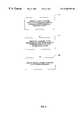
- FIG. 3is a flow chart of the steps performed by buffer manager 212 for stabilizing its buffer occupancy in accordance with an embodiment of the invention.
- buffer manager 212estimates the number of active connections in node 110 a by statistically sampling the packets in buffer 214 (step 300 ).
- Buffer manager 212determines a probability for discarding the packet based on the estimated number of active connections in node 110 a (step 310 ).
- buffer manager 212determines whether to discard the packet according to the determined discarding probability (step 330 ). If buffer manager 212 does not discard the packet, it stores the packet in buffer 214 before transmitting the packet via output port 230 .
- FIG. 4is a flow chart of the steps performed by buffer manager 212 for estimating the number of active connections (step 300 ) in accordance with an embodiment of the invention.
- Buffer manager 212statistically samples, for example randomly selects, one or more packets in buffer 214 (step 400 ). Alternatively, buffer manager 212 may statistically sample a subset of the packets in buffer 214 .
- buffer manager 212may sample cells in buffer 214 using a method that minimizes the number of statistically sampled cells that are associated with the same frame as an arriving cell. Thus, if there are q cells in buffer 214 and q is sufficiently large, buffer manager 212 may not sample the last few hundred cells in buffer 214 .
- IPInternet Protocol
- Buffer manager 212determines the number of randomly selected packets that are associated with the same connection as the received packet (step 410 ). This determined number herein is referred to as the number of hits. Buffer manager 212 may determine that two packets are associated with the same connection when they each have the same origination address, origination port number, destination address, destination port number, and protocol identifier. Alternatively, buffer manager 212 may determine that two packets are associated with the same connection when they each have the same destination address, regardless of their respective origination addresses. The specific method for determining the sameness of the connections may, in part, be determined by the level of aggregation in the connections. For example, in an IP network the same connection may include one or more flows. Alternatively, in an ATM network the same connection may include one or more virtual circuits or a virtual path.
- buffer manager 212estimates the number of active connections in node 110 a (step 420 ).
- K(t)is the number of packets in buffer 214 against which buffer manager 214 samples packet t
- J(t)is the number of sampled packets in buffer 214 that are associated with the same connection as the received packet t
- D(t ⁇ 1)is the flow factor when packet (t ⁇ 1) arrived at node 110 a
- D(0)is initialized to, for example, 0.
- ⁇is the smoothing constant of an exponential smoothing scheme, and has a value of, for example, 1/B, where B is the capacity of buffer 214 expressed in terms of average packet size. For example, in an embodiment where buffer 214 has a capacity of 1 MBytes and the average packet size is 300 Bytes/packet, 1/B may be selected to be 0.0003 (300 Bytes/1 MBytes).
- buffer manager 212uses 1/D(t) as an estimate of the effective number of active connections in node 110 a when packet t arrives at node 110 a .
- C 1is a function of buffer 214 occupancy q
- C 2 and C 3are constants
- K(t)is the number of packets in buffer 214 against which buffer manager 214 samples packet t
- J(t)is the number of sampled packets in buffer 214 that are associated with the same connection as packet t.
- Table 1illustrates discrete values of C 1 as a function of buffer 214 occupancy q in accordance with an embodiment of the invention.
- C 1may change gradually as a function of buffer 214 occupancy q.
- buffer 214 capacity Bis 400 Kbytes
- constants C 2 and C 3are equal to 256 and 16, respectively.
- buffer manager 212may determine discard probabilities preferably in the range of 0.09 to 0.15. Alternatively, buffer manager 212 may determine discard probabilities in any other range, as long as that range is suitable for achieving a desired buffer 214 occupancy q in a particular embodiment of the invention.
- buffer manager 212may monitor and collect certain state information associated with that connection.
- the state informationmay include, for example, the interval of time or a subset of the interval of the time the connection is monitored, the number of packets that are associated with the connection and that arrive during the interval, and/or the arrival rate of packets associated with the connection.
- Buffer manager 212monitors the connection until it determines that the state information collected over a predetermined interval of time, for example the arrival rate of packets associated with the connection, is less than a second predetermined threshold. Accordingly, buffer manager 212 would monitor and maintain in memory 210 only, for example, the arrival rate of packets associated with the connection and only as long as the arrival rate collected over the predetermined interval of time is greater than or equal to the second predetermined threshold. As an illustration, below are three examples for identifying such connections. When buffer manager 212 determines that the state information collected over the predetermined interval of time is less than the second predetermined threshold, buffer manager 212 terminates the monitoring and collection of state information associated with that connection.
- buffer manager 212may set a time-out period of a few buffer drain times when buffer manager 212 determines a hit associated with a connection. Specifically, when buffer manager 212 determines that at time ⁇ a connection has a hit, buffer manager 212 sets a penalty flag associated with the connection for the duration of the time-out period. When node 110 a receives a packet associated with the connection while the penalty flag associated with that connection is set, buffer manager 212 determines whether to admit or discard the received packet based on a set of rules, examples of which are described below in detail. When the time-out period expires, buffer manager 212 removes the penalty flag associated with the connection.
- buffer manager 212maintains two packet arrival thresholds I low and I high for each connection in node 110 a .
- Buffer manager 212may determine I low and I high based on buffer 214 occupancy q and D(t). For example, buffer manager 212 may compute I low and I high based on some multiple of the product of output port 230 bandwidth that node 110 a allocates to active connections and D(t).
- Buffer manager 212records the time ⁇ when it sets the penalty flag associated with the connection and the number of packets associated with the connection that arrive while the penalty flag is set. Buffer manager 212 also determines the average arrival rate of packets associated with the connection by, for example, dividing the number of arriving packets associated with the connection by the amount of time elapsed since time ⁇ . When the average arrival rate of packets falls below I low , buffer manager 212 resets the penalty flag associated with the connection. While the average arrival rate exceeds I high and the penalty flag is set, buffer manager 212 discards all arriving packets that are associated with the connection.
- buffer manager 212maintains two time-out periods, TO 1 and TO 2 , each of which may depend on the buffer occupancy and D(t).
- TO 1may be a fraction of one buffer drain time, for example, 1 ⁇ 3, and TO 2 may be equal to or greater than TO 1 .
- buffer manager 212determines a hit for an arriving packet associated with a connection that does not have a penalty flag set, buffer manager 212 admits the arriving packet into buffer 214 and then sets a penalty flag associated with the connection for a period of length TO 1 .
- buffer manager 212determines a hit for an arriving packet associated with a connection while the penalty flag is set, buffer manager 212 discards the packet, and extends the time-out period by TO 2 . Accordingly, the connections that space their packets by more than, for example, 2 ⁇ 3 of buffer drain time remain on the average unaffected. Buffer manager 212 may set the duration of a time-out period to be, for example, proportional to the throughput that a connection is allowed to achieve. Since buffer manager 212 does not discard the initial packet that sets the penalty flag associated with a connection, buffer manager 212 reduces the likelihood of discarding two successive packets associated with connections that sufficiently space their packets.
- buffer manager 212when buffer manager 212 determines a hit for an arriving packet, buffer manager 212 discards the packet, and sets the penalty flag associated with the connection for a period of time TO 1 . However, buffer manager 212 does not discard the next arriving packet associated with that connection while the penalty flag is set. Instead, buffer manager 212 extends the penalty period by TO 2 . From there on, while the penalty flag is set, buffer manager 212 discards all arriving packets associated with the connection and extends the time-out period to TO 2 .
Landscapes
- Engineering & Computer Science (AREA)
- Computer Networks & Wireless Communication (AREA)
- Signal Processing (AREA)
- Data Exchanges In Wide-Area Networks (AREA)
Abstract
Description


| TABLE 1 | |
| q (KBytes) | C1(q) |
| q < 200 | 0 | |
| 200 ≦ | q < 225 | 2−18 |
| 225 ≦ | q < 250 | 2−17 |
| 250 ≦ | q < 275 | 2−16 |
| 275 ≦ | q < 300 | 2−15 |
| 300 ≦ | q < 325 | 2−14 |
| 325 ≦ | q < 350 | 2−13 |
| 350 ≦ | q < 375 | 2−12 |
| 375 ≦ | q < 400 | 2−11 |
| q = 400 | ∞ | |
Claims (7)
Priority Applications (1)
| Application Number | Priority Date | Filing Date | Title |
|---|---|---|---|
| US09/186,241US6560198B1 (en) | 1997-11-07 | 1998-11-05 | Method and system for stabilized random early detection using packet sampling |
Applications Claiming Priority (2)
| Application Number | Priority Date | Filing Date | Title |
|---|---|---|---|
| US6489597P | 1997-11-07 | 1997-11-07 | |
| US09/186,241US6560198B1 (en) | 1997-11-07 | 1998-11-05 | Method and system for stabilized random early detection using packet sampling |
Publications (1)
| Publication Number | Publication Date |
|---|---|
| US6560198B1true US6560198B1 (en) | 2003-05-06 |
Family
ID=26745007
Family Applications (1)
| Application Number | Title | Priority Date | Filing Date |
|---|---|---|---|
| US09/186,241Expired - LifetimeUS6560198B1 (en) | 1997-11-07 | 1998-11-05 | Method and system for stabilized random early detection using packet sampling |
Country Status (1)
| Country | Link |
|---|---|
| US (1) | US6560198B1 (en) |
Cited By (31)
| Publication number | Priority date | Publication date | Assignee | Title |
|---|---|---|---|---|
| US20020163914A1 (en)* | 2001-05-01 | 2002-11-07 | Dooley David L. | Network switch port with weighted random early discard |
| US20040167555A1 (en)* | 2001-07-23 | 2004-08-26 | Fos Holding S.A. | Device for separating the epithelium layer from the surface of the cornea of an eye |
| US6785240B1 (en)* | 2000-06-02 | 2004-08-31 | Lucent Technologies Inc. | Method for estimating the traffic matrix of a communication network |
| US6904015B1 (en)* | 2000-09-01 | 2005-06-07 | Force10 Networks, Inc. | Congestion avoidance profiles in a packet switching system |
| US6917585B1 (en)* | 1999-06-02 | 2005-07-12 | Nortel Networks Limited | Method and apparatus for queue management |
| US6965573B1 (en)* | 1999-10-22 | 2005-11-15 | Nec Corporation | Network system |
| US6996062B1 (en)* | 2001-02-28 | 2006-02-07 | 3Com Corporation | Policy-based weighted random early detection method for avoiding congestion in internet traffic |
| US20060087989A1 (en)* | 2004-10-22 | 2006-04-27 | Cisco Technology, Inc., A Corporation Of California | Network device architecture for consolidating input/output and reducing latency |
| US20060098589A1 (en)* | 2004-10-22 | 2006-05-11 | Cisco Technology, Inc. | Forwarding table reduction and multipath network forwarding |
| US20060098681A1 (en)* | 2004-10-22 | 2006-05-11 | Cisco Technology, Inc. | Fibre channel over Ethernet |
| US20060101140A1 (en)* | 2004-10-22 | 2006-05-11 | Cisco Technology, Inc. | Ethernet extension for the data center |
| US7050435B1 (en)* | 1999-06-09 | 2006-05-23 | Cisco Technology, Inc. | Traffic monitor using leaky bucket with variable fill |
| US20060114937A1 (en)* | 2004-11-30 | 2006-06-01 | Broadcom Corporation | Method and apparatus for direct memory access based on class-of-service |
| US20060171318A1 (en)* | 2004-10-22 | 2006-08-03 | Cisco Technology, Inc. | Active queue management methods and devices |
| US20060251067A1 (en)* | 2004-10-22 | 2006-11-09 | Cisco Technology, Inc., A Corporation Of California | Fibre channel over ethernet |
| US7149187B1 (en)* | 2000-12-28 | 2006-12-12 | Cisco Technology, Inc. | Random early detection policer using randomization of packet drops |
| US7170855B1 (en)* | 2002-01-03 | 2007-01-30 | Ning Mo | Devices, softwares and methods for selectively discarding indicated ones of voice data packets received in a jitter buffer |
| US20070081454A1 (en)* | 2005-10-11 | 2007-04-12 | Cisco Technology, Inc. A Corporation Of California | Methods and devices for backward congestion notification |
| US7283470B1 (en)* | 2002-01-25 | 2007-10-16 | Juniper Networks, Inc. | Systems and methods for dropping data using a drop profile |
| US20080186968A1 (en)* | 2007-02-02 | 2008-08-07 | Cisco Technology, Inc. | Triple-tier anycast addressing |
| US20080267068A1 (en)* | 2007-04-30 | 2008-10-30 | Lakshman Tirunell V | Lightweight bandwidth-management scheme for elastic traffic |
| US20090052326A1 (en)* | 2007-08-21 | 2009-02-26 | Cisco Technology, Inc., A Corporation Of California | Backward congestion notification |
| US20090245104A1 (en)* | 2008-03-27 | 2009-10-01 | Fujitsu Limited | Apparatus and method for controlling buffering of an arrival packet |
| US7636307B2 (en)* | 2003-03-13 | 2009-12-22 | Alcatel Lucent | Random early packet discard (RED) |
| US20110205895A1 (en)* | 2010-02-25 | 2011-08-25 | Mingyu Chen | Method of estimating congestion |
| US20110282980A1 (en)* | 2010-05-11 | 2011-11-17 | Udaya Kumar | Dynamic protection of a resource during sudden surges in traffic |
| US20120030348A1 (en)* | 2009-02-06 | 2012-02-02 | Xingang Shi | System and method for catching top hosts |
| US8149710B2 (en) | 2007-07-05 | 2012-04-03 | Cisco Technology, Inc. | Flexible and hierarchical dynamic buffer allocation |
| US20130163445A1 (en)* | 2011-12-22 | 2013-06-27 | Partha Majumdar | Testing TCP Connection Rate |
| US10230608B2 (en)* | 2017-02-21 | 2019-03-12 | Red Hat, Inc. | RPS support for NFV by system call bypass |
| US11018996B2 (en)* | 2018-05-21 | 2021-05-25 | Fujitsu Limited | Packet transfer device and packet transfer method |
Citations (6)
| Publication number | Priority date | Publication date | Assignee | Title |
|---|---|---|---|---|
| US5430709A (en)* | 1992-06-17 | 1995-07-04 | Hewlett-Packard Company | Network monitoring method and apparatus |
| US5938749A (en)* | 1996-06-03 | 1999-08-17 | Whittaker Communications Inc. | Queue measurement apparatus and methodology |
| US5995486A (en)* | 1994-09-17 | 1999-11-30 | International Business Machines Corporation | Flow control method and apparatus for cell-based communication networks |
| US6034945A (en)* | 1996-05-15 | 2000-03-07 | Cisco Technology, Inc. | Method and apparatus for per traffic flow buffer management |
| US6122252A (en)* | 1996-06-21 | 2000-09-19 | Hitachi, Ltd. | Packet switching device and cell transfer control method |
| US6141323A (en)* | 1996-06-03 | 2000-10-31 | Whittaker Corporation | Closed loop congestion control using a queue measurement system |
- 1998
- 1998-11-05USUS09/186,241patent/US6560198B1/ennot_activeExpired - Lifetime
Patent Citations (6)
| Publication number | Priority date | Publication date | Assignee | Title |
|---|---|---|---|---|
| US5430709A (en)* | 1992-06-17 | 1995-07-04 | Hewlett-Packard Company | Network monitoring method and apparatus |
| US5995486A (en)* | 1994-09-17 | 1999-11-30 | International Business Machines Corporation | Flow control method and apparatus for cell-based communication networks |
| US6034945A (en)* | 1996-05-15 | 2000-03-07 | Cisco Technology, Inc. | Method and apparatus for per traffic flow buffer management |
| US5938749A (en)* | 1996-06-03 | 1999-08-17 | Whittaker Communications Inc. | Queue measurement apparatus and methodology |
| US6141323A (en)* | 1996-06-03 | 2000-10-31 | Whittaker Corporation | Closed loop congestion control using a queue measurement system |
| US6122252A (en)* | 1996-06-21 | 2000-09-19 | Hitachi, Ltd. | Packet switching device and cell transfer control method |
Cited By (65)
| Publication number | Priority date | Publication date | Assignee | Title |
|---|---|---|---|---|
| US6917585B1 (en)* | 1999-06-02 | 2005-07-12 | Nortel Networks Limited | Method and apparatus for queue management |
| US7050435B1 (en)* | 1999-06-09 | 2006-05-23 | Cisco Technology, Inc. | Traffic monitor using leaky bucket with variable fill |
| US20060209696A1 (en)* | 1999-06-09 | 2006-09-21 | Walker David S | Traffic monitor using leaky bucket with variable fill |
| US7787464B2 (en) | 1999-06-09 | 2010-08-31 | Cisco Technology, Inc. | Traffic monitor using leaky bucket with variable fill |
| US6965573B1 (en)* | 1999-10-22 | 2005-11-15 | Nec Corporation | Network system |
| US6785240B1 (en)* | 2000-06-02 | 2004-08-31 | Lucent Technologies Inc. | Method for estimating the traffic matrix of a communication network |
| US6904015B1 (en)* | 2000-09-01 | 2005-06-07 | Force10 Networks, Inc. | Congestion avoidance profiles in a packet switching system |
| US7149187B1 (en)* | 2000-12-28 | 2006-12-12 | Cisco Technology, Inc. | Random early detection policer using randomization of packet drops |
| US6996062B1 (en)* | 2001-02-28 | 2006-02-07 | 3Com Corporation | Policy-based weighted random early detection method for avoiding congestion in internet traffic |
| US20020163914A1 (en)* | 2001-05-01 | 2002-11-07 | Dooley David L. | Network switch port with weighted random early discard |
| US7203170B2 (en)* | 2001-05-01 | 2007-04-10 | Integrated Device Technology, Inc. | Network switch port with weighted random early discard |
| US20040167555A1 (en)* | 2001-07-23 | 2004-08-26 | Fos Holding S.A. | Device for separating the epithelium layer from the surface of the cornea of an eye |
| US7170855B1 (en)* | 2002-01-03 | 2007-01-30 | Ning Mo | Devices, softwares and methods for selectively discarding indicated ones of voice data packets received in a jitter buffer |
| US7283470B1 (en)* | 2002-01-25 | 2007-10-16 | Juniper Networks, Inc. | Systems and methods for dropping data using a drop profile |
| US8335158B2 (en) | 2002-01-25 | 2012-12-18 | Juniper Networks, Inc. | Systems and methods for dropping data using a drop profile |
| US20100220590A1 (en)* | 2002-01-25 | 2010-09-02 | Juniper Networks, Inc. | Systems and methods for dropping data using a drop profile |
| US8654645B2 (en) | 2002-01-25 | 2014-02-18 | Juniper Networks, Inc. | Systems and methods for dropping data using a drop profile |
| US9106577B2 (en) | 2002-01-25 | 2015-08-11 | Juniper Networks, Inc. | Systems and methods for dropping data using a drop profile |
| US7746776B1 (en) | 2002-01-25 | 2010-06-29 | Juniper Networks, Inc. | Systems and method for dropping data using a drop profile |
| US7636307B2 (en)* | 2003-03-13 | 2009-12-22 | Alcatel Lucent | Random early packet discard (RED) |
| US7801125B2 (en) | 2004-10-22 | 2010-09-21 | Cisco Technology, Inc. | Forwarding table reduction and multipath network forwarding |
| US8160094B2 (en) | 2004-10-22 | 2012-04-17 | Cisco Technology, Inc. | Fibre channel over ethernet |
| US9246834B2 (en) | 2004-10-22 | 2016-01-26 | Cisco Technology, Inc. | Fibre channel over ethernet |
| US20060087989A1 (en)* | 2004-10-22 | 2006-04-27 | Cisco Technology, Inc., A Corporation Of California | Network device architecture for consolidating input/output and reducing latency |
| US7564869B2 (en) | 2004-10-22 | 2009-07-21 | Cisco Technology, Inc. | Fibre channel over ethernet |
| US8842694B2 (en) | 2004-10-22 | 2014-09-23 | Cisco Technology, Inc. | Fibre Channel over Ethernet |
| US20090252038A1 (en)* | 2004-10-22 | 2009-10-08 | Cisco Technology, Inc. | Fibre channel over ethernet |
| US7602720B2 (en)* | 2004-10-22 | 2009-10-13 | Cisco Technology, Inc. | Active queue management methods and devices |
| US20060098589A1 (en)* | 2004-10-22 | 2006-05-11 | Cisco Technology, Inc. | Forwarding table reduction and multipath network forwarding |
| US20060251067A1 (en)* | 2004-10-22 | 2006-11-09 | Cisco Technology, Inc., A Corporation Of California | Fibre channel over ethernet |
| US20060171318A1 (en)* | 2004-10-22 | 2006-08-03 | Cisco Technology, Inc. | Active queue management methods and devices |
| US8565231B2 (en) | 2004-10-22 | 2013-10-22 | Cisco Technology, Inc. | Ethernet extension for the data center |
| US20060101140A1 (en)* | 2004-10-22 | 2006-05-11 | Cisco Technology, Inc. | Ethernet extension for the data center |
| US8532099B2 (en) | 2004-10-22 | 2013-09-10 | Cisco Technology, Inc. | Forwarding table reduction and multipath network forwarding |
| US7830793B2 (en) | 2004-10-22 | 2010-11-09 | Cisco Technology, Inc. | Network device architecture for consolidating input/output and reducing latency |
| US20110007741A1 (en)* | 2004-10-22 | 2011-01-13 | Cisco Technology, Inc. | Forwarding table reduction and multipath network forwarding |
| US20060098681A1 (en)* | 2004-10-22 | 2006-05-11 | Cisco Technology, Inc. | Fibre channel over Ethernet |
| US7969971B2 (en) | 2004-10-22 | 2011-06-28 | Cisco Technology, Inc. | Ethernet extension for the data center |
| US8238347B2 (en) | 2004-10-22 | 2012-08-07 | Cisco Technology, Inc. | Fibre channel over ethernet |
| US20060114937A1 (en)* | 2004-11-30 | 2006-06-01 | Broadcom Corporation | Method and apparatus for direct memory access based on class-of-service |
| US7830887B2 (en)* | 2004-11-30 | 2010-11-09 | Broadcom Corporation | Method and apparatus for direct memory access based on class-of-service |
| US7961621B2 (en) | 2005-10-11 | 2011-06-14 | Cisco Technology, Inc. | Methods and devices for backward congestion notification |
| US8792352B2 (en) | 2005-10-11 | 2014-07-29 | Cisco Technology, Inc. | Methods and devices for backward congestion notification |
| US20070081454A1 (en)* | 2005-10-11 | 2007-04-12 | Cisco Technology, Inc. A Corporation Of California | Methods and devices for backward congestion notification |
| US8259720B2 (en) | 2007-02-02 | 2012-09-04 | Cisco Technology, Inc. | Triple-tier anycast addressing |
| US8743738B2 (en) | 2007-02-02 | 2014-06-03 | Cisco Technology, Inc. | Triple-tier anycast addressing |
| US20080186968A1 (en)* | 2007-02-02 | 2008-08-07 | Cisco Technology, Inc. | Triple-tier anycast addressing |
| US8289851B2 (en)* | 2007-04-30 | 2012-10-16 | Alcatel Lucent | Lightweight bandwidth-management scheme for elastic traffic |
| US20080267068A1 (en)* | 2007-04-30 | 2008-10-30 | Lakshman Tirunell V | Lightweight bandwidth-management scheme for elastic traffic |
| US8149710B2 (en) | 2007-07-05 | 2012-04-03 | Cisco Technology, Inc. | Flexible and hierarchical dynamic buffer allocation |
| US20090052326A1 (en)* | 2007-08-21 | 2009-02-26 | Cisco Technology, Inc., A Corporation Of California | Backward congestion notification |
| US8121038B2 (en) | 2007-08-21 | 2012-02-21 | Cisco Technology, Inc. | Backward congestion notification |
| US8804529B2 (en) | 2007-08-21 | 2014-08-12 | Cisco Technology, Inc. | Backward congestion notification |
| US8432925B2 (en)* | 2008-03-27 | 2013-04-30 | Fujitsu Limited | Apparatus and method for controlling buffering of an arrival packet |
| US20090245104A1 (en)* | 2008-03-27 | 2009-10-01 | Fujitsu Limited | Apparatus and method for controlling buffering of an arrival packet |
| US9112771B2 (en)* | 2009-02-06 | 2015-08-18 | The Chinese University Of Hong Kong | System and method for catching top hosts |
| US20120030348A1 (en)* | 2009-02-06 | 2012-02-02 | Xingang Shi | System and method for catching top hosts |
| US8422367B2 (en)* | 2010-02-25 | 2013-04-16 | Skype | Method of estimating congestion |
| US20110205895A1 (en)* | 2010-02-25 | 2011-08-25 | Mingyu Chen | Method of estimating congestion |
| US20110282980A1 (en)* | 2010-05-11 | 2011-11-17 | Udaya Kumar | Dynamic protection of a resource during sudden surges in traffic |
| US8717925B2 (en)* | 2011-12-22 | 2014-05-06 | Ixia | Testing TCP connection rate |
| US20130163445A1 (en)* | 2011-12-22 | 2013-06-27 | Partha Majumdar | Testing TCP Connection Rate |
| US10230608B2 (en)* | 2017-02-21 | 2019-03-12 | Red Hat, Inc. | RPS support for NFV by system call bypass |
| US10880195B2 (en) | 2017-02-21 | 2020-12-29 | Red Hat, Inc. | RPS support for NFV by system call bypass |
| US11018996B2 (en)* | 2018-05-21 | 2021-05-25 | Fujitsu Limited | Packet transfer device and packet transfer method |
Similar Documents
| Publication | Publication Date | Title |
|---|---|---|
| US6560198B1 (en) | Method and system for stabilized random early detection using packet sampling | |
| US6862621B2 (en) | Flow controlling apparatus and node apparatus | |
| US6535482B1 (en) | Congestion notification from router | |
| EP0920235B1 (en) | Congestion management in a multi-port shared memory switch | |
| US6625118B1 (en) | Receiver based congestion control | |
| JP4080911B2 (en) | Bandwidth monitoring device | |
| US10924374B2 (en) | Telemetry event aggregation | |
| EP1054544B1 (en) | Packet forwarding device and packet priority setting method | |
| US20020169880A1 (en) | Method and device for robust real-time estimation of the bottleneck bandwidth in the internet | |
| US6980516B1 (en) | Soft, prioritized early packet discard system | |
| JPH03174848A (en) | Delay base rush evading method in computer network and device | |
| US20030223442A1 (en) | Buffer memory reservation | |
| US6990073B1 (en) | Data packet congestion management technique | |
| US12348433B2 (en) | Method and system for dynamic quota-based congestion management | |
| EP0955749A1 (en) | Receiver based congestion control and congestion notification from router | |
| KR100411447B1 (en) | Method of Controlling TCP Congestion | |
| US6434116B1 (en) | Method and system for stabilized random early detection using connection sampling | |
| US20040042397A1 (en) | Method for active queue management with asymmetric congestion control | |
| US6870810B1 (en) | Apparatus and method for managing network congestion | |
| KR100674329B1 (en) | How to Control Runaway Router in Transmission Control Protocol / Internet Protocol Networks | |
| Hasegawa et al. | Analysis of dynamic behaviors of many TCP connections sharing tail-drop/RED routers | |
| JP3394478B2 (en) | Congestion avoidance apparatus and method using RED | |
| JP2003046555A (en) | Bandwidth monitoring device | |
| Cohen et al. | Balanced packet discard for improving TCP performance in ATM networks | |
| JPH08316989A (en) | Transfer data amount control method and device |
Legal Events
| Date | Code | Title | Description |
|---|---|---|---|
| AS | Assignment | Owner name:BROSEMER, JEFFREY, NEW JERSEY Free format text:ASSIGNMENT OF ASSIGNORS INTEREST;ASSIGNORS:OTT, TEUNIS J.;LAKSHMAN, TIRUNELL V.;REEL/FRAME:009574/0048;SIGNING DATES FROM 19981022 TO 19981104 Owner name:GIORDANO, JOSEPH, NEW JERSEY Free format text:ASSIGNMENT OF ASSIGNORS INTEREST;ASSIGNORS:OTT, TEUNIS J.;LAKSHMAN, TIRUNELL V.;REEL/FRAME:009574/0048;SIGNING DATES FROM 19981022 TO 19981104 | |
| AS | Assignment | Owner name:LUCENT TECHNOLOGIES, INC., A DELAWARE CORPORATION, Free format text:CORRECTED ASSIGNMENT TOP CORRECT THE ASSIGNEE AN ASSIGNMENT WAS PREVIOUSLY RECORDED ON REEL 9574 FRAME 0048;ASSIGNORS:OTT, TEUNIS J.;LAKSHMAN, TIRUNELL V.;REEL/FRAME:010258/0359;SIGNING DATES FROM 19981022 TO 19981104 Owner name:BELL COMMUNICATIONS RESEARCH, INC., A DELAWARE COR Free format text:CORRECTED ASSIGNMENT TOP CORRECT THE ASSIGNEE AN ASSIGNMENT WAS PREVIOUSLY RECORDED ON REEL 9574 FRAME 0048;ASSIGNORS:OTT, TEUNIS J.;LAKSHMAN, TIRUNELL V.;REEL/FRAME:010258/0359;SIGNING DATES FROM 19981022 TO 19981104 | |
| AS | Assignment | Owner name:TELCORDIA TECHNOLOGIES, INC., A CORP. OF DELAWARE, Free format text:CHANGE OF NAME;ASSIGNOR:BELL COMMUNICATIONS RESEARCH, INC.;REEL/FRAME:010256/0461 Effective date:19990316 | |
| STCF | Information on status: patent grant | Free format text:PATENTED CASE | |
| AS | Assignment | Owner name:JPMORGAN CHASE BANK, N.A., AS ADMINISTRATIVE AGENT Free format text:SECURITY AGREEMENT;ASSIGNOR:TELCORDIA TECHNOLOGIES, INC.;REEL/FRAME:015886/0001 Effective date:20050315 | |
| FPAY | Fee payment | Year of fee payment:4 | |
| AS | Assignment | Owner name:TELCORDIA TECHNOLOGIES, INC., NEW JERSEY Free format text:TERMINATION AND RELEASE OF SECURITY INTEREST IN PATENT RIGHTS;ASSIGNOR:JPMORGAN CHASE BANK, N.A., AS ADMINISTRATIVE AGENT;REEL/FRAME:019520/0174 Effective date:20070629 Owner name:TELCORDIA TECHNOLOGIES, INC.,NEW JERSEY Free format text:TERMINATION AND RELEASE OF SECURITY INTEREST IN PATENT RIGHTS;ASSIGNOR:JPMORGAN CHASE BANK, N.A., AS ADMINISTRATIVE AGENT;REEL/FRAME:019520/0174 Effective date:20070629 | |
| AS | Assignment | Owner name:WILMINGTON TRUST COMPANY, AS COLLATERAL AGENT, DEL Free format text:SECURITY AGREEMENT;ASSIGNOR:TELCORDIA TECHNOLOGIES, INC.;REEL/FRAME:019562/0309 Effective date:20070629 Owner name:WILMINGTON TRUST COMPANY, AS COLLATERAL AGENT,DELA Free format text:SECURITY AGREEMENT;ASSIGNOR:TELCORDIA TECHNOLOGIES, INC.;REEL/FRAME:019562/0309 Effective date:20070629 | |
| AS | Assignment | Owner name:TELCORDIA TECHNOLOGIES, INC.,NEW JERSEY Free format text:RELEASE;ASSIGNOR:WILMINGTON TRUST COMPANY, AS COLLATERAL AGENT;REEL/FRAME:024515/0622 Effective date:20100430 Owner name:TELCORDIA TECHNOLOGIES, INC., NEW JERSEY Free format text:RELEASE;ASSIGNOR:WILMINGTON TRUST COMPANY, AS COLLATERAL AGENT;REEL/FRAME:024515/0622 Effective date:20100430 | |
| AS | Assignment | Owner name:JPMORGAN CHASE BANK, N.A., AS ADMINISTRATIVE AGENT Free format text:SECURITY AGREEMENT;ASSIGNOR:TELCORDIA TECHNOLOGIES, INC.;REEL/FRAME:024523/0734 Effective date:20100430 | |
| AS | Assignment | Owner name:WILMINGTON TRUST COMPANY, AS SECOND LIEN AGENT,DEL Free format text:SECURITY AGREEMENT;ASSIGNOR:TELCORDIA TECHNOLOGIES, INC.;REEL/FRAME:024523/0756 Effective date:20100430 | |
| FPAY | Fee payment | Year of fee payment:8 | |
| AS | Assignment | Owner name:TELCORDIA TECHNOLOGIES, INC., NEW JERSEY Free format text:TERMINATION AND RELEASE OF SECURITY INTEREST IN PATENTS;ASSIGNOR:JPMORGAN CHASE BANK, N.A., AS ADMINISTRATIVE AGENT;REEL/FRAME:027567/0060 Effective date:20120111 | |
| AS | Assignment | Owner name:TELCORDIA TECHNOLOGIES, INC., NEW JERSEY Free format text:TERMINATION AND RELEASE OF SECURITY INTEREST IN PATENTS;ASSIGNOR:WILMINGTON TRUST COMPANY, AS SECOND LIEN AGENT;REEL/FRAME:027585/0773 Effective date:20120111 | |
| FPAY | Fee payment | Year of fee payment:12 | |
| CC | Certificate of correction |