US6550018B1 - Hybrid multiple redundant computer system - Google Patents
Hybrid multiple redundant computer systemDownload PDFInfo
- Publication number
- US6550018B1 US6550018B1US09/506,849US50684900AUS6550018B1US 6550018 B1US6550018 B1US 6550018B1US 50684900 AUS50684900 AUS 50684900AUS 6550018 B1US6550018 B1US 6550018B1
- Authority
- US
- United States
- Prior art keywords
- output
- central processor
- module
- processing unit
- processor module
- Prior art date
- Legal status (The legal status is an assumption and is not a legal conclusion. Google has not performed a legal analysis and makes no representation as to the accuracy of the status listed.)
- Expired - Lifetime
Links
Images





Classifications
- G—PHYSICS
- G06—COMPUTING OR CALCULATING; COUNTING
- G06F—ELECTRIC DIGITAL DATA PROCESSING
- G06F11/00—Error detection; Error correction; Monitoring
- G06F11/07—Responding to the occurrence of a fault, e.g. fault tolerance
- G06F11/16—Error detection or correction of the data by redundancy in hardware
- G06F11/18—Error detection or correction of the data by redundancy in hardware using passive fault-masking of the redundant circuits
- G06F11/187—Voting techniques
- G—PHYSICS
- G05—CONTROLLING; REGULATING
- G05B—CONTROL OR REGULATING SYSTEMS IN GENERAL; FUNCTIONAL ELEMENTS OF SUCH SYSTEMS; MONITORING OR TESTING ARRANGEMENTS FOR SUCH SYSTEMS OR ELEMENTS
- G05B9/00—Safety arrangements
- G05B9/02—Safety arrangements electric
- G05B9/03—Safety arrangements electric with multiple-channel loop, i.e. redundant control systems
- G—PHYSICS
- G06—COMPUTING OR CALCULATING; COUNTING
- G06F—ELECTRIC DIGITAL DATA PROCESSING
- G06F11/00—Error detection; Error correction; Monitoring
- G06F11/07—Responding to the occurrence of a fault, e.g. fault tolerance
- G06F11/16—Error detection or correction of the data by redundancy in hardware
- G06F11/1629—Error detection by comparing the output of redundant processing systems
- G06F11/165—Error detection by comparing the output of redundant processing systems with continued operation after detection of the error
- G—PHYSICS
- G06—COMPUTING OR CALCULATING; COUNTING
- G06F—ELECTRIC DIGITAL DATA PROCESSING
- G06F11/00—Error detection; Error correction; Monitoring
- G06F11/07—Responding to the occurrence of a fault, e.g. fault tolerance
- G06F11/16—Error detection or correction of the data by redundancy in hardware
- G06F11/1675—Temporal synchronisation or re-synchronisation of redundant processing components
- G06F11/1683—Temporal synchronisation or re-synchronisation of redundant processing components at instruction level
- G—PHYSICS
- G06—COMPUTING OR CALCULATING; COUNTING
- G06F—ELECTRIC DIGITAL DATA PROCESSING
- G06F11/00—Error detection; Error correction; Monitoring
- G06F11/07—Responding to the occurrence of a fault, e.g. fault tolerance
- G06F11/16—Error detection or correction of the data by redundancy in hardware
- G06F11/18—Error detection or correction of the data by redundancy in hardware using passive fault-masking of the redundant circuits
- G—PHYSICS
- G06—COMPUTING OR CALCULATING; COUNTING
- G06F—ELECTRIC DIGITAL DATA PROCESSING
- G06F11/00—Error detection; Error correction; Monitoring
- G06F11/07—Responding to the occurrence of a fault, e.g. fault tolerance
- G06F11/16—Error detection or correction of the data by redundancy in hardware
- G06F11/18—Error detection or correction of the data by redundancy in hardware using passive fault-masking of the redundant circuits
- G06F11/181—Eliminating the failing redundant component
- G—PHYSICS
- G06—COMPUTING OR CALCULATING; COUNTING
- G06F—ELECTRIC DIGITAL DATA PROCESSING
- G06F11/00—Error detection; Error correction; Monitoring
- G06F11/07—Responding to the occurrence of a fault, e.g. fault tolerance
- G06F11/16—Error detection or correction of the data by redundancy in hardware
- G06F11/18—Error detection or correction of the data by redundancy in hardware using passive fault-masking of the redundant circuits
- G06F11/183—Error detection or correction of the data by redundancy in hardware using passive fault-masking of the redundant circuits by voting, the voting not being performed by the redundant components
- G06F11/184—Error detection or correction of the data by redundancy in hardware using passive fault-masking of the redundant circuits by voting, the voting not being performed by the redundant components where the redundant components implement processing functionality
- G06F11/185—Error detection or correction of the data by redundancy in hardware using passive fault-masking of the redundant circuits by voting, the voting not being performed by the redundant components where the redundant components implement processing functionality and the voting is itself performed redundantly
- G—PHYSICS
- G06—COMPUTING OR CALCULATING; COUNTING
- G06F—ELECTRIC DIGITAL DATA PROCESSING
- G06F11/00—Error detection; Error correction; Monitoring
- G06F11/07—Responding to the occurrence of a fault, e.g. fault tolerance
- G06F11/16—Error detection or correction of the data by redundancy in hardware
- G06F11/20—Error detection or correction of the data by redundancy in hardware using active fault-masking, e.g. by switching out faulty elements or by switching in spare elements
- G06F11/202—Error detection or correction of the data by redundancy in hardware using active fault-masking, e.g. by switching out faulty elements or by switching in spare elements where processing functionality is redundant
- G—PHYSICS
- G06—COMPUTING OR CALCULATING; COUNTING
- G06F—ELECTRIC DIGITAL DATA PROCESSING
- G06F11/00—Error detection; Error correction; Monitoring
- G06F11/07—Responding to the occurrence of a fault, e.g. fault tolerance
- G06F11/16—Error detection or correction of the data by redundancy in hardware
- G06F11/20—Error detection or correction of the data by redundancy in hardware using active fault-masking, e.g. by switching out faulty elements or by switching in spare elements
- G06F11/2017—Error detection or correction of the data by redundancy in hardware using active fault-masking, e.g. by switching out faulty elements or by switching in spare elements where memory access, memory control or I/O control functionality is redundant
- G—PHYSICS
- G06—COMPUTING OR CALCULATING; COUNTING
- G06F—ELECTRIC DIGITAL DATA PROCESSING
- G06F11/00—Error detection; Error correction; Monitoring
- G06F11/07—Responding to the occurrence of a fault, e.g. fault tolerance
- G06F11/16—Error detection or correction of the data by redundancy in hardware
- G06F11/20—Error detection or correction of the data by redundancy in hardware using active fault-masking, e.g. by switching out faulty elements or by switching in spare elements
- G06F11/202—Error detection or correction of the data by redundancy in hardware using active fault-masking, e.g. by switching out faulty elements or by switching in spare elements where processing functionality is redundant
- G06F11/2035—Error detection or correction of the data by redundancy in hardware using active fault-masking, e.g. by switching out faulty elements or by switching in spare elements where processing functionality is redundant without idle spare hardware
Definitions
- the present inventionrelates generally to computer systems devoted for safety-critical and critical-control applications. More particularly, the present invention relates to hybrid multiple redundant systems that combine majority voting with fault diagnostic and fault recovering means to provide correct outputs of a system in the presence of multiple system component faults.
- the critical control systemprovides non-stop speed control as well as start-up and shutdown sequencing in a single integrated system.
- improved technologiesadd complexity and increase production output, making reliance on emergency shutdown systems and critical control systems increasingly important.
- Computer systems devoted for safe and critical control applicationsmust have extremely high degrees of safety and reliability since faults in computer systems can cause vast economic loses and endangers human beings.
- a system failure that occurs as a result of a system component faultcan be either safe or dangerous.
- a safe failureoccurs when a system has failed into a safe state, or in other words, where the system does not disrupt the operation of other systems or compromise the safety of personnel associated with the system.
- the safe failureoccurs, for example, when an emergency shutdown system (ESD) fails in such a way that it causes a shutdown not associated with the controlled process.
- ESDemergency shutdown system
- a dangerous failureis a failure that prevents the system from responding to hazardous situations, allowing hazards to develop. For instance, a dangerous failure occurs when the ESD cannot perform a required shutdown.
- Redundant configuration of computing systemshave been used in several research and designs to provide system fault tolerance, which is concerned with the continuation of correct operation of a system despite occurrence of internal faults.
- the spectrum of fault tolerance techniquescan be divided into three major classes: static redundancy, dynamic redundancy, and hybrid redundancy.
- Static redundancyprovides fault tolerance without performing fault detection and recovery.
- One method of fault maskingis through a voting process.
- Triple Modular Redundant (TMR) systemsare the most common form of voting based systems.
- the conventional TMR systemincludes three identical controllers along with an output voter network that votes the outputs of the three controllers. See, e.g., Frederickson A. A., “A Hybrid multiple redundant Programmable Controllers for Safety Systems”, @ ISA Transactions, Vol. 29, No. 2 (1990) pp. 13-17.
- Each controllerusually includes an input module, a main processor module, and an output module.
- TMRTo compensate for the TMRs inability to tolerate more than one controller failure, quick fault detection must be used to minimize the period of time that the system operates in a vulnerable condition.
- Commercial versions of TMRoffer online module replacement and repair capability to address this problem. However, if one controller of the TMR fails and it has not been replaced, a fault in another controller can lead to a system safe or dangerous failure. Thus, the success of online repair depends on the user ability to discover and diagnose the problem in a short time period. Since fault discovery and repair rate are limited by many reasons, even a single controller failure may bring the system to a vulnerable mode.
- known devicesemploy an output hot spare in an attempt to overcome the problem.
- That systemhas two triplicate I/O modules in parallel, where one module, a primary, is active, while the other module—a hot spare is powered but inactive.
- Each output moduleusually includes three identical legs located in a single board. Under normal operation, hot spare module outputs are OFF so they do not affect the system output. If a fault is detected on the primary module, the control is automatically switched to the hot spare module, allowing the system to maintain 2-of-3 voting continuously. The faulty module can then be removed and replaced without process interruption.
- the hot spare methodreduces the probability of a safe failure within a TMR system. For example, when a safe failure occurs in any leg of primary output module that is discovered and the hot spare outputs are passed to the ON state allowing the system to maintain energized condition of system outputs.
- employing a hot spareadds to the number of components in the system increasing the overall system cost.
- the hot spareis useless when the outputs of faulty modules remain in an ON state, and, thus, cannot prevent the occurrence of a dangerous system failure.
- Dynamic redundancy methodsachieve fault tolerance by detecting the existence of faults and performing system reconfiguration to prevent a system failure.
- Dynamic redundancy systemshave built-in fault detection capability. When a fault is detected, the system is usually reconfigured by activating a spare processor or computer. The most common example is the use of dual computer system that includes primary and spare computers operating in parallel. The system also includes a central diagnostic module that monitors primary computer and switch-over system output to the spare computer when the primary computer fails.
- the Dual Dynamic Redundancy (DDR) systemhas, therefore, three independent components: two computers and the Central Diagnostic Module (CDM) and it tolerates any single component failure. The DDR system, however, cannot operate properly in the presence of two concurrent faults. If two computers of the DDR fail at the same time, the entire system will fail too.
- CDMCentral Diagnostic Module
- fault tolerance and reliability of the 2oo2D systemdepends in great part on the fault coverage, which is defined as the probability that a failure will be detected/recovered if it occurs.
- the 2oo2D systemhas no property of fault masking so in the event that undetectable fault occurs the system can fail too.
- the 2oo2D systemcan tolerate only one component failure.
- FIG. 8Another dynamic technique, disclosed in the U.S. Pat. No. 5,956,474, utilizes triple modular pairs (FIG. 8 ), each of which includes a computer element connected to an input/output (I/O) controller for providing system fault resilient and fault tolerance.
- the I/O controller in each pairperiodically synchronizes and monitors operation of computing elements by software comparing their output data and checksums and disables a faulty computing element if its fault is discovered.
- Hybrid redundant systems or HTMR systemscombine the attractive features of both static and dynamic approaches.
- Fault maskingis used to prevent the system from producing erroneous outputs
- fault detection and system reconfigurationare used in case of a fault.
- a conventional hybrid reconfigurationincludes a triple module redundant system with an output voting circuit and a plurality of stand-by computers.
- the systemfurther includes fault detecting and switching circuits that locate the faulty computer among the active computers and isolate the faulty computer from the triple module redundant system. In this way, the faulty computer is substituted by one of the stand-by computers. See E. G., Pradhan, D. K., “Fault-Tolerant Computer System Design,” Prentice Hall PTR 1996, pp. 19-21. Since conventional hybrid configuration requires large addition modules, it makes it very expensive to implement. Another drawback of the conventional hybrid system is that it is not possible to avoid additional faults within the fault detecting, switching, or voting circuits.
- Another hybrid redundant system disclosed in the U.S. Pat. No. 5,084,878,utilizes multiple computer subsystems each of which includes self-diagnostic and cross-diagnostic means at the processor level. Results of the diagnostic means, together with outputs of the subsystems, are connected to a switch matrix that selects the correct output of each subsystem and passes these outputs to a majority voter.
- This systemprovides fault tolerance with respect to detectable subsystem faults and, as a result of its diagnostic means, it is able to operate normally even with all but one subsystem is still healthy. Unfortunately, this system is still susceptible to a fault occurring in the switch matrix or majority voter.
- the systemuses a common output selecting circuit consisting of a switch matrix and the output voter.
- the system reliabilitymay fail when either the switch matrix or majority voter fails.
- the system reliabilityis greatly dependent on the switch matrix and voter reliability.
- use of the switch matrixlimits the practical number of inputs that this system is capable of receiving.
- the systemshould operate with many hundred, if not thousands, of inputs and outputs.
- the switch matrix and output voter complexitygrows rapidly. Consequently, the reliability of each of these components eventually dominates the reliability of the system.
- An object of the present inventionis, therefore, to provide a hybrid multiple redundant computer system, which comprises at least three redundant processing units that combine majority voting with fault diagnostics and fault recovery means configured such that any two concurrent faults occurred in any two system components will not lead to a system failure.
- It is another object of the present invention to provide a hybrid multiple redundant computer systemcomprising three redundant processing units that is able to operate normally in the presence of multiple component faults and remain operational if at least one processing unit is still healthy.
- It is another object of the invention to provide a hybrid multiple redundant systemcomprising three redundant processing units that is modified from 2-of-3 voting configuration to the 2-of-2 configuration in the presence of one central processor module (CPM) fault and to the 1 -of-1 configuration in the presence of two CPM faults.
- CPMcentral processor module
- the present inventiongenerally provides a redundant hybrid multiple redundant computer system having three data processing units, operating in parallel, that combine majority voting with fault diagnostic and fault recovery means configured such that any two concurrent faults occurring in any two system components will not lead to a system failure.
- the inventioncomprises first, second, and third processing units operating in parallel, each of which includes a central processor module connected to an input and an output module.
- the central processor modulereceives input data from the associated input module and uses this data as input to a control program that provides output data for two output modules in such a manner that the central processor module associated with the first processing unit transmits output data to the associated output module and to the output module associated with the second processing unit, and the central processor module associated with the second processing unit transmits output data to the associated output module and to the output module associated with the third processing unit, the central processor module associated with the third processing unit transmits output data to the associated output module and to the output module associated with the first processing unit.
- Input modules of the systemare connected in parallel and each input module receives the same input data from multiple field sensors and other devices providing system inputs.
- Output modules of the systemoperate in parallel with each other providing system outputs that correspond to the system inputs.
- the system of the inventionalso includes watchdog controller in each processing unit for detecting the occurrence a fault within the central processor module and transferring an alarm signal to each output module in the event that this central processor module fails.
- the output modulehaving no single point of failure, produces its output as a logical product of output data received from the associated central processor module and from the other central processor modules in the absence of an alarm signal in each processing unit. It disables its output if an alarm signal is received from the associated watchdog controller.
- the output modulegenerates output is using only the output data received from the associated central processor module if at least one out of two alarm signals produced by the neighbor watchdog controllers is activated.
- the output module in the first processing unitfor example, produces its output as a logical product of output data received from the first central processor module and from the central processor module associated with the third processing unit if alarm signal in each processing unit is not activated, it only uses output data of the first central processor module if at least one out of two alarm signals produced by watchdog controllers associated with second and third processing unit is activated, and it disables its output if alarm signal received from the watchdog controller associated with the first processing unit is activated.
- each output moduleIn normal system operation, when alarm signals are not active, each output module produces its output as a logical product of output data received from two central processor modules.
- the system outputis formed as the sum of logical products AC, AB, and BC, where A, B, and C are output data generated by central processor module associated with first, second, and third processing units, respectively.
- the systemtherefore, performs a two-out-of-three vote among output data produced by the three central processor modules. This two-out-of-three voting increases system fault tolerance by masking transient faults that may be left undetected. This allows the system to produce correct outputs despite an undetected failure caused by a central processor module fault.
- the associated watchdog controlleractivates the alarm signal that disables outputs of the associated output module.
- This alarm signalalso instructs each of the other output modules to generate output corresponding only to output data produced by its associated central processor module.
- the systemIn the presence of one faulty central processor module, it allows the system to reconfigure from the triple module configuration to the two-out-of-three (2oo2D) dual redundant configuration.
- outputs of both associated output modulesare disabled, and the system still operates with one healthy central processor module. The system, therefore, still operates properly in the presence of faults in any two central processor modules.
- the systemprovides means for setting all system outputs to a predetermined safe condition in the event when each central processor module fails.
- Each output module of the inventionalso provides fault tolerance capability that allows the system to generate correct outputs in the presence of up to two faults within the output module.
- the output module in each processing unitcomprises a primary output circuit, a secondary output circuit and an output voter network.
- primary and secondary output circuitsreceive output data from the associated central processor module and from certain other central processor module respectively.
- the output voter networkis connected to outputs of the associated primary and secondary output circuit for producing a logical product of these outputs on the output of this output module. Hence, the output voter network generates this output as a logical product of output data received from two corresponding central processor modules.
- Outputs of three output voter networksare connected together for providing two-out-of-three voting among output data of three central processor modules.
- the primary output circuitis further connected to the associated watchdog controller for receiving an alarm signal only from this watchdog controller.
- the secondary output circuit in the same output moduleis connected to the two other watchdog controllers and receives alarm signals from both of them.
- Primary and secondary output circuitsperform selectable but different logical functions with output data received from the corresponding central processor modules and alarm signals.
- the output voter networkcomprises multiple parallel operating pairs of first and second electronic valves connected in series, such that each pair is connected on one side to an external power supply and on the other side to the output of the associated output module.
- the primary output circuit in each output modulecontrols first electronic valves, while the second output circuit in the same output module controls second electronic valves.
- the primary output circuitsets each first electronic valve ON or OFF in accordance with output data of the associated central processor module if an alarm signal produced by the associated watchdog controller is not activated. In the event that the associated central processor module fails and its associated alarm signal is activated, the primary output circuit disables all outputs of the associated output voter network by setting all first electronic valves OFF.
- the secondary output circuit in each other output modulealso receives the alarm signal produced by the watchdog controller associated with the faulty central processor module.
- the secondary output circuitsets each second electronic valve ON or OFF in accordance with output data received from the corresponding central processor module if no alarm signals are activated. In the event that any alarm signal is activated, the secondary output circuit transfers control over the output voter network to the primary output circuit in the same output module.
- each output module that is not associated with the faulty central processor modulewill produce output by only using output data received from its associated central processor module. In the presence of one faulty central processor module, the system, therefore, is reconfigured from the triple modular configuration to the two-out-of-two (2oo2D) dual redundant configuration.
- Each output modulefurther includes a fault recovery valve connected by one side to the external power supply and connected by other side to each pair of the electronic valves in a point where these pairs are connected together.
- the fault recovery valveis driven by the associated watchdog controller for disabling all outputs of the associated output module in the event that either associated primary output circuit and/or output voter network fails.
- Three central processor modulesperiodically communicate to each other for on-line testing of primary output circuits, secondary output circuits, and output voter networks at the same time. Each central processor module has means for reading the status of the associated primary output circuit and the secondary output circuit in the same output module.
- the associated central processor modulecommands the associated watchdog controller to set the associated fault recovery valve OFF via the alarm signal disabling each output of the associated output module from the system outputs. In that case, the system will operate with two healthy output modules, again changing to the 2oo2D dual redundant configuration. In the event that two primary output circuits fail concurrently, the associated output modules are disabled via the associated fault recovery valves, but the system continues to operate with one healthy output module. In general, the system remains operational in the presence of any two faulty primary or secondary output circuits, as well as in the presence of concurrent faults in any pair of primary and secondary output circuits. In the event that each primary or each secondary circuit fails, the system provides fail-safe outputs because all fault recovery valves will be OFF.
- Each output voter networkfurther includes a current sensor in each pair of first and second electronic valves to monitor valve status. This current sensor is connected in series with the first and the second electronic valves and it is connected to the primary output circuit producing feedback data to inform the associated central processor module about current flowing through each pair of valves. Each central processor module reads the feedback data from the associated primary output circuit and compares these feedback data with the recent output data. If two electronic valves in the different output modules concurrently fail open, the corresponding outputs in these faulty output modules will be disabled, but the system will still operate properly with one healthy output module.
- the respective central processor modulewill command the associated watchdog controller for activating alarm signal to set the associated fault recovery valve OFF for disabling each output of the associated output module from the system outputs.
- the systemwill operate with two healthy output modules, modifying to the 2oo2D dual redundant configuration. Therefore, the presence of any two faulty electronic valves will not lead to the system failure.
- the systemis able to remain operational in the presence of any two component faults until these faults are detected.
- each processing unitfurther includes an OR-gate, the first input of which is connected to an additional output of the associated central processor module.
- the second input of the OR-gateis connected to the output of the associated watchdog controller.
- This embodimentallows the alarm signal on the output of the OR-gate to be activated if either the associated watchdog controller or the associated central processor module produces an alarm signal.
- the central processor modulein this embodiment can produce an alarm signal upon detecting a fault within the associated output module. Further, the central processor module may produce an alarm signal when the associated watchdog controller fails.
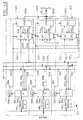
- FIG. 1Ais a block diagram schematically showing a hybrid multiple redundant computer system according to the present invention.
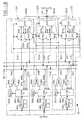
- FIG. 1Bis a block diagram schematically showing a hybrid multiple redundant system according to an alternative embodiment of the present invention.
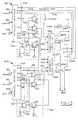
- FIG. 2is a block diagram showing output modules according to the present invention in more detail.
- FIG. 3is a more detailed block diagram of the output module of FIG. 2 showing the components thereof.
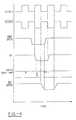
- FIG. 4is a timing diagram of a parallel interface and control circuit within the output module of FIG. 2 showing the synchronization between the interface and control circuit.
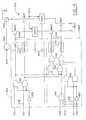
- FIG. 5is a detailed diagram of the primary and secondary logic circuits of the output module of FIG. 2 .
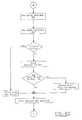
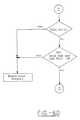
- FIGS. 6A-6Eare flow charts of an online testing procedure of the output module components according to the present invention.
- a hybrid multiple redundant systemis referred to generally by the numeral 10 in the accompanying drawings.
- the system 10includes first, second, and third processing units, generally referred to by the numeral 12 , and separately referred to by number and letter combinations 12 A, 12 B, and 12 C respectively.
- first, second, and third processing unitsgenerally referred to by the numeral 12
- number and letter combinations 12 A, 12 B, and 12 Crespectively.
- these combinationswill be extended to components within the processing units. Specifically, components within the first processing unit will carry the letter “A,” second processing unit components the letter “B,” and third processing unit components the letter “C.”
- Each processing unit 12operates in parallel with the other processing units, and comprises an input module 14 , a central processor module 16 , and an output module 50 .
- Output module 50includes a primary output circuit 18 , a secondary output circuit 20 , and an output voter network 22 .
- Input modules 14read process data, from many points, and transmit that data to its respective central processor module 16 over input buses 26 .
- Each central processor module 16communicates with the output modules 50 over bus 40 .
- the system 10may operate in a scan-based mode where the system performs control functions on a cyclical basis.
- three central processor modules 16one in each processing unit 12 , synchronize, once per scan, and communicate with each other in read only mode over buses 40 .
- the central processor module 16transmits its input data and diagnostic status to the other central processor modules 16 at the same time via bus 40 and lines 47 .
- the central processor module 16receives input data from the other central processor modules via lines 49 and 51 . After that, each central processor module 16 performs two-out-of three voting of the input data and uses the voted data as input to the control program.
- Each central processor module 16executes the same control program and sends its output data to the corresponding output modules 50 over bus 40 . It will be understood that connections between components within the same processing unit 12 will be referred to as associated components, and connections between components in separate processing units 12 will be referred to as connected to the other or neighboring components. The use of neighbor or neighboring is not indicative of physical location and does not indicate that the connected components are in adjacent processing units. It is merely used to indicate that the connected components are in separate processing units.
- the central processor module 16 Adelivers output data to output modules 50 A and 50 B overbus 40 A.
- the central processor module 16 Bdelivers output data to the output modules 50 B and 50 C over bus 40 B and central processor module 16 C delivers output data to output modules 50 C and 50 A over bus 40 C.
- Each processing unit 12further includes a watchdog controller 30 that is connected to the associated central processor module 16 .
- the watchdog controller 30detects faults within central processor module 16 , and upon detecting a fault, activates an alarm signal 44 which is sent to each output module 50 .
- Suitable examples of watchdog controllersare described in the Honeywell Journal for Industrial Automation and Control Supplement, 1996, pp. 22-23.
- Each output module 50performs selected logic function among output data received from corresponding central processor modules 16 and alarm signals 44 A, 44 B, and 44 C. In normal system operation, when no alarm signals are activated, each output module 50 produces its output 180 as a logical product of the output data received from the corresponding central processor modules 16 .
- the system output 60is formed as the logical sum of logical products AC, AB, and BC, where A, B, and C are output data generated by central processor modules 16 A, 16 B, and 16 C respectively.
- System output 60is connected to the external devices, such as various actuators (not shown). In normal operation, the system output 60 is given by the equation:
- OUTPUT 60A ⁇ circumflex over ( ) ⁇ C+A ⁇ circumflex over ( ) ⁇ B+B ⁇ circumflex over ( ) ⁇ C
- the system 10therefore, performs a two-out-of-three vote among output data produced by the central processor modules 16 .
- the associated watchdog controller 30activates its alarm signal 44 to disable outputs of the associated output module 50 .
- This alarm signal 44also allows each other output module 50 to generate output 180 corresponding only to output data produced by its associated central processor module 16 .
- the associated watchdog controller 30 Aactivates an alarm signal 44 A that disables output 180 A in such a way that output 180 A will be a logical “0”.
- the output modules 50 B and 50 Creceive the alarm signal 44 A over line 36 A.
- the output modules 50 B and 50 Cproduce outputs 180 B and 180 C, as the output data received from central processor module 16 B and 16 C respectively.
- the system output 60is given by:
- the system 10in the presence of one central faulty processor module 16 , the system 10 is reconfigured from a triple modular configuration to the two-out-of-two (2oo2D) dual redundant configuration.
- outputs of both associated output modules 50are disabled, but the system 10 still operates with one healthy central processor module 16 in a single processing unit configuration.
- System 10therefore, still properly operates in the occurrence of faults in any two central processor modules 16 .
- the system 10sets the system output 60 in a predetermined safe condition when each central processor module fails.
- System fault tolerance within output modules 50is provided by means within each module 50 comprising a primary output circuit 18 , a secondary output circuit 20 , and an output network 22 .
- Primary output circuit 18receives output data from the associated central processor module 16
- the secondary output circuit 20 in the same output module 50receives output data from selected other central processor module 16 .
- Primary output circuits 18 A, 18 B, and 18 Creceive output data from central processor modules 16 A, 16 B, and 16 C over buses 40 A, 40 B, and 40 C and lines 53 A, 53 B, and 53 C respectively.
- the secondary output circuits 20 A, 20 B, and 20 Creceive output data from central processor module 16 C, 16 A, and 16 B, over bus 40 C, 40 A, and 40 B and lines 55 A, 55 B, and 55 C respectively.
- the primary output circuit 18receives the alarm signal 44 from its associated watchdog controller 30 , while the secondary output circuit 20 , in the same output module 50 , receives alarm signals 44 from the other two watchdog controllers 30 .
- primary output circuit 18 Areceives alarm signal 44 A
- secondary output circuit 20 Areceives alarm signals 44 B, 44 C.
- primary output circuit 18 Breceives alarm signal 44 B
- secondary output circuit 20 Breceives alarm signals 44 A, 44 C.
- primary output circuit 18 Creceives alarm signal 44 C
- secondary output circuit 20 Creceives alarm signals 44 A and 44 B.
- Each output voter network 22receives the same alarm signal as the respective primary output circuit 18 .
- primary and secondary outputs 18 , 20perform selected but different logic functions with the data received from each central processor module 16 and alarm signals 44 .
- the output voter network 22is connected to the outputs of the associated primary and secondary output circuits 18 , 20 .
- This output voter network 22produces the output 180 as a logical product of the output data received from primary and secondary circuits 18 , 20 .
- the outputs 180 of the three output voter networks 22are connected in parallel for producing system output 60 as a logical sum of three logical products generated by the three output voter networks 22 . If all central processor modules are healthy, alarm signals 44 are not activated, and when a central processor module 16 fails, its watchdog controller 30 deactivates the corresponding primary output circuit 18 and the output voter network 22 via alarm signal 44 as will become clear from the following description.
- each processing unit 12further includes an OR-gate 38 .
- the first input of whichis connected to an additional output 42 of the associated central processor module 16 .
- the second input of the OR-gate 38is connected to the output 36 of the associated watchdog controller 30 .
- the OR-gate 38allows an alarm signal 44 to be activated if either the associated watchdog controller 30 or the associated central processor module 16 produces an alarm signal 36 , 42 respectively.
- the output module 50 Aincludes primary output circuit 18 A, secondary output circuit 20 A, and output voter network 22 A.
- the system 10produces a single bit output for each process point. In this way, the system 10 is primarily used for ON-OFF control or as an emergency shutdown system (ESD).
- the primary output circuit 18 Areceives the data (DA 0 . . . DA 7 ) from the central processor module 16 A, over lines 53 A, which are connected to the bus 40 A.
- Each bit of data (DA 0 . . . DA 7 )is set by the central processor module 16 A according to the control program executed for the corresponding process point. It should be understood that while the description is made in terms of an 8 bits of output data, other output data may be used including but not limited to 16 bit or 32 bits of output data.
- secondary output circuit 20 Areceives the data (DC 0 . . . DC 7 ) from the central processor module 16 C over line 55 A. Each bit of data (DC 0 . . . DC 7 ) is set by central processor module 16 C according to the control program executed for the corresponding process point.
- the primary output circuit 18 Aalso receives the alarm signal 44 A from the central processor module 16 A, while the secondary output circuit 20 A receives alarm signals 44 B and 44 C from central processor modules 16 B and 16 C, respectively.
- the output voter network 22 Aincludes multiple pairs of electronic valves, referred to as switch 58 A and switch 68 A respectively.
- Switches 58 A and 68 A within each pairare connected in series and each of the pairs are connected by one side to an external power supply over a fault recovery switch 54 A, and each of the pairs is separately connected by its other side to the corresponding output 180 A of output module 50 A for providing single-bit output 180 A for each process point.
- Each switch 58 Ais controlled by respective output 179 A of the primary output circuit 18 A, while each switch 68 A is controlled by respective output 181 A of the secondary output circuit 20 A.
- the output 180 Ais energized if both switches 58 A and 68 A in series are ON and de-energized if at least one of the switches is OFF.
- the output module 50 Aalso includes a fault recovery valve or switch 54 A that is controlled by the alarm signal 44 A via a driver 56 A.
- the fault recovery valve 54 Amay be opened by an active alarm signal 44 A over driver 56 A and allows each output 180 A to be disconnected from system output 60 , as described below.
- the output voter network 22 Aalso includes a current sensor 52 A per point that is activated by the primary output circuit 18 A via signal CA over line 57 A.
- the current sensors 52 Agenerate feedback signals, over lines 61 A, to inform each central processor module 16 via primary output circuit 18 A about the current flowing through each pair of electronic valves 58 A and 68 A.
- Single fault recovery switch 54 Acan be opened by an active alarm signal 44 A over a driver 56 A and allows each output 180 A to be disconnected from system outputs 60 , as it will be shown later as the description proceeds. In normal operation, the alarm signal 44 A keeps the fault recovery switch 54 A ON.
- the output modules 50 of the system 10are identical, thus the other output modules 50 B and 50 C include the same parts that were described with respect to the output module 50 A.
- the primary output circuit 18 Aperforms a selected logical function and produces outputs 179 A each controlling respective electronic valve 58 A of the output voter network 22 A.
- Secondary output circuit 20 Aperforms another selected logical function and produces outputs 181 A.
- Each output 181 Acontrols a respective electronic valve 68 A of the output voter network 22 A.
- the primary output circuit 18 B and primary output circuit 18 Cperform a similar logic function as primary output circuit 18 A and produce outputs 179 B and 179 C, respectively.
- Secondary output circuit 20 C and secondary output circuit 20 Bperform similar logic function as secondary output circuit 20 A to produce outputs 181 B and 181 C respectively.
- FIG. 3depicts the primary and the secondary output circuit configuration.
- the primary output circuit 18 Aincludes programmable interface 70 A, a control circuit 72 A, and a primary logic circuit 74 A.
- Secondary output circuit 20 Aincludes a programmable interface 76 A, a control circuit 78 A, and a secondary logic circuit 106 A. It should be understood that output circuits 18 A and 20 A may include identical programmable interfaces 70 A, 76 A and identical control circuits 72 A, 78 A, but their output logic circuits 74 A and 106 A are different.
- Outputs 179 A and 181 A of primary logic circuit 74 A and secondary logic circuit 106 Acontrol electronic valves 58 A and 68 A, respectively.
- the central processor module 16 Awrites data (DA 0 . . . DA 7 ) to the programmable interface 70 A over bi-directional lines 53 A.
- the central processor module 16 Aalso uses these lines when it reads feedback data 61 A of current sensors 52 A via the programmable interface 70 A.
- the current sensors 52 Aare activated by control signal on line 57 A providing feedback data for the central processor module 16 A.
- the central processor module 16 Aactivates writing and reading data processes by sending appropriate address and control signals to the programmable interface 70 A using address lines 86 and control lines 88 respectively.
- the central processor module 16 Cuses address lines 90 and control lines 92 for the same purpose. Lines 86 , 88 and 90 , 92 are connected to the central processor module 16 A across bus 40 A and to the central processor module 16 C across bus 40 C respectively.
- the programmable interfaces 70 A and 76 Aare standard parallel peripheral interfaces that are programmed by central processor modules 16 A, 16 C respectively to provide bi-directional communication with the output module 50 A. Each interface has three 8-bit ports that can be addressed separately.
- the first, second, and third portsinclude bits (PA 0 . . . PA 7 ), (PB 0 . .
- First and second ports (PA 0 . . . PA 7 ) and (PB 0 . . . PB 7 )are used for output and feedback data transfer, while port (PC 0 . . . PC 7 ) are used to transfer control signals. It should be readily understood that other interfaces, such as 16-bit or 32-bit interfaces, may be used to increase the system performance.
- the control circuit 72 Aincludes D-type flip-flops 118 , 119 and it further includes flip-flops 120 , 121 , 122 , 123 , 124 , 125 , 126 , 127 , and an inverter 130 . It should be readily understood that other flip-flops may be substituted, for example, J flip-flops.
- the input of each flip-flop 120 - 127is connected to the corresponding bit of first port (PA 0 . . . PA 7 ) via leads 132 . Input data in each flip-flop 120 - 127 is transferred to its output on the HIGH to LOW transition of the output of flip-flop 118 .
- the output of flip-flop 118is also connected to the input of the flip-flop 119 that produces an acknowledge signal (ACK).
- ACKacknowledge signal
- the ACK signal from flip-flop 119goes to input PC 6 of the programmable interface 70 A over lead 96 and to input PC 4 of the programmable interface 76 A over line 98 .
- Both flip-flops 118 and 119are clocked at a regular rate by a clock oscillator (not shown in FIG. 3) that cyclically produces non-inverted and inverted clock impulses. Inverted clock impulses are produced via inverter 130 .
- Control signal PC 7 on the D input of flip-flop 118is transferred to the output of flip-flop 118 on the LOW to HIGH transition of the clock impulse.
- output of flip-flop 118is transferred to output of flip-flop 119 on the LOW to HIGH transition of the inverted clock impulse.
- Outputs of both flip-flops 118 , 119are initially set HIGH by a conventional circuit (not shown).
- the central processor module 16 Awrites output data (DA 0 . . . DA 7 ) to the programmable interface 70 A, over lines 53 A.
- the programmable interface 70 Astores that data to the port (PA 0 . . . PA 7 ) and sets an output buffer full signal (OBF) across PC 7 on lead 94 .
- OFBoutput buffer full signal
- the output of flip-flop 118is passed from a HIGH to a LOW condition, such that data (DA 0 . . . DA 7 ) are written to outputs of flip-flop 120 - 127 .
- the control circuit 72 Asets an acknowledgment signal (ACK) on lead 96 .
- the ACK signalinforms central processor module 16 A that a new data word can be transmitted to the interface 70 A.
- the control circuit 72 Aalso transmits the ACK signal to an input of the programmable interface 76 A over lead 98 . It tells central processor module 16 C that the central processor module 16 A has finished sending the output data
- the programmable interface 76 Atransfers the PC 7 output buffer full signal (OBF) to the input of corresponding flip-flop 118 in control circuit 78 A, on a lead 100 , and the control circuit 78 A returns the acknowledgment signal (ACK) over lead 102 .
- the control circuit 78 Aalso transmits an ACK signal to input PC 4 of the programmable interface 70 A over lead 104 . It informs central processor module 16 A that the central processor module 16 C has finished sending the output data to the secondary output circuit 20 A.
- the control circuit 72 Atransmits data (DA 0 . . . DA 7 ) to the primary logic circuit 74 A over lines 136 , while the control circuit 78 A transmits data (DC 0 . . . DC 7 ) to the secondary logic circuit 106 A over lines 138 .
- the primary logic circuit 74 Aproduces outputs 179 A as the result of a selected logic operation with each bit of data (DA 0 . . . DA 7 ) and alarm signal 44 A.
- the secondary logic circuit 106 Aproduces outputs 181 A as a result of the selected logical operation with each bit of data (DC 0 . . . DC 7 ) and the alarm signals 44 B and 44 C.
- the primary logic circuit 74 A and secondary logic circuit 106 Adrives electronic valves 58 A and 68 A of the output voter network 22 A respectively.
- the primary logic circuit 74 A and the secondary logic circuit 106 Aare shown in FIG. 5, and described in more detail below.
- control circuit 78 Aoperates in similar fashion.
- Q 1 , and Q 2 (ACK) outputs of the flip-flops 118 and 119are initially in HIGH states.
- Data (DA 0 . . . DA 7 )represent the outputs 136 of flip-flops 120 - 127 .
- the programmable interface 70 Asets a logical “0” output buffer full signal PC 7 on the input of the flip-flop 118 .
- That signalis transferred to the output Q 1 of the flip-flop 118 when the nearest clock impulse changes from LOW to HIGH.
- the HIGH to LOW transition of the Q 1will write data (DA 0 . . . DA 7 ) from port (PA 0 . . . PA 7 ) to the flip-flops 120 - 127 .
- the data (DA 0 . . . DA 7 ), over lines 136are then transferred to the primary logic circuit 74 A.
- LOW output Q 1 of flip-flop 118then will transfer to output Q 2 (ACK) of the flip-flop 119 when the nearest inverted clock impulse transits from LOW to HIGH.
- the programmable interface 70 Arestores the HIGH condition of the output buffer full (OBF) signal on line 94 .
- the programmable interface 76 Arestores the HIGH condition of the output buffer full (OBF) signal on lines 100 as soon as the ACK signal occurred on line 102 becomes LOW.
- Both control circuit 72 A and 78 Awill return to its initial condition when the nearest clock signal restores HIGH level of Q 1 and then nearest inverted clock signal restores HIGH level of the ACK signal. After that, new data (DA 0 . . . DA 7 ) can be written to flip-flops 120 - 127 from interface 70 A and 76 A.
- FIG. 5depicts a schematic diagram of the primary logic circuit 74 A and the secondary logic circuit 106 A that are included in the output module 50 A.
- the primary logic circuit 74 Aincludes AND gates 140 and an inverter 142 A. Input of each gate 140 is connected to a corresponding output 136 of flip-flops 120 - 127 related to the control circuit 72 A, as it is shown in FIG. 3 . Another input of each gate 140 is connected to the inverter 142 A that inverts the alarm signal 44 A. Outputs of gates 140 are connected to drivers 150 and to inputs of AND gates 162 in the secondary logic circuit 106 A. Each driver 150 controls the corresponding electronic valve 58 A. The other input of each gate 162 is connected to OR gate 144 that generates a logical sum of 44 B and 44 C alarm signals.
- Outputs of gates 162are connected to inputs of OR gates 146 . Another input of each gate 146 is connected to the corresponding output of AND gates 160 . Input of each gate 160 is connected to a corresponding output 138 of flip-flops 120 - 127 related to the control circuit 78 A, as shown in FIG. 3 . Another input of each gate 160 is connected to the inverter 142 C, which inverts the alarm signal 44 C. Outputs of gates 146 are connected to drivers 170 that control electronic valves 68 A.
- alarm signals 44 A, 44 B, and 44 Care not activated and are in a logical “0” condition, hence the inverters 142 A and 142 C produce a logical “1” output.
- Thisallows data (DA 0 . . . DA 7 ) and (DC 0 . . . DC 7 ) to be transmitted via AND gates 140 , 160 to the drivers 150 , 170 respectively.
- the logical function implemented by the primary logic circuit 74 A for any I-output 179is given by:
- DAIis any I-output 136
- AAIis the corresponding I-output 179 A
- ASAis the inverted alarm signal 44 A.
- AAIequals DAI
- the data (DA 0 . . . DA 7 )are transmitted on outputs 179 A of the primary logic circuit 74 A as signals (AA 0 . . . AA 7 ).
- Outputs 179 Aare also the outputs of the primary output circuit 18 A, which includes the primary logic circuit 74 A as shown in FIG. 3 .
- the signals (CA 0 . . . CA 7 ) across lines 181 Aare the outputs of the secondary output circuit 20 A.
- the logical function implemented by the secondary output circuit 20 A for any outputis given by:
- ACIDCI ⁇ circumflex over ( ) ⁇ ASC +( DAI ⁇ circumflex over ( ) ⁇ ASA ) ⁇ circumflex over ( ) ⁇ ( ASB+ASC ) (2)
- DCIis any I-input 138 and ACI is the corresponding I-output 181
- ASB and ASCare the alarm signals 44 B and 44 C respectively
- ASA and ASCare the inverted alarm signals 44 A (ASA) and 44 C (ASC).
- Equations 1 and 2represent logical functions implemented by the primary and secondary output circuits 18 A and 20 A respectively.
- the primary output circuit 18 Asets each switch 58 A ON or OFF in accordance with the corresponding bits of data (DA 0 . . . DA 7 ) received from central processor module 16 A when alarm signal 44 A is not activated. In the event that the alarm signal is activated, passing a logical “1” condition, the primary output circuit 18 A sets each switch 58 A OFF, thereby de-energizing all outputs 180 A.
- the secondary logic circuit 20 Asets each switch 68 A ON or OFF in accordance with corresponding bits of data (DC 0 . . . DC 7 ) received from central processor module 16 C when each alarm signal 44 is not activated. Equation 2, in that case, will transform to:
- Equation 2is given by:
- the secondary output 20 Atransfers control over all switches 68 A to the primary output circuit 18 A. Another situation appears when the alarm signal 44 B is activated. In that event, the secondary output circuit 20 A produces output signal ACI on line 180 A as a logical sum of output data received from central processor modules 18 A and 18 C:
- Output 180 Awill energize over open switches 58 A and 68 A if both signals AAI and ACI are in a logical “1.” The output 180 A, however, will de-energize if either AAI or ACI output are in a logical “0” because the corresponding switch 58 A or 68 A will be OFF. Therefore, the output voter circuit 22 A produces the logical product of each bit of the outputs AAI and ACI. Consequently, any output 180 A is represented by the following expression:
- Output 180 A( DAI ⁇ circumflex over ( ) ⁇ ASA ) ⁇ circumflex over ( ) ⁇ ( DCI ⁇ circumflex over ( ) ⁇ ASC +( DAI ⁇ circumflex over ( ) ⁇ ASA ) ⁇ circumflex over ( ) ⁇ ( ASB+ASC )) (4)
- primary output circuit 18 B and primary output circuit 18 Care similar to primary output circuit 18 A function because the primary output circuits 18 in each output module 50 are identical.
- Primary output circuit 18 B and primary output circuit 18 C functionsare respectively given by:
- DBI and BBIare respective input and output signals of the primary output circuit 18 B.
- DCI and CCIare respective input and output signals of the primary output circuit 18 C.
- ASB and ASCare the inverted alarm signals 44 B and 44 C respectively.
- the logical functions used by secondary output circuit 20 B and secondary output circuit 20 Care similar to secondary output circuit 20 A function, because the secondary output circuits 20 in each output module 50 are identical.
- the function of secondary output circuit 20 Bis given by:
- ABIDAI ⁇ circumflex over ( ) ⁇ ASA +( DBI ⁇ circumflex over ( ) ⁇ ASB ) ⁇ circumflex over ( ) ⁇ ( ASA+ASC ) (7)
- DBI and ABIare respective input and output signals of the secondary output circuit 20 B.
- DCI and BCIare respective input and output signals of the primary output circuit 18 C.
- Output 180 B and Output 180 C related to output modules 50 B and 50 C respectivelyare represented by an expression similar to the Output 180 A (expression 3):
- Output 180 B( DBI ⁇ circumflex over ( ) ⁇ ASB ) ⁇ circumflex over ( ) ⁇ ( DAI ⁇ circumflex over ( ) ⁇ ASA +( DBI ⁇ circumflex over ( ) ⁇ ASB ) ⁇ circumflex over ( ) ⁇ ( ASA+ASC )) (11)
- Output 180 C( DCI ⁇ circumflex over ( ) ⁇ ASC ) ⁇ circumflex over ( ) ⁇ ( DBI ⁇ circumflex over ( ) ⁇ ASB +( DCI ⁇ circumflex over ( ) ⁇ ASC ) ⁇ circumflex over ( ) ⁇ ( ASA+ASB )) (12)
- Input modules 14read the same process data for each process point from many controlled points, and transmit that information to a respective central processor module 16 over input buses 26 .
- central processor modules 16synchronize and communicate with each other as well as with output modules 50 via communication buses 40 .
- Three central processor modules 16perform a two-out-of-three software vote of the input data received from three input modules 14 .
- Each central processor module 16then uses the voted data as input to a control program. In this way, the system masks potential input faults that could propagate into the control program calculation.
- Each central processor module 16executes the same control program and produces a single bit output per controlled point.
- each voting path of the output voter network 22includes electronic valves 58 , 68 , in series. Each voting path is connected in parallel with the respective paths of two other output voter networks 22 .
- the system output 60will energize if at least one out of three output 180 will energize. Consequently, the system output 60 that related to any controlled point is defined as a logical sum of three outputs:
- Output 60output 180 A+output 180 B+output 180 C, (13)
- Outputs 180 A, 180 B, and 180 Care given by equations (4), (11), and (12) respectively.
- each alarm signalis in a logical “0” condition. Consequently, the inverted ASA , ASB , and ASC signals are in a logical “1” condition and outputs 180 A, 180 B, and 180 C (equations (4), (11) and (12)) become:
- the system output 60will given by:
- Output 60DAI ⁇ circumflex over ( ) ⁇ DCI+DBI ⁇ circumflex over ( ) ⁇ DAI+DCI ⁇ circumflex over ( ) ⁇ DBI (17)
- the output module 50 Ais deactivated but system output 60 is still controlled by central processor 16 B and 16 C.
- the central processor module 16 Bdrives both electronic valves 58 B and 68 B of the output voter network 22 B
- the other central processor module 16 Cdrives both switches 58 C and 68 C of the output voter network 22 C.
- the systemoperates with two central processor modules 166 B and 16 C and the system performs 2-of-2 voting among the output data of these central processor modules.
- the 2-of-2 votingmeans that both 16 B and 16 C central processor modules must give a logical “0” output to make a shutdown.
- the system output 60in the event that the central processor module 16 B fails, is defined by using the same method shown above for failure of central processor module 16 A. The same method is also used for the system output 60 definition in the event that the central processor module 16 C fails. In the event that the central processor module 16 B fails, the system output 60 is given by:
- the output module 50 Bis deactivated, and system output 60 is controlled by central processor 16 A and 16 C.
- the central processor module 16 Cdrives both electronic valves 58 C and 68 C of the output voter network 22 C
- the central processor module 16 Adrives both electronic valves 58 A and 68 A of the output voter network 22 A.
- the systemoperates with two central processor modules 16 A and 16 C and the system performs 2-of-2 voting among the output data of these central processor modules.
- the 2-of-2 votingmeans that both 16 A and 16 C central processor modules must give a logical “0” output to make a shutdown.
- the output module 50 Cis deactivated but system output 60 is still controlled by central processor 16 A and 16 B.
- the central processor module 16 Adrives both electronic valves 58 A and 68 A of the output voter network 22 A
- the central processor module Bdrives both electronic valves 58 B and 68 B of the output voter network 22 B.
- the systemoperates with two central processor modules 16 A and 16 B and the system performs 2-of-2 voting among the output data of these central processor modules.
- the 2-of-2 votingmeans that both 16 A and 16 B central processor modules must give a logical “0” output to make a shutdown.
- watchdog controllers 30 A and 30 Brespectively set alarm signals 44 A and 44 B to a logical “1”.
- the alarm signal 44 Cremains in a logical “0,” and its inverted signal is a logical “1.”
- Outputs 180 A, 180 B, and 180 C(equations 4, 11, and 12) will then changed as followed:
- system output 60is similarly defined, due to the symmetrical system configuration, as:
- output modules 50 A and 50 Care deactivated, and central processor module 16 B controls the system output 60 .
- the central processor module 16 Bdrives both electronic valves 58 B and 68 B of the output voter network 22 B.
- the system output 60 in the event that the central processor module 16 B and 16 C concurrently failsis also defined similarly because of symmetrical system configuration as:
- the primary output circuit 18 and any secondary output circuit 20can hold the output data received from the corresponding central processor module 16 before it failed.
- Each bit of the data held on lines 179 , 181can either be in a logical “1” or “0” state.
- the system output 60will be given by:
- the output voter network 22has two switches 58 , 68 in series per point. If any two switches 58 , 68 , in series, related to the same point fail open the system 10 still operates. If, for example, the switches 58 A, 58 B of the output network 22 A and the output voter network 22 B respectively fail open, the system 10 will drive outputs 180 via electronic valves 58 C and 68 C of output voter network 22 C. Therefore, it takes three faulty-open electronic valves 58 or 68 to shut the controlled process down.
- the central processor module 16monitors the status of switches 58 and 68 during each scan. Before sending output data to output module 50 , the central processor module activates all current sensors 52 via parallel interface 70 over line 57 . Each current sensor 52 generates a feedback signal over line 61 to inform the central processor module 16 about the current flowing through each pair of switches 58 and 68 . Consequently, the central processor module 16 recognizes if both switches 58 and 68 fail short.
- the central processor module 16sends a predetermined message to the associated watchdog controller 30 , causing watchdog controller 30 to activate its alarm signal 44 de-energizing all outputs 180 in the associated output voter network 22 by setting fault recovery valve 54 OFF.
- the systemwill still operate with two other output voter networks 22 where switches 58 and 68 are still healthy.
- the central processor module 16produces its own alarm signal 42 when switches 58 and 68 fail short in the corresponding output voter network 22 .
- the central processor module 16sets the error signal 42 in a logical “1”. It activates the alarm signal AS that opens the fault recovery electronic valve 54 over driver 150 disconnecting the faulty output voter network 22 from the system output 60 .
- the system 10still operates with remaining two output modules 50 , where output voter networks 22 are still healthy. Therefore, the presence of any two shorts within switches 58 , 68 will not cause system failure.
- the system 10shuts down only if both switches 58 and 68 related to the same point fail short in each output voter network 22 .
- Some faults within the primary logic circuit 74 or within secondary logic circuit 106impact the system output in a manner similar to the voter network faults described above. Since each output circuit 74 or 106 transfers output data of the central processor module 16 independently from the other, any fault within one output circuit 74 or 106 cannot propagate to the neighboring circuit. If, for example, the primary logic circuit 74 A fails holding a faulty logical “1” on any output 140 , the respective electronic valve 58 A fails short, but it will not affect the data (DC 0 . . . DC 7 ) transferred via the secondary logic circuit 106 A. In that event, the secondary logic circuit 106 A controls the output 180 A over its electronic valve 68 A.
- both switches 58 and 68 in seriescan be short, hence the respective output 180 as well as the system output fails ON. If, for example, the output of gate 140 and the output of gate 146 both related to the same point fail concurrently holding a logical “1”, both corresponding switches 58 and 68 in series fail ON. This would lead to a system failure because the system output 60 will permanently energize and the system will not able to make the shutdown, if required.
- the corresponding central processor module 16recognizes that those electronic valves 58 , 68 are out of control, and disconnects the faulty output voter network 22 from the system output 60 via fault recovery valve 54 .
- the central processor module 16 Acommands watchdog controller 30 A to activate alarm signal 44 A, which disconnects all outputs 180 A from the system output 60 via the fault recovery electronic valve 54 A. In general, the presence of any two faulty logic circuits 74 and 106 will not cause the system failure.
- each central processor module 16periodically examines the status of its associated input module 14 using conventional software/hardware means. In the event that one input module 14 fails, its associated central processor module 16 ceases operation with this input module 14 while continuing to operate receiving input data from the neighboring central processor modules 16 . If two input modules 14 fail concurrently, the third central processor module 16 transfers input data to the other central processor modules 16 and the system output is still managed by three central processor modules 16 . Consequently, the system will still operate in the presence of any two faulty input modules 14 . In the event that all input modules fail, the system performs a shutdown.
- Another point of possible faultis the communication bus 40 . If one bus 40 fails, the associated central processor module 16 recognizes this failure and de-energizes the outputs 180 of the respective output module 50 via the fault recovery switch 54 . If two buses 40 fail concurrently, two respective output modules 50 are deactivated, but the system output 60 will still be under the control of the third central processor module 16 that operates over the healthy third bus 40 . The system 10 will shut down when every bus 40 fails. Consequently, system 10 still operates in the presence of any two faulty buses 40 . A system 10 will shut down only when all buses 40 fail.
- the hybrid multiple redundant system 10may employ a standard dissimilar redundancy technique to provide fault tolerance with respect to generic software and hardware faults.
- the three central processor modules 16may provide dissimilar data processing, with respect to each other, by utilizing dissimilar software. The task, however, that each central processor module 16 performs would be similar with respect to each other as mentioned above.
- Possible generic failure in each central processor module 16is detected by its associated watchdog controller 30 that disconnects the respective output module 50 from system output 60 via fault recovery switch 54 . It will be appreciated that, after the first and second generic failures the system 2-of-3 voting is transformed to 2-of-2 and 1-of-1 voting, respectively. Thus, system 10 remains operational in the presence of generic failures in two central processor modules 16 .
- the system 10will, however, shut down after a third generic failure.
- the system's action in response to generic failures in central processor modules 16 or in watchdog controllers 30is the same as the action described above for hardware and software random faults of central processor modules 16 and watchdog controllers 30 .
- Each processing unit 12has its own power supply module (not shown in FIG. 1 and in FIG. 2 ).
- PSMpower supply module
- all switches of the output voter network 22 , as well as the fault recovery switch 54are automatically passed to an OFF condition via conventional technique. Therefore, the system 10 remains operational in the presence of two faulty PSMs, and system 10 shuts down when each PSM fails.
- the testing of the output electronic valves 58 A and 68 Ais disclosed. It is seen that the central processor modules 16 A and 16 C operate with the primary output circuit 18 A and the secondary output circuit 20 A respectively.
- the central processor module 16 Acontrols every electronic valve 58 A over interface 70 A, control circuit 72 A, and the primary logic circuit 74 A.
- the central processor module 16 Ccontrols every electronic valve 68 A over interface 76 A, control circuit 78 A, and the secondary logic circuit 106 A.
- Both central processor modules 16 A and 16 Cparticipate in output electronic valves 58 A and 68 A testing that is performed every scan cycle of the system operation.
- central processor module 16 A and 16 Ccommunicate with each other sending READY messages. As soon as each central processor module 16 has read that message, the testing of the output electronic valves 58 A and 68 A begins. All electronic valves 58 A and 68 A are tested for stuck-ON and stuck-OFF conditions before sending output data to interfaces 70 A and 76 A. Central processor modules 16 A and 16 C concurrently drives electronic valves 58 A and 68 A from one state to the other and confirms correct functionality of these electronic valves 58 A, 68 A by reading feedback signals from the current sensors 52 A. Conventional current sensors 52 A provide status of the output electronic valves 58 A and 68 A by providing current feedback to the interface 70 A over lines 61 A.
- the central processor module 16 Aactivates every current sensor 52 A simultaneously via signal 57 A and then reads current feedback data from the interface 70 A.
- the testing proceduredoes not impact the system's operation because it can be performed during a very short time interval (less than 1.0 millisecond).
- Testing of switches of 58 B, 68 B and switches 58 C, 68 Cis performed in a similar fashion used for testing switches 58 A, 68 A.
- each central processor module 16also tests all other parts including into primary and secondary output circuits 18 and 20 , as it will be shown below. After that, each central processor module 16 sends output data to respective primary and secondary output circuits 18 and 20 .
- FIGS. 6 a - 6 eoutline a method of on-line testing of the system components.
- FIG. 6 aprovides a flow chart for an ON testing procedure, which is in use to determine if both output electronic valves 58 and 68 are able to be ON in every output voter network 22 .
- Each central processor module 16turns its respective electronic valves 58 and 68 ON.
- an internal software timer(not shown in FIG. 6 a ) is set by each of the central processor modules 16 within which the ACK signals 96 and 102 (FIG. 3) must be received from interface 70 and 76 respectively. If the ACK signals 96 , 102 are not received in time, the central processor module 16 flags a primary output circuit 18 or secondary output circuit failure.
- the central processor module 16then reads feedback data from all respective current sensors 52 simultaneously. A current value, for each point higher than a predetermined HIGH level indicates that both electronic valves 58 and 68 are ON. Otherwise, when at least one of these electronic valves is OFF, the current value should be below a predetermined LOW level. If every electronic valve 58 and 68 is ON then the test is successful, otherwise the central processor module 16 flags an error. After that, each central processor module 16 sends its diagnostic results to the other central processor modules 16 . If one output electronic valve 58 or 68 has failed remaining open, the central processor module 16 reads a status of respective electronic valves of the other output voter networks 22 .
- the testing procedure outlined in FIG. 6 b for the central processor module 16 Ais as follows. First, a central processor module 16 A checks the primary output circuit 18 A for failure. If the primary output circuit 18 A has failed, the central processor module 16 A de-energizes the outputs 180 A via the fault recovery electronic valve 54 A. After de-energization, or if no failure has occurred, the central processor module 16 A reads test results from the other central processor modules 16 B and 16 C. If both test results indicate that no current is flowing through corresponding electronic valves 58 A and 68 A, central processor 16 A recognizes that the external load is absent. Otherwise, the central processor module 16 A begins the testing procedure outlined in FIG. 6 c . As can be appreciated, a similar procedure is concurrently performed by the other central processor modules 16 B and 16 C.
- FIG. 6 coutlines an OFF testing procedure similar to the above ON testing procedure.
- Each central processor module 16commands its respective electronic valves 58 and 68 turn OFF. Possible errors of primary and output circuits 18 , 20 are flagged and reported. If the primary output circuit 18 fails, the corresponding central processing module 16 disconnects all outputs 180 from outputs 60 via fault recovery valve 54 . The central processor module 16 then reads the feedback data from the current sensor 52 over interfaces 70 and 76 . If both electronic valves 58 and 68 in series fail ON, the central processor module 16 sets an OFF-error flag and reports the severe error. Each central processor module 16 then disconnects all faulty outputs 180 from the system output 60 via the fault recovery switch 54 . The central processor module 16 A, for example, disconnects all outputs 180 A of the output voter network 22 A from outputs 60 if primary output circuit 18 A fails or both electronic valves 58 A and 68 A fail ON. It is shown in FIG. 6 D.
- FIG. 6Eshows ON-OFF testing procedure that is used to detect if every output electronic valve 58 and 68 is able to pass from ON to OFF. After previous procedure, all electronic valves 58 and 68 are OFF. Each central processor module 16 commands respective electronic valves 58 and 68 turn ON. After that, each central processor module 16 commands each electronic valve 58 OFF, while all electronic valves 68 are still setting ON. The central processor module 16 then reads feedback data from all respective current sensors 52 . If electronic valve 58 fails remaining in an ON condition, the central processor module 16 flags an error, but continues testing. All electronic valves 58 are returned to the ON condition, and now, with electronic valves 58 ON, each central processor module 16 commands each electronic valve 68 OFF. The central processor module 16 flags an error if a electronic valve 68 fails remaining in ON condition.
- a hidden faultoccurs when one out of two output electronic valves 58 or 68 in series fails short, while the second electronic valve is still controlled. That fault does not impact system operation, but may decrease system fault tolerance.
- the error reportallows the user to restore the previous level of system fault tolerance by on-line replacement of the faulty part.
- each central processor module 16sends output data to respective primary and secondary output circuit 18 and 20 .
- the system configurationis modified from 2-of-3 voting into 2-of-2 voting in the presence of one fault and into 1-of-1 voting in the presence of two concurrent faults.
- Testing procedures considered abovemay be implemented during time intervals of about 1 ms, if a high-speed current sensor is used. Testing glitch duration where all electronic valves are holding OFF can be less than 200 ⁇ s and it is tolerant to most field devices that can be controlled by the system 10 .
Landscapes
- Engineering & Computer Science (AREA)
- Theoretical Computer Science (AREA)
- Physics & Mathematics (AREA)
- General Physics & Mathematics (AREA)
- Quality & Reliability (AREA)
- General Engineering & Computer Science (AREA)
- Automation & Control Theory (AREA)
- Hardware Redundancy (AREA)
- Safety Devices In Control Systems (AREA)
Abstract
Description
The present invention relates generally to computer systems devoted for safety-critical and critical-control applications. More particularly, the present invention relates to hybrid multiple redundant systems that combine majority voting with fault diagnostic and fault recovering means to provide correct outputs of a system in the presence of multiple system component faults.
The evolution of the computer has opened the door to widespread automation. Increasingly, computer systems handle critical tasks, such as, industrial control of oil, gas, nuclear, and chemical operations, patient monitoring, aircraft flight control, and military systems among others. Within these systems, emergency shutdown systems are used in safety-critical applications to monitor processes and remove the process to a safe state when selected process variables fall outside of a safe range. As one example, in an oil refinery, the pressure of an air compressor unit expander and its temperature are monitored and shutdown actions are taken if these reach an upset condition. In this example, the emergency shutdown system is designed to protect the process separately from the basic process control system. Critical control systems, on the other hand, provide both continuous control and protection for many safety-critical applications like gas and steam turbines, boilers, and off-shore platforms. In a gas or steam turbine, for example, the critical control system provides non-stop speed control as well as start-up and shutdown sequencing in a single integrated system. In all of the above examples, and other related industries, improved technologies add complexity and increase production output, making reliance on emergency shutdown systems and critical control systems increasingly important. Computer systems devoted for safe and critical control applications must have extremely high degrees of safety and reliability since faults in computer systems can cause vast economic loses and endangers human beings. A system failure that occurs as a result of a system component fault can be either safe or dangerous. A safe failure occurs when a system has failed into a safe state, or in other words, where the system does not disrupt the operation of other systems or compromise the safety of personnel associated with the system. The safe failure occurs, for example, when an emergency shutdown system (ESD) fails in such a way that it causes a shutdown not associated with the controlled process. A dangerous failure is a failure that prevents the system from responding to hazardous situations, allowing hazards to develop. For instance, a dangerous failure occurs when the ESD cannot perform a required shutdown.
Redundant configuration of computing systems have been used in several research and designs to provide system fault tolerance, which is concerned with the continuation of correct operation of a system despite occurrence of internal faults. The spectrum of fault tolerance techniques can be divided into three major classes: static redundancy, dynamic redundancy, and hybrid redundancy.
Static redundancy provides fault tolerance without performing fault detection and recovery. One method of fault masking is through a voting process. Triple Modular Redundant (TMR) systems are the most common form of voting based systems. The conventional TMR system includes three identical controllers along with an output voter network that votes the outputs of the three controllers. See, e.g., Frederickson A. A., “A Hybrid multiple redundant Programmable Controllers for Safety Systems”, @ ISA Transactions, Vol. 29, No. 2 (1990) pp. 13-17. Each controller usually includes an input module, a main processor module, and an output module. By using three identical controllers in combination with the voter network, any single computer fault is masked by the 2-of-3 voting, so any single fault does not lead to the system failure.
In many cases, however, two concurrent faults lead to a system failure. For example, if the TMR system is used as an Emergency Shutdown system, its outputs will be in ON condition under normal operation and in an OFF state for a shutdown. If, for example, two output modules of the TMR fail at the same time, in such a way that their outputs remain in an OFF condition, then the system fails safely, making a false shutdown. On the other hand, when two output modules fail in such a way that their outputs remain in an ON state, it can lead to a dangerous system failure. This failure is termed dangerous because, despite a process problem, the process cannot shut down.
To compensate for the TMRs inability to tolerate more than one controller failure, quick fault detection must be used to minimize the period of time that the system operates in a vulnerable condition. Commercial versions of TMR offer online module replacement and repair capability to address this problem. However, if one controller of the TMR fails and it has not been replaced, a fault in another controller can lead to a system safe or dangerous failure. Thus, the success of online repair depends on the user ability to discover and diagnose the problem in a short time period. Since fault discovery and repair rate are limited by many reasons, even a single controller failure may bring the system to a vulnerable mode.
As an alternative method of compensating for this vulnerability, known devices employ an output hot spare in an attempt to overcome the problem. That system has two triplicate I/O modules in parallel, where one module, a primary, is active, while the other module—a hot spare is powered but inactive. Each output module usually includes three identical legs located in a single board. Under normal operation, hot spare module outputs are OFF so they do not affect the system output. If a fault is detected on the primary module, the control is automatically switched to the hot spare module, allowing the system to maintain 2-of-3 voting continuously. The faulty module can then be removed and replaced without process interruption.
The hot spare method reduces the probability of a safe failure within a TMR system. For example, when a safe failure occurs in any leg of primary output module that is discovered and the hot spare outputs are passed to the ON state allowing the system to maintain energized condition of system outputs. However, employing a hot spare adds to the number of components in the system increasing the overall system cost. As a further disadvantage, the hot spare is useless when the outputs of faulty modules remain in an ON state, and, thus, cannot prevent the occurrence of a dangerous system failure.
To tolerate additional concurrent faults, known devices can add replicate computers within the voting scheme. For example, a five modular redundant system (5MR) would perform three-out-of-five voting in order to tolerate two faults. Unfortunately, the 5MR system requires large additional resources, which significantly increases size and weight of the system, making it very expensive to implement.
Turning away from static redundancy methods, Dynamic redundancy methods achieve fault tolerance by detecting the existence of faults and performing system reconfiguration to prevent a system failure. Dynamic redundancy systems have built-in fault detection capability. When a fault is detected, the system is usually reconfigured by activating a spare processor or computer. The most common example is the use of dual computer system that includes primary and spare computers operating in parallel. The system also includes a central diagnostic module that monitors primary computer and switch-over system output to the spare computer when the primary computer fails. The Dual Dynamic Redundancy (DDR) system has, therefore, three independent components: two computers and the Central Diagnostic Module (CDM) and it tolerates any single component failure. The DDR system, however, cannot operate properly in the presence of two concurrent faults. If two computers of the DDR fail at the same time, the entire system will fail too.
An alternative approach of the dynamic redundancy is used in industrial control systems (2oo2D system) such as described in the book Goble, W. M. “Control Systems Safety Evaluation & Reliability”, @ ISA (1998) pp. 364-375. The 2oo2D system contains two programmable controllers operating in parallel. Each controller has an independent diagnostic module that opens a special output switch, de-energizing controller outputs in the event that the controller fails. Possible dangerous failure(s), therefore, are converted into safe failure(s). In the event that one controller fails in such a way that its outputs remain de-energized, the system will still operate via a second controller avoiding a false shutdown.
However, fault tolerance and reliability of the 2oo2D system depends in great part on the fault coverage, which is defined as the probability that a failure will be detected/recovered if it occurs. In contrast to the voting based system, the 2oo2D system has no property of fault masking so in the event that undetectable fault occurs the system can fail too. As well as the TMR, the 2oo2D system can tolerate only one component failure.
Another dynamic technique, disclosed in the U.S. Pat. No. 5,956,474, utilizes triple modular pairs (FIG.8), each of which includes a computer element connected to an input/output (I/O) controller for providing system fault resilient and fault tolerance. The I/O controller in each pair periodically synchronizes and monitors operation of computing elements by software comparing their output data and checksums and disables a faulty computing element if its fault is discovered. Although this approach, for some kind of computing failures, providing normal system operation when all but one computing elements fails, the I/O controller is not fault tolerant. Consequently, it may produce false outputs if two I/O controllers simultaneously fail. Therefore, this system can tolerate only a single component failure.
Recognizing the shortcomings of static and dynamic systems, Hybrid redundant systems or HTMR systems combine the attractive features of both static and dynamic approaches. Fault masking is used to prevent the system from producing erroneous outputs, and fault detection and system reconfiguration are used in case of a fault. A conventional hybrid reconfiguration includes a triple module redundant system with an output voting circuit and a plurality of stand-by computers. The system further includes fault detecting and switching circuits that locate the faulty computer among the active computers and isolate the faulty computer from the triple module redundant system. In this way, the faulty computer is substituted by one of the stand-by computers. See E. G., Pradhan, D. K., “Fault-Tolerant Computer System Design,” Prentice Hall PTR 1996, pp. 19-21. Since conventional hybrid configuration requires large addition modules, it makes it very expensive to implement. Another drawback of the conventional hybrid system is that it is not possible to avoid additional faults within the fault detecting, switching, or voting circuits.
Another hybrid redundant system disclosed in the U.S. Pat. No. 5,084,878, utilizes multiple computer subsystems each of which includes self-diagnostic and cross-diagnostic means at the processor level. Results of the diagnostic means, together with outputs of the subsystems, are connected to a switch matrix that selects the correct output of each subsystem and passes these outputs to a majority voter. This system provides fault tolerance with respect to detectable subsystem faults and, as a result of its diagnostic means, it is able to operate normally even with all but one subsystem is still healthy. Unfortunately, this system is still susceptible to a fault occurring in the switch matrix or majority voter. In particular, the system uses a common output selecting circuit consisting of a switch matrix and the output voter. Thus, it may fail when either the switch matrix or majority voter fails. The system reliability, therefore, is greatly dependent on the switch matrix and voter reliability. Moreover, use of the switch matrix limits the practical number of inputs that this system is capable of receiving. To implement the system for critical control applications, such as industrial control or emergency shutdown systems, the system should operate with many hundred, if not thousands, of inputs and outputs. To accommodate these outputs, the switch matrix and output voter complexity grows rapidly. Consequently, the reliability of each of these components eventually dominates the reliability of the system.
In many critical-control and critical-computation applications, at least two faults must be tolerated to provide the required reliability. Therefore, there is a need for a hybrid multiple redundant computer system that remains operational in the presence of two concurrent faults occurred in any system components.
An object of the present invention is, therefore, to provide a hybrid multiple redundant computer system, which comprises at least three redundant processing units that combine majority voting with fault diagnostics and fault recovery means configured such that any two concurrent faults occurred in any two system components will not lead to a system failure.
It is another object of the present invention to provide a hybrid multiple redundant computer system comprising three redundant processing units that is able to operate normally in the presence of multiple component faults and remain operational if at least one processing unit is still healthy.
It is another object of the invention to provide a hybrid multiple redundant system comprising three redundant processing units that is able fail safely in the event that three processing units concurrently fail.
It is another object of the invention to provide a hybrid multiple redundant system comprising three redundant processing units that is modified from 2-of-3 voting configuration to the 2-of-2 configuration in the presence of one central processor module (CPM) fault and to the 1 -of-1 configuration in the presence of two CPM faults.
It is another object of the invention to provide a hybrid multiple redundant system comprising three redundant processing units that is able fail safely in the event that three central processor modules concurrently fail.
It is another object of the invention to provide a hybrid multiple redundant system comprising three processing units that remains operational in the event that two out of three input modules concurrently fail.
It is another object of the invention to provide a hybrid multiple redundant system comprising three processing units that remains operational in the event that two out of three output modules concurrently fail.
It is another object of the invention to provide a hybrid multiple redundant system comprising three processing units that is able fail safely in the event that three output modules concurrently fail.
The present invention generally provides a redundant hybrid multiple redundant computer system having three data processing units, operating in parallel, that combine majority voting with fault diagnostic and fault recovery means configured such that any two concurrent faults occurring in any two system components will not lead to a system failure. Briefly, and in general terms, the invention comprises first, second, and third processing units operating in parallel, each of which includes a central processor module connected to an input and an output module. The central processor module receives input data from the associated input module and uses this data as input to a control program that provides output data for two output modules in such a manner that the central processor module associated with the first processing unit transmits output data to the associated output module and to the output module associated with the second processing unit, and the central processor module associated with the second processing unit transmits output data to the associated output module and to the output module associated with the third processing unit, the central processor module associated with the third processing unit transmits output data to the associated output module and to the output module associated with the first processing unit.
Input modules of the system are connected in parallel and each input module receives the same input data from multiple field sensors and other devices providing system inputs. Output modules of the system operate in parallel with each other providing system outputs that correspond to the system inputs. The system of the invention also includes watchdog controller in each processing unit for detecting the occurrence a fault within the central processor module and transferring an alarm signal to each output module in the event that this central processor module fails.
The output module, having no single point of failure, produces its output as a logical product of output data received from the associated central processor module and from the other central processor modules in the absence of an alarm signal in each processing unit. It disables its output if an alarm signal is received from the associated watchdog controller. The output module generates output is using only the output data received from the associated central processor module if at least one out of two alarm signals produced by the neighbor watchdog controllers is activated. The output module in the first processing unit, for example, produces its output as a logical product of output data received from the first central processor module and from the central processor module associated with the third processing unit if alarm signal in each processing unit is not activated, it only uses output data of the first central processor module if at least one out of two alarm signals produced by watchdog controllers associated with second and third processing unit is activated, and it disables its output if alarm signal received from the watchdog controller associated with the first processing unit is activated.
In normal system operation, when alarm signals are not active, each output module produces its output as a logical product of output data received from two central processor modules. The system output is formed as the sum of logical products AC, AB, and BC, where A, B, and C are output data generated by central processor module associated with first, second, and third processing units, respectively. In normal operation, the system, therefore, performs a two-out-of-three vote among output data produced by the three central processor modules. This two-out-of-three voting increases system fault tolerance by masking transient faults that may be left undetected. This allows the system to produce correct outputs despite an undetected failure caused by a central processor module fault.
In the event that a central processor module fails and its fault is discovered, the associated watchdog controller activates the alarm signal that disables outputs of the associated output module. This alarm signal also instructs each of the other output modules to generate output corresponding only to output data produced by its associated central processor module. In the presence of one faulty central processor module, it allows the system to reconfigure from the triple module configuration to the two-out-of-three (2oo2D) dual redundant configuration. In the presence of two faulty central processor modules, outputs of both associated output modules are disabled, and the system still operates with one healthy central processor module. The system, therefore, still operates properly in the presence of faults in any two central processor modules. Further, the system provides means for setting all system outputs to a predetermined safe condition in the event when each central processor module fails.
Each output module of the invention also provides fault tolerance capability that allows the system to generate correct outputs in the presence of up to two faults within the output module. The output module in each processing unit comprises a primary output circuit, a secondary output circuit and an output voter network. In each output module, primary and secondary output circuits receive output data from the associated central processor module and from certain other central processor module respectively. The output voter network is connected to outputs of the associated primary and secondary output circuit for producing a logical product of these outputs on the output of this output module. Hence, the output voter network generates this output as a logical product of output data received from two corresponding central processor modules. Outputs of three output voter networks are connected together for providing two-out-of-three voting among output data of three central processor modules.
In each output module, the primary output circuit is further connected to the associated watchdog controller for receiving an alarm signal only from this watchdog controller. In contrast, the secondary output circuit in the same output module is connected to the two other watchdog controllers and receives alarm signals from both of them. Primary and secondary output circuits perform selectable but different logical functions with output data received from the corresponding central processor modules and alarm signals.
The output voter network comprises multiple parallel operating pairs of first and second electronic valves connected in series, such that each pair is connected on one side to an external power supply and on the other side to the output of the associated output module. In normal operation, the primary output circuit in each output module controls first electronic valves, while the second output circuit in the same output module controls second electronic valves. The primary output circuit sets each first electronic valve ON or OFF in accordance with output data of the associated central processor module if an alarm signal produced by the associated watchdog controller is not activated. In the event that the associated central processor module fails and its associated alarm signal is activated, the primary output circuit disables all outputs of the associated output voter network by setting all first electronic valves OFF. At the same time, the secondary output circuit in each other output module also receives the alarm signal produced by the watchdog controller associated with the faulty central processor module. The secondary output circuit sets each second electronic valve ON or OFF in accordance with output data received from the corresponding central processor module if no alarm signals are activated. In the event that any alarm signal is activated, the secondary output circuit transfers control over the output voter network to the primary output circuit in the same output module. Hence, if one central processor module fails, each output module that is not associated with the faulty central processor module will produce output by only using output data received from its associated central processor module. In the presence of one faulty central processor module, the system, therefore, is reconfigured from the triple modular configuration to the two-out-of-two (2oo2D) dual redundant configuration.
Each output module further includes a fault recovery valve connected by one side to the external power supply and connected by other side to each pair of the electronic valves in a point where these pairs are connected together. The fault recovery valve is driven by the associated watchdog controller for disabling all outputs of the associated output module in the event that either associated primary output circuit and/or output voter network fails. Three central processor modules periodically communicate to each other for on-line testing of primary output circuits, secondary output circuits, and output voter networks at the same time. Each central processor module has means for reading the status of the associated primary output circuit and the secondary output circuit in the same output module. In the event that either the primary output circuit or both primary and secondary output circuits in the same output module fail, the associated central processor module commands the associated watchdog controller to set the associated fault recovery valve OFF via the alarm signal disabling each output of the associated output module from the system outputs. In that case, the system will operate with two healthy output modules, again changing to the 2oo2D dual redundant configuration. In the event that two primary output circuits fail concurrently, the associated output modules are disabled via the associated fault recovery valves, but the system continues to operate with one healthy output module. In general, the system remains operational in the presence of any two faulty primary or secondary output circuits, as well as in the presence of concurrent faults in any pair of primary and secondary output circuits. In the event that each primary or each secondary circuit fails, the system provides fail-safe outputs because all fault recovery valves will be OFF.
All electronic valves in the output voter network are tested periodically by checking the ability of each valve to pass from ON to OFF and back according to the output data of the central processor module. Each output voter network further includes a current sensor in each pair of first and second electronic valves to monitor valve status. This current sensor is connected in series with the first and the second electronic valves and it is connected to the primary output circuit producing feedback data to inform the associated central processor module about current flowing through each pair of valves. Each central processor module reads the feedback data from the associated primary output circuit and compares these feedback data with the recent output data. If two electronic valves in the different output modules concurrently fail open, the corresponding outputs in these faulty output modules will be disabled, but the system will still operate properly with one healthy output module. In the event that any two electronic valves in series fails short, the respective central processor module will command the associated watchdog controller for activating alarm signal to set the associated fault recovery valve OFF for disabling each output of the associated output module from the system outputs. In that case, the system will operate with two healthy output modules, modifying to the 2oo2D dual redundant configuration. Therefore, the presence of any two faulty electronic valves will not lead to the system failure. Generally, the system is able to remain operational in the presence of any two component faults until these faults are detected.
The present invention further provides a system, as described above, where each processing unit further includes an OR-gate, the first input of which is connected to an additional output of the associated central processor module. The second input of the OR-gate is connected to the output of the associated watchdog controller. This embodiment allows the alarm signal on the output of the OR-gate to be activated if either the associated watchdog controller or the associated central processor module produces an alarm signal. The central processor module in this embodiment can produce an alarm signal upon detecting a fault within the associated output module. Further, the central processor module may produce an alarm signal when the associated watchdog controller fails.
Higher levels of the system fault tolerance substantially decreases the probability of both safe and dangerous system failures helping to prevent lost production due to false shutdown and providing much higher protection of personnel and equipment. Since many of the applications involve processes that are very expensive to shut down and start up, the computer systems, based upon the invention architecture, will provide a great economical benefit. More importantly, the emergency shutdown systems, based on the invention, reduce the likelihood of disabling injuries in critical industrial applications, such as in chemical and oil-refinery industries.
It will be appreciated that other objects and advantages of the present invention will become apparent from the following description and drawings.
FIG. 1A is a block diagram schematically showing a hybrid multiple redundant computer system according to the present invention.
FIG. 1B is a block diagram schematically showing a hybrid multiple redundant system according to an alternative embodiment of the present invention.
FIG. 2 is a block diagram showing output modules according to the present invention in more detail.
FIG. 3 is a more detailed block diagram of the output module of FIG. 2 showing the components thereof.
FIG. 4 is a timing diagram of a parallel interface and control circuit within the output module of FIG. 2 showing the synchronization between the interface and control circuit.
FIG. 5 is a detailed diagram of the primary and secondary logic circuits of the output module of FIG.2.
FIGS. 6A-6E are flow charts of an online testing procedure of the output module components according to the present invention.
A hybrid multiple redundant system is referred to generally by the numeral10 in the accompanying drawings. With reference to FIG. 1A, thesystem 10 includes first, second, and third processing units, generally referred to by the numeral12, and separately referred to by number andletter combinations
Eachprocessing unit 12 operates in parallel with the other processing units, and comprises an input module14, a central processor module16, and an output module50. Output module50 includes a primary output circuit18, a secondary output circuit20, and an output voter network22. Input modules14 read process data, from many points, and transmit that data to its respective central processor module16 over input buses26.
Each central processor module16 communicates with the output modules50 overbus 40. Thesystem 10 may operate in a scan-based mode where the system performs control functions on a cyclical basis. In the embodiment shown, three central processor modules16, one in eachprocessing unit 12, synchronize, once per scan, and communicate with each other in read only mode overbuses 40. The central processor module16 transmits its input data and diagnostic status to the other central processor modules16 at the same time viabus 40 and lines47. The central processor module16 receives input data from the other central processor modules via lines49 and51. After that, each central processor module16 performs two-out-of three voting of the input data and uses the voted data as input to the control program. Each central processor module16 executes the same control program and sends its output data to the corresponding output modules50 overbus 40. It will be understood that connections between components within thesame processing unit 12 will be referred to as associated components, and connections between components inseparate processing units 12 will be referred to as connected to the other or neighboring components. The use of neighbor or neighboring is not indicative of physical location and does not indicate that the connected components are in adjacent processing units. It is merely used to indicate that the connected components are in separate processing units.
With reference to FIG. 1A, thecentral processor module 16A delivers output data tooutput modules central processor module 16B delivers output data to theoutput modules central processor module 16C delivers output data tooutput modules
Eachprocessing unit 12 further includes a watchdog controller30 that is connected to the associated central processor module16. The watchdog controller30 detects faults within central processor module16, and upon detecting a fault, activates an alarm signal44 which is sent to each output module50. Suitable examples of watchdog controllers are described in the Honeywell Journal for Industrial Automation and Control Supplement, 1996, pp. 22-23. Each output module50 performs selected logic function among output data received from corresponding central processor modules16 and alarm signals44A,44B, and44C. In normal system operation, when no alarm signals are activated, each output module50 produces itsoutput 180 as a logical product of the output data received from the corresponding central processor modules16. Thesystem output 60 is formed as the logical sum of logical products AC, AB, and BC, where A, B, and C are output data generated bycentral processor modules System output 60 is connected to the external devices, such as various actuators (not shown). In normal operation, thesystem output 60 is given by the equation:
Thesystem 10, therefore, performs a two-out-of-three vote among output data produced by the central processor modules16. In the event that the central processor module16 fails, the associated watchdog controller30 activates its alarm signal44 to disable outputs of the associated output module50. This alarm signal44 also allows each other output module50 to generateoutput 180 corresponding only to output data produced by its associated central processor module16. For example, whencentral processor module 16A fails, the associatedwatchdog controller 30A activates analarm signal 44A that disablesoutput 180A in such a way thatoutput 180A will be a logical “0”. At the same time, theoutput modules alarm signal 44A overline 36A. In response to this signal, theoutput modules outputs central processor module system output 60 is given by:
Hence, in the presence of one central faulty processor module16, thesystem 10 is reconfigured from a triple modular configuration to the two-out-of-two (2oo2D) dual redundant configuration. In the presence of two faulty central processor module16, outputs of both associated output modules50 are disabled, but thesystem 10 still operates with one healthy central processor module16 in a single processing unit configuration.System 10, therefore, still properly operates in the occurrence of faults in any two central processor modules16. As will become clear as the description proceeds, thesystem 10 sets thesystem output 60 in a predetermined safe condition when each central processor module fails.
System fault tolerance within output modules50 is provided by means within each module50 comprising a primary output circuit18, a secondary output circuit20, and an output network22. Primary output circuit18 receives output data from the associated central processor module16, while the secondary output circuit20 in the same output module50 receives output data from selected other central processor module16.Primary output circuits central processor modules lines secondary output circuits central processor module lines
The primary output circuit18 receives the alarm signal44 from its associated watchdog controller30, while the secondary output circuit20, in the same output module50, receives alarm signals44 from the other two watchdog controllers30. In this way,primary output circuit 18A receivesalarm signal 44A, whilesecondary output circuit 20A receives alarm signals44B,44C. Similarly,primary output circuit 18B receivesalarm signal 44B, whilesecondary output circuit 20B receives alarm signals44A,44C. Finally,primary output circuit 18C receivesalarm signal 44C, whilesecondary output circuit 20C receives alarm signals44A and44B. Each output voter network22 receives the same alarm signal as the respective primary output circuit18. As described more fully below, primary and secondary outputs18,20 perform selected but different logic functions with the data received from each central processor module16 and alarm signals44.
The output voter network22 is connected to the outputs of the associated primary and secondary output circuits18,20. This output voter network22 produces theoutput 180 as a logical product of the output data received from primary and secondary circuits18,20. Theoutputs 180 of the three output voter networks22 are connected in parallel for producingsystem output 60 as a logical sum of three logical products generated by the three output voter networks22. If all central processor modules are healthy, alarm signals44 are not activated, and when a central processor module16 fails, its watchdog controller30 deactivates the corresponding primary output circuit18 and the output voter network22 via alarm signal44 as will become clear from the following description.
The central processor module16, on the other hand, monitors the status of its primary output circuit18 and output voter network22. The central processor module16, on each scan, reads the status of associated primary output circuit18 and output voter network22 over lines53 andbus 40. In the event that either the primary output circuit18 or the output voter network22 fails, the central processor module16 deactivates both of them by producing an alarm signal44 for disabling thecorresponding output 180. In an alternative embodiment of thesystem 10 shown in FIG. 1B, each processingunit 12 further includes an OR-gate38. The first input of which is connected to an additional output42 of the associated central processor module16. The second input of the OR-gate38 is connected to the output36 of the associated watchdog controller30. The OR-gate38 allows an alarm signal44 to be activated if either the associated watchdog controller30 or the associated central processor module16 produces an alarm signal36,42 respectively.
Turning to FIG. 2, theoutput module 50A includesprimary output circuit 18A,secondary output circuit 20A, andoutput voter network 22A. In the considered embodiment, thesystem 10 produces a single bit output for each process point. In this way, thesystem 10 is primarily used for ON-OFF control or as an emergency shutdown system (ESD). Theprimary output circuit 18A receives the data (DA0 . . . DA7) from thecentral processor module 16A, overlines 53A, which are connected to the bus40A. Each bit of data (DA0 . . . DA7) is set by thecentral processor module 16A according to the control program executed for the corresponding process point. It should be understood that while the description is made in terms of an 8 bits of output data, other output data may be used including but not limited to 16 bit or 32 bits of output data.
Similarly,secondary output circuit 20A receives the data (DC0 . . . DC7) from thecentral processor module 16C overline 55A. Each bit of data (DC0 . . . DC7) is set bycentral processor module 16C according to the control program executed for the corresponding process point. Theprimary output circuit 18A also receives thealarm signal 44A from thecentral processor module 16A, while thesecondary output circuit 20A receives alarm signals44B and44C fromcentral processor modules
Theoutput voter network 22A includes multiple pairs of electronic valves, referred to as switch58A and switch68A respectively. Switches58A and68A within each pair are connected in series and each of the pairs are connected by one side to an external power supply over afault recovery switch 54A, and each of the pairs is separately connected by its other side to thecorresponding output 180A ofoutput module 50A for providing single-bit output 180A for each process point. Each switch58A is controlled byrespective output 179A of theprimary output circuit 18A, while each switch68A is controlled byrespective output 181A of thesecondary output circuit 20A. Theoutput 180A is energized if both switches58A and68A in series are ON and de-energized if at least one of the switches is OFF.
Theoutput module 50A also includes a fault recovery valve orswitch 54A that is controlled by thealarm signal 44A via adriver 56A. Thefault recovery valve 54A may be opened by anactive alarm signal 44A overdriver 56A and allows eachoutput 180A to be disconnected fromsystem output 60, as described below.
Theoutput voter network 22A also includes a current sensor52A per point that is activated by theprimary output circuit 18A via signal CA overline 57A. The current sensors52A generate feedback signals, overlines 61A, to inform each central processor module16 viaprimary output circuit 18A about the current flowing through each pair of electronic valves58A and68A. Singlefault recovery switch 54A can be opened by anactive alarm signal 44A over adriver 56A and allows eachoutput 180A to be disconnected from system outputs60, as it will be shown later as the description proceeds. In normal operation, thealarm signal 44A keeps thefault recovery switch 54A ON. The output modules50 of thesystem 10 are identical, thus theother output modules output module 50A.
Theprimary output circuit 18A performs a selected logical function and producesoutputs 179A each controlling respective electronic valve58A of theoutput voter network 22A.Secondary output circuit 20A performs another selected logical function and producesoutputs 181A. Eachoutput 181A controls a respective electronic valve68A of theoutput voter network 22A. Theprimary output circuit 18B andprimary output circuit 18C perform a similar logic function asprimary output circuit 18A and produceoutputs 179B and179C, respectively.Secondary output circuit 20C andsecondary output circuit 20B perform similar logic function assecondary output circuit 20A to produceoutputs
FIG. 3 depicts the primary and the secondary output circuit configuration. For simplicity, FIG. 3 only shows parts that are related to theoutput module 50A. Theother output modules primary output circuit 18A includesprogrammable interface 70A, a control circuit72A, and aprimary logic circuit 74A.Secondary output circuit 20A includes aprogrammable interface 76A, acontrol circuit 78A, and asecondary logic circuit 106A. It should be understood thatoutput circuits programmable interfaces identical control circuits 72A,78A, but theiroutput logic circuits Outputs primary logic circuit 74A andsecondary logic circuit 106A control electronic valves58A and68A, respectively. Thecentral processor module 16A writes data (DA0 . . . DA7) to theprogrammable interface 70A overbi-directional lines 53A. Thecentral processor module 16A also uses these lines when it readsfeedback data 61A of current sensors52A via theprogrammable interface 70A. The current sensors52A are activated by control signal online 57A providing feedback data for thecentral processor module 16A.
Thecentral processor module 16A activates writing and reading data processes by sending appropriate address and control signals to theprogrammable interface 70A using address lines86 and control lines88 respectively. Thecentral processor module 16C usesaddress lines 90 and control lines92 for the same purpose.Lines 86,88 and90,92 are connected to thecentral processor module 16A across bus40A and to thecentral processor module 16C across bus40C respectively. Theprogrammable interfaces central processor modules output module 50A. Each interface has three 8-bit ports that can be addressed separately. The first, second, and third ports include bits (PA0 . . . PA7), (PB0 . . . PB7), and (PC0 . . . PC7) respectively. First and second ports (PA0 . . . PA7) and (PB0 . . . PB7) are used for output and feedback data transfer, while port (PC0 . . . PC7) are used to transfer control signals. It should be readily understood that other interfaces, such as 16-bit or 32-bit interfaces, may be used to increase the system performance.
The control circuit72A includes D-type flip-flops flops inverter 130. It should be readily understood that other flip-flops may be substituted, for example, J flip-flops. The input of each flip-flop120-127 is connected to the corresponding bit of first port (PA0 . . . PA7) via leads132. Input data in each flip-flop120-127 is transferred to its output on the HIGH to LOW transition of the output of flip-flop 118. The output of flip-flop 118 is also connected to the input of the flip-flop 119 that produces an acknowledge signal (ACK). The ACK signal from flip-flop 119 goes to input PC6 of theprogrammable interface 70A overlead 96 and to input PC4 of theprogrammable interface 76A overline 98.
Both flip-flops inverter 130. Control signal PC7 on the D input of flip-flop 118 is transferred to the output of flip-flop 118 on the LOW to HIGH transition of the clock impulse. Then, output of flip-flop 118 is transferred to output of flip-flop 119 on the LOW to HIGH transition of the inverted clock impulse. Outputs of both flip-flops
Thecentral processor module 16A writes output data (DA0 . . . DA7) to theprogrammable interface 70A, overlines 53A. Theprogrammable interface 70A stores that data to the port (PA0 . . . PA7) and sets an output buffer full signal (OBF) across PC7 onlead 94. In response, the output of flip-flop 118 is passed from a HIGH to a LOW condition, such that data (DA0 . . . DA7) are written to outputs of flip-flop120-127. After that, the control circuit72A sets an acknowledgment signal (ACK) onlead 96. The ACK signal informscentral processor module 16A that a new data word can be transmitted to theinterface 70A. The control circuit72A also transmits the ACK signal to an input of theprogrammable interface 76A overlead 98. It tellscentral processor module 16C that thecentral processor module 16A has finished sending the output data to theprimary output circuit 18A.
Similarly, theprogrammable interface 76A transfers the PC7 output buffer full signal (OBF) to the input of corresponding flip-flop 118 incontrol circuit 78A, on alead 100, and thecontrol circuit 78A returns the acknowledgment signal (ACK) overlead 102. Thecontrol circuit 78A also transmits an ACK signal to input PC4 of theprogrammable interface 70A overlead 104. It informscentral processor module 16A that thecentral processor module 16C has finished sending the output data to thesecondary output circuit 20A.
The control circuit72A transmits data (DA0 . . . DA7) to theprimary logic circuit 74A overlines 136, while thecontrol circuit 78A transmits data (DC0 . . . DC7) to thesecondary logic circuit 106A overlines 138. Theprimary logic circuit 74A producesoutputs 179A as the result of a selected logic operation with each bit of data (DA0 . . . DA7) andalarm signal 44A. Thesecondary logic circuit 106A producesoutputs 181A as a result of the selected logical operation with each bit of data (DC0 . . . DC7) and the alarm signals44B and44C. Theprimary logic circuit 74A andsecondary logic circuit 106A drives electronic valves58A and68A of theoutput voter network 22A respectively. Theprimary logic circuit 74A and thesecondary logic circuit 106A are shown in FIG. 5, and described in more detail below.
Referring to FIGS. 3 and 4, further details of the control circuit72A operation shall be described. As can be appreciated,control circuit 78A operates in similar fashion. As shown in FIG. 4, Q1, and Q2 (ACK) outputs of the flip-flops outputs 136 of flip-flops120-127. Once thecentral processor module 16A has written data to the port (PA0 . . . PA7), theprogrammable interface 70A sets a logical “0” output buffer full signal PC7 on the input of the flip-flop 118. That signal is transferred to the output Q1 of the flip-flop 118 when the nearest clock impulse changes from LOW to HIGH. In turn, the HIGH to LOW transition of the Q1 will write data (DA0 . . . DA7) from port (PA0 . . . PA7) to the flip-flops120-127. The data (DA0 . . . DA7), overlines 136, are then transferred to theprimary logic circuit 74A. LOW output Q1 of flip-flop 118 then will transfer to output Q2 (ACK) of the flip-flop 119 when the nearest inverted clock impulse transits from LOW to HIGH.
As soon as Q2 (ACK) signal, acrossline 96, becomes LOW, theprogrammable interface 70A restores the HIGH condition of the output buffer full (OBF) signal online 94. Similarly, theprogrammable interface 76A restores the HIGH condition of the output buffer full (OBF) signal onlines 100 as soon as the ACK signal occurred online 102 becomes LOW. Bothcontrol circuit 72A and78A will return to its initial condition when the nearest clock signal restores HIGH level of Q1 and then nearest inverted clock signal restores HIGH level of the ACK signal. After that, new data (DA0 . . . DA7) can be written to flip-flops120-127 frominterface
FIG. 5 depicts a schematic diagram of theprimary logic circuit 74A and thesecondary logic circuit 106A that are included in theoutput module 50A. As can be appreciated, the neighboringoutput modules primary logic circuit 74A includes ANDgates 140 and aninverter 142A. Input of eachgate 140 is connected to acorresponding output 136 of flip-flops120-127 related to the control circuit72A, as it is shown in FIG.3. Another input of eachgate 140 is connected to theinverter 142A that inverts thealarm signal 44A. Outputs ofgates 140 are connected todrivers 150 and to inputs of ANDgates 162 in thesecondary logic circuit 106A. Eachdriver 150 controls the corresponding electronic valve58A. The other input of eachgate 162 is connected to ORgate 144 that generates a logical sum of44B and44C alarm signals.
Outputs ofgates 162 are connected to inputs ofOR gates 146. Another input of eachgate 146 is connected to the corresponding output of ANDgates 160. Input of eachgate 160 is connected to acorresponding output 138 of flip-flops120-127 related to thecontrol circuit 78A, as shown in FIG.3. Another input of eachgate 160 is connected to theinverter 142C, which inverts thealarm signal 44C. Outputs ofgates 146 are connected to drivers170 that control electronic valves68A.
In normal operation, alarm signals44A,44B, and44C are not activated and are in a logical “0” condition, hence theinverters gates drivers 150,170 respectively. In general, the logical function implemented by theprimary logic circuit 74A for any I-output 179 is given by:
where DAI is any I-output 136, AAI is the corresponding I-output 179A andASA is theinverted alarm signal 44A. When thealarm signal 44A is in a logical “0,” AAI equals DAI and the data (DA0 . . . DA7) are transmitted onoutputs 179A of theprimary logic circuit 74A as signals (AA0 . . . AA7).Outputs 179A are also the outputs of theprimary output circuit 18A, which includes theprimary logic circuit 74A as shown in FIG.3. Similarly, the signals (CA0 . . . CA7) acrosslines 181A are the outputs of thesecondary output circuit 20A. The logical function implemented by thesecondary output circuit 20A for any output is given by:
where DCI is any I-input 138 and ACI is the corresponding I-output181, ASB and ASC are the alarm signals44B and44C respectively, andASA andASC are the inverted alarm signals44A (ASA) and44C (ASC).
In the event that eitheralarm signal 44C or bothsignals
Therefore, thesecondary output 20A transfers control over all switches68A to theprimary output circuit 18A. Another situation appears when thealarm signal 44B is activated. In that event, thesecondary output circuit 20A produces output signal ACI online 180A as a logical sum of output data received fromcentral processor modules
After substituting equations (1) and (2) into equation (3), theoutput 180A becomes:
As can be appreciated, the logical function forprimary output circuit 18B andprimary output circuit 18C is similar toprimary output circuit 18A function because the primary output circuits18 in each output module50 are identical.Primary output circuit 18B andprimary output circuit 18C functions are respectively given by:
DBI and BBI are respective input and output signals of theprimary output circuit 18B. DCI and CCI are respective input and output signals of theprimary output circuit 18C.ASB andASC are the inverted alarm signals44B and44C respectively. The logical functions used bysecondary output circuit 20B andsecondary output circuit 20C are similar tosecondary output circuit 20A function, because the secondary output circuits20 in each output module50 are identical. The function ofsecondary output circuit 20B is given by:
DBI and ABI are respective input and output signals of thesecondary output circuit 20B.
DCI and BCI are respective input and output signals of theprimary output circuit 18C.
After incorporating equations (5) and (7) into equation (9),output 180B becomes:
Similarly, substituting equations (6) and (8) into equation (10), produces anoutput 180C as follows:
Referring to FIGS. 1-3, the system operates as follows. Input modules14 read the same process data for each process point from many controlled points, and transmit that information to a respective central processor module16 over input buses26. Once per scan, central processor modules16 synchronize and communicate with each other as well as with output modules50 viacommunication buses 40. Three central processor modules16 perform a two-out-of-three software vote of the input data received from three input modules14. Each central processor module16 then uses the voted data as input to a control program. In this way, the system masks potential input faults that could propagate into the control program calculation. Each central processor module16 executes the same control program and produces a single bit output per controlled point. The central processor module16 then sends output data to its associated primary output circuit18 and to the secondary output circuit20 of the neighboring output module50. As shown in FIG. 2, each voting path of the output voter network22 includeselectronic valves 58,68, in series. Each voting path is connected in parallel with the respective paths of two other output voter networks22. Thesystem output 60 will energize if at least one out of threeoutput 180 will energize. Consequently, thesystem output 60 that related to any controlled point is defined as a logical sum of three outputs:
Thesystem output 60 will given by:
If any two out of three central processor modules16 set their outputs in a logical “1” state, thesystem output 60 will be ON. Similarly, if any two central processor modules16 set their outputs in a logical “0” state, thesystem output 60 will be OFF. Therefore, under normal system operation, the system performs a two-out-of-three (2-of-3) vote among the output data of the three central processor modules16. Majority voting allows the system to mask multiple transient faults that could be left undetected. Permanent hardware and software failures of system components as well as many transient faults are detected by system diagnostics.
Referring to FIG. 1A, now consider the system behavior in the presence of a fault in one central processor module16. In the event that acentral processor module 16A fails, itsrespective watchdog controller 30A activatesalarm signal 44A setting that signal to a logical “1”. Consequently, theASA signal 44A will be in a logical “1” and theASA signal will be in a logical “0” condition. ASB and ASC alarm signals, however, will remain in a logical “0” so their inverted values will be in a logical “1”.Outputs equations 4, 11, and 12) will then changed as follows:
In the event that thecentral processor module 16A fails, thesystem output 60 is given by:
In the event that thecentral processor module 16A fails, theoutput module 50A is deactivated butsystem output 60 is still controlled bycentral processor central processor module 16B drives both electronic valves58B and68B of theoutput voter network 22B, while the othercentral processor module 16C drives both switches58C and68C of theoutput voter network 22C. In the presence of a fault of thecentral processor module 16A the system operates with twocentral processor modules 166B and16C and the system performs 2-of-2 voting among the output data of these central processor modules. The 2-of-2 voting means that both16B and16C central processor modules must give a logical “0” output to make a shutdown.
Thesystem output 60, in the event that thecentral processor module 16B fails, is defined by using the same method shown above for failure ofcentral processor module 16A. The same method is also used for thesystem output 60 definition in the event that thecentral processor module 16C fails. In the event that thecentral processor module 16B fails, thesystem output 60 is given by:
In the event that thecentral processor module 16C fails, thesystem output 60 is given by:
In the event that thecentral processor module 16B fails, theoutput module 50B is deactivated, andsystem output 60 is controlled bycentral processor central processor module 16C drives both electronic valves58C and68C of theoutput voter network 22C, while thecentral processor module 16A drives both electronic valves58A and68A of theoutput voter network 22A. In the presence of a fault of thecentral processor module 16B, the system operates with twocentral processor modules
In the event that thecentral processor module 16C fails, theoutput module 50C is deactivated butsystem output 60 is still controlled bycentral processor central processor module 16A drives both electronic valves58A and68A of theoutput voter network 22A, while the central processor module B drives both electronic valves58B and68B of theoutput voter network 22B. In the presence of fault of thecentral processor module 16C, the system operates with twocentral processor modules
Now consider the system behavior in the presence of fault that can occur concurrently in two central processor modules16. In the case thatcentral processor modules watchdog controllers alarm signal 44C, however, remains in a logical “0,” and its inverted signal is a logical “1.”Outputs equations 4, 11, and 12) will then changed as followed:
In the event that thecentral processor module output modules system output 60 is still controlled by thecentral processor module 16C. In that case, thecentral processor module 16C drives both electronic valves58C and68C of theoutput voter network 22C. Thesystem output 60, in the event that thecentral processor module
If thecentral processor module system output 60 is similarly defined, due to the symmetrical system configuration, as:
In that event,output modules central processor module 16B controls thesystem output 60. In that case, thecentral processor module 16B drives both electronic valves58B and68B of theoutput voter network 22B. Thesystem output 60 in the event that thecentral processor module
In the event, that three central processor modules16 fail at the same time all output modules50 are deactivated and the system makes the shutdown. Therefore, it takes a minimum of three faulty central processor modules16 to shut the controlled process down. In the presence of any two faulty central processor modules16, the system remains operational via the third healthy central processor module16. All possible faults of central processor modules16 and system outputs60 for each combination of these faults are shown on the Table 1.
| TABLE 1 | |||||||
| CPM A | CPM B | CPM C | ASA | ASB | ASC | OUTPUT | |
| Good | Good | Good | 0 | 0 | 0 | DAIDCI + | |
| DBIDAI + | |||||||
| DCIDBI + | |||||||
| Good | Good | 1 | 0 | 0 | DBI + DCI | ||
| Good | Failure | Good | 0 | 1 | 0 | DAI + DCI | |
| Good | Good | Failure | 0 | 0 | 1 | DAI + DBI | |
| Failure | Good | 1 | 1 | 0 | DCI | ||
| Good | Failure | Failure | 0 | 1 | 1 | DAI | |
| Good | Failure | 1 | 0 | 1 | DBI | ||
| Failure | Failure | 1 | 1 | 1 | Safe failure | ||
| (Shutdown) | |||||||
With reference to FIG. 2, now consider the system behavior in the presence of watchdog controller faults. In the event that one watchdog controller30 fails, its alarm signal44 can be stuck either in a logical “1” or in a logical “0” state. In the first case, the system's response will be the same as it was shown above for one central processor module16 failure. In that case, the respective output module50 is deactivated, but two other output modules50 are still controlled by two respective central processor modules16, each of which has a healthy watchdog controller30. In this way, if two watchdog controllers30 fail concurrently, the two respective output modules50 are deactivated, but the third output module50 is still controlled by its respective central processor module16. In the event that three watchdog controllers30 fail each holding a logical “1” alarm signal44, all output modules50 are deactivated and the system makes the shutdown. When the watchdog controller30 fails and holds its alarm signal44 in a logical “0”, the system operation will not changed. The faulty watchdog controller30, however, will not be able to discover a possible fault that can occur in the central processor16.
Referring to FIG. 2, now consider the system behavior when both central processor module16 and its watchdog controller30 fail. In that event, the primary output circuit18 and any secondary output circuit20 can hold the output data received from the corresponding central processor module16 before it failed. Each bit of the data held onlines 179,181 can either be in a logical “1” or “0” state. Theoutputs 180 will depend on a logical level of these bits, as well as what logical signal is held on the outputs of the failed watchdog controller30 and failed central processor module16. If, for example, thecentral processor module 16A produced output data with a DAI=“1” before it failed, that respective bit of output data AAI onlines 179 remains in a logical “1” condition. Assuming that thecentral processor module 16A and thewatchdog controller 30A fail in such a way that the AAI=“1” and alarm signal44A (ASA) holds a logical “0”, theoutputs equations 4, 11, and 12) become:
Thesystem output 60 will be given by:
If any associated central processor module16 and watchdog controller30 fail concurrently, the system will similarly degrade, because of its symmetrical configuration. All possible combinations of thecentral processor module 16A fault, itswatchdog controller 30A fault (WDA), and the system output for each combination are shown on Table 2.
| TABLE 2 | ||
| CPM A faults | WDA faults | System Output |
| DAI = ″0″ | ASA = ″0″ | DBI DCI |
| DAI = ″0″ | ASA = ″1″ | DBI + DCI |
| DAI = ″1″ | ASA = ″0″ | DBI + DCI |
| DAI = ″1″ | ASA = ″1″ | DBI + DCI |
Another, but similar situation appears when the central processor module16 and the watchdog controller30 belonging todifferent processing units 12 fail concurrently. All possible combinations of thecentral processor module 16A fault, thewatchdog controllers
| TABLE 3 | ||
| CPM A faults | WDB faults | System Output |
| DAI = ″0″ | ASB = ″0″ | DBI + DCI |
| DAI = ″0″ | ASB = ″1″ | DCI |
| DAI = ″1″ | ASB = ″0″ | DBI + DCI |
| DAI = ″1″ | ASB = ″1″ | DCI |
| TABLE 4 | ||
| CPM A faults | WDC faults | System Output |
| DAI = ″0″ | ASC = ″0″ | DBI + DCI |
| DAI = ″0″ | ASC = ″1″ | DBI |
| DAI = ″1″ | ASC = ″0″ | DBI + DCI |
| DAI = ″1″ | ASC = ″1″ | DBI |
As shown, the occurrence of faults in any two central processor modules16 as well as any combination of two watchdog controller30 faults or one central processor module16 and one watchdog controller30 fault will not cause the system failure.
With reference to FIGS. 3 and 5, now consider how some faults that can occur in the output voter network22 or in the output logic circuits74 and106 impact to the system operation.
The output voter network22 has twoswitches 58,68 in series per point. If any twoswitches 58,68, in series, related to the same point fail open thesystem 10 still operates. If, for example, the switches58A,58B of theoutput network 22A and theoutput voter network 22B respectively fail open, thesystem 10 will driveoutputs 180 via electronic valves58C and68C ofoutput voter network 22C. Therefore, it takes three faulty-openelectronic valves 58 or68 to shut the controlled process down.
In the event that bothswitches 58 and68 in series in any output voter network22 fail short, thecorresponding output 180 as well as thesystem output 60 would fail ON, causing a system failure. The central processor module16, however, monitors the status ofswitches 58 and68 during each scan. Before sending output data to output module50, the central processor module activates allcurrent sensors 52 via parallel interface70 over line57. Eachcurrent sensor 52 generates a feedback signal over line61 to inform the central processor module16 about the current flowing through each pair ofswitches 58 and68. Consequently, the central processor module16 recognizes if both switches58 and68 fail short. In that event, the central processor module16 sends a predetermined message to the associated watchdog controller30, causing watchdog controller30 to activate its alarm signal44 de-energizing alloutputs 180 in the associated output voter network22 by setting fault recovery valve54 OFF. The system, however, will still operate with two other output voter networks22 whereswitches 58 and68 are still healthy.
In an alternative embodiment of thesystem 10 shown in FIG. 1B, the central processor module16 produces its own alarm signal42 when switches58 and68 fail short in the corresponding output voter network22. When a faulty short condition of bothelectronic valves 58 and68 is discovered, the central processor module16 sets the error signal42 in a logical “1”. It activates the alarm signal AS that opens the fault recovery electronic valve54 overdriver 150 disconnecting the faulty output voter network22 from thesystem output 60. Thesystem 10, however, still operates with remaining two output modules50, where output voter networks22 are still healthy. Therefore, the presence of any two shorts withinswitches 58,68 will not cause system failure. Thesystem 10 shuts down only if both switches58 and68 related to the same point fail short in each output voter network22.
System output recovers fromswitches 58,68 short faults may take place during a single scan time. If the scan time is less than 10 ms, these faults will not practically impact the controlled process. The testing of output switches58,68 will become clear as the description proceeds.
Some faults within the primary logic circuit74 or within secondary logic circuit106 impact the system output in a manner similar to the voter network faults described above. Since each output circuit74 or106 transfers output data of the central processor module16 independently from the other, any fault within one output circuit74 or106 cannot propagate to the neighboring circuit. If, for example, theprimary logic circuit 74A fails holding a faulty logical “1” on anyoutput 140, the respective electronic valve58A fails short, but it will not affect the data (DC0 . . . DC7) transferred via thesecondary logic circuit 106A. In that event, thesecondary logic circuit 106A controls theoutput 180A over its electronic valve68A. In the event that theprimary logic circuit 74A fails holding a faulty logical “0” on anoutput 140, the corresponding switch58A fails open. Hence,output 180A fails OFF. Thesystem output 60, however, will still be controlled over output logic circuits74 and106 located in the neighboring output modules50.
In the event, however, that both primary and secondary logic circuits74 and106, in the same output voter network22 fail concurrently, bothswitches 58 and68 in series can be short, hence therespective output 180 as well as the system output fails ON. If, for example, the output ofgate 140 and the output ofgate 146 both related to the same point fail concurrently holding a logical “1”, both correspondingswitches 58 and68 in series fail ON. This would lead to a system failure because thesystem output 60 will permanently energize and the system will not able to make the shutdown, if required. The corresponding central processor module16, however, recognizes that thoseelectronic valves 58,68 are out of control, and disconnects the faulty output voter network22 from thesystem output 60 via fault recovery valve54. Thecentral processor module 16A, for example, commandswatchdog controller 30A to activate alarm signal44A, which disconnects alloutputs 180A from thesystem output 60 via the fault recoveryelectronic valve 54A. In general, the presence of any two faulty logic circuits74 and106 will not cause the system failure.
Concurrent failure in either two interfaces70,76 or two control circuits72,78 in the same output module50 can lead to a system failure. Again, as in the case of output logic circuit74 and106 faults, the central processor module16 discovers these faults and disconnects outputs of output voter network22 from thesystem output 60 via fault recovery switch54. Generally, any combination of faults occurring in two elements of the output modules50 will not cause system failure.
Aside from performing output module50 diagnostics, each central processor module16 periodically examines the status of its associated input module14 using conventional software/hardware means. In the event that one input module14 fails, its associated central processor module16 ceases operation with this input module14 while continuing to operate receiving input data from the neighboring central processor modules16. If two input modules14 fail concurrently, the third central processor module16 transfers input data to the other central processor modules16 and the system output is still managed by three central processor modules16. Consequently, the system will still operate in the presence of any two faulty input modules14. In the event that all input modules fail, the system performs a shutdown.
Another point of possible fault is thecommunication bus 40. If onebus 40 fails, the associated central processor module16 recognizes this failure and de-energizes theoutputs 180 of the respective output module50 via the fault recovery switch54. If twobuses 40 fail concurrently, two respective output modules50 are deactivated, but thesystem output 60 will still be under the control of the third central processor module16 that operates over the healthythird bus 40. Thesystem 10 will shut down when everybus 40 fails. Consequently,system 10 still operates in the presence of any twofaulty buses 40. Asystem 10 will shut down only when allbuses 40 fail.
The hybrid multipleredundant system 10 may employ a standard dissimilar redundancy technique to provide fault tolerance with respect to generic software and hardware faults. For example, the three central processor modules16 may provide dissimilar data processing, with respect to each other, by utilizing dissimilar software. The task, however, that each central processor module16 performs would be similar with respect to each other as mentioned above. Possible generic failure in each central processor module16 is detected by its associated watchdog controller30 that disconnects the respective output module50 fromsystem output 60 via fault recovery switch54. It will be appreciated that, after the first and second generic failures the system 2-of-3 voting is transformed to 2-of-2 and 1-of-1 voting, respectively. Thus,system 10 remains operational in the presence of generic failures in two central processor modules16. Thesystem 10 will, however, shut down after a third generic failure. The system's action in response to generic failures in central processor modules16 or in watchdog controllers30 is the same as the action described above for hardware and software random faults of central processor modules16 and watchdog controllers30.
Eachprocessing unit 12 has its own power supply module (not shown in FIG.1 and in FIG.2). In the event that one power supply module (PSM) fails, all switches of the output voter network22, as well as the fault recovery switch54, are automatically passed to an OFF condition via conventional technique. Therefore, thesystem 10 remains operational in the presence of two faulty PSMs, andsystem 10 shuts down when each PSM fails.
Referring now to FIG. 3, the testing of the output electronic valves58A and68A is disclosed. It is seen that thecentral processor modules primary output circuit 18A and thesecondary output circuit 20A respectively. Thecentral processor module 16A controls every electronic valve58A overinterface 70A, control circuit72A, and theprimary logic circuit 74A. Similarly, thecentral processor module 16C controls every electronic valve68A overinterface 76A,control circuit 78A, and thesecondary logic circuit 106A. Bothcentral processor modules
After control program execution,central processor module interfaces Central processor modules interface 70A overlines 61A. Thecentral processor module 16A activates every current sensor52A simultaneously viasignal 57A and then reads current feedback data from theinterface 70A. The testing procedure does not impact the system's operation because it can be performed during a very short time interval (less than 1.0 millisecond). Testing of switches of58B,68B and switches58C,68C is performed in a similar fashion used for testing switches58A,68A. During this testing, each central processor module16 also tests all other parts including into primary and secondary output circuits18 and20, as it will be shown below. After that, each central processor module16 sends output data to respective primary and secondary output circuits18 and20.
FIGS. 6a-6eoutline a method of on-line testing of the system components. FIG. 6aprovides a flow chart for an ON testing procedure, which is in use to determine if both outputelectronic valves 58 and68 are able to be ON in every output voter network22. Each central processor module16 turns its respectiveelectronic valves 58 and68 ON. Then, an internal software timer (not shown in FIG. 6a) is set by each of the central processor modules16 within which the ACK signals96 and102 (FIG. 3) must be received from interface70 and76 respectively. If the ACK signals96,102 are not received in time, the central processor module16 flags a primary output circuit18 or secondary output circuit failure. If no errors are found, the central processor module16 then reads feedback data from all respectivecurrent sensors 52 simultaneously. A current value, for each point higher than a predetermined HIGH level indicates that bothelectronic valves 58 and68 are ON. Otherwise, when at least one of these electronic valves is OFF, the current value should be below a predetermined LOW level. If everyelectronic valve 58 and68 is ON then the test is successful, otherwise the central processor module16 flags an error. After that, each central processor module16 sends its diagnostic results to the other central processor modules16. If one outputelectronic valve 58 or68 has failed remaining open, the central processor module16 reads a status of respective electronic valves of the other output voter networks22.
Briefly, the testing procedure outlined in FIG. 6bfor thecentral processor module 16A is as follows. First, acentral processor module 16A checks theprimary output circuit 18A for failure. If theprimary output circuit 18A has failed, thecentral processor module 16A de-energizes theoutputs 180A via the fault recoveryelectronic valve 54A. After de-energization, or if no failure has occurred, thecentral processor module 16A reads test results from the othercentral processor modules central processor 16A recognizes that the external load is absent. Otherwise, thecentral processor module 16A begins the testing procedure outlined in FIG. 6c. As can be appreciated, a similar procedure is concurrently performed by the othercentral processor modules
FIG. 6coutlines an OFF testing procedure similar to the above ON testing procedure. Each central processor module16 commands its respectiveelectronic valves 58 and68 turn OFF. Possible errors of primary and output circuits18,20 are flagged and reported. If the primary output circuit18 fails, the corresponding central processing module16 disconnects alloutputs 180 fromoutputs 60 via fault recovery valve54. The central processor module16 then reads the feedback data from thecurrent sensor 52 over interfaces70 and76. If bothelectronic valves 58 and68 in series fail ON, the central processor module16 sets an OFF-error flag and reports the severe error. Each central processor module16 then disconnects allfaulty outputs 180 from thesystem output 60 via the fault recovery switch54. Thecentral processor module 16A, for example, disconnects alloutputs 180A of theoutput voter network 22A fromoutputs 60 ifprimary output circuit 18A fails or both electronic valves58A and68A fail ON. It is shown in FIG.6D.
FIG. 6E shows ON-OFF testing procedure that is used to detect if every outputelectronic valve 58 and68 is able to pass from ON to OFF. After previous procedure, allelectronic valves 58 and68 are OFF. Each central processor module16 commands respectiveelectronic valves 58 and68 turn ON. After that, each central processor module16 commands each electronic valve58 OFF, while allelectronic valves 68 are still setting ON. The central processor module16 then reads feedback data from all respectivecurrent sensors 52. If electronic valve58 fails remaining in an ON condition, the central processor module16 flags an error, but continues testing. All electronic valves58 are returned to the ON condition, and now, with electronic valves58 ON, each central processor module16 commands eachelectronic valve 68 OFF. The central processor module16 flags an error if aelectronic valve 68 fails remaining in ON condition.
This procedure allows the system to uncover hidden faults that may not have been discovered during ON and OFF testing. A hidden fault occurs when one out of two outputelectronic valves 58 or68 in series fails short, while the second electronic valve is still controlled. That fault does not impact system operation, but may decrease system fault tolerance. The error report allows the user to restore the previous level of system fault tolerance by on-line replacement of the faulty part.
Once all testing procedures are successfully completed, each central processor module16 sends output data to respective primary and secondary output circuit18 and20.
Otherwise, the system configuration is modified from 2-of-3 voting into 2-of-2 voting in the presence of one fault and into 1-of-1 voting in the presence of two concurrent faults. Testing procedures considered above may be implemented during time intervals of about 1 ms, if a high-speed current sensor is used. Testing glitch duration where all electronic valves are holding OFF can be less than 200 μs and it is tolerant to most field devices that can be controlled by thesystem 10.
It will be appreciated from the foregoing that the present invention achieves the objects stated above. While this invention has been described with reference to a single embodiment incorporating three processing units, it should be understood that this invention may be expanded to achieve further fault tolerancy and increase reliability by incorporating additional redundant processing units into the presented system configuration. For example, the system, comprising five processing units will tolerate up to four faults while the conventional 3-of-5 system tolerates only two faults.
Furthermore, it should be understood that voltage feedback may be used in addition to current feedback to detect proper ON condition of outputelectronic valves 58,68. As should be readily understood this type of sensing could be performed with conventional voltage current sensors. These and other modifications and improvements may be made without departing from the spirit of the invention. Therefore, to appreciate the scope of the present invention, reference should be made to the following claims.
Claims (13)
1. A hybrid multiple redundant computer system comprising:
a) a first, a second, and a third processing unit operating in parallel, each of which includes a central processor module connected to an input and an output module for receiving an input data from said input module and for using the input data as input to a control program to provide output data by execution of said control program, each central processor module has a data bus for transferring said output data to output modules in a such manner that the central processor module associated with the first processing unit transmits output data to the associated output module and to the output module associated with the second processing unit, the central processor module associated with the second processing unit transmits output data to the associated output module and to the output module associated with the third processing unit, the central processor module associated with the third processing unit transmits output data to the associated output module and to the output module associated with the first processing unit, said output module having no single point of failure;
b) means in the output module for providing its output as a logical product of output data received from two central processor modules, said output modules connected to each other for generating system output as a logical sum of the outputs produced by said output modules to provide a two-out-of-three vote among output data produced by three central processor modules;
c) the processing unit further comprising a watchdog controller connected to the associated central processor module for detecting the occurrence of a fault within said central processor module and for activating an alarm signal in the event that said central processor module fails;
d) the output module in each processing unit further connected to the associated watchdog controller and connected to watchdog controllers in the other processing units for receiving alarm signal from any of said watchdog controllers in the event that the associated central processor module fails;
e) means in the output module for producing the output of said output module as a logical product of output data received from the associated central processor module and from neighbor central processor module if said alarm signal in each processing unit is not activated, means for disabling said output if alarm signal received from the associated watchdog controller is activated, for generating said output by only using the output data received from the associated central processor module if at least one out of two alarm signals produced by the neighbor watchdog controllers is activated, thereby allowing the system to reconfigure from the triple processing unit configuration with two-out-of-three voting to a two-out-of-two diagnostic dual processing unit configuration in the event that the associated central processor module fails, to a single processing unit configuration in the event that the associated and any neighbor central processor modules concurrently fail, and to the predetermined safe output condition in the event that each central processor module fails;
f) wherein said means in the output module associated with the first processing unit for producing its output as a logic product of output data received by said output module from central processor modules associated with first and third processing units if said alarm signal in each processing unit is not activated, and generates said output by only using the output data received from the central processor module associated with the first processing unit if at least one out of two alarm signals associated with second and third processing units is activated, and for disabling the output of said output module if the alarm signal associated with the first processing unit is activated;
g) wherein said means in the output module associated with the second processing unit for producing its output as a logic product of output data received by said output module from central processor modules associated with second and first processing units if said alarm signal in each processing unit is not activated, and generates said output by only using the output data received from the central processor module associated with the second processing unit if at least one out of two alarm signals associated with first and third processing units is activated, and for disabling the output of said output module if the alarm signal associated with the second processing unit is activated;
h) wherein said means in the output module associated with the third processing unit for producing its output as a logic product of output data received by said output module from central processor modules associated with third and second processing units if said alarm signal in each processing unit is not activated, and generates said output by only using the output data received from the central processor module associated with the third processing unit if at least one out of two alarm signals associated with first and second processing units is activated, and for disabling the output of said output module if the alarm signal associated with the third processing unit is activated;
i) means in each central processor module for reading status of the associated output module to disable output of said output module if a fault of that module is discovered;
j) means in each central processor module for reading status of the associated input module and disabling input data received from said input module if a fault of that module is discovered.
2. The hybrid multiple redundant system ofclaim 1 , wherein:
a) each processing unit module further comprising an additional output for producing an alarm signal on said output when a fault within the associated output module is discovered by said central processor module; and
b) each central processor module further comprising an OR-gate having a first input connected to said additional output of the central processor module, a second input connected to the output of the associated watchdog controller, and an output connected to each output module, whereby said OR-gate transmits the alarm signal from either said central processor module or said watchdog controller to each output module to provide reconfiguration from said triple processing unit configuration to said dual processing unit configuration in the event that the associated output module fails.
3. The hybrid multiple redundant system ofclaim 1 wherein:
a) the data bus associated with the central processor module further connected to each neighbor central processor module for allowing the central processor module to transmit said input data to each neighbor central processor module at the same time;
b) each central processor module has means for reading input data transmitted from two neighbor central processor modules via data bus respectively associated with said neighbor central processor modules, and for implementation two-out-of-three software voting of said input data and using the voted data as input to the control program;
c) each central processor module has means for transmitting its status to both neighbor central processor modules over the associated data bus and means for reading the status of both neighbor central processor module via data bus respectively associated with said neighbor central processor modules;
d) each central processor module has means for transmitting the status of the associated input and output module to both neighbor central processor modules over the associated data bus and means for reading said status from both neighbor central processor module via data bus respectively associated with said neighbor central processor modules;
e) each central processor module has means for synchronizing its operation with the operation of neighbor central processor modules and for providing scan-based mode of said hybrid multiple redundant system operation to perform control program execution on a cyclical basis.
4. The hybrid multiple redundant system ofclaim 3 , wherein:
a) the output module in each processing unit comprising a primary output circuit and a secondary output circuit connected to the associated central processor module and to other central processor module respectively for receiving output data from said central processor modules;
b) the output module in each processing unit further comprising an output voter network connected to outputs of associated primary and secondary output circuits for producing a logic product of said outputs on the output of said output module, thereby producing said output as a logical product of the output data received by said primary and secondary output circuits from the corresponding central processor modules;
c) wherein the output of said output voter network connected with corresponding outputs of two other output voter networks for producing system output as a result of two-out-of-three voting among output data of said three central processor modules;
d) said primary and secondary output circuits in the output module associated with the first processing unit are connected over the associated data buses to the central processor modules associated with first and third processing unit respectively for receiving output data from said central processor modules,
e) said primary and secondary output circuits in the output module associated with the second processing unit are connected over the associated data buses to the central processor modules associated with second and first processing unit respectively for receiving output data from said central processor modules;
f) said primary and secondary output circuits in the output module associated with the third processing unit are connected over the associated data buses to the central processor modules associated with third and second processing unit respectively for receiving output data from said central processor modules;
g) the primary output circuit in each processing unit is further connected to the associated watchdog controller for receiving said alarm signal from said watchdog controller;
h) the secondary output circuit in the output module associated with the first processing unit is further connected to the watchdog controllers associated with the second and the third processing units respectively for receiving said alarm signal from each of said watchdog controllers;
i) the secondary output circuit in the output module associated with the second processing unit is further connected to the watchdog controllers associated with the first and the third processing units respectively for receiving said alarm signal from each of said watchdog controllers;
j) the secondary output circuit in the output module associated with the third processing unit is further connected to the watchdog controllers associated with the second and the first processing units respectively for receiving said alarm signal from each of said watchdog controllers;
k) the primary output circuit in each output module further connected to the associated secondary output circuit for transferring output data of the associated central processor module to said secondary output circuit if at least one of said alarm signals received by the associated secondary output circuit is activated;
l) the primary output circuit has means for transferring output data of the associated central processor module to the associated output voter network if said alarm signal is not activated and disabling outputs of said output voter network if said alarm signal is activated;
m) the secondary output circuit associated with the first processing unit has means for transferring output data of the central processor module associated with the third processing unit to the associated output voter network if both alarm signals produced by the watchdog controllers associated with second and third processing units are not activated, for producing an output as a logic sum of output data received from central processor modules associated with first and third processing units and transferring said output to the associated output voter network if an alarm signal produced by the watchdog controller associated with the second processing unit is activated, and for transferring output data of the central processor module associated with the first processing unit to the associated output voter network if an alarm signal produced by the watchdog controller associated with the third processing unit is activated;
n) the secondary output circuit associated with the second processing unit has means for transferring output data of the central processor module associated with the first processing unit to the associated output voter network if both alarm signals produced by the watchdog controllers associated with first and third processing units are not activated, for producing an output as a logic sum of output data received from central processor modules associated with first and second processing units and for transferring said output to the associated output voter network if an alarm signal produced by the watchdog controller associated with the third processing unit is activated, and transferring output data of the central processor module associated with the second processing unit to the associated output voter network if an alarm signal produced by the watchdog controller associated with the first processing unit is activated;
o) the secondary output circuit associated with the third processing unit has means for transferring output data of the central processor module associated with the second processing unit to the associated output voter network if both alarm signals produced by the watchdog controllers associated with first and second processing units are not activated, for producing an output as a logic sum of output data received from central processor modules associated with second and third processing units and for transferring said output to the associated output voter network if an alarm signal produced by the watchdog controller associated with the first processing unit is activated, and for transferring output data of the central processor module associated with the third processing unit to that output voter network if an alarm signal produced by the watchdog controller associated with the second processing unit is activated.
5. The hybrid multiple redundant system ofclaim 4 , wherein:
a) each central processor module has means for periodically producing the output data, each bit of which corresponding to the system input;
b) each output voter network comprising multiple pairs of first and second electronic valves, within in each pair connected in series and each of said pairs connected by one side to an external power supply, and each of said pairs separately connected by other side to output of the associated output module for providing said single-bit output that is energized if both first and second electronic valves ON and de-energized if at least one of said electronic valves OFF;
c) said primary and secondary output circuit in each output module connected to said first and second electronic valves respectively for setting said first and second electronic valve in any pair of said valves in a state according to the output of said primary and secondary output circuit respectively;
d) each primary output circuit has means for transferring each output of the associated central processor module to the associated first electronic valve if alarm signal received from the associated watchdog controller is not activated and setting each first electronic valve OFF if said alarm signal activated, thereby de-energize all outputs of the associated output module in the event that associated central processor module fails and its fault is recognized by the associated watchdog controller;
e) the secondary output circuit associated with the first processing unit has means for transferring each output of the central processor module associated with the third processing unit to the associated second electronic valve if both alarm signals received by said secondary output circuit from the watchdog controllers associated with second and third processing unit are not activated, means for producing a logic sum of the corresponding bits of the output data received from central processor modules associated with first and third processing units and transferring said logic sum to the second electronic valve if an alarm signal produced by the watchdog controller associated with the second processing unit is activated, and means for transferring output data of the central processor module associated with the first processing unit to the second electronic valve if an alarm signal produced by the watchdog controller associated with the third processing unit is activated;
f) the secondary output circuit associated with the second processing unit has means for transferring each output of the central processor module associated with the first processing unit to the associated second electronic valve if both alarm signals received by said secondary output circuit from the watchdog controllers associated with first and third processing unit are not activated, means for producing a logic sum of the corresponding bits of the output data received from central processor modules associated with first and second processing units and transferring said logic sum to the second electronic valve if an alarm signal produced by the watchdog controller associated with the third processing unit is activated, and means for transferring output data of the central processor module associated with the second processing unit to the second electronic valve if an alarm signal produced by the watchdog controller associated with the first processing unit is activated;
g) the secondary output circuit associated with the third processing unit has means for transferring each output of the central processor module associated with the second processing unit to the associated second electronic valve if both alarm signals received by said secondary output circuit from the watchdog controllers associated with first and second processing unit are not activated, means for producing a logic sum of the corresponding bits of the output data received from central processor modules associated with second and third processing units and transferring said logic sum to the second electronic valve if an alarm signal produced by the watchdog controller associated with the first processing unit is activated, and means for transferring output data of the central processor module associated with the third processing unit to the second electronic valve if an alarm signal produced by the watchdog controller associated with the second processing unit is activated.
6. The hybrid multiple redundant system ofclaim 5 , wherein:
a) the output module further includes a fault recovery valve connected by one side to an external power supply and connected by other side to one side of each pair of said first and second electronic valves, other side of each said pair is separately connected to the output of said output module;
b) in each processing unit the watchdog controller further connected to the fault recovery valve for sending said alarm signal to said fault recovery valve OFF for de-energizing all outputs of the associated output module from the system output in the event that the associated central processor module fails;
c) each output voter network further comprising a current sensor in each pair of first and second electronic valves, said current sensor connected in series with said first and second electronic valves and connected to the associated primary output circuit for producing a logic feedback data transmitted to the associated central processor module over the associated primary output circuit to inform said associated central processor module about a value of current flowing through said first and second electronic valves;
d) means in each primary output circuit for reading said feedback data from each of said current sensors simultaneously and for transferring said feedback data to the associated central processor module;
e) means in each central processor module for receiving said feedback data from the associated primary output circuit, comparing said feedback data with recent output data and sending a command to the associated watchdog controller for activating said alarm signal to de-energize each output of the associated output module from system output by setting the associated fault recovery valve OFF if a fault in any pair of said first and second electronic valves is discovered;
f) means in each primary output circuit for producing an acknowledge signal and for transferring said acknowledge signal to the associated central processor module;
g) means in each central processor module for reading said acknowledge signal from the associated primary output circuit for evaluating condition of said primary output circuit and sending a command to the associated watchdog controller for activating said alarm signal to de-energize each output of the associated output module from system output by setting the associated fault recovery valve OFF if a fault in said primary output circuit is discovered.
7. The fault tolerant system ofclaim 6 , wherein:
a) each primary output circuit comprising a parallel programmable interface communicated with the associated central processor module over the associated data bus, a primary control circuit connected to said programmable interface for receiving and storing output data of the associated central processor module via said parallel programmable interface, said primary output circuit further includes a primary logic circuit connected to outputs of said control circuit to receive output data of said central processor module, outputs of said primary logic circuit connected to the associated first electronic valves;
b) each secondary output circuit comprising a parallel programmable interface communicated with the certain central processor module, a secondary control circuit connected with said programmable interface for receiving and storing output data of said central processor module via said parallel programmable interface and providing asynchronous data communications between said central processor module and said parallel programmable interface, said secondary output circuit further includes a secondary logic circuit connected with outputs of said control circuit to receive output data of said central processor module, outputs of said secondary logic circuit connected to the associated second electronic valves;
c) the primary logic circuit in each primary output circuit further connected to the associated watchdog controller for receiving the alarm signal from said watchdog controller;
d) the secondary logic circuit in the secondary output circuit associated with the first processing unit further connected to watchdog controllers associated with second and third processing units respectively for receiving said alarm signal each of said watchdog controllers;
e) the secondary logic circuit in the secondary output circuit associated with the second processing unit further connected to watchdog controllers associated with first and third processing units respectively for receiving said alarm signal from each of said watchdog controllers;
f) the secondary logic circuit in the secondary output circuit associated with the third processing unit further connected to watchdog controllers associated with first and second processing units respectively for receiving said alarm signal from each of said watchdog controllers;
g) the primary output circuit in each output module further connected to the associated secondary output circuit for transferring output data of the associated central processor module to said secondary output circuit if at least one of said alarm signal received by the associated secondary logic circuit is activated;
h) the primary logic circuit in each primary output circuit has means for transferring output data of the associated central processor module to the associated first electronic valves if alarm signal produced by the associated watchdog controller is not activated and setting each first electronic valve OFF if said alarm signal is activated, thereby de-energizing all outputs of the associated output module from the system outputs in the event that associated central processor module fails and its fault is recognized by the associated watchdog controller;
i) the secondary logic circuit in the secondary output circuit associated with the first processing unit has means for transferring output data of the central processor module associated with the third processing unit to the associated second electronic valves if both alarm signals received by said secondary logic circuit from the watchdog controllers associated with second and third processing units are not activated, for producing a logic sum of the corresponding bits of the output data received from central processor modules associated with first and third processing units and transferring said logic sum to the second electronic valve if an alarm signal produced by the watchdog controller associated with the second processing unit is activated, and for transferring output data of the central processor module associated with the first processing unit to the second electronic valve if an alarm signal produced by the watchdog controller associated with the third processing unit is activated;
j) the secondary logic circuit associated with the second processing unit has means for transferring each output of the central processor module associated with the first processing unit to the associated second electronic valve if both alarm signals received by said secondary output circuit from the watchdog controllers associated with first and third processing unit are not activated, for producing a logic sum of the corresponding bits of the output data received from central processor modules associated with first and second processing units and transferring said logic sum to the second electronic valve if an alarm signal produced by the watchdog controller associated with the third processing unit is activated, and for transferring output data of the central processor module associated with the second processing unit to the second electronic valve if an alarm signal produced by the watchdog controller associated with the first processing unit is activated;
k) the secondary logic circuit associated with the third processing unit has means for transferring each output of the central processor module associated with the second processing unit to the associated second electronic valve if both alarm signals received by said secondary output circuit from the watchdog controllers associated with first and second processing unit are not activated, for producing a logic sum of the corresponding bits of the output data received from central processor modules associated with second and third processing units and transferring said logic sum to the second electronic valve if an alarm signal produced by the watchdog controller associated with the first processing unit is activated, and for transferring output data of the central processor module associated with the third processing unit to the second electronic valve if an alarm signal produced by the watchdog controller associated with the second processing unit is activated.
8. The fault tolerant system ofclaim 7 , wherein:
a) each primary logic circuit comprising an inverter for receiving and inverting the alarm signal from the associated watchdog controller and further comprising a plurality of AND gates and a pluralities of drivers, the output of each AND gate connected to the corresponding driver, the driver in turn connected to the corresponding first electronic valve, a first input of all said AND gates connected together to the output of said inverter, while another input of each AND gate separately connected to the corresponding output of the primary control circuit for receiving output of said control circuit and transfer said output to the corresponding first electronic valve when said alarm signal is false and setting said first electronic valve OFF when said alarm signal is true;
b) the secondary logic circuit in the output module associated with the first processing unit comprising an OR-gate connected to the watchdog controllers associated with second and third processing unit for receiving alarm signal from each of said watchdog controllers and further comprising an inverter for receiving and inverting alarm signal from the watchdog controller associated with the third processing unit and further comprising a plurality of first AND-gates and a plurality of second AND-gates, first inputs of all first AND-gates connected together to output of said OR-gate and second output of each first AND-gate connected separately to the corresponding output of the AND-gate in the primary logic circuit associated with the same output module for transferring each output of the associated primary control circuit to the corresponding input of said first AND-gate when at least one alarm signal received by said OR-gate is true, first inputs of all second AND-gates connected together to output of said inverter and the second output of each second AND-gate connected separately to the corresponding output of the secondary control circuit for receiving said output if said inverted alarm signal is true;
c) said secondary logic circuit in the output module associated with the first processing unit further comprising a plurality of OR-gates and a plurality of drivers, an output of each OR-gate in said plurality of OR-gates connected to the corresponding driver, that in turn connected to the corresponding second electronic valve, first input of each said OR-gate separately connected to output of said first AND-gate and second input of each said OR-gate separately connected to output of said second AND-gate for transferring corresponding output of the associated secondary control circuit to the corresponding second electronic valve if both alarm signals received by said secondary logic circuit from the watchdog controllers associated with second and third processing units are false, for producing an output as a logic sum of the corresponding bits of the output data received from the associated primary and secondary control circuits and for transferring said output to the second electronic valve if an alarm signal received from the watchdog controller associated with the second processing unit is true, while an alarm signal received from the watchdog controller associated with the third processing unit is false, and for transferring each output of the associated primary control circuit to the corresponding second electronic valve if the alarm signal received from the watchdog controllers associated with the third processing unit is true;
d) the secondary logic circuit in the output module associated with the second processing unit comprising the same components as said secondary logic circuit in the output module associated with the first processing unit, wherein said OR-gate connected to the watchdog controllers associated with first and third processing units for receiving alarm signal from each of said watchdog controllers and said inverter is used for receiving and inverting alarm signal from the watchdog controller associated with the first processing unit, each AND-gate is used for transferring corresponding output of the associated secondary control circuit to the corresponding second electronic valve if both alarm signals received by said secondary logic circuit from the watchdog controllers associated with first and third processing units are false, for producing an output as a logic sum of the corresponding bits of the output data received from the associated primary and secondary control circuits and for transferring said output to the corresponding second electronic valve if an alarm signal received from the watchdog controller associated with the third processing unit is true, while an alarm signal received from the watchdog controller associated with the first processing unit is false, and for transferring each output of the associated primary control circuit to said second electronic valve if the alarm signal received from the watchdog controllers associated with the first processing unit is true;
e) the secondary logic circuit in the output module associated with the third processing unit comprising the same components as said secondary logic circuit in the output module associated with the first processing unit, wherein said OR-gate connected to the watchdog controllers associated with first and second processing units respectively for receiving alarm signal from each of said watchdog controllers and said inverter is used for receiving and inverting alarm signal from the watchdog controller associated with the second processing unit, each second AND-gate is used for transferring corresponding output of the associated secondary control circuit to the corresponding second electronic valve if both alarm signals received by said secondary logic circuit from the watchdog controllers associated with first and second processing units are false, for producing an output as a logic sum of the corresponding bits of the output data received from the associated primary and secondary control circuits and for transferring said output to the corresponding second electronic valve if an alarm signal received from the watchdog controller associated with the first processing unit is true, while an alarm signal received from the watchdog controller associated with the second processing unit is false, and for transferring each output of the associated primary control circuit to said second electronic valve if the alarm signal received from the watchdog controller associated with the second processing unit is true.
9. The hybrid multiple redundant system ofclaim 8 , wherein:
a) each parallel programmable interface comprises in one chip a data buffer and control register, said data buffer connected to the associated data bus for receiving said output data from the associated central processor module over said data lines and for transmitting said feedback data to the associated central processor module over said data lines, said control register connected to the associated data bus for receiving address signals and write/read signals from the associated central processor module over said address and control lines respectively;
b) said parallel programmable interface further comprising an A-port a B-port, and a C-port, said A-port has an output buffer for storing output data received from the associated central processor module, said B-port has a multiple inputs for receiving feedback data from the associated current sensors and for transferring said feedback data to the associated central processor module over the associated data lines, said C-port has an output for producing a logic “0” output buffer full signal when said A-port received output data from the associated central processor module;
c) said C-port in each parallel programmable interface associated with the primary output circuit further has first input for receiving a logic “0” acknowledge signal producing by the primary control circuit and second input for receiving a logic “0” acknowledge signal from the second control circuit;
d) said C-port in each parallel programmable interface associated with the secondary output circuit further has first input for receiving a logic “0” acknowledge signal producing by the secondary control circuit and second input for receiving a logic “0” acknowledge signal from the primary control circuit,
e) each primary control circuit and each secondary control circuit comprising a plurality of flip-flops, an inverter and a clock, input of each flip-flop connected to the corresponding output of said A-port for receiving output data from the corresponding central processor module, said control circuit further comprising first and second flip-flop, outputs of said flip-flops initialized for a logic “1” level, output of said clock connected to a clock input of the first flip-flop and connected to a clock input of the second flip-flop over said inverter, data input of the first flip-flop connected to the output of said C-port for receiving said output buffer full signal, for producing then a logic “0” output signal on the nearest positive edge on a clock impulse received by the first flip-flop from the clock, output of the first flip-flop connected to clock input of each flip-flop in said plurality of flip-flops for writing each single-bit output of the A-port to the corresponding flip-flop in said plurality of flip-flops on the negative edge of said logic “0” output signal, output of the first flip-flop further connected to an input of the second flip-flop, said second flip-flop generates its output as a logic “0” acknowledge signal on the nearest positive edge of the inverted clock impulse;
f) output of said second flip-flop in the primary control circuit connected to the first input of said C-port in the associated parallel programmable interface and further connected with the second output of said C-port in the parallel programmable interface associated with the secondary output circuit in the same output module for transferring said logic “0” acknowledge signal to both said parallel programmable interfaces at the same time to inform the corresponding central processor modules that each of them can transfer the next output data to the corresponding parallel programmable interface, outputs of flip-flops in said plurality of flip-flops connected to AND-gates in the associated primary logic circuit for transferring said output data of the associated central processor module to said primary logic circuit;
g) output of said second flip-flop in the secondary control circuit connected to the first input of said C-port in the associated parallel programmable interface and further connected with the second output of said C-port in the parallel programmable interface associated with the primary output circuit in the same output module for transferring said logic “0” acknowledge signal to both said parallel programmable interfaces at the same time to inform the corresponding central processor modules that each of them can transfer the next output data to the corresponding parallel programmable interface, outputs of flip-flops in said plurality of flip-flops connected to AND-gates in the associated secondary logic circuit for transferring said output data of the corresponding central processor module to said secondary logic circuit;
h) the central processor module has means for reading said acknowledge signal from each corresponding parallel programmable interface via the associated data bus for getting information if both corresponding control circuits received output data from corresponding central processor modules.
10. A method for detecting and recovering faults in the output module in the hybrid multiple redundant system ofclaim 9 , comprising in every scan cycle of said system operation the steps of:
a) checking in each output module the ability of all electronic valve to switch ON at the same time as a response to the corresponding command received from the corresponding central processor modules;
b) checking in each output module the ability of all electronic valve to switch OFF at the same time as a response to the corresponding command received from the corresponding central processor modules;
c) checking in each output module the ability of each electronic valve in each pair of said electronic valves separately to switch from ON to OFF according to the corresponding command received from the corresponding central processor module for detecting hidden faults not detected by checking the ability of all electronic valve switching to ON and switching to OFF;
d) if no faults are detected in steps a), b), and c), transferring output data of the central processor module to the associated parallel programmable interface.
11. A method as defined inclaim 10 , wherein:
a) the step of checking the ability of all electronic valve switching to ON at the same time includes communication among central processor modules to transfer a command by each central processor module to its associated parallel programmable interfaces for applying control signal to each electronic valve which would force said electronic valve ON, for reading said feedback data by each central processor module from all associated current sensors via the parallel programmable interface associated with the primary output circuit and measuring the actual current which passes through each pair of electronic valves for checking if the value of said current is an error condition if the value of said current in any of said pair of electronic valves does not match the expected HIGH level;
b) the step of checking the ability of all electronic valve to switch ON at the same time, further includes communication among said central processor for sending by each central processor module the results of said checking to both neighbor central processor modules for comparing the checking results related to the same output in each first output module and generating a message to indicate an error condition of the external device connected to said output if the current in any of said pair of electronic valves related to the same output module does not match the expected HIGH level;
c) the step of checking the ability of all electronic valves to switch OFF at the same time includes communication among said central processor modules to transfer a command by each central processor module to its associated parallel programmable interfaces for applying control signal to each electronic valve which would force said electronic valve OFF, reading said feedback data by each central processor module from all associated current sensors via the parallel programmable interface associated with the primary output circuit for measuring the actual current which passes through each pair of two serial connected electronic valves for checking if the value of said current is below than a predetermined LOW level, writing a command by the central processor module to the associated watchdog controller for activating its alarm signal for setting associated fault recovery valve OFF to de-energize all outputs of the associated output module from system output and generating a message to indicate an error condition if the value of said current in any of said pair of electronic valves does not match the expected LOW level;
d) checking in each output module the ability of each electronic valve in each pair of said electronic valves separately to switch from ON to OFF includes communication among said central processor modules for transferring a command by each central processor module to the parallel programmable interface associated with the primary output circuit to apply a control signal to each first electronic valve which would force said electronic valve OFF and for transferring a command from the central processor module to the parallel programmable interface associated with the secondary output circuit to apply control signal to each second electronic valve which would force said electronic valve ON, reading said feedback data by the central processor module from all associated with the primary output circuit for measuring the actual current which passes through each pair of said electronic valves for checking if the valve of said current is below than a predetermined LOW level and generating a message to indicate an error condition if the value of said current in any of said pair of electronic valves does not match the expected LOW level, the next step of communication among central processor modules is used for writing a command by each central processor module to the parallel programmable interface associated with the primary output circuit to apply control signal to each first electronic valve which would force said electronic valve ON and for writing a command by each central processor module to the parallel programmable interface associated with the secondary output circuit to apply control signal to each second electronic valve which would force said electronic valve OFF, reading said feedback data by the central processor module from all associated current sensors via the associated primary output circuit for measuring the actual current which passes through each pair of two serial connected electronic vales for checking if the value of said current is below than a predetermined LOW level and generating a message to indicate an error condition if the value of said current in any of said pair of electronic valves does not match the expected LOW level.
12. The method as defined inclaim 10 or11 , wherein:
a) the step of checking the ability of said electronic valves to switch ON at the same time and the step of checking the ability of said electronic valves to switch OFF at the same time further includes means in each central processor module for reading said acknowledge signal producing by the parallel programmable interface associated with the primary output circuit and reading said acknowledge signal produced by the parallel programmable interface associated with the secondary output circuit, said central processor module generating a message to indicate an error condition of any acknowledge signal does not appear within the predetermined time interval and writing a command to the associated watchdog controller for activating an alarm signal for setting associated fault recovery valve OFF disconnecting all outputs of the output module from system output if the parallel programmable interface associated with the primary output circuit does not produce said acknowledge signal within the predetermined time interval.
13. The hybrid multiple redundant system ofclaim 9 wherein:
a) said first, second, and third processing units provide dissimilar data processing with respect to each other by utilizing dissimilar hardware in each input module, dissimilar hardware in each central processor module, and dissimilar hardware in each output module for decreasing influence of possible generic hardware faults to the ability of said system operating properly; and
b) said central processor modules provide dissimilar data processing with respect to each other by utilizing dissimilar software in each central processor module for decreasing influence of possible generic software faults to the ability of said system operating properly.
Priority Applications (2)
| Application Number | Priority Date | Filing Date | Title |
|---|---|---|---|
| US09/506,849US6550018B1 (en) | 2000-02-18 | 2000-02-18 | Hybrid multiple redundant computer system |
| US10/354,368US6732300B1 (en) | 2000-02-18 | 2003-01-30 | Hybrid triple redundant computer system |
Applications Claiming Priority (1)
| Application Number | Priority Date | Filing Date | Title |
|---|---|---|---|
| US09/506,849US6550018B1 (en) | 2000-02-18 | 2000-02-18 | Hybrid multiple redundant computer system |
Related Child Applications (1)
| Application Number | Title | Priority Date | Filing Date |
|---|---|---|---|
| US10/354,368Continuation-In-PartUS6732300B1 (en) | 2000-02-18 | 2003-01-30 | Hybrid triple redundant computer system |
Publications (1)
| Publication Number | Publication Date |
|---|---|
| US6550018B1true US6550018B1 (en) | 2003-04-15 |
Family
ID=24016237
Family Applications (1)
| Application Number | Title | Priority Date | Filing Date |
|---|---|---|---|
| US09/506,849Expired - LifetimeUS6550018B1 (en) | 2000-02-18 | 2000-02-18 | Hybrid multiple redundant computer system |
Country Status (1)
| Country | Link |
|---|---|
| US (1) | US6550018B1 (en) |
Cited By (139)
| Publication number | Priority date | Publication date | Assignee | Title |
|---|---|---|---|---|
| US20010037473A1 (en)* | 2000-04-27 | 2001-11-01 | Yohei Matsuura | Backup apparatus and a backup method |
| US20010044912A1 (en)* | 2000-05-22 | 2001-11-22 | Francis Patrick J. | Reliable hardware support for the use of formal languages in high assurance systems |
| US20020129296A1 (en)* | 2001-03-08 | 2002-09-12 | Kwiat Kevin A. | Method and apparatus for improved security in distributed-environment voting |
| US20030188222A1 (en)* | 2002-03-29 | 2003-10-02 | International Business Machines Corporation | Fail-over control in a computer system having redundant service processors |
| US20040153870A1 (en)* | 2001-04-26 | 2004-08-05 | Konz Daniel W. | System and method for maintaining proper termination and error free communication in a network bus |
| US20050027374A1 (en)* | 2003-08-01 | 2005-02-03 | Van Dyk Paul J. | System and method for continuous online safety and reliability monitoring |
| US20050060605A1 (en)* | 2003-09-16 | 2005-03-17 | Gibart Anthony Gerard | High speed synchronization in dual-processor safety controller |
| US20050278567A1 (en)* | 2004-06-15 | 2005-12-15 | Honeywell International Inc. | Redundant processing architecture for single fault tolerance |
| US20060028978A1 (en)* | 2004-08-06 | 2006-02-09 | Logic Controls, Inc. | Method and apparatus for continuous operation of a point-of-sale system during a single point-of-failure |
| US20060087773A1 (en)* | 2004-10-08 | 2006-04-27 | Papenbreer Rudolf L | Configurable modular safety system |
| US7047440B1 (en) | 2004-07-27 | 2006-05-16 | Freydel Lev R | Dual/triple redundant computer system |
| US20060198737A1 (en)* | 2005-03-03 | 2006-09-07 | Gen Matsui | Actuator control apparatus |
| US20060236168A1 (en)* | 2005-04-01 | 2006-10-19 | Honeywell International Inc. | System and method for dynamically optimizing performance and reliability of redundant processing systems |
| US20070109745A1 (en)* | 2003-10-15 | 2007-05-17 | The Boeing Company | High Integrity and Availability Multi-Channel Systems |
| US20070250183A1 (en)* | 2006-04-24 | 2007-10-25 | Howell Mark N | Method for synchronization of a controller |
| US20070255875A1 (en)* | 2004-10-25 | 2007-11-01 | Reinhard Weiberle | Method and Device for Switching Over in a Computer System Having at Least Two Execution Units |
| JP2007312573A (en)* | 2006-05-19 | 2007-11-29 | Omron Corp | Io unit in safety controller of building block type |
| US20080183426A1 (en)* | 2003-08-01 | 2008-07-31 | Van Dyk Paul J | System and Method for Continuous Online Safety and Reliability Monitoring |
| US20090088892A1 (en)* | 2007-10-01 | 2009-04-02 | Hitachi, Ltd. | Control system of electric actuator and control method thereof |
| US20090116502A1 (en)* | 2007-11-05 | 2009-05-07 | Honeywell International Inc. | Efficient triple modular redundancy on a braided ring |
| EP2101228A1 (en)* | 2008-03-14 | 2009-09-16 | ICS Triplex Technology Limited | Method and apparatus for driving a load |
| US20090296433A1 (en)* | 2008-05-29 | 2009-12-03 | General Electric Company | Circuit and topology for very high reliability power electronics system |
| US20100023799A1 (en)* | 2008-07-28 | 2010-01-28 | Garbow Zachary A | Determining correctness of job plans in a stream processing application |
| US20100181508A1 (en)* | 2007-06-18 | 2010-07-22 | Kabushiki Kaisha Toshiba | Safety valve drive system |
| WO2010103233A1 (en)* | 2009-03-11 | 2010-09-16 | Airbus Operations (Societe Par Actions Simplifiee) | Distributed flight control system implemented according to an integrated modular avionics architecture |
| US20100318245A1 (en)* | 2005-03-03 | 2010-12-16 | Nabtesco Corporation | Flight control system |
| US20100318325A1 (en)* | 2007-12-21 | 2010-12-16 | Phoenix Contact Gmbh & Co. Kg | Signal processing device |
| US20100324799A1 (en)* | 2009-06-18 | 2010-12-23 | Ronald Stuart Davison | Turbine engine speed and vibration sensing system |
| US7877627B1 (en)* | 2008-12-18 | 2011-01-25 | Supercon, L.L.C. | Multiple redundant computer system combining fault diagnostics and majority voting with dissimilar redundancy technology |
| US20120144127A1 (en)* | 2009-06-16 | 2012-06-07 | Icera Inc. | Data transmission |
| EP2463738A1 (en)* | 2010-12-09 | 2012-06-13 | Airbus Operations (Sas) | Method and device for passivating guiding commands of an aircraft |
| FR2968784A1 (en)* | 2010-12-09 | 2012-06-15 | Airbus Operations Sas | METHOD AND DEVICE FOR AUTOMATICALLY MONITORING LATERAL GUIDING ORDERS OF AN AIRCRAFT. |
| WO2012116194A1 (en)* | 2011-02-24 | 2012-08-30 | The Charles Stark Draper Laboratory, Inc. | System and method for duplexed replicated computing |
| US20140156901A1 (en)* | 2005-10-26 | 2014-06-05 | Cortica Ltd. | Computing device, a system and a method for parallel processing of data streams |
| US20140277608A1 (en)* | 2013-03-14 | 2014-09-18 | GM Global Technology Operations LLC | Fault Tolerant Control System |
| EP2595018A3 (en)* | 2011-11-17 | 2014-12-03 | Rockwell Automation Limited | Method and apparatus for analogue output current control |
| CN102075068B (en)* | 2009-11-24 | 2015-01-28 | 通用电气公司 | Circuit and topology for high-reliability power electronic device system |
| US20150188580A1 (en)* | 2013-12-27 | 2015-07-02 | Huawei Technologies Co., Ltd. | Universal Error-Correction Circuit with Fault-Tolerant Nature, and Decoder and Triple Modular Redundancy Circuit That Apply It |
| US20160109862A1 (en)* | 2014-10-17 | 2016-04-21 | Kabushiki Kaisha Toshiba | Multiplex control device |
| US9529984B2 (en) | 2005-10-26 | 2016-12-27 | Cortica, Ltd. | System and method for verification of user identification based on multimedia content elements |
| EP3118695A1 (en)* | 2015-07-13 | 2017-01-18 | Kabushiki Kaisha Toshiba | Multiplex control apparatus |
| US20170025075A1 (en)* | 2015-07-23 | 2017-01-26 | X-Celeprint Limited | Parallel redundant chiplet system |
| US9575969B2 (en) | 2005-10-26 | 2017-02-21 | Cortica, Ltd. | Systems and methods for generation of searchable structures respective of multimedia data content |
| US9646005B2 (en) | 2005-10-26 | 2017-05-09 | Cortica, Ltd. | System and method for creating a database of multimedia content elements assigned to users |
| US9646006B2 (en) | 2005-10-26 | 2017-05-09 | Cortica, Ltd. | System and method for capturing a multimedia content item by a mobile device and matching sequentially relevant content to the multimedia content item |
| US9652785B2 (en) | 2005-10-26 | 2017-05-16 | Cortica, Ltd. | System and method for matching advertisements to multimedia content elements |
| US20170149553A1 (en)* | 2015-11-24 | 2017-05-25 | The Charles Stark Draper Laboratory, Inc. | System and method for augmenting duplexed replicated computing |
| US9672217B2 (en) | 2005-10-26 | 2017-06-06 | Cortica, Ltd. | System and methods for generation of a concept based database |
| US9747420B2 (en) | 2005-10-26 | 2017-08-29 | Cortica, Ltd. | System and method for diagnosing a patient based on an analysis of multimedia content |
| US9767143B2 (en) | 2005-10-26 | 2017-09-19 | Cortica, Ltd. | System and method for caching of concept structures |
| US9792620B2 (en) | 2005-10-26 | 2017-10-17 | Cortica, Ltd. | System and method for brand monitoring and trend analysis based on deep-content-classification |
| US9886437B2 (en) | 2005-10-26 | 2018-02-06 | Cortica, Ltd. | System and method for generation of signatures for multimedia data elements |
| US9940326B2 (en) | 2005-10-26 | 2018-04-10 | Cortica, Ltd. | System and method for speech to speech translation using cores of a natural liquid architecture system |
| US9953032B2 (en) | 2005-10-26 | 2018-04-24 | Cortica, Ltd. | System and method for characterization of multimedia content signals using cores of a natural liquid architecture system |
| US20180164753A1 (en)* | 2015-07-23 | 2018-06-14 | Mitsubishi Electric Corporation | Duplexing process control device |
| EP3236552A4 (en)* | 2014-12-15 | 2018-09-19 | YPP Co. Ltd. | Triple redundant digital protective relay and operating method therefor |
| CN109062028A (en)* | 2018-09-04 | 2018-12-21 | 北京实干兴邦科技有限公司 | A kind of redundance control system of flight control computer |
| US10180942B2 (en) | 2005-10-26 | 2019-01-15 | Cortica Ltd. | System and method for generation of concept structures based on sub-concepts |
| US10191976B2 (en) | 2005-10-26 | 2019-01-29 | Cortica, Ltd. | System and method of detecting common patterns within unstructured data elements retrieved from big data sources |
| US10193990B2 (en) | 2005-10-26 | 2019-01-29 | Cortica Ltd. | System and method for creating user profiles based on multimedia content |
| US10210257B2 (en) | 2005-10-26 | 2019-02-19 | Cortica, Ltd. | Apparatus and method for determining user attention using a deep-content-classification (DCC) system |
| CN109828449A (en)* | 2019-01-25 | 2019-05-31 | 杭州电子科技大学 | A kind of triplication redundancy control calculating voting system and method |
| US10331737B2 (en) | 2005-10-26 | 2019-06-25 | Cortica Ltd. | System for generation of a large-scale database of hetrogeneous speech |
| US10360253B2 (en) | 2005-10-26 | 2019-07-23 | Cortica, Ltd. | Systems and methods for generation of searchable structures respective of multimedia data content |
| US10372746B2 (en) | 2005-10-26 | 2019-08-06 | Cortica, Ltd. | System and method for searching applications using multimedia content elements |
| US10380623B2 (en) | 2005-10-26 | 2019-08-13 | Cortica, Ltd. | System and method for generating an advertisement effectiveness performance score |
| US10380267B2 (en) | 2005-10-26 | 2019-08-13 | Cortica, Ltd. | System and method for tagging multimedia content elements |
| US10380164B2 (en) | 2005-10-26 | 2019-08-13 | Cortica, Ltd. | System and method for using on-image gestures and multimedia content elements as search queries |
| US10387914B2 (en) | 2005-10-26 | 2019-08-20 | Cortica, Ltd. | Method for identification of multimedia content elements and adding advertising content respective thereof |
| US10535192B2 (en) | 2005-10-26 | 2020-01-14 | Cortica Ltd. | System and method for generating a customized augmented reality environment to a user |
| US10585934B2 (en) | 2005-10-26 | 2020-03-10 | Cortica Ltd. | Method and system for populating a concept database with respect to user identifiers |
| US10607355B2 (en) | 2005-10-26 | 2020-03-31 | Cortica, Ltd. | Method and system for determining the dimensions of an object shown in a multimedia content item |
| US10614626B2 (en) | 2005-10-26 | 2020-04-07 | Cortica Ltd. | System and method for providing augmented reality challenges |
| US10621988B2 (en) | 2005-10-26 | 2020-04-14 | Cortica Ltd | System and method for speech to text translation using cores of a natural liquid architecture system |
| US10635640B2 (en) | 2005-10-26 | 2020-04-28 | Cortica, Ltd. | System and method for enriching a concept database |
| US10691642B2 (en) | 2005-10-26 | 2020-06-23 | Cortica Ltd | System and method for enriching a concept database with homogenous concepts |
| US10698939B2 (en) | 2005-10-26 | 2020-06-30 | Cortica Ltd | System and method for customizing images |
| US10733326B2 (en) | 2006-10-26 | 2020-08-04 | Cortica Ltd. | System and method for identification of inappropriate multimedia content |
| US10742340B2 (en) | 2005-10-26 | 2020-08-11 | Cortica Ltd. | System and method for identifying the context of multimedia content elements displayed in a web-page and providing contextual filters respective thereto |
| US10748022B1 (en) | 2019-12-12 | 2020-08-18 | Cartica Ai Ltd | Crowd separation |
| US10748038B1 (en) | 2019-03-31 | 2020-08-18 | Cortica Ltd. | Efficient calculation of a robust signature of a media unit |
| US10776669B1 (en) | 2019-03-31 | 2020-09-15 | Cortica Ltd. | Signature generation and object detection that refer to rare scenes |
| US10776585B2 (en) | 2005-10-26 | 2020-09-15 | Cortica, Ltd. | System and method for recognizing characters in multimedia content |
| US10789535B2 (en) | 2018-11-26 | 2020-09-29 | Cartica Ai Ltd | Detection of road elements |
| US10789527B1 (en) | 2019-03-31 | 2020-09-29 | Cortica Ltd. | Method for object detection using shallow neural networks |
| US10796444B1 (en) | 2019-03-31 | 2020-10-06 | Cortica Ltd | Configuring spanning elements of a signature generator |
| CN111856991A (en)* | 2020-06-22 | 2020-10-30 | 北京遥测技术研究所 | Signal processing system and method with five-level protection on single event upset |
| US10831814B2 (en) | 2005-10-26 | 2020-11-10 | Cortica, Ltd. | System and method for linking multimedia data elements to web pages |
| US10839694B2 (en) | 2018-10-18 | 2020-11-17 | Cartica Ai Ltd | Blind spot alert |
| US10846544B2 (en) | 2018-07-16 | 2020-11-24 | Cartica Ai Ltd. | Transportation prediction system and method |
| US10848590B2 (en) | 2005-10-26 | 2020-11-24 | Cortica Ltd | System and method for determining a contextual insight and providing recommendations based thereon |
| US10949773B2 (en) | 2005-10-26 | 2021-03-16 | Cortica, Ltd. | System and methods thereof for recommending tags for multimedia content elements based on context |
| US11003706B2 (en) | 2005-10-26 | 2021-05-11 | Cortica Ltd | System and methods for determining access permissions on personalized clusters of multimedia content elements |
| US11019161B2 (en) | 2005-10-26 | 2021-05-25 | Cortica, Ltd. | System and method for profiling users interest based on multimedia content analysis |
| US11029685B2 (en) | 2018-10-18 | 2021-06-08 | Cartica Ai Ltd. | Autonomous risk assessment for fallen cargo |
| US11032017B2 (en) | 2005-10-26 | 2021-06-08 | Cortica, Ltd. | System and method for identifying the context of multimedia content elements |
| US11037015B2 (en) | 2015-12-15 | 2021-06-15 | Cortica Ltd. | Identification of key points in multimedia data elements |
| US11126870B2 (en) | 2018-10-18 | 2021-09-21 | Cartica Ai Ltd. | Method and system for obstacle detection |
| US11126869B2 (en) | 2018-10-26 | 2021-09-21 | Cartica Ai Ltd. | Tracking after objects |
| US11132548B2 (en) | 2019-03-20 | 2021-09-28 | Cortica Ltd. | Determining object information that does not explicitly appear in a media unit signature |
| CN113541672A (en)* | 2021-07-02 | 2021-10-22 | 浙江中控技术股份有限公司 | Risk degradation device and risk degradation method |
| US11181911B2 (en) | 2018-10-18 | 2021-11-23 | Cartica Ai Ltd | Control transfer of a vehicle |
| US11195043B2 (en) | 2015-12-15 | 2021-12-07 | Cortica, Ltd. | System and method for determining common patterns in multimedia content elements based on key points |
| US11216498B2 (en) | 2005-10-26 | 2022-01-04 | Cortica, Ltd. | System and method for generating signatures to three-dimensional multimedia data elements |
| US11222069B2 (en) | 2019-03-31 | 2022-01-11 | Cortica Ltd. | Low-power calculation of a signature of a media unit |
| US20220057798A1 (en)* | 2018-02-13 | 2022-02-24 | Nvidia Corporation | Sharing sensor data between multiple controllers to support vehicle operations |
| US11285963B2 (en) | 2019-03-10 | 2022-03-29 | Cartica Ai Ltd. | Driver-based prediction of dangerous events |
| US20220122385A1 (en)* | 2019-04-25 | 2022-04-21 | Aerovironment, Inc. | Systems And Methods For Distributed Control Computing For A High Altitude Long Endurance Aircraft |
| US11361014B2 (en) | 2005-10-26 | 2022-06-14 | Cortica Ltd. | System and method for completing a user profile |
| US11386139B2 (en) | 2005-10-26 | 2022-07-12 | Cortica Ltd. | System and method for generating analytics for entities depicted in multimedia content |
| US11403336B2 (en) | 2005-10-26 | 2022-08-02 | Cortica Ltd. | System and method for removing contextually identical multimedia content elements |
| JP2022190197A (en)* | 2021-06-14 | 2022-12-26 | パナソニックIpマネジメント株式会社 | breaker |
| US11593662B2 (en) | 2019-12-12 | 2023-02-28 | Autobrains Technologies Ltd | Unsupervised cluster generation |
| US11590988B2 (en) | 2020-03-19 | 2023-02-28 | Autobrains Technologies Ltd | Predictive turning assistant |
| US11604847B2 (en) | 2005-10-26 | 2023-03-14 | Cortica Ltd. | System and method for overlaying content on a multimedia content element based on user interest |
| US11620327B2 (en) | 2005-10-26 | 2023-04-04 | Cortica Ltd | System and method for determining a contextual insight and generating an interface with recommendations based thereon |
| US11643005B2 (en) | 2019-02-27 | 2023-05-09 | Autobrains Technologies Ltd | Adjusting adjustable headlights of a vehicle |
| WO2023079339A1 (en)* | 2021-11-02 | 2023-05-11 | Bosch Car Multimedia Portugal, S.A. | Decision unit for fail operational sensors |
| US11694088B2 (en) | 2019-03-13 | 2023-07-04 | Cortica Ltd. | Method for object detection using knowledge distillation |
| US11758004B2 (en) | 2005-10-26 | 2023-09-12 | Cortica Ltd. | System and method for providing recommendations based on user profiles |
| US11756424B2 (en) | 2020-07-24 | 2023-09-12 | AutoBrains Technologies Ltd. | Parking assist |
| US11760387B2 (en) | 2017-07-05 | 2023-09-19 | AutoBrains Technologies Ltd. | Driving policies determination |
| US11827215B2 (en) | 2020-03-31 | 2023-11-28 | AutoBrains Technologies Ltd. | Method for training a driving related object detector |
| US11868143B2 (en) | 2019-04-25 | 2024-01-09 | Aerovironment, Inc. | Methods of climb and glide operations of a high altitude long endurance aircraft |
| US11899707B2 (en) | 2017-07-09 | 2024-02-13 | Cortica Ltd. | Driving policies determination |
| US11981429B2 (en) | 2019-04-25 | 2024-05-14 | Aerovironment, Inc. | Off-center parachute flight termination system including latch mechanism disconnectable by burn wire |
| US20240228061A1 (en)* | 2019-04-25 | 2024-07-11 | Aerovironment, Inc. | Ground Support Equipment For A High Altitude Long Endurance Aircraft |
| US12049116B2 (en) | 2020-09-30 | 2024-07-30 | Autobrains Technologies Ltd | Configuring an active suspension |
| US12055408B2 (en) | 2019-03-28 | 2024-08-06 | Autobrains Technologies Ltd | Estimating a movement of a hybrid-behavior vehicle |
| US12110075B2 (en) | 2021-08-05 | 2024-10-08 | AutoBrains Technologies Ltd. | Providing a prediction of a radius of a motorcycle turn |
| US12130639B2 (en) | 2019-04-25 | 2024-10-29 | Aero Vironment, Inc. | Method of managing a fleet of high altitude long endurance aircraft |
| US12142005B2 (en) | 2020-10-13 | 2024-11-12 | Autobrains Technologies Ltd | Camera based distance measurements |
| US12139166B2 (en) | 2021-06-07 | 2024-11-12 | Autobrains Technologies Ltd | Cabin preferences setting that is based on identification of one or more persons in the cabin |
| US12257949B2 (en) | 2021-01-25 | 2025-03-25 | Autobrains Technologies Ltd | Alerting on driving affecting signal |
| US12293560B2 (en) | 2021-10-26 | 2025-05-06 | Autobrains Technologies Ltd | Context based separation of on-/off-vehicle points of interest in videos |
| US12330646B2 (en) | 2018-10-18 | 2025-06-17 | Autobrains Technologies Ltd | Off road assistance |
| US12339758B2 (en)* | 2020-12-31 | 2025-06-24 | Deepx Co., Ltd. | System-on-chip and method for performing a diagnosis during runtime |
| US12360840B2 (en)* | 2021-01-07 | 2025-07-15 | Zhejiang University | Fault-tolerant system with multi-core CPUs capable of being dynamically configured |
| US12423994B2 (en) | 2021-07-01 | 2025-09-23 | Autobrains Technologies Ltd | Lane boundary detection |
Citations (21)
| Publication number | Priority date | Publication date | Assignee | Title |
|---|---|---|---|---|
| US3681578A (en)* | 1969-11-21 | 1972-08-01 | Marconi Co Ltd | Fault location and reconfiguration in redundant data processors |
| US4583224A (en)* | 1982-11-08 | 1986-04-15 | Hitachi, Ltd. | Fault tolerable redundancy control |
| US4616312A (en)* | 1982-03-10 | 1986-10-07 | International Standard Electric Corporation | 2-out-of-3 Selecting facility in a 3-computer system |
| US4622667A (en) | 1984-11-27 | 1986-11-11 | Sperry Corporation | Digital fail operational automatic flight control system utilizing redundant dissimilar data processing |
| US4726026A (en) | 1985-02-08 | 1988-02-16 | Triconex Corporation | Fault-tolerant voted output system |
| US4868826A (en) | 1987-08-31 | 1989-09-19 | Triplex | Fault-tolerant output circuits |
| US5084878A (en) | 1988-10-24 | 1992-01-28 | Hitachi, Ltd. | Fault tolerant system employing majority voting |
| US5271023A (en) | 1991-06-03 | 1993-12-14 | Motorola, Inc. | Uninterruptable fault tolerant data processor |
| US5339404A (en) | 1991-05-28 | 1994-08-16 | International Business Machines Corporation | Asynchronous TMR processing system |
| US5349654A (en)* | 1992-02-20 | 1994-09-20 | The Boeing Company | Fault tolerant data exchange unit |
| US5423024A (en)* | 1991-05-06 | 1995-06-06 | Stratus Computer, Inc. | Fault tolerant processing section with dynamically reconfigurable voting |
| US5452441A (en)* | 1994-03-30 | 1995-09-19 | At&T Corp. | System and method for on-line state restoration of one or more processors in an N module redundant voting processor system |
| US5530946A (en) | 1994-10-28 | 1996-06-25 | Dell Usa, L.P. | Processor failure detection and recovery circuit in a dual processor computer system and method of operation thereof |
| US5537583A (en) | 1994-10-11 | 1996-07-16 | The Boeing Company | Method and apparatus for a fault tolerant clock with dynamic reconfiguration |
| US5550736A (en) | 1993-04-27 | 1996-08-27 | Honeywell Inc. | Fail-operational fault tolerant flight critical computer architecture and monitoring method |
| US5613064A (en) | 1995-01-13 | 1997-03-18 | Curtin; Keith W. | Output network for a fault tolerant control system |
| US5630053A (en) | 1994-03-22 | 1997-05-13 | Nec Corporation | Fault-tolerant computer system capable of preventing acquisition of an input/output information path by a processor in which a failure occurs |
| US5862315A (en) | 1992-03-31 | 1999-01-19 | The Dow Chemical Company | Process control interface system having triply redundant remote field units |
| US5907671A (en)* | 1996-09-23 | 1999-05-25 | International Business Machines Corporation | Fault tolerant system based on voting |
| US6141769A (en)* | 1996-05-16 | 2000-10-31 | Resilience Corporation | Triple modular redundant computer system and associated method |
| US6141770A (en)* | 1997-05-07 | 2000-10-31 | General Dynamics Information Systems, Inc. | Fault tolerant computer system |
- 2000
- 2000-02-18USUS09/506,849patent/US6550018B1/ennot_activeExpired - Lifetime
Patent Citations (21)
| Publication number | Priority date | Publication date | Assignee | Title |
|---|---|---|---|---|
| US3681578A (en)* | 1969-11-21 | 1972-08-01 | Marconi Co Ltd | Fault location and reconfiguration in redundant data processors |
| US4616312A (en)* | 1982-03-10 | 1986-10-07 | International Standard Electric Corporation | 2-out-of-3 Selecting facility in a 3-computer system |
| US4583224A (en)* | 1982-11-08 | 1986-04-15 | Hitachi, Ltd. | Fault tolerable redundancy control |
| US4622667A (en) | 1984-11-27 | 1986-11-11 | Sperry Corporation | Digital fail operational automatic flight control system utilizing redundant dissimilar data processing |
| US4726026A (en) | 1985-02-08 | 1988-02-16 | Triconex Corporation | Fault-tolerant voted output system |
| US4868826A (en) | 1987-08-31 | 1989-09-19 | Triplex | Fault-tolerant output circuits |
| US5084878A (en) | 1988-10-24 | 1992-01-28 | Hitachi, Ltd. | Fault tolerant system employing majority voting |
| US5423024A (en)* | 1991-05-06 | 1995-06-06 | Stratus Computer, Inc. | Fault tolerant processing section with dynamically reconfigurable voting |
| US5339404A (en) | 1991-05-28 | 1994-08-16 | International Business Machines Corporation | Asynchronous TMR processing system |
| US5271023A (en) | 1991-06-03 | 1993-12-14 | Motorola, Inc. | Uninterruptable fault tolerant data processor |
| US5349654A (en)* | 1992-02-20 | 1994-09-20 | The Boeing Company | Fault tolerant data exchange unit |
| US5862315A (en) | 1992-03-31 | 1999-01-19 | The Dow Chemical Company | Process control interface system having triply redundant remote field units |
| US5550736A (en) | 1993-04-27 | 1996-08-27 | Honeywell Inc. | Fail-operational fault tolerant flight critical computer architecture and monitoring method |
| US5630053A (en) | 1994-03-22 | 1997-05-13 | Nec Corporation | Fault-tolerant computer system capable of preventing acquisition of an input/output information path by a processor in which a failure occurs |
| US5452441A (en)* | 1994-03-30 | 1995-09-19 | At&T Corp. | System and method for on-line state restoration of one or more processors in an N module redundant voting processor system |
| US5537583A (en) | 1994-10-11 | 1996-07-16 | The Boeing Company | Method and apparatus for a fault tolerant clock with dynamic reconfiguration |
| US5530946A (en) | 1994-10-28 | 1996-06-25 | Dell Usa, L.P. | Processor failure detection and recovery circuit in a dual processor computer system and method of operation thereof |
| US5613064A (en) | 1995-01-13 | 1997-03-18 | Curtin; Keith W. | Output network for a fault tolerant control system |
| US6141769A (en)* | 1996-05-16 | 2000-10-31 | Resilience Corporation | Triple modular redundant computer system and associated method |
| US5907671A (en)* | 1996-09-23 | 1999-05-25 | International Business Machines Corporation | Fault tolerant system based on voting |
| US6141770A (en)* | 1997-05-07 | 2000-10-31 | General Dynamics Information Systems, Inc. | Fault tolerant computer system |
Non-Patent Citations (8)
| Title |
|---|
| Beckman, L., Safety Performance vs. Cost Analysis Of Redundant Architectures Used In Safety Systems, Advances in Instrumentation and Control, ISA/96 Conference, ISA, vol. 50, Part 1 (1996), pp. 372-375. |
| Bukowski, I.V. and Goble, W.M., Comparing Control Systems' Reliability: Architecture, Diagnostics, and Common Cause, Proceedings of ISA/94 Conference and Exhibit ISA (1994). |
| Frederickson, A.A., Fault Tolerant Programmable Controllers For Safety Systems, ISA Transactions, vol. 29 (1990), pp. 13-17. |
| Freydel et al., A Cost Effective Hybrid Redundancy Scheme For Fault Tolerance And Reliability Of Control Systems, Proceedings of JCIC, vol. 4 (1998), pp. 142-146. |
| Goble, W.M., Control Systems Safety Evaluation And Reliability, ISA (1998), pp. 364-375. |
| Goble, W.M., Safety of Programmable Electronic Systems: Critical Issues, Diagnostics, and Common Cause, Proceedings of the Fourth Conference on Advances in Process Control, York, UK (1995), pp. 3-7. |
| ISA-84.01-1996, Standard: Application Of Safety Instrumented Systems For The Process Industries, pp. 15-25, 70-72 (1996). |
| Pradhan, D.K., Fault-Tolerant Computer System Design, Prentice PTR (1996), pp. 9-11, 19-21, and 63-65. |
Cited By (215)
| Publication number | Priority date | Publication date | Assignee | Title |
|---|---|---|---|---|
| US6859889B2 (en)* | 2000-04-27 | 2005-02-22 | Mitsubishi Denki Kabushiki Kaisha | Backup system and method for distributed systems |
| US20010037473A1 (en)* | 2000-04-27 | 2001-11-01 | Yohei Matsuura | Backup apparatus and a backup method |
| US20010044912A1 (en)* | 2000-05-22 | 2001-11-22 | Francis Patrick J. | Reliable hardware support for the use of formal languages in high assurance systems |
| US6792560B2 (en)* | 2000-05-22 | 2004-09-14 | Nortel Networks Limited | Reliable hardware support for the use of formal languages in high assurance systems |
| US20020129296A1 (en)* | 2001-03-08 | 2002-09-12 | Kwiat Kevin A. | Method and apparatus for improved security in distributed-environment voting |
| US6704887B2 (en)* | 2001-03-08 | 2004-03-09 | The United States Of America As Represented By The Secretary Of The Air Force | Method and apparatus for improved security in distributed-environment voting |
| US20040153870A1 (en)* | 2001-04-26 | 2004-08-05 | Konz Daniel W. | System and method for maintaining proper termination and error free communication in a network bus |
| US7581031B2 (en)* | 2001-04-26 | 2009-08-25 | The Boeing Company | System and method for maintaining proper termination and error-free communication in a network bus |
| US6931568B2 (en)* | 2002-03-29 | 2005-08-16 | International Business Machines Corporation | Fail-over control in a computer system having redundant service processors |
| US20030188222A1 (en)* | 2002-03-29 | 2003-10-02 | International Business Machines Corporation | Fail-over control in a computer system having redundant service processors |
| US8019570B2 (en) | 2003-08-01 | 2011-09-13 | Invensys Systems, Inc. | System and method for continuous online safety and reliability monitoring |
| US20080183426A1 (en)* | 2003-08-01 | 2008-07-31 | Van Dyk Paul J | System and Method for Continuous Online Safety and Reliability Monitoring |
| US20050027374A1 (en)* | 2003-08-01 | 2005-02-03 | Van Dyk Paul J. | System and method for continuous online safety and reliability monitoring |
| US8099672B2 (en)* | 2003-08-01 | 2012-01-17 | Invensys Systems, Inc | System and method for continuous online safety and reliability monitoring |
| US20070089096A1 (en)* | 2003-08-01 | 2007-04-19 | Van Dyk Paul J | System and Method for Continuous Online Safety and Reliability Monitoring |
| US7133727B2 (en)* | 2003-08-01 | 2006-11-07 | Invensys Systems, Inc. | System and method for continuous online safety and reliability monitoring |
| US7287184B2 (en)* | 2003-09-16 | 2007-10-23 | Rockwell Automation Technologies, Inc. | High speed synchronization in dual-processor safety controller |
| US20050060605A1 (en)* | 2003-09-16 | 2005-03-17 | Gibart Anthony Gerard | High speed synchronization in dual-processor safety controller |
| US20070109745A1 (en)* | 2003-10-15 | 2007-05-17 | The Boeing Company | High Integrity and Availability Multi-Channel Systems |
| US7561944B2 (en)* | 2003-10-15 | 2009-07-14 | The Boeing Company | High integrity and availability multi-channel systems |
| US7392426B2 (en)* | 2004-06-15 | 2008-06-24 | Honeywell International Inc. | Redundant processing architecture for single fault tolerance |
| US20050278567A1 (en)* | 2004-06-15 | 2005-12-15 | Honeywell International Inc. | Redundant processing architecture for single fault tolerance |
| US7047440B1 (en) | 2004-07-27 | 2006-05-16 | Freydel Lev R | Dual/triple redundant computer system |
| US7724642B2 (en) | 2004-08-06 | 2010-05-25 | Logic Controls, Inc. | Method and apparatus for continuous operation of a point-of-sale system during a single point-of-failure |
| US20060028978A1 (en)* | 2004-08-06 | 2006-02-09 | Logic Controls, Inc. | Method and apparatus for continuous operation of a point-of-sale system during a single point-of-failure |
| US7395123B2 (en)* | 2004-10-08 | 2008-07-01 | Rockwell Automation Germany Gmbh & Co Kg | Configurable modular safety system |
| US20060087773A1 (en)* | 2004-10-08 | 2006-04-27 | Papenbreer Rudolf L | Configurable modular safety system |
| US20070255875A1 (en)* | 2004-10-25 | 2007-11-01 | Reinhard Weiberle | Method and Device for Switching Over in a Computer System Having at Least Two Execution Units |
| US20100318245A1 (en)* | 2005-03-03 | 2010-12-16 | Nabtesco Corporation | Flight control system |
| US7789345B2 (en)* | 2005-03-03 | 2010-09-07 | Nabtesco Corporation | Actuator control apparatus |
| US20060198737A1 (en)* | 2005-03-03 | 2006-09-07 | Gen Matsui | Actuator control apparatus |
| US20060236168A1 (en)* | 2005-04-01 | 2006-10-19 | Honeywell International Inc. | System and method for dynamically optimizing performance and reliability of redundant processing systems |
| US10360253B2 (en) | 2005-10-26 | 2019-07-23 | Cortica, Ltd. | Systems and methods for generation of searchable structures respective of multimedia data content |
| US9575969B2 (en) | 2005-10-26 | 2017-02-21 | Cortica, Ltd. | Systems and methods for generation of searchable structures respective of multimedia data content |
| US10848590B2 (en) | 2005-10-26 | 2020-11-24 | Cortica Ltd | System and method for determining a contextual insight and providing recommendations based thereon |
| US10902049B2 (en) | 2005-10-26 | 2021-01-26 | Cortica Ltd | System and method for assigning multimedia content elements to users |
| US10776585B2 (en) | 2005-10-26 | 2020-09-15 | Cortica, Ltd. | System and method for recognizing characters in multimedia content |
| US11361014B2 (en) | 2005-10-26 | 2022-06-14 | Cortica Ltd. | System and method for completing a user profile |
| US11403336B2 (en) | 2005-10-26 | 2022-08-02 | Cortica Ltd. | System and method for removing contextually identical multimedia content elements |
| US11604847B2 (en) | 2005-10-26 | 2023-03-14 | Cortica Ltd. | System and method for overlaying content on a multimedia content element based on user interest |
| US9953032B2 (en) | 2005-10-26 | 2018-04-24 | Cortica, Ltd. | System and method for characterization of multimedia content signals using cores of a natural liquid architecture system |
| US9940326B2 (en) | 2005-10-26 | 2018-04-10 | Cortica, Ltd. | System and method for speech to speech translation using cores of a natural liquid architecture system |
| US10949773B2 (en) | 2005-10-26 | 2021-03-16 | Cortica, Ltd. | System and methods thereof for recommending tags for multimedia content elements based on context |
| US11003706B2 (en) | 2005-10-26 | 2021-05-11 | Cortica Ltd | System and methods for determining access permissions on personalized clusters of multimedia content elements |
| US9886437B2 (en) | 2005-10-26 | 2018-02-06 | Cortica, Ltd. | System and method for generation of signatures for multimedia data elements |
| US10180942B2 (en) | 2005-10-26 | 2019-01-15 | Cortica Ltd. | System and method for generation of concept structures based on sub-concepts |
| US11019161B2 (en) | 2005-10-26 | 2021-05-25 | Cortica, Ltd. | System and method for profiling users interest based on multimedia content analysis |
| US10742340B2 (en) | 2005-10-26 | 2020-08-11 | Cortica Ltd. | System and method for identifying the context of multimedia content elements displayed in a web-page and providing contextual filters respective thereto |
| US9792620B2 (en) | 2005-10-26 | 2017-10-17 | Cortica, Ltd. | System and method for brand monitoring and trend analysis based on deep-content-classification |
| US9767143B2 (en) | 2005-10-26 | 2017-09-19 | Cortica, Ltd. | System and method for caching of concept structures |
| US9747420B2 (en) | 2005-10-26 | 2017-08-29 | Cortica, Ltd. | System and method for diagnosing a patient based on an analysis of multimedia content |
| US10706094B2 (en) | 2005-10-26 | 2020-07-07 | Cortica Ltd | System and method for customizing a display of a user device based on multimedia content element signatures |
| US10698939B2 (en) | 2005-10-26 | 2020-06-30 | Cortica Ltd | System and method for customizing images |
| US10691642B2 (en) | 2005-10-26 | 2020-06-23 | Cortica Ltd | System and method for enriching a concept database with homogenous concepts |
| US10635640B2 (en) | 2005-10-26 | 2020-04-28 | Cortica, Ltd. | System and method for enriching a concept database |
| US10621988B2 (en) | 2005-10-26 | 2020-04-14 | Cortica Ltd | System and method for speech to text translation using cores of a natural liquid architecture system |
| US10614626B2 (en) | 2005-10-26 | 2020-04-07 | Cortica Ltd. | System and method for providing augmented reality challenges |
| US10607355B2 (en) | 2005-10-26 | 2020-03-31 | Cortica, Ltd. | Method and system for determining the dimensions of an object shown in a multimedia content item |
| US10585934B2 (en) | 2005-10-26 | 2020-03-10 | Cortica Ltd. | Method and system for populating a concept database with respect to user identifiers |
| US10191976B2 (en) | 2005-10-26 | 2019-01-29 | Cortica, Ltd. | System and method of detecting common patterns within unstructured data elements retrieved from big data sources |
| US10552380B2 (en) | 2005-10-26 | 2020-02-04 | Cortica Ltd | System and method for contextually enriching a concept database |
| US20140156901A1 (en)* | 2005-10-26 | 2014-06-05 | Cortica Ltd. | Computing device, a system and a method for parallel processing of data streams |
| US9672217B2 (en) | 2005-10-26 | 2017-06-06 | Cortica, Ltd. | System and methods for generation of a concept based database |
| US10535192B2 (en) | 2005-10-26 | 2020-01-14 | Cortica Ltd. | System and method for generating a customized augmented reality environment to a user |
| US10430386B2 (en) | 2005-10-26 | 2019-10-01 | Cortica Ltd | System and method for enriching a concept database |
| US11032017B2 (en) | 2005-10-26 | 2021-06-08 | Cortica, Ltd. | System and method for identifying the context of multimedia content elements |
| US10387914B2 (en) | 2005-10-26 | 2019-08-20 | Cortica, Ltd. | Method for identification of multimedia content elements and adding advertising content respective thereof |
| US10380164B2 (en) | 2005-10-26 | 2019-08-13 | Cortica, Ltd. | System and method for using on-image gestures and multimedia content elements as search queries |
| US11620327B2 (en) | 2005-10-26 | 2023-04-04 | Cortica Ltd | System and method for determining a contextual insight and generating an interface with recommendations based thereon |
| US10380267B2 (en) | 2005-10-26 | 2019-08-13 | Cortica, Ltd. | System and method for tagging multimedia content elements |
| US10380623B2 (en) | 2005-10-26 | 2019-08-13 | Cortica, Ltd. | System and method for generating an advertisement effectiveness performance score |
| US10372746B2 (en) | 2005-10-26 | 2019-08-06 | Cortica, Ltd. | System and method for searching applications using multimedia content elements |
| US11386139B2 (en) | 2005-10-26 | 2022-07-12 | Cortica Ltd. | System and method for generating analytics for entities depicted in multimedia content |
| US9652785B2 (en) | 2005-10-26 | 2017-05-16 | Cortica, Ltd. | System and method for matching advertisements to multimedia content elements |
| US10331737B2 (en) | 2005-10-26 | 2019-06-25 | Cortica Ltd. | System for generation of a large-scale database of hetrogeneous speech |
| US11216498B2 (en) | 2005-10-26 | 2022-01-04 | Cortica, Ltd. | System and method for generating signatures to three-dimensional multimedia data elements |
| US9646006B2 (en) | 2005-10-26 | 2017-05-09 | Cortica, Ltd. | System and method for capturing a multimedia content item by a mobile device and matching sequentially relevant content to the multimedia content item |
| US9529984B2 (en) | 2005-10-26 | 2016-12-27 | Cortica, Ltd. | System and method for verification of user identification based on multimedia content elements |
| US10210257B2 (en) | 2005-10-26 | 2019-02-19 | Cortica, Ltd. | Apparatus and method for determining user attention using a deep-content-classification (DCC) system |
| US11758004B2 (en) | 2005-10-26 | 2023-09-12 | Cortica Ltd. | System and method for providing recommendations based on user profiles |
| US10193990B2 (en) | 2005-10-26 | 2019-01-29 | Cortica Ltd. | System and method for creating user profiles based on multimedia content |
| US10831814B2 (en) | 2005-10-26 | 2020-11-10 | Cortica, Ltd. | System and method for linking multimedia data elements to web pages |
| US9646005B2 (en) | 2005-10-26 | 2017-05-09 | Cortica, Ltd. | System and method for creating a database of multimedia content elements assigned to users |
| US20070250183A1 (en)* | 2006-04-24 | 2007-10-25 | Howell Mark N | Method for synchronization of a controller |
| US7424642B2 (en)* | 2006-04-24 | 2008-09-09 | Gm Global Technology Operations, Inc. | Method for synchronization of a controller |
| US20070285950A1 (en)* | 2006-05-19 | 2007-12-13 | Omron Corporation | Safety controller and input-output unit therefor |
| JP2007312573A (en)* | 2006-05-19 | 2007-11-29 | Omron Corp | Io unit in safety controller of building block type |
| US7783902B2 (en) | 2006-05-19 | 2010-08-24 | Omron Corporation | Safety controller and input-output unit therefor |
| EP1857900A3 (en)* | 2006-05-19 | 2010-03-03 | Omron Corporation | Safety controller and input-output unit therefor |
| US10733326B2 (en) | 2006-10-26 | 2020-08-04 | Cortica Ltd. | System and method for identification of inappropriate multimedia content |
| US8528588B2 (en)* | 2007-06-18 | 2013-09-10 | Kabushiki Kaisha Toshiba | Safety valve drive system |
| US20100181508A1 (en)* | 2007-06-18 | 2010-07-22 | Kabushiki Kaisha Toshiba | Safety valve drive system |
| US9121361B2 (en)* | 2007-10-01 | 2015-09-01 | Hitachi, Ltd. | Control system of electric actuator and control method thereof |
| US20090088892A1 (en)* | 2007-10-01 | 2009-04-02 | Hitachi, Ltd. | Control system of electric actuator and control method thereof |
| US8817597B2 (en)* | 2007-11-05 | 2014-08-26 | Honeywell International Inc. | Efficient triple modular redundancy on a braided ring |
| US20090116502A1 (en)* | 2007-11-05 | 2009-05-07 | Honeywell International Inc. | Efficient triple modular redundancy on a braided ring |
| US8965735B2 (en)* | 2007-12-21 | 2015-02-24 | Phoenix Contact Gmbh & Co. Kg | Signal processing device |
| US20100318325A1 (en)* | 2007-12-21 | 2010-12-16 | Phoenix Contact Gmbh & Co. Kg | Signal processing device |
| EP2101228A1 (en)* | 2008-03-14 | 2009-09-16 | ICS Triplex Technology Limited | Method and apparatus for driving a load |
| US20090234469A1 (en)* | 2008-03-14 | 2009-09-17 | Thomas Bruce Meagher | Method and Apparatus for Driving a Load |
| US8352051B2 (en) | 2008-03-14 | 2013-01-08 | Rockwell Automation Limited | Method and apparatus for driving a load |
| US20090296433A1 (en)* | 2008-05-29 | 2009-12-03 | General Electric Company | Circuit and topology for very high reliability power electronics system |
| US20100023799A1 (en)* | 2008-07-28 | 2010-01-28 | Garbow Zachary A | Determining correctness of job plans in a stream processing application |
| US7979743B2 (en)* | 2008-07-28 | 2011-07-12 | International Business Machines Corporation | Determining correctness of job plans in a stream processing application |
| US7877627B1 (en)* | 2008-12-18 | 2011-01-25 | Supercon, L.L.C. | Multiple redundant computer system combining fault diagnostics and majority voting with dissimilar redundancy technology |
| US9081372B2 (en) | 2009-03-11 | 2015-07-14 | Airbus Operations S.A.S. | Distributed flight control system implemented according to an integrated modular avionics architecture |
| CN102421667A (en)* | 2009-03-11 | 2012-04-18 | 空中客车营运有限公司 | Distributed flight control system implemented according to an integrated modular avionics architecture |
| WO2010103233A1 (en)* | 2009-03-11 | 2010-09-16 | Airbus Operations (Societe Par Actions Simplifiee) | Distributed flight control system implemented according to an integrated modular avionics architecture |
| FR2943036A1 (en)* | 2009-03-11 | 2010-09-17 | Airbus France | DISTRIBUTED FLIGHT CONTROL SYSTEM IMPLEMENTED ACCORDING TO AN INTEGRATED MODULAR AVIONIC ARCHITECTURE. |
| US20120144127A1 (en)* | 2009-06-16 | 2012-06-07 | Icera Inc. | Data transmission |
| US9014944B2 (en)* | 2009-06-18 | 2015-04-21 | United Technologies Corporation | Turbine engine speed and vibration sensing system |
| US20100324799A1 (en)* | 2009-06-18 | 2010-12-23 | Ronald Stuart Davison | Turbine engine speed and vibration sensing system |
| CN102075068B (en)* | 2009-11-24 | 2015-01-28 | 通用电气公司 | Circuit and topology for high-reliability power electronic device system |
| FR2968783A1 (en)* | 2010-12-09 | 2012-06-15 | Airbus Operations Sas | METHOD AND DEVICE FOR PASSIVING GUIDING ORDERS OF AN AIRCRAFT. |
| CN102566569B (en)* | 2010-12-09 | 2016-05-04 | 空中客车运营简化股份公司 | Be used for the method and apparatus of the passivation of aircraft navigation instruction |
| EP2463738A1 (en)* | 2010-12-09 | 2012-06-13 | Airbus Operations (Sas) | Method and device for passivating guiding commands of an aircraft |
| US8843249B2 (en) | 2010-12-09 | 2014-09-23 | Airbus Operations (Sas) | Method and device for the passivation of guidance orders of an aircraft |
| FR2968784A1 (en)* | 2010-12-09 | 2012-06-15 | Airbus Operations Sas | METHOD AND DEVICE FOR AUTOMATICALLY MONITORING LATERAL GUIDING ORDERS OF AN AIRCRAFT. |
| US8649920B2 (en) | 2010-12-09 | 2014-02-11 | Airbus Operations (Sas) | Method and device for automatically monitoring lateral guidance orders of an aircraft |
| CN102566569A (en)* | 2010-12-09 | 2012-07-11 | 空中客车运营简化股份公司 | Method and device for passivating guiding commands of an aircraft |
| US8972772B2 (en) | 2011-02-24 | 2015-03-03 | The Charles Stark Draper Laboratory, Inc. | System and method for duplexed replicated computing |
| WO2012116194A1 (en)* | 2011-02-24 | 2012-08-30 | The Charles Stark Draper Laboratory, Inc. | System and method for duplexed replicated computing |
| US9182754B2 (en) | 2011-11-17 | 2015-11-10 | Rockwell Automation Limited | Method and apparatus for analogue output current control |
| EP2595018A3 (en)* | 2011-11-17 | 2014-12-03 | Rockwell Automation Limited | Method and apparatus for analogue output current control |
| EP2595019A3 (en)* | 2011-11-17 | 2014-12-03 | Rockwell Automation Limited | Method and apparatus for analogue output current control |
| US10222770B2 (en) | 2011-11-17 | 2019-03-05 | Rockwell Automation Limited | Method and apparatus for analogue output current control |
| US20140277608A1 (en)* | 2013-03-14 | 2014-09-18 | GM Global Technology Operations LLC | Fault Tolerant Control System |
| US9740178B2 (en)* | 2013-03-14 | 2017-08-22 | GM Global Technology Operations LLC | Primary controller designation in fault tolerant systems |
| US20150188580A1 (en)* | 2013-12-27 | 2015-07-02 | Huawei Technologies Co., Ltd. | Universal Error-Correction Circuit with Fault-Tolerant Nature, and Decoder and Triple Modular Redundancy Circuit That Apply It |
| US9577960B2 (en)* | 2013-12-27 | 2017-02-21 | Huawei Technologies Co., Ltd. | Universal error-correction circuit with fault-tolerant nature, and decoder and triple modular redundancy circuit that apply it |
| US20160109862A1 (en)* | 2014-10-17 | 2016-04-21 | Kabushiki Kaisha Toshiba | Multiplex control device |
| US9804575B2 (en)* | 2014-10-17 | 2017-10-31 | Kabushiki Kaisha Toshiba | Multiplex control device |
| US10158220B2 (en) | 2014-12-15 | 2018-12-18 | Ypp Co., Ltd. | Triple redundant digital protective relay and operating method therefor |
| EP3236552A4 (en)* | 2014-12-15 | 2018-09-19 | YPP Co. Ltd. | Triple redundant digital protective relay and operating method therefor |
| EP3118695A1 (en)* | 2015-07-13 | 2017-01-18 | Kabushiki Kaisha Toshiba | Multiplex control apparatus |
| US10255834B2 (en)* | 2015-07-23 | 2019-04-09 | X-Celeprint Limited | Parallel redundant chiplet system for controlling display pixels |
| US11016449B2 (en)* | 2015-07-23 | 2021-05-25 | Mitsubishi Electric Corporation | Duplexing process control device |
| US20170025075A1 (en)* | 2015-07-23 | 2017-01-26 | X-Celeprint Limited | Parallel redundant chiplet system |
| US10395582B2 (en)* | 2015-07-23 | 2019-08-27 | X-Celeprint Limited | Parallel redundant chiplet system with printed circuits for reduced faults |
| US20180164753A1 (en)* | 2015-07-23 | 2018-06-14 | Mitsubishi Electric Corporation | Duplexing process control device |
| US20180342190A1 (en)* | 2015-07-23 | 2018-11-29 | X-Celeprint Limited | Parallel redundant chiplet system |
| US20170149553A1 (en)* | 2015-11-24 | 2017-05-25 | The Charles Stark Draper Laboratory, Inc. | System and method for augmenting duplexed replicated computing |
| US9992010B2 (en)* | 2015-11-24 | 2018-06-05 | The Charles Stark Draper Laboratory, Inc. | System and method for augmenting duplexed replicated computing |
| US11195043B2 (en) | 2015-12-15 | 2021-12-07 | Cortica, Ltd. | System and method for determining common patterns in multimedia content elements based on key points |
| US11037015B2 (en) | 2015-12-15 | 2021-06-15 | Cortica Ltd. | Identification of key points in multimedia data elements |
| US11760387B2 (en) | 2017-07-05 | 2023-09-19 | AutoBrains Technologies Ltd. | Driving policies determination |
| US11899707B2 (en) | 2017-07-09 | 2024-02-13 | Cortica Ltd. | Driving policies determination |
| US20220057798A1 (en)* | 2018-02-13 | 2022-02-24 | Nvidia Corporation | Sharing sensor data between multiple controllers to support vehicle operations |
| US11874662B2 (en)* | 2018-02-13 | 2024-01-16 | Nvidia Corporation | Sharing sensor data between multiple controllers to support vehicle operations |
| US10846544B2 (en) | 2018-07-16 | 2020-11-24 | Cartica Ai Ltd. | Transportation prediction system and method |
| CN109062028A (en)* | 2018-09-04 | 2018-12-21 | 北京实干兴邦科技有限公司 | A kind of redundance control system of flight control computer |
| US11673583B2 (en) | 2018-10-18 | 2023-06-13 | AutoBrains Technologies Ltd. | Wrong-way driving warning |
| US11126870B2 (en) | 2018-10-18 | 2021-09-21 | Cartica Ai Ltd. | Method and system for obstacle detection |
| US11087628B2 (en) | 2018-10-18 | 2021-08-10 | Cartica Al Ltd. | Using rear sensor for wrong-way driving warning |
| US12330646B2 (en) | 2018-10-18 | 2025-06-17 | Autobrains Technologies Ltd | Off road assistance |
| US11181911B2 (en) | 2018-10-18 | 2021-11-23 | Cartica Ai Ltd | Control transfer of a vehicle |
| US11029685B2 (en) | 2018-10-18 | 2021-06-08 | Cartica Ai Ltd. | Autonomous risk assessment for fallen cargo |
| US12415547B2 (en) | 2018-10-18 | 2025-09-16 | AutoBrains Technologies Ltd. | Safe transfer between manned and autonomous driving modes |
| US11282391B2 (en) | 2018-10-18 | 2022-03-22 | Cartica Ai Ltd. | Object detection at different illumination conditions |
| US11685400B2 (en) | 2018-10-18 | 2023-06-27 | Autobrains Technologies Ltd | Estimating danger from future falling cargo |
| US11718322B2 (en) | 2018-10-18 | 2023-08-08 | Autobrains Technologies Ltd | Risk based assessment |
| US10839694B2 (en) | 2018-10-18 | 2020-11-17 | Cartica Ai Ltd | Blind spot alert |
| US12128927B2 (en) | 2018-10-18 | 2024-10-29 | Autobrains Technologies Ltd | Situation based processing |
| US11244176B2 (en) | 2018-10-26 | 2022-02-08 | Cartica Ai Ltd | Obstacle detection and mapping |
| US11126869B2 (en) | 2018-10-26 | 2021-09-21 | Cartica Ai Ltd. | Tracking after objects |
| US11700356B2 (en) | 2018-10-26 | 2023-07-11 | AutoBrains Technologies Ltd. | Control transfer of a vehicle |
| US11270132B2 (en) | 2018-10-26 | 2022-03-08 | Cartica Ai Ltd | Vehicle to vehicle communication and signatures |
| US11373413B2 (en) | 2018-10-26 | 2022-06-28 | Autobrains Technologies Ltd | Concept update and vehicle to vehicle communication |
| US10789535B2 (en) | 2018-11-26 | 2020-09-29 | Cartica Ai Ltd | Detection of road elements |
| CN109828449A (en)* | 2019-01-25 | 2019-05-31 | 杭州电子科技大学 | A kind of triplication redundancy control calculating voting system and method |
| US11643005B2 (en) | 2019-02-27 | 2023-05-09 | Autobrains Technologies Ltd | Adjusting adjustable headlights of a vehicle |
| US11285963B2 (en) | 2019-03-10 | 2022-03-29 | Cartica Ai Ltd. | Driver-based prediction of dangerous events |
| US11755920B2 (en) | 2019-03-13 | 2023-09-12 | Cortica Ltd. | Method for object detection using knowledge distillation |
| US11694088B2 (en) | 2019-03-13 | 2023-07-04 | Cortica Ltd. | Method for object detection using knowledge distillation |
| US11132548B2 (en) | 2019-03-20 | 2021-09-28 | Cortica Ltd. | Determining object information that does not explicitly appear in a media unit signature |
| US12055408B2 (en) | 2019-03-28 | 2024-08-06 | Autobrains Technologies Ltd | Estimating a movement of a hybrid-behavior vehicle |
| US10776669B1 (en) | 2019-03-31 | 2020-09-15 | Cortica Ltd. | Signature generation and object detection that refer to rare scenes |
| US10748038B1 (en) | 2019-03-31 | 2020-08-18 | Cortica Ltd. | Efficient calculation of a robust signature of a media unit |
| US11481582B2 (en) | 2019-03-31 | 2022-10-25 | Cortica Ltd. | Dynamic matching a sensed signal to a concept structure |
| US11222069B2 (en) | 2019-03-31 | 2022-01-11 | Cortica Ltd. | Low-power calculation of a signature of a media unit |
| US10789527B1 (en) | 2019-03-31 | 2020-09-29 | Cortica Ltd. | Method for object detection using shallow neural networks |
| US12067756B2 (en) | 2019-03-31 | 2024-08-20 | Cortica Ltd. | Efficient calculation of a robust signature of a media unit |
| US11275971B2 (en) | 2019-03-31 | 2022-03-15 | Cortica Ltd. | Bootstrap unsupervised learning |
| US10846570B2 (en) | 2019-03-31 | 2020-11-24 | Cortica Ltd. | Scale inveriant object detection |
| US11741687B2 (en) | 2019-03-31 | 2023-08-29 | Cortica Ltd. | Configuring spanning elements of a signature generator |
| US11488290B2 (en) | 2019-03-31 | 2022-11-01 | Cortica Ltd. | Hybrid representation of a media unit |
| US10796444B1 (en) | 2019-03-31 | 2020-10-06 | Cortica Ltd | Configuring spanning elements of a signature generator |
| US11981429B2 (en) | 2019-04-25 | 2024-05-14 | Aerovironment, Inc. | Off-center parachute flight termination system including latch mechanism disconnectable by burn wire |
| US20220122385A1 (en)* | 2019-04-25 | 2022-04-21 | Aerovironment, Inc. | Systems And Methods For Distributed Control Computing For A High Altitude Long Endurance Aircraft |
| US11868143B2 (en) | 2019-04-25 | 2024-01-09 | Aerovironment, Inc. | Methods of climb and glide operations of a high altitude long endurance aircraft |
| US12434548B2 (en) | 2019-04-25 | 2025-10-07 | Aerovironment, Inc. | Methods of climb and glide operations of a high altitude long endurance aircraft |
| US12338014B2 (en) | 2019-04-25 | 2025-06-24 | Aerovironment, Inc. | Off-center parachute flight termination system including latch mechanism disconnectable by burn wire |
| US20240228061A1 (en)* | 2019-04-25 | 2024-07-11 | Aerovironment, Inc. | Ground Support Equipment For A High Altitude Long Endurance Aircraft |
| US12430958B2 (en)* | 2019-04-25 | 2025-09-30 | Aerovironment, Inc. | Systems and methods for distributed control computing for a high altitude long endurance aircraft |
| US12130639B2 (en) | 2019-04-25 | 2024-10-29 | Aero Vironment, Inc. | Method of managing a fleet of high altitude long endurance aircraft |
| US12103707B2 (en)* | 2019-04-25 | 2024-10-01 | Aerovironment, Inc. | Ground support equipment for a high altitude long endurance aircraft |
| US10748022B1 (en) | 2019-12-12 | 2020-08-18 | Cartica Ai Ltd | Crowd separation |
| US11593662B2 (en) | 2019-12-12 | 2023-02-28 | Autobrains Technologies Ltd | Unsupervised cluster generation |
| US11590988B2 (en) | 2020-03-19 | 2023-02-28 | Autobrains Technologies Ltd | Predictive turning assistant |
| US11827215B2 (en) | 2020-03-31 | 2023-11-28 | AutoBrains Technologies Ltd. | Method for training a driving related object detector |
| CN111856991A (en)* | 2020-06-22 | 2020-10-30 | 北京遥测技术研究所 | Signal processing system and method with five-level protection on single event upset |
| US11756424B2 (en) | 2020-07-24 | 2023-09-12 | AutoBrains Technologies Ltd. | Parking assist |
| US12049116B2 (en) | 2020-09-30 | 2024-07-30 | Autobrains Technologies Ltd | Configuring an active suspension |
| US12142005B2 (en) | 2020-10-13 | 2024-11-12 | Autobrains Technologies Ltd | Camera based distance measurements |
| US12339758B2 (en)* | 2020-12-31 | 2025-06-24 | Deepx Co., Ltd. | System-on-chip and method for performing a diagnosis during runtime |
| US12360840B2 (en)* | 2021-01-07 | 2025-07-15 | Zhejiang University | Fault-tolerant system with multi-core CPUs capable of being dynamically configured |
| US12257949B2 (en) | 2021-01-25 | 2025-03-25 | Autobrains Technologies Ltd | Alerting on driving affecting signal |
| US12139166B2 (en) | 2021-06-07 | 2024-11-12 | Autobrains Technologies Ltd | Cabin preferences setting that is based on identification of one or more persons in the cabin |
| JP2022190197A (en)* | 2021-06-14 | 2022-12-26 | パナソニックIpマネジメント株式会社 | breaker |
| US12423994B2 (en) | 2021-07-01 | 2025-09-23 | Autobrains Technologies Ltd | Lane boundary detection |
| CN113541672A (en)* | 2021-07-02 | 2021-10-22 | 浙江中控技术股份有限公司 | Risk degradation device and risk degradation method |
| CN113541672B (en)* | 2021-07-02 | 2024-04-23 | 浙江中控技术股份有限公司 | Risk degradation device and risk degradation method |
| US12110075B2 (en) | 2021-08-05 | 2024-10-08 | AutoBrains Technologies Ltd. | Providing a prediction of a radius of a motorcycle turn |
| US12293560B2 (en) | 2021-10-26 | 2025-05-06 | Autobrains Technologies Ltd | Context based separation of on-/off-vehicle points of interest in videos |
| WO2023079339A1 (en)* | 2021-11-02 | 2023-05-11 | Bosch Car Multimedia Portugal, S.A. | Decision unit for fail operational sensors |
Similar Documents
| Publication | Publication Date | Title |
|---|---|---|
| US6550018B1 (en) | Hybrid multiple redundant computer system | |
| US7047440B1 (en) | Dual/triple redundant computer system | |
| US7877627B1 (en) | Multiple redundant computer system combining fault diagnostics and majority voting with dissimilar redundancy technology | |
| US6732300B1 (en) | Hybrid triple redundant computer system | |
| US10229016B2 (en) | Redundant computer system utilizing comparison diagnostics and voting techniques | |
| Nelson | Fault-tolerant computing: Fundamental concepts | |
| US5903717A (en) | Fault tolerant computer system | |
| Rennels | Fault-tolerant computing—Concepts and examples | |
| US6141770A (en) | Fault tolerant computer system | |
| CN102841828B (en) | Fault detect in logical circuit and alleviating | |
| US8117512B2 (en) | Failure detection and mitigation in logic circuits | |
| JPH02502315A (en) | Digital logic synchronization monitoring method and apparatus | |
| Depledge | Fault-tolerant computer systems | |
| Akita et al. | Computerized interlocking system for railway signaling control: SMILE | |
| JPH05313930A (en) | Highly reliable information processor | |
| Gohil et al. | Redundancy management and synchronization in avionics communication products | |
| Bolduc | X-33 redundancy management system | |
| Nørvåg | An introduction to fault-tolerant systems | |
| Wensley | Fault tolerant techniques for power plant computers | |
| Bolduc | Redundancy management system for the X-33 vehicle and mission computer | |
| Thompson | Transputer-based fault tolerance in safety-critical systems | |
| Khayyambashi et al. | The study of hardware redundancy techniques to provide a fault tolerant system | |
| Samet | Fault‐tolerant procedures for redundant computer systems | |
| Wirthumer et al. | Fault Tolerance for Railway Signalling Votrics in Practice | |
| JP2022170168A (en) | Information processing device and error recovery method |
Legal Events
| Date | Code | Title | Description |
|---|---|---|---|
| AS | Assignment | Owner name:AKRON, UNIVERSITY OF, THE, OHIO Free format text:ASSIGNMENT OF ASSIGNORS INTEREST;ASSIGNORS:ABONAMAH, ABDULLAH A.;FREYDEL, LEV;REEL/FRAME:010612/0362 Effective date:20000210 | |
| STCF | Information on status: patent grant | Free format text:PATENTED CASE | |
| FPAY | Fee payment | Year of fee payment:4 | |
| FPAY | Fee payment | Year of fee payment:8 | |
| FPAY | Fee payment | Year of fee payment:12 |