US6514285B1 - Stent - Google Patents
StentDownload PDFInfo
- Publication number
- US6514285B1 US6514285B1US09/519,084US51908400AUS6514285B1US 6514285 B1US6514285 B1US 6514285B1US 51908400 AUS51908400 AUS 51908400AUS 6514285 B1US6514285 B1US 6514285B1
- Authority
- US
- United States
- Prior art keywords
- stent
- wire
- catheter
- wound
- sections
- Prior art date
- Legal status (The legal status is an assumption and is not a legal conclusion. Google has not performed a legal analysis and makes no representation as to the accuracy of the status listed.)
- Expired - Lifetime
Links
Images



Classifications
- A—HUMAN NECESSITIES
- A61—MEDICAL OR VETERINARY SCIENCE; HYGIENE
- A61F—FILTERS IMPLANTABLE INTO BLOOD VESSELS; PROSTHESES; DEVICES PROVIDING PATENCY TO, OR PREVENTING COLLAPSING OF, TUBULAR STRUCTURES OF THE BODY, e.g. STENTS; ORTHOPAEDIC, NURSING OR CONTRACEPTIVE DEVICES; FOMENTATION; TREATMENT OR PROTECTION OF EYES OR EARS; BANDAGES, DRESSINGS OR ABSORBENT PADS; FIRST-AID KITS
- A61F2/00—Filters implantable into blood vessels; Prostheses, i.e. artificial substitutes or replacements for parts of the body; Appliances for connecting them with the body; Devices providing patency to, or preventing collapsing of, tubular structures of the body, e.g. stents
- A61F2/82—Devices providing patency to, or preventing collapsing of, tubular structures of the body, e.g. stents
- A61F2/86—Stents in a form characterised by the wire-like elements; Stents in the form characterised by a net-like or mesh-like structure
- A61F2/88—Stents in a form characterised by the wire-like elements; Stents in the form characterised by a net-like or mesh-like structure the wire-like elements formed as helical or spiral coils
- A—HUMAN NECESSITIES
- A61—MEDICAL OR VETERINARY SCIENCE; HYGIENE
- A61F—FILTERS IMPLANTABLE INTO BLOOD VESSELS; PROSTHESES; DEVICES PROVIDING PATENCY TO, OR PREVENTING COLLAPSING OF, TUBULAR STRUCTURES OF THE BODY, e.g. STENTS; ORTHOPAEDIC, NURSING OR CONTRACEPTIVE DEVICES; FOMENTATION; TREATMENT OR PROTECTION OF EYES OR EARS; BANDAGES, DRESSINGS OR ABSORBENT PADS; FIRST-AID KITS
- A61F2/00—Filters implantable into blood vessels; Prostheses, i.e. artificial substitutes or replacements for parts of the body; Appliances for connecting them with the body; Devices providing patency to, or preventing collapsing of, tubular structures of the body, e.g. stents
- A61F2/82—Devices providing patency to, or preventing collapsing of, tubular structures of the body, e.g. stents
- A61F2/86—Stents in a form characterised by the wire-like elements; Stents in the form characterised by a net-like or mesh-like structure
- A61F2/88—Stents in a form characterised by the wire-like elements; Stents in the form characterised by a net-like or mesh-like structure the wire-like elements formed as helical or spiral coils
- A61F2/885—Stents in a form characterised by the wire-like elements; Stents in the form characterised by a net-like or mesh-like structure the wire-like elements formed as helical or spiral coils comprising a coil including a plurality of spiral or helical sections with alternate directions around a central axis
- A—HUMAN NECESSITIES
- A61—MEDICAL OR VETERINARY SCIENCE; HYGIENE
- A61F—FILTERS IMPLANTABLE INTO BLOOD VESSELS; PROSTHESES; DEVICES PROVIDING PATENCY TO, OR PREVENTING COLLAPSING OF, TUBULAR STRUCTURES OF THE BODY, e.g. STENTS; ORTHOPAEDIC, NURSING OR CONTRACEPTIVE DEVICES; FOMENTATION; TREATMENT OR PROTECTION OF EYES OR EARS; BANDAGES, DRESSINGS OR ABSORBENT PADS; FIRST-AID KITS
- A61F2/00—Filters implantable into blood vessels; Prostheses, i.e. artificial substitutes or replacements for parts of the body; Appliances for connecting them with the body; Devices providing patency to, or preventing collapsing of, tubular structures of the body, e.g. stents
- A61F2/95—Instruments specially adapted for placement or removal of stents or stent-grafts
- B—PERFORMING OPERATIONS; TRANSPORTING
- B21—MECHANICAL METAL-WORKING WITHOUT ESSENTIALLY REMOVING MATERIAL; PUNCHING METAL
- B21F—WORKING OR PROCESSING OF METAL WIRE
- B21F3/00—Coiling wire into particular forms
- B—PERFORMING OPERATIONS; TRANSPORTING
- B21—MECHANICAL METAL-WORKING WITHOUT ESSENTIALLY REMOVING MATERIAL; PUNCHING METAL
- B21F—WORKING OR PROCESSING OF METAL WIRE
- B21F3/00—Coiling wire into particular forms
- B21F3/02—Coiling wire into particular forms helically
- B—PERFORMING OPERATIONS; TRANSPORTING
- B21—MECHANICAL METAL-WORKING WITHOUT ESSENTIALLY REMOVING MATERIAL; PUNCHING METAL
- B21F—WORKING OR PROCESSING OF METAL WIRE
- B21F3/00—Coiling wire into particular forms
- B21F3/02—Coiling wire into particular forms helically
- B21F3/04—Coiling wire into particular forms helically externally on a mandrel or the like
- B—PERFORMING OPERATIONS; TRANSPORTING
- B21—MECHANICAL METAL-WORKING WITHOUT ESSENTIALLY REMOVING MATERIAL; PUNCHING METAL
- B21F—WORKING OR PROCESSING OF METAL WIRE
- B21F45/00—Wire-working in the manufacture of other particular articles
- B21F45/008—Wire-working in the manufacture of other particular articles of medical instruments, e.g. stents, corneal rings
- A—HUMAN NECESSITIES
- A61—MEDICAL OR VETERINARY SCIENCE; HYGIENE
- A61F—FILTERS IMPLANTABLE INTO BLOOD VESSELS; PROSTHESES; DEVICES PROVIDING PATENCY TO, OR PREVENTING COLLAPSING OF, TUBULAR STRUCTURES OF THE BODY, e.g. STENTS; ORTHOPAEDIC, NURSING OR CONTRACEPTIVE DEVICES; FOMENTATION; TREATMENT OR PROTECTION OF EYES OR EARS; BANDAGES, DRESSINGS OR ABSORBENT PADS; FIRST-AID KITS
- A61F2/00—Filters implantable into blood vessels; Prostheses, i.e. artificial substitutes or replacements for parts of the body; Appliances for connecting them with the body; Devices providing patency to, or preventing collapsing of, tubular structures of the body, e.g. stents
- A61F2/95—Instruments specially adapted for placement or removal of stents or stent-grafts
- A61F2002/9505—Instruments specially adapted for placement or removal of stents or stent-grafts having retaining means other than an outer sleeve, e.g. male-female connector between stent and instrument
- A—HUMAN NECESSITIES
- A61—MEDICAL OR VETERINARY SCIENCE; HYGIENE
- A61F—FILTERS IMPLANTABLE INTO BLOOD VESSELS; PROSTHESES; DEVICES PROVIDING PATENCY TO, OR PREVENTING COLLAPSING OF, TUBULAR STRUCTURES OF THE BODY, e.g. STENTS; ORTHOPAEDIC, NURSING OR CONTRACEPTIVE DEVICES; FOMENTATION; TREATMENT OR PROTECTION OF EYES OR EARS; BANDAGES, DRESSINGS OR ABSORBENT PADS; FIRST-AID KITS
- A61F2/00—Filters implantable into blood vessels; Prostheses, i.e. artificial substitutes or replacements for parts of the body; Appliances for connecting them with the body; Devices providing patency to, or preventing collapsing of, tubular structures of the body, e.g. stents
- A61F2/95—Instruments specially adapted for placement or removal of stents or stent-grafts
- A61F2002/9505—Instruments specially adapted for placement or removal of stents or stent-grafts having retaining means other than an outer sleeve, e.g. male-female connector between stent and instrument
- A61F2002/9511—Instruments specially adapted for placement or removal of stents or stent-grafts having retaining means other than an outer sleeve, e.g. male-female connector between stent and instrument the retaining means being filaments or wires
- A—HUMAN NECESSITIES
- A61—MEDICAL OR VETERINARY SCIENCE; HYGIENE
- A61F—FILTERS IMPLANTABLE INTO BLOOD VESSELS; PROSTHESES; DEVICES PROVIDING PATENCY TO, OR PREVENTING COLLAPSING OF, TUBULAR STRUCTURES OF THE BODY, e.g. STENTS; ORTHOPAEDIC, NURSING OR CONTRACEPTIVE DEVICES; FOMENTATION; TREATMENT OR PROTECTION OF EYES OR EARS; BANDAGES, DRESSINGS OR ABSORBENT PADS; FIRST-AID KITS
- A61F2210/00—Particular material properties of prostheses classified in groups A61F2/00 - A61F2/26 or A61F2/82 or A61F9/00 or A61F11/00 or subgroups thereof
- A61F2210/0014—Particular material properties of prostheses classified in groups A61F2/00 - A61F2/26 or A61F2/82 or A61F9/00 or A61F11/00 or subgroups thereof using shape memory or superelastic materials, e.g. nitinol
- A61F2210/0023—Particular material properties of prostheses classified in groups A61F2/00 - A61F2/26 or A61F2/82 or A61F9/00 or A61F11/00 or subgroups thereof using shape memory or superelastic materials, e.g. nitinol operated at different temperatures whilst inside or touching the human body, heated or cooled by external energy source or cold supply
- A61F2210/0033—Particular material properties of prostheses classified in groups A61F2/00 - A61F2/26 or A61F2/82 or A61F9/00 or A61F11/00 or subgroups thereof using shape memory or superelastic materials, e.g. nitinol operated at different temperatures whilst inside or touching the human body, heated or cooled by external energy source or cold supply electrically, e.g. heated by resistor
- A—HUMAN NECESSITIES
- A61—MEDICAL OR VETERINARY SCIENCE; HYGIENE
- A61F—FILTERS IMPLANTABLE INTO BLOOD VESSELS; PROSTHESES; DEVICES PROVIDING PATENCY TO, OR PREVENTING COLLAPSING OF, TUBULAR STRUCTURES OF THE BODY, e.g. STENTS; ORTHOPAEDIC, NURSING OR CONTRACEPTIVE DEVICES; FOMENTATION; TREATMENT OR PROTECTION OF EYES OR EARS; BANDAGES, DRESSINGS OR ABSORBENT PADS; FIRST-AID KITS
- A61F2250/00—Special features of prostheses classified in groups A61F2/00 - A61F2/26 or A61F2/82 or A61F9/00 or A61F11/00 or subgroups thereof
- A61F2250/0014—Special features of prostheses classified in groups A61F2/00 - A61F2/26 or A61F2/82 or A61F9/00 or A61F11/00 or subgroups thereof having different values of a given property or geometrical feature, e.g. mechanical property or material property, at different locations within the same prosthesis
- A61F2250/0039—Special features of prostheses classified in groups A61F2/00 - A61F2/26 or A61F2/82 or A61F9/00 or A61F11/00 or subgroups thereof having different values of a given property or geometrical feature, e.g. mechanical property or material property, at different locations within the same prosthesis differing in diameter
Definitions
- FIG. 8Cis a side view of the expanded stent after its release
- FIG. 16is a laid flat view of an embodiment according to the present invention wherein the stent coils are encased by a film of flexible material;
- the reversed stent 20whose rigidity is to be reduced, is mounted onto a mandrel 22 (FIG. 3) which may or may not be the mandrel previously used to give the stent its original shape.
- Stent 20 and mandrel 22are reheated at a suitable temperature above the transition point but the reheating is allowed to continue only long enough to allow the outside portion of the stent (indicated in FIG. 3 as the unhatched portion) to approach the reheating temperature and therefore to relax, while the portion of the stent near the relatively cool mandrel (indicated in FIG. 3 by hatch marks) stays at significantly lower temperatures, does not relax, and continues to have its original rigidity.
- the reheated stentupon cooling, displays a flexibility which is intermediate between those of the unreheated stent and a stent which is completely relaxed, but without opening up gaps between the stent loops.
- the stentbe heated electrically and that advantage be taken of the differences in the properties of nitinols in their martensite and austenite phases to sense the change of phase of the nitinol to automatically regulate the heating.
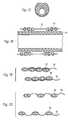
- FIGS. 19 and 20Yet another embodiment of an encased stent for effecting a continuous wall upon deployment is shown in FIGS. 19 and 20.
- a metal core 80preferably made of nitinol
- a shaped envelope 82preferably of a suitable plastic, which allows the stent to be tightly wound on the catheter and which forms a continuous surface when the stent is unwound.
- the envelopeis not continuous and does not directly connect adjoining coils. Rather, the wire making up the stent is enveloped in a suitable material, such as plastic, which features an extension such that, when deployed, the extension serves to bridge the gap between adjoining coils of the stent.
Landscapes
- Health & Medical Sciences (AREA)
- Engineering & Computer Science (AREA)
- Biomedical Technology (AREA)
- Heart & Thoracic Surgery (AREA)
- General Health & Medical Sciences (AREA)
- Vascular Medicine (AREA)
- Mechanical Engineering (AREA)
- Cardiology (AREA)
- Transplantation (AREA)
- Life Sciences & Earth Sciences (AREA)
- Animal Behavior & Ethology (AREA)
- Oral & Maxillofacial Surgery (AREA)
- Public Health (AREA)
- Veterinary Medicine (AREA)
- Media Introduction/Drainage Providing Device (AREA)
- Drying Of Solid Materials (AREA)
- Polysaccharides And Polysaccharide Derivatives (AREA)
- Braking Elements And Transmission Devices (AREA)
Abstract
Description
This application is a continuation of prior application Ser. No. 09/362,285 filed Jul. 27, 1999, which is a continuation of Ser. No. 08/679,606 filed Jul. 11, 1996, which is a continuation of application Ser. No. 08/297,275 filed Aug. 26, 1994 (abandoned), which is a continuation of application Ser. No. 08/029,493 filed Mar. 11, 1993 (abandoned).
The present invention relates to stents and, more particularly, to methods of fabricating and deploying stents.
The term “stent” has come into widespread use to denote any of a large variety of spring-like support structures, in the form of a tube which is open at both ends, which can be implanted inside a blood vessel or other tubular body conduit, to help keep the vessel or conduit open. Stents may be used following balloon angioplasty to prevent restenosis and may, more generally, be used in repairing any of a number of tubular body conduits, such as those in the vascular, biliary, genitourinary, gastrointestinal and respiratory systems, among others, which have narrowed, weakened, distorted, distended or otherwise deformed, typically as a result of any of a number of pathological conditions.
An effective stent must possess a number of important and very specific characteristics. Specifically, the stent should be chemically and biologically inert to its surroundings and should not react with, or otherwise stimulate, the living tissues around it. The stent must further be such that it will stay in the correct position and continue to support the tubular body conduit into which it is implanted over extended periods of time. Further, the stent must have the ability to return to its prescribed in place diameter after the stent diameter has been significantly reduced prior to its insertion, usually tightly wrapped on a catheter, into the tubular body conduit.
These requirements limit the suitable metal stent materials to just a few metals and alloys. To date, it has been found that various alloys of nickel and titanium (hereinafter “nitinol”), with or without certain coatings, have the desired properties and are considered suitable for use in scent applications.
Specifically, nitinols, with or without special coatings, have been found to be chemically and biologically inert and to inhibit thrombus formation. Nitinols are, under certain conditions, also superelastic which allows them to withstand extensive deformation and still resume their original shape. Furthermore, nitinols possess shape memory, i.e., the metal “remembers” a specific shape fixed during a particular heat treatment and can resort to that shape under proper conditions. Shape memory alloys can be formed into a predetermined shape at a suitable heat treatment temperature. At temperatures below the transition temperature range (“TTR”) certain nitinol alloys are in their martensite phase wherein they are highly ductile and may be drastically deformed into any of a number of other shapes. The alloy returns to its austenite phase, returning to its original predetermined shape upon reheating to a temperature above the transition temperature range. The transition temperature varies with each specific combination ratio of the components in the alloy.
The superelasticity of nitinols and their shape memory characteristics makes it possible to fabricate a stent having the desired shape and dimensions. Once formed, the stent can be temporarily deformed into a much narrower shape for insertion into the body. Once in place, the stent can be made to resume its desired shape and dimensions. Certain alloys of nickel and titanium can be made which are elastic at temperatures below about 30° C. and are elastic at body temperatures above 35° C. Such alloys are widely used for the production of stents for medical use since these nitinols are able to resume their desired shape at normal body temperature without the need to artificially heat the stent.
While such stents have been proven effective, they continue to suffer from a number of disadvantages. First, there is, in certain cases, a tendency for tissue to grow in the gaps between adjoining loops of the stent. Over time, such growth could lead to the constriction, or even the complete closure, of the tubular body conduit in which the stent was introduced in order to keep open. A continuous, gap-free, tube structure with no gaps would eliminate such undesired tissue growth. However, a rigid tube would lack the highly desirable flexibility which a coiled spring configuration offers.
Another disadvantage is that the techniques for locating stents in a body conduit are such that the stents are often installed at a location which is not precisely the intended optimal location.
There is thus a widely recognized need for, and it would be highly advantageous to have, a stent which would be suitably flexible but which would significantly reduce, or even eliminate, the possibility of undesired tissue growth between the coils of the stent.
There is further a widely recognized need for, and it would also be highly advantageous to have, a technique for installing stents which would allow the stent to be located at precisely the desired location, either by controlling the stent design or by devising adequate methods for its accurate release. Furthermore, in those cases where the “shape memory” characteristic is used and the stent is to be heated in its final location in the body to cause it to resume its memorized shape, it is desired and advantageous to have a way of heating the stent which significantly reduces, or even eliminates, the chance of damaging surrounding tissue through heating which is conducted for too long and/or at temperatures which are too high.
According to the present invention there is provided a method of fabricating a stent from a wire, comprising: (a) winding the wire on a first mandrel; (b) heating the wound wire to form a coiled spring; and (c) after the coiled spring has cooled sufficiently, reversing the winding direction of the coiled spring to form the stent.
Further according to the present invention there is provided a stent comprising a coiled wire characterized in that the wire includes at least one section which is wound in one sense and at least one section which is wound in the opposite sense, deployment of said stent taking place by tightly winding the stent onto a catheter and subsequently allowing the stent to resume its normal dimensions.
Still further according to the present invention there is provided a method of deploying a stent in a desired location, comprising: (a) tightly winding the stent onto a catheter; (b) immobilizing at least two tie-down points on the stent using a disconnectable thread; (c) bringing the stent to the desired location where the stent is to be deployed; (d) causing the thread to disconnect at one or more of the tie-down points, thereby releasing the tie-down point, wherein said disconnectable thread is meltable and said thread is disconnected by heating the thread so as to cause the thread to melt.
Further yet according to the present invention there is provided a method of heating a nitinol stent to cause the stent to shift from its martensite phase to its austenite phase and to monitor the phase change, comprising: (a) electrically connecting the stent to an electrical power supply; (b) supplying electrical current to the stent; (c) sensing a change in at least one electrical property to indicate the phase change; (d) controlling the current in response to the change.
The present invention successfully addresses the shortcomings of the presently known stents and their methods of deployment by providing a stent which is suitably flexible but which is sufficiently tight so as to eliminate the gaps between adjoining windings of the stent, thereby significantly reducing or even eliminating the possibility of undesirable growth of tissue between winding of the stent. The present invention further offers stents and associated deployment techniques which make it possible to accurately install the stent in a specific location of a body tubular conduit.
The invention is herein described, by way of example only, with reference to the accompanying drawings, wherein:
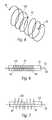
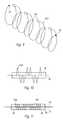
FIG. 1 is a perspective view of a single winding of a prior art stent;
FIG. 2 is a perspective view of a single winding of stent according to the present invention which was obtained by reversing the winding or a stent such as that in FIG. 1;
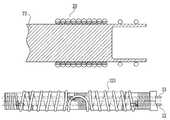
FIG. 3 is a side cross sectional view of a stent undergoing reheating according to the present invention, on a mandrel having two sections, each with a different heat sink capacity;
FIG. 4 is a perspective view of a stent wound and immobilized on a catheter, according to the prior art;
FIG. 5 is a close-up side cross sectional view of a portion of the system of FIG. 4;
FIG. 6 is a perspective view of one embodiment of a stent according to the present invention showing two oppositely wound sections;
FIG. 7 is a schematic side view of the stent of FIG. 6 with reference to a catheter on which the stent is delivered to its desired location after release of the intermediate point;
FIG. 8 is a schematic side view of the stent of FIG. 6 when wound tightly on a catheter on which the stent is delivered to its desired location;
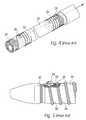
FIG. 8A is a side view of a catheter such as might be used in FIG. 8;
FIG. 8B is a side view of the catheter of FIG. 8A with the stent wound on the catheter;
FIG. 8C is a side view of the expanded stent after its release;
FIG. 9 is a perspective view of another embodiment of a stent according to the present invention showing a plurality of oppositely wound sections;
FIG. 10 is a schematic side view of the stent of FIG. 9 with reference to a catheter on which the stent is delivered to its desired location with the stent partly released;
FIG. 11 is a schematic side view of the stent of FIG. 9 when wound tightly on a catheter on which the stent is delivered to its desired location;
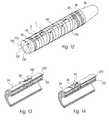
FIG. 12 is a perspective view of the embodiment of FIGS. 9-11 showing one method of immobilizing the stent;
FIG. 13 is a close-up perspective cross sectional view of one portion of the system of FIG. 12 showing a tie-down of an intermediate point;
FIG. 14 is a close-up perspective cross sectional view of one portion of the system of FIG. 12 showing a tie-down of an end point;
FIG. 15 is a perspective view of a variation of the embodiment of FIG. 9, showing a stent wherein the immobilization is effected in somewhat different fashion;
FIG. 15A is a side view of a catheter such as might be used in FIG. 15;
FIG. 15B is a side view of the catheter of FIG. 15A with the stent wound on the catheter;
FIG. 15C is a side view of the expanded stent as it would appear after it has been released from the catheter;
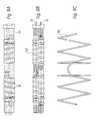
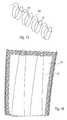
FIG. 16 is a laid flat view of an embodiment according to the present invention wherein the stent coils are encased by a film of flexible material;
FIG. 16A is a view of another embodiment of the device of FIGS. 16, including an integral immobilization thread;
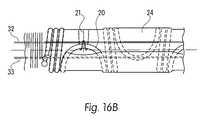
FIG. 16B is a side view of the device of FIG. 16A as it would appear when wound onto a catheter;
FIG. 17 is an end cross sectional view of the stent of FIG. 16 when tightly wound onto a catheter;
FIG. 18 is a side cross sectional view of the stent of FIG. 16 when tightly wound onto a catheter;
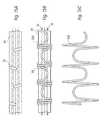
FIG. 19 is a side cross sectional view of another embodiment of a stent according to the present invention when tightly wound about a catheter (not shown);
FIG. 20 is a side cross sectional view of the embodiment of FIG. 19 when unwound for deployment;
FIG. 21 is a side view of stent featuring neck-down regions and two sections connected by a coil of low pitch;
FIG. 22 is an end cross-sectional view of the stent of FIG. 21;
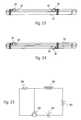
FIG. 23 is a schematic cross sectional side view of a catheter showing one embodiment of a technique for releasing the stent (not shown) using a single electrical circuit;
FIG. 24 is as in FIG. 21 except that two electrical circuits are used to provide for the sequential release of various points of the stent;
FIG. 25 is a circuit diagram for the electrical heating and phase shift sensing of a stent according to the present invention, for the automatic disconnection of the heating circuit upon, or at an appropriate time following, the detection of the phase shift.
The present invention is of improved stents and of methods of making and deploying them which can be used to increase the effectiveness of stents.
The principles and operation of stents and related methods according to the present invention may be better understood with reference to the drawings and the accompanying description.
Referring now to the drawing, FIG. 1 illustrates a single winding of a conventional stent. In many applications, it is important to precisely control the flexibility of the stent as well as the interloop spacing and tightness. A number of factors must be considered in selecting the proper flexibility and interloop spacing. First, the stent must be sufficiently flexible to follow the natural shape and dimensions of the body conduit into which it is installed without undue stress. The stent must also be sufficiently flexible to adequately follow the various movements of the conduit. These requirements tend to indicate that a coiled, or spring-like, structure be used.
However, the stent must not be too loose since this may erode its body conduit support function and since when the stent loosens significant interloop gaps are formed which tend to encourage the growth of surrounding tissue into the separations. Such ingrowth may have serious adverse consequences.
A stent is typically made by first tightly winding a wire of a suitable material, such as nitinol, on a mandrel. The assembly is then heated to a suitable temperature so as to impart to the stent its desired shape. However, during the heating process, the mandrel is also heated, which brings about its expansion and leads to the formation of a stent with loops which are somewhat separated from one another. Such separations are undesirable in certain applications.
These interloop gaps can be eliminated and the stent can be stiffened somewhat by reversing the winding direction of the stent after it has cooled sufficiently. Shown in FIG. 2 is the single stent winding of FIG. 1 after it has been reversed. Thus, what, prior to reversal (FIG.1), was the left end of the loop,10, is, after reversal (FIG.2), the right end of the loop,10, while what, prior to reversal (FIG.1), was the right end of the loop,12, is, after reversal (FIG.2), the left end of the loop,12. As will be appreciated, the reversal puts each loop in elastic deformation and thereby causes adjoining loops to press together and eliminates interloop gaps.
Under certain conditions a stent made by reversing the winding direction as described above may be overly rigid for a specific application. In such a case, the rigidity of the stent may be reduced to any desired level by following a reheating procedure described below.
The reversedstent 20, whose rigidity is to be reduced, is mounted onto a mandrel22 (FIG. 3) which may or may not be the mandrel previously used to give the stent its original shape.Stent 20 andmandrel 22 are reheated at a suitable temperature above the transition point but the reheating is allowed to continue only long enough to allow the outside portion of the stent (indicated in FIG.3 as the unhatched portion) to approach the reheating temperature and therefore to relax, while the portion of the stent near the relatively cool mandrel (indicated in FIG. 3 by hatch marks) stays at significantly lower temperatures, does not relax, and continues to have its original rigidity. In this way the reheated stent, upon cooling, displays a flexibility which is intermediate between those of the unreheated stent and a stent which is completely relaxed, but without opening up gaps between the stent loops.
The duration of the reheating must be carefully controlled to achieve the proper degree of relaxation. The reheating time will be influenced to a large degree by the heat properties of the mandrel. A mandrel which has high heat sink capacity, such as the left-hand portion of the mandrel of FIG. 3, can absorb considerable heat and keep the stent at low temperatures for a relatively long time.
By contrast, a mandrel which has low heat sink capacity, such as the right-hand portion of the mandrel of FIG. 3, can absorb very little heat and will not keep the stent at low temperatures but rather will allow that portion of the stent overlying it to quickly reach the overall heating temperature and undergo complete relaxation.
Advantage may be taken of this property to reheat different portions of a stent to different extents so as to achieve a final product which has a certain rigidity in one or more sections and is relaxed and features significant interloop gaps in other sections. Typically, it may be useful to have significant interloop gaps between the windings near each end of the stent to facilitate the suturing of the stent in place.
It will be appreciated that a stent having regions of differing relaxation characteristics can also be achieved by heating the different segments to different temperatures and times, such as by use of a segmented heater or furnace.
Conventional stents, as well as the reversed stents according to the present invention described above, must be accurately placed in a specific location in the body conduit in order to be most effective. A common placement technique currently used is illustrated in FIGS. 4 and 5.Stent 20 is tightly wound around acatheter 24, which typically featureshelical grooves 26 sized and shaped to accommodatestent 20 in its tightly wound configuration.
The two ends ofstent 20 are typically bulbed, i.e., the ends feature a slightly enlarged diameter. Each end ofstent 20 is immobilized by athread 28 which is anchored by wrapping aroundcatheter 24 several times.Thread 28 is wrapped over the end ofstent 20 as shown in FIG.5.Catheter 24 features a small diameter bore30 through which runs arelease wire 32. Portions ofthread 28 enter transversely intobore 30 near the bulbed end ofstent 20 and thread is connected with release wire32 (see FIG. 5) so that as long asrelease wire 32 is inplace thread 28 immobilizes the end ofstent 20. When both ends ofstent 20 are so immobilized,stent 20 is effectively prevented from unwinding and resuming its preset shape.
To deploystent 20 in the body,catheter 24 is first brought to the appropriate position.Release wire 32 is then pulled, thereby releasing the ends ofstent 20.Stent 20 then immediately proceeds to unwind, enlarge and install itself into the body tubular conduit while getting shorter in proportion to the diameter growth, as is the case for a stent having adjoining loops which contact each other. However, in the process of unwinding,stent 20 assumes a final position which is somewhat arbitrary, within its original length, and which depends, to some extent, on the local resistance encountered to the unwinding in the uneven blood vessel. The lack of certainty in the accurate placement of the stent often degrades its effectiveness. Hence, it is quite important to be able to release the stent with a high degree of accuracy.
Furthermore, the unwinding action of a stent of conventional design is accompanied by the rapid turning through many cycles of the stent coils. Such a turning could have a detrimental effect on surrounding tissue since the rapid and prolonged turning could abrade or otherwise damage the interior walls of body vessels in which the stent is released.
Accordingly, a stent according to one embodiment of the present invention is made up of a coiled wire which is characterized in that the wire includes at least one section which is wound in one sense and at least one section which is wound in the opposite sense. Preferably, the stent includes two sections with each of these sections representing substantially one half of the stent. An example of such a stent is shown in FIGS. 6-8.
To placestent 120,catheter 24 is first brought to the proper location. Next,central point 40 is released by usingsecond release wire 33. This allowsstent 120 to unwind without any axial displacement, since the two ends42 are still immobilized. Asstent 120 unwinds it assumes its full diameter and is firmly installed onto the inner walls of the body tubular conduit.
At this point the twoend points 42 are released by usingrelease wire 32, freeingstent 120 fromcatheter 24, and allowing the latter to be withdrawn. Sincestent 120 is already fully unwound and firmly implanted in the body conduit prior to the release ofend points 42,stent 120 does not move upon the release ofend points 42 and remains firmly installed in the correct position. Shown in FIGS. 8A,8B and8C are more detailed views ofcatheter 24 andstent 120 as they might appear in an actual application.
In another embodiment of stents according to the present invention showing in FIGS. 9-12,stent 220 is made up of several sections with adjoining sections wound in opposite directions. Preferably, adjoining loops ofstent 220 are wound in opposite directions, withintermediate points 140 representing the regions where winding directions change. To make such a stent, a catheter can be used which features a series of suitably placed pins or protrusions. The wire is wound about the mandrel and use is made of the pins or protrusions to wrap the wire around these in order to reverse the winding direction.
Shown in FIG. 12 is one scheme for attachingstent 220 tocatheter 24. Here afirst release wire 132 immobilizes the twoend points 42 and approximately one half ofintermediate points 140, while asecond release wire 133 serves to immobilize the balance ofintermediate points 140. Each ofrelease wires
FIGS. 13 and 14 depict possibilities for the actual immobilization of anintermediate point 140 and anend point 42, respectively.
Another embodiment of a stent according to the present invention is shown in FIG. 15, where at the end points and in the vicinity of each winding direction change,stent 320 features a kink ordepression 50 in the otherwise circular cross section of the stent. The kink ordepression 50 allowsstent 320 to be immobilized on a catheter (not shown) by inserting a release wire (not shown) above kink or depression50 (see FIG.15).
As can be better seen in FIGS. 15A and 15B,catheter 24 preferably featuresslots 25 which accommodate the kinked portions ofstent 320 so thatrelease wires stent 320. FIG. 15C showsstent 320 as it would appear after release fromcatheter 24.
Other variations and improvements of methods of immobilizing and releasing stents, whether conventional, or those according to the present invention, may be envisioned.
When a stent is to be inserted deep into the body, the catheter used in deploying the stent is necessarily very long and may need to follow a highly convoluted path on its way to the desired deployment location. If the stent is to be released from the catheter by pulling on the release wire, the friction between the release wire and its bore may be sufficiently high that pulling the release wire will result in the deformation of the entire catheter and bring about the displacement of the catheter tip on which the stent is wound. This, in turn, could result in the improper placement of the stent.
One way of avoiding this difficulty is demonstrated in FIGS. 23 and 24. Here the release wire is an electrically conducting wire which, unlike the release wires described above, is not movable but is, rather, used to conduct a small electric current upon activation by the operator. In FIG. 23, a pair ofthreads 28 are shown, each of which is used to immobilize a certain point on the stent (not shown).Thread 28 is in contact with aheat producing element 60 which forms a part of the electrical circuit. Heat producingelement 60 may be a resistor which converts electrical energy into heat.Thread 28 is made of a material such that whenheat producing element 60 is activated,thread 28 is caused to melt thereby releasing the stent.
In the embodiment of FIG. 24catheter 24 features two circuits, rather than one. This makes it possible to sequentially release various points of the stent, for example, as described above. As will readily be appreciated, the basic concept can be used in a variety of related ways. For example,thread 28 can be caused to break or disconnect by cutting, by chemical reaction, and the like.
Nitinols of certain composition have transition temperatures ranges which are such that the nitinol is in its martensite phase, and is plastic, at temperatures of about 30° C. and is in its austenite phase, and highly elastic, at or above body temperatures, above about 37° C. Such alloys are useful since stents made from them can be tightly wound about a catheter at room temperature and can then automatically resume their desired shape at normal body temperature without the need to artificially heat the stent.
However, this technique suffers from a disadvantage in that the stent may heat to body temperature prematurely, that is, before it is placed in its intended position, and may thus suffer undesirable stresses and permanent deformation. It is, thus, useful to employ nitinols which have a transition temperature range above body temperature (about 37° C.) such that the stent must be heated to a temperature above body temperature in order to convert the nitinol into its austenite phase.
In such cases conventional techniques call for the heating of stent through the circulation of hot liquids through the catheter used to place the stent. A difficulty with such techniques is that a liquid must be injected having a temperature which is sufficiently high so as to reach the stent at a temperature which is sufficiently high to raise the stent temperature above the required TTR. Especially where a long catheter must be used to reach remote body vessels, the injected liquid temperature may be high enough to cause damage to blood and other body tissues.
The problem is compounded by uncertainty as to when the heating should be discontinued, since it is difficult to know precisely when the nitinol reaches the desired temperature. As a result, there is a tendency to overheat the stent, which further incurs the risk of overheating and damaging body tissues.
To overcome these shortcomings, it is proposed that the stent be heated electrically and that advantage be taken of the differences in the properties of nitinols in their martensite and austenite phases to sense the change of phase of the nitinol to automatically regulate the heating.
Depicted in FIG. 25 is a circuit diagram of a stent heating and monitoring system according to the present invention. The principles and operation of such a system may be better understood with respect to a specific example described next. It is to be understood that the example is illustrative only and does not, in any way, limit the scope of the invention.
It is known that both the resistivity and the thermal conductivity of a nitinol alloy in its austenite phase are different than in its martensite phase. For example, for a particular nitinol, the resistivities are 70 and 100 μohm-cm for the martensite and austenite phases, respectively. The thermal conductivities for the same nitinol are 0.085 and 0.18 Watt/cm-C.° for the martensite and austenite phases, respectively.
In a system according to the present invention,stent 100 would be electrically connected to apower source 102, such as a 12V battery. An appropriatefirst resistance 104, for example, 0.018 ohm, and asecond resistance 108, for example 0.036 ohm, are provided to put a desirable voltage drop in the martensite phase, say, 7.5V, acrossstent 100, having resistance of 0.09 ohm (0.5 mm diameter and 100 mm length).
Whenstent 100 shifts into its austenite phase its resistance will increase to 0.13 ohm and the voltage drop acrossstent 100 will increase to 9V. The sharp change in voltage is an excellent indication thatstent 100 has shifted into its austenite phase and can be used to control the end of the heating process, either cutting off heating immediately upon detecting the voltage change or at a certain fixed or calculated time thereafter.
For example, as shown in FIG. 25, the circuit can further include atransistor gate 106 with a threshold of 2.5v. As long asstent 100 is in its martensite phase the potential ontransistor gate 106 will be 3V which is above the threshold so that the circuit will be closed. As soon as the austenite phase is reached the potential ontransistor gate 106 drops to 2V, below its threshold, causing the circuit to open and the heating to be discontinued. The circuit may further have means (not shown) to continue heating beyond this point for a suitable time and at a suitable rate. It should be appreciated that a similar system can be used wherein the current drawn, rather than the voltage drop, is sensed and used to indicate the phase transition.
In some cases it is desirable that the stent form a continuous wall. This may be accomplished by encasing the wire making up the stent in a thin plastic envelop70 (FIG. 16) which will provide the continuous wall when the stent is in position. Shown in FIGS. 17 and 18 are an end view and a side view, respectively, ofstent 20 enveloped inplastic envelop 70, as it would appear whenstent 20 is tightly wound oncatheter 24.
Another embodiment of an encased stent is shown in FIGS. 16A and 16B. The stent is as shown in FIG. 16 with the addition of aspecial release loops 21, preferably made of a suitable plastic material and are connected toplastic envelope 70 in some suitable fashion, which can be used (see FIG. 16B) to engagerelease wire 32 and immobilize the intermediate points ofstent 20. The ends ofstent 20 can be immobilized as described above.
Yet another embodiment of an encased stent for effecting a continuous wall upon deployment is shown in FIGS. 19 and 20. In this embodiment ametal core 80, preferably made of nitinol, is encased in a shapedenvelope 82, preferably of a suitable plastic, which allows the stent to be tightly wound on the catheter and which forms a continuous surface when the stent is unwound. Unlike the configurations of FIGS. 16-18, in the configuration of FIGS. 19 and 20, the envelope is not continuous and does not directly connect adjoining coils. Rather, the wire making up the stent is enveloped in a suitable material, such as plastic, which features an extension such that, when deployed, the extension serves to bridge the gap between adjoining coils of the stent.
The configuration shown in FIGS. 19 and 20 is such that when the stent expands and its metal core loops are separated from each other (FIG. 20) the stent retains its continuous sealed wall. Thus, a stent is obtained which features continuous walls and which is substantially the same length when wound onto the catheter for delivery and placement as when fully deployed in the body vessel. It should be noted that such a configuration may be useful even without reversing of the winding direction, since a sealed wall is maintained even when adjoining loops are not completely contiguous.
It is to be noted that a stent according to the present invention, especially one featuring a continuous wall supported on a metal coil frame, as described above, is highly desirable in that such a structure is able to support the body vessel and prevent tissue ingrowth without undue interference with the normal flow of blood and other bodily fluids. The latter characteristic is achieved through use of very thin coils and thin connecting walls enveloping the stent coils.
In addition, the profile and configuration of the stent can be adjusted so as to further minimize the flow friction of fluids flowing inside the stent and reduce turbulence. For example, the distal ends of the stent can be made to have large coil diameters than the rest of the coils so that, when the stent is deployed, its two ends press firmly against the body vessel thereby creating entrance regions for flow through the stent wherein the stent is essentially flush with the body vessel, so that drag and turbulence are minimized. It is known that turbulence, especially in blood vessels in and near the heart, is directly linked to thrombus formation.
In certain applications it may be desirable for the stent to feature uneven contour to help anchor it in place. An example is shown in FIG. 21, where depressions are placed along the coil to increase the friction between the coil and the tissue. Furthermore, in some cases it may be advantageous to have a stent which is made up of two sections which are connected to each other by a substantially straight portion of wire, preferably connecting points on the opposing loops of the two sections which are not corresponding points, so that the wire does not unduly press against the wall of the body vessel where there is a natural constriction in the body vessel between the two sections of the stent. Preferably the connecting wire is disposed near the periphery of the stent, as shown in the end cross-sectional view of FIG. 22, to minimize the obstruction to flow of fluids through the central portions of the stent.
While the invention has been described with respect to a limited number of embodiments, it will be appreciated that many variations, modifications and other applications of the invention may be made. For example, the profile of the plastic envelope which makes up the stent can be varied so as to better conform with the internal shape of the body vessel wherein it is installed.
Claims (6)
1. A stent comprising a coiled wire comprising a plurality of coils, characterized in that said wire includes at least one section which is wound in one sense and at least one section which is wound in the opposite sense wherein the outer portion of at least some of the plurality of coils have a rigidity that is less than the rigidity of the inner portion of at least some of the plurality of coils, deployment of said stent taking place by tightly winding the stent onto a catheter and subsequently allowing the stent to resume its normal dimensions.
2. A stent as inclaim 1 wherein said wire includes two sections with each of said sections representing substantially half of said wire.
3. A stent as inclaim 1 wherein said wire includes at least two sections which are wound in one sense and at least two sections which are wound in the opposite sense.
4. A stent as inclaim 1 wherein said wire includes a plurality of sections, each section being made up of substantially a single loop.
5. A stent as inclaim 4 wherein the stent is connected to a flexible film to form a tube-like member.
6. The stent ofclaim 1 , wherein, said wire is enveloped in a material shaped so that when the stent is fully deployed, portions of the envelope material occupy gaps between adjoining coils of the stent.
Priority Applications (2)
| Application Number | Priority Date | Filing Date | Title |
|---|---|---|---|
| US09/519,084US6514285B1 (en) | 1993-03-11 | 2000-03-06 | Stent |
| US10/309,943US6692521B2 (en) | 1993-03-11 | 2002-12-04 | Stent |
Applications Claiming Priority (5)
| Application Number | Priority Date | Filing Date | Title |
|---|---|---|---|
| US2949393A | 1993-03-11 | 1993-03-11 | |
| US29727594A | 1994-08-26 | 1994-08-26 | |
| US67960696A | 1996-07-11 | 1996-07-11 | |
| US36228599A | 1999-07-27 | 1999-07-27 | |
| US09/519,084US6514285B1 (en) | 1993-03-11 | 2000-03-06 | Stent |
Related Parent Applications (1)
| Application Number | Title | Priority Date | Filing Date |
|---|---|---|---|
| US36228599AContinuation | 1993-03-11 | 1999-07-27 |
Related Child Applications (2)
| Application Number | Title | Priority Date | Filing Date |
|---|---|---|---|
| US10/309,943DivisionUS6692521B2 (en) | 1993-03-11 | 2002-12-04 | Stent |
| US10/309,943ContinuationUS6692521B2 (en) | 1993-03-11 | 2002-12-04 | Stent |
Publications (1)
| Publication Number | Publication Date |
|---|---|
| US6514285B1true US6514285B1 (en) | 2003-02-04 |
Family
ID=21849301
Family Applications (5)
| Application Number | Title | Priority Date | Filing Date |
|---|---|---|---|
| US09/519,084Expired - LifetimeUS6514285B1 (en) | 1993-03-11 | 2000-03-06 | Stent |
| US09/519,163Expired - LifetimeUS6666881B1 (en) | 1993-03-11 | 2000-03-06 | Method of heating a nitinol stent |
| US10/309,943Expired - LifetimeUS6692521B2 (en) | 1993-03-11 | 2002-12-04 | Stent |
| US10/618,182Expired - LifetimeUS7033386B2 (en) | 1993-03-11 | 2003-07-11 | Stent |
| US11/360,768AbandonedUS20060149359A1 (en) | 1993-03-11 | 2006-02-24 | Stent |
Family Applications After (4)
| Application Number | Title | Priority Date | Filing Date |
|---|---|---|---|
| US09/519,163Expired - LifetimeUS6666881B1 (en) | 1993-03-11 | 2000-03-06 | Method of heating a nitinol stent |
| US10/309,943Expired - LifetimeUS6692521B2 (en) | 1993-03-11 | 2002-12-04 | Stent |
| US10/618,182Expired - LifetimeUS7033386B2 (en) | 1993-03-11 | 2003-07-11 | Stent |
| US11/360,768AbandonedUS20060149359A1 (en) | 1993-03-11 | 2006-02-24 | Stent |
Country Status (13)
| Country | Link |
|---|---|
| US (5) | US6514285B1 (en) |
| EP (4) | EP0703761B1 (en) |
| JP (4) | JP3323203B2 (en) |
| KR (3) | KR960700662A (en) |
| AT (4) | ATE306230T1 (en) |
| AU (1) | AU694420B2 (en) |
| BR (1) | BR9405969A (en) |
| CA (1) | CA2157936C (en) |
| DE (4) | DE69434453T2 (en) |
| DK (1) | DK0703761T3 (en) |
| PT (1) | PT703761E (en) |
| SG (2) | SG69973A1 (en) |
| WO (1) | WO1994020044A1 (en) |
Cited By (67)
| Publication number | Priority date | Publication date | Assignee | Title |
|---|---|---|---|---|
| US20030024534A1 (en)* | 2001-07-26 | 2003-02-06 | Silvestri Gerard A. | Removable stent and method of using the same |
| US20030114916A1 (en)* | 1993-03-11 | 2003-06-19 | Gregory Pinchasik | Stent |
| US20040088040A1 (en)* | 2002-11-05 | 2004-05-06 | Mangiardi Eric K. | Stent with geometry determinated functionality and method of making the same |
| US20040116996A1 (en)* | 2001-04-18 | 2004-06-17 | Lutz Freitag | Removable essentially cylindrical implants |
| US20040122504A1 (en)* | 2002-12-24 | 2004-06-24 | Michael Hogendijk | Vascular prosthesis and methods of use |
| US20040122511A1 (en)* | 2002-11-05 | 2004-06-24 | Mangiardi Eric K. | Coated stent with geometry determinated functionality and method of making the same |
| US20040127974A1 (en)* | 2002-11-05 | 2004-07-01 | Mangiardi Eric K. | Differential covering and coating methods |
| US20040186556A1 (en)* | 2002-12-24 | 2004-09-23 | Novostent Corporation | Vascular prosthesis and methods of use |
| US20040193178A1 (en)* | 2003-03-26 | 2004-09-30 | Cardiomind, Inc. | Multiple joint implant delivery systems for sequentially-controlled implant deployment |
| US20040193141A1 (en)* | 2003-02-14 | 2004-09-30 | Leopold Eric W. | Intravascular flow modifier and reinforcement device and deployment system for same |
| US20050049670A1 (en)* | 2003-08-29 | 2005-03-03 | Jones Donald K. | Self-expanding stent and stent delivery system for treatment of vascular disease |
| US20050049668A1 (en)* | 2003-08-29 | 2005-03-03 | Jones Donald K. | Self-expanding stent and stent delivery system for treatment of vascular stenosis |
| US20050246008A1 (en)* | 2004-04-30 | 2005-11-03 | Novostent Corporation | Delivery system for vascular prostheses and methods of use |
| US20050267568A1 (en)* | 2004-05-25 | 2005-12-01 | Chestnut Medical Technologies, Inc. | Flexible vascular occluding device |
| US20060136039A1 (en)* | 2003-01-31 | 2006-06-22 | Martin Alastair J | Magnetic resonance compatible stent |
| US20060136035A1 (en)* | 2004-12-20 | 2006-06-22 | Vascular Architects, Inc. A Delaware Corporation | Coiled endoluminal prosthesis system and delivery catheter |
| US20060136033A1 (en)* | 2004-12-20 | 2006-06-22 | Vascular Architects, Inc. | Coiled stent delivery system and method |
| US20060136034A1 (en)* | 2004-12-20 | 2006-06-22 | Vascular Architects, Inc. | Delivery catheter and method |
| US20060200222A1 (en)* | 2002-10-26 | 2006-09-07 | Alveolus, Inc. | Medical appliance delivery apparatus and method of use |
| US20060206201A1 (en)* | 2004-05-25 | 2006-09-14 | Chestnut Medical Technologies, Inc. | Flexible vascular occluding device |
| US20060258972A1 (en)* | 2005-05-13 | 2006-11-16 | Alveolus, Inc. | Delivery device with viewing window and associated method |
| US20080132998A1 (en)* | 2004-09-29 | 2008-06-05 | Alveolus, Inc. | Active stent |
| US20080221657A1 (en)* | 2007-03-09 | 2008-09-11 | Novostent Corporation | Delivery system and method for vascular prosthesis |
| US20080221663A1 (en)* | 2007-03-09 | 2008-09-11 | Novostent Corporation | Vascular prosthesis and methods of use |
| US20080221658A1 (en)* | 2007-03-09 | 2008-09-11 | Novostent Corporation | Vascular prosthesis and methods of use |
| US20080221665A1 (en)* | 2007-03-09 | 2008-09-11 | Novostent Corporation | Vascular prosthesis and methods of use |
| US20090254170A1 (en)* | 2003-04-03 | 2009-10-08 | William A. Cook Australia Pty. Ltd. | Branch stent graft deployment and method |
| US7604660B2 (en) | 2003-05-01 | 2009-10-20 | Merit Medical Systems, Inc. | Bifurcated medical appliance delivery apparatus and method |
| US20090281611A1 (en)* | 2004-03-02 | 2009-11-12 | Cardiomind, Inc. | Sliding restraint stent delivery systems |
| US20090287288A1 (en)* | 2004-05-25 | 2009-11-19 | Chestnut Medical Technologies, Inc. | Methods and apparatus for luminal stenting |
| US7637934B2 (en) | 2003-03-31 | 2009-12-29 | Merit Medical Systems, Inc. | Medical appliance optical delivery and deployment apparatus and method |
| US20100331948A1 (en)* | 2009-06-26 | 2010-12-30 | Cardiomind, Inc. | Implant delivery apparatus and methods with electrolytic release |
| US7875068B2 (en) | 2002-11-05 | 2011-01-25 | Merit Medical Systems, Inc. | Removable biliary stent |
| US20110172755A1 (en)* | 2008-08-19 | 2011-07-14 | Tissuegen, Inc. | Self-expanding medical device |
| US20110196472A1 (en)* | 2008-09-30 | 2011-08-11 | Terumo Kabushiki Kaisha | Stent delivery system |
| US20110218613A1 (en)* | 2009-09-10 | 2011-09-08 | Novostent Corporation | Vascular Prosthesis Assembly with Retention Mechanism and Method |
| US20120083874A1 (en)* | 2010-08-17 | 2012-04-05 | St. Jude Medical, Inc. | Device for collapsing and loading a heart valve into a minimally invasive delivery system |
| USD665500S1 (en) | 2011-04-15 | 2012-08-14 | Novostent Corporation | Stent |
| US8394119B2 (en) | 2006-02-22 | 2013-03-12 | Covidien Lp | Stents having radiopaque mesh |
| US20150034217A1 (en)* | 2011-12-23 | 2015-02-05 | Cook Medical Technologies Llc | Hybrid balloon-expandable/self-expanding prosthesis for deployment in a body vessel and method of making |
| US9095343B2 (en) | 2005-05-25 | 2015-08-04 | Covidien Lp | System and method for delivering and deploying an occluding device within a vessel |
| US9114001B2 (en) | 2012-10-30 | 2015-08-25 | Covidien Lp | Systems for attaining a predetermined porosity of a vascular device |
| US9157174B2 (en) | 2013-02-05 | 2015-10-13 | Covidien Lp | Vascular device for aneurysm treatment and providing blood flow into a perforator vessel |
| US9393021B2 (en) | 2004-05-25 | 2016-07-19 | Covidien Lp | Flexible vascular occluding device |
| US9452070B2 (en) | 2012-10-31 | 2016-09-27 | Covidien Lp | Methods and systems for increasing a density of a region of a vascular device |
| US9451965B2 (en) | 2010-06-29 | 2016-09-27 | Artventive Medical Group, Inc. | Reducing flow through a tubular structure |
| US9636116B2 (en) | 2013-06-14 | 2017-05-02 | Artventive Medical Group, Inc. | Implantable luminal devices |
| US9737306B2 (en) | 2013-06-14 | 2017-08-22 | Artventive Medical Group, Inc. | Implantable luminal devices |
| US9737308B2 (en) | 2013-06-14 | 2017-08-22 | Artventive Medical Group, Inc. | Catheter-assisted tumor treatment |
| US9737307B2 (en)* | 2013-02-05 | 2017-08-22 | Artventive Medical Group, Inc. | Blood vessel occlusion |
| US9943427B2 (en) | 2012-11-06 | 2018-04-17 | Covidien Lp | Shaped occluding devices and methods of using the same |
| US10004620B2 (en) | 2015-01-14 | 2018-06-26 | Cook Medical Technologies Llc | Suture and wire stent deployment system |
| US10004618B2 (en) | 2004-05-25 | 2018-06-26 | Covidien Lp | Methods and apparatus for luminal stenting |
| US10004513B2 (en) | 2013-02-05 | 2018-06-26 | Artventive Medical Group, Inc. | Bodily lumen occlusion |
| US10149968B2 (en) | 2013-06-14 | 2018-12-11 | Artventive Medical Group, Inc. | Catheter-assisted tumor treatment |
| US10363043B2 (en) | 2014-05-01 | 2019-07-30 | Artventive Medical Group, Inc. | Treatment of incompetent vessels |
| CN110215321A (en)* | 2019-07-11 | 2019-09-10 | 上海星伙医疗科技有限公司 | A kind of embedded device of prostate bracket |
| US10813644B2 (en) | 2016-04-01 | 2020-10-27 | Artventive Medical Group, Inc. | Occlusive implant and delivery system |
| CN112807059A (en)* | 2021-02-26 | 2021-05-18 | 上海微创医疗器械(集团)有限公司 | Self-expandable medical implant and medical device |
| US11096774B2 (en) | 2016-12-09 | 2021-08-24 | Zenflow, Inc. | Systems, devices, and methods for the accurate deployment of an implant in the prostatic urethra |
| US20220047804A1 (en)* | 2019-01-08 | 2022-02-17 | Cochlear Limited | Heating elements for thermally-driven phase transition implantable micropump |
| US11291570B2 (en) | 2018-04-27 | 2022-04-05 | Cook Medical Technologies Llc | Hybrid stent and delivery system |
| US20230201545A1 (en)* | 2021-03-09 | 2023-06-29 | Shifamed Holdings, Llc | Shape memory actuators for adjustable shunting systems, and associated systems and methods |
| US11801369B2 (en) | 2020-08-25 | 2023-10-31 | Shifamed Holdings, Llc | Adjustable interatrial shunts and associated systems and methods |
| US11857197B2 (en) | 2020-11-12 | 2024-01-02 | Shifamed Holdings, Llc | Adjustable implantable devices and associated methods |
| US11890213B2 (en) | 2019-11-19 | 2024-02-06 | Zenflow, Inc. | Systems, devices, and methods for the accurate deployment and imaging of an implant in the prostatic urethra |
| US12151071B2 (en) | 2019-09-09 | 2024-11-26 | Shifamed Holdings, Llc | Adjustable shunts and associated systems and methods |
Families Citing this family (98)
| Publication number | Priority date | Publication date | Assignee | Title |
|---|---|---|---|---|
| US6331188B1 (en)* | 1994-08-31 | 2001-12-18 | Gore Enterprise Holdings, Inc. | Exterior supported self-expanding stent-graft |
| US5545210A (en)* | 1994-09-22 | 1996-08-13 | Advanced Coronary Technology, Inc. | Method of implanting a permanent shape memory alloy stent |
| DE19524653A1 (en)* | 1994-12-23 | 1996-06-27 | Ruesch Willy Ag | Placeholder for placement in a body tube |
| DE4446036C2 (en)* | 1994-12-23 | 1999-06-02 | Ruesch Willy Ag | Placeholder for placement in a body tube |
| IT1278164B1 (en)* | 1995-01-20 | 1997-11-17 | Trode Srl X | CORONARY ENDOPROTESIS AND METHOD FOR ITS REALIZATION |
| US6059810A (en)* | 1995-05-10 | 2000-05-09 | Scimed Life Systems, Inc. | Endovascular stent and method |
| DE19521581A1 (en)* | 1995-06-14 | 1996-12-19 | Staudacher Gerhard Dr Med Vet | Device for supporting trachea |
| FR2747912B1 (en)* | 1996-04-24 | 1999-01-22 | Legona Anstalt | INTRACORPOREAL STENT TO BE PLACED IN A BODY CHANNEL |
| WO1997039699A1 (en)* | 1996-04-24 | 1997-10-30 | Legona Anstalt | Endoprothesis intended to be set in place into a body channel |
| EP1595513A3 (en)* | 1996-06-20 | 2010-09-15 | Vascutek Limited | Prosthetic repair of body passages |
| US5911752A (en)* | 1996-09-13 | 1999-06-15 | Intratherapeutics, Inc. | Method for collapsing a stent |
| DE19703482A1 (en)* | 1997-01-31 | 1998-08-06 | Ernst Peter Prof Dr M Strecker | Stent |
| JP3645399B2 (en) | 1997-06-09 | 2005-05-11 | 住友金属工業株式会社 | Endovascular stent |
| US5824059A (en)* | 1997-08-05 | 1998-10-20 | Wijay; Bandula | Flexible stent |
| FR2779340B1 (en)* | 1998-06-04 | 2000-12-29 | Delab | IMPLANTABLE INTRALUMINAL DEVICE |
| US6656218B1 (en) | 1998-07-24 | 2003-12-02 | Micrus Corporation | Intravascular flow modifier and reinforcement device |
| US6165194A (en)* | 1998-07-24 | 2000-12-26 | Micrus Corporation | Intravascular flow modifier and reinforcement device |
| US6340366B2 (en) | 1998-12-08 | 2002-01-22 | Bandula Wijay | Stent with nested or overlapping rings |
| US6579308B1 (en)* | 2000-11-28 | 2003-06-17 | Scimed Life Systems, Inc. | Stent devices with detachable distal or proximal wires |
| US6585753B2 (en)* | 2001-03-28 | 2003-07-01 | Scimed Life Systems, Inc. | Expandable coil stent |
| US6607539B1 (en)* | 2001-05-18 | 2003-08-19 | Endovascular Technologies, Inc. | Electric endovascular implant depolyment system |
| US6821291B2 (en) | 2001-06-01 | 2004-11-23 | Ams Research Corporation | Retrievable stent and method of use thereof |
| US6926732B2 (en) | 2001-06-01 | 2005-08-09 | Ams Research Corporation | Stent delivery device and method |
| US7842083B2 (en) | 2001-08-20 | 2010-11-30 | Innovational Holdings, Llc. | Expandable medical device with improved spatial distribution |
| US6953473B2 (en)* | 2001-12-20 | 2005-10-11 | Boston Scientific Scimed, Inc. | Detachable device with electrically responsive element |
| DE20312722U1 (en)* | 2002-08-14 | 2003-11-06 | Strecker, Ernst Peter, Prof. Dr.med., 76228 Karlsruhe | Mäanderstent |
| AU2003270817B2 (en) | 2002-09-26 | 2009-09-17 | Vactronix Scientific, Llc | High strength vacuum deposited nitionol alloy films, medical thin film graft materials and method of making same |
| US7771463B2 (en) | 2003-03-26 | 2010-08-10 | Ton Dai T | Twist-down implant delivery technologies |
| EP2226040A1 (en) | 2003-03-26 | 2010-09-08 | Cardiomind, Inc. | Stent delivery system with torsionally compressed stent |
| EP1542761B1 (en)* | 2003-06-02 | 2007-12-05 | S & G Biotech, Inc. | A cylindrical stent |
| WO2004105853A1 (en)* | 2003-06-02 | 2004-12-09 | S & G Biotech, Inc. | A cylindrical stent |
| US20040260384A1 (en)* | 2003-06-17 | 2004-12-23 | Medtronic Ave | Superelastic coiled stent |
| US7651521B2 (en) | 2004-03-02 | 2010-01-26 | Cardiomind, Inc. | Corewire actuated delivery system with fixed distal stent-carrying extension |
| US20050209671A1 (en)* | 2004-03-02 | 2005-09-22 | Cardiomind, Inc. | Corewire actuated delivery system with fixed distal stent-carrying extension |
| US7876738B2 (en)* | 2004-03-02 | 2011-01-25 | Nokia Corporation | Preventing an incorrect synchronization between a received code-modulated signal and a replica code |
| US20050209670A1 (en)* | 2004-03-02 | 2005-09-22 | Cardiomind, Inc. | Stent delivery system with diameter adaptive restraint |
| US20060085057A1 (en)* | 2004-10-14 | 2006-04-20 | Cardiomind | Delivery guide member based stent anti-jumping technologies |
| AU2005296096A1 (en)* | 2004-10-14 | 2006-04-27 | Cardiomind, Inc. | Small vessel stent designs |
| JP2006116184A (en)* | 2004-10-25 | 2006-05-11 | Piolax Medical Device:Kk | Stent inserting device |
| US8021374B2 (en)* | 2005-03-08 | 2011-09-20 | The Trustees Of Stevens Institute Of Technology | Method and device for the controlled delivery and placement of securing elements in a body |
| JP5523700B2 (en) | 2005-04-04 | 2014-06-18 | フレキシブル ステンティング ソリューションズ,インク. | Flexible stent |
| US7563400B2 (en)* | 2005-04-12 | 2009-07-21 | Advanced Cardiovascular Systems, Inc. | Method of stent mounting to form a balloon catheter having improved retention of a drug delivery stent |
| US7914569B2 (en) | 2005-05-13 | 2011-03-29 | Medtronics Corevalve Llc | Heart valve prosthesis and methods of manufacture and use |
| US20060276886A1 (en)* | 2005-06-07 | 2006-12-07 | Cardiomind, Inc. | Ten-thousandths scale metal reinforced stent delivery guide sheath or restraint |
| US20070027522A1 (en)* | 2005-06-14 | 2007-02-01 | Chang Jean C | Stent delivery and guidewire systems |
| US20070073379A1 (en)* | 2005-09-29 | 2007-03-29 | Chang Jean C | Stent delivery system |
| US20070055339A1 (en)* | 2005-08-23 | 2007-03-08 | George William R | Staged stent delivery systems |
| US8057495B2 (en)* | 2005-09-13 | 2011-11-15 | Cook Medical Technologies Llc | Aneurysm occlusion device |
| US20070100420A1 (en)* | 2005-11-02 | 2007-05-03 | Kavanagh Joseph T | Guided stent delivery systems of minimal diameter |
| US20070100414A1 (en) | 2005-11-02 | 2007-05-03 | Cardiomind, Inc. | Indirect-release electrolytic implant delivery systems |
| US20090210045A1 (en)* | 2005-12-02 | 2009-08-20 | Ppn Medical A/S | Stent |
| US7699884B2 (en) | 2006-03-22 | 2010-04-20 | Cardiomind, Inc. | Method of stenting with minimal diameter guided delivery systems |
| US10219884B2 (en) | 2006-07-10 | 2019-03-05 | First Quality Hygienic, Inc. | Resilient device |
| US10004584B2 (en) | 2006-07-10 | 2018-06-26 | First Quality Hygienic, Inc. | Resilient intravaginal device |
| WO2008008794A2 (en) | 2006-07-10 | 2008-01-17 | Mc Neil-Ppc, Inc. | Resilient device |
| US7717892B2 (en) | 2006-07-10 | 2010-05-18 | Mcneil-Ppc, Inc. | Method of treating urinary incontinence |
| US8613698B2 (en) | 2006-07-10 | 2013-12-24 | Mcneil-Ppc, Inc. | Resilient device |
| US8366720B2 (en)* | 2006-07-31 | 2013-02-05 | Codman & Shurtleff, Inc. | Interventional medical device system having an elongation retarding portion and method of using the same |
| ATE499912T1 (en)* | 2006-12-04 | 2011-03-15 | Cook Inc | METHOD FOR INSERTING A MEDICAL DEVICE INTO A RELEASE SYSTEM |
| JP5319546B2 (en)* | 2006-12-15 | 2013-10-16 | カーディオマインド, インコーポレイテッド | Stent system |
| WO2009003049A2 (en)* | 2007-06-25 | 2008-12-31 | Micro Vention, Inc. | Self-expanding prosthesis |
| US8092510B2 (en)* | 2007-07-25 | 2012-01-10 | Cook Medical Technologies Llc | Retention wire for self-expanding stent |
| US7988723B2 (en) | 2007-08-02 | 2011-08-02 | Flexible Stenting Solutions, Inc. | Flexible stent |
| US9149358B2 (en)* | 2008-01-24 | 2015-10-06 | Medtronic, Inc. | Delivery systems for prosthetic heart valves |
| US8157853B2 (en) | 2008-01-24 | 2012-04-17 | Medtronic, Inc. | Delivery systems and methods of implantation for prosthetic heart valves |
| CA2714062A1 (en) | 2008-01-24 | 2009-07-30 | Medtronic, Inc. | Stents for prosthetic heart valves |
| AU2009238592B2 (en)* | 2008-04-23 | 2013-10-24 | Cook Medical Technologies Llc | Method of loading a medical device into a delivery system |
| US9149376B2 (en) | 2008-10-06 | 2015-10-06 | Cordis Corporation | Reconstrainable stent delivery system |
| US11376114B2 (en) | 2008-10-31 | 2022-07-05 | Cook Medical Technologies Llc | Introducer for deploying a stent graft in a curved lumen and stent graft therefor |
| GB2464977B (en) | 2008-10-31 | 2010-11-03 | William Cook Europe As | Introducer for deploying a stent graft in a curved lumen and stent graft therefor |
| US8886636B2 (en)* | 2008-12-23 | 2014-11-11 | Yahoo! Inc. | Context transfer in search advertising |
| EP2421470A4 (en)* | 2009-04-24 | 2016-03-30 | Flexible Stenting Solutions Inc | Flexible devices |
| US9155640B2 (en) | 2009-11-16 | 2015-10-13 | Tre′ Raymond Welch | Stent and method for manufacturing thereof |
| US8801775B2 (en) | 2010-04-27 | 2014-08-12 | Medtronic Vascular, Inc. | Helical stent with opposing and/or alternating pitch angles |
| WO2011162287A1 (en)* | 2010-06-22 | 2011-12-29 | オリンパスメディカルシステムズ株式会社 | Tissue clamp production method and tissue clamp |
| US9247942B2 (en) | 2010-06-29 | 2016-02-02 | Artventive Medical Group, Inc. | Reversible tubal contraceptive device |
| KR101208986B1 (en) | 2010-07-16 | 2012-12-06 | 한국과학기술연구원 | Fixing appratus for shape memory alloy compressing spring fabrication and method for fabricating shape memory alloy compressing spring using the same |
| US9149277B2 (en) | 2010-10-18 | 2015-10-06 | Artventive Medical Group, Inc. | Expandable device delivery |
| AU2016203520B2 (en)* | 2010-12-29 | 2017-11-30 | Edwards Lifesciences Cardiaq Llc | Improved surgical implant devices and methods for their manufacture and use |
| US8465551B1 (en)* | 2011-07-09 | 2013-06-18 | Bandula Wijay | Temporary prostatic stent for benign prostatic hyperplasia |
| WO2013154762A1 (en)* | 2012-04-13 | 2013-10-17 | Kleinman David | Intravitreous self adaptive stent |
| JP5743161B2 (en) | 2012-09-24 | 2015-07-01 | 株式会社日本製鋼所 | Covering structure material with excellent Mg corrosion resistance |
| US9498356B2 (en) | 2012-12-19 | 2016-11-22 | Cook Medical Technologies, LLC | Flexible stent and delivery system |
| US9622893B2 (en) | 2012-12-20 | 2017-04-18 | Cook Medical Technologies Llc | Apparatus and method for improved deployment of endovascular grafts |
| CN105101909B (en)* | 2013-03-15 | 2018-03-27 | 纽姆克斯股份有限公司 | Intra-airway lung volume reduction compression implant structure with reduced torque |
| KR101661144B1 (en) | 2014-07-10 | 2016-10-06 | 바이오클라우드(주) | Manufacturing method of stent |
| US9763814B2 (en) | 2014-10-24 | 2017-09-19 | Cook Medical Technologies Llc | Elongate medical device |
| JP2019528824A (en) | 2016-09-15 | 2019-10-17 | メディノール リミテッドMedinol Ltd. | Blood clot collector |
| CN107442707B (en)* | 2016-11-29 | 2020-05-01 | 微创神通医疗科技(上海)有限公司 | Spring ring and preparation method thereof |
| US10709541B2 (en) | 2017-04-28 | 2020-07-14 | Cook Medical Technologies Llc | Systems and methods for adjusting the diameter of an endoluminal prosthesis and an endoluminal prosthesis configured for the same |
| WO2019108217A1 (en) | 2017-12-01 | 2019-06-06 | C.R. Bard, Inc. | Adjustable vascular graft for custom inner diameter reduction and related methods |
| KR102138632B1 (en)* | 2018-08-28 | 2020-07-28 | 인제대학교 산학협력단 | Stent structure and surgical instrument for stent including the structure |
| CN109765301B (en)* | 2019-03-21 | 2023-08-22 | 江苏省特种设备安全监督检验研究院 | But voussoir is used in TOFD detection of barrier |
| US11464657B2 (en) | 2019-11-22 | 2022-10-11 | Tré Raymond Welch | Stent and method of manufacture |
| KR102287747B1 (en) | 2020-05-15 | 2021-08-06 | 정주옥 | Spindle bundle for string production |
| KR102324381B1 (en) | 2020-08-10 | 2021-11-09 | 정주옥 | Spindle bundle for string manufacturing |
| KR102287746B1 (en) | 2020-11-20 | 2021-08-06 | 정주옥 | Needle spindle for spindle bundle |
| GB2605559B (en) | 2021-01-07 | 2023-04-05 | Cook Medical Technologies Llc | Stent graft |
Citations (15)
| Publication number | Priority date | Publication date | Assignee | Title |
|---|---|---|---|---|
| US3868956A (en) | 1972-06-05 | 1975-03-04 | Ralph J Alfidi | Vessel implantable appliance and method of implanting it |
| US4130904A (en)* | 1977-06-06 | 1978-12-26 | Thermo Electron Corporation | Prosthetic blood conduit |
| GB1540432A (en) | 1976-01-13 | 1979-02-14 | Salter & Co Ltd G | Method of stabilising springs and apparatus or equipment therefor |
| US4503569A (en) | 1983-03-03 | 1985-03-12 | Dotter Charles T | Transluminally placed expandable graft prosthesis |
| EP0282175A1 (en) | 1987-03-13 | 1988-09-14 | Cook Incorporated | Endovascular stent and method of fabrication |
| FR2617721A1 (en) | 1987-07-10 | 1989-01-13 | Nippon Zeon Co | CATHETER |
| US4878906A (en)* | 1986-03-25 | 1989-11-07 | Servetus Partnership | Endoprosthesis for repairing a damaged vessel |
| US4969458A (en)* | 1987-07-06 | 1990-11-13 | Medtronic, Inc. | Intracoronary stent and method of simultaneous angioplasty and stent implant |
| WO1991016005A1 (en) | 1990-04-19 | 1991-10-31 | Stentek Inc. | Device for the treatment of constricted vessels |
| JPH04207935A (en) | 1990-11-30 | 1992-07-29 | Hitachi Ltd | rotating electric machine |
| US5151105A (en)* | 1991-10-07 | 1992-09-29 | Kwan Gett Clifford | Collapsible vessel sleeve implant |
| WO1992022263A2 (en) | 1991-06-12 | 1992-12-23 | Mcnamara Thomas O | Nitinol stent system for hollow body conduits |
| US5383928A (en)* | 1992-06-10 | 1995-01-24 | Emory University | Stent sheath for local drug delivery |
| US5441516A (en) | 1994-03-03 | 1995-08-15 | Scimed Lifesystems Inc. | Temporary stent |
| US5562641A (en) | 1993-05-28 | 1996-10-08 | A Bromberg & Co. Ltd. | Two way shape memory alloy medical stent |
Family Cites Families (40)
| Publication number | Priority date | Publication date | Assignee | Title |
|---|---|---|---|---|
| US1101455A (en)* | 1912-03-28 | 1914-06-23 | Ignaz Kreidl | Cloudening agent for producing cloudening effects in white enamels and process of producing the same. |
| US2671482A (en)* | 1949-01-03 | 1954-03-09 | Gordon William | Quick-acting screw and ratchet clamping device |
| US3058705A (en) | 1958-03-26 | 1962-10-16 | Westinghouse Electric Corp | Resilient support system for vertical axis motor compressor unit |
| US3856956A (en)* | 1967-02-02 | 1974-12-24 | Boots Pure Drug Co Ltd | 17-acyloxysteroids and their manufacture |
| US4300244A (en)* | 1979-09-19 | 1981-11-17 | Carbomedics, Inc. | Cardiovascular grafts |
| SU845818A1 (en) | 1979-11-13 | 1981-07-15 | Научно-Исследовательский Институтпчеловодства | Bee feeding stuff |
| US4359626A (en)* | 1980-03-18 | 1982-11-16 | Potter Bronson M | Electric blanket heating control with capacitance sensing |
| US4665906A (en) | 1983-10-14 | 1987-05-19 | Raychem Corporation | Medical devices incorporating sim alloy elements |
| US5067957A (en) | 1983-10-14 | 1991-11-26 | Raychem Corporation | Method of inserting medical devices incorporating SIM alloy elements |
| SE8502249L (en)* | 1985-05-07 | 1986-11-08 | Swetron Ab | VERMEMADRASS |
| US4695709A (en)* | 1986-05-01 | 1987-09-22 | The Research Foundation Of State University Of New York | Method and apparatus for heating and controlling the temperature of ultra small volumes |
| US4829767A (en) | 1986-10-15 | 1989-05-16 | John Mecca | Positioning device |
| US5041126A (en) | 1987-03-13 | 1991-08-20 | Cook Incorporated | Endovascular stent and delivery system |
| JPS63238872A (en) | 1987-03-25 | 1988-10-04 | テルモ株式会社 | Instrument for securing inner diameter of cavity of tubular organ and catheter equipped therewith |
| US4795458A (en) | 1987-07-02 | 1989-01-03 | Regan Barrie F | Stent for use following balloon angioplasty |
| JPS6446477A (en)* | 1987-08-13 | 1989-02-20 | Terumo Corp | Catheter |
| US4927413A (en) | 1987-08-24 | 1990-05-22 | Progressive Angioplasty Systems, Inc. | Catheter for balloon angioplasty |
| US4820298A (en)* | 1987-11-20 | 1989-04-11 | Leveen Eric G | Internal vascular prosthesis |
| JPH0626578B2 (en) | 1988-03-11 | 1994-04-13 | 日本ゼオン株式会社 | Medical shape memory alloy member and catheter |
| US4913141A (en)* | 1988-10-25 | 1990-04-03 | Cordis Corporation | Apparatus and method for placement of a stent within a subject vessel |
| US5019085A (en)* | 1988-10-25 | 1991-05-28 | Cordis Corporation | Apparatus and method for placement of a stent within a subject vessel |
| JPH02207935A (en)* | 1989-02-08 | 1990-08-17 | Nishiki Sangyo Kk | Coil and its manufacture |
| JPH0447417A (en) | 1990-06-13 | 1992-02-17 | Toshiba Corp | Dam water level correcting device |
| JP2881973B2 (en) | 1990-06-13 | 1999-04-12 | ソニー株式会社 | Information retrieval device |
| US5449372A (en)* | 1990-10-09 | 1995-09-12 | Scimed Lifesystems, Inc. | Temporary stent and methods for use and manufacture |
| FR2671482A1 (en) | 1991-01-16 | 1992-07-17 | Seguin Jacques | Vascular endoprosthesis |
| BR9102521A (en) | 1991-06-05 | 1992-04-14 | Ind De Gaiolas Birgui Ltda | EGG COLLECTION AND TRANSPORTATION PROCESS AND RELATED DEVICE |
| US5372600A (en)* | 1991-10-31 | 1994-12-13 | Instent Inc. | Stent delivery systems |
| US5282823A (en)* | 1992-03-19 | 1994-02-01 | Medtronic, Inc. | Intravascular radially expandable stent |
| BR9202079A (en) | 1992-05-29 | 1993-12-14 | Hector Americo Barone | CATHETERISM IMPLANTATION OF AN ARTERIAL PROSTHESIS |
| US5342387A (en)* | 1992-06-18 | 1994-08-30 | American Biomed, Inc. | Artificial support for a blood vessel |
| BR9405969A (en)* | 1993-03-11 | 1996-02-06 | Medinol Ltd | Process of making a stent-type device from a wire stent-type device process to install a stent-type device and process of heating a nitinol-stent-type device |
| US5409470A (en) | 1993-05-07 | 1995-04-25 | C. R. Bard, Inc. | Dilatation catheter and guidewire with threaded tip connection |
| US5476505A (en)* | 1993-11-18 | 1995-12-19 | Advanced Cardiovascular Systems, Inc. | Coiled stent and delivery system |
| JP2825452B2 (en) | 1994-04-25 | 1998-11-18 | アドヴァンスド カーディオヴァスキュラー システムズ インコーポレーテッド | Radiopak stent marker |
| US5522882A (en) | 1994-10-21 | 1996-06-04 | Impra, Inc. | Method and apparatus for balloon expandable stent-graft delivery |
| US5922020A (en) | 1996-08-02 | 1999-07-13 | Localmed, Inc. | Tubular prosthesis having improved expansion and imaging characteristics |
| US5824045A (en) | 1996-10-21 | 1998-10-20 | Inflow Dynamics Inc. | Vascular and endoluminal stents |
| US6013085A (en) | 1997-11-07 | 2000-01-11 | Howard; John | Method for treating stenosis of the carotid artery |
| US6375660B1 (en) | 1999-11-22 | 2002-04-23 | Cordis Corporation | Stent delivery system with a fixed guide wire |
- 1994
- 1994-03-11BRBR9405969Apatent/BR9405969A/ennot_activeIP Right Cessation
- 1994-03-11EPEP94911573Apatent/EP0703761B1/ennot_activeExpired - Lifetime
- 1994-03-11PTPT94911573Tpatent/PT703761E/enunknown
- 1994-03-11ATAT03018229Tpatent/ATE306230T1/ennot_activeIP Right Cessation
- 1994-03-11JPJP52034494Apatent/JP3323203B2/ennot_activeExpired - Lifetime
- 1994-03-11SGSG1996007011Apatent/SG69973A1/enunknown
- 1994-03-11DKDK94911573Tpatent/DK0703761T3/enactive
- 1994-03-11EPEP01122046Apatent/EP1163890B1/ennot_activeExpired - Lifetime
- 1994-03-11ATAT03018228Tpatent/ATE345750T1/ennot_activeIP Right Cessation
- 1994-03-11AUAU64062/94Apatent/AU694420B2/ennot_activeExpired
- 1994-03-11DEDE69434453Tpatent/DE69434453T2/ennot_activeExpired - Lifetime
- 1994-03-11DEDE69434509Tpatent/DE69434509T2/ennot_activeExpired - Lifetime
- 1994-03-11SGSG9905117Apatent/SG85682A1/enunknown
- 1994-03-11KRKR1019950703840Apatent/KR960700662A/ennot_activeWithdrawn
- 1994-03-11CACA002157936Apatent/CA2157936C/ennot_activeExpired - Lifetime
- 1994-03-11ATAT94911573Tpatent/ATE232702T1/ennot_activeIP Right Cessation
- 1994-03-11EPEP03018228Apatent/EP1378210B1/ennot_activeExpired - Lifetime
- 1994-03-11DEDE69434886Tpatent/DE69434886T2/ennot_activeExpired - Lifetime
- 1994-03-11DEDE69432145Tpatent/DE69432145T2/ennot_activeExpired - Lifetime
- 1994-03-11WOPCT/US1994/002685patent/WO1994020044A1/enactiveIP Right Grant
- 1994-03-11ATAT01122046Tpatent/ATE301441T1/ennot_activeIP Right Cessation
- 1994-03-11EPEP03018229Apatent/EP1378211B1/ennot_activeExpired - Lifetime
- 1995
- 1995-09-11KRKR1019980072215Apatent/KR100196355B1/ennot_activeExpired - Lifetime
- 1998
- 1998-06-23KRKR1019980704864Apatent/KR100217343B1/ennot_activeExpired - Fee Related
- 1999
- 1999-11-25JPJP33381099Apatent/JP3600093B2/ennot_activeExpired - Lifetime
- 2000
- 2000-03-06USUS09/519,084patent/US6514285B1/ennot_activeExpired - Lifetime
- 2000-03-06USUS09/519,163patent/US6666881B1/ennot_activeExpired - Lifetime
- 2002
- 2002-01-09JPJP2002002345Apatent/JP3579397B2/ennot_activeExpired - Lifetime
- 2002-12-04USUS10/309,943patent/US6692521B2/ennot_activeExpired - Lifetime
- 2003
- 2003-06-30JPJP2003186793Apatent/JP3807553B2/ennot_activeExpired - Lifetime
- 2003-07-11USUS10/618,182patent/US7033386B2/ennot_activeExpired - Lifetime
- 2006
- 2006-02-24USUS11/360,768patent/US20060149359A1/ennot_activeAbandoned
Patent Citations (15)
| Publication number | Priority date | Publication date | Assignee | Title |
|---|---|---|---|---|
| US3868956A (en) | 1972-06-05 | 1975-03-04 | Ralph J Alfidi | Vessel implantable appliance and method of implanting it |
| GB1540432A (en) | 1976-01-13 | 1979-02-14 | Salter & Co Ltd G | Method of stabilising springs and apparatus or equipment therefor |
| US4130904A (en)* | 1977-06-06 | 1978-12-26 | Thermo Electron Corporation | Prosthetic blood conduit |
| US4503569A (en) | 1983-03-03 | 1985-03-12 | Dotter Charles T | Transluminally placed expandable graft prosthesis |
| US4878906A (en)* | 1986-03-25 | 1989-11-07 | Servetus Partnership | Endoprosthesis for repairing a damaged vessel |
| EP0282175A1 (en) | 1987-03-13 | 1988-09-14 | Cook Incorporated | Endovascular stent and method of fabrication |
| US4969458A (en)* | 1987-07-06 | 1990-11-13 | Medtronic, Inc. | Intracoronary stent and method of simultaneous angioplasty and stent implant |
| FR2617721A1 (en) | 1987-07-10 | 1989-01-13 | Nippon Zeon Co | CATHETER |
| WO1991016005A1 (en) | 1990-04-19 | 1991-10-31 | Stentek Inc. | Device for the treatment of constricted vessels |
| JPH04207935A (en) | 1990-11-30 | 1992-07-29 | Hitachi Ltd | rotating electric machine |
| WO1992022263A2 (en) | 1991-06-12 | 1992-12-23 | Mcnamara Thomas O | Nitinol stent system for hollow body conduits |
| US5151105A (en)* | 1991-10-07 | 1992-09-29 | Kwan Gett Clifford | Collapsible vessel sleeve implant |
| US5383928A (en)* | 1992-06-10 | 1995-01-24 | Emory University | Stent sheath for local drug delivery |
| US5562641A (en) | 1993-05-28 | 1996-10-08 | A Bromberg & Co. Ltd. | Two way shape memory alloy medical stent |
| US5441516A (en) | 1994-03-03 | 1995-08-15 | Scimed Lifesystems Inc. | Temporary stent |
Non-Patent Citations (1)
| Title |
|---|
| ASAIO Transaction, Jul./Sep. 1991, "Novel Airway Stent Using a Thermal Shape-Memory Ti-Ni Alloy", pp. M319-M321, Tatsuo Nakamura, et al. |
Cited By (143)
| Publication number | Priority date | Publication date | Assignee | Title |
|---|---|---|---|---|
| US7033386B2 (en) | 1993-03-11 | 2006-04-25 | Medinol Ltd. | Stent |
| US20030114916A1 (en)* | 1993-03-11 | 2003-06-19 | Gregory Pinchasik | Stent |
| US6692521B2 (en)* | 1993-03-11 | 2004-02-17 | Medinol Ltd. | Stent |
| US20060149359A1 (en)* | 1993-03-11 | 2006-07-06 | Jacob Richter | Stent |
| US20040098102A1 (en)* | 1993-03-11 | 2004-05-20 | Jacob Richter | Stent |
| US7252680B2 (en) | 2001-04-18 | 2007-08-07 | Alveolus, Inc. | Removable essentially cylindrical implants |
| US20040116996A1 (en)* | 2001-04-18 | 2004-06-17 | Lutz Freitag | Removable essentially cylindrical implants |
| US7547321B2 (en) | 2001-07-26 | 2009-06-16 | Alveolus Inc. | Removable stent and method of using the same |
| US20030024534A1 (en)* | 2001-07-26 | 2003-02-06 | Silvestri Gerard A. | Removable stent and method of using the same |
| US20060200222A1 (en)* | 2002-10-26 | 2006-09-07 | Alveolus, Inc. | Medical appliance delivery apparatus and method of use |
| US8267987B2 (en) | 2002-10-26 | 2012-09-18 | Merit Medical Systems, Inc. | Medical appliance delivery apparatus and method of use |
| US7608099B2 (en) | 2002-10-26 | 2009-10-27 | Merit Medical Systems Inc. | Medical appliance delivery apparatus and method of use |
| US20100004732A1 (en)* | 2002-10-26 | 2010-01-07 | Merit Medical Systems Inc. | Medical appliance delivery apparatus and method of use |
| US7637942B2 (en) | 2002-11-05 | 2009-12-29 | Merit Medical Systems, Inc. | Coated stent with geometry determinated functionality and method of making the same |
| US20040127974A1 (en)* | 2002-11-05 | 2004-07-01 | Mangiardi Eric K. | Differential covering and coating methods |
| US7527644B2 (en) | 2002-11-05 | 2009-05-05 | Alveolus Inc. | Stent with geometry determinated functionality and method of making the same |
| US7875068B2 (en) | 2002-11-05 | 2011-01-25 | Merit Medical Systems, Inc. | Removable biliary stent |
| US20100173066A1 (en)* | 2002-11-05 | 2010-07-08 | Merit Medical Systems, Inc. | Coated stent with geometry determinated functionality and method of making the same |
| US7959671B2 (en) | 2002-11-05 | 2011-06-14 | Merit Medical Systems, Inc. | Differential covering and coating methods |
| US20040122511A1 (en)* | 2002-11-05 | 2004-06-24 | Mangiardi Eric K. | Coated stent with geometry determinated functionality and method of making the same |
| US20040088040A1 (en)* | 2002-11-05 | 2004-05-06 | Mangiardi Eric K. | Stent with geometry determinated functionality and method of making the same |
| US8206436B2 (en) | 2002-11-05 | 2012-06-26 | Merit Medical Systems, Inc. | Coated stent with geometry determinated functionality and method of making the same |
| US7846198B2 (en) | 2002-12-24 | 2010-12-07 | Novostent Corporation | Vascular prosthesis and methods of use |
| US20040122504A1 (en)* | 2002-12-24 | 2004-06-24 | Michael Hogendijk | Vascular prosthesis and methods of use |
| US20040186556A1 (en)* | 2002-12-24 | 2004-09-23 | Novostent Corporation | Vascular prosthesis and methods of use |
| US7862608B2 (en)* | 2002-12-24 | 2011-01-04 | Novostent Corporation | Vascular prosthesis and methods of use |
| US20060136039A1 (en)* | 2003-01-31 | 2006-06-22 | Martin Alastair J | Magnetic resonance compatible stent |
| US7972371B2 (en)* | 2003-01-31 | 2011-07-05 | Koninklijke Philips Electronics N.V. | Magnetic resonance compatible stent |
| US20140088679A1 (en)* | 2003-02-14 | 2014-03-27 | DePuy Synthes Products, LLC | Intravascular flow modifier and reinforcement device and deployment system for same |
| US20080021535A1 (en)* | 2003-02-14 | 2008-01-24 | Micrus Corporation, A Delaware Corporation | Intravascular Flow Modifier And Reinforcement Device And Deployment System For Same |
| US8398700B2 (en)* | 2003-02-14 | 2013-03-19 | Micrus Corporation | Intravascular flow modifier and reinforcement device and deployment system for same |
| US20040193141A1 (en)* | 2003-02-14 | 2004-09-30 | Leopold Eric W. | Intravascular flow modifier and reinforcement device and deployment system for same |
| US8016869B2 (en) | 2003-03-26 | 2011-09-13 | Biosensors International Group, Ltd. | Guidewire-less stent delivery methods |
| US20040220585A1 (en)* | 2003-03-26 | 2004-11-04 | Cardiomind, Inc. | Implant delivery technologies |
| US20040193179A1 (en)* | 2003-03-26 | 2004-09-30 | Cardiomind, Inc. | Balloon catheter lumen based stent delivery systems |
| US20040193178A1 (en)* | 2003-03-26 | 2004-09-30 | Cardiomind, Inc. | Multiple joint implant delivery systems for sequentially-controlled implant deployment |
| US7637934B2 (en) | 2003-03-31 | 2009-12-29 | Merit Medical Systems, Inc. | Medical appliance optical delivery and deployment apparatus and method |
| US8298277B2 (en) | 2003-03-31 | 2012-10-30 | Merit Medical Systems, Inc. | Medical appliance optical delivery and deployment apparatus and method |
| US20100057183A1 (en)* | 2003-03-31 | 2010-03-04 | Merit Medical Systems, Inc. | Medical appliance optical delivery and deployment apparatus and method |
| US8361134B2 (en)* | 2003-04-03 | 2013-01-29 | Cook Medical Technologies Llc | Branch stent graft deployment and method |
| US10413434B2 (en) | 2003-04-03 | 2019-09-17 | Cook Medical Technologies Llc | Branch stent graft deployment and method |
| US20090254170A1 (en)* | 2003-04-03 | 2009-10-08 | William A. Cook Australia Pty. Ltd. | Branch stent graft deployment and method |
| US9724217B2 (en) | 2003-04-03 | 2017-08-08 | Cook Medical Technologies Llc | Branch stent graft deployment and method |
| US8353946B2 (en) | 2003-05-01 | 2013-01-15 | Merit Medical Systems, Inc. | Bifurcated medical appliance delivery apparatus and method |
| US20090319021A1 (en)* | 2003-05-01 | 2009-12-24 | Merit Medical Systems, Inc. | Bifurcated medical appliance delivery apparatus and method |
| US7604660B2 (en) | 2003-05-01 | 2009-10-20 | Merit Medical Systems, Inc. | Bifurcated medical appliance delivery apparatus and method |
| US20050049668A1 (en)* | 2003-08-29 | 2005-03-03 | Jones Donald K. | Self-expanding stent and stent delivery system for treatment of vascular stenosis |
| US20050049670A1 (en)* | 2003-08-29 | 2005-03-03 | Jones Donald K. | Self-expanding stent and stent delivery system for treatment of vascular disease |
| US20090281611A1 (en)* | 2004-03-02 | 2009-11-12 | Cardiomind, Inc. | Sliding restraint stent delivery systems |
| US20050246008A1 (en)* | 2004-04-30 | 2005-11-03 | Novostent Corporation | Delivery system for vascular prostheses and methods of use |
| US9125659B2 (en) | 2004-05-25 | 2015-09-08 | Covidien Lp | Flexible vascular occluding device |
| US9855047B2 (en) | 2004-05-25 | 2018-01-02 | Covidien Lp | Flexible vascular occluding device |
| US9295568B2 (en) | 2004-05-25 | 2016-03-29 | Covidien Lp | Methods and apparatus for luminal stenting |
| US10004618B2 (en) | 2004-05-25 | 2018-06-26 | Covidien Lp | Methods and apparatus for luminal stenting |
| US9393021B2 (en) | 2004-05-25 | 2016-07-19 | Covidien Lp | Flexible vascular occluding device |
| US20060206201A1 (en)* | 2004-05-25 | 2006-09-14 | Chestnut Medical Technologies, Inc. | Flexible vascular occluding device |
| US9050205B2 (en) | 2004-05-25 | 2015-06-09 | Covidien Lp | Methods and apparatus for luminal stenting |
| US10765542B2 (en) | 2004-05-25 | 2020-09-08 | Covidien Lp | Methods and apparatus for luminal stenting |
| US10918389B2 (en) | 2004-05-25 | 2021-02-16 | Covidien Lp | Flexible vascular occluding device |
| US20090287288A1 (en)* | 2004-05-25 | 2009-11-19 | Chestnut Medical Technologies, Inc. | Methods and apparatus for luminal stenting |
| US8628564B2 (en) | 2004-05-25 | 2014-01-14 | Covidien Lp | Methods and apparatus for luminal stenting |
| US8623067B2 (en) | 2004-05-25 | 2014-01-07 | Covidien Lp | Methods and apparatus for luminal stenting |
| US12042411B2 (en) | 2004-05-25 | 2024-07-23 | Covidien Lp | Methods and apparatus for luminal stenting |
| US8617234B2 (en) | 2004-05-25 | 2013-12-31 | Covidien Lp | Flexible vascular occluding device |
| US11771433B2 (en) | 2004-05-25 | 2023-10-03 | Covidien Lp | Flexible vascular occluding device |
| US8398701B2 (en) | 2004-05-25 | 2013-03-19 | Covidien Lp | Flexible vascular occluding device |
| US20050267568A1 (en)* | 2004-05-25 | 2005-12-01 | Chestnut Medical Technologies, Inc. | Flexible vascular occluding device |
| US9801744B2 (en) | 2004-05-25 | 2017-10-31 | Covidien Lp | Methods and apparatus for luminal stenting |
| US20090287241A1 (en)* | 2004-05-25 | 2009-11-19 | Chestnut Medical Technologies, Inc. | Methods and apparatus for luminal stenting |
| US7887579B2 (en) | 2004-09-29 | 2011-02-15 | Merit Medical Systems, Inc. | Active stent |
| US20080132998A1 (en)* | 2004-09-29 | 2008-06-05 | Alveolus, Inc. | Active stent |
| US20060136035A1 (en)* | 2004-12-20 | 2006-06-22 | Vascular Architects, Inc. A Delaware Corporation | Coiled endoluminal prosthesis system and delivery catheter |
| US20060136033A1 (en)* | 2004-12-20 | 2006-06-22 | Vascular Architects, Inc. | Coiled stent delivery system and method |
| US20060136034A1 (en)* | 2004-12-20 | 2006-06-22 | Vascular Architects, Inc. | Delivery catheter and method |
| US7731654B2 (en) | 2005-05-13 | 2010-06-08 | Merit Medical Systems, Inc. | Delivery device with viewing window and associated method |
| US20060258972A1 (en)* | 2005-05-13 | 2006-11-16 | Alveolus, Inc. | Delivery device with viewing window and associated method |
| US9095343B2 (en) | 2005-05-25 | 2015-08-04 | Covidien Lp | System and method for delivering and deploying an occluding device within a vessel |
| US8394119B2 (en) | 2006-02-22 | 2013-03-12 | Covidien Lp | Stents having radiopaque mesh |
| US9320590B2 (en) | 2006-02-22 | 2016-04-26 | Covidien Lp | Stents having radiopaque mesh |
| US9610181B2 (en) | 2006-02-22 | 2017-04-04 | Covidien Lp | Stents having radiopaque mesh |
| US10433988B2 (en) | 2006-02-22 | 2019-10-08 | Covidien Lp | Stents having radiopaque mesh |
| US11382777B2 (en) | 2006-02-22 | 2022-07-12 | Covidien Lp | Stents having radiopaque mesh |
| US20080221665A1 (en)* | 2007-03-09 | 2008-09-11 | Novostent Corporation | Vascular prosthesis and methods of use |
| US8002815B2 (en)* | 2007-03-09 | 2011-08-23 | Novostent Corporation | Delivery system and method for vascular prosthesis |
| US9017395B2 (en) | 2007-03-09 | 2015-04-28 | Novostent Corporation | Vascular prosthesis and methods of use |
| US20080221657A1 (en)* | 2007-03-09 | 2008-09-11 | Novostent Corporation | Delivery system and method for vascular prosthesis |
| US20080221658A1 (en)* | 2007-03-09 | 2008-09-11 | Novostent Corporation | Vascular prosthesis and methods of use |
| US20080221663A1 (en)* | 2007-03-09 | 2008-09-11 | Novostent Corporation | Vascular prosthesis and methods of use |
| US8348994B2 (en) | 2007-03-09 | 2013-01-08 | Novostent Corporation | Vascular prosthesis with alternating helical sections |
| US20110172755A1 (en)* | 2008-08-19 | 2011-07-14 | Tissuegen, Inc. | Self-expanding medical device |
| AU2009283913B2 (en)* | 2008-08-19 | 2014-09-18 | Tissuegen, Inc. | Self-expanding medical device |
| CN102164565B (en)* | 2008-08-19 | 2014-07-23 | 帝秀简公司 | Self-expanding medical device |
| CN102164565A (en)* | 2008-08-19 | 2011-08-24 | 帝秀简公司 | Self-expanding medical device |
| US8672996B2 (en)* | 2008-08-19 | 2014-03-18 | Tissuegen, Inc. | Self-expanding medical device |
| US20110196472A1 (en)* | 2008-09-30 | 2011-08-11 | Terumo Kabushiki Kaisha | Stent delivery system |
| US20100331948A1 (en)* | 2009-06-26 | 2010-12-30 | Cardiomind, Inc. | Implant delivery apparatus and methods with electrolytic release |
| US8657870B2 (en) | 2009-06-26 | 2014-02-25 | Biosensors International Group, Ltd. | Implant delivery apparatus and methods with electrolytic release |
| US20110218613A1 (en)* | 2009-09-10 | 2011-09-08 | Novostent Corporation | Vascular Prosthesis Assembly with Retention Mechanism and Method |
| US9451965B2 (en) | 2010-06-29 | 2016-09-27 | Artventive Medical Group, Inc. | Reducing flow through a tubular structure |
| US9168135B2 (en)* | 2010-08-17 | 2015-10-27 | St. Jude Medical, Cardiology Division, Inc. | Device for collapsing and loading a heart valve into a minimally invasive delivery system |
| US20120083874A1 (en)* | 2010-08-17 | 2012-04-05 | St. Jude Medical, Inc. | Device for collapsing and loading a heart valve into a minimally invasive delivery system |
| US9021670B2 (en)* | 2010-08-17 | 2015-05-05 | St. Jude Medical, Cardiology Division, Inc. | Device for collapsing and loading a heart valve into a minimally invasive delivery system |
| US20150135647A1 (en)* | 2010-08-17 | 2015-05-21 | St. Jude Medical, Cardiology Division, Inc. | Device for collapsing and loading a heart valve into a minimally invasive delivery system |
| USD665500S1 (en) | 2011-04-15 | 2012-08-14 | Novostent Corporation | Stent |
| US9675481B2 (en)* | 2011-12-23 | 2017-06-13 | Cook Medical Technologies Llc | Hybrid balloon-expandable/self-expanding prosthesis for deployment in a body vessel and method of making |
| US20150034217A1 (en)* | 2011-12-23 | 2015-02-05 | Cook Medical Technologies Llc | Hybrid balloon-expandable/self-expanding prosthesis for deployment in a body vessel and method of making |
| US9301831B2 (en) | 2012-10-30 | 2016-04-05 | Covidien Lp | Methods for attaining a predetermined porosity of a vascular device |
| US9114001B2 (en) | 2012-10-30 | 2015-08-25 | Covidien Lp | Systems for attaining a predetermined porosity of a vascular device |
| US9907643B2 (en) | 2012-10-30 | 2018-03-06 | Covidien Lp | Systems for attaining a predetermined porosity of a vascular device |
| US10206798B2 (en) | 2012-10-31 | 2019-02-19 | Covidien Lp | Methods and systems for increasing a density of a region of a vascular device |
| US9452070B2 (en) | 2012-10-31 | 2016-09-27 | Covidien Lp | Methods and systems for increasing a density of a region of a vascular device |
| US10952878B2 (en) | 2012-10-31 | 2021-03-23 | Covidien Lp | Methods and systems for increasing a density of a region of a vascular device |
| US9943427B2 (en) | 2012-11-06 | 2018-04-17 | Covidien Lp | Shaped occluding devices and methods of using the same |
| US10004513B2 (en) | 2013-02-05 | 2018-06-26 | Artventive Medical Group, Inc. | Bodily lumen occlusion |
| US9157174B2 (en) | 2013-02-05 | 2015-10-13 | Covidien Lp | Vascular device for aneurysm treatment and providing blood flow into a perforator vessel |
| US9561122B2 (en) | 2013-02-05 | 2017-02-07 | Covidien Lp | Vascular device for aneurysm treatment and providing blood flow into a perforator vessel |
| US9737307B2 (en)* | 2013-02-05 | 2017-08-22 | Artventive Medical Group, Inc. | Blood vessel occlusion |
| US10149968B2 (en) | 2013-06-14 | 2018-12-11 | Artventive Medical Group, Inc. | Catheter-assisted tumor treatment |
| US9737306B2 (en) | 2013-06-14 | 2017-08-22 | Artventive Medical Group, Inc. | Implantable luminal devices |
| US9737308B2 (en) | 2013-06-14 | 2017-08-22 | Artventive Medical Group, Inc. | Catheter-assisted tumor treatment |
| US9636116B2 (en) | 2013-06-14 | 2017-05-02 | Artventive Medical Group, Inc. | Implantable luminal devices |
| US10441290B2 (en) | 2013-06-14 | 2019-10-15 | Artventive Medical Group, Inc. | Implantable luminal devices |
| US11224438B2 (en) | 2014-05-01 | 2022-01-18 | Artventive Medical Group, Inc. | Treatment of incompetent vessels |
| US10363043B2 (en) | 2014-05-01 | 2019-07-30 | Artventive Medical Group, Inc. | Treatment of incompetent vessels |
| US10004620B2 (en) | 2015-01-14 | 2018-06-26 | Cook Medical Technologies Llc | Suture and wire stent deployment system |
| US10813644B2 (en) | 2016-04-01 | 2020-10-27 | Artventive Medical Group, Inc. | Occlusive implant and delivery system |
| US11903859B1 (en) | 2016-12-09 | 2024-02-20 | Zenflow, Inc. | Methods for deployment of an implant |
| US11096774B2 (en) | 2016-12-09 | 2021-08-24 | Zenflow, Inc. | Systems, devices, and methods for the accurate deployment of an implant in the prostatic urethra |
| US12090040B2 (en) | 2016-12-09 | 2024-09-17 | Zenflow, Inc. | Methods for deployment of an implant |
| US11998438B2 (en) | 2016-12-09 | 2024-06-04 | Zenflow, Inc. | Systems, devices, and methods for the accurate deployment of an implant in the prostatic urethra |
| US11291570B2 (en) | 2018-04-27 | 2022-04-05 | Cook Medical Technologies Llc | Hybrid stent and delivery system |
| US20220047804A1 (en)* | 2019-01-08 | 2022-02-17 | Cochlear Limited | Heating elements for thermally-driven phase transition implantable micropump |
| US12290660B2 (en)* | 2019-01-08 | 2025-05-06 | Cochlear Limited | Heating elements for thermally-driven phase transition implantable micropump |
| CN110215321B (en)* | 2019-07-11 | 2024-01-16 | 上海星伙医疗科技有限公司 | Device for placing prostate support |
| CN110215321A (en)* | 2019-07-11 | 2019-09-10 | 上海星伙医疗科技有限公司 | A kind of embedded device of prostate bracket |
| US12151071B2 (en) | 2019-09-09 | 2024-11-26 | Shifamed Holdings, Llc | Adjustable shunts and associated systems and methods |
| US12343487B2 (en) | 2019-09-09 | 2025-07-01 | Shifamed Holdings, Llc | Adjustable shunts and associated systems and methods |
| US11890213B2 (en) | 2019-11-19 | 2024-02-06 | Zenflow, Inc. | Systems, devices, and methods for the accurate deployment and imaging of an implant in the prostatic urethra |
| US11801369B2 (en) | 2020-08-25 | 2023-10-31 | Shifamed Holdings, Llc | Adjustable interatrial shunts and associated systems and methods |
| US11857197B2 (en) | 2020-11-12 | 2024-01-02 | Shifamed Holdings, Llc | Adjustable implantable devices and associated methods |
| CN112807059A (en)* | 2021-02-26 | 2021-05-18 | 上海微创医疗器械(集团)有限公司 | Self-expandable medical implant and medical device |
| US12090290B2 (en)* | 2021-03-09 | 2024-09-17 | Shifamed Holdings, Llc | Shape memory actuators for adjustable shunting systems, and associated systems and methods |
| US20230201545A1 (en)* | 2021-03-09 | 2023-06-29 | Shifamed Holdings, Llc | Shape memory actuators for adjustable shunting systems, and associated systems and methods |
Also Published As
Similar Documents
| Publication | Publication Date | Title |
|---|---|---|
| US6514285B1 (en) | Stent | |
| US4969890A (en) | Catheter | |
| US6190402B1 (en) | Insitu formable and self-forming intravascular flow modifier (IFM) and IFM assembly for deployment of same | |
| US5409460A (en) | Intra-luminal expander assembly | |
| AU774515B2 (en) | Occlusive coil manufacture and delivery | |
| CA2184725C (en) | Urological stent and deployment device therefor | |
| CN105943208B (en) | Self-expanding prosthesis | |
| US3868956A (en) | Vessel implantable appliance and method of implanting it | |
| US6080160A (en) | Use of shape memory alloy for internally fixing light emitting device at treatment site | |
| JPH06343704A (en) | Medical stent | |
| JPH06246004A (en) | Catheter | |
| HK1044108A (en) | Stent | |
| MXPA96003872A (en) | Urological restraint apparatus and device device for im |
Legal Events
| Date | Code | Title | Description |
|---|---|---|---|
| AS | Assignment | Owner name:MEDINOL LTD., ISRAEL Free format text:ASSIGNMENT OF ASSIGNORS INTEREST;ASSIGNOR:PINCHASIK, GREGORY;REEL/FRAME:011148/0246 Effective date:20000719 | |
| STCF | Information on status: patent grant | Free format text:PATENTED CASE | |
| FPAY | Fee payment | Year of fee payment:4 | |
| FPAY | Fee payment | Year of fee payment:8 | |
| FPAY | Fee payment | Year of fee payment:12 |