US6509256B2 - Methods of forming electrically conductive interconnections and electrically interconnected substrates - Google Patents
Methods of forming electrically conductive interconnections and electrically interconnected substratesDownload PDFInfo
- Publication number
- US6509256B2 US6509256B2US09/515,555US51555500AUS6509256B2US 6509256 B2US6509256 B2US 6509256B2US 51555500 AUS51555500 AUS 51555500AUS 6509256 B2US6509256 B2US 6509256B2
- Authority
- US
- United States
- Prior art keywords
- conductive
- substrate
- layer
- mass
- forming
- Prior art date
- Legal status (The legal status is an assumption and is not a legal conclusion. Google has not performed a legal analysis and makes no representation as to the accuracy of the status listed.)
- Expired - Lifetime
Links
Images



Classifications
- H—ELECTRICITY
- H01—ELECTRIC ELEMENTS
- H01L—SEMICONDUCTOR DEVICES NOT COVERED BY CLASS H10
- H01L24/00—Arrangements for connecting or disconnecting semiconductor or solid-state bodies; Methods or apparatus related thereto
- H01L24/01—Means for bonding being attached to, or being formed on, the surface to be connected, e.g. chip-to-package, die-attach, "first-level" interconnects; Manufacturing methods related thereto
- H01L24/10—Bump connectors ; Manufacturing methods related thereto
- H01L24/12—Structure, shape, material or disposition of the bump connectors prior to the connecting process
- B—PERFORMING OPERATIONS; TRANSPORTING
- B23—MACHINE TOOLS; METAL-WORKING NOT OTHERWISE PROVIDED FOR
- B23K—SOLDERING OR UNSOLDERING; WELDING; CLADDING OR PLATING BY SOLDERING OR WELDING; CUTTING BY APPLYING HEAT LOCALLY, e.g. FLAME CUTTING; WORKING BY LASER BEAM
- B23K20/00—Non-electric welding by applying impact or other pressure, with or without the application of heat, e.g. cladding or plating
- B23K20/02—Non-electric welding by applying impact or other pressure, with or without the application of heat, e.g. cladding or plating by means of a press ; Diffusion bonding
- B—PERFORMING OPERATIONS; TRANSPORTING
- B23—MACHINE TOOLS; METAL-WORKING NOT OTHERWISE PROVIDED FOR
- B23K—SOLDERING OR UNSOLDERING; WELDING; CLADDING OR PLATING BY SOLDERING OR WELDING; CUTTING BY APPLYING HEAT LOCALLY, e.g. FLAME CUTTING; WORKING BY LASER BEAM
- B23K20/00—Non-electric welding by applying impact or other pressure, with or without the application of heat, e.g. cladding or plating
- B23K20/16—Non-electric welding by applying impact or other pressure, with or without the application of heat, e.g. cladding or plating with interposition of special material to facilitate connection of the parts, e.g. material for absorbing or producing gas
- H—ELECTRICITY
- H01—ELECTRIC ELEMENTS
- H01L—SEMICONDUCTOR DEVICES NOT COVERED BY CLASS H10
- H01L24/00—Arrangements for connecting or disconnecting semiconductor or solid-state bodies; Methods or apparatus related thereto
- H01L24/01—Means for bonding being attached to, or being formed on, the surface to be connected, e.g. chip-to-package, die-attach, "first-level" interconnects; Manufacturing methods related thereto
- H01L24/10—Bump connectors ; Manufacturing methods related thereto
- H01L24/11—Manufacturing methods
- H—ELECTRICITY
- H01—ELECTRIC ELEMENTS
- H01L—SEMICONDUCTOR DEVICES NOT COVERED BY CLASS H10
- H01L24/00—Arrangements for connecting or disconnecting semiconductor or solid-state bodies; Methods or apparatus related thereto
- H01L24/01—Means for bonding being attached to, or being formed on, the surface to be connected, e.g. chip-to-package, die-attach, "first-level" interconnects; Manufacturing methods related thereto
- H01L24/10—Bump connectors ; Manufacturing methods related thereto
- H01L24/15—Structure, shape, material or disposition of the bump connectors after the connecting process
- H01L24/16—Structure, shape, material or disposition of the bump connectors after the connecting process of an individual bump connector
- H—ELECTRICITY
- H01—ELECTRIC ELEMENTS
- H01L—SEMICONDUCTOR DEVICES NOT COVERED BY CLASS H10
- H01L24/00—Arrangements for connecting or disconnecting semiconductor or solid-state bodies; Methods or apparatus related thereto
- H01L24/01—Means for bonding being attached to, or being formed on, the surface to be connected, e.g. chip-to-package, die-attach, "first-level" interconnects; Manufacturing methods related thereto
- H01L24/26—Layer connectors, e.g. plate connectors, solder or adhesive layers; Manufacturing methods related thereto
- H01L24/28—Structure, shape, material or disposition of the layer connectors prior to the connecting process
- H01L24/29—Structure, shape, material or disposition of the layer connectors prior to the connecting process of an individual layer connector
- H—ELECTRICITY
- H01—ELECTRIC ELEMENTS
- H01L—SEMICONDUCTOR DEVICES NOT COVERED BY CLASS H10
- H01L24/00—Arrangements for connecting or disconnecting semiconductor or solid-state bodies; Methods or apparatus related thereto
- H01L24/80—Methods for connecting semiconductor or other solid state bodies using means for bonding being attached to, or being formed on, the surface to be connected
- H01L24/81—Methods for connecting semiconductor or other solid state bodies using means for bonding being attached to, or being formed on, the surface to be connected using a bump connector
- H—ELECTRICITY
- H01—ELECTRIC ELEMENTS
- H01L—SEMICONDUCTOR DEVICES NOT COVERED BY CLASS H10
- H01L24/00—Arrangements for connecting or disconnecting semiconductor or solid-state bodies; Methods or apparatus related thereto
- H01L24/80—Methods for connecting semiconductor or other solid state bodies using means for bonding being attached to, or being formed on, the surface to be connected
- H01L24/83—Methods for connecting semiconductor or other solid state bodies using means for bonding being attached to, or being formed on, the surface to be connected using a layer connector
- H—ELECTRICITY
- H05—ELECTRIC TECHNIQUES NOT OTHERWISE PROVIDED FOR
- H05K—PRINTED CIRCUITS; CASINGS OR CONSTRUCTIONAL DETAILS OF ELECTRIC APPARATUS; MANUFACTURE OF ASSEMBLAGES OF ELECTRICAL COMPONENTS
- H05K3/00—Apparatus or processes for manufacturing printed circuits
- H05K3/30—Assembling printed circuits with electric components, e.g. with resistor
- H05K3/32—Assembling printed circuits with electric components, e.g. with resistor electrically connecting electric components or wires to printed circuits
- H05K3/321—Assembling printed circuits with electric components, e.g. with resistor electrically connecting electric components or wires to printed circuits by conductive adhesives
- B—PERFORMING OPERATIONS; TRANSPORTING
- B23—MACHINE TOOLS; METAL-WORKING NOT OTHERWISE PROVIDED FOR
- B23K—SOLDERING OR UNSOLDERING; WELDING; CLADDING OR PLATING BY SOLDERING OR WELDING; CUTTING BY APPLYING HEAT LOCALLY, e.g. FLAME CUTTING; WORKING BY LASER BEAM
- B23K2101/00—Articles made by soldering, welding or cutting
- B23K2101/36—Electric or electronic devices
- B23K2101/38—Conductors
- B—PERFORMING OPERATIONS; TRANSPORTING
- B23—MACHINE TOOLS; METAL-WORKING NOT OTHERWISE PROVIDED FOR
- B23K—SOLDERING OR UNSOLDERING; WELDING; CLADDING OR PLATING BY SOLDERING OR WELDING; CUTTING BY APPLYING HEAT LOCALLY, e.g. FLAME CUTTING; WORKING BY LASER BEAM
- B23K2101/00—Articles made by soldering, welding or cutting
- B23K2101/36—Electric or electronic devices
- B23K2101/42—Printed circuits
- H—ELECTRICITY
- H01—ELECTRIC ELEMENTS
- H01L—SEMICONDUCTOR DEVICES NOT COVERED BY CLASS H10
- H01L2224/00—Indexing scheme for arrangements for connecting or disconnecting semiconductor or solid-state bodies and methods related thereto as covered by H01L24/00
- H01L2224/01—Means for bonding being attached to, or being formed on, the surface to be connected, e.g. chip-to-package, die-attach, "first-level" interconnects; Manufacturing methods related thereto
- H01L2224/10—Bump connectors; Manufacturing methods related thereto
- H01L2224/12—Structure, shape, material or disposition of the bump connectors prior to the connecting process
- H01L2224/13—Structure, shape, material or disposition of the bump connectors prior to the connecting process of an individual bump connector
- H01L2224/13001—Core members of the bump connector
- H01L2224/13099—Material
- H—ELECTRICITY
- H01—ELECTRIC ELEMENTS
- H01L—SEMICONDUCTOR DEVICES NOT COVERED BY CLASS H10
- H01L2224/00—Indexing scheme for arrangements for connecting or disconnecting semiconductor or solid-state bodies and methods related thereto as covered by H01L24/00
- H01L2224/01—Means for bonding being attached to, or being formed on, the surface to be connected, e.g. chip-to-package, die-attach, "first-level" interconnects; Manufacturing methods related thereto
- H01L2224/26—Layer connectors, e.g. plate connectors, solder or adhesive layers; Manufacturing methods related thereto
- H01L2224/28—Structure, shape, material or disposition of the layer connectors prior to the connecting process
- H01L2224/29—Structure, shape, material or disposition of the layer connectors prior to the connecting process of an individual layer connector
- H01L2224/29001—Core members of the layer connector
- H01L2224/29099—Material
- H01L2224/291—Material with a principal constituent of the material being a metal or a metalloid, e.g. boron [B], silicon [Si], germanium [Ge], arsenic [As], antimony [Sb], tellurium [Te] and polonium [Po], and alloys thereof
- H01L2224/29101—Material with a principal constituent of the material being a metal or a metalloid, e.g. boron [B], silicon [Si], germanium [Ge], arsenic [As], antimony [Sb], tellurium [Te] and polonium [Po], and alloys thereof the principal constituent melting at a temperature of less than 400°C
- H—ELECTRICITY
- H01—ELECTRIC ELEMENTS
- H01L—SEMICONDUCTOR DEVICES NOT COVERED BY CLASS H10
- H01L2224/00—Indexing scheme for arrangements for connecting or disconnecting semiconductor or solid-state bodies and methods related thereto as covered by H01L24/00
- H01L2224/01—Means for bonding being attached to, or being formed on, the surface to be connected, e.g. chip-to-package, die-attach, "first-level" interconnects; Manufacturing methods related thereto
- H01L2224/26—Layer connectors, e.g. plate connectors, solder or adhesive layers; Manufacturing methods related thereto
- H01L2224/28—Structure, shape, material or disposition of the layer connectors prior to the connecting process
- H01L2224/29—Structure, shape, material or disposition of the layer connectors prior to the connecting process of an individual layer connector
- H01L2224/29001—Core members of the layer connector
- H01L2224/29099—Material
- H01L2224/2919—Material with a principal constituent of the material being a polymer, e.g. polyester, phenolic based polymer, epoxy
- H—ELECTRICITY
- H01—ELECTRIC ELEMENTS
- H01L—SEMICONDUCTOR DEVICES NOT COVERED BY CLASS H10
- H01L2224/00—Indexing scheme for arrangements for connecting or disconnecting semiconductor or solid-state bodies and methods related thereto as covered by H01L24/00
- H01L2224/80—Methods for connecting semiconductor or other solid state bodies using means for bonding being attached to, or being formed on, the surface to be connected
- H01L2224/81—Methods for connecting semiconductor or other solid state bodies using means for bonding being attached to, or being formed on, the surface to be connected using a bump connector
- H01L2224/8119—Arrangement of the bump connectors prior to mounting
- H01L2224/81191—Arrangement of the bump connectors prior to mounting wherein the bump connectors are disposed only on the semiconductor or solid-state body
- H—ELECTRICITY
- H01—ELECTRIC ELEMENTS
- H01L—SEMICONDUCTOR DEVICES NOT COVERED BY CLASS H10
- H01L2224/00—Indexing scheme for arrangements for connecting or disconnecting semiconductor or solid-state bodies and methods related thereto as covered by H01L24/00
- H01L2224/80—Methods for connecting semiconductor or other solid state bodies using means for bonding being attached to, or being formed on, the surface to be connected
- H01L2224/81—Methods for connecting semiconductor or other solid state bodies using means for bonding being attached to, or being formed on, the surface to be connected using a bump connector
- H01L2224/8119—Arrangement of the bump connectors prior to mounting
- H01L2224/81193—Arrangement of the bump connectors prior to mounting wherein the bump connectors are disposed on both the semiconductor or solid-state body and another item or body to be connected to the semiconductor or solid-state body
- H—ELECTRICITY
- H01—ELECTRIC ELEMENTS
- H01L—SEMICONDUCTOR DEVICES NOT COVERED BY CLASS H10
- H01L2224/00—Indexing scheme for arrangements for connecting or disconnecting semiconductor or solid-state bodies and methods related thereto as covered by H01L24/00
- H01L2224/80—Methods for connecting semiconductor or other solid state bodies using means for bonding being attached to, or being formed on, the surface to be connected
- H01L2224/81—Methods for connecting semiconductor or other solid state bodies using means for bonding being attached to, or being formed on, the surface to be connected using a bump connector
- H01L2224/818—Bonding techniques
- H01L2224/81801—Soldering or alloying
- H—ELECTRICITY
- H01—ELECTRIC ELEMENTS
- H01L—SEMICONDUCTOR DEVICES NOT COVERED BY CLASS H10
- H01L2224/00—Indexing scheme for arrangements for connecting or disconnecting semiconductor or solid-state bodies and methods related thereto as covered by H01L24/00
- H01L2224/80—Methods for connecting semiconductor or other solid state bodies using means for bonding being attached to, or being formed on, the surface to be connected
- H01L2224/83—Methods for connecting semiconductor or other solid state bodies using means for bonding being attached to, or being formed on, the surface to be connected using a layer connector
- H01L2224/8319—Arrangement of the layer connectors prior to mounting
- H—ELECTRICITY
- H01—ELECTRIC ELEMENTS
- H01L—SEMICONDUCTOR DEVICES NOT COVERED BY CLASS H10
- H01L2224/00—Indexing scheme for arrangements for connecting or disconnecting semiconductor or solid-state bodies and methods related thereto as covered by H01L24/00
- H01L2224/80—Methods for connecting semiconductor or other solid state bodies using means for bonding being attached to, or being formed on, the surface to be connected
- H01L2224/83—Methods for connecting semiconductor or other solid state bodies using means for bonding being attached to, or being formed on, the surface to be connected using a layer connector
- H01L2224/838—Bonding techniques
- H—ELECTRICITY
- H01—ELECTRIC ELEMENTS
- H01L—SEMICONDUCTOR DEVICES NOT COVERED BY CLASS H10
- H01L2924/00—Indexing scheme for arrangements or methods for connecting or disconnecting semiconductor or solid-state bodies as covered by H01L24/00
- H01L2924/01—Chemical elements
- H01L2924/01005—Boron [B]
- H—ELECTRICITY
- H01—ELECTRIC ELEMENTS
- H01L—SEMICONDUCTOR DEVICES NOT COVERED BY CLASS H10
- H01L2924/00—Indexing scheme for arrangements or methods for connecting or disconnecting semiconductor or solid-state bodies as covered by H01L24/00
- H01L2924/01—Chemical elements
- H01L2924/01047—Silver [Ag]
- H—ELECTRICITY
- H01—ELECTRIC ELEMENTS
- H01L—SEMICONDUCTOR DEVICES NOT COVERED BY CLASS H10
- H01L2924/00—Indexing scheme for arrangements or methods for connecting or disconnecting semiconductor or solid-state bodies as covered by H01L24/00
- H01L2924/013—Alloys
- H01L2924/014—Solder alloys
- H—ELECTRICITY
- H01—ELECTRIC ELEMENTS
- H01L—SEMICONDUCTOR DEVICES NOT COVERED BY CLASS H10
- H01L2924/00—Indexing scheme for arrangements or methods for connecting or disconnecting semiconductor or solid-state bodies as covered by H01L24/00
- H01L2924/06—Polymers
- H01L2924/0665—Epoxy resin
- H—ELECTRICITY
- H01—ELECTRIC ELEMENTS
- H01L—SEMICONDUCTOR DEVICES NOT COVERED BY CLASS H10
- H01L2924/00—Indexing scheme for arrangements or methods for connecting or disconnecting semiconductor or solid-state bodies as covered by H01L24/00
- H01L2924/06—Polymers
- H01L2924/078—Adhesive characteristics other than chemical
- H01L2924/0781—Adhesive characteristics other than chemical being an ohmic electrical conductor
- H—ELECTRICITY
- H01—ELECTRIC ELEMENTS
- H01L—SEMICONDUCTOR DEVICES NOT COVERED BY CLASS H10
- H01L2924/00—Indexing scheme for arrangements or methods for connecting or disconnecting semiconductor or solid-state bodies as covered by H01L24/00
- H01L2924/10—Details of semiconductor or other solid state devices to be connected
- H01L2924/11—Device type
- H01L2924/14—Integrated circuits
- H—ELECTRICITY
- H01—ELECTRIC ELEMENTS
- H01L—SEMICONDUCTOR DEVICES NOT COVERED BY CLASS H10
- H01L2924/00—Indexing scheme for arrangements or methods for connecting or disconnecting semiconductor or solid-state bodies as covered by H01L24/00
- H01L2924/30—Technical effects
- H01L2924/301—Electrical effects
- H01L2924/30105—Capacitance
- H—ELECTRICITY
- H05—ELECTRIC TECHNIQUES NOT OTHERWISE PROVIDED FOR
- H05K—PRINTED CIRCUITS; CASINGS OR CONSTRUCTIONAL DETAILS OF ELECTRIC APPARATUS; MANUFACTURE OF ASSEMBLAGES OF ELECTRICAL COMPONENTS
- H05K2201/00—Indexing scheme relating to printed circuits covered by H05K1/00
- H05K2201/03—Conductive materials
- H05K2201/0332—Structure of the conductor
- H05K2201/0364—Conductor shape
- H05K2201/0382—Continuously deformed conductors
- H—ELECTRICITY
- H05—ELECTRIC TECHNIQUES NOT OTHERWISE PROVIDED FOR
- H05K—PRINTED CIRCUITS; CASINGS OR CONSTRUCTIONAL DETAILS OF ELECTRIC APPARATUS; MANUFACTURE OF ASSEMBLAGES OF ELECTRICAL COMPONENTS
- H05K2201/00—Indexing scheme relating to printed circuits covered by H05K1/00
- H05K2201/10—Details of components or other objects attached to or integrated in a printed circuit board
- H05K2201/10613—Details of electrical connections of non-printed components, e.g. special leads
- H05K2201/10621—Components characterised by their electrical contacts
- H05K2201/10674—Flip chip
- H—ELECTRICITY
- H05—ELECTRIC TECHNIQUES NOT OTHERWISE PROVIDED FOR
- H05K—PRINTED CIRCUITS; CASINGS OR CONSTRUCTIONAL DETAILS OF ELECTRIC APPARATUS; MANUFACTURE OF ASSEMBLAGES OF ELECTRICAL COMPONENTS
- H05K2201/00—Indexing scheme relating to printed circuits covered by H05K1/00
- H05K2201/10—Details of components or other objects attached to or integrated in a printed circuit board
- H05K2201/10613—Details of electrical connections of non-printed components, e.g. special leads
- H05K2201/10954—Other details of electrical connections
- H05K2201/10984—Component carrying a connection agent, e.g. solder, adhesive
- H—ELECTRICITY
- H05—ELECTRIC TECHNIQUES NOT OTHERWISE PROVIDED FOR
- H05K—PRINTED CIRCUITS; CASINGS OR CONSTRUCTIONAL DETAILS OF ELECTRIC APPARATUS; MANUFACTURE OF ASSEMBLAGES OF ELECTRICAL COMPONENTS
- H05K2201/00—Indexing scheme relating to printed circuits covered by H05K1/00
- H05K2201/10—Details of components or other objects attached to or integrated in a printed circuit board
- H05K2201/10613—Details of electrical connections of non-printed components, e.g. special leads
- H05K2201/10954—Other details of electrical connections
- H05K2201/10992—Using different connection materials, e.g. different solders, for the same connection
Definitions
- This inventionrelates to methods of forming electrically conductive interconnections and electrically interconnected substrates.
- flip chip bondingOne method of integrated circuit interconnection is called flip chip bonding.
- bumps of solder or other conductive materialare deposited onto conductive pads of a semiconductor wafer or chip. After separation of individual dies from the wafer, the individual dies or chips are turned upside down, and the bumps are properly aligned with a metallization pattern on another substrate. The aligned bumps are then joined to appropriate points on the pattern.
- This inventionarose out of concerns associated with improving flip chip bonding techniques and the substrates which are interconnected thereby.
- a first substrate having an outer surfaceis provided and a layer of material is formed thereover. Openings are formed within the layer of material and conductive masses are formed within the openings.
- a second substrate having conductive interconnect surfacesis provided. The conductive interconnect surfaces are then contacted with the conductive masses and deformed thereby. In one aspect, the interconnect surfaces are deformed in part by portions of the layer of material proximate the conductive masses. In another aspect, the layer of material is removed and the interconnect surfaces are deformed by the conductive masses themselves.
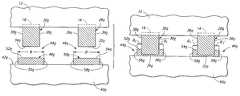
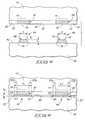
- FIG. 1is a diagrammatic sectional view of a semiconductor wafer fragment undergoing processing in accordance with one implementation of the invention.
- FIG. 2is a view of the FIG. 1 wafer fragment at a different processing step.
- FIG. 3is a view of the FIG. 1 wafer fragment at a different processing step.
- FIG. 4is a view of the FIG. 1 wafer fragment at a different processing step.
- FIG. 5is a view of the FIG. 1 wafer fragment at a different processing step.
- FIG. 6is a view of the FIG. 1 wafer fragment at a different processing step.
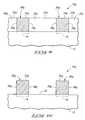
- FIG. 7is a view of the FIG. 1 wafer fragment undergoing processing in accordance with another implementation of the invention.
- FIG. 8is a view of the FIG. 7 wafer fragment at a different processing step.
- FIG. 9is a view of the FIG. 7 wafer fragment at a different processing step.
- FIG. 10is a view of the FIG. 7 wafer fragment at a different processing step.
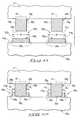
- FIG. 11is a view of the FIG. 7 wafer fragment at a different processing step.
- FIG. 12is a view of the FIG. 7 wafer fragment at a different processing step.
- a semiconductor wafer fragmentis shown generally at 10 and comprises a semiconductive substrate 12 which supports integrated circuitry which is not specifically shown.
- a pair of integrated circuitry bond pads 14 , 16are formed within and supported by substrate 12 .
- the illustrated bond padsare disposed below a substrate outer surface 18 .
- substrate 12constitutes a first substrate.
- a layer of material 20is formed over outer surface 18 and bond pads 14 , 16 .
- the illustrated layerhas a generally planar outer surface 22 .
- Exemplary materials for layer 20include insulative materials and/or photoresist.
- Layer 20is formed to a height over outer surface 18 which is a desired height for conductive masses which are to be subsequently formed.
- An exemplary heightis between about 10-30 ⁇ m.
- portions of layer 20are removed thereby forming openings 24 , 26 and outwardly exposing selected substrate portions which include respective bond pads 14 , 16 . If layer 20 is photoresist, it would simply be patterned and portions removed in accordance with conventional photoresist processing. If layer 20 is a material other than photoresist, it would be patterned and etched accordingly.
- conductive materialis provided into the openings and forms respective conductive masses 28 , 30 received within layer 20 .
- the conductive materialreplaces the portions of layer 20 which were removed to form openings 24 , 26 .
- the conductive material which comprises each massis homogeneously distributed within layer 20 sufficiently to fill the respective openings.
- a non-solidified conductive materialsuch as a silver-filled polymer epoxy material can be used.
- Exemplary methods for filling openings 24 , 26include stencil printing and screen printing.
- conductive materialcan be deposited into the openings and over the substrate and subsequently planarized as by chemical-mechanical or other polishing. If necessary, the substrate can be exposed to conditions, such as curing conditions, which are effective to harden the conductive material within openings 24 , 26 .
- the illustrated masseshave outermost surfaces which include respectively, outwardly exposed uppermost surface portions 32 , 34 and sidewalls or sidewall portions 36 , 38 .
- Uppermost surface portions 32 , 34are generally planar and coplanar with proximate portions of outer surface 22 .
- the individual sidewall portions for each massface generally oppositely one another and extend generally transversely away from the substrate where each joins therewith.
- substrate 12is inverted or flipped over a second substrate 40 .
- Second substrate 40includes an outer surface 42 .
- a pair of conductive structures 44 , 46are formed over substrate 40 and comprise respective conductive interconnect surfaces 48 , 50 .
- the interconnect surface of each structuredefines a respective shape which extends away from outer surface 42 and includes respective uppermost surfaces 52 , 54 .
- the uppermost surfacesface generally away from substrate 40 and join with respective sidewalls 56 , 58 .
- Structures 44 , 46have a surface area consisting of a first portion which makes physical contact with outer surface 42 .
- the first portioncorresponds to that portion of a structure's surface area which is disposed atop and in physical contact with substrate 40 .
- the structuresalso include a second portion which does not make physical contact with substrate 40 .
- Such second portionsinclude first surface areas A, A′ which are defined by uppermost surfaces 52 , 54 respectively and sidewalls 56 , 58 .
- the second portionsare substantially outwardly exposed.
- the uppermost surfacesalso define respective first heights h 1 over outer surface 42 .
- structures 44 , 46comprise homogeneously distributed conductive material.
- the substratesare moved toward one another and the respective interconnect surfaces 48 , 50 (FIG. 5) are physically contacted with the outermost surfaces of respective masses 30 , 28 .
- Such movingchanges the shapes of conductive structures 44 , 46 and accordingly deforms interconnect surfaces 48 , 50 .
- the conductive structuresare squeezed between the first and second substrates. This generally flattens the structures relative to the structures' shapes.
- Portions 22 a of outer surface 22also engage the conductive structures to effect the deformation thereof.
- Such deformationeffectively defines different respective uppermost surfaces 53 , 55 , and different sidewalls 57 , 59 .
- Uppermost surfaces 53 , 55respectively define different second surface areas A 1 , A 1 ′ which are greater than first surface areas A, A′ respectively. Accordingly, uppermost surfaces 53 , 55 define respective second heights h 2 which are less than first heights h 1 .
- a layer of material 20 ais formed over first substrate 12 .
- Layer 20 acan be formed to a height from between about 100 ⁇ m to 200 ⁇ m.
- openings 24 a , 26 aare formed in layer 20 a and outwardly expose bond pads 14 , 16 .
- conductive masses 28 a , 30 aare formed over substrate 12 and received within layer 20 a . Accordingly, the masses have respective heights which are defined by each masses' vertically extending sidewalls 36 a , 38 a which are substantially the same as the height of layer 20 a , e.g., between about 100 ⁇ m to 200 ⁇ m.
- material of layer 20 ais removed sufficiently to leave masses 28 a , 30 a over substrate 12 .
- Layer 20 acan be removed through conventional techniques such as resist stripping (when photoresist is used) or through a selective etch of the layer relative to material of both the masses and the outer surface of substrate 12 .
- a second substrate 40 ais provided with conductive structures 44 a , 46 a thereover.
- the conductive structuresinclude uppermost surfaces 52 a , 54 a which define respective surface areas B, B′.
- substrates 12 and 40 aare moved toward each other and masses 30 a , 28 a are respectively extended into and deform conductive structures 44 a , 46 a .
- the massesare extended into the respective structures to below the uppermost surfaces 52 a , 54 a thereof a distance which is less than the respective height of each mass.
- each massis disposed closer to the second substrate than some portions of sidewalls 56 a , 58 a . Accordingly, the respective structures are bonded with the uppermost surface 52 a , 54 a of each mass, as well as a portion of at least one of the sidewalls of each mass. In the illustrated example, portions of each sidewall of each mass are bonded with the respective conductive structures. Accordingly, less than all of each mass sidewall has conductive material of an associated conductive structure disposed laterally adjacent thereto and is disposed laterally between respective structure sidewalls 56 a , 58 a . The portions of each mass which are not disposed within the conductive structures are disposed elevationally over those portions which are disposed within the conductive structures.
- Each conductive structure 44 a , 46 ais deformed by and through the engagement with the respective conductive interconnect surfaces of the conductive masses. Accordingly, such defines respective second surface areas B 1 (for conductive structure 44 a ) and B 1 ′ (for conductive structure 46 a ) which are less than the respective first surface areas B, B′ in FIG. 11 .
Landscapes
- Engineering & Computer Science (AREA)
- Microelectronics & Electronic Packaging (AREA)
- Computer Hardware Design (AREA)
- Power Engineering (AREA)
- Mechanical Engineering (AREA)
- Manufacturing & Machinery (AREA)
- Wire Bonding (AREA)
- Combinations Of Printed Boards (AREA)
- Structures For Mounting Electric Components On Printed Circuit Boards (AREA)
- Printing Elements For Providing Electric Connections Between Printed Circuits (AREA)
Abstract
Description
Claims (26)
Priority Applications (1)
| Application Number | Priority Date | Filing Date | Title |
|---|---|---|---|
| US09/515,555US6509256B2 (en) | 1998-02-12 | 2000-02-29 | Methods of forming electrically conductive interconnections and electrically interconnected substrates |
Applications Claiming Priority (2)
| Application Number | Priority Date | Filing Date | Title |
|---|---|---|---|
| US09/022,962US6110760A (en) | 1998-02-12 | 1998-02-12 | Methods of forming electrically conductive interconnections and electrically interconnected substrates |
| US09/515,555US6509256B2 (en) | 1998-02-12 | 2000-02-29 | Methods of forming electrically conductive interconnections and electrically interconnected substrates |
Related Parent Applications (1)
| Application Number | Title | Priority Date | Filing Date |
|---|---|---|---|
| US09/022,962ContinuationUS6110760A (en) | 1998-02-12 | 1998-02-12 | Methods of forming electrically conductive interconnections and electrically interconnected substrates |
Publications (2)
| Publication Number | Publication Date |
|---|---|
| US20020058404A1 US20020058404A1 (en) | 2002-05-16 |
| US6509256B2true US6509256B2 (en) | 2003-01-21 |
Family
ID=21812335
Family Applications (4)
| Application Number | Title | Priority Date | Filing Date |
|---|---|---|---|
| US09/022,962Expired - LifetimeUS6110760A (en) | 1998-02-12 | 1998-02-12 | Methods of forming electrically conductive interconnections and electrically interconnected substrates |
| US09/429,877Expired - LifetimeUS6143639A (en) | 1998-02-12 | 1999-10-29 | Methods of forming electrically conductive interconnections and electrically interconnected substrates |
| US09/429,884Expired - LifetimeUS6271597B1 (en) | 1998-02-12 | 1999-10-29 | Methods for forming electrically conductive interconnections and electrically interconnected substrates |
| US09/515,555Expired - LifetimeUS6509256B2 (en) | 1998-02-12 | 2000-02-29 | Methods of forming electrically conductive interconnections and electrically interconnected substrates |
Family Applications Before (3)
| Application Number | Title | Priority Date | Filing Date |
|---|---|---|---|
| US09/022,962Expired - LifetimeUS6110760A (en) | 1998-02-12 | 1998-02-12 | Methods of forming electrically conductive interconnections and electrically interconnected substrates |
| US09/429,877Expired - LifetimeUS6143639A (en) | 1998-02-12 | 1999-10-29 | Methods of forming electrically conductive interconnections and electrically interconnected substrates |
| US09/429,884Expired - LifetimeUS6271597B1 (en) | 1998-02-12 | 1999-10-29 | Methods for forming electrically conductive interconnections and electrically interconnected substrates |
Country Status (1)
| Country | Link |
|---|---|
| US (4) | US6110760A (en) |
Cited By (17)
| Publication number | Priority date | Publication date | Assignee | Title |
|---|---|---|---|---|
| US20060115323A1 (en)* | 2004-11-04 | 2006-06-01 | Coppeta Jonathan R | Compression and cold weld sealing methods and devices |
| US20060281303A1 (en)* | 2005-06-14 | 2006-12-14 | John Trezza | Tack & fuse chip bonding |
| US20060278994A1 (en)* | 2005-06-14 | 2006-12-14 | John Trezza | Inverse chip connector |
| US20060281296A1 (en)* | 2005-06-14 | 2006-12-14 | Abhay Misra | Routingless chip architecture |
| US20060278986A1 (en)* | 2005-06-14 | 2006-12-14 | John Trezza | Chip capacitive coupling |
| US20060281363A1 (en)* | 2005-06-14 | 2006-12-14 | John Trezza | Remote chip attachment |
| US20060278992A1 (en)* | 2005-06-14 | 2006-12-14 | John Trezza | Post & penetration interconnection |
| US20060281219A1 (en)* | 2005-06-14 | 2006-12-14 | John Trezza | Chip-based thermo-stack |
| US20070281460A1 (en)* | 2006-06-06 | 2007-12-06 | Cubic Wafer, Inc. | Front-end processed wafer having through-chip connections |
| US20070281466A1 (en)* | 2006-06-06 | 2007-12-06 | John Trezza | Front-end processed wafer having through-chip connections |
| US20070278641A1 (en)* | 2005-06-14 | 2007-12-06 | John Trezza | Side Stacking Apparatus and Method |
| US20090174079A1 (en)* | 2007-02-16 | 2009-07-09 | John Trezza | Plated pillar package formation |
| US20100140776A1 (en)* | 2005-06-14 | 2010-06-10 | John Trezza | Triaxial through-chip connecton |
| US7781886B2 (en) | 2005-06-14 | 2010-08-24 | John Trezza | Electronic chip contact structure |
| US20100246150A1 (en)* | 2007-11-06 | 2010-09-30 | Agency For Science Tecnology And Research | Interconnect Structure And A Method Of Fabricating The Same |
| US20110215466A1 (en)* | 2010-03-04 | 2011-09-08 | Hung-Hsin Hsu | Flip chip package maintaining alignment during soldering |
| DE102009002363B4 (en) | 2009-04-14 | 2019-03-07 | Robert Bosch Gmbh | Method for attaching a first carrier device to a second carrier device |
Families Citing this family (13)
| Publication number | Priority date | Publication date | Assignee | Title |
|---|---|---|---|---|
| FR2783969B1 (en)* | 1998-09-28 | 2002-01-18 | Commissariat Energie Atomique | HYBRID DEVICE AND METHOD FOR PRODUCING ELECTRICALLY ACTIVE COMPONENTS BY ASSEMBLY |
| US6376352B1 (en)* | 1998-11-05 | 2002-04-23 | Texas Instruments Incorporated | Stud-cone bump for probe tips used in known good die carriers |
| US6239485B1 (en) | 1998-11-13 | 2001-05-29 | Fujitsu Limited | Reduced cross-talk noise high density signal interposer with power and ground wrap |
| US6281576B1 (en)* | 1999-06-16 | 2001-08-28 | International Business Machines Corporation | Method of fabricating structure for chip micro-joining |
| US6569753B1 (en)* | 2000-06-08 | 2003-05-27 | Micron Technology, Inc. | Collar positionable about a periphery of a contact pad and around a conductive structure secured to the contact pads, semiconductor device components including same, and methods for fabricating same |
| JP2002043352A (en)* | 2000-07-27 | 2002-02-08 | Nec Corp | Semiconductor element, manufacturing method therefor and semiconductor device |
| US6310403B1 (en)* | 2000-08-31 | 2001-10-30 | Motorola, Inc. | Method of manufacturing components and component thereof |
| US7067916B2 (en)* | 2001-06-20 | 2006-06-27 | International Business Machines Corporation | Extension of fatigue life for C4 solder ball to chip connection |
| US6583517B1 (en)* | 2002-04-09 | 2003-06-24 | International Business Machines Corporation | Method and structure for joining two substrates with a low melt solder joint |
| US7612443B1 (en) | 2003-09-04 | 2009-11-03 | University Of Notre Dame Du Lac | Inter-chip communication |
| US7799612B2 (en)* | 2007-06-25 | 2010-09-21 | Spansion Llc | Process applying die attach film to singulated die |
| US9620473B1 (en) | 2013-01-18 | 2017-04-11 | University Of Notre Dame Du Lac | Quilt packaging system with interdigitated interconnecting nodules for inter-chip alignment |
| US11088116B2 (en)* | 2019-11-25 | 2021-08-10 | Sandisk Technologies Llc | Bonded assembly containing horizontal and vertical bonding interfaces and methods of forming the same |
Citations (26)
| Publication number | Priority date | Publication date | Assignee | Title |
|---|---|---|---|---|
| US3757075A (en) | 1970-02-03 | 1973-09-04 | Siemens Ag | 7m circuit method for producing small contacts of uniform thickness for tick fil |
| US3893156A (en) | 1973-06-29 | 1975-07-01 | Ibm | Novel beam lead integrated circuit structure and method for making the same including automatic registration of beam leads with corresponding dielectric substrate leads |
| US4157932A (en) | 1976-11-04 | 1979-06-12 | Canon Kabushiki Kaisha | Connecting method |
| US4442966A (en) | 1980-10-15 | 1984-04-17 | U.S. Philips Corporation | Method of simultaneously manufacturing multiple electrical connections between two electrical elements |
| US4570329A (en) | 1984-08-15 | 1986-02-18 | Honeywell Inc. | Apparatus and method for fabricating backside mosaic of photoconductive infrared detectors |
| US4612083A (en) | 1984-07-20 | 1986-09-16 | Nec Corporation | Process of fabricating three-dimensional semiconductor device |
| JPS61229342A (en) | 1985-04-03 | 1986-10-13 | Fujitsu Ltd | Connection for bump electrode |
| JPS62283644A (en) | 1986-05-31 | 1987-12-09 | Mitsubishi Electric Corp | Manufacturing method of semiconductor device |
| US4818728A (en) | 1986-12-03 | 1989-04-04 | Sharp Kabushiki Kaisha | Method of making a hybrid semiconductor device |
| JPH01120039A (en) | 1987-11-02 | 1989-05-12 | Nippon Telegr & Teleph Corp <Ntt> | Connection of ic chip |
| US4878611A (en) | 1986-05-30 | 1989-11-07 | American Telephone And Telegraph Company, At&T Bell Laboratories | Process for controlling solder joint geometry when surface mounting a leadless integrated circuit package on a substrate |
| US4998665A (en) | 1988-09-07 | 1991-03-12 | Nec Corporation | Bonding structure of substrates and method for bonding substrates |
| US5034799A (en) | 1989-02-22 | 1991-07-23 | Kabushiki Kaisha Toshiba | Semiconductor integrated circuit device having a hollow multi-layered lead structure |
| US5196371A (en) | 1989-12-18 | 1993-03-23 | Epoxy Technology, Inc. | Flip chip bonding method using electrically conductive polymer bumps |
| US5279989A (en) | 1992-02-29 | 1994-01-18 | Hyundai Electronics Industries Co., Ltd. | Method for forming miniature contacts of highly integrated semiconductor devices |
| US5355580A (en)* | 1991-12-26 | 1994-10-18 | International Business Machines | Method for replacing semiconductor chips |
| US5431328A (en) | 1994-05-06 | 1995-07-11 | Industrial Technology Research Institute | Composite bump flip chip bonding |
| US5539153A (en) | 1994-08-08 | 1996-07-23 | Hewlett-Packard Company | Method of bumping substrates by contained paste deposition |
| US5611140A (en) | 1989-12-18 | 1997-03-18 | Epoxy Technology, Inc. | Method of forming electrically conductive polymer interconnects on electrical substrates |
| US5658830A (en) | 1996-07-12 | 1997-08-19 | Vanguard International Semiconductor Corporation | Method for fabricating interconnecting lines and contacts using conformal deposition |
| US5920464A (en) | 1997-09-22 | 1999-07-06 | Trw Inc. | Reworkable microelectronic multi-chip module |
| US5995188A (en)* | 1997-01-23 | 1999-11-30 | Kabushiki Kaisha Toshiba | Liquid crystal display device using stacked layers |
| US6088914A (en)* | 1994-02-04 | 2000-07-18 | Lsi Logic Corporation | Method for planarizing an array of solder balls |
| US6150255A (en)* | 1996-04-17 | 2000-11-21 | International Business Machines Corporation | Method of planarizing a curved substrate and resulting structure |
| US6260264B1 (en)* | 1997-12-08 | 2001-07-17 | 3M Innovative Properties Company | Methods for making z-axis electrical connections |
| US6306683B1 (en)* | 1997-09-23 | 2001-10-23 | International Business Machines Corporation | Method of forming a flip chip assembly, and a flip chip assembly formed by the method |
Family Cites Families (3)
| Publication number | Priority date | Publication date | Assignee | Title |
|---|---|---|---|---|
| JPS62275842A (en)* | 1986-05-23 | 1987-11-30 | Toyota Motor Corp | Vehicle power distribution device |
| JPH0671625A (en)* | 1992-08-26 | 1994-03-15 | Sumitomo Electric Ind Ltd | Cast molding method for ceramics |
| US5930464A (en)* | 1995-10-23 | 1999-07-27 | Ricoh Company, Ltd. | Apparatus for controlling a direct memory access operation in an image processing apparatus |
- 1998
- 1998-02-12USUS09/022,962patent/US6110760A/ennot_activeExpired - Lifetime
- 1999
- 1999-10-29USUS09/429,877patent/US6143639A/ennot_activeExpired - Lifetime
- 1999-10-29USUS09/429,884patent/US6271597B1/ennot_activeExpired - Lifetime
- 2000
- 2000-02-29USUS09/515,555patent/US6509256B2/ennot_activeExpired - Lifetime
Patent Citations (28)
| Publication number | Priority date | Publication date | Assignee | Title |
|---|---|---|---|---|
| US3757075A (en) | 1970-02-03 | 1973-09-04 | Siemens Ag | 7m circuit method for producing small contacts of uniform thickness for tick fil |
| US3893156A (en) | 1973-06-29 | 1975-07-01 | Ibm | Novel beam lead integrated circuit structure and method for making the same including automatic registration of beam leads with corresponding dielectric substrate leads |
| US4157932A (en) | 1976-11-04 | 1979-06-12 | Canon Kabushiki Kaisha | Connecting method |
| US4442966A (en) | 1980-10-15 | 1984-04-17 | U.S. Philips Corporation | Method of simultaneously manufacturing multiple electrical connections between two electrical elements |
| US4612083A (en) | 1984-07-20 | 1986-09-16 | Nec Corporation | Process of fabricating three-dimensional semiconductor device |
| US4570329A (en) | 1984-08-15 | 1986-02-18 | Honeywell Inc. | Apparatus and method for fabricating backside mosaic of photoconductive infrared detectors |
| JPS61229342A (en) | 1985-04-03 | 1986-10-13 | Fujitsu Ltd | Connection for bump electrode |
| US4878611A (en) | 1986-05-30 | 1989-11-07 | American Telephone And Telegraph Company, At&T Bell Laboratories | Process for controlling solder joint geometry when surface mounting a leadless integrated circuit package on a substrate |
| JPS62283644A (en) | 1986-05-31 | 1987-12-09 | Mitsubishi Electric Corp | Manufacturing method of semiconductor device |
| US4818728A (en) | 1986-12-03 | 1989-04-04 | Sharp Kabushiki Kaisha | Method of making a hybrid semiconductor device |
| JPH01120039A (en) | 1987-11-02 | 1989-05-12 | Nippon Telegr & Teleph Corp <Ntt> | Connection of ic chip |
| US4998665A (en) | 1988-09-07 | 1991-03-12 | Nec Corporation | Bonding structure of substrates and method for bonding substrates |
| US5034799A (en) | 1989-02-22 | 1991-07-23 | Kabushiki Kaisha Toshiba | Semiconductor integrated circuit device having a hollow multi-layered lead structure |
| US5237130A (en)* | 1989-12-18 | 1993-08-17 | Epoxy Technology, Inc. | Flip chip technology using electrically conductive polymers and dielectrics |
| US5611140A (en) | 1989-12-18 | 1997-03-18 | Epoxy Technology, Inc. | Method of forming electrically conductive polymer interconnects on electrical substrates |
| US5196371A (en) | 1989-12-18 | 1993-03-23 | Epoxy Technology, Inc. | Flip chip bonding method using electrically conductive polymer bumps |
| US5355580A (en)* | 1991-12-26 | 1994-10-18 | International Business Machines | Method for replacing semiconductor chips |
| US5488200A (en)* | 1991-12-26 | 1996-01-30 | International Business Machines Corporation | Interconnect structure with replaced semiconductor chips |
| US5279989A (en) | 1992-02-29 | 1994-01-18 | Hyundai Electronics Industries Co., Ltd. | Method for forming miniature contacts of highly integrated semiconductor devices |
| US6088914A (en)* | 1994-02-04 | 2000-07-18 | Lsi Logic Corporation | Method for planarizing an array of solder balls |
| US5431328A (en) | 1994-05-06 | 1995-07-11 | Industrial Technology Research Institute | Composite bump flip chip bonding |
| US5539153A (en) | 1994-08-08 | 1996-07-23 | Hewlett-Packard Company | Method of bumping substrates by contained paste deposition |
| US6150255A (en)* | 1996-04-17 | 2000-11-21 | International Business Machines Corporation | Method of planarizing a curved substrate and resulting structure |
| US5658830A (en) | 1996-07-12 | 1997-08-19 | Vanguard International Semiconductor Corporation | Method for fabricating interconnecting lines and contacts using conformal deposition |
| US5995188A (en)* | 1997-01-23 | 1999-11-30 | Kabushiki Kaisha Toshiba | Liquid crystal display device using stacked layers |
| US5920464A (en) | 1997-09-22 | 1999-07-06 | Trw Inc. | Reworkable microelectronic multi-chip module |
| US6306683B1 (en)* | 1997-09-23 | 2001-10-23 | International Business Machines Corporation | Method of forming a flip chip assembly, and a flip chip assembly formed by the method |
| US6260264B1 (en)* | 1997-12-08 | 2001-07-17 | 3M Innovative Properties Company | Methods for making z-axis electrical connections |
Cited By (77)
| Publication number | Priority date | Publication date | Assignee | Title |
|---|---|---|---|---|
| US20060115323A1 (en)* | 2004-11-04 | 2006-06-01 | Coppeta Jonathan R | Compression and cold weld sealing methods and devices |
| US9796583B2 (en)* | 2004-11-04 | 2017-10-24 | Microchips Biotech, Inc. | Compression and cold weld sealing method for an electrical via connection |
| US20120241216A1 (en)* | 2004-11-04 | 2012-09-27 | Microchips, Inc. | Compression and cold weld sealing methods and devices |
| US8191756B2 (en)* | 2004-11-04 | 2012-06-05 | Microchips, Inc. | Hermetically sealing using a cold welded tongue and groove structure |
| US7785987B2 (en) | 2005-06-14 | 2010-08-31 | John Trezza | Isolating chip-to-chip contact |
| US20060281219A1 (en)* | 2005-06-14 | 2006-12-14 | John Trezza | Chip-based thermo-stack |
| US20060278966A1 (en)* | 2005-06-14 | 2006-12-14 | John Trezza | Contact-based encapsulation |
| US20060278993A1 (en)* | 2005-06-14 | 2006-12-14 | John Trezza | Chip connector |
| US20060278986A1 (en)* | 2005-06-14 | 2006-12-14 | John Trezza | Chip capacitive coupling |
| US20060278988A1 (en)* | 2005-06-14 | 2006-12-14 | John Trezza | Profiled contact |
| US20060281363A1 (en)* | 2005-06-14 | 2006-12-14 | John Trezza | Remote chip attachment |
| US20060278992A1 (en)* | 2005-06-14 | 2006-12-14 | John Trezza | Post & penetration interconnection |
| US20060281292A1 (en)* | 2005-06-14 | 2006-12-14 | John Trezza | Rigid-backed, membrane-based chip tooling |
| US7808111B2 (en) | 2005-06-14 | 2010-10-05 | John Trezza | Processed wafer via |
| US20070120241A1 (en)* | 2005-06-14 | 2007-05-31 | John Trezza | Pin-type chip tooling |
| US20070138562A1 (en)* | 2005-06-14 | 2007-06-21 | Cubic Wafer, Inc. | Coaxial through chip connection |
| US20070158839A1 (en)* | 2005-06-14 | 2007-07-12 | John Trezza | Thermally balanced via |
| US20070167004A1 (en)* | 2005-06-14 | 2007-07-19 | John Trezza | Triaxial through-chip connection |
| US20070172987A1 (en)* | 2005-06-14 | 2007-07-26 | Roger Dugas | Membrane-based chip tooling |
| US20070182020A1 (en)* | 2005-06-14 | 2007-08-09 | John Trezza | Chip connector |
| US20070197013A1 (en)* | 2005-06-14 | 2007-08-23 | Cubic Wafer, Inc. | Processed Wafer Via |
| US20070228576A1 (en)* | 2005-06-14 | 2007-10-04 | John Trezza | Isolating chip-to-chip contact |
| US20070278641A1 (en)* | 2005-06-14 | 2007-12-06 | John Trezza | Side Stacking Apparatus and Method |
| US20080171174A1 (en)* | 2005-06-14 | 2008-07-17 | John Trezza | Electrically conductive interconnect system and method |
| US20090137116A1 (en)* | 2005-06-14 | 2009-05-28 | Cufer Asset Ltd. L.L.C. | Isolating chip-to-chip contact |
| US7560813B2 (en) | 2005-06-14 | 2009-07-14 | John Trezza | Chip-based thermo-stack |
| US7659202B2 (en) | 2005-06-14 | 2010-02-09 | John Trezza | Triaxial through-chip connection |
| US20060281303A1 (en)* | 2005-06-14 | 2006-12-14 | John Trezza | Tack & fuse chip bonding |
| US9324629B2 (en) | 2005-06-14 | 2016-04-26 | Cufer Asset Ltd. L.L.C. | Tooling for coupling multiple electronic chips |
| US9147635B2 (en) | 2005-06-14 | 2015-09-29 | Cufer Asset Ltd. L.L.C. | Contact-based encapsulation |
| US8846445B2 (en) | 2005-06-14 | 2014-09-30 | Cufer Asset Ltd. L.L.C. | Inverse chip connector |
| US7687400B2 (en) | 2005-06-14 | 2010-03-30 | John Trezza | Side stacking apparatus and method |
| US20100140776A1 (en)* | 2005-06-14 | 2010-06-10 | John Trezza | Triaxial through-chip connecton |
| US20100148343A1 (en)* | 2005-06-14 | 2010-06-17 | John Trezza | Side stacking apparatus and method |
| US7767493B2 (en) | 2005-06-14 | 2010-08-03 | John Trezza | Post & penetration interconnection |
| US20100197134A1 (en)* | 2005-06-14 | 2010-08-05 | John Trezza | Coaxial through chip connection |
| US7781886B2 (en) | 2005-06-14 | 2010-08-24 | John Trezza | Electronic chip contact structure |
| US7786592B2 (en) | 2005-06-14 | 2010-08-31 | John Trezza | Chip capacitive coupling |
| US20060278980A1 (en)* | 2005-06-14 | 2006-12-14 | John Trezza | Patterned contact |
| US7785931B2 (en) | 2005-06-14 | 2010-08-31 | John Trezza | Chip-based thermo-stack |
| US20060281296A1 (en)* | 2005-06-14 | 2006-12-14 | Abhay Misra | Routingless chip architecture |
| US8643186B2 (en) | 2005-06-14 | 2014-02-04 | Cufer Asset Ltd. L.L.C. | Processed wafer via |
| US8456015B2 (en) | 2005-06-14 | 2013-06-04 | Cufer Asset Ltd. L.L.C. | Triaxial through-chip connection |
| US20100261297A1 (en)* | 2005-06-14 | 2010-10-14 | John Trezza | Remote chip attachment |
| US7838997B2 (en) | 2005-06-14 | 2010-11-23 | John Trezza | Remote chip attachment |
| US7847412B2 (en) | 2005-06-14 | 2010-12-07 | John Trezza | Isolating chip-to-chip contact |
| US7851348B2 (en) | 2005-06-14 | 2010-12-14 | Abhay Misra | Routingless chip architecture |
| US7884483B2 (en) | 2005-06-14 | 2011-02-08 | Cufer Asset Ltd. L.L.C. | Chip connector |
| US7919870B2 (en) | 2005-06-14 | 2011-04-05 | Cufer Asset Ltd. L.L.C. | Coaxial through chip connection |
| US7932584B2 (en) | 2005-06-14 | 2011-04-26 | Cufer Asset Ltd. L.L.C. | Stacked chip-based system and method |
| US7942182B2 (en) | 2005-06-14 | 2011-05-17 | Cufer Asset Ltd. L.L.C. | Rigid-backed, membrane-based chip tooling |
| US7946331B2 (en) | 2005-06-14 | 2011-05-24 | Cufer Asset Ltd. L.L.C. | Pin-type chip tooling |
| US7969015B2 (en) | 2005-06-14 | 2011-06-28 | Cufer Asset Ltd. L.L.C. | Inverse chip connector |
| US7989958B2 (en) | 2005-06-14 | 2011-08-02 | Cufer Assett Ltd. L.L.C. | Patterned contact |
| US20110212573A1 (en)* | 2005-06-14 | 2011-09-01 | John Trezza | Rigid-backed, membrane-based chip tooling |
| US8283778B2 (en) | 2005-06-14 | 2012-10-09 | Cufer Asset Ltd. L.L.C. | Thermally balanced via |
| US8021922B2 (en) | 2005-06-14 | 2011-09-20 | Cufer Asset Ltd. L.L.C. | Remote chip attachment |
| US8053903B2 (en) | 2005-06-14 | 2011-11-08 | Cufer Asset Ltd. L.L.C. | Chip capacitive coupling |
| US8067312B2 (en) | 2005-06-14 | 2011-11-29 | Cufer Asset Ltd. L.L.C. | Coaxial through chip connection |
| US8084851B2 (en) | 2005-06-14 | 2011-12-27 | Cufer Asset Ltd. L.L.C. | Side stacking apparatus and method |
| US8093729B2 (en) | 2005-06-14 | 2012-01-10 | Cufer Asset Ltd. L.L.C. | Electrically conductive interconnect system and method |
| US20060278994A1 (en)* | 2005-06-14 | 2006-12-14 | John Trezza | Inverse chip connector |
| US8154131B2 (en) | 2005-06-14 | 2012-04-10 | Cufer Asset Ltd. L.L.C. | Profiled contact |
| US20060278331A1 (en)* | 2005-06-14 | 2006-12-14 | Roger Dugas | Membrane-based chip tooling |
| US8197626B2 (en) | 2005-06-14 | 2012-06-12 | Cufer Asset Ltd. L.L.C. | Rigid-backed, membrane-based chip tooling |
| US8197627B2 (en) | 2005-06-14 | 2012-06-12 | Cufer Asset Ltd. L.L.C. | Pin-type chip tooling |
| US8232194B2 (en) | 2005-06-14 | 2012-07-31 | Cufer Asset Ltd. L.L.C. | Process for chip capacitive coupling |
| US7687397B2 (en) | 2006-06-06 | 2010-03-30 | John Trezza | Front-end processed wafer having through-chip connections |
| US20070281466A1 (en)* | 2006-06-06 | 2007-12-06 | John Trezza | Front-end processed wafer having through-chip connections |
| US20070281460A1 (en)* | 2006-06-06 | 2007-12-06 | Cubic Wafer, Inc. | Front-end processed wafer having through-chip connections |
| US7670874B2 (en) | 2007-02-16 | 2010-03-02 | John Trezza | Plated pillar package formation |
| US20090174079A1 (en)* | 2007-02-16 | 2009-07-09 | John Trezza | Plated pillar package formation |
| US8462516B2 (en)* | 2007-11-06 | 2013-06-11 | Agency For Science Technology And Research | Interconnect structure and a method of fabricating the same |
| US20100246150A1 (en)* | 2007-11-06 | 2010-09-30 | Agency For Science Tecnology And Research | Interconnect Structure And A Method Of Fabricating The Same |
| DE102009002363B4 (en) | 2009-04-14 | 2019-03-07 | Robert Bosch Gmbh | Method for attaching a first carrier device to a second carrier device |
| US8115319B2 (en)* | 2010-03-04 | 2012-02-14 | Powertech Technology Inc. | Flip chip package maintaining alignment during soldering |
| US20110215466A1 (en)* | 2010-03-04 | 2011-09-08 | Hung-Hsin Hsu | Flip chip package maintaining alignment during soldering |
Also Published As
| Publication number | Publication date |
|---|---|
| US6143639A (en) | 2000-11-07 |
| US6110760A (en) | 2000-08-29 |
| US6271597B1 (en) | 2001-08-07 |
| US20020058404A1 (en) | 2002-05-16 |
Similar Documents
| Publication | Publication Date | Title |
|---|---|---|
| US6509256B2 (en) | Methods of forming electrically conductive interconnections and electrically interconnected substrates | |
| US5668399A (en) | Semiconductor device with increased on chip decoupling capacitance | |
| US7180180B2 (en) | Stacked device underfill and a method of fabrication | |
| US6566744B2 (en) | Integrated circuit packages assembled utilizing fluidic self-assembly | |
| US6087731A (en) | Methods of forming flip chip bumps and related flip chip bump constructions | |
| US7595222B2 (en) | Semiconductor device and manufacturing method thereof | |
| US7390688B2 (en) | Semiconductor device and manufacturing method thereof | |
| CN109994444B (en) | Wafer bonding structure and fabrication method thereof | |
| US4576900A (en) | Integrated circuit multilevel interconnect system and method | |
| CN100385642C (en) | Pad redistribution layer and method for fabricating copper pad redistribution layer | |
| US11508671B2 (en) | Semiconductor package and manufacturing method thereof | |
| US5668409A (en) | Integrated circuit with edge connections and method | |
| US20060157869A1 (en) | Semiconductor substrate with conductive bumps having a stress relief buffer layer formed of an electrically insulating organic material | |
| US6467674B1 (en) | Method of manufacturing semiconductor device having sealing film on its surface | |
| JP3453170B2 (en) | Improved semiconductor bond pad structure and method of manufacturing the same | |
| US7309924B2 (en) | UBM for fine pitch solder ball and flip-chip packaging method using the same | |
| JP2003243437A (en) | Air pad solder joint structure for wafer level package and method of manufacturing the same | |
| US6130149A (en) | Approach for aluminum bump process | |
| US11515274B2 (en) | Semiconductor package and manufacturing method thereof | |
| US20050104225A1 (en) | Conductive bumps with insulating sidewalls and method for fabricating | |
| JP3496569B2 (en) | Semiconductor device, its manufacturing method and its mounting structure | |
| US7164204B2 (en) | Integrated circuit devices with an auxiliary pad for contact hole alignment | |
| JP2000332016A (en) | Semiconductor device and manufacture of semiconductor | |
| US12334361B2 (en) | Substrate structure, and fabrication and packaging methods thereof | |
| US20060141666A1 (en) | Method for producing a module including an integrated circuit on a substrate and an integrated module manufactured thereby |
Legal Events
| Date | Code | Title | Description |
|---|---|---|---|
| STCF | Information on status: patent grant | Free format text:PATENTED CASE | |
| FPAY | Fee payment | Year of fee payment:4 | |
| AS | Assignment | Owner name:KEYSTONE TECHNOLOGY SOLUTIONS, LLC, IDAHO Free format text:ASSIGNMENT OF ASSIGNORS INTEREST;ASSIGNOR:MICRON TECHNOLOGY, INC.;REEL/FRAME:019825/0542 Effective date:20070628 Owner name:KEYSTONE TECHNOLOGY SOLUTIONS, LLC,IDAHO Free format text:ASSIGNMENT OF ASSIGNORS INTEREST;ASSIGNOR:MICRON TECHNOLOGY, INC.;REEL/FRAME:019825/0542 Effective date:20070628 | |
| AS | Assignment | Owner name:ROUND ROCK RESEARCH, LLC,NEW YORK Free format text:ASSIGNMENT OF ASSIGNORS INTEREST;ASSIGNOR:MICRON TECHNOLOGY, INC.;REEL/FRAME:023786/0416 Effective date:20091223 Owner name:ROUND ROCK RESEARCH, LLC, NEW YORK Free format text:ASSIGNMENT OF ASSIGNORS INTEREST;ASSIGNOR:MICRON TECHNOLOGY, INC.;REEL/FRAME:023786/0416 Effective date:20091223 | |
| AS | Assignment | Owner name:MICRON TECHNOLOGY, INC., IDAHO Free format text:ASSIGNMENT OF ASSIGNORS INTEREST;ASSIGNOR:KEYSTONE TECHNOLOGY SOLUTIONS, LLC;REEL/FRAME:023839/0881 Effective date:20091222 Owner name:MICRON TECHNOLOGY, INC.,IDAHO Free format text:ASSIGNMENT OF ASSIGNORS INTEREST;ASSIGNOR:KEYSTONE TECHNOLOGY SOLUTIONS, LLC;REEL/FRAME:023839/0881 Effective date:20091222 | |
| FPAY | Fee payment | Year of fee payment:8 | |
| FPAY | Fee payment | Year of fee payment:12 |