US6463586B1 - Service navigation systems and methods - Google Patents
Service navigation systems and methodsDownload PDFInfo
- Publication number
- US6463586B1 US6463586B1US09/346,190US34619099AUS6463586B1US 6463586 B1US6463586 B1US 6463586B1US 34619099 AUS34619099 AUS 34619099AUS 6463586 B1US6463586 B1US 6463586B1
- Authority
- US
- United States
- Prior art keywords
- service
- services
- user
- terminal
- display
- Prior art date
- Legal status (The legal status is an assumption and is not a legal conclusion. Google has not performed a legal analysis and makes no representation as to the accuracy of the status listed.)
- Expired - Lifetime
Links
Images
Classifications
- H—ELECTRICITY
- H04—ELECTRIC COMMUNICATION TECHNIQUE
- H04N—PICTORIAL COMMUNICATION, e.g. TELEVISION
- H04N21/00—Selective content distribution, e.g. interactive television or video on demand [VOD]
- H04N21/40—Client devices specifically adapted for the reception of or interaction with content, e.g. set-top-box [STB]; Operations thereof
- H04N21/43—Processing of content or additional data, e.g. demultiplexing additional data from a digital video stream; Elementary client operations, e.g. monitoring of home network or synchronising decoder's clock; Client middleware
- H04N21/431—Generation of visual interfaces for content selection or interaction; Content or additional data rendering
- H04N21/4312—Generation of visual interfaces for content selection or interaction; Content or additional data rendering involving specific graphical features, e.g. screen layout, special fonts or colors, blinking icons, highlights or animations
- H—ELECTRICITY
- H04—ELECTRIC COMMUNICATION TECHNIQUE
- H04N—PICTORIAL COMMUNICATION, e.g. TELEVISION
- H04N21/00—Selective content distribution, e.g. interactive television or video on demand [VOD]
- H04N21/40—Client devices specifically adapted for the reception of or interaction with content, e.g. set-top-box [STB]; Operations thereof
- H04N21/43—Processing of content or additional data, e.g. demultiplexing additional data from a digital video stream; Elementary client operations, e.g. monitoring of home network or synchronising decoder's clock; Client middleware
- H04N21/433—Content storage operation, e.g. storage operation in response to a pause request, caching operations
- H04N21/4332—Content storage operation, e.g. storage operation in response to a pause request, caching operations by placing content in organized collections, e.g. local EPG data repository
- H—ELECTRICITY
- H04—ELECTRIC COMMUNICATION TECHNIQUE
- H04N—PICTORIAL COMMUNICATION, e.g. TELEVISION
- H04N21/00—Selective content distribution, e.g. interactive television or video on demand [VOD]
- H04N21/40—Client devices specifically adapted for the reception of or interaction with content, e.g. set-top-box [STB]; Operations thereof
- H04N21/43—Processing of content or additional data, e.g. demultiplexing additional data from a digital video stream; Elementary client operations, e.g. monitoring of home network or synchronising decoder's clock; Client middleware
- H04N21/435—Processing of additional data, e.g. decrypting of additional data, reconstructing software from modules extracted from the transport stream
- H—ELECTRICITY
- H04—ELECTRIC COMMUNICATION TECHNIQUE
- H04N—PICTORIAL COMMUNICATION, e.g. TELEVISION
- H04N21/00—Selective content distribution, e.g. interactive television or video on demand [VOD]
- H04N21/40—Client devices specifically adapted for the reception of or interaction with content, e.g. set-top-box [STB]; Operations thereof
- H04N21/45—Management operations performed by the client for facilitating the reception of or the interaction with the content or administrating data related to the end-user or to the client device itself, e.g. learning user preferences for recommending movies, resolving scheduling conflicts
- H04N21/458—Scheduling content for creating a personalised stream, e.g. by combining a locally stored advertisement with an incoming stream; Updating operations, e.g. for OS modules ; time-related management operations
- H04N21/4586—Content update operation triggered locally, e.g. by comparing the version of software modules in a DVB carousel to the version stored locally
- H—ELECTRICITY
- H04—ELECTRIC COMMUNICATION TECHNIQUE
- H04N—PICTORIAL COMMUNICATION, e.g. TELEVISION
- H04N21/00—Selective content distribution, e.g. interactive television or video on demand [VOD]
- H04N21/40—Client devices specifically adapted for the reception of or interaction with content, e.g. set-top-box [STB]; Operations thereof
- H04N21/45—Management operations performed by the client for facilitating the reception of or the interaction with the content or administrating data related to the end-user or to the client device itself, e.g. learning user preferences for recommending movies, resolving scheduling conflicts
- H04N21/462—Content or additional data management, e.g. creating a master electronic program guide from data received from the Internet and a Head-end, controlling the complexity of a video stream by scaling the resolution or bit-rate based on the client capabilities
- H04N21/4622—Retrieving content or additional data from different sources, e.g. from a broadcast channel and the Internet
- H—ELECTRICITY
- H04—ELECTRIC COMMUNICATION TECHNIQUE
- H04N—PICTORIAL COMMUNICATION, e.g. TELEVISION
- H04N21/00—Selective content distribution, e.g. interactive television or video on demand [VOD]
- H04N21/40—Client devices specifically adapted for the reception of or interaction with content, e.g. set-top-box [STB]; Operations thereof
- H04N21/47—End-user applications
- H—ELECTRICITY
- H04—ELECTRIC COMMUNICATION TECHNIQUE
- H04N—PICTORIAL COMMUNICATION, e.g. TELEVISION
- H04N21/00—Selective content distribution, e.g. interactive television or video on demand [VOD]
- H04N21/40—Client devices specifically adapted for the reception of or interaction with content, e.g. set-top-box [STB]; Operations thereof
- H04N21/47—End-user applications
- H04N21/482—End-user interface for program selection
- H04N21/4823—End-user interface for program selection using a channel name
- H—ELECTRICITY
- H04—ELECTRIC COMMUNICATION TECHNIQUE
- H04N—PICTORIAL COMMUNICATION, e.g. TELEVISION
- H04N21/00—Selective content distribution, e.g. interactive television or video on demand [VOD]
- H04N21/40—Client devices specifically adapted for the reception of or interaction with content, e.g. set-top-box [STB]; Operations thereof
- H04N21/47—End-user applications
- H04N21/482—End-user interface for program selection
- H04N21/4828—End-user interface for program selection for searching program descriptors
- H—ELECTRICITY
- H04—ELECTRIC COMMUNICATION TECHNIQUE
- H04N—PICTORIAL COMMUNICATION, e.g. TELEVISION
- H04N21/00—Selective content distribution, e.g. interactive television or video on demand [VOD]
- H04N21/40—Client devices specifically adapted for the reception of or interaction with content, e.g. set-top-box [STB]; Operations thereof
- H04N21/47—End-user applications
- H04N21/478—Supplemental services, e.g. displaying phone caller identification, shopping application
Definitions
- the present inventiongenerally relates to television systems, more particularly, to navigating television services provided by such systems.
- television servicescomprised little more than analog broadcast video signals.
- Cable television systemsreceived these signals from satellites and retransmitted them to subscribers over land-line networks, typically comprising fiber-optic cable and coaxial cable.
- Digital television systemsenable two-way and advanced one-way communications between the subscriber and the system headend.
- interactive servicessuch as e-mail, interactive programming guides, advanced configuration controls, impulse pay-per-view, video-on-demand, e-commerce, and web browsing may be provided to subscribers of a digital television system.
- the increased bandwidth available through a digital television systemhas made it possible for the subscriber to have access to hundreds, or even thousands, of channels and/or services.
- Terminalsgenerally include the hardware and software necessary to provide the functionality of a digital television system at the subscriber's site.
- the software executed by a terminalis downloaded and/or updated via the associated network.
- Terminalstypically include a processor, communication component and memory, and are connected to a television or other suitable device, such as a personal computer. While many conventional terminals are standalone devices that are externally connected to a television, a terminal and/or its functionality may be integrated into a television or personal computer, as will be appreciated those of ordinary skill in the art.
- Many television systemsprovide program information to the subscriber's terminal for viewing by the subscriber via the associated display device (i.e., television or computer monitor).
- the program informationis typically organized into a program guide format that presents the program information by time and channel.
- the program guidecan be used, for instance, to scroll through a listing of the available television channels, wherein the program information, such as name and description for each channel is presented at a current time.
- a more detailed description of such a program guidecan be found in at least U.S. Pat. No. 5,850,218 to La Joie et al., the disclosure of which is incorporated herein by reference as if set forth in full.
- While such program guidesfacilitate the selection of a particular program that the subscriber wishes to view or record at a particular time, they are generally limited to browsing the available program by channel number, that is, in a predefined sequential order. This is illustrative of the conventional paradigm of browsing television programs by channel number, with which we are all generally familiar.
- some terminalsprovide a list of favorite channels defined by the subscriber.
- a list of favorite channels selected by the subscriberprovides the subscriber with a relatively short listing of what are probably the most frequently visited channels by that subscriber.
- the programs or services offered by a television systemmay be changed by the system providers, thereby affecting the channels in the subscriber's list of favorites (which is most likely not when such changes occur).
- the reference URL within the list of favoritesis not automatically updated.
- the WWW usermust track down the new URL and manually update the favorites list.
- a list of favorite channelsis generally useful to help a subscriber return to a service that is frequently used, but these lists do not generally help the subscriber locate services in the first place.
- Yet another alternativeis browsing television channels by category as described in U.S. patent application Ser. No. 09/071,602, filed May 1, 1988, and assigned to the Assignee of the present invention.
- This methodology for browsingincorporates the association of channels with categories so that the subscriber can browse a listing of channels associated with a user selectable category.
- the category of each channelis configured by the cable system, not by the user.
- the present inventionprovides for a terminal that facilitates efficient, flexible and user-friendly navigation of a plurality of services provided by an associated television network.
- the terminalmay be embodied in a home communication terminal (HCT) or other suitable device externally connected to a television or monitor, or as an integral component of a television or a computer.
- HCThome communication terminal
- the terminalreceives user input identifying a user-selected ordering scheme for the services provided by the associated television system.
- the terminaleither generates a display table or utilizes a previously generated display table, which in either case maps (i.e., orders) the services as defined by a service table according to the selected ordering scheme for browsing by the subscriber.
- the ordering schemeis based upon at least one service attribute of the service information, such as the short description, long description, or service application associated with each service.
- a broadcast video service from The Weather Channel, Inc.would use a “watch TV” application, have a short description of“TWC”, have a long description of “The Weather Channel.” It would then have programs for each of the shows that are broadcast throughout a day.
- the present inventionenables the user to select an ordering scheme of services for browsing as opposed to the system operator defining the ordering scheme.
- Thisprovides for service navigation in a manner that is not only familiar to the subscriber, but more powerful and extensible than mere channel number navigation.
- the subscribermay select from two or more predefined ordering schemes that will enable the user to individually select a preferred scheme for navigating the available services.
- a terminal for providing services to a user in a user-selected ordercomprises a memory that stores a service table that relates service attributes (including the application providing the service) to each service, and a processor that receives a user inputted command identifying an ordering scheme for displaying the program services.
- the processordisplays a listing of services based on a display table that maps the services of the service table according to the identified ordering scheme, wherein the ordering scheme is based on at least one service attribute.
- the terminalmay further comprise a communication port that connects the terminal to a communications network distribution node, wherein the communication port receives an updated service table from the distribution node and stores the updated service table in the memory.
- the terminalmay further include a search engine that searches one or more service attributes based on a user inputted search query, and generates therefrom a display table that maps the services that match the search query for displaying the search results to the user via a user interface.
- the service attributes upon which the ordering scheme may be basedmay include a long description, short description, and a service application that provides for each service.
- the terminalmay further comprise a user interface for displaying services according to the display table.
- a display devicemay be utilized to display the user interface based on the display table.
- the user interfacemay include a browser banner having a service listing portion at which at least one selectable service and its current program is displayed to the user.
- the service listing portionmay include a pop-up list of services ordered according to an ordering scheme.
- a user input devicesuch as a remote control or wireless keyboard may be utilized to receive user inputted commands for the processor.
- a navigatorfor allowing a user to access services in a user selected ordering scheme via a display, wherein each service is defined by its service description, comprises a navigator controller and a user interface.
- the navigator controllerreceives user inputted commands identifying an ordering scheme, and in response thereto displays a listing of services based on the display table mapping the services according to the identified ordering scheme.
- the ordering schememay be based on at least one search attribute associated with each service.
- the navigator controlmay further comprise a search engine that searches the services based on a user inputted search query, and generates therefrom a display table that maps the services which match the search query for displaying the results to the user via the user interface.
- the ordering schememay also be specified at the network headend as a list of services and display formatting information (in a format such as the HyperText Markup Language (HTML)) that directs the navigator controller as to how the user interface is presented to the user. Based on the display formatting information, the subscriber can choose from the list of services using commands inputted from a device such as a remote control.
- the display formatting informationmay include images and audio that are downloaded to the terminal on-demand from the network. This particular ordering scheme may be selected by a dedicated button on a user input device such as a remote control. A further selection by the user may activate a list of programs available for a particular service.
- a method for dynamically ordering a plurality of services for display on a display devicecomprises receiving a user input command identifying an ordering scheme for displaying the services, wherein the ordering scheme is based on at least one service attribute, and in response to the command, displaying a service listing to the user via the display device.
- the service listing displayed to the usermay include the services ordered according to a display table that orders these services according to the selected ordering scheme.
- the step of generating the display tablemay include ordering the services according to a service description alphabetically, or according to a service application.
- the methodmay further include receiving an updated service table and re-ordering the display table based on the new service information.
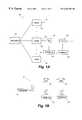
- FIGS. 1A and 1Bare block diagrams of television systems that incorporate terminals in accordance with an embodiment of the present invention
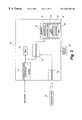
- FIG. 2is a schematic block diagram of a terminal in accordance with an embodiment of the present invention.
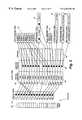
- FIG. 3is a data structure diagram illustrating various tables for service navigation in a television system in accordance with an embodiment of the present invention.
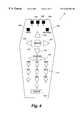
- FIG. 4is a top view of a user input device, such as a remote control, that can be used by a subscriber to input commands to the terminal of FIG. 2 in accordance with an embodiment of the present invention.
- a user input devicesuch as a remote control
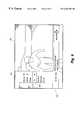
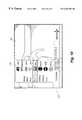
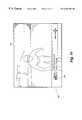
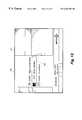
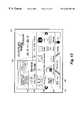
- FIGS. 5-13are illustrative screen displays that show user interfaces in accordance with an embodiment of the present invention.
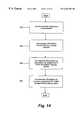
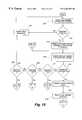
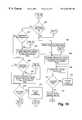
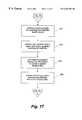
- FIGS. 14-17are flowcharts illustrating the operation of an embodiment of the present invention.
- a terminal 10 in accordance with the present inventionis provided as a part of a television system 12 which includes a headend 14 for receiving satellite television signals, demodulating the signals down to a baseband, and transmitting the signals over the system 12 .
- the transmitted signalscan be radio frequency (RF) signals, although they are more preferably optical signals that are transmitted over a communication medium such as fiber optic cable.
- RFradio frequency
- one or more distribution nodes 16are included in the system 12 for converting the optical signals to RF signals that are thereafter routed over other media, such as coaxial cables 18 .
- Taps 20are provided within cable system 12 for splitting the RF signal off to subscriber terminals 10 .
- the terminals 10may comprise or be an integral component of a home communication terminal (HCT), a television, a video cassette recorder (VCR), a computer, or other suitable device, in accordance with the present invention.
- FIG. 1Billustrates a television system 12 ′ including a headend 14 ′ that communicates with terminals 10 via one or more communications satellites 22 , as well known to those of ordinary skill in the art.
- a more detailed description of a satellite based television system such as illustrated in FIG. 1Bcan be found in at least U.S. Pat. No. 5,073,930, issued to Green et al.
- the terminal 10is typically situated within a residence or business of the subscriber.
- the terminal 10may be integrated into a device that includes a display 30 , such as a television set or personal computer, or may be a standalone device that can be coupled externally to a display device 30 , such as a computer or a television.
- the terminal 10processes signals received over a television network 12 , 12 ′ for presentation to a subscriber on the display device 30 .
- the terminalpreferably comprises a communications interface 32 , a media access controller (MAC) 34 , a processor 36 , a receiver 38 , and memory 42 .
- MACmedia access controller
- the communications interface 32receives the signals, which can include video, audio, and data information, transmitted over the television system 12 , 12 ′, and for providing reverse information over the television system 12 , 12 ′ for transmission back to the headend 14 , 14 ′.
- the communication interface 32preferably includes a tuner for accessing or tuning particular program services to be displayed by the display device 30 .
- the MAC 34is coupled to the communication interface 32 for MPEG decoding, graphics composition, and audio/video output, as well known in the industry.
- the processor 36controls operation of the terminal 10 and drives the display device 30 .
- the receiver 38is coupled to the processor 36 and configured to receive externally-generated information, such as user inputs or commands from other devices, such as to a user input device 40 .
- the user input device 40can be any suitable device such as a hand-held remote control device or a wireless keyboard which can generate, for instance, infrared signals that are received by receiver 38 .
- the user input device 40includes buttons or keys that can be selectively actuated by the subscriber for generating user inputs or command recognizable by terminal 10 , as discussed in greater detail below in connection with FIG. 4 .
- the memory 42is associated with the processor 36 and stores instructions which may be executed by processor 36 under the control of an operating system 44 .
- An example of a suitable operating systemis the PowerTV Operating System by PowerTV, Inc. of Cupertino, Calif.
- the memory 42may also store service information that can, for instance, be downloaded over the television system 12 , 12 ′ to the terminal 10 .
- the program informationmay include program guide information that is displayed to the subscriber in the format of a program guide listing of the channels by channel number, the respective programs for viewing on each the channel, and the times at which the programs are shown.
- the service informationmay also include service attributes, such as a long description, short description, and logo image, as discussed in greater detail below.
- the memory 42stores whatever service information necessary to implement each service provided by the television system 12 , 12 ′. It is further noted that the memory 42 may include several types of memory, for example, non-volatile memory (NVM), dynamic random access memory (DRAM), and static dynamic random access memory (SDRAM), including any combination thereof. Preferably, non-volatile memory is provided for storing operational parameters, user settings, etc., as will be appreciated by those of ordinary skill in the art.
- NVMnon-volatile memory
- DRAMdynamic random access memory
- SDRAMstatic dynamic random access memory
- a navigator 46 in accordance with an embodiment of the present inventionis preferably stored in memory 42 as computer program code for execution by processor 36 .
- the navigator 46includes a controller 48 , a user interface 50 , and a searcher 52 .
- the navigator 46provides the functionality for providing efficient, flexible and user-friendly browsing by the subscriber. More specifically, the navigator 46 , via the controller 48 , monitors data on the network to determine if the service information stored in memory 42 needs to be updated (i.e., reloaded).
- the controller 48utilizes services provided by the operating system 44 such as libraries stored in memory, for accessing broadcast data on the network (e.g., DSM-CC data carousels, or MPEG private data).
- the operating system 44provides other services to the controller 48 such as drivers for rendering video on the display device 30 , controlling the frequency to which the tuner is tuned, and other operation system tasks such as timing, scheduling, etc.
- the user interface 50generates the interface by which the subscriber selects an ordering scheme methodology for navigating services in accordance with the present invention, or by which information is prevented to the subscriber, as described in greater detail below in connection with the screen displays of FIGS. 5-12.
- the searcher 52processes search queries entered by the subscriber by identifying active services matching the user submitted query. The matching services may then be presented to the user via the subscriber user-interface 50 .
- the navigator 46determines what program services are available on the television system 12 , 12 ′ for presentation to the subscriber.
- the navigator 46downloads the service information for the available program services and preferably stores the information in memory 42 .
- the navigator 46may continuously monitor the television system 12 , 12 ′ for updates.
- the service information downloaded from the television system 12 , 12 ′is typically broadcast rom one or more servers residing at the headend 14 , 14 ′.
- the service information association with each servicetypically comprises an application to run and a parameter (e.g, the data content, specific to that program service) for use by the application.
- a parametere.g, the data content, specific to that program service
- two or more program servicesmay be defined using the same application component, however, with different parameters.
- an application that tunes video programmingcould be executed with a first set of parameters to view, for example, HBO, and a second set of parameters to view, for example, CNN.
- Each association of an application component (i.e., video tuning program) and a parameter component (i.e., HBO or CNN)identifies a unique service.
- the other servicessuch as text channels, impulse pay-per-view, video on demand, and web browsing are each associated with an application, and the content for each service is defined by various parameters.
- a serviceis further characterized or defined by other data, referred to herein as attributes.
- attributessuch as an identifier to identify the service to the various software layers, a short description of the service (such as a station's call letters), a long description of the service, and a logo image.
- Other attributes of certain embodimentscan provide information the navigator 46 uses to present the service, such as an alternative service to launch if the original service is not authorized at a specific terminal, and whether or not the application providing the service should be downloaded from the headend 14 , 14 ′ when the terminal is powered on.
- Additional attributes in certain embodimentsmay include multimedia attributes.
- a service identitymay be optionally augmented with an introductory audio that is played when the program service is launched. More specifically, a short audio welcome or closing message song or voice with musical background may be played.
- each serviceis defined by a plurality of attributes, such as those described above, necessary for identifying and providing the service. It is recognized by those of ordinary skill in the art that various service definition data standards for communicating service information have been proposed and/or accepted, such as those described in Advanced Television System Community (ATSC) document A/56 entitled “System Information for Digital Television,” and ATSC document A/65 entitled “Program and System Information for Terrestrial Broadcast and Cable and Service Definition.”
- ATSCAdvanced Television System Community
- the service information for each program serviceare typically communicated to the terminal 10 and stored in memory 42 in the form of a plurality of cross reference tables, as illustrated in FIG. 3 .
- These tablescross reference channel numbers displayed to subscribers with a variety of services which, as mentioned above, may include various types of video and audio programming and interactive services.
- Transparent to the subscribers, and according to the relations defined by the cross reference tablesthe selection of a channel transfers control to a specific application program that, along with one or more appropriate parameters obtained from the cross reference tables, activates (ie., displays on the selected channel) the service associated with that selected channel.
- the channel selection functionadvantageously enables the terminal 10 to process data from sources other than just traditional analog video broadcast sources.
- the other sourcescan include, for example, MPEG video, VBI, or IP.
- a channel table 60associates the numerical channels of the terminal 10 with a plurality of services listed in a service table 62 .
- a subscriberselects a channel, that channel is first identified in the channel table 60 where a pointer associates the channel with a particular service of the service table 62 .
- Channel 2is associated with the Service 1
- Channel 5is associated with the Service 4
- Channel 8is associated with the Service 0 .
- the service table 62indicates the application program that is used to provide a service.
- Services 1 - 5are provided by the video or generic “watch TV” application
- Service 13is provided by the music application
- Service 15is provided by the VOD application.
- a channeldoes not have to be associated with a service, in which case, it is associated with the “null” Service 0 (e.g., Channels 8 and 9 ).
- Other service typessuch as, for example, a home shopping service, a still image library service, an online database service, worldwide web service, and e-mail service are provided by additional types of application programs and can be added to service table 62 , and are now represented in service table 62 by the “other” Service 16 .
- Service table 62provides attribute information in an attributes column 66 for each program service listed.
- the information providedmay include, for example, the service's logo, long description, short description, and program schedule, and can be used as a source for an information banner or an interactive program guide.
- the service table 62further provides parameter references in a parameter reference column 68 for identifying sources of the listed television services.
- the parameter referencespoint to parameter tables, such as video parameter table 70 , split parameter table 72 , music parameter table 74 , NVOD parameter table 76 , VOD parameter table 78 , and “other” parameter table 80 , as described in detail in at least U.S. patent application Ser. No. 09/025,577, filed Feb. 18, 1998, and assigned to the assignees of the present invention, the disclosure of which is incorporated herein by reference as if set forth in full.
- Several display tables 90 in accordance with the present inventionmap the services of service table 64 according to a user selected ordering scheme based on at least one attribute. Since the respective ordering schemes are based on different attributes, each separate ordering scheme utilizes a different display table 90 .
- the different display tables 90may be dynamically generated at run-time by processor 36 in response to a user input command identifying a particular ordering scheme.
- the display tables 90may be pre-generated and stored in memory 42 for use when selected by the subscriber.
- Those display tables 90 stored in memory 42are preferably automatically updated to continuously reflect the current ordering schemes and services should the channel table 60 or the service table 62 change.
- an illustrative ordering schemein accordance with an embodiment of the present invention enables the subscriber to browse program services alphabetically by the short description.
- This ordering schemeprovides for a browse mode that requires the program services to be ordered alphabetically by the short description specified by the system operator and included in the service information stored in column 66 of the service table 62 .
- the appropriate display table 90is accessed (or dynamically generated) and utilized to map the program services accordingly.
- the user interface 50can then present a service listing of the program services in alphabetical order according to short description to the subscriber via the display device 30 .
- the present inventionenables a subscriber to select the ordering scheme of choice for browsing the services rather than being limited to the services ordered in a single ordering scheme according to channel number as established by the system operator.
- FIG. 4illustrates an example of a user input device 40 suitable for use in connection with the present invention.
- the user input device 40comprises a remote control transmitter capable of generating instruction and command signals recognizable by the terminal 10 . It is noted that other alternative embodiments of a user input device suitable for use in connection with the present invention may be utilized, and may include, for example, a wireless keyboard.
- the user input device 40includes a power key 102 , an info key 104 for initiating display of information, a -browse key 106 for initiating and terminating a browser session, one or more function keys 108 for inputting programmed commands, scrolling or cursor keys 110 , an enter key 112 for selecting a highlighted option, and an alphanumeric keypad 114 for inputting numerical and alpha information.
- the function keys 108are programmed for pre-selected ordering schemes, as discussed in greater detail below.
- other input meanscould alternatively be provided, such as a voice recognition system programmed with the appropriate terms such as browse, select, up, down, etc.
- the alphanumeric keypad 114may be utilized to key in letters, whereby each key may be used to select one of three associate letters by actuating the key once for the first letter, twice for the second letter, or three times for the third letter, as is well known.
- a textual stringmay be inputted by the subscriber.
- the user input devicemay include a full alpha-numeric keyboard.
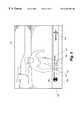
- FIGS. 5-13illustrate various screen displays according to the present invention which can be presented on the display device 30 to provide service information to the subscriber.
- FIG. 5illustrates the presentation of an information banner 120 which can be presented simultaneously with a tuned program 122 , whereby a portion of the tuned program is subservient to the information banner 120 .
- the information banner 120could be, for example, presented upon activation of the INFO Key 104 or the enter key 112 of the user input device 40 (FIG. 4 ). While the information banner 120 is horizontally disposed across the lower portion of the screen, the information banner 120 may be disposed in other orientations and in other locations.
- the information banner 120may be disposed vertically along the right or left side of the screen. Moreover, the subscriber may be able to change the position of the information banner 120 , if desired. This may be particularly useful if the information banner 120 is covering a portion of the tuned program that the subscriber wants to view.
- the information banner 120preferably includes service information 124 , such as a logo image 126 , a short description 128 , and a channel number 130 .
- the information banner 120may include program information 132 and the beginning and ending times 134 of the tuned program 122 . It should be noted that the data presented within the information banner 120 , as described above, is merely illustrative of the type and variety of data that may be presented.
- a browse indicator 136 of the information banner 120may be displayed to indicate to the subscriber that the browse mode is activated and that browsing can be performed according to the current ordering scheme of program services.
- the current ordering schememay be by channel number, and therefore, the subscriber may browse through the channels in numerical sequence.
- the subscribermay enter the browse mode by inputting a command via the user input device 40 , such as by selecting an arrow key 110 thereby causing the browse indicator 136 to appear.
- the browse modeallows the subscriber to browse the program services by activating the scrolling keys 110 , without changing the tuned program 122 . Otherwise, when not in the browse mode, the activation of the scrolling keys 110 causes the tuned program 122 to change according to channel number sequence.
- the subscriberis not limited to a single ordering scheme in which to browse the program services offered by television system 12 , 12 ′, but is given the flexibility to select among a plurality of ordering schemes which group and sort the available program services for more efficient browsing by subscriber.
- the subscribermay select from an ordering scheme which sorts the program services alphabetically by short description, alphabetically by sort description with logo, alphabetically by long description, etc.
- the subscriberis not relegated to browsing the services by channel number, but is able to select an ordering scheme of choice. This may be particular advantageous when the user has a service in mind, but does not remember the channel number of that service.
- the subscriberonly needs to remember a single attribute by which the subscriber can order the services in order to locate the service desired.
- the subscribermay browse according to the application or according to a search query; the subscriber has the ability to choose which would be most efficient.
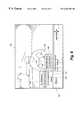
- a subscribermay select the browse key 106 of the user input device 40 in order to enter an ordering scheme selection mode in which the subscriber may select an ordering scheme for browsing services.
- a menu 140may be presented in conjunction with the information banner 120 . While the menu 140 is illustrated as a pop-up menu in FIG. 6, it will be appreciated by those of ordinary skill in the art that the menu 140 may appear as a drop-down menu or a laterally extending menu depending upon the position and orientation of the information banner 120 .
- the menu 140provides the ordering scheme options to the subscriber.
- the ordering scheme optionsinclude a by application option 144 , by channel number option 146 , by description option 148 , and by search option 150 .
- the subscribermay use the scrolling keys 110 to move the selection cursor 152 between the various options.
- the options providedmay be hierarchical, providing one or more subsequent selections between ordering scheme options at a lower level.
- the by description option 148leads to a short description option 156 and a long description option 158 .
- the subscribermay select the enter key 112 to implement the ordering scheme in terminal 10 .
- the subscribermay select the short description option 156 , as illustrated in FIG. 6, which causes the processor 36 to retrieve (or generate) a display table 90 associated with the short description ordering scheme for mapping the services from service table 64 . Accordingly, the subscriber may then enter the browse mode to browse the services according to the short description of the services, presumably in alphabetical order.
- the function keys 108may be programmed to change the terminal 10 to a pre-selected ordering scheme. For instance, by selecting a function key 108 , the ordering scheme may be automatically changed to alphabetical by short description, alphabetical by logo, alphabetical by long description, etc. This may be particularly useful when the subscriber is not sure as to which attribute they wish to search, and therefore, wish to toggle between various ordering schemes in an efficient and expedited manner.
- a service browseable listing 160that includes service logo and short description.
- the service listing 160is presented to the subscriber when the subscriber enters the particular browse mode, as discussed above.
- the usermay select the enter key 112 so as to cause the terminal 10 to enter into browse mode and to cause the service listing 160 to be presented.
- the subscribermay then utilize the activation keys 110 to scroll through the listing of services provided by the service listing 160 , wherein the scrolling cursor is identified by a selection box 162 .
- the subscribermay select the highlighted service by pressing the enter key 112 . Upon doing so, the display 122 will change to that selected by the subscriber.
- FIG. 9illustrates a service listing 170 according to the application associated with the various services. As illustrated by the service listing 170 , for each application that provides multiple services there is a sub-listing of services associated with that application, as illustrated in FIG. 10 . In FIG. 10, the selection box 162 has been placed over the TV application which causes a listing of services associated with television viewing to be presented to the user for browsing.
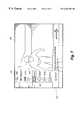
- yet another option available to the subscriberis the search option 150 .
- the subscriberBy selecting the by search option 150 of menu 140 , the subscriber is presented a search text field 180 in conjunction with information banner 120 .
- the subscribermay enter a search query (e.g., “MUS”) using the alphanumeric keypad 114 of user input device 40 .
- the usermay select the enter key 112 , causing the searcher 52 of the navigator 46 to locate those services which include the search query as an attribute.
- the search results from search 52are presented to the subscriber as a service listing 182 .
- the subscribercan then select a service in the service listing 182 via selection box 184 , as discussed above.
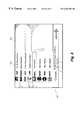
- the service guide 186for purposes of the present embodiment, as specified by the headend 14 , 14 ′ and loaded from the network 12 , 12 ′.
- the service guideis accessed by the subscriber selecting one of the function keys 108 on the user input device 40 .
- the contents and layout of the screenare specified using display formatting information within a display language (such as HTML in the present embodiment, extended with new domain-specific tags, such as with XML), that directs the navigator 46 how to present the information.
- the formatting informationalso includes the actual service in the service table 62 to activate for each of the services 188 listed. This allows the subscriber to utilize the cursor keys 110 to highlight a particular service 188 and press the enter key 112 to change the display. Upon doing so, the display 122 will change to the highlighted service selected by the subscriber.
- the navigator 46may allow the user to press other function keys 108 on the user input device 40 to gain more information about the highlighted service.
- thisincludes displaying an interactive program guide showing all programs provided by the service or displaying more information about the service as specified in the service listing information downloaded from the headend 14 , 14 ′.
- the service guideis entirely configurable according to the display formatting method (e.g., HTML) by the system operator and can also include graphical images 190 for advertising or branding, as well as the instructions 192 for the subscriber on the screen.
- the upper-right-hand corner of the service guide of FIG. 13shows a partial screen version 194 of the service being provided on the channel 196 to which the terminal 10 was tuned when the service guide was entered.
- a terminal 10initially acquires service information from a network 12 , 12 ′, as indicated by block 202 .
- the service informationis then sorted numerically by channel number to create a channel display table, as indicated by block 204 .
- the service informationis sorted by description to create one or more description display tables. For instance, there may be a description display table according to short description, long description, etc.
- the service informationis sorted by service application to create an application display table. Accordingly, blocks 204 - 208 provide for the pre-generated display tables which may be stored in memory until utilized. Alternatively, as described above, the display tables may be dynamically generated at the time a particular ordering scheme is requested by the subscriber.
- a user inputted commandis received by the receiver 38 of the terminal 10 . If the command represents the selection of the INFO key 104 of the user input device 40 , as detected by block 212 , then the information banner 120 is displayed to the subscriber, as indicated by block 214 . If the received command does not represent the selection of the INFO key, then the terminal 10 performs other processing, as indicated by block 216 . If the information banner 120 has been displayed to the subscriber, as indicated in block 214 , then the terminal 10 waits to receive the next user inputted command from the receiver, as indicated by block 218 .
- the ordering scheme optionsare displayed to the subscriber, such as by menu 140 , as indicated by block 228 .
- the terminal 10receives the next user inputted command at block 230 which is processed at block 232 to determine if the command is the selection of the by channel number option 146 .
- a service listing by channel numberis displayed to the subscriber, as indicated by block 234 .
- the subscribermay then increment or decrement the selected box according to the commands entered via the activation keys 110 , as indicated by block 236 .
- itis determined at block 240 whether the command is that of the enter key 112 . If it is not, then other processing is performed according to the command at block 242 , and the terminal 10 awaits the next user inputted command at block 238 . If it is detected at block 240 that the command is the selection of the enter key 112 , then the service identified by the selection box is tuned, as indicated by block 244 .
- a search text field 180is displayed to the subscriber for receiving a user inputted search query, as noted by block 274 .
- a user inputted search queryis then received and a search for services matching the search query is performed by the terminal 10 , as indicated by block 276 .
- the services that match the service queryare then sorted by description to create a search display table, as indicated by block 278 .
- the matching services according to the search display tableare displayed to the subscriber, as indicated by block 280 .
- substantially same steps of blocks 236 - 244are performed by terminal 10 .
- a further variation on this embodimentis the addition to the service listing 140 in FIG. 6 of an option to redefine the ordering of services as the channel increment/decrement key 115 on the user input device 40 shown in FIG. 4 is selected by the user.
- the default function of such a keyis to move to the next/previous channel numerically.
- One of the options in listing 140would be to change to the next/previous channel alphabetically by service short description.
Landscapes
- Engineering & Computer Science (AREA)
- Multimedia (AREA)
- Signal Processing (AREA)
- Databases & Information Systems (AREA)
- Human Computer Interaction (AREA)
- Two-Way Televisions, Distribution Of Moving Picture Or The Like (AREA)
- Management, Administration, Business Operations System, And Electronic Commerce (AREA)
Abstract
Description
Claims (25)
Priority Applications (5)
| Application Number | Priority Date | Filing Date | Title |
|---|---|---|---|
| US09/346,190US6463586B1 (en) | 1999-07-01 | 1999-07-01 | Service navigation systems and methods |
| EP00946835AEP1195056A1 (en) | 1999-07-01 | 2000-06-21 | Service navigation systems and methods |
| CA002378295ACA2378295C (en) | 1999-07-01 | 2000-06-21 | Service navigation systems and methods |
| BR0012132-0ABR0012132A (en) | 1999-07-01 | 2000-06-21 | Service navigation systems and methods |
| PCT/US2000/017074WO2001003427A1 (en) | 1999-07-01 | 2000-06-21 | Service navigation systems and methods |
Applications Claiming Priority (1)
| Application Number | Priority Date | Filing Date | Title |
|---|---|---|---|
| US09/346,190US6463586B1 (en) | 1999-07-01 | 1999-07-01 | Service navigation systems and methods |
Publications (1)
| Publication Number | Publication Date |
|---|---|
| US6463586B1true US6463586B1 (en) | 2002-10-08 |
Family
ID=23358340
Family Applications (1)
| Application Number | Title | Priority Date | Filing Date |
|---|---|---|---|
| US09/346,190Expired - LifetimeUS6463586B1 (en) | 1999-07-01 | 1999-07-01 | Service navigation systems and methods |
Country Status (5)
| Country | Link |
|---|---|
| US (1) | US6463586B1 (en) |
| EP (1) | EP1195056A1 (en) |
| BR (1) | BR0012132A (en) |
| CA (1) | CA2378295C (en) |
| WO (1) | WO2001003427A1 (en) |
Cited By (56)
| Publication number | Priority date | Publication date | Assignee | Title |
|---|---|---|---|---|
| US20010003846A1 (en)* | 1999-05-19 | 2001-06-14 | New Horizons Telecasting, Inc. | Encapsulated, streaming media automation and distribution system |
| US20020028676A1 (en)* | 2000-08-11 | 2002-03-07 | Pioneer Corporation | Information communication terminal apparatus |
| US20020035726A1 (en)* | 2000-04-17 | 2002-03-21 | Corl Mark T. | Information descriptor and extended information descriptor data structures for digital television signals |
| US20020060750A1 (en)* | 2000-03-29 | 2002-05-23 | Istvan Anthony F. | Single-button remote access to a synthetic channel page of specialized content |
| US20020078457A1 (en)* | 2000-12-20 | 2002-06-20 | Nishikawa Yuko S. | System and method for providing channel selection in an electronic programming guide |
| US20030018971A1 (en)* | 2001-07-19 | 2003-01-23 | Mckenna Thomas P. | System and method for providing supplemental information related to a television program |
| US20030033612A1 (en)* | 2001-08-07 | 2003-02-13 | Schwalb Eddie M. | Software appliance method and system |
| US20030204497A1 (en)* | 2002-04-29 | 2003-10-30 | Vasiliki Kalogeraki | Search network for searching services on the internet |
| US20040070628A1 (en)* | 2002-06-18 | 2004-04-15 | Iten Tommi J. | On-screen user interface device |
| US20040093616A1 (en)* | 2001-02-28 | 2004-05-13 | Johnson Carolynn Rae | Method for searching of an electronic program guide |
| US20050060754A1 (en)* | 2003-09-17 | 2005-03-17 | Wegener Communications, Inc. | Apparatus and method for distributed control of media dissemination |
| US20050124925A1 (en)* | 2003-05-23 | 2005-06-09 | Yvette Scherpenborg | Thermal compressive aerating bandage and methods of use relating to same |
| US20050235319A1 (en)* | 1999-12-10 | 2005-10-20 | Carpenter Kenneth F | Features for use with advanced set-top applications on interactive television systems |
| US20060041895A1 (en)* | 2004-08-04 | 2006-02-23 | Microsoft Corporation | Systems and methods for interfacing with codecs across an architecture optimized for audio |
| US7095456B2 (en)* | 2001-11-21 | 2006-08-22 | Ui Evolution, Inc. | Field extensible controllee sourced universal remote control method and apparatus |
| US20070094683A1 (en)* | 2005-10-26 | 2007-04-26 | Lg Electronics Inc. | Method for changing/managing channels and broadcasting receiver |
| US20070094292A1 (en)* | 2003-12-26 | 2007-04-26 | Mitsuteru Kataoka | Recommended program notification method and recommended program notification device |
| US7212979B1 (en) | 2001-12-14 | 2007-05-01 | Bellsouth Intellectuall Property Corporation | System and method for identifying desirable subscribers |
| US20070255693A1 (en)* | 2006-03-30 | 2007-11-01 | Veveo, Inc. | User interface method and system for incrementally searching and selecting content items and for presenting advertising in response to search activities |
| US20080155008A1 (en)* | 2006-05-09 | 2008-06-26 | Lockheed Martin Corporation | Track sort and select system |
| CN100438608C (en)* | 2004-05-09 | 2008-11-26 | 意法半导体有限公司 | A method for retrieving service information data |
| US7577973B1 (en)* | 2001-05-31 | 2009-08-18 | Keen Personal Media, Inc. | Client terminal for displaying program guide information associated with different programs within a pop-up |
| US20090266888A1 (en)* | 2008-04-23 | 2009-10-29 | Mccarthy Mary | Method for organizing and inventorying library materials |
| US7661119B1 (en)* | 2000-10-02 | 2010-02-09 | The Directv Group, Inc. | Method and apparatus for providing non-resident program guide information to a media subscriber |
| US20100058426A1 (en)* | 2008-09-04 | 2010-03-04 | Sony Corporation And Sony Electronic Inc. | Atsc signal recorder/processor |
| CN101044752B (en)* | 2004-10-20 | 2010-09-08 | 汤姆森特许公司 | Method of sorting and storing stations, television and radio broadcasters |
| US7836467B2 (en)* | 1998-07-23 | 2010-11-16 | Comcast Ip Holdings I, Llc | Interactive user interface |
| US7885904B2 (en) | 2006-03-06 | 2011-02-08 | Veveo, Inc. | Methods and systems for selecting and presenting content on a first system based on user preferences learned on a second system |
| US7895218B2 (en) | 2004-11-09 | 2011-02-22 | Veveo, Inc. | Method and system for performing searches for television content using reduced text input |
| US7899806B2 (en) | 2006-04-20 | 2011-03-01 | Veveo, Inc. | User interface methods and systems for selecting and presenting content based on user navigation and selection actions associated with the content |
| US20110099572A1 (en)* | 2005-11-14 | 2011-04-28 | Rovi Guides, Inc. | Parental media palettes |
| US8073860B2 (en) | 2006-03-30 | 2011-12-06 | Veveo, Inc. | Method and system for incrementally selecting and providing relevant search engines in response to a user query |
| US8078884B2 (en) | 2006-11-13 | 2011-12-13 | Veveo, Inc. | Method of and system for selecting and presenting content based on user identification |
| US8370284B2 (en) | 2005-11-23 | 2013-02-05 | Veveo, Inc. | System and method for finding desired results by incremental search using an ambiguous keypad with the input containing orthographic and/or typographic errors |
| US8549424B2 (en) | 2007-05-25 | 2013-10-01 | Veveo, Inc. | System and method for text disambiguation and context designation in incremental search |
| US8578419B2 (en) | 1999-04-15 | 2013-11-05 | Comcast Ip Holdings I, Llc | Server-centric customized interactive program guide in an interactive television environment |
| US8661465B2 (en) | 1999-10-27 | 2014-02-25 | Comcast Ip Holdings I, Llc | Apparatus and method for combining realtime and non-realtime encoded content |
| US8677413B2 (en) | 2000-04-17 | 2014-03-18 | Lg Electronics Inc. | Information descriptor and extended information descriptor data structures for digital television signals |
| US8681571B2 (en) | 2010-06-15 | 2014-03-25 | International Business Machines Corporation | Training a memory controller and a memory device using multiple read and write operations |
| US8739218B2 (en) | 1998-07-23 | 2014-05-27 | Comcast Ip Holdings I, Llc | Data structure and methods for providing an interactive program guide |
| US8799804B2 (en) | 2006-10-06 | 2014-08-05 | Veveo, Inc. | Methods and systems for a linear character selection display interface for ambiguous text input |
| US8930998B2 (en) | 1999-10-27 | 2015-01-06 | Comcast Ip Holdings I, Llc | Method and system for providing a program guide and multiple video streams using slice-based encoding |
| US9042446B2 (en) | 1999-04-15 | 2015-05-26 | Comcast Ip Holdings I, Llc | Temporal slice persistence method and apparatus for delivery of interactive program guide |
| US9154813B2 (en) | 2011-06-09 | 2015-10-06 | Comcast Cable Communications, Llc | Multiple video content in a composite video stream |
| US9177081B2 (en) | 2005-08-26 | 2015-11-03 | Veveo, Inc. | Method and system for processing ambiguous, multi-term search queries |
| US20160073159A1 (en)* | 2014-09-05 | 2016-03-10 | Verizon Patent And Licensing Inc. | Automatic self-help video playback for set-top box troubleshooting |
| US9286294B2 (en) | 1992-12-09 | 2016-03-15 | Comcast Ip Holdings I, Llc | Video and digital multimedia aggregator content suggestion engine |
| US9305590B2 (en) | 2007-10-16 | 2016-04-05 | Seagate Technology Llc | Prevent data storage device circuitry swap |
| US9679602B2 (en) | 2006-06-14 | 2017-06-13 | Seagate Technology Llc | Disc drive circuitry swap |
| US9703779B2 (en) | 2010-02-04 | 2017-07-11 | Veveo, Inc. | Method of and system for enhanced local-device content discovery |
| US9813641B2 (en) | 2000-06-19 | 2017-11-07 | Comcast Ip Holdings I, Llc | Method and apparatus for targeting of interactive virtual objects |
| US9924234B2 (en) | 1998-07-23 | 2018-03-20 | Comcast Ip Holdings I, Llc | Data structure and methods for providing an interactive program |
| US10140433B2 (en) | 2001-08-03 | 2018-11-27 | Comcast Ip Holdings I, Llc | Video and digital multimedia aggregator |
| US10349096B2 (en) | 2001-08-03 | 2019-07-09 | Comcast Ip Holdings I, Llc | Video and digital multimedia aggregator content coding and formatting |
| US10986165B2 (en) | 2004-01-13 | 2021-04-20 | May Patents Ltd. | Information device |
| US12120394B2 (en) | 2007-11-21 | 2024-10-15 | Rovi Guides, Inc. | Maintaining a user profile based on dynamic data |
Families Citing this family (2)
| Publication number | Priority date | Publication date | Assignee | Title |
|---|---|---|---|---|
| US20090327968A1 (en)* | 2008-06-27 | 2009-12-31 | Nokia Corporation | Apparatus and method for enabling user input |
| EP3293966A4 (en)* | 2015-06-04 | 2018-05-02 | Huawei Technologies Co. Ltd. | Scheduling method, device, and digital video apparatus for television program |
Citations (10)
| Publication number | Priority date | Publication date | Assignee | Title |
|---|---|---|---|---|
| WO1996037966A1 (en) | 1995-05-25 | 1996-11-28 | Motorola Inc. | Method and apparatus for estimating a signal fading characteristic |
| WO1997048230A1 (en) | 1996-06-13 | 1997-12-18 | Starsight Telecast, Inc. | Method and apparatus for searching a guide using program characteristics |
| WO1997049237A1 (en) | 1996-06-17 | 1997-12-24 | Starsight Telecast, Inc. | Television schedule system with enhanced features |
| US5731844A (en) | 1994-05-12 | 1998-03-24 | Microsoft Corporation | Television scheduling system for displaying a grid representing scheduled layout and selecting a programming parameter for display or recording |
| WO1998012872A1 (en) | 1996-09-17 | 1998-03-26 | Starsight Telecast, Incorporated | Television schedule system with pop-up action menu and icons |
| WO1998021877A2 (en) | 1996-11-15 | 1998-05-22 | Hyundai Electronics America | Means for creating a television viewer profile |
| EP0854645A2 (en) | 1997-01-03 | 1998-07-22 | Texas Instruments Incorporated | Electronic television program guide system and method |
| WO1998047279A2 (en) | 1997-04-16 | 1998-10-22 | Starsight Telecast, Incorporated | Multiple database, user-choice-compiled program and event guide |
| US6005561A (en)* | 1994-12-14 | 1999-12-21 | The 3Do Company | Interactive information delivery system |
| US6182287B1 (en)* | 1999-02-04 | 2001-01-30 | Thomson Licensing S.A. | Preferred service management system for a multimedia video decoder |
Family Cites Families (3)
| Publication number | Priority date | Publication date | Assignee | Title |
|---|---|---|---|---|
| EP1337108B1 (en)* | 1990-09-10 | 2005-07-27 | Starsight Telecast, Inc. | Television schedule system |
| US5585866A (en)* | 1993-09-09 | 1996-12-17 | Miller; Larry | Electronic television program guide schedule system and method including virtual channels |
| US5586373A (en)* | 1995-09-06 | 1996-12-24 | Grrreat Creations, Inc. | Clamp |
- 1999
- 1999-07-01USUS09/346,190patent/US6463586B1/ennot_activeExpired - Lifetime
- 2000
- 2000-06-21BRBR0012132-0Apatent/BR0012132A/ennot_activeApplication Discontinuation
- 2000-06-21CACA002378295Apatent/CA2378295C/ennot_activeExpired - Fee Related
- 2000-06-21WOPCT/US2000/017074patent/WO2001003427A1/enactiveApplication Filing
- 2000-06-21EPEP00946835Apatent/EP1195056A1/ennot_activeCeased
Patent Citations (10)
| Publication number | Priority date | Publication date | Assignee | Title |
|---|---|---|---|---|
| US5731844A (en) | 1994-05-12 | 1998-03-24 | Microsoft Corporation | Television scheduling system for displaying a grid representing scheduled layout and selecting a programming parameter for display or recording |
| US6005561A (en)* | 1994-12-14 | 1999-12-21 | The 3Do Company | Interactive information delivery system |
| WO1996037966A1 (en) | 1995-05-25 | 1996-11-28 | Motorola Inc. | Method and apparatus for estimating a signal fading characteristic |
| WO1997048230A1 (en) | 1996-06-13 | 1997-12-18 | Starsight Telecast, Inc. | Method and apparatus for searching a guide using program characteristics |
| WO1997049237A1 (en) | 1996-06-17 | 1997-12-24 | Starsight Telecast, Inc. | Television schedule system with enhanced features |
| WO1998012872A1 (en) | 1996-09-17 | 1998-03-26 | Starsight Telecast, Incorporated | Television schedule system with pop-up action menu and icons |
| WO1998021877A2 (en) | 1996-11-15 | 1998-05-22 | Hyundai Electronics America | Means for creating a television viewer profile |
| EP0854645A2 (en) | 1997-01-03 | 1998-07-22 | Texas Instruments Incorporated | Electronic television program guide system and method |
| WO1998047279A2 (en) | 1997-04-16 | 1998-10-22 | Starsight Telecast, Incorporated | Multiple database, user-choice-compiled program and event guide |
| US6182287B1 (en)* | 1999-02-04 | 2001-01-30 | Thomson Licensing S.A. | Preferred service management system for a multimedia video decoder |
Non-Patent Citations (1)
| Title |
|---|
| U.S. patent application Ser. No. 6,118,443, Allison et al., filed Sep. 2000 (withdrawn)*.* |
Cited By (152)
| Publication number | Priority date | Publication date | Assignee | Title |
|---|---|---|---|---|
| US9286294B2 (en) | 1992-12-09 | 2016-03-15 | Comcast Ip Holdings I, Llc | Video and digital multimedia aggregator content suggestion engine |
| US9924234B2 (en) | 1998-07-23 | 2018-03-20 | Comcast Ip Holdings I, Llc | Data structure and methods for providing an interactive program |
| US9674586B2 (en) | 1998-07-23 | 2017-06-06 | Comcast Ip Holdings I, Llc | Data structure and methods for providing an interactive program guide |
| US7836467B2 (en)* | 1998-07-23 | 2010-11-16 | Comcast Ip Holdings I, Llc | Interactive user interface |
| US8522277B2 (en) | 1998-07-23 | 2013-08-27 | Comcast Ip Holdings I, Llc | Interactive user interface |
| US8739218B2 (en) | 1998-07-23 | 2014-05-27 | Comcast Ip Holdings I, Llc | Data structure and methods for providing an interactive program guide |
| US9456241B2 (en) | 1999-04-15 | 2016-09-27 | Comcast Ip Holdings I, Llc | Server-centric customized interactive program guide in an interactive television environment |
| US9042446B2 (en) | 1999-04-15 | 2015-05-26 | Comcast Ip Holdings I, Llc | Temporal slice persistence method and apparatus for delivery of interactive program guide |
| US8578419B2 (en) | 1999-04-15 | 2013-11-05 | Comcast Ip Holdings I, Llc | Server-centric customized interactive program guide in an interactive television environment |
| US8621508B2 (en) | 1999-05-19 | 2013-12-31 | Xialan Chi Ltd., Llc | Encapsulated, streaming media automation and distribution system |
| US20050060759A1 (en)* | 1999-05-19 | 2005-03-17 | New Horizons Telecasting, Inc. | Encapsulated, streaming media automation and distribution system |
| US20010003846A1 (en)* | 1999-05-19 | 2001-06-14 | New Horizons Telecasting, Inc. | Encapsulated, streaming media automation and distribution system |
| US8930998B2 (en) | 1999-10-27 | 2015-01-06 | Comcast Ip Holdings I, Llc | Method and system for providing a program guide and multiple video streams using slice-based encoding |
| US8661465B2 (en) | 1999-10-27 | 2014-02-25 | Comcast Ip Holdings I, Llc | Apparatus and method for combining realtime and non-realtime encoded content |
| US9264711B2 (en) | 1999-10-27 | 2016-02-16 | Comcast Ip Holdings I, Llc | Apparatus and method for combining realtime and non-realtime encoded content |
| US20050235319A1 (en)* | 1999-12-10 | 2005-10-20 | Carpenter Kenneth F | Features for use with advanced set-top applications on interactive television systems |
| US20080282294A1 (en)* | 1999-12-10 | 2008-11-13 | Carpenter Kenneth F | Features for use with advanced set-top applications on interactive television systems |
| US20020060750A1 (en)* | 2000-03-29 | 2002-05-23 | Istvan Anthony F. | Single-button remote access to a synthetic channel page of specialized content |
| US8677411B2 (en) | 2000-04-17 | 2014-03-18 | Lg Electronics Inc. | Information descriptor and extended information descriptor data structures for digital television signals |
| US8949897B2 (en) | 2000-04-17 | 2015-02-03 | Lg Electronics Inc. | Information descriptor and extended information descriptor data structures for digital television signals |
| US9288512B2 (en) | 2000-04-17 | 2016-03-15 | Lg Electronics Inc. | Information descriptor and extended information descriptor data structures for digital television signals |
| US9277286B2 (en) | 2000-04-17 | 2016-03-01 | Lg Electronics Inc. | Information descriptor and extended information descriptor data structures for digital television signals |
| US9407943B2 (en) | 2000-04-17 | 2016-08-02 | Lg Electronics Inc. | Information descriptor and extended information descriptor data structures for digital television signals |
| US9118957B2 (en) | 2000-04-17 | 2015-08-25 | Lg Electronics Inc. | Information descriptor and extended information descriptor data structures for digital television signals |
| US20080134247A1 (en)* | 2000-04-17 | 2008-06-05 | Corl Mark T | Information descriptor and extended information descriptor data structures for digital television signals |
| US20080134246A1 (en)* | 2000-04-17 | 2008-06-05 | Corl Mark T | Information descriptor and extended information descriptor data structures for digital television signals |
| US9118979B2 (en) | 2000-04-17 | 2015-08-25 | Lg Electronics Inc. | Information descriptor and extended information descriptor data structures for digital television signals |
| US9414097B2 (en) | 2000-04-17 | 2016-08-09 | Lg Electronics Inc. | Information descriptor and extended information descriptor data structures for digital television signals |
| US9084019B2 (en) | 2000-04-17 | 2015-07-14 | Lg Electronics Inc. | Information descriptor and extended information descriptor data structures for digital television signals |
| US9032439B1 (en) | 2000-04-17 | 2015-05-12 | Lg Electronics Inc. | Information descriptor and extended information descriptor data structures for digital television signals |
| US9027055B1 (en) | 2000-04-17 | 2015-05-05 | Lg Electronics Inc. | Information descriptor and extended information descriptor data structures for digital television signals |
| US9015760B2 (en) | 2000-04-17 | 2015-04-21 | Lg Electronics Inc. | Information descriptor and extended information descriptor data structures for digital television signals |
| US20100005491A1 (en)* | 2000-04-17 | 2010-01-07 | Corl Mark T | Information descriptor and extended information descriptor data structures for digital television signals |
| US8997152B2 (en) | 2000-04-17 | 2015-03-31 | Lg Electronics Inc. | Information descriptor and extended information descriptor data structures for digital television signals |
| US8990860B2 (en) | 2000-04-17 | 2015-03-24 | Lg Electronics Inc. | Information descriptor and extended information descriptor data structures for digital television signals |
| US8973043B2 (en) | 2000-04-17 | 2015-03-03 | Lg Electronics Inc. | Information descriptor and extended information descriptor data structures for digital television signals |
| US8973042B2 (en) | 2000-04-17 | 2015-03-03 | Lg Electronics Inc. | Information descriptor and extended information descriptor data structures for digital television signals |
| US8973041B2 (en) | 2000-04-17 | 2015-03-03 | Lg Electronics Inc. | Information descriptor and extended information descriptor data structures for digital television signals |
| US8973044B2 (en) | 2000-04-17 | 2015-03-03 | LG Elecetonics Inc. | Information descriptor and extended information descriptor data structures for digital television signals |
| US7877771B2 (en)* | 2000-04-17 | 2011-01-25 | Lg Electronics Inc. | Information descriptor and extended information descriptor data structures for digital television signals |
| US7877773B2 (en) | 2000-04-17 | 2011-01-25 | Lg Electronics Inc. | Information descriptor and extended information descriptor data structures for digital television signals |
| US7877772B2 (en)* | 2000-04-17 | 2011-01-25 | Lg Electronics Inc. | Information descriptor and extended information descriptor data structures for digital television signals |
| US7877770B2 (en)* | 2000-04-17 | 2011-01-25 | Lg Electronics Inc. | Information descriptor and extended information descriptor data structures for digital television signals |
| US7877769B2 (en) | 2000-04-17 | 2011-01-25 | Lg Electronics Inc. | Information descriptor and extended information descriptor data structures for digital television signals |
| US8959551B2 (en) | 2000-04-17 | 2015-02-17 | Lg Electronics Inc. | Information descriptor and extended information descriptor data structures for digital television signals |
| US8959549B2 (en) | 2000-04-17 | 2015-02-17 | Lg Electronics Inc. | Information descriptor and extended information descriptor data structures for digital television signals |
| US8959550B2 (en) | 2000-04-17 | 2015-02-17 | Lg Electronics Inc. | Information descriptor and extended information descriptor data structures for digital television signals |
| US7917926B2 (en) | 2000-04-17 | 2011-03-29 | Lg Electronics Inc. | Information descriptor and extended information descriptor data structures for digital television signals |
| US8949896B2 (en) | 2000-04-17 | 2015-02-03 | Lg Electronics Inc. | Information descriptor and extended information descriptor data structures for digital television signals |
| US20110145864A1 (en)* | 2000-04-17 | 2011-06-16 | Corl Mark T | Information descriptor and extended information descriptor data structures for digital television signals |
| US8949898B2 (en) | 2000-04-17 | 2015-02-03 | Lg Electronics Inc. | Information descriptor and extended information descriptor data structures for digital television signals |
| US8931006B2 (en) | 2000-04-17 | 2015-01-06 | Lg Electronics Inc. | Information descriptor and extended information descriptor data structures for digital television signals |
| US8931004B2 (en) | 2000-04-17 | 2015-01-06 | Lg Electronics Inc. | Information descriptor and extended information descriptor data structures for digital television signals |
| US8931007B2 (en) | 2000-04-17 | 2015-01-06 | Lg Electronics Inc. | Information descriptor and extended information descriptor data structures for digital television signals |
| US8931005B2 (en) | 2000-04-17 | 2015-01-06 | Lg Electronics Inc. | Information descriptor and extended information descriptor data structures for digital television signals |
| US8925013B2 (en) | 2000-04-17 | 2014-12-30 | Lg Electronics Inc. | Information descriptor and extended information descriptor data structures for digital television signals |
| US8925012B2 (en) | 2000-04-17 | 2014-12-30 | Lg Electronics Inc. | Information descriptor and extended information descriptor data structures for digital television signals |
| US8918813B2 (en) | 2000-04-17 | 2014-12-23 | Lg Electronics Inc. | Information descriptor and extended information descriptor data structures for digital television signals |
| US9602893B2 (en) | 2000-04-17 | 2017-03-21 | Lg Electronics Inc. | Information descriptor and extended information descriptor data structures for digital television signals |
| US20020035726A1 (en)* | 2000-04-17 | 2002-03-21 | Corl Mark T. | Information descriptor and extended information descriptor data structures for digital television signals |
| US8695040B2 (en) | 2000-04-17 | 2014-04-08 | Lg Electronics Inc. | Information descriptor and extended information descriptor data structures for digital television signals |
| US8484683B2 (en) | 2000-04-17 | 2013-07-09 | Lg Electronics Inc. | Information descriptor and extended information descriptor data structures for digital television signals |
| US8510777B2 (en) | 2000-04-17 | 2013-08-13 | Lg Electronics Inc. | Information descriptor and extended information descriptor data structures for digital television signals |
| US20050283801A1 (en)* | 2000-04-17 | 2005-12-22 | Corl Mark T | Information descriptor and extended information descriptor data structures for digital television signals |
| US8782705B2 (en) | 2000-04-17 | 2014-07-15 | Lg Electronics Inc. | Information descriptor and extended information descriptor data structures for digital television signals |
| US8695039B2 (en) | 2000-04-17 | 2014-04-08 | Lg Electronics Inc. | Information descriptor and extended information descriptor data structures for digital television signals |
| US20050283802A1 (en)* | 2000-04-17 | 2005-12-22 | Corl Mark T | Information descriptor and extended information descriptor data structures for digital television signals |
| US9866926B2 (en) | 2000-04-17 | 2018-01-09 | Lg Electronics Inc. | Information descriptor and extended information descriptor data structures for digital television signals |
| US8683523B2 (en) | 2000-04-17 | 2014-03-25 | Lg Electronics Inc. | Information descriptor and extended information descriptor data structures for digital television signals |
| US8635648B1 (en) | 2000-04-17 | 2014-01-21 | Lg Electronics Inc. | Information descriptor and extended information descriptor data structures for digital television signals |
| US8640169B1 (en) | 2000-04-17 | 2014-01-28 | Lg Electronics Inc. | Information descriptor and extended information descriptor data structures for digital television signals |
| US8646004B1 (en) | 2000-04-17 | 2014-02-04 | Lg Electronics Inc. | Information descriptor and extended information descriptor data structures for digital television signals |
| US8650594B2 (en) | 2000-04-17 | 2014-02-11 | Lg Electronics Inc. | Information descriptor and extended information descriptor data structures for digital television signals |
| US8677413B2 (en) | 2000-04-17 | 2014-03-18 | Lg Electronics Inc. | Information descriptor and extended information descriptor data structures for digital television signals |
| US8667535B2 (en) | 2000-04-17 | 2014-03-04 | Lg Electronics Inc. | Information descriptor and extended information descriptor data structures for digital television signals |
| US8677412B2 (en) | 2000-04-17 | 2014-03-18 | Lg Electronics Inc. | Information descriptor and extended information descriptor data structures for digital television signals |
| US9813641B2 (en) | 2000-06-19 | 2017-11-07 | Comcast Ip Holdings I, Llc | Method and apparatus for targeting of interactive virtual objects |
| US6963725B2 (en)* | 2000-08-11 | 2005-11-08 | Pioneer Corporation | Information communication terminal apparatus |
| US20020028676A1 (en)* | 2000-08-11 | 2002-03-07 | Pioneer Corporation | Information communication terminal apparatus |
| US7661119B1 (en)* | 2000-10-02 | 2010-02-09 | The Directv Group, Inc. | Method and apparatus for providing non-resident program guide information to a media subscriber |
| US20020078457A1 (en)* | 2000-12-20 | 2002-06-20 | Nishikawa Yuko S. | System and method for providing channel selection in an electronic programming guide |
| US7721309B2 (en)* | 2000-12-20 | 2010-05-18 | Sony Corporation | System and method for providing channel selection in an electronic programming guide |
| US20040093616A1 (en)* | 2001-02-28 | 2004-05-13 | Johnson Carolynn Rae | Method for searching of an electronic program guide |
| US7810119B2 (en)* | 2001-02-28 | 2010-10-05 | Thomson Licensing | Method for searching of an electronic program guide |
| US7577973B1 (en)* | 2001-05-31 | 2009-08-18 | Keen Personal Media, Inc. | Client terminal for displaying program guide information associated with different programs within a pop-up |
| US20030018971A1 (en)* | 2001-07-19 | 2003-01-23 | Mckenna Thomas P. | System and method for providing supplemental information related to a television program |
| US10140433B2 (en) | 2001-08-03 | 2018-11-27 | Comcast Ip Holdings I, Llc | Video and digital multimedia aggregator |
| US10349096B2 (en) | 2001-08-03 | 2019-07-09 | Comcast Ip Holdings I, Llc | Video and digital multimedia aggregator content coding and formatting |
| US20030033612A1 (en)* | 2001-08-07 | 2003-02-13 | Schwalb Eddie M. | Software appliance method and system |
| US7095456B2 (en)* | 2001-11-21 | 2006-08-22 | Ui Evolution, Inc. | Field extensible controllee sourced universal remote control method and apparatus |
| US7212979B1 (en) | 2001-12-14 | 2007-05-01 | Bellsouth Intellectuall Property Corporation | System and method for identifying desirable subscribers |
| US7243091B2 (en)* | 2002-04-29 | 2007-07-10 | Hewlett-Packard Development Company, L.P. | Search network for searching services on the internet |
| US20030204497A1 (en)* | 2002-04-29 | 2003-10-30 | Vasiliki Kalogeraki | Search network for searching services on the internet |
| US7607107B2 (en)* | 2002-06-18 | 2009-10-20 | The Directv Group, Inc. | On-screen user interface device |
| US20040070628A1 (en)* | 2002-06-18 | 2004-04-15 | Iten Tommi J. | On-screen user interface device |
| US20050124925A1 (en)* | 2003-05-23 | 2005-06-09 | Yvette Scherpenborg | Thermal compressive aerating bandage and methods of use relating to same |
| US20050060754A1 (en)* | 2003-09-17 | 2005-03-17 | Wegener Communications, Inc. | Apparatus and method for distributed control of media dissemination |
| US20070094292A1 (en)* | 2003-12-26 | 2007-04-26 | Mitsuteru Kataoka | Recommended program notification method and recommended program notification device |
| US10986165B2 (en) | 2004-01-13 | 2021-04-20 | May Patents Ltd. | Information device |
| US11095708B2 (en) | 2004-01-13 | 2021-08-17 | May Patents Ltd. | Information device |
| US11032353B2 (en) | 2004-01-13 | 2021-06-08 | May Patents Ltd. | Information device |
| US10986164B2 (en) | 2004-01-13 | 2021-04-20 | May Patents Ltd. | Information device |
| CN100438608C (en)* | 2004-05-09 | 2008-11-26 | 意法半导体有限公司 | A method for retrieving service information data |
| US20060041895A1 (en)* | 2004-08-04 | 2006-02-23 | Microsoft Corporation | Systems and methods for interfacing with codecs across an architecture optimized for audio |
| CN101044752B (en)* | 2004-10-20 | 2010-09-08 | 汤姆森特许公司 | Method of sorting and storing stations, television and radio broadcasters |
| US7895218B2 (en) | 2004-11-09 | 2011-02-22 | Veveo, Inc. | Method and system for performing searches for television content using reduced text input |
| US9135337B2 (en) | 2004-11-09 | 2015-09-15 | Veveo, Inc. | Method and system for performing searches for television content using reduced text input |
| US9177081B2 (en) | 2005-08-26 | 2015-11-03 | Veveo, Inc. | Method and system for processing ambiguous, multi-term search queries |
| US20070094683A1 (en)* | 2005-10-26 | 2007-04-26 | Lg Electronics Inc. | Method for changing/managing channels and broadcasting receiver |
| US20110099572A1 (en)* | 2005-11-14 | 2011-04-28 | Rovi Guides, Inc. | Parental media palettes |
| US8984550B2 (en)* | 2005-11-14 | 2015-03-17 | Rovi Guides, Inc. | Parental media palettes |
| US8370284B2 (en) | 2005-11-23 | 2013-02-05 | Veveo, Inc. | System and method for finding desired results by incremental search using an ambiguous keypad with the input containing orthographic and/or typographic errors |
| US8380726B2 (en) | 2006-03-06 | 2013-02-19 | Veveo, Inc. | Methods and systems for selecting and presenting content based on a comparison of preference signatures from multiple users |
| US9213755B2 (en) | 2006-03-06 | 2015-12-15 | Veveo, Inc. | Methods and systems for selecting and presenting content based on context sensitive user preferences |
| US9092503B2 (en) | 2006-03-06 | 2015-07-28 | Veveo, Inc. | Methods and systems for selecting and presenting content based on dynamically identifying microgenres associated with the content |
| US9075861B2 (en) | 2006-03-06 | 2015-07-07 | Veveo, Inc. | Methods and systems for segmenting relative user preferences into fine-grain and coarse-grain collections |
| US8583566B2 (en) | 2006-03-06 | 2013-11-12 | Veveo, Inc. | Methods and systems for selecting and presenting content based on learned periodicity of user content selection |
| US8543516B2 (en) | 2006-03-06 | 2013-09-24 | Veveo, Inc. | Methods and systems for selecting and presenting content on a first system based on user preferences learned on a second system |
| US8478794B2 (en) | 2006-03-06 | 2013-07-02 | Veveo, Inc. | Methods and systems for segmenting relative user preferences into fine-grain and coarse-grain collections |
| US8825576B2 (en) | 2006-03-06 | 2014-09-02 | Veveo, Inc. | Methods and systems for selecting and presenting content on a first system based on user preferences learned on a second system |
| US8429155B2 (en) | 2006-03-06 | 2013-04-23 | Veveo, Inc. | Methods and systems for selecting and presenting content based on activity level spikes associated with the content |
| US9128987B2 (en) | 2006-03-06 | 2015-09-08 | Veveo, Inc. | Methods and systems for selecting and presenting content based on a comparison of preference signatures from multiple users |
| US8943083B2 (en) | 2006-03-06 | 2015-01-27 | Veveo, Inc. | Methods and systems for segmenting relative user preferences into fine-grain and coarse-grain collections |
| US8438160B2 (en) | 2006-03-06 | 2013-05-07 | Veveo, Inc. | Methods and systems for selecting and presenting content based on dynamically identifying Microgenres Associated with the content |
| US8949231B2 (en) | 2006-03-06 | 2015-02-03 | Veveo, Inc. | Methods and systems for selecting and presenting content based on activity level spikes associated with the content |
| US7885904B2 (en) | 2006-03-06 | 2011-02-08 | Veveo, Inc. | Methods and systems for selecting and presenting content on a first system based on user preferences learned on a second system |
| US9223873B2 (en) | 2006-03-30 | 2015-12-29 | Veveo, Inc. | Method and system for incrementally selecting and providing relevant search engines in response to a user query |
| US8073860B2 (en) | 2006-03-30 | 2011-12-06 | Veveo, Inc. | Method and system for incrementally selecting and providing relevant search engines in response to a user query |
| US20070255693A1 (en)* | 2006-03-30 | 2007-11-01 | Veveo, Inc. | User interface method and system for incrementally searching and selecting content items and for presenting advertising in response to search activities |
| US8417717B2 (en) | 2006-03-30 | 2013-04-09 | Veveo Inc. | Method and system for incrementally selecting and providing relevant search engines in response to a user query |
| US8086602B2 (en) | 2006-04-20 | 2011-12-27 | Veveo Inc. | User interface methods and systems for selecting and presenting content based on user navigation and selection actions associated with the content |
| US8375069B2 (en) | 2006-04-20 | 2013-02-12 | Veveo Inc. | User interface methods and systems for selecting and presenting content based on user navigation and selection actions associated with the content |
| US7899806B2 (en) | 2006-04-20 | 2011-03-01 | Veveo, Inc. | User interface methods and systems for selecting and presenting content based on user navigation and selection actions associated with the content |
| US10146840B2 (en) | 2006-04-20 | 2018-12-04 | Veveo, Inc. | User interface methods and systems for selecting and presenting content based on user relationships |
| US9087109B2 (en) | 2006-04-20 | 2015-07-21 | Veveo, Inc. | User interface methods and systems for selecting and presenting content based on user relationships |
| US8423583B2 (en) | 2006-04-20 | 2013-04-16 | Veveo Inc. | User interface methods and systems for selecting and presenting content based on user relationships |
| US8688746B2 (en) | 2006-04-20 | 2014-04-01 | Veveo, Inc. | User interface methods and systems for selecting and presenting content based on user relationships |
| US20080155008A1 (en)* | 2006-05-09 | 2008-06-26 | Lockheed Martin Corporation | Track sort and select system |
| US9679602B2 (en) | 2006-06-14 | 2017-06-13 | Seagate Technology Llc | Disc drive circuitry swap |
| US8799804B2 (en) | 2006-10-06 | 2014-08-05 | Veveo, Inc. | Methods and systems for a linear character selection display interface for ambiguous text input |
| US8078884B2 (en) | 2006-11-13 | 2011-12-13 | Veveo, Inc. | Method of and system for selecting and presenting content based on user identification |
| US8549424B2 (en) | 2007-05-25 | 2013-10-01 | Veveo, Inc. | System and method for text disambiguation and context designation in incremental search |
| US8826179B2 (en) | 2007-05-25 | 2014-09-02 | Veveo, Inc. | System and method for text disambiguation and context designation in incremental search |
| US9305590B2 (en) | 2007-10-16 | 2016-04-05 | Seagate Technology Llc | Prevent data storage device circuitry swap |
| US12120394B2 (en) | 2007-11-21 | 2024-10-15 | Rovi Guides, Inc. | Maintaining a user profile based on dynamic data |
| US20090266888A1 (en)* | 2008-04-23 | 2009-10-29 | Mccarthy Mary | Method for organizing and inventorying library materials |
| US20100058426A1 (en)* | 2008-09-04 | 2010-03-04 | Sony Corporation And Sony Electronic Inc. | Atsc signal recorder/processor |
| US9703779B2 (en) | 2010-02-04 | 2017-07-11 | Veveo, Inc. | Method of and system for enhanced local-device content discovery |
| US8681571B2 (en) | 2010-06-15 | 2014-03-25 | International Business Machines Corporation | Training a memory controller and a memory device using multiple read and write operations |
| US9154813B2 (en) | 2011-06-09 | 2015-10-06 | Comcast Cable Communications, Llc | Multiple video content in a composite video stream |
| US9729922B2 (en)* | 2014-09-05 | 2017-08-08 | Verizon Patent And Licensing Inc. | Automatic self-help video playback for set-top box troubleshooting |
| US20160073159A1 (en)* | 2014-09-05 | 2016-03-10 | Verizon Patent And Licensing Inc. | Automatic self-help video playback for set-top box troubleshooting |
Also Published As
| Publication number | Publication date |
|---|---|
| BR0012132A (en) | 2002-05-07 |
| EP1195056A1 (en) | 2002-04-10 |
| WO2001003427A1 (en) | 2001-01-11 |
| CA2378295C (en) | 2007-01-09 |
| CA2378295A1 (en) | 2001-01-11 |
Similar Documents
| Publication | Publication Date | Title |
|---|---|---|
| US6463586B1 (en) | Service navigation systems and methods | |
| US8365221B2 (en) | Selective search and display for categorized channels in a subscriber television system | |
| US6388714B1 (en) | Interactive computer system for providing television schedule information | |
| US7058654B1 (en) | User interface and search system for internet and other applications | |
| US9414021B2 (en) | Broadcast program information search system and method | |
| US6832386B1 (en) | System and method for allowing a user to quickly navigate within a program guide to an established reference point | |
| US5694176A (en) | Method and apparatus for generating television program guides with category selection overlay | |
| US20060101504A1 (en) | Method and system for performing searches for television content and channels using a non-intrusive television interface and with reduced text input | |
| US20020196268A1 (en) | Systems and methods for providing a dynamically controllable user interface that embraces a variety of media | |
| KR19980063435A (en) | Method and system for interactively displaying and accessing program information on television | |
| US20050015801A1 (en) | Information providing system, broadcast receiving apparatus, and server apparatus | |
| JPH06197342A (en) | Device for providing television program information guidance monopolized individually | |
| KR100508195B1 (en) | Method and apparatus for locating a program in an elctronic program guide | |
| US7389287B1 (en) | User interface and search system for, computer, internet and other applications | |
| WO1999035845A1 (en) | Associating web sites to television programs | |
| US20110093898A1 (en) | Program guide system with user designated favorite themes | |
| US8079047B1 (en) | Program information searching system for interactive program guide | |
| US5574494A (en) | Method for automatically navigating a complex struture at an interactive user station | |
| KR100513293B1 (en) | System and method for broadcast contents using voice input remote control | |
| US7565673B1 (en) | Apparatus and method for using keyboard macros to control viewing channel | |
| KR20000051726A (en) | Television Set Having A Function Of Setting Up Menu Based On Previous Utility | |
| WO1999057902A1 (en) | Method and apparatus for pay-per-view program guide | |
| KR20010018783A (en) | method for filtering multi-channel program information |
Legal Events
| Date | Code | Title | Description |
|---|---|---|---|
| AS | Assignment | Owner name:SCIENTIFIC-ATLANTA, INC., GEORGIA Free format text:ASSIGNMENT OF ASSIGNORS INTEREST;ASSIGNOR:JERDING, DEAN F.;REEL/FRAME:010089/0101 Effective date:19990630 | |
| STCF | Information on status: patent grant | Free format text:PATENTED CASE | |
| CC | Certificate of correction | ||
| FPAY | Fee payment | Year of fee payment:4 | |
| FPAY | Fee payment | Year of fee payment:8 | |
| FPAY | Fee payment | Year of fee payment:12 | |
| AS | Assignment | Owner name:SCIENTIFIC-ATLANTA, LLC, GEORGIA Free format text:CHANGE OF NAME;ASSIGNOR:SCIENTIFIC-ATLANTA, INC.;REEL/FRAME:034299/0440 Effective date:20081205 Owner name:CISCO TECHNOLOGY, INC., CALIFORNIA Free format text:ASSIGNMENT OF ASSIGNORS INTEREST;ASSIGNOR:SCIENTIFIC-ATLANTA, LLC;REEL/FRAME:034300/0001 Effective date:20141118 | |
| AS | Assignment | Owner name:NDS LIMITED, UNITED KINGDOM Free format text:ASSIGNMENT OF ASSIGNORS INTEREST;ASSIGNORS:BEAUMARIS NETWORKS LLC;CISCO SYSTEMS INTERNATIONAL S.A.R.L.;CISCO TECHNOLOGY, INC.;AND OTHERS;REEL/FRAME:047420/0600 Effective date:20181028 | |
| AS | Assignment | Owner name:SYNAMEDIA LIMITED, UNITED KINGDOM Free format text:CHANGE OF NAME;ASSIGNOR:NDS LIMITED;REEL/FRAME:048513/0297 Effective date:20181108 | |
| AS | Assignment | Owner name:SYNAMEDIA LIMITED, UNITED KINGDOM Free format text:CORRECTIVE ASSIGNMENT TO CORRECT THE 26 APPLICATION NUMBERS ERRONEOUSLY RECORDED AGAINST ON THE ATTACHED LIST PREVIOUSLY RECORDED AT REEL: 048513 FRAME: 0297. ASSIGNOR(S) HEREBY CONFIRMS THE CHANGE OF NAME;ASSIGNOR:NDS LIMITED;REEL/FRAME:056623/0708 Effective date:20181108 |