This is a continuation of application Ser. No. 08/930,491 filed Feb. 4, 1998 which is a 371 of PCT/GB96/00758, filed Mar. 27, 1996, now U.S. Pat. No. 5,958,760.
FIELD OF THE INVENTIONThis invention relates to a support cell for processing samples, particularly biological samples, supported on solid supports. In addition the invention relates to automated apparatus for processing samples supported on solid supports, which automated apparatus may be used with the support cell of the invention. The invention also relates to a method of processing a sample supported on a solid support.
BACKGROUND OF THE INVENTIONIt is common practice, in certain technical fields, for samples of interest to be subjected to a particular process to be supported on solid supports. For example, protein or nucleic acid samples may be supported on filters or membranes: typically such filters or membranes are made of nylon or nitrocellulose. Samples, especially biological samples (e.g. cell suspensions or tissue sections) may also be supported on slides. Typically the slides are of transparent glass.
Samples supported on slides may be processed by a number of various techniques known to those skilled in the art, which include: standard staining techniques (e.g. Gram staining of micro-organisms, haemotoxylin/eosin staining of tissue sections); immuno- and enzyme cytochemistry (e.g. peroxidase/anti-peroxidase staining); ligand binding studies; in situ hybridisation of labelled DNA or RNA probes: and in situ amplification of nucleic acids present in a sample by means of polymerase chain reaction (PCR).
Typically, such processing is at present performed manually by laboratory personnel. This renders the processing slow and subject to individual variation (from one sample to the next, and/or from one day to the next). and is tedious for the personnel concerned. Some attempts have been made to provide apparatus to facilitate the immuno-cytochemistry process. Thus, for example, Shandon Scientific Limited manufacture the “Sequenza”™ and “Cadenza”® immuno-staining apparatus. Use of the “Sequenza”™ apparatus involves attaching a coverplate to the slide to be processed, thereby forming a narrow channel between the slide and coverplate. The coverplate comprises a funnel-like open-ended portion which, when attached to a slide, forms an open-ended chamber, into which staining reagents are manually introduced. The reagent then flows, under the influence of gravity, into the channel between the slide and the attached coverplate. When a new reagent is introduced into the well it displaces the previous reagent into a waste collection tray at the bottom of the apparatus.
The “Cadenza”® apparatus utilises the same coverplate system but additionally provides programmable automated control means for applying reagents to the open-ended well of the assembled slide/coverplate.
In relation to processing of samples supported on membranes, such samples are commonly preparations of proteins (termed Western blots) or DNA (Southern blots) or RNA (Northern blots). The molecular species of interest is visualised on the supporting membrane using specific antibodies and an appropriate detection systems (in the case of Western blots) or by hybridisation with a labelled probe (in the case of Southern and Northern blots). These processing techniques currently require considerable manual processing of the membranes.
The prior art apparatus for processing samples on solid supports is therefore very simple and limited in the functions which it can perform. The present invention aims to provide apparatus capable of more general application.
SUMMARY OF THE INVENTIONIn a first aspect the invention provides a support retaining member for use in processing a sample supported on a support, the member being such that when assembled together with a support it forms a support cell, the support cell comprising a substantially sealed chamber, the chamber being provided with a fluid inlet and a fluid outlet for the introduction and removal respectively of fluids used in processing the sample.
In a particular embodiment, part of the internal surface of the substantially sealed chamber is defined by the sample bearing surface of the support, which arrangement has the advantage of minimising the number of components involved.
Conveniently the support is a slide, or a membrane of the type known to those skilled in the art.
Where the support is a slide, the support retaining member will typically be of such dimensions that it may be used with slides of conventional size, (i.e. slides which typically are about 25.4 mm by 76.2 mm). Where the support is a membrane, the dimensions of the retaining member will similarly be of such dimensions that it may be used with membranes of conventional size (typically 80 mm by 120 mm), although membranes are rather more variable in size than slides.
In some embodiments the support retaining member comprises two opposed portions, the support being positioned between the opposed portions of the support retaining member when the support cell is assembled. Preferably at least that portion of the support retaining member which comes into contact with the fluids used to process the sample on the support is made of an inert material, such as a synthetic moulded plastics material. Perspex is found particularly suitable. The remainder of the support retaining member may generally be of the same or other material. e.g. glass, perspex or metal (such as duraluminium).
The components of the support cell are typically held together by clamping means. In certain embodiments the clamping means is capable of clamping together the portions of a plurality of support cells. Typically, from one to around twelve or sixteen support cells may be clamped simultaneously by a single clamping means. The support cells may preferably be arranged in the clamping means in a substantially horizontal or substantially vertical manner, although any position intermediate between these two positions may be possible. The support cells may, for example, be arranged side-by-side, or one in front of the other.
As an alternative, or in addition, to clamping means the support cell may be provided with biasing means, which biasing means tends to urge together the components of the support cell. Conveniently the biasing means will comprise one or more sprung biasing members. In a particular embodiment, the support retaining member is attached to clamping means by spring-loaded mounting pins, such that formation of the support cell places the springs of the spring-loaded mounting pins under compression, which springs therefore urge together the components of the support cell.
In preferred embodiments, the force applied to the support cell by the clamping means and/or the biasing means helps to ensure a fluid-tight seal between the support and the support retaining member.
It is generally preferred that the support cell additionally comprises sealing means to assist in the formation of the substantially sealed chamber. Conveniently the sealing means forms a fluid-tight seal, in the first instance with the sample bearing surface of the support and, in the second instance, with the support retaining member. Alternatively, the sealing means may effect a seal directly between opposed portions of the support retaining member, where the support retaining member is of two-part construction. The sealing means may be an integral part of the support retaining member, or may be provided as a separate component of the support cell. The sealing means typically comprises a gasket, which may be made of silicon rubber or other suitable material. In one embodiment the sealing means comprises an O-ring gasket, the shape of which is generally that of a frame-like surround seated in a groove in one portion of the support retaining member. In an alternative embodiment the sealing means comprises a flattened frame-like surround gasket (about 100 to 150 μm thick). Either type of gasket may be discarded after a single use (if, for example, contaminated with a radioactive probe) or may be re-used if desired. The flattened gasket embodiment is particularly suitable as a disposable gasket, to be discarded after a single use. It will be apparent that the thickness of the gasket (which can be readily altered by exchanging gaskets) may, in part, determine the volume of the substantially sealed chamber.
Conveniently the fluid inlet into, and the fluid outlet out of, the substantially sealed chamber are formed in the support retaining member. Where the support is a slide, the fluid inlet and fluid outlet are preferably provided in one portion where the support retaining member is of the two-part construction defined above. Where the support is a membrane, however, it is preferred that the fluid inlet and fluid outlet are provided in opposed portions of the support retaining member, where the support retaining member is of two-part construction. This encourages correct flow of processing fluids through the membrane.
The fluid inlet allows the introduction into the substantially sealed chamber of fluids needed to process the sample on the support. Typically such fluids will be buffers, solvents (e.g. ethanol/methanol, xylene), reagents (e.g. antibody- or probe-containing solutions) or stains. The fluid outlet allows for the processing fluids to be removed from the sample (e.g. for a washing step, or to allow the addition of a further reagent). Preferably, when the supports are being processed, their orientation is such that the fluid inlet is in the bottom portion of the substantially sealed chamber, and the fluid outlet is in the top portion of the substantially sealed chamber.
Typically, where the sample is supported on a slide, the substantially sealed chamber will have a volume of between 50 μl and 300 μl, preferably between 100-150 μl. This small volume allows for economical use of reagents and (where temperature regulation is involved) a rapid thermal response time. Where the sample is supported on a membrane, the chamber will generally be larger (up to 2-3 mls).
In a particular embodiment, the support cell is adapted so as to be suitable for use in performing PCR on samples supported on a support (typically a slide), which hitherto has proved extremely difficult: performing PCR involves heating small volumes of liquids to comparatively high temperatures, which conventionally necessitates performing the PCR in a sealed reaction chamber to prevent undue evaporation loss of the reactants. However, the sealed chamber must be openable to allow the addition of further reagents. Such an openable chamber has hitherto been very difficult to create in the context of a standard slide. At present, the sealed chamber is typically created by placing a glass coverslip over a volume of PCR mix and sealing around the coverslip with a substance such as mineral oil or nail varnish. Re-opening the chamber is difficult and contamination of the chamber contents sometimes occurs. Also, the presence of the slide has hindered the ability rapidly to alter the temperature of the reagents, which ability is desirable when performing PCR.
In a particular embodiment envisaged for PCR (or other processes where temperature regulation is required), the support cell is equipped with temperature control means to allow for rapid heating and cooling of the sample and PCR mix (i.e. thermal cycling). Typically the support cell will be provided with an electrical heating element or a Peltier device. The support cell may also be adapted (e.g. by provision of cooling fins) to provide for improved air cooling. Temperature control in therange 4°-100° C. is found sufficient for most applications.
In a further aspect, the invention provides automated apparatus for processing a sample, especially a biological sample, supported on a support, the apparatus comprising: support holding means for holding one or more supports, the sample on the or each support being present within a respective substantially sealed chamber; fluid delivery means for delivering processing fluid to the or each chamber; waste fluid collecting means for removing fluid from the or each chamber; and computer control means.
Preferably the apparatus is used in conjunction with the support cell defined above. Conveniently the holding means comprises clamping means suitable for clamping together the components of the support cell, as defined previously. Conveniently the holding means can accommodate from ten to twenty-four support cells.
A number of arrangements for appropriate fluid delivers means can be envisaged. In a preferred embodiment a number of reservoirs (typically, 10) of processing fluids, (e.g. buffers, stains, etc.) are provided, each reservoir being attached to pump means. Preferred pump means are syringe pumps, such as those manufactured by Hook and Tucker, (Croydon, Surrey, UK), or Kloen having a stroke volume of between 1 and 10 ml. One such pump may be provided for each processing fluid reservoir, or a single pump may be provided to pump fluid from each a plurality of reservoirs, by means of a multi-port valve configuration.
Conveniently each syringe pump is in turn attached to a central manifold (such as a universal connector). Preferably the central manifold feeds into a selective multi-outlet valve such that, if desired, where a plurality of samples are being processed simultaneously, each sample may be treated with a different processing fluid or combination of processing fluids, such that samples can be individually processed. A suitable selective multi-outlet valve is a rotary valve, such as the 10 outlet rotary valve supplied by Omnifit (Cambridge, UK). Thus each outlet from the multi-outlet valve may be connected to a separate support cell. One or more filters (especially “on-line” filters) may be incorporated if desired. Typically a filter will be positioned between each reservoir and its associated syringe pump.
Each syringe pump may be actuated individually by the computer control means, or two or more pumps may be actuated simultaneously to provide a mixture of two or more processing fluids. Controlling the rate of operation of each pump will thus control the composition of the resulting mixture of processing fluids.
In an alternative embodiment, the fluid delivery means comprises two or more piston/HPLC-type pumps, each pump being supplied, via a multi-inlet valve, by a plurality of processing fluid reservoirs. Suitable pumps are available, for example, from Anachem (Luton, Beds, UK). Conveniently the multi-inlet valve will be a rotary valve. Each pump will feed into a rotary mixer, of the type well known to those skilled in the art, thus allowing variable composition mixtures of processing fluids to be produced, if desired.
Preferably, the processing fluid or mixture of processing fluids is then passed through an in-line filter and then conveniently passes through a selective multi-valve outlet (such as a rotary valve) before being fed into the support cells. Conveniently each support cell inlet will be provided with a respective valve.
As an alternative to the generally “parallel” supply of processing fluids defined above, the processing fluids may be supplied in “series” such that, for example, fluid is passed from one substantially sealed chamber to another. This embodiment would be particularly suitable, for example, when applied to simple staining of samples and has the advantage that the amount of reagent required is minimised.
In general relation to the fluid delivery means, it is a further preferred feature that a multi-inlet valve be located close to the fluid inlet provided in the or each substantially sealed chamber. Typically the valve will be a three-way valve with two inlets, and one outlet leading to the substantially sealed chamber. One of the valve inlets is fed, indirectly, by the reservoirs of processing fluid. The second inlet is conveniently-fed by a local reservoir which, typically, will be a syringe, pipette or micro-pipette (generally 100-5000 μl volume). This local reservoir may be controlled by the computer control means or may be manually controlled. The local reservoir will typically be used where a reagent is scarce (e.g. an antibody) or where the reagent is radioactive (e.g. a radio-labelled probe or ligand). The provision of such a local reservoir minimises the amount of reagent required, simplifies radioactive decontamination procedures, and provides extra flexibility in that each support cell may be processed individually, if required.
Preferably processing fluid will enter the or each respective substantially sealed chamber at the bottom, travel upwards and exit from the chamber via the fluid outlet at the top. The or each fluid outlet will conveniently empty into a common collecting duct, which duct drains into a collecting vessel. The vessel is desirably removable from the apparatus to allow for periodic emptying or decontamination.
In a preferred embodiment, the apparatus is also equipped with temperature control means, as many procedures require some or all of the steps to take place at a specific temperature (e.g. binding of antibodies, hybridisation of probes and primers or labelled ligands). These temperature dependent steps are generally performed between 4° C. and 95° C. for between 30 minutes and 24 hours. The temperature control means may be incorporated into the support cells (e.g. in the form of heating elements). Alternatively or additionally the support holding means may comprise, or be formed with, or be situated within, temperature control means. In a particular embodiment the support holding means is mounted on a block provided with a Peltier device temperature control means.
Additionally, a fan may be provided to assist cooling of the apparatus.
The computer control means will generally comprise a personal computer (PC) or, more preferably, the computer control means will be integrated within the automated apparatus. Ideally, the computer control means should control two or more (preferably all) of the following parameters: the selection of which pump or pumps to actuate; the absolute volume and the rate of flow of processing fluid passing through the actuated pump(s); the selection of which support cell to feed with processing fluid; the temperature of the supported samples within the apparatus; and the timing of the various events.
It is envisaged that apparatus in accordance with the invention will be suitable for use, inter alia, in standard staining techniques, immuno- and enzyme cytochemistry (e.g. peroxidase/antiperoxidase staining); ligand binding studies; in situ hybridisation of labelled DNA or RNA probes; or even in situ PCR and in processing of Southern, Northern or Western blots. Preferably the computer control means has a programmable memory such that the steps needed to perform a certain procedure (e.g. haemotxylin/eosin staining) can be entered into the computer memory and readily re-called without the need to re-program the computer.
Conveniently the apparatus may be substantially modular such that, should large numbers of supported samples require to be processed, further reservoirs, pumps, support cells etc., can be readily added to the existing equipment. In such an embodiment the apparatus is preferably capable of accepting a modular array of support cells, whether the samples are supported on slides or membranes.
The invention further relates to manufacture of and use of the support cell and/or the apparatus of the invention in processing a sample on a support, such that the invention provides: a method of processing a sample on a support using a support cell and/or the automated apparatus defined above: a method of making a support cell and a method of making automated apparatus in accordance with the invention.
The invention will now be further described by way of illustration and with reference to the accompanying drawings in which:
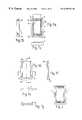
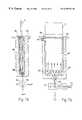
FIG. 1ais a plan view of a portion of a support retaining member (where the sample support is a glass slide), FIGS. 1band1cbeing side and end elevations respectively of the portion illustrated in FIG. 1a;FIG. 1dbeing a plan view of the portion of a support retaining member opposed to that shown in FIGS. 1a-1c,FIG. 1ebeing an end elevation of the portion shown in FIG. 1d,FIGS. 1fand1gbeing respective sections along the lines XX and YY shown in FIG. 1d;
FIG. 2 is a plan view of a portion of a support retaining member, being a different embodiment to that shown in FIG. 1a;
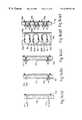
FIGS. 3aand3bare side and plan elevations respectively of an array of support cells in accordance with the invention clamped within clamping means, which clamping means also forms part of support holding means in apparatus in accordance with the invention;
FIG. 4 shows a perspective view of apparatus in accordance with the invention and
FIG. 5 shows a perspective view of a further embodiment of apparatus in accordance with the invention;
FIG. 6 is a schematic representation of part of the fluid delivery means for use in one embodiment of the apparatus of the invention;
FIGS. 7aand7bare longitudinal sections through a support cell in accordance with the invention, together with a schematic representation of part of the associated fluid delivery means, the plane of the section in FIG. 7bbeing at 90° to the plane of the section in FIG. 7a;
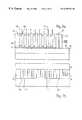
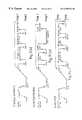
FIG. 8ais a flow diagram illustrating schematically the steps performed in haemotoxylin/eosin staining of samples and FIG. 8bshows how the same process could be performed using apparatus in accordance with the invention;
FIGS. 9a-9care flow diagrams illustrating schematically how apparatus in accordance with the invention could be used to perform immunocytochemistry processing, in situ hybridisation and in situ PCR respectively;
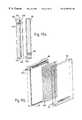
FIGS. 10a-10bare enlarged, exploded sectional and perspective views respectively of a support cell wherein the sample is immobilised on a membrane;
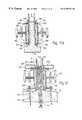
FIG. 11ais side elevation (to a different scale) of apparatus in accordance with the invention, and FIG. 11bis a sectional view of the same, along the dotted line Y—Y in FIG. 11a;
FIG. 12 shows, on a different scale, a sectional view of apparatus in accordance with the invention, similar to that shown in FIG. 11, adapted for performing processing of samples requiring careful temperature regulation (e.g. in situ PCR);
FIGS. 13aand13bshow in cross-section apparatus in accordance with the invention wherein sample supports are positioned substantially horizontally;
FIGS. 14a-14cshow, in cross-section, sample retaining members suitable for use with particular embodiments of apparatus according to the invention, FIG. 14dshows a plan view of a further sample retaining member, and FIG. 14eis a cross-section of the member shown in FIG. 14d;
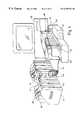
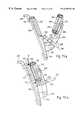
FIGS. 15aand15bare side elevations (partly in sectional view) of apparatus in accordance with the invention, in an open, disassembled position (15a) and in a closed, assembled position (15b);
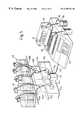
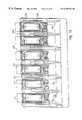
FIG. 16 is a front elevation of an array of six support cells of the type shown in FIG. 15, in their assembled position; and
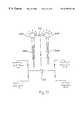
FIG. 17 is a schematic representation of fluid delivery means for use with apparatus in accordance with the invention.
DETAILED DESCRIPTION OF EMBODIMENTS OF THE INVENTIONIn the embodiment shown in FIGS. 1a-g,a support cell for use in processing a sample on a slide comprises asupport retaining member2 and sealing means4, thesupport retaining member2 being such that when assembled together with asupport6 and sealing means4 it forms a support cell, the support cell comprising a substantially sealedchamber8 the internal surface of which is defined in part of the sample bearing surface of thesupport6, thechamber8 being provided with afluid inlet10 and afluid outlet12 for the introduction and removal respectively of fluids used in processing the sample. Thesupport6 is a conventional glass slide.
Thesupport retaining member2 comprises two opposed portions,2aand2b,shown in plan view in FIGS. 1aand1drespectively. Thesupport6 is positioned between theopposed portions2aand2bwhen the support cell is assembled.
Referring to FIG. 1a,oneportion2aof thesupport retaining member2 is a generally rectangular block of perspex, about 37 mm wide, 7.5 mm thick and 60 mm long. In addition, the block is formed with a central raisedregion7, 29 mm wide, 2.5 mm high and about 55 mm long. This central raised region is clearly shown in FIGS. 1band1c.
The sealing means4 is a flattened silicon rubber gasket in the form of a frame-like surround, about 4 mm wide. Thegasket4 is of sufficient dimensions to extend around thefluid inlet10 and thefluid outlet12.
Thefluid inlet10 takes the form of a cylindrical bore, with a diameter of about 1 mm. Thefluid inlet10 enters theportion2aof the support retaining member at one side (as shown in FIG. 1b). The entrance to thefluid inlet10 is formed with a cylindrical counter-bore about 10 mm deep and about 5.6 mm in diameter. The counter-bore facilitates the attachment of fluid delivery means. The cylindrical bore of the fluid inlet extends into theportion2aabout 20 mm and then passes through 90° to form an opening at one end of the central raised region of theportion2a.The cylindrical bore of thefluid inlet10 at this point widens into a long slot14, extending across most of the width of the central raised region.
The other end of the central raised region has alarger slot16 which narrows into the opening of thefluid outlet12. Thefluid outlet12 is a cylindrical bore with a diameter of 2 mm (about twice the diameter of the fluid inlet10), which passes through 90° to exit theportion2aof the support retaining member at the same side as that on which thefluid inlet10 enters theportion2a(see FIG. 1b). Thefluid outlet12 is counter-bored in a similar manner to thefluid inlet10 in order to facilitate attachment of waste fluid removal means.
As shown in FIG. 1d,theportion2bof thesupport retaining member2 is a generally rectangular block of duraluminium with overall dimensions similar to theportion2aof thesupport retaining member2. Theportion2bhas steppedsides19 and a steppedend region18 at one end. FIG. 1eshows an end elevation of theportion2bas seen from the end with the stepped end region18 (the stepped sides are omitted for clarity). FIGS. 1fand1gare sectional views along the lines XX and YY (in FIG. 1b) respectively. FIGS. 1a-1gare all drawn to the same scale.
In use, a support6 (glass slide) bearing a sample to be processed is placed in theportion2bof thesupport retaining member2, the stepped sides19 and steppedend region18 serving to guide and retain the slide in the correct postion. Thesupport6 is positioned such that the surface of thesupport6 bearing the sample is furthermost from theportion2bof thesupport retaining member2.
The sealing means4 (gasket) is then placed around the uppermost surface of thesupport6, surrounding the sample to be processed. The positioning of the sealing means4 is assisted by the stepped edges19 and steppedend region18 of theportion2bof the support retaining member. Theportion2aof the support retaining member is then positioned on top of the sealing means4, so as to make a substantially sealedchamber8 largely defined by the surface of thesupport6 bearing the sample and the opposed surface of the raisedcentral region7 of theportion2aof thesupport retaining member2. Again, positioning of theportion2ais assisted by the stepped edges19 and steppedend region18 of theportion2b.The apertures of thefluid inlet10 and thefluid outlet12 are within the substantially sealedchamber8, the edges of which are defined by the sealing means4.
The support cell assembly is then placed in a clamping means, ready for processing.
FIG. 2 shows aportion2cof a support retaining member. Theportion2cis a generally rectangular perspex block substantially similar to theportion2ashown in FIG. 1a.However, in the embodiment shown in FIG. 2, the sealing means4 is a silicon rubber O-ring, which is seated in an accommodating groove cut in the raised central region of theportion2c.The accommodating groove is about 1.5 mm wide and 0.88 mm deep. The mean corner radius of the turns in the groove at the four corners is about 3 mm.
FIG. 3ais a side elevation of clamping means20 securing an array of eight support cells of the type shown in FIGS. 1 or2. FIG. 3bshows a plan view of the same array. The clamping means20 is generally rectangular and comprises afixed end block22,24 at opposed ends, between which is provided a shallow channel (a few millimeters deep), of a width sufficient to accommodate a support cell array. The channel is slightly off-set from the medial axis of the clamping means. Fixedblock24 is formed with a screw-thread aperture, which aperture is in screw-threaded engagement with clampingscrew26. The outer end of clampingscrew26 is knurled to facilitate grip by an operator's fingers (but in an alternative embodiment a rod may be inserted through an aperture provided in the outer end of the clamping screw, perpendicular to the long axis thereof, which rod can be used to increase the turning moment applied to the screw). The inner end of clampingscrew26 is attached to a clampingface28. Accordingly, turning clampingscrew26 moves the clampingface28 towards or away from the fixedend block22, such that between one and eight support cells may be secured in the clamping means20 with a variable clamping force, which clamping force, in addition to securing the support cells also serves to ensure a good seal between the sealing means and the support/support retaining member.
The clamping means20 is made of metal and has a perspex cover (not shown), which serves to prevent excessive heat loss of samples and is a safety feature when radioactive substances are used in the processing of the sample.
The clamping means20 is about 225 mm long, 95 mm wide and 50 mm thick. The shallow channel is about 38 mm wide. However, where the samples on the supports are to be subjected to in situ PCR the overall dimensions of the clamping means will be reduced, thus decreasing its thermal capacity, allowing for quicker thermal cycling.
Typically the clamping means will be compatible with the automated apparatus of the invention and generally the clamping means will form at least part of the support holding means in the automated apparatus.
FIG. 4 is a perspective view (to a different scale) of one embodiment of automated apparatus for processing a sample on a support in accordance with the invention. In FIG. 4, an array of ten support cells is held in a support holding means30, which holding means comprises the clamping means20 of FIG.3. The sample on each support is present within an individual substantially sealed chamber, such as that indicated in FIG. 1a.The apparatus also comprises fluid delivery means (indicated generally at32 in FIG. 4) for delivery processing fluid to each chamber, waste fluid collecting means34 for removing fluid from each chamber, and computer control means36.
More specifically, the fluid delivery means32 comprises sixreservoirs38, eachreservoir38 containing about 1 liter of a processing fluid. Fluid is fed from eachreservoir38 through narrowsynthetic plastics tubing39 to an associatedsyringe pump40. The syringe pumps are those supplied by Hook & Tucker (Croydon, Surrey, UK) and have a stroke volume of 1-10 mls. Onesyringe pump40 is provided for eachreservoir38. Eachsyringe pump40 feeds via a short length oftubing41 into auniversal connector42, which is in turn connected viatubing43 to an Omnifit rotary valve44, provided with ten outlets. Each outlet from the rotary valve44 is connected viatubing45 to a fluid inlet in one of the support cells held in the holding means30. Each of the fluid outlets is connected to a common waste fluid collecting means34 which drains into aglass beaker46.
The apparatus further comprises aperspex cover48 located over the array of support cells. The support holding means30 is located on a temperature control means50, which takes the form of a fan-assisted Peltier device (fan omitted for clarity). A variabletemperature regulation control52 is provided. The computer control means is a PC which controls: the selection of which syringe pumps40 to actuate; the absolute volume and the rate of flow of processing fluid; the selection of which support cell to feed with processing fluid; the temperature of the supported samples within the apparatus; and the timing of the various events.
An alternative embodiment of the apparatus is shown (to a different scale) in FIG.5. The embodiment shown in FIG. 5 comprises two support holding means60, each of which is capable of supporting up to sixteensupports6. The holding means60 are mounted on a programmablethermal cycler62. One of the holding means is occupied by elevenslides6 and is covered with aperspex lid66. Fivereservoirs68 of processing fluid are arranged on a shelf. Tworeservoirs68 are connected in asynthetic plastics tubing69atorotary valve70awhilst the other three are connected viatubing69btorotary valve70b.Rotary valve70ais in turn connected viatubing71ato HPLC pump72a,whilstrotary valve70bis connected throughtubing71bto HPLC pump72b.The HPLC pumps72a,72beach feed throughtubing73a,bintomixer unit74, thus allowing variable composition mixtures of processing fluids to be produced, if desired. The processing fluid(s) passes throughtubing75 and then enters each chamber in the array of support cells and waste fluid exhausted therefrom is collected by acommon waste duct76, which empties into aglass collecing beaker78.
The arrangement of the fluid delivery apparatus in this embodiment is shown schematically in FIG.6. In FIG. 6, afilter unit80 is included downstream of themixer unit74.
In the embodiment of a support cell shown in FIG. 7a,asupport retaining member82 accommodates a support6 (class slide) and anelectrical heating element84. A substantially sealedchamber86 is defined by the surface of thesupport6 upon which the sample is located and the opposed surface of thesupport retaining member82, the seal being effected by a silicon rubber gasket (not shown). A fluid inlet is provided at the bottom of thechamber86, which fluid inlet is attached to a three-way valve90.
In FIG. 7b,the main feed from the reservoirs of processing fluid is indicated at92 and is attached to one of the ports of the three-way valve90. In addition, asyringe94 forms a local reservoir which is connected to a second of the ports of the three-way valve90. Thelocal reservoir94 will typically be utilised where the processing of the sample involves the use of scarce and/or radioactive reagents. Thefluid inlet88 splits into a number ofchannels89, such that processing fluids will enter the substantially sealedchamber86 along a broad front and advance upwards evenly before exiting thechamber86 viaoutlet96, thence into the common waste collecting duct (not shown).
FIG. 8ashows the flow diagram for performing haematoxylinleosin staining of biological samples.
FIG. 8bshows how the process could be performed using automated apparatus in accordance with the invention, the fluid delivery means comprising two HPLC-type pumps.
Similarly, FIGS. 9a-9care flow diagrams showing how apparatus in accordance with the invention, utilising an HPLC-type two pump system, could be employed to perform an immunocytochemical process (9a), in situ hybridisation (9b) or in situ PCR (9c). Tables I and II indicate, respectively, sample protocols for performing haemotoxylin/cosin staining and in situ hybridisation of a paraffin-treated thin section, using a six-syringe pump system.
In the embodiment shown in FIGS. 10aand10ba support cell comprises twoopposed portions96,98 of a support retaining member. Theportion96 is equipped with afluid inlet100 and a recessedarea102. Theportion98 is formed with afluid outlet104 and a raisedsection106. The dimensions of the recessedsection102 of theportion96 are such as to accept the raisedsection106 of theportion98, with amembrane sample support108 positioned therebetween.
The raisedsection106 is provided with a peripheral groove, which groove accommodates an O ringsilicon rubber gasket110.
When the support cell is assembled, a substantially sealed chamber is defined by theO ring gasket110 and theopposed portions96,98 of the support retaining member.
A further embodiment is illustrated in FIGS. 11a-11b.
In FIG. 11aa substantially vertical array of16support cells112 is provided, eightsupport cells112 being disposed on either side of a centralsupport holding member114. The sample supports6 are omitted (for clarity) from thesupport cells112 except from that on the left hand end.
The arrangement is more clearly shown in the sectional view of FIG. 11b.The sample supports6 (glass slides) are held on a shelf on either side of thesupport holding member114. Each support cell comprises asample support6 and a perspexsupport retaining member116. Thesupport retaining members116 are seated on a shelf either side of thesupport holding member114, which comprises duraluminium, a good thermal conductor. Eachsupport retaining member116 is similar to theportion2aof the support retaining member shown in FIGS. 1a-1c.Each section of thesupport holding member114 which holds asample support6 is similar to theportion2bof the support retaining member shown in FIGS. 1d-1g.A substantially sealed chamber is defined by the sample bearing surface of thesupport6, the opposed surface of thesupport retaining member116 and by an O ring gasket sealing means118. Each substantially sealed chamber is provided with afluid inlet120 near the bottom of the support cell, and with afluid outlet122 near the top of the support cell. Thefluid inlet120 andoutlet122 are thus provided in a singlesupport retaining member116. Thesupport cells112 are clamped in place on thesupport holding member114 by clamping means. The clamping means comprises, for eachsupport cell112, a screw threaded clampingmember124, which is in screw threaded engagement with anengagement bar126 which runs the length of the apparatus and is supported at each end. The outer end of the clampingmember124 is provided with a knurled knob to facilitate manual operation. The opposite end of the clampingmember124 is provided with, or contacts, aclamping plate128. Clampingplate128 serves to spread the clamping force of the clampingmember124 over a greater area of thesupport retaining member116.
FIG. 12 is a sectional view of similar apparatus in an embodiment adapted to perform processing steps requiring careful temperature regulation, in particular, thermal cycling such as is necessary to perform in situ PCR. The arrangement is similar to that shown in FIG. 11bwith each support cell comprising asample support6 and a perspexsupport retaining member116. A substantially sealed chamber is defined by the sample bearing surface of thesupport6, the opposed surface of thesupport retaining member116 and by an O ring gasket sealing means118. As previously, the support cells are clamped on either side of thesupport holding member114 by clampingmembers124 provided with clampingplates128, the clampingmembers124 being in screw-threaded engagement with anengagement bar126.
Thefluid inlet120 is equipped with a Luer fitting130, to which is attached a three-way valve132. Thevalve132 allows introduction of processing fluid from remote fluid delivery means viaduct134 which passes through the base of the holdingmember114, or introduction of fluid from a local reservoir viashort duct136, which is adapted to receive a micropipette tip. In addition,duct136 may be sealed at its outer end by a cap (omitted for clarity) or by covering with mineral oil.
Thefluid outlet122 is similarly provided with a luer fitting138, allowing for ready attachment of wastefluid collecting tubing140, which passes through the centre of the holdingmember114, for convenience.
Thesupport holding member114 is formed with a plurality ofintegral heating elements142 which come into direct contact with the sample supports6. Theheating elements142 are metallic and electrically powered. Thesupport holding member114 is also provided with cooling means, which comprises a series of conductingvessels144 which pass in close proximity to the sample supports6. The conductingvessels144 are adapted to receive a rapid flow of a fluid coolant (such as water), which is forced through the conducting vessels by a pump. The cooling system may be “closed” (with continuous re-cycling of coolant) or “open” (in which coolant passes out of the system after completing one circuit, and is replenished with fresh coolant).
FIGS. 13aand13billustrate an embodiment of apparatus in accordance with the invention, wherein the support cells are positioned substantially horizontally. As with the embodiments illustrated in FIGS. 11 and 12, an array of support cells is positioned on asupport holding member114, each support cell comprising a substantially sealed chamber defined by the sample bearing surface of asupport6, the opposed surface of asupport retaining member116 and by an O ring gasket sealing means118. Positioning of thesupport6 and thesupport retaining member116 on thesupport holding member114 is assisted by a steppededge115 provided on the holdingmember114.
The support cells are clamped in position on the holdingmember114 by clamping means comprising a clampingmember124 formed with aclamping plate128, the clampingmember124 being in screw threaded engagement with an engagingmember126.
The holdingmember114 is provided with a temperatureregulation Peltier device146 which is in direct contact with thesample support6 and provides for the heating and cooling thereof. In the embodiment shown in FIG. 13a,thefluid outlet122 is equipped with a luer fitting for the convenient attachment of a wastefluid collecting tubing148, whilst theprocessing fluid inlet120 is provided with a luer fitting to which is attached a threeway valve132. Thevalve132 allows for the introduction of processing fluid from a remote fluid delivery means (via duct150) or from a local reservoir, by the insertion of a micropipette tip intoduct152. Theduct152 may be sealed by a synthetic plastics cap (not shown) or by the introduction of mineral oil. The arrangement shown in FIG. 13bdiffers in that thefluid inlet120 is adapted to receive processing fluid directly from a micropipette tip.
It will be apparent that the holdingmember114 in this embodiment could readily be altered by substituting thePeltier device146 with separate heating and cooling means, as provided in the embodiment shown in FIG.12.
FIG. 14 shows a number of various configurations that might be used for theslide retaining member116 for use with any of the apparatus embodiments shown in FIGS. 11-13. FIG. 14ashows the basic arrangement, with afluid inlet120 provided near the bottom of themember116 is positioned vertically) and afluid outlet122 provided near the top. Themember116 has a stepped profile on its inner face, to assist in position relative to a sample support and/or a support holding member. Themember116 is also provided with an O ring gasket sealing means118, seated in a peripheral groove. In the embodiment shown in14b,thefluid inlet120 is formed with a luer fitting130, to facilitate the attachment of associated fluid delivery means such as tubing or valves. In the embodiment shown in FIG. 14c,both thefluid inlet120 and thefluid outlet122 are formed with luer fittings.
The arrangement shown in14dis slightly more complex in that, when assembled together with an appropriate sample support (e.g. glass slide), the support retaining member is capable of simultaneously forming three substantially sealedchambers8a,8band8c,each of which is provided with a respective fluid inlet120a, b, cand a respectivefluid outlet122a, b, c,the sides of the substantially sealed chamber being sealed by respective O rings118a, b, c.
FIGS. 15a, billustrate a preferred embodiment of apparatus in accordance with the invention, as shown in side elevation (partly in sectional view). FIG. 15ashows the apparatus in an open position, whilst FIG. 15bshows the apparatus in a closed, operational position.
Referring to FIG. 15a,the apparatus comprises aperspex housing200, accommodating adetachable aluminium fitting201. Foursuch fittings201 are provided on the apparatus, although only one is shown, the rest being omitted for clarity. The fitting201 detaches from thehousing200 to facilitate cleaning, maintenance and the like. Each fitting201 is formed with six, metallicsupport holding members202. Eachsupport holding member202 is retained in the fitting201 by a silicone rubber gasket in such a way that an air-filledspace205 is formed between thesupport holding members202 and the fitting201. Eachsupport holding member202 is equipped with electrical heating means. The insulation afforded by the air-filledspace205 allows for rapid temperature regulation of thesupport holding members202 by their respective electrical heating means, and thus rapid temperature regulation of supports held on thesupport holding members202. Each support holding means202 is also provided with temperature sensing means (not shown).
Twelveprojections204 are provided on the fitting201, one pair ofprojections204 being located beneath eachsupport holding member202. A pair ofangled arms206 is pivotally mounted at one end region on apivot203 provided in each pair ofprojections204. At the opposed end region of theangled arms206 is provided apivotal attachment208, upon which is mounted a pivoting head-piece210. The head-piece210 is provided with an upper and lower spring-loaded mountingpin212,214, which pins212,214 are engaged with asupport retaining member216.
There are thus sixsupport retaining members216 associated with each of the fourfittings201 provided on the apparatus. Eachsupport retaining member216 is of substantially similar construction to the portion labelled2aof the support retaining member shown in FIGS. 1a-1c.Thesupport retaining member216 is formed in perspex with a fluid inlet and a fluid outlet (not shown in FIG. 15, but labelled as228 and230 respectively in FIG.16).
The arrangement is such that the pair ofangled arms206 may be moved aboutpivot203 in a vertical plane from an open position, as shown in FIG. 15a,to a closed, operational position as shown in FIG. 15b,and vice versa. Movement of theangled arms206 upwards towards thehousing200, brings thesupport retaining member216 into close proximity, in the closed position, with thesupport holding member202. Movement of theangled arms206 may be effected manually, by the operator of the apparatus.
The apparatus may be retained in the closed position by actuation of a clamping means, which comprises a metallic, generally cylindrical, clampinglever218 provided between each pair ofangled arms206 and pivotally mounted, at one end region, to apivot219 provided on thehousing200 above theprojection204. Within the clampinglever218 is atransverse member220. Thetransverse member220 protrudes on each side beyond the surface of the clampinglever218, and has limited degree of travel within thelever218 defined by theslot222 provided in thelever218. Thetransverse member220 is mounted on a spring (not shown), located between thetransverse member220 and the end region of thelever218 opposed to that end region of thelever218 mounted on thepivot219.
In use, a sample support (microscope slide,6) is positioned in a machined recess (not shown) provided on the samplesupport holding member202, the sample bearing surface facing outwards, away from thesupport holding member202. The angled arms206 (and thus, the head-piece210, and the support retaining member216) are moved into the closed position by the operator, as shown in FIG. 15b.In the closed position a support cell is formed, comprising a substantially sealed chamber defined by the sample bearing surface of thesample support6, thesupport retaining member216, and theO ring gasket224 provided in a machined recess formed in the surface of thesupport retaining member216. A good seal between thegasket224 and the sample-bearing surface of thesample support6 is ensured by the spring-loaded mounting pins212,214, which bias thesupport retaining member216 towards thesupport holding member202 and thesupport6.
Once in the closed position, the arrangement is clamped by the clampinglever218. To effect clamping thelever218 is moved upwards about thepivot203. Thetransverse member220 engages aco-operating recess226 in theangled arms206, such that the upward movement of the clampinglever218 forces the transverse member to move within theslot222 away from thepivot219, against the spring located within thelever218, causing the spring to become compressed. The compression of the spring provides the clamping force which clamps the arrangement in the closed position.
When the sample has been processed, the clampinglever218 may be moved downwards about thepivot219, disengaging thetransverse member220 from theco-operating recess226. Thesupport retaining member216 may then be moved away from thesupport holding member202, and thesupport6 removed from the apparatus. If further samples are to be processed, the procedure may then be repeated.
FIG. 16 illustrates an array of six support cells of the type shown in FIG.15. The support cells are arranged in three pairs, each pair being associated with a respectivesupport holding member202, such that one thermoregulatable plate comprised in thesupport holding member202 may regulate the temperature of two sample supports6. Each support cell is provided with afluid inlet228 and afluid outlet230 formed in thesupport retaining members216.
Thesupport retaining members216 are provided with round-bottomed grooves where theinlet228 andoutlet230 enter the support cell, which grooves allow for even distribution of fluid across the width of the sample support as fluid enters the support cell, and which facilitate egress of the fluid viaoutlet230. The apparatus comprises fluid delivery means, including ten reservoirs of fluids accommodated within thehousing200. Capillary tubing conducts fluids from the reservoirs, through apertures in the housing and through bores in thesupport retaining members216 to thesupport cell inlets228. Waste fluid egresses from theoutlets230, through bores in thesupport retaining members216 and thence via capillary tubing through apertures in thehousing200 to a waste fluid collecting vessel. Conveniently the capillary tubing is attached to, or located within, theangled arms206, making for a tidier arrangement with less chance of the tubing becoming snagged.
In a preferred embodiment, the automated apparatus for processing samples comprises four arrays of support holding members of the type shown in FIG. 16, such that the apparatus may process up to 24 samples simultaneously. The arrangement illustrated in FIG. 16 has the advantage that an operator may observe the processing fluids within the support cells (thesupport retaining members216 comprising perspex) and thus easily monitor the progress of the sample processing.
The preferred embodiment of the automated apparatus is provided with fluid delivery means of the type illustrated schematically in FIG.17. The fluid delivery means comprises two Kloen syringe pumps240a, bfitted with 1 ml syringes. At the top of each syringe is located a 6-port rotary valve242a, b,eachrotary valve242a, bbeing provided with 5 inlet ports and 1 exit port. Thus syringe pump240amay pump fluid selected from one of five different fluid reservoirs1-5, andsyringe pump240bmay pump fluid selected from one of five different fluid reservoirs6-10, each reservoir being connected to the syringe pumps240a, bby a respective port in therotary valves242a, b.The syringe pumps240a, bforce fluid via the exit ports of therotary valves242a, binto acommon mixing valve244, thence to adistribution valve246, which directs the fluid to the appropriate array of support cells. Each support cell is provided with a 3-way valve, such that respective support cells may be processed individually with different processing fluids if desired, and allowing for the manual introduction of processing fluids into individual support cells (e.g. by means of a micropipette).
Tables I and II describe example protocols for performing haematoxylin/eosin staining and in situ hybridisation respectively using automated apparatus according to the invention.
It will be clear that other embodiments of the invention could be made and such variants are intended to fall within the scope of the present invention.
| TABLE I |
|
| Haematoxylin and Eosin Stain |
| Example Protocol for Slide Processor |
| Pump | | | Vol. | Rate | | Pause | | Temp. |
| Stage | No. | Soln. | Ratio | (μl) | (ml/min) | Cells | (sec) | Repeat | (° C.) |
|
| 1 | 1 | EtOH | — | 1000 | 2 | 1-6 | 60 | 2 | 22 |
| 2 | 1 & 2 | EtOH/H2O | 9:1 | 1000 | 2 | 1-6 | 60 | 1 | 22 |
| 3 | 1 & 2 | EtOH/H2O | 7:3 | 1000 | 2 | 1-6 | 60 | 1 | 22 |
| 4 | 1 & 2 | EtOH/H2O | 1:1 | 1000 | 2 | 1-6 | 60 | 1 | 22 |
| 5 | 2 | H2O | — | 1000 | 2 | 1-6 | — | 10 | 22 |
| 6 | 3 | Haem. | — | 800 | 2 | 1-6 | 300 | 1 | 22 |
| 7 | 2 | H2O | — | 1000 | 2 | 1-6 | 10 | 10 | 22 |
| 8 | 4 | H + EtOH | — | 1000 | 2 | 1-6 | 30 | 3 | 22 |
| 9 | 2 | H2O | — | 1000 | 2 | 1-6 | — | 10 | 22 |
| 10 | 5 | Eosin | — | 1000 | 2 | 1-6 | 120 | 1 | 22 |
| 11 | 2 | H2O | — | 1000 | 2 | 1-6 | — | 15 | 22 |
| 12 | 1 & 2 | EtOH/H2O | 1:1 | 1000 | 2 | 1-6 | 60 | 1 | 22 |
| 13 | 1 & 2 | EtOH/H2O | 7:3 | 1000 | 2 | 1-6 | 60 | 1 | 22 |
| 14 | 1 & 2 | EtOH/H2O | 9:1 | 1000 | 2 | 1-6 | 60 | 2 | 22 |
| 15 | 1 | EtOH | — | 1000 | 2 | 1-6 | 60 | 4 | 22 |
| 16 | 6 | Xylene | — | 100 | 2 | 1-6 | 30 | 4 | 22 |
|
| TABLE II |
|
| In Situ Hybridisation from Paraffin Section |
| Example Protocol for Slide Processor |
| Pump | | | Vol. | Rate | | | | Temp. |
| Stage | No. | Soln. | Ratio | (μl) | (ml/min) | Cells | Pause | Repeat | (° C.) |
|
| 1 | 1 | Xylene | — | 1000 | 2 | 1-8 | 00:60 | 4 | 37 |
| 2 | 1 | EtOH | — | 1000 | 2 | 1-8 | 00:60 | 2 | 22 |
| 3 | 2 & 3 | EtOH/H2O | 9:1 | 1000 | 2 | 1-8 | 00:60 | 1 | 22 |
| 4 | 2 & 3 | EtOH/H2O | 7:3 | 1000 | 2 | 1-8 | 00:60 | 1 | 22 |
| 5 | 2 & 3 | EtOH/H2O | 1:1 | 1000 | 2 | 1-8 | 00:60 | 1 | 22 |
| 6 | 3 | H2O | — | 1000 | 2 | 1-8 | — | 10 | 22 |
| 7 | 4 | PreHyb.Buffer | — | 300 | 2 | 1-8 | 60:00 | 1 | 42 |
| 8 | Hold | Manual add. probe | | | | | 360:00 | | 42 |
| 9 | 5 | 1 × SSC | — | 1000 | 2 | 1-8 | 30 | 5 | 22 |
| 10 | 5 | 1 × SSC | — | 1000 | 2 | 1-8 | 30 | 20 | 55 |
| 11 | 6 | 0.1 × SSC | — | 1000 | 2 | 1-8 | — | 2 | 22 |
| 12 | 2 & 3 | EtOH/H2O | 1:1 | 1000 | 2 | 1-8 | 60 | 2 | 22 |
| 13 | 2 & 3 | EtOH/H2O | 7:3 | 1000 | 2 | 1-8 | 60 | 2 | 22 |
| 14 | 2 & 3 | EtOH/H2O | 9:1 | 1000 | 2 | 1-8 | 60 | 2 | 22 |
| 15 | 2 | EtOH | — | 1000 | 2 | 1-8 | 60 | 2 | 22 |
|