US6301256B1 - Selection technique for preventing a source port from becoming a destination port in a multi-port bridge for a local area network - Google Patents
Selection technique for preventing a source port from becoming a destination port in a multi-port bridge for a local area networkDownload PDFInfo
- Publication number
- US6301256B1 US6301256B1US09/064,676US6467698AUS6301256B1US 6301256 B1US6301256 B1US 6301256B1US 6467698 AUS6467698 AUS 6467698AUS 6301256 B1US6301256 B1US 6301256B1
- Authority
- US
- United States
- Prior art keywords
- packet
- port
- destination
- source port
- ports
- Prior art date
- Legal status (The legal status is an assumption and is not a legal conclusion. Google has not performed a legal analysis and makes no representation as to the accuracy of the status listed.)
- Expired - Fee Related
Links
Images

Classifications
- H—ELECTRICITY
- H04—ELECTRIC COMMUNICATION TECHNIQUE
- H04L—TRANSMISSION OF DIGITAL INFORMATION, e.g. TELEGRAPHIC COMMUNICATION
- H04L49/00—Packet switching elements
- H04L49/90—Buffering arrangements
- H04L49/9057—Arrangements for supporting packet reassembly or resequencing
- H—ELECTRICITY
- H04—ELECTRIC COMMUNICATION TECHNIQUE
- H04L—TRANSMISSION OF DIGITAL INFORMATION, e.g. TELEGRAPHIC COMMUNICATION
- H04L12/00—Data switching networks
- H04L12/28—Data switching networks characterised by path configuration, e.g. LAN [Local Area Networks] or WAN [Wide Area Networks]
- H04L12/46—Interconnection of networks
- H04L12/4604—LAN interconnection over a backbone network, e.g. Internet, Frame Relay
- H04L12/462—LAN interconnection over a bridge based backbone
- H—ELECTRICITY
- H04—ELECTRIC COMMUNICATION TECHNIQUE
- H04L—TRANSMISSION OF DIGITAL INFORMATION, e.g. TELEGRAPHIC COMMUNICATION
- H04L47/00—Traffic control in data switching networks
- H04L47/10—Flow control; Congestion control
- H—ELECTRICITY
- H04—ELECTRIC COMMUNICATION TECHNIQUE
- H04L—TRANSMISSION OF DIGITAL INFORMATION, e.g. TELEGRAPHIC COMMUNICATION
- H04L47/00—Traffic control in data switching networks
- H04L47/10—Flow control; Congestion control
- H04L47/13—Flow control; Congestion control in a LAN segment, e.g. ring or bus
- H04L47/135—Flow control; Congestion control in a LAN segment, e.g. ring or bus by jamming the transmission media
- H—ELECTRICITY
- H04—ELECTRIC COMMUNICATION TECHNIQUE
- H04L—TRANSMISSION OF DIGITAL INFORMATION, e.g. TELEGRAPHIC COMMUNICATION
- H04L47/00—Traffic control in data switching networks
- H04L47/10—Flow control; Congestion control
- H04L47/30—Flow control; Congestion control in combination with information about buffer occupancy at either end or at transit nodes
- H—ELECTRICITY
- H04—ELECTRIC COMMUNICATION TECHNIQUE
- H04L—TRANSMISSION OF DIGITAL INFORMATION, e.g. TELEGRAPHIC COMMUNICATION
- H04L49/00—Packet switching elements
- H04L49/90—Buffering arrangements
- H—ELECTRICITY
- H04—ELECTRIC COMMUNICATION TECHNIQUE
- H04L—TRANSMISSION OF DIGITAL INFORMATION, e.g. TELEGRAPHIC COMMUNICATION
- H04L49/00—Packet switching elements
- H04L49/90—Buffering arrangements
- H04L49/901—Buffering arrangements using storage descriptor, e.g. read or write pointers
- H—ELECTRICITY
- H04—ELECTRIC COMMUNICATION TECHNIQUE
- H04L—TRANSMISSION OF DIGITAL INFORMATION, e.g. TELEGRAPHIC COMMUNICATION
- H04L49/00—Packet switching elements
- H04L49/90—Buffering arrangements
- H04L49/9063—Intermediate storage in different physical parts of a node or terminal
- H04L49/9068—Intermediate storage in different physical parts of a node or terminal in the network interface card
- H04L49/9073—Early interruption upon arrival of a fraction of a packet
- H—ELECTRICITY
- H04—ELECTRIC COMMUNICATION TECHNIQUE
- H04L—TRANSMISSION OF DIGITAL INFORMATION, e.g. TELEGRAPHIC COMMUNICATION
- H04L49/00—Packet switching elements
- H04L49/90—Buffering arrangements
- H04L49/9084—Reactions to storage capacity overflow
- H04L49/9089—Reactions to storage capacity overflow replacing packets in a storage arrangement, e.g. pushout
- H—ELECTRICITY
- H04—ELECTRIC COMMUNICATION TECHNIQUE
- H04L—TRANSMISSION OF DIGITAL INFORMATION, e.g. TELEGRAPHIC COMMUNICATION
- H04L12/00—Data switching networks
- H04L12/02—Details
- H04L12/16—Arrangements for providing special services to substations
- H04L12/18—Arrangements for providing special services to substations for broadcast or conference, e.g. multicast
- H—ELECTRICITY
- H04—ELECTRIC COMMUNICATION TECHNIQUE
- H04L—TRANSMISSION OF DIGITAL INFORMATION, e.g. TELEGRAPHIC COMMUNICATION
- H04L49/00—Packet switching elements
- H04L49/10—Packet switching elements characterised by the switching fabric construction
- H04L49/102—Packet switching elements characterised by the switching fabric construction using shared medium, e.g. bus or ring
- H—ELECTRICITY
- H04—ELECTRIC COMMUNICATION TECHNIQUE
- H04L—TRANSMISSION OF DIGITAL INFORMATION, e.g. TELEGRAPHIC COMMUNICATION
- H04L49/00—Packet switching elements
- H04L49/20—Support for services
- H04L49/201—Multicast operation; Broadcast operation
- H—ELECTRICITY
- H04—ELECTRIC COMMUNICATION TECHNIQUE
- H04L—TRANSMISSION OF DIGITAL INFORMATION, e.g. TELEGRAPHIC COMMUNICATION
- H04L49/00—Packet switching elements
- H04L49/35—Switches specially adapted for specific applications
- H04L49/351—Switches specially adapted for specific applications for local area network [LAN], e.g. Ethernet switches
Definitions
- the inventionrelates to a multi-port bridge for a local area network. More particularly, the invention relates to selection technique for filtering packets in a multi-port bridge for a local area network, thus, preventing a source port for a packet from becoming a destination port for the packet
- Nodes of a local area networkare typically interconnected by a shared transmission medium.
- the amount of data traffic that the shared transmission medium can accommodateis limited. For example, only one node at a time can successfully transmit data to another node over the shared transmission medium. If two or more nodes simultaneously attempt to transmit data, a data collision occurs, which tends to corrupt the data being transmitted. Thus, nodes that share a transmission medium are considered to be in a same collision domain.
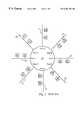
- FIG. 1illustrates a conventional local area network (LAN) including a multi-port bridge 20 .
- the multi-port bridge 20 in this examplehas eight ports A-H, though the number of ports can vary.
- Each port A-His connected to a segment 21 - 28 of the LAN.
- Each segment 21 - 28typically includes one or more nodes 29 - 44 , such as a workstation, a personal computer, a data terminal, a file server, a printer, a scanner, a modem, a facsimile or other conventional digital device.
- Each of the nodes 29 - 44has an associated node address which uniquely identifies the node.
- the nodes 29 - 44are configured to send data, one to another, in the form of discrete data packets.
- FIG. 2illustrates a conventional IEEE 802.3 data packet 50 .
- the data packet 50includes an eight byte long pre-amble 51 which is generally utilized for synchronizing a receiver to the data packet 50 .
- the pre-amble 51includes seven bytes of preamble and one byte of start-of-frame.
- the data packet 50includes a six byte long destination address 52 , which is the node address of a node which is an intended recipient for the data packet 50 .
- the data packet 50includes a six byte long source address 53 , which is the node address of a node which originated the data packet 50 . Following the source address 53 is a two-byte length field 54 . Following the length field 54 is a data field 55 . The data field 55 can be up to 1500 bytes long. Finally, the data packet 50 includes a four-byte frame check field 55 which allows a recipient of the data packet 50 to determine whether an error has occurred during transmission of the data packet 50 .
- the multi-port bridge 20When a node (source node) sends data to another node (destination node) located on its same segment of the LAN (intra-segment communication), the data is communicated directly between the nodes without intervention by the multi-port bridge 20 and is known as an intrasegment packet. Therefore, when the multi-port bridge 20 receives an intra-segment packet, the multi-port bridge 20 does not bridge the packet (the packet is filtered). When a node (source node) sends a data packet to another node (destination node) located on a different segment (inter-segment communication), the multi-port bridge 20 appropriately forwards the data packet to the destination node.
- the multi-port bridge 20receives each data packet 50 (FIG. 2) and must determine whether the data packet 50 is for intra-segment communication or inter-segment communication, and if the data packet 50 is for inter-segment communication, the multi-port bridge 20 must determine which port (destination port) the data packet 50 is to be directed based upon the destination address 52 contained in the data packet 50 . This can be accomplished utilizing a look-up table.
- the look-up tableis constructed by executing a learning phase for each received data packet 50 to store data in the table and by executing a look-up phase for each received data packet 50 to look-up data stored during the learning phase for a prior packet.
- the inventionis a method of and apparatus for filtering packets in a multi-port bridge for a local area network thereby preventing a source port from becoming a destination port for a packet.
- the multi-port bridgeincludes a switch engine, a memory and a plurality of ports, all of which are interconnected by a high speed communication bus.
- the switch engineincludes a bus controller, a memory controller and a look-up controller, each preferably being a finite state machine.
- the memory controllerprovides an interface between the memory and the communication bus.
- the bus controllercontrols access to the communication bus by collecting requests and granting the requests according to an appropriate priority.
- the look-up controllerdetermines to which port (uni-cast packet) or ports (multi-cast packet) each packet is to be directed based upon the destination node address for the packet.
- the high speed communication busincludes single bit signal lines dedicated to communicating control commands, signal lines dedicated to communicating data, and several signal lines having special purposes. For example, two signal lines are preferably dedicated to initiating access to the bus, each having a respective priority, another signal line is dedicated to jam requests (for applying backpressure), still another signal line is dedicated to the memory controller and yet another signal line is dedicated to providing a bus clock signal.
- the memoryincludes look-up tables utilized for appropriately directing data packets among the ports, packet buffers utilized for temporarily storing packets and mailboxes for providing an interface between the switch engine and an external processor.
- Each portincludes a port controller, a MAC transceiver, a receive finite state machine, a transmit finite state machine, a receive buffer, a transmit buffer and a memory pointer buffer. Packets received from a LAN segment by the transceiver are directed to the communication bus through the receive buffer, while packets to be transmitted over the LAN segment are directed to the transceiver through the transmit buffer.
- the memory pointer bufferstores memory pointers in a queue for transmission by the port, one memory pointer for each data packet being stored in the packet buffers of the memory.
- a data packet originating from a node (source node) in a segment of the LANis received by the receive buffer of a corresponding one of the ports (source port) of the multi-port bridge.
- the source portrequests a look-up cycle.
- the source portstores indicia of whether it requested the look-up cycle.
- the look-up tablesare utilized to determine which one or ones of the ports are the appropriate destination ports for the packet, based upon the destination address.
- Each of the plurality of portsis assigned a respective one of the signal lines of the communication bus dedicated to communicating data.
- a product of utilizing the look-up tablesis referred to as a bit-map of the destination ports for the packet.
- the bit-mapincludes a logic level for each signal line assigned to a port wherein the logic level is indicative of whether the corresponding port is a destination port for the packet.
- the bit-mapis placed on the data portion of the communication bus.
- the communication busis monitored by each port.
- the source portcompares the bit-map to the indicia of whether it requested the look-up cycle. If the source port is designated as a destination port in the bit-map, this indicates that the source and destination nodes are on the same segment of the LAN (intra-segment communication). From the bit map, the source port also determines whether any other port is designated as a destination for the packet. If no other port is designated as a destination, the source port discards the incoming packet, thus filtering the packet. If, however, any other port is also designated as a destination for the packet, the source port continues receiving the packet.
- a portother than the source port, identified as a destination port for the packet is not currently busy transmitting or receiving another packet, the port configures itself to receive the packet directly from the source port (cut-through). However, if the memory pointer buffer of a destination port is nearly full, the port controller of such destination port applies a jam request signal to the communication bus. The source port receives the jam request and, in response, discards the incoming packet and also sends a jam signal over its associated segment. The jam signal causes the node (source node) which is the source of the packet to discontinue sending the packet and attempt to resend the packet after a waiting period.
- the packetis loaded from the receive buffer of the source port into the packet buffers of the memory starting at the memory address identified in the memory pointer for the packet.
- Writing of the packet into the packet bufferspreferably occurs as the remainder of the packet is still being received into the receive buffer of the source port.
- any destination port configured for cut-throughreceives the packet into its transmit buffer directly from the communication bus simultaneously with the writing of the packet into the packet buffers.
- the memory pointeris placed on the data lines of the communication bus.
- Each destination port other than the source portstores the memory pointer in its memory pointer buffer.
- the packetis queued for transmission by each destination port.
- each destination portretrieves the packet from the packet buffers for transmission to its corresponding network segment. busy, it retrieves the packet from the packet buffers for transmission to its corresponding network segment.
- FIG. 1illustrates a conventional local area network (LAN) including a multi-port bridge.
- LANlocal area network
- FIG. 2illustrates a conventional IEEE 802.3 data packet.
- FIG. 3illustrates a block schematic diagram of a switch engine for a multi-port bridge according to the present invention.
- FIG. 4illustrates a diagram of signal lines included in a high speed communication bus according to the present invention.
- FIG. 5illustrates a block schematic diagram of a port of the switch engine according to the present invention.
- FIG. 6illustrates a bit-map of the destination ports appearing on the high speed communication bus during a look-up ready command according to the present invention.
- FIG. 7illustrates a block schematic diagram of the switch engine, a memory device and an external processor according to the present invention.
- the present inventionis utilized for appropriately directing packets through a multi-port bridge for an Ethernet LAN. It will be apparent, however, that other devices in an Ethernet LAN, such as a switch or a router, or devices in a network operating according to another networking standard, can utilize the advantages of the present invention.
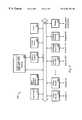
- FIG. 3illustrates a block schematic diagram of a multi-port bridge 100 according to the present invention.
- a high speed communication bus 102provides an interconnection for each of the functional blocks 104 - 124 of the multi-port bridge 100 .
- the communication buspreferably includes five command lines and thirty-two data lines, though it will be apparent that other bus configurations can be utilized.
- twenty-four 10 Mbps ports 104 - 108 and two 100 Mbps ports 110 - 112are each coupled to the communication bus 102 and can be coupled to a respective LAN segment, each LAN segment having one or more nodes.
- Each of the twenty-four 10 Mbps ports 104 - 108transmit and receive data packets at a rate of 10 Mbps, whereas, the two 100 Mbps ports 110 - 112 transmit and receive data packets at a rate of 100 Mbps. It will be apparent, however, that other numbers of ports, other port configurations and other performance characteristics can be utilized.
- a bus control module 114controls access to the communication bus 102 by collecting requests from the ports 104 - 112 and from the other modules. Based upon the requests, the bus control module 114 grants access to the communication bus 102 according to an appropriate priority, as explained herein.
- the bus control module 114also controls access to a memory device 200 by an external processor 400 (FIG. 7 ), as explained herein.
- An MPU port and mailbox module 116provides an interface between the multi-port bridge 100 and the external processor 400 for performing various functions, as is also explained herein. These functions include loading data into registers of the multi-port bridge 100 , reading data from registers of the multi-port bridge 100 and transferring data packets between the external processor 400 and the ports 104 - 112 of the multi-port bridge 100 .
- a memory control module 148provides an interface between the memory device 200 and the communication bus 102 and also provides an interface between the memory device 200 and a look-up control module 120 .
- the memory device 200includes mailboxes 202 for exchanging information between the external processor and the multi-port bridge 100 .
- the memory deviceincludes look-up tables 204 .
- the look-up tables 204include entries which indicate which port of the multi-port bridge 100 is associated with each node of the LAN and also include group addresses for multi-cast packets.
- the look-up tables 204are utilized for appropriately directing among the ports 104 - 112 data packets received by the multi-port bridge 100 .
- the look-up control module 120receives addresses of nodes and associated port identifications to be stored in the look-up table 204 from the communication bus 102 .
- the look-up control module 120also facilitates utilizing the look-up table 204 for directing packets among the ports 104 - 112 based upon the destination address of each packet.
- the memory device 200also includes packet buffers 206 for temporarily storing data packets that are being directed through the multi-port bridge.
- the memory device 200is preferably an SDRAM device, though other types of memory devices can be utilized, such as DRAM, SRAM, RAM or EDO.
- the memory control module 118refreshes the memory device 200 as required.
- An E-stat module 122collects data packet routing statistics and provides them to the external processor 400 for performing analysis and network management functions.
- a timing module 124provides timing signals to the ports 104 - 112 and to the other modules 114 - 122 of the multi-port bridge 100 .
- a primary clock signalcycles at 40 MHz.
- Other clock signalsat 10 MHz and 25 MHz, are derived from the primary clock signal.
- the modules 114 - 124are each implemented as a finite state machine, though the modules 114 - 124 can alternately be implemented as one or more processors or controllers operating according to stored software programs. Finite state machines are preferred, however, as they can generally perform the necessary operations faster, thus, resulting in a higher packet handling bandwidth for the multi-port bridge 100 .
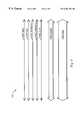
- FIG. 4illustrates a diagram of the signal lines included in the high speed communication bus 102 of FIG. 3 .
- the communication bus 102preferably includes thirty-two data lines 102 A, five control lines 102 B, a clock CLK line 102 C, a jam request JAM REQ line 102 D, a memory ready MEMRDY line 102 E, a request REQ line 102 F and an interrupt IRQ line 102 G, though it will be apparent that other bus configurations can be utilized.
- Table 1illustrates preferred commands and associated data appearing on the communication bus 102 during operation of the multi-port bridge 100 , as explained herein.
- port ID new packet trans- fer to memory11 source port ID & dest. port ID cont. packet transfer to memory (cut-through not possible) 12 # of transfer memory starting address write packet header to memory 13 reserved 14 signal line of port granted access bus-grant-for-IRQ
- Control Codes (commands) applied to the control lines 102 Bare given as hexadecimal values, while the associated data applied to the data lines 102 A and the function performed by each command are described. Because there are five control lines 102 B, there can be up to thirty-two different commands (between 00 H and 1F H). As shown in Table 1, however, fewer commands are preferred. Table 1 shows hexadecimal values for the preferred embodiment. It will be apparent, however, that other bit assigmnents and another set of commands can be implemented and still follow the teachings of the present invention.
- FIG. 5illustrates a block schematic diagram of one of the ports 104 - 112 of the multi-port bridge 100 of FIG. 3.
- a port controller 300including a bus interface 302 , a memory pointer finite state machine (FSM) 303 and registers 304 , provides control for the port and an interface between the port and the communication bus 102 .
- the port controller 300monitors the communication bus 102 for commands and data and also provides commands and data to the communication bus 102 at times when the port has control of the communication bus 102 .
- the registers 304contain data for configuring the port, initializing the port upon start-up, and for collecting status information for the port.
- An address latch included in the registers 304latches addresses from the communication bus 102 and provides them to the transceiver 308 .
- the registers 304also contain a counter for storing a current state of the finite state machine of the port and registers for storing parameters for use by the finite state machines of the port.
- Each portalso includes a memory pointer FIFO buffer 306 coupled between the communication bus 102 and the port controller 300 .
- the memory pointer buffer 306stores memory pointers (explained herein) for data packets being queued in the packet buffers 206 (FIG. 3) of the memory device 200 .
- the memory pointerseach have a predefined length.
- the memory pointer buffer 306preferably holds 128 memory pointers, though it will be apparent that another capacity for the memory pointer buffer 306 can be selected.
- the portalso includes a medium access control (MAC) transceiver 308 which accesses a LAN segment 310 for transmitting and receiving data packets to and from the LAN segment 310 .
- MACmedium access control
- Associated with and coupled to the transceiver 308are a receive finite state machine 312 , for controlling the transceiver 308 during packet reception, and a transmit finite state machine 314 , for controlling the transceiver 308 during packet transmission.
- Packets received from the network segment 310 by the transceiver 308are directed to the communication bus 102 through a receive FIFO buffer 316 , while packets to be transmitted over the LAN segment 310 are directed from the communication bus 102 to the transceiver 308 through a transmit FIFO buffer 318 .
- the receive buffer 316holds 128 bytes while the transmit buffer 318 holds 256 bytes, though other capacities can be selected.
- an IEEE 802.3 data packetcan include up to 1500 bytes of data in addition to the source address, the destination address and the frame check field.
- neither the receive buffer 316 , nor the transmit buffer 318is capable of storing a entire IEEE 802.3 data packet of the maximum size.
- the receive finite state machine 312 and the transmit finite state machine 314are each coupled to the bus control module 114 (FIG. 3) for initiating access to the communication bus 102 by the port.
- Access to the communication bus 102is obtained in the following manner.
- the bus control module 114monitors the interrupt IRQ line 102 G and the request REQ line 102 F. A port requiring access to the bus 102 raises the IRQ line 102 G or the request REQ line 102 F, depending upon the circumstances.
- the bus control module 114grants access to the bus 102 according to an appropriate priority. Preferably, an interrupt IRQ is granted access to the bus 102 according to a higher priority than a request REQ. Ports having a higher data rate have a higher priority than ports having a lower data rate. For example, the 100 Mbps ports 110 - 112 have a higher priority than the 10 Mbps ports 104 - 108 .
- the bus control module 114When the bus is available after receiving an interrupt IRQ, the bus control module 114 responds to the interrupt IRQ by placing a poll-interrupt command 05 H (Table 1) on the control lines 102 B of the bus 102 . While the poll-interrupt command 05 H is on the control lines 102 B, each port having a pending interrupt IRQ raises a corresponding one signal line of the data lines 102 A. For this purpose, each of the ports 104 - 112 and the MPU port and mailbox 116 are assigned a respective one signal line of the data lines 102 A. Accordingly, the bus control module 114 discovers which of the ports has a pending interrupt by monitoring the data lines 102 A while the poll-interrupt command 05 H is active.
- a poll-interrupt command 05 HTable 1
- each port having a pending interrupt IRQraises a corresponding one signal line of the data lines 102 A.
- the bus control module 114then grants access to the bus 102 in according to appropriate priority by placing a bus-grant-for-IRQ command 14 H (Table 1) on the control lines 102 B of the bus 102 and also raises the respective one signal line of the data lines 102 A that corresponds to the port being granted access to the bus 102 .
- a bus-grant-for-IRQ command 14 HTable 1
- the designated portUpon being granted access to the bus 102 , the designated port then has control of the bus 102 .
- the bus control module 114places a poll-request command 06 H (Table 1) on the control lines 102 B of the bus 102 . While the poll-request command 06 H is on the control lines 102 B, each port having a pending request REQ raises its corresponding one signal line of the data lines 102 A. The bus control module 114 discovers which of the ports has a pending request by monitoring the data lines 102 A while the poll-request command 06 H is active.
- the bus control module 114then grants access to the bus 102 according to an appropriate priority by placing a bus-grant-for-REQ command 04 H on the control lines 102 B of the bus 102 and also raises the one signal line of the data lines 102 A that corresponds to the port being granted access to the bus 102 .
- the designated portUpon being granted access to the bus 102 , the designated port then has control of the bus 102 .
- Packet flow through the multi-port bridge 100occurs in the following manner.
- a data packetsuch as an IEEE 802.3 data packet, originating from a node (source node) in a segment of the local area network is received by a corresponding one of the ports 104 - 112 (source port) of the multi-port bridge 100 (FIG. 3 ).
- the receive buffer 316 in the source portreceives the data packet as the packet is being received by the transceiver 308 in the source port from the network segment associated with the source port.
- the receive finite state machine 312requests a look-up cycle from the bus control module 114 (FIG.
- the bus control module 114monitors such requests, discovers the requesting port(s) via the poll-interrupt command 05 H and grants each request according to an appropriate priority via the bus-grant-for IRQ command 14 H, as explained above.
- the source portstores indicia of whether it was granted access to the bus 102 for performing a look-up cycle.
- the indiciais utilized by the port later to determine whether the packet is to be filtered.
- the indiciais obtained by storing the logic levels of the data lines 102 A during the bus-grant-for-IRQ command 14 H. As explained above, during the bus-grant-for-IRQ command 14 H, the signal line corresponding to the source port is raised.
- the source portUpon obtaining access to the bus, the source port places a look-up command 03 H (Table 1) on the control lines 102 B. During successive clock cycles while the look-up command 03 H is active, an identification of the source port, the destination node address from the packet and the source node address from the packet are transferred from the source port to the look-up control module 120 (FIG. 3) via the data lines 102 A.
- the source port identification, destination address and source addressare transferred over the communication bus 102 in segments that are each four bytes long as this corresponds to the width (32 bits) of the data lines 102 A of the communication bus 102 . Preferably, this transfer is completed in four clock cycles. It will be apparent, however, that the communication bus 102 can have a different number of data lines, in which case, a different number of bytes can be transferred at a time.
- the look-up control module 120Once the look-up control module 120 has received the source port identification, the destination address and the source address for the packet, the look-up control module 120 so notifies the memory control module 118 (FIG. 3 ). The memory control module 118 and lookup control module 120 then update the look-up tables 204 (FIG. 3) by ensuring that the source node address for the packet is stored in the look-up tables 204 in association with the source port identification for the packet. This ensures that the look-up tables 204 accurately reflect any changes that may have occurred in the network (this is referred to as a learning cycle). The information stored during the learning cycle is utilized for directing subsequent packets.
- the memory control module 118 and the look-up control module 120utilize the look-up tables 204 to determine which port (destination port) is associated with the destination address for the packet (look-up cycle). If the packet is a multi-cast packet (multiple destination ports) or a broadcast packet (all ports except the source port are destination ports), the look-up control module 120 determines which are the multiple destination ports for the packet.
- the look-up control module 120places a look-up ready command 08 H (Table 1) on the control lines 102 B of the bus 102 and, while the look-up ready command 08 H is active, the look-up control module 120 raises the respective signal lines of the data lines 102 A of all the ports 104 - 112 which are determined to be destination ports for the packet. One signal line each corresponds uniquely with one of the ports 104 - 112 .
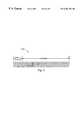
- FIG. 6illustrates logic levels for each of the thirty-two data lines 102 A, of the bus 102 during the look-up ready command 08 H.
- Each one of the twenty-six ports 104 - 112 and the external processor 400are assigned to a respective one of the signal lines b 0 -b 31 .
- the external processor 400is assigned to signal line b 26
- port # 1is assigned to signal line b 0
- port # 2is assigned to signal line b 1
- port # 3is assigned to signal line b 2
- so forth, with port # 26 assigned to signal line b 25is assigned to signal line b 25 .
- signal lines b 27 -b 31are not included in the bit-map. Rather, the signal lines b 27 -b 3 , identify the source port.
- a multi-port bridgecould include more or fewer ports, in which case, the bit assignments would be different.
- the bit-map of the destination portswill include logic one's for signal lines b 0 , b 6 , b 18 , and b 23 ; signal lines b 27 -b 31 identify port # 9 as the source port; and the remaining signal lines b 1-b 5 , b 7 , b 9 -b 10 , b 12 -b 17 , b 19 -b 22 and b 24 -b 26 are logic zeros.
- Each portmonitors the communication bus 102 for the look-up ready command 08 H appearing on the control lines 102 B and the associated bit-map of the destination ports appearing on the data lines 102 A.
- the bit-mapallows each destination port for the packet to be simultaneously notified of its status as a destination port. If the source port for the packet is also designated as the only destination port for the packet during the look-up ready command 08 H, this indicates that the destination node for the packet is in the same network segment as the source node (intra-segment communication). As such, the source port should not retransmit the packet because the destination node would have already received the packet at the same time that the source port received the packet. When this occurs and the packet has a single destination, the packet is filtered. To filter the packet, the source port preferably takes no further action relative to the packet.
- the source portdetermines whether any other port is designated as a destination for the packet. This is accomplished, for example, by the source port determining whether a signal line assigned to any port other than the source port is raised. If the source port is the only port that is designated as a destination by the bit-map (uni-cast and intra-segment packet), the source port immediately filters the incoming packet. To filter the packet, the source port preferably takes no further action relative to the packet. Thus, the packet is discarded when a next packet overwrites the filtered packet in the receive FIFO 316 . If, however, any other port is also designated as a destination for the packet (multi-cast or broadcast packet), the source port continues receiving the packet so that it can be forwarded to such other port.
- any destination port having its signal line raised during the look-up ready command 08 Hhas a memory pointer buffer 306 that is full or nearly full, such destination port raises the JAM REQ line 102 D (FIG. 4) while the look-up ready command 08 H is still active.
- the source portmonitors the JAM REQ line 102 D for such a jam request.
- the source portdiscards the incoming packet and also sends a jam signal over its associated segment. The jam signal will cause the node (source node) which is the source of the packet to discontinue sending the packet and attempt to resend the packet after a waiting period.
- the source port for the packetplaces a bus-release command 0 F H (Table 1) on the control lines 102 B of the data bus 102 . This releases control of the bus 102 by indicating to the bus control module 114 that the bus is available.
- the bus control module 114then responds to any pending interrupts or requests for access to the bus 102 by granting access to the bus according to an appropriate priority.
- the bus 102can be utilized for other purposes.
- the packetcontinues being received by the source port.
- the source portrequests access to the bus again, this time by raising the REQ line 102 F.
- the bus control module 114grants access to the source port according to an appropriate priority by placing a bus-grant-for-REQ command 04 H on the control lines 102 B and raises the signal line corresponding to the source port.
- the packet buffers 206include a space allocated to each port for storing packets received by the port.
- Each port controller 300keeps track of the space allocated to the port and determines a location in the packet buffers 206 for each packet received by the port.
- the packetsare written into the allocated space in a circular fashion; each new packet overwrites portions of the oldest packet in the allocated space.
- the source portinitiates a series of memory write cycles for loading the packet from the receive buffer 316 of the source port into the allocated space in the packet buffers 206 by first placing a new packet transfer command 10 H (Table 1) on the control lines 102 B and by placing the source port identification and the bit-map for the destination ports on the data lines 102 A (raising the signal lines corresponding to each destination port for the packet). If any destination port having its signal line raised during new packet transfer command 10 H is not currently busy transmitting or receiving another packet, such destination port configures itself to receive the packet directly from the source port (cut-through). Destination ports that are currently busy ignore the packet for now and retrieve the packet from the packet buffers 206 later, when they are no longer busy.
- the source portplaces a memory write command 02 H (Table 1) on the control lines 102 B of the bus 102 .
- the source portplaces on the data lines 102 A one byte of information which indicates the number of bus cycles which will be required to complete the entire transfer. The number of bus cycles depends upon how much of the packet was received in the source port while the source port awaited access to the bus 102 .
- the source portplaces on the data lines 102 A three bytes of information which indicates a starting address within the packet buffers 206 for the memory write cycles.
- the memory control module 118receives this information for performing the memory write operation.
- each destination port configured for cut-throughreceives the packet directly from the bus 102 into its transmit FIFO 318 and immediately begins transmitting the packet to the appropriate destination node on its associated network segment under control of its transmit finite state machine 314 .
- the destination node for the packetthen begins to receive the packet from the network segment.
- the source portplaces the packet on the data lines 102 A in four byte portions (corresponding to the width of the data lines 102 A), one portion for each clock cycle, until the memory write operation is completed. Simultaneously, destination ports configured for cut-though continue to receive the packet and continue to transmit the packet to their associated network segment. When the memory write operation is completed, the source port releases the bus via the bus-release command OF H.
- the source portagain requests access to the bus 102 by raising the REQ line 102 F and initiates a next memory write operation for loading the packet into the packet buffers 206 .
- the source portfirst places a continuation packet transfer command 11 H (Table 1) on the control lines 102 B and, while the continuation packet command 10 H is active, the source port places the bit-map for the destination ports on the data lines 102 A (raises the signal lines corresponding to each destination port for the packet). Only those destination ports having their signal lines raised and that had already been receiving the packet directly from the source port (those destination ports configured for cut-through) will continue to receive the next installment of the packet directly from the source port. Other destination ports will continue to ignore the packet.
- the source portplaces the memory write command 02 H on the data lines 102 A and places one byte of information indicating the number of bus cycles required and three bytes indicating the starting address for this write operation. Then, the port releases the bus via the bus-release command 0 F H. This process repeats, including requesting access to the bus and placing the continuation packet transfer command 10 H on the bus 102 , for each successive 64 byte portion of the packet until the entire packet is loaded into the packet buffers 206 . Because writing of the packet in the packet buffers 206 preferably occurs as the remainder of the packet is still being received into the receive buffer 316 of the source port, the receive buffer 316 for each port need not be capable of storing an entire data packet.
- the packetis preferably loaded into the packet buffers 206 a predetermined offset from an assigned starting address. This provides a location for storing a header for the packet once the packet has been completely loaded into the packet buffers 206 .
- the headerincludes an identification number assigned to the packet, an indication of the destination ports for the packet, the receive status for the packet, the length of the packet, the source node address for the packet and the destination node address for the packet.
- the receive statusindicates whether or not the entire packet has been successfully received and is loaded into the packet buffers 206 .
- the headeris eight bytes long, though it will be apparent that another length can be selected for the header.
- the source portAfter the last data is transferred such that the entire packet has been stored in the packer buffers 206 , the source port retains control of the bus 102 and stores the header for the packet in the packet buffers 206 . This is accomplished by the source port placing a packet header command 12 H on the control lines 102 B. During a first clock cycle while the packet header command 12 H is active, the source port places one byte of information indicating the number bus clock cycles required to write the entire header into the memory buffers 206 and places three bytes of information indicating the assigned starting address for the packet.
- the headeris written into the packet buffers beginning at the assigned starting address.
- Each portmonitors the communication bus 102 for the packet header command 12 H. While the packet header command 12 H is active, each port receives the packet header information. Each port which is identified as a destination port in the packet header checks the receive status for the packet and, if the packet was successfully received and stored in the packet buffers 306 , each destination port stores a memory pointer, including at least the assigned starting address for the packet in its memory pointer buffer 306 . Preferably, the destination port also stores the identification number assigned to the packet in the memory pointer buffer 306 along with the assigned starting address for the packet. If the receive status indicates an error, however, the starting address in the packet buffers is not stored and no further action is taken by the destination ports relative the packet. Finally, the source port releases control of the bus 102 via the bus release command 0 F H. This completes the actions taken by the source port relative the packet.
- the source port for the packetdoes not store the memory pointer for the packet during the packet header command 12 H when the source port places the packet header information on the communication bus 102 . Therefore, when the bit-map for a multi-cast packet includes the source port as a destination port, such a packet will not be retransmitted by the source port.
- Each portmonitors its memory pointer buffer 306 and initiates retrieval of packets from the packet buffers 206 .
- the destination portrequests access to the bus by raising the request line REQ.
- the bus control modulegrants access to the bus 102 , via the bus-grant-for-REQ command 04 H, the destination port first retrieves the header for the packet from the packet buffers 206 .
- the destination portinitiates a read operation by placing a memory read command 01 H (Table 1) on the control lines 102 B of the bus 102 .
- the destination portplaces on the data lines 102 A of the bus 102 one byte of information indicating the number of bus clock cycles for the read operation (e.g. the number of transfers required to retrieved the header) and three bytes of information indicating the assigned starting address for the packet.
- the destination portchecks the packet identification number that is included in the header retrieved. If the packet identification number retrieved from the packet buffers 206 does not match the packet identification number stored in the memory pointer buffer 306 , this indicates that the packet became corrupted in the packet buffers 306 after it was stored. For example, if a portion of the packet was overwritten by a later packet, the identification number will also be overwritten, such that it does not match the identification number stored in the memory pointer buffer 306 of the destination port. In addition, the destination port obtains the length of the packet so that it can determine the appropriate number of memory read cycles that will be required to transfer the entire packet.
- the destination portWhile the destination port is retrieving the packet from the packet buffers 206 , the destination port simultaneously transmits the packet to its associated segment under control of the transmit finite state machine 314 . For this reason, the transmit FIFO 318 in each port need not be capable of storing more than a single packet of the maximum length.
- the packetis retrieved from the packet buffers 206 in multiple installments until the entire packet has be retrieved from the packet buffers 206 . An installment is initiated each time the transmit FIFO 318 is nearly empty.
- Each installmentis retrieved by the destination port obtaining access to the bus 102 ; placing a memory read command 01 H on the bus 102 while specifying a number of memory transfers required for the installment; and releasing the bus via the bus release command OF H after performing the specified number of transfers.
- the transmit FIFO 318preferably need not be capable of storing a packet of maximum length. Because the bus 102 is released between installments, other ports can access the bus for other purposes simultaneously with the destination port transmitting the packet to its associated network segment.
- the packetwill need to be retransmitted by the destination port.
- the cut-through or transmit operationmay have been unsuccessful if a data collision occurred during transmission of the packet over the segment associated with the destination port.
- the packetis retrieved from the packet buffers 206 as described above and retransmitted by the destination port.
- the destination portWhile the destination port is receiving the packet into its transmit buffer 318 from the packet buffers 206 , the destination port begins transmitting the packet to the LAN segment associated with the destination port. The packet is then received from the network segment by the destination node for the packet.
- the destination portreceives the packet into its transmit buffer 318 directly from the communication bus 102 simultaneously with the write cycles for loading of the packet into the packet buffers 206 .
- the packetis received into the transmit buffer 318 of the destination port for immediate transmission to the LAN segment associated with the destination port.
- the packetis a broadcast or multi-cast packet, one or more of the destination ports can receive the packet directly from the source port, while one or more other destination ports for the packet can retrieve the packet from the packet buffers 206 once those destination ports are no longer busy.
- the memory pointers stored in the memory pointer buffer 306 of each portare preferably of a uniform size. Therefore, the exact number of memory pointers that can be accommodated by a memory pointer buffer 306 of a port can be determined from the amount of space available in the memory pointer buffer 306 of the port. Accordingly, unlike prior arrangements, extra space does need to be provided in the port to accommodate a data packet having an unknown length. According to the present invention, however, the jam request (raising the JAM REQ line) is preferably generated by a destination port for a packet when the memory pointer buffer 306 in the port is nearly full, but has space available to store several memory pointers (e.g. ten).
- the destination portan ability to store memory pointers for packets which are in the process of being loaded into the packet buffers 206 .
- the memory pointer buffer 306 in each portis preferably sized relative to the associated packet buffers 206 in the memory device 200 such that there is only a small possibility that the packet buffers 206 will become full before any memory pointer buffer 306 becomes full.
- the packet buffers 206can preferably accommodate 128 data packets of the maximum size for each port. In practice, the packet buffers 206 can be somewhat smaller because not every packet is expected to have the maximum size.
- such packetsare transferred to the packet buffers 206 . These packets are not retrieved from the packet buffers 206 , however, because the source port does not store a memory pointer for such packets. This embodiment is less preferred, however, because bandwidth of the bus 102 is utilized to store such packets unnecessarily.
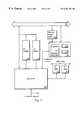
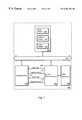
- FIG. 7illustrates a block schematic diagram of the multi-port bridge 100 , the memory device 200 and an external processor 400 according to the present invention.
- a memory bus 402interconnects the multi-port bridge 100 and the external processor 400 to the memory device 200 .
- access to the memory device 200 by the multi-port bridge 100 and the external processor 400is implemented by a multiplexer included as part of the memory bus 402 and which multiplexor is controlled by the multi-port bridge 100 .
- the multi-port bridge 100including the communication bus 102 (FIG. 3 ), is preferably implemented as an integrated circuit mounted to a printed circuit board 404 .
- the memory device 200 and the external processor 400are also mounted to the printed circuit board 404 .
- the bridging and filtering functions of the multi-port bridgeare performed primarily by the multi-port bridge 100 and the buffer memory 200 .
- the multi-port bridge 100is preferably implemented as a number of finite state machines interconnected via the communication bus 102 , the multi-port bridge 100 provides a high bandwidth capacity for directing data packets through the multi-port bridge.
- the external processor 400is provided to perform tasks in support of the functioning of the multi-port bridge 100 .
- These functionsinclude: providing a communication port for enabling the nodes of the LAN to communicate with nodes of a dissimilar LAN or a WAN and for enabling the nodes of the LAN to communicate with a file server for the LAN; providing parameters for initializing registers of the switch engine via a register load command 0 C H (Table 1); collecting data from the LAN for performing network management functions via a register read command 0 D H (Table 1); and providing services to the multi-port bridge 100 .
- the mailbox interfaceaccording to the present invention allows the external processor 400 to provide these functions without the need to dedicate a large number of pins of the integrated circuit package to such an interface.
- the external processor 400is implemented as a reduced instruction set computer (RISC) to improve speed performance.
- the external processor 400can have its own dedicated resources 406 , such as memory for storing operating software for the external processor 400 and for use by the external processor 400 as a scratch pad.
- the resources 406can include a mass storage device for storing application programs and data files which is accessible by the external processor 400 .
- the resources 406can include a communication device, such as a telephone modem, an integrated services digital network (ISDN) interface, a T 1 media interface or a T 3 media interface which is accessible by the external processor 400 .
- ISDNintegrated services digital network
- multiple external processors 400can be coupled to the memory bus 402 . In such case, additional resources can be provided for such multiple external processors, such as one or more mass storage devices and/or one or more communication devices.
- the destination address and source address for the packetare placed in the memory 200 by the external processor 400 .
- the destination and source addressesare obtained from the memory 200 .
- the memory control module 118places a look-up gated with MEMRDY command 09 H on the control lines 102 B of the bus 102 , retrieves the destination address and source address from the memory 200 , and places them on the data lines 102 A.
- transfer of the destination and source addressesis performed over several bus clock cycles.
- the look-up control module 120responds to the look-up gated with MEMRDY command 09 H by waiting until the MEMRDY line 102 E is raised to a logic high voltage level before beginning to receive the destination and source addresses for performing a look-up cycle. This ensures that the destination and source addresses appearing on the data lines 102 A are valid before the look-up control module 120 receives them.
- the memory pointers stored in the memory pointer buffer 306 of each portare preferably of a uniform size. Therefore, the exact number of memory pointers that can be accommodated by a memory pointer buffer 306 of a port can be determined from the amount of space available in the memory pointer buffer 306 of the port. Accordingly, unlike prior arrangements, extra space does need to be provided in the port to accommodate a data packet having an unknown length. According to the present invention, however, the jam request (raising the JAM REQ line) is preferably generated by a destination port for a packet when the memory pointer buffer 306 in the port is nearly fill, but has space available to store several memory pointers (e.g. ten).
- the destination portan ability to store memory pointers for packets which are in the process of being loaded into the packet buffers 206 .
- the memory pointer buffer 306 in each portis preferably sized relative to the associated packet buffers 206 in the memory device 200 such that there is only a small possibility that the packet buffers 206 will become fill before any memory pointer buffer 306 becomes full.
- the packet buffers 206can preferably accommodate 128 data packets of the maximum size for each port. In practice, the packet buffers 206 can be somewhat smaller because not every packet is expected to have the maximum size.
Landscapes
- Engineering & Computer Science (AREA)
- Computer Networks & Wireless Communication (AREA)
- Signal Processing (AREA)
- Small-Scale Networks (AREA)
- Data Exchanges In Wide-Area Networks (AREA)
Abstract
Description
This application claims the benefit of U.S. Provisional Application No. 60/059,171, filed Sep. 17, 1997, entitled, “MULTI-PORT BRIDGE FOR A LOCAL AREA NETWORK.”
The invention relates to a multi-port bridge for a local area network. More particularly, the invention relates to selection technique for filtering packets in a multi-port bridge for a local area network, thus, preventing a source port for a packet from becoming a destination port for the packet
Nodes of a local area network (LAN) are typically interconnected by a shared transmission medium. The amount of data traffic that the shared transmission medium can accommodate, however, is limited. For example, only one node at a time can successfully transmit data to another node over the shared transmission medium. If two or more nodes simultaneously attempt to transmit data, a data collision occurs, which tends to corrupt the data being transmitted. Thus, nodes that share a transmission medium are considered to be in a same collision domain.
A multi-port bridge allows simultaneous communication between nodes of the LAN by segmenting the LAN into multiple collision domains (also referred to as network segments), each segment having a corresponding transmission medium. FIG. 1 illustrates a conventional local area network (LAN) including amulti-port bridge 20. Themulti-port bridge 20 in this example has eight ports A-H, though the number of ports can vary. Each port A-H is connected to a segment21-28 of the LAN. Each segment21-28 typically includes one or more nodes29-44, such as a workstation, a personal computer, a data terminal, a file server, a printer, a scanner, a modem, a facsimile or other conventional digital device. Each of the nodes29-44 has an associated node address which uniquely identifies the node. The nodes29-44 are configured to send data, one to another, in the form of discrete data packets.
When the LAN operates according to Ethernet standards, such as the Institute of Electrical and Electronics Engineers (IEEE) 802.3 standard, data is communicated in the form of discrete packets. FIG. 2 illustrates a conventional IEEE 802.3data packet 50. Thedata packet 50 includes an eight byte long pre-amble51 which is generally utilized for synchronizing a receiver to thedata packet 50. The pre-amble51 includes seven bytes of preamble and one byte of start-of-frame. Following thepreamble 51, thedata packet 50 includes a six bytelong destination address 52, which is the node address of a node which is an intended recipient for thedata packet 50. Next, thedata packet 50 includes a six bytelong source address 53, which is the node address of a node which originated thedata packet 50. Following thesource address 53 is a two-byte length field 54. Following thelength field 54 is adata field 55. Thedata field 55 can be up to 1500 bytes long. Finally, thedata packet 50 includes a four-byteframe check field 55 which allows a recipient of thedata packet 50 to determine whether an error has occurred during transmission of thedata packet 50.
When a node (source node) sends data to another node (destination node) located on its same segment of the LAN (intra-segment communication), the data is communicated directly between the nodes without intervention by themulti-port bridge 20 and is known as an intrasegment packet. Therefore, when themulti-port bridge 20 receives an intra-segment packet, themulti-port bridge 20 does not bridge the packet (the packet is filtered). When a node (source node) sends a data packet to another node (destination node) located on a different segment (inter-segment communication), themulti-port bridge 20 appropriately forwards the data packet to the destination node.
The multi-port bridge20 (FIG. 1) receives each data packet50 (FIG. 2) and must determine whether thedata packet 50 is for intra-segment communication or inter-segment communication, and if thedata packet 50 is for inter-segment communication, themulti-port bridge 20 must determine which port (destination port) thedata packet 50 is to be directed based upon thedestination address 52 contained in thedata packet 50. This can be accomplished utilizing a look-up table. Conventionally, the look-up table is constructed by executing a learning phase for each receiveddata packet 50 to store data in the table and by executing a look-up phase for each receiveddata packet 50 to look-up data stored during the learning phase for a prior packet.
Once the look-up is performed, however, the packets need to be appropriately filtered. Therefore, what is needed is improved technique for filtering packets in a multi-port bridge for a local area network thereby preventing a source port from becoming a destination port for a packet.
The invention is a method of and apparatus for filtering packets in a multi-port bridge for a local area network thereby preventing a source port from becoming a destination port for a packet. The multi-port bridge includes a switch engine, a memory and a plurality of ports, all of which are interconnected by a high speed communication bus. The switch engine includes a bus controller, a memory controller and a look-up controller, each preferably being a finite state machine. The memory controller provides an interface between the memory and the communication bus. The bus controller controls access to the communication bus by collecting requests and granting the requests according to an appropriate priority. The look-up controller determines to which port (uni-cast packet) or ports (multi-cast packet) each packet is to be directed based upon the destination node address for the packet.
The high speed communication bus includes single bit signal lines dedicated to communicating control commands, signal lines dedicated to communicating data, and several signal lines having special purposes. For example, two signal lines are preferably dedicated to initiating access to the bus, each having a respective priority, another signal line is dedicated to jam requests (for applying backpressure), still another signal line is dedicated to the memory controller and yet another signal line is dedicated to providing a bus clock signal. The memory includes look-up tables utilized for appropriately directing data packets among the ports, packet buffers utilized for temporarily storing packets and mailboxes for providing an interface between the switch engine and an external processor.
Each port includes a port controller, a MAC transceiver, a receive finite state machine, a transmit finite state machine, a receive buffer, a transmit buffer and a memory pointer buffer. Packets received from a LAN segment by the transceiver are directed to the communication bus through the receive buffer, while packets to be transmitted over the LAN segment are directed to the transceiver through the transmit buffer. The memory pointer buffer stores memory pointers in a queue for transmission by the port, one memory pointer for each data packet being stored in the packet buffers of the memory.
A data packet originating from a node (source node) in a segment of the LAN is received by the receive buffer of a corresponding one of the ports (source port) of the multi-port bridge. As the packet is still being received, the source port requests a look-up cycle. The source port stores indicia of whether it requested the look-up cycle. During the look-up cycle, the look-up tables are utilized to determine which one or ones of the ports are the appropriate destination ports for the packet, based upon the destination address.
Each of the plurality of ports is assigned a respective one of the signal lines of the communication bus dedicated to communicating data. A product of utilizing the look-up tables is referred to as a bit-map of the destination ports for the packet. The bit-map includes a logic level for each signal line assigned to a port wherein the logic level is indicative of whether the corresponding port is a destination port for the packet.
The bit-map is placed on the data portion of the communication bus. The communication bus is monitored by each port. The source port compares the bit-map to the indicia of whether it requested the look-up cycle. If the source port is designated as a destination port in the bit-map, this indicates that the source and destination nodes are on the same segment of the LAN (intra-segment communication). From the bit map, the source port also determines whether any other port is designated as a destination for the packet. If no other port is designated as a destination, the source port discards the incoming packet, thus filtering the packet. If, however, any other port is also designated as a destination for the packet, the source port continues receiving the packet.
If a port, other than the source port, identified as a destination port for the packet is not currently busy transmitting or receiving another packet, the port configures itself to receive the packet directly from the source port (cut-through). However, if the memory pointer buffer of a destination port is nearly full, the port controller of such destination port applies a jam request signal to the communication bus. The source port receives the jam request and, in response, discards the incoming packet and also sends a jam signal over its associated segment. The jam signal causes the node (source node) which is the source of the packet to discontinue sending the packet and attempt to resend the packet after a waiting period.
Assuming the packet is not discarded, the packet is loaded from the receive buffer of the source port into the packet buffers of the memory starting at the memory address identified in the memory pointer for the packet. Writing of the packet into the packet buffers preferably occurs as the remainder of the packet is still being received into the receive buffer of the source port. In addition, any destination port configured for cut-through receives the packet into its transmit buffer directly from the communication bus simultaneously with the writing of the packet into the packet buffers.
Once the entire packet has been loaded into the packet buffers, the memory pointer is placed on the data lines of the communication bus. Each destination port other than the source port stores the memory pointer in its memory pointer buffer. Thus, the packet is queued for transmission by each destination port. When each destination port is no longer busy, it retrieves the packet from the packet buffers for transmission to its corresponding network segment. busy, it retrieves the packet from the packet buffers for transmission to its corresponding network segment.
FIG. 1 illustrates a conventional local area network (LAN) including a multi-port bridge.
FIG. 2 illustrates a conventional IEEE 802.3 data packet.
FIG. 3 illustrates a block schematic diagram of a switch engine for a multi-port bridge according to the present invention.
FIG. 4 illustrates a diagram of signal lines included in a high speed communication bus according to the present invention.
FIG. 5 illustrates a block schematic diagram of a port of the switch engine according to the present invention.
FIG. 6 illustrates a bit-map of the destination ports appearing on the high speed communication bus during a look-up ready command according to the present invention.
FIG. 7 illustrates a block schematic diagram of the switch engine, a memory device and an external processor according to the present invention.
In the preferred embodiment, the present invention is utilized for appropriately directing packets through a multi-port bridge for an Ethernet LAN. It will be apparent, however, that other devices in an Ethernet LAN, such as a switch or a router, or devices in a network operating according to another networking standard, can utilize the advantages of the present invention.
The following documents are hereby incorporated by reference: U.S. Pat. No. 5,884,040, issued Mar. 16, 1999, to Chung and entitled, “PER-PACKET JAMMING IN A MULTI-PORT BRIDGE FOR A LOCAL AREA NETWORK”; U.S. Pat. No. 5,940,597, issued Aug. 17, 1999, to Chung, and entitled, “METHOD AND APPARATUS FOR PERIODICALLY UPDATING ENTRIES IN A CONTENT ADDRESSABLE MEMORY”;
U.S. patent application Ser. No. 09/025,355, filed Feb. 18, 1998, and entitled, “MEMORY CONTROLLER IN A MULTI-PORT BRIDGE FOR A LOCAL AREA NETWORK”; and U.S. patent application Ser. No. 09/025/356, filed Feb. 18, 1998, and entitled, “HIGH SPEED BUS STRUCTURE IN A MULTI-PORT BRIDGE FOR A LOCAL AREA NETWORK.”
FIG. 3 illustrates a block schematic diagram of amulti-port bridge 100 according to the present invention. A highspeed communication bus 102 provides an interconnection for each of the functional blocks104-124 of themulti-port bridge 100. The communication bus preferably includes five command lines and thirty-two data lines, though it will be apparent that other bus configurations can be utilized. According to the preferred embodiment, twenty-four 10 Mbps ports104-108 and two 100 Mbps ports110-112 are each coupled to thecommunication bus 102 and can be coupled to a respective LAN segment, each LAN segment having one or more nodes. Each of the twenty-four 10 Mbps ports104-108 transmit and receive data packets at a rate of 10 Mbps, whereas, the two 100 Mbps ports110-112 transmit and receive data packets at a rate of 100 Mbps. It will be apparent, however, that other numbers of ports, other port configurations and other performance characteristics can be utilized.
A bus control module114 controls access to thecommunication bus 102 by collecting requests from the ports104-112 and from the other modules. Based upon the requests, the bus control module114 grants access to thecommunication bus 102 according to an appropriate priority, as explained herein. The bus control module114 also controls access to amemory device 200 by an external processor400 (FIG.7), as explained herein. An MPU port andmailbox module 116 provides an interface between themulti-port bridge 100 and theexternal processor 400 for performing various functions, as is also explained herein. These functions include loading data into registers of themulti-port bridge 100, reading data from registers of themulti-port bridge 100 and transferring data packets between theexternal processor 400 and the ports104-112 of themulti-port bridge 100.
A memory control module148 provides an interface between thememory device 200 and thecommunication bus 102 and also provides an interface between thememory device 200 and a look-upcontrol module 120. Thememory device 200 includesmailboxes 202 for exchanging information between the external processor and themulti-port bridge 100. In addition, the memory device includes look-up tables204. The look-up tables204 include entries which indicate which port of themulti-port bridge 100 is associated with each node of the LAN and also include group addresses for multi-cast packets. The look-up tables204 are utilized for appropriately directing among the ports104-112 data packets received by themulti-port bridge 100.
The look-upcontrol module 120 receives addresses of nodes and associated port identifications to be stored in the look-up table204 from thecommunication bus 102. The look-upcontrol module 120 also facilitates utilizing the look-up table204 for directing packets among the ports104-112 based upon the destination address of each packet. Thememory device 200 also includespacket buffers 206 for temporarily storing data packets that are being directed through the multi-port bridge. Thememory device 200 is preferably an SDRAM device, though other types of memory devices can be utilized, such as DRAM, SRAM, RAM or EDO. In the case of dynamic memory, thememory control module 118 refreshes thememory device 200 as required.
AnE-stat module 122 collects data packet routing statistics and provides them to theexternal processor 400 for performing analysis and network management functions. Atiming module 124 provides timing signals to the ports104-112 and to the other modules114-122 of themulti-port bridge 100. Preferably, a primary clock signal cycles at 40 MHz. Other clock signals, at 10 MHz and 25 MHz, are derived from the primary clock signal.
Preferably, the modules114-124 are each implemented as a finite state machine, though the modules114-124 can alternately be implemented as one or more processors or controllers operating according to stored software programs. Finite state machines are preferred, however, as they can generally perform the necessary operations faster, thus, resulting in a higher packet handling bandwidth for themulti-port bridge 100.
FIG. 4 illustrates a diagram of the signal lines included in the highspeed communication bus 102 of FIG.3. Thecommunication bus 102 preferably includes thirty-twodata lines 102A, fivecontrol lines 102B, aclock CLK line 102C, a jam request JAM REQ line102D, a memoryready MEMRDY line 102E, arequest REQ line 102F and an interruptIRQ line 102G, though it will be apparent that other bus configurations can be utilized. Table 1 illustrates preferred commands and associated data appearing on thecommunication bus 102 during operation of themulti-port bridge 100, as explained herein.
| TABLE 1 | |||
| Control | Data | ||
| Code | 31-24 | 23-0 | Description |
| 00 Hex | transfer in | ||
| progress/no action | |||
| 01 | # of transfer | starting memory address | memory read |
| 02 | # of transfer | starting memory address | memory write |
| 03 | source port ID & dest and source addresses | look-up |
| 04 | signal line of port granted access | bus-grant- |
| for-REQ | ||
| 05 | signal lines of all interrupting ports | poll-interrupt |
| 06 | signal lines of all requesting ports | poll-request |
| 07 | reserved | |
| 08 | source port ID & bit-map of all dest ports | look-up ready |
| 09 | source port ID & dest and source addresses | look-up (gated |
| with MEMRDY) | ||
| 0A | reserved | |
| 0B | reserved | |
| 0C | register data | register load |
| 0D | register data | register read |
| 0E | reserved | |
| 0F | last transfer (as previously defined) | bus-release |
| 10 | soure & port ID & dest. port ID | new packet trans- |
| fer to memory | ||
| (cut-through | ||
| possible) | ||
| 11 | source port ID & dest. port ID | cont. packet |
| transfer | ||
| to memory | ||
| (cut-through | ||
| not possible) |
| 12 | # of transfer | memory starting address | write packet |
| header to memory |
| 13 | reserved | |
| 14 | signal line of port granted access | bus-grant-for-IRQ |
Referring to Table 1, the Control Codes (commands) applied to thecontrol lines 102B are given as hexadecimal values, while the associated data applied to thedata lines 102A and the function performed by each command are described. Because there are fivecontrol lines 102B, there can be up to thirty-two different commands (between 00 H and 1F H). As shown in Table 1, however, fewer commands are preferred. Table 1 shows hexadecimal values for the preferred embodiment. It will be apparent, however, that other bit assigmnents and another set of commands can be implemented and still follow the teachings of the present invention.
FIG. 5 illustrates a block schematic diagram of one of the ports104-112 of themulti-port bridge 100 of FIG. 3. Aport controller 300, including abus interface 302, a memory pointer finite state machine (FSM)303 andregisters 304, provides control for the port and an interface between the port and thecommunication bus 102. Theport controller 300 monitors thecommunication bus 102 for commands and data and also provides commands and data to thecommunication bus 102 at times when the port has control of thecommunication bus 102. Theregisters 304 contain data for configuring the port, initializing the port upon start-up, and for collecting status information for the port. An address latch included in theregisters 304 latches addresses from thecommunication bus 102 and provides them to thetransceiver 308. Theregisters 304 also contain a counter for storing a current state of the finite state machine of the port and registers for storing parameters for use by the finite state machines of the port.
Each port also includes a memorypointer FIFO buffer 306 coupled between thecommunication bus 102 and theport controller 300. Thememory pointer buffer 306 stores memory pointers (explained herein) for data packets being queued in the packet buffers206 (FIG. 3) of thememory device 200. Preferably, the memory pointers each have a predefined length. In addition, thememory pointer buffer 306 preferably holds128 memory pointers, though it will be apparent that another capacity for thememory pointer buffer 306 can be selected.
The port also includes a medium access control (MAC)transceiver 308 which accesses aLAN segment 310 for transmitting and receiving data packets to and from theLAN segment 310. Associated with and coupled to thetransceiver 308 are a receivefinite state machine 312, for controlling thetransceiver 308 during packet reception, and a transmitfinite state machine 314, for controlling thetransceiver 308 during packet transmission.
Packets received from thenetwork segment 310 by thetransceiver 308 are directed to thecommunication bus 102 through a receiveFIFO buffer 316, while packets to be transmitted over theLAN segment 310 are directed from thecommunication bus 102 to thetransceiver 308 through a transmitFIFO buffer 318. Preferably, the receivebuffer 316 holds 128 bytes while the transmitbuffer 318 holds 256 bytes, though other capacities can be selected. Note that an IEEE 802.3 data packet can include up to 1500 bytes of data in addition to the source address, the destination address and the frame check field. Thus, in the preferred embodiment, neither the receivebuffer 316, nor the transmitbuffer 318 is capable of storing a entire IEEE 802.3 data packet of the maximum size. The receivefinite state machine 312 and the transmitfinite state machine 314 are each coupled to the bus control module114 (FIG. 3) for initiating access to thecommunication bus 102 by the port.
Access to thecommunication bus 102 is obtained in the following manner. The bus control module114 monitors the interruptIRQ line 102G and the request REQline 102F. A port requiring access to thebus 102 raises theIRQ line 102G or the request REQline 102F, depending upon the circumstances. The bus control module114 grants access to thebus 102 according to an appropriate priority. Preferably, an interrupt IRQ is granted access to thebus 102 according to a higher priority than a request REQ. Ports having a higher data rate have a higher priority than ports having a lower data rate. For example, the 100 Mbps ports110-112 have a higher priority than the 10 Mbps ports104-108. Further, assuming equal data rates, a port serviced more recently has a lower priority than a port serviced less recently. Copending application entitled, “Dual Priority Chain for Data Communication Ports in a Multi-Port Bridge for a Local Area Network,” filed on the same day as the present application, describes a technique for prioritizing the interrupts (IRQ) and requests (REQ) and is hereby incorporated by reference.
When the bus is available after receiving an interrupt IRQ, the bus control module114 responds to the interrupt IRQ by placing a poll-interrupt command05 H (Table 1) on thecontrol lines 102B of thebus 102. While the poll-interrupt command05 H is on thecontrol lines 102B, each port having a pending interrupt IRQ raises a corresponding one signal line of the data lines102A. For this purpose, each of the ports104-112 and the MPU port andmailbox 116 are assigned a respective one signal line of the data lines102A. Accordingly, the bus control module114 discovers which of the ports has a pending interrupt by monitoring thedata lines 102A while the poll-interrupt command05 H is active. The bus control module114 then grants access to thebus 102 in according to appropriate priority by placing a bus-grant-for-IRQ command14 H (Table 1) on thecontrol lines 102B of thebus 102 and also raises the respective one signal line of thedata lines 102A that corresponds to the port being granted access to thebus 102. Upon being granted access to thebus 102, the designated port then has control of thebus 102.
Similarly, when thebus 102 is available after receiving a request REQ, the bus control module114 places a poll-request command06 H (Table 1) on thecontrol lines 102B of thebus 102. While the poll-request command06 H is on thecontrol lines 102B, each port having a pending request REQ raises its corresponding one signal line of the data lines102A. The bus control module114 discovers which of the ports has a pending request by monitoring thedata lines 102A while the poll-request command06 H is active. The bus control module114 then grants access to thebus 102 according to an appropriate priority by placing a bus-grant-for-REQ command04 H on thecontrol lines 102B of thebus 102 and also raises the one signal line of thedata lines 102A that corresponds to the port being granted access to thebus 102. Upon being granted access to thebus 102, the designated port then has control of thebus 102.
Packet flow through themulti-port bridge 100 occurs in the following manner. A data packet, such as an IEEE 802.3 data packet, originating from a node (source node) in a segment of the local area network is received by a corresponding one of the ports104-112 (source port) of the multi-port bridge100 (FIG.3). The receivebuffer 316 in the source port receives the data packet as the packet is being received by thetransceiver 308 in the source port from the network segment associated with the source port. After the first twelve bytes, corresponding to the source address and the destination address for the packet, are received by the source port, the receivefinite state machine 312 requests a look-up cycle from the bus control module114 (FIG. 3) by raising the interrupt line IRQ. The bus control module114 monitors such requests, discovers the requesting port(s) via the poll-interrupt command05 H and grants each request according to an appropriate priority via the bus-grant-for IRQ command14 H, as explained above.
The source port stores indicia of whether it was granted access to thebus 102 for performing a look-up cycle. As explained herein, the indicia is utilized by the port later to determine whether the packet is to be filtered. Preferably, the indicia is obtained by storing the logic levels of the data lines102A during the bus-grant-for-IRQ command14 H. As explained above, during the bus-grant-for-IRQ command14 H, the signal line corresponding to the source port is raised.
Upon obtaining access to the bus, the source port places a look-up command03 H (Table 1) on thecontrol lines 102B. During successive clock cycles while the look-up command03 H is active, an identification of the source port, the destination node address from the packet and the source node address from the packet are transferred from the source port to the look-up control module120 (FIG. 3) via the data lines102A. The source port identification, destination address and source address are transferred over thecommunication bus 102 in segments that are each four bytes long as this corresponds to the width (32 bits) of thedata lines 102A of thecommunication bus 102. Preferably, this transfer is completed in four clock cycles. It will be apparent, however, that thecommunication bus 102 can have a different number of data lines, in which case, a different number of bytes can be transferred at a time.
Once the look-upcontrol module 120 has received the source port identification, the destination address and the source address for the packet, the look-upcontrol module 120 so notifies the memory control module118 (FIG.3). Thememory control module 118 andlookup control module 120 then update the look-up tables204 (FIG. 3) by ensuring that the source node address for the packet is stored in the look-up tables204 in association with the source port identification for the packet. This ensures that the look-up tables204 accurately reflect any changes that may have occurred in the network (this is referred to as a learning cycle). The information stored during the learning cycle is utilized for directing subsequent packets.
Once the learning cycle is complete, thememory control module 118 and the look-upcontrol module 120 utilize the look-up tables204 to determine which port (destination port) is associated with the destination address for the packet (look-up cycle). If the packet is a multi-cast packet (multiple destination ports) or a broadcast packet (all ports except the source port are destination ports), the look-upcontrol module 120 determines which are the multiple destination ports for the packet. Once the look-up cycle is complete, the look-upcontrol module 120 places a look-up ready command08 H (Table 1) on thecontrol lines 102B of thebus 102 and, while the look-up ready command08 H is active, the look-upcontrol module 120 raises the respective signal lines of thedata lines 102A of all the ports104-112 which are determined to be destination ports for the packet. One signal line each corresponds uniquely with one of the ports104-112.
This raising of the respective signal lines is referred to as a bit-map of the destination ports. FIG. 6 illustrates logic levels for each of the thirty-twodata lines 102A, of thebus 102 during the look-up ready command08 H. Each one of the twenty-six ports104-112 and theexternal processor 400 are assigned to a respective one of the signal lines b0-b31. Thus, for example, theexternal processor 400 is assigned to signal line b26, whileport # 1 is assigned to signal line b0,port # 2 is assigned to signal line b1, port #3 is assigned to signal line b2, and so forth, withport # 26 assigned to signal line b25. In the preferred embodiment, signal lines b27-b31, are not included in the bit-map. Rather, the signal lines b27-b3, identify the source port. A multi-port bridge, however, could include more or fewer ports, in which case, the bit assignments would be different.
Assume that the look-up cycle for a packet having port #9 as its source port determines that the packet is multi-cast having destination nodes associated withdestination ports # 1, #7, #12, #19 and #24. Therefore, during the look-up ready command08 H, the bit-map of the destination ports will include logic one's for signal lines b0, b6, b18, and b23; signal lines b27-b31identify port #9 as the source port; and the remaining signal lines b1-b5, b7, b9-b10, b12-b17, b19-b22and b24-b26are logic zeros.
Each port monitors thecommunication bus 102 for the look-up ready command08 H appearing on thecontrol lines 102B and the associated bit-map of the destination ports appearing on the data lines102A. The bit-map allows each destination port for the packet to be simultaneously notified of its status as a destination port. If the source port for the packet is also designated as the only destination port for the packet during the look-up ready command08 H, this indicates that the destination node for the packet is in the same network segment as the source node (intra-segment communication). As such, the source port should not retransmit the packet because the destination node would have already received the packet at the same time that the source port received the packet. When this occurs and the packet has a single destination, the packet is filtered. To filter the packet, the source port preferably takes no further action relative to the packet.
From the bit map, the source port also determines whether any other port is designated as a destination for the packet. This is accomplished, for example, by the source port determining whether a signal line assigned to any port other than the source port is raised. If the source port is the only port that is designated as a destination by the bit-map (uni-cast and intra-segment packet), the source port immediately filters the incoming packet. To filter the packet, the source port preferably takes no further action relative to the packet. Thus, the packet is discarded when a next packet overwrites the filtered packet in the receiveFIFO 316. If, however, any other port is also designated as a destination for the packet (multi-cast or broadcast packet), the source port continues receiving the packet so that it can be forwarded to such other port.
If any destination port having its signal line raised during the look-up ready command08 H has amemory pointer buffer 306 that is full or nearly full, such destination port raises the JAM REQ line102D (FIG. 4) while the look-up ready command08 H is still active. During the look-up ready command08 H, the source port monitors the JAM REQ line102D for such a jam request. In response to a jam request, the source port discards the incoming packet and also sends a jam signal over its associated segment. The jam signal will cause the node (source node) which is the source of the packet to discontinue sending the packet and attempt to resend the packet after a waiting period.
Once the look-up ready command08 H is no longer active, the source port for the packet places a bus-release command0F H (Table 1) on thecontrol lines 102B of thedata bus 102. This releases control of thebus 102 by indicating to the bus control module114 that the bus is available.
The bus control module114 then responds to any pending interrupts or requests for access to thebus 102 by granting access to the bus according to an appropriate priority. Thus, while the packet is still being received by the source port, but after the determination is made whether to filter or jam the incoming packet, thebus 102 can be utilized for other purposes.
Meanwhile, returning to the example, the packet continues being received by the source port. Once 64 bytes of the packet have been received, the source port requests access to the bus again, this time by raising theREQ line 102F. The bus control module114 grants access to the source port according to an appropriate priority by placing a bus-grant-for-REQ command04 H on thecontrol lines 102B and raises the signal line corresponding to the source port.
The packet buffers206 include a space allocated to each port for storing packets received by the port. Eachport controller 300 keeps track of the space allocated to the port and determines a location in the packet buffers206 for each packet received by the port. Preferably, the packets are written into the allocated space in a circular fashion; each new packet overwrites portions of the oldest packet in the allocated space.
The source port initiates a series of memory write cycles for loading the packet from the receivebuffer 316 of the source port into the allocated space in the packet buffers206 by first placing a new packet transfer command10 H (Table 1) on thecontrol lines 102B and by placing the source port identification and the bit-map for the destination ports on thedata lines 102A (raising the signal lines corresponding to each destination port for the packet). If any destination port having its signal line raised during new packet transfer command10 H is not currently busy transmitting or receiving another packet, such destination port configures itself to receive the packet directly from the source port (cut-through). Destination ports that are currently busy ignore the packet for now and retrieve the packet from the packet buffers206 later, when they are no longer busy.
Following the new packet transfer command10 H, the source port places a memory write command02 H (Table 1) on thecontrol lines 102B of thebus 102. During a first bus clock cycle while the memory write command02 H is active, the source port places on thedata lines 102A one byte of information which indicates the number of bus cycles which will be required to complete the entire transfer. The number of bus cycles depends upon how much of the packet was received in the source port while the source port awaited access to thebus 102. Also during the first bus clock cycle while the memory write command02 H is active, the source port places on thedata lines 102A three bytes of information which indicates a starting address within the packet buffers206 for the memory write cycles. Thememory control module 118 receives this information for performing the memory write operation.
Simultaneously with the writing of the packet into the memory buffers206, each destination port configured for cut-through receives the packet directly from thebus 102 into its transmitFIFO 318 and immediately begins transmitting the packet to the appropriate destination node on its associated network segment under control of its transmitfinite state machine 314. The destination node for the packet then begins to receive the packet from the network segment.
In subsequent bus clock cycles while the memory write command02 H is active, the source port places the packet on the data lines102A in four byte portions (corresponding to the width of the data lines102A), one portion for each clock cycle, until the memory write operation is completed. Simultaneously, destination ports configured for cut-though continue to receive the packet and continue to transmit the packet to their associated network segment. When the memory write operation is completed, the source port releases the bus via the bus-release command OF H.
Once the next 64 bytes of the packet is received by the source port, the source port again requests access to thebus 102 by raising theREQ line 102F and initiates a next memory write operation for loading the packet into the packet buffers206. The source port first places a continuation packet transfer command11 H (Table 1) on thecontrol lines 102B and, while the continuation packet command10 H is active, the source port places the bit-map for the destination ports on thedata lines 102A (raises the signal lines corresponding to each destination port for the packet). Only those destination ports having their signal lines raised and that had already been receiving the packet directly from the source port (those destination ports configured for cut-through) will continue to receive the next installment of the packet directly from the source port. Other destination ports will continue to ignore the packet. This is true even if a destination port that was busy during the new packet transfer command11 H has become available because such a port would not have obtained the first installment of the packet. Then, the source port places the memory write command02 H on thedata lines 102A and places one byte of information indicating the number of bus cycles required and three bytes indicating the starting address for this write operation. Then, the port releases the bus via the bus-release command0F H. This process repeats, including requesting access to the bus and placing the continuation packet transfer command10 H on thebus 102, for each successive 64 byte portion of the packet until the entire packet is loaded into the packet buffers206. Because writing of the packet in the packet buffers206 preferably occurs as the remainder of the packet is still being received into the receivebuffer 316 of the source port, the receivebuffer 316 for each port need not be capable of storing an entire data packet.
The packet is preferably loaded into the packet buffers206 a predetermined offset from an assigned starting address. This provides a location for storing a header for the packet once the packet has been completely loaded into the packet buffers206. For example, the header includes an identification number assigned to the packet, an indication of the destination ports for the packet, the receive status for the packet, the length of the packet, the source node address for the packet and the destination node address for the packet. The receive status indicates whether or not the entire packet has been successfully received and is loaded into the packet buffers206. Preferably, the header is eight bytes long, though it will be apparent that another length can be selected for the header.
After the last data is transferred such that the entire packet has been stored in the packer buffers206, the source port retains control of thebus 102 and stores the header for the packet in the packet buffers206. This is accomplished by the source port placing a packet header command12 H on thecontrol lines 102B. During a first clock cycle while the packet header command12 H is active, the source port places one byte of information indicating the number bus clock cycles required to write the entire header into the memory buffers206 and places three bytes of information indicating the assigned starting address for the packet.
During successive bus clock cycles, the header is written into the packet buffers beginning at the assigned starting address.
Each port monitors thecommunication bus 102 for the packet header command12 H. While the packet header command12 H is active, each port receives the packet header information. Each port which is identified as a destination port in the packet header checks the receive status for the packet and, if the packet was successfully received and stored in the packet buffers306, each destination port stores a memory pointer, including at least the assigned starting address for the packet in itsmemory pointer buffer 306. Preferably, the destination port also stores the identification number assigned to the packet in thememory pointer buffer 306 along with the assigned starting address for the packet. If the receive status indicates an error, however, the starting address in the packet buffers is not stored and no further action is taken by the destination ports relative the packet. Finally, the source port releases control of thebus 102 via the bus release command0F H. This completes the actions taken by the source port relative the packet.
The source port for the packet, however, does not store the memory pointer for the packet during the packet header command12 H when the source port places the packet header information on thecommunication bus 102. Therefore, when the bit-map for a multi-cast packet includes the source port as a destination port, such a packet will not be retransmitted by the source port.
Each port monitors itsmemory pointer buffer 306 and initiates retrieval of packets from the packet buffers206. Thus, returning to the example packet, as soon as the destination port becomes available, it removes the identification number for the packet and the assigned starting address for the packet from itsmemory pointer buffer 306. Then, the destination port requests access to the bus by raising the request line REQ. Once the bus control module grants access to thebus 102, via the bus-grant-for-REQ command04 H, the destination port first retrieves the header for the packet from the packet buffers206. Thus, the destination port initiates a read operation by placing a memory read command01 H (Table 1) on thecontrol lines 102B of thebus 102. During a first clock cycle while the memory read command01 H is active, the destination port places on thedata lines 102A of thebus 102 one byte of information indicating the number of bus clock cycles for the read operation (e.g. the number of transfers required to retrieved the header) and three bytes of information indicating the assigned starting address for the packet.
Once the packet header is retrieved from the packet buffers206, the destination port checks the packet identification number that is included in the header retrieved. If the packet identification number retrieved from the packet buffers206 does not match the packet identification number stored in thememory pointer buffer 306, this indicates that the packet became corrupted in the packet buffers306 after it was stored. For example, if a portion of the packet was overwritten by a later packet, the identification number will also be overwritten, such that it does not match the identification number stored in thememory pointer buffer 306 of the destination port. In addition, the destination port obtains the length of the packet so that it can determine the appropriate number of memory read cycles that will be required to transfer the entire packet.
While the destination port is retrieving the packet from the packet buffers206, the destination port simultaneously transmits the packet to its associated segment under control of the transmitfinite state machine 314. For this reason, the transmitFIFO 318 in each port need not be capable of storing more than a single packet of the maximum length. Preferably, the packet is retrieved from the packet buffers206 in multiple installments until the entire packet has be retrieved from the packet buffers206. An installment is initiated each time the transmitFIFO 318 is nearly empty. Each installment is retrieved by the destination port obtaining access to thebus 102; placing a memory read command01 H on thebus 102 while specifying a number of memory transfers required for the installment; and releasing the bus via the bus release command OF H after performing the specified number of transfers. Accordingly, the transmitFIFO 318 preferably need not be capable of storing a packet of maximum length. Because thebus 102 is released between installments, other ports can access the bus for other purposes simultaneously with the destination port transmitting the packet to its associated network segment.
In the event that a cut-through or transmit operation was initiated, but was unsuccessful, the packet will need to be retransmitted by the destination port. For example, the cut-through or transmit operation may have been unsuccessful if a data collision occurred during transmission of the packet over the segment associated with the destination port. In such case, the packet is retrieved from the packet buffers206 as described above and retransmitted by the destination port.
While the destination port is receiving the packet into its transmitbuffer 318 from the packet buffers206, the destination port begins transmitting the packet to the LAN segment associated with the destination port. The packet is then received from the network segment by the destination node for the packet.
Thus, if the destination port is configured for cut-through, the destination port receives the packet into its transmitbuffer 318 directly from thecommunication bus 102 simultaneously with the write cycles for loading of the packet into the packet buffers206. During such a cut-through operation, the packet is received into the transmitbuffer 318 of the destination port for immediate transmission to the LAN segment associated with the destination port. If the packet is a broadcast or multi-cast packet, one or more of the destination ports can receive the packet directly from the source port, while one or more other destination ports for the packet can retrieve the packet from the packet buffers206 once those destination ports are no longer busy.
The memory pointers stored in thememory pointer buffer 306 of each port are preferably of a uniform size. Therefore, the exact number of memory pointers that can be accommodated by amemory pointer buffer 306 of a port can be determined from the amount of space available in thememory pointer buffer 306 of the port. Accordingly, unlike prior arrangements, extra space does need to be provided in the port to accommodate a data packet having an unknown length. According to the present invention, however, the jam request (raising the JAM REQ line) is preferably generated by a destination port for a packet when thememory pointer buffer 306 in the port is nearly full, but has space available to store several memory pointers (e.g. ten). This provides the destination port an ability to store memory pointers for packets which are in the process of being loaded into the packet buffers206. Thememory pointer buffer 306 in each port is preferably sized relative to the associatedpacket buffers 206 in thememory device 200 such that there is only a small possibility that the packet buffers206 will become full before anymemory pointer buffer 306 becomes full. For example, because each port can hold up to 128 memory pointers, the packet buffers206 can preferably accommodate128 data packets of the maximum size for each port. In practice, the packet buffers206 can be somewhat smaller because not every packet is expected to have the maximum size.
In an alternate embodiment of the present invention, rather than discarding packets in the source port when the source port is the only destination port for the packet (uni-cast and intra-segment packet), such packets are transferred to the packet buffers206. These packets are not retrieved from the packet buffers206, however, because the source port does not store a memory pointer for such packets. This embodiment is less preferred, however, because bandwidth of thebus 102 is utilized to store such packets unnecessarily.
FIG. 7 illustrates a block schematic diagram of themulti-port bridge 100, thememory device 200 and anexternal processor 400 according to the present invention. Amemory bus 402 interconnects themulti-port bridge 100 and theexternal processor 400 to thememory device 200. Preferably, access to thememory device 200 by themulti-port bridge 100 and theexternal processor 400 is implemented by a multiplexer included as part of thememory bus 402 and which multiplexor is controlled by themulti-port bridge 100. Themulti-port bridge 100, including the communication bus102 (FIG.3), is preferably implemented as an integrated circuit mounted to a printedcircuit board 404. Thememory device 200 and theexternal processor 400 are also mounted to the printedcircuit board 404.
As described above in reference to FIGS. 3-6, the bridging and filtering functions of the multi-port bridge are performed primarily by themulti-port bridge 100 and thebuffer memory 200. Because themulti-port bridge 100 is preferably implemented as a number of finite state machines interconnected via thecommunication bus 102, themulti-port bridge 100 provides a high bandwidth capacity for directing data packets through the multi-port bridge. Thus, according to the present invention, theexternal processor 400 is provided to perform tasks in support of the functioning of themulti-port bridge 100. These functions include: providing a communication port for enabling the nodes of the LAN to communicate with nodes of a dissimilar LAN or a WAN and for enabling the nodes of the LAN to communicate with a file server for the LAN; providing parameters for initializing registers of the switch engine via a register load command0C H (Table 1); collecting data from the LAN for performing network management functions via a register read command0D H (Table 1); and providing services to themulti-port bridge 100. The mailbox interface according to the present invention allows theexternal processor 400 to provide these functions without the need to dedicate a large number of pins of the integrated circuit package to such an interface.
Preferably, theexternal processor 400 is implemented as a reduced instruction set computer (RISC) to improve speed performance. Theexternal processor 400 can have its owndedicated resources 406, such as memory for storing operating software for theexternal processor 400 and for use by theexternal processor 400 as a scratch pad. In addition, when theexternal processor 400 performs the functions of a file server for the LAN, theresources 406 can include a mass storage device for storing application programs and data files which is accessible by theexternal processor 400. Also, when theexternal processor 400 performs the function of providing an interconnection of the LAN to a dissimilar LAN or to a WAN, theresources 406 can include a communication device, such as a telephone modem, an integrated services digital network (ISDN) interface, a T1 media interface or a T3 media interface which is accessible by theexternal processor 400. In addition, multipleexternal processors 400 can be coupled to thememory bus 402. In such case, additional resources can be provided for such multiple external processors, such as one or more mass storage devices and/or one or more communication devices.
When a packet is originated by theexternal processor 400, the destination address and source address for the packet are placed in thememory 200 by theexternal processor 400. Thus, rather than obtaining the destination and source addresses from the source port, the destination and source addresses are obtained from thememory 200. Thememory control module 118 places a look-up gated with MEMRDY command09 H on thecontrol lines 102B of thebus 102, retrieves the destination address and source address from thememory 200, and places them on the data lines102A. As with the look-up command03 H, transfer of the destination and source addresses is performed over several bus clock cycles. The look-upcontrol module 120 responds to the look-up gated with MEMRDY command09 H by waiting until theMEMRDY line 102E is raised to a logic high voltage level before beginning to receive the destination and source addresses for performing a look-up cycle. This ensures that the destination and source addresses appearing on the data lines102A are valid before the look-upcontrol module 120 receives them.
The memory pointers stored in thememory pointer buffer 306 of each port are preferably of a uniform size. Therefore, the exact number of memory pointers that can be accommodated by amemory pointer buffer 306 of a port can be determined from the amount of space available in thememory pointer buffer 306 of the port. Accordingly, unlike prior arrangements, extra space does need to be provided in the port to accommodate a data packet having an unknown length. According to the present invention, however, the jam request (raising the JAM REQ line) is preferably generated by a destination port for a packet when thememory pointer buffer 306 in the port is nearly fill, but has space available to store several memory pointers (e.g. ten). This provides the destination port an ability to store memory pointers for packets which are in the process of being loaded into the packet buffers206. Thememory pointer buffer 306 in each port is preferably sized relative to the associatedpacket buffers 206 in thememory device 200 such that there is only a small possibility that the packet buffers206 will become fill before anymemory pointer buffer 306 becomes full. For example, because each port can hold up to 128 memory pointers, the packet buffers206 can preferably accommodate 128 data packets of the maximum size for each port. In practice, the packet buffers206 can be somewhat smaller because not every packet is expected to have the maximum size.
The present invention has been described in terms of specific embodiments incorporating details to facilitate the understanding of the principles of construction and operation of the invention. Such reference herein to specific embodiments and details thereof is not intended to limit the scope of the claims appended hereto. It will be apparent to those skilled in the art that modifications can be made in the embodiment chosen for illustration without departing from the spirit and scope of the invention. Specifically, it will be apparent to one of ordinary skill in the art that the device of the present invention could be implemented in several different ways and the apparatus disclosed above is only illustrative of the preferred embodiment of the invention and is in no way a limitation.
Claims (32)
1. A multi-port bridge for interconnecting a plurality of segments of a local area network, the multi-port bridge comprising:
a) a communication bus having a plurality of signal lines;
b) a plurality of ports coupled to the communication bus, each port for receiving data packets from a corresponding segment of the local area network and for transmitting data packets bridged by the multi-port bridge to the corresponding segment, wherein each signal line from among the plurality of signal lines is assigned to a respective port among the plurality of ports; and
c) a control circuit coupled to the communication bus, wherein the control circuit determines which of the plurality of ports are a destination for each packet based upon a destination address contained in the packet and wherein the control circuit notifies a source port for each packet whether the source port is also a destination for the packet by applying a selected logic level to the signal line of the source port and, if the source port is also a destination for the packet, the packet is not transmitted by the source port to its corresponding segment.
2. The multi-port bridge according to claim1 wherein the control circuit notifies the source port whether it is a destination for the packet while the packet is still being received by the multi-port bridge.
3. The multi-port bridge according to claim2 wherein if the source port is a destination for the packet, then the packet is discarded while the packet is still being received by the multi-port bridge.
4. The multi-port bridge according to claim1 wherein the control circuit notifies the source port for the packet whether any port other than the source port is also a destination for the packet by applying a selected logic level to each signal line corresponding to each other port.
5. The multi-port bridge according to claim4 wherein if the source port is an only destination for the packet, then the packet is discarded and, if the source port is one of a plurality of destinations for the packet or if the source port is not a destination for the packet, then the entire packet is received.
6. The multi-port bridge according to claim5 wherein the packet is discarded while it is being received.
7. The multi-port bridge according to claim5 wherein the entire packet is received by the source port transferring the entire packet to a memory device.
8. The multi-port bridge according to claim7 wherein the entire packet is transferred to the memory device while it is being received.
9. A method of controlling flow of packets in a multi-port bridge having a plurality of ports interconnected to a memory device by a communication bus comprising a plurality of signal lines, wherein each port of the plurality of ports is associated with a respective signal line, and wherein the multi-port bridge functions to interconnect a plurality of segments of a local area network, the method comprising steps of:
a) receiving a packet having a destination address into a receive buffer in the source port, wherein the packet is received from a segment associated with the source port;
b) looking-up the destination address in a table for determining one or more destination ports for the packet;
c) forming a bit-map for the packet, wherein individual bits of the bit map are correlated to respective ports, a logic level of each bit reflecting a status of each the plurality of ports, the status indicating whether or not a port is designated as a destination port according to the destination address within the packet;
d) placing the bit-map on the communication bus such that respective logic levels applied to the plurality of signal lines within the bus conform to the respective logic levels of the bit map;
e) determining whether the source port is a destination for the packet; and
f) performing the step of preventing the source port from transmitting the packet to its corresponding segment if the source port is a destination for the packet.
10. The method according to claim9 wherein the step of determining comprises steps of:
a. transferring the destination address to a control circuit; and
b. comparing the destination address to entries in a table.
11. The method according to claim9 wherein the step of preventing comprises a step of discarding the packet is while the packet is still being received by the multi-port bridge.
12. The method according to claim9 further comprising a step of transferring the packet to an assigned location in the memory device.
13. The method according to claim12 further comprising a step of storing indicia of the assigned location in the one or more destination ports, other than the source port.
14. The method according to claim13 further comprising a step of retrieving the packet from the location into at least one of the destination ports for the packet having the indicia stored.
15. The method according to claim9 wherein if the source port is an only destination for the packet, then the packet is discarded and, if the source port is one of a plurality of destinations for the packet or if the source port is not a destination for the packet, then the entire packet is received.
16. The method according to claim15 wherein the packet is discarded while it is being received.
17. The method according to claim15 wherein the entire packet is received by the source port performing a step of transferring the entire packet to an assigned location in the memory device.
18. The method according to claim17 wherein the step of transferring the entire packet to the assigned location is performed while the packet is being received.
19. The method according to claim17 further comprising a step of storing indicia of the assigned location in the one or more destination ports, other than the source port.
20. The method according to claim19 wherein the indica includes an identification assigned to the packet and an address in the memory device representative of the location.
21. The method according to claim17 further comprising a step of retrieving the packet from the location into at least one of the destination ports for the packet having the indicia stored.
22. The method according to claim21 further comprising a step of transmitting the packet while the packet is being retrieved from the location.
23. The method according to claim21 further comprising a step of receiving the packet from the source port into at least one of the destination ports for the packet while the packet is being stored at the location.
24. The method according to claim23 further comprising a step of retrieving the packet from the location into at least one of the destination ports for the packet after the packet has been stored at the location.
25. A method of controlling flow of packets in a multi-port bridge having a plurality of ports configured to communicate with a respective plurality of segments, the multiport bridge further comprising a communication bus comprising a plurality of signal lines, each of the plurality ports being assigned to a respective signal line from among the plurality of signal lines, the method comprising steps of:
a) receiving a destination address for a data packet in a source port;
b) determining a status of each of the plurality of ports, the status of a port corresponding to whether or not a port is designated as a destination port according to the destination address of the data packet;
c) forming a bit map correlating a plurality of discrete logic levels to the status of the respective plurality of ports;
d) placing the bit map on the communication bus; and
e) determining if the source port is a destination port.
26. The method according to claim25 further comprising the step of notifying the source port of whether or not it is a destination port for the packet while the packet is still being received by the multi-port bridge.
27. The method according to claim26 further comprising the step of preventing the data packet from being transmitted into the segment corresponding to the source port if the source port is a destination for the packet.
28. The method according to claim26 further comprising the step of notifying the source port for the packet whether any port other than the source port is a destination for the packet.
29. The method according to claim28 further comprising the step of terminating any further action relative to the data packet if the source port is an only destination for the packet.
30. The method according to claim28 further comprising the step of receiving the entire packet if a port other than the source port is designated as a destination port.
31. The method according to claim30 further comprising the steps:
a) receiving a first portion of the data packet into a receive buffer;
b) transferring the first portion of the data packet into memory device other than the receive buffer; and
c) receiving a second portion of the data packet into the receive buffer, wherein the step of receiving the second portion takes place subsequent to the step of transferring the first portion.
32. The method according to claim25 wherein the step of determining comprises steps of:
a) transferring the destination address to a control circuit; and
b) comparing the destination address to entries in a table.
Priority Applications (4)
| Application Number | Priority Date | Filing Date | Title |
|---|---|---|---|
| US09/064,676US6301256B1 (en) | 1997-09-17 | 1998-04-22 | Selection technique for preventing a source port from becoming a destination port in a multi-port bridge for a local area network |
| AU93106/98AAU9310698A (en) | 1997-09-17 | 1998-09-09 | Selection technique for preventing a source port from becoming a destination port in a multi-port bridge for local area network |
| PCT/US1998/018769WO1999014892A2 (en) | 1997-09-17 | 1998-09-09 | Preventing a source from becoming a destination port in a multi-port bridge |
| TW087115007ATW439373B (en) | 1997-09-17 | 1998-09-09 | Selection technique for preventing a source port from becoming a destination port in a multi-port bridge for a local area network |
Applications Claiming Priority (2)
| Application Number | Priority Date | Filing Date | Title |
|---|---|---|---|
| US5917197P | 1997-09-17 | 1997-09-17 | |
| US09/064,676US6301256B1 (en) | 1997-09-17 | 1998-04-22 | Selection technique for preventing a source port from becoming a destination port in a multi-port bridge for a local area network |
Publications (1)
| Publication Number | Publication Date |
|---|---|
| US6301256B1true US6301256B1 (en) | 2001-10-09 |
Family
ID=26738446
Family Applications (1)
| Application Number | Title | Priority Date | Filing Date |
|---|---|---|---|
| US09/064,676Expired - Fee RelatedUS6301256B1 (en) | 1997-09-17 | 1998-04-22 | Selection technique for preventing a source port from becoming a destination port in a multi-port bridge for a local area network |
Country Status (4)
| Country | Link |
|---|---|
| US (1) | US6301256B1 (en) |
| AU (1) | AU9310698A (en) |
| TW (1) | TW439373B (en) |
| WO (1) | WO1999014892A2 (en) |
Cited By (15)
| Publication number | Priority date | Publication date | Assignee | Title |
|---|---|---|---|---|
| US6393028B1 (en)* | 1999-02-25 | 2002-05-21 | Advanced Micro Devices, Inc. | Method and apparatus for providing EOF for frame modification |
| US6446131B1 (en)* | 1999-06-19 | 2002-09-03 | Hewlett-Packard Company | Bridges and other layer-two devices for forwarding MAC frames |
| US6480927B1 (en)* | 1997-12-31 | 2002-11-12 | Unisys Corporation | High-performance modular memory system with crossbar connections |
| US20030023906A1 (en)* | 2001-06-19 | 2003-01-30 | Yukio Nishimura | Data transfer in multi-node computer system |
| US6584109B1 (en)* | 1996-02-09 | 2003-06-24 | Level One Communications, Inc. | Automatic speed switching repeater |
| US6617879B1 (en) | 1997-09-17 | 2003-09-09 | Sony Corporation | Transparently partitioned communication bus for multi-port bridge for a local area network |
| US6658495B1 (en)* | 1997-07-01 | 2003-12-02 | Sony Corporation | Data communication apparatus and method for transmitting predetermined address for opening communication ports |
| US6738384B1 (en) | 1997-09-17 | 2004-05-18 | Sony Corporation | Technique for optimizing cut-through for broadcast and multi-cast packets in a multi-port bridge for a local area network |
| US6826354B2 (en)* | 1998-10-15 | 2004-11-30 | Fujitsu Limited | Buffer control method and buffer control device |
| US20050138217A1 (en)* | 2003-12-10 | 2005-06-23 | Therisod Stefano G. | Bus interface for optical transceiver devices |
| US20080317013A1 (en)* | 2007-06-25 | 2008-12-25 | Texas Instruments Incorporated | Efficient Transmission of Packets within a Network Communication Device |
| US20110032825A1 (en)* | 2009-08-07 | 2011-02-10 | International Business Machines Corporation | Multipath discovery in switched ethernet networks |
| US7908321B1 (en) | 2003-03-18 | 2011-03-15 | West Corporation | System and method for record and playback of collaborative web browsing session |
| US20120151376A1 (en)* | 2010-12-08 | 2012-06-14 | Hon Hai Precision Industry Co., Ltd. | File transmission method |
| US9880784B2 (en)* | 2016-02-05 | 2018-01-30 | Knuedge Incorporated | Data routing and buffering in a processing system |
Families Citing this family (1)
| Publication number | Priority date | Publication date | Assignee | Title |
|---|---|---|---|---|
| WO2017221357A1 (en)* | 2016-06-22 | 2017-12-28 | 三菱電機株式会社 | Relay device |
Citations (122)
| Publication number | Priority date | Publication date | Assignee | Title |
|---|---|---|---|---|
| US3735357A (en) | 1970-09-18 | 1973-05-22 | Ibm | Priority system for a communication control unit |
| US4213201A (en) | 1978-06-05 | 1980-07-15 | Northern Telecom Limited | Modular time division switching system |
| US4589120A (en) | 1983-12-13 | 1986-05-13 | Honeywell Inc. | Unique start bit for data transmissions |
| US4597078A (en) | 1983-10-19 | 1986-06-24 | Digital Equipment Corporation | Bridge circuit for interconnecting networks |
| US4627052A (en) | 1984-03-19 | 1986-12-02 | International Computers Limited | Interconnection of communications networks |
| US4706081A (en) | 1984-12-14 | 1987-11-10 | Vitalink Communications Corporation | Method and apparatus for bridging local area networks |
| US4707827A (en) | 1986-03-21 | 1987-11-17 | Zenith Electronics Corporation | Bridging techniques for local area networks |
| US4710769A (en) | 1985-12-30 | 1987-12-01 | Ibm Corporation | Transmit-secure non-blocking circuit-switched local area network |
| US4715030A (en) | 1986-08-04 | 1987-12-22 | General Electric Company | Local area network bridge |
| US4718060A (en) | 1985-03-04 | 1988-01-05 | Nippon Telegraph & Telephone Corp. | Station arrangement in data transmission network |
| US4723311A (en) | 1982-12-14 | 1988-02-02 | Siemens Aktiengesellschaft | Method and apparatus for recognizing data collisions in an optical data bus |
| US4727538A (en) | 1986-05-20 | 1988-02-23 | American Telephone And Telegraph Company, At&T Bell Laboratories | Information transfer method and arrangement |
| US4727537A (en) | 1985-12-24 | 1988-02-23 | American Telephone And Telegraph Company | Flow control arrangement for the transmission of data packets to a communication network |
| US4737953A (en) | 1986-08-04 | 1988-04-12 | General Electric Company | Local area network bridge |
| US4744078A (en) | 1985-05-13 | 1988-05-10 | Gould Inc. | Multiple path multiplexed host to network data communication system |
| US4797879A (en) | 1987-06-05 | 1989-01-10 | American Telephone And Telegraph Company At&T Bell Laboratories | Packet switched interconnection protocols for a star configured optical lan |
| USH586H (en) | 1986-06-20 | 1989-02-07 | ISDN D channel handler | |
| US4823338A (en) | 1987-08-03 | 1989-04-18 | American Telephone And Telegraph Company | Virtual local area network |
| US4849962A (en) | 1987-03-04 | 1989-07-18 | Hitachi, Ltd. | Communications control unit |
| US4878216A (en) | 1987-03-02 | 1989-10-31 | Fujitsu Limited | Method for management of logical channels for ISDN packet service |
| US4901308A (en) | 1986-12-08 | 1990-02-13 | Dsc Communications Corporation | Digital bridge for a time slot interchange digital switched matrix |
| US4905219A (en) | 1983-09-22 | 1990-02-27 | Aetna Life Insurance Company | Three level distributed control for networking I/O devices |
| US4933937A (en) | 1986-11-29 | 1990-06-12 | Kabushiki Kaisha Toshiba | Network adapter for connecting local area network to backbone network |
| US4935922A (en) | 1988-03-30 | 1990-06-19 | Telefonaktiebolaget L M Ericsson | Packet data switch for transferring data packets from one or a plurality of incoming data links to one or a plurality of outgoing data links |
| USRE33426E (en) | 1985-03-18 | 1990-11-06 | Hitachi, Ltd. | Multi-network system |
| US5016159A (en) | 1986-02-21 | 1991-05-14 | Fuji Xerox Co., Ltd. | Stellate store and broadcast network with collision avoidance |
| US5020052A (en) | 1986-12-19 | 1991-05-28 | Alcatel N.V. | Packet switching network |
| US5027350A (en) | 1988-10-20 | 1991-06-25 | Hewlett-Packard | Method and apparatus for providing a local area network bridge |
| US5048014A (en) | 1988-12-30 | 1991-09-10 | Datapoint Corporation | Dynamic network reconfiguration technique for directed-token expanded-address LAN |
| US5107489A (en) | 1989-10-30 | 1992-04-21 | Brown Paul J | Switch and its protocol for making dynamic connections |
| US5119367A (en) | 1988-10-28 | 1992-06-02 | Oki Electric Industry Co., Ltd. | Method and a node circuit for routing bursty data |
| US5140585A (en) | 1990-07-19 | 1992-08-18 | Kabushiki Kaisha Toshiba | Star local-area network system |
| US5151897A (en) | 1990-03-20 | 1992-09-29 | Fujitsu Limited | Inter-LAN connection apparatus and inter-LAN connection method |
| US5151994A (en) | 1989-11-13 | 1992-09-29 | Hewlett Packard Company | Distributed fair arbitration system using separate grant and request lines for providing access to data communication bus |
| US5166926A (en) | 1990-12-18 | 1992-11-24 | Bell Communications Research, Inc. | Packet address look-ahead technique for use in implementing a high speed packet switch |
| US5184346A (en) | 1989-05-31 | 1993-02-02 | Hitachi, Ltd. | Switching system |
| US5229993A (en) | 1991-02-25 | 1993-07-20 | Old Dominion University | Control of access through local carrier sensing for high data rate networks and control of access of synchronous messages through circulating reservation packets |
| US5241550A (en) | 1990-04-11 | 1993-08-31 | Nec Corporation | System for accurately confirming cross-connection in a cross-connection network |
| US5243699A (en) | 1991-12-06 | 1993-09-07 | Maspar Computer Corporation | Input/output system for parallel processing arrays |
| US5274631A (en) | 1991-03-11 | 1993-12-28 | Kalpana, Inc. | Computer network switching system |
| US5307345A (en) | 1992-06-25 | 1994-04-26 | Digital Equipment Corporation | Method and apparatus for cut-through data packet transfer in a bridge device |
| US5339316A (en) | 1992-11-13 | 1994-08-16 | Ncr Corporation | Wireless local area network system |
| US5353535A (en) | 1990-11-05 | 1994-10-11 | Plumly George W | Floor type advertising apparatus |
| US5379296A (en) | 1992-12-31 | 1995-01-03 | Unisys Corporation | Method and apparatus for interfacing a workstation to a plurality of computer platforms |
| US5379289A (en) | 1990-01-02 | 1995-01-03 | National Semiconductor Corporation | Media access controller |
| US5386413A (en) | 1993-03-19 | 1995-01-31 | Bell Communications Research, Inc. | Fast multilevel hierarchical routing table lookup using content addressable memory |
| US5404459A (en) | 1992-07-21 | 1995-04-04 | Advanced Micro Devices | Serial interface module and method in which the clock is only activated to send a predetermined number of data bits |
| US5410754A (en) | 1993-07-22 | 1995-04-25 | Minute Makers, Inc. | Bi-directional wire-line to local area network interface and method |
| US5430762A (en) | 1990-02-15 | 1995-07-04 | Advanced Micro Devices, Inc. | Expandable repeater |
| US5432511A (en) | 1992-05-21 | 1995-07-11 | Sony United Kingdom, Ltd. | Sampling frequency conversion using interrupt control |
| US5434861A (en) | 1989-02-02 | 1995-07-18 | Pritty; David | Deterministic timed bus access method |
| US5442578A (en) | 1991-12-12 | 1995-08-15 | Sony Corporation | Calculating circuit for error correction |
| US5446726A (en) | 1993-10-20 | 1995-08-29 | Lsi Logic Corporation | Error detection and correction apparatus for an asynchronous transfer mode (ATM) network device |
| US5448565A (en)* | 1992-11-12 | 1995-09-05 | International Business Machines Corp. | Multiport LAN bridge |
| US5457679A (en) | 1993-12-08 | 1995-10-10 | At&T Corp. | Channel sharing and memory sharing in a packet switching system |
| US5457446A (en) | 1990-11-21 | 1995-10-10 | Sony Corporation | Control bus system with plural controllable devices |
| US5481540A (en) | 1990-08-24 | 1996-01-02 | At&T Corp. | FDDI bridge frame learning and filtering apparatus and method |
| US5487067A (en) | 1993-04-01 | 1996-01-23 | Sony Corporation | Audio data communications |
| US5502748A (en) | 1992-06-04 | 1996-03-26 | Sony Corporation | Detection of synchronisation data |
| US5506902A (en) | 1993-04-20 | 1996-04-09 | Sony Corporation | Data broadcasting system |
| US5515513A (en)* | 1991-04-08 | 1996-05-07 | Digital Equipment Corporation | Disposition filtering of messages using a single address and protocol table bridge |
| US5515376A (en) | 1993-07-19 | 1996-05-07 | Alantec, Inc. | Communication apparatus and methods |
| US5517494A (en) | 1994-09-30 | 1996-05-14 | Apple Computer, Inc. | Method and system of multicast routing for groups with a single transmitter |
| US5521913A (en) | 1994-09-12 | 1996-05-28 | Amber Wave Systems, Inc. | Distributed processing ethernet switch with adaptive cut-through switching |
| US5522059A (en) | 1992-11-26 | 1996-05-28 | Nec Corporation | Apparatus for multiport memory access control unit with plurality of bank busy state check mechanisms employing address decoding and coincidence detection schemes |
| US5530434A (en) | 1992-05-22 | 1996-06-25 | Sony Corporation | Matrix switcher apparatus for selectively outputting information signals in response to control signals in the form of various communication protocols |
| US5541923A (en) | 1994-01-31 | 1996-07-30 | Sony Corporation | Data transfer method and apparatus |
| US5550826A (en) | 1993-05-31 | 1996-08-27 | Sony Corporation | Communication protocol for communicating image data |
| US5560038A (en) | 1994-07-22 | 1996-09-24 | Network Peripherals, Inc. | Apparatus for translating frames of data transferred between heterogeneous local area networks |
| US5559796A (en) | 1995-02-28 | 1996-09-24 | National Semiconductor Corporation | Delay control for frame-based transmission of data |
| US5565929A (en) | 1992-10-13 | 1996-10-15 | Sony Corporation | Audio-visual control apparatus for determining a connection of appliances and controlling functions of appliances |
| US5568643A (en) | 1993-10-12 | 1996-10-22 | Sony Corporation | Efficient interrupt control apparatus with a common interrupt control program and control method thereof |
| US5568476A (en) | 1994-10-26 | 1996-10-22 | 3Com Corporation | Method and apparatus for avoiding packet loss on a CSMA/CD-type local area network using receive-sense-based jam signal |
| US5570330A (en) | 1993-05-27 | 1996-10-29 | Sony Corporation | Optical disk apparatus utilizing exclusively allocated servo signal processing registers |
| US5570466A (en) | 1991-10-14 | 1996-10-29 | International Business Machines Corporation | Multiple path trees and lan segments for routing in a network of bridge-connected lan segments |
| US5598161A (en) | 1992-12-18 | 1997-01-28 | Sony Corporation | Analog-to-digital converter having reduced circuit area |
| US5598278A (en) | 1993-07-30 | 1997-01-28 | Sony Corporation | System configuration method for audio-video apparatus with digital bus interface |
| US5598391A (en) | 1993-10-27 | 1997-01-28 | Sony Corporation | Apparatus for recording data and statically storing and recording supervisory information representing contents of the data on a recording medium |
| US5598581A (en) | 1993-08-06 | 1997-01-28 | Cisco Sytems, Inc. | Variable latency cut through bridge for forwarding packets in response to user's manual adjustment of variable latency threshold point while the bridge is operating |
| US5600664A (en) | 1993-03-02 | 1997-02-04 | Sony Corporation | Information reproducing apparatus |
| US5602851A (en)* | 1993-12-22 | 1997-02-11 | International Business Machines Corporation | Multi-port bridge |
| US5608730A (en) | 1992-12-21 | 1997-03-04 | Sony Corporation | Bi-directional communication system |
| US5608879A (en) | 1992-12-11 | 1997-03-04 | Sony Corporation | Method and apparatus for arbitrating data requests and responses thereto as separate bus transactions |
| US5617421A (en) | 1994-06-17 | 1997-04-01 | Cisco Systems, Inc. | Extended domain computer network using standard links |
| US5621725A (en) | 1994-05-25 | 1997-04-15 | Sony Corporation | Communication system capable of preventing dropout of data block |
| US5640399A (en) | 1993-10-20 | 1997-06-17 | Lsi Logic Corporation | Single chip network router |
| US5680622A (en) | 1994-06-30 | 1997-10-21 | Borland International, Inc. | System and methods for quickly detecting shareability of symbol and type information in header files |
| US5721927A (en) | 1996-08-07 | 1998-02-24 | Intel Corporation | Method for verifying contiquity of a binary translated block of instructions by attaching a compare and/or branch instruction to predecessor block of instructions |
| US5761435A (en) | 1994-03-17 | 1998-06-02 | Hitachi, Ltd. | Multiprocessor bridge having storage for spanning tree operation mode information indicating whether each port of the bridge is operable under spanning tree protocol |
| US5764895A (en) | 1995-01-11 | 1998-06-09 | Sony Corporation | Method and apparatus for directing data packets in a local area network device having a plurality of ports interconnected by a high-speed communication bus |
| US5802047A (en) | 1995-05-31 | 1998-09-01 | Nec Corporation | Inter-LAN connecting device with combination of routing and switching functions |
| US5805816A (en) | 1992-05-12 | 1998-09-08 | Compaq Computer Corp. | Network packet switch using shared memory for repeating and bridging packets at media rate |
| US5808816A (en) | 1997-02-03 | 1998-09-15 | Yu; Jackson | Slat for a shutter with a lens |
| US5852607A (en) | 1997-02-26 | 1998-12-22 | Cisco Technology, Inc. | Addressing mechanism for multiple look-up tables |
| US5857075A (en)* | 1995-01-11 | 1999-01-05 | Sony Corporation | Method and integrated circuit for high-bandwidth network server interfacing to a local area network |
| US5859837A (en) | 1995-06-07 | 1999-01-12 | Advanced Micro Devices Inc. | Flow control method and apparatus for ethernet packet switched hub |
| US5878028A (en) | 1996-06-06 | 1999-03-02 | Advanced Micro Devices, Inc. | Data structure to support multiple transmit packets for high performance |
| US5884040A (en)* | 1995-01-11 | 1999-03-16 | Sony Corporation | Per-packet jamming in a multi-port bridge for a local area network |
| US5917821A (en) | 1993-12-24 | 1999-06-29 | Newbridge Networks Corporation | Look-up engine for packet-based network |
| US5923660A (en) | 1996-01-31 | 1999-07-13 | Galileo Technologies Ltd. | Switching ethernet controller |
| US5923654A (en) | 1996-04-25 | 1999-07-13 | Compaq Computer Corp. | Network switch that includes a plurality of shared packet buffers |
| US5940597A (en) | 1995-01-11 | 1999-08-17 | Sony Corporation | Method and apparatus for periodically updating entries in a content addressable memory |
| US5940596A (en) | 1996-03-25 | 1999-08-17 | I-Cube, Inc. | Clustered address caching system for a network switch |
| US5949788A (en) | 1997-05-06 | 1999-09-07 | 3Com Corporation | Method and apparatus for multipoint trunking |
| US5951651A (en)* | 1997-07-23 | 1999-09-14 | Lucent Technologies Inc. | Packet filter system using BITMAP vector of filter rules for routing packet through network |
| US5978378A (en)* | 1997-09-11 | 1999-11-02 | 3Com Corporation | Method and apparatus for VLAN support |
| US5991305A (en) | 1997-02-14 | 1999-11-23 | Advanced Micro Devices, Inc. | Integrated multiport switch having independently resettable management information base (MIB) |
| US6018526A (en) | 1997-02-20 | 2000-01-25 | Macronix America, Inc. | Bridge device with self learning between network media and integrated circuit and method based on the same |
| US6044080A (en) | 1996-11-19 | 2000-03-28 | Pluris, Inc. | Scalable parallel packet router |
| US6067300A (en) | 1998-06-11 | 2000-05-23 | Cabletron Systems, Inc. | Method and apparatus for optimizing the transfer of data packets between local area networks |
| US6070205A (en) | 1997-02-17 | 2000-05-30 | Ssd Company Limited | High-speed processor system having bus arbitration mechanism |
| US6075773A (en) | 1998-03-17 | 2000-06-13 | 3Com Corporation | Multi-user LAN packet generator |
| US6081532A (en) | 1995-10-20 | 2000-06-27 | International Business Machines Corporation | Bridging apparatus for traffic filtering in communication networks |
| US6084877A (en) | 1997-12-18 | 2000-07-04 | Advanced Micro Devices, Inc. | Network switch port configured for generating an index key for a network switch routing table using a programmable hash function |
| US6088356A (en) | 1997-06-30 | 2000-07-11 | Sun Microsystems, Inc. | System and method for a multi-layer network element |
| US6091725A (en)* | 1995-12-29 | 2000-07-18 | Cisco Systems, Inc. | Method for traffic management, traffic prioritization, access control, and packet forwarding in a datagram computer network |
| US6094434A (en) | 1996-12-30 | 2000-07-25 | Compaq Computer Corporation | Network switch with separate cut-through buffer |
| US6098110A (en) | 1996-12-30 | 2000-08-01 | Compaq Computer Corporation | Network switch with a multiple bus structure and a bridge interface for transferring network data between different buses |
| US6108345A (en) | 1997-05-30 | 2000-08-22 | 3Com Corporation | Configurable Wan/Lan bridge |
| US6122277A (en) | 1997-08-19 | 2000-09-19 | International Business Machines Corporation | Parallel computer network broadcasting and acknowledgement |
| US6130891A (en) | 1997-02-14 | 2000-10-10 | Advanced Micro Devices, Inc. | Integrated multiport switch having management information base (MIB) interface temporary storage |
| US6137797A (en) | 1996-11-27 | 2000-10-24 | International Business Machines Corporation | Process definition for source route switching |
Family Cites Families (4)
| Publication number | Priority date | Publication date | Assignee | Title |
|---|---|---|---|---|
| US5220562A (en)* | 1989-05-12 | 1993-06-15 | Hitachi, Ltd. | Bridge apparatus and a communication system between networks using the bridge apparatus |
| US5309426A (en)* | 1993-01-26 | 1994-05-03 | International Business Machines Corporation | High performance cascadable simplex switch |
| US5353353A (en)* | 1993-04-26 | 1994-10-04 | Advanced Micro Devices, Inc. | Repeater security system |
| US5940392A (en)* | 1994-12-30 | 1999-08-17 | Advanced Micro Devices, Inc. | Programmable address mapping matrix for secure networks |
- 1998
- 1998-04-22USUS09/064,676patent/US6301256B1/ennot_activeExpired - Fee Related
- 1998-09-09AUAU93106/98Apatent/AU9310698A/ennot_activeAbandoned
- 1998-09-09TWTW087115007Apatent/TW439373B/ennot_activeIP Right Cessation
- 1998-09-09WOPCT/US1998/018769patent/WO1999014892A2/enactiveApplication Filing
Patent Citations (126)
| Publication number | Priority date | Publication date | Assignee | Title |
|---|---|---|---|---|
| US3735357A (en) | 1970-09-18 | 1973-05-22 | Ibm | Priority system for a communication control unit |
| US4213201A (en) | 1978-06-05 | 1980-07-15 | Northern Telecom Limited | Modular time division switching system |
| US4723311A (en) | 1982-12-14 | 1988-02-02 | Siemens Aktiengesellschaft | Method and apparatus for recognizing data collisions in an optical data bus |
| US4905219A (en) | 1983-09-22 | 1990-02-27 | Aetna Life Insurance Company | Three level distributed control for networking I/O devices |
| US4597078A (en) | 1983-10-19 | 1986-06-24 | Digital Equipment Corporation | Bridge circuit for interconnecting networks |
| US4589120A (en) | 1983-12-13 | 1986-05-13 | Honeywell Inc. | Unique start bit for data transmissions |
| US4627052A (en) | 1984-03-19 | 1986-12-02 | International Computers Limited | Interconnection of communications networks |
| US4706081A (en) | 1984-12-14 | 1987-11-10 | Vitalink Communications Corporation | Method and apparatus for bridging local area networks |
| US4718060A (en) | 1985-03-04 | 1988-01-05 | Nippon Telegraph & Telephone Corp. | Station arrangement in data transmission network |
| USRE33426E (en) | 1985-03-18 | 1990-11-06 | Hitachi, Ltd. | Multi-network system |
| US4744078A (en) | 1985-05-13 | 1988-05-10 | Gould Inc. | Multiple path multiplexed host to network data communication system |
| US4727537A (en) | 1985-12-24 | 1988-02-23 | American Telephone And Telegraph Company | Flow control arrangement for the transmission of data packets to a communication network |
| US4710769A (en) | 1985-12-30 | 1987-12-01 | Ibm Corporation | Transmit-secure non-blocking circuit-switched local area network |
| US5016159A (en) | 1986-02-21 | 1991-05-14 | Fuji Xerox Co., Ltd. | Stellate store and broadcast network with collision avoidance |
| US4707827A (en) | 1986-03-21 | 1987-11-17 | Zenith Electronics Corporation | Bridging techniques for local area networks |
| US4727538A (en) | 1986-05-20 | 1988-02-23 | American Telephone And Telegraph Company, At&T Bell Laboratories | Information transfer method and arrangement |
| USH586H (en) | 1986-06-20 | 1989-02-07 | ISDN D channel handler | |
| US4737953A (en) | 1986-08-04 | 1988-04-12 | General Electric Company | Local area network bridge |
| US4715030A (en) | 1986-08-04 | 1987-12-22 | General Electric Company | Local area network bridge |
| US4933937A (en) | 1986-11-29 | 1990-06-12 | Kabushiki Kaisha Toshiba | Network adapter for connecting local area network to backbone network |
| US4901308A (en) | 1986-12-08 | 1990-02-13 | Dsc Communications Corporation | Digital bridge for a time slot interchange digital switched matrix |
| US5020052A (en) | 1986-12-19 | 1991-05-28 | Alcatel N.V. | Packet switching network |
| US4878216A (en) | 1987-03-02 | 1989-10-31 | Fujitsu Limited | Method for management of logical channels for ISDN packet service |
| US4849962A (en) | 1987-03-04 | 1989-07-18 | Hitachi, Ltd. | Communications control unit |
| US4797879A (en) | 1987-06-05 | 1989-01-10 | American Telephone And Telegraph Company At&T Bell Laboratories | Packet switched interconnection protocols for a star configured optical lan |
| US4823338B1 (en) | 1987-08-03 | 1998-11-10 | At & T Information Systems Inc | Virtual local area network |
| US4823338A (en) | 1987-08-03 | 1989-04-18 | American Telephone And Telegraph Company | Virtual local area network |
| US4935922A (en) | 1988-03-30 | 1990-06-19 | Telefonaktiebolaget L M Ericsson | Packet data switch for transferring data packets from one or a plurality of incoming data links to one or a plurality of outgoing data links |
| US5027350A (en) | 1988-10-20 | 1991-06-25 | Hewlett-Packard | Method and apparatus for providing a local area network bridge |
| US5119367A (en) | 1988-10-28 | 1992-06-02 | Oki Electric Industry Co., Ltd. | Method and a node circuit for routing bursty data |
| US5048014A (en) | 1988-12-30 | 1991-09-10 | Datapoint Corporation | Dynamic network reconfiguration technique for directed-token expanded-address LAN |
| US5434861A (en) | 1989-02-02 | 1995-07-18 | Pritty; David | Deterministic timed bus access method |
| US5184346A (en) | 1989-05-31 | 1993-02-02 | Hitachi, Ltd. | Switching system |
| US5107489A (en) | 1989-10-30 | 1992-04-21 | Brown Paul J | Switch and its protocol for making dynamic connections |
| US5151994A (en) | 1989-11-13 | 1992-09-29 | Hewlett Packard Company | Distributed fair arbitration system using separate grant and request lines for providing access to data communication bus |
| US5379289A (en) | 1990-01-02 | 1995-01-03 | National Semiconductor Corporation | Media access controller |
| US5430762A (en) | 1990-02-15 | 1995-07-04 | Advanced Micro Devices, Inc. | Expandable repeater |
| US5151897A (en) | 1990-03-20 | 1992-09-29 | Fujitsu Limited | Inter-LAN connection apparatus and inter-LAN connection method |
| US5241550A (en) | 1990-04-11 | 1993-08-31 | Nec Corporation | System for accurately confirming cross-connection in a cross-connection network |
| US5140585A (en) | 1990-07-19 | 1992-08-18 | Kabushiki Kaisha Toshiba | Star local-area network system |
| US5481540A (en) | 1990-08-24 | 1996-01-02 | At&T Corp. | FDDI bridge frame learning and filtering apparatus and method |
| US5353535A (en) | 1990-11-05 | 1994-10-11 | Plumly George W | Floor type advertising apparatus |
| US5457446A (en) | 1990-11-21 | 1995-10-10 | Sony Corporation | Control bus system with plural controllable devices |
| US5166926A (en) | 1990-12-18 | 1992-11-24 | Bell Communications Research, Inc. | Packet address look-ahead technique for use in implementing a high speed packet switch |
| US5229993A (en) | 1991-02-25 | 1993-07-20 | Old Dominion University | Control of access through local carrier sensing for high data rate networks and control of access of synchronous messages through circulating reservation packets |
| US5274631A (en) | 1991-03-11 | 1993-12-28 | Kalpana, Inc. | Computer network switching system |
| US5515513A (en)* | 1991-04-08 | 1996-05-07 | Digital Equipment Corporation | Disposition filtering of messages using a single address and protocol table bridge |
| US5570466A (en) | 1991-10-14 | 1996-10-29 | International Business Machines Corporation | Multiple path trees and lan segments for routing in a network of bridge-connected lan segments |
| US5243699A (en) | 1991-12-06 | 1993-09-07 | Maspar Computer Corporation | Input/output system for parallel processing arrays |
| US5442578A (en) | 1991-12-12 | 1995-08-15 | Sony Corporation | Calculating circuit for error correction |
| US5805816A (en) | 1992-05-12 | 1998-09-08 | Compaq Computer Corp. | Network packet switch using shared memory for repeating and bridging packets at media rate |
| US5432511A (en) | 1992-05-21 | 1995-07-11 | Sony United Kingdom, Ltd. | Sampling frequency conversion using interrupt control |
| US5530434A (en) | 1992-05-22 | 1996-06-25 | Sony Corporation | Matrix switcher apparatus for selectively outputting information signals in response to control signals in the form of various communication protocols |
| US5502748A (en) | 1992-06-04 | 1996-03-26 | Sony Corporation | Detection of synchronisation data |
| US5307345A (en) | 1992-06-25 | 1994-04-26 | Digital Equipment Corporation | Method and apparatus for cut-through data packet transfer in a bridge device |
| US5404459A (en) | 1992-07-21 | 1995-04-04 | Advanced Micro Devices | Serial interface module and method in which the clock is only activated to send a predetermined number of data bits |
| US5565929A (en) | 1992-10-13 | 1996-10-15 | Sony Corporation | Audio-visual control apparatus for determining a connection of appliances and controlling functions of appliances |
| US5448565A (en)* | 1992-11-12 | 1995-09-05 | International Business Machines Corp. | Multiport LAN bridge |
| US5339316A (en) | 1992-11-13 | 1994-08-16 | Ncr Corporation | Wireless local area network system |
| US5522059A (en) | 1992-11-26 | 1996-05-28 | Nec Corporation | Apparatus for multiport memory access control unit with plurality of bank busy state check mechanisms employing address decoding and coincidence detection schemes |
| US5608879A (en) | 1992-12-11 | 1997-03-04 | Sony Corporation | Method and apparatus for arbitrating data requests and responses thereto as separate bus transactions |
| US5598161A (en) | 1992-12-18 | 1997-01-28 | Sony Corporation | Analog-to-digital converter having reduced circuit area |
| US5608730A (en) | 1992-12-21 | 1997-03-04 | Sony Corporation | Bi-directional communication system |
| US5379296A (en) | 1992-12-31 | 1995-01-03 | Unisys Corporation | Method and apparatus for interfacing a workstation to a plurality of computer platforms |
| US5600664A (en) | 1993-03-02 | 1997-02-04 | Sony Corporation | Information reproducing apparatus |
| US5386413A (en) | 1993-03-19 | 1995-01-31 | Bell Communications Research, Inc. | Fast multilevel hierarchical routing table lookup using content addressable memory |
| US5487067A (en) | 1993-04-01 | 1996-01-23 | Sony Corporation | Audio data communications |
| US5506902A (en) | 1993-04-20 | 1996-04-09 | Sony Corporation | Data broadcasting system |
| US5570330A (en) | 1993-05-27 | 1996-10-29 | Sony Corporation | Optical disk apparatus utilizing exclusively allocated servo signal processing registers |
| US5550826A (en) | 1993-05-31 | 1996-08-27 | Sony Corporation | Communication protocol for communicating image data |
| US5515376A (en) | 1993-07-19 | 1996-05-07 | Alantec, Inc. | Communication apparatus and methods |
| US5410754A (en) | 1993-07-22 | 1995-04-25 | Minute Makers, Inc. | Bi-directional wire-line to local area network interface and method |
| US5598278A (en) | 1993-07-30 | 1997-01-28 | Sony Corporation | System configuration method for audio-video apparatus with digital bus interface |
| US5598581A (en) | 1993-08-06 | 1997-01-28 | Cisco Sytems, Inc. | Variable latency cut through bridge for forwarding packets in response to user's manual adjustment of variable latency threshold point while the bridge is operating |
| US5568643A (en) | 1993-10-12 | 1996-10-22 | Sony Corporation | Efficient interrupt control apparatus with a common interrupt control program and control method thereof |
| US5446726A (en) | 1993-10-20 | 1995-08-29 | Lsi Logic Corporation | Error detection and correction apparatus for an asynchronous transfer mode (ATM) network device |
| US5640399A (en) | 1993-10-20 | 1997-06-17 | Lsi Logic Corporation | Single chip network router |
| US5598391A (en) | 1993-10-27 | 1997-01-28 | Sony Corporation | Apparatus for recording data and statically storing and recording supervisory information representing contents of the data on a recording medium |
| US5457679A (en) | 1993-12-08 | 1995-10-10 | At&T Corp. | Channel sharing and memory sharing in a packet switching system |
| US5844903A (en)* | 1993-12-22 | 1998-12-01 | International Business Machines Corporation | Multi-port bridge |
| US5602851A (en)* | 1993-12-22 | 1997-02-11 | International Business Machines Corporation | Multi-port bridge |
| US5917821A (en) | 1993-12-24 | 1999-06-29 | Newbridge Networks Corporation | Look-up engine for packet-based network |
| US5541923A (en) | 1994-01-31 | 1996-07-30 | Sony Corporation | Data transfer method and apparatus |
| US5761435A (en) | 1994-03-17 | 1998-06-02 | Hitachi, Ltd. | Multiprocessor bridge having storage for spanning tree operation mode information indicating whether each port of the bridge is operable under spanning tree protocol |
| US5621725A (en) | 1994-05-25 | 1997-04-15 | Sony Corporation | Communication system capable of preventing dropout of data block |
| US5617421A (en) | 1994-06-17 | 1997-04-01 | Cisco Systems, Inc. | Extended domain computer network using standard links |
| US5680622A (en) | 1994-06-30 | 1997-10-21 | Borland International, Inc. | System and methods for quickly detecting shareability of symbol and type information in header files |
| US5560038A (en) | 1994-07-22 | 1996-09-24 | Network Peripherals, Inc. | Apparatus for translating frames of data transferred between heterogeneous local area networks |
| US5926473A (en) | 1994-09-12 | 1999-07-20 | Amber Wave Systems, Inc. | Distributed processing ethernet switch with adaptive cut-through switching |
| US5521913A (en) | 1994-09-12 | 1996-05-28 | Amber Wave Systems, Inc. | Distributed processing ethernet switch with adaptive cut-through switching |
| US5517494A (en) | 1994-09-30 | 1996-05-14 | Apple Computer, Inc. | Method and system of multicast routing for groups with a single transmitter |
| US5568476A (en) | 1994-10-26 | 1996-10-22 | 3Com Corporation | Method and apparatus for avoiding packet loss on a CSMA/CD-type local area network using receive-sense-based jam signal |
| US5764895A (en) | 1995-01-11 | 1998-06-09 | Sony Corporation | Method and apparatus for directing data packets in a local area network device having a plurality of ports interconnected by a high-speed communication bus |
| US5940597A (en) | 1995-01-11 | 1999-08-17 | Sony Corporation | Method and apparatus for periodically updating entries in a content addressable memory |
| US5884040A (en)* | 1995-01-11 | 1999-03-16 | Sony Corporation | Per-packet jamming in a multi-port bridge for a local area network |
| US5857075A (en)* | 1995-01-11 | 1999-01-05 | Sony Corporation | Method and integrated circuit for high-bandwidth network server interfacing to a local area network |
| US5559796A (en) | 1995-02-28 | 1996-09-24 | National Semiconductor Corporation | Delay control for frame-based transmission of data |
| US5802047A (en) | 1995-05-31 | 1998-09-01 | Nec Corporation | Inter-LAN connecting device with combination of routing and switching functions |
| US5859837A (en) | 1995-06-07 | 1999-01-12 | Advanced Micro Devices Inc. | Flow control method and apparatus for ethernet packet switched hub |
| US6081532A (en) | 1995-10-20 | 2000-06-27 | International Business Machines Corporation | Bridging apparatus for traffic filtering in communication networks |
| US6091725A (en)* | 1995-12-29 | 2000-07-18 | Cisco Systems, Inc. | Method for traffic management, traffic prioritization, access control, and packet forwarding in a datagram computer network |
| US5923660A (en) | 1996-01-31 | 1999-07-13 | Galileo Technologies Ltd. | Switching ethernet controller |
| US5940596A (en) | 1996-03-25 | 1999-08-17 | I-Cube, Inc. | Clustered address caching system for a network switch |
| US5923654A (en) | 1996-04-25 | 1999-07-13 | Compaq Computer Corp. | Network switch that includes a plurality of shared packet buffers |
| US5878028A (en) | 1996-06-06 | 1999-03-02 | Advanced Micro Devices, Inc. | Data structure to support multiple transmit packets for high performance |
| US5721927A (en) | 1996-08-07 | 1998-02-24 | Intel Corporation | Method for verifying contiquity of a binary translated block of instructions by attaching a compare and/or branch instruction to predecessor block of instructions |
| US6044080A (en) | 1996-11-19 | 2000-03-28 | Pluris, Inc. | Scalable parallel packet router |
| US6137797A (en) | 1996-11-27 | 2000-10-24 | International Business Machines Corporation | Process definition for source route switching |
| US6098110A (en) | 1996-12-30 | 2000-08-01 | Compaq Computer Corporation | Network switch with a multiple bus structure and a bridge interface for transferring network data between different buses |
| US6094434A (en) | 1996-12-30 | 2000-07-25 | Compaq Computer Corporation | Network switch with separate cut-through buffer |
| US5808816A (en) | 1997-02-03 | 1998-09-15 | Yu; Jackson | Slat for a shutter with a lens |
| US5991305A (en) | 1997-02-14 | 1999-11-23 | Advanced Micro Devices, Inc. | Integrated multiport switch having independently resettable management information base (MIB) |
| US6130891A (en) | 1997-02-14 | 2000-10-10 | Advanced Micro Devices, Inc. | Integrated multiport switch having management information base (MIB) interface temporary storage |
| US6111874A (en) | 1997-02-14 | 2000-08-29 | Advanced Micro Devices, Inc. | Shared address table with source and destination two-pass algorithm |
| US6070205A (en) | 1997-02-17 | 2000-05-30 | Ssd Company Limited | High-speed processor system having bus arbitration mechanism |
| US6018526A (en) | 1997-02-20 | 2000-01-25 | Macronix America, Inc. | Bridge device with self learning between network media and integrated circuit and method based on the same |
| US5852607A (en) | 1997-02-26 | 1998-12-22 | Cisco Technology, Inc. | Addressing mechanism for multiple look-up tables |
| US5949788A (en) | 1997-05-06 | 1999-09-07 | 3Com Corporation | Method and apparatus for multipoint trunking |
| US6108345A (en) | 1997-05-30 | 2000-08-22 | 3Com Corporation | Configurable Wan/Lan bridge |
| US6088356A (en) | 1997-06-30 | 2000-07-11 | Sun Microsystems, Inc. | System and method for a multi-layer network element |
| US5951651A (en)* | 1997-07-23 | 1999-09-14 | Lucent Technologies Inc. | Packet filter system using BITMAP vector of filter rules for routing packet through network |
| US6122277A (en) | 1997-08-19 | 2000-09-19 | International Business Machines Corporation | Parallel computer network broadcasting and acknowledgement |
| US5978378A (en)* | 1997-09-11 | 1999-11-02 | 3Com Corporation | Method and apparatus for VLAN support |
| US6084877A (en) | 1997-12-18 | 2000-07-04 | Advanced Micro Devices, Inc. | Network switch port configured for generating an index key for a network switch routing table using a programmable hash function |
| US6075773A (en) | 1998-03-17 | 2000-06-13 | 3Com Corporation | Multi-user LAN packet generator |
| US6067300A (en) | 1998-06-11 | 2000-05-23 | Cabletron Systems, Inc. | Method and apparatus for optimizing the transfer of data packets between local area networks |
Non-Patent Citations (12)
| Title |
|---|
| Bob Stewart and Bill Hawe, "Local Area Network Applications," Telecommunications, North American Edition, Sep. 1984, pp. 96f-96j, and 96u. |
| Bob Stewart, Bill Hawe, and Alan Kirby, "Local Area Network Connection," Telecommunications, North American Edition, Sep. 1984, pp. 54-55, 58-59, and 66. |
| Hermant Kanakia and David R. Cheriton, "The VMP Network Adapter Board (NAB): High-Performance Network Communication for Multiprocessors," Computer Communications Review, vol. 18, No. 4, pp. 175-187, 1988. |
| National Semiconductor, databook, "DP83934 SONIC(TM)-T Systems-Oriented Network Interface Controller with Twisted Pair Interface" pp. 1-457 to 1-458, 1-468 to 1-477, 1-480, 1-512, 1-527 to 1-529. |
| National Semiconductor, databook, "DP83934 SONIC™—T Systems-Oriented Network Interface Controller with Twisted Pair Interface" pp. 1-457 to 1-458, 1-468 to 1-477, 1-480, 1-512, 1-127 to 1-529. |
| NEC Data Sheet, MOS Integrated Circuit muPD4516421, 4516821, 4516161 16M-bit Synchronous DRAM, Nov. 1995. |
| NEC Data Sheet, MOS Integrated Circuit μPD4516421, 4516821, 4516161 16M-bit Synchronous DRAM, Nov. 1995. |
| Printout of internet website http://www.ti.com/sc/docs/network/gtswitch/product/htm#3150al, ThunderSWITCH Product Information "ThunderSWITCH Product Descriptions," Feb. 1997. |
| Printout of internet website http://www.ti.com/sc/docs/network/tswitch/product/htm#3150al, ThunderSWITCH Product Information "ThunderSWITCH Product Descriptions," Feb. 1997. |
| Texas Instruments Product Preview SPWS027, "TNETX3150 ThunderSWITCH(TM) 15-Port 10-/100-MBIT/S Ethernet(TM) Switch," pp. 1-85, Sep. 1996. |
| Texas Instruments Product Preview SPWS027, "TNETX3150 ThunderSWITCH™ 15-Port 10-/100-MBIT/S Ethernet™ Switch," pp. 1-85, Sep. 1996. |
| William Stallings, "Internetworking: A Guide for the Perplexed," Telecommunications, North American Edition, Sep. 1989, pp. 25-30. |
Cited By (21)
| Publication number | Priority date | Publication date | Assignee | Title |
|---|---|---|---|---|
| US6584109B1 (en)* | 1996-02-09 | 2003-06-24 | Level One Communications, Inc. | Automatic speed switching repeater |
| US6658495B1 (en)* | 1997-07-01 | 2003-12-02 | Sony Corporation | Data communication apparatus and method for transmitting predetermined address for opening communication ports |
| US6816490B1 (en) | 1997-09-17 | 2004-11-09 | Sony Corporation | Statistical learning technique in a multi-port bridge for a local area network |
| US6744728B1 (en) | 1997-09-17 | 2004-06-01 | Sony Corporation & Sony Electronics, Inc. | Data pipeline timing optimization technique in a multi-port bridge for a local area network |
| US6617879B1 (en) | 1997-09-17 | 2003-09-09 | Sony Corporation | Transparently partitioned communication bus for multi-port bridge for a local area network |
| US6751225B1 (en) | 1997-09-17 | 2004-06-15 | Sony Corporation | Port within a multi-port bridge including a buffer for storing routing information for data packets received in the port |
| US6738384B1 (en) | 1997-09-17 | 2004-05-18 | Sony Corporation | Technique for optimizing cut-through for broadcast and multi-cast packets in a multi-port bridge for a local area network |
| US6480927B1 (en)* | 1997-12-31 | 2002-11-12 | Unisys Corporation | High-performance modular memory system with crossbar connections |
| US6826354B2 (en)* | 1998-10-15 | 2004-11-30 | Fujitsu Limited | Buffer control method and buffer control device |
| US6393028B1 (en)* | 1999-02-25 | 2002-05-21 | Advanced Micro Devices, Inc. | Method and apparatus for providing EOF for frame modification |
| US6446131B1 (en)* | 1999-06-19 | 2002-09-03 | Hewlett-Packard Company | Bridges and other layer-two devices for forwarding MAC frames |
| US20030023906A1 (en)* | 2001-06-19 | 2003-01-30 | Yukio Nishimura | Data transfer in multi-node computer system |
| US7076576B2 (en)* | 2001-06-19 | 2006-07-11 | Fujitsu Limited | Data transfer in multi-node computer system |
| US7908321B1 (en) | 2003-03-18 | 2011-03-15 | West Corporation | System and method for record and playback of collaborative web browsing session |
| US20050138217A1 (en)* | 2003-12-10 | 2005-06-23 | Therisod Stefano G. | Bus interface for optical transceiver devices |
| US20080317013A1 (en)* | 2007-06-25 | 2008-12-25 | Texas Instruments Incorporated | Efficient Transmission of Packets within a Network Communication Device |
| US7724762B2 (en)* | 2007-06-25 | 2010-05-25 | Texas Instruments Incorporated | Efficient transmission of packets within a network communication device |
| US20110032825A1 (en)* | 2009-08-07 | 2011-02-10 | International Business Machines Corporation | Multipath discovery in switched ethernet networks |
| US8107482B2 (en)* | 2009-08-07 | 2012-01-31 | International Business Machines Corporation | Multipath discovery in switched ethernet networks |
| US20120151376A1 (en)* | 2010-12-08 | 2012-06-14 | Hon Hai Precision Industry Co., Ltd. | File transmission method |
| US9880784B2 (en)* | 2016-02-05 | 2018-01-30 | Knuedge Incorporated | Data routing and buffering in a processing system |
Also Published As
| Publication number | Publication date |
|---|---|
| WO1999014892A2 (en) | 1999-03-25 |
| TW439373B (en) | 2001-06-07 |
| AU9310698A (en) | 1999-04-05 |
| WO1999014892A3 (en) | 1999-09-02 |
Similar Documents
| Publication | Publication Date | Title |
|---|---|---|
| US5884040A (en) | Per-packet jamming in a multi-port bridge for a local area network | |
| US6308218B1 (en) | Address look-up mechanism in a multi-port bridge for a local area network | |
| US6446173B1 (en) | Memory controller in a multi-port bridge for a local area network | |
| EP1086552B1 (en) | Optimizing the transfer of data packets between lans | |
| US6252879B1 (en) | Single counter for controlling multiple finite state machines in a multi-port bridge for local area network | |
| US6363067B1 (en) | Staged partitioned communication bus for a multi-port bridge for a local area network | |
| US6816490B1 (en) | Statistical learning technique in a multi-port bridge for a local area network | |
| US6301256B1 (en) | Selection technique for preventing a source port from becoming a destination port in a multi-port bridge for a local area network | |
| US6175571B1 (en) | Distributed memory switching hub | |
| EP0459752B1 (en) | Network adapter using buffers and multiple descriptor rings | |
| US6167054A (en) | Method and apparatus providing programmable thresholds for full-duplex flow control in a network switch | |
| US5940597A (en) | Method and apparatus for periodically updating entries in a content addressable memory | |
| US6617879B1 (en) | Transparently partitioned communication bus for multi-port bridge for a local area network | |
| US6970921B1 (en) | Network interface supporting virtual paths for quality of service | |
| US6421348B1 (en) | High-speed network switch bus | |
| US6442168B1 (en) | High speed bus structure in a multi-port bridge for a local area network | |
| JP3322195B2 (en) | LAN switch | |
| US6157951A (en) | Dual priority chains for data-communication ports in a multi-port bridge for a local area network | |
| US7082104B2 (en) | Network device switch | |
| KR100708425B1 (en) | Apparatus and method for sharing memory using a single ring data bus connection configuration | |
| US6256313B1 (en) | Triplet architecture in a multi-port bridge for a local area network | |
| US8072884B2 (en) | Method and system for output flow control in network multiplexers | |
| WO1999014893A2 (en) | Multi-port bridge with triplet architecture and periodical update of address look-up table | |
| US6891843B1 (en) | Apparatus and method for sharing memory using extra data path having multiple rings | |
| JPS62221238A (en) | Packet transfer processor |
Legal Events
| Date | Code | Title | Description |
|---|---|---|---|
| AS | Assignment | Owner name:SONY ELECTRONICS, INC., NEW JERSEY Free format text:ASSIGNMENT OF ASSIGNORS INTEREST;ASSIGNOR:VASA, SURESH L.;REEL/FRAME:009136/0004 Effective date:19980407 Owner name:SONY CORPORATION, JAPAN Free format text:ASSIGNMENT OF ASSIGNORS INTEREST;ASSIGNOR:VASA, SURESH L.;REEL/FRAME:009136/0004 Effective date:19980407 | |
| CC | Certificate of correction | ||
| FPAY | Fee payment | Year of fee payment:4 | |
| FPAY | Fee payment | Year of fee payment:8 | |
| REMI | Maintenance fee reminder mailed | ||
| LAPS | Lapse for failure to pay maintenance fees | ||
| STCH | Information on status: patent discontinuation | Free format text:PATENT EXPIRED DUE TO NONPAYMENT OF MAINTENANCE FEES UNDER 37 CFR 1.362 | |
| FP | Lapsed due to failure to pay maintenance fee | Effective date:20131009 |