US6252856B1 - Method and apparatus for minimizing calculations required to construct multicast trees - Google Patents
Method and apparatus for minimizing calculations required to construct multicast treesDownload PDFInfo
- Publication number
- US6252856B1 US6252856B1US08/984,453US98445397AUS6252856B1US 6252856 B1US6252856 B1US 6252856B1US 98445397 AUS98445397 AUS 98445397AUS 6252856 B1US6252856 B1US 6252856B1
- Authority
- US
- United States
- Prior art keywords
- counter
- network
- multicast tree
- group
- tree
- Prior art date
- Legal status (The legal status is an assumption and is not a legal conclusion. Google has not performed a legal analysis and makes no representation as to the accuracy of the status listed.)
- Expired - Lifetime
Links
- 238000000034methodMethods0.000titleclaimsdescription140
- 238000004364calculation methodMethods0.000titledescription7
- 230000008859changeEffects0.000claimsabstractdescription29
- 238000010276constructionMethods0.000claimsabstractdescription25
- 230000004044responseEffects0.000claimsabstractdescription12
- 230000005540biological transmissionEffects0.000claimsdescription8
- 238000004891communicationMethods0.000description9
- 230000003247decreasing effectEffects0.000description6
- 230000007423decreaseEffects0.000description4
- 238000010586diagramMethods0.000description2
- 230000011664signalingEffects0.000description2
- 230000002776aggregationEffects0.000description1
- 238000004220aggregationMethods0.000description1
- 230000008901benefitEffects0.000description1
- 230000006870functionEffects0.000description1
- 230000007246mechanismEffects0.000description1
- 230000003287optical effectEffects0.000description1
- 230000008569processEffects0.000description1
Images
Classifications
- H—ELECTRICITY
- H04—ELECTRIC COMMUNICATION TECHNIQUE
- H04L—TRANSMISSION OF DIGITAL INFORMATION, e.g. TELEGRAPHIC COMMUNICATION
- H04L12/00—Data switching networks
- H04L12/02—Details
- H04L12/16—Arrangements for providing special services to substations
- H04L12/18—Arrangements for providing special services to substations for broadcast or conference, e.g. multicast
- H04L12/185—Arrangements for providing special services to substations for broadcast or conference, e.g. multicast with management of multicast group membership
- H—ELECTRICITY
- H04—ELECTRIC COMMUNICATION TECHNIQUE
- H04L—TRANSMISSION OF DIGITAL INFORMATION, e.g. TELEGRAPHIC COMMUNICATION
- H04L45/00—Routing or path finding of packets in data switching networks
- H04L45/02—Topology update or discovery
- H—ELECTRICITY
- H04—ELECTRIC COMMUNICATION TECHNIQUE
- H04L—TRANSMISSION OF DIGITAL INFORMATION, e.g. TELEGRAPHIC COMMUNICATION
- H04L45/00—Routing or path finding of packets in data switching networks
- H04L45/02—Topology update or discovery
- H04L45/03—Topology update or discovery by updating link state protocols
- H—ELECTRICITY
- H04—ELECTRIC COMMUNICATION TECHNIQUE
- H04L—TRANSMISSION OF DIGITAL INFORMATION, e.g. TELEGRAPHIC COMMUNICATION
- H04L45/00—Routing or path finding of packets in data switching networks
- H04L45/16—Multipoint routing
- H—ELECTRICITY
- H04—ELECTRIC COMMUNICATION TECHNIQUE
- H04L—TRANSMISSION OF DIGITAL INFORMATION, e.g. TELEGRAPHIC COMMUNICATION
- H04L45/00—Routing or path finding of packets in data switching networks
- H04L45/48—Routing tree calculation
- H—ELECTRICITY
- H04—ELECTRIC COMMUNICATION TECHNIQUE
- H04L—TRANSMISSION OF DIGITAL INFORMATION, e.g. TELEGRAPHIC COMMUNICATION
- H04L45/00—Routing or path finding of packets in data switching networks
- H04L45/48—Routing tree calculation
- H04L45/484—Routing tree calculation using multiple routing trees
Definitions
- the present inventionrelates to systems for routing data through one or more networks. More specifically, the invention provides a system for minimizing unnecessary routing calculations in a network environment and thereby improves the utilization of computational resources.
- Data communication networksmay include various nodes, routers, switches, hubs, and other network devices coupled to and communicating with one another. Data is communicated between network devices by utilizing links between the devices. A particular data packet (or data cell) may be handled by multiple network devices and cross multiple links as it travels between a source and a destination. Additionally, multiple networks may be coupled to one another by common network devices or common links.
- LSAsLink State Advertisements
- a routermay advertise LSAs into the network area in which the router resides. These advertised LSAs may indicate that the router has connections to one or more nodes. These LSAs are received by other routers and nodes in the network. Thus, the other routers and nodes learn of the connections described in the advertised LSAs. All routers in the network may generate and advertise similar LSAs.
- each routerSince each router “learns” the network topology by receiving various LSAs, each router is capable of independently calculating routes through the network.
- OSPFOpen Shortest Path First
- Each router running the OSPF protocolmaintains an identical database describing the network topology. Using this topology database, each router is able to generate a routing table by constructing a shortest-path tree with the router at the root of the tree.
- OSPFis a dynamic routing protocol; i.e., OSPF detects changes in network topology and recalculates paths based on the new topology.
- OSPFis a dynamic routing protocol; i.e., OSPF detects changes in network topology and recalculates paths based on the new topology.
- all routers in an autonomous networkrun the OSPF protocol simultaneously.
- OSPFallows multiple networks and routers to be grouped together. These groupings are commonly referred to as areas. The specific topology of a particular area is not broadcast to other areas. Instead, a summary of the area topology is transmitted to other areas, thereby reducing the amount of link state information that must be transmitted through the network. Since a router may be connected to more than one area, each router that borders multiple areas maintains a separate topology database for each area. A separate copy of OSPF's basic routing algorithm is executed in each area. Additionally, routing within a particular area is determined only by the topology of the particular area. Each area may use a different authentication scheme, such that some areas use stricter authentication schemes than other areas.
- Mutlticast Open Shortest Path Firstis a multicasting extension to OSPF. Multicasting is the distribution of data from a source to multiple destinations. The multiple destinations may be members of a multicast group such that each member of a multicast group receives data addressed to the group. By adding a new type of LSA, the group membership LSA, MOSPF is able to determine the location of all multicast group members in the network.
- a multicast tree for a source-group flowis calculated (or constructed) in each area to reach all possible routers and networks (and hence all group members) in that area.
- group member informationis checked when a vertex (a router or a network) is moved from the candidate list to the Shortest Path First (SPF) tree.
- the SPF treecontains multiple vertices and various information related to each vertex in the tree.
- the information related to each vertexmay include the type of vertex (e.g., a router or a network), the vertex ID, and information regarding the link(s) associated with the vertex.
- Each vertex in the SPF treeincludes a pointer to the parent of the vertex.
- the calculating router's interface that leads to the vertexbecomes a downstream interface for the source-group flow. In this situation, an entire tree is constructed even if there is no group member in the area, thereby inefficiently utilizing computational resources.
- the present inventionprovides a system that minimizes unnecessary calculations of multicast trees and thereby improves the utilization of computational resources.
- An embodiment of the inventionprovides a system for recalculating multicast trees by identifying a change associated with a network area. In response to the change in the network area, forwarding entries are recalculated in the network area. If the change results in the change of summary LSAs advertised into other areas, forwarding entries affected by the changed summary LSAs are also recalculated in those areas.
- An alternate embodiment of the inventionrecalculates multicast trees in response to receiving a new group membership LSA.
- the systemdetermines whether the originator of the LSA is reachable from a calculating router. If the originator of the LSA is reachable from the calculating router, then the forwarding entries associated with the group are recalculated. If the originator of the LSA is not reachable from the calculating router, then the forwarding entries associated with the group are maintained, but not recalculated.
- Multicast tree constructionmay be terminated when all of the calculating router's interfaces that have adjacent neighbors have been added to the forwarding table for the tree.
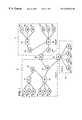
- FIG. 1illustrates an example network configuration containing multiple network devices arranged in multiple areas.
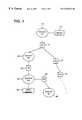
- FIG. 2illustrates another example network.
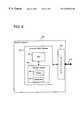
- FIG. 3illustrates a block diagram of a network device capable of implementing the teachings of the present invention.
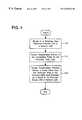
- FIG. 4illustrates an embodiment of a procedure for recalculating multicast trees in response to a topology change or a group change.
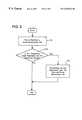
- FIG. 5illustrates an embodiment of a procedure for determining when to recalculate forwarding entries in a multicast tree.
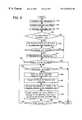
- FIG. 6illustrates an embodiment of an overall procedure for executing a modified Dijkstra algorithm.
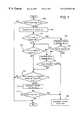
- FIG. 7illustrates an embodiment of a procedure for adjusting and checking counters and flags.
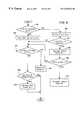
- FIG. 8illustrates an embodiment of a procedure for adjusting and checking counters and flags after a neighbor is added to the candidate list or adjusted in the candidate list.
- Embodiments of the present inventionprovide a system that minimizes unnecessary calculations of multicast trees and thereby improves the efficient utilization of computational resources. By avoiding unnecessary calculations (or recalculations), the overall computation burden is reduced.
- teachings of the present inventionmay be used with a variety of network types and network topologies. Although certain routing protocols (such as MOSPF) are discussed to illustrate various embodiments of the invention, those of ordinary skill in the art will appreciate that the invention may also be practiced with other routing protocols. Furthermore, various aspects of the invention will be described with reference to example networks containing one or more routers. However, it will be appreciated that the invention can be used with any type of communication device, including network switches and other network communication devices.
- routing protocolssuch as MOSPF
- FIGS. 1 and 2illustrate example networks capable of using the teachings of the present invention.
- FIGS. 1 and 2will be used to illustrate various aspects and embodiments of the present invention.
- the network of FIG. 1includes three different areas 10 , 12 , and 14 (also referred to as Area A, Area B, and Area C, respectively).
- Area 10includes a pair of routers 16 and 18 .
- Router 16is coupled to networks 20 , 22 , and 24
- router 18is coupled to networks 26 , 28 , and 30 .
- a network 32is coupled to both routers 16 and 18
- a network 34is coupled to routers 18 , 36 , and 38 .
- Router 36is capable of communicating with areas 10 and 12
- router 38is capable of communicating with areas 10 , and 14 .
- Area 12 of FIG. 1includes a router 40 coupled to networks 44 , 46 , and 48 , and a router 42 coupled to networks 50 , 52 , and 54 .
- a network 56is coupled to both routers 40 and 42
- a network 58is coupled to routers 36 and 42 .
- Area 14includes networks 60 , 62 , 64 , and 66 coupled to router 38 .
- FIG. 2illustrates a portion of a network configuration including a source node 70 coupled to a network 72 , which is coupled to a router 74 .
- Router 74is coupled to a network 80 and a router 76 , which is coupled to router 78 .
- Router 78may be coupled to other networks or routers (not shown).
- Network 80is coupled to a router 82 , which is coupled to another network 84 .
- Network 84is coupled to a group member node 85 and a router 86 , which is coupled to a network 88 .
- Network 88may be coupled to additional networks or routers (not shown).
- FIG. 3illustrates a block diagram of a network device 90 capable of implementing the teachings of the invention.
- Embodiments of network device 90include a router, a switch, and other network devices.
- the network deviceincludes a communication engine 92 having a central processing unit (CPU) 94 and a storage device 96 .
- CPUcentral processing unit
- Storage device 96may be a memory, disk drive, or other mechanism capable of storing data.
- Communication engine 92includes various tables 98 and databases 100 contained within storage device 96 .
- Tables 98 and databases 100may include information necessary for network device 90 to properly transmit data and identify routes through a network.
- Databases 100may include a Link State Database and a Forwarding Database.
- Communication engine 92is capable of calculating paths through a network based on information contained in tables 98 and databases 100 .
- An interface 102is coupled to communication engine 92 and provides a physical connection to one or more network links 104 .
- a single interface 102 and a single network link 104are illustrated in FIG. 3 for clarity. However, a particular network device may have multiple interfaces 102 coupled to multiple network links 104 .
- communication engine 92is capable of performing the functions necessary to construct Shortest Path First (SPF) trees.
- SPPFShortest Path First
- An embodiment of the inventionrecalculates multicast trees only in the areas that are affected by a particular change. Rather than recalculating multicast trees in all areas in response to a topology or group change, the recalculation of multicast trees is limited to the affected areas only.
- FIG. 4illustrates an embodiment of a procedure for recalculating multicast trees in response to a topology or group change.
- a router in a particular areareceives a router Link State Advertisement (LSA), or a network LSA.
- LSArouter Link State Advertisement
- the router that received the LSArecalculates entries in the forwarding table for the particular area in which the router is located.
- the router that received the LSArecalculates affected entries in the forwarding table for areas other than the particular area in which the router is located if the summary LSAs have changed as a result of the received router LSA or network LSA.
- a new group membership LSAis received by router 36 in area A, then all forwarding entries related to the group are recalculated in area A. Additionally, the forwarding entries in the backbone area may be recalculated if the backbone area is different from area A and a new group membership LSA is originated in the backbone area due to the new group membership LSA in area A.
- the backbone areais coupled to all other non-backbone areas. For example, in FIG. 1, area A is the backbone area.
- forwarding entriesare recalculated only when necessary.
- the forwarding entries related to the groupare not necessarily recalculated (even in the area to which the group membership LSA belongs). If the originator of the group membership LSA is not reachable from the calculating router within the area, then no downstream interface will be added to reach the group members represented by the group membership LSA. Accordingly, no recalculation is required for that calculating router.
- FIG. 5illustrates an embodiment of a procedure for determining when to recalculate forwarding entries.
- a routerreceives a group membership LSA.
- Step 118determines whether the originating node is reachable from the receiving router (i.e., the router that received the group membership LSA). The originating node is “reachable” from the receiving router if some type of path exists between the node and the router. If the originating node is not reachable from the receiving router, then no changes are made to the forwarding entries in the multicast tree; i.e., the existing forwarding entries in the multicast tree are maintained without any changes.
- the procedurebranches to step 120 where the procedure recalculates entries associated with the received group membership LSA (step 116 ).
- the process of recalculating entries associated with the received group membership LSAis discussed below with reference to FIGS. 6-8.
- the recalculation of entries in step 120is performed only within the local area.
- router 36receives a group membership LSA originated by an unknown router such as router x then router 36 will not recalculate forwarding entries related to the group because the router x is not reachable from router 36 . However, if router 36 receives a group membership LSA from router 16 (a known and reachable router), then the modified Dijkstra algorithm is executed.
- the Dijkstra algorithmis a known routing algorithm for determining the best path between a source node and a destination node.
- the Dijkstra algorithmgenerally includes a series of “expanding” steps in which a node is placed in the path and its neighbor nodes are examined to determine which node should next be placed in the path.
- the Dijkstra algorithmterminates when all destination nodes have been placed in the path.
- the Dijkstra algorithmis used to construct unicast or multicast trees. Standard OSPF and MOSPF tree-construction procedures terminate the Dijkstra algorithm when the list of candidates is empty (i.e., after the last candidate has been examined). In certain situations, embodiments of the present invention terminate the Dijkstra algorithm before the list of candidates is empty. By terminating the Dijkstra algorithm early, fewer computational resources are used. Significant resources may be saved if the area is large and the router is close to the source, or if the router has few interfaces.
- An embodiment of the inventionterminates the Dijkstra algorithm when all of the calculating router's interfaces that lead to transit vertices have been put into the forwarding entry. In this situation, no additional downstream interfaces will be added to the forwarding entry, even if the Dijkstra algorithm continues. Therefore, computational resources are saved by terminating the Dijkstra algorithm early.
- FIG. 6illustrates an embodiment of an overall procedure for executing a modified Dijkstra algorithm.
- the modified Dijkstra algorithmis terminated early in certain situations to minimize unnecessary computations.
- Step 122 of FIG. 6initializes the data structures used during execution of the Dijkstra algorithm.
- Step 124initializes counters and flags used while executing the modified Dijkstra algorithm.
- An embodiment of the inventionuses three counters (an interface-neighbor counter, abbreviated Intf-Nbr counter, a group counter, and a child counter) and one flag (a child flag) for each vertex.
- the Intf-Nbr counteris set to the number of interfaces with fully adjacent neighbors in the area.
- an interfaceis configured to forward multicast packets by link-level unicast, then that interface is counted as the number of neighbors with a state of at least 2 -way on their interface. All other interfaces are counted as one.
- the value of the Intf-Nbr counteris recalculated each time the state of an interface changes.
- the group counteris set to the sum of the number of vertices in all group membership LSAs in the area for the group plus the number of reachable wildcard receivers in the area. A wildcard receiver receives all multicast traffic in its area or domain.
- the group counter valueis recalculated each time a group membership LSA changes in the area.
- the child counteris set to 0 and the child flag for each vertex is set to “False.”
- the candidate listis initialized.
- the proceduredetermines whether the calculating router is included in the candidate list. If not, the procedure branches to step 136 . If the calculating router is included in the candidate list, then step 130 sets the router's child flag to true and increases the child counter by one.
- Step 132determines whether the incoming link is of type ILDirect. An incoming link is type ILDirect if the link is directly connected to source of the multicast flow. If the incoming link is ILDirect, then the procedure decreases the Intf-Nbr counter by one.
- the proceduredetermines whether the group counter or the Intf-Nbr counter equals zero. If either counter is zero, then the procedure terminates. If both counters are non-zero, then the procedure continues to step 138 to determine whether the candidate list is empty. If the candidate list is empty, the procedure terminates. If the candidate list is not empty, then the procedure continues to step 140 where the closest candidate vertex (V) is moved to the SPF tree. Step 142 then adjusts and checks all counters and the child flag, as necessary. The procedures performed by step 142 are illustrated in FIG. 7 and discussed below.
- step 144 of FIG. 6the procedure examines the neighbors of vertex V for possible addition to the candidate list. For each neighbor (W) (i.e., a neighbor of V) that is added to the candidate list or adjusted in the candidate list, step 146 adjusts and checks the counters and the child flag, as necessary. The procedures performed by step 146 are illustrated in FIG. 8 and discussed below. If the child counter is zero at step 148 , then the procedure terminates. Otherwise, the procedure returns from step 148 to step 138 to determine whether the candidate list is empty.
- Wneighbor of vertex V
- FIG. 7illustrates an embodiment of a procedure performed by step 142 of FIG. 6; i.e., adjusting and checking all counters and the child flag, as necessary.
- the proceduredetermines whether vertex V's child flag is True. If False, then the procedure ends (i.e., continues to step 144 in FIG. 6 ). If V's child flag is True then step 152 decreases the child counter by one.
- the proceduredetermines whether vertex V is listed in a group LSA. If yes, then the procedure branches to step 156 , where the group counter is decreased by one. The procedure continues from step 156 to step 158 to determine whether the group counter is zero.
- the procedureterminates the Dijkstra algorithm at step 160 (i.e., terminates the Dijkstra algorithm before its normal termination). If the group counter is not zero at step 158 , then the procedure branches to step 162 . Similarly, if node V is not listed in a group LSA in step 154 , the procedure continues to step 162 .
- Step 162determines whether vertex V is a wildcard receiver. If so, the procedure branches to step 164 , where the group counter is decreased by one. Step 166 then determines whether the group counter is zero. If the group counter is zero, the Dijkstra algorithm is terminated at step 160 . Otherwise, the procedure continues to step 168 to determine whether a new interface or neighbor has been added to the forwarding entry. If no, the procedure ends; i.e., continues to step 144 in FIG. 6 . If a new interface or neighbor has been added to the forwarding entry, then the procedure continues to step 170 , where the Intf-Nbr counter is decreased by one. At step 172 , the procedure determines whether the Intf-Nbr counter is zero. If the Intf-Nbr counter is zero, then the Dijkstra algorithm is terminated at step 160 . Otherwise the procedure of FIG. 7 ends, thereby continuing at step 144 in FIG. 6 .
- FIG. 8illustrates an embodiment of a procedure performed by step 146 of FIG. 6; i.e., adjusting and checking all counters and the child flag, as necessary, for each neighbor that is added to the candidate list or adjusted in the candidate list.
- the procedure illustrated in FIG. 8is executed for each neighbor W that is added to or adjusted in the candidate list.
- Step 180determines whether W is the calculating router. If so, the procedure branches to step 182 , where the child flag is set to true.
- Procedure 184determines whether the incoming link is of type ILNormal. If the incoming link is ILNormal, then the procedure continues to step 186 to decrease the Intf-Nbr counter by one.
- Step 188determines whether the Intf-Nbr counter is zero. If the Intf-Nbr counter is zero, the Dijkstra algorithm terminates at step 190 . Otherwise, the procedure branches from step 188 to step 194 .
- step 180If W is not the calculating router (as determined by step 180 ), then the procedure continues from step 180 to step 192 , where the child flag is copied from the parent. Step 194 determines whether the flag in W changed from False to True. If so, then the child counter is increased by one at step 196 , and the procedure ends (continues to step 148 in FIG. 6 ). If the flag in W did not change from False to True, then the procedure continues to step 198 to determine whether the flag in W changed from True to False. If so, the procedure decreases the child counter by one at step 200 .
- Router 82has two active transmit interfaces in the area (one interface to network 80 and a second interface to network 84 ). Thus, the Intf-Nbr counter is set to 2. Router 82 is the calculating router and is constructing a multicast tree for a particular flow identified as: source, group. A group member 85 is coupled to network 84 . When router 82 is reached from router 74 , the Intf-Nbr counter is decreased to 1 because the incoming interface type is ILNormal. Router 82 then adds its network 84 interface to the forwarding entry for the flow because there is a group member on network 84 .
- Embodiments of the inventionterminate the Dijkstra algorithm when no additional candidates are possible downstream from the calculating router. If there are no possible downstream interfaces to be added, then there is no reason to continue the Dijkstra algorithm. This condition is determined by maintaining a counter for DownStream Neighbors. For example, using the exemplary network of FIG. 2, if router 82 is constructing the multicast tree, then the DownStream Neighbors counter is increased to 1 when network 84 is added to the candidate list. It is then removed from the candidate list to the SPF tree and router 36 is added to the candidate list so that the DownStream Neighbors counter remains 1. Router 36 is then moved to the SPF tree so that the count becomes 0 again, indicating that no additional vertices on the candidate list are possible downstream from router 82 . Therefore, the Dijkstra algorithm terminates.
- the Dijkstra algorithmis terminated when all reachable group membership LSAs have been considered. If all group membership LSAs have been considered, then no additional downstream interfaces will be added to the SPF tree. For example, in the exemplary network of FIG. 2, router 82 originated a group membership LSA containing a network vertex (for the group on network 84 ). Therefore, the counter is set to 1 at the beginning of router 82 Dijkstra algorithm. When network 84 is reached from router 82 , the group membership LSA is checked and the counter is decreased to 0, thereby terminating the Dijkstra algorithm. It is not necessary to explore the topology beyond router 76 because there are no additional members.
- Embodiments of the inventionmay be represented as a software product stored on a computer-readable (or processor-readable) medium.
- the computer-readable mediummay be any type of magnetic, optical, or electrical storage medium including a diskette, CAROM, memory device (volatile or non-volatile), or similar storage medium.
- the computer-readable mediummay contain various sets of instructions, code sequences, configuration information, or other data. For example, empty tables or databases (e.g., tables and databases containing null fields) may be stored on the computer-readable medium. Additionally, instructions or code sequences for handling data packets may be stored on the computer-readable medium. The procedures described above for constructing SPF trees may also be stored on a computer-readable medium. Those of ordinary skill in the art will appreciate that other instructions and operations necessary to implement the described invention may also be stored on a computer-readable medium.
- the present inventionmay be applicable to implementations of the invention in integrated circuits or chip sets, wireless implementations, switching systems products and transmission systems products.
- switching systems productsshall be taken to mean private branch exchanges (PBXs), central office switching systems that interconnect subscribers, toll/tandem switching systems for interconnecting trunks between switching centers, and broadband core switches found at the center of a service provider's network that may be fed by broadband edge switches or access muxes, and associated signaling, and support systems and services.
- PBXsprivate branch exchanges
- central office switching systemsthat interconnect subscribers
- toll/tandem switching systemsfor interconnecting trunks between switching centers
- broadband core switchesfound at the center of a service provider's network that may be fed by broadband edge switches or access muxes, and associated signaling, and support systems and services.
- transmission systems productsshall be taken to mean products used by service providers to provide interconnection between their subscribers and their networks such as loop systems, and which provide multiplexing, aggregation and transport between a service provider's switching systems across the wide area, and associated signaling and support systems and services.
Landscapes
- Engineering & Computer Science (AREA)
- Computer Networks & Wireless Communication (AREA)
- Signal Processing (AREA)
- Data Exchanges In Wide-Area Networks (AREA)
Abstract
Description
Claims (58)
Priority Applications (1)
| Application Number | Priority Date | Filing Date | Title |
|---|---|---|---|
| US08/984,453US6252856B1 (en) | 1996-12-03 | 1997-12-03 | Method and apparatus for minimizing calculations required to construct multicast trees |
Applications Claiming Priority (2)
| Application Number | Priority Date | Filing Date | Title |
|---|---|---|---|
| US3243996P | 1996-12-03 | 1996-12-03 | |
| US08/984,453US6252856B1 (en) | 1996-12-03 | 1997-12-03 | Method and apparatus for minimizing calculations required to construct multicast trees |
Publications (1)
| Publication Number | Publication Date |
|---|---|
| US6252856B1true US6252856B1 (en) | 2001-06-26 |
Family
ID=26708430
Family Applications (1)
| Application Number | Title | Priority Date | Filing Date |
|---|---|---|---|
| US08/984,453Expired - LifetimeUS6252856B1 (en) | 1996-12-03 | 1997-12-03 | Method and apparatus for minimizing calculations required to construct multicast trees |
Country Status (1)
| Country | Link |
|---|---|
| US (1) | US6252856B1 (en) |
Cited By (45)
| Publication number | Priority date | Publication date | Assignee | Title |
|---|---|---|---|---|
| WO2002096033A1 (en)* | 2001-05-18 | 2002-11-28 | Micromuse Inc. | Method and system for determining network characteristics using routing protocols |
| US20030012132A1 (en)* | 2001-07-16 | 2003-01-16 | Ibm Corporation | Methods and arrangements for monitoring subsource addressing multicast distribution trees |
| US20030043820A1 (en)* | 2001-09-06 | 2003-03-06 | Goringe Christopher M. | Using link state information to discover IP network topology |
| US6539450B1 (en)* | 1998-11-29 | 2003-03-25 | Sony Corporation | Method and system for adjusting isochronous bandwidths on a bus |
| US20030090996A1 (en)* | 2001-11-09 | 2003-05-15 | Fujitsu Network Communications, Inc. | Focused link state advertisements |
| US20030131096A1 (en)* | 2002-01-08 | 2003-07-10 | Goringe Christopher M. | Credential management and network querying |
| US6606325B1 (en)* | 1999-12-10 | 2003-08-12 | Nortel Networks Limited | Fast path forwarding of link state advertisements using multicast addressing |
| WO2003075527A1 (en)* | 2002-03-04 | 2003-09-12 | Operax Ab | A method for providing topology awareness information within an ip network |
| EP1387527A1 (en)* | 2002-07-30 | 2004-02-04 | Agilent Technologies Inc. | Identifying network routers and paths |
| US6744775B1 (en)* | 1999-09-27 | 2004-06-01 | Nortel Networks Limited | State information and routing table updates in large scale data networks |
| US6785260B1 (en)* | 1998-12-18 | 2004-08-31 | A.T.&T. Corp. | Method and apparatus for routing of best-effort and quality of service flows |
| US20040260755A1 (en)* | 2003-06-19 | 2004-12-23 | Bardzil Timothy J. | Detection of load balanced links in internet protocol networks |
| US20040260814A1 (en)* | 2003-06-18 | 2004-12-23 | Utah State University | Efficient unicast-based multicast tree construction and maintenance for multimedia transmission |
| US6850524B1 (en)* | 2000-07-31 | 2005-02-01 | Gregory Donald Troxel | Systems and methods for predictive routing |
| US20050041676A1 (en)* | 2003-08-08 | 2005-02-24 | Bbnt Solutions Llc | Systems and methods for forming an adjacency graph for exchanging network routing data |
| US20050050221A1 (en)* | 2003-08-27 | 2005-03-03 | Tasman Mitchell Paul | Systems and methods for forwarding data units in a communications network |
| FR2859340A1 (en)* | 2003-08-29 | 2005-03-04 | Cit Alcatel | MULTIPOINT TRAFFIC TRANSMISSION WITHIN A COMMUNICATION NETWORK |
| US6871235B1 (en)* | 1999-12-10 | 2005-03-22 | Nortel Networks Limited | Fast path forwarding of link state advertisements using reverse path forwarding |
| US6928483B1 (en)* | 1999-12-10 | 2005-08-09 | Nortel Networks Limited | Fast path forwarding of link state advertisements |
| US20050259595A1 (en)* | 2004-05-18 | 2005-11-24 | Alcatel | Process for generating and updating a hierarchical tree in a MANET multicast routing protocol ad hoc network |
| US20060045036A1 (en)* | 2004-09-01 | 2006-03-02 | Ntt Docomo, Inc. | Mobile communication system, mobile communication method, server device, and sending terminal |
| US20060077909A1 (en)* | 2000-12-30 | 2006-04-13 | Saleh Ali N | Method for routing information over a network employing centralized control |
| US7058016B1 (en)* | 2000-10-12 | 2006-06-06 | Cisco Technology, Inc. | Method and system for accelerating route calculation in link state routing protocols |
| US7069343B2 (en) | 2001-09-06 | 2006-06-27 | Avaya Technologycorp. | Topology discovery by partitioning multiple discovery techniques |
| US7197555B1 (en)* | 2000-09-13 | 2007-03-27 | Canon Kabushiki Kaisha | Directory server tracking tool |
| US20070076703A1 (en)* | 2003-10-22 | 2007-04-05 | Takahiro Yoneda | Packet distribution control method |
| US20070133530A1 (en)* | 2005-12-13 | 2007-06-14 | Stefano Previdi | Acknowledgement-based rerouting of multicast traffic |
| US20070189193A1 (en)* | 2006-02-16 | 2007-08-16 | Stefano Previdi | Rerouting multicast traffic in response to detecting imminent network disruption |
| US20070189284A1 (en)* | 2006-02-13 | 2007-08-16 | Delia Kecskemeti | System and method for routing table computation and analysis |
| US20070286093A1 (en)* | 2006-06-09 | 2007-12-13 | Yiqun Cai | Method of routing multicast traffic |
| US7334047B1 (en)* | 2002-03-18 | 2008-02-19 | Cisco Technology, Inc. | Method and system for selective link state advertisement blocking over a data network area |
| KR100819042B1 (en) | 2005-12-08 | 2008-04-02 | 한국전자통신연구원 | Method for configuring 1:N overlay multicast network of multicast agent in wireless LAN environment and the multicast agent |
| US20080104218A1 (en)* | 2006-10-31 | 2008-05-01 | Jin Liang | Methods and Apparatus for Membership Management of Network Nodes |
| US20090003367A1 (en)* | 2007-06-26 | 2009-01-01 | Kddi Corporation | Path management device and program storing medium |
| US7649884B1 (en)* | 2004-12-01 | 2010-01-19 | Hrl Laboratories, Llc | Collaborative multicast routing (CMR) for multicasting in unidirectional, hybrid, multi-tiered mobile wireless network |
| US7668083B1 (en) | 2003-10-28 | 2010-02-23 | Bbn Technologies Corp. | Systems and methods for forwarding data in a communications network |
| US20100118738A1 (en)* | 2007-04-20 | 2010-05-13 | Toshio Koide | Multicast tree designing device, method, and program |
| US20100254309A1 (en)* | 2009-04-07 | 2010-10-07 | Bbn Technologies Corp. | System, device, and method for unifying differently-routed networks using virtual topology representations |
| CN101330448B (en)* | 2007-06-21 | 2010-12-08 | 华为技术有限公司 | Method and device for notifying link state information and determining multicast forwarding path |
| US7983239B1 (en)* | 2003-01-07 | 2011-07-19 | Raytheon Bbn Technologies Corp. | Systems and methods for constructing a virtual model of a multi-hop, multi-access network |
| CN101483610B (en)* | 2009-02-26 | 2011-07-20 | 迈普通信技术股份有限公司 | Route updating method for link state routing protocol |
| US9218213B2 (en) | 2006-10-31 | 2015-12-22 | International Business Machines Corporation | Dynamic placement of heterogeneous workloads |
| US20160055660A1 (en)* | 2014-08-25 | 2016-02-25 | Fujitsu Limited | Apparatus and method for generating a shortest-path tree in a graph |
| CN106357540A (en)* | 2016-08-24 | 2017-01-25 | 浪潮(北京)电子信息产业有限公司 | Multicast control method and device thereof as well as multicast system |
| DE102017217067A1 (en)* | 2017-09-26 | 2019-03-28 | Siemens Aktiengesellschaft | Method and system for calculating a conditional shortest path |
Citations (22)
| Publication number | Priority date | Publication date | Assignee | Title |
|---|---|---|---|---|
| US4740954A (en) | 1986-12-31 | 1988-04-26 | Bell Communications Research, Inc. | Multicast routing algorithm |
| US4742511A (en)* | 1985-06-13 | 1988-05-03 | Texas Instruments Incorporated | Method and apparatus for routing packets in a multinode computer interconnect network |
| US4864559A (en)* | 1988-09-27 | 1989-09-05 | Digital Equipment Corporation | Method of multicast message distribution |
| US4873517A (en)* | 1988-06-23 | 1989-10-10 | International Business Machines Corporation | Method for selecting least weight end node to end node route in a data communications network |
| US5088032A (en)* | 1988-01-29 | 1992-02-11 | Cisco Systems, Inc. | Method and apparatus for routing communications among computer networks |
| US5289460A (en)* | 1992-07-31 | 1994-02-22 | International Business Machines Corp. | Maintenance of message distribution trees in a communications network |
| US5291477A (en) | 1992-08-10 | 1994-03-01 | Bell Communications Research, Inc. | Method and system for multicast routing in an ATM network |
| US5309433A (en) | 1992-06-18 | 1994-05-03 | International Business Machines Corp. | Methods and apparatus for routing packets in packet transmission networks |
| US5331637A (en) | 1993-07-30 | 1994-07-19 | Bell Communications Research, Inc. | Multicast routing using core based trees |
| US5355371A (en)* | 1982-06-18 | 1994-10-11 | International Business Machines Corp. | Multicast communication tree creation and control method and apparatus |
| US5471467A (en)* | 1992-05-08 | 1995-11-28 | Alcatel N.V. | Routing logic means and method for distributing a packet among network nodes |
| US5491690A (en)* | 1993-07-30 | 1996-02-13 | International Business Machines Corporation | Method and apparatus to speed up the path selection in a packet switching network |
| US5600638A (en)* | 1993-12-22 | 1997-02-04 | International Business Machines Corporation | Method and system for improving the processing time of the path selection in a high speed packet switching network |
| US5600794A (en)* | 1995-08-04 | 1997-02-04 | Bay Networks, Inc. | Method and apparatus for managing exchange of metrics in a computer network by exchanging only metrics used by a node in the network |
| US5737526A (en)* | 1994-12-30 | 1998-04-07 | Cisco Systems | Network having at least two routers, each having conditional filter so one of two transmits given frame and each transmits different frames, providing connection to a subnetwork |
| US5754790A (en)* | 1996-05-01 | 1998-05-19 | 3Com Corporation | Apparatus and method for selecting improved routing paths in an autonomous system of computer networks |
| US5854899A (en)* | 1996-05-09 | 1998-12-29 | Bay Networks, Inc. | Method and apparatus for managing virtual circuits and routing packets in a network/subnetwork environment |
| US5881246A (en)* | 1996-06-12 | 1999-03-09 | Bay Networks, Inc. | System for generating explicit routing advertisements to specify a selected path through a connectionless network to a destination by a specific router |
| US5943317A (en)* | 1998-10-15 | 1999-08-24 | International Business Machines Corp. | Sub-network route optimization over a shared access transport facility |
| US5953312A (en)* | 1996-09-13 | 1999-09-14 | Bay Networks | Method and apparatus for determining alternate routes in a network using a connection-oriented protocol |
| US5964841A (en)* | 1997-03-03 | 1999-10-12 | Cisco Technology, Inc. | Technique for handling forwarding transients with link state routing protocol |
| US5995503A (en)* | 1996-06-12 | 1999-11-30 | Bay Networks, Inc. | Method and apparatus for providing quality of service routing in a network |
- 1997
- 1997-12-03USUS08/984,453patent/US6252856B1/ennot_activeExpired - Lifetime
Patent Citations (22)
| Publication number | Priority date | Publication date | Assignee | Title |
|---|---|---|---|---|
| US5355371A (en)* | 1982-06-18 | 1994-10-11 | International Business Machines Corp. | Multicast communication tree creation and control method and apparatus |
| US4742511A (en)* | 1985-06-13 | 1988-05-03 | Texas Instruments Incorporated | Method and apparatus for routing packets in a multinode computer interconnect network |
| US4740954A (en) | 1986-12-31 | 1988-04-26 | Bell Communications Research, Inc. | Multicast routing algorithm |
| US5088032A (en)* | 1988-01-29 | 1992-02-11 | Cisco Systems, Inc. | Method and apparatus for routing communications among computer networks |
| US4873517A (en)* | 1988-06-23 | 1989-10-10 | International Business Machines Corporation | Method for selecting least weight end node to end node route in a data communications network |
| US4864559A (en)* | 1988-09-27 | 1989-09-05 | Digital Equipment Corporation | Method of multicast message distribution |
| US5471467A (en)* | 1992-05-08 | 1995-11-28 | Alcatel N.V. | Routing logic means and method for distributing a packet among network nodes |
| US5309433A (en) | 1992-06-18 | 1994-05-03 | International Business Machines Corp. | Methods and apparatus for routing packets in packet transmission networks |
| US5289460A (en)* | 1992-07-31 | 1994-02-22 | International Business Machines Corp. | Maintenance of message distribution trees in a communications network |
| US5291477A (en) | 1992-08-10 | 1994-03-01 | Bell Communications Research, Inc. | Method and system for multicast routing in an ATM network |
| US5331637A (en) | 1993-07-30 | 1994-07-19 | Bell Communications Research, Inc. | Multicast routing using core based trees |
| US5491690A (en)* | 1993-07-30 | 1996-02-13 | International Business Machines Corporation | Method and apparatus to speed up the path selection in a packet switching network |
| US5600638A (en)* | 1993-12-22 | 1997-02-04 | International Business Machines Corporation | Method and system for improving the processing time of the path selection in a high speed packet switching network |
| US5737526A (en)* | 1994-12-30 | 1998-04-07 | Cisco Systems | Network having at least two routers, each having conditional filter so one of two transmits given frame and each transmits different frames, providing connection to a subnetwork |
| US5600794A (en)* | 1995-08-04 | 1997-02-04 | Bay Networks, Inc. | Method and apparatus for managing exchange of metrics in a computer network by exchanging only metrics used by a node in the network |
| US5754790A (en)* | 1996-05-01 | 1998-05-19 | 3Com Corporation | Apparatus and method for selecting improved routing paths in an autonomous system of computer networks |
| US5854899A (en)* | 1996-05-09 | 1998-12-29 | Bay Networks, Inc. | Method and apparatus for managing virtual circuits and routing packets in a network/subnetwork environment |
| US5881246A (en)* | 1996-06-12 | 1999-03-09 | Bay Networks, Inc. | System for generating explicit routing advertisements to specify a selected path through a connectionless network to a destination by a specific router |
| US5995503A (en)* | 1996-06-12 | 1999-11-30 | Bay Networks, Inc. | Method and apparatus for providing quality of service routing in a network |
| US5953312A (en)* | 1996-09-13 | 1999-09-14 | Bay Networks | Method and apparatus for determining alternate routes in a network using a connection-oriented protocol |
| US5964841A (en)* | 1997-03-03 | 1999-10-12 | Cisco Technology, Inc. | Technique for handling forwarding transients with link state routing protocol |
| US5943317A (en)* | 1998-10-15 | 1999-08-24 | International Business Machines Corp. | Sub-network route optimization over a shared access transport facility |
Non-Patent Citations (3)
| Title |
|---|
| J. Moy, MOSPF: Analysis and Experience, Network Working Group, Mar. 1994, Document pp. 1-12, printed pp. 1-11. |
| J. Moy, Multicast Extensions to OSPF, Network Working Group, Mar. 1994, Document pp. 1-70. |
| J. Moy, OSPF Version 2, Network Working Group, Mar. 1994, Document pp. 1-1216 printed pp. 1-166. |
Cited By (91)
| Publication number | Priority date | Publication date | Assignee | Title |
|---|---|---|---|---|
| US6539450B1 (en)* | 1998-11-29 | 2003-03-25 | Sony Corporation | Method and system for adjusting isochronous bandwidths on a bus |
| US6785260B1 (en)* | 1998-12-18 | 2004-08-31 | A.T.&T. Corp. | Method and apparatus for routing of best-effort and quality of service flows |
| US6744775B1 (en)* | 1999-09-27 | 2004-06-01 | Nortel Networks Limited | State information and routing table updates in large scale data networks |
| US6606325B1 (en)* | 1999-12-10 | 2003-08-12 | Nortel Networks Limited | Fast path forwarding of link state advertisements using multicast addressing |
| US6928483B1 (en)* | 1999-12-10 | 2005-08-09 | Nortel Networks Limited | Fast path forwarding of link state advertisements |
| US6871235B1 (en)* | 1999-12-10 | 2005-03-22 | Nortel Networks Limited | Fast path forwarding of link state advertisements using reverse path forwarding |
| US6850524B1 (en)* | 2000-07-31 | 2005-02-01 | Gregory Donald Troxel | Systems and methods for predictive routing |
| US7197555B1 (en)* | 2000-09-13 | 2007-03-27 | Canon Kabushiki Kaisha | Directory server tracking tool |
| US7058016B1 (en)* | 2000-10-12 | 2006-06-06 | Cisco Technology, Inc. | Method and system for accelerating route calculation in link state routing protocols |
| US7633875B1 (en) | 2000-10-12 | 2009-12-15 | Cisco Technology, Inc. | Method and system for accelerating route calculation in link state routing protocols |
| US20060077909A1 (en)* | 2000-12-30 | 2006-04-13 | Saleh Ali N | Method for routing information over a network employing centralized control |
| US20100208622A1 (en)* | 2000-12-30 | 2010-08-19 | Saleh Ali N | Method for routing information over a network employing centralized control |
| US7286490B2 (en)* | 2000-12-30 | 2007-10-23 | Cisco Technology, Inc. | Method for routing information over a network employing centralized control |
| US8081582B2 (en) | 2000-12-30 | 2011-12-20 | Cisco Technology, Inc. | Method for routing information over a network employing centralized control |
| US9030962B2 (en) | 2000-12-30 | 2015-05-12 | Cisco Technology, Inc. | Method for routing information over a network employing centralized control |
| WO2002096033A1 (en)* | 2001-05-18 | 2002-11-28 | Micromuse Inc. | Method and system for determining network characteristics using routing protocols |
| US20040233859A1 (en)* | 2001-05-18 | 2004-11-25 | Martin Daniel J. | Method and system for determining network characteristics using routing protocols |
| US7423979B2 (en) | 2001-05-18 | 2008-09-09 | International Business Machines Corporation | Method and system for determining network characteristics using routing protocols |
| US6744739B2 (en) | 2001-05-18 | 2004-06-01 | Micromuse Inc. | Method and system for determining network characteristics using routing protocols |
| US7333486B2 (en)* | 2001-07-16 | 2008-02-19 | International Business Machines Corporation | Methods and arrangements for monitoring subsource addressing multicast distribution trees |
| US20080117905A1 (en)* | 2001-07-16 | 2008-05-22 | International Business Machines Corporation | Methods and arrangements for monitoring subsource addressing multicast distribution trees |
| US20030012132A1 (en)* | 2001-07-16 | 2003-01-16 | Ibm Corporation | Methods and arrangements for monitoring subsource addressing multicast distribution trees |
| US7876754B2 (en) | 2001-07-16 | 2011-01-25 | International Business Machines Corporation | Methods and arrangements for monitoring subsource addressing multicast distribution trees |
| US7069343B2 (en) | 2001-09-06 | 2006-06-27 | Avaya Technologycorp. | Topology discovery by partitioning multiple discovery techniques |
| US20030043820A1 (en)* | 2001-09-06 | 2003-03-06 | Goringe Christopher M. | Using link state information to discover IP network topology |
| US7200122B2 (en) | 2001-09-06 | 2007-04-03 | Avaya Technology Corp. | Using link state information to discover IP network topology |
| US7042850B2 (en) | 2001-11-09 | 2006-05-09 | Fujitsu Limited | Focused link state advertisements |
| US20030090996A1 (en)* | 2001-11-09 | 2003-05-15 | Fujitsu Network Communications, Inc. | Focused link state advertisements |
| US7571239B2 (en) | 2002-01-08 | 2009-08-04 | Avaya Inc. | Credential management and network querying |
| US20030131096A1 (en)* | 2002-01-08 | 2003-07-10 | Goringe Christopher M. | Credential management and network querying |
| US7706300B2 (en) | 2002-03-04 | 2010-04-27 | Netsocket, Inc. | Method for providing topology awareness information within an IP network |
| WO2003075527A1 (en)* | 2002-03-04 | 2003-09-12 | Operax Ab | A method for providing topology awareness information within an ip network |
| US20050105475A1 (en)* | 2002-03-04 | 2005-05-19 | Joakim Norrgard | Method for providing topology awareness information within an ip network |
| US7334047B1 (en)* | 2002-03-18 | 2008-02-19 | Cisco Technology, Inc. | Method and system for selective link state advertisement blocking over a data network area |
| US20060056328A1 (en)* | 2002-07-30 | 2006-03-16 | Lehane Andrew R | Identifying network rotuters and paths |
| EP1387527A1 (en)* | 2002-07-30 | 2004-02-04 | Agilent Technologies Inc. | Identifying network routers and paths |
| WO2004012393A3 (en)* | 2002-07-30 | 2004-03-18 | Agilent Technologies Inc | Identifying network routers and paths |
| US7983239B1 (en)* | 2003-01-07 | 2011-07-19 | Raytheon Bbn Technologies Corp. | Systems and methods for constructing a virtual model of a multi-hop, multi-access network |
| US7596595B2 (en)* | 2003-06-18 | 2009-09-29 | Utah State University | Efficient unicast-based multicast tree construction and maintenance for multimedia transmission |
| US20040260814A1 (en)* | 2003-06-18 | 2004-12-23 | Utah State University | Efficient unicast-based multicast tree construction and maintenance for multimedia transmission |
| US7426577B2 (en) | 2003-06-19 | 2008-09-16 | Avaya Technology Corp. | Detection of load balanced links in internet protocol netwoks |
| US20040260755A1 (en)* | 2003-06-19 | 2004-12-23 | Bardzil Timothy J. | Detection of load balanced links in internet protocol networks |
| US7881229B2 (en) | 2003-08-08 | 2011-02-01 | Raytheon Bbn Technologies Corp. | Systems and methods for forming an adjacency graph for exchanging network routing data |
| US20050041676A1 (en)* | 2003-08-08 | 2005-02-24 | Bbnt Solutions Llc | Systems and methods for forming an adjacency graph for exchanging network routing data |
| US7606927B2 (en) | 2003-08-27 | 2009-10-20 | Bbn Technologies Corp | Systems and methods for forwarding data units in a communications network |
| US8103792B2 (en) | 2003-08-27 | 2012-01-24 | Raytheon Bbn Technologies Corp. | Systems and methods for forwarding data units in a communications network |
| US20050050221A1 (en)* | 2003-08-27 | 2005-03-03 | Tasman Mitchell Paul | Systems and methods for forwarding data units in a communications network |
| WO2005025146A1 (en)* | 2003-08-29 | 2005-03-17 | Alcatel | Transmission of multicast traffic in a communications network |
| FR2859340A1 (en)* | 2003-08-29 | 2005-03-04 | Cit Alcatel | MULTIPOINT TRAFFIC TRANSMISSION WITHIN A COMMUNICATION NETWORK |
| US7580368B2 (en)* | 2003-10-22 | 2009-08-25 | Panasonic Corporation | Packet distribution control method |
| US20070076703A1 (en)* | 2003-10-22 | 2007-04-05 | Takahiro Yoneda | Packet distribution control method |
| US7668083B1 (en) | 2003-10-28 | 2010-02-23 | Bbn Technologies Corp. | Systems and methods for forwarding data in a communications network |
| US7602738B2 (en)* | 2004-05-18 | 2009-10-13 | Alcatel | Process for generating and updating a hierarchical tree in a MANET multicast routing protocol ad hoc network |
| US20050259595A1 (en)* | 2004-05-18 | 2005-11-24 | Alcatel | Process for generating and updating a hierarchical tree in a MANET multicast routing protocol ad hoc network |
| US20060045036A1 (en)* | 2004-09-01 | 2006-03-02 | Ntt Docomo, Inc. | Mobile communication system, mobile communication method, server device, and sending terminal |
| US8144708B1 (en)* | 2004-12-01 | 2012-03-27 | Hrl Laboratories, Llc | Collaborative multicast routing (CMR) for multicasting in unidirectional, hybrid, multi-tiered mobile wireless network |
| US7649884B1 (en)* | 2004-12-01 | 2010-01-19 | Hrl Laboratories, Llc | Collaborative multicast routing (CMR) for multicasting in unidirectional, hybrid, multi-tiered mobile wireless network |
| US7911981B2 (en)* | 2005-12-08 | 2011-03-22 | Electronics And Telecommunications Research Institute | Method for configuring 1:N overlay multicast network of multicast agent in wireless LAN environment and multicast agent therefor |
| US20090080344A1 (en)* | 2005-12-08 | 2009-03-26 | Juyoung Park | Method for Configuring 1:N Overlay Multicast Network of Multicast Agent in Wireless LAN Environment and Multicast Agent Therefor |
| KR100819042B1 (en) | 2005-12-08 | 2008-04-02 | 한국전자통신연구원 | Method for configuring 1:N overlay multicast network of multicast agent in wireless LAN environment and the multicast agent |
| US20070133530A1 (en)* | 2005-12-13 | 2007-06-14 | Stefano Previdi | Acknowledgement-based rerouting of multicast traffic |
| US8144628B2 (en)* | 2005-12-13 | 2012-03-27 | Cisco Technology, Inc. | Acknowledgement-based rerouting of multicast traffic |
| US20070189284A1 (en)* | 2006-02-13 | 2007-08-16 | Delia Kecskemeti | System and method for routing table computation and analysis |
| US7860106B2 (en)* | 2006-02-13 | 2010-12-28 | Wind River Systems, Inc. | System and method for routing table computation and analysis |
| CN101385275B (en)* | 2006-02-16 | 2013-03-20 | 思科技术公司 | Rerouting multicast traffic in response to detecting imminent network disruption |
| US20070189193A1 (en)* | 2006-02-16 | 2007-08-16 | Stefano Previdi | Rerouting multicast traffic in response to detecting imminent network disruption |
| US7953027B2 (en) | 2006-02-16 | 2011-05-31 | Cisco Technology, Inc. | Rerouting multicast traffic in response to detecting imminent network disruption |
| WO2007097893A2 (en) | 2006-02-16 | 2007-08-30 | Cisco Technology, Inc. | Rerouting multicast traffic in response to detecting imminent network disruption |
| WO2007097893A3 (en)* | 2006-02-16 | 2007-11-15 | Cisco Tech Inc | Rerouting multicast traffic in response to detecting imminent network disruption |
| US9059943B2 (en) | 2006-06-09 | 2015-06-16 | Cisco Technology, Inc. | Method of routing multicast traffic |
| EP2027679A4 (en)* | 2006-06-09 | 2011-01-05 | Cisco Tech Inc | MULTICAST TRAFFIC ROUTING |
| US8611252B2 (en) | 2006-06-09 | 2013-12-17 | Cisco Technology, Inc. | Method of routing multicast traffic |
| US9338079B2 (en) | 2006-06-09 | 2016-05-10 | Cisco Technology, Inc. | Method of routing multicast traffic |
| US8259612B2 (en) | 2006-06-09 | 2012-09-04 | Cisco Technologies, Inc. | Method of routing multicast traffic |
| US20070286093A1 (en)* | 2006-06-09 | 2007-12-13 | Yiqun Cai | Method of routing multicast traffic |
| US20080104218A1 (en)* | 2006-10-31 | 2008-05-01 | Jin Liang | Methods and Apparatus for Membership Management of Network Nodes |
| US9218213B2 (en) | 2006-10-31 | 2015-12-22 | International Business Machines Corporation | Dynamic placement of heterogeneous workloads |
| US8094585B2 (en)* | 2006-10-31 | 2012-01-10 | International Business Machines Corporation | Membership management of network nodes |
| US8102850B2 (en)* | 2007-04-20 | 2012-01-24 | Nec Corporation | Multicast tree design apparatus, method, and program product |
| US20100118738A1 (en)* | 2007-04-20 | 2010-05-13 | Toshio Koide | Multicast tree designing device, method, and program |
| CN101330448B (en)* | 2007-06-21 | 2010-12-08 | 华为技术有限公司 | Method and device for notifying link state information and determining multicast forwarding path |
| US8014319B2 (en)* | 2007-06-26 | 2011-09-06 | Kddi Corporation | Path management device and program storing medium |
| US20090003367A1 (en)* | 2007-06-26 | 2009-01-01 | Kddi Corporation | Path management device and program storing medium |
| CN101483610B (en)* | 2009-02-26 | 2011-07-20 | 迈普通信技术股份有限公司 | Route updating method for link state routing protocol |
| US20100254309A1 (en)* | 2009-04-07 | 2010-10-07 | Bbn Technologies Corp. | System, device, and method for unifying differently-routed networks using virtual topology representations |
| US8139504B2 (en) | 2009-04-07 | 2012-03-20 | Raytheon Bbn Technologies Corp. | System, device, and method for unifying differently-routed networks using virtual topology representations |
| US20160055660A1 (en)* | 2014-08-25 | 2016-02-25 | Fujitsu Limited | Apparatus and method for generating a shortest-path tree in a graph |
| US9892532B2 (en)* | 2014-08-25 | 2018-02-13 | Fujitsu Limited | Apparatus and method for generating a shortest-path tree in a graph |
| CN106357540A (en)* | 2016-08-24 | 2017-01-25 | 浪潮(北京)电子信息产业有限公司 | Multicast control method and device thereof as well as multicast system |
| CN106357540B (en)* | 2016-08-24 | 2019-02-19 | 浪潮(北京)电子信息产业有限公司 | Multicast control method and device, and multicast system |
| DE102017217067A1 (en)* | 2017-09-26 | 2019-03-28 | Siemens Aktiengesellschaft | Method and system for calculating a conditional shortest path |
Similar Documents
| Publication | Publication Date | Title |
|---|---|---|
| US6252856B1 (en) | Method and apparatus for minimizing calculations required to construct multicast trees | |
| US6275492B1 (en) | Method and apparatus for routing data using router identification information | |
| US8867366B2 (en) | Multicast implementation in a link state protocol controlled Ethernet network | |
| US9008088B2 (en) | Multicast implementation in a link state protocol controlled ethernet network | |
| US6628661B1 (en) | Spanning tree recovery in computer networks | |
| CN100583825C (en) | Method of generating symmetrical tree in the shortest path bridge | |
| US5917820A (en) | Efficient packet forwarding arrangement for routing packets in an internetwork | |
| US9455900B2 (en) | Method and apparatus for shortest path bridging of multicast traffic | |
| US6256295B1 (en) | Method and apparatus for determining multiple minimally-overlapping paths between nodes in a network | |
| US8175009B2 (en) | System and method for generating symmetrical spanning trees | |
| US7027453B2 (en) | Spanning tree alternate routing bridge protocol | |
| US7558218B1 (en) | Method and system for finding shared risk diverse paths | |
| CN101512489B (en) | Techniques for Reducing Queries for Route Discovery in Interior Gateway Protocols | |
| US6574669B1 (en) | Method and apparatus for routing traffic within a network utilizing linear optimization | |
| US8040906B2 (en) | Utilizing betweenness to determine forwarding state in a routed network | |
| EP2866377B1 (en) | Method, device, and system for establishing bi-directional multicast distribution tree based on interior gateway protocol | |
| CN114615198A (en) | Interior gateway protocol flooding minimization | |
| US20090080345A1 (en) | Efficient multipoint distribution tree construction for shortest path bridging | |
| KR20030085016A (en) | Method and aparatus for priority-based load balancing for use in an extended local area network | |
| US6438133B1 (en) | Load balancing mechanism for a translational bridge environment | |
| US7508774B2 (en) | Extensions to the spanning tree protocol | |
| JP5608732B2 (en) | Method and apparatus for fault tolerant multicast and unicast in transport networks | |
| US12192097B2 (en) | System and methods for computing flooding topology | |
| Cisco | Understanding Token Ring Switching | |
| Cisco | Understanding Token Ring Switching |
Legal Events
| Date | Code | Title | Description |
|---|---|---|---|
| AS | Assignment | Owner name:BAY NETWORKS, INC., CALIFORNIA Free format text:ASSIGNMENT OF ASSIGNORS INTEREST;ASSIGNOR:ZHANG, ZHAOHUI;REEL/FRAME:009159/0962 Effective date:19980220 | |
| AS | Assignment | Owner name:NORTEL NETWORKS NA INC., CALIFORNIA Free format text:CHANGE OF NAME;ASSIGNOR:BAY NETWORKS, INC.;REEL/FRAME:010461/0283 Effective date:19990430 | |
| AS | Assignment | Owner name:NORTEL NETWORKS CORPORATION, CANADA Free format text:ASSIGNMENT OF ASSIGNORS INTEREST;ASSIGNOR:NORTEL NETWORKS NA INC.;REEL/FRAME:010547/0891 Effective date:19991229 | |
| AS | Assignment | Owner name:NORTEL NETWORKS LIMITED, CANADA Free format text:CHANGE OF NAME;ASSIGNOR:NORTEL NETWORKS CORPORATION;REEL/FRAME:011195/0706 Effective date:20000830 Owner name:NORTEL NETWORKS LIMITED,CANADA Free format text:CHANGE OF NAME;ASSIGNOR:NORTEL NETWORKS CORPORATION;REEL/FRAME:011195/0706 Effective date:20000830 | |
| STCF | Information on status: patent grant | Free format text:PATENTED CASE | |
| FEPP | Fee payment procedure | Free format text:PAYOR NUMBER ASSIGNED (ORIGINAL EVENT CODE: ASPN); ENTITY STATUS OF PATENT OWNER: LARGE ENTITY | |
| FPAY | Fee payment | Year of fee payment:4 | |
| FPAY | Fee payment | Year of fee payment:8 | |
| FEPP | Fee payment procedure | Free format text:PAYER NUMBER DE-ASSIGNED (ORIGINAL EVENT CODE: RMPN); ENTITY STATUS OF PATENT OWNER: LARGE ENTITY Free format text:PAYOR NUMBER ASSIGNED (ORIGINAL EVENT CODE: ASPN); ENTITY STATUS OF PATENT OWNER: LARGE ENTITY | |
| AS | Assignment | Owner name:AVAYA HOLDINGS LIMITED,NEW JERSEY Free format text:ASSIGNMENT OF ASSIGNORS INTEREST;ASSIGNOR:NORTEL NETWORKS LIMITED;REEL/FRAME:023998/0799 Effective date:20091218 Owner name:AVAYA HOLDINGS LIMITED, NEW JERSEY Free format text:ASSIGNMENT OF ASSIGNORS INTEREST;ASSIGNOR:NORTEL NETWORKS LIMITED;REEL/FRAME:023998/0799 Effective date:20091218 | |
| FPAY | Fee payment | Year of fee payment:12 | |
| AS | Assignment | Owner name:AVAYA MANAGEMENT L.P., DELAWARE Free format text:ASSIGNMENT OF ASSIGNORS INTEREST;ASSIGNOR:AVAYA HOLDINGS LIMITED;REEL/FRAME:048577/0492 Effective date:20190211 | |
| AS | Assignment | Owner name:GOLDMAN SACHS BANK USA, NEW YORK Free format text:SECURITY INTEREST;ASSIGNOR:AVAYA MANAGEMENT L.P.;REEL/FRAME:048612/0598 Effective date:20190315 Owner name:CITIBANK, N.A., NEW YORK Free format text:SECURITY INTEREST;ASSIGNOR:AVAYA MANAGEMENT L.P.;REEL/FRAME:048612/0582 Effective date:20190315 | |
| AS | Assignment | Owner name:AVAYA MANAGEMENT L.P., NEW JERSEY Free format text:RELEASE OF SECURITY INTEREST IN PATENTS AT REEL 48612/FRAME 0582;ASSIGNOR:CITIBANK, N.A., AS COLLATERAL AGENT;REEL/FRAME:063456/0428 Effective date:20230403 Owner name:AVAYA INC., NEW JERSEY Free format text:RELEASE OF SECURITY INTEREST IN PATENTS AT REEL 48612/FRAME 0582;ASSIGNOR:CITIBANK, N.A., AS COLLATERAL AGENT;REEL/FRAME:063456/0428 Effective date:20230403 Owner name:AVAYA HOLDINGS CORP., NEW JERSEY Free format text:RELEASE OF SECURITY INTEREST IN PATENTS AT REEL 48612/FRAME 0582;ASSIGNOR:CITIBANK, N.A., AS COLLATERAL AGENT;REEL/FRAME:063456/0428 Effective date:20230403 | |
| AS | Assignment | Owner name:AVAYA MANAGEMENT L.P., NEW JERSEY Free format text:RELEASE OF SECURITY INTEREST IN PATENTS (REEL/FRAME 48612/0598);ASSIGNOR:GOLDMAN SACHS BANK USA., AS COLLATERAL AGENT;REEL/FRAME:063691/0294 Effective date:20230501 Owner name:CAAS TECHNOLOGIES, LLC, NEW JERSEY Free format text:RELEASE OF SECURITY INTEREST IN PATENTS (REEL/FRAME 48612/0598);ASSIGNOR:GOLDMAN SACHS BANK USA., AS COLLATERAL AGENT;REEL/FRAME:063691/0294 Effective date:20230501 Owner name:HYPERQUALITY II, LLC, NEW JERSEY Free format text:RELEASE OF SECURITY INTEREST IN PATENTS (REEL/FRAME 48612/0598);ASSIGNOR:GOLDMAN SACHS BANK USA., AS COLLATERAL AGENT;REEL/FRAME:063691/0294 Effective date:20230501 Owner name:HYPERQUALITY, INC., NEW JERSEY Free format text:RELEASE OF SECURITY INTEREST IN PATENTS (REEL/FRAME 48612/0598);ASSIGNOR:GOLDMAN SACHS BANK USA., AS COLLATERAL AGENT;REEL/FRAME:063691/0294 Effective date:20230501 Owner name:ZANG, INC. (FORMER NAME OF AVAYA CLOUD INC.), NEW JERSEY Free format text:RELEASE OF SECURITY INTEREST IN PATENTS (REEL/FRAME 48612/0598);ASSIGNOR:GOLDMAN SACHS BANK USA., AS COLLATERAL AGENT;REEL/FRAME:063691/0294 Effective date:20230501 Owner name:VPNET TECHNOLOGIES, INC., NEW JERSEY Free format text:RELEASE OF SECURITY INTEREST IN PATENTS (REEL/FRAME 48612/0598);ASSIGNOR:GOLDMAN SACHS BANK USA., AS COLLATERAL AGENT;REEL/FRAME:063691/0294 Effective date:20230501 Owner name:OCTEL COMMUNICATIONS LLC, NEW JERSEY Free format text:RELEASE OF SECURITY INTEREST IN PATENTS (REEL/FRAME 48612/0598);ASSIGNOR:GOLDMAN SACHS BANK USA., AS COLLATERAL AGENT;REEL/FRAME:063691/0294 Effective date:20230501 Owner name:AVAYA INTEGRATED CABINET SOLUTIONS LLC, NEW JERSEY Free format text:RELEASE OF SECURITY INTEREST IN PATENTS (REEL/FRAME 48612/0598);ASSIGNOR:GOLDMAN SACHS BANK USA., AS COLLATERAL AGENT;REEL/FRAME:063691/0294 Effective date:20230501 Owner name:INTELLISIST, INC., NEW JERSEY Free format text:RELEASE OF SECURITY INTEREST IN PATENTS (REEL/FRAME 48612/0598);ASSIGNOR:GOLDMAN SACHS BANK USA., AS COLLATERAL AGENT;REEL/FRAME:063691/0294 Effective date:20230501 Owner name:AVAYA INC., NEW JERSEY Free format text:RELEASE OF SECURITY INTEREST IN PATENTS (REEL/FRAME 48612/0598);ASSIGNOR:GOLDMAN SACHS BANK USA., AS COLLATERAL AGENT;REEL/FRAME:063691/0294 Effective date:20230501 |