US6211041B1 - Silicon-on-insulator (SOI) substrate and method of fabricating the same - Google Patents
Silicon-on-insulator (SOI) substrate and method of fabricating the sameDownload PDFInfo
- Publication number
- US6211041B1 US6211041B1US09/292,948US29294899AUS6211041B1US 6211041 B1US6211041 B1US 6211041B1US 29294899 AUS29294899 AUS 29294899AUS 6211041 B1US6211041 B1US 6211041B1
- Authority
- US
- United States
- Prior art keywords
- silicon
- substrate
- support substrate
- oxide film
- silicon substrate
- Prior art date
- Legal status (The legal status is an assumption and is not a legal conclusion. Google has not performed a legal analysis and makes no representation as to the accuracy of the status listed.)
- Expired - Lifetime
Links
Images

Classifications
- H—ELECTRICITY
- H01—ELECTRIC ELEMENTS
- H01L—SEMICONDUCTOR DEVICES NOT COVERED BY CLASS H10
- H01L21/00—Processes or apparatus adapted for the manufacture or treatment of semiconductor or solid state devices or of parts thereof
- H01L21/70—Manufacture or treatment of devices consisting of a plurality of solid state components formed in or on a common substrate or of parts thereof; Manufacture of integrated circuit devices or of parts thereof
- H01L21/71—Manufacture of specific parts of devices defined in group H01L21/70
- H01L21/76—Making of isolation regions between components
- H01L21/762—Dielectric regions, e.g. EPIC dielectric isolation, LOCOS; Trench refilling techniques, SOI technology, use of channel stoppers
- H01L21/7624—Dielectric regions, e.g. EPIC dielectric isolation, LOCOS; Trench refilling techniques, SOI technology, use of channel stoppers using semiconductor on insulator [SOI] technology
- H—ELECTRICITY
- H01—ELECTRIC ELEMENTS
- H01L—SEMICONDUCTOR DEVICES NOT COVERED BY CLASS H10
- H01L21/00—Processes or apparatus adapted for the manufacture or treatment of semiconductor or solid state devices or of parts thereof
- H01L21/70—Manufacture or treatment of devices consisting of a plurality of solid state components formed in or on a common substrate or of parts thereof; Manufacture of integrated circuit devices or of parts thereof
- H01L21/71—Manufacture of specific parts of devices defined in group H01L21/70
- H01L21/76—Making of isolation regions between components
- H01L21/762—Dielectric regions, e.g. EPIC dielectric isolation, LOCOS; Trench refilling techniques, SOI technology, use of channel stoppers
- H01L21/7624—Dielectric regions, e.g. EPIC dielectric isolation, LOCOS; Trench refilling techniques, SOI technology, use of channel stoppers using semiconductor on insulator [SOI] technology
- H01L21/76251—Dielectric regions, e.g. EPIC dielectric isolation, LOCOS; Trench refilling techniques, SOI technology, use of channel stoppers using semiconductor on insulator [SOI] technology using bonding techniques
- H01L21/76254—Dielectric regions, e.g. EPIC dielectric isolation, LOCOS; Trench refilling techniques, SOI technology, use of channel stoppers using semiconductor on insulator [SOI] technology using bonding techniques with separation/delamination along an ion implanted layer, e.g. Smart-cut, Unibond
- Y—GENERAL TAGGING OF NEW TECHNOLOGICAL DEVELOPMENTS; GENERAL TAGGING OF CROSS-SECTIONAL TECHNOLOGIES SPANNING OVER SEVERAL SECTIONS OF THE IPC; TECHNICAL SUBJECTS COVERED BY FORMER USPC CROSS-REFERENCE ART COLLECTIONS [XRACs] AND DIGESTS
- Y10—TECHNICAL SUBJECTS COVERED BY FORMER USPC
- Y10S—TECHNICAL SUBJECTS COVERED BY FORMER USPC CROSS-REFERENCE ART COLLECTIONS [XRACs] AND DIGESTS
- Y10S257/00—Active solid-state devices, e.g. transistors, solid-state diodes
- Y10S257/914—Polysilicon containing oxygen, nitrogen, or carbon, e.g. sipos
Definitions
- the inventionrelates to a method of fabricating a silicon-on-insulator substrate including an insulator and a silicon active layer formed on the insulator, and more particularly to such a method including a hydrogen ion separation process.
- the inventionalso relates to a silicon-on-insulator substrate suitable for a hydrogen ion separation process.
- a silicon-on-insulator (hereinafter, referred to as “SOI”) structure including a silicon active layer formed on an insulatoris considered promising as a substrate to be used for next generation large scale integration (LSI).
- LSIlarge scale integration
- One of such various methodsis a method having the steps of forming an oxide film on a surface of a silicon substrate, implanting hydrogen ions into the silicon substrate, overlapping the silicon substrate to a support substrate, and applying heat treatment to the thus overlapped silicon and support substrates to thereby separate the silicon substrate into two pieces at a region to which hydrogen ions have been implanted (hereinafter, this method is referred to as “hydrogen ion separation process”).
- FIG. 1Athere are prepared a silicon substrate 1 and a support substrate 2 .
- a silicon wafer having (100) plane or a plane slightly inclined relative to (100) plane as a principal planeis usually selected as the silicon substrate 1 .
- the same silicon wafer as just mentionedis usually also selected as the support substrate 2 .
- a silicon dioxide film 3is formed at a surface of the silicon substrate 1 .
- This silicon dioxide film 3will make an insulating film in an SOI structure.
- the silicon dioxide film 3is designed to have a thickness equal to a thickness of a buried oxide film required for fabrication of a device on an SOI substrate.
- hydrogenis ion-implanted into the silicon substrate 1 through the silicon dioxide film 3 .
- the thus ion-implanted hydrogen 4stays in the silicon substrate 1 at a certain depth.
- the silicon substrate 1is separated at that depth into two pieces.
- One of the two pieces to which the silicon dioxide film 3 belongsmakes an SOI active layer in an SOI structure.
- acceleration energyis controlled for the SOI active layer to have a desired thickness.
- the silicon substrate 1is usually implanted at about 30-200 KeV with doses of 1 ⁇ 10 16 -3 ⁇ 10 17 H + cm ⁇ 2 .
- the implanted hydrogen ionsbreak bondings between silicon atoms in silicon crystal, and terminate non-bonded hands of silicon atoms.
- the silicon substrate 1is laid on top of the support substrate 2 so that surfaces of them make direct contact with each other. Thereafter, the thus overlapped silicon substrate 1 and support substrate 2 are subject to heat treatment.
- the heat treatmenthas two stages.
- a first stageheat treatment to be carried out at a relatively low temperature in the range of 300 to 800 degrees centigrade is applied to the overlapped silicon substrate 1 and support substrate 2 .
- the silicon substrate 1 and the support substrate 2make close contact with each other, and at the same time, the silicon substrate 1 is separated into two pieces at the depth at which hydrogen 4 have been ion-implanted, as illustrated in FIG. 1 E.
- Hydrogen 4 having been ion-implanted into the silicon substrate 1 in the step illustrated in FIG. 1Cis agglomerated at (111) plane or at (100) plane which is parallel to a surface of the silicon substrate 1 , as a temperature raises in the first stage of the heat treatment, to thereby form cavities in the silicon substrate 1 . If the support substrate 2 is not laid on the silicon substrate 1 , a surface layer of the silicon substrate 1 would be peeled off by pressure of hydrogen gas generated in the first stage heat treatment carried out at 300-800 degrees centigrade.
- the separation of the silicon substrate 1 into two piecesis considered partially because of force of deformation caused due to a difference in a thermal expansion coefficient between the support substrate 2 and the silicon dioxide film 3 .
- the SOI structure including the SOI active layer 5 , the silicon dioxide film 3 , and the support substrate 2is subject to heat treatment at a relatively high temperature, specifically, at 1000 degrees centigrade or greater.
- a relatively high temperaturespecifically, at 1000 degrees centigrade or greater.
- the hydrogen ion separation process for fabrication of an SOI substratehaving been explained so far, has many advantages as follows, for instance, in comparison with other processes for fabrication of an SOI substrate.
- a thickness of an SOI active layeris dependent on a range distance of ion-implanted hydrogen.
- the hydrogen ion separation processis suitable in particular for fabrication of a super-thin film SOI substrate.
- the hydrogen ion separation processis accompanied with a problem that a resultant SOI active layer includes a lot of crystal defects therein.
- An SOI active layer made in accordance with the conventional hydrogen ion separation processusually includes crystal defects by the number of about 1 ⁇ 10 3 to 1 ⁇ 10 4 /cm 2 . Such a lot of crystal defects exert harmful influence on characteristics of a device to be formed on an SOI active layer including the crystal defects.
- the methodfurther includes the step (g) of causing at least one of the silicon substrate and the support substrate to absorb hydroxyl group thereinto prior to carrying out the step (d).
- the step (g)may be comprised of the steps of removing a natural oxide film out of a surface of the substrate(s), and rinsing the substrate(s) in super-pure water.
- the methodfurther includes the step (h) of selecting a material of which the support substrate is composed, among one of silicon, quartz glass, sapphire, SiC, and diamond.
- the methodfurther includes the step of (i) using the other of the two pieces of the silicon substrate as a silicon substrate in next fabrication of a silicon-on-insulator substrate.
- a method of fabricating a silicon-on-insulator substrateincluding the steps of (a) forming a silicon substrate at a surface thereof with an oxygen-containing region containing oxygen at a lower concentration than a concentration of other regions of the silicon substrate so that oxygen is not precipitated in the oxygen-containing region in later mentioned heat treatment, (b) forming a silicon oxide film at a surface of the silicon substrate, (c) implanting hydrogen ions into the silicon substrate through the silicon oxide film, (d) overlapping the silicon substrate and a support substrate each other so that the silicon oxide film makes contact with the support substrate, and (e) applying heat treatment to the thus overlapped silicon substrate and support substrate to thereby separate the silicon substrate into two pieces at a region into which the hydrogen ions have been implanted, one of the two pieces remaining on the silicon oxide film as a silicon-on-insulator active layer, the support substrate, the silicon oxide film located on the support substrate, and the silicon-on-insulator active layer formed on the silicon oxide film defining a silicon-on-insulator structure
- a silicon-on-insulator substrateincluding (a) a substrate, (b) an insulating film formed on the substrate, and (c) a silicon layer containing oxygen at a concentration equal to or smaller than 1 ⁇ 10 18 /cm 3 .
- the substratecontains hydroxyl group therein.
- the substratemay be composed of one of silicon, quartz glass, sapphire, SiC, and diamond.
- the inventorinspected the reason why crystal defects are generated, and found out the following.
- a silicon substrate used in a conventional SOI substratecontained oxygen in a considerable amount, specifically, at a concentration of 1 ⁇ 10 18 /cm 3 or greater.
- two stages heat treatment to be carried out after overlapping a silicon substrate and a support substrateeach other generates precipitation cores of oxygen contained in a silicon substrate, and facilitates precipitation of oxygen.
- oxygen originally contained in a silicon substrateis precipitated, and the thus precipitated oxygen causes deformation in a silicon substrate, which in turn causes dislocation and/or rod-shaped crystal defects.
- crystal defects in an SOI active layer fabricated by a hydrogen ion separation processare caused by oxygen originally contained in a silicon substrate.
- a crystal defect density of an SOI active layeris not in proportion to an oxygen concentration of a silicon substrate. It was found out that if a silicon substrate contained oxygen at a critical concentration or smaller, crystal defects were no longer generated. It was also found out that such a critical oxygen concentration was dependent on conditions of heat treatment to be carried out in an SOI substrate fabrication process, and was about 1 ⁇ 10 18 /cm 3 in ordinary conditions of heat treatment.
- FIGS. 2A to 2 Fare cross-sectional views of an SOI substrate, illustrating respective steps of a method of fabricating an SOI substrate by a hydrogen ion separation process, in accordance with the second embodiment of the present invention.
- a silicon substrate 1 and a support substrate 2there are prepared a silicon substrate 1 and a support substrate 2 .
- the silicon wafer 1may have any plane azimuth.
- the silicon wafer 1may have (100) plane, (111) plane or plane slightly inclined relative to (100) or (111) plane.
- the silicon dioxide film 3is preferably formed by thermal oxidation in O 2 or O 2 —H 2 atmosphere, because such thermal oxidation provides super characteristics as an oxide film to the silicon dioxide film 3 .
- thermal oxidationprovides super characteristics as an oxide film to the silicon dioxide film 3 .
- ions different from hydrogen ionssuch as helium ions, may be implanted into the silicon substrate 1 together with hydrogen ions. Such ion-implantation of hydrogen ions and other ions facilitates separation of the silicon substrate 1 in a later mentioned step.
- a first stageheat treatment to be carried out at a relatively low temperature in the range of 300 to 800 degrees centigrade is applied to the overlapped silicon substrate 1 and support substrate 2 .
- the first stage heat treatmentis carried out for a short period of time, whereas when the temperature is set low, the first stage heat treatment is carried out for a long period of time. For instance, when the first stage heat treatment is carried out at 800 degrees centigrade, the heat treatment lasts for about 10 minutes, whereas when the first stage heat treatment is carried out at 300 degrees centigrade, the heat treatment lasts for about 2 hours.
- the silicon substrate 1 and the support substrate 2make close contact with each other, and at the same time, the silicon substrate 1 is separated into two pieces at the depth at which hydrogen 4 have been ion-implanted, as illustrated in FIG. 1 E.
- the silicon substrate 1Since the support substrate 2 makes close contact with the silicon substrate 1 with the silicon dioxide film 3 being sandwiched therebetween, the silicon substrate 1 is separated into two pieces one of which remains non-separated from the silicon dioxide film 3 and the support substrate 2 .
- One of the two pieces, which remains on the silicon dioxide film 3makes an SOI active layer 5 .
- the SOI active layer 5is one of the two pieces of the silicon substrate 1 .
- an SOI structure including the SOI active layer 5 , the silicon dioxide film 3 , and the support substrate 2is subject to heat treatment at a relatively high temperature to thereby enhance a bonding force between the support substrate 2 and the silicon dioxide film 3 .
- FIG. 1Fthere is completed an SOI substrate.
- an SOI substratewas fabricated by a hydrogen ion separation process, using a silicon wafer, as the silicon substrate 1 , which was fabricated by FZ process and contained oxygen at a concentration of 2 ⁇ 10 17 /cm 3 .
- a silicon wafer usedwas selected to have (100) plane as a principal plane.
- the support substrate Ahas the same structure as the silicon substrate 1. That is, the support substrate A was a silicon wafer fabricated by FZ process and containing oxygen at a concentration of 2 ⁇ 10 17 /cm 3 .
- the support substrate Bwas fabricated by applying heat treatment at 1000 degrees centigrade in O 2 atmosphere to the support substrate A for thermal oxidation. Accordingly, the support substrate B was formed at a surface thereof with a 0.1 ⁇ m-thick oxide film.
- the support substrate Cwas a silicon wafer fabricated by CZ process and containing oxygen at a concentration of 2 ⁇ 10 18 /cm 3 .
- the support substrate Dwas fabricated by applying heat treatment at 1000 degrees centigrade in O 2 atmosphere to the support substrate C for thermal oxidation. Accordingly, the support substrate D was formed at a surface thereof with a 0.1 ⁇ m-thick oxide film.
- the support substrate Ewas composed of quartz glass.
- the support substrate Fwas composed of quartz glass and formed with at a surface thereof with a 0.1 ⁇ m-thick silicon dioxide film by chemical vapor deposition (CVD).
- the silicon substrate 1 having the structure as illustrated in FIG. 1Cwas laid on top of each one of the support substrates A to F so that surfaces of them make direct contact with each other, as illustrated in FIG. 1 D.
- the silicon substrate 1 illustrated in FIG. 1Cwas laid on top of the substrates B, D and F all of which had a silicon dioxide film at a surface, the silicon dioxide film 3 of the silicon substrate 1 and the silicon dioxide film of the support substrates B, D and F were overlapped each other.
- the thus overlapped silicon substrate 1 and support substrate 2were subject to heat treatment at 500 degrees centigrade for 1 hour.
- the silicon substrate 1was broken at a region at which hydrogen ions 4 have been implanted, into two pieces as illustrated in FIG. 1 E.
- One of the two pieces of the silicon substrate 1remains on the silicon dioxide film 3 , and makes an SOI active layer 5 .
- the thus fabricated structure including the support substrate 2 , the silicon dioxide film 3 , and the SOI active layer 5was subject to heat treatment at 1100 degrees centigrade for 2 hours to thereby enhance a bonding force between the support substrate 2 and the silicon dioxide film 3 .
- an SOI substratewas fabricated by a hydrogen ion separation process, using a silicon wafer, as the silicon substrate 1 , which was fabricated by MCZ process and contained oxygen at a concentration of 5 ⁇ 10 17 /cm 3 .
- the support substrate Ahas the same structure as the silicon substrate 1. That is, the support substrate A was a silicon wafer fabricated by MCZ process and containing oxygen at a concentration of 5 ⁇ 10 17 /cm 3 .
- the support substrate Bwas fabricated by applying heat treatment at 1000 degrees centigrade in O 2 atmosphere to the support substrate A for thermal oxidation. Accordingly, the support substrate B was formed at a surface thereof with a 0.1 ⁇ m-thick oxide film.
- the support substrates C to Fwere the same as the support substrates C to F having been used in the first example.
- an SOI substratewas fabricated by a conventional hydrogen ion separation process, using a silicon wafer, as the silicon substrate 1 , which was fabricated by CZ process and contained oxygen at a concentration of 2 ⁇ 10 18 /cm 3 .
- the thus fabricated six SOI structureshad an SOI active layer having a crystal defect density in the range of 1 ⁇ 10 3 to 1 ⁇ 10 4 cm ⁇ 2 .
- the reason why the SOI active layer in the reference example had so high crystal defect densitywas that the SOI active layer contained a lot of crystal defects such as oxygen precipitate, dislocation caused by deformation in the SOI active layer which was in turn caused by oxygen precipitate, and rod-shaped defects. Those crystal defects were not found in the SOI substrates made in accordance with the above-mentioned first and second examples.
- a crystal defect density of an SOI active layercan be decreased by using a silicon substrate containing oxygen at a relatively low concentration. Since a crystal defect density is not dependent on a particular support substrate, there may be selected a support substrate suitable for an SOI substrate to be fabricated.
- a silicon substrate containing oxygen at a relatively low concentrationis used as both the silicon substrate 1 and the support substrate 2 , as mentioned in the above-mentioned first and second examples wherein the supports substrates A and B are composed of the same silicon wafer as the silicon substrate 1 , an unnecessary piece of the silicon substrate 1 , removed away in the step illustrated in FIG. 1E, may be used as a support substrate in next SOI fabrication. Hence, a silicon wafer is wholly used for fabrication of an SOI substrate without any waste.
- an unnecessary piece of the silicon substrate 1may be used as a silicon substrate in next SOI fabrication, in which case, it is not necessary for a support substrate to be composed of a silicon wafer.
- a silicon wafer containing oxygen at a relatively high concentrationis used as a silicon substrate after a region thereof close to a surface, at which an SOI active layer is to be formed, has been treated so as to reduce an oxygen concentration in the region.
- a silicon wafer containing oxygen at a relatively low concentrationwas used as the silicon substrate 1 .
- an SOI active layer on which a device is to be fabricatedoccupies merely a part of a surface of a silicon substrate. Accordingly, if a region at which an SOI active layer is to be fabricated is designed to contain oxygen at a relatively low concentration, other region of the silicon substrate is allowed to contain oxygen at a relatively high concentration.
- a silicon substrate 1is first processed so as to have a region 6 which contains oxygen at a relatively low concentration, as illustrated in FIG. 2 A.
- the silicon substrate 1can be caused to have the region 6 by applying heat treatment at about 1000 to 1300 degrees centigrade in atmosphere containing oxygen at a concentration of about 1% or smaller to the silicon substrate 1 to thereby form a denuded zone at a region in the vicinity of a surface of the silicon substrate 1 .
- the above-mentioned atmospheremay be established as inert gas atmosphere such as argon atmosphere.
- a silicon epitaxial layermay be grown on a surface of the silicon substrate 1 in a conventional manner.
- the thus grown silicon epitaxial layerdefines the region 6 containing oxygen at a relatively low concentration.
- the region 6is formed to have a thickness equal to or greater than a thickness of a later formed SOI active layer 5 .
- a thickness of the SOI active layer 5is equal to a depth of the silicon substrate 1 to which hydrogen ions are implanted in a later mentioned step illustrated in FIG. 2 C.
- the region 6is designed to contain oxygen at a concentration equal to or smaller than 1 ⁇ 10 18 /cm 3 .
- FIG. 2Athere is prepared a support substrate 2 .
- the support substrate 2may be composed of quartz glass, sapphire, SiC, or diamond.
- the support substrate 2may be formed at a surface thereof with a silicon dioxide film in advance.
- a silicon dioxide film 3is formed at a surface of the silicon substrate 1 .
- hydrogenis ion-implanted into the silicon substrate 1 through the silicon dioxide film 3 .
- the thus ion-implanted hydrogen 4stays in the silicon substrate 1 at a certain depth.
- the silicon substrate 1is laid on top of the support substrate 2 so that surfaces of them make direct contact with each other. Thereafter, the thus overlapped silicon substrate 1 and support substrate 2 are subject to heat treatment, which is carried out in two stages.
- heat treatment to be carried out at a relatively low temperature in the range of 300 to 800 degrees centigradeis applied to the overlapped silicon substrate 1 and support substrate 2 .
- the silicon substrate 1 and the support substrate 2make close contact with each other, and at the same time, the silicon substrate 1 is separated into two pieces at the depth at which hydrogen 4 have been ion-implanted, as illustrated in FIG. 2 E.
- the silicon substrate 1Since the support substrate 2 makes close contact with the silicon substrate 1 with the silicon dioxide film 3 being sandwiched therebetween, the silicon substrate 1 is separated into two pieces, one of which remains nonseparated from the silicon dioxide film 3 and the support substrate 2 . One of the two pieces, which remains on the silicon dioxide film 3 , makes an SOI active layer 5 .
- an SOI structureincluding the support substrate 2 , the silicon dioxide film 3 located on the support substrate 2 , and the SOI active layer 5 formed on the silicon dioxide film 3 .
- an SOI structure including the SOI active layer 5 , the silicon dioxide film 3 , and the support substrate 2is subject to heat treatment at a relatively high temperature to thereby enhance a bonding force between the support substrate 2 and the silicon dioxide film 3 .
- FIG. 2Fthere is completed an SOI substrate.
- one of two pieces of the silicon substrate 1may be used as a silicon substrate or a support substrate in next fabrication of an SOI substrate.
- the third examplethere was used a silicon wafer fabricated by CZ process and containing oxygen at a concentration of as the silicon substrate 1 .
- the silicon substrate 1was formed at a surface thereof with the region 6 containing oxygen at a relatively low concentration.
- an SOI substratewas fabricated by a hydrogen ion separation process.
- the region 6was formed by applying heat treatment in argon atmosphere to the silicon substrate 1 to thereby form a denuded zone.
- the heat treatmentwas carried out at 1200 degrees centigrade at atmospheric pressure in 100%-argon atmosphere for 5 hours.
- the thus formed region 6had a depth of 10 ⁇ m and contained oxygen at a concentration of 8 ⁇ 10 17 /cm 3 .
- the support substrate Awas a silicon wafer fabricated by CZ process and containing oxygen at a concentration of 2 ⁇ 10 18 /cm 3 .
- the support substrate Bwas fabricated by applying heat treatment at 1000 degrees centigrade in O 2 atmosphere to the support substrate A for thermal oxidation. Accordingly, the support substrate B was formed at a surface thereof with a 0.1 ⁇ m-thick oxide film.
- the support substrate Cwas a substrate composed of quartz glass.
- the support substrate Dwas a quartz glass substrate, and was formed at a surface thereof with a 0.1 ⁇ m-thick silicon dioxide film by CVD.
- the SOI substrate in accordance with the third examplewas fabricated in the same manner as the SOI substrate in accordance with the first example. That is, there were fabricated four different SOI structures each including the support substrate A, B, C, or D, the silicon dioxide layer 3 , and the SOI active layer 5 . Those four SOI structures had an SOI active layer having a crystal defect density smaller than 10 cm ⁇ 2 .
- the silicon substrate 1 and/or the support substrate 2are (is) caused to absorb hydroxyl group (OH group) thereinto for enhancing a bonding force therebetween.
- the silicon substrate 1is selected among the silicon substrates 1 having been used in the above-mentioned first, second and third examples. There is used a silicon wafer as the support substrate 2 .
- the method of fabricating an SOI substrate in accordance with the third embodimenthas the same steps of the methods of fabricating SOI substrates in accordance with the first and second embodiments, but has an additional step of causing hydroxyl group to be absorbed into the silicon substrate 1 and/or the support substrate 2 before those substrates 1 and 2 are overlapped each other.
- the substrates 1 and 2can be caused to absorb hydroxyl group thereinto, for instance, by applying hydrofluoric (HF) acid treatment to the substrates 1 and/or 2 to thereby remove a natural oxidation film at a surface of the substrates 1 and/or 2 , and then, rinsing the substrates 1 and/or 2 with super-pure water.
- HFhydrofluoric
- the silicon substrate 1 and the support substrate 2were treated in the following conditions A to D.
- Both the silicon substrate 1 and the support substrate 2were subject to 49%-HF treatment to thereby remove a natural oxide film therefrom, and then, were rinsed with super-pure water to thereby cause OH group to be absorbed into the substrates 1 and 2 at their surfaces.
- each one of the silicon substrates 1was laid on top of an associated one of the support substrates 2 . Thereafter, the thus overlapped four silicon and support substrates 1 and 2 were subject to two-stage heat treatment in the same way as the first example 1 to thereby fabricate four SOI substrates.
Landscapes
- Engineering & Computer Science (AREA)
- Physics & Mathematics (AREA)
- Condensed Matter Physics & Semiconductors (AREA)
- General Physics & Mathematics (AREA)
- Manufacturing & Machinery (AREA)
- Computer Hardware Design (AREA)
- Microelectronics & Electronic Packaging (AREA)
- Power Engineering (AREA)
- Element Separation (AREA)
Abstract
Description
1. Field of the Invention
The invention relates to a method of fabricating a silicon-on-insulator substrate including an insulator and a silicon active layer formed on the insulator, and more particularly to such a method including a hydrogen ion separation process. The invention also relates to a silicon-on-insulator substrate suitable for a hydrogen ion separation process.
2. Description of the Related Art
A silicon-on-insulator (hereinafter, referred to as “SOI”) structure including a silicon active layer formed on an insulator is considered promising as a substrate to be used for next generation large scale integration (LSI). There have been suggested various methods of fabricating an SOI substrate.
One of such various methods is a method having the steps of forming an oxide film on a surface of a silicon substrate, implanting hydrogen ions into the silicon substrate, overlapping the silicon substrate to a support substrate, and applying heat treatment to the thus overlapped silicon and support substrates to thereby separate the silicon substrate into two pieces at a region to which hydrogen ions have been implanted (hereinafter, this method is referred to as “hydrogen ion separation process”).
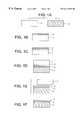
Hereinbelow is explained the above-mentioned hydrogen ion separation process with reference to FIGS. 1A to1F.
First, as illustrated in FIG. 1A, there are prepared asilicon substrate 1 and asupport substrate 2. A silicon wafer having (100) plane or a plane slightly inclined relative to (100) plane as a principal plane is usually selected as thesilicon substrate 1. The same silicon wafer as just mentioned is usually also selected as thesupport substrate 2.
Then, as illustrated in FIG. 1B, asilicon dioxide film 3 is formed at a surface of thesilicon substrate 1. Thissilicon dioxide film 3 will make an insulating film in an SOI structure. Hence, thesilicon dioxide film 3 is designed to have a thickness equal to a thickness of a buried oxide film required for fabrication of a device on an SOI substrate.
Then, as illustrated in FIG. 1C, hydrogen is ion-implanted into thesilicon substrate 1 through thesilicon dioxide film 3. The thus ion-implantedhydrogen 4 stays in thesilicon substrate 1 at a certain depth. When thesilicon substrate 1 is subject to heat treatment in a later step, thesilicon substrate 1 is separated at that depth into two pieces. One of the two pieces to which thesilicon dioxide film 3 belongs makes an SOI active layer in an SOI structure. Hence, in this step of ion-implanting hydrogen into thesilicon substrate 1, acceleration energy is controlled for the SOI active layer to have a desired thickness. Thesilicon substrate 1 is usually implanted at about 30-200 KeV with doses of 1×10¹⁶-3×10¹⁷H+ cm−2. The implanted hydrogen ions break bondings between silicon atoms in silicon crystal, and terminate non-bonded hands of silicon atoms.
Then, as illustrated in FIG. 1D, thesilicon substrate 1 is laid on top of thesupport substrate 2 so that surfaces of them make direct contact with each other. Thereafter, the thus overlappedsilicon substrate 1 and supportsubstrate 2 are subject to heat treatment.
The heat treatment has two stages.
In a first stage, heat treatment to be carried out at a relatively low temperature in the range of 300 to 800 degrees centigrade is applied to the overlappedsilicon substrate 1 andsupport substrate 2. By carrying out the first stage, thesilicon substrate 1 and thesupport substrate 2 make close contact with each other, and at the same time, thesilicon substrate 1 is separated into two pieces at the depth at whichhydrogen 4 have been ion-implanted, as illustrated in FIG.1E.
However, in accordance with the hydrogen ion separation process, since thesupport substrate 2 makes close contact with thesilicon substrate 1 with thesilicon dioxide film 3 being sandwiched therebetween, thesilicon substrate 1 is separated into two pieces one of which remains non-separated from thesilicon dioxide film 3 and thesupport substrate 2. One of the two pieces, which remains on thesilicon dioxide film 3, acts as an SOIactive layer 5. Thus, there is formed an SOI structure including thesupport substrate 2, thesilicon dioxide film 3 located on thesupport substrate 2, and the SOIactive layer 5 formed on thesilicon dioxide film 3. As mentioned above, the SOIactive layer 5 is one of the two pieces of thesilicon substrate 1.
The separation of thesilicon substrate 1 into two pieces is considered partially because of force of deformation caused due to a difference in a thermal expansion coefficient between thesupport substrate 2 and thesilicon dioxide film 3.
Then, in a second stage of the heat treatment, the SOI structure including the SOIactive layer 5, thesilicon dioxide film 3, and thesupport substrate 2 is subject to heat treatment at a relatively high temperature, specifically, at 1000 degrees centigrade or greater. Thus, as illustrated in FIG. 1F, there is completed an SOI substrate.
The second stage heat treatment is carried out for the purpose of enhancing bonding force between thesupport substrate 2 and thesilicon dioxide film 3, because it would be impossible to ensure sufficient bonding force therebetween only by the first stage heat treatment.
In the specification, a silicon wafer is distinctive from a silicon substrate. Specifically, the term “silicon wafer” is used as a generic name for indicating a wafer manufactured by a Czochralski (CZ) process, for instance, whereas the term “silicon substrate” is used to indicate a substrate on which an active layer is to be formed in fabrication of an SOI substrate.
When fabrication of an SOI substrate by hydrogen ion separation process is repeated, the other of the two pieces of thesilicon substrate 1, removed away in the above-mentioned first stage heat treatment, may be re-used as thesilicon substrate 1 or as thesupport substrate 2 in next fabrication of an SOI substrate.
For instance, Japanese Unexamined Patent Publications Nos. 2-46770 and 9-22993 have suggested fabrication of an SOI substrate by such a hydrogen ion separation process as mentioned above.
Apart from those Publications, fabrication of an SOI substrate by a hydrogen ion separation process has been reported in (a) C. Maleville et al., Silicon-on-Insulator and Devices VII, pp. 34, Electrochem. Soc., Pennington, 1996, and (b) Abe et al., Applied Physics, Vol. 66, No. 11, pp. 1220, 1997.
The hydrogen ion separation process for fabrication of an SOI substrate, having been explained so far, has many advantages as follows, for instance, in comparison with other processes for fabrication of an SOI substrate.
First, it is possible to control a thickness of an SOI active layer, since a thickness of an SOI active layer is dependent on a range distance of ion-implanted hydrogen. The hydrogen ion separation process is suitable in particular for fabrication of a super-thin film SOI substrate.
Second, it is possible to uniformize a thickness of an SOI active layer, and an SOI substrate can readily have a large diameter.
Third, it is possible to reduce fabrication cost, because the hydrogen ion separation process is comprised of steps of ion-implantation and heat treatment both of which are compatible with an ordinary LSI fabrication process.
Fourth, great designability is ensured for thicknesses of an SOI active layer and a buried oxide film.
Fifth, an efficiency for using a wafer is higher than that of other SOI substrate fabrication processes. Specifically, an SOI substrate fabrication process such as a process including the steps of laying a first substrate on a second substrate, and polishing the first or second substrate to thereby make a thin film requires preparation of two wafers for fabrication of an SOI substrate. On the other hand, the hydrogen ion separation process requires preparation of only one wafer for fabrication of an SOI substrate by using a silicon wafer as a support substrate, and re-using a removed piece of a silicon substrate as a silicon or support substrate in next fabrication of an SOI substrate.
However, the hydrogen ion separation process is accompanied with a problem that a resultant SOI active layer includes a lot of crystal defects therein. An SOI active layer made in accordance with the conventional hydrogen ion separation process usually includes crystal defects by the number of about 1×10³to 1×10⁴/cm2. Such a lot of crystal defects exert harmful influence on characteristics of a device to be formed on an SOI active layer including the crystal defects.
From the standpoint of practical use, it is absolutely necessary to reduce a crystal defect density in an SOI active layer down to about 1×10/cm2or smaller in order to use an SOI substrate in next generation LSI.
However, not only a method of reducing crystal defects, but also the reason why crystal defects are generated have not been found so far.
In view of the above-mentioned problem, it is an object of the present invention to make it possible to reduce a crystal defect density in an SOI active layer in fabrication of an SOI substrate by means of a hydrogen ion separation process.
In one aspect of the present invention, there is provided a method of fabricating a silicon-on-insulator substrate, including the steps of (a) forming a silicon substrate at a surface thereof with an oxygen-containing region containing oxygen at such a concentration that oxygen is not precipitated in the oxygen-containing region in later mentioned heat treatment, (b) forming a silicon oxide film at a surface of the silicon substrate, (c) implanting hydrogen ions into the silicon substrate through the silicon oxide film, (d) overlapping the silicon substrate and a support substrate each other so that the silicon oxide film makes contact with the support substrate, and (e) applying heat treatment to the thus overlapped silicon substrate and support substrate to thereby separate the silicon substrate into two pieces at a region into which the hydrogen ions have been implanted, one of the two pieces remaining on the silicon oxide film as a silicon-on-insulator active layer, the support substrate, the silicon oxide film located on the support substrate, and the silicon-on-insulator active layer formed on the silicon oxide film defining a silicon-on-insulator structure.
It is preferable that the heat treatment in the step (e) is comprised of first heat treatment to be carried out at a temperature in the range of 300 to 800 degrees centigrade both inclusive, and second heat treatment to be carried out at a temperature in the range of 1000 to 1200 degrees centigrade.
It is preferable that the oxygen-containing region is designed to contain oxygen at a concentration equal to or smaller than 1×10¹⁸/cm3.
In the step (c), ions other than hydrogen ions may be also implanted into the silicon substrate together with the hydrogen ions through the silicon oxide film.
It is preferable that the method further includes the step (f) of forming an oxide film at a surface of the support substrate, the silicon substrate and the support substrate being overlapped each other in the step (d) so that the silicon oxide films of the silicon substrate and the support substrate make contact with each other.
It is preferable that the method further includes the step (g) of causing at least one of the silicon substrate and the support substrate to absorb hydroxyl group thereinto prior to carrying out the step (d).
For instance, the step (g) may be comprised of the steps of removing a natural oxide film out of a surface of the substrate(s), and rinsing the substrate(s) in super-pure water.
It is preferable that the method further includes the step (h) of selecting a material of which the support substrate is composed, among one of silicon, quartz glass, sapphire, SiC, and diamond.
It is preferable that the support substrate and the silicon substrate are designed to have common characteristics, and the method further includes the step of (i) using the other of the two pieces of the silicon substrate as a support substrate in next fabrication of a silicon-on-insulator substrate.
It is preferable that the method further includes the step of (i) using the other of the two pieces of the silicon substrate as a silicon substrate in next fabrication of a silicon-on-insulator substrate.
There is further provided a method of fabricating a silicon-on-insulator substrate, including the steps of (a) forming a silicon oxide film at a surface of a silicon substrate containing oxygen at such a concentration that oxygen is not precipitated in the silicon substrate in later mentioned heat treatment, (b) implanting hydrogen ions into the silicon substrate through the silicon oxide film, (c) overlapping the silicon substrate and a support substrate each other so that the silicon oxide film makes contact with the support substrate, and (d) applying heat treatment to the thus overlapped silicon substrate and support substrate to thereby separate the silicon substrate into two pieces at a region into which the hydrogen ions have been implanted, one of the two pieces remaining on the silicon oxide film as a silicon-on-insulator active layer, the support substrate, the silicon oxide film located on the support substrate, and the silicon-on-insulator active layer formed on the silicon oxide film defining a silicon-on-insulator structure.
It is preferable that the method further includes the step of making the silicon substrate by a float zone purification (FZ) a magnetic-field-applied Czochralski (“MCZ”) process or MCZ process.
There is still further provided a method of fabricating a silicon-on-insulator substrate, including the steps of (a) forming a silicon substrate at a surface thereof with an oxygen-containing region containing oxygen at a lower concentration than a concentration of other regions of the silicon substrate so that oxygen is not precipitated in the oxygen-containing region in later mentioned heat treatment, (b) forming a silicon oxide film at a surface of the silicon substrate, (c) implanting hydrogen ions into the silicon substrate through the silicon oxide film, (d) overlapping the silicon substrate and a support substrate each other so that the silicon oxide film makes contact with the support substrate, and (e) applying heat treatment to the thus overlapped silicon substrate and support substrate to thereby separate the silicon substrate into two pieces at a region into which the hydrogen ions have been implanted, one of the two pieces remaining on the silicon oxide film as a silicon-on-insulator active layer, the support substrate, the silicon oxide film located on the support substrate, and the silicon-on-insulator active layer formed on the silicon oxide film defining a silicon-on-insulator structure.
It is preferable that the step (a) is carried out by applying heat treatment to the silicon substrate at 1000 degrees centigrade or greater in atmosphere containing oxygen at 1% or smaller, in which case, it is preferable that the heat treatment is carried out at 1300 degrees centigrade or smaller.
In another aspect of the present invention, there is provided a silicon-on-insulator substrate including (a) a substrate, (b) an insulating film formed on the substrate, and (c) a silicon layer containing oxygen at a concentration equal to or smaller than 1×10¹⁸/cm3.
It is preferable that the substrate contains hydroxyl group therein.
The substrate may be composed of one of silicon, quartz glass, sapphire, SiC, and diamond.
Hereinbelow is explained the principle of the present invention by which it is possible to fabricate an SOI substrate having crystal defects by the smaller number than crystal defects of an SOI substrate fabricated in accordance with a conventional hydrogen ion separation process.
The inventor inspected the reason why crystal defects are generated, and found out the following.
First, it was found out that a silicon substrate used in a conventional SOI substrate contained oxygen in a considerable amount, specifically, at a concentration of 1×10¹⁸/cm3or greater. In fabrication of an SOI substrate from such a silicon substrate by a hydrogen ion separation process, two stages heat treatment to be carried out after overlapping a silicon substrate and a support substrate each other generates precipitation cores of oxygen contained in a silicon substrate, and facilitates precipitation of oxygen. As a result, oxygen originally contained in a silicon substrate is precipitated, and the thus precipitated oxygen causes deformation in a silicon substrate, which in turn causes dislocation and/or rod-shaped crystal defects. In conclusion, crystal defects in an SOI active layer fabricated by a hydrogen ion separation process are caused by oxygen originally contained in a silicon substrate.
It was further found out that if an SOI substrate was made from a silicon substrate containing oxygen at a relatively low concentration, even after the above-mentioned two stage heat treatment was applied, oxygen was suppressed from being precipitated, and as a result, it was possible to prevent generation of crystal defects in an SOI active layer.
A crystal defect density of an SOI active layer is not in proportion to an oxygen concentration of a silicon substrate. It was found out that if a silicon substrate contained oxygen at a critical concentration or smaller, crystal defects were no longer generated. It was also found out that such a critical oxygen concentration was dependent on conditions of heat treatment to be carried out in an SOI substrate fabrication process, and was about 1×10¹⁸/cm3in ordinary conditions of heat treatment.
The above-mentioned phenomenon is considered that a silicon substrate has to contain oxygen at a critical concentration or greater in order that oxygen precipitation cores are generated during heat treatment, and that such a critical oxygen concentration is equal to about 1×10¹⁸/cm3.
Based on the above-mentioned discovery of the inventor, it is understood that it would be possible to prevent generation of crystal defects and thereby fabricate a qualified SOI substrate having less crystal defects by using a silicon substrate having a surface layer which will make an SOI active layer and which contains oxygen at a concentration of about 1×10¹⁸/cm3or smaller.
In the present invention, there may be used a silicon substrate containing oxygen at a relatively low concentration. As an alternative, there may be used a silicon substrate containing oxygen at a relatively high concentration, after the silicon substrate is treated to reduce an oxygen concentration at a surface thereof. For instance, a silicon substrate containing oxygen at a relatively low concentration, fabricated by FZ process or MCZ process, may be used without any pre-treatment. A silicon substrate containing oxygen at a relatively high concentration, fabricated by CZ process, may be used after an oxygen concentration at a surface thereof is reduced, for instance, by applying heat treatment in argon atmosphere thereto.
In order to strengthen a bonding force between a silicon oxide film to be formed on a surface of a silicon substrate, and a support substrate, a silicon substrate and/or a support substrate may be caused to absorb hydroxyl group (OH group) thereinto before overlapping them each other.
The above and other objects and advantageous features of the present invention will be made apparent from the following description made with reference to the accompanying drawings, in which like reference characters designate the same or similar parts throughout the drawings.
FIGS. 1A to1F are cross-sectional views of an SOI substrate, illustrating respective steps of a method of fabricating an SOI substrate by a hydrogen ion separation process, in accordance with the first embodiment of the present invention.
FIGS. 2A to2F are cross-sectional views of an SOI substrate, illustrating respective steps of a method of fabricating an SOI substrate by a hydrogen ion separation process, in accordance with the second embodiment of the present invention.
In the first embodiment, there is used a silicon substrate containing oxygen at a relatively low concentration in place of a silicon substrate containing oxygen at a relatively high concentration which has been conventionally used. As explained hereinbelow, it is possible to fabricate an SOI substrate having a reduced crystal defect density in accordance with the first embodiment having the same steps as those of a conventional hydrogen ion separation process except that a silicon substrate containing oxygen at a relatively low concentration is used.
A method of fabricating an SOI substrate in accordance with the first embodiment is explained hereinbelow with reference to FIGS. 1A to1F.
First, as illustrated in FIG. 1A, there are prepared asilicon substrate 1 and asupport substrate 2. As thesilicon substrate 1, there is used a silicon wafer containing oxygen at a concentration of 1×10¹⁸/cm3or smaller, fabricated by FZ or MCZ process, for instance. Thesilicon wafer 1 may have any plane azimuth. For instance, thesilicon wafer 1 may have (100) plane, (111) plane or plane slightly inclined relative to (100) or (111) plane.
There may be used a silicon wafer as thesupport substrate 2. As an alternative, thesupport substrate 2 may be composed of glass which can withstand heat treatment to be later carried out at 1000 degrees centigrade or greater, such as quartz glass, sapphire, SiC, or diamond. Thesupport substrate 2 may be formed at a surface thereof with a silicon dioxide film in advance.
Then, as illustrated in FIG. 1B, asilicon dioxide film 3 is formed at a surface of thesilicon substrate 1. Thissilicon dioxide film 3 will make an insulating film in an SOI structure. Hence, thesilicon dioxide film 3 is designed to have a thickness equal to a thickness of a buried oxide film required for fabrication of a device on an SOI substrate.
Thesilicon dioxide film 3 is preferably formed by thermal oxidation in O2or O2—H2atmosphere, because such thermal oxidation provides super characteristics as an oxide film to thesilicon dioxide film 3. When thesilicon dioxide film 3 is formed by thermal oxidation, not only a surface of thesilicon substrate 1 but also all outer surfaces of thesilicon substrate 1 are covered with thesilicon dioxide film 3, which does not exert any harmful influence on later steps.
Then, as illustrated in FIG. 1C, hydrogen is ion-implanted into thesilicon substrate 1 through thesilicon dioxide film 3. The thus ion-implantedhydrogen 4 stays in thesilicon substrate 1 at a certain depth. When thesilicon substrate 1 is subject to heat treatment in a later step, thesilicon substrate 1 is separated at that depth into two pieces. One of the two pieces to which thesilicon dioxide film 3 belongs makes an SOI active layer in an SOI structure. Hence, in this step of ion-implanting hydrogen into thesilicon substrate 1, acceleration energy is controlled so that the SOI active layer has a desired thickness. In the instant embodiment, thesilicon substrate 1 is implanted at about 30-200 KeV with doses of 1×10¹⁶-3×10¹⁷H+ cm−2. The implanted hydrogen ions break bondings between silicon atoms in silicon crystal, and terminate non-bonded hands of silicon atoms.
Other ions different from hydrogen ions, such as helium ions, may be implanted into thesilicon substrate 1 together with hydrogen ions. Such ion-implantation of hydrogen ions and other ions facilitates separation of thesilicon substrate 1 in a later mentioned step.
Then, as illustrated in FIG. 1D, thesilicon substrate 1 is laid on top of thesupport substrate 2 so that surfaces of them make direct contact with each other. Thereafter, the thus overlappedsilicon substrate 1 and supportsubstrate 2 are subject to heat treatment, which is carried out in two stages.
In a first stage, heat treatment to be carried out at a relatively low temperature in the range of 300 to 800 degrees centigrade is applied to the overlappedsilicon substrate 1 and supportsubstrate 2. When the temperature is set high, the first stage heat treatment is carried out for a short period of time, whereas when the temperature is set low, the first stage heat treatment is carried out for a long period of time. For instance, when the first stage heat treatment is carried out at 800 degrees centigrade, the heat treatment lasts for about 10 minutes, whereas when the first stage heat treatment is carried out at 300 degrees centigrade, the heat treatment lasts for about 2 hours.
By carrying out the first stage heat treatment, thesilicon substrate 1 and thesupport substrate 2 make close contact with each other, and at the same time, thesilicon substrate 1 is separated into two pieces at the depth at whichhydrogen 4 have been ion-implanted, as illustrated in FIG.1E.
Since thesupport substrate 2 makes close contact with thesilicon substrate 1 with thesilicon dioxide film 3 being sandwiched therebetween, thesilicon substrate 1 is separated into two pieces one of which remains non-separated from thesilicon dioxide film 3 and thesupport substrate 2. One of the two pieces, which remains on thesilicon dioxide film 3, makes an SOIactive layer 5. Thus, there is formed an SOI structure including thesupport substrate 2, thesilicon dioxide film 3 located on thesupport substrate 2, and the SOIactive layer 5 formed on thesilicon dioxide film 3. As mentioned above, the SOIactive layer 5 is one of the two pieces of thesilicon substrate 1.
Then, in a second stage of the heat treatment, an SOI structure including the SOIactive layer 5, thesilicon dioxide film 3, and thesupport substrate 2 is subject to heat treatment at a relatively high temperature to thereby enhance a bonding force between thesupport substrate 2 and thesilicon dioxide film 3. Thus, as illustrated in FIG. 1F, there is completed an SOI substrate.
The second stage heat treatment is carried out at about 1000 to 1200 degrees centigrade. Similarly to the first stage heat treatment, when the temperature is set high, the second stage heat treatment is carried out for a short period of time, whereas when the temperature is set low, the second stage heat treatment is carried out for a long period of time. For instance, when the second stage heat treatment is carried out at 1200 degrees centigrade, the heat treatment lasts for about 30 minutes, whereas when the second stage heat treatment is carried out at 1000 degrees centigrade, the heat treatment lasts for about 4 hours.
The thus fabricated SOI structure was estimated with respect to crystallinity of the SOIactive layer 5 by a selective etching process, a transmission electron microscope process, an X-ray topography process, and a photoluminescence process. The results were that a crystal defect density of the SOIactive layer 5 was equal to or smaller than 1×10¹⁸/cm3, if the SOI structure was fabricated in the conditions mentioned in the first embodiment. The results are sufficiently suitable for fabrication of LSI which is required to be fabricated smaller and smaller in size. Thus, the SOI structure in accordance with the instant embodiment makes it possible to completely solve the above-mentioned problem of a conventional hydrogen ion separation process.
Hereinbelow are explained examples of the first embodiment and reference examples.
In the first example, an SOI substrate was fabricated by a hydrogen ion separation process, using a silicon wafer, as thesilicon substrate 1, which was fabricated by FZ process and contained oxygen at a concentration of 2×10¹⁷/cm3. In the first example and all of examples and reference examples mentioned hereinbelow, a silicon wafer used was selected to have (100) plane as a principal plane.
In the first example, there were prepared six different support substrates A to F, as follows.
1. Support substrate A
The support substrate A has the same structure as thesilicon substrate 1. That is, the support substrate A was a silicon wafer fabricated by FZ process and containing oxygen at a concentration of 2×10¹⁷/cm3.
2. Support substrate B
The support substrate B was fabricated by applying heat treatment at 1000 degrees centigrade in O2atmosphere to the support substrate A for thermal oxidation. Accordingly, the support substrate B was formed at a surface thereof with a 0.1 μm-thick oxide film.
3. Support substrate C
The support substrate C was a silicon wafer fabricated by CZ process and containing oxygen at a concentration of 2×10¹⁸/cm3.
4. Support substrate D
The support substrate D was fabricated by applying heat treatment at 1000 degrees centigrade in O2atmosphere to the support substrate C for thermal oxidation. Accordingly, the support substrate D was formed at a surface thereof with a 0.1 μm-thick oxide film.
5. Support substrate E
The support substrate E was composed of quartz glass.
6. Support substrate F
The support substrate F was composed of quartz glass and formed with at a surface thereof with a 0.1 μm-thick silicon dioxide film by chemical vapor deposition (CVD).
Then, heat treatment at 1000 degrees centigrade in O2atmosphere was applied to thesilicon substrate 1 to thereby form a 0.1 μm-thicksilicon dioxide film 3 at a surface of thesilicon substrate 1, as illustrated in FIG.1B.
Then, as illustrated in FIG. 1C, hydrogen was ion-implanted into thesilicon substrate 1 through thesilicon dioxide film 3. The thus ion-implantedhydrogen 4 stayed in thesilicon substrate 1 at a certain depth. Thesilicon substrate 1 was implanted at 80 KeV with doses of 5×10¹⁶H+ cm−2.
Then, thesilicon substrate 1 having the structure as illustrated in FIG. 1C was laid on top of each one of the support substrates A to F so that surfaces of them make direct contact with each other, as illustrated in FIG.1D. When thesilicon substrate 1 illustrated in FIG. 1C was laid on top of the substrates B, D and F all of which had a silicon dioxide film at a surface, thesilicon dioxide film 3 of thesilicon substrate 1 and the silicon dioxide film of the support substrates B, D and F were overlapped each other.
Then, the thus overlappedsilicon substrate 1 and supportsubstrate 2 were subject to heat treatment at 500 degrees centigrade for 1 hour. As a result, thesilicon substrate 1 was broken at a region at whichhydrogen ions 4 have been implanted, into two pieces as illustrated in FIG.1E. One of the two pieces of thesilicon substrate 1 remains on thesilicon dioxide film 3, and makes an SOIactive layer 5.
Then, the thus fabricated structure including thesupport substrate 2, thesilicon dioxide film 3, and the SOIactive layer 5 was subject to heat treatment at 1100 degrees centigrade for 2 hours to thereby enhance a bonding force between thesupport substrate 2 and thesilicon dioxide film 3.
Thus, there was completed an SOI structure, as illustrated in FIG.1F.
In such a manner as mentioned above, there were fabricated six different SOI structures each including the support substrate A, B, C, D, E or F, thesilicon dioxide layer 3, and the SOIactive layer 5. Those six SOI structures had an SOI active layer having a crystal defect density smaller than 10 cm−2.
In the second example, an SOI substrate was fabricated by a hydrogen ion separation process, using a silicon wafer, as thesilicon substrate 1, which was fabricated by MCZ process and contained oxygen at a concentration of 5×10¹⁷/cm3.
In the second example, there were prepared six different support substrates A to F, as follows.
1. Support substrate A
The support substrate A has the same structure as thesilicon substrate 1. That is, the support substrate A was a silicon wafer fabricated by MCZ process and containing oxygen at a concentration of 5×10¹⁷/cm3.
2. Support substrate B
The support substrate B was fabricated by applying heat treatment at 1000 degrees centigrade in O2atmosphere to the support substrate A for thermal oxidation. Accordingly, the support substrate B was formed at a surface thereof with a 0.1 μm-thick oxide film.
3-6. Support substrates C-F
The support substrates C to F were the same as the support substrates C to F having been used in the first example.
In the same manner as the above-mentioned first example, there were fabricated six different SOI structures each including the support substrate A, B, C, D, E or F, thesilicon dioxide layer 3, and the SOIactive layer 5.
Those six SOI structures had an SOI active layer having a crystal defect density smaller than 10 cm−2.
In the reference example, an SOI substrate was fabricated by a conventional hydrogen ion separation process, using a silicon wafer, as thesilicon substrate 1, which was fabricated by CZ process and contained oxygen at a concentration of 2×10¹⁸/cm3.
In the reference example, there were prepared six different support substrates A to F, which were the same as the support substrates A to F having been used in the first example.
In the same manner as the above-mentioned first example, there were fabricated six different SOI structures each including the support substrate A, B, C, D, E or F, thesilicon dioxide layer 3, and the SOIactive layer 5.
The thus fabricated six SOI structures had an SOI active layer having a crystal defect density in the range of 1×10³to 1×104cm−2. The reason why the SOI active layer in the reference example had so high crystal defect density was that the SOI active layer contained a lot of crystal defects such as oxygen precipitate, dislocation caused by deformation in the SOI active layer which was in turn caused by oxygen precipitate, and rod-shaped defects. Those crystal defects were not found in the SOI substrates made in accordance with the above-mentioned first and second examples.
In view of comparison between the first and second examples and the reference example, it is understood that a crystal defect density of an SOI active layer can be decreased by using a silicon substrate containing oxygen at a relatively low concentration. Since a crystal defect density is not dependent on a particular support substrate, there may be selected a support substrate suitable for an SOI substrate to be fabricated.
If a silicon substrate containing oxygen at a relatively low concentration is used as both thesilicon substrate 1 and thesupport substrate 2, as mentioned in the above-mentioned first and second examples wherein the supports substrates A and B are composed of the same silicon wafer as thesilicon substrate 1, an unnecessary piece of thesilicon substrate 1, removed away in the step illustrated in FIG. 1E, may be used as a support substrate in next SOI fabrication. Hence, a silicon wafer is wholly used for fabrication of an SOI substrate without any waste.
As an alternative, an unnecessary piece of thesilicon substrate 1, removed away in the step illustrated in FIG. 1E, may be used as a silicon substrate in next SOI fabrication, in which case, it is not necessary for a support substrate to be composed of a silicon wafer.
In the second embodiment, a silicon wafer containing oxygen at a relatively high concentration is used as a silicon substrate after a region thereof close to a surface, at which an SOI active layer is to be formed, has been treated so as to reduce an oxygen concentration in the region. In the above-mentioned first embodiment, a silicon wafer containing oxygen at a relatively low concentration was used as thesilicon substrate 1. However, an SOI active layer on which a device is to be fabricated occupies merely a part of a surface of a silicon substrate. Accordingly, if a region at which an SOI active layer is to be fabricated is designed to contain oxygen at a relatively low concentration, other region of the silicon substrate is allowed to contain oxygen at a relatively high concentration.
A method of fabricating an SOI substrate in accordance with the second embodiment is explained hereinbelow with reference to FIGS. 2A to2F.
In the second embodiment, asilicon substrate 1 is first processed so as to have aregion 6 which contains oxygen at a relatively low concentration, as illustrated in FIG.2A.
Thesilicon substrate 1 can be caused to have theregion 6 by applying heat treatment at about 1000 to 1300 degrees centigrade in atmosphere containing oxygen at a concentration of about 1% or smaller to thesilicon substrate 1 to thereby form a denuded zone at a region in the vicinity of a surface of thesilicon substrate 1. The above-mentioned atmosphere may be established as inert gas atmosphere such as argon atmosphere.
As an alternative, a silicon epitaxial layer may be grown on a surface of thesilicon substrate 1 in a conventional manner. The thus grown silicon epitaxial layer defines theregion 6 containing oxygen at a relatively low concentration.
Theregion 6 is formed to have a thickness equal to or greater than a thickness of a later formed SOIactive layer 5. Herein, a thickness of the SOIactive layer 5 is equal to a depth of thesilicon substrate 1 to which hydrogen ions are implanted in a later mentioned step illustrated in FIG.2C.
Theregion 6 is designed to contain oxygen at a concentration equal to or smaller than 1×10¹⁸/cm3.
After the formation of theregion 6 at a surface of thesilicon substrate 1, the same steps as the steps of the first embodiment are carried out, as illustrated in FIGS. 2A to2F.
First, as illustrated in FIG. 2A, there is prepared asupport substrate 2.
There may be used a silicon wafer as thesupport substrate 2. As an alternative, thesupport substrate 2 may be composed of quartz glass, sapphire, SiC, or diamond. Thesupport substrate 2 may be formed at a surface thereof with a silicon dioxide film in advance.
Then, as illustrated in FIG. 2B, asilicon dioxide film 3 is formed at a surface of thesilicon substrate 1.
Then, as illustrated in FIG. 2C, hydrogen is ion-implanted into thesilicon substrate 1 through thesilicon dioxide film 3. The thus ion-implantedhydrogen 4 stays in thesilicon substrate 1 at a certain depth.
Then, as illustrated in FIG. 2D, thesilicon substrate 1 is laid on top of thesupport substrate 2 so that surfaces of them make direct contact with each other. Thereafter, the thus overlappedsilicon substrate 1 and supportsubstrate 2 are subject to heat treatment, which is carried out in two stages.
In a first stage, heat treatment to be carried out at a relatively low temperature in the range of 300 to 800 degrees centigrade is applied to the overlappedsilicon substrate 1 and supportsubstrate 2.
By carrying out the first stage heat treatment, thesilicon substrate 1 and thesupport substrate 2 make close contact with each other, and at the same time, thesilicon substrate 1 is separated into two pieces at the depth at whichhydrogen 4 have been ion-implanted, as illustrated in FIG.2E.
Since thesupport substrate 2 makes close contact with thesilicon substrate 1 with thesilicon dioxide film 3 being sandwiched therebetween, thesilicon substrate 1 is separated into two pieces, one of which remains nonseparated from thesilicon dioxide film 3 and thesupport substrate 2. One of the two pieces, which remains on thesilicon dioxide film 3, makes an SOIactive layer 5. Thus, there is formed an SOI structure including thesupport substrate 2, thesilicon dioxide film 3 located on thesupport substrate 2, and the SOIactive layer 5 formed on thesilicon dioxide film 3.
Then, in a second stage of the heat treatment, an SOI structure including the SOIactive layer 5, thesilicon dioxide film 3, and thesupport substrate 2 is subject to heat treatment at a relatively high temperature to thereby enhance a bonding force between thesupport substrate 2 and thesilicon dioxide film 3. Thus, as illustrated in FIG. 2F, there is completed an SOI substrate.
Similarly to the first embodiment, one of two pieces of thesilicon substrate 1, removed away in the step illustrated in FIG. 2E, may be used as a silicon substrate or a support substrate in next fabrication of an SOI substrate.
In the third example, there was used a silicon wafer fabricated by CZ process and containing oxygen at a concentration of as thesilicon substrate 1. Thesilicon substrate 1 was formed at a surface thereof with theregion 6 containing oxygen at a relatively low concentration. Then, an SOI substrate was fabricated by a hydrogen ion separation process.
Theregion 6 was formed by applying heat treatment in argon atmosphere to thesilicon substrate 1 to thereby form a denuded zone. The heat treatment was carried out at 1200 degrees centigrade at atmospheric pressure in 100%-argon atmosphere for 5 hours. The thus formedregion 6 had a depth of 10 μm and contained oxygen at a concentration of 8×10¹⁷/cm3.
In the third example, there were prepared four different support substrates A to D, as follows.
1. Support substrate A
The support substrate A was a silicon wafer fabricated by CZ process and containing oxygen at a concentration of 2×10¹⁸/cm3.
2. Support substrate B
The support substrate B was fabricated by applying heat treatment at 1000 degrees centigrade in O2atmosphere to the support substrate A for thermal oxidation. Accordingly, the support substrate B was formed at a surface thereof with a 0.1 μm-thick oxide film.
3. Support substrate C
The support substrate C was a substrate composed of quartz glass.
4. Support substrate D
The support substrate D was a quartz glass substrate, and was formed at a surface thereof with a 0.1 μm-thick silicon dioxide film by CVD.
The SOI substrate in accordance with the third example was fabricated in the same manner as the SOI substrate in accordance with the first example. That is, there were fabricated four different SOI structures each including the support substrate A, B, C, or D, thesilicon dioxide layer 3, and the SOIactive layer 5. Those four SOI structures had an SOI active layer having a crystal defect density smaller than 10 cm−2.
In the third embodiment, before thesilicon substrate 1 is laid on top of thesupport substrate 2, thesilicon substrate 1 and/or thesupport substrate 2 are (is) caused to absorb hydroxyl group (OH group) thereinto for enhancing a bonding force therebetween.
In the third embodiment, thesilicon substrate 1 is selected among thesilicon substrates 1 having been used in the above-mentioned first, second and third examples. There is used a silicon wafer as thesupport substrate 2.
The method of fabricating an SOI substrate in accordance with the third embodiment has the same steps of the methods of fabricating SOI substrates in accordance with the first and second embodiments, but has an additional step of causing hydroxyl group to be absorbed into thesilicon substrate 1 and/or thesupport substrate 2 before thosesubstrates substrates substrates 1 and/or2 to thereby remove a natural oxidation film at a surface of thesubstrates 1 and/or2, and then, rinsing thesubstrates 1 and/or2 with super-pure water.
By causing thesilicon substrate 1 and/or thesupport substrate 2 to absorb OH group thereinto, it is possible to enhance a bonding force between thesubstrates active layer 5 can be decreased through the use of thesilicon substrate 1 containing oxygen at a relatively low concentration, and that a bonding force between thesilicon substrate 1 and thesupport substrate 2 can be enhanced, as mentioned above.
In the fourth example, there were used thesilicon substrate 1 constituted of a silicon wafer fabricated by FZ process and containing oxygen at a concentration of 2×10¹⁷/cm3, and thesupport substrate 2 constituted of a silicon wafer fabricated by CZ process and containing oxygen at a concentration of 2×10¹⁸/cm3.
In the same way as the above-mentioned first example, thesilicon substrate 1 was formed at a surface thereof with thesilicon dioxide film 3, andhydrogen ions 4 were implanted into thesilicon substrate 1 through thesilicon dioxide film 3.
Then, thesilicon substrate 1 and thesupport substrate 2 were treated in the following conditions A to D.
1. Condition A
Both thesilicon substrate 1 and thesupport substrate 2 were subject to 49%-HF treatment to thereby remove a natural oxide film therefrom, and then, were rinsed with super-pure water to thereby cause OH group to be absorbed into thesubstrates
2. Condition B
Only thesilicon substrate 1 was caused to absorb OH group thereinto in the same way as the condition A.
3. Condition C
Only thesupport substrate 2 was caused to absorb OH group thereinto in the same way as the condition A.
4. Condition D
Neither of thesilicon substrate 1 and thesupport substrate 2 were caused to absorb OH group thereinto.
After the above-mentioned surface treatment of the silicon andsupport substrates silicon substrates 1 was laid on top of an associated one of thesupport substrates 2. Thereafter, the thus overlapped four silicon andsupport substrates
Those four SOI structures had an SOI active layer having a crystal defect density smaller than 10 cm−2.
A bonding force between thesupport substrate 2 and thesilicon dioxide film 3 in each of the SOI structures was measured by tensile stress process. It was found out that a bonding force was greater in the order of the conditions A, C, B and D. This result means that a bonding force can be increased by causing thesilicon substrate 1 and/or thesupport substrate 2 to absorb OH group thereinto.
Though thesupport substrate 2 was constituted of a silicon wafer in the instant embodiment, thesupport substrate 2 may be composed of quartz glass, sapphire, SiC or diamond. As an alternative, thesupport substrate 2 composed of any one of those materials may be formed at a surface thereof with a silicon dioxide film.
It should be noted that conditions for fabricating an SOI substrate in accordance with each of the first to third embodiments might be modified. For instance, a method of and conditions for forming a silicon dioxide film on the silicon andsupport substrates
While the present invention has been described in connection with the preferred embodiments and examples, the present invention makes it possible to significantly reduce a crystal defect density in an SOI active layer by using a silicon substrate containing oxygen at a relatively low concentration in fabrication of an SOI substrate. This ensures that a substrate made in accordance with the present invention can be used for fabricating electronic devices thereon.
Thus, the present invention gives life to the earlier mentioned advantages of a hydrogen ion separation process, and provides highly quality SOI-structured electronic devices at low cost.
While the present invention has been described in connection with certain preferred embodiments, it is to be understood that the subject matter encompassed by way of the present invention is not to be limited to those specific embodiments. On the contrary, it is intended for the subject matter of the invention to include all alternatives, modifications and equivalents as can be included within the spirit and scope of the following claims.
The entire disclosure of Japanese Patent Application No. 10-108202 filed on Apr. 17, 1998 including specification, claims, drawings and summary is incorporated herein by reference in its entirety.
Claims (33)
1. A method of fabricating a silicon-on-insulator substrate, comprising the steps of:
(a) forming a silicon substrate with an oxygen-containing region, wherein said oxygen-containing region contains oxygen at such a concentration that oxygen is not precipitated in said oxygen-containing region during heat treatment;
(b) forming a silicon oxide film at a surface of said silicon substrate;
(c) implanting hydrogen ions into said silicon substrate through said silicon oxide film;
(d) overlapping said silicon substrate and a support substrate each other so that said silicon oxide film makes contact with said support substrate; and
(e) applying heat treatment to the thus overlapped silicon substrate and support substrate to thereby separate said silicon substrate into two pieces at a region into which said hydrogen ions have been implanted, one of said two pieces remaining on said silicon oxide film as a silicon-on-insulator active layer,
said support substrate, said silicon oxide film located on said support substrate, and said silicon-on-insulator active layer formed on said silicon oxide film defining a silicon-on-insulator structure.
2. The method as set forth in claim1, wherein said heat treatment in said step (e) is comprised of first heat treatment to be carried out at a temperature in the range of 300 to 800 degrees centigrade both inclusive, and second heat treatment to be carried out at a temperature in the range of 1000 to 1200 degrees centigrade.
3. The method as set forth in claim1, wherein said oxygen-containing region contains oxygen at a concentration equal to or smaller than 1×10¹⁸/cm3.
4. The method as set forth in claim1, wherein ions other than hydrogen ions are also implanted into said silicon substrate together with said hydrogen ions through said silicon oxide film in said step (c).
5. The method as set forth in claim1, further comprising the step (f) of forming an oxide film at a surface of said support substrate, said silicon substrate and said support substrate being overlapped each other in said step (d) so that said silicon oxide films of said silicon substrate and said support substrate make contact with each other.
6. The method as set forth in claim1, further comprising the step (g) of causing at least one of said silicon substrate and said support substrate to absorb hydroxyl group thereinto prior to carrying out said step (d).
7. The method as set forth in claim6, wherein said step (g) is comprised of the steps of removing a natural oxide film out of a surface of said substrate(s), and rinsing said substrate(s) in super-pure water.
8. The method as set forth in claim1, further comprising the step (h) of selecting a material of which said support substrate is composed, among one of silicon, quartz glass, sapphire, SiC, and diamond.
9. The method as set forth in claim1, wherein said support substrate and said silicon substrate are designed to have common characteristics, and further comprising the step of (i) using the other of said two pieces of said silicon substrate as a support substrate in next fabrication of a silicon-on-insulator substrate.
10. The method as set forth in claim1, further comprising the step of (i) using the other of said two pieces of said silicon substrate as a silicon substrate in next fabrication of a silicon-on-insulator substrate.
11. A method of fabricating a silicon-on-insulator substrate, comprising the steps of:
(a) forming a silicon oxide film at a surface of a silicon substrate, wherein said silicon substrate contains oxygen at such a concentration that oxygen is not precipitated in said silicon substrate during heat treatment;
(b) implanting hydrogen ions into said silicon substrate through said silicon oxide film;
(c) overlapping said silicon substrate and a support substrate each other so that said silicon oxide film makes contact with said support substrate; and
(d) applying heat treatment to the thus overlapped silicon substrate and support substrate to thereby separate said silicon substrate into two pieces at a region into which said hydrogen ions have been implanted, one of said two pieces remaining on said silicon oxide film as a silicon-on-insulator active layer,
said support substrate, said silicon oxide film located on said support substrate, and said silicon-on-insulator active layer formed on said silicon oxide film defining a silicon-on-insulator structure.
12. The method as set forth in claim11, further comprising the step of making said silicon substrate by a float zone purification (“FZ”) process or a magnetic-field-applied Czochralski (“MCZ”) process.
13. The method as set forth in claim11, wherein said heat treatment in said step (d) is comprised of first heat treatment to be carried out at a temperature in the range of 300 to 800 degrees centigrade both inclusive, and second heat treatment to be carried out at a temperature in the range of 1000 to 1200 degrees centigrade.
14. The method as set forth in claim11, wherein said silicon substrate contains oxygen at a concentration equal to or smaller than 1×10¹⁸/cm3.
15. The method as set forth in claim11, wherein ions other than hydrogen ions are also implanted into said silicon substrate together with said hydrogen ions through said silicon oxide film in said step (b).
16. The method as set forth in claim11, further comprising the step (e) of forming an oxide film at a surface of said support substrate, said silicon substrate and said support substrate being overlapped each other in said step (c) so that said silicon oxide films of said silicon substrate and said support substrate make contact with each other.
17. The method as set forth in claim11, further comprising the step (f) of causing at least one of said silicon substrate and said support substrate to absorb hydroxyl group thereinto prior to carrying out said step (c).
18. The method as set forth in claim17, wherein said step (f) is comprised of the steps of removing a natural oxide film out of a surface of said substrate(s), and rinsing said substrate(s) in super-pure water.
19. The method as set forth in claim11, further comprising the step (g) of selecting a material of which said support substrate is composed, among one of silicon, quartz glass, sapphire, SiC, and diamond.
20. The method as set forth in claim11, wherein said support substrate and said silicon substrate are designed to have common characteristics, and further comprising the step of (h) using the other of said two pieces of said silicon substrate as a support substrate in next fabrication of a silicon-on-insulator substrate.
21. The method as set forth in claim11, further comprising the step of (h) using the other of said two pieces of said silicon substrate as a silicon substrate in next fabrication of a silicon-on-insulator substrate.
22. A method of fabricating a silicon-on-insulator substrate, comprising the steps of:
(a) forming a silicon substrate with an oxygen-containing region, wherein said oxygen-containing region contains oxygen at a lower concentration than a concentration of other regions of said silicon substrate so that oxygen is not precipitated in said oxygen-containing region during heat treatment;
(b) forming a silicon oxide film at a surface of said silicon substrate;
(c) implanting hydrogen ions into said silicon substrate through silicon oxide film;
(d) overlapping said silicon substrate and a support substrate each other so that said silicon oxide film makes contact with said support substrate; and
(e) applying heat treatment to the thus overlapped silicon substrate and support substrate to thereby separate said silicon substrate into two pieces at a region into which said hydrogen ions have been implanted, one of said two pieces remaining on said silicon oxide film as a silicon-on-insulator active layer,
said support substrate, said silicon oxide film located on said support substrate, and said silicon-on-insulator active layer formed on said silicon oxide film defining a silicon-on-insulator structure.
23. The method as set forth in claim22, wherein said step (a) is carried out by applying heat treatment to said silicon substrate at 1000 degrees centigrade or greater in atmosphere containing oxygen at 1% or smaller.
24. The method as set forth in claim23, wherein said heat treatment is carried out at 1300 degrees centigrade or smaller.
25. The method as set forth in claim22, wherein said heat treatment in said step (e) is comprised of first heat treatment to be carried out at a temperature in the range of 300 to 800 degrees centigrade both inclusive, and second heat treatment to be carried out at a temperature in the range of 1000 to 1200 degrees centigrade.
26. The method as set forth in claim22, wherein said oxygen-containing region contains oxygen at a concentration equal to or smaller than 1×10¹⁸/cm3.
27. The method as set forth in claim22, wherein ions other than hydrogen ions are also implanted into said silicon substrate together with said hydrogen ions through said silicon oxide film in said step (c).
28. The method as set forth in claim22, further comprising the step (f) of forming an oxide film at a surface of said support substrate, said silicon substrate and said support substrate being overlapped each other in said step (d) so that said silicon oxide films of said silicon substrate and said support substrate make contact with each other.
29. The method as set forth in claim22, further comprising the step (g) of causing at least one of said silicon substrate and said support substrate to absorb hydroxyl group thereinto prior to carrying out said step (d).
30. The method as set forth in claim29, wherein said step (g) is comprised of the steps of removing a natural oxide film out of a surface of said substrate(s), and rinsing said substrate(s) in super-pure water.
31. The method as set forth in claim22, further comprising the step (h) of selecting a material of which said support substrate is composed, among one of silicon, quartz glass, sapphire, SiC, and diamond.
32. The method as set forth in claim22, wherein said support substrate and said silicon substrate are designed to have common characteristics, and further comprising the step of (i) using the other of said two pieces of said silicon substrate as a support substrate in next fabrication of a silicon-on-insulator substrate.
33. The method as set forth in claim22, further comprising the step of (i) using the other of said two pieces of said silicon substrate as a silicon substrate in next fabrication of a silicon-on-insulator substrate.
Priority Applications (1)
| Application Number | Priority Date | Filing Date | Title |
|---|---|---|---|
| US09/518,692US6489654B2 (en) | 1998-04-17 | 2000-03-03 | Silicon-on-insulator (SOI) substrate |
Applications Claiming Priority (3)
| Application Number | Priority Date | Filing Date | Title |
|---|---|---|---|
| JP10108202AJPH11307747A (en) | 1998-04-17 | 1998-04-17 | Soi substrate and production thereof |
| JP10-108202 | 1998-04-17 | ||
| FR0452015AFR2860100B1 (en) | 1998-04-17 | 2004-09-10 | "SILICON-INSULATING" SUBSTRATE (SOI) AND METHOD OF MAKING SAID SUBSTRATE |
Related Child Applications (1)
| Application Number | Title | Priority Date | Filing Date |
|---|---|---|---|
| US09/518,692DivisionUS6489654B2 (en) | 1998-04-17 | 2000-03-03 | Silicon-on-insulator (SOI) substrate |
Publications (1)
| Publication Number | Publication Date |
|---|---|
| US6211041B1true US6211041B1 (en) | 2001-04-03 |
Family
ID=34575719
Family Applications (2)
| Application Number | Title | Priority Date | Filing Date |
|---|---|---|---|
| US09/292,948Expired - LifetimeUS6211041B1 (en) | 1998-04-17 | 1999-04-16 | Silicon-on-insulator (SOI) substrate and method of fabricating the same |
| US09/518,692Expired - LifetimeUS6489654B2 (en) | 1998-04-17 | 2000-03-03 | Silicon-on-insulator (SOI) substrate |
Family Applications After (1)
| Application Number | Title | Priority Date | Filing Date |
|---|---|---|---|
| US09/518,692Expired - LifetimeUS6489654B2 (en) | 1998-04-17 | 2000-03-03 | Silicon-on-insulator (SOI) substrate |
Country Status (3)
| Country | Link |
|---|---|
| US (2) | US6211041B1 (en) |
| JP (1) | JPH11307747A (en) |
| FR (3) | FR2782572B1 (en) |
Cited By (50)
| Publication number | Priority date | Publication date | Assignee | Title |
|---|---|---|---|---|
| US6346459B1 (en)* | 1999-02-05 | 2002-02-12 | Silicon Wafer Technologies, Inc. | Process for lift off and transfer of semiconductor devices onto an alien substrate |
| US6362075B1 (en)* | 1999-06-30 | 2002-03-26 | Harris Corporation | Method for making a diffused back-side layer on a bonded-wafer with a thick bond oxide |
| US6372561B1 (en)* | 2001-06-01 | 2002-04-16 | Advanced Micro Devices, Inc. | Fabrication of fully depleted field effect transistor formed in SOI technology with a single implantation step |
| WO2003012864A1 (en)* | 2001-07-31 | 2003-02-13 | Intel Corporation | Electronic assembly including a die having an integrated circu it and a layer of diamond and methods of producing the same |
| US6538284B1 (en)* | 2001-02-02 | 2003-03-25 | Advanced Micro Devices, Inc. | SOI device with body recombination region, and method |
| EP1359615A1 (en)* | 2002-05-02 | 2003-11-05 | S.O.I.Tec Silicon on Insulator Technologies | Method of delaminating material layers |
| US20040121561A1 (en)* | 2002-12-24 | 2004-06-24 | Ravi Kramadhati V. | Method of forming electronic dies wherein each die has a layer of solid diamond |
| US6770507B2 (en)* | 2000-01-25 | 2004-08-03 | Shin-Etsu Handotai Co., Ltd | Semiconductor wafer and method for producing the same |
| DE10260286A1 (en)* | 2002-12-20 | 2004-08-19 | Infineon Technologies Ag | Doping semiconducting body for manufacturing high voltage components involves forming defects by ion implantation of non-doping ions, processing with hydrogen and then annealing |
| US20040229444A1 (en)* | 2003-02-18 | 2004-11-18 | Couillard James G. | Glass-based SOI structures |
| US20050019967A1 (en)* | 2003-07-24 | 2005-01-27 | Ravi Kramadhati V. | Method of fabricating a microelectronic die |
| US20050074951A1 (en)* | 2003-10-01 | 2005-04-07 | Yoo Woo Sik | Selective heating using flash anneal |
| US20050245048A1 (en)* | 2004-04-29 | 2005-11-03 | Siltronic Ag | SOI wafer and method for producing it |
| US20060038228A1 (en)* | 2004-08-18 | 2006-02-23 | Aitken Bruce G | High strain glass/glass-ceramic containing semiconductor-on-insulator structures |
| US20060040470A1 (en)* | 2004-08-19 | 2006-02-23 | Nadia Ben Mohamed | Methods for minimizing defects when transferring a semiconductor useful layer |
| US20060038227A1 (en)* | 2004-08-18 | 2006-02-23 | Aitken Bruce G | Strained semiconductor-on-insulator structures and methods for making strained semiconductor-on-insulator structures |
| US20060128116A1 (en)* | 2004-12-14 | 2006-06-15 | Sung Ku Kwon | Manufacturing method of silicon on insulator wafer |
| US20060148208A1 (en)* | 2003-01-14 | 2006-07-06 | Popov Vladimir P | Method for producing a silicon-on-insulator structure |
| US20060266437A1 (en)* | 2003-09-05 | 2006-11-30 | Nobuyuki Morimoto | Method for producing soi wafer |
| US20070048968A1 (en)* | 2005-08-26 | 2007-03-01 | Couillard James G | Semiconductor on glass insulator with deposited barrier layer |
| US20070108522A1 (en)* | 2005-11-14 | 2007-05-17 | Nec Electronics Corporation | SOI substrate and method of manufacturing the same |
| US20070117354A1 (en)* | 2005-11-22 | 2007-05-24 | Gadkaree Kishor P | Large area semiconductor on glass insulator |
| US20070141802A1 (en)* | 2005-12-19 | 2007-06-21 | Gadkaree Kishor P | Semiconductor on glass insulator made using improved ion implantation process |
| US20070173000A1 (en)* | 1998-06-22 | 2007-07-26 | Semiconductor Energy Laboratory Co., Ltd. | Method of manufacturing a semiconductor device |
| US20070216042A1 (en)* | 2006-03-14 | 2007-09-20 | Daniel Delprat | Methods for manufacturing compound-material wafers and for recycling used donor substrates |
| US20070232074A1 (en)* | 2006-03-31 | 2007-10-04 | Kramadhati Ravi | Techniques for the synthesis of dense, high-quality diamond films using a dual seeding approach |
| US20070264796A1 (en)* | 2006-05-12 | 2007-11-15 | Stocker Mark A | Method for forming a semiconductor on insulator structure |
| US20080020514A1 (en)* | 2006-07-20 | 2008-01-24 | Sumco Corporation | Method for producing bonded wafer |
| US20080054269A1 (en)* | 1998-09-04 | 2008-03-06 | Semiconductor Energy Laboratory Co., Ltd | Method of Fabricating A Semiconductor Device |
| US20080070377A1 (en)* | 2006-09-15 | 2008-03-20 | Sumco Corporation | Method of producing bonded wafer |
| US7399681B2 (en) | 2003-02-18 | 2008-07-15 | Corning Incorporated | Glass-based SOI structures |
| US20080176380A1 (en)* | 2007-01-24 | 2008-07-24 | Patrick Reynaud | Method for manufacturing compound material wafers and corresponding compound material wafer |
| US20080268621A1 (en)* | 2007-04-27 | 2008-10-30 | Patrick Reynaud | Method for manufacturing compound material wafer and corresponding compound material wafer |
| US20080286940A1 (en)* | 1998-07-29 | 2008-11-20 | Semiconductor Energy Laboratory Co., Ltd. | Process for production of soi substrate and process for production of semiconductor device |
| US20090179299A1 (en)* | 2004-01-26 | 2009-07-16 | Olivier Rayssac | Method of fabricating a release substrate |
| RU2373604C1 (en)* | 2008-05-27 | 2009-11-20 | Валерий Филиппович Реутов | Method of forming complete dielectric insulation of elements in semiconductor |
| US20090315111A1 (en)* | 1997-11-18 | 2009-12-24 | Semiconductor Energy Laboratory Co., Ltd. | Semiconductor device having buried oxide film |
| US20110207306A1 (en)* | 2010-02-22 | 2011-08-25 | Sarko Cherekdjian | Semiconductor structure made using improved ion implantation process |
| US8008175B1 (en) | 2010-11-19 | 2011-08-30 | Coring Incorporated | Semiconductor structure made using improved simultaneous multiple ion implantation process |
| US20110290413A1 (en)* | 2010-05-27 | 2011-12-01 | International Business Machines Corporation | Laser Ablation of Adhesive for Integrated Circuit Fabrication |
| US8080826B1 (en)* | 2002-02-14 | 2011-12-20 | Rf Micro Devices, Inc. | High performance active and passive structures based on silicon material bonded to silicon carbide |
| CN101179054B (en)* | 2006-11-10 | 2012-05-30 | 信越化学工业株式会社 | SOQ substrate and method for manufacturing the same |
| US8196546B1 (en) | 2010-11-19 | 2012-06-12 | Corning Incorporated | Semiconductor structure made using improved multiple ion implantation process |
| US8343850B2 (en) | 2007-03-06 | 2013-01-01 | Soitec | Process for fabricating a substrate comprising a deposited buried oxide layer |
| US8558195B2 (en) | 2010-11-19 | 2013-10-15 | Corning Incorporated | Semiconductor structure made using improved pseudo-simultaneous multiple ion implantation process |
| US20140235032A1 (en)* | 2011-10-17 | 2014-08-21 | Shin-Etsu Chemical Co., Ltd. | Method for producing transparent soi wafer |
| USRE47208E1 (en)* | 2009-03-18 | 2019-01-15 | Conversant Intellectual Property Management Inc. | Manufacturing method of solid-state image sensor |
| US11424156B2 (en)* | 2018-02-13 | 2022-08-23 | Soitec | Removable structure and removal method using the structure |
| US12027440B2 (en) | 2019-05-10 | 2024-07-02 | National Institute Of Advanced Industrial Science And Technology | Composite having diamond crystal base |
| WO2025112241A1 (en)* | 2023-11-30 | 2025-06-05 | 上海超硅半导体股份有限公司 | Bonding method and soi substrate preparation method |
Families Citing this family (40)
| Publication number | Priority date | Publication date | Assignee | Title |
|---|---|---|---|---|
| FR2773261B1 (en)* | 1997-12-30 | 2000-01-28 | Commissariat Energie Atomique | METHOD FOR THE TRANSFER OF A THIN FILM COMPRISING A STEP OF CREATING INCLUSIONS |
| JPH11307747A (en)* | 1998-04-17 | 1999-11-05 | Nec Corp | Soi substrate and production thereof |
| JP4550183B2 (en)* | 1999-06-01 | 2010-09-22 | Sumco Techxiv株式会社 | Bonded wafer manufacturing method |
| JP3994602B2 (en) | 1999-11-12 | 2007-10-24 | 信越半導体株式会社 | Silicon single crystal wafer, manufacturing method thereof, and SOI wafer |
| WO2001093334A1 (en)* | 2000-05-30 | 2001-12-06 | Shin-Etsu Handotai Co.,Ltd. | Method for producing bonded wafer and bonded wafer |
| FR2811807B1 (en)* | 2000-07-12 | 2003-07-04 | Commissariat Energie Atomique | METHOD OF CUTTING A BLOCK OF MATERIAL AND FORMING A THIN FILM |
| JP4775680B2 (en)* | 2001-05-16 | 2011-09-21 | 信越半導体株式会社 | Sample preparation method and slice sample for observing crystal defects in silicon crystal |
| FR2830983B1 (en)* | 2001-10-11 | 2004-05-14 | Commissariat Energie Atomique | METHOD FOR MANUFACTURING THIN FILMS CONTAINING MICROCOMPONENTS |
| KR100473855B1 (en)* | 2002-09-12 | 2005-03-10 | 주식회사 실트론 | A Manufacturing method for SOI wafer |
| FR2847075B1 (en)* | 2002-11-07 | 2005-02-18 | Commissariat Energie Atomique | PROCESS FOR FORMING A FRAGILE ZONE IN A SUBSTRATE BY CO-IMPLANTATION |
| FR2847076B1 (en)* | 2002-11-07 | 2005-02-18 | Soitec Silicon On Insulator | METHOD OF DETACHING A THIN LAYER AT MODERATE TEMPERATURE AFTER CO-IMPLANTATION |
| US7176108B2 (en)* | 2002-11-07 | 2007-02-13 | Soitec Silicon On Insulator | Method of detaching a thin film at moderate temperature after co-implantation |
| FR2848336B1 (en)* | 2002-12-09 | 2005-10-28 | Commissariat Energie Atomique | METHOD FOR PRODUCING A STRESS STRUCTURE FOR DISSOCIATING |
| JP4239676B2 (en) | 2003-05-15 | 2009-03-18 | 信越半導体株式会社 | SOI wafer and manufacturing method thereof |
| FR2856844B1 (en) | 2003-06-24 | 2006-02-17 | Commissariat Energie Atomique | HIGH PERFORMANCE CHIP INTEGRATED CIRCUIT |
| FR2857953B1 (en) | 2003-07-21 | 2006-01-13 | Commissariat Energie Atomique | STACKED STRUCTURE, AND METHOD FOR MANUFACTURING THE SAME |
| FR2861497B1 (en) | 2003-10-28 | 2006-02-10 | Soitec Silicon On Insulator | METHOD FOR CATASTROPHIC TRANSFER OF A FINE LAYER AFTER CO-IMPLANTATION |
| US7772087B2 (en)* | 2003-12-19 | 2010-08-10 | Commissariat A L'energie Atomique | Method of catastrophic transfer of a thin film after co-implantation |
| JP5358159B2 (en)* | 2004-02-03 | 2013-12-04 | 株式会社半導体エネルギー研究所 | Manufacturing method of substrate having semiconductor thin film layer |
| FR2878648B1 (en)* | 2004-11-30 | 2007-02-02 | Commissariat Energie Atomique | RECTANGULAR SEMICONDUCTOR SUPPORT FOR MICROELECTRONICS AND METHOD OF MAKING SUCH A SUPPORT |
| FR2886051B1 (en) | 2005-05-20 | 2007-08-10 | Commissariat Energie Atomique | METHOD FOR DETACHING THIN FILM |
| FR2889887B1 (en) | 2005-08-16 | 2007-11-09 | Commissariat Energie Atomique | METHOD FOR DEFERING A THIN LAYER ON A SUPPORT |
| US8102010B2 (en)* | 2005-09-27 | 2012-01-24 | Broadcom Corporation | Apparatus for reducing parasitic capacitance in a semiconductor device |
| FR2891281B1 (en) | 2005-09-28 | 2007-12-28 | Commissariat Energie Atomique | METHOD FOR MANUFACTURING A THIN FILM ELEMENT |
| TW200733244A (en)* | 2005-10-06 | 2007-09-01 | Nxp Bv | Semiconductor device |
| JP2007250676A (en)* | 2006-03-14 | 2007-09-27 | Oki Electric Ind Co Ltd | Manufacturing method of laminated substrate of dissimilar material |
| FR2899378B1 (en)* | 2006-03-29 | 2008-06-27 | Commissariat Energie Atomique | METHOD FOR DETACHING A THIN FILM BY FUSION OF PRECIPITS |
| US7777275B2 (en)* | 2006-05-18 | 2010-08-17 | Macronix International Co., Ltd. | Silicon-on-insulator structures |
| FR2910179B1 (en) | 2006-12-19 | 2009-03-13 | Commissariat Energie Atomique | METHOD FOR MANUFACTURING THIN LAYERS OF GaN BY IMPLANTATION AND RECYCLING OF A STARTING SUBSTRATE |
| JP2008263087A (en)* | 2007-04-12 | 2008-10-30 | Shin Etsu Chem Co Ltd | Manufacturing method of SOI substrate |
| FR2925221B1 (en) | 2007-12-17 | 2010-02-19 | Commissariat Energie Atomique | METHOD FOR TRANSFERRING A THIN LAYER |
| JP2009260313A (en)* | 2008-03-26 | 2009-11-05 | Semiconductor Energy Lab Co Ltd | Method for manufacturing soi substrate, and method for manufacturing semiconductor device |
| US7967936B2 (en)* | 2008-12-15 | 2011-06-28 | Twin Creeks Technologies, Inc. | Methods of transferring a lamina to a receiver element |
| SG183670A1 (en)* | 2009-04-22 | 2012-09-27 | Semiconductor Energy Lab | Method of manufacturing soi substrate |
| FR2947098A1 (en) | 2009-06-18 | 2010-12-24 | Commissariat Energie Atomique | METHOD OF TRANSFERRING A THIN LAYER TO A TARGET SUBSTRATE HAVING A THERMAL EXPANSION COEFFICIENT DIFFERENT FROM THAT OF THE THIN LAYER |
| FR3007892B1 (en)* | 2013-06-27 | 2015-07-31 | Commissariat Energie Atomique | METHOD FOR TRANSFERRING A THIN LAYER WITH THERMAL ENERGY SUPPLY TO A FRAGILIZED AREA VIA AN INDUCTIVE LAYER |
| WO2015119742A1 (en)* | 2014-02-07 | 2015-08-13 | Sunedison Semiconductor Limited | Methods for preparing layered semiconductor structures |
| CN105734674A (en)* | 2014-12-08 | 2016-07-06 | 郑克勇 | Epitaxy growth structure and its method of formation |
| JP6634962B2 (en)* | 2016-06-15 | 2020-01-22 | 信越半導体株式会社 | Method for evaluating epitaxial layer of silicon epitaxial wafer and method for manufacturing silicon epitaxial wafer |
| CN110729310A (en)* | 2019-10-28 | 2020-01-24 | 沈阳硅基科技有限公司 | SOI and SOI Manufacturing Methods |
Citations (10)
| Publication number | Priority date | Publication date | Assignee | Title |
|---|---|---|---|---|
| JPH01259539A (en) | 1988-04-11 | 1989-10-17 | Fujitsu Ltd | Soi substrate and manufacture thereof |
| JPH0246770A (en) | 1988-08-08 | 1990-02-16 | Seiko Epson Corp | Semiconductor device |
| JPH06216136A (en) | 1993-01-13 | 1994-08-05 | Kawasaki Steel Corp | Semiconductor substrate and manufacture |
| JPH0922993A (en) | 1995-07-06 | 1997-01-21 | Toshiba Ceramics Co Ltd | Soi wafer and manufacture thereof |
| JPH09237884A (en) | 1996-02-28 | 1997-09-09 | Canon Inc | Method for manufacturing semiconductor substrate |
| JPH09260619A (en) | 1996-03-22 | 1997-10-03 | Sumitomo Sitix Corp | SOI substrate and manufacturing method thereof |
| US5854123A (en)* | 1995-10-06 | 1998-12-29 | Canon Kabushiki Kaisha | Method for producing semiconductor substrate |
| US5882987A (en)* | 1997-08-26 | 1999-03-16 | International Business Machines Corporation | Smart-cut process for the production of thin semiconductor material films |
| US5953622A (en)* | 1996-11-23 | 1999-09-14 | Hyundai Electronics Industries Co., Ltd. | Method for fabricating semiconductor wafers |
| US6010579A (en)* | 1997-05-12 | 2000-01-04 | Silicon Genesis Corporation | Reusable substrate for thin film separation |
Family Cites Families (16)
| Publication number | Priority date | Publication date | Assignee | Title |
|---|---|---|---|---|
| US4727044A (en)* | 1984-05-18 | 1988-02-23 | Semiconductor Energy Laboratory Co., Ltd. | Method of making a thin film transistor with laser recrystallized source and drain |
| JPH0734478B2 (en)* | 1986-07-18 | 1995-04-12 | 松下電器産業株式会社 | Method for manufacturing semiconductor device |
| US4837172A (en)* | 1986-07-18 | 1989-06-06 | Matsushita Electric Industrial Co., Ltd. | Method for removing impurities existing in semiconductor substrate |
| EP0441270B1 (en)* | 1990-02-07 | 1995-11-15 | Harris Corporation | Wafer bonding using trapped oxidizing vapor |
| JPH056883A (en) | 1990-09-28 | 1993-01-14 | Nippon Steel Corp | Method for manufacturing semiconductor substrate |
| JP2895743B2 (en)* | 1994-03-25 | 1999-05-24 | 信越半導体株式会社 | Method for manufacturing SOI substrate |
| JP3262190B2 (en)* | 1994-09-05 | 2002-03-04 | 三菱マテリアル株式会社 | Method of manufacturing SOI substrate and SOI substrate manufactured by this method |
| JP3287524B2 (en) | 1995-03-13 | 2002-06-04 | 三菱マテリアル株式会社 | Method for manufacturing SOI substrate |
| US5478762A (en)* | 1995-03-16 | 1995-12-26 | Taiwan Semiconductor Manufacturing Company | Method for producing patterning alignment marks in oxide |
| FR2744285B1 (en)* | 1996-01-25 | 1998-03-06 | Commissariat Energie Atomique | METHOD FOR TRANSFERRING A THIN FILM FROM AN INITIAL SUBSTRATE TO A FINAL SUBSTRATE |
| TW331017B (en)* | 1996-02-15 | 1998-05-01 | Toshiba Co Ltd | Manufacturing and checking method of semiconductor substrate |
| JP4189041B2 (en)* | 1996-02-15 | 2008-12-03 | 東芝マイクロエレクトロニクス株式会社 | Manufacturing method of semiconductor substrate and inspection method thereof |
| JPH1074918A (en)* | 1996-08-30 | 1998-03-17 | Mitsubishi Materials Corp | Soi substrate and its manufacturing method |
| JP3257624B2 (en) | 1996-11-15 | 2002-02-18 | キヤノン株式会社 | Semiconductor member manufacturing method |
| JPH11191617A (en) | 1997-12-26 | 1999-07-13 | Mitsubishi Materials Silicon Corp | Manufacture of soi substrate |
| JPH11307747A (en)* | 1998-04-17 | 1999-11-05 | Nec Corp | Soi substrate and production thereof |
- 1998
- 1998-04-17JPJP10108202Apatent/JPH11307747A/enactivePending
- 1999
- 1999-04-16FRFR9904802Apatent/FR2782572B1/ennot_activeExpired - Lifetime
- 1999-04-16USUS09/292,948patent/US6211041B1/ennot_activeExpired - Lifetime
- 2000
- 2000-03-03USUS09/518,692patent/US6489654B2/ennot_activeExpired - Lifetime
- 2003
- 2003-02-10FRFR0301536Apatent/FR2834821B1/ennot_activeExpired - Lifetime
- 2004
- 2004-09-10FRFR0452015Apatent/FR2860100B1/ennot_activeExpired - Lifetime
Patent Citations (10)
| Publication number | Priority date | Publication date | Assignee | Title |
|---|---|---|---|---|
| JPH01259539A (en) | 1988-04-11 | 1989-10-17 | Fujitsu Ltd | Soi substrate and manufacture thereof |
| JPH0246770A (en) | 1988-08-08 | 1990-02-16 | Seiko Epson Corp | Semiconductor device |
| JPH06216136A (en) | 1993-01-13 | 1994-08-05 | Kawasaki Steel Corp | Semiconductor substrate and manufacture |
| JPH0922993A (en) | 1995-07-06 | 1997-01-21 | Toshiba Ceramics Co Ltd | Soi wafer and manufacture thereof |
| US5854123A (en)* | 1995-10-06 | 1998-12-29 | Canon Kabushiki Kaisha | Method for producing semiconductor substrate |
| JPH09237884A (en) | 1996-02-28 | 1997-09-09 | Canon Inc | Method for manufacturing semiconductor substrate |
| JPH09260619A (en) | 1996-03-22 | 1997-10-03 | Sumitomo Sitix Corp | SOI substrate and manufacturing method thereof |
| US5953622A (en)* | 1996-11-23 | 1999-09-14 | Hyundai Electronics Industries Co., Ltd. | Method for fabricating semiconductor wafers |
| US6010579A (en)* | 1997-05-12 | 2000-01-04 | Silicon Genesis Corporation | Reusable substrate for thin film separation |
| US5882987A (en)* | 1997-08-26 | 1999-03-16 | International Business Machines Corporation | Smart-cut process for the production of thin semiconductor material films |
Non-Patent Citations (5)
| Title |
|---|
| Abe, Takao and 3 others "Future Development of Laminated SOI Wafers", Applied Physics, vol. 66, No. 11, Applied Physics Society, published November, 1997, pp. 1220-1224. |
| C. Maleville et al., "Silicon-on-Insulator and Devices VII", Electrochemical Society Proceedings vol. 96-3, (1996), pp. 34-46 with Abstract. |
| Quimet et al., "Defect Reduction and Cost Savings Through Re-Invention RCA Cleans", IEEE/SEMI Advanced Semiconductor Manufacturing conference, pp. 308-313, 1996.* |
| T. Abe et al., "Applied Physics", vol. 66, No. 11, (1997), pp. 1220-1224. |
| UCS semiconductor substrate technology workshop "Science of Silicon", Realize Co., Ltd. Jun. 1996, pp. 459-466. |
Cited By (144)
| Publication number | Priority date | Publication date | Assignee | Title |
|---|---|---|---|---|
| US20090315111A1 (en)* | 1997-11-18 | 2009-12-24 | Semiconductor Energy Laboratory Co., Ltd. | Semiconductor device having buried oxide film |
| US8222696B2 (en) | 1997-11-18 | 2012-07-17 | Semiconductor Energy Laboratory Co., Ltd. | Semiconductor device having buried oxide film |
| US8482069B2 (en) | 1997-11-18 | 2013-07-09 | Semiconductor Energy Laboratory Co., Ltd. | Nonvolatile memory and electronic apparatus |
| US7790570B2 (en) | 1998-06-22 | 2010-09-07 | Semiconductor Energy Laboratory Co., Ltd. | Method of manufacturing a semiconductor device |
| US20080061301A1 (en)* | 1998-06-22 | 2008-03-13 | Semiconductor Energy Laboratory Co., Ltd. | Method of manufacturing a semiconductor device |
| US20080286941A1 (en)* | 1998-06-22 | 2008-11-20 | Semiconductor Energy Laboratory Co., Ltd. | Method of manufacturing a semiconductor device |
| US8241997B2 (en) | 1998-06-22 | 2012-08-14 | Semiconductor Energy Laboratory Co., Ltd. | Method of manufacturing a semiconductor device having a gate electrode formed over a silicon oxide insulating layer |
| US20080067597A1 (en)* | 1998-06-22 | 2008-03-20 | Semiconductor Energy Laboratory Co., Ltd. | Method of manufacturing a semiconductor device |
| US20070173000A1 (en)* | 1998-06-22 | 2007-07-26 | Semiconductor Energy Laboratory Co., Ltd. | Method of manufacturing a semiconductor device |
| US20080213953A1 (en)* | 1998-06-22 | 2008-09-04 | Semiconductor Energy Laboratory Co., Ltd. | Method of manufacturing a semiconductor device |
| US8288248B2 (en) | 1998-06-22 | 2012-10-16 | Semiconductor Energy Laboratory Co., Ltd. | Method of manufacturing semiconductor device having island-like single crystal semiconductor layer |
| US20080067529A1 (en)* | 1998-06-22 | 2008-03-20 | Semiconductor Energy Laboratory Co., Ltd. | Manufacturing a semiconductor device |
| US8314010B2 (en) | 1998-06-22 | 2012-11-20 | Semiconductor Energy Laboratory Co., Ltd. | Method of manufacturing a semiconductor device including thermal oxidation to form an insulating film |
| US7816736B2 (en) | 1998-06-22 | 2010-10-19 | Semiconductor Energy Laboratory Co., Ltd. | Method of manufacturing a semiconductor device |
| US8575741B2 (en) | 1998-06-22 | 2013-11-05 | Semiconductor Energy Laboratory Co., Ltd. | Method of manufacturing a semiconductor device |
| US7834398B2 (en) | 1998-06-22 | 2010-11-16 | Semiconductor Energy Laboratory Co., Ltd. | Method of manufacturing a semiconductor device |
| US20080286942A1 (en)* | 1998-06-22 | 2008-11-20 | Semiconductor Energy Laboratory Co., Ltd. | Method of manufacturing a semiconductor device |
| US8053837B2 (en) | 1998-06-22 | 2011-11-08 | Semiconductor Energy Laboratory Co., Ltd. | Semiconductor device |
| US8187926B2 (en) | 1998-06-22 | 2012-05-29 | Semiconductor Energy Laboratory Co., Ltd. | Method of manufacturing a semiconductor device |
| US8642405B2 (en) | 1998-07-29 | 2014-02-04 | Semiconductor Energy Laboratory Co., Ltd. | Process for production of SOI substrate and process for production of semiconductor device |
| US7807500B2 (en)* | 1998-07-29 | 2010-10-05 | Semiconductor Energy Laboratory Co., Ltd. | Process for production of SOI substrate and process for production of semiconductor device including the selective forming of porous layer |
| US20080286940A1 (en)* | 1998-07-29 | 2008-11-20 | Semiconductor Energy Laboratory Co., Ltd. | Process for production of soi substrate and process for production of semiconductor device |
| US20090236698A1 (en)* | 1998-09-04 | 2009-09-24 | Semiconductor Energy Laboratory Co., Ltd. | Method of fabricating a semiconductor device |
| US20080054269A1 (en)* | 1998-09-04 | 2008-03-06 | Semiconductor Energy Laboratory Co., Ltd | Method of Fabricating A Semiconductor Device |
| US9070604B2 (en) | 1998-09-04 | 2015-06-30 | Semiconductor Energy Laboratory Co., Ltd. | Method of fabricating a semiconductor device |
| US7638805B2 (en) | 1998-09-04 | 2009-12-29 | Semiconductor Energy Laboratory Co., Ltd. | Method of fabricating a semiconductor device |
| US20080067596A1 (en)* | 1998-09-04 | 2008-03-20 | Semicondoctor Energy Laboratory Co., Ltd. | Method of Fabricating A Semiconductor Device |
| US8405090B2 (en) | 1998-09-04 | 2013-03-26 | Semiconductor Energy Labortory Co., Ltd. | Method of fabricating a semiconductor device |
| US7642598B2 (en) | 1998-09-04 | 2010-01-05 | Semiconductor Energy Laboratory Co., Ltd. | Method of fabricating a semiconductor device |
| US20080070335A1 (en)* | 1998-09-04 | 2008-03-20 | Semiconductor Energy Laboratory Co., Ltd. | Method of Fabricating A Semiconductor Device |
| US20080113487A1 (en)* | 1998-09-04 | 2008-05-15 | Semiconductor Energy Laboratory Co., Ltd. | Method of Fabricating A Semiconductor Device |
| USRE42241E1 (en) | 1998-09-04 | 2011-03-22 | Semiconductor Energy Laboratory Co., Ltd. | Method of fabricating a semiconductor device |
| USRE42139E1 (en) | 1998-09-04 | 2011-02-15 | Semiconductor Energy Laboratory Co., Ltd. | Method of fabricating a semiconductor device |
| USRE42097E1 (en) | 1998-09-04 | 2011-02-01 | Semiconductor Energy Laboratory Co., Ltd. | Method of fabricating a semiconductor device |
| US6346459B1 (en)* | 1999-02-05 | 2002-02-12 | Silicon Wafer Technologies, Inc. | Process for lift off and transfer of semiconductor devices onto an alien substrate |
| US7605052B2 (en) | 1999-06-30 | 2009-10-20 | Intersil Corporation | Method of forming an integrated circuit having a device wafer with a diffused doped backside layer |
| US20040161905A1 (en)* | 1999-06-30 | 2004-08-19 | Intersil Americas Inc. | Integrated circuit having a device wafer with a diffused doped backside layer |
| US20080026595A1 (en)* | 1999-06-30 | 2008-01-31 | Intersil Americas Inc. | Method of forming an integrated circuit having a device wafer with a diffused doped backside layer |
| US6867495B2 (en)* | 1999-06-30 | 2005-03-15 | Intersil Americas Inc. | Integrated circuit having a device wafer with a diffused doped backside layer |
| US20020072200A1 (en)* | 1999-06-30 | 2002-06-13 | Harris Corporation | Integrated circuit having a device wafer with a diffused doped backside layer |
| US20060009007A1 (en)* | 1999-06-30 | 2006-01-12 | Intersil Americas Inc. | Integrated circuit having a device wafer with a diffused doped backside layer |
| US7285475B2 (en) | 1999-06-30 | 2007-10-23 | Intersil Americas Inc. | Integrated circuit having a device wafer with a diffused doped backside layer |
| US6946364B2 (en) | 1999-06-30 | 2005-09-20 | Intersil Americas Inc. | Integrated circuit having a device wafer with a diffused doped backside layer |
| US6362075B1 (en)* | 1999-06-30 | 2002-03-26 | Harris Corporation | Method for making a diffused back-side layer on a bonded-wafer with a thick bond oxide |
| US6770507B2 (en)* | 2000-01-25 | 2004-08-03 | Shin-Etsu Handotai Co., Ltd | Semiconductor wafer and method for producing the same |
| US6538284B1 (en)* | 2001-02-02 | 2003-03-25 | Advanced Micro Devices, Inc. | SOI device with body recombination region, and method |
| US6372561B1 (en)* | 2001-06-01 | 2002-04-16 | Advanced Micro Devices, Inc. | Fabrication of fully depleted field effect transistor formed in SOI technology with a single implantation step |
| US7432532B2 (en) | 2001-07-31 | 2008-10-07 | Intel Corporation | Electronic assembly including a die having an integrated circuit and a layer of diamond to transfer heat |
| US20060270135A1 (en)* | 2001-07-31 | 2006-11-30 | Chrysler Gregory M | Electronic assembly including a die having an integrated circuit and a layer of diamond to transfer heat |
| US20050130362A1 (en)* | 2001-07-31 | 2005-06-16 | Chrysler Gregory M. | Electronic assembly including a die having an integrated circuit and a layer of diamond to transfer heat |
| US7170098B2 (en) | 2001-07-31 | 2007-01-30 | Intel Corporation | Electronic assembly including a die having an integrated circuit and a layer of diamond to transfer heat |
| US6770966B2 (en) | 2001-07-31 | 2004-08-03 | Intel Corporation | Electronic assembly including a die having an integrated circuit and a layer of diamond to transfer heat |
| WO2003012864A1 (en)* | 2001-07-31 | 2003-02-13 | Intel Corporation | Electronic assembly including a die having an integrated circu it and a layer of diamond and methods of producing the same |
| US6921706B2 (en)* | 2001-07-31 | 2005-07-26 | Intel Corporation | Electronic assembly including a die having an integrated circuit and a layer of diamond to transfer heat |
| US20040157386A1 (en)* | 2001-07-31 | 2004-08-12 | Chrysler Gregory M. | Electronic assembly including a die having an integrated circuit and a layer of diamond to transfer heat |
| US8080826B1 (en)* | 2002-02-14 | 2011-12-20 | Rf Micro Devices, Inc. | High performance active and passive structures based on silicon material bonded to silicon carbide |
| US7749862B2 (en) | 2002-05-02 | 2010-07-06 | S.O.I.Tec Silicon On Insulator Technologies | Methods for minimizing defects when transferring a semiconductor useful layer |
| US7300856B2 (en) | 2002-05-02 | 2007-11-27 | S.O.I.Tec Silicon On Insulator Technologies | Process for detaching layers of material |
| KR100796833B1 (en) | 2002-05-02 | 2008-01-22 | 에스. 오. 이. 떼끄 씰리꽁 오 냉쉴라또흐 떼끄놀로지 | How to separate the material layer |
| US20070117229A1 (en)* | 2002-05-02 | 2007-05-24 | Walter Schwarzenbach | Methods for minimizing defects when transferring a semiconductor useful layer |
| EP1359615A1 (en)* | 2002-05-02 | 2003-11-05 | S.O.I.Tec Silicon on Insulator Technologies | Method of delaminating material layers |
| CN1323426C (en)* | 2002-05-02 | 2007-06-27 | S.O.I.Tec绝缘体上硅技术公司 | Separating processing method for material layer |
| US6828216B2 (en) | 2002-05-02 | 2004-12-07 | S.O.I. Tec Silicon On Insulator Technologies S.A. | Process for detaching layers of material |
| US20050101104A1 (en)* | 2002-05-02 | 2005-05-12 | S.O.I.Tec Silicon On Insulator Technologies S.A. | Process for detaching layers of material |
| FR2839385A1 (en)* | 2002-05-02 | 2003-11-07 | Soitec Silicon On Insulator | PROCESS FOR TAKING OFF MATERIAL LAYERS |
| DE10260286B4 (en)* | 2002-12-20 | 2006-07-06 | Infineon Technologies Ag | Use of a defect generation method for doping a semiconductor body |
| DE10260286A1 (en)* | 2002-12-20 | 2004-08-19 | Infineon Technologies Ag | Doping semiconducting body for manufacturing high voltage components involves forming defects by ion implantation of non-doping ions, processing with hydrogen and then annealing |
| US6936497B2 (en) | 2002-12-24 | 2005-08-30 | Intel Corporation | Method of forming electronic dies wherein each die has a layer of solid diamond |
| US20040121561A1 (en)* | 2002-12-24 | 2004-06-24 | Ravi Kramadhati V. | Method of forming electronic dies wherein each die has a layer of solid diamond |
| US20060148208A1 (en)* | 2003-01-14 | 2006-07-06 | Popov Vladimir P | Method for producing a silicon-on-insulator structure |
| US7192844B2 (en) | 2003-02-18 | 2007-03-20 | Corning Incorporated | Glass-based SOI structures |
| US20090023271A1 (en)* | 2003-02-18 | 2009-01-22 | James Gregory Couillard | Glass-based SOI structures |
| US7399681B2 (en) | 2003-02-18 | 2008-07-15 | Corning Incorporated | Glass-based SOI structures |
| US20050266658A1 (en)* | 2003-02-18 | 2005-12-01 | Couillard James G | Glass-based SOI structures |
| US20080224254A1 (en)* | 2003-02-18 | 2008-09-18 | Corning Incorporated | Glass-based SOI structures |
| EP2104133A2 (en) | 2003-02-18 | 2009-09-23 | Corning Inc. | Glass-based soi structures |
| US7838935B2 (en) | 2003-02-18 | 2010-11-23 | Corning Incorporated | Glass-based SOI structures |
| US20040229444A1 (en)* | 2003-02-18 | 2004-11-18 | Couillard James G. | Glass-based SOI structures |
| US7176528B2 (en) | 2003-02-18 | 2007-02-13 | Corning Incorporated | Glass-based SOI structures |
| US20070207593A1 (en)* | 2003-02-18 | 2007-09-06 | Couillard James G | Glass-based SOI structures |
| US20100213582A9 (en)* | 2003-02-18 | 2010-08-26 | Couillard James G | Glass-based soi structures |
| EP2104137A2 (en) | 2003-02-18 | 2009-09-23 | Corning Inc. | Glass-based soi structures |
| US7476940B2 (en) | 2003-02-18 | 2009-01-13 | Corning Incorporated | Glass-based SOI structures |
| EP2104132A2 (en) | 2003-02-18 | 2009-09-23 | Corning Inc. | Glass-based soi structures |
| US7605053B2 (en) | 2003-02-18 | 2009-10-20 | Corning Incorporated | Glass-based SOI structures |
| US20090085176A1 (en)* | 2003-02-18 | 2009-04-02 | Couillard James G | Glass-based soi structures |
| US20050019967A1 (en)* | 2003-07-24 | 2005-01-27 | Ravi Kramadhati V. | Method of fabricating a microelectronic die |
| US6987028B2 (en) | 2003-07-24 | 2006-01-17 | Intel Corporation | Method of fabricating a microelectronic die |
| US7510948B2 (en) | 2003-09-05 | 2009-03-31 | Sumco Corporation | Method for producing SOI wafer |
| US20060266437A1 (en)* | 2003-09-05 | 2006-11-30 | Nobuyuki Morimoto | Method for producing soi wafer |
| EP1662550A4 (en)* | 2003-09-05 | 2007-07-04 | Sumco Corp | Method for producing soi wafer |
| WO2005036614A1 (en)* | 2003-10-01 | 2005-04-21 | Wafermasters, Inc. | Selective heating using flash anneal |
| US20050074951A1 (en)* | 2003-10-01 | 2005-04-07 | Yoo Woo Sik | Selective heating using flash anneal |
| US6911376B2 (en)* | 2003-10-01 | 2005-06-28 | Wafermasters | Selective heating using flash anneal |
| US8012289B2 (en) | 2004-01-26 | 2011-09-06 | S.O.I.Tec Silicon On Insulator Technologies | Method of fabricating a release substrate |
| US20090179299A1 (en)* | 2004-01-26 | 2009-07-16 | Olivier Rayssac | Method of fabricating a release substrate |
| US20050245048A1 (en)* | 2004-04-29 | 2005-11-03 | Siltronic Ag | SOI wafer and method for producing it |
| US20080153259A1 (en)* | 2004-04-29 | 2008-06-26 | Siltronic Ag | Soi wafer and method for producing it |
| US7394129B2 (en) | 2004-04-29 | 2008-07-01 | Siltronic Ag | SOI wafer and method for producing it |
| US8323403B2 (en) | 2004-04-29 | 2012-12-04 | Siltronic Ag | SOI wafer and method for producing it |
| US20060038227A1 (en)* | 2004-08-18 | 2006-02-23 | Aitken Bruce G | Strained semiconductor-on-insulator structures and methods for making strained semiconductor-on-insulator structures |
| US20060038228A1 (en)* | 2004-08-18 | 2006-02-23 | Aitken Bruce G | High strain glass/glass-ceramic containing semiconductor-on-insulator structures |
| US7473969B2 (en) | 2004-08-18 | 2009-01-06 | Corning Incorporated | High strain glass/glass-ceramic containing semiconductor-on-insulator structures |
| US7262466B2 (en) | 2004-08-18 | 2007-08-28 | Corning Incorporated | Strained semiconductor-on-insulator structures and methods for making strained semiconductor-on-insulator structures |
| US20060040470A1 (en)* | 2004-08-19 | 2006-02-23 | Nadia Ben Mohamed | Methods for minimizing defects when transferring a semiconductor useful layer |
| US20060128116A1 (en)* | 2004-12-14 | 2006-06-15 | Sung Ku Kwon | Manufacturing method of silicon on insulator wafer |
| US7601614B2 (en) | 2004-12-14 | 2009-10-13 | Electronics And Telecommunications Research Institute | Manufacturing method of silicon on insulator wafer |
| US20070048968A1 (en)* | 2005-08-26 | 2007-03-01 | Couillard James G | Semiconductor on glass insulator with deposited barrier layer |
| US7268051B2 (en) | 2005-08-26 | 2007-09-11 | Corning Incorporated | Semiconductor on glass insulator with deposited barrier layer |
| EP1929511A4 (en)* | 2005-08-26 | 2009-09-23 | Corning Inc | Semiconductor on glass insulator with deposited barrier layer |
| US7615823B2 (en)* | 2005-11-14 | 2009-11-10 | Nec Electronics Corporation | SOI substrate and method of manufacturing the same |
| US20070108522A1 (en)* | 2005-11-14 | 2007-05-17 | Nec Electronics Corporation | SOI substrate and method of manufacturing the same |
| US20100112784A1 (en)* | 2005-11-22 | 2010-05-06 | Kishor Purushottam Gadkaree | Large area semiconductor on glass insulator |
| US7691730B2 (en) | 2005-11-22 | 2010-04-06 | Corning Incorporated | Large area semiconductor on glass insulator |
| US20070117354A1 (en)* | 2005-11-22 | 2007-05-24 | Gadkaree Kishor P | Large area semiconductor on glass insulator |
| US20070141802A1 (en)* | 2005-12-19 | 2007-06-21 | Gadkaree Kishor P | Semiconductor on glass insulator made using improved ion implantation process |
| US7456080B2 (en) | 2005-12-19 | 2008-11-25 | Corning Incorporated | Semiconductor on glass insulator made using improved ion implantation process |
| US7405136B2 (en) | 2006-03-14 | 2008-07-29 | S.O.I.Tec Silicon On Insulator Technologies | Methods for manufacturing compound-material wafers and for recycling used donor substrates |
| US20070216042A1 (en)* | 2006-03-14 | 2007-09-20 | Daniel Delprat | Methods for manufacturing compound-material wafers and for recycling used donor substrates |
| US20070232074A1 (en)* | 2006-03-31 | 2007-10-04 | Kramadhati Ravi | Techniques for the synthesis of dense, high-quality diamond films using a dual seeding approach |
| US20070264796A1 (en)* | 2006-05-12 | 2007-11-15 | Stocker Mark A | Method for forming a semiconductor on insulator structure |
| US7745306B2 (en)* | 2006-07-20 | 2010-06-29 | Sumco Corporation | Method for producing bonded wafer |
| US20080020514A1 (en)* | 2006-07-20 | 2008-01-24 | Sumco Corporation | Method for producing bonded wafer |
| US7902043B2 (en) | 2006-09-15 | 2011-03-08 | Sumco Corporation | Method of producing bonded wafer |
| US20080070377A1 (en)* | 2006-09-15 | 2008-03-20 | Sumco Corporation | Method of producing bonded wafer |
| CN101179054B (en)* | 2006-11-10 | 2012-05-30 | 信越化学工业株式会社 | SOQ substrate and method for manufacturing the same |
| US20080176380A1 (en)* | 2007-01-24 | 2008-07-24 | Patrick Reynaud | Method for manufacturing compound material wafers and corresponding compound material wafer |
| EP2264755A2 (en) | 2007-01-24 | 2010-12-22 | S.O.I.TEC Silicon on Insulator Technologies S.A. | Method for manufacturing silicon on insulator wafers and corresponding wafer |
| US7736994B2 (en) | 2007-01-24 | 2010-06-15 | S.O.I.Tec Silicon On Insulator Technologies | Method for manufacturing compound material wafers and corresponding compound material wafer |
| US8343850B2 (en) | 2007-03-06 | 2013-01-01 | Soitec | Process for fabricating a substrate comprising a deposited buried oxide layer |
| US20080268621A1 (en)* | 2007-04-27 | 2008-10-30 | Patrick Reynaud | Method for manufacturing compound material wafer and corresponding compound material wafer |
| RU2373604C1 (en)* | 2008-05-27 | 2009-11-20 | Валерий Филиппович Реутов | Method of forming complete dielectric insulation of elements in semiconductor |
| USRE47208E1 (en)* | 2009-03-18 | 2019-01-15 | Conversant Intellectual Property Management Inc. | Manufacturing method of solid-state image sensor |
| US20110207306A1 (en)* | 2010-02-22 | 2011-08-25 | Sarko Cherekdjian | Semiconductor structure made using improved ion implantation process |
| US8679280B2 (en)* | 2010-05-27 | 2014-03-25 | International Business Machines Corporation | Laser ablation of adhesive for integrated circuit fabrication |
| US20110290413A1 (en)* | 2010-05-27 | 2011-12-01 | International Business Machines Corporation | Laser Ablation of Adhesive for Integrated Circuit Fabrication |
| US8008175B1 (en) | 2010-11-19 | 2011-08-30 | Coring Incorporated | Semiconductor structure made using improved simultaneous multiple ion implantation process |
| US8652952B2 (en) | 2010-11-19 | 2014-02-18 | Corning Incorporated | Semiconductor structure made using improved multiple ion implantation process |
| US8196546B1 (en) | 2010-11-19 | 2012-06-12 | Corning Incorporated | Semiconductor structure made using improved multiple ion implantation process |
| US8558195B2 (en) | 2010-11-19 | 2013-10-15 | Corning Incorporated | Semiconductor structure made using improved pseudo-simultaneous multiple ion implantation process |
| US20140235032A1 (en)* | 2011-10-17 | 2014-08-21 | Shin-Etsu Chemical Co., Ltd. | Method for producing transparent soi wafer |
| US11424156B2 (en)* | 2018-02-13 | 2022-08-23 | Soitec | Removable structure and removal method using the structure |
| US12027440B2 (en) | 2019-05-10 | 2024-07-02 | National Institute Of Advanced Industrial Science And Technology | Composite having diamond crystal base |
| WO2025112241A1 (en)* | 2023-11-30 | 2025-06-05 | 上海超硅半导体股份有限公司 | Bonding method and soi substrate preparation method |
Also Published As
| Publication number | Publication date |
|---|---|
| FR2860100B1 (en) | 2006-10-13 |
| JPH11307747A (en) | 1999-11-05 |
| US6489654B2 (en) | 2002-12-03 |
| FR2834821A1 (en) | 2003-07-18 |
| FR2834821B1 (en) | 2005-02-04 |
| US20020153563A1 (en) | 2002-10-24 |
| FR2782572B1 (en) | 2004-03-26 |
| FR2782572A1 (en) | 2000-02-25 |
| FR2860100A1 (en) | 2005-03-25 |
Similar Documents
| Publication | Publication Date | Title |
|---|---|---|
| US6211041B1 (en) | Silicon-on-insulator (SOI) substrate and method of fabricating the same | |
| KR100668160B1 (en) | Manufacturing method of SOI wafer and SOI wafer manufactured by this method | |
| US6054363A (en) | Method of manufacturing semiconductor article | |
| EP0843345B1 (en) | Method of manufacturing a semiconductor article | |
| US6613678B1 (en) | Process for manufacturing a semiconductor substrate as well as a semiconductor thin film, and multilayer structure | |
| CA2233096C (en) | Substrate and production method thereof | |
| US7588997B2 (en) | Method of fabricating a thin film | |
| CA2198552C (en) | Fabrication process of semiconductor substrate | |
| EP0843346B1 (en) | Method of manufacturing a semiconductor article | |
| US20050153524A1 (en) | Strained silicon on insulator from film transfer and relaxation by hydrogen implantation | |
| US7067430B2 (en) | Method of making relaxed silicon-germanium on insulator via layer transfer with stress reduction | |
| CN100487885C (en) | Method for manufacturing silicon of insulator | |
| EP2053650B1 (en) | Method for producing semiconductor substrate | |
| US7790571B2 (en) | SOQ substrate and method of manufacturing SOQ substrate | |
| CN101286442B (en) | Method for manufacturing an soi substrate | |
| JP3707200B2 (en) | Manufacturing method of semiconductor substrate | |
| JPH10242154A (en) | Method of treating surface of thin film semiconductor substrate | |
| JPH10326883A (en) | Substrate and manufacturing method thereof | |
| KR100335449B1 (en) | Silicon-on-insulator (soi) substrate and method of fabricating the same | |
| JP2004320000A (en) | Method for manufacturing strained si-soi substrate | |
| JPH11329997A5 (en) | ||
| JP2004193185A (en) | Soi substrate and manufacturing method thereof | |
| HK1002571A (en) | Fabrication process of a semiconductor substrate |
Legal Events
| Date | Code | Title | Description |
|---|---|---|---|
| AS | Assignment | Owner name:NEC CORPORATION, JAPAN Free format text:ASSIGNMENT OF ASSIGNORS INTEREST;ASSIGNOR:OGURA, ATSUSHI;REEL/FRAME:009897/0334 Effective date:19990405 | |
| STCF | Information on status: patent grant | Free format text:PATENTED CASE | |
| CC | Certificate of correction | ||
| CC | Certificate of correction | ||
| FPAY | Fee payment | Year of fee payment:4 | |
| FPAY | Fee payment | Year of fee payment:8 | |
| FPAY | Fee payment | Year of fee payment:12 |