US6206875B1 - Method of capactively coupling energy to an electrosurgical instrument - Google Patents
Method of capactively coupling energy to an electrosurgical instrumentDownload PDFInfo
- Publication number
- US6206875B1 US6206875B1US09/255,322US25532299AUS6206875B1US 6206875 B1US6206875 B1US 6206875B1US 25532299 AUS25532299 AUS 25532299AUS 6206875 B1US6206875 B1US 6206875B1
- Authority
- US
- United States
- Prior art keywords
- electrosurgical
- capacitive
- adapter
- capacitor plate
- instrument
- Prior art date
- Legal status (The legal status is an assumption and is not a legal conclusion. Google has not performed a legal analysis and makes no representation as to the accuracy of the status listed.)
- Expired - Lifetime
Links
Images

Classifications
- A—HUMAN NECESSITIES
- A61—MEDICAL OR VETERINARY SCIENCE; HYGIENE
- A61B—DIAGNOSIS; SURGERY; IDENTIFICATION
- A61B18/00—Surgical instruments, devices or methods for transferring non-mechanical forms of energy to or from the body
- A61B18/04—Surgical instruments, devices or methods for transferring non-mechanical forms of energy to or from the body by heating
- A61B18/12—Surgical instruments, devices or methods for transferring non-mechanical forms of energy to or from the body by heating by passing a current through the tissue to be heated, e.g. high-frequency current
- A61B18/14—Probes or electrodes therefor
- A61B18/1487—Trocar-like, i.e. devices producing an enlarged transcutaneous opening
- A—HUMAN NECESSITIES
- A61—MEDICAL OR VETERINARY SCIENCE; HYGIENE
- A61B—DIAGNOSIS; SURGERY; IDENTIFICATION
- A61B17/00—Surgical instruments, devices or methods
- A61B17/34—Trocars; Puncturing needles
- A61B17/3417—Details of tips or shafts, e.g. grooves, expandable, bendable; Multiple coaxial sliding cannulas, e.g. for dilating
- A—HUMAN NECESSITIES
- A61—MEDICAL OR VETERINARY SCIENCE; HYGIENE
- A61B—DIAGNOSIS; SURGERY; IDENTIFICATION
- A61B18/00—Surgical instruments, devices or methods for transferring non-mechanical forms of energy to or from the body
- A61B18/04—Surgical instruments, devices or methods for transferring non-mechanical forms of energy to or from the body by heating
- A61B18/12—Surgical instruments, devices or methods for transferring non-mechanical forms of energy to or from the body by heating by passing a current through the tissue to be heated, e.g. high-frequency current
- A61B18/14—Probes or electrodes therefor
- A—HUMAN NECESSITIES
- A61—MEDICAL OR VETERINARY SCIENCE; HYGIENE
- A61B—DIAGNOSIS; SURGERY; IDENTIFICATION
- A61B18/00—Surgical instruments, devices or methods for transferring non-mechanical forms of energy to or from the body
- A61B18/04—Surgical instruments, devices or methods for transferring non-mechanical forms of energy to or from the body by heating
- A61B18/12—Surgical instruments, devices or methods for transferring non-mechanical forms of energy to or from the body by heating by passing a current through the tissue to be heated, e.g. high-frequency current
- A61B18/14—Probes or electrodes therefor
- A61B18/1442—Probes having pivoting end effectors, e.g. forceps
- A—HUMAN NECESSITIES
- A61—MEDICAL OR VETERINARY SCIENCE; HYGIENE
- A61B—DIAGNOSIS; SURGERY; IDENTIFICATION
- A61B18/00—Surgical instruments, devices or methods for transferring non-mechanical forms of energy to or from the body
- A61B18/04—Surgical instruments, devices or methods for transferring non-mechanical forms of energy to or from the body by heating
- A61B18/12—Surgical instruments, devices or methods for transferring non-mechanical forms of energy to or from the body by heating by passing a current through the tissue to be heated, e.g. high-frequency current
- A61B18/14—Probes or electrodes therefor
- A61B18/1485—Probes or electrodes therefor having a short rigid shaft for accessing the inner body through natural openings
- A—HUMAN NECESSITIES
- A61—MEDICAL OR VETERINARY SCIENCE; HYGIENE
- A61B—DIAGNOSIS; SURGERY; IDENTIFICATION
- A61B17/00—Surgical instruments, devices or methods
- A61B2017/00477—Coupling
- A—HUMAN NECESSITIES
- A61—MEDICAL OR VETERINARY SCIENCE; HYGIENE
- A61B—DIAGNOSIS; SURGERY; IDENTIFICATION
- A61B18/00—Surgical instruments, devices or methods for transferring non-mechanical forms of energy to or from the body
- A61B2018/00053—Mechanical features of the instrument of device
- A61B2018/00172—Connectors and adapters therefor
- A61B2018/00178—Electrical connectors
- H—ELECTRICITY
- H02—GENERATION; CONVERSION OR DISTRIBUTION OF ELECTRIC POWER
- H02J—CIRCUIT ARRANGEMENTS OR SYSTEMS FOR SUPPLYING OR DISTRIBUTING ELECTRIC POWER; SYSTEMS FOR STORING ELECTRIC ENERGY
- H02J50/00—Circuit arrangements or systems for wireless supply or distribution of electric power
- H02J50/05—Circuit arrangements or systems for wireless supply or distribution of electric power using capacitive coupling
Definitions
- the present inventionrelates, in general, to an improved electrosurgical trocar and method of use and, more particularly, to an electrosurgical trocar adapted to capacitively couple electrosurgical energy to specially adapted cordless electrosurgical instruments.
- the surgical trocarhas become the mainstay in the development and acceptance of endoscopic surgical procedures. Endoscopic surgery involves the performance of surgery through a number of openings having a relatively small diameter. These openings are made with the trocar, which typically includes a trocar obturator and a trocar cannula.
- the obturatoris the piercing implement which punctures the body wall to make the opening. Once the puncture is made, the obturator is withdrawn from the cannula. The cannula then provides a small diameter passageway into and through the body wall to provide access for additional surgical instrumentation to the surgical site.
- the function, structure and operation of a typical trocaris described in detail in U.S. Pat. No. 5,387,197, which is hereby incorporated herein by reference.
- Such additional surgical instrumentsmay include, for example, bipolar or monopolar electrosurgical instruments which utilize radio frequency electrosurgical energy.
- Known electrosurgical instrumentsinclude, for example, bipolar forceps, bipolar scissors, monopolar-hooks, monopolar-scissors and, bipolar endocutters. Each of those instruments has an electrosurgical end effector which is adapted to treat tissue through the application of electrosurgical (e.g. radio frequency or RF) energy to tissue which is brought in contact with the electrosurgical end effector.
- electrosurgicale.g. radio frequency or RF
- Most known electrosurgical instrumentsare connected by electrical cords to electrosurgical generators.
- the structure and operation of a typical bipolar cutter/stapler (“bipolar endocutter”)is described in U.S. Pat. No. 5,403,312 which is hereby incorporated herein by reference.
- Electrosurgical generatorssuch as the Force II generator (which is available from Valleylab of Bolder Colo.), supply electrical energy to the electrosurgical instruments through electrical cords.
- the electrical cordsbeing attached directly to the electrosurgical instrument, may make the electrosurgical instrument inconvenient to use. Alternatively, electrical cords may cause undesirable delays as one electrosurgical instrument is unplugged from the generator and another is plugged in.
- a cordless electrosurgical instrumentwould have to be connected to the electrosurgical generator through some alternate arrangement. Therefore, it would also be advantageous to design a trocar or a trocar adapter which is adapted to capacitively couple electrosurgical energy to specially designed cordless electrosurgical instruments. It would further be advantageous to design an electrosurgical instrument and electrosurgical trocar or trocar adapter wherein the electrosurgical energy is capacitively coupled from the electrosurgical trocar to the electrosurgical instrument when electrosurgical energy is applied to the electrosurgical trocar or trocar adapter.
- a surgical trocaris adapted to capacitively couple electrosurgical energy to specially adapted cordless electrosurgical instruments.
- an electrosurgical trocarincludes a cannula, a capacitive electrosurgical adapter and a locking connector adapted to connect the cannula to the capacitive electrosurgical adapter.
- the cannulais an elongated tube which may be inserted into a body cavity, duct or vessel.
- the electrosurgical adapterincludes a housing with an elongated central aperture, a proximal capacitor plate and a distal capacitor plate positioned in and extending axially along the elongated aperture, first and second electrical conductors, first and second external conductors, a compression mechanism, an outer housing and an electrical cord.
- the adapter apertureis formed by an aperture wall positioned in the adapter housing.
- the adapter proximal and distal capacitor platesare positioned in and extend axially along the aperture, forming at least a portion of the walls of the aperture.
- the first and second electrical conductorsconnect the adapter proximal and adapter distal capacitor plates to the first and second external connectors.
- the compression mechanismbiases the adapter proximal and adapter distal capacitor plates toward the center of the adapter aperture.
- An electrical cordis connected to the first and second external connectors such that the electrical cord may be used to plug the adapter into a suitable electrosurgical generator.
- the adapter proximal capacitor plateis positioned in and substantially surrounds a first portion of the adapter aperture.
- the adapter distal capacitor plateis positioned in and substantially surrounds the a second portion of the adapter aperture distal to the portion of the aperture substantially surrounded by the adapter proximal capacitor plate.
- the adapter proximal capacitor plate and the adapter distal capacitor plateare electrically isolated and are separated by an insulation region which substantially surrounds the aperture between the adapter proximal capacitor plate and the adapter distal capacitor plate.
- the proximal capacitor plate and the distal capacitor platemay be separated from the aperture by a region of dielectric material.
- the adapter proximal capacitor plateis divided into at least a first proximal stator plate and a second proximal stator plate.
- the proximal stator platesbeing electrically connected such that the proximal stator plates are electrically common.
- the adapter distal capacitor plateis divided into at least a first distal stator plate and a second distal stator plate.
- the distal stator platesbeing electrically connected such that the distal stator plates are electrically common.
- the compression memberincludes one or more compression rings positioned around the proximal stator plates and one or more compression rings positioned around the distal stator plates.
- the stator platesare separated from the aperture by a dielectric region which is adapted to insulate the stator plates and to enhance capacitive of the stator plates to an electrosurgical instrument inserted into the adapter.
- the electrosurgical trocarincludes a locking connector which connects the cannula to the capacitive electrosurgical adapter.
- the adapterincludes first and second locking cleats extending from the distal end of the connector.
- the cannulaincludes receptors such as indentations or ribs which hold the distal ends of the locking cleats in place, thus holding the connector in contact with the cannula.
- the capacitive electrosurgical adapteris integrated into and made a part of the trocar cannula.
- each of the capacitor platescomprises an electrically conductive plate covered by a layer of high dielecteric material.
- the high dielectric materialmay be composed, at least in part, of a durable high dielectric material such as Barium Titanate (BaTiO 3 ) or other suitable material.
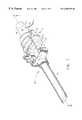
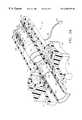
- FIG. 1is a perspective view of a capacitive electrosurgical trocar according to the present invention.
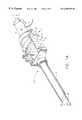
- FIG. 1Ais a perspective view of a capacitive electrosurgical trocar according to the present invention including a portion of the closure tube of a capacitive electrosurgical instrument shown positioned in the central aperture of the capacitive electrosurgical trocar.
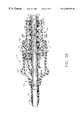
- FIG. 2is a plan view section taken along 2 — 2 in FIG. 1 through the capacitive electrosurgical trocar illustrated in FIG. 1 .
- FIG. 2Ais a plan view section taken along 2 A— 2 A in FIG. 1 A through the capacitive electrosurgical trocar and closure tube illustrated in FIG. 1 A.
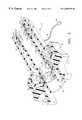
- FIG. 3is a perspective view in plane section of the capacitive electrosurgical adapter illustrated in FIG. 1 .
- FIG. 3Ais a perspective view in plane section of the capacitive electrosurgical adapter and closure tube illustrated in FIG. 1 A.
- FIG. 4is a section view taken along line 4 — 4 of FIG. 2 .
- FIG. 4Ais a section view taken along line 4 A— 4 A of FIG. 2 A.
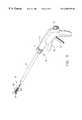
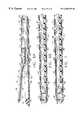
- FIG. 5is a perspective view of a cordless capacitive electrosurgical instrument according to the present invention.
- FIG. 6Ais a cutaway view of the end effector of the capacitive electrosurgical instrument illustrated in FIG. 5 .
- FIG. 6Bis a cutaway view of a portion of the closure tube of the capacitive electrosurgical instrument illustrated in FIG. 5
- FIG. 7is a cutaway view of an alternative embodiment of a portion of the closure tube of the capacitive electrosurgical instrument illustrated in FIG. 5 .
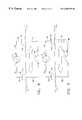
- FIG. 8is a schematic diagram graphically illustrating the capacitive coupling between a capacitive electrosurgical trocar or trocar adapter and a capacitive electrosurgical instrument according to the present invention.
- FIG. 9is a schematic diagram graphically illustrating the capacitive coupling between a capacitive electrosurgical trocar or trocar adapter and an alternative embodiment of a capacitive electrosurgical instrument.
- FIG. 1is a perspective view of a capacitive electrosurgical trocar 11 according to the present invention.
- FIG. 1Ais a perspective view of capacitive electrosurgical trocar 11 including a portion of closure tube 50 of capacitive electrosurgical instrument 16 .
- Capacitive electrosurgical trocar 11includes trocar cannula 8 and a capacitive electrosurgical adapter 14 .
- Capacitive electrosurgical trocar 11may also include an obturator assembly (not shown) such as the one illustrated in U.S. Pat. No. 5,387,197, which has been previously incorporated herein by reference.
- Trocar cannula 8includes cannula housing 12 and cannula tube 10 , extending from cannula housing 12 .
- Capacitive electrosurgical adapter 14includes an adapter housing 15 , locking connector 17 and an electric cord 18 .
- capacitive electrosurgical adapter 14is connected to trocar cannula 8 by locking connector 17 .
- Locking connector 17includes locking cleats 20 and release buttons 22 . It will be apparent that capacitive electrosurgical adapter 14 may be integrated directly into trocar cannula housing 12 , thus eliminating the need for locking connector 17 .
- FIG. 2is a plan view section taken along 2 — 2 in FIG. 1 through capacitive electrosurgical trocar 11 .
- FIG. 2Ais a plan view section taken along 2 A— 2 A in FIG. 1 A through capacitive electrosurgieal trocar 11 and a portion of closure tube 50 of capacitive electrosurgical instrument 16 .
- cannula housing 12includes flapper valve 34 , valve spring 35 and ring gasket 33 .
- Capacitive electrosurgical adapter 14includes central aperture 19 , front flange 25 and base flange 24 . Central aperture 19 is an elongated aperture for receiving working instruments such as endoscopic electrosurgical instruments.
- Capacitive electrosurgical adapter 14further includes a plurality of capacitor plates which, in the embodiment illustrated in FIGS.
- proximal capacitor plate 28 and distal capacitor plate 29At least a portion of the interior wall of central aperture 19 is formed by upper insulator 30 and lower insulator 31 .
- Upper insulator 30 and lower insulator 31together comprise trocar insulator 134 .
- Upper insulator 30 and lower insulator 31are positioned against front flange 25 and base flange 24 .
- Compression member 32is, in the present embodiment, an o-ring which is positioned outside of upper insulator 30 and lower insulator 31 to bias upper insulator 30 and lower insulator 31 toward the center of central aperture 19 .
- Compression member 32may also be, for example, a spring, a flexible sleeve, a plurality of o-rings or any other suitable biasing member.
- Proximal capacitor plate 28 and distal capacitor plate 29being positioned in upper insulator 30 and lower insulator 31 in the embodiments of FIGS. 1-4 are likewise biased toward the center of central aperture 19 by compression member 32 .
- Latch detents 4 in cannula housing 12are adapted to receive locking cleats 20 of locking connector 17 .
- FIG. 3is a perspective view in plane section of capacitive electrosurgical adapter 14 .
- FIG. 3Ais a perspective view in plane section of capacitive electrosurgical adapter 14 and a portion of closure tube 50 of electrosurgical instrument 16 .
- capacitive electrosurgical adapter 14includes adapter housing 15 , locking cleats 20 , base flange 24 , front flange 25 and release buttons 22 .
- Upper insulator 30 and lower insulator 31are positioned in capacitive electrosurgical adapter 14 and are held in place by base flange 24 and front flange 25 .
- Compression members 32bias upper insulator 30 and lower insulator 31 toward the center of central aperture 19 .
- Upper insulator 30 and lower insulator 31are preferably constructed of a high dielectric material such as Barium Titanate (BaTiO 3 ).
- Proximal capacitor plate 28comprises first proximal capacitor stator plate 128 and second proximal capacitor stator plate 130 .
- Distal capacitor plate 29comprises first distal capacitor stator plate 129 and second distal capacitor stator plate 131 .
- Electrosurgical energyis supplied to capacitive electrosurgical trocar 11 by electric cord 18 which is connected to bipolar electrosurgical plug 64 .
- Electric cord 18is electrically connected to upper conductor 36 and lower conductor 38 .
- Upper conductor 36is electrically connected to upper stator tab 26 which is electrically connected to first proximal capacitor stator plate 128 .
- Conductor 136electrically connects upper stator tab 26 to lower stator tab 27 which is electrically connected to second proximal capacitor stator plate 130 .
- Lower conductor 38is electrically connected to lower stator tab 127 which is electrically connected to second distal capacitor stator plate 131 .
- Conductor 138electrically connects lower stator tab 127 to upper stator tab 126 which is electrically connected to first distal capacitor stator plate 129 .
- electrosurgical energymay be coupled from bipolar electrosurgical plug 64 to each of proximal capacitor plate 28 and distal capacitor plate 29 .
- Proximal capacitor plate 28 and distal capacitor plate 29are positioned in, and electrically insulated from one another by trocar insulator 134 .
- first proximal capacitor stator plate 128 and first distal capacitor stator plate 129are positioned in upper insulator 30 which also insulates first proximal capacitor stator plate 128 from first distal capacitor stator plated 129 .
- second proximal capacitor stator plate 130 and second distal capacitor stator plate 131are positioned in lower insulator 31 which also insulates second proximal capacitor stator plate 130 from second distal capacitor stator plated 131 .
- Compression member 32surrounds upper insulator 30 and lower insulator 31 .
- First proximal dieletric region 151comprises the portion of upper insulator 30 positioned between first proximal capacitor stator plate 128 and central aperture 19 .
- Second proximal dilectric region 152comprises the portion of lower insulator 31 positioned between second proximal capacitor stator plate 130 and central aperture 19 .
- First distal dielectric region 153comprises the portion of upper insulator 30 positioned between first distal capacitor stator plate 129 and central aperture 19 .
- Second distal dielectric region 154comprises the portion of lower insulator 31 positioned between second distal capacitor stator plate 131 and central aperture 19 .
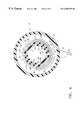
- FIG. 4is a sectional view of capacitive electrosurgical adapter 14 taken along line 4 — 4 of FIG. 2 .
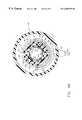
- FIG. 4Ais a section view of capacitive electrosurgical adapter 14 taken along line 4 A— 4 A of FIG. 2 A.
- central aperture 19is defined by aperture interior wall 21 .
- the portion of aperture interior wall 21 visible in FIG. 4is formed, at least in part, by first insulator surface 60 of upper insulator 30 and insulator surface 61 of lower insulator 31 .
- Compression member 32which comprises two o-rings in the embodiment of FIGS. 2-4, biases upper insulator 30 and lower insulator 31 toward the center of central aperture 19 .
- Electric cord 18is connected to first proximal capacitor stator plate 128 of proximal capacitor plate 28 by upper conductor 36 and upper stator tab 26 .
- Upper stator tab 26is connected to lower stator tab 27 by conductor 136 .
- Electric cord 18is connected to second distal capacitor stator plate 131 of distal capacitor plate 29 by lower conductor 38 and lower stator tab 27 .
- Upper stator tab 126is connected to lower stator tab 127 by conductor 138 .
- Base flange 24 and front flange 25which are part of adapter housing 15 , hold upper insulator 30 and lower insulator 31 in place, thus positioning proximal capacitor plate 28 and distal capacitor plate 29 around central aperture 19 .
- Strain relief 23protects electric cord 18 as it passes through adapter housing 15 .
- proximal capacitor plate 28is illustrated as being visible in FIGS. 4 and 4A, it will be apparent that proximal capacitor plate 28 is shown as being visible for convenience in describing the invention and would actually be hidden.
- FIG. 5is a perspective view of a capacitive cordless electrosurgical instrument 16 which may be, for example, a bipolar cutter/stapler.
- capacitive electrosurgical instrument 16includes handle 72 , closure tube 50 and bipolar end effector 57 .
- Closure tube 50is elongated to facilitate insertion of end effector 57 through a trocar cannula, thus facilitating the use of capacitive electrosurgical instrument 16 in endoscopic or laparoscopic surgical procedures.
- Handle 72which is located at the proximal end of capacitive electrosurgical instrument 16 , includes grasping trigger 74 , firing trigger 76 and release trigger 78 .
- Closure tube 50which connects handle 72 to end effector 57 , includes rotation knob 70 .
- End effector 57which is located at the distal end of closure tube 50 includes anvil 58 , cartridge channel 88 and staple cartridge 68 .
- Capacitive electrosurgical instrument 16is similar in structure and operation to the bipolar endoscopic electrocautery linear cutting and stapling instrument illustrated and described in U.S. Pat. No. 5,403,312, which has been previously incorporated herein by reference. However capacitive electrosurgical instrument 16 is cordless and electrosurgical energy is capacitively coupled into electrosurgical instrument 16 . In captive electrosurgical instrument 16 , electrosurgical energy is supplied to instrument 16 through capacitive plates which may be located in closure tube 50 .
- FIG. 6Ais a cutaway view of end effector 57 of capacitive cordless electrosurgical instrument 16 .
- FIG. 6Bis a cutaway view of a portion of closure tube 50 of capacitive cordless electrosurgical instrument 16 .
- FIG. 7is a cutaway view of an alternate embodiment of a portion of closure tube 50 of capacitive cordless electrosurgical instrument 16 .
- anvil base 73 of Anvil 58supports electrode assembly 52 and includes anvil guide 65 and staple forming slots (not shown).
- Electrode assembly 52is electrically coupled to first electrode conductor 48 and to anvil electrodes 55 .
- Anvil base 73is insulated from electrode assembly 52 by anvil insulator 59 .
- First electrode conductor 48is electrically connected to instrument proximal capacitor plate 42 .
- Instrument proximal capacitor plate 42is positioned in the proximal portion of closure tube 50 .
- Channel 88 of end effector 57supports staple cartridge 68 , wedge guide 80 and wedge block assembly 82 .
- Channel 88extends into and, being constructed of electrically conductive material, is electrically coupled to instrument distal capacitor plate 43 which is positioned in the distal portion of closure tube 50 .
- channel 88may provide a return path for electrical energy coupled to anvil electrodes 55 of end effector 57 when end effector 57 is used to grasp tissue or other electrically conductive material and that electrically conductive material touches both channel 88 and anvil electrodes 55 .
- Electrosurgical energy coupled to channel 88may be coupled back to electrosurgical trocar 11 through instrument distal capacitor plate 43 .
- Instrument proximal capacitor plate 42is electrically insulated from Instrument distal capacitor plate 43 by closure tube insulator 44 .
- Closure tube 50also supports and encloses the proximal end of anvil 58 , the proximal end of channel 88 , firing rod 84 , the proximal end of knife 90 , channel retainer 86 and at least a portion of wedge block assembly 82 and wedge guide 80 .
- Closure tube 50may preferably be constructed of a durable high dielectric insulating material such as, for example, Barium Titanate (BaTiO 3 ).
- Anvil 58opens and closes by, for example, pivoting around one or more pivot pins (not shown).
- matching inductor 49may be used to improve the efficiency of energy transfer to tissue grasped by end effector 57 .
- the structure and operation of the mechanical features of electrosurgical instrument 16may be better understood with reference to the mechanical cutting and stapling instrument illustrated and described in U.S. Pat. No. 5,597,107 which is hereby incorporated herein by reference.
- FIG. 8is a schematic diagram graphically illustrating the capacitive coupling between capacitive electrosurgical trocar 11 and capacitive electrosurgical instrument 16 .
- Proximal capacitor 142comprises proximal capacitor plate 28 , trocar insulator 134 , closure tube 50 and instrument proximal capacitor plate 42 . More particularly, proximal capacitor 142 comprises first proximal capacitor stator plate 128 , first proximal dielectric region 151 , second proximal capacitor stator plate 130 , second proximal dielectric region 152 , a portion of the proximal end of closure tube 50 , and instrument proximal capacitor plate 42 .
- Distal capacitor 143comprises distal capacitor plate 29 , trocar insulator 134 , closure tube 50 and instrument distal capacitor plate 43 . More particularly, distal capacitor 143 comprises first distal capacitor stator plate 129 , first distal dielectric region 153 , second distal capacitor stator plate 131 , second distal dielectric region 154 , a portion of the distal end of closure tube 50 and instrument distal capacitor plate 43 .
- first output 6 of electrosurgical generator 5is connected to proximal capacitor plate 28 of proximal capacitor 142 through cord 18 and upper conductor 36 .
- Second output 7 of electrosurgical generator 5is connected to distal capacitor plate 29 of distal capacitor 143 through cord 18 and lower conductor 38 .
- electrosurgical energysuch as electrical current at a predetermined output frequency and power, passes from electrosurgical generator 5 , through proximal capacitor 142 , to end effector 57 and returns through distal capacitor 143 and back to second output 7 of electrosurgical generator 5 .
- instrument proximal capacitor plate 42 and instrument distal capacitor plate 43are elongated so that movement of electrosurgical instrument 16 does not result in loss of capacitive coupling in capacitors 142 and 143 .
- the circuit illustrated in FIG. 9includes a matching inductor 49 which may be used to electrically match capacitive electrosurgical instrument 16 to capacitive electrosurgical trocar 11 in order to increase the power coupled to the tissue grasped by end effector 57 .
- inductor 49would be selected to make the load represented by the trocar, instrument and tissue appear to be substantially resistive at the frequency of interest.
- trocar cannula 8is used with a conventional trocar orbitor (not shown) to penetrate the wall of a body cavity such as, for example, the abdominal wall of a human being.
- a conventional trocar orbitornot shown
- the obturator assemblyis withdrawn from trocar cannula 8
- the cannulais used as an access portal for the passage of various endoscopic instruments to provide, for example, access to the internal organs of a human being.
- the endoscopic instrument to be usedis a cordless capacitive electrosurgical instrument such as electrosurgical instrument 16
- capacitive electrosurgical adapter 14may be attached to trocar cannula 8 .
- capacitive electrosurgical trocar 11may be used to provide electrosurgical energy to cordless capacitive electrosurgical instruments such as electrosurgical instrument 16 .
- a cordless capacitive electrosurgical instrumentsuch as electrosurgical instrument 16
- end effector 57passes through trocar cannula 8 and into the body cavity while most of closure tube 50 remains in trocar 11 .
- Handle 72which is outside of capacitive electrosurgical trocar 11 , may be manipulated by the surgeon to control the position of end effector 57 .
- a cordless capacitive bipolar electrosurgical instrument according to the present inventionsuch as electrosurgical instrument 16 of FIG. 5 may be used by inserting the cordless instrument into an appropriate capacitive electrosurgical trocar such as the electrosurgical trocar illustrated in FIG. 1 .
- electrosurgical energyis provided to instrument 16 by, for example, the capacitive coupling between proximal capacitor plate 28 of trocar 11 and instrument proximal capacitor plate 42 of instrument 16 .
- An electrical return pathis provided by, for example, the capacitive coupling between distal capacitor plate 29 of trocar 11 and instrument distal capacitor plate 43 of instrument 16 .
- central aperture 19generally corresponds with the outer diameter of closure tube 50 so that closure tube 50 slides through central aperture 19 and the interior of cannula tube 10 . Electrical coupling will be maintained so long as capacitor plates 42 and 43 are positioned in central aperture 19 opposite capacitor plates 28 and 29 to form capacitors 142 and 143 .
- Upper insulator 30 and lower insulator 31form trocar insulator 134 .
- Closure tube 50 and trocar insulator 134being preferably formed of a material having a high dielectric constant, act as the dielectric for proximal capacitor 142 and distal capacitor 143 which are illustrated schematically in FIG. 8 .
- Compression member 32helps to ensure that trocar insulator 134 and closure tube 50 maintain good physical contact, minimizing any air gap and enhancing capacitive coupling between the plates of proximal capacitor 142 and the plates of distal capacitor 143 .
- Capacitive electrical couplingmay be enhanced by using multiple capacitors in capacitive electrosurgical trocar 11 . With instrument capacitor plates 42 and 43 positioned opposite capacitor plates 28 and 29 , electrosurgical energy may be supplied to instrument 16 through electric cord 18 and capacitive electrosurgical trocar 11 .
- electrosurgical energy supplied to trocar 11 by cord 18passes through conductors 36 , 38 , 136 and 138 to stator tabs 26 , 126 , 27 and 127 and capacitor plates 28 and 29 into electrosurgical instrument 16 via instrument capacitor plates 42 and 43 .
- Electrosurgical energy supplied to electrosurgical instrument 16 via instrument capacitor plates 42 and 43may be supplied to end effector 57 via the circuit formed by instrument proximal capacitor plate 42 , conductor 48 , electrode assembly 52 , cartridge channel 88 and instrument distal capacitor plate 43 . This circuit is completed when biological tissue or other conductive material is grasped by end effector 57 , providing a path from electrode assembly 52 to cartridge channel 88 .
- cartridge channel 88 and anvil electrode 55are electrically conductive.
- cartridge channel 88acts as a secondary or return electrode.
- electrosurgical energywill flow through the grasped tissue, coagulating the grasped tissue provided that capacitive electrosurgical instrument 16 is positioned in trocar 11 as described herein. It may also be advantageous to provide one or more switches to control the flow of electrical current to trocar 11 or to end effector 57 of instrument 16 .
Landscapes
- Health & Medical Sciences (AREA)
- Surgery (AREA)
- Engineering & Computer Science (AREA)
- Life Sciences & Earth Sciences (AREA)
- Biomedical Technology (AREA)
- Otolaryngology (AREA)
- Nuclear Medicine, Radiotherapy & Molecular Imaging (AREA)
- Plasma & Fusion (AREA)
- Physics & Mathematics (AREA)
- Heart & Thoracic Surgery (AREA)
- Medical Informatics (AREA)
- Molecular Biology (AREA)
- Animal Behavior & Ethology (AREA)
- General Health & Medical Sciences (AREA)
- Public Health (AREA)
- Veterinary Medicine (AREA)
- Surgical Instruments (AREA)
Abstract
Description
This is a divisional application of U.S. Ser. No. 08/885,458, filed Jun. 30, 1997.
This application is related to the following copending applications: application Ser. No. 08/856,534, filed May 14, 1997; application Ser. No. 08/877,715, filed Jun. 18, 1997; application Ser. No. 08/878,421, filed Jun. 18, 1997; application Ser. No. 08/884,949, filed Jun. 30, 1997; application Ser. No. 08/885,166, filed Jun. 30, 1997; and application Ser. No. 08/885,517, filed Jun. 30, 1997, which applications are hereby incorporated herein by reference.
The present invention relates, in general, to an improved electrosurgical trocar and method of use and, more particularly, to an electrosurgical trocar adapted to capacitively couple electrosurgical energy to specially adapted cordless electrosurgical instruments.
The surgical trocar has become the mainstay in the development and acceptance of endoscopic surgical procedures. Endoscopic surgery involves the performance of surgery through a number of openings having a relatively small diameter. These openings are made with the trocar, which typically includes a trocar obturator and a trocar cannula. The obturator is the piercing implement which punctures the body wall to make the opening. Once the puncture is made, the obturator is withdrawn from the cannula. The cannula then provides a small diameter passageway into and through the body wall to provide access for additional surgical instrumentation to the surgical site. The function, structure and operation of a typical trocar is described in detail in U.S. Pat. No. 5,387,197, which is hereby incorporated herein by reference.
Such additional surgical instruments may include, for example, bipolar or monopolar electrosurgical instruments which utilize radio frequency electrosurgical energy. Known electrosurgical instruments include, for example, bipolar forceps, bipolar scissors, monopolar-hooks, monopolar-scissors and, bipolar endocutters. Each of those instruments has an electrosurgical end effector which is adapted to treat tissue through the application of electrosurgical (e.g. radio frequency or RF) energy to tissue which is brought in contact with the electrosurgical end effector. Most known electrosurgical instruments are connected by electrical cords to electrosurgical generators. The structure and operation of a typical bipolar cutter/stapler (“bipolar endocutter”) is described in U.S. Pat. No. 5,403,312 which is hereby incorporated herein by reference.
Electrosurgical generators, such as the Force II generator (which is available from Valleylab of Bolder Colo.), supply electrical energy to the electrosurgical instruments through electrical cords. The electrical cords, being attached directly to the electrosurgical instrument, may make the electrosurgical instrument inconvenient to use. Alternatively, electrical cords may cause undesirable delays as one electrosurgical instrument is unplugged from the generator and another is plugged in. Thus, it would be advantageous to design a cordless electrosurgical instrument. However, such a cordless electrosurgical instrument would have to be connected to the electrosurgical generator through some alternate arrangement. Therefore, it would also be advantageous to design a trocar or a trocar adapter which is adapted to capacitively couple electrosurgical energy to specially designed cordless electrosurgical instruments. It would further be advantageous to design an electrosurgical instrument and electrosurgical trocar or trocar adapter wherein the electrosurgical energy is capacitively coupled from the electrosurgical trocar to the electrosurgical instrument when electrosurgical energy is applied to the electrosurgical trocar or trocar adapter.
In the present invention, a surgical trocar is adapted to capacitively couple electrosurgical energy to specially adapted cordless electrosurgical instruments. In one embodiment of the present invention, an electrosurgical trocar includes a cannula, a capacitive electrosurgical adapter and a locking connector adapted to connect the cannula to the capacitive electrosurgical adapter. The cannula is an elongated tube which may be inserted into a body cavity, duct or vessel. The electrosurgical adapter includes a housing with an elongated central aperture, a proximal capacitor plate and a distal capacitor plate positioned in and extending axially along the elongated aperture, first and second electrical conductors, first and second external conductors, a compression mechanism, an outer housing and an electrical cord.
In a further embodiment of the present invention, the adapter aperture is formed by an aperture wall positioned in the adapter housing. The adapter proximal and distal capacitor plates are positioned in and extend axially along the aperture, forming at least a portion of the walls of the aperture. The first and second electrical conductors connect the adapter proximal and adapter distal capacitor plates to the first and second external connectors. The compression mechanism biases the adapter proximal and adapter distal capacitor plates toward the center of the adapter aperture. An electrical cord is connected to the first and second external connectors such that the electrical cord may be used to plug the adapter into a suitable electrosurgical generator.
In a further embodiment of the present invention, the adapter proximal capacitor plate is positioned in and substantially surrounds a first portion of the adapter aperture. The adapter distal capacitor plate is positioned in and substantially surrounds the a second portion of the adapter aperture distal to the portion of the aperture substantially surrounded by the adapter proximal capacitor plate. The adapter proximal capacitor plate and the adapter distal capacitor plate are electrically isolated and are separated by an insulation region which substantially surrounds the aperture between the adapter proximal capacitor plate and the adapter distal capacitor plate. The proximal capacitor plate and the distal capacitor plate may be separated from the aperture by a region of dielectric material.
In a further embodiment of the present invention, the adapter proximal capacitor plate is divided into at least a first proximal stator plate and a second proximal stator plate. The proximal stator plates being electrically connected such that the proximal stator plates are electrically common. The adapter distal capacitor plate is divided into at least a first distal stator plate and a second distal stator plate. The distal stator plates being electrically connected such that the distal stator plates are electrically common. In a further embodiment of the present invention, the compression member includes one or more compression rings positioned around the proximal stator plates and one or more compression rings positioned around the distal stator plates. In a further embodiment of the present invention, the stator plates are separated from the aperture by a dielectric region which is adapted to insulate the stator plates and to enhance capacitive of the stator plates to an electrosurgical instrument inserted into the adapter.
In a further embodiment of the present invention, the electrosurgical trocar includes a locking connector which connects the cannula to the capacitive electrosurgical adapter. In this embodiment of the invention, the adapter includes first and second locking cleats extending from the distal end of the connector. The cannula includes receptors such as indentations or ribs which hold the distal ends of the locking cleats in place, thus holding the connector in contact with the cannula. In a further embodiment of the present invention, the capacitive electrosurgical adapter is integrated into and made a part of the trocar cannula.
In a further embodiment of the present invention, each of the capacitor plates comprises an electrically conductive plate covered by a layer of high dielecteric material. The high dielectric material may be composed, at least in part, of a durable high dielectric material such as Barium Titanate (BaTiO3) or other suitable material.
The novel features of the invention are set forth with particularity in the appended claims. The invention itself, however, both as to organization and methods of operation, together with further objects and advantages thereof, may best be understood by reference to the following description, taken in conjunction with the accompanying drawings in which:
FIG. 1 is a perspective view of a capacitive electrosurgical trocar according to the present invention.
FIG. 1A is a perspective view of a capacitive electrosurgical trocar according to the present invention including a portion of the closure tube of a capacitive electrosurgical instrument shown positioned in the central aperture of the capacitive electrosurgical trocar.
FIG. 2 is a plan view section taken along2—2 in FIG.1 through the capacitive electrosurgical trocar illustrated in FIG.1.
FIG. 2A is a plan view section taken along2A—2A in FIG.1A through the capacitive electrosurgical trocar and closure tube illustrated in FIG.1A.
FIG. 3 is a perspective view in plane section of the capacitive electrosurgical adapter illustrated in FIG.1.
FIG. 3A is a perspective view in plane section of the capacitive electrosurgical adapter and closure tube illustrated in FIG.1A.
FIG. 4 is a section view taken along line4—4 of FIG.2.
FIG. 4A is a section view taken alongline 4A—4A of FIG.2A.
FIG. 5 is a perspective view of a cordless capacitive electrosurgical instrument according to the present invention.
FIG. 6A is a cutaway view of the end effector of the capacitive electrosurgical instrument illustrated in FIG.5.
FIG. 6B is a cutaway view of a portion of the closure tube of the capacitive electrosurgical instrument illustrated in FIG. 5
FIG. 7 is a cutaway view of an alternative embodiment of a portion of the closure tube of the capacitive electrosurgical instrument illustrated in FIG.5.
FIG. 8 is a schematic diagram graphically illustrating the capacitive coupling between a capacitive electrosurgical trocar or trocar adapter and a capacitive electrosurgical instrument according to the present invention.
FIG. 9 is a schematic diagram graphically illustrating the capacitive coupling between a capacitive electrosurgical trocar or trocar adapter and an alternative embodiment of a capacitive electrosurgical instrument.
FIG. 1 is a perspective view of a capacitiveelectrosurgical trocar 11 according to the present invention. FIG. 1A is a perspective view of capacitiveelectrosurgical trocar 11 including a portion ofclosure tube 50 of capacitiveelectrosurgical instrument 16. Capacitiveelectrosurgical trocar 11 includestrocar cannula 8 and a capacitiveelectrosurgical adapter 14. Capacitiveelectrosurgical trocar 11 may also include an obturator assembly (not shown) such as the one illustrated in U.S. Pat. No. 5,387,197, which has been previously incorporated herein by reference.Trocar cannula 8 includescannula housing 12 andcannula tube 10, extending fromcannula housing 12. Capacitiveelectrosurgical adapter 14 includes anadapter housing 15, lockingconnector 17 and anelectric cord 18. In the embodiment of the invention illustrated in FIG. 1, capacitiveelectrosurgical adapter 14 is connected totrocar cannula 8 by lockingconnector 17. Lockingconnector 17 includes lockingcleats 20 andrelease buttons 22. It will be apparent that capacitiveelectrosurgical adapter 14 may be integrated directly intotrocar cannula housing 12, thus eliminating the need for lockingconnector 17.
FIG. 2 is a plan view section taken along2—2 in FIG.1 through capacitiveelectrosurgical trocar 11. FIG. 2A is a plan view section taken along2A—2A in FIG.1A throughcapacitive electrosurgieal trocar 11 and a portion ofclosure tube 50 of capacitiveelectrosurgical instrument 16. In FIGS. 2 and 2A,cannula housing 12 includesflapper valve 34,valve spring 35 andring gasket 33. Capacitiveelectrosurgical adapter 14 includescentral aperture 19,front flange 25 andbase flange 24.Central aperture 19 is an elongated aperture for receiving working instruments such as endoscopic electrosurgical instruments. Capacitiveelectrosurgical adapter 14 further includes a plurality of capacitor plates which, in the embodiment illustrated in FIGS. 2-4, compriseproximal capacitor plate 28 anddistal capacitor plate 29. At least a portion of the interior wall ofcentral aperture 19 is formed byupper insulator 30 andlower insulator 31.Upper insulator 30 andlower insulator 31 together comprisetrocar insulator 134.Upper insulator 30 andlower insulator 31 are positioned againstfront flange 25 andbase flange 24.Compression member 32 is, in the present embodiment, an o-ring which is positioned outside ofupper insulator 30 andlower insulator 31 to biasupper insulator 30 andlower insulator 31 toward the center ofcentral aperture 19.Compression member 32 may also be, for example, a spring, a flexible sleeve, a plurality of o-rings or any other suitable biasing member.Proximal capacitor plate 28 anddistal capacitor plate 29, being positioned inupper insulator 30 andlower insulator 31 in the embodiments of FIGS. 1-4 are likewise biased toward the center ofcentral aperture 19 bycompression member 32. Latch detents4 incannula housing 12, are adapted to receive lockingcleats 20 of lockingconnector 17.
FIG. 3 is a perspective view in plane section of capacitiveelectrosurgical adapter 14. FIG. 3A is a perspective view in plane section of capacitiveelectrosurgical adapter 14 and a portion ofclosure tube 50 ofelectrosurgical instrument 16. Referring now to FIGS. 2-4 and2A-4A and particularly to FIGS. 3 and 3A, capacitiveelectrosurgical adapter 14 includesadapter housing 15, lockingcleats 20,base flange 24,front flange 25 andrelease buttons 22.Upper insulator 30 andlower insulator 31 are positioned in capacitiveelectrosurgical adapter 14 and are held in place bybase flange 24 andfront flange 25.Compression members 32 biasupper insulator 30 andlower insulator 31 toward the center ofcentral aperture 19.Upper insulator 30 andlower insulator 31 are preferably constructed of a high dielectric material such as Barium Titanate (BaTiO3).Proximal capacitor plate 28 comprises first proximalcapacitor stator plate 128 and second proximalcapacitor stator plate 130.Distal capacitor plate 29 comprises first distalcapacitor stator plate 129 and second distalcapacitor stator plate 131. Electrosurgical energy is supplied to capacitiveelectrosurgical trocar 11 byelectric cord 18 which is connected to bipolarelectrosurgical plug 64.Electric cord 18 is electrically connected toupper conductor 36 andlower conductor 38.Upper conductor 36 is electrically connected toupper stator tab 26 which is electrically connected to first proximalcapacitor stator plate 128.Conductor 136 electrically connectsupper stator tab 26 tolower stator tab 27 which is electrically connected to second proximalcapacitor stator plate 130.Lower conductor 38 is electrically connected tolower stator tab 127 which is electrically connected to second distalcapacitor stator plate 131.Conductor 138 electrically connectslower stator tab 127 toupper stator tab 126 which is electrically connected to first distalcapacitor stator plate 129. Thus, electrosurgical energy may be coupled from bipolarelectrosurgical plug 64 to each ofproximal capacitor plate 28 anddistal capacitor plate 29.Proximal capacitor plate 28 anddistal capacitor plate 29 are positioned in, and electrically insulated from one another bytrocar insulator 134. In particular, first proximalcapacitor stator plate 128 and first distalcapacitor stator plate 129 are positioned inupper insulator 30 which also insulates first proximalcapacitor stator plate 128 from first distal capacitor stator plated129. Further, second proximalcapacitor stator plate 130 and second distalcapacitor stator plate 131 are positioned inlower insulator 31 which also insulates second proximalcapacitor stator plate 130 from second distal capacitor stator plated131.Compression member 32 surroundsupper insulator 30 andlower insulator 31. First proximaldieletric region 151 comprises the portion ofupper insulator 30 positioned between first proximalcapacitor stator plate 128 andcentral aperture 19. Second proximaldilectric region 152 comprises the portion oflower insulator 31 positioned between second proximalcapacitor stator plate 130 andcentral aperture 19. First distaldielectric region 153 comprises the portion ofupper insulator 30 positioned between first distalcapacitor stator plate 129 andcentral aperture 19. Second distaldielectric region 154 comprises the portion oflower insulator 31 positioned between second distalcapacitor stator plate 131 andcentral aperture 19.
FIG. 4 is a sectional view of capacitiveelectrosurgical adapter 14 taken along line4—4 of FIG.2. FIG. 4A is a section view of capacitiveelectrosurgical adapter 14 taken alongline 4A—4A of FIG.2A. Referring now to FIGS. 2-4 and particularly to FIGS. 4 and 4A,central aperture 19 is defined by apertureinterior wall 21. The portion of apertureinterior wall 21 visible in FIG. 4 is formed, at least in part, byfirst insulator surface 60 ofupper insulator 30 andinsulator surface 61 oflower insulator 31.Compression member 32, which comprises two o-rings in the embodiment of FIGS. 2-4, biasesupper insulator 30 andlower insulator 31 toward the center ofcentral aperture 19.Electric cord 18 is connected to first proximalcapacitor stator plate 128 ofproximal capacitor plate 28 byupper conductor 36 andupper stator tab 26.Upper stator tab 26 is connected tolower stator tab 27 byconductor 136.Electric cord 18 is connected to second distalcapacitor stator plate 131 ofdistal capacitor plate 29 bylower conductor 38 andlower stator tab 27. As illustrated particularly in FIGS. 2 and 3,Upper stator tab 126 is connected tolower stator tab 127 byconductor 138.Base flange 24 andfront flange 25, which are part ofadapter housing 15, holdupper insulator 30 andlower insulator 31 in place, thus positioningproximal capacitor plate 28 anddistal capacitor plate 29 aroundcentral aperture 19.Strain relief 23 protectselectric cord 18 as it passes throughadapter housing 15. Althoughproximal capacitor plate 28 is illustrated as being visible in FIGS. 4 and 4A, it will be apparent thatproximal capacitor plate 28 is shown as being visible for convenience in describing the invention and would actually be hidden.
FIG. 5 is a perspective view of a capacitive cordlesselectrosurgical instrument 16 which may be, for example, a bipolar cutter/stapler. In FIG. 5, capacitiveelectrosurgical instrument 16 includeshandle 72,closure tube 50 andbipolar end effector 57.Closure tube 50 is elongated to facilitate insertion ofend effector 57 through a trocar cannula, thus facilitating the use of capacitiveelectrosurgical instrument 16 in endoscopic or laparoscopic surgical procedures.Handle 72, which is located at the proximal end of capacitiveelectrosurgical instrument 16, includes graspingtrigger 74, firingtrigger 76 andrelease trigger 78.Closure tube 50, which connects handle72 to endeffector 57, includesrotation knob 70.End effector 57, which is located at the distal end ofclosure tube 50 includesanvil 58,cartridge channel 88 andstaple cartridge 68. Capacitiveelectrosurgical instrument 16 is similar in structure and operation to the bipolar endoscopic electrocautery linear cutting and stapling instrument illustrated and described in U.S. Pat. No. 5,403,312, which has been previously incorporated herein by reference. However capacitiveelectrosurgical instrument 16 is cordless and electrosurgical energy is capacitively coupled intoelectrosurgical instrument 16. In captiveelectrosurgical instrument 16, electrosurgical energy is supplied toinstrument 16 through capacitive plates which may be located inclosure tube 50.
FIG. 6A is a cutaway view ofend effector 57 of capacitive cordlesselectrosurgical instrument 16. FIG. 6B is a cutaway view of a portion ofclosure tube 50 of capacitive cordlesselectrosurgical instrument 16. FIG. 7 is a cutaway view of an alternate embodiment of a portion ofclosure tube 50 of capacitive cordlesselectrosurgical instrument 16. In the embodiments ofelectrosurgical instrument 16 illustrated in FIGS. 6A,6B and7,anvil base 73 ofAnvil 58supports electrode assembly 52 and includesanvil guide 65 and staple forming slots (not shown).Electrode assembly 52 is electrically coupled tofirst electrode conductor 48 and toanvil electrodes 55.Anvil base 73 is insulated fromelectrode assembly 52 byanvil insulator 59.First electrode conductor 48 is electrically connected to instrumentproximal capacitor plate 42. Instrumentproximal capacitor plate 42 is positioned in the proximal portion ofclosure tube 50.Channel 88 ofend effector 57 supportsstaple cartridge 68,wedge guide 80 andwedge block assembly 82.Channel 88 extends into and, being constructed of electrically conductive material, is electrically coupled to instrumentdistal capacitor plate 43 which is positioned in the distal portion ofclosure tube 50. Thus,channel 88 may provide a return path for electrical energy coupled toanvil electrodes 55 ofend effector 57 whenend effector 57 is used to grasp tissue or other electrically conductive material and that electrically conductive material touches bothchannel 88 andanvil electrodes 55. Electrosurgical energy coupled tochannel 88 may be coupled back toelectrosurgical trocar 11 through instrumentdistal capacitor plate 43. Instrumentproximal capacitor plate 42 is electrically insulated from Instrumentdistal capacitor plate 43 byclosure tube insulator 44.Closure tube 50 also supports and encloses the proximal end ofanvil 58, the proximal end ofchannel 88, firingrod 84, the proximal end ofknife 90,channel retainer 86 and at least a portion ofwedge block assembly 82 andwedge guide 80.Closure tube 50 may preferably be constructed of a durable high dielectric insulating material such as, for example, Barium Titanate (BaTiO3).Anvil 58 opens and closes by, for example, pivoting around one or more pivot pins (not shown). In the embodiment illustrated in FIG. 7, matchinginductor 49 may be used to improve the efficiency of energy transfer to tissue grasped byend effector 57. The structure and operation of the mechanical features ofelectrosurgical instrument 16 may be better understood with reference to the mechanical cutting and stapling instrument illustrated and described in U.S. Pat. No. 5,597,107 which is hereby incorporated herein by reference.
FIG. 8 is a schematic diagram graphically illustrating the capacitive coupling between capacitiveelectrosurgical trocar 11 and capacitiveelectrosurgical instrument 16. In FIG. 8,Proximal capacitor 142 comprisesproximal capacitor plate 28,trocar insulator 134,closure tube 50 and instrumentproximal capacitor plate 42. More particularly,proximal capacitor 142 comprises first proximalcapacitor stator plate 128, first proximaldielectric region 151, second proximalcapacitor stator plate 130, second proximaldielectric region 152, a portion of the proximal end ofclosure tube 50, and instrumentproximal capacitor plate 42.Distal capacitor 143 comprisesdistal capacitor plate 29,trocar insulator 134,closure tube 50 and instrumentdistal capacitor plate 43. More particularly,distal capacitor 143 comprises first distalcapacitor stator plate 129, first distaldielectric region 153, second distalcapacitor stator plate 131, second distaldielectric region 154, a portion of the distal end ofclosure tube 50 and instrumentdistal capacitor plate 43.
In FIGS. 8 and 9,first output 6 ofelectrosurgical generator 5 is connected toproximal capacitor plate 28 ofproximal capacitor 142 throughcord 18 andupper conductor 36.Second output 7 ofelectrosurgical generator 5 is connected todistal capacitor plate 29 ofdistal capacitor 143 throughcord 18 andlower conductor 38. Whenend effector 57 is closed around electrically conductive material such as biological tissue, the electrical circuit from instrumentproximal capacitor plate 42 ofproximal capacitor 142 to instrumentdistal capacitor plate 43 ofdistal capacitor 143 is completed. Thus, withend effector 57 closed around conductive material andelectrosurgical generator 5 turned on, electrosurgical energy, such as electrical current at a predetermined output frequency and power, passes fromelectrosurgical generator 5, throughproximal capacitor 142, to endeffector 57 and returns throughdistal capacitor 143 and back tosecond output 7 ofelectrosurgical generator 5.
As FIGS. 8 and 9 schematically illustrate, instrumentproximal capacitor plate 42 and instrumentdistal capacitor plate 43 are elongated so that movement ofelectrosurgical instrument 16 does not result in loss of capacitive coupling incapacitors trocar 11 to facilitate treatment of the patient, capacitive coupling may be maintained. The circuit illustrated in FIG. 9 includes a matchinginductor 49 which may be used to electrically match capacitiveelectrosurgical instrument 16 to capacitiveelectrosurgical trocar 11 in order to increase the power coupled to the tissue grasped byend effector 57. In particular,inductor 49 would be selected to make the load represented by the trocar, instrument and tissue appear to be substantially resistive at the frequency of interest.
In operation,trocar cannula 8 is used with a conventional trocar orbitor (not shown) to penetrate the wall of a body cavity such as, for example, the abdominal wall of a human being. After the body wall is penetrated, the obturator assembly is withdrawn fromtrocar cannula 8, and the cannula is used as an access portal for the passage of various endoscopic instruments to provide, for example, access to the internal organs of a human being. Where the endoscopic instrument to be used is a cordless capacitive electrosurgical instrument such aselectrosurgical instrument 16, capacitiveelectrosurgical adapter 14 may be attached totrocar cannula 8. Once capacitiveelectrosurgical adapter 14 is attached totrocar cannula 8 andelectric cord 18 is attached to a suitable electrosurgical generator (such asgenerator 5 in FIG.8), capacitiveelectrosurgical trocar 11 may be used to provide electrosurgical energy to cordless capacitive electrosurgical instruments such aselectrosurgical instrument 16. When a cordless capacitive electrosurgical instrument such aselectrosurgical instrument 16, is inserted into a body cavity through, for example, capacitiveelectrosurgical trocar 11,end effector 57 passes throughtrocar cannula 8 and into the body cavity while most ofclosure tube 50 remains introcar 11.Handle 72, which is outside of capacitiveelectrosurgical trocar 11, may be manipulated by the surgeon to control the position ofend effector 57.
A cordless capacitive bipolar electrosurgical instrument according to the present invention, such aselectrosurgical instrument 16 of FIG. 5 may be used by inserting the cordless instrument into an appropriate capacitive electrosurgical trocar such as the electrosurgical trocar illustrated in FIG.1. In the capacitive electrosurgical trocar illustrated in FIG. 1, electrosurgical energy is provided toinstrument 16 by, for example, the capacitive coupling betweenproximal capacitor plate 28 oftrocar 11 and instrumentproximal capacitor plate 42 ofinstrument 16. An electrical return path is provided by, for example, the capacitive coupling betweendistal capacitor plate 29 oftrocar 11 and instrumentdistal capacitor plate 43 ofinstrument 16. The diameter ofcentral aperture 19 generally corresponds with the outer diameter ofclosure tube 50 so thatclosure tube 50 slides throughcentral aperture 19 and the interior ofcannula tube 10. Electrical coupling will be maintained so long ascapacitor plates central aperture 19opposite capacitor plates capacitors Upper insulator 30 andlower insulator 31form trocar insulator 134.Closure tube 50 andtrocar insulator 134, being preferably formed of a material having a high dielectric constant, act as the dielectric forproximal capacitor 142 anddistal capacitor 143 which are illustrated schematically in FIG.8.Compression member 32 helps to ensure thattrocar insulator 134 andclosure tube 50 maintain good physical contact, minimizing any air gap and enhancing capacitive coupling between the plates ofproximal capacitor 142 and the plates ofdistal capacitor 143. Capacitive electrical coupling may be enhanced by using multiple capacitors in capacitiveelectrosurgical trocar 11. Withinstrument capacitor plates opposite capacitor plates instrument 16 throughelectric cord 18 and capacitiveelectrosurgical trocar 11. In the embodiments of the invention illustrated herein, electrosurgical energy supplied totrocar 11 bycord 18 passes throughconductors stator tabs capacitor plates electrosurgical instrument 16 viainstrument capacitor plates electrosurgical instrument 16 viainstrument capacitor plates effector 57 via the circuit formed by instrumentproximal capacitor plate 42,conductor 48,electrode assembly 52,cartridge channel 88 and instrumentdistal capacitor plate 43. This circuit is completed when biological tissue or other conductive material is grasped byend effector 57, providing a path fromelectrode assembly 52 tocartridge channel 88. Inelectrosurgical instrument 16,cartridge channel 88 andanvil electrode 55 are electrically conductive. Thus, whereelectrode assembly 52 acts as a primary electrode,cartridge channel 88 acts as a secondary or return electrode. When electrically conductive tissue is grasped byend effector 57 and an electrosurgical generator is connected to first instrumentproximal capacitor plate 42 and second instrumentdistal capacitor plate 43, electrosurgical energy will flow through the grasped tissue, coagulating the grasped tissue provided that capacitiveelectrosurgical instrument 16 is positioned introcar 11 as described herein. It may also be advantageous to provide one or more switches to control the flow of electrical current to trocar11 or to endeffector 57 ofinstrument 16.
While preferred embodiments of the present invention have been shown and described herein, it will be obvious to those skilled in the art that such embodiments are provided by way of example only. Numerous variations, changes, and substitutions will now occur to those skilled in the art without departing from the invention. Accordingly, it is intended that the invention be limited only by the spirit and scope of the appended claims.
Claims (4)
1. A method of supplying electrosurgical energy to a cordless capacitive electrosurgical instrument, wherein said method comprises the steps of:
a) inserting said cordless capacitive electrosurgical instrument into a capacitive electrosurgical adapter;
b) connecting said capacitive electrosurgical adapter to a source of electrosurgical energy; and
c) turning on said source of electrosurgical energy.
2. A method of supplying electosurgical energy to a cordless capacitive electrosurgical instrument through a capacitive electrosurgical adapter, wherein said capacitive electosurgical adapter comprises;
an elongated central aperture extending from a first end of said adapter to a second end of said adapter, wherein said central aperture is surrounded by an aperture wall;
an input capacitor plate and an output capacitor plate positioned in and extending axially along said elongated aperture;
a first electrical conductor connected to said input capacitor plate;
a second electrical conductor connected to said output capacitor plate;
a compression mechanism structurally connected to said input capacitor plate and said output capacitor plate, wherein said compression mechanism is adapted to bias said input capacitor plate and said output capacitor plate toward a central axis of said aperture;
an outer housing surrounding said aperture and said input and output capacitor pates; and
an electrical cord connected to said first and second electrical connectors and extending from said outer housing;
said method comprising the steps of:
inserting said cordless capacitive electrosurgical instrument into said elongated aperture; and
supplying electrosurgical energy to said input capacitor plate and said output capacitor plate through said first and second electrical conductors.
3. A method of supplying electrosurgical energy to a cordless capacitive electrosurgical instrument through a capacitive electrosurgical trocar wherein said capacitive electrosurgical trocar comprises:
a cannula;
an electrosurgical adapter connected to said cannula wherein said electrosurgical adapter comprises:
first and second capacitor plates arranged around an opening in an interior portion of said adapter;
a first electrical conductor connecting said first capacitor plate to a first connector; and
a second electrical conductor connecting said second capacitor plate to a second connector.
said method comprising the steps of:
inserting said cordless capacitive electrosurgical instrument into said electrosurgical adapter and said cannula; and
supplying electrosurgical energy to said first and second capacitor plates through said first and second connectors.
4. A method of transmitting electrosurgical energy from a capacitive electrosurgical adapter to a cordless capacitive electrosurgical instrument, wherein said method comprising the steps of:
coupling electrosurgical energy into first and second capacitive plates in said capacitive electrosurgical adapter;
placing said cordless capacitive electrosurgical instrument in said capacitive electrosurgical adapter; and
positioning first and second capacitive plates of said cordless capacitive electrosurgical instrument adjacent said first and second capacitive plates of said electrosurgical adapter.
Priority Applications (1)
| Application Number | Priority Date | Filing Date | Title |
|---|---|---|---|
| US09/255,322US6206875B1 (en) | 1997-06-30 | 1999-02-23 | Method of capactively coupling energy to an electrosurgical instrument |
Applications Claiming Priority (2)
| Application Number | Priority Date | Filing Date | Title |
|---|---|---|---|
| US08/885,458US6106519A (en) | 1997-06-30 | 1997-06-30 | Capacitively coupled electrosurgical trocar |
| US09/255,322US6206875B1 (en) | 1997-06-30 | 1999-02-23 | Method of capactively coupling energy to an electrosurgical instrument |
Related Parent Applications (1)
| Application Number | Title | Priority Date | Filing Date |
|---|---|---|---|
| US08/885,458DivisionUS6106519A (en) | 1997-06-30 | 1997-06-30 | Capacitively coupled electrosurgical trocar |
Publications (1)
| Publication Number | Publication Date |
|---|---|
| US6206875B1true US6206875B1 (en) | 2001-03-27 |
Family
ID=25386948
Family Applications (3)
| Application Number | Title | Priority Date | Filing Date |
|---|---|---|---|
| US08/885,458Expired - LifetimeUS6106519A (en) | 1997-06-30 | 1997-06-30 | Capacitively coupled electrosurgical trocar |
| US09/256,611Expired - LifetimeUS6187002B1 (en) | 1997-06-30 | 1999-02-23 | Capacitive electrosurgical trocar including adapater |
| US09/255,322Expired - LifetimeUS6206875B1 (en) | 1997-06-30 | 1999-02-23 | Method of capactively coupling energy to an electrosurgical instrument |
Family Applications Before (2)
| Application Number | Title | Priority Date | Filing Date |
|---|---|---|---|
| US08/885,458Expired - LifetimeUS6106519A (en) | 1997-06-30 | 1997-06-30 | Capacitively coupled electrosurgical trocar |
| US09/256,611Expired - LifetimeUS6187002B1 (en) | 1997-06-30 | 1999-02-23 | Capacitive electrosurgical trocar including adapater |
Country Status (7)
| Country | Link |
|---|---|
| US (3) | US6106519A (en) |
| EP (1) | EP0888747B1 (en) |
| JP (1) | JP4112080B2 (en) |
| AU (1) | AU745102B2 (en) |
| CA (1) | CA2242080C (en) |
| DE (1) | DE69828110T2 (en) |
| ES (1) | ES2234075T3 (en) |
Cited By (25)
| Publication number | Priority date | Publication date | Assignee | Title |
|---|---|---|---|---|
| US20020182937A1 (en)* | 2001-03-28 | 2002-12-05 | Hiroaki Kukita | Electrical connector |
| US20100324550A1 (en)* | 2009-06-17 | 2010-12-23 | Nuortho Surgical Inc. | Active conversion of a monopolar circuit to a bipolar circuit using impedance feedback balancing |
| US20110087308A1 (en)* | 2001-08-15 | 2011-04-14 | Nuortho Surgical Inc. | Interfacing Media Manipulation with Non-Ablation Radiofrequency Energy System and Method |
| US20110092175A1 (en)* | 1999-11-15 | 2011-04-21 | Renesas Technology Corp. | Mobile communication apparatus |
| US20110196407A1 (en)* | 2010-02-05 | 2011-08-11 | Benmaamer Moutaa | Multiple function surgical instrument |
| US8430851B2 (en) | 2005-10-14 | 2013-04-30 | Applied Medical Resources Corporation | Surgical access port |
| US8551088B2 (en) | 2008-03-31 | 2013-10-08 | Applied Medical Resources Corporation | Electrosurgical system |
| US8597295B2 (en) | 2010-04-12 | 2013-12-03 | Covidien Lp | Surgical instrument with non-contact electrical coupling |
| WO2014208107A1 (en) | 2013-06-28 | 2014-12-31 | オリンパス株式会社 | Endoscope system |
| WO2014208106A1 (en) | 2013-06-28 | 2014-12-31 | オリンパス株式会社 | Endoscope system |
| WO2015068863A1 (en) | 2013-11-08 | 2015-05-14 | オリンパス株式会社 | Surgical instrument and medical system |
| US20150366434A1 (en)* | 2013-06-28 | 2015-12-24 | Olympus Corporation | Endoscope system, endoscope and treatment tool |
| USD748259S1 (en) | 2014-12-29 | 2016-01-26 | Applied Medical Resources Corporation | Electrosurgical instrument |
| US9320563B2 (en) | 2010-10-01 | 2016-04-26 | Applied Medical Resources Corporation | Electrosurgical instruments and connections thereto |
| US9408658B2 (en) | 2011-02-24 | 2016-08-09 | Nuortho Surgical, Inc. | System and method for a physiochemical scalpel to eliminate biologic tissue over-resection and induce tissue healing |
| US9532827B2 (en) | 2009-06-17 | 2017-01-03 | Nuortho Surgical Inc. | Connection of a bipolar electrosurgical hand piece to a monopolar output of an electrosurgical generator |
| US20170035402A1 (en)* | 2014-04-21 | 2017-02-09 | Olympus Corporation | Medical instrument, insertion assisting tool and medical system |
| US9579142B1 (en) | 2012-12-13 | 2017-02-28 | Nuortho Surgical Inc. | Multi-function RF-probe with dual electrode positioning |
| WO2017100728A1 (en)* | 2015-12-11 | 2017-06-15 | Reach Surgical, Inc. | Modular signal interface system and powered trocar |
| US10149713B2 (en) | 2014-05-16 | 2018-12-11 | Applied Medical Resources Corporation | Electrosurgical system |
| US10420603B2 (en) | 2014-12-23 | 2019-09-24 | Applied Medical Resources Corporation | Bipolar electrosurgical sealer and divider |
| US10792092B2 (en) | 2014-05-30 | 2020-10-06 | Applied Medical Resources Corporation | Electrosurgical seal and dissection systems |
| US11511037B2 (en) | 2018-06-08 | 2022-11-29 | Analog Devices, Inc. | Systems and methods for measuring needle depth |
| US11696796B2 (en) | 2018-11-16 | 2023-07-11 | Applied Medical Resources Corporation | Electrosurgical system |
| US11864812B2 (en) | 2018-09-05 | 2024-01-09 | Applied Medical Resources Corporation | Electrosurgical generator control system |
Families Citing this family (35)
| Publication number | Priority date | Publication date | Assignee | Title |
|---|---|---|---|---|
| US7364577B2 (en) | 2002-02-11 | 2008-04-29 | Sherwood Services Ag | Vessel sealing system |
| US20040236347A1 (en)* | 1999-03-12 | 2004-11-25 | Olympus Optical Co., Ltd. | Trocar sheath tube |
| US6692489B1 (en)* | 1999-07-21 | 2004-02-17 | Team Medical, Llc | Electrosurgical mode conversion system |
| US6811546B1 (en) | 2000-08-25 | 2004-11-02 | Origin Medsystems, Inc. | Endoscopic surgical access port and method |
| US7367976B2 (en) | 2003-11-17 | 2008-05-06 | Sherwood Services Ag | Bipolar forceps having monopolar extension |
| US7431720B2 (en)* | 2003-11-25 | 2008-10-07 | Ethicon, Inc. | Multi-function clamping device with stapler and ablation heads |
| US8357154B2 (en)* | 2004-07-20 | 2013-01-22 | Microline Surgical, Inc. | Multielectrode electrosurgical instrument |
| US7935113B2 (en)* | 2005-06-30 | 2011-05-03 | Microline Surgical, Inc. | Electrosurgical blade |
| US7867225B2 (en)* | 2005-06-30 | 2011-01-11 | Microline Surgical, Inc | Electrosurgical instrument with needle electrode |
| US7867226B2 (en)* | 2005-06-30 | 2011-01-11 | Microline Surgical, Inc. | Electrosurgical needle electrode |
| US20070005056A1 (en)* | 2005-06-30 | 2007-01-04 | Surginetics, Llc | Electrosurgical Instrument With Blade Profile For Reduced Tissue Damage |
| US8562603B2 (en)* | 2005-06-30 | 2013-10-22 | Microline Surgical, Inc. | Method for conducting electrosurgery with increased crest factor |
| US20070005057A1 (en)* | 2005-06-30 | 2007-01-04 | Surginetics, Llc | Electrosurgical Blade With Profile For Minimizing Tissue Damage |
| EP1993971A2 (en)* | 2006-01-25 | 2008-11-26 | Team Medical, L.L.C. | Coating suitable for surgical instruments |
| US7645278B2 (en)* | 2006-02-22 | 2010-01-12 | Olympus Corporation | Coagulating cutter |
| US8142473B2 (en) | 2008-10-03 | 2012-03-27 | Tyco Healthcare Group Lp | Method of transferring rotational motion in an articulating surgical instrument |
| US8114122B2 (en) | 2009-01-13 | 2012-02-14 | Tyco Healthcare Group Lp | Apparatus, system, and method for performing an electrosurgical procedure |
| US8187273B2 (en) | 2009-05-07 | 2012-05-29 | Tyco Healthcare Group Lp | Apparatus, system, and method for performing an electrosurgical procedure |
| US8246618B2 (en) | 2009-07-08 | 2012-08-21 | Tyco Healthcare Group Lp | Electrosurgical jaws with offset knife |
| US8133254B2 (en) | 2009-09-18 | 2012-03-13 | Tyco Healthcare Group Lp | In vivo attachable and detachable end effector assembly and laparoscopic surgical instrument and methods therefor |
| US8112871B2 (en) | 2009-09-28 | 2012-02-14 | Tyco Healthcare Group Lp | Method for manufacturing electrosurgical seal plates |
| US9113940B2 (en) | 2011-01-14 | 2015-08-25 | Covidien Lp | Trigger lockout and kickback mechanism for surgical instruments |
| US9844384B2 (en) | 2011-07-11 | 2017-12-19 | Covidien Lp | Stand alone energy-based tissue clips |
| JP6274960B2 (en)* | 2013-06-28 | 2018-02-07 | オリンパス株式会社 | Endoscope system |
| US20150324317A1 (en) | 2014-05-07 | 2015-11-12 | Covidien Lp | Authentication and information system for reusable surgical instruments |
| DE112014007042T5 (en)* | 2014-11-17 | 2017-08-10 | Olympus Corporation | Endoscopic energy treatment instrument and endoscopic system |
| CN105934189B (en)* | 2014-12-26 | 2018-01-30 | 奥林巴斯株式会社 | Disposal devices and medical systems |
| WO2016135945A1 (en)* | 2015-02-27 | 2016-09-01 | オリンパス株式会社 | Medical power supply system |
| US11937848B2 (en) | 2016-06-10 | 2024-03-26 | University Of Virginia Patent Foundation | Port apparatus and sheath device for electrocautery and related methods thereof |
| US11497507B2 (en)* | 2017-02-19 | 2022-11-15 | Orpheus Ventures, Llc | Systems and methods for closing portions of body tissue |
| US10292760B2 (en)* | 2017-05-11 | 2019-05-21 | Titan Medical Inc. | Coupler apparatus for coupling electrical signals between an actuator and an end effector |
| EP4049603B1 (en) | 2017-06-15 | 2024-01-31 | Reach Surgical, Inc. | Electrosurgical systems |
| CN114667109A (en)* | 2019-11-12 | 2022-06-24 | 国立大学法人滋贺医科大学 | power supply |
| US11844562B2 (en) | 2020-03-23 | 2023-12-19 | Covidien Lp | Electrosurgical forceps for grasping, treating, and/or dividing tissue |
| US20220226039A1 (en)* | 2021-01-15 | 2022-07-21 | Boston Scientific Neuromodulation Corporation | Rf ablation systems and methods including a cannula with contacts or a connector |
Citations (47)
| Publication number | Priority date | Publication date | Assignee | Title |
|---|---|---|---|---|
| US1620929A (en) | 1925-02-05 | 1927-03-15 | George W Wallerich | Heat-therapy method and means |
| US4535773A (en) | 1982-03-26 | 1985-08-20 | Inbae Yoon | Safety puncturing instrument and method |
| US4674010A (en) | 1985-01-17 | 1987-06-16 | Shell Oil Company | Capacitive submergible electrical connector apparatus |
| US4717438A (en) | 1986-09-29 | 1988-01-05 | Monarch Marking Systems, Inc. | Method of making tags |
| DE3708880A1 (en) | 1987-03-18 | 1988-09-29 | Geimuplast Mundt Kg Peter | POCKET FILM FOR FLAT ITEMS, IN PARTICULAR SLIDES |
| US4799480A (en) | 1987-08-04 | 1989-01-24 | Conmed | Electrode for electrosurgical apparatus |
| US4825217A (en) | 1987-10-19 | 1989-04-25 | Tae Lim Electronics Co., Ltd. | Car phone antenna assembly |
| US4884982A (en) | 1989-04-03 | 1989-12-05 | Amp Incorporated | Capacitive coupled connector |
| US4934960A (en) | 1990-01-04 | 1990-06-19 | Amp Incorporated | Capacitive coupled connector with complex insulative body |
| US4936842A (en) | 1987-05-08 | 1990-06-26 | Circon Corporation | Electrosurgical probe apparatus |
| US5105829A (en) | 1989-11-16 | 1992-04-21 | Fabian Carl E | Surgical implement detector utilizing capacitive coupling |
| US5124509A (en) | 1991-01-15 | 1992-06-23 | Calcomp, Inc. | Digitizer with capacitive and inductive coupling |
| US5207691A (en) | 1991-11-01 | 1993-05-04 | Medical Scientific, Inc. | Electrosurgical clip applicator |
| US5273524A (en) | 1991-10-09 | 1993-12-28 | Ethicon, Inc. | Electrosurgical device |
| US5342357A (en) | 1992-11-13 | 1994-08-30 | American Cardiac Ablation Co., Inc. | Fluid cooled electrosurgical cauterization system |
| US5342356A (en) | 1992-12-02 | 1994-08-30 | Ellman Alan G | Electrical coupling unit for electrosurgery |
| US5344420A (en) | 1991-02-13 | 1994-09-06 | Applied Medical Resources Corporation | Surgical trocar |
| US5354291A (en) | 1992-10-09 | 1994-10-11 | Symbiosis Corporation | Probe for endoscopic suction-irrigation instruments having a proximal port for receiving an additional probe therethrough |
| US5380321A (en) | 1992-11-04 | 1995-01-10 | Yoon; Inbae | Shielded energy transmitting surgical instrument and methods therefor |
| US5383860A (en) | 1993-03-02 | 1995-01-24 | M.I.S. Technology International, Inc. | Two-part conductive cannula with adaptive disposable non-invasive element |
| US5387196A (en) | 1992-05-19 | 1995-02-07 | United States Surgical Corporation | Cannula assembly having conductive cannula |
| US5387197A (en) | 1993-02-25 | 1995-02-07 | Ethicon, Inc. | Trocar safety shield locking mechanism |
| US5391166A (en) | 1991-06-07 | 1995-02-21 | Hemostatic Surgery Corporation | Bi-polar electrosurgical endoscopic instruments having a detachable working end |
| US5403312A (en) | 1993-07-22 | 1995-04-04 | Ethicon, Inc. | Electrosurgical hemostatic device |
| US5417687A (en) | 1993-04-30 | 1995-05-23 | Medical Scientific, Inc. | Bipolar electrosurgical trocar |
| US5432486A (en) | 1993-05-20 | 1995-07-11 | Northern Telecom Limited | Capacitive and inductive coupling connector |
| US5437277A (en) | 1991-11-18 | 1995-08-01 | General Electric Company | Inductively coupled RF tracking system for use in invasive imaging of a living body |
| US5443462A (en) | 1992-05-07 | 1995-08-22 | Smiths Industries Public Limited Company | Electrical apparatus for controlling the supply of power to an insertable electrode |
| US5445638A (en) | 1993-03-08 | 1995-08-29 | Everest Medical Corporation | Bipolar coagulation and cutting forceps |
| US5445142A (en) | 1994-03-15 | 1995-08-29 | Ethicon Endo-Surgery, Inc. | Surgical trocars having optical tips defining one or more viewing ports |
| US5540684A (en) | 1994-07-28 | 1996-07-30 | Hassler, Jr.; William L. | Method and apparatus for electrosurgically treating tissue |
| US5545142A (en) | 1991-10-18 | 1996-08-13 | Ethicon, Inc. | Seal members for surgical trocars |
| US5562611A (en) | 1993-05-17 | 1996-10-08 | Ethicon Endo-Surgery, Inc. | Safety interposer for surgical instruments |
| US5591192A (en) | 1995-02-01 | 1997-01-07 | Ethicon Endo-Surgery, Inc. | Surgical penetration instrument including an imaging element |
| US5597107A (en) | 1994-02-03 | 1997-01-28 | Ethicon Endo-Surgery, Inc. | Surgical stapler instrument |
| US5599348A (en) | 1992-03-17 | 1997-02-04 | Conmed Corporation | Electrosurgical trocar assembly |
| US5688269A (en)* | 1991-07-10 | 1997-11-18 | Electroscope, Inc. | Electrosurgical apparatus for laparoscopic and like procedures |
| US5733323A (en) | 1995-11-13 | 1998-03-31 | Cordis Corporation | Electrically conductive unipolar vascular sheath |
| US5772660A (en)* | 1995-03-20 | 1998-06-30 | United States Surgical Corporation | Trocar assembly with electrocautery penetrating tip |
| US5792141A (en)* | 1996-03-05 | 1998-08-11 | Medicor Corporation | Electrosurgical device for preventing capacitive coupling and the formation of undesirable current paths |
| US5792112A (en)* | 1995-10-20 | 1998-08-11 | Applied Medical Resources Corporation | Trocar with electrical discharge path |
| US5849020A (en)* | 1997-06-30 | 1998-12-15 | Ethicon Endo-Surgery, Inc. | Inductively coupled electrosurgical instrument |
| US5916215A (en)* | 1997-06-30 | 1999-06-29 | Ethicon Endo-Surgery, Inc. | Inductively coupled electrosurgical trocar |
| US5925041A (en)* | 1997-05-14 | 1999-07-20 | Ethicon Endo-Surgery, Inc. | Monopolar electrosurgical trocar |
| US5951552A (en)* | 1997-06-30 | 1999-09-14 | Ethicon Endo-Surgery, Inc. | Capacitively coupled cordless electrosurgical instrument |
| US5961514A (en)* | 1997-05-14 | 1999-10-05 | Ethicon Endo-Surger, Inc. | Cordless electrosurgical instrument |
| US5984921A (en)* | 1997-05-14 | 1999-11-16 | Ethicon-Endo-Surgery, Inc. | Method and apparatus for applying electrical energy to medical instruments |
Family Cites Families (1)
| Publication number | Priority date | Publication date | Assignee | Title |
|---|---|---|---|---|
| DE3708801C2 (en)* | 1987-03-18 | 1996-03-14 | Medtronic Medizinisch Elektron | Dental treatment device |
- 1997
- 1997-06-30USUS08/885,458patent/US6106519A/ennot_activeExpired - Lifetime
- 1998
- 1998-06-25AUAU73190/98Apatent/AU745102B2/ennot_activeCeased
- 1998-06-29DEDE69828110Tpatent/DE69828110T2/ennot_activeExpired - Lifetime
- 1998-06-29EPEP98305089Apatent/EP0888747B1/ennot_activeExpired - Lifetime
- 1998-06-29CACA002242080Apatent/CA2242080C/ennot_activeExpired - Fee Related
- 1998-06-29ESES98305089Tpatent/ES2234075T3/ennot_activeExpired - Lifetime
- 1998-06-29JPJP19647498Apatent/JP4112080B2/ennot_activeExpired - Fee Related
- 1999
- 1999-02-23USUS09/256,611patent/US6187002B1/ennot_activeExpired - Lifetime
- 1999-02-23USUS09/255,322patent/US6206875B1/ennot_activeExpired - Lifetime
Patent Citations (50)
| Publication number | Priority date | Publication date | Assignee | Title |
|---|---|---|---|---|
| US1620929A (en) | 1925-02-05 | 1927-03-15 | George W Wallerich | Heat-therapy method and means |
| US4535773A (en) | 1982-03-26 | 1985-08-20 | Inbae Yoon | Safety puncturing instrument and method |
| US4674010A (en) | 1985-01-17 | 1987-06-16 | Shell Oil Company | Capacitive submergible electrical connector apparatus |
| US4717438A (en) | 1986-09-29 | 1988-01-05 | Monarch Marking Systems, Inc. | Method of making tags |
| DE3708880A1 (en) | 1987-03-18 | 1988-09-29 | Geimuplast Mundt Kg Peter | POCKET FILM FOR FLAT ITEMS, IN PARTICULAR SLIDES |
| US4936842A (en) | 1987-05-08 | 1990-06-26 | Circon Corporation | Electrosurgical probe apparatus |
| US4799480A (en) | 1987-08-04 | 1989-01-24 | Conmed | Electrode for electrosurgical apparatus |
| US4825217A (en) | 1987-10-19 | 1989-04-25 | Tae Lim Electronics Co., Ltd. | Car phone antenna assembly |
| US4884982A (en) | 1989-04-03 | 1989-12-05 | Amp Incorporated | Capacitive coupled connector |
| US5105829A (en) | 1989-11-16 | 1992-04-21 | Fabian Carl E | Surgical implement detector utilizing capacitive coupling |
| US4934960A (en) | 1990-01-04 | 1990-06-19 | Amp Incorporated | Capacitive coupled connector with complex insulative body |
| US5124509A (en) | 1991-01-15 | 1992-06-23 | Calcomp, Inc. | Digitizer with capacitive and inductive coupling |
| US5344420A (en) | 1991-02-13 | 1994-09-06 | Applied Medical Resources Corporation | Surgical trocar |
| US5391166A (en) | 1991-06-07 | 1995-02-21 | Hemostatic Surgery Corporation | Bi-polar electrosurgical endoscopic instruments having a detachable working end |
| US5688269A (en)* | 1991-07-10 | 1997-11-18 | Electroscope, Inc. | Electrosurgical apparatus for laparoscopic and like procedures |
| US5273524A (en) | 1991-10-09 | 1993-12-28 | Ethicon, Inc. | Electrosurgical device |
| US5545142A (en) | 1991-10-18 | 1996-08-13 | Ethicon, Inc. | Seal members for surgical trocars |
| US5207691A (en) | 1991-11-01 | 1993-05-04 | Medical Scientific, Inc. | Electrosurgical clip applicator |
| US5437277A (en) | 1991-11-18 | 1995-08-01 | General Electric Company | Inductively coupled RF tracking system for use in invasive imaging of a living body |
| US5599348A (en) | 1992-03-17 | 1997-02-04 | Conmed Corporation | Electrosurgical trocar assembly |
| US5443462A (en) | 1992-05-07 | 1995-08-22 | Smiths Industries Public Limited Company | Electrical apparatus for controlling the supply of power to an insertable electrode |
| US5387196A (en) | 1992-05-19 | 1995-02-07 | United States Surgical Corporation | Cannula assembly having conductive cannula |
| US5354291A (en) | 1992-10-09 | 1994-10-11 | Symbiosis Corporation | Probe for endoscopic suction-irrigation instruments having a proximal port for receiving an additional probe therethrough |
| US5380321A (en) | 1992-11-04 | 1995-01-10 | Yoon; Inbae | Shielded energy transmitting surgical instrument and methods therefor |
| US5342357A (en) | 1992-11-13 | 1994-08-30 | American Cardiac Ablation Co., Inc. | Fluid cooled electrosurgical cauterization system |
| US5342356A (en) | 1992-12-02 | 1994-08-30 | Ellman Alan G | Electrical coupling unit for electrosurgery |
| US5387197A (en) | 1993-02-25 | 1995-02-07 | Ethicon, Inc. | Trocar safety shield locking mechanism |
| US5383860A (en) | 1993-03-02 | 1995-01-24 | M.I.S. Technology International, Inc. | Two-part conductive cannula with adaptive disposable non-invasive element |
| US5445638B1 (en) | 1993-03-08 | 1998-05-05 | Everest Medical Corp | Bipolar coagulation and cutting forceps |
| US5445638A (en) | 1993-03-08 | 1995-08-29 | Everest Medical Corporation | Bipolar coagulation and cutting forceps |
| US5417687A (en) | 1993-04-30 | 1995-05-23 | Medical Scientific, Inc. | Bipolar electrosurgical trocar |
| US5658279A (en) | 1993-04-30 | 1997-08-19 | Medical Scientific, Inc. | Bipolar electrosurgical trocar |
| US5562611A (en) | 1993-05-17 | 1996-10-08 | Ethicon Endo-Surgery, Inc. | Safety interposer for surgical instruments |
| US5432486A (en) | 1993-05-20 | 1995-07-11 | Northern Telecom Limited | Capacitive and inductive coupling connector |
| US5403312A (en) | 1993-07-22 | 1995-04-04 | Ethicon, Inc. | Electrosurgical hemostatic device |
| US5597107A (en) | 1994-02-03 | 1997-01-28 | Ethicon Endo-Surgery, Inc. | Surgical stapler instrument |
| US5445142A (en) | 1994-03-15 | 1995-08-29 | Ethicon Endo-Surgery, Inc. | Surgical trocars having optical tips defining one or more viewing ports |
| US5540684A (en) | 1994-07-28 | 1996-07-30 | Hassler, Jr.; William L. | Method and apparatus for electrosurgically treating tissue |
| US5591192A (en) | 1995-02-01 | 1997-01-07 | Ethicon Endo-Surgery, Inc. | Surgical penetration instrument including an imaging element |
| US5772660A (en)* | 1995-03-20 | 1998-06-30 | United States Surgical Corporation | Trocar assembly with electrocautery penetrating tip |
| US5792112A (en)* | 1995-10-20 | 1998-08-11 | Applied Medical Resources Corporation | Trocar with electrical discharge path |
| US5733323A (en) | 1995-11-13 | 1998-03-31 | Cordis Corporation | Electrically conductive unipolar vascular sheath |
| US5792141A (en)* | 1996-03-05 | 1998-08-11 | Medicor Corporation | Electrosurgical device for preventing capacitive coupling and the formation of undesirable current paths |
| US5925041A (en)* | 1997-05-14 | 1999-07-20 | Ethicon Endo-Surgery, Inc. | Monopolar electrosurgical trocar |
| US5961514A (en)* | 1997-05-14 | 1999-10-05 | Ethicon Endo-Surger, Inc. | Cordless electrosurgical instrument |
| US5984921A (en)* | 1997-05-14 | 1999-11-16 | Ethicon-Endo-Surgery, Inc. | Method and apparatus for applying electrical energy to medical instruments |
| US6030403A (en)* | 1997-05-14 | 2000-02-29 | Ethicon Endo-Surgery, Inc. | Method and apparatus for applying electrical energy to medical instruments |
| US5849020A (en)* | 1997-06-30 | 1998-12-15 | Ethicon Endo-Surgery, Inc. | Inductively coupled electrosurgical instrument |
| US5916215A (en)* | 1997-06-30 | 1999-06-29 | Ethicon Endo-Surgery, Inc. | Inductively coupled electrosurgical trocar |
| US5951552A (en)* | 1997-06-30 | 1999-09-14 | Ethicon Endo-Surgery, Inc. | Capacitively coupled cordless electrosurgical instrument |
Cited By (61)
| Publication number | Priority date | Publication date | Assignee | Title |
|---|---|---|---|---|
| US20110092175A1 (en)* | 1999-11-15 | 2011-04-21 | Renesas Technology Corp. | Mobile communication apparatus |
| EP1246306A3 (en)* | 2001-03-28 | 2004-05-19 | J.S.T. Mfg. Co., Ltd. | Electrical connector |
| US7064626B2 (en) | 2001-03-28 | 2006-06-20 | J.S.T. Mfg. Co., Ltd. | Electrical connector |
| US20020182937A1 (en)* | 2001-03-28 | 2002-12-05 | Hiroaki Kukita | Electrical connector |
| US8734441B2 (en) | 2001-08-15 | 2014-05-27 | Nuortho Surgical, Inc. | Interfacing media manipulation with non-ablation radiofrequency energy system and method |
| US20110087308A1 (en)* | 2001-08-15 | 2011-04-14 | Nuortho Surgical Inc. | Interfacing Media Manipulation with Non-Ablation Radiofrequency Energy System and Method |
| US9833259B2 (en) | 2005-10-14 | 2017-12-05 | Applied Medical Resources Corporation | Surgical access port |
| US10478219B2 (en) | 2005-10-14 | 2019-11-19 | Applied Medical Resources Corporation | Surgical access port |
| US8430851B2 (en) | 2005-10-14 | 2013-04-30 | Applied Medical Resources Corporation | Surgical access port |
| US11504157B2 (en) | 2005-10-14 | 2022-11-22 | Applied Medical Resources Corporation | Surgical access port |
| US8968250B2 (en) | 2005-10-14 | 2015-03-03 | Applied Medical Resources Corporation | Surgical access port |
| US8551088B2 (en) | 2008-03-31 | 2013-10-08 | Applied Medical Resources Corporation | Electrosurgical system |
| US9566108B2 (en) | 2008-03-31 | 2017-02-14 | Applied Medical Resources Corporation | Electrosurgical system |
| US8579894B2 (en) | 2008-03-31 | 2013-11-12 | Applied Medical Resources Corporation | Electrosurgical system |
| US8915910B2 (en) | 2008-03-31 | 2014-12-23 | Applied Medical Resources Corporation | Electrosurgical system |
| US8568411B2 (en) | 2008-03-31 | 2013-10-29 | Applied Medical Resources Corporation | Electrosurgical system |
| US10342604B2 (en) | 2008-03-31 | 2019-07-09 | Applied Medical Resources Corporation | Electrosurgical system |
| US8562598B2 (en) | 2008-03-31 | 2013-10-22 | Applied Medical Resources Corporation | Electrosurgical system |
| US12295642B2 (en) | 2008-03-31 | 2025-05-13 | Applied Medical Resources Corporation | Electrosurgical system |
| US10888371B2 (en) | 2008-03-31 | 2021-01-12 | Applied Medical Resources Corporation | Electrosurgical system |
| US11660136B2 (en) | 2008-03-31 | 2023-05-30 | Applied Medical Resources Corporation | Electrosurgical system |
| US9532827B2 (en) | 2009-06-17 | 2017-01-03 | Nuortho Surgical Inc. | Connection of a bipolar electrosurgical hand piece to a monopolar output of an electrosurgical generator |
| US20100324550A1 (en)* | 2009-06-17 | 2010-12-23 | Nuortho Surgical Inc. | Active conversion of a monopolar circuit to a bipolar circuit using impedance feedback balancing |
| US20110196407A1 (en)* | 2010-02-05 | 2011-08-11 | Benmaamer Moutaa | Multiple function surgical instrument |
| US8597295B2 (en) | 2010-04-12 | 2013-12-03 | Covidien Lp | Surgical instrument with non-contact electrical coupling |
| US9375260B2 (en) | 2010-04-12 | 2016-06-28 | Covidien Lp | Surgical instrument with non-contact electrical coupling |
| US10278770B2 (en) | 2010-04-12 | 2019-05-07 | Covidien Lp | Surgical instrument with non-contact electrical coupling |
| US11864823B2 (en) | 2010-10-01 | 2024-01-09 | Applied Medical Resources Corporation | Electrosurgical instruments and connections thereto |
| US9320563B2 (en) | 2010-10-01 | 2016-04-26 | Applied Medical Resources Corporation | Electrosurgical instruments and connections thereto |
| US10874452B2 (en) | 2010-10-01 | 2020-12-29 | Applied Medical Resources Corporation | Electrosurgical instruments and connections thereto |
| US12357374B2 (en) | 2010-10-01 | 2025-07-15 | Applied Medical Resources Corporation | Electrosurgical instruments and connections thereto |
| US9962222B2 (en) | 2010-10-01 | 2018-05-08 | Applied Medical Resources Corporation | Electrosurgical instruments and connections thereto |
| US10016230B2 (en) | 2011-02-24 | 2018-07-10 | Nuortho Surgical, Inc. | System and method for a physiochemical scalpel to eliminate biologic tissue over-resection and induce tissue healing |
| US9408658B2 (en) | 2011-02-24 | 2016-08-09 | Nuortho Surgical, Inc. | System and method for a physiochemical scalpel to eliminate biologic tissue over-resection and induce tissue healing |
| US9579142B1 (en) | 2012-12-13 | 2017-02-28 | Nuortho Surgical Inc. | Multi-function RF-probe with dual electrode positioning |
| WO2014208107A1 (en) | 2013-06-28 | 2014-12-31 | オリンパス株式会社 | Endoscope system |
| US10016235B2 (en) | 2013-06-28 | 2018-07-10 | Olympus Corporation | Endoscope system having first transmission and reception electrodes, second transmission and reception electrodes and electrically powered treatment device powered to perform treatment |
| WO2014208106A1 (en) | 2013-06-28 | 2014-12-31 | オリンパス株式会社 | Endoscope system |
| US20150366434A1 (en)* | 2013-06-28 | 2015-12-24 | Olympus Corporation | Endoscope system, endoscope and treatment tool |
| US9826888B2 (en) | 2013-06-28 | 2017-11-28 | Olympus Corporation | Endoscope having power transmission electrode and treatment tool having power reception electrode, and endoscope system |
| US9833124B2 (en)* | 2013-06-28 | 2017-12-05 | Olympus Corporation | Treatment tool and endoscope system with inductance elements to power treatment device of treatment tool |
| WO2015068863A1 (en) | 2013-11-08 | 2015-05-14 | オリンパス株式会社 | Surgical instrument and medical system |
| US20160242845A1 (en)* | 2013-11-08 | 2016-08-25 | Olympus Corporation | Treatment device and medical system |
| US10321901B2 (en)* | 2014-04-21 | 2019-06-18 | Olympus Corporation | Medical instrument that wirelessly receives power, insertion assisting tool that wirelessly transmits power and medical system |
| US20170035402A1 (en)* | 2014-04-21 | 2017-02-09 | Olympus Corporation | Medical instrument, insertion assisting tool and medical system |
| US11672589B2 (en) | 2014-05-16 | 2023-06-13 | Applied Medical Resources Corporation | Electrosurgical system |
| US10149713B2 (en) | 2014-05-16 | 2018-12-11 | Applied Medical Resources Corporation | Electrosurgical system |
| US12239359B2 (en) | 2014-05-30 | 2025-03-04 | Applied Medical Resources Corporation | Electrosurgical seal and dissection systems |
| US10792092B2 (en) | 2014-05-30 | 2020-10-06 | Applied Medical Resources Corporation | Electrosurgical seal and dissection systems |
| US10420603B2 (en) | 2014-12-23 | 2019-09-24 | Applied Medical Resources Corporation | Bipolar electrosurgical sealer and divider |
| US12029472B2 (en) | 2014-12-23 | 2024-07-09 | Applied Medical Resources Corporation | Bipolar electrosurgical sealer and divider |
| US11540871B2 (en) | 2014-12-23 | 2023-01-03 | Applied Medical Resources Corporation | Bipolar electrosurgical sealer and divider |
| USD748259S1 (en) | 2014-12-29 | 2016-01-26 | Applied Medical Resources Corporation | Electrosurgical instrument |
| US11045223B2 (en) | 2015-12-11 | 2021-06-29 | Reach Surgical, Inc. | Modular signal interface system and powered trocar |
| WO2017100728A1 (en)* | 2015-12-11 | 2017-06-15 | Reach Surgical, Inc. | Modular signal interface system and powered trocar |
| CN108848667B (en)* | 2015-12-11 | 2019-06-14 | 天津瑞奇外科器械股份有限公司 | Modular signal interface system and energy puncture outfit |
| TWI626925B (en)* | 2015-12-11 | 2018-06-21 | 天津瑞奇外科器械股份有限公司 | Modular signal interface system and powered trocar |
| CN108848667A (en)* | 2015-12-11 | 2018-11-20 | 天津瑞奇外科器械股份有限公司 | Modular signal interface system and energy puncture outfit |
| US11511037B2 (en) | 2018-06-08 | 2022-11-29 | Analog Devices, Inc. | Systems and methods for measuring needle depth |
| US11864812B2 (en) | 2018-09-05 | 2024-01-09 | Applied Medical Resources Corporation | Electrosurgical generator control system |
| US11696796B2 (en) | 2018-11-16 | 2023-07-11 | Applied Medical Resources Corporation | Electrosurgical system |
Also Published As
| Publication number | Publication date |
|---|---|
| DE69828110T2 (en) | 2005-11-03 |
| JP4112080B2 (en) | 2008-07-02 |
| DE69828110D1 (en) | 2005-01-20 |
| US6187002B1 (en) | 2001-02-13 |
| ES2234075T3 (en) | 2005-06-16 |
| AU745102B2 (en) | 2002-03-14 |
| JPH1199158A (en) | 1999-04-13 |
| CA2242080A1 (en) | 1998-12-30 |
| EP0888747A1 (en) | 1999-01-07 |
| CA2242080C (en) | 2008-07-29 |
| AU7319098A (en) | 1999-01-07 |
| US6106519A (en) | 2000-08-22 |
| EP0888747B1 (en) | 2004-12-15 |
Similar Documents
| Publication | Publication Date | Title |
|---|---|---|
| US6206875B1 (en) | Method of capactively coupling energy to an electrosurgical instrument | |
| US5951552A (en) | Capacitively coupled cordless electrosurgical instrument | |
| US6371967B1 (en) | Inductively coupled electrosurgical instrument | |
| EP0878877B1 (en) | Method and apparatus for applying electrical energy to medical instruments | |
| US5916215A (en) | Inductively coupled electrosurgical trocar | |
| US5961514A (en) | Cordless electrosurgical instrument | |
| US5925041A (en) | Monopolar electrosurgical trocar |
Legal Events
| Date | Code | Title | Description |
|---|---|---|---|
| STCF | Information on status: patent grant | Free format text:PATENTED CASE | |
| FPAY | Fee payment | Year of fee payment:4 | |
| FPAY | Fee payment | Year of fee payment:8 | |
| FPAY | Fee payment | Year of fee payment:12 |