US6204911B1 - Exposure apparatus and device manufacturing method - Google Patents
Exposure apparatus and device manufacturing methodDownload PDFInfo
- Publication number
- US6204911B1 US6204911B1US08/705,089US70508996AUS6204911B1US 6204911 B1US6204911 B1US 6204911B1US 70508996 AUS70508996 AUS 70508996AUS 6204911 B1US6204911 B1US 6204911B1
- Authority
- US
- United States
- Prior art keywords
- mask
- exposure amount
- wafer
- integrated exposure
- pattern
- Prior art date
- Legal status (The legal status is an assumption and is not a legal conclusion. Google has not performed a legal analysis and makes no representation as to the accuracy of the status listed.)
- Expired - Lifetime
Links
- 238000004519manufacturing processMethods0.000titleclaimsdescription20
- 238000005286illuminationMethods0.000claimsabstractdescription82
- 238000000034methodMethods0.000claimsabstractdescription72
- 230000008569processEffects0.000claimsabstractdescription38
- 230000003287optical effectEffects0.000claimsdescription32
- 239000000758substrateSubstances0.000description34
- 239000004065semiconductorSubstances0.000description16
- 239000006185dispersionSubstances0.000description12
- 238000012937correctionMethods0.000description6
- 239000000463materialSubstances0.000description6
- 238000005259measurementMethods0.000description5
- 238000001444catalytic combustion detectionMethods0.000description3
- 239000004973liquid crystal related substanceSubstances0.000description3
- 238000007493shaping processMethods0.000description3
- 230000008859changeEffects0.000description2
- 238000005530etchingMethods0.000description2
- 238000003384imaging methodMethods0.000description2
- 150000002500ionsChemical class0.000description2
- 230000007246mechanismEffects0.000description2
- 230000002035prolonged effectEffects0.000description2
- 241000276498Pollachius virensSpecies0.000description1
- 230000001133accelerationEffects0.000description1
- 238000013461designMethods0.000description1
- 238000012938design processMethods0.000description1
- 238000009826distributionMethods0.000description1
- 238000007689inspectionMethods0.000description1
- 238000011835investigationMethods0.000description1
- 238000001459lithographyMethods0.000description1
- 238000012986modificationMethods0.000description1
- 230000004048modificationEffects0.000description1
- 238000005457optimizationMethods0.000description1
- 230000003647oxidationEffects0.000description1
- 238000007254oxidation reactionMethods0.000description1
- 230000001590oxidative effectEffects0.000description1
- 238000004806packaging method and processMethods0.000description1
- 238000012545processingMethods0.000description1
- 238000007789sealingMethods0.000description1
- 238000000926separation methodMethods0.000description1
- 229910052710siliconInorganic materials0.000description1
- 239000010703siliconSubstances0.000description1
- 230000001360synchronised effectEffects0.000description1
- 230000002194synthesizing effectEffects0.000description1
- 230000001131transforming effectEffects0.000description1
- 238000007740vapor depositionMethods0.000description1
Images



Classifications
- G—PHYSICS
- G03—PHOTOGRAPHY; CINEMATOGRAPHY; ANALOGOUS TECHNIQUES USING WAVES OTHER THAN OPTICAL WAVES; ELECTROGRAPHY; HOLOGRAPHY
- G03F—PHOTOMECHANICAL PRODUCTION OF TEXTURED OR PATTERNED SURFACES, e.g. FOR PRINTING, FOR PROCESSING OF SEMICONDUCTOR DEVICES; MATERIALS THEREFOR; ORIGINALS THEREFOR; APPARATUS SPECIALLY ADAPTED THEREFOR
- G03F7/00—Photomechanical, e.g. photolithographic, production of textured or patterned surfaces, e.g. printing surfaces; Materials therefor, e.g. comprising photoresists; Apparatus specially adapted therefor
- G03F7/70—Microphotolithographic exposure; Apparatus therefor
- G03F7/70483—Information management; Active and passive control; Testing; Wafer monitoring, e.g. pattern monitoring
- G03F7/7055—Exposure light control in all parts of the microlithographic apparatus, e.g. pulse length control or light interruption
- G03F7/70558—Dose control, i.e. achievement of a desired dose
- G—PHYSICS
- G03—PHOTOGRAPHY; CINEMATOGRAPHY; ANALOGOUS TECHNIQUES USING WAVES OTHER THAN OPTICAL WAVES; ELECTROGRAPHY; HOLOGRAPHY
- G03F—PHOTOMECHANICAL PRODUCTION OF TEXTURED OR PATTERNED SURFACES, e.g. FOR PRINTING, FOR PROCESSING OF SEMICONDUCTOR DEVICES; MATERIALS THEREFOR; ORIGINALS THEREFOR; APPARATUS SPECIALLY ADAPTED THEREFOR
- G03F7/00—Photomechanical, e.g. photolithographic, production of textured or patterned surfaces, e.g. printing surfaces; Materials therefor, e.g. comprising photoresists; Apparatus specially adapted therefor
- G03F7/70—Microphotolithographic exposure; Apparatus therefor
- G03F7/70216—Mask projection systems
- G03F7/70358—Scanning exposure, i.e. relative movement of patterned beam and workpiece during imaging
Definitions
- This inventionrelates to an exposure apparatus and, more particularly, to an exposure apparatus suitably usable in a lithographic process of device manufacturing processes for a semiconductor device such as an IC or LSI, a liquid crystal device, an image pickup device such as a CCD or a magnetic head, for example.
- excimer lasersare a typical example of them.
- excimer lasersare interrupted light emission type lasers, and they produce light of pulses.
- the duration of light emissionis about several tens of nsec.
- an exposure apparatuswhich uses a light source comprising a pulse light source such as an excimer laser wherein the emitted light intensity varies with emissions of light, as compared with an exposure apparatus having a conventional light source of a Hg lamp, for example, it is not easy to make uniform the integrated exposure amount upon a substrate to be exposed.
- a light sourcecomprising a pulse light source such as an excimer laser wherein the emitted light intensity varies with emissions of light
- the integrated exposure amount in an arbitrary unit scan exposure regioninvolves a non-correctable residual error which is provided by an intensity error of a last pulse light emitted last in the process of scan exposure. This causes non-uniformness of exposure. If the emitted light intensity of each pulse is lowered and, on the other hand, the light emission frequency of the pulse light source is increased, the error by the last emitted pulse light becomes relatively small, relative to the integrated exposure amount. Thus, the exposure non-uniformness may be reduced.
- an exposure apparatuscomprising: a light source for providing pulse light; mask scanning means for scanning a mask having a pattern; wafer scanning means for scanning a wafer onto which the pattern is to be projected; wherein said mask scanning means and said wafer scanning means serve to scan the mask and the wafer in a timed relation so that the mask is illuminated while superposing portions of an illumination region defined by the pulse light and being narrower than the pattern such that the pattern is lithographically transferred onto the wafer; and at least one of (i) scan speed determining means for determining scan speed of the mask and the wafer, (ii) light emission period determining means for determining the period of emission of the pulse light, (iii) illumination range determining means for determining the range of illumination for the mask, and (iv) position determining means for determining the position of illumination range limiting means with respect to a direction of an optical axis, such that a parameter related to scan exposure such as the scan speed, the light emission period, the
- the tolerance ratio of exposure non-uniformnessmay preferably be determined on the basis of a minimum linewidth of the pattern.
- the tolerance ratio of exposure non-uniformnessmay preferably be larger with a wider minimum linewidth of the pattern.
- the light emission period of the light sourcemay be prolonged while maintaining the exposure non-uniformness at about a tolerable level, by which the lifetime of the light source can be prolonged.
- FIG. 1is a schematic and diagrammatic view of an exposure apparatus according to a first embodiment of the present invention.
- FIG. 2is a schematic view of a main portion of a movable slit 6 as viewed in the direction of an optical axis of an illumination optical system.
- FIG. 3is a schematic view for explaining changes in intensity profile as a width w of an exposure sli 6 a is changed.
- FIG. 4is a schematic view for explaining changes in width of a half shadow region as a movable slit 6 moves in the direction of an optical axis.
- FIG. 5is a flow chart for explaining operations made in the first embodiment.
- FIG. 6is a graph for explaining a model of an intensity profile of exposure light upon a substrate 11 .
- FIG. 7is a graph for explaining estimation of an integrated exposure amount upon a substrate 11 in a case where the substrate is exposed with exposure light having an intensity profile such as shown in FIG. 6 .
- FIG. 8is a schematic view for explaining the mechanism of production of non-uniformness ⁇ S of an integrated exposure amount.
- FIG. 9is a schematic view for explaining the principle of control in a second embodiment of the present invention.
- FIG. 10is a flow chart for explaining semiconductor device manufacturing processes.
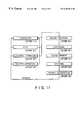
- FIG. 11is a flow chart for explaining details of a wafer process among the processes of FIG. 10 .
- FIG. 1is a schematic view showing the structure of an exposure apparatus according to a first embodiment of the present invention.
- the inventionis applied to an exposure apparatus for the manufacture of devices such as semiconductor devices (ICs or LSIs), image pickup devices such as CCDs or magnetic heads, for example.
- the exposure apparatusis arranged so that light from a light source is projected to a reticle through an illumination optical system and a circuit pattern formed on the reticle is projected and printed by a projection lens, in a reduced scale, on a substrate which is coated with a photosensitive material.
- Denoted in the drawing at 1is a light source which comprises a pulse laser such as an excimer laser, for example, and it emits pulse light.
- Denoted at 2is a beam shaping optical system for transforming light from the light source 1 into a desired shape, the resultant light being projected on a light entrance surface of an optical integrator 3 .
- the optical integrator 3comprises a fly's eye lens having a number of small lenses.
- Plural secondary light sourcesare defined in the vicinity of the light exit surface of the integrator.
- Denoted at 4is a condenser lens which serves to Kohler illuminate a movable slit 6 with light from the secondary light sources adjacent to the light exit surface of the optical integrator 3 .
- the light illuminating the movable slit 6then illuminates a reticle 9 by way of an imaging lens 7 and a mirror 8 .
- the movable slit 6is disposed at a position slightly shifted from a position which is optically conjugate with the reticle 9 , and the movable slit 6 is made movable along a direction of an optical axis.
- the shape of an opening of the movable slit 6is effective to determine the shape and size of an illumination region on the reticle 9 .
- Denoted at 18is a voice coil motor for movement control of the movable slit 6 in the optical axis direction.
- Denoted at 12is an exposure amount detector (detector A) for detecting the light quantity of a portion of pulse illumination light, being divided by a half mirror 5 . It applies an output signal to an exposure amount calculator 102 .
- the beam shaping optical system 2 , the optical integrator 3 , the condenser lens 4 , the movable slit 6 , the imaging lens 7 and the mirror 8are components of an illumination optical system.
- the illumination optical systemfurther includes a light attenuating means (not shown), such that the light quantity from the light source 1 can be adjusted at plural stages.
- the reticle 9has a circuit pattern formed thereon, and it is held on a reticle stage 13 .
- Denoted at 10is a projection lens for projecting the circuit pattern of the reticle 9 upon a semiconductor substrate 11 in a reduced scale.
- the semiconductor substrate 11is called a wafer, and a resist material (photosensitive material) is applied to the surface thereof.
- the waferis placed on a wafer stage which is movable three-dimensionally.
- ⁇ S-Wthe relation between an exposure slit 6 a as defined by the movable slit 6 and an image of the exposure slit 6 a as formed on the semiconductor substrate 11 , that is, the magnification.
- an exposure amount detector (detector B) 15by which the exposure amount with exposure light can be monitored through the projection lens 10 .
- Denoted at 101is a stage drive control system, and it serves to control the reticle stage 13 and the wafer stage 14 so that they are moved in opposite directions at speeds of a ratio the same as the projection magnification of the projection lens 10 (1:4 in this embodiment), exactly at constant speeds.
- the exposure amount calculator 102serves to transform an electrical signal, being photoelectrically converted by the exposure amount detector (detector A) 12 or exposure amount detector (detector B) 15 , into a logic value, and to apply the result to a main control system 104 . It is to be noted that, since the exposure amount detector (detector A) 12 can perform the intensity measurement even during the exposure process, it is used for estimation of an integrated value of exposure light to be projected.
- the exposure amount detector (detector B) 15detects, at an initial stage of the exposure process, the intensity of light passing the projection lens 10 and impinging on the substrate 11 . Then, the correlation between the thus detected light intensity and the light intensity as detected by the exposure amount detector (detector A) 12 is determined. In an actual exposure process, the value as detected by the exposure amount detector (detector A) 12 is corrected by using the thus determined correlation, to determine the exposure amount upon the substrate 11 . Thus, the exposure amount detector (detector B) 15 does not perform measurement of exposure light intensity during the exposure process of the substrate 11 .
- Denoted at 103is a laser control system which produces a trigger signal 16 and a charging voltage signal 17 in accordance with a desired exposure amount, and it controls the output energy and the light emission spacing of the light source 1 .
- the laser control system 103produces the trigger signal 16 or charging voltage signal 17
- an illuminance monitor signal 108 from the exposure amount calculator 102a current position signal 107 from the stage drive control system 101 and hysteresis information from the main control system 104 , for example, are used as parameters.
- a desired exposure amount and tolerance for exposure non-uniformnessare inputted into the main control system 104 , from an input device 105 which is a man-machine interface or a media interface.
- the result obtained through the exposure amount detector (detector A) 12 or exposure amount detector (detector B) 15 , or the result of estimation of an integrated exposure amountare displayed in a display 106 .
- the main control system 104calculates a parameter group necessary for execution of scan exposure and transmits it to the laser control system 103 or the stage control system 101 .
- FIG. 2is a schematic view of a main portion of the movable slit 6 as viewed in the direction of the optical axis of the illumination optical system.
- Denoted in the drawing at 701are two movable aperture blades which can be moved in opposite directions, along a direction Xs (scan direction), by means of an aperture driving device 702 , and an exposure slit 6 a is defined between these blades.
- the size of the exposure slit 6 ais determined by the width w between the two movable aperture blades 701 and by the length h (fixed) in a direction perpendicular to the direction Xs.
- the intensity profile upon the substrate 11 of exposure light passing this slitchanges such as shown in FIG. 3 .
- FIG. 3is a schematic view for explaining changes in intensity profile as the width w of the exposure slit 6 a of this embodiment changes.
- the drawingillustrates changes in intensity profile upon the substrate 11 as the width w of the two aperture blades 701 changes from w 1 to w 2 .
- the axis of the abscissa in the drawingcorresponds to an x w coordinate which is the scan direction of the substrate 11 .
- the axis of the ordinatecorresponds to the intensity of exposure light upon the substrate 11 .
- the width wchanges from w 1 to w 2
- d 1w 1 ⁇ S-W (profile 1 )
- d 2w 2 ⁇ S-W (profile 2 ).
- FIG. 4is a schematic view for explaining changes in width of a half shadow region in a case wherein the movable slit of this embodiment moves in the optical axis direction.
- the drawingillustrates a change in intensity profile as the movable slit 6 is moved by the voice coil motor 18 along the optical axis of the illumination optical system.
- the intensity profile upon the substrate 11changes from profile 1 to profile 3 illustrated.
- the inclination of the slant sides of the trapezoidchanges, and the width r of the half shadow upon the plane of projection changes from r 1 to r 2 .
- the movable slit 6may be moved.
- FIG. 5is a flow chart of this embodiment. This flow chart covers the procedure from determination of the slit width w, the position of the movable slit 6 in the optical axis direction and the scan speed v of the wafer stage 14 on the basis of given environment variables, to execution of the scan exposure process.
- the following reference charactersare used in the flow chart:
- ⁇dispersion coefficient of emitted light intensity
- ⁇ mmaximum level of dispersion coefficient of emitted light intensity
- Nnumber of light emissions necessary for achieving target value of integrated exposure amount
- Tlight emission period (light emission spacing)
- ⁇ 0diameter of effective picture field of projection lens (on wafer side)
- Dispersion rate ⁇ of emitted light intensity as the light source is pulse oscillatedis measured.
- the light source 1is caused to emit light for measurement.
- Charging voltage signals of a constant level and trigger signals of constant intervalsare applied to the light source 1 , and emitted light intensities are measured through the exposure amount detector (detector A or B) 12 or 15 .
- the exposure amount detectordetector A or B
- the dispersion coefficient ⁇a statistically representative value among thus measured values, e.g., 2 ⁇ , is used.
- Integrated exposure amount S and tolerance ratio ⁇ S/S of the non-uniformness of integrated exposure amountare inputted through the input device 105 .
- the tolerance ratio ⁇ S/S of non-uniformness of the integrated exposure amountshould be smaller with a smaller linewidth of a circuit pattern on a reticle 9 .
- the value ⁇ S/Sis determined while taking into account the linewidth of a circuit.
- the main control system 104determines the scan speed v of the wafer stage 14 , the width w of the exposure slit 6 a, and the position of the movable slit 6 . The manner of determination will be described later. Then, the throughput is predicted.
- the display 106displays the thus determined scan speed v, width w of exposure slit 6 a and position of movable slit 6 as well as calculated throughput. The operator determines whether the operation should be executed under these conditions or not. If the conditions being displayed are satisfactory, the procedure goes to step 806 . If any of the conditions displayed should be changed, the procedure goes to step 805 .
- Tolerance ratio ⁇ S/S of non-uniformness of the integrated exposure amountis set again.
- the tolerance value ⁇ S of non-uniformness of the integrated exposure amountis too much regarded, the reference emission light intensity i 0 of the light source 1 has to be lowered optically by using a filter or the like to increase the number N of light emissions. This makes the throughput lower. If, therefore, a higher throughput is desired even though a slight exposure non-uniformness has to be accepted, a larger tolerance ratio ⁇ S/S of non-uniformness of the integrated exposure amount may be inputted again through the input device 105 .
- the movable slit 6is set and placed at the calculated position, and the width of the exposure slit 6 a is set at the calculated value.
- the main control system 104operates to set the exposure slit 6 a at the size as determined, and also to cause the voice coil motor 18 to move and set the movable slit 6 at a determined position along the optical axis.
- the scan exposure processstarts.
- FIG. 6is a graph showing a model of an intensity profile of exposure light upon the wafer 11 .
- the axis of the abscissacorresponds to the distance along the scan direction (x W direction), and the axis of the ordinate corresponds to intensity I of the exposure light.
- the originis at an end of the bottom of a regular trapezoid (with slants of the same length), the end facing the wafer movement direction.
- the intensityhas a peak value i 0 .
- the configuration depicted by a broken line in the drawingcorresponds to a profile of exposure light to be provided by a subsequent light emission.
- the left and right half shadow portions at the slant sides of the regular trapezoidhave the same span, and the length is denoted by r.
- the distance d in the x W direction connecting the mid-points of the slant sides of the trapezoidcorresponds to the width w of the exposure slit 6 a, and there is a relation:
- the intensity correction calculation at each pulse light emissionis set so that at the intensity correction point r c the intensity i c accomplishes a desired target value S to the integrated exposure amount.
- FIG. 7is a schematic view for explaining an estimation of an integrated exposure amount of a wafer which is to be exposed by exposure light having an intensity profile as shown in FIG. 6 .
- the drawingillustrates a case where, while moving the wafer stage 14 at a constant speed v, the substrate 11 is exposed by pulse light being emitted at regular emission intervals T.
- the integrated exposure amount at an arbitrary position on the x W axis along the substrate scan directioncan be considered as being the total of the intensities of trapezoids through which a broken line in the drawing extends.
- Reference characters H 0 , H 1 , H 2 . . . , and H kdenote the light emission numbers.
- the number N of light emissions necessary for achieving a target value S at an arbitrary exposure positioncan be determined from the reference emission light intensity i 0 of the light source 1 and the target value S of the integrated exposure amount, in accordance with the following equation:
- the intensity dispersion coefficient ⁇ m of the last emitted pulseproduces non-uniformness ⁇ S of the integrated exposure amount.
- FIG. 8illustrates, like FIG. 7, the intensity of exposure light taken on the axis of the abscissa and the x W coordinate system (substrate scan direction) taken on the axis of the ordinate. It is to be noted that in FIG. 8, for convenience of illustration, the higher the position of the intensity profile is, the earlier it is produced by light emission.
- the lower portion of FIG. 8illustrates an integrated exposure amount taken on the axis of the abscissa and the x W coordinate system taken on the axis of the ordinate. Namely, the lower portion of FIG. 8 depicts an integrated exposure amount distribution.
- non-uniformness ⁇ S of the integrated exposure amountsuch as illustrated in FIG. 8, this being attributable to an intensity dispersion coefficient ⁇ m of the last emitted light pulse (H j ) at that point.
- i cFrom the inclination of the trapezoidal profile and from the distance r c through which the image of the exposure slit 6 a displaces on the substrate 11 per one light emission, the value of i c can be expressed as follows:
- i c( i 0 /r ) ⁇ v ⁇ T (6)
- ⁇ mis a maximum value of emission intensity dispersion coefficient ⁇ as determined by measurement, and it is a fixed value peculiar to the instrument. Also, while the light emission spacing T of the light source can be changed, here it is set at a minimum value for enhancement of throughput.
- the relation between the wafer scan speed v and the width r of the half shadow regioni.e., remaining parameters
- the width w of the exposure slit 6 acan be determined in accordance with the following equation:
- the value of width r of the half shadow regioncan be achieved by moving the position of the movable slit 6 (exposure slit 6 a ) along the optical axis of the illumination optical system.
- step 803by using equations (11) and (12), one of the following procedures is performed to determine the scan speed v, the width w of the exposure slit 6 a and the width r of the half shadow region:
- the scan speed vis determined from the width w of the exposure slit 6 a and the inputted tolerance ratio ⁇ S/S of non-uniformness of integrated exposure amount;
- the width r of the half shadow regionis determined from the inputted tolerance ratio ⁇ S/S of non-uniformness of the integrated exposure amount and, then, the width w of the exposure slit 6 a is determined.
- This procedureis performed by the main control system 104 .
- the main control system 104serves as a component of scan speed determining means.
- the main control system 104 and the voice coil motor 18are components of exposure slit determining means.
- a practical scan speed of the wafer stage 14 during a scan exposure processis about 100 mm/sec. If the scan speed over 100 mm/sec. is achieved, then a synchronous following difference between the reticle stage 13 and the wafer stage 14 does not satisfy a predetermined alignment precision of the reticle 9 and the substrate 11 . Further, in this embodiment, since the reticle stage 13 is high-speed scanned at a ratio four times the speed of the wafer stage 14 , there arise technical problems such as deformation of the reticle during acceleration and deceleration of the reticle stage 13 and how to keep attraction of the reticle to the reticle stage, for example.
- the lifetime of a gas of a KrF excimer laser used in an exposure apparatusis currently about ten (10) to fifteen (15) million emissions. If the scan speed cannot be increased for the reason described above, for maintaining an integrated exposure amount per unit area at a target value S, there will be a method in which the reference emission light intensity i 0 is controlled to a desired value through light attenuating means such as an ND filter (not shown) accommodated in the beam shaping optical system 2 or by controlling the charging voltage signal 17 and a method in which the number of light pulses received is controlled to a desired number by controlling the light emission frequency (light emission period T) of the light source. This can be predicted by the following equation which is derived from equations (3) and (4), that is:
- the light emission period T of the light source 1may be made larger to thereby reduce the number of light emissions of the light source 1 necessary for the exposure of one shot.
- the exposure apparatus of the present inventionmay be so arranged that the magnitude of non-uniformness of integrated exposure amount is enlarged to a level near the tolerance ⁇ S and the light emission frequency of the light source is lowered to reduce the number of light emissions per one shot, thereby to prolong the gas lifetime of the light source 1 .
- the product of scan speed v and light emission period Tcan be set large when the integrated exposure amount tolerance ratio ⁇ S/S is large.
- the parameter settingmay be chosen appropriately in accordance with situations, out of one in which the throughput is particularly regarded, one in which the lifetime of the light source is particularly regarded, and one in which both of them are regarded.
- the light emission period Tmay preferably be set largest within a range in which the integrated exposure amount tolerance ratio ⁇ S/S is satisfied.
- parameter settingwill be the one in which exposure precision is particularly regarded, such that the product of scan speed v and light emission period T is made small or, alternatively, the product of the width w of the exposure slit 6 a and the width r of the half shadow region is made large.
- a tolerance ratio for non-uniformness of the integrated exposure amount as required to exposure shots on a photosensitive substrateis given and, by using scan speed determining means and/or exposure slit determining means, the scan speed v of the wafer, the width w of the exposure slit, the light emission period T of the light source and so on are determined.
- the exposure processis performed by using the thus determined scan exposure parameters.
- the exposure parameterscan be determined while setting a tolerance value ⁇ S of non-uniformness of integrated exposure amount in accordance with the linewidth of a circuit pattern, it is possible to switch the exposure condition (by choosing one for regarding exposure precision or one for regarding throughput, for example) in accordance with the state of the layer.
- the exposure parameter determinationmay be made automatically by, for example, recording information on a reticle 9 (using a bar code, for example) and by reading the recorded information.
- a deviation of a preceding emission light intensity I n from a designated target value i 0is added to a subsequent emission light intensity designation level (charging voltage designation value), and that the scan speed v and the width r of the half shadow region are determined from the tolerance ratio ⁇ S/S of non-uniformness of integrated exposure amount.
- the light emission period T of the light sourceis changed to control the integrated exposure amount, and the scan speed v and the width r of the half shadow region are determined from the tolerance ratio ⁇ S/S of non-uniformness of integrated exposure amount.
- FIG. 9is a schematic view for explaining a concept of control in the second embodiment.
- a second pulse light emission H 2for example, if the intensity I 1 of a first pulse light emission H 1 does not reach a desired emission light intensity i 0 , an intensity designation level E 2 wherein the deviation is added is applied with reference to the second pulse light emission H 2 .
- the emission light intensity level Eis applied by means of the laser control system 103 in the form of a charge voltage signal 17 . Namely, assuming now that:
- E nemission light intensity designation level (charge voltage designation level) for an n-th pulse light emission
- I npeak value of emitted light intensity of n-th pulse
- Ais a proportion constant and b n is dispersion of an emitted light intensity of the n-th pulse light to an emission light intensity designation level.
- I n+1A ⁇ E n+1 +b n+1 (16)
- I ni 0 + ⁇ k n ⁇ [ ⁇ ( - 1 ) ** ( n - k ) ⁇ ⁇ b k ] ( 18 )
- FIG. 10is a flow chart of the sequence of manufacturing a semiconductor device such as a semiconductor chip (e.g., an IC or LSI), a liquid crystal panel or a CCD, for example.
- Step 1is a design process for designing the circuit of a semiconductor device.
- Step 2is a process for manufacturing a mask on the basis of the circuit pattern design.
- Step 3is a process for manufacturing a wafer by using a material such as silicon.
- Step 4is a wafer process which is called a pre-process wherein, by using the so prepared mask and wafer, circuits are practically formed on the wafer through lithography.
- Step 5 subsequent to thisis an assembling step which is called a post-process wherein the wafer processed by step 4 is formed into semiconductor chips. This step includes assembling (dicing and bonding) and packaging (chip sealing).
- Step 6is an inspection step wherein an operability check, a durability check and so on of the semiconductor devices produced by step 5 are carried out. With these processes, semiconductor devices are finished and they are shipped (step 7).
- FIG. 11is a flow chart showing details of the wafer process.
- Step 11is an oxidation process for oxidizing the surface of a wafer.
- Step 12is a CVD process for forming an insulating film on the wafer surface.
- Step 13is an electrode forming process for forming electrodes on the wafer by vapor deposition.
- Step 14is an ion implanting process for implanting ions to the wafer.
- Step 15is a resist process for applying a resist (photosensitive material) to the wafer.
- Step 16is an exposure process for printing, by exposure, the circuit pattern of the mask on the wafer through the exposure apparatus described above.
- Step 17is a developing process for developing the exposed wafer.
- Step 18is an etching process for removing portions other than the developed resist image.
- Step 19is a resist separation process for separating the resist material remaining on the wafer after being subjected to the etching process. By repeating these processes, circuit patterns are superposedly formed on the wafer.
Landscapes
- Physics & Mathematics (AREA)
- General Physics & Mathematics (AREA)
- Exposure And Positioning Against Photoresist Photosensitive Materials (AREA)
- Exposure Of Semiconductors, Excluding Electron Or Ion Beam Exposure (AREA)
Abstract
Description
This invention relates to an exposure apparatus and, more particularly, to an exposure apparatus suitably usable in a lithographic process of device manufacturing processes for a semiconductor device such as an IC or LSI, a liquid crystal device, an image pickup device such as a CCD or a magnetic head, for example.
With the need of miniaturization of an IC pattern, strict precision is required to exposure non-uniformness in a lithographic process. For a dynamic RAM of 256 MB, as an example, a line width processing precision of 0.25 micron is required and, in this case, a tolerable exposure non-uniformness is estimated as about 1%.
Also, with respect to the wavelength of exposure light, for enhancement of resolution, those light sources which provide light of a shorter wavelength than i-line of conventional Hg lamps have been recently used. Excimer lasers are a typical example of them. However, excimer lasers are interrupted light emission type lasers, and they produce light of pulses. At an upper limit level, for light emission spacings of about 2.5 msec., the duration of light emission is about several tens of nsec. Further, there is a problem that the emitted light intensity of each pulse light disperses largely to a controlled variable applied externally.
In a case of a scan type exposure apparatus having a light source of an excimer laser, for example, since the number of light pulses necessary for exposure of one shot is about fifty (50), if the emitted light intensity varies by one pulse due to dispersion of the intensity of each pulse, then a quantized error results and, by plural light pulses, a deterministic error of an integrated exposure amount is produced.
In an exposure apparatus which uses a light source comprising a pulse light source such as an excimer laser wherein the emitted light intensity varies with emissions of light, as compared with an exposure apparatus having a conventional light source of a Hg lamp, for example, it is not easy to make uniform the integrated exposure amount upon a substrate to be exposed.
In scanning exposure apparatuses, the integrated exposure amount in an arbitrary unit scan exposure region involves a non-correctable residual error which is provided by an intensity error of a last pulse light emitted last in the process of scan exposure. This causes non-uniformness of exposure. If the emitted light intensity of each pulse is lowered and, on the other hand, the light emission frequency of the pulse light source is increased, the error by the last emitted pulse light becomes relatively small, relative to the integrated exposure amount. Thus, the exposure non-uniformness may be reduced.
However, there is an upper limit to the light emission rate of a pulse light source. Currently, about 400 Hz is the upper limit. As a result, if the method described above is to be used to make the integrated exposure amount uniform, the emitted light intensity of the pulse light source as well as the scan speed have to be lowered to enlarge the number of average light pulses received by a unit scan exposure region. This necessarily results in slower throughput.
On the other hand, in the manufacture of a semiconductor device, exposure processes of a number ten (10) to twenty (20) are repeatedly executed to one semiconductor substrate (wafer). These exposure processes have different linewidth precisions and alignment precisions to patterns to be printed by respective processes. In consideration of this, a method has been proposed in which different exposure apparatuses are used for a critical layer where a high precision is required and for a rough layer where a precision as high as that for the critical layer is not required. As for the exposure apparatus for the exposure process of rough layers, an apparatus which enables a high throughput, though precision is not required therefor, has been used.
It is an object of the present invention to provide an exposure apparatus which enables optimization of performance such as throughput or exposure precision, for example, as required to an exposure apparatus, in accordance with the fineness of a pattern, this being able to be done by changing a parameter related to scan exposure on the basis of a tolerance ratio of exposure non-uniformness.
In accordance with an aspect of the present invention, there is provided an exposure apparatus, comprising: a light source for providing pulse light; mask scanning means for scanning a mask having a pattern; wafer scanning means for scanning a wafer onto which the pattern is to be projected; wherein said mask scanning means and said wafer scanning means serve to scan the mask and the wafer in a timed relation so that the mask is illuminated while superposing portions of an illumination region defined by the pulse light and being narrower than the pattern such that the pattern is lithographically transferred onto the wafer; and at least one of (i) scan speed determining means for determining scan speed of the mask and the wafer, (ii) light emission period determining means for determining the period of emission of the pulse light, (iii) illumination range determining means for determining the range of illumination for the mask, and (iv) position determining means for determining the position of illumination range limiting means with respect to a direction of an optical axis, such that a parameter related to scan exposure such as the scan speed, the light emission period, the illumination range or the position of the illumination range limiting means with respect to the optical axis direction, can be made variable on the basis of a tolerance ratio of exposure non-uniformness.
The tolerance ratio of exposure non-uniformness may preferably be determined on the basis of a minimum linewidth of the pattern.
The tolerance ratio of exposure non-uniformness may preferably be larger with a wider minimum linewidth of the pattern.
In an exposure apparatus according to the present invention, if there is a margin to the tolerance ratio of exposure non-uniformness, the light emission period of the light source may be prolonged while maintaining the exposure non-uniformness at about a tolerable level, by which the lifetime of the light source can be prolonged.
With an exposure apparatus according to the present invention, accurate manufacture of a device such as a semiconductor device, a liquid crystal device, an image pickup device or a magnetic head, for example, is enabled.
These and other objects, features and advantages of the present invention will become more apparent upon a consideration of the following description of the preferred embodiments of the present invention taken in conjunction with the accompanying drawings.
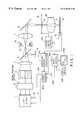
FIG. 1 is a schematic and diagrammatic view of an exposure apparatus according to a first embodiment of the present invention.
FIG. 2 is a schematic view of a main portion of amovable slit 6 as viewed in the direction of an optical axis of an illumination optical system.
FIG. 3 is a schematic view for explaining changes in intensity profile as a width w of anexposure sli 6ais changed.
FIG. 4 is a schematic view for explaining changes in width of a half shadow region as amovable slit 6 moves in the direction of an optical axis.
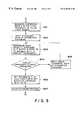
FIG. 5 is a flow chart for explaining operations made in the first embodiment.
FIG. 6 is a graph for explaining a model of an intensity profile of exposure light upon a substrate11.
FIG. 7 is a graph for explaining estimation of an integrated exposure amount upon a substrate11 in a case where the substrate is exposed with exposure light having an intensity profile such as shown in FIG.6.
FIG. 8 is a schematic view for explaining the mechanism of production of non-uniformness ΔS of an integrated exposure amount.
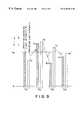
FIG. 9 is a schematic view for explaining the principle of control in a second embodiment of the present invention.
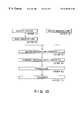
FIG. 10 is a flow chart for explaining semiconductor device manufacturing processes.
FIG. 11 is a flow chart for explaining details of a wafer process among the processes of FIG.10.
FIG. 1 is a schematic view showing the structure of an exposure apparatus according to a first embodiment of the present invention. In this embodiment, the invention is applied to an exposure apparatus for the manufacture of devices such as semiconductor devices (ICs or LSIs), image pickup devices such as CCDs or magnetic heads, for example. The exposure apparatus is arranged so that light from a light source is projected to a reticle through an illumination optical system and a circuit pattern formed on the reticle is projected and printed by a projection lens, in a reduced scale, on a substrate which is coated with a photosensitive material.
Denoted in the drawing at1 is a light source which comprises a pulse laser such as an excimer laser, for example, and it emits pulse light. Denoted at2 is a beam shaping optical system for transforming light from thelight source 1 into a desired shape, the resultant light being projected on a light entrance surface of anoptical integrator 3. Theoptical integrator 3 comprises a fly's eye lens having a number of small lenses. Plural secondary light sources are defined in the vicinity of the light exit surface of the integrator. Denoted at4 is a condenser lens which serves to Kohler illuminate amovable slit 6 with light from the secondary light sources adjacent to the light exit surface of theoptical integrator 3.
The light illuminating themovable slit 6 then illuminates areticle 9 by way of animaging lens 7 and amirror 8. Themovable slit 6 is disposed at a position slightly shifted from a position which is optically conjugate with thereticle 9, and themovable slit 6 is made movable along a direction of an optical axis. The shape of an opening of themovable slit 6 is effective to determine the shape and size of an illumination region on thereticle 9. Denoted at18 is a voice coil motor for movement control of themovable slit 6 in the optical axis direction. Denoted at12 is an exposure amount detector (detector A) for detecting the light quantity of a portion of pulse illumination light, being divided by ahalf mirror 5. It applies an output signal to anexposure amount calculator 102.
The beam shapingoptical system 2, theoptical integrator 3, thecondenser lens 4, themovable slit 6, theimaging lens 7 and themirror 8 are components of an illumination optical system. The illumination optical system further includes a light attenuating means (not shown), such that the light quantity from thelight source 1 can be adjusted at plural stages.
Thereticle 9 has a circuit pattern formed thereon, and it is held on areticle stage 13. Denoted at10 is a projection lens for projecting the circuit pattern of thereticle 9 upon a semiconductor substrate11 in a reduced scale. The semiconductor substrate11 is called a wafer, and a resist material (photosensitive material) is applied to the surface thereof. The wafer is placed on a wafer stage which is movable three-dimensionally. Here, the relation between anexposure slit 6aas defined by themovable slit 6 and an image of theexposure slit 6aas formed on the semiconductor substrate11, that is, the magnification, is denoted by βS-W.
Mounted on thewafer stage 14 is an exposure amount detector (detector B)15 by which the exposure amount with exposure light can be monitored through theprojection lens 10.
Denoted at101 is a stage drive control system, and it serves to control thereticle stage 13 and thewafer stage 14 so that they are moved in opposite directions at speeds of a ratio the same as the projection magnification of the projection lens10 (1:4 in this embodiment), exactly at constant speeds. Theexposure amount calculator 102 serves to transform an electrical signal, being photoelectrically converted by the exposure amount detector (detector A)12 or exposure amount detector (detector B)15, into a logic value, and to apply the result to amain control system 104. It is to be noted that, since the exposure amount detector (detector A)12 can perform the intensity measurement even during the exposure process, it is used for estimation of an integrated value of exposure light to be projected. The exposure amount detector (detector B)15 detects, at an initial stage of the exposure process, the intensity of light passing theprojection lens 10 and impinging on the substrate11. Then, the correlation between the thus detected light intensity and the light intensity as detected by the exposure amount detector (detector A)12 is determined. In an actual exposure process, the value as detected by the exposure amount detector (detector A)12 is corrected by using the thus determined correlation, to determine the exposure amount upon the substrate11. Thus, the exposure amount detector (detector B)15 does not perform measurement of exposure light intensity during the exposure process of the substrate11.
Denoted at103 is a laser control system which produces atrigger signal 16 and a chargingvoltage signal 17 in accordance with a desired exposure amount, and it controls the output energy and the light emission spacing of thelight source 1. When thelaser control system 103 produces thetrigger signal 16 or chargingvoltage signal 17, anilluminance monitor signal 108 from theexposure amount calculator 102, a current position signal107 from the stagedrive control system 101 and hysteresis information from themain control system 104, for example, are used as parameters.
A desired exposure amount and tolerance for exposure non-uniformness are inputted into themain control system 104, from aninput device 105 which is a man-machine interface or a media interface. The result obtained through the exposure amount detector (detector A)12 or exposure amount detector (detector B)15, or the result of estimation of an integrated exposure amount are displayed in adisplay 106.
From the data applied by theinput device 105, from parameters peculiar to the exposure apparatus and/or from the data measured by the measuring means such as the exposure amount detectors (detectors A and B)12 and15, for example, themain control system 104 calculates a parameter group necessary for execution of scan exposure and transmits it to thelaser control system 103 or thestage control system 101.
FIG. 2 is a schematic view of a main portion of themovable slit 6 as viewed in the direction of the optical axis of the illumination optical system. Denoted in the drawing at701 are two movable aperture blades which can be moved in opposite directions, along a direction Xs (scan direction), by means of anaperture driving device 702, and anexposure slit 6ais defined between these blades. The size of the exposure slit6ais determined by the width w between the twomovable aperture blades 701 and by the length h (fixed) in a direction perpendicular to the direction Xs. When the width w of the exposure slit6achanges, the intensity profile upon the substrate11 of exposure light passing this slit changes such as shown in FIG.3.
FIG. 3 is a schematic view for explaining changes in intensity profile as the width w of the exposure slit6aof this embodiment changes. The drawing illustrates changes in intensity profile upon the substrate11 as the width w of the twoaperture blades 701 changes from w1 to w2. The axis of the abscissa in the drawing corresponds to an xwcoordinate which is the scan direction of the substrate11. The axis of the ordinate corresponds to the intensity of exposure light upon the substrate11. As the width w changes from w1 to w2, upon the substrate11, the distance between mid-points on opposite slant sides (half shadow or penumbra portions) of a trapezoidal intensity profile changes from d1=w1·βS-W(profile1) to d2=w2·βS-W(profile2). Namely, only the portions corresponding to the top and bottom of the trapezoid expand or contract, and the inclination of the slant sides (half shadow portions) does not change. Thus, if the width w is enlarged, the exposure area by one pulse increases, which is effective to enlarge the throughput. Since, however, the length of a diagonal of the range (w·βS-W×h·βS-W) of the image of the exposure slit upon the substrate11 is unable to extend beyond the diameter φ0of the effective picture field of theprojection lens 10 upon the substrate11, there is an upper limit wmax=dmax/βS-Wto the width w of the exposure slit6a.
FIG. 4 is a schematic view for explaining changes in width of a half shadow region in a case wherein the movable slit of this embodiment moves in the optical axis direction. The drawing illustrates a change in intensity profile as themovable slit 6 is moved by thevoice coil motor 18 along the optical axis of the illumination optical system. When themovable slit 6 moves while the width w of the exposure slit6ais held unchanged, the intensity profile upon the substrate11 changes fromprofile 1 toprofile 3 illustrated. On this occasion, the inclination of the slant sides of the trapezoid changes, and the width r of the half shadow upon the plane of projection changes from r1 to r2. Thus, if the width r of the half shadow portion is to be changed, themovable slit 6 may be moved.
FIG. 5 is a flow chart of this embodiment. This flow chart covers the procedure from determination of the slit width w, the position of themovable slit 6 in the optical axis direction and the scan speed v of thewafer stage 14 on the basis of given environment variables, to execution of the scan exposure process. The following reference characters are used in the flow chart:
βS-W: magnification of projection of exposure slit6aonto substrate11
w: width of exposure slit6a(width in scan direction)
h: length of exposure slit6ain a direction perpendicular to the scan direction
d: width of image of exposure slit6aupon substrate11, and d=w·βS-W
e: length of image of exposure slit6aupon substrate11 in a direction perpendicular to the scan direction, and e=h·βS-W
v: scan speed ofwafer stage 14
δ: dispersion coefficient of emitted light intensity
δm: maximum level of dispersion coefficient of emitted light intensity
r: width of half shadow region on substrate11
rc: intensity correction point
ic: light intensity at intensity correction point
i0: reference emission light intensity oflight source 1 upon substrate11
N: number of light emissions necessary for achieving target value of integrated exposure amount
S: target value of integrated exposure amount
ΔS: tolerance value for non-uniformness of integrated exposure amount
ΔS/S: tolerance ratio for non-uniformness of integrated exposure amount
T: light emission period (light emission spacing)
φ0: diameter of effective picture field of projection lens (on wafer side)
Now, a description will be made with reference to the flow chart.
Dispersion rate δ of emitted light intensity as the light source is pulse oscillated is measured. To this end, thelight source 1 is caused to emit light for measurement. Charging voltage signals of a constant level and trigger signals of constant intervals are applied to thelight source 1, and emitted light intensities are measured through the exposure amount detector (detector A or B)12 or15. As for the dispersion coefficient δ, a statistically representative value among thus measured values, e.g., 2σ, is used.
Integrated exposure amount S and tolerance ratio ΔS/S of the non-uniformness of integrated exposure amount are inputted through theinput device 105. Generally, the tolerance ratio ΔS/S of non-uniformness of the integrated exposure amount should be smaller with a smaller linewidth of a circuit pattern on areticle 9. Thus, the value ΔS/S is determined while taking into account the linewidth of a circuit.
By using these values, themain control system 104 determines the scan speed v of thewafer stage 14, the width w of the exposure slit6a,and the position of themovable slit 6. The manner of determination will be described later. Then, the throughput is predicted.
Thedisplay 106 displays the thus determined scan speed v, width w of exposure slit6aand position ofmovable slit 6 as well as calculated throughput. The operator determines whether the operation should be executed under these conditions or not. If the conditions being displayed are satisfactory, the procedure goes to step806. If any of the conditions displayed should be changed, the procedure goes to step805.
Tolerance ratio ΔS/S of non-uniformness of the integrated exposure amount is set again. As regards the throughput, if the tolerance value ΔS of non-uniformness of the integrated exposure amount is too much regarded, the reference emission light intensity i0of thelight source 1 has to be lowered optically by using a filter or the like to increase the number N of light emissions. This makes the throughput lower. If, therefore, a higher throughput is desired even though a slight exposure non-uniformness has to be accepted, a larger tolerance ratio ΔS/S of non-uniformness of the integrated exposure amount may be inputted again through theinput device 105.
Themovable slit 6 is set and placed at the calculated position, and the width of the exposure slit6ais set at the calculated value. Namely, themain control system 104 operates to set the exposure slit6aat the size as determined, and also to cause thevoice coil motor 18 to move and set themovable slit 6 at a determined position along the optical axis.
The scan exposure process starts.
Of the steps of the flow chart described above, the procedure atstep 803 will be described in more detail. FIG. 6 is a graph showing a model of an intensity profile of exposure light upon the wafer11. The axis of the abscissa corresponds to the distance along the scan direction (xWdirection), and the axis of the ordinate corresponds to intensity I of the exposure light. The origin is at an end of the bottom of a regular trapezoid (with slants of the same length), the end facing the wafer movement direction. The intensity has a peak value i0. The configuration depicted by a broken line in the drawing corresponds to a profile of exposure light to be provided by a subsequent light emission.
The left and right half shadow portions at the slant sides of the regular trapezoid have the same span, and the length is denoted by r. The distance d in the xWdirection connecting the mid-points of the slant sides of the trapezoid corresponds to the width w of the exposure slit6a,and there is a relation:
The distance from the origin to the intensity correction point rccorresponds to the movement distance of the wafer through which the wafer11 moves in a period before a subsequent emission of exposure light, and rc=vT. It is at the point most unexposed-region side of the exposure region to be exposed last during this light emission, of the profile depicted by a solid line. The intensity of exposure light at this point is denoted by ic.
The intensity correction calculation at each pulse light emission is set so that at the intensity correction point rcthe intensity icaccomplishes a desired target value S to the integrated exposure amount. The intensity I(xW) at an arbitrary coordinate, in this model, can be expressed by the following equation:

FIG. 7 is a schematic view for explaining an estimation of an integrated exposure amount of a wafer which is to be exposed by exposure light having an intensity profile as shown in FIG.6. The drawing illustrates a case where, while moving thewafer stage 14 at a constant speed v, the substrate11 is exposed by pulse light being emitted at regular emission intervals T.
The integrated exposure amount at an arbitrary position on the xWaxis along the substrate scan direction (the xWcoordinate axis is fixed to the substrate), can be considered as being the total of the intensities of trapezoids through which a broken line in the drawing extends. Reference characters H0, H1, H2. . . , and Hkdenote the light emission numbers. Using this drawing, the process of determining the scan speed v, the width w of the exposure slit6a,and the position of themovable slit 6 from a designated tolerance ratio ΔS/S of non-uniformness of integrated exposure amount, will be explained.
The number N of light emissions necessary for achieving a target value S at an arbitrary exposure position can be determined from the reference emission light intensity i0of thelight source 1 and the target value S of the integrated exposure amount, in accordance with the following equation:
Between the width d of the image of the exposure slit6aupon the substrate11 and the scan speed v, there is a relation such as follows:
In this embodiment, when the emission light intensity of a pulse to be emitted last is so controlled that the integrated exposure amount at an exposure position reaches a target value S, the intensity dispersion coefficient δmof the last emitted pulse produces non-uniformness ΔS of the integrated exposure amount.
Referring now to FIG. 8, the mechanism of production of non-uniformness ΔS of the integrated exposure amount will be explained. The upper portion of FIG. 8 illustrates, like FIG. 7, the intensity of exposure light taken on the axis of the abscissa and the xWcoordinate system (substrate scan direction) taken on the axis of the ordinate. It is to be noted that in FIG. 8, for convenience of illustration, the higher the position of the intensity profile is, the earlier it is produced by light emission. The lower portion of FIG. 8 illustrates an integrated exposure amount taken on the axis of the abscissa and the xWcoordinate system taken on the axis of the ordinate. Namely, the lower portion of FIG. 8 depicts an integrated exposure amount distribution.
At a point on the substrate11 as denoted by xj+1, when the exposure slit6apasses, there is produced non-uniformness ΔS of the integrated exposure amount such as illustrated in FIG. 8, this being attributable to an intensity dispersion coefficient δmof the last emitted light pulse (Hj) at that point. The non-uniformness ΔS of the integrated exposure amount is produced in proportion to dispersion of intensity icat the intensity correction point xj+1for Hj, and it can be expressed as ΔS=δm·ic. Therefore, the tolerance ratio ΔS/S of non-uniformness of the integrated exposure amount can be expressed by the following relation:
From the inclination of the trapezoidal profile and from the distance rcthrough which the image of the exposure slit6adisplaces on the substrate11 per one light emission, the value of iccan be expressed as follows:
Also, since the range of irradiation of exposure light having the profile shown in FIG. 6 should be within the diameter φ0of the effective picture field of theprojection lens 10, the following limiting relation applies to d and r:
where
In this embodiment, since the whole diameter of the effective picture field of theprojection lens 10 is used, both sides of equation (7) are equal to each other. Also, h is fixed. Thus, if
is set, then, from equation (7), it follows that:
Thus, Wo becomes a constant.
Synthesizing equations (2)-(10), the relation between the tolerance ratio ΔS/S of non-uniformness of integrated exposure amount and the parameters can be expressed as follows:
In equation (11), δmis a maximum value of emission intensity dispersion coefficient δ as determined by measurement, and it is a fixed value peculiar to the instrument. Also, while the light emission spacing T of the light source can be changed, here it is set at a minimum value for enhancement of throughput. Thus, once a tolerance ratio ΔS/S of non-uniformness of the integrated exposure amount is designated, the relation between the wafer scan speed v and the width r of the half shadow region (i.e., remaining parameters) can be determined. By using the thus determined width r and from equations (1) and (9), the width w of the exposure slit6acan be determined in accordance with the following equation:
The value of width r of the half shadow region can be achieved by moving the position of the movable slit6 (exposure slit6a) along the optical axis of the illumination optical system.
Atstep 803, by using equations (11) and (12), one of the following procedures is performed to determine the scan speed v, the width w of the exposure slit6aand the width r of the half shadow region:
1) Holding the width r of the half shadow region at an arbitrary value, the scan speed v is determined from the width w of the exposure slit6aand the inputted tolerance ratio ΔS/S of non-uniformness of integrated exposure amount; and
2) Holding the scan speed v at an arbitrary value, the width r of the half shadow region is determined from the inputted tolerance ratio ΔS/S of non-uniformness of the integrated exposure amount and, then, the width w of the exposure slit6ais determined. This procedure is performed by themain control system 104. Thus, themain control system 104 serves as a component of scan speed determining means. Also, themain control system 104 and thevoice coil motor 18 are components of exposure slit determining means.
According to the investigation made by the inventors of the subject application, it has been confirmed that a practical scan speed of thewafer stage 14 during a scan exposure process is about 100 mm/sec. If the scan speed over 100 mm/sec. is achieved, then a synchronous following difference between thereticle stage 13 and thewafer stage 14 does not satisfy a predetermined alignment precision of thereticle 9 and the substrate11. Further, in this embodiment, since thereticle stage 13 is high-speed scanned at a ratio four times the speed of thewafer stage 14, there arise technical problems such as deformation of the reticle during acceleration and deceleration of thereticle stage 13 and how to keep attraction of the reticle to the reticle stage, for example.
On the other hand, the lifetime of a gas of a KrF excimer laser used in an exposure apparatus is currently about ten (10) to fifteen (15) million emissions. If the scan speed cannot be increased for the reason described above, for maintaining an integrated exposure amount per unit area at a target value S, there will be a method in which the reference emission light intensity i0is controlled to a desired value through light attenuating means such as an ND filter (not shown) accommodated in the beam shapingoptical system 2 or by controlling the chargingvoltage signal 17 and a method in which the number of light pulses received is controlled to a desired number by controlling the light emission frequency (light emission period T) of the light source. This can be predicted by the following equation which is derived from equations (3) and (4), that is:
Namely, there is an alternative method that, for extending the lifetime of thelight source 1 which comprises an excimer laser, for example, the light emission period T of thelight source 1 may be made larger to thereby reduce the number of light emissions of thelight source 1 necessary for the exposure of one shot. As a matter of course, when such a method is executed, the tolerance value of non-uniformness of the integrated exposure amount in equation (1) should be satisfied. That is, if the non-uniformness of integrated exposure amount can be sufficiently kept within the tolerance ΔS, the exposure apparatus of the present invention may be so arranged that the magnitude of non-uniformness of integrated exposure amount is enlarged to a level near the tolerance ΔS and the light emission frequency of the light source is lowered to reduce the number of light emissions per one shot, thereby to prolong the gas lifetime of thelight source 1.
It is seen from equations (11) and (12) that generally the product of scan speed v and light emission period T can be set large when the integrated exposure amount tolerance ratio ΔS/S is large. Thus, it is a possible form that the parameter setting may be chosen appropriately in accordance with situations, out of one in which the throughput is particularly regarded, one in which the lifetime of the light source is particularly regarded, and one in which both of them are regarded. Particularly, in a case wherein there is a limitation to the scan speed v as described hereinbefore, the light emission period T may preferably be set largest within a range in which the integrated exposure amount tolerance ratio ΔS/S is satisfied. If, on the other hand the integrated exposure amount tolerance ratio ΔS/S is small, parameter setting will be the one in which exposure precision is particularly regarded, such that the product of scan speed v and light emission period T is made small or, alternatively, the product of the width w of the exposure slit6aand the width r of the half shadow region is made large.
In a scan exposure apparatus according to this embodiment of the present invention, as described hereinbefore, a tolerance ratio for non-uniformness of the integrated exposure amount as required to exposure shots on a photosensitive substrate is given and, by using scan speed determining means and/or exposure slit determining means, the scan speed v of the wafer, the width w of the exposure slit, the light emission period T of the light source and so on are determined. The exposure process is performed by using the thus determined scan exposure parameters. Thus, an exposure process in which the performance of the light source is effectively used, is achieved.
Since, in the exposure apparatus of this embodiment, the exposure parameters can be determined while setting a tolerance value ΔS of non-uniformness of integrated exposure amount in accordance with the linewidth of a circuit pattern, it is possible to switch the exposure condition (by choosing one for regarding exposure precision or one for regarding throughput, for example) in accordance with the state of the layer.
While in the embodiment described above the tolerance ratio ΔS/S of non-uniformness of integrated exposure amount, corresponding to the linewidth of the pattern, is designated manually, the exposure parameter determination may be made automatically by, for example, recording information on a reticle9 (using a bar code, for example) and by reading the recorded information.
It is a possible alternative (second embodiment) that a deviation of a preceding emission light intensity Infrom a designated target value i0is added to a subsequent emission light intensity designation level (charging voltage designation value), and that the scan speed v and the width r of the half shadow region are determined from the tolerance ratio ΔS/S of non-uniformness of integrated exposure amount.
It is a further alternative (third embodiment) that the light emission period T of the light source is changed to control the integrated exposure amount, and the scan speed v and the width r of the half shadow region are determined from the tolerance ratio ΔS/S of non-uniformness of integrated exposure amount.
Now, a second embodiment of the present invention will be explained. FIG. 9 is a schematic view for explaining a concept of control in the second embodiment. In the drawing, for a second pulse light emission H2, for example, if the intensity I1of a first pulse light emission H1does not reach a desired emission light intensity i0, an intensity designation level E2wherein the deviation is added is applied with reference to the second pulse light emission H2. Here, the emission light intensity level E is applied by means of thelaser control system 103 in the form of acharge voltage signal 17. Namely, assuming now that:
En: emission light intensity designation level (charge voltage designation level) for an n-th pulse light emission
In: peak value of emitted light intensity of n-th pulse,
between them there is a relation such as follows:
where A is a proportion constant and bnis dispersion of an emitted light intensity of the n-th pulse light to an emission light intensity designation level.
The procedure of adding the deviation (shortage) of the emitted light intensity Inmeasured with reference to the just preceding pulse emission with respect to the target intensity i0, can be expressed by the following equation:
Also, from equation (13) it follows that:
Thus, the following recurrence formula is obtainable:

The integrated exposure amount up to n-th pulse light emission can be expressed by the following equation:

The value 2σ of S(n·v·T) detected as described above is then substituted into ΔS of equation (11), by which a similar procedure like that of the first embodiment can be done.
In determination of scan speed v, light emission period T and width w of exposure slit6a,it is not possible to predetect the value of dispersion bnof the emitted light intensity. In place thereof, a data group having been produced on the basis of a preceding measurement made under the same condition may be used or, alternatively, random numbers having a similar dispersion may be used.
Next, an embodiment of a semiconductor device manufacturing method which uses an exposure apparatus such as shown in FIG. 1, will be explained.
FIG. 10 is a flow chart of the sequence of manufacturing a semiconductor device such as a semiconductor chip (e.g., an IC or LSI), a liquid crystal panel or a CCD, for example.Step 1 is a design process for designing the circuit of a semiconductor device.Step 2 is a process for manufacturing a mask on the basis of the circuit pattern design.Step 3 is a process for manufacturing a wafer by using a material such as silicon.
FIG. 11 is a flow chart showing details of the wafer process. Step 11 is an oxidation process for oxidizing the surface of a wafer.Step 12 is a CVD process for forming an insulating film on the wafer surface.Step 13 is an electrode forming process for forming electrodes on the wafer by vapor deposition.Step 14 is an ion implanting process for implanting ions to the wafer.Step 15 is a resist process for applying a resist (photosensitive material) to the wafer.Step 16 is an exposure process for printing, by exposure, the circuit pattern of the mask on the wafer through the exposure apparatus described above.Step 17 is a developing process for developing the exposed wafer.Step 18 is an etching process for removing portions other than the developed resist image.Step 19 is a resist separation process for separating the resist material remaining on the wafer after being subjected to the etching process. By repeating these processes, circuit patterns are superposedly formed on the wafer.
While the invention has been described with reference to the structures disclosed herein, it is not confined to the details set forth and this application is intended to cover such modifications or changes as may come within the purposes of the improvements or the scope of the following claims.
Claims (40)
1. An exposure apparatus, comprising:
a light source for providing pulse light;
mask scanning means for scanning a mask having a pattern;
wafer scanning means for scanning a wafer onto which the pattern is to be projected, wherein said mask scanning means and said wafer scanning means scan the mask and the wafer in a timed relation so that the mask is illuminated while superposing portions of an illumination region defined by the pulse light and being narrower than the pattern such that the pattern is lithographically transferred onto the wafer;
light emission period determining means for determining an emission period of the pulse light when a required precision of an integrated exposure amount is changed, wherein the emission period is changed in accordance with the changed precision of the integrated exposure amount; and
an interface into which information related to the required precision of the integrated exposure amount is inputted and from which the information is outputted to said light emission period determination means.
2. An apparatus according to claim1, wherein the light emission period is larger with a lower precision required for the integrated exposure amount.
3. An apparatus according to claim2, wherein the light emission period is highest within a range in which the integrated exposure amount is satisfied.
4. An apparatus according to claim3, wherein the light emission period is determined on the basis of a scan speed of the mask and the wafer, and wherein the scan speed is maximized.
5. An apparatus according to claim4, wherein the scan speed is limited by precision of alignment of the mask and the wafer.
6. An apparatus according to claim1, wherein the integrated exposure amount is determined on the basis of a minimum linewidth of the pattern.
7. An apparatus according to claim6, wherein a lower precision is required for the integrated exposure amount with a wider minimum linewidth of the pattern.
8. An exposure apparatus, comprising:
a light source for providing pulse light;
mask scanning means for scanning a mask having a pattern;
wafer scanning means for scanning a wafer onto which the pattern is to be projected, wherein said mask scanning means and said wafer scanning means scan the mask and the wafer in a timed relation so that the mask is illuminated while superposing portions of an illumination region defined by the pulse light and being narrower than the pattern such that the pattern is lithographically transferred onto the wafer;
illumination range limiting means for limiting a range of illumination for the mask by the plse light, said illumination range limiting means changing the range of illumination for the mask;
illumination range determining means for determining a range of illumination for the mask when a required precision of an integrated exposure amount is changed, wherein the range of illumination is changed in accordance with the changed precision of the integrated exposure amount; and
an interface into which information related to the required precision of the integrated exposure amount is inputted and from which the information is outputted to said illumination range determining means.
9. An apparatus according to claim8, wherein a width of the illumination range with respect to the scan direction is narrower with a lower precision required for the integrated exposure amount.
10. An apparatus according to claim8, wherein the integrated exposure amount is determined on the basis of a minimum linewidth of the pattern.
11. An apparatus according to claim10, wherein a lower precision is required for the integrated exposure amount with a wider minimum linewidth of the pattern.
12. An exposure apparatus, comprising:
a light source for providing pulse light;
mask scanning means for scanning a mask having a pattern;
wafer scanning means for scanning a wafer onto which the pattern is to be projected, wherein said mask scanning means and said wafer scanning means scan the mask and the wafer in a timed relation so that the mask is illuminated while superposing portions of an illumination region defined by the pulse light and being narrower than the pattern such that the pattern is lithographically transferred onto the wafer;
illumination range limiting means for limiting a range of illumination for the mask by the pulse light, said illumination range limiting means changing the range of illumination for the mask;
position changing means for changing a position of said illumination range limiting means with respect to a direction of an optical axis;
position determining means for determining the position of said illumination range limiting means when a required precision of an integrated exposure amount is changed, wherein the position of the illumination range limiting means is changed in accordance with the changed precision of the integrated exposure amount; and
an interface into which information related to the required precision of the integrated exposure amount is inputted and from which the information is outputted to said illumination range determining means.
13. An apparatus according to claim12, wherein the position of the illumination range limiting means with respect to the optical axis direction has a deviation from a position being optically conjugate with the mask, the deviation being smaller with a lower precision required for the integrated exposure amount.
14. An apparatus according to claim12, wherein the integrated exposure amount is determined on the basis of a minimum linewidth of the pattern.
15. An apparatus according to claim14, wherein a lower precision is required for the integrated exposure amount with a wider minimum linewidth of the pattern.
16. A device manufacturing method including lithographically transferring a pattern of a mask onto a wafer, said method comprising the steps of:
providing pulse light;
scanning the mask and the wafer in a timed relation;
illuminating the mask while superposing portions of an illumination region defined by the pulse light and being narrower than the pattern such that the pattern is lithographically transferred onto the wafer;
determining an emission period of the pulse light when a required precision of an integrated exposure amount is changed, prior to an actual exposure process, wherein the emission period is changed in accordance with the changed precision of the integrated exposure amount; and
inputting information related to the required precision of the integrated exposure amount into an interface and outputting the information for determining the emission period of the pulse light from the interface.
17. An apparatus according to claim16, wherein the light emission period is larger with a lower precision required for the integrated exposure amount.
18. A method according to claim17, wherein the light emission period is highest within a range in which the integrated exposure amount is satisfied.
19. A method according to claim18, wherein the light emission period is determined on the basis of a scan speed of the mask and the wafer, and wherein the scan speed is maximized.
20. A method according to claim19, wherein the scan speed is limited by precision of alignment of the mask and the wafer.
21. A method according to claim16, wherein the integrated exposure amount is determined on the basis of a minimum linewidth of the pattern.
22. A method according to claim16, wherein a lower precision is required for the integrated exposure amount with a wider minimum linewidth of the pattern.
23. A device manufacturing method including lithographically transferring a pattern of a mask onto a wafer, said method comprising the steps of:
providing pulse light;
scanning the mask and the wafer in a timed relation;
illuminating the mask while superposing portions of an illumination region defined by the pulse light and being narrower than the pattern such that the pattern is lithographically transferred onto the wafer;
determining an illumination range for illumination of the mask by the pulse light when a required precision of an integrated exposure amount is changed, wherein the illumination range is changed in accordance with the changed precision of the integrated exposure amount; and
inputting information related to the required precision of the integrated exposure amount into an interface and outputting the information for determining the illumination range for illumination of the mask by the pulse light from the interface.
24. A method according to claim23, wherein a width of the illumination range with respect to the scan direction is narrower with a lower precision required for the integrated exposure amount.
25. A method according to claim23, wherein the integrated exposure amount is determined on the basis of a minimum linewidth of the pattern.
26. A method according to claim25, wherein a lower precision is required for the integrated exposure amount with a wider minimum linewidth of the pattern.
27. A device manufacturing method including lithographically transferring a pattern of a mask onto a wafer, said method comprising the steps of:
providing pulse light;
scanning the mask and the wafer in a timed relation;
illuminating the mask while superposing portions of an illumination region defined by the pulse light and being narrower than the pattern such that the pattern is lithographically transferred onto the wafer;
determining a position of illumination range limiting, for limiting a range of illumination of the mask by the pulse light, with respect to a direction of an optical axis when a required precision of an integrated exposure amount is changed, wherein the position of the illumination range limiting means is changed in accordance with the changed precision of the integrated exposure amount; and
inputting information related to the required precision of the integrated exposure amount into an interface and outputting the information for determining the position of the illumination range limiting for limiting the range of illumination of the mask by the pulse light from the interface.
28. A method according to claim27, wherein the position of the illumination range limiting means with respect to the optical axis direction has a deviation from a position being optically conjugate with the mask, the deviation being smaller with a lower precision required for the integrated exposure amount.
29. A method according to claim27, wherein the integrated exposure amount is determined on the basis of a minimum linewidth of the pattern.
30. A method according to claim29, wherein a lower precision is required for the integrated exposure amount with a wider minimum linewidth of the pattern.
31. An exposure apparatus comprising:
a light source for providing pulse light;
mask scanning means for scanning a mask having a pattern;
wafer scanning means for scanning a wafer onto which the pattern is to be projected, wherein said mask scanning means and said wafer scanning means scan the mask and the wafer in a timed relation so that the mask is illuminated while superposing portions of an illumination region defined by the pulse light and being narrower than the pattern such that the pattern is lithographically transferred onto the wafer; and
light emission period determining means for determining an emission period of the pulse light when a required precision of an integrated exposure amount is changed, wherein the emission period is changed in accordance with the changed precision of the integrated exposure amount,
wherein the required precision of the integrated exposure amount is designated as a tolerance ratio ΔS/S for an integrated exposure amount non-uniformness, the tolerance ratio corresponding to a ratio of a tolerance value ΔS for non-uniformness of the integrated exposure amount to a target value S of the integrated exposure amount.
32. An exposure apparatus comprising:
a light source for providing pulse light;
mask scanning means for scanning a mask having a pattern;
wafer scanning means for scanning a wafer onto which the pattern is to be projected, wherein said mask scanning means and said wafer scanning means scan the mask and the wafer in a timed relation so that the mask is illuminated while superposing portions of an illumination region defined by the pulse light and being narrower than the pattern such that the pattern is lithographically transferred onto the wafer;
illumination range limiting means for limiting a range of illumination for the mask by the pulse light, said illumination range limiting means changing the range of illumination for the mask; and
illumination range determining means for determining a range of illumination for the mask when a required precision of an integrated exposure amount is changed, wherein the range of illumination is changed in accordance with the changed precision of the integrated exposure amount,
wherein the required precision of the integrated exposure amount is designated as a tolerance ratio ΔS/S for an integrated exposure amount non-uniformness, the tolerance ratio corresponding to a ratio of a tolerance value ΔS for non-uniformness of the integrated exposure amount to a target value S of the integrated exposure amount.
33. An exposure apparatus comprising:
a light source for providing pulse light;
mask scanning means for scanning a mask having a pattern;
wafer scanning means for scanning a wafer onto which the pattern is to be projected, wherein said mask scanning means and said wafer scanning means scan the mask and the wafer in a timed relation so that the mask is illuminated while superposing portions of an illumination region defined by the pulse light and being narrower than the pattern such that the pattern is lithographically transferred onto the wafer;
illumination range limiting means for limiting a range of illumination for the mask by the pulse light, said illumination range limiting means changing the range of illumination for the mask;
position changing means for changing a position of said illumination range limiting means with respect to a direction of an optical axis; and
position determining means for determining the position of said illumination range limiting means when a required precision of an integrated exposure amount is changed, wherein the position of the illumination range limiting means is changed in accordance with the changed precision of the integrated exposure amount,
wherein the required precision of the integrated exposure amount is designated as a tolerance ratio ΔS/S for an integrated exposure amount non-uniformness, the tolerance ratio corresponding to a ratio of a tolerance value ΔS for non-uniformness of the integrated exposure amount to a target value S of the integrated exposure amount.
34. A device manufacturing method including lithographically transferring a pattern of a mask onto a wafer, said method comprising the steps of:
providing pulse light;
scanning the mask and the wafer in a timed relation;
illuminating the mask while superposing portions of an illumination region defined by the pulse light and being narrower than the pattern such that the pattern is lithographically transferred onto the wafer; and
determining an emission period of the pulse light when a reguired precision of an integrated exposure amount is changed, prior to an actual exposure process, wherein the emission period is changed in accordance with the changed precision of the integrated exposure amount,
wherein the required precision of the integrated exposure amount is designated as a tolerance ratio ΔS/S for an integrated exposure amount non-uniformness, the tolerance ratio corresponding to a ratio of a tolerance value ΔS for non-uniformness of the integrated exposure amount to a target value S of the integrated exposure amount.
35. A device manufacturing method including lithographically transferring a pattern of a mask onto a wafer, said method comprising the steps of:
providing pulse light;
scanning the mask and the wafer in a timed relation;
illuminating the mask while superposing portions of an illumination region defined by the pulse light and being narrower than the pattern such that the pattern is lithographically transferred onto the wafer; and
determining an illumination range for illumination of the mask by the pulse light when a required precision of an integrated exposure amount is changed, wherein the illumination range is changed in accordance with the changed precision of the integrated exposure amount,
wherein the required precision of the integrated exposure amount is designated as a tolerance ratio ΔS/S for an integrated exposure amount non-uniformness, the tolerance ratio corresponding to a ratio of a tolerance value ΔS for non-uniformness of the integrated exposure amount to a target value S of the integrated exposure amount.
36. A device manufacturing method including lithographically transferring a pattern of a mask onto a wafer, said method comprising the steps of:
providing pulse light;
scanning the mask and the wafer in a timed relation;
illuminating the mask while superposing portions of an illumination region defined by the pulse light and being narrower than the pattern such that the pattern is lithographically transferred onto the wafer; and
determining a position of illumination range limiting means, for limiting a range of illumination of the mask by the pulse light, with respect to a direction of an optical axis when a required precision of an integrated exposure amount is changed, wherein the position of the illumination range limiting means is changed in accordance with the changed precision of the integrated exposure amount,
wherein the required precision of the integrated exposure amount is designated as a tolerance ratio ΔS/S for an integrated exposure amount non-uniformness, the tolerance ratio corresponding to a ratio of a tolerance value ΔS for non-uniformness of the integrated exposure amount to a target value S of the integrated exposure amount.
37. An exposure apparatus, comprising:
a light source for providing pulse light;
mask scanning means for scanning a mask having a pattern;
wafer scanning means for scanning a wafer onto which the pattern is to be projected, wherein said mask scanning means and said wafer scanning means scan the mask and the wafer in a timed relation so that the mask is illuminated while superposing portions of an illumination region defined by the pulse light and being narrower than the pattern such that the pattern is lithographically transferred onto the wafer;
scan speed determining means for determining a scan speed of the mask and the wafer when a required precision of an integrated exposure amount is changed, wherein the scan speed is determined in accordance with the changed precision of the integrated exposure amount; and
an interface into which information related to the required precision of the integrated exposure amount is inputted and from which the information is outputted to said scan speed determining means.
38. A device manufacturing method including lithographically transferring a pattern of a mask onto a wafer, said method comprising the steps of:
providing pulse light;
scanning the mask and the wafer in a timed relation;
illuminating the mask while superposing portions of an illumination region defined by the pulse light and being narrower than the pattern such that the pattern is lithographically transferred onto the wafer;
determining a scan speed of the mask and the wafer when a required precision of an integrated exposure amount is changed, wherein the scan speed is determined in accordance with the changed precision of the integrated exposure amount; and
inputting information related to the required precision of the integrated exposure amount into an interface and outputting the information for determining the scan speed of the mask and the wafer from the interface.
39. An exposure apparatus, comprising:
a light source for providing pulse light;
mask scanning means for scanning a mask having a pattern;
wafer scanning means for scanning a wafer onto which the pattern is to be projected, wherein said mask scanning means and said wafer scanning means scan the mask and the wafer in a timed relation so that the mask is illuminated while superposing portions of an illumination region defined by the pulse light and being narrower than the pattern such that the pattern is lithographically transferred onto the wafer; and
scan speed determining means for determining a scan speed of the mask and the wafer when a required precision of an integrated exposure amount is changed, wherein the scan speed is determined in accordance with the changed precision of the integrated exposure amount,
wherein the required precision of the integrated exposure amount is designated as a tolerance ratio ΔS/S for an integrated exposure amount non-uniformness, the tolerance ratio corresponding to a ratio of a tolerance value ΔS for non-uniformness of the integrated exposure amount to a target value S of the integrated exposure amount.
40. A device manufacturing method including lithographically transferring a pattern of a mask onto a wafer, said method comprising the steps of:
providing pulse light;
scanning the mask and the wafer in a timed relation;
illuminating the mask while superposing portions of an illumination region defined by the pulse light and being narrower than the pattern such that the pattern is lithographically transferred onto the wafer; and
determining a scan speed of the mask and the wafer when a required precision of an integrated exposure amount is changed, wherein the scan speed is determined in accordance with the changed precision of the integrated exposure amount,
wherein the required precision of the integrated exposure amount is designated as a tolerance ratio ΔS/S for an integrated exposure amount non-uniformness, the tolerance ratio corresponding to a ratio of a tolerance value ΔS for non-uniformness of the integrated exposure amount to a target value S of the integrated exposure amount.
Priority Applications (1)
| Application Number | Priority Date | Filing Date | Title |
|---|---|---|---|
| US09/794,340US6424405B2 (en) | 1995-08-30 | 2001-02-28 | Exposure apparatus and device manufacturing method |
Applications Claiming Priority (4)
| Application Number | Priority Date | Filing Date | Title |
|---|---|---|---|
| JP24542795 | 1995-08-30 | ||
| JP7-245427 | 1995-08-30 | ||
| JP8239842AJPH09129550A (en) | 1995-08-30 | 1996-08-22 | Exposure apparatus and device manufacturing method using the same |
| JP8-239842 | 1996-08-22 |
Related Child Applications (1)
| Application Number | Title | Priority Date | Filing Date |
|---|---|---|---|
| US09/794,340ContinuationUS6424405B2 (en) | 1995-08-30 | 2001-02-28 | Exposure apparatus and device manufacturing method |
Publications (1)
| Publication Number | Publication Date |
|---|---|
| US6204911B1true US6204911B1 (en) | 2001-03-20 |
Family
ID=26534445
Family Applications (2)
| Application Number | Title | Priority Date | Filing Date |
|---|---|---|---|
| US08/705,089Expired - LifetimeUS6204911B1 (en) | 1995-08-30 | 1996-08-29 | Exposure apparatus and device manufacturing method |
| US09/794,340Expired - LifetimeUS6424405B2 (en) | 1995-08-30 | 2001-02-28 | Exposure apparatus and device manufacturing method |
Family Applications After (1)
| Application Number | Title | Priority Date | Filing Date |
|---|---|---|---|
| US09/794,340Expired - LifetimeUS6424405B2 (en) | 1995-08-30 | 2001-02-28 | Exposure apparatus and device manufacturing method |
Country Status (2)
| Country | Link |
|---|---|
| US (2) | US6204911B1 (en) |
| JP (1) | JPH09129550A (en) |
Cited By (17)
| Publication number | Priority date | Publication date | Assignee | Title |
|---|---|---|---|---|
| US20020039845A1 (en)* | 2000-10-02 | 2002-04-04 | Keiji Yoshimura | Exposure apparatus, semiconductor device manufacturing method, exposure apparatus maintenance method and semiconductor manufacturing factory |
| US20020145713A1 (en)* | 2001-02-21 | 2002-10-10 | Canon Kabushiki Kaisha | Scanning exposure apparatus, scanning exposure method, and device manufacturing method |
| US6501535B1 (en)* | 1996-05-28 | 2002-12-31 | Nikon Corporation | Exposure control method and apparatus |
| US6603533B2 (en)* | 1997-11-28 | 2003-08-05 | Nikon Corporation | Irradiation control method and apparatus for pulsed light source used in exposure apparatus |
| US20030156268A1 (en)* | 2000-09-19 | 2003-08-21 | Nikon Corporation | Exposure apparatus, exposure method and device production method |
| US20030174298A1 (en)* | 2002-03-18 | 2003-09-18 | Canon Kabushiki Kaisha | Exposure apparatus, semiconductor device manufacturing method, maintenance method of exposure apparatus, and semiconductor manufacturing factory |
| US6642994B2 (en)* | 1997-04-23 | 2003-11-04 | Nikon Corporation | Optical exposure apparatus and photo-cleaning method |
| US6721032B2 (en) | 2001-07-30 | 2004-04-13 | Canon Kabushiki Kaisha | Exposure apparatus and control method therefor, and device manufacturing method |
| US6744492B2 (en)* | 2000-01-14 | 2004-06-01 | Canon Kabushiki Kaisha | Exposure apparatus |
| US20040174674A1 (en)* | 2003-03-04 | 2004-09-09 | Stewart Thomas E. | Method for monitoring a computer system |
| EP1500987A1 (en)* | 2003-07-21 | 2005-01-26 | ASML Netherlands B.V. | Lithographic apparatus, device manufacturing method, and device manufactured thereby |
| US6870599B2 (en) | 2001-01-29 | 2005-03-22 | Canon Kabushiki Kaisha | Exposure method and apparatus, and device manufacturing method |
| US20050078291A1 (en)* | 2003-08-26 | 2005-04-14 | Asml Netherlands B.V. | Lithographic apparatus, device manufacturing method, and computer program |
| US20050157285A1 (en)* | 2003-05-28 | 2005-07-21 | Asml Netherlands B.V. | Lithographic apparatus |
| US20060087634A1 (en)* | 2004-10-25 | 2006-04-27 | Brown Jay M | Dynamic illumination uniformity and shape control for lithography |
| US20060285093A1 (en)* | 2005-06-21 | 2006-12-21 | Canon Kabushiki Kaisha | Immersion exposure apparatus |
| US8885146B2 (en) | 2008-02-26 | 2014-11-11 | 3M Innovative Properties Company | Multi-photon exposure system |
Families Citing this family (10)
| Publication number | Priority date | Publication date | Assignee | Title |
|---|---|---|---|---|
| US7095497B2 (en)* | 2001-06-27 | 2006-08-22 | Canon Kabushiki Kaisha | Beam splitting apparatus, transmittance measurement apparatus, and exposure apparatus |
| JP4065518B2 (en)* | 2002-11-29 | 2008-03-26 | キヤノン株式会社 | Exposure equipment |
| JP5653182B2 (en)* | 2003-05-22 | 2015-01-14 | キヤノン株式会社 | Exposure method, exposure apparatus, and device manufacturing method |
| KR101006435B1 (en)* | 2003-09-01 | 2011-01-06 | 삼성전자주식회사 | An exposure mask, an exposure apparatus including the same, and a manufacturing method of a display panel for a display device using the same |
| WO2005040927A2 (en)* | 2003-10-18 | 2005-05-06 | Carl Zeiss Smt Ag | Device and method for illumination dose adjustments in microlithography |
| KR100606932B1 (en)* | 2004-06-24 | 2006-08-01 | 동부일렉트로닉스 주식회사 | Exposure apparatus and method for semiconductor manufacturing |
| KR100712115B1 (en)* | 2004-09-21 | 2007-04-27 | 삼성에스디아이 주식회사 | Laser irradiation apparatus and manufacturing method of organic electroluminescent device using the same |
| US9529275B2 (en)* | 2007-02-21 | 2016-12-27 | Taiwan Semiconductor Manufacturing Company, Ltd. | Lithography scanner throughput |
| DE102011003066A1 (en) | 2010-02-26 | 2011-09-01 | Carl Zeiss Smt Gmbh | Method for load-sensitive operation of a projection exposure apparatus and corresponding projection exposure apparatus |
| CN108121163B (en) | 2016-11-29 | 2019-10-25 | 上海微电子装备(集团)股份有限公司 | A light source exposure dose control system and control method |
Citations (32)
| Publication number | Priority date | Publication date | Assignee | Title |
|---|---|---|---|---|
| US3823318A (en) | 1972-03-07 | 1974-07-09 | Siemens Ag | Circuit arrangement for exposure measuring devices |
| US4519692A (en) | 1983-04-08 | 1985-05-28 | Warner-Lambert Technologies, Inc. | Exposure and camera control |
| JPS6197830A (en) | 1984-10-18 | 1986-05-16 | Canon Inc | exposure equipment |
| US4676630A (en) | 1985-04-25 | 1987-06-30 | Canon Kabushiki Kaisha | Exposure apparatus |
| US4711568A (en) | 1985-03-06 | 1987-12-08 | Canon Kabushiki Kaisha | Exposure apparatus |
| US4748477A (en) | 1985-04-30 | 1988-05-31 | Canon Kabushiki Kaisha | Exposure apparatus |
| US4749867A (en) | 1985-04-30 | 1988-06-07 | Canon Kabushiki Kaisha | Exposure apparatus |
| US4804978A (en) | 1988-02-19 | 1989-02-14 | The Perkin-Elmer Corporation | Exposure control system for full field photolithography using pulsed sources |
| US4822975A (en) | 1984-01-30 | 1989-04-18 | Canon Kabushiki Kaisha | Method and apparatus for scanning exposure |
| US4884101A (en) | 1987-02-03 | 1989-11-28 | Nikon Corporation | Apparatus capable of adjusting the light amount |
| US4947047A (en) | 1987-02-05 | 1990-08-07 | Canon Kabushiki Kaisha | Exposure system with exposure controlling acoustooptic element |
| US4970546A (en) | 1988-04-07 | 1990-11-13 | Nikon Corporation | Exposure control device |
| US4974919A (en) | 1986-10-30 | 1990-12-04 | Canon Kabushiki Kaisha | Illuminating device |
| US4998134A (en) | 1985-04-25 | 1991-03-05 | Canon Kabushiki Kaisha | Exposure apparatus |
| US5053614A (en) | 1988-12-28 | 1991-10-01 | Canon Kabushiki Kaisha | Exposure control method and apparatus compensating for detection of offset from a measured value |
| JPH0469660A (en) | 1990-07-11 | 1992-03-04 | Canon Inc | Exposing device |
| US5107275A (en) | 1988-12-28 | 1992-04-21 | Canon Kabushiki Kaisha | Exposure control system |
| US5112133A (en) | 1989-08-30 | 1992-05-12 | Canon Kabushiki Kaisha | Alignment system |
| US5119390A (en) | 1989-08-07 | 1992-06-02 | Canon Kabushiki Kaisha | Energy amount controlling device |
| US5171965A (en) | 1984-02-01 | 1992-12-15 | Canon Kabushiki Kaisha | Exposure method and apparatus |
| US5182615A (en) | 1989-08-07 | 1993-01-26 | Canon Kabushiki Kaisha | Exposure apparatus |
| US5191374A (en) | 1988-11-17 | 1993-03-02 | Nikon Corporation | Exposure control apparatus |
| JPH0562876A (en) | 1991-09-04 | 1993-03-12 | Canon Inc | Exposure equipment |
| US5250797A (en) | 1990-10-05 | 1993-10-05 | Canon Kabushiki Kaisha | Exposure method and apparatus for controlling light pulse emission using determined exposure quantities and control parameters |
| JPH06119971A (en) | 1992-10-02 | 1994-04-28 | Seikosha Co Ltd | Manufacture of el element |
| US5475491A (en) | 1989-02-10 | 1995-12-12 | Canon Kabushiki Kaisha | Exposure apparatus |
| US5491534A (en)* | 1993-06-29 | 1996-02-13 | Canon Kabushiki Kaisha | Exposure apparatus and microdevice manufacturing method using the same |
| US5608492A (en)* | 1994-01-26 | 1997-03-04 | Canon Kabushiki Kaisha | Scanning type exposure apparatus and method and device manufacturing method |
| US5627627A (en)* | 1993-02-24 | 1997-05-06 | Nikon Corporation | Exposure control apparatus and method |
| US5663784A (en)* | 1993-06-10 | 1997-09-02 | Nikon Corporation | Slit-scanning type light exposure apparatus |
| US5728495A (en)* | 1995-03-15 | 1998-03-17 | Nikon Corporation | Scanning exposure method and apparatus |
| US5846678A (en)* | 1994-12-22 | 1998-12-08 | Canon Kabushiki Kaisha | Exposure apparatus and device manufacturing method |
Family Cites Families (6)
| Publication number | Priority date | Publication date | Assignee | Title |
|---|---|---|---|---|
| JP3391404B2 (en)* | 1991-12-18 | 2003-03-31 | 株式会社ニコン | Projection exposure method and circuit element manufacturing method |
| US6078381A (en)* | 1993-02-01 | 2000-06-20 | Nikon Corporation | Exposure method and apparatus |
| JPH06260384A (en)* | 1993-03-08 | 1994-09-16 | Nikon Corp | Method for controlling amount of exposure |
| US5777724A (en)* | 1994-08-24 | 1998-07-07 | Suzuki; Kazuaki | Exposure amount control device |
| US5617182A (en)* | 1993-11-22 | 1997-04-01 | Nikon Corporation | Scanning exposure method |
| JP3630807B2 (en) | 1994-12-28 | 2005-03-23 | キヤノン株式会社 | Scanning exposure apparatus and device manufacturing method using the scanning exposure apparatus |
- 1996
- 1996-08-22JPJP8239842Apatent/JPH09129550A/enactivePending
- 1996-08-29USUS08/705,089patent/US6204911B1/ennot_activeExpired - Lifetime
- 2001
- 2001-02-28USUS09/794,340patent/US6424405B2/ennot_activeExpired - Lifetime
Patent Citations (32)
| Publication number | Priority date | Publication date | Assignee | Title |
|---|---|---|---|---|
| US3823318A (en) | 1972-03-07 | 1974-07-09 | Siemens Ag | Circuit arrangement for exposure measuring devices |
| US4519692A (en) | 1983-04-08 | 1985-05-28 | Warner-Lambert Technologies, Inc. | Exposure and camera control |
| US4822975A (en) | 1984-01-30 | 1989-04-18 | Canon Kabushiki Kaisha | Method and apparatus for scanning exposure |
| US5171965A (en) | 1984-02-01 | 1992-12-15 | Canon Kabushiki Kaisha | Exposure method and apparatus |
| JPS6197830A (en) | 1984-10-18 | 1986-05-16 | Canon Inc | exposure equipment |
| US4711568A (en) | 1985-03-06 | 1987-12-08 | Canon Kabushiki Kaisha | Exposure apparatus |
| US4998134A (en) | 1985-04-25 | 1991-03-05 | Canon Kabushiki Kaisha | Exposure apparatus |
| US4676630A (en) | 1985-04-25 | 1987-06-30 | Canon Kabushiki Kaisha | Exposure apparatus |
| US4749867A (en) | 1985-04-30 | 1988-06-07 | Canon Kabushiki Kaisha | Exposure apparatus |
| US4748477A (en) | 1985-04-30 | 1988-05-31 | Canon Kabushiki Kaisha | Exposure apparatus |
| US4974919A (en) | 1986-10-30 | 1990-12-04 | Canon Kabushiki Kaisha | Illuminating device |
| US4884101A (en) | 1987-02-03 | 1989-11-28 | Nikon Corporation | Apparatus capable of adjusting the light amount |
| US4947047A (en) | 1987-02-05 | 1990-08-07 | Canon Kabushiki Kaisha | Exposure system with exposure controlling acoustooptic element |
| US4804978A (en) | 1988-02-19 | 1989-02-14 | The Perkin-Elmer Corporation | Exposure control system for full field photolithography using pulsed sources |
| US4970546A (en) | 1988-04-07 | 1990-11-13 | Nikon Corporation | Exposure control device |
| US5191374A (en) | 1988-11-17 | 1993-03-02 | Nikon Corporation | Exposure control apparatus |
| US5107275A (en) | 1988-12-28 | 1992-04-21 | Canon Kabushiki Kaisha | Exposure control system |
| US5053614A (en) | 1988-12-28 | 1991-10-01 | Canon Kabushiki Kaisha | Exposure control method and apparatus compensating for detection of offset from a measured value |
| US5475491A (en) | 1989-02-10 | 1995-12-12 | Canon Kabushiki Kaisha | Exposure apparatus |
| US5119390A (en) | 1989-08-07 | 1992-06-02 | Canon Kabushiki Kaisha | Energy amount controlling device |
| US5182615A (en) | 1989-08-07 | 1993-01-26 | Canon Kabushiki Kaisha | Exposure apparatus |
| US5112133A (en) | 1989-08-30 | 1992-05-12 | Canon Kabushiki Kaisha | Alignment system |
| JPH0469660A (en) | 1990-07-11 | 1992-03-04 | Canon Inc | Exposing device |
| US5250797A (en) | 1990-10-05 | 1993-10-05 | Canon Kabushiki Kaisha | Exposure method and apparatus for controlling light pulse emission using determined exposure quantities and control parameters |
| JPH0562876A (en) | 1991-09-04 | 1993-03-12 | Canon Inc | Exposure equipment |
| JPH06119971A (en) | 1992-10-02 | 1994-04-28 | Seikosha Co Ltd | Manufacture of el element |
| US5627627A (en)* | 1993-02-24 | 1997-05-06 | Nikon Corporation | Exposure control apparatus and method |
| US5663784A (en)* | 1993-06-10 | 1997-09-02 | Nikon Corporation | Slit-scanning type light exposure apparatus |
| US5491534A (en)* | 1993-06-29 | 1996-02-13 | Canon Kabushiki Kaisha | Exposure apparatus and microdevice manufacturing method using the same |
| US5608492A (en)* | 1994-01-26 | 1997-03-04 | Canon Kabushiki Kaisha | Scanning type exposure apparatus and method and device manufacturing method |
| US5846678A (en)* | 1994-12-22 | 1998-12-08 | Canon Kabushiki Kaisha | Exposure apparatus and device manufacturing method |
| US5728495A (en)* | 1995-03-15 | 1998-03-17 | Nikon Corporation | Scanning exposure method and apparatus |
Cited By (26)
| Publication number | Priority date | Publication date | Assignee | Title |
|---|---|---|---|---|
| US6501535B1 (en)* | 1996-05-28 | 2002-12-31 | Nikon Corporation | Exposure control method and apparatus |
| US6642994B2 (en)* | 1997-04-23 | 2003-11-04 | Nikon Corporation | Optical exposure apparatus and photo-cleaning method |
| US6603533B2 (en)* | 1997-11-28 | 2003-08-05 | Nikon Corporation | Irradiation control method and apparatus for pulsed light source used in exposure apparatus |
| US6744492B2 (en)* | 2000-01-14 | 2004-06-01 | Canon Kabushiki Kaisha | Exposure apparatus |
| US6798495B2 (en)* | 2000-09-19 | 2004-09-28 | Nikon Corporation | Exposure apparatus, exposure method and device production method |
| US20030156268A1 (en)* | 2000-09-19 | 2003-08-21 | Nikon Corporation | Exposure apparatus, exposure method and device production method |
| US20020039845A1 (en)* | 2000-10-02 | 2002-04-04 | Keiji Yoshimura | Exposure apparatus, semiconductor device manufacturing method, exposure apparatus maintenance method and semiconductor manufacturing factory |
| US6870599B2 (en) | 2001-01-29 | 2005-03-22 | Canon Kabushiki Kaisha | Exposure method and apparatus, and device manufacturing method |
| US6704093B2 (en) | 2001-02-21 | 2004-03-09 | Canon Kabushiki Kaisha | Scanning exposure apparatus, scanning exposure method, and device manufacturing method |
| US20020145713A1 (en)* | 2001-02-21 | 2002-10-10 | Canon Kabushiki Kaisha | Scanning exposure apparatus, scanning exposure method, and device manufacturing method |
| US6721032B2 (en) | 2001-07-30 | 2004-04-13 | Canon Kabushiki Kaisha | Exposure apparatus and control method therefor, and device manufacturing method |
| US20030174298A1 (en)* | 2002-03-18 | 2003-09-18 | Canon Kabushiki Kaisha | Exposure apparatus, semiconductor device manufacturing method, maintenance method of exposure apparatus, and semiconductor manufacturing factory |
| US6934004B2 (en) | 2002-03-18 | 2005-08-23 | Canon Kabushiki Kaisha | Exposure apparatus, semiconductor device manufacturing method, maintenance method of exposure apparatus, and semiconductor manufacturing factory |
| US20040174674A1 (en)* | 2003-03-04 | 2004-09-09 | Stewart Thomas E. | Method for monitoring a computer system |
| US7612867B2 (en) | 2003-05-28 | 2009-11-03 | Asml Netherlands B.V. | Lithographic apparatus |
| US7423730B2 (en)* | 2003-05-28 | 2008-09-09 | Asml Netherlands B.V. | Lithographic apparatus |
| US20050157285A1 (en)* | 2003-05-28 | 2005-07-21 | Asml Netherlands B.V. | Lithographic apparatus |
| EP1500987A1 (en)* | 2003-07-21 | 2005-01-26 | ASML Netherlands B.V. | Lithographic apparatus, device manufacturing method, and device manufactured thereby |
| US7294844B2 (en) | 2003-07-21 | 2007-11-13 | Asml Netherlands B.V. | Lithographic apparatus, device manufacturing method, and device manufactured thereby |
| US20050041227A1 (en)* | 2003-07-21 | 2005-02-24 | Asml Netherlands B.V. | Lithographic apparatus, device manufacturing method, and device manufactured thereby |
| US7102748B2 (en) | 2003-08-26 | 2006-09-05 | Asml Netherlands B.V. | Lithographic apparatus, device manufacturing method, and computer program |
| US20050078291A1 (en)* | 2003-08-26 | 2005-04-14 | Asml Netherlands B.V. | Lithographic apparatus, device manufacturing method, and computer program |
| US20060087634A1 (en)* | 2004-10-25 | 2006-04-27 | Brown Jay M | Dynamic illumination uniformity and shape control for lithography |
| US20060285093A1 (en)* | 2005-06-21 | 2006-12-21 | Canon Kabushiki Kaisha | Immersion exposure apparatus |
| US8885146B2 (en) | 2008-02-26 | 2014-11-11 | 3M Innovative Properties Company | Multi-photon exposure system |
| EP2257854A4 (en)* | 2008-02-26 | 2017-07-19 | 3M Innovative Properties Company | Multi-photon exposure system |
Also Published As
| Publication number | Publication date |
|---|---|
| JPH09129550A (en) | 1997-05-16 |
| US20010012100A1 (en) | 2001-08-09 |
| US6424405B2 (en) | 2002-07-23 |
Similar Documents
| Publication | Publication Date | Title |
|---|---|---|
| US6204911B1 (en) | Exposure apparatus and device manufacturing method | |
| US5846678A (en) | Exposure apparatus and device manufacturing method | |
| US5699148A (en) | Exposure apparatus and microdevice manufacturing method using the same | |
| US6040909A (en) | Surface position detecting system and device manufacturing method using the same | |
| US5892573A (en) | Exposure apparatus and method with multiple light receiving means | |
| KR0139309B1 (en) | Exposure apparatus and device manufacturing method using same | |
| US6081319A (en) | Illumination system and scan type exposure apparatus | |
| EP1843209A2 (en) | Exposure apparatus and device manufacturing method | |
| EP0689099A1 (en) | Projection exposure apparatus and device manufacturing method using the same | |
| JPH10135123A (en) | Projection exposure apparatus and semiconductor device manufacturing method using the same | |
| JP4392879B2 (en) | Projection exposure apparatus and device manufacturing method | |
| US5914773A (en) | Exposure apparatus and method using pulsed light and changing means to control both the light intensity and light emission timing | |
| US7236239B2 (en) | Illumination system and exposure apparatus | |
| JPH11354425A (en) | Scanning projection exposure apparatus and device manufacturing method using the same | |
| US5949468A (en) | Light quantity measuring system and exposure apparatus using the same | |
| KR0177861B1 (en) | Illumination system and scan type exposure apparatus | |
| US7046336B2 (en) | Scanning exposure apparatus | |
| JP2000114164A (en) | Scanning projection exposure apparatus and device manufacturing method using the same | |
| EP0748009B1 (en) | Output control method for excimer laser | |
| JP3167101B2 (en) | Exposure apparatus and device manufacturing method using the same | |
| JPH09223662A (en) | Illumination apparatus, scanning exposure apparatus, and device manufacturing method using the same | |
| JPH10106942A (en) | Scanning exposure apparatus and semiconductor device manufacturing method using the same | |
| JPH07283131A (en) | Illumination apparatus, scanning exposure apparatus, and device manufacturing method using the same | |
| JPH09223663A (en) | Scanning exposure apparatus and device manufacturing method using the same | |
| JPH1032164A (en) | Scanning exposure apparatus and device manufacturing method using the same |
Legal Events
| Date | Code | Title | Description |
|---|---|---|---|
| AS | Assignment | Owner name:CANON KABUSHIKI KAISHA, JAPAN Free format text:ASSIGNMENT OF ASSIGNORS INTEREST;ASSIGNORS:KUROSAWA, HIROSHI;OZAWA, KUNITAKA;HASEGAWA, NORIYASU;AND OTHERS;REEL/FRAME:008250/0258 Effective date:19961121 | |
| STCF | Information on status: patent grant | Free format text:PATENTED CASE | |
| CC | Certificate of correction | ||
| FPAY | Fee payment | Year of fee payment:4 | |
| FEPP | Fee payment procedure | Free format text:PAYOR NUMBER ASSIGNED (ORIGINAL EVENT CODE: ASPN); ENTITY STATUS OF PATENT OWNER: LARGE ENTITY | |
| FPAY | Fee payment | Year of fee payment:8 | |
| FPAY | Fee payment | Year of fee payment:12 |