US6161982A - Assembly with a sealed coupler - Google Patents
Assembly with a sealed couplerDownload PDFInfo
- Publication number
- US6161982A US6161982AUS09/063,883US6388398AUS6161982AUS 6161982 AUS6161982 AUS 6161982AUS 6388398 AUS6388398 AUS 6388398AUS 6161982 AUS6161982 AUS 6161982A
- Authority
- US
- United States
- Prior art keywords
- pin
- splined
- actuator
- threaded portion
- assembly
- Prior art date
- Legal status (The legal status is an assumption and is not a legal conclusion. Google has not performed a legal analysis and makes no representation as to the accuracy of the status listed.)
- Expired - Fee Related
Links
- 230000008878couplingEffects0.000description6
- 238000010168coupling processMethods0.000description6
- 238000005859coupling reactionMethods0.000description6
- 125000006850spacer groupChemical group0.000description4
- 239000000356contaminantSubstances0.000description3
- 230000004323axial lengthEffects0.000description2
- 210000003127kneeAnatomy0.000description2
- 239000012190activatorSubstances0.000description1
- 210000003811fingerAnatomy0.000description1
- 239000004519greaseSubstances0.000description1
- 230000002093peripheral effectEffects0.000description1
- 238000001356surgical procedureMethods0.000description1
- 210000003813thumbAnatomy0.000description1
Images

Classifications
- B—PERFORMING OPERATIONS; TRANSPORTING
- B25—HAND TOOLS; PORTABLE POWER-DRIVEN TOOLS; MANIPULATORS
- B25G—HANDLES FOR HAND IMPLEMENTS
- B25G1/00—Handle constructions
- B25G1/06—Handle constructions reversible or adjustable for position
- B25G1/063—Handle constructions reversible or adjustable for position for screwdrivers, wrenches or spanners
- B—PERFORMING OPERATIONS; TRANSPORTING
- B25—HAND TOOLS; PORTABLE POWER-DRIVEN TOOLS; MANIPULATORS
- B25B—TOOLS OR BENCH DEVICES NOT OTHERWISE PROVIDED FOR, FOR FASTENING, CONNECTING, DISENGAGING OR HOLDING
- B25B13/00—Spanners; Wrenches
- B25B13/48—Spanners; Wrenches for special purposes
- B25B13/481—Spanners; Wrenches for special purposes for operating in areas having limited access
- Y—GENERAL TAGGING OF NEW TECHNOLOGICAL DEVELOPMENTS; GENERAL TAGGING OF CROSS-SECTIONAL TECHNOLOGIES SPANNING OVER SEVERAL SECTIONS OF THE IPC; TECHNICAL SUBJECTS COVERED BY FORMER USPC CROSS-REFERENCE ART COLLECTIONS [XRACs] AND DIGESTS
- Y10—TECHNICAL SUBJECTS COVERED BY FORMER USPC
- Y10T—TECHNICAL SUBJECTS COVERED BY FORMER US CLASSIFICATION
- Y10T403/00—Joints and connections
- Y10T403/32—Articulated members
- Y10T403/32254—Lockable at fixed position
- Y10T403/32262—At selected angle
- Y10T403/32319—At selected angle including pivot stud
- Y10T403/32368—At selected angle including pivot stud including radial interengaging tongue and slot or serrations
- Y—GENERAL TAGGING OF NEW TECHNOLOGICAL DEVELOPMENTS; GENERAL TAGGING OF CROSS-SECTIONAL TECHNOLOGIES SPANNING OVER SEVERAL SECTIONS OF THE IPC; TECHNICAL SUBJECTS COVERED BY FORMER USPC CROSS-REFERENCE ART COLLECTIONS [XRACs] AND DIGESTS
- Y10—TECHNICAL SUBJECTS COVERED BY FORMER USPC
- Y10T—TECHNICAL SUBJECTS COVERED BY FORMER US CLASSIFICATION
- Y10T403/00—Joints and connections
- Y10T403/55—Member ends joined by inserted section
- Y10T403/559—Fluted or splined section
Definitions
- the present inventionrelates to couplers for coupling two members together, such as a tool head and a handle, and particularly to sealed couplers. More particularly, the invention relates to sealed couplers having a splined pin.
- Adjustable deviceshave been known in the art for years. Likewise, it is known to use splined pins to couple two members of such adjustable devices together.
- U.S. Pat. No. 5,581,838 to RoccoU.S. Pat. No. 5,419,221 to Cole, and U.S. Pat. No. 4,929,113 to Sheu each disclose the use of a splined pin for coupling two members together.
- a portion of the pinextends beyond one of the members, thereby being exposed to dirt, grease, or other contaminants. Such contaminants can work their way into the mechanism and interfere with the operation of the device.
- the present inventionovercomes this disadvantage, and others, by providing a sealed coupler for coupling two or more members.
- the sealed couplerincludes a splined pin that moves axially inside orifices formed in the two or more members and a rotating actuator.
- the actuatorcan be threaded to engage a threaded end of the pin, or it can include one or more cams to engage one or more cam followers coupled to the pin to move the pin inside the orifices.
- the pinmoves between a locking position, where the members are rotationally locked, and an unlocking position, where the members are free to rotate relative to each other.
- the couplerincludes a retainer for retaining the pin in the orifices.
- a first sealis disposed between the retainer and one of the members, and a second seal is disposed between the actuator and a second member to seal the pin and orifices from contaminates.
- a sealcan also be disposed between the first and second members. If more than two members are coupled together by the coupler, seals can be disposed, as appropriate, between the various members.
- an adjustable coupler for coupling a first member to a second membercomprises a pin having a first end, a second end, and a plurality of longitudinally extending splines.
- the first endincludes a first groove that divides the pin into a first splined portion and a second splined portion.
- the second endincludes a threaded portion. The second splined portion extends longitudinally between the first groove and the threaded portion.
- the couplerfurther includes a rotatable actuator coupled to the second end of the pin.
- the pinmoves axially between a locking position and an unlocking position in response to rotation of the actuator about a longitudinal axis of the pin.
- the couplerfurther includes a first seal disposed adjacent the first end of the pin and a second seal disposed adjacent the second end.
- the couplerfurther includes a first retainer coupled to the first end of the pin and a second retainer coupled to the second end of the pin.
- the first and second retainerscooperate to retain the pin in the first and second orifices.
- the first and second sealsare disposed between the first and second retainers and the first and second members, respectively.
- the first memberincludes a first splined orifice and the second member includes a second splined orifice that are configured to engage the pin.
- the second splined orificeincludes a second groove sized to receive the first splined portion of the pin, the pin being rotatable in the second splined orifice when the first splined portion is received in the second groove.
- the first grooveincludes a first plurality of grooves and the second groove includes a second plurality of grooves.
- the second end of the pinincludes a cam follower and the rotatable actuator includes a disk having a cam.
- the actuatoris disposed adjacent the pin with the cam in position to engage the cam follower.
- the pinmoves axially between a locking position and an unlocking position in response to rotational movement of the actuator that brings the cam into engagement with the cam follower.
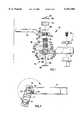
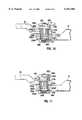
- FIG. 1is an exploded view of a ratchet wrench incorporating an adjustable coupler according to the present invention
- FIG. 2is a top plan view of the wrench of FIG. 1;
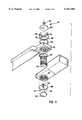
- FIG. 3is an exploded perspective view of the adjustable coupler of FIG. 1;
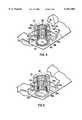
- FIG. 4is a perspective view, partially cut away, illustrating the splined pin in the unlocking position
- FIG. 5is a view similar to FIG. 4 illustrating the splined pin in the locking position
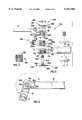
- FIG. 6is an exploded side view of a second embodiment of the invention incorporating a cam and a cam follower to move a splined pin between the locking and unlocking positions;
- FIG. 7is an alternative embodiment of the splined pin of FIG. 6 with the cam follower formed integrally with the pin;
- FIG. 8is a top plan view of the embodiment of FIG. 6;
- FIG. 9is an exploded perspective view of the adjustable coupler of FIG. 6;
- FIG. 10is a side view, partially cut away, of the adjustable coupler of FIG. 6 illustrating the splined pin in the unlocking position
- FIG. 11is a side view, partially cut away, of the adjustable coupler of FIG. 6 illustrating the splined pin in the locking position.
- the present inventionincludes a coupler 10 for adjustably coupling a first member 12 to a second member 14.
- the coupler 10includes a splined pin 16, having a plurality of longitudinally extending external splines 18 and a longitudinally extending central bore 20 (FIG. 3), an actuator 22 and a retainer 19.
- the first member 12includes a first splined orifice 24 and the second member includes a second splined orifice 26.
- the first and second splined orifices 24, 26are sized and configured to engage the splined pin 16.
- the first and second members 12, 14each include upper and lower annular seal receiving channels 23, 25, 27, 29 surrounding the splined orifices 24, 26.
- the first member 12includes a ratchet head having a ratchet mechanism 13.
- a first end 16a of the pin 16includes first, second, and third circumferential grooves 34a, 34b, 34c.
- the grooves 34a, 34b, 34chave a depth equal to the height of the splines 18.
- the grooves 34a, 34b, 34cdivide the first end 30 into first, second, third and fourth splined portions 30a, 30b, 30c, 30d with splined portions 30b, 30c, 30d having a width substantially equal to the width of the grooves 34a, 34b, 34c.
- a second end 16b of the pin 16includes a threaded portion 38. The length of the pin 16 is greater that the combined axial length of the orifices 24, 26.
- the first splined orifice 24includes first, second, and third grooves 31a, 31b, 31c that divide the orifice 24 into first, second, third and fourth orifice portions 24a, 24b, 24c, 24d.
- the grooves 31a, 31b, 31care sized and spaced apart to receive the splined portions 30a, 30b, 30c, formed on the pin 16, while the orifice portions 24a, 24b, 24c are sized to fit within the grooves 34a, 34b, 34c formed on the pin 16.
- the actuator 22includes a cylindrical sidewall 68 and an end wall 70 having a central aperture (not shown) sized to receive the retainer 19.
- the sidewall 68includes internal threads 76 formed adjacent the end wall 70 and a smooth portion 78 disposed adjacent to the threads 76.
- the retainer 19includes a first retainer 42 and a second retainer 44 cooperating with the actuator 22 to operatively retain the pin 16 in the splined orifices 24, 26.
- the first retainer 42includes a base 48 and a shaft 50 with a threaded distal end 56.
- the base 48is sized to overlap the splined orifices 24, 26 to prevent the retainer 42 from entering the orifices 24, 26.
- the shaft 50is attached to the base 48 and extends orthogonally therefrom.
- the shaft 50is longer than the pin 16 and is sized to fit in the central bore 20 with the threaded distal end 56 extending beyond the pin 16.
- the second retainer 44includes a washer 60 and a nut 62. The washer 60 operatively abuts the end wall 70 of the activator 22 and the nut 62 engages the threaded distal end 56 of the shaft 50 to retain the actuator 22 in position.
- a plurality of seals 80, 82, 84keep contaminants out of the coupler 10.
- a first seal 80is disposed in the seal receiving channel 29 and between the first retainer 42 and the first member 12.
- a second seal 82is disposed in the seal receiving channels 25, 27 and between the first and second members 12, 14.
- a third seal 84is disposed in the seal receiving channel 23 and between the actuator 22 and the second member 14.
- the coupler 10is assembled by putting seals 80, 82, 84 into the seal-receiving channels 23, 25, 27, 29 and inserting the splined pin 16 into the splined orifices 24, 26.
- the retainer 19is installed by inserting the shaft 50 into the central bore 20 of the pin 16 with the base 48 disposed against the seal 84 at the bottom of the first member 12.
- the actuator 22is threaded onto the threaded portion 38 of the pin 16, with the cylindrical sidewall 68 abutting the seal 80 and the threaded distal end 56 of the shaft 50 extending through, and above, the end wall 70 of the actuator 22.
- the washer 60is placed on the threaded distal end 56 adjacent the end wall 70, and the nut 62 is threaded onto the distal end 56 to hold the washer 60 and actuator 22 in position.
- the splined pin 16is operatively disposed in the splined orifices 24, 26 for axial movement between an unlocking position and a locking position.
- the first and second members 12, 14are rotationally locked to each other.
- the first and second members 12, 14are free to rotate relative to each other.
- the splined portions 30b, 30c, 30d of the pin 16are disposed in the grooves 31a, 31b, 31c, respectively.
- Splined portion 30ais removed from the second orifice 24 and the first member 12 is free to rotate about the pin 16.
- the actuator 22is rotated counterclockwise, when viewed from above, to "unscrew" the actuator 22.
- the retainer 19, not shown in FIGS. 4-5 for clarity,prevents the actuator 22 from moving upwardly.
- the threads 76act against the threaded portion 38 to push the pin 16 downwardly, aligning the splined portions 30a, 30b, 30c, 30d of the pin 16 with the splined orifice portions 24a, 24b, 24c, 24d, respectively.
- the first member 12is rotationally locked to the pin 16 and thereby locked to the second member 14.
- the actuator 22is rotated clockwise.
- the seal 80 and the second member 14prevent the actuator 22 from moving down on the pin 16, so that the threads 76 act against the threaded portion 38 to pull the pin 16 upwardly in the orifices 24, 26 to the unlocking position.
- the present inventionprovides a sealed coupler for adjustably forming a first member to a second member by moving a splined pin axially in response to rotational movement of an actuator.
- a second embodimentincludes a coupler 210 for adjustably coupling together the first and second members 12, 14, where like numbers refer to like items.
- the coupler 210includes a splined pin 216, having a plurality of longitudinally extending external splines 218 and a longitudinally extending central bore 220, and an actuator 222.
- a first end 230 of the pin 216includes first, second, and third circumferential grooves 234a, 234b, 234c.
- the grooves 234a, 234b, 234chave a depth equal to the height of the splines 218.
- the grooves 234a, 234b, 234cdivide the first end 230 into first, second, third and fourth splined portions 230a, 230b, 230c, 230d, with each splined portion 230b, 230c, 230d having a width substantially equal to the width of the grooves 31a, 31b, 31c in the first orifice 24.
- a cam follower 238is coupled to the second end of the pin 216.
- the cam follower 238includes a pair of downwardly depending shoulders 239 sized and configured to fit into slots 241 formed in the top of the pin 216.
- the pin 316includes an integral cam follower 338. The combined length of the pin 216 and cam follower 238 is greater that the combined axial length of the orifices 24, 26.
- the splined pin 216is held in the first and second orifices 24, 26 by a retainer 219.
- the retainer 219includes a first retainer 242 cooperating with a second retainer 244 and the actuator 222.
- the first retainer 242includes a base 248, a shaft 250 with a threaded distal end 256, and a spring-receiving channel 249 formed in the base 248 and surrounding the shaft 250.
- the base 248is sized to overlap the splined orifices 24, 26 to prevent the retainer 242 from entering the orifices 24, 26.
- the shaft 250is attached to the base 248 and extends orthogonally therefrom.
- the shaft 250is longer than the pin 216 and is sized to fit in the central bore 220 (FIG. 9) with the threaded distal end 256 extending beyond the pin 216.
- a helical spring 254is disposed in the channel 249 and about the shaft 250.
- the second retainer 244includes an annular spacer 260, a disk 261 having a central aperture 261a, and a nut 262 for engaging the threaded distal end 256 of the shaft 250.
- the disk 261includes a cam 264 and a tab 266.
- the cam 264is attached to one side of the disk 261 and is sized and configured to engage the cam follower 238.
- the tab 266extends outwardly from a peripheral edge of the disk 266 to be engaged by the thumb or finger of a user.
- the coupler 210is assembled by putting seals 80, 82, 84 into the seal-receiving channels 23, 25, 27, 29 and inserting the splined pin 216 into the splined orifices 24, 26.
- the spring 254is installed on the shaft 250 and the shaft 250 is inserted into the central bore 220 of the pin 216.
- the base 248is disposed against the seal 84 at the bottom of the first member 12 and the spring 254 is compressed between the base 248 and the first end 230 of the pin 216.
- the annular spacer 260is placed against the second member 14 and around the threaded distal end 256, and the disk 261 is disposed against the spacer 260 with the cam 264 facing the cam follower 238 and the threaded distal end 256 extending through the central aperture 261a and above the disk 261.
- the nut 262threads onto the threaded distal end 256 to retain the disk 261 and spacer 260 in position.
- the splined pin 216is operatively disposed in the splined orifices 24, 26 for axial movement between an unlocking position and a locking position.
- the unlocking positionillustrated in FIG. 10
- the first and second members 12, 14are free to rotate relative to each other.
- the locking positionillustrated in FIG. 11, the first and second members 12, 14 are rotationally locked to each other.
- the splined portions 230b, 230c, 230d of the pin 216are disposed in the grooves 31a, 31b, 31c in the first orifice 24, respectively, and the first member 12 is free to rotate about the pin 216.
- the splined portions 230a, 230b, 230c, 230dare positioned to engage the splined orifice portions 24a, 24b, 24c, 24d thereby preventing the first member 12 from rotating relative to the pin 216 or the second member 14.
- the actuator 222is rotated in a first direction, illustratively counterclockwise. Rotating the actuator 222 rotates the cam 264 to engage the cam follower 238.
- the retainer 219holds the actuator 222 against the second member 214, so that the cam 264 pushes downwardly against the cam follower 238 to push the pin 216 downwardly against the biasing force of the spring 254.
- the actuator 222is rotated in a second direction, illustratively clockwise. Rotating the actuator 222 in the second direction moves the cam 264 to the 25 left, as viewed in FIGS. 10-11, and off the cam follower 238.
- the biasing force of the spring 254urges the pin 216 upwardly in the orifices 24, 26, moving the second, third and fourth splined portions 230b, 230c, 230d into the grooves 31a, 31b, 31c and the first splined portion 230a out of the first splined orifice 24.
- the splined portions 230b, 230c, 230d of the pin 216are disposed in the grooves 31a, 31b, 31c, the first member 12 is free to rotate about the pin 216.
Landscapes
- Engineering & Computer Science (AREA)
- Mechanical Engineering (AREA)
- Quick-Acting Or Multi-Walled Pipe Joints (AREA)
Abstract
Description
The present invention relates to couplers for coupling two members together, such as a tool head and a handle, and particularly to sealed couplers. More particularly, the invention relates to sealed couplers having a splined pin.
Adjustable devices have been known in the art for years. Likewise, it is known to use splined pins to couple two members of such adjustable devices together. For example, U.S. Pat. No. 5,581,838 to Rocco, U.S. Pat. No. 5,419,221 to Cole, and U.S. Pat. No. 4,929,113 to Sheu each disclose the use of a splined pin for coupling two members together. However, in each of those devices, a portion of the pin extends beyond one of the members, thereby being exposed to dirt, grease, or other contaminants. Such contaminants can work their way into the mechanism and interfere with the operation of the device.
The present invention overcomes this disadvantage, and others, by providing a sealed coupler for coupling two or more members. The sealed coupler includes a splined pin that moves axially inside orifices formed in the two or more members and a rotating actuator. The actuator can be threaded to engage a threaded end of the pin, or it can include one or more cams to engage one or more cam followers coupled to the pin to move the pin inside the orifices. The pin moves between a locking position, where the members are rotationally locked, and an unlocking position, where the members are free to rotate relative to each other.
The coupler includes a retainer for retaining the pin in the orifices. Advantageously, a first seal is disposed between the retainer and one of the members, and a second seal is disposed between the actuator and a second member to seal the pin and orifices from contaminates. A seal can also be disposed between the first and second members. If more than two members are coupled together by the coupler, seals can be disposed, as appropriate, between the various members.
According to the invention, an adjustable coupler for coupling a first member to a second member comprises a pin having a first end, a second end, and a plurality of longitudinally extending splines. The first end includes a first groove that divides the pin into a first splined portion and a second splined portion. The second end includes a threaded portion. The second splined portion extends longitudinally between the first groove and the threaded portion.
The coupler further includes a rotatable actuator coupled to the second end of the pin. The pin moves axially between a locking position and an unlocking position in response to rotation of the actuator about a longitudinal axis of the pin.
The coupler further includes a first seal disposed adjacent the first end of the pin and a second seal disposed adjacent the second end.
The coupler further includes a first retainer coupled to the first end of the pin and a second retainer coupled to the second end of the pin. The first and second retainers cooperate to retain the pin in the first and second orifices. The first and second seals are disposed between the first and second retainers and the first and second members, respectively.
The first member includes a first splined orifice and the second member includes a second splined orifice that are configured to engage the pin. The second splined orifice includes a second groove sized to receive the first splined portion of the pin, the pin being rotatable in the second splined orifice when the first splined portion is received in the second groove.
In preferred embodiments, the first groove includes a first plurality of grooves and the second groove includes a second plurality of grooves.
In other preferred embodiments, the second end of the pin includes a cam follower and the rotatable actuator includes a disk having a cam. The actuator is disposed adjacent the pin with the cam in position to engage the cam follower. The pin moves axially between a locking position and an unlocking position in response to rotational movement of the actuator that brings the cam into engagement with the cam follower.
FIG. 1 is an exploded view of a ratchet wrench incorporating an adjustable coupler according to the present invention;
FIG. 2 is a top plan view of the wrench of FIG. 1;
FIG. 3 is an exploded perspective view of the adjustable coupler of FIG. 1;
FIG. 4 is a perspective view, partially cut away, illustrating the splined pin in the unlocking position;
FIG. 5 is a view similar to FIG. 4 illustrating the splined pin in the locking position;
FIG. 6 is an exploded side view of a second embodiment of the invention incorporating a cam and a cam follower to move a splined pin between the locking and unlocking positions;
FIG. 7 is an alternative embodiment of the splined pin of FIG. 6 with the cam follower formed integrally with the pin;
FIG. 8 is a top plan view of the embodiment of FIG. 6;
FIG. 9 is an exploded perspective view of the adjustable coupler of FIG. 6;
FIG. 10 is a side view, partially cut away, of the adjustable coupler of FIG. 6 illustrating the splined pin in the unlocking position; and
FIG. 11 is a side view, partially cut away, of the adjustable coupler of FIG. 6 illustrating the splined pin in the locking position.
The present invention includes acoupler 10 for adjustably coupling afirst member 12 to asecond member 14. Thecoupler 10 includes asplined pin 16, having a plurality of longitudinally extendingexternal splines 18 and a longitudinally extending central bore 20 (FIG. 3), anactuator 22 and aretainer 19. Thefirst member 12 includes a firstsplined orifice 24 and the second member includes a secondsplined orifice 26. The first and secondsplined orifices pin 16. The first andsecond members seal receiving channels splined orifices first member 12 includes a ratchet head having aratchet mechanism 13.
Afirst end 16a of thepin 16 includes first, second, and thirdcircumferential grooves grooves splines 18. Thegrooves portions splined portions grooves second end 16b of thepin 16 includes a threadedportion 38. The length of thepin 16 is greater that the combined axial length of theorifices
The firstsplined orifice 24 includes first, second, andthird grooves orifice 24 into first, second, third andfourth orifice portions grooves splined portions pin 16, while theorifice portions grooves pin 16.
As best seen in FIG. 3, theactuator 22 includes acylindrical sidewall 68 and anend wall 70 having a central aperture (not shown) sized to receive theretainer 19. Thesidewall 68 includesinternal threads 76 formed adjacent theend wall 70 and asmooth portion 78 disposed adjacent to thethreads 76.
Theretainer 19 includes afirst retainer 42 and asecond retainer 44 cooperating with theactuator 22 to operatively retain thepin 16 in thesplined orifices first retainer 42 includes abase 48 and ashaft 50 with a threadeddistal end 56. Thebase 48 is sized to overlap thesplined orifices retainer 42 from entering theorifices shaft 50 is attached to thebase 48 and extends orthogonally therefrom. Theshaft 50 is longer than thepin 16 and is sized to fit in thecentral bore 20 with the threadeddistal end 56 extending beyond thepin 16. Thesecond retainer 44 includes awasher 60 and anut 62. Thewasher 60 operatively abuts theend wall 70 of theactivator 22 and thenut 62 engages the threadeddistal end 56 of theshaft 50 to retain theactuator 22 in position.
A plurality ofseals coupler 10. Afirst seal 80 is disposed in theseal receiving channel 29 and between thefirst retainer 42 and thefirst member 12. Asecond seal 82 is disposed in theseal receiving channels second members third seal 84 is disposed in theseal receiving channel 23 and between the actuator 22 and thesecond member 14.
Thecoupler 10 is assembled by puttingseals channels splined pin 16 into thesplined orifices retainer 19 is installed by inserting theshaft 50 into thecentral bore 20 of thepin 16 with the base 48 disposed against theseal 84 at the bottom of thefirst member 12. Theactuator 22 is threaded onto the threadedportion 38 of thepin 16, with thecylindrical sidewall 68 abutting theseal 80 and the threadeddistal end 56 of theshaft 50 extending through, and above, theend wall 70 of theactuator 22. Thewasher 60 is placed on the threadeddistal end 56 adjacent theend wall 70, and thenut 62 is threaded onto thedistal end 56 to hold thewasher 60 andactuator 22 in position.
When thepin 16,actuator 22 andretainer 19 are installed, thesplined pin 16 is operatively disposed in thesplined orifices second members second members
In the unlocking position, thesplined portions pin 16 are disposed in thegrooves Splined portion 30a is removed from thesecond orifice 24 and thefirst member 12 is free to rotate about thepin 16.
To move thepin 16 to the locking position, illustrated in FIG. 5, theactuator 22 is rotated counterclockwise, when viewed from above, to "unscrew" theactuator 22. However, theretainer 19, not shown in FIGS. 4-5 for clarity, prevents the actuator 22 from moving upwardly. Thus, thethreads 76 act against the threadedportion 38 to push thepin 16 downwardly, aligning thesplined portions pin 16 with thesplined orifice portions first member 12 is rotationally locked to thepin 16 and thereby locked to thesecond member 14.
To move thepin 16 to the unlocking position, theactuator 22 is rotated clockwise. Theseal 80 and thesecond member 14 prevent the actuator 22 from moving down on thepin 16, so that thethreads 76 act against the threadedportion 38 to pull thepin 16 upwardly in theorifices
Thus, the present invention provides a sealed coupler for adjustably forming a first member to a second member by moving a splined pin axially in response to rotational movement of an actuator.
A second embodiment includes acoupler 210 for adjustably coupling together the first andsecond members coupler 210 includes asplined pin 216, having a plurality of longitudinally extendingexternal splines 218 and a longitudinally extendingcentral bore 220, and anactuator 222.
Afirst end 230 of thepin 216 includes first, second, and thirdcircumferential grooves grooves splines 218. Thegrooves first end 230 into first, second, third and fourthsplined portions splined portion grooves first orifice 24. Acam follower 238 is coupled to the second end of thepin 216. Thecam follower 238 includes a pair of downwardly dependingshoulders 239 sized and configured to fit intoslots 241 formed in the top of thepin 216. In an alternative embodiment, illustrated in FIG. 7, thepin 316 includes anintegral cam follower 338. The combined length of thepin 216 andcam follower 238 is greater that the combined axial length of theorifices
Thesplined pin 216 is held in the first andsecond orifices retainer 219. Theretainer 219 includes afirst retainer 242 cooperating with asecond retainer 244 and theactuator 222. Thefirst retainer 242 includes abase 248, ashaft 250 with a threadeddistal end 256, and a spring-receivingchannel 249 formed in thebase 248 and surrounding theshaft 250. Thebase 248 is sized to overlap thesplined orifices retainer 242 from entering theorifices shaft 250 is attached to thebase 248 and extends orthogonally therefrom. Theshaft 250 is longer than thepin 216 and is sized to fit in the central bore 220 (FIG. 9) with the threadeddistal end 256 extending beyond thepin 216. Ahelical spring 254 is disposed in thechannel 249 and about theshaft 250.
Thesecond retainer 244 includes anannular spacer 260, adisk 261 having acentral aperture 261a, and anut 262 for engaging the threadeddistal end 256 of theshaft 250. Thedisk 261 includes acam 264 and atab 266. Thecam 264 is attached to one side of thedisk 261 and is sized and configured to engage thecam follower 238. Thetab 266 extends outwardly from a peripheral edge of thedisk 266 to be engaged by the thumb or finger of a user. Thecoupler 210 is assembled by puttingseals channels splined pin 216 into thesplined orifices spring 254 is installed on theshaft 250 and theshaft 250 is inserted into thecentral bore 220 of thepin 216. Thus, thebase 248 is disposed against theseal 84 at the bottom of thefirst member 12 and thespring 254 is compressed between the base 248 and thefirst end 230 of thepin 216. Theannular spacer 260 is placed against thesecond member 14 and around the threadeddistal end 256, and thedisk 261 is disposed against thespacer 260 with thecam 264 facing thecam follower 238 and the threadeddistal end 256 extending through thecentral aperture 261a and above thedisk 261. Thenut 262 threads onto the threadeddistal end 256 to retain thedisk 261 andspacer 260 in position.
When thepin 216,actuator 222 andretainer 219 are installed, thesplined pin 216 is operatively disposed in thesplined orifices second members second members
In the unlocking position, thesplined portions pin 216 are disposed in thegrooves first orifice 24, respectively, and thefirst member 12 is free to rotate about thepin 216. In the locking position, thesplined portions splined orifice portions first member 12 from rotating relative to thepin 216 or thesecond member 14.
To move thepin 216 to the locking position, illustrated in FIG. 10, theactuator 222 is rotated in a first direction, illustratively counterclockwise. Rotating theactuator 222 rotates thecam 264 to engage thecam follower 238. Theretainer 219 holds theactuator 222 against the second member 214, so that thecam 264 pushes downwardly against thecam follower 238 to push thepin 216 downwardly against the biasing force of thespring 254.
To move thepin 216 to the unlocking position, theactuator 222 is rotated in a second direction, illustratively clockwise. Rotating theactuator 222 in the second direction moves thecam 264 to the 25 left, as viewed in FIGS. 10-11, and off thecam follower 238. The biasing force of thespring 254 urges thepin 216 upwardly in theorifices splined portions grooves splined portion 230a out of the firstsplined orifice 24. When thesplined portions pin 216 are disposed in thegrooves first member 12 is free to rotate about thepin 216.
The above descriptions and drawings are only illustrative of a preferred embodiment of the present invention, and it is not intended that the present invention be limited thereto. For example, the direction of rotation of the actuator is not important to the invention. In addition, the invention has been described with respect to a coupler joining a first and a second member, which are preferably a ratchet head and a handle, respectively. However, the invention is useful for joining any members together where it is desirable to have a plurality of lockable positions. For example, knee or elbow braces for retaining a knee or elbow in a particular position would be helpful for surgery patients or accident victims. Another useful application of the invention is in providing joints for arm-mounted lamps, such as are commonly clamped to the edge of a table or desk. Therefore, the scope of the present invention is not to be considered as limited by the foregoing description, but is only limited by the scope of the appended claims.
Claims (12)
1. An assembly with a sealed adjustable coupler, the assembly comprising:
a first member having a first orifice;
a second member having a second orifice;
a splined pin for engaging the first orifice and the second orifice, the splined pin including a plurality of longitudinally extending splines and a plurality of circumferentially extending grooves and being movable between a locking position and an unlocking position; and
a rotating actuator coupled to the pin, the pin moving axially between the locking position and the unlocking position in response to rotation of the actuator.
2. The assembly of claim 1 wherein the actuator includes a cam and the splined pin includes a cam follower, the cam engaging the cam follower to move the pin in response to rotation of the actuator.
3. The assembly of claim 1 further including a first retainer coupled to the first end of the pin and a second retainer coupled to the second end of the pin, the first and second retainers cooperating with each other to retain the pin in the first and second orifices.
4. The assembly of claim 3 further including a first seal disposed between the first retainer and the first member and a second seal disposed between the second retainer and the second member.
5. The assembly of claim 1 wherein the pin includes a first threaded portion, the rotating actuator further including a second threaded portion configured to engage the first threaded portion to move the pin.
6. The assembly of claim 1 further including a first end and a second end with a first seal disposed adjacent the first end and a second seal disposed adjacent the second end.
7. An assembly with a coupler, the assembly comprising:
a first member with a plurality of longitudinally extending splines;
a second member with a plurality of longitudinally extending splines and a first plurality of circumferentially extending grooves intersecting the plurality of splines;
a splined pin coupled to the first and second members, the pin including a second plurality of circumferential grooves and being movable between a locking position and an unlocking position; and
a rotating actuator coupled to the pin, the pin moving axially in response to rotational movement of the actuator, the second plurality of grooves moving into alignment with the first plurality of grooves as the pin moves to the locking position.
8. The assembly of claim 7 wherein the pin includes a first threaded portion and the rotating actuator includes a second threaded portion, the first threaded portion engaging the second threaded portion to move the pin.
9. An adjustable device comprising:
a first member having a first splined orifice;
a second member having a second splined orifice with a plurality of longitudinally extending splines and a first plurality of circumferential grooves, the splines being divided into a first plurality of spline portions by the first plurality of grooves;
a splined pin for engaging the first and second splined orifices, the splined pin including a cam follower, a plurality of longitudinally extending splines and a second plurality of circumferential grooves, the splines being divided into a second plurality of spline portions by the second plurality of grooves; and
a rotating actuator having a cam disposed to engage the cam follower, the pin moving axially in the first and second orifices between a locking position and an unlocking position in response to rotation of the actuator, the first plurality of spline portions being aligned with the second plurality of spline portions when the pin is in the locking position.
10. The device of claim 9 wherein the pin includes a first threaded portion and the rotating actuator includes a second threaded portion, the first threaded portion engaging the second threaded portion to move the pin.
11. An assembly with a sealed coupler, the assembly comprising:
a first member;
a second member having a splined orifice with a first plurality of grooves;
a splined pin with a second plurality of grooves, the pin being movable between a locking position and an unlocking position;
a rotating actuator coupled to the pin, the pin moving axially in response to rotational movement of the actuator, the axial movement of the pin moving the first plurality of grooves into alignment with the second plurality of grooves in the locking position;
a retainer coupled to the pin;
a first seal disposed between the retainer and the first member; and
a second seal disposed between the actuator and the second member.
12. The assembly of claim 11 wherein the pin includes a first threaded portion and the rotating actuator includes a second threaded portion, the first threaded portion engaging the second threaded portion to move the pin.
Priority Applications (1)
| Application Number | Priority Date | Filing Date | Title |
|---|---|---|---|
| US09/063,883US6161982A (en) | 1998-04-22 | 1998-04-22 | Assembly with a sealed coupler |
Applications Claiming Priority (1)
| Application Number | Priority Date | Filing Date | Title |
|---|---|---|---|
| US09/063,883US6161982A (en) | 1998-04-22 | 1998-04-22 | Assembly with a sealed coupler |
Publications (1)
| Publication Number | Publication Date |
|---|---|
| US6161982Atrue US6161982A (en) | 2000-12-19 |
Family
ID=22052139
Family Applications (1)
| Application Number | Title | Priority Date | Filing Date |
|---|---|---|---|
| US09/063,883Expired - Fee RelatedUS6161982A (en) | 1998-04-22 | 1998-04-22 | Assembly with a sealed coupler |
Country Status (1)
| Country | Link |
|---|---|
| US (1) | US6161982A (en) |
Cited By (29)
| Publication number | Priority date | Publication date | Assignee | Title |
|---|---|---|---|---|
| US6579031B2 (en)* | 2001-05-07 | 2003-06-17 | Jerry Bien | Minimum lateral play architecture servo arm |
| US6692178B2 (en)* | 2002-04-08 | 2004-02-17 | Hsiu-E Yu | Pivotable tool having crossing-connected arms |
| US20040134314A1 (en)* | 2003-01-09 | 2004-07-15 | Cole Charles A. | Radial indexing head tool with floating splined pin |
| US20040202506A1 (en)* | 2003-04-10 | 2004-10-14 | Pedrag Lazic | Mechanically lockable universal joint and structures employing such joint |
| US6805513B2 (en)* | 2000-01-17 | 2004-10-19 | Grupo Antolin-Ingenieria, S.A. | Mechanism for regulating collapsible elements |
| US20040227388A1 (en)* | 2003-05-16 | 2004-11-18 | Ching-Chang Wang | Rotational armrest apparatus |
| US20050120836A1 (en)* | 2003-03-04 | 2005-06-09 | Anderson Steven P. | Hinged socket wrench speed handle |
| US20050178249A1 (en)* | 2003-01-09 | 2005-08-18 | Cole Charles A. | Radial indexing head tool with floating splined pin |
| US7197965B1 (en)* | 2002-02-25 | 2007-04-03 | Anderson Steven P | Hinged socket wrench speed handle |
| US7302876B1 (en)* | 2007-04-04 | 2007-12-04 | Yi-Min Lee | Bi-sectional wrench |
| US7451673B1 (en) | 2007-08-15 | 2008-11-18 | Snap-On Incorporated | Indexable pliers-type tool |
| US20090076333A1 (en)* | 2007-09-17 | 2009-03-19 | Levahn Intellectual Property Holding Company, Llc | Flip Control Retractor Support |
| USD614464S1 (en)* | 2008-07-14 | 2010-04-27 | Wessel Iv Homer A | Adaptable socket drive apparatus |
| US20100274197A1 (en)* | 2006-10-24 | 2010-10-28 | Fojtik Shawn P | Hinge Assembly for an Injector |
| US20130019719A1 (en)* | 2011-07-21 | 2013-01-24 | Chih-Ching Hsieh | Hand tool with adjustable swing angle |
| US20130082152A1 (en)* | 2011-09-29 | 2013-04-04 | Jason L. Bundren | Side-loading quadrant deadend clamp assembly |
| US8424845B2 (en) | 2008-07-21 | 2013-04-23 | Indexable Tools, LLC | Hammer and crowbar with adjustable claw |
| US8613239B2 (en) | 2012-02-23 | 2013-12-24 | Jack Lee | Convertible driving tool |
| US20140224081A1 (en)* | 2013-02-09 | 2014-08-14 | Yi-Min Lee | Foldable Wrench |
| US20140309500A1 (en)* | 2013-04-12 | 2014-10-16 | Akron General Partners, Inc. | Self-retaining retractor |
| TWI494198B (en)* | 2013-10-15 | 2015-08-01 | ||
| US10016887B2 (en) | 2014-05-22 | 2018-07-10 | Charlie McCoy | Adaptable integrated wrench system |
| US10919139B2 (en) | 2015-02-17 | 2021-02-16 | Snap-On Incorporated | Remote wrench handle and accessories |
| US10987469B2 (en) | 2014-09-25 | 2021-04-27 | Pmt Partners, Llc | Rotatable finger loop for syringe, syringe configured to receive the rotatable finger loop and associated methods |
| US11213931B2 (en)* | 2020-04-29 | 2022-01-04 | Hua Wei Tools Co., Ltd. | Ratchet seat, a ratchet tool head, and a bidirectional ratchet hand tool |
| US20220152793A1 (en)* | 2020-11-16 | 2022-05-19 | Shifukang Industrial.Co., Ltd. | Driving tool |
| US11691249B2 (en) | 2020-07-29 | 2023-07-04 | Snap-On Incorporated | Push button release mechanism for pliers |
| US20230264326A1 (en)* | 2022-02-18 | 2023-08-24 | Infar Industrial Co., Ltd. | Indexable wrench |
| US11986934B2 (en) | 2021-11-01 | 2024-05-21 | Snap-On Incorporated | Adjustable pliers |
Citations (76)
| Publication number | Priority date | Publication date | Assignee | Title |
|---|---|---|---|---|
| US36407A (en)* | 1862-09-09 | Valve for steam-engines | ||
| US151315A (en)* | 1874-05-26 | Improvement in carriage-wrenches | ||
| US624643A (en)* | 1899-05-09 | Handle-bar for bicycles | ||
| US662966A (en)* | 1900-04-16 | 1900-12-04 | Samuel B J Robertson | Wrench. |
| US928375A (en)* | 1907-07-15 | 1909-07-20 | Alfred Frick | Wrench. |
| GB191314270A (en)* | 1913-06-20 | 1913-09-25 | Edward Gordon Luff | Improved Nut-wrench. |
| US1077575A (en)* | 1913-02-25 | 1913-11-04 | Frank C Wutke | Wrench. |
| US1109032A (en)* | 1913-11-17 | 1914-09-01 | Martin C Bersted | Wrench. |
| US1217217A (en)* | 1916-06-28 | 1917-02-27 | William Henry Reagan Jr | Wrench. |
| US1286506A (en)* | 1917-06-06 | 1918-12-03 | Samuel M Beery | Adjustable angle-wrench. |
| US1355455A (en)* | 1919-10-09 | 1920-10-12 | Clarence D Doughty | Wrench |
| US1568442A (en)* | 1925-01-29 | 1926-01-05 | Ray C Carver | Adjustable angle wrench |
| US1840685A (en)* | 1929-11-04 | 1932-01-12 | Seth J Cox | Wrench |
| US2420132A (en)* | 1945-11-27 | 1947-05-06 | Gryniuck Michael | Detachable head wrench |
| US2603325A (en)* | 1952-07-15 | -socket wrench head | ||
| US2638677A (en)* | 1950-04-21 | 1953-05-19 | Albert H Sheriff | Sine bar |
| US2671367A (en)* | 1953-03-05 | 1954-03-09 | Modin John | Angularly adjustable handle for socket wrenches |
| US2691316A (en)* | 1952-12-18 | 1954-10-12 | Tubing Appliance Company Inc | Box ratchet wrench |
| US2708855A (en)* | 1951-06-28 | 1955-05-24 | Tubing Appliance Company Inc | Closed ratchet wrench |
| US2921773A (en)* | 1958-03-19 | 1960-01-19 | Hoelzer Bruce | Craftsman's adjustable pry bar |
| US3002409A (en)* | 1959-04-29 | 1961-10-03 | Hobert B Jones | Flexible extension or shank for tools |
| US3039339A (en)* | 1960-04-08 | 1962-06-19 | Harris G Hanson | Handle with selectively usable wrench heads attaching units |
| US3119591A (en)* | 1963-06-04 | 1964-01-28 | Delbar Products | Hinged joint support, as for a rear view mirror mounting |
| US3175436A (en)* | 1963-08-20 | 1965-03-30 | Donald C Coleman | Torque imparting wrench |
| US3188895A (en)* | 1964-01-21 | 1965-06-15 | Hobert B Jones | Flexible chain extension or shank for tools with lock link features |
| US3270597A (en)* | 1965-09-14 | 1966-09-06 | Neff Ted | Multi-angle ratcheting wrenches |
| US3314316A (en)* | 1964-12-04 | 1967-04-18 | Wedgelock Corp Of California | Nut runner attachment |
| US3550486A (en)* | 1967-11-15 | 1970-12-29 | John D Edwards | Tool for holding rivets and bolts during their fastening in otherwise inaccessible places |
| US3733936A (en)* | 1971-06-18 | 1973-05-22 | W Flynn | Master ratchet with quick action dual drive |
| US3779107A (en)* | 1972-10-19 | 1973-12-18 | T Avery | Ratchet wrench tool head positioner |
| CA996786A (en)* | 1973-11-02 | 1976-09-14 | Lee Triplett | Fastener tool |
| US4027558A (en)* | 1975-06-18 | 1977-06-07 | Fish Herbert L | Ratchet-type torque wrenches with extended torque range |
| US4145124A (en)* | 1976-03-15 | 1979-03-20 | Weisgerber William C | Screw for eye glass frames |
| US4184783A (en)* | 1978-04-26 | 1980-01-22 | General Electric Company | Readily disengagable clevis |
| US4244237A (en)* | 1979-05-29 | 1981-01-13 | International Harvester Company | Tilt steering column mechanism |
| US4270417A (en)* | 1980-03-17 | 1981-06-02 | Joseph Tesoro | Two-way ratchet wrench |
| US4281601A (en)* | 1979-07-16 | 1981-08-04 | The United States Of America As Represented By The Secretary Of The Army | Non-slip turning joint for fuzes |
| DE3023882A1 (en)* | 1980-06-26 | 1982-01-14 | Hazet-Werk Hermann Zerver Gmbh & Co Kg, 5630 Remscheid | Variable position box spanner-operating handle - has splined connecting piece working together with rotary spring loaded coupling element |
| US4406186A (en)* | 1981-05-29 | 1983-09-27 | Gummow Stephen A | Dual action ratchet wrench |
| GB2132764A (en)* | 1982-09-16 | 1984-07-11 | Norbar Torque Tools | Harmonic drives for tool adjustment scales |
| GB2132926A (en)* | 1980-11-19 | 1984-07-18 | James William Konecny | Improved ratchet wrench of the socket drive type with socket ejector |
| US4479409A (en)* | 1983-02-07 | 1984-10-30 | Antonius John I | Open-end ratchet wrench |
| US4520697A (en)* | 1982-09-29 | 1985-06-04 | Moetteli John B | Ratchet wrench |
| US4543007A (en)* | 1983-11-17 | 1985-09-24 | Harvey Hubbell Incorporated | Adjustable luminaire support knuckle |
| US4582445A (en)* | 1985-01-24 | 1986-04-15 | Jerome Warshawsky | Quick release locking articulable joint |
| US4596167A (en)* | 1984-07-26 | 1986-06-24 | White Jr Roy | Torque multiplier wrench set |
| US4614452A (en)* | 1984-02-28 | 1986-09-30 | Wang Cheng H | Angle adjusting device |
| US4619540A (en)* | 1984-07-20 | 1986-10-28 | S.D.S. Industries, Inc. | Spring pivot joint for mannequin |
| US4747328A (en)* | 1986-06-20 | 1988-05-31 | Leslie Howard | Swivel arm ratchet wrench |
| US4774862A (en)* | 1985-07-26 | 1988-10-04 | The Boeing Company | Open-ended wrench |
| US4794829A (en)* | 1982-03-06 | 1989-01-03 | Hans Mesenhoeller | Ratchet-type wrench |
| US4800785A (en)* | 1987-11-02 | 1989-01-31 | Christensen Wendell N | Dual-drive ratchet wrench |
| US4805494A (en)* | 1987-08-24 | 1989-02-21 | Richard Santoro | Articulate hammer |
| US4901608A (en)* | 1989-02-27 | 1990-02-20 | James Shieh | Adjustable angle ratchet wrench |
| US4921271A (en)* | 1989-02-23 | 1990-05-01 | Specialty Products, Inc. | Method and apparatus for adjusting wheel alignment in a steerable wheel suspension assembly |
| US4929113A (en)* | 1989-05-30 | 1990-05-29 | Sheu Yin Ping | Knuckle joint |
| US4982732A (en)* | 1990-02-06 | 1991-01-08 | Orthopedic Technology, Inc. | Orthopedic rehabilitation knee brace |
| US4991470A (en)* | 1985-06-20 | 1991-02-12 | Sidewinder Products Corporation | Socket wrench with improved handle |
| US4993862A (en)* | 1989-08-16 | 1991-02-19 | Pilling Company | Clamp assembly for surgical retractor support |
| US5039118A (en)* | 1990-08-22 | 1991-08-13 | Huang Ming Tai | Stroller with an improved connector |
| US5056805A (en)* | 1990-06-05 | 1991-10-15 | Wang Chia Ho | Stroller |
| US5062179A (en)* | 1991-03-11 | 1991-11-05 | Huang Ming Tai | Handle assembly for doll carriages |
| US5123768A (en)* | 1991-08-06 | 1992-06-23 | Franklin Ronald D | Articulating positioning device for tools |
| US5197817A (en)* | 1992-06-16 | 1993-03-30 | The United States Of America As Represented By The Administrator Of The National Aeronautics And Space Administration | Quick acting gimbal joint |
| US5386747A (en)* | 1993-11-30 | 1995-02-07 | Snap-On Incorporated | Quick release ratchet with safety latch |
| US5419221A (en)* | 1994-06-16 | 1995-05-30 | Cole; James E. | Indexable head ratchet wrench |
| US5471899A (en)* | 1994-01-05 | 1995-12-05 | Twomlow; Daniel B. | Extensible ratchet wrench |
| US5503048A (en)* | 1994-09-20 | 1996-04-02 | Link Industries, Inc. | Quick release mechanism for tools such as socket wrenches |
| US5522287A (en)* | 1995-04-28 | 1996-06-04 | Chiang; Chen-Chi | Ratchet handle of socket wrench |
| US5564852A (en)* | 1995-03-29 | 1996-10-15 | Burndy Corporation | Adjustable hot stick adaptor |
| US5581838A (en)* | 1995-04-07 | 1996-12-10 | Rocco; Anthony C. | Articulating toothbrush assembly |
| US5694818A (en)* | 1995-12-11 | 1997-12-09 | Nickipuck; Michael F. | Locking joint for a ratchet wrench |
| US5820288A (en)* | 1997-04-24 | 1998-10-13 | Splined Tools Corporation | Adjustable tool with a locking hinge mechanism |
| US5879100A (en)* | 1996-12-11 | 1999-03-09 | Winkler; John | Coupling element for hand lever mechanism |
| US5911800A (en)* | 1994-08-02 | 1999-06-15 | Roberts Tool International (Usa), Inc. | Quick release mechanism for tools such as socket wrenches |
| US5941141A (en)* | 1996-10-02 | 1999-08-24 | Stanley Mechanics Tools, Inc. | Indexible wrench |
- 1998
- 1998-04-22USUS09/063,883patent/US6161982A/ennot_activeExpired - Fee Related
Patent Citations (78)
| Publication number | Priority date | Publication date | Assignee | Title |
|---|---|---|---|---|
| US2603325A (en)* | 1952-07-15 | -socket wrench head | ||
| US151315A (en)* | 1874-05-26 | Improvement in carriage-wrenches | ||
| US624643A (en)* | 1899-05-09 | Handle-bar for bicycles | ||
| US36407A (en)* | 1862-09-09 | Valve for steam-engines | ||
| US662966A (en)* | 1900-04-16 | 1900-12-04 | Samuel B J Robertson | Wrench. |
| US928375A (en)* | 1907-07-15 | 1909-07-20 | Alfred Frick | Wrench. |
| US1077575A (en)* | 1913-02-25 | 1913-11-04 | Frank C Wutke | Wrench. |
| GB191314270A (en)* | 1913-06-20 | 1913-09-25 | Edward Gordon Luff | Improved Nut-wrench. |
| US1109032A (en)* | 1913-11-17 | 1914-09-01 | Martin C Bersted | Wrench. |
| US1217217A (en)* | 1916-06-28 | 1917-02-27 | William Henry Reagan Jr | Wrench. |
| US1286506A (en)* | 1917-06-06 | 1918-12-03 | Samuel M Beery | Adjustable angle-wrench. |
| US1355455A (en)* | 1919-10-09 | 1920-10-12 | Clarence D Doughty | Wrench |
| US1568442A (en)* | 1925-01-29 | 1926-01-05 | Ray C Carver | Adjustable angle wrench |
| US1840685A (en)* | 1929-11-04 | 1932-01-12 | Seth J Cox | Wrench |
| US2420132A (en)* | 1945-11-27 | 1947-05-06 | Gryniuck Michael | Detachable head wrench |
| US2638677A (en)* | 1950-04-21 | 1953-05-19 | Albert H Sheriff | Sine bar |
| US2708855A (en)* | 1951-06-28 | 1955-05-24 | Tubing Appliance Company Inc | Closed ratchet wrench |
| US2691316A (en)* | 1952-12-18 | 1954-10-12 | Tubing Appliance Company Inc | Box ratchet wrench |
| US2671367A (en)* | 1953-03-05 | 1954-03-09 | Modin John | Angularly adjustable handle for socket wrenches |
| US2921773A (en)* | 1958-03-19 | 1960-01-19 | Hoelzer Bruce | Craftsman's adjustable pry bar |
| US3002409A (en)* | 1959-04-29 | 1961-10-03 | Hobert B Jones | Flexible extension or shank for tools |
| US3039339A (en)* | 1960-04-08 | 1962-06-19 | Harris G Hanson | Handle with selectively usable wrench heads attaching units |
| US3119591A (en)* | 1963-06-04 | 1964-01-28 | Delbar Products | Hinged joint support, as for a rear view mirror mounting |
| US3175436A (en)* | 1963-08-20 | 1965-03-30 | Donald C Coleman | Torque imparting wrench |
| US3188895A (en)* | 1964-01-21 | 1965-06-15 | Hobert B Jones | Flexible chain extension or shank for tools with lock link features |
| US3314316A (en)* | 1964-12-04 | 1967-04-18 | Wedgelock Corp Of California | Nut runner attachment |
| US3270597A (en)* | 1965-09-14 | 1966-09-06 | Neff Ted | Multi-angle ratcheting wrenches |
| US3550486A (en)* | 1967-11-15 | 1970-12-29 | John D Edwards | Tool for holding rivets and bolts during their fastening in otherwise inaccessible places |
| US3733936A (en)* | 1971-06-18 | 1973-05-22 | W Flynn | Master ratchet with quick action dual drive |
| US3779107A (en)* | 1972-10-19 | 1973-12-18 | T Avery | Ratchet wrench tool head positioner |
| CA996786A (en)* | 1973-11-02 | 1976-09-14 | Lee Triplett | Fastener tool |
| US4027558A (en)* | 1975-06-18 | 1977-06-07 | Fish Herbert L | Ratchet-type torque wrenches with extended torque range |
| US4145124A (en)* | 1976-03-15 | 1979-03-20 | Weisgerber William C | Screw for eye glass frames |
| US4184783A (en)* | 1978-04-26 | 1980-01-22 | General Electric Company | Readily disengagable clevis |
| US4244237A (en)* | 1979-05-29 | 1981-01-13 | International Harvester Company | Tilt steering column mechanism |
| US4281601A (en)* | 1979-07-16 | 1981-08-04 | The United States Of America As Represented By The Secretary Of The Army | Non-slip turning joint for fuzes |
| US4270417A (en)* | 1980-03-17 | 1981-06-02 | Joseph Tesoro | Two-way ratchet wrench |
| DE3023882A1 (en)* | 1980-06-26 | 1982-01-14 | Hazet-Werk Hermann Zerver Gmbh & Co Kg, 5630 Remscheid | Variable position box spanner-operating handle - has splined connecting piece working together with rotary spring loaded coupling element |
| GB2132926A (en)* | 1980-11-19 | 1984-07-18 | James William Konecny | Improved ratchet wrench of the socket drive type with socket ejector |
| US4406186A (en)* | 1981-05-29 | 1983-09-27 | Gummow Stephen A | Dual action ratchet wrench |
| US4794829A (en)* | 1982-03-06 | 1989-01-03 | Hans Mesenhoeller | Ratchet-type wrench |
| GB2132764A (en)* | 1982-09-16 | 1984-07-11 | Norbar Torque Tools | Harmonic drives for tool adjustment scales |
| US4520697A (en)* | 1982-09-29 | 1985-06-04 | Moetteli John B | Ratchet wrench |
| US4479409A (en)* | 1983-02-07 | 1984-10-30 | Antonius John I | Open-end ratchet wrench |
| US4543007A (en)* | 1983-11-17 | 1985-09-24 | Harvey Hubbell Incorporated | Adjustable luminaire support knuckle |
| US4614452A (en)* | 1984-02-28 | 1986-09-30 | Wang Cheng H | Angle adjusting device |
| US4619540A (en)* | 1984-07-20 | 1986-10-28 | S.D.S. Industries, Inc. | Spring pivot joint for mannequin |
| US4596167A (en)* | 1984-07-26 | 1986-06-24 | White Jr Roy | Torque multiplier wrench set |
| US4582445A (en)* | 1985-01-24 | 1986-04-15 | Jerome Warshawsky | Quick release locking articulable joint |
| US4991470A (en)* | 1985-06-20 | 1991-02-12 | Sidewinder Products Corporation | Socket wrench with improved handle |
| US4774862A (en)* | 1985-07-26 | 1988-10-04 | The Boeing Company | Open-ended wrench |
| US4747328A (en)* | 1986-06-20 | 1988-05-31 | Leslie Howard | Swivel arm ratchet wrench |
| US4805494A (en)* | 1987-08-24 | 1989-02-21 | Richard Santoro | Articulate hammer |
| US4800785A (en)* | 1987-11-02 | 1989-01-31 | Christensen Wendell N | Dual-drive ratchet wrench |
| US4921271A (en)* | 1989-02-23 | 1990-05-01 | Specialty Products, Inc. | Method and apparatus for adjusting wheel alignment in a steerable wheel suspension assembly |
| US4901608A (en)* | 1989-02-27 | 1990-02-20 | James Shieh | Adjustable angle ratchet wrench |
| US4929113A (en)* | 1989-05-30 | 1990-05-29 | Sheu Yin Ping | Knuckle joint |
| US4993862A (en)* | 1989-08-16 | 1991-02-19 | Pilling Company | Clamp assembly for surgical retractor support |
| US4982732A (en)* | 1990-02-06 | 1991-01-08 | Orthopedic Technology, Inc. | Orthopedic rehabilitation knee brace |
| US5056805A (en)* | 1990-06-05 | 1991-10-15 | Wang Chia Ho | Stroller |
| US5039118A (en)* | 1990-08-22 | 1991-08-13 | Huang Ming Tai | Stroller with an improved connector |
| US5062179A (en)* | 1991-03-11 | 1991-11-05 | Huang Ming Tai | Handle assembly for doll carriages |
| US5123768A (en)* | 1991-08-06 | 1992-06-23 | Franklin Ronald D | Articulating positioning device for tools |
| US5197817A (en)* | 1992-06-16 | 1993-03-30 | The United States Of America As Represented By The Administrator Of The National Aeronautics And Space Administration | Quick acting gimbal joint |
| US5386747A (en)* | 1993-11-30 | 1995-02-07 | Snap-On Incorporated | Quick release ratchet with safety latch |
| US5471899A (en)* | 1994-01-05 | 1995-12-05 | Twomlow; Daniel B. | Extensible ratchet wrench |
| US5419221A (en)* | 1994-06-16 | 1995-05-30 | Cole; James E. | Indexable head ratchet wrench |
| WO1995034408A1 (en)* | 1994-06-16 | 1995-12-21 | Cole James E | Indexable wrenches |
| US5911800A (en)* | 1994-08-02 | 1999-06-15 | Roberts Tool International (Usa), Inc. | Quick release mechanism for tools such as socket wrenches |
| US5503048A (en)* | 1994-09-20 | 1996-04-02 | Link Industries, Inc. | Quick release mechanism for tools such as socket wrenches |
| US5564852A (en)* | 1995-03-29 | 1996-10-15 | Burndy Corporation | Adjustable hot stick adaptor |
| US5581838A (en)* | 1995-04-07 | 1996-12-10 | Rocco; Anthony C. | Articulating toothbrush assembly |
| USRE36407E (en) | 1995-04-07 | 1999-11-30 | Rocco; Anthony C. | Articulating toothbrush assembly |
| US5522287A (en)* | 1995-04-28 | 1996-06-04 | Chiang; Chen-Chi | Ratchet handle of socket wrench |
| US5694818A (en)* | 1995-12-11 | 1997-12-09 | Nickipuck; Michael F. | Locking joint for a ratchet wrench |
| US5941141A (en)* | 1996-10-02 | 1999-08-24 | Stanley Mechanics Tools, Inc. | Indexible wrench |
| US5879100A (en)* | 1996-12-11 | 1999-03-09 | Winkler; John | Coupling element for hand lever mechanism |
| US5820288A (en)* | 1997-04-24 | 1998-10-13 | Splined Tools Corporation | Adjustable tool with a locking hinge mechanism |
Non-Patent Citations (2)
| Title |
|---|
| Truecraft Tools, Div. of Daido Corporation, "The Ratchet with All The Angles", Item #7336. |
| Truecraft Tools, Div. of Daido Corporation, The Ratchet with All The Angles , Item 7336.* |
Cited By (38)
| Publication number | Priority date | Publication date | Assignee | Title |
|---|---|---|---|---|
| US6805513B2 (en)* | 2000-01-17 | 2004-10-19 | Grupo Antolin-Ingenieria, S.A. | Mechanism for regulating collapsible elements |
| US6579031B2 (en)* | 2001-05-07 | 2003-06-17 | Jerry Bien | Minimum lateral play architecture servo arm |
| US7197965B1 (en)* | 2002-02-25 | 2007-04-03 | Anderson Steven P | Hinged socket wrench speed handle |
| US6692178B2 (en)* | 2002-04-08 | 2004-02-17 | Hsiu-E Yu | Pivotable tool having crossing-connected arms |
| US20040134314A1 (en)* | 2003-01-09 | 2004-07-15 | Cole Charles A. | Radial indexing head tool with floating splined pin |
| US6840141B2 (en)* | 2003-01-09 | 2005-01-11 | Brian T. Cole | Radial indexing head tool with floating splined pin |
| US20050178249A1 (en)* | 2003-01-09 | 2005-08-18 | Cole Charles A. | Radial indexing head tool with floating splined pin |
| US7156003B2 (en) | 2003-01-09 | 2007-01-02 | Cole Charles A | Radial indexing head tool with floating splined pin |
| US20050120836A1 (en)* | 2003-03-04 | 2005-06-09 | Anderson Steven P. | Hinged socket wrench speed handle |
| US7367740B2 (en)* | 2003-04-10 | 2008-05-06 | Pedrag Lazic | Mechanically lockable universal joint and structures employing such joint |
| US20040202506A1 (en)* | 2003-04-10 | 2004-10-14 | Pedrag Lazic | Mechanically lockable universal joint and structures employing such joint |
| US20040227388A1 (en)* | 2003-05-16 | 2004-11-18 | Ching-Chang Wang | Rotational armrest apparatus |
| US20100274197A1 (en)* | 2006-10-24 | 2010-10-28 | Fojtik Shawn P | Hinge Assembly for an Injector |
| US8539644B2 (en)* | 2006-10-24 | 2013-09-24 | Mallinckrodt Llc | Hinge assembly for an injector |
| US7302876B1 (en)* | 2007-04-04 | 2007-12-04 | Yi-Min Lee | Bi-sectional wrench |
| US7451673B1 (en) | 2007-08-15 | 2008-11-18 | Snap-On Incorporated | Indexable pliers-type tool |
| US20090076333A1 (en)* | 2007-09-17 | 2009-03-19 | Levahn Intellectual Property Holding Company, Llc | Flip Control Retractor Support |
| USD614464S1 (en)* | 2008-07-14 | 2010-04-27 | Wessel Iv Homer A | Adaptable socket drive apparatus |
| US8424845B2 (en) | 2008-07-21 | 2013-04-23 | Indexable Tools, LLC | Hammer and crowbar with adjustable claw |
| US20130019719A1 (en)* | 2011-07-21 | 2013-01-24 | Chih-Ching Hsieh | Hand tool with adjustable swing angle |
| US8646365B2 (en)* | 2011-07-21 | 2014-02-11 | Kabo Tool Company | Hand tool with adjustable swing angle |
| US20130082152A1 (en)* | 2011-09-29 | 2013-04-04 | Jason L. Bundren | Side-loading quadrant deadend clamp assembly |
| US10411454B2 (en) | 2011-09-29 | 2019-09-10 | Hubbell Incorporated | Side-loading quadrant deadend clamp assembly |
| US9038966B2 (en)* | 2011-09-29 | 2015-05-26 | Hubbell Incorporated | Side-loading quadrant deadend clamp assembly |
| US8613239B2 (en) | 2012-02-23 | 2013-12-24 | Jack Lee | Convertible driving tool |
| US8960056B2 (en)* | 2013-02-09 | 2015-02-24 | Yi-Min Lee | Foldable wrench |
| US20140224081A1 (en)* | 2013-02-09 | 2014-08-14 | Yi-Min Lee | Foldable Wrench |
| US20140309500A1 (en)* | 2013-04-12 | 2014-10-16 | Akron General Partners, Inc. | Self-retaining retractor |
| US9662101B2 (en)* | 2013-04-12 | 2017-05-30 | Akron General Partners, Inc. | Self-retaining retractor |
| TWI494198B (en)* | 2013-10-15 | 2015-08-01 | ||
| US10016887B2 (en) | 2014-05-22 | 2018-07-10 | Charlie McCoy | Adaptable integrated wrench system |
| US10987469B2 (en) | 2014-09-25 | 2021-04-27 | Pmt Partners, Llc | Rotatable finger loop for syringe, syringe configured to receive the rotatable finger loop and associated methods |
| US10919139B2 (en) | 2015-02-17 | 2021-02-16 | Snap-On Incorporated | Remote wrench handle and accessories |
| US11213931B2 (en)* | 2020-04-29 | 2022-01-04 | Hua Wei Tools Co., Ltd. | Ratchet seat, a ratchet tool head, and a bidirectional ratchet hand tool |
| US11691249B2 (en) | 2020-07-29 | 2023-07-04 | Snap-On Incorporated | Push button release mechanism for pliers |
| US20220152793A1 (en)* | 2020-11-16 | 2022-05-19 | Shifukang Industrial.Co., Ltd. | Driving tool |
| US11986934B2 (en) | 2021-11-01 | 2024-05-21 | Snap-On Incorporated | Adjustable pliers |
| US20230264326A1 (en)* | 2022-02-18 | 2023-08-24 | Infar Industrial Co., Ltd. | Indexable wrench |
Similar Documents
| Publication | Publication Date | Title |
|---|---|---|
| US6161982A (en) | Assembly with a sealed coupler | |
| US7430945B2 (en) | Ratcheting torque wrench | |
| US8366121B2 (en) | Chuck for bit | |
| US6948605B1 (en) | Ratcheting mechanism | |
| EP2133174B1 (en) | Chuck for bit | |
| US6789447B1 (en) | Reversible ratchet head assembly | |
| EP1753575B1 (en) | A hole saw assembly | |
| US7517179B2 (en) | Small holesaw mandrel assembly | |
| US6178854B1 (en) | Socket spanner provided with retaining device | |
| NZ578097A (en) | Wrench with socket, handle and retainer | |
| US4957386A (en) | Joining device | |
| US12358104B2 (en) | Screwdriver with extendable shaft and bit storage | |
| US6000300A (en) | Adjustable socket wrench | |
| US11268557B2 (en) | Rivet fastener assembly and method of use thereof | |
| US4899982A (en) | Upper valve component | |
| US4932293A (en) | Socket device | |
| KR101974554B1 (en) | Anti-loosening clamp device | |
| WO1994023903A1 (en) | Gear drive ratchet action wrench | |
| JP2004251297A (en) | Expansion rod, and cleaning tool | |
| US7895922B2 (en) | Ratchet wrench | |
| EP1273394A2 (en) | Tool for changing a replaceable cutting head | |
| KR0149333B1 (en) | Over-tightening bolt | |
| KR100404237B1 (en) | a screw driver | |
| AU2024264713A1 (en) | Ratcheting mechanism for a tool | |
| JPH11247824A (en) | Locking nut |
Legal Events
| Date | Code | Title | Description |
|---|---|---|---|
| AS | Assignment | Owner name:SPLINED TOOLS CORPORATION, TEXAS Free format text:ASSIGNMENT OF ASSIGNORS INTEREST;ASSIGNOR:COLE, JAMES E.;REEL/FRAME:009461/0867 Effective date:19980909 | |
| AS | Assignment | Owner name:COLE, JAMES E., ARKANSAS Free format text:ASSIGNMENT OF ASSIGNORS INTEREST;ASSIGNOR:SPLINED TOOLS CORPORATION;REEL/FRAME:011362/0511 Effective date:20001129 | |
| REMI | Maintenance fee reminder mailed | ||
| LAPS | Lapse for failure to pay maintenance fees | ||
| STCH | Information on status: patent discontinuation | Free format text:PATENT EXPIRED DUE TO NONPAYMENT OF MAINTENANCE FEES UNDER 37 CFR 1.362 | |
| FP | Expired due to failure to pay maintenance fee | Effective date:20041219 |