US6128537A - Techniques for treating anxiety by brain stimulation and drug infusion - Google Patents
Techniques for treating anxiety by brain stimulation and drug infusionDownload PDFInfo
- Publication number
- US6128537A US6128537AUS08/847,212US84721297AUS6128537AUS 6128537 AUS6128537 AUS 6128537AUS 84721297 AUS84721297 AUS 84721297AUS 6128537 AUS6128537 AUS 6128537A
- Authority
- US
- United States
- Prior art keywords
- signal generator
- operating
- stimulation
- electrode
- hertz
- Prior art date
- Legal status (The legal status is an assumption and is not a legal conclusion. Google has not performed a legal analysis and makes no representation as to the accuracy of the status listed.)
- Expired - Lifetime
Links
- 230000000638stimulationEffects0.000titleclaimsabstractdescription105
- 238000000034methodMethods0.000titleclaimsabstractdescription62
- 208000019901Anxiety diseaseDiseases0.000titleclaimsabstractdescription56
- 239000003814drugSubstances0.000titleclaimsabstractdescription41
- 229940079593drugDrugs0.000titleclaimsabstractdescription40
- 238000001802infusionMethods0.000titleclaimsdescription46
- 230000036506anxietyEffects0.000titleclaimsdescription17
- 210000004556brainAnatomy0.000titleabstractdescription56
- 230000001537neural effectEffects0.000claimsdescription56
- 210000001103thalamusAnatomy0.000claimsdescription14
- 230000004044responseEffects0.000claimsdescription7
- 210000005013brain tissueAnatomy0.000claimsdescription6
- 210000005153frontal cortexAnatomy0.000claimsdescription6
- 210000000627locus coeruleusAnatomy0.000claimsdescription6
- 210000000691mamillary bodyAnatomy0.000claimsdescription6
- 210000001609raphe nucleiAnatomy0.000claimsdescription6
- 230000004936stimulating effectEffects0.000claimsdescription6
- 210000003169central nervous systemAnatomy0.000claimsdescription4
- 210000001073mediodorsal thalamic nucleusAnatomy0.000claimsdescription4
- 230000001225therapeutic effectEffects0.000claimsdescription3
- 230000003247decreasing effectEffects0.000claims9
- 230000000949anxiolytic effectEffects0.000claims5
- 210000001159caudate nucleusAnatomy0.000claims3
- 230000001276controlling effectEffects0.000claims1
- 230000008878couplingEffects0.000claims1
- 238000010168coupling processMethods0.000claims1
- 238000005859coupling reactionMethods0.000claims1
- 230000001105regulatory effectEffects0.000claims1
- 210000002569neuronAnatomy0.000description51
- 239000003795chemical substances by applicationSubstances0.000description39
- 208000024891symptomDiseases0.000description20
- 210000000063presynaptic terminalAnatomy0.000description14
- 239000002858neurotransmitter agentSubstances0.000description12
- 208000019906panic diseaseDiseases0.000description12
- 2390000034774 aminobutyric acid receptor stimulating agentSubstances0.000description11
- 206010033664Panic attackDiseases0.000description11
- 230000000694effectsEffects0.000description10
- 208000019899phobic diseaseDiseases0.000description9
- 210000001519tissueAnatomy0.000description9
- 208000037870generalized anxietyDiseases0.000description8
- 102000004190EnzymesHuman genes0.000description7
- 108090000790EnzymesProteins0.000description7
- 208000012902Nervous system diseaseDiseases0.000description7
- 230000036982action potentialEffects0.000description7
- 239000007788liquidSubstances0.000description7
- 210000003205muscleAnatomy0.000description7
- 230000009471actionEffects0.000description6
- 210000005056cell bodyAnatomy0.000description6
- 239000004020conductorSubstances0.000description6
- 230000002964excitative effectEffects0.000description6
- 230000002401inhibitory effectEffects0.000description6
- 230000002829reductive effectEffects0.000description6
- 208000021384Obsessive-Compulsive diseaseDiseases0.000description5
- 210000003050axonAnatomy0.000description5
- 239000000835fiberSubstances0.000description5
- 230000001965increasing effectEffects0.000description5
- 210000002425internal capsuleAnatomy0.000description5
- 229920000642polymerPolymers0.000description5
- 239000000126substanceSubstances0.000description5
- 210000000225synapseAnatomy0.000description5
- 206010010219CompulsionsDiseases0.000description4
- 230000004913activationEffects0.000description4
- 239000000556agonistSubstances0.000description4
- 210000004027cellAnatomy0.000description4
- 230000000593degrading effectEffects0.000description4
- 208000037265diseases, disorders, signs and symptomsDiseases0.000description4
- 210000003414extremityAnatomy0.000description4
- 230000003902lesionEffects0.000description4
- 239000011148porous materialSubstances0.000description4
- 208000002193PainDiseases0.000description3
- 206010034912PhobiaDiseases0.000description3
- 230000003444anaesthetic effectEffects0.000description3
- 239000005557antagonistSubstances0.000description3
- 230000003413degradative effectEffects0.000description3
- 238000010586diagramMethods0.000description3
- 208000035475disorderDiseases0.000description3
- 238000012377drug deliveryMethods0.000description3
- 210000004326gyrus cinguliAnatomy0.000description3
- 210000001009nucleus accumbenAnatomy0.000description3
- 230000036407painEffects0.000description3
- -1polyethylenePolymers0.000description3
- 238000007920subcutaneous administrationMethods0.000description3
- DDOQBQRIEWHWBT-VKHMYHEASA-N(2S)-2-amino-4-phosphonobutanoic acidChemical compoundOC(=O)[C@@H](N)CCP(O)(O)=ODDOQBQRIEWHWBT-VKHMYHEASA-N0.000description2
- 208000008811AgoraphobiaDiseases0.000description2
- CURLTUGMZLYLDI-UHFFFAOYSA-NCarbon dioxideChemical compoundO=C=OCURLTUGMZLYLDI-UHFFFAOYSA-N0.000description2
- 241001269524DuraSpecies0.000description2
- 208000000059DyspneaDiseases0.000description2
- 206010013975DyspnoeasDiseases0.000description2
- 229940122459Glutamate antagonistDrugs0.000description2
- 208000008454HyperhidrosisDiseases0.000description2
- WHUUTDBJXJRKMK-VKHMYHEASA-NL-glutamic acidChemical compoundOC(=O)[C@@H](N)CCC(O)=OWHUUTDBJXJRKMK-VKHMYHEASA-N0.000description2
- 208000016285Movement diseaseDiseases0.000description2
- 206010049816Muscle tightnessDiseases0.000description2
- 206010029897Obsessive thoughtsDiseases0.000description2
- 208000001871TachycardiaDiseases0.000description2
- 208000003443UnconsciousnessDiseases0.000description2
- 229960004046apomorphineDrugs0.000description2
- 230000037007arousalEffects0.000description2
- 210000004227basal gangliaAnatomy0.000description2
- 230000006399behaviorEffects0.000description2
- 230000008859changeEffects0.000description2
- ANTSCNMPPGJYLG-UHFFFAOYSA-NchlordiazepoxideChemical compoundO=N=1CC(NC)=NC2=CC=C(Cl)C=C2C=1C1=CC=CC=C1ANTSCNMPPGJYLG-UHFFFAOYSA-N0.000description2
- 230000001684chronic effectEffects0.000description2
- AAOVKJBEBIDNHE-UHFFFAOYSA-NdiazepamChemical compoundN=1CC(=O)N(C)C2=CC=C(Cl)C=C2C=1C1=CC=CC=C1AAOVKJBEBIDNHE-UHFFFAOYSA-N0.000description2
- VYFYYTLLBUKUHU-UHFFFAOYSA-NdopamineChemical compoundNCCC1=CC=C(O)C(O)=C1VYFYYTLLBUKUHU-UHFFFAOYSA-N0.000description2
- 206010015037epilepsyDiseases0.000description2
- 238000001914filtrationMethods0.000description2
- 230000006870functionEffects0.000description2
- 239000007789gasSubstances0.000description2
- LNEPOXFFQSENCJ-UHFFFAOYSA-NhaloperidolChemical compoundC1CC(O)(C=2C=CC(Cl)=CC=2)CCN1CCCC(=O)C1=CC=C(F)C=C1LNEPOXFFQSENCJ-UHFFFAOYSA-N0.000description2
- 210000003128headAnatomy0.000description2
- 208000000122hyperventilationDiseases0.000description2
- 230000000870hyperventilationEffects0.000description2
- 238000003780insertionMethods0.000description2
- 230000037431insertionEffects0.000description2
- 210000003715limbic systemAnatomy0.000description2
- 239000000463materialSubstances0.000description2
- 230000028161membrane depolarizationEffects0.000description2
- 210000000944nerve tissueAnatomy0.000description2
- 230000036961partial effectEffects0.000description2
- 230000037361pathwayEffects0.000description2
- 230000008569processEffects0.000description2
- 208000020016psychiatric diseaseDiseases0.000description2
- 229940001470psychoactive drugDrugs0.000description2
- 239000004089psychotropic agentSubstances0.000description2
- 208000013220shortness of breathDiseases0.000description2
- 210000003625skullAnatomy0.000description2
- 210000000278spinal cordAnatomy0.000description2
- 230000003068static effectEffects0.000description2
- 238000001356surgical procedureMethods0.000description2
- 230000035900sweatingEffects0.000description2
- 230000006794tachycardiaEffects0.000description2
- 238000012360testing methodMethods0.000description2
- 238000002560therapeutic procedureMethods0.000description2
- 238000003079width controlMethods0.000description2
- YFYNOWXBIBKGHB-MHTLYPKNSA-N(1r,3s)-1-aminocyclopentane-1,3-dicarboxylic acidChemical compoundOC(=O)[C@@]1(N)CC[C@H](C(O)=O)C1YFYNOWXBIBKGHB-MHTLYPKNSA-N0.000description1
- VMWNQDUVQKEIOC-ZDUSSCGKSA-N(6as)-6-methyl-5,6,6a,7-tetrahydro-4h-dibenzo[de,g]quinoline-10,11-diolChemical compoundC([C@@H]1N(C)CC2)C3=CC=C(O)C(O)=C3C3=C1C2=CC=C3VMWNQDUVQKEIOC-ZDUSSCGKSA-N0.000description1
- BGRJTUBHPOOWDU-NSHDSACASA-N(S)-(-)-sulpirideChemical compoundCCN1CCC[C@H]1CNC(=O)C1=CC(S(N)(=O)=O)=CC=C1OCBGRJTUBHPOOWDU-NSHDSACASA-N0.000description1
- SVUOLADPCWQTTE-UHFFFAOYSA-N1h-1,2-benzodiazepineChemical compoundN1N=CC=CC2=CC=CC=C12SVUOLADPCWQTTE-UHFFFAOYSA-N0.000description1
- RRTQTOBOLIGMED-UHFFFAOYSA-N2-(carboxyamino)-2-phenylacetic acidChemical compoundOC(=O)NC(C(O)=O)C1=CC=CC=C1RRTQTOBOLIGMED-UHFFFAOYSA-N0.000description1
- JYLNVJYYQQXNEK-UHFFFAOYSA-N3-amino-2-(4-chlorophenyl)-1-propanesulfonic acidChemical compoundOS(=O)(=O)CC(CN)C1=CC=C(Cl)C=C1JYLNVJYYQQXNEK-UHFFFAOYSA-N0.000description1
- 2390000031484 aminobutyric acid receptor blocking agentSubstances0.000description1
- RPXVIAFEQBNEAX-UHFFFAOYSA-N6-Cyano-7-nitroquinoxaline-2,3-dioneChemical compoundN1C(=O)C(=O)NC2=C1C=C([N+](=O)[O-])C(C#N)=C2RPXVIAFEQBNEAX-UHFFFAOYSA-N0.000description1
- QUIKMLCZZMOBLH-UHFFFAOYSA-N8-[4-(4-fluorophenyl)-4-oxobutyl]-1-phenyl-1,3,8-triazaspiro[4.5]decan-4-one;hydrochlorideChemical compoundCl.C1=CC(F)=CC=C1C(=O)CCCN1CCC2(C(NCN2C=2C=CC=CC=2)=O)CC1QUIKMLCZZMOBLH-UHFFFAOYSA-N0.000description1
- 208000030507AIDSDiseases0.000description1
- 206010000605AcrophobiaDiseases0.000description1
- 101100135609Arabidopsis thaliana PAP10 geneProteins0.000description1
- KPYSYYIEGFHWSV-UHFFFAOYSA-NBaclofenChemical compoundOC(=O)CC(CN)C1=CC=C(Cl)C=C1KPYSYYIEGFHWSV-UHFFFAOYSA-N0.000description1
- 206010008479Chest PainDiseases0.000description1
- DYDCUQKUCUHJBH-UWTATZPHSA-ND-CycloserineChemical compoundN[C@@H]1CONC1=ODYDCUQKUCUHJBH-UWTATZPHSA-N0.000description1
- DYDCUQKUCUHJBH-UHFFFAOYSA-ND-CycloserineNatural productsNC1CONC1=ODYDCUQKUCUHJBH-UHFFFAOYSA-N0.000description1
- 206010016279Fear of open spacesDiseases0.000description1
- 208000011688Generalised anxiety diseaseDiseases0.000description1
- WTDRDQBEARUVNC-LURJTMIESA-NL-DOPAChemical compoundOC(=O)[C@@H](N)CC1=CC=C(O)C(O)=C1WTDRDQBEARUVNC-LURJTMIESA-N0.000description1
- WTDRDQBEARUVNC-UHFFFAOYSA-NL-DopaNatural productsOC(=O)C(N)CC1=CC=C(O)C(O)=C1WTDRDQBEARUVNC-UHFFFAOYSA-N0.000description1
- MKXZASYAUGDDCJ-SZMVWBNQSA-NLSM-2525Chemical compoundC1CCC[C@H]2[C@@]3([H])N(C)CC[C@]21C1=CC(OC)=CC=C1C3MKXZASYAUGDDCJ-SZMVWBNQSA-N0.000description1
- LBOJYSIDWZQNJS-JKSUJKDBSA-NLSM-5387Chemical compoundC12=CC=CC=C2[C@@]2(C)C3=CC=CC=C3C[C@@H]1N2LBOJYSIDWZQNJS-JKSUJKDBSA-N0.000description1
- OFOBLEOULBTSOW-UHFFFAOYSA-NMalonic acidChemical compoundOC(=O)CC(O)=OOFOBLEOULBTSOW-UHFFFAOYSA-N0.000description1
- AFVFQIVMOAPDHO-UHFFFAOYSA-NMethanesulfonic acidChemical compoundCS(O)(=O)=OAFVFQIVMOAPDHO-UHFFFAOYSA-N0.000description1
- 208000008238Muscle SpasticityDiseases0.000description1
- 208000000114Pain ThresholdDiseases0.000description1
- 206010034568Peripheral coldnessDiseases0.000description1
- LHNKBXRFNPMIBR-UHFFFAOYSA-NPicrotoxinNatural productsCC(C)(O)C1(O)C2OC(=O)C1C3(O)C4OC4C5C(=O)OC2C35CLHNKBXRFNPMIBR-UHFFFAOYSA-N0.000description1
- 239000004952PolyamideSubstances0.000description1
- 239000004698PolyethyleneSubstances0.000description1
- 239000004743PolypropyleneSubstances0.000description1
- ZLMJMSJWJFRBEC-UHFFFAOYSA-NPotassiumChemical compound[K]ZLMJMSJWJFRBEC-UHFFFAOYSA-N0.000description1
- 208000001431Psychomotor AgitationDiseases0.000description1
- 206010037211Psychomotor hyperactivityDiseases0.000description1
- 206010038743RestlessnessDiseases0.000description1
- 206010044565TremorDiseases0.000description1
- 241000287433TurdusSpecies0.000description1
- 210000001015abdomenAnatomy0.000description1
- 230000005856abnormalityEffects0.000description1
- 230000004075alterationEffects0.000description1
- 239000003194amino acid receptor blocking agentSubstances0.000description1
- 210000004727amygdalaAnatomy0.000description1
- VMWNQDUVQKEIOC-CYBMUJFWSA-NapomorphineChemical compoundC([C@H]1N(C)CC2)C3=CC=C(O)C(O)=C3C3=C1C2=CC=C3VMWNQDUVQKEIOC-CYBMUJFWSA-N0.000description1
- 210000003403autonomic nervous systemAnatomy0.000description1
- 229960000794baclofenDrugs0.000description1
- 230000001580bacterial effectEffects0.000description1
- 230000009286beneficial effectEffects0.000description1
- 230000008901benefitEffects0.000description1
- 229940049706benzodiazepineDrugs0.000description1
- 230000005540biological transmissionEffects0.000description1
- 239000008280bloodSubstances0.000description1
- 210000004369bloodAnatomy0.000description1
- 230000036772blood pressureEffects0.000description1
- 239000006227byproductSubstances0.000description1
- 239000002775capsuleSubstances0.000description1
- 229910002092carbon dioxideInorganic materials0.000description1
- 239000001569carbon dioxideSubstances0.000description1
- 230000015556catabolic processEffects0.000description1
- 229960004782chlordiazepoxideDrugs0.000description1
- 230000027288circadian rhythmEffects0.000description1
- 239000011248coating agentSubstances0.000description1
- 238000000576coating methodMethods0.000description1
- 230000001149cognitive effectEffects0.000description1
- 150000001875compoundsChemical class0.000description1
- 210000000877corpus callosumAnatomy0.000description1
- 230000001054cortical effectEffects0.000description1
- 230000006378damageEffects0.000description1
- 239000003405delayed action preparationSubstances0.000description1
- 238000001514detection methodMethods0.000description1
- 230000001627detrimental effectEffects0.000description1
- 229960001985dextromethorphanDrugs0.000description1
- RWTWIZDKEIWLKQ-XCPWPWHNSA-Ndextrorphan tartrateChemical compoundOC(=O)[C@H](O)[C@@H](O)C(O)=O.C1C2=CC=C(O)C=C2[C@@]23CCN(C)[C@@H]1[C@H]2CCCC3RWTWIZDKEIWLKQ-XCPWPWHNSA-N0.000description1
- 229960003529diazepamDrugs0.000description1
- 201000010099diseaseDiseases0.000description1
- 208000002173dizzinessDiseases0.000description1
- 229960003638dopamineDrugs0.000description1
- 239000003210dopamine receptor blocking agentSubstances0.000description1
- 239000003136dopamine receptor stimulating agentSubstances0.000description1
- 238000002651drug therapyMethods0.000description1
- 230000009177electrical depolarizationEffects0.000description1
- 230000005611electricityEffects0.000description1
- 230000008918emotional behaviourEffects0.000description1
- 230000002708enhancing effectEffects0.000description1
- 239000000928excitatory amino acid agonistSubstances0.000description1
- 239000012530fluidSubstances0.000description1
- 210000001652frontal lobeAnatomy0.000description1
- 208000029364generalized anxiety diseaseDiseases0.000description1
- 210000001905globus pallidusAnatomy0.000description1
- 239000003825glutamate receptor antagonistSubstances0.000description1
- 229960002989glutamic acidDrugs0.000description1
- 229960003878haloperidolDrugs0.000description1
- 239000012510hollow fiberSubstances0.000description1
- GFZHNFOGCMEYTA-UHFFFAOYSA-Nhydron;4-[6-imino-3-(4-methoxyphenyl)pyridazin-1-yl]butanoic acid;bromideChemical compound[Br-].C1=CC(OC)=CC=C1C1=CC=C(N)[N+](CCCC(O)=O)=N1GFZHNFOGCMEYTA-UHFFFAOYSA-N0.000description1
- 230000002102hyperpolarizationEffects0.000description1
- 239000007943implantSubstances0.000description1
- 238000001727in vivoMethods0.000description1
- 208000015181infectious diseaseDiseases0.000description1
- 238000007913intrathecal administrationMethods0.000description1
- 150000002500ionsChemical class0.000description1
- VCMGMSHEPQENPE-UHFFFAOYSA-Nketamine hydrochlorideChemical compound[Cl-].C=1C=CC=C(Cl)C=1C1([NH2+]C)CCCCC1=OVCMGMSHEPQENPE-UHFFFAOYSA-N0.000description1
- 210000003127kneeAnatomy0.000description1
- 230000002045lasting effectEffects0.000description1
- 210000003140lateral ventricleAnatomy0.000description1
- 229960004145levosulpirideDrugs0.000description1
- 229960004393lidocaine hydrochlorideDrugs0.000description1
- YECIFGHRMFEPJK-UHFFFAOYSA-Nlidocaine hydrochloride monohydrateChemical compoundO.[Cl-].CC[NH+](CC)CC(=O)NC1=C(C)C=CC=C1CYECIFGHRMFEPJK-UHFFFAOYSA-N0.000description1
- 230000002197limbic effectEffects0.000description1
- 230000007774longtermEffects0.000description1
- 238000012423maintenanceMethods0.000description1
- 238000002483medicationMethods0.000description1
- 239000003607modifierSubstances0.000description1
- 210000000337motor cortexAnatomy0.000description1
- 210000005036nerveAnatomy0.000description1
- 210000000653nervous systemAnatomy0.000description1
- 230000001508neuroinhibitory effectEffects0.000description1
- 208000015238neurotic diseaseDiseases0.000description1
- 229940126701oral medicationDrugs0.000description1
- 230000037040pain thresholdEffects0.000description1
- 229960004851pergolideDrugs0.000description1
- YEHCICAEULNIGD-MZMPZRCHSA-NpergolideChemical compoundC1=CC([C@H]2C[C@@H](CSC)CN([C@@H]2C2)CCC)=C3C2=CNC3=C1YEHCICAEULNIGD-MZMPZRCHSA-N0.000description1
- 230000002093peripheral effectEffects0.000description1
- 230000002085persistent effectEffects0.000description1
- 239000008177pharmaceutical agentSubstances0.000description1
- 230000037081physical activityEffects0.000description1
- 230000035479physiological effects, processes and functionsEffects0.000description1
- VJKUPQSHOVKBCO-AHMKVGDJSA-NpicrotoxinChemical compoundO=C([C@@]12O[C@@H]1C[C@]1(O)[C@@]32C)O[C@@H]3[C@H]2[C@@H](C(=C)C)[C@@H]1C(=O)O2.O=C([C@@]12O[C@@H]1C[C@]1(O)[C@@]32C)O[C@@H]3[C@H]2[C@@H](C(C)(O)C)[C@@H]1C(=O)O2VJKUPQSHOVKBCO-AHMKVGDJSA-N0.000description1
- 229920002492poly(sulfone)Polymers0.000description1
- 229920002647polyamidePolymers0.000description1
- 229920000573polyethylenePolymers0.000description1
- 229920001155polypropylenePolymers0.000description1
- 229920001343polytetrafluoroethylenePolymers0.000description1
- 229920002635polyurethanePolymers0.000description1
- 239000004814polyurethaneSubstances0.000description1
- 229910052700potassiumInorganic materials0.000description1
- 239000011591potassiumSubstances0.000description1
- 230000003389potentiating effectEffects0.000description1
- 239000002243precursorSubstances0.000description1
- 230000000306recurrent effectEffects0.000description1
- 230000003252repetitive effectEffects0.000description1
- 230000029058respiratory gaseous exchangeEffects0.000description1
- 230000004043responsivenessEffects0.000description1
- 210000004761scalpAnatomy0.000description1
- 230000003248secreting effectEffects0.000description1
- 239000004065semiconductorSubstances0.000description1
- 230000035807sensationEffects0.000description1
- 230000001953sensory effectEffects0.000description1
- 230000009329sexual behaviourEffects0.000description1
- 229920002379silicone rubberPolymers0.000description1
- 231100000430skin reactionToxicity0.000description1
- 208000018198spasticityDiseases0.000description1
- 230000024188startle responseEffects0.000description1
- 210000004281subthalamic nucleusAnatomy0.000description1
- 230000000542thalamic effectEffects0.000description1
- 210000000211third ventricleAnatomy0.000description1
- 210000000115thoracic cavityAnatomy0.000description1
- 238000012549trainingMethods0.000description1
- 230000002463transducing effectEffects0.000description1
- 229940072690valiumDrugs0.000description1
- 238000005406washingMethods0.000description1
Images








Classifications
- A—HUMAN NECESSITIES
- A61—MEDICAL OR VETERINARY SCIENCE; HYGIENE
- A61M—DEVICES FOR INTRODUCING MEDIA INTO, OR ONTO, THE BODY; DEVICES FOR TRANSDUCING BODY MEDIA OR FOR TAKING MEDIA FROM THE BODY; DEVICES FOR PRODUCING OR ENDING SLEEP OR STUPOR
- A61M5/00—Devices for bringing media into the body in a subcutaneous, intra-vascular or intramuscular way; Accessories therefor, e.g. filling or cleaning devices, arm-rests
- A61M5/14—Infusion devices, e.g. infusing by gravity; Blood infusion; Accessories therefor
- A61M5/142—Pressure infusion, e.g. using pumps
- A61M5/14244—Pressure infusion, e.g. using pumps adapted to be carried by the patient, e.g. portable on the body
- A61M5/14276—Pressure infusion, e.g. using pumps adapted to be carried by the patient, e.g. portable on the body specially adapted for implantation
- A—HUMAN NECESSITIES
- A61—MEDICAL OR VETERINARY SCIENCE; HYGIENE
- A61M—DEVICES FOR INTRODUCING MEDIA INTO, OR ONTO, THE BODY; DEVICES FOR TRANSDUCING BODY MEDIA OR FOR TAKING MEDIA FROM THE BODY; DEVICES FOR PRODUCING OR ENDING SLEEP OR STUPOR
- A61M2210/00—Anatomical parts of the body
- A61M2210/06—Head
- A61M2210/0693—Brain, cerebrum
- A—HUMAN NECESSITIES
- A61—MEDICAL OR VETERINARY SCIENCE; HYGIENE
- A61N—ELECTROTHERAPY; MAGNETOTHERAPY; RADIATION THERAPY; ULTRASOUND THERAPY
- A61N1/00—Electrotherapy; Circuits therefor
- A61N1/18—Applying electric currents by contact electrodes
- A61N1/32—Applying electric currents by contact electrodes alternating or intermittent currents
- A61N1/36—Applying electric currents by contact electrodes alternating or intermittent currents for stimulation
- A61N1/3605—Implantable neurostimulators for stimulating central or peripheral nerve system
- A61N1/3606—Implantable neurostimulators for stimulating central or peripheral nerve system adapted for a particular treatment
- A61N1/36082—Cognitive or psychiatric applications, e.g. dementia or Alzheimer's disease
Definitions
- This inventionrelates to nerve tissue stimulation and infusion techniques, and more particularly relates to such techniques for treating anxiety disorders, including generalized anxiety disorder, obsessive-compulsive disorders, panic attacks and phobias.
- anxiety disordersSome people suffer from chronic intractable anxiety disorders.
- the key feature of anxiety disordersis the frequent occurrence of the symptoms of fear; arousal, restlessness, heightened responsiveness, accelerated heart beat, elevated blood pressure, sweating, a desire to run or escape and avoidance behavior.
- anxietyis a normal response to certain life situations and can be beneficial to the person experiencing it.
- excessive or inappropriate anxietycan be detrimental.
- Anxiety disordersare the most common psychiatric disorders, affecting between 10 to 30 percent of the general population (Robins et. al., Arch Gen Psychiatry 1984; 41:949-958). These disorders include generalized anxiety, phobias, panic attacks, and obsessive-compulsions.
- Generalized anxietyis characterized by unrealistic or excessive worry, lasting long periods of time (i.e. months).
- the symptoms of generalized anxietyare excessive muscle tension; overactivity in the autonomic nervous system evidenced by shortness of breath, sweating, cold hands, hyperventilation and tachycardia; and increased vigilance manifest as an increased startle response or difficulty in concentrating.
- Generalized anxietyis treated with oral medications from the benzodiazepine category such as chlordiazepoxide (Librium®) and diazepam (Valium®). These drugs have been shown to act by enhancing the activity of GABA A receptors leading to a hyperpolarization of neurons.
- the specific neurons affectedare believed to be located in the amygdala which is part or the limbic system, a subset of the brain thought to be of central importance for emotional behavior.
- panic attacksare brief, recurrent episodes of terror.
- the symptomsinclude tachycardia, a feeling of "shortness of breath” that leads to hyperventilation (which can lead to unconsciousness), dizziness, trembling, flushes or chills, chest pain and a fear of dying or of going crazy or of doing something uncontrolled.
- Persons suffering from panic attacksmay also experience generalized anxiety anticipating the occurrence of a panic attack.
- the occurrence of panic attacksmay be associated with specific situations in which the panic attacks have occurred in the past. This association may become so strong that the person rigidly avoids the situation associated with the panic attacks. This results in the third component of the panic disorder cascade, a phobia for the situation.
- a phobic reactionis a neurotic disorder characterized by an intense, persistent fear of some object or situation in which the fear is out of proportion to any real danger, is inconsistent with the persons general personality, is consciously recognized as unfounded, and frequently interferes with the patient's activities.
- the personmay experience all the symptoms of anxiety described above.
- Phobiascan include fear of places such as agoraphobia (fear of open spaces), acrophobia (fear of heights), achluophobia (fear of darkness) or potamophobia (fear of lakes).
- the phobiamay represent a fear of a loss of control such as the fear of infection (molysmophobia) or lightning (astraphobia).
- the person's anxietyis fixed to some symbolic object or situation, so that the anxiety may be controlled by avoiding the feared object or situation. The origin of the anxiety may be conscious or unconscious.
- Obsessive-compulsive disorderis a relatively frequent anxiety disorder characterized by the presence of intrusive and senseless ideas, thoughts, urges, and images (obsessions), as well as by repetitive cognitive and physical activities that are performed in a ritualistic way (compulsions) usually in an attempt to neutralize anxiety caused by obsession (American Psychiatric Association. Diagnostic and statistical manual of mental disorders. 4th ed. Washington, D.C.: American Psychiatric Association, 1994.)
- Examples of obsessive-compulsionsare a compulsive washing of the hands or counting or ruminating about disease or sexual behavior perhaps manifest as repeated testing for AIDS. The symptoms are often concealed from others with the rituals confined to private hours but can become disruptive to school or work as the ability to control the rituals fades.
- Neuroscientistsare beginning to understand the neural circuitry of the brain that controls anxiety.
- the structures of the brain involvedinclude the limbic system, the frontal lobes of the cortex, parts of the thalamus and basal ganglia, the locus coeruleus, dorsal raphe nucleus and the white mater connections between them such as the internal capsule and cingulum. While the general areas involved are beginning to be recognized, much is unknown about the specific functions of the areas and the nature of the signals between them.
- Neurosurgeonshave achieved success treating chronic intractable anxiety disorders by creating surgical lesions at specific locations in this circuitry.
- Procedures that have been tried and found to be at least partially successfulinclude anterior capsulotomy, cingulotomy, subcaudate tractotomy, and a combination of the cingulotomy and subcaudate tractotomy called a limbic leucotomy.
- these surgical proceduresresult in a destruction of the fiber pathways connecting various regions of the nervous system included in the list given above.
- Laiteinen and Singounastried brief stimulation intraoperatively with three to six second trains of 60 pulses per second monophasic pulses.
- Focal release of pharmaceutical agents through infusion pumpsis used to treat pain and spasticity.
- Rise and Elsberryhave proposed using infusion pumps to deliver pharmaceuticals focally to treat movement disorders(application) and
- Rise and Wardhave proposed focal delivery of medications to treat Epilepsy (application #).
- Abeschier(WO 94/01166) has proposed as a method to treat disorders of movement and epilepsy by using encapsulated cells which secrete neuroinhitory agents or polymer matrices loaded with neuroinhibitory agents.
- a preferred form of the inventionuses one or more drugs and/or electrical stimulation to treat an anxiety disorder.
- the treatmentis carried out by an implantable pump and a catheter having a proximal end coupled to the pump and having a discharge portion for infusing therapeutic dosages of the one or more drugs into a predetermined infusion site in brain tissue.
- encapsulated cells selected to secrete the appropriate substance or a drug eluting polymermay be implanted into a predetermined treatment site in brain tissue.
- the treatmentalso may be carried out by an implantable signal generator and an implantable electrode having a proximal end coupled to the signal generator and having a stimulation portion for electrically stimulating a predetermined stimulation site in the brain tissue.
- stimulation and/or infusionis carried out in a nearly continuous manner.
- the stimulation or infusionis initiated by the patient in response to anxiety related symptoms or anxiety provoking situations.
- Another form of the inventionuses a sensor in combination with the signal generator, one or more stimulating electrodes, pump and catheter to treat a neurological disorder.
- the sensorgenerates a sensor signal related to a condition resulting from the anxiety disorder.
- Control means responsive to the sensor signalregulate the signal generator and pump so that the neurological disorder is treated and the symptoms of the various anxiety disorders, including generalized anxiety, panic attacks, phobias and obsessive-compulsive disorders, can be alleviated or prevented
- the symptoms of the various anxiety disordersincluding generalized anxiety, panic attacks, phobias and obsessive-compulsive disorders, can be controlled to a degree unattainable by prior art methods or apparatus.
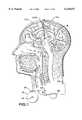
- FIG. 1is a diagrammatic illustration of a combined catheter and electrode implanted in a brain according to a preferred embodiment of the present invention, and a signal generator and pump coupled to the combined catheter and electrode;
- FIG. 2is a cross-sectional view of the catheter-electrode of FIG. 1 taken along line 2--2 of FIG. 3;
- FIG. 3is a diagrammatic view of the catheter-electrode shown in FIG. 1;
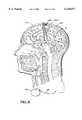
- FIG. 4is a diagrammatic illustration of a catheter and a sensor implanted in a brain and a pump coupled to the catheter and sensor;
- FIG. 5is a diagrammatic illustration of a lead and a sensor implanted in a brain and a signal generator coupled to the lead and sensor;
- FIG. 6is a diagrammatic illustration of a combined lead and catheter and a sensor implanted in a brain and a signal generator and pump coupled to the combined catheter and electrode and sensor;
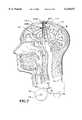
- FIG. 7is a diagrammatic illustration of a separate lead and catheter and a sensor implanted in a brain and a signal generator and pump coupled to the lead, catheter and sensor;
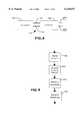
- FIG. 8is a schematic block diagram of a sensor and analog to digital converter circuit used in the preferred embodiment of the invention.
- FIG. 9is a flow chart illustrating a preferred form of a microprocessor program for utilizing the sensor to control drug dosage administered to the brain;
- FIG. 10is a schematic block diagram of a microprocessor and related circuitry for utilizing the sensor to control stimulation administered to the brain;
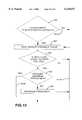
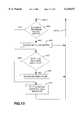
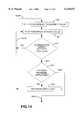
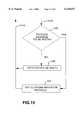
- FIGS. 11-15are flow charts illustrating a preferred form of microprocessor program for generating stimulation pulses to be administered to the brain
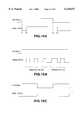
- FIGS. 16A-16Care timing diagrams showing the relationship between the administration of drugs and electrical stimulation to nerve tissue.
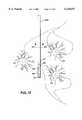
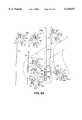
- FIGS. 17-21are diagrammatical views of the catheter-electrode shown in FIG. 1 arranged adjacent various types of neural tissue.
- a pump or device 10 made in accordance with the preferred embodimentmay be implanted below the skin of a patient.
- the devicehas a port 14 into which a hypodermic needle can be inserted through the skin to inject a quantity of a liquid agent, such as a medication or drug.
- the liquid agentis delivered from device 10 through a catheter port 20 into a catheter 22.
- Catheter 22is positioned to deliver the agent to specific infusion sites in a brain (B).
- Device 10may take the form of the like-numbered device shown in U.S. Pat. No. 4,692,147 (Duggan) ("the '147 Patent"), assigned to Medtronic, Inc., Minneapolis, Minn., which is incorporated by reference.
- An embodiment of pump 10may be found in the SynchromedTM Infusion System manufactured by Medtronic, Inc. of Minneapolis, Minn. However, pump 10 may take the form of any device used for moving fluid from a reservoir.
- the distal end of catheter 22terminates in a cylindrical hollow tube 22A having a distal end 25 implanted into a portion of the brain by conventional stereotactic surgical techniques.
- a hemispherical portion 23 (FIG. 3) at the distal end 25 of tube 22Aprovides a rounded profile for minimizing tissue disruption during insertion.
- End 25is provided with microporous portions 27-29 (FIG. 3) to allow infusion and filtering of a liquid agent.
- Microporous portions 27-29are preferably composed of a porous material such as polysulfone hollow fiber, manufactured by Amicon, although polyethylene, polyamides, polypropylene and expanded polytetrafluorethylene (ePTFE) are also suitable.
- the preferred pore sizeis approximately less than or equal to 0.22 microns. It is preferred that the maximum pore size be less than or equal to approximately 0.22 microns to prevent any derelict bacterial agents that may be present inside the catheter 22A from entering into the brain B. Furthermore, at larger pore sizes, there is the potential for tissue in-growth that may restrict the flow of agents out of the microporous portions 27-29. Alternatively, end 25 may be provided with multiple holes or slits in which case filtering of the liquid agent may occur within pump 10.
- Catheter 22could take the form of a lead catheter combination developed for use outside of the dural covering of the spinal cord to treat pain which is shown in FIG. 1 in U.S. Pat. No. 5,423,877 (Mackey) which is incorporated by reference.
- catheter 22could take the form depicted in FIGS. 1-4 in U.S. Pat. Nos. 5,119,832 and 5,458,631 (Xavier) which is incorporated by reference also developed for use outside of the dura to treat pain in which the center lumen 34 terminates in a single opening at the distal end 25 of catheter 22A.
- tube 22Aincludes an outer cylindrical insulating jacket 30 and an inner cylindrical insulating jacket 32 that defines a cylindrical catheter lumen 34.
- a multifilar coil of wire 36is embedded in tube 22A as shown.
- wire 36could consist of multifilar stranded wire.
- the inner cylindrical insulating jacket 32 and outer cylindrical insulating jacket 30should be sufficiently flexible to facilitate insertion.
- the outer cylindrical insulating jacket 30should be biocompatible. While it is desirable to have the inner insulating jacket 32 be biocompatible it may not be absolutely necessary provided the inner insulating layer can be kept from contacting the biological tissue.
- An enhanced tear resistant silicone elastomer or polyurethaneare examples of materials that could be used. A durometer shore value of 80 is preferred.
- Tube 22Ais surgically implanted through a hole in the skull 123 and catheter 22 is implanted between the skull and the scalp 125 as shown in FIG. 1.
- a styletmay be placed into the center of tube 22A to give it stiffness when introducing the tube into the brain.
- center lumen 34constitutes a catheter which can be used to infuse an agent, including a drug.
- Catheter 22is joined to implanted device 10 in the manner shown.
- Tube 22Amay be continuous with tube 22 or there may be an intervening connection most likely at the burr hole or located somewhere along the subcutaneous path.
- Catheter 22may be divided into twin tubes, tube 22A and a second tube (not shown), that are implanted into the brain bilaterally.
- the second tubemay be supplied with drugs from a separate catheter and pump and with electrodes from a separate signal generator.
- a system or device 16 made in accordance with the preferred embodimentalso may be implanted below the skin of a patient.
- Device 16may take the form of a signal generator Model 7424 manufactured by Medtronic, Inc. of Minneapolis, Minn. under the trademark Itrel II.
- tube 22Aterminates in stimulation electrodes 38 and 40 (FIG. 3).
- Each of electrodes 38 and 40is individually connected to device 16 through a conductor in wire bundle 36 (FIG. 2).
- the wiresexit catheter 22 to form a cable 42 which is joined to implanted signal generator 16 in the manner shown in FIG. 1. While the preferred embodiment shows two electrodes on tube 22A (FIG. 3), some brain locations may require a greater number.
- tube 22Amay have only one electrode using a portion of the case of the signal generator 16 (FIG. 1) as the reference electrode.
- infusion conduit 34 (FIG. 2) and conductor conduit 36may not be concentric tubes but rather separate conduits located beside each other in a common tube as is embodied in FIG. 6 of U.S. Pat. No. 5,458,629 (Baudino et.al.), incorporated by reference.
- Signal generator 16is implanted in a human body, preferably in a subcutaneous pocket located over the chest cavity or the abdomen. While showed as separate devices in FIG. 1, devices 10 and 16 could be incorporated into a common device.
- the present inventionmay preferably be implemented by providing seven different drug dosages from 0 dosage to a 1.0 ml dosage with 0.1 ml increments between choices.
- the time interval between dosagescan preferably be selected between one and twelve hours in seven choices. This is the same type of dosage and interval described in connection with device 10 shown in the '147 Patent (column 5, beginning at line 63).
- the seven drug dosages and corresponding time incrementsmay be loaded into RAM 102a (FIG. 1B of the '147 Patent).
- the selected dosage and interval of a drugis then delivered, as described in the '147 Patent, through catheter 22 and tube 22A to a selected location in the brain appropriate for the treatment of anxiety disorders.
- the type of drugs administered by device 10 into the braindepend on the specific location at which distal end 25 of tube 22A is surgically implanted.
- the appropriate brain location to surgically implant distal end 25, the desired action on the neurons at that location and the types of drug agents useful at that locationare provided in the following Table I:
- the medial-lateral dimensionsare relative to midline of the brain; the anterior-posterior dimensions are relative to the midpoint between the anterior commissure and posterior commissure with negative indicating the posterior direction; the dorsal-ventral dimensions are relative to a line connecting the midpoints of the anterior and posterior commissures with negative being ventral to; all dimensions are in centimeters.
- these agentsmight be infused into the lateral ventricle or third ventricle of the brain or just beneath the dura above the cortex or in the intrathecal space. In this instance the drug would diffuse to the appropriate site of action.
- liquid agentswhich provide the desired actions identified in Table I, ranges of dosages and concentrations for the liquid agents are provided in the following Table III:
- muMmeans millimicromolar.
- Microprocessor 100 within device 10can be programmed so that a controlled amount of drug described in Table III can be delivered to the specific brain sites described in Table I.
- anxiety disordersincluding phobias, panic attacks, and obsessive compulsions can be treated by electrically stimulating brain tissue either alone or while drugs are being administered as described above.
- the stimulationcan be achieved by an ITREL II signal generator implemented as signal generator 16 (FIG. 1).
- Electrical stimulation of neural tissuemay be implemented by providing pulses to electrodes 38 and 40 (FIG. 3) preferably having amplitudes of 0.1 to 20 volts, pulse widths varying from 0.02 to 1.5 milliseconds, and repetition rates preferably varying from 2 to 2500 Hz. Pulses with the selected characteristics are then delivered from signal generator 16 through cable 42, catheter 22, tube 22A and electrodes 38 and 40 to the targeted tissue within brain B. The appropriate stimulation pulses are generated by signal generator 16 based on the programmed values established by the clinician. The type of stimulation administered by signal generator 16 to the brain depends on the specific location at which the electrodes 38 and 40 of tube 22A are surgically implanted and the desired action on the neurons at that location. If the neuronal activity is to be blocked, signal generator 16 will be programmed with a frequency preferably in the range 50 to 2500 HZ. If the neuronal activity is to be facilitated, the stimulus frequency is chosen preferably in the range of 2 to 100 Hz.
- a microprocessor within signal generator 16can be programmed so that the desired stimulation can be delivered to the specific brain sites described in Table II.
- the system shown in FIG. 1is an open-loop system.
- the microcomputer algorithm programmed by the cliniciansets the stimulation parameters of signal generator 16 and/or infusion rates of infusion pump 10. This algorithm may change the parameter values over time but does so independent of any changes in symptoms the patient may be experiencing.
- the closed-loop systemsshow in FIGS. 4-7 which incorporate sensor 130 to provide feedback could be used to provide enhanced results.
- FIG. 4depicts an infusion pump 10 connected through tube 22 to a distal portion 22A and a separate sensor portion 130.
- FIG. 5depicts a signal generator 16 connected through cable 42' which has a distal portion 42'A with electrodes 38 and 40 located at the distal end and a sensor portion 130.
- the devices in FIGS. 4 and 5provide "closed-loop" infusion of medication and "closed-loop” stimulation respectively.
- the device in FIG. 6allows for the combination of infusion and stimulation both therapies being controlled by a feed back sensor 130.
- the stimulation electrodes 38 and 40are made a part of tube 22A as depicted in FIG. 3.
- the stimulation electrodes 38 and 40could be located on a separate tube 22B away from the microporous regions 27-29 located on tube 22A. This would allow delivery of stimulation to a different site in brain B than the site where medication is delivered.
- the sensor 130is located at still a different site in brain B. Under certain circumstances it may be desirable to have sensor 130 physically located on either tube 22A or tube 22B.
- a sensor 130is implanted into a portion of a patient's body suitable for detecting symptoms of the disorder being treated. Sensor 130 is adapted to sense an attribute of the symptom to be controlled or an important related symptom. For anxiety disorders it is desirable to sense a physiological symptom of a heightened state of arousal or anxiety. Physiological signals related to heart rate or respiration rate, blood gases, galvanic skin response or muscle tension could provide feedback to adjust stimulation or infusion parameters.
- Sensor 130may detect the electrocardiogram through electrodes outside the brain near the heart.
- electrodes located within Brain B and adjacent a small vesselmay be used to detect features of the heart rate.
- Sensor 130may detect muscle EMG in one, two or more muscles, or in reciprocal muscles at one joint. For such detection, sensor 130 may take the form of a lead with one or more recording electrodes inserted into the muscle of interest.
- Brain EEG(e.g., cortical potentials recorded above the neurons controlling specific aspects of behavior associated with the neurological disorder) also may be detected by sensor 130.
- sensor 130would take the form of an electrode with impedance values preferably chosen to optimize recording of electrical signals.
- sensor 130would include a device capable of detecting nerve compound action potentials (e.g., either sensory afferent information from muscle or skin receptors or efferent motor potentials controlling a muscle of interest).
- nerve compound action potentialse.g., either sensory afferent information from muscle or skin receptors or efferent motor potentials controlling a muscle of interest.
- Sensor 130also may take the form of a device capable of detecting nerve cell or axon activity that is related to the pathways at the cause of the symptom, or that reflects sensations which are elicited by the symptom.
- a sensormay be located deep in the brain.
- sensor 130may take the form of an electrode inserted into the internal capsule, motor cortex or basal ganglia of the brain. Signals of any kind that are received by the sensor may by amplified before transmission to circuitry contained within device 10 or device 16.
- Sensor 130may take the form of a transducer consisting of an electrode with an ion selective coating applied which is capable of directly transducing the amount of a particular transmitter substance or its breakdown by-products found in the interstitial space of a region of the brain such as the ventral lateral thalamus.
- the level of the interstitial transmitter substanceis an indicator of the relative activity of the brain region.
- An example of this type of transduceris described in the paper "Multichannel semiconductor-based electrodes for in vivo electrochemical and electrophysiological studies in rat CNS" by Craig G. van Horne, Spencer Bement, Barry J. Hoffer, and Greg A. Gerhardt, published in Neuroscience Letters, 120 (1990) 249-252.
- Sensor 130may be external to the body communicating with the implanted portions through telemetry.
- An example of an external sensoris an electrical device that includes an electrode attached to the surface of the skin which passes a small current to measure the skin impedance.
- An example of this type of sensoris described in the paper "Skin Impedance in Relation to Pain Threshold Testing by Electrical Means", by Emily E. Mueller, Robert Loeffel and Sedgwick Mead, published in J. Applied Physiology 5, 746-752, 1953.
- a decrease in skin impedancemay indicate an increase in anxiety.
- the output of sensor 130is coupled by a cable 132 comprising conductors 134 and 135 to the input of analog to digital converter 140.
- the output of an external feedback sensorwould communicate with the implanted pulse generator or pump through a telemetry downlink.
- the output of the analog to digital converteris connected to terminals EF2 BAR and EF3 BAR shown in FIG. 11A of U.S. Pat. No. 4,692,147 ("'147 Patent"). Before converter 140 is connected to the terminals, the demodulator 101 currently shown in FIG. 11A would be disconnected.
- a drugcan be delivered essentially continuously (within the constraints of the particular delivery device being used) or it may be delivered during intermittent intervals coordinated to reflect the half-life of the particular agent being infused or with circadian rhythms.
- the symptoms of the neurological disordermay normally subside at night when the person is sleeping so the drug delivery rates might be reduced to coincide with the hours between 10 p.m. and 7 a.m.
- Microprocessor 100 within device 10can be programmed so that a controlled amount of drug can be delivered to the specific brain sites described in Table I.
- sensor 130can be used with a closed loop feedback system in order to automatically determine the level of drug delivery necessary to alleviate the symptoms of the neurological disorder.
- the applicantshave discovered that the efficacy of treatment may be enhanced if the neural tissue is stimulated while drugs are being administered as described above.
- the stimulationcan be achieved by a modified form of the ITREL II signal generator implemented as signal generator 16 (FIG. 1) which is described in FIG. 10.
- the output of sensor 130is coupled by cable 132, comprising conductors 134 and 135, to the input of an analog to digital converter 206.
- the output of an external sensorwould communicate with the implanted pulse generator through a telemetry downlink.
- the output from sensor 130can be filtered by an appropriate electronic filter in order to provide a control signal for signal generator 16.
- An example of such a filteris found in U.S. Pat. No. 5,259,387 "Muscle Artifact Filter, Issued to Victor de Pinto on Nov. 9, 1993.
- the output of the analog to digital converter 206is connected to a microprocessor 200 through a peripheral bus 202 including address, data and control lines.
- Microprocessor 200processes the sensor data in different ways depending on the type of transducer in use. When the signal on sensor 130 exceeds a level programmed by the clinician and stored in a memory 204, increasing amounts of stimulation will be applied through an output driver 224.
- the stimulus pulse frequencyis controlled by programming a value to a programmable frequency generator 208 using bus 202.
- the programmable frequency generatorprovides an interrupt signal to microprocessor 200 through an interrupt line 210 when each stimulus pulse is to be generated.
- the frequency generatormay be implemented by model CDP1878 sold by Harris Corporation.
- the amplitude for each stimulus pulseis programmed to a digital to analog converter 218 using bus 202.
- the analog outputis conveyed through a conductor 220 to an output driver circuit 224 to control stimulus amplitude.
- Microprocessor 200also programs a pulse width control module 214 using bus 202.
- the pulse width controlprovides an enabling pulse of duration equal to the pulse width via a conductor. Pulses with the selected characteristics are then delivered from signal generator 16 through cable 22 and lead 22A or 22B to the target locations of a brain B.
- Microprocessor 200executes an algorithm shown in FIGS. 11-15 in order to provide stimulation with closed loop feedback control.
- the clinicianprograms certain key parameters into the memory of the implanted device via telemetry. These parameters may be updated subsequently as needed.
- Step 400 in FIG. 11indicates the process of first choosing whether the neural activity at the stimulation site is to be blocked or facilitated (step 400(1)) and whether the sensor location is one for which an increase in the neural activity at that location is equivalent to an increase in neural activity at the stimulation target or vice versa (step 400(2)).
- step 400(3)the clinician must program the range of values for pulse width (step 400(3)), amplitude (step 400(4)) and frequency (step 400(5)) which signal generator 16 may use to optimize the therapy.
- the clinicianmay also choose the order in which the parameter changes are made (step 400(6)). Alternatively, the clinician may elect to use default values.
- the algorithm for selecting parametersis different depending on whether the clinician has chosen to block the neural activity at the stimulation target or facilitate the neural activity.
- FIG. 11details steps of the algorithm to make parameter changes.
- the algorithmuses the clinician programmed indication of whether the neurons at the particular location of the stimulating electrode are to be facilitated or blocked in order to decide which path of the parameter selection algorithm to follow (step 420, FIG. 12). If the neuronal activity is to be blocked, signal generator 16 first reads the feedback sensor 130 in step 421. If the sensor values indicate the activity in the neurons is too high (step 422), the algorithm in this embodiment first increases the frequency of stimulation in step 424 provided this increase does not exceed the preset maximum value set by the physician. Step 423 checks for this condition. If the frequency parameter is not at the maximum, the algorithm returns to step 421 through path 421 A to monitor the feed back signal from sensor 130.
- step 426the algorithm next increases the pulse width in step 426 (FIG. 13), again with the restriction that this parameter has not exceeded the maximum value as checked for in step 425 through path 423A. Not having reached maximum pulse width, the algorithm returns to step 421 to monitor the feedback signal from sensor 130. Should the maximum pulse width have been reached, the algorithm next increases amplitude in a like manner as shown in steps 427 and 428. In the event that all parameters reach the maximum, a notification message is set in step 429 to be sent by telemetry to the clinician indicating that device 16 is unable to reduce neural activity to the desired level.
- the algorithmwould follow a different sequence of events.
- the frequency parameterwould be fixed at a value chosen by the clinician to facilitate neuronal activity in step 430 (FIG. 14) through path 420A.
- the algorithmuses the values of the feedback sensor to determine if neuronal activity is being adequately controlled. In this case, inadequate control indicates that the neuronal activity of the stimulation target is too low.
- Neuronal activityis increased by first increasing stimulation amplitude (step 434) provided it doesn't exceed the programmed maximum value checked for in step 433.
- step 435 and 436the algorithm increases pulse width to its maximum value in steps 435 and 436 (FIG. 15). A lack of adequate alteration of the symptoms of the neurological disorder, even though maximum parameters are used, is indicated to the clinician in step 437. After steps 434, 436 and 437, the algorithm returns to step 431 through path 431A, and the feedback sensor again is read.
- steps 410 through 415constitute the method to do this.
- a timeris reset in step 415. If there is no need to change any stimulus parameters before the timer has counted out, then it may be possible due to changes in neuronal activity to reduce the parameter values and still maintain appropriate levels of neuronal activity in the target neurons.
- signal generator 16tries reducing a parameter in step 413 to determine if control is maintained. If it is, the various parameter values will be ratcheted down until such time as the sensor values again indicate a need to increase them. While the algorithms in FIGS. 11-15 follow the order of parameter selection indicated, other sequences may be programmed by the clinician.
- FIG. 17describes one such application in which type A neurons, such as NA, are located in the same region as type B neurons, such as NB which can typically be found in a brain.
- type A neuronssuch as NA
- type B neuronssuch as NB which can typically be found in a brain.
- neurons NAcan be inhibited or excited with respect to their response to electrical stimulation provided by electrodes 38 and 40, while neurons NB remain unchanged with respect to their response to such stimulation.
- neurons NA or NBcan be selectively stimulated by electrodes 38 and 40 due to the infusion of substances through portions 27-29 of tube 22A.
- a neuron N1 found in a brainhas a cell body CB1 and a nucleus NU1.
- Neuron N1can be excited by axon terminals AT1 at synapses SN1-SN2 by an inhibitory neurotransmitter TRB and can be excited by axon terminals AT2 at synapses SN4-SN6 by an excitatory neurotransmitter TRA.
- Portions 27-29are used to infuse into the region of neuron N1 one or more of the following agents: an antagonist of transmitter TRB, an agonist of transmitter TRA, an agent to block the reuptake of transmitter TRA, a degradative enzyme for transmitter TRB and potassium.
- the agentscan be infused separately or together in a cocktail.
- Such infusionleads to partial depolarization of neuron N1 and to a reduced threshold to stimulation by electrodes 38 and 40. That is, after infusion, the amplitude of stimulation required to create action potentials in neuron N1 is reduced compared to the time period before infusion.
- a neuron N2 found in a brainhas a cell body CB2 and a nucleus NU2.
- Neuron N2can be inhibited by axon terminals AT3 at synapses SN7-SN8 by an inhibitory neurotransmitter TRB and can be excited by axon terminals AT4 at synapses SN10-SN12 by an excitatory neurotransmitter TRC.
- a neuron N3 found in a brainhas a cell body CB3 and a nucleus NU3.
- Neuron N3can be inhibited by axon terminals AT5 at synapses SN14-SN16 by an inhibitory neurotransmitter TRA.
- Portions 27-29 of tube 22Aare used to infuse into the region of neurons N2 and N3 one or more of the following agents: an agonist of transmitter TRA, an agent to block the reuptake of transmitter TRA or an agent to block a degradative enzyme for transmitter TRA.
- Each of these agentshyperpolarize neuron N3 and increase the potential threshold required to create action potentials in neuron N3. Therefore, neuron N2 can be selectively activated by electrodes 38 and 40 so that an action potential is created in neuron N2 without creating an action potential in neuron N3.
- Selective activation of neuron N2also can be achieved by infusing into the region of neurons N2 and N3 one or more of the following agents: an agonist for transmitter TRC, an agent to block the reuptake of transmitter TRC, an agent to block the degrading enzyme for transmitter TRC, an antagonist for transmitter TRB, an agent to enhance the reuptake of transmitter TRB or a degrading enzyme for transmitter TRB.
- the agentscan be infused separately or together in a cocktail.
- Such infusionleads to partial depolarization of neuron N2 and to a reduced threshold to stimulation by electrodes 38 and 40. That is, after infusion, the amplitude of stimulation required to create action potentials in neuron N2 is reduced compared to the time period before infusion, making it easier to electrically stimulate neuron N2 relative to neuron N3.
- neurons N4-N6 found in a brainhave cells bodies CB4-CB6, respectively, and axons A4-A6, respectively, which are long fibers of passage that typically pass through white tissue in the spinal cord or brain.
- Cell bodies CB4-CB6are located at portions of the body somewhat remote from infusion portions 27-29 and electrodes 38 and 40. However, portions of axons A4-A6 pass in the region of infusion portions 27-29 and electrodes 38 and 40.
- Neurons N7-N9have cell bodies that are located in the region of infusion portions 27-29 and electrodes 38 and 40.
- Neuron N7can be inhibited at axon terminals AT7 by an inhibitory neurotransmitter TRA and excited at axon terminals AT8 by an excitatory neurotransmitter TRB; neuron N9 can be inhibited at axon terminals AT9 by inhibitory neurotransmitter TRA and excited at axon terminals ATIO by excitatory neurotransmitter TRB; and neuron N8 can be inhibited at axon terminals AT11 by inhibitory neurotransmitter TRA and excited at axon terminals AT12 by an excitatory neurotransmitter TRB.
- Portions 27-29are used to infuse an agonist of transmitter TRA, a reuptake blocker to transmitter TRA, a degrading enzyme blocker to transmitter TRA or an antagonist or degrading enzyme to transmitter TRB to raise the stimulation threshold of neurons N7-N9.
- Neurons N4-N6are not affected by the infusion and can be selectively activated by stimulation supplied by electrodes 38 and 40.
- FIG. 21illustrates a modified form of tube 22A in which infusion portion 27 is located more than 0.01 cm from electrodes 38 and 40 and infusion portions 28-29 have been removed.
- Neuron N10has a cell body CB10 and an axon A10 that terminates in axon terminals AT14.
- a neuron N11can be excited at axon terminals AT14 by an excitatory neurotransmitter TRA.
- Electrical stimulation of axon AIOcauses the release of transmitter TRA at axon terminal AT14.
- Portion 27is used to infuse an agent that blocks a degradative enzyme of transmitter TRA or an agent which blocks the reuptake of transmitter TRA.
- the stimulation of neuron N11is more potent. That is, more action potentials are generated in neuron N11.
- FIG. 16Aillustrates various times at which infusion and stimulation can be applied by tube 22A.
- infusion alonecan be applied from time T1 to T2
- infusion and stimulationcan be both be applied from time T2 to T3
- stimulation alonecan be applied from time T3 to T4.
- This regimenmight be used in the case when selective activation of one neuronal population is desired.
- the threshold for electrical activation of one population of neuronscan be lowered or raised as needed.
- a precursor moleculesuch as L-dopa, is infused to guard against depletion of the transmitter substance dopamine.
- the stimulationmight be applied periodically during the period of infusion either routinely or in response to sensor or patient generated demand as shown in FIG. 16B. Alternatively, stimulation could be applied continuously with infusion occurring periodically. Patient activation of either infusion or stimulation may occur as a result of an increase in symptoms being experienced by the patient.
- the infusion of an agent to activate a neuronal populationmight be alternated with application of electrical stimulation of that same population, as shown in FIG. 16C.
- the infusion devicemay be replaced with a static device such as is described in U.S. Pat. No. 4,892,538 which is incorporated by reference.
- a static deviceis a device having a semipermeable wall enclosing encapsulated cells capable of secreting the appropriate agent.
- an implantable devicecould consist of a polymeric insert with the agent embedded within or on the surface of the polymer in such a way as to be slowly eluted from the polymer over time.
- Such a deviceis described in U.S. Pat. No. 4,346,709 "Drug Delivery Devices Comprising Errodable Polymer and Errosion Rate Modifier", Edward Schmitt Inventor, Issued Aug.
Landscapes
- Health & Medical Sciences (AREA)
- Vascular Medicine (AREA)
- Engineering & Computer Science (AREA)
- Anesthesiology (AREA)
- Biomedical Technology (AREA)
- Heart & Thoracic Surgery (AREA)
- Hematology (AREA)
- Life Sciences & Earth Sciences (AREA)
- Animal Behavior & Ethology (AREA)
- General Health & Medical Sciences (AREA)
- Public Health (AREA)
- Veterinary Medicine (AREA)
- Electrotherapy Devices (AREA)
Abstract
Description
1. Field of the Invention
This invention relates to nerve tissue stimulation and infusion techniques, and more particularly relates to such techniques for treating anxiety disorders, including generalized anxiety disorder, obsessive-compulsive disorders, panic attacks and phobias.
2. Description of the Related Art
Some people suffer from chronic intractable anxiety disorders. The key feature of anxiety disorders is the frequent occurrence of the symptoms of fear; arousal, restlessness, heightened responsiveness, accelerated heart beat, elevated blood pressure, sweating, a desire to run or escape and avoidance behavior. Generally, anxiety is a normal response to certain life situations and can be beneficial to the person experiencing it. However, excessive or inappropriate anxiety can be detrimental. Anxiety disorders are the most common psychiatric disorders, affecting between 10 to 30 percent of the general population (Robins et. al., Arch Gen Psychiatry 1984; 41:949-958). These disorders include generalized anxiety, phobias, panic attacks, and obsessive-compulsions.
Generalized anxiety is characterized by unrealistic or excessive worry, lasting long periods of time (i.e. months). The symptoms of generalized anxiety are excessive muscle tension; overactivity in the autonomic nervous system evidenced by shortness of breath, sweating, cold hands, hyperventilation and tachycardia; and increased vigilance manifest as an increased startle response or difficulty in concentrating. Generalized anxiety is treated with oral medications from the benzodiazepine category such as chlordiazepoxide (Librium®) and diazepam (Valium®). These drugs have been shown to act by enhancing the activity of GABAA receptors leading to a hyperpolarization of neurons. The specific neurons affected are believed to be located in the amygdala which is part or the limbic system, a subset of the brain thought to be of central importance for emotional behavior.
In contrast to generalized anxiety, panic attacks are brief, recurrent episodes of terror. The symptoms include tachycardia, a feeling of "shortness of breath" that leads to hyperventilation (which can lead to unconsciousness), dizziness, trembling, flushes or chills, chest pain and a fear of dying or of going crazy or of doing something uncontrolled. Persons suffering from panic attacks may also experience generalized anxiety anticipating the occurrence of a panic attack. Finally, for some persons the occurrence of panic attacks may be associated with specific situations in which the panic attacks have occurred in the past. This association may become so strong that the person rigidly avoids the situation associated with the panic attacks. This results in the third component of the panic disorder cascade, a phobia for the situation.
A phobic reaction is a neurotic disorder characterized by an intense, persistent fear of some object or situation in which the fear is out of proportion to any real danger, is inconsistent with the persons general personality, is consciously recognized as unfounded, and frequently interferes with the patient's activities. The person may experience all the symptoms of anxiety described above. Phobias can include fear of places such as agoraphobia (fear of open spaces), acrophobia (fear of heights), achluophobia (fear of darkness) or potamophobia (fear of lakes). Alternatively, the phobia may represent a fear of a loss of control such as the fear of infection (molysmophobia) or lightning (astraphobia). In phobias, the person's anxiety is fixed to some symbolic object or situation, so that the anxiety may be controlled by avoiding the feared object or situation. The origin of the anxiety may be conscious or unconscious.
Obsessive-compulsive disorder (OCD) is a relatively frequent anxiety disorder characterized by the presence of intrusive and senseless ideas, thoughts, urges, and images (obsessions), as well as by repetitive cognitive and physical activities that are performed in a ritualistic way (compulsions) usually in an attempt to neutralize anxiety caused by obsession (American Psychiatric Association. Diagnostic and statistical manual of mental disorders. 4th ed. Washington, D.C.: American Psychiatric Association, 1994.) Examples of obsessive-compulsions are a compulsive washing of the hands or counting or ruminating about disease or sexual behavior perhaps manifest as repeated testing for AIDS. The symptoms are often concealed from others with the rituals confined to private hours but can become disruptive to school or work as the ability to control the rituals fades.
Neuroscientists are beginning to understand the neural circuitry of the brain that controls anxiety. The structures of the brain involved include the limbic system, the frontal lobes of the cortex, parts of the thalamus and basal ganglia, the locus coeruleus, dorsal raphe nucleus and the white mater connections between them such as the internal capsule and cingulum. While the general areas involved are beginning to be recognized, much is unknown about the specific functions of the areas and the nature of the signals between them.
Neurosurgeons have achieved success treating chronic intractable anxiety disorders by creating surgical lesions at specific locations in this circuitry. Procedures that have been tried and found to be at least partially successful include anterior capsulotomy, cingulotomy, subcaudate tractotomy, and a combination of the cingulotomy and subcaudate tractotomy called a limbic leucotomy. For the most part these surgical procedures result in a destruction of the fiber pathways connecting various regions of the nervous system included in the list given above. Laiteinen and Singounas (Applied Neruophysiol, 51(6):317-323, November-December 1988) tried brief stimulation intraoperatively with three to six second trains of 60 pulses per second monophasic pulses. This stimulation was applied with the patient awake at the lesion targets of the anterior limb of the internal capsule, middle anterior cingulum, rostral cingulum or the knee of the corpus callosum just prior to carrying out the lesion. Of twenty patients stimulated, three reported reduced anxiety and one reported an increase in anxiety. Electrical stimulation of nerve cells to activate them has been practiced nearly since the discovery of electricity. Benabid (The Lancet, Vol. 337, 403-406, Feb. 16, 1991) and Andy (Appl. Neurophysiol. 46, 107-111 1983 have shown more recently that stimulation of nerve cells in certain nuclei such as the ventral lateral thalamus, subthalamic nucleus, and internal segment of the globus pallidus at higher pulse frequencies can have the same effect as a functional lesion. This technique has been used to treat certain movement disorders.
Focal release of pharmaceutical agents through infusion pumps is used to treat pain and spasticity. Rise and Elsberry have proposed using infusion pumps to deliver pharmaceuticals focally to treat movement disorders(application) and Rise and Ward have proposed focal delivery of medications to treat Epilepsy (application #). Abeschier (WO 94/01166) has proposed as a method to treat disorders of movement and epilepsy by using encapsulated cells which secrete neuroinhitory agents or polymer matrices loaded with neuroinhibitory agents.
Smulevich et. al. ("Psychotropic drug therapy using maintenance dosage pumps" Nevropathol Psikhiatr 1987, 87 (6) p888-93, Issn 0044-4588) have used an implantable pump for subcutaneous delivery of psychotropic drugs. They found this technique particularly useful when providing " . . . functional training of patients with phobic abnormalities."
A preferred form of the invention uses one or more drugs and/or electrical stimulation to treat an anxiety disorder. The treatment is carried out by an implantable pump and a catheter having a proximal end coupled to the pump and having a discharge portion for infusing therapeutic dosages of the one or more drugs into a predetermined infusion site in brain tissue. Alternatively, encapsulated cells selected to secrete the appropriate substance or a drug eluting polymer may be implanted into a predetermined treatment site in brain tissue. The treatment also may be carried out by an implantable signal generator and an implantable electrode having a proximal end coupled to the signal generator and having a stimulation portion for electrically stimulating a predetermined stimulation site in the brain tissue. In one embodiment of the invention stimulation and/or infusion is carried out in a nearly continuous manner. In another form of the invention, the stimulation or infusion is initiated by the patient in response to anxiety related symptoms or anxiety provoking situations.
Another form of the invention uses a sensor in combination with the signal generator, one or more stimulating electrodes, pump and catheter to treat a neurological disorder. In this form of the invention, the sensor generates a sensor signal related to a condition resulting from the anxiety disorder. Control means responsive to the sensor signal regulate the signal generator and pump so that the neurological disorder is treated and the symptoms of the various anxiety disorders, including generalized anxiety, panic attacks, phobias and obsessive-compulsive disorders, can be alleviated or prevented
By using the foregoing techniques, the symptoms of the various anxiety disorders, including generalized anxiety, panic attacks, phobias and obsessive-compulsive disorders, can be controlled to a degree unattainable by prior art methods or apparatus.
These and other advantages and features of the invention will become apparent upon reading the following detailed description and referring to the accompanying drawings in which like numbers refer to like parts throughout and in which:
FIG. 1 is a diagrammatic illustration of a combined catheter and electrode implanted in a brain according to a preferred embodiment of the present invention, and a signal generator and pump coupled to the combined catheter and electrode;
FIG. 2 is a cross-sectional view of the catheter-electrode of FIG. 1 taken alongline 2--2 of FIG. 3;
FIG. 3 is a diagrammatic view of the catheter-electrode shown in FIG. 1;
FIG. 4 is a diagrammatic illustration of a catheter and a sensor implanted in a brain and a pump coupled to the catheter and sensor;
FIG. 5 is a diagrammatic illustration of a lead and a sensor implanted in a brain and a signal generator coupled to the lead and sensor;
FIG. 6 is a diagrammatic illustration of a combined lead and catheter and a sensor implanted in a brain and a signal generator and pump coupled to the combined catheter and electrode and sensor;
FIG. 7 is a diagrammatic illustration of a separate lead and catheter and a sensor implanted in a brain and a signal generator and pump coupled to the lead, catheter and sensor;
FIG. 8 is a schematic block diagram of a sensor and analog to digital converter circuit used in the preferred embodiment of the invention;
FIG. 9 is a flow chart illustrating a preferred form of a microprocessor program for utilizing the sensor to control drug dosage administered to the brain;
FIG. 10 is a schematic block diagram of a microprocessor and related circuitry for utilizing the sensor to control stimulation administered to the brain;
FIGS. 11-15 are flow charts illustrating a preferred form of microprocessor program for generating stimulation pulses to be administered to the brain;
FIGS. 16A-16C are timing diagrams showing the relationship between the administration of drugs and electrical stimulation to nerve tissue; and
FIGS. 17-21 are diagrammatical views of the catheter-electrode shown in FIG. 1 arranged adjacent various types of neural tissue.
Referring to FIG. 1, a pump ordevice 10 made in accordance with the preferred embodiment may be implanted below the skin of a patient. The device has aport 14 into which a hypodermic needle can be inserted through the skin to inject a quantity of a liquid agent, such as a medication or drug. The liquid agent is delivered fromdevice 10 through acatheter port 20 into acatheter 22.Catheter 22 is positioned to deliver the agent to specific infusion sites in a brain (B).Device 10 may take the form of the like-numbered device shown in U.S. Pat. No. 4,692,147 (Duggan) ("the '147 Patent"), assigned to Medtronic, Inc., Minneapolis, Minn., which is incorporated by reference. An embodiment ofpump 10 may be found in the Synchromed™ Infusion System manufactured by Medtronic, Inc. of Minneapolis, Minn. However, pump 10 may take the form of any device used for moving fluid from a reservoir.
The distal end ofcatheter 22 terminates in a cylindricalhollow tube 22A having adistal end 25 implanted into a portion of the brain by conventional stereotactic surgical techniques. A hemispherical portion 23 (FIG. 3) at thedistal end 25 oftube 22A provides a rounded profile for minimizing tissue disruption during insertion.End 25 is provided with microporous portions 27-29 (FIG. 3) to allow infusion and filtering of a liquid agent. Microporous portions 27-29 are preferably composed of a porous material such as polysulfone hollow fiber, manufactured by Amicon, although polyethylene, polyamides, polypropylene and expanded polytetrafluorethylene (ePTFE) are also suitable.
In a preferred embodiment, the preferred pore size is approximately less than or equal to 0.22 microns. It is preferred that the maximum pore size be less than or equal to approximately 0.22 microns to prevent any derelict bacterial agents that may be present inside thecatheter 22A from entering into the brain B. Furthermore, at larger pore sizes, there is the potential for tissue in-growth that may restrict the flow of agents out of the microporous portions 27-29. Alternatively, end 25 may be provided with multiple holes or slits in which case filtering of the liquid agent may occur withinpump 10.
Referring to FIG. 2,tube 22A includes an outer cylindrical insulatingjacket 30 and an inner cylindrical insulatingjacket 32 that defines acylindrical catheter lumen 34. A multifilar coil ofwire 36 is embedded intube 22A as shown. Alternatively,wire 36 could consist of multifilar stranded wire.
When selecting thetube 22A used with a particular drug or agent, care should be taken to ensure that the particular agent will be compatible with the material from which the inner cylindrical insulatingjacket 32 is composed. The inner cylindrical insulatingjacket 32 and outer cylindrical insulatingjacket 30 should be sufficiently flexible to facilitate insertion. The outer cylindrical insulatingjacket 30 should be biocompatible. While it is desirable to have the inner insulatingjacket 32 be biocompatible it may not be absolutely necessary provided the inner insulating layer can be kept from contacting the biological tissue. An enhanced tear resistant silicone elastomer or polyurethane are examples of materials that could be used. A durometer shore value of 80 is preferred.
Referring again to FIG. 1, a system ordevice 16 made in accordance with the preferred embodiment also may be implanted below the skin of a patient.Device 16 may take the form of a signal generator Model 7424 manufactured by Medtronic, Inc. of Minneapolis, Minn. under the trademark Itrel II.
The distal end oftube 22A terminates instimulation electrodes 38 and 40 (FIG. 3). Each ofelectrodes device 16 through a conductor in wire bundle 36 (FIG. 2). The wires exitcatheter 22 to form acable 42 which is joined to implantedsignal generator 16 in the manner shown in FIG. 1. While the preferred embodiment shows two electrodes ontube 22A (FIG. 3), some brain locations may require a greater number. In addition,tube 22A may have only one electrode using a portion of the case of the signal generator 16 (FIG. 1) as the reference electrode. Furthermore, in some instances infusion conduit 34 (FIG. 2) andconductor conduit 36 may not be concentric tubes but rather separate conduits located beside each other in a common tube as is embodied in FIG. 6 of U.S. Pat. No. 5,458,629 (Baudino et.al.), incorporated by reference.
The present invention may preferably be implemented by providing seven different drug dosages from 0 dosage to a 1.0 ml dosage with 0.1 ml increments between choices. The time interval between dosages can preferably be selected between one and twelve hours in seven choices. This is the same type of dosage and interval described in connection withdevice 10 shown in the '147 Patent (column 5, beginning at line 63). The seven drug dosages and corresponding time increments may be loaded into RAM 102a (FIG. 1B of the '147 Patent). The selected dosage and interval of a drug is then delivered, as described in the '147 Patent, throughcatheter 22 andtube 22A to a selected location in the brain appropriate for the treatment of anxiety disorders.
The type of drugs administered bydevice 10 into the brain depend on the specific location at whichdistal end 25 oftube 22A is surgically implanted. The appropriate brain location to surgically implantdistal end 25, the desired action on the neurons at that location and the types of drug agents useful at that location are provided in the following Table I:
TABLE I ______________________________________ BRAIN LOCATION DESIRED ACTION TYPES OF AGENTS ______________________________________ Anterior Limb of Decrease neuronal activity Anesthetic Internal Capsule Nucleus Accumbens Decrease neuronal activity GABA Agonist Cingulum fibers Decrease neuronal activity Anesthetic Cingulate Gyrus Decrease neuronal activity GABA Agonist Dorsal Medial Decrease neuronal activity GABA Agonist Nucleus of Thalamus Locus Coruleus Decrease neuronal activity GABA Agonist Amygdyla Decrease neuronal activity GABA Agonist Dorsal raphe Decrease neuronal activity GABA Agonist Nucleus Septum Decrease neuronal activity GABA Agonist Frontal Cortex Decrease neuronal activity Glutamate antagonist GABA Agonist Anterior Thalamic Decrease neuronal activity GABA Agonist Nucleus Mammillary body Decrease neuronal activity GABA Agonist ______________________________________
Coordinates for the portions of the brain described in Table I are as follows:
TABLE II ______________________________________ MEDIAL- DORSAL- ANTERIOR- LATERAL VENTRAL POSTERIOR BRAIN REGION DIMENSION DIMENSION DIMENSION ______________________________________ Anterior Limb of 1.8 to 2.0 0.2 to -0.2 2.2 to 2.9 Internal Capsule Head of the Caudate 0.5 to 2.5 1.0 to -1.0 1.5 to 3.5 Nucleus/Nucleus Accumbens Cingulum fibers 0.0 to 1.0 2.0 to 3.0 0.0 to 4.5 Cingulate Gyrus 0.0 to 1.5 2.0 to 3.5 0.0 to 4.5 Dorsal Medial 0.0 to 1.0 0.2 to 1.7 0.1 to -1.1 Nucleus of Thalamus Locus Ceruleus 0.0 to 0.5 -1.0 to -1.7 -1.5 to -2.0 Amygdyla 1.0 to 2.5 -1.2 to -2.5 0.7 to 2.0 Dorsal raphe Nucleus 0.0 to 0.5 -0.2 to -1.0 -1.0 to -2.0 Septum 0.0 to 0.5 0.2 to 1.6 0.5 to 2.3 Frontal Cortex 0.0 to 5.0 2.0 to -2.5 4.0 to 7.0 Anterior Thalamus 0.2 to 1.2 0.2 to 1.3 0.5 to -0.5 Mammillary body 0.0 to 0.5 -0.5 to -1.2 0.2 to 1.2 ______________________________________
In the foregoing table: the medial-lateral dimensions are relative to midline of the brain; the anterior-posterior dimensions are relative to the midpoint between the anterior commissure and posterior commissure with negative indicating the posterior direction; the dorsal-ventral dimensions are relative to a line connecting the midpoints of the anterior and posterior commissures with negative being ventral to; all dimensions are in centimeters.
Alternatively, these agents might be infused into the lateral ventricle or third ventricle of the brain or just beneath the dura above the cortex or in the intrathecal space. In this instance the drug would diffuse to the appropriate site of action.
Exemplary liquid agents which provide the desired actions identified in Table I, ranges of dosages and concentrations for the liquid agents are provided in the following Table III:
TABLE III ______________________________________ DRUG CLASS SPECIFIC DRUG DOSING RANGE ______________________________________ Glutamate Agonist D-Cycloserine 1-10 muM L-AP4 1-10 muM Carboxyphenylglycine 10-500 muM L-glutamic acid 1-100 muM cis-Piperidine-2,3- 1-10 muM dicarboxylic acid (+/-)-trans-ACPD 1-10 muM L-AP4 1-10 muM Glutamate Antagonists MK801 (dizocilpine) 1-20 muM ketamine Hcl 5-50 muM AP-3 1-10 muM Dextromethorphan 1-100 muM MCPD 0.02-10 muM dextrorphan tartrate 1-100 muM CNQX 1-100 muM GABA Agonists baclofen 0.1-10 muM muscinol HBr 100-500 muM GABA Antagonists Gabazine 1-50 muM Saclofen 0.5-25 muM Bicuulline 1-100 muM picrotoxin 10-100 muM Dopamine Antagonist (+) apomorphine Hcl 5-20 muM spiperone Hcl 0.1-10 muM haloperidol 10-100 muM (-) Sulpiride 0.05-1 muM Dopamine Agonist methanesulfonate 1-10 muM (-) apomorphine 10-30 muM pergolide Anesthetic Lidocaine hydrochloride 5-20 muM ______________________________________
In Table II, muM means millimicromolar.
The applicant has discovered that anxiety disorders, including phobias, panic attacks, and obsessive compulsions can be treated by electrically stimulating brain tissue either alone or while drugs are being administered as described above. The stimulation can be achieved by an ITREL II signal generator implemented as signal generator 16 (FIG. 1).
Electrical stimulation of neural tissue may be implemented by providing pulses toelectrodes 38 and 40 (FIG. 3) preferably having amplitudes of 0.1 to 20 volts, pulse widths varying from 0.02 to 1.5 milliseconds, and repetition rates preferably varying from 2 to 2500 Hz. Pulses with the selected characteristics are then delivered fromsignal generator 16 throughcable 42,catheter 22,tube 22A andelectrodes signal generator 16 based on the programmed values established by the clinician. The type of stimulation administered bysignal generator 16 to the brain depends on the specific location at which theelectrodes tube 22A are surgically implanted and the desired action on the neurons at that location. If the neuronal activity is to be blocked,signal generator 16 will be programmed with a frequency preferably in the range 50 to 2500 HZ. If the neuronal activity is to be facilitated, the stimulus frequency is chosen preferably in the range of 2 to 100 Hz.
The appropriate stimulation for use in connection with the specific locations of the brain in whichtube 22A terminates, together with the effect of the stimulation on that portion of the brain for an anxiety disorder is provided in the following Table IV:
TABLE IV ______________________________________ TYPES OF BRAIN LOCATION DESIRED ACTION STIMULATION ______________________________________ Anterior Limb of Internal Decrease Neuronal activity High Frequency Capsule Head of the Caudate Decrease Neuronal activity High Frequency Nucleus/Nucleus Accumbens Cingulum fibers Decrease Neuronal activity High Frequency Cingulate Gyrus Decrease Neuronal activity High Frequency Dorsal Medial Nucleus Decrease Neuronal activity High Frequency of Thalamus Locus Ceruleus Decrease Neuronal activity High Frequency Amygdyla Decrease Neuronal activity High Frequency Dorsal raphe Nucleus Decrease Neuronal activity High Frequency Septum Decrease Neuronal activity High Frequency Frontal Cortex Decrease Neuronal activity High Frequency Anterior Nucleus of Decrease Neuronal activity High Frequency Thalamus Mammillary body Decrease Neuronal activity High Frequency ______________________________________
Coordinates for the portions of the brain described in Table IV are found in Table II.
A microprocessor withinsignal generator 16 can be programmed so that the desired stimulation can be delivered to the specific brain sites described in Table II.
The system shown in FIG. 1 is an open-loop system. The microcomputer algorithm programmed by the clinician sets the stimulation parameters ofsignal generator 16 and/or infusion rates ofinfusion pump 10. This algorithm may change the parameter values over time but does so independent of any changes in symptoms the patient may be experiencing. Alternatively, the closed-loop systems show in FIGS. 4-7 which incorporatesensor 130 to provide feedback could be used to provide enhanced results.
FIG. 4 depicts aninfusion pump 10 connected throughtube 22 to adistal portion 22A and aseparate sensor portion 130. FIG. 5 depicts asignal generator 16 connected through cable 42' which has a distal portion 42'A withelectrodes sensor portion 130. The devices in FIGS. 4 and 5 provide "closed-loop" infusion of medication and "closed-loop" stimulation respectively.
Alternatively, the device in FIG. 6 allows for the combination of infusion and stimulation both therapies being controlled by a feed backsensor 130. In FIG. 6, thestimulation electrodes tube 22A as depicted in FIG. 3.
Alternatively, referring to FIG. 7 thestimulation electrodes separate tube 22B away from the microporous regions 27-29 located ontube 22A. This would allow delivery of stimulation to a different site in brain B than the site where medication is delivered. Thesensor 130 is located at still a different site in brain B. Under certain circumstances it may be desirable to havesensor 130 physically located on eithertube 22A ortube 22B.
Asensor 130 is implanted into a portion of a patient's body suitable for detecting symptoms of the disorder being treated.Sensor 130 is adapted to sense an attribute of the symptom to be controlled or an important related symptom. For anxiety disorders it is desirable to sense a physiological symptom of a heightened state of arousal or anxiety. Physiological signals related to heart rate or respiration rate, blood gases, galvanic skin response or muscle tension could provide feedback to adjust stimulation or infusion parameters.
Brain EEG (e.g., cortical potentials recorded above the neurons controlling specific aspects of behavior associated with the neurological disorder) also may be detected bysensor 130. In this case,sensor 130 would take the form of an electrode with impedance values preferably chosen to optimize recording of electrical signals.
Yet another form ofsensor 130 would include a device capable of detecting nerve compound action potentials (e.g., either sensory afferent information from muscle or skin receptors or efferent motor potentials controlling a muscle of interest).
Other sensors such as Carbon dioxide gas sensors or other sensors that can detect the physiological parameters such as those listed above will be clear to those skilled in the art. Referring to FIG. 8, the output ofsensor 130 is coupled by acable 132 comprisingconductors digital converter 140. Alternatively, the output of an external feedback sensor would communicate with the implanted pulse generator or pump through a telemetry downlink. The output of the analog to digital converter is connected to terminals EF2 BAR and EF3 BAR shown in FIG. 11A of U.S. Pat. No. 4,692,147 ("'147 Patent"). Beforeconverter 140 is connected to the terminals, the demodulator 101 currently shown in FIG. 11A would be disconnected. A drug can be delivered essentially continuously (within the constraints of the particular delivery device being used) or it may be delivered during intermittent intervals coordinated to reflect the half-life of the particular agent being infused or with circadian rhythms. As an example, the symptoms of the neurological disorder may normally subside at night when the person is sleeping so the drug delivery rates might be reduced to coincide with the hours between 10 p.m. and 7 a.m.
The applicants have discovered that the efficacy of treatment may be enhanced if the neural tissue is stimulated while drugs are being administered as described above. The stimulation can be achieved by a modified form of the ITREL II signal generator implemented as signal generator 16 (FIG. 1) which is described in FIG. 10. The output ofsensor 130 is coupled bycable 132, comprisingconductors digital converter 206. Alternatively, the output of an external sensor would communicate with the implanted pulse generator through a telemetry downlink.
For some types of sensors, a microprocessor and analog to digital converter will not be necessary. The output fromsensor 130 can be filtered by an appropriate electronic filter in order to provide a control signal forsignal generator 16. An example of such a filter is found in U.S. Pat. No. 5,259,387 "Muscle Artifact Filter, Issued to Victor de Pinto on Nov. 9, 1993.
The output of the analog todigital converter 206 is connected to amicroprocessor 200 through aperipheral bus 202 including address, data and control lines.Microprocessor 200 processes the sensor data in different ways depending on the type of transducer in use. When the signal onsensor 130 exceeds a level programmed by the clinician and stored in amemory 204, increasing amounts of stimulation will be applied through anoutput driver 224.
The stimulus pulse frequency is controlled by programming a value to aprogrammable frequency generator 208 usingbus 202. The programmable frequency generator provides an interrupt signal tomicroprocessor 200 through an interruptline 210 when each stimulus pulse is to be generated. The frequency generator may be implemented by model CDP1878 sold by Harris Corporation.
The amplitude for each stimulus pulse is programmed to a digital toanalog converter 218 usingbus 202. The analog output is conveyed through aconductor 220 to anoutput driver circuit 224 to control stimulus amplitude.
The algorithm for selecting parameters is different depending on whether the clinician has chosen to block the neural activity at the stimulation target or facilitate the neural activity. FIG. 11 details steps of the algorithm to make parameter changes.
The algorithm uses the clinician programmed indication of whether the neurons at the particular location of the stimulating electrode are to be facilitated or blocked in order to decide which path of the parameter selection algorithm to follow (step 420, FIG. 12). If the neuronal activity is to be blocked,signal generator 16 first reads thefeedback sensor 130 instep 421. If the sensor values indicate the activity in the neurons is too high (step 422), the algorithm in this embodiment first increases the frequency of stimulation instep 424 provided this increase does not exceed the preset maximum value set by the physician. Step 423 checks for this condition. If the frequency parameter is not at the maximum, the algorithm returns to step 421 throughpath 421 A to monitor the feed back signal fromsensor 130.
If the frequency parameter is at the maximum, the algorithm next increases the pulse width in step 426 (FIG. 13), again with the restriction that this parameter has not exceeded the maximum value as checked for instep 425 throughpath 423A. Not having reached maximum pulse width, the algorithm returns to step 421 to monitor the feedback signal fromsensor 130. Should the maximum pulse width have been reached, the algorithm next increases amplitude in a like manner as shown insteps step 429 to be sent by telemetry to the clinician indicating thatdevice 16 is unable to reduce neural activity to the desired level.
If, on the other hand, the stimulation electrode is placed in a location which the clinician would like to activate in order to alter the symptoms of the neurological disorder, the algorithm would follow a different sequence of events. In the preferred embodiment, the frequency parameter would be fixed at a value chosen by the clinician to facilitate neuronal activity in step 430 (FIG. 14) throughpath 420A. Insteps step 433. When maximum amplitude is reached, the algorithm increases pulse width to its maximum value insteps 435 and 436 (FIG. 15). A lack of adequate alteration of the symptoms of the neurological disorder, even though maximum parameters are used, is indicated to the clinician instep 437. Aftersteps path 431A, and the feedback sensor again is read.
It is desirable to reduce parameter values to the minimum level needed to establish the appropriate level of neuronal activity in, for example, the target brain nucleus. Superimposed on the algorithm just described is an additional algorithm to readjust all the parameter levels downward as far as possible. In FIG. 11,steps 410 through 415 constitute the method to do this. When parameters are changed, a timer is reset instep 415. If there is no need to change any stimulus parameters before the timer has counted out, then it may be possible due to changes in neuronal activity to reduce the parameter values and still maintain appropriate levels of neuronal activity in the target neurons. At the end of the programmed time interval,signal generator 16 tries reducing a parameter instep 413 to determine if control is maintained. If it is, the various parameter values will be ratcheted down until such time as the sensor values again indicate a need to increase them. While the algorithms in FIGS. 11-15 follow the order of parameter selection indicated, other sequences may be programmed by the clinician.
The foregoing techniques for simultaneous drug infusion and electrical stimulation can be applied to neural tissue in general, and are not limited to the previously described locations in the brain. FIG. 17 describes one such application in which type A neurons, such as NA, are located in the same region as type B neurons, such as NB which can typically be found in a brain. By infusing various agents through portions 27-29, neurons NA can be inhibited or excited with respect to their response to electrical stimulation provided byelectrodes electrodes tube 22A.
Referring to FIG. 18, a neuron N1 found in a brain has a cell body CB1 and a nucleus NU1. Neuron N1 can be excited by axon terminals AT1 at synapses SN1-SN2 by an inhibitory neurotransmitter TRB and can be excited by axon terminals AT2 at synapses SN4-SN6 by an excitatory neurotransmitter TRA. Portions 27-29 are used to infuse into the region of neuron N1 one or more of the following agents: an antagonist of transmitter TRB, an agonist of transmitter TRA, an agent to block the reuptake of transmitter TRA, a degradative enzyme for transmitter TRB and potassium. The agents can be infused separately or together in a cocktail. Such infusion leads to partial depolarization of neuron N1 and to a reduced threshold to stimulation byelectrodes
Referring to FIG. 19, a neuron N2 found in a brain has a cell body CB2 and a nucleus NU2. Neuron N2 can be inhibited by axon terminals AT3 at synapses SN7-SN8 by an inhibitory neurotransmitter TRB and can be excited by axon terminals AT4 at synapses SN10-SN12 by an excitatory neurotransmitter TRC.
A neuron N3 found in a brain has a cell body CB3 and a nucleus NU3. Neuron N3 can be inhibited by axon terminals AT5 at synapses SN14-SN16 by an inhibitory neurotransmitter TRA. Portions 27-29 oftube 22A are used to infuse into the region of neurons N2 and N3 one or more of the following agents: an agonist of transmitter TRA, an agent to block the reuptake of transmitter TRA or an agent to block a degradative enzyme for transmitter TRA. Each of these agents hyperpolarize neuron N3 and increase the potential threshold required to create action potentials in neuron N3. Therefore, neuron N2 can be selectively activated byelectrodes
Selective activation of neuron N2 also can be achieved by infusing into the region of neurons N2 and N3 one or more of the following agents: an agonist for transmitter TRC, an agent to block the reuptake of transmitter TRC, an agent to block the degrading enzyme for transmitter TRC, an antagonist for transmitter TRB, an agent to enhance the reuptake of transmitter TRB or a degrading enzyme for transmitter TRB. The agents can be infused separately or together in a cocktail. Such infusion leads to partial depolarization of neuron N2 and to a reduced threshold to stimulation byelectrodes
Referring to FIG. 20, neurons N4-N6 found in a brain have cells bodies CB4-CB6, respectively, and axons A4-A6, respectively, which are long fibers of passage that typically pass through white tissue in the spinal cord or brain. Cell bodies CB4-CB6 are located at portions of the body somewhat remote from infusion portions 27-29 andelectrodes electrodes electrodes electrodes
FIG. 21 illustrates a modified form oftube 22A in whichinfusion portion 27 is located more than 0.01 cm fromelectrodes Portion 27 is used to infuse an agent that blocks a degradative enzyme of transmitter TRA or an agent which blocks the reuptake of transmitter TRA. For each pulse administered byelectrodes
FIG. 16A illustrates various times at which infusion and stimulation can be applied bytube 22A. For example, infusion alone can be applied from time T1 to T2, infusion and stimulation can be both be applied from time T2 to T3, and stimulation alone can be applied from time T3 to T4. This regimen might be used in the case when selective activation of one neuronal population is desired. By beginning the infusion before beginning stimulation during time T1 to T2, the threshold for electrical activation of one population of neurons can be lowered or raised as needed. Another example would be if a precursor molecule, such as L-dopa, is infused to guard against depletion of the transmitter substance dopamine.
The stimulation might be applied periodically during the period of infusion either routinely or in response to sensor or patient generated demand as shown in FIG. 16B. Alternatively, stimulation could be applied continuously with infusion occurring periodically. Patient activation of either infusion or stimulation may occur as a result of an increase in symptoms being experienced by the patient.
Alternatively, the infusion of an agent to activate a neuronal population might be alternated with application of electrical stimulation of that same population, as shown in FIG. 16C.
It also is possible to infuse an agent that has an affect upon the neuron population that is not strictly connected in time with the electrical depolarization of the neurons. In this case, the time of application of stimulation and infusion may be completely asynchronous. Or an agent could be infused that diffuses beyond the effects of the electrical stimulation but still has an advantageous effect on the brain independent of the stimulation effects.
In those instances where a continuous infusion of liquid agent is effective, the infusion device may be replaced with a static device such as is described in U.S. Pat. No. 4,892,538 which is incorporated by reference. An example of a static device is a device having a semipermeable wall enclosing encapsulated cells capable of secreting the appropriate agent. Alternatively, an implantable device could consist of a polymeric insert with the agent embedded within or on the surface of the polymer in such a way as to be slowly eluted from the polymer over time. Such a device is described in U.S. Pat. No. 4,346,709 "Drug Delivery Devices Comprising Errodable Polymer and Errosion Rate Modifier", Edward Schmitt Inventor, Issued Aug. 31, 1982, incorporated by reference and in U.S. Pat. No. 5,330,768 "Long-term Sustained Release Preparation." Yoshiya Yamahira et. al. Inventors, Issued Sep. 27, 1988. These alternative techniques could be employed with or without the simultaneous application of open-loop or closed-loop stimulation in the aforementioned manner.
By using the foregoing techniques for simultaneous drug infusion and electrical stimulation, anxiety disorders can be controlled with a degree of accuracy previously unattainable. Those skilled in that art will recognize that the preferred embodiments may be altered or amended without departing from the true spirit and scope of the invention, as defined in the accompanying claims.
Claims (34)
1. A method of using one or more drugs to therapeutically treat an anxiety disorder by means of an implantable pump and a catheter having a proximal end coupled to said pump and a discharge portion for infusing therapeutic dosages of said one or more drugs, as well as a signal generator and an implantable electrode having a proximal end and a stimulation portion, said method comprising the steps of:
surgically implanting said electrode so that the stimulation portion lies adjacent a predetermined stimulation site in brain tissue chosen to have anxiolytic properties;
surgically implanting said catheter so that the discharge portion lies adjacent a predetermined infusion site in said brain tissue chosen to have anxiolytic properties;
coupling said proximal end of said electrode to said signal generator;
operating said signal generator to stimulate said stimulation site;
operating said pump to discharge a predetermined dosage of said one or more drugs through said discharge portion of said catheter into said infusion site while said signal generator is stimulating said stimulation site, whereby an anxiety disorder is treated.
2. A method of using one or more drugs to therapeutically treat an anxiety disorder by means of an implantable pump and a catheter having a proximal end coupled to the pump and a discharge portion for infusing therapeutic dosages of the one or more drugs, as well as a signal generator and an implantable electrode coupled to the signal generator having a proximal end and a stimulation portion, the method comprising the steps of:
surgically implanting the electrode so that the stimulation portion may stimulate a first site in a central nervous system chosen to have anxiolytic properties;
surgically implanting the catheter so that the discharge portion may infuse the one or more drugs to a second site in a central nervous system chosen to have anxiolytic properties;
operating the signal generator to stimulate the first site;
operating the pump to discharge the one or more drugs through the discharge portion of the catheter into the second site while the signal generator is stimulating the first site, whereby an anxiety disorder is treated.
3. The method of claim 2 wherein the first and second sites in the step of surgically implanting the electrode and step of surgically implanting the catheter are the same.
4. The method of claim 2 wherein the first and second sites in the step of surgically implanting the electrode and step of surgically implanting the catheter are different.
5. The method of claim 2 further comprising the step of sensing physiological parameters of a heightened state of anxiety.
6. The method of claim 5 wherein the step of operating the pump includes the step of controlling the operation of the pump, in response to the step of sensing physiological parameters, to discharge a predetermined dosage of the one or more drugs when a physiological parameter is detected.
7. A method of using electrical stimulation to therapeutically treat an anxiety disorder by means of an electrical signal generator and an implantable electrode having a proximal end and a stimulation portion, the proximal end of the electrode coupled to the signal generator, the method comprising the steps of:
surgically implanting the electrode so that the stimulation portion may stimulate a site in a central nervous system chosen to have anxiolytic properties;
sensing physiological parameters of a heightened state of anxiety
operating the signal generator in response to the step of sensing physiological parameters, whereby the electrical signal produced by the signal generator is regulated in accordance with the physiological parameter detected.
8. A method of using electrical stimulation to therapeutically treat an anxiety disorder by means of an electrical signal generator and an implantable electrode having a proximal end and a stimulation portion, the proximal end of the electrode coupled to the signal generator, the method comprising the steps of:
surgically implanting the electrode so that the stimulation portion lies at head of the caudate nucleus;
operating the signal generator to stimulate the head of the caudate nucleus, whereby the anxiety disorder is treated.
9. The method of claim 8 wherein the step of operating the signal generator includes the step of operating the signal generator to produce an electric signal having a frequency of between about 2 to 2500 Hertz.
10. The method of claim 9 wherein the step of operating the signal generator to produce an electric signal having a frequency of between about 2 to 2500 Hertz preferably includes the step of operating the signal generator to produce an electric signal having a frequency of between about 50 to 2500 Hertz, whereby the neuronal activity in the head of the caudate nucleus is decreased.
11. A method of using electrical stimulation to therapeutically treat an anxiety disorder by means of an electrical signal generator and an implantable electrode having a proximal end and a stimulation portion, the proximal end of the electrode coupled to the signal generator, the method comprising the steps of:
surgically implanting the electrode so that the stimulation portion lies at dorsal medial nucleus of thalamus nucleus;
operating the signal generator to stimulate the dorsal medial nucleus of thalamus nucleus, whereby the anxiety disorder is treated.
12. The method of claim 11 wherein the step of operating the signal generator includes the step of operating the signal generator to produce an electric signal having a frequency of between about 2 to 2500 Hertz.
13. The method of claim 12 wherein the step of operating the signal generator to produce an electric signal having a frequency of between about 2 to 2500 Hertz preferably includes the step of operating the signal generator to produce an electric signal having a frequency of between about 50 to 2500 Hertz, whereby the neuronal activity in the dorsal medial nucleus of thalamus nucleus is decreased.
14. A method of using electrical stimulation to therapeutically treat an anxiety disorder by means of an electrical signal generator and an implantable electrode having a proximal end and a stimulation portion, the proximal end of the electrode coupled to the signal generator, the method comprising the steps of:
surgically implanting the electrode so that the stimulation portion lies at locus ceruleus;
operating the signal generator to stimulate the locus ceruleus, whereby the anxiety disorder is treated.
15. The method of claim 14 wherein the step of operating the signal generator includes the step of operating the signal generator to produce an electric signal having a frequency of between about 2 to 2500 Hertz.
16. The method of claim 15 wherein the step of operating the signal generator to produce an electric signal having a frequency of between about 2 to 2500 Hertz preferably includes the step of operating the signal generator to produce an electric signal having a frequency of between about 50 to 2500 Hertz, whereby the neuronal activity in the locus ceruleus is decreased.
17. A method of using electrical stimulation to therapeutically treat an anxiety disorder by means of an electrical signal generator and an implantable electrode having a proximal end and a stimulation portion, the proximal end of the electrode coupled to the signal generator, the method comprising the steps of:
surgically implanting the electrode so that the stimulation portion lies at amygdyla;
operating the signal generator to stimulate the amygdyla, whereby the anxiety disorder is treated.
18. The method of claim 17 wherein the step of operating the signal generator includes the step of operating the signal generator to produce an electric signal having a frequency of between about 2 to 2500 Hertz.
19. The method of claim 18 wherein the step of operating the signal generator to produce an electric signal having a frequency of between about 2 to 2500 Hertz preferably includes the step of operating the signal generator to produce an electric signal having a frequency of between about 50 to 2500 Hertz, whereby the neuronal activity in the amygdyla is decreased.
20. A method of using electrical stimulation to therapeutically treat an anxiety disorder by means of an electrical signal generator and an implantable electrode having a proximal end and a stimulation portion, the proximal end of the electrode coupled to the signal generator, the method comprising the steps of:
surgically implanting the electrode so that the stimulation portion lies at dorsal raphe nucleus;
operating the signal generator to stimulate the dorsal raphe nucleus, whereby the anxiety disorder is treated.
21. The method of claim 20 wherein the step of operating the signal generator includes the step of operating the signal generator to produce an electric signal having a frequency of between about 2 to 2500 Hertz.
22. The method of claim 21 wherein the step of operating the signal generator to produce an electric signal having a frequency of between about 2 to 2500 Hertz preferably includes the step of operating the signal generator to produce an electric signal having a frequency of between about 50 to 2500 Hertz, whereby the neuronal activity in the dorsal raphe nucleus is decreased.
23. A method of using electrical stimulation to therapeutically treat an anxiety disorder by means of an electrical signal generator and an implantable electrode having a proximal end and a stimulation portion, the proximal end of the electrode coupled to the signal generator, the method comprising the steps of:
surgically implanting the electrode so that the stimulation portion lies at septum;
operating the signal generator to stimulate the septum, whereby the anxiety disorder is treated.
24. The method of claim 23 wherein the step of operating the signal generator includes the step of operating the signal generator to produce an electric signal having a frequency of between about 2 to 2500 Hertz.
25. The method of claim 24 wherein the step of operating the signal generator to produce an electric signal having a frequency of between about 2 to 2500 Hertz preferably includes the step of operating the signal generator to produce an electric signal having a frequency of between about 50 to 2500 Hertz, whereby the neuronal activity in the septum is decreased.
26. A method of using electrical stimulation to therapeutically treat an anxiety disorder by means of an electrical signal generator and an implantable electrode having a proximal end and a stimulation portion, the proximal end of the electrode coupled to the signal generator, the method comprising the steps of:
surgically implanting the electrode so that the stimulation portion lies at frontal cortex;
operating the signal generator to stimulate the frontal cortex, whereby the anxiety disorder is treated.
27. The method of claim 26 wherein the step of operating the signal generator includes the step of operating the signal generator to produce an electric signal having a frequency of between about 2 to 2500 Hertz.
28. The method of claim 27 wherein the step of operating the signal generator to produce an electric signal having a frequency of between about 2 to 2500 Hertz preferably includes the step of operating the signal generator to produce an electric signal having a frequency of between about 50 to 2500 Hertz, whereby the neuronal activity in the frontal cortex is decreased.
29. A method of using electrical stimulation to therapeutically treat an anxiety disorder by means of an electrical signal generator and an implantable electrode having a proximal end and a stimulation portion, the proximal end of the electrode coupled to the signal generator, the method comprising the steps of:
surgically implanting the electrode so that the stimulation portion lies at anterior nucleus of thalamus;
operating the signal generator to stimulate the anterior nucleus of thalamus, whereby the anxiety disorder is treated.
30. The method of claim 29 wherein the step of operating the signal generator includes the step of operating the signal generator to produce an electric signal having a frequency of between about 2 to 2500 Hertz.
31. The method of claim 30 wherein the step of operating the signal generator to produce an electric signal having a frequency of between about 2 to 2500 Hertz preferably includes the step of operating the signal generator to produce an electric signal having a frequency of between about 50 to 2500 Hertz, whereby the neuronal activity in the anterior nucleus of thalamus is decreased.
32. A method of using electrical stimulation to therapeutically treat an anxiety disorder by means of an electrical signal generator and an implantable electrode having a proximal end and a stimulation portion, the proximal end of the electrode coupled to the signal generator, the method comprising the steps of:
surgically implanting the electrode so that the stimulation portion lies at mammillary body;
operating the signal generator to stimulate the mammillary body, whereby the anxiety disorder is treated.
33. The method of claim 32 wherein the step of operating the signal generator includes the step of operating the signal generator to produce an electric signal having a frequency of between about 2 to 2500 Hertz.
34. The method of claim 33 wherein the step of operating the signal generator to produce an electric signal having a frequency of between about 2 to 2500 Hertz preferably includes the step of operating the signal generator to produce an electric signal having a frequency of between about 50 to 2500 Hertz, whereby the neuronal activity in the mammillary body is decreased.
Priority Applications (2)
| Application Number | Priority Date | Filing Date | Title |
|---|---|---|---|
| US08/847,212US6128537A (en) | 1997-05-01 | 1997-05-01 | Techniques for treating anxiety by brain stimulation and drug infusion |
| US09/503,530US6263237B1 (en) | 1997-05-01 | 2000-02-14 | Techniques for treating anxiety disorders by brain stimulation and drug infusion |
Applications Claiming Priority (1)
| Application Number | Priority Date | Filing Date | Title |
|---|---|---|---|
| US08/847,212US6128537A (en) | 1997-05-01 | 1997-05-01 | Techniques for treating anxiety by brain stimulation and drug infusion |
Related Child Applications (1)
| Application Number | Title | Priority Date | Filing Date |
|---|---|---|---|
| US09/503,530DivisionUS6263237B1 (en) | 1997-05-01 | 2000-02-14 | Techniques for treating anxiety disorders by brain stimulation and drug infusion |
Publications (1)
| Publication Number | Publication Date |
|---|---|
| US6128537Atrue US6128537A (en) | 2000-10-03 |
Family
ID=25300080
Family Applications (2)
| Application Number | Title | Priority Date | Filing Date |
|---|---|---|---|
| US08/847,212Expired - LifetimeUS6128537A (en) | 1997-05-01 | 1997-05-01 | Techniques for treating anxiety by brain stimulation and drug infusion |
| US09/503,530Expired - LifetimeUS6263237B1 (en) | 1997-05-01 | 2000-02-14 | Techniques for treating anxiety disorders by brain stimulation and drug infusion |
Family Applications After (1)
| Application Number | Title | Priority Date | Filing Date |
|---|---|---|---|
| US09/503,530Expired - LifetimeUS6263237B1 (en) | 1997-05-01 | 2000-02-14 | Techniques for treating anxiety disorders by brain stimulation and drug infusion |
Country Status (1)
| Country | Link |
|---|---|
| US (2) | US6128537A (en) |
Cited By (148)
| Publication number | Priority date | Publication date | Assignee | Title |
|---|---|---|---|---|
| WO2001028622A3 (en)* | 1999-10-19 | 2001-11-01 | Univ Johns Hopkins | Techniques using heat flow management, stimulation, and signal analysis to treat medical disorders |
| WO2001097906A2 (en) | 2000-06-20 | 2001-12-27 | Advanced Bionics Corporation | Apparatus for treatment of mood and/or anxiety disorders by electrical brain stimulation and/or drug infusion |
| WO2002011703A1 (en)* | 2000-08-09 | 2002-02-14 | The Research Foundation Of State University Of New York | Hybrid neuroprosthesis for the treatment of brain disorders |
| US6418344B1 (en)* | 2000-02-24 | 2002-07-09 | Electrocore Techniques, Llc | Method of treating psychiatric disorders by electrical stimulation within the orbitofrontal cerebral cortex |
| WO2002058785A1 (en)* | 2001-01-25 | 2002-08-01 | Patrick Schauerte | Vascular sleeve for intravascular nerve stimulation and liquid infusion |
| US6459936B2 (en)* | 1997-10-27 | 2002-10-01 | Neuropace, Inc. | Methods for responsively treating neurological disorders |
| US20020161403A1 (en)* | 2000-02-15 | 2002-10-31 | Meadows Paul M. | Deep brain stimulation system for the treatment of parkinson's disease or other disorders |
| US20030078633A1 (en)* | 2001-09-28 | 2003-04-24 | Firlik Andrew D. | Methods and implantable apparatus for electrical therapy |
| US6591138B1 (en) | 2000-08-31 | 2003-07-08 | Neuropace, Inc. | Low frequency neurostimulator for the treatment of neurological disorders |
| US6597953B2 (en)* | 2001-02-20 | 2003-07-22 | Neuropace, Inc. | Furcated sensing and stimulation lead |
| US20030181954A1 (en)* | 2001-12-24 | 2003-09-25 | Rezai Ali R. | Modulation of the brain to affect psychiatric disorders |
| EP1396233A1 (en) | 2002-09-06 | 2004-03-10 | Biosense, Inc. | Positioning system for neurological procedures in the brain |
| WO2004045707A1 (en)* | 2002-11-20 | 2004-06-03 | Advanced Neuromodulation Systems, Inc. | Apparatus for directionally stimulating nerve tissue |
| US20040133120A1 (en)* | 2002-10-15 | 2004-07-08 | Medtronic, Inc. | Phase shifting of neurological signals in a medical device system |
| US20040133119A1 (en)* | 2002-10-15 | 2004-07-08 | Medtronic, Inc. | Scoring of sensed neurological signals for use with a medical device system |
| US20040133248A1 (en)* | 2002-10-15 | 2004-07-08 | Medtronic, Inc. | Channel-selective blanking for a medical device system |
| US20040138518A1 (en)* | 2002-10-15 | 2004-07-15 | Medtronic, Inc. | Medical device system with relaying module for treatment of nervous system disorders |
| US20040138517A1 (en)* | 2002-10-15 | 2004-07-15 | Medtronic, Inc. | Multi-modal operation of a medical device system |
| US20040138536A1 (en)* | 2002-10-15 | 2004-07-15 | Medtronic, Inc. | Clustering of recorded patient neurological activity to determine length of a neurological event |
| US20040138580A1 (en)* | 2002-10-15 | 2004-07-15 | Medtronic, Inc. | Signal quality monitoring and control for a medical device system |
| US20040138711A1 (en)* | 2002-10-15 | 2004-07-15 | Medtronic, Inc. | Control of treatment therapy during start-up and during operation of a medical device system |
| US20040138647A1 (en)* | 2002-10-15 | 2004-07-15 | Medtronic, Inc. | Cycle mode providing redundant back-up to ensure termination of treatment therapy in a medical device system |
| US20040138516A1 (en)* | 2002-10-15 | 2004-07-15 | Medtronic, Inc. | Configuring and testing treatment therapy parameters for a medical device system |
| US20040147872A1 (en)* | 1999-04-30 | 2004-07-29 | Medtronic, Inc. | Closed loop medicament pump |
| US20040153436A1 (en)* | 2002-10-15 | 2004-08-05 | Pope Cameron A. | Automated information management system and methods |
| US20040158119A1 (en)* | 2002-10-15 | 2004-08-12 | Medtronic, Inc. | Screening techniques for management of a nervous system disorder |
| US20040220545A1 (en)* | 2002-12-23 | 2004-11-04 | Medtronic, Inc. | Method of delivering drugs to specific regions of the spinal cord |
| WO2004069328A3 (en)* | 2003-02-03 | 2004-11-18 | Cleveland Clinic Foundation | Brainstem and cerebellar modulation of cardiovascular response and disease |
| US20040243205A1 (en)* | 2003-05-30 | 2004-12-02 | Medtronic, Inc. | Implantable cortical neural lead and method |
| US20050004624A1 (en)* | 2003-04-24 | 2005-01-06 | Gliner Bradford E. | Systems and methods for facilitating and/or effectuating development, rehabilitation, restoration, and/or recovery of visual function through neural stimulation |
| US20050021106A1 (en)* | 2000-07-13 | 2005-01-27 | Firlik Andrew D. | Methods and apparatus for effectuating a lasting change in a neural-function of a patient |
| US20050033379A1 (en)* | 2003-06-19 | 2005-02-10 | Advanced Neuromodulation Systems, Inc. | Method of treating depression, mood disorders and anxiety disorders using neuromodulation |
| US20050049650A1 (en)* | 2000-10-30 | 2005-03-03 | Medtronic, Inc. | Method for treating obsessive-compulsive disorder with electrical stimulation of the brain internal capsule |
| US20050049649A1 (en)* | 2002-10-21 | 2005-03-03 | The Cleveland Clinic Foundation | Electrical stimulation of the brain |
| US20050049651A1 (en)* | 2000-06-20 | 2005-03-03 | Whitehurst Todd K. | Treatment of mood and/or anxiety disorders by electrical brain stimulation and/or drug infusion |
| US20050055064A1 (en)* | 2000-02-15 | 2005-03-10 | Meadows Paul M. | Open loop deep brain stimulation system for the treatment of Parkinson's Disease or other disorders |
| US20050177135A1 (en)* | 2004-02-06 | 2005-08-11 | Hildebrand Keith R. | Delivery of a sympatholytic cardiovascular agent to the central nervous system to counter heart failure and pathologies associated with heart failure |
| US20050177192A1 (en)* | 2002-02-01 | 2005-08-11 | Ali Rezai | Neurostimulation for affecting sleep disorders |
| US20050203599A1 (en)* | 2004-03-12 | 2005-09-15 | Scimed Life Systems, Inc. | Modular stimulation lead network |
| US20050228461A1 (en)* | 2002-07-20 | 2005-10-13 | Ivan Osorio | Stimulation methodologies and apparatus for control of brain states |
| US6959215B2 (en) | 2002-12-09 | 2005-10-25 | Northstar Neuroscience, Inc. | Methods for treating essential tremor |
| US20050240242A1 (en)* | 1998-08-05 | 2005-10-27 | Dilorenzo Daniel J | Closed-loop feedback-driven neuromodulation |
| US20050251238A1 (en)* | 2004-05-06 | 2005-11-10 | Scimed Life Systems, Inc. | Intravascular self-anchoring integrated tubular electrode body |
| US20050283201A1 (en)* | 2004-05-04 | 2005-12-22 | Andre Machado | Methods of treating neurological conditions by neuromodulation of interhemispheric fibers |
| US7010351B2 (en) | 2000-07-13 | 2006-03-07 | Northstar Neuroscience, Inc. | Methods and apparatus for effectuating a lasting change in a neural-function of a patient |
| US20060058856A1 (en)* | 2004-09-14 | 2006-03-16 | Neuropace, Inc. | Responsive therapy for psychiatric disorders |
| US20060064138A1 (en)* | 2004-04-30 | 2006-03-23 | Francisco Velasco | Method of treating mood disorders and/or anxiety disorders by brain stimulation |
| US7024247B2 (en) | 2001-10-15 | 2006-04-04 | Northstar Neuroscience, Inc. | Systems and methods for reducing the likelihood of inducing collateral neural activity during neural stimulation threshold test procedures |
| US20060135941A1 (en)* | 1999-07-19 | 2006-06-22 | Porto James D | Anti-microbial catheter |
| US20060155495A1 (en)* | 2002-10-15 | 2006-07-13 | Medtronic, Inc. | Synchronization and calibration of clocks for a medical device and calibrated clock |
| US20060212091A1 (en)* | 2005-03-01 | 2006-09-21 | Functional Neuroscience Inc. | Method of treating depression, mood disorders and anxiety disorders using neuromodulation |
| US20060212090A1 (en)* | 2005-03-01 | 2006-09-21 | Functional Neuroscience Inc. | Method of treating cognitive disorders using neuromodulation |
| US20060259110A1 (en)* | 2004-03-12 | 2006-11-16 | Boston Scientific Scimed, Inc. | Collapsible/Expandable Tubular Electrode Leads |
| US7146217B2 (en) | 2000-07-13 | 2006-12-05 | Northstar Neuroscience, Inc. | Methods and apparatus for effectuating a change in a neural-function of a patient |
| US20070021801A1 (en)* | 2005-06-09 | 2007-01-25 | Medtronic, Inc. | Regional therapies for treatment of pain |
| WO2007018787A2 (en) | 2005-07-29 | 2007-02-15 | Cyberonics, Inc. | Neurostimulation device for the treating mood disorders |
| US20070060974A1 (en)* | 2004-12-17 | 2007-03-15 | Lozano Andres M | Cognitive function within a human brain |
| US20070067001A1 (en)* | 2004-12-17 | 2007-03-22 | Lozano Andres M | Inducing neurogenesis within a human brain |
| US7209787B2 (en) | 1998-08-05 | 2007-04-24 | Bioneuronics Corporation | Apparatus and method for closed-loop intracranial stimulation for optimal control of neurological disease |
| US7221981B2 (en) | 2002-03-28 | 2007-05-22 | Northstar Neuroscience, Inc. | Electrode geometries for efficient neural stimulation |
| US7236830B2 (en) | 2002-12-10 | 2007-06-26 | Northstar Neuroscience, Inc. | Systems and methods for enhancing or optimizing neural stimulation therapy for treating symptoms of Parkinson's disease and/or other movement disorders |
| US7242984B2 (en) | 1998-08-05 | 2007-07-10 | Neurovista Corporation | Apparatus and method for closed-loop intracranial stimulation for optimal control of neurological disease |
| US7277758B2 (en) | 1998-08-05 | 2007-10-02 | Neurovista Corporation | Methods and systems for predicting future symptomatology in a patient suffering from a neurological or psychiatric disorder |
| US20070239230A1 (en)* | 2004-12-17 | 2007-10-11 | Medtronic, Inc. | System and method for regulating cardiac triggered therapy to the brain |
| US20070255323A1 (en)* | 2006-04-28 | 2007-11-01 | Medtronic, Inc. | Implantable medical device for the concurrent treatment of a plurality of neurological disorders and method therefore |
| US20070257823A1 (en)* | 2006-05-02 | 2007-11-08 | International Business Machines Corporation | Chip-To-Chip Digital Transmission Circuit Delivering Power Over Signal Lines |
| US7299096B2 (en) | 2001-03-08 | 2007-11-20 | Northstar Neuroscience, Inc. | System and method for treating Parkinson's Disease and other movement disorders |
| US7302298B2 (en) | 2002-11-27 | 2007-11-27 | Northstar Neuroscience, Inc | Methods and systems employing intracranial electrodes for neurostimulation and/or electroencephalography |
| US7305268B2 (en) | 2000-07-13 | 2007-12-04 | Northstar Neurscience, Inc. | Systems and methods for automatically optimizing stimulus parameters and electrode configurations for neuro-stimulators |
| US20080004676A1 (en)* | 2006-06-16 | 2008-01-03 | Osypka Thomas P | Implantable neurostimulation systems |
| US7324851B1 (en) | 1998-08-05 | 2008-01-29 | Neurovista Corporation | Closed-loop feedback-driven neuromodulation |
| US20080033508A1 (en)* | 2002-10-15 | 2008-02-07 | Medtronic, Inc. | Clustering of recorded patient neurological activity to determine length of a neurological event |
| US20080046053A1 (en)* | 2006-06-19 | 2008-02-21 | Wagner Timothy A | Apparatus and method for stimulation of biological tissue |
| US20080103548A1 (en)* | 2006-08-02 | 2008-05-01 | Northstar Neuroscience, Inc. | Methods for treating neurological disorders, including neuropsychiatric and neuropsychological disorders, and associated systems |
| US7403820B2 (en) | 1998-08-05 | 2008-07-22 | Neurovista Corporation | Closed-loop feedback-driven neuromodulation |
| US7437196B2 (en) | 2004-11-12 | 2008-10-14 | Northstar Neuroscience, Inc. | Systems and methods for selecting stimulation sites and applying treatment, including treatment of symptoms of Parkinson's disease, other movement disorders, and/or drug side effects |
| US7483747B2 (en) | 2004-07-15 | 2009-01-27 | Northstar Neuroscience, Inc. | Systems and methods for enhancing or affecting neural stimulation efficiency and/or efficacy |
| US20090048542A1 (en)* | 2005-02-24 | 2009-02-19 | Vijay Varadan | Methods and devices for treatment of medical conditions and monitoring physical movements |
| US20090112327A1 (en)* | 2007-10-26 | 2009-04-30 | Courtney Lane | Burr hole plug designs |
| US20090118804A1 (en)* | 2007-11-05 | 2009-05-07 | Advanced Bionics Corporation | Method of mounting minimally invasive plug electrodes within cranium of patient |
| US20090118787A1 (en)* | 2007-11-02 | 2009-05-07 | Advanced Bionics Corporation | Closed-loop feedback for steering stimulation energy within tissue |
| US20090149898A1 (en)* | 2007-12-07 | 2009-06-11 | Northstar Neuroscience, Inc. | Systems and Methods for Providing Targeted Neural Stimulation Therapy to Address Neurological Disorders, Including Neuropyschiatric and Neuropyschological Disorders |
| US7565199B2 (en) | 2002-12-09 | 2009-07-21 | Advanced Neuromodulation Systems, Inc. | Methods for treating and/or collecting information regarding neurological disorders, including language disorders |
| US20090210018A1 (en)* | 2008-02-15 | 2009-08-20 | Lozano Andres M | Method for treating neurological /psychiatric disorders with stimulation to the subcaudate area of the brain |
| US20090264954A1 (en)* | 2008-04-18 | 2009-10-22 | Medtronic, Inc. | Therapy target selection for psychiatric disorder therapy |
| EP2111891A1 (en)* | 2008-04-22 | 2009-10-28 | BIOTRONIK CRM Patent AG | Neurostimulator |
| US7623928B2 (en) | 1998-08-05 | 2009-11-24 | Neurovista Corporation | Controlling a subject's susceptibility to a seizure |
| US20100036453A1 (en)* | 2008-08-05 | 2010-02-11 | Northstar Neuroscience, Inc. | Techniques for selecting signal delivery sites and other parameters for treating depression and other neurological disorders, and associated systems and methods |
| US7672730B2 (en) | 2001-03-08 | 2010-03-02 | Advanced Neuromodulation Systems, Inc. | Methods and apparatus for effectuating a lasting change in a neural-function of a patient |
| US20100057159A1 (en)* | 2008-04-30 | 2010-03-04 | Lozano Andres M | Methods for targeting deep brain sites to treat mood and/or anxiety disorders |
| US7676263B2 (en) | 2006-06-23 | 2010-03-09 | Neurovista Corporation | Minimally invasive system for selecting patient-specific therapy parameters |
| US20100070006A1 (en)* | 2006-06-19 | 2010-03-18 | Wagner Timothy Andrew | Interface apparatus for stimulation of biological tissue |
| US7684866B2 (en) | 2003-08-01 | 2010-03-23 | Advanced Neuromodulation Systems, Inc. | Apparatus and methods for applying neural stimulation to a patient |
| US7729773B2 (en) | 2005-10-19 | 2010-06-01 | Advanced Neuromodualation Systems, Inc. | Neural stimulation and optical monitoring systems and methods |
| US7747325B2 (en) | 1998-08-05 | 2010-06-29 | Neurovista Corporation | Systems and methods for monitoring a patient's neurological disease state |
| US7756584B2 (en) | 2000-07-13 | 2010-07-13 | Advanced Neuromodulation Systems, Inc. | Methods and apparatus for effectuating a lasting change in a neural-function of a patient |
| US7831305B2 (en)* | 2001-10-15 | 2010-11-09 | Advanced Neuromodulation Systems, Inc. | Neural stimulation system and method responsive to collateral neural activity |
| US7856264B2 (en) | 2005-10-19 | 2010-12-21 | Advanced Neuromodulation Systems, Inc. | Systems and methods for patient interactive neural stimulation and/or chemical substance delivery |
| US7937160B2 (en) | 2004-12-10 | 2011-05-03 | Boston Scientific Neuromodulation Corporation | Methods for delivering cortical electrode leads into patient's head |
| US7974696B1 (en) | 1998-08-05 | 2011-07-05 | Dilorenzo Biomedical, Llc | Closed-loop autonomic neuromodulation for optimal control of neurological and metabolic disease |
| US20110196436A1 (en)* | 2008-03-07 | 2011-08-11 | Eumedic Limited | Electrical Treatment Apparatus |
| US8036736B2 (en) | 2007-03-21 | 2011-10-11 | Neuro Vista Corporation | Implantable systems and methods for identifying a contra-ictal condition in a subject |
| US8295934B2 (en) | 2006-11-14 | 2012-10-23 | Neurovista Corporation | Systems and methods of reducing artifact in neurological stimulation systems |
| US20130197424A1 (en)* | 2006-07-31 | 2013-08-01 | Cranial Medical Systems, Inc. | Lead and methods for brain monitoring and modulation |
| US8588933B2 (en) | 2009-01-09 | 2013-11-19 | Cyberonics, Inc. | Medical lead termination sleeve for implantable medical devices |
| US20130317563A1 (en)* | 2012-05-07 | 2013-11-28 | Commissariat A L'energie Atomique Et Aux Ene Alt | Devices for electrical stimulation of a biological tissue and method for calibrating same |
| US8718777B2 (en) | 2002-11-27 | 2014-05-06 | Advanced Neuromodulation Systems, Inc. | Methods and systems for intracranial neurostimulation and/or sensing |
| US8725243B2 (en) | 2005-12-28 | 2014-05-13 | Cyberonics, Inc. | Methods and systems for recommending an appropriate pharmacological treatment to a patient for managing epilepsy and other neurological disorders |
| US8762065B2 (en) | 1998-08-05 | 2014-06-24 | Cyberonics, Inc. | Closed-loop feedback-driven neuromodulation |
| US20140180349A1 (en)* | 2012-12-21 | 2014-06-26 | Boston Scientific Neuromodulation Corporation | Systems and methods for adjusting electrical neuromodulation therapy in medication therapeutic window |
| US8774937B2 (en) | 2009-12-01 | 2014-07-08 | Ecole Polytechnique Federale De Lausanne | Microfabricated surface neurostimulation device and methods of making and using the same |
| US8788042B2 (en) | 2008-07-30 | 2014-07-22 | Ecole Polytechnique Federale De Lausanne (Epfl) | Apparatus and method for optimized stimulation of a neurological target |
| US8788064B2 (en) | 2008-11-12 | 2014-07-22 | Ecole Polytechnique Federale De Lausanne | Microfabricated neurostimulation device |
| US8786624B2 (en) | 2009-06-02 | 2014-07-22 | Cyberonics, Inc. | Processing for multi-channel signals |
| US8849390B2 (en) | 2008-12-29 | 2014-09-30 | Cyberonics, Inc. | Processing for multi-channel signals |
| US8868172B2 (en) | 2005-12-28 | 2014-10-21 | Cyberonics, Inc. | Methods and systems for recommending an appropriate action to a patient for managing epilepsy and other neurological disorders |
| US8892200B2 (en) | 2006-06-19 | 2014-11-18 | Highland Instruments, Inc. | Systems and methods for stimulating tissue using focused energy |
| US8929991B2 (en) | 2005-10-19 | 2015-01-06 | Advanced Neuromodulation Systems, Inc. | Methods for establishing parameters for neural stimulation, including via performance of working memory tasks, and associated kits |
| US8942812B2 (en) | 2004-05-04 | 2015-01-27 | The Cleveland Clinic Foundation | Corpus callosum neuromodulation method |
| US9042988B2 (en) | 1998-08-05 | 2015-05-26 | Cyberonics, Inc. | Closed-loop vagus nerve stimulation |
| US9050463B2 (en) | 2011-08-24 | 2015-06-09 | Highland Instruments, Inc. | Systems and methods for stimulating cellular function in tissue |
| US9259591B2 (en) | 2007-12-28 | 2016-02-16 | Cyberonics, Inc. | Housing for an implantable medical device |
| USD759803S1 (en) | 2014-10-28 | 2016-06-21 | Highland Instruments, Inc. | Adjustable headpiece with anatomical markers |
| US9375573B2 (en) | 1998-08-05 | 2016-06-28 | Cyberonics, Inc. | Systems and methods for monitoring a patient's neurological disease state |
| US9403011B2 (en) | 2014-08-27 | 2016-08-02 | Aleva Neurotherapeutics | Leadless neurostimulator |
| US9415222B2 (en) | 1998-08-05 | 2016-08-16 | Cyberonics, Inc. | Monitoring an epilepsy disease state with a supervisory module |
| US9474894B2 (en) | 2014-08-27 | 2016-10-25 | Aleva Neurotherapeutics | Deep brain stimulation lead |
| US9549708B2 (en) | 2010-04-01 | 2017-01-24 | Ecole Polytechnique Federale De Lausanne | Device for interacting with neurological tissue and methods of making and using the same |
| US9622675B2 (en) | 2007-01-25 | 2017-04-18 | Cyberonics, Inc. | Communication error alerting in an epilepsy monitoring system |
| US9643019B2 (en) | 2010-02-12 | 2017-05-09 | Cyberonics, Inc. | Neurological monitoring and alerts |
| US9681820B2 (en) | 2010-10-21 | 2017-06-20 | Highland Instruments, Inc. | Systems for detecting a condition |
| US9788744B2 (en) | 2007-07-27 | 2017-10-17 | Cyberonics, Inc. | Systems for monitoring brain activity and patient advisory device |
| US9898656B2 (en) | 2007-01-25 | 2018-02-20 | Cyberonics, Inc. | Systems and methods for identifying a contra-ictal condition in a subject |
| US9913976B2 (en) | 2006-06-19 | 2018-03-13 | Highland Instruments, Inc. | Systems and methods for stimulating and monitoring biological tissue |
| US9925376B2 (en) | 2014-08-27 | 2018-03-27 | Aleva Neurotherapeutics | Treatment of autoimmune diseases with deep brain stimulation |
| US10232169B2 (en) | 2015-07-23 | 2019-03-19 | Boston Scientific Neuromodulation Corporation | Burr hole plugs for electrical stimulation systems and methods of making and using |
| US10384053B2 (en) | 2004-12-17 | 2019-08-20 | Functional Neuromodulation Inc. | Inducing neurogenesis within a human brain |
| US10933218B2 (en) | 2013-07-30 | 2021-03-02 | Massachusetts Institute Of Technology | Systems and methods for delivering chemical and electrical stimulation across one or more neural circuits |
| US10966620B2 (en) | 2014-05-16 | 2021-04-06 | Aleva Neurotherapeutics Sa | Device for interacting with neurological tissue and methods of making and using the same |
| US11013913B2 (en) | 2018-03-16 | 2021-05-25 | Boston Scientific Neuromodulation Corporation | Kits and methods for securing a burr hole plugs for stimulation systems |
| US11058870B2 (en) | 2018-03-09 | 2021-07-13 | Boston Scientific Neuromodulation Corporation | Burr hole plugs for electrical stimulation systems and methods of making and using |
| US11103716B2 (en) | 2017-11-13 | 2021-08-31 | Boston Scientific Neuromodulation Corporation | Systems and methods for making and using a low-profile control module for an electrical stimulation system |
| US11241575B1 (en) | 2017-09-05 | 2022-02-08 | Kelly C.R. Bijanki | Anxiolysis without sedation: awake craniotomy facilitated by continuous direct stimulation of cingulum bundle |
| US11266830B2 (en) | 2018-03-02 | 2022-03-08 | Aleva Neurotherapeutics | Neurostimulation device |
| US11311718B2 (en) | 2014-05-16 | 2022-04-26 | Aleva Neurotherapeutics Sa | Device for interacting with neurological tissue and methods of making and using the same |
| US11406317B2 (en) | 2007-12-28 | 2022-08-09 | Livanova Usa, Inc. | Method for detecting neurological and clinical manifestations of a seizure |
| US11491276B2 (en)* | 2021-03-10 | 2022-11-08 | Wexler Bruce E | Pharmacotherapy of neurosystem dysfunctions |
| US11497914B2 (en) | 2018-01-16 | 2022-11-15 | Boston Scientific Neuromodulation Corporation | Systems and methods for making and using an electrical stimulation system with a case-neutral battery |
Families Citing this family (76)
| Publication number | Priority date | Publication date | Assignee | Title |
|---|---|---|---|---|
| US6944501B1 (en)* | 2000-04-05 | 2005-09-13 | Neurospace, Inc. | Neurostimulator involving stimulation strategies and process for using it |
| US6464687B1 (en)* | 1999-03-09 | 2002-10-15 | Ball Semiconductor, Inc. | Implantable drug delivery system |
| US6447500B1 (en)* | 2000-04-28 | 2002-09-10 | Medtronic, Inc. | Brain fluid ion concentration modification for treating neurological disorders |
| US20040073099A1 (en)* | 2000-04-28 | 2004-04-15 | Medtronic, Inc. | Brain fluid ion concentration modification for treating neurological disorders |
| US7083593B2 (en)* | 2001-04-18 | 2006-08-01 | Advanced Bionics Corporation | Programmable implantable pump with accessory reservoirs and multiple independent lumen catheter |
| US7013177B1 (en)* | 2001-07-05 | 2006-03-14 | Advanced Bionics Corporation | Treatment of pain by brain stimulation |
| US6944497B2 (en)* | 2001-10-31 | 2005-09-13 | Medtronic, Inc. | System and method of treating stuttering by neuromodulation |
| US20030105409A1 (en) | 2001-11-14 | 2003-06-05 | Donoghue John Philip | Neurological signal decoding |
| US7108680B2 (en)* | 2002-03-06 | 2006-09-19 | Codman & Shurtleff, Inc. | Closed-loop drug delivery system |
| EP1513584A2 (en)* | 2002-06-04 | 2005-03-16 | Cyberkinetics, Inc. | Optically-connected implants and related systems and methods of use |
| US7212851B2 (en)* | 2002-10-24 | 2007-05-01 | Brown University Research Foundation | Microstructured arrays for cortex interaction and related methods of manufacture and use |
| US7530963B2 (en)* | 2003-04-24 | 2009-05-12 | Wisconsin Alumni Research Foundation | Method of maintaining patency of opening in third ventricle floor |
| CA2524617C (en) | 2003-05-06 | 2013-07-02 | Aspect Medical Systems, Inc. | System and method of assessment of the efficacy of treatment of neurological disorders using the electroencephalogram |
| US7706871B2 (en)* | 2003-05-06 | 2010-04-27 | Nellcor Puritan Bennett Llc | System and method of prediction of response to neurological treatment using the electroencephalogram |
| US20060182321A1 (en)* | 2003-07-07 | 2006-08-17 | Agency For Science, Technology And Research | Method and apparatus for extracting third ventricle information |
| US20050143589A1 (en)* | 2003-11-09 | 2005-06-30 | Donoghue John P. | Calibration systems and methods for neural interface devices |
| US20050113744A1 (en)* | 2003-11-21 | 2005-05-26 | Cyberkinetics, Inc. | Agent delivery systems and related methods under control of biological electrical signals |
| US7751877B2 (en)* | 2003-11-25 | 2010-07-06 | Braingate Co., Llc | Neural interface system with embedded id |
| FR2862881B1 (en)* | 2003-11-27 | 2006-08-11 | Commissariat Energie Atomique | IN VIVO DIAGNOSTIC AND THERAPY MICRODISPOSITIVE |
| US8060207B2 (en) | 2003-12-22 | 2011-11-15 | Boston Scientific Scimed, Inc. | Method of intravascularly delivering stimulation leads into direct contact with tissue |
| US20050137646A1 (en)* | 2003-12-22 | 2005-06-23 | Scimed Life Systems, Inc. | Method of intravascularly delivering stimulation leads into brain |
| US7226430B2 (en)* | 2003-12-26 | 2007-06-05 | Codman & Shurtleff, Inc. | Closed loop system and method for controlling muscle activity via an intrathecal catheter |
| US7647097B2 (en)* | 2003-12-29 | 2010-01-12 | Braingate Co., Llc | Transcutaneous implant |
| US8608727B2 (en) | 2004-03-01 | 2013-12-17 | Smiths Medical Asd, Inc. | Delivery system and method |
| US20050203366A1 (en)* | 2004-03-12 | 2005-09-15 | Donoghue John P. | Neurological event monitoring and therapy systems and related methods |
| AU2004201821B2 (en)* | 2004-04-30 | 2010-06-03 | Advanced Neuromodulation Systems, Inc. | Method of treating mood disorders and/or anxiety disorders by brain stimulation |
| US20060058627A1 (en)* | 2004-08-13 | 2006-03-16 | Flaherty J C | Biological interface systems with wireless connection and related methods |
| WO2006041738A2 (en)* | 2004-10-04 | 2006-04-20 | Cyberkinetics Neurotechnology Systems, Inc. | Biological interface system |
| US7613519B2 (en)* | 2004-10-21 | 2009-11-03 | Advanced Neuromodulation Systems, Inc. | Peripheral nerve stimulation to treat auditory dysfunction |
| US8239029B2 (en)* | 2004-10-21 | 2012-08-07 | Advanced Neuromodulation Systems, Inc. | Stimulation of the amygdalohippocampal complex to treat neurological conditions |
| US8112148B2 (en) | 2004-12-17 | 2012-02-07 | Medtronic, Inc. | System and method for monitoring cardiac signal activity in patients with nervous system disorders |
| US8108038B2 (en)* | 2004-12-17 | 2012-01-31 | Medtronic, Inc. | System and method for segmenting a cardiac signal based on brain activity |
| US8108046B2 (en)* | 2004-12-17 | 2012-01-31 | Medtronic, Inc. | System and method for using cardiac events to trigger therapy for treating nervous system disorders |
| US8209019B2 (en)* | 2004-12-17 | 2012-06-26 | Medtronic, Inc. | System and method for utilizing brain state information to modulate cardiac therapy |
| US8112153B2 (en) | 2004-12-17 | 2012-02-07 | Medtronic, Inc. | System and method for monitoring or treating nervous system disorders |
| US8209009B2 (en) | 2004-12-17 | 2012-06-26 | Medtronic, Inc. | System and method for segmenting a cardiac signal based on brain stimulation |
| US8214035B2 (en)* | 2004-12-17 | 2012-07-03 | Medtronic, Inc. | System and method for utilizing brain state information to modulate cardiac therapy |
| US8485979B2 (en) | 2004-12-17 | 2013-07-16 | Medtronic, Inc. | System and method for monitoring or treating nervous system disorders |
| WO2006066280A1 (en) | 2004-12-17 | 2006-06-22 | Medtronic, Inc. | System and method for monitoring or treating nervous system disorders |
| US7901368B2 (en)* | 2005-01-06 | 2011-03-08 | Braingate Co., Llc | Neurally controlled patient ambulation system |
| US8095209B2 (en)* | 2005-01-06 | 2012-01-10 | Braingate Co., Llc | Biological interface system with gated control signal |
| US7991461B2 (en)* | 2005-01-06 | 2011-08-02 | Braingate Co., Llc | Patient training routine for biological interface system |
| US20060167564A1 (en)* | 2005-01-10 | 2006-07-27 | Flaherty J C | Limb and digit movement system |
| US20060189901A1 (en)* | 2005-01-10 | 2006-08-24 | Flaherty J C | Biological interface system with surrogate controlled device |
| MX2007008439A (en)* | 2005-01-12 | 2007-09-21 | Aspect Medical Systems Inc | System and method for prediction of adverse events during treatment of psychological and neurological disorders. |
| US8060194B2 (en)* | 2005-01-18 | 2011-11-15 | Braingate Co., Llc | Biological interface system with automated configuration |
| US20060175543A1 (en)* | 2005-02-08 | 2006-08-10 | John Elefteriades | Intra-thecal catheter and method for cooling the spinal cord |
| WO2007011611A2 (en)* | 2005-07-12 | 2007-01-25 | Alfred E. Mann Institute For Biomedical Engineering At The University Of Southern California | Deep brain neural prosthetic system |
| US20070106143A1 (en)* | 2005-11-08 | 2007-05-10 | Flaherty J C | Electrode arrays and related methods |
| US20100023021A1 (en)* | 2005-12-27 | 2010-01-28 | Flaherty J Christopher | Biological Interface and Insertion |
| US20070156126A1 (en)* | 2005-12-29 | 2007-07-05 | Flaherty J C | Medical device insertion system and related methods |
| US20070179558A1 (en)* | 2006-01-30 | 2007-08-02 | Gliner Bradford E | Systems and methods for varying electromagnetic and adjunctive neural therapies |
| JP2009533458A (en) | 2006-04-14 | 2009-09-17 | マサチューセッツ インスティテュート オブ テクノロジー | Identification and modulation of molecular pathways that mediate plasticity of the nervous system |
| US7998128B2 (en)* | 2006-05-15 | 2011-08-16 | Therataxis, LLC. | Active delivery and flow redirection: novel devices and method of delivery of materials to patients |
| US20100030102A1 (en)* | 2006-05-15 | 2010-02-04 | David Poston | Active Delivery and Flow Redirections: Novel Devices and Method of Delivery of Materials to Patients |
| US8401654B1 (en)* | 2006-06-30 | 2013-03-19 | Boston Scientific Neuromodulation Corporation | Methods and systems for treating one or more effects of deafferentation |
| DK2148691T3 (en) | 2007-02-05 | 2015-08-17 | Apellis Pharmaceuticals Inc | Compstatinanaloger for use in the treatment of inflammatory states of the respiratory system |
| US8364273B2 (en)* | 2007-04-24 | 2013-01-29 | Dirk De Ridder | Combination of tonic and burst stimulations to treat neurological disorders |
| US8000788B2 (en) | 2007-04-27 | 2011-08-16 | Medtronic, Inc. | Implantable medical device for treating neurological conditions including ECG sensing |
| US20090054955A1 (en)* | 2007-08-20 | 2009-02-26 | Kopell Brian H | Systems and Methods for Treating Neurological Disorders by Light Stimulation |
| EP2294524B1 (en)* | 2008-04-18 | 2017-06-07 | Medtronic, Inc. | Analyzing a washout period characteristic for psychiatric disorder therapy delivery |
| US10493281B2 (en)* | 2008-04-18 | 2019-12-03 | Medtronic, Inc. | Timing therapy evaluation trials |
| US9333350B2 (en)* | 2008-04-18 | 2016-05-10 | Medtronic, Inc. | Psychiatric disorder therapy control |
| WO2010030395A2 (en)* | 2008-09-15 | 2010-03-18 | Whitehead Institute For Biomedical Research | Withaferin a analogs and uses thereof |
| CA2739431C (en) | 2008-10-01 | 2016-12-06 | Sherwin Hua | System and method for wire-guided pedicle screw stabilization of spinal vertebrae |
| US20100114237A1 (en)* | 2008-10-31 | 2010-05-06 | Medtronic, Inc. | Mood circuit monitoring to control therapy delivery |
| US20120290058A1 (en)* | 2009-12-02 | 2012-11-15 | United States Government Department Of Veterans Affairs | Methods and systems for the treatment of anxiety disorders and disorders with psychotic features |
| US8914115B2 (en)* | 2009-12-03 | 2014-12-16 | Medtronic, Inc. | Selecting therapy cycle parameters based on monitored brain signal |
| EP2621333B1 (en) | 2010-09-28 | 2015-07-29 | Masimo Corporation | Depth of consciousness monitor including oximeter |
| US8565886B2 (en) | 2010-11-10 | 2013-10-22 | Medtronic, Inc. | Arousal state modulation with electrical stimulation |
| US8706181B2 (en) | 2011-01-25 | 2014-04-22 | Medtronic, Inc. | Target therapy delivery site selection |
| US9919146B2 (en) | 2013-05-01 | 2018-03-20 | Sherwin Hua | Methods and systems for intraventricular brain stimulation |
| US10154815B2 (en) | 2014-10-07 | 2018-12-18 | Masimo Corporation | Modular physiological sensors |
| US10568806B2 (en) | 2016-10-28 | 2020-02-25 | Mindframers, Inc. | Wearable situational stress management device |
| EP4065016A1 (en) | 2019-11-27 | 2022-10-05 | Spine23 Inc. | Systems, devices and methods for treating a lateral curvature of a spine |
| WO2022241140A1 (en) | 2021-05-12 | 2022-11-17 | Spine23 Inc. | Systems and methods for pedicle screw stabilization of spinal vertebrae |
Citations (11)
| Publication number | Priority date | Publication date | Assignee | Title |
|---|---|---|---|---|
| US3850161A (en)* | 1973-04-09 | 1974-11-26 | S Liss | Method and apparatus for monitoring and counteracting excess brain electrical energy to prevent epileptic seizures and the like |
| US4692147A (en)* | 1980-04-02 | 1987-09-08 | Medtronic, Inc. | Drug administration device |
| US4867164A (en)* | 1983-09-14 | 1989-09-19 | Jacob Zabara | Neurocybernetic prosthesis |
| US5025807A (en)* | 1983-09-14 | 1991-06-25 | Jacob Zabara | Neurocybernetic prosthesis |
| US5084007A (en)* | 1989-08-11 | 1992-01-28 | Malin David H | Method for chemical promotion of the effects of low current transcranial electrostimulation |
| US5119832A (en)* | 1989-07-11 | 1992-06-09 | Ravi Xavier | Epidural catheter with nerve stimulators |
| WO1994001166A1 (en)* | 1992-07-13 | 1994-01-20 | Brown University Research Foundation | Implanting devices for release of neuroinhibitory compounds |
| US5423877A (en)* | 1992-05-04 | 1995-06-13 | David C. Mackey | Method and device for acute pain management by simultaneous spinal cord electrical stimulation and drug infusion |
| US5458629A (en)* | 1994-02-18 | 1995-10-17 | Medtronic, Inc. | Implantable lead ring electrode and method of making |
| US5458631A (en)* | 1989-01-06 | 1995-10-17 | Xavier; Ravi | Implantable catheter with electrical pulse nerve stimulators and drug delivery system |
| US5470846A (en)* | 1994-01-14 | 1995-11-28 | Sandyk; Reuven | Treatment of neurological and mental disorders |
Family Cites Families (4)
| Publication number | Priority date | Publication date | Assignee | Title |
|---|---|---|---|---|
| US4892538A (en)* | 1987-11-17 | 1990-01-09 | Brown University Research Foundation | In vivo delivery of neurotransmitters by implanted, encapsulated cells |
| US5011472A (en)* | 1988-09-06 | 1991-04-30 | Brown University Research Foundation | Implantable delivery system for biological factors |
| CA2234166A1 (en)* | 1995-10-10 | 1997-04-17 | Patric James Hahn | N-¬2-substituted-3-(2-aminoethyl)-1h-indol-5-yl|-amides: new 5-ht1f agonists |
| US5846982A (en)* | 1996-06-14 | 1998-12-08 | Eli Lilly And Company | Inhibition of serotonin reuptake |
- 1997
- 1997-05-01USUS08/847,212patent/US6128537A/ennot_activeExpired - Lifetime
- 2000
- 2000-02-14USUS09/503,530patent/US6263237B1/ennot_activeExpired - Lifetime
Patent Citations (11)
| Publication number | Priority date | Publication date | Assignee | Title |
|---|---|---|---|---|
| US3850161A (en)* | 1973-04-09 | 1974-11-26 | S Liss | Method and apparatus for monitoring and counteracting excess brain electrical energy to prevent epileptic seizures and the like |
| US4692147A (en)* | 1980-04-02 | 1987-09-08 | Medtronic, Inc. | Drug administration device |
| US4867164A (en)* | 1983-09-14 | 1989-09-19 | Jacob Zabara | Neurocybernetic prosthesis |
| US5025807A (en)* | 1983-09-14 | 1991-06-25 | Jacob Zabara | Neurocybernetic prosthesis |
| US5458631A (en)* | 1989-01-06 | 1995-10-17 | Xavier; Ravi | Implantable catheter with electrical pulse nerve stimulators and drug delivery system |
| US5119832A (en)* | 1989-07-11 | 1992-06-09 | Ravi Xavier | Epidural catheter with nerve stimulators |
| US5084007A (en)* | 1989-08-11 | 1992-01-28 | Malin David H | Method for chemical promotion of the effects of low current transcranial electrostimulation |
| US5423877A (en)* | 1992-05-04 | 1995-06-13 | David C. Mackey | Method and device for acute pain management by simultaneous spinal cord electrical stimulation and drug infusion |
| WO1994001166A1 (en)* | 1992-07-13 | 1994-01-20 | Brown University Research Foundation | Implanting devices for release of neuroinhibitory compounds |
| US5470846A (en)* | 1994-01-14 | 1995-11-28 | Sandyk; Reuven | Treatment of neurological and mental disorders |
| US5458629A (en)* | 1994-02-18 | 1995-10-17 | Medtronic, Inc. | Implantable lead ring electrode and method of making |
Non-Patent Citations (22)
| Title |
|---|
| Alexander, et al., "Functional Architecture of Basal Ganglia Circuits" Neural Substrates of Parallel Processing TINS, vol. 13, No. 7, 1990 pp. 266-276. |
| Alexander, et al., Functional Architecture of Basal Ganglia Circuits Neural Substrates of Parallel Processing TINS, vol. 13, No. 7, 1990 pp. 266 276.* |
| Andy, O.J., "Thalamic Stimulation for Control of Movement Disorders" Applied Neurophysiology, 46107-111 (1983). |
| Andy, O.J., Thalamic Stimulation for Control of Movement Disorders Applied Neurophysiology, 46107 111 (1983).* |
| Benabid, et al., "Long-term Suppresion of Tremor by Chronic Stimulation of the Ventral Intermediate Thalamic Nucleus" The Lancet, vol. 337, Feb. 16, 1991 pp. 403-406. |
| Benabid, et al., Long term Suppresion of Tremor by Chronic Stimulation of the Ventral Intermediate Thalamic Nucleus The Lancet, vol. 337, Feb. 16, 1991 pp. 403 406.* |
| Bobo, et al., "Convection-Enhanced Delivery of Macromolecules in the Brain" Proc. Natl., Acad. Sci USA, vol. 91 pp. 2076-2080, Mar. 1994 Applied Biological Sciences. |
| Bobo, et al., Convection Enhanced Delivery of Macromolecules in the Brain Proc. Natl., Acad. Sci USA, vol. 91 pp. 2076 2080, Mar. 1994 Applied Biological Sciences.* |
| Crossman, et al., "Experimental Hemiballismus in the Baboon Produced by Injection of a Gamma-Aminobutyric Acid Antagonist in the Basal Ganglia" Neuroscience Letters, 20 pp. 369-372 (1980). |
| Crossman, et al., Experimental Hemiballismus in the Baboon Produced by Injection of a Gamma Aminobutyric Acid Antagonist in the Basal Ganglia Neuroscience Letters, 20 pp. 369 372 (1980).* |
| Duncan, et al., "Thalamic VPM Nucleus in the Behaving Monkey. III. Effects of Reversible Inactivation by Lidocaine on Thermal and Mechanical Discrimination" Journal of Neurophysiology vol. 70, No. 5 Nov. 1993 pp. 2086-2096. |
| Duncan, et al., Thalamic VPM Nucleus in the Behaving Monkey. III. Effects of Reversible Inactivation by Lidocaine on Thermal and Mechanical Discrimination Journal of Neurophysiology vol. 70, No. 5 Nov. 1993 pp. 2086 2096.* |
| Graham, et al., "Injection of Ecitatory Amno Acid Antagonists into the Medial Pallidal Segment of A 1-methyl-4-phenyl-1,2,3,6-tetrahydropyridine (MPTP) Treated Primate Reverses Motor Symptoms of Parkinsonism" Life Sciences, vol. 47, pp. PL-91--PL-97 (1990). |
| Graham, et al., Injection of Ecitatory Amno Acid Antagonists into the Medial Pallidal Segment of A 1 methyl 4 phenyl 1,2,3,6 tetrahydropyridine (MPTP) Treated Primate Reverses Motor Symptoms of Parkinsonism Life Sciences, vol. 47, pp. PL 91 PL 97 (1990).* |
| Laitinen et al., "Intraoperative Electrical Stimulation of the Brain in Patients with Obsessive-Compulsive Neurosis", Appl. Neurophysiol. 51(6): 317-23, Nov.-Dec. (1988). |
| Laitinen et al., Intraoperative Electrical Stimulation of the Brain in Patients with Obsessive Compulsive Neurosis , Appl. Neurophysiol. 51(6): 317 23, Nov. Dec. (1988).* |
| Martinez et al., "Toxicology Kinetics of Long-Term Intraventricular Infusion of Phenytoin and Valproic Acid in Pigs: Experimental Study" Acta Neurochirurgica Suppl. 52, pp. 3-4 (1991). |
| Martinez et al., Toxicology Kinetics of Long Term Intraventricular Infusion of Phenytoin and Valproic Acid in Pigs: Experimental Study Acta Neurochirurgica Suppl. 52, pp. 3 4 (1991).* |
| Mueller, et al., "Skin Impedance in Relation to Pain Threshold Testing by Electrical Means1" Journal of Applied Physiology, vol. 5, pp. 746-752, 1953. |
| Mueller, et al., Skin Impedance in Relation to Pain Threshold Testing by Electrical Means 1 Journal of Applied Physiology, vol. 5, pp. 746 752, 1953.* |
| van Horne, et al., "Multichannel Semiconductor-Based Electrodes for in vivo Electrochemical and Electrophysiological Studies in rat CNS" Neuroscience Letters, 120 (1990) pp. 249-252. |
| van Horne, et al., Multichannel Semiconductor Based Electrodes for in vivo Electrochemical and Electrophysiological Studies in rat CNS Neuroscience Letters, 120 (1990) pp. 249 252.* |
Cited By (304)
| Publication number | Priority date | Publication date | Assignee | Title |
|---|---|---|---|---|
| US6459936B2 (en)* | 1997-10-27 | 2002-10-01 | Neuropace, Inc. | Methods for responsively treating neurological disorders |
| US7747325B2 (en) | 1998-08-05 | 2010-06-29 | Neurovista Corporation | Systems and methods for monitoring a patient's neurological disease state |
| US7231254B2 (en) | 1998-08-05 | 2007-06-12 | Bioneuronics Corporation | Closed-loop feedback-driven neuromodulation |
| US7277758B2 (en) | 1998-08-05 | 2007-10-02 | Neurovista Corporation | Methods and systems for predicting future symptomatology in a patient suffering from a neurological or psychiatric disorder |
| US7324851B1 (en) | 1998-08-05 | 2008-01-29 | Neurovista Corporation | Closed-loop feedback-driven neuromodulation |
| US7209787B2 (en) | 1998-08-05 | 2007-04-24 | Bioneuronics Corporation | Apparatus and method for closed-loop intracranial stimulation for optimal control of neurological disease |
| US7403820B2 (en) | 1998-08-05 | 2008-07-22 | Neurovista Corporation | Closed-loop feedback-driven neuromodulation |
| US7623928B2 (en) | 1998-08-05 | 2009-11-24 | Neurovista Corporation | Controlling a subject's susceptibility to a seizure |
| US7974696B1 (en) | 1998-08-05 | 2011-07-05 | Dilorenzo Biomedical, Llc | Closed-loop autonomic neuromodulation for optimal control of neurological and metabolic disease |
| US8762065B2 (en) | 1998-08-05 | 2014-06-24 | Cyberonics, Inc. | Closed-loop feedback-driven neuromodulation |
| US7930035B2 (en) | 1998-08-05 | 2011-04-19 | Neurovista Corporation | Providing output indicative of subject's disease state |
| US7242984B2 (en) | 1998-08-05 | 2007-07-10 | Neurovista Corporation | Apparatus and method for closed-loop intracranial stimulation for optimal control of neurological disease |
| US8781597B2 (en) | 1998-08-05 | 2014-07-15 | Cyberonics, Inc. | Systems for monitoring a patient's neurological disease state |
| US7853329B2 (en) | 1998-08-05 | 2010-12-14 | Neurovista Corporation | Monitoring efficacy of neural modulation therapy |
| US9421373B2 (en) | 1998-08-05 | 2016-08-23 | Cyberonics, Inc. | Apparatus and method for closed-loop intracranial stimulation for optimal control of neurological disease |
| US9415222B2 (en) | 1998-08-05 | 2016-08-16 | Cyberonics, Inc. | Monitoring an epilepsy disease state with a supervisory module |
| US9375573B2 (en) | 1998-08-05 | 2016-06-28 | Cyberonics, Inc. | Systems and methods for monitoring a patient's neurological disease state |
| US20050240242A1 (en)* | 1998-08-05 | 2005-10-27 | Dilorenzo Daniel J | Closed-loop feedback-driven neuromodulation |
| US9320900B2 (en) | 1998-08-05 | 2016-04-26 | Cyberonics, Inc. | Methods and systems for determining subject-specific parameters for a neuromodulation therapy |
| US9113801B2 (en) | 1998-08-05 | 2015-08-25 | Cyberonics, Inc. | Methods and systems for continuous EEG monitoring |
| US9042988B2 (en) | 1998-08-05 | 2015-05-26 | Cyberonics, Inc. | Closed-loop vagus nerve stimulation |
| US20040147872A1 (en)* | 1999-04-30 | 2004-07-29 | Medtronic, Inc. | Closed loop medicament pump |
| US7429255B2 (en) | 1999-04-30 | 2008-09-30 | Medtronic, Inc. | Closed loop medicament pump |
| US20090048584A1 (en)* | 1999-04-30 | 2009-02-19 | Medtronic Minimed, Inc. | Closed Loop Medicament Pump |
| US20090012504A1 (en)* | 1999-04-30 | 2009-01-08 | Medtronic, Inc. | Closed loop medicament pump |
| US20060135941A1 (en)* | 1999-07-19 | 2006-06-22 | Porto James D | Anti-microbial catheter |
| US7547302B2 (en)* | 1999-07-19 | 2009-06-16 | I-Flow Corporation | Anti-microbial catheter |
| US8343135B2 (en) | 1999-07-19 | 2013-01-01 | Kimberly-Clark Worldwide, Inc. | Anti-microbial catheter |
| US20090187152A1 (en)* | 1999-07-19 | 2009-07-23 | L-Flow Corporation | Anti-microbial catheter |
| WO2001028622A3 (en)* | 1999-10-19 | 2001-11-01 | Univ Johns Hopkins | Techniques using heat flow management, stimulation, and signal analysis to treat medical disorders |
| US20050055064A1 (en)* | 2000-02-15 | 2005-03-10 | Meadows Paul M. | Open loop deep brain stimulation system for the treatment of Parkinson's Disease or other disorders |
| US20020161403A1 (en)* | 2000-02-15 | 2002-10-31 | Meadows Paul M. | Deep brain stimulation system for the treatment of parkinson's disease or other disorders |
| US20100280572A1 (en)* | 2000-02-15 | 2010-11-04 | Boston Scientific Neuromodulation Corporation | Open loop deep brain stimulation system for the treatment of parkinson's disease or other disorders |
| US6920359B2 (en)* | 2000-02-15 | 2005-07-19 | Advanced Bionics Corporation | Deep brain stimulation system for the treatment of Parkinson's Disease or other disorders |
| US6418344B1 (en)* | 2000-02-24 | 2002-07-09 | Electrocore Techniques, Llc | Method of treating psychiatric disorders by electrical stimulation within the orbitofrontal cerebral cortex |
| US8046076B2 (en) | 2000-06-20 | 2011-10-25 | Boston Scientific Neuromodulation Corporation | Treatment of mood and/or anxiety disorders by electrical brain stimulation and/or drug infusion |
| US8718779B2 (en) | 2000-06-20 | 2014-05-06 | Boston Scientific Neuromodulation Corporation | Treatment of mood and/or anxiety disorders by electrical brain stimulation and/or drug infusion |
| US6782292B2 (en) | 2000-06-20 | 2004-08-24 | Advanced Bionics Corporation | System and method for treatment of mood and/or anxiety disorders by electrical brain stimulation and/or drug infusion |
| US20050049651A1 (en)* | 2000-06-20 | 2005-03-03 | Whitehurst Todd K. | Treatment of mood and/or anxiety disorders by electrical brain stimulation and/or drug infusion |
| US8412334B2 (en) | 2000-06-20 | 2013-04-02 | Boston Scientific Neuromodulation Corporation | Treatment of mood and/or anxiety disorders by electrical brain stimulation and/or drug infusion |
| WO2001097906A2 (en) | 2000-06-20 | 2001-12-27 | Advanced Bionics Corporation | Apparatus for treatment of mood and/or anxiety disorders by electrical brain stimulation and/or drug infusion |
| US7010351B2 (en) | 2000-07-13 | 2006-03-07 | Northstar Neuroscience, Inc. | Methods and apparatus for effectuating a lasting change in a neural-function of a patient |
| US8412335B2 (en) | 2000-07-13 | 2013-04-02 | Advanced Neuromodulation Systems, Inc. | Systems and methods for automatically optimizing stimulus parameters and electrode configurations for neuro-stimulators |
| US7305268B2 (en) | 2000-07-13 | 2007-12-04 | Northstar Neurscience, Inc. | Systems and methods for automatically optimizing stimulus parameters and electrode configurations for neuro-stimulators |
| US8433414B2 (en) | 2000-07-13 | 2013-04-30 | Advanced Neuromodulation Systems, Inc. | Systems and methods for reducing the likelihood of inducing collateral neural activity during neural stimulation threshold test procedures |
| US7146217B2 (en) | 2000-07-13 | 2006-12-05 | Northstar Neuroscience, Inc. | Methods and apparatus for effectuating a change in a neural-function of a patient |
| US8065012B2 (en) | 2000-07-13 | 2011-11-22 | Advanced Neuromodulation Systems, Inc. | Methods and apparatus for effectuating a lasting change in a neural-function of a patient |
| US8073546B2 (en) | 2000-07-13 | 2011-12-06 | Advanced Neuromodulation Systems, Inc. | Methods and apparatus for effectuating a lasting change in a neural-function of a patient |
| US8195300B2 (en) | 2000-07-13 | 2012-06-05 | Advanced Neuromodulation Systems, Inc. | Systems and methods for automatically optimizing stimulus parameters and electrode configurations for neuro-stimulators |
| US7756584B2 (en) | 2000-07-13 | 2010-07-13 | Advanced Neuromodulation Systems, Inc. | Methods and apparatus for effectuating a lasting change in a neural-function of a patient |
| US7577481B2 (en) | 2000-07-13 | 2009-08-18 | Advanced Neuromodulation Systems, Inc. | Methods and apparatus for effectuating a lasting change in a neural-function of a patient |
| US7620456B2 (en) | 2000-07-13 | 2009-11-17 | Advanced Neuromodulation Systems, Inc. | Systems and methods for reducing the likelihood of inducing collateral neural activity during neural stimulation threshold test procedures |
| US20050021106A1 (en)* | 2000-07-13 | 2005-01-27 | Firlik Andrew D. | Methods and apparatus for effectuating a lasting change in a neural-function of a patient |
| US7236831B2 (en) | 2000-07-13 | 2007-06-26 | Northstar Neuroscience, Inc. | Methods and apparatus for effectuating a lasting change in a neural-function of a patient |
| WO2002011703A1 (en)* | 2000-08-09 | 2002-02-14 | The Research Foundation Of State University Of New York | Hybrid neuroprosthesis for the treatment of brain disorders |
| US6497699B1 (en) | 2000-08-09 | 2002-12-24 | The Research Foundation Of State University Of New York | Hybrid neuroprosthesis for the treatment of brain disorders |
| US20090318747A1 (en)* | 2000-08-31 | 2009-12-24 | Neuropace, Inc. | Low Frequency Neurostimulator for the Treatment of Neurological Disorders |
| US9033861B2 (en) | 2000-08-31 | 2015-05-19 | Neuropace, Inc. | Low frequency neurostimulator for the treatment of neurological disorders |
| US9352168B2 (en) | 2000-08-31 | 2016-05-31 | Neuropace, Inc. | Low frequency neurostimulator for the treatment of neurological disorders |
| US6591138B1 (en) | 2000-08-31 | 2003-07-08 | Neuropace, Inc. | Low frequency neurostimulator for the treatment of neurological disorders |
| US10279191B2 (en) | 2000-08-31 | 2019-05-07 | Neuropace, Inc. | Low frequency neurostimulator for the treatment of neurological disorders |
| US9694195B2 (en) | 2000-08-31 | 2017-07-04 | Neuropace, Inc. | Low frequency neurostimulator for the treatment of neurological disorders |
| US20050049650A1 (en)* | 2000-10-30 | 2005-03-03 | Medtronic, Inc. | Method for treating obsessive-compulsive disorder with electrical stimulation of the brain internal capsule |
| US7616998B2 (en) | 2000-10-30 | 2009-11-10 | Medtronic, Inc. | Electrical stimulation of structures within the brain |
| US6871098B2 (en) | 2000-10-30 | 2005-03-22 | Medtronic, Inc. | Method for treating obsessive-compulsive disorder with electrical stimulation of the brain internal capsule |
| WO2002058785A1 (en)* | 2001-01-25 | 2002-08-01 | Patrick Schauerte | Vascular sleeve for intravascular nerve stimulation and liquid infusion |
| US6597953B2 (en)* | 2001-02-20 | 2003-07-22 | Neuropace, Inc. | Furcated sensing and stimulation lead |
| US7672730B2 (en) | 2001-03-08 | 2010-03-02 | Advanced Neuromodulation Systems, Inc. | Methods and apparatus for effectuating a lasting change in a neural-function of a patient |
| US7299096B2 (en) | 2001-03-08 | 2007-11-20 | Northstar Neuroscience, Inc. | System and method for treating Parkinson's Disease and other movement disorders |
| US20030078633A1 (en)* | 2001-09-28 | 2003-04-24 | Firlik Andrew D. | Methods and implantable apparatus for electrical therapy |
| US7831305B2 (en)* | 2001-10-15 | 2010-11-09 | Advanced Neuromodulation Systems, Inc. | Neural stimulation system and method responsive to collateral neural activity |
| US7024247B2 (en) | 2001-10-15 | 2006-04-04 | Northstar Neuroscience, Inc. | Systems and methods for reducing the likelihood of inducing collateral neural activity during neural stimulation threshold test procedures |
| US20030181954A1 (en)* | 2001-12-24 | 2003-09-25 | Rezai Ali R. | Modulation of the brain to affect psychiatric disorders |
| US7623927B2 (en) | 2001-12-24 | 2009-11-24 | The Cleveland Clinic Foundation | Modulation of the brain to affect psychiatric disorders |
| US20050177192A1 (en)* | 2002-02-01 | 2005-08-11 | Ali Rezai | Neurostimulation for affecting sleep disorders |
| US8612005B2 (en)* | 2002-02-01 | 2013-12-17 | The Cleveland Clinic Foundation | Neurostimulation for affecting sleep disorders |
| US7221981B2 (en) | 2002-03-28 | 2007-05-22 | Northstar Neuroscience, Inc. | Electrode geometries for efficient neural stimulation |
| US8126568B2 (en) | 2002-03-28 | 2012-02-28 | Advanced Neuromodulation Systems, Inc. | Electrode geometries for efficient neural stimulation |
| US20050228461A1 (en)* | 2002-07-20 | 2005-10-13 | Ivan Osorio | Stimulation methodologies and apparatus for control of brain states |
| US7551956B2 (en)* | 2002-07-20 | 2009-06-23 | Flint Hills Scientific, Llc | Stimulation methodologies and apparatus for control of brain states |
| US20040049121A1 (en)* | 2002-09-06 | 2004-03-11 | Uri Yaron | Positioning system for neurological procedures in the brain |
| EP1396233A1 (en) | 2002-09-06 | 2004-03-10 | Biosense, Inc. | Positioning system for neurological procedures in the brain |
| US7976465B2 (en) | 2002-10-15 | 2011-07-12 | Medtronic, Inc | Phase shifting of neurological signals in a medical device system |
| US20080064934A1 (en)* | 2002-10-15 | 2008-03-13 | Medtronic, Inc. | Clustering of recorded patient neurological activity to determine length of a neurological event |
| US20040138647A1 (en)* | 2002-10-15 | 2004-07-15 | Medtronic, Inc. | Cycle mode providing redundant back-up to ensure termination of treatment therapy in a medical device system |
| US7282030B2 (en) | 2002-10-15 | 2007-10-16 | Medtronic, Inc. | Timed delay for redelivery of treatment therapy for a medical device system |
| US8738136B2 (en) | 2002-10-15 | 2014-05-27 | Medtronic, Inc. | Clustering of recorded patient neurological activity to determine length of a neurological event |
| US9072832B2 (en) | 2002-10-15 | 2015-07-07 | Medtronic, Inc. | Clustering of recorded patient neurological activity to determine length of a neurological event |
| US7079977B2 (en) | 2002-10-15 | 2006-07-18 | Medtronic, Inc. | Synchronization and calibration of clocks for a medical device and calibrated clock |
| US7624293B2 (en) | 2002-10-15 | 2009-11-24 | Medtronic, Inc. | Synchronization and calibration of clocks for a medical device and calibrated clock |
| US20040138516A1 (en)* | 2002-10-15 | 2004-07-15 | Medtronic, Inc. | Configuring and testing treatment therapy parameters for a medical device system |
| US20040152958A1 (en)* | 2002-10-15 | 2004-08-05 | Medtronic, Inc. | Timed delay for redelivery of treatment therapy for a medical device system |
| US20040138517A1 (en)* | 2002-10-15 | 2004-07-15 | Medtronic, Inc. | Multi-modal operation of a medical device system |
| US7321837B2 (en) | 2002-10-15 | 2008-01-22 | Medtronic, Inc. | Synchronization and calibration of clocks for a medical device and calibrated clock |
| US8594798B2 (en) | 2002-10-15 | 2013-11-26 | Medtronic, Inc. | Multi-modal operation of a medical device system |
| US7146211B2 (en) | 2002-10-15 | 2006-12-05 | Medtronic, Inc. | Signal quality monitoring and control for a medical device system |
| US8579786B2 (en) | 2002-10-15 | 2013-11-12 | Medtronic, Inc. | Screening techniques for management of a nervous system disorder |
| US7149572B2 (en) | 2002-10-15 | 2006-12-12 | Medtronic, Inc. | Phase shifting of neurological signals in a medical device system |
| US8543214B2 (en) | 2002-10-15 | 2013-09-24 | Medtronic, Inc. | Configuring and testing treatment therapy parameters for a medical device system |
| US20040138518A1 (en)* | 2002-10-15 | 2004-07-15 | Medtronic, Inc. | Medical device system with relaying module for treatment of nervous system disorders |
| US20040138580A1 (en)* | 2002-10-15 | 2004-07-15 | Medtronic, Inc. | Signal quality monitoring and control for a medical device system |
| US20040133248A1 (en)* | 2002-10-15 | 2004-07-08 | Medtronic, Inc. | Channel-selective blanking for a medical device system |
| US20040153436A1 (en)* | 2002-10-15 | 2004-08-05 | Pope Cameron A. | Automated information management system and methods |
| US20040158119A1 (en)* | 2002-10-15 | 2004-08-12 | Medtronic, Inc. | Screening techniques for management of a nervous system disorder |
| US7280867B2 (en) | 2002-10-15 | 2007-10-09 | Medtronic, Inc. | Clustering of recorded patient neurological activity to determine length of a neurological event |
| US20040133119A1 (en)* | 2002-10-15 | 2004-07-08 | Medtronic, Inc. | Scoring of sensed neurological signals for use with a medical device system |
| US20080033508A1 (en)* | 2002-10-15 | 2008-02-07 | Medtronic, Inc. | Clustering of recorded patient neurological activity to determine length of a neurological event |
| US20040133120A1 (en)* | 2002-10-15 | 2004-07-08 | Medtronic, Inc. | Phase shifting of neurological signals in a medical device system |
| US7715919B2 (en) | 2002-10-15 | 2010-05-11 | Medtronic, Inc. | Control of treatment therapy during start-up and during operation of a medical device system |
| US20060161384A1 (en)* | 2002-10-15 | 2006-07-20 | Medtronic, Inc. | Synchronization and calibration of clocks for a medical device and calibrated clock |
| US8187181B2 (en) | 2002-10-15 | 2012-05-29 | Medtronic, Inc. | Scoring of sensed neurological signals for use with a medical device system |
| US20040138536A1 (en)* | 2002-10-15 | 2004-07-15 | Medtronic, Inc. | Clustering of recorded patient neurological activity to determine length of a neurological event |
| US7242983B2 (en) | 2002-10-15 | 2007-07-10 | Medtronic, Inc. | Channel-selective blanking for a medical device system |
| US20040138711A1 (en)* | 2002-10-15 | 2004-07-15 | Medtronic, Inc. | Control of treatment therapy during start-up and during operation of a medical device system |
| US20060155495A1 (en)* | 2002-10-15 | 2006-07-13 | Medtronic, Inc. | Synchronization and calibration of clocks for a medical device and calibrated clock |
| US7933646B2 (en) | 2002-10-15 | 2011-04-26 | Medtronic, Inc. | Clustering of recorded patient neurological activity to determine length of a neurological event |
| US7917206B2 (en) | 2002-10-15 | 2011-03-29 | Medtronic, Inc. | Signal quality monitoring and control for a medical device system |
| US20050049649A1 (en)* | 2002-10-21 | 2005-03-03 | The Cleveland Clinic Foundation | Electrical stimulation of the brain |
| US9427585B2 (en) | 2002-11-01 | 2016-08-30 | Advanced Neuromodulation Systems, Inc. | Systems and methods for enhancing or optimizing neural stimulation therapy for treating symptoms of parkinsons disease and or other movement disorders |
| WO2004045707A1 (en)* | 2002-11-20 | 2004-06-03 | Advanced Neuromodulation Systems, Inc. | Apparatus for directionally stimulating nerve tissue |
| US7047084B2 (en) | 2002-11-20 | 2006-05-16 | Advanced Neuromodulation Systems, Inc. | Apparatus for directionally stimulating nerve tissue |
| US7302298B2 (en) | 2002-11-27 | 2007-11-27 | Northstar Neuroscience, Inc | Methods and systems employing intracranial electrodes for neurostimulation and/or electroencephalography |
| US8718777B2 (en) | 2002-11-27 | 2014-05-06 | Advanced Neuromodulation Systems, Inc. | Methods and systems for intracranial neurostimulation and/or sensing |
| US7565199B2 (en) | 2002-12-09 | 2009-07-21 | Advanced Neuromodulation Systems, Inc. | Methods for treating and/or collecting information regarding neurological disorders, including language disorders |
| US6959215B2 (en) | 2002-12-09 | 2005-10-25 | Northstar Neuroscience, Inc. | Methods for treating essential tremor |
| US7236830B2 (en) | 2002-12-10 | 2007-06-26 | Northstar Neuroscience, Inc. | Systems and methods for enhancing or optimizing neural stimulation therapy for treating symptoms of Parkinson's disease and/or other movement disorders |
| US7353064B2 (en) | 2002-12-10 | 2008-04-01 | Northstar Neuroscience, Inc. | Systems and methods for enhancing or optimizing neural stimulation therapy for treating symptoms of movement disorders and/or other neurologic dysfunction |
| US20040220545A1 (en)* | 2002-12-23 | 2004-11-04 | Medtronic, Inc. | Method of delivering drugs to specific regions of the spinal cord |
| WO2004069328A3 (en)* | 2003-02-03 | 2004-11-18 | Cleveland Clinic Foundation | Brainstem and cerebellar modulation of cardiovascular response and disease |
| US6990377B2 (en) | 2003-04-24 | 2006-01-24 | Northstar Neuroscience, Inc. | Systems and methods for facilitating and/or effectuating development, rehabilitation, restoration, and/or recovery of visual function through neural stimulation |
| US20050004624A1 (en)* | 2003-04-24 | 2005-01-06 | Gliner Bradford E. | Systems and methods for facilitating and/or effectuating development, rehabilitation, restoration, and/or recovery of visual function through neural stimulation |
| US7107104B2 (en) | 2003-05-30 | 2006-09-12 | Medtronic, Inc. | Implantable cortical neural lead and method |
| US20040243205A1 (en)* | 2003-05-30 | 2004-12-02 | Medtronic, Inc. | Implantable cortical neural lead and method |
| US20070005115A1 (en)* | 2003-06-19 | 2007-01-04 | Lozano Andres M | Method of treating depression, mood disorders and anxiety disorders using neuromodulation |
| US20100114193A1 (en)* | 2003-06-19 | 2010-05-06 | Advanced Neuromodulation Systems, Inc. | Method of treating depression, mood disorders and anxiety disorders using neuromodulation |
| US7653433B2 (en) | 2003-06-19 | 2010-01-26 | Advanced Neuromodulation Systems, Inc. | Method of treating depression, mood disorders and anxiety disorders using neuromodulation |
| US9474852B2 (en)* | 2003-06-19 | 2016-10-25 | Advanced Neuromodulation Systems, Inc. | Method of treating depression, mood disorders and anxiety disorders using neuromodulation |
| US7346395B2 (en) | 2003-06-19 | 2008-03-18 | Advanced Neuromodulation Systems, Inc. | Method of treating depression, mood disorders and anxiety disorders using neuromodulation |
| US20050033379A1 (en)* | 2003-06-19 | 2005-02-10 | Advanced Neuromodulation Systems, Inc. | Method of treating depression, mood disorders and anxiety disorders using neuromodulation |
| US8190264B2 (en) | 2003-06-19 | 2012-05-29 | Advanced Neuromodulation Systems, Inc. | Method of treating depression, mood disorders and anxiety disorders using neuromodulation |
| US20150231330A1 (en)* | 2003-06-19 | 2015-08-20 | Advanced Neuromodulation Systems, Inc. | Method of treating depression, mood disorders and anxiety disorders using neuromodulation |
| US8467878B2 (en) | 2003-06-19 | 2013-06-18 | Advanced Neuromodulation Systems, Inc. | Method of treating depression, mood disorders and anxiety disorders using neuromodulation |
| US7684866B2 (en) | 2003-08-01 | 2010-03-23 | Advanced Neuromodulation Systems, Inc. | Apparatus and methods for applying neural stimulation to a patient |
| US7232435B2 (en)* | 2004-02-06 | 2007-06-19 | Medtronic, Inc. | Delivery of a sympatholytic cardiovascular agent to the central nervous system to counter heart failure and pathologies associated with heart failure |
| US20050177097A1 (en)* | 2004-02-06 | 2005-08-11 | Hildebrand Keith R. | Delivery of a sympatholytic cardiovascular agent to the central nervous system |
| US20050177135A1 (en)* | 2004-02-06 | 2005-08-11 | Hildebrand Keith R. | Delivery of a sympatholytic cardiovascular agent to the central nervous system to counter heart failure and pathologies associated with heart failure |
| US7390311B2 (en)* | 2004-02-06 | 2008-06-24 | Medtronic, Inc. | Delivery of a sympatholytic cardiovascular agent to the central nervous system |
| US20060259110A1 (en)* | 2004-03-12 | 2006-11-16 | Boston Scientific Scimed, Inc. | Collapsible/Expandable Tubular Electrode Leads |
| US20050203599A1 (en)* | 2004-03-12 | 2005-09-15 | Scimed Life Systems, Inc. | Modular stimulation lead network |
| US8185208B2 (en) | 2004-03-12 | 2012-05-22 | Boston Scientific Neuromodulation Corporation | Modular stimulation lead network |
| US7590454B2 (en) | 2004-03-12 | 2009-09-15 | Boston Scientific Neuromodulation Corporation | Modular stimulation lead network |
| US8019441B2 (en) | 2004-03-12 | 2011-09-13 | Boston Scientific Neuromodulation Corporation | Collapsible/expandable tubular electrode leads |
| US7313442B2 (en)* | 2004-04-30 | 2007-12-25 | Advanced Neuromodulation Systems, Inc. | Method of treating mood disorders and/or anxiety disorders by brain stimulation |
| US20060064138A1 (en)* | 2004-04-30 | 2006-03-23 | Francisco Velasco | Method of treating mood disorders and/or anxiety disorders by brain stimulation |
| US20050283201A1 (en)* | 2004-05-04 | 2005-12-22 | Andre Machado | Methods of treating neurological conditions by neuromodulation of interhemispheric fibers |
| US7697991B2 (en)* | 2004-05-04 | 2010-04-13 | The Cleveland Clinic Foundation | Methods of treating neurological conditions by neuromodulation of interhemispheric fibers |
| US8942812B2 (en) | 2004-05-04 | 2015-01-27 | The Cleveland Clinic Foundation | Corpus callosum neuromodulation method |
| US20050251238A1 (en)* | 2004-05-06 | 2005-11-10 | Scimed Life Systems, Inc. | Intravascular self-anchoring integrated tubular electrode body |
| US8412348B2 (en) | 2004-05-06 | 2013-04-02 | Boston Scientific Neuromodulation Corporation | Intravascular self-anchoring integrated tubular electrode body |
| US8606361B2 (en) | 2004-07-15 | 2013-12-10 | Advanced Neuromodulation Systems, Inc. | Systems and methods for enhancing or affecting neural stimulation efficiency and/or efficacy |
| US11786729B2 (en) | 2004-07-15 | 2023-10-17 | Advanced Neuromodulation Systems, Inc. | Systems and methods for enhancing or affecting neural stimulation efficiency and/or efficacy |
| US7983762B2 (en) | 2004-07-15 | 2011-07-19 | Advanced Neuromodulation Systems, Inc. | Systems and methods for enhancing or affecting neural stimulation efficiency and/or efficacy |
| US7483747B2 (en) | 2004-07-15 | 2009-01-27 | Northstar Neuroscience, Inc. | Systems and methods for enhancing or affecting neural stimulation efficiency and/or efficacy |
| US20080125830A1 (en)* | 2004-09-14 | 2008-05-29 | Neuropace, Inc. | Responsive Therapy for Psychiatric Disorders |
| US20080125831A1 (en)* | 2004-09-14 | 2008-05-29 | Neuropace, Inc. | Responsive Therapy for Psychiatric Disorders |
| US20060058856A1 (en)* | 2004-09-14 | 2006-03-16 | Neuropace, Inc. | Responsive therapy for psychiatric disorders |
| US7353065B2 (en) | 2004-09-14 | 2008-04-01 | Neuropace, Inc. | Responsive therapy for psychiatric disorders |
| US7917225B2 (en) | 2004-11-12 | 2011-03-29 | Advanced Neuromodulation Systems, Inc. | Systems and methods for selecting stimulation sites and applying treatment, including treatment of symptoms of parkinson's disease, other movement disorders, and/or drug side effects |
| US7742820B2 (en) | 2004-11-12 | 2010-06-22 | Advanced Neuromodulation Systems, Inc. | Systems and methods for selecting stimulation sites and applying treatment, including treatment of symptoms of parkinson's disease, other movement disorders, and/or drug side effects |
| US7437196B2 (en) | 2004-11-12 | 2008-10-14 | Northstar Neuroscience, Inc. | Systems and methods for selecting stimulation sites and applying treatment, including treatment of symptoms of Parkinson's disease, other movement disorders, and/or drug side effects |
| US7908009B2 (en) | 2004-11-12 | 2011-03-15 | Advanced Neuromodulation Systems, Inc. | Systems and methods for selecting stimulation sites and applying treatment, including treatment of symptoms of Parkinson's disease, other movement disorders, and/or drug side effects |
| US7565200B2 (en) | 2004-11-12 | 2009-07-21 | Advanced Neuromodulation Systems, Inc. | Systems and methods for selecting stimulation sites and applying treatment, including treatment of symptoms of Parkinson's disease, other movement disorders, and/or drug side effects |
| US7937160B2 (en) | 2004-12-10 | 2011-05-03 | Boston Scientific Neuromodulation Corporation | Methods for delivering cortical electrode leads into patient's head |
| US10384053B2 (en) | 2004-12-17 | 2019-08-20 | Functional Neuromodulation Inc. | Inducing neurogenesis within a human brain |
| US20070239230A1 (en)* | 2004-12-17 | 2007-10-11 | Medtronic, Inc. | System and method for regulating cardiac triggered therapy to the brain |
| US8612006B2 (en)* | 2004-12-17 | 2013-12-17 | Functional Neuromodulation | Inducing neurogenesis within a human brain |
| US20070060974A1 (en)* | 2004-12-17 | 2007-03-15 | Lozano Andres M | Cognitive function within a human brain |
| US8565883B2 (en) | 2004-12-17 | 2013-10-22 | Functional Neuromodulation Inc. | Cognitive function within a human brain |
| US20070067001A1 (en)* | 2004-12-17 | 2007-03-22 | Lozano Andres M | Inducing neurogenesis within a human brain |
| US8346365B2 (en) | 2004-12-17 | 2013-01-01 | Functional Neuromodulation, Inc. | Cognitive function within a human brain |
| US8000795B2 (en)* | 2004-12-17 | 2011-08-16 | Lozano Andres M | Cognitive function within a human brain |
| US20090048542A1 (en)* | 2005-02-24 | 2009-02-19 | Vijay Varadan | Methods and devices for treatment of medical conditions and monitoring physical movements |
| US20060212090A1 (en)* | 2005-03-01 | 2006-09-21 | Functional Neuroscience Inc. | Method of treating cognitive disorders using neuromodulation |
| US20060212091A1 (en)* | 2005-03-01 | 2006-09-21 | Functional Neuroscience Inc. | Method of treating depression, mood disorders and anxiety disorders using neuromodulation |
| US9931500B2 (en) | 2005-03-01 | 2018-04-03 | Andres M. Lozano | Method of treating depression, mood disorders and anxiety disorders using neuromodulation |
| US8244360B2 (en) | 2005-06-09 | 2012-08-14 | Medtronic, Inc. | Regional therapies for treatment of pain |
| US7890166B2 (en) | 2005-06-09 | 2011-02-15 | Medtronic, Inc. | Regional therapies for treatment of pain |
| US20070039625A1 (en)* | 2005-06-09 | 2007-02-22 | Medtronic, Inc. | Regional therapies for treatment of pain |
| US7813803B2 (en) | 2005-06-09 | 2010-10-12 | Medtronic, Inc. | Regional therapies for treatment of pain |
| US20070021801A1 (en)* | 2005-06-09 | 2007-01-25 | Medtronic, Inc. | Regional therapies for treatment of pain |
| WO2007018787A2 (en) | 2005-07-29 | 2007-02-15 | Cyberonics, Inc. | Neurostimulation device for the treating mood disorders |
| US8706241B2 (en) | 2005-10-19 | 2014-04-22 | Advanced Neuromodulation Systems, Inc. | System for patent interactive neural stimulation with robotic facilitation of limb movement |
| US8929991B2 (en) | 2005-10-19 | 2015-01-06 | Advanced Neuromodulation Systems, Inc. | Methods for establishing parameters for neural stimulation, including via performance of working memory tasks, and associated kits |
| US7729773B2 (en) | 2005-10-19 | 2010-06-01 | Advanced Neuromodualation Systems, Inc. | Neural stimulation and optical monitoring systems and methods |
| US7856264B2 (en) | 2005-10-19 | 2010-12-21 | Advanced Neuromodulation Systems, Inc. | Systems and methods for patient interactive neural stimulation and/or chemical substance delivery |
| US9044188B2 (en) | 2005-12-28 | 2015-06-02 | Cyberonics, Inc. | Methods and systems for managing epilepsy and other neurological disorders |
| US8725243B2 (en) | 2005-12-28 | 2014-05-13 | Cyberonics, Inc. | Methods and systems for recommending an appropriate pharmacological treatment to a patient for managing epilepsy and other neurological disorders |
| US8868172B2 (en) | 2005-12-28 | 2014-10-21 | Cyberonics, Inc. | Methods and systems for recommending an appropriate action to a patient for managing epilepsy and other neurological disorders |
| US9592004B2 (en) | 2005-12-28 | 2017-03-14 | Cyberonics, Inc. | Methods and systems for managing epilepsy and other neurological disorders |
| US8326431B2 (en) | 2006-04-28 | 2012-12-04 | Medtronic, Inc. | Implantable medical device for the concurrent treatment of a plurality of neurological disorders and method therefore |
| US20070255323A1 (en)* | 2006-04-28 | 2007-11-01 | Medtronic, Inc. | Implantable medical device for the concurrent treatment of a plurality of neurological disorders and method therefore |
| US20070257823A1 (en)* | 2006-05-02 | 2007-11-08 | International Business Machines Corporation | Chip-To-Chip Digital Transmission Circuit Delivering Power Over Signal Lines |
| US20080004676A1 (en)* | 2006-06-16 | 2008-01-03 | Osypka Thomas P | Implantable neurostimulation systems |
| US8116875B2 (en)* | 2006-06-16 | 2012-02-14 | Neuropoint Medical, Inc. | Implantable neurostimulation systems |
| EP2965782A1 (en) | 2006-06-19 | 2016-01-13 | Highland Instruments, Inc. | Apparatus for stimulation of biological tissue |
| US9950153B2 (en) | 2006-06-19 | 2018-04-24 | Highland Instruments, Inc. | Interface apparatus for stimulation of biological tissue |
| US8718758B2 (en) | 2006-06-19 | 2014-05-06 | Highland Instruments, Inc. | Interface apparatus for stimulation of biological tissue |
| US20080046053A1 (en)* | 2006-06-19 | 2008-02-21 | Wagner Timothy A | Apparatus and method for stimulation of biological tissue |
| US8892200B2 (en) | 2006-06-19 | 2014-11-18 | Highland Instruments, Inc. | Systems and methods for stimulating tissue using focused energy |
| US9597498B2 (en) | 2006-06-19 | 2017-03-21 | Highland Instruments | Apparatus and method for stimulation of biological tissue |
| US9550060B2 (en) | 2006-06-19 | 2017-01-24 | Highland Instruments, Inc. | Apparatus and method for stimulation of biological tissue |
| EP2550992A1 (en) | 2006-06-19 | 2013-01-30 | Highland Instruments, Inc. | Apparatus for stimulation of biological tissue |
| US9913976B2 (en) | 2006-06-19 | 2018-03-13 | Highland Instruments, Inc. | Systems and methods for stimulating and monitoring biological tissue |
| US20100070006A1 (en)* | 2006-06-19 | 2010-03-18 | Wagner Timothy Andrew | Interface apparatus for stimulation of biological tissue |
| US8977354B2 (en) | 2006-06-19 | 2015-03-10 | Highland Instruments, Inc. | Interface apparatus for stimulation of biological tissue |
| US8886304B2 (en) | 2006-06-19 | 2014-11-11 | Highland Instruments, Inc. | Apparatus and method for stimulation of biological tissue |
| US8897871B2 (en) | 2006-06-19 | 2014-11-25 | Highland Instruments, Inc. | Apparatus and method for stimulation of biological tissue |
| US8929979B2 (en) | 2006-06-19 | 2015-01-06 | Highland Instruments, Inc. | Apparatus and method for stimulation of biological tissue |
| US9597499B2 (en) | 2006-06-19 | 2017-03-21 | Highland Instruments | Apparatus and method for stimulation of biological tissue |
| US9480845B2 (en) | 2006-06-23 | 2016-11-01 | Cyberonics, Inc. | Nerve stimulation device with a wearable loop antenna |
| US7676263B2 (en) | 2006-06-23 | 2010-03-09 | Neurovista Corporation | Minimally invasive system for selecting patient-specific therapy parameters |
| US20130197424A1 (en)* | 2006-07-31 | 2013-08-01 | Cranial Medical Systems, Inc. | Lead and methods for brain monitoring and modulation |
| US10166385B2 (en) | 2006-07-31 | 2019-01-01 | Boston Scientific Neuromodulation Corporation | Lead and methods for brain monitoring and modulation |
| US9314614B2 (en)* | 2006-07-31 | 2016-04-19 | Boston Scientific Neuromodulation Corporation | Lead and methods for brain monitoring and modulation |
| US20080103548A1 (en)* | 2006-08-02 | 2008-05-01 | Northstar Neuroscience, Inc. | Methods for treating neurological disorders, including neuropsychiatric and neuropsychological disorders, and associated systems |
| US8295934B2 (en) | 2006-11-14 | 2012-10-23 | Neurovista Corporation | Systems and methods of reducing artifact in neurological stimulation systems |
| US8855775B2 (en) | 2006-11-14 | 2014-10-07 | Cyberonics, Inc. | Systems and methods of reducing artifact in neurological stimulation systems |
| US9898656B2 (en) | 2007-01-25 | 2018-02-20 | Cyberonics, Inc. | Systems and methods for identifying a contra-ictal condition in a subject |
| US9622675B2 (en) | 2007-01-25 | 2017-04-18 | Cyberonics, Inc. | Communication error alerting in an epilepsy monitoring system |
| US8036736B2 (en) | 2007-03-21 | 2011-10-11 | Neuro Vista Corporation | Implantable systems and methods for identifying a contra-ictal condition in a subject |
| US9445730B2 (en) | 2007-03-21 | 2016-09-20 | Cyberonics, Inc. | Implantable systems and methods for identifying a contra-ictal condition in a subject |
| US8543199B2 (en) | 2007-03-21 | 2013-09-24 | Cyberonics, Inc. | Implantable systems and methods for identifying a contra-ictal condition in a subject |
| US9788744B2 (en) | 2007-07-27 | 2017-10-17 | Cyberonics, Inc. | Systems for monitoring brain activity and patient advisory device |
| US9043000B2 (en) | 2007-10-26 | 2015-05-26 | Boston Scientific Neuromodulation Corporation | Burr hole plug having sidable clamping mechanism |
| US20100145357A1 (en)* | 2007-10-26 | 2010-06-10 | Boston Scientific Neuromodulation Corporation | Burr hole plug having dual slidable clamping mechanisms |
| US8731686B2 (en) | 2007-10-26 | 2014-05-20 | Boston Scientific Neuromodulation Corporation | Burr hole plug having dual slidable clamping mechanisms |
| US20090112327A1 (en)* | 2007-10-26 | 2009-04-30 | Courtney Lane | Burr hole plug designs |
| US20090118787A1 (en)* | 2007-11-02 | 2009-05-07 | Advanced Bionics Corporation | Closed-loop feedback for steering stimulation energy within tissue |
| US9248280B2 (en) | 2007-11-02 | 2016-02-02 | Boston Scientific Neuromodulation Corporation | Closed-loop feedback for steering stimulation energy within tissue |
| US20090118804A1 (en)* | 2007-11-05 | 2009-05-07 | Advanced Bionics Corporation | Method of mounting minimally invasive plug electrodes within cranium of patient |
| US8538537B2 (en) | 2007-12-07 | 2013-09-17 | Advanced Neuromodulations Systems, Inc. | Systems and methods for providing targeted neural stimulation therapy to address neurological disorders, including neuropyschiatric and neuropyschological disorders |
| US20090149898A1 (en)* | 2007-12-07 | 2009-06-11 | Northstar Neuroscience, Inc. | Systems and Methods for Providing Targeted Neural Stimulation Therapy to Address Neurological Disorders, Including Neuropyschiatric and Neuropyschological Disorders |
| US11406317B2 (en) | 2007-12-28 | 2022-08-09 | Livanova Usa, Inc. | Method for detecting neurological and clinical manifestations of a seizure |
| US9259591B2 (en) | 2007-12-28 | 2016-02-16 | Cyberonics, Inc. | Housing for an implantable medical device |
| US8195298B2 (en) | 2008-02-15 | 2012-06-05 | Andres M Lozano | Method for treating neurological/psychiatric disorders with stimulation to the subcaudate area of the brain |
| US20090210018A1 (en)* | 2008-02-15 | 2009-08-20 | Lozano Andres M | Method for treating neurological /psychiatric disorders with stimulation to the subcaudate area of the brain |
| US20110196436A1 (en)* | 2008-03-07 | 2011-08-11 | Eumedic Limited | Electrical Treatment Apparatus |
| US8948864B2 (en)* | 2008-03-07 | 2015-02-03 | Fenzian Limited | Electrical treatment apparatus |
| US20090264954A1 (en)* | 2008-04-18 | 2009-10-22 | Medtronic, Inc. | Therapy target selection for psychiatric disorder therapy |
| US10688303B2 (en) | 2008-04-18 | 2020-06-23 | Medtronic, Inc. | Therapy target selection for psychiatric disorder therapy |
| US8676327B2 (en) | 2008-04-22 | 2014-03-18 | Biotronik Crm Patent Ag | Neurostimulator |
| EP2111891A1 (en)* | 2008-04-22 | 2009-10-28 | BIOTRONIK CRM Patent AG | Neurostimulator |
| US8315703B2 (en) | 2008-04-30 | 2012-11-20 | Advanced Neuromodulation Systems, Inc. | Methods for targeting deep brain sites to treat mood and/or anxiety disorders |
| US20100057159A1 (en)* | 2008-04-30 | 2010-03-04 | Lozano Andres M | Methods for targeting deep brain sites to treat mood and/or anxiety disorders |
| US8788042B2 (en) | 2008-07-30 | 2014-07-22 | Ecole Polytechnique Federale De Lausanne (Epfl) | Apparatus and method for optimized stimulation of a neurological target |
| US10166392B2 (en) | 2008-07-30 | 2019-01-01 | Ecole Polytechnique Federale De Lausanne | Apparatus and method for optimized stimulation of a neurological target |
| US9072906B2 (en) | 2008-07-30 | 2015-07-07 | Ecole Polytechnique Federale De Lausanne | Apparatus and method for optimized stimulation of a neurological target |
| US10952627B2 (en) | 2008-07-30 | 2021-03-23 | Ecole Polytechnique Federale De Lausanne | Apparatus and method for optimized stimulation of a neurological target |
| US8262714B2 (en) | 2008-08-05 | 2012-09-11 | Advanced Neuromodulation Systems, Inc. | Techniques for selecting signal delivery sites and other parameters for treating depression and other neurological disorders, and associated systems and methods |
| US20100036453A1 (en)* | 2008-08-05 | 2010-02-11 | Northstar Neuroscience, Inc. | Techniques for selecting signal delivery sites and other parameters for treating depression and other neurological disorders, and associated systems and methods |
| US11123548B2 (en) | 2008-11-12 | 2021-09-21 | Ecole Polytechnique Federale De Lausanne | Microfabricated neurostimulation device |
| US8788064B2 (en) | 2008-11-12 | 2014-07-22 | Ecole Polytechnique Federale De Lausanne | Microfabricated neurostimulation device |
| US10406350B2 (en) | 2008-11-12 | 2019-09-10 | Ecole Polytechnique Federale De Lausanne | Microfabricated neurostimulation device |
| US9440082B2 (en) | 2008-11-12 | 2016-09-13 | Ecole Polytechnique Federale De Lausanne | Microfabricated neurostimulation device |
| US8849390B2 (en) | 2008-12-29 | 2014-09-30 | Cyberonics, Inc. | Processing for multi-channel signals |
| US9289595B2 (en) | 2009-01-09 | 2016-03-22 | Cyberonics, Inc. | Medical lead termination sleeve for implantable medical devices |
| US8588933B2 (en) | 2009-01-09 | 2013-11-19 | Cyberonics, Inc. | Medical lead termination sleeve for implantable medical devices |
| US8786624B2 (en) | 2009-06-02 | 2014-07-22 | Cyberonics, Inc. | Processing for multi-channel signals |
| US8774937B2 (en) | 2009-12-01 | 2014-07-08 | Ecole Polytechnique Federale De Lausanne | Microfabricated surface neurostimulation device and methods of making and using the same |
| US9192767B2 (en) | 2009-12-01 | 2015-11-24 | Ecole Polytechnique Federale De Lausanne | Microfabricated surface neurostimulation device and methods of making and using the same |
| US9604055B2 (en) | 2009-12-01 | 2017-03-28 | Ecole Polytechnique Federale De Lausanne | Microfabricated surface neurostimulation device and methods of making and using the same |
| US9643019B2 (en) | 2010-02-12 | 2017-05-09 | Cyberonics, Inc. | Neurological monitoring and alerts |
| US11766560B2 (en) | 2010-04-01 | 2023-09-26 | Ecole Polytechnique Federale De Lausanne | Device for interacting with neurological tissue and methods of making and using the same |
| US9549708B2 (en) | 2010-04-01 | 2017-01-24 | Ecole Polytechnique Federale De Lausanne | Device for interacting with neurological tissue and methods of making and using the same |
| US9681820B2 (en) | 2010-10-21 | 2017-06-20 | Highland Instruments, Inc. | Systems for detecting a condition |
| US9623264B2 (en) | 2011-08-24 | 2017-04-18 | Highland Instruments | Systems and methods for stimulating cellular function in tissue |
| US9050463B2 (en) | 2011-08-24 | 2015-06-09 | Highland Instruments, Inc. | Systems and methods for stimulating cellular function in tissue |
| US20130317563A1 (en)* | 2012-05-07 | 2013-11-28 | Commissariat A L'energie Atomique Et Aux Ene Alt | Devices for electrical stimulation of a biological tissue and method for calibrating same |
| US9694182B2 (en)* | 2012-05-07 | 2017-07-04 | Commissariat A L'energie Atomique Et Aux Energies Alternatives | Devices for electrical stimulation of a biological tissue and method for calibrating same |
| US20140180349A1 (en)* | 2012-12-21 | 2014-06-26 | Boston Scientific Neuromodulation Corporation | Systems and methods for adjusting electrical neuromodulation therapy in medication therapeutic window |
| US9421376B2 (en)* | 2012-12-21 | 2016-08-23 | Boston Scientific Neuromodulation Corporation | Systems and methods for adjusting electrical neuromodulation therapy in medication therapeutic window |
| US10933218B2 (en) | 2013-07-30 | 2021-03-02 | Massachusetts Institute Of Technology | Systems and methods for delivering chemical and electrical stimulation across one or more neural circuits |
| US11311718B2 (en) | 2014-05-16 | 2022-04-26 | Aleva Neurotherapeutics Sa | Device for interacting with neurological tissue and methods of making and using the same |
| US10966620B2 (en) | 2014-05-16 | 2021-04-06 | Aleva Neurotherapeutics Sa | Device for interacting with neurological tissue and methods of making and using the same |
| US10441779B2 (en) | 2014-08-27 | 2019-10-15 | Aleva Neurotherapeutics | Deep brain stimulation lead |
| US9403011B2 (en) | 2014-08-27 | 2016-08-02 | Aleva Neurotherapeutics | Leadless neurostimulator |
| US9474894B2 (en) | 2014-08-27 | 2016-10-25 | Aleva Neurotherapeutics | Deep brain stimulation lead |
| US9925376B2 (en) | 2014-08-27 | 2018-03-27 | Aleva Neurotherapeutics | Treatment of autoimmune diseases with deep brain stimulation |
| US9572985B2 (en) | 2014-08-27 | 2017-02-21 | Aleva Neurotherapeutics | Method of manufacturing a thin film leadless neurostimulator |
| US9889304B2 (en) | 2014-08-27 | 2018-02-13 | Aleva Neurotherapeutics | Leadless neurostimulator |
| US11730953B2 (en) | 2014-08-27 | 2023-08-22 | Aleva Neurotherapeutics | Deep brain stimulation lead |
| US10065031B2 (en) | 2014-08-27 | 2018-09-04 | Aleva Neurotherapeutics | Deep brain stimulation lead |
| US10201707B2 (en) | 2014-08-27 | 2019-02-12 | Aleva Neurotherapeutics | Treatment of autoimmune diseases with deep brain stimulation |
| US11167126B2 (en) | 2014-08-27 | 2021-11-09 | Aleva Neurotherapeutics | Deep brain stimulation lead |
| USD759803S1 (en) | 2014-10-28 | 2016-06-21 | Highland Instruments, Inc. | Adjustable headpiece with anatomical markers |
| US10232169B2 (en) | 2015-07-23 | 2019-03-19 | Boston Scientific Neuromodulation Corporation | Burr hole plugs for electrical stimulation systems and methods of making and using |
| US11241575B1 (en) | 2017-09-05 | 2022-02-08 | Kelly C.R. Bijanki | Anxiolysis without sedation: awake craniotomy facilitated by continuous direct stimulation of cingulum bundle |
| US11103716B2 (en) | 2017-11-13 | 2021-08-31 | Boston Scientific Neuromodulation Corporation | Systems and methods for making and using a low-profile control module for an electrical stimulation system |
| US11497914B2 (en) | 2018-01-16 | 2022-11-15 | Boston Scientific Neuromodulation Corporation | Systems and methods for making and using an electrical stimulation system with a case-neutral battery |
| US11266830B2 (en) | 2018-03-02 | 2022-03-08 | Aleva Neurotherapeutics | Neurostimulation device |
| US11738192B2 (en) | 2018-03-02 | 2023-08-29 | Aleva Neurotherapeutics | Neurostimulation device |
| US11058870B2 (en) | 2018-03-09 | 2021-07-13 | Boston Scientific Neuromodulation Corporation | Burr hole plugs for electrical stimulation systems and methods of making and using |
| US11013913B2 (en) | 2018-03-16 | 2021-05-25 | Boston Scientific Neuromodulation Corporation | Kits and methods for securing a burr hole plugs for stimulation systems |
| US11491276B2 (en)* | 2021-03-10 | 2022-11-08 | Wexler Bruce E | Pharmacotherapy of neurosystem dysfunctions |
Also Published As
| Publication number | Publication date |
|---|---|
| US6263237B1 (en) | 2001-07-17 |
Similar Documents
| Publication | Publication Date | Title |
|---|---|---|
| US6128537A (en) | Techniques for treating anxiety by brain stimulation and drug infusion | |
| US6176242B1 (en) | Method of treating manic depression by brain infusion | |
| US6109269A (en) | Method of treating addiction by brain infusion | |
| US5975085A (en) | Method of treating schizophrenia by brain stimulation and drug infusion | |
| US6227203B1 (en) | Techniques for controlling abnormal involuntary movements by brain stimulation and drug infusion | |
| US5713923A (en) | Techniques for treating epilepsy by brain stimulation and drug infusion | |
| US6094598A (en) | Method of treating movement disorders by brain stimulation and drug infusion | |
| US5814014A (en) | Techniques of treating neurodegenerative disorders by brain infusion | |
| US5683422A (en) | Method and apparatus for treating neurodegenerative disorders by electrical brain stimulation | |
| US6356784B1 (en) | Method of treating movement disorders by electrical stimulation and/or drug infusion of the pendunulopontine nucleus | |
| US8401634B2 (en) | Treatment of movement disorders by brain stimulation | |
| US7155279B2 (en) | Treatment of movement disorders with drug therapy | |
| EP3180080B1 (en) | Brain stimulation system including multiple stimulation modes | |
| US6337997B1 (en) | Implantable seizure warning system | |
| US7632225B2 (en) | System and method of treating stuttering by neuromodulation | |
| US9352145B2 (en) | Methods and systems for treating a psychotic disorder | |
| WO1998048723A1 (en) | Techniques for treating neurodegenerative disorders by infusion of nerve growth factors into the brain | |
| US20060247728A1 (en) | Methods and systems for treating autism by decreasing neural activity within the brain | |
| CN120515001A (en) | Implantable medical device and medical control system | |
| US20130289521A1 (en) | System and method for regulating endogenous neuromodulatory agent levels |
Legal Events
| Date | Code | Title | Description |
|---|---|---|---|
| AS | Assignment | Owner name:MEDTRONIC, INC., MINNESOTA Free format text:ASSIGNMENT OF ASSIGNORS INTEREST;ASSIGNOR:RISE, MARK T.;REEL/FRAME:009676/0276 Effective date:19981211 | |
| STCF | Information on status: patent grant | Free format text:PATENTED CASE | |
| FEPP | Fee payment procedure | Free format text:PAYOR NUMBER ASSIGNED (ORIGINAL EVENT CODE: ASPN); ENTITY STATUS OF PATENT OWNER: LARGE ENTITY | |
| FPAY | Fee payment | Year of fee payment:4 | |
| FPAY | Fee payment | Year of fee payment:8 | |
| FPAY | Fee payment | Year of fee payment:12 |