US6088236A - Semiconductor device having a bump having a rugged side - Google Patents
Semiconductor device having a bump having a rugged sideDownload PDFInfo
- Publication number
- US6088236A US6088236AUS08/878,369US87836997AUS6088236AUS 6088236 AUS6088236 AUS 6088236AUS 87836997 AUS87836997 AUS 87836997AUS 6088236 AUS6088236 AUS 6088236A
- Authority
- US
- United States
- Prior art keywords
- bump
- bumps
- semiconductor device
- circuit board
- bonding layer
- Prior art date
- Legal status (The legal status is an assumption and is not a legal conclusion. Google has not performed a legal analysis and makes no representation as to the accuracy of the status listed.)
- Expired - Fee Related
Links
Images


Classifications
- H—ELECTRICITY
- H01—ELECTRIC ELEMENTS
- H01L—SEMICONDUCTOR DEVICES NOT COVERED BY CLASS H10
- H01L24/00—Arrangements for connecting or disconnecting semiconductor or solid-state bodies; Methods or apparatus related thereto
- H01L24/01—Means for bonding being attached to, or being formed on, the surface to be connected, e.g. chip-to-package, die-attach, "first-level" interconnects; Manufacturing methods related thereto
- H01L24/10—Bump connectors ; Manufacturing methods related thereto
- H01L24/11—Manufacturing methods
- H—ELECTRICITY
- H01—ELECTRIC ELEMENTS
- H01L—SEMICONDUCTOR DEVICES NOT COVERED BY CLASS H10
- H01L24/00—Arrangements for connecting or disconnecting semiconductor or solid-state bodies; Methods or apparatus related thereto
- H01L24/01—Means for bonding being attached to, or being formed on, the surface to be connected, e.g. chip-to-package, die-attach, "first-level" interconnects; Manufacturing methods related thereto
- H01L24/10—Bump connectors ; Manufacturing methods related thereto
- H01L24/12—Structure, shape, material or disposition of the bump connectors prior to the connecting process
- H01L24/13—Structure, shape, material or disposition of the bump connectors prior to the connecting process of an individual bump connector
- H—ELECTRICITY
- H01—ELECTRIC ELEMENTS
- H01L—SEMICONDUCTOR DEVICES NOT COVERED BY CLASS H10
- H01L2224/00—Indexing scheme for arrangements for connecting or disconnecting semiconductor or solid-state bodies and methods related thereto as covered by H01L24/00
- H01L2224/01—Means for bonding being attached to, or being formed on, the surface to be connected, e.g. chip-to-package, die-attach, "first-level" interconnects; Manufacturing methods related thereto
- H01L2224/10—Bump connectors; Manufacturing methods related thereto
- H01L2224/11—Manufacturing methods
- H01L2224/118—Post-treatment of the bump connector
- H01L2224/1183—Reworking, e.g. shaping
- H01L2224/1184—Reworking, e.g. shaping involving a mechanical process, e.g. planarising the bump connector
- H—ELECTRICITY
- H01—ELECTRIC ELEMENTS
- H01L—SEMICONDUCTOR DEVICES NOT COVERED BY CLASS H10
- H01L2224/00—Indexing scheme for arrangements for connecting or disconnecting semiconductor or solid-state bodies and methods related thereto as covered by H01L24/00
- H01L2224/01—Means for bonding being attached to, or being formed on, the surface to be connected, e.g. chip-to-package, die-attach, "first-level" interconnects; Manufacturing methods related thereto
- H01L2224/10—Bump connectors; Manufacturing methods related thereto
- H01L2224/12—Structure, shape, material or disposition of the bump connectors prior to the connecting process
- H01L2224/13—Structure, shape, material or disposition of the bump connectors prior to the connecting process of an individual bump connector
- H01L2224/13001—Core members of the bump connector
- H01L2224/1301—Shape
- H01L2224/13016—Shape in side view
- H01L2224/13018—Shape in side view comprising protrusions or indentations
- H01L2224/13019—Shape in side view comprising protrusions or indentations at the bonding interface of the bump connector, i.e. on the surface of the bump connector
- H—ELECTRICITY
- H01—ELECTRIC ELEMENTS
- H01L—SEMICONDUCTOR DEVICES NOT COVERED BY CLASS H10
- H01L2224/00—Indexing scheme for arrangements for connecting or disconnecting semiconductor or solid-state bodies and methods related thereto as covered by H01L24/00
- H01L2224/01—Means for bonding being attached to, or being formed on, the surface to be connected, e.g. chip-to-package, die-attach, "first-level" interconnects; Manufacturing methods related thereto
- H01L2224/10—Bump connectors; Manufacturing methods related thereto
- H01L2224/12—Structure, shape, material or disposition of the bump connectors prior to the connecting process
- H01L2224/13—Structure, shape, material or disposition of the bump connectors prior to the connecting process of an individual bump connector
- H01L2224/13001—Core members of the bump connector
- H01L2224/13099—Material
- H01L2224/131—Material with a principal constituent of the material being a metal or a metalloid, e.g. boron [B], silicon [Si], germanium [Ge], arsenic [As], antimony [Sb], tellurium [Te] and polonium [Po], and alloys thereof
- H01L2224/13117—Material with a principal constituent of the material being a metal or a metalloid, e.g. boron [B], silicon [Si], germanium [Ge], arsenic [As], antimony [Sb], tellurium [Te] and polonium [Po], and alloys thereof the principal constituent melting at a temperature of greater than or equal to 400°C and less than 950°C
- H01L2224/13124—Aluminium [Al] as principal constituent
- H—ELECTRICITY
- H01—ELECTRIC ELEMENTS
- H01L—SEMICONDUCTOR DEVICES NOT COVERED BY CLASS H10
- H01L2224/00—Indexing scheme for arrangements for connecting or disconnecting semiconductor or solid-state bodies and methods related thereto as covered by H01L24/00
- H01L2224/01—Means for bonding being attached to, or being formed on, the surface to be connected, e.g. chip-to-package, die-attach, "first-level" interconnects; Manufacturing methods related thereto
- H01L2224/10—Bump connectors; Manufacturing methods related thereto
- H01L2224/12—Structure, shape, material or disposition of the bump connectors prior to the connecting process
- H01L2224/13—Structure, shape, material or disposition of the bump connectors prior to the connecting process of an individual bump connector
- H01L2224/13001—Core members of the bump connector
- H01L2224/13099—Material
- H01L2224/131—Material with a principal constituent of the material being a metal or a metalloid, e.g. boron [B], silicon [Si], germanium [Ge], arsenic [As], antimony [Sb], tellurium [Te] and polonium [Po], and alloys thereof
- H01L2224/13138—Material with a principal constituent of the material being a metal or a metalloid, e.g. boron [B], silicon [Si], germanium [Ge], arsenic [As], antimony [Sb], tellurium [Te] and polonium [Po], and alloys thereof the principal constituent melting at a temperature of greater than or equal to 950°C and less than 1550°C
- H01L2224/13144—Gold [Au] as principal constituent
- H—ELECTRICITY
- H01—ELECTRIC ELEMENTS
- H01L—SEMICONDUCTOR DEVICES NOT COVERED BY CLASS H10
- H01L2224/00—Indexing scheme for arrangements for connecting or disconnecting semiconductor or solid-state bodies and methods related thereto as covered by H01L24/00
- H01L2224/01—Means for bonding being attached to, or being formed on, the surface to be connected, e.g. chip-to-package, die-attach, "first-level" interconnects; Manufacturing methods related thereto
- H01L2224/10—Bump connectors; Manufacturing methods related thereto
- H01L2224/12—Structure, shape, material or disposition of the bump connectors prior to the connecting process
- H01L2224/13—Structure, shape, material or disposition of the bump connectors prior to the connecting process of an individual bump connector
- H01L2224/13001—Core members of the bump connector
- H01L2224/13099—Material
- H01L2224/131—Material with a principal constituent of the material being a metal or a metalloid, e.g. boron [B], silicon [Si], germanium [Ge], arsenic [As], antimony [Sb], tellurium [Te] and polonium [Po], and alloys thereof
- H01L2224/13138—Material with a principal constituent of the material being a metal or a metalloid, e.g. boron [B], silicon [Si], germanium [Ge], arsenic [As], antimony [Sb], tellurium [Te] and polonium [Po], and alloys thereof the principal constituent melting at a temperature of greater than or equal to 950°C and less than 1550°C
- H01L2224/13147—Copper [Cu] as principal constituent
- H—ELECTRICITY
- H01—ELECTRIC ELEMENTS
- H01L—SEMICONDUCTOR DEVICES NOT COVERED BY CLASS H10
- H01L2224/00—Indexing scheme for arrangements for connecting or disconnecting semiconductor or solid-state bodies and methods related thereto as covered by H01L24/00
- H01L2224/01—Means for bonding being attached to, or being formed on, the surface to be connected, e.g. chip-to-package, die-attach, "first-level" interconnects; Manufacturing methods related thereto
- H01L2224/10—Bump connectors; Manufacturing methods related thereto
- H01L2224/12—Structure, shape, material or disposition of the bump connectors prior to the connecting process
- H01L2224/13—Structure, shape, material or disposition of the bump connectors prior to the connecting process of an individual bump connector
- H01L2224/1354—Coating
- H01L2224/1356—Disposition
- H01L2224/13562—On the entire exposed surface of the core
- H—ELECTRICITY
- H01—ELECTRIC ELEMENTS
- H01L—SEMICONDUCTOR DEVICES NOT COVERED BY CLASS H10
- H01L2224/00—Indexing scheme for arrangements for connecting or disconnecting semiconductor or solid-state bodies and methods related thereto as covered by H01L24/00
- H01L2224/01—Means for bonding being attached to, or being formed on, the surface to be connected, e.g. chip-to-package, die-attach, "first-level" interconnects; Manufacturing methods related thereto
- H01L2224/10—Bump connectors; Manufacturing methods related thereto
- H01L2224/12—Structure, shape, material or disposition of the bump connectors prior to the connecting process
- H01L2224/13—Structure, shape, material or disposition of the bump connectors prior to the connecting process of an individual bump connector
- H01L2224/1354—Coating
- H01L2224/1357—Single coating layer
- H—ELECTRICITY
- H01—ELECTRIC ELEMENTS
- H01L—SEMICONDUCTOR DEVICES NOT COVERED BY CLASS H10
- H01L2224/00—Indexing scheme for arrangements for connecting or disconnecting semiconductor or solid-state bodies and methods related thereto as covered by H01L24/00
- H01L2224/01—Means for bonding being attached to, or being formed on, the surface to be connected, e.g. chip-to-package, die-attach, "first-level" interconnects; Manufacturing methods related thereto
- H01L2224/10—Bump connectors; Manufacturing methods related thereto
- H01L2224/12—Structure, shape, material or disposition of the bump connectors prior to the connecting process
- H01L2224/13—Structure, shape, material or disposition of the bump connectors prior to the connecting process of an individual bump connector
- H01L2224/1354—Coating
- H01L2224/13599—Material
- H01L2224/13698—Material with a principal constituent of the material being a combination of two or more materials in the form of a matrix with a filler, i.e. being a hybrid material, e.g. segmented structures, foams
- H01L2224/13699—Material of the matrix
- H01L2224/1379—Material of the matrix with a principal constituent of the material being a polymer, e.g. polyester, phenolic based polymer, epoxy
- H—ELECTRICITY
- H01—ELECTRIC ELEMENTS
- H01L—SEMICONDUCTOR DEVICES NOT COVERED BY CLASS H10
- H01L2224/00—Indexing scheme for arrangements for connecting or disconnecting semiconductor or solid-state bodies and methods related thereto as covered by H01L24/00
- H01L2224/01—Means for bonding being attached to, or being formed on, the surface to be connected, e.g. chip-to-package, die-attach, "first-level" interconnects; Manufacturing methods related thereto
- H01L2224/10—Bump connectors; Manufacturing methods related thereto
- H01L2224/12—Structure, shape, material or disposition of the bump connectors prior to the connecting process
- H01L2224/13—Structure, shape, material or disposition of the bump connectors prior to the connecting process of an individual bump connector
- H01L2224/1354—Coating
- H01L2224/13599—Material
- H01L2224/13698—Material with a principal constituent of the material being a combination of two or more materials in the form of a matrix with a filler, i.e. being a hybrid material, e.g. segmented structures, foams
- H01L2224/13798—Fillers
- H01L2224/13799—Base material
- H01L2224/138—Base material with a principal constituent of the material being a metal or a metalloid, e.g. boron [B], silicon [Si], germanium [Ge], arsenic [As], antimony [Sb], tellurium [Te] and polonium [Po], and alloys thereof
- H01L2224/13838—Base material with a principal constituent of the material being a metal or a metalloid, e.g. boron [B], silicon [Si], germanium [Ge], arsenic [As], antimony [Sb], tellurium [Te] and polonium [Po], and alloys thereof the principal constituent melting at a temperature of greater than or equal to 950°C and less than 1550°C
- H01L2224/13839—Silver [Ag] as principal constituent
- H—ELECTRICITY
- H01—ELECTRIC ELEMENTS
- H01L—SEMICONDUCTOR DEVICES NOT COVERED BY CLASS H10
- H01L2224/00—Indexing scheme for arrangements for connecting or disconnecting semiconductor or solid-state bodies and methods related thereto as covered by H01L24/00
- H01L2224/01—Means for bonding being attached to, or being formed on, the surface to be connected, e.g. chip-to-package, die-attach, "first-level" interconnects; Manufacturing methods related thereto
- H01L2224/10—Bump connectors; Manufacturing methods related thereto
- H01L2224/12—Structure, shape, material or disposition of the bump connectors prior to the connecting process
- H01L2224/13—Structure, shape, material or disposition of the bump connectors prior to the connecting process of an individual bump connector
- H01L2224/1354—Coating
- H01L2224/13599—Material
- H01L2224/13698—Material with a principal constituent of the material being a combination of two or more materials in the form of a matrix with a filler, i.e. being a hybrid material, e.g. segmented structures, foams
- H01L2224/13798—Fillers
- H01L2224/13799—Base material
- H01L2224/138—Base material with a principal constituent of the material being a metal or a metalloid, e.g. boron [B], silicon [Si], germanium [Ge], arsenic [As], antimony [Sb], tellurium [Te] and polonium [Po], and alloys thereof
- H01L2224/13838—Base material with a principal constituent of the material being a metal or a metalloid, e.g. boron [B], silicon [Si], germanium [Ge], arsenic [As], antimony [Sb], tellurium [Te] and polonium [Po], and alloys thereof the principal constituent melting at a temperature of greater than or equal to 950°C and less than 1550°C
- H01L2224/13844—Gold [Au] as principal constituent
- H—ELECTRICITY
- H01—ELECTRIC ELEMENTS
- H01L—SEMICONDUCTOR DEVICES NOT COVERED BY CLASS H10
- H01L2224/00—Indexing scheme for arrangements for connecting or disconnecting semiconductor or solid-state bodies and methods related thereto as covered by H01L24/00
- H01L2224/01—Means for bonding being attached to, or being formed on, the surface to be connected, e.g. chip-to-package, die-attach, "first-level" interconnects; Manufacturing methods related thereto
- H01L2224/10—Bump connectors; Manufacturing methods related thereto
- H01L2224/12—Structure, shape, material or disposition of the bump connectors prior to the connecting process
- H01L2224/13—Structure, shape, material or disposition of the bump connectors prior to the connecting process of an individual bump connector
- H01L2224/1354—Coating
- H01L2224/13599—Material
- H01L2224/13698—Material with a principal constituent of the material being a combination of two or more materials in the form of a matrix with a filler, i.e. being a hybrid material, e.g. segmented structures, foams
- H01L2224/13798—Fillers
- H01L2224/13799—Base material
- H01L2224/138—Base material with a principal constituent of the material being a metal or a metalloid, e.g. boron [B], silicon [Si], germanium [Ge], arsenic [As], antimony [Sb], tellurium [Te] and polonium [Po], and alloys thereof
- H01L2224/13838—Base material with a principal constituent of the material being a metal or a metalloid, e.g. boron [B], silicon [Si], germanium [Ge], arsenic [As], antimony [Sb], tellurium [Te] and polonium [Po], and alloys thereof the principal constituent melting at a temperature of greater than or equal to 950°C and less than 1550°C
- H01L2224/13847—Copper [Cu] as principal constituent
- H—ELECTRICITY
- H01—ELECTRIC ELEMENTS
- H01L—SEMICONDUCTOR DEVICES NOT COVERED BY CLASS H10
- H01L2224/00—Indexing scheme for arrangements for connecting or disconnecting semiconductor or solid-state bodies and methods related thereto as covered by H01L24/00
- H01L2224/01—Means for bonding being attached to, or being formed on, the surface to be connected, e.g. chip-to-package, die-attach, "first-level" interconnects; Manufacturing methods related thereto
- H01L2224/26—Layer connectors, e.g. plate connectors, solder or adhesive layers; Manufacturing methods related thereto
- H01L2224/28—Structure, shape, material or disposition of the layer connectors prior to the connecting process
- H01L2224/29—Structure, shape, material or disposition of the layer connectors prior to the connecting process of an individual layer connector
- H01L2224/29001—Core members of the layer connector
- H01L2224/29099—Material
- H01L2224/29198—Material with a principal constituent of the material being a combination of two or more materials in the form of a matrix with a filler, i.e. being a hybrid material, e.g. segmented structures, foams
- H01L2224/29199—Material of the matrix
- H01L2224/2929—Material of the matrix with a principal constituent of the material being a polymer, e.g. polyester, phenolic based polymer, epoxy
- H—ELECTRICITY
- H01—ELECTRIC ELEMENTS
- H01L—SEMICONDUCTOR DEVICES NOT COVERED BY CLASS H10
- H01L2224/00—Indexing scheme for arrangements for connecting or disconnecting semiconductor or solid-state bodies and methods related thereto as covered by H01L24/00
- H01L2224/01—Means for bonding being attached to, or being formed on, the surface to be connected, e.g. chip-to-package, die-attach, "first-level" interconnects; Manufacturing methods related thereto
- H01L2224/26—Layer connectors, e.g. plate connectors, solder or adhesive layers; Manufacturing methods related thereto
- H01L2224/28—Structure, shape, material or disposition of the layer connectors prior to the connecting process
- H01L2224/29—Structure, shape, material or disposition of the layer connectors prior to the connecting process of an individual layer connector
- H01L2224/29001—Core members of the layer connector
- H01L2224/29099—Material
- H01L2224/29198—Material with a principal constituent of the material being a combination of two or more materials in the form of a matrix with a filler, i.e. being a hybrid material, e.g. segmented structures, foams
- H01L2224/29298—Fillers
- H01L2224/29299—Base material
- H01L2224/293—Base material with a principal constituent of the material being a metal or a metalloid, e.g. boron [B], silicon [Si], germanium [Ge], arsenic [As], antimony [Sb], tellurium [Te] and polonium [Po], and alloys thereof
- H—ELECTRICITY
- H01—ELECTRIC ELEMENTS
- H01L—SEMICONDUCTOR DEVICES NOT COVERED BY CLASS H10
- H01L2224/00—Indexing scheme for arrangements for connecting or disconnecting semiconductor or solid-state bodies and methods related thereto as covered by H01L24/00
- H01L2224/01—Means for bonding being attached to, or being formed on, the surface to be connected, e.g. chip-to-package, die-attach, "first-level" interconnects; Manufacturing methods related thereto
- H01L2224/42—Wire connectors; Manufacturing methods related thereto
- H01L2224/44—Structure, shape, material or disposition of the wire connectors prior to the connecting process
- H01L2224/45—Structure, shape, material or disposition of the wire connectors prior to the connecting process of an individual wire connector
- H01L2224/45001—Core members of the connector
- H01L2224/45099—Material
- H01L2224/451—Material with a principal constituent of the material being a metal or a metalloid, e.g. boron (B), silicon (Si), germanium (Ge), arsenic (As), antimony (Sb), tellurium (Te) and polonium (Po), and alloys thereof
- H01L2224/45117—Material with a principal constituent of the material being a metal or a metalloid, e.g. boron (B), silicon (Si), germanium (Ge), arsenic (As), antimony (Sb), tellurium (Te) and polonium (Po), and alloys thereof the principal constituent melting at a temperature of greater than or equal to 400°C and less than 950°C
- H01L2224/45124—Aluminium (Al) as principal constituent
- H—ELECTRICITY
- H01—ELECTRIC ELEMENTS
- H01L—SEMICONDUCTOR DEVICES NOT COVERED BY CLASS H10
- H01L2224/00—Indexing scheme for arrangements for connecting or disconnecting semiconductor or solid-state bodies and methods related thereto as covered by H01L24/00
- H01L2224/01—Means for bonding being attached to, or being formed on, the surface to be connected, e.g. chip-to-package, die-attach, "first-level" interconnects; Manufacturing methods related thereto
- H01L2224/42—Wire connectors; Manufacturing methods related thereto
- H01L2224/44—Structure, shape, material or disposition of the wire connectors prior to the connecting process
- H01L2224/45—Structure, shape, material or disposition of the wire connectors prior to the connecting process of an individual wire connector
- H01L2224/45001—Core members of the connector
- H01L2224/45099—Material
- H01L2224/451—Material with a principal constituent of the material being a metal or a metalloid, e.g. boron (B), silicon (Si), germanium (Ge), arsenic (As), antimony (Sb), tellurium (Te) and polonium (Po), and alloys thereof
- H01L2224/45138—Material with a principal constituent of the material being a metal or a metalloid, e.g. boron (B), silicon (Si), germanium (Ge), arsenic (As), antimony (Sb), tellurium (Te) and polonium (Po), and alloys thereof the principal constituent melting at a temperature of greater than or equal to 950°C and less than 1550°C
- H01L2224/45144—Gold (Au) as principal constituent
- H—ELECTRICITY
- H01—ELECTRIC ELEMENTS
- H01L—SEMICONDUCTOR DEVICES NOT COVERED BY CLASS H10
- H01L2224/00—Indexing scheme for arrangements for connecting or disconnecting semiconductor or solid-state bodies and methods related thereto as covered by H01L24/00
- H01L2224/01—Means for bonding being attached to, or being formed on, the surface to be connected, e.g. chip-to-package, die-attach, "first-level" interconnects; Manufacturing methods related thereto
- H01L2224/42—Wire connectors; Manufacturing methods related thereto
- H01L2224/44—Structure, shape, material or disposition of the wire connectors prior to the connecting process
- H01L2224/45—Structure, shape, material or disposition of the wire connectors prior to the connecting process of an individual wire connector
- H01L2224/45001—Core members of the connector
- H01L2224/45099—Material
- H01L2224/451—Material with a principal constituent of the material being a metal or a metalloid, e.g. boron (B), silicon (Si), germanium (Ge), arsenic (As), antimony (Sb), tellurium (Te) and polonium (Po), and alloys thereof
- H01L2224/45138—Material with a principal constituent of the material being a metal or a metalloid, e.g. boron (B), silicon (Si), germanium (Ge), arsenic (As), antimony (Sb), tellurium (Te) and polonium (Po), and alloys thereof the principal constituent melting at a temperature of greater than or equal to 950°C and less than 1550°C
- H01L2224/45147—Copper (Cu) as principal constituent
- H—ELECTRICITY
- H01—ELECTRIC ELEMENTS
- H01L—SEMICONDUCTOR DEVICES NOT COVERED BY CLASS H10
- H01L2224/00—Indexing scheme for arrangements for connecting or disconnecting semiconductor or solid-state bodies and methods related thereto as covered by H01L24/00
- H01L2224/80—Methods for connecting semiconductor or other solid state bodies using means for bonding being attached to, or being formed on, the surface to be connected
- H01L2224/81—Methods for connecting semiconductor or other solid state bodies using means for bonding being attached to, or being formed on, the surface to be connected using a bump connector
- H01L2224/8134—Bonding interfaces of the bump connector
- H01L2224/81345—Shape, e.g. interlocking features
- H—ELECTRICITY
- H01—ELECTRIC ELEMENTS
- H01L—SEMICONDUCTOR DEVICES NOT COVERED BY CLASS H10
- H01L2224/00—Indexing scheme for arrangements for connecting or disconnecting semiconductor or solid-state bodies and methods related thereto as covered by H01L24/00
- H01L2224/80—Methods for connecting semiconductor or other solid state bodies using means for bonding being attached to, or being formed on, the surface to be connected
- H01L2224/81—Methods for connecting semiconductor or other solid state bodies using means for bonding being attached to, or being formed on, the surface to be connected using a bump connector
- H01L2224/8138—Bonding interfaces outside the semiconductor or solid-state body
- H01L2224/81399—Material
- H01L2224/81498—Material with a principal constituent of the material being a combination of two or more materials in the form of a matrix with a filler, i.e. being a hybrid material, e.g. segmented structures, foams
- H01L2224/81499—Material of the matrix
- H01L2224/8159—Material of the matrix with a principal constituent of the material being a polymer, e.g. polyester, phenolic based polymer, epoxy
- H—ELECTRICITY
- H01—ELECTRIC ELEMENTS
- H01L—SEMICONDUCTOR DEVICES NOT COVERED BY CLASS H10
- H01L2224/00—Indexing scheme for arrangements for connecting or disconnecting semiconductor or solid-state bodies and methods related thereto as covered by H01L24/00
- H01L2224/80—Methods for connecting semiconductor or other solid state bodies using means for bonding being attached to, or being formed on, the surface to be connected
- H01L2224/81—Methods for connecting semiconductor or other solid state bodies using means for bonding being attached to, or being formed on, the surface to be connected using a bump connector
- H01L2224/8138—Bonding interfaces outside the semiconductor or solid-state body
- H01L2224/81399—Material
- H01L2224/81498—Material with a principal constituent of the material being a combination of two or more materials in the form of a matrix with a filler, i.e. being a hybrid material, e.g. segmented structures, foams
- H01L2224/81598—Fillers
- H01L2224/81599—Base material
- H01L2224/816—Base material with a principal constituent of the material being a metal or a metalloid, e.g. boron [B], silicon [Si], germanium [Ge], arsenic [As], antimony [Sb], tellurium [Te] and polonium [Po], and alloys thereof
- H—ELECTRICITY
- H01—ELECTRIC ELEMENTS
- H01L—SEMICONDUCTOR DEVICES NOT COVERED BY CLASS H10
- H01L2224/00—Indexing scheme for arrangements for connecting or disconnecting semiconductor or solid-state bodies and methods related thereto as covered by H01L24/00
- H01L2224/80—Methods for connecting semiconductor or other solid state bodies using means for bonding being attached to, or being formed on, the surface to be connected
- H01L2224/81—Methods for connecting semiconductor or other solid state bodies using means for bonding being attached to, or being formed on, the surface to be connected using a bump connector
- H01L2224/819—Methods for connecting semiconductor or other solid state bodies using means for bonding being attached to, or being formed on, the surface to be connected using a bump connector with the bump connector not providing any mechanical bonding
- H01L2224/81901—Pressing the bump connector against the bonding areas by means of another connector
- H01L2224/81903—Pressing the bump connector against the bonding areas by means of another connector by means of a layer connector
- H—ELECTRICITY
- H01—ELECTRIC ELEMENTS
- H01L—SEMICONDUCTOR DEVICES NOT COVERED BY CLASS H10
- H01L2224/00—Indexing scheme for arrangements for connecting or disconnecting semiconductor or solid-state bodies and methods related thereto as covered by H01L24/00
- H01L2224/80—Methods for connecting semiconductor or other solid state bodies using means for bonding being attached to, or being formed on, the surface to be connected
- H01L2224/83—Methods for connecting semiconductor or other solid state bodies using means for bonding being attached to, or being formed on, the surface to be connected using a layer connector
- H01L2224/838—Bonding techniques
- H01L2224/8385—Bonding techniques using a polymer adhesive, e.g. an adhesive based on silicone, epoxy, polyimide, polyester
- H01L2224/83851—Bonding techniques using a polymer adhesive, e.g. an adhesive based on silicone, epoxy, polyimide, polyester being an anisotropic conductive adhesive
- H—ELECTRICITY
- H01—ELECTRIC ELEMENTS
- H01L—SEMICONDUCTOR DEVICES NOT COVERED BY CLASS H10
- H01L24/00—Arrangements for connecting or disconnecting semiconductor or solid-state bodies; Methods or apparatus related thereto
- H01L24/01—Means for bonding being attached to, or being formed on, the surface to be connected, e.g. chip-to-package, die-attach, "first-level" interconnects; Manufacturing methods related thereto
- H01L24/42—Wire connectors; Manufacturing methods related thereto
- H01L24/44—Structure, shape, material or disposition of the wire connectors prior to the connecting process
- H01L24/45—Structure, shape, material or disposition of the wire connectors prior to the connecting process of an individual wire connector
- H—ELECTRICITY
- H01—ELECTRIC ELEMENTS
- H01L—SEMICONDUCTOR DEVICES NOT COVERED BY CLASS H10
- H01L2924/00—Indexing scheme for arrangements or methods for connecting or disconnecting semiconductor or solid-state bodies as covered by H01L24/00
- H01L2924/0001—Technical content checked by a classifier
- H01L2924/00011—Not relevant to the scope of the group, the symbol of which is combined with the symbol of this group
- H—ELECTRICITY
- H01—ELECTRIC ELEMENTS
- H01L—SEMICONDUCTOR DEVICES NOT COVERED BY CLASS H10
- H01L2924/00—Indexing scheme for arrangements or methods for connecting or disconnecting semiconductor or solid-state bodies as covered by H01L24/00
- H01L2924/0001—Technical content checked by a classifier
- H01L2924/00014—Technical content checked by a classifier the subject-matter covered by the group, the symbol of which is combined with the symbol of this group, being disclosed without further technical details
- H—ELECTRICITY
- H01—ELECTRIC ELEMENTS
- H01L—SEMICONDUCTOR DEVICES NOT COVERED BY CLASS H10
- H01L2924/00—Indexing scheme for arrangements or methods for connecting or disconnecting semiconductor or solid-state bodies as covered by H01L24/00
- H01L2924/01—Chemical elements
- H01L2924/01005—Boron [B]
- H—ELECTRICITY
- H01—ELECTRIC ELEMENTS
- H01L—SEMICONDUCTOR DEVICES NOT COVERED BY CLASS H10
- H01L2924/00—Indexing scheme for arrangements or methods for connecting or disconnecting semiconductor or solid-state bodies as covered by H01L24/00
- H01L2924/01—Chemical elements
- H01L2924/01006—Carbon [C]
- H—ELECTRICITY
- H01—ELECTRIC ELEMENTS
- H01L—SEMICONDUCTOR DEVICES NOT COVERED BY CLASS H10
- H01L2924/00—Indexing scheme for arrangements or methods for connecting or disconnecting semiconductor or solid-state bodies as covered by H01L24/00
- H01L2924/01—Chemical elements
- H01L2924/01013—Aluminum [Al]
- H—ELECTRICITY
- H01—ELECTRIC ELEMENTS
- H01L—SEMICONDUCTOR DEVICES NOT COVERED BY CLASS H10
- H01L2924/00—Indexing scheme for arrangements or methods for connecting or disconnecting semiconductor or solid-state bodies as covered by H01L24/00
- H01L2924/01—Chemical elements
- H01L2924/01014—Silicon [Si]
- H—ELECTRICITY
- H01—ELECTRIC ELEMENTS
- H01L—SEMICONDUCTOR DEVICES NOT COVERED BY CLASS H10
- H01L2924/00—Indexing scheme for arrangements or methods for connecting or disconnecting semiconductor or solid-state bodies as covered by H01L24/00
- H01L2924/01—Chemical elements
- H01L2924/01024—Chromium [Cr]
- H—ELECTRICITY
- H01—ELECTRIC ELEMENTS
- H01L—SEMICONDUCTOR DEVICES NOT COVERED BY CLASS H10
- H01L2924/00—Indexing scheme for arrangements or methods for connecting or disconnecting semiconductor or solid-state bodies as covered by H01L24/00
- H01L2924/01—Chemical elements
- H01L2924/01029—Copper [Cu]
- H—ELECTRICITY
- H01—ELECTRIC ELEMENTS
- H01L—SEMICONDUCTOR DEVICES NOT COVERED BY CLASS H10
- H01L2924/00—Indexing scheme for arrangements or methods for connecting or disconnecting semiconductor or solid-state bodies as covered by H01L24/00
- H01L2924/01—Chemical elements
- H01L2924/01033—Arsenic [As]
- H—ELECTRICITY
- H01—ELECTRIC ELEMENTS
- H01L—SEMICONDUCTOR DEVICES NOT COVERED BY CLASS H10
- H01L2924/00—Indexing scheme for arrangements or methods for connecting or disconnecting semiconductor or solid-state bodies as covered by H01L24/00
- H01L2924/01—Chemical elements
- H01L2924/01039—Yttrium [Y]
- H—ELECTRICITY
- H01—ELECTRIC ELEMENTS
- H01L—SEMICONDUCTOR DEVICES NOT COVERED BY CLASS H10
- H01L2924/00—Indexing scheme for arrangements or methods for connecting or disconnecting semiconductor or solid-state bodies as covered by H01L24/00
- H01L2924/01—Chemical elements
- H01L2924/01047—Silver [Ag]
- H—ELECTRICITY
- H01—ELECTRIC ELEMENTS
- H01L—SEMICONDUCTOR DEVICES NOT COVERED BY CLASS H10
- H01L2924/00—Indexing scheme for arrangements or methods for connecting or disconnecting semiconductor or solid-state bodies as covered by H01L24/00
- H01L2924/01—Chemical elements
- H01L2924/01078—Platinum [Pt]
- H—ELECTRICITY
- H01—ELECTRIC ELEMENTS
- H01L—SEMICONDUCTOR DEVICES NOT COVERED BY CLASS H10
- H01L2924/00—Indexing scheme for arrangements or methods for connecting or disconnecting semiconductor or solid-state bodies as covered by H01L24/00
- H01L2924/01—Chemical elements
- H01L2924/01079—Gold [Au]
- H—ELECTRICITY
- H01—ELECTRIC ELEMENTS
- H01L—SEMICONDUCTOR DEVICES NOT COVERED BY CLASS H10
- H01L2924/00—Indexing scheme for arrangements or methods for connecting or disconnecting semiconductor or solid-state bodies as covered by H01L24/00
- H01L2924/013—Alloys
- H01L2924/014—Solder alloys
- H—ELECTRICITY
- H01—ELECTRIC ELEMENTS
- H01L—SEMICONDUCTOR DEVICES NOT COVERED BY CLASS H10
- H01L2924/00—Indexing scheme for arrangements or methods for connecting or disconnecting semiconductor or solid-state bodies as covered by H01L24/00
- H01L2924/10—Details of semiconductor or other solid state devices to be connected
- H01L2924/11—Device type
- H01L2924/14—Integrated circuits
Definitions
- the inventionrelates to a semiconductor unit and a method for mounting a semiconductor device, and particularly to a method for forming a bump for electrically connecting a terminal electrode of a circuit board with an electrode pad of a semiconductor chip, to a method for mounting a semiconductor device using the bump, and to a semiconductor unit using the bump.
- a flip chip bonding methodin which a semiconductor device is mounted facedown on a circuit board is known to be effective because the semiconductor device is electrically connected to a large number of the terminal electrodes of the circuit board at a time with the resulting connections having excellent mechanical strength.
- an adhesion metal film 22 and a diffusion-preventing metal film 21are first formed on the electrode pad 12 of the semiconductor device 11 by a vapor deposition technique as shown in FIG. 6A, and an electrical contact (projecting electrode: bump) 20 made of solder is then formed by a plating technique. Thereafter, the thus formed IC chip is positioned so that the solder bump 20 contacts with the terminal electrode 18, and then placed facedown on the circuit board 19 as shown in FIG. 6B. The semiconductor unit is then heated to a high temperature so that the solder bump 20 is fused and bonded to the terminal electrode 18 of the circuit board 19.
- a semiconductor unitin which an Au bump 30 is formed on an electrode pad 32 of a semiconductor device 31 by a plating technique and the Au bump 30 is connected with a terminal electrode 38 of a circuit board 39 through a conductive adhesive 37.
- the conductive adhesive 37is transferred to the bump 30 of the semiconductor device 31, the positioning process is conducted in such a manner that the bump 30 contacts with the input/output terminal electrode 38 of the circuit board 39, and the conductive adhesive 37 is then cured to obtain an electrical connection.
- solder bump 20is heated to a high temperature (200 to 300° C.) to be fused and connected with the input/output terminal electrode 18, it is impossible to maintain the separation distance between the metal film on the surface of the IC substrate 11 and the terminal electrode 18, resulting in a danger that the fused solder spreads to reach an adjacent electrical contact or bump, thereby causing a shortcircuit.
- the electrical contact (bump) 30has a section shape of a trapezoid (straight wall type) or a semicircle (mushroom type).
- the bump 30When the bump 30 is connected with the input/output terminal electrode 38 through the conductive adhesive 37, the front end face of the bump 30 to which the conductive adhesive 37 has been transferred is pressed with a load against the terminal electrode 38 on the circuit board 39. Therefore, the most part of the conductive adhesive 37 is formed so as to surround the bump of the bonding portion (this surrounding part is referred to as a bulk portion). Consequently, when a stress due to thermal expansion caused by a thermal shock, or a reduction of the adhesion strength produces a crack or separation in the bulk portion, there is a risk that the bonding interface is made unstable so that the resistance of the electrical contact is increased.
- the inventionhas been directed in order to solve the above-mentioned problems. It is an object of the invention to provide a method for forming a projecting electrode for a semiconductor device, a method for mounting a semiconductor device, and a semiconductor unit which enable an electrical connection with a fine pitch between the semiconductor device and a circuit board to be conducted easily and surely.
- the method of forming bumps of this inventioncomprises: step a of forming the bumps on the electrode pad of the semiconductor device; step b of placing facedown the semiconductor device on a flat foundation so that the bumps contact with a grind sheet which is fixed to the flat foundation and which has abrasive grind; and step c of conducting ultrasonic vibration on the flat foundation while pressing the semiconductor device against the flat foundation, thereby forming a rugged side in a front end portion of each of the bumps.
- a method of the invention of mounting a semiconductor device having electrode pads on a surface, on a circuit board having terminal electrodes on a surfacecomprises: step a of forming bumps on the electrode pads of the semiconductor device; step b of placing facedown the semiconductor device on a flat foundation so that the bumps contact with a grind sheet which is fixed to the flat foundation and which has abrasive grind; step c of conducting ultrasonic vibration on the flat foundation while pressing the semiconductor device against the flat foundation, thereby forming a rugged side in a front end portion of each of the bumps; step d of applying a conductive adhesive material to the front end portion of each of the bumps in which a rugged side is formed; step e of facedown mounting the semiconductor device on the circuit board so that the bumps contact with the terminal electrodes; and step f of curing the conductive adhesive material to form a bonding layer.
- step cincludes a step of leveling the bumps to make the bumps a uniform height, the bumps being leveled when the semiconductor device is pressed against the flat foundation.
- the bumpsare made of a material selected from the group consisting of Au, Cu, Al, solder, or an alloy of these metals.
- the bumpsare formed on the electrode pads by a ball bonding method in step a.
- the bumpsare formed by a soldering method or a plating method in step a.
- the bonding layeris made of a conductive adhesive.
- the bonding layeris made of an anisotropic conductive material.
- the methodincludes a step of forming another rugged side at least in a portion of a surface of each of the terminal electrodes.
- a semiconductor unitcomprises: a circuit board having terminal electrodes on a surface; and a semiconductor device having an electrode pad on a surface, the semiconductor device being mounted facedown on the surface of the circuit board, a bump for electrically connecting the electrode pad to the terminal electrodes of the circuit board being formed on the electrode pad, wherein the bump has a rugged side in a front end portion, the terminal electrode has another rugged side formed at least in a portion of a surface of the terminal electrodes, and a bonding layer is formed between the front end portion of the bump and the portion of the surface of the terminal electrodes.
- the bumpsare made of a material selected from the group consisting of Au, Cu, Al, solder, or an alloy of these metals.
- the bonding layeris made of a conductive adhesive.
- the bonding layeris made of an anisotropic conductive material.
- the invention described hereinmakes possible the advantages of (1) providing a method for forming a projecting electrode (bump) for a semiconductor device, (2) providing a method for mounting a semiconductor device, and (3) providing a semiconductor unit which enables an electrical connection with a fine pitch between the semiconductor device and a circuit board to be conducted easily and surely.
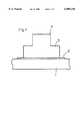
- FIG. 1is a schematic front view of an electrical contact of a semiconductor device of an embodiment of the invention.
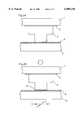
- FIG. 2Ais a schematic view illustrating a method of forming an electrical contact of a semiconductor device of the embodiment of the invention
- FIG. 2Bis a schematic partial section view of a semiconductor unit in which the semiconductor device is mounted on a circuit board.
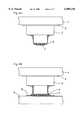
- FIG. 3Ais a schematic view illustrating a method of forming a bonding layer made of a conductive adhesive in the front end of an electrical contact of a semiconductor device of the embodiment of the invention
- FIG. 3Bis a schematic partial section view of a semiconductor unit in which the semiconductor device is mounted on a circuit board.
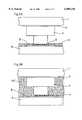
- FIG. 4Ais a schematic view illustrating a method of forming a bonding layer made of a conductive adhesive in the front end of an electrical contact of a semiconductor device of another embodiment of the invention
- FIG. 4Bis a schematic partial section view of a semiconductor unit in which the semiconductor device is mounted on a circuit board.
- FIGS. 5A and 5Bare schematic partial section views of semiconductor units of further embodiments of the invention.
- FIG. 6Ais a schematic section view of a solder bump of a conventional semiconductor device
- FIG. 6Bis a schematic section view of a conventional semiconductor unit.
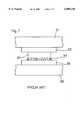
- FIG. 7is a schematic section view of another conventional semiconductor unit which uses a conductive adhesive.
- FIG. 1shows one of a plurality of electrical contacts formed in a part of a semiconductor device according to the invention.
- Electrode pads 2are formed on an IC substrate 1, and projecting electrodes (bumps) 3 are formed on the electrode pads 2, respectively.
- a pair of one of the bumps 3 and one of the electrode pads 2is shown in FIG. 1.
- a rugged side 4is formed in a front end portion of each bump 3.
- the term "rugged side”means a side having a surface which is roughed by forming a number of grooves of a width of 0.1 to 10 ⁇ m in various directions.
- each bump 3comprises a first bump portion and a similiar second bump portion which is formed thereon, so as to have a two-stage projecting shape.
- the shape of the bumps 3is not restricted to such a two-stage projecting shape, and a single-stage shaped bump may be used.
- the bump 3is formed on the electrode pad 2 of the IC substrate 1.
- the bump 3may be formed with a conventional ball bonding method.
- a metal wire for the ball bondingmay be made of a material which can fuse to form an alloy with the material of the electrode pad 2 of the IC substrate.
- the size and material of the metal wirecan be adequately selected in accordance with objects such as the outer diameter and height of the bumps to be formed.
- a ball bonding methodsis employed in Example 1, the formation of bumps may be conducted by using another method such as an electrolytic plating method, a solder bath immersion method, or a vapor deposition method.
- FIGS. 2A and 2Bshow a method for forming the rugged side 4 in the front end portion of the thus formed bump 3.
- the semiconductor device on which the bump 3 is formedis placed on a flat foundation 6 directing it facedown.
- a grind sheet 5 having abrasive grindis fixed to the surface of the flat foundation 6.
- the flat foundation 6incorporates therein an ultrasonic oscillator (not shown), and can be moved in an X-Y plane as shown in FIG. 2B.
- the abrasive grind of the grind sheet 5is made of a hard material having wear resistance, and strongly adheres to the sheet or is embedded therein, in order that the abrasive grind on the sheet is prevented from being abraded in the step of rubbing the front end portion of each bump with the abrasive grind and no abrasion powder adheres to the front end portion of the bump.
- a grind sheet having diamond abrasivemay be used. Even when the hardness of the abrasive grind is lower than that of diamond, there arises no problem in the formation of the rugged side as far as the abrasive grind has an excellent antiabrasion property against the material of the bumps.
- the grind sheet 5may be adequately selected from a wide range of grind sheets in accordance with the material of the bumps, hardness of the bumps and the size of the conductive particles included in the conductive adhesive.
- abrasive grind of the polishing sheetmay be made of silicon carbide (SiC), chromium oxide (Cr 2 O 3 ), or the like.
- the size and roughness of the abrasive grindmay be selected from the range of 8 to 0.3 ⁇ m ⁇ , and that of NO. 2,000 to 10,000 mesh, respectively.
- the ultrasonic oscillator incorporated in the flat foundation 6is operated so that the flat foundation 6 vibrates in the X-Y plane.
- the pressing direction of the semiconductor deviceis vertical to the X-Y plane.
- the pressing of the semiconductor devicemakes the heights of the bumps 3 uniform (or levels of the bumps), and the vibration of the flat foundation 6 forms the rugged side 4 in the front end portion of each bump 3.
- the vibration directionsmay be set to be any suitable ones as far as they are in the X-Y plane.
- the strength of the pressing of the semiconductor device against the flat foundation 6is selected in accordance with the material of the bumps. In the case of Au bumps, for example, it is set to be 50 g per one bump.
- the rugged side 4since the rugged side 4 is formed at the same time to level the bumps, the rugged side 4 can be formed without adding an additional step to the fabricating process.
- the method of forming the rugged side according to the inventioncan apply to any bump which is formed without a particular leveling step.
- an oxidized surface or impurities on the front end portioncan be removed by conducting the step of forming the rugged side in the front end portion of each bump immediately before the step of mounting the semiconductor device on the circuit board, thereby realizing a more highly reliable electric connection and adhesion of a semiconductor device and a circuit board.
- the abrasive grindis illustrated 90 as to have a sharp tip in FIGS. 2A and 2B, it is not required for the abrasive grind to have a sharp tip as far as the abrasive grind has a shape which is selected in due consideration of the size of the conductive particles of the conductive adhesive 7.
- the grind sheet 5can be replaced with a new one according to the abrasion condition of the abrasive grind. Alternatively, the grind sheet 5 may be shifted on the flat foundation 6 and a new portion of the grind sheet 5 can be used for forming the rugged side 4 in the front end portion of the bump.
- the conductive adhesive 7is applied, using a transfer method or a printing method, to the rugged side 4 which is formed in the above step in the front end portion of each bump 3 of the semiconductor device.
- the bump 3 having a two-stage projecting shapeis used in order to more effectively restrain the conductive adhesive (bonding layer) 7 from spreading.
- the use of the bump 3 having a two-stage projecting shapecan prevent an excess amount of the conductive adhesive 7 from adhering to the bump 3, or allow an adequate amount of the conductive adhesive 7 to be applied to the bump 3.
- the shape of the bump 3is not particularly restricted as far as the rugged side 4 is formed in the front end portion of the bump.
- the bonding layer 7is formed by a transfer method or a printing method in which the conductive adhesive 7 is applied to the rugged side 4 formed in the front end portion of each bump 3.
- the bonding layer 7may be formed by another method.
- the bonding layer 7may be formed by applying the conductive adhesive 7 to terminal electrodes 8 of a circuit board 9 in place of the front end portions of the bumps 3.
- the conductive particles included in the conductive adhesive 7a material such as AgPd, Au, Cu, Ag, and a composite conductive material may be used.
- the conductive particlesare made of a material which has a good resistance to oxidation and moisture and has a low volume specific resistivity.
- the average size of the conductive particlesis about 1 ⁇ m.
- the semiconductor deviceAfter the application of the conductive adhesive 7, the semiconductor device is mounted face-down on the circuit board 9 as shown In FIG. 3B.
- the positioning stepis conducted so that the bumps 3 contact with a predetermined position of the respective is input/output terminal electrodes 8 of the circuit board 9.
- the conductive adhesive 7is thermoset at 80 to 150° C. to form the bonding layer 7, whereby the bumps 3 of the semiconductor device are electrically bonded with the terminal electrodes 8 on the circuit board 9, respectively.
- the semiconductor deviceis mounted on the circuit board to obtain a semiconductor unit.
- the bumps 3 made of a material such as Auare formed on the electrode pads 2 of the semiconductor device, and therefore the existence of the bumps which do not fuse at a low soldering temperature can keep the IC substrate 1 and the circuit board 9 separated from each other by a fixed distance.
- the conductive adhesive 7is prevented from spreading, thereby eliminating the risk of a shortcircuit between the conductive adhesive 7 and an adjacent bump.
- the conductive adhesive 7is kept in the rugged portions, whereby the conductive adhesive 7 is prevented from spreading to the periphery.
- the rugged side 4is formed in the front end portion of each bump 3, the conductive particles and the resin of the conductive adhesive 7 enter concaved portions so that the adhesion area is widened. Consequently, the probability that the conductive particles contact with the surface of the respective bumps is enhanced, and the adhesion strength exerted on the input/output terminal electrodes 8 is increased, thereby obtaining a mounting body for a semiconductor in which an electrical connection and an adhesion can be conducted with a highly reliable manner.
- the formation of the rugged side 4 in the front end portion of each bumpcan effectively restrict the spread of the bonding layer (conductive adhesive layer) which cannot be restricted in the configuration of electrical contacts in the conventional manner. This can suppress the formation of bulk portions, thereby solving the problem of deterioration of bulk portions which may be caused by a thermal shock, thermal expansion, or moisture absorption.
- the rugged side 4is formed in the leveling step in which the bumps 3 of the semiconductor device are pressed on the flat face (flat foundation 6) so as to make the heights of the bumps uniform. Therefore, the formation of the rugged side 4 which can improve the reliability of the electrical connection of the bumps can be conducted without increasing the number of production steps.
- the method of the invention forming the rugged side 4 in the front end portion of the bump 3 by ultrasonic vibration on the flat foundation 9 having the grind sheet 5has many advantages.
- the method of the inventionhas desirable effects which could not be obtained from a method in which a rugged side is formed by simply pressing the bump. For example, comparing a conventional method in which a rugged side is formed in a leveling step by simply pressing the bumps against a flat member which has a rugged face, the method of the invention can form a more finely rugged side. Simply pressing the bump against the rugged face can not form a finely rugged side.
- the bumpshould be soft enough and a pressing force should be strong enough to form the rugged side.
- the simply pressing methodis limited to applicable conditions and it is difficult to apply to bumps which are formed without the leveling step.
- the method of the inventioncan form the rugged side without a strong pressing force and is widely applicable to various bumps which are formed without the leveling step, because the invention using the method of vibrating the flat foundation having a grind sheet.
- the method of the inventioncan form the rugged side in the front end portion of a bump of various material and hardness by selecting the appropriate grind sheet with a suitable hardness of the grind particles according to the hardness of the material of the bump.
- the method of the inventionalso can easily adjust the mesh size of the rugged side according to the size of the conductive particles included in the conductive adhesive by choosing the appropriate size of the grind particle of the grind sheet.
- the surface of the front end portion of the bumpis ground off and a new surface is exposed when the rugged side 4 is formed in the front end portion, oxidized surfaces or impurities on the front end portion can be removed away by conducting the step of forming the rugged side 4 in the front end Portion of each bump 3.
- the step of forming the rugged side 4immediately before the step of mounting the semiconductor device on the terminal electrodes 8 of the circuit board 9, a semiconductor mounting which is highly reliable in electrical connection and adhesion strength is realized.
- the method of the inventionhas a great advantage in electrical connection. Such an advantage is never obtain from the simply pressing method of forming the rugged side.
- the method of the inventioncan easily form the rugged side without additional steps. Because of using the grind sheet for forming the rugged side, it is easy to use a new grind sheet or a new portion of the grind sheet for forming the rugged side for a new bump by changing or shifting the grind sheet on the flat foundation. Accordingly, absorption or blowing away of the ground dust is unnecessary. The grind sheet is easily changed. On the other hand, in the simply pressing method of forming a rugged side, the flat member having the rugged face is to be changed or washed. Changing the flat member is not easier than changing the grind sheet and washing the flat member requires additional steps of fabrication.
- FIGS. 4A and 4Bshow a second example of the invention.
- the electrode pads 2are formed on the IC substrate 1, and the bumps 3 are formed on the electrode pads.
- a rugged side 4is formed in the front end portion of each bump 3.
- the bumps 3have the same two-stage projecting shape as those of the first example, but the shape of the bumps 3 are not restricted to this.
- the bumps 3are formed and mounted in the same manner as those of the first example.
- a conductive adhesive 7is applied to the front end portion of each bump 3, and a semiconductor device is mounted facedown on the circuit board 9. Then, while pressing the semiconductor device, the conductive adhesive 7 is thermoset to respectively connect the bumps 3 with terminal electrodes 8.
- Example 2as shown in FIG. 4B, the rugged side is formed not only in the front end portion of each bump 3 but also another rugged side is formed on the surface of each terminal electrode B of the circuit board 9.
- the rugged sidemay be formed on the surface of each terminal electrode 8 by the method of using a grind sheet in the same manner as Example 1.
- the rugged sidemay be formed by another surface processing technique.
- the groove width of the rugged side formed on the surface of each terminal electrode 8ranges from about 1 to 10 ⁇ m.
- both the front end portion of each bump 3 and each terminal electrode 8are provided with the rugged side, the adhesion area of the conductive adhesive 7 can be widened so that the adhesion strength is enhanced. Furthermore, the conductive particles of the conductive adhesive 7 can enter concaved portions formed on both the front end portion of each bump 3 and the surface of each terminal electrode 8, and therefore the electrical conductivity can be obtained more surely. Consequently, a mounting body for a semiconductor in which an electrical connection and an adhesion can be conducted in a highly reliable manner is obtained.
- the adhesive 7may reach the electrode pad 2 of the IC substrate I depending on the shape of the bumps 3, so that the adhesive may be shortcircuited with an adjacent bump or electric contact.
- the use of an anisotropic conductive material in which the solvent and resin do not stretchcan eliminate such a risk of shortcircuit.
- FIGS. 5A and 5BA semiconductor unit in which such an anisotropic conductive material is used is shown in FIGS. 5A and 5B.
- the components identical with those of Examples 1 and 2are indicated by the same reference numerals.
- the bumps 3have the same two-stage projecting shape as those of Examples 1 and 2, but the shape of the bumps 3 is not restricted to this.
- the bumps 3 and the rugged side 4 in the front end portion of each bump 3are formed in the same manner as Examples 1 and 2.
- FIG. 5Ashows a semiconductor unit according to Example 3.
- a thin anisotropic conductive material 10is disposed on the terminal electrode 8 formed on the circuit board 9.
- a semiconductor device on which the bump 3 having the rugged side 4 is formedis placed facedown on the anisotropic conductive material 10.
- the semiconductor deviceis heated while being pressed against the circuit board 9, so that the portion of the anisotropic conductive material 10 which is sandwiched between the bump 3 and the terminal electrode B is subjected to thermocompression bonding, thereby attaining an electrical connection.
- conductive particles included in the anisotropic conductive material 10are pressed against the bump 3 to be bonded with each other, and are forcedly entered into the surface of the terminal electrode 8, thereby achieving electrical connection between the bump 3 and the terminal electrode 8.
- conductive particlesare separated from each other, and therefore the electrical insulation is maintained. Since the rugged side 4 is formed in the front end portion of each bump 3, the total surface area of conductive particles which contact with the bump 3 is widened so as to improve the electrical connection. Moreover, the formation of the rugged side 4 widens the adhesion area between the bump and the resin of the anisotropic conductive material 10, so as to enhance the adhesion strength, thereby achieving an electrical connection and adhesion of further improved reliability.
- the conductive particles in the anisotropic conductive materialhave a size of from about 1 to about 10 ⁇ m. In order to effectively attain the electrical contact, the size of the roughness of the rugged side 4 formed in the bump front end portion, and that of the conductive particles must be suitably selected.
- FIG. 5Bshows a semiconductor unit using an anisotropic conductive material 10' which has a thickness greater than the sum of the height of the bump 3 and the thickness of the terminal electrode 8.
- the thick anisotropic conductive material 10'is disposed on each of the terminal electrodes 8 formed on the circuit board 9.
- a semiconductor device on which the bumps 3 having the rugged side 4 are formedis placed facedown on the anisotropic conductive material.
- the semiconductor deviceis heated while being pressed against the circuit board 9, so that the portion of the anisotropic conductive material 10' which is sandwiched between the bump 3 and the terminal electrode 8 is subjected to thermocompression bonding, thereby attaining an electrical connection. Also in this case, only the portion which is sandwiched between the bump 3 and the terminal electrode 8 is compression-bonded, and in the other portion the electrical insulation is maintained.
- the portion of the anisotropic conductive material 10' other than that which is subject to compression bondingfunctions as an insulative adhesive, and the resin in the portion is thermoset so that the semiconductor device is bonded to the circuit board. Since the rugged side 4 is formed in the front end portion of each bump 3, the total surface area of conductive particles which contact with the bump 3 is widened so as to improve the electrical conductivity.
- a rugged sidecan easily be formed in the front end portion of the bump which is formed by a method such as a ball bonding method, or a plating method. Consequently, in practical use, the invention can be applied to a very wide variety of uses.
- the rugged sideis formed more finely than the rugged side formed by simply pressing the bump.
- the rugged sidecan be easily formed without additional steps by using the grind sheet.
- the step of forming the rugged side in the front and portion of each bumpis conducted concurrently with that of leveling the bumps, it is not required to increase the number of the fabrication steps.
- the bonding surface area in the interface between the bump and a terminal electrode of a circuit boardcan be widened so that the electrical conductivity is improved. This enables the adhesion strength to be improved, and a highly reliable electrical connection to be obtained.
- the rugged sideis formed in the front end portion of each bump, an adequate amount of a conductive adhesive can be supplied to the interface, and the conductive adhesive can be prevented from spreading. Accordingly, during a pressing step, the conductive adhesive can be prevented from being short-circuited with an adjacent bump or circuit wiring, thereby obtaining a mounting body for a semiconductor in which an electrical connection of a fine pitch can be conducted in a highly reliable manner.
- the formation of bulk portionscan be suppressed by preventing the conductive adhesive from spreading, and therefore deterioration of the bonding portions which may be caused by a thermal shock, thermal expansion, or moisture absorption can be eliminated, so that a semiconductor device having excellent properties against thermal shock, thermal expansion, and moisture absorption can be mounted.
- an oxidized surface and impurities on the front end portioncan be removed by conducting the step of forming the rugged side in the front end portion of each bump immediately before the step of mounting the semiconductor device on the circuit board, thereby realizing a more highly reliable mounting of a semiconductor device or a circuit board.
Landscapes
- Engineering & Computer Science (AREA)
- Computer Hardware Design (AREA)
- Microelectronics & Electronic Packaging (AREA)
- Power Engineering (AREA)
- Manufacturing & Machinery (AREA)
- Wire Bonding (AREA)
Abstract
Description
This application is a continuation of application Ser. No. 08/722,487 filed Sep. 27, 1996 now abandoned, which is a continuation of application Ser. No. 08/433,702 filed May 3, 1995 now abandoned, which is a divisional application of Ser. No. 08/188,144 filed Jan. 27, 1994, now U.S. Pat. No. 5,545,589.
1. Field of the Invention
The invention relates to a semiconductor unit and a method for mounting a semiconductor device, and particularly to a method for forming a bump for electrically connecting a terminal electrode of a circuit board with an electrode pad of a semiconductor chip, to a method for mounting a semiconductor device using the bump, and to a semiconductor unit using the bump.
2. Description of the Related Art
Conventionally, a wire bonding method using a soldering technique has been widely used in a process for mounting a semiconductor device on a circuit board having input/output terminal electrodes. Recently, however, because the size of the package for a semiconductor device has been reduced and the number of connecting terminals has been increased, the pitch of the connecting terminals has been shortened, thereby making conventional soldering methods difficult to use for such a bonding application.
In order to solve this problem, recently, improved methods have been proposed in which a semiconductor device such as an integrated circuit chip, is directly mounted on input/output terminal electrodes of a circuit board, so that the mounting area is reduced in size, thereby improving the utility efficiency.
Among these improved methods, a flip chip bonding method in which a semiconductor device is mounted facedown on a circuit board is known to be effective because the semiconductor device is electrically connected to a large number of the terminal electrodes of the circuit board at a time with the resulting connections having excellent mechanical strength.
For example, a mounting method using a ball bonding technique is described in "IC mounting technique", edited by Nippon Microelectronics Association, KOGYO CHOSAKAI, Jan. 15, 1980. Hereinafter, this mounting method will be described.
When anelectrode pad 12 of a semiconductor device (IC substrate) 11 is to be connected with an input/output terminal electrode 18 of acircuit board 19, anadhesion metal film 22 and a diffusion-preventingmetal film 21 are first formed on theelectrode pad 12 of thesemiconductor device 11 by a vapor deposition technique as shown in FIG. 6A, and an electrical contact (projecting electrode: bump) 20 made of solder is then formed by a plating technique. Thereafter, the thus formed IC chip is positioned so that thesolder bump 20 contacts with theterminal electrode 18, and then placed facedown on thecircuit board 19 as shown in FIG. 6B. The semiconductor unit is then heated to a high temperature so that thesolder bump 20 is fused and bonded to theterminal electrode 18 of thecircuit board 19.
Recently, as shown in FIG. 7, a semiconductor unit is proposed in which anAu bump 30 is formed on anelectrode pad 32 of a semiconductor device 31 by a plating technique and theAu bump 30 is connected with aterminal electrode 38 of acircuit board 39 through aconductive adhesive 37. In such a semiconductor unit, after theconductive adhesive 37 is transferred to thebump 30 of the semiconductor device 31, the positioning process is conducted in such a manner that thebump 30 contacts with the input/output terminal electrode 38 of thecircuit board 39, and theconductive adhesive 37 is then cured to obtain an electrical connection.
When pitches of terminal electrodes are to be formed more finely, however, there arise the following problems in such a bump for a conventional semiconductor device, a semiconductor device or a semiconductor unit using such a bump.
1. When thesolder bump 20 is heated to a high temperature (200 to 300° C.) to be fused and connected with the input/output terminal electrode 18, it is impossible to maintain the separation distance between the metal film on the surface of theIC substrate 11 and theterminal electrode 18, resulting in a danger that the fused solder spreads to reach an adjacent electrical contact or bump, thereby causing a shortcircuit.
2. The electrical contact (bump) 30 has a section shape of a trapezoid (straight wall type) or a semicircle (mushroom type). When thebump 30 is connected with the input/output terminal electrode 38 through theconductive adhesive 37, there is a risk that theconductive adhesive 37 spreads to reach an adjacent contact or bump, thereby causing a shortcircuit.
3. When thebump 30 is connected with the input/output terminal electrode 38 through theconductive adhesive 37, the front end face of thebump 30 to which theconductive adhesive 37 has been transferred is pressed with a load against theterminal electrode 38 on thecircuit board 39. Therefore, the most part of theconductive adhesive 37 is formed so as to surround the bump of the bonding portion (this surrounding part is referred to as a bulk portion). Consequently, when a stress due to thermal expansion caused by a thermal shock, or a reduction of the adhesion strength produces a crack or separation in the bulk portion, there is a risk that the bonding interface is made unstable so that the resistance of the electrical contact is increased.
The invention has been directed in order to solve the above-mentioned problems. It is an object of the invention to provide a method for forming a projecting electrode for a semiconductor device, a method for mounting a semiconductor device, and a semiconductor unit which enable an electrical connection with a fine pitch between the semiconductor device and a circuit board to be conducted easily and surely.
The method of forming bumps of this invention, the bumps being for connecting electrode pads of a semiconductor device to terminal electrodes formed on a surface of a circuit board respectively, the semiconductor device being mounted facedown on the surface of the circuit board, comprises: step a of forming the bumps on the electrode pad of the semiconductor device; step b of placing facedown the semiconductor device on a flat foundation so that the bumps contact with a grind sheet which is fixed to the flat foundation and which has abrasive grind; and step c of conducting ultrasonic vibration on the flat foundation while pressing the semiconductor device against the flat foundation, thereby forming a rugged side in a front end portion of each of the bumps.
A method of the invention of mounting a semiconductor device having electrode pads on a surface, on a circuit board having terminal electrodes on a surface, comprises: step a of forming bumps on the electrode pads of the semiconductor device; step b of placing facedown the semiconductor device on a flat foundation so that the bumps contact with a grind sheet which is fixed to the flat foundation and which has abrasive grind; step c of conducting ultrasonic vibration on the flat foundation while pressing the semiconductor device against the flat foundation, thereby forming a rugged side in a front end portion of each of the bumps; step d of applying a conductive adhesive material to the front end portion of each of the bumps in which a rugged side is formed; step e of facedown mounting the semiconductor device on the circuit board so that the bumps contact with the terminal electrodes; and step f of curing the conductive adhesive material to form a bonding layer.
In one embodiment of the invention, step c includes a step of leveling the bumps to make the bumps a uniform height, the bumps being leveled when the semiconductor device is pressed against the flat foundation.
In another embodiment of the invention, the bumps are made of a material selected from the group consisting of Au, Cu, Al, solder, or an alloy of these metals.
In still another embodiment of the invention, the bumps are formed on the electrode pads by a ball bonding method in step a.
In still another embodiment of the invention, the bumps are formed by a soldering method or a plating method in step a.
In still another embodiment of the invention, the bonding layer is made of a conductive adhesive.
In still another embodiment of the invention, the bonding layer is made of an anisotropic conductive material.
In still another embodiment of the invention, the method includes a step of forming another rugged side at least in a portion of a surface of each of the terminal electrodes.
A semiconductor unit according to the present invention comprises: a circuit board having terminal electrodes on a surface; and a semiconductor device having an electrode pad on a surface, the semiconductor device being mounted facedown on the surface of the circuit board, a bump for electrically connecting the electrode pad to the terminal electrodes of the circuit board being formed on the electrode pad, wherein the bump has a rugged side in a front end portion, the terminal electrode has another rugged side formed at least in a portion of a surface of the terminal electrodes, and a bonding layer is formed between the front end portion of the bump and the portion of the surface of the terminal electrodes.
In one embodiment of the invention, the bumps are made of a material selected from the group consisting of Au, Cu, Al, solder, or an alloy of these metals.
In another embodiment of the invention, the bonding layer is made of a conductive adhesive.
In still another embodiment of the invention, the bonding layer is made of an anisotropic conductive material.
Thus, the invention described herein makes possible the advantages of (1) providing a method for forming a projecting electrode (bump) for a semiconductor device, (2) providing a method for mounting a semiconductor device,, and (3) providing a semiconductor unit which enables an electrical connection with a fine pitch between the semiconductor device and a circuit board to be conducted easily and surely.
These and other advantages of the present invention will become apparent to those skilled in the art upon reading and understanding the following detailed description with reference to the accompanying Figures.
FIG. 1 is a schematic front view of an electrical contact of a semiconductor device of an embodiment of the invention.
FIG. 2A is a schematic view illustrating a method of forming an electrical contact of a semiconductor device of the embodiment of the invention, and FIG. 2B is a schematic partial section view of a semiconductor unit in which the semiconductor device is mounted on a circuit board.
FIG. 3A is a schematic view illustrating a method of forming a bonding layer made of a conductive adhesive in the front end of an electrical contact of a semiconductor device of the embodiment of the invention, and FIG. 3B is a schematic partial section view of a semiconductor unit in which the semiconductor device is mounted on a circuit board.
FIG. 4A is a schematic view illustrating a method of forming a bonding layer made of a conductive adhesive in the front end of an electrical contact of a semiconductor device of another embodiment of the invention, and FIG. 4B is a schematic partial section view of a semiconductor unit in which the semiconductor device is mounted on a circuit board.
FIGS. 5A and 5B are schematic partial section views of semiconductor units of further embodiments of the invention.
FIG. 6A is a schematic section view of a solder bump of a conventional semiconductor device, and FIG. 6B is a schematic section view of a conventional semiconductor unit.
FIG. 7 is a schematic section view of another conventional semiconductor unit which uses a conductive adhesive.
Hereinafter, the invention will be described by illustrating examples.
FIG. 1 shows one of a plurality of electrical contacts formed in a part of a semiconductor device according to the invention.Electrode pads 2 are formed on anIC substrate 1, and projecting electrodes (bumps) 3 are formed on theelectrode pads 2, respectively. A pair of one of thebumps 3 and one of theelectrode pads 2 is shown in FIG. 1. Arugged side 4 is formed in a front end portion of eachbump 3. In the specification, the term "rugged side" means a side having a surface which is roughed by forming a number of grooves of a width of 0.1 to 10 μm in various directions. In Example 1, as shown in Fig. 1, eachbump 3 comprises a first bump portion and a similiar second bump portion which is formed thereon, so as to have a two-stage projecting shape. The shape of thebumps 3 is not restricted to such a two-stage projecting shape, and a single-stage shaped bump may be used.
Hereinafter, a method for forming thebumps 3 having therugged side 4 will be described.
At first, thebump 3 is formed on theelectrode pad 2 of theIC substrate 1. For example, thebump 3 may be formed with a conventional ball bonding method. A metal wire for the ball bonding may be made of a material which can fuse to form an alloy with the material of theelectrode pad 2 of the IC substrate. An example of the material of the metal wire Au, Cu, Al, or an alloy of these metals. The size and material of the metal wire can be adequately selected in accordance with objects such as the outer diameter and height of the bumps to be formed. Although a ball bonding methods is employed in Example 1, the formation of bumps may be conducted by using another method such as an electrolytic plating method, a solder bath immersion method, or a vapor deposition method.
FIGS. 2A and 2B show a method for forming therugged side 4 in the front end portion of the thus formedbump 3. As shown in FIG. 2A, the semiconductor device on which thebump 3 is formed is placed on aflat foundation 6 directing it facedown. Agrind sheet 5 having abrasive grind is fixed to the surface of theflat foundation 6. Theflat foundation 6 incorporates therein an ultrasonic oscillator (not shown), and can be moved in an X-Y plane as shown in FIG. 2B.
Preferably, the abrasive grind of thegrind sheet 5 is made of a hard material having wear resistance, and strongly adheres to the sheet or is embedded therein, in order that the abrasive grind on the sheet is prevented from being abraded in the step of rubbing the front end portion of each bump with the abrasive grind and no abrasion powder adheres to the front end portion of the bump. For example, a grind sheet having diamond abrasive may be used. Even when the hardness of the abrasive grind is lower than that of diamond, there arises no problem in the formation of the rugged side as far as the abrasive grind has an excellent antiabrasion property against the material of the bumps.
Thegrind sheet 5 may be adequately selected from a wide range of grind sheets in accordance with the material of the bumps, hardness of the bumps and the size of the conductive particles included in the conductive adhesive. For example, abrasive grind of the polishing sheet may be made of silicon carbide (SiC), chromium oxide (Cr2 O3), or the like. The size and roughness of the abrasive grind may be selected from the range of 8 to 0.3 μmφ, and that of NO. 2,000 to 10,000 mesh, respectively.
Then, while the semiconductor device is pressed against theflat foundation 6 as shown in FIG. 2B, the ultrasonic oscillator incorporated in theflat foundation 6 is operated so that theflat foundation 6 vibrates in the X-Y plane. The pressing direction of the semiconductor device is vertical to the X-Y plane. The pressing of the semiconductor device makes the heights of thebumps 3 uniform (or levels of the bumps), and the vibration of theflat foundation 6 forms therugged side 4 in the front end portion of eachbump 3. The vibration directions may be set to be any suitable ones as far as they are in the X-Y plane. The strength of the pressing of the semiconductor device against theflat foundation 6 is selected in accordance with the material of the bumps. In the case of Au bumps, for example, it is set to be 50 g per one bump.
As described above, since therugged side 4 is formed at the same time to level the bumps, therugged side 4 can be formed without adding an additional step to the fabricating process. However, the method of forming the rugged side according to the invention can apply to any bump which is formed without a particular leveling step.
Further, an oxidized surface or impurities on the front end portion can be removed by conducting the step of forming the rugged side in the front end portion of each bump immediately before the step of mounting the semiconductor device on the circuit board, thereby realizing a more highly reliable electric connection and adhesion of a semiconductor device and a circuit board.
Although the abrasive grind is illustrated 90 as to have a sharp tip in FIGS. 2A and 2B, it is not required for the abrasive grind to have a sharp tip as far as the abrasive grind has a shape which is selected in due consideration of the size of the conductive particles of theconductive adhesive 7. Thegrind sheet 5 can be replaced with a new one according to the abrasion condition of the abrasive grind. Alternatively, thegrind sheet 5 may be shifted on theflat foundation 6 and a new portion of thegrind sheet 5 can be used for forming therugged side 4 in the front end portion of the bump.
Then, as shown in FIG. 3A, theconductive adhesive 7 is applied, using a transfer method or a printing method, to therugged side 4 which is formed in the above step in the front end portion of eachbump 3 of the semiconductor device. In Example 1, thebump 3 having a two-stage projecting shape is used in order to more effectively restrain the conductive adhesive (bonding layer) 7 from spreading. The use of thebump 3 having a two-stage projecting shape can prevent an excess amount of theconductive adhesive 7 from adhering to thebump 3, or allow an adequate amount of theconductive adhesive 7 to be applied to thebump 3. However, the shape of thebump 3 is not particularly restricted as far as therugged side 4 is formed in the front end portion of the bump.
In Example 1, thebonding layer 7 is formed by a transfer method or a printing method in which theconductive adhesive 7 is applied to therugged side 4 formed in the front end portion of eachbump 3. Thebonding layer 7 may be formed by another method. For example, thebonding layer 7 may be formed by applying theconductive adhesive 7 toterminal electrodes 8 of acircuit board 9 in place of the front end portions of thebumps 3.
As the conductive particles included in theconductive adhesive 7, a material such as AgPd, Au, Cu, Ag, and a composite conductive material may be used. Preferably, the conductive particles are made of a material which has a good resistance to oxidation and moisture and has a low volume specific resistivity. The average size of the conductive particles is about 1 μm.
After the application of theconductive adhesive 7, the semiconductor device is mounted face-down on thecircuit board 9 as shown In FIG. 3B. The positioning step is conducted so that thebumps 3 contact with a predetermined position of the respective is input/output terminal electrodes 8 of thecircuit board 9. Thereafter, theconductive adhesive 7 is thermoset at 80 to 150° C. to form thebonding layer 7, whereby thebumps 3 of the semiconductor device are electrically bonded with theterminal electrodes 8 on thecircuit board 9, respectively. As a result, the semiconductor device is mounted on the circuit board to obtain a semiconductor unit.
According to Example 1, thebumps 3 made of a material such as Au are formed on theelectrode pads 2 of the semiconductor device, and therefore the existence of the bumps which do not fuse at a low soldering temperature can keep theIC substrate 1 and thecircuit board 9 separated from each other by a fixed distance.
In the step of bonding thebumps 3 of the semiconductor device with theterminal electrodes 8 of thecircuit board 9 through thebonding layer 7 consisting of the conductive adhesive, an adequate amount of theconductive adhesive 7 can be transferred or printed to therugged side 4 in the front end of eachbump 3. Therefore, theconductive adhesive 7 is prevented from spreading, thereby eliminating the risk of a shortcircuit between theconductive adhesive 7 and an adjacent bump. In the step of pressing the semiconductor device, theconductive adhesive 7 is kept in the rugged portions, whereby theconductive adhesive 7 is prevented from spreading to the periphery. These features enable an electrical connection of a fine pitch to be conducted.
Since therugged side 4 is formed in the front end portion of eachbump 3, the conductive particles and the resin of theconductive adhesive 7 enter concaved portions so that the adhesion area is widened. Consequently, the probability that the conductive particles contact with the surface of the respective bumps is enhanced, and the adhesion strength exerted on the input/output terminal electrodes 8 is increased, thereby obtaining a mounting body for a semiconductor in which an electrical connection and an adhesion can be conducted with a highly reliable manner.
Therefore, the formation of therugged side 4 in the front end portion of each bump can effectively restrict the spread of the bonding layer (conductive adhesive layer) which cannot be restricted in the configuration of electrical contacts in the conventional manner. This can suppress the formation of bulk portions, thereby solving the problem of deterioration of bulk portions which may be caused by a thermal shock, thermal expansion, or moisture absorption.
In the leveling step in which thebumps 3 of the semiconductor device are pressed on the flat face (flat foundation 6) so as to make the heights of the bumps uniform, therugged side 4 is formed. Therefore, the formation of therugged side 4 which can improve the reliability of the electrical connection of the bumps can be conducted without increasing the number of production steps.
The method of the invention forming therugged side 4 in the front end portion of thebump 3 by ultrasonic vibration on theflat foundation 9 having thegrind sheet 5 has many advantages.
First, the method of the invention has desirable effects which could not be obtained from a method in which a rugged side is formed by simply pressing the bump. For example, comparing a conventional method in which a rugged side is formed in a leveling step by simply pressing the bumps against a flat member which has a rugged face, the method of the invention can form a more finely rugged side. Simply pressing the bump against the rugged face can not form a finely rugged side.
If the rugged side is formed by simply pressing the bump, the bump should be soft enough and a pressing force should be strong enough to form the rugged side.
Accordingly, the simply pressing method is limited to applicable conditions and it is difficult to apply to bumps which are formed without the leveling step. However, the method of the invention can form the rugged side without a strong pressing force and is widely applicable to various bumps which are formed without the leveling step, because the invention using the method of vibrating the flat foundation having a grind sheet.
Second, the method of the invention can form the rugged side in the front end portion of a bump of various material and hardness by selecting the appropriate grind sheet with a suitable hardness of the grind particles according to the hardness of the material of the bump. The method of the invention also can easily adjust the mesh size of the rugged side according to the size of the conductive particles included in the conductive adhesive by choosing the appropriate size of the grind particle of the grind sheet.
Moreover, since the surface of the front end portion of the bump is ground off and a new surface is exposed when therugged side 4 is formed in the front end portion, oxidized surfaces or impurities on the front end portion can be removed away by conducting the step of forming therugged side 4 in the front end Portion of eachbump 3. By conducting the step of forming therugged side 4 immediately before the step of mounting the semiconductor device on theterminal electrodes 8 of thecircuit board 9, a semiconductor mounting which is highly reliable in electrical connection and adhesion strength is realized. In particular, when the bump is made of a base metal which is easily oxidizable, the method of the invention has a great advantage in electrical connection. Such an advantage is never obtain from the simply pressing method of forming the rugged side.
Further, the method of the invention can easily form the rugged side without additional steps. Because of using the grind sheet for forming the rugged side, it is easy to use a new grind sheet or a new portion of the grind sheet for forming the rugged side for a new bump by changing or shifting the grind sheet on the flat foundation. Accordingly, absorption or blowing away of the ground dust is unnecessary. The grind sheet is easily changed. On the other hand, in the simply pressing method of forming a rugged side, the flat member having the rugged face is to be changed or washed. Changing the flat member is not easier than changing the grind sheet and washing the flat member requires additional steps of fabrication.
FIGS. 4A and 4B show a second example of the invention. In the figures, components identical with those of the first example are indicated by the same reference numerals. Theelectrode pads 2 are formed on theIC substrate 1, and thebumps 3 are formed on the electrode pads. Arugged side 4 is formed in the front end portion of eachbump 3. In the figures, only one set of theelectrode pad 2, thebump 3, and therugged side 4 is shown. In Example 2, thebumps 3 have the same two-stage projecting shape as those of the first example, but the shape of thebumps 3 are not restricted to this. Thebumps 3 are formed and mounted in the same manner as those of the first example. Aconductive adhesive 7 is applied to the front end portion of eachbump 3, and a semiconductor device is mounted facedown on thecircuit board 9. Then, while pressing the semiconductor device, theconductive adhesive 7 is thermoset to respectively connect thebumps 3 withterminal electrodes 8.
In Example 2, as shown in FIG. 4B, the rugged side is formed not only in the front end portion of eachbump 3 but also another rugged side is formed on the surface of each terminal electrode B of thecircuit board 9. After the formation of theterminal electrodes 8, the rugged side may be formed on the surface of eachterminal electrode 8 by the method of using a grind sheet in the same manner as Example 1. The rugged side may be formed by another surface processing technique. The groove width of the rugged side formed on the surface of eachterminal electrode 8 ranges from about 1 to 10 μm.
Since both the front end portion of eachbump 3 and eachterminal electrode 8 are provided with the rugged side, the adhesion area of theconductive adhesive 7 can be widened so that the adhesion strength is enhanced. Furthermore, the conductive particles of theconductive adhesive 7 can enter concaved portions formed on both the front end portion of eachbump 3 and the surface of eachterminal electrode 8, and therefore the electrical conductivity can be obtained more surely. Consequently, a mounting body for a semiconductor in which an electrical connection and an adhesion can be conducted in a highly reliable manner is obtained.
When thebonding layer 7 is formed by using theconductive adhesive 7, the adhesive 7 may reach theelectrode pad 2 of the IC substrate I depending on the shape of thebumps 3, so that the adhesive may be shortcircuited with an adjacent bump or electric contact. In such a case, the use of an anisotropic conductive material in which the solvent and resin do not stretch can eliminate such a risk of shortcircuit.
A semiconductor unit in which such an anisotropic conductive material is used is shown in FIGS. 5A and 5B. The components identical with those of Examples 1 and 2 are indicated by the same reference numerals. Also in Example 3, thebumps 3 have the same two-stage projecting shape as those of Examples 1 and 2, but the shape of thebumps 3 is not restricted to this. Thebumps 3 and therugged side 4 in the front end portion of eachbump 3 are formed in the same manner as Examples 1 and 2.
FIG. 5A shows a semiconductor unit according to Example 3. In FIG. 5A, a thin anisotropicconductive material 10 is disposed on theterminal electrode 8 formed on thecircuit board 9. A semiconductor device on which thebump 3 having therugged side 4 is formed is placed facedown on the anisotropicconductive material 10. The semiconductor device is heated while being pressed against thecircuit board 9, so that the portion of the anisotropicconductive material 10 which is sandwiched between thebump 3 and the terminal electrode B is subjected to thermocompression bonding, thereby attaining an electrical connection.
In the portion of the anisotropicconductive material 10 which is to be subjected to thermocompression bonding, conductive particles included in the anisotropicconductive material 10 are pressed against thebump 3 to be bonded with each other, and are forcedly entered into the surface of theterminal electrode 8, thereby achieving electrical connection between thebump 3 and theterminal electrode 8. In the other portion which is not subject to the compression bonding, conductive particles are separated from each other, and therefore the electrical insulation is maintained. Since therugged side 4 is formed in the front end portion of eachbump 3, the total surface area of conductive particles which contact with thebump 3 is widened so as to improve the electrical connection. Moreover, the formation of therugged side 4 widens the adhesion area between the bump and the resin of the anisotropicconductive material 10, so as to enhance the adhesion strength, thereby achieving an electrical connection and adhesion of further improved reliability.
The conductive particles in the anisotropic conductive material have a size of from about 1 to about 10 μm. In order to effectively attain the electrical contact, the size of the roughness of therugged side 4 formed in the bump front end portion, and that of the conductive particles must be suitably selected.
FIG. 5B shows a semiconductor unit using an anisotropicconductive material 10' which has a thickness greater than the sum of the height of thebump 3 and the thickness of theterminal electrode 8. The thick anisotropicconductive material 10' is disposed on each of theterminal electrodes 8 formed on thecircuit board 9. A semiconductor device on which thebumps 3 having therugged side 4 are formed is placed facedown on the anisotropic conductive material.
The semiconductor device is heated while being pressed against thecircuit board 9, so that the portion of the anisotropicconductive material 10' which is sandwiched between thebump 3 and theterminal electrode 8 is subjected to thermocompression bonding, thereby attaining an electrical connection. Also in this case, only the portion which is sandwiched between thebump 3 and theterminal electrode 8 is compression-bonded, and in the other portion the electrical insulation is maintained. The portion of the anisotropicconductive material 10' other than that which is subject to compression bonding functions as an insulative adhesive, and the resin in the portion is thermoset so that the semiconductor device is bonded to the circuit board. Since therugged side 4 is formed in the front end portion of eachbump 3, the total surface area of conductive particles which contact with thebump 3 is widened so as to improve the electrical conductivity.
According to the invention, without restricting the configuration of a bump and the production method to special ones, a rugged side can easily be formed in the front end portion of the bump which is formed by a method such as a ball bonding method, or a plating method. Consequently, in practical use, the invention can be applied to a very wide variety of uses.
Further, according to the invention, the rugged side is formed more finely than the rugged side formed by simply pressing the bump.
According to the invention, the rugged side can be easily formed without additional steps by using the grind sheet. When the step of forming the rugged side in the front and portion of each bump is conducted concurrently with that of leveling the bumps, it is not required to increase the number of the fabrication steps.
Since the rugged side is formed in the front end portion of each bump of a semiconductor device, the bonding surface area in the interface between the bump and a terminal electrode of a circuit board can be widened so that the electrical conductivity is improved. This enables the adhesion strength to be improved, and a highly reliable electrical connection to be obtained.
Since the rugged side is formed in the front end portion of each bump, an adequate amount of a conductive adhesive can be supplied to the interface, and the conductive adhesive can be prevented from spreading. Accordingly, during a pressing step, the conductive adhesive can be prevented from being short-circuited with an adjacent bump or circuit wiring, thereby obtaining a mounting body for a semiconductor in which an electrical connection of a fine pitch can be conducted in a highly reliable manner.
The formation of bulk portions can be suppressed by preventing the conductive adhesive from spreading, and therefore deterioration of the bonding portions which may be caused by a thermal shock, thermal expansion, or moisture absorption can be eliminated, so that a semiconductor device having excellent properties against thermal shock, thermal expansion, and moisture absorption can be mounted.
Moreover, an oxidized surface and impurities on the front end portion can be removed by conducting the step of forming the rugged side in the front end portion of each bump immediately before the step of mounting the semiconductor device on the circuit board, thereby realizing a more highly reliable mounting of a semiconductor device or a circuit board.
Further, since both the front end portion of each bump and each terminal electrode are provided with the rugged side, the electrical conductivity and the adhesion can be obtained more surely.
Various other modifications will be apparent to and can be readily made by those skilled in the art without departing from the scope and spirit of this invention. Accordingly, it is not intended that the scope of the claims appended hereto be limited to the description as set forth herein, but rather that the claims be broadly construed.
Claims (14)
1. A semiconductor unit comprising:
a circuit board having terminal electrodes on a surface; and
a semiconductor device having an electrode pad on a first surface, said semiconductor device being mounted facedown on said surface of said circuit board, a plurality of bumps for electrically connecting said electrode pad to said terminal electrodes of said circuit board being formed on said electrode pad, wherein:
each of said bumps comprises a first bump portion and a smaller second bump portion which is formed on said first bump portion and has a second surface, so as to have a two-stage projecting shape, each of said bumps has a plurality of irregularities having concave portions extending in various directions defined on said second surface of said second bump portion,
a bonding layer is formed between said second bump portion and said terminal electrode;
wherein said bonding layer includes conductive particles, and the conductive particles and a part of the bonding layer enter said concave portions of the plurality of irregularities of the bumps.
2. A semiconductor unit according to claim 1, wherein said bumps are made of a material selected from the group consisting of Au, Cu, Al, solder, or an alloy of these metals.
3. A semiconductor unit according to claim 1, wherein said bonding layer is made of a conductive adhesive.
4. A semiconductor unit according to claim 1, wherein said bonding layer is made of an anisotropic conductive material.
5. A semiconductor unit according to claim 1, wherein said plurality of irregularities on said bumps have a width of 0.1 to 10 μm.
6. A semiconductor unit according to claim 1, wherein said bonding layer is made of a conductive adhesive, and said conductive adhesive comprises conductive particles having an average size of about 1 μm.
7. A semiconductor unit according to claim 6, wherein said conductive particles are made of at least one conductive material selected from the group consisting of AgPd, Au, Cu, and Ag.
8. A semiconductor unit comprising:
a circuit board having terminal electrodes on a surface; and
a semiconductor device having an electrode pad on a first surface, said semiconductor device being mounted facedown on said surface of said circuit board, a plurality of bumps for electrically connecting said electrode pad to said terminal electrodes of said circuit board being formed on said electrode pad, wherein:
each of said bumps comprises a first bump portion and a smaller second bump portion which is formed on said first bump portion and has a second surface, so as to have a two-stage projecting shape, each of said bumps has a plurality of irregularities having concave portions defined on said second surface of said second bump portion,
said terminal electrodes have another plurality of irregularities having concave portions extending in various directions, and
a bonding layer is formed between said second bump portion and said terminal electrode;
wherein said bonding layer includes conductive particles, and the conductive particles and a part of the bonding layer enter said concave portions of the plurality of irregularities of the bumps and the terminal electrodes.
9. A semiconductor unit according to claim 8, wherein said bonding layer is made of a conductive adhesive.
10. A semiconductor unit according to claim 8, wherein said bonding layer is made of anisotropic conductive material.
11. A semiconductor unit according to claim 8, wherein said plurality of irregularities on said bumps have a width of 0.1 to 10 μm.
12. A semiconductor unit according to claim 8, wherein said plurality of irregularities on said terminal electrodes have a width of 0.1 to 10 μm.
13. A semiconductor unit according to claim 8, wherein said bonding layer is made of a conductive adhesive, and said conductive adhesive comprises conductive particles having an average size of about 1 μm.
14. A semiconductor unit according to claim 13, wherein said conductive particles are made of at least one conductive material selected from the group consisting of AgPd, Au, Cu, and Ag.
Priority Applications (1)
| Application Number | Priority Date | Filing Date | Title |
|---|---|---|---|
| US08/878,369US6088236A (en) | 1993-01-28 | 1997-06-18 | Semiconductor device having a bump having a rugged side |
Applications Claiming Priority (6)
| Application Number | Priority Date | Filing Date | Title |
|---|---|---|---|
| JP5-12559 | 1993-01-28 | ||
| JP1255993 | 1993-01-28 | ||
| US08/188,144US5545589A (en) | 1993-01-28 | 1994-01-27 | Method of forming a bump having a rugged side, a semiconductor device having the bump, and a method of mounting a semiconductor unit and a semiconductor device |
| US43370295A | 1995-05-03 | 1995-05-03 | |
| US72248796A | 1996-09-27 | 1996-09-27 | |
| US08/878,369US6088236A (en) | 1993-01-28 | 1997-06-18 | Semiconductor device having a bump having a rugged side |
Related Parent Applications (1)
| Application Number | Title | Priority Date | Filing Date |
|---|---|---|---|
| US72248796AContinuation | 1993-01-28 | 1996-09-27 |
Publications (1)
| Publication Number | Publication Date |
|---|---|
| US6088236Atrue US6088236A (en) | 2000-07-11 |
Family
ID=11808705
Family Applications (2)
| Application Number | Title | Priority Date | Filing Date |
|---|---|---|---|
| US08/188,144Expired - Fee RelatedUS5545589A (en) | 1993-01-28 | 1994-01-27 | Method of forming a bump having a rugged side, a semiconductor device having the bump, and a method of mounting a semiconductor unit and a semiconductor device |
| US08/878,369Expired - Fee RelatedUS6088236A (en) | 1993-01-28 | 1997-06-18 | Semiconductor device having a bump having a rugged side |
Family Applications Before (1)
| Application Number | Title | Priority Date | Filing Date |
|---|---|---|---|
| US08/188,144Expired - Fee RelatedUS5545589A (en) | 1993-01-28 | 1994-01-27 | Method of forming a bump having a rugged side, a semiconductor device having the bump, and a method of mounting a semiconductor unit and a semiconductor device |
Country Status (3)
| Country | Link |
|---|---|
| US (2) | US5545589A (en) |
| EP (1) | EP0616363B1 (en) |
| DE (1) | DE69415371T2 (en) |
Cited By (67)
| Publication number | Priority date | Publication date | Assignee | Title |
|---|---|---|---|---|
| US6350632B1 (en) | 2000-09-20 | 2002-02-26 | Charles W. C. Lin | Semiconductor chip assembly with ball bond connection joint |
| US6350386B1 (en) | 2000-09-20 | 2002-02-26 | Charles W. C. Lin | Method of making a support circuit with a tapered through-hole for a semiconductor chip assembly |
| US6442033B1 (en)* | 1999-09-24 | 2002-08-27 | Virginia Tech Intellectual Properties, Inc. | Low-cost 3D flip-chip packaging technology for integrated power electronics modules |
| US6440835B1 (en) | 2000-10-13 | 2002-08-27 | Charles W. C. Lin | Method of connecting a conductive trace to a semiconductor chip |
| US6444489B1 (en) | 2000-12-15 | 2002-09-03 | Charles W. C. Lin | Semiconductor chip assembly with bumped molded substrate |
| US6448108B1 (en) | 2000-10-02 | 2002-09-10 | Charles W. C. Lin | Method of making a semiconductor chip assembly with a conductive trace subtractively formed before and after chip attachment |
| US6492252B1 (en) | 2000-10-13 | 2002-12-10 | Bridge Semiconductor Corporation | Method of connecting a bumped conductive trace to a semiconductor chip |
| US20020195707A1 (en)* | 2001-06-20 | 2002-12-26 | International Business Machines Corporation | Extension of fatigue life for C4 solder ball to chip connection |
| US6511865B1 (en) | 2000-09-20 | 2003-01-28 | Charles W. C. Lin | Method for forming a ball bond connection joint on a conductive trace and conductive pad in a semiconductor chip assembly |
| US6512301B1 (en)* | 2001-07-12 | 2003-01-28 | Intel Corporation | Making interconnections to a non-flat surface |
| US6537851B1 (en) | 2000-10-13 | 2003-03-25 | Bridge Semiconductor Corporation | Method of connecting a bumped compliant conductive trace to a semiconductor chip |
| US6538335B2 (en)* | 2001-01-29 | 2003-03-25 | Nec Corporation | Semiconductor apparatus and a semiconductor device mounting method |
| US6544813B1 (en) | 2000-10-02 | 2003-04-08 | Charles W. C. Lin | Method of making a semiconductor chip assembly with a conductive trace subtractively formed before and after chip attachment |
| US6548393B1 (en) | 2000-10-13 | 2003-04-15 | Charles W. C. Lin | Semiconductor chip assembly with hardened connection joint |
| US6576493B1 (en) | 2000-10-13 | 2003-06-10 | Bridge Semiconductor Corporation | Method of connecting a conductive trace and an insulative base to a semiconductor chip using multiple etch steps |
| US6576539B1 (en) | 2000-10-13 | 2003-06-10 | Charles W.C. Lin | Semiconductor chip assembly with interlocked conductive trace |
| US6583040B1 (en) | 2000-10-13 | 2003-06-24 | Bridge Semiconductor Corporation | Method of making a pillar in a laminated structure for a semiconductor chip assembly |
| US6623283B1 (en)* | 2000-03-08 | 2003-09-23 | Autosplice, Inc. | Connector with base having channels to facilitate surface mount solder attachment |
| US6653170B1 (en) | 2001-02-06 | 2003-11-25 | Charles W. C. Lin | Semiconductor chip assembly with elongated wire ball bonded to chip and electrolessly plated to support circuit |
| US6667229B1 (en) | 2000-10-13 | 2003-12-23 | Bridge Semiconductor Corporation | Method of connecting a bumped compliant conductive trace and an insulative base to a semiconductor chip |
| US6699780B1 (en) | 2000-10-13 | 2004-03-02 | Bridge Semiconductor Corporation | Method of connecting a conductive trace to a semiconductor chip using plasma undercut etching |
| US6740576B1 (en) | 2000-10-13 | 2004-05-25 | Bridge Semiconductor Corporation | Method of making a contact terminal with a plated metal peripheral sidewall portion for a semiconductor chip assembly |
| US20040134974A1 (en)* | 2003-01-10 | 2004-07-15 | Se-Yong Oh | Solder bump structure and method for forming a solder bump |
| US20040197979A1 (en)* | 2003-01-10 | 2004-10-07 | Jeong Se-Young | Reinforced solder bump structure and method for forming a reinforced solder bump |
| US6872591B1 (en) | 2000-10-13 | 2005-03-29 | Bridge Semiconductor Corporation | Method of making a semiconductor chip assembly with a conductive trace and a substrate |
| US6876072B1 (en) | 2000-10-13 | 2005-04-05 | Bridge Semiconductor Corporation | Semiconductor chip assembly with chip in substrate cavity |
| US6908788B1 (en) | 2000-10-13 | 2005-06-21 | Bridge Semiconductor Corporation | Method of connecting a conductive trace to a semiconductor chip using a metal base |
| US6949408B1 (en) | 2000-10-13 | 2005-09-27 | Bridge Semiconductor Corporation | Method of connecting a conductive trace and an insulative base to a semiconductor chip using multiple etch steps |
| US20050221635A1 (en)* | 2004-03-30 | 2005-10-06 | International Business Machines Corporation | Micro-bumps to enhance lga interconnections |
| US20050253232A1 (en)* | 2004-05-17 | 2005-11-17 | Soichiro Ibaraki | Semiconductor device |
| US6984576B1 (en) | 2000-10-13 | 2006-01-10 | Bridge Semiconductor Corporation | Method of connecting an additively and subtractively formed conductive trace and an insulative base to a semiconductor chip |
| US20060012024A1 (en)* | 2000-10-13 | 2006-01-19 | Bridge Semiconductor Corporation | Semiconductor chip assembly with metal containment wall and solder terminal |
| US20060040488A1 (en)* | 1994-12-29 | 2006-02-23 | Tessera, Inc. | Method of electrically connecting a microelectronic component |
| US7009297B1 (en) | 2000-10-13 | 2006-03-07 | Bridge Semiconductor Corporation | Semiconductor chip assembly with embedded metal particle |
| US7071089B1 (en) | 2000-10-13 | 2006-07-04 | Bridge Semiconductor Corporation | Method of making a semiconductor chip assembly with a carved bumped terminal |
| US7075186B1 (en) | 2000-10-13 | 2006-07-11 | Bridge Semiconductor Corporation | Semiconductor chip assembly with interlocked contact terminal |
| US7094676B1 (en) | 2000-10-13 | 2006-08-22 | Bridge Semiconductor Corporation | Semiconductor chip assembly with embedded metal pillar |
| US7112521B1 (en) | 2000-10-13 | 2006-09-26 | Bridge Semiconductor Corporation | Method of making a semiconductor chip assembly with a bumped metal pillar |
| US20060214302A1 (en)* | 2003-03-25 | 2006-09-28 | Yoshihide Matsuo | Manufacturing method for semiconductor device, semiconductor device, and electronic apparatus |
| US7129113B1 (en) | 2000-10-13 | 2006-10-31 | Bridge Semiconductor Corporation | Method of making a three-dimensional stacked semiconductor package with a metal pillar in an encapsulant aperture |
| US7132741B1 (en) | 2000-10-13 | 2006-11-07 | Bridge Semiconductor Corporation | Semiconductor chip assembly with carved bumped terminal |
| US7190080B1 (en) | 2000-10-13 | 2007-03-13 | Bridge Semiconductor Corporation | Semiconductor chip assembly with embedded metal pillar |
| US7262082B1 (en) | 2000-10-13 | 2007-08-28 | Bridge Semiconductor Corporation | Method of making a three-dimensional stacked semiconductor package with a metal pillar and a conductive interconnect in an encapsulant aperture |
| US7264991B1 (en) | 2000-10-13 | 2007-09-04 | Bridge Semiconductor Corporation | Method of connecting a conductive trace to a semiconductor chip using conductive adhesive |
| US20070205496A1 (en)* | 2004-06-25 | 2007-09-06 | Tessera, Inc. | Microelectronic packages and methods therefor |
| US7268421B1 (en) | 2004-11-10 | 2007-09-11 | Bridge Semiconductor Corporation | Semiconductor chip assembly with welded metal pillar that includes enlarged ball bond |
| US20070267744A1 (en)* | 1999-11-18 | 2007-11-22 | Seiko Epson Corporation | Manufacturing a bump electrode with roughened face |
| US20070290365A1 (en)* | 2006-06-20 | 2007-12-20 | Infineon Technologies Ag | Electronic Device Including a Component Stack and Connecting Elements, and Connecting Elements, and Method for Producing the Electronic Device |
| US7319265B1 (en) | 2000-10-13 | 2008-01-15 | Bridge Semiconductor Corporation | Semiconductor chip assembly with precision-formed metal pillar |
| US20080150101A1 (en)* | 2006-12-20 | 2008-06-26 | Tessera, Inc. | Microelectronic packages having improved input/output connections and methods therefor |
| US7396752B1 (en)* | 2004-11-10 | 2008-07-08 | Altera Corporation | Method and apparatus for reducing cold joint defects in flip chip products |
| US7396703B1 (en) | 2003-11-20 | 2008-07-08 | Bridge Semiconductor Corporation | Method of making a semiconductor chip assembly with a bumped terminal and a filler |
| CN100416343C (en)* | 2004-01-21 | 2008-09-03 | 友达光电股份有限公司 | Structure for increasing reliability of metal connection |
| US7446419B1 (en) | 2004-11-10 | 2008-11-04 | Bridge Semiconductor Corporation | Semiconductor chip assembly with welded metal pillar of stacked metal balls |
| CN100458508C (en)* | 2006-06-12 | 2009-02-04 | 友达光电股份有限公司 | Signal transmission assembly and display device using same |
| US7494843B1 (en) | 2006-12-26 | 2009-02-24 | Bridge Semiconductor Corporation | Method of making a semiconductor chip assembly with thermal conductor and encapsulant grinding |
| US7538415B1 (en) | 2003-11-20 | 2009-05-26 | Bridge Semiconductor Corporation | Semiconductor chip assembly with bumped terminal, filler and insulative base |
| US20090140410A1 (en)* | 2007-12-04 | 2009-06-04 | Panasonic Corporation | Electronic part and method of producing the same |
| US7750483B1 (en) | 2004-11-10 | 2010-07-06 | Bridge Semiconductor Corporation | Semiconductor chip assembly with welded metal pillar and enlarged plated contact terminal |
| US20100230808A1 (en)* | 2006-08-17 | 2010-09-16 | Nxp, B.V. | Reducing stress between a substrate and a projecting electrode on the substrate |
| US7811863B1 (en) | 2006-10-26 | 2010-10-12 | Bridge Semiconductor Corporation | Method of making a semiconductor chip assembly with metal pillar and encapsulant grinding and heat sink attachment |
| US20100289149A1 (en)* | 2006-08-17 | 2010-11-18 | Nxp, B.V. | Semiconductor component and assumbly with projecting electrode |
| US7993983B1 (en) | 2003-11-17 | 2011-08-09 | Bridge Semiconductor Corporation | Method of making a semiconductor chip assembly with chip and encapsulant grinding |
| US20140179067A1 (en)* | 2006-09-11 | 2014-06-26 | Siliconware Precision Industries Co., Ltd. | Fabrication method of semiconductor package |
| CN104465424A (en)* | 2014-12-12 | 2015-03-25 | 南通富士通微电子股份有限公司 | Method for manufacturing metal bumps |
| US20150179622A1 (en)* | 2013-12-19 | 2015-06-25 | Omkar Karhade | Solder pad device and method |
| US9137903B2 (en) | 2010-12-21 | 2015-09-15 | Tessera, Inc. | Semiconductor chip assembly and method for making same |
Families Citing this family (48)
| Publication number | Priority date | Publication date | Assignee | Title |
|---|---|---|---|---|
| US5665639A (en)* | 1994-02-23 | 1997-09-09 | Cypress Semiconductor Corp. | Process for manufacturing a semiconductor device bump electrode using a rapid thermal anneal |
| JP3296400B2 (en)* | 1995-02-01 | 2002-06-24 | 東芝マイクロエレクトロニクス株式会社 | Semiconductor device, manufacturing method thereof, and Cu lead |
| JP2796070B2 (en)* | 1995-04-28 | 1998-09-10 | 松下電器産業株式会社 | Method of manufacturing probe card |
| JP2842378B2 (en)* | 1996-05-31 | 1999-01-06 | 日本電気株式会社 | High-density mounting structure for electronic circuit boards |
| TW324847B (en)* | 1996-12-13 | 1998-01-11 | Ind Tech Res Inst | The structure of composite bump |
| US5670418A (en)* | 1996-12-17 | 1997-09-23 | International Business Machines Corporation | Method of joining an electrical contact element to a substrate |
| KR100232678B1 (en)* | 1996-12-18 | 1999-12-01 | 구본준 | Bumps with protrusions and method for manufacturing same |
| US5929521A (en)* | 1997-03-26 | 1999-07-27 | Micron Technology, Inc. | Projected contact structure for bumped semiconductor device and resulting articles and assemblies |
| JP3030271B2 (en)* | 1997-05-19 | 2000-04-10 | 富士通株式会社 | How to mount semiconductor components |
| JPH1126631A (en)* | 1997-07-02 | 1999-01-29 | Matsushita Electric Ind Co Ltd | Semiconductor device and manufacturing method thereof |
| US6204454B1 (en)* | 1997-12-27 | 2001-03-20 | Tdk Corporation | Wiring board and process for the production thereof |
| US6137063A (en) | 1998-02-27 | 2000-10-24 | Micron Technology, Inc. | Electrical interconnections |
| US6010340A (en)* | 1998-03-04 | 2000-01-04 | Internatinal Business Machines Corporation | Solder column tip compliancy modification for use in a BGA socket connector |
| JP4085536B2 (en)* | 1998-11-09 | 2008-05-14 | 株式会社日本自動車部品総合研究所 | ELECTRIC DEVICE, ITS MANUFACTURING METHOD, AND PRESSURE SEMICONDUCTOR DEVICE |
| US6138894A (en)* | 1998-11-25 | 2000-10-31 | Intermedics Inc. | Method for coupling a circuit component to a substrate |
| US6246587B1 (en) | 1998-12-03 | 2001-06-12 | Intermedics Inc. | Surface mounted device with grooves on a termination lead and methods of assembly |
| JP2000195984A (en)* | 1998-12-24 | 2000-07-14 | Shinko Electric Ind Co Ltd | Carrier substrate for semiconductor device, method of manufacturing the same, semiconductor device and method of manufacturing the same |
| JP3693843B2 (en)* | 1999-02-25 | 2005-09-14 | 株式会社日立製作所 | Liquid crystal display device |
| US6110816A (en) | 1999-03-05 | 2000-08-29 | Taiwan Semiconductor Manufacturing Company | Method for improving bondability for deep-submicron integrated circuit package |
| US6469394B1 (en) | 2000-01-31 | 2002-10-22 | Fujitsu Limited | Conductive interconnect structures and methods for forming conductive interconnect structures |
| KR100628900B1 (en)* | 2000-04-25 | 2006-09-27 | 후지쯔 가부시끼가이샤 | Semiconductor chip mounting method |
| JP2002026198A (en)* | 2000-07-04 | 2002-01-25 | Nec Corp | Semiconductor device and manufacturing method therefor |
| JP3491827B2 (en)* | 2000-07-25 | 2004-01-26 | 関西日本電気株式会社 | Semiconductor device and manufacturing method thereof |
| JP2002243795A (en)* | 2001-02-15 | 2002-08-28 | Mitsubishi Electric Corp | Bare chip carrier and manufacturing method for semiconductor device |
| JP3761461B2 (en)* | 2001-12-13 | 2006-03-29 | Necエレクトロニクス株式会社 | Manufacturing method of semiconductor device |
| KR100602621B1 (en)* | 2004-06-16 | 2006-07-19 | 한국조폐공사 | Prefabricated combi card and its manufacturing method |
| US7361581B2 (en)* | 2004-11-23 | 2008-04-22 | International Business Machines Corporation | High surface area aluminum bond pad for through-wafer connections to an electronic package |
| JP4251458B2 (en)* | 2005-12-21 | 2009-04-08 | Tdk株式会社 | Chip component mounting method and circuit board |
| DE102008005547B4 (en)* | 2008-01-23 | 2013-08-29 | Infineon Technologies Ag | Power semiconductor module and circuit arrangement with a power semiconductor module |
| JP2009246166A (en)* | 2008-03-31 | 2009-10-22 | Fujitsu Ltd | Electronic device package, substrate unit, printed wiring board and method of manufacturing the same |
| US20100044416A1 (en)* | 2008-08-21 | 2010-02-25 | Nec Corporation | Method of manufacturing electronic components having bump |
| JP2010087229A (en)* | 2008-09-30 | 2010-04-15 | Sanyo Electric Co Ltd | Semiconductor module, method of manufacturing semiconductor module, and portable device |
| CN102244055A (en)* | 2010-05-12 | 2011-11-16 | 瑞鼎科技股份有限公司 | Integrated circuit chip and manufacturing method thereof |
| US8901736B2 (en) | 2010-05-28 | 2014-12-02 | Taiwan Semiconductor Manufacturing Company, Ltd. | Strength of micro-bump joints |
| TWM408126U (en)* | 2010-12-10 | 2011-07-21 | Chunghwa Picture Tubes Ltd | Conductive pad structure, chip package structure and active device array substrate |
| US8409979B2 (en)* | 2011-05-31 | 2013-04-02 | Stats Chippac, Ltd. | Semiconductor device and method of forming interconnect structure with conductive pads having expanded interconnect surface area for enhanced interconnection properties |
| DE102011118930A1 (en)* | 2011-11-21 | 2013-05-23 | Micronas Gmbh | Semiconductor gas sensor |
| DE102011119957A1 (en)* | 2011-12-02 | 2013-06-06 | Micronas Gmbh | fastening device |
| CN102543910A (en)* | 2012-02-06 | 2012-07-04 | 三星半导体(中国)研究开发有限公司 | Chip packaging component and manufacturing method thereof |
| DE112013001425T5 (en) | 2012-03-15 | 2014-12-18 | Fuji Electric Co., Ltd. | Semiconductor device and method for manufacturing the same |
| JP6197319B2 (en)* | 2013-03-21 | 2017-09-20 | 富士通株式会社 | Mounting method of semiconductor element |
| US11018099B2 (en)* | 2014-11-26 | 2021-05-25 | Taiwan Semiconductor Manufacturing Company Ltd. | Semiconductor structure having a conductive bump with a plurality of bump segments |
| US20170023617A1 (en)* | 2015-06-10 | 2017-01-26 | Translarity, Inc. | Shaping of contact structures for semiconductor test, and associated systems and methods |
| JP2017224736A (en)* | 2016-06-15 | 2017-12-21 | 富士電機株式会社 | Semiconductor device, manufacturing method, and conductive post |
| KR102446203B1 (en)* | 2017-12-12 | 2022-09-23 | 삼성디스플레이 주식회사 | Driving chip and display device including same |
| JP7217837B2 (en)* | 2020-07-22 | 2023-02-03 | 三菱電機株式会社 | Semiconductor device, power conversion device, moving body, and method for manufacturing semiconductor device |
| KR20220107609A (en)* | 2021-01-25 | 2022-08-02 | 엘지이노텍 주식회사 | A camera module and optical apparatus having the same |
| US20230090449A1 (en)* | 2021-09-23 | 2023-03-23 | Intel Corporation | Methods, systems, apparatus, and articles of manufacture to produce integrated circuit packages with nano-roughened interconnects |
Citations (9)
| Publication number | Priority date | Publication date | Assignee | Title |
|---|---|---|---|---|
| US3737986A (en)* | 1971-11-26 | 1973-06-12 | Western Electric Co | Explosive bonding of workpieces |
| US4172907A (en)* | 1977-12-29 | 1979-10-30 | Honeywell Information Systems Inc. | Method of protecting bumped semiconductor chips |
| US4442966A (en)* | 1980-10-15 | 1984-04-17 | U.S. Philips Corporation | Method of simultaneously manufacturing multiple electrical connections between two electrical elements |
| EP0316912A2 (en)* | 1987-11-18 | 1989-05-24 | Casio Computer Company Limited | A bump electrode structure of a semiconductor device and a method for forming the same |
| EP0352020A2 (en)* | 1988-07-21 | 1990-01-24 | AT&T Corp. | Semiconductor integrated circuit chip-to-chip interconnection scheme |
| JPH02177546A (en)* | 1988-12-28 | 1990-07-10 | Fujitsu Ltd | Manufacture of semiconductor integrated circuit |
| JPH036828A (en)* | 1989-06-02 | 1991-01-14 | Matsushita Electric Ind Co Ltd | semiconductor equipment |
| JPH0318826A (en)* | 1989-06-15 | 1991-01-28 | Matsushita Electric Ind Co Ltd | Liquid crystal display element |
| JPH04188657A (en)* | 1990-11-19 | 1992-07-07 | Nec Kyushu Ltd | Semiconductor device package |
Family Cites Families (7)
| Publication number | Priority date | Publication date | Assignee | Title |
|---|---|---|---|---|
| US3698075A (en)* | 1969-11-05 | 1972-10-17 | Motorola Inc | Ultrasonic metallic sheet-frame bonding |
| US3995845A (en)* | 1972-12-26 | 1976-12-07 | Rca Corporation | Ultrasonic wire bonding chuck |
| GB2130435B (en)* | 1982-10-27 | 1986-10-15 | Tokyo Shibaura Electric Co | Semiconductor strain sensor and method for manufacturing the same |
| JPH0695519B2 (en)* | 1985-12-26 | 1994-11-24 | 株式会社東芝 | Bump forming method |
| JPS62285446A (en)* | 1986-06-03 | 1987-12-11 | Matsushita Electric Ind Co Ltd | Method of forming electrical connection contacts |
| JPH063820B2 (en)* | 1988-07-25 | 1994-01-12 | 松下電器産業株式会社 | Semiconductor device mounting method |
| US5014111A (en)* | 1987-12-08 | 1991-05-07 | Matsushita Electric Industrial Co., Ltd. | Electrical contact bump and a package provided with the same |
- 1994
- 1994-01-27USUS08/188,144patent/US5545589A/ennot_activeExpired - Fee Related
- 1994-01-28DEDE69415371Tpatent/DE69415371T2/ennot_activeExpired - Fee Related
- 1994-01-28EPEP94101266Apatent/EP0616363B1/ennot_activeExpired - Lifetime
- 1997
- 1997-06-18USUS08/878,369patent/US6088236A/ennot_activeExpired - Fee Related
Patent Citations (10)
| Publication number | Priority date | Publication date | Assignee | Title |
|---|---|---|---|---|
| US3737986A (en)* | 1971-11-26 | 1973-06-12 | Western Electric Co | Explosive bonding of workpieces |
| US4172907A (en)* | 1977-12-29 | 1979-10-30 | Honeywell Information Systems Inc. | Method of protecting bumped semiconductor chips |
| US4442966A (en)* | 1980-10-15 | 1984-04-17 | U.S. Philips Corporation | Method of simultaneously manufacturing multiple electrical connections between two electrical elements |
| EP0316912A2 (en)* | 1987-11-18 | 1989-05-24 | Casio Computer Company Limited | A bump electrode structure of a semiconductor device and a method for forming the same |
| EP0352020A2 (en)* | 1988-07-21 | 1990-01-24 | AT&T Corp. | Semiconductor integrated circuit chip-to-chip interconnection scheme |
| US4937653A (en)* | 1988-07-21 | 1990-06-26 | American Telephone And Telegraph Company | Semiconductor integrated circuit chip-to-chip interconnection scheme |
| JPH02177546A (en)* | 1988-12-28 | 1990-07-10 | Fujitsu Ltd | Manufacture of semiconductor integrated circuit |
| JPH036828A (en)* | 1989-06-02 | 1991-01-14 | Matsushita Electric Ind Co Ltd | semiconductor equipment |
| JPH0318826A (en)* | 1989-06-15 | 1991-01-28 | Matsushita Electric Ind Co Ltd | Liquid crystal display element |
| JPH04188657A (en)* | 1990-11-19 | 1992-07-07 | Nec Kyushu Ltd | Semiconductor device package |
Non-Patent Citations (2)
| Title |
|---|
| European Search Report (corresponding to EP 94101266).* |
| IBM Technical Disclosure Bulletin vol. 30 No. 7 Dec. 1987 pp. 208 and 205 High Strength Thermocompresson Bonds.* |
Cited By (124)
| Publication number | Priority date | Publication date | Assignee | Title |
|---|---|---|---|---|
| US7528008B2 (en) | 1994-12-29 | 2009-05-05 | Tessera, Inc. | Method of electrically connecting a microelectronic component |
| US20090200654A1 (en)* | 1994-12-29 | 2009-08-13 | Tessera, Inc. | Method of electrically connecting a microelectronic component |
| US20070066046A1 (en)* | 1994-12-29 | 2007-03-22 | Tessera, Inc. | Method of electrically connecting a microelectronic component |
| US8513799B2 (en) | 1994-12-29 | 2013-08-20 | Tessera, Inc. | Method of electrically connecting a microelectronic component |
| US8148199B2 (en) | 1994-12-29 | 2012-04-03 | Tessera, Inc. | Method of electrically connecting a microelectronic component |
| US20060040488A1 (en)* | 1994-12-29 | 2006-02-23 | Tessera, Inc. | Method of electrically connecting a microelectronic component |
| US8148205B2 (en) | 1994-12-29 | 2012-04-03 | Tessera, Inc. | Method of electrically connecting a microelectronic component |
| US8114711B2 (en) | 1994-12-29 | 2012-02-14 | Tessera, Inc. | Method of electrically connecting a microelectronic component |
| US7531894B2 (en) | 1994-12-29 | 2009-05-12 | Tessera, Inc. | Method of electrically connecting a microelectronic component |
| US20110017704A1 (en)* | 1994-12-29 | 2011-01-27 | Tessera, Inc. | Method of electrically connecting a microelectronic component |
| US20090200655A1 (en)* | 1994-12-29 | 2009-08-13 | Tessera, Inc. | Method of electrically connecting a microelectronic component |
| US20090236406A1 (en)* | 1994-12-29 | 2009-09-24 | Tessera, Inc. | Method of electrically connecting a microelectronic component |
| US6442033B1 (en)* | 1999-09-24 | 2002-08-27 | Virginia Tech Intellectual Properties, Inc. | Low-cost 3D flip-chip packaging technology for integrated power electronics modules |
| US20070267744A1 (en)* | 1999-11-18 | 2007-11-22 | Seiko Epson Corporation | Manufacturing a bump electrode with roughened face |
| US6623283B1 (en)* | 2000-03-08 | 2003-09-23 | Autosplice, Inc. | Connector with base having channels to facilitate surface mount solder attachment |
| US6350386B1 (en) | 2000-09-20 | 2002-02-26 | Charles W. C. Lin | Method of making a support circuit with a tapered through-hole for a semiconductor chip assembly |
| US6511865B1 (en) | 2000-09-20 | 2003-01-28 | Charles W. C. Lin | Method for forming a ball bond connection joint on a conductive trace and conductive pad in a semiconductor chip assembly |
| US6350632B1 (en) | 2000-09-20 | 2002-02-26 | Charles W. C. Lin | Semiconductor chip assembly with ball bond connection joint |
| US6627824B1 (en) | 2000-09-20 | 2003-09-30 | Charles W. C. Lin | Support circuit with a tapered through-hole for a semiconductor chip assembly |
| US6544813B1 (en) | 2000-10-02 | 2003-04-08 | Charles W. C. Lin | Method of making a semiconductor chip assembly with a conductive trace subtractively formed before and after chip attachment |
| US6448108B1 (en) | 2000-10-02 | 2002-09-10 | Charles W. C. Lin | Method of making a semiconductor chip assembly with a conductive trace subtractively formed before and after chip attachment |
| US7232706B1 (en) | 2000-10-13 | 2007-06-19 | Bridge Semiconductor Corporation | Method of making a semiconductor chip assembly with a precision-formed metal pillar |
| US20060014316A1 (en)* | 2000-10-13 | 2006-01-19 | Bridge Semiconductor Corporation | Method of making a semiconductor chip assemby with a metal containment wall and a solder terminal |
| US6667229B1 (en) | 2000-10-13 | 2003-12-23 | Bridge Semiconductor Corporation | Method of connecting a bumped compliant conductive trace and an insulative base to a semiconductor chip |
| US6673710B1 (en) | 2000-10-13 | 2004-01-06 | Bridge Semiconductor Corporation | Method of connecting a conductive trace and an insulative base to a semiconductor chip |
| US6699780B1 (en) | 2000-10-13 | 2004-03-02 | Bridge Semiconductor Corporation | Method of connecting a conductive trace to a semiconductor chip using plasma undercut etching |
| US6576493B1 (en) | 2000-10-13 | 2003-06-10 | Bridge Semiconductor Corporation | Method of connecting a conductive trace and an insulative base to a semiconductor chip using multiple etch steps |
| US6740576B1 (en) | 2000-10-13 | 2004-05-25 | Bridge Semiconductor Corporation | Method of making a contact terminal with a plated metal peripheral sidewall portion for a semiconductor chip assembly |
| US6576539B1 (en) | 2000-10-13 | 2003-06-10 | Charles W.C. Lin | Semiconductor chip assembly with interlocked conductive trace |
| US6800506B1 (en) | 2000-10-13 | 2004-10-05 | Bridge Semiconductor Corporation | Method of making a bumped terminal in a laminated structure for a semiconductor chip assembly |
| US6548393B1 (en) | 2000-10-13 | 2003-04-15 | Charles W. C. Lin | Semiconductor chip assembly with hardened connection joint |
| US6809414B1 (en) | 2000-10-13 | 2004-10-26 | Bridge Semiconductor Corporation | Semiconductor chip assembly with bumped conductive trace |
| US6872591B1 (en) | 2000-10-13 | 2005-03-29 | Bridge Semiconductor Corporation | Method of making a semiconductor chip assembly with a conductive trace and a substrate |
| US6876072B1 (en) | 2000-10-13 | 2005-04-05 | Bridge Semiconductor Corporation | Semiconductor chip assembly with chip in substrate cavity |
| US6908788B1 (en) | 2000-10-13 | 2005-06-21 | Bridge Semiconductor Corporation | Method of connecting a conductive trace to a semiconductor chip using a metal base |
| US7262082B1 (en) | 2000-10-13 | 2007-08-28 | Bridge Semiconductor Corporation | Method of making a three-dimensional stacked semiconductor package with a metal pillar and a conductive interconnect in an encapsulant aperture |
| US6949408B1 (en) | 2000-10-13 | 2005-09-27 | Bridge Semiconductor Corporation | Method of connecting a conductive trace and an insulative base to a semiconductor chip using multiple etch steps |
| US6537851B1 (en) | 2000-10-13 | 2003-03-25 | Bridge Semiconductor Corporation | Method of connecting a bumped compliant conductive trace to a semiconductor chip |
| US7419851B2 (en) | 2000-10-13 | 2008-09-02 | Bridge Semiconductor Corporation | Method of making a semiconductor chip assembly with a metal containment wall and a solder terminal |
| US6440835B1 (en) | 2000-10-13 | 2002-08-27 | Charles W. C. Lin | Method of connecting a conductive trace to a semiconductor chip |
| US6984576B1 (en) | 2000-10-13 | 2006-01-10 | Bridge Semiconductor Corporation | Method of connecting an additively and subtractively formed conductive trace and an insulative base to a semiconductor chip |
| US20060012024A1 (en)* | 2000-10-13 | 2006-01-19 | Bridge Semiconductor Corporation | Semiconductor chip assembly with metal containment wall and solder terminal |
| US7264991B1 (en) | 2000-10-13 | 2007-09-04 | Bridge Semiconductor Corporation | Method of connecting a conductive trace to a semiconductor chip using conductive adhesive |
| US6653742B1 (en) | 2000-10-13 | 2003-11-25 | Charles W. C. Lin | Semiconductor chip assembly with interlocked conductive trace |
| US7009297B1 (en) | 2000-10-13 | 2006-03-07 | Bridge Semiconductor Corporation | Semiconductor chip assembly with embedded metal particle |
| US7414319B2 (en) | 2000-10-13 | 2008-08-19 | Bridge Semiconductor Corporation | Semiconductor chip assembly with metal containment wall and solder terminal |
| US7015128B1 (en) | 2000-10-13 | 2006-03-21 | Bridge Semiconductor Corporation | Method of making a semiconductor chip assembly with an embedded metal particle |
| US7319265B1 (en) | 2000-10-13 | 2008-01-15 | Bridge Semiconductor Corporation | Semiconductor chip assembly with precision-formed metal pillar |
| US7067911B1 (en) | 2000-10-13 | 2006-06-27 | Bridge Semiconductor Corporation | Three-dimensional stacked semiconductor package with metal pillar in encapsulant aperture |
| US6583040B1 (en) | 2000-10-13 | 2003-06-24 | Bridge Semiconductor Corporation | Method of making a pillar in a laminated structure for a semiconductor chip assembly |
| US7071573B1 (en) | 2000-10-13 | 2006-07-04 | Bridge Semiconductor Corporation | Semiconductor chip assembly with welded metal pillar |
| US7071089B1 (en) | 2000-10-13 | 2006-07-04 | Bridge Semiconductor Corporation | Method of making a semiconductor chip assembly with a carved bumped terminal |
| US7075186B1 (en) | 2000-10-13 | 2006-07-11 | Bridge Semiconductor Corporation | Semiconductor chip assembly with interlocked contact terminal |
| US7094676B1 (en) | 2000-10-13 | 2006-08-22 | Bridge Semiconductor Corporation | Semiconductor chip assembly with embedded metal pillar |
| US7112521B1 (en) | 2000-10-13 | 2006-09-26 | Bridge Semiconductor Corporation | Method of making a semiconductor chip assembly with a bumped metal pillar |
| US6492252B1 (en) | 2000-10-13 | 2002-12-10 | Bridge Semiconductor Corporation | Method of connecting a bumped conductive trace to a semiconductor chip |
| US7232707B1 (en) | 2000-10-13 | 2007-06-19 | Bridge Semiconductor Corporation | Method of making a semiconductor chip assembly with an interlocked contact terminal |
| US7129113B1 (en) | 2000-10-13 | 2006-10-31 | Bridge Semiconductor Corporation | Method of making a three-dimensional stacked semiconductor package with a metal pillar in an encapsulant aperture |
| US7129575B1 (en) | 2000-10-13 | 2006-10-31 | Bridge Semiconductor Corporation | Semiconductor chip assembly with bumped metal pillar |
| US7132741B1 (en) | 2000-10-13 | 2006-11-07 | Bridge Semiconductor Corporation | Semiconductor chip assembly with carved bumped terminal |
| US7190080B1 (en) | 2000-10-13 | 2007-03-13 | Bridge Semiconductor Corporation | Semiconductor chip assembly with embedded metal pillar |
| US6653217B1 (en) | 2000-10-13 | 2003-11-25 | Charles W. C. Lin | Method of connecting a conductive trace to a semiconductor chip |
| US6608374B1 (en) | 2000-10-13 | 2003-08-19 | Bridge Semiconductor Corporation | Semiconductor chip assembly with bumped conductive trace |
| US6444489B1 (en) | 2000-12-15 | 2002-09-03 | Charles W. C. Lin | Semiconductor chip assembly with bumped molded substrate |
| US6538335B2 (en)* | 2001-01-29 | 2003-03-25 | Nec Corporation | Semiconductor apparatus and a semiconductor device mounting method |
| US6653170B1 (en) | 2001-02-06 | 2003-11-25 | Charles W. C. Lin | Semiconductor chip assembly with elongated wire ball bonded to chip and electrolessly plated to support circuit |
| US20050224973A1 (en)* | 2001-06-20 | 2005-10-13 | Bernier William E | Extension of fatigue life for C4 solder ball to chip connection |
| US7119003B2 (en) | 2001-06-20 | 2006-10-10 | International Business Machines Corporation | Extension of fatigue life for C4 solder ball to chip connection |
| US7067916B2 (en) | 2001-06-20 | 2006-06-27 | International Business Machines Corporation | Extension of fatigue life for C4 solder ball to chip connection |
| US20020195707A1 (en)* | 2001-06-20 | 2002-12-26 | International Business Machines Corporation | Extension of fatigue life for C4 solder ball to chip connection |
| US6512301B1 (en)* | 2001-07-12 | 2003-01-28 | Intel Corporation | Making interconnections to a non-flat surface |
| US6706556B2 (en)* | 2001-07-12 | 2004-03-16 | Intel Corporation | Making interconnections to a non-flat surface |
| US20060113681A1 (en)* | 2003-01-10 | 2006-06-01 | Jeong Se-Young | Reinforced solder bump structure and method for forming a reinforced solder bump |
| US20040134974A1 (en)* | 2003-01-10 | 2004-07-15 | Se-Yong Oh | Solder bump structure and method for forming a solder bump |
| US7271084B2 (en) | 2003-01-10 | 2007-09-18 | Samsung Electronics Co., Ltd. | Reinforced solder bump structure and method for forming a reinforced solder bump |
| US20040197979A1 (en)* | 2003-01-10 | 2004-10-07 | Jeong Se-Young | Reinforced solder bump structure and method for forming a reinforced solder bump |
| US7015590B2 (en) | 2003-01-10 | 2006-03-21 | Samsung Electronics Co., Ltd. | Reinforced solder bump structure and method for forming a reinforced solder bump |
| US20050208751A1 (en)* | 2003-01-10 | 2005-09-22 | Se-Yong Oh | Solder bump structure and method for forming a solder bump |
| US7498661B2 (en) | 2003-03-25 | 2009-03-03 | Seiko Epson Corporation | Manufacturing method for semiconductor device, semiconductor device, and electronic apparatus |
| US20060214302A1 (en)* | 2003-03-25 | 2006-09-28 | Yoshihide Matsuo | Manufacturing method for semiconductor device, semiconductor device, and electronic apparatus |
| US7993983B1 (en) | 2003-11-17 | 2011-08-09 | Bridge Semiconductor Corporation | Method of making a semiconductor chip assembly with chip and encapsulant grinding |
| US7396703B1 (en) | 2003-11-20 | 2008-07-08 | Bridge Semiconductor Corporation | Method of making a semiconductor chip assembly with a bumped terminal and a filler |
| US7425759B1 (en) | 2003-11-20 | 2008-09-16 | Bridge Semiconductor Corporation | Semiconductor chip assembly with bumped terminal and filler |
| US7453140B1 (en) | 2003-11-20 | 2008-11-18 | Bridge Semiconductor Corporation | Semiconductor chip assembly with laterally aligned filler and insulative base |
| US7459385B1 (en) | 2003-11-20 | 2008-12-02 | Bridge Semiconductor Corporation | Method of making a semiconductor chip assembly with a laterally aligned bumped terminal and filler |
| US7417314B1 (en) | 2003-11-20 | 2008-08-26 | Bridge Semiconductor Corporation | Semiconductor chip assembly with laterally aligned bumped terminal and filler |
| US7833827B1 (en) | 2003-11-20 | 2010-11-16 | Bridge Semiconductor Corporation | Method of making a semiconductor chip assembly with a bumped terminal, a filler and an insulative base |
| US7932165B1 (en) | 2003-11-20 | 2011-04-26 | Bridge Semiconductor Corporation | Method of making a semiconductor chip assembly with a laterally aligned filler and insulative base |
| US7538415B1 (en) | 2003-11-20 | 2009-05-26 | Bridge Semiconductor Corporation | Semiconductor chip assembly with bumped terminal, filler and insulative base |
| CN100416343C (en)* | 2004-01-21 | 2008-09-03 | 友达光电股份有限公司 | Structure for increasing reliability of metal connection |
| US20050221635A1 (en)* | 2004-03-30 | 2005-10-06 | International Business Machines Corporation | Micro-bumps to enhance lga interconnections |
| US7302757B2 (en) | 2004-03-30 | 2007-12-04 | International Business Machines Corporation | Micro-bumps to enhance LGA interconnections |
| US7323779B2 (en)* | 2004-05-17 | 2008-01-29 | Oki Electric Industry Co., Ltd. | Semiconductor device |
| US20050253232A1 (en)* | 2004-05-17 | 2005-11-17 | Soichiro Ibaraki | Semiconductor device |
| US8329581B2 (en) | 2004-06-25 | 2012-12-11 | Tessera, Inc. | Microelectronic packages and methods therefor |
| US7999397B2 (en) | 2004-06-25 | 2011-08-16 | Tessera, Inc. | Microelectronic packages and methods therefor |
| US20100258956A1 (en)* | 2004-06-25 | 2010-10-14 | Tessera, Inc. | Microelectronic packages and methods therefor |
| US7745943B2 (en) | 2004-06-25 | 2010-06-29 | Tessera, Inc. | Microelectonic packages and methods therefor |
| US20070205496A1 (en)* | 2004-06-25 | 2007-09-06 | Tessera, Inc. | Microelectronic packages and methods therefor |
| US7446419B1 (en) | 2004-11-10 | 2008-11-04 | Bridge Semiconductor Corporation | Semiconductor chip assembly with welded metal pillar of stacked metal balls |
| US7750483B1 (en) | 2004-11-10 | 2010-07-06 | Bridge Semiconductor Corporation | Semiconductor chip assembly with welded metal pillar and enlarged plated contact terminal |
| US7268421B1 (en) | 2004-11-10 | 2007-09-11 | Bridge Semiconductor Corporation | Semiconductor chip assembly with welded metal pillar that includes enlarged ball bond |
| US7396752B1 (en)* | 2004-11-10 | 2008-07-08 | Altera Corporation | Method and apparatus for reducing cold joint defects in flip chip products |
| CN100458508C (en)* | 2006-06-12 | 2009-02-04 | 友达光电股份有限公司 | Signal transmission assembly and display device using same |
| US7800237B2 (en) | 2006-06-20 | 2010-09-21 | Infineon Technologies Ag | Electronic device including a component stack and connecting elements, and connecting elements, and method for producing the electronic device |
| DE102006028719A1 (en)* | 2006-06-20 | 2008-02-28 | Infineon Technologies Ag | Semiconductor device with semiconductor chip stack and connecting elements and method for producing the semiconductor device |
| US20070290365A1 (en)* | 2006-06-20 | 2007-12-20 | Infineon Technologies Ag | Electronic Device Including a Component Stack and Connecting Elements, and Connecting Elements, and Method for Producing the Electronic Device |
| DE102006028719B4 (en)* | 2006-06-20 | 2008-05-08 | Infineon Technologies Ag | Semiconductor device with semiconductor chip stack and connecting elements and method for producing the semiconductor device |
| US20100230808A1 (en)* | 2006-08-17 | 2010-09-16 | Nxp, B.V. | Reducing stress between a substrate and a projecting electrode on the substrate |
| US8168537B2 (en) | 2006-08-17 | 2012-05-01 | Nxp B.V. | Semiconductor component and assumbly with projecting electrode |
| US8080859B2 (en) | 2006-08-17 | 2011-12-20 | Nxp B.V. | Reducing stress between a substrate and a projecting electrode on the substrate |
| US20100289149A1 (en)* | 2006-08-17 | 2010-11-18 | Nxp, B.V. | Semiconductor component and assumbly with projecting electrode |
| US8895366B2 (en)* | 2006-09-11 | 2014-11-25 | Siliconware Precision Industries Co., Ltd. | Fabrication method of semiconductor package |
| US20140179067A1 (en)* | 2006-09-11 | 2014-06-26 | Siliconware Precision Industries Co., Ltd. | Fabrication method of semiconductor package |
| US7811863B1 (en) | 2006-10-26 | 2010-10-12 | Bridge Semiconductor Corporation | Method of making a semiconductor chip assembly with metal pillar and encapsulant grinding and heat sink attachment |
| US20080150101A1 (en)* | 2006-12-20 | 2008-06-26 | Tessera, Inc. | Microelectronic packages having improved input/output connections and methods therefor |
| US7494843B1 (en) | 2006-12-26 | 2009-02-24 | Bridge Semiconductor Corporation | Method of making a semiconductor chip assembly with thermal conductor and encapsulant grinding |
| US7790594B2 (en) | 2007-12-04 | 2010-09-07 | Panasonic Corporation | Electronic part and method of producing the same |
| US20090140410A1 (en)* | 2007-12-04 | 2009-06-04 | Panasonic Corporation | Electronic part and method of producing the same |
| US9137903B2 (en) | 2010-12-21 | 2015-09-15 | Tessera, Inc. | Semiconductor chip assembly and method for making same |
| US9716075B2 (en) | 2010-12-21 | 2017-07-25 | Tessera, Inc. | Semiconductor chip assembly and method for making same |
| US20150179622A1 (en)* | 2013-12-19 | 2015-06-25 | Omkar Karhade | Solder pad device and method |
| US9583470B2 (en)* | 2013-12-19 | 2017-02-28 | Intel Corporation | Electronic device with solder pads including projections |
| CN104465424A (en)* | 2014-12-12 | 2015-03-25 | 南通富士通微电子股份有限公司 | Method for manufacturing metal bumps |
Also Published As
| Publication number | Publication date |
|---|---|
| DE69415371D1 (en) | 1999-02-04 |
| EP0616363B1 (en) | 1998-12-23 |
| EP0616363A1 (en) | 1994-09-21 |
| US5545589A (en) | 1996-08-13 |
| DE69415371T2 (en) | 1999-05-20 |
Similar Documents
| Publication | Publication Date | Title |
|---|---|---|
| US6088236A (en) | Semiconductor device having a bump having a rugged side | |
| EP0622149B1 (en) | A capillary for a wire bonding apparatus and a method for forming an electric connection bump using the capillary | |
| US7911804B2 (en) | Circuit board and method of manufacturing same | |
| US5708304A (en) | Semiconductor device | |
| US5731636A (en) | Semiconductor bonding package | |
| US6396155B1 (en) | Semiconductor device and method of producing the same | |
| JP3333300B2 (en) | Method for forming bumps having uneven surface, method for mounting semiconductor device having bumps, and semiconductor unit | |
| US6528889B1 (en) | Electronic circuit device having adhesion-reinforcing pattern on a circuit board for flip-chip mounting an IC chip | |
| CN100373607C (en) | Semiconductor device, manufacturing method thereof, semiconductor chip, and electronic device | |
| JP2003051665A (en) | Electronic component mounting method | |
| JPH1187556A (en) | Semiconductor device | |
| US6881612B2 (en) | Method of bonding a semiconductor element to a substrate | |
| JP2001007155A (en) | Flip chip connection structure body | |
| KR100833937B1 (en) | Anisotropic conductive adhesive | |
| JPH06151507A (en) | Terminal electrode on circuit board, forming method thereof and mounted body | |
| JPH05267394A (en) | Semiconductor element mounting method | |
| KR20030047085A (en) | Electrical Connection Method and Electronic Component Using Nickle | |
| JP3337922B2 (en) | Semiconductor device and manufacturing method thereof | |
| JPH02174136A (en) | circuit board structure | |
| JPH05291428A (en) | Manufacture of board for mounting semiconductor device | |
| JPH08186117A (en) | Method for forming capillaries for wire bonding apparatus and bumps | |
| JPH09148334A (en) | Bump, semiconductor chip and package having bump, mounting method, and semiconductor device | |
| JP2001127108A (en) | Semiconductor device | |
| JP2000058705A (en) | Semiconductor device and method of manufacturing the same | |
| JP3598058B2 (en) | Circuit board |
Legal Events
| Date | Code | Title | Description |
|---|---|---|---|
| FEPP | Fee payment procedure | Free format text:PAYOR NUMBER ASSIGNED (ORIGINAL EVENT CODE: ASPN); ENTITY STATUS OF PATENT OWNER: LARGE ENTITY | |
| CC | Certificate of correction | ||
| FPAY | Fee payment | Year of fee payment:4 | |
| FPAY | Fee payment | Year of fee payment:8 | |
| REMI | Maintenance fee reminder mailed | ||
| LAPS | Lapse for failure to pay maintenance fees | ||
| STCH | Information on status: patent discontinuation | Free format text:PATENT EXPIRED DUE TO NONPAYMENT OF MAINTENANCE FEES UNDER 37 CFR 1.362 | |
| FP | Lapsed due to failure to pay maintenance fee | Effective date:20120711 |